
The 1920s gave bridal fashion straight lines, beading laid out like architecture, and dresses cut to move rather than to stand still. The trick today is to borrow that geometry without walking down the aisle in fancy dress. A good Deco gown pairs the era’s fan beading, satin columns, cap sleeves and open backs with a modern fit and a lining you can actually dance in. Below are thirty looks with the shoes, veils and jewelry I’d pair with each, and where a style tends to work best, from ballrooms and museums to a rooftop or a city hall.
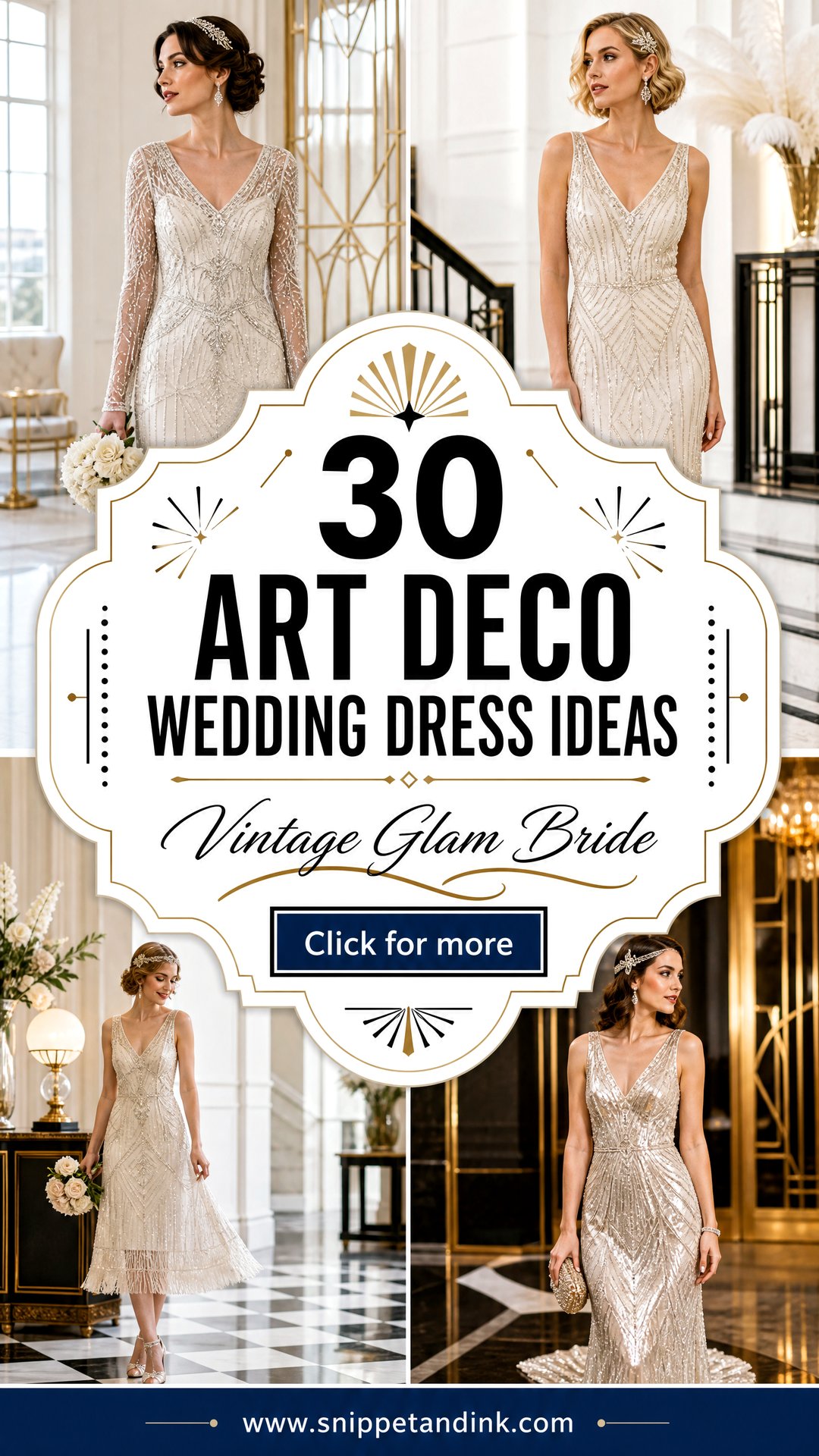
Wearing the 1920s Without Looking Like a Gatsby Party Guest
The line between homage and costume is usually crossed by piling on period signals. A drop waist, a beaded headband, long pearls, fringe and a feather together will look like fancy dress on almost anyone. I ask brides to choose one strong period element and let everything else be modern.
- Shape as the signal: a sheath or drop waist with current hair and makeup.
- Beading as the signal: geometric work on a modern silhouette, with a plain veil.
- Accessories as the signal: a simple satin column with a Juliet cap veil or a beaded comb.
Then look at your venue. A Deco hotel lobby or a museum with strong architecture can carry more period detail than a barn or a garden, where one quiet reference is usually enough.
1. Beaded Art Deco Wedding Dress
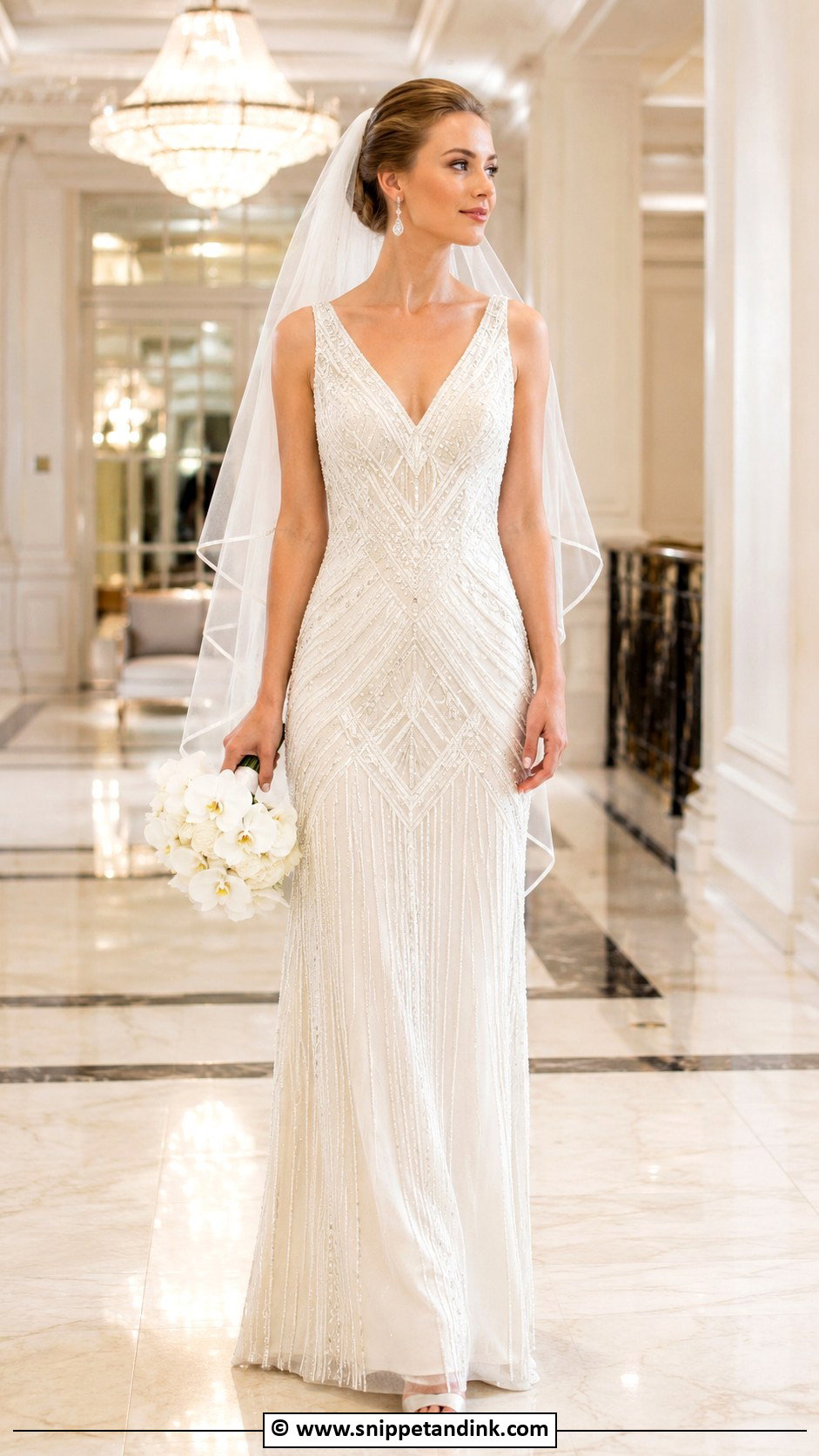
Beading laid in strong lines is what reads as Deco; scattered sparkle reads as generic eveningwear. Look for a fitted or softly column-shaped gown with geometric beadwork across the bodice, waist and skirt in silver, pearl, ivory or soft gold. I steer brides toward patterns that run vertically or in chevrons, because they lengthen the body and hold their shape when you move. Sleek satin heels, a low bun and crystal drop earrings keep attention on the beading. A clean fingertip veil covers nothing important, and the whole look belongs in a historic hotel or an evening ballroom.
2. Art Deco Wedding Dress With Sleeves
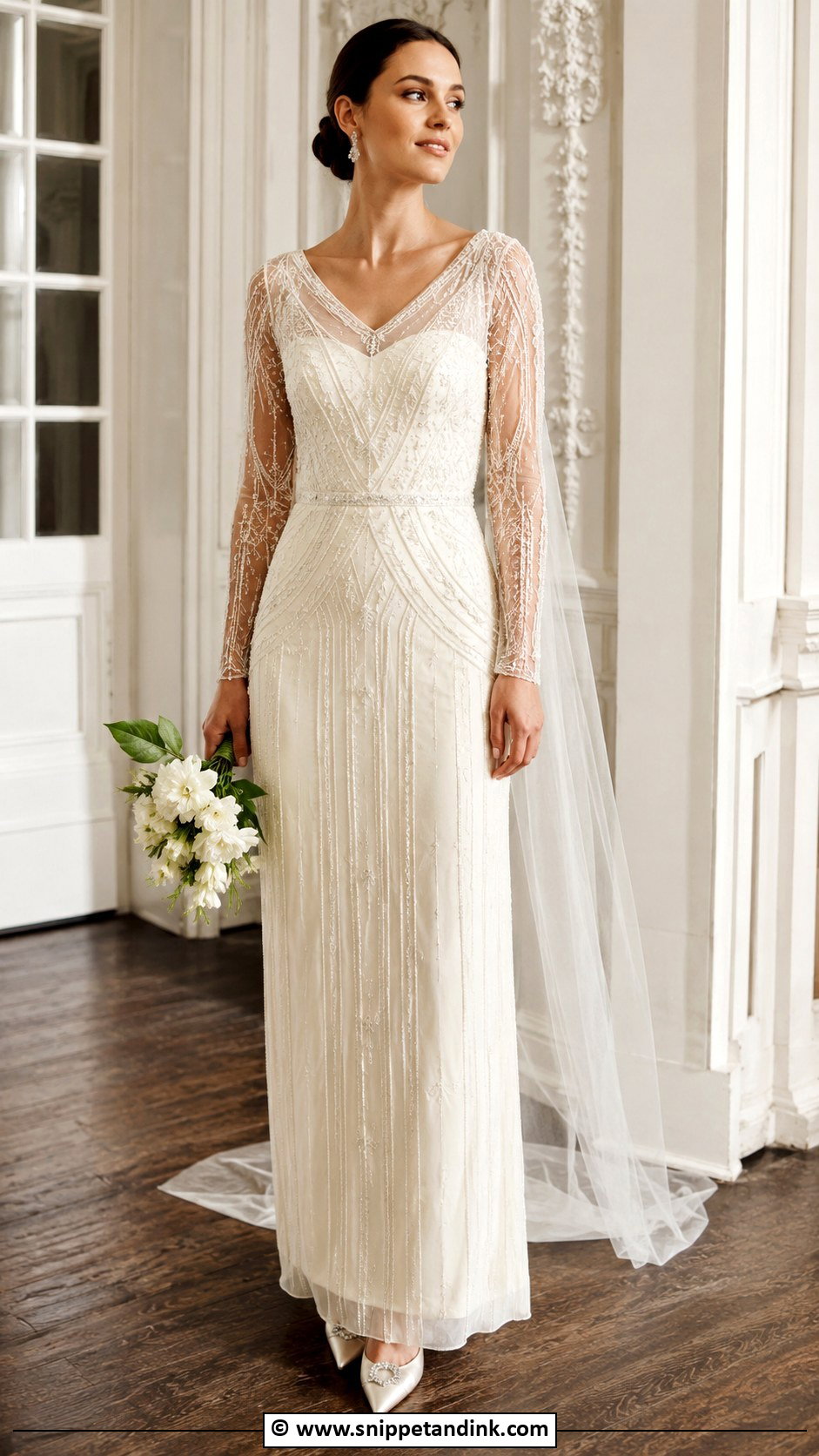
Sleeves change a Deco dress more than any other detail. Sheer long sleeves with beaded lines, cap sleeves trimmed in pearls or sequinned flutter sleeves all point back to the 1920s, as long as the body of the dress stays sleek. Heavily beaded sleeves are heavy sleeves, and they pull the shoulder seam back if the bodice is not anchored, so I check the shoulder line at every fitting. Pointed-toe heels and a small crystal comb are enough. With embellished sleeves, skip the necklace and wear earrings. Fall, winter and formal indoor weddings suit it best.
3. Art Deco Lace Wedding Dress
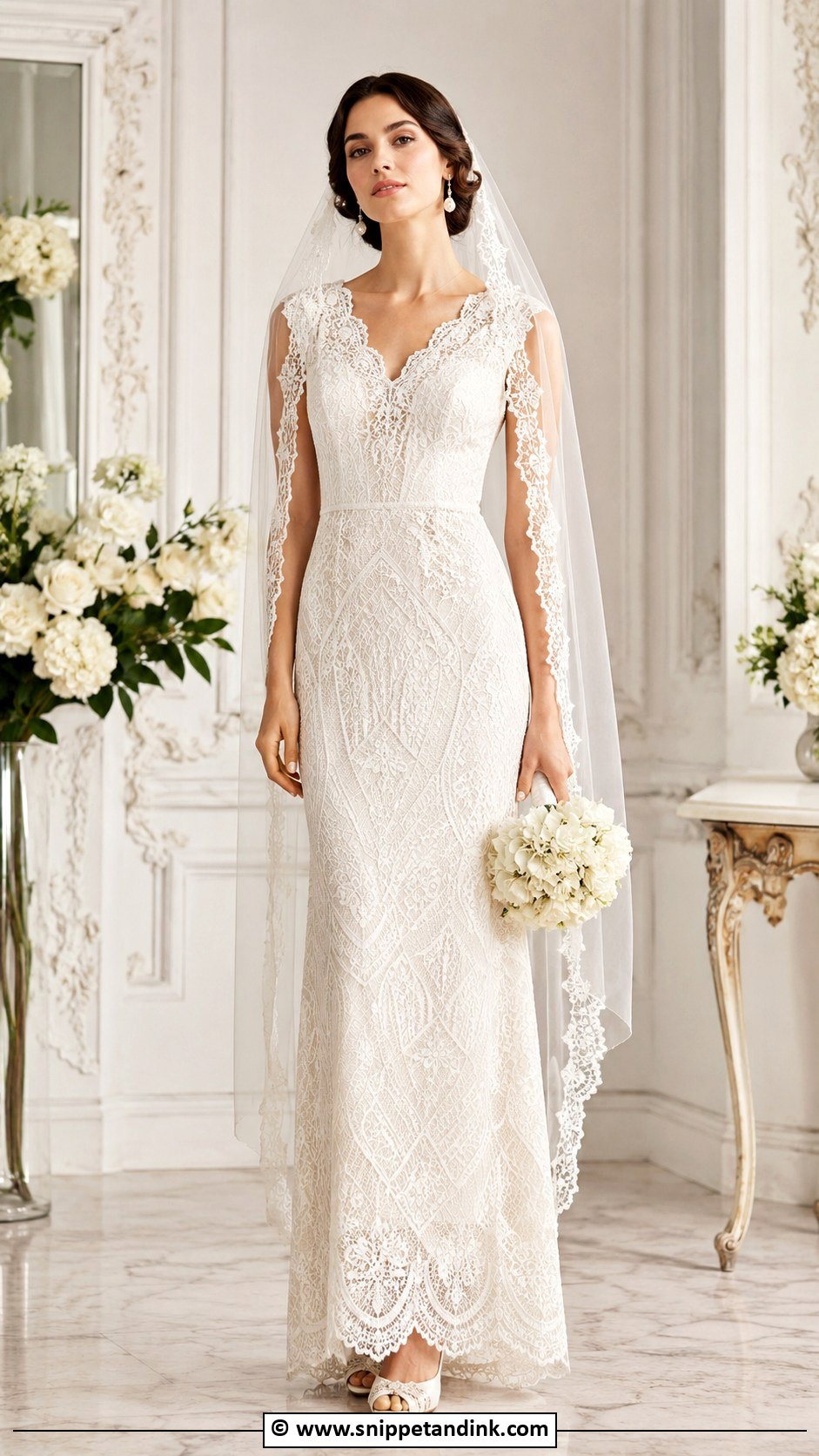
Floral lace alone looks more Edwardian than Deco. For the 1920s feel, choose lace with fans, chevrons, scalloped edges or linear patterns. A sheath or fit-and-flare keeps the period shape while flattering the body. Ivory heels, pearl earrings and a veil with a narrow lace edge balance it, and soft waves or a tucked updo bring in the old-Hollywood mood. It is the quiet option on this list, texture without the weight or glare of full sequins, and lace is far more forgiving to alter than a beaded gown.
4. Art Deco Satin Wedding Dress
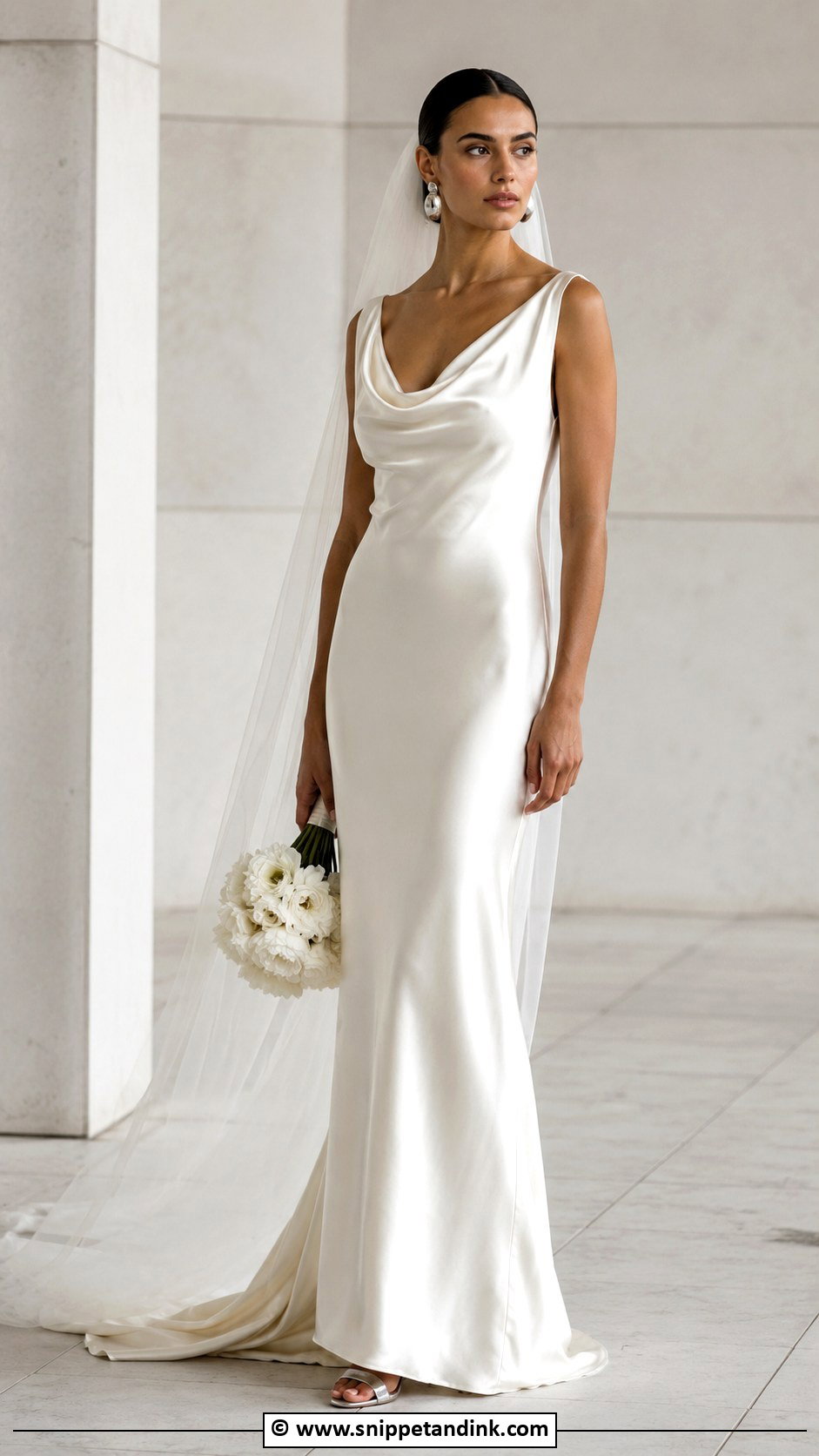
Bias cut is the most demanding way to wear satin, and the most rewarding. Choose a bias-cut satin gown, a cowl neckline or a slim column that skims rather than grips. Cut on the diagonal, the fabric drapes and stretches slightly, which also means it shows every line underneath; I fit these over the exact smooth, edge-free underwear the bride will wear. Metallic heels, a crystal bracelet and sculptural earrings add the 1920s note. A long veil makes it ceremonial, a short one more modern, and it sits naturally in a city venue or black-tie setting.
5. Art Deco Fringe Wedding Dress
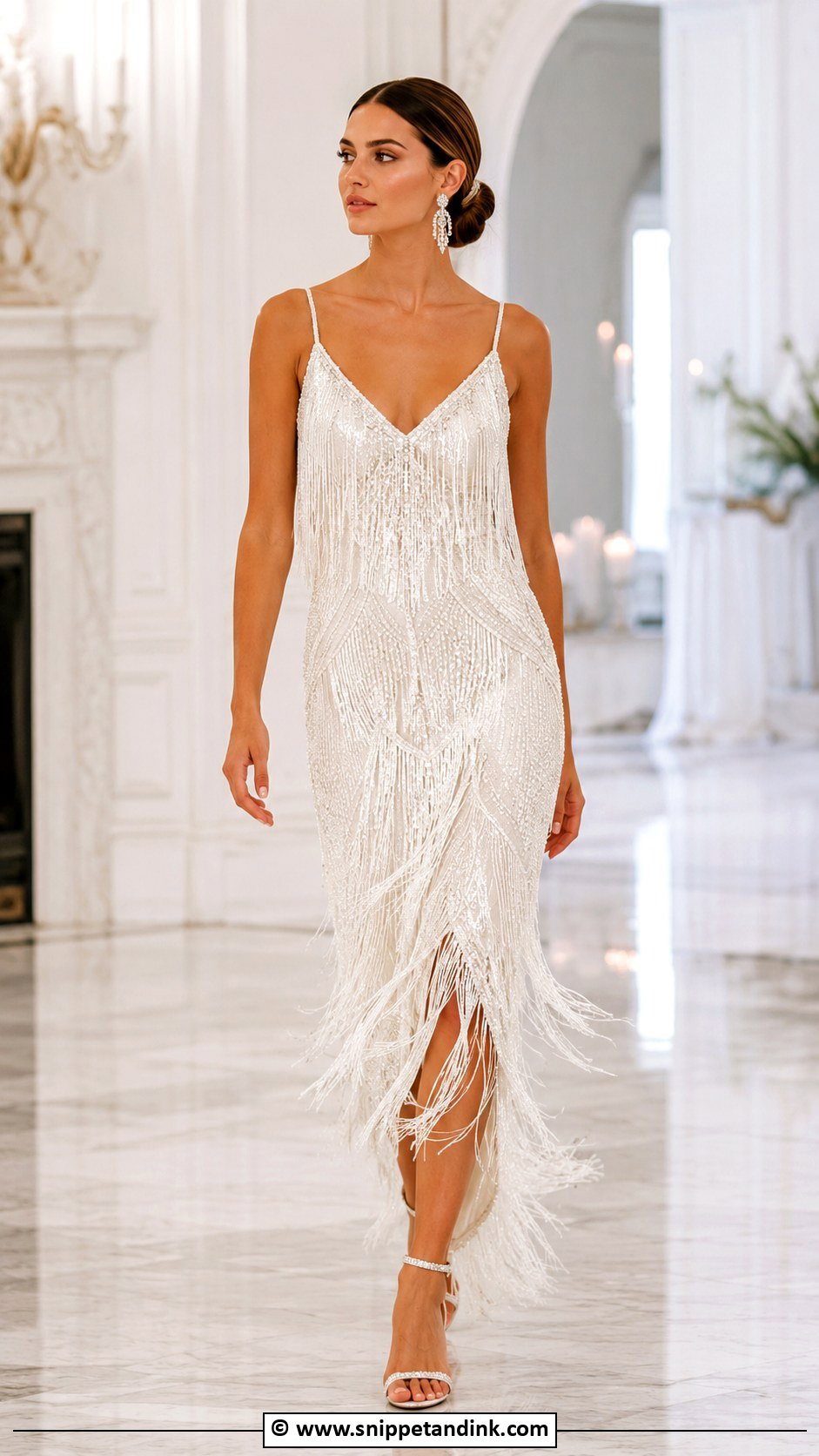
Fringe is made to move, so it rewards a bride who plans to dance. Delicate beaded fringe along the skirt, sleeves or hem is more elegant than fringe covering the whole gown. A straight or slightly fitted shape lets it swing as you walk. Strappy heels, a sleek clutch and crystal earrings echo the shimmer, and smooth hair, a low bun or soft waves, stops it tipping into costume. A practical warning: beaded fringe tangles, especially when you sit, so give it a gentle shake when you stand and ask your seamstress to check the knots before the day.
6. Art Deco Mermaid Wedding Dress
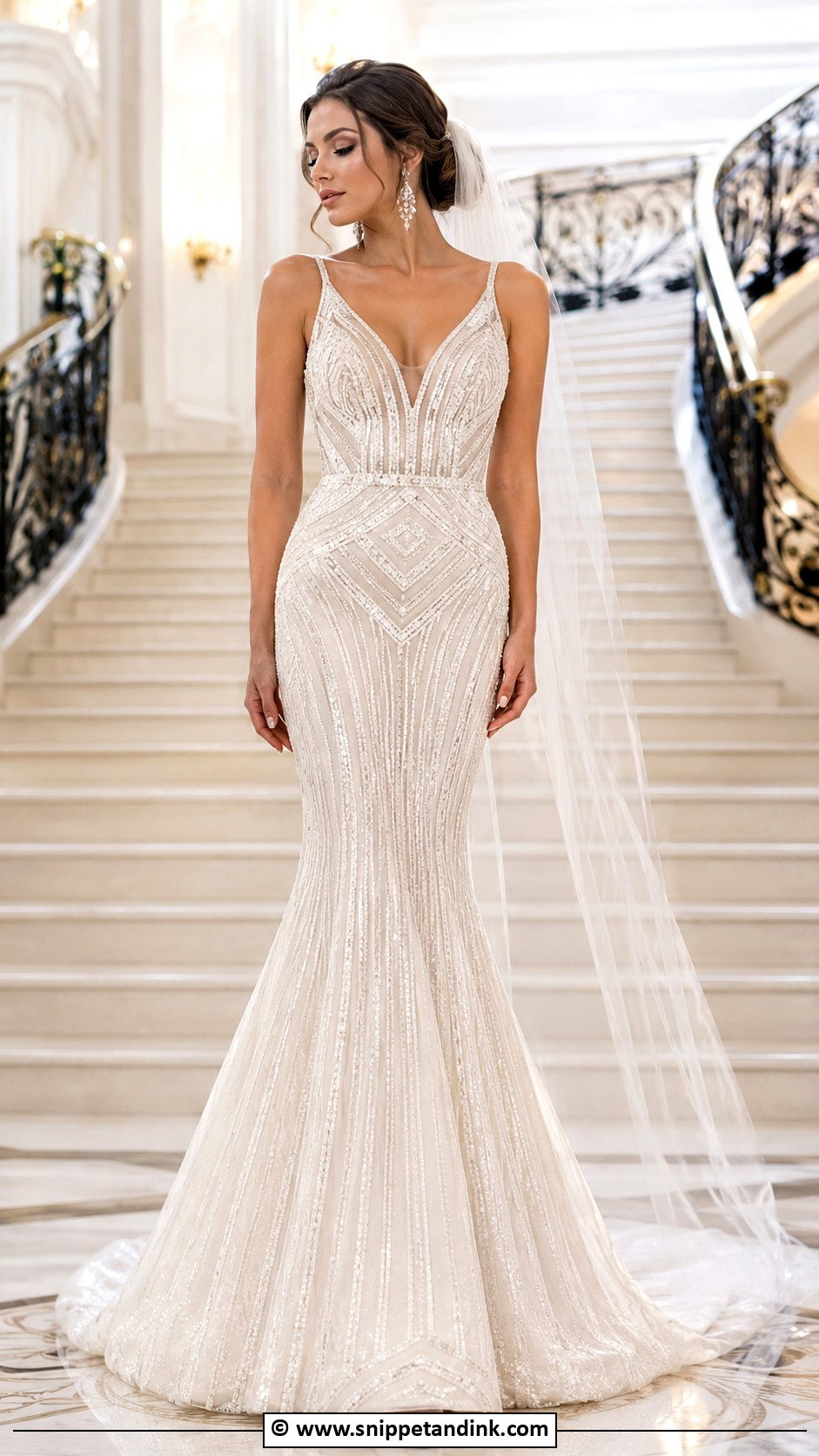
A mermaid shape takes Deco beading somewhere more sculpted. Look for a fitted bodice, a defined waist and a flared skirt, with geometric embroidery placed vertically to lengthen the body. The beading should follow your curves in clean lines; if the pattern breaks awkwardly at the hip seam, that is what the camera catches. Platform bridal heels, chandelier earrings and a smooth veil attached low at the back of the head complete it. With this much shape, keep accessories spare. It suits a grand staircase and a formal entrance.
7. Art Deco Sheath Wedding Dress
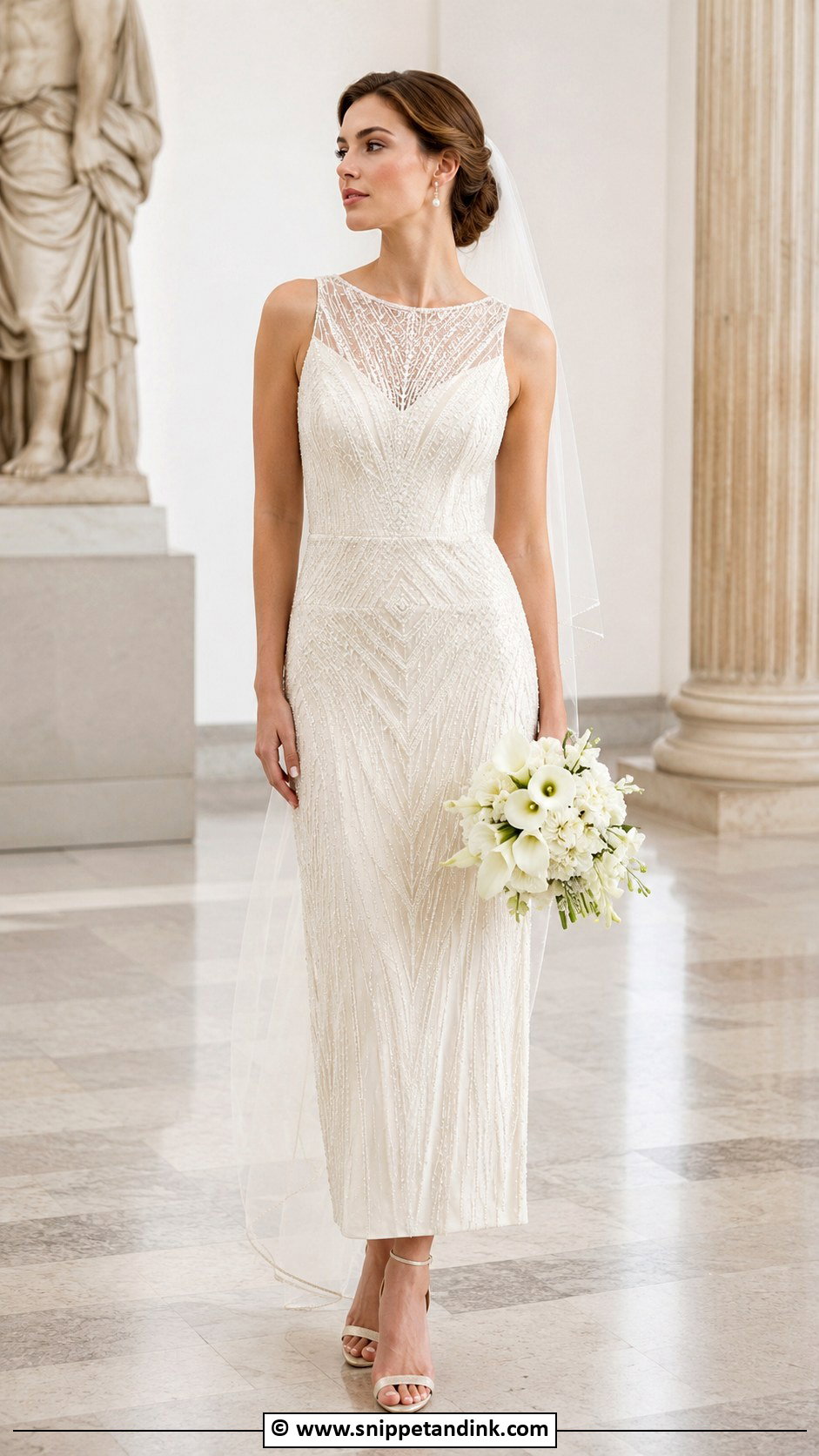
Of all the shapes here, the sheath sits closest to how the 1920s actually dressed. The straight line works with all-over beading, delicate lace or silk crepe with subtle trim. Because it falls close to the body, tailoring decides everything. A heavily beaded sheath also has no give, so I ask brides to sit and climb a step in it before we finalize the hem; a slight stretch lining or a short train helps. Ankle-strap heels, pearl drop earrings and a slim veil or crystal headband finish it. It is right for a museum, rooftop or small hotel.
8. Art Deco Slip Wedding Dress
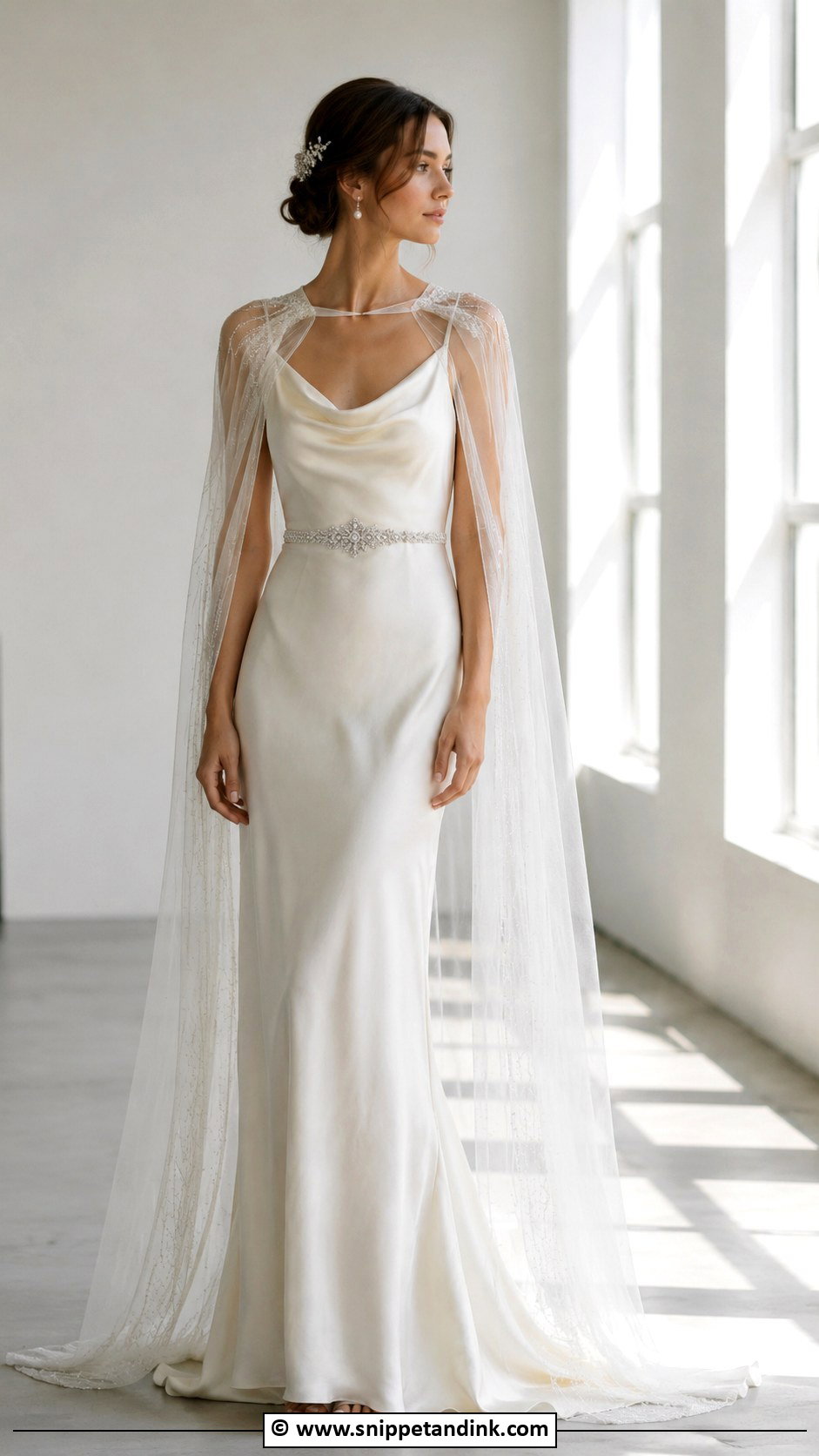
An Art Deco slip wedding dress is the most understated look here. Silk, satin or crepe with a cowl neck, low back or narrow straps is the base, and a beaded belt, crystal trim or geometric back detail brings in the period. Satin sandals, a pearl hair pin and a sheer cape veil add a little drama. I fit slips to skim with about a finger’s room at the hip; too tight and the fabric creases across the stomach every time you breathe. It suits a modern bride who wants only a hint of vintage.
9. Art Deco Drop Waist Wedding Dress
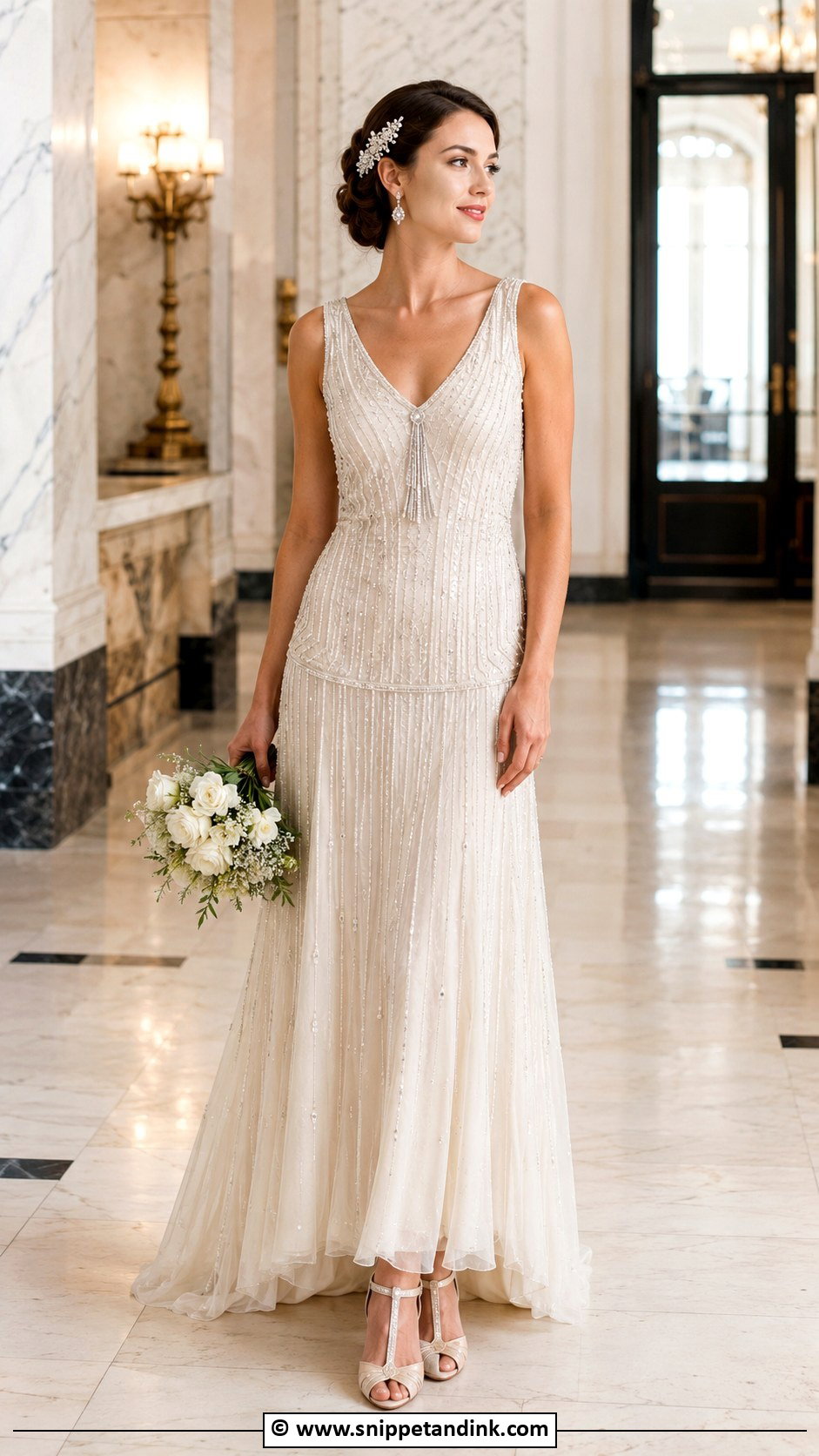
Few shapes signal the 1920s as clearly as a dropped waist. The waistline sits low on the hips for a long torso and a relaxed line. It is also the shape brides worry about most, so I look for soft structure, vertical beading or a lightly flared skirt to keep it from looking boxy. On a tall bride it is easy. On a petite bride I usually raise the drop a little and shorten the bodice so the legs do not disappear. T-strap heels, a beaded comb and simple earrings complete a look that is clearly historical yet still polished.
10. Art Deco Short Wedding Dress
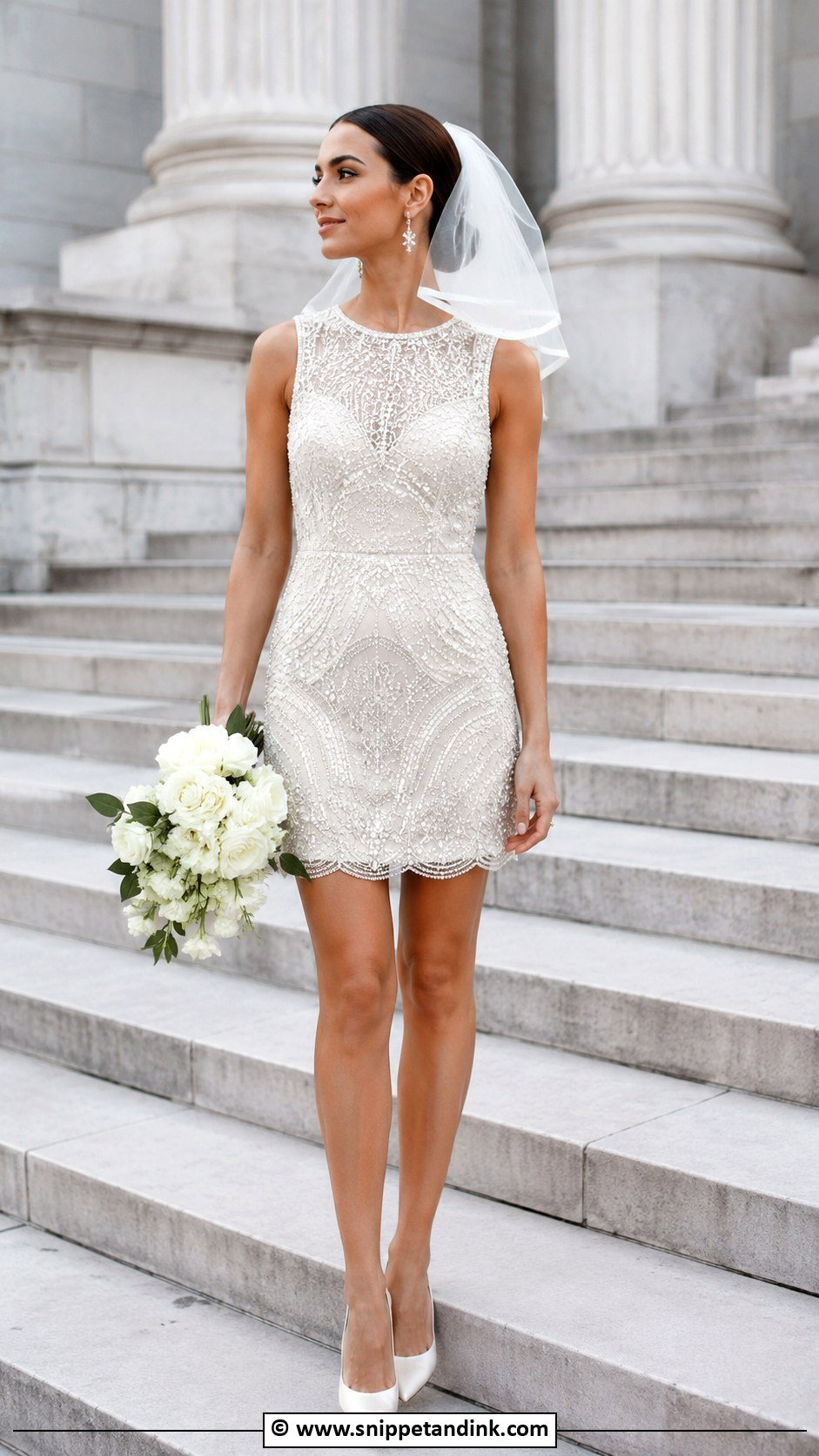
Short dresses are where Deco gets fun: a courthouse ceremony, an after-party or a city wedding. Look for a knee-length or mini dress with beading, sequins, fringe or geometric embroidery. Pointed bridal pumps or embellished sandals, sheer gloves if you like them, and a structured mini veil keep it bridal rather than a white party dress. With a short hem, the shoes are on show, so I spend real time on them: sparkle or satin, and comfortable enough for photos on steps.
11. Art Deco Tea Length Wedding Dress
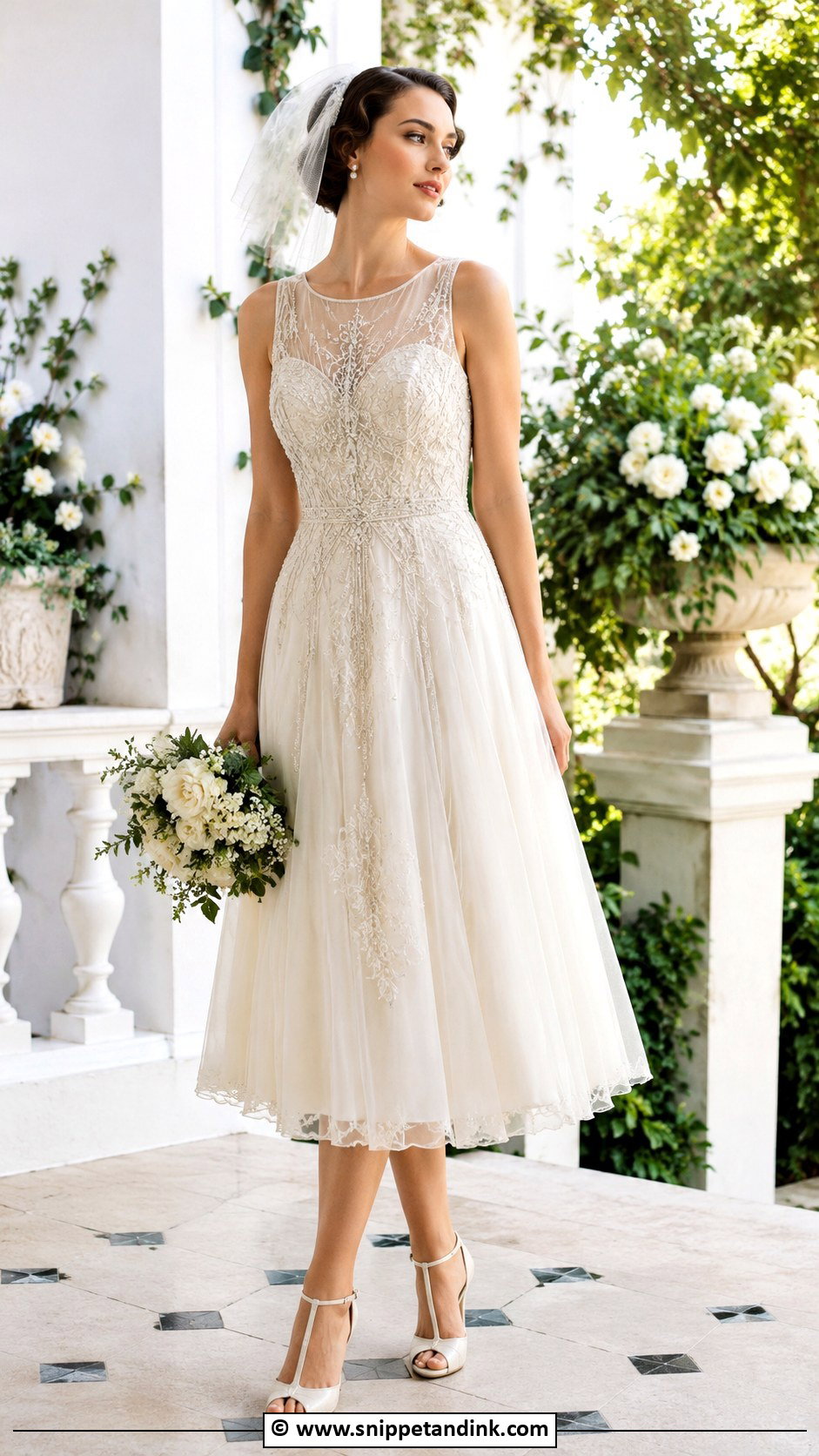
Tea length falls between the knee and ankle, which is practical in a way floor-length never is: no hem to step on, no train on wet grass. Beaded lace, a fitted bodice and a softly swinging skirt give the vintage line. T-strap heels, pearl studs and a birdcage or short tulle veil complete it. The hem placement is the thing to get right; I usually set it at the narrowest point of the lower calf, since a centimeter higher or lower can make the leg look heavier. Daytime weddings, gardens and city celebrations all suit it.
12. Art Deco High Neck Wedding Dress
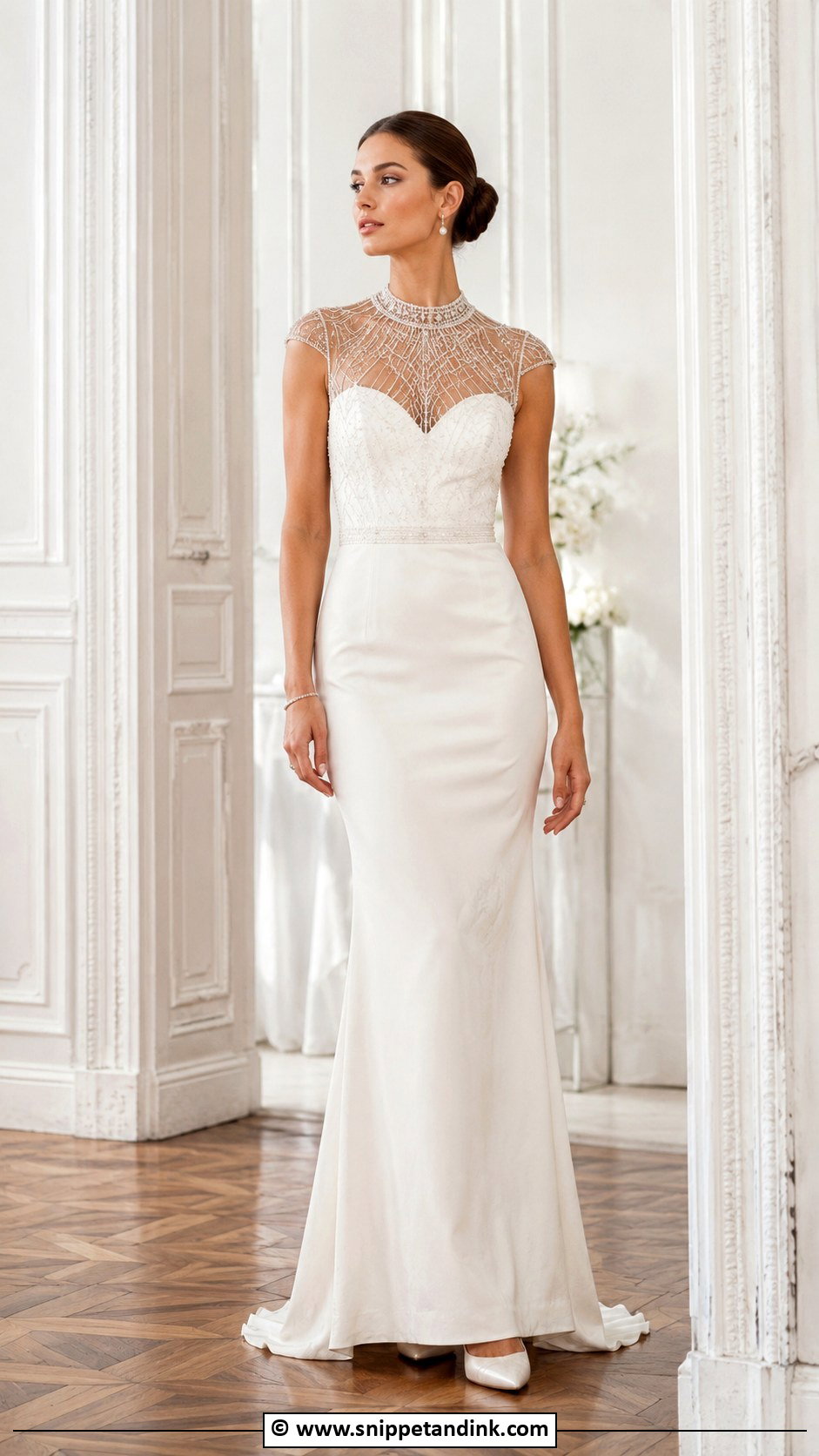
A collar frames the face like nothing else. Sheer illusion fabric, beaded collars and geometric lace panels all do it, and with the neck covered, I swap a necklace for strong earrings or a bracelet. A sleek bun or tucked waves shows off the collar. Ivory heels and a long clean veil add height. Check the collar while seated and looking down at your plate; a stiff beaded collar can rub the throat by evening. It is a natural fit for formal weddings and cool seasons, and it gives coverage without looking plain.
13. Art Deco V Neck Wedding Dress
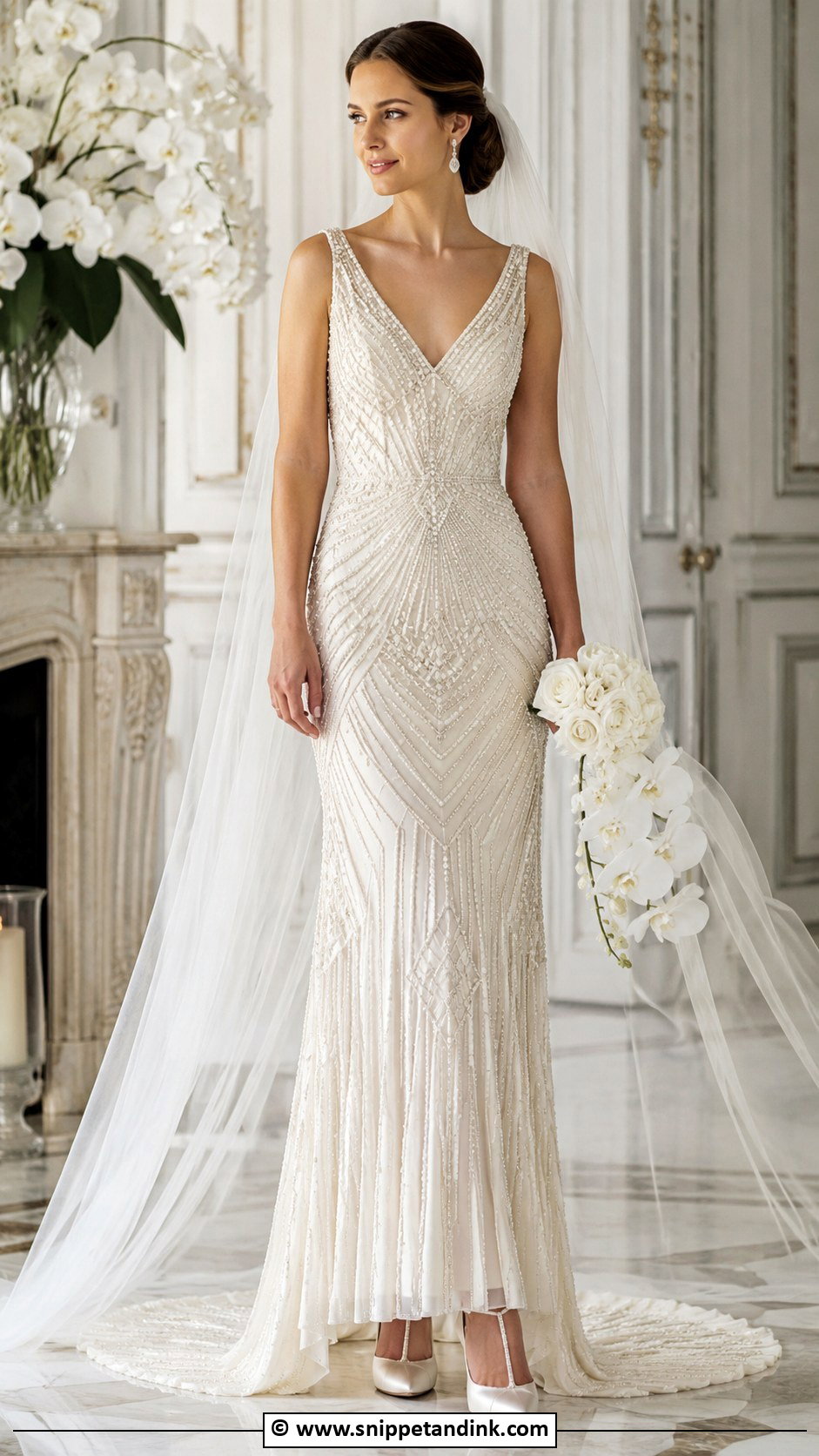
A V neckline lengthens the upper body. It can be deep and dramatic or modest, depending on your comfort, and geometric beadwork along the edge adds the period detail at once. On a deeper V I add a discreet mesh panel or fashion tape, because a plunging neckline that sits flat while standing can gape when you lean forward. Drop earrings, a thin bracelet and heels with a clean ankle strap suit it, and a soft updo keeps the neckline visible. The vertical line flatters a wide range of figures.
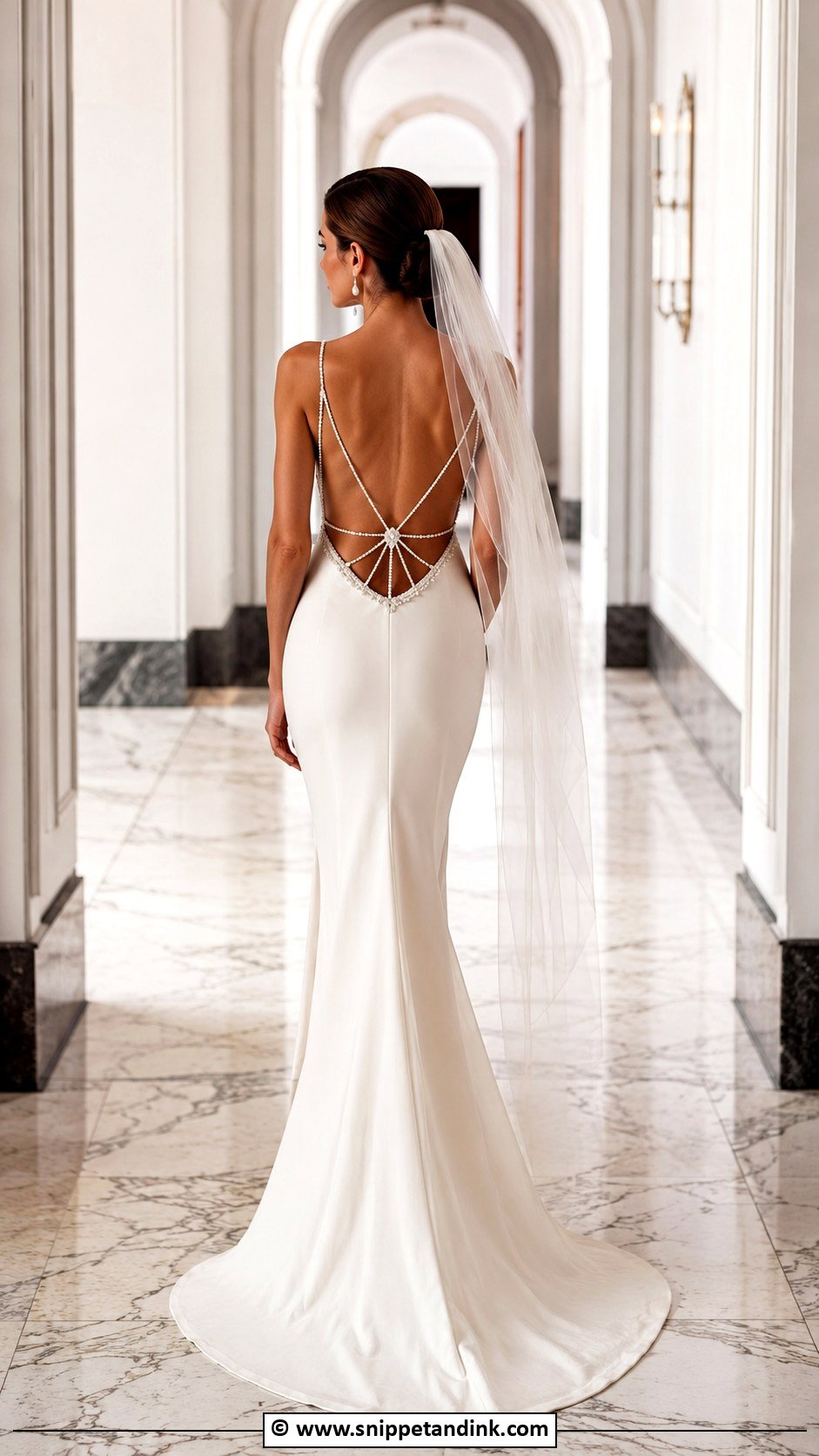
14. Art Deco Backless Wedding Dress
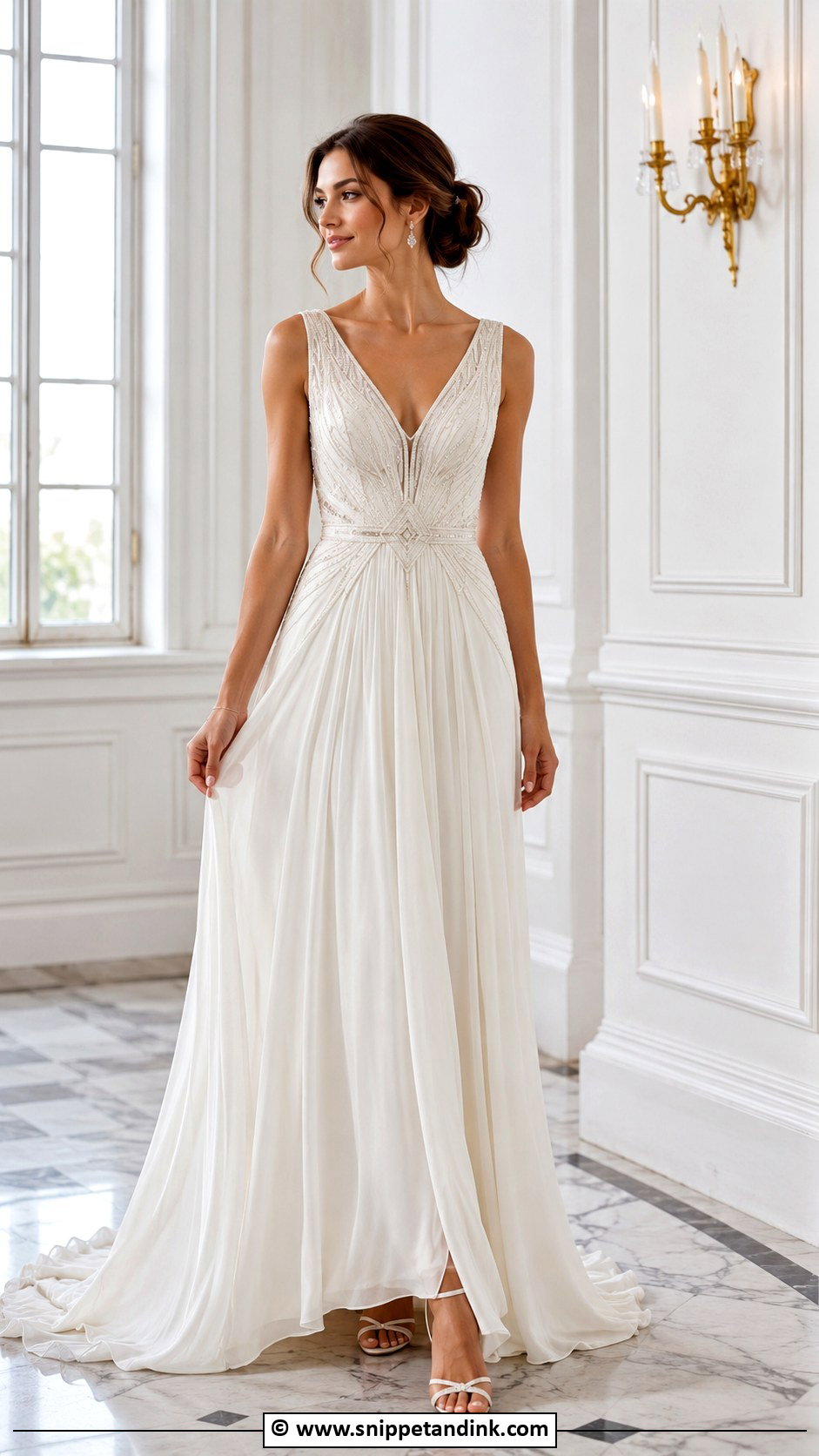
An open back framed by beads, pearls, chains or geometric lace means the ceremony view, from the guests’ seats, is the back of the dress. Keep earrings minimal and hair low so nothing hides the detail, and attach the veil below the bun. A deep back on a sheath needs support built into the front of the bodice, or the dress slides forward as you move. Slim heels and a simple bouquet complete it. The reveal works best in portraits taken from behind and to one side.

15. Art Deco Pearl Wedding Dress
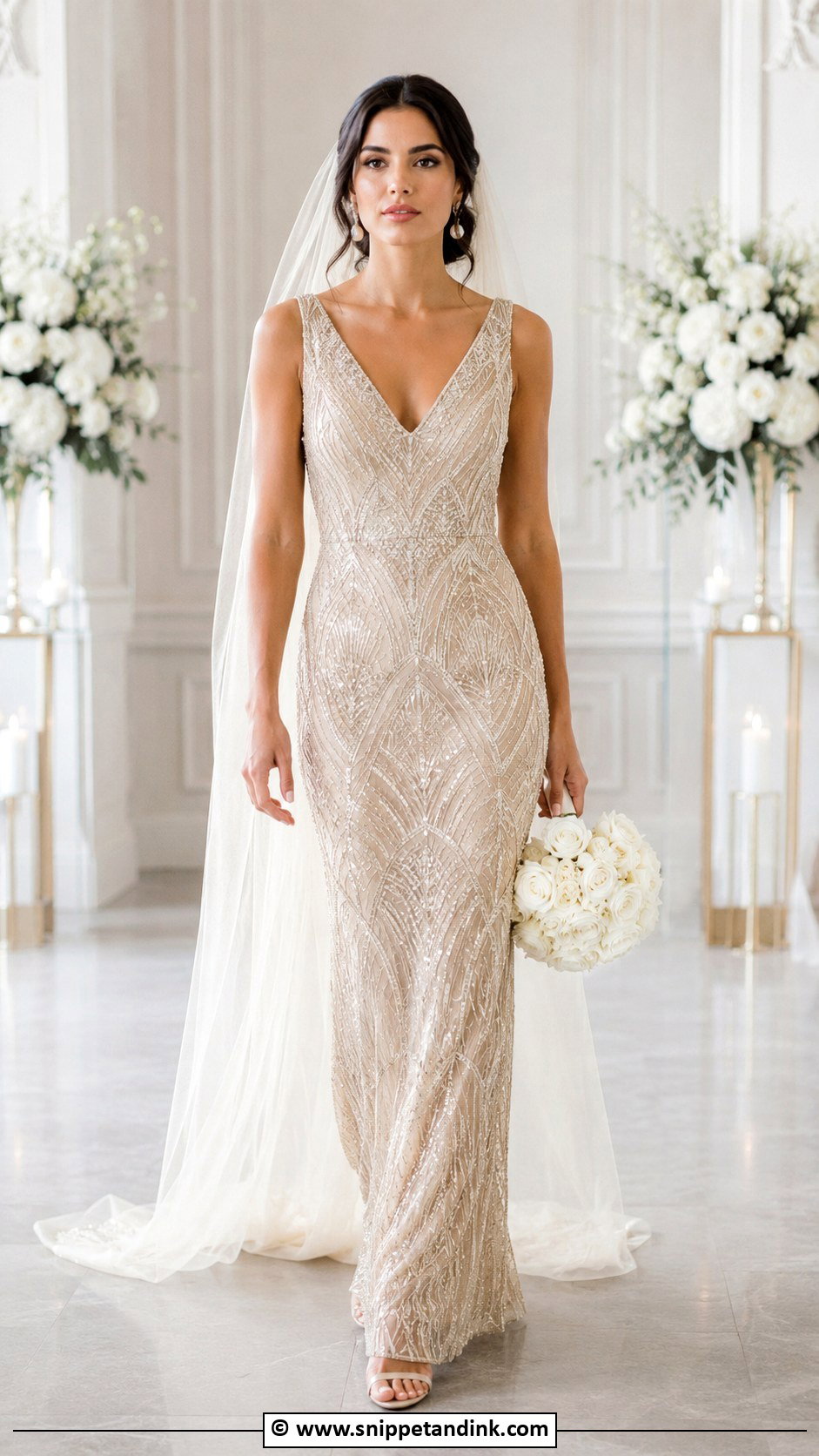
Pearls give a gentler glow than crystals or sequins while still holding a structured shape. They can cover the dress or trace the neckline, sleeves or bodice. I look for clear geometric placement, because pearls scattered at random tip toward sweet rather than Deco. Pearl drop earrings, satin heels and a smooth veil complete it. With heavy pearl work, keep hair accessories small. Bright indoor light and classic venues show pearl texture best.
16. Art Deco Sequin Wedding Dress
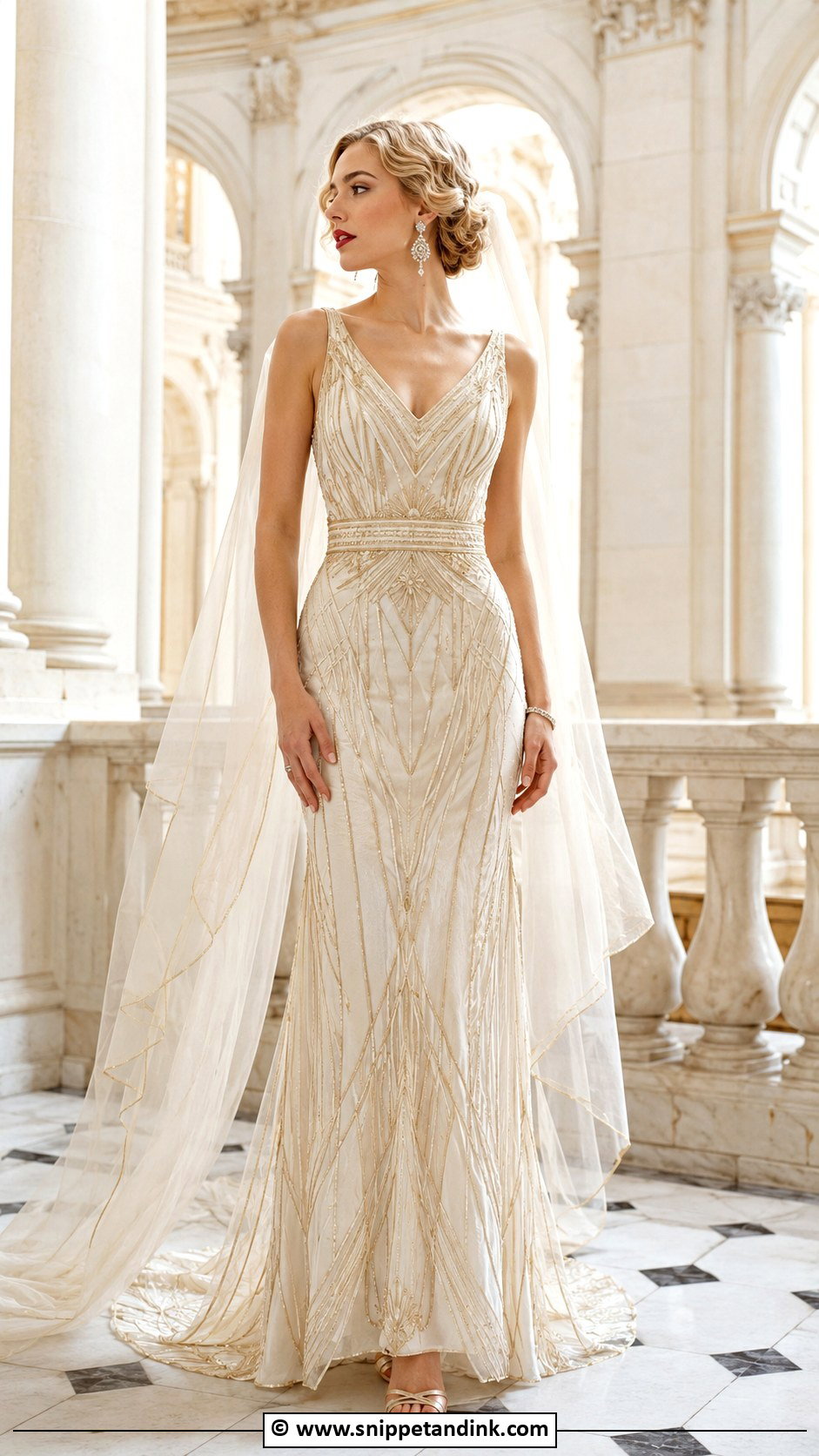
Sequins catch light from every direction, and that is both their appeal and their risk. Small sequins arranged in fan, sunburst or chevron patterns look elegant; large paillettes can read as costume. Ivory, silver, soft gold or champagne keep it bridal. Pair it with simple heels, clean makeup and one statement accessory, earrings or a hair comb. A plain veil softens the shine. Sequins also scratch, so I line the underarms and inner sleeves with soft fabric. Evening receptions, grand halls and rooftops suit it.
17. Art Deco Gold Wedding Dress
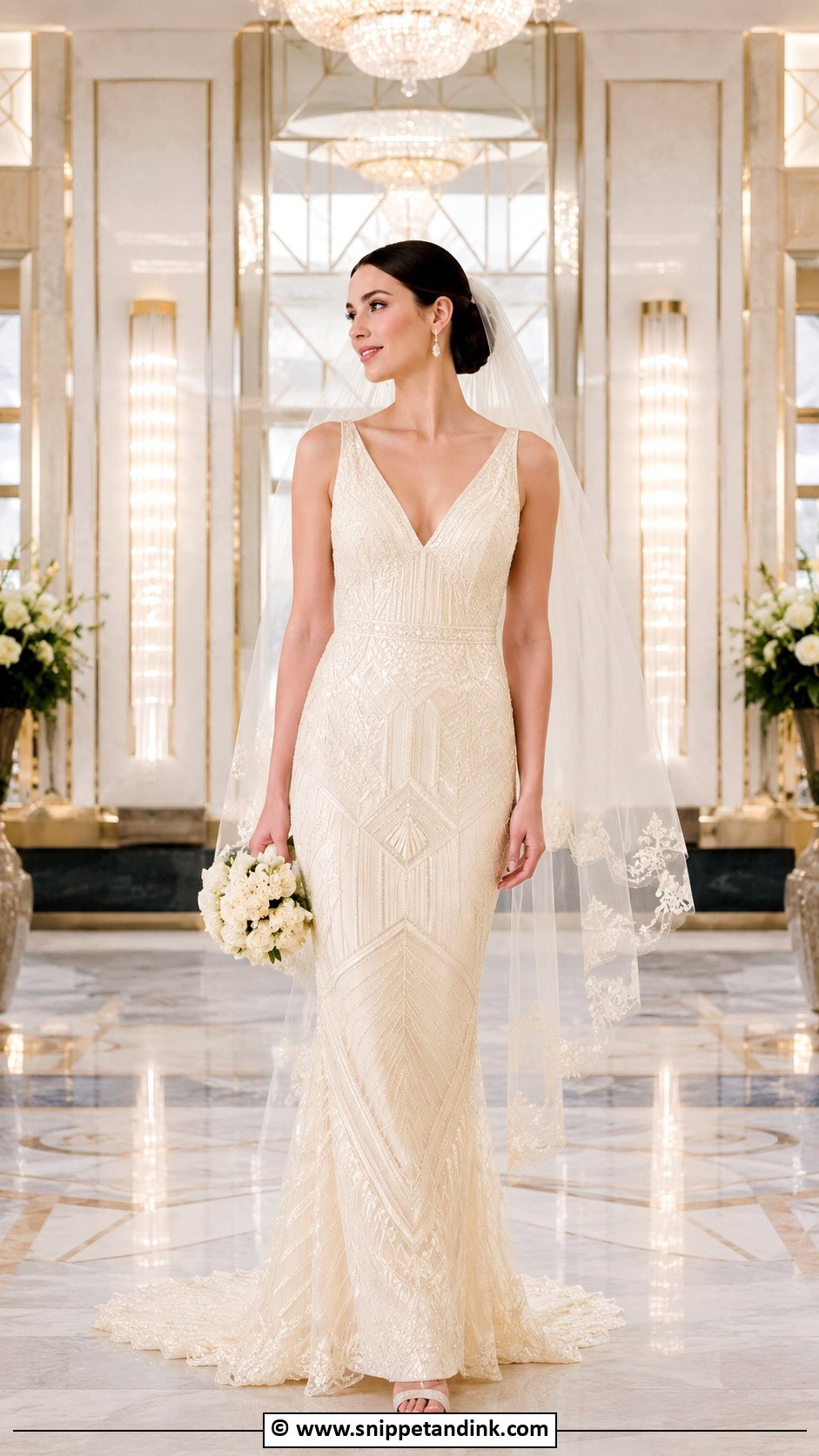
Gold suits a bride who wants warmth and a slightly unexpected bridal color. Soft gold embroidery, metallic thread or pale gold beading on ivory keeps it refined rather than overpowering. Nude or gold heels, crystal earrings and an ivory or warm beige veil follow. A neutral bouquet stops the colors competing. Gold glows under warm venue lighting and in historic interiors; under cold daylight-balanced light it can look yellow, so I always check it near a window as well as under lamps.
18. Art Deco Silver Wedding Dress
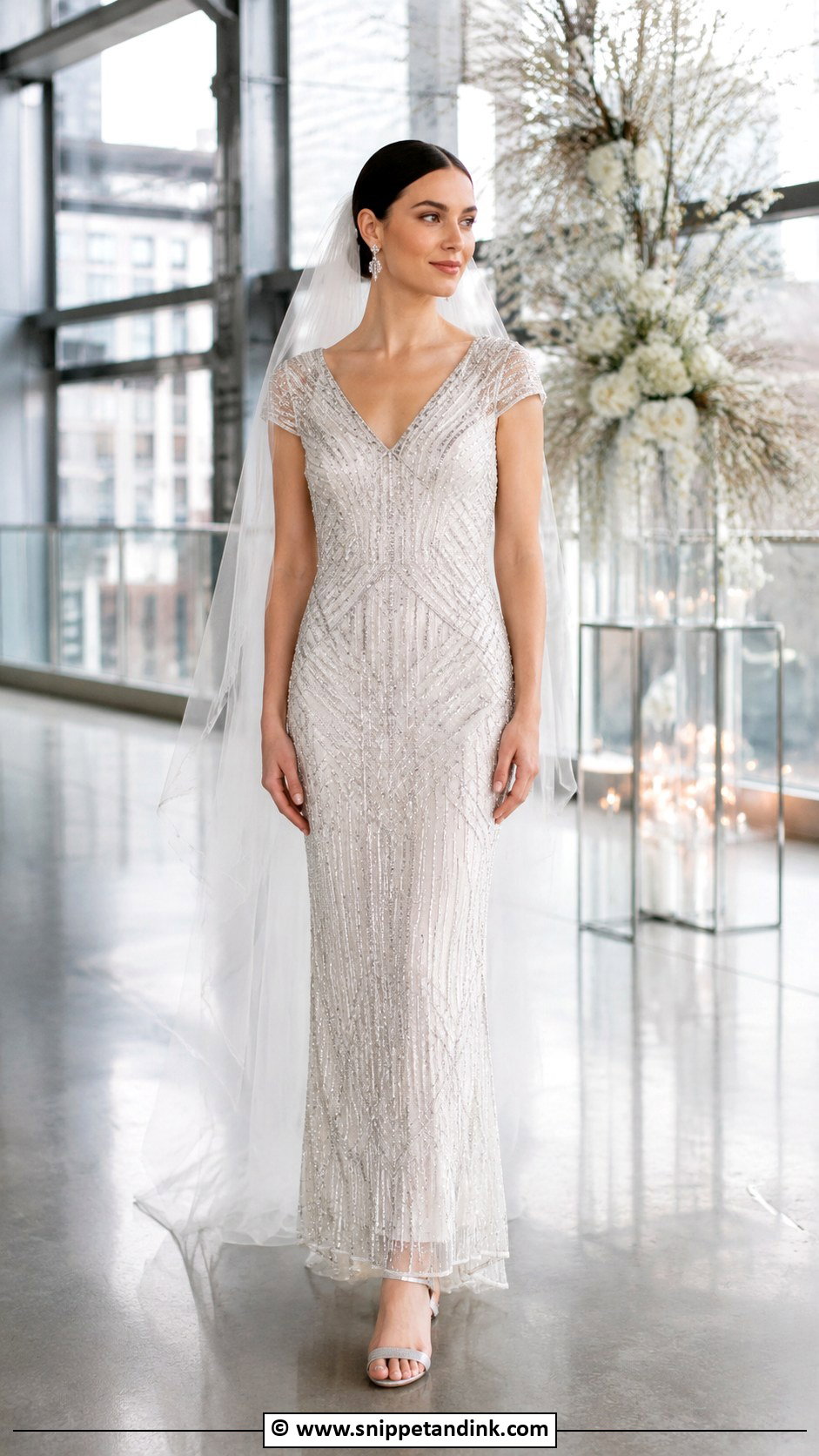
Silver has a cooler, crisper edge. Silver beading, icy sequins and mirrored embroidery pair well with ivory or pale grey underlayers. A slim silhouette keeps the metallic finish elegant. Add silver heels, crystal earrings and sleek hair, with a plain sheer veil to soften the shine. On very warm skin tones, I sometimes suggest an ivory base under the silver rather than grey, so the face does not look washed out next to the dress. It is especially at home in winter and in evening city venues.
19. Art Deco Ivory Wedding Dress
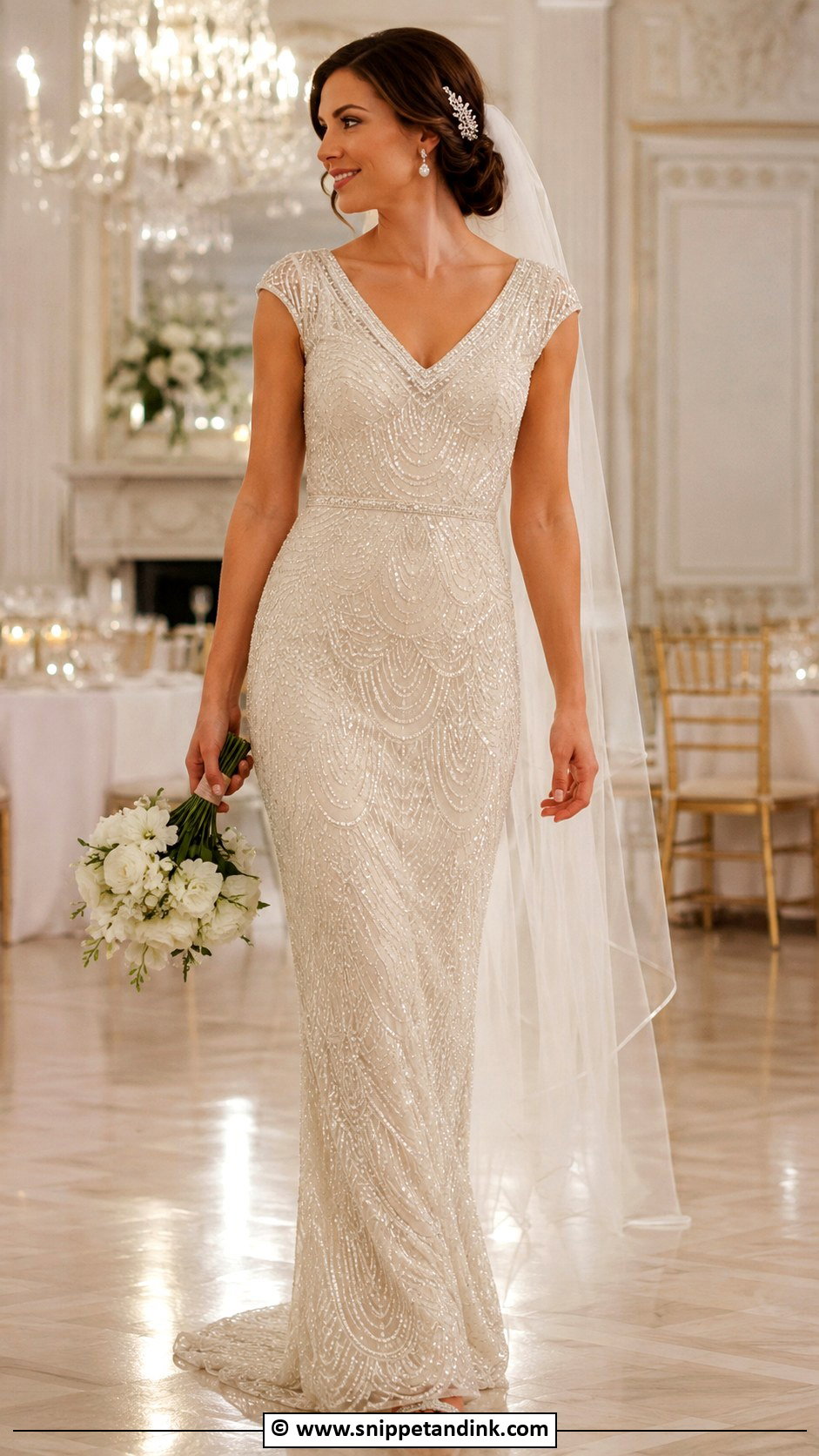
Ivory softens beading and lace, so even a heavily worked gown looks warm. Geometric embroidery, pearl accents or satin panels can define the shape. Ivory heels and delicate earrings suit it, and the veil should match the gown’s undertone; I hold the veil tulle against the skirt in daylight before ordering, because ivory varies widely between makers. It is a natural choice if bright white is unflattering on you, and it moves easily from a ballroom to an outdoor terrace.
20. Art Deco Champagne Wedding Dress
Champagne adds a golden glow and depth without boldness, which is why it suits beading, sequins and vintage lace so well. A fitted sheath, an A-line or a beaded slip all work, depending on venue and comfort. Neutral heels, pearl earrings and a champagne or warm ivory veil complete it, and light accessories let the color lead. In photos, champagne over a nude lining can read as skin tone from a distance, so I often suggest an ivory lining under it for a clearer bridal read.
21. Art Deco Plus Size Wedding Dress
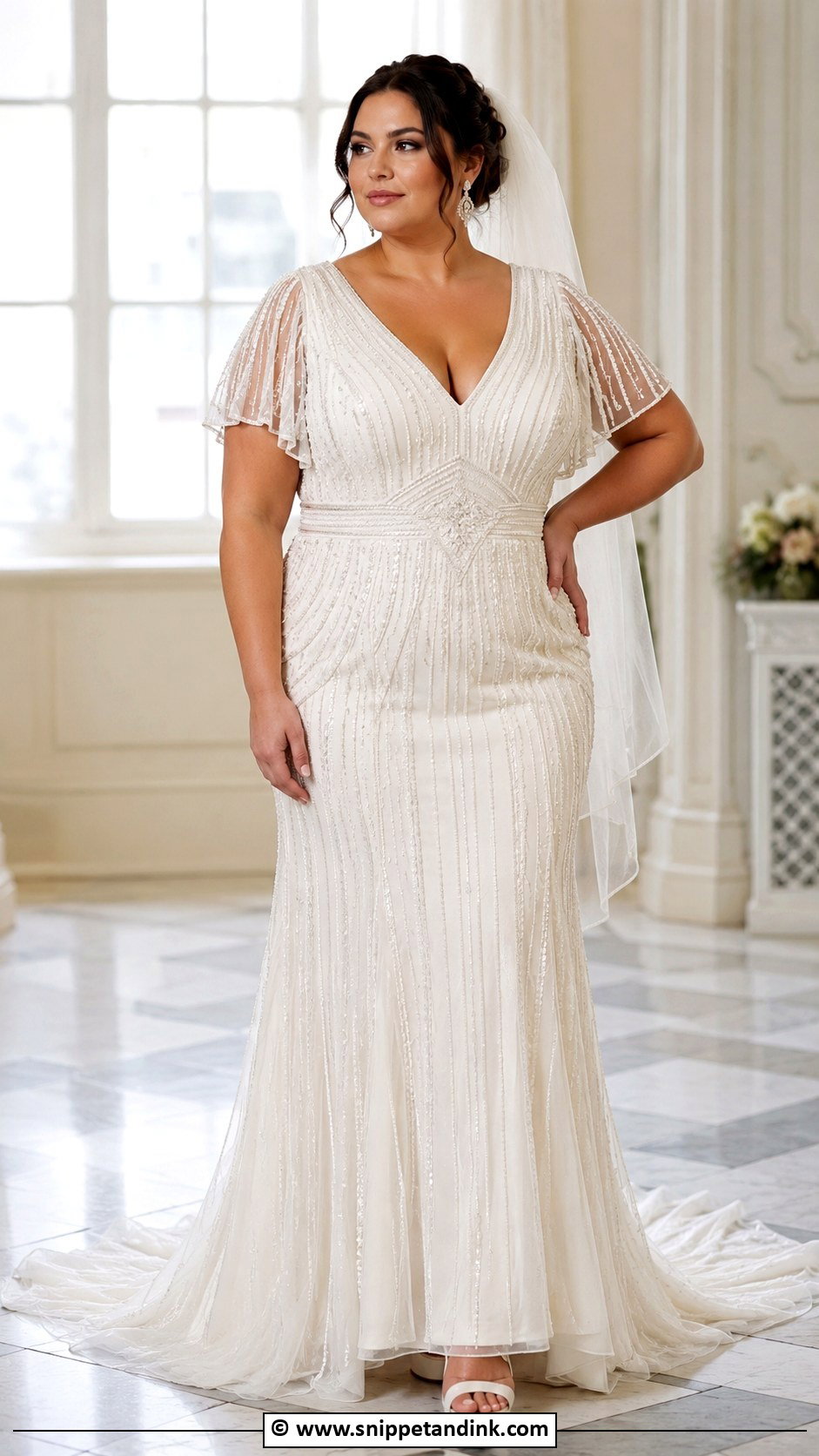
With a plus-size Deco gown, construction comes before decoration. Look for a strong inner structure, careful lining, and beadwork that follows the body in vertical or diagonal lines. A V neck, flutter sleeve, defined waist or soft fit-and-flare all work. Beaded fabric is heavy, so I want the weight carried by a built-in corset or waist stay rather than the shoulders. Block heels or platform sandals, statement earrings and a light veil keep it comfortable. The aim is to show your shape with confidence, not hide it.
22. Art Deco A Line Wedding Dress
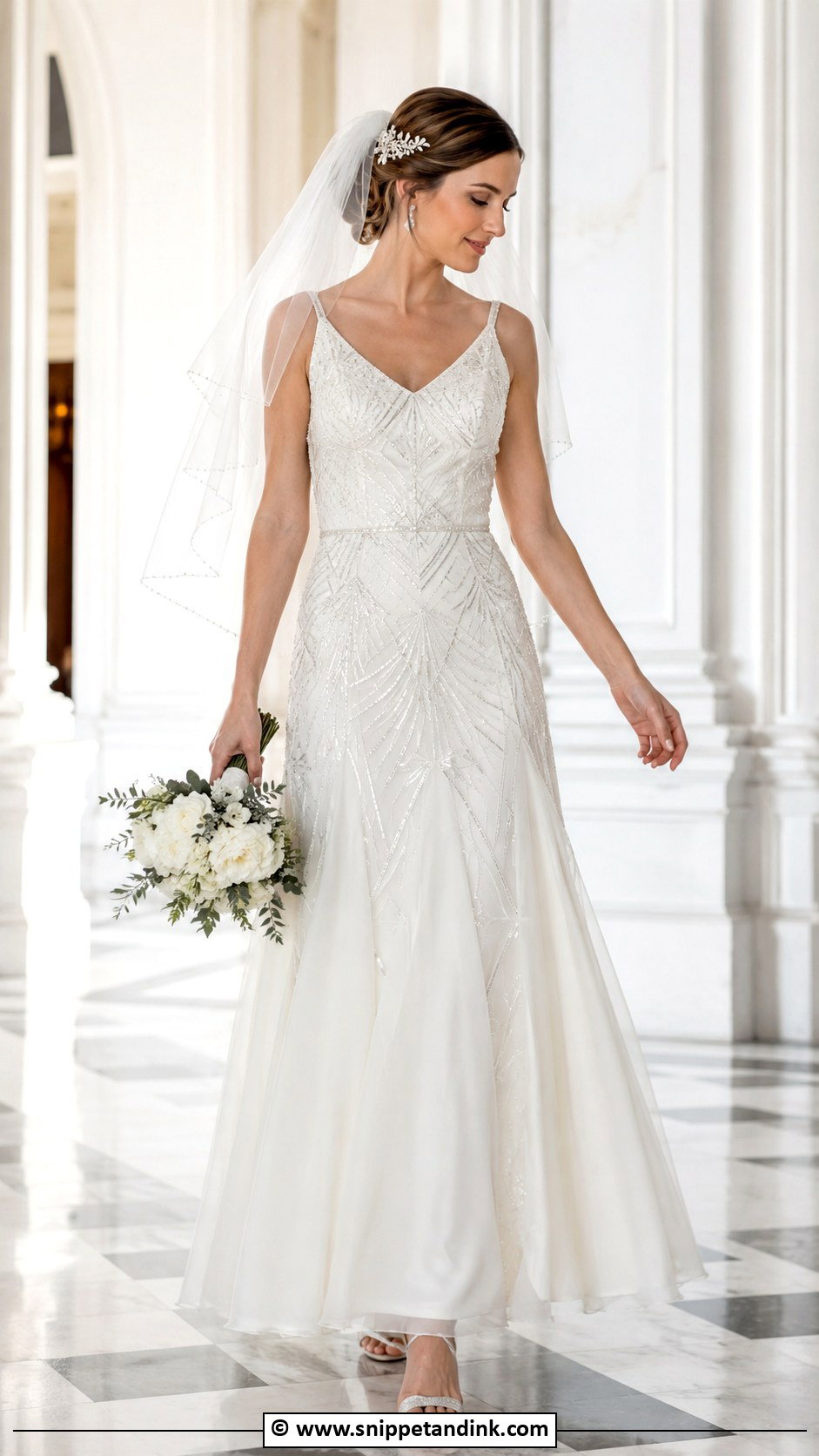
The A-line pairs Deco detail with a forgiving shape: a fitted bodice and a gently flared skirt. Beaded straps, geometric lace or a pearl-trimmed waist bring in the period. Classic heels, a crystal comb and a medium veil complete it. Fabric sets the mood here, crepe for something relaxed, structured satin for formal. It is my usual suggestion when a bride loves Deco but cannot get comfortable in a narrow skirt.
23. Art Deco Ball Gown Wedding Dress
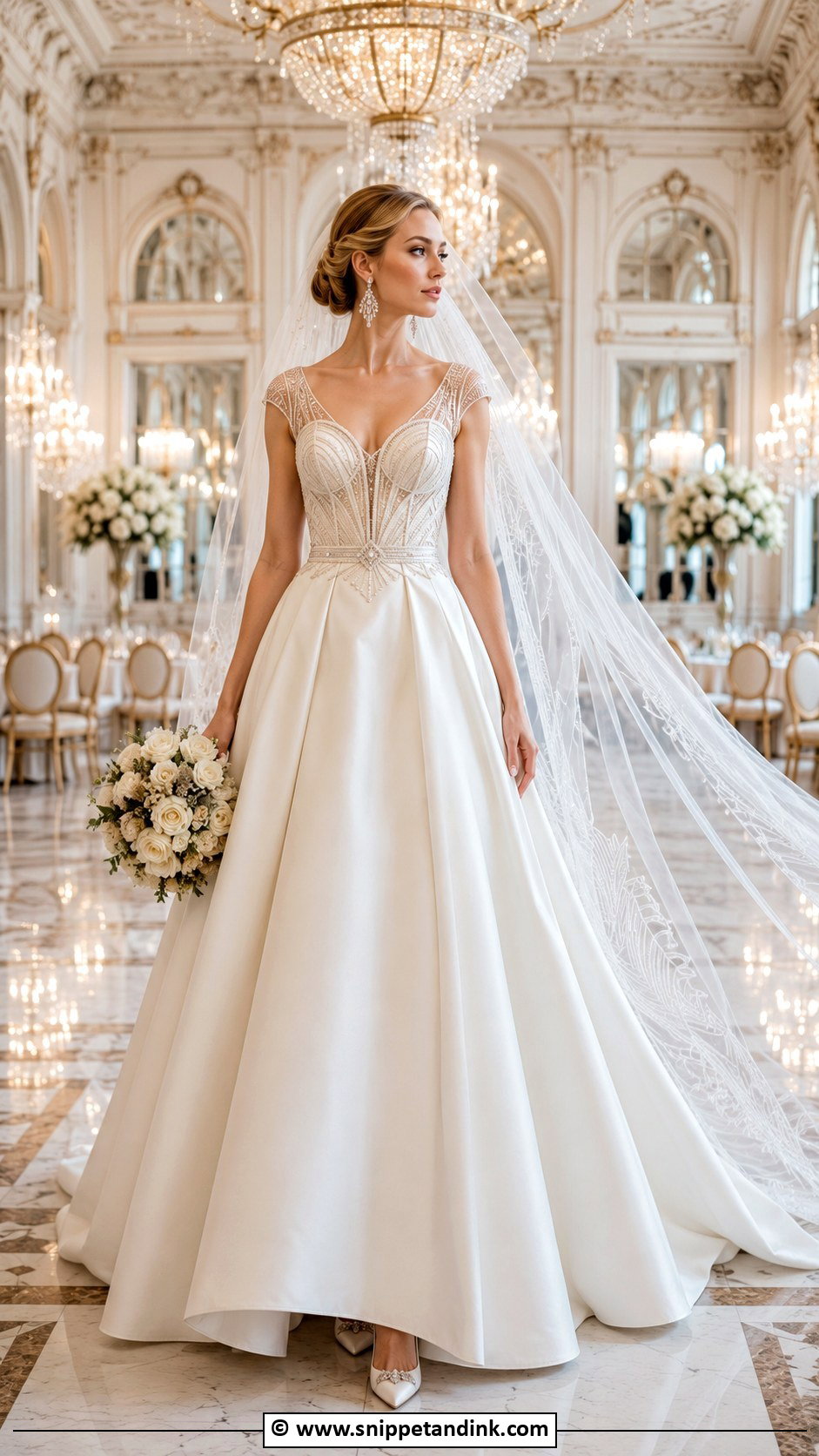
A full skirt is not very 1920s, so the ball gown needs crisp lines to stay Deco. A structured bodice with geometric beadwork, a clean full skirt or subtle metallic embroidery does it, without princess frills. Classic heels, chandelier earrings and a cathedral veil suit a venue big enough for it. I’d keep this to a large ballroom or historic hall; in a small room the volume overwhelms the geometry that makes it Deco in the first place.
24. Art Deco Cape Wedding Dress
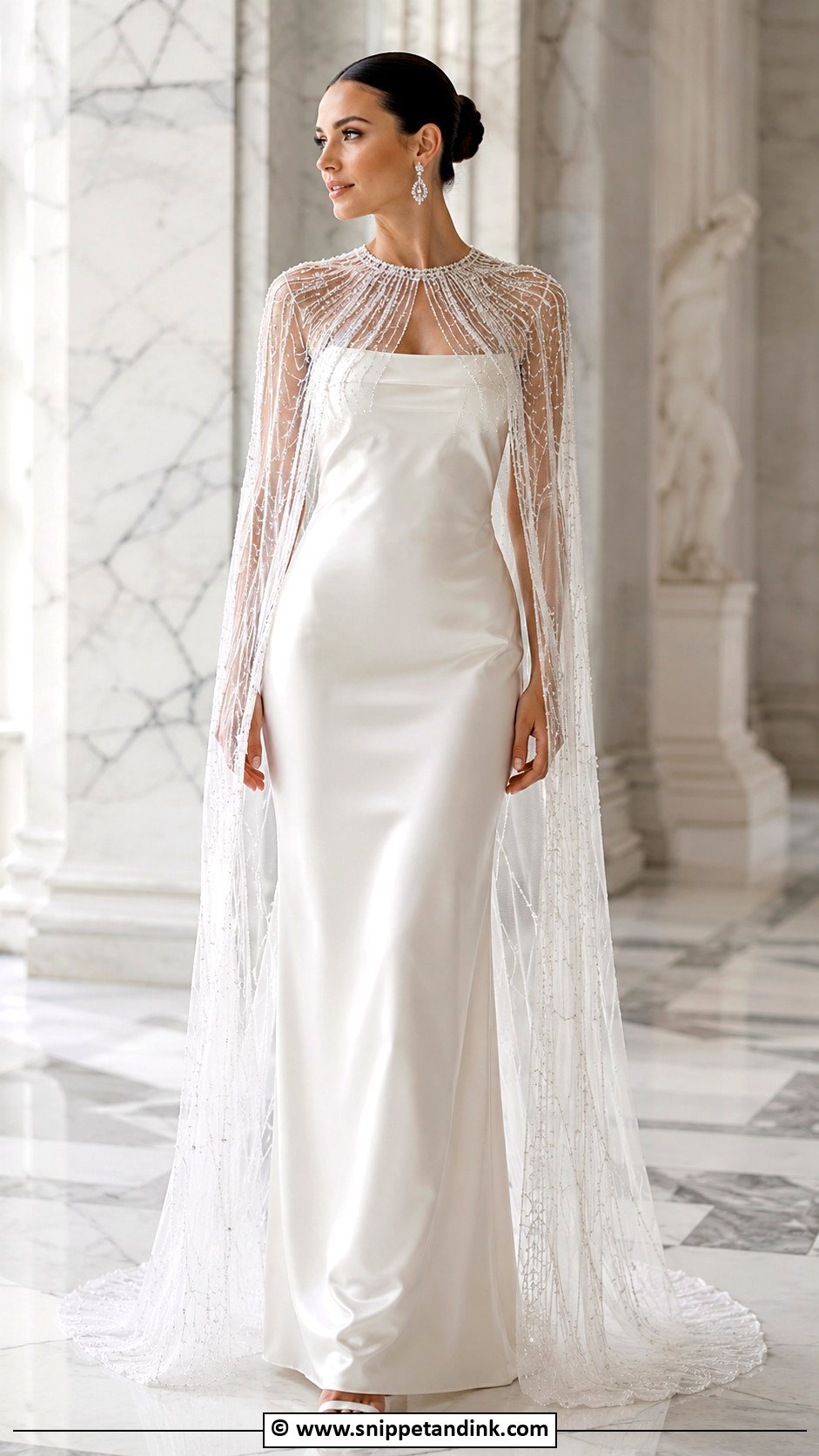
An Art Deco cape wedding dress turns a simple gown into an entrance. A beaded cape, sheer capelet or long flowing cape sits best over a sleek sheath or satin column that does not compete. Simple heels, earrings and smooth hair are enough. A cape with crystal trim or pearl edging can replace the veil entirely. Beaded capes are heavier than they look, so I anchor them with hidden hooks at the shoulder seams. It gives coverage and movement in cooler weather.

25. Art Deco Wedding Dress With Gloves
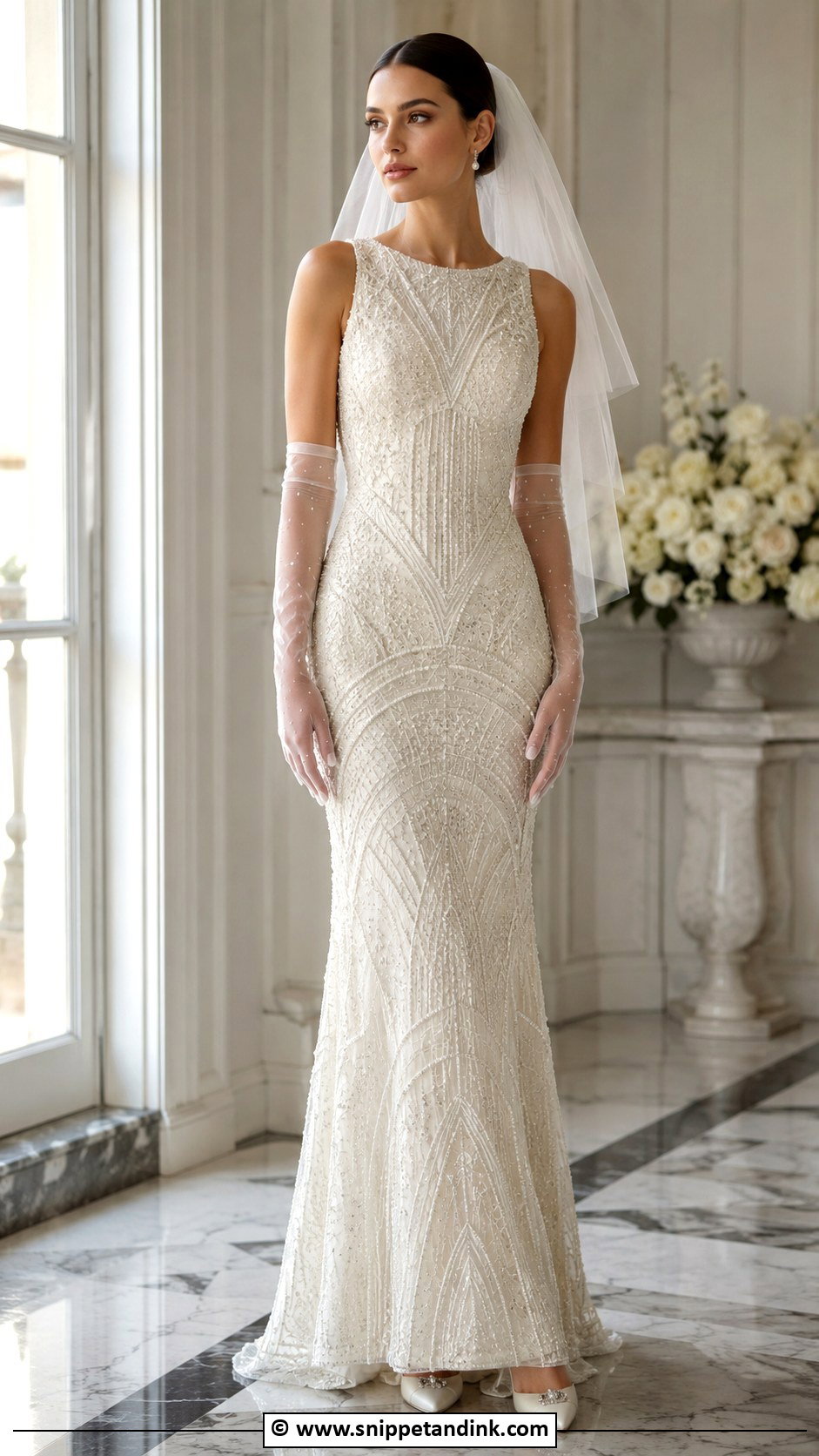
Gloves finish a vintage outfit, but they need matching to the dress. Satin, tulle or sheer gloves work depending on the fabric: long gloves with sleeveless gowns, wrist-length with short or tea-length styles. Keep the gown sleek with beading, satin or lace. Pointed heels, pearl earrings and a structured veil or comb complete it. Plan the ring moment, because you cannot slide a ring over a glove; brides either remove the left glove at the ceremony or choose a style with a finger opening.
26. Art Deco Wedding Dress With Headpiece
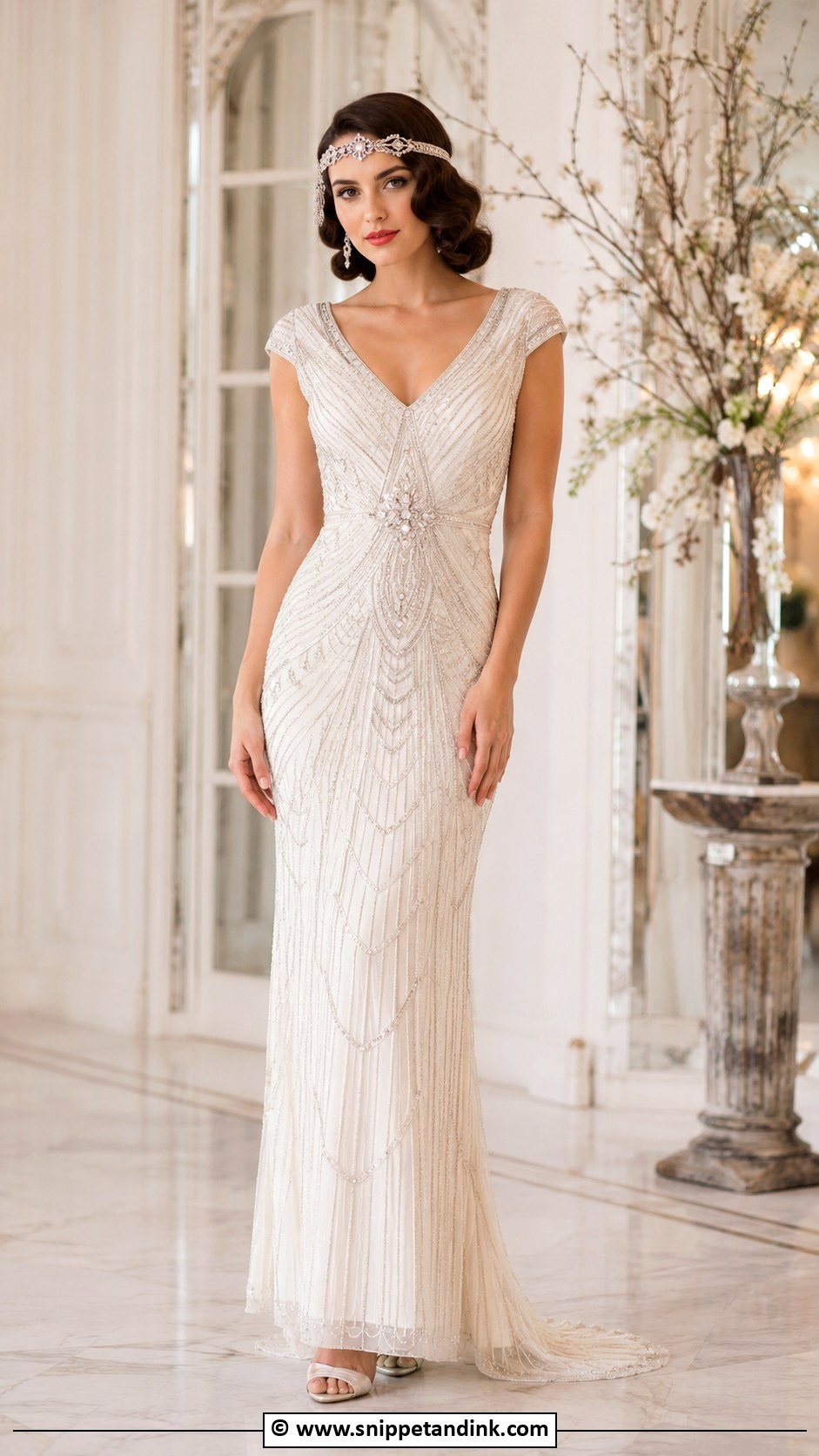
Match the headpiece to the dress’s embellishment: a crystal headband, pearl comb, beaded cap veil or geometric hairpiece. Heavily beaded gown, small headpiece; plain satin, something more ornate. Pair it with sleek heels, drop earrings and a soft updo or waves. Weight matters with headpieces. A heavy beaded band presses on the head after a few hours, so I secure it with pins through a small braid at each side rather than relying on the band’s grip alone.
27. Art Deco Wedding Dress With Veil
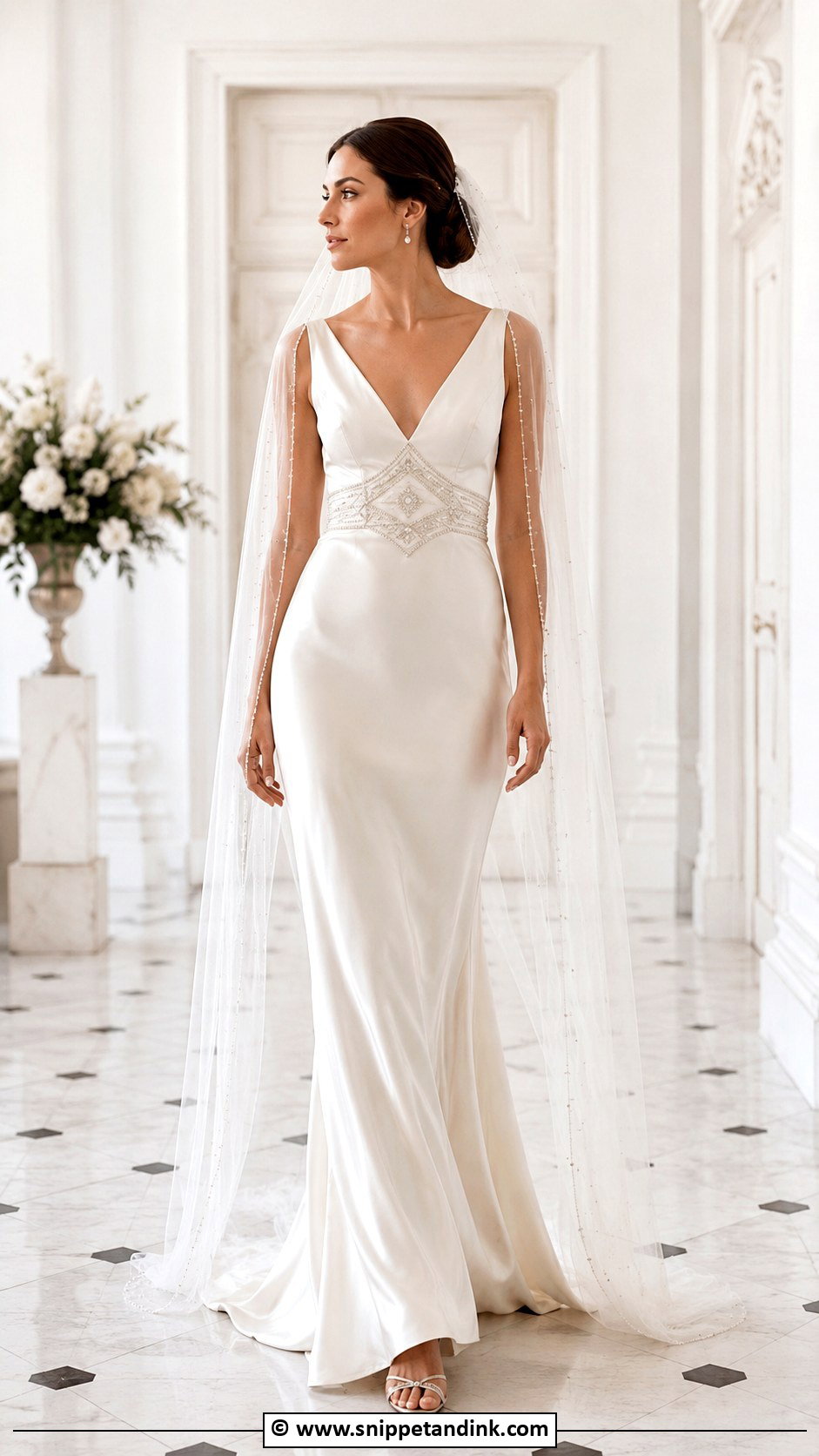
Veil choice shifts a Deco dress from soft to dramatic. A plain tulle veil balances a beaded gown; a pearl-trimmed veil adds texture to satin. For a strong vintage effect, choose a Juliet cap veil or a veil with geometric edging. The hairstyle has to support the placement, so bring the veil to your hair trial. Bridal heels and simple earrings complete it, layered but not busy, for a traditional ceremony with clear Deco influence.
28. Art Deco Courthouse Wedding Dress
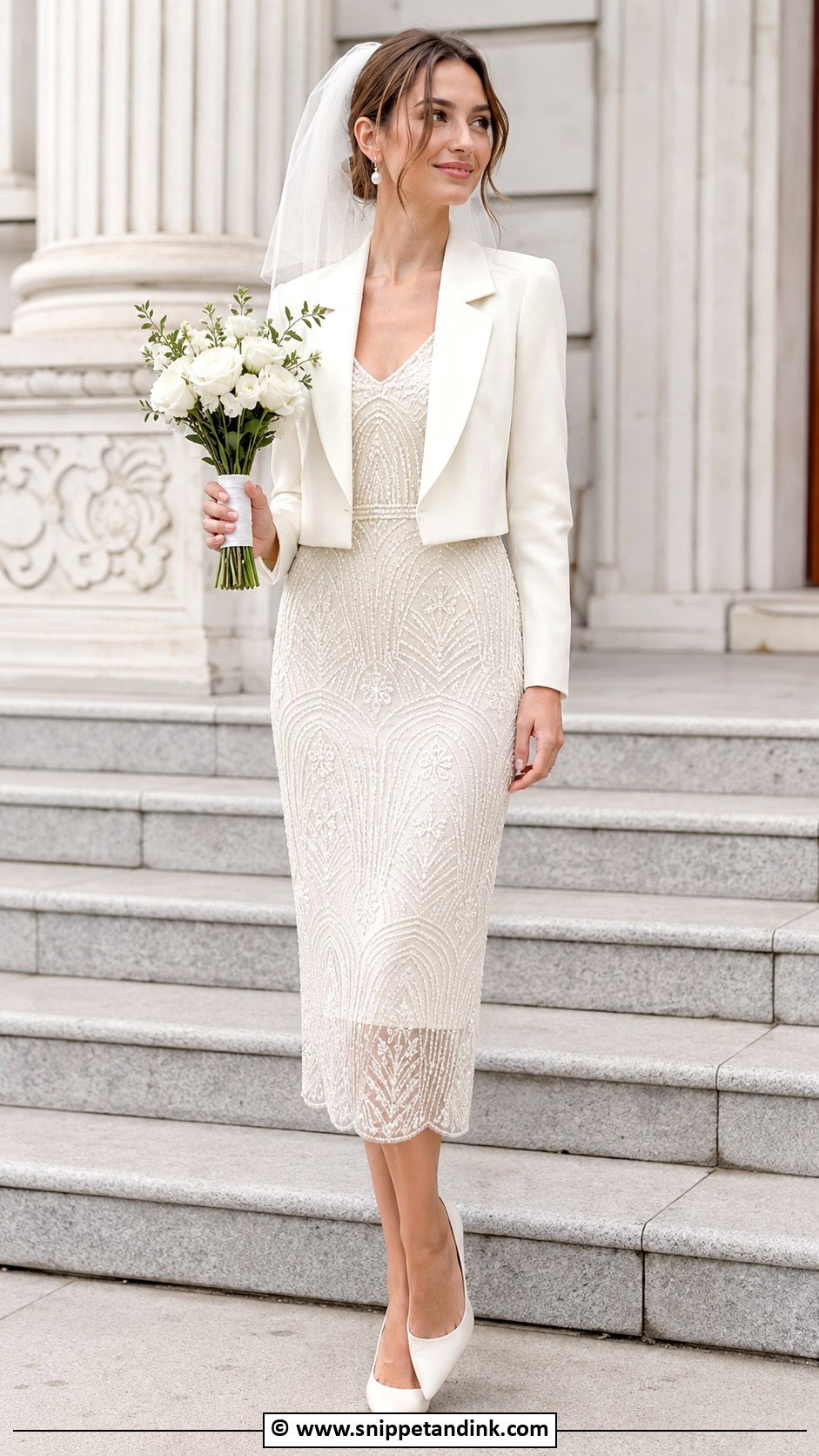
An Art Deco courthouse wedding dress should look polished in a corridor and still be easy to wear. A beaded midi, satin slip, short fringe dress or tailored ivory column all work. Add pointed pumps, a small bouquet, pearl earrings and a short veil or crystal headband. Courthouse light is often fluorescent and flat, which flattens satin, so a little beading or texture helps in those photos. A structured blazer or capelet adds polish on city hall steps.
29. Art Deco Reception Wedding Dress
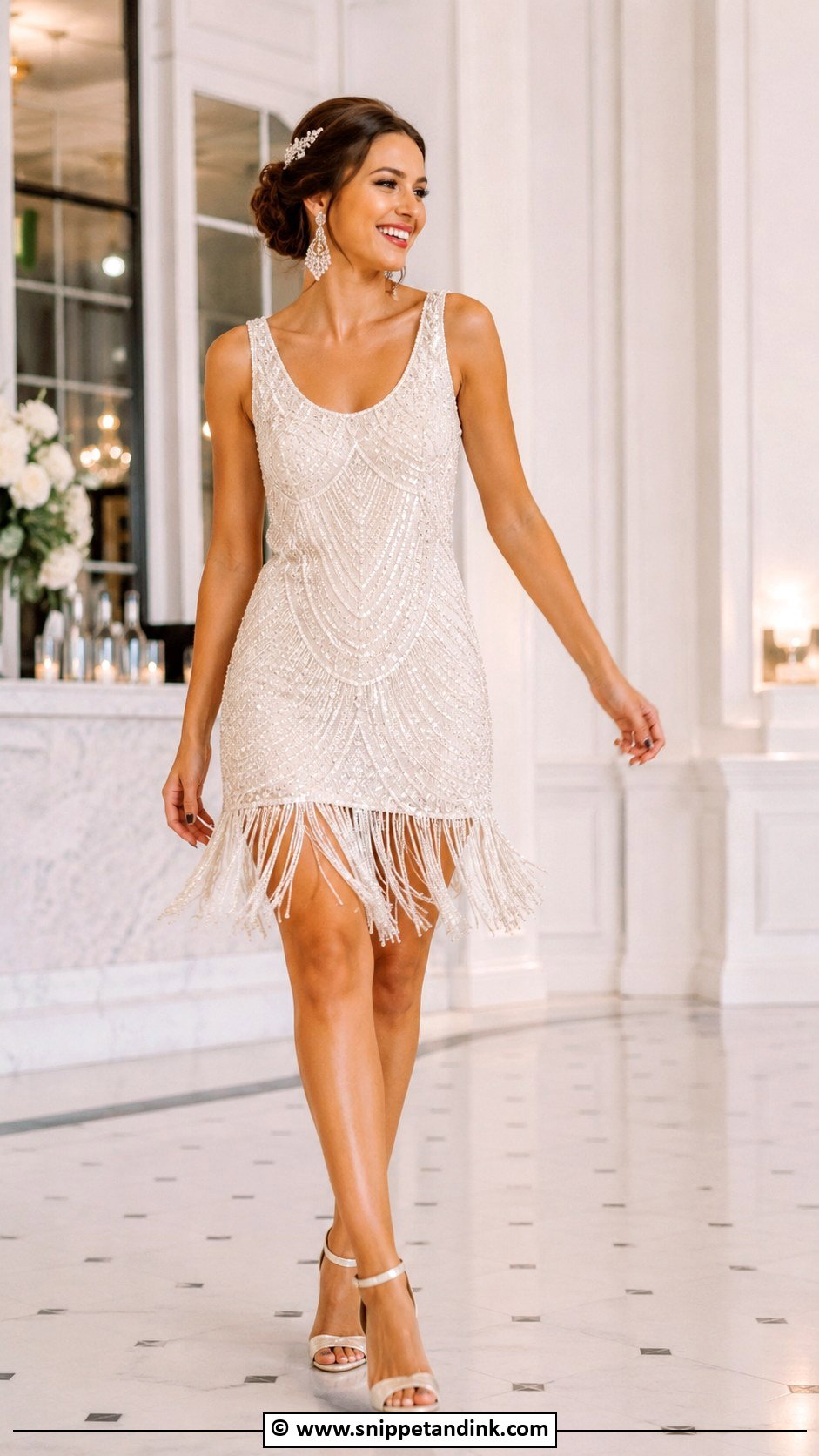
The reception dress is where you can go lighter and bolder. A beaded mini, fringe midi, sequin sheath or slim satin dress with crystal trim all suit dancing. Comfortable heels, statement earrings and a small hair accessory complete it. I like it to share one detail with the ceremony gown, the same beading motif or the same metal, so the two looks belong together. No train to manage, and a second bridal moment for the photographs.
30. Art Deco Wedding Dress With Jacket
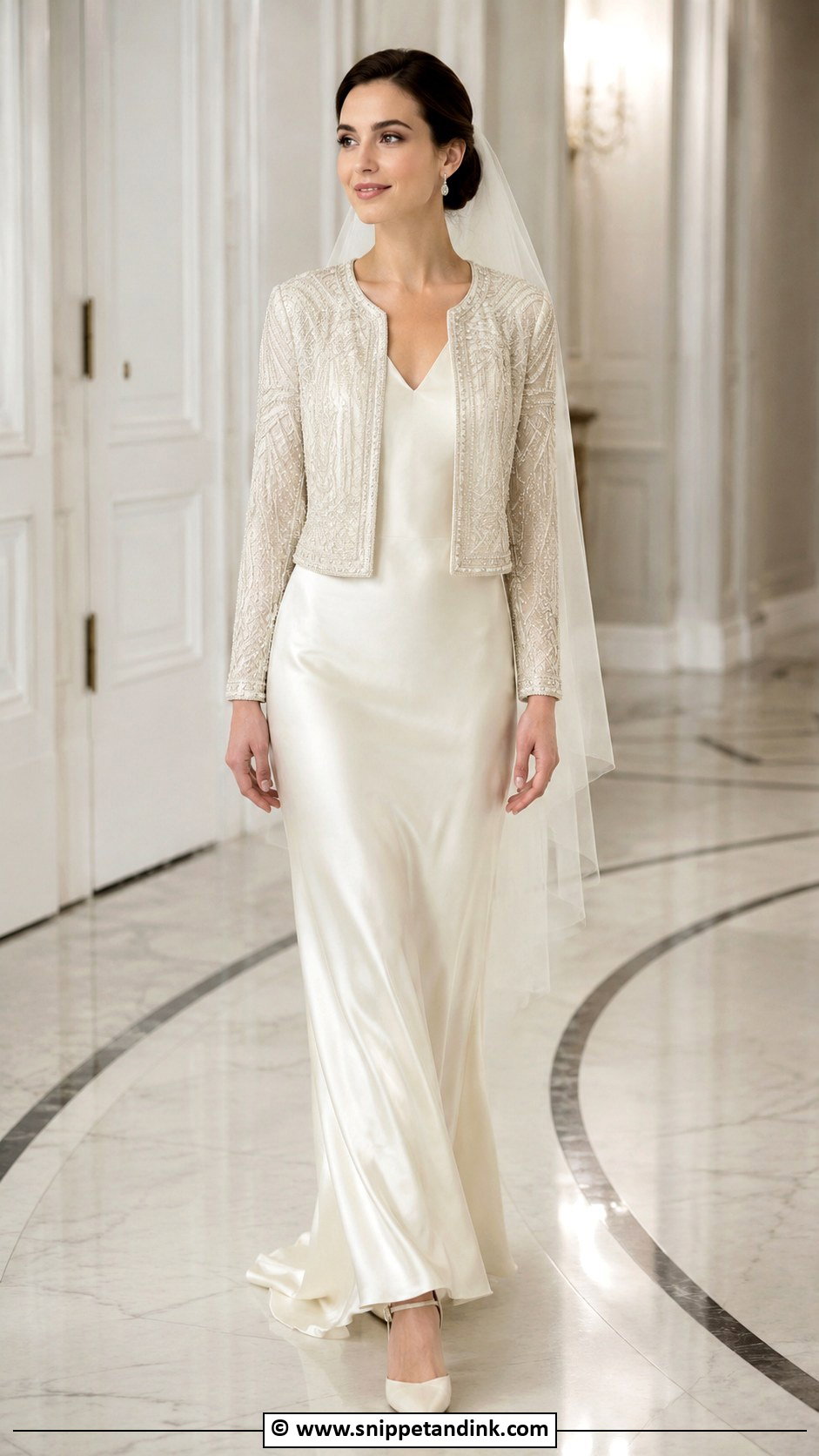
A jacket gives coverage, structure or a second look with one piece. A beaded bolero, satin cropped jacket, sheer embroidered topper or pearl-trimmed capelet transforms a simple gown. Wear it for the ceremony and remove it for the reception. The veil must suit the jacket’s neckline, since a high collar and a gathered veil can fight at the nape. Classic heels and refined earrings complete it, and it is a practical answer to a cold church or a formal venue.
Beaded Dresses Behave Differently From Plain Ones
Beaded gowns are heavy and they hang. A fully beaded sheath can drop slightly in length over a long day as the weight pulls the fabric down, so I set the final hem with the bride standing for a while, not straight after she steps in. Avoid hanging a beaded dress on a hanger in the days before the wedding; lay it flat or support it on a padded form.
Bustles are harder on sheaths and slips because there is little fabric to gather. If you want a train for the ceremony and freedom later, a detachable train that clips on at the waist is often cleaner.
Thinking About a Genuine 1920s Dress?
Original dresses from the period are often silk chiffon or georgette with glass beads, and a century is hard on both. Old silk can split along the grain with very little strain, and the threads holding heavy beads weaken. I’d have a specialist in vintage textiles look at it before you commit, and expect some reinforcement or a new lining.
Sizing is the other surprise. Garments from that era were often cut for a smaller, straighter frame, with little allowance to let out. Many brides end up wearing the original for portraits and a faithful reproduction for the dancing, which protects the dress and lets them move.
Clean Lines Outlast Extra Sparkle
Structure, shimmer and romance in balance is why Deco keeps returning. A beaded sheath, a satin slip, pearls, fringe or a cape can all be right; what matters is that the details sit well on your body and suit your venue. Put clean lines, careful tailoring and a few strong accessories ahead of more decoration. Test the dress the way you will use it, walking, sitting and dancing, and it will hold up in motion, in photographs and up close.
You'll Like These Ideas:






Leave a Reply