
Wedding colour is the one hair decision you can’t take down at midnight. A style lasts a day; the shade lasts through every photo you’ll ever show anyone. So my advice in the chair is almost always the same: aim for a better version of your own colour rather than a new one. Shine, soft dimension and a tone that suits your skin will do more for your photos than a dramatic change. Below are the shades I see brides wear well, from creamy blondes and rich brunettes to copper and glossy black, with what each one needs from your hair and your calendar.
A Colour Countdown, Worked Back From the Wedding Date
Brides tend to book their colour too close to the wedding. Colour needs time to settle, and a mistake needs time to fix. This is roughly how I’d space things, though your colourist will adjust it to your hair.
- Three to six months out: start any big change, especially going lighter on dark hair. Lifting in two or three gentler sessions is kinder than one aggressive one.
- Before any new dye: ask for a skin allergy test, usually done at least 48 hours ahead. Reactions are rare, but nobody wants one in wedding week.
- Six to eight weeks out: trial the final shade so you can see how it fades and how it looks with your makeup trial.
- About two weeks out: the main colour appointment. Roots are fresh, but there has been time for any tone to soften and for the scalp to settle.
- Up to a week out: a gloss or toner refresh for shine. This is quick, gentle and the step that makes the most difference in photos.
Bleach and hair-straightening treatments should not be stacked in the same week. If you’re planning both, tell your colourist early so they can be spaced out.
1. Bridal Champagne Blonde Hair Color
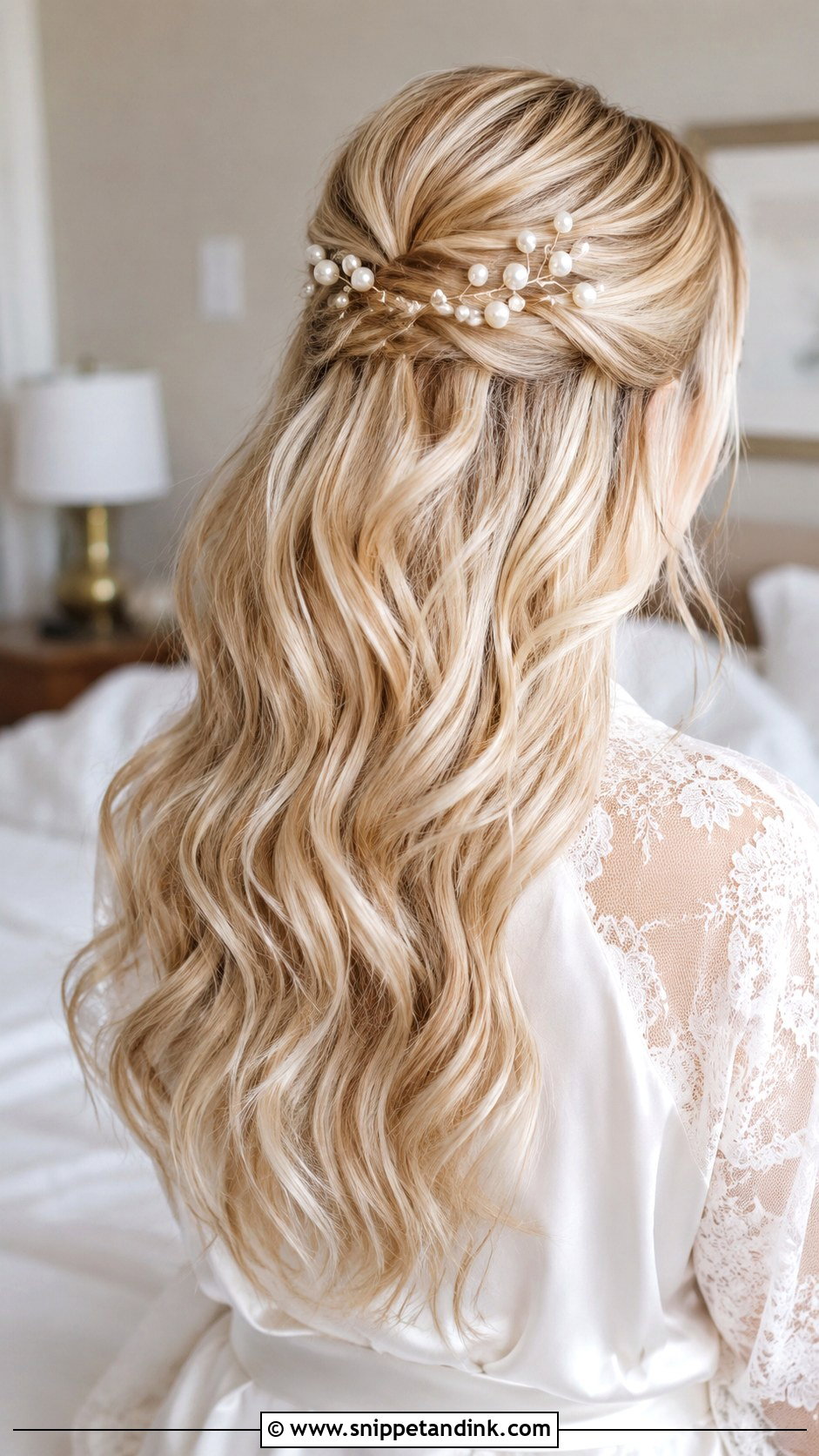
Champagne blonde sits between icy and golden: a beige base with a pearl reflect. It’s the blonde I’d pick beside ivory or champagne fabric, because a very cool platinum can look grey next to a warm dress. Getting there usually means lifting the hair to a clean pale yellow, then toning, so it isn’t a quick job on darker hair. A gloss a few days to a week before the wedding brings back the reflective finish that toner loses with every wash.
2. Bridal Honey Blonde Balayage
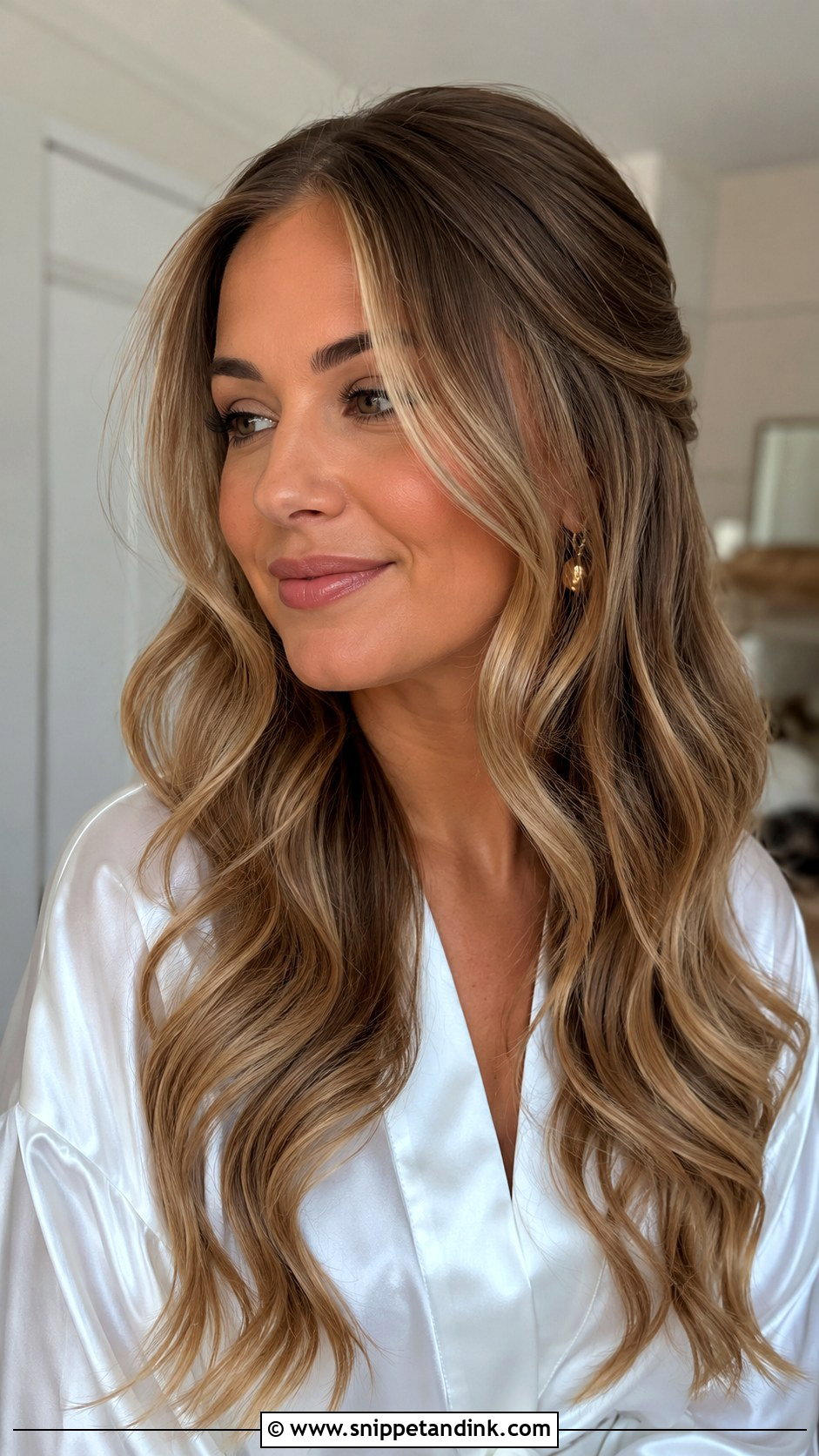
Honey balayage brightens the face without making you a full blonde, and the hand-painted placement leaves soft roots that grow out gently. That’s the real advantage for a bride: if your colour appointment slips a few weeks early, nobody will see a line. Warm honey suits gold jewellery and outdoor light. It does lift the hair, so I’d book a bond-building or hydrating treatment alongside it, as dry ends make warm blonde look brassy rather than rich.
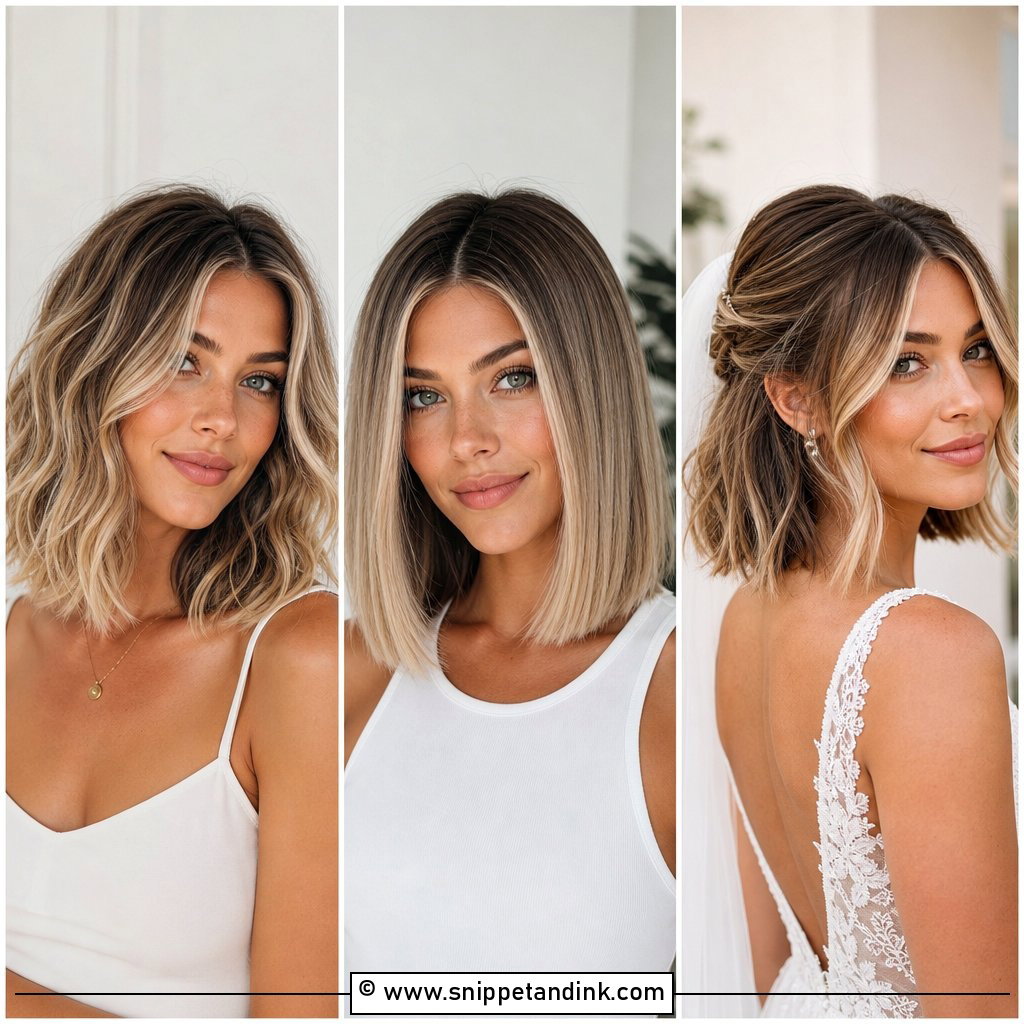
3. Bridal Beige Blonde Highlights
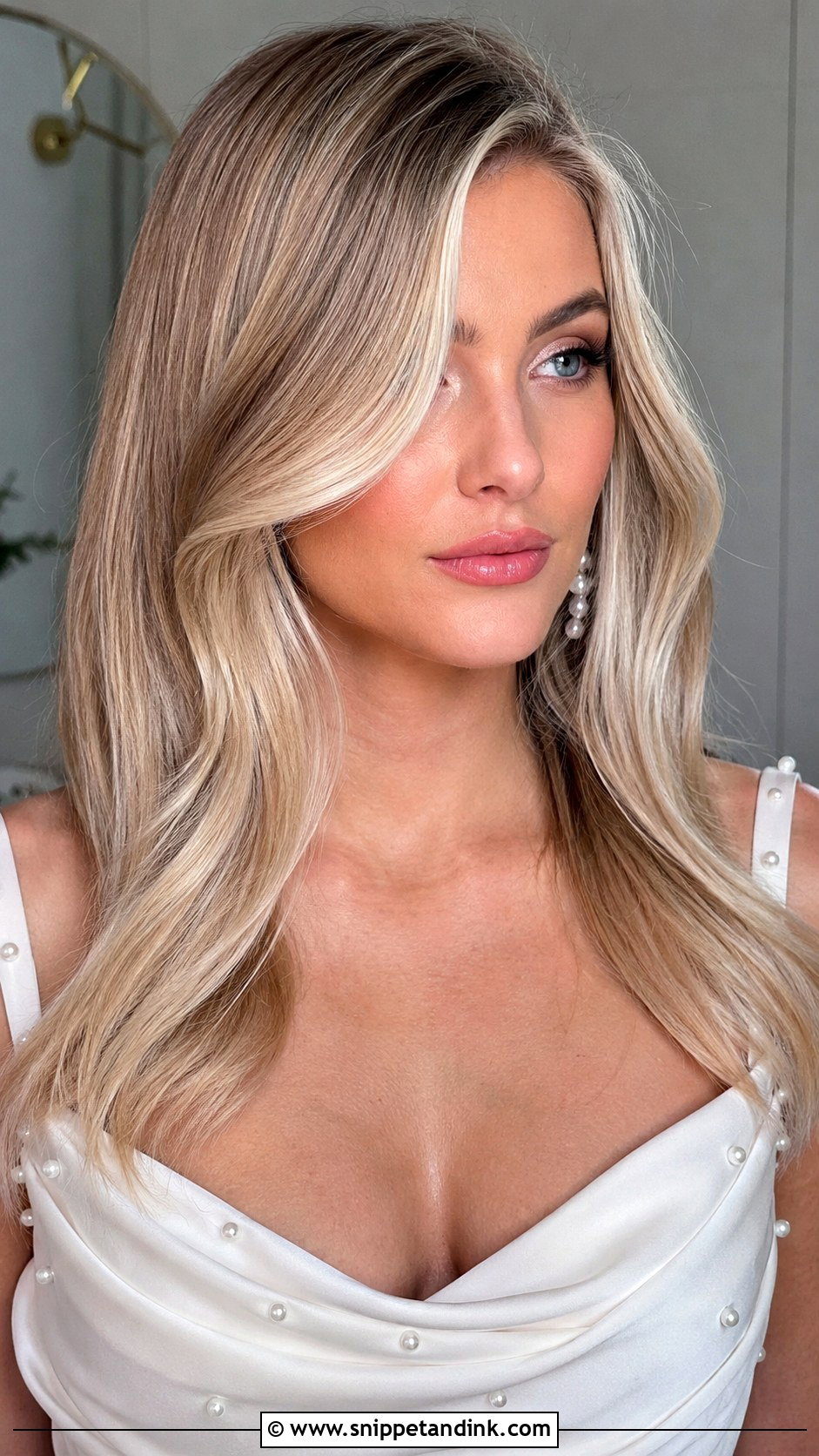
Beige highlights are the safest blonde for someone who isn’t sure if she’s warm or cool, since the tone sits right in the middle. I keep the foils finer near the hairline and the crown, which is where the camera looks, and slightly heavier through the ends. On dark blonde or light brown hair this is a refresh rather than a change. A neutral toner keeps it from drifting yellow; ask your colourist which purple shampoo, if any, to use in the final weeks, and don’t overuse it or the beige turns dull.
4. Bridal Bronde Balayage
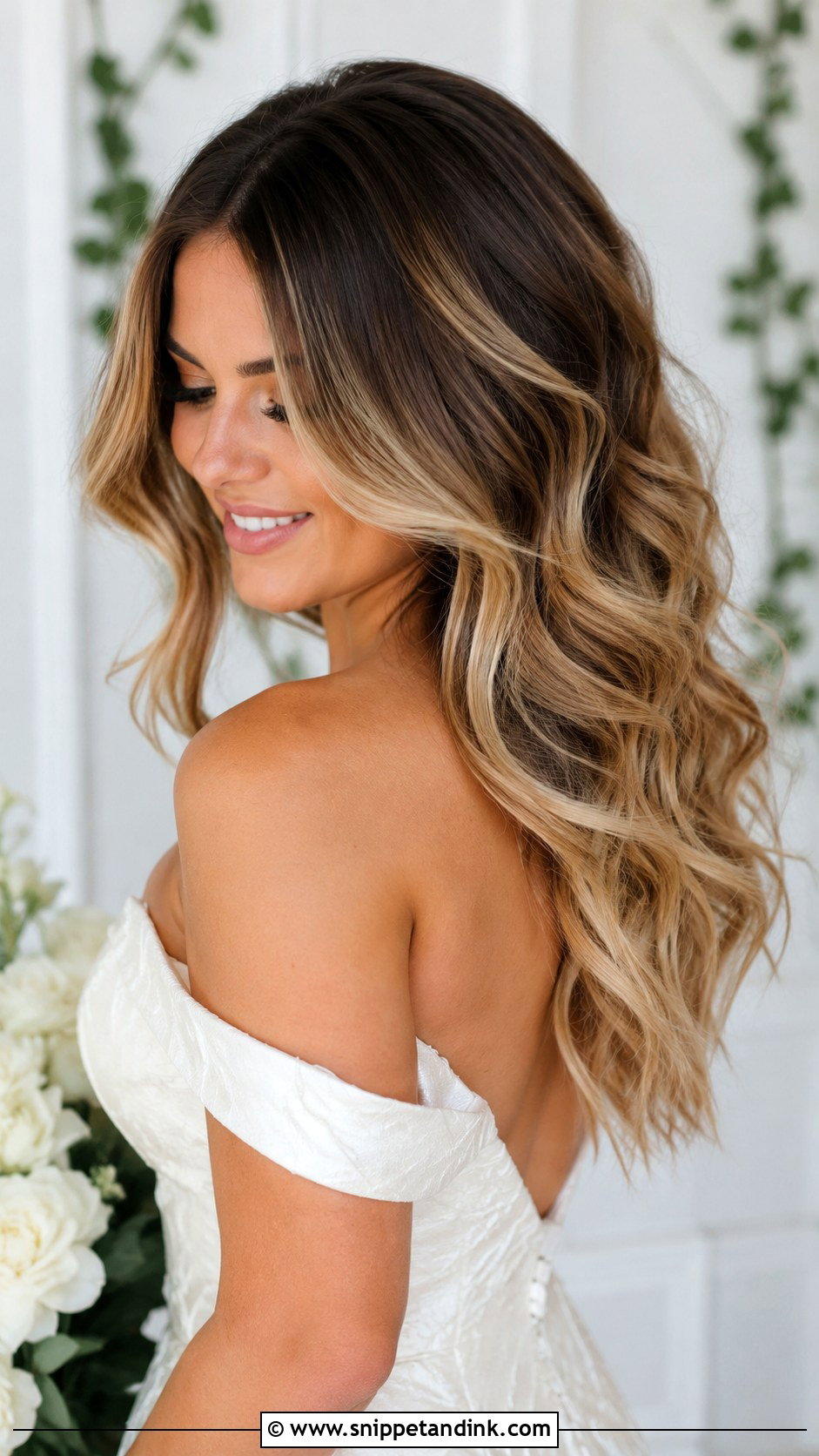
Bridal bronde balayage is what I recommend most to brunettes who want light but still want to recognize themselves. The brown base stays at the root and the blonde blends through the mid-lengths and ends. Because it grows out softly, it’s also forgiving about timing. It shows best on layers and waves, where the light and dark sections move over each other. On a sleek, one-length straight style, much of the dimension disappears.
5. Bridal Caramel Brown Hair Color
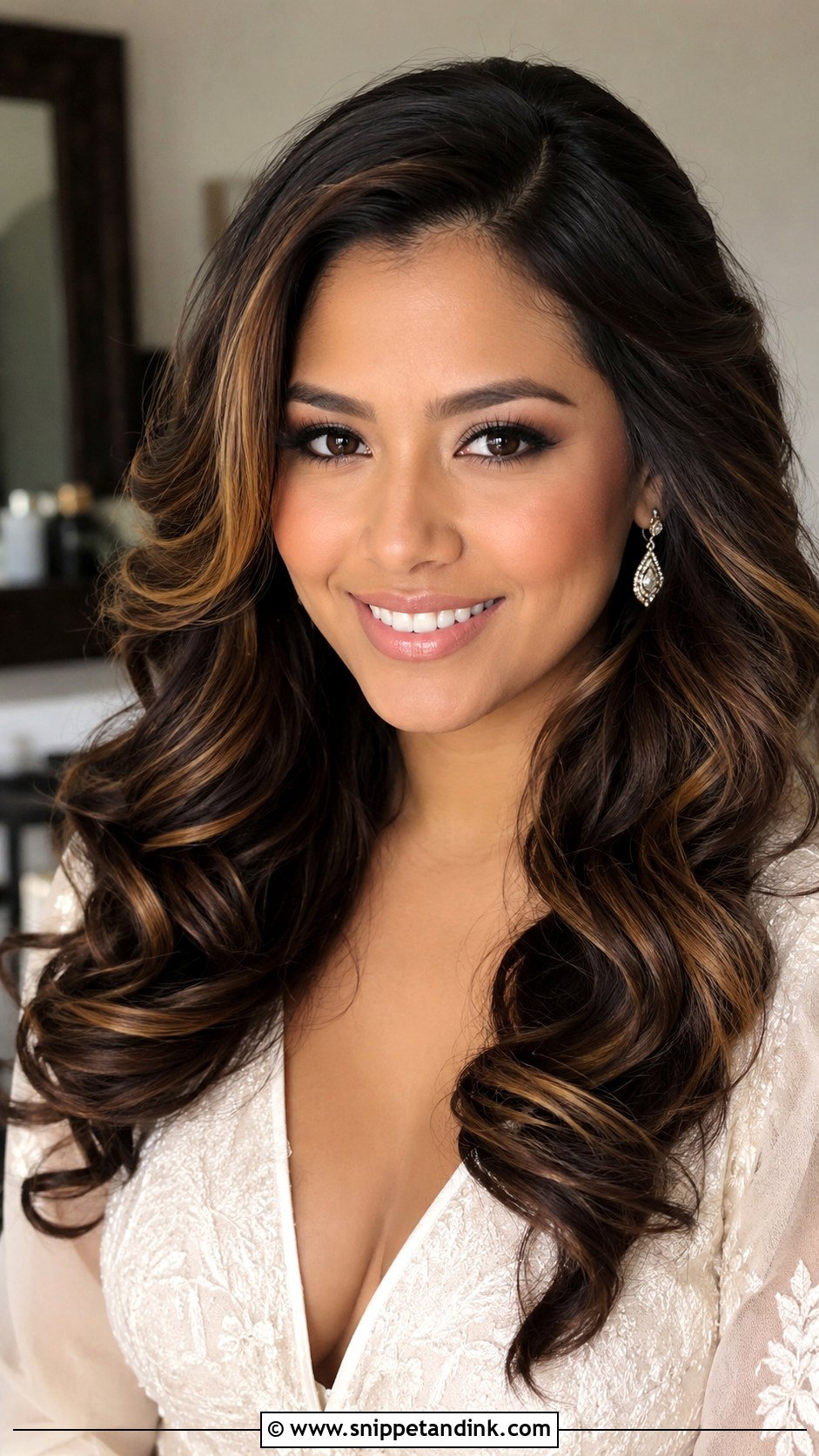
Caramel adds warmth to brunette hair without going blonde. I place it round the face and through the ends, kept fine and blended. Chunky caramel stripes look dated in close-up photos far faster than you’d think. It shows texture well, so braids and curled styles benefit most. If you’re wearing warm makeup with bronze eyeshadow, the two tie together nicely.
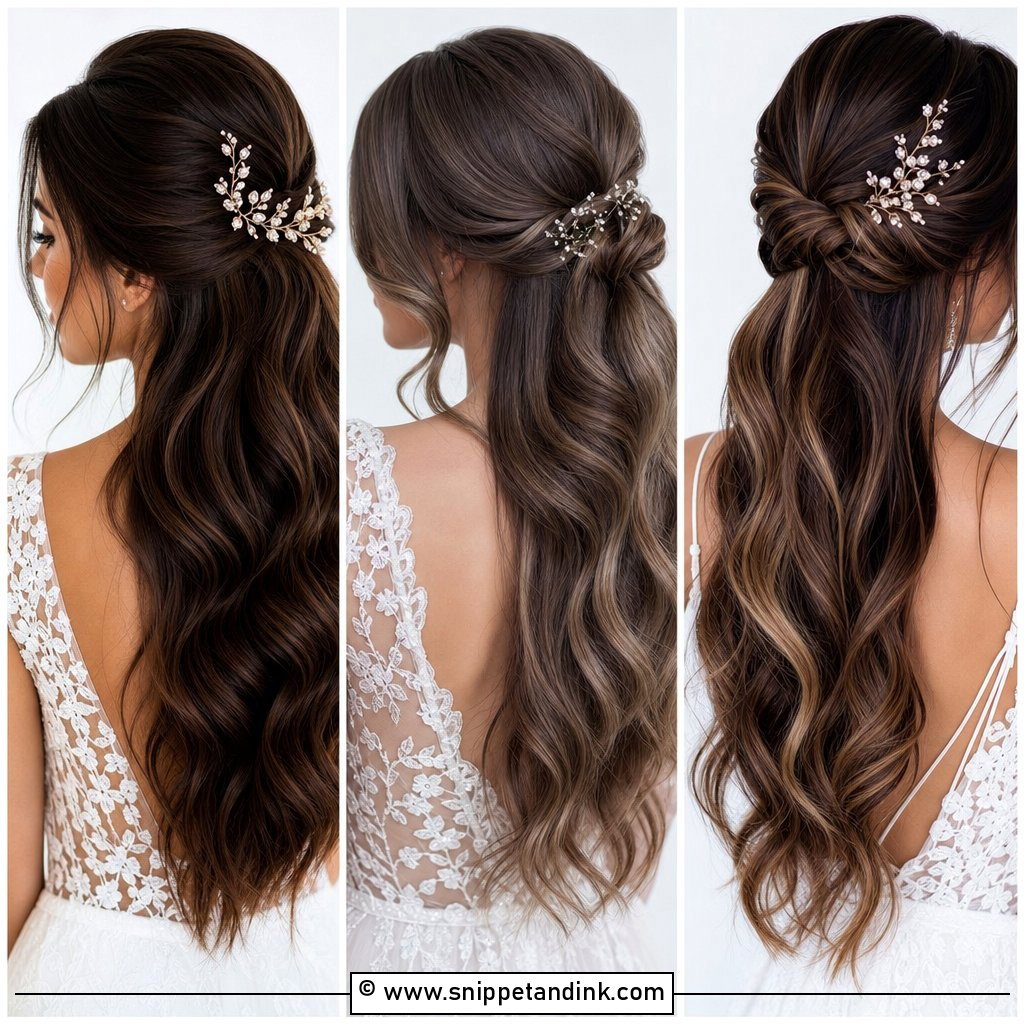
6. Bridal Chocolate Brown Hair Color
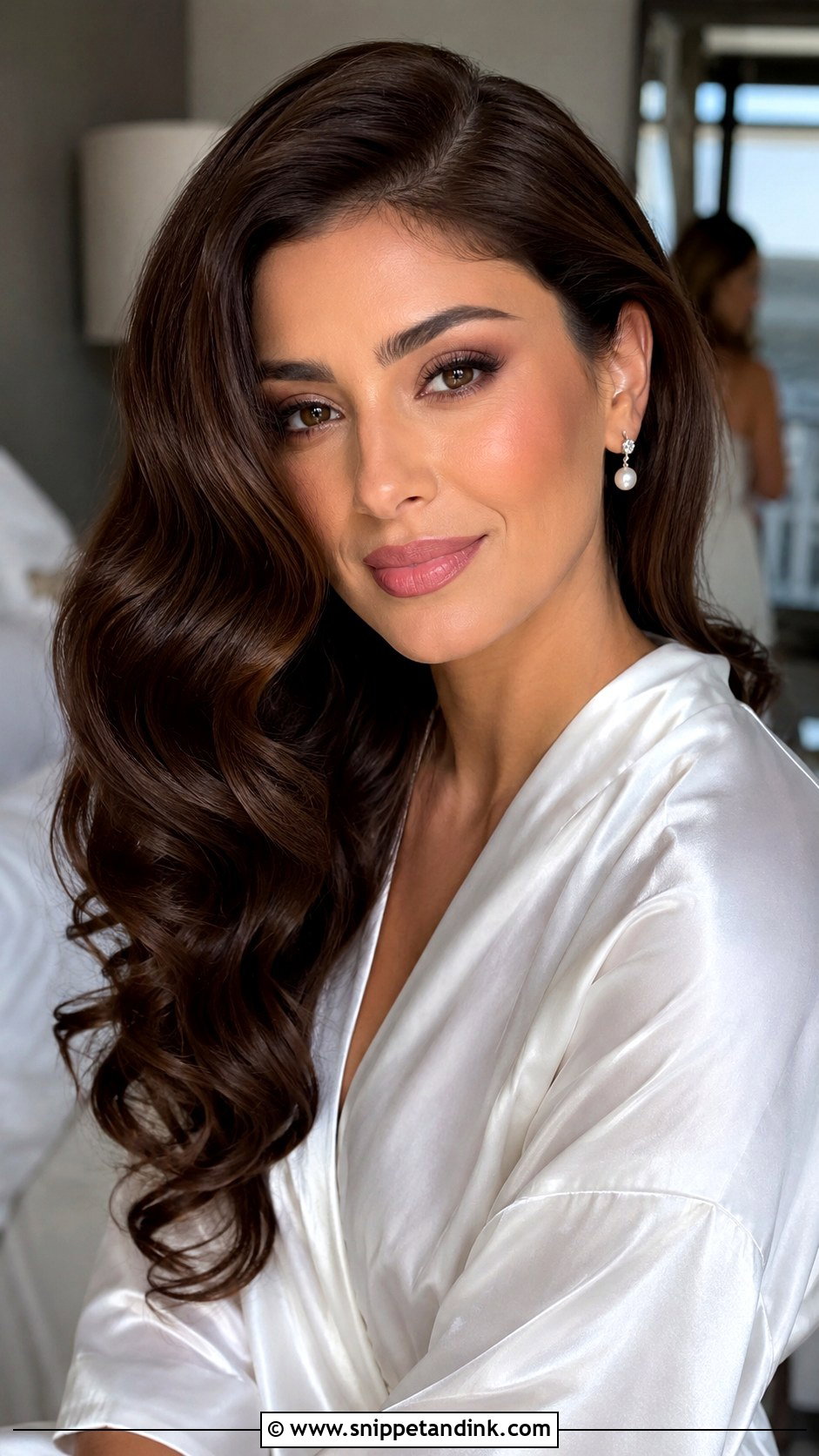
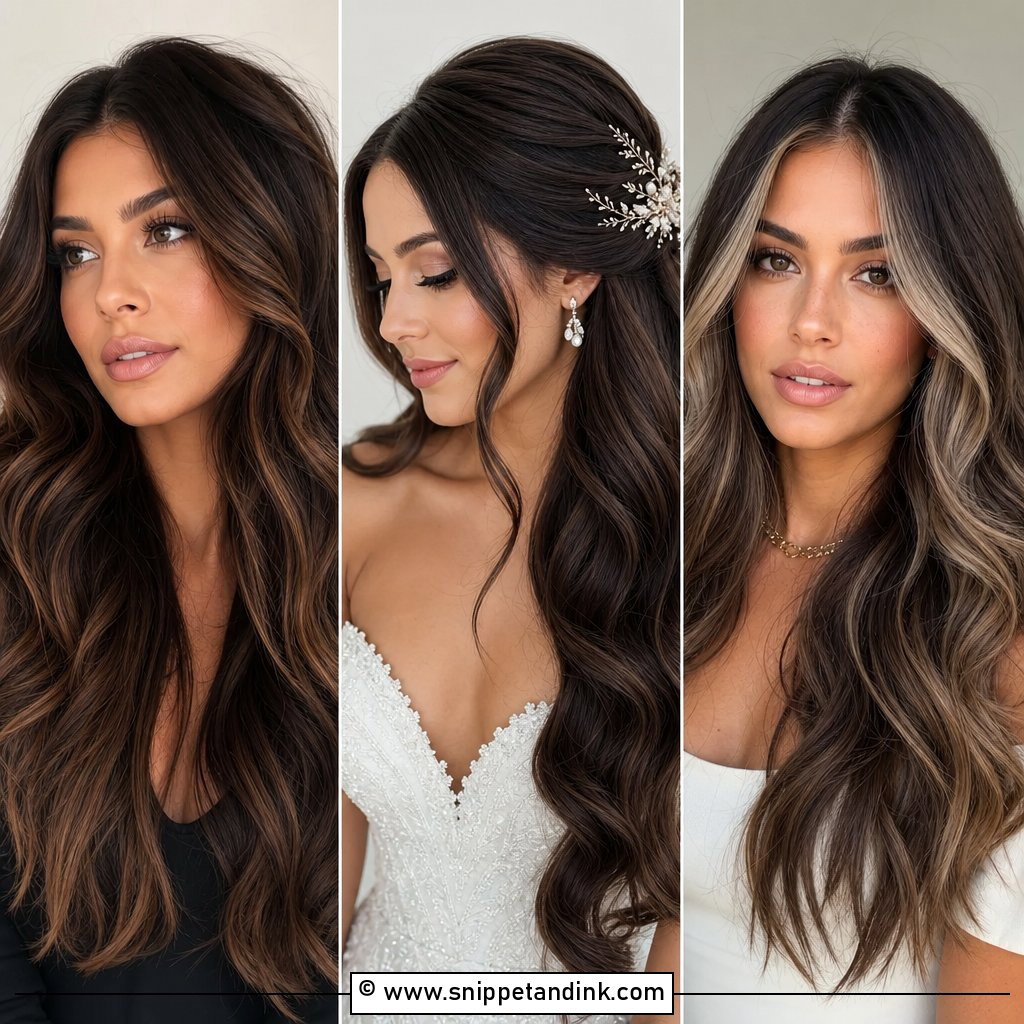
Chocolate brown is the shade that most needs shine, since flat brown reads as matte, almost black, in flash photography. It runs from milk chocolate to deep cocoa, and the right depth depends on your natural colour and skin. I almost always finish with a gloss in the week before. Smooth waves and sleek buns show it off best, because a glossy surface reflects light in a way a textured, backcombed one can’t.
7. Bridal Espresso Brown Hair Color
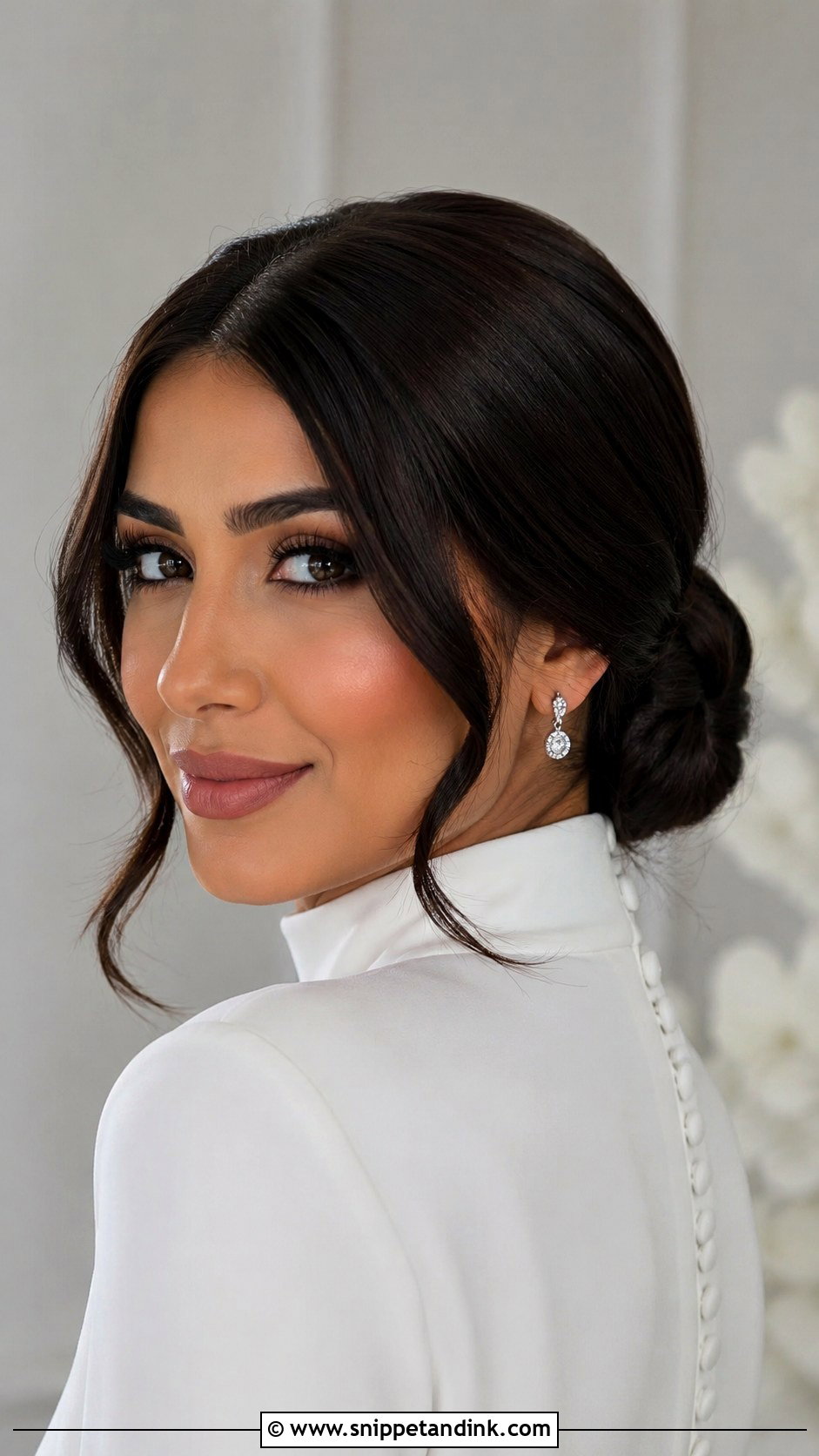
Espresso is a deep, luxe brunette shade, and the finish carries all of it. A center part, sculpted waves or a sleek low bun let the shine do the work. If you want softness, ask for barely there brown dimension, a shade or two lighter at most. Obvious highlights on espresso break up the depth that makes it striking. It’s a natural fit for autumn and winter weddings.
8. Bridal Auburn Hair Color
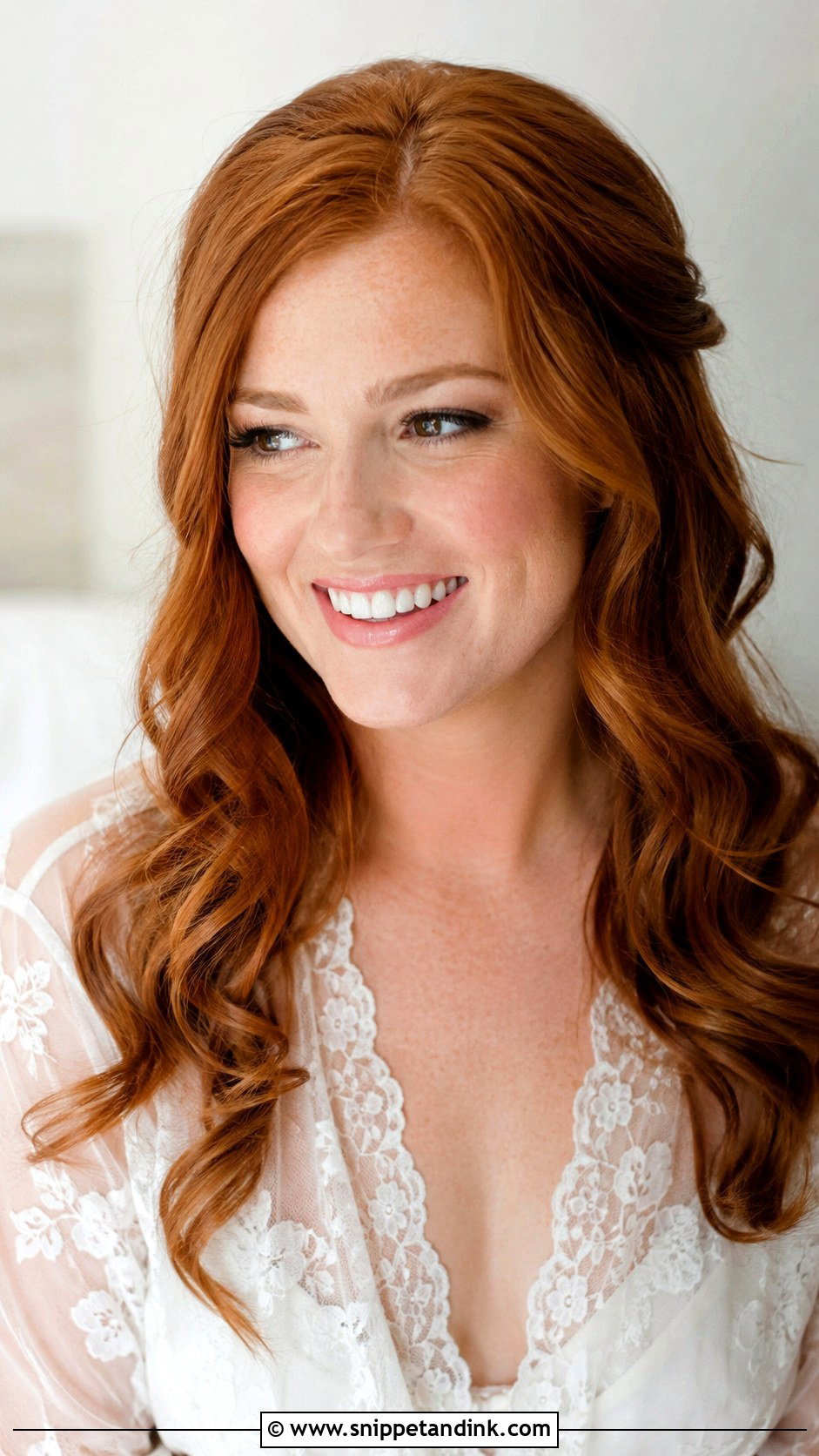
Auburn is red brown, softer than copper and much louder than brunette. Golden-hour light warms it, so outdoor and autumn ceremonies flatter it the most. If you’ve never worn red, start muted. Red pigment fades and shifts as it washes out, and a bright shade you didn’t love at the salon will look even brighter in photos. A trial colour a couple of months before lets you live with it first.
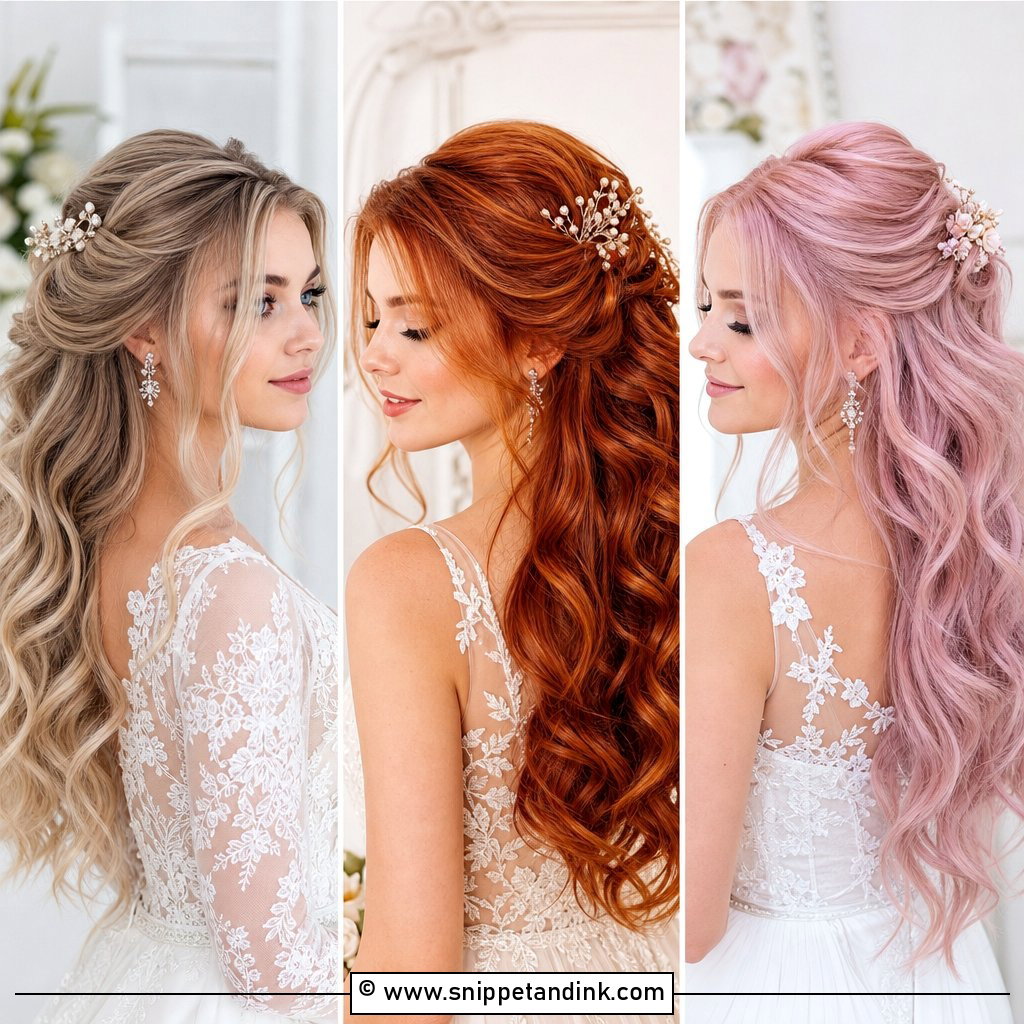
9. Bridal Copper Hair Color
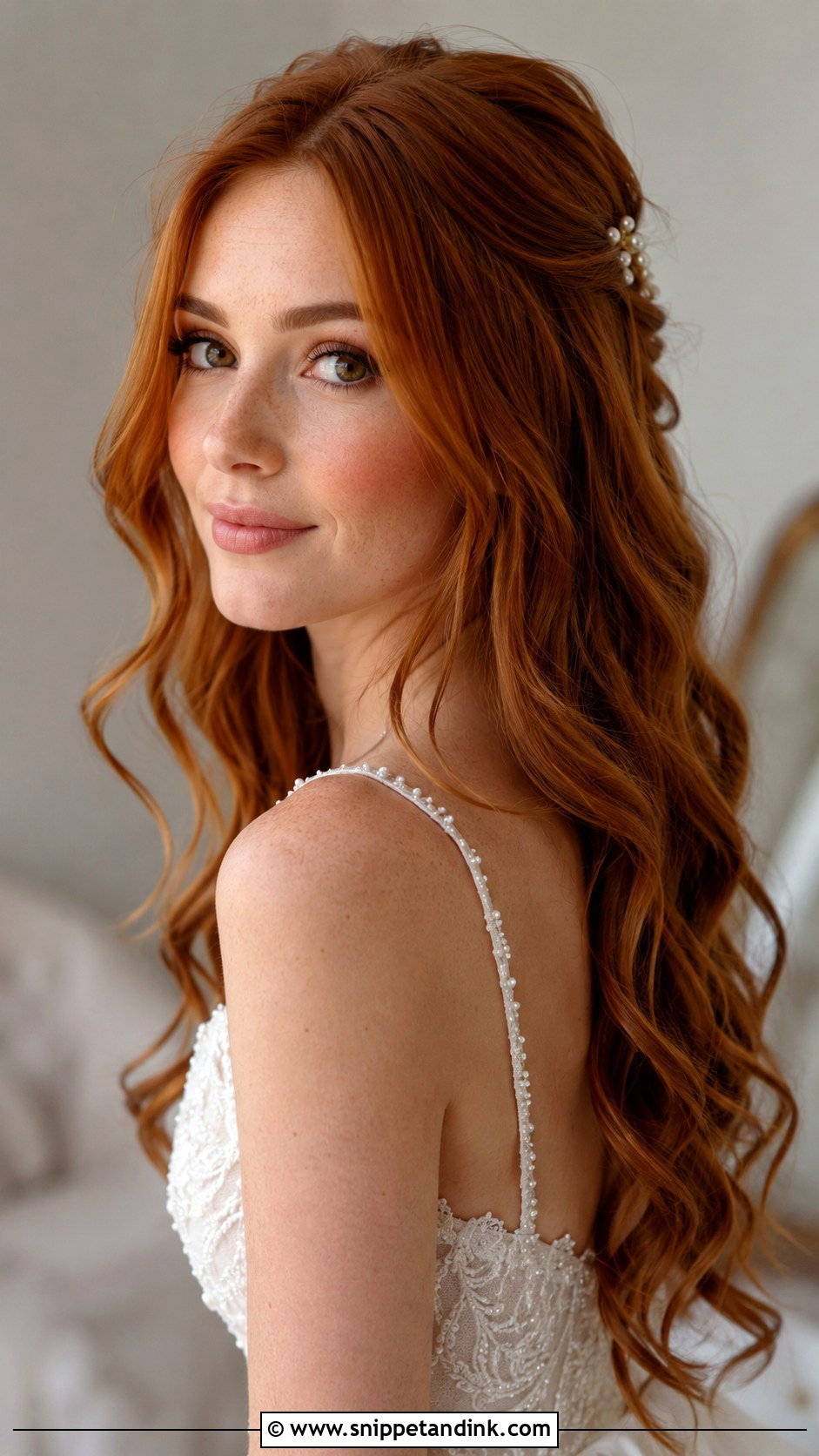
Copper has real impact, and it can be anything from soft ginger to vivid orange. For photos, I steer brides towards the softer end, since a very bright copper can draw the eye away from the face. It sits well beside cream, blush and champagne fabric, and less well beside cool, bright white. Red and copper pigments fade faster than browns, so plan the final gloss close to the date, and wash in cool water in the weeks before.
10. Bridal Strawberry Blonde Hair Color
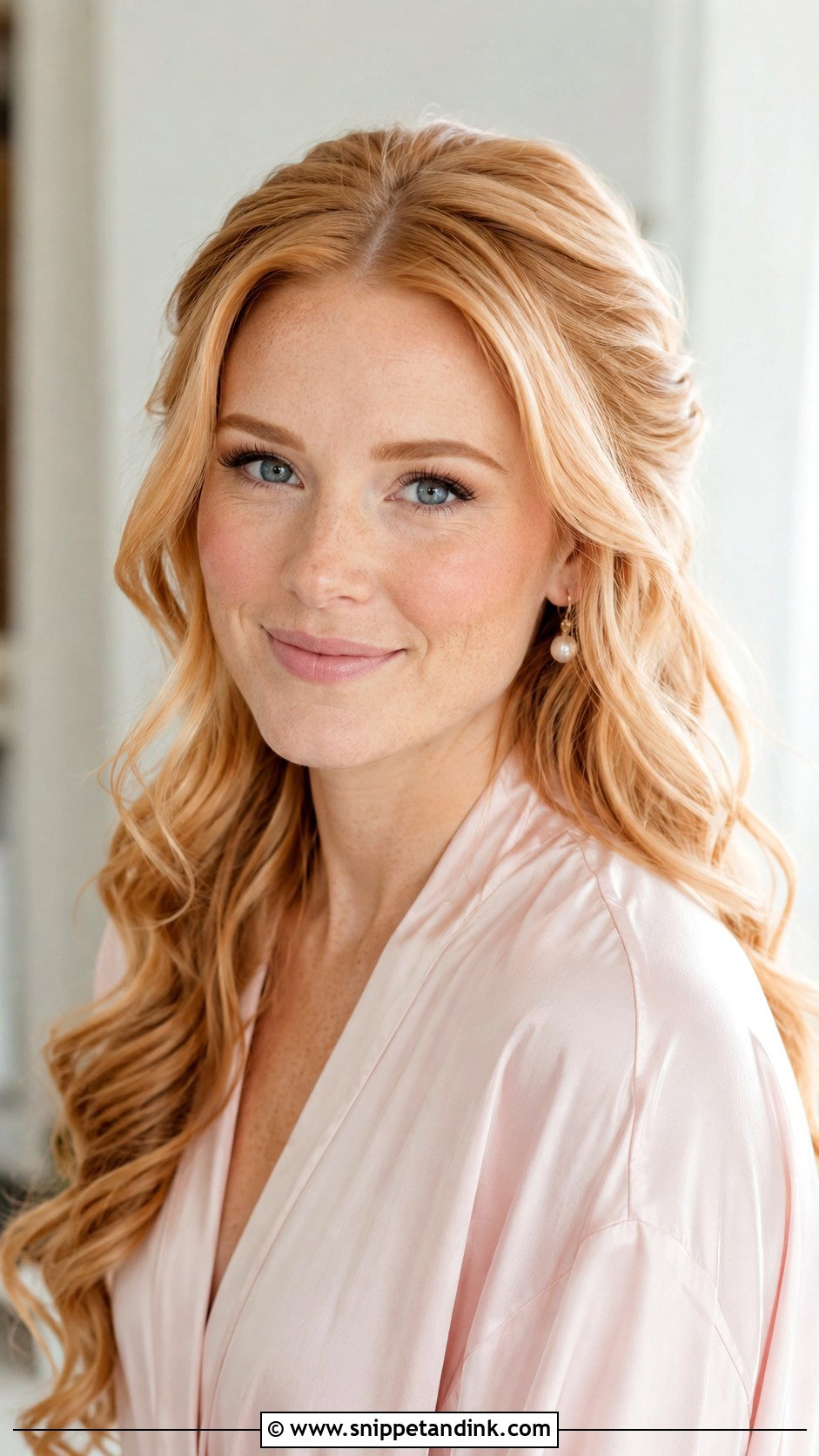
Bridal strawberry blonde hair color sits between copper and champagne blonde: lighter, peachier, more delicate. It can lean golden or slightly copper depending on your undertone, and I usually decide that by looking at the veins at the wrist and the skin along the jaw. Rose gold jewellery and blush makeup suit it. Like copper, the red part of the blend fades first, leaving it more golden, so a refresh before the wedding matters.
11. Bridal Golden Brown Hair Color
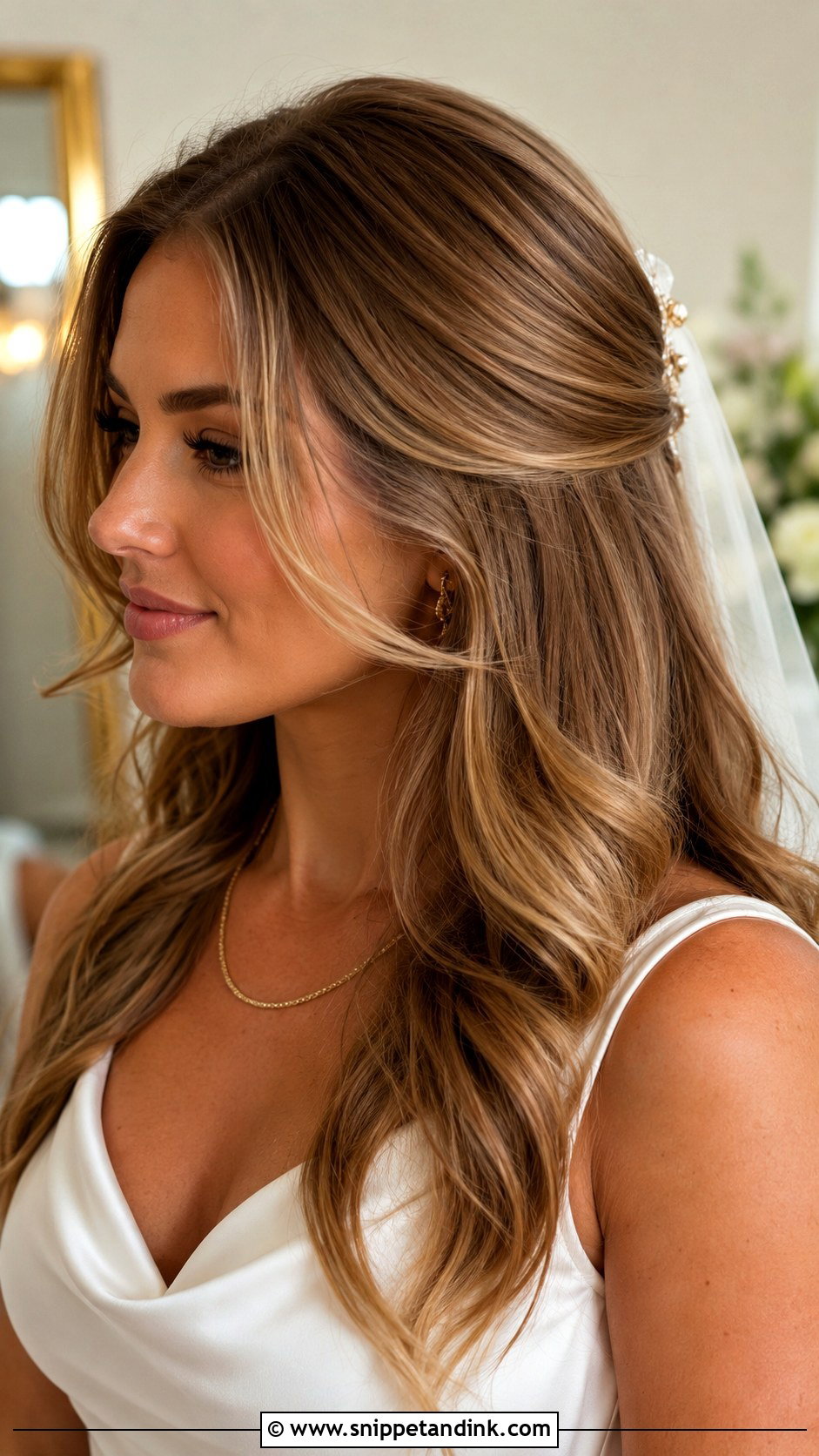
Golden brown is the shade for someone who wants to look rested and well rather than noticeably coloured. It’s a warm brown with a gold reflect that comes alive in daylight. I usually do it as a single all-over gloss or a very soft colour rather than foils, which keeps the maintenance low. Ask for shine and avoid contrast; if a friend’s first comment is about your highlights, the shade has gone too far.
12. Bridal Ash Brown Balayage
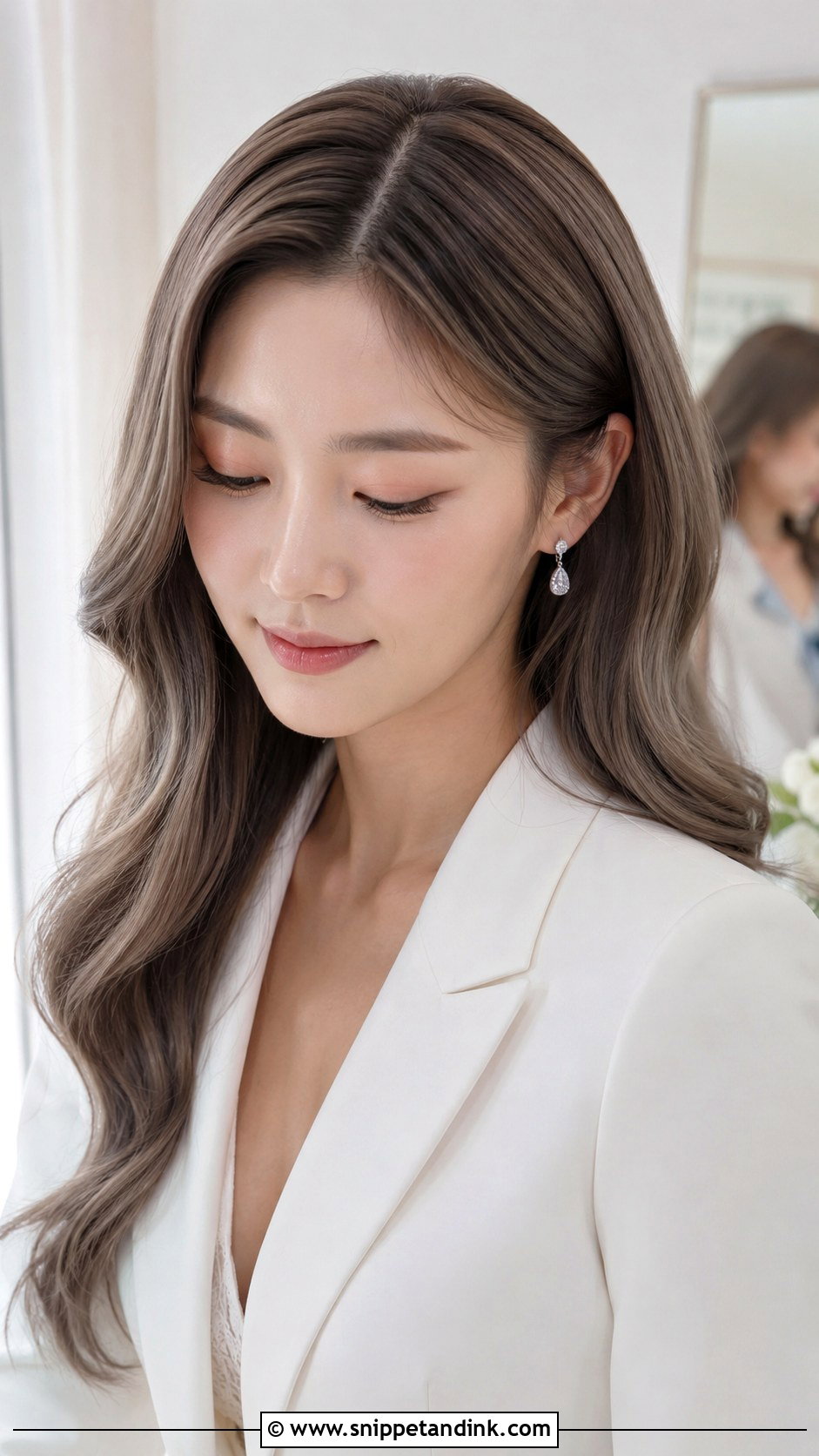
Ash brown suits brides who dislike warmth in their hair and want taupe, mushroom or smoky brown tones. The catch is that ash pigment is the first to wash out, and dark hair naturally pulls warm underneath. A toner or gloss shortly before the wedding is essential, as is colour-safe shampoo. Dry hair makes cool brown look flat and grey in photos, so condition well in the final month.
13. Bridal Money Piece Highlights
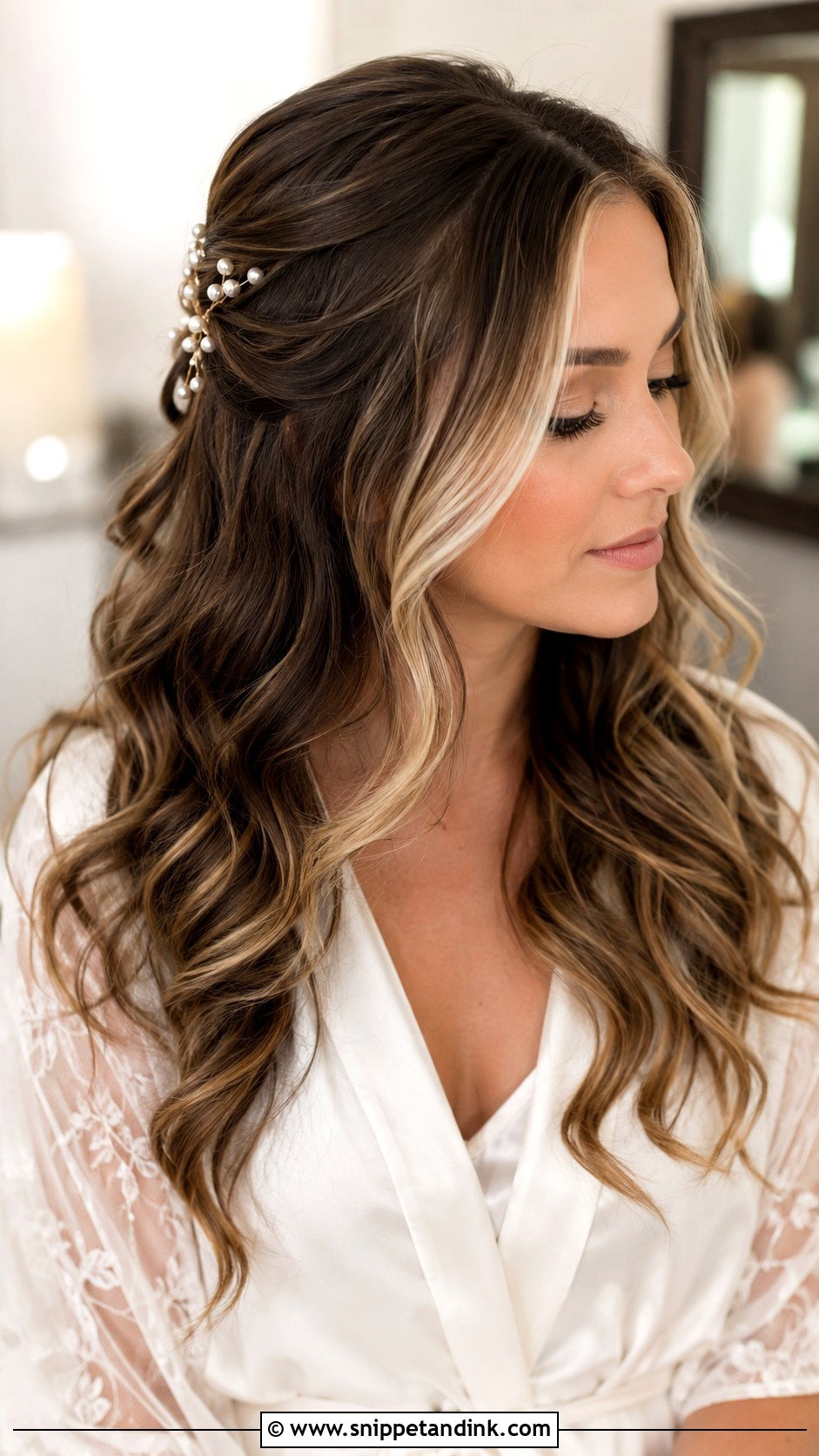
A money piece brightens the face without touching the rest of the hair, which makes it the quickest way to look refreshed in photos. Keep it blended. A sharp, bright stripe at the front looks odd with an updo, since everything behind it is pulled back and darker. It’s also one of the few colour jobs I’m comfortable doing closer to the wedding, because it’s small and easy to adjust if the tone isn’t right.
14. Bridal Rose Gold Hair Color
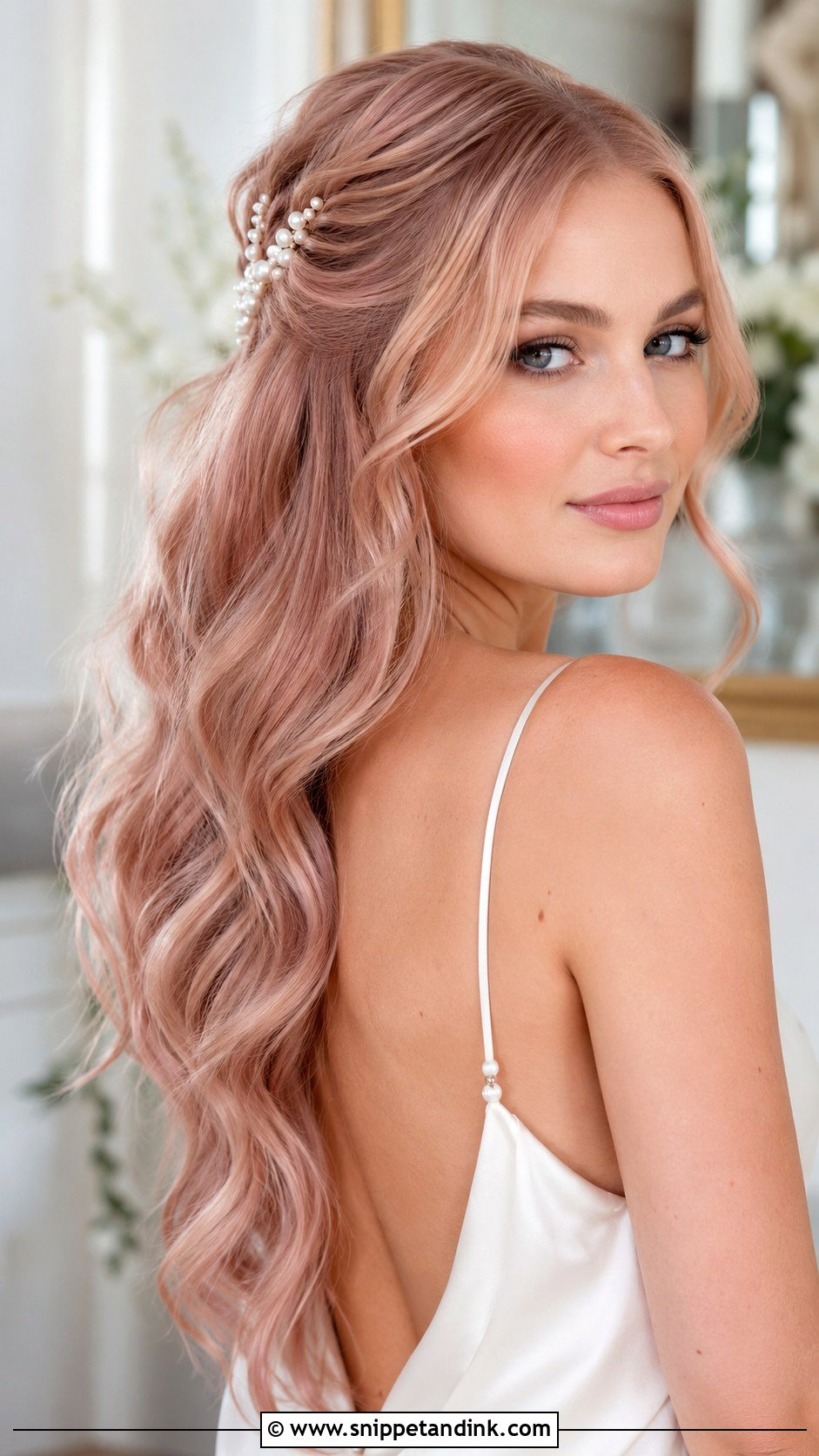
Rose gold is the one creative shade I’d still call wearable for a bride, as long as it’s muted: a blush tone mixed through blonde or light copper. Pale pink pigments wash out quickly, sometimes noticeably within a couple of weeks, so a trial is essential and the final refresh needs to be close to the date. On very pale blonde it takes vividly; on darker hair it needs lifting first, which takes time and care.
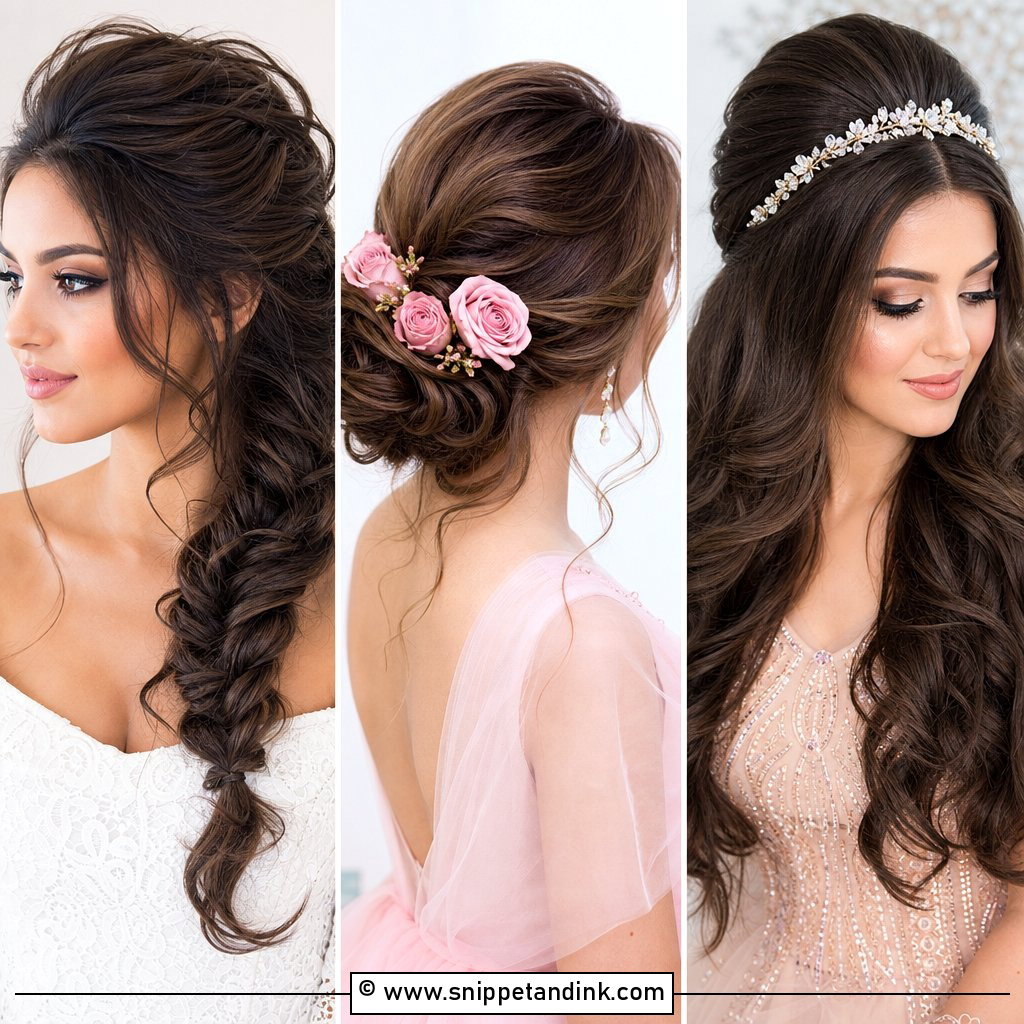
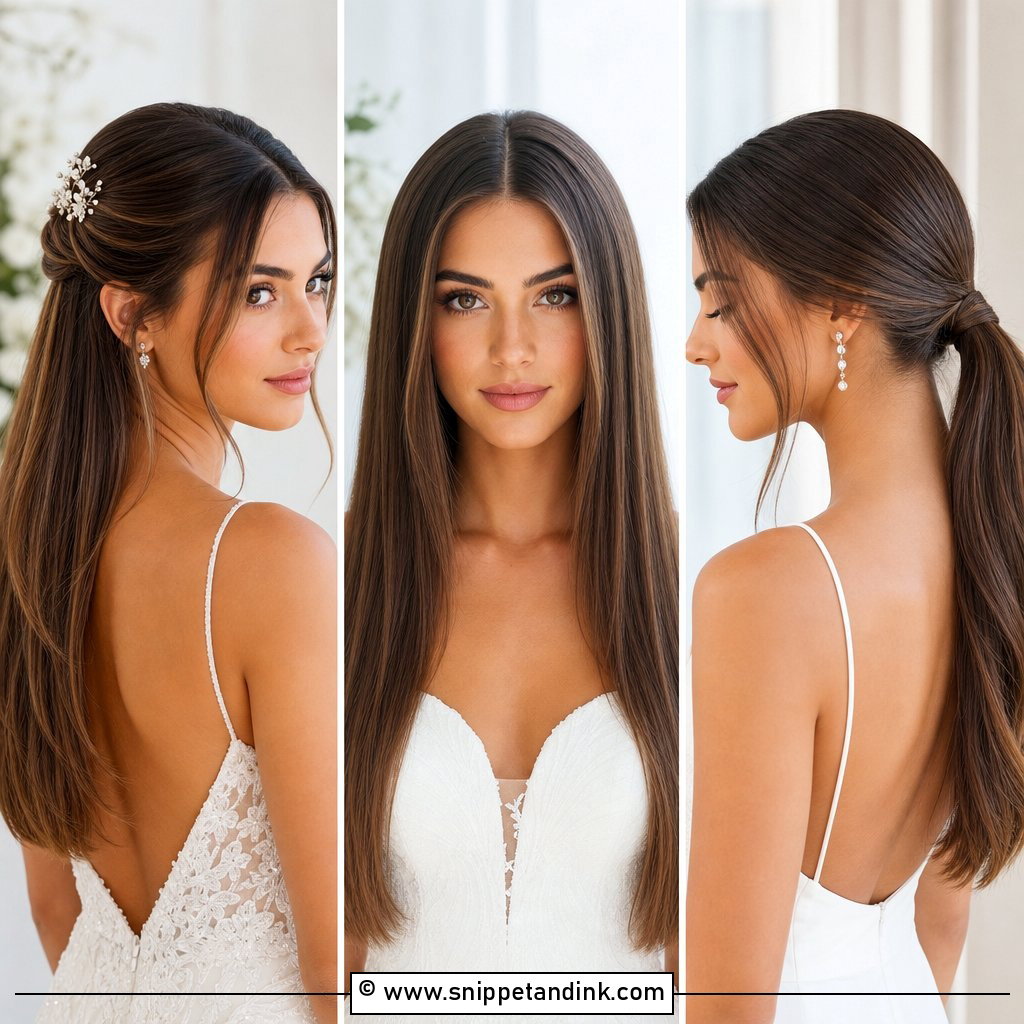
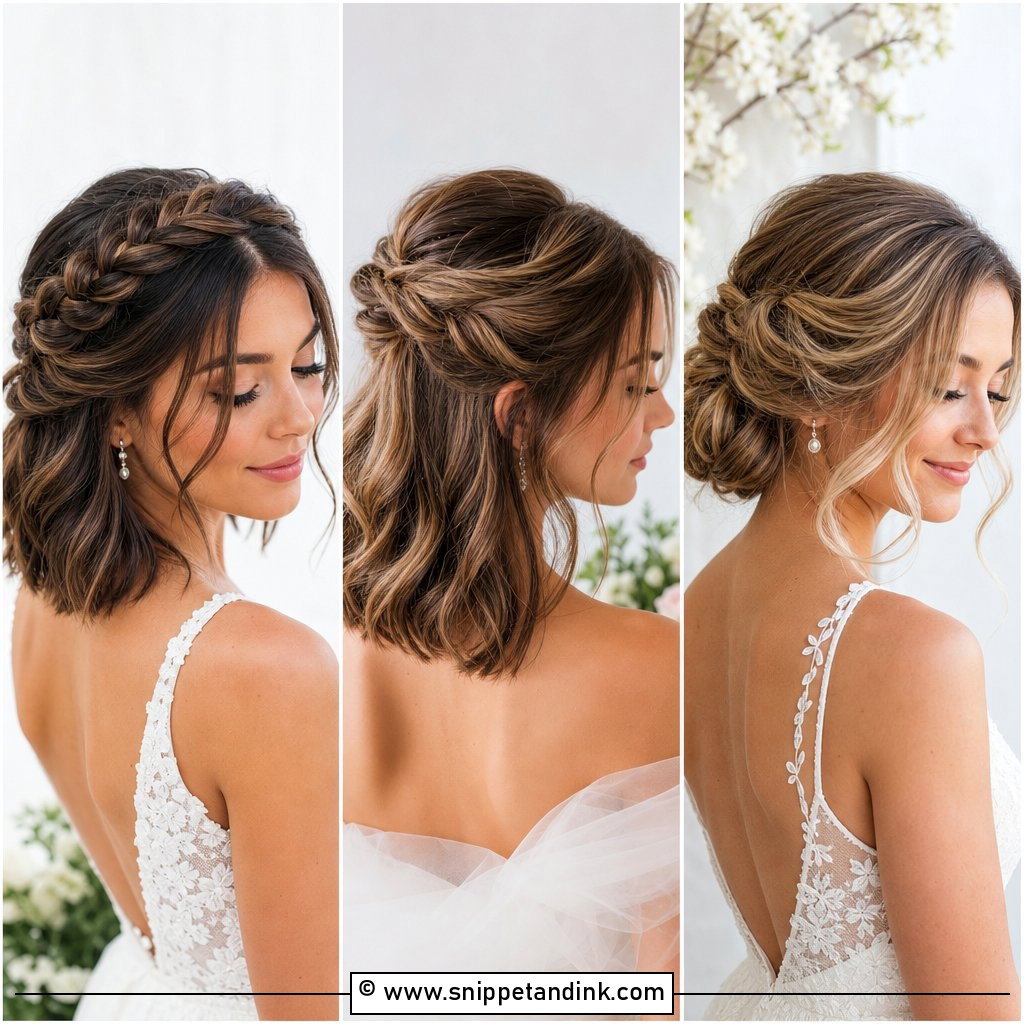
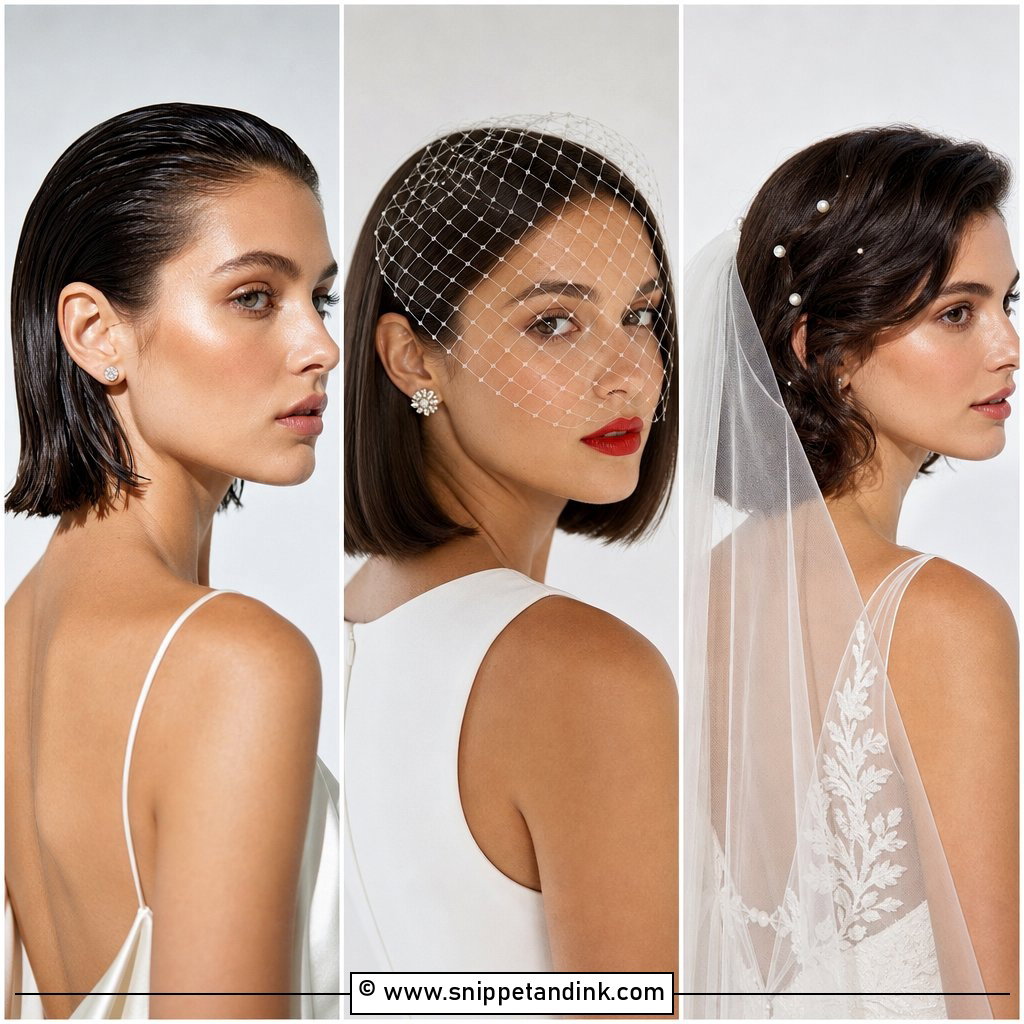
15. Bridal Glossy Black Hair Color
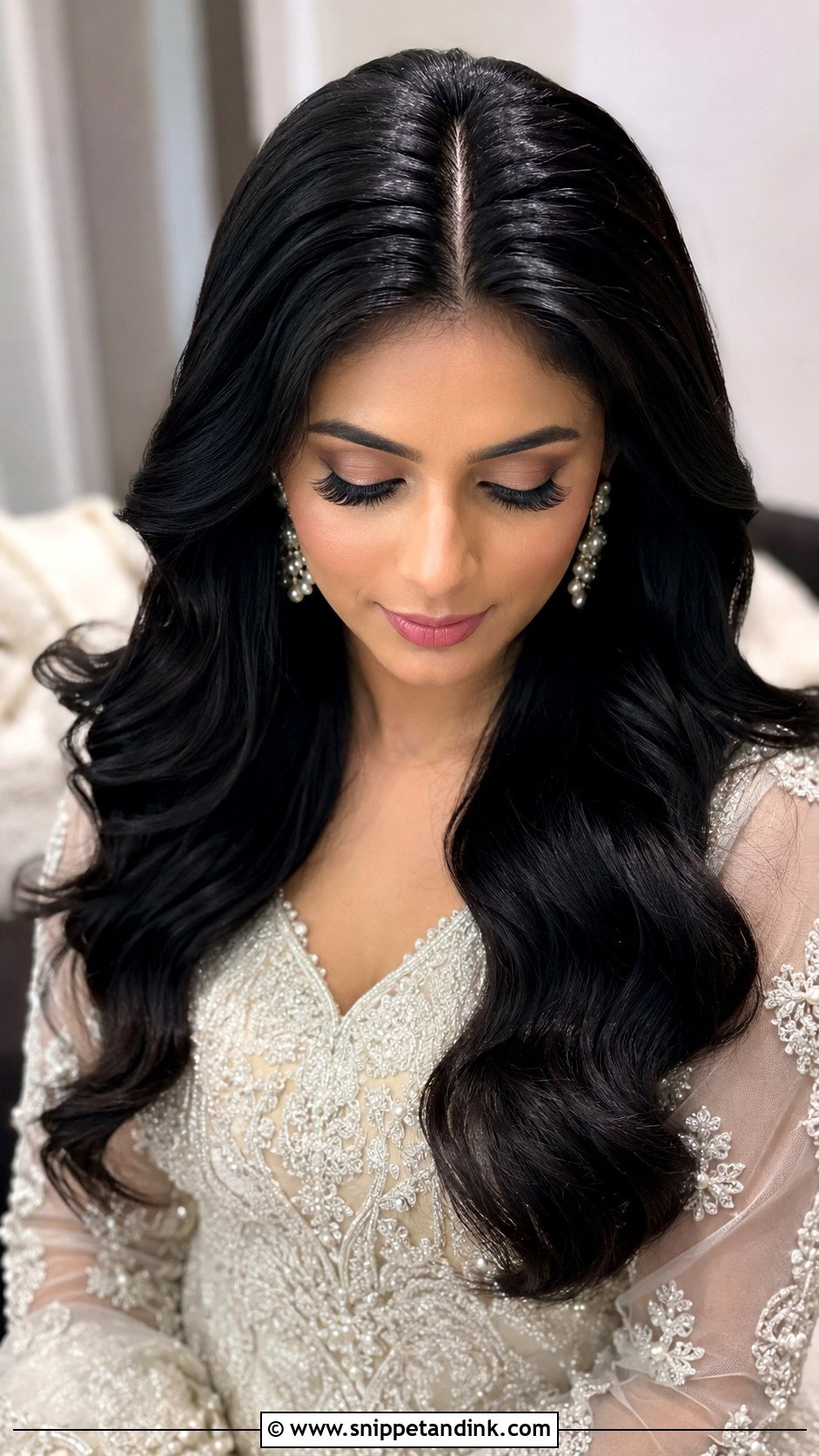
Glossy black is all about the finish. Deep colour, a clean shine and healthy ends make it striking against white, silver and pearl. If your hair is naturally black or very dark brown, you may not need colour at all; a clear gloss adds reflection without changing the shade. Sleek buns, center parts and long waves all show it off. Box dye in the last weeks is the mistake to avoid, since black is very hard to correct if it comes out too flat or too blue.
How Your Shade Will Read in Flash, Candlelight and Shade
Hair colour in a salon mirror isn’t the colour in your photos. Lighting at a wedding changes several times in one day, and each type pulls a different part of the shade forward.
Direct sunlight brightens warm tones a lot. Copper, honey and auburn can look a shade or two lighter outdoors than they did indoors, which is lovely unless you were already at the edge of what you liked.
Flash flattens dimension and can make dark brown look nearly black. Shine is what saves it, which is why I care more about the gloss than the exact shade.
Warm candlelight and reception bulbs push everything warmer, so a cool ash or beige can look nicely neutral, while an already warm blonde may tip towards brassy. If you have a reception photo from your venue, look at how the guests’ hair reads in it. That will tell you more than any colour chart.
Shine Matters More Than the Shade Name
Every shade on this list can look right at a wedding. What decides whether it does is timing and condition. Book the big work early, wear it for a few weeks, then let a gloss close to the date bring the shine back. If you’re torn, go lower risk: bronde, chocolate, beige blonde and golden brown rarely surprise anyone. Copper, auburn, rose gold and glossy black reward brides who plan for their upkeep.
You'll Like These Ideas:


Leave a Reply