
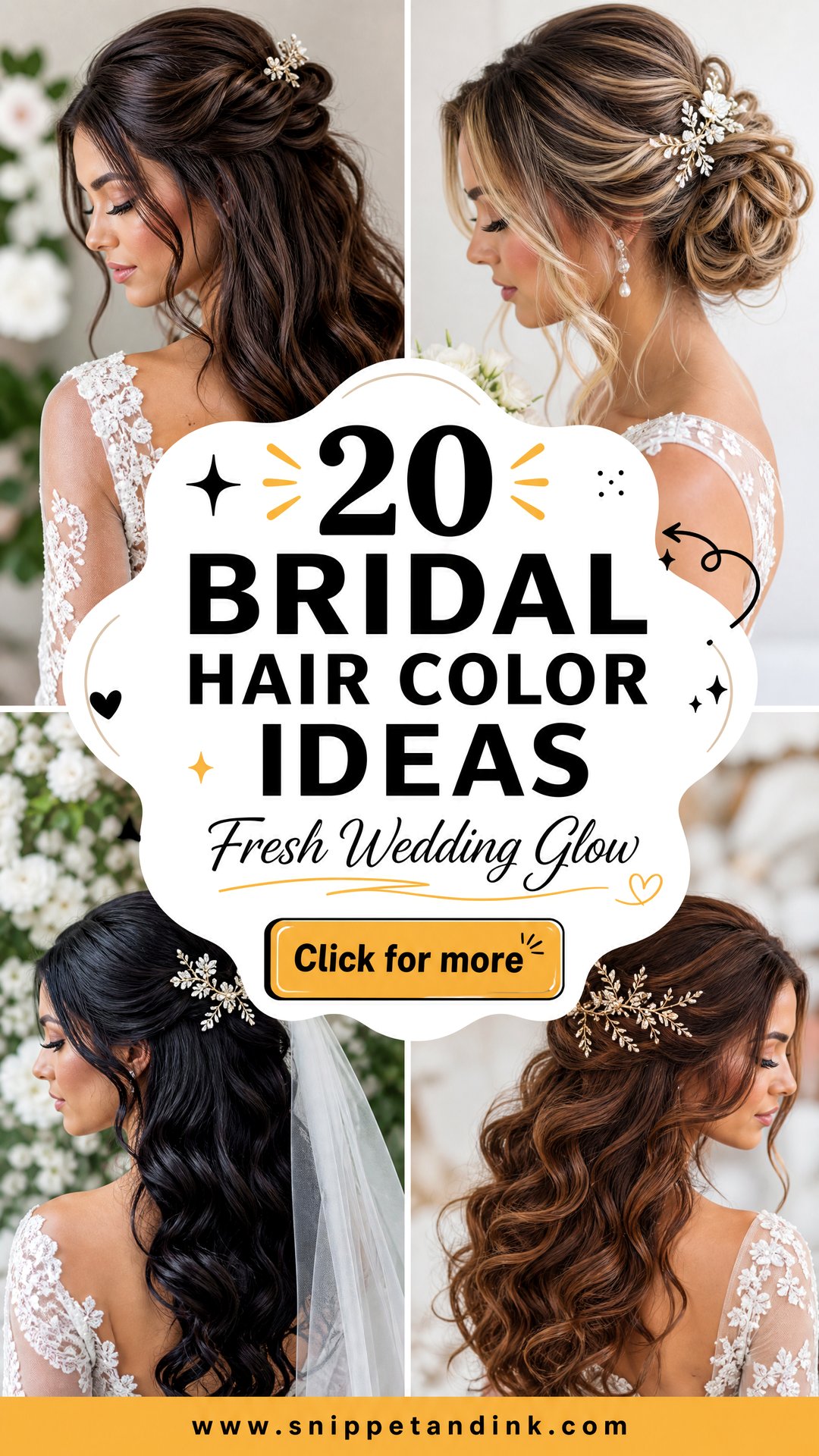
Hair color is the part of a bridal look that needs the longest lead time and gets the least planning. A haircut can be fixed in a week; a color that goes brassy, patchy or too dark can take months to correct. So when brides bring me inspiration photos, the first questions I ask are about their current color, how much change they want and how many weeks we have. The twenty shades below range from soft warm browns to platinum and pastels, and for each one I’ve noted how it behaves in the chair, how fast it fades and who it really flatters.
Your Last Color Appointment Belongs About Two Weeks Out
Most bridal color problems come from timing. A brand-new shade the week before the wedding leaves no room to fix anything, and freshly applied color is often a touch brighter or darker than it will look a few washes later. This is the rough schedule I work to.
- Big changes, like dark brown to blonde or anything platinum: start three to six months ahead, in several sessions.
- A new shade in the same family: book a consultation and strand test two to three months ahead.
- Balayage or highlights: six to eight weeks ahead, so the tone settles.
- Final color touch-up or toner: about one to two weeks before.
- Pastels and fast-fading reds: a refresh within the last week.
Leave a few days between your final color and your hair trial or wedding morning, so the scalp has time to calm and the hair can be styled without extra irritation.
1. Mocha Mousse Brown Bridal Hair Color
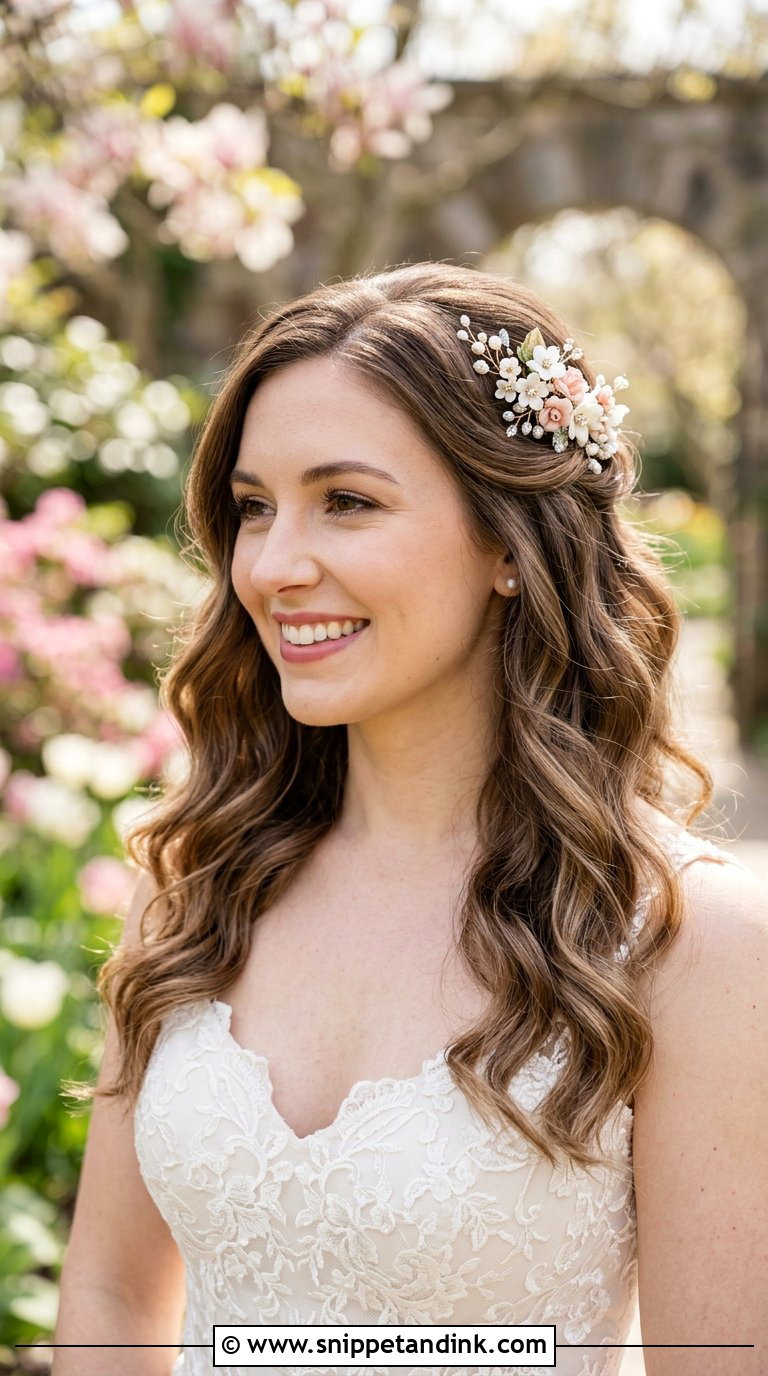
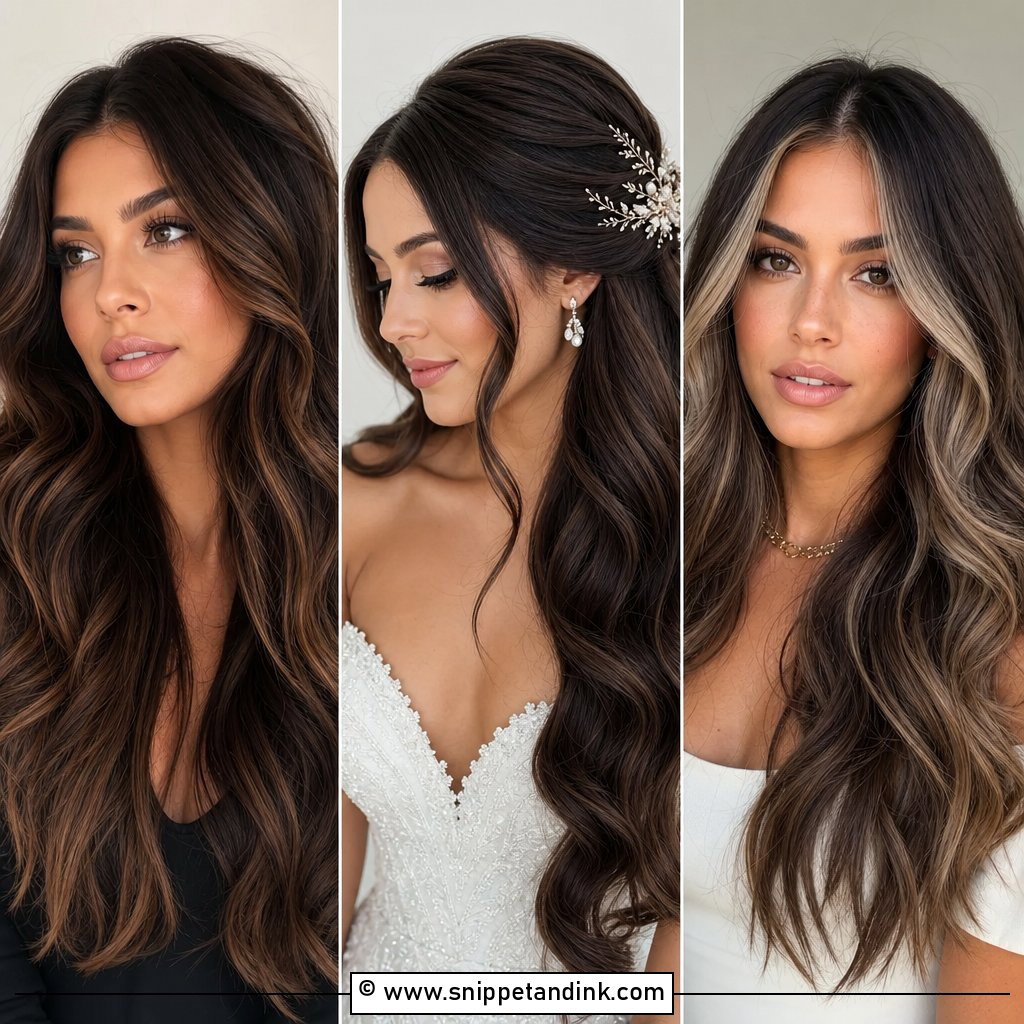
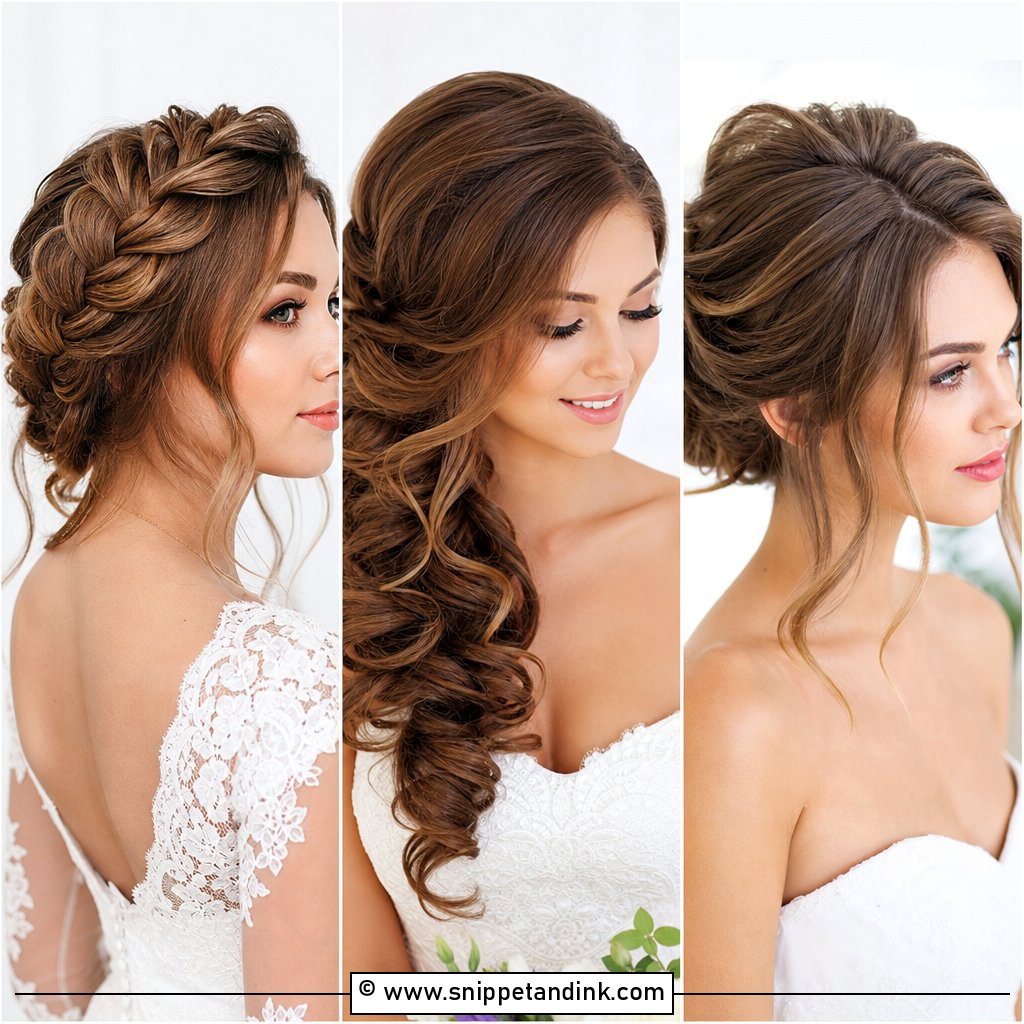
Mocha mousse had its big moment in 2025 and brides still ask for it: a soft, creamy brown with depth and a slightly cool, milky finish. It flatters a wide range of skin tones and sits quietly beside ivory and champagne gowns. Because it’s close to many natural browns, it often needs only a gloss or a single color session, and regrowth blends in rather than showing a hard line. On warm undertones it adds a little glow; on very cool skin I’d shift it slightly toward neutral so it doesn’t look flat.
2. Honey Blonde Bridal Hair Color
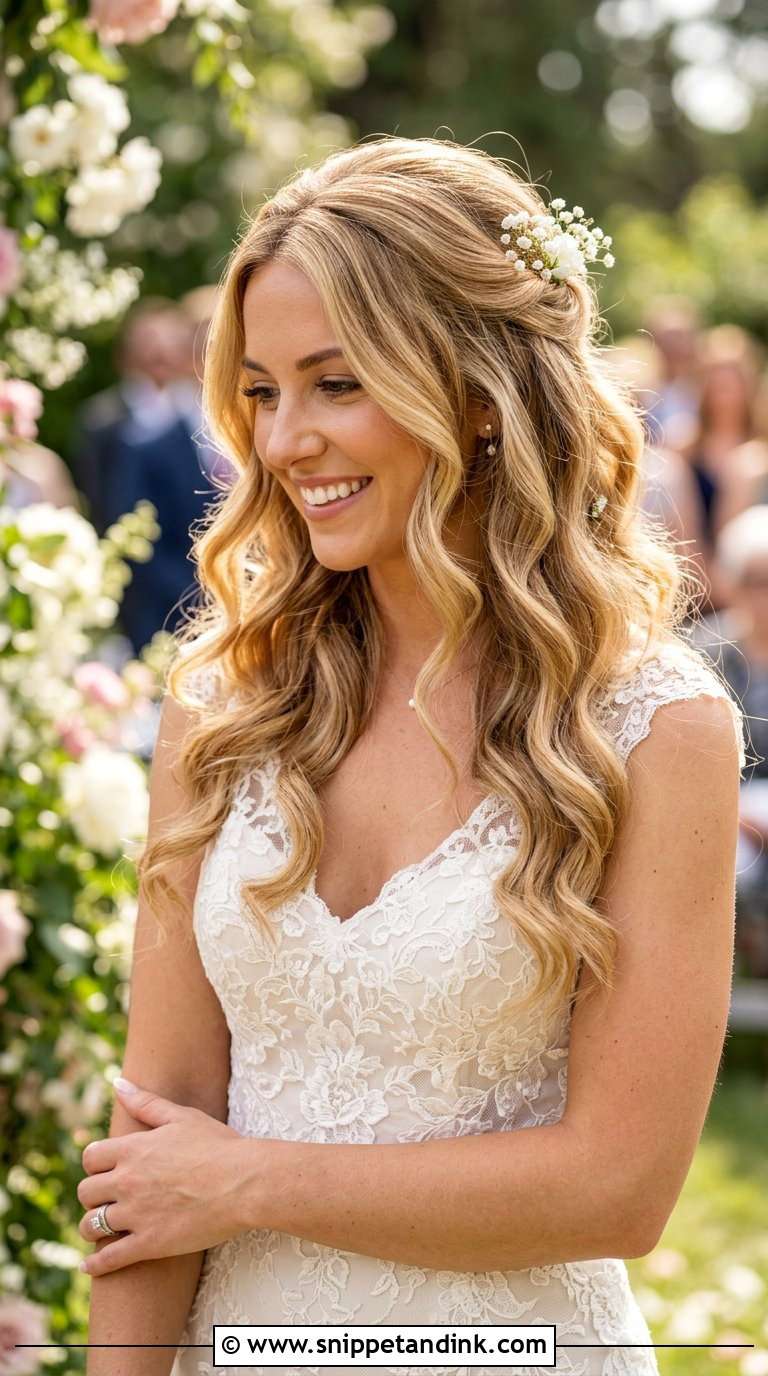
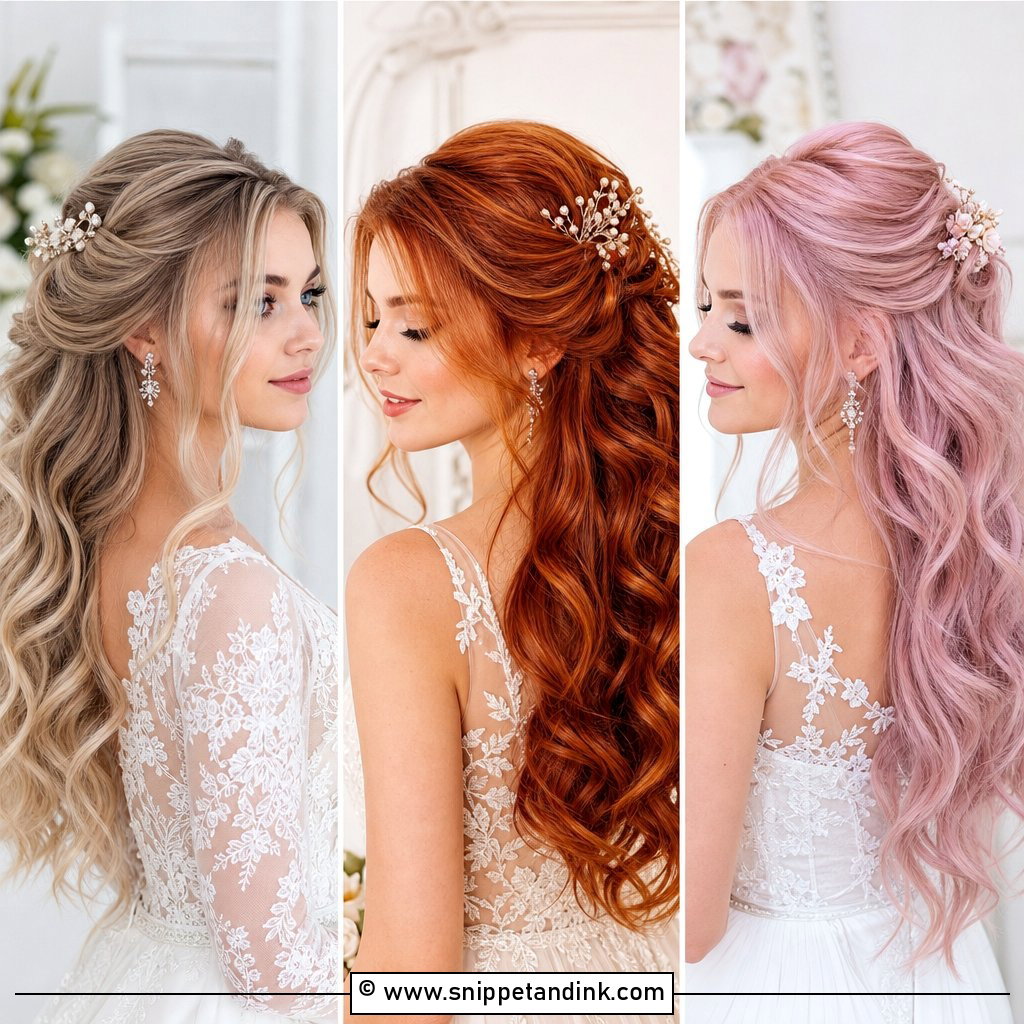
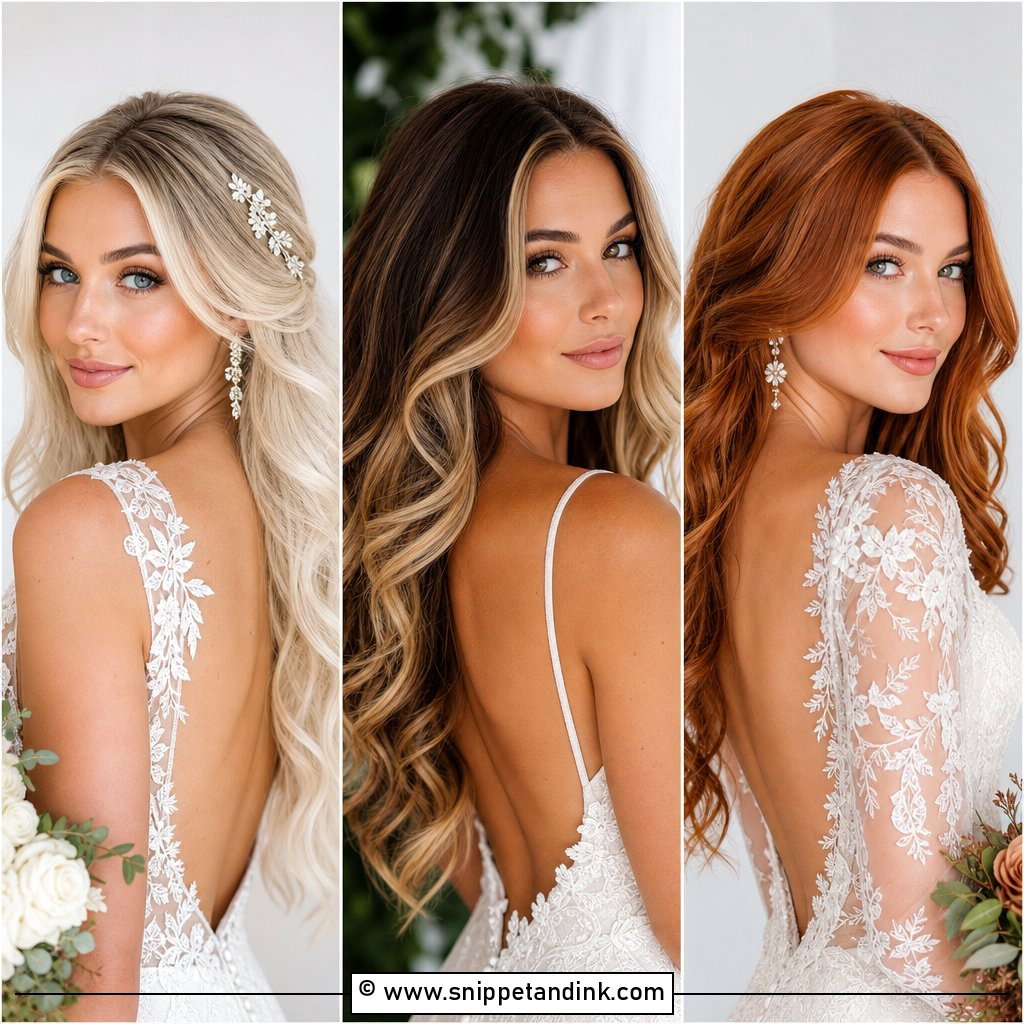
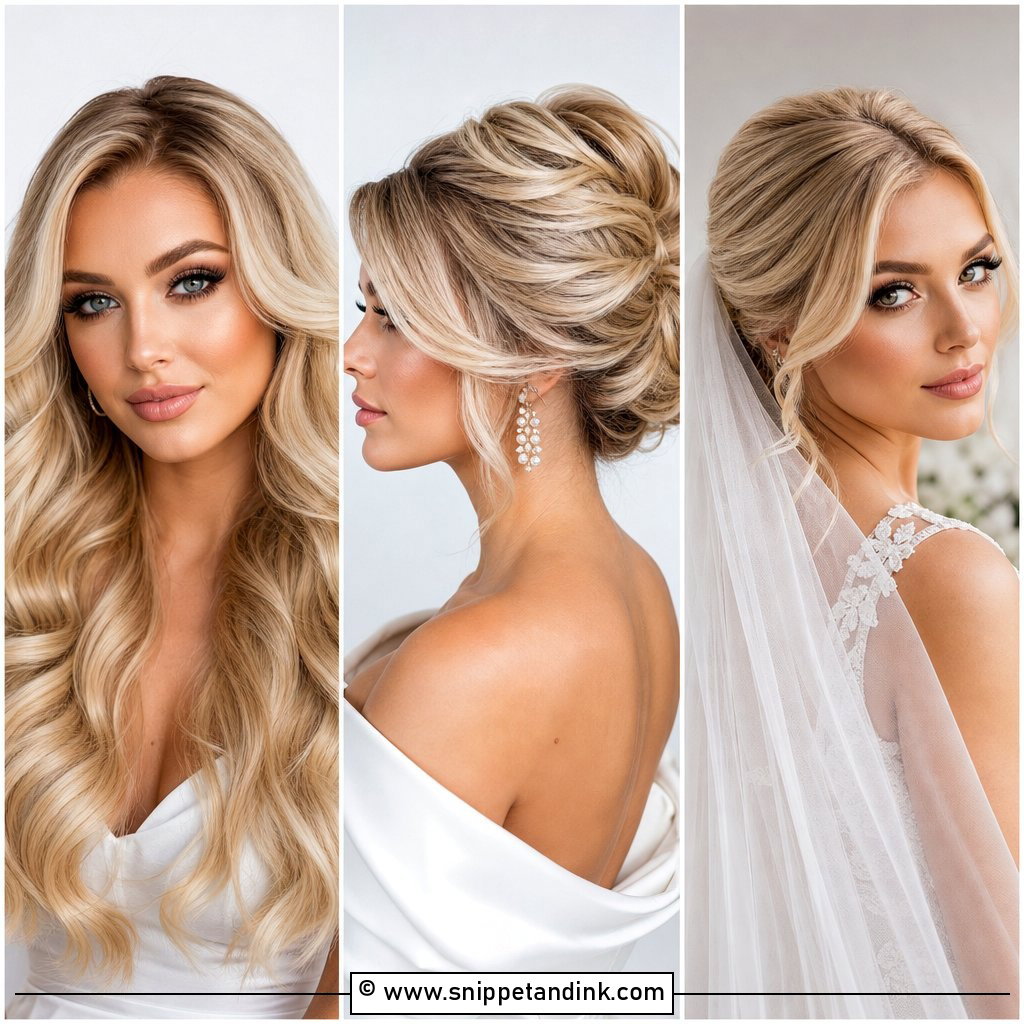
Golden and warm by design, honey blonde hair has one big advantage, it fades toward warmth, so a little brassiness simply looks like more honey. Fair to medium skin with warm undertones suits it best. All-over color or a few brighter pieces around the face both work. Outdoors, sunlight picks up the gold in ceremony photos. If you’re starting from dark brown, plan for more than one session, because lifting dark hair to a clean honey in a single day can leave it orange.
3. Platinum Blonde Bridal Hair Color
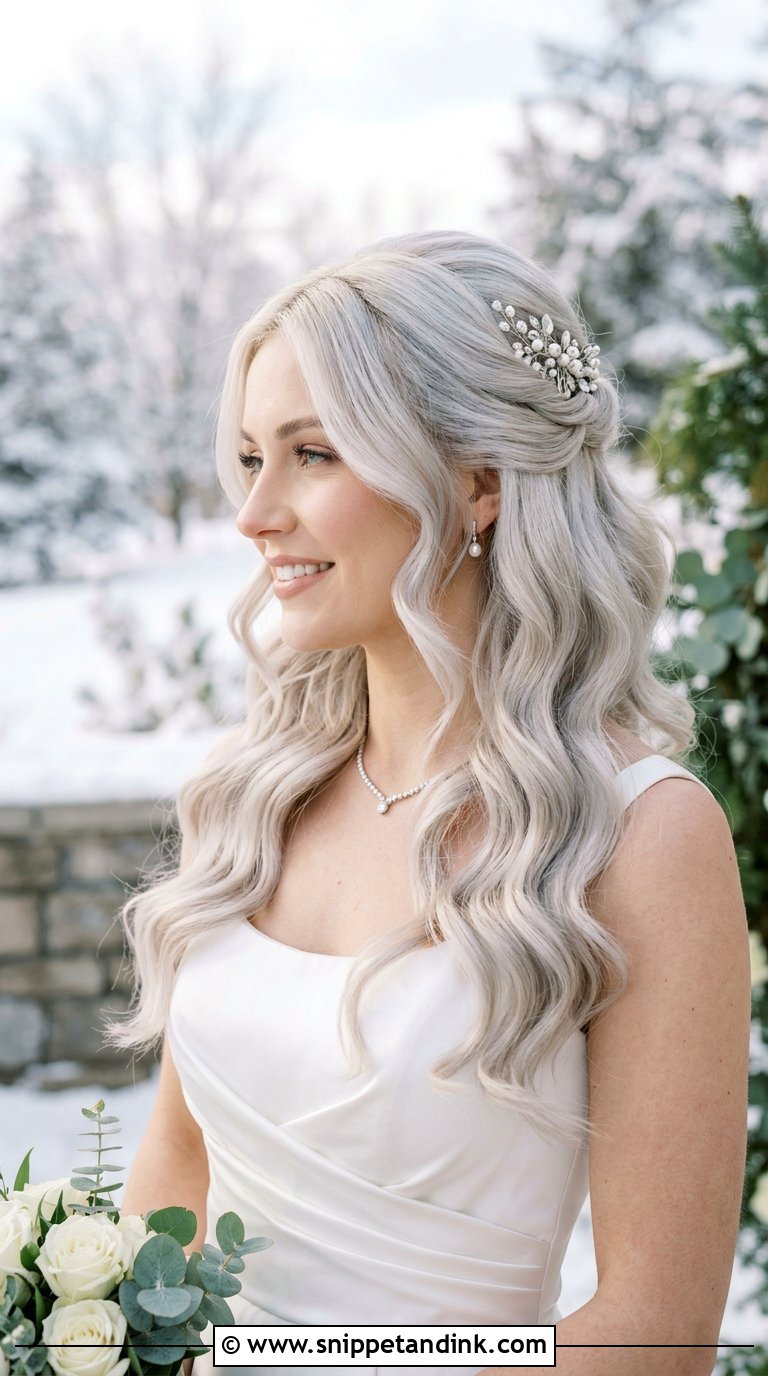
Platinum is the biggest commitment in this list. Hair has to be lifted to its palest yellow, then toned to white, and on dark or previously colored hair that’s several sessions spaced weeks apart. Toner fades with washing and heat, so I schedule a fresh tone close to the wedding. Against a white gown it’s sharp and modern, and it suits cool undertones whether you wear bold lip colors or almost no makeup. I’d talk anyone with fine or fragile hair out of going platinum for the first time right before a wedding.
4. Rose Gold Bridal Hair Color
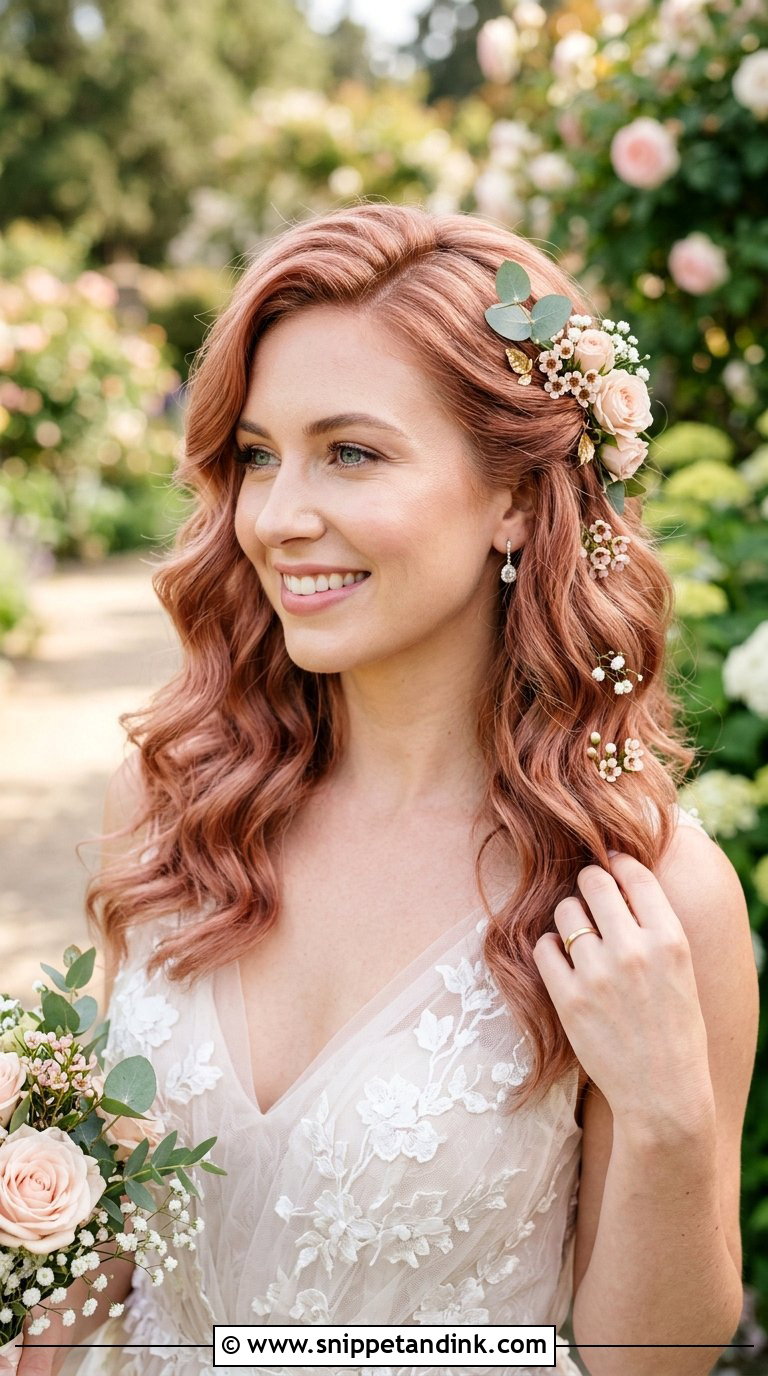
Rose gold layers a pink-gold tone over pre-lightened hair, so it needs a blonde base first. The tint is semi-permanent and fades noticeably within a few weeks, which means timing matters: I’d refresh it no more than a week before the wedding. It adds warmth to most complexions and looks especially soft with floral accessories. One practical warning: fresh pink can transfer onto a light collar if your hair is damp, so don’t wash it the morning of a fitting.
5. Caramel Balayage Bridal Hair Color
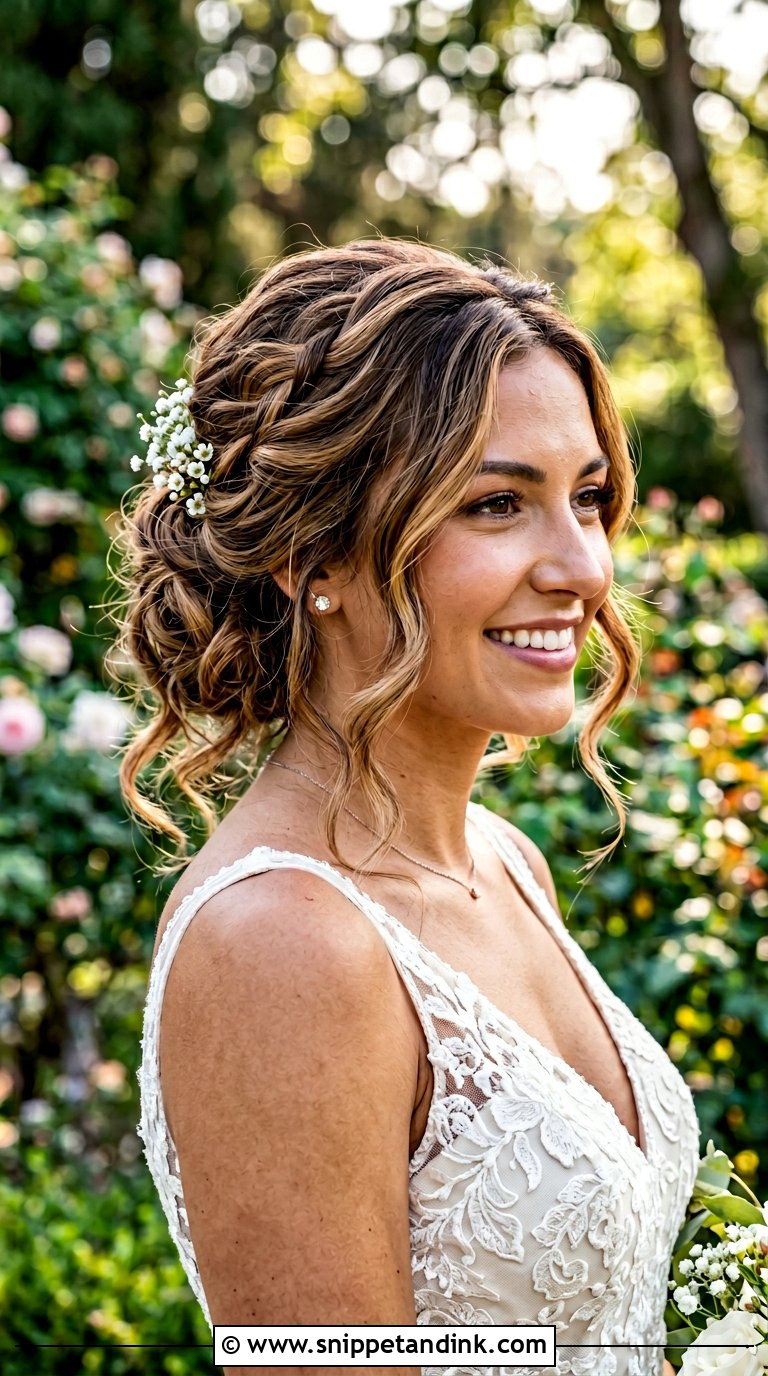
Sun-kissed and dimensional, caramel balayage is hand-painted through the lengths, with softer color near the root. That painting is why it grows out so gently, and why I suggest it when a bride wants color without frequent upkeep. It flatters warm and neutral skin tones. I’d book it about six to eight weeks before the wedding, so the ends have softened and the first harsh wash or two have settled the tone. Worn down in waves or up in a romantic updo, the lighter pieces show the movement.
6. Dark Chocolate Brown Bridal Hair Color
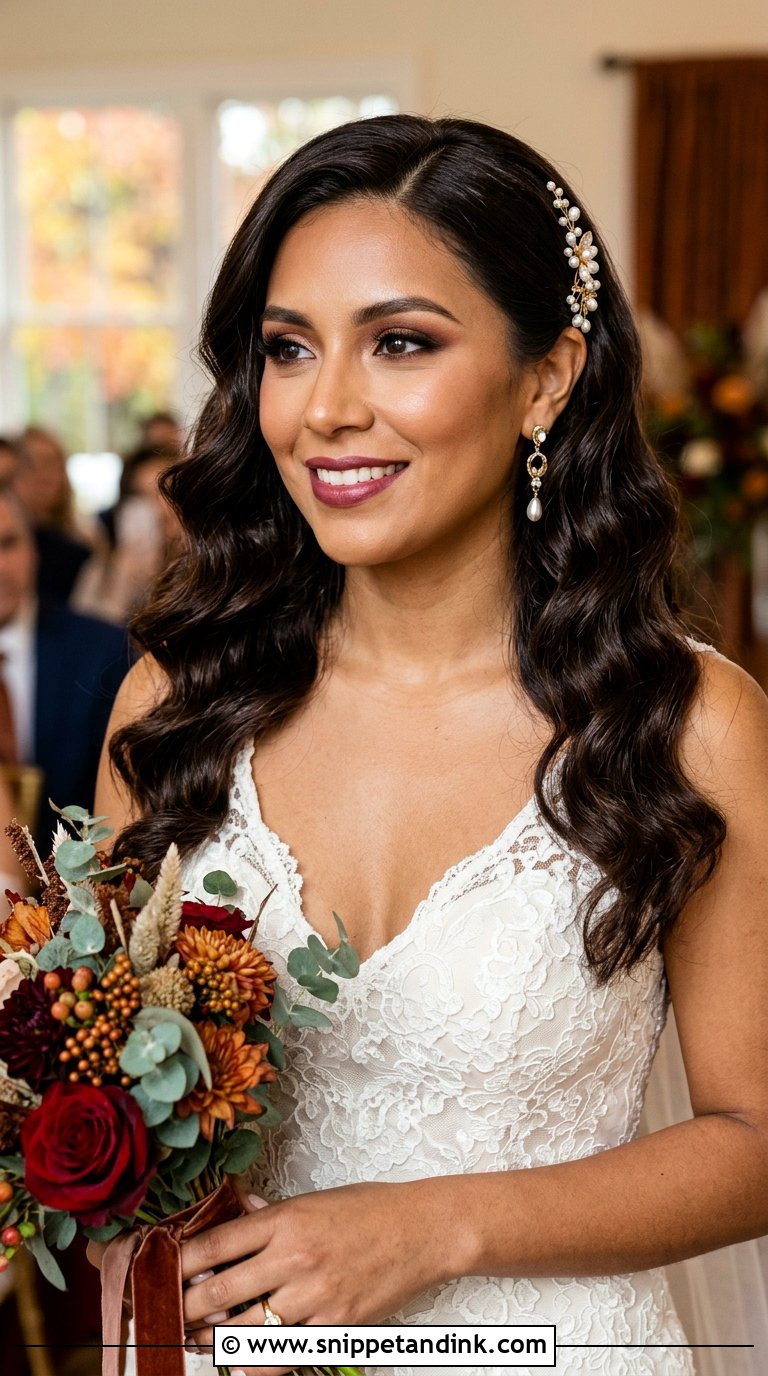
Going darker is far easier than going lighter, which makes dark chocolate brown one of the safest bridal changes. It suits medium to deep skin tones especially and pairs with anything from ivory to jewel-toned gowns. The thing to watch is shine: very dark hair can look flat in photos, so I add a clear gloss in the last couple of weeks. Dark brown also fades slightly warm over time. Upkeep is light, and roots show less on dark bases.
7. Strawberry Blonde Bridal Hair Color
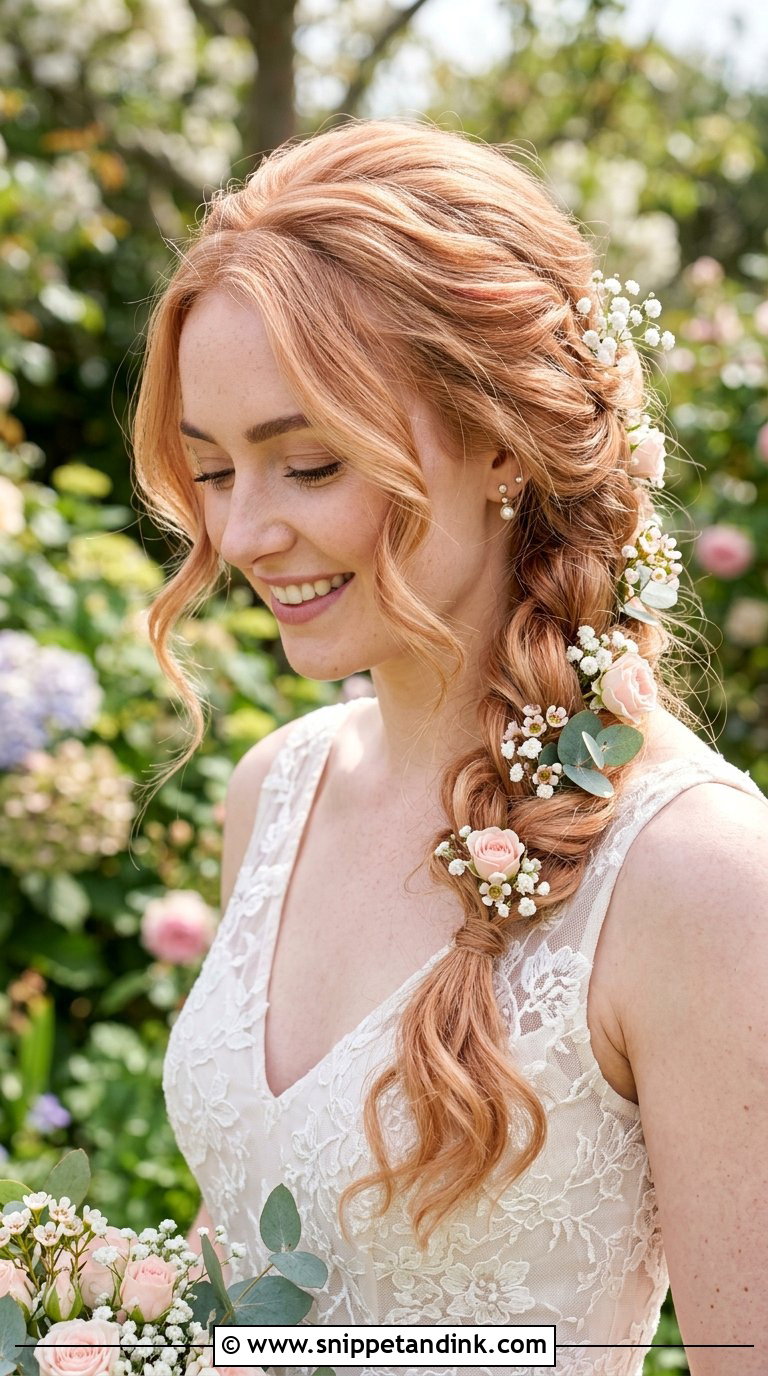
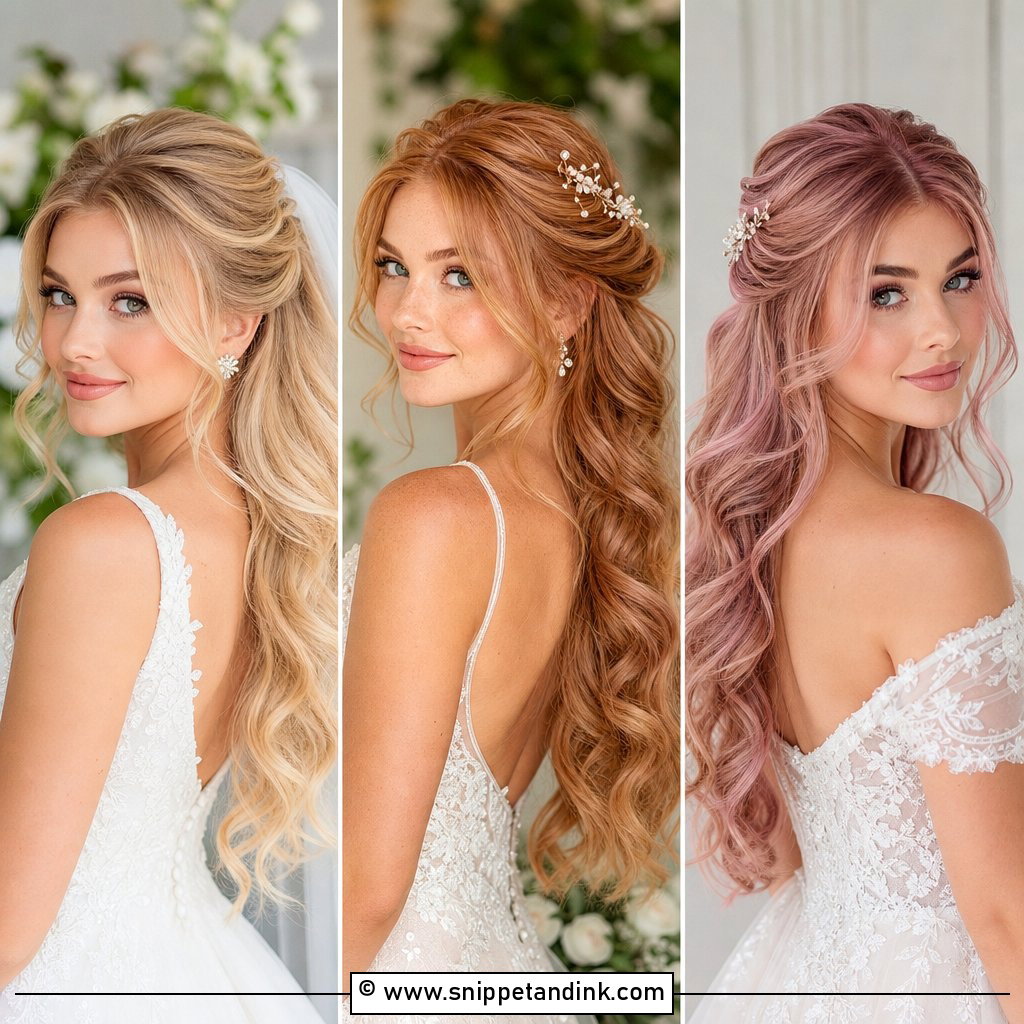
Strawberry blonde sits between red and blonde, with a soft, peachy warmth that suits fair skin. It’s one of the harder shades to get right from a photo, since a little too much copper turns it orange and too little looks plain blonde. I always test it on a hidden strand first. The red tones fade faster than the gold, so refresh it a week or so before the wedding. Soft waves or a loose braid show it best.
8. Champagne Blonde Bridal Hair Color
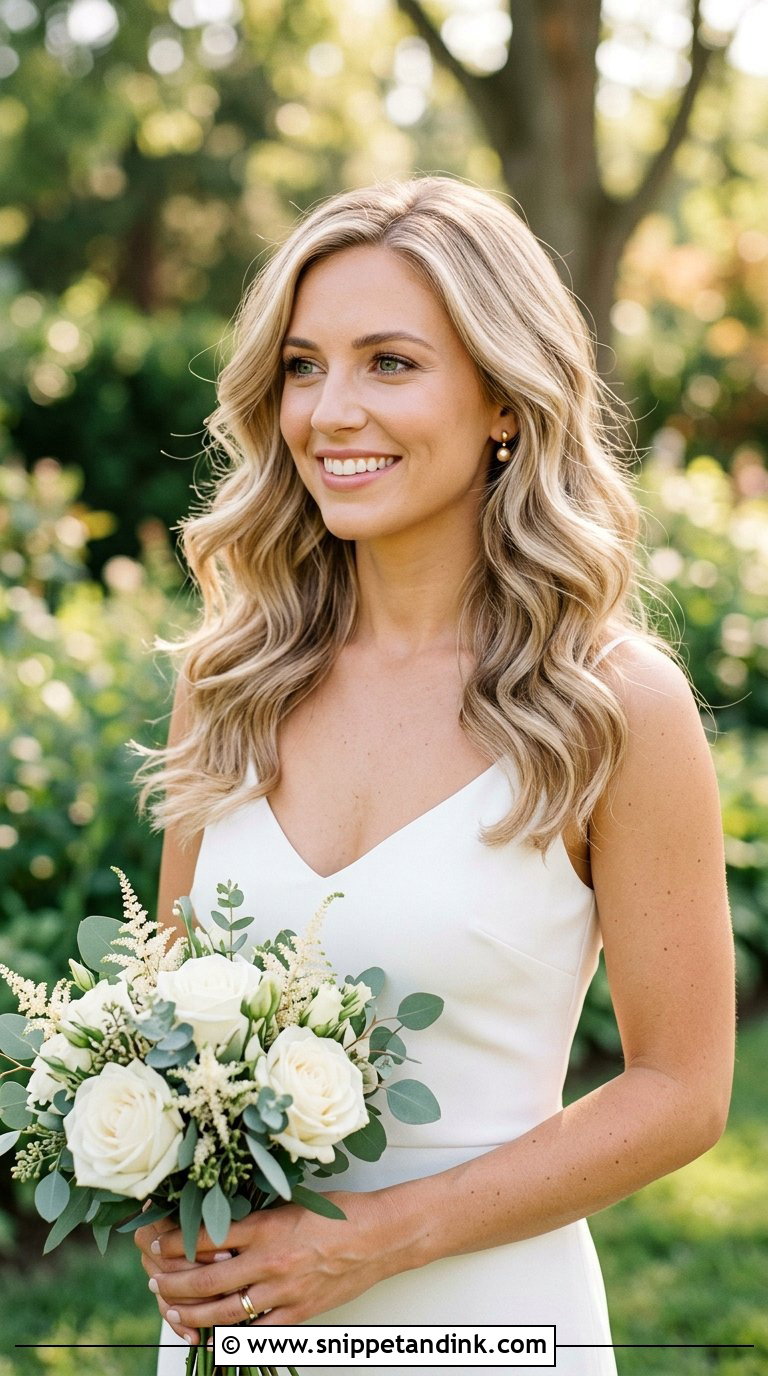
Champagne blonde balances cool and warm tones, so it reads soft rather than icy or golden. That balance comes from the toner, which means it’s the part that drifts first; I’d book a toning appointment within two weeks of the wedding. It flatters fair to medium skin and suits classic gowns, minimal accessories and a wide range of makeup. Sleek updos and tousled waves both show it well.
9. Copper Red Bridal Hair Color
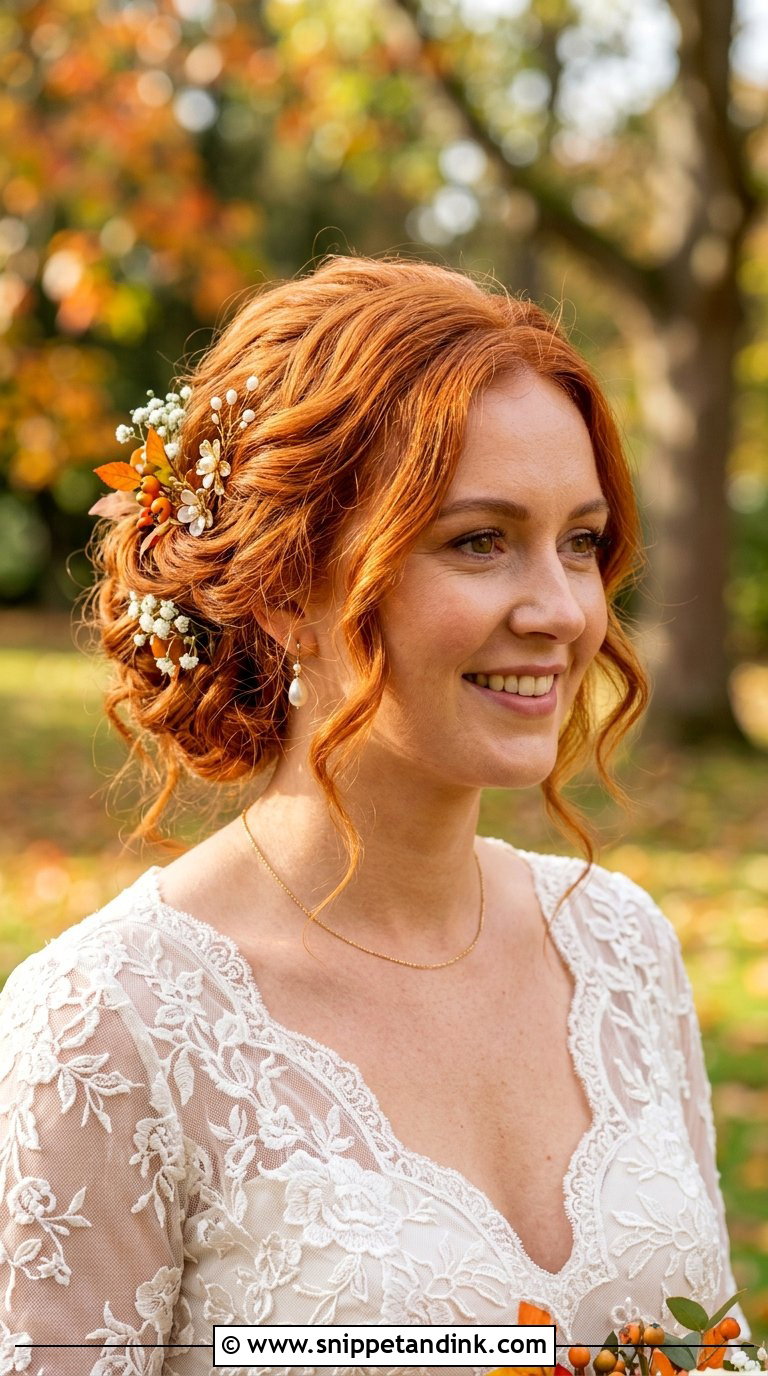
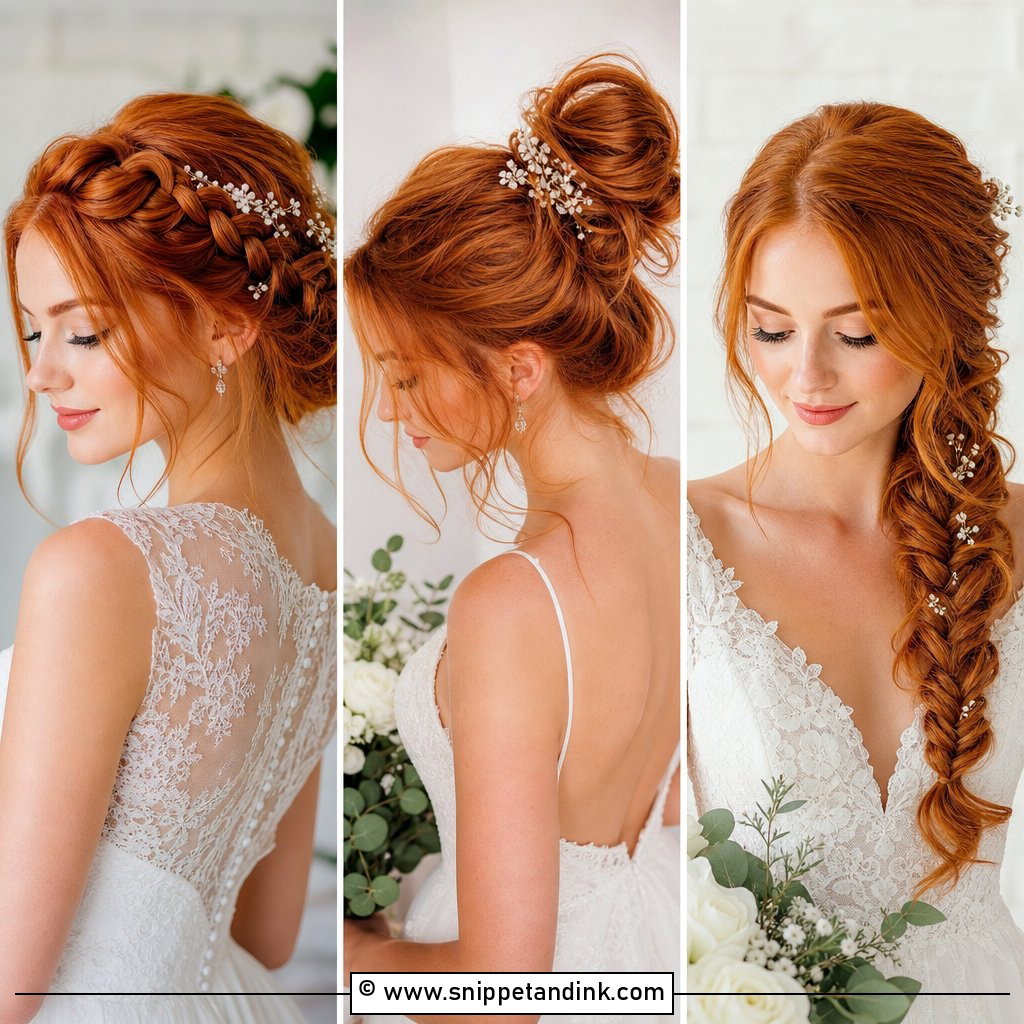
Copper red brings fiery warmth and confidence to bridal hair, with orange-red tones that glow against white and ivory. Warm and neutral skin with golden undertones carries it best. It’s also the fastest-fading color I work with, so I refresh copper about a week out and ask brides to wash in cool water until the wedding. Soft waves or a textured updo show off the depth.
10. Bronde Bridal Hair Color
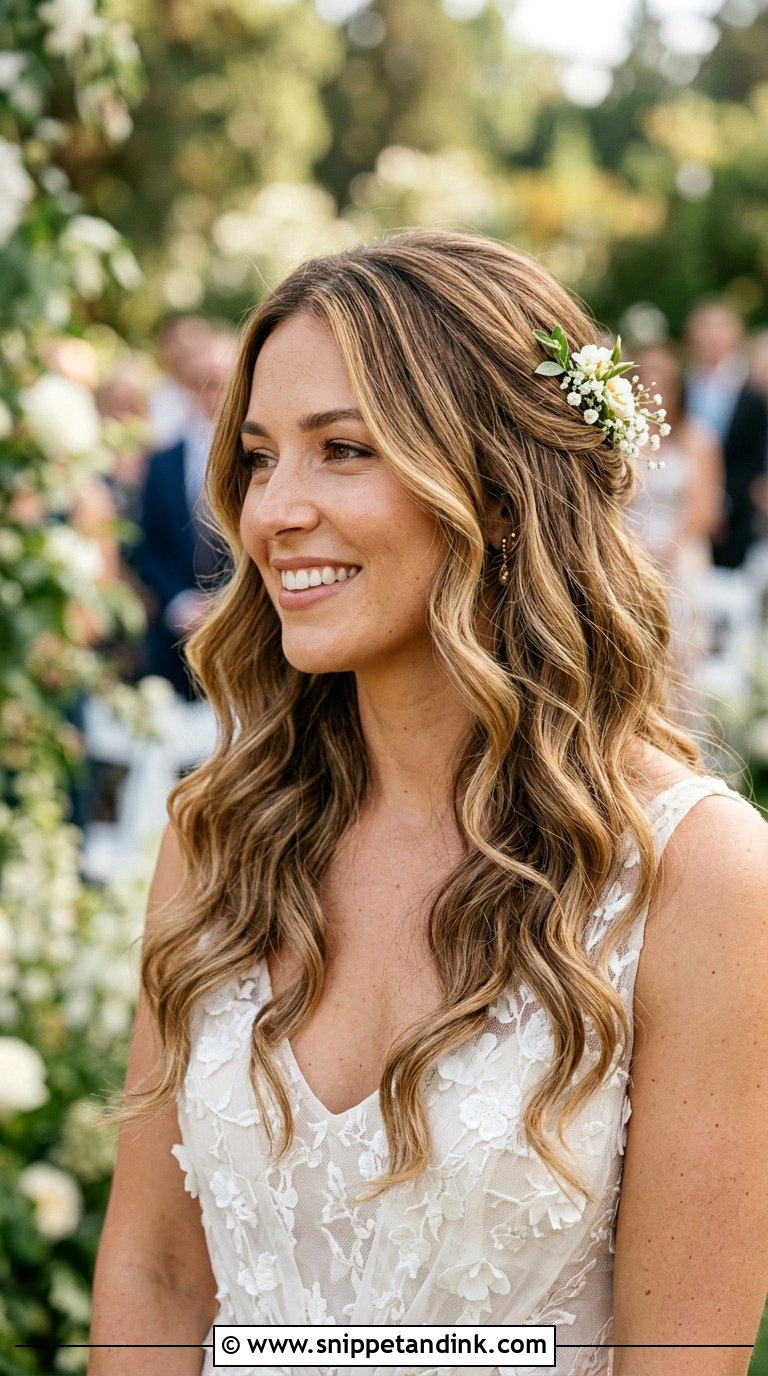
Can’t decide between blonde and brunette? Bronde blends warm brown and soft blonde so there’s dimension without strong contrast. It suits most skin tones and is one of the lowest-maintenance options here, because regrowth blends into the brown base. That makes it a good choice for brides who don’t want to commit to salon visits close to the date. Beachy waves or a romantic updo both suit it, with almost any gown.
11. Burgundy Bridal Hair Color
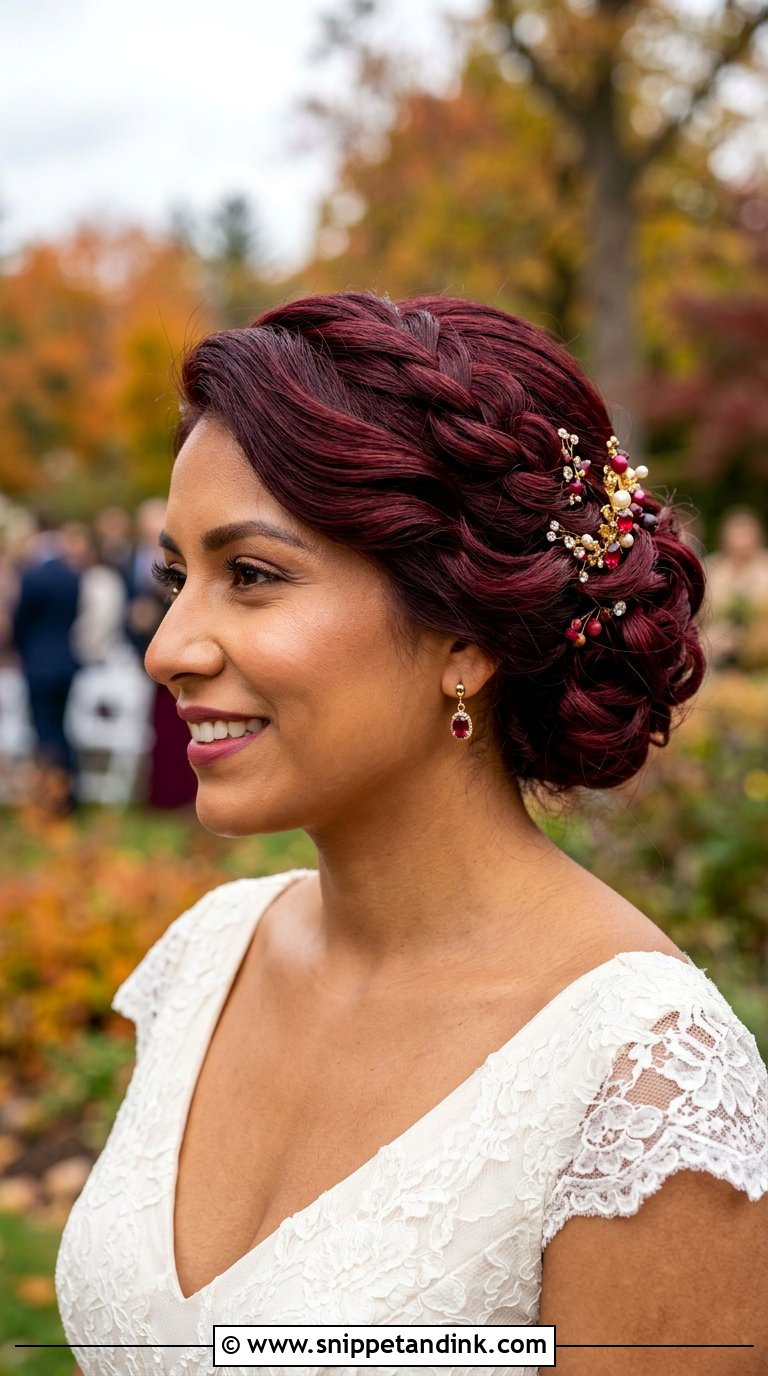
Burgundy blends red and violet tones for a rich wine color. Medium to deep skin tones suit it beautifully, and it pairs with jewel-toned accessories or contrasts sharply with an ivory gown. Like most reds, it fades and can bleed onto towels and pillowcases for the first few washes, so avoid washing it right before you put on a white dress. Glossy waves or a sleek updo show the shine. This rich, moody shade is for a bride who wants her hair to be noticed.
12. Ash Brown Bridal Hair Color
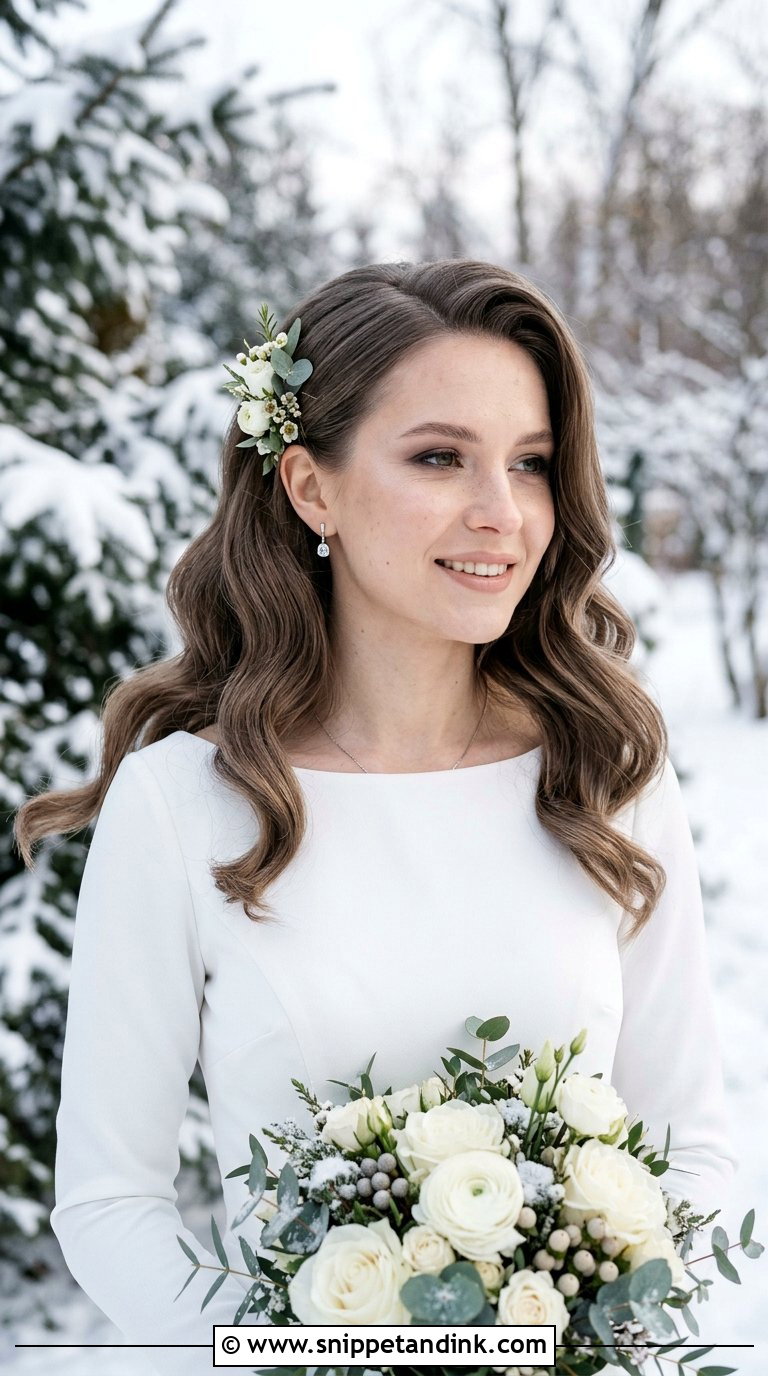
Ash brown has cool, smoky undertones and no warmth, which suits fair to medium skin with cool or neutral undertones. It’s a precise shade to keep: ash toner fades toward warmth, and on some bases it can look slightly muddy under warm indoor light. I’d check trial photos taken indoors before committing. Minimalist gowns and understated accessories suit it best, sleek or tousled.
13. Golden Brown Bridal Hair Color
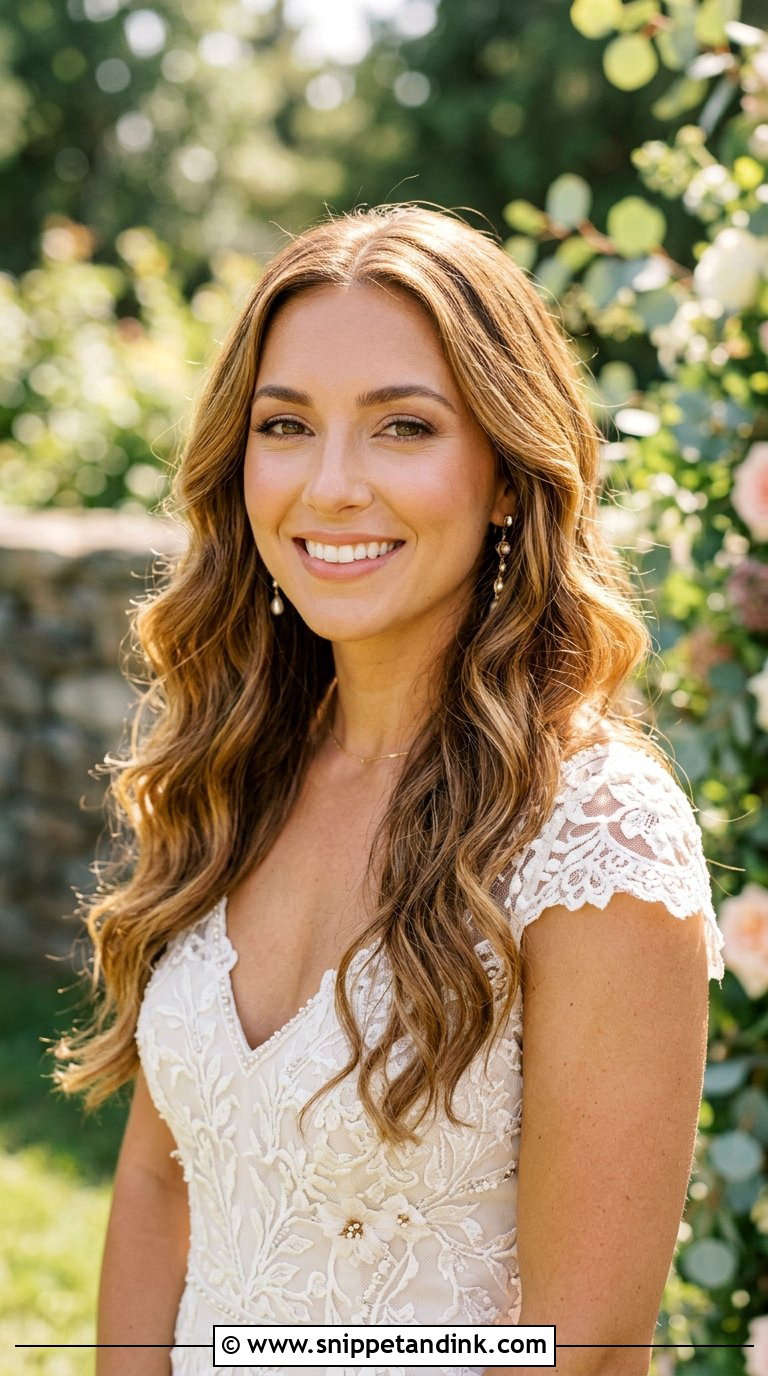
Golden brown mixes rich brown with golden highlights, so the face looks brighter without a dramatic change. Warm and neutral skin tones suit it. It grows out softly, needs little maintenance, and adds depth to loose waves or a romantic braid. If your natural hair is a medium brown, this can often be done in a single session, which makes it a good choice when the wedding is only a month or so away.
14. Blush Pink Bridal Hair Color
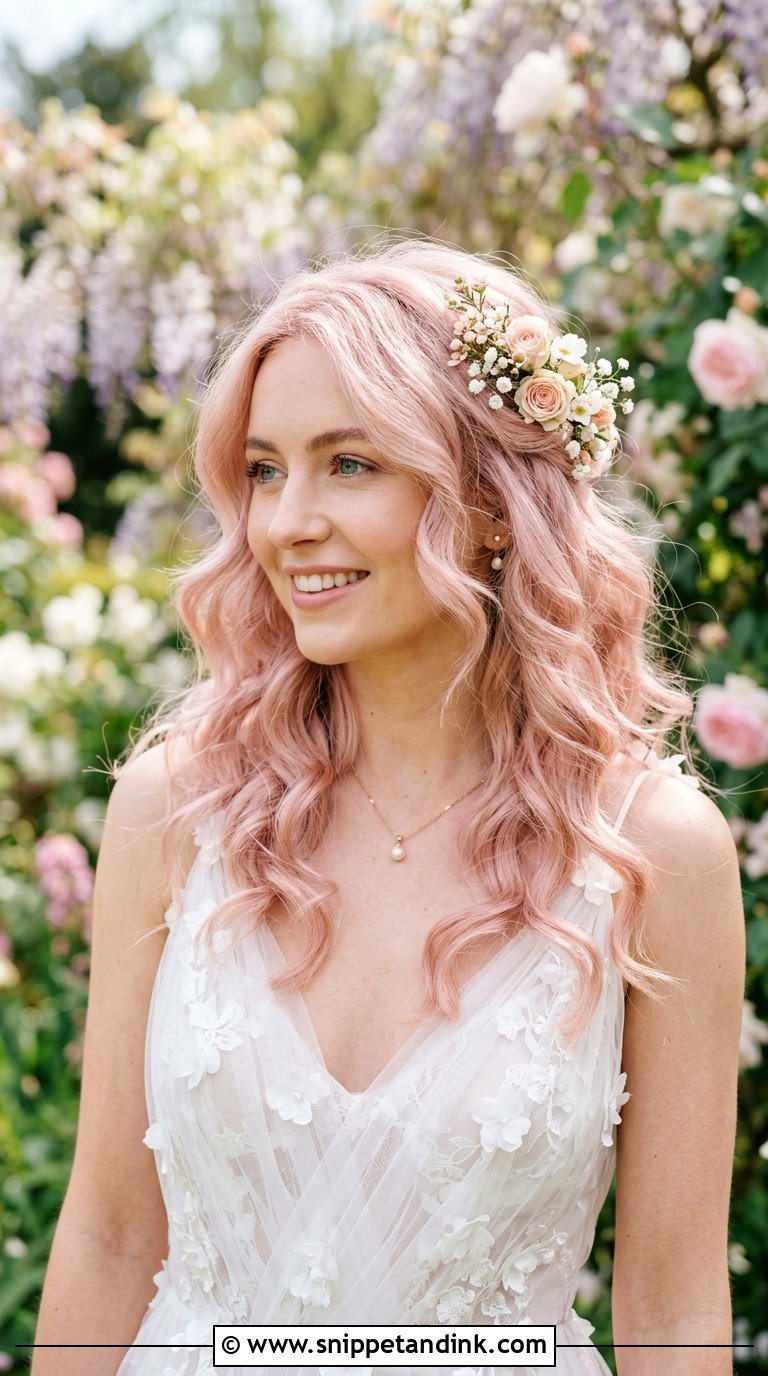
Blush pink gives a romantic, pastel look, but it only shows on hair that has been lightened to a pale blonde first. Pastels are semi-permanent and fade within a handful of washes, so I’d apply it just days before the wedding, not weeks. Fair to light skin suits it, and it contrasts softly with a white gown. Soft waves or a loose updo make the most of it at a garden or bohemian wedding. Bring a backup plan: if the pink fades unevenly, a gloss can tone it down.
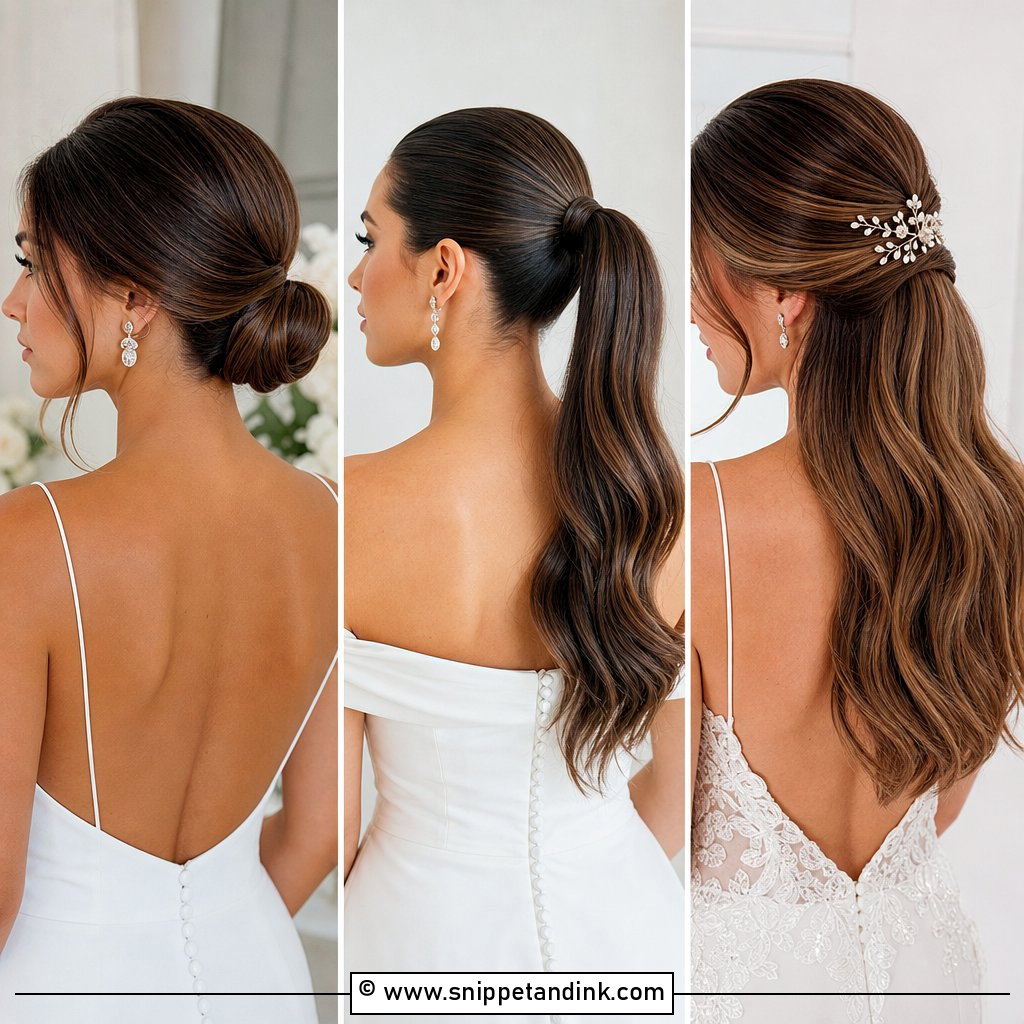
15. Jet Black Bridal Hair Color
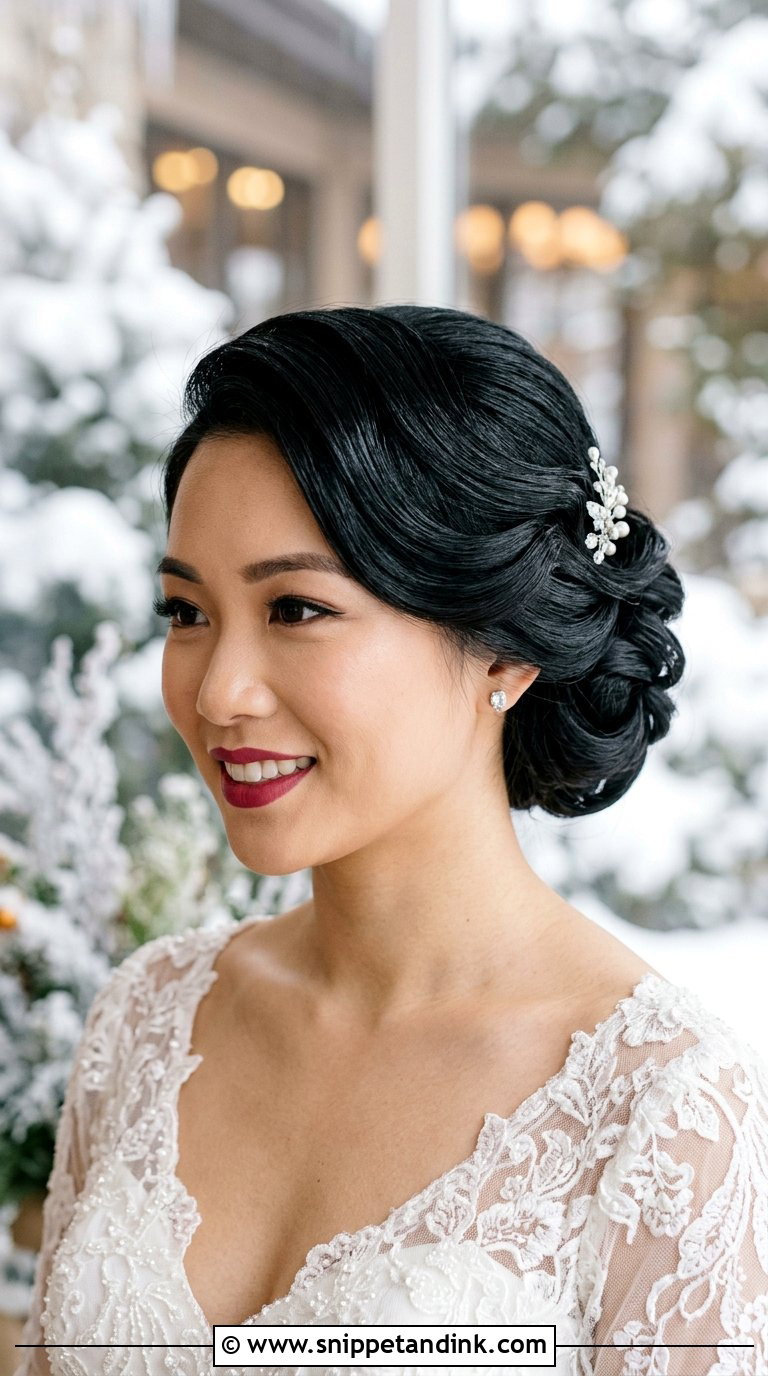
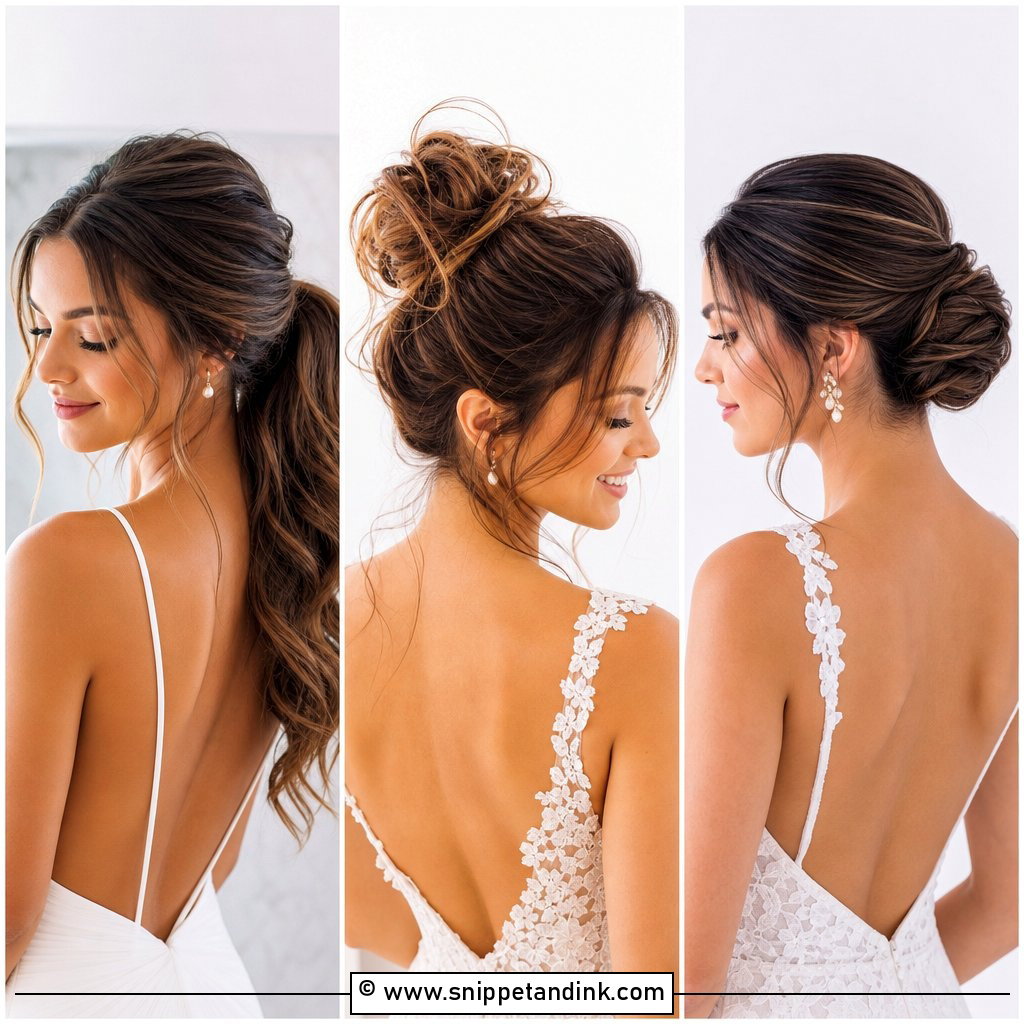
Jet black gives the strongest contrast against a white or ivory gown and suits cool and neutral skin, especially deeper complexions. Two things I’d mention before anyone goes black: it’s very hard to lift out later, and grey or lighter regrowth shows quickly at the part. Black can also look flat in photos without shine, so a gloss and a light shine spray help. Sleek waves or a polished updo make the most of it.
16. Auburn Bridal Hair Color
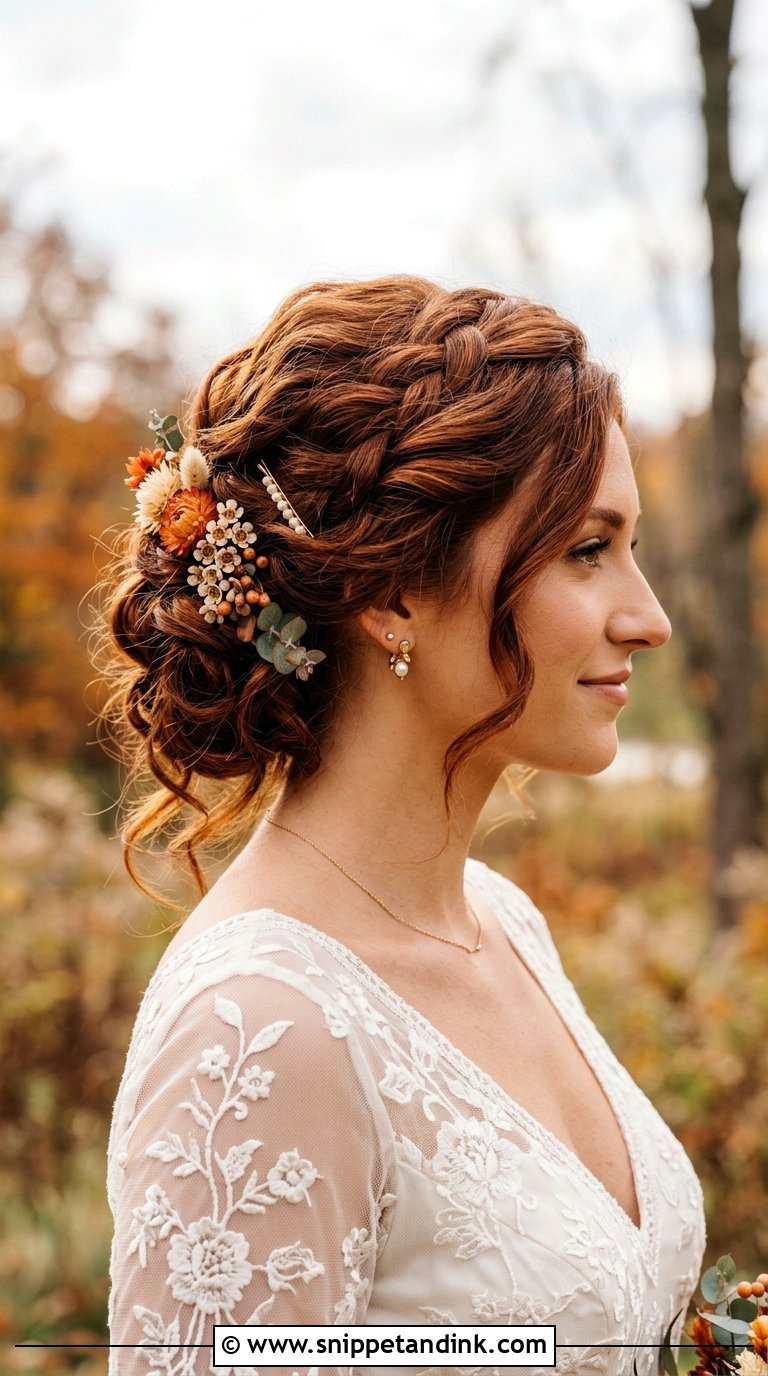
Auburn mixes red and brown, so it reads as natural rather than bold. It flatters warm and neutral skin with golden or peachy undertones, and it suits autumn and rustic weddings well. The red fades first, so I refresh auburn a week or two before the date. Loose waves or a textured updo show the reddish glints in natural light.
17. Cool Toned Platinum Bridal Hair Color
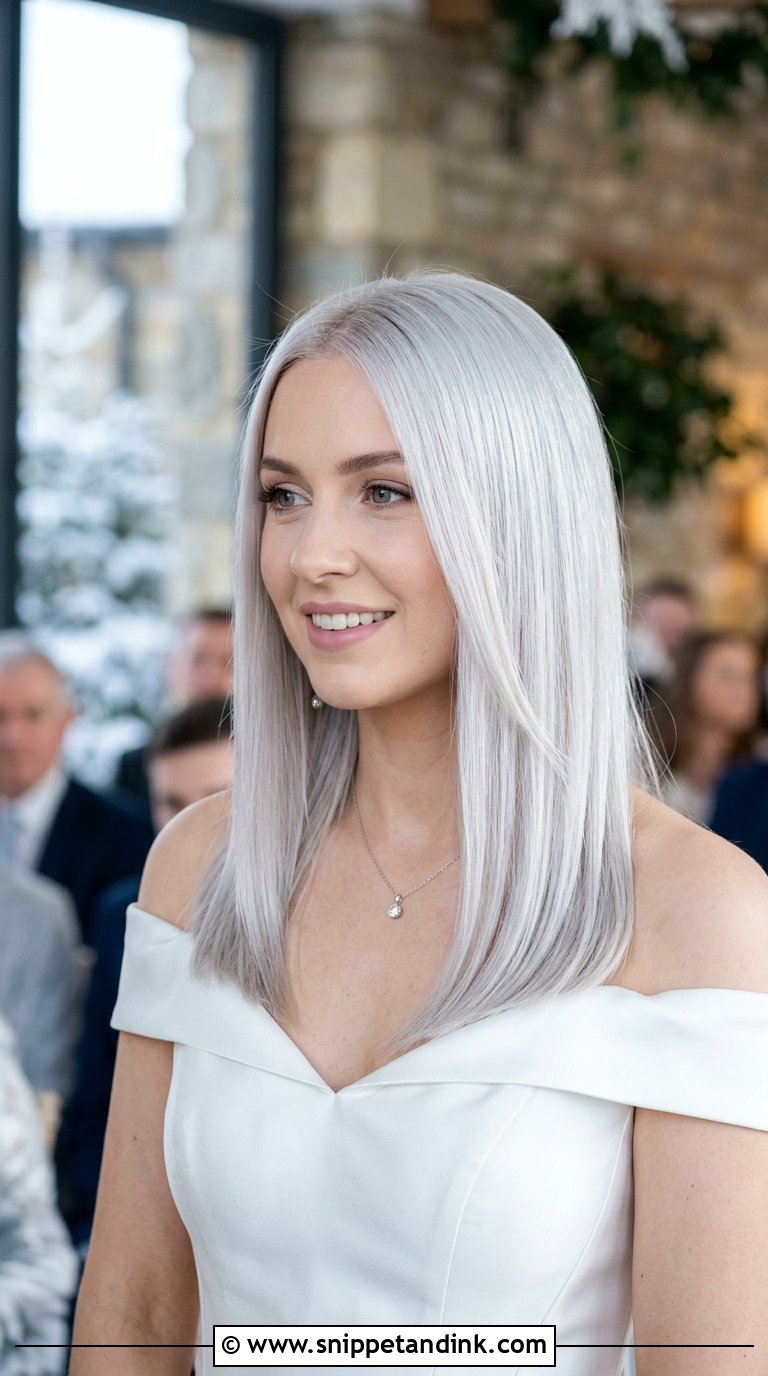
Cool-toned platinum takes regular platinum a step further with a silvery toner, giving icy sophistication that suits fair, cool complexions. Silver toners fade within weeks and turn yellow under heat styling, so a heat protectant and a purple shampoo once a week are part of the plan. Start salon appointments months ahead. Next to a white gown it looks crisp and editorial. Sleek styling or soft waves both work.
18. Caramel Brown Bridal Hair Color
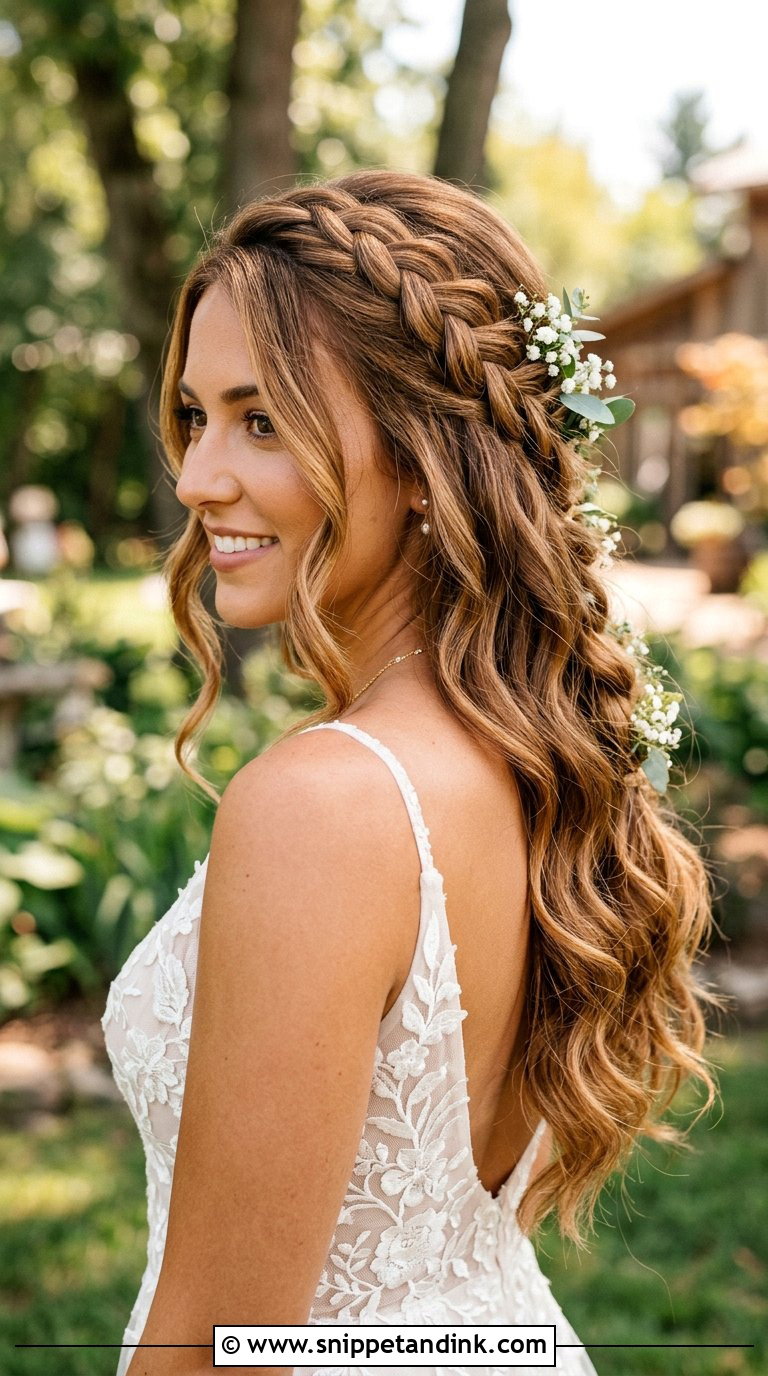
Caramel brown blends brown with golden-caramel pieces, giving warmth without a big lift. It flatters warm and neutral skin and grows out gracefully. It’s an easier version of caramel balayage, and often needs only one appointment. Loose waves or a romantic braid show the lighter pieces, and it suits classic and boho bridal styles alike.
19. Silver Lavender Bridal Hair Color
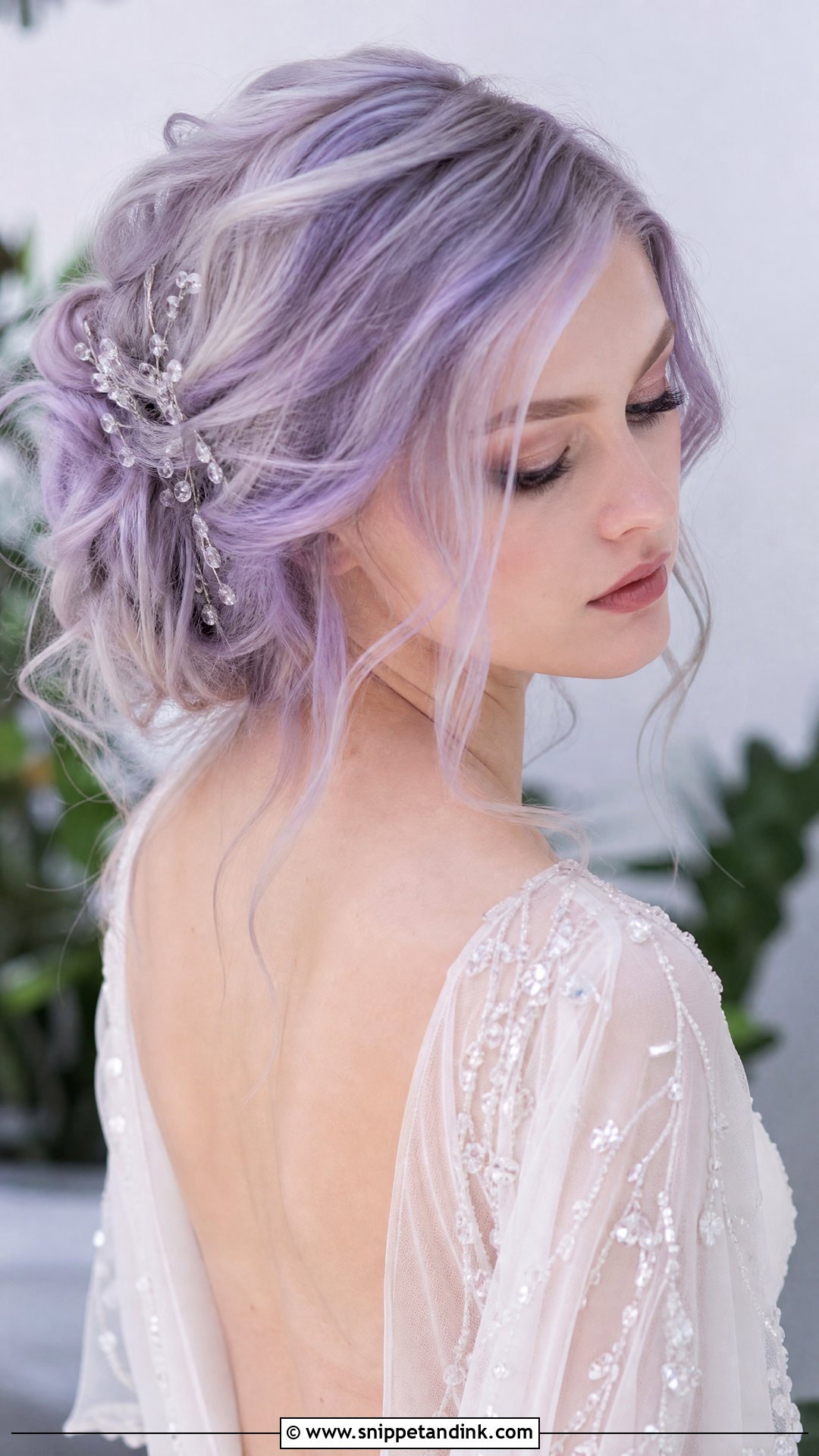
Silver lavender mixes cool silver with a soft lavender tint, giving a pale pastel finish over a very light blonde base. It fades fast, often within a few washes, first losing the purple and then drifting toward yellow. Time it for the days just before the wedding and wash only in cool water. Fair, cool complexions suit it best. Soft waves or a loose updo with crystal or floral accessories suit an artistic or unconventional wedding.
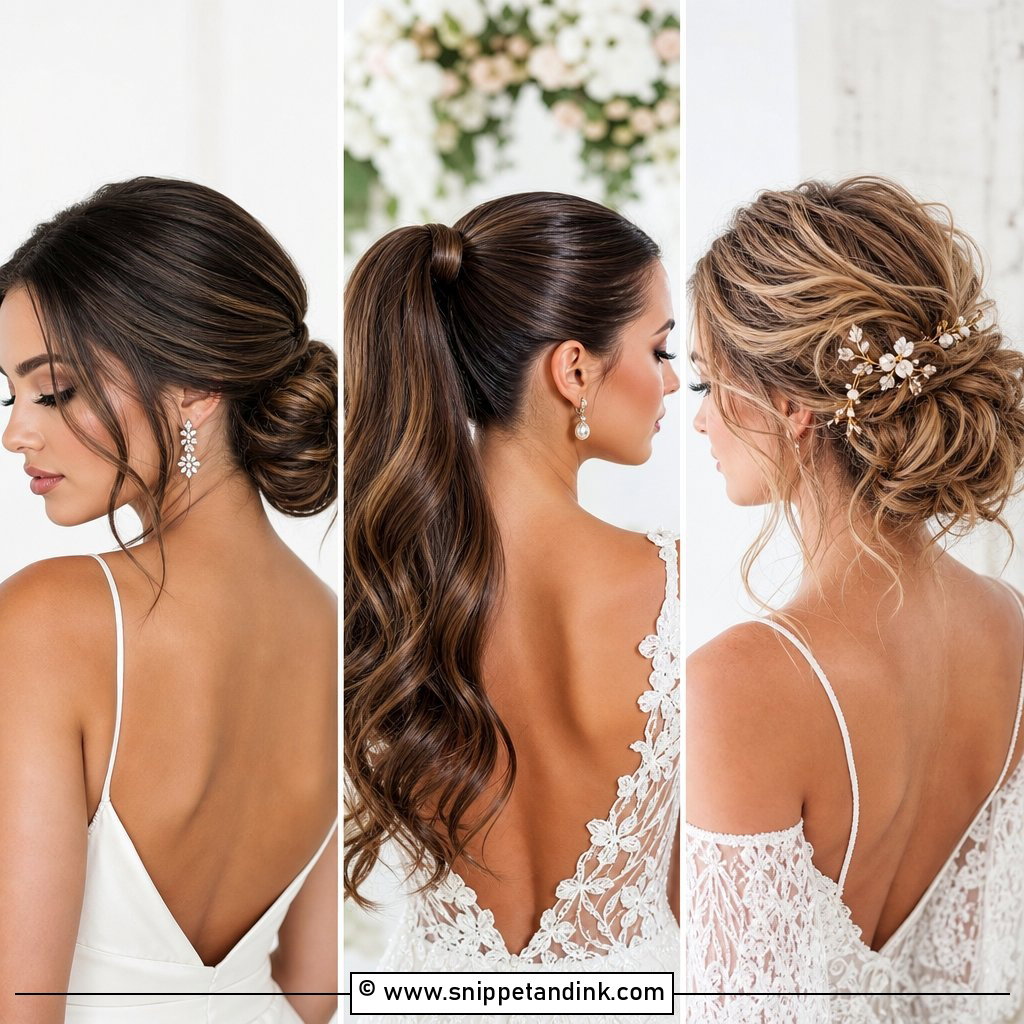
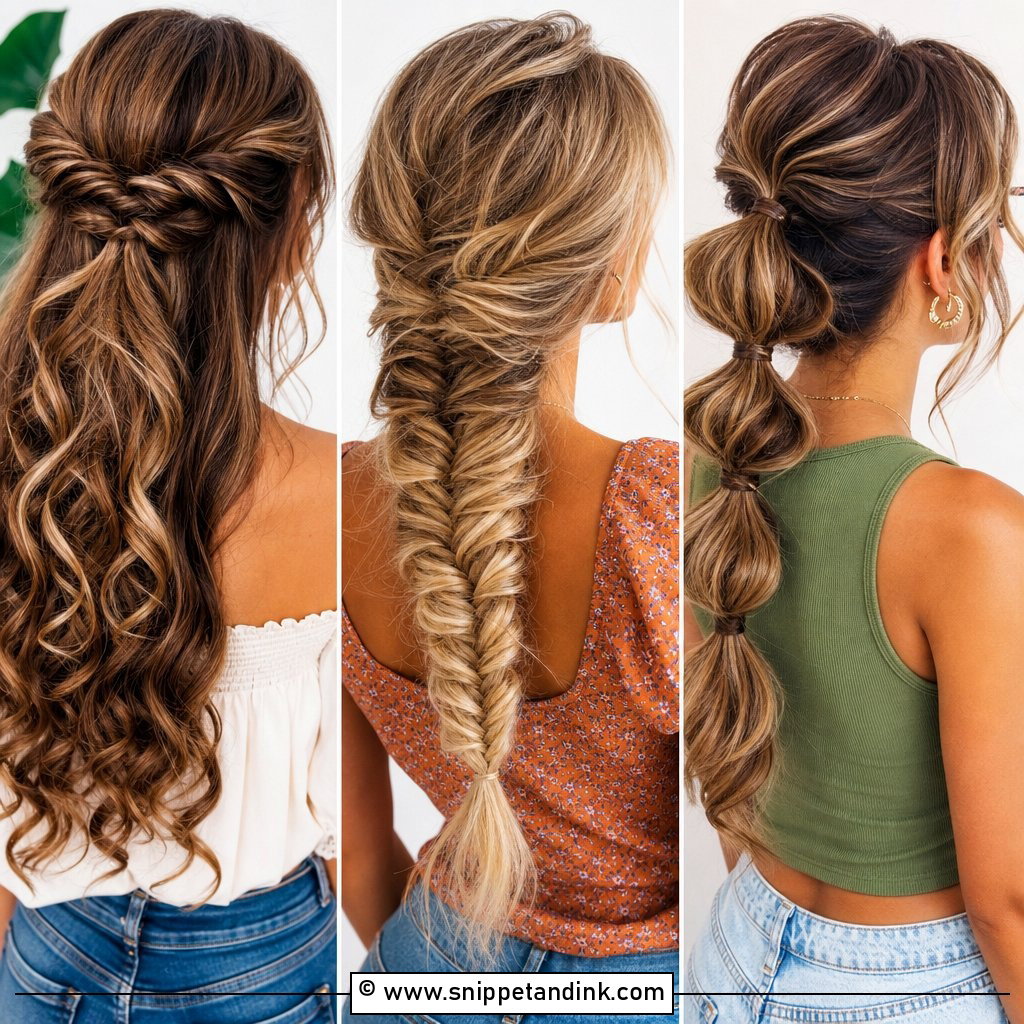
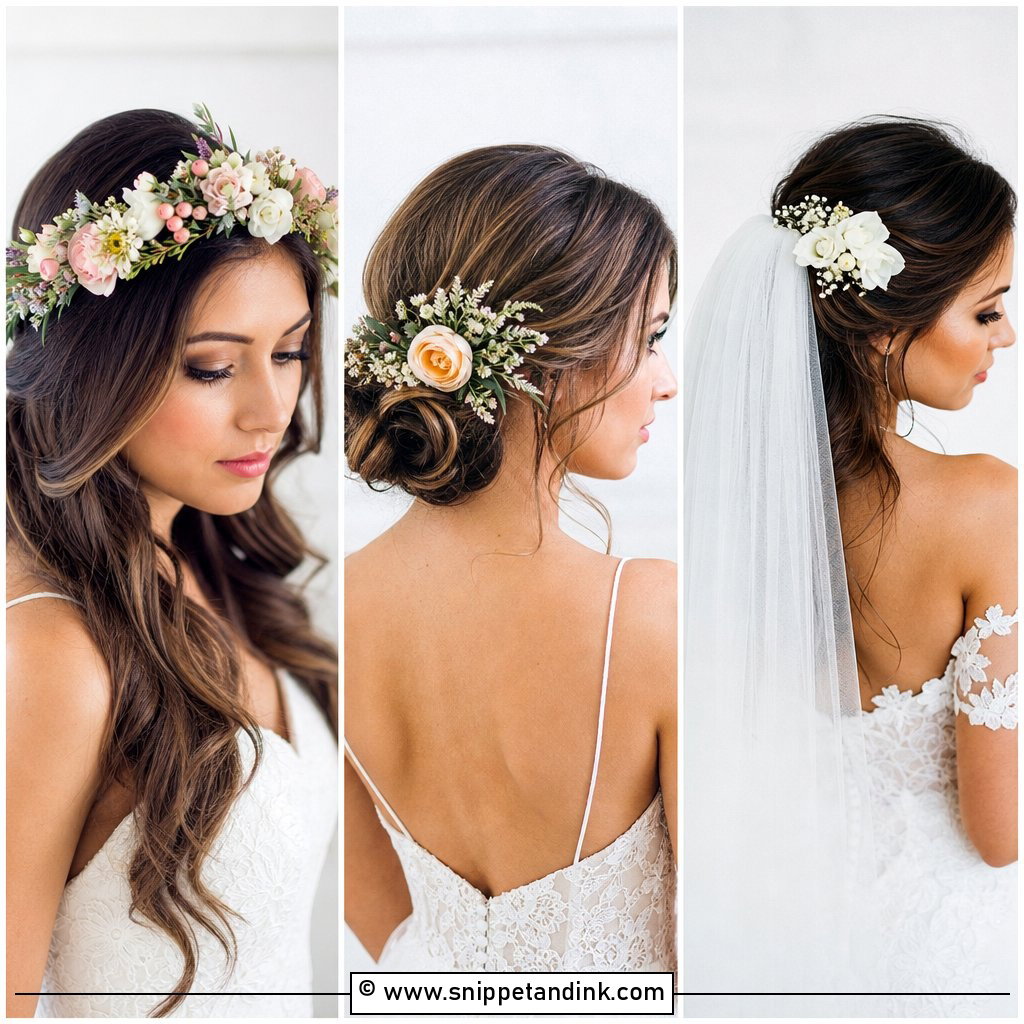

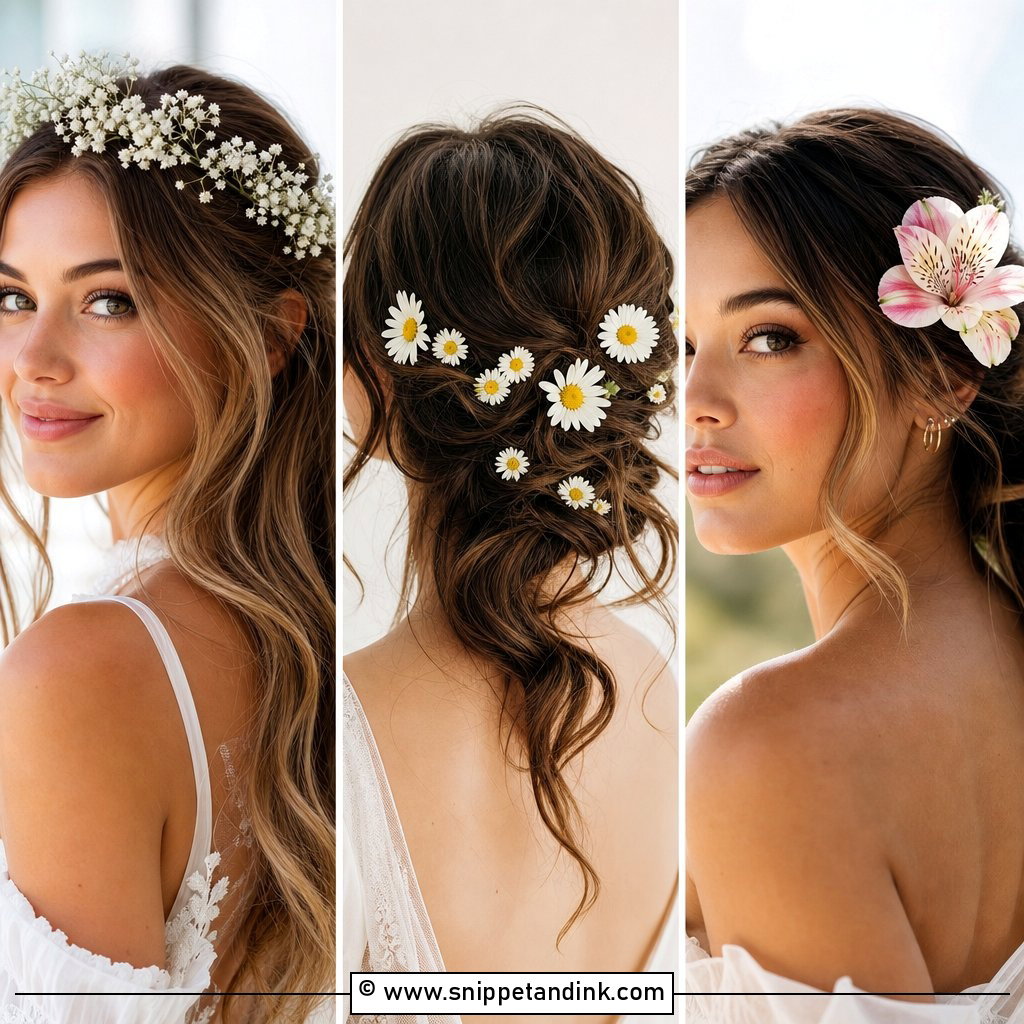
20. Warm Chestnut Bridal Hair Color
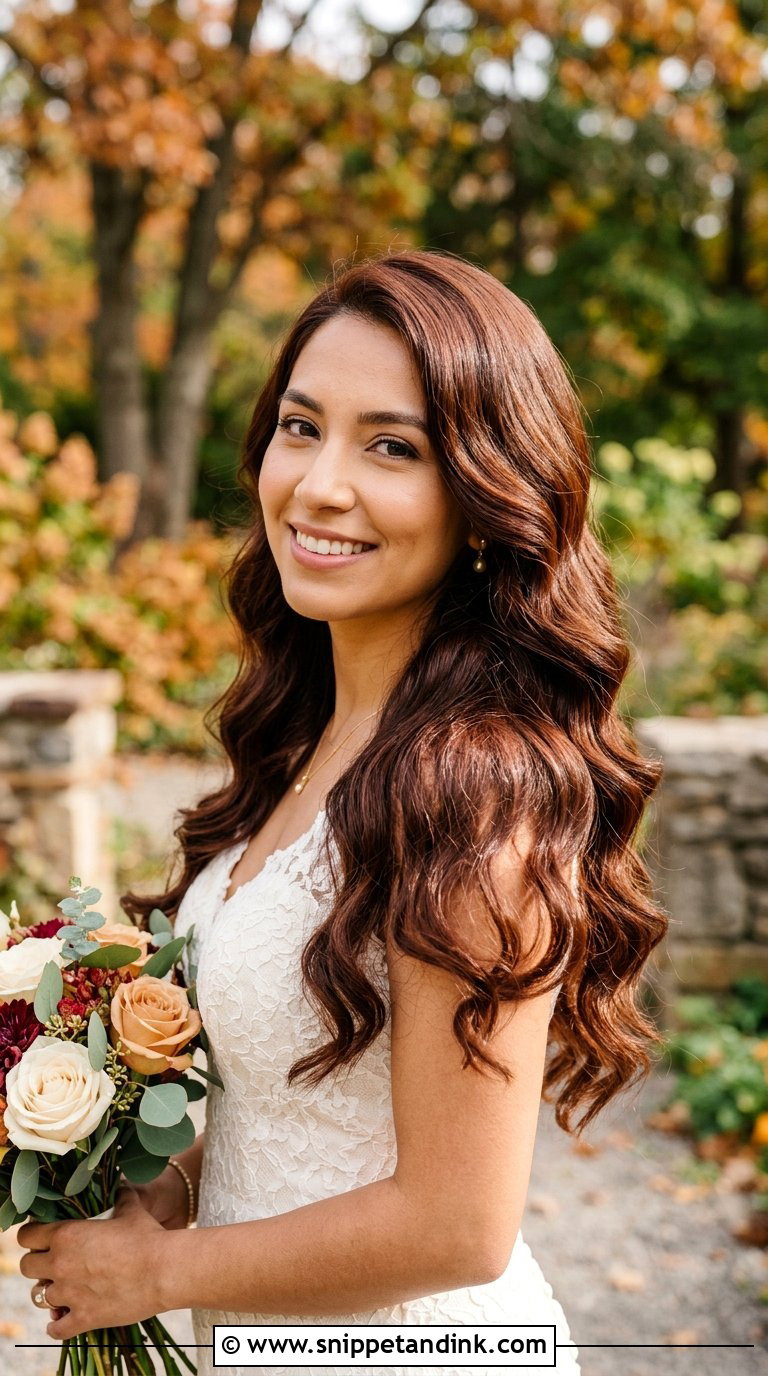
Warm chestnut is a deep brown with reddish undertones, and it’s one of the most natural-looking options here. Warm and neutral skin tones suit it, and it adds depth without any harsh line at the roots. Upkeep is minimal: a gloss a couple of weeks before the wedding brings back the shine. Soft waves or a romantic updo suit it, with almost any gown.
How Each Shade Reads Under Flash and Reception Lighting
Hair color changes with light more than people think. Platinum and silver can blow out to pure white in direct sun or flash, losing all their dimension, so a hint of a darker root or lowlight helps. Very dark hair can look like a solid shape in photos without shine, which is why I recommend a gloss shortly before the wedding.
Warm indoor reception lighting adds gold to everything. That flatters honey, caramel and copper, but can make ash or silver tones look dull or grey. If your reception is candlelit or indoors, look at trial photos taken in similar light, not just outside.
Protecting the Color Until the Honeymoon Photos
- Wash with a sulfate-free shampoo and cool water, especially for reds and pastels.
- Use a heat protectant every time you style; curling irons strip toner and yellow blondes.
- Purple shampoo once a week keeps blondes cool, but more often can tint light hair.
- Cover your hair or use a leave-in with UV protection in strong sun.
- Wet hair with fresh water before swimming in chlorine or salt water on the honeymoon.
A Strand Test Tells You More Than a Screenshot
From mocha mousse to silver lavender, every shade here looks different on your hair than in a photo. Start with a consultation and a strand test, think about your undertones and how much upkeep you’re willing to do, and work backward from the date. Big changes need months; glosses and pastels need days. The right color is the one that still looks fresh in your photos and still feels like you when you look in the mirror.
You'll Like These Ideas:


Leave a Reply