
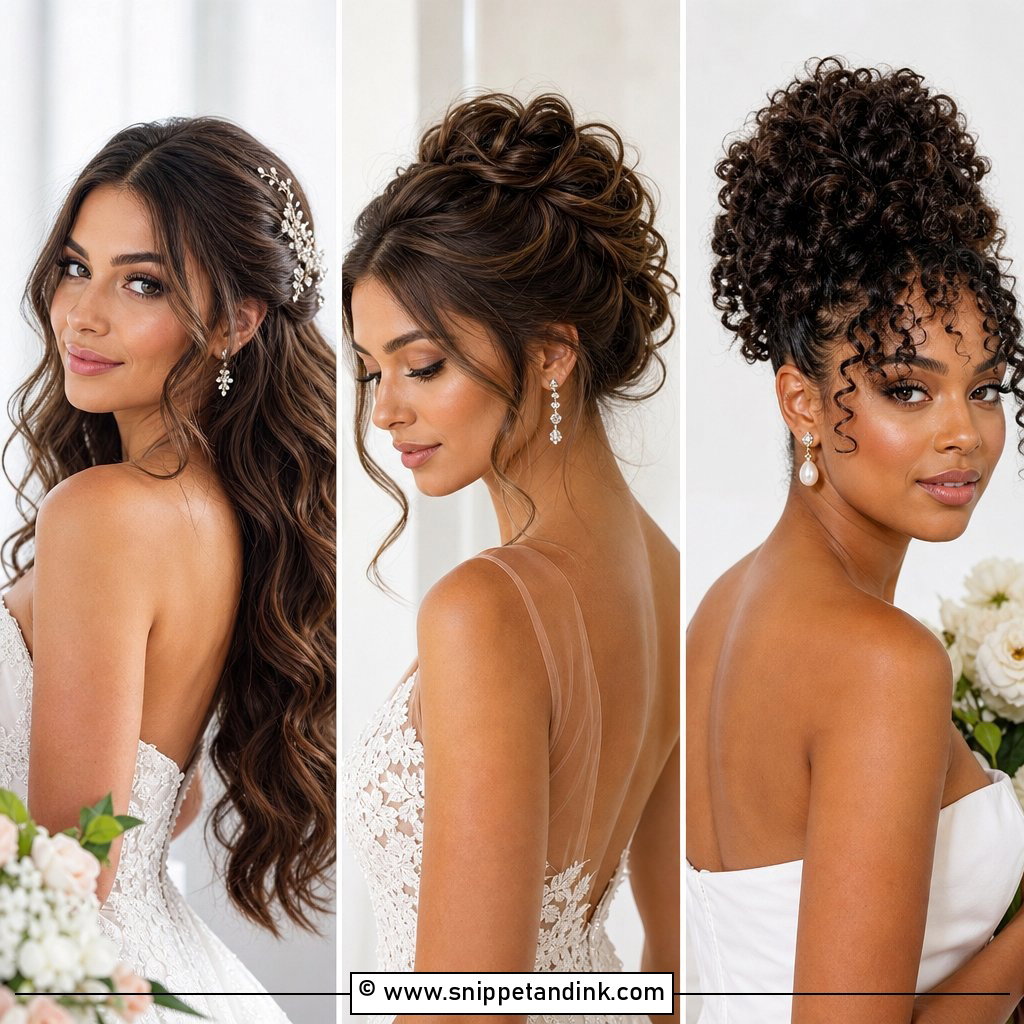
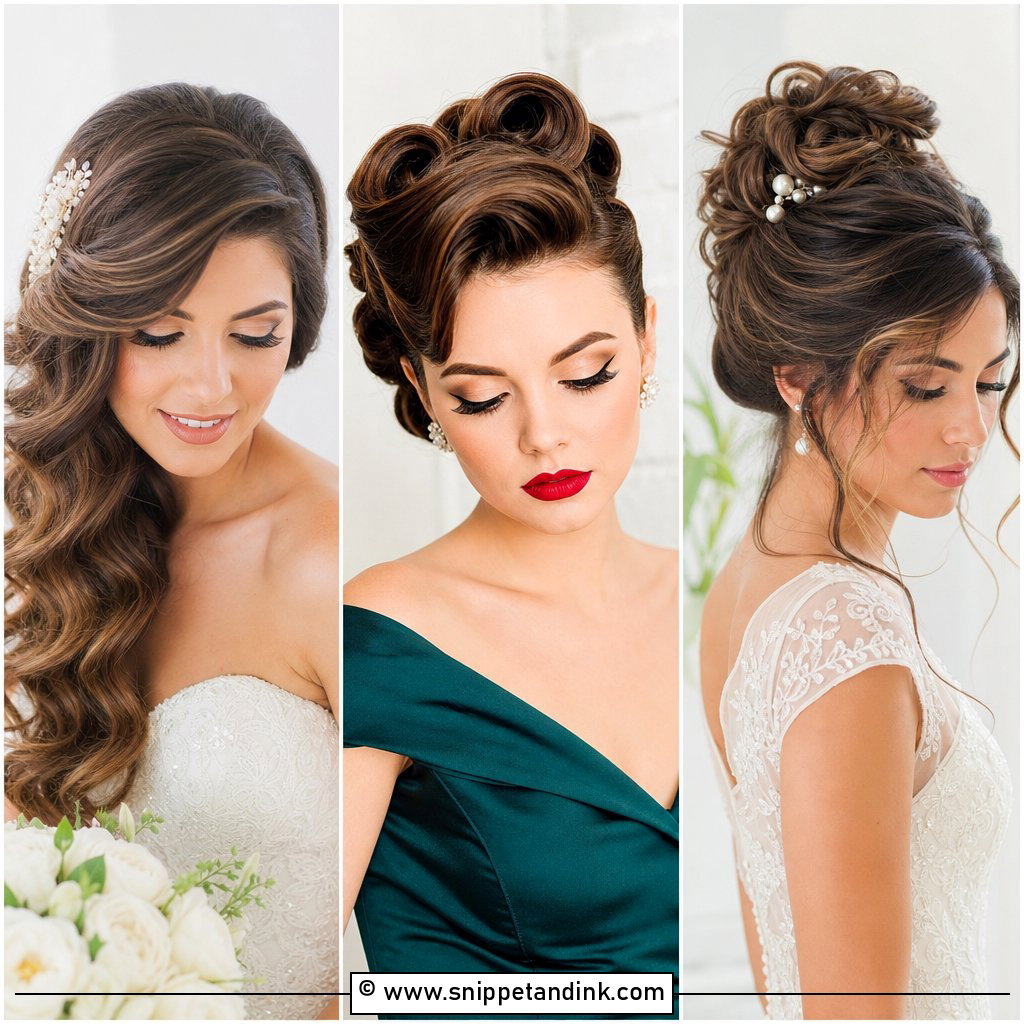
Wedding photos are hard on flat, one-tone hair. Pinned into an updo or under a veil, a single shade can read as a solid dark shape, while soft balayage shows every twist, curl and wave. That’s why I see so many brides in the color chair in the months before the wedding. Because balayage is painted by hand, I can put light exactly where it will show: around the face, through the sections that will be twisted into a bun, along the ends of loose waves. The work is choosing a shade that suits your skin and dress, then timing it so it looks settled rather than brand new on the morning.
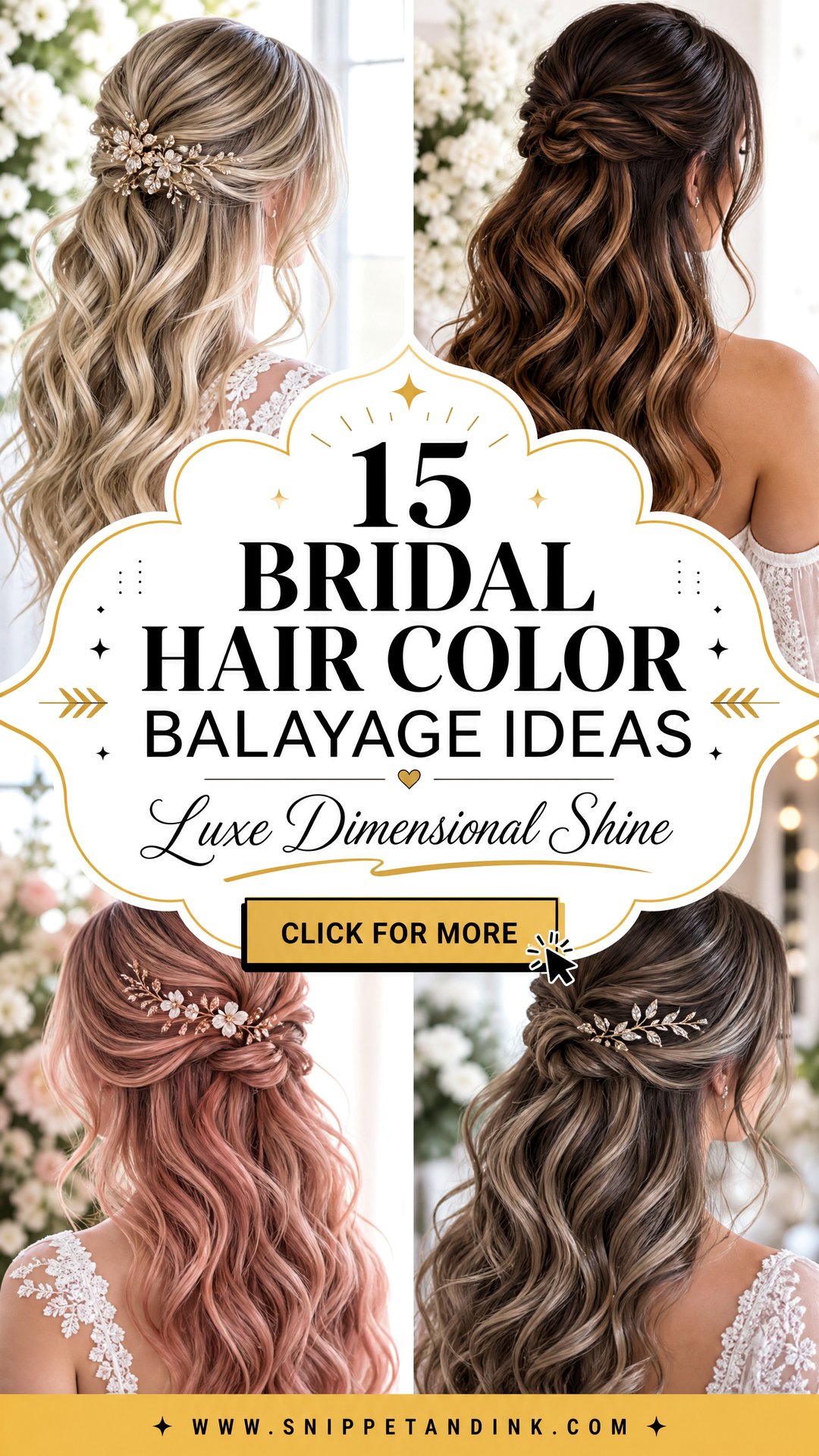
What I Need to Know Before Painting a Wedding Shade
A wedding balayage appointment is different from a routine color visit, so tell the salon when you book. These are the questions I ask that I wouldn’t usually.
- Your dress color. Bright white, ivory and champagne pull hair tones in different directions. A photo helps; a fabric swatch is better.
- Your wedding hairstyle. In an updo, the mid-lengths and the hair under the crown suddenly show. I place lighter pieces where twists and braids will reveal them.
- Where you’ll be photographed. Strong sun, candlelit rooms and flash all treat warm and cool tones differently.
- How much upkeep you’ll do. High-contrast blonde looks great on the day but needs regular toning. A soft melt with a natural root grows out gracefully.
Words help. Lived-in, soft root and no stripes usually get the blended look you see in these photos. Bring pictures of color you dislike as well, since too yellow or too ashy means different things to different people.
1. Honey Blonde Balayage Bridal Waves
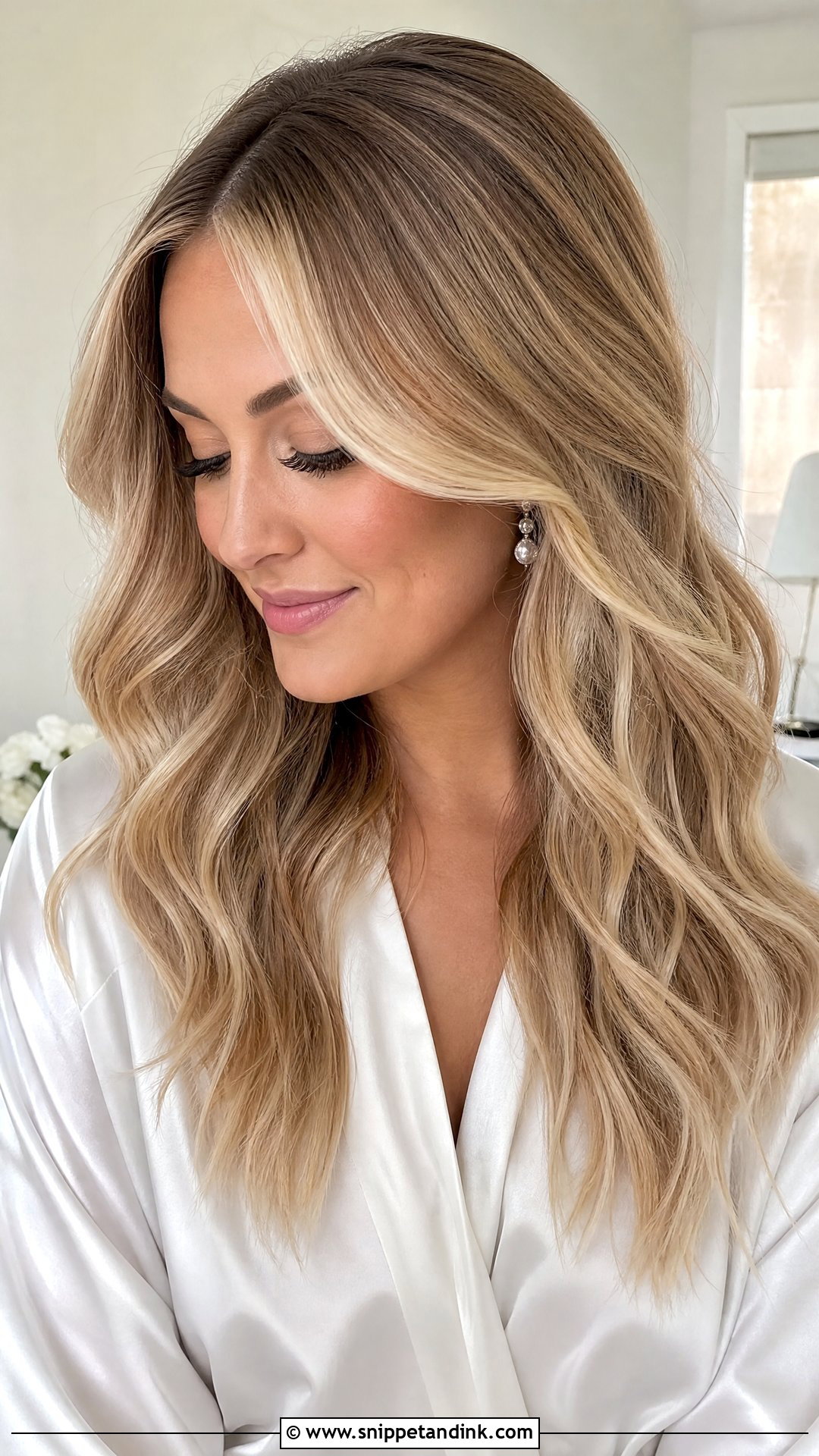
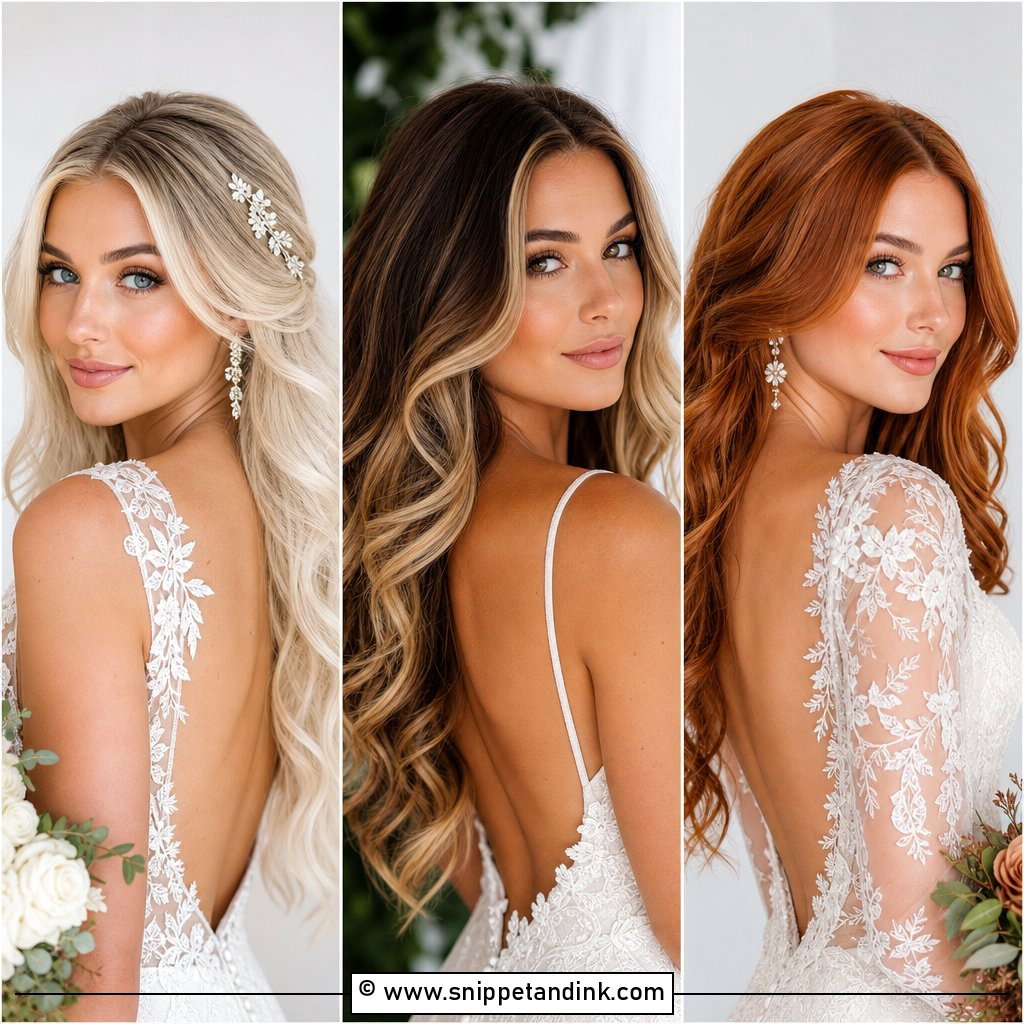
Honey is the warm blonde I paint most often for brides, because it brightens without the harsh contrast of platinum. I lay golden ribbons through a natural blonde or light brown base and keep the root soft, so the regrowth is gentle if the wedding date moves. Loose waves show it best, since each bend lifts a different strand to the light. I place the brightest pieces at the face and mid-lengths. Ivory dresses and pearls sit happily beside it; a stark white gown can make honey look a little more golden than expected, so check them together.
2. Caramel Balayage Bridal Curls
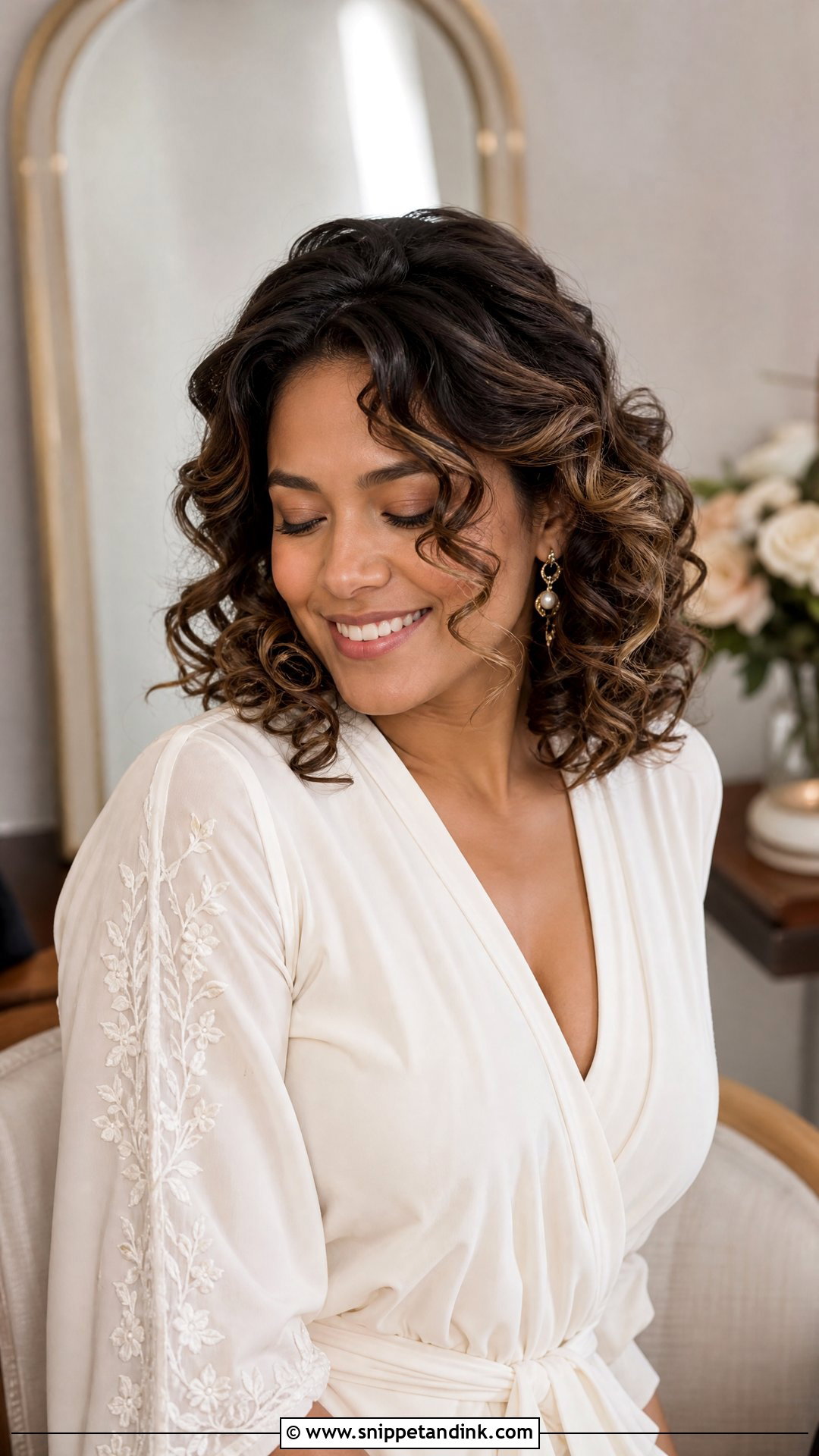
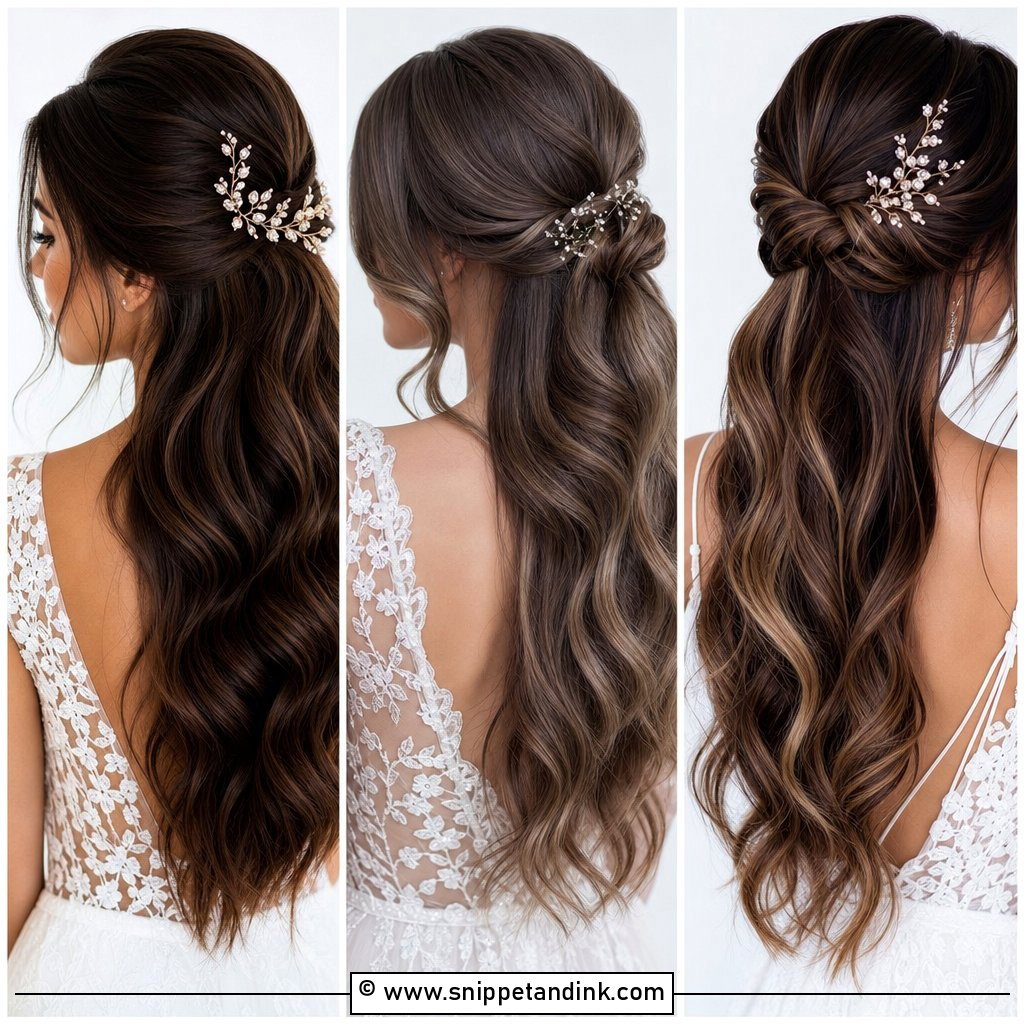
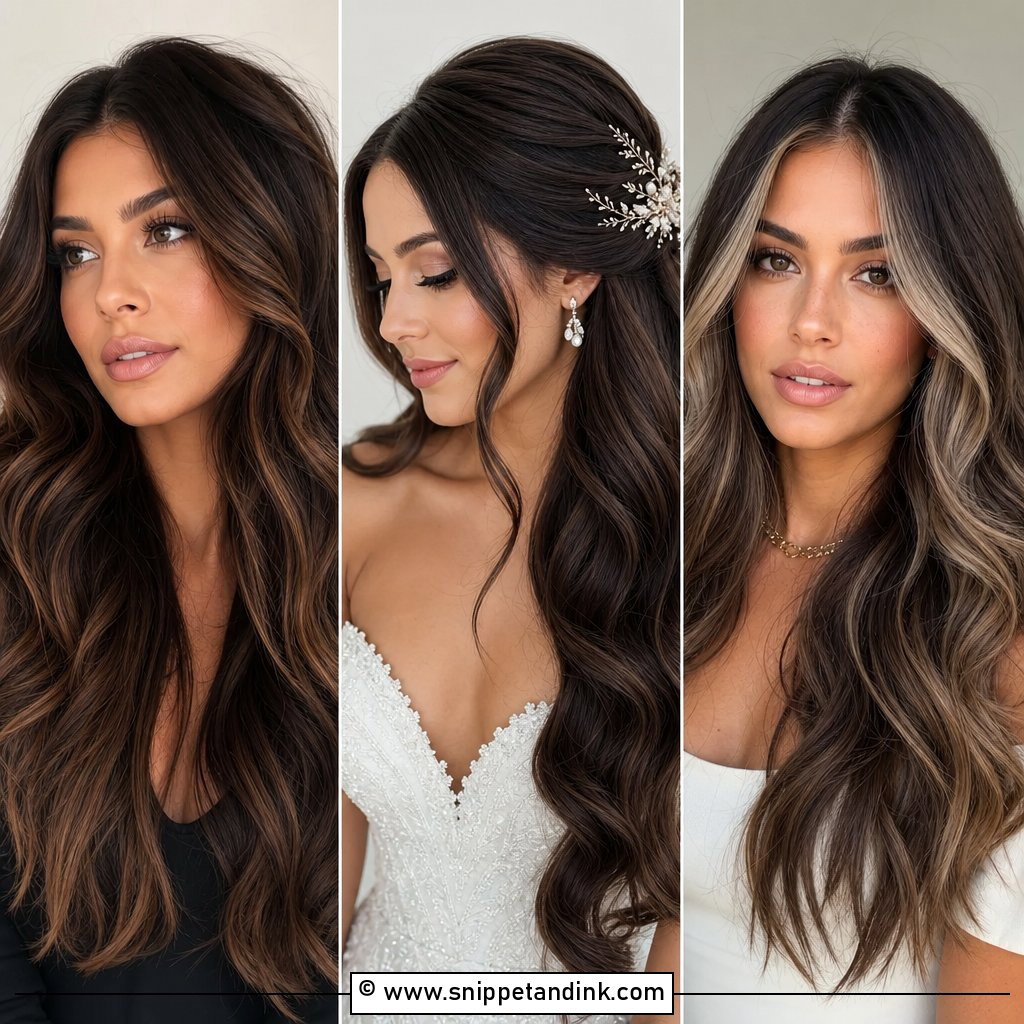
Caramel is how I add dimension for brunettes who don’t want to go blonde. The pieces are painted through the mids and ends and softened near the root. On curls, every coil carries a little depth and a little light, which gives real movement in photos. It suits warm, neutral and olive skin. One honest warning: dark hair lifts through red and orange on its way to caramel, so a toner is part of the process, not an optional extra. Style the curls with shine and definition and the color does the rest.
3. Ash Brown Balayage Bridal Hair
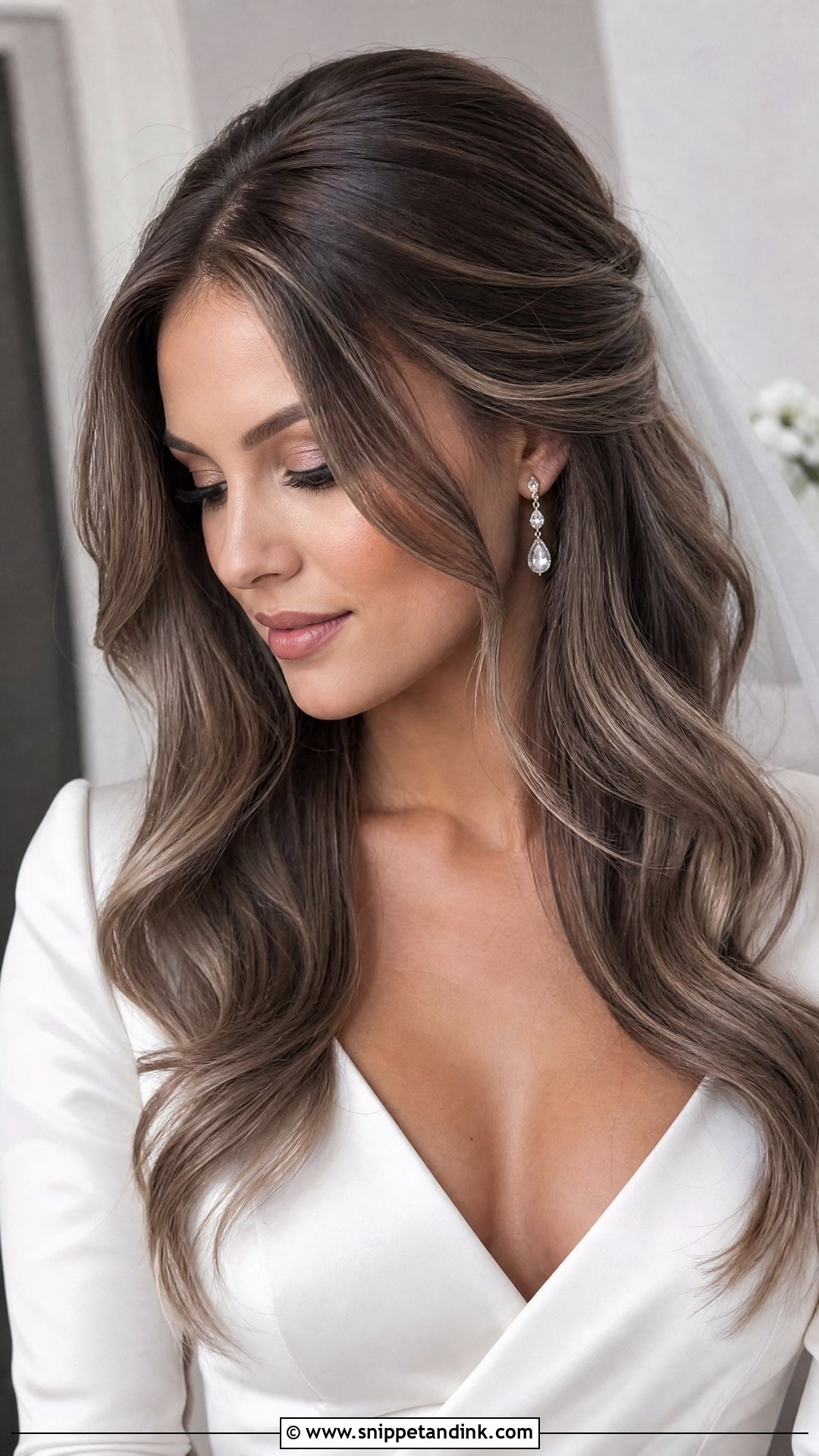
Cool brunettes ask for this when golden warmth feels wrong on them. Ash brown balayage bridal hair relies on smoky beige and mushroom tones for subtle brightness, and the blend has to be soft, with no hard lines or chunky highlights. Sleek waves, low buns and polished half-up styles suit it. The catch is that ash tones drift warm with every wash, so I always book these brides a gloss shortly before the wedding. Crisp white gowns and silver jewelry pair well with it.
4. Champagne Blonde Balayage Bridal Hair
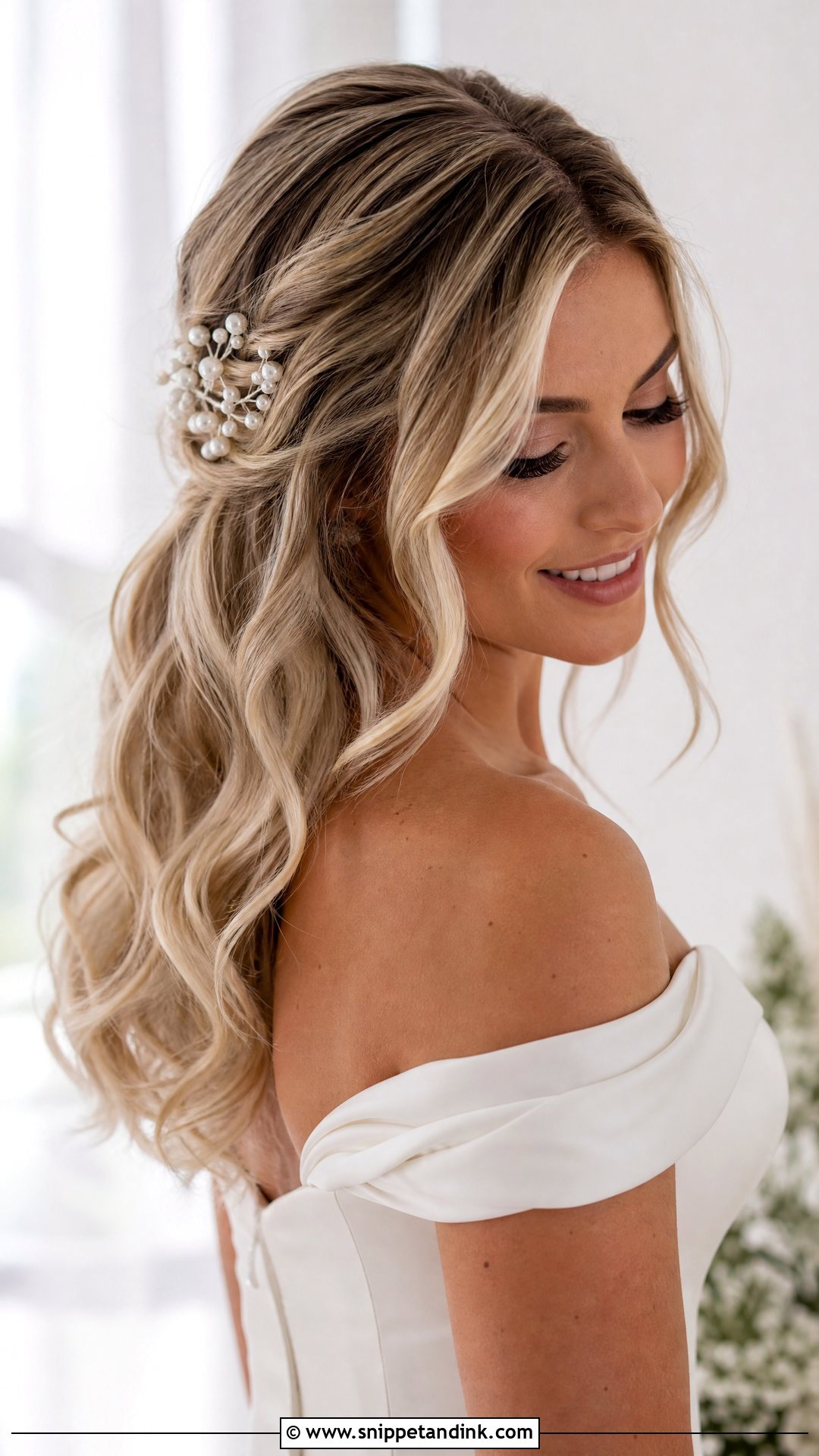
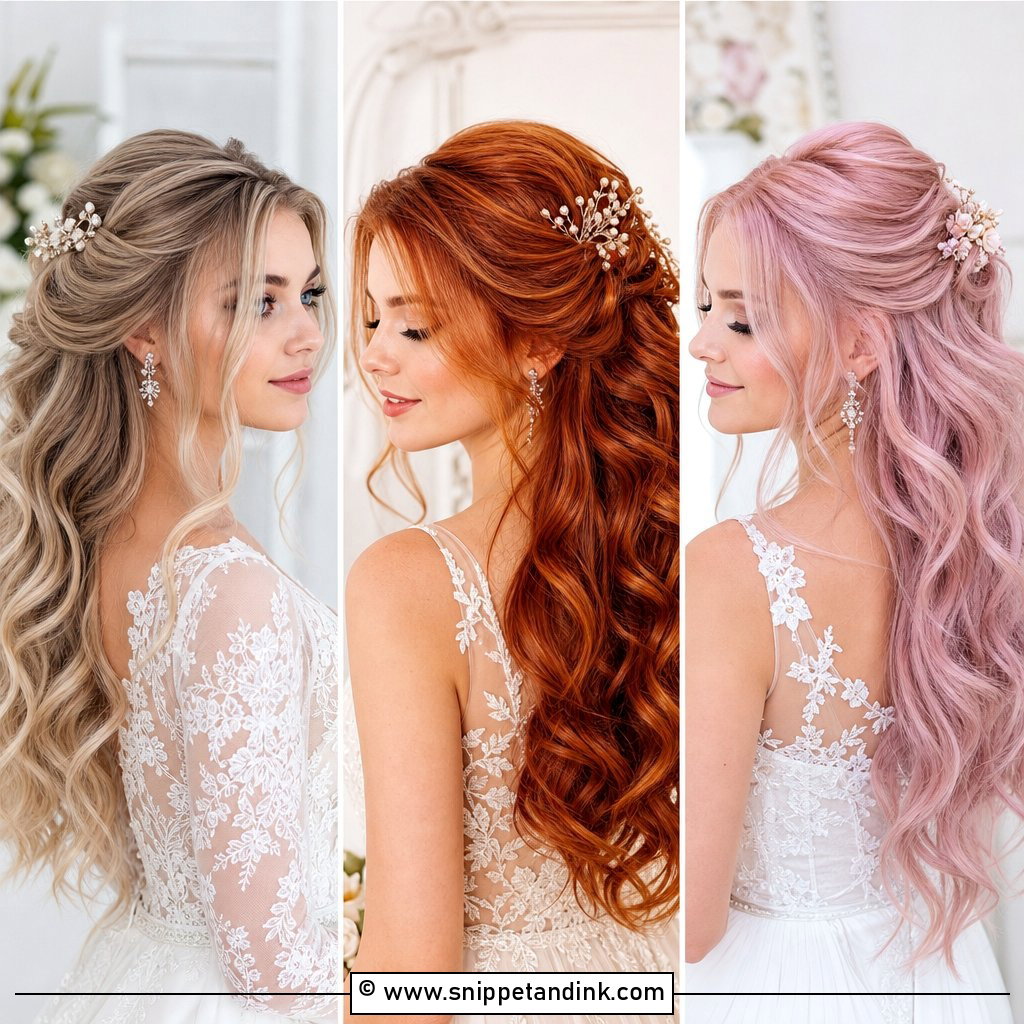
Champagne sits between beige and pale gold, so it brightens without looking icy or yellow. I keep the placement delicate, with creamy ribbons at the face and a soft lift through the ends, which keeps it believable as natural blonde. Brushed waves, romantic buns and face-framing pieces show it well, and outdoor light gives it a gentle glow. A toner and shine treatment in the fortnight before the wedding keeps the finish smooth.
5. Brunette Balayage Bridal Updo
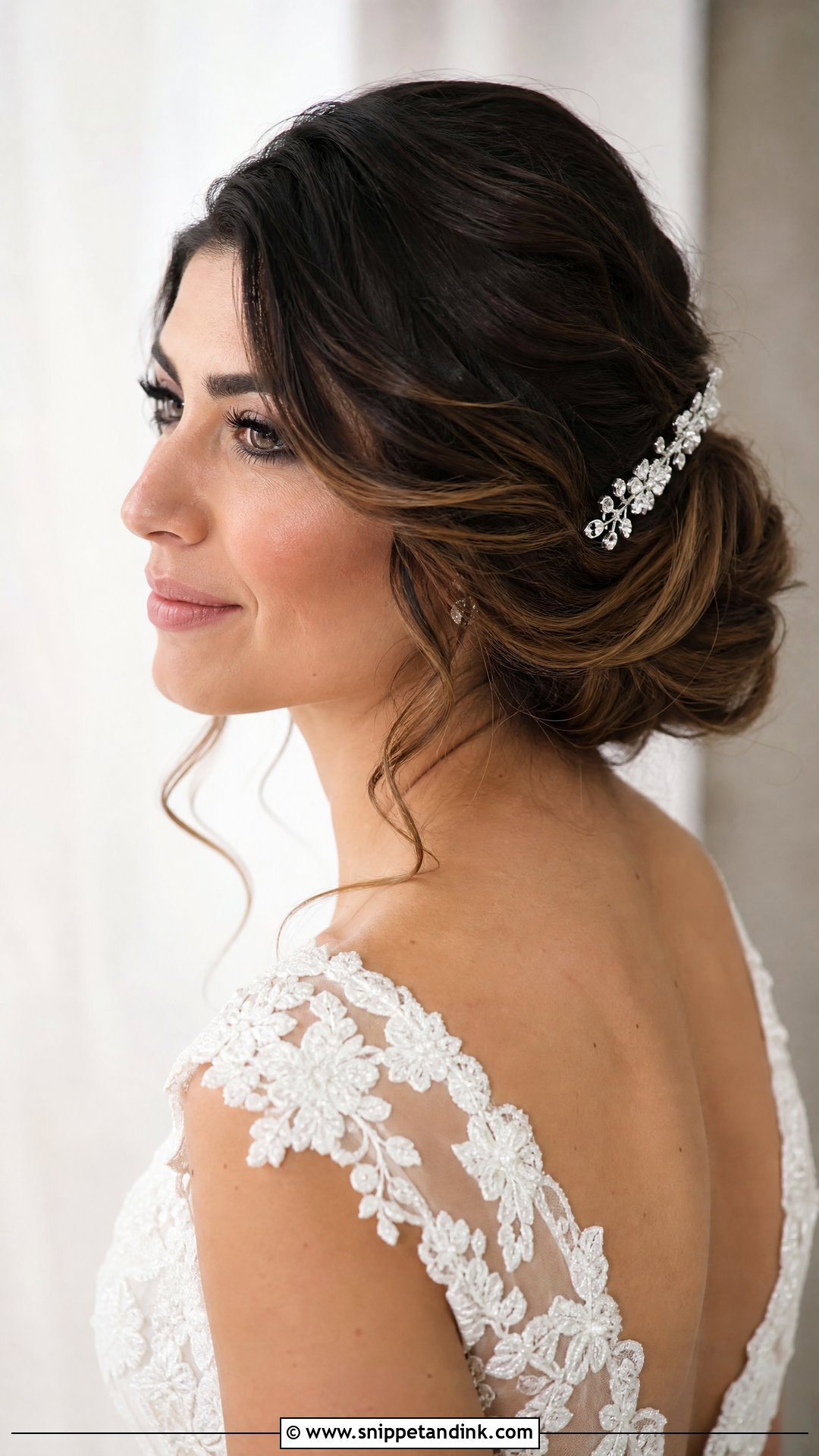
Dark hair in an updo can photograph as one flat mass, and this is the fix. For a brunette balayage bridal updo, I paint warm brown, chestnut or soft caramel pieces where the hair will be twisted, braided or tucked, so each section stands out from the next. The overall look stays brunette. It helps to know your updo before the color appointment, because hair that hangs loose and hair pulled up into a chignon show completely different sections.
6. Beige Blonde Balayage Bridal Hair
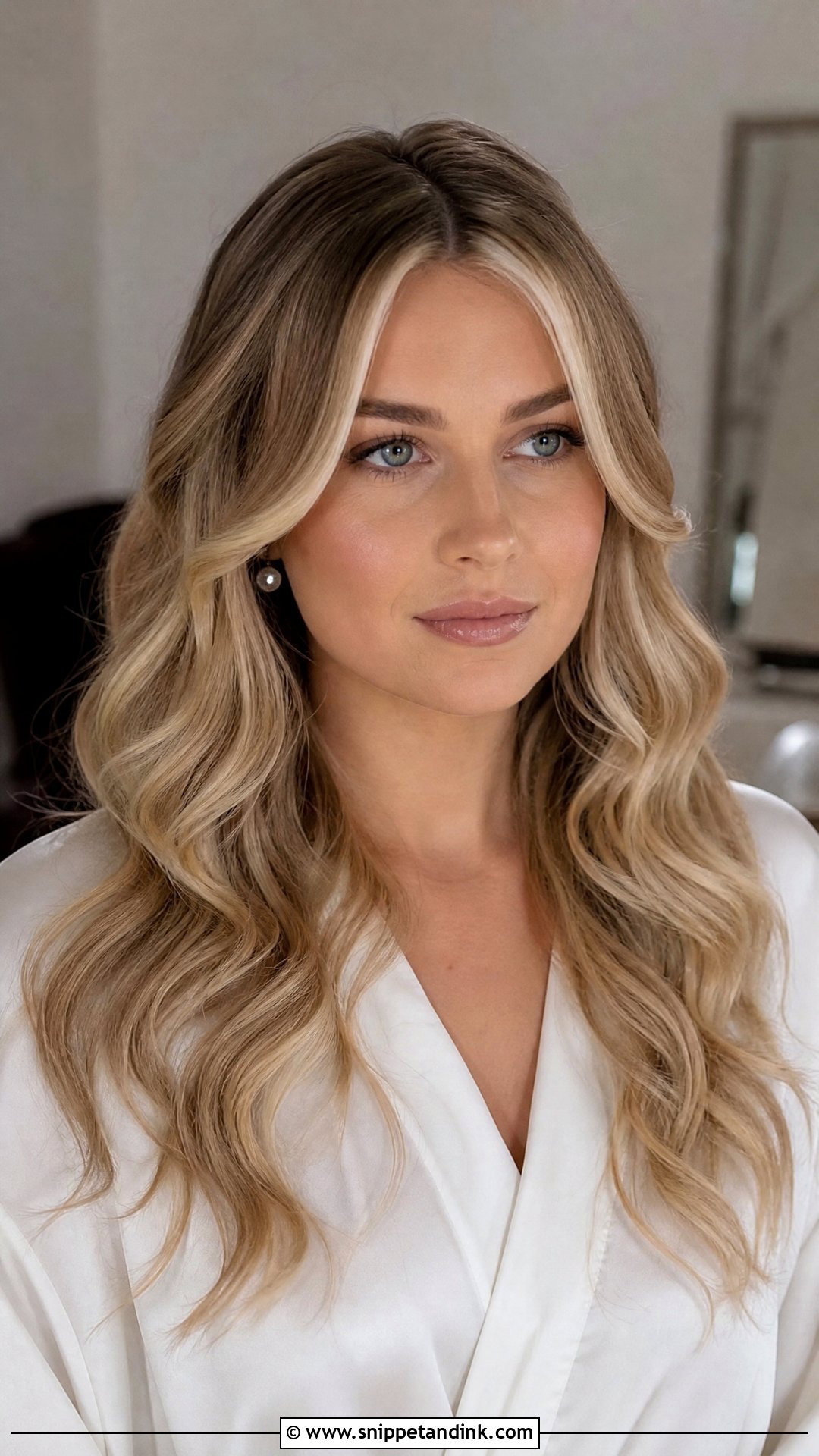
Beige blonde is neither warm nor cool, which makes it one of the easiest shades to pair with any dress. I aim for a natural root, creamy mids and softly brightened ends. Long waves, soft layers and half-up styles show the movement it adds. If you’re nervous about change close to the date, this is the gentlest blonde to choose. A beige gloss gives it shine under ceremony lighting.
7. Chocolate Balayage Bridal Hair
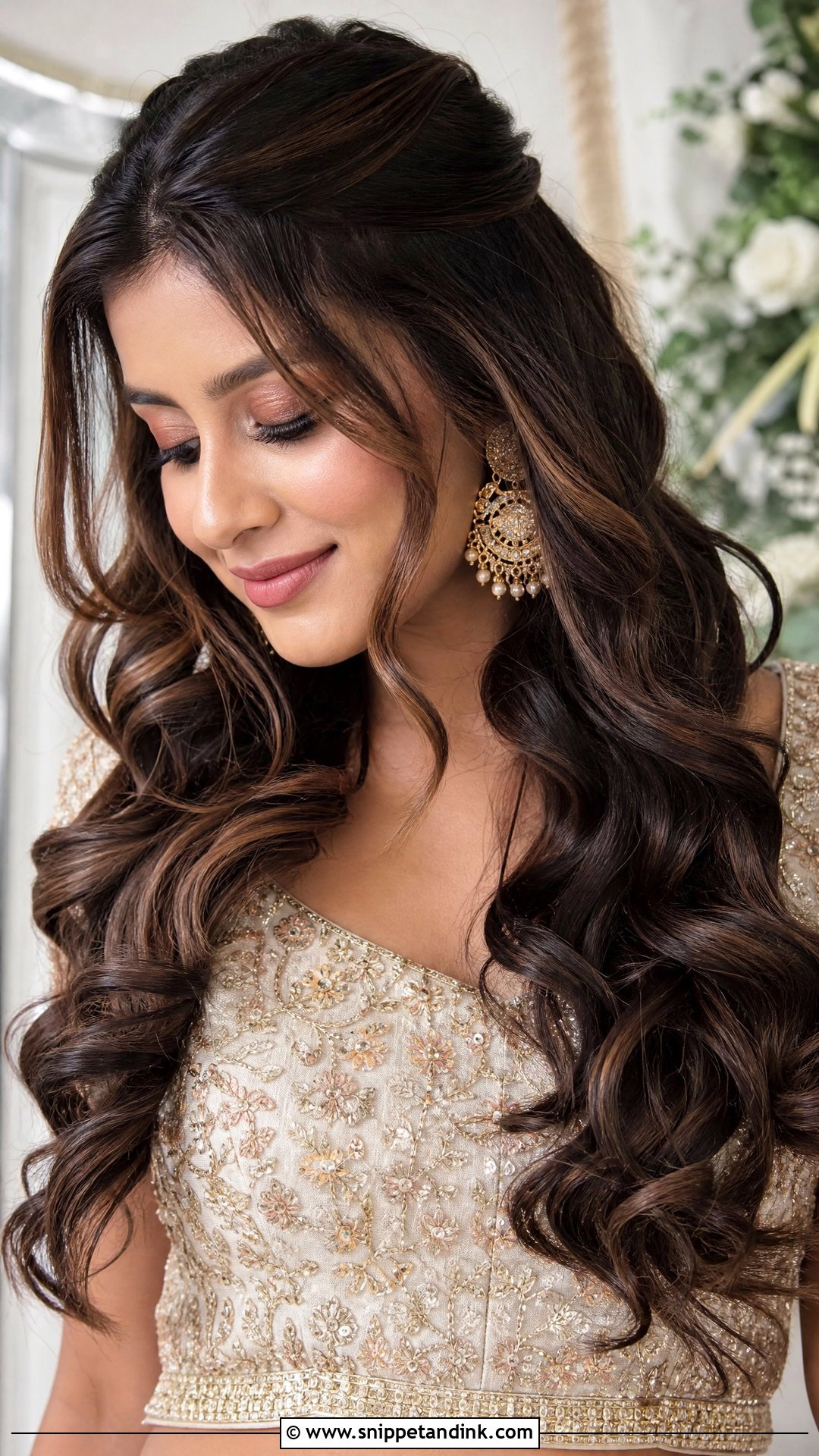
Chocolate balayage adds depth without blonde contrast, using milk chocolate, mocha and cocoa tones mostly on the lower half of the hair, with a few ribbons near the face. It’s a subtle change, and that’s the point; family photos years later won’t look dated. Big waves, sleek blowouts and classic curls all carry it. Darker brunettes often see more shine from a clear or tinted gloss than from any lightening, so I’ll often start there.
8. Golden Balayage Bridal Half Up Hair
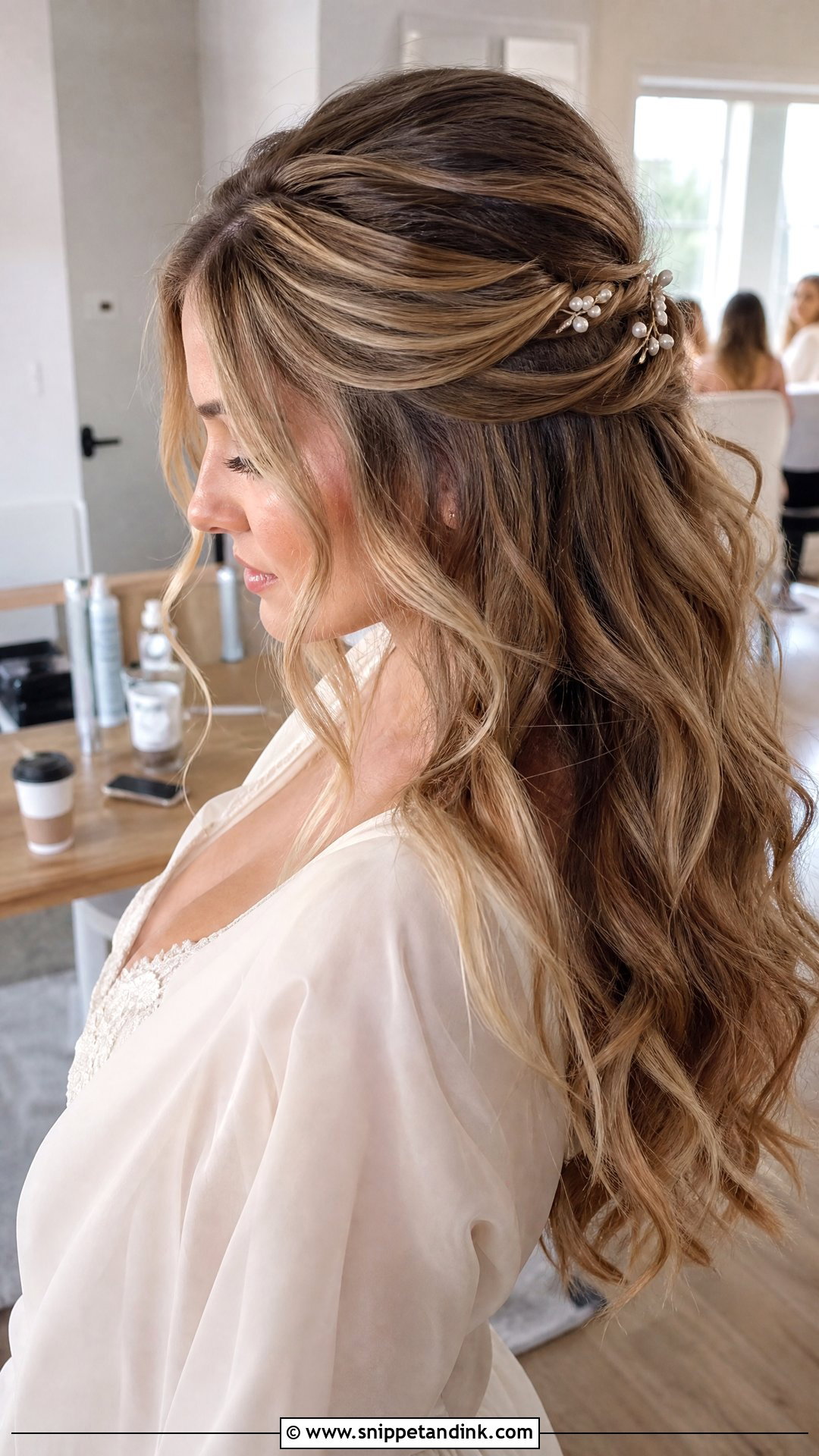
Half-up hair shows golden balayage in two places at once: around the crown where it’s pulled back, and through the flowing ends. I blend golden pieces into a warm brown or dark blonde base so the effect reads sunlit, not striped. The brightest strands go at the front to lift the face. Garden, beach and outdoor ceremonies suit it, and golden tones flatter in late-afternoon sun more than almost any other shade.
9. Rose Gold Balayage Bridal Hair
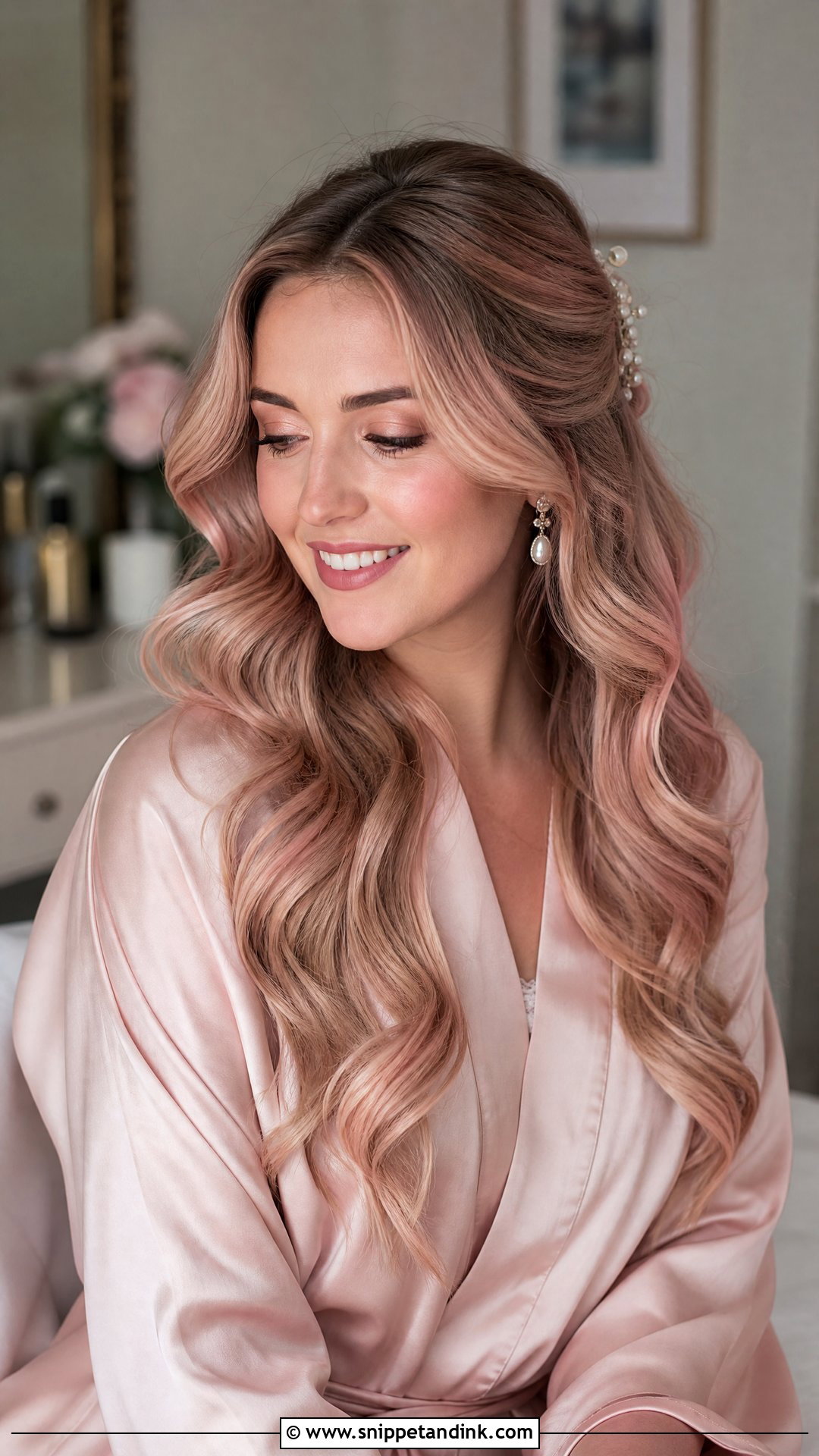
Rose gold is the shade I’m most careful with. The pink has to be muted and blended with peach, copper or warm blonde to stay bridal, and it fades faster than anything else on this list, sometimes visibly within a couple of weeks. That’s why I schedule the final refresh very close to the wedding, and ask brides to wash in cool water and less often. Loose waves, textured buns and long layers show it well. Keep makeup soft and accessories simple so the color carries the look.
10. Copper Balayage Bridal Hair
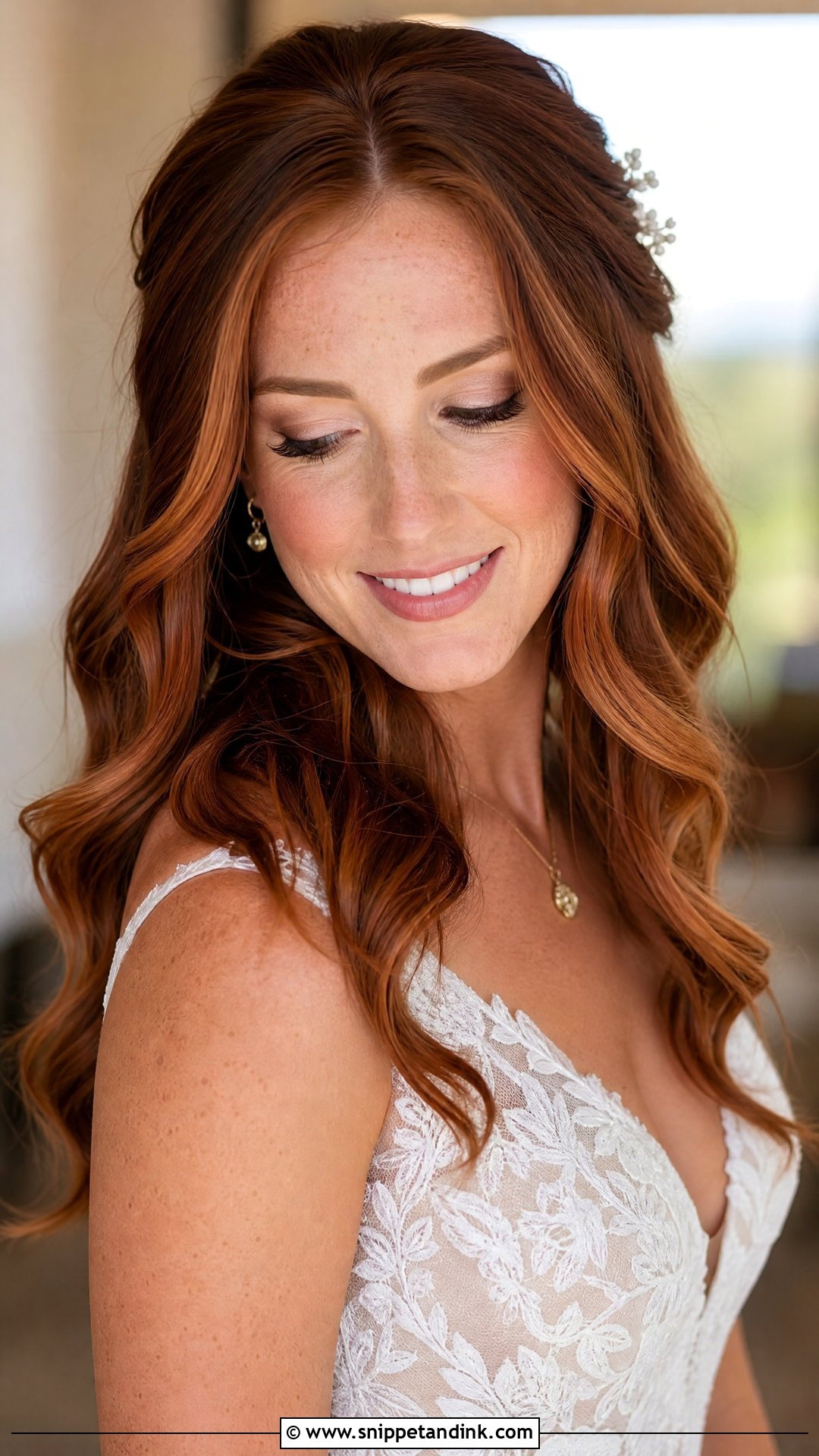
Red tones are vivid and they fade quickly, both true at once. Copper balayage bridal hair blends copper, auburn and soft gold through the mids and ends for a dimensional finish rather than one flat red. On waves and curls it glows in natural light, and it sits well beside ivory gowns, bronze details and autumn palettes. I’d ask for a polished blend, never high-contrast streaks. A color-safe shampoo and cooler rinses in the weeks before keep it rich.
11. Mushroom Brown Balayage Bridal Hair
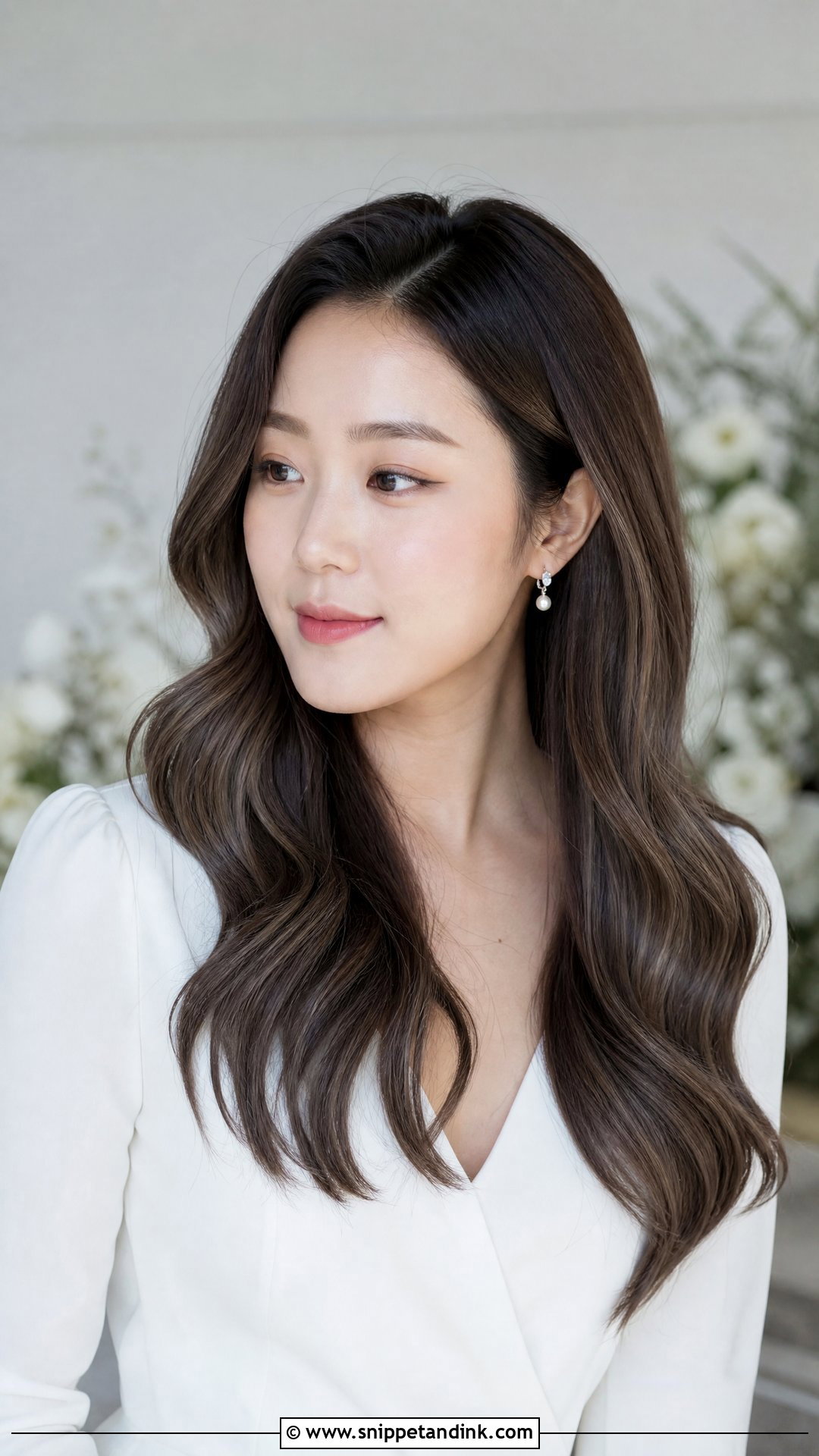
Some brunettes simply don’t like caramel or gold on themselves. Mushroom brown balayage bridal hair blends taupe, ash brown and muted beige into a cool, dimensional finish that looks sharp with sleek waves, low buns and structured styles. I keep it subtle at the root and brighter through the lengths so it grows out naturally. Like ash, it loses its cool tone over time, so plan a gloss before the wedding.
12. Vanilla Blonde Balayage Bridal Hair
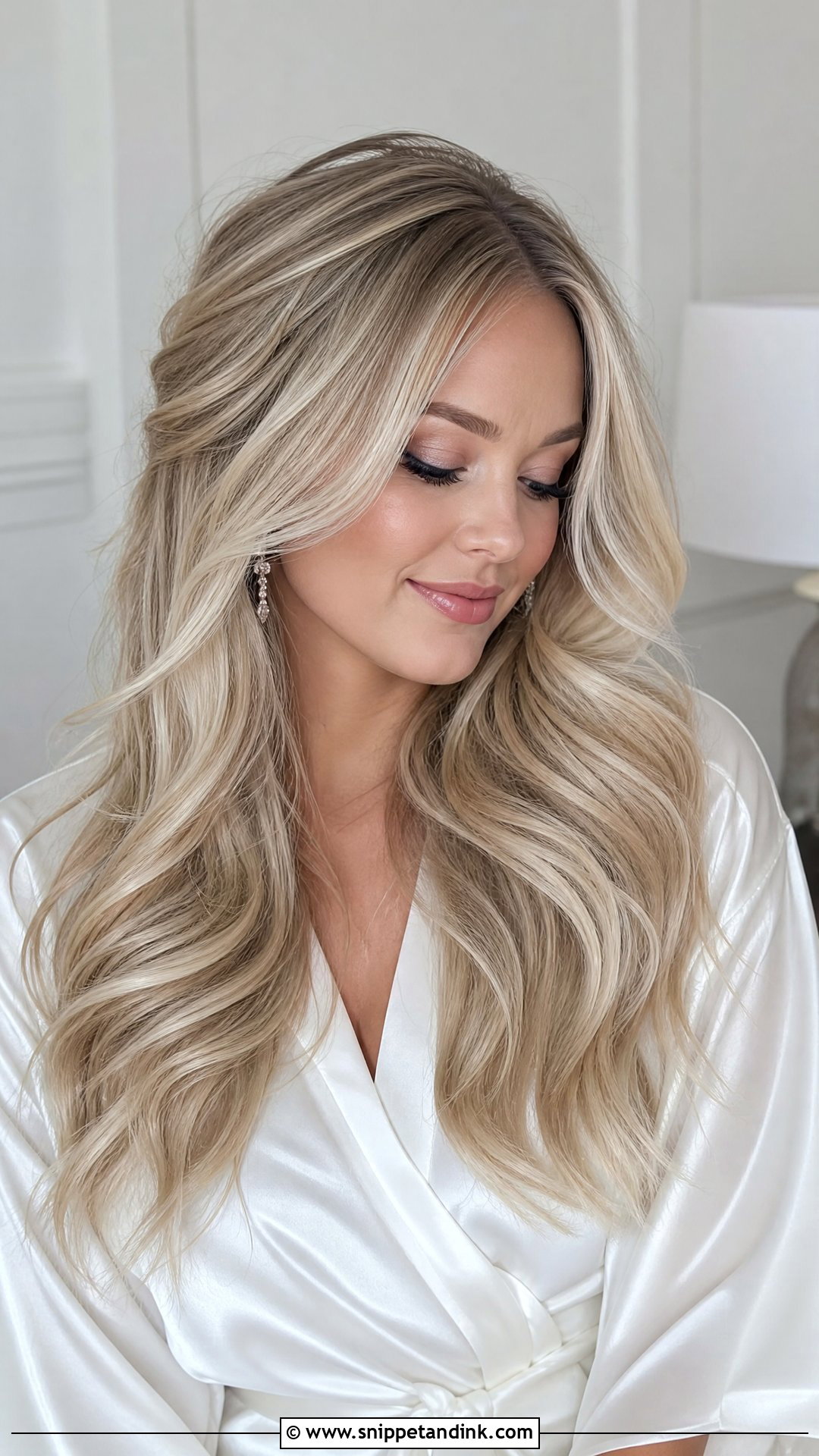
Vanilla is the brightest blonde here and the one that needs the most care. I keep a shadowed root, pale creamy ribbons and soft blended ends so it never looks streaky. It lightens the face and makes waves and curls feel airy. Because getting to this level means lifting the hair a long way, I use a bond-building treatment during lightening and ask brides to use hydrating masks in the months before. A final toner keeps it creamy rather than yellow. If your hair is already fragile, I’d honestly choose a darker blonde.
13. Chestnut Balayage Bridal Hair
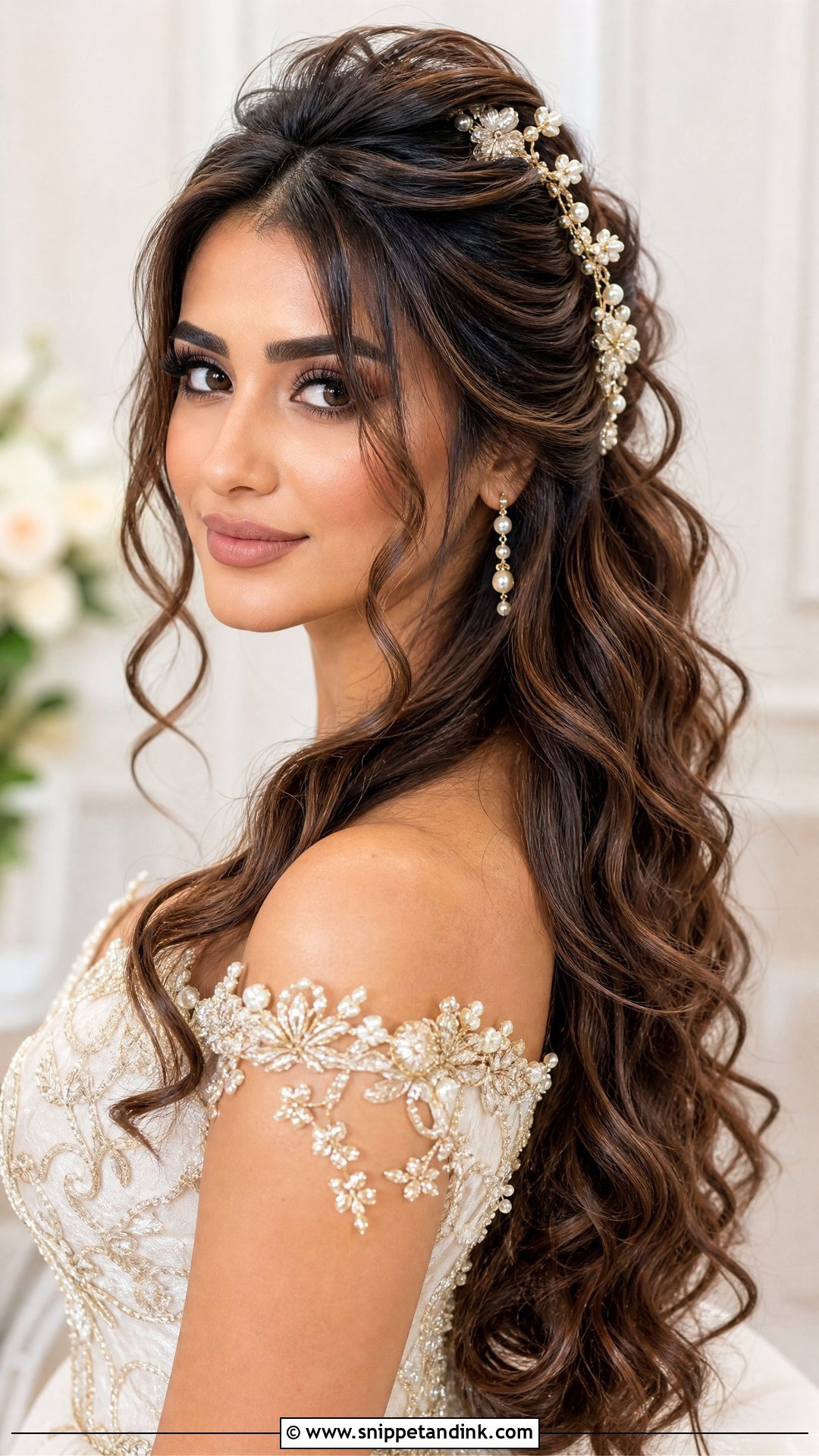
Chestnut gives brunettes a soft reddish-brown warmth that flatters most skin tones. I paint it through the mid-lengths and ends while keeping the root close to your natural color, so the hair looks healthy and moving rather than dyed. Soft curls, ponytails and loose low buns suit it. Ask for glossy waves and face-framing pieces on the day, since the warmth shows most clearly at the front.
14. Bronde Balayage Bridal Hair
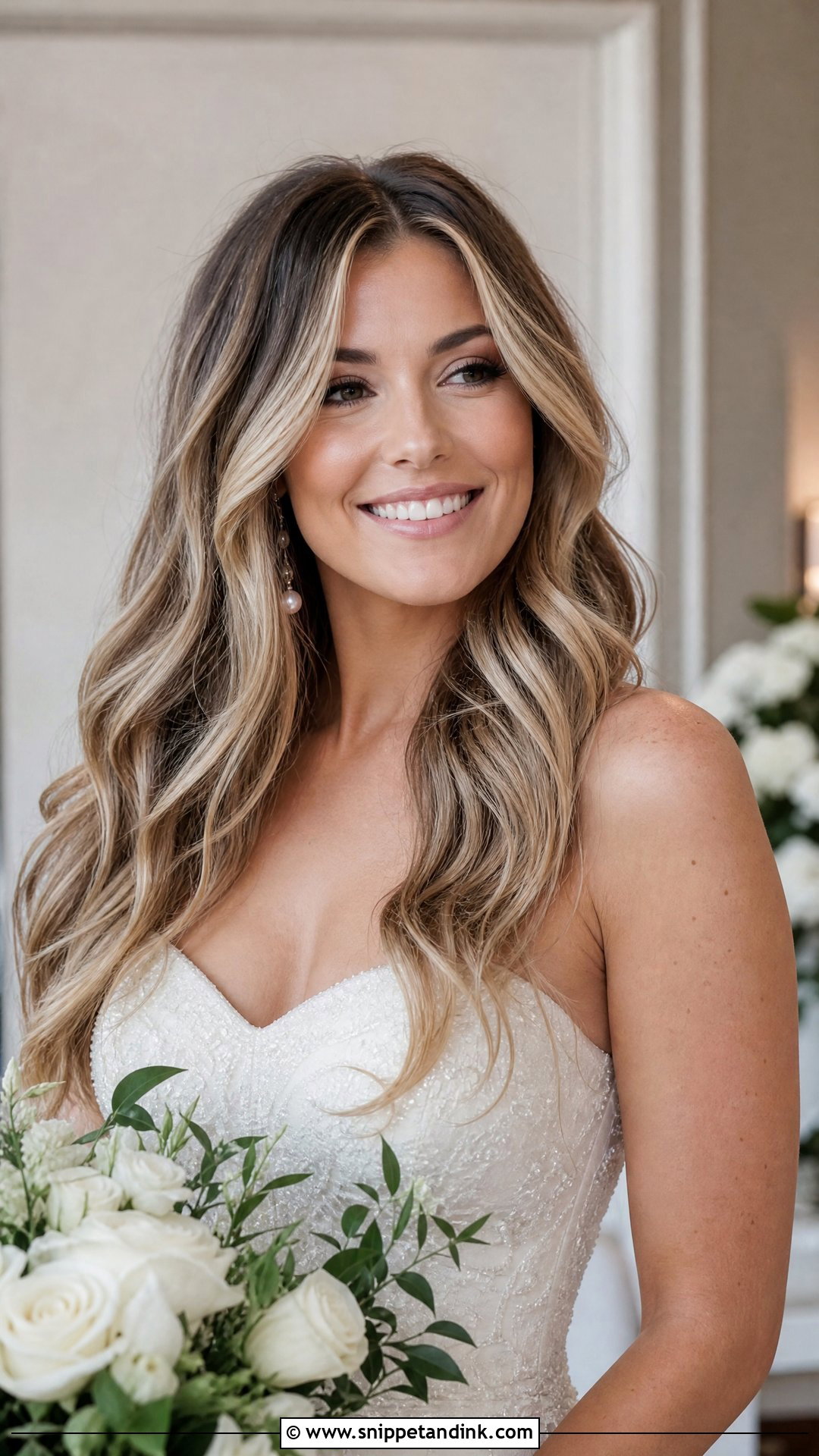
Most of my undecided brides end up somewhere between brown and blonde. Bronde balayage bridal hair keeps depth at the root, brightness at the face and soft blonde through the ends. It flatters many skin tones and dress styles, and it adds texture to waves, layers and half-up hair. I adjust the blonde pieces to your undertone, beige for cool and honey or sand for warm. It also grows out quietly, which matters for honeymoon photos.
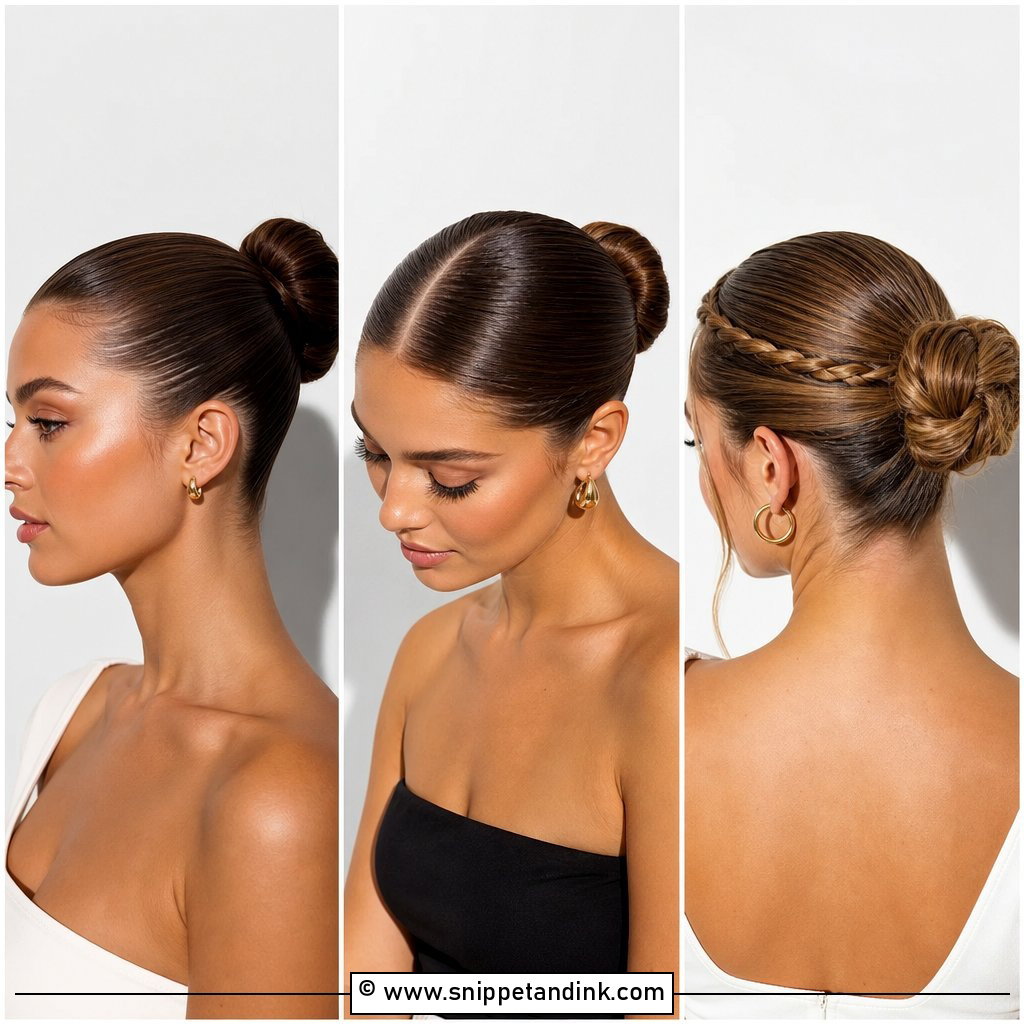
15. Face Framing Balayage Bridal Hair
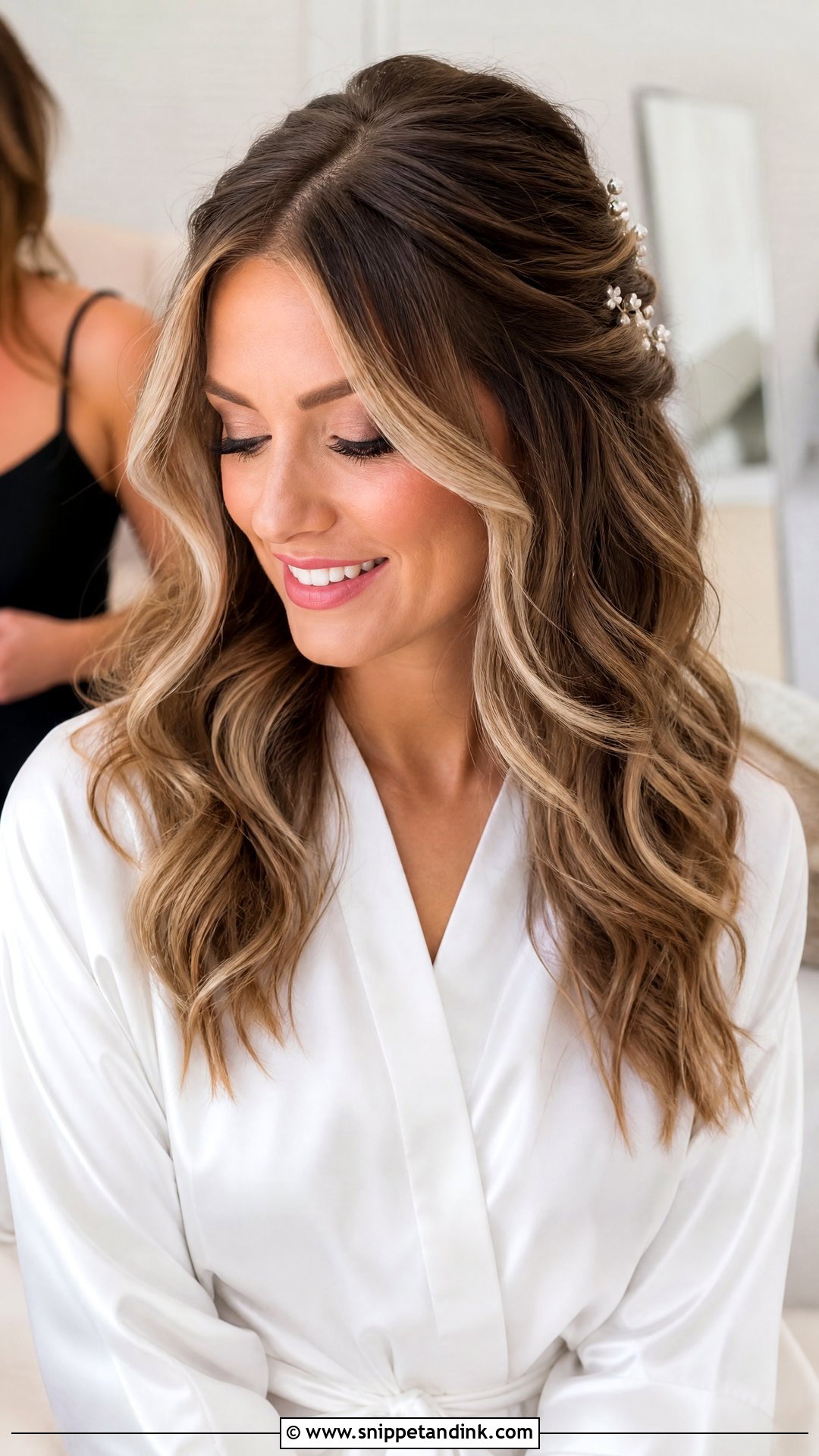
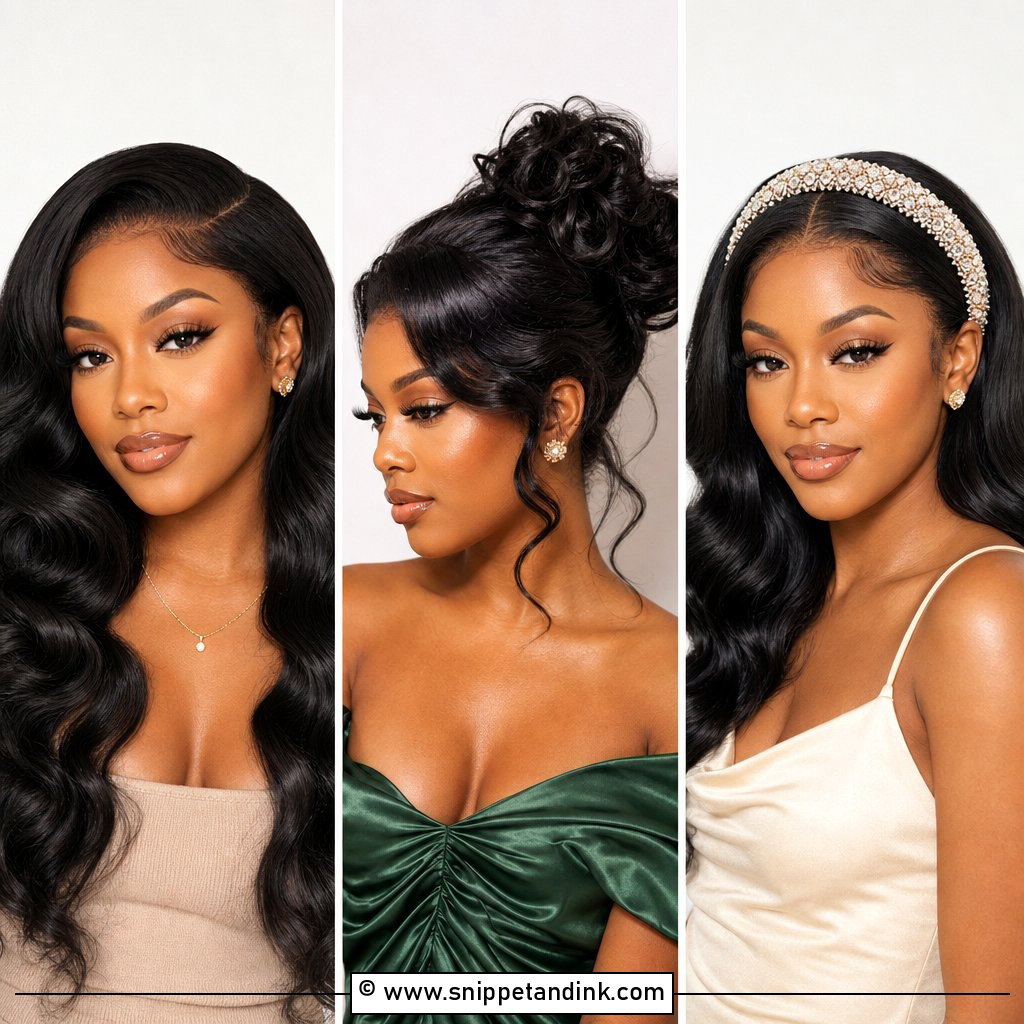
If you only want a little change, put the light at the front. I place the lightest pieces around the face and melt them into the rest of the hair, which works on blonde, brunette, red and darker bases alike. It brightens the skin, makes makeup look fresher and shows in waves, ponytails and loose tendrils. Thick, high-contrast panels look dated quickly, so I always go for a soft melt. It’s also the cheapest and quickest balayage to maintain.
A Color Calendar From Six Months Out to Wedding Week
Balayage rarely looks its best the day it’s done. Tone settles over the next few washes, and a big lift on dark hair often takes more than one session. Exact timing depends on your hair, but this rough calendar keeps most brides out of trouble.
- Four to six months ahead: a first appointment and strand test, especially for a big lift, rose gold or copper. Dark bases heading for blonde may need a second session.
- Two to three months ahead: the main balayage, leaving time to adjust placement or tone.
- Around the hair trial: keep this color so your stylist practices on the hair you’ll actually wear.
- One to two weeks ahead: gloss or toner only. Toners fade gradually with washing, so this window keeps them fresh.
- Wedding week: no new color, no new products, cool rinses.
If the Tone Comes Out Brassy or Muddy
Orange, yellow or dull results aren’t a disaster if you’ve left time. Go back to the same colorist first; most tone problems are fixed with a gloss in a short appointment. A purple or blue shampoo once or twice a week calms mild warmth in blondes and light browns at home. What I’d avoid is a box dye over the top in a panic. It usually makes the next correction harder and darker than anyone wanted.
Hold the Shade Up to Your Dress in Daylight
Look at your top two shades in daylight, next to the real fabric of your dress if you can, before committing. Soft blends like honey, beige, bronde, caramel and chocolate are forgiving and grow out quietly. Ash and mushroom look sharp but need more toning. Rose gold and copper bring the most personality and the most upkeep. Whichever way you lean, do the main color early and keep the last couple of weeks for a gloss only, so your hair looks like the best version of itself, not a new experiment.
You'll Like These Ideas:


Leave a Reply