
A braid is one of the most secure things I can put in a bride’s hair, and the Dutch version is my favorite for weddings. Dutch braids are worked by crossing each strand under the middle rather than over it, so the plait rises off the head instead of sinking into it. That raised ridge catches light, reads clearly in photos from the back of a room, and gives pins something solid to grip. Below are twenty ways I’d wear one on a wedding day, from a low bun to a flower-filled halo, with notes on what each one asks of your hair and where it can let you down.
Layers, Fine Strands and Slippery Hair in a Dutch Braid
Not every head of hair braids the same way, and I plan the style around that before I pick up a comb. Three things change what I do most.
Freshly washed, silky hair
Clean hair is smooth, and smooth hair slides out of a braid. I ask brides to wash the evening before, not the morning of. On the day I mist a texture spray or a light dry shampoo through the lengths, which gives each strand enough grip to stay crossed.
Heavy layers
Short layers around the face and crown poke out of a braid within an hour. Braiding tighter rarely fixes it. Instead, I smooth a little pomade into each section as I pick it up, and I plan a style with deliberate loose pieces so the escapees look intended.
Fine or thin hair
A Dutch braid can look thicker than the hair really is, because pancaking the edges spreads each loop. For very fine hair I still add one or two clip-in wefts underneath, color matched, which give the braid body without anyone seeing them.
1. Dutch Braid Low Bun for Brides
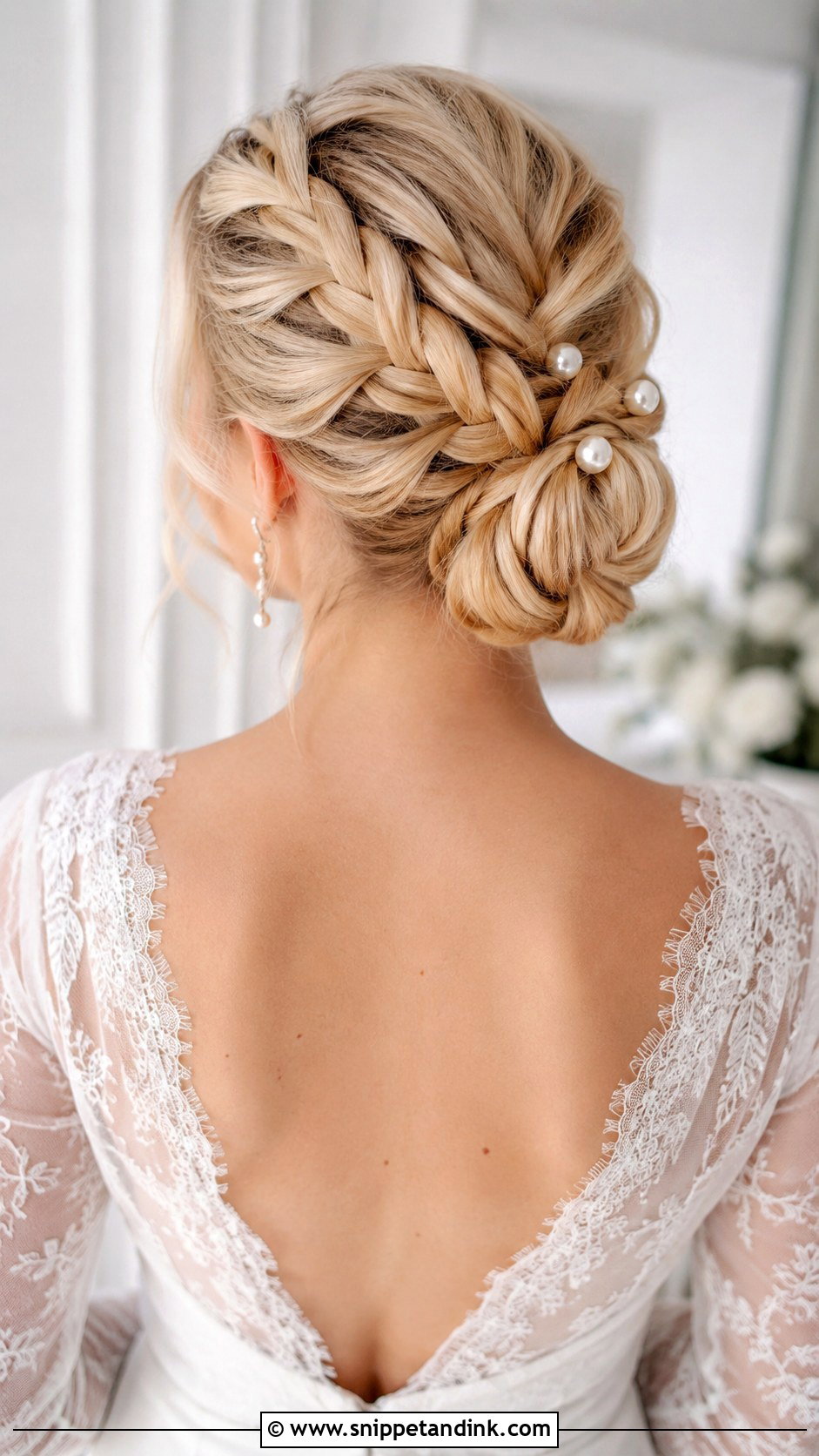
This is the braid I reach for most when a bride wants something she can forget about. I start the plait at the crown, take it down toward the nape, and coil the tail into a rounded bun that sits low enough for a veil comb above it. Because the braid already holds most of the hair, the bun needs far fewer pins than a plain chignon. On very heavy hair I split the tail in two and wrap each half separately, which stops the bun from pulling backward by late afternoon. Pearl pins tucked into the ridges are all the decoration it needs.
2. Dutch Crown Braid Wedding Hairstyle
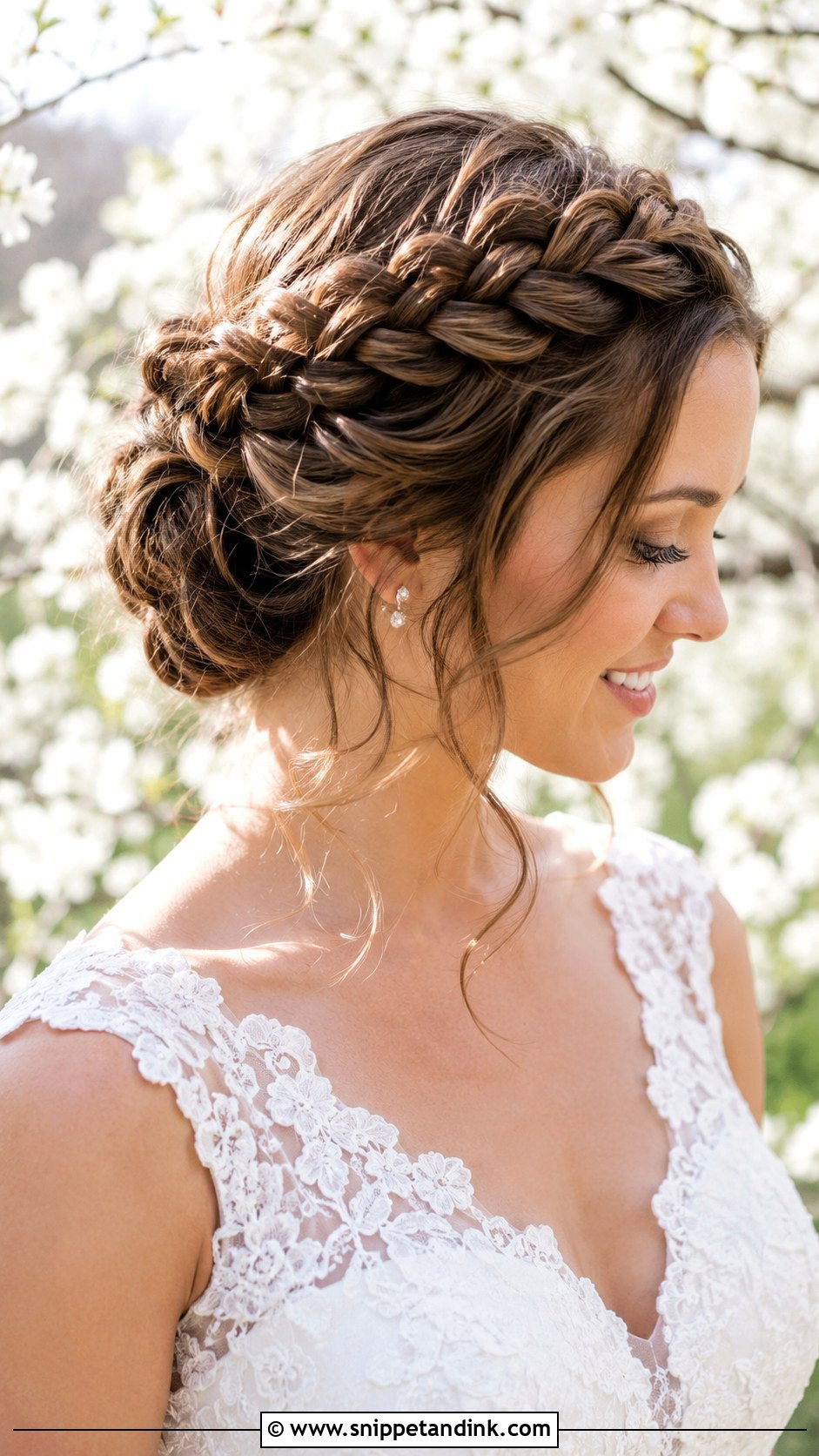
A crown braid sits on top of the head like a tiara made of hair, and the Dutch method gives it far more height than a French crown. I usually braid it as two halves meeting at the back, because a single braid circling the whole head gets thin and loose by the time it comes round. It needs real length; I find hair below the shoulder blades is usually enough to close the circle without extensions. With everything off the neck, it’s a sensible choice for a hot outdoor ceremony. A couple of soft pieces at the ears keep it from looking severe.
3. Half-Up Dutch Braid With Loose Waves
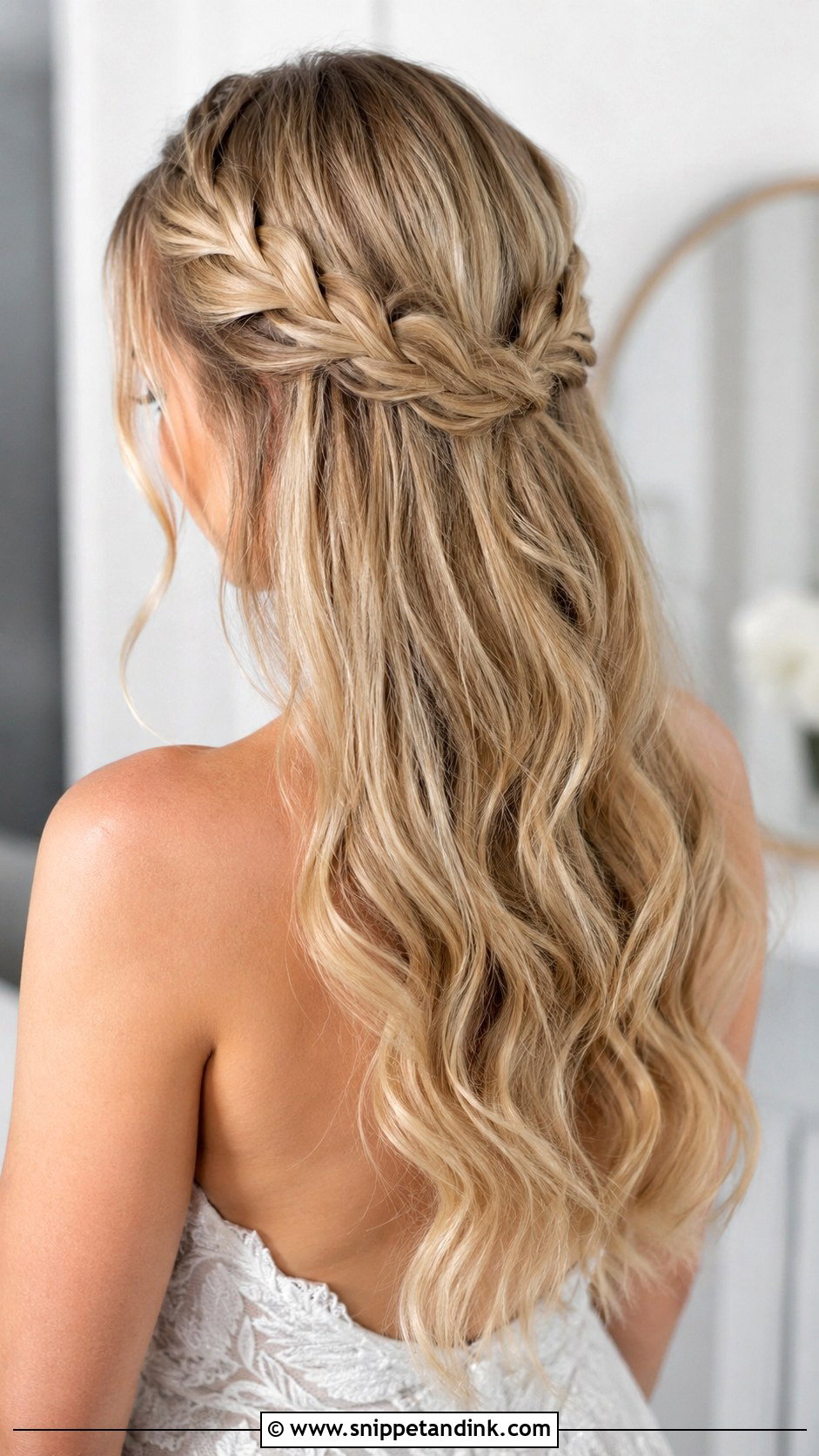
Two small braids start at the temples and meet at the back of the head, and the rest of the hair falls loose. I like this for brides who feel exposed with everything up. The braids do more than decorate: they hold the front sections away from the face, which is usually where curls collapse first. Curl the lengths with a large iron and pin each curl to set while it cools, or the waves can drop flat by the reception. A small clip where the braids join hides the elastics.
4. Double Dutch Braid Bridal Updo
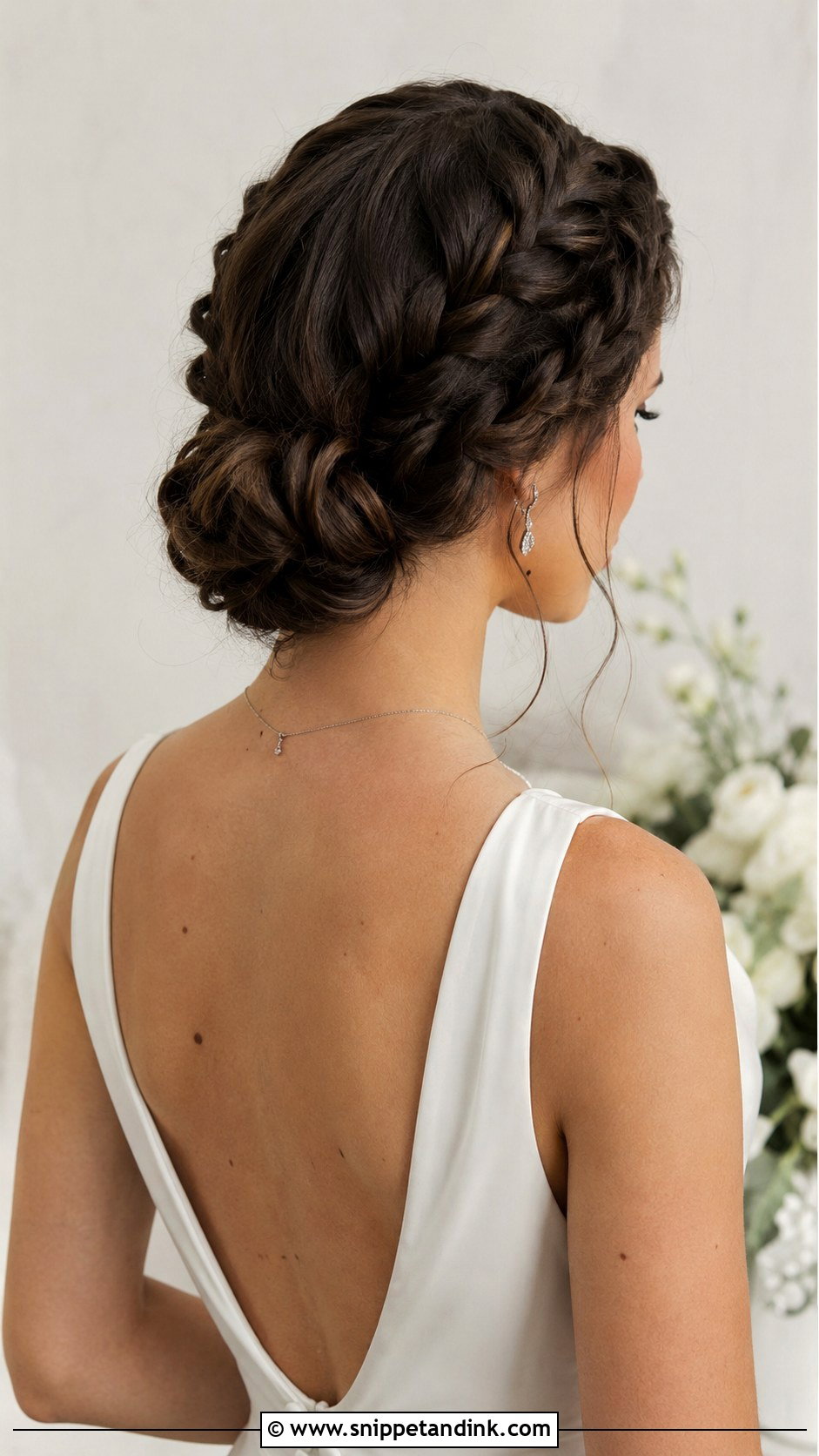
Two braids running straight back from the hairline give a clean, symmetrical frame that I find suits sharp, minimal dresses. The hard part is the part line: if it wanders even slightly, the braids look uneven in every front-facing photo, so I comb it with a tail comb and check it in a hand mirror before braiding. The ends are tucked into a small updo at the nape. Because both braids anchor close to the scalp, this holds up through hours of dancing better than almost anything else here. Pull the edges gently for fullness, but keep it even on both sides.
5. Dutch Halo Braid With Flowers
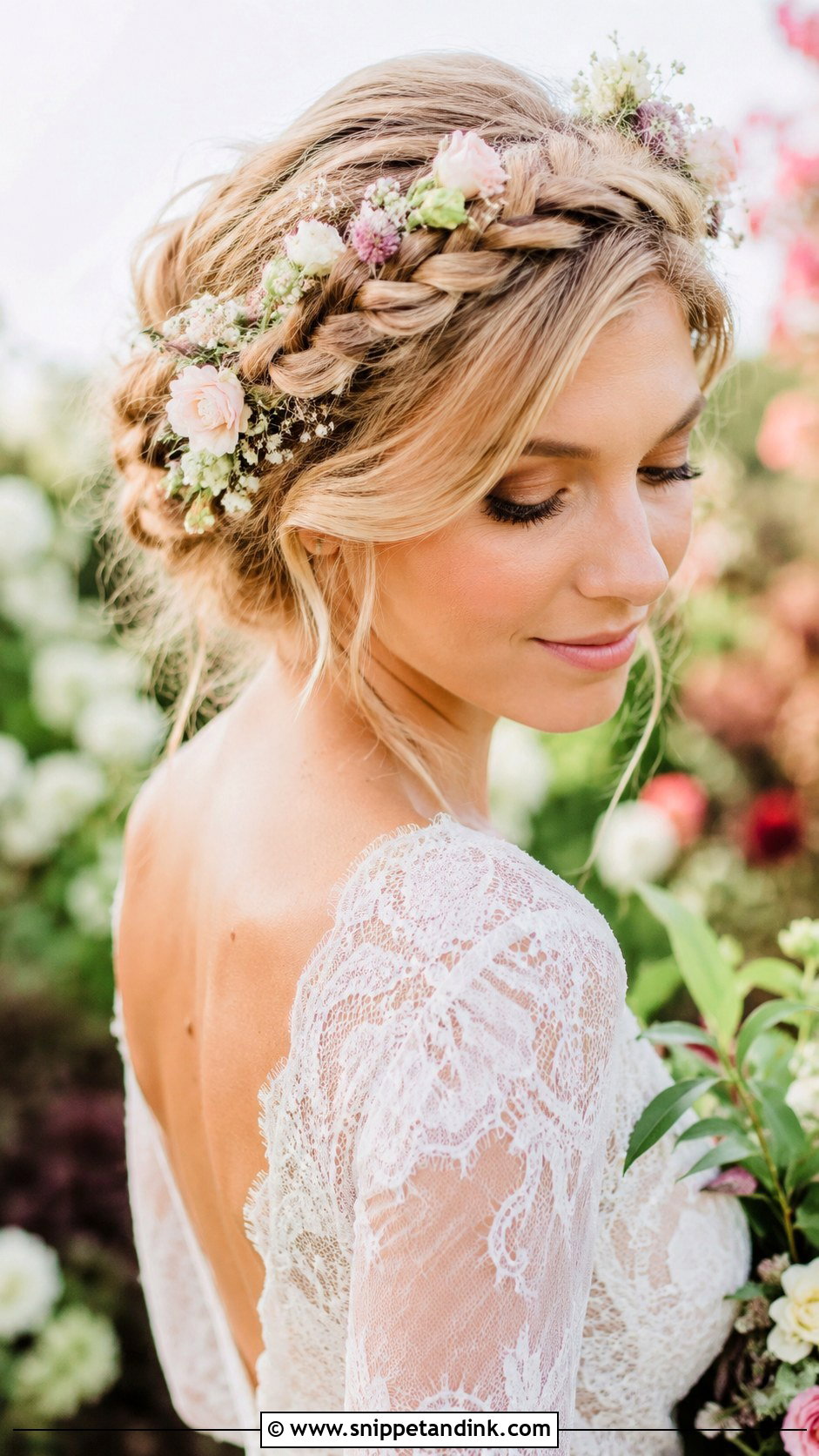
A halo braid circles the head like a ring, and this version is braided loosely and pulled wide so it looks lived in. Real flowers can go straight into the plait, but I choose hardy ones: spray roses, waxflower, and baby’s breath last through a long day, while delicate blooms like sweet peas wilt against warm hair within a couple of hours. Pale petals show up softly in blonde hair; deeper colors read better against brunette. I wire the stems short and slide them in after the braid is pinned, never during. Done that way, it becomes a natural floral crown you don’t have to balance on your head.
6. Dutch Braid Into Fishtail for Weddings
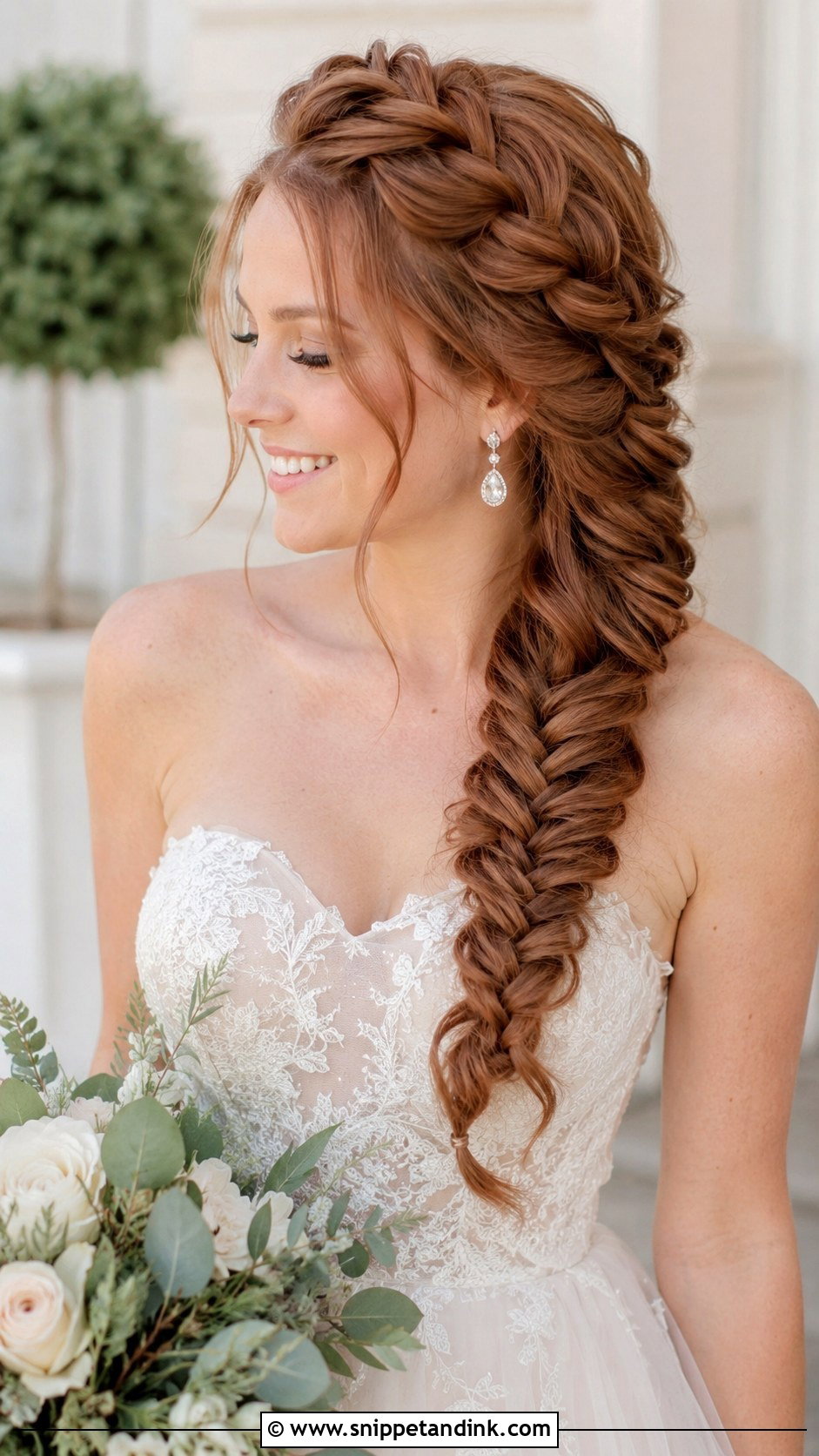
Here the braid starts as a Dutch plait down to the nape, then switches to a fishtail for the length. The change in texture gives the eye something to follow down the back. A fishtail needs plenty of hair to look full, so this suits long, thick hair best; on fine hair the fishtail section can look stringy unless I add a clip-in weft. I secure the transition point with a small elastic hidden under a pulled-out strand. Worn over one shoulder, it shows the whole braid to the guests.
7. Side-Swept Dutch Braid Bridal Look
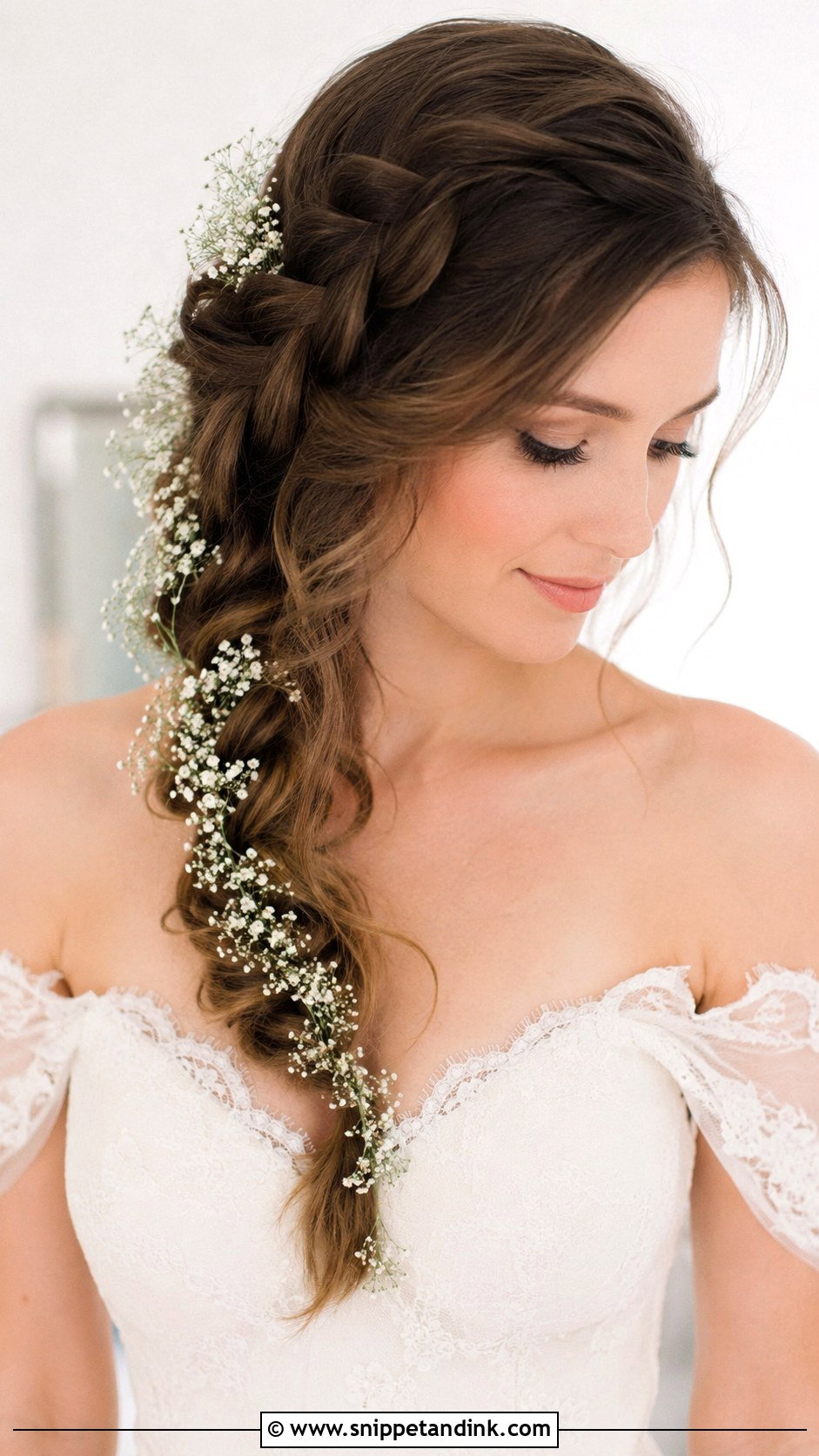
A deep side part and a single braid running diagonally to the opposite shoulder. The asymmetry flatters most faces and leaves the neck and one collarbone bare, which is why I pair it with off-shoulder and one-shoulder necklines. My one caution: a braid lying on the shoulder of a fabric dress rubs as you move, and by evening the ends can frizz. Finishing the tail with a clear elastic and a little smoothing cream helps. Tiny pearls or baby’s breath along the braid add detail without weight.
8. Dutch Braid Ponytail for Brides
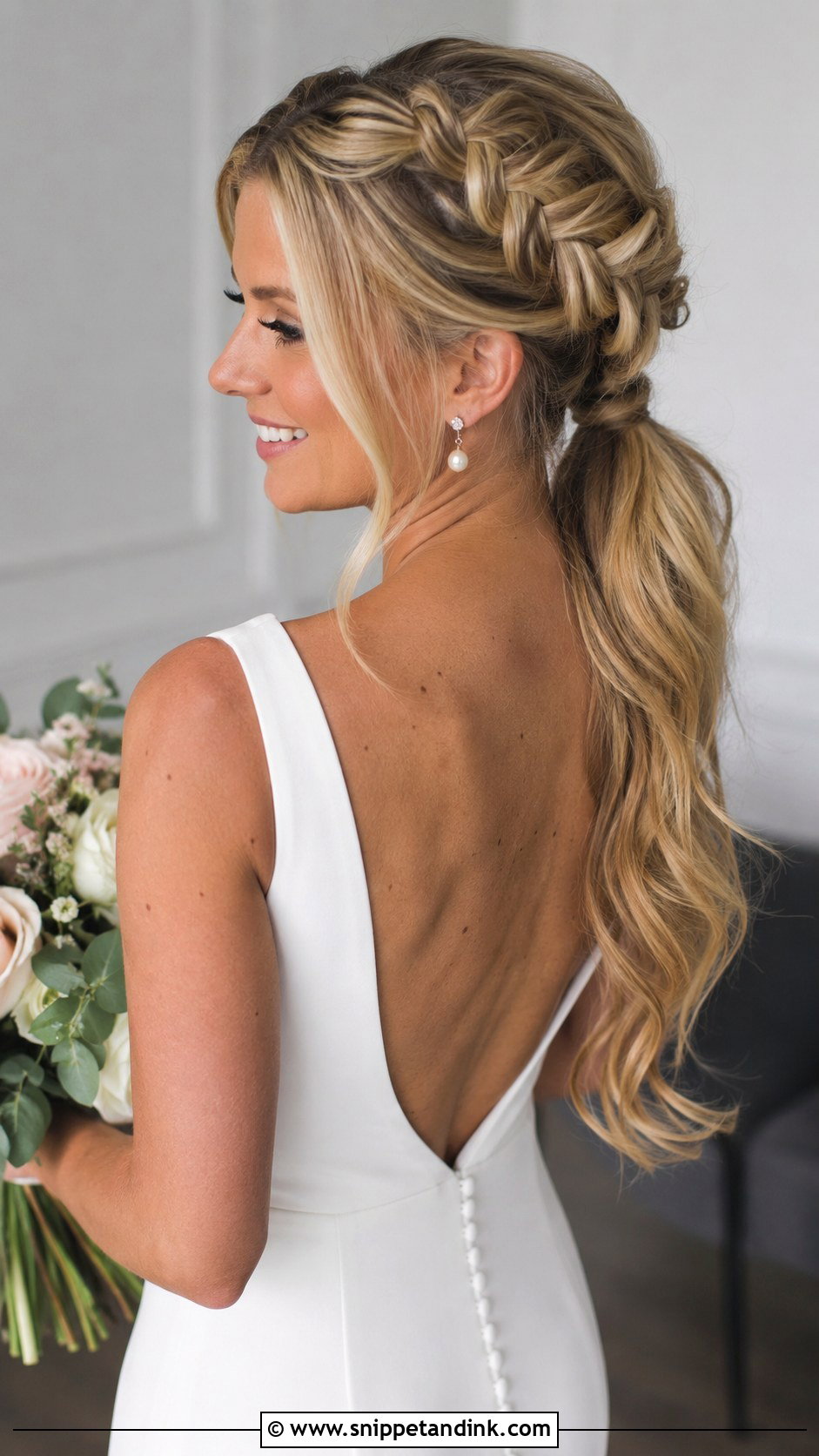
A braid from the crown to the back of the head, then a ponytail high or low. It moves when you walk, which is half the appeal. I always hide the elastic with a strand of hair wrapped round it and pinned underneath. A high ponytail can pull at the scalp after eight or nine hours, so for long days I set it at the crown level rather than right at the top. Leave the length straight and glossy for something sleeker, or give it loose waves for softness.
9. Boho Dutch Braid With Loose Tendrils
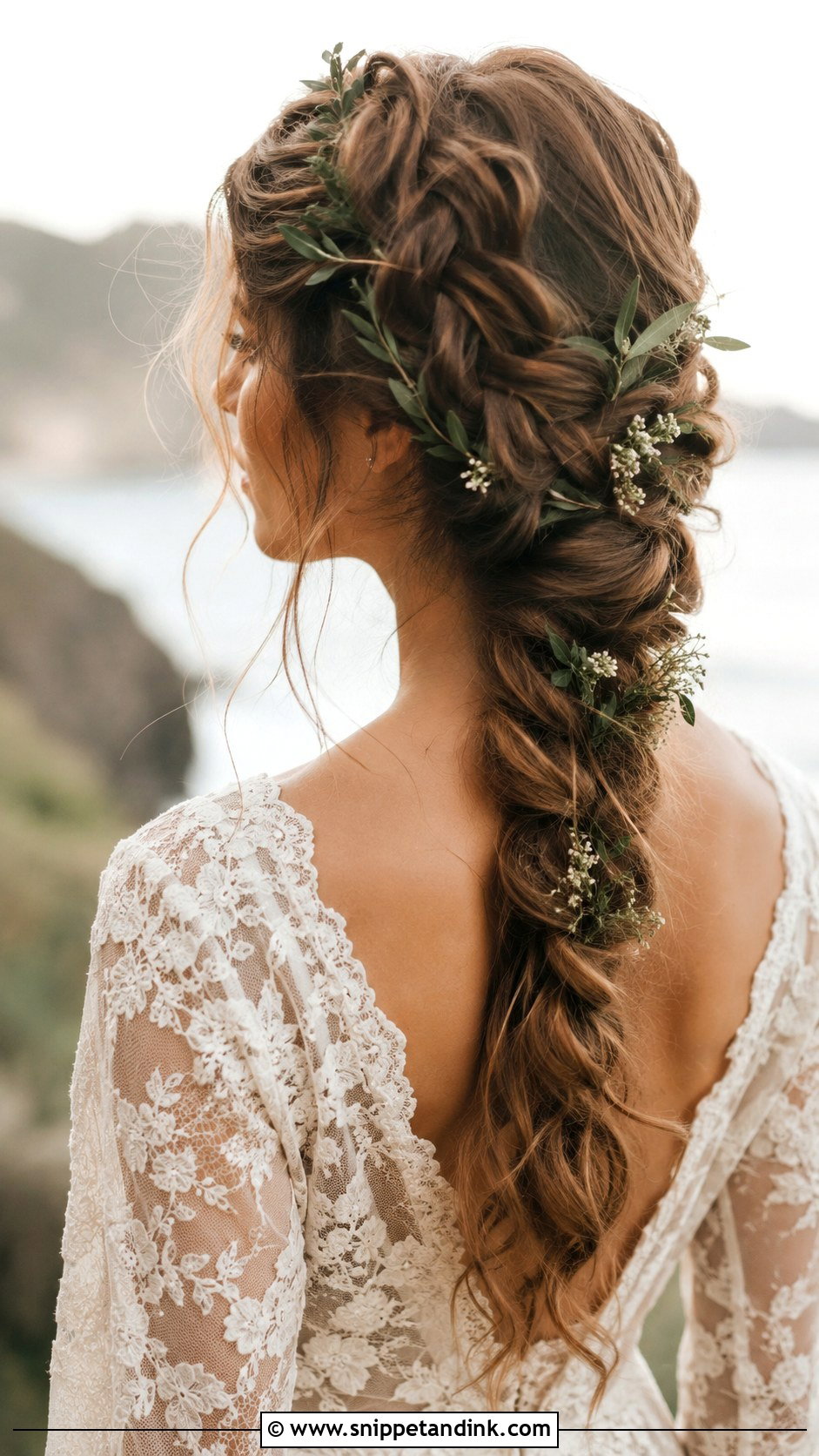
This braid is meant to look a little undone. I braid it loosely, then pancake the edges by pulling each loop outward so the plait widens and softens. It works best on wavy and curly hair that already has grip; on silky straight hair I prep with texture spray first or the loops slide back into place. Let the face-framing pieces fall where they naturally want to. Dried flowers or small sprigs of greenery suit it better than sparkle.
10. Dutch Braid Bun With Pearl Pins
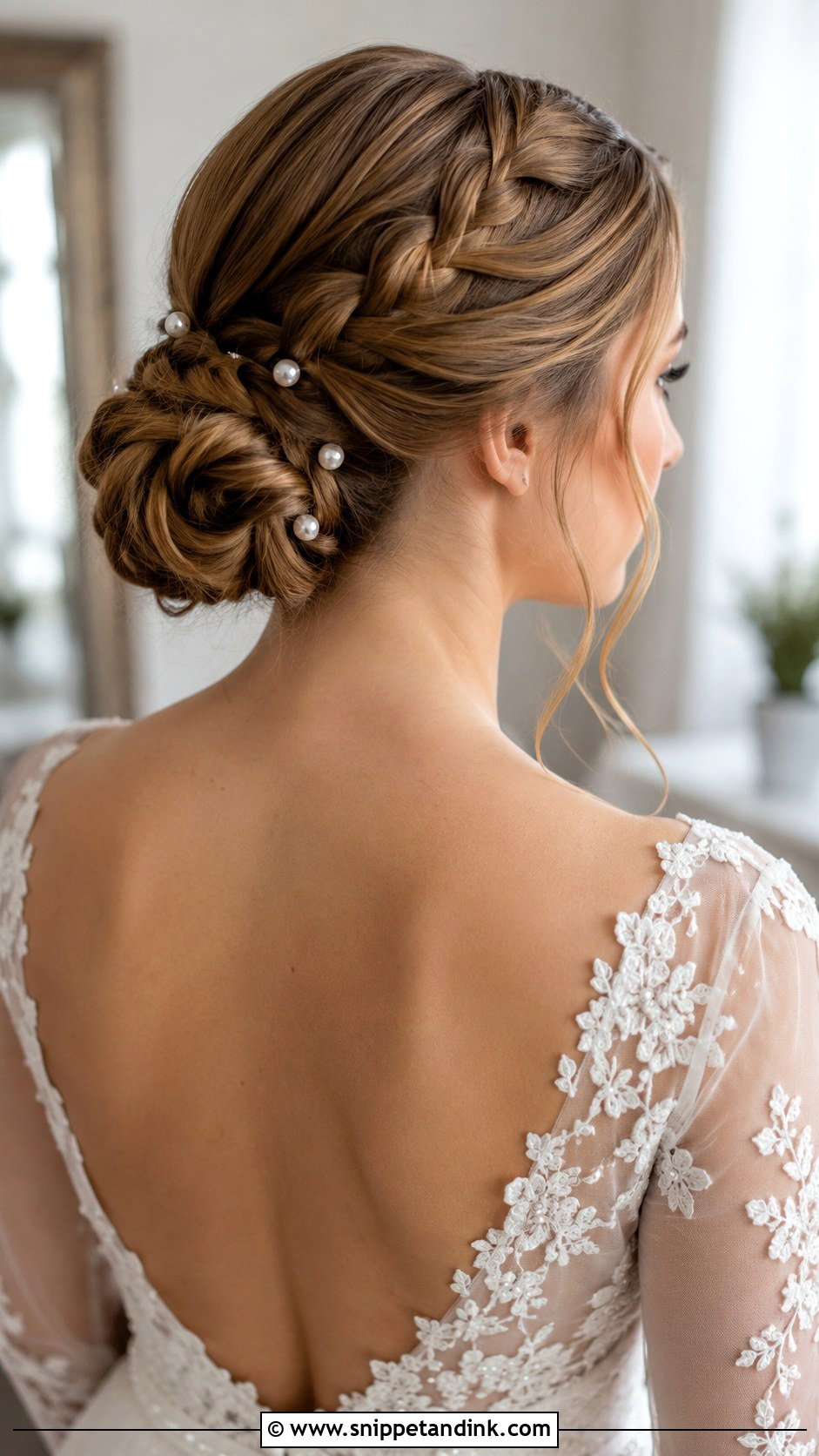
A structured braid from the front hairline back, ending in a neat coiled bun at the nape. This one relies on accessories, and statement pearl or diamond-studded hairpins work well along the braid line or circling the bun. I place them only after the style is fully pinned, angling each one into the braid rather than straight down, so the weight sits on a firm anchor. For formal venues and classic gowns, it reads polished. A few loosened strands at the temples soften it.
11. Dutch Braid Headband Style for Brides
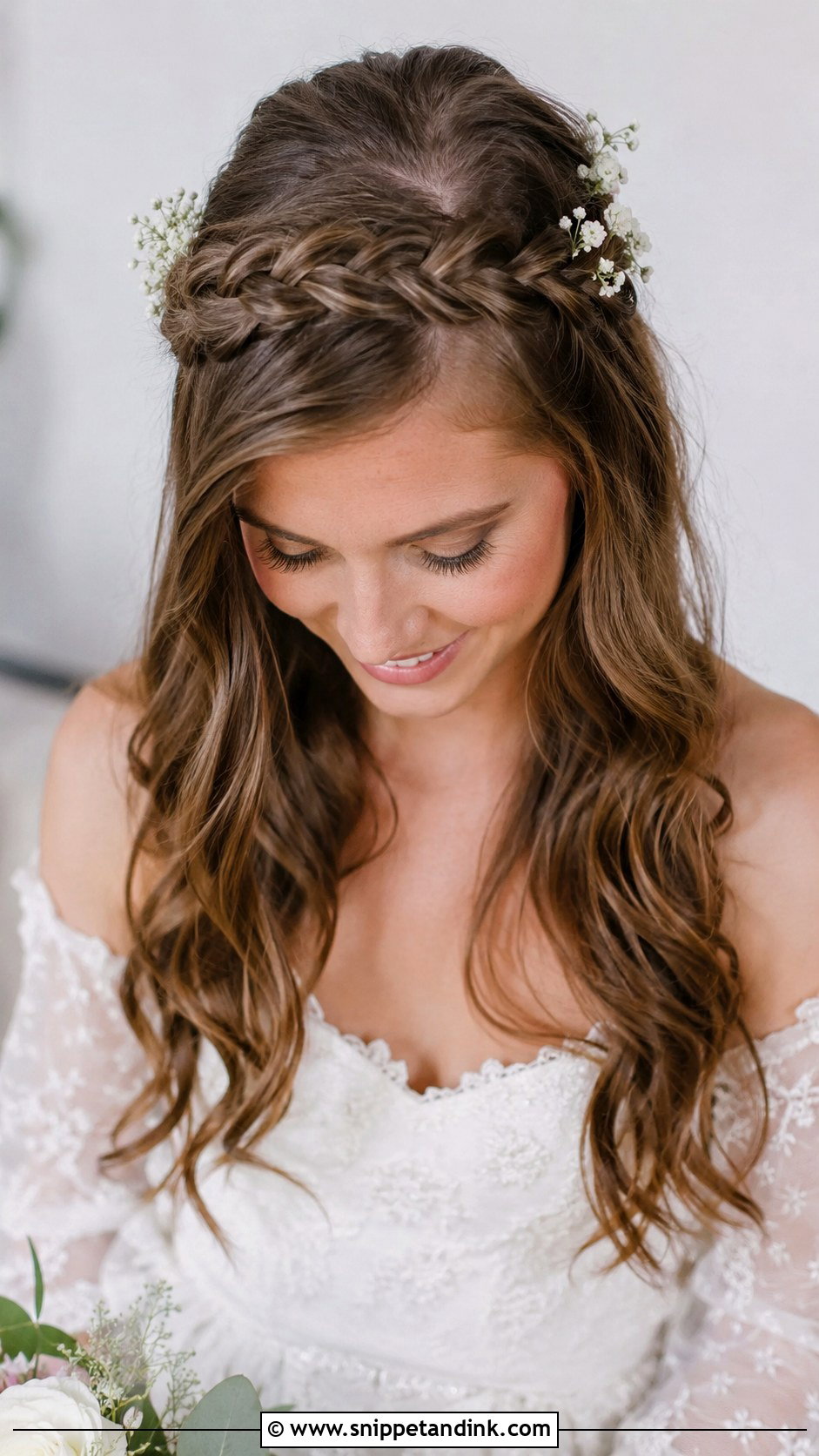
A thin braid worked from behind one ear, over the top of the head, and pinned behind the other ear, with the rest worn down. It acts like a hair band that can’t slip. I braid it slightly back from the hairline rather than right on it, so it doesn’t drag at baby hairs and look tight in photos. Veils sit nicely behind it, and it leaves room for small flowers. If your hair is layered, short pieces may poke out of the braid; a dab of pomade on the fingertips keeps them tucked.
12. Messy Dutch Braid Updo for Weddings
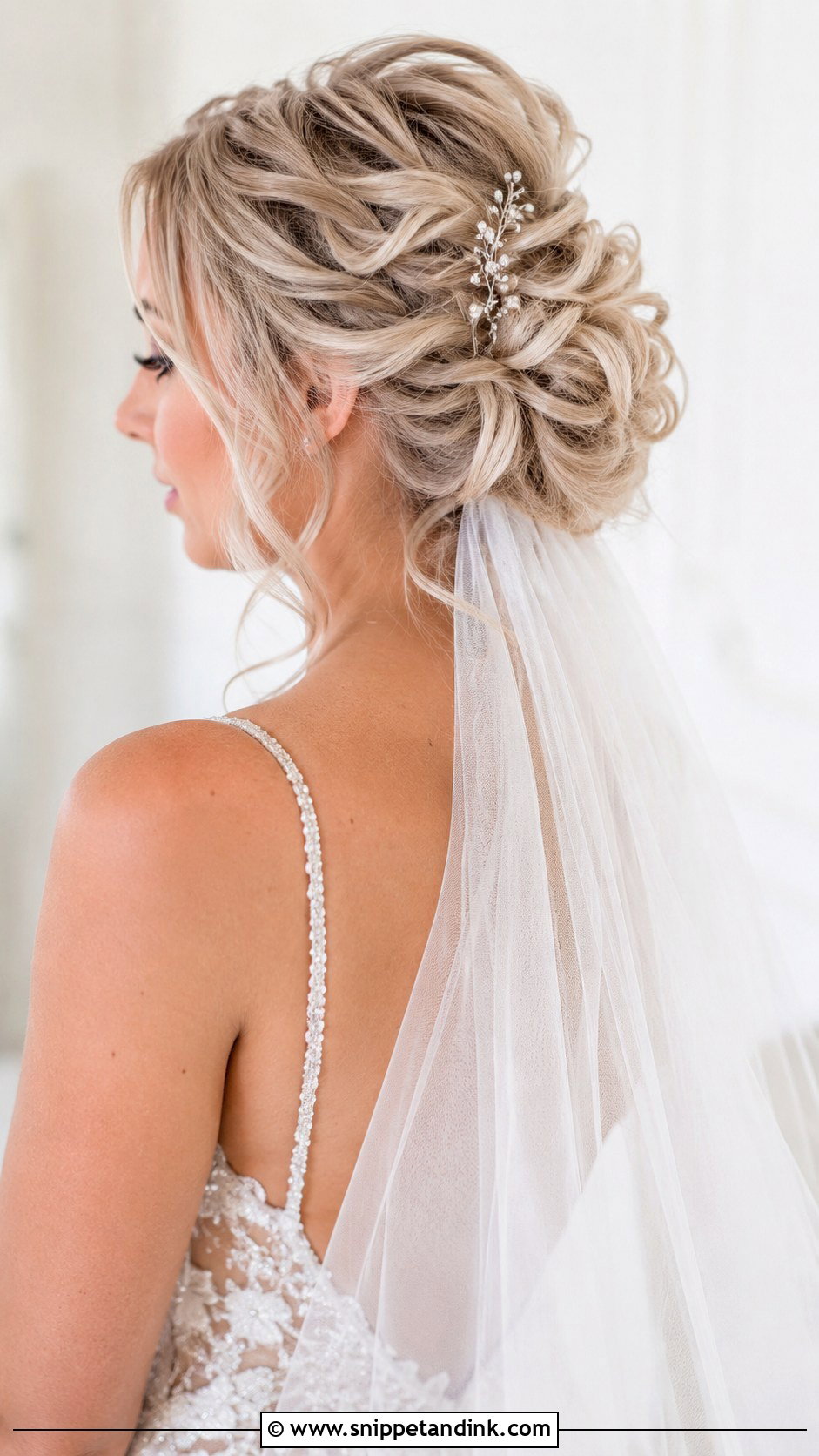
This looser Dutch braid updo is braided from the crown, then the length is twisted and pinned in an intentionally imperfect shape. The skill is making messy look deliberate. I pull pieces free after the pins are in, not before, and I keep the shape compact enough that it still looks tidy from three meters away. It sits well under a long veil and with fuller skirts. For a garden or vineyard wedding, a few sprigs of greenery suit it more than crystals.
13. Dutch Braid With Veil for Brides
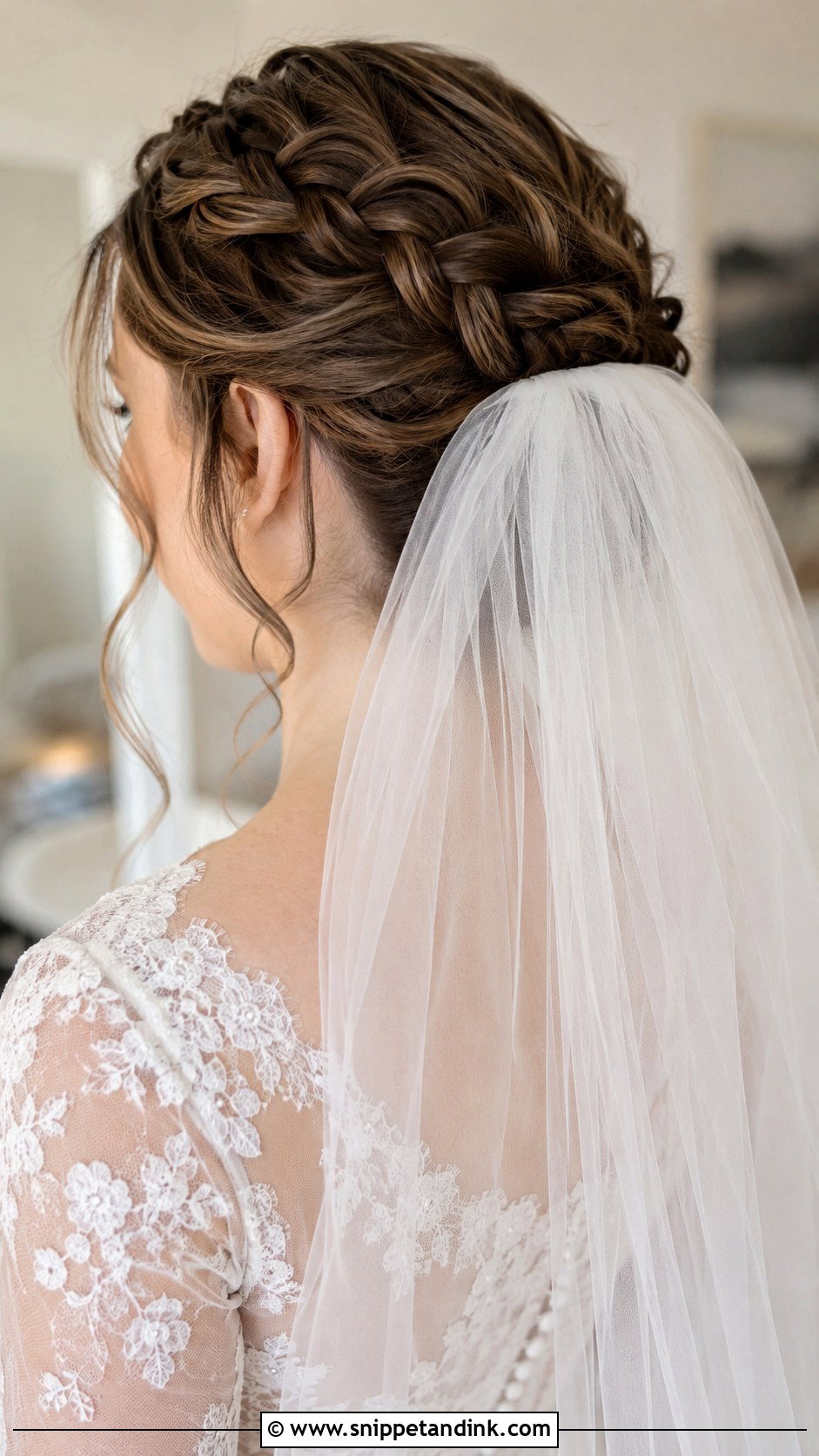
A braid and a veil get along very well. The braid gives the comb something to bite into, so the veil stays put even in a breeze. I place the comb just below a crown braid or just above a low bun, sliding it in against the direction of the braid so the teeth catch the woven strands. Once the veil comes off for the reception, the hair underneath still looks finished. Cathedral and fingertip veils both work; just know a long veil pulls harder, so I add two crossed pins under the comb for extra hold.
14. Dutch Braid Bridal Hair for Curly Hair
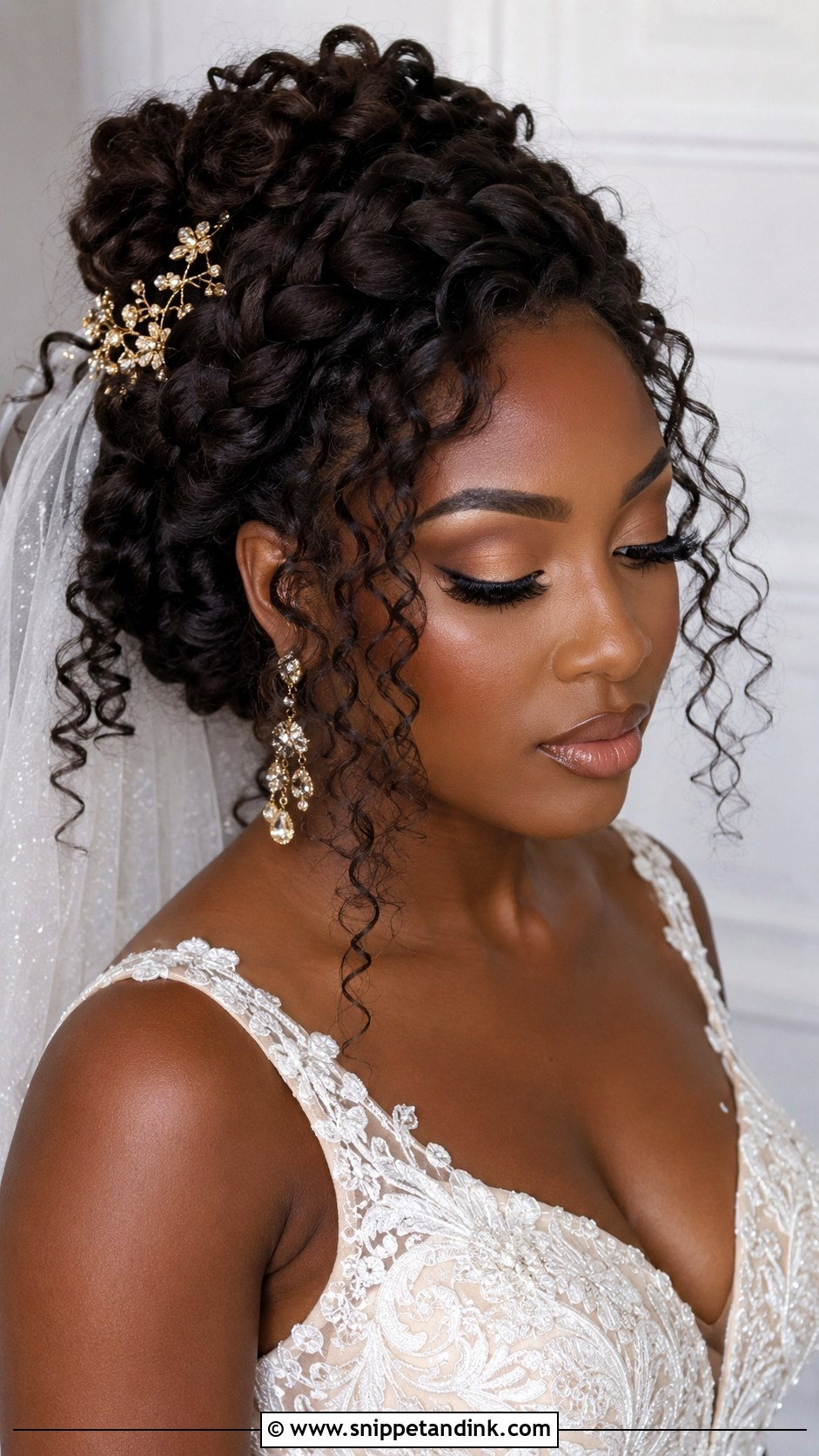
Curly hair braids beautifully and holds a Dutch braid for longer than straight hair does, because the texture grips itself. I braid on stretched or slightly damp curls with a leave-in, which gives a defined plait without frizz, and I avoid brushing curls out dry. Coily hair can take a crown or a single braid down the back without losing volume. Leave some curls loose around the face. If you want the braid to look neat in close-up photos, a light edge gel along the part keeps the base smooth.
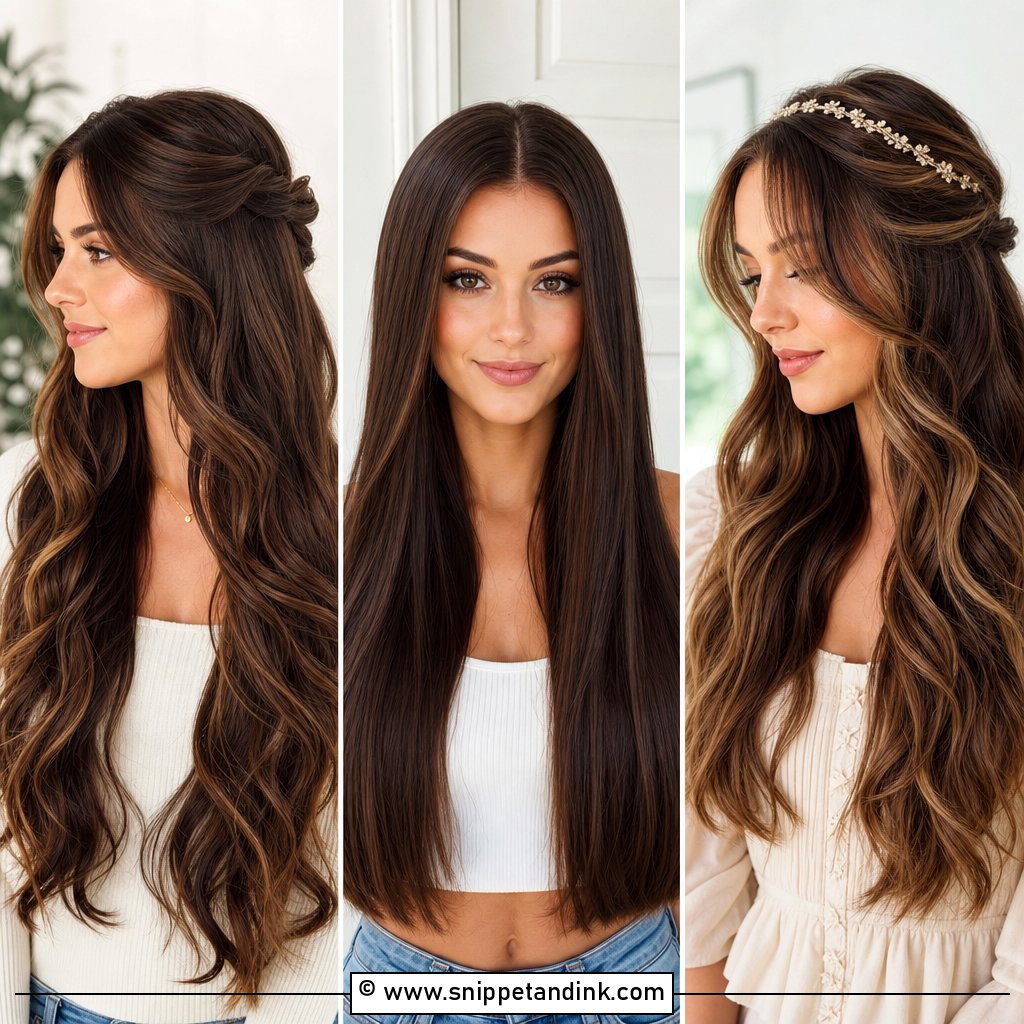
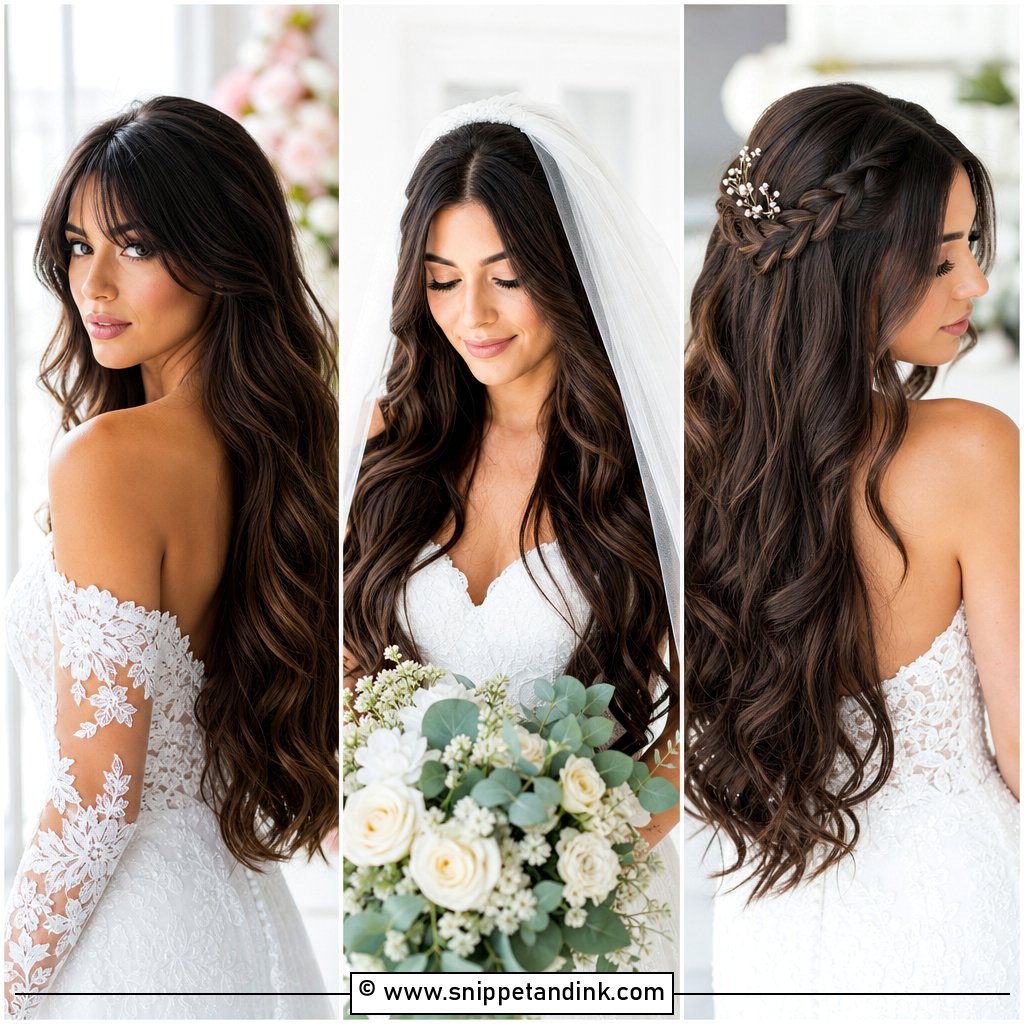
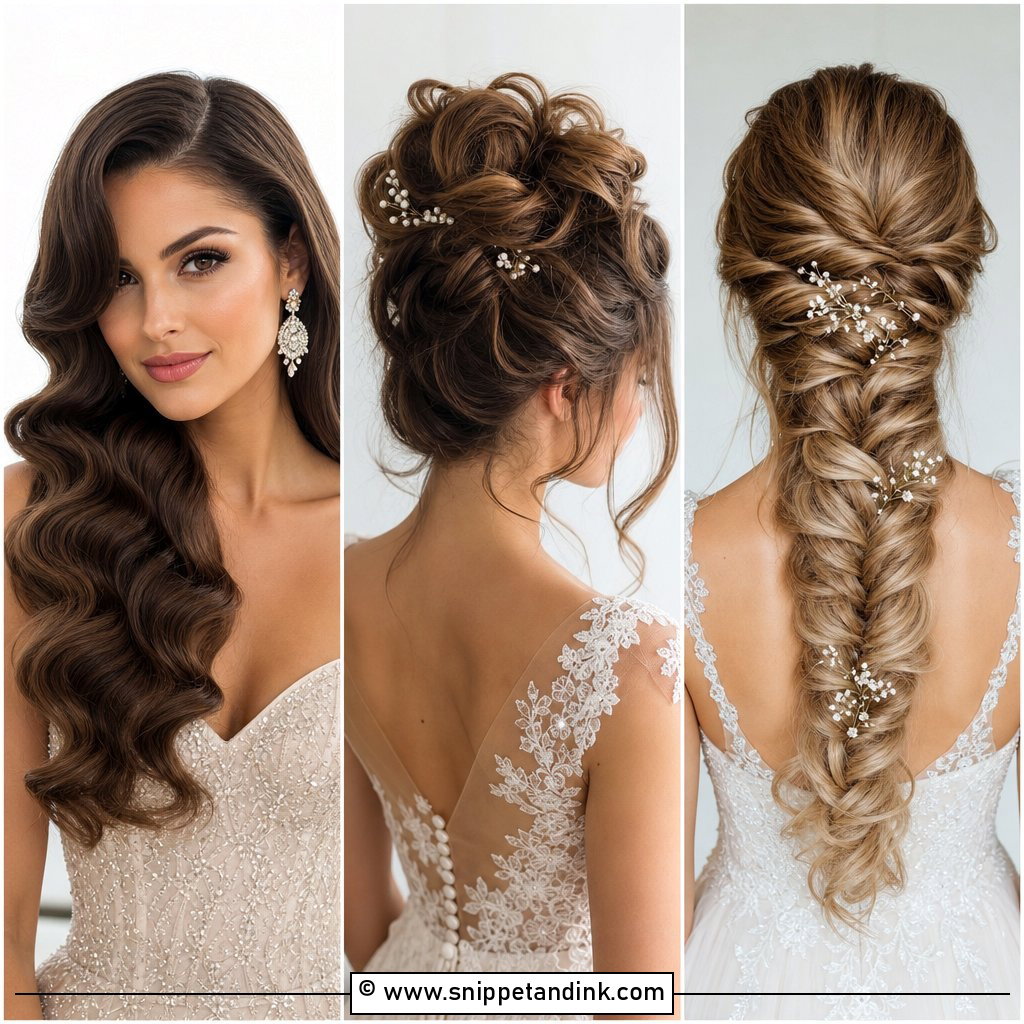
15. Dutch Braid Updo With Curtain Bangs
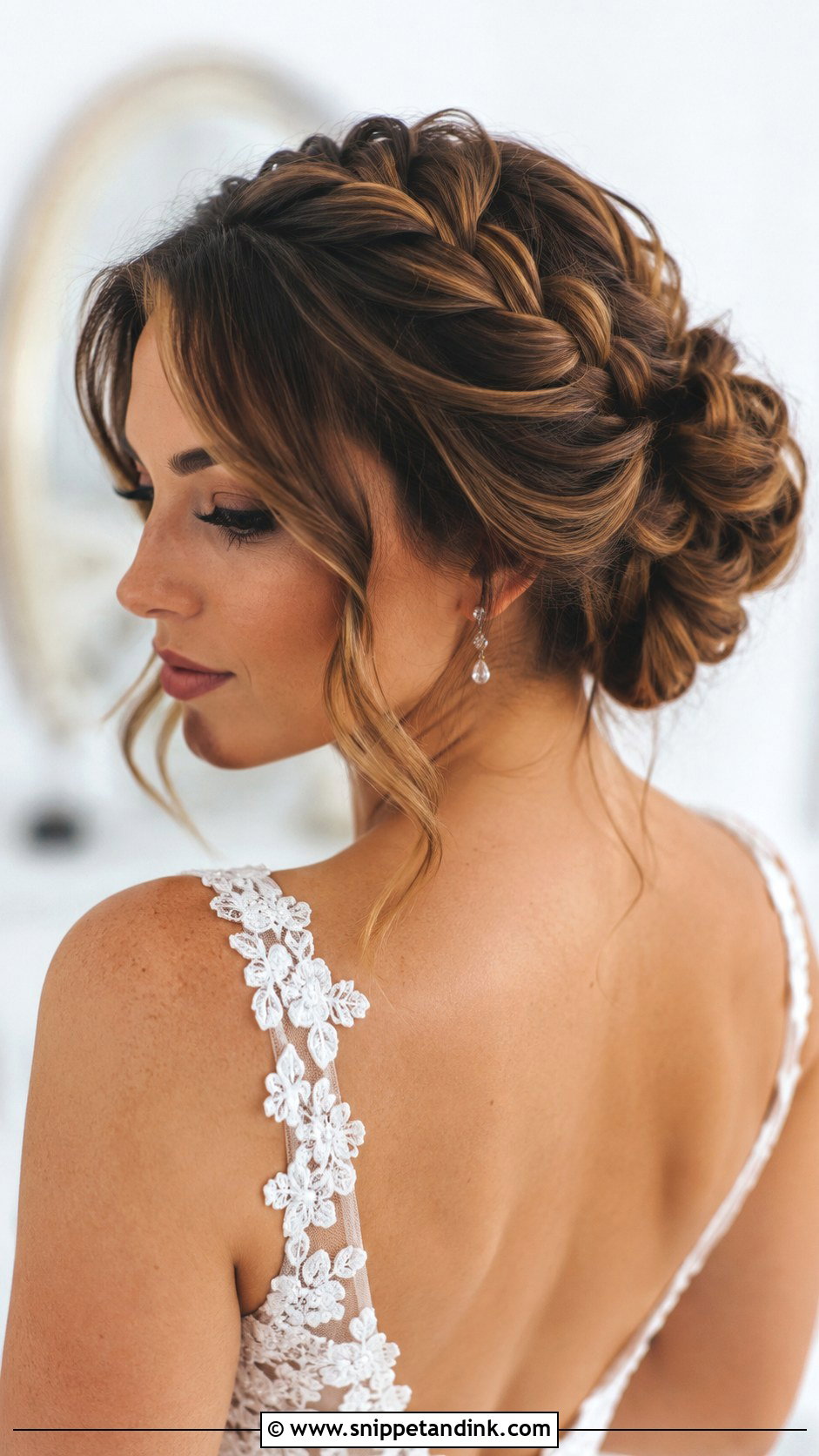
Curtain bangs soften a pulled-back braid more than any loose tendril can. I braid the hair back into a bun or twist and leave the fringe out, styled with a round brush so it opens in the middle and sweeps toward the cheekbones. Bangs are the first thing to go flat in humidity, so I set them with a small velcro roller while the braid is being done. Skip this if you’re growing your fringe out and it sits at an awkward length; it tends to split rather than sweep.
16. Dutch Braid Mohawk Bridal Style
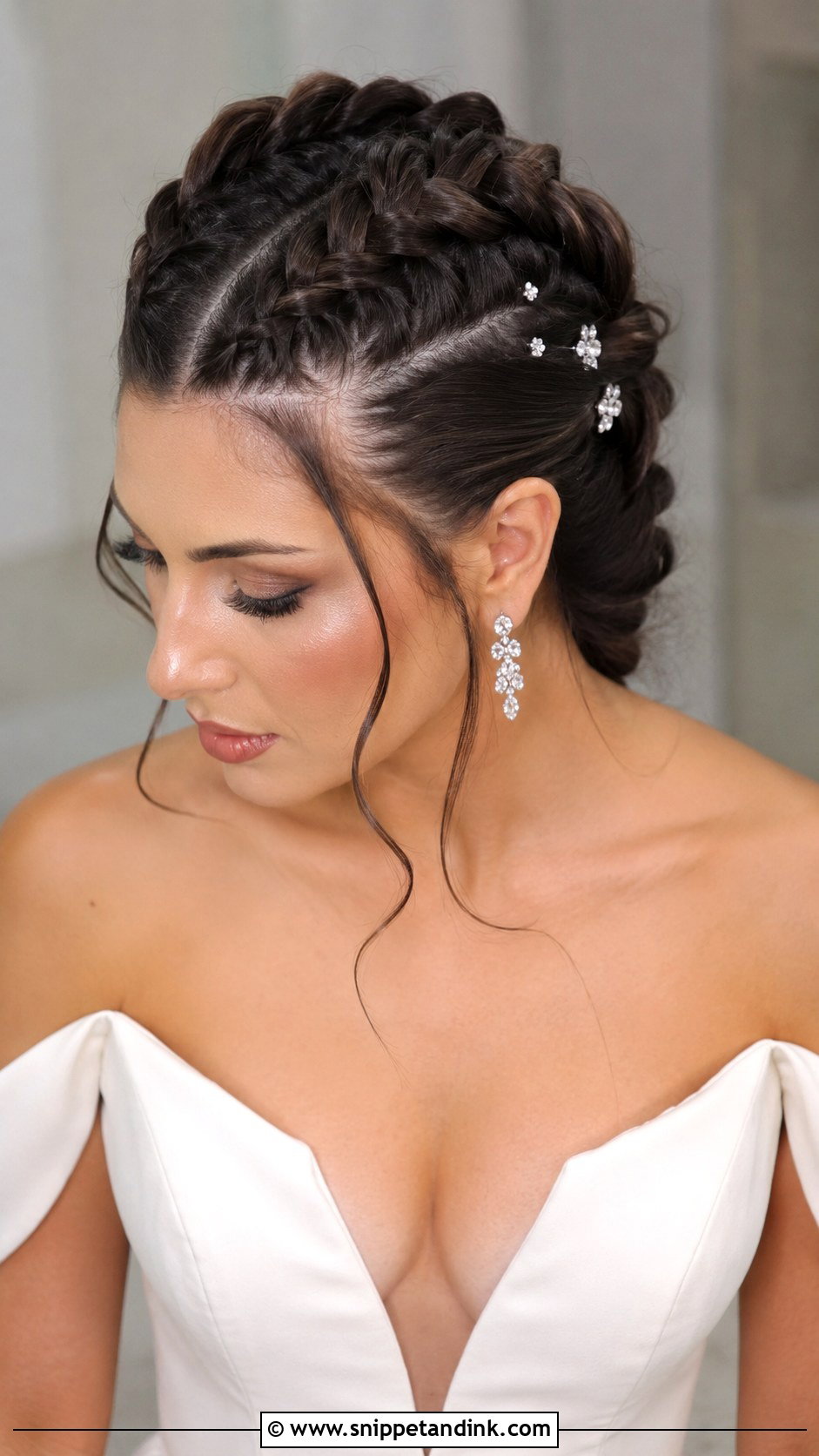
The edgiest braid here, the Dutch braid mohawk, runs two or more braids from the hairline toward the center back, with the sides kept sleek. I pull the braid edges wide so the center reads as one bold ridge. The sides have to be very smooth for the shape to work, which means gel or a strong cream and a fine-tooth comb. It suits structured, minimal gowns and keeps every strand off the face during dancing. Crystal pins along the center ridge add a bridal touch to something that could otherwise look severe.
17. Dutch Braid Chignon for Brides
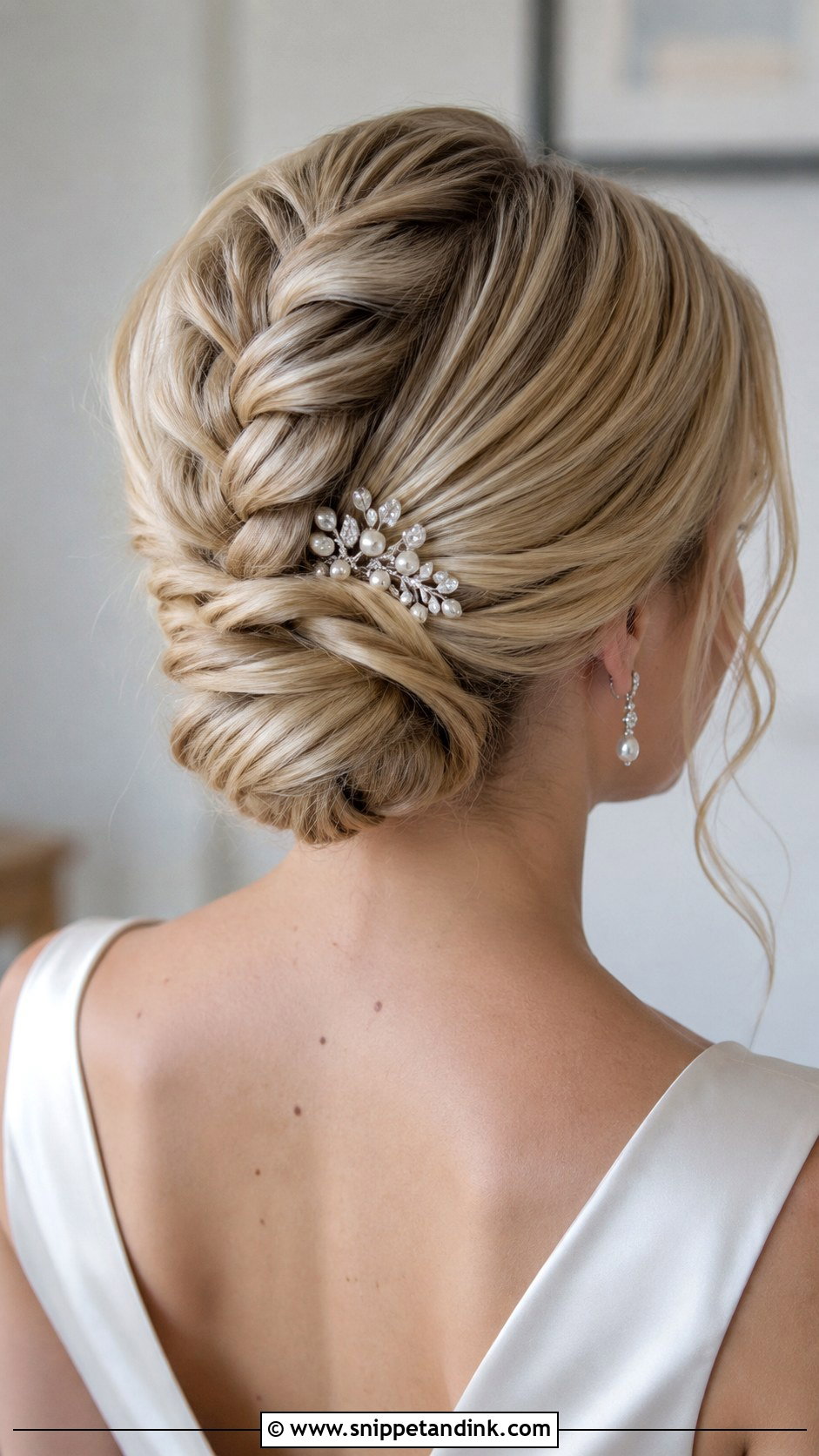
The braid runs from the crown down and finishes in a smooth, rolled chignon at the nape. It’s a classic shape with texture on top. A chignon only holds if the hair has some grip, so on freshly washed silky hair I add a little dry shampoo through the lengths first. I use U-shaped pins for the roll, because they hold the shape without flattening it the way bobby pins can. A small comb at the side works well with satin gowns and formal rooms.
18. Dutch Braid With Hair Accessories for Weddings
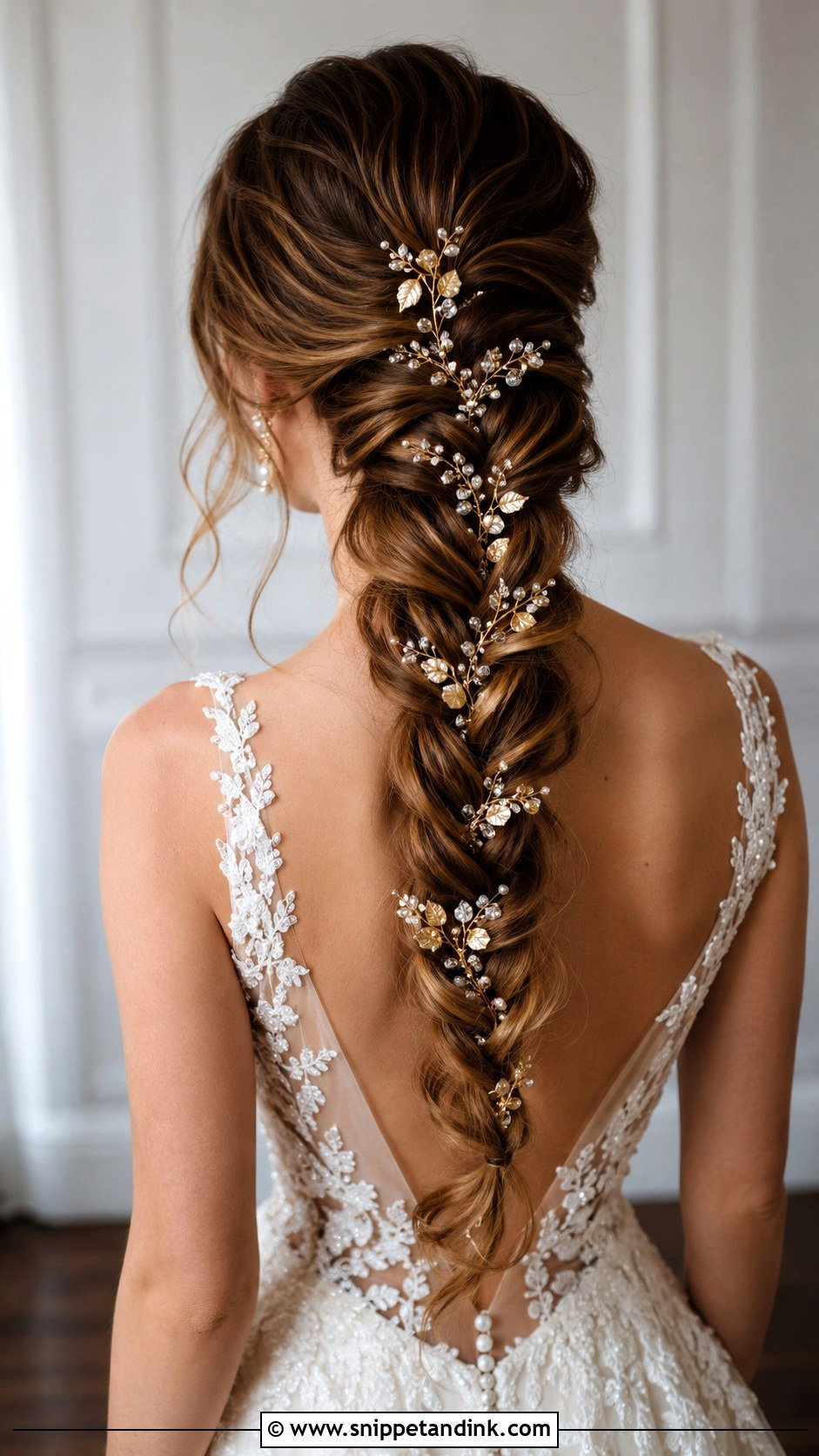
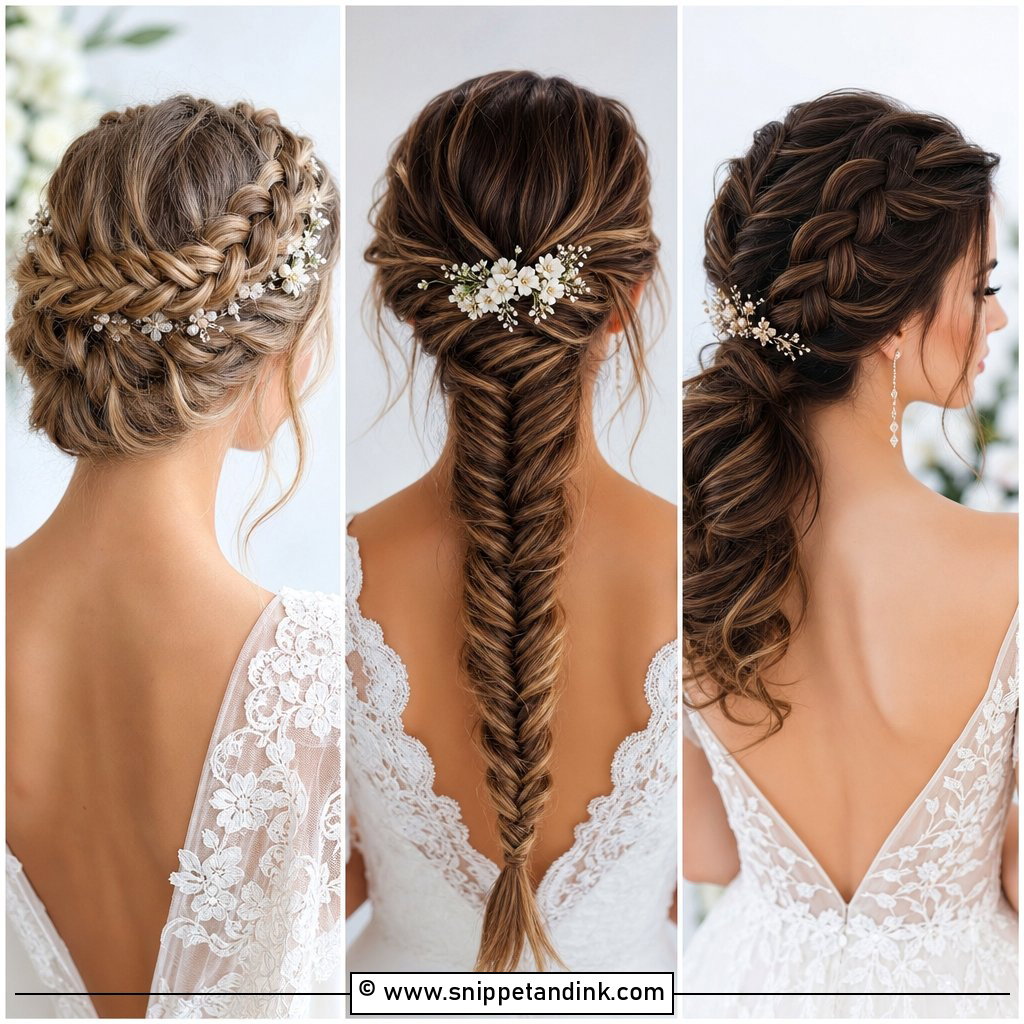
The ridges of a Dutch braid act like pockets for decoration. Pearls, crystal pins, gold leaves, or flowers can all slide in along the length. I keep it to one type of accessory so the braid doesn’t turn into a display case, and I match the metal to the jewelry you’ll wear. A hair vine woven loosely along the braid looks soft and moves with you. Test the weight at your trial: heavy pieces slowly pull a braid loose through the day.
19. Dutch Braid Ombre Bridal Hair
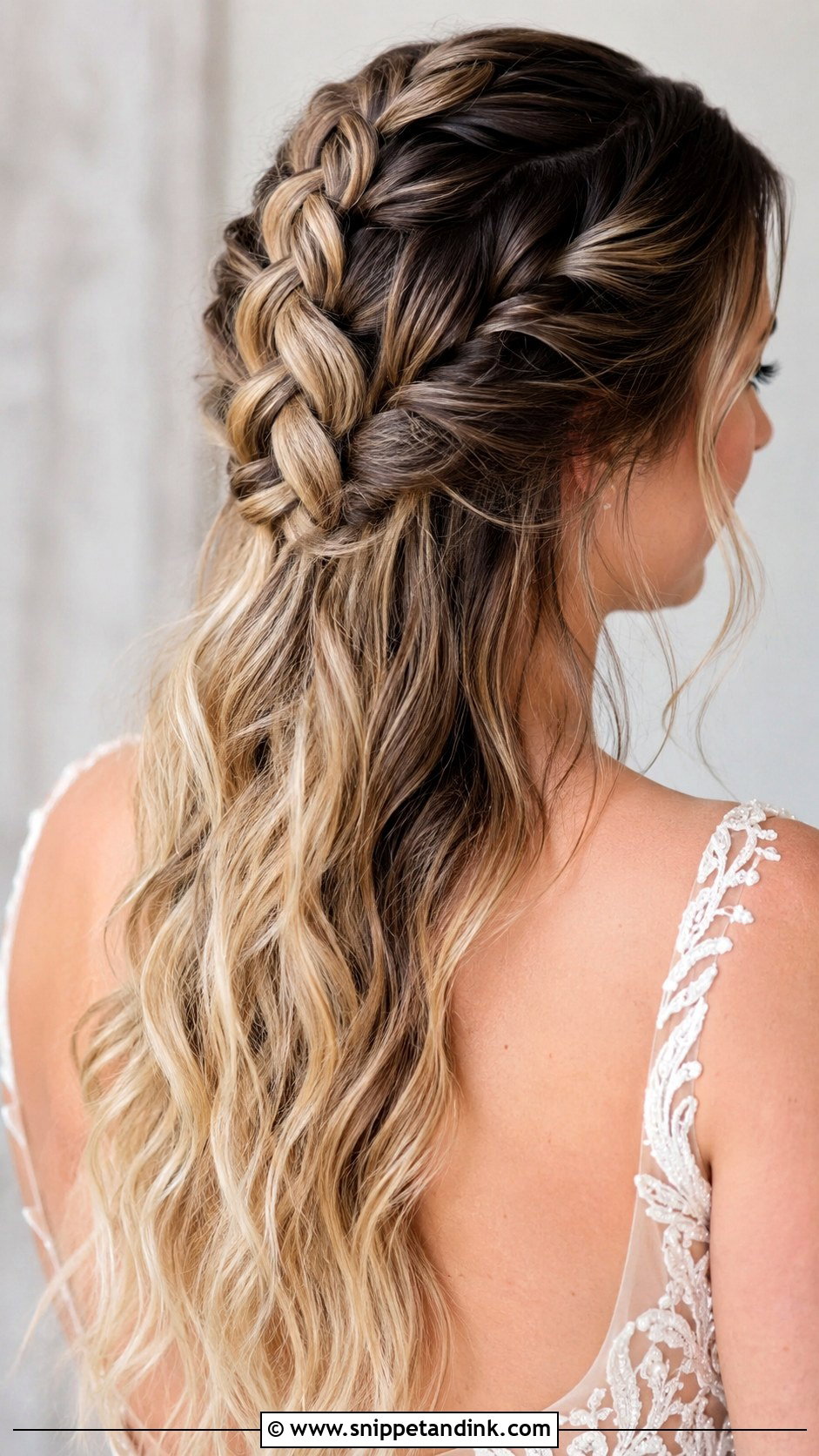
Weaving shows off dimensional color better than almost any other style, because every crossing exposes a different section of the hair. A single braid down the back lets the shift from darker roots to lighter ends read clearly. I’d add a fishtail section near the ends if you want more texture there. Leave the last few inches loose so the lightest tones show. If your color was done recently, a quick gloss a week before the wedding brings back shine.
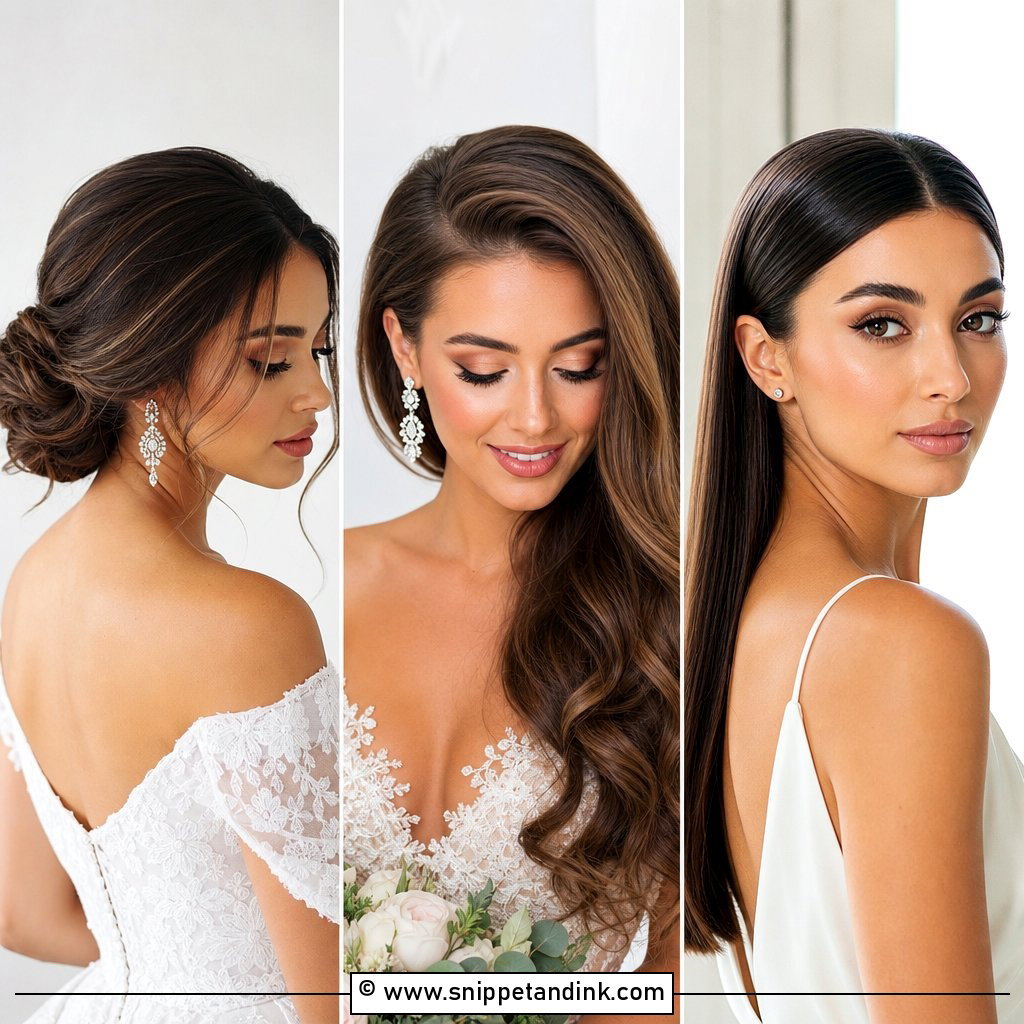
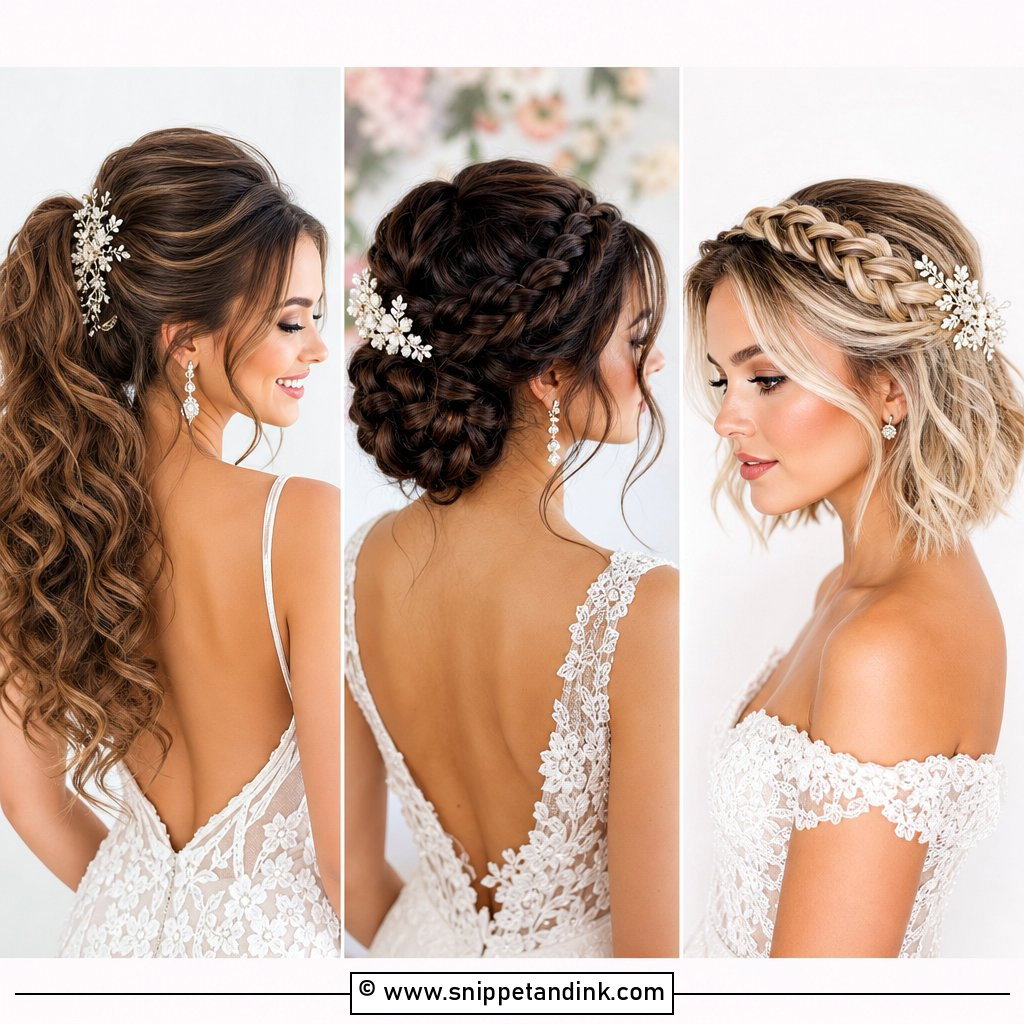
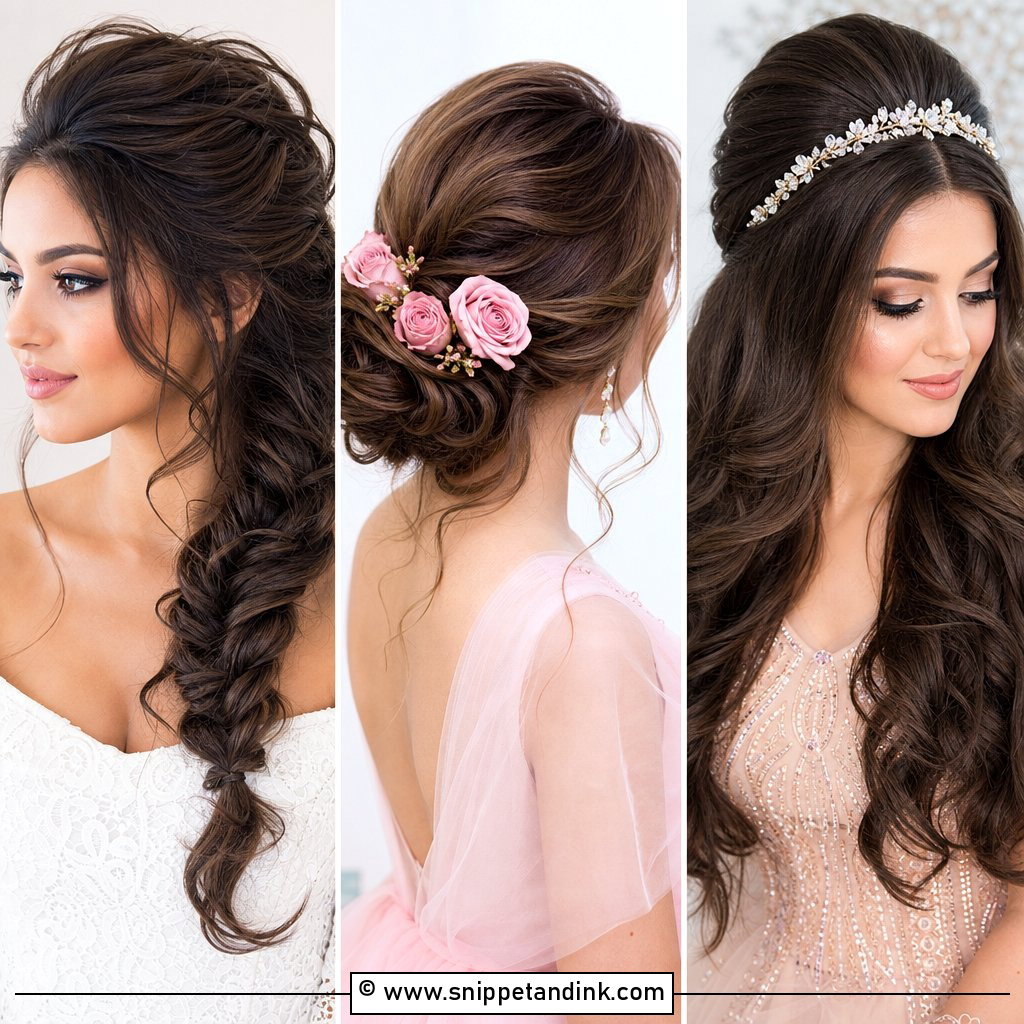
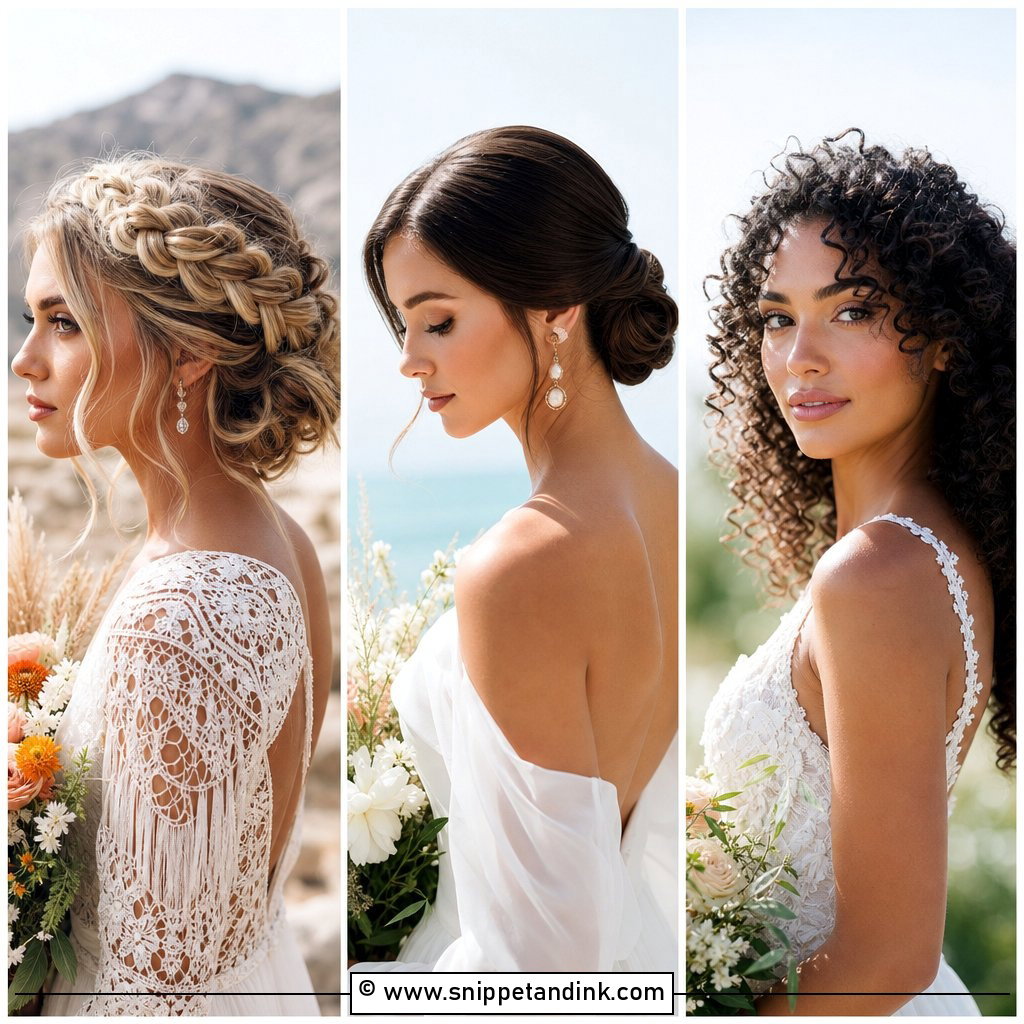
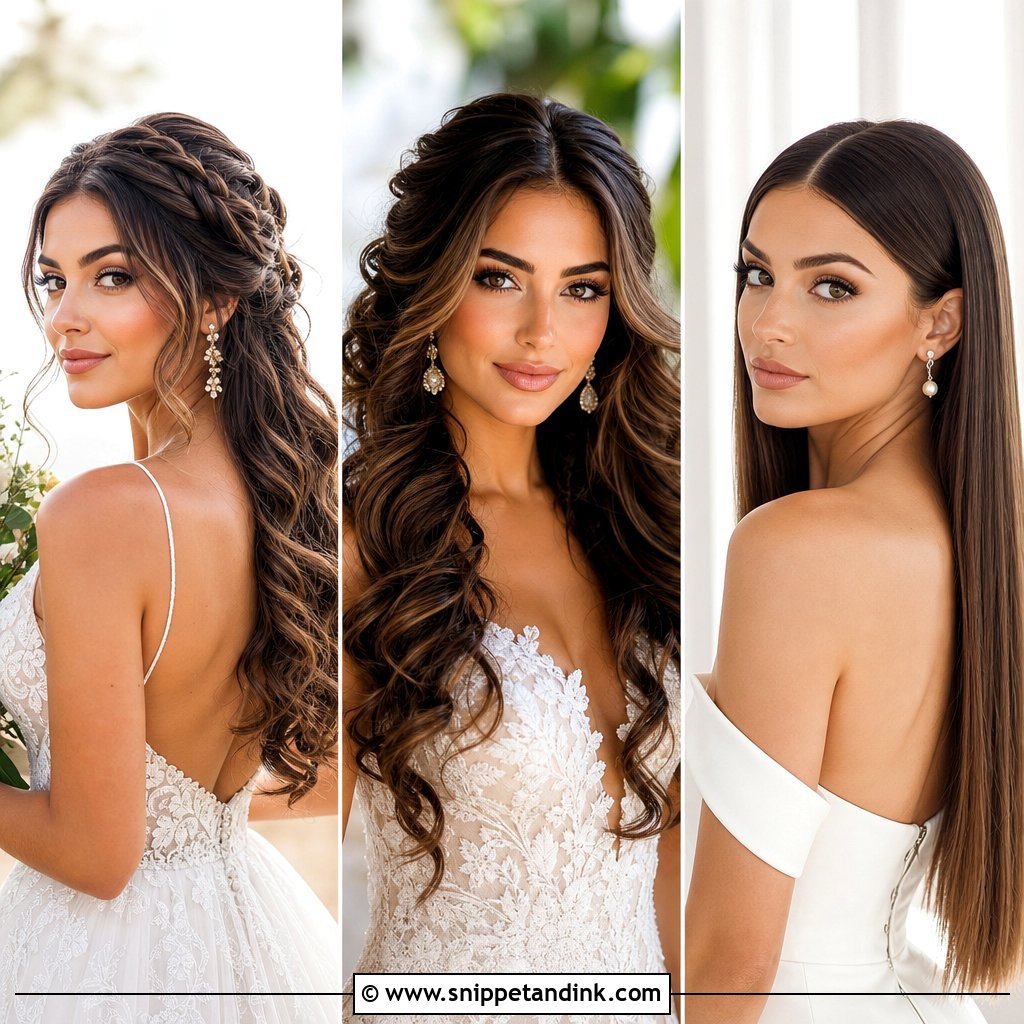
20. Dutch Braid Updo With Loose Curls
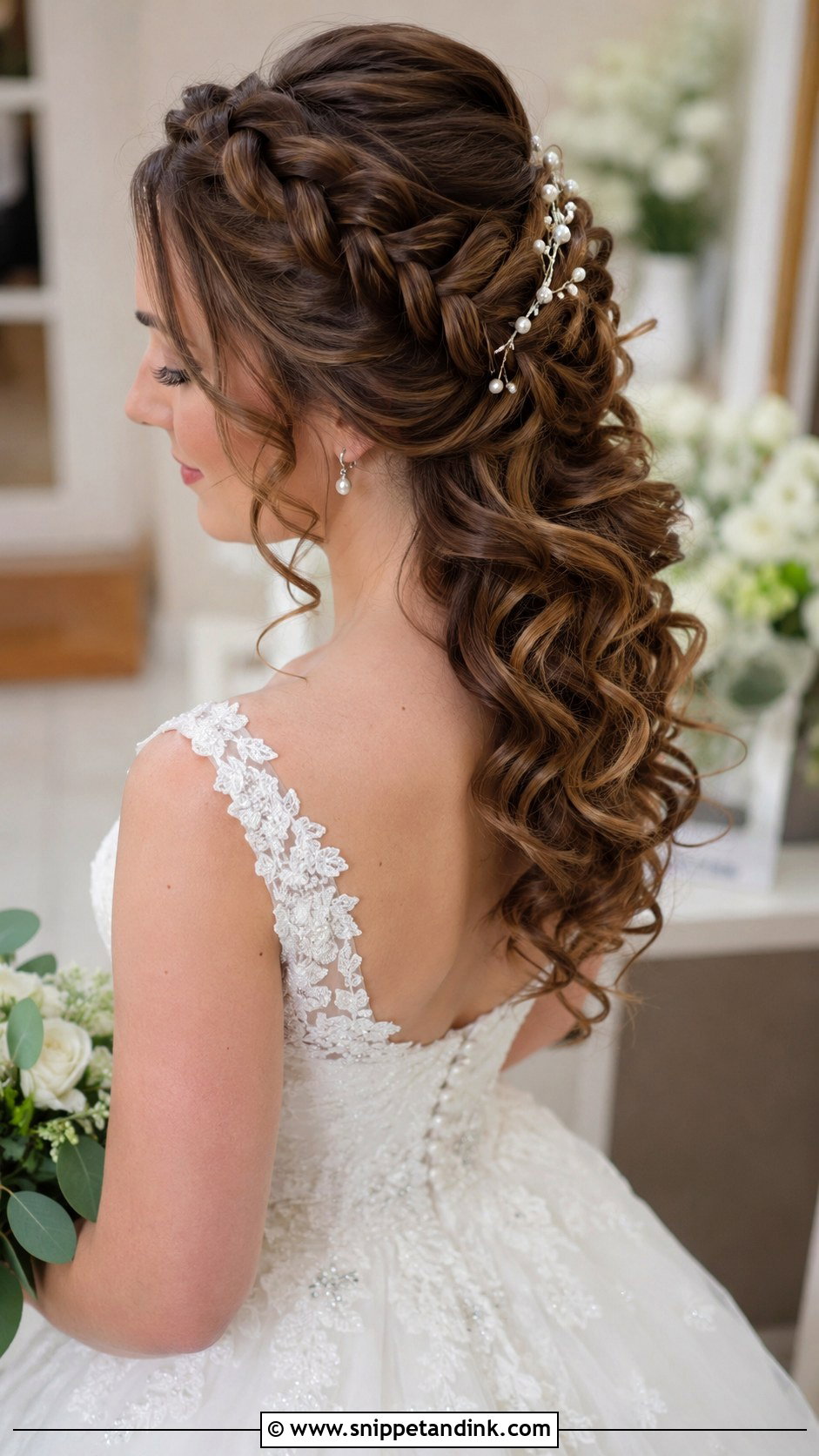
Braids frame the top and sides; the rest is pinned up loosely, with a few curls left to fall. The balance between the neat braid and the free curls is what gives this style its softness. I curl before I braid, not after, so the heat doesn’t loosen the plait. Keep the loose curls fewer than you think you want; three or four look romantic, while ten look like the updo is falling down. It sits well with ballgown and A-line skirts.
Frizz, Sagging Loops and Taking It Down at Midnight
A braid tends to hold its shape long after a curl has dropped, but it still changes over a day. By evening, the pulled-out loops relax and the edges pick up a halo of frizz, especially outdoors or in a warm, crowded room. Neither is a disaster. Here’s what I tell brides to expect and pack.
- A small travel hairspray and a clean toothbrush, for smoothing flyaways along the braid without disturbing it.
- Six bobby pins in your hair color, for a loop that has slid or a bun that has shifted.
- A tiny pot of balm or pomade, for frizzy ends on a braid that rests on the shoulder.
Taking a braided style down at the end of the night is where hair actually gets damaged. Remove every pin first, counting them out if you can. Then undo the braid from the tail upward, working slowly, and don’t drag a brush through it. The hair will be stiff from spray, so soften it with a little conditioner or oil and finger-comb before you brush. Detangling a set braid dry is how strands snap.
One Braid, Worn From the Aisle to the Last Dance
A Dutch braid is detailed enough to look special and secure enough to survive a long day, which is a rare pairing in bridal hair. Some brides want the boho halo with tendrils, others want a polished chignon; both start with the same under-crossing technique. Save the styles that match your hair length and dress, bring them to your trial, and ask your stylist what your texture will need. Mixing techniques, adding accessories, or showing off your color are all fair game once the braid itself holds.
You'll Like These Ideas:



Leave a Reply