
A shaadi asks more of your hair than almost any other wedding. There’s a heavy dupatta to anchor, a maang tikka or matha patti to sit flat, flowers that wilt in heat, and often four or five functions in a row. That applies to the bride, the bridesmaids and a glamorous guest alike. The styles below run from gajra buns and pearl braids to open waves and sleek updos, and I’ve noted where each one belongs, from mehendi to reception, and what it needs underneath to survive hours of dancing.
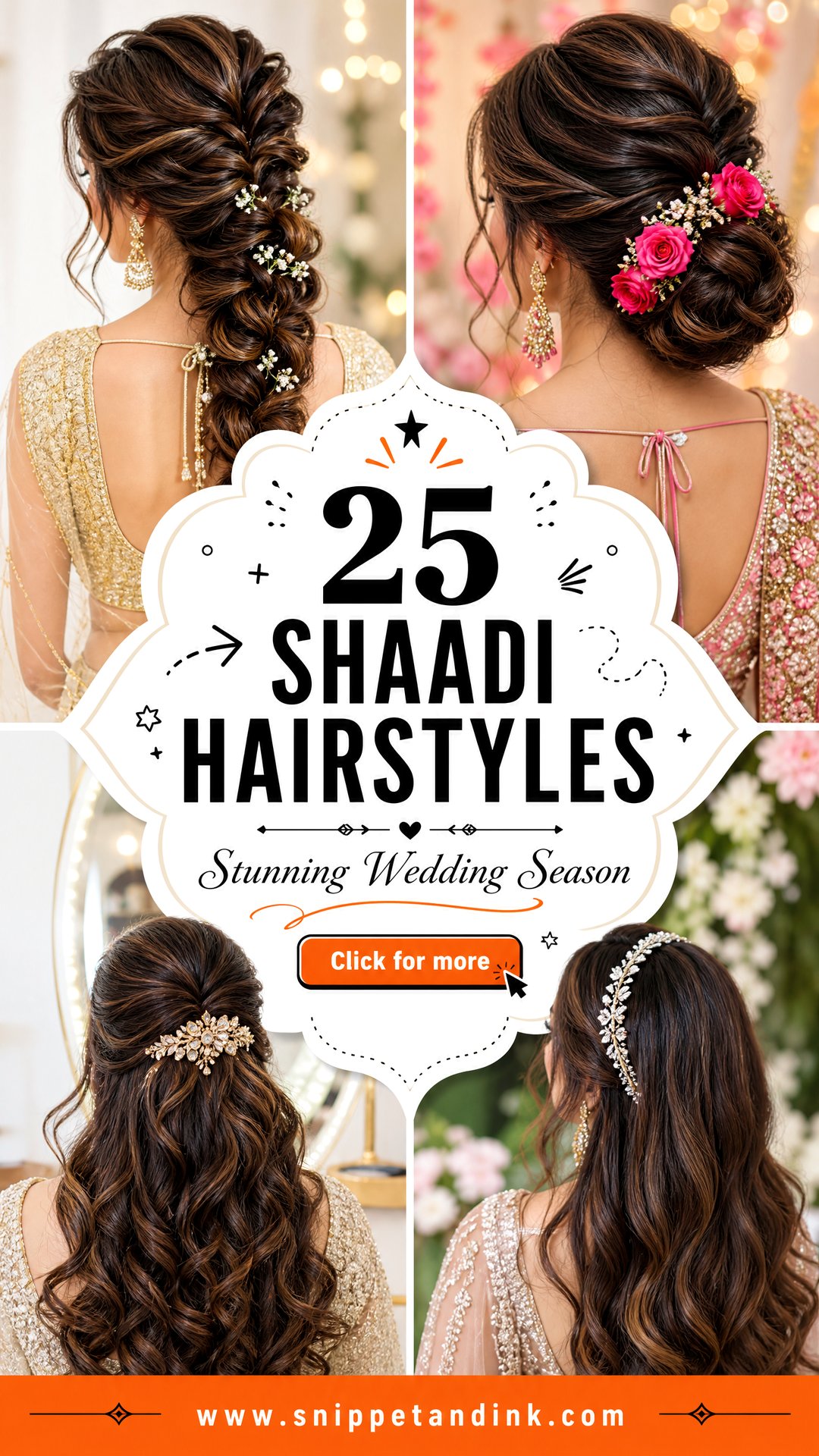
Mehendi to Reception on One Head of Hair
Most shaadis run over several days, and your hair has to cope with each one. I plan the order so the heaviest styling falls on the wedding itself and the lightest on mehendi, where you’re sitting for hours with your hands out and can’t fix anything.
- Mehendi: braids or a half-up style that keeps hair off wet henna on your hands and arms.
- Haldi: an old, simple bun, because turmeric paste can tint light or colored hair.
- Sangeet: something secure for dancing, like a Dutch braid bun or a fishtail.
- Wedding: the firmest base you’ll have all week, built to hold a dupatta and jewelry.
- Reception: the place for open curls or a sleek high bun, with lighter fabric overhead.
Back-to-back days mean repeated heat. I’d rather your hair is washed the day before the main ceremony than the morning of, because second-day hair grips pins better. Dry shampoo at the roots between functions keeps it from going flat.
1. Gajra Floral Bun
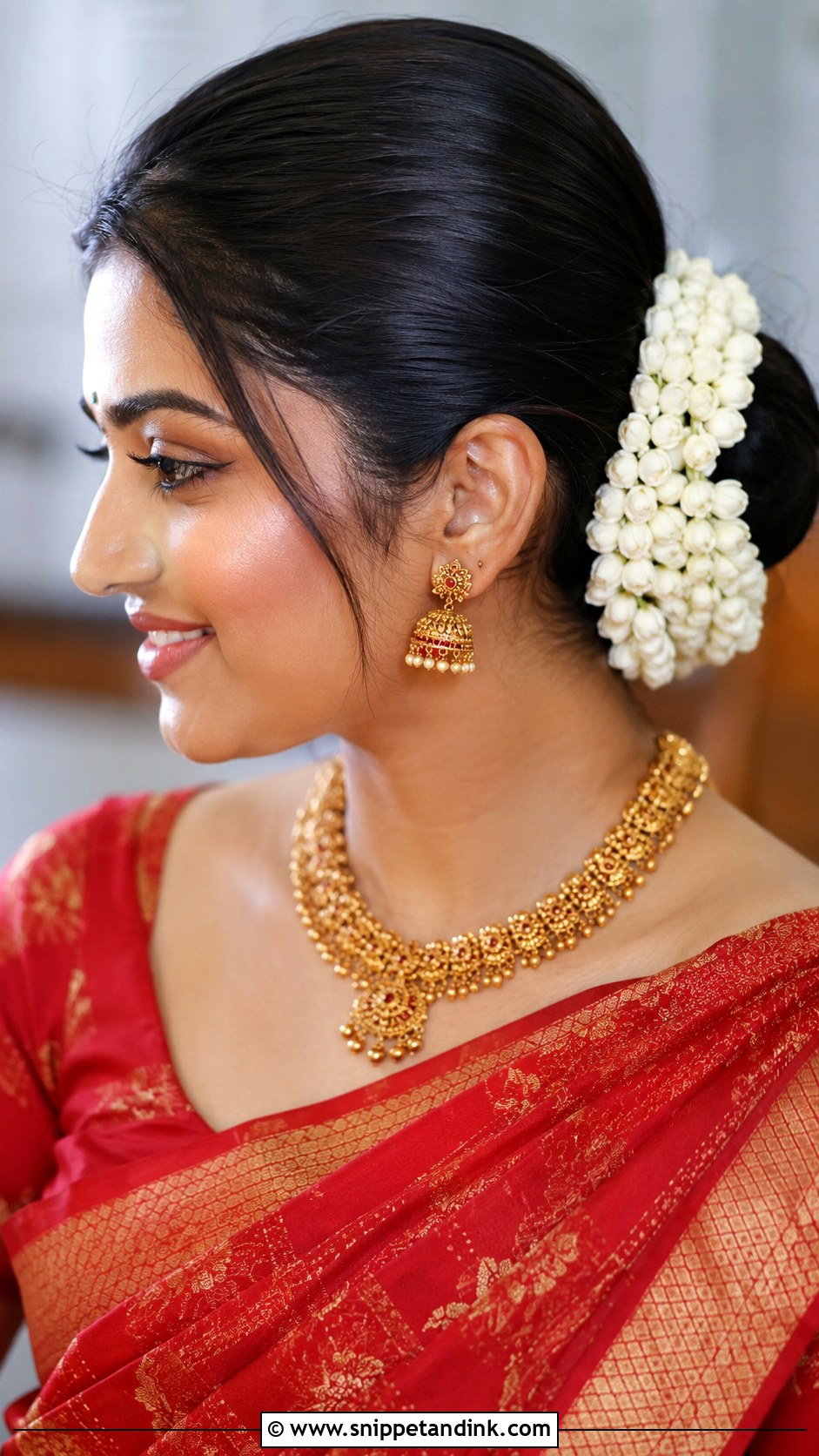
The gajra-wrapped bun is the style I’m asked for most at traditional ceremonies. I build a low bun on a firm base, either sleek or lightly textured, then wind the jasmine around it and pin the gajra through its thread every few centimetres so it can’t slide. White jasmine against dark hair stands out under heavy jewelry. A medium to long length is needed for a full bun; on shorter hair I add a donut or a small hairpiece inside so the gajra has something round to wrap.
2. Messy Volume Braid
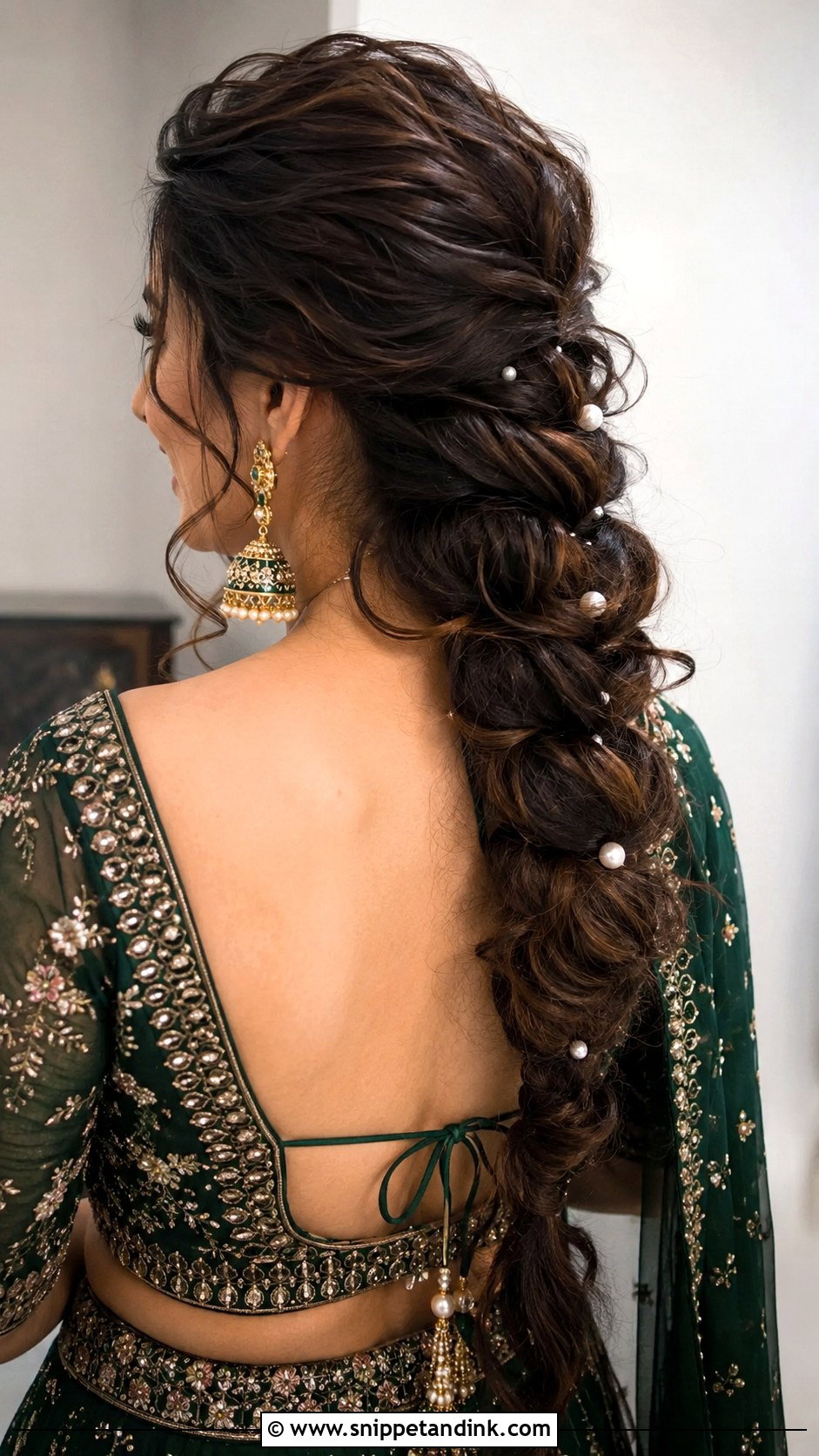
A thick, loosely woven braid needs volume put in first. I tease the mid-lengths, braid loosely, then pull each section out so the braid looks twice its width. High-density hair does this naturally; finer hair needs a clip-in weft hidden in the braid to get the same size. Small flowers, pearls or jewels tuck between the sections. Mehendi and sangeet suit it, and it softens rather than falls apart as the night goes on, which is why it’s forgiving for dancers.
3. French Braid Bun
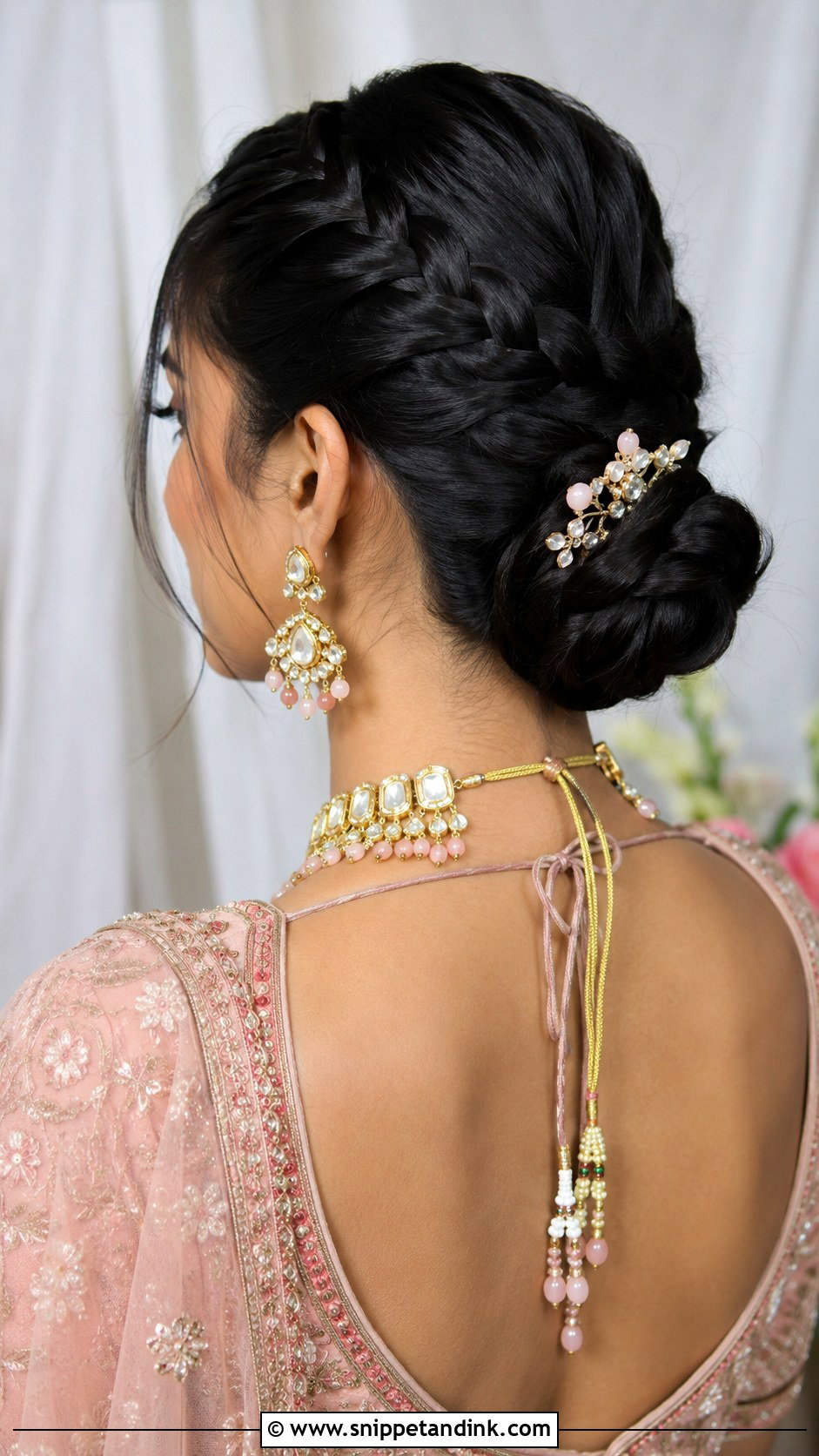
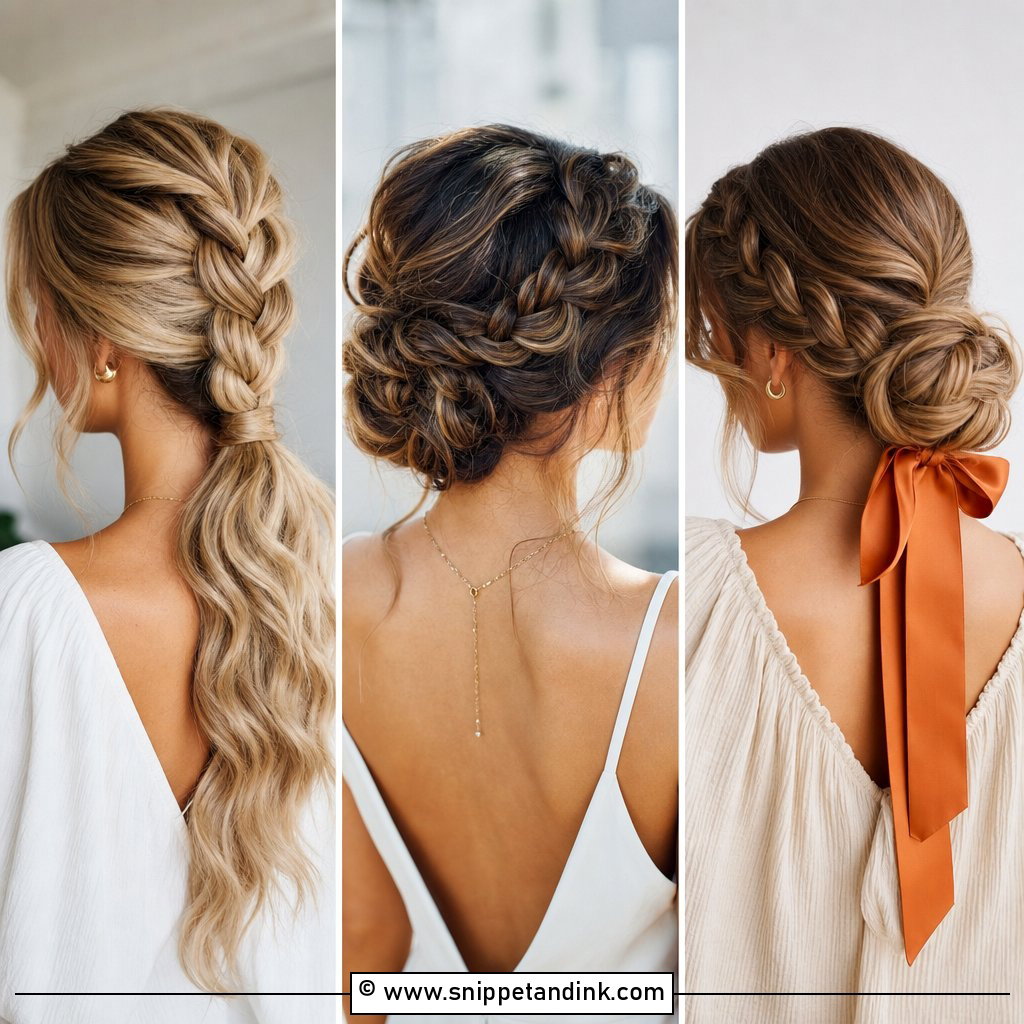
A French braid along the crown coiled into a bun at the nape is one of the most secure styles I do, because the braid acts as a built-in anchor for every pin. The back view is detailed, which matters at a shaadi where guests see the back of your head through most of the pheras. A hairpin, a gajra or a pearl strand can sit along the braid. It’s my first suggestion for a bride who expects to dance hard and doesn’t want to think about her hair.
4. Open Curls With Side Part
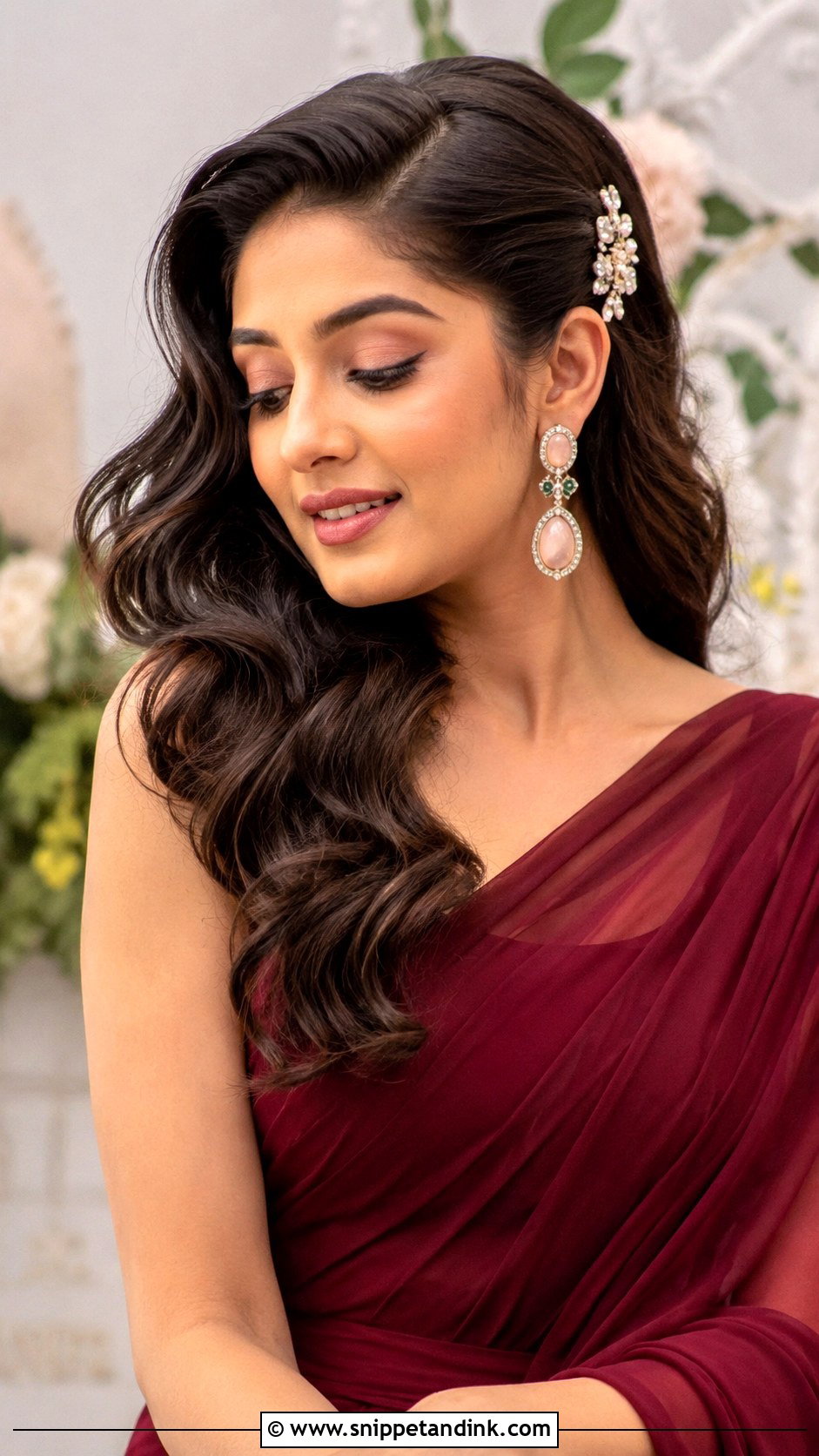
Open curls with a deep side part are a reception favourite, but they’re the least secure option under a dupatta. Heavy fabric presses curls flat and the friction frizzes them. I curl with a large barrel, pin each curl to cool, and finish with flexible spray. Thin hair looks fuller with the side part; thick hair needs fewer, larger sections or the curls take forever to set. A jeweled clip can hold one side back to show earrings.
5. Pearl-Lined Braid
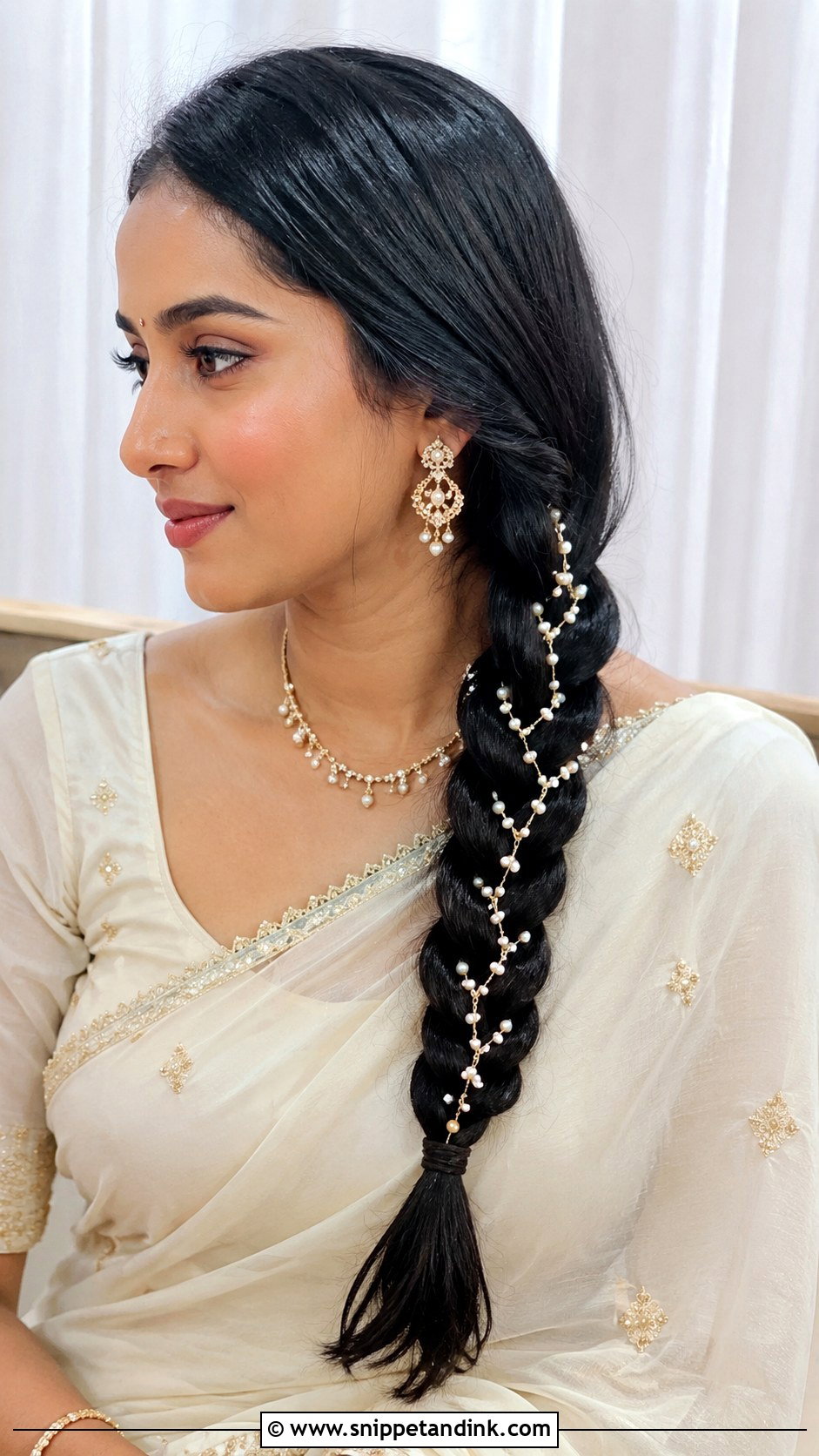
Pearl strands woven through a braid look intricate, but they’re easy to do badly. I weave the strand in as one of the three sections, or pin it along the outer edge, so it follows the braid instead of floating on top. The weight is light, so it won’t drag. Down the back or over one shoulder, it suits engagements, sangeets and reception looks, and pearls sit comfortably with both gold and silver jewelry.
6. Low Bun With Loose Strands
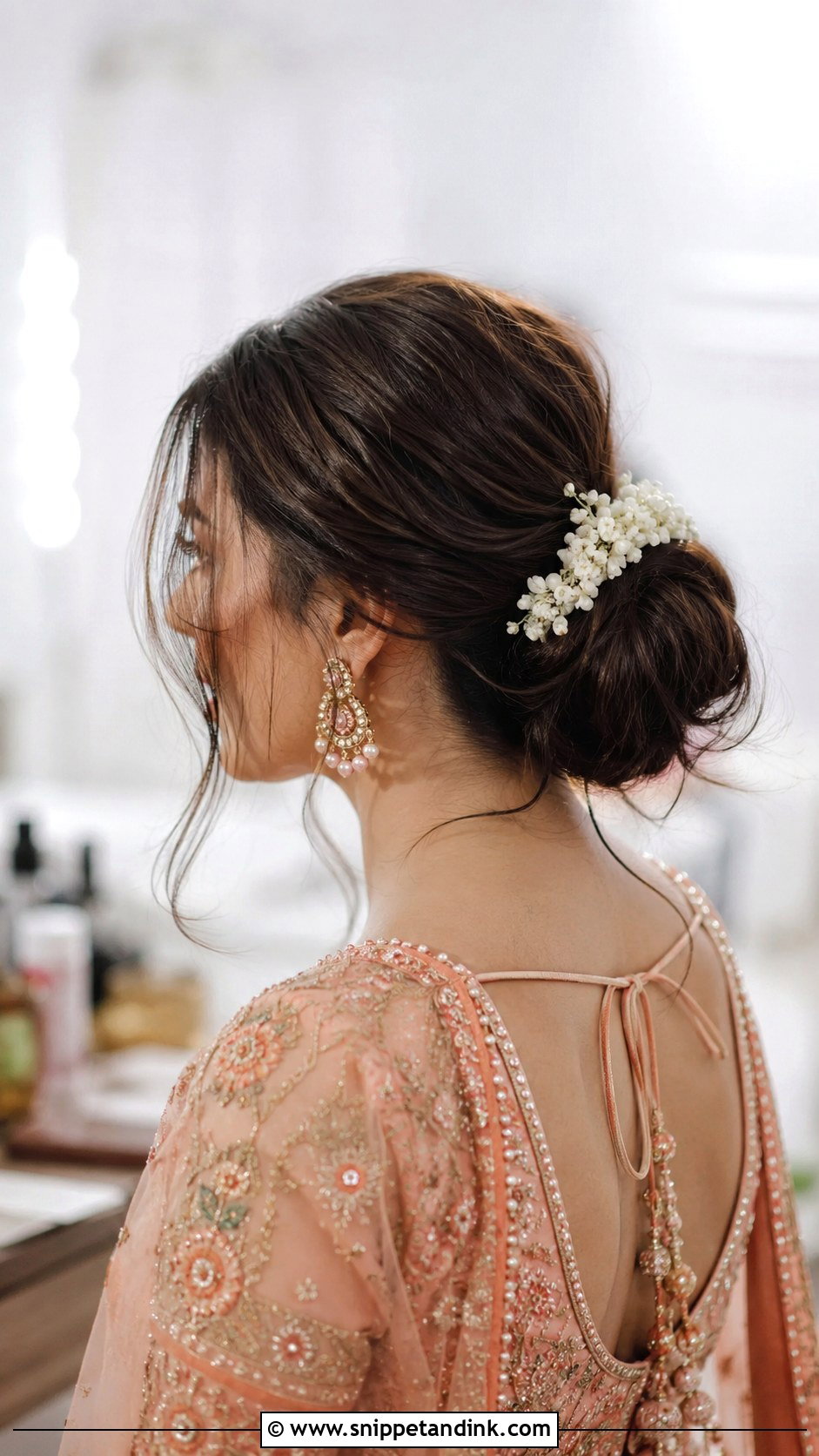
A low bun with a few loose strands around the face is the softest updo I offer. The strands have to be cut into the plan: I curl them separately and leave them slightly longer than the jawline, so they don’t stick to lipstick. A small gajra or one jeweled pin adds a traditional note. It suits daytime ceremonies and intimate functions, and it’s comfortable for hours because the weight sits low on the neck.
7. Maang Tikka Half-Up Style
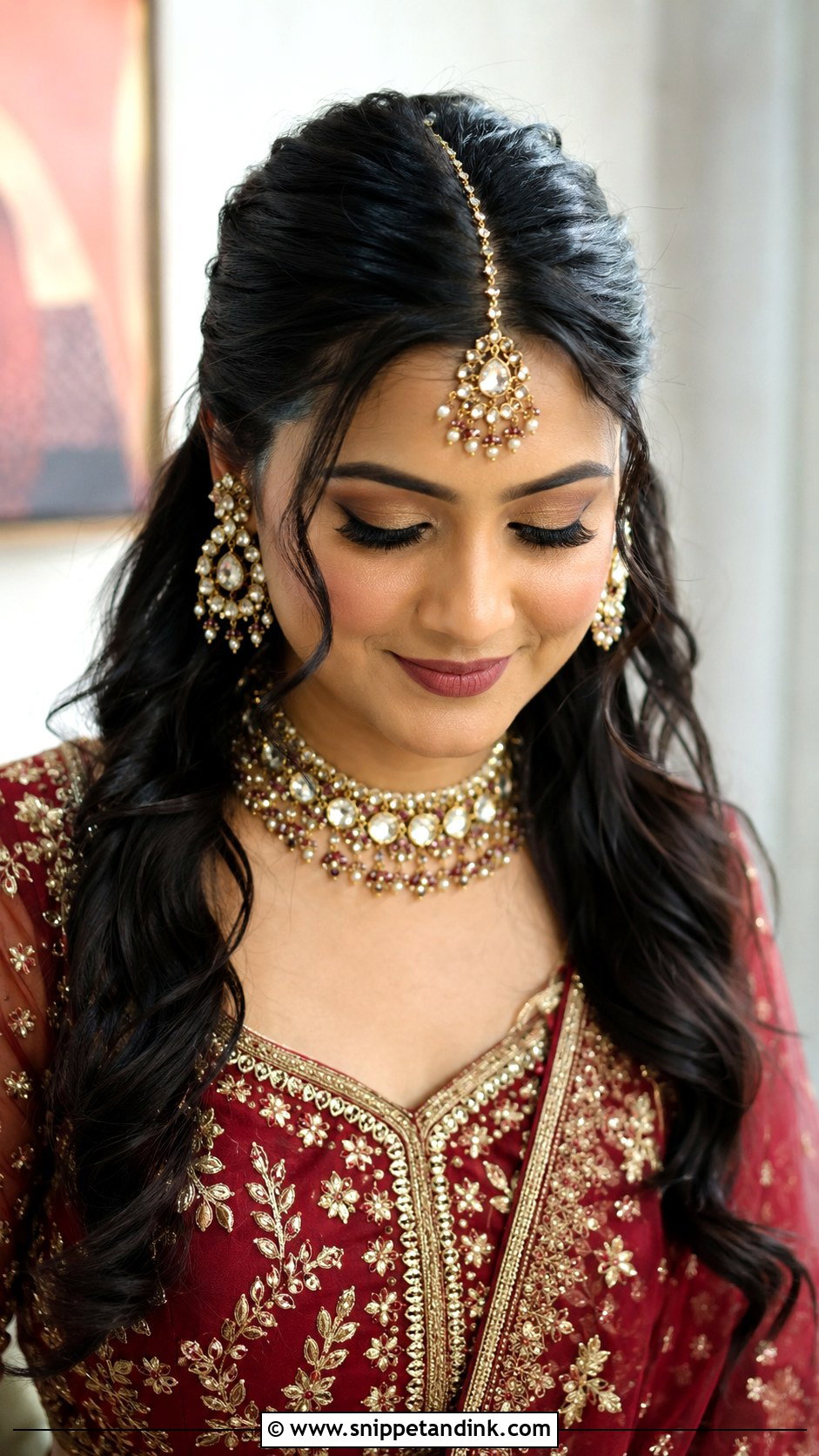
Half-up is the best way to wear a maang tikka or matha patti with long hair down. I smooth the crown, pull the top section back into a small twist or bun, and pin the tikka chain into that twist so it stays centered. The rest falls in soft waves, with extra curl at the ends for movement. Medium and long hair both work. The tikka’s hook can pull a center part apart, so I hide a pin under it.
8. South Indian Jada Braid
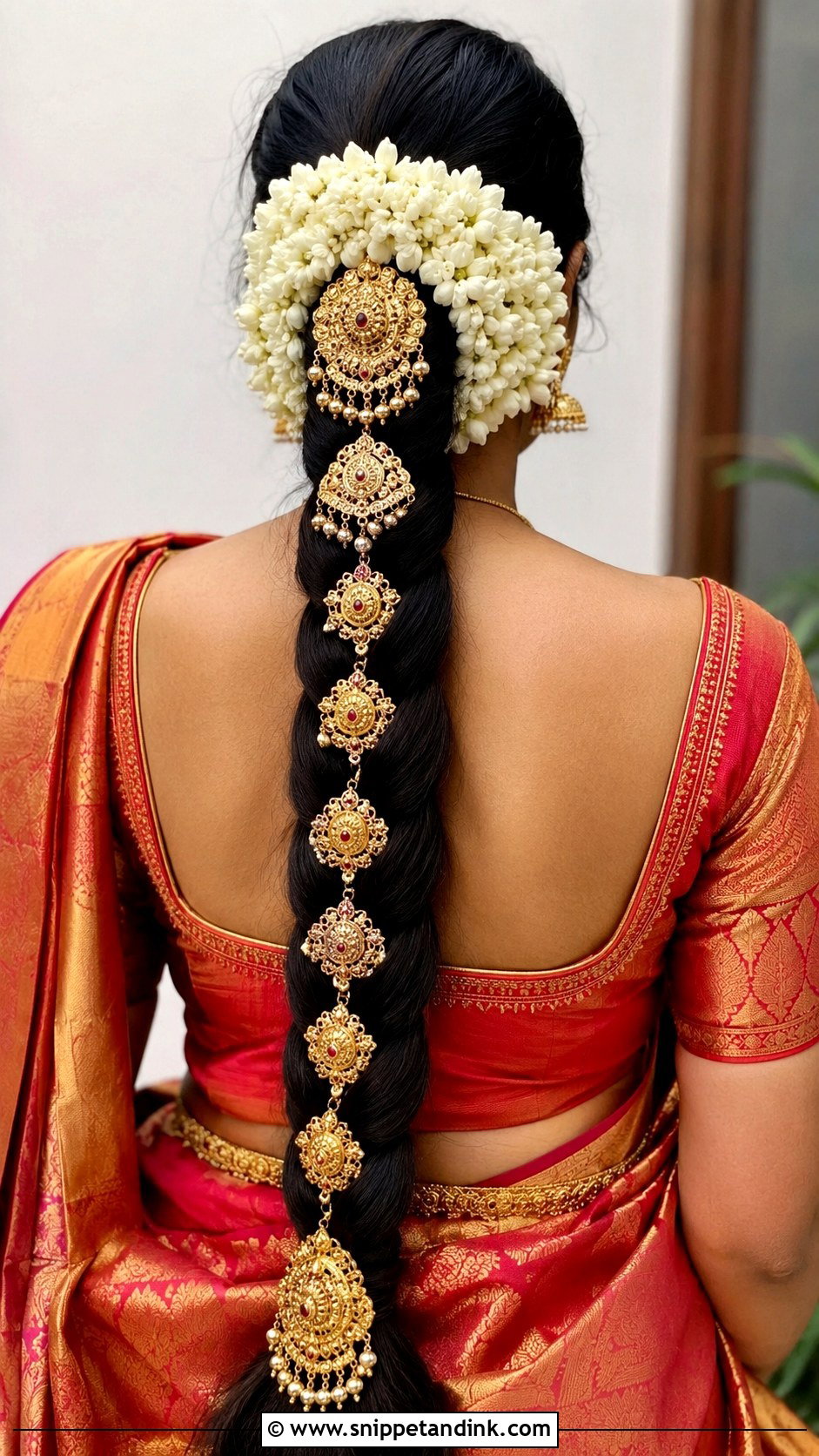
The South Indian jada braid is heavy work in every sense. Gold jada ornaments run down a long, thick braid, usually layered with jasmine and roses, and the set can weigh enough to pull on the scalp by evening. Most brides need a matching extension braided in for length and thickness. I secure the top of the jada to a firm base at the crown so the weight isn’t hanging off a few strands. It belongs with silk sarees and temple jewelry, and it takes time, so book the longest slot your stylist offers.
9. Rose Twist Hairstyle
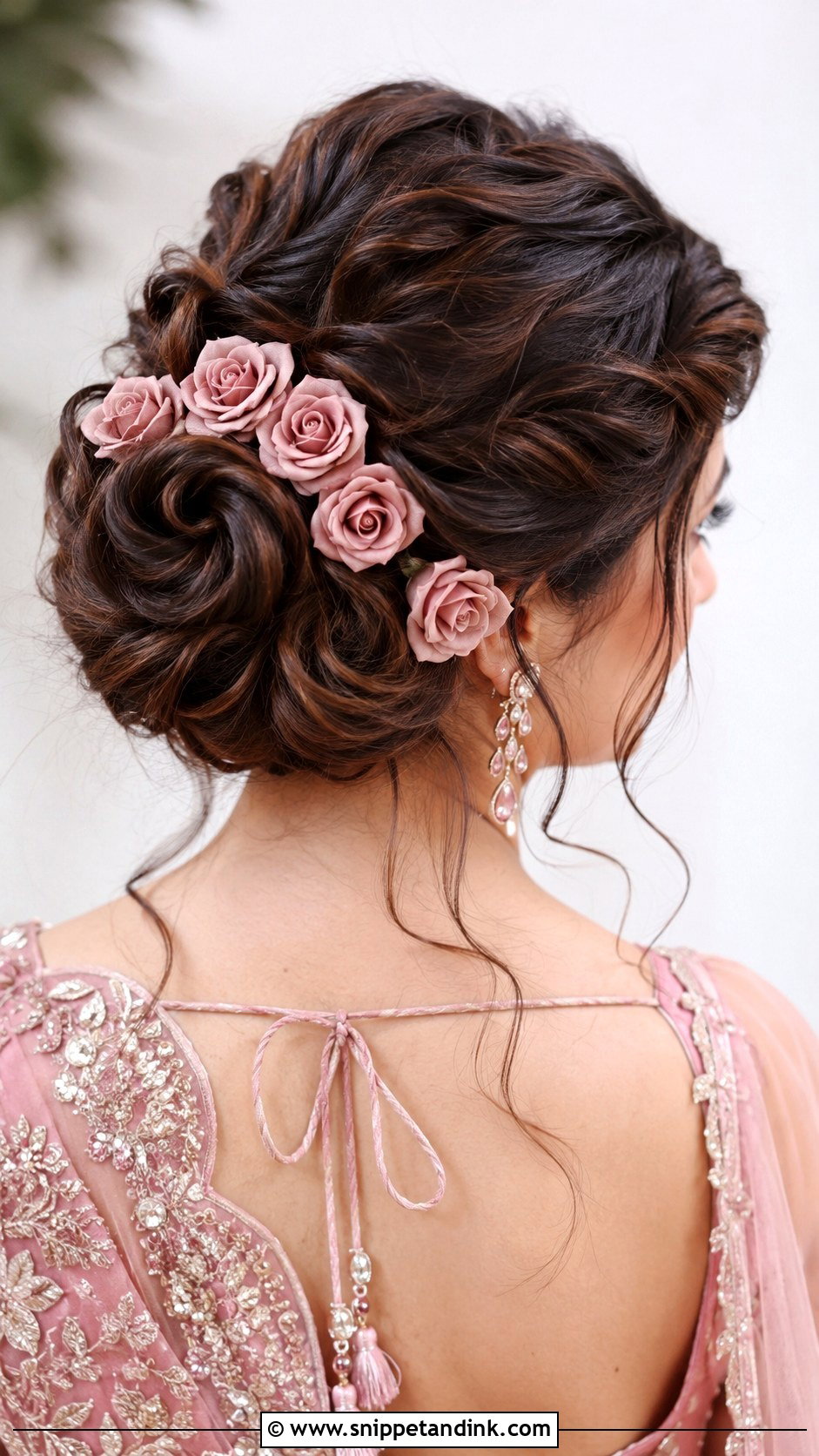
Twisted sections coiled into a rose shape look artistic, but they need hair with some grip. On very silky hair I spray texture first, or the rose unwinds. I place it at the side or back and can tuck real or fabric roses into the twists. Sangeets and receptions suit it, with the hair open or tied. Delicate drop earrings keep attention on the detail.
10. Sleek High Bun
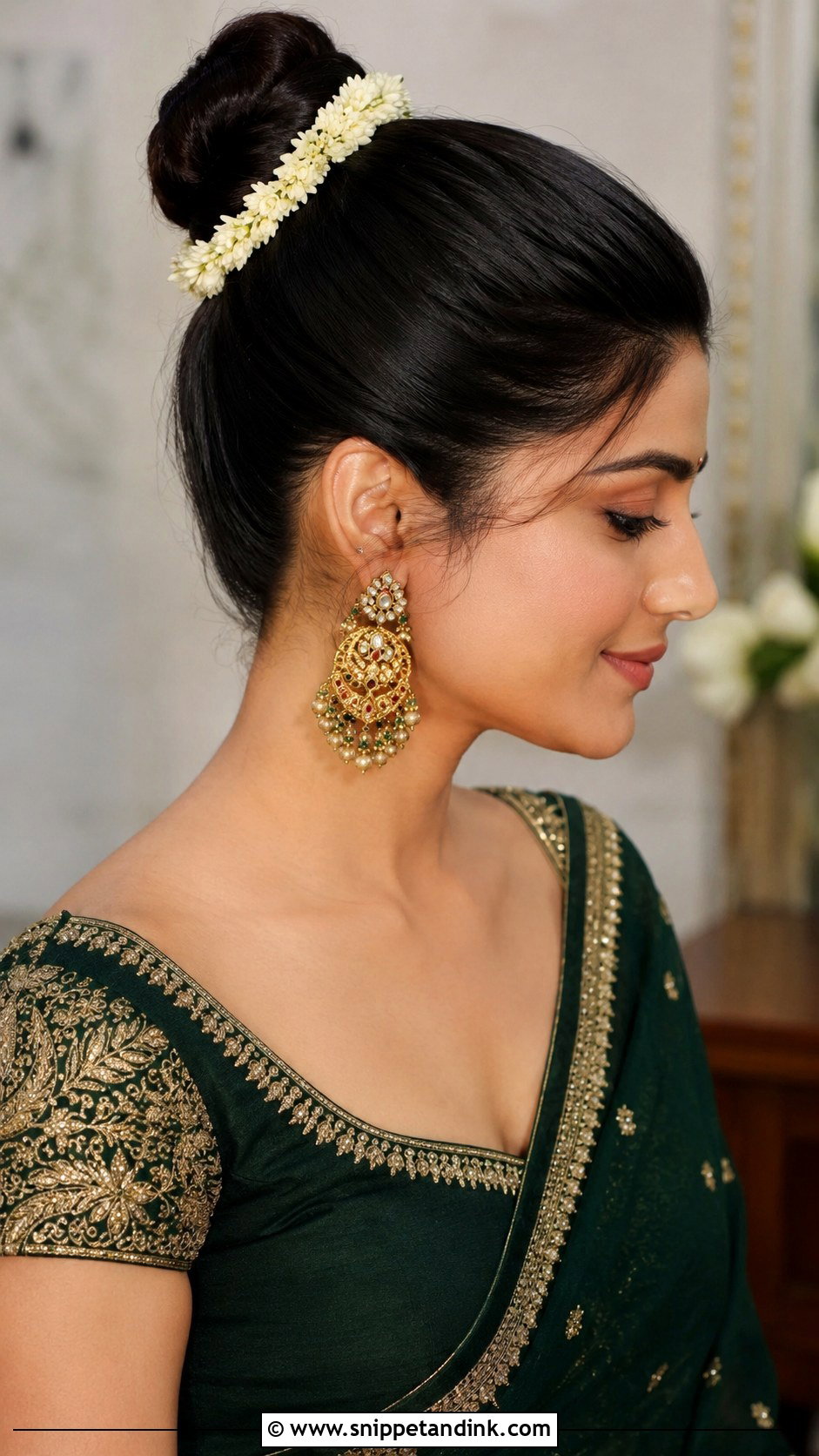
A sleek high bun sits at the crown and pulls everything off the neck, so heavy earrings and a statement necklace get full attention. It’s also the style that shows a bumpy ponytail base most, so I brush it tight and set it with a strong gel before twisting. A high bun clashes with a dupatta draped over the head, which is why I save it for reception and cocktail looks. A thin gajra around the base adds a traditional note.
11. Mermaid Braid With Embellishments
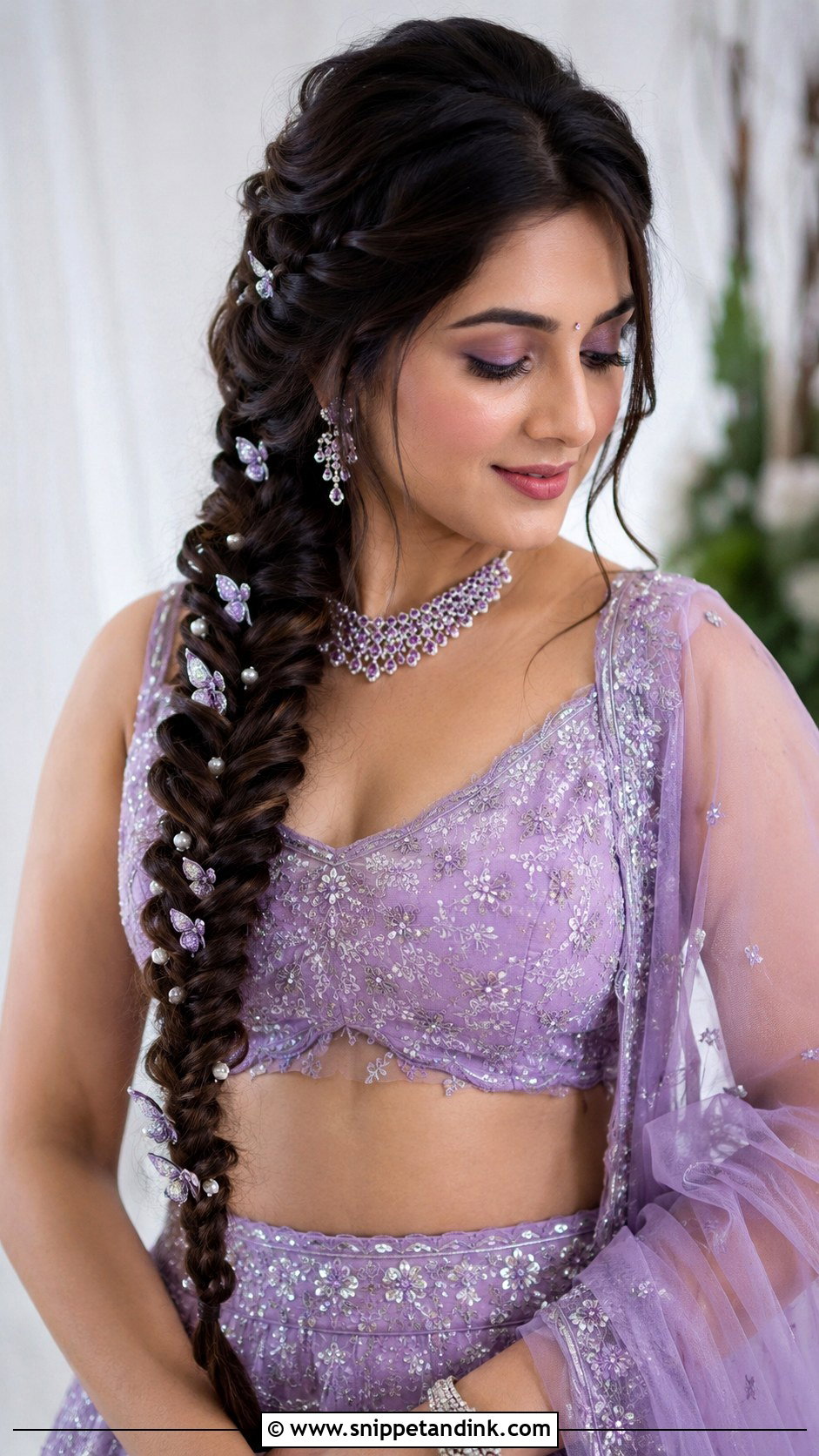
The mermaid braid uses many small sections woven together, so it looks detailed but takes patience. Thick, long hair holds the pattern best; on thinner hair the small sections get lost. Mini butterflies, pearls or tiny jewels pin into the weave. I drape it over one shoulder for mehendi or sangeet. Keep the embellishments light, or the braid sags.
12. Curly Open Hair With Tiara
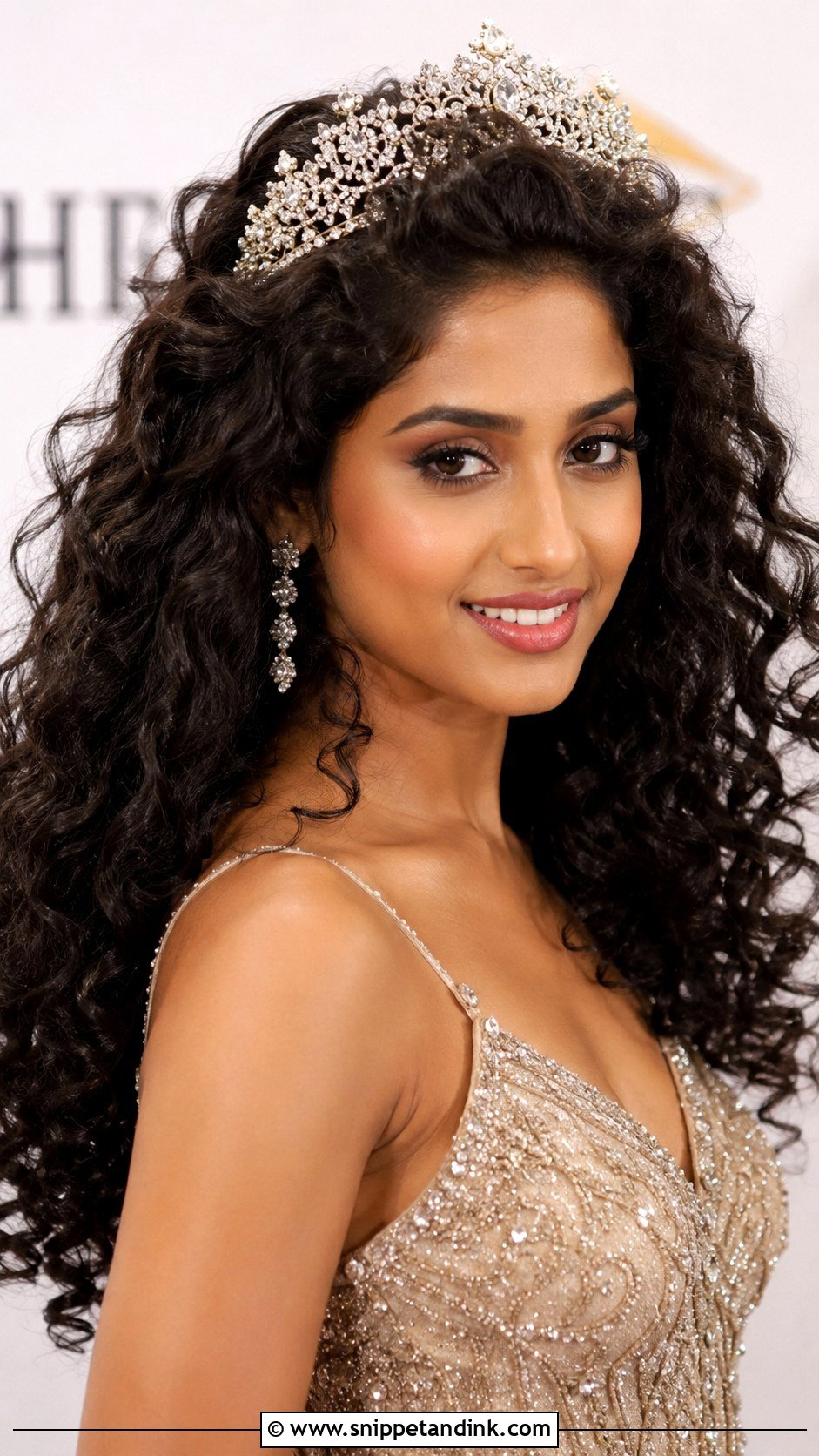
Curly hair can be worn open without being straightened. I define the curls on damp hair with cream and leave them to dry untouched, then add a delicate tiara or jeweled headband for a reception or engagement. Pinning one side back shows the earrings while the volume stays at the back. Curls under a heavy dupatta flatten, so I’d keep this for events where the dupatta sits on the shoulder.
13. Braided Crown Updo
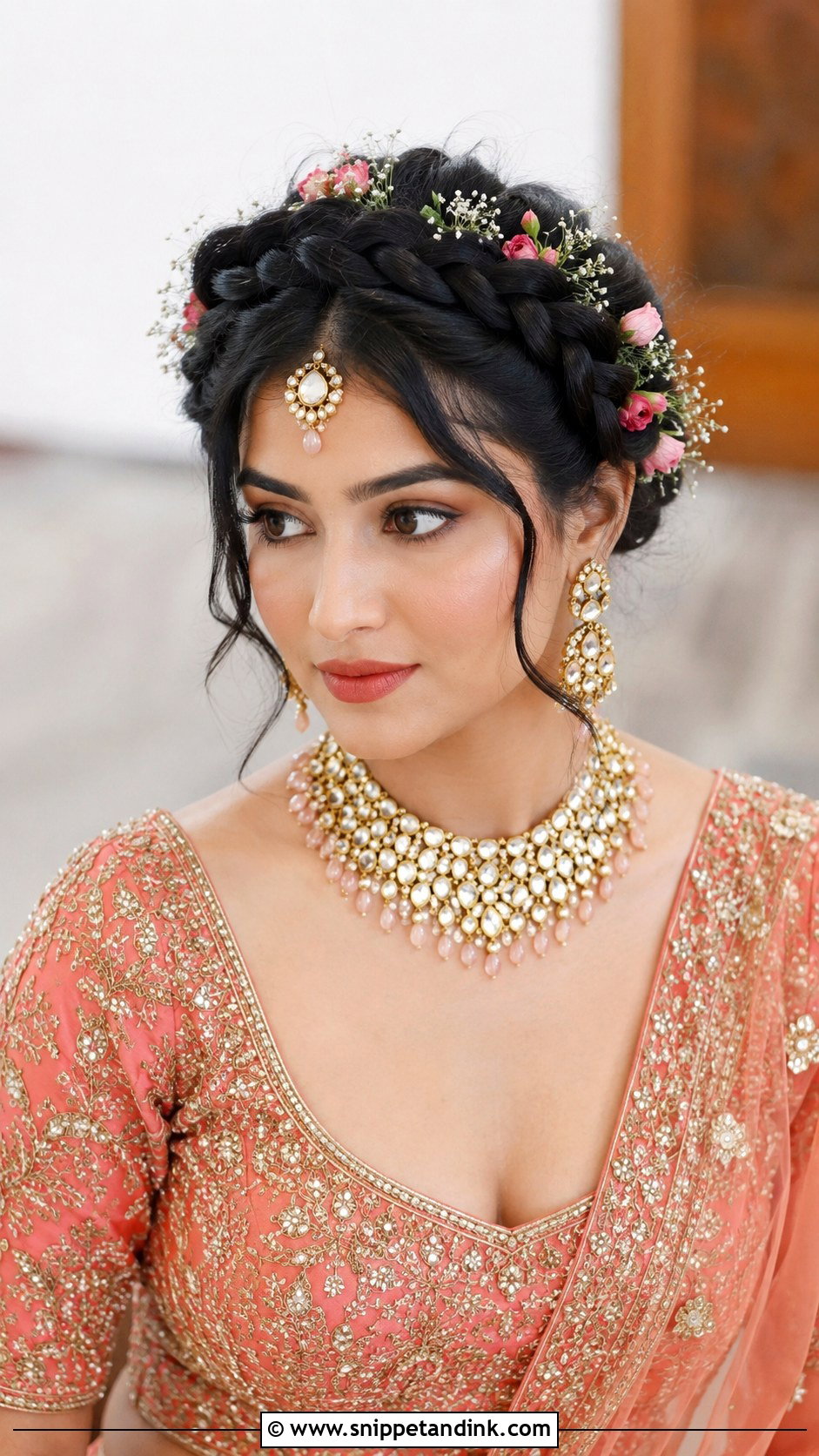
A braided crown wraps around the head and keeps hair entirely off the face. I braid from one ear, over the top and around, pinning as I go, then hide the end under the start. It gives a solid base for a maang tikka and small flowers. Brides and bridesmaids both wear it well. On short layers, pieces poke out of the braid, so I pin them flat or let them frame the face on purpose.
14. Side Swept Waves
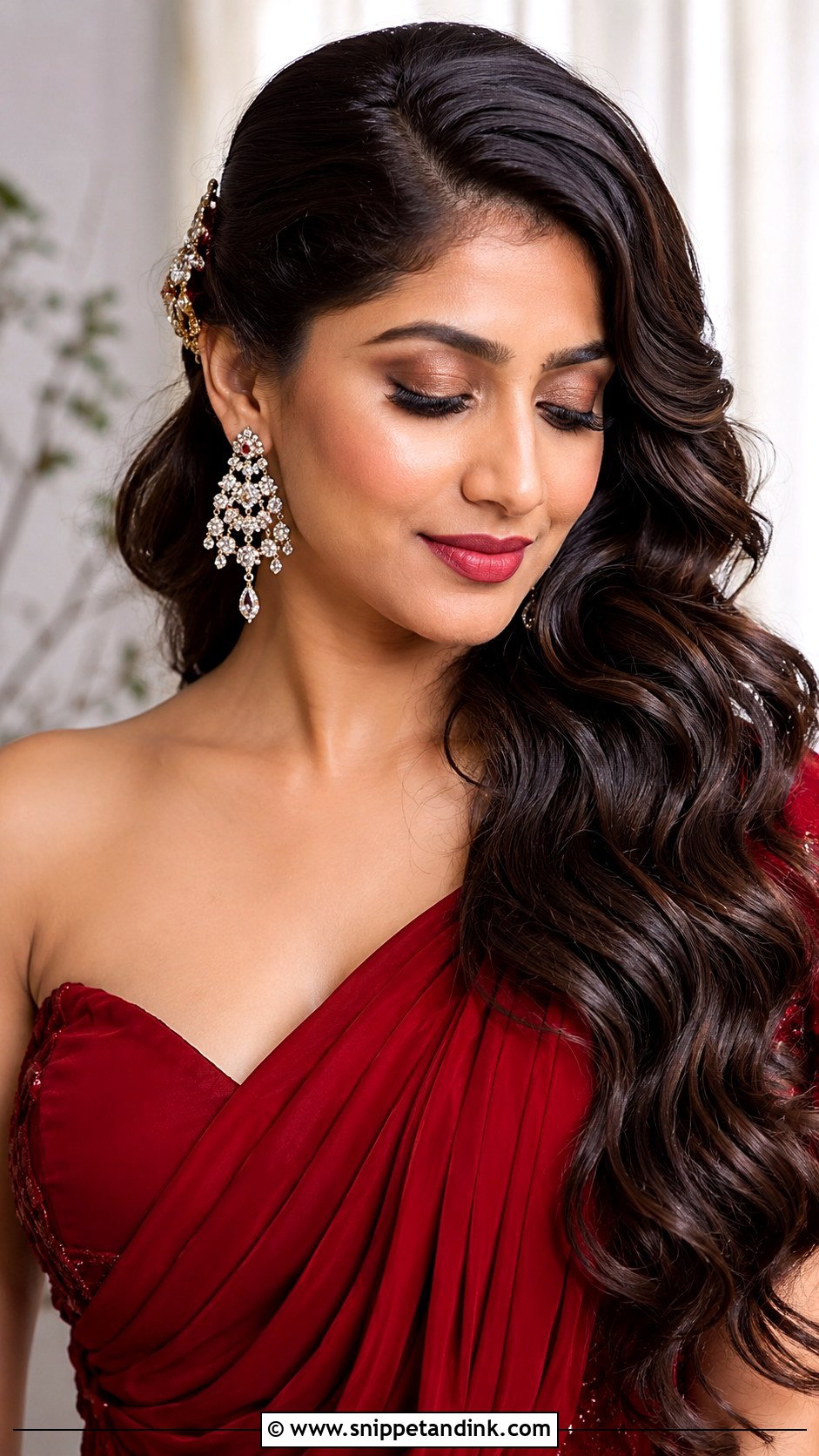
Side swept waves gather the volume over one shoulder for a red-carpet finish. I set a deep side part, curl, brush out, and pin the hidden side flat behind the ear with crossed pins so the waves stay put. A jeweled clip on the swept side adds sparkle. Medium to long hair suits it. Statement earrings on the bare side finish the look.
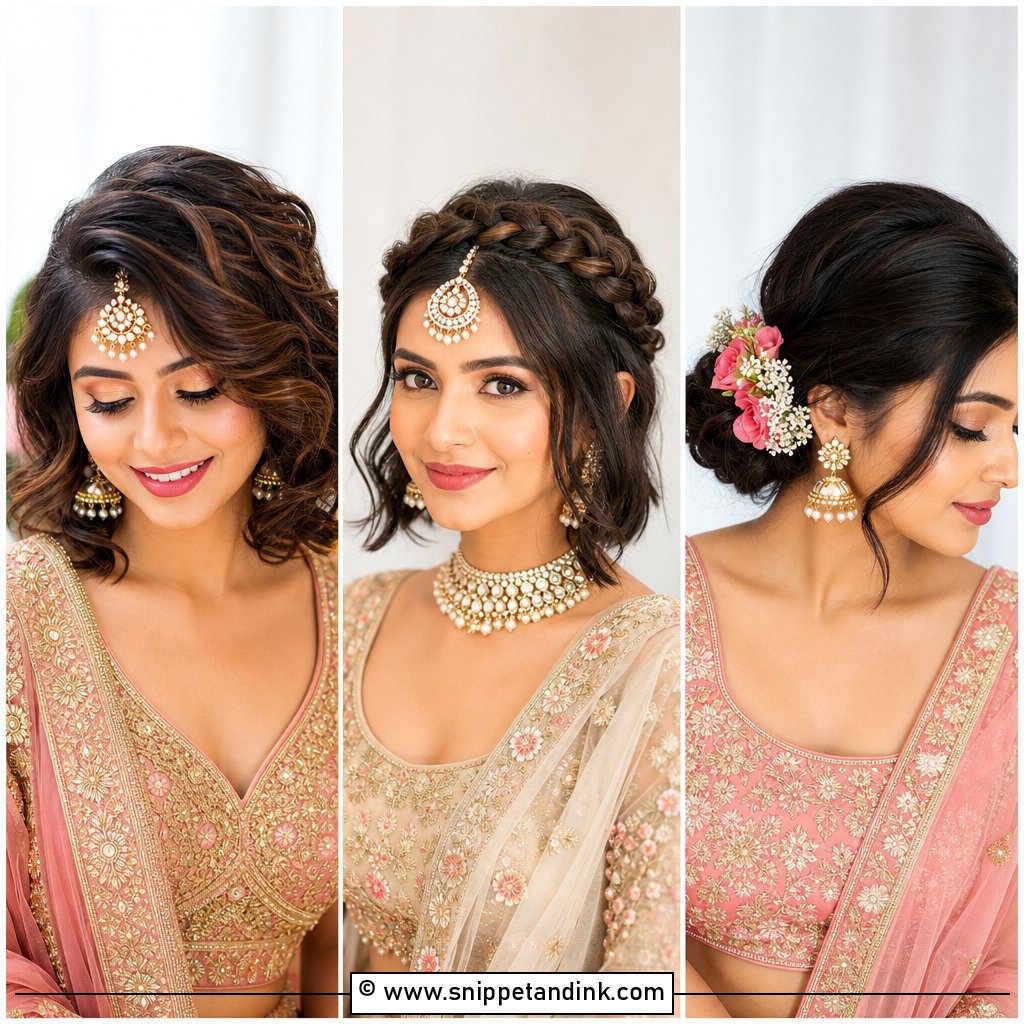
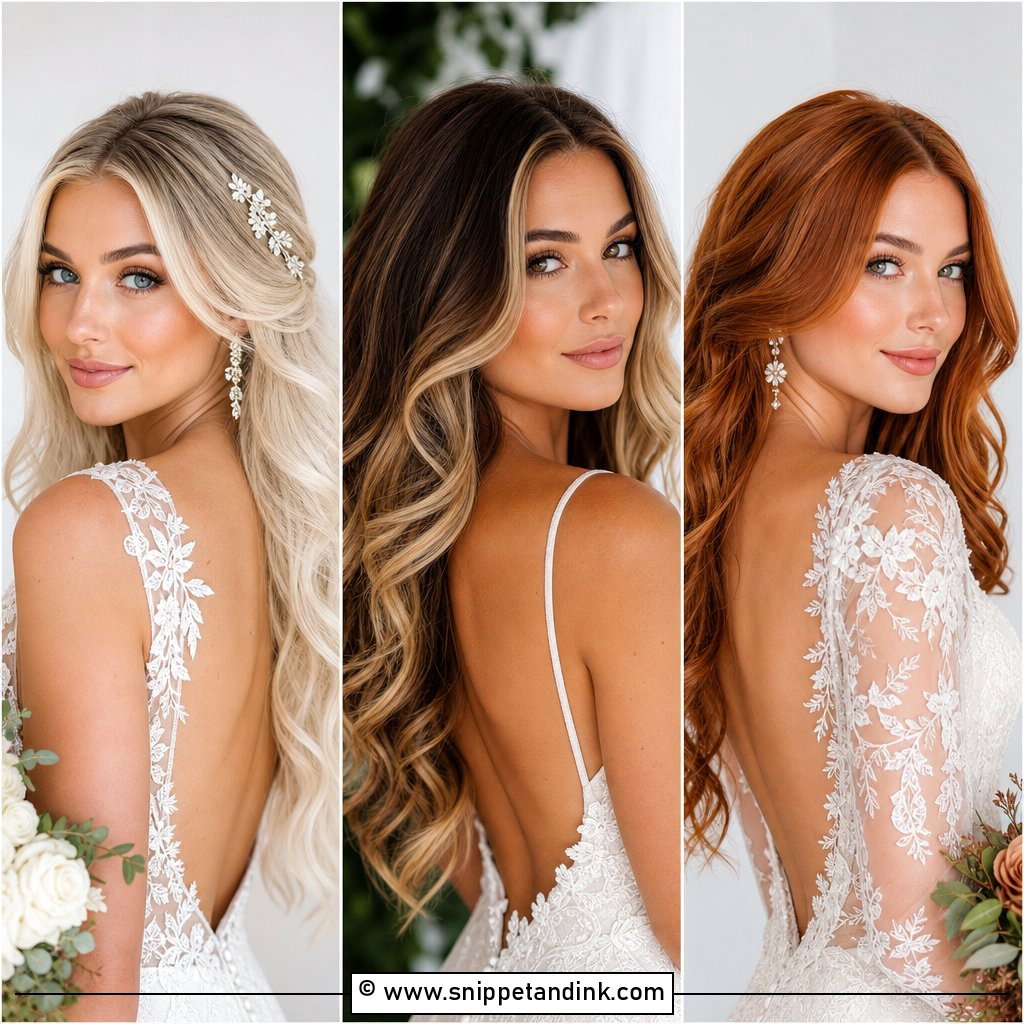
15. Floral Overflowing Bun
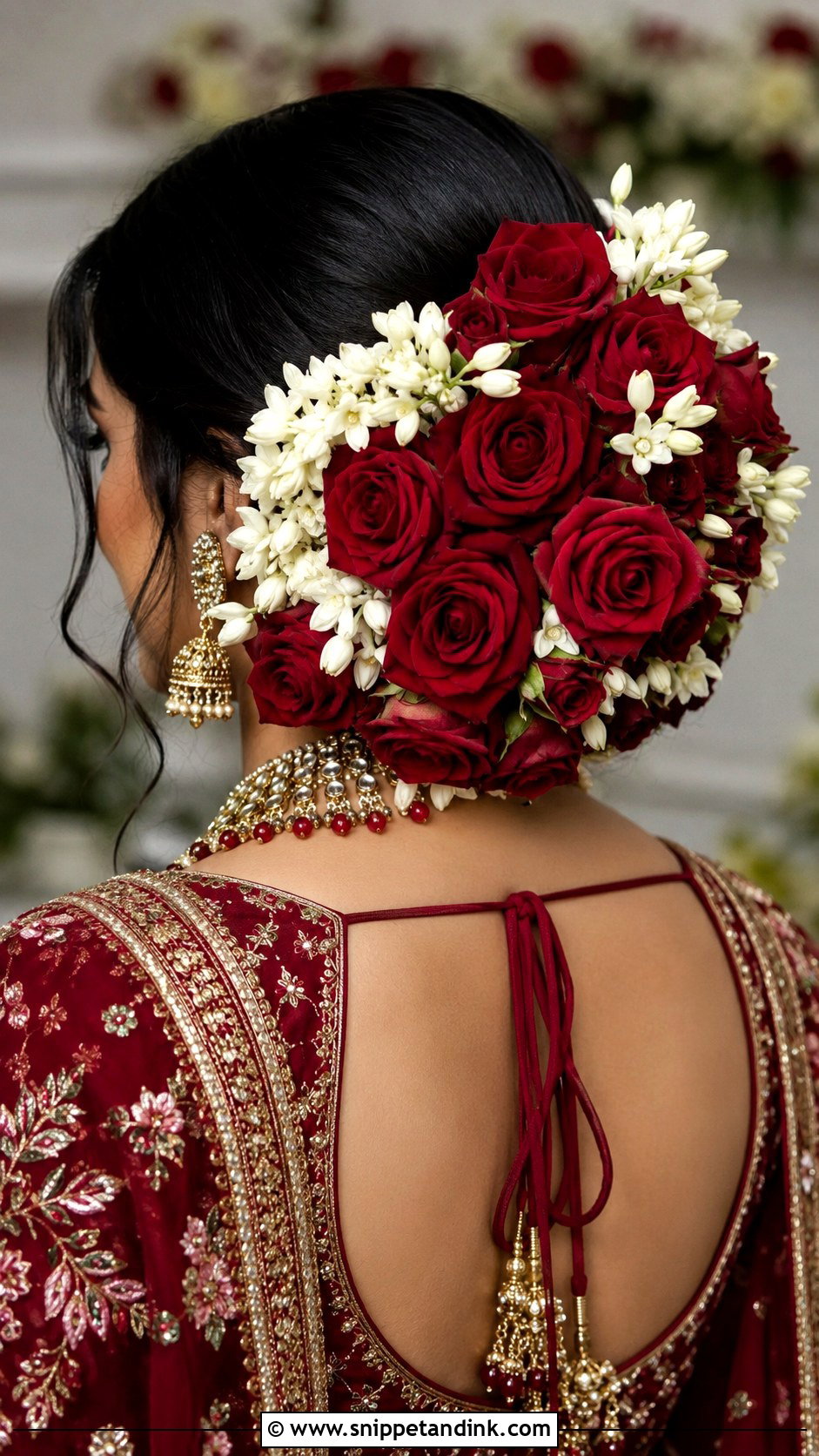
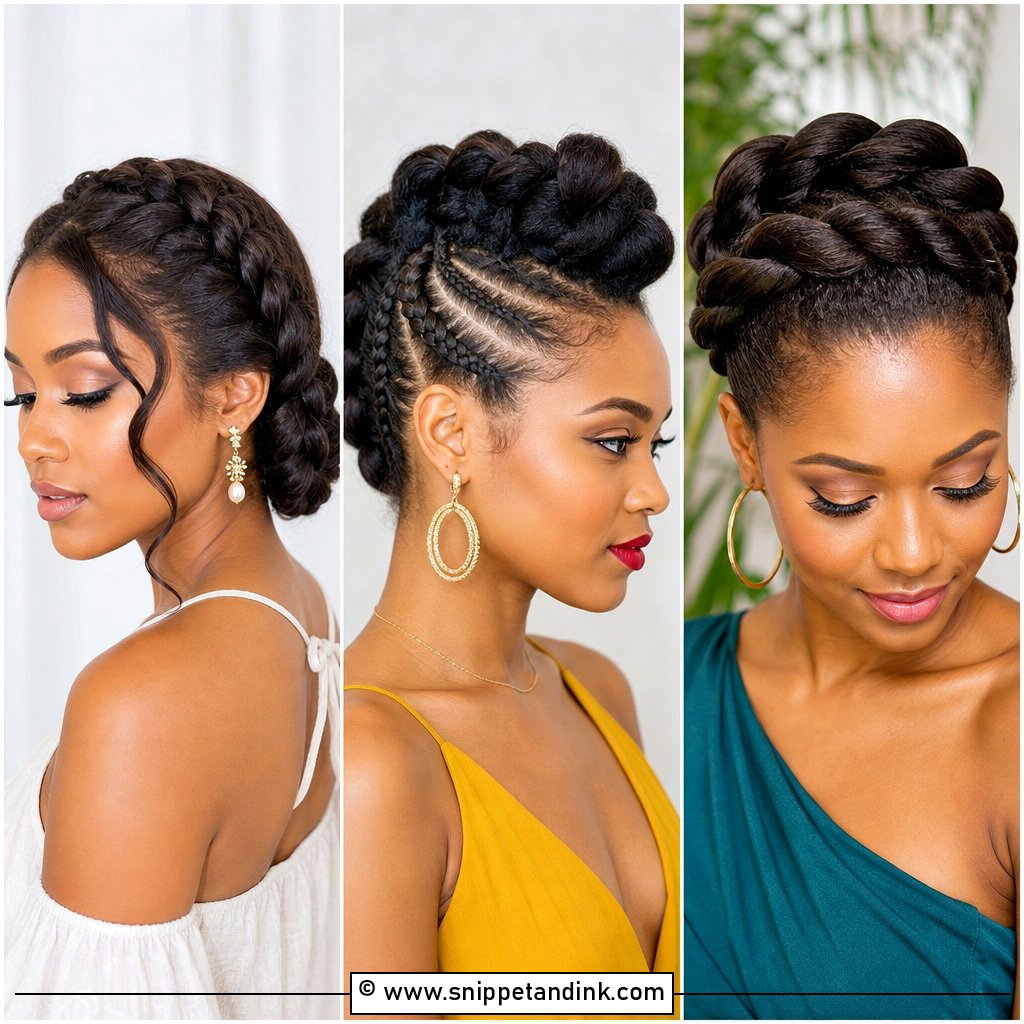
An overflowing floral bun surrounds a low or mid bun with roses, jasmine and colourful blooms. The weight of fresh flowers is real, so I build a firm base with a donut and pin every cluster through the bun, not just into hair. Ask your florist to wire the flowers and keep them cool until the last minute. It sits naturally with heavy bridal lehengas and gold jewelry for the main ceremony, and takes longer than a plain bun, so plan for it.
16. Diamond-Accented Open Hair
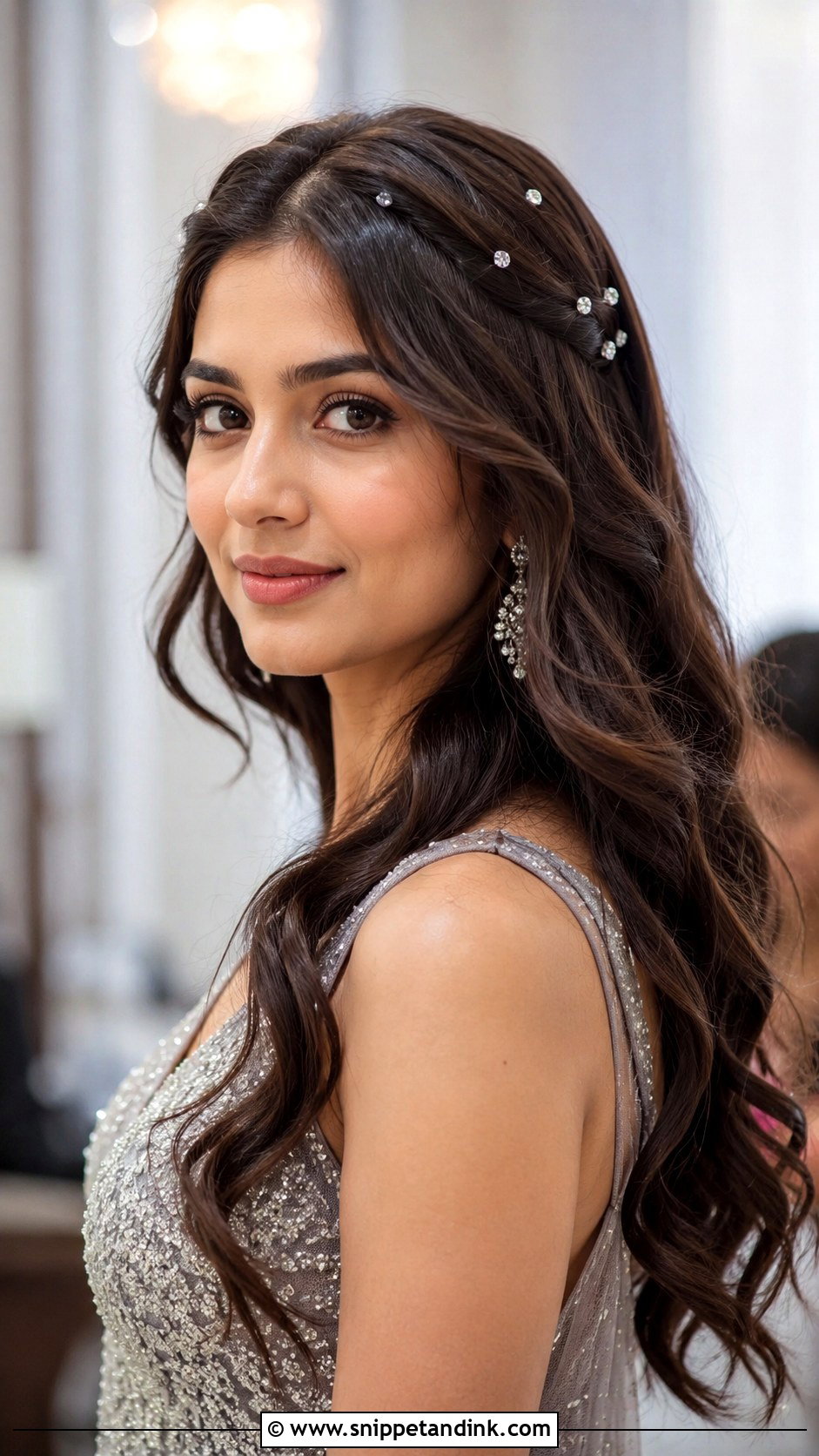
Tiny crystal pins scattered through open waves give soft sparkle. I slide each pin into a small twist or crossed bobby pin; on loose, silky hair they slip out otherwise. Cluster them along one side or scatter them evenly. They suit receptions and engagement parties, with straight or wavy hair, and pair well with contemporary gowns and lehengas.
17. Fishtail Braid Over Shoulder
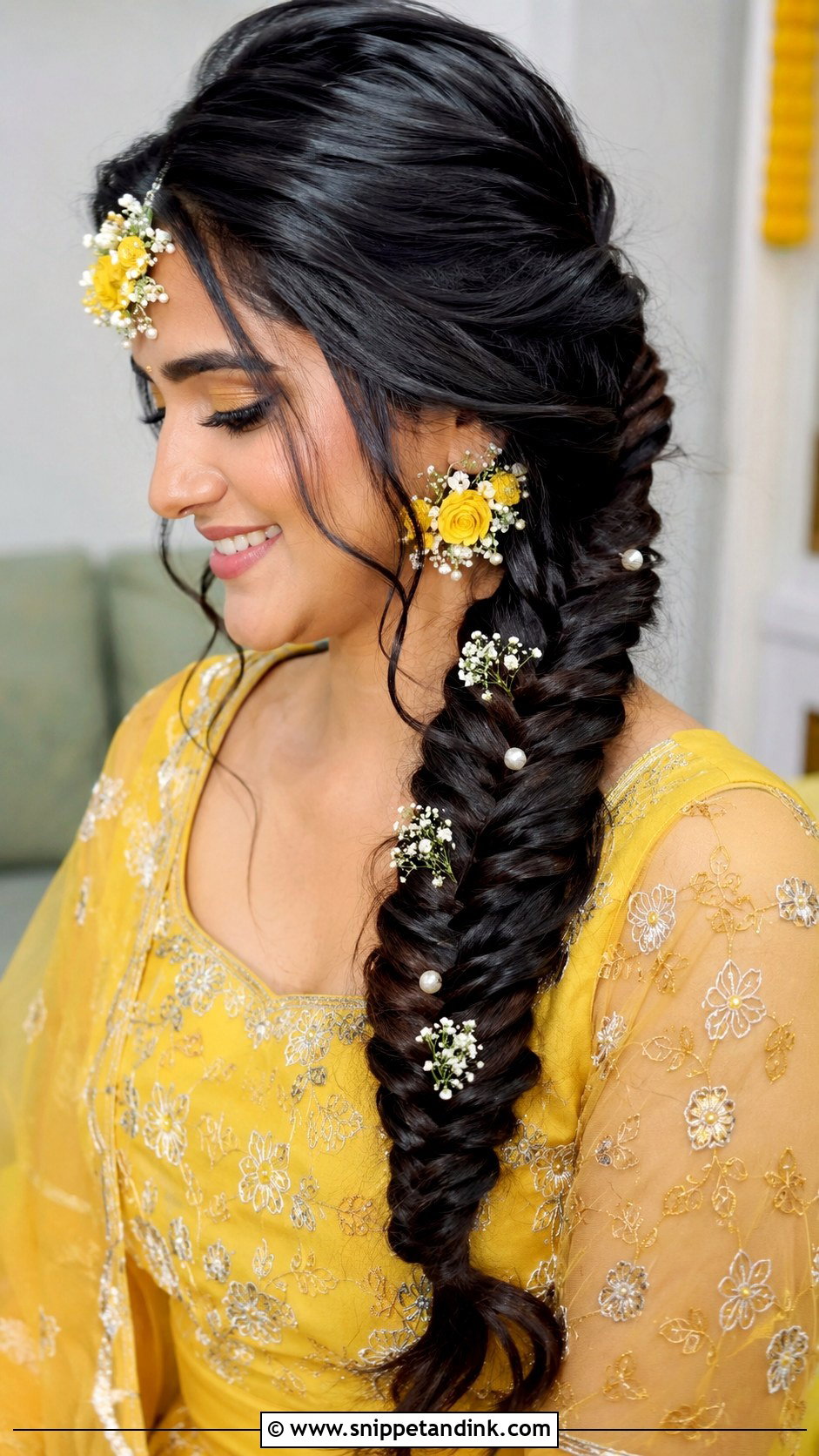
A fishtail splits hair into two sections and crosses tiny pieces from the outside of each to the other. The smaller those pieces, the more detailed it looks and the longer it takes. I loosen it afterwards for width. Over one shoulder it suits mehendi and daytime functions, and bridesmaids and guests like it because it stays contained. Tiny flowers or pearls can sit between the sections.
18. Bouffant With Open Hair
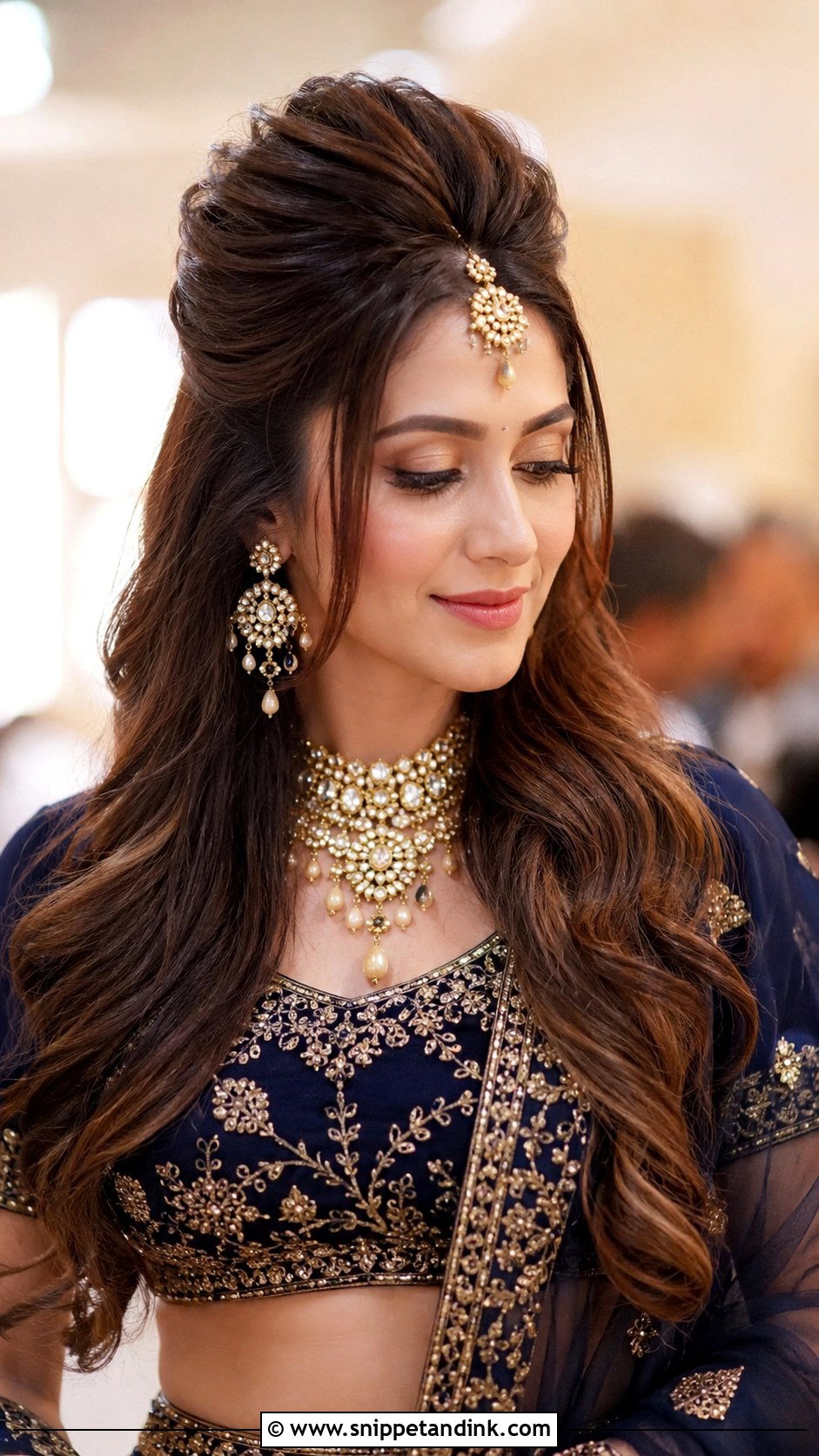
A bouffant teases the crown for height, then leaves the rest loose and waved. The height balances heavy jewelry and grand outfits. I tease underneath, smooth the top layer over, and pin the bouffant from below with crossed pins so it doesn’t sink by the reception. Too much height looks dated, so I keep it moderate. It suits brides who want a fuller silhouette for a grand entrance.
19. Twisted Low Ponytail
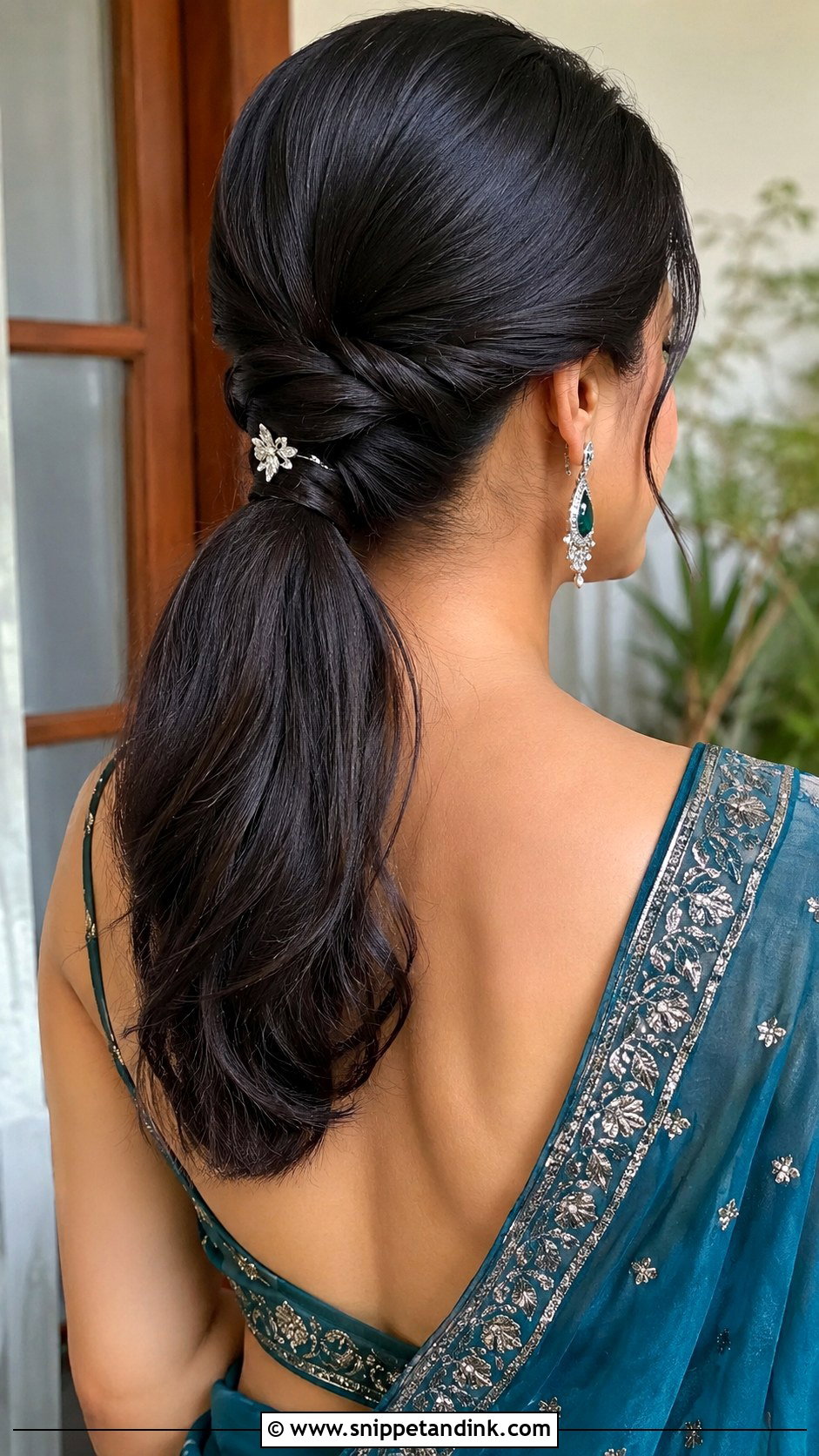
A low ponytail with twists or a wrapped section is quick, modern and easy to wear for hours. I wrap a strand of hair around the elastic and pin it underneath, then twist a few sections into the tail for detail. The length can be sleek or waved. Long hair is needed for the tail to look intentional. A small jeweled pin where the twists meet adds a finishing point. Engagements and cocktail functions suit it best.
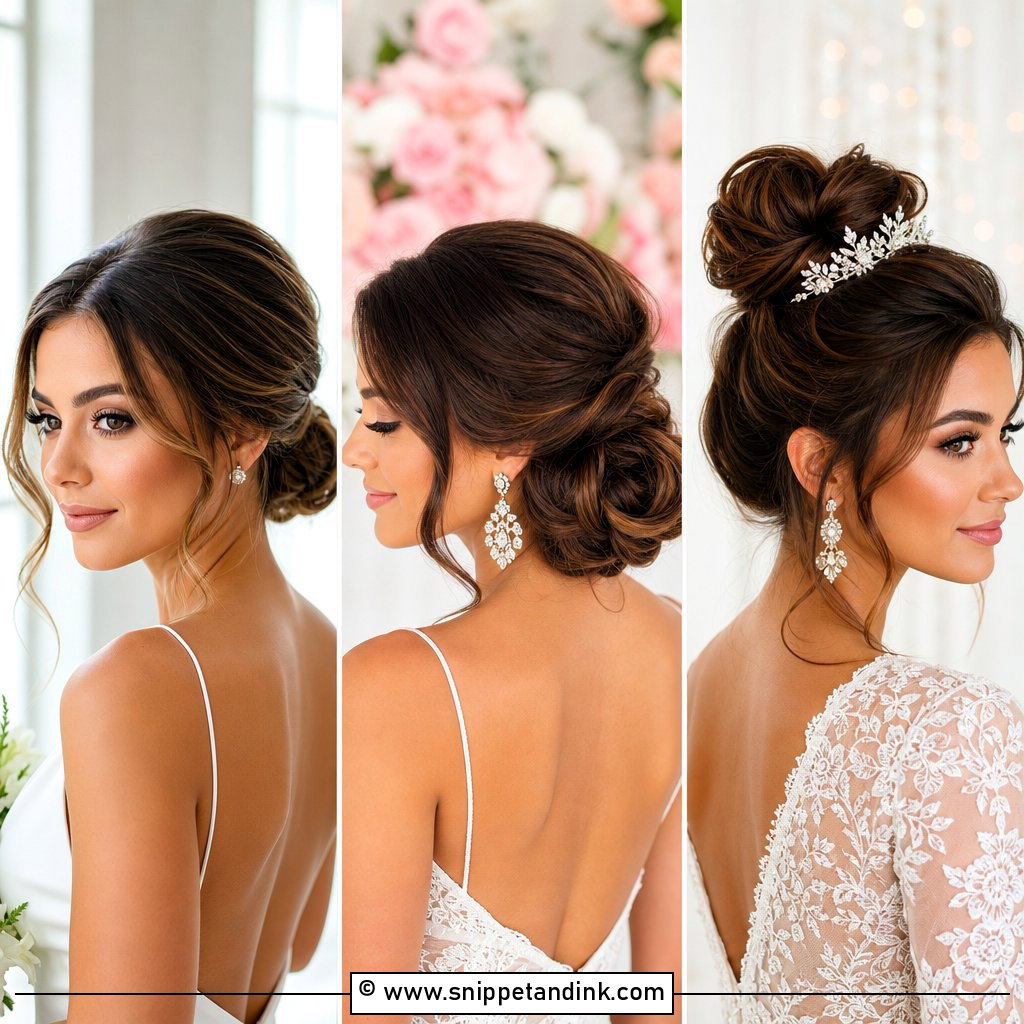
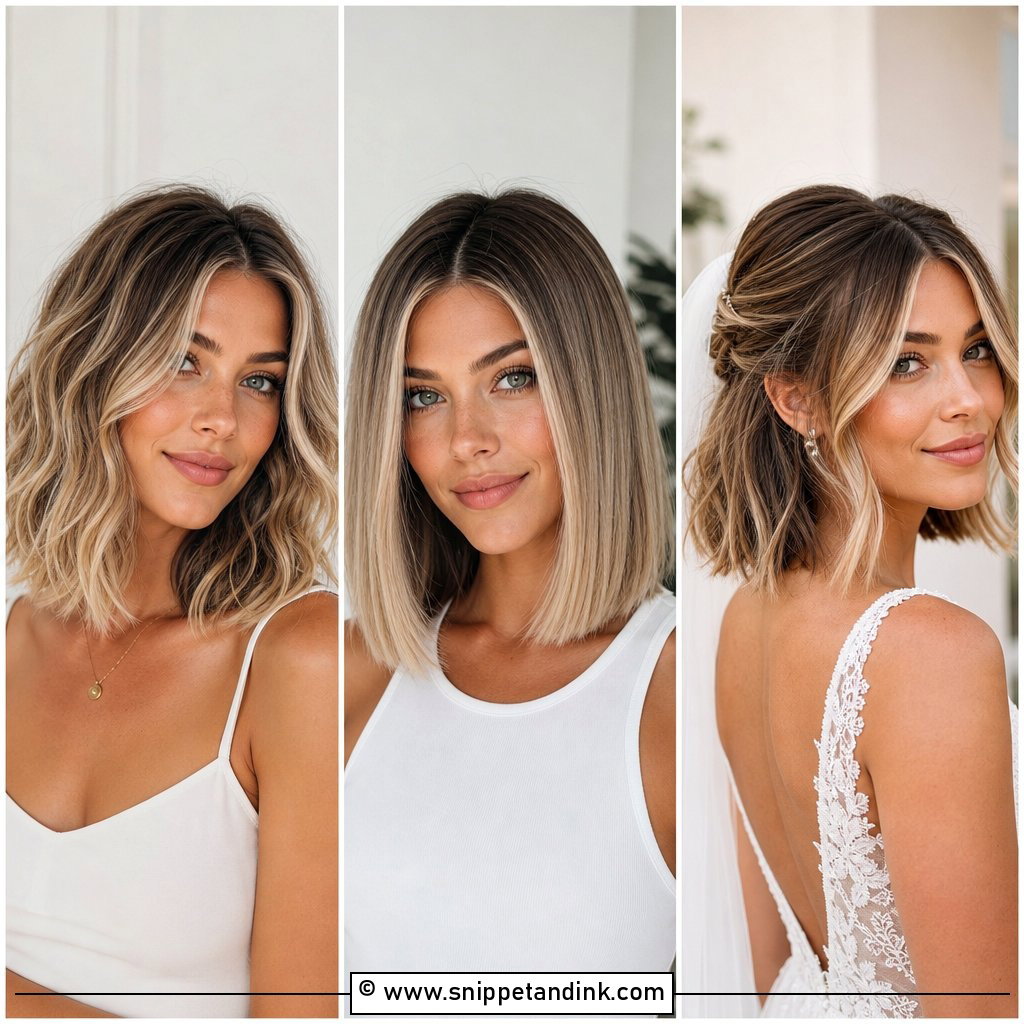
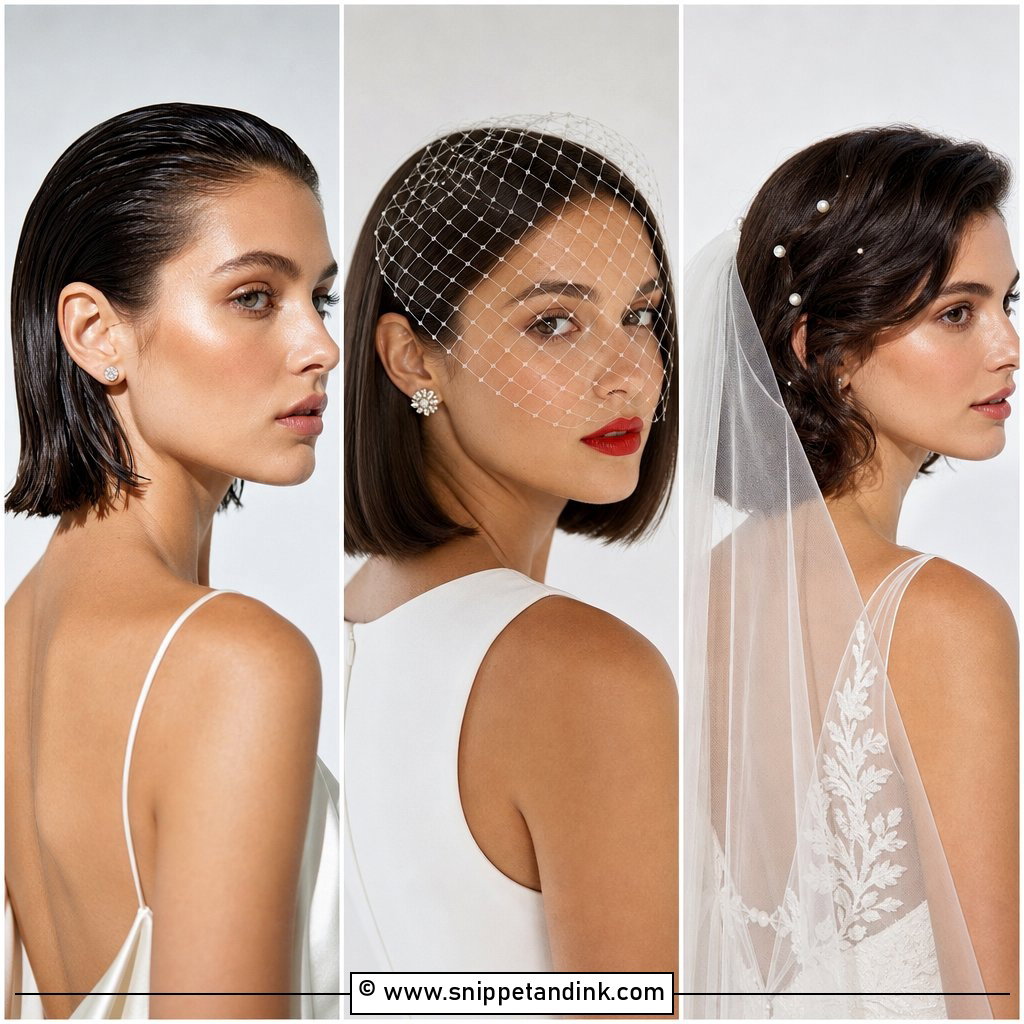
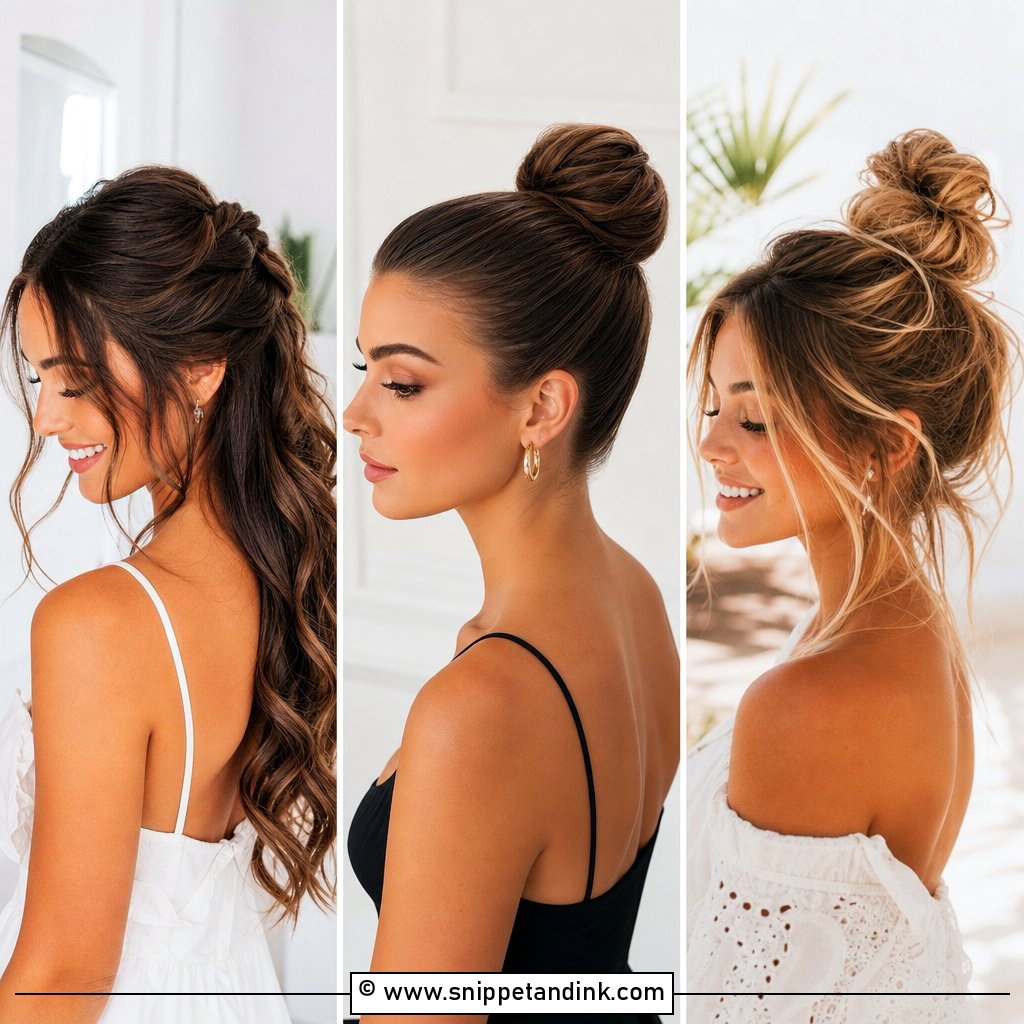
20. Half-Up Floral Crown
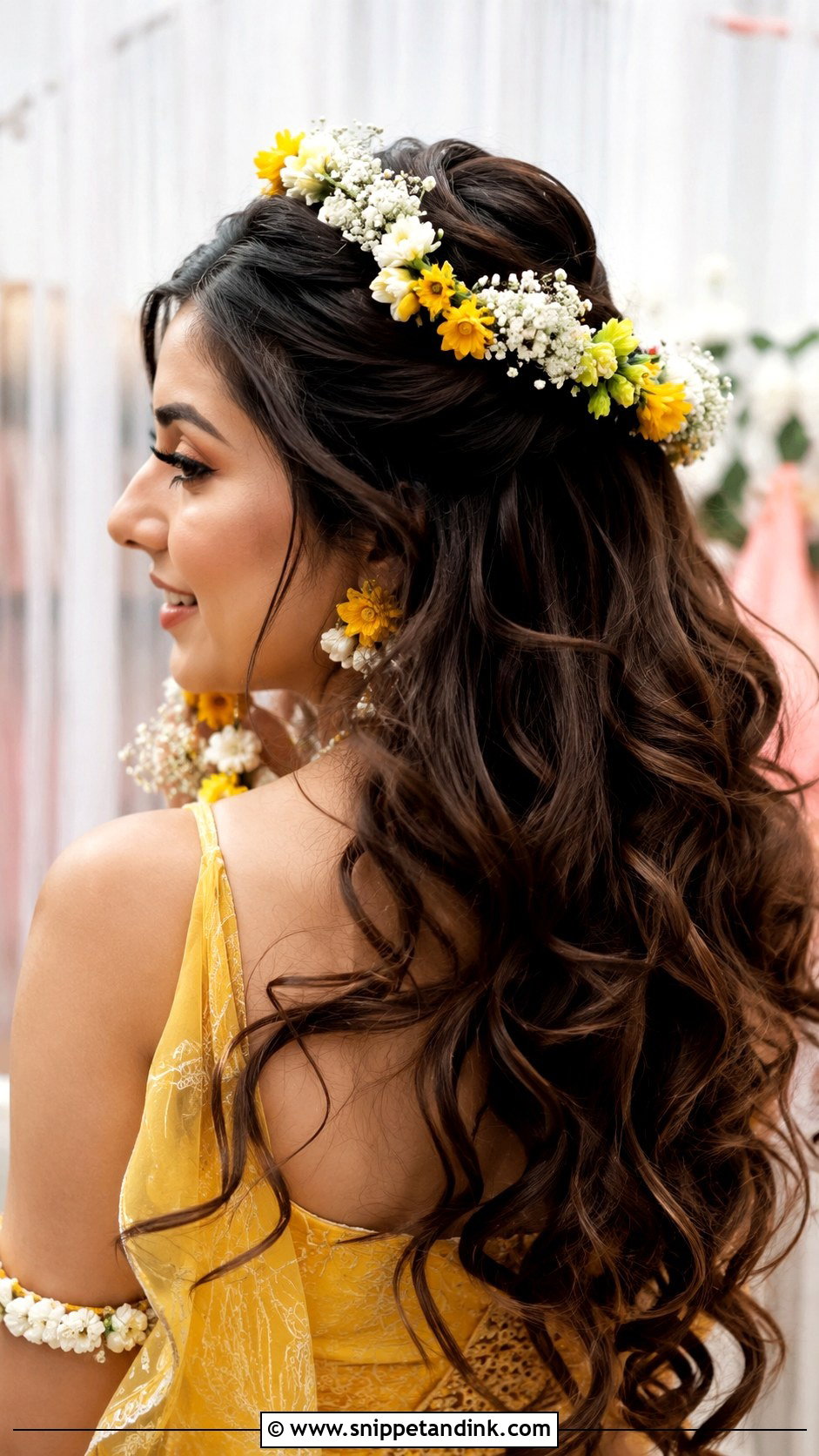
A half-up floral crown frames the crown with fresh or fabric flowers while the rest stays loose. It suits mehendi and haldi, where outfits are brighter and the mood is playful. For haldi I’d use fabric flowers and an old hair tie, because turmeric paste can tint light hair and stain delicate pieces. Long and medium hair both work, and the crown keeps strands off your face.
21. Sleek Center-Part Low Bun
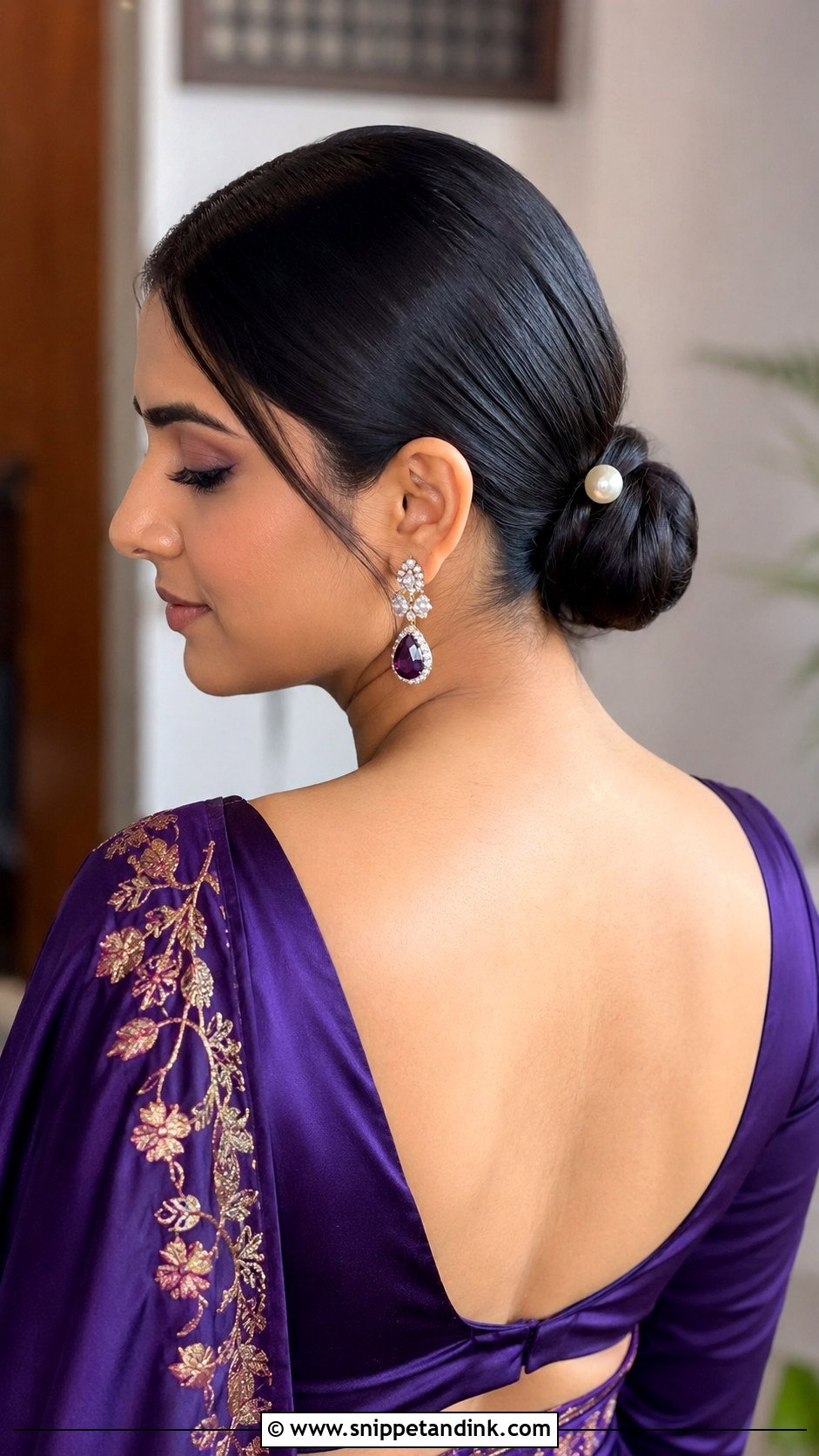
A center-part low bun is minimal, which means precision shows. I part with a tail comb, smooth with gel, and set the knot low at the nape. Statement jewelry and a heavy dupatta sit comfortably over it because nothing sticks up at the crown. A single gajra or pearl pin adds a traditional touch. It suits receptions and contemporary ceremonies.
22. Dutch Braid Bun
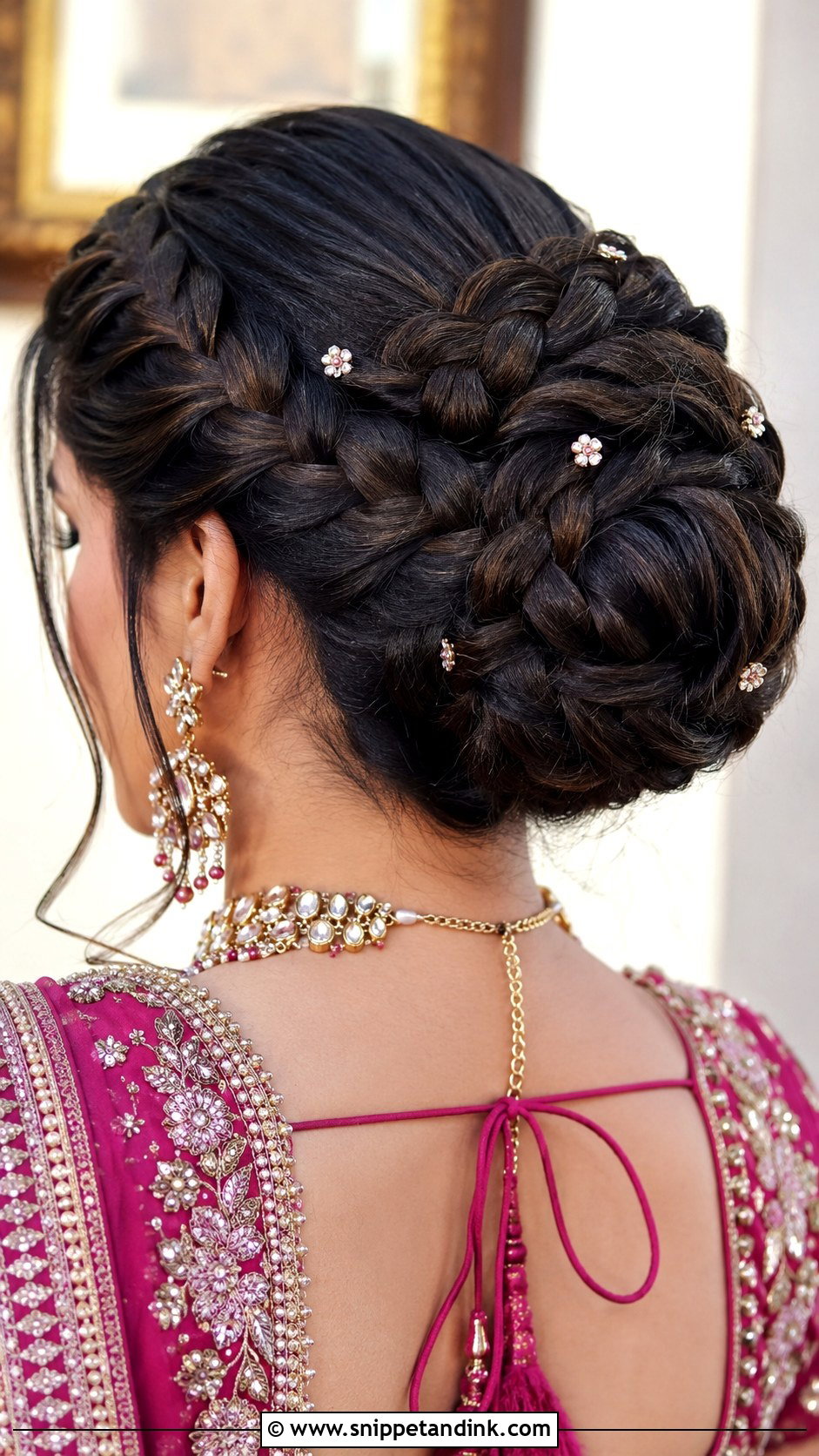
Dutch braids are woven under rather than over, so they stand out from the head. Two raised braids coiled into a bun hold every strand in place, which makes this one of my picks for sangeet dancing. Tiny flowers, pearls or jewels can sit in the braids. It suits most hair types and stays put for hours, for brides and bridesmaids alike.
23. Vintage Finger Waves
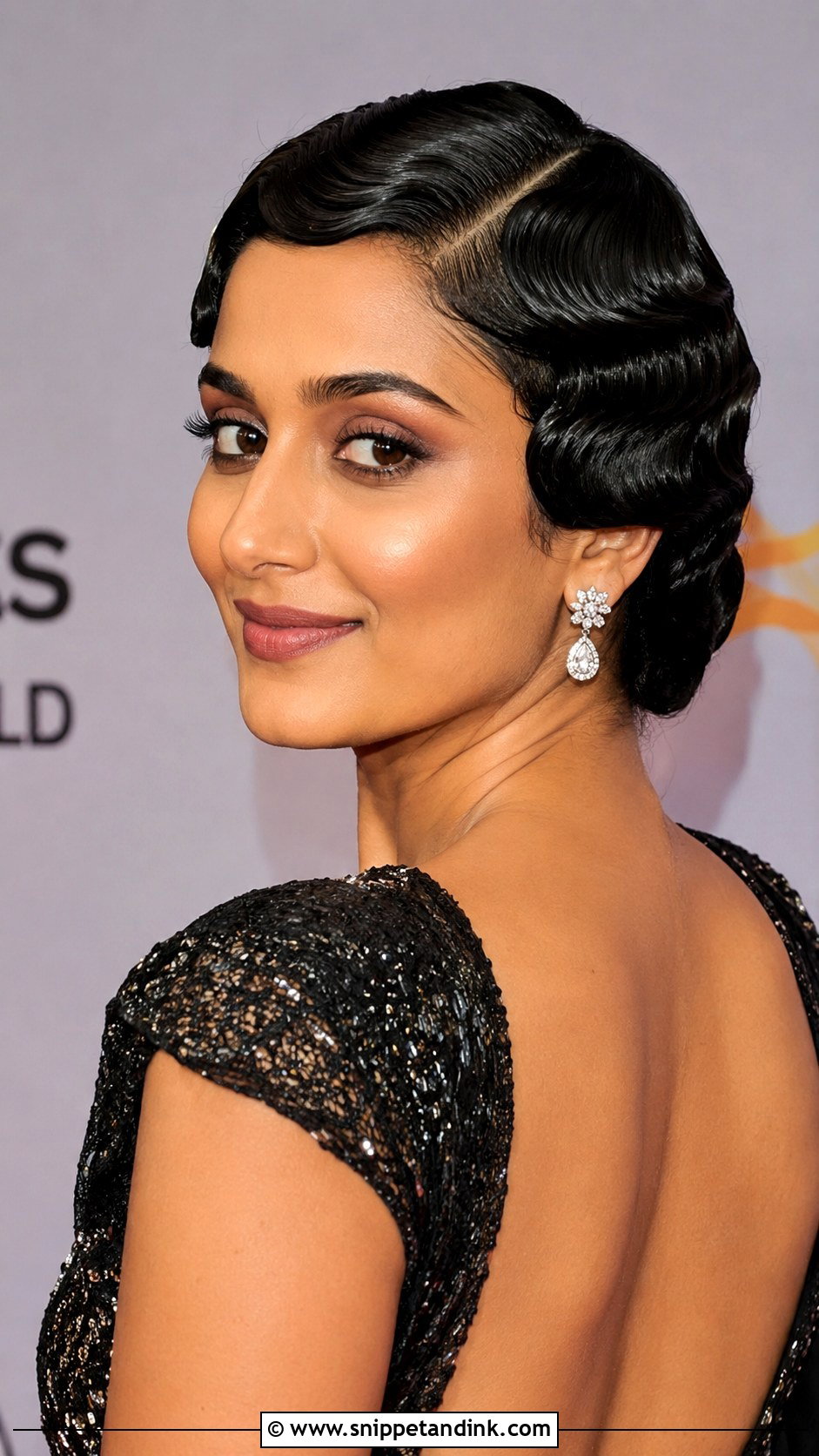
Finger waves sculpt S-shaped ridges close to the head with gel and a comb, then need to dry completely before clips come out. Shorter and medium hair suits them best; on longer hair I wave only the front and crown and pin the length into a low bun. It’s a retro statement for receptions and cocktail functions and a clear departure from traditional bridal hair. Ask to see your stylist’s own finger wave work first.
24. Loose Braided Updo
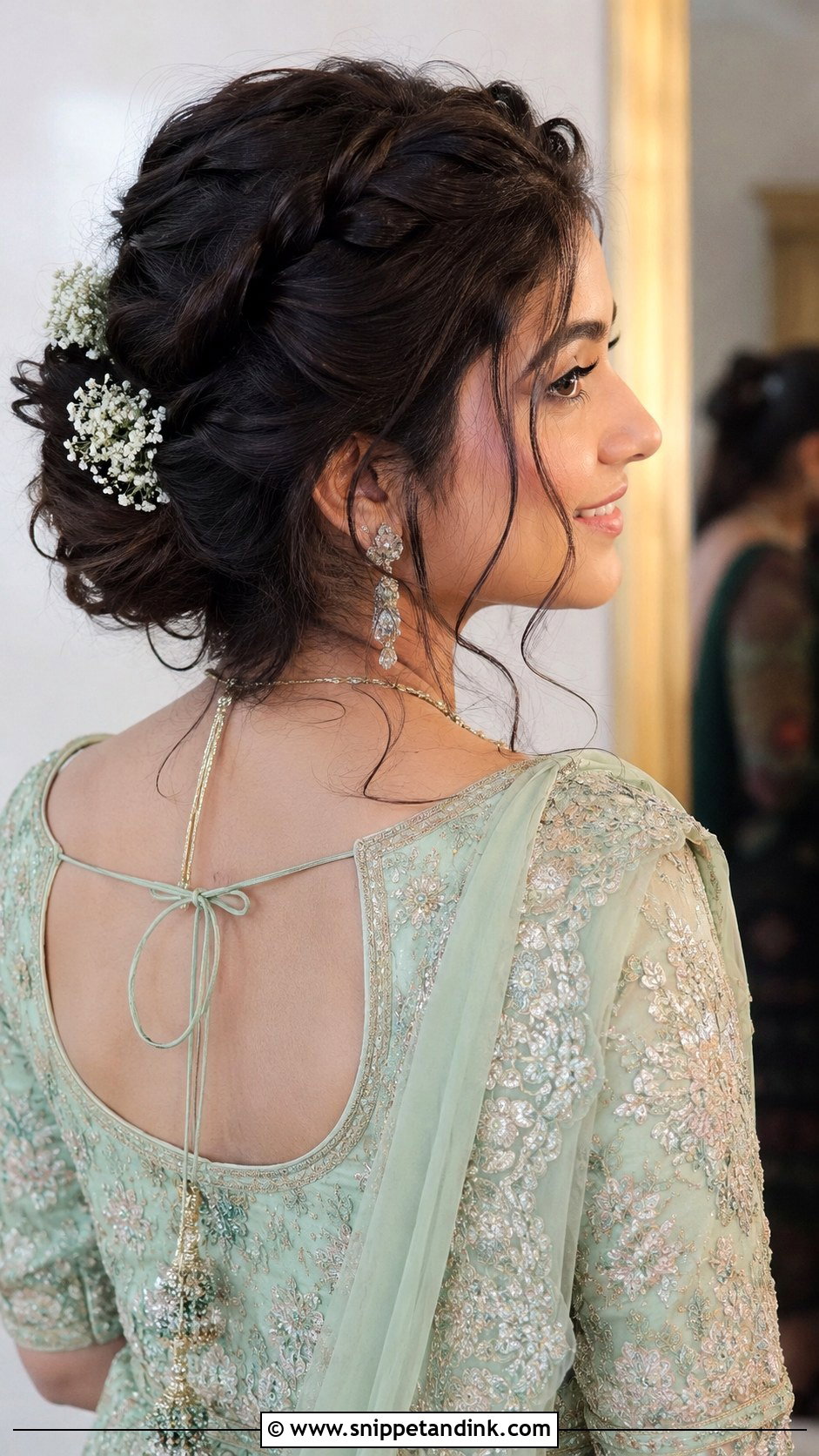
Loose braided sections pinned into a soft, textured updo keep hair off the neck while still feeling light. I braid several small sections, loosen them, and pin them around each other so the pins disappear inside the braids. Most hair types can do it. Small flowers or pearls tucked in suit mehendi or a small ceremony, and a few face-framing strands soften the front. Because it’s built from braids, it barely moves through a long night.
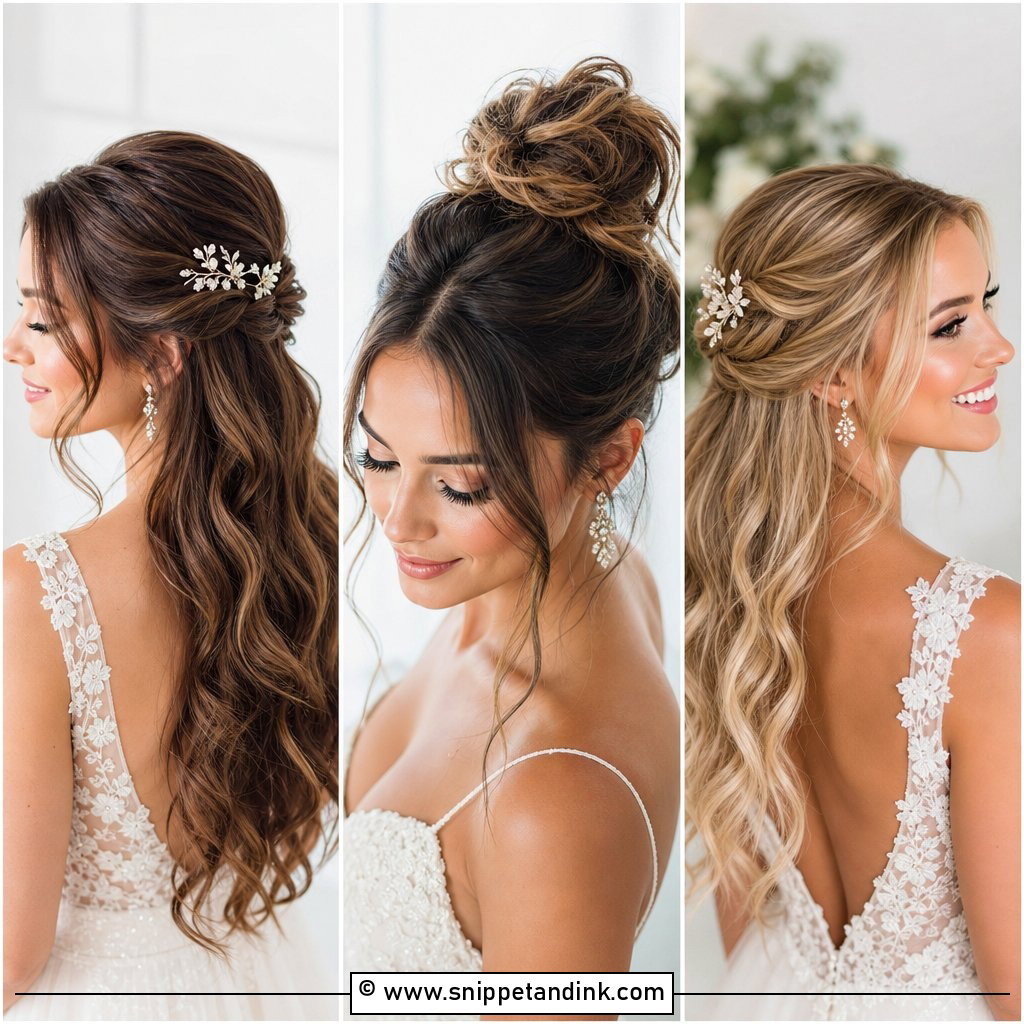
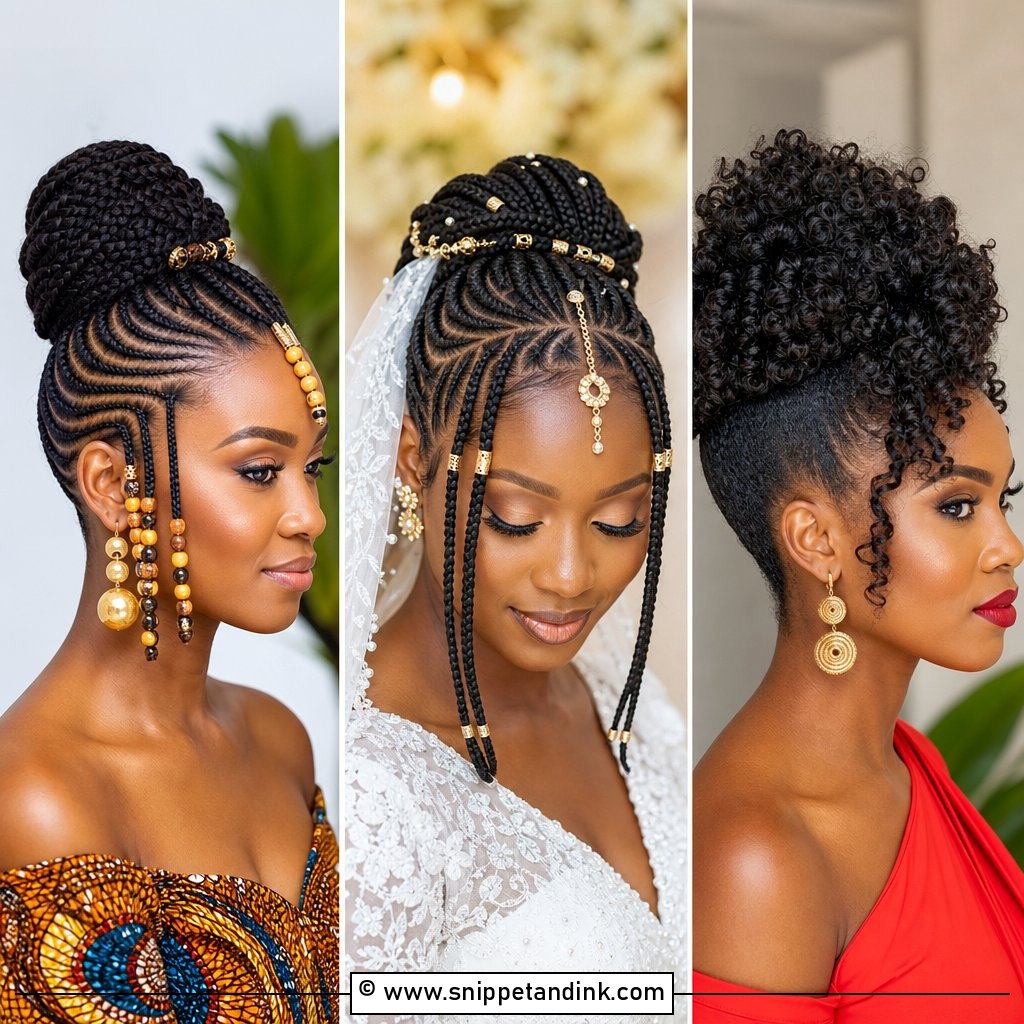
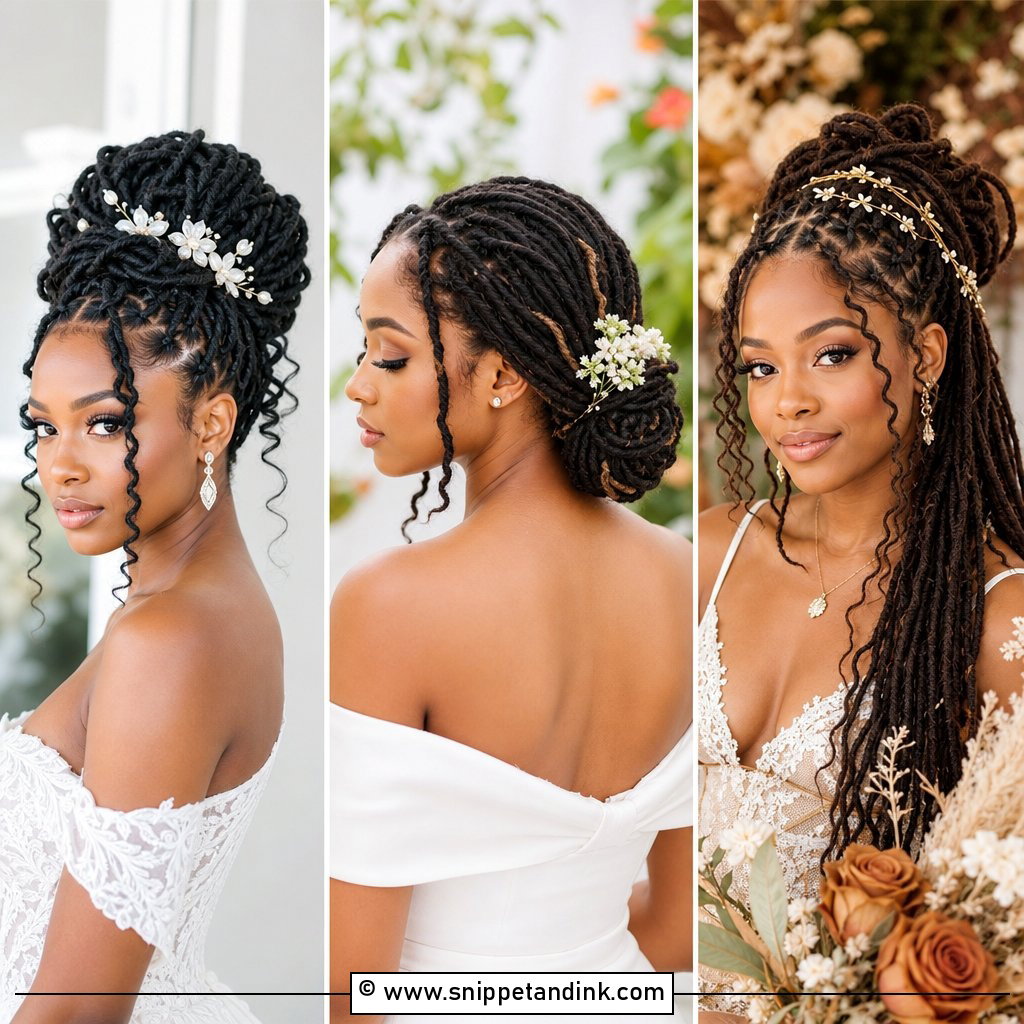
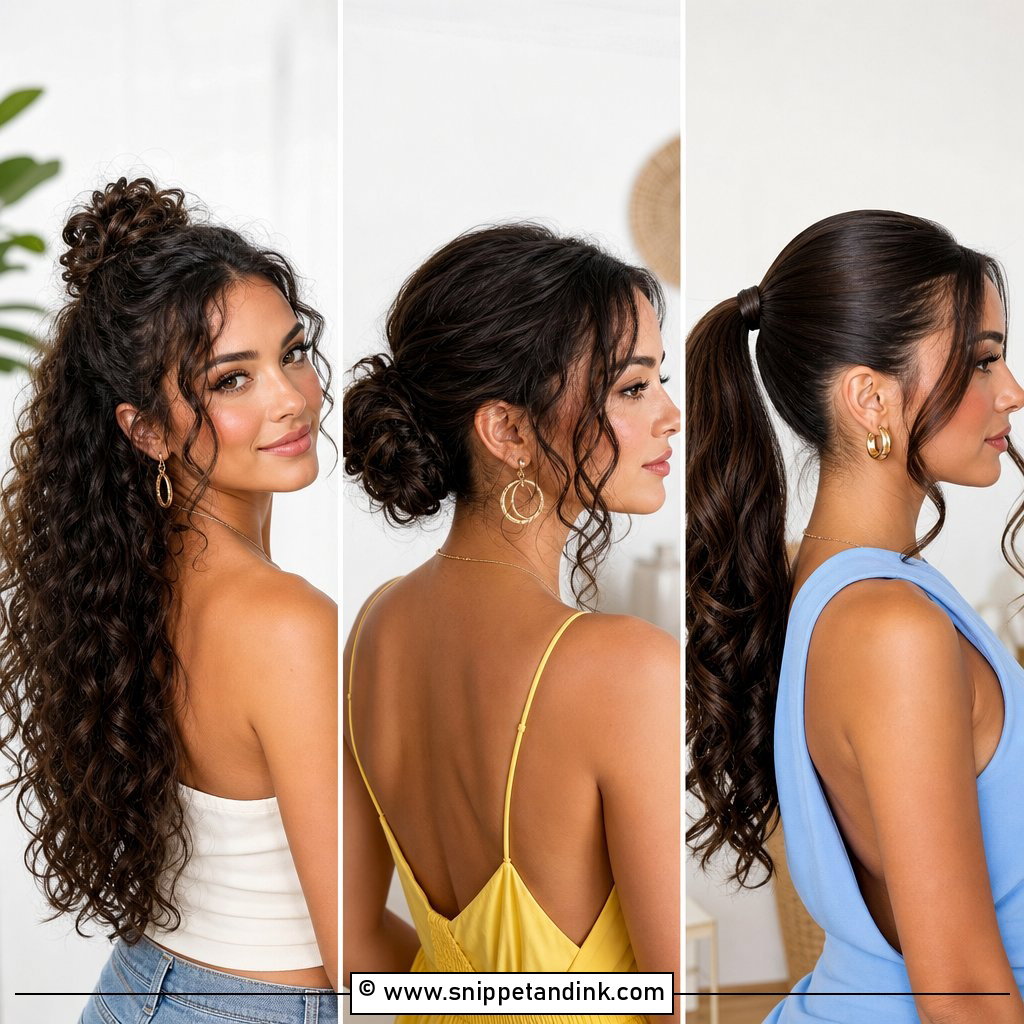
25. Bejeweled Headband Open Style
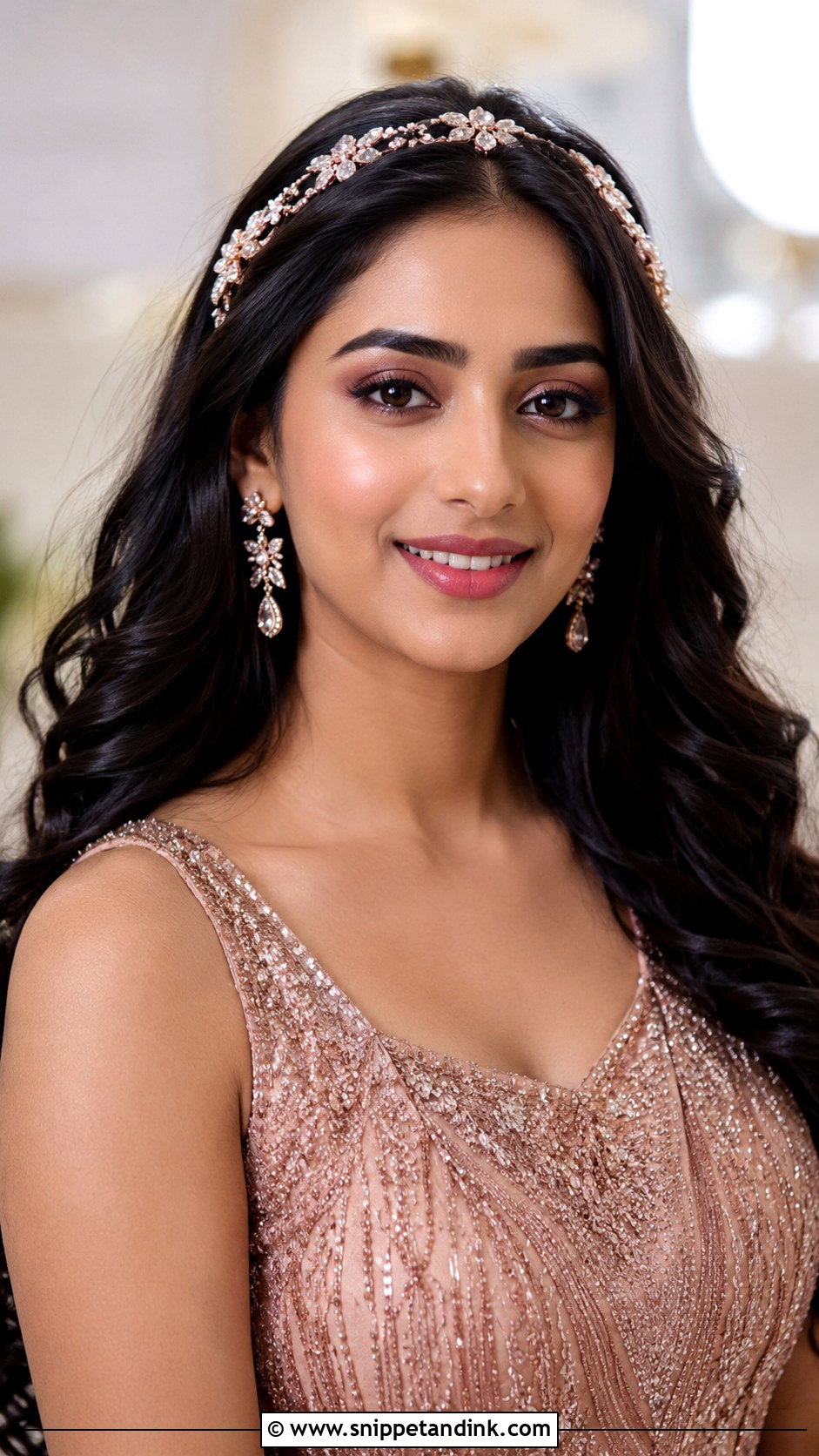
A bejeweled headband over loose waves swaps florals for sparkle. Headbands press behind the ears, so wear yours at home for an hour before the day. I pin it at both sides under the band so it can’t slide forward when you lean in for photos. It suits receptions and engagements, with straight or wavy hair, and works with gold or silver jewelry.
Pinning a Heavy Dupatta Without Crushing the Style
A bridal dupatta can be heavy, especially with zari and stone work, and it pulls backward the whole time you wear it. If it’s pinned only to hair, it drags the bun down and loosens the front. I set the dupatta with U-pins into the base of the bun and two or three hidden pins along the crown, so the weight spreads across several anchor points instead of one.
Bring the actual dupatta to your trial. Its weight and how it drapes decide whether a high bun works or whether you need a low one, and it tells me where the maang tikka chain has to sit so the fabric doesn’t knock it sideways.
Fresh Jasmine and Gold Jada in Wedding Heat
Jasmine starts to brown within hours in heat. Ask the florist to deliver the gajra on the morning of the ceremony, wrapped in a damp cloth, and keep it cool until it goes on. Pin it at the very end of styling, not first.
Gold jada and heavy hair jewelry pull on the scalp over a long day. If your scalp is sensitive, ask your stylist to build a braided base or use a matching extension so the weight is carried by the extension and not your own roots. Taking the pieces off as soon as the ceremony ends, before the reception, gives your head a break.
Let the Dupatta and Jewelry Have the Final Say
With so many functions, it helps to plan the hair around what has to sit on it. A heavy dupatta, a jada, a tikka or a gajra each needs a different base, and the right one stops pins from loosening by the evening. Pick braids or a firm bun for the events you’ll dance at, save open hair for the ones with lighter fabric, and test the heaviest look at your trial. Comfort and security are what let a style last from the first ritual to the last song.
You'll Like These Ideas:


Leave a Reply