
Wedding hair has a long shift to work. It has to look right in the getting-ready photos at ten in the morning and still be in place after the last song. The wedding hair designs I’m booking most this year are quieter than they were a few years ago: low buns, glossy waves, sculpted ponytails, soft chignons, braids that do a job rather than decorate. Under every one of them is the same question I ask at a trial. Will it suit your neckline, your veil, your hair’s real texture and the weather on the day? Below are fifteen designs, with what I watch for in each.
Start With the Dress Neckline, Not the Hairstyle
When a bride shows me twenty saved photos, I ask for one thing first: a picture of the dress. The neckline narrows the list faster than anything else, because hair and neckline share the same space around your shoulders and back.
- High neck or bateau: hair up and off the neck. A French twist, sleek bun or chignon keeps the line clean.
- Strapless or sweetheart: almost anything works, but down waves or a half-up stop the shoulders looking bare in photos.
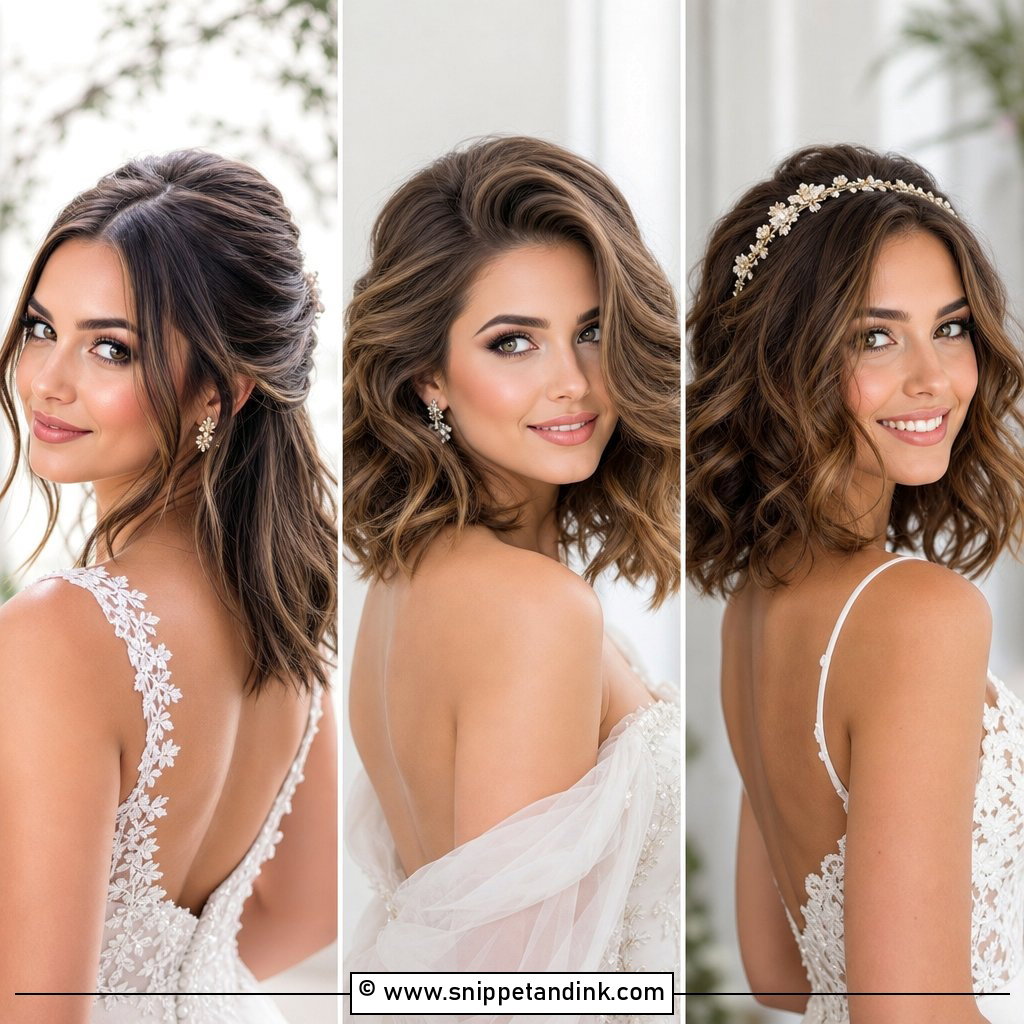
- One shoulder: sweep the hair to the open side so the strap and the hair don’t crowd each other.
- Open or low back: an updo or low bun, so the back detail you paid for isn’t hidden.
- Off the shoulder: a low bun or soft waves pushed behind the shoulders; long hair in front covers the line.
Then I look at the veil and the venue. A long veil favours a low bun or half-up anchor; a windy outdoor ceremony favours braids or pinned styles over loose waves. Only after that do I look at the saved photos, and by then the list is usually down to three.
1. Low Bun Wedding Hair
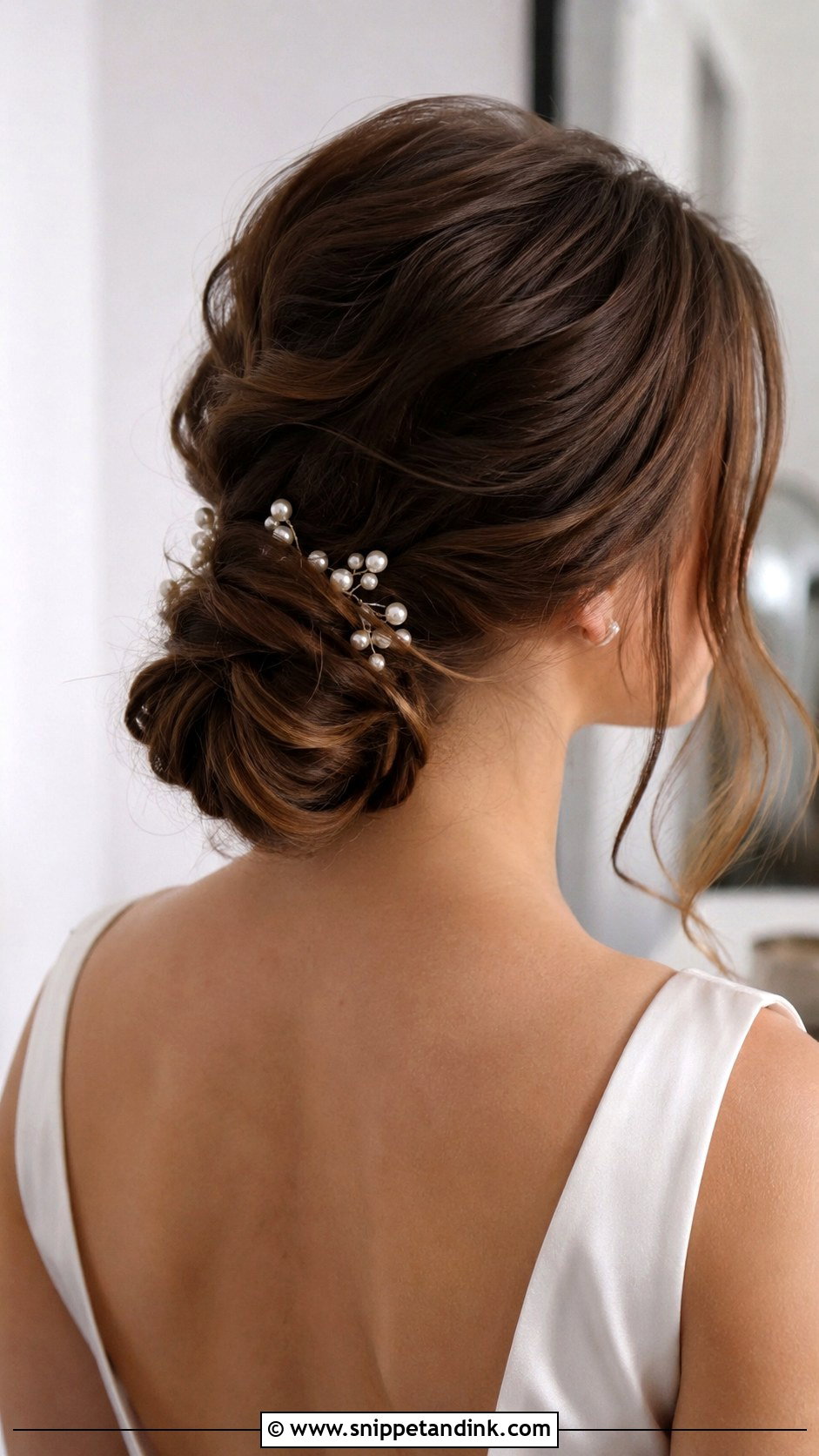
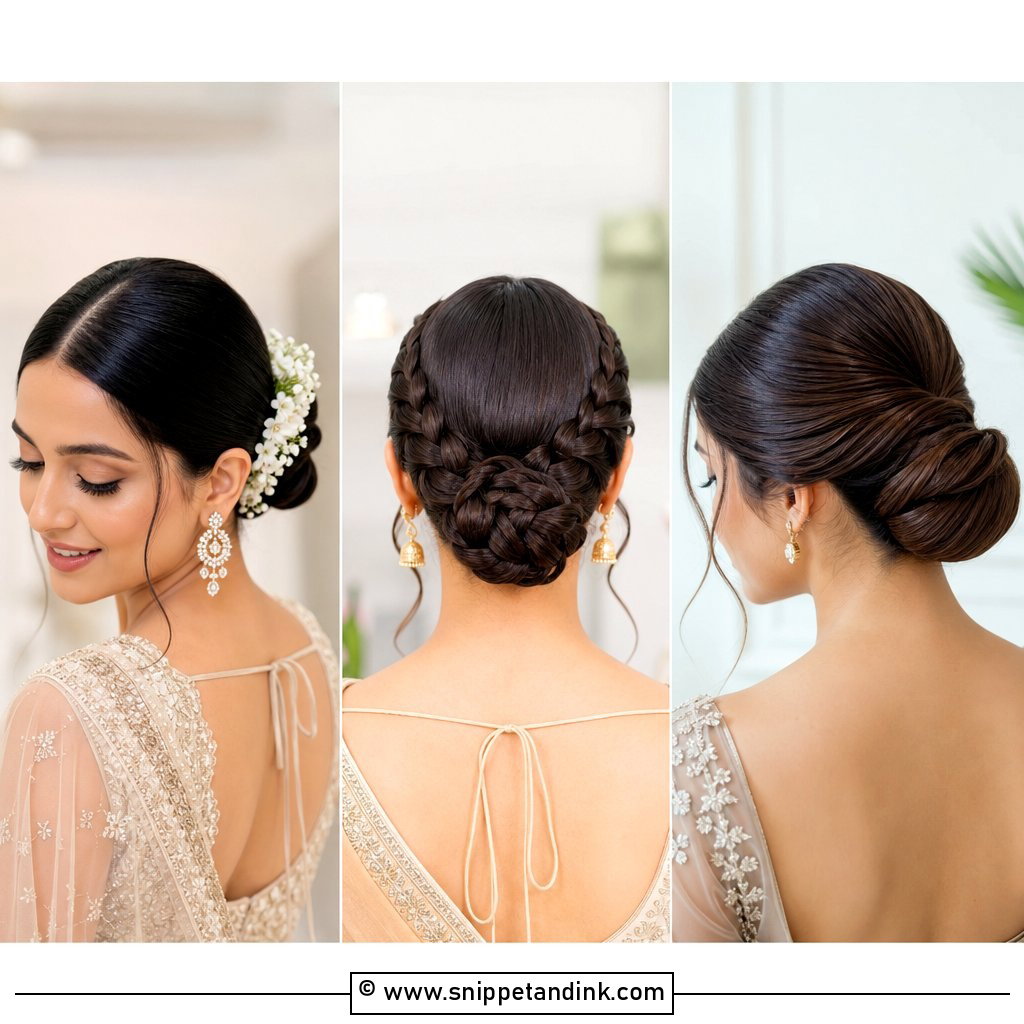
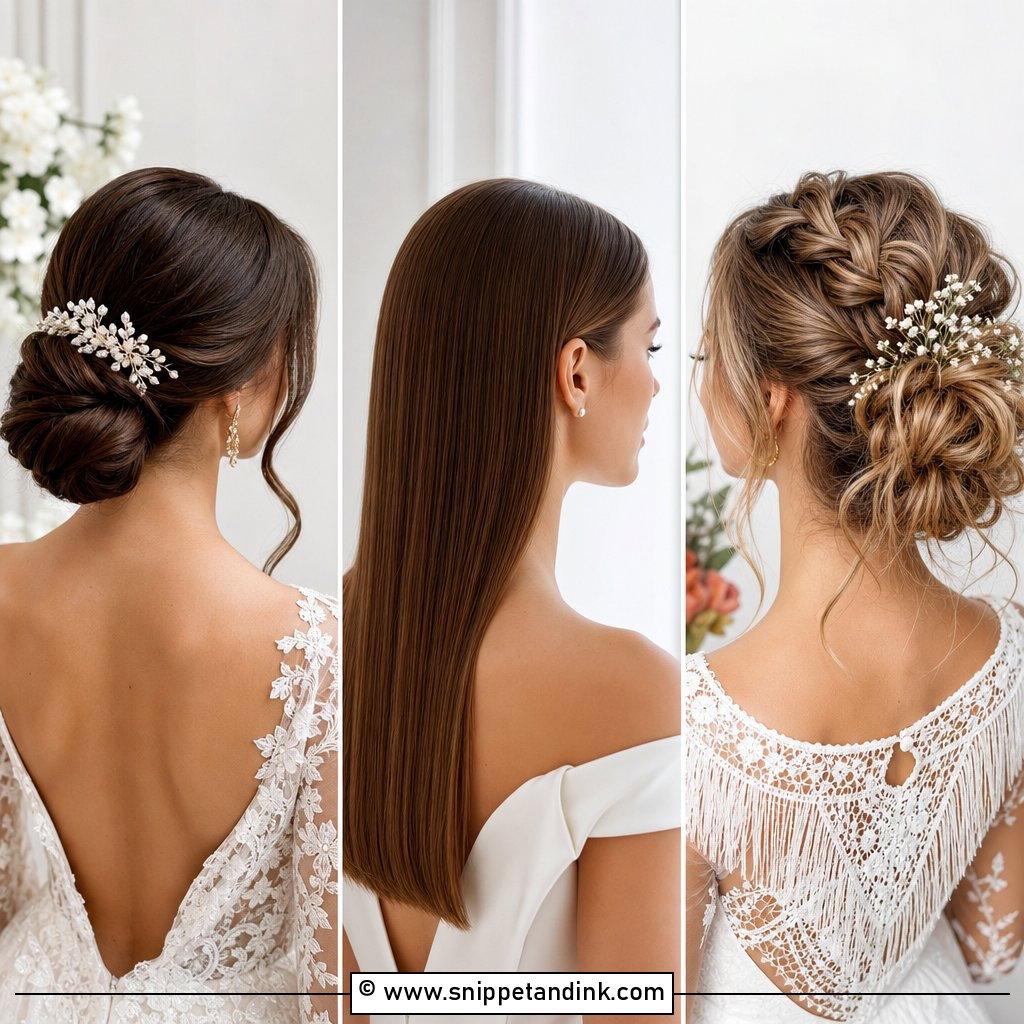
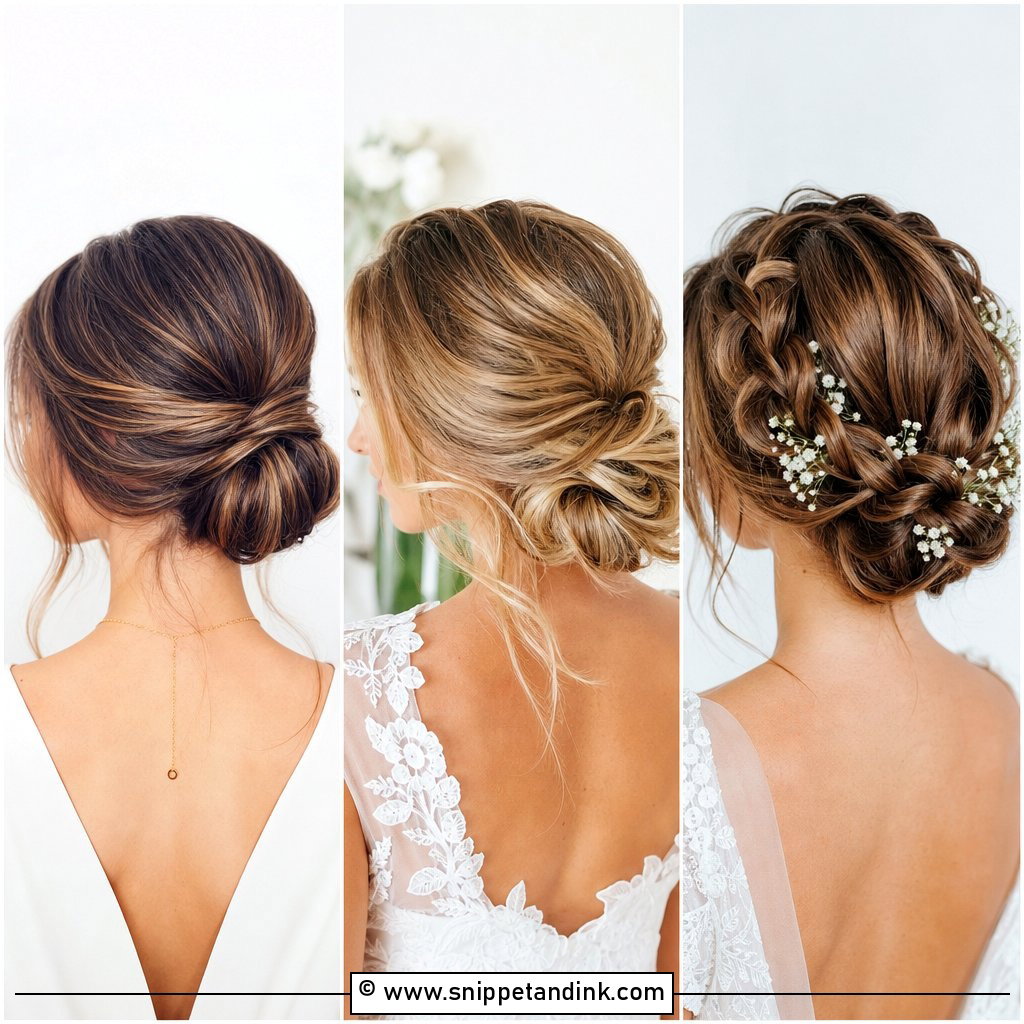
If a bride can’t decide, this is where I start her. A low bun sits close to the nape, so a veil comb slides in above or below it, pearl pins have somewhere to go, and an open-back dress stays clear. The bun itself should look full from the side, which on fine hair often means a small padding donut or a few clip-in wefts worked into the base. I keep the top smooth with a little lift at the crown, because a flat crown above a big bun makes the head look small in profile. It’s also the design that copes best with heat and long ceremonies.
2. Textured Chignon Wedding Hair
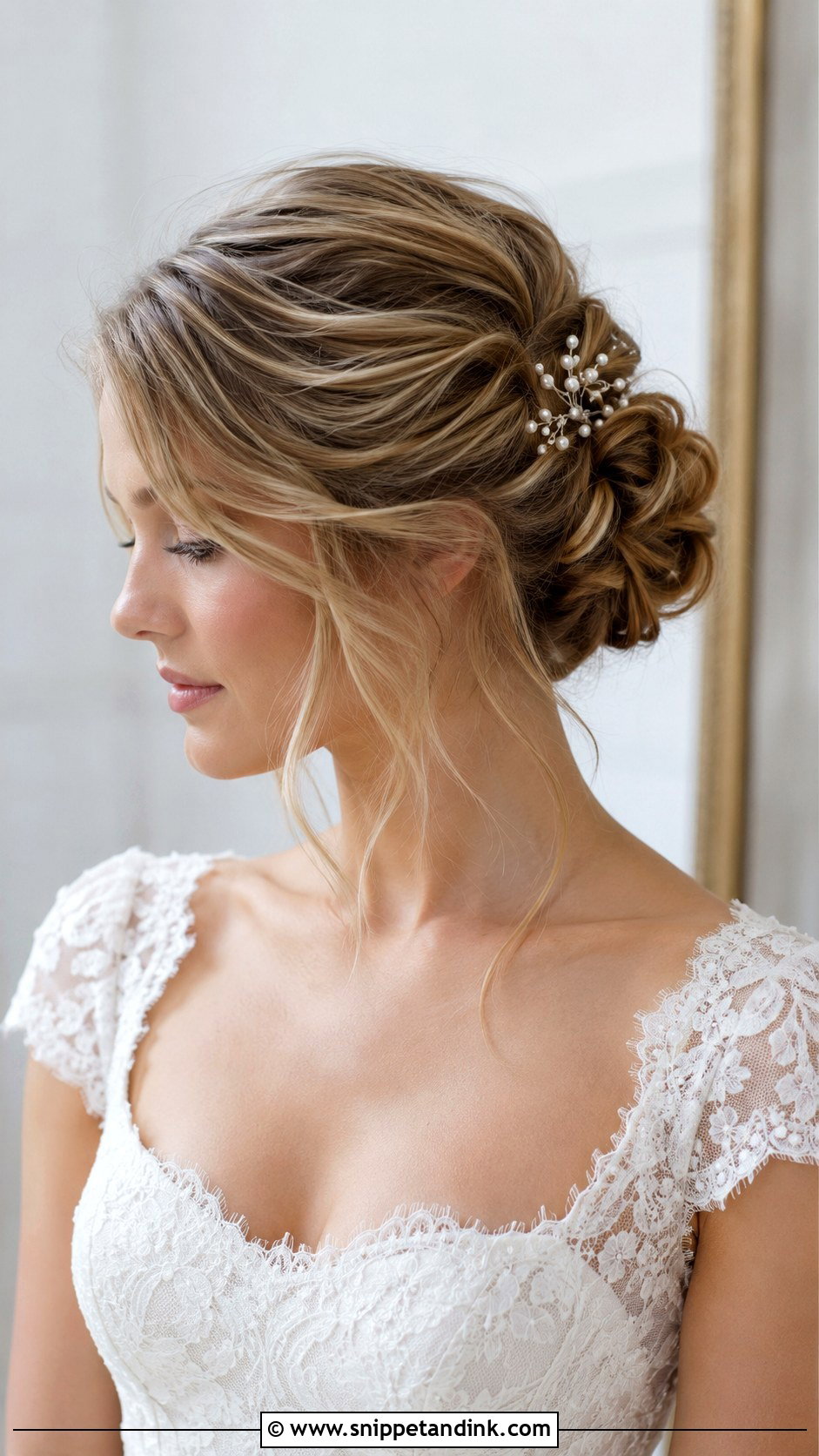
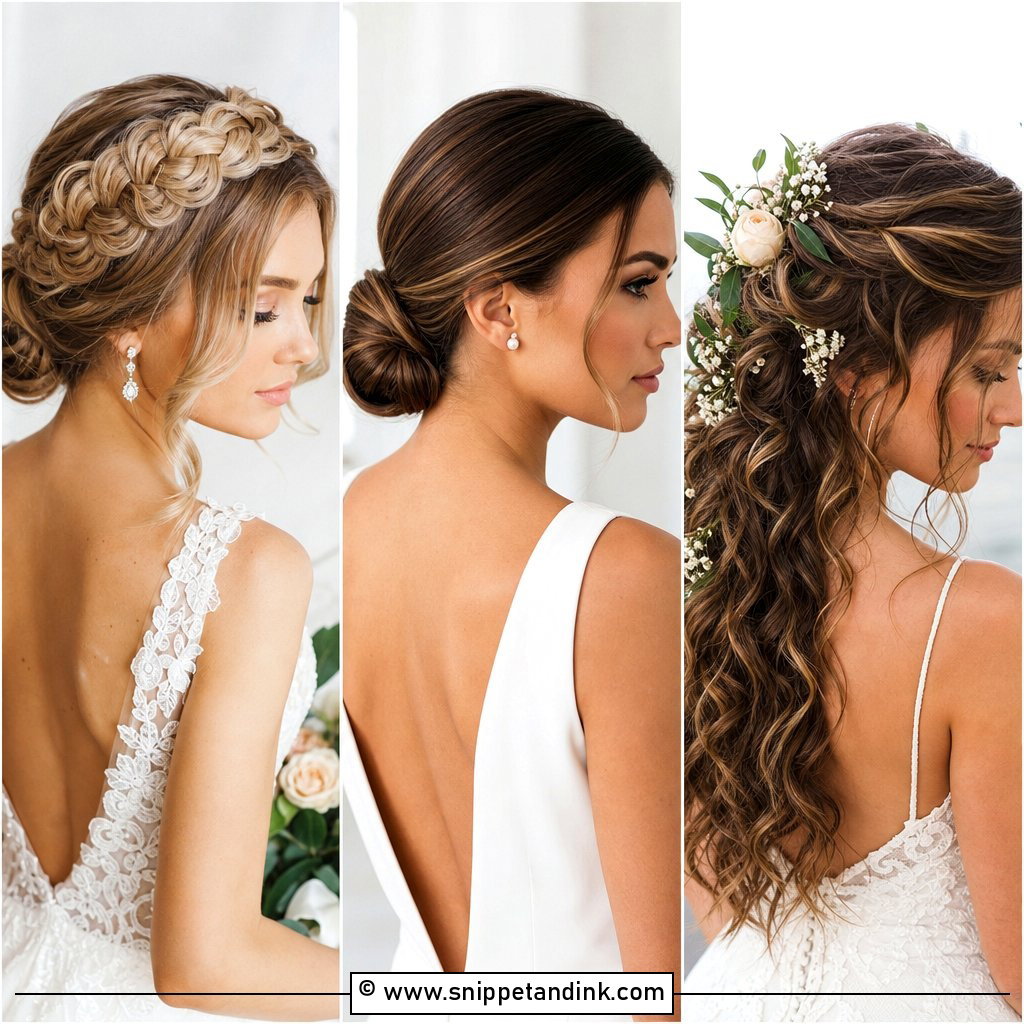
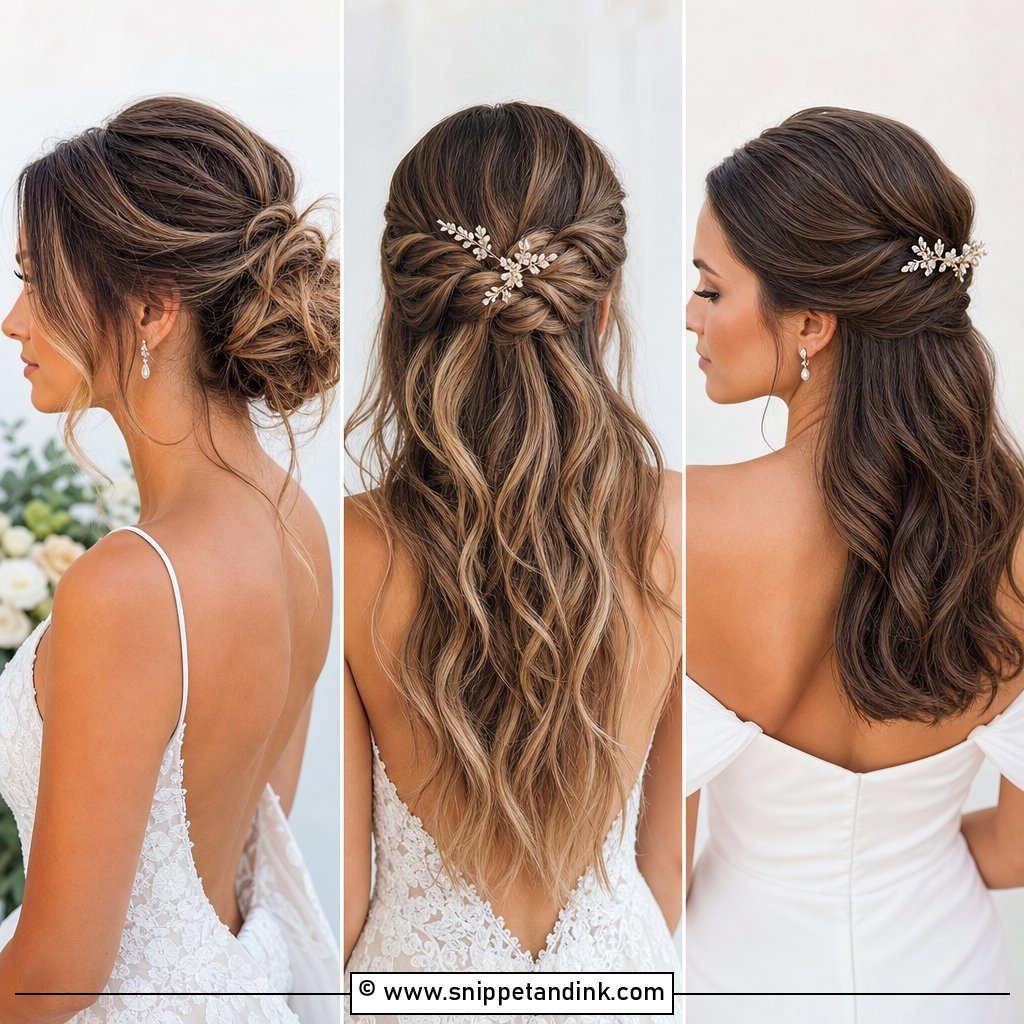
A textured chignon is gathered low, twisted, and pinned into shape with visible movement. The work is in the pinning: I set every twist with crossed pins underneath before I loosen anything on the surface, so it looks soft but won’t unroll. On highlighted, balayage or brunette hair, those twists show the colour tones much better than a smooth bun does. A centre part makes it feel calmer; a side part adds a little drama. Lace gowns and garden venues suit it. Use a flexible spray, never a helmet one.
3. Sleek Bun Wedding Hair
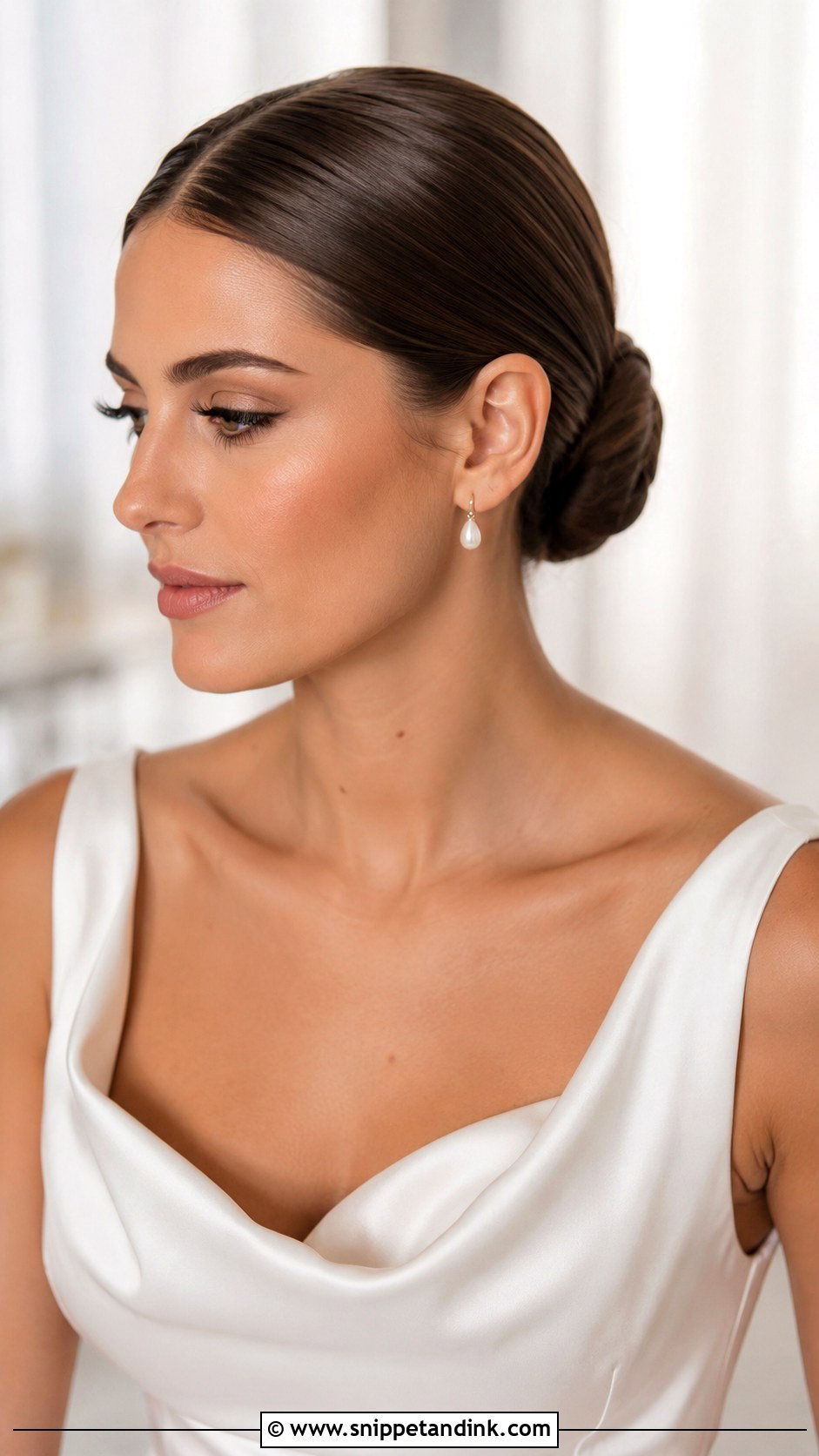
There’s nowhere to hide in a sleek bun. Every bump and flyaway shows, so I blow-dry the hair completely straight and smooth it with a fine brush and a little gel along the hairline before I pin anything. A middle part gives it a clean, editorial look; a side part softens it. Height depends on your veil and profile. I’d steer you away from it if you have a lot of short regrowth around the hairline, because those baby hairs fight sleekness all day. Shine spray at the end makes the surface reflect light in photos. High necks, satin and statement earrings all suit it.
4. Hollywood Waves Wedding Hair
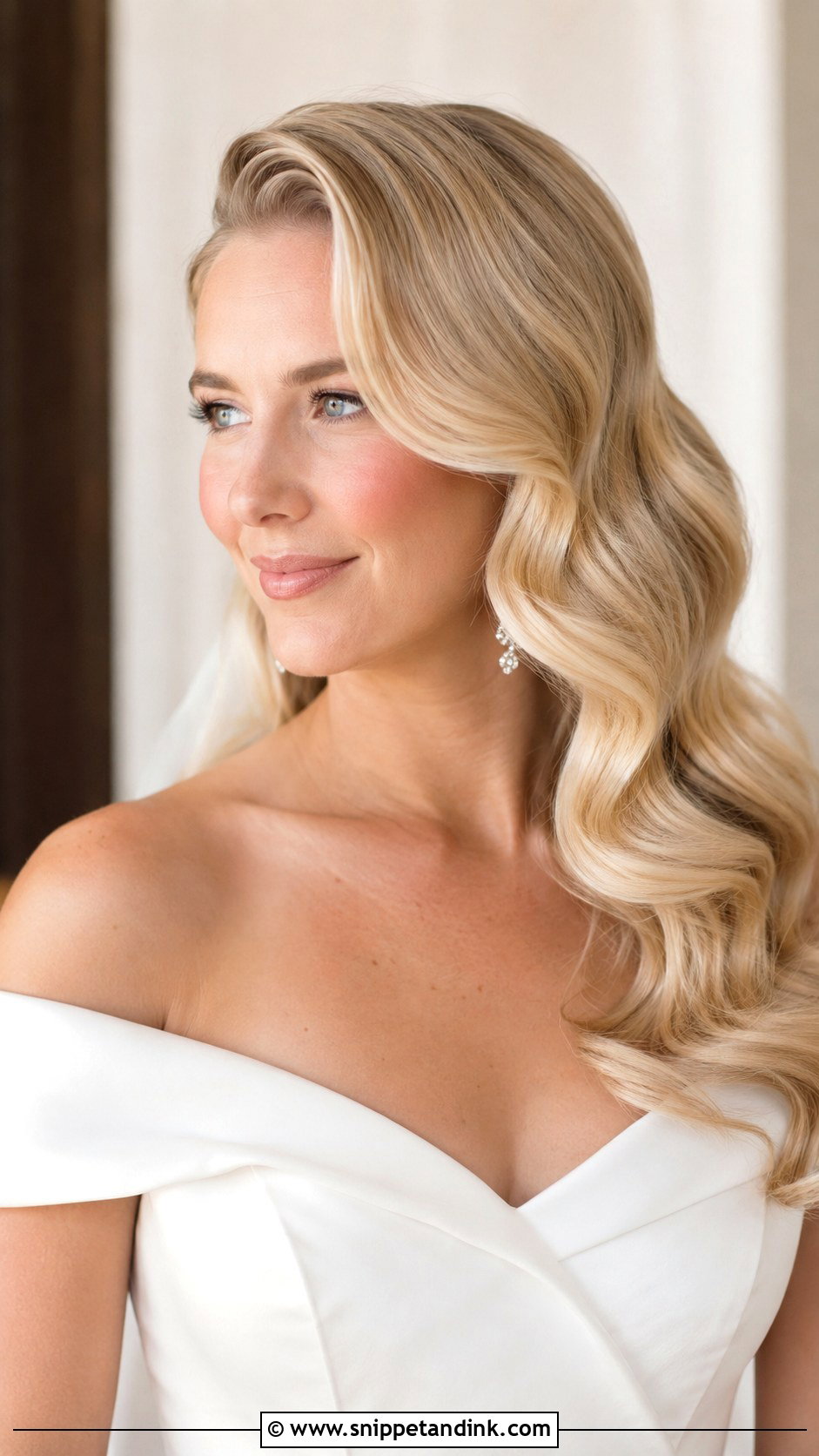
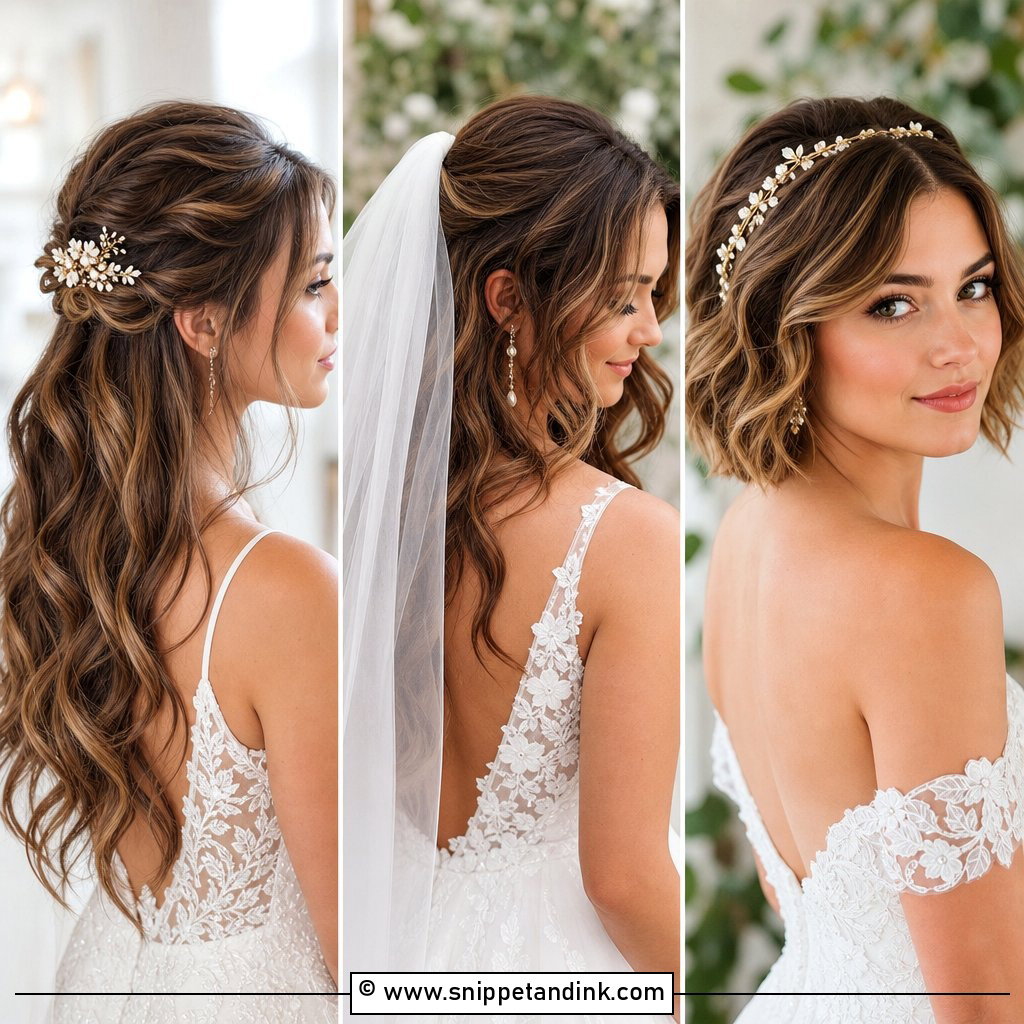
Hollywood waves are one continuous shape: every curl set in the same direction, then brushed out together so they join into ridges. That’s what separates them from loose, mixed beach waves. They need length and density to read, so long hair, lobs and hair with extensions carry them best. A deep side part gives the vintage version; a softer part feels more current. They look striking with strapless and off-the-shoulder gowns. For hold, I put a strong setting product underneath and keep the surface soft, so the waves keep their shine instead of turning crunchy. Expect them to relax a little in humidity, and plan for a quick re-brush before the reception.
5. Half Up Wedding Hair
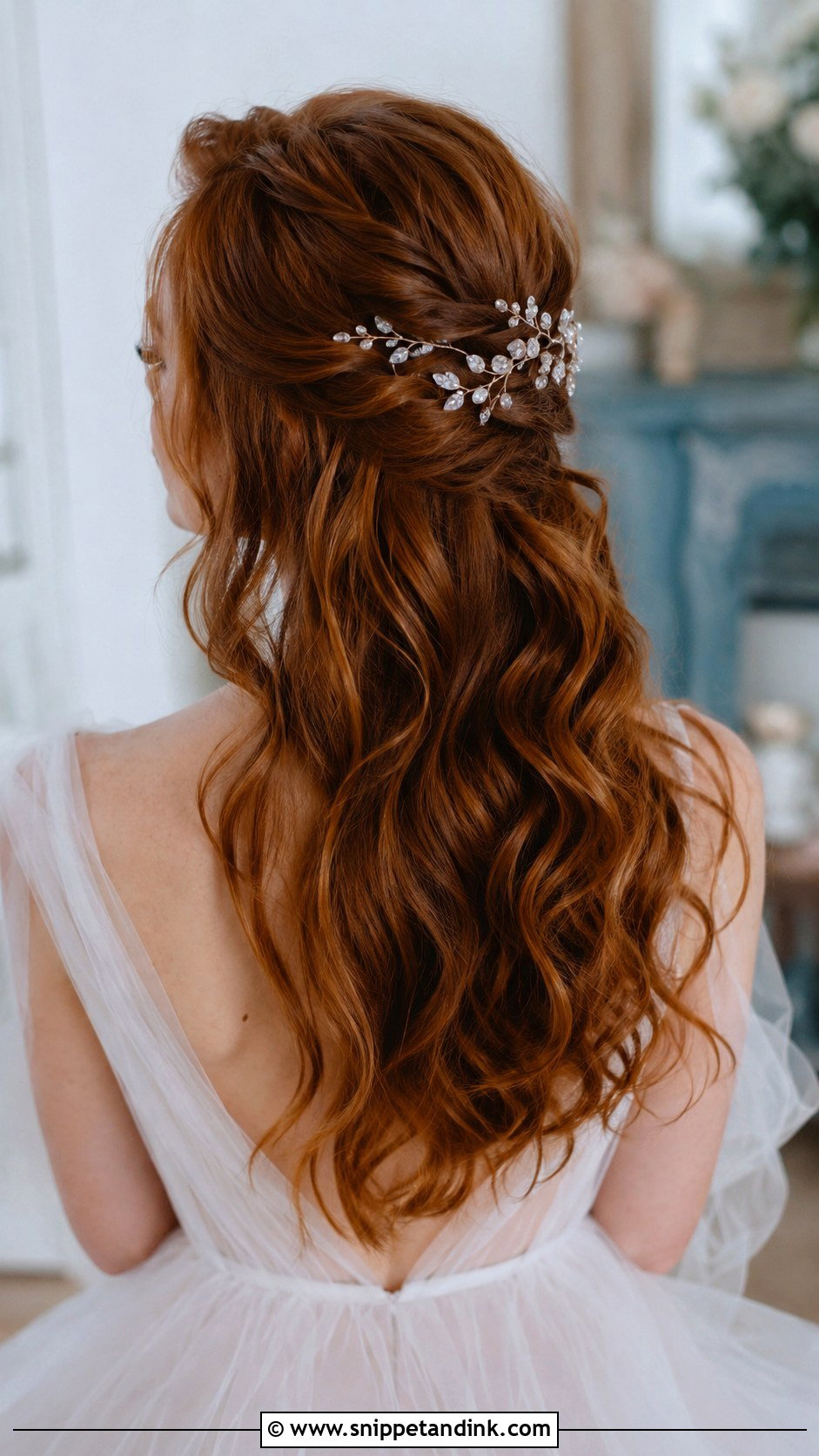
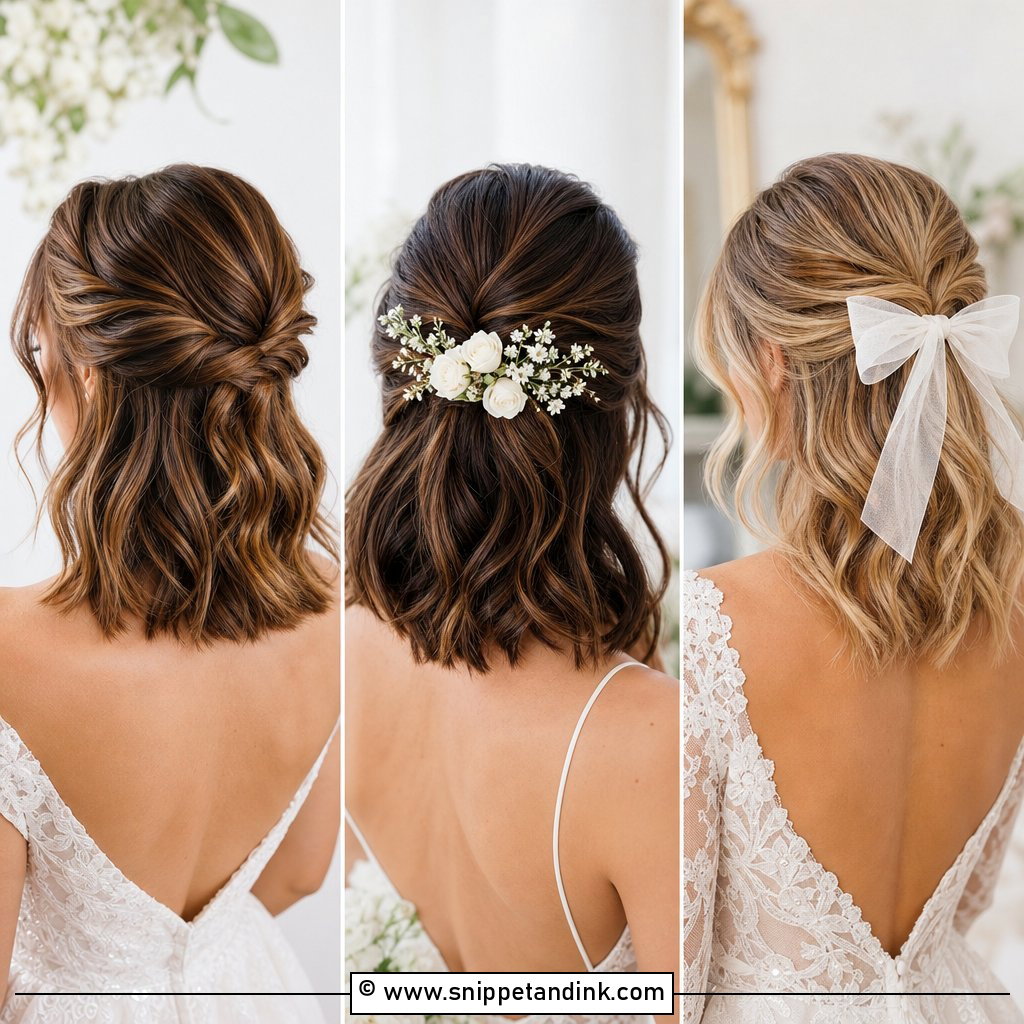
Half up gives you the length of loose hair with some of the control of an updo. The top section can be twisted, pinned, braided or simply lifted at the crown, and the rest falls in waves or curls. It opens the face, which is why it flatters almost everyone. Where it’s placed matters for the veil: I set the join just at the crown so a comb can slide straight into it. For a cleaner modern finish, keep the top smooth and the ends polished. It suits medium to long hair, especially with curls brushed out soft.
6. Bridal Ponytail Wedding Hair
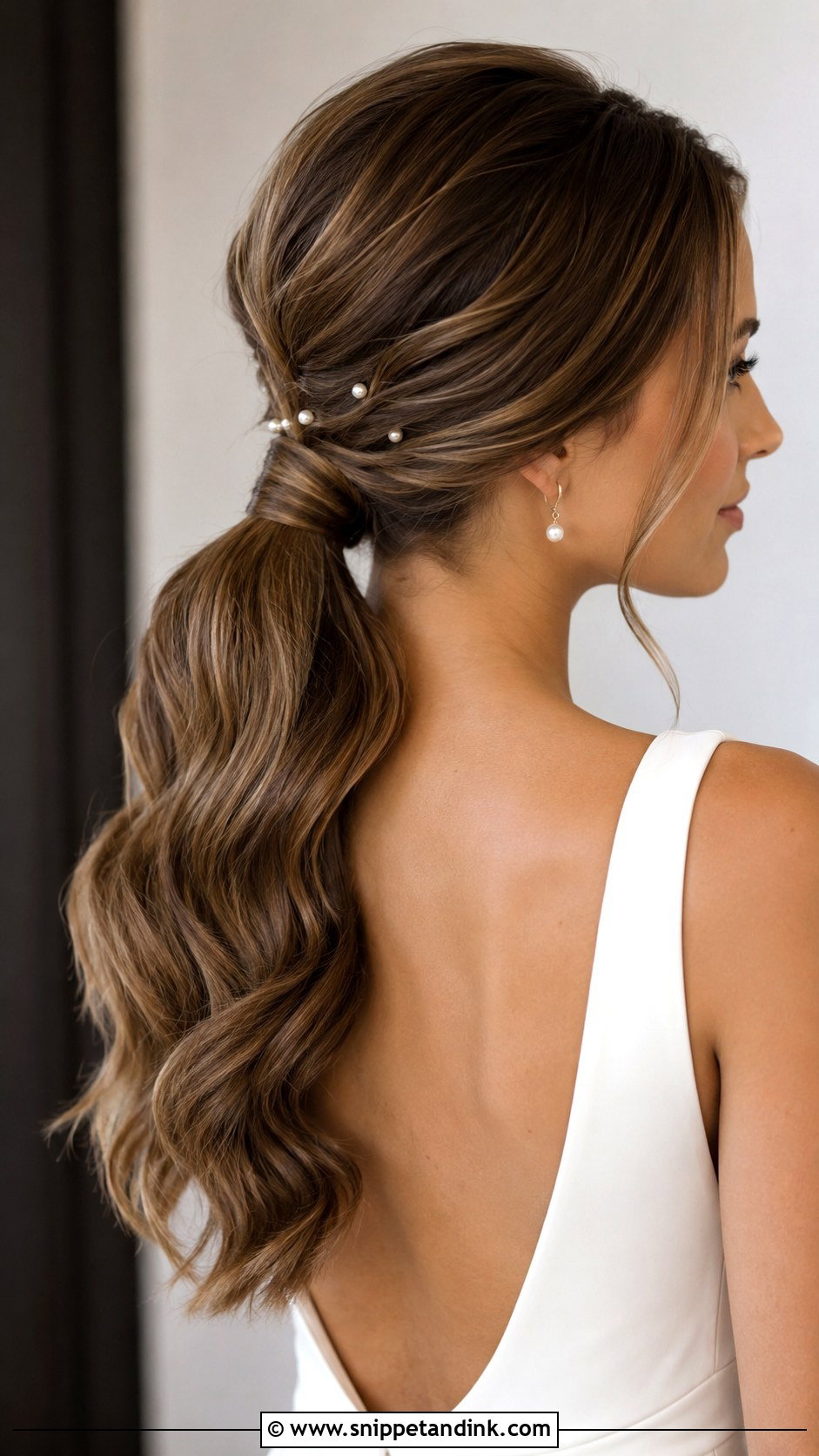
A ponytail can be as formal as an updo, but only with a clean base. I brush the hair into the elastic twice, once to gather and once to smooth, and secure it with a second elastic over the first so it won’t drop during the day. A low position feels classic; a high one feels more fashion-led. Waves through the length soften it; straight and glossy sharpens it. A wrapped hair section hides the elastic. For brides with very heavy hair, I’d warn that a high ponytail can pull on the scalp after a few hours, so a mid-height one is kinder. Pearl pins or a bow add a sweet detail.
7. Braided Crown Wedding Hair
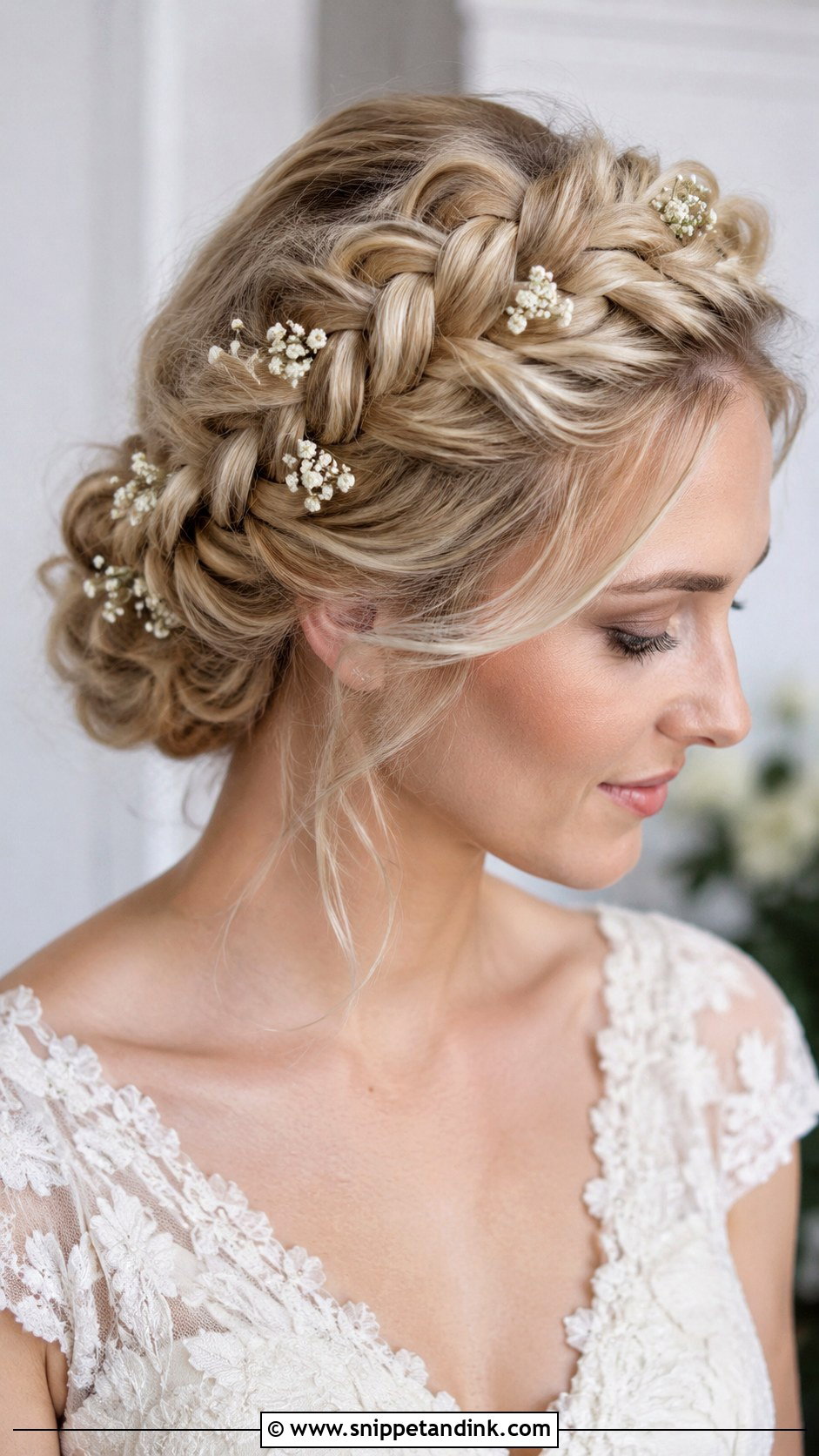
Outdoor ceremonies are where a braided crown wedding hairstyle earns its place, because a breeze doesn’t get much purchase on it. The braid can wrap the head like a halo, or sit across the top with the rest tucked into a low bun. I braid it firmly, pin it, then loosen the edges for fullness. It’s also the best way I know to control growing-out bangs and short layers. Small flowers, pearls or greenery tuck easily into the plait. Keep it neat and evenly widened, otherwise it starts to read festival rather than bridal.
8. Loose Curls Wedding Hair
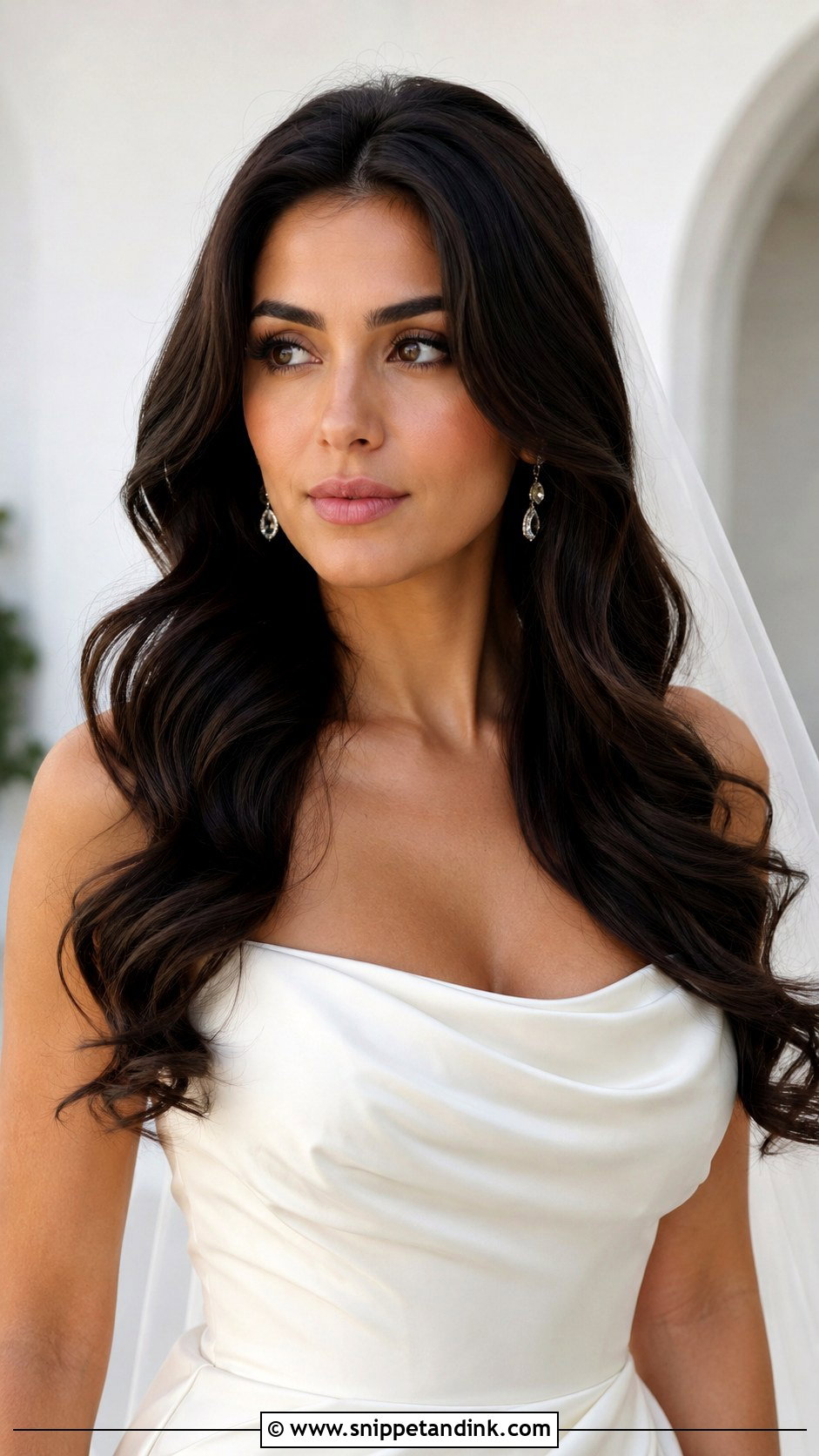
Loose curls fail more often than any other style, almost always from prep. I build hold before the iron touches the hair: a mousse or setting spray on damp hair, a proper blow-dry, then curls taken in small sections and pinned up to cool. Brushing them out comes last. Layers help the curls fall well; extensions help if your ends are thin. A centre part keeps it soft; a side part gives more volume. Finish with a light spray, because heavy spray weighs curls down faster than humidity does.
9. French Twist Wedding Hair
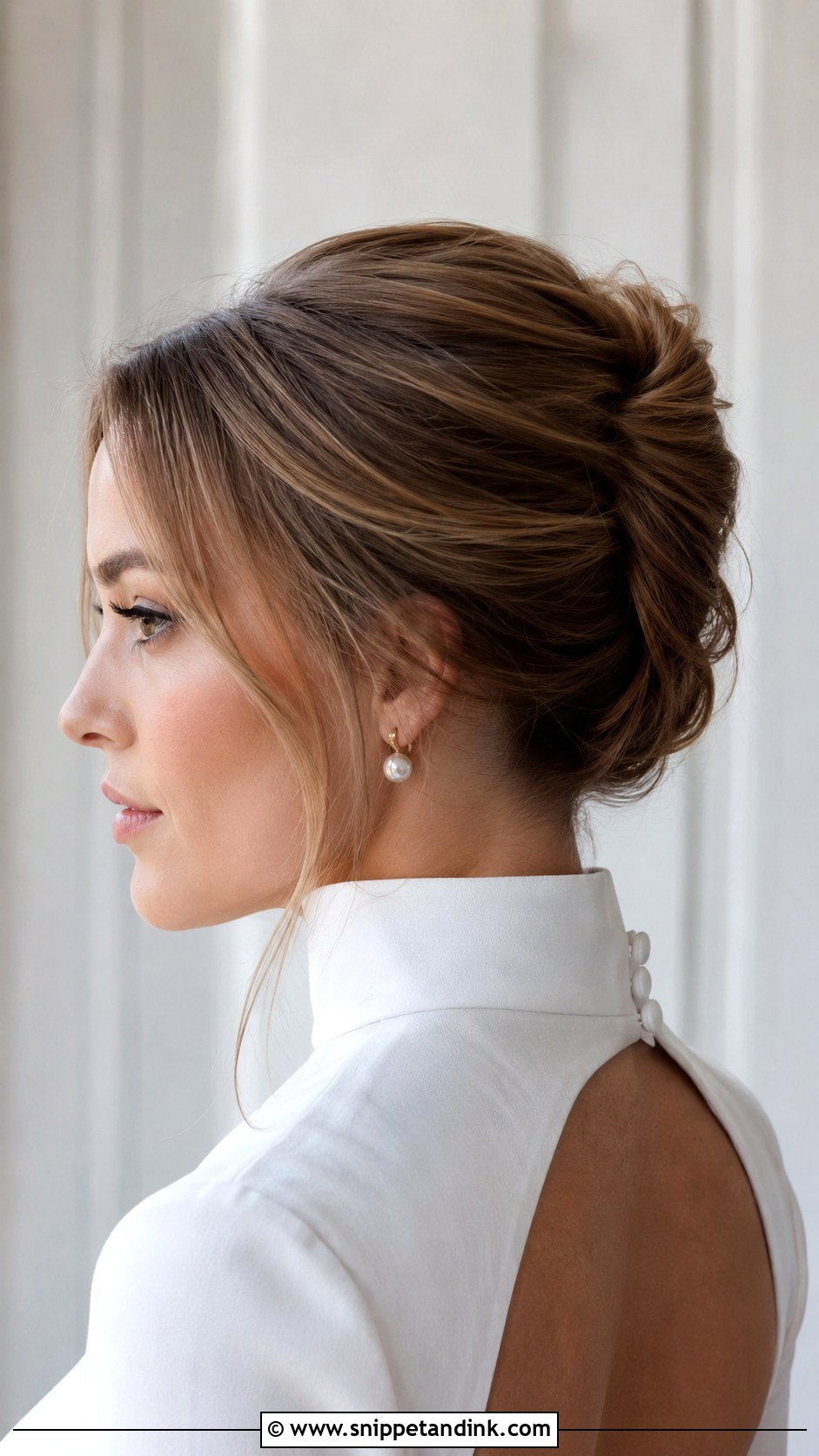
The French twist lifts the hair up the back of the head and tucks it into a vertical roll, so it looks best from the side. It needs grip, so I backcomb the inside of the roll lightly before twisting and lock it with a line of hidden pins up the seam. Modern versions are softer than the old formal twist, with some texture and a few face-framing pieces. A comb or veil sits neatly against the top of the roll. High necks, bateau necklines and structured satin are where it suits best. Very short or very layered hair struggles to stay in the roll, so I’d consider a low bun instead.
10. Side Swept Wedding Hair
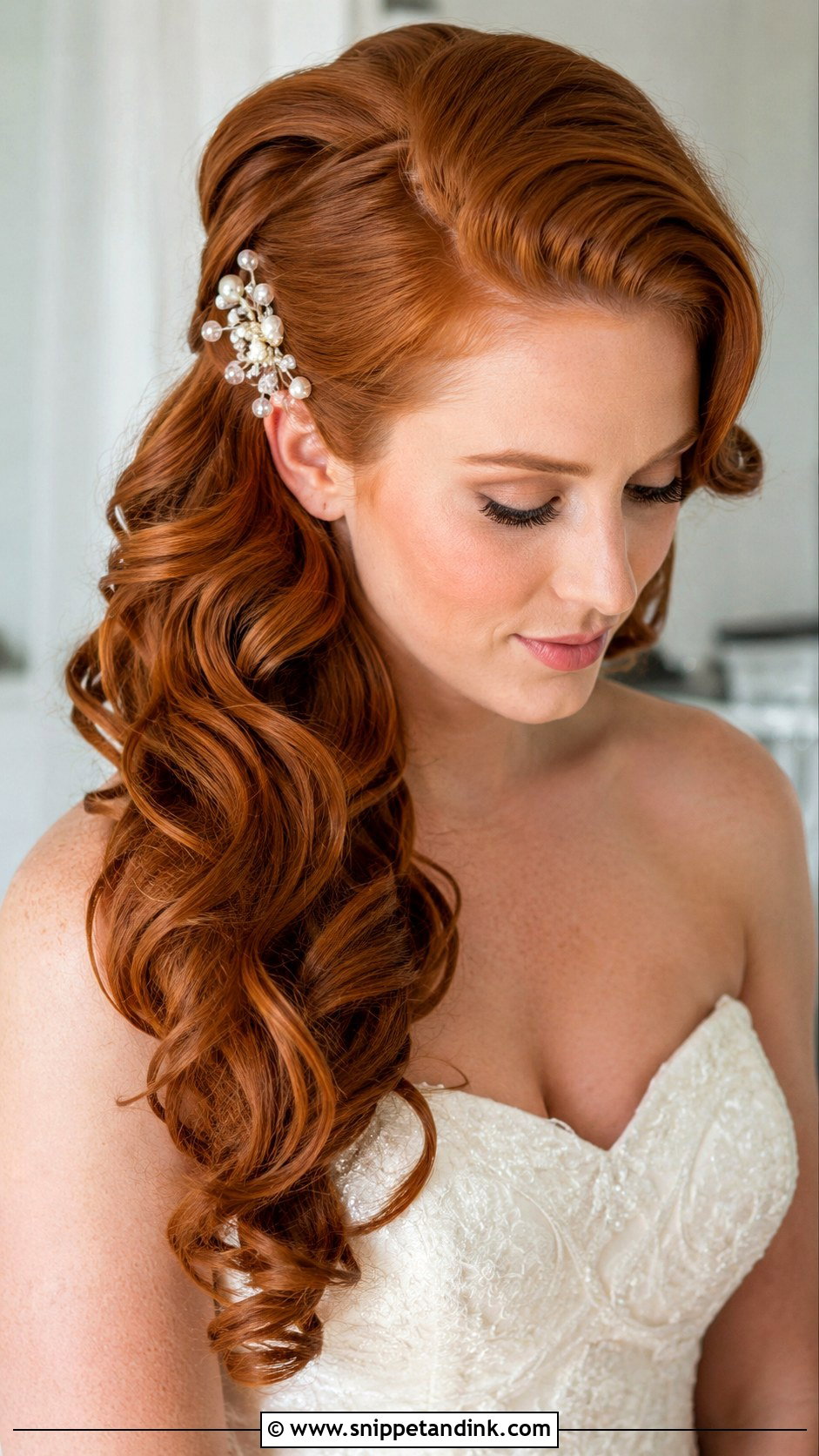
Side-swept hair brings everything over one shoulder and leaves the other side of the neck open. That makes it a natural match for one-shoulder dresses and statement earrings. I curl the hair, brush the waves together, and pin the sweep behind the ear with two crossed pins hidden under the top layer. It has to be properly anchored, or it slides back to the centre within an hour. A side comb, pearl clip or small flower can sit over the pins. Highlighted hair shows nicely here because all the dimension is gathered on one side.
11. Messy Bun Wedding Hair
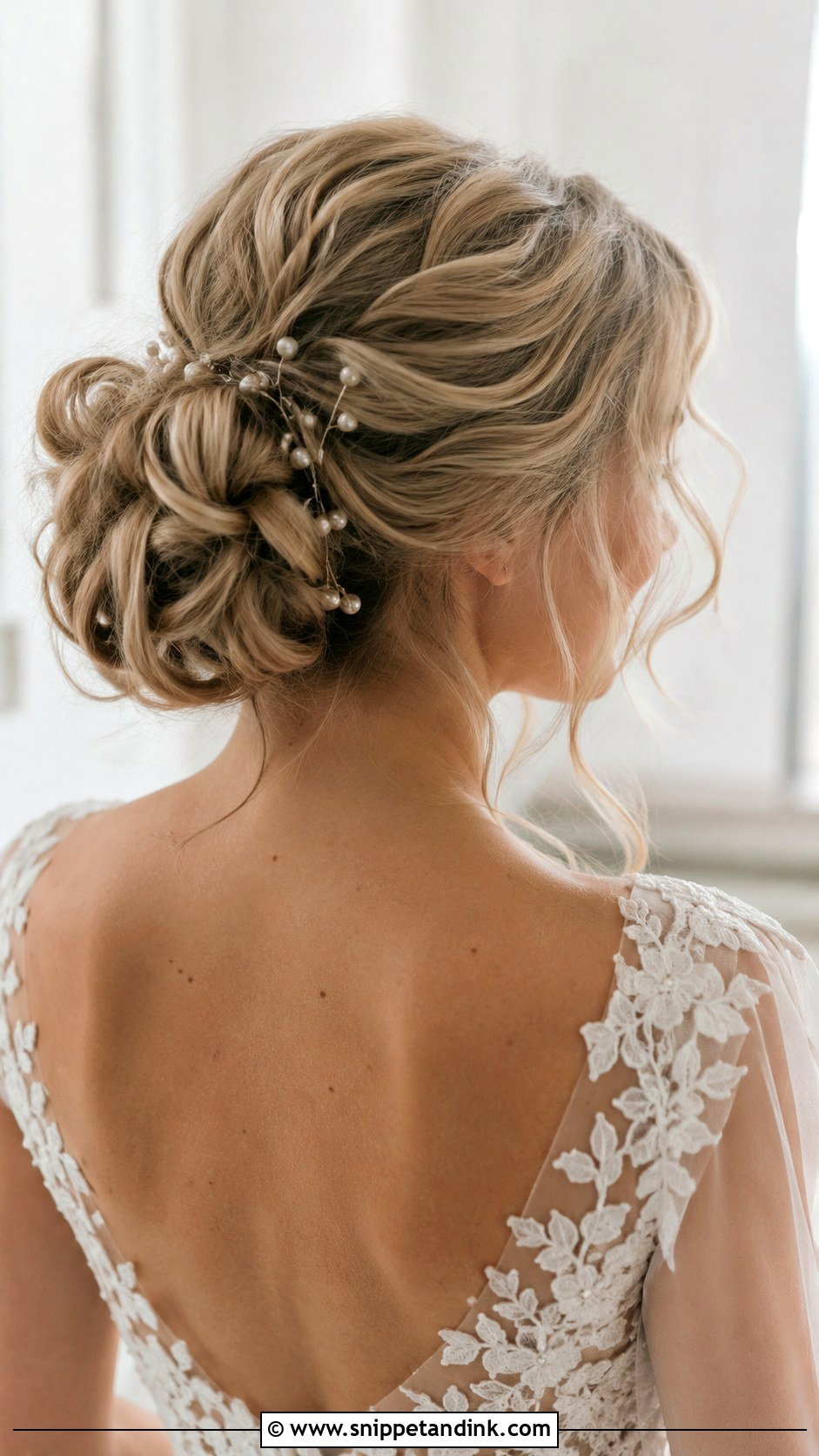
A wedding messy bun is anything but messy underneath. I pin a tight structure first, sometimes with light backcombing or a small pad, and only then pull the top layer loose for texture. That’s how it looks airy in photos and still holds at midnight. It usually sits low or mid-height with a few curls left at the face and gentle crown volume. Lace, tulle and floral dresses suit it, as do relaxed outdoor venues. If your stylist starts pulling pieces loose before the base is pinned, ask them to slow down.
12. Short Bob Wedding Hair
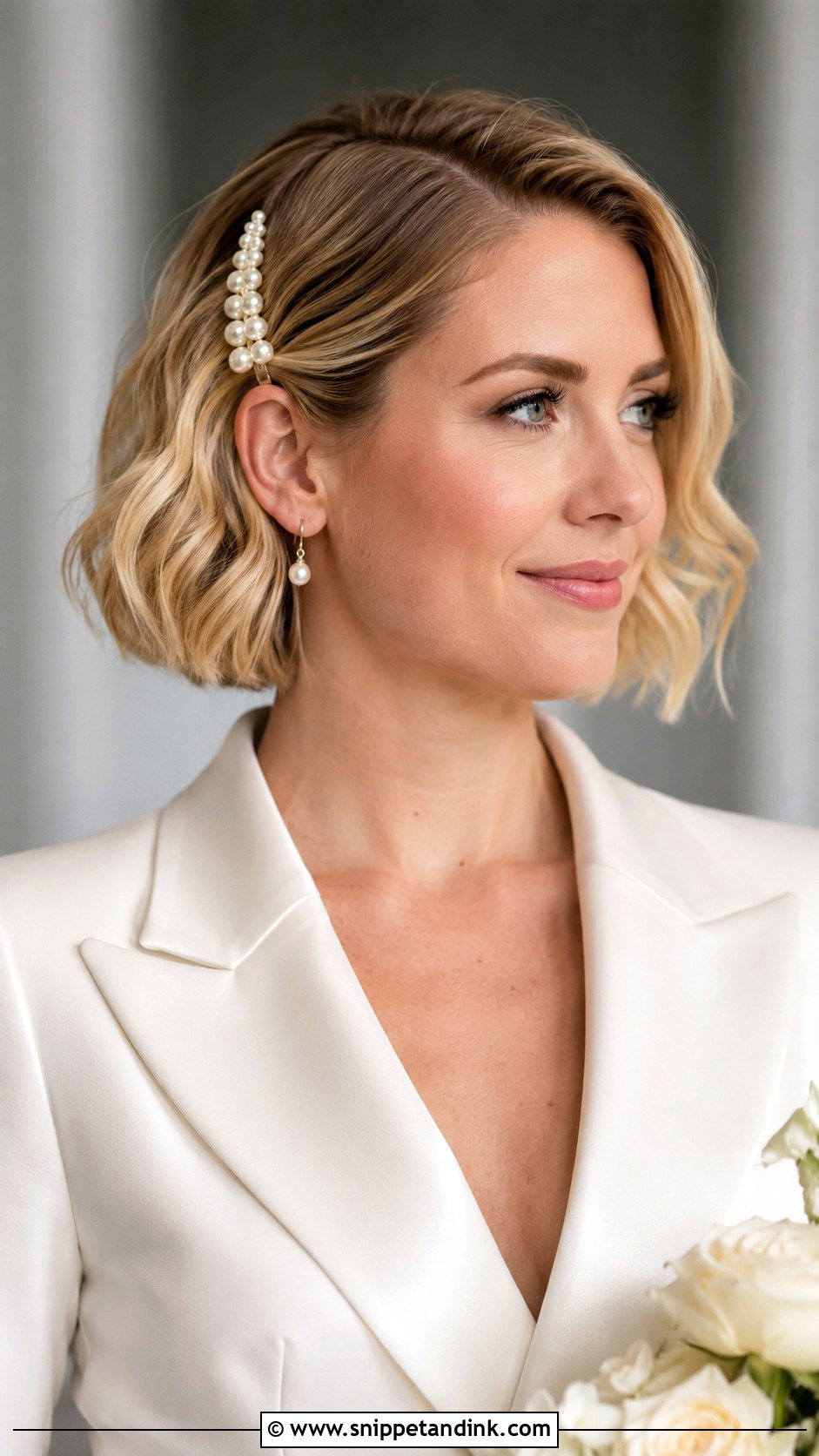
A bob doesn’t need forcing into an updo to look bridal. Soft waves, a sleek side part, tucked ends or a pearl clip can make the cut look polished on its own. I keep the shape clean along the jaw and add texture only where it flatters the face. A blunt bob looks sharp with a minimalist gown; a softly waved one feels relaxed. One practical point: get the cut about two weeks before the wedding, not the day before, so the edges have settled. It lets the haircut be the feature instead of burying it under accessories.
13. Curly Updo Wedding Hair
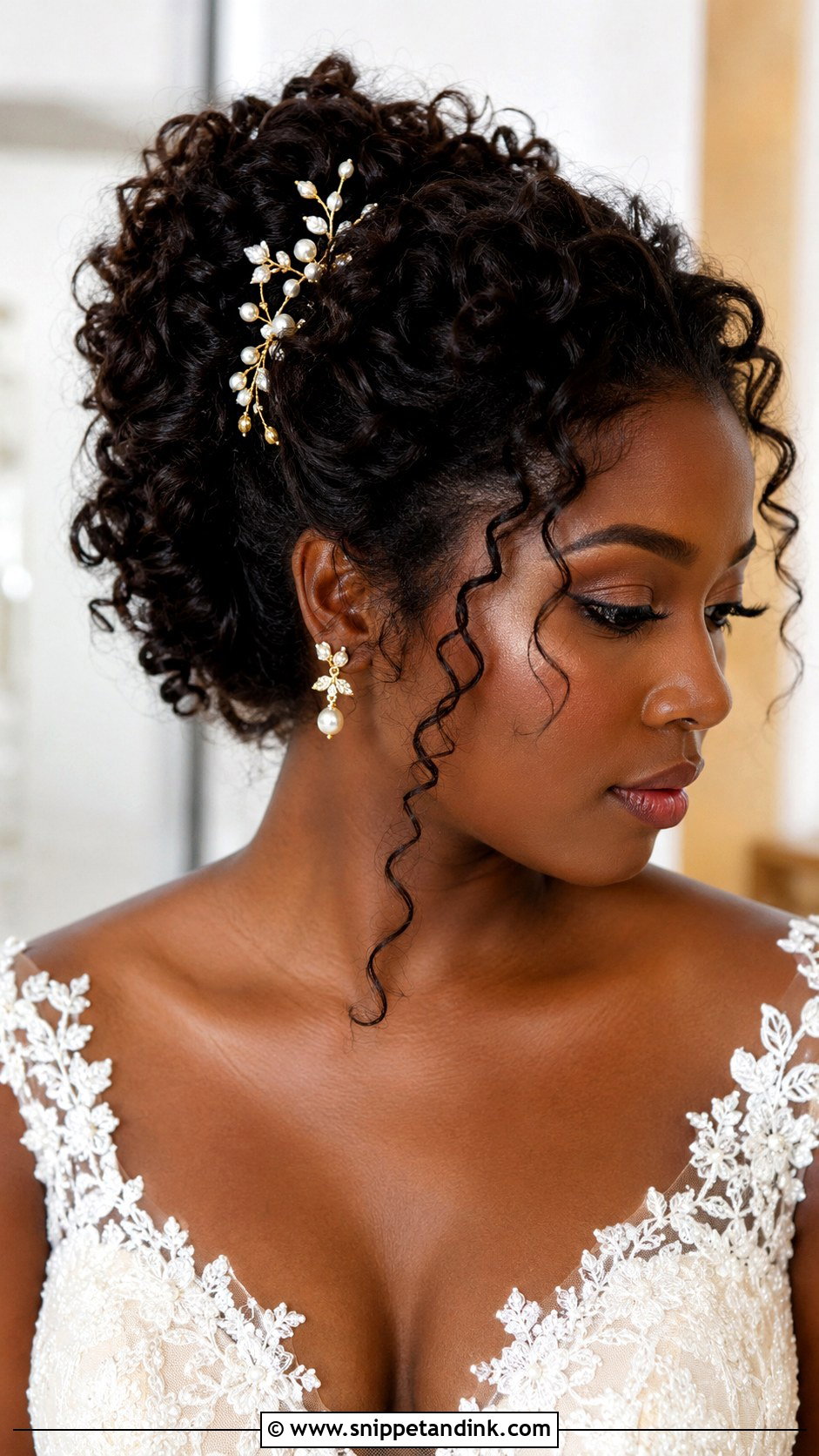
With a curly updo, the curls are the design, not something to smooth away. The hair can be pinned into a low bun, a high bun or a soft gathered shape, with a few defined curls left around the face. Definition has to happen first: curls hydrated, shaped and set before a single pin goes in, because handling dry curls breaks them into frizz. Coils and textured hair create natural fullness here without teasing. Pearl pins, floral combs or gold accessories add detail. Choose a stylist who has worked with your curl pattern and understands shrinkage, since a style planned on stretched hair can sit shorter on the day.
14. Wedding Hair With Veil
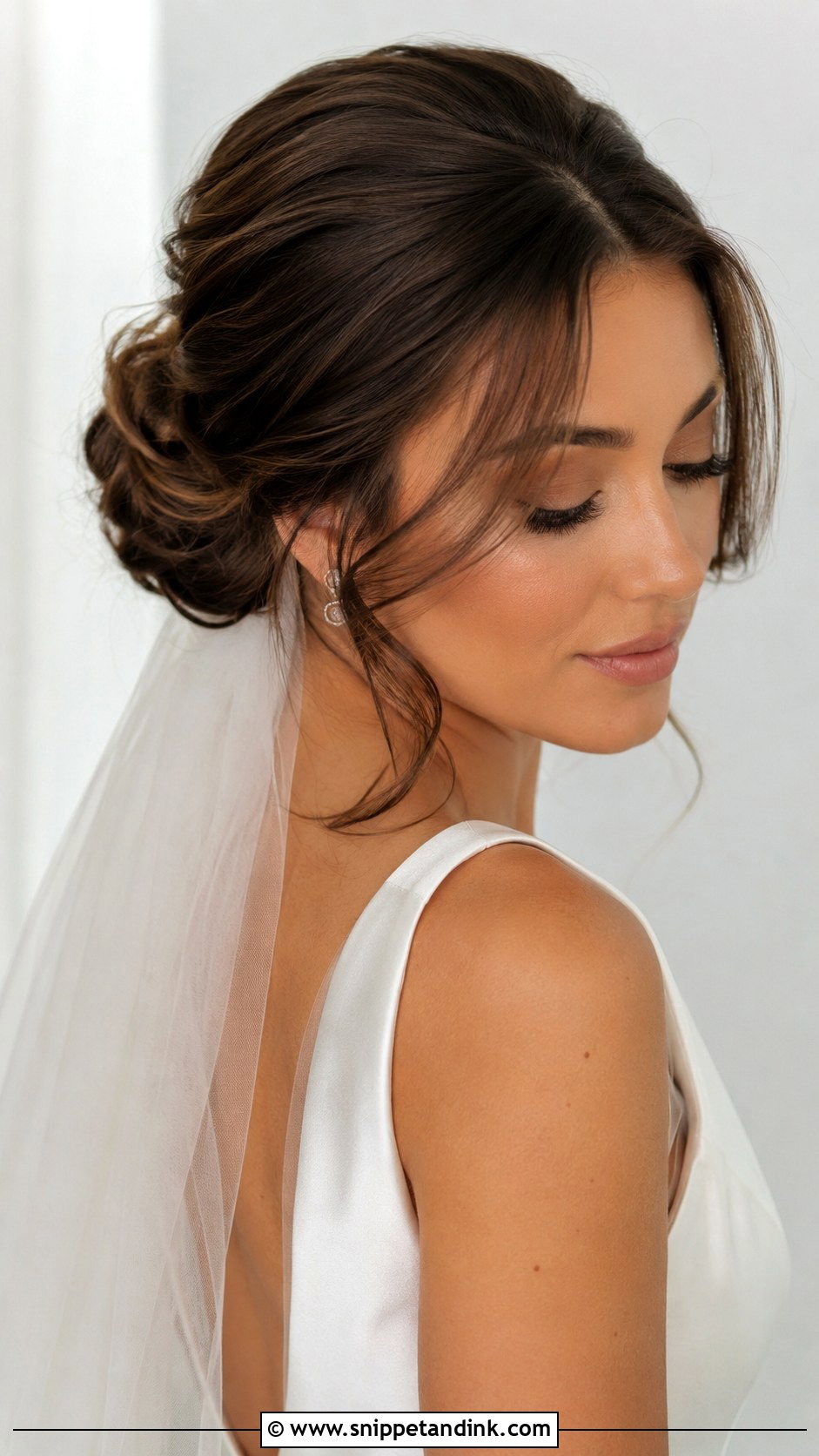
A veil changes the hairstyle, so I always ask whether it stays on all night or comes off after the ceremony. Low buns, chignons, half-up designs and Hollywood waves all take a veil well, but the anchor point decides how it hangs. A veil set above a bun looks traditional and full; tucked below it, softer and more modern. If it’s coming off, I secure the comb separately from the main pins so it lifts out without wrecking the style. Comb weight, length and wind all matter. A cathedral veil on a breezy terrace needs far more anchoring than a fingertip one indoors.
15. Wedding Hair With Flowers
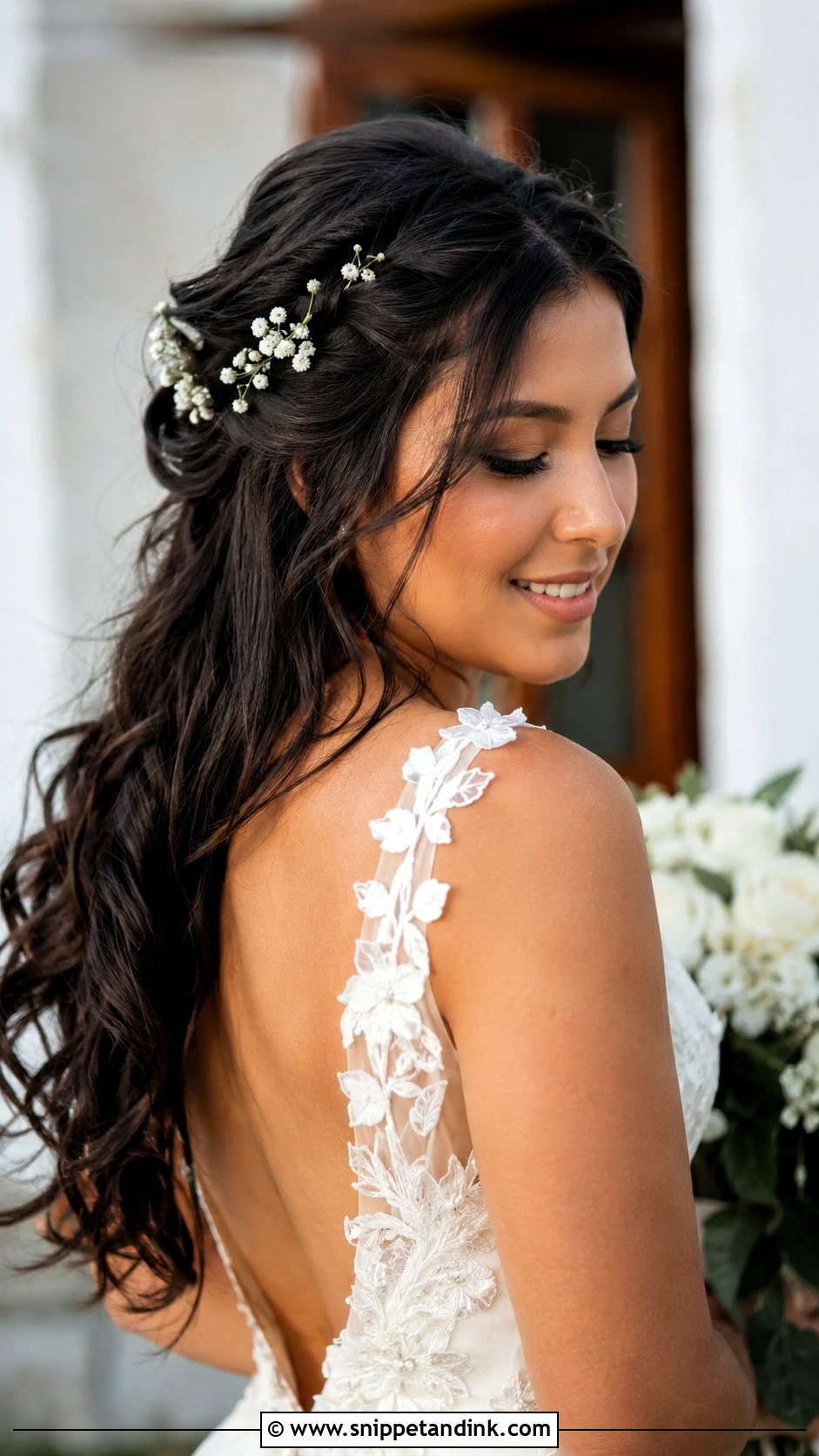
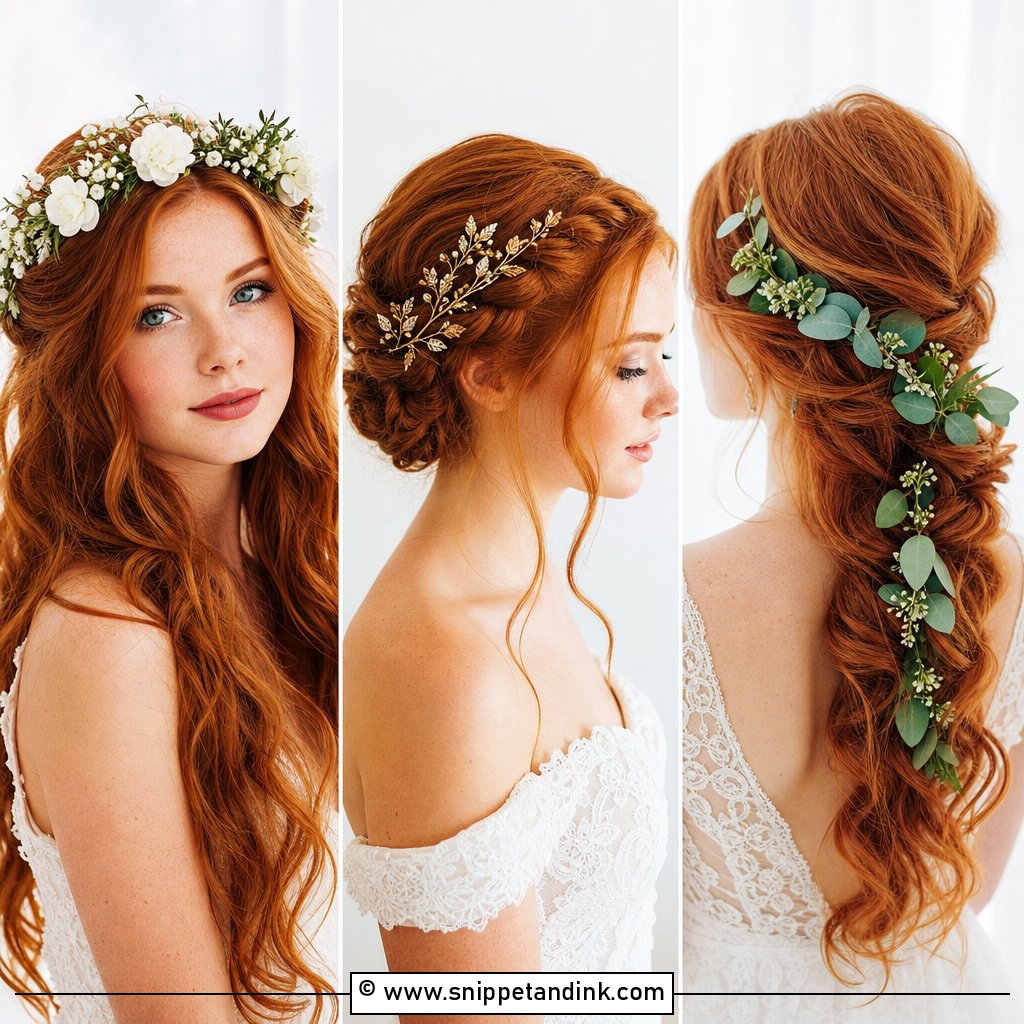
Flowers in the hair should be accents, not a heavy crown fighting the dress. Tiny blooms tucked into braids, low buns, chignons and half-up waves look the most natural. Bigger flowers work best placed to one side so the overall shape stays balanced. Fresh flowers need choosing with care: some wilt within hours out of water, especially in heat. Silk flowers stay intact all day and photograph almost the same at a distance. I’d match the colour to your bouquet and hair tone so it reads as part of the look rather than added on.
Ranking These Fifteen by How Long They Actually Hold
Brides rarely ask this, but they should. Some of these designs hold through hugs, dancing and humidity with almost no help; others need a touch-up by the evening. This is roughly how I’d rank them from my own chair, assuming good prep and the right hair for each.
Steady all day
Sleek bun, low bun, French twist, braided crown and a well-pinned ponytail. Once these are set, they barely move. The sleek bun’s only enemy is sweat at the hairline, so keep a blotting paper handy.
Holds well with a little care
Textured chignon, messy bun, curly updo and half up. The structure underneath stays put, but pulled-out pieces flatten and might need re-teasing with fingertips after the ceremony.
Plan for a touch-up
Loose curls, Hollywood waves, side-swept hair and fresh flowers. Curls drop, waves relax, sweeps slide and blooms wilt. None of that is a reason to avoid them. Just ask a bridesmaid to carry pins and a small travel spray, and accept that softer hair by evening still looks good in the dance photos.
Trust the Trial More Than the Photo
A sleek bun might suit a city wedding and loose curls or a braided crown a garden one, but the photo you saved was taken on someone else’s hair, on a cool day, by a stylist with an hour to spare. Bring a few pictures to your trial, wear a top with a similar neckline, and listen when your stylist suggests a small change for your texture or face shape. The right design looks good in photos, feels secure when you hug a hundred people, and should still make you smile years later.
You'll Like These Ideas:



Leave a Reply