
Wavy hair is the texture I’m happiest to see in my chair, because half the work is already done. The bends give pins something to grip and give a bun its fullness. The catch is that waves are moody: they change with the weather, with how recently you washed, and with how much you touch them. So I don’t pick a style first. I look at your wave pattern, your length and the forecast, then choose from these wavy wedding hairstyles, which range from fully down to fully up and suit brides, bridesmaids and guests.
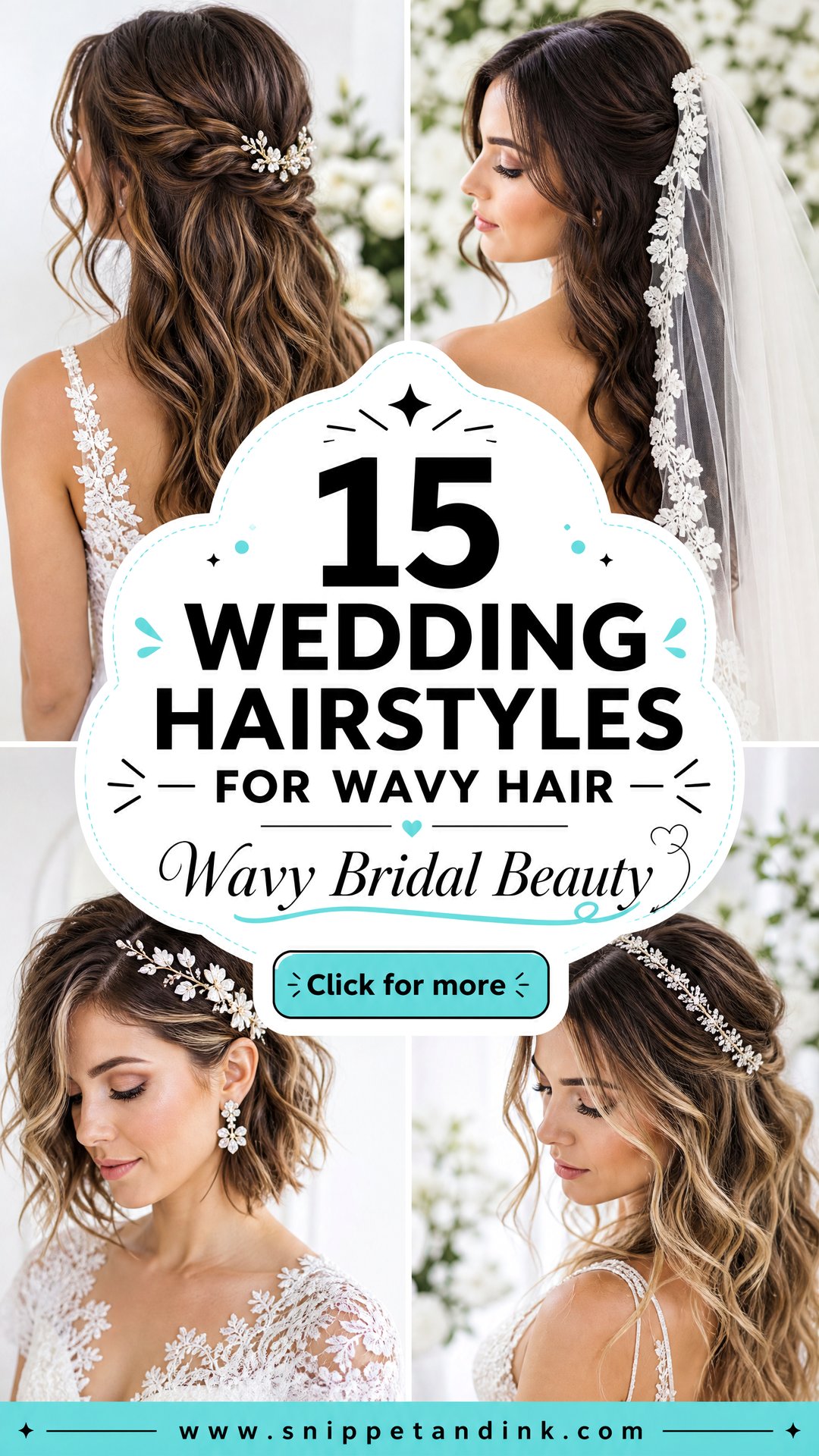
Natural Bends or Iron-Set Waves? What I Decide at the Trial
The first question at a wavy-hair trial is whether we style with your natural wave or reset it with heat. Natural waves are rarely even. The underneath is often looser, the top frizzier, and the front can bend in the opposite direction. That looks charming on an ordinary day and patchy in close-up photos.
When I keep your natural texture
If your waves are consistent from root to end and hold well through the day, I’ll work with them. In that case, wash the evening before, use your usual cream or mousse, and diffuse or air-dry fully. Hair washed that morning is too soft and slippery to hold pins.
When I reset with an iron
For uneven or frizz-prone waves, I blow-dry the hair smoother and set new waves with an iron. The result looks natural in photos and is much more uniform. It also lasts longer, because a set wave cools into place. Tell your stylist which parts of your head always misbehave; they’ll want to give those sections extra attention.
1. Half Up Wedding Hairstyle For Wavy Hair
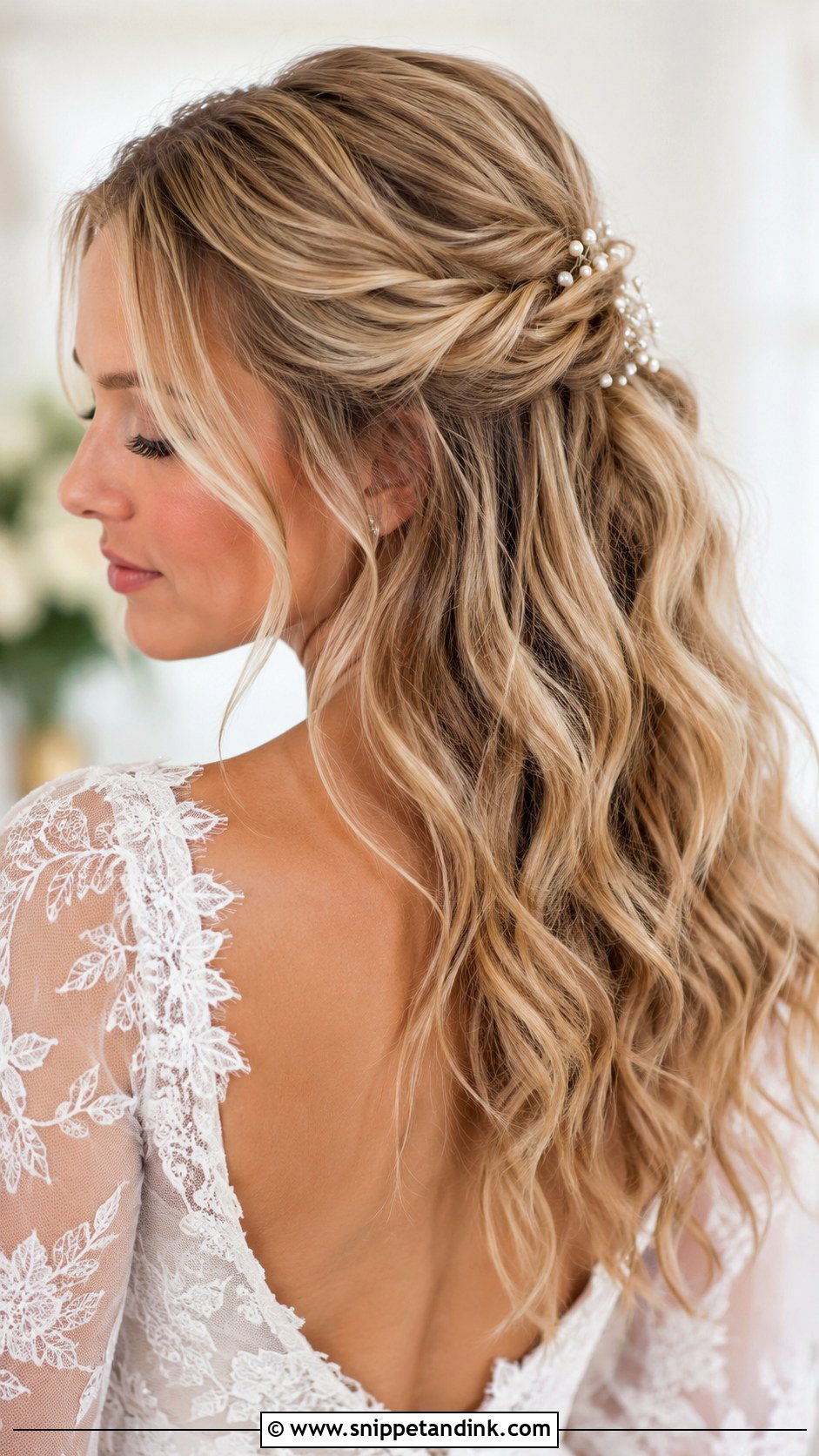
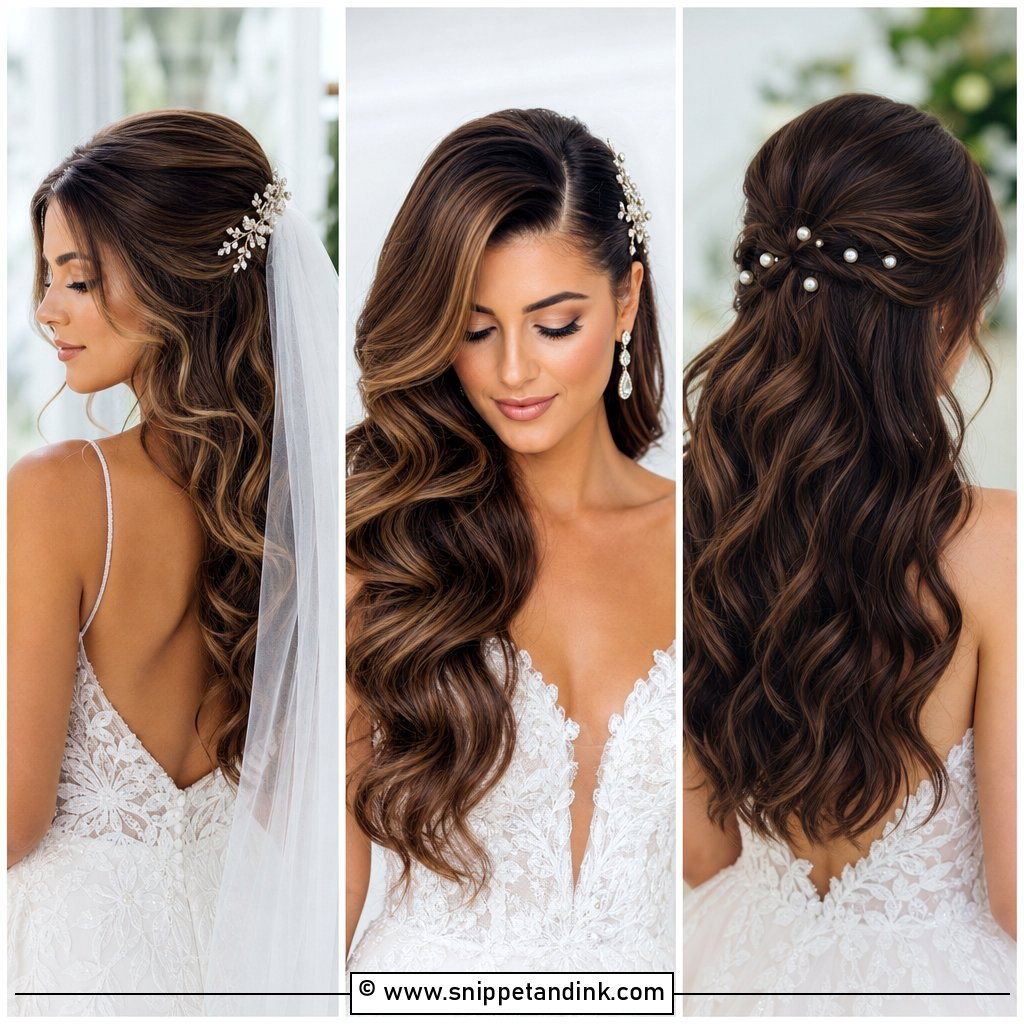
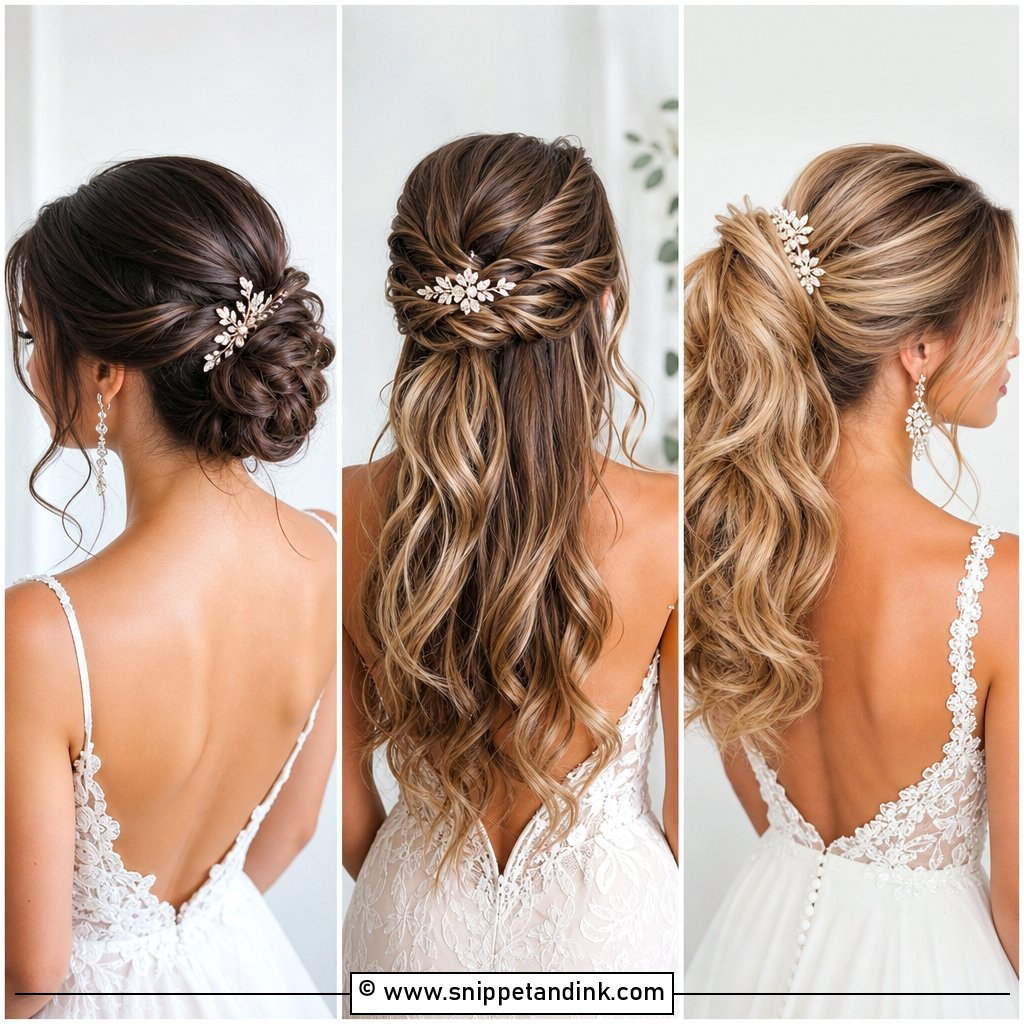
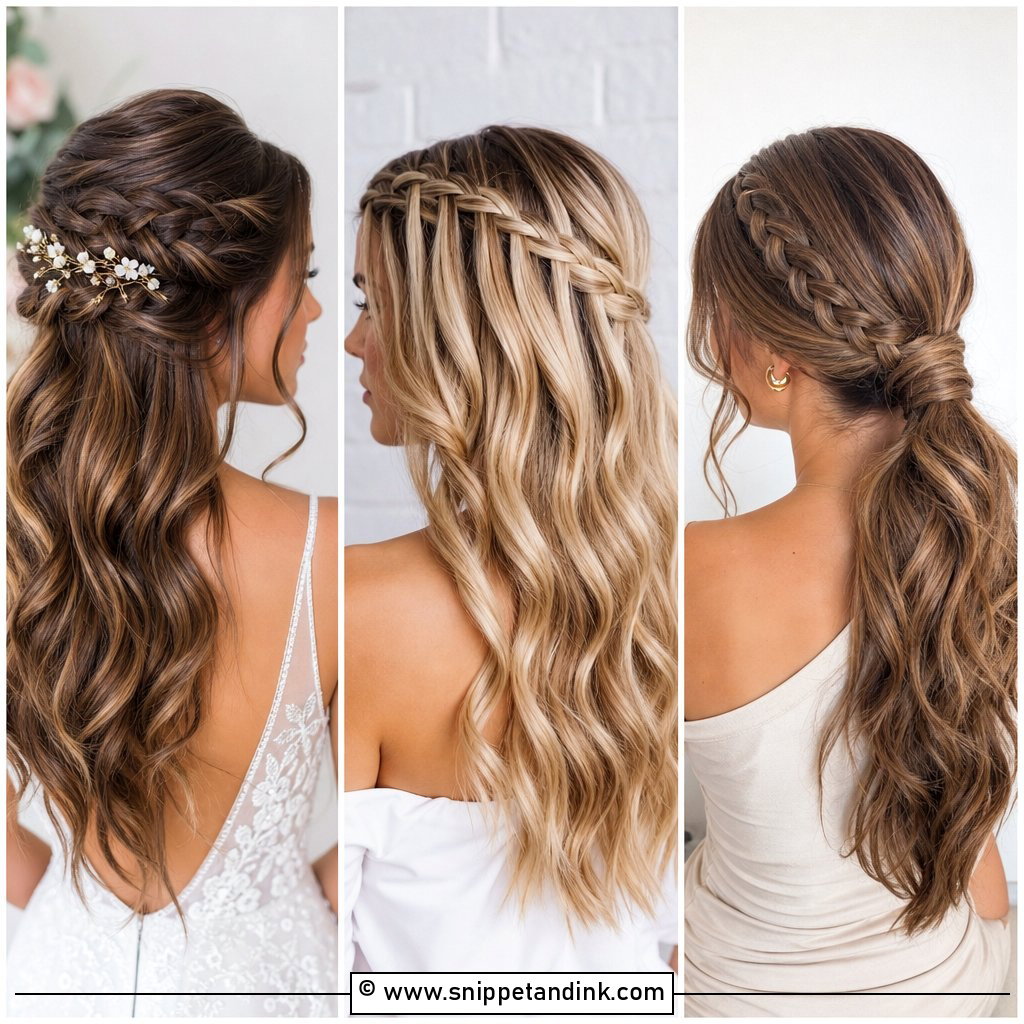
Most wavy-haired brides I style end up in a half up, and for good reason. The top section is the part that frizzes and falls in your face first, so pinning it back solves the hardest problem and leaves the rest of your texture on show. I take that section from the temples, twist each side rather than braid it, and lock the twists with crossed pins underneath. A veil comb slides straight into that crossing point. Ask for a little height at the crown before the twists go in; once they’re pinned, you can’t add it.
2. Low Bun Wedding Hairstyle For Wavy Hair
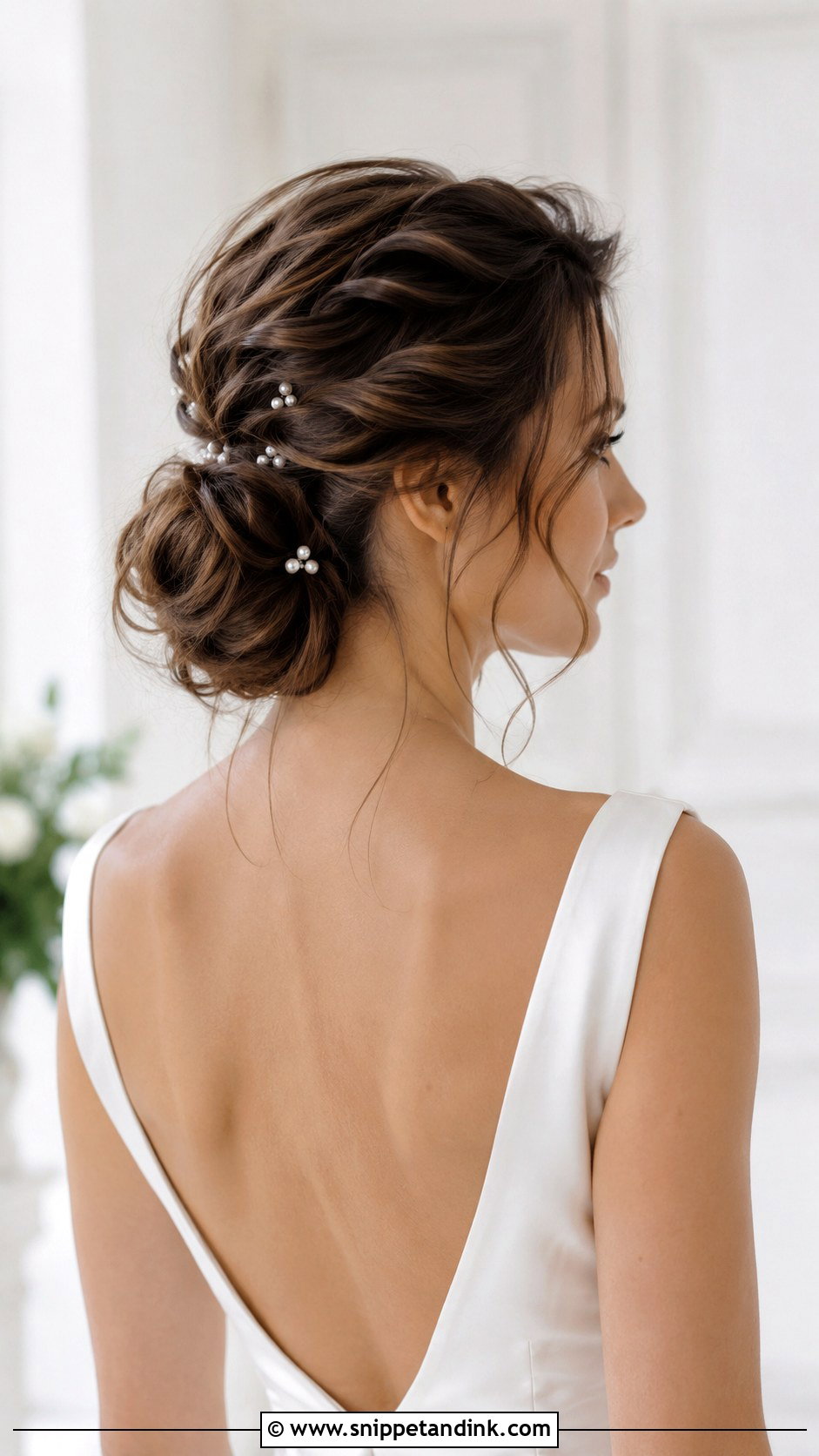
Wavy hair makes a better low bun than straight hair. Smooth hair shows every pin and gap, while waves fill them in. I set the whole head with a medium iron first so the texture is even, add a little backcombing at the base for grip, then pin the bun in sections rather than twisting it all at once. That way, if one section drops during dancing, it can be repinned without redoing the bun. Ask your stylist to place it according to your neckline: lower for open backs, a touch higher for high necks so it doesn’t sit on lace.
3. Wavy Wedding Ponytail
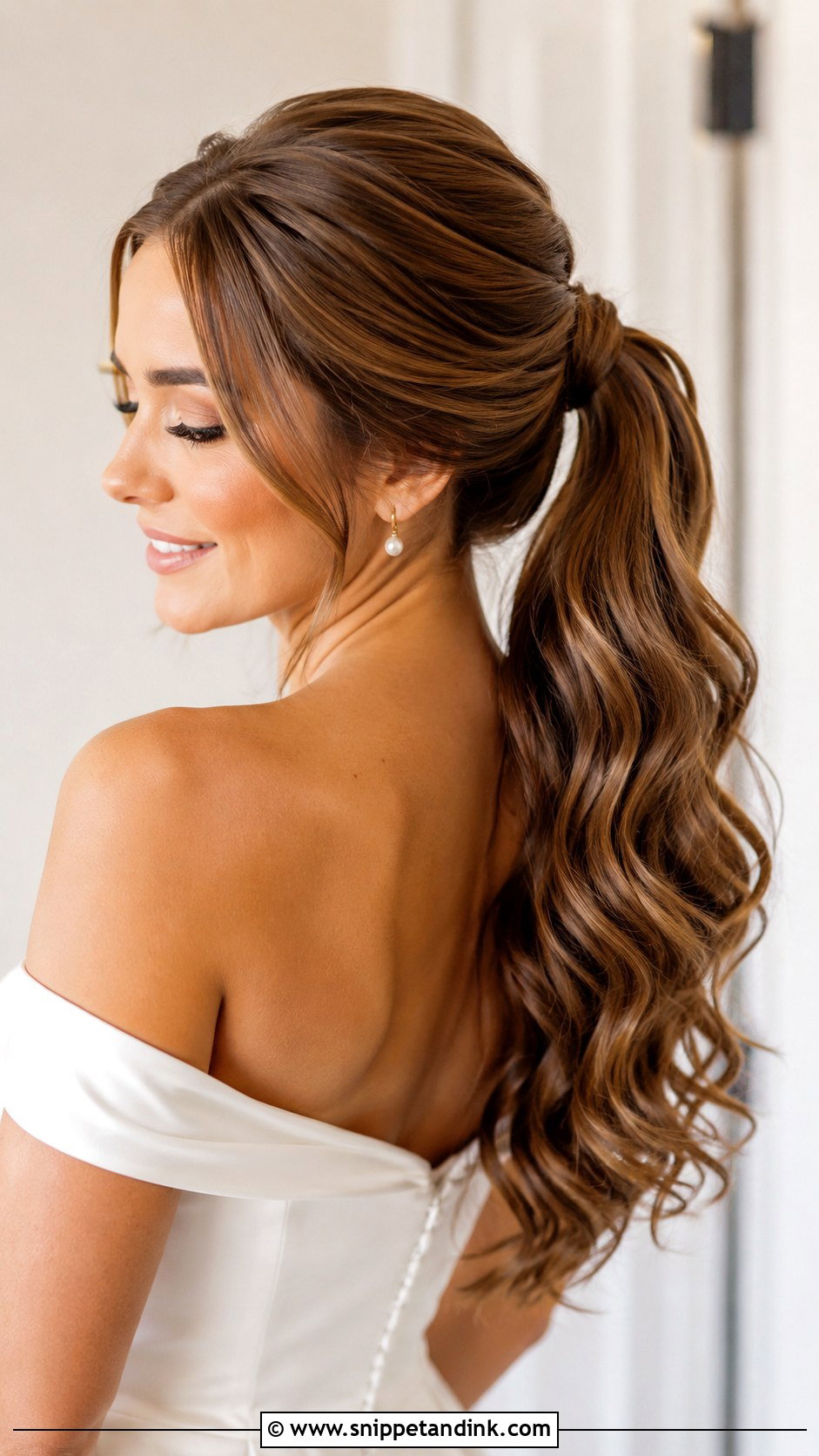
A ponytail is the most underestimated wedding style for wavy hair. The crown is brushed smooth, the length stays textured, and nothing moves in your face all night. I always wrap a strand of hair around the base to hide the elastic and pin it from underneath. Placement makes the mood: at the nape it reads soft, at the crown it’s sharper and lifts the face. One caution: a high, heavy ponytail can ache after eight hours, so I’d keep it mid-height if your hair is very thick.
4. Hollywood Waves Wedding Hairstyle
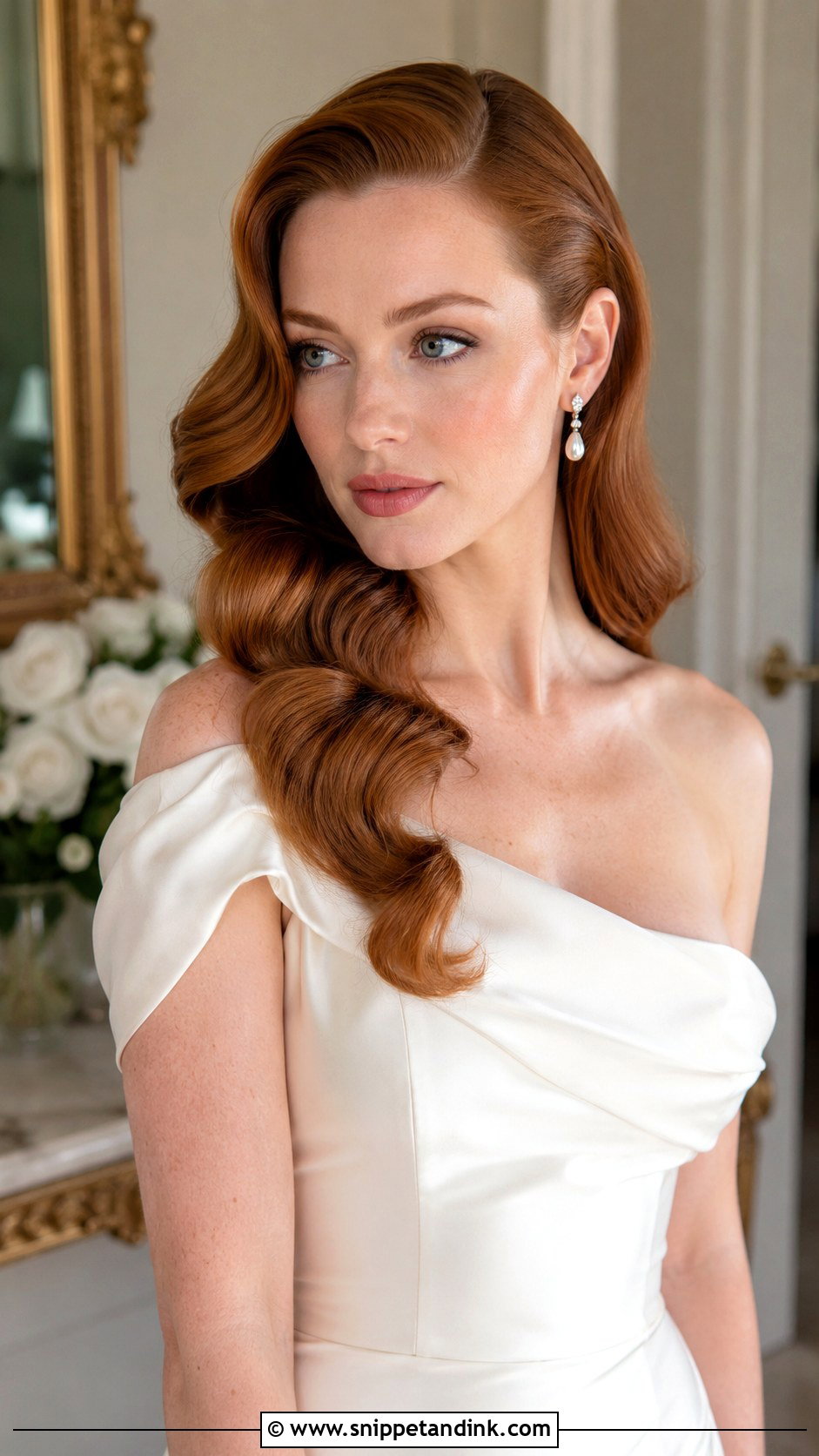
Hollywood waves need your natural wave relaxed out of the way first. I blow-dry smooth, curl every section in the same direction with a medium barrel, pin each curl to cool, then brush through until the bends join into one ribbon. That brushing step is where the look actually happens. It’s a demanding style in humidity, because natural waves want to come back through it. Shine on dark tones and on copper is especially strong in photos. Tuck one side behind the ear and secure it with a hidden pin.
5. Braided Crown Wedding Hairstyle For Wavy Hair
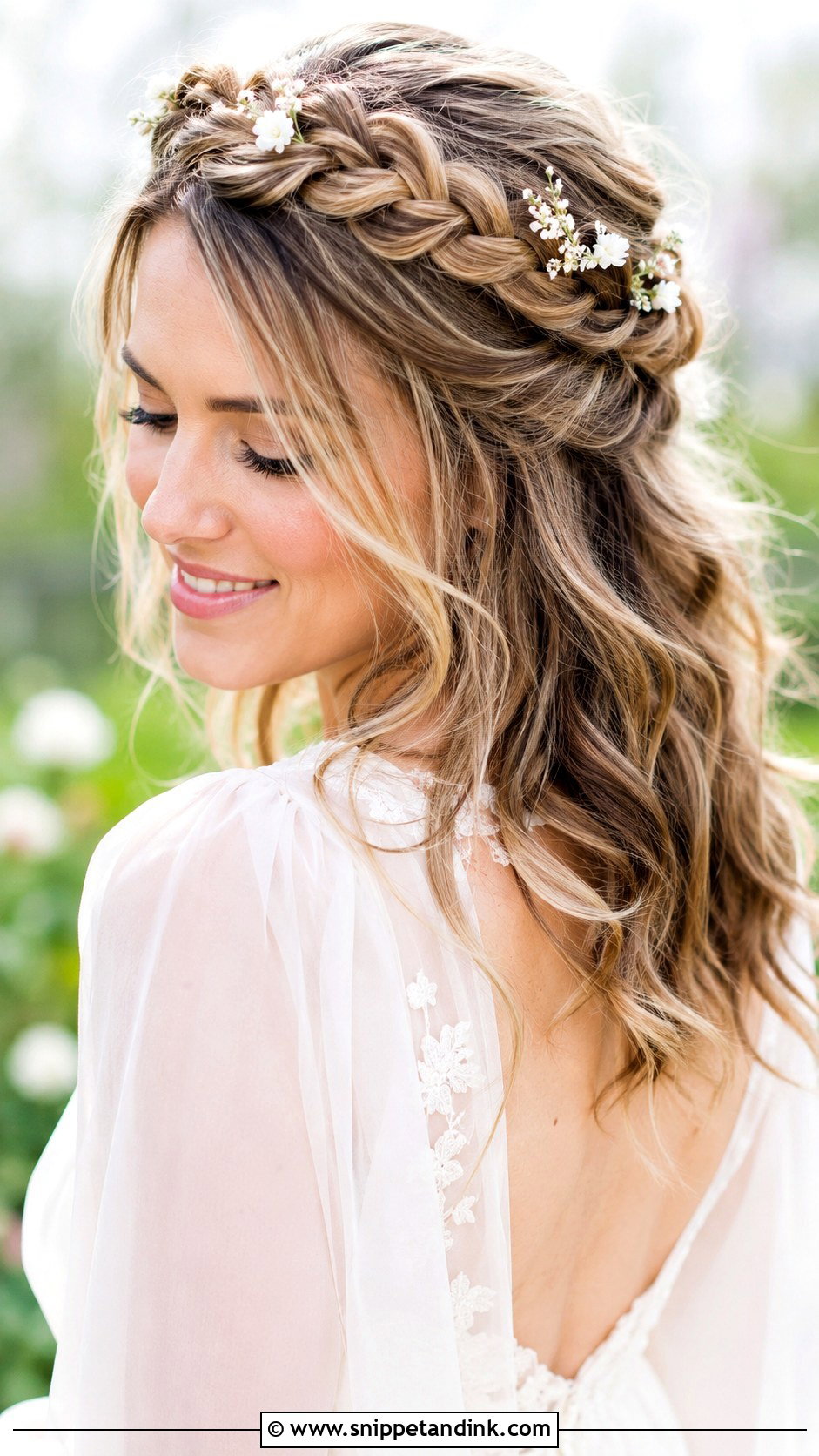
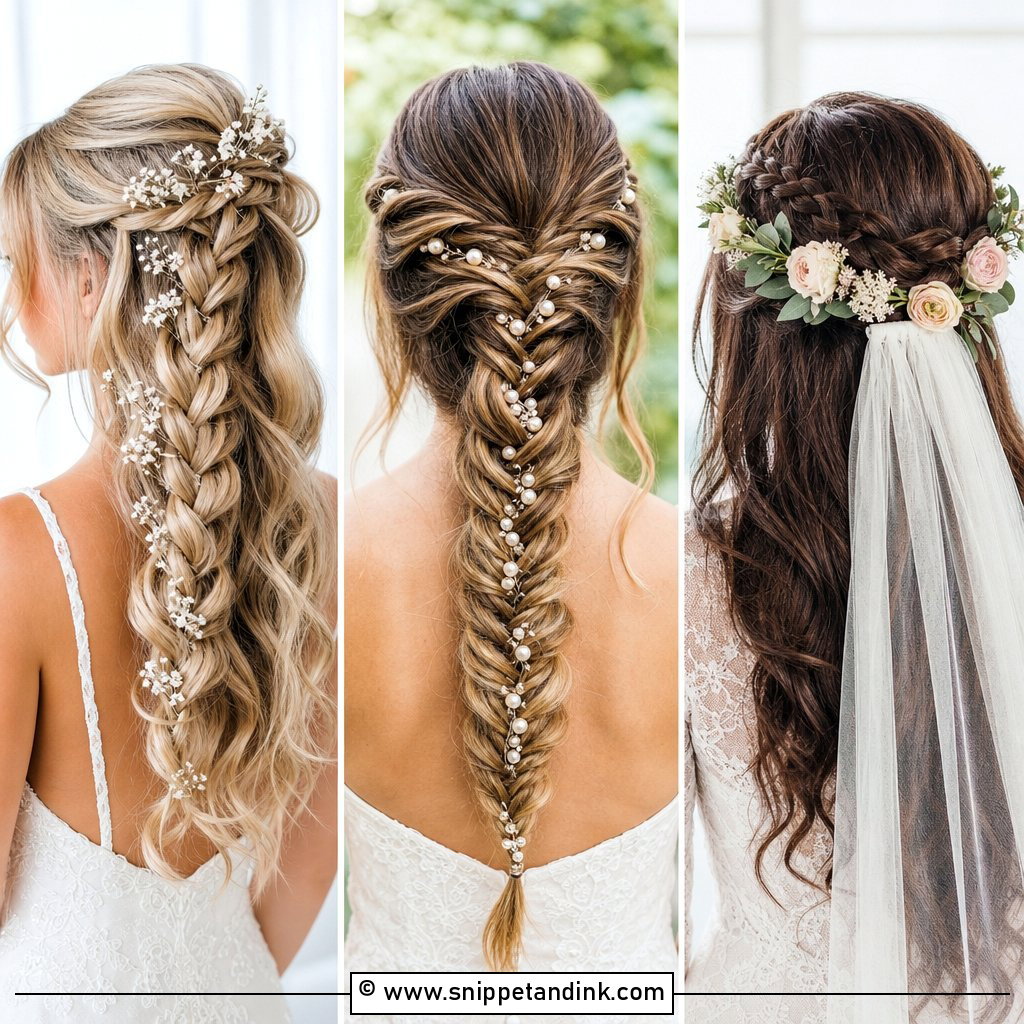
A braided crown wedding hairstyle is my fix for brides growing out bangs or short front layers. The braid catches those pieces so they can’t slip loose by the reception. I braid with the wave still in the hair, never after smoothing it, because textured hair grips the braid and holds without slipping. Below the crown, you can leave the waves down or gather them into a loose bun. Keep the accents small. A wave pattern is already busy, and heavy jewels tucked into a braid look cluttered.
6. Wavy Chignon Wedding Hairstyle
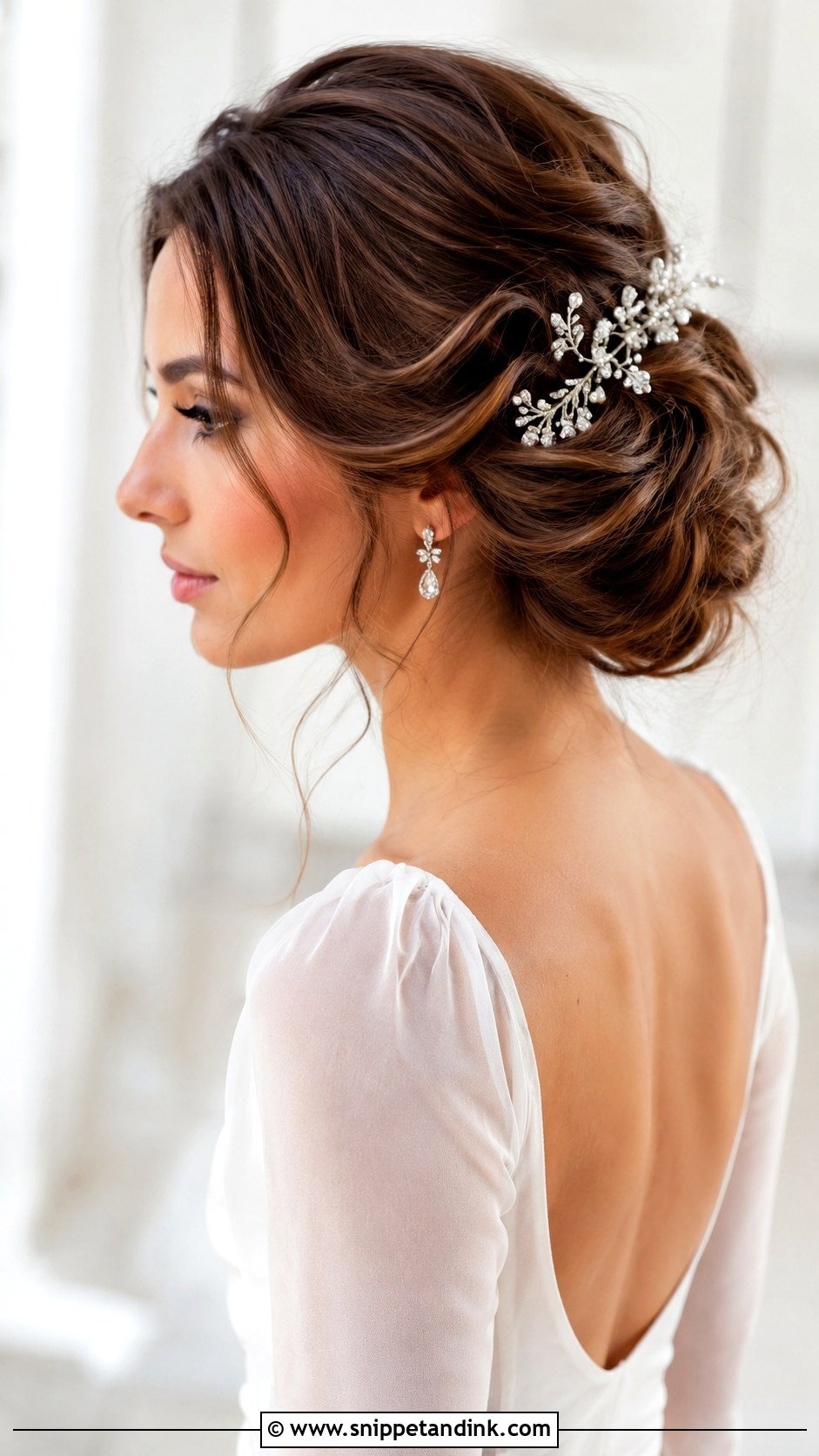
A chignon is where waves earn their keep for fine hair. The texture adds fullness that a fine-haired bride doesn’t get with smooth hair, and the knot shape keeps thick hair from looking bulky. I gather the hair low, roll or knot it into a soft knot or roll, and pin it with U-pins, which hold the shape without flattening the waves. A center part reads current; a side part looks more classic. A few face pieces soften it under a veil.
7. Side Swept Wedding Hairstyle For Wavy Hair
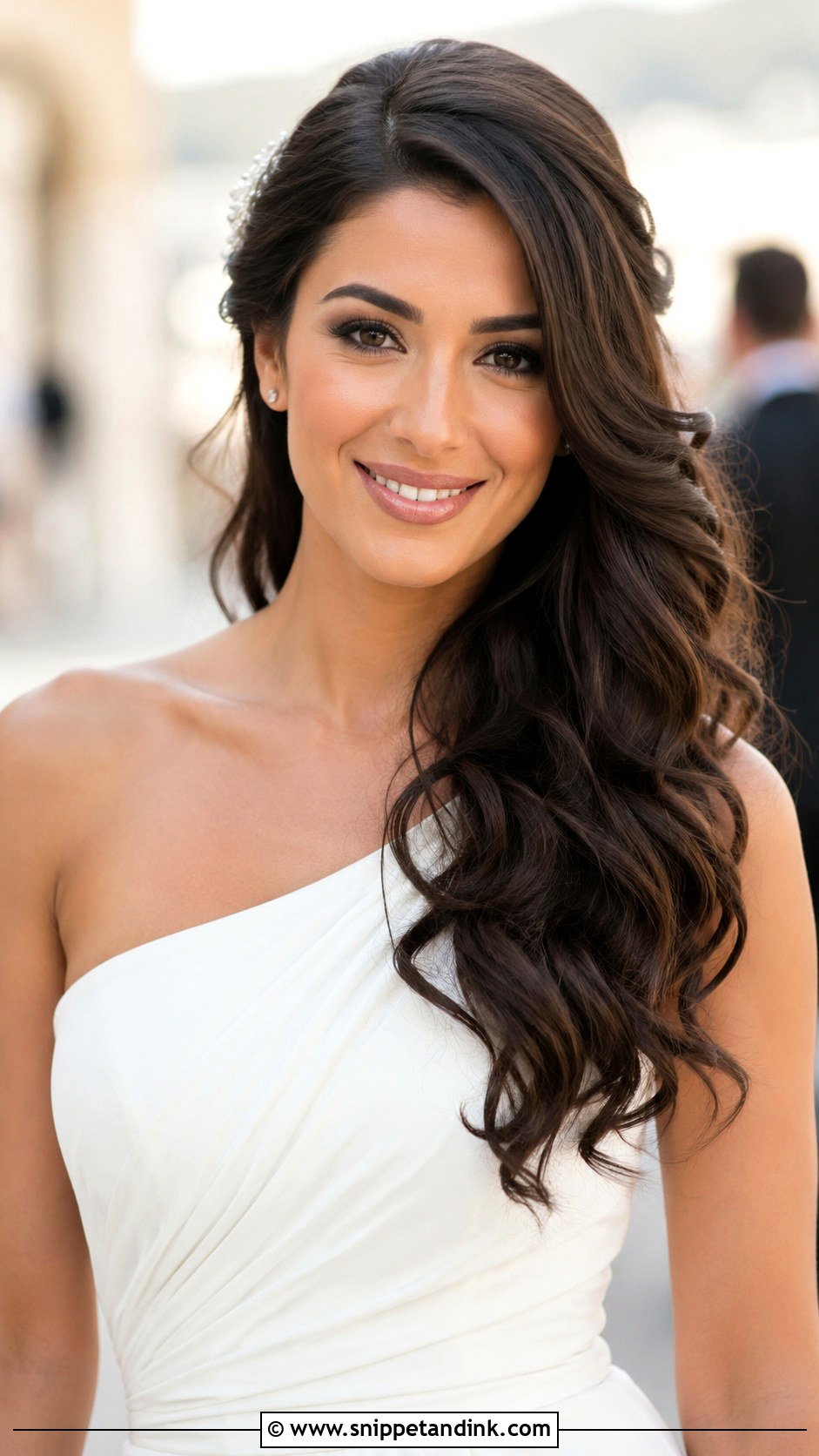
Swept to one side, waves show off earrings and suit a one-shoulder dress. The hidden work is on the other side, where I twist the hair flat behind the ear and pin it with crossed bobby pins. Without that anchor, the hair slowly drifts back over both shoulders. You’ll need at least collarbone length to gather everything to one side. A decorative clip over the pinned area looks intentional and covers the pins.
8. Loose Waves Wedding Hairstyle
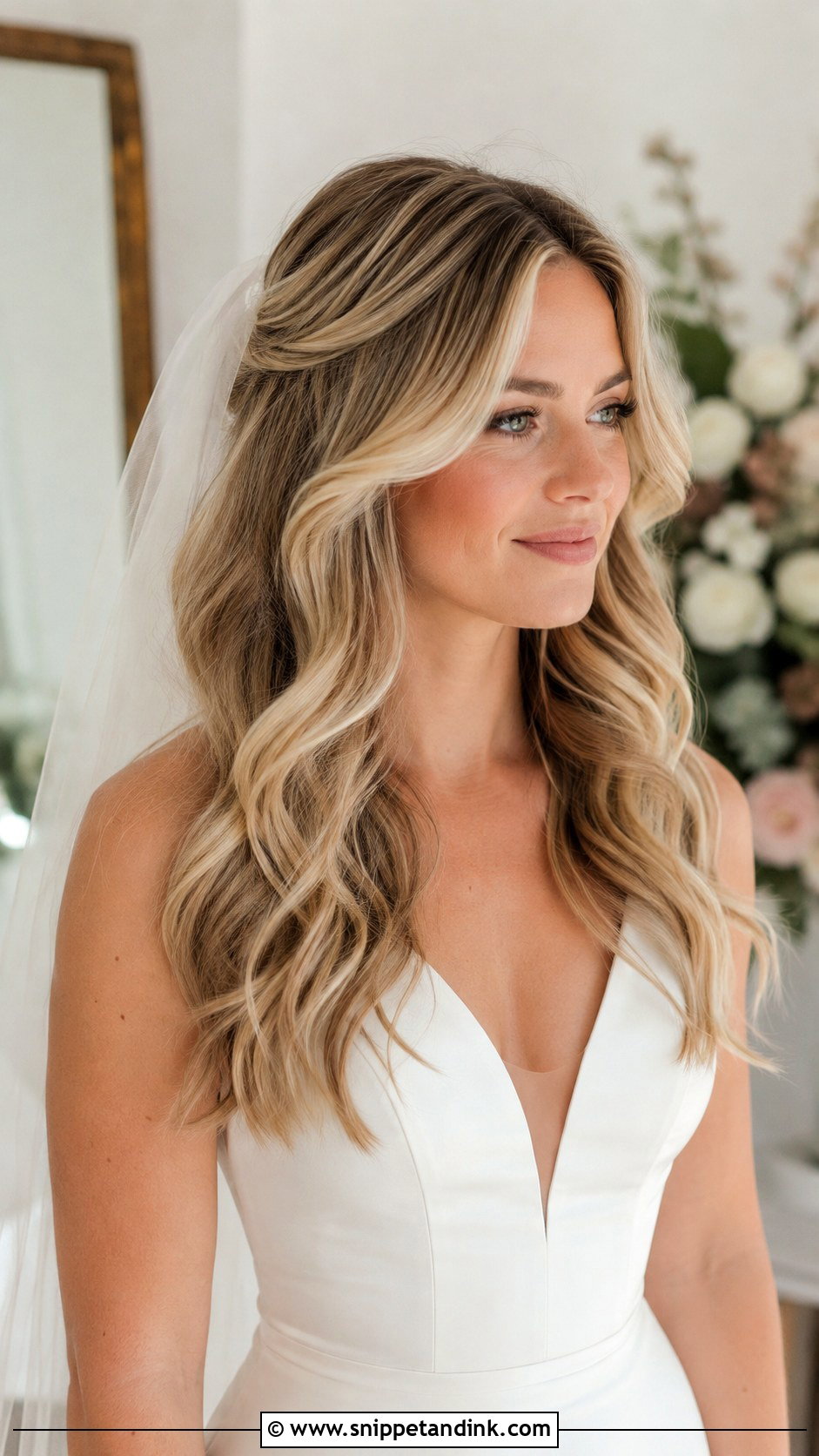
Loose waves look simple, which is exactly why they’re tricky to keep. I start with volumizing mousse on damp roots and rough-dry before curling. Product on wet hair is what gives the style a full day of life. The bends should begin around the cheekbones or below; curls starting at the roots look too done-up for most brides. Finish with a flexible spray rather than a firm one. Loose waves have to move, and crunchy hair doesn’t.
9. Messy Bun Wedding Hairstyle For Wavy Hair
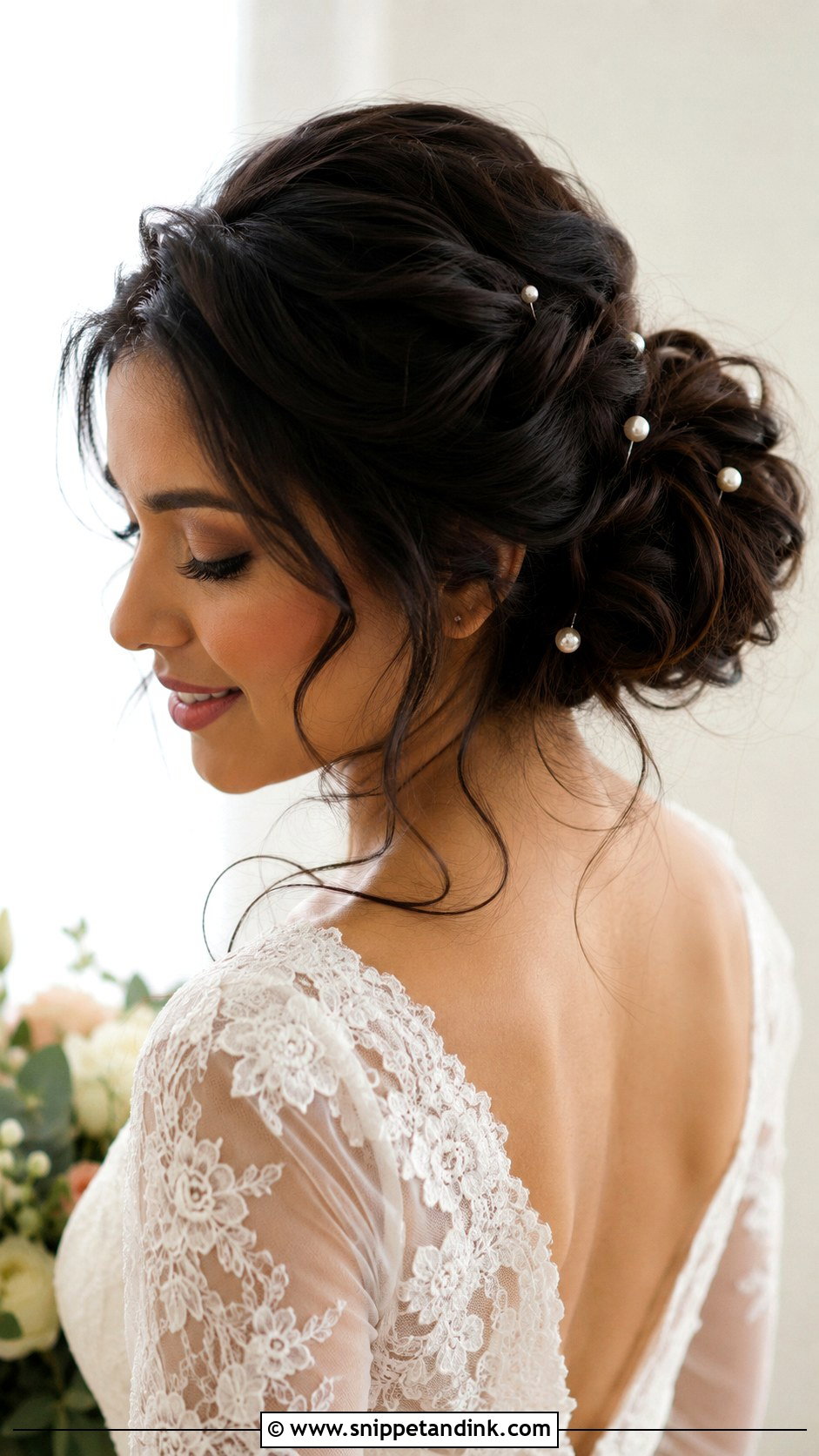
Don’t let anyone tell you a messy bun is quick. The ones that look relaxed in photos are the most carefully placed. I wrap the bun loosely, then pull out pieces one at a time and pin each in place where it frames the face. Wavy hair makes this easier, because the bends look full without much teasing. Pins sit inside the bun, so the structure is secure even though it looks loose. It sits low, centered or slightly to one side depending on the veil.
10. Wavy Wedding Hairstyle With Veil
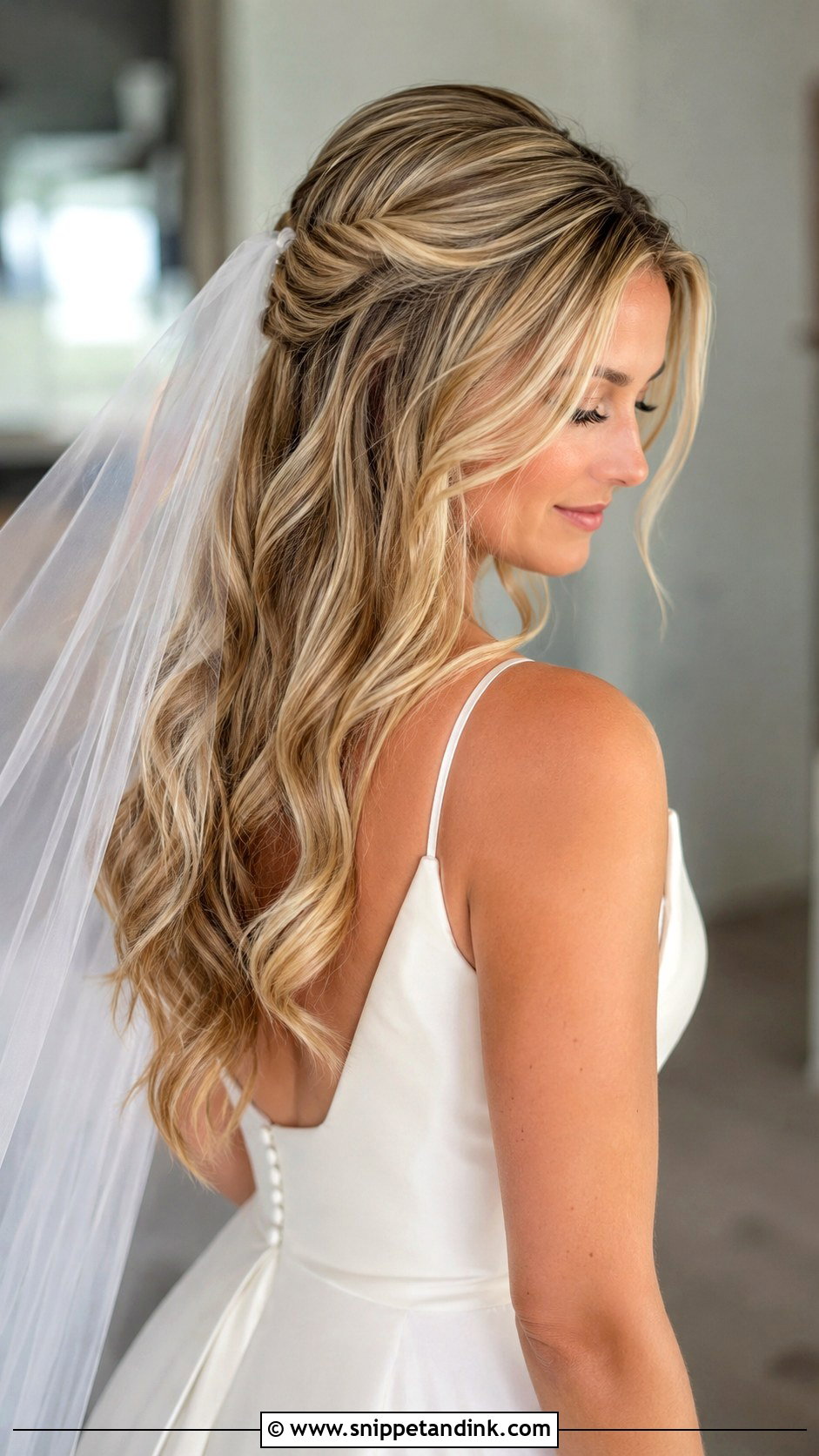
A veil needs something solid to grip, and loose waves alone won’t do it. For a hair-down bride, I build a small hidden anchor of crisscrossed pins at the crown under a little volume, and the comb slides into that. Half up styles, low buns and chignons give the comb a stronger base with no extra work. I also check how the waves look after the veil comes off, because a heavy cathedral veil can leave a dent. A quick lift with my fingers usually brings them back.
11. Wavy Wedding Hairstyle With Flowers
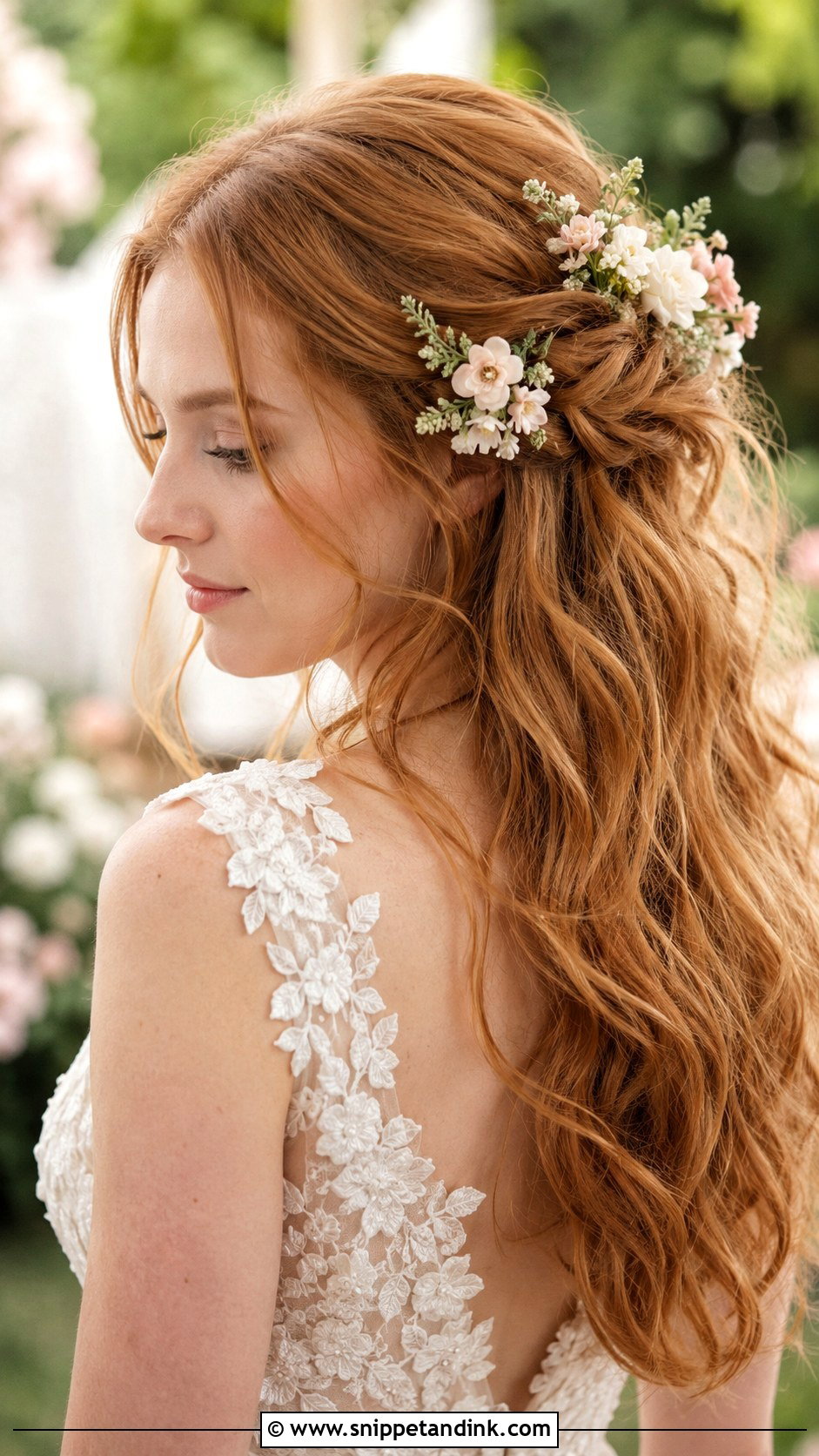
Fresh flowers wilt faster against warm hair than in a bouquet, so on a hot day I’d choose silk or dried blooms, or plan to swap them before the reception. Smaller ones tucked into a bun or twist look more refined than one big bloom. I wire each stem before pinning it so the flower sits in the hair rather than poking out. Matching the bouquet or color palette ties it together. Place them where they support the shape of the style, not where they cover it.
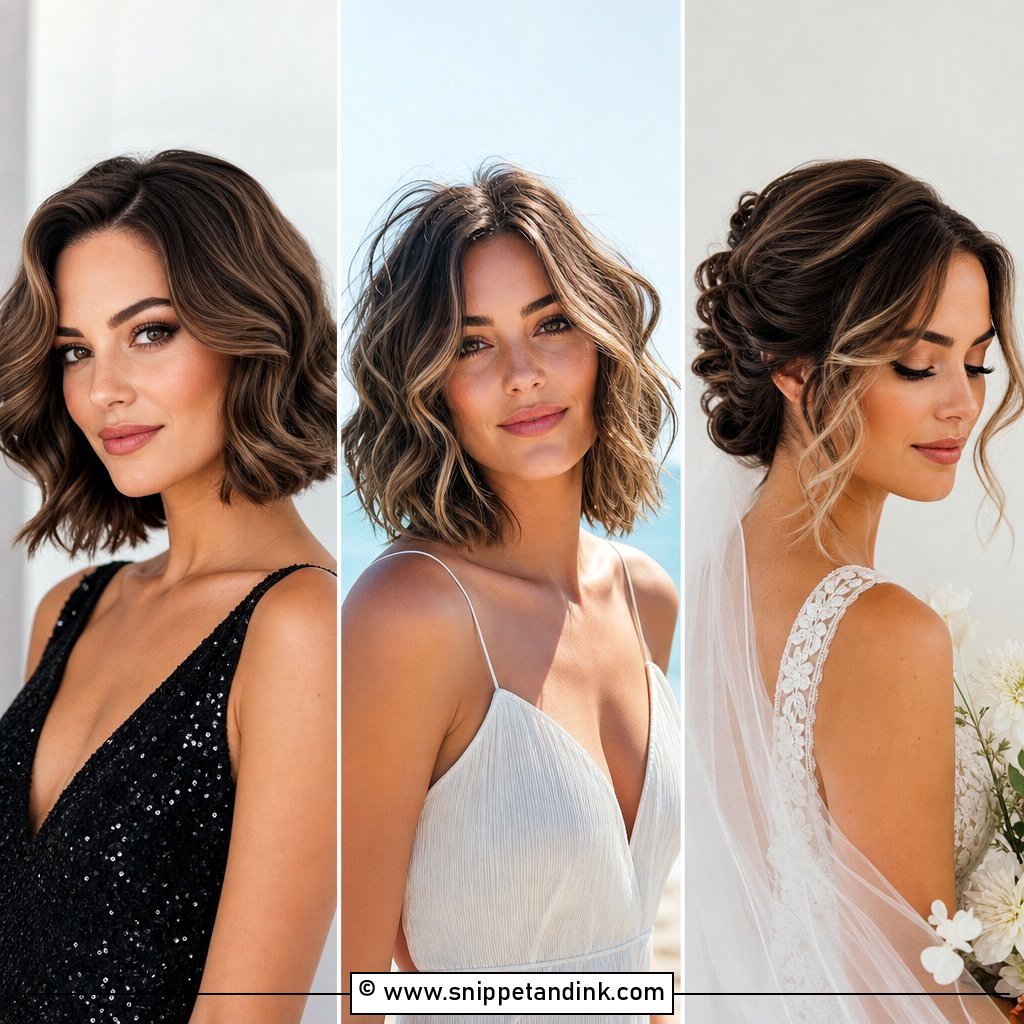
12. Short Wavy Wedding Hairstyle
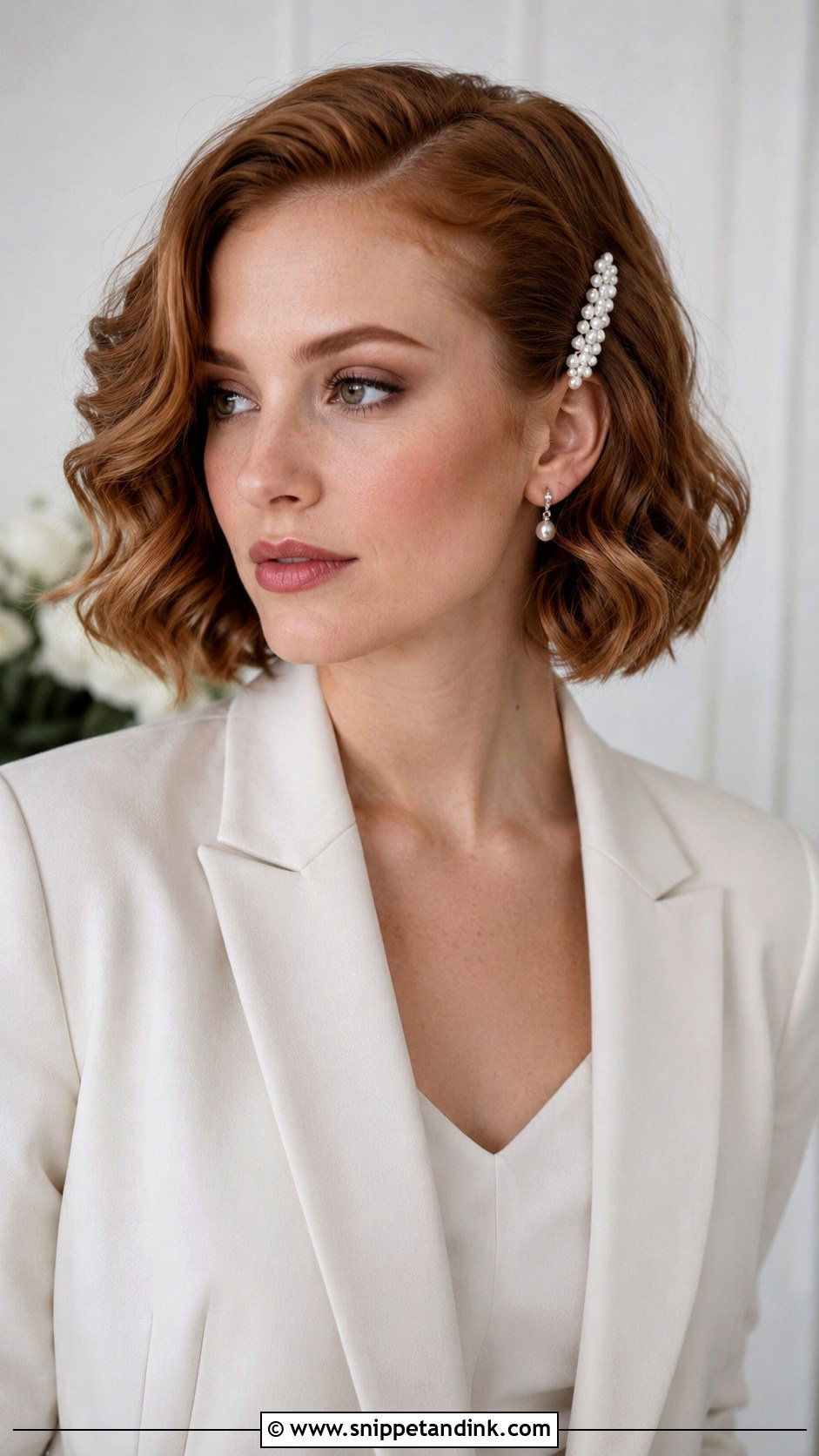
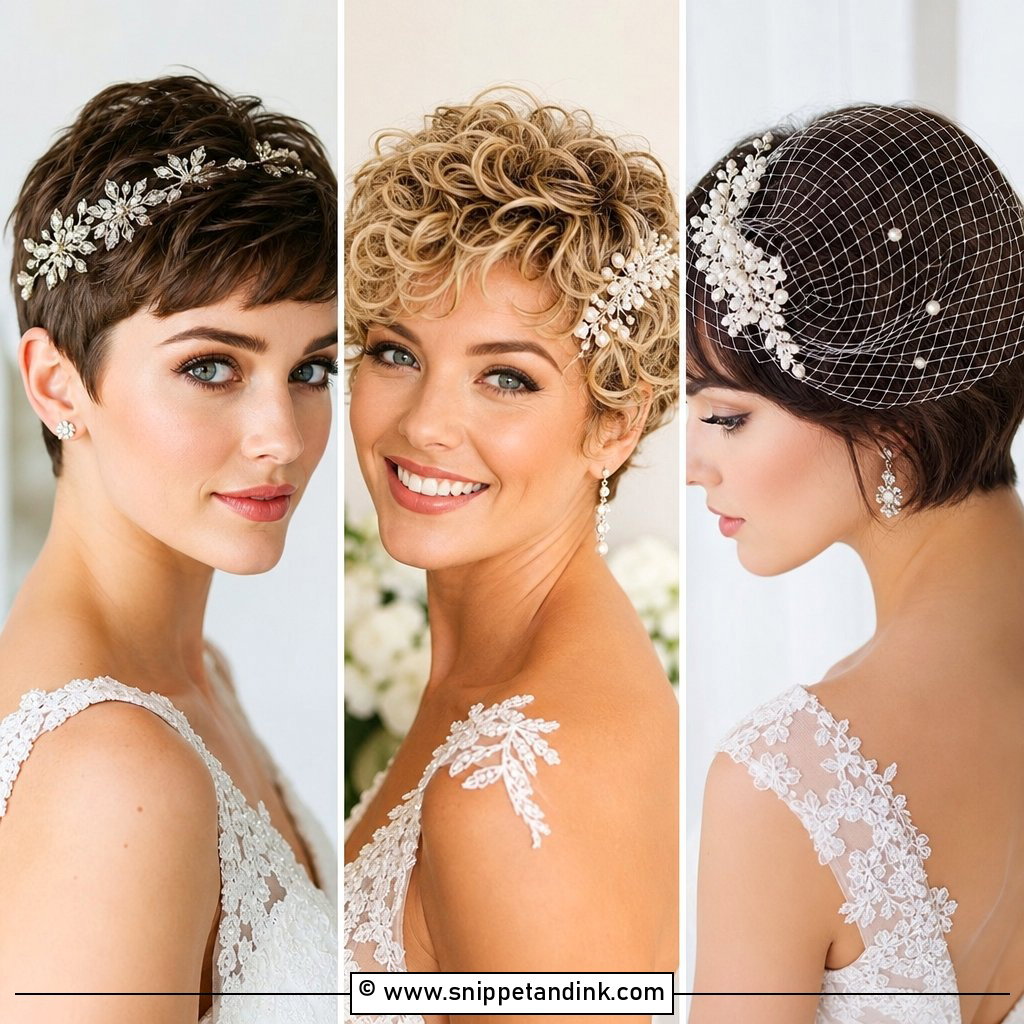
Short waves just need a clear shape. A wavy bob, lob or chin-length cut takes a deep side part, defined bends and one decorative clip well. Tiny braids, pinned twists or a slim headband can add detail. I use a small barrel for short hair, because the waves need tighter bends to show at that length. A firm finishing spray matters more here than with longer hair; short waves lose their shape quickly when humidity rises. The result looks considered and modern.
13. Wavy Wedding Updo
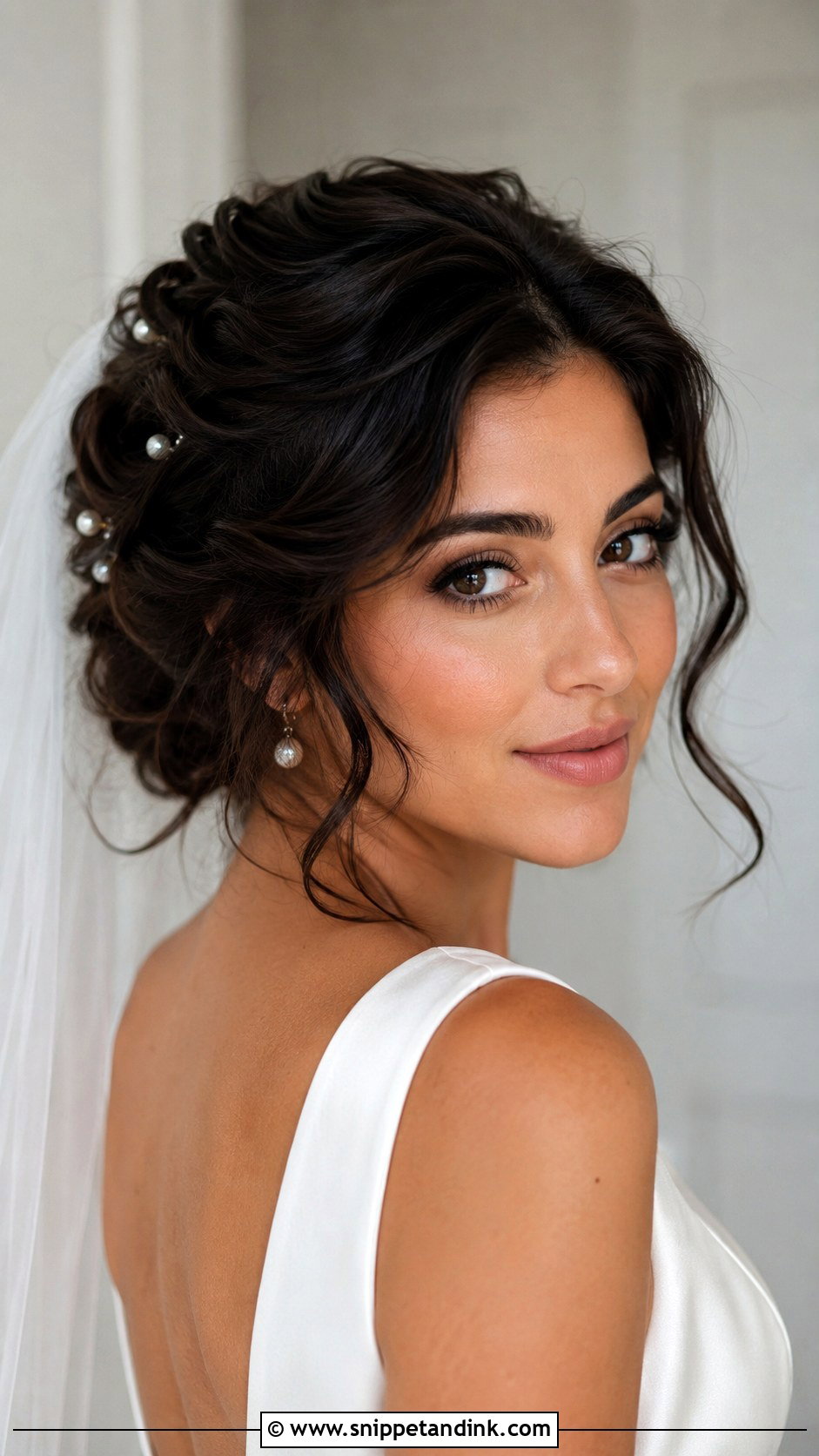
A full updo is the right call for thick wavy hair in summer, because getting the weight off your neck makes a long day much more comfortable. The waves give the pinned sections texture, so it never looks flat. I twist and loop sections individually and pin each one, which takes longer than a single twist but distributes the weight evenly. Choose low or mid-height depending on your veil. A few pearl pins or a delicate comb add detail without crowding it.
14. Wavy Wedding Hairstyle With Headband
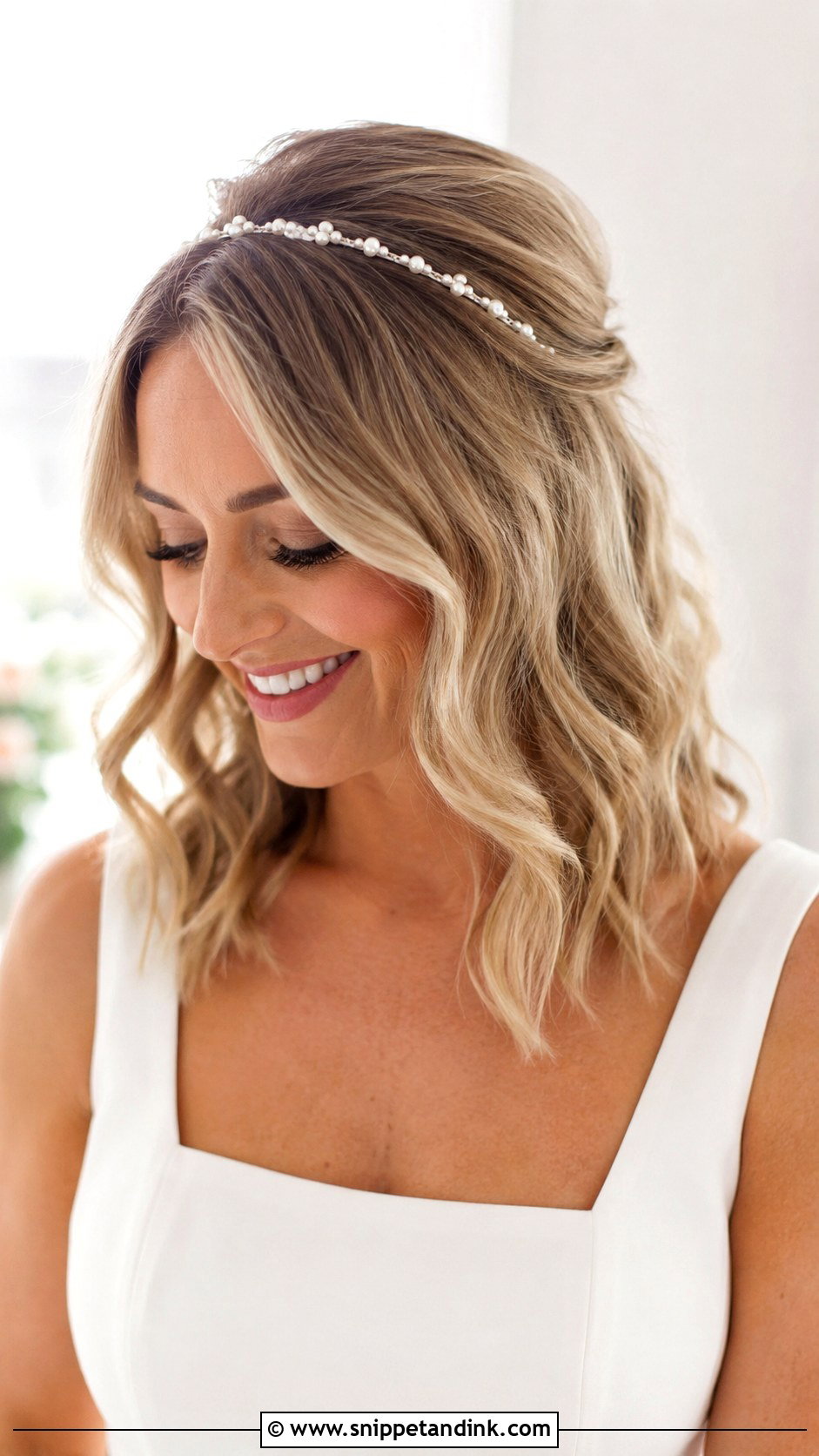
A headband works with almost any length of wavy wedding hair, and it’s the easiest way to control front layers. The common problem is a band that slides back by mid-afternoon. I place two small bobby pins crossed behind each ear, under the band, to keep it locked. Build a little height at the crown before putting it on, since the band flattens anything underneath. Try it on for an hour before the wedding; a tight band can cause a headache behind the ears.
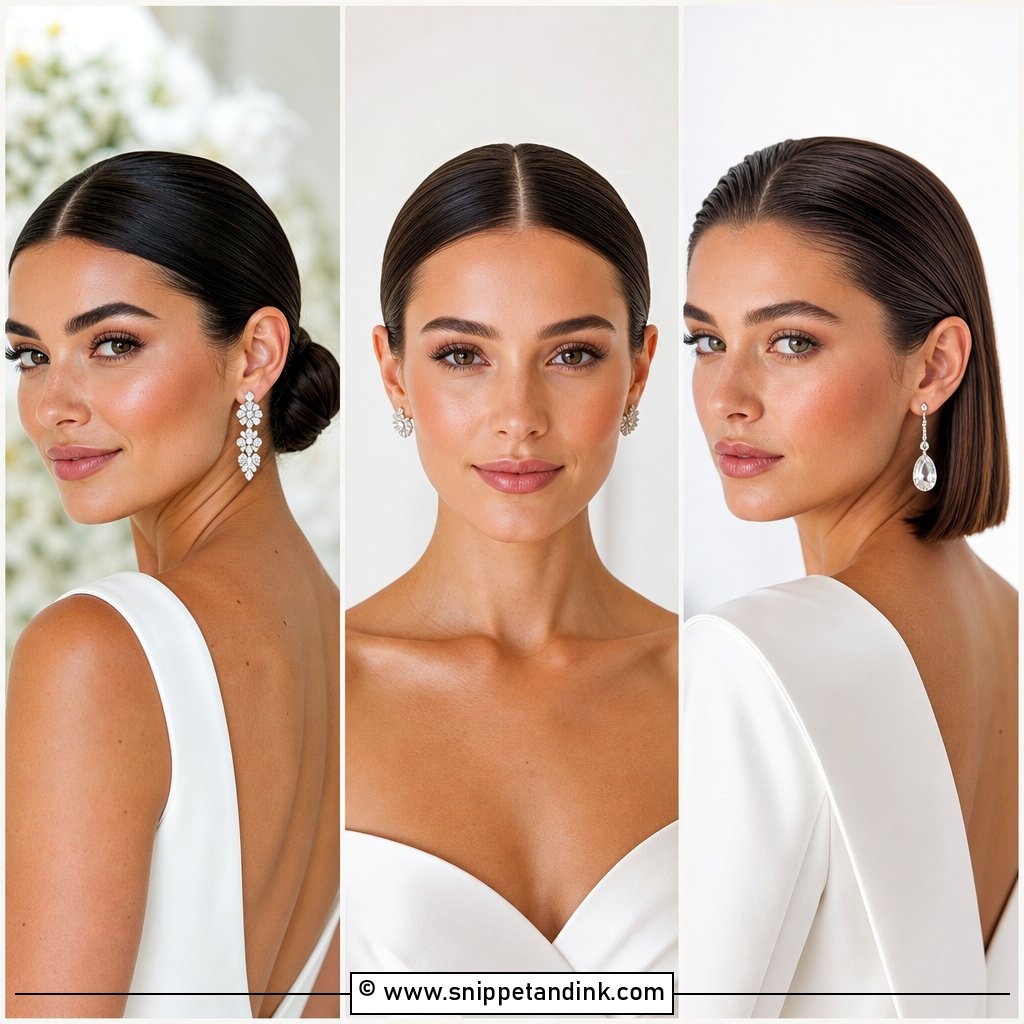
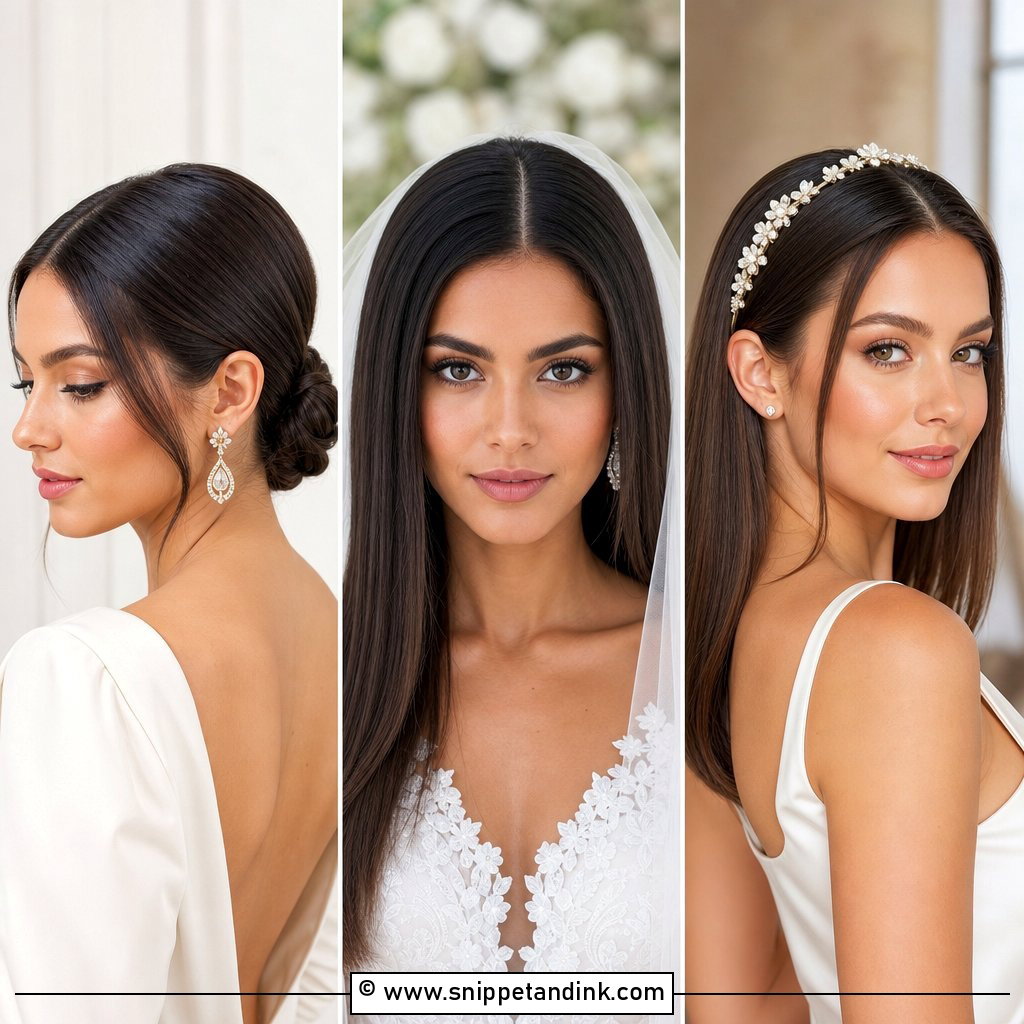
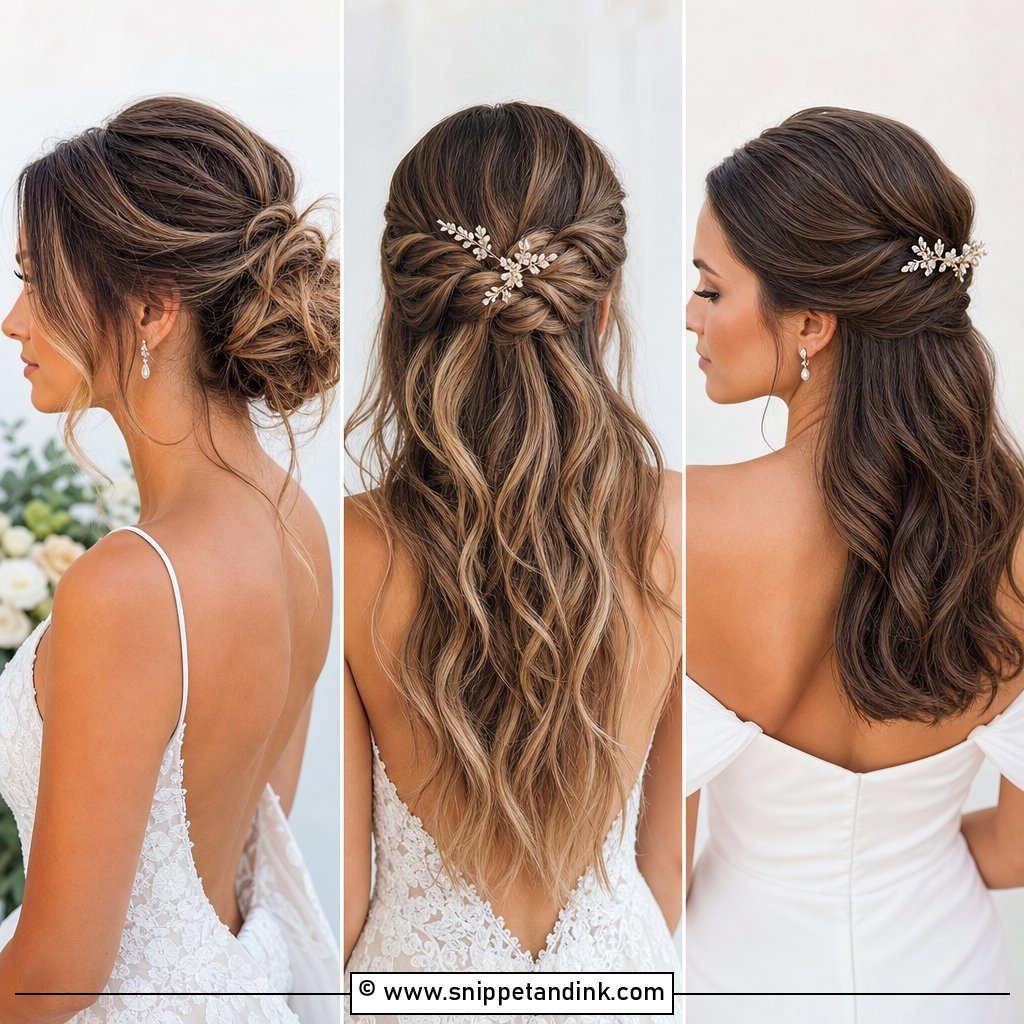
15. Wavy Wedding Hairstyle For Medium Hair
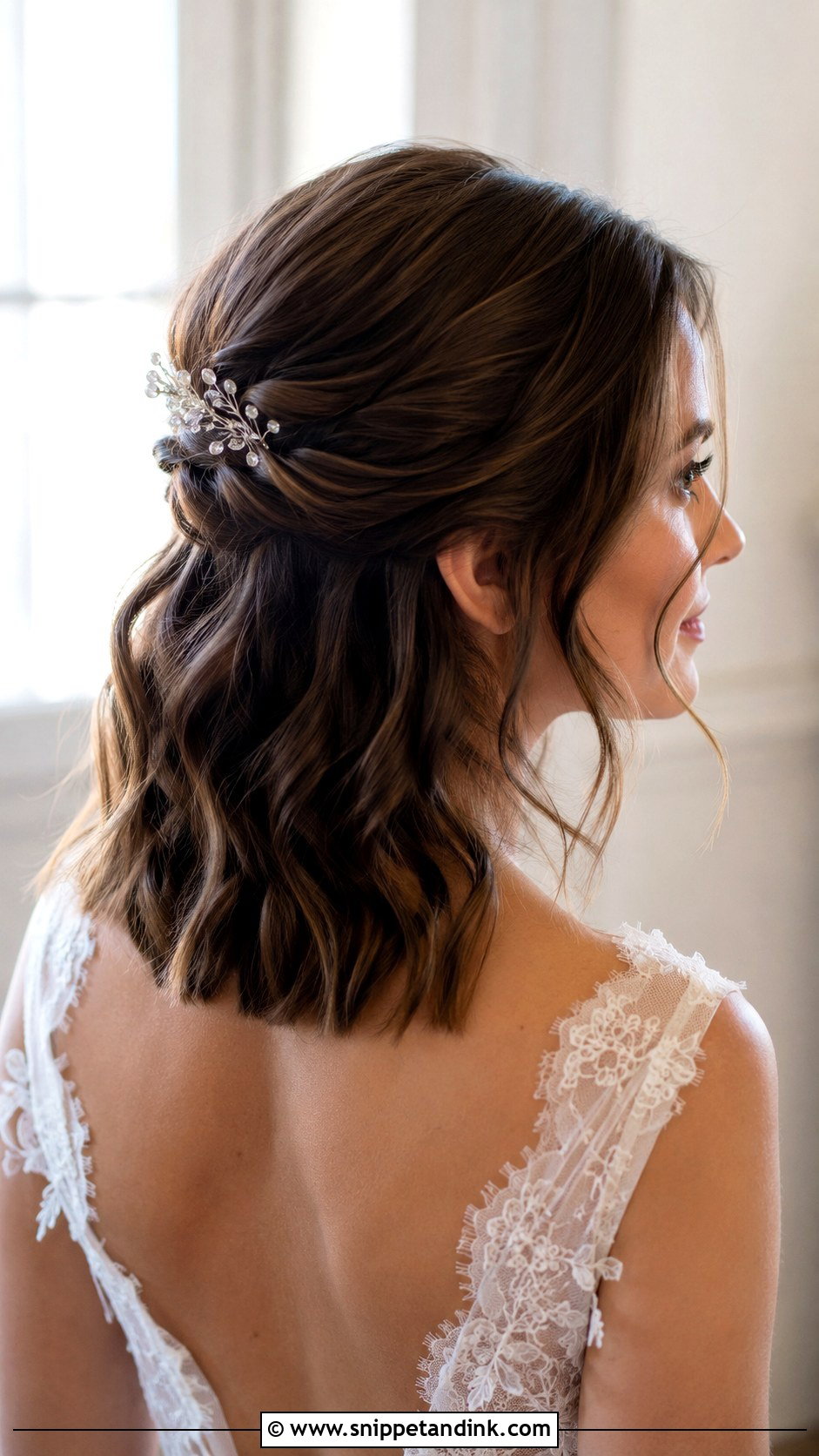
Collarbone-length waves give you nearly every option on this list without the weight of long hair. They can go half up, to one side, into a small low bun or stay down. The risk is flatness in photos, since medium hair has less weight pulling the waves into shape. I build volume at the roots with mousse and curl front layers away from the face so they open it up. Small combs and slim headbands suit this length better than large pieces.
Humid Days and Wavy Hair: Planning Around the Forecast
Wavy hair absorbs moisture from the air, which is why it swells and frizzes on a muggy day. I check the forecast a few days out, and if it’s going to be humid, I shift the plan rather than hope for the best.
- Move toward up or half up styles. Hair that is pinned has less surface exposed to damp air than hair worn fully down.
- Use an anti-humidity finishing spray as the last step, after all the pinning is done, so the hair is sealed.
- Avoid heavy oils on the lengths. They weigh waves down without stopping frizz, and the hair goes limp by evening.
- Keep a small comb, a few bobby pins and a travel spray in a bridesmaid’s bag for touch-ups before the reception photos.
On a dry, windy day the problem flips: waves blow apart rather than frizz. A slightly firmer hold spray and a tucked-in side section usually take care of it.
Your Wave Pattern Is Already Half the Style
Every style here starts with the same thing: texture you already have. Half up, buns, chignons, ponytails and Hollywood waves all work, but the right one depends on your length, your dress and how much humidity you’ll be dealing with. Book your trial in similar weather if you can, bring your actual veil and accessories, and wear the style for a few hours afterward. If your waves still look good by evening, you’ve found your wedding hair.
You'll Like These Ideas:


Leave a Reply