
Bridal hair is the one part of the look you can’t redo halfway through the day without a stylist in the room, so I plan it as carefully as a dress fitting. Classic styles last because they’re built on a few sound techniques: a smooth base, secure pins and a shape that suits the neckline. A sleek chignon, soft Hollywood waves or a half-up style with pearls can each be adapted to different lengths and textures. Below are twenty I come back to again and again, with what I check at a trial and who each one really suits. Whichever you pick, it should look like you in the mirror, only more finished.
Reading a Reference Photo Honestly
Most brides arrive at a trial with a saved photo, and that’s useful. But a photo shows a finished style on someone else’s hair, in someone else’s light, so I spend the first few minutes working out what’s actually in it.
- Count the hair. Many styling photos use clip-in extensions or padding for volume. If the bun is bigger than your ponytail could ever make, it probably had help.
- Check the texture. Waves that hold for hours on thick, coarse hair may drop within the hour on fine, straight hair unless the technique changes.
- Look at the angle. Back-view photos hide the front, and front photos hide where the pins are. Bring both views if you can.
- Notice the editing. Smoothing filters remove flyaways that no amount of spray removes in real life.
Bring two or three photos that share one thing you love, rather than ten different looks, plus a picture of your dress neckline. That tells me more than any single image.
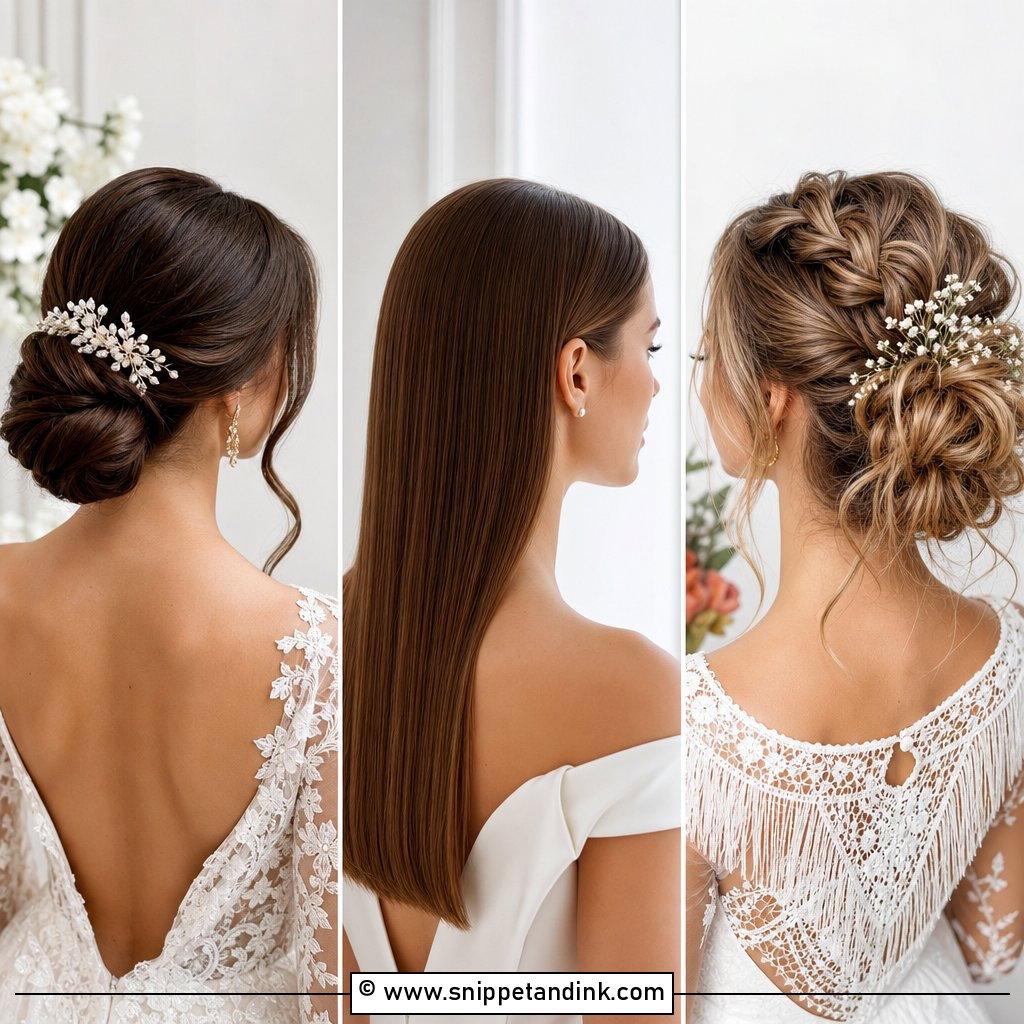
1. Classic Low Chignon Bridal Updo
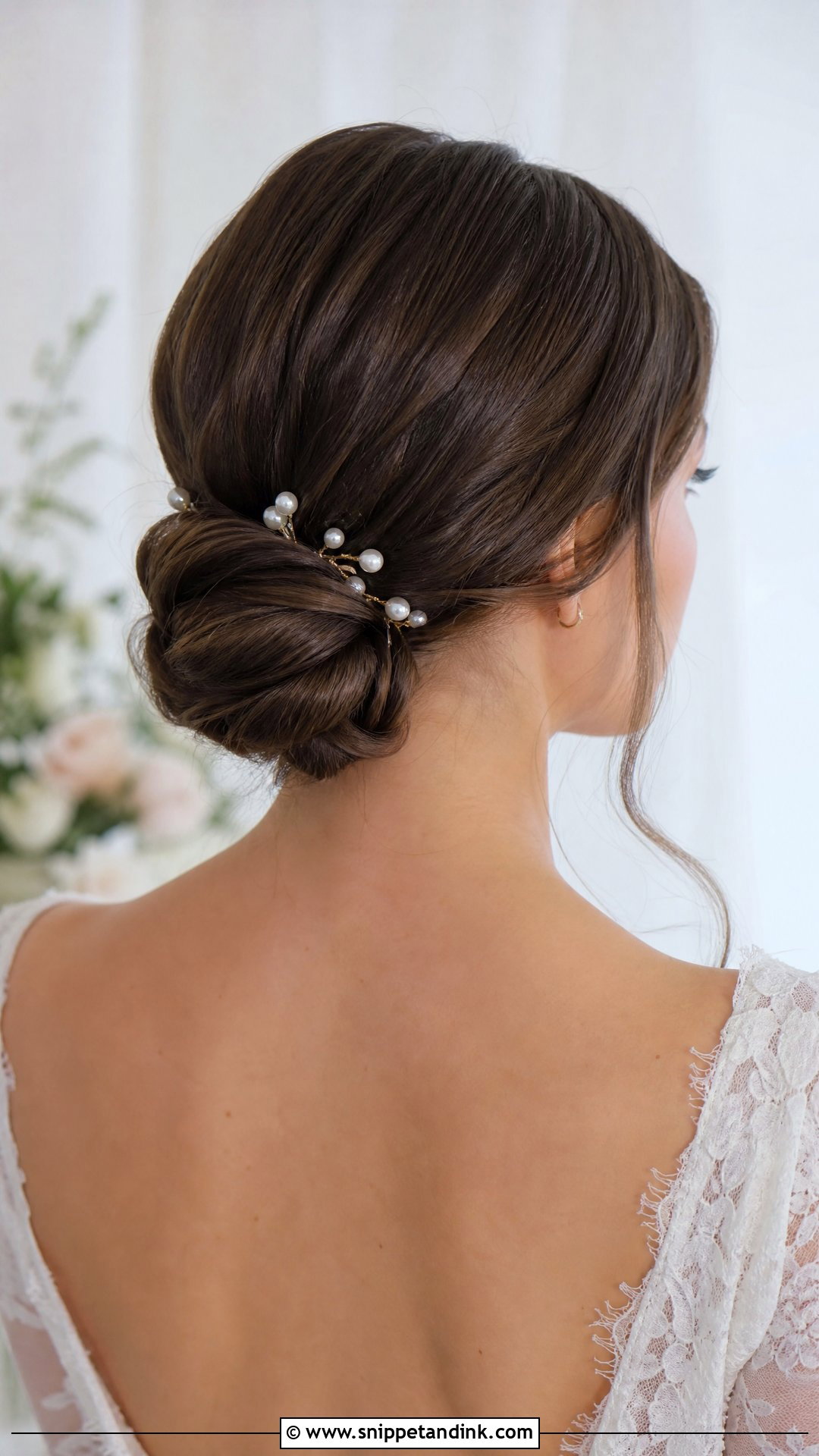
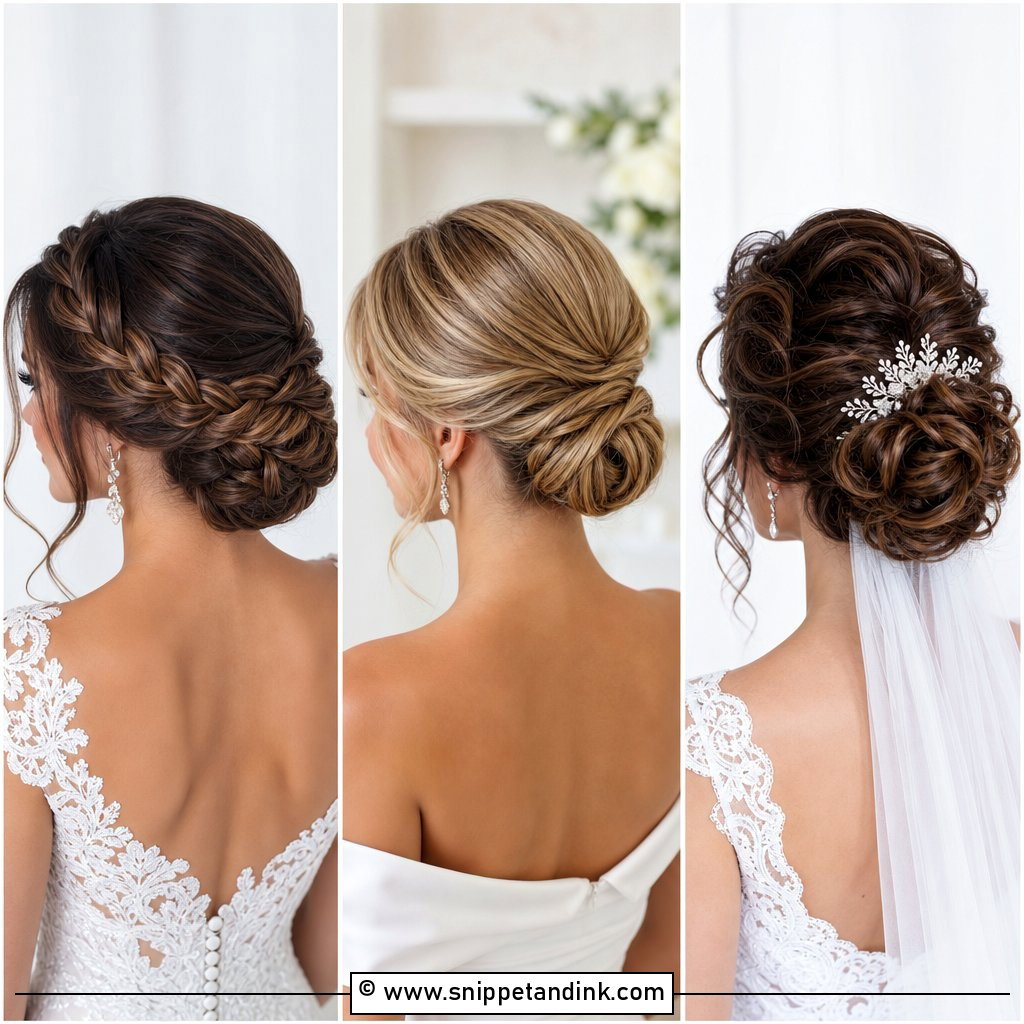
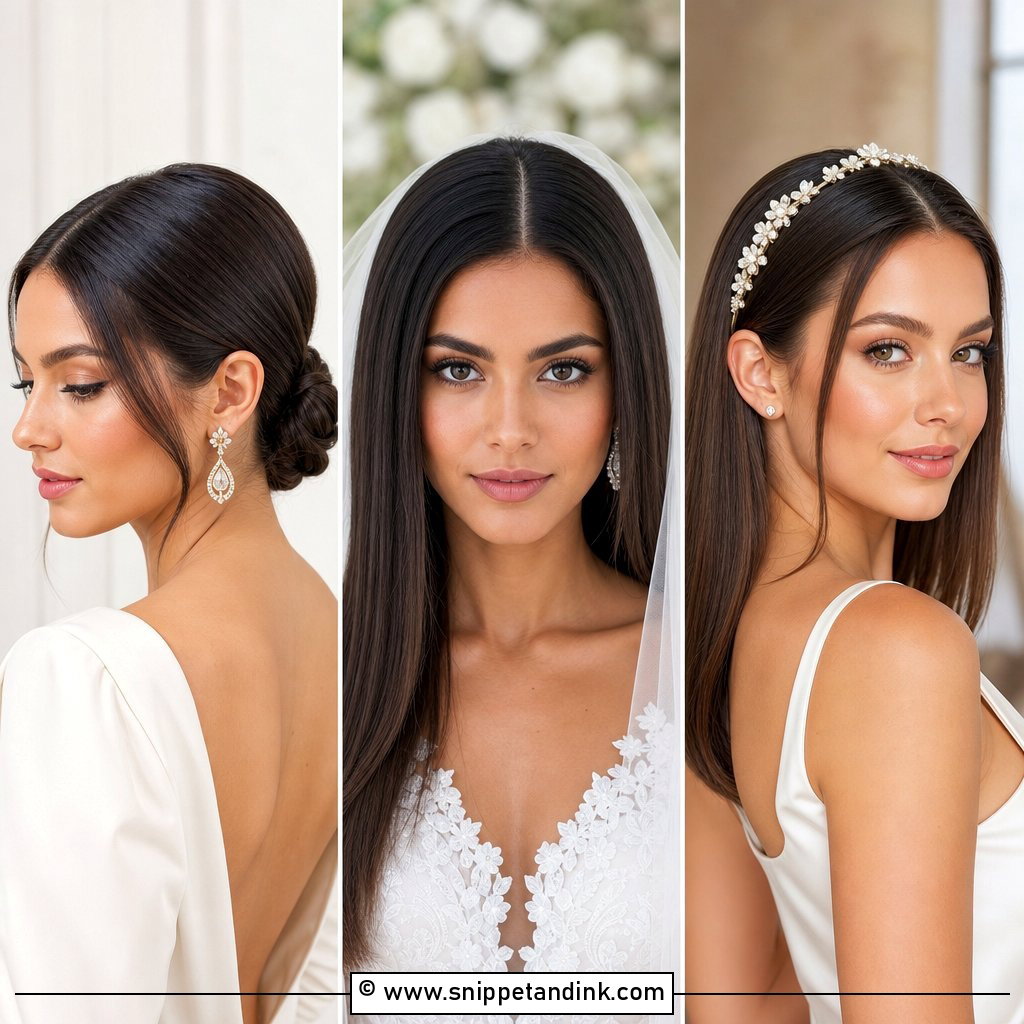
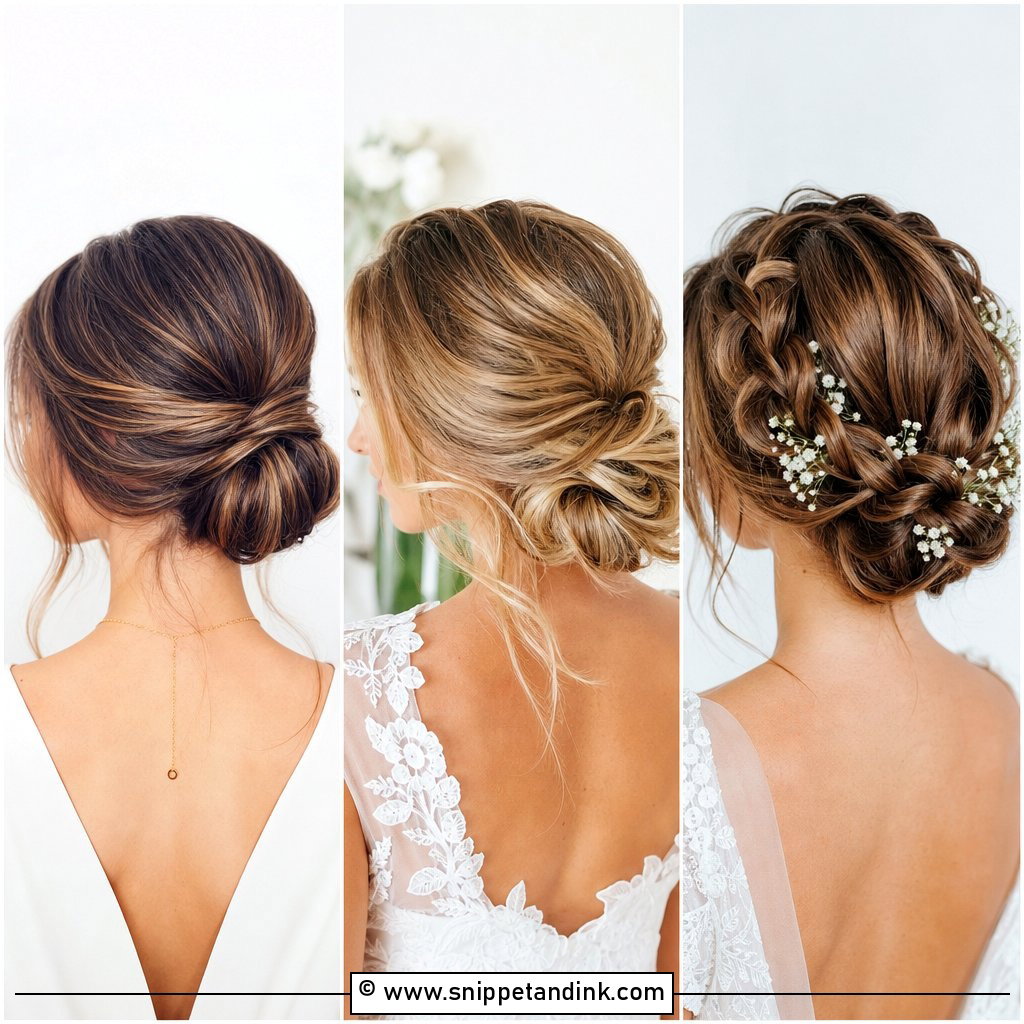
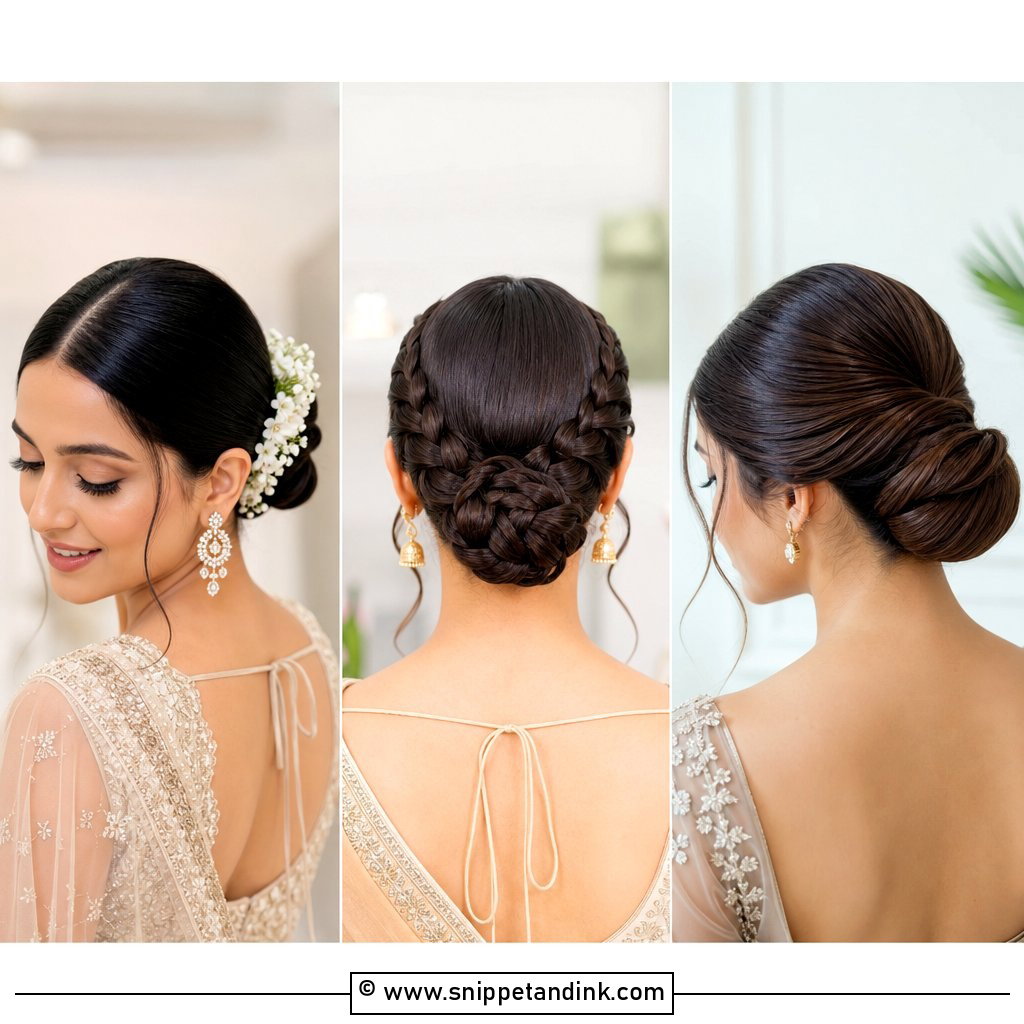
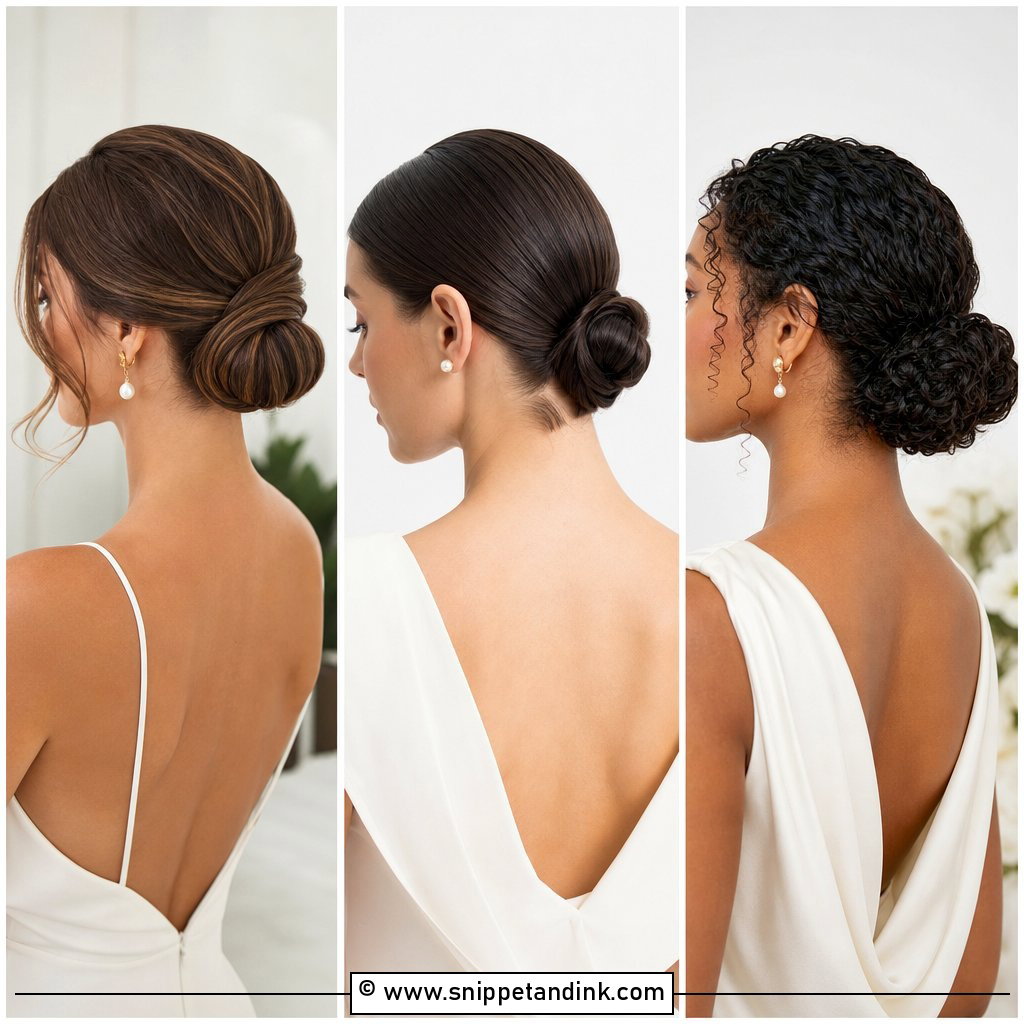
A low chignon sits at the nape, which is why it’s the style I suggest most for church ceremonies with a long veil. The comb slides in just above the bun, and the weight rests on the chignon instead of on loose hair. I twist the hair into a soft roll and pin it with crossed pairs so it holds through hugs and dancing. Keep it sleek for a modern line or pull a few tendrils out at the temples, then finish with pearl pins or a jeweled comb. On very fine hair I add a small padding form inside, matched to your color, so the bun has enough size to read in photos.
2. Soft Hollywood Waves for Brides
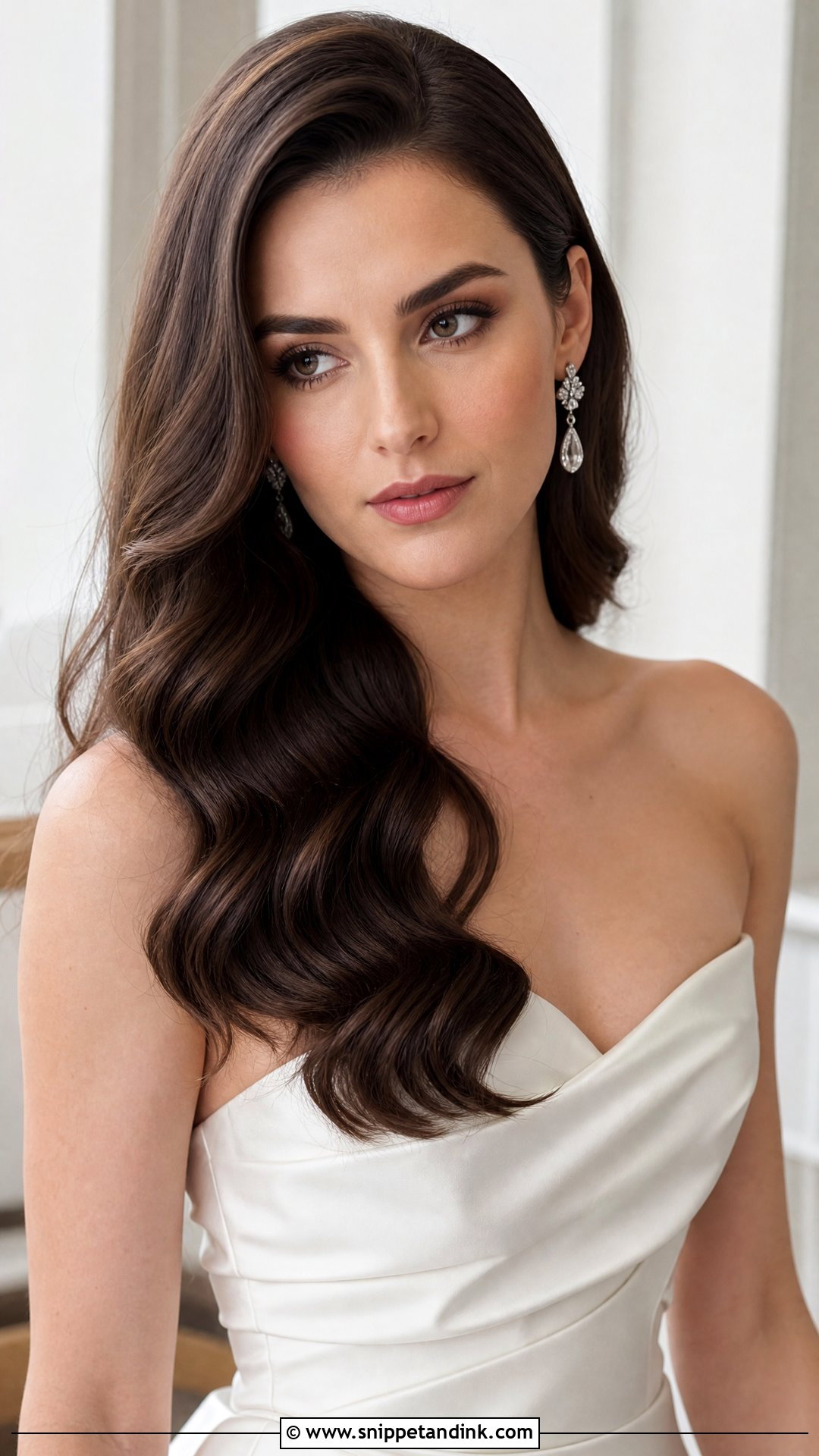
Hollywood waves are set curls brushed out into one continuous ripple, not separate ringlets, and the brush-out is where the skill lies. I curl every section in the same direction, pin each curl to cool, then brush through with a boar bristle brush and pinch the S-shape with clips while I spray. The waves frame the face and shoulders, which is why they suit strapless or sweetheart necklines. A red lip and defined lashes complete the film-star effect. Medium to long hair works best, and a deep side part gives the wave somewhere to begin. In humid weather this style drops faster than most, so plan for a touch-up.
3. Half-Up Half-Down Bridal Style
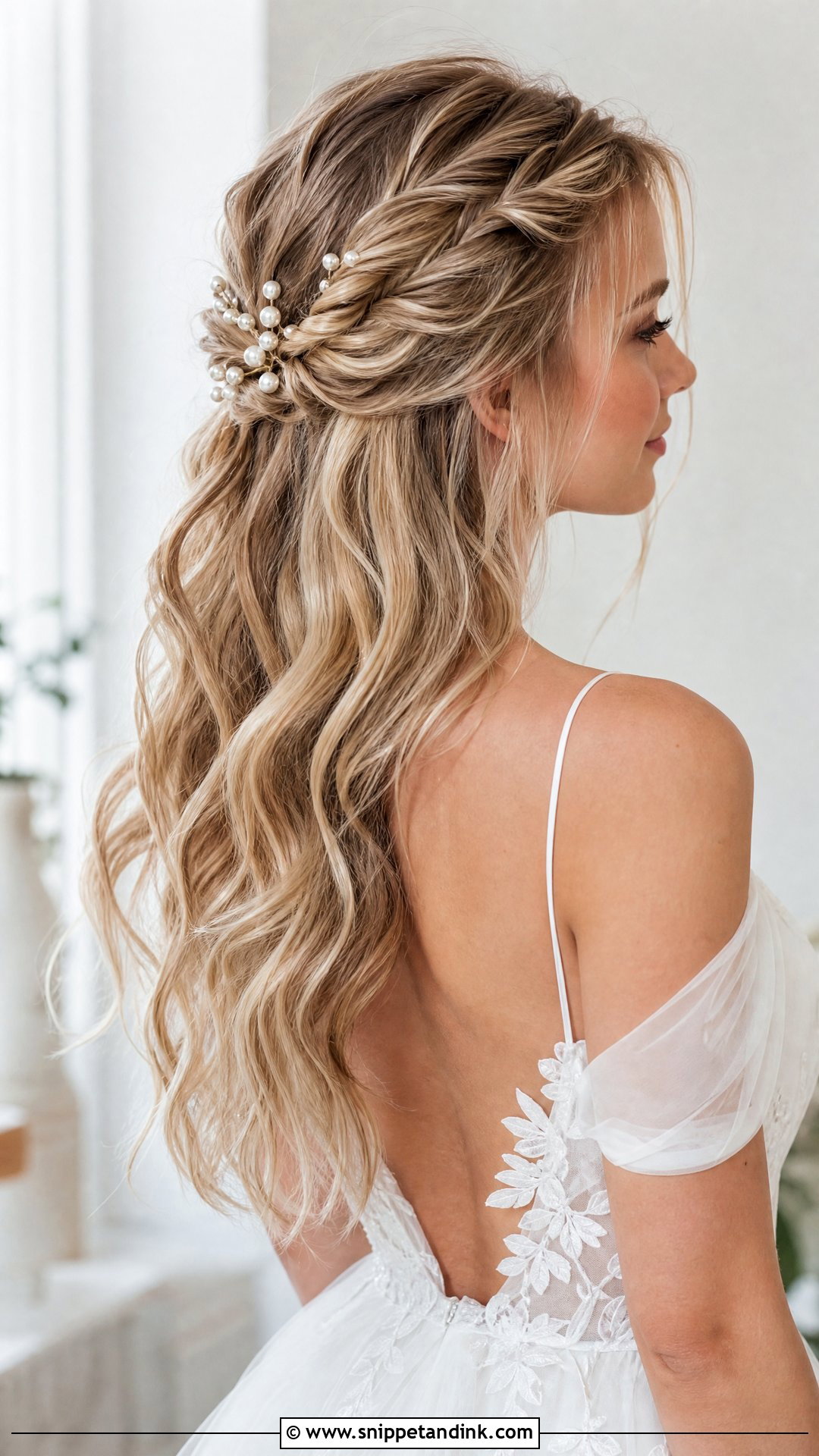
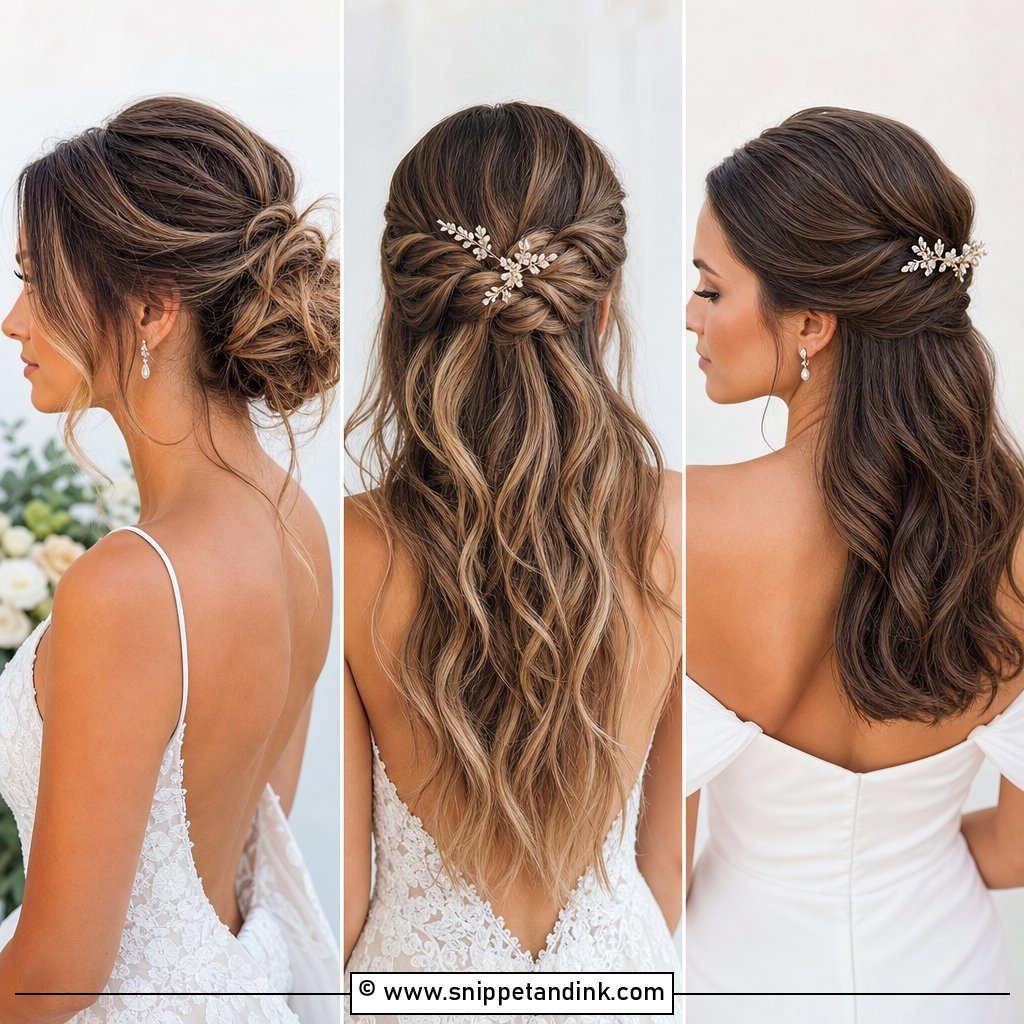
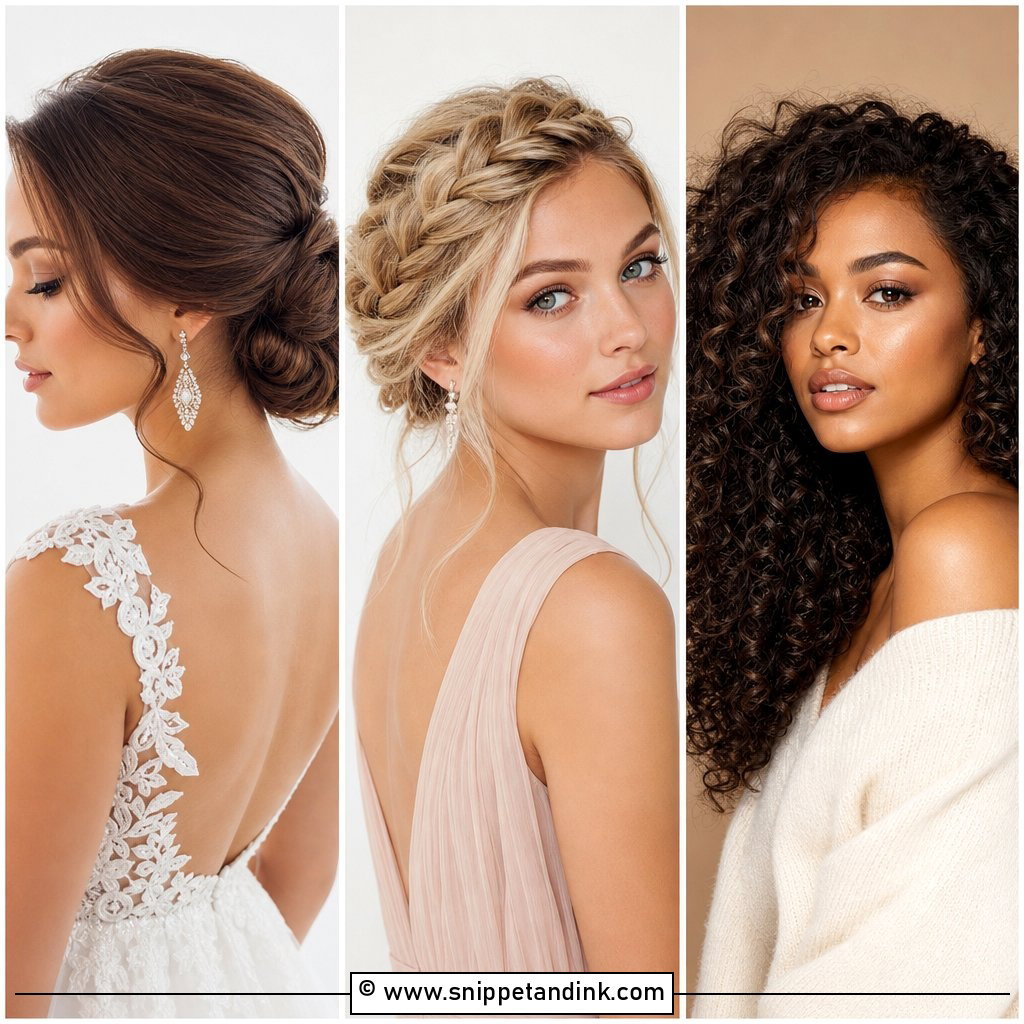
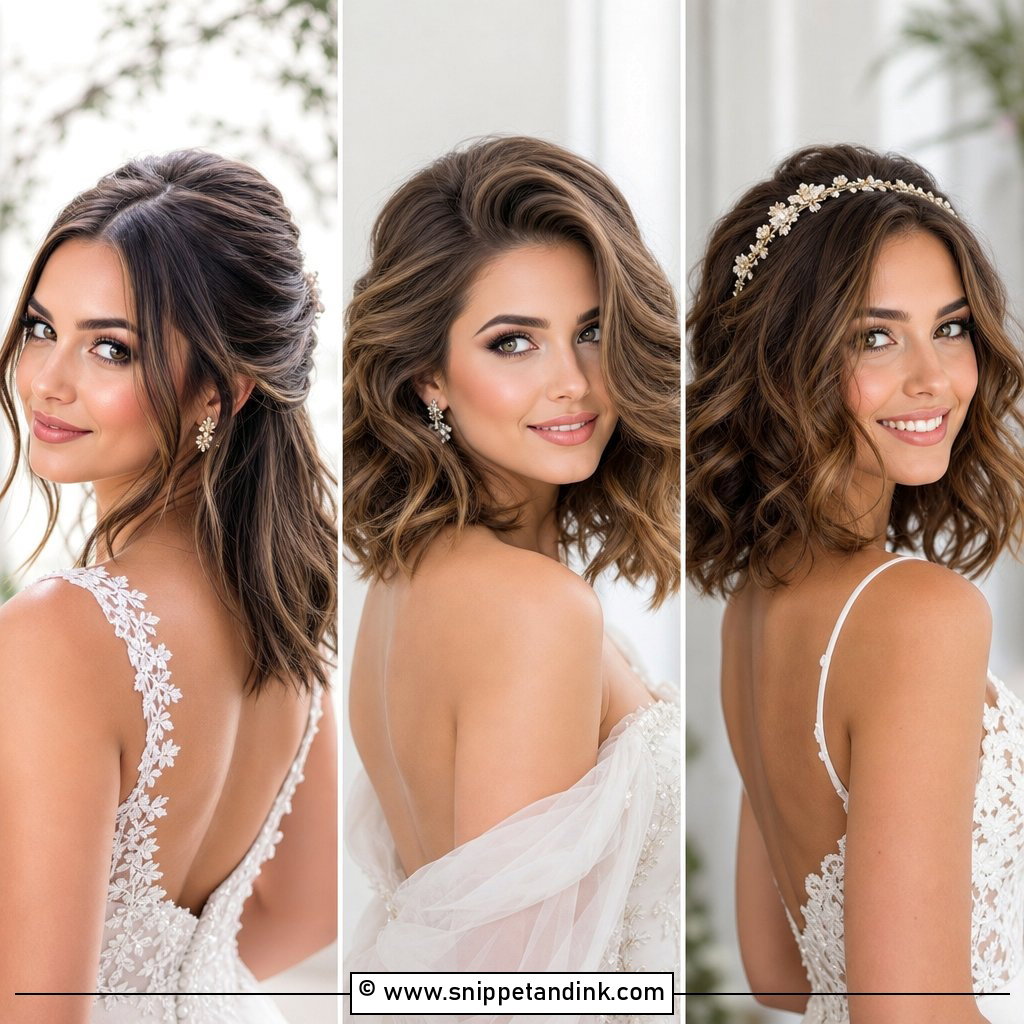
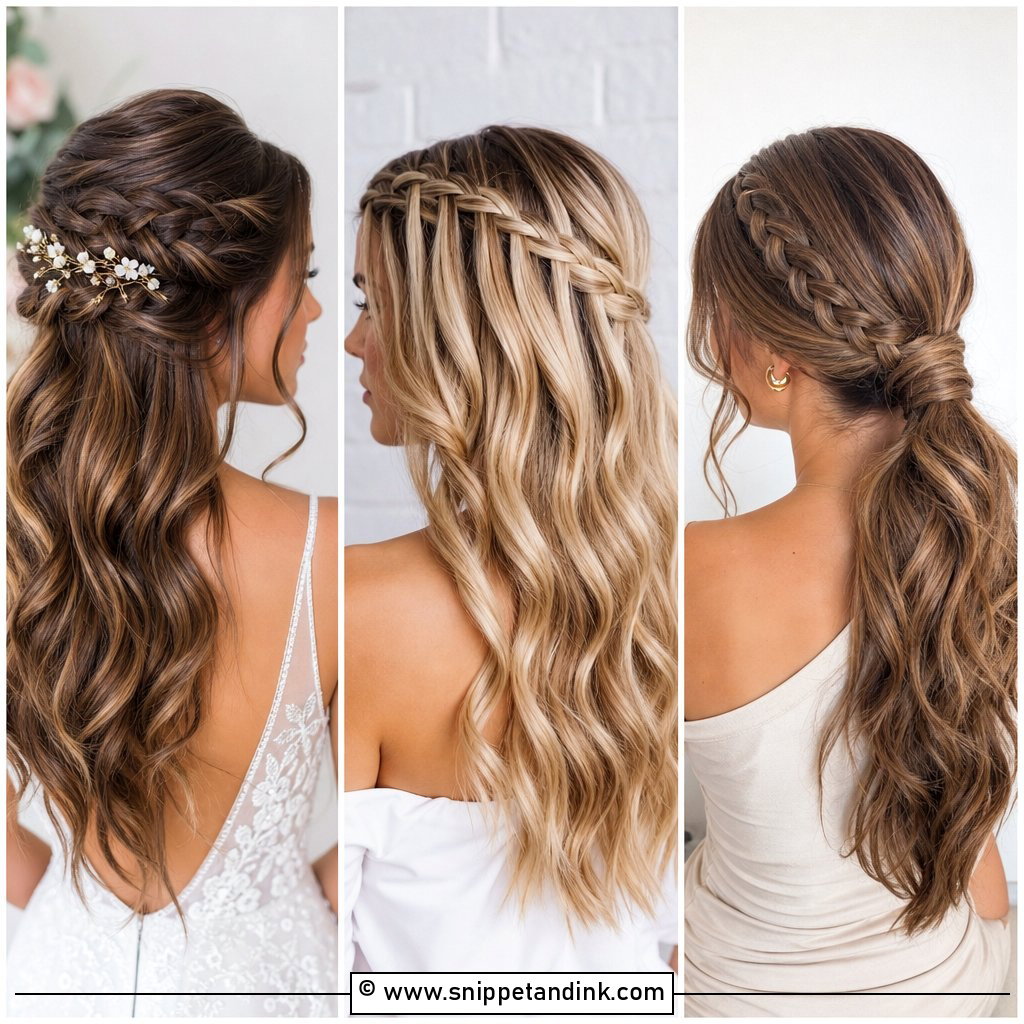
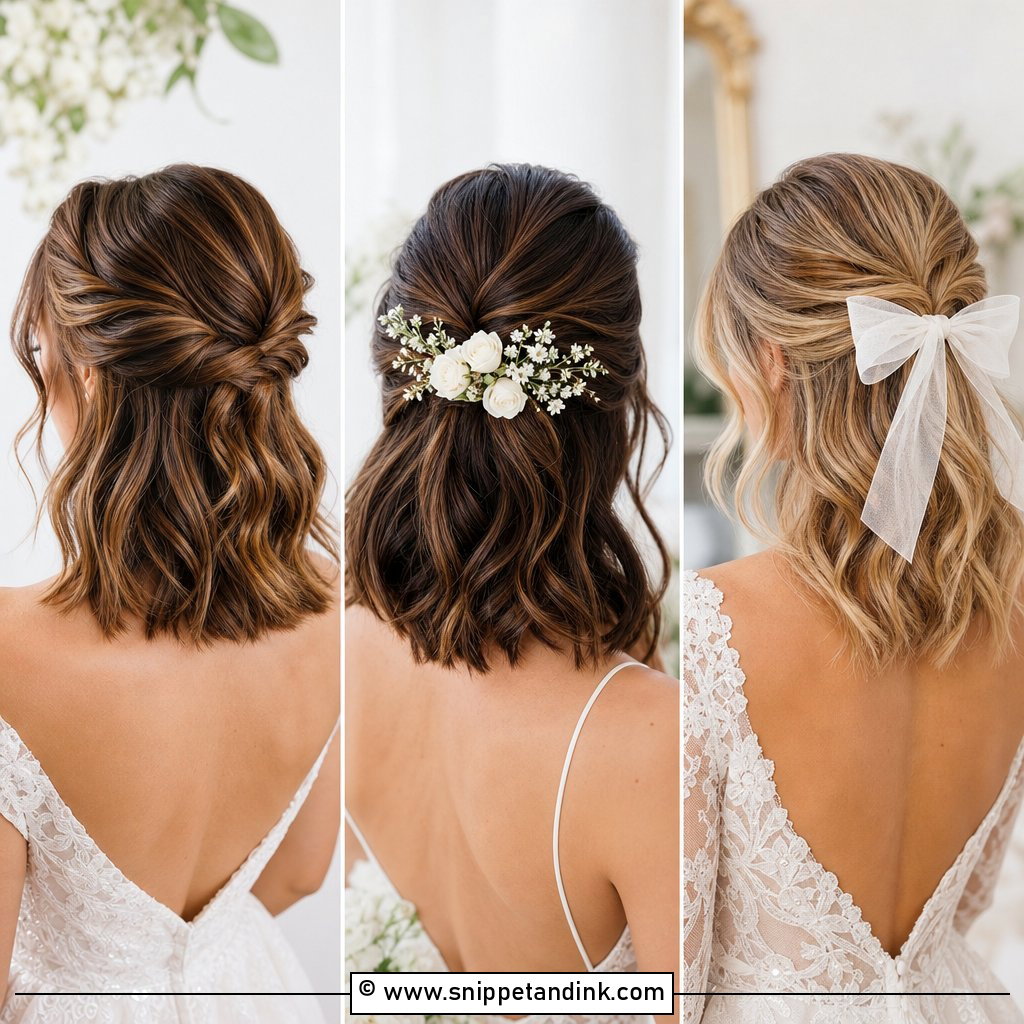
Can’t decide between up and down? Half-up is my usual answer, but it has to be anchored properly. I secure the top section with a small hidden elastic or a pair of crossed pins under the crown, then add twists, braids or pearl clips on top. The lengths underneath show off your texture, and nothing falls in your face. It holds a veil or a floral crown equally well, in a garden or a ballroom. Very heavy, straight hair can drag the top section loose by evening, so for that hair type I braid a tiny anchor underneath first.
4. Sleek Ballerina Bun for Weddings
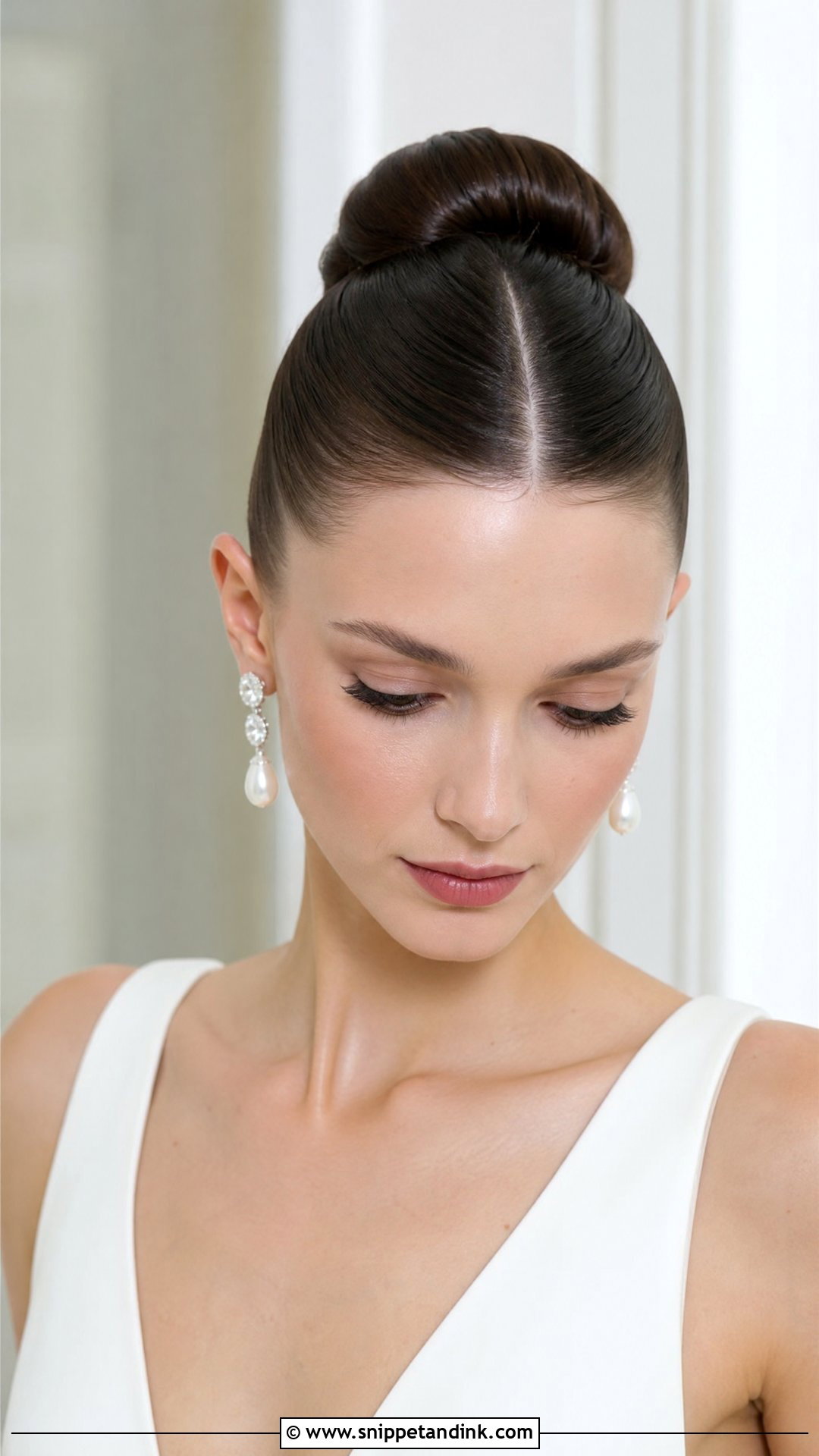
A ballerina bun pulls every strand back into a high, tight bun with a center part, so it depends on smoothing, not volume. I set the ponytail base with a strong elastic first, then wrap and pin the bun around it, which is what makes it so secure through hours of dancing. It puts all the attention on your face, earrings and neckline. Brides with a high forehead or lots of short baby hairs at the hairline sometimes feel exposed in it, so I’d test it before committing. A glossing spray at the end gives shine without stiffness.
5. Romantic Loose Updo With Curls
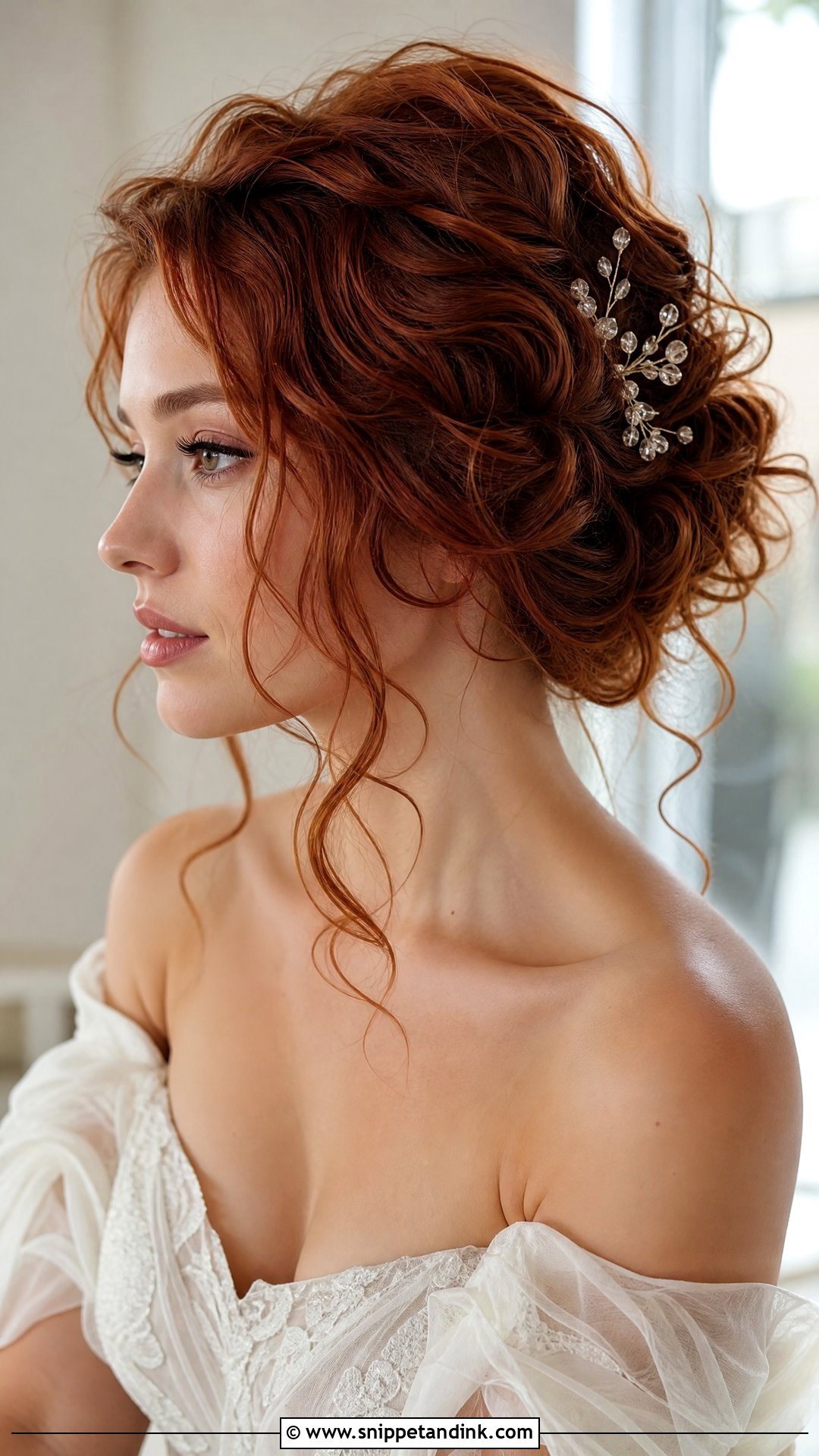
Some brides want softness rather than structure. For a loose updo, I curl first, then pin the curls into a relaxed shape at the back and leave wisps falling around the face. Garden and outdoor weddings suit it, as do brides who like a natural finish, and fresh flowers or small pins add something personal. It’s forgiving because the shape is meant to look undone; a piece that slips during the day simply blends in. The exception is very silky, freshly washed hair, which needs texture spray before any pin will grip.
6. Elegant French Twist Bridal Updo
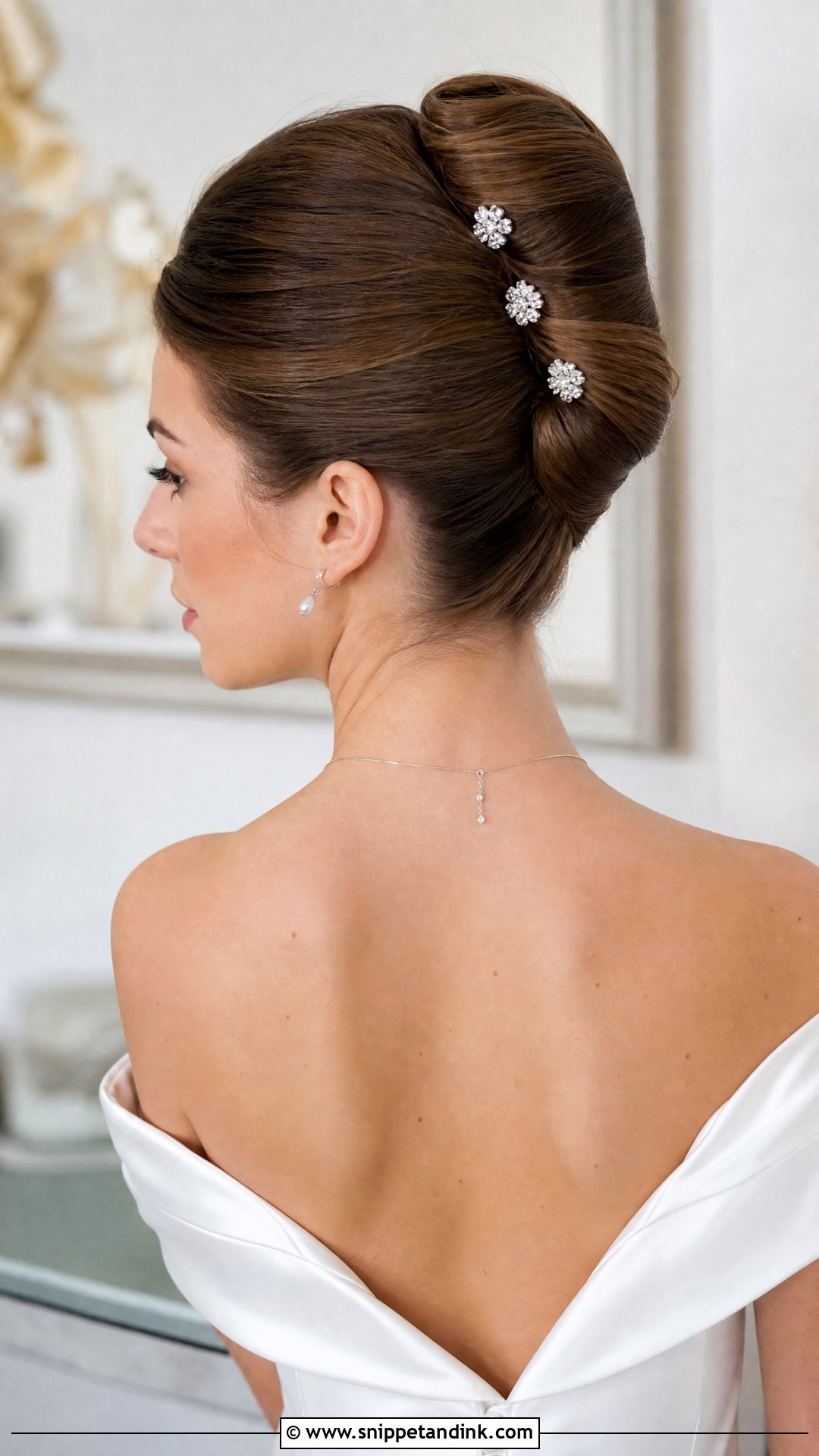
A French twist sweeps the hair to one side, then rolls it vertically into a clean column at the back. The structure comes from a row of pins crossed into the opposite side before the roll folds over them; you never see them, but they hold everything up. Formal ceremonies and structured gowns suit it. A veil can sit beneath the fold, and jeweled pins tuck neatly into the seam. With the neckline fully exposed, earrings and necklaces get their moment. Shoulder length is the minimum, because shorter layers poke out of the seam.
7. Bridal Braided Updo
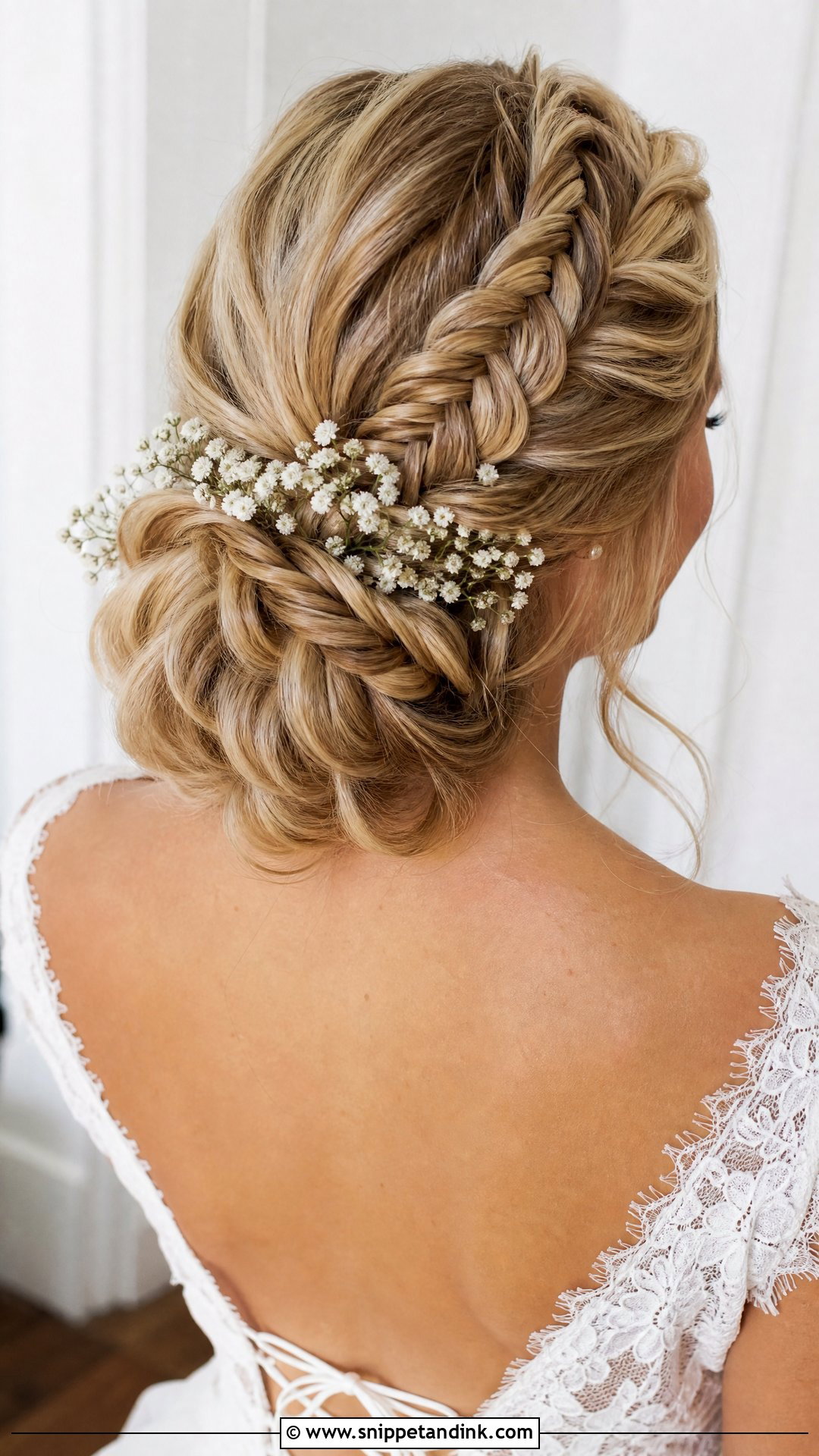
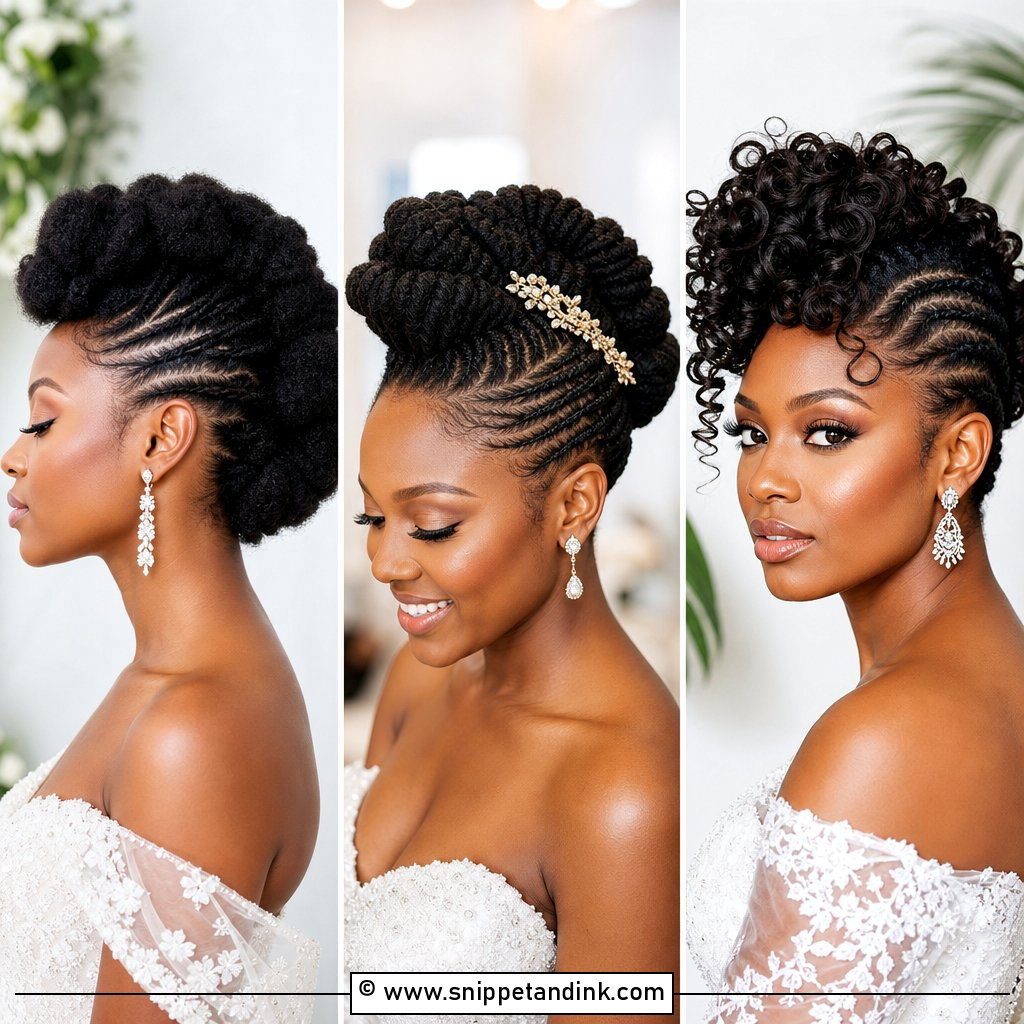
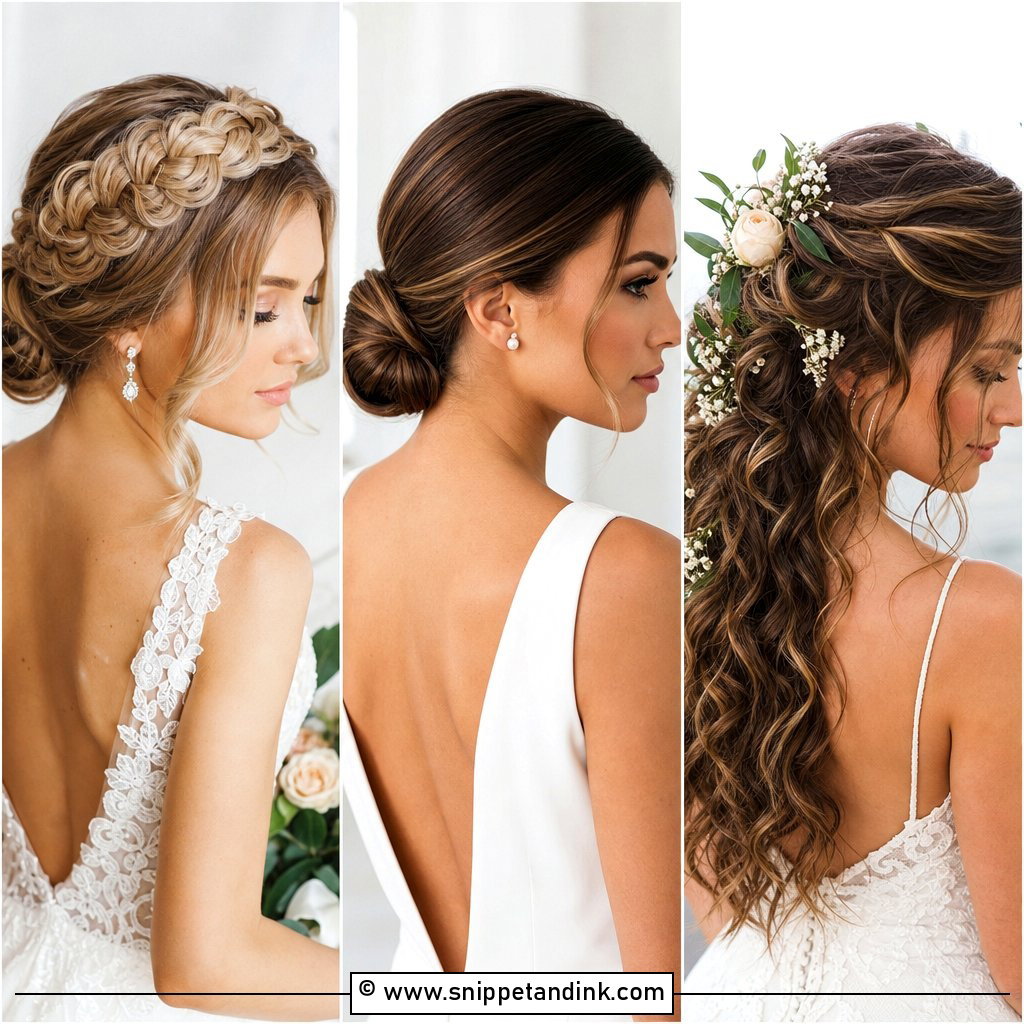
Braids add texture that shows from behind, which matters more than brides expect, since guests watch the back of your head for most of the ceremony. A braided updo weaves plaits into a gathered shape at the back, using delicate fishtails, romantic Dutch braids or soft braided crowns. I pancake the braids, gently pulling the edges loose, so they look fuller on camera. Fresh flowers, baby’s breath or pearl pins can sit between the plaits. Boho, rustic and garden weddings are the natural setting. Layered hair can be braided too, though shorter pieces may need tiny pins to stay put.
8. Low Bun With Side Part
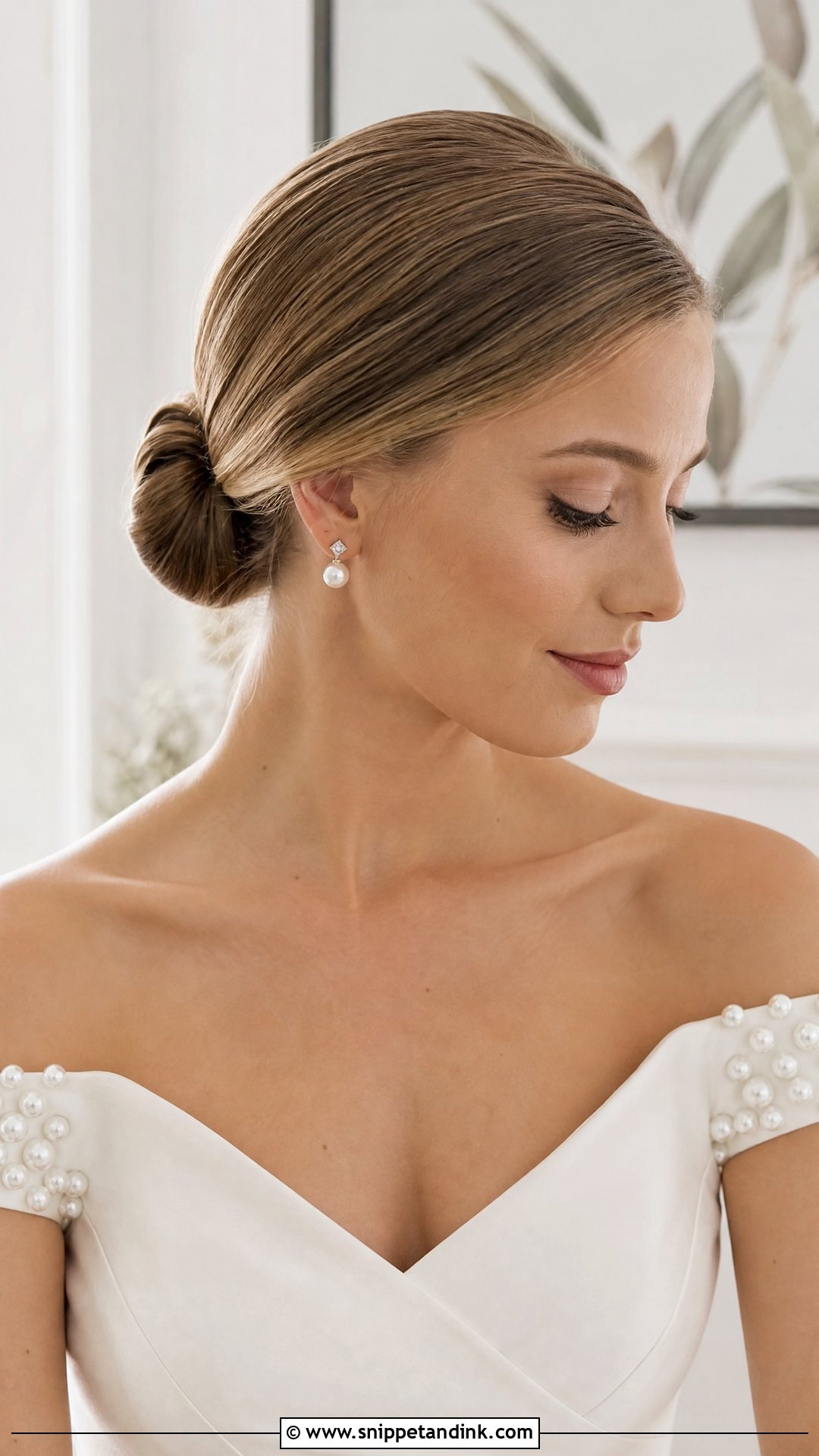
A deep side part changes a plain low bun completely. The asymmetry softens the face and gives a little height on one side. I smooth the hair back from the part, secure a low ponytail and wrap the bun at the nape. It works for an intimate ceremony or a large reception, and veils, headbands and simple pearl accents all sit well with it. Because every strand is secured, you stay tidy all evening. Put the part on your natural side, though, or a cowlick will fight it by lunchtime.
9. Bridal Hair With Pearl Accessories
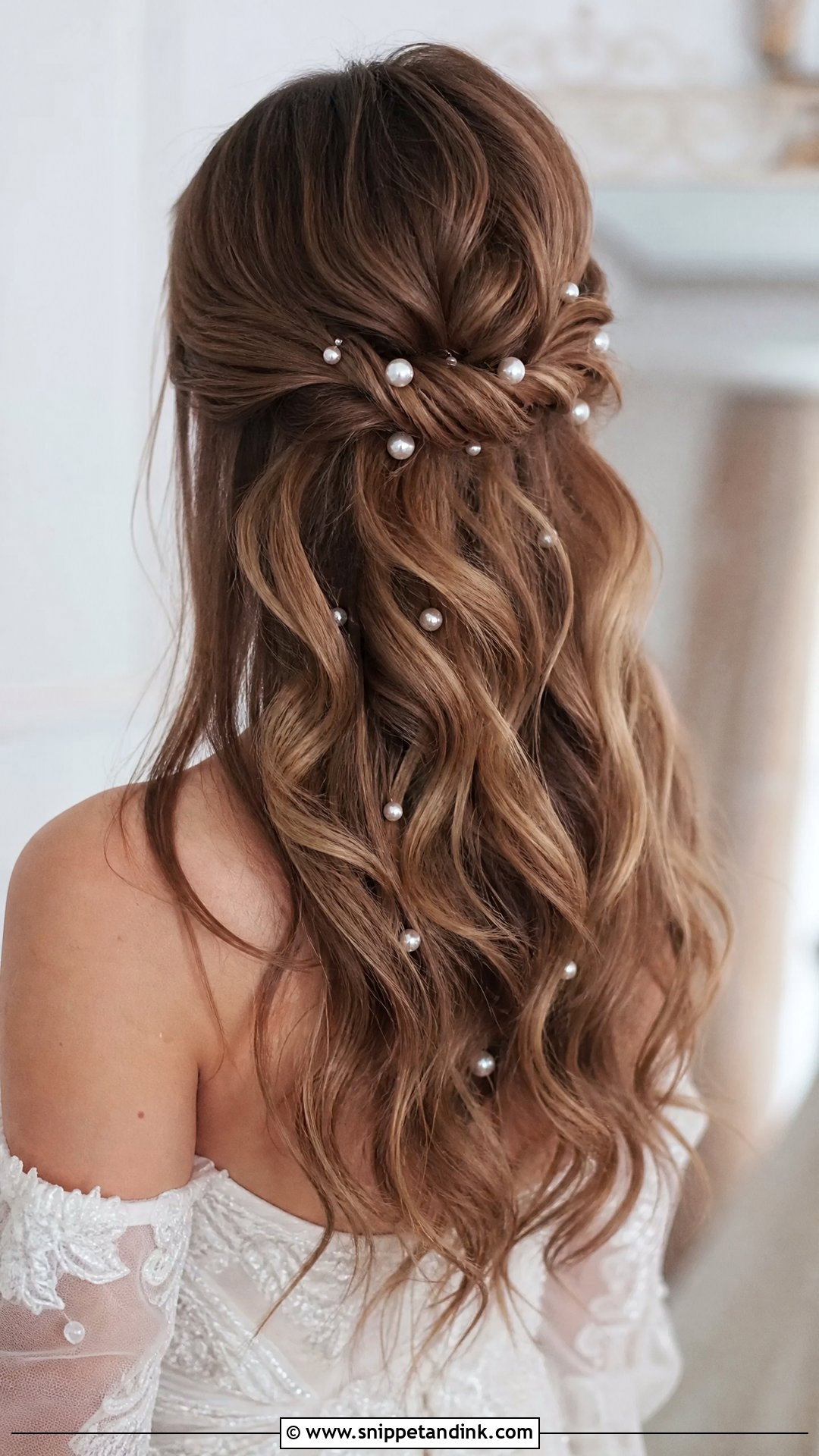
Pearls suit almost any classic style, and most gowns and skin tones. Pearl pins scattered through loose waves, or a pearl headband across a sleek updo, catch the light as you move. What I watch is placement: I put them where the camera usually sees you, along the side and front of the style, not buried at the back. Pearl pins also need something to grip, so on smooth hair I backcomb a little underneath each one. Updos, half-up looks and down styles all take them well.
10. Sleek Bridal Ponytail
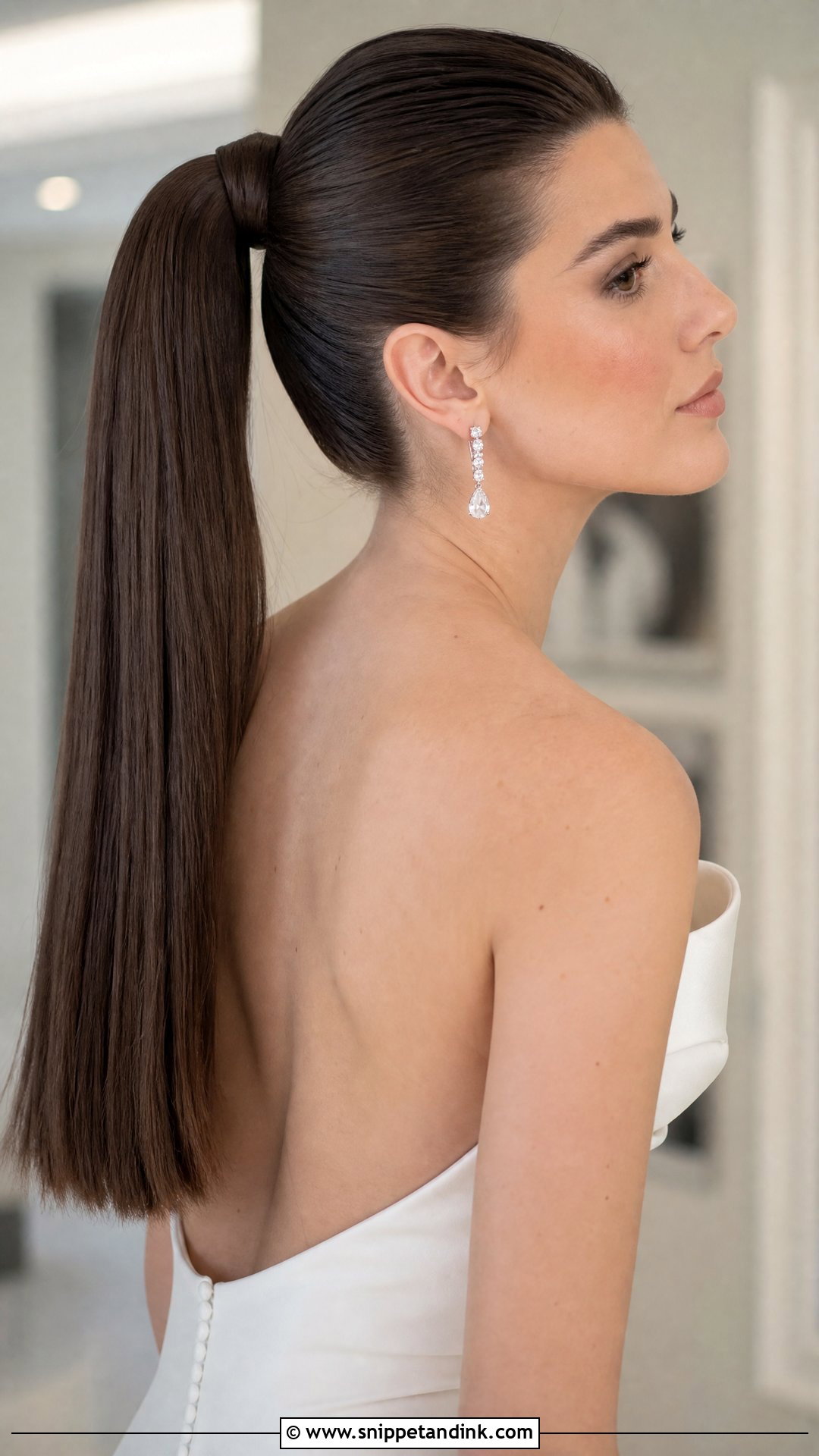
A sleek ponytail looks simple, but it has nowhere to hide frizz, so prep does most of the work. A high ponytail lengthens the neck and feels dramatic, while a low one is softer. I wrap a strand around the base to hide the elastic and pin it underneath. For more length or fullness, a clip-in ponytail piece matched to your color blends in well. Statement earrings and bold gowns pair nicely with it. A high pony and a heavy veil are a poor match, though; the comb has nowhere secure to sit.
11. Vintage Bridal Updo With Finger Waves
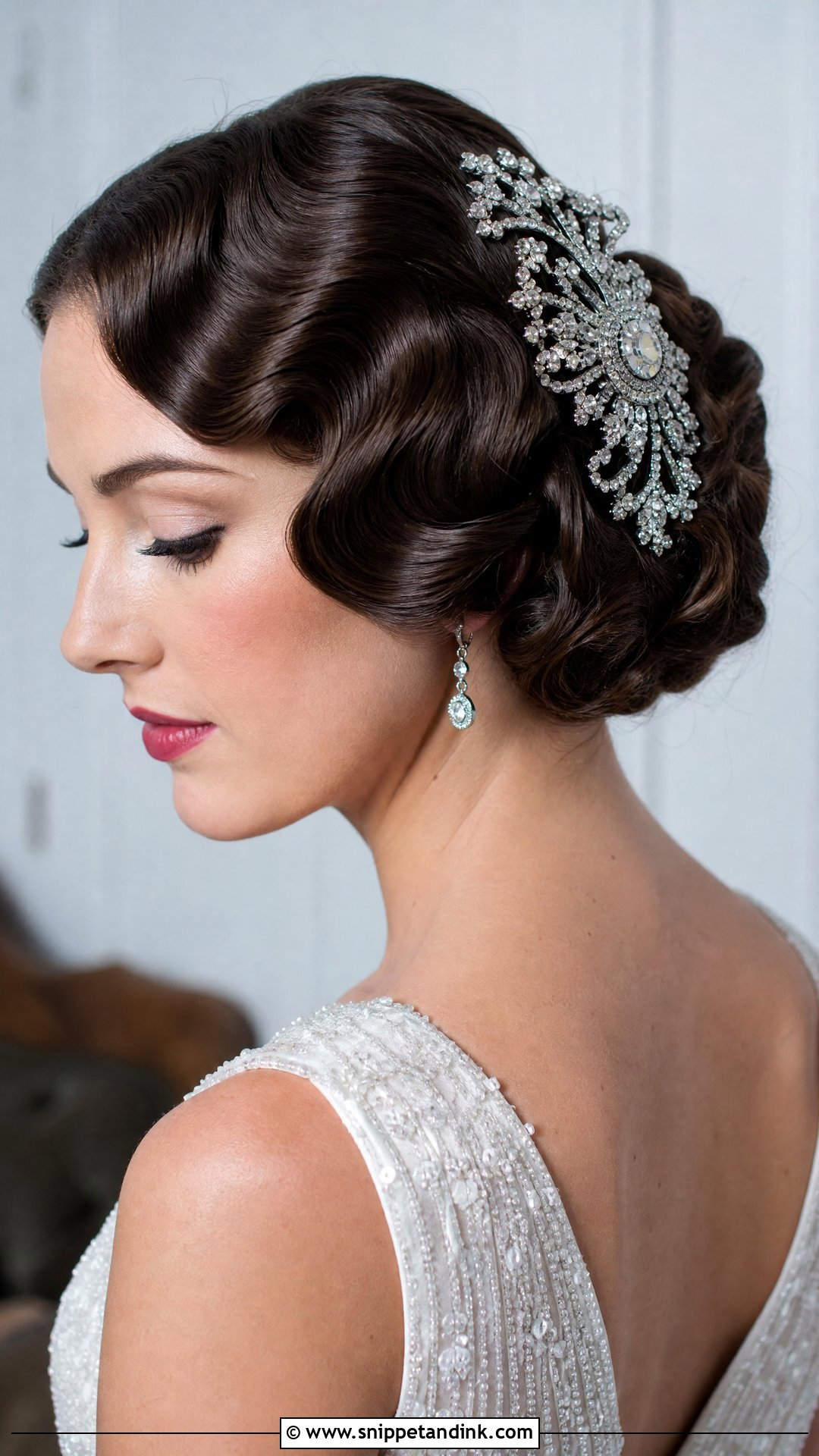
This updo pairs delicate finger waves at the front with a soft, structured roll at the back. Finger waves are sculpted S-shapes set close to the head, and they need a stylist who has actually done them. I set the waves with a firm setting lotion and clips, then let them dry fully before removing the clips; rushing that step loses the ridges. Gatsby themes and Art Deco venues suit it, with a jeweled hairpiece or feathered comb to finish. Expect a long chair time, and ask to see your stylist’s own finger wave work before you book.
12. Half-Up Crown Braid for Brides
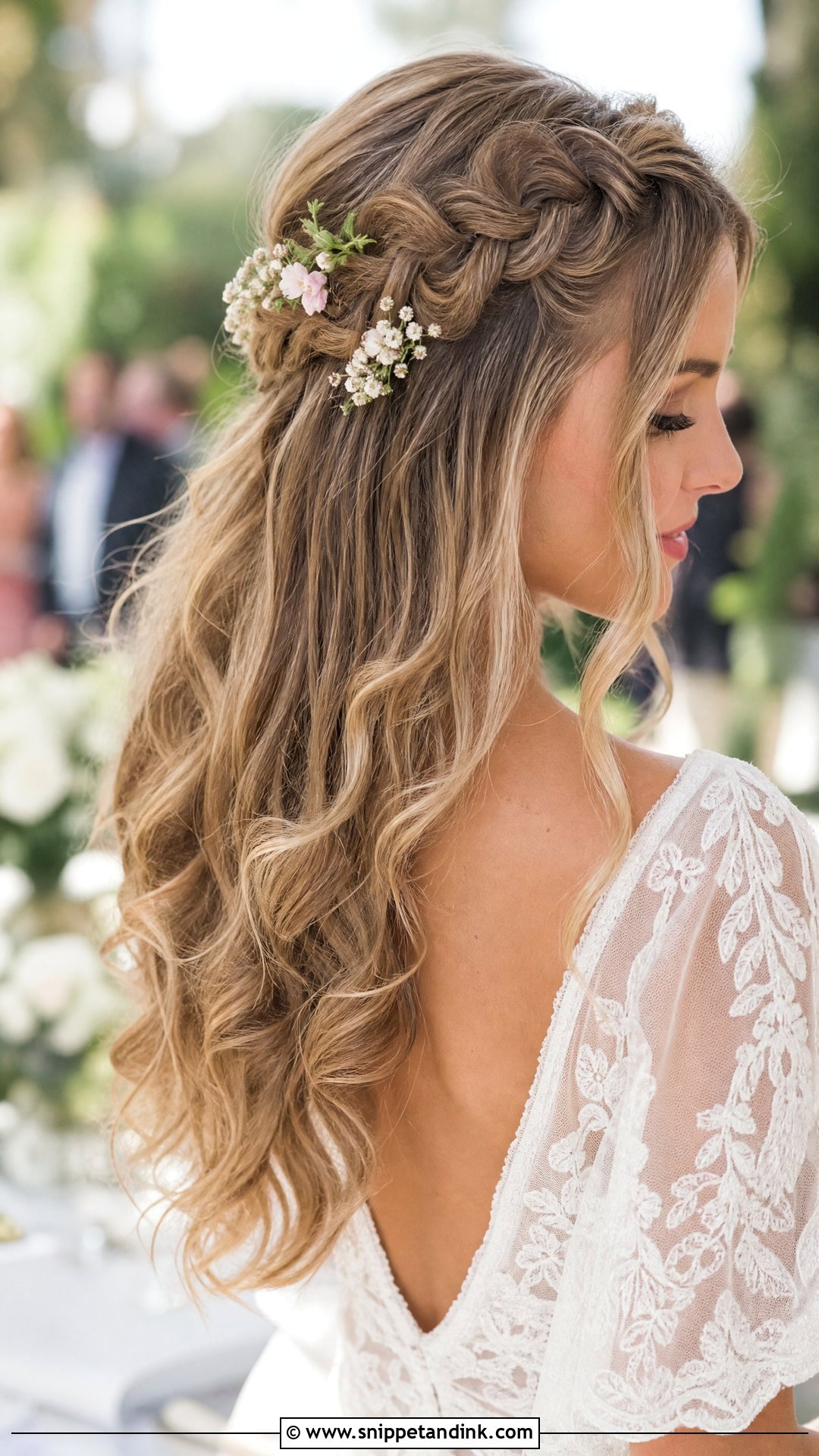
A half-up crown braid runs from one side of the head to the other across the back, leaving the rest of the hair loose, so it frames the face like a halo. Garden, beach and rustic weddings suit it. Tuck small flowers or baby’s breath into the braid for a romantic touch. It keeps strands off your face while the length still moves. On hair above the shoulders, I’d suggest two small braids pinned together at the back, since there isn’t enough length for one continuous plait.
13. Bridal Top Knot Updo
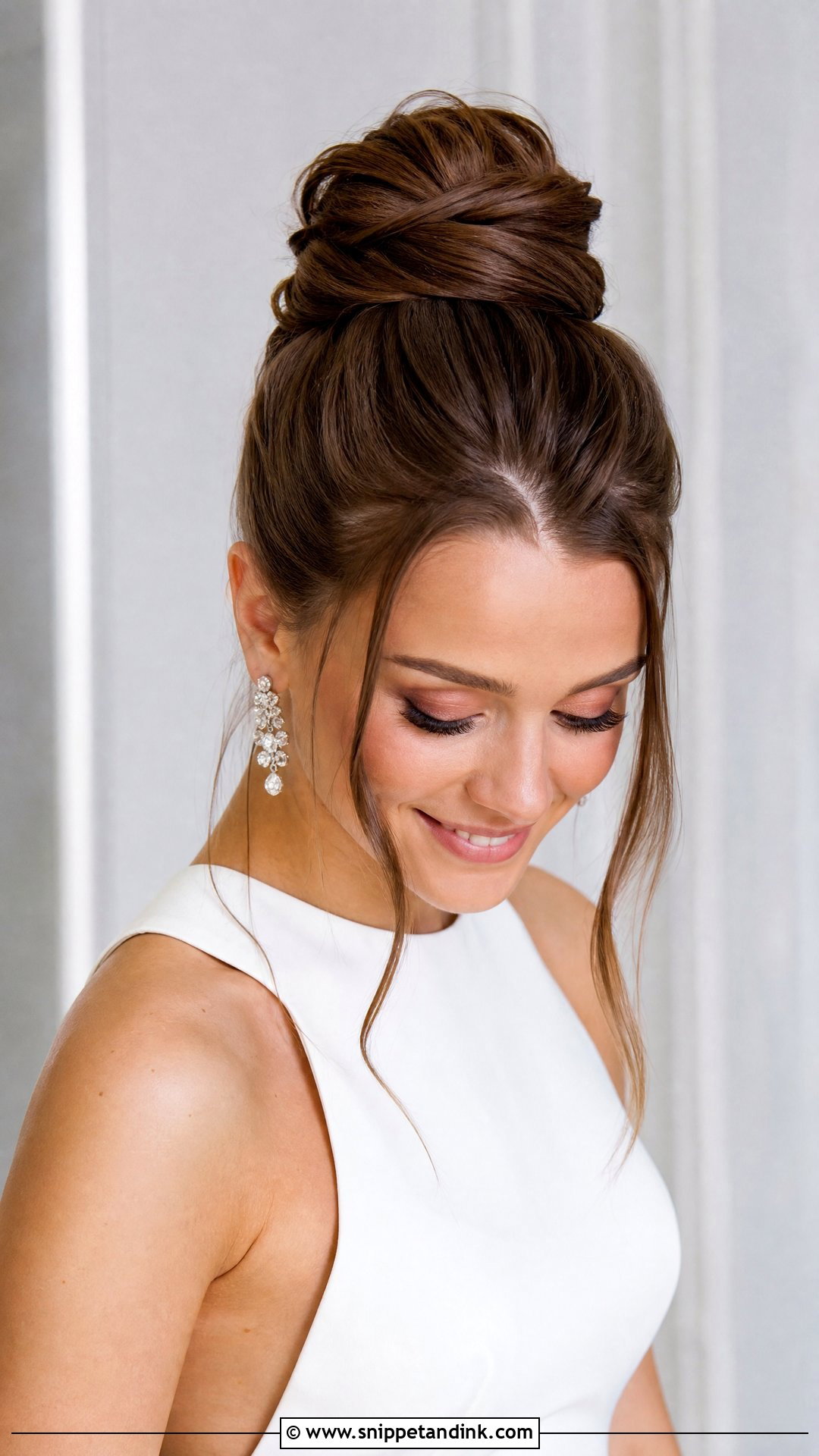
A top knot gathers the hair into a sculpted knot at the crown, drawing the eye up to your face and neckline. Keep it sleek, or pull a few soft pieces loose. It suits statement earrings and minimalist gowns. Placement is everything: too far forward looks casual, too far back looks like a ballet bun, so I mark the spot with you in the mirror before securing it. It holds well through a long day because the weight sits on one strong elastic and a few long pins. A veil attaches best just underneath the knot, not in front of it.
14. Soft Curls With Veil
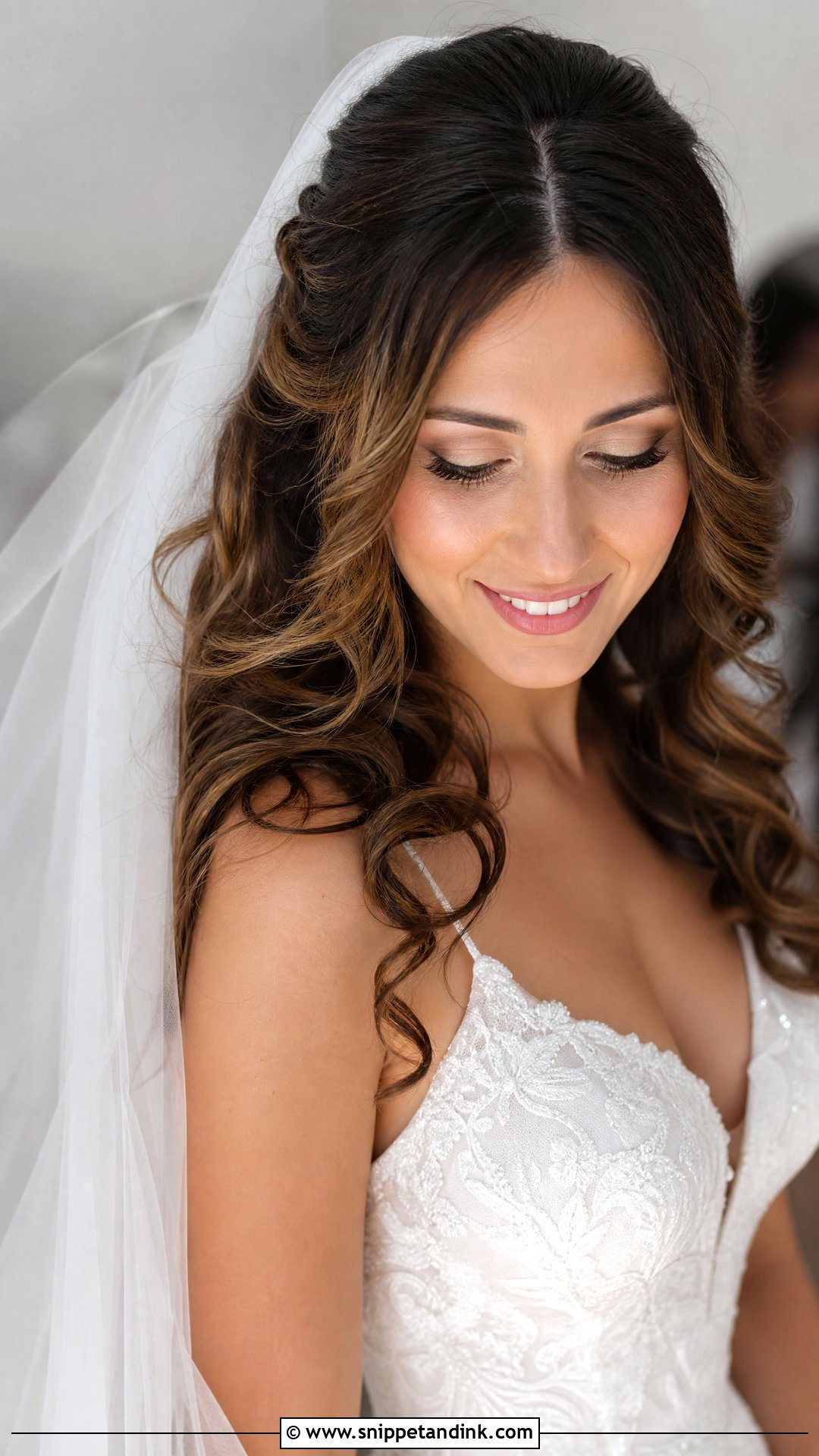
Soft curls with a veil is about as bridal as hair gets. The hair falls in loose curls over the shoulders, and the veil comb sits at the crown. Down styles have no pins holding their shape, so I set every curl and let it cool completely before brushing out; curls brushed while warm drop within hours. For the veil, I backcomb a small section and slide the comb into it so the weight doesn’t flatten the crown. When the veil comes off for the reception, the curls stay. Classic, fairytale and church weddings suit it.
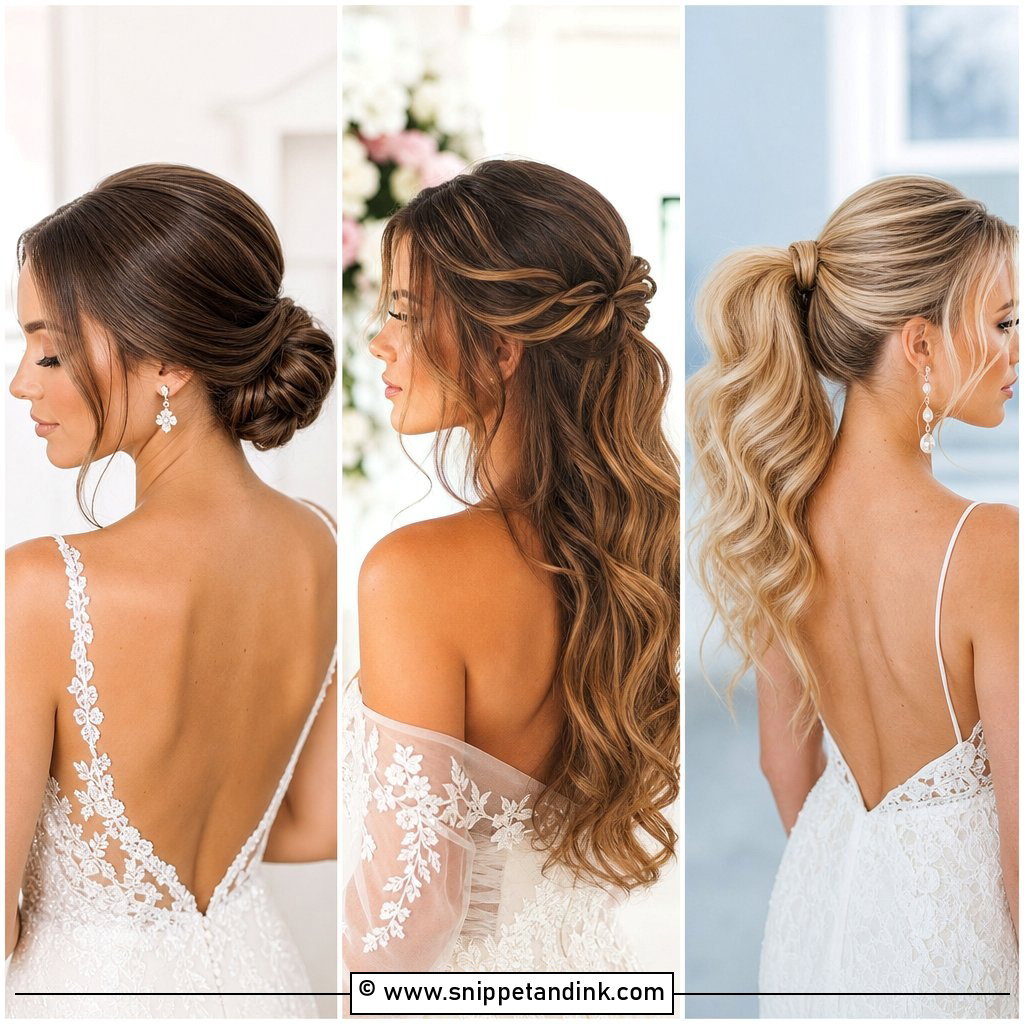
15. Twisted Side Updo for Weddings
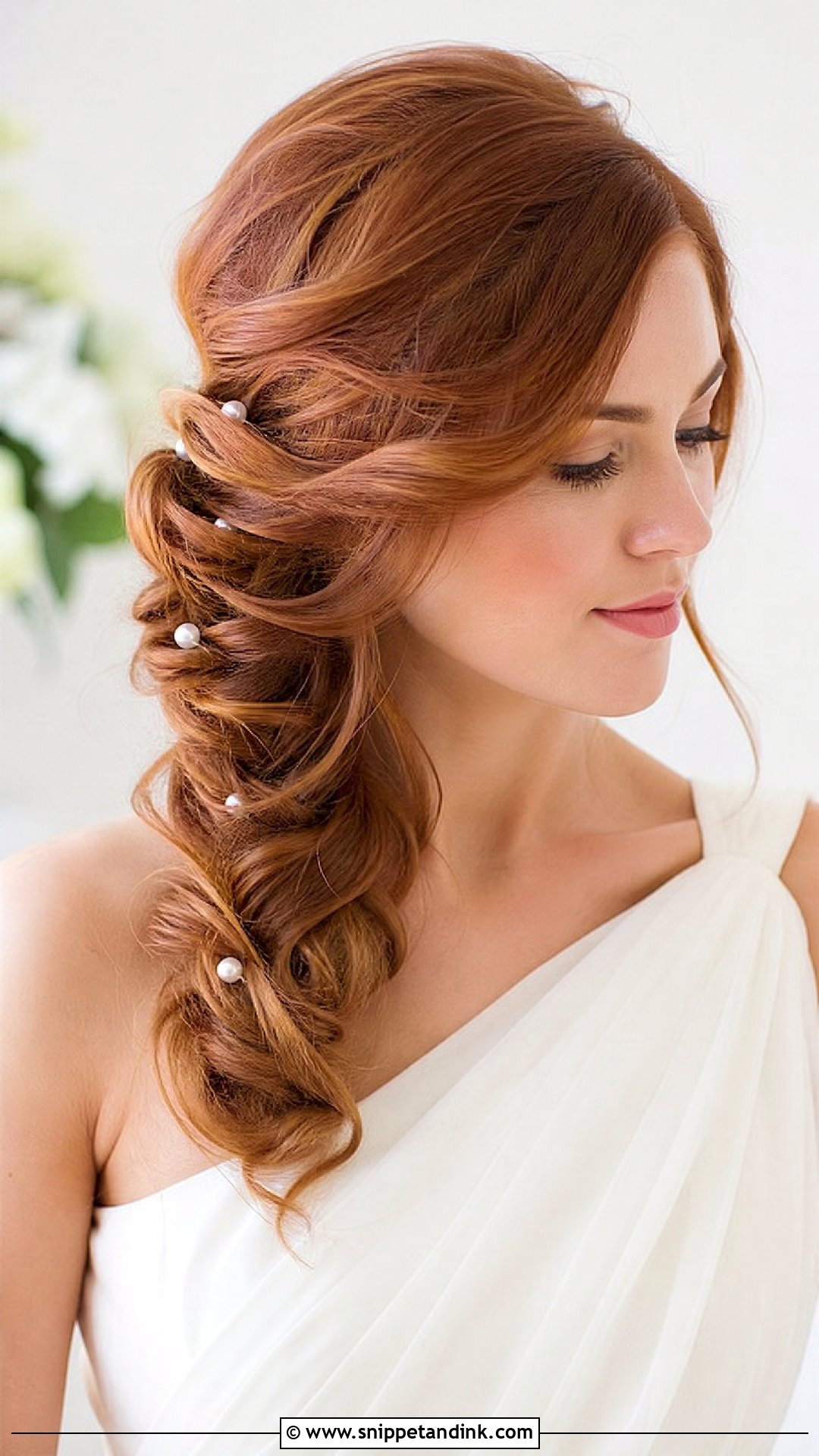
A twisted side updo gathers the hair to one side and pins it into a soft, textured shape over one shoulder. The asymmetry draws attention to one side of your face, so it pairs well with a one-shoulder gown or earrings on the opposite side. Loose tendrils soften it, and pearl pins or flowers add detail. I always ask which side you’ll stand on during the vows, because the twist should face the guests and the photographer, not the officiant’s wall. Garden and vintage weddings suit it.
16. Classic Bridal Bun With Tiara
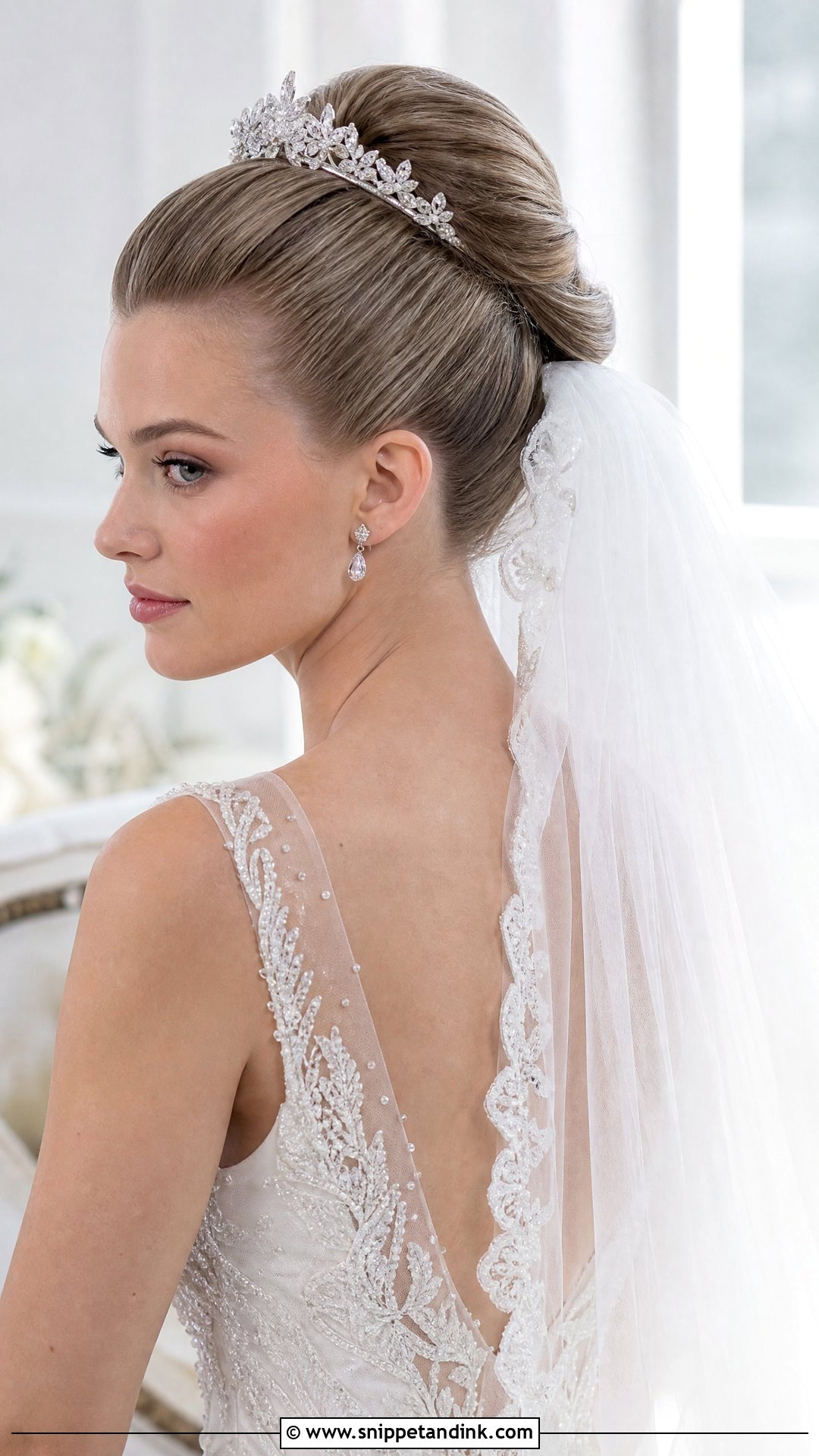
A classic bun with a sparkling tiara is the most regal look on this list. The smooth bun gives the tiara a clean base and lets it take the attention. Tiaras need grip, so I tease a strip of hair where it sits, then thread pins through the tiara’s loops or combs into that section. Grand ballrooms and formal celebrations suit it, and a cathedral veil can sit underneath the bun. Keep the bun sleek for a modern line or add soft waves. A heavy tiara can cause a headache after a few hours, so wear yours for a full afternoon before the wedding.
17. Boho Bridal Waves With Flowers
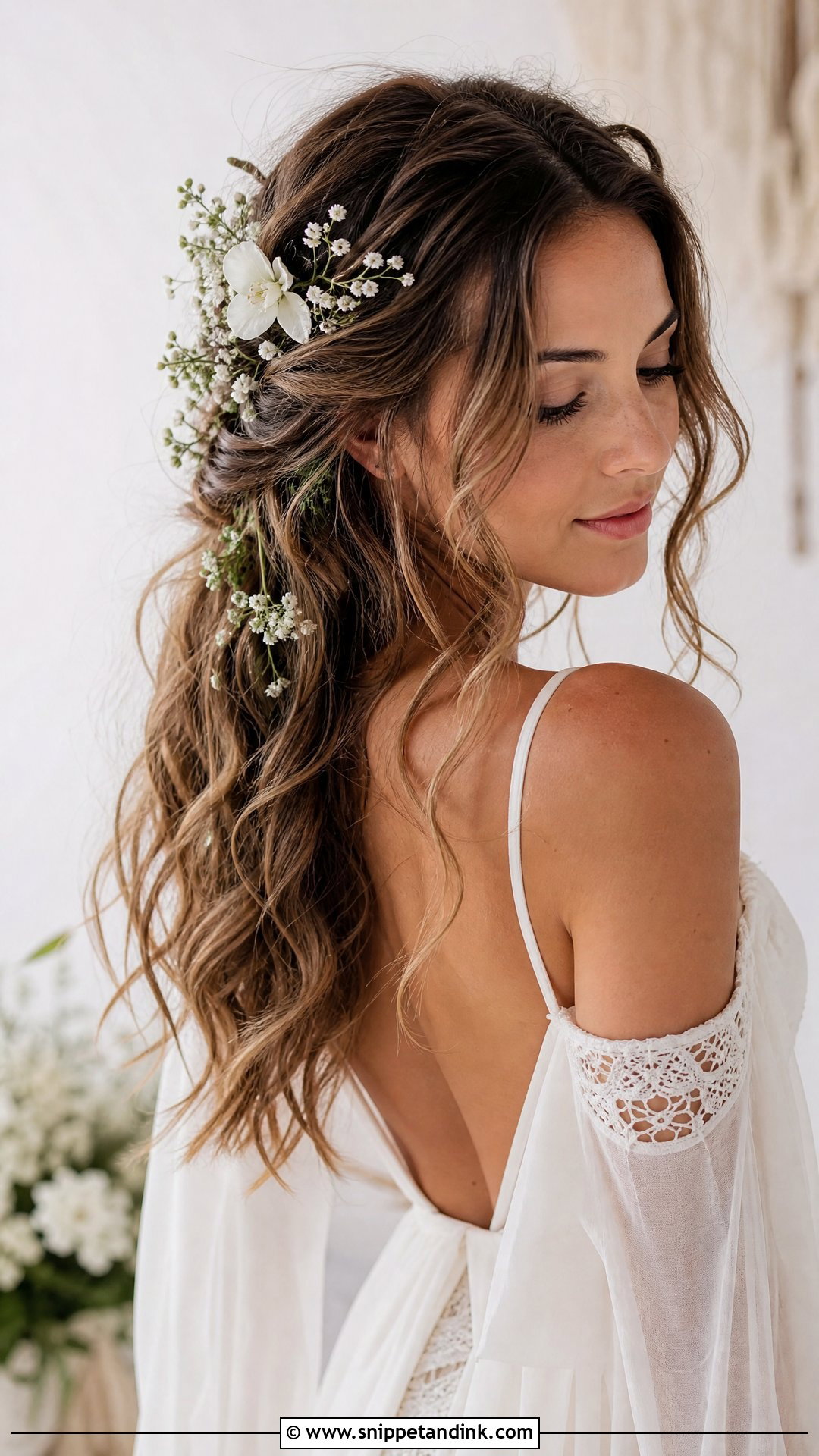
Boho waves leave the hair down in soft, tousled waves with a lived-in texture, with small blooms or baby’s breath tucked throughout. Beach, outdoor and bohemian weddings suit it, finished with a loose center part and face-framing pieces. I curl with a flat iron or wand in alternating directions, then break the curls up with fingers and texture spray rather than a brush. Fresh flowers wilt without water, so for a long day I’d use sturdy blooms or silk ones that match the bouquet.
18. Sleek Middle Part Bridal Updo
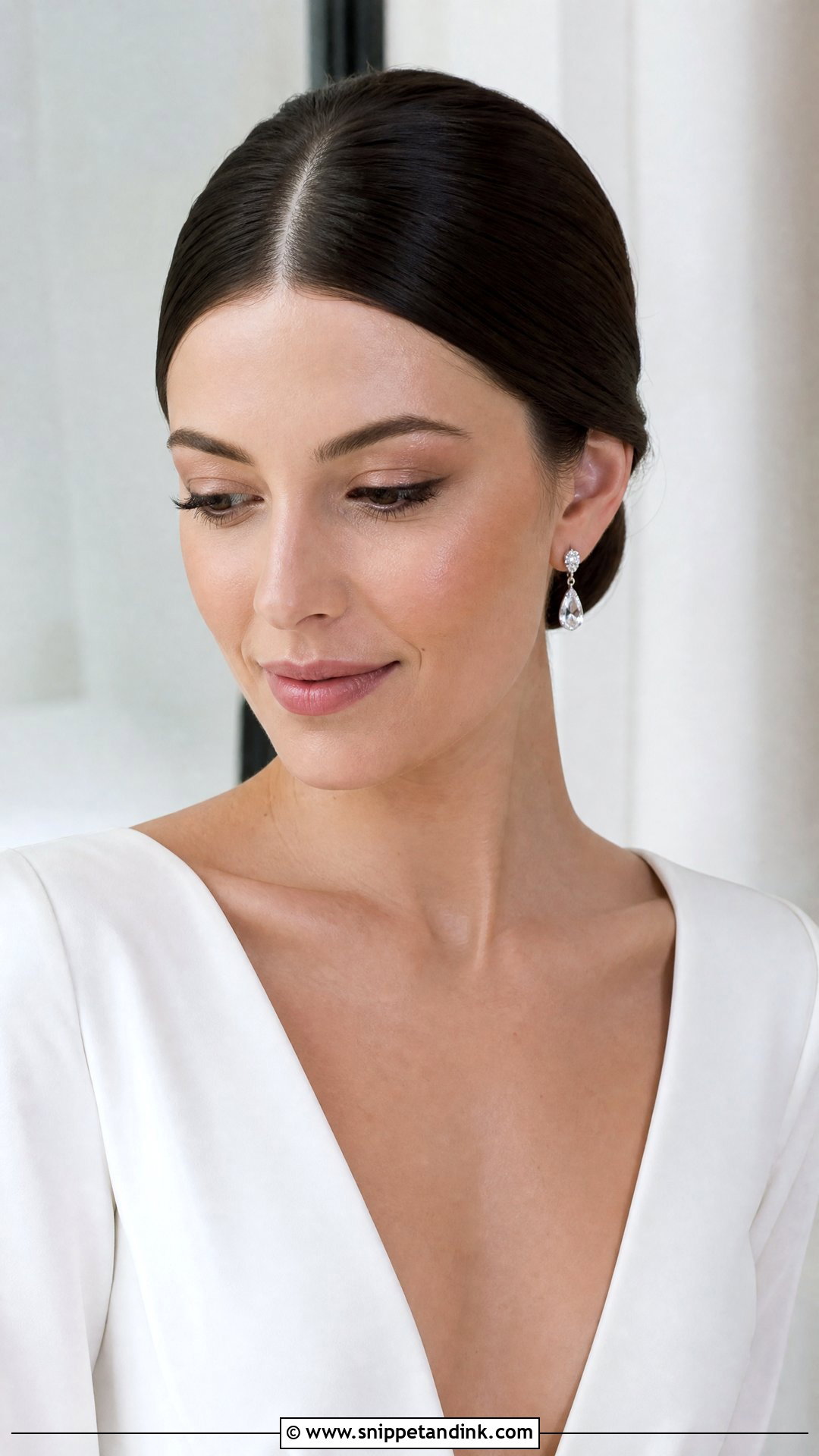
A center part shows any asymmetry in the face or hairline, so this is the style I most want to test first. Done well, the hair is parted precisely down the middle and gathered into a smooth updo at the back, and the symmetry looks clean and editorial. Minimalist brides, simple gowns and statement earrings suit it, with a glossy finish for polish. I check the part on a phone camera as well as in the mirror, because a part a few millimeters off center shows in every straight-on portrait.
19. Bridal Updo With Loose Tendrils
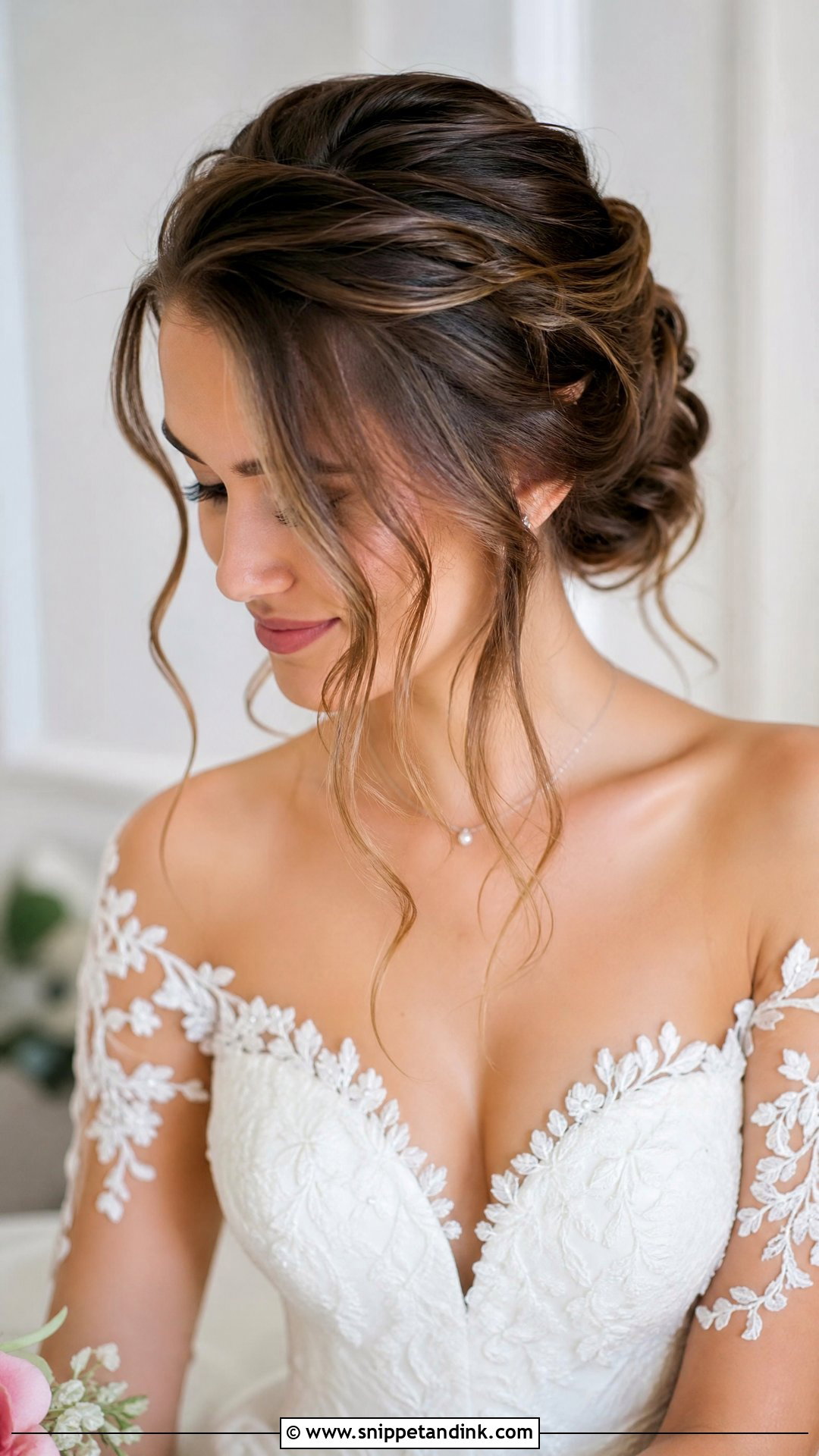
Here the structure stays at the back and the softness at the front. The pieces left out should be chosen, not random: I pull them from the hairline at the temples and nape, then curl them lightly so they move. Too many and the updo looks unfinished; too few and it looks severe. It suits rustic barns and formal estates alike. Tendrils are the first thing humidity flattens, so I give them a light hold spray and suggest a bridesmaid carries a mini curling wand if the day is long.
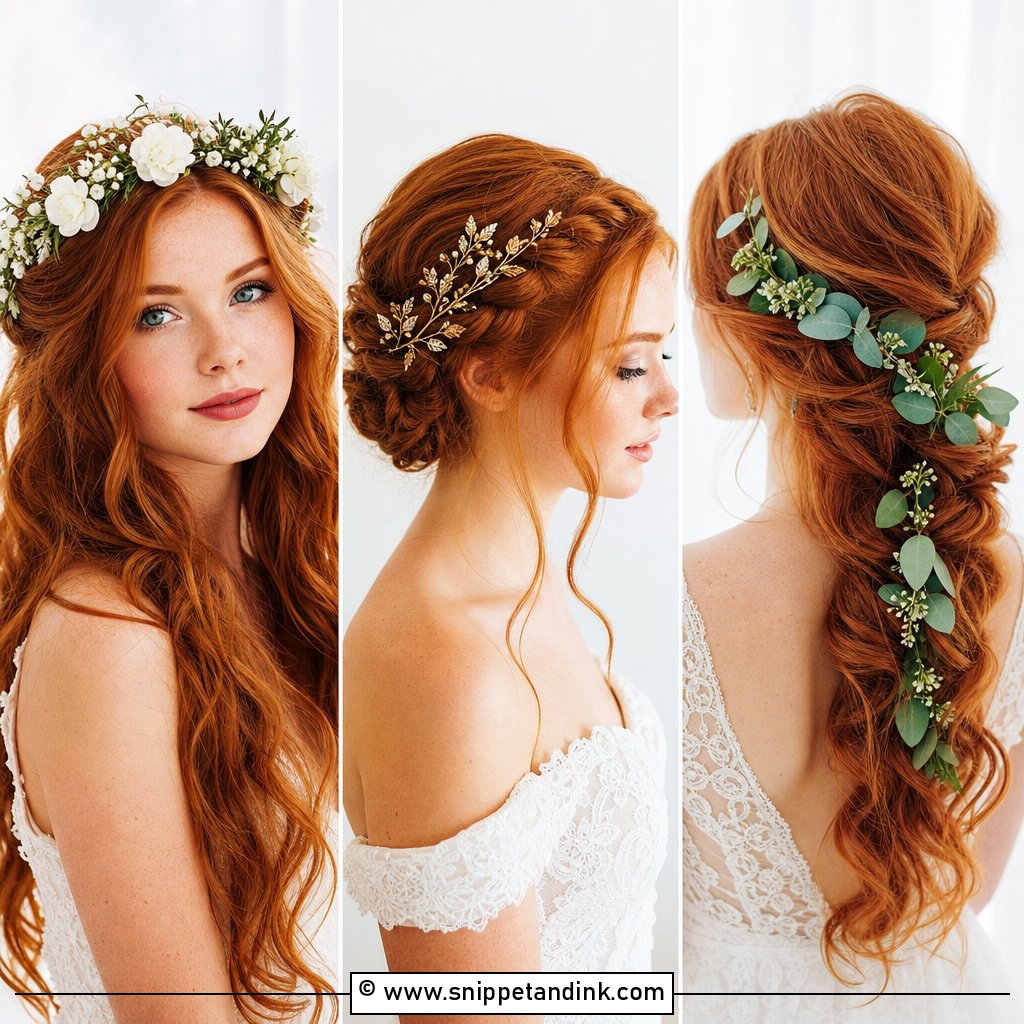
20. Low Side Swept Curls for Brides
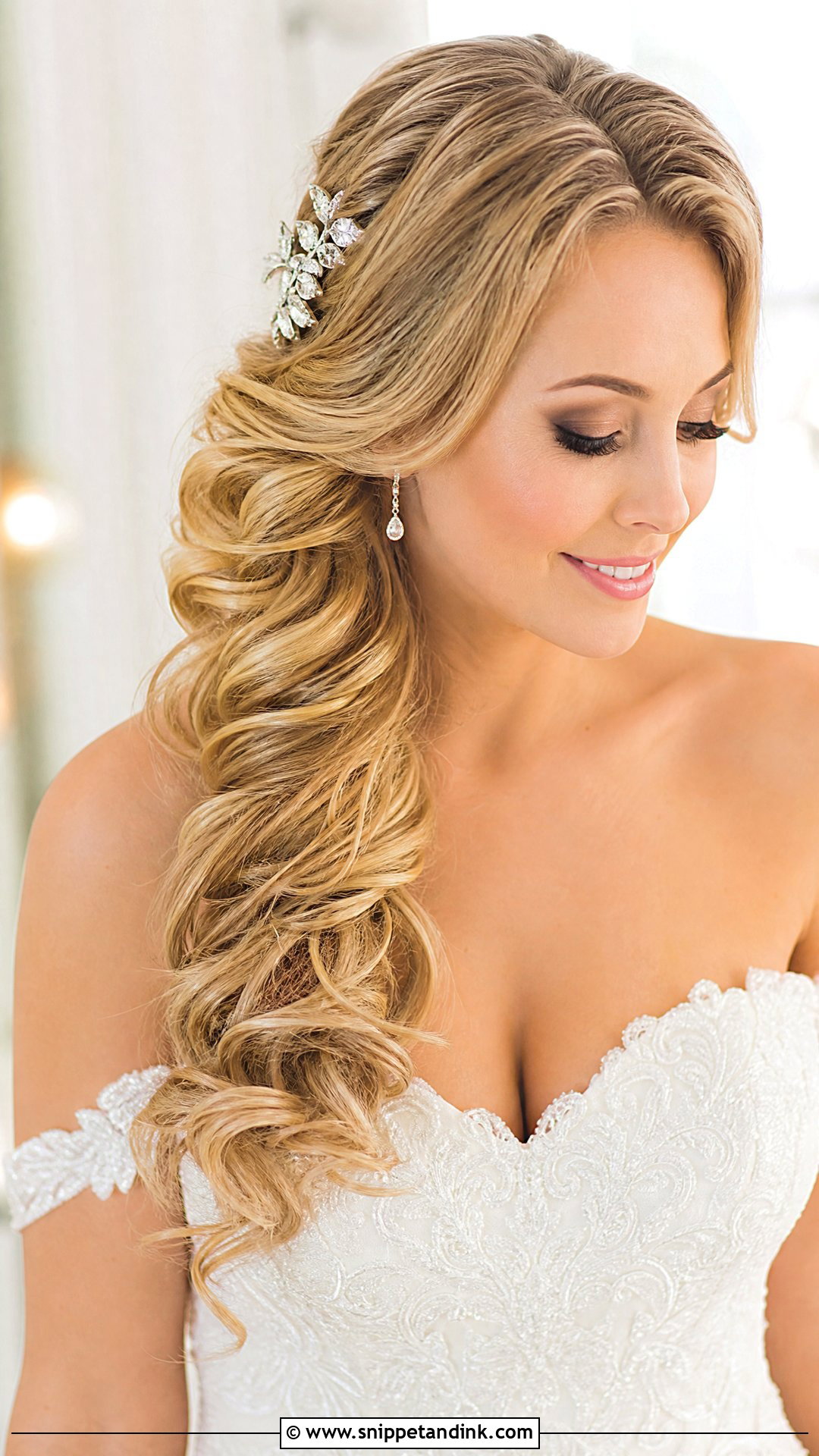
Low side-swept curls gather over one shoulder in a soft cascade. Off-shoulder and sweetheart gowns suit them, since one side of the neckline stays open. A pearl pin or jeweled clip behind the ear anchors the curls and adds sparkle. I secure the gathered section with crossed pins near the nape on the opposite side, so the weight doesn’t slide back across the neck during the day. The style reads well from the front and side, and it fits classic, vintage and glamorous weddings.
Pins, Padding and Grip Inside a Classic Updo
Classic updos look simple from the outside, and they hold because of what’s underneath. Freshly washed, silky hair is the hardest to pin, so I usually ask brides to wash the day before and keep heavy conditioner off the lengths. I add grip with a texturizing spray or dry shampoo, then backcomb lightly at the base wherever pins will go.
Bobby pins hold best crossed in an X, or slid in against the direction of the hair and then turned. For a large shape on fine hair, a padding form or small donut matched to your color gives volume without heavy teasing. A heavy veil or tiara gets its own anchor, usually a small braid or a tight section of backcombed hair, so its weight never pulls on the style itself.
At the end of the night
Ask someone to help you take it down. Remove the pins slowly, roughly in reverse order, then work a conditioning spray through and brush from the ends upward instead of tugging through the backcombing. Yanking everything out at once is how brides lose hair they had no reason to lose.
The Real Test Is How It Looks After Dinner
Pick the style that feels like you on an ordinary day, then make it more polished. A sleek chignon, romantic waves or a braided updo can all suit your gown, venue and taste, and pearls, fresh flowers or a tiara make it personal. Book your trial a few weeks before the wedding, bring the veil and accessories you’ll wear, and keep the style in for the rest of that day to see how it holds. If it still looks right after dinner, you’ve found your wedding hair.
You'll Like These Ideas:



Leave a Reply