
On a wedding morning I usually finish the bride’s hair and then turn round to a groom who has had the same cut for ten years and is suddenly nervous about it. He doesn’t need a new identity. He needs the cut he already suits, done a little sharper and timed properly. Some of the ideas below start from a sharp fade, some from a side part or relaxed waves, and each comes with notes on how it holds through a ceremony, a few hours of photos and a hot dance floor. Take the one closest to your current hair to your barber and adjust from there.
Fades Grow Out in Days, Scissor Cuts in Weeks
The single most common groom problem I see is a cut done at the wrong time. Hair grows roughly a centimeter a month, and on a skin fade that’s enough to blur the gradient within days. A longer scissor cut barely changes in a week.
- Six to eight weeks out: a trial cut, if you’re changing anything at all. It gives you time to grow back a mistake.
- Two to three weeks out: a maintenance cut for longer styles, waves and buns, so the ends are fresh but not freshly chopped.
- Two to three days out: the wedding cut for fades, hard parts and anything short at the sides. The day before is fine too if your barber is reliable on short notice.
- The morning of: styling only. Nothing should be cut on the day.
Stay with your usual barber. Someone who has cut your head a dozen times knows your cowlicks and your crown, and that matters more than a fashionable shop.
1. Low Skin Fade With Textured Top
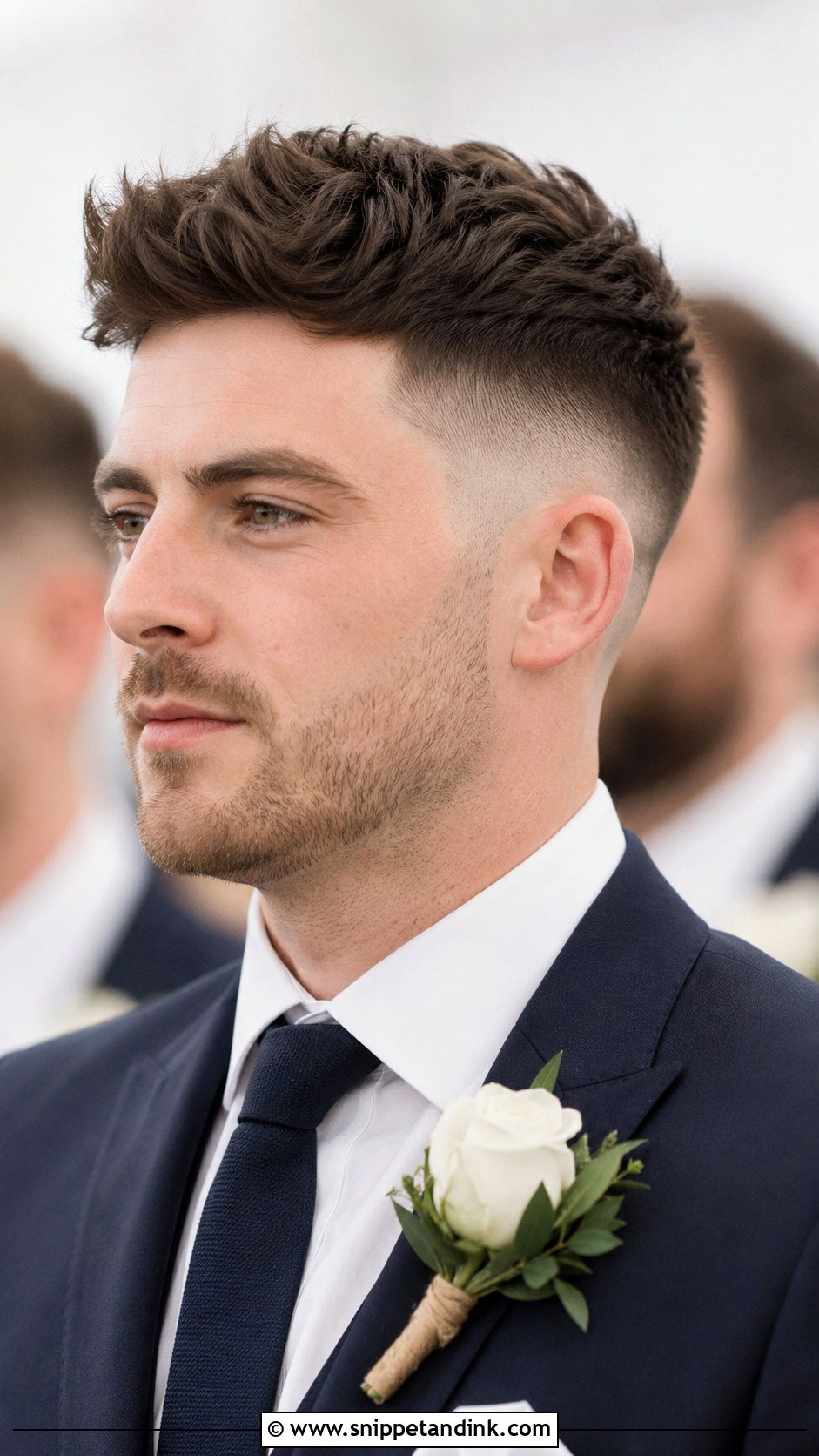
A low skin fade under a textured crown is the cut I see most often in grooms’ chairs, and for good reason. The sides blend down to bare skin low on the head, so the outline stays clean even from the back during the ceremony. The barber leaves enough length on top to point-cut, which breaks up the ends so matte paste can push them into movement. One warning: skin fades show regrowth within a few days, so this is the cut that most needs booking close to the date. Ask for a low fade with point-cut texture and bring a photo.
2. Classic Side Part
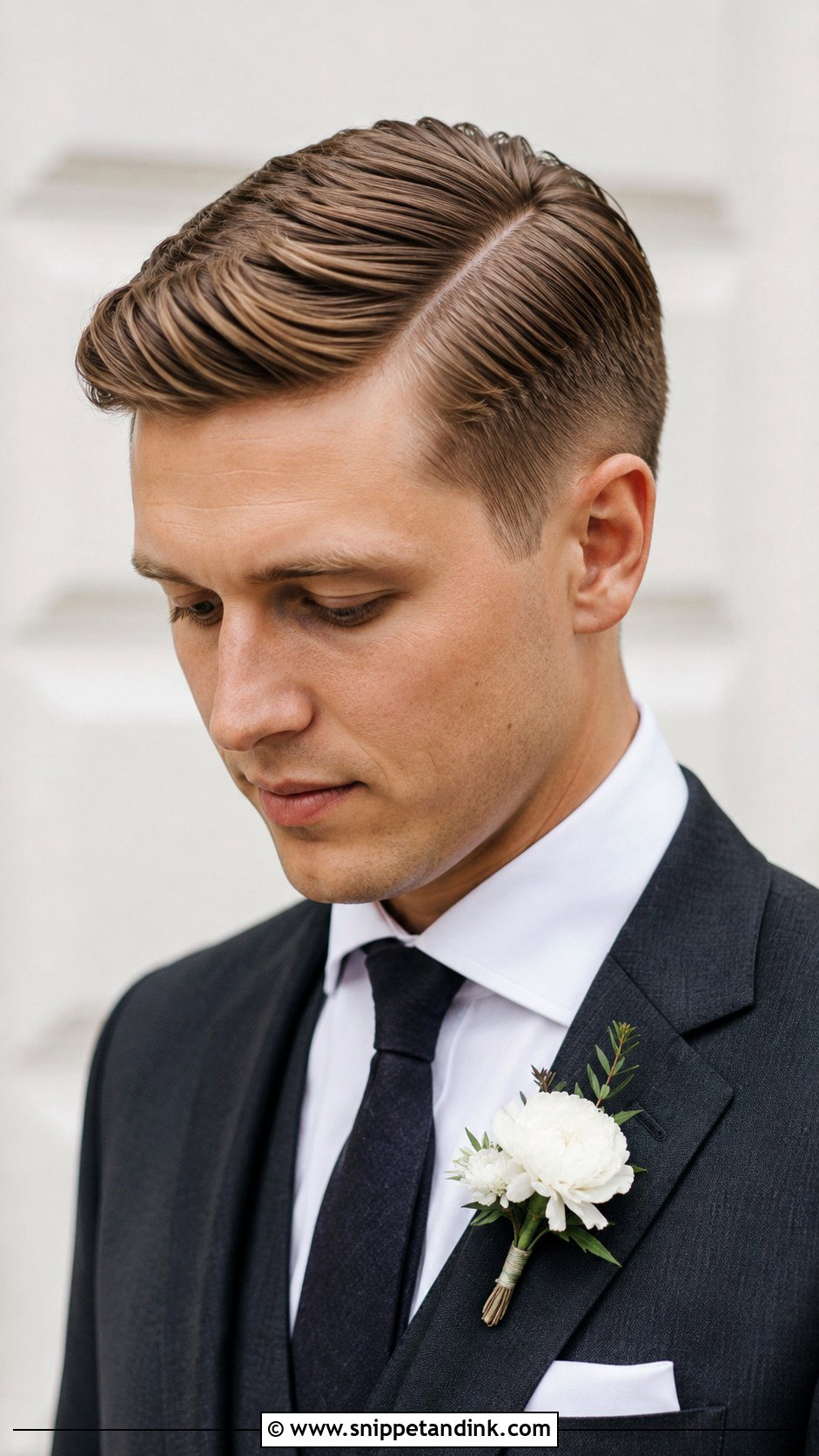
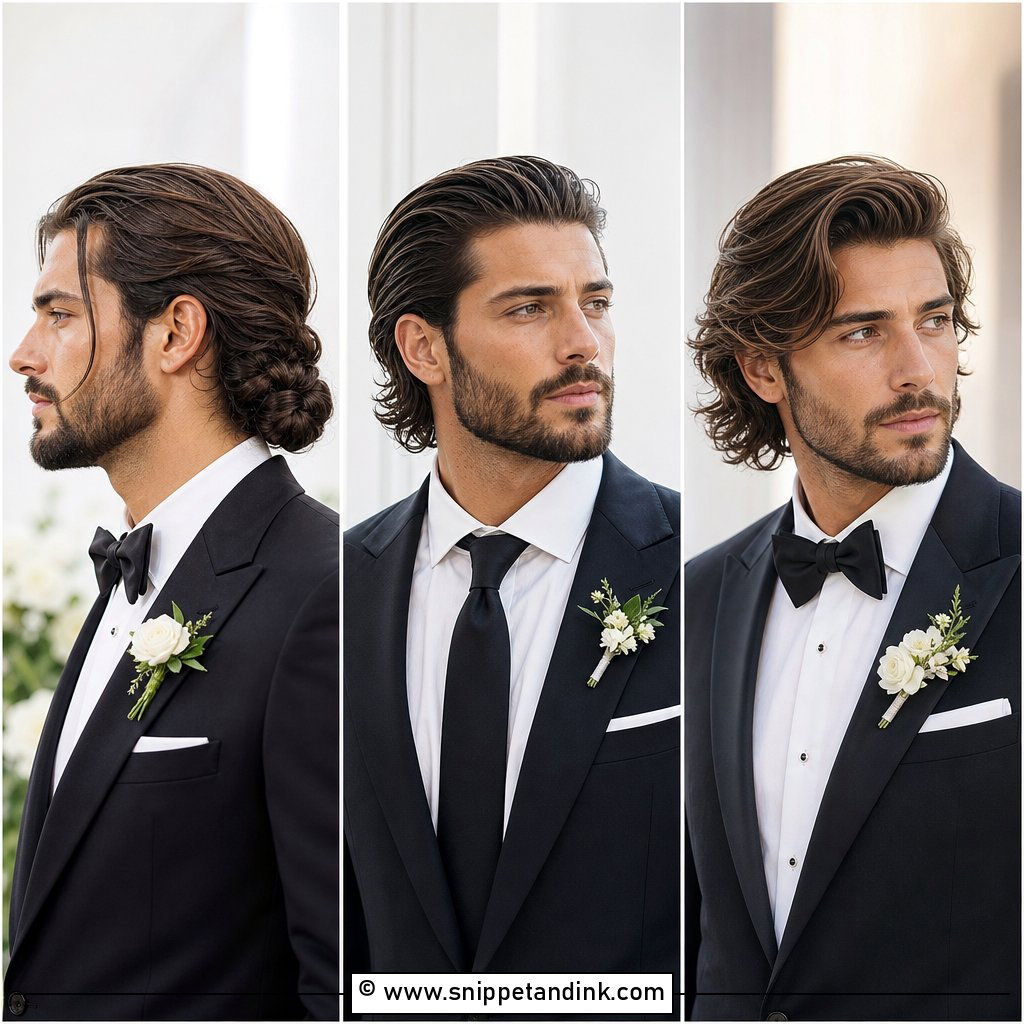
The side part is the cut grandparents approve of and photographers love, because it reads clearly in a formal portrait. The part should follow where your hair naturally falls; a part forced against the growth direction lifts up by the afternoon. Sides stay short with a soft taper and the top keeps length for a smooth sweep. I use a light, water-based pomade so there’s a soft sheen without grease under flash. It suits oval, square and longer faces, and traditional suits in formal rooms.
3. Modern Pompadour
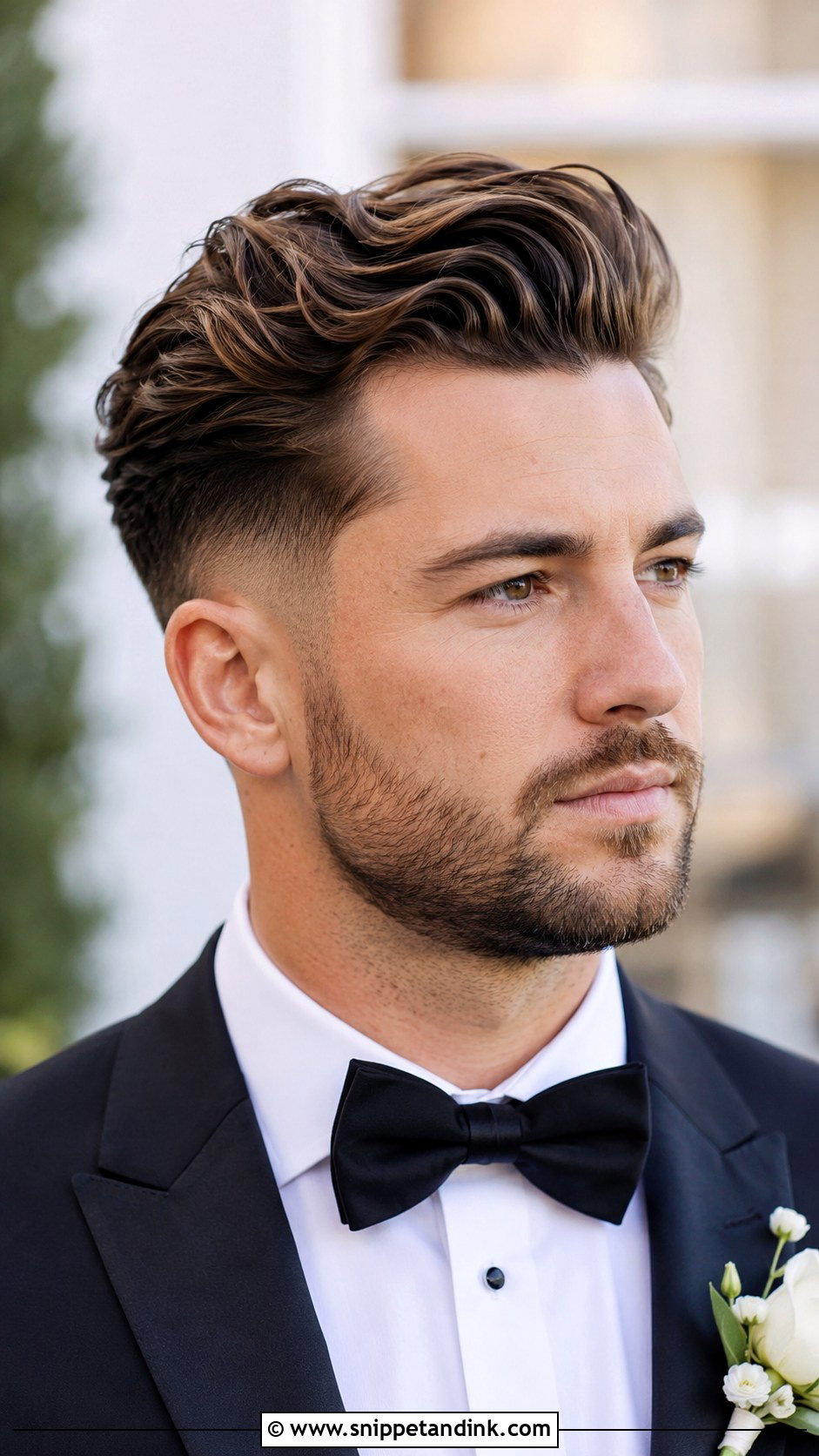
Height is the whole point of a modern pompadour, and height takes work. Hair is blow-dried up and back from the forehead with a round brush, then set with a medium-hold pomade; skip the blow-dry and it collapses within the hour. It needs thick hair, straight or wavy, with real length at the front. Fine hair will look stretched rather than full. Shorter faded sides keep the shape from looking like a costume, and a clean shave or sharp beard line balances the volume.
4. Textured Crop With Fringe
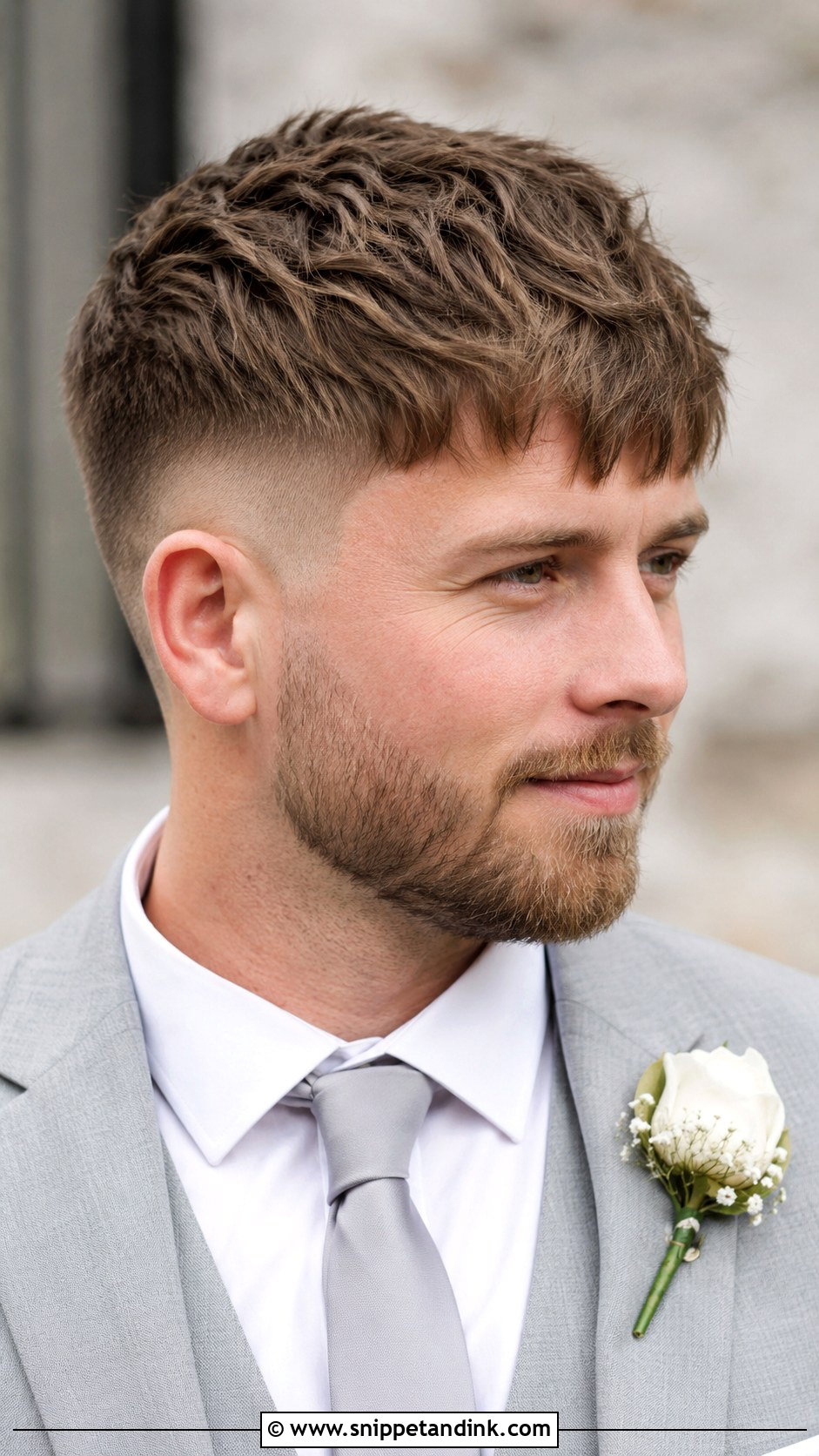
This is the cut I recommend to grooms who say they don’t want to think about their hair at all. The sides fade short and the top is cut choppy, then pushed forward into a soft fringe. A matte clay gives grip without weight, so it suits fine hair as well as thick. It also forgives a lot: if the fringe moves during the day, it still looks intended. The crop works with most face shapes and sits comfortably next to a trimmed beard.
5. Slicked-Back Undercut
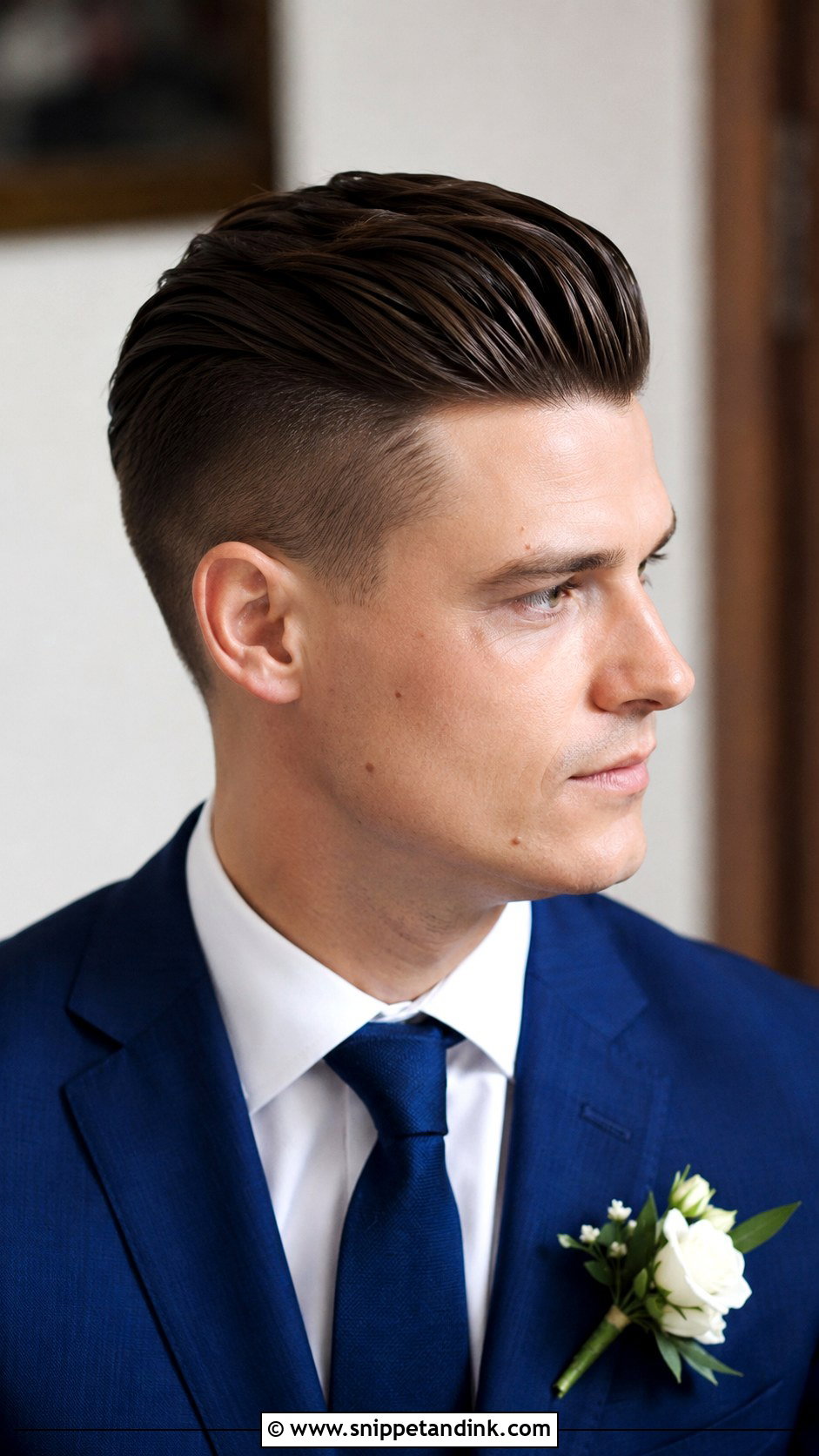
A slicked-back undercut has the strongest contrast of any cut here: shaved or very short sides with a disconnected top combed straight back. It needs at least a few inches on top, and the back of the top section has to be cut to sit flat or it will lift at the crown. A strong-hold gel gives the wettest shine; an oil-based pomade looks softer but can mark a white shirt collar. It suits straight to wavy hair and looks sharp against a tailored jacket.
6. Crew Cut
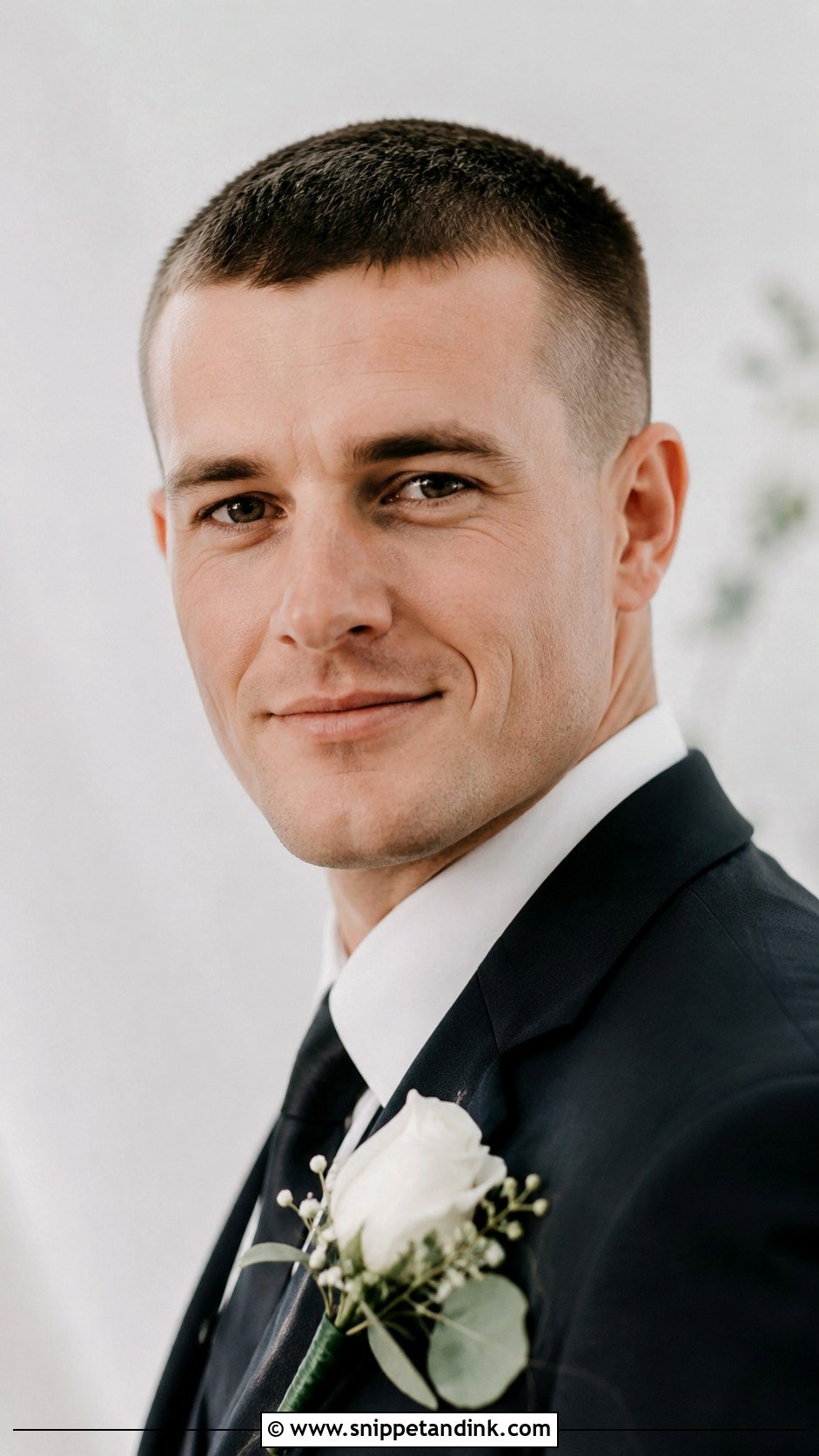
The crew cut is honest about what it is: short sides, slightly longer top, no styling decisions on the day. That’s exactly why some grooms choose it. A little light pomade rubbed through the top gives a bit of texture in close-ups. It fits nearly every face shape and hair type, and it’s the cut least likely to change between your morning and your last dance. If you’re prone to sweating at the hairline, this is a sensible option.
7. Curly Top Fade
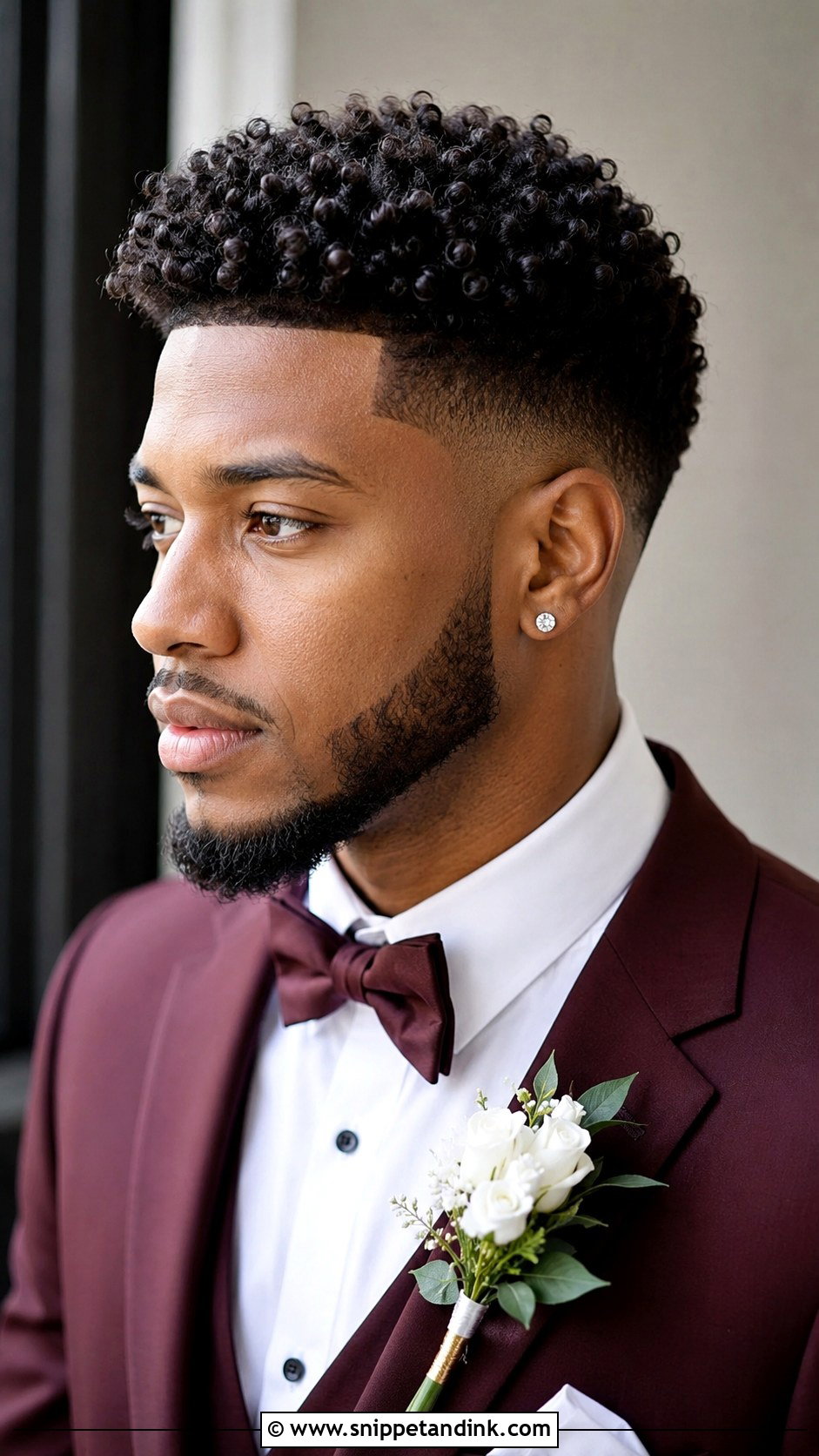
Curly grooms are often talked into straightening, which I think is a mistake. A curly top fade keeps the curls full on top while the sides taper clean, and the contrast does the work. The barber should cut curls dry or at least check them dry, because wet curls shrink once they dry and the top can end up shorter than you expected. A curl cream or light leave-in applied to damp hair, then left to dry without touching, keeps frizz down. Ask for the top to be shaped evenly so it doesn’t sit higher on one side.
8. Buzz Cut With Beard
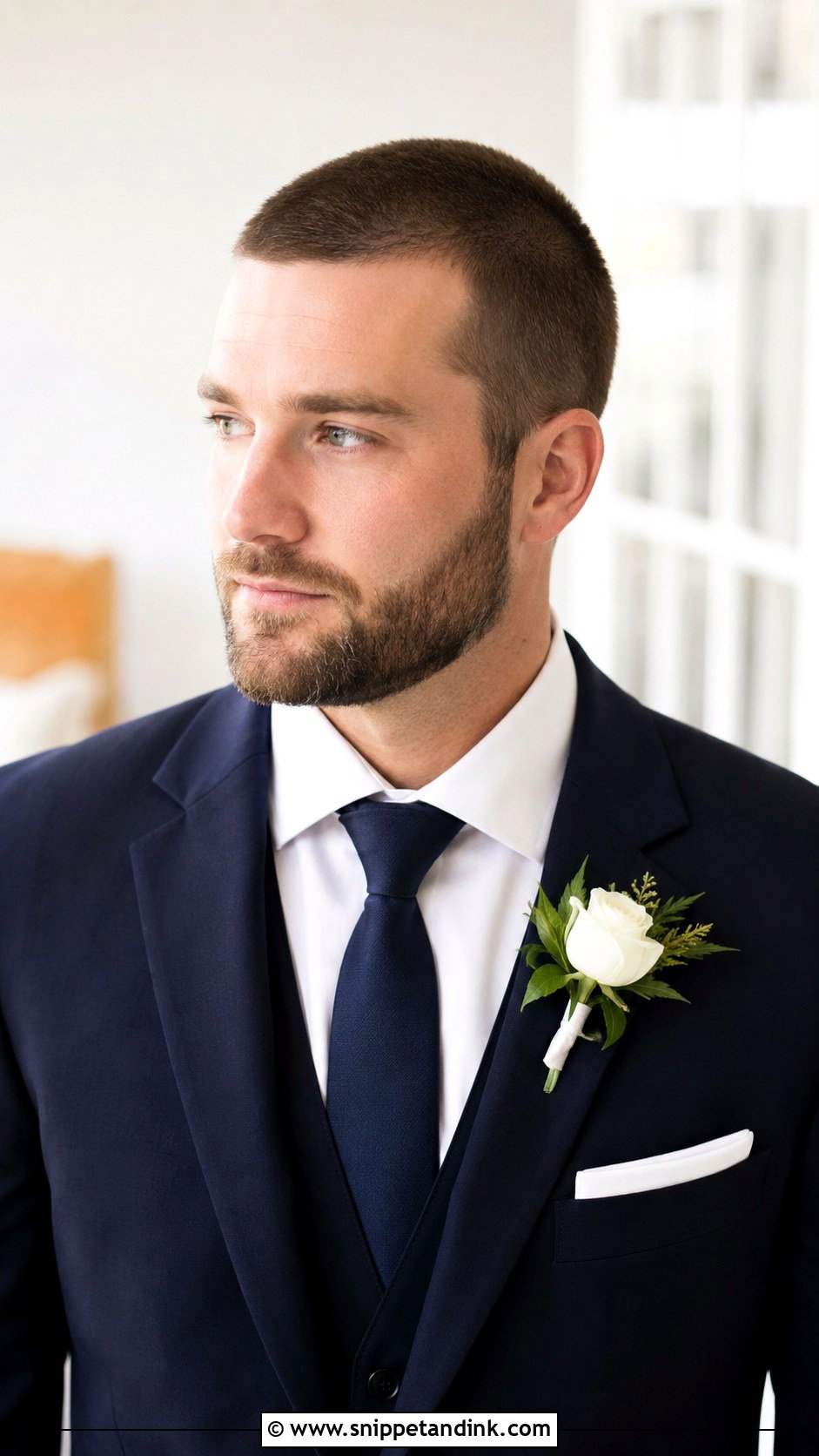
With a buzz cut, the beard does all the styling. Pairing it with a well-groomed beard balances the face, especially for strong jawlines. The head needs nothing on the day, but the beard needs a defined cheek line and a clean neckline, done a day or two ahead so any redness has settled. A drop of beard oil the morning of keeps it from looking dry in close-up portraits. It photographs cleanly in a suit or outdoors.
9. Side-Swept Quiff
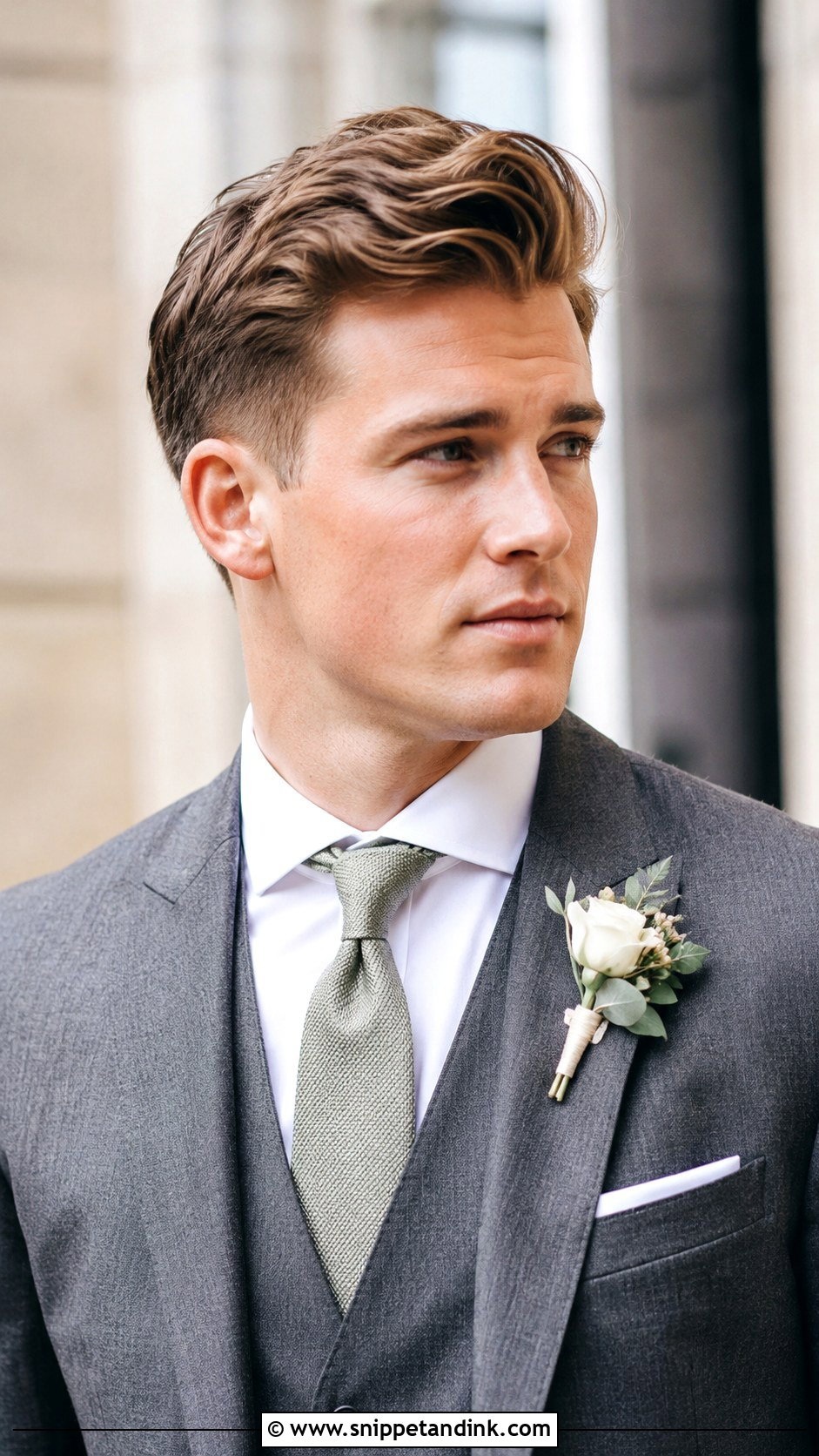
The side-swept quiff offers volume without the steep height of a pompadour, and it’s easier to keep in place. Hair is lifted at the front with a blow-dryer and swept gently to one side, with tapered sides keeping the shape tidy. A light-to-medium hold product keeps it touchable, which matters when everyone wants to hug you. It works for formal and relaxed weddings alike and suits straight to slightly wavy hair. If your hair is very fine, keep the lift low.
10. Temple Fade With Slick Back
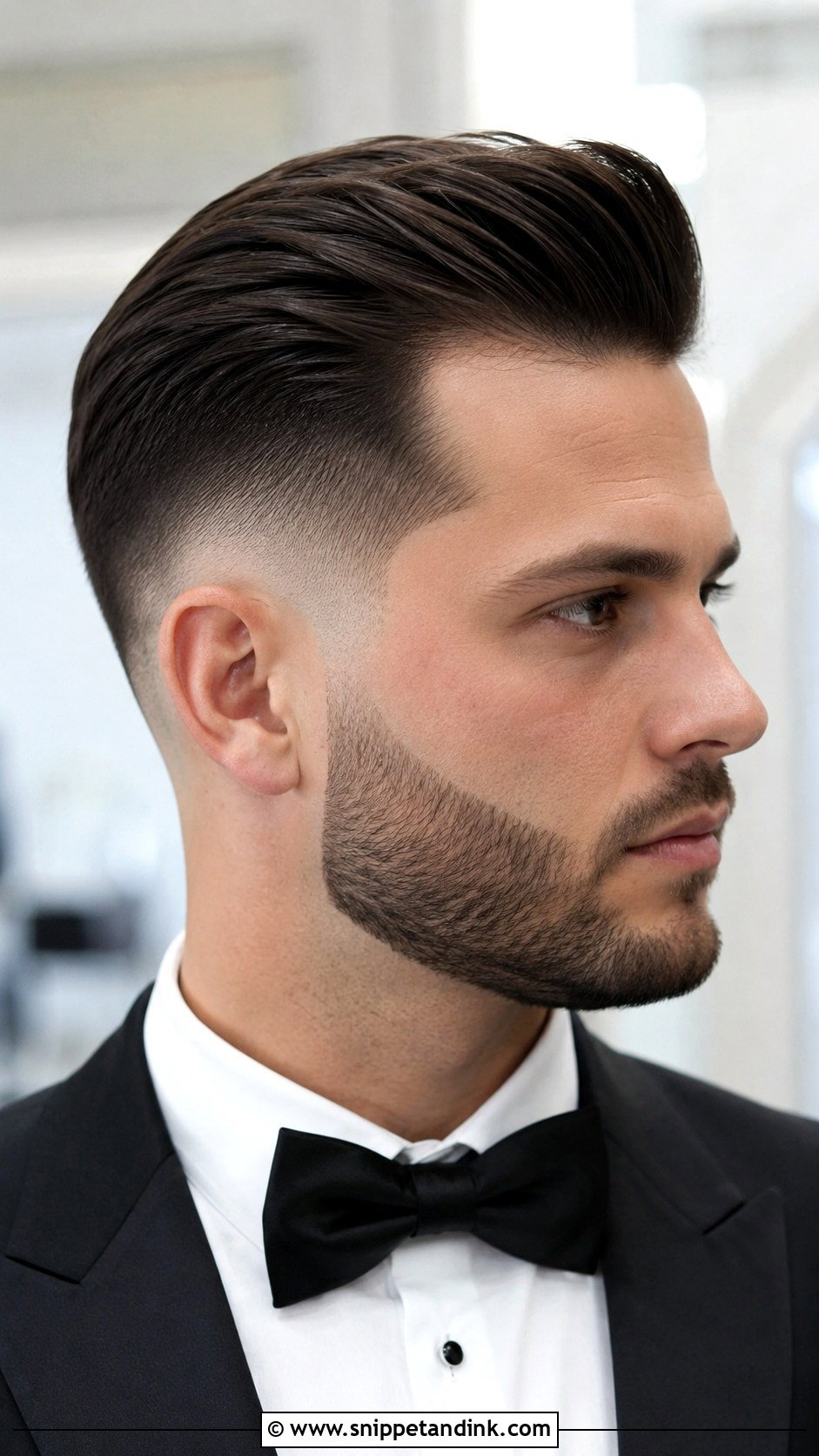
Grooms who like a slick back but not a full fade usually land on this one. The fade sits only around the temples and lower sides, so the overall shape stays fuller and less severe. The top is slicked back with a glossy pomade. Temple fades grow out faster than you’d think, so book it within a couple of days of the wedding. It pairs well with a sharp beard line and suits straight to wavy hair.
11. Middle Part With Length
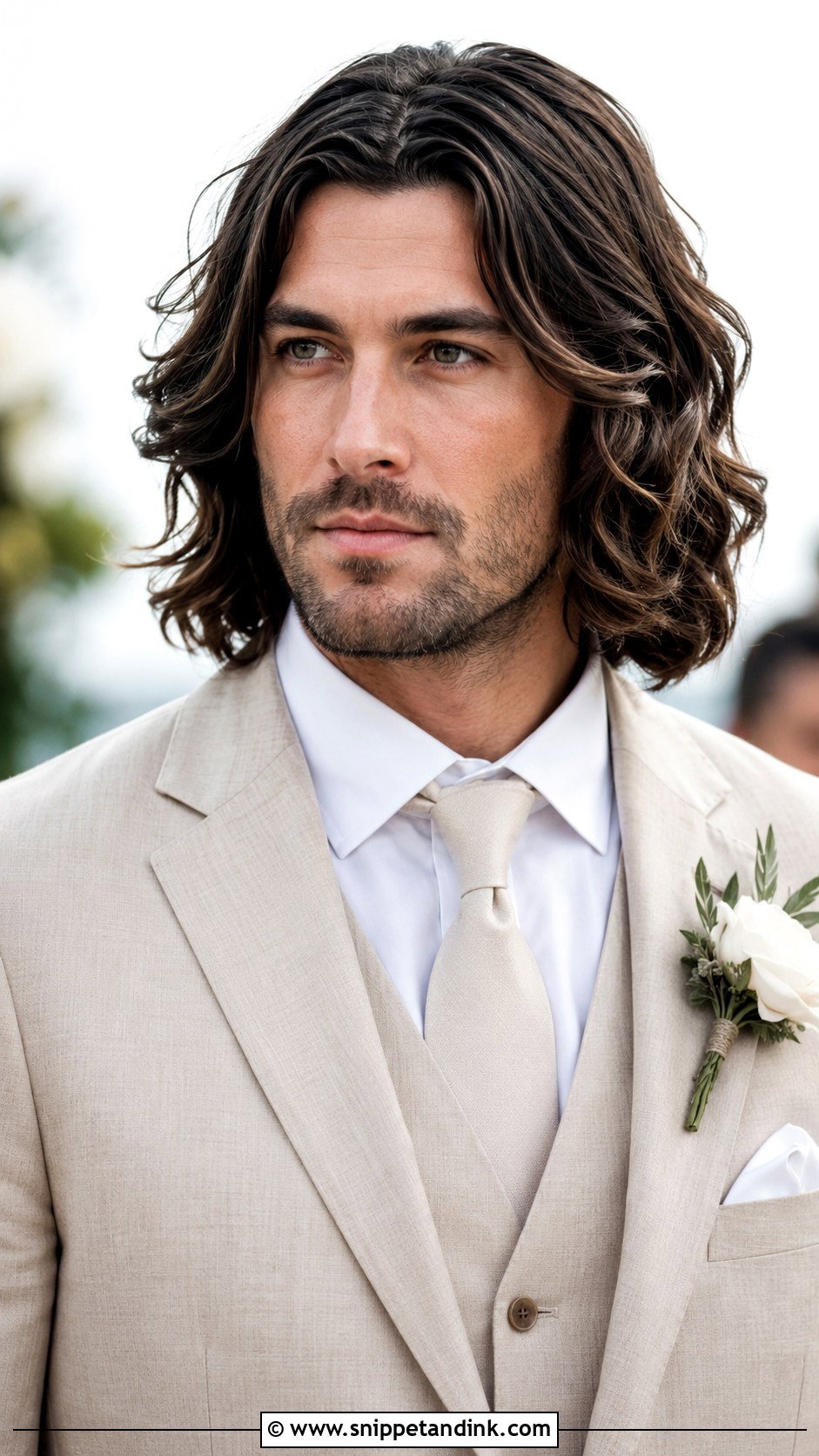
The middle part has come back for grooms with longer hair, and it works when the hair actually wants to fall that way. Check your crown: if a strong cowlick pulls to one side, a center part will fight it all day. Straight to wavy hair with some length and movement is ideal. A light texturizing spray keeps it from looking flat against the head. It suits oval and longer faces and sits naturally at relaxed, boho weddings.
12. Comb Over Fade
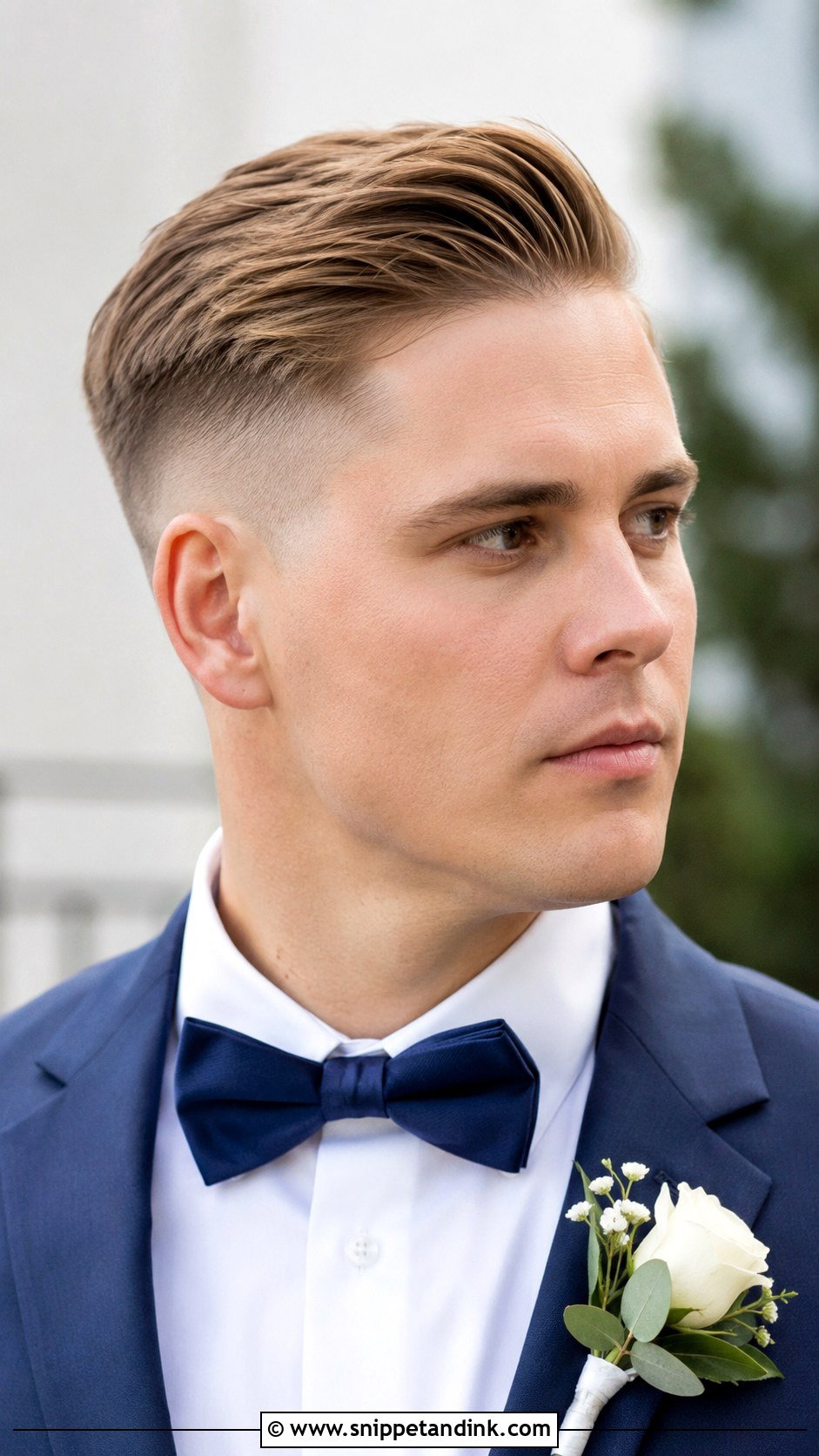
This is a side part with a modern edge: the top combed neatly to one side, the sides faded into a smooth gradient. The fade is what lifts it above a basic office cut. It works on nearly every face shape and hair type, and a bit of pomade keeps the sweep defined. Ask your barber to blend the fade higher on the part side so the line looks natural. It stays polished in formal suits and still feels approachable at a casual venue.
13. Long Flowing Waves
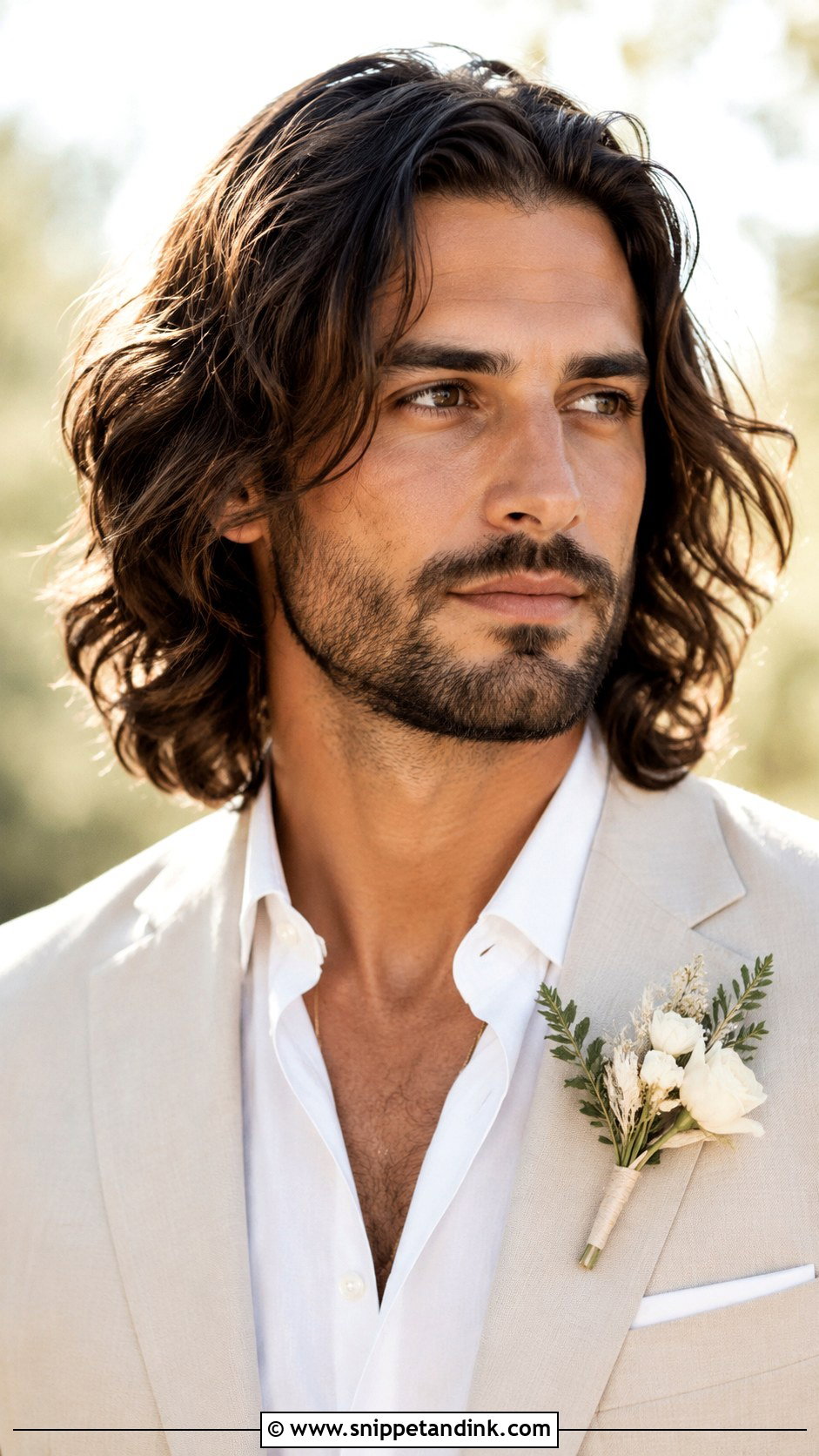
Long waves look relaxed, but they need more preparation than most grooms expect. Start conditioning properly a few weeks before, and get a small trim to remove split ends without losing length. On the day, a sea-salt spray or light cream on damp hair, then air-dried or diffused, brings the waves out. Waves loosen in humidity, so for a beach wedding I’d keep a hair tie on your wrist. The look is free-spirited and fits outdoor, beach and boho celebrations.
14. Classic Taper Haircut
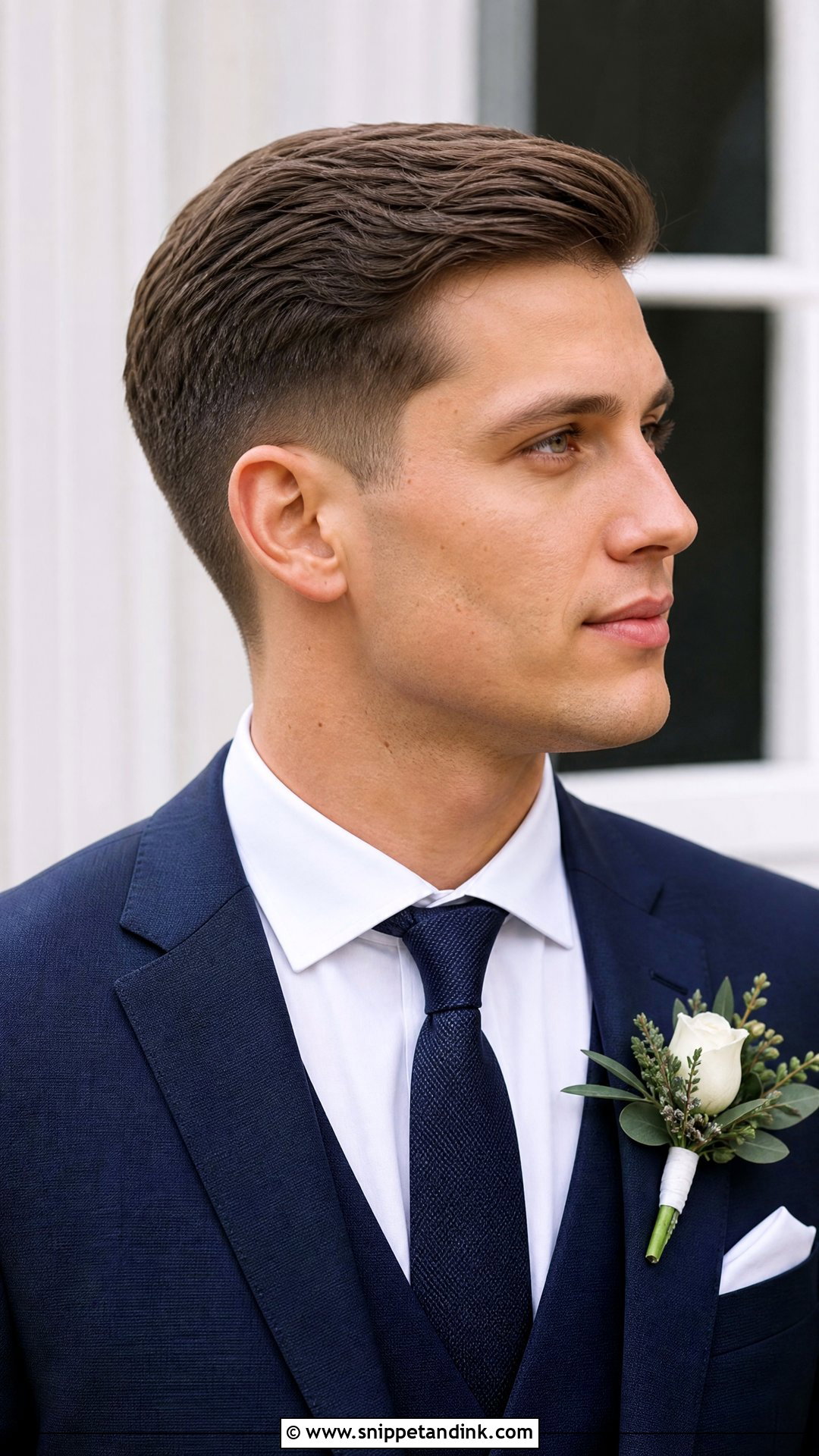
A taper is not a fade, and it’s worth knowing the difference when you talk to your barber. The taper shortens the hair gradually around the edges but never goes to skin, so it grows out softly and still looks neat a week later. That makes it the forgiving choice if your haircut has to happen several days before the wedding. The top keeps moderate length for combing over or brushing back, with light pomade for polish. Every face shape and hair type can wear it, and it ages well in a wedding album.

15. Faux Hawk Fade
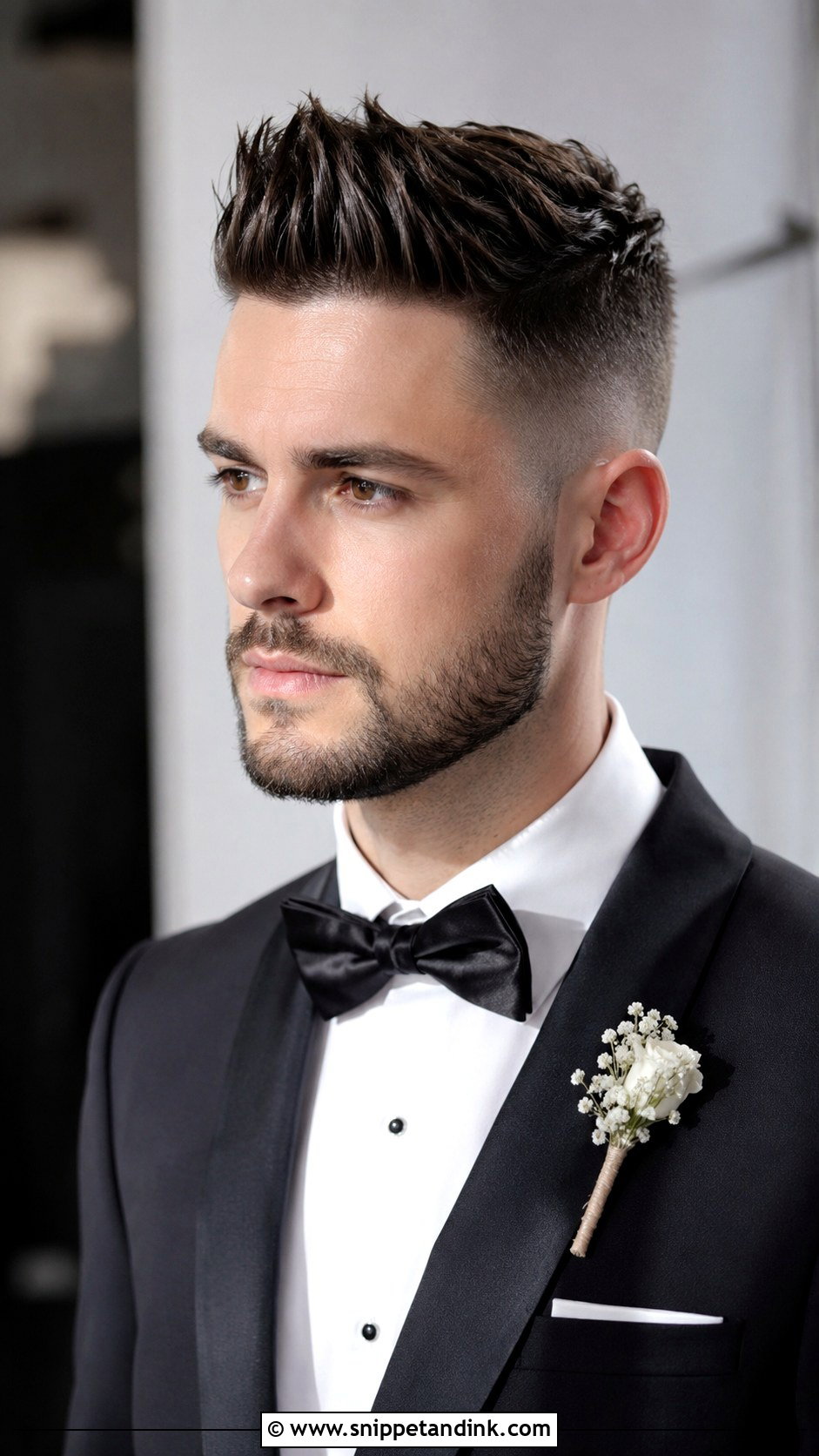
The faux hawk adds height down the center without committing to a shaved mohawk. The sides fade short and the middle strip is pushed up and slightly forward into a peak. It needs thick hair, straight to wavy, and a strong-hold product; with fine hair the peak separates and looks thin. It suits oval and square faces. Keep the peak modest for a formal wedding, and pair it with a tidy beard so the face doesn’t look top-heavy.
16. Slick Side Part With Hard Line
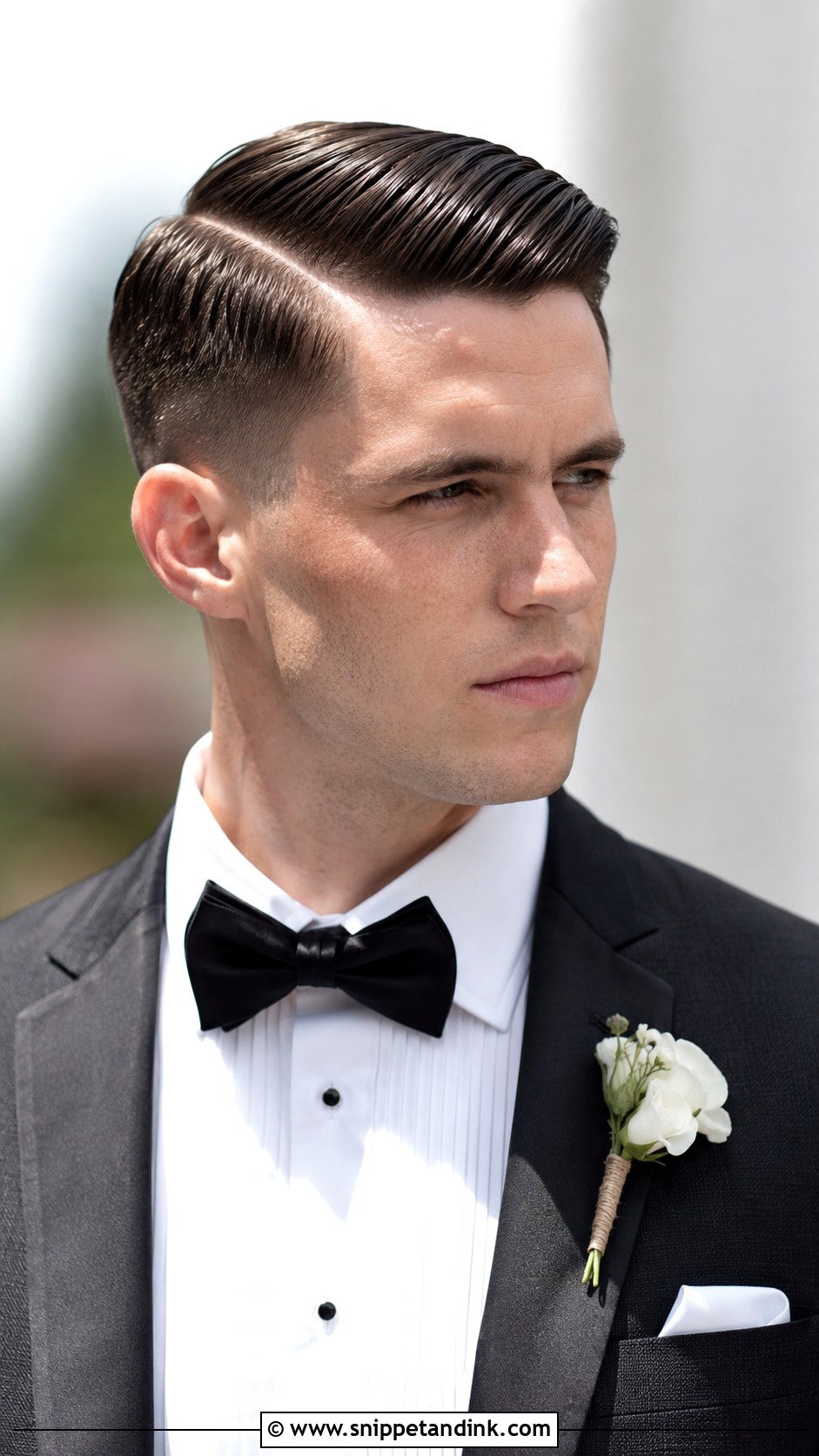
A razored hard part takes the classic side part and adds a clean shaved line where the part sits. It’s precise, and it shows in every photo. The line is the detail that grows out fastest, so it should be cut a day or two before the wedding, not a week. A glossy pomade keeps the top smooth over it. It suits straight hair best and formal settings with tailored suits; on very curly hair the line can look disconnected from the rest of the cut.
17. Messy Textured Crop
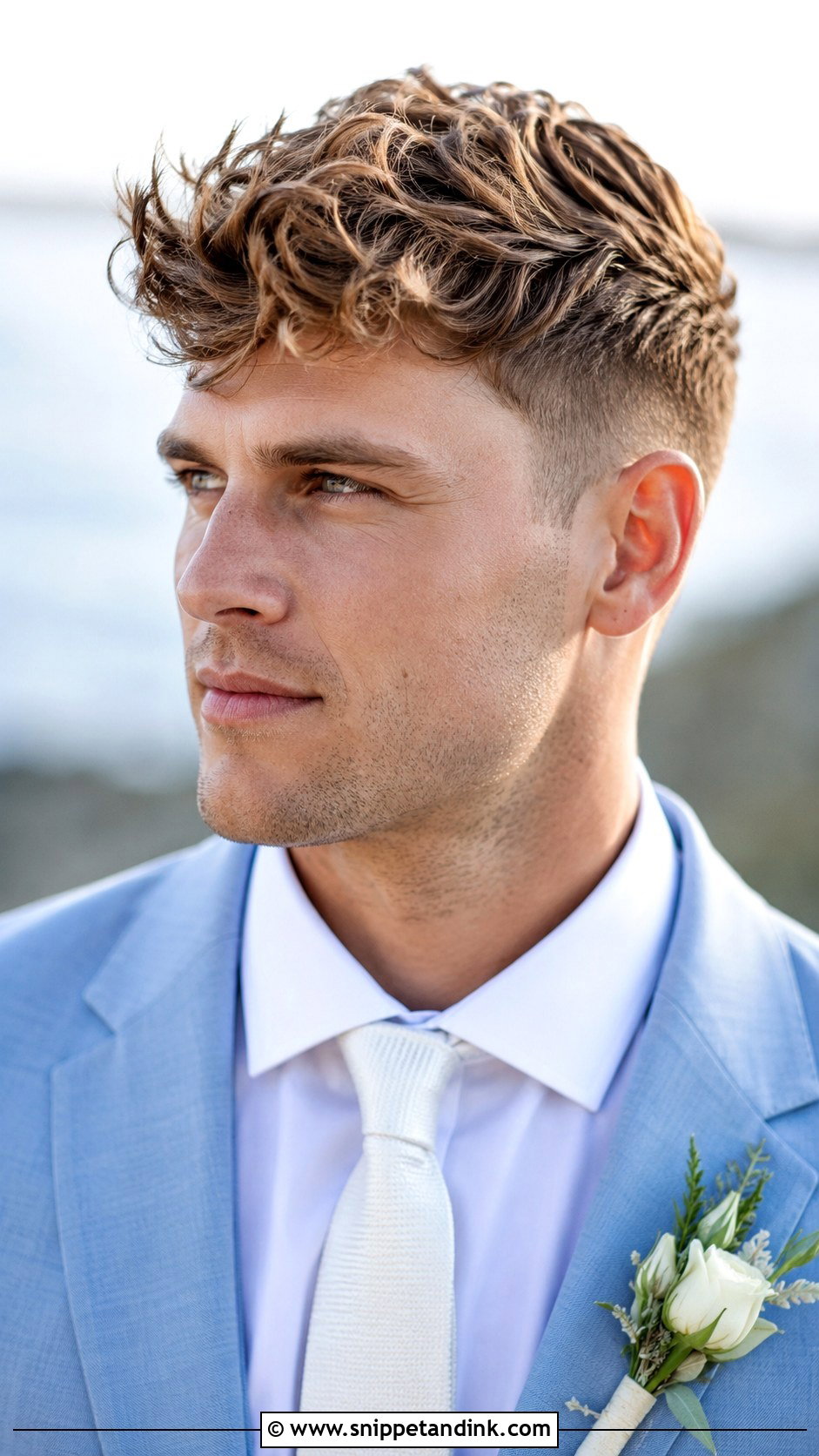
Undone texture is harder to get right than it looks. The messy crop keeps the sides clean and leaves a piecey top, and the barber needs to cut that texture in rather than relying on product to fake it. A matte clay worked through dry hair gives separation and grip. It sits naturally at casual and outdoor weddings, suits most face shapes, and works best on thick or wavy hair. It’s low maintenance and doesn’t mind a windy afternoon.
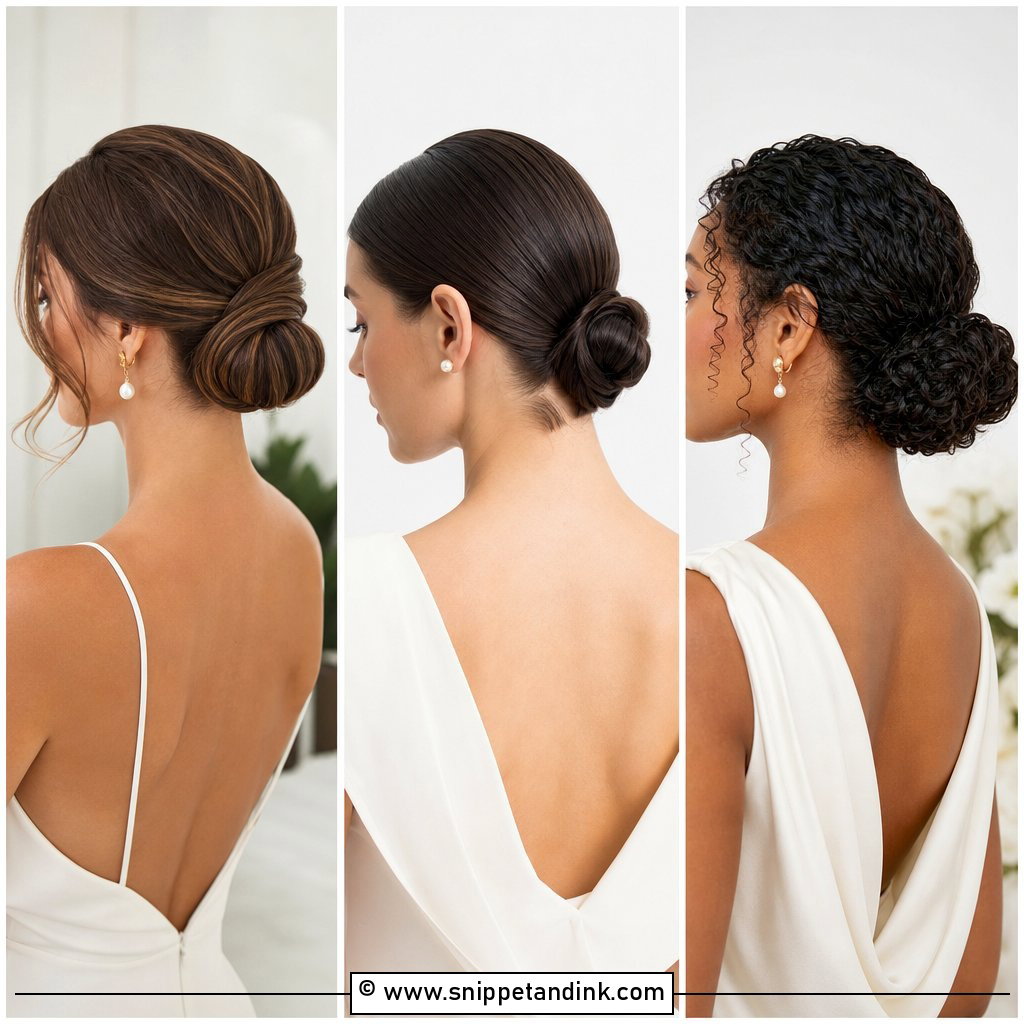
18. Sleek Bun For Long Hair
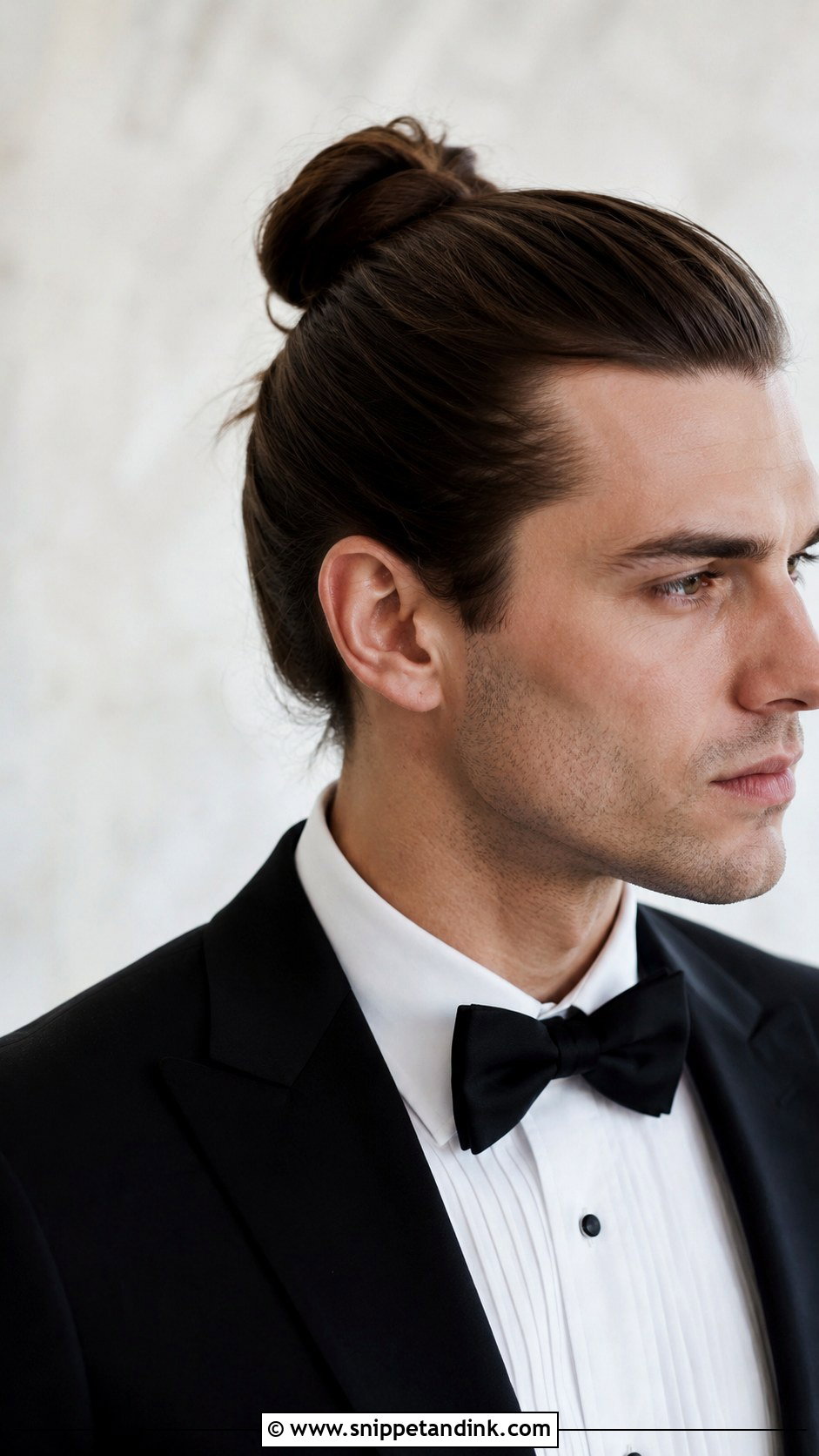
Long-haired grooms often worry their hair will look unfinished next to a suit. A sleek bun solves it. I brush the hair back smoothly, secure it with a snag-free elastic at the crown or nape, and wrap the ends into a neat knot, using a smoothing cream to keep flyaways down. The nape position is more comfortable during a long day and sits better with a shirt collar. It’s the right choice for formal suits and traditional ceremonies, and it stays put through dancing.
19. Caesar Cut
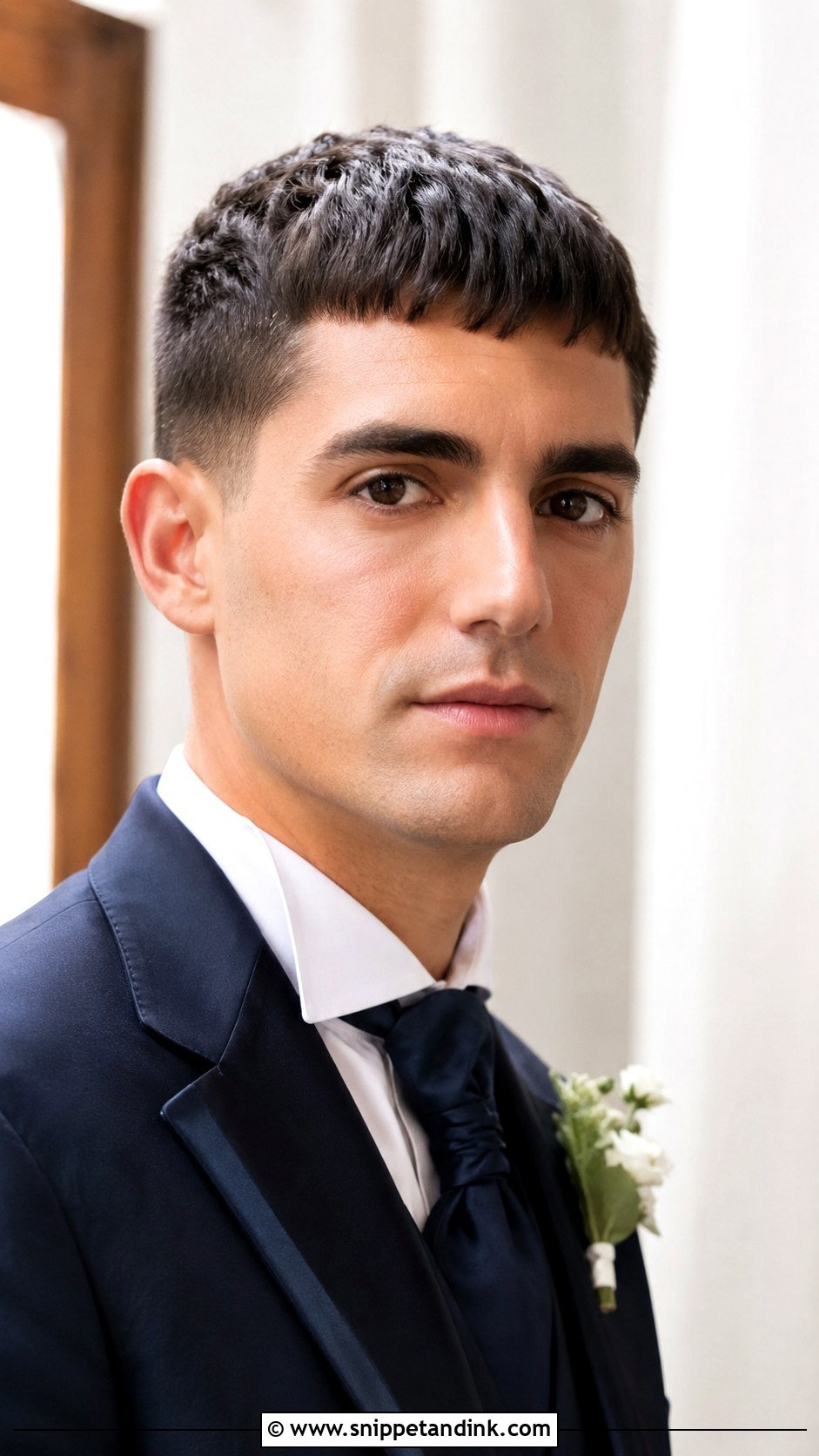
The Caesar is short and uniform on top, with a straight, blunt fringe brushed forward across the forehead. It’s very practical for grooms with a receding hairline, because the fringe softens the temples without trying to hide anything. A touch of matte product is all it needs. It suits round and oval faces and straight hair. There is nothing to restyle all day, and it looks the same at midnight as it did at noon.
20. Textured Side Part With Fade
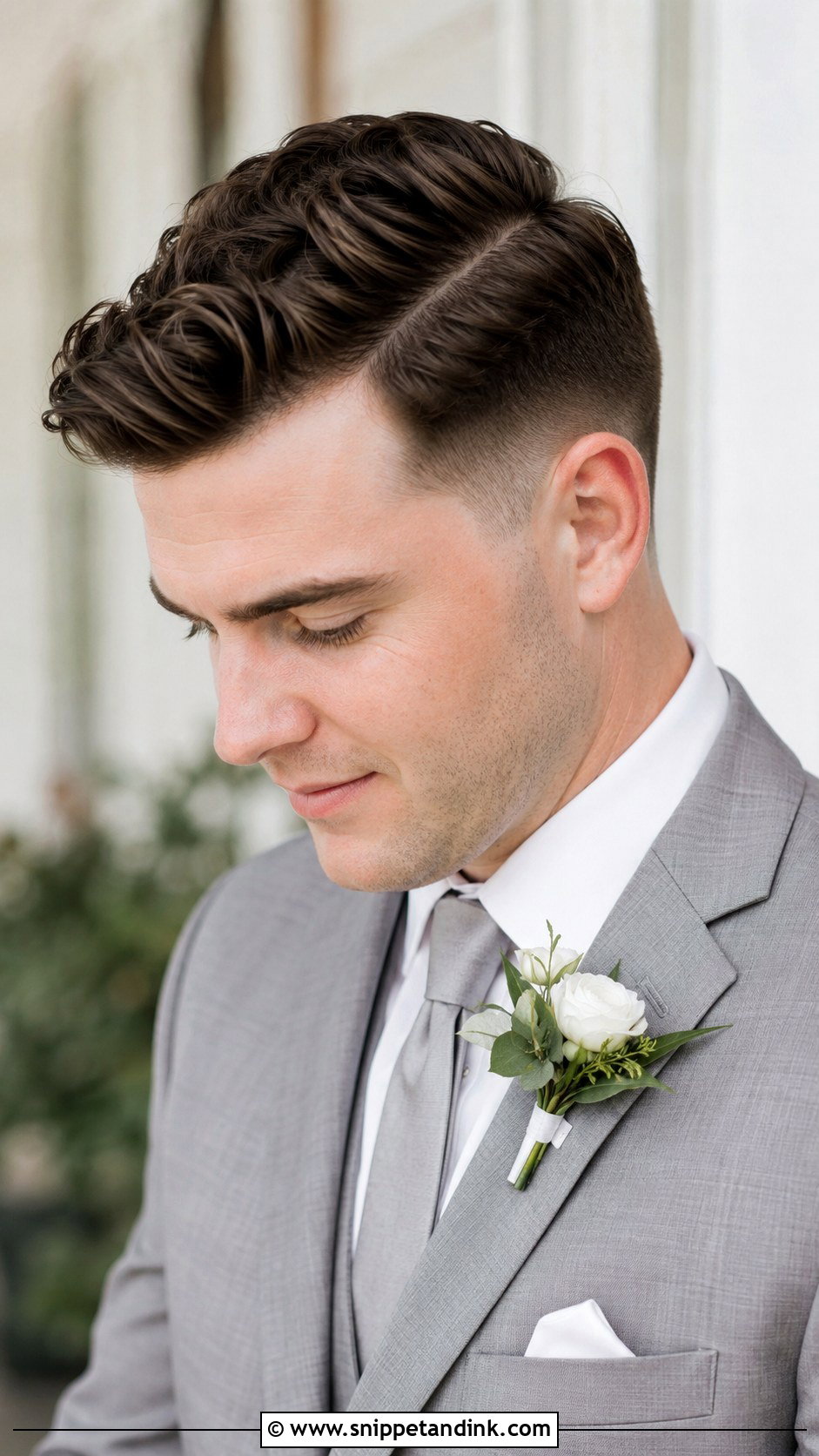
If I had to pick one cut that suits most grooms, it would be close to this. The textured side part with a fade tapers the sides into a clean fade, while the top keeps length, texture and a soft part. A matte paste gives definition without stiffness, so it still looks like hair rather than a helmet. It adapts to formal and relaxed venues and nearly every face shape and hair type. It’s also easy to restyle with fingers if the part shifts during the evening.
How Your Hair Product Behaves by the Last Dance
Most grooms buy a new product the week of the wedding. Then they discover on the day that it flakes, shines too much in photos or melts once they start dancing. Here’s how the common ones actually behave.
- Water-based pomade: clean shine, rinses out easily, and can be restyled with a damp comb. It softens a little in humidity.
- Oil-based pomade: holds a slick back all night and doesn’t dry out, but it’s hard to wash out and can mark a white collar.
- Matte clay or paste: the most forgiving under flash, because there is no shine to catch light. Good for textured crops.
- Gel: the strongest hold, but it sets hard and can flake if you apply it to hair that’s too dry.
Whatever you choose, wear it to work twice in the month before. Put a pocket comb and a small amount of product in your jacket or with your best man for the evening.
Necklines, Beards and the Close-Up Portrait
Photographers take close portraits of the groom, and those show skin more than hair. If you get razor bumps, don’t shave your neck the morning of the wedding. Have the neckline and beard edges done by your barber a day or two before, so any redness has gone down. A fresh blade, shaving with the grain, and a fragrance-free balm afterwards help too.
Beards should be trimmed to the same length all over, with a neckline about a finger’s width above the Adam’s apple. A neckline set too high makes the jaw look soft in profile, and that’s the angle photographers use most during the vows.
Keep the Cut Close to the One You Already Wear
The best wedding cut for a groom is almost always a sharper version of the cut he already has. Pick the idea above closest to your current hair, bring a reference photo, and avoid drastic changes in the last month. Fades want a cut two to three days out; tapers and longer scissor cuts can sit up to a week before. Test your product on a normal workday first, so you know how it behaves by evening. Then you can stop thinking about your hair and enjoy the day.
You'll Like These Ideas:


Leave a Reply