
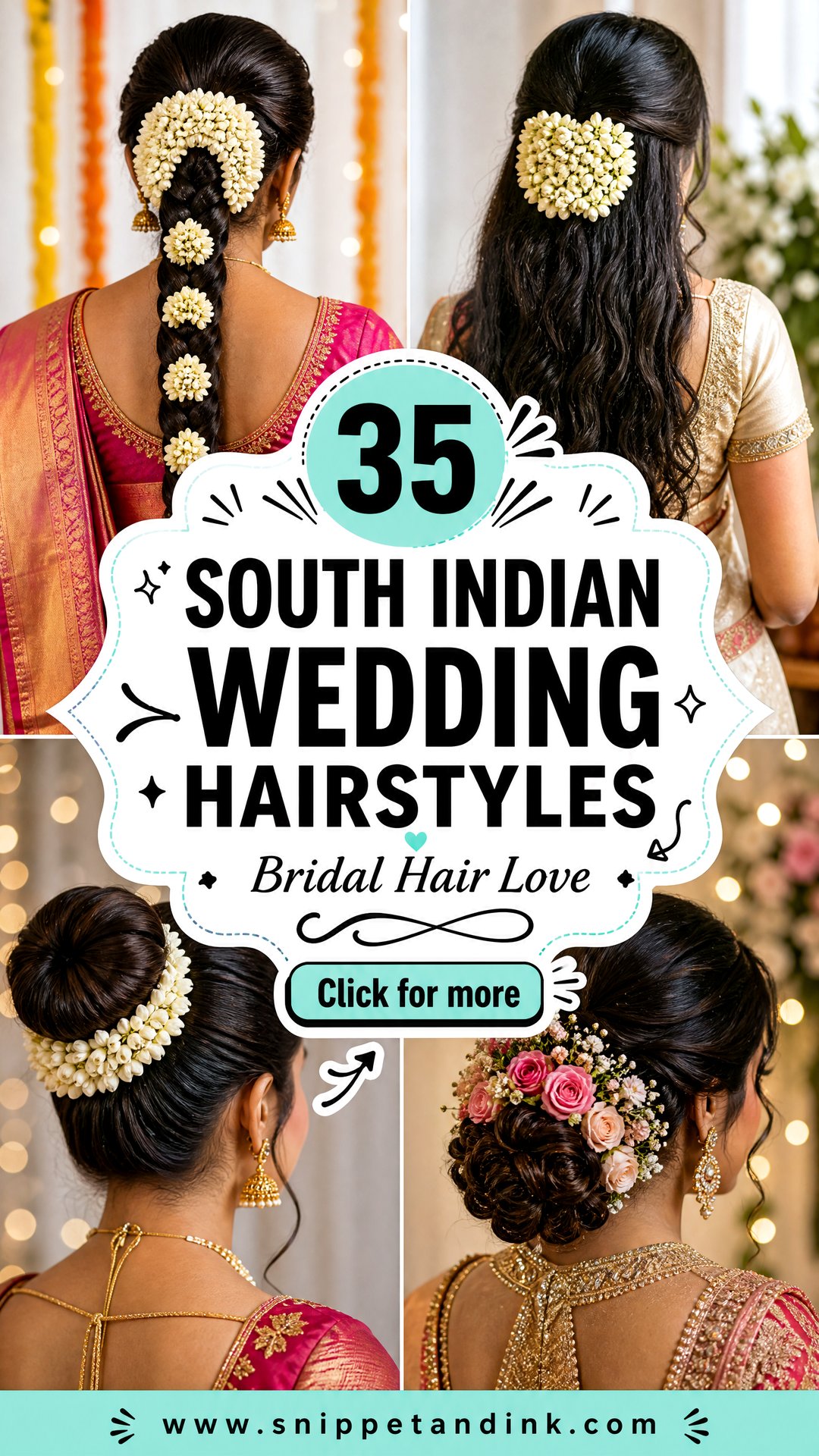
South Indian bridal hair is as much structure as styling. A full poolajada can carry several hundred jasmine buds, a gold jadanagam and a row of billalu, and all of it has to stay put through a muhurtham that may start before sunrise and a reception that runs late. Below are 35 South Indian wedding hairstyles I’d happily do, from poolajada braids and kondai buns to fresh gajras and lighter reception looks. For each, I’ve added what it takes to build, who it suits and where it tends to struggle, so brides, bridesmaids and mothers can plan with real expectations.
Carrying Fresh Jasmine and Gold Billalu Without a Headache
A traditional South Indian bridal style can be heavy. Fresh flowers, a jadanagam, billalu and extension hair add up, and all that weight hangs from the scalp for hours. Most of my planning goes into making it comfortable.
- I build a firm base first: a tight ponytail or small braid at the crown, secured with crossed pins, so ornaments are attached to the base, not to loose hair.
- If your hair isn’t long or thick enough for a full poolajada, a matching extension braid underneath is normal and nobody will know.
- Heavy gold ornaments are sometimes stitched or tied onto the braid with thread, which spreads the weight better than pins alone.
- I spread flowers evenly rather than bunching them at the top, so the weight sits lower and pulls less.
At your trial, bring the real jewelry you’ll wear, or at least pieces of similar weight. Wear it for an hour. If your scalp aches, we adjust the base, not the jewelry.
Hold off on the oil bath
Many brides have a family tradition of oiling the hair before the wedding. I love the ritual, but oil left in the hair makes pins slide straight out and flowers slip down the braid. If you oil, do it two or three days before, then wash thoroughly the day before the wedding. Slightly second-day hair grips pins far better than freshly oiled or freshly conditioned hair.
1. Traditional Poolajada Braid
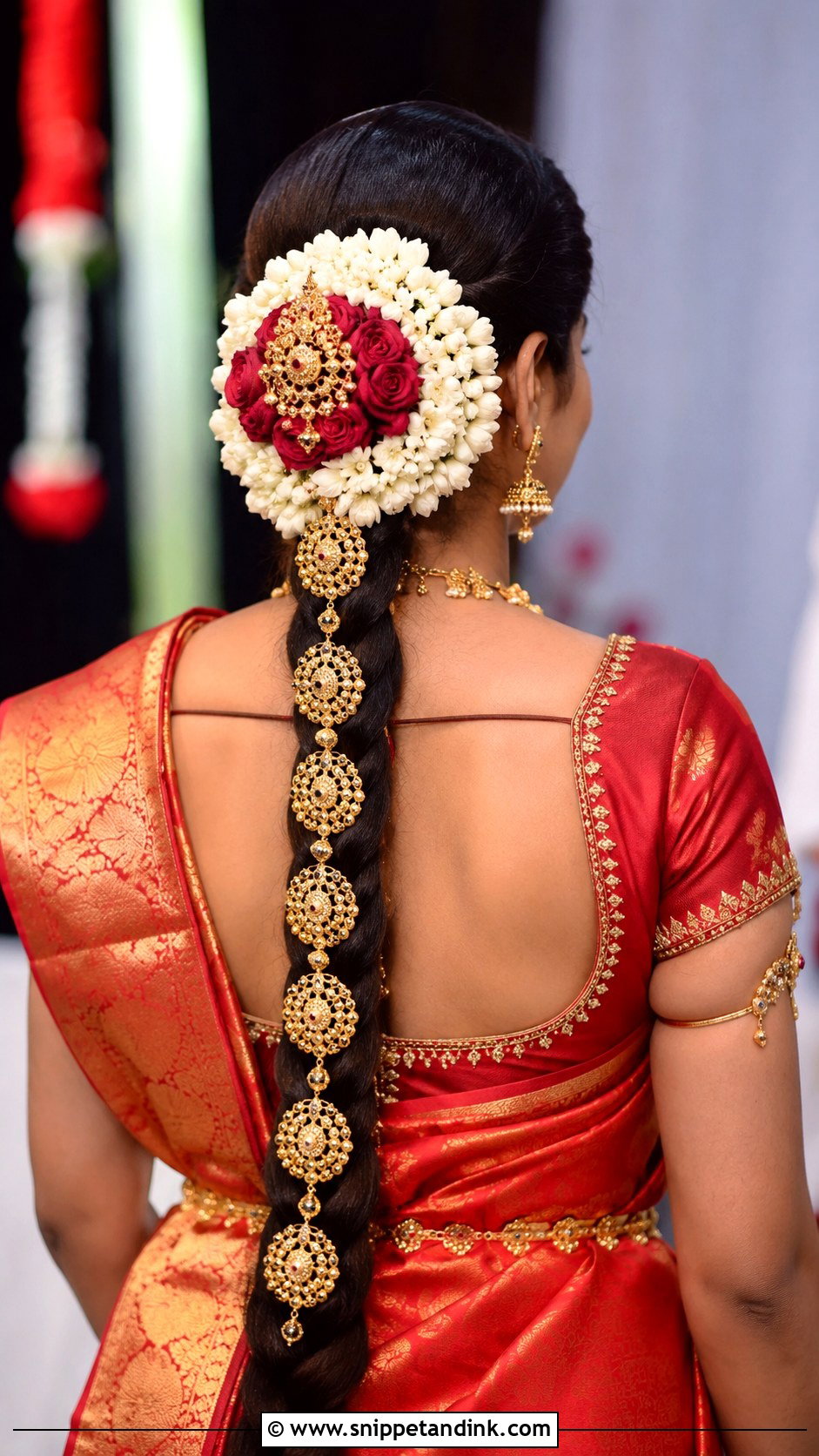
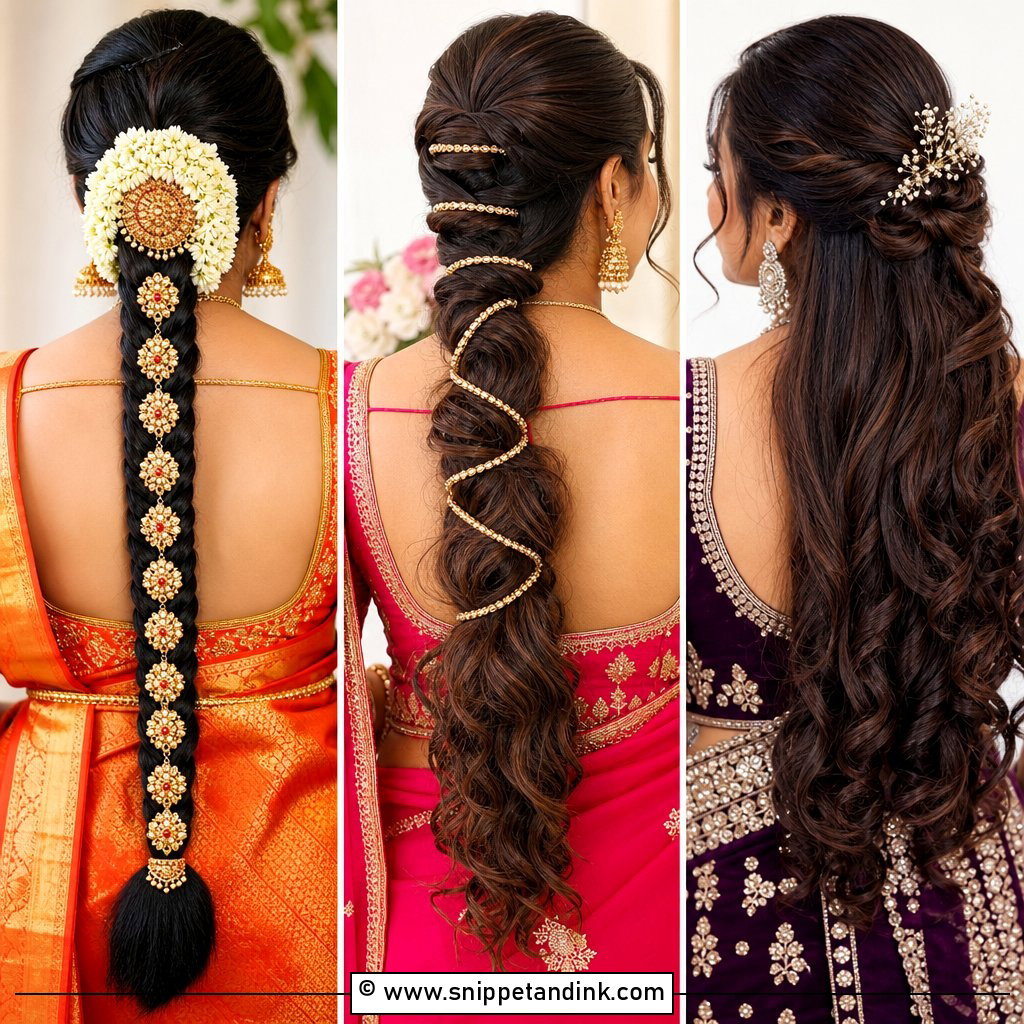
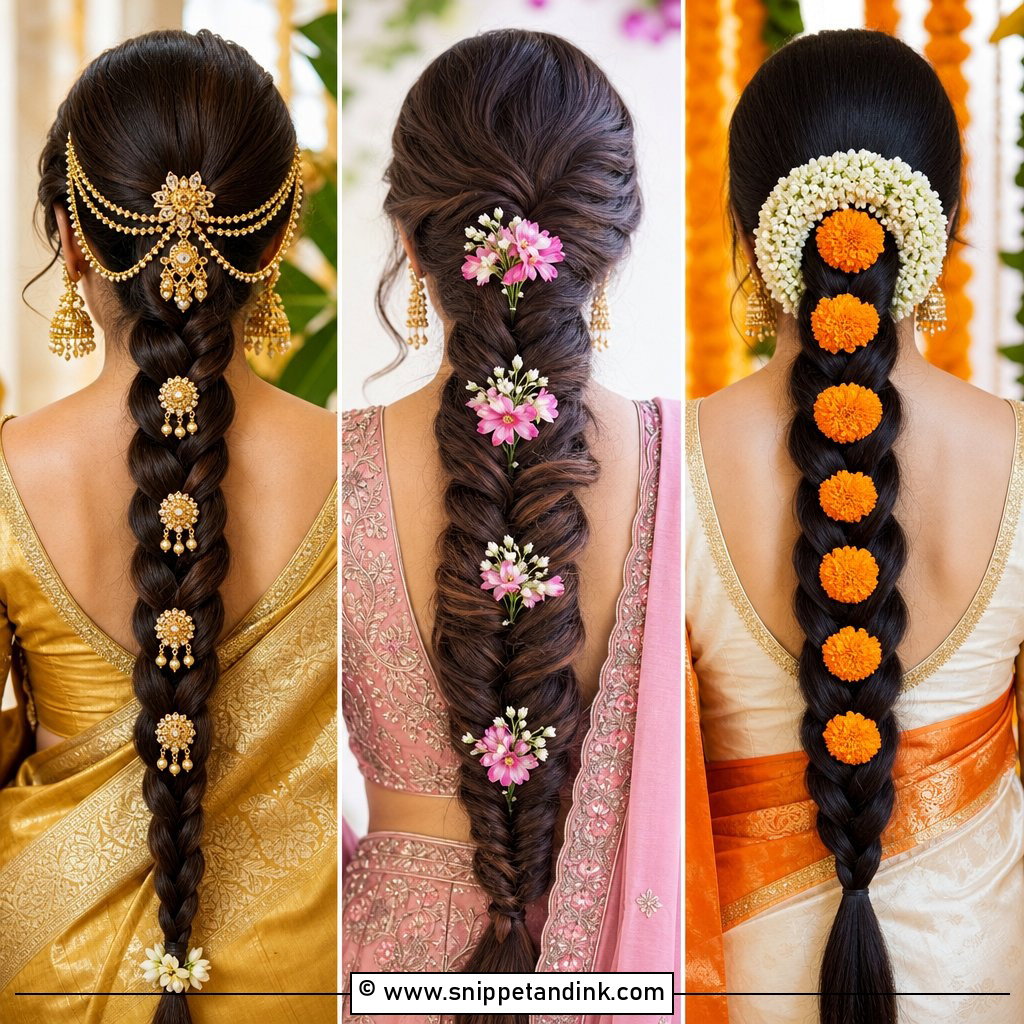
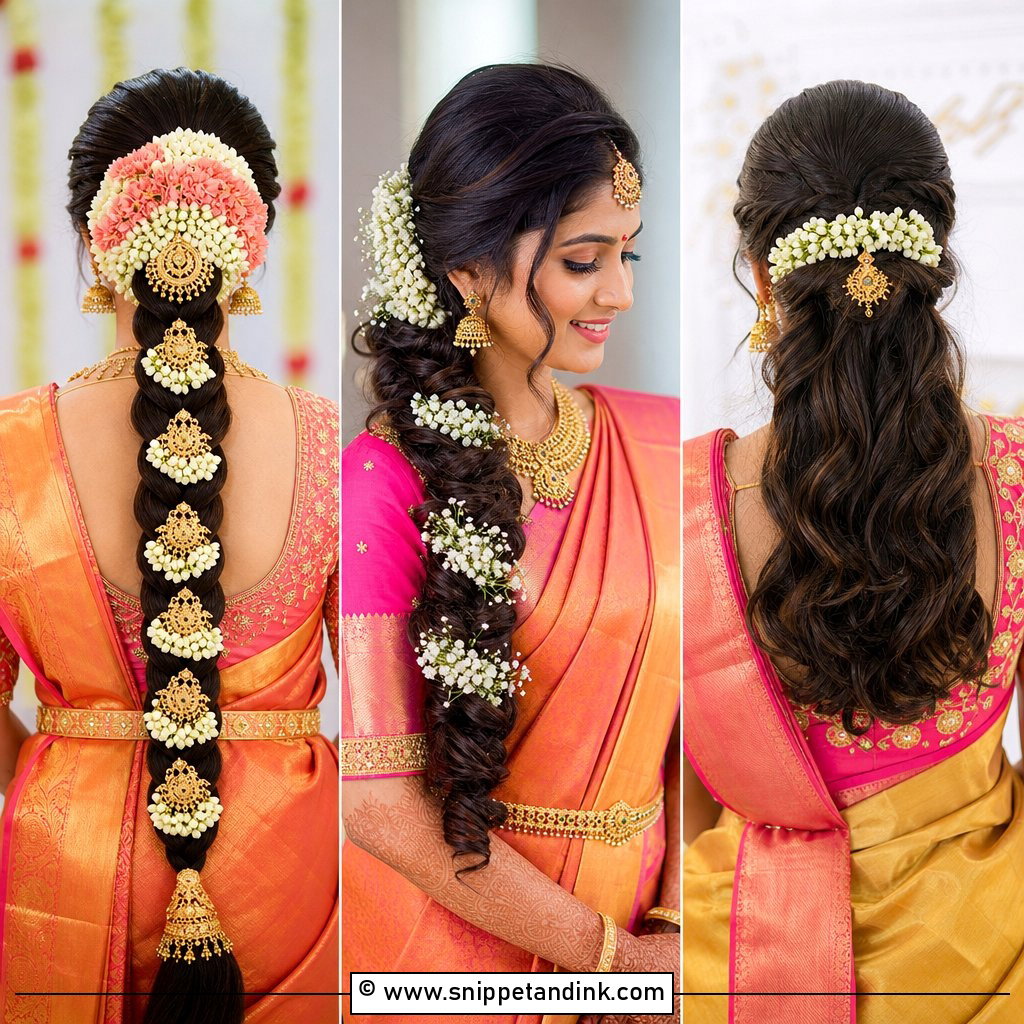
The poolajada is the braid most Telugu and many Tamil brides grow up picturing. It’s a single, thick braid covered from crown to tip with rows of jasmine, roses and marigolds, often with gold jada billalu pinned along it. Most brides don’t have hair long or thick enough for the full length, and that’s fine: I add a matching extension braid underneath and build the flowers over both. The ornaments are heavy, so I anchor the top of the braid with a tight base and crossed pins before anything decorative goes on. It works for the muhurtham and the reception.
2. Jasmine Gajra Braid
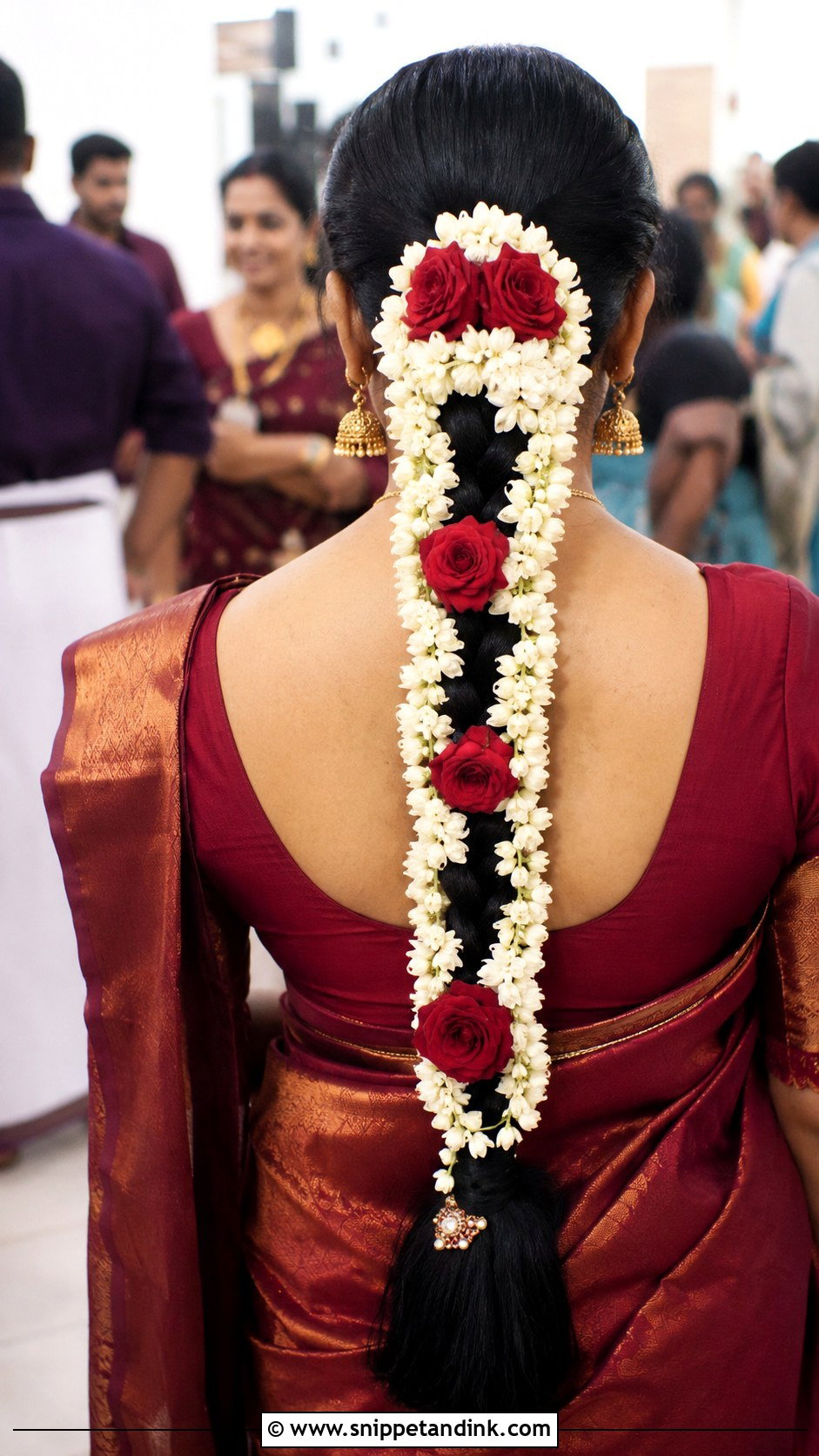
Malli poo coiled around a plait is the scent most people remember from a Tamil or Kerala wedding. The jasmine gajra braid wraps fresh strings of white jasmine around a thick braid, sometimes with red roses or orange kanakambaram for color. I ask for tightly closed buds, not open flowers, because buds open slowly during the day and stay white longer. It looks good against bright silk and is comfortable to wear. Jasmine is light, so it suits brides who find heavy ornaments uncomfortable.
3. Kondai Bun With Flowers
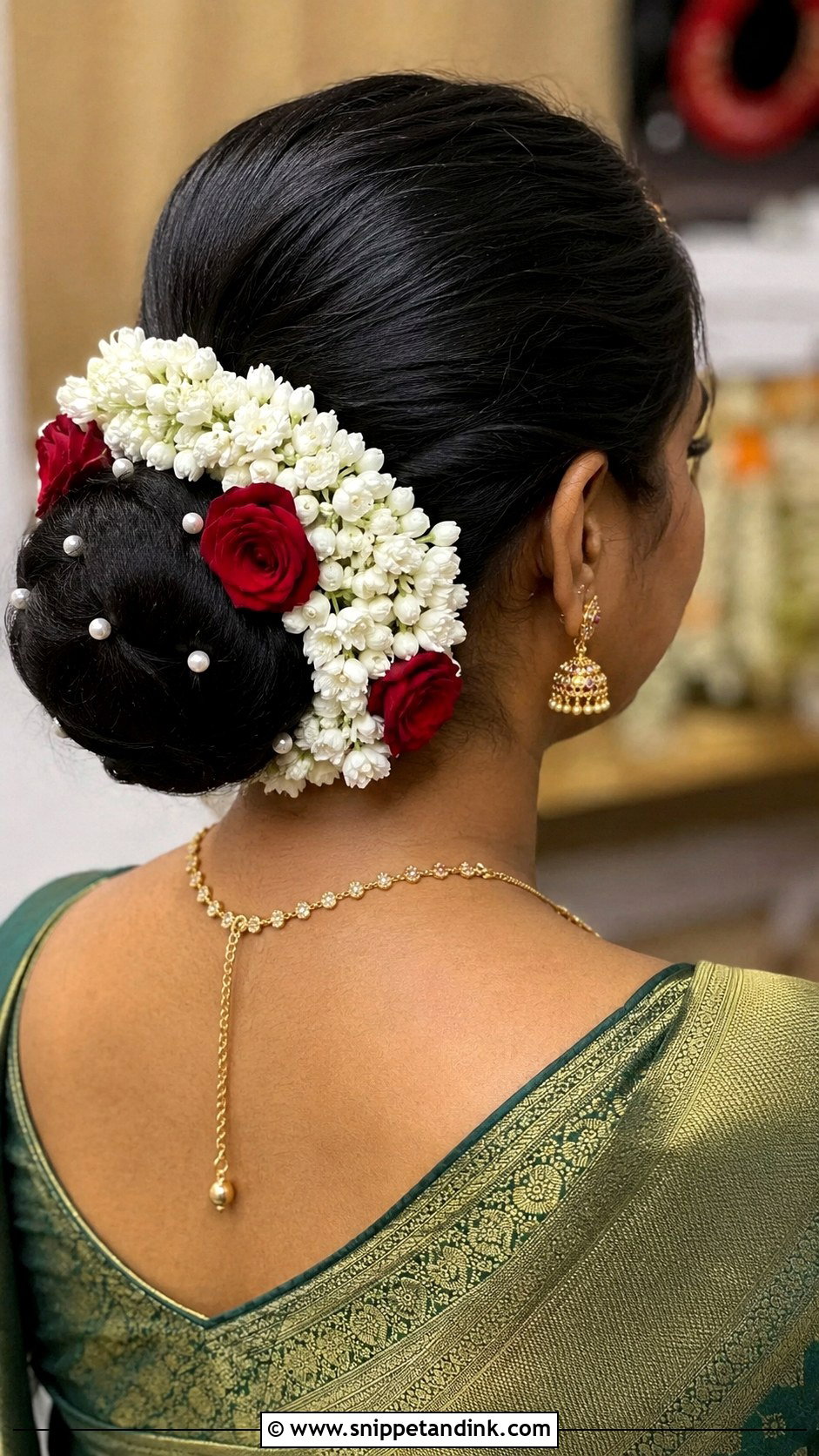
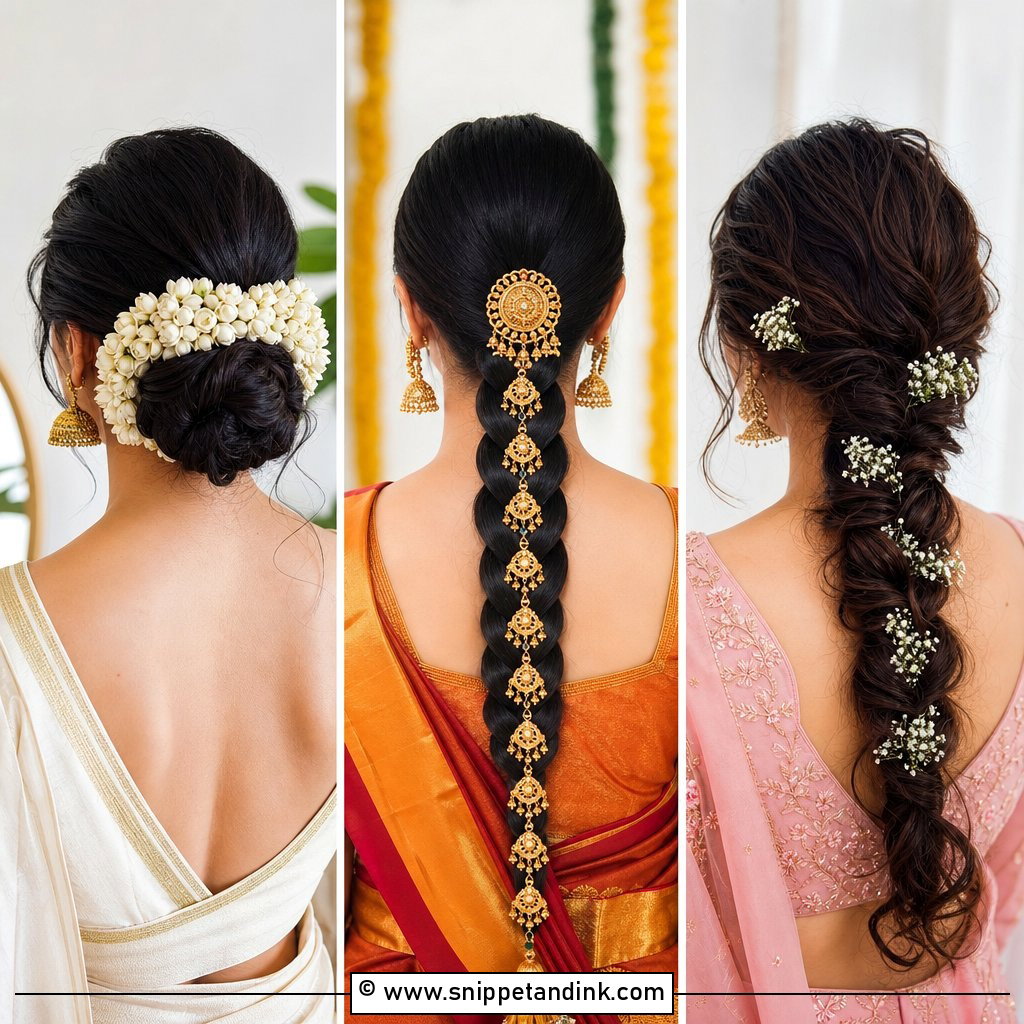
A kondai is a rounded bun, low at the nape or higher at the crown, wrapped with a thick veni of jasmine and roses. Gold pins, pearls or a brooch add sparkle. I build it over a small donut or padding so it holds its shape under the weight of the flowers, especially for brides with fine hair. It frames the face and pairs well with temple jewelry, and it suits brides who’d rather have an updo than a braid.
4. Half-Up Half-Down With Curls
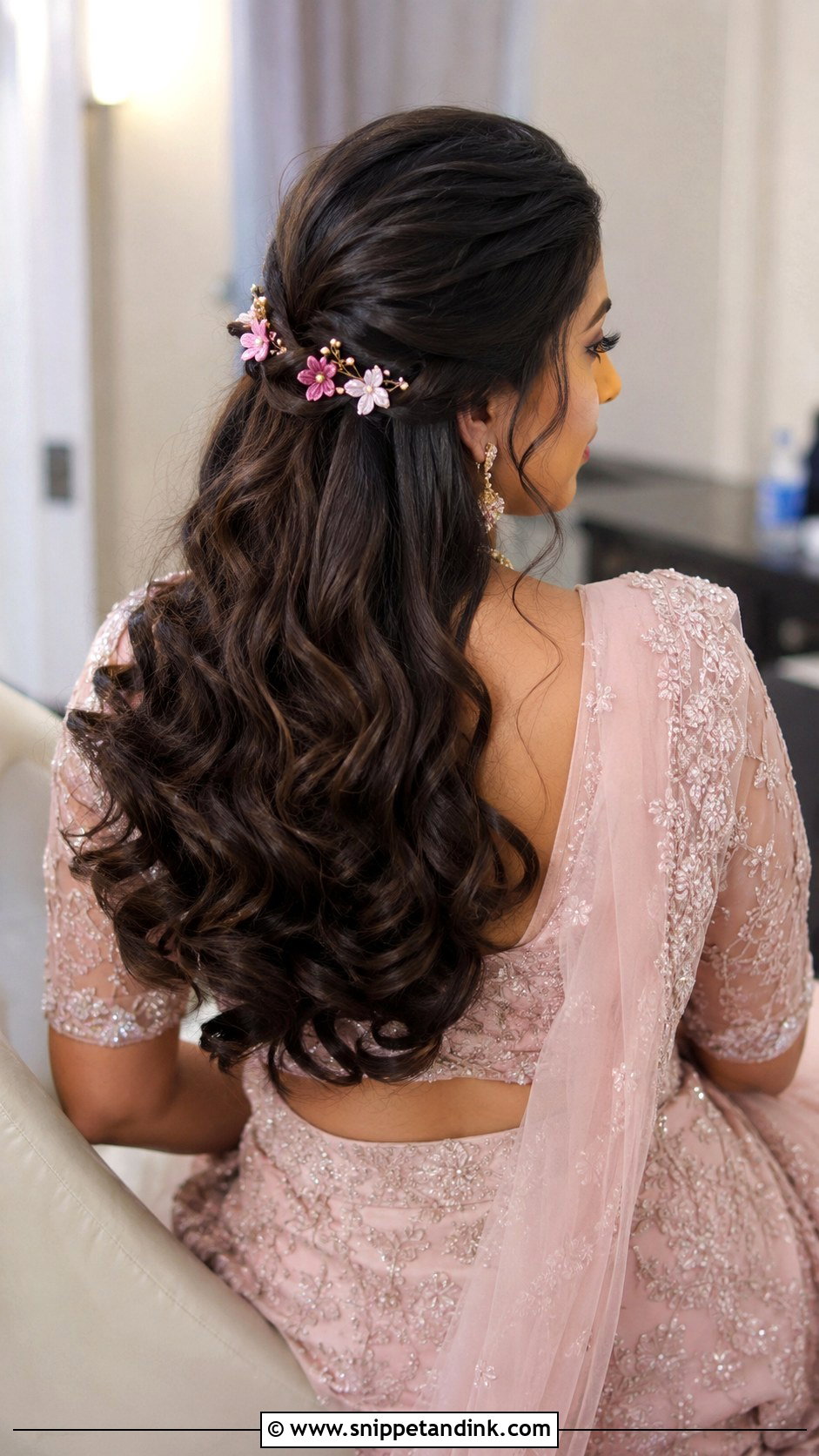
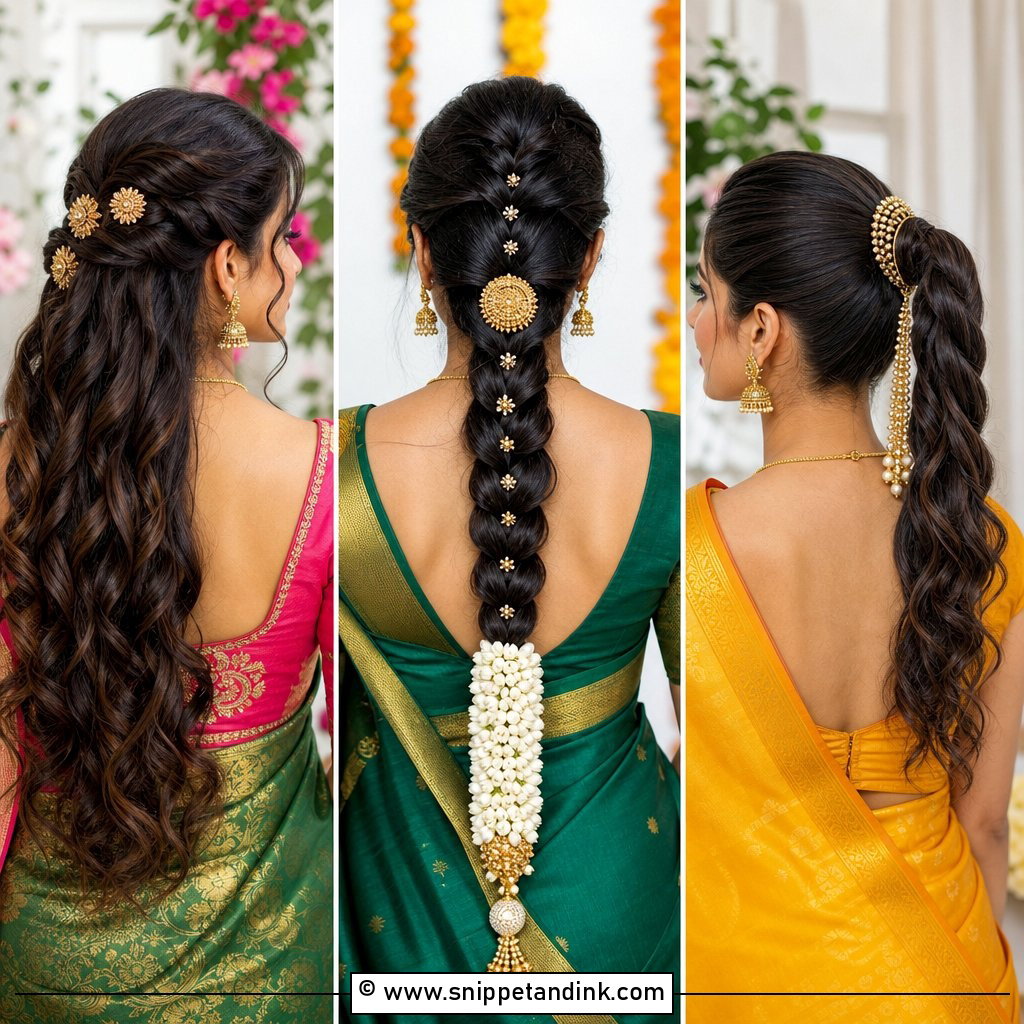
Half-up, half-down is the look I’m asked for most at engagements and receptions. The top section is pinned back and decorated with a small gajra or flower clips, and the rest falls in curls. South Indian weather is the challenge: in heat and humidity, curls drop faster, so I curl tighter than the final look and set each curl to cool before releasing it. It works with lighter lehengas and pastel sarees.
5. Veni-Style Bun
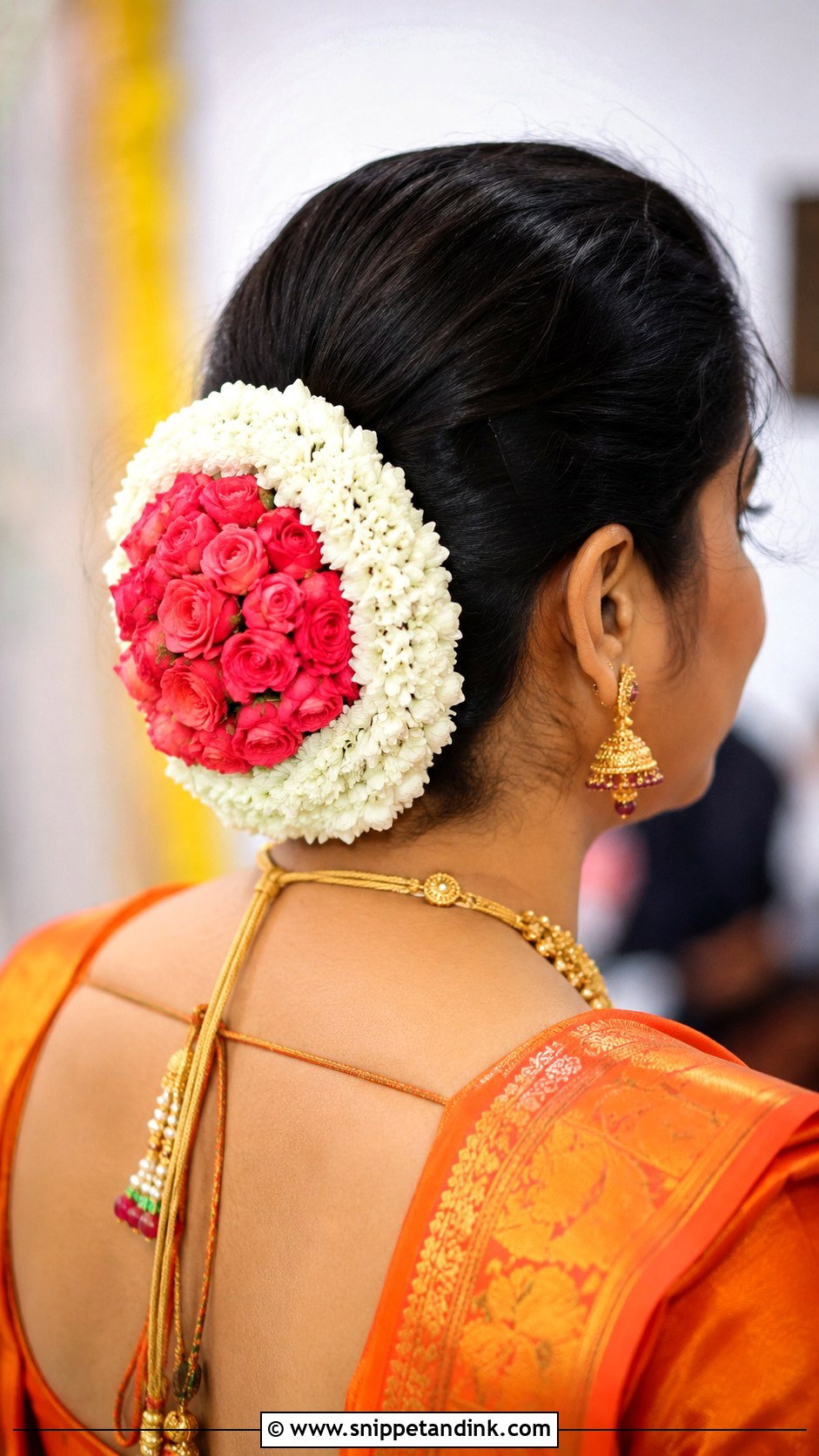
A veni-style bun is mostly flowers. The low, round bun is wrapped with an extra-thick veni of jasmine and roses until the hair barely shows. I secure the veni with U-pins pushed into the bun at an angle, which grips better than straight bobby pins under that much weight. It suits kanjeevaram silk and gold temple jewelry. If you want flowers to be the whole look, it’s simple to wear because the bun itself is tight and stable.
6. South Indian Bridal Updo With Gold Jewelry
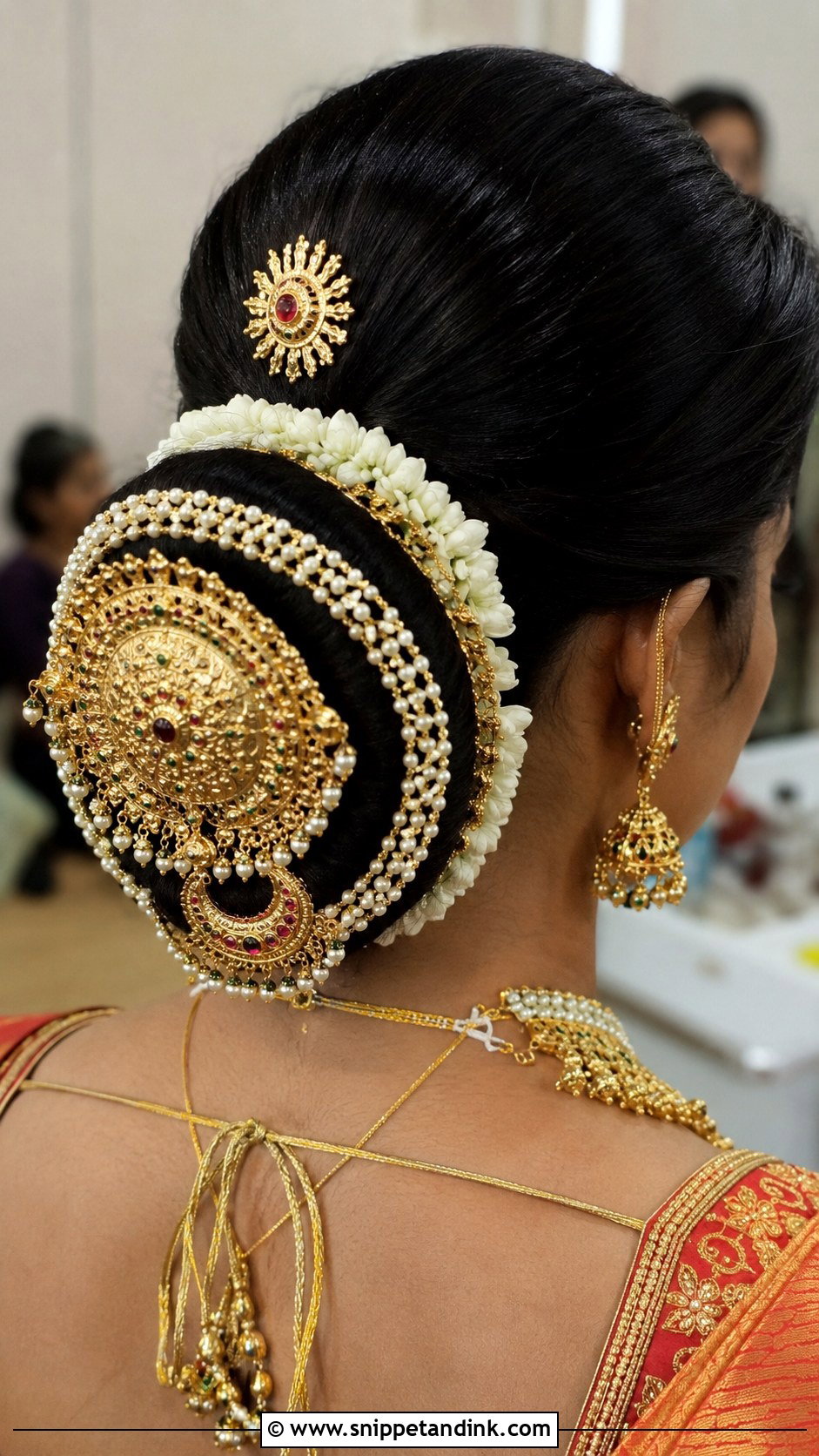
For full temple-jewelry glamour, I use a sleek bun with gold hair ornaments: jadanagam, surya-chandra pins and pearl strings. The gold catches the light against dark hair. A thin row of flowers softens the edges. This much gold is heavy, so the bun has to be built on a firm base, and I ask the bride to try the jewelry on at the trial so we can see how it sits. It suits heavy bridal sarees and the muhurtham.
7. Floral Braid With Roses
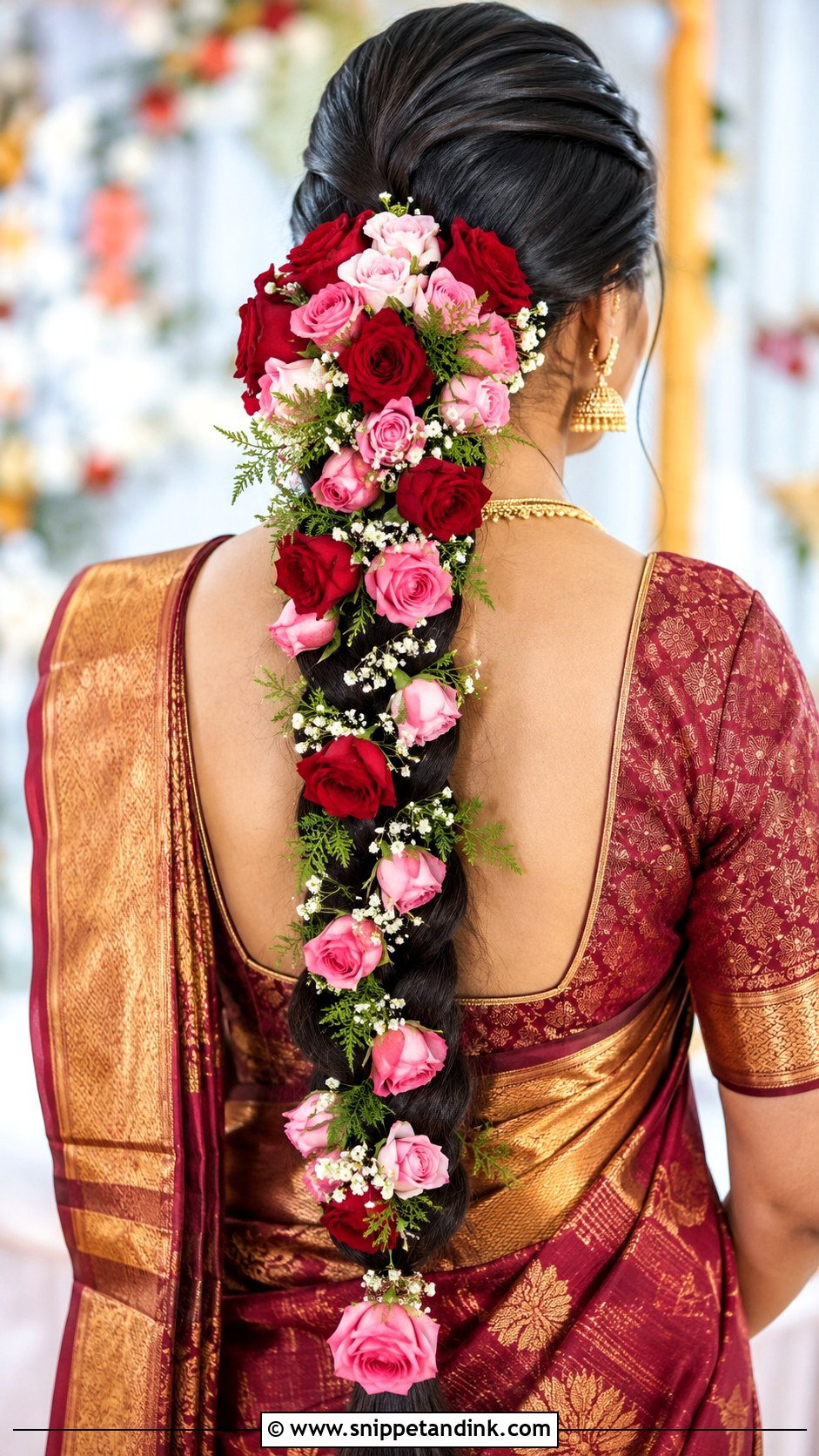
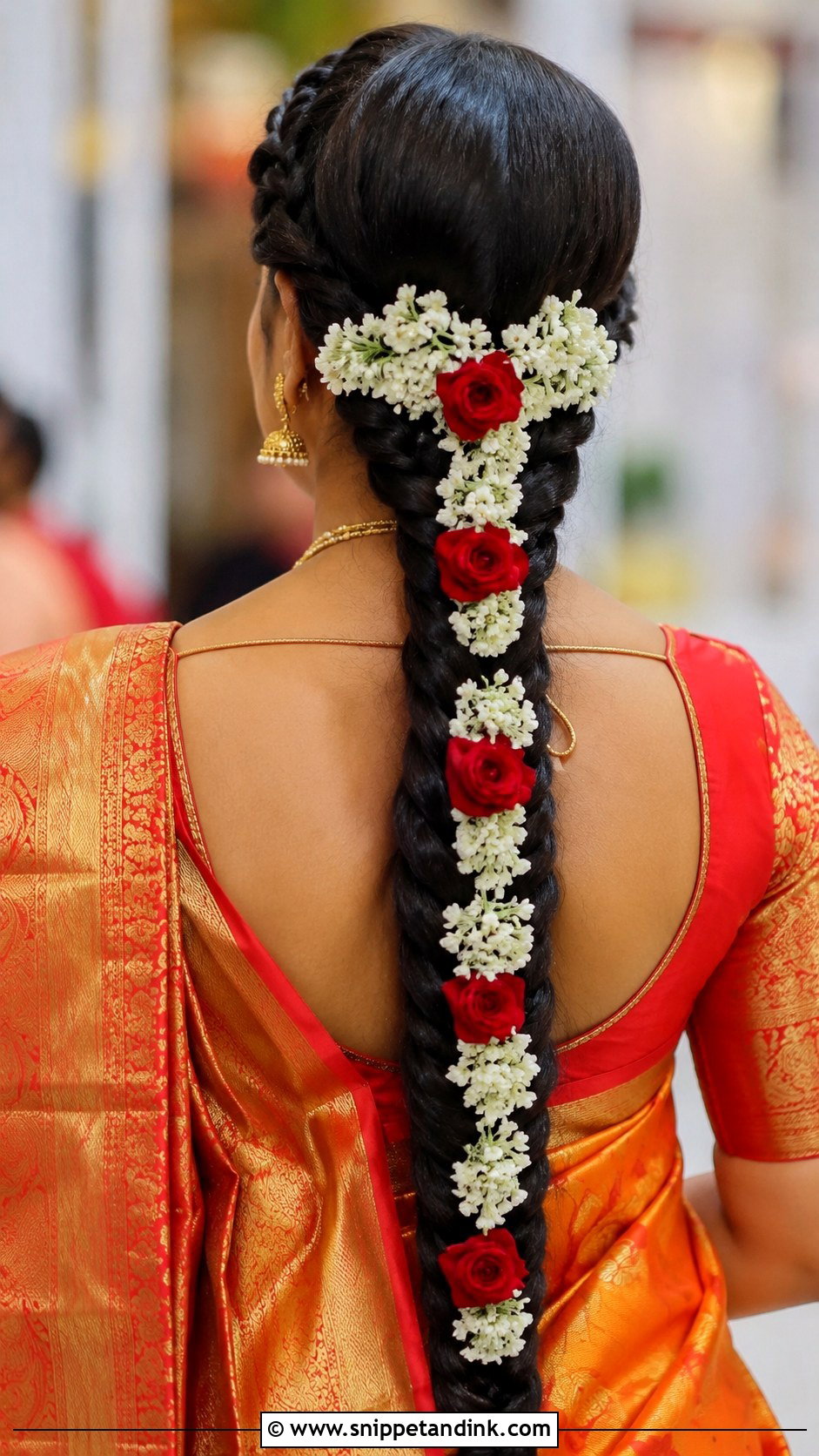
Roses instead of jasmine give a braid strong color. Full red and pink roses run down a poolajada-style plait, sometimes with greenery or small white flowers mixed in. Roses wilt faster than jasmine in heat, so I’d keep them for evening ceremonies or receptions and ask the florist to deliver them as late as possible. It looks rich against silk in gold and maroon.
8. Maang Tikka Bun
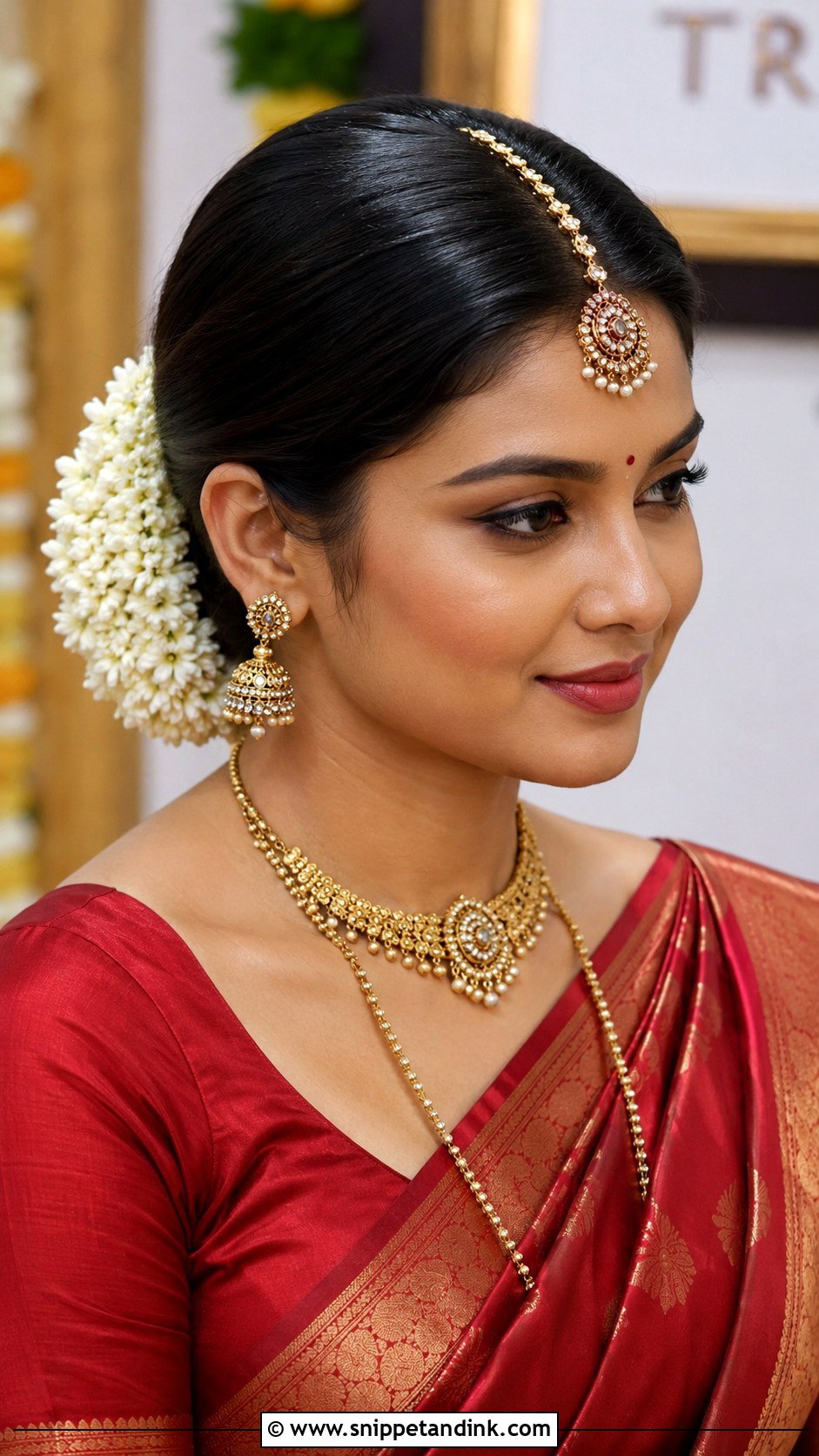
A maang tikka sits on the center parting, sometimes with a matha patti across the forehead, while the hair goes into a sleek low bun with a slim veni or pearl strands. The tikka needs a hidden pin at the back of the parting to stop it from sliding. The maang tikka bun draws attention to the face and suits heavy jewelry and silk.
9. Messy Jasmine Braid
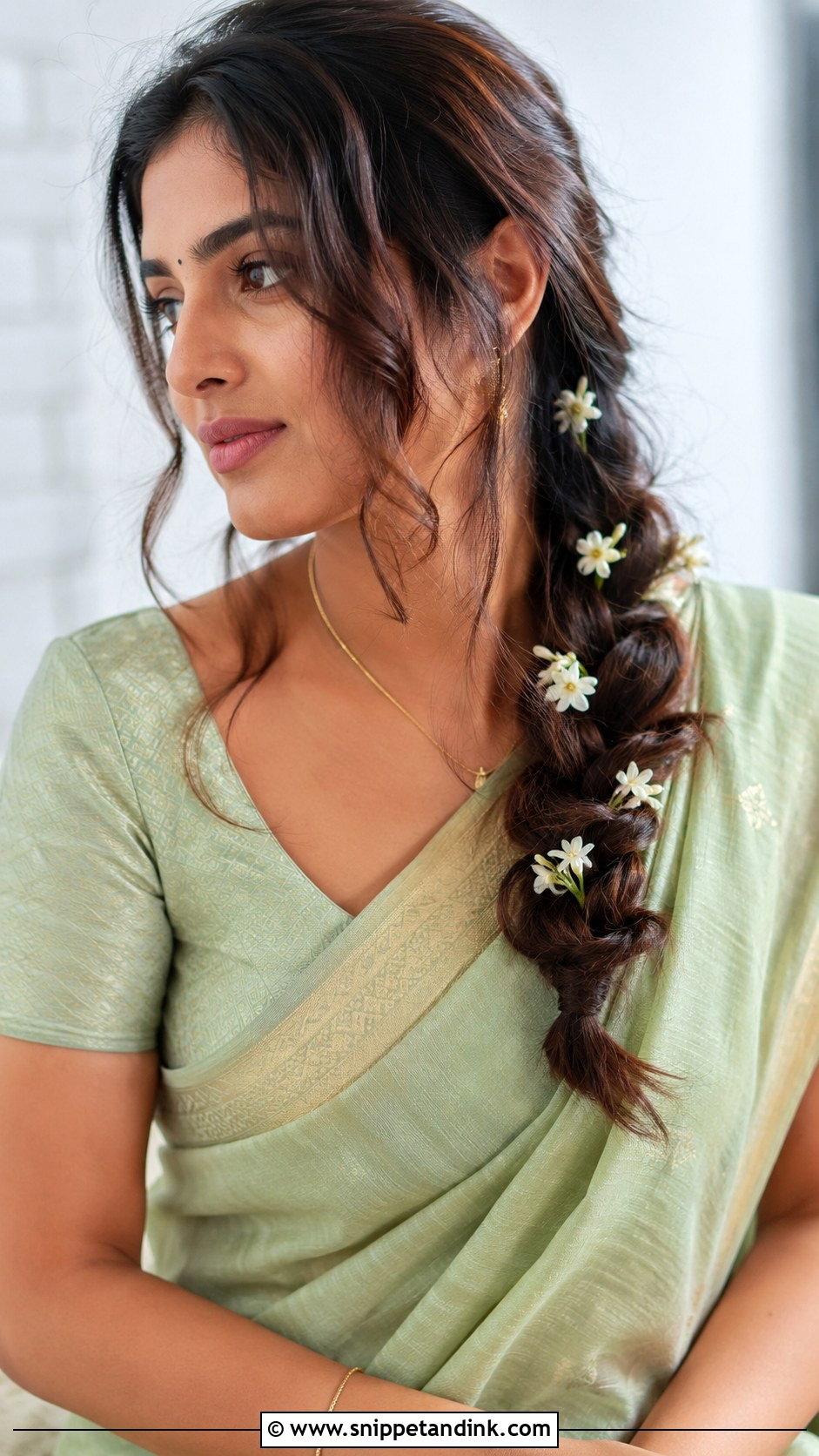
Not every bride wants a tight plait. A loose, textured braid with jasmine tucked through it looks modern, with a few face-framing pieces pulled out. I braid it firmly first, then loosen the edges, so it doesn’t fall apart. It suits pastel and contemporary outfits and outdoor or daytime events. Very silky, straight hair slips out of a loose braid, so I add texture spray first.
10. Crown Bun With Matha Patti
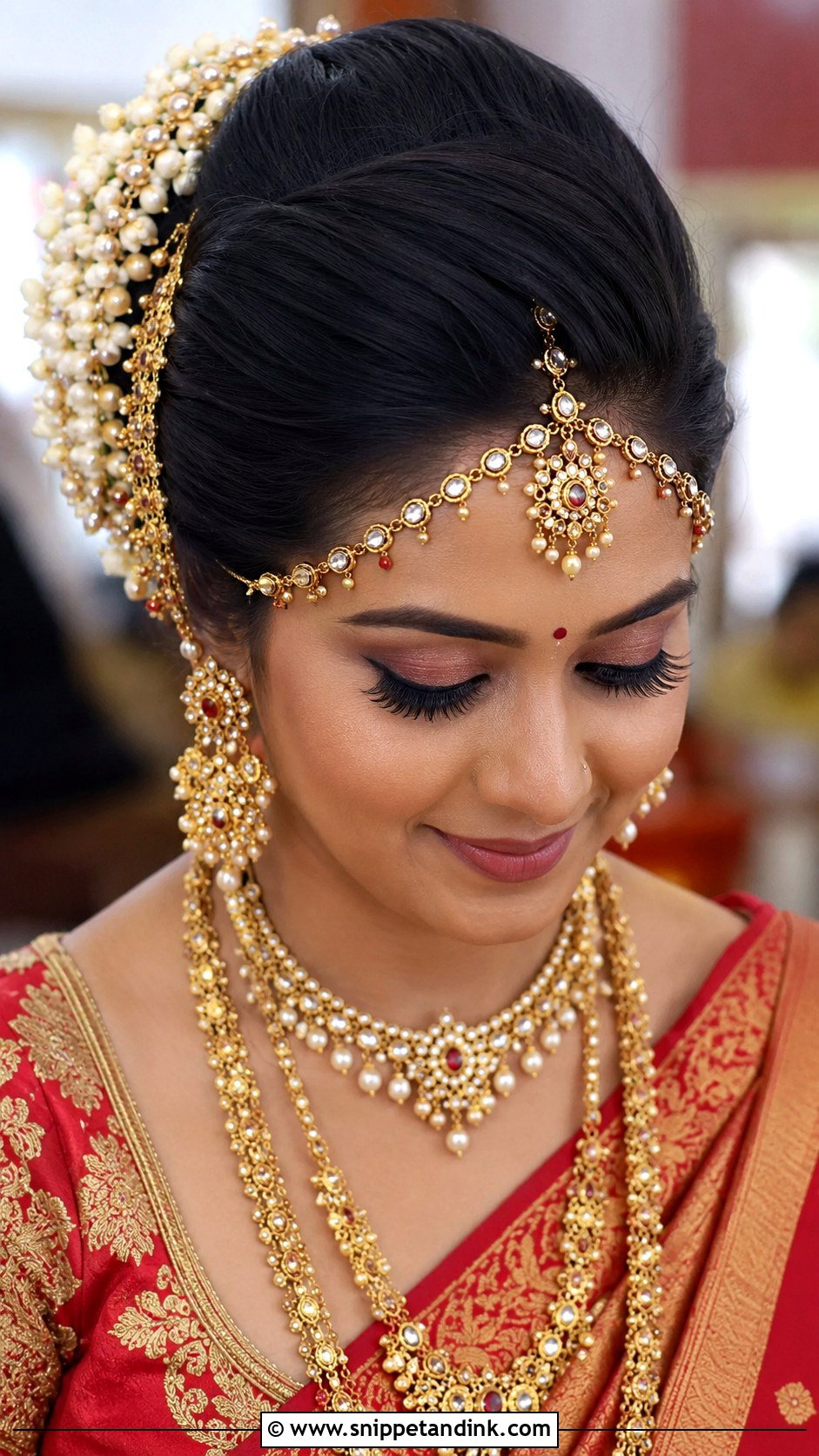
A crown bun sits high and adds height. A matha patti chain across the forehead makes it look royal, and flowers, pearls or gold pins decorate the bun. The height lengthens the neck and shows off heavy earrings. A high bun with a lot of decoration can pull at the scalp over several hours, so I’d test it at the trial for comfort. It suits grand muhurtham ceremonies.
11. Marigold Braid
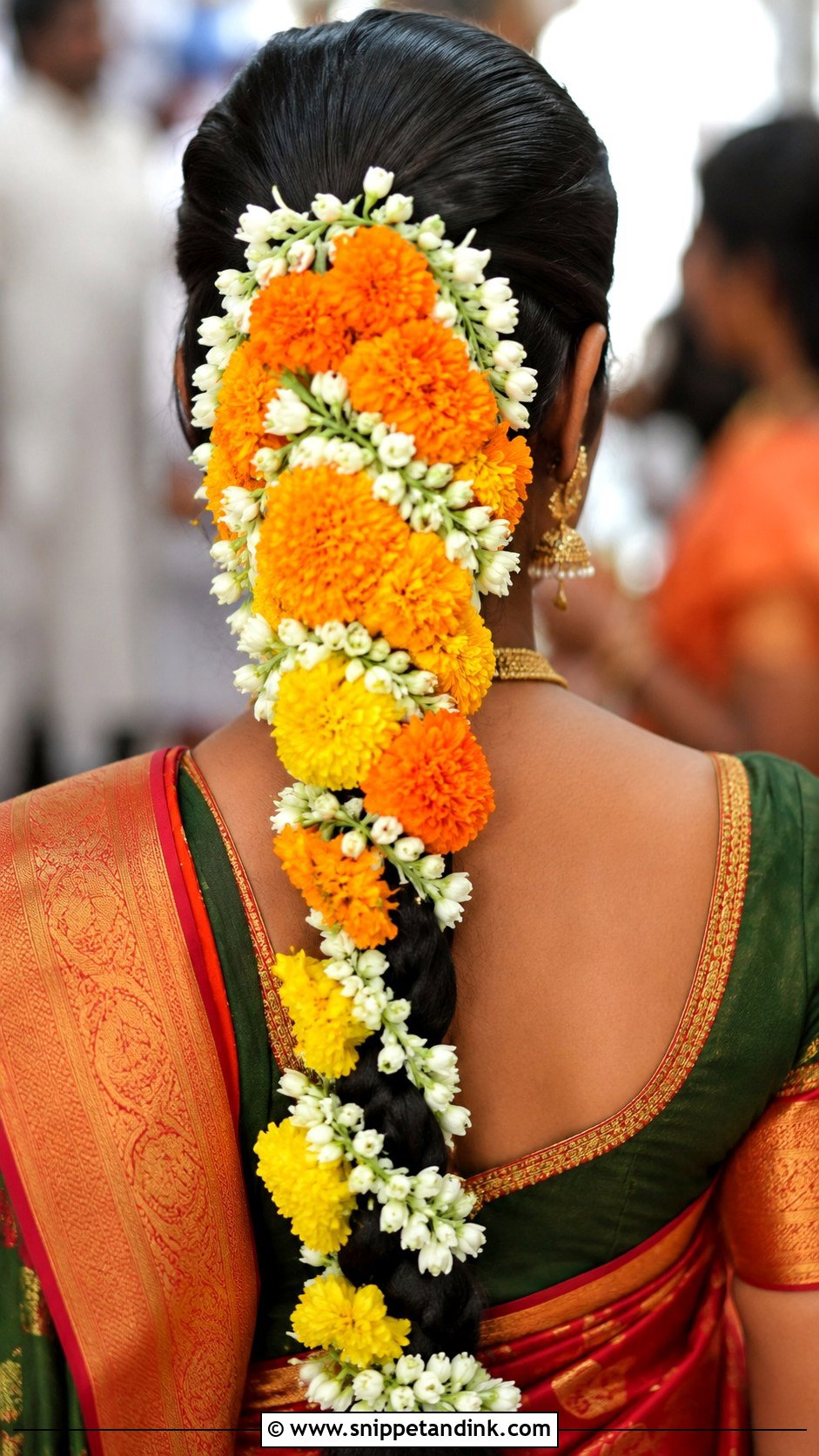
Marigolds are an auspicious flower at South Indian weddings, and a braid layered with orange and yellow marigolds looks bright and festive. I often mix them with white jasmine for contrast. Marigolds are sturdy and hold up in heat, which makes them practical for long outdoor ceremonies. They look good against red and green silk, and they carry a meaning of prosperity.
12. Side-Swept Curls With Flowers
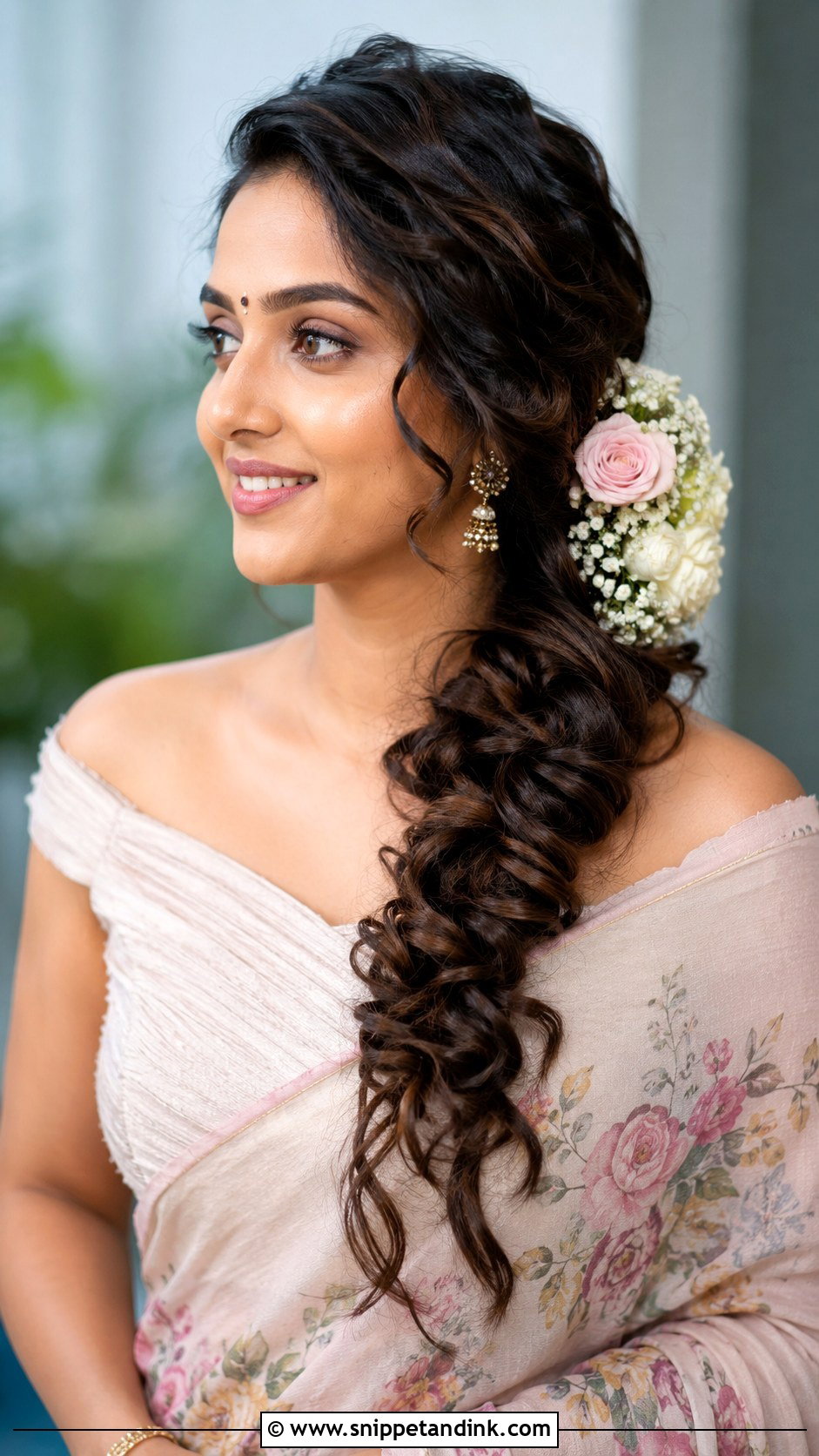
Swept curls over one shoulder, held with a cluster of flowers at the side, give a softer look for receptions. I pin the swept side with crossed pins hidden behind the ear so the curls don’t slide back. A gajra or small floral pins decorate the section. It suits off-shoulder blouses and contemporary drapes.
13. Braided Bun With Pearls
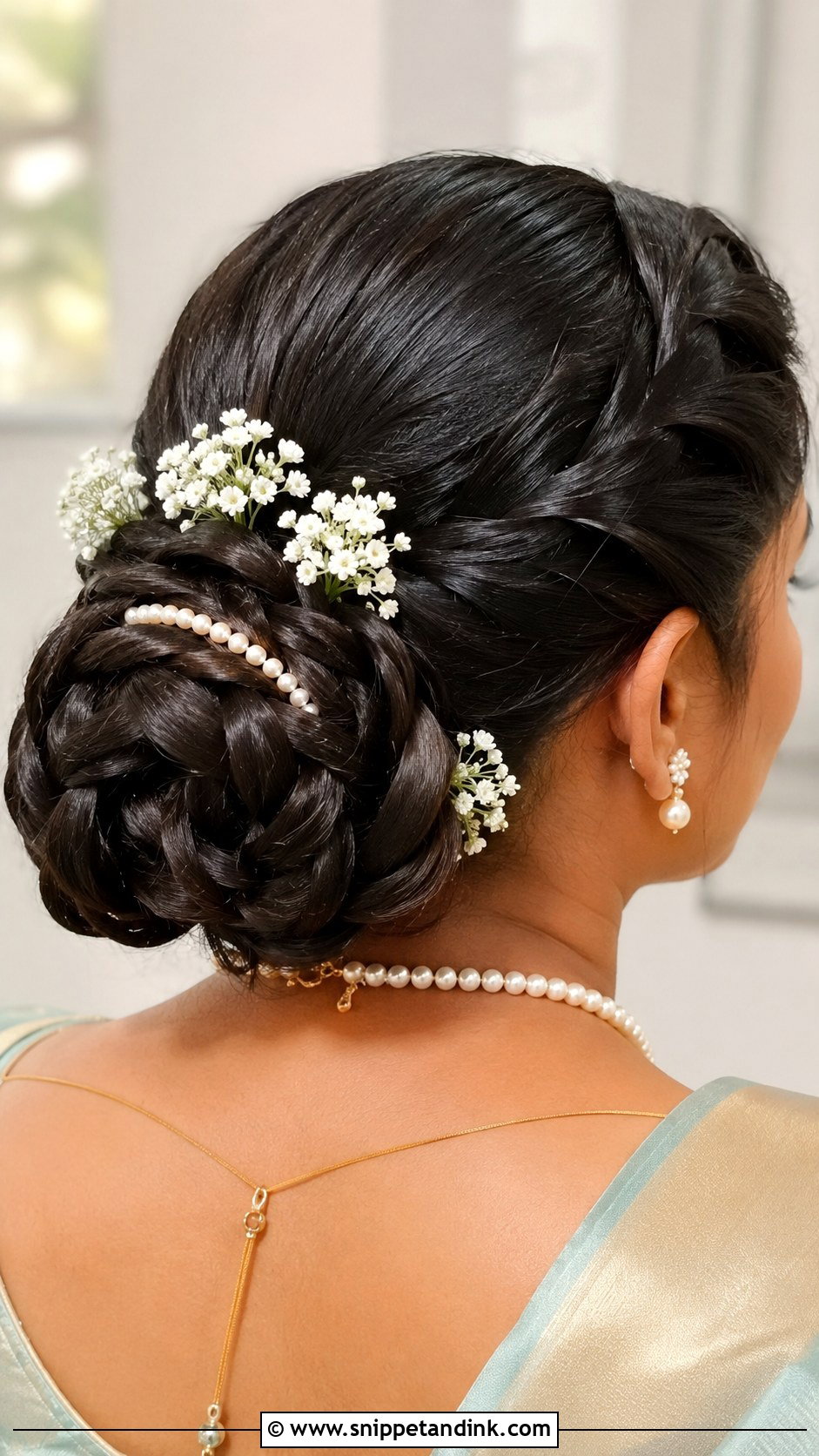
Combining braids with a bun adds texture. I braid the hair in several sections, coil them into a low bun and wrap pearl strands and small white flowers around it. Each braid holds itself, so the bun stays put better than a plain coil. It goes with pastel sarees and pearl jewelry, and it holds up well through long ceremonies.
14. Open Hair With Gajra
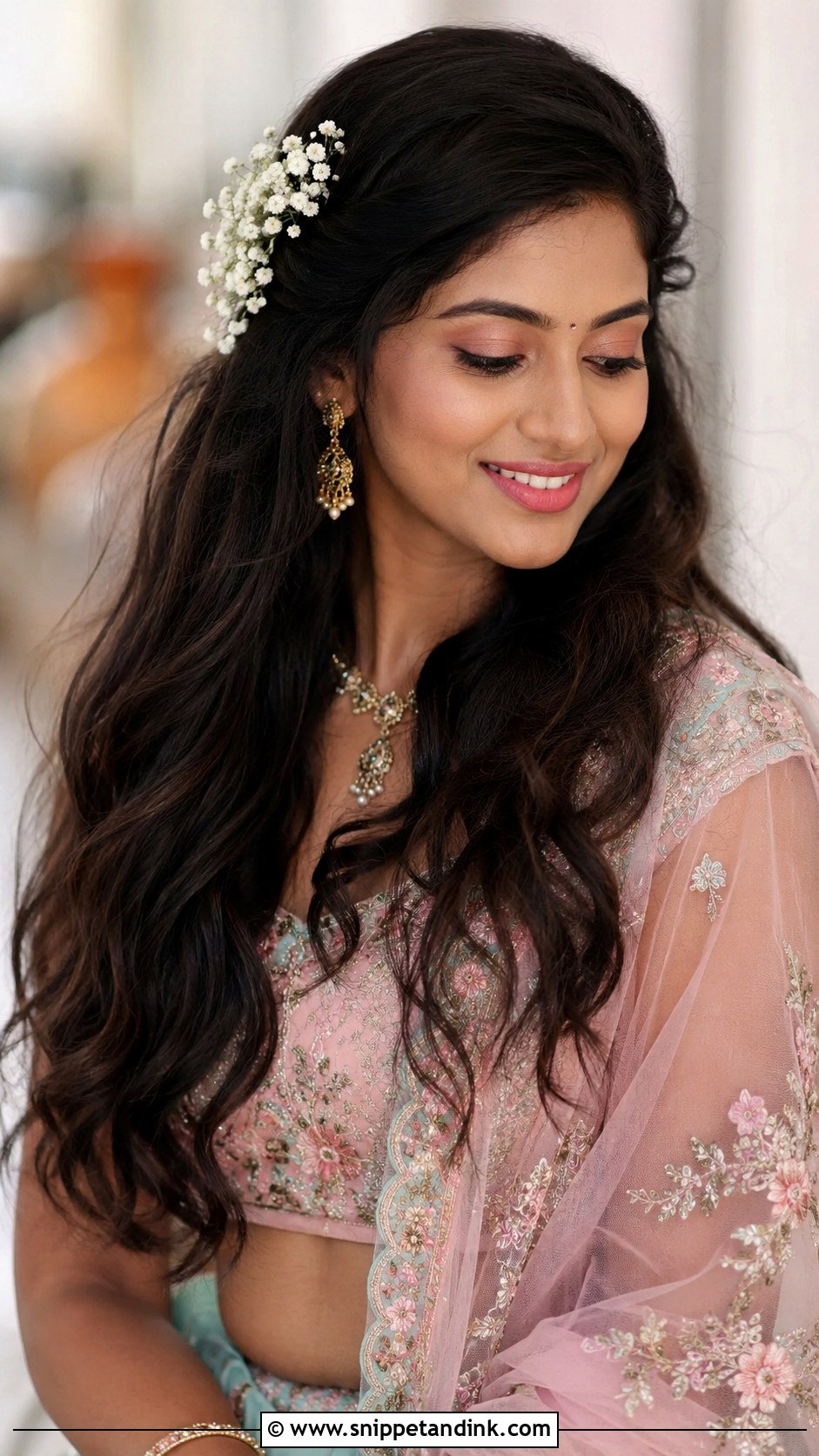
Open hair is newer for South Indian brides. Long hair flows freely, with a gajra pinned to one side and soft waves through the length. It suits engagements, mehndi and pre-wedding shoots. Loose hair in heat and humidity frizzes and drops faster than any updo, so I’d keep this for evening or air-conditioned events, and pin the gajra securely to a small hidden twist.
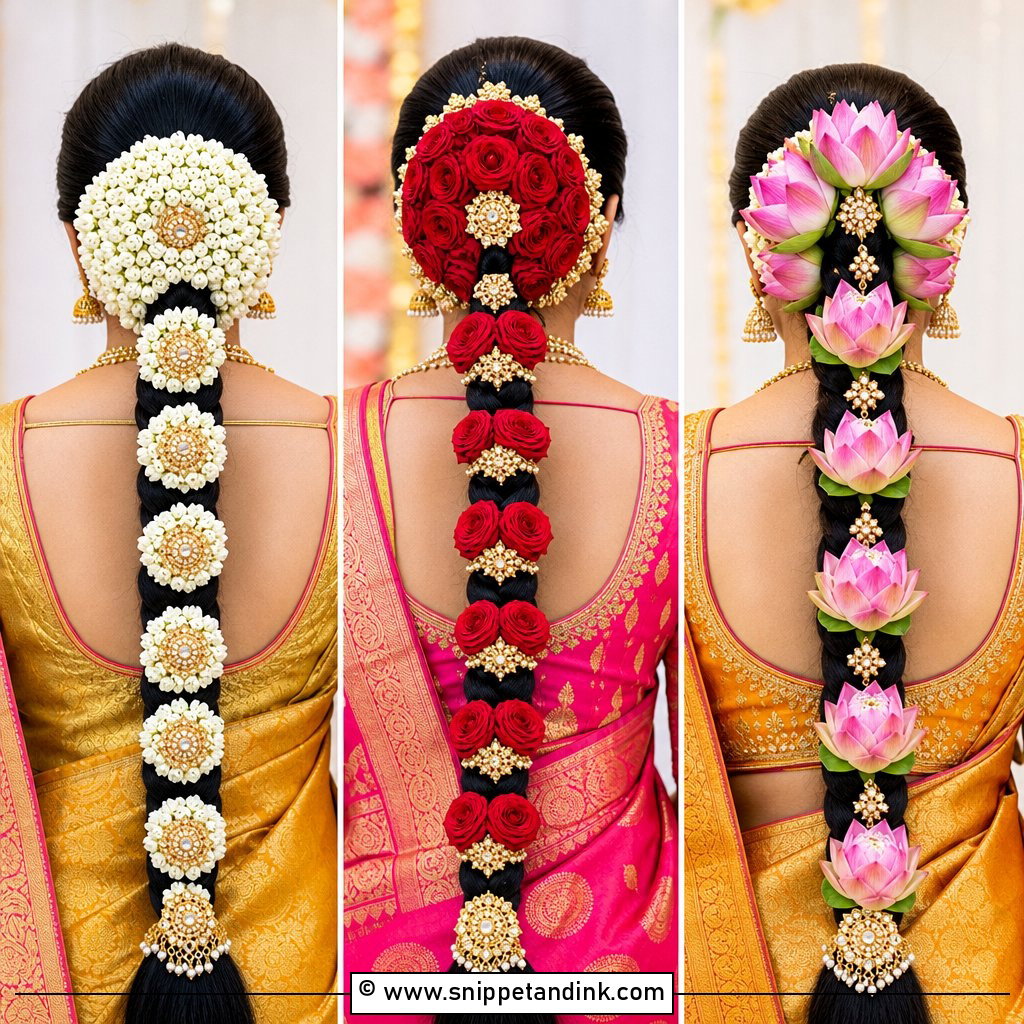
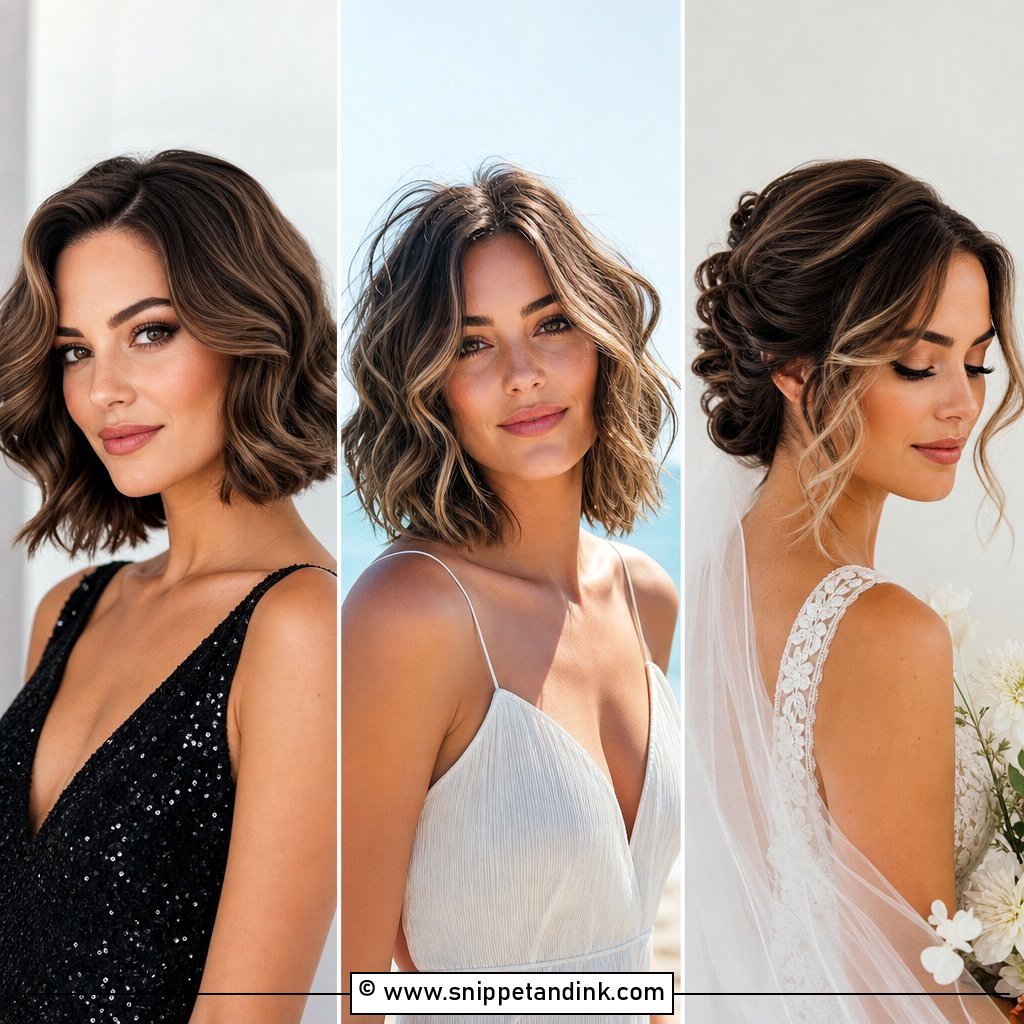
15. Temple Jewelry Braid
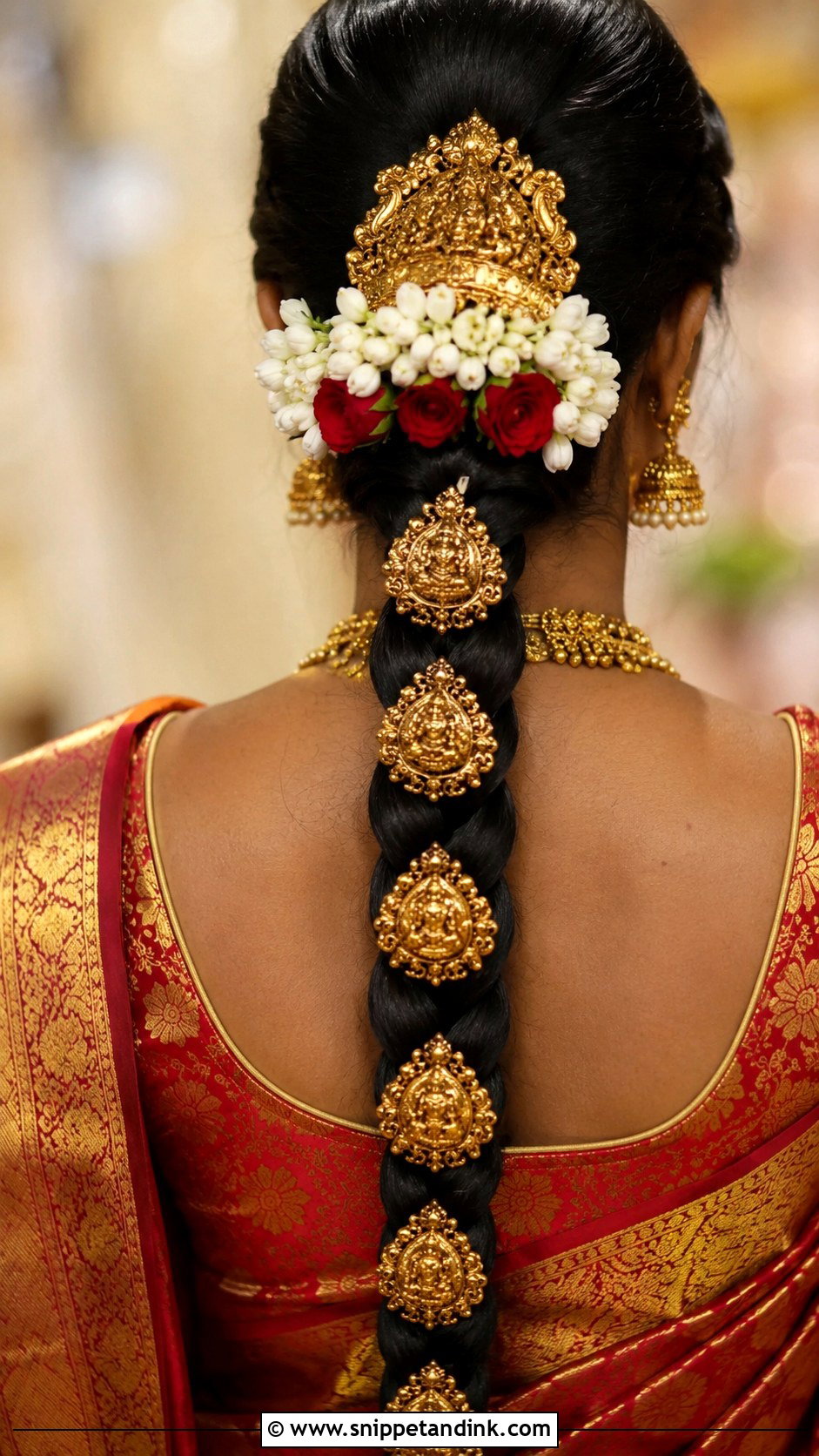
A braid covered with temple-style gold ornaments looks majestic. Jadanagam and billalu run along a poolajada, often with a few flowers. These pieces can be heavy, and the weight hangs from the top of the braid, so I anchor the base very securely and sometimes stitch the ornaments to a backing. It’s made for traditional muhurtham ceremonies with heavy gold necklaces and kanjeevaram silk.
16. Low Bun With Jasmine
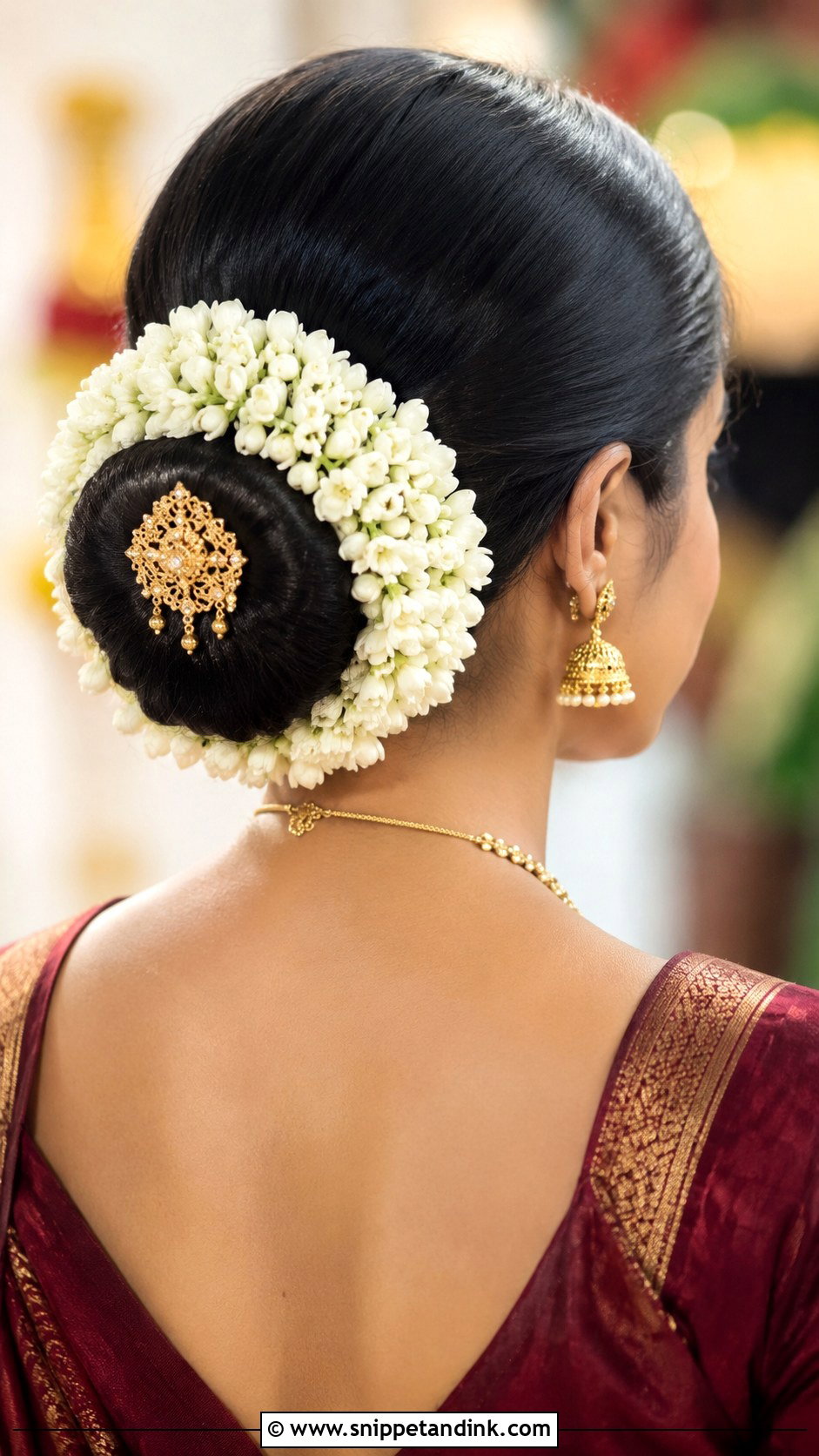
A low bun at the nape, ringed with fresh jasmine, is graceful and comfortable. A small gold brooch or pearl detail adds a finishing touch. It’s secure and polished all day and flatters most face shapes. For a bride who wants a classic updo without fuss, this is where I’d start.
17. Fishtail Braid With Flowers
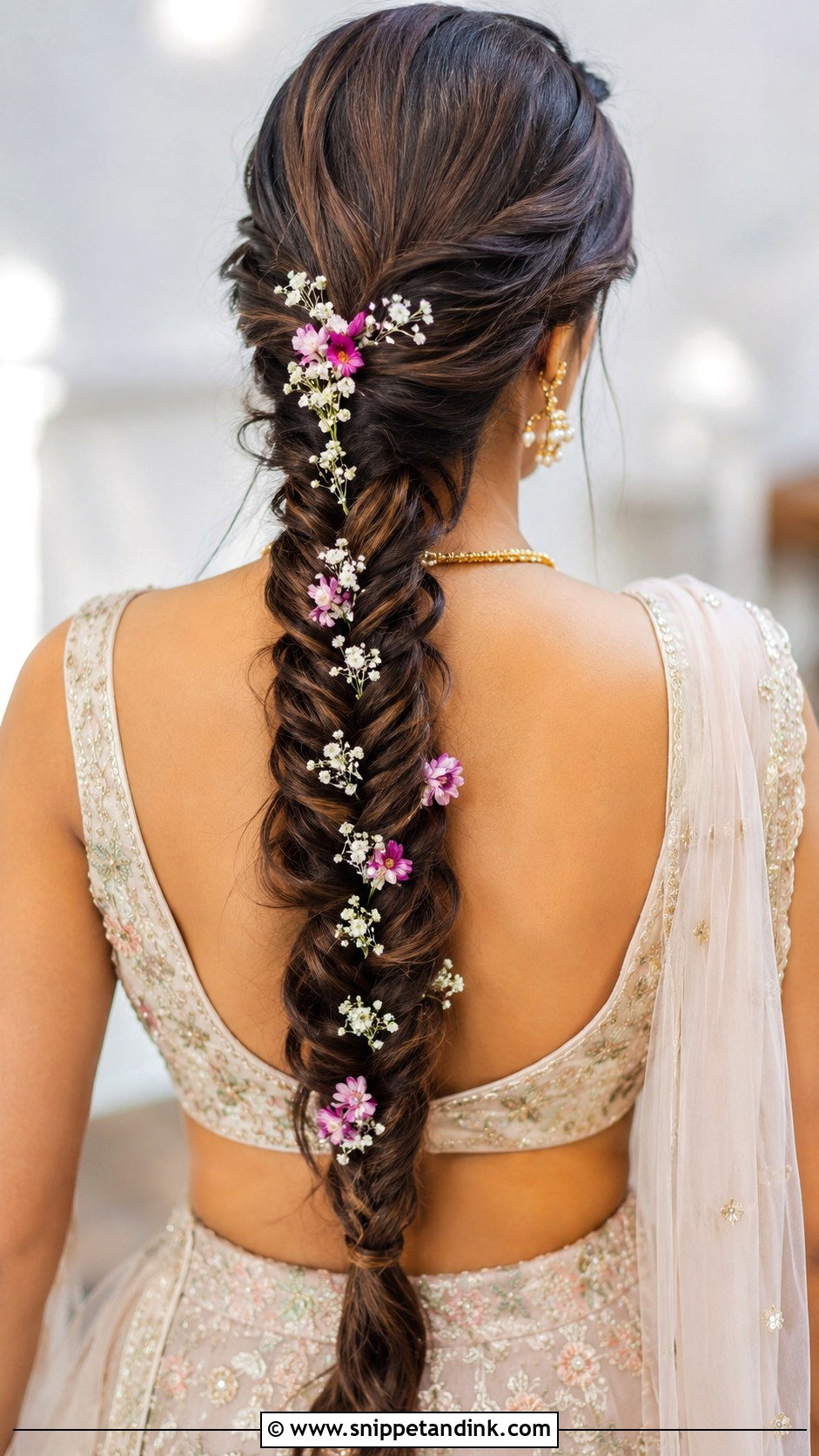
A fishtail braid has a detailed, woven pattern that looks complex. I tuck small flowers between the strands. It’s a fresher option than the classic poolajada and works for receptions and sangeet. It needs length, ideally past the shoulder blades, or the pattern looks short. Pair it with lighter lehengas and contemporary outfits.
18. Bridal Bun With Mango Garland
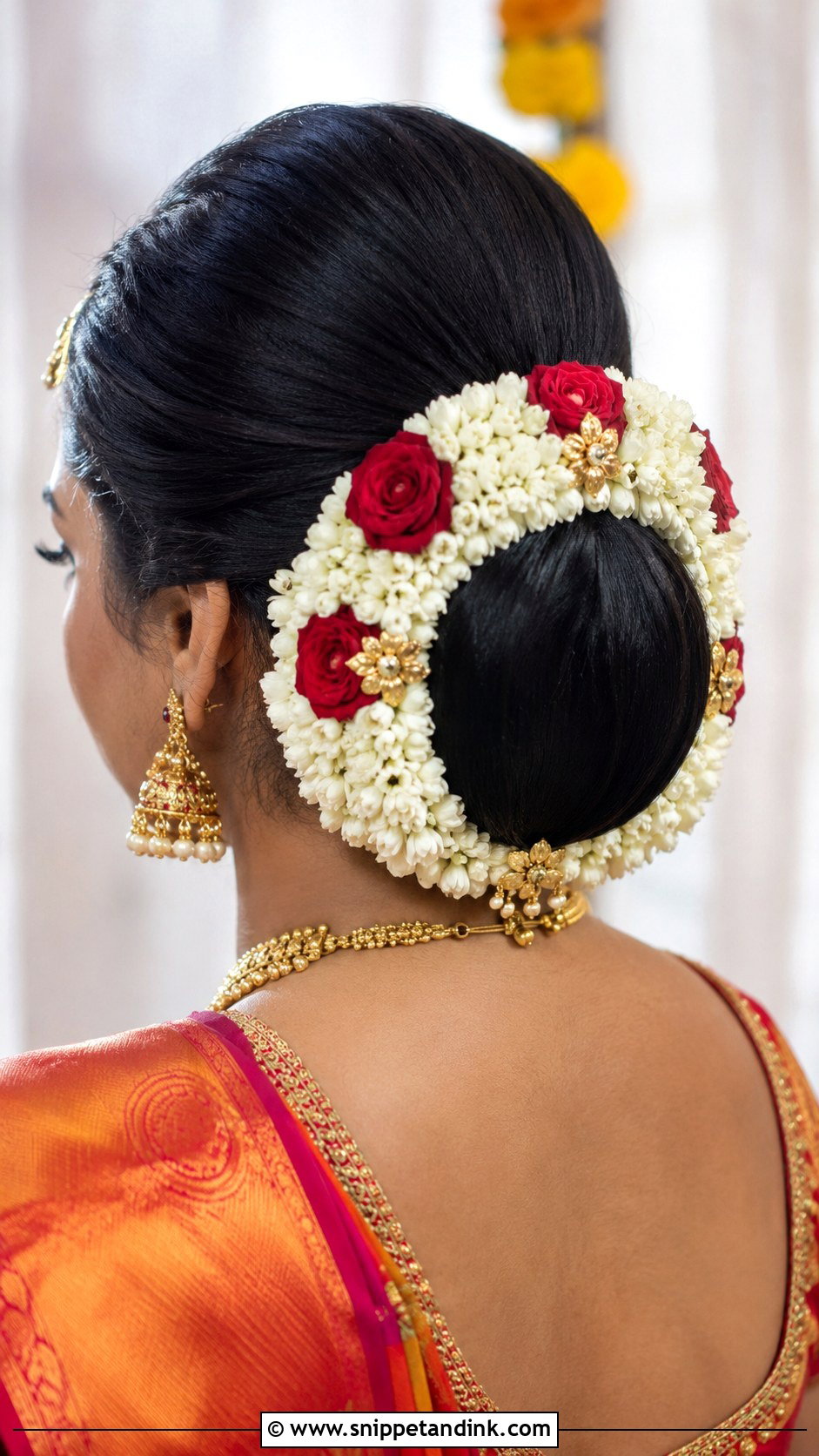
A structured bun wrapped with a thick veni arranged in a mango shape, using jasmine and roses, looks richly traditional. Gold pins add sparkle. I build the bun on padding so it holds its shape under the flowers. It pairs with kanjeevaram silk and temple jewelry, and the mango motif gives it a festive feel.
19. Curly Ponytail With Gajra
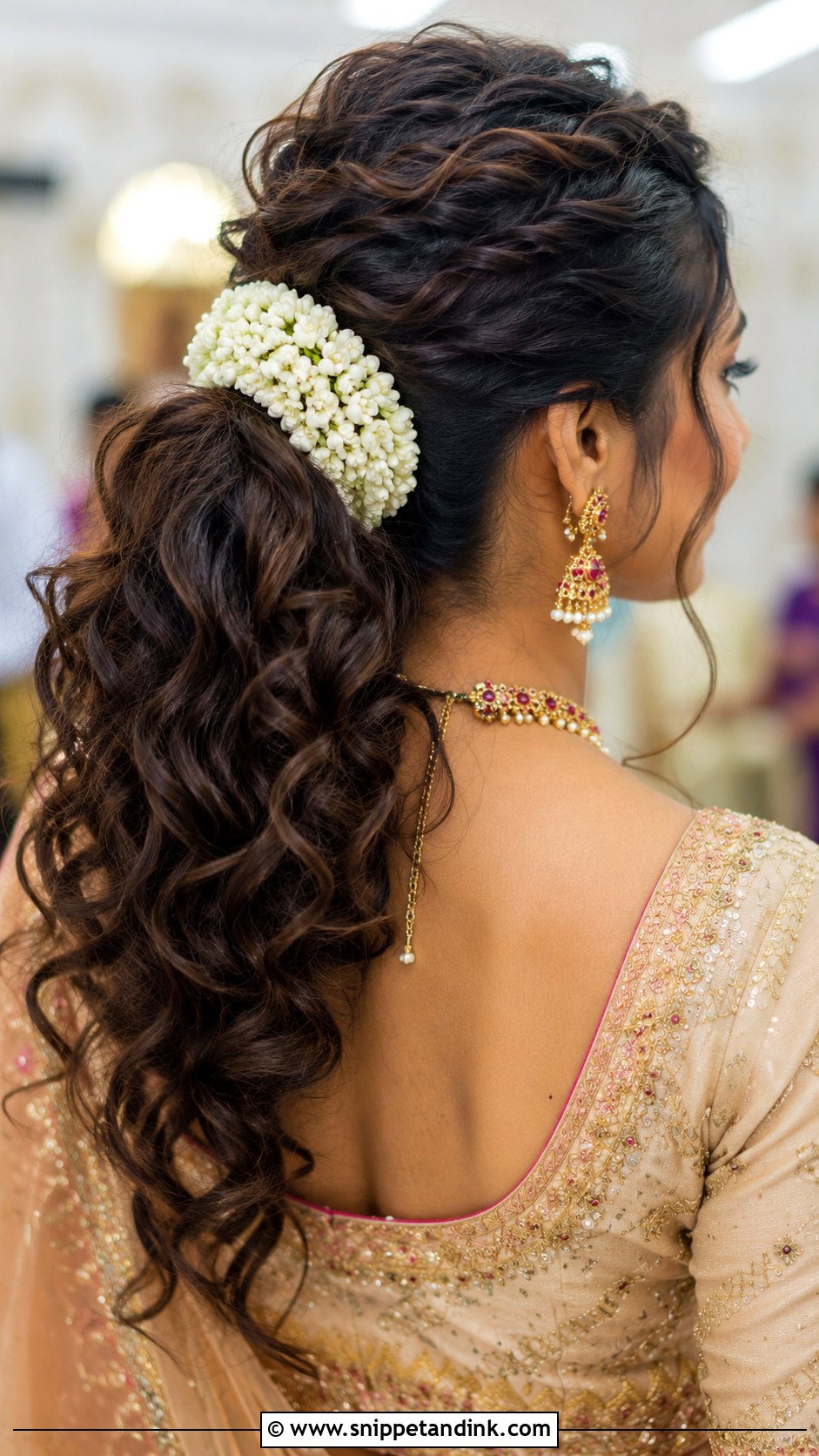
A ponytail with a gajra around the base is playful and easy to move in. I place it high or mid-height and curl the length. It works for sangeet and reception, when you’ll be dancing. Wrapping the gajra tightly at the base also hides the elastic.
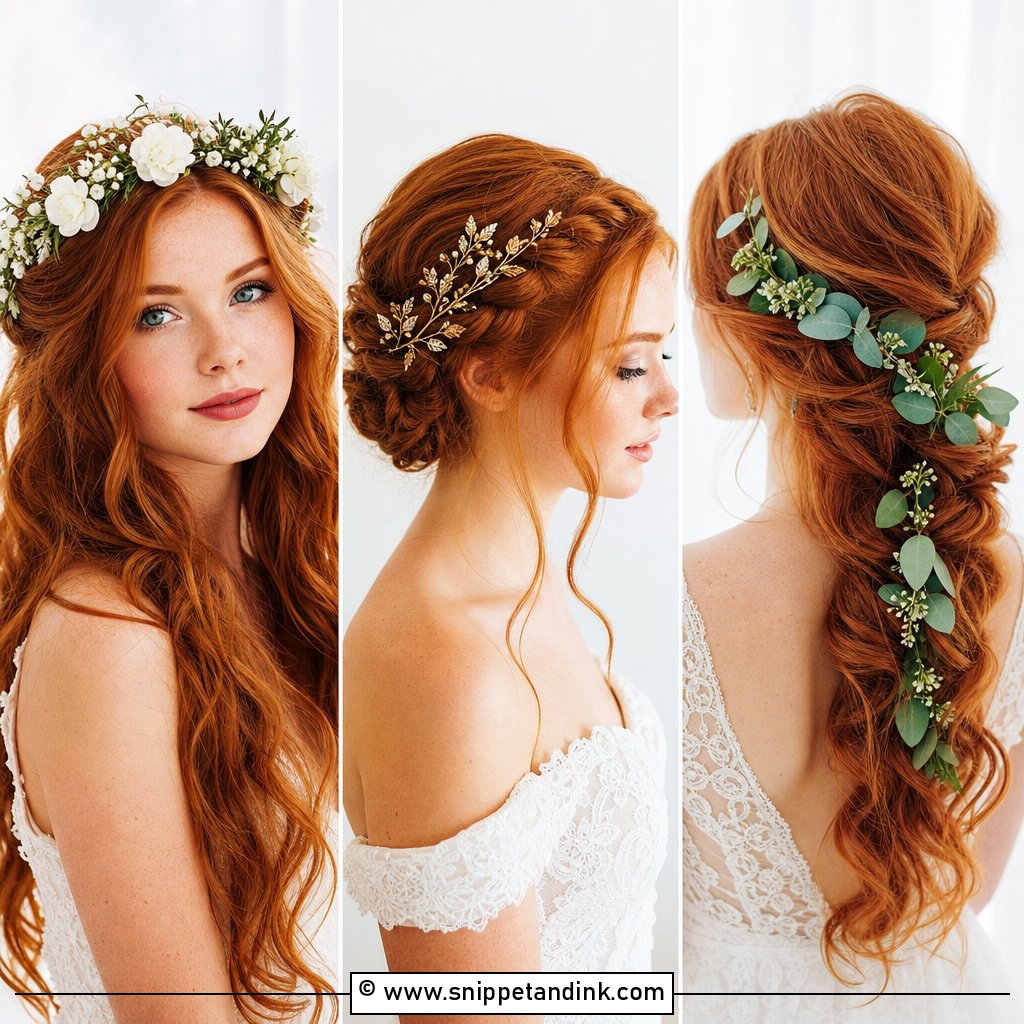
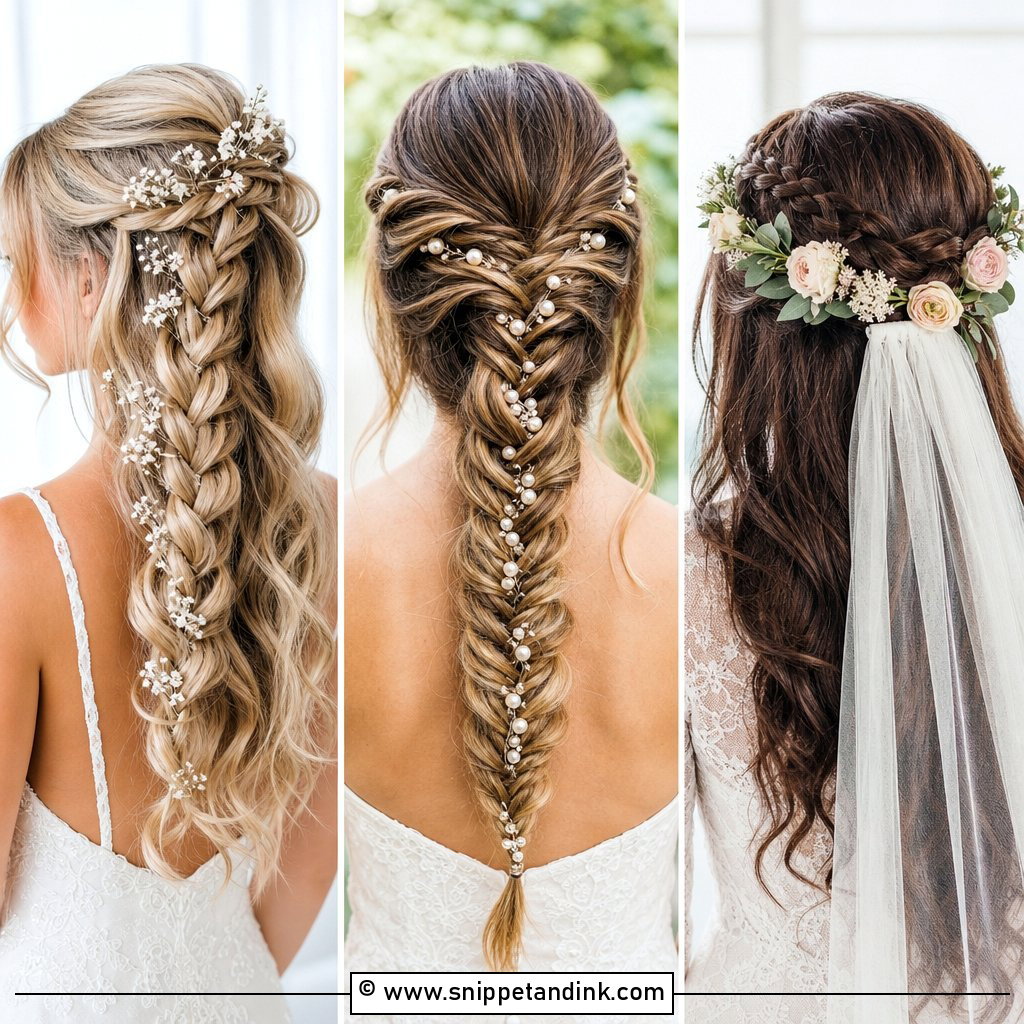
20. Braided Crown Hairstyle
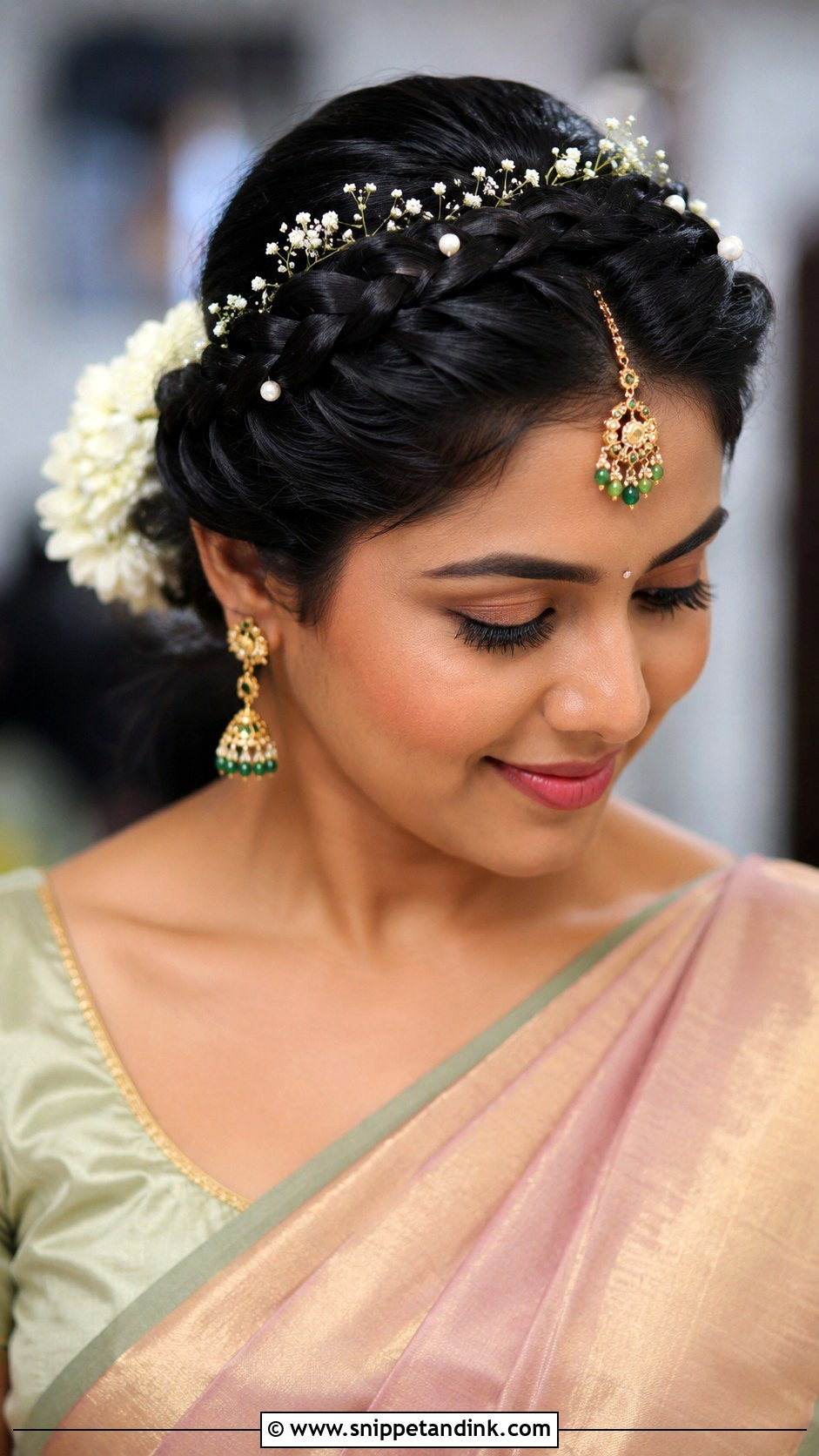
A braided crown wraps plaits around the head along the hairline. I tuck small flowers or pearls into it. It keeps hair off the face and shows off the weaving, and it pairs with a maang tikka and delicate jewelry. Layered or shoulder-length hair can poke out of a crown braid, so I sometimes use a small extension to even it out.
21. Double Braid With Flowers
Two braids, sometimes joined into one lower down, give more volume than one. I layer flowers along both. It’s a fun option for younger brides and pre-wedding events. Make sure both braids start at the same height and tension, or they look uneven from behind.
22. Sleek Bun With Matha Patti
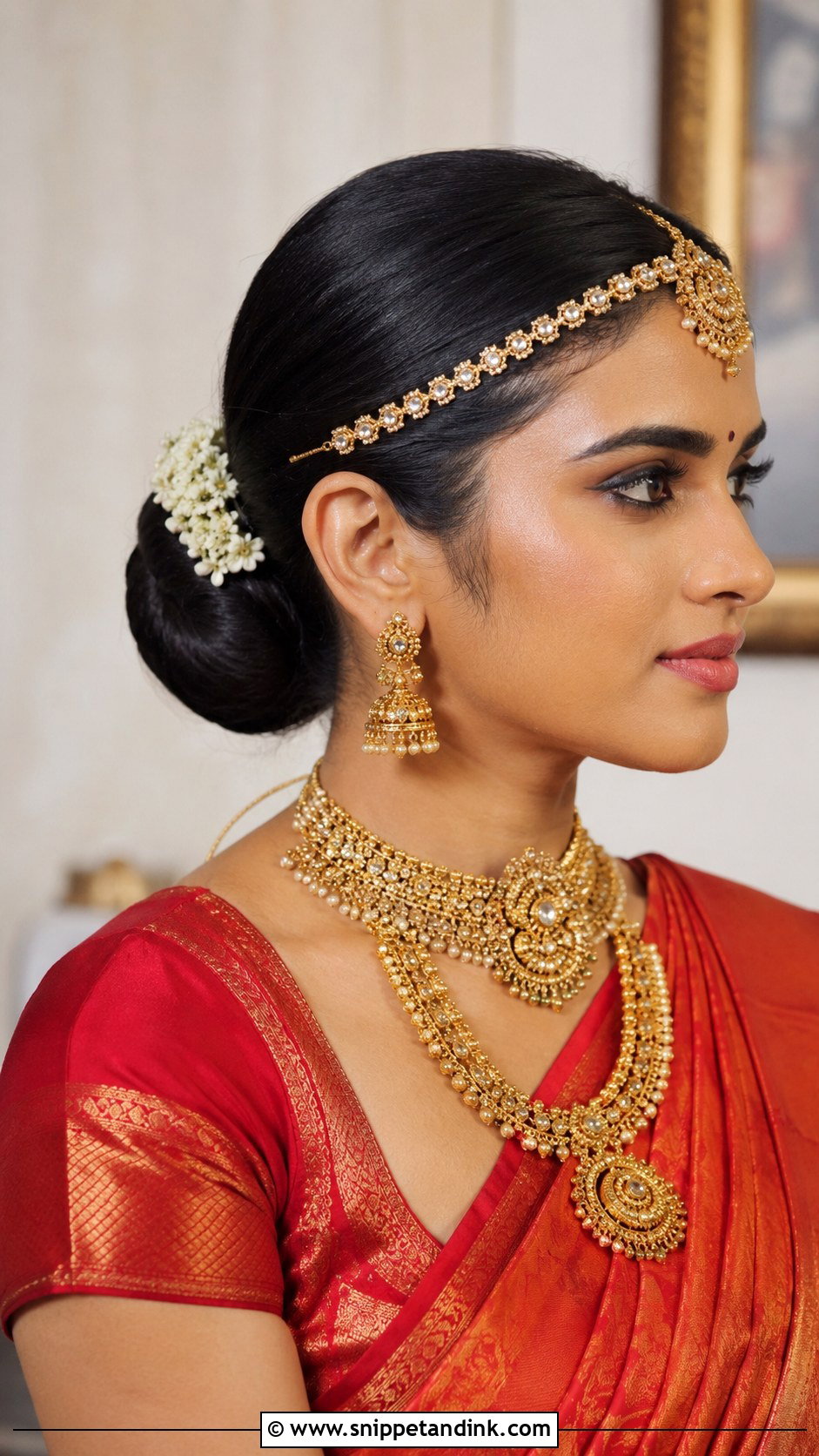
A sleek, tight low bun with a matha patti or maang tikka keeps the focus on the face. Minimal flowers or pearls finish it. I smooth the hair with a light gel and a fine comb so there are no bumps. It’s modern but traditional, and it complements heavy jewelry and structured silk.
23. Floral Bun With Kanakambaram
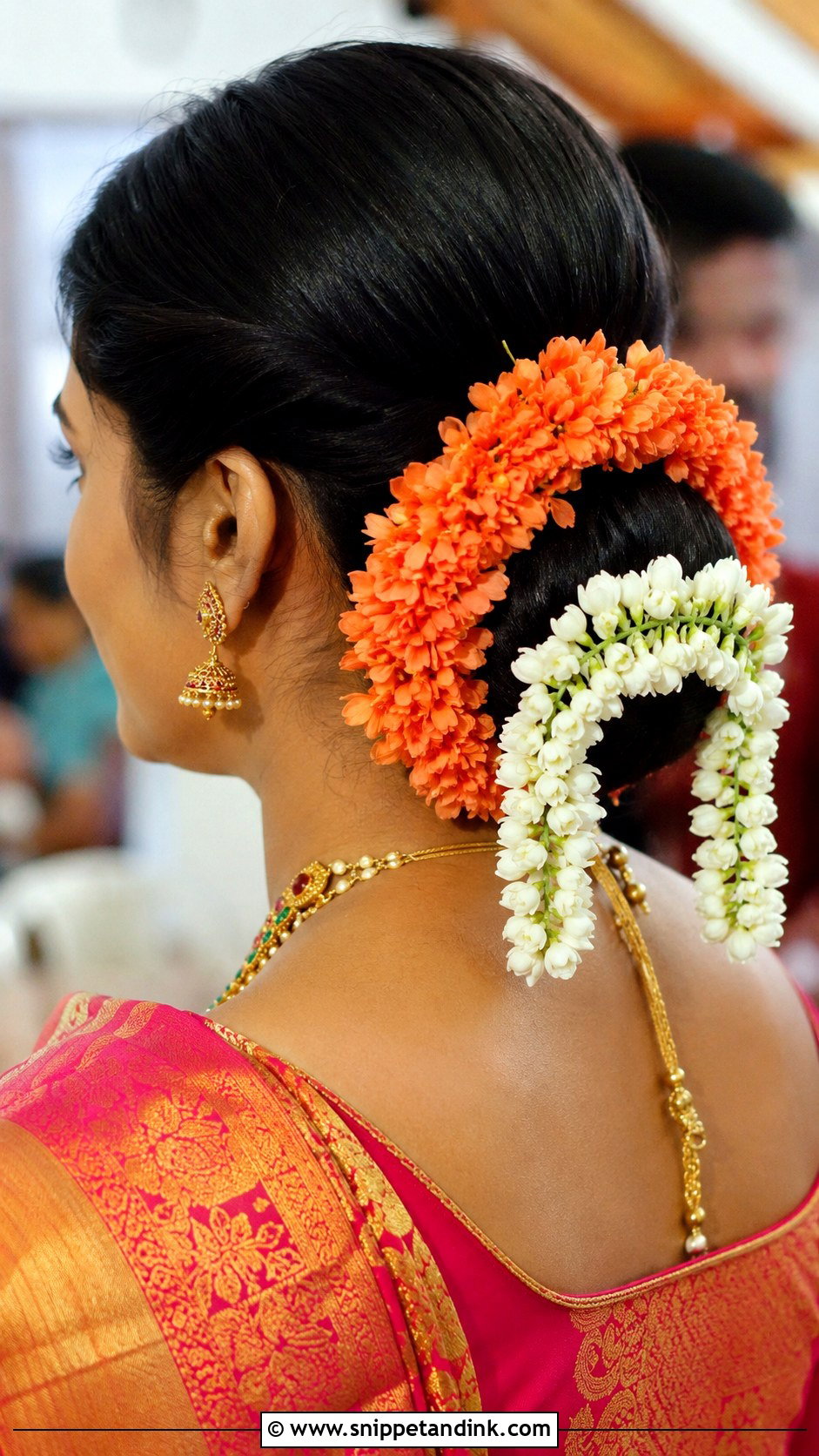
Kanakambaram, the orange firecracker flower, adds bright color. I wrap a low bun with kanakambaram strings mixed with white jasmine. Kanakambaram has little scent but lasts well without wilting, which makes it practical in heat. The floral bun with kanakambaram pairs with gold jewelry and bright silk.
24. Romantic Waves With Floral Pins
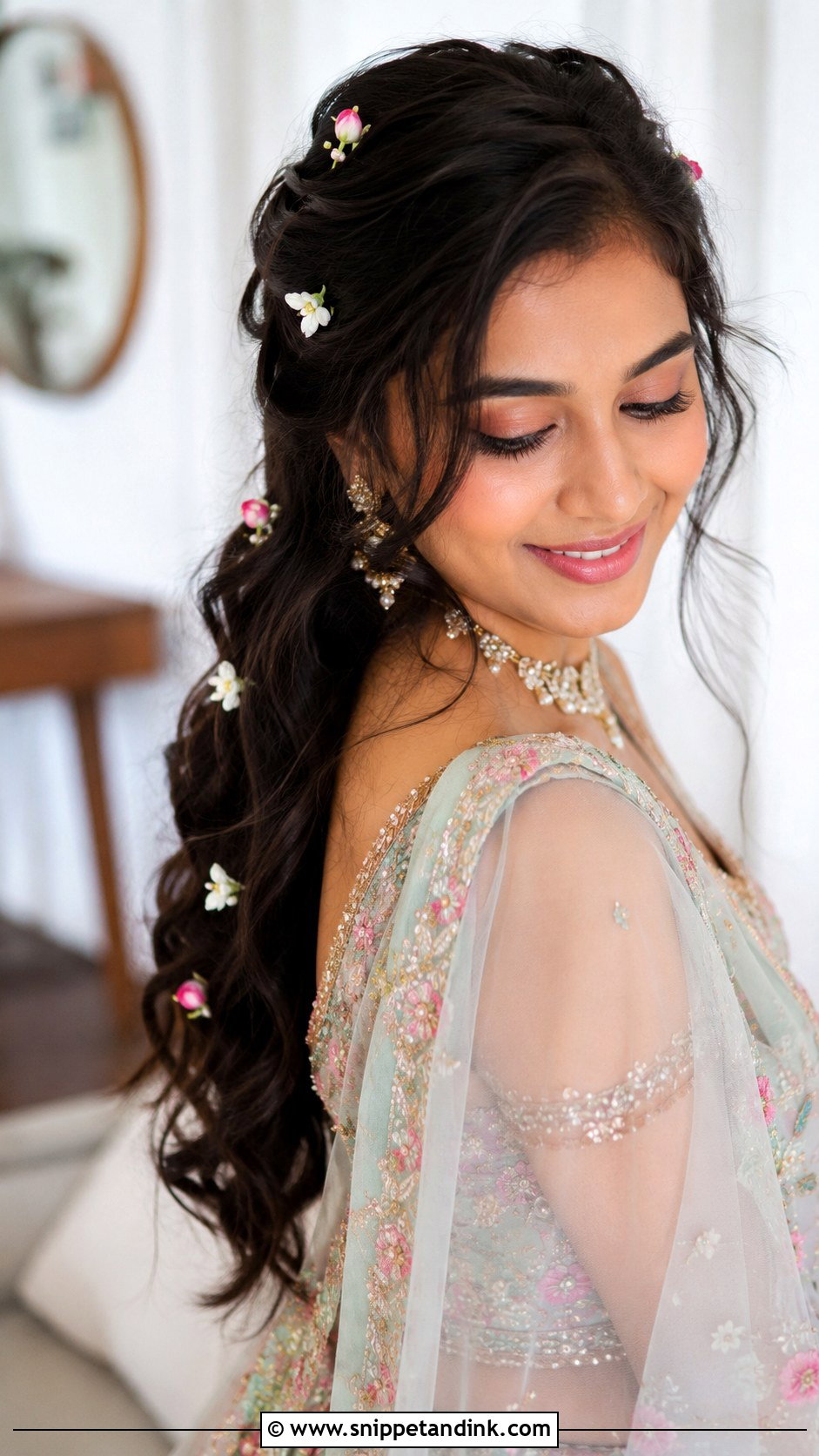
Loose waves with scattered floral pins give a soft look. I tuck small jasmine clusters or rosebuds through the waves. It suits engagements, receptions and pre-wedding shoots, and pairs with pastel lehengas. Waves need a proper set to survive humidity, so I curl, pin each curl and let it cool before brushing it out.
25. Bun With Bridal Veil
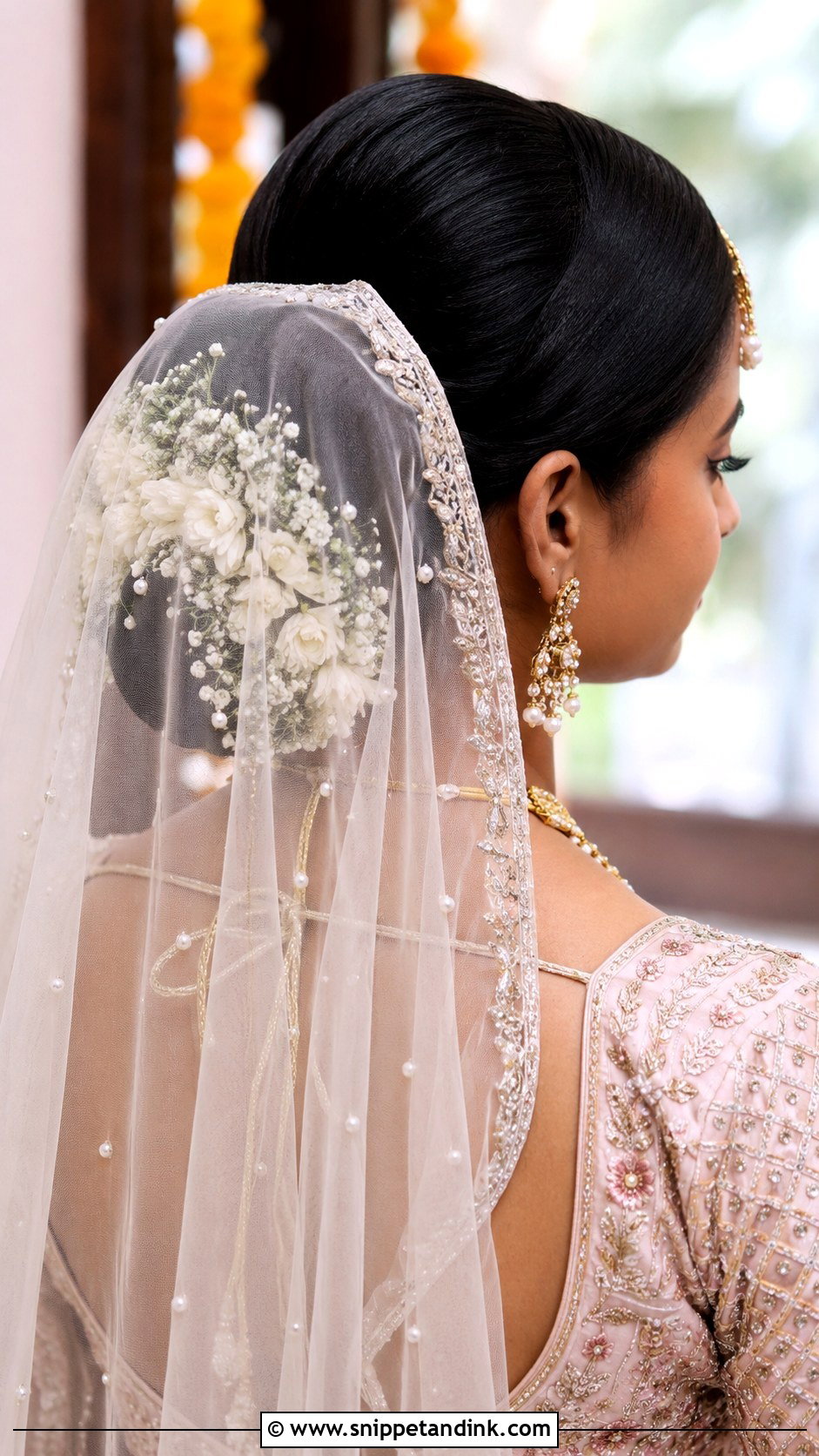
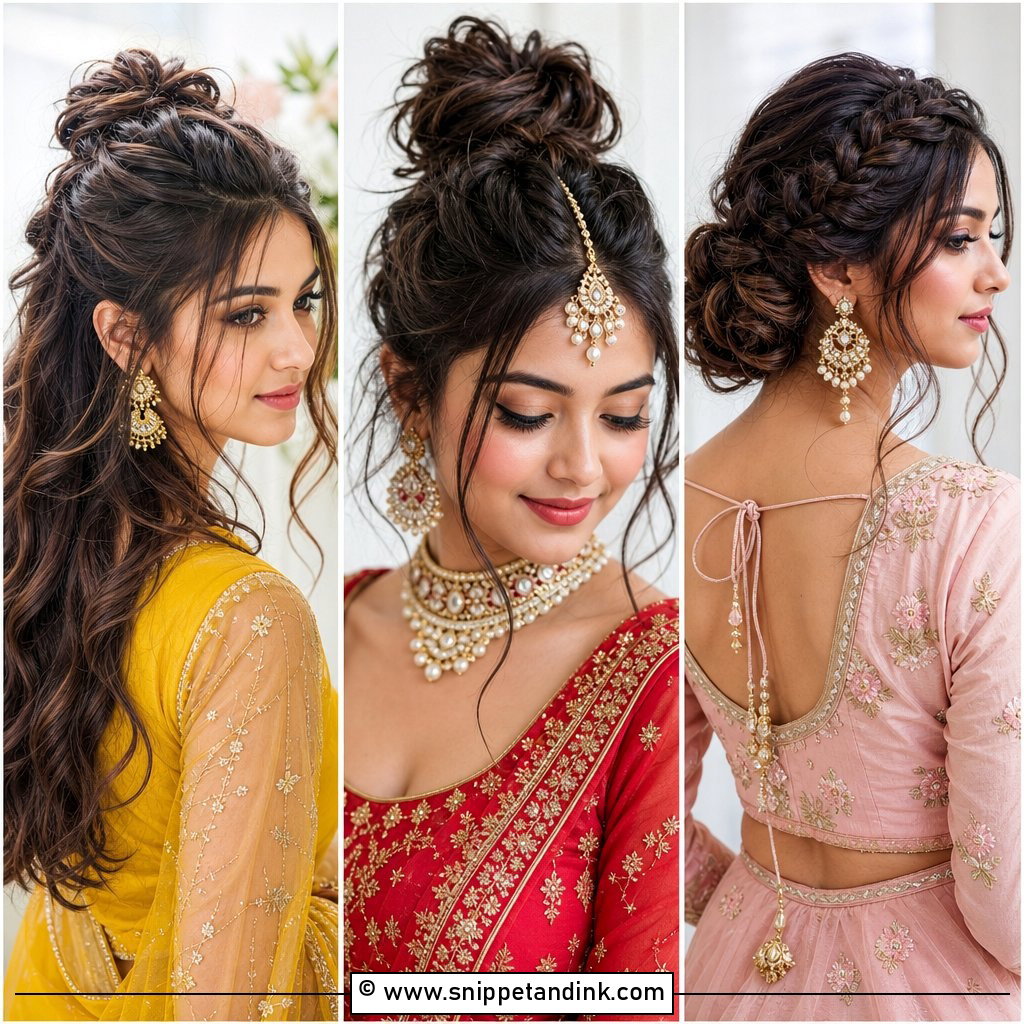
A bun with a light dupatta or veil draped over it works for receptions and fusion weddings. Flowers or pearls decorate the bun under the fabric. I pin the dupatta to the bun with hidden pins so it doesn’t slide off when you turn your head. It pairs with traditional and fusion outfits.
26. Layered Braid With Gold Ornaments
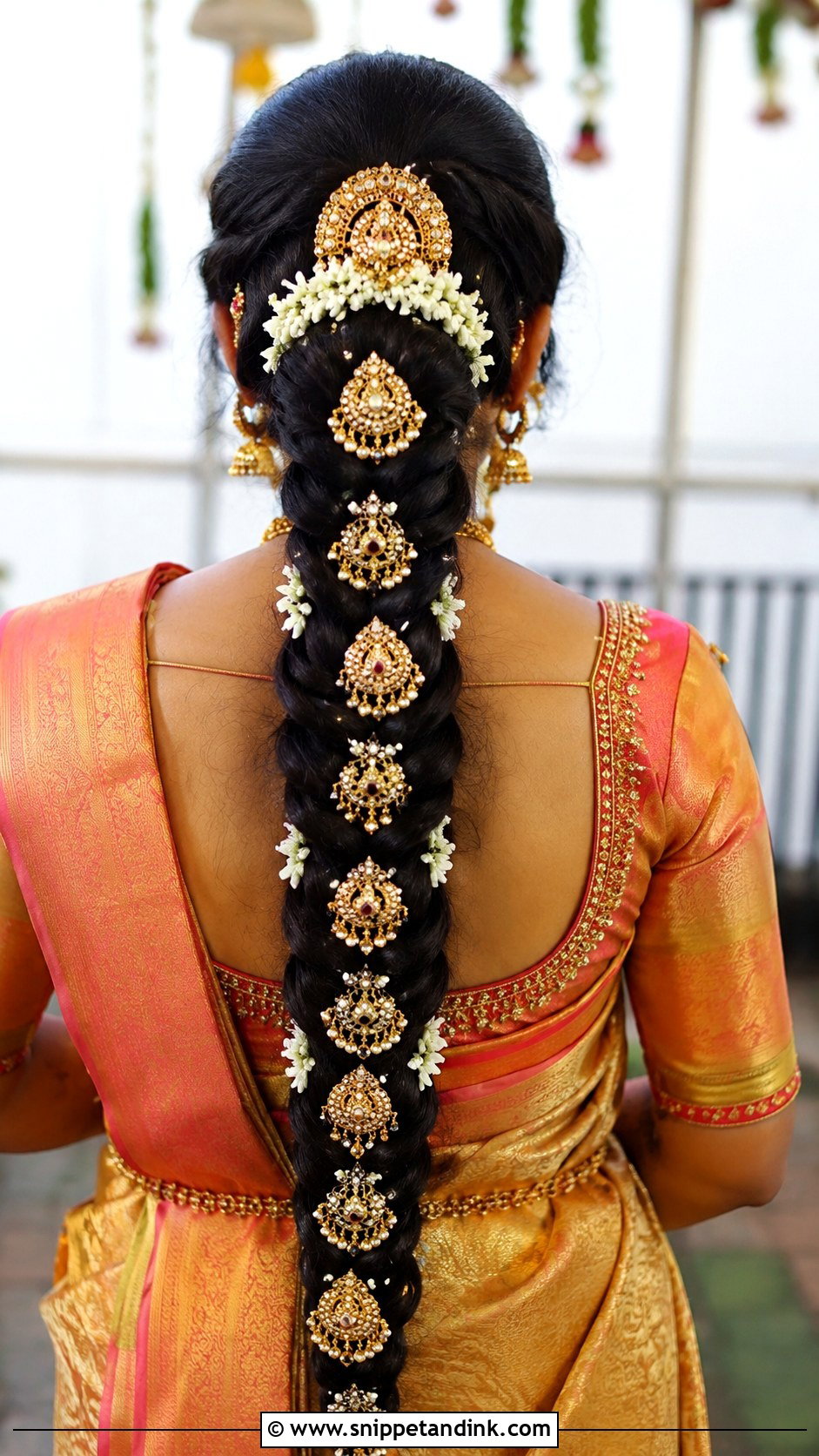
A layered braid gives more texture and fullness. I decorate it with gold jada billalu along the length and tuck small flowers between the pieces. It’s made for the muhurtham with heavy silk and temple jewelry. As with any gold-heavy braid, the base needs to be anchored well.
27. High Bun With Flowers
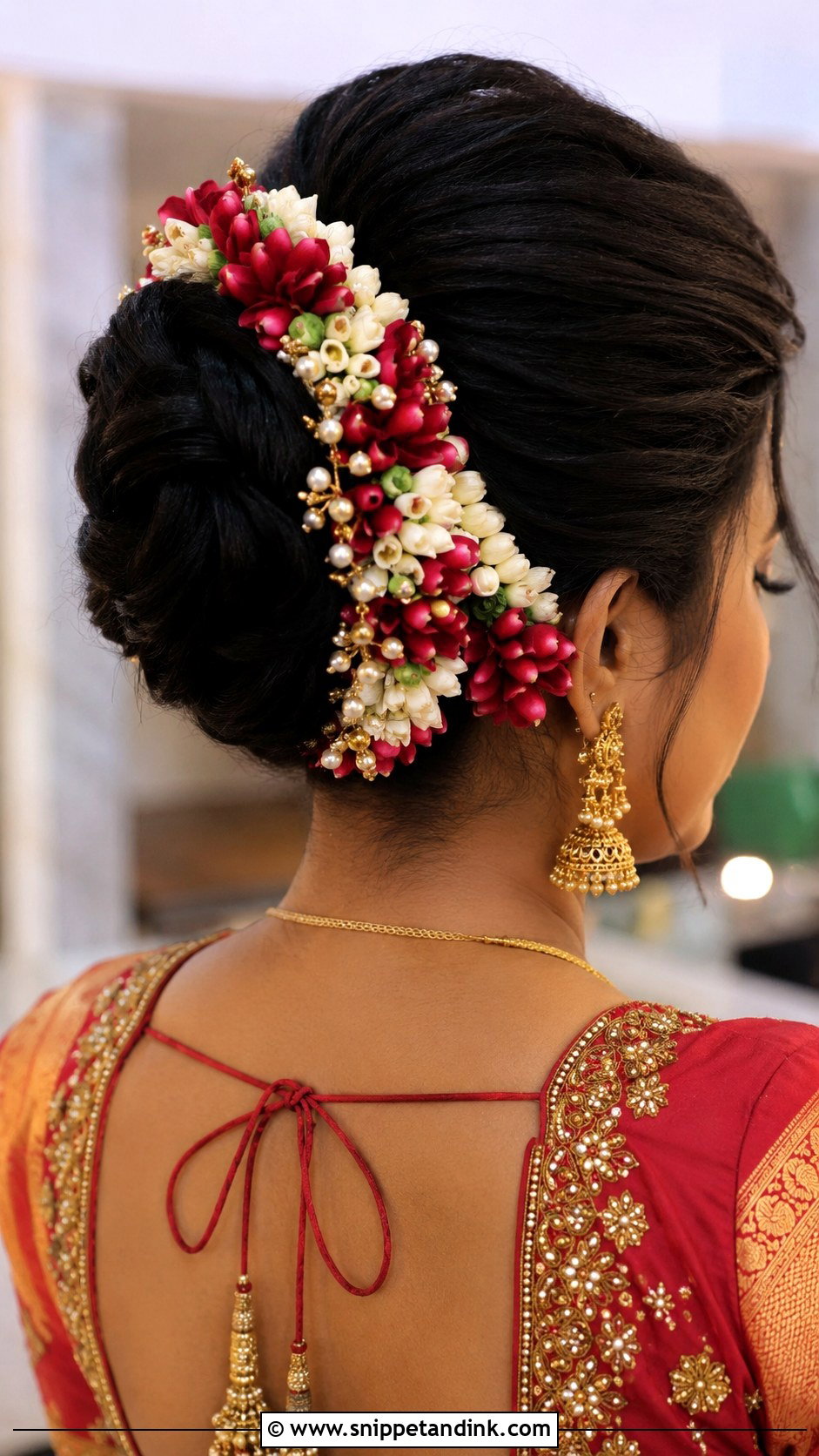
A high bun at the crown wrapped with a colorful veni adds height and shows off earrings and the neckline. Pearls or gold pins add sparkle. I build it on a firm base so it doesn’t tilt under the flowers. It suits grand ceremonies with heavy sarees and bold jewelry.
28. Braided Updo With Jasmine
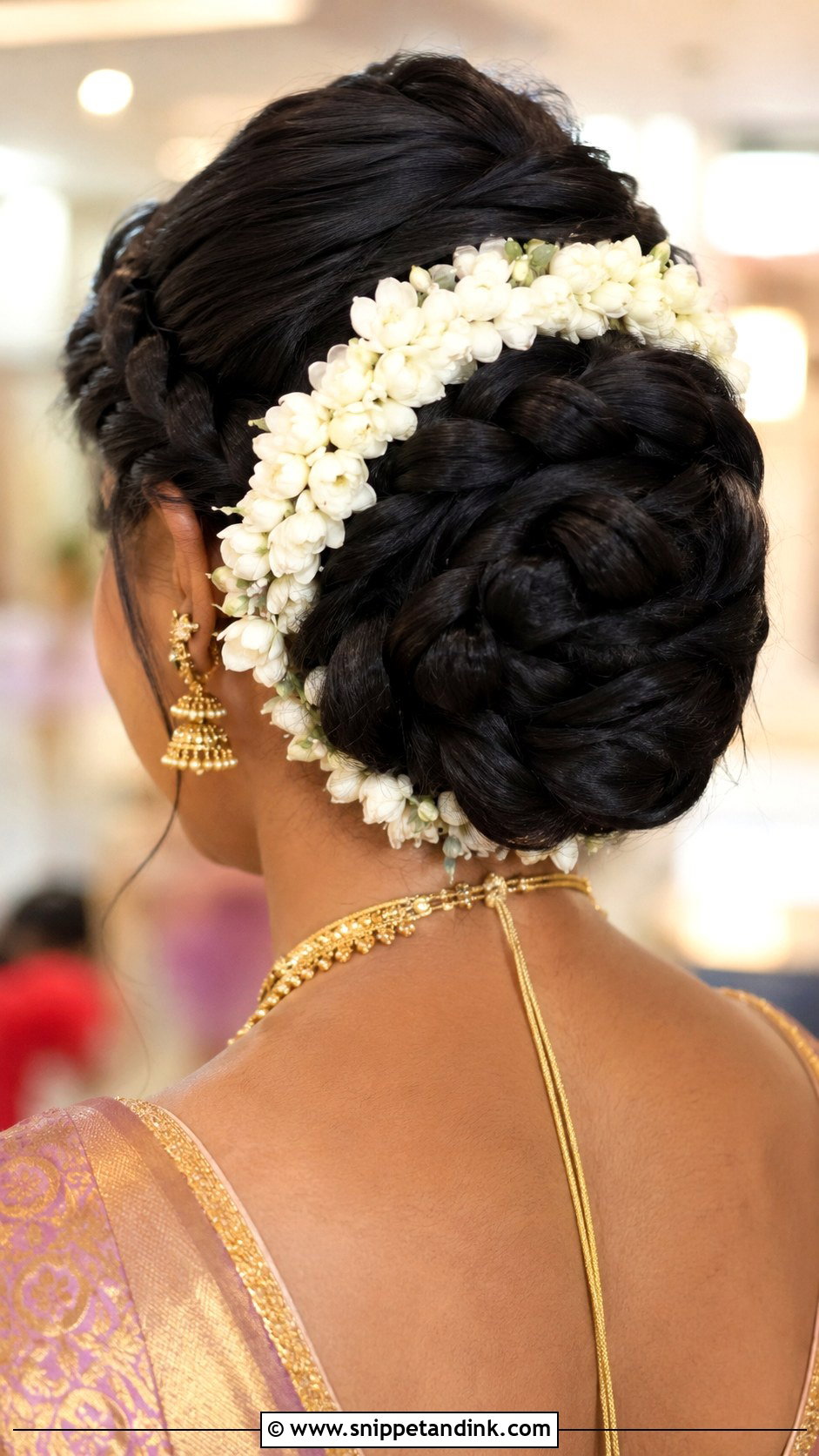
Braiding the hair first, then coiling it into an updo wrapped with jasmine, gives texture with a polished finish. It holds well through long ceremonies because the braids lock the hair in place. It complements silk sarees and gold accessories.
29. Floral Hair Bun For Reception
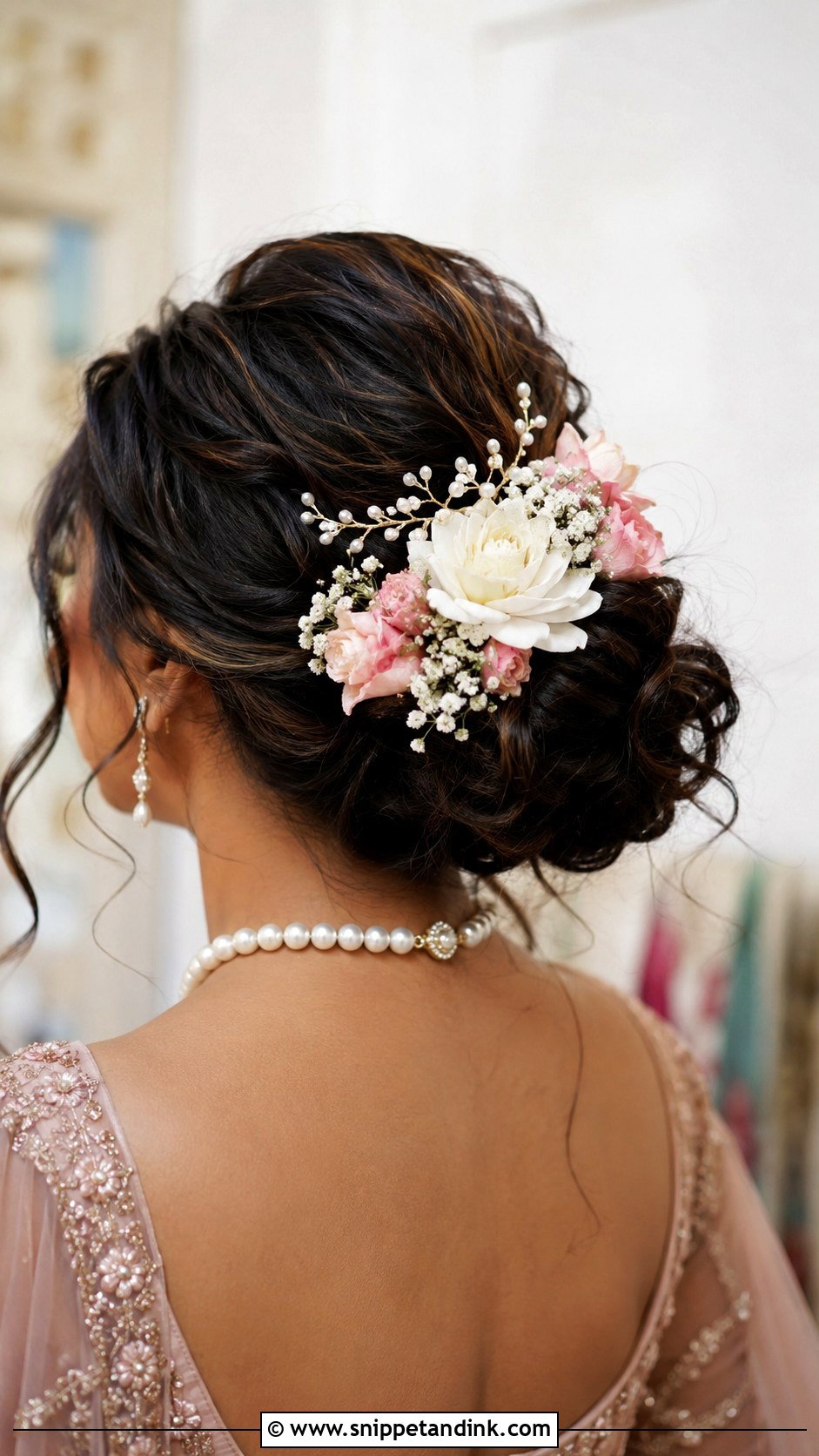
Receptions are a chance to switch to something lighter. A slightly tousled bun with a few statement flowers, pearls or a hair vine suits lighter reception outfits and modern lehengas. If you’re changing from a muhurtham poolajada, allow at least 45 minutes to take down the braid and restyle.
30. Bridal Braid With Rose Garland
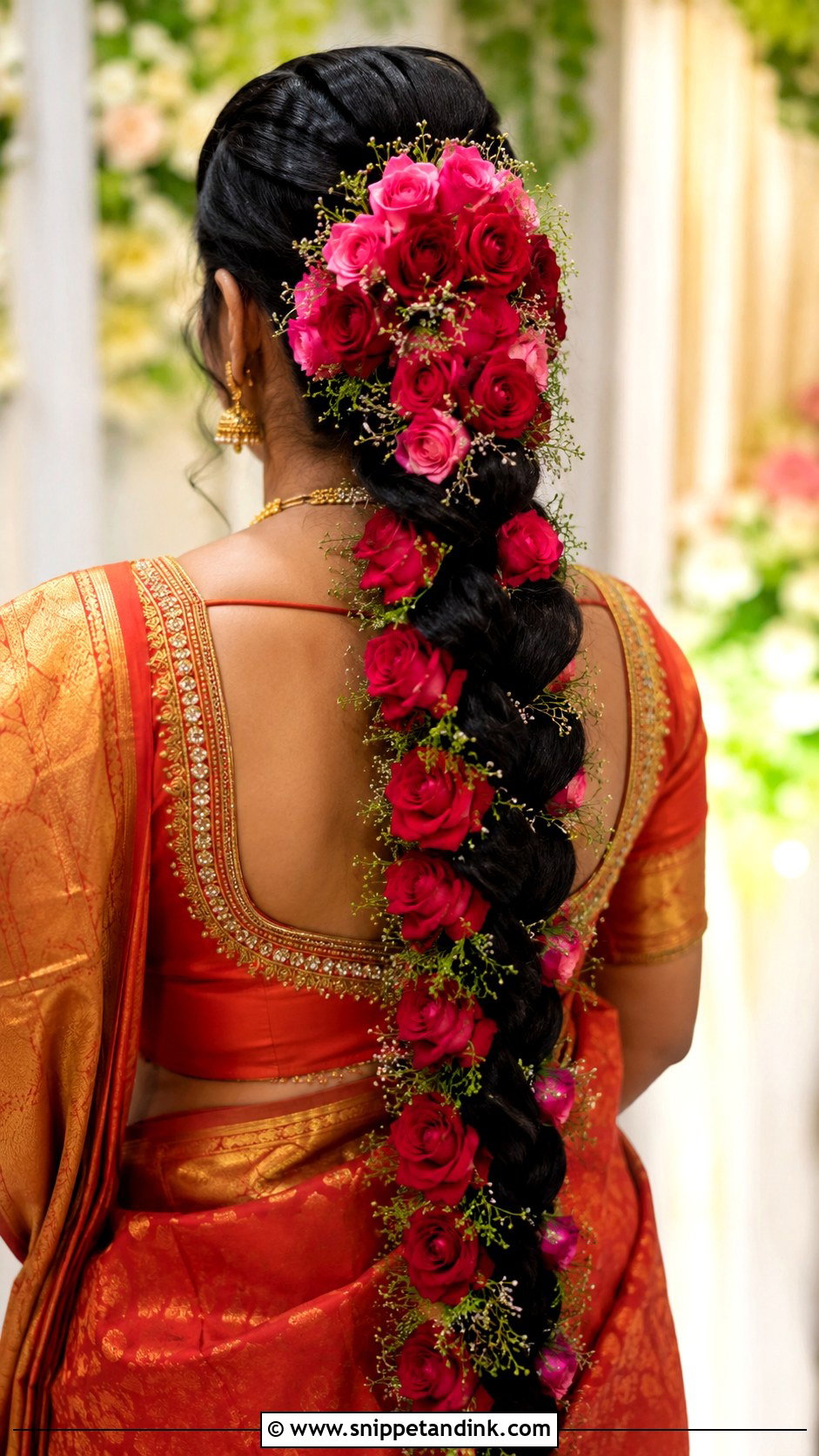
A braid wrapped in a full rose garland looks lush. Red and pink roses, sometimes with greenery, wind down the length. It looks rich against silk in contrasting tones. Roses are heavier than jasmine and wilt faster, so I’d attach them close to the ceremony time.
31. Curly Half Updo With Gajra
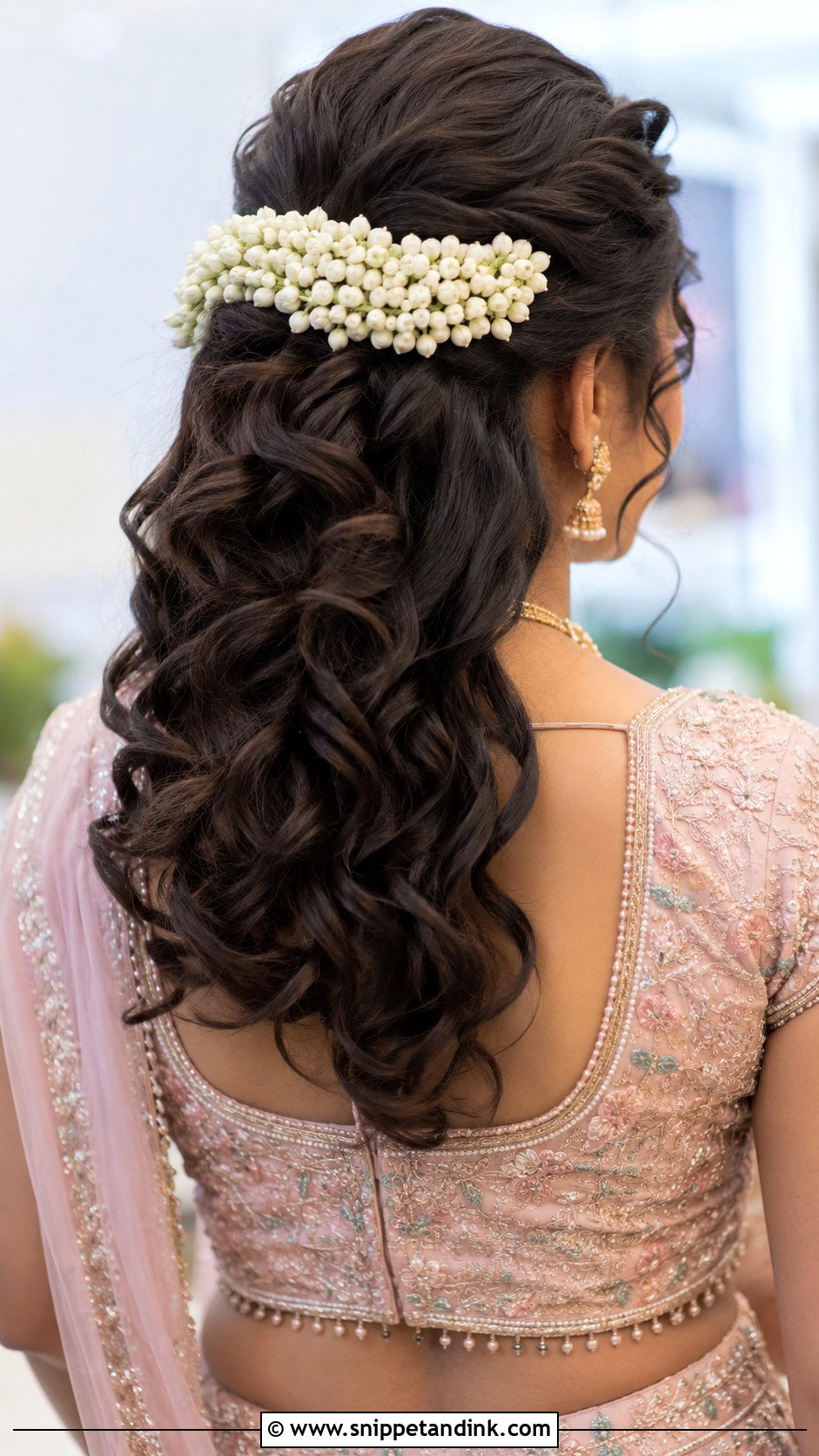
Curls with a partial updo give a relaxed look. The top section is pinned back with a gajra, and the curls fall below. It suits engagements, sangeet and pre-wedding events, and pairs with pastel and contemporary outfits.
32. Bun With Pearl And Flower Accents
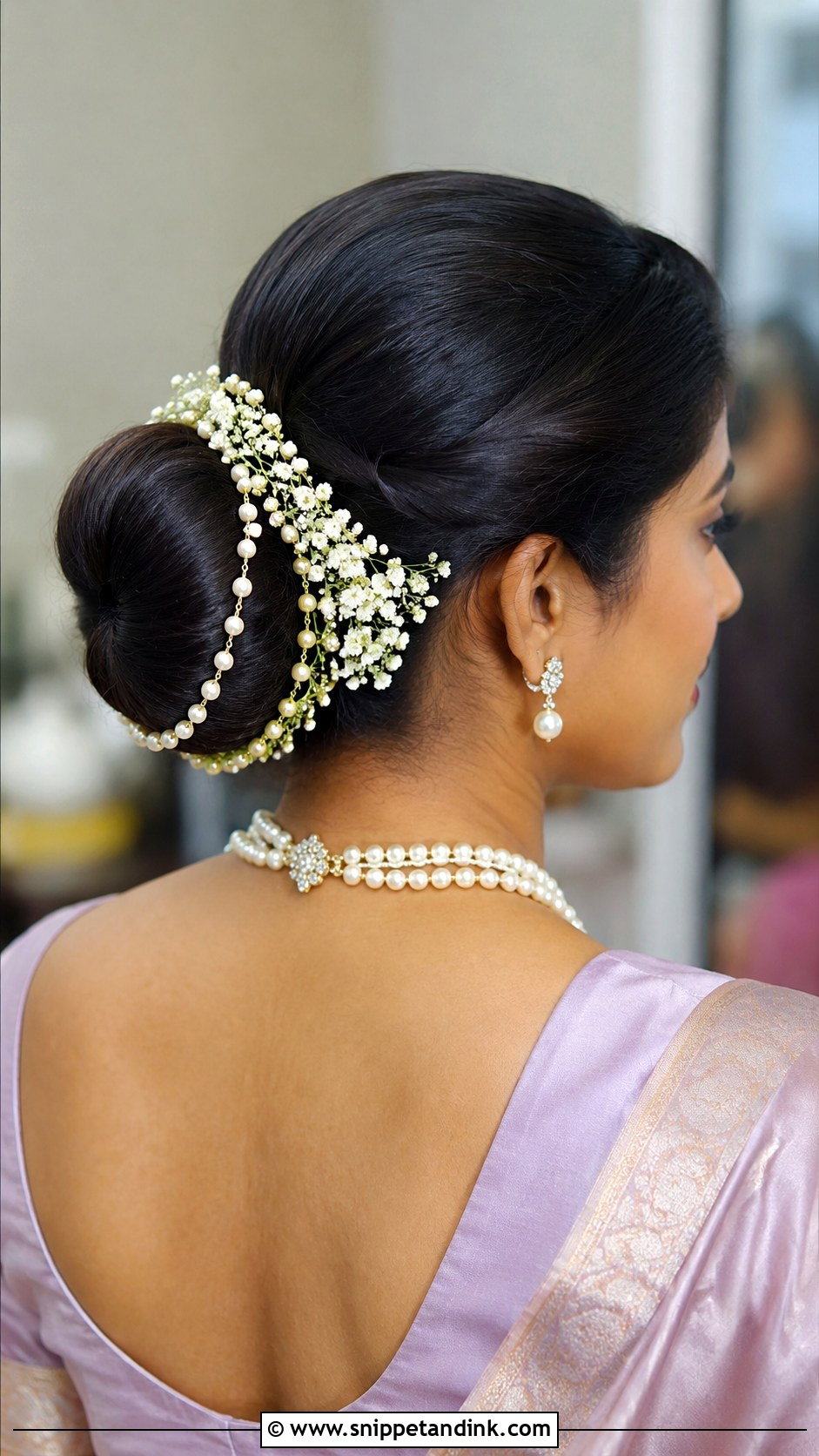
Pearls and flowers together on a neat bun look soft and luminous. I layer pearl strands and small white blooms around it. It goes with pastel sarees and pearl jewelry, and it’s a quieter alternative to bold florals.
33. Thick Braid With Mixed Flowers
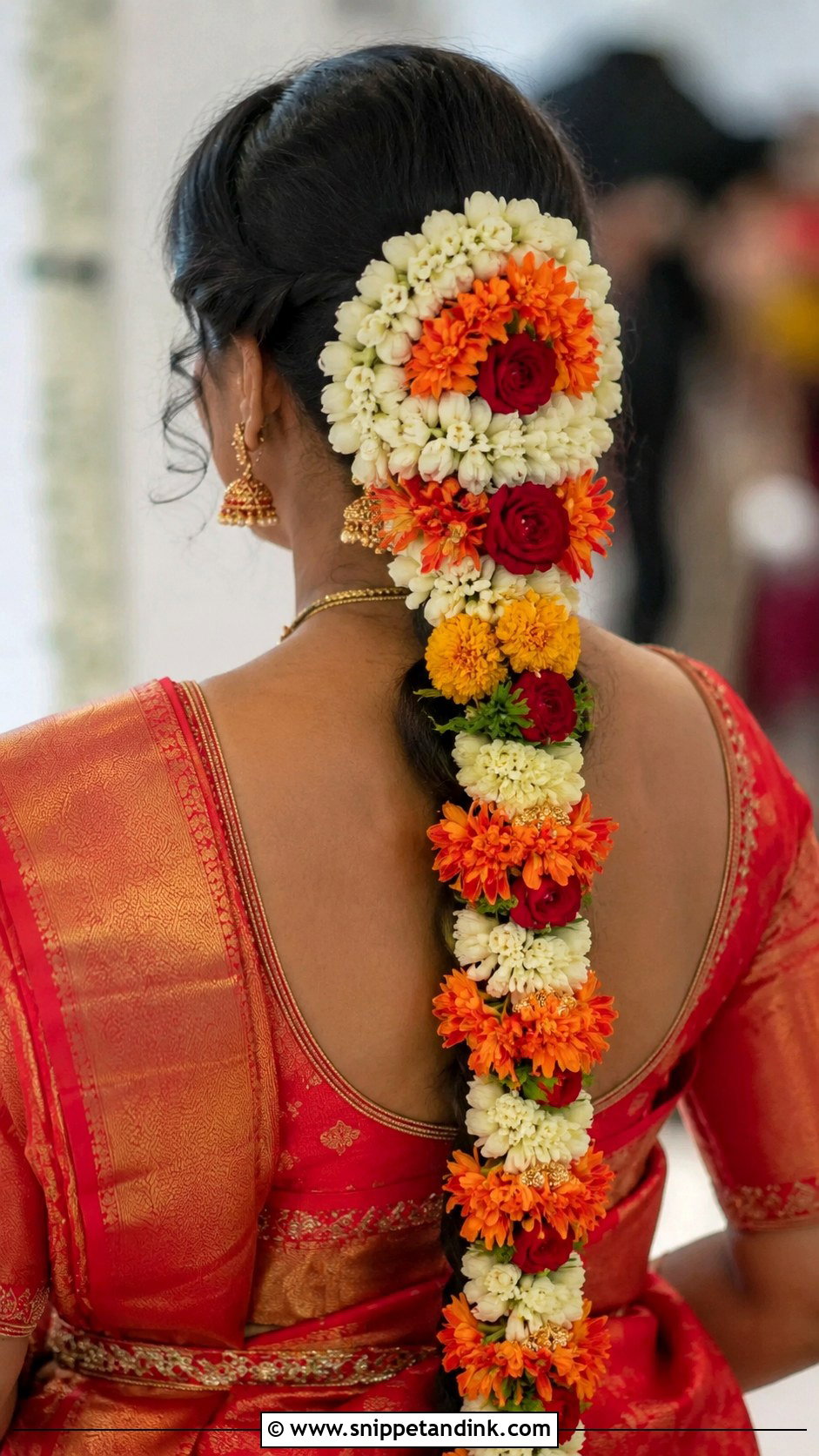
For the biggest floral effect, I layer a thick poolajada with jasmine, roses, marigolds and kanakambaram together. The mix of colors looks festive against bright silk, and the flowers carry meanings of prosperity and blessings. It’s heavy, so the base needs strong anchoring and you’ll want to sit with a straight back during the rituals.
34. Side Braid With Flowers
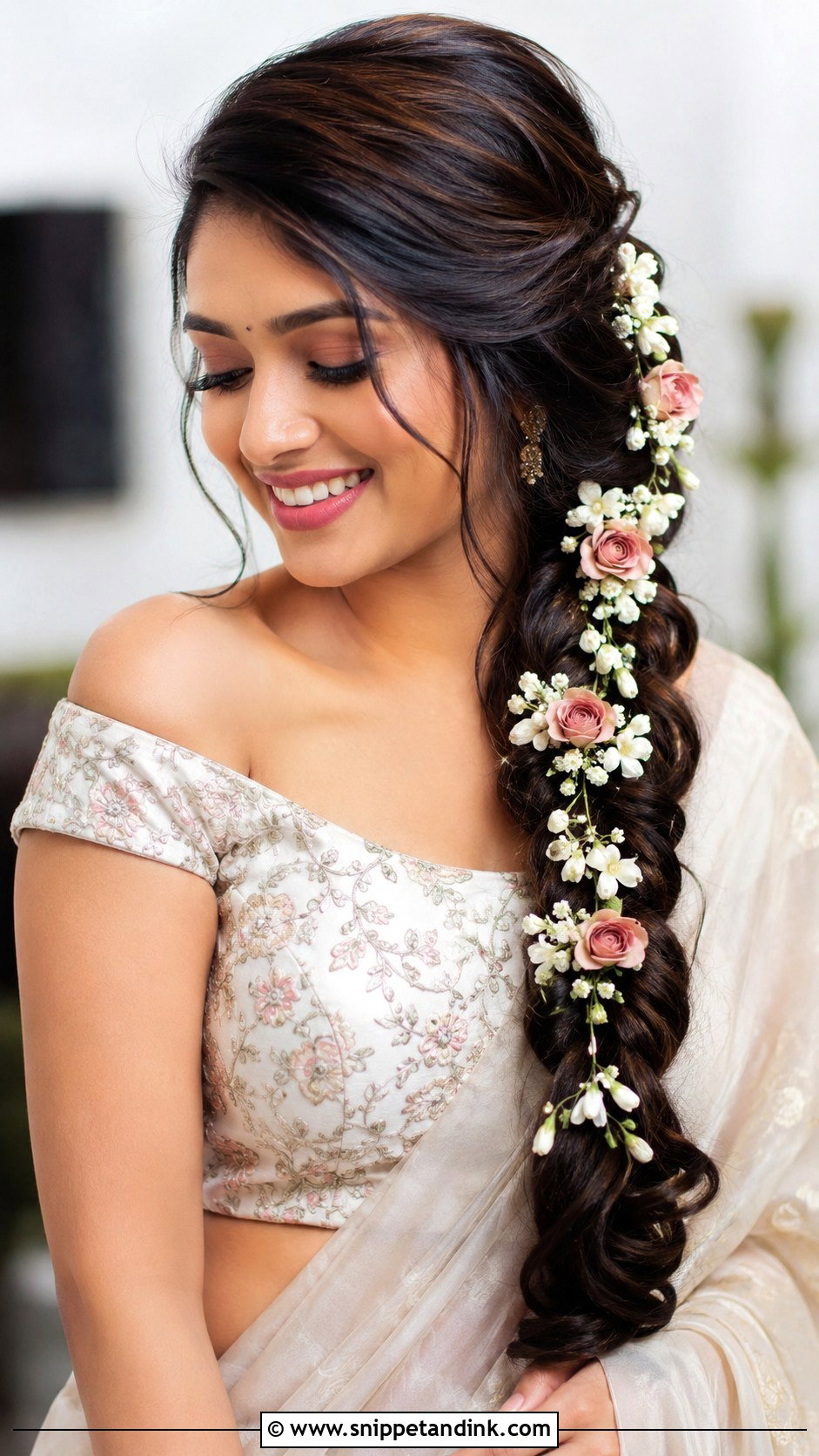
A loose braid over one shoulder with jasmine or small roses along it is soft and relaxed. It suits engagements and daytime events and pairs with off-shoulder blouses and lighter outfits. I tie it with a clear elastic hidden under a flower.
35. Bun With Maang Tikka And Nath
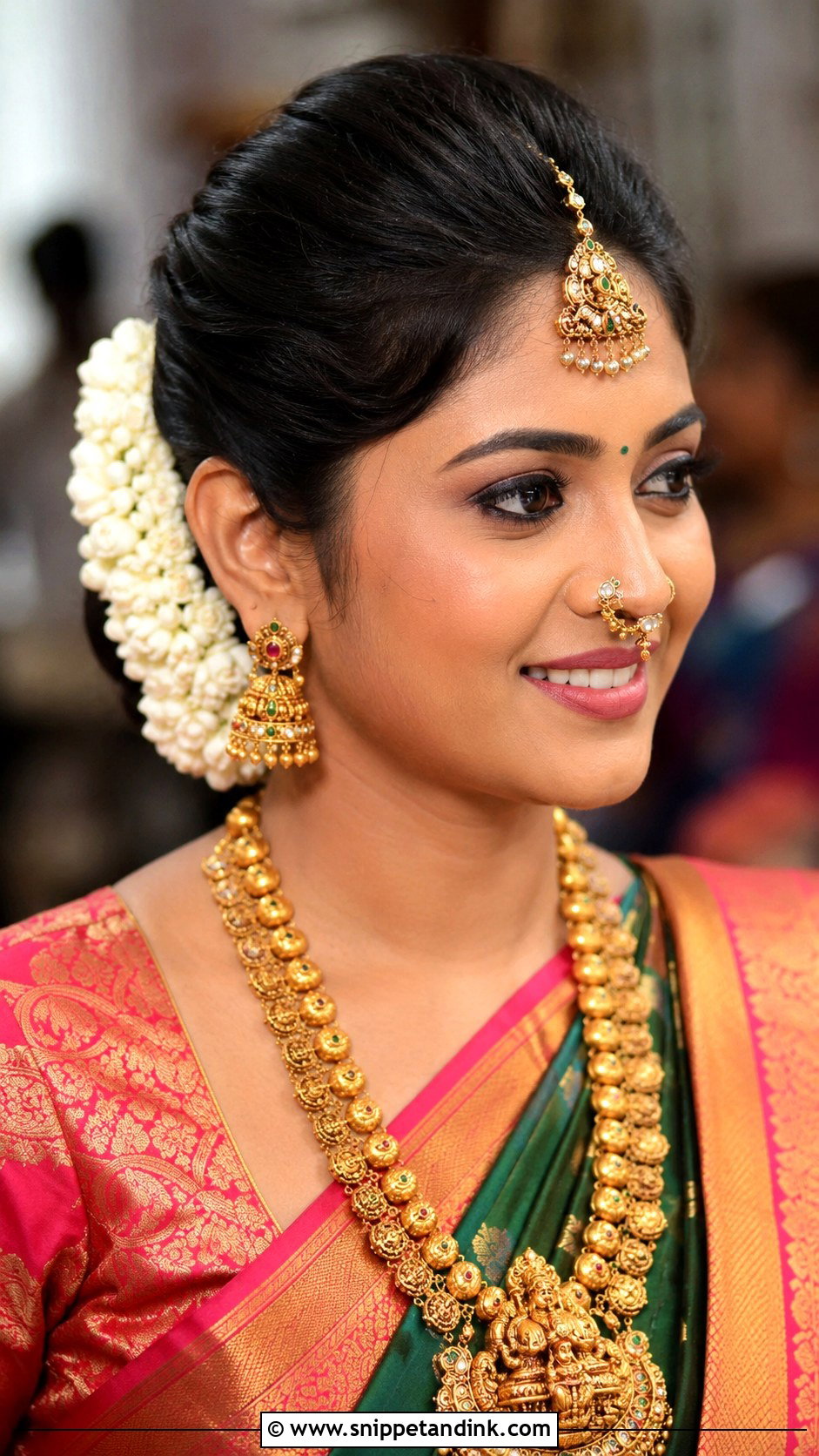
A floral bun with a maang tikka on the parting and a nath nose ring is the fully adorned traditional look. Pearls or gold pins in the bun add sparkle. The nath chain usually hooks into the hair near the ear, so I leave a small secure section there to take its weight. It pairs with heavy silk and temple jewelry.
Jasmine Buds, Heat and an Early Muhurtham
Fresh flowers are part of almost every look here, and they behave differently. Jasmine is the most delicate. I ask for tightly closed buds, strung fresh on the morning of the wedding. Buds open slowly over the day and stay white, while flowers that are already open can turn brown within hours.
- Keep jasmine wrapped in a damp cloth in a cool place until it goes into the hair. Very cold storage can brown the petals.
- Roses wilt fastest in heat. Attach them as close to the ceremony as possible.
- Marigolds and kanakambaram are sturdier and hold up well in warm halls.
- Order a little more than you think you need, for spares and touch-ups.
Switching looks for the reception
Many brides change from a heavy muhurtham braid to something lighter in the evening. Taking down a poolajada with ornaments and flowers takes time, and the hair will be creased and full of product. I plan around 45 minutes to an hour for the change, and choose a reception style that works with that texture, like a tousled bun or soft half-up, rather than sleek straight hair.
Your Jewelry and Flowers Set the Hairstyle
South Indian bridal hair comes down to two things: what you’re putting into it and how long it has to last. A jasmine poolajada, a gold-heavy kondai and a light reception bun each need a different base, different pins and different timing. Choose a style that suits your face shape, saree and comfort level, and bring your actual jewelry to the trial. Order your flowers early, and plan time to switch looks between the muhurtham and the reception.
You'll Like These Ideas:




Leave a Reply