
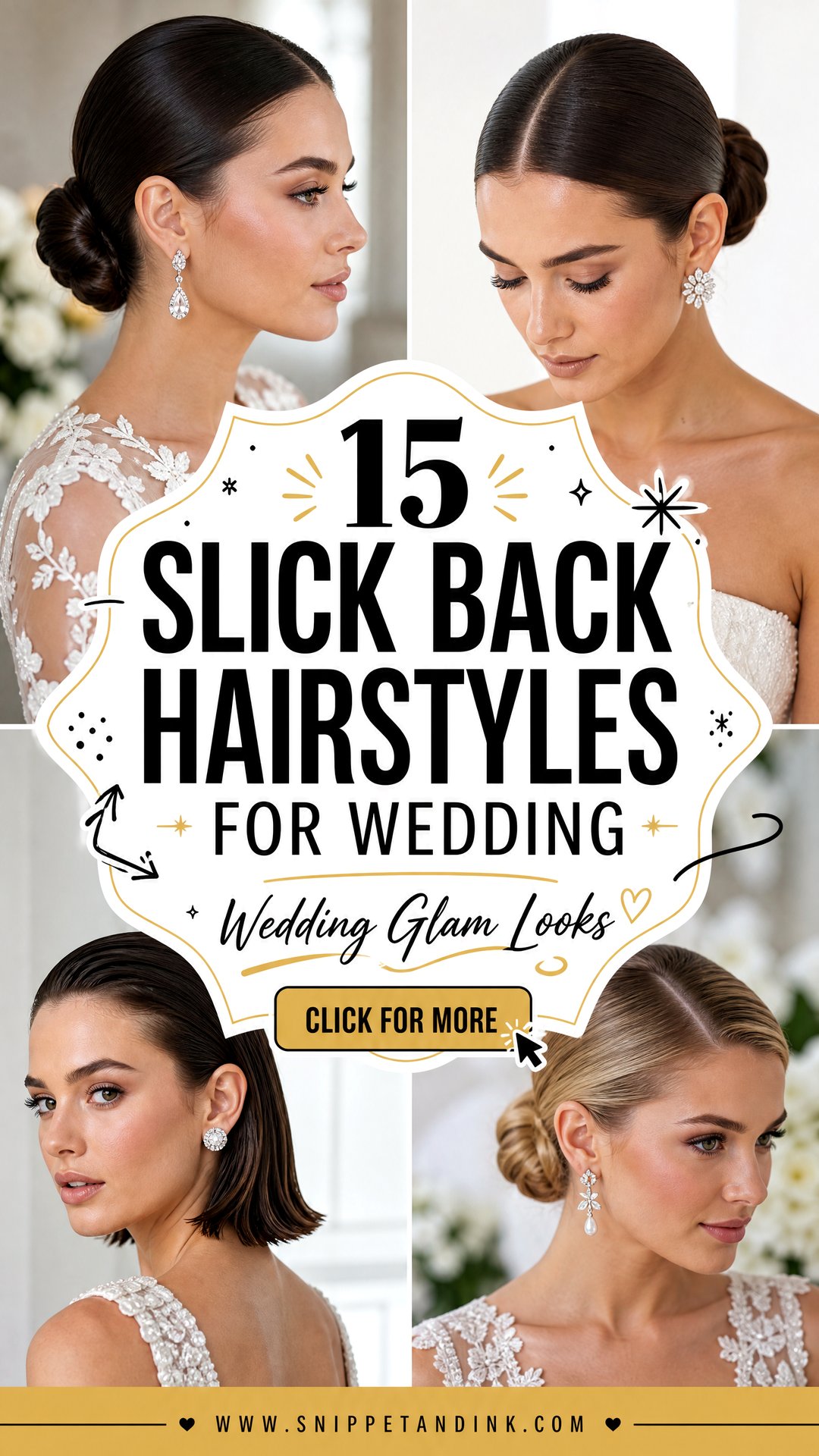
Slicked-back hair is the closest a bridal style gets to sculpture. Everything is pushed off the face, so your bone structure, earrings and neckline carry the look, and the hair itself becomes a clean outline. It also happens to be one of the most secure ways to wear your hair through hugs, wind and a crowded dance floor. What changes from one version to the next is where the length ends up and how much shine you put on the surface. Below are fifteen ways I’d build it, from buns and ponytails to short crops, with notes on what each one asks of your hair.
Gloss or Wet Shine Depends on Your Hair and the Camera
The product decides whether slicked hair looks glassy or greasy. Brides rarely ask about it, but it’s the first thing I settle at a trial.
- Gel gives the firmest hold and the flattest hairline. It can flake or turn white as it dries if you over-brush, so I use it only along the front edges.
- Cream or balm gives softer hold and a natural sheen. It suits fine hair and anyone who wants the slicked shape without a wet look.
- Pomade adds the most shine. On coarse or coily hair it smooths beautifully; on fine hair it can separate the strands and show scalp.
- Shine serum goes on last, a drop at a time, over the surface only.
Then think about where you’ll be photographed. Flash and strong sun both bounce off very glossy hair and can create white streaks across the crown in pictures. For an outdoor daytime wedding I aim for a satin finish; for an evening ceremony with moody lighting, more shine reads well. Ask your photographer whether they shoot with flash at the reception, and plan your shine level around the answer.
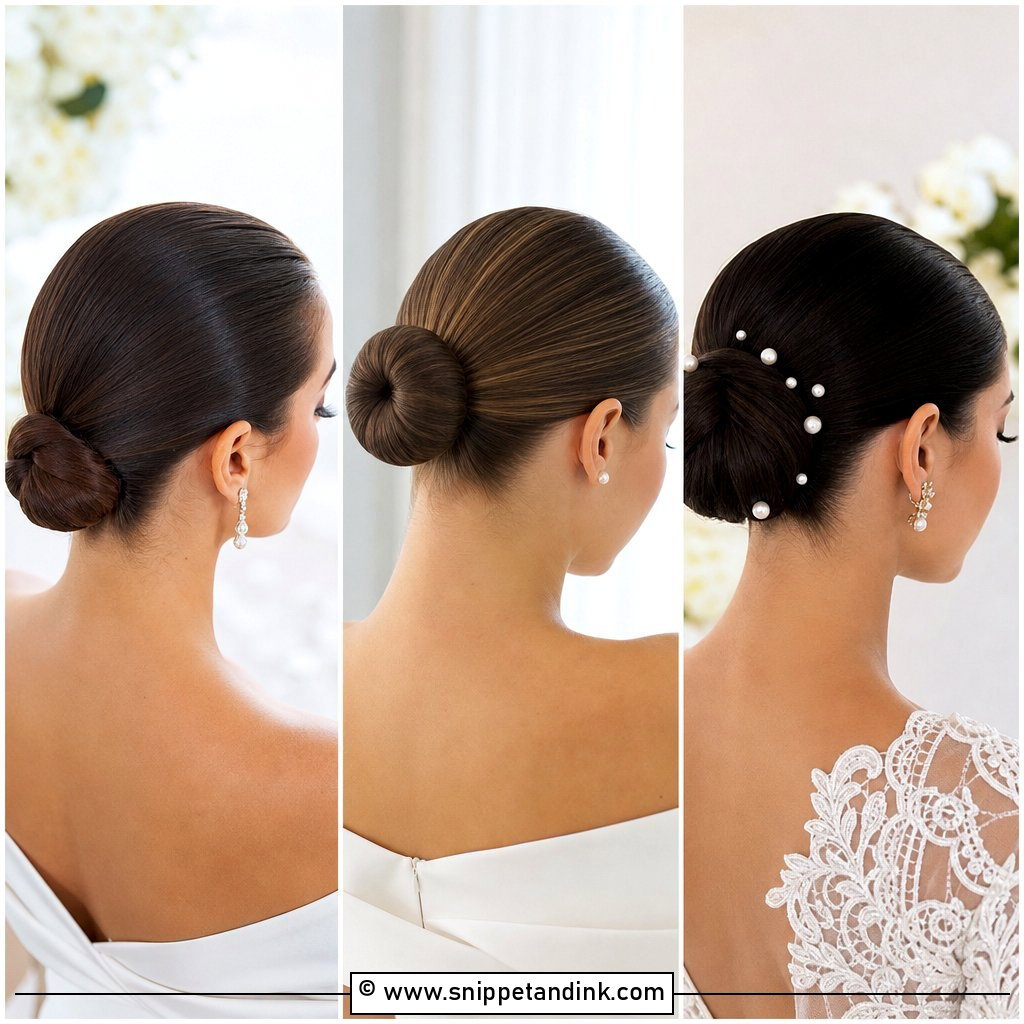
1. Slick Back Low Bun For Wedding
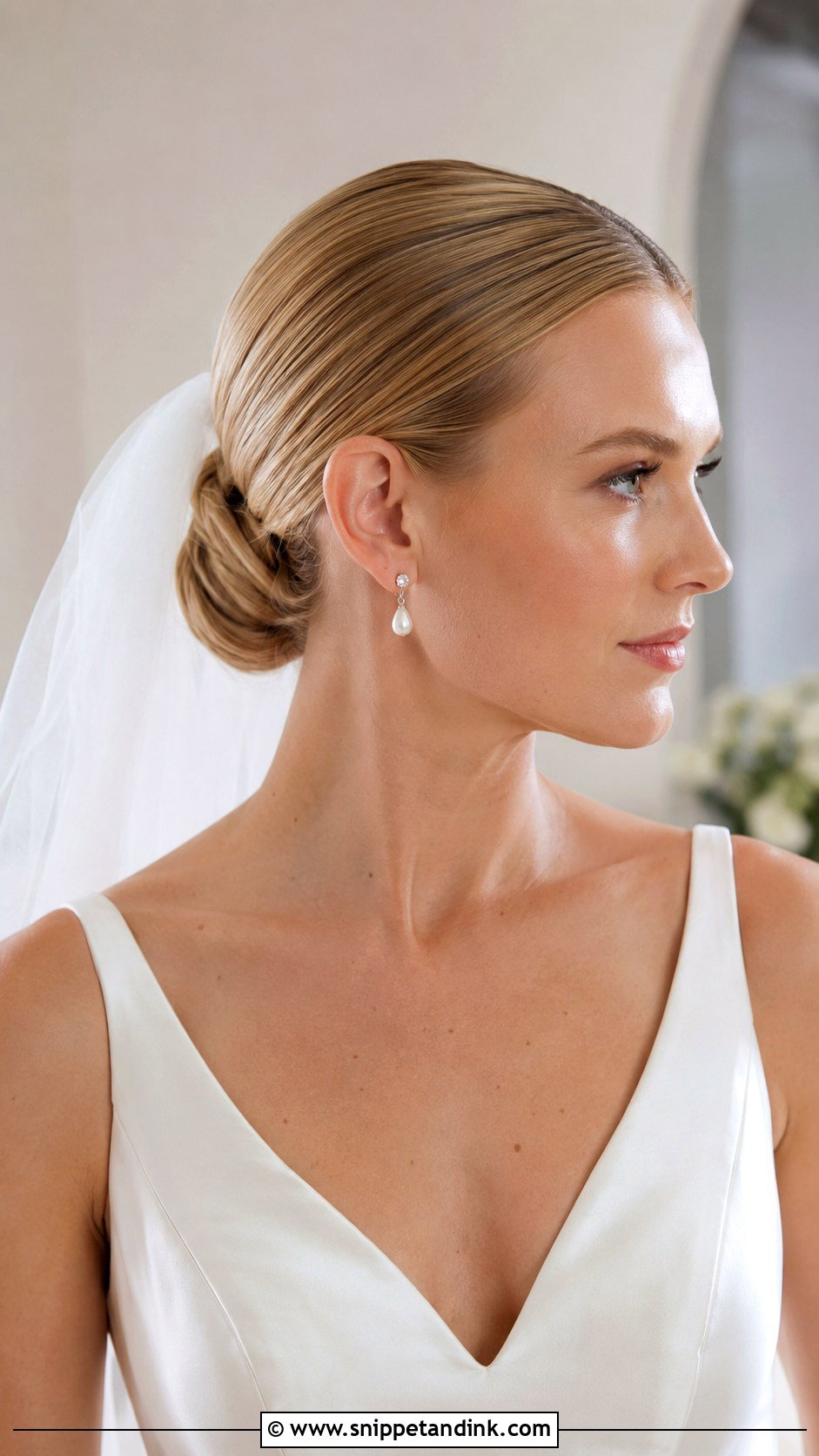
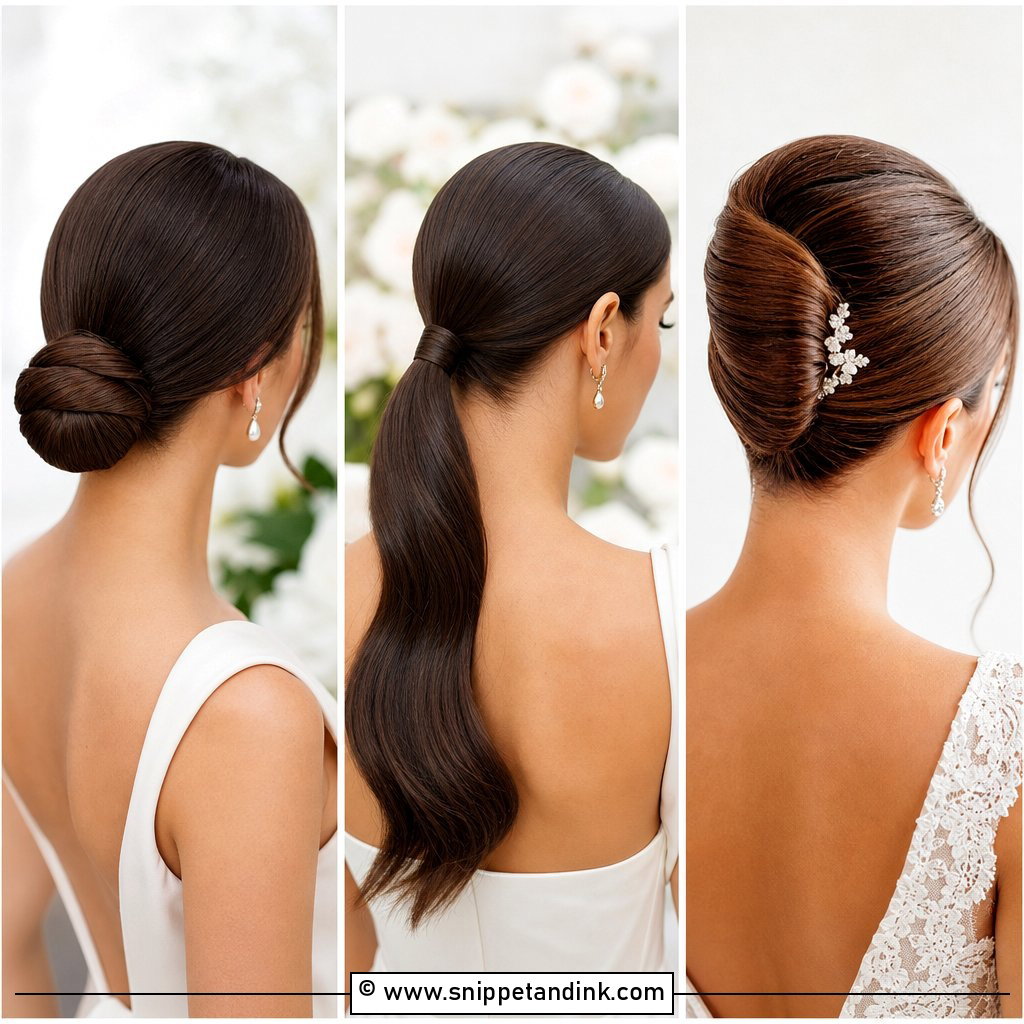
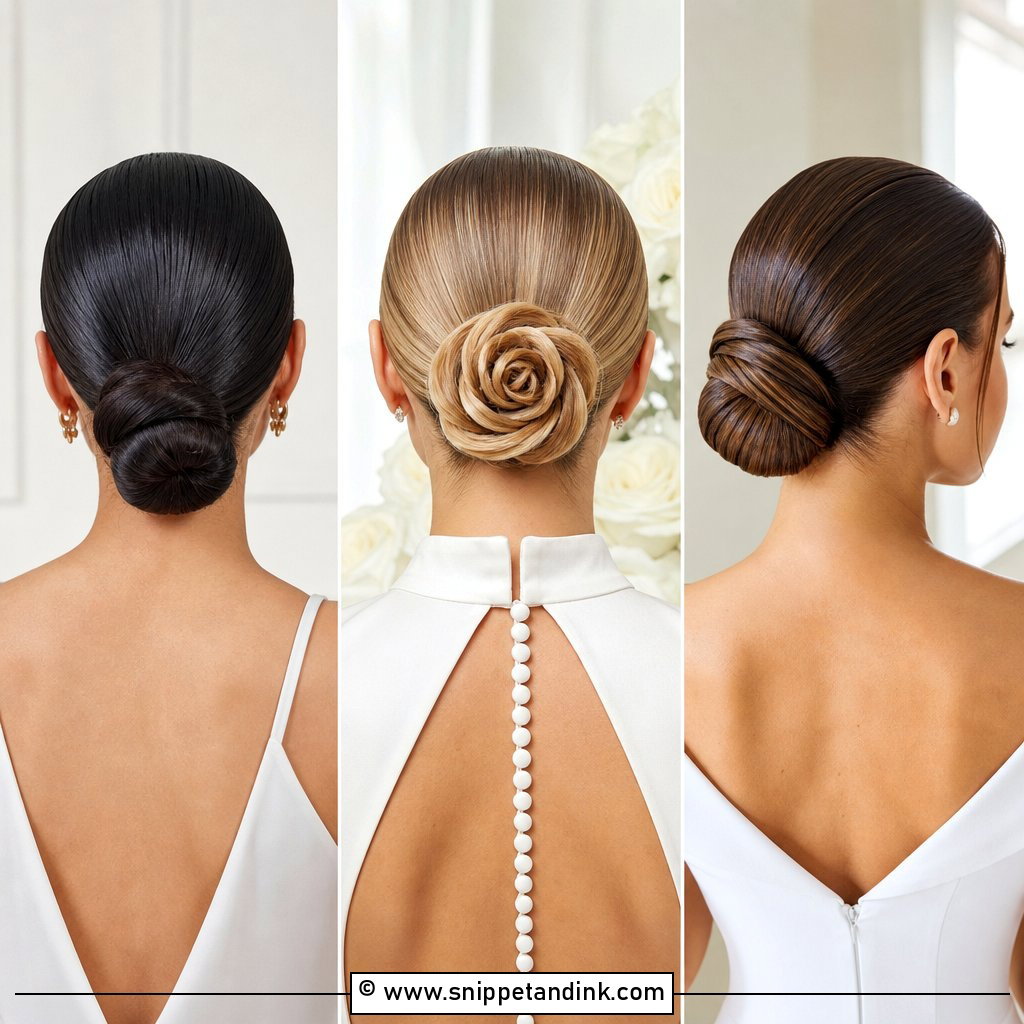
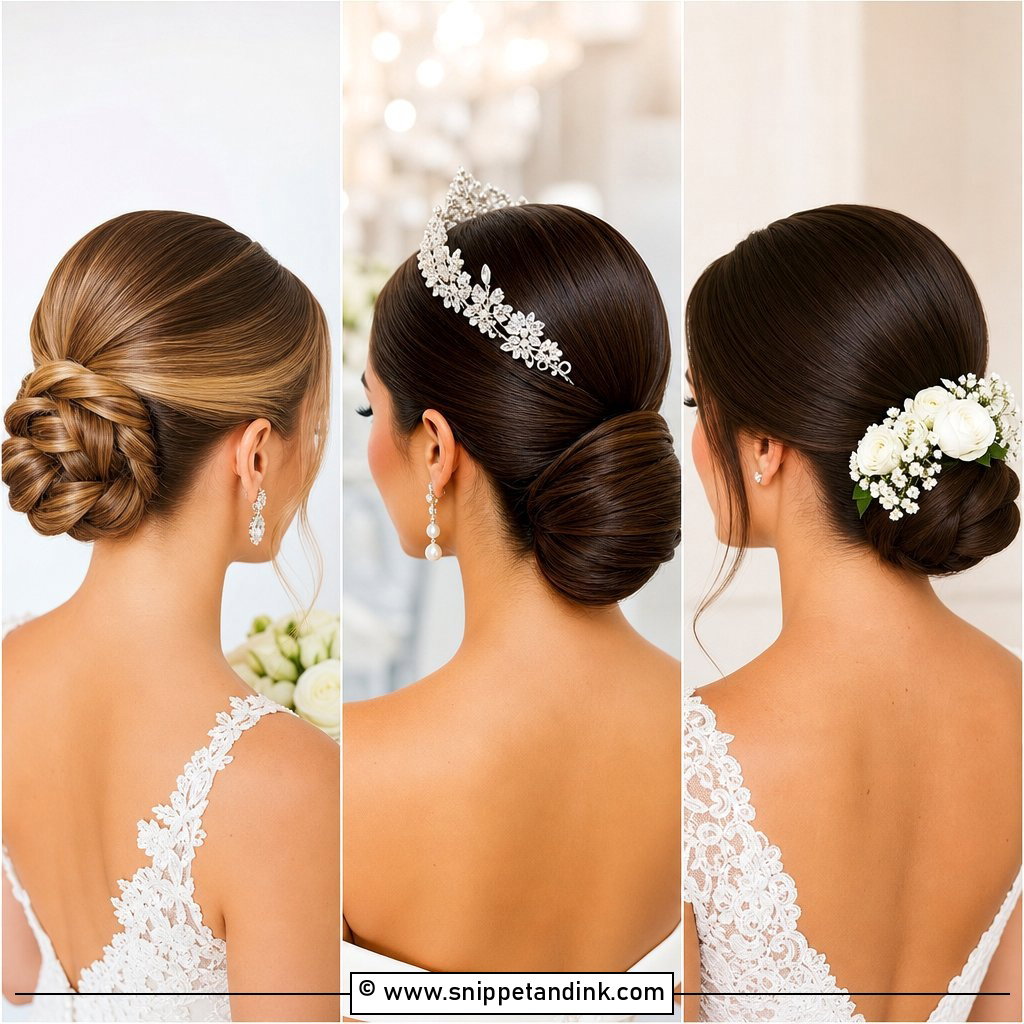
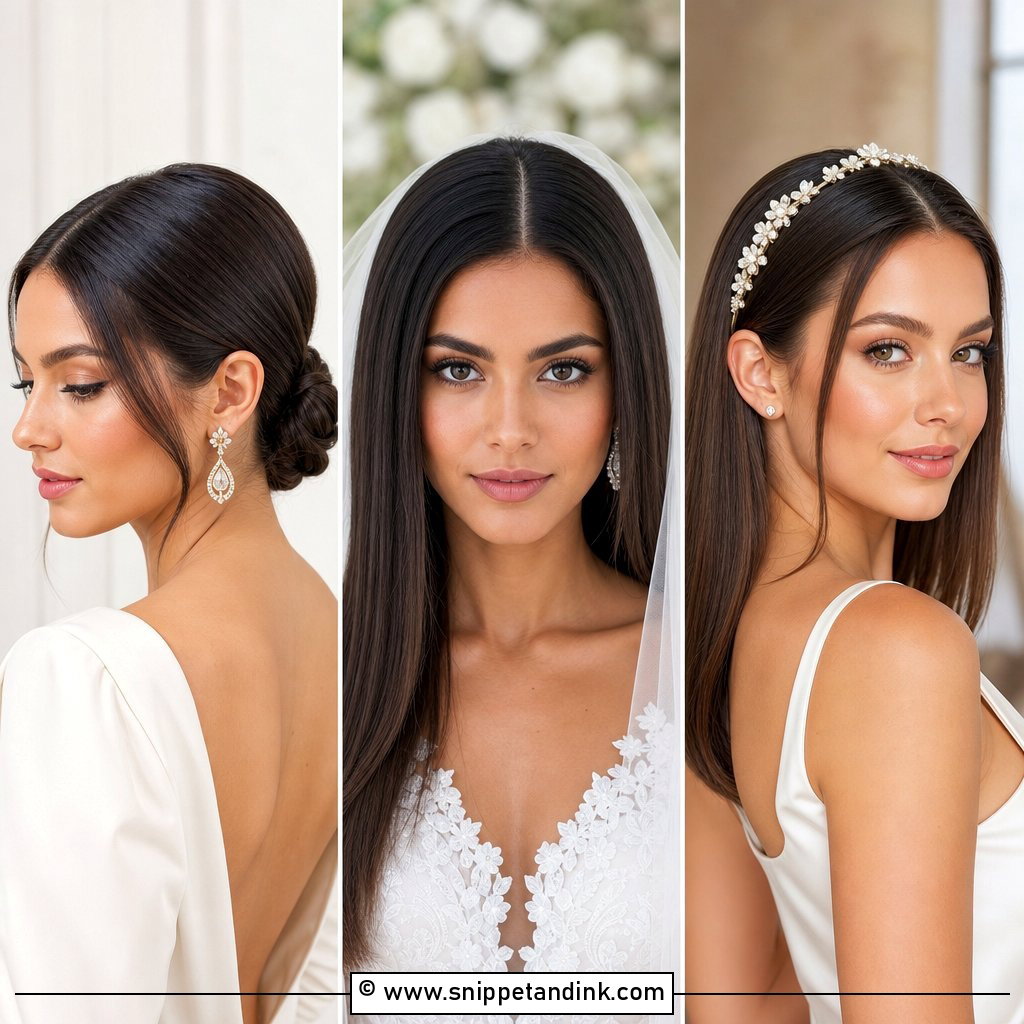
Start with the slick back low bun, because almost every other style here is a variation on it. The hair is smoothed from the hairline and gathered at the nape, then wound into a round, twisted or tucked bun. I use a strong gel only along the first inch of the hairline and a flexible cream through the rest; gel all over makes the bun crack and flake as it dries. Ask for the bun slightly full rather than flat, especially under a veil, so the comb has something to grip.
2. Slick Back Middle Part Bun For Wedding
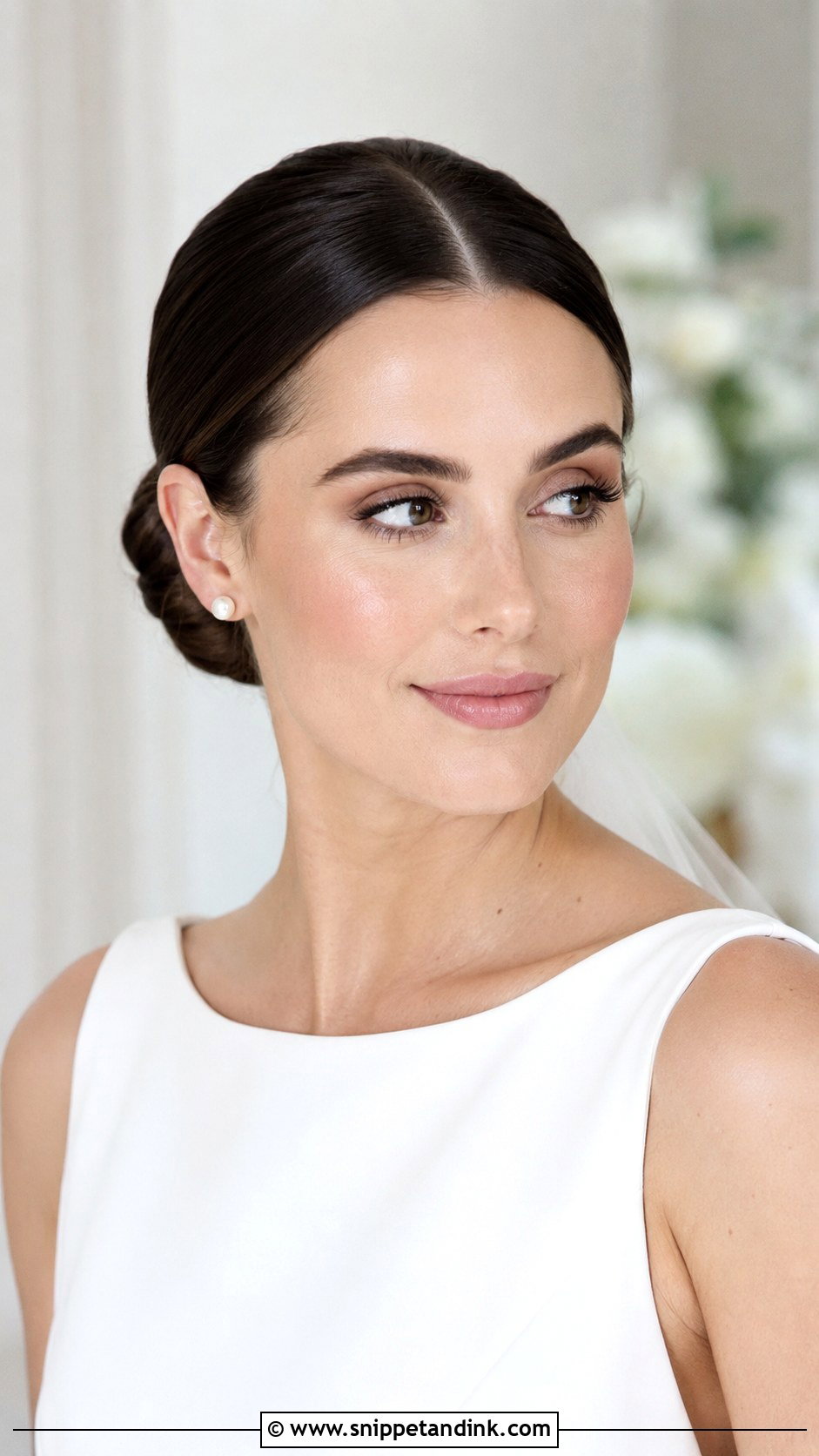
Center parts are unforgiving in a slicked style. Any wobble in the line shows, and so does a scalp that’s pink from brushing. I draw the part with the tail of a comb on damp product, then press it flat with my palm instead of brushing over it again. Finish glossy rather than wet if your dress is minimal, since a wet sheen next to plain satin can look unfinished in daylight. A drop of shine serum on the fingertips, run lightly along each side of the part, sharpens it.
3. Slick Back High Bun For Wedding
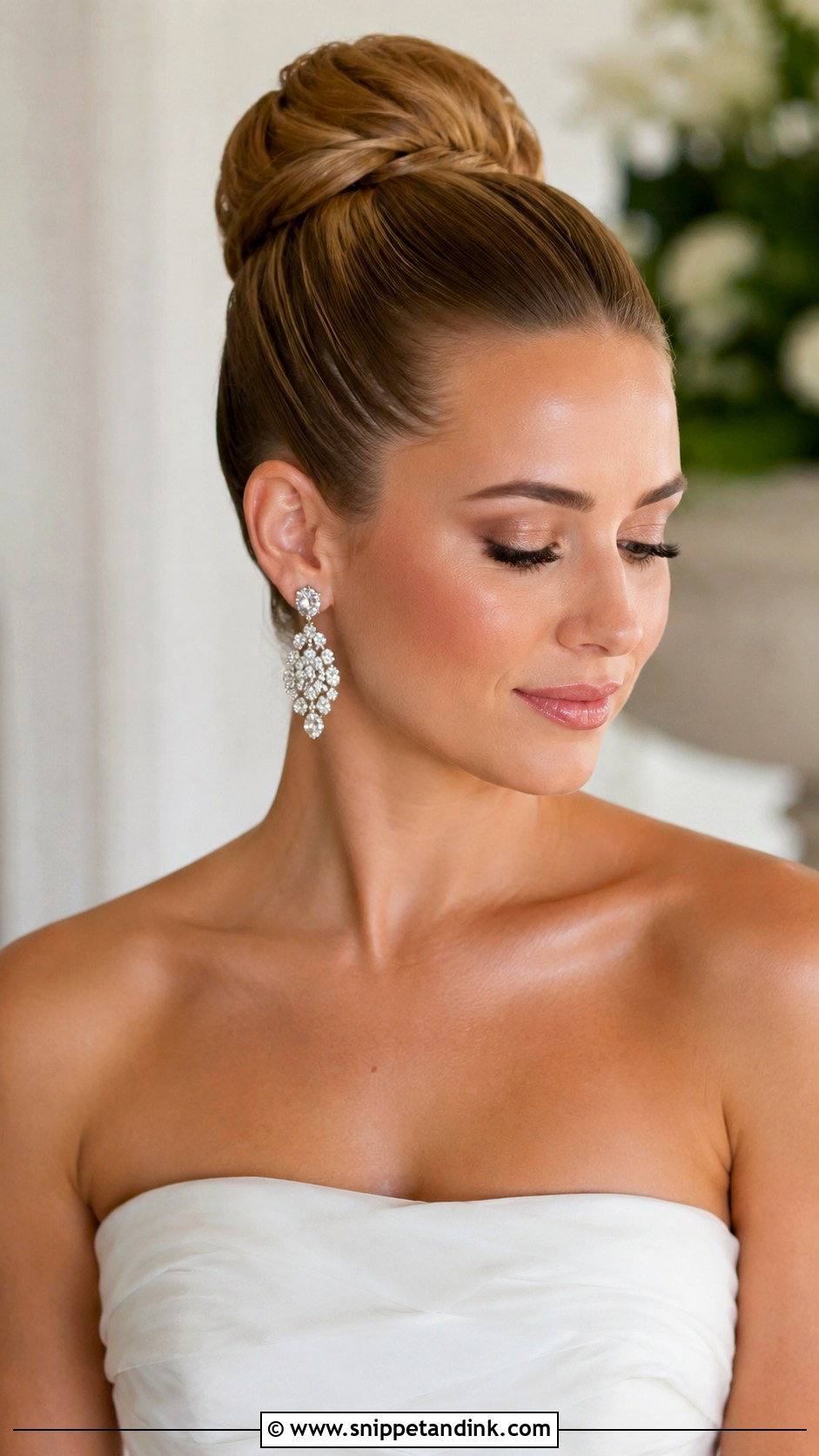
A high bun gives the most lift and the clearest neckline, which is why it suits strapless and halter gowns and big earrings. It also suits heat, since nothing touches your neck. The difficulty is bumps: brushing hair upward against gravity creates ridges above the ears. I work in small sections with a boar-bristle brush and firm cream, securing each one before moving on. If you get headaches from tight styles, this is the one to wear for a full afternoon before agreeing to it.
4. Slick Back Chignon For Wedding
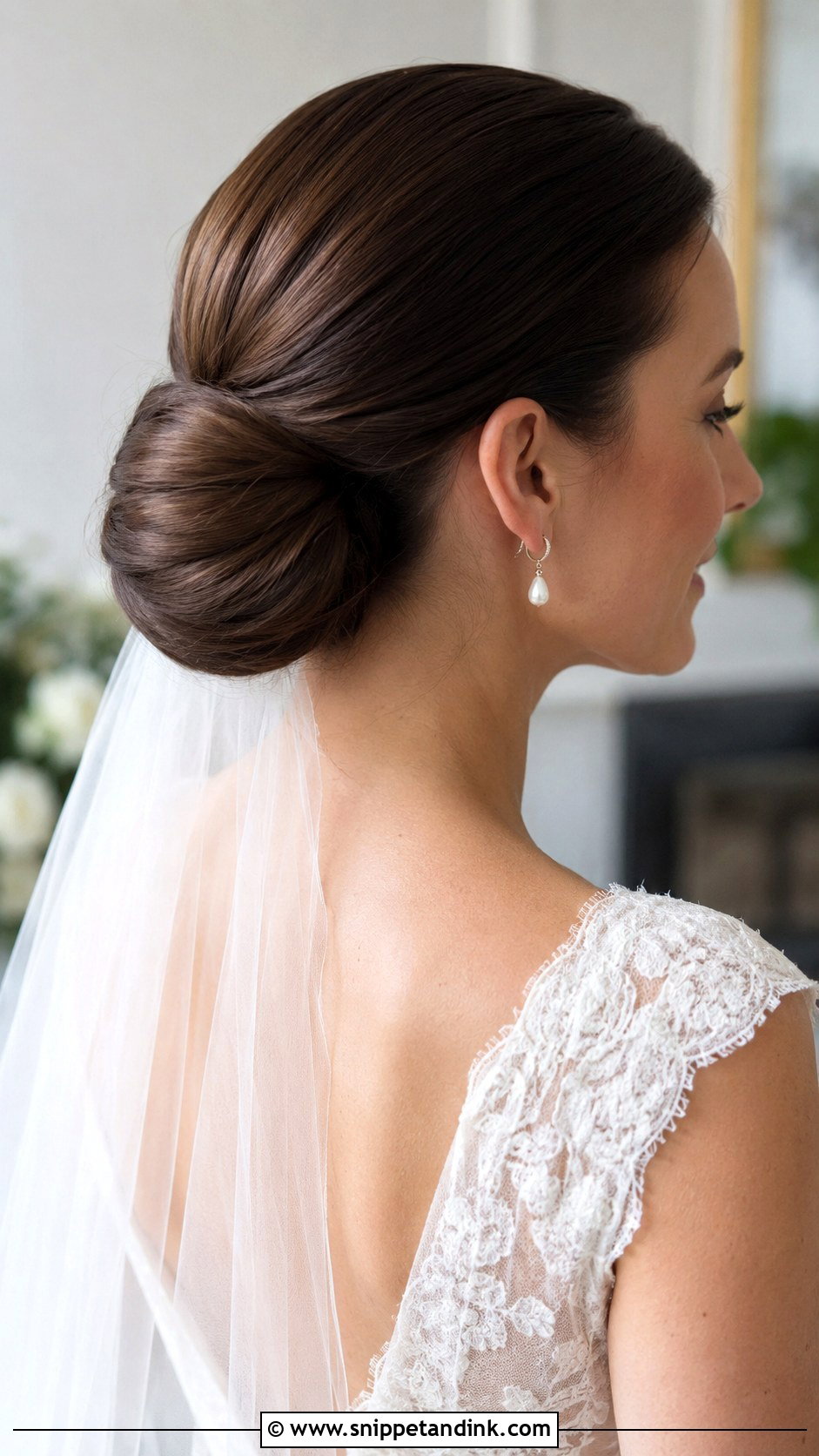
The slick back chignon is the formal choice, folded or tucked at the nape rather than wound into a coil. That folded shape sits flatter and longer, which suits fitted lace gowns and cathedral veils that need a firm base. Medium to long hair can do this without help; shorter lengths need a small padding roll or extensions underneath. I pin each fold through to an elastic base so nothing relies on hair holding hair.
5. Slick Back Ponytail For Wedding
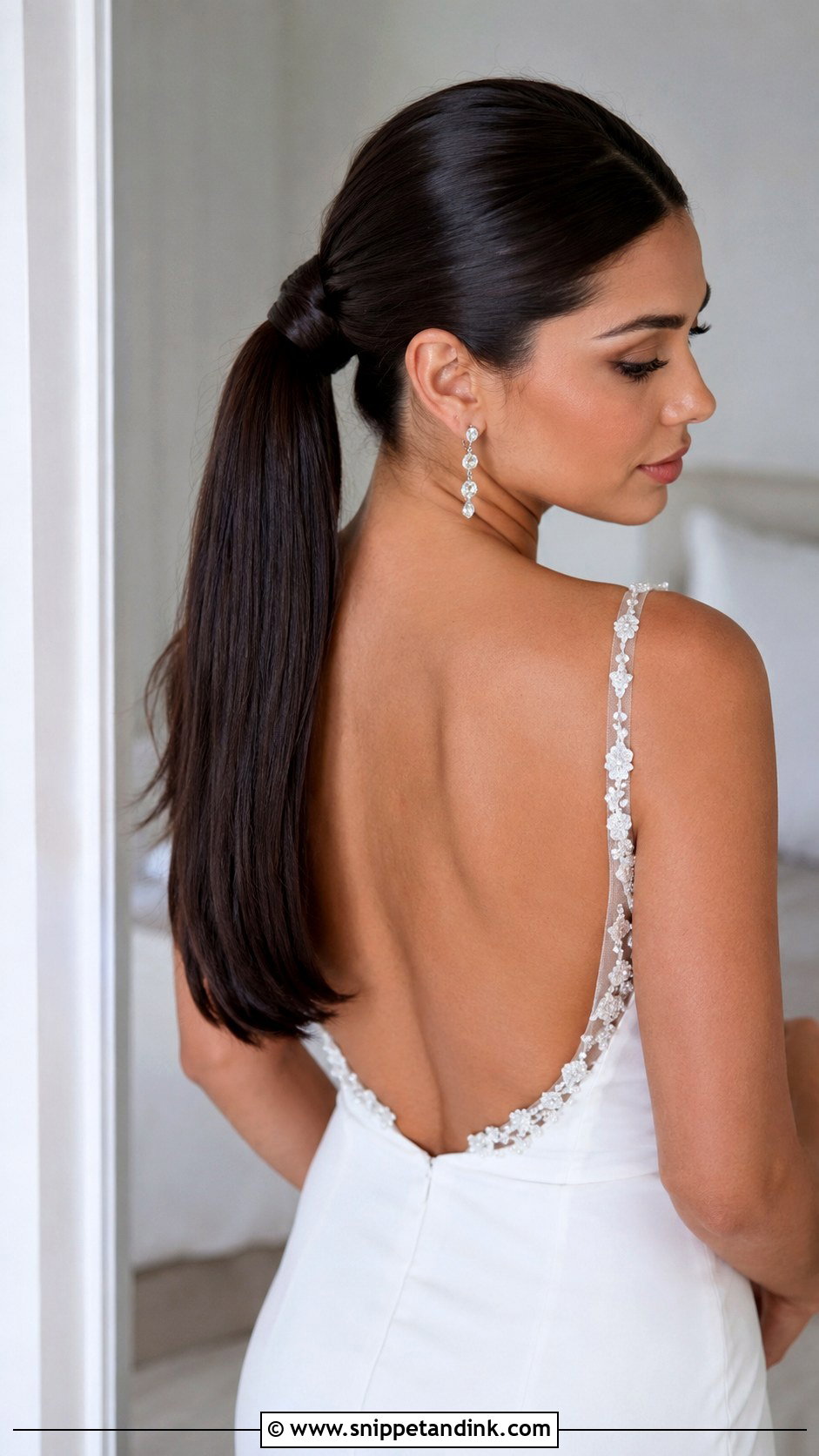
A slick back ponytail keeps the clean front of a bun but gives you movement behind. The tail can be straight, waved or curled, and a section of hair wrapped around the elastic hides it. Low reads calm, high reads fashion. It needs real length to look finished, so many brides add a clip-in piece. One thing I always check: a ponytail drags the slicked front backward as it gets heavier, so I anchor the base with crossed pins as well as the elastic.
6. Slick Back Low Ponytail For Wedding
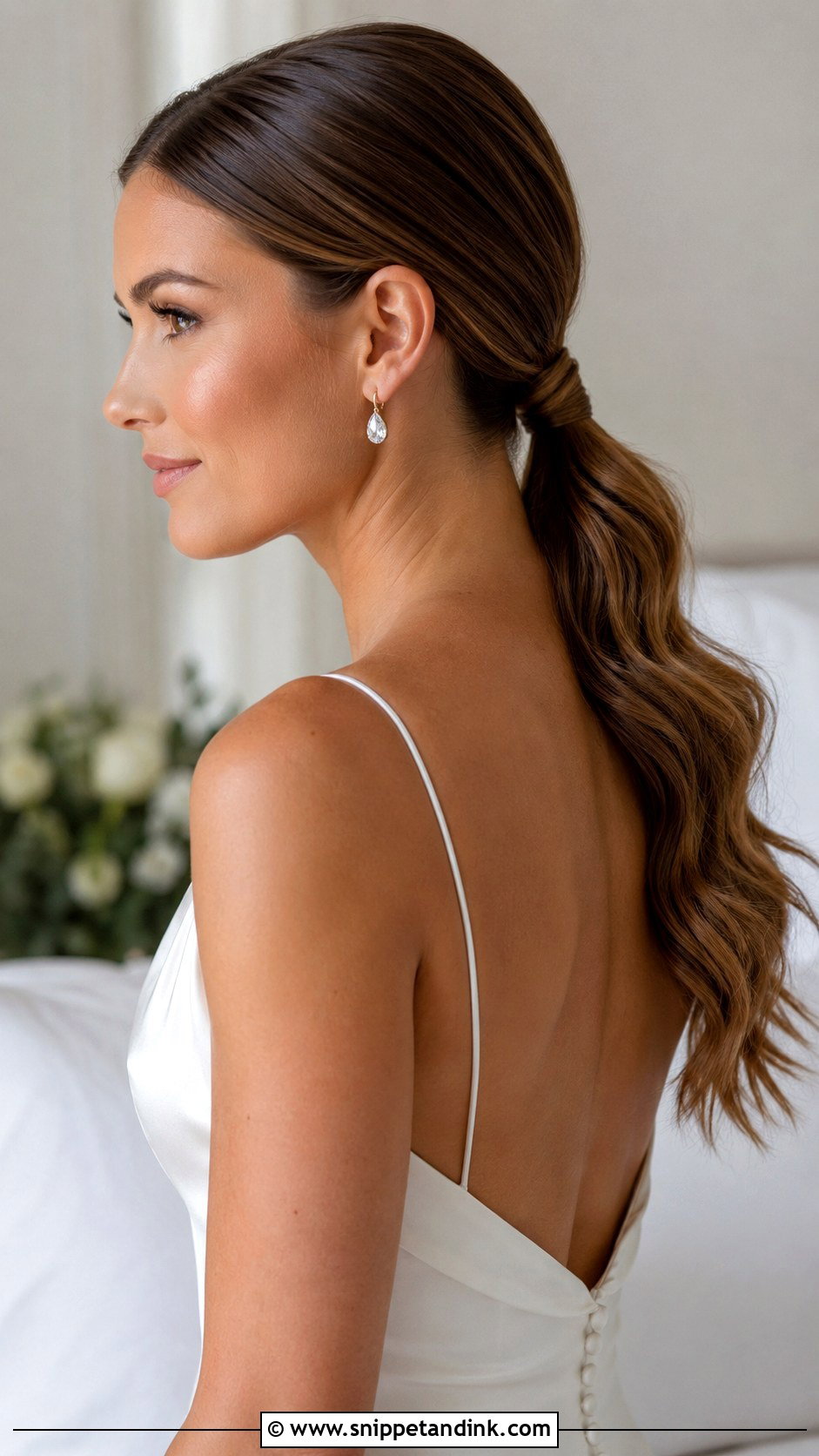
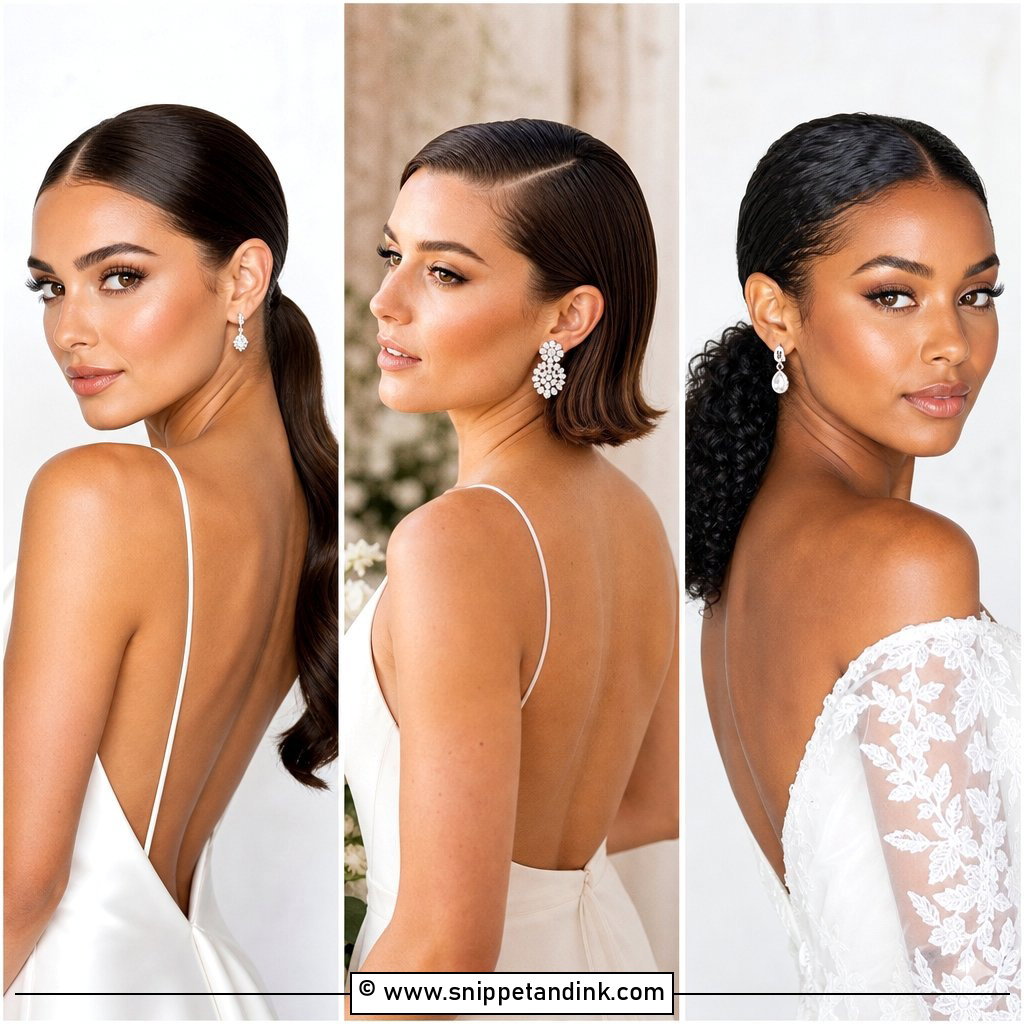
This is the quietest version. The hair is brushed back from the hairline and gathered at the nape, and the tail falls straight down the back. It works with silk gowns and soft makeup, and a ribbon or small cuff at the base adds just enough detail. Thick hair can make a low pony feel heavy and wide; I thin the tail slightly with a few long layers at the trial stage rather than on the day.
7. Slick Back Wavy Ponytail For Wedding
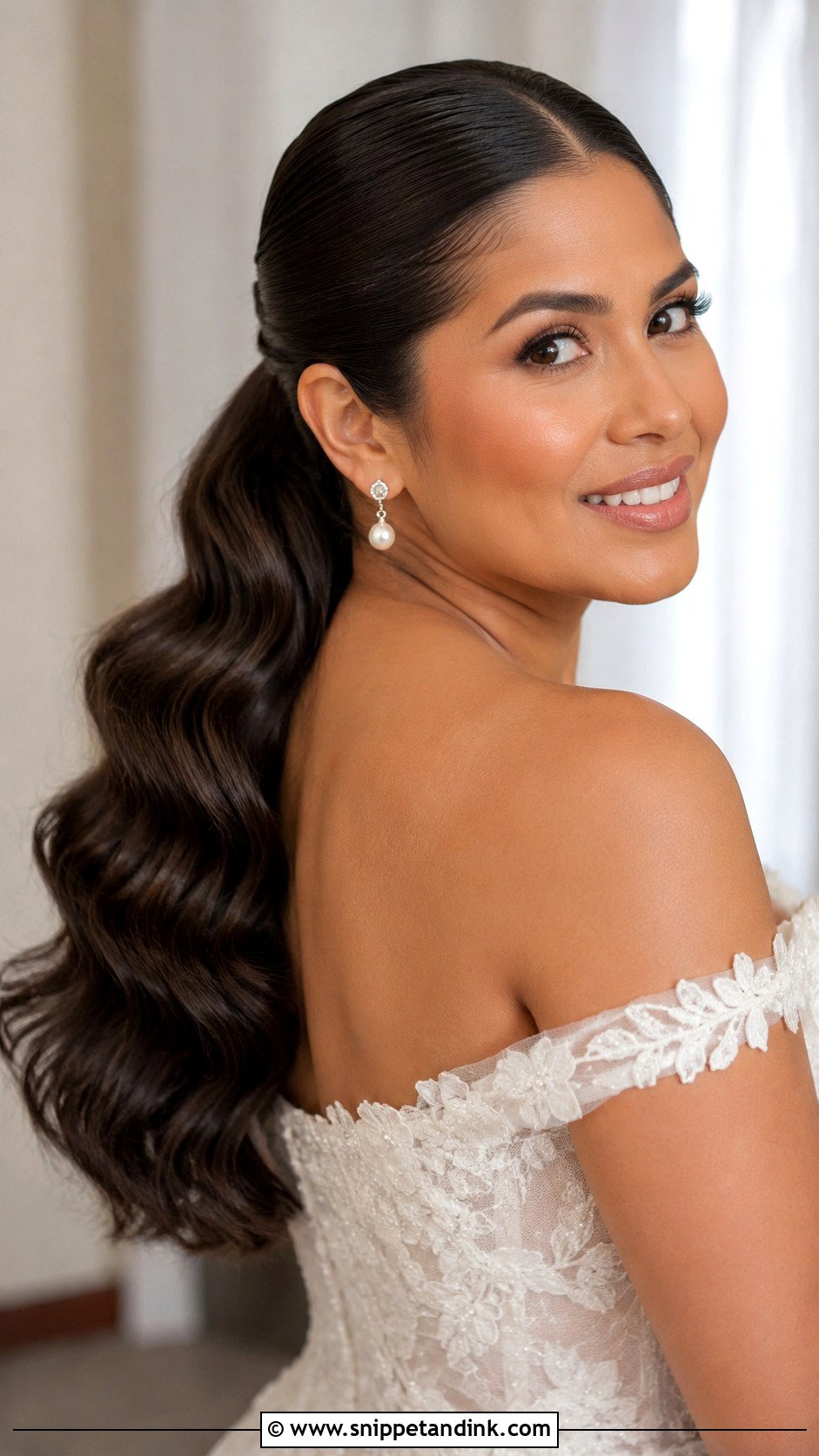
Combining a slicked crown with a soft, waved tail gives contrast, which is what makes it look bridal rather than gym-ready. I curl the tail in larger sections and brush the curls out once they’ve cooled, so they merge into bends instead of springy ringlets. It’s adaptable across settings, from beach to ballroom. Use a light texture spray on the waves only; spraying the crown with texture spray dulls the shine you’ve worked for.
8. Slick Back Braided Ponytail For Wedding
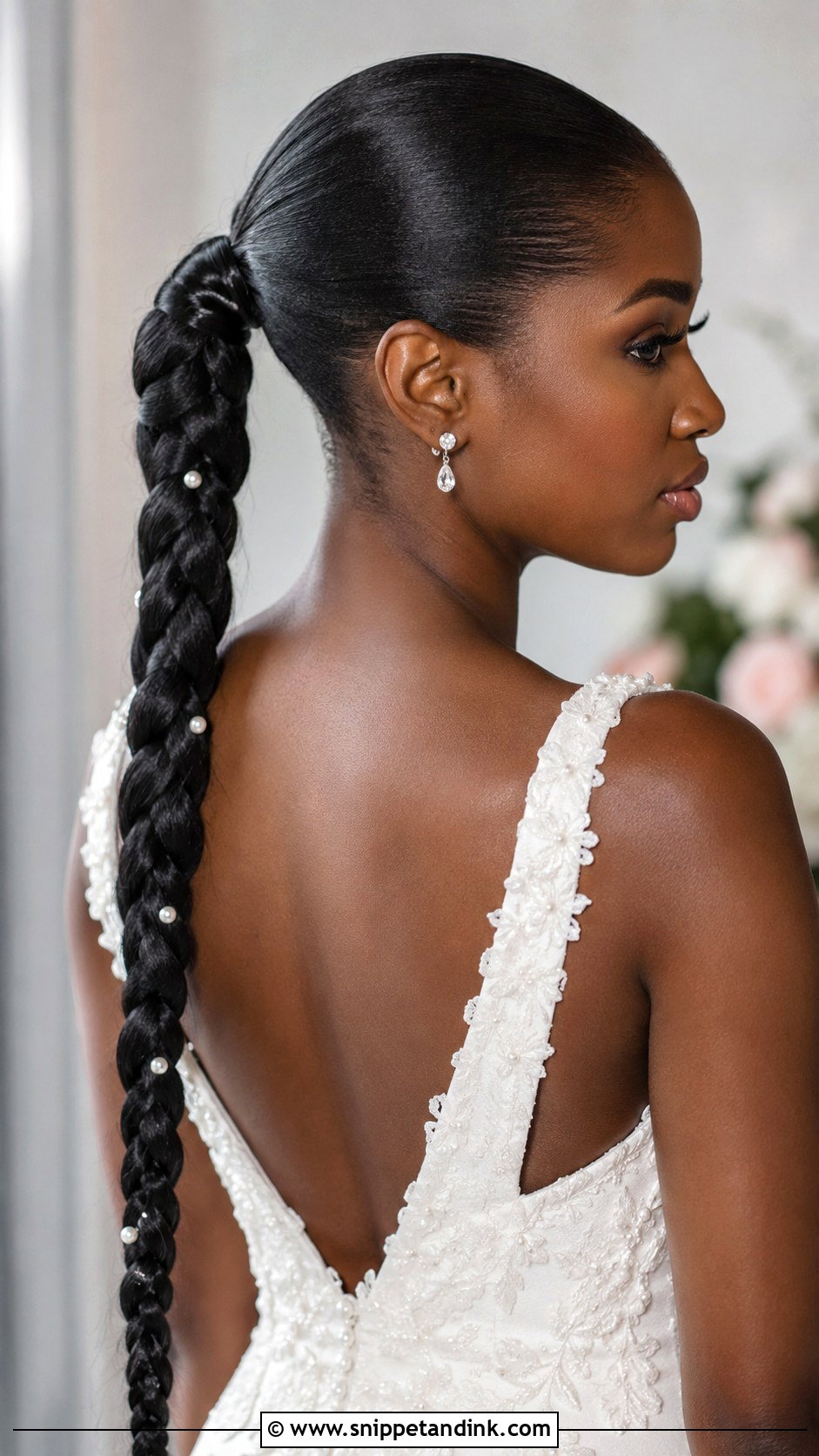
Braiding the tail turns the ponytail into the most weatherproof option here. Once the length is plaited, wind and humidity have very little to grab. The braid can be tight and glossy, widened for fullness, or dotted with tiny pearls. It suits long hair, textured hair and brides using extensions, where a braid also hides the joins between your hair and the wefts. Keep the roots smooth so the contrast between flat crown and dimensional braid stays sharp.
9. Slick Back Half Up Hair For Wedding
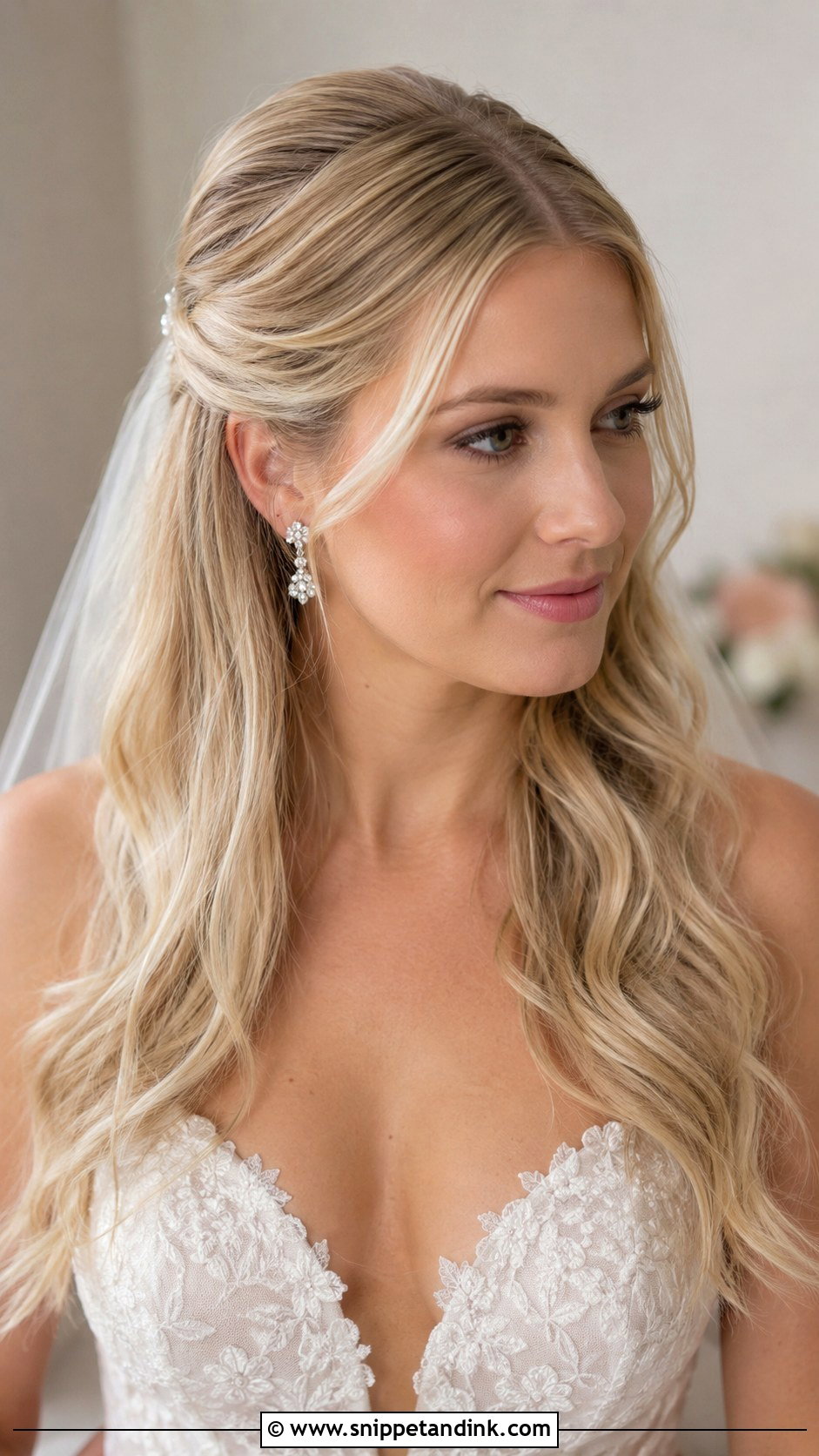
Half-up is the compromise for brides who can’t imagine their length hidden. The top and sides are smoothed back and secured at the crown, and the rest falls as waves, curls or a blowout. The slicked top section holds up better than a fully loose style, since it keeps hair off your face during the vows. I tell brides one honest thing: the loose half will drop faster than the secured half, especially in humidity, so curl it a bit tighter than you think you need. A pearl barrette or a veil comb sits right at the join.
10. Slick Back Wet Look Hair For Wedding
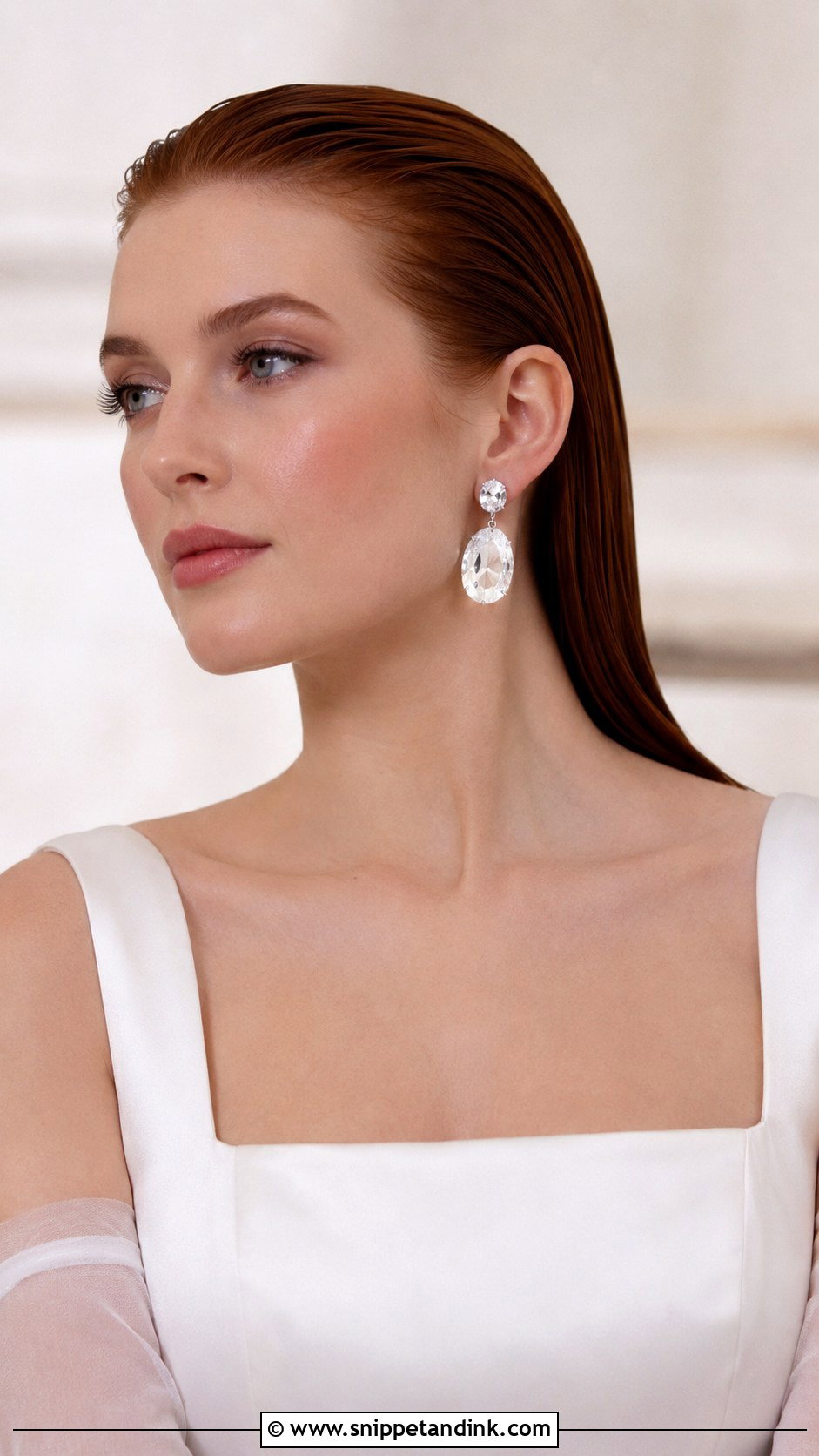
The slick back wet look hairstyle is the boldest choice, and it divides people. Hair is combed straight back with a mix of gel and shine cream so it looks glossy and sculpted, then it’s left down, tucked behind the ears or gathered low. The risk is that it reads greasy instead of glassy, particularly under flash, so I use less product than you’d expect and build shine with serum at the end. It suits evening ceremonies and very simple gowns; with a lace dress and a long veil, it tends to clash.
11. Slick Back Short Hair For Wedding
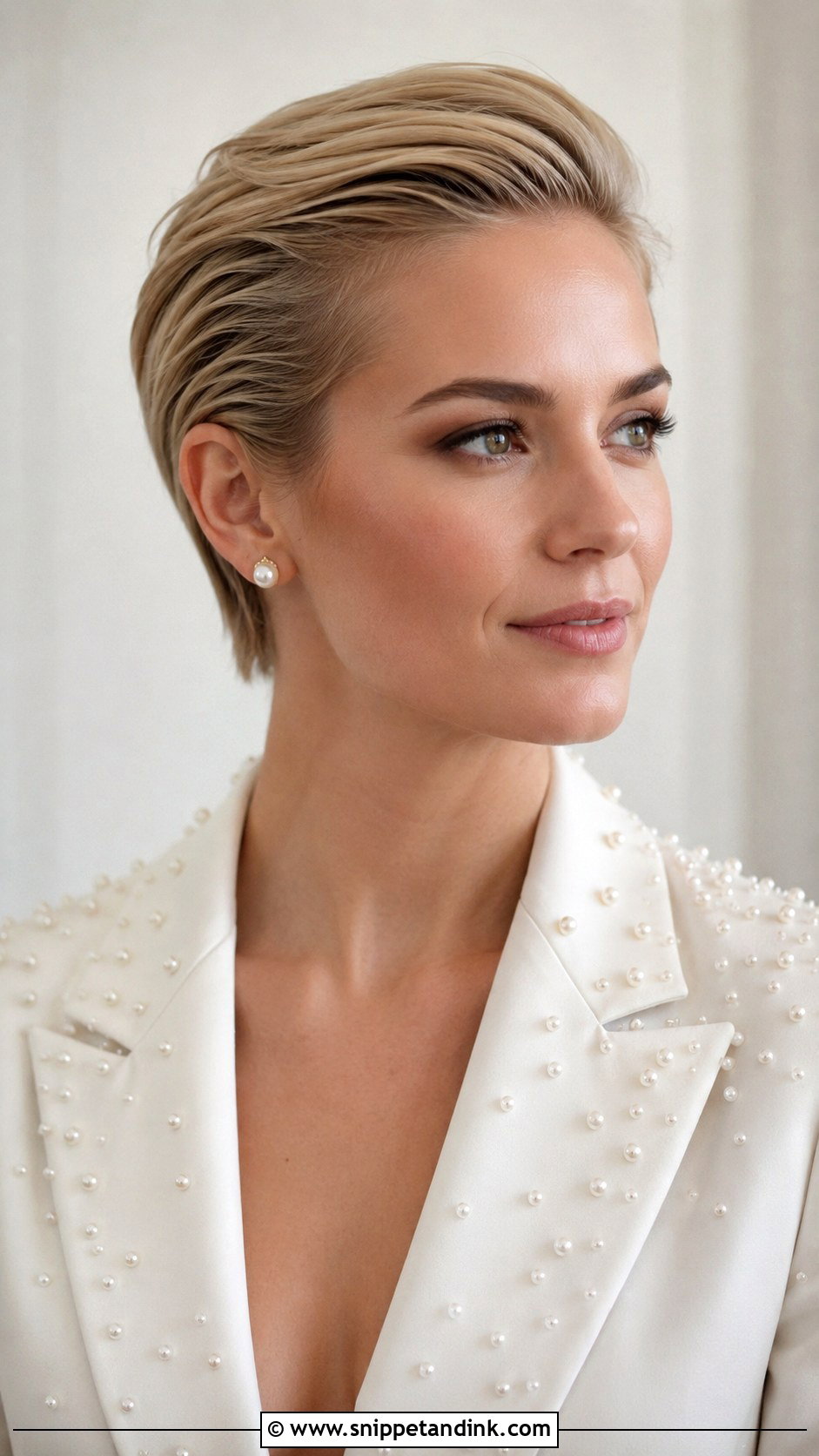
Short hair is where slicking back makes the most sense. A pixie or cropped cut brushed away from the face shows off cheekbones and earrings, and there’s no length to fall apart. A side part softens it; a full brush-back feels more dramatic. Use lightweight products: pomade made for long hair weighs short hair flat and makes it look darker at the roots. A slim headband or a short veil pinned behind the crown adds the bridal note.
12. Slick Back Bob For Wedding
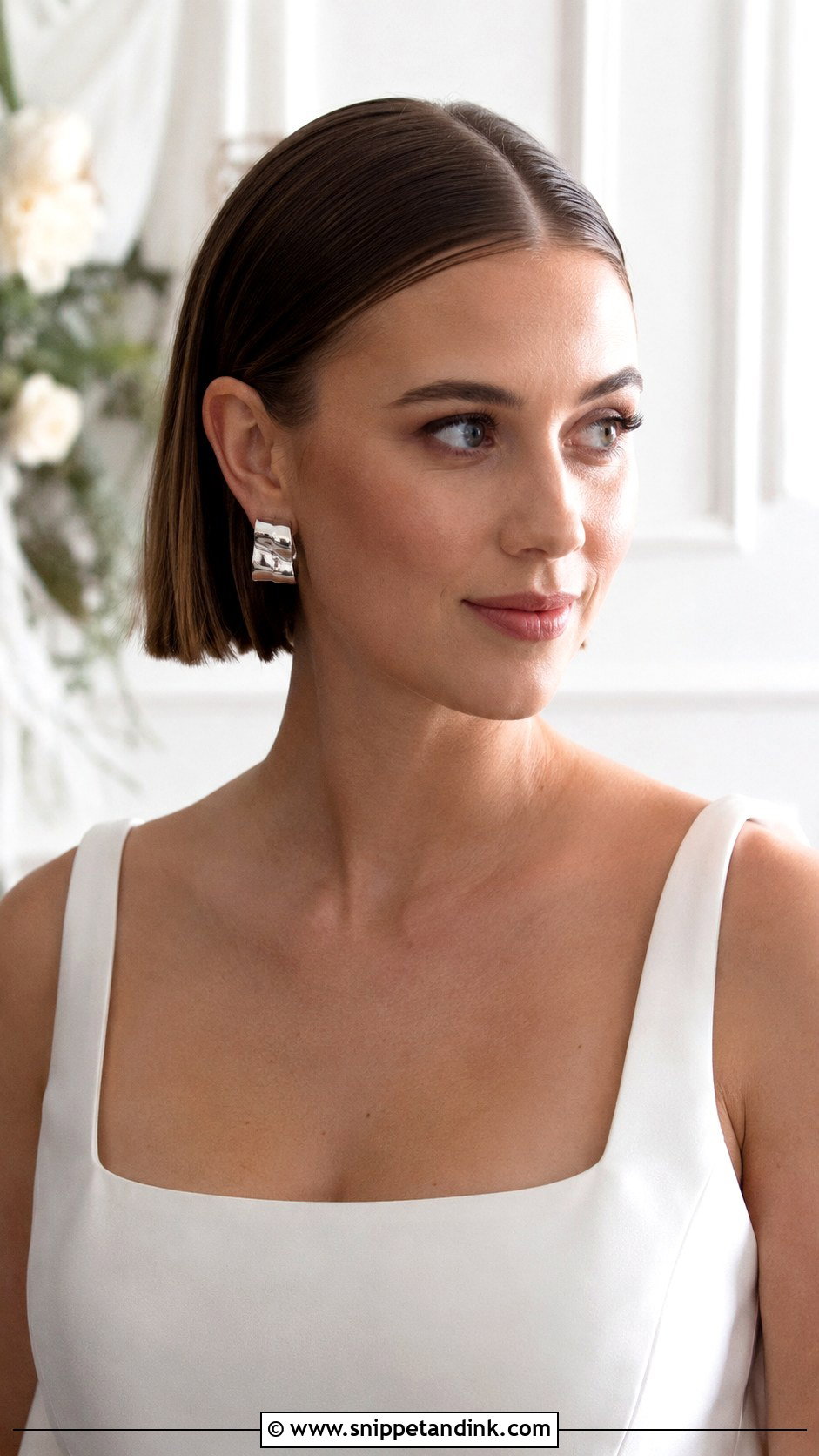
A slick back bob works best on a blunt cut, because a blunt line holds its shape when brushed back. Heavily layered bobs tend to flick out at the ends behind the ears. Tuck it behind the ears, part it in the center or go for a deep side part. I smooth the ends with a flat iron and a balm, then mist light hairspray so the bob stays in place but still moves when you turn your head. Get your trim two weeks before the wedding so the line has softened slightly.
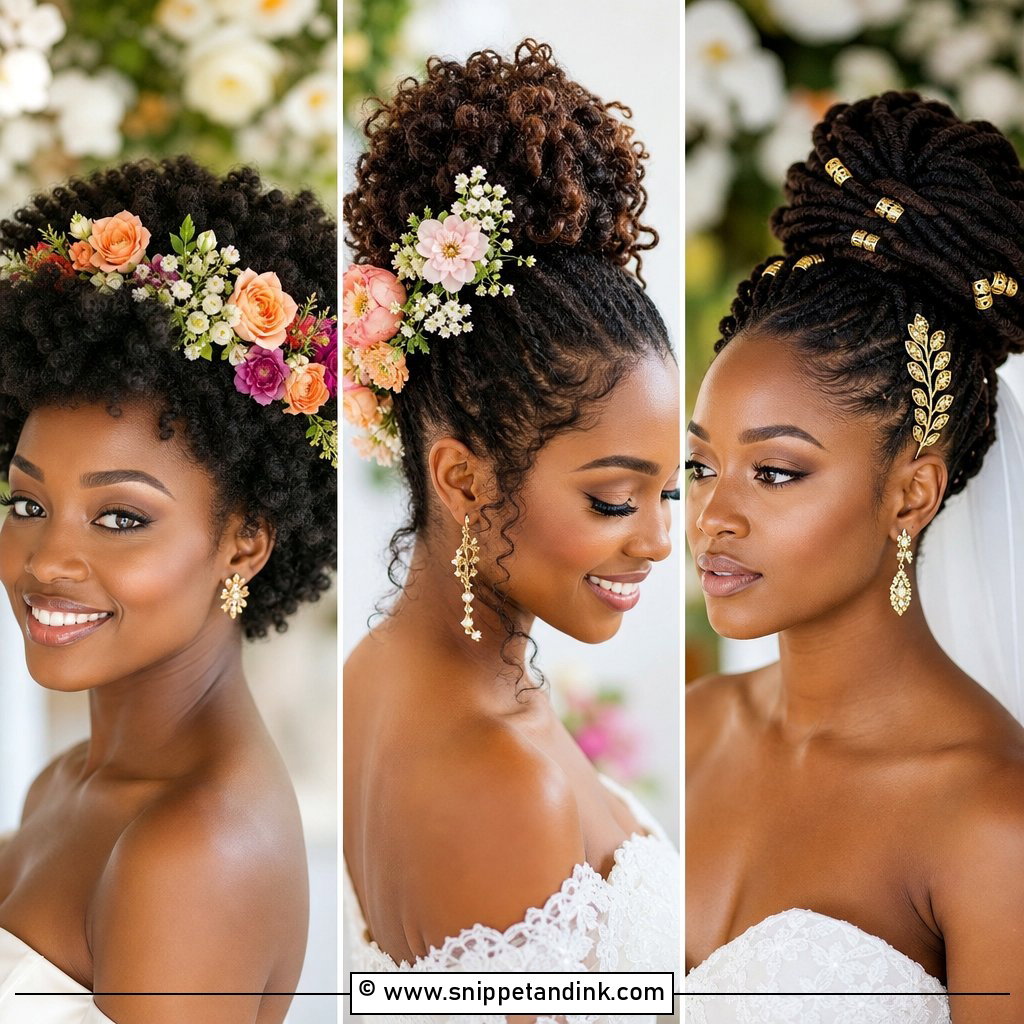
13. Slick Back Curly Bun For Wedding
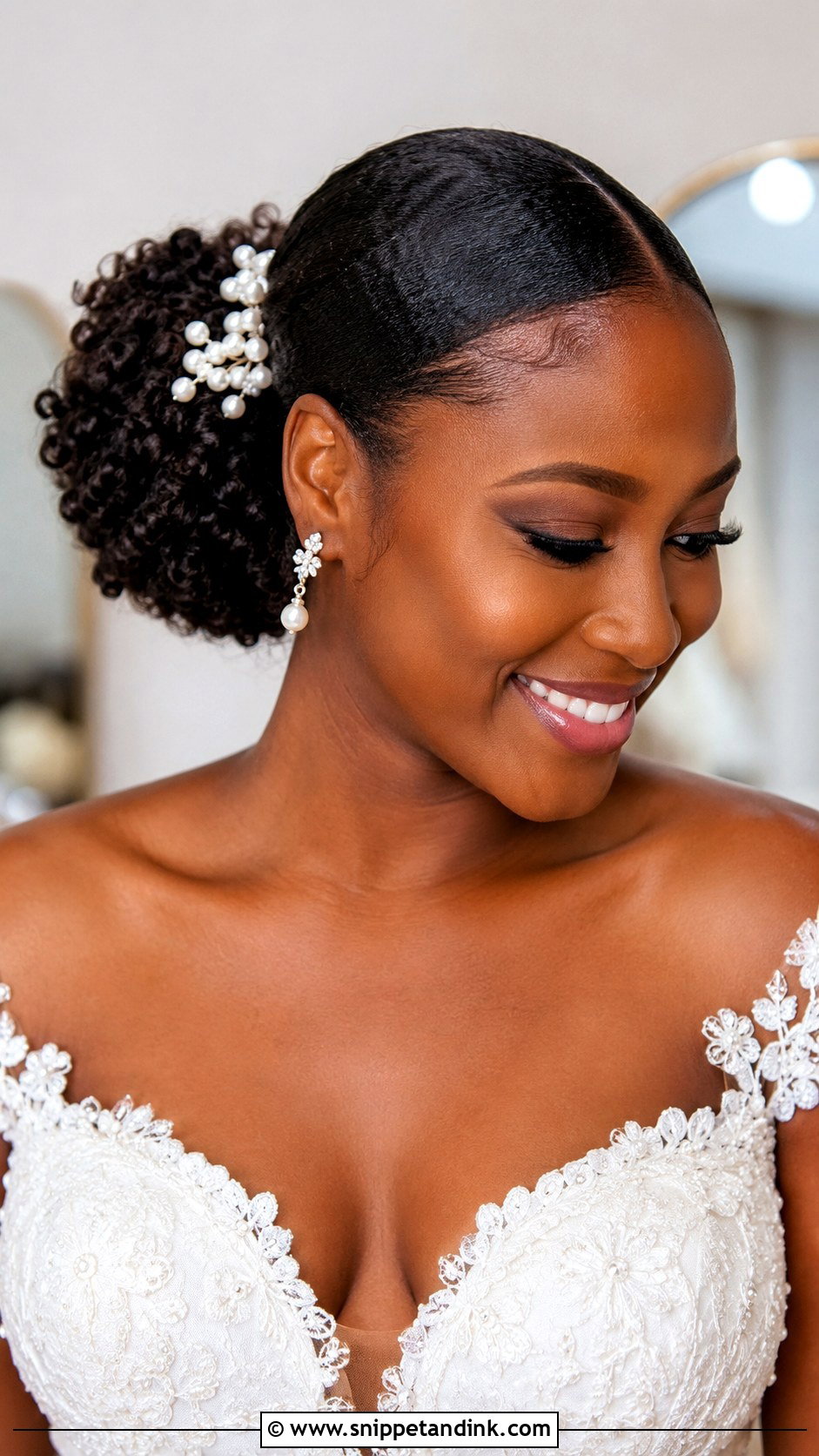
Curly hair wears this style well, often better than straight hair, because the bun keeps its natural fullness and shape. The front and sides are smoothed with gel or edge control, and the bun holds its curls, coils or ringlets. I apply the gel on damp hair and smooth with a soft brush, then tie a silk scarf over the edges for ten minutes while the rest is finished, which sets the hairline flat. Define the bun with curl cream and leave it alone once dry. Low, mid or high all work.
14. Slick Back Side Part Bun For Wedding
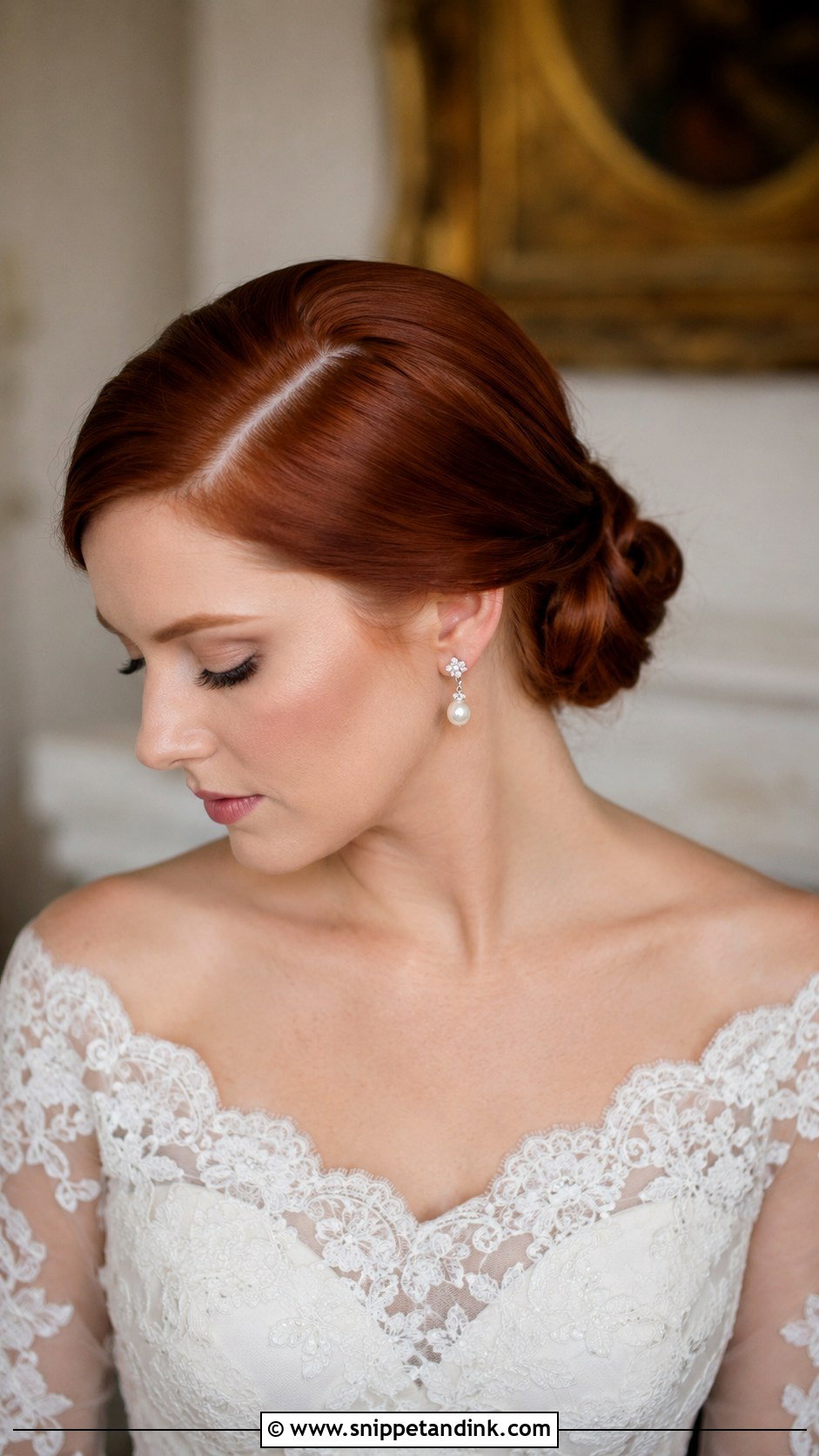
Moving the part to one side takes the hardness out of a slicked bun. It suits brides who don’t want their forehead fully exposed, and it echoes vintage dresses with lace sleeves. The hair is parted, smoothed close to the head and gathered into a low bun or chignon. I keep the part a touch softer than in the center-part version, pressing rather than combing the line. A soft shine spray keeps the surface polished under both indoor lighting and sun.
15. Slick Back Bun With Veil For Wedding
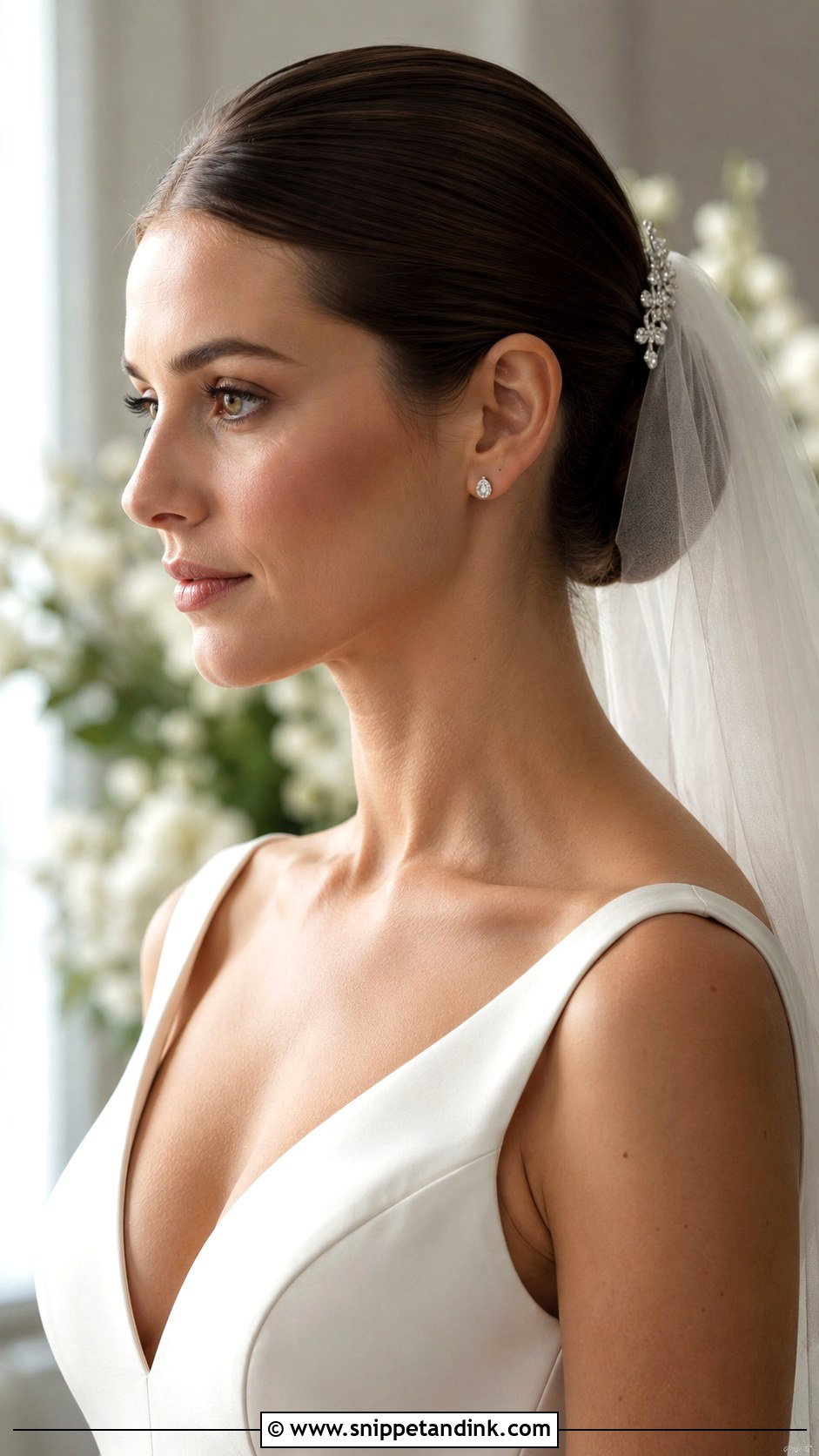
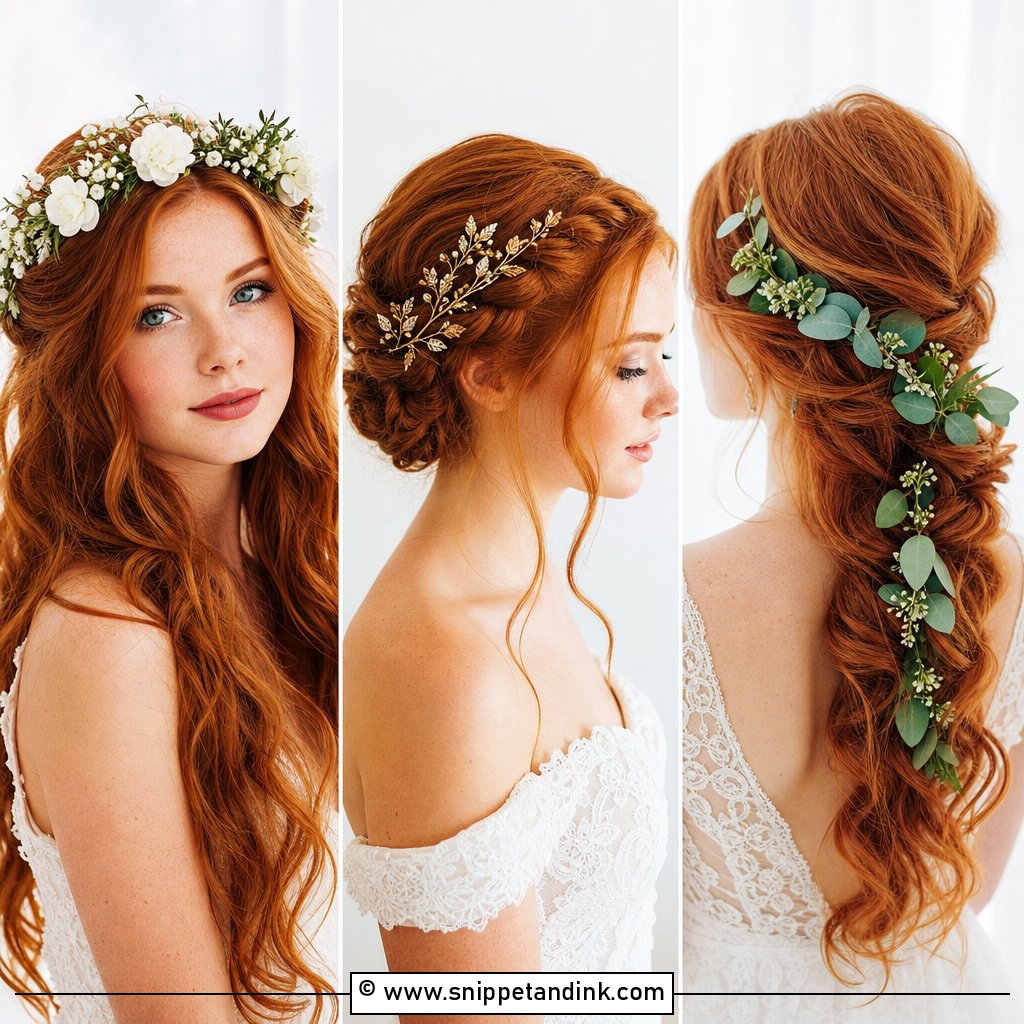
Pairing a slicked bun with a veil is the most practical combination on this list. The smooth front keeps the face clear while the bun gives the comb a firm anchor. Above the bun gives more height to the veil; below gives a softer drape over the shoulders. Bring the actual veil to your trial, not a sample, since weight and comb width vary. After the veil comes off, the bun still looks finished for the reception, which is more than you can say for many loose styles.
Who Should Think Twice About Pulling Everything Back
I love this style, and I still talk some brides out of it. Slicked hair shows everything around the hairline, so it’s worth looking honestly at yours before the trial.
Thinning at the temples, postpartum shedding or a widow’s peak with gaps on either side will be visible once the hair is pressed flat. A slightly softer finish, a side part, or a few wisps pulled forward hides more than any amount of product. Root-touch-up powder in your hair colour also helps on lighter areas.
Strong cowlicks at the front are another problem. They fight against being brushed back all day and start lifting by evening. Blow-drying the cowlick flat in the direction you want it, with the nozzle pointing down, before any product goes on, buys you hours.
Finally, tension. If tight ponytails or buns give you headaches, or your edges are already fragile, ask for the look to be built with smoothness rather than pull. The hair can look slicked without being stretched tight, and your scalp will thank you after the last song.
Hold, Shine and the Hairline Underneath It All
Every version here shares one structure: smooth front, secure base, length placed where your dress needs it. A low bun is the most classic, a ponytail adds motion, a chignon feels formal and a wet look is the fashion choice. Short hair, curls, waves, braids and bobs can all wear the same clean front. Decide on your neckline and veil first, then pick the shape that fits them. Test the hold at your trial and look at photos taken with flash before you commit to the finish.
You'll Like These Ideas:



Leave a Reply