
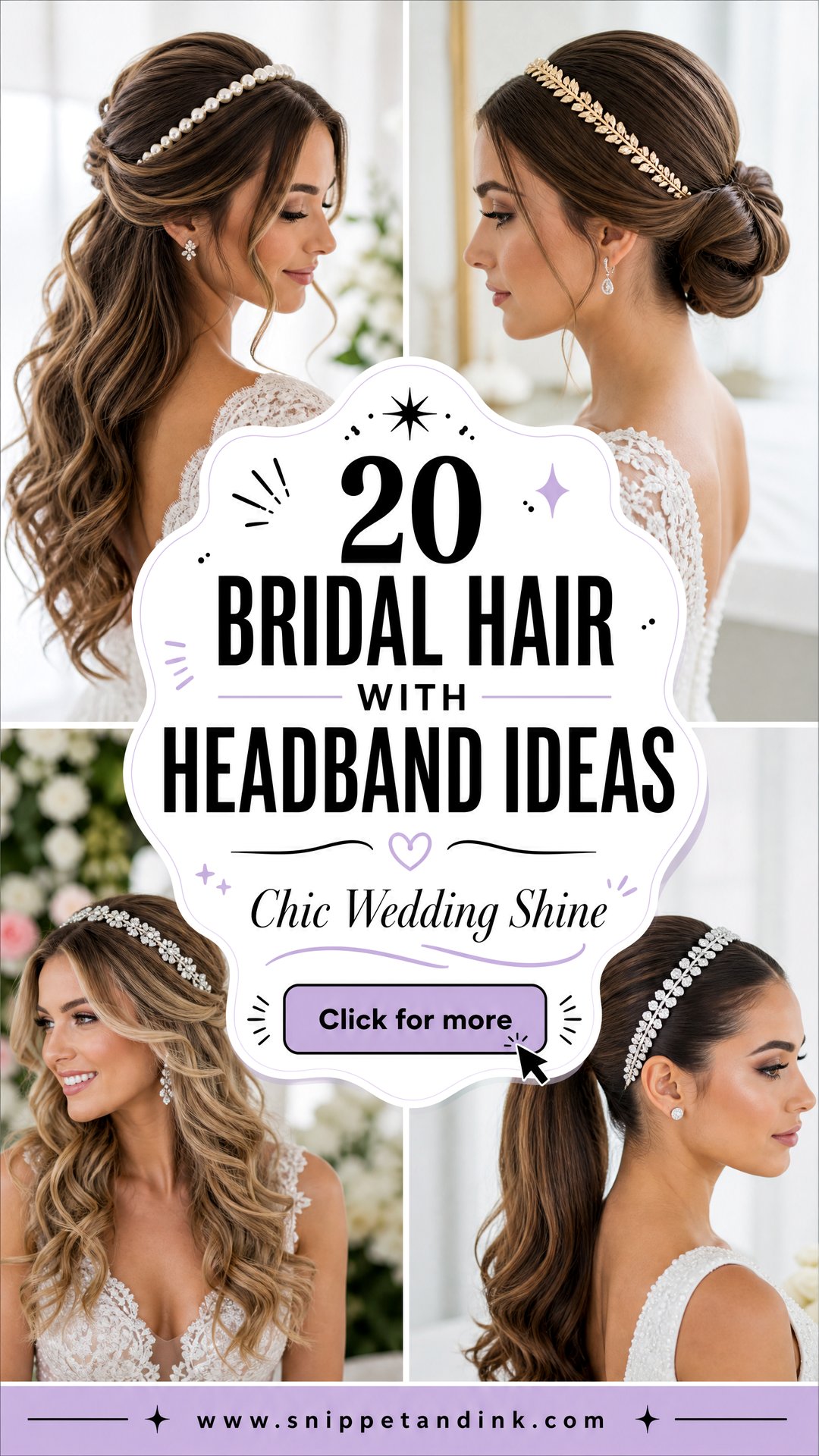
A headband is the accessory I reach for when a bride wants something more than a few pins but less than a tiara. It also does a real job: it holds the front section off the face, which means fewer flyaways by the time speeches start. Pearls, sparkling crystals, florals, velvet and plain metal all behave differently in the hair, and the style underneath has to be built for the band, not the other way round. Below are 20 pairings I’d happily put on a bride, with notes on how each one holds up and who it suits.
Getting a Headband to Sit Comfortably for Twelve Hours
Most headbands are made for a generic head, and a band that pinches behind the ears at the trial will be unbearable by the reception. The good news is that almost every band can be adjusted before the day.
- Metal bands can be gently widened by hand. Hold both ends and ease them apart a little at a time, then try it on again. Don’t bend them hard at one point, as plated metal can crack.
- If the ends press behind your ears, I wrap them with a small piece of matching ribbon or moleskin. It softens the pressure and gives a pin something to grip.
- A band with no teeth slides on smooth hair. I secure it with two pins on each side, crossed in an X under the hair, so the band rests on the pins instead of the scalp.
- Heavy crystal pieces should sit on a base of slight texture, not on freshly washed silky hair. Second day hair or a light texture spray gives better grip.
Wear the band at home for a couple of hours before the wedding. If you feel a dull ache at your temples within the first hour, it’s too tight, and that won’t improve on its own.
Where on the head it should land
Right at the hairline reads vintage, about an inch back reads modern and softer, and further back on the crown works for half up styles and short cuts. A high forehead usually looks best with the band a little forward. A lower hairline looks better with it set back so the face doesn’t feel crowded. I try two or three positions at the trial and photograph each one, because the difference is clearer on camera than in the mirror.
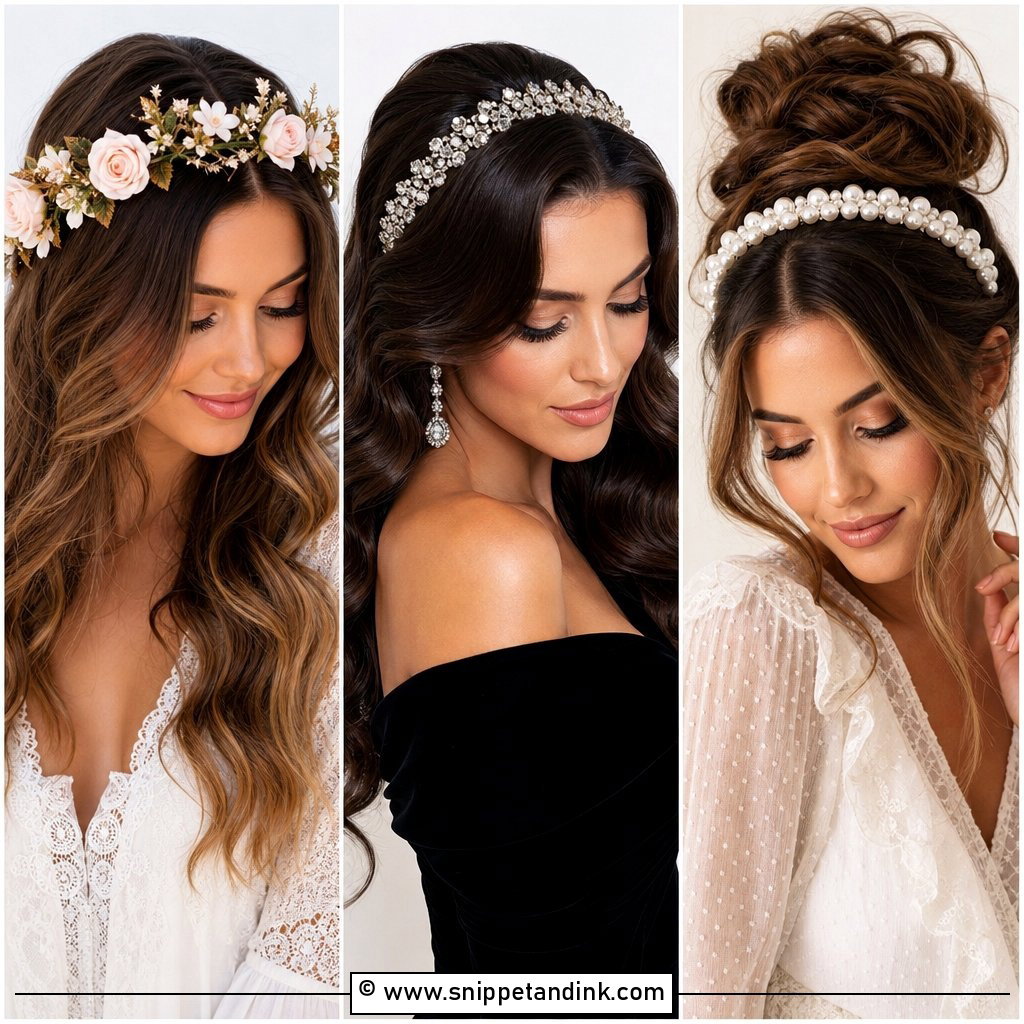
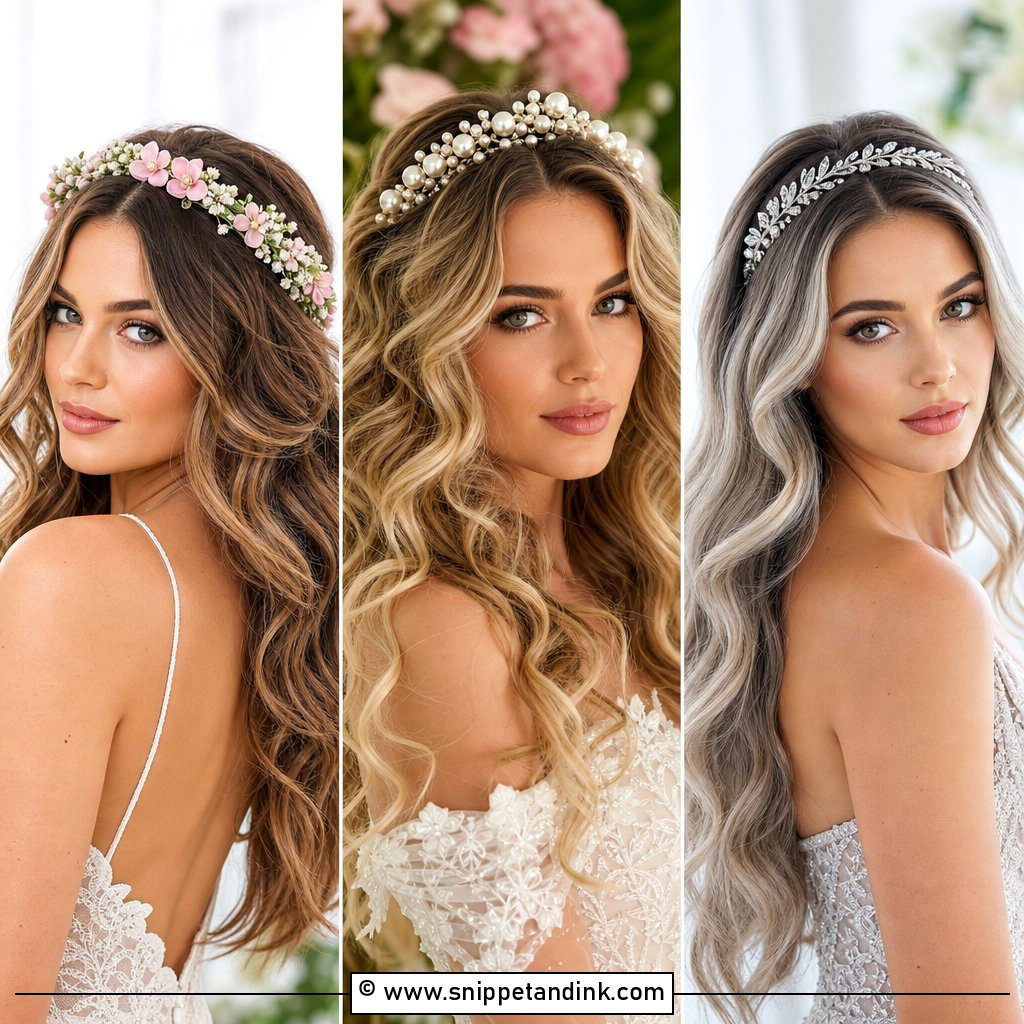
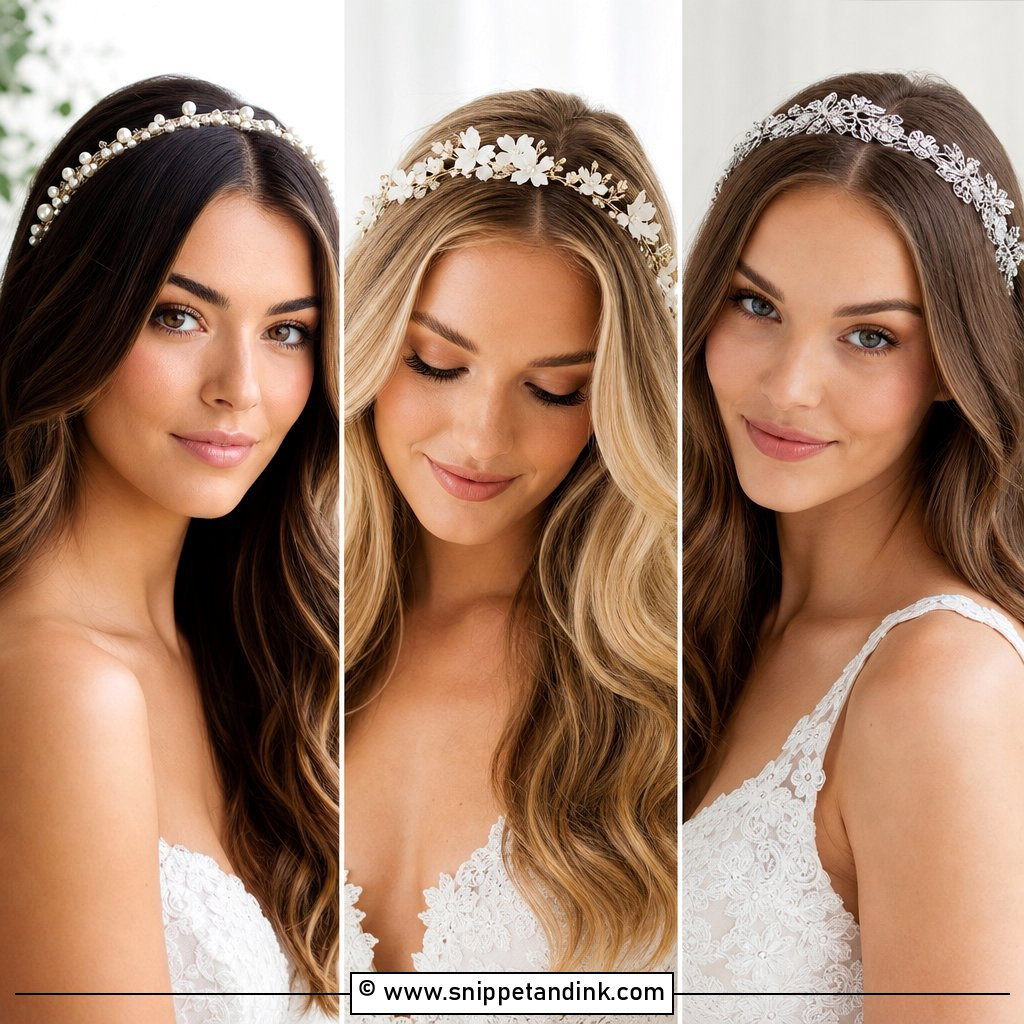
1. Half Up Half Down With Pearl Headband
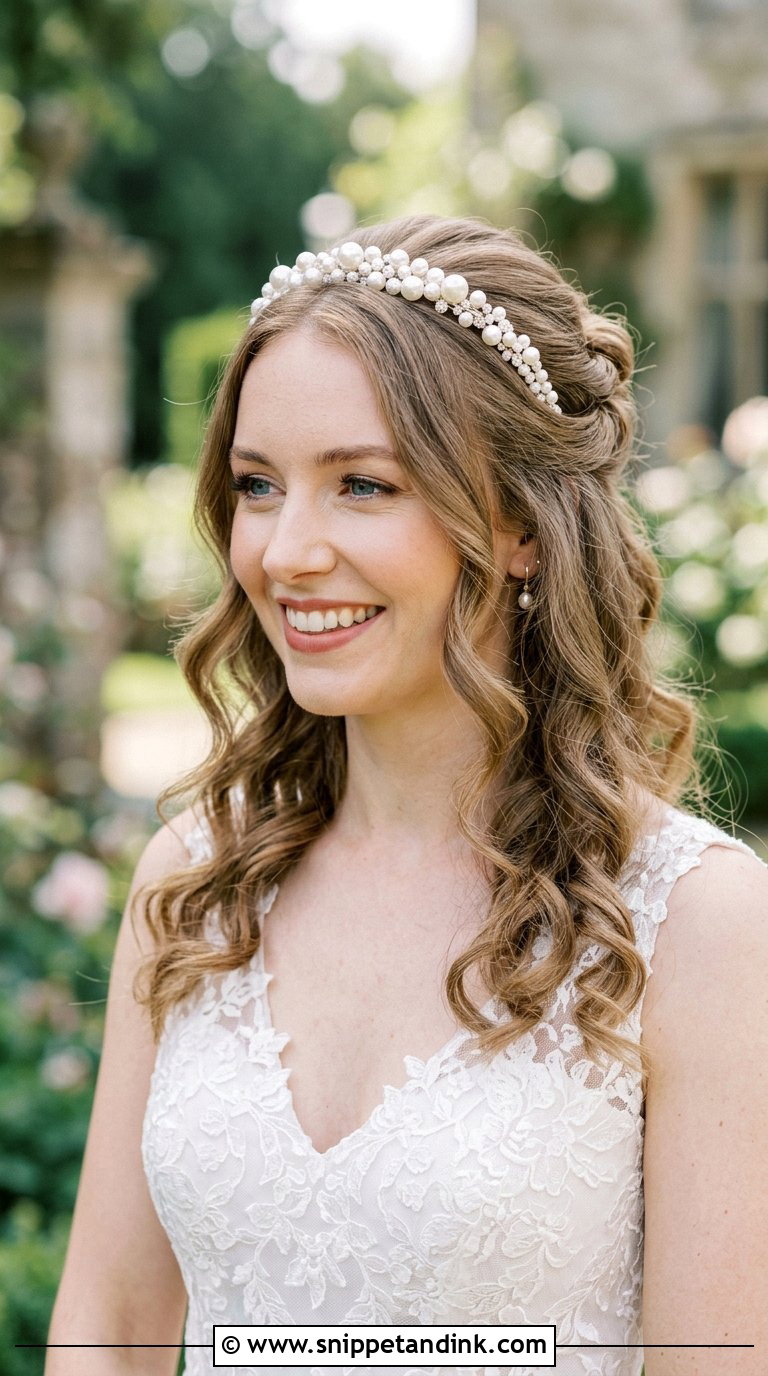
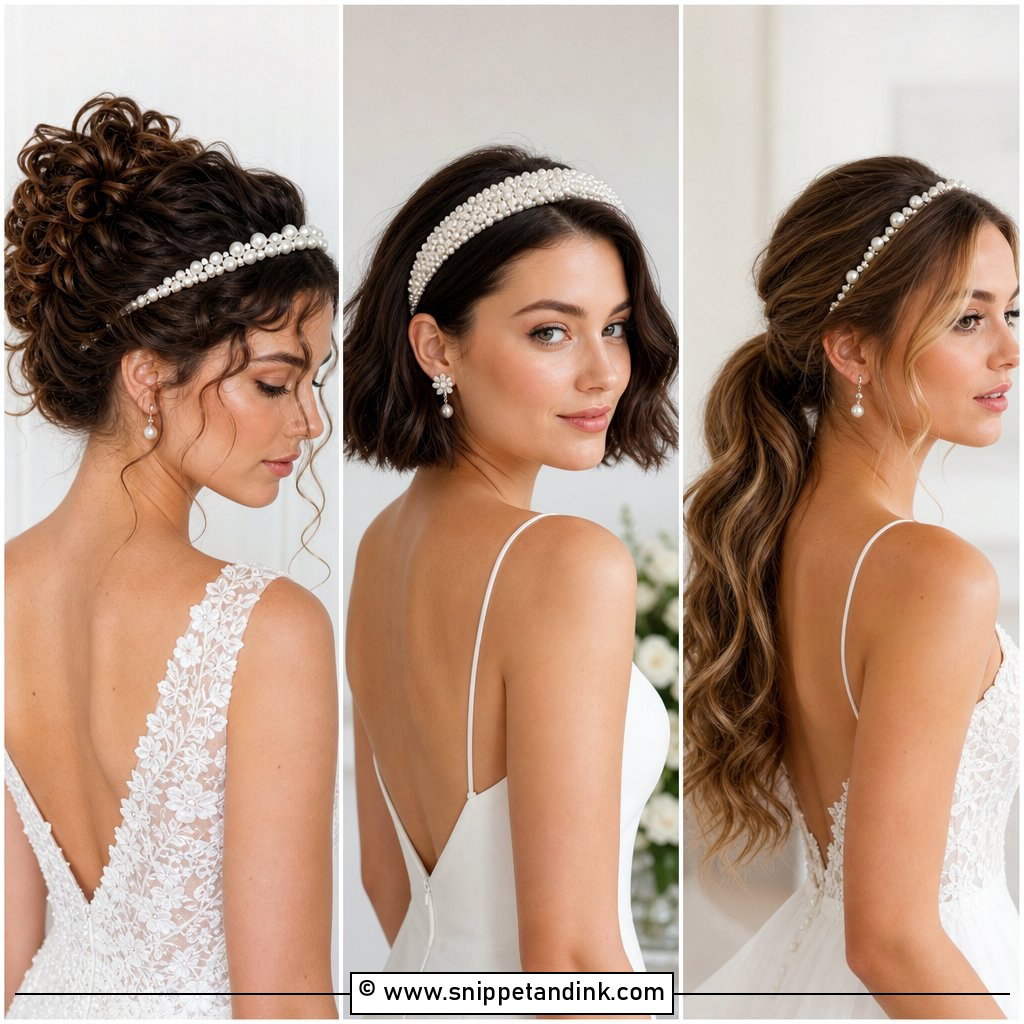
This is the pairing I do most often, and the order matters. I pin the half up section first, with two crossed pins at the back of the crown, then slide the pearl band in front of that anchor so it has something to sit against. Without that anchor, a smooth band slowly drifts backward over a long day. Curl the lengths with a medium barrel and let them cool in the pin before brushing out, so the waves still have shape at the reception. Medium to long hair works best; anything above the shoulders doesn’t leave enough below the band to read as half down.
2. Sleek Low Bun With Crystal Headband
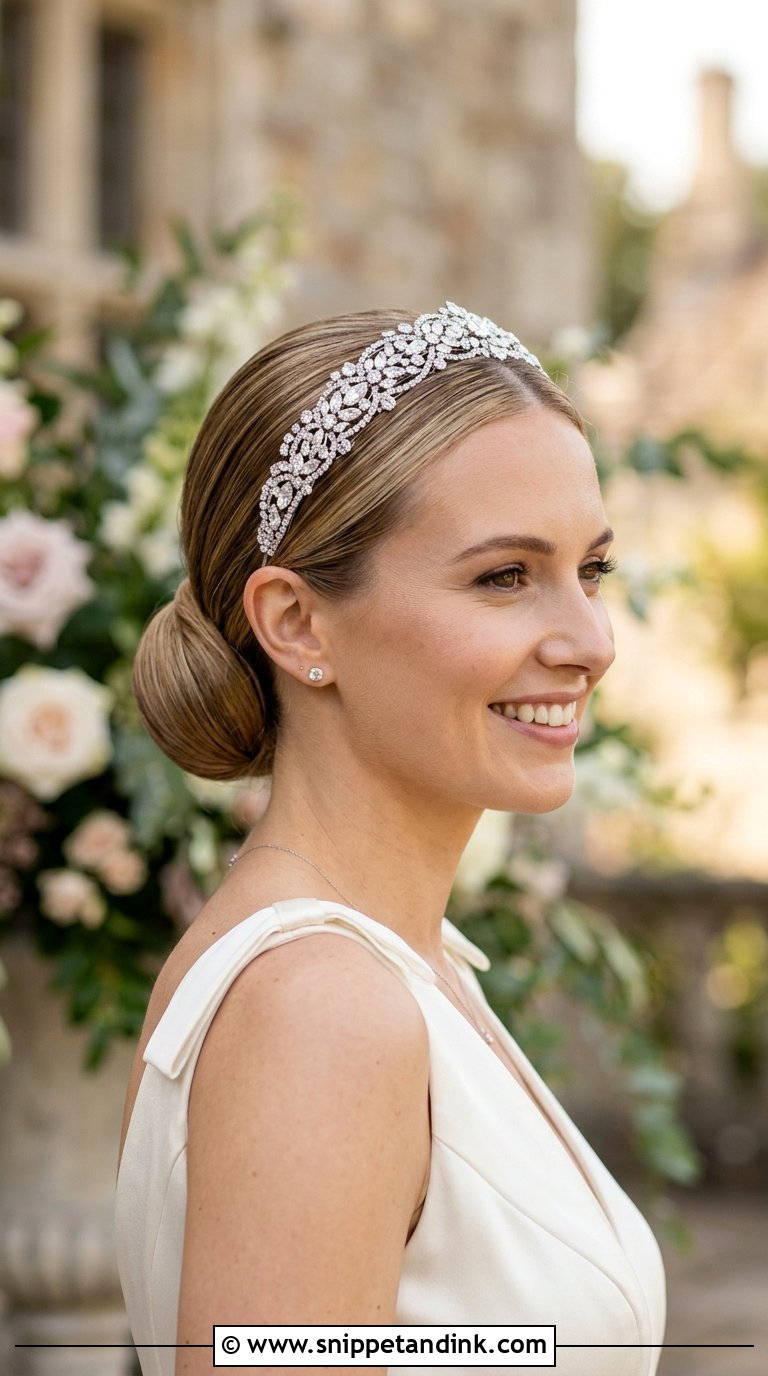
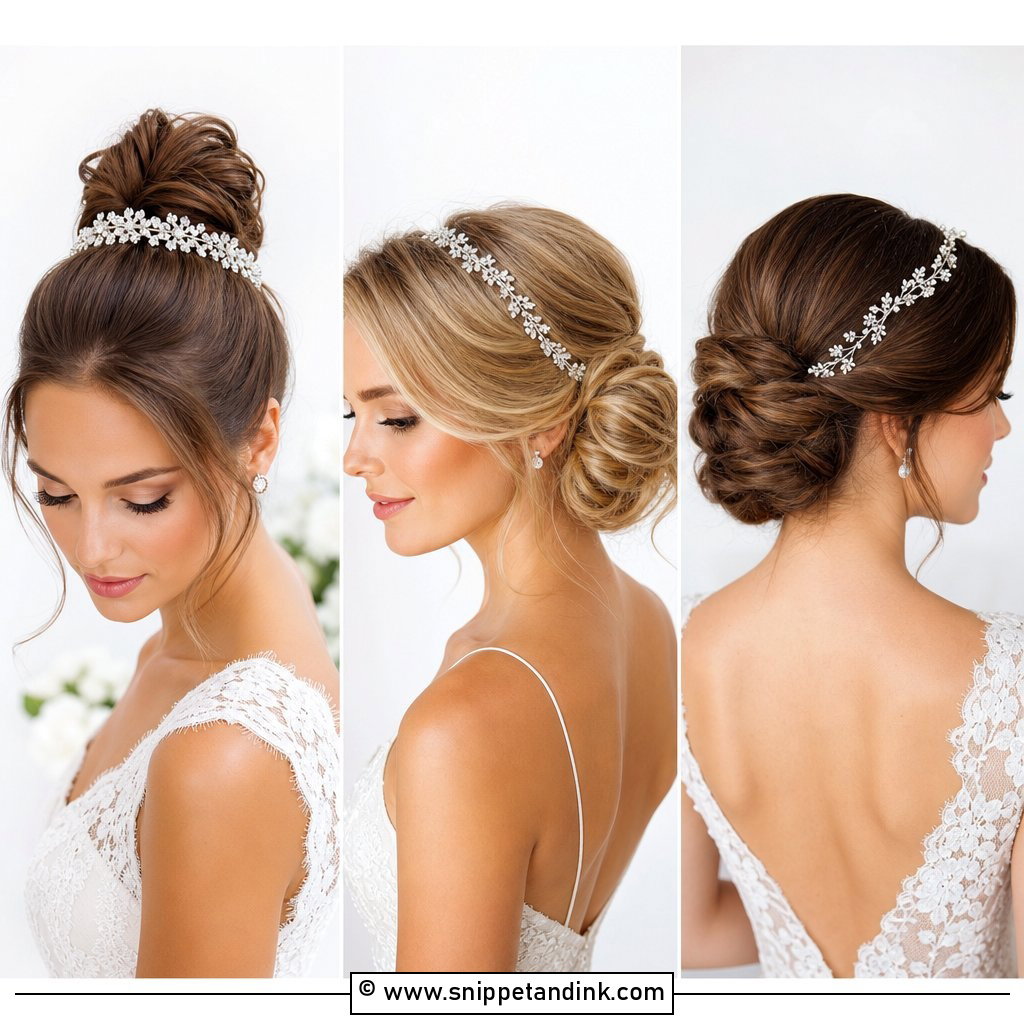
A sleek low bun is all about the hairline, so the crystal band has nowhere to hide. I smooth the front with a small amount of cream before the bun goes in, because any bump under a tight band shows in photos as a ridge. The bun itself sits at the nape, which keeps the band from fighting the bun for space. Fine hair needs a small padded donut inside the bun or it looks thin from the side. Thick hair goes the other way; I’ll often split it into two sections so the bun doesn’t become heavy enough to drag the band back. Finish with a drop of shine serum on the lengths only, never near the roots.
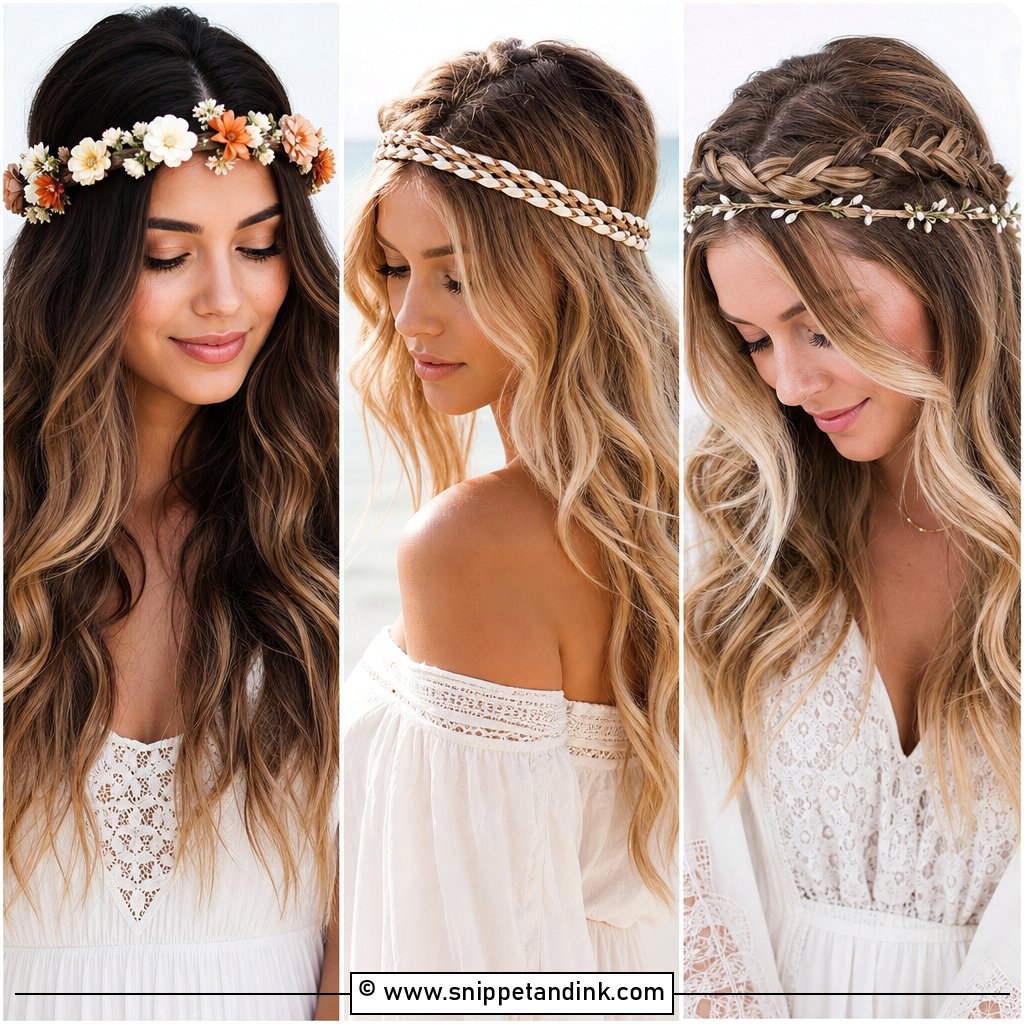
3. Boho Waves With Floral Headband
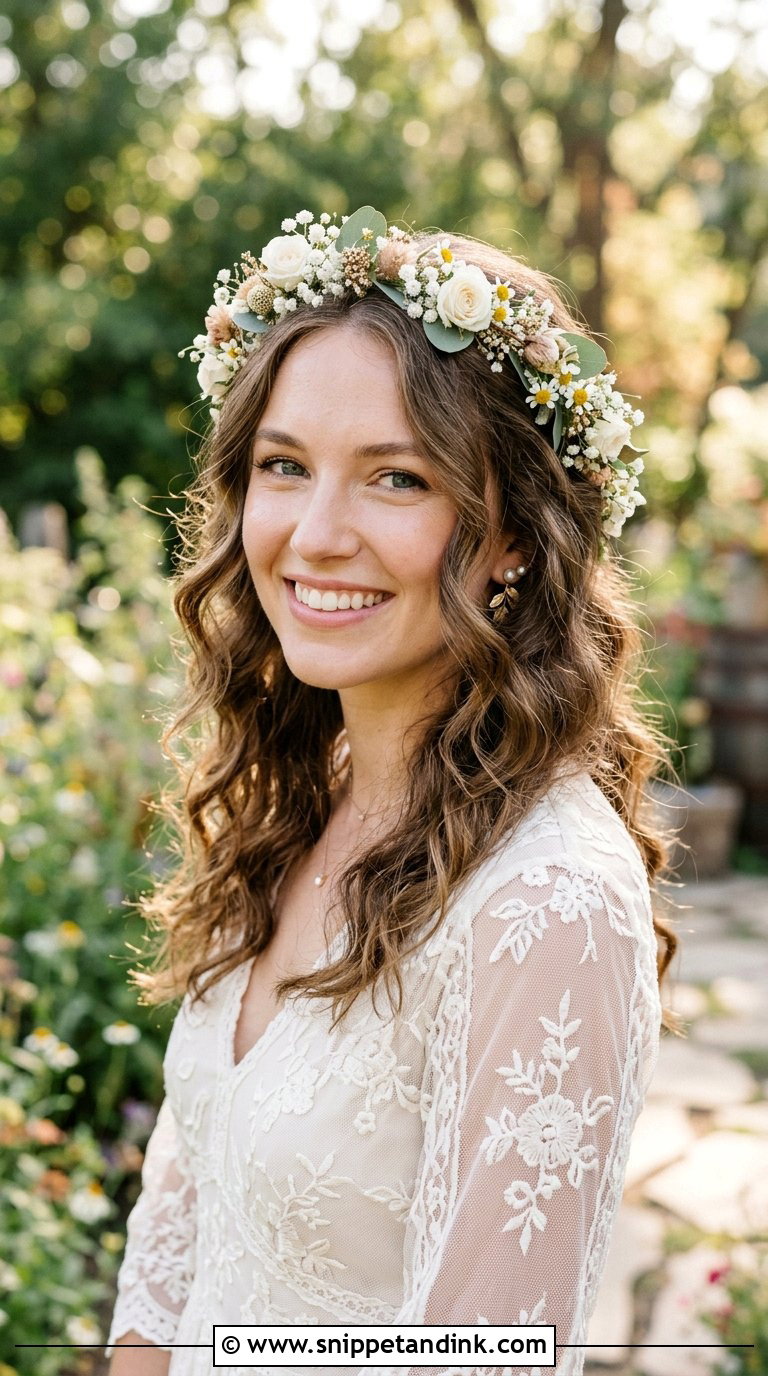
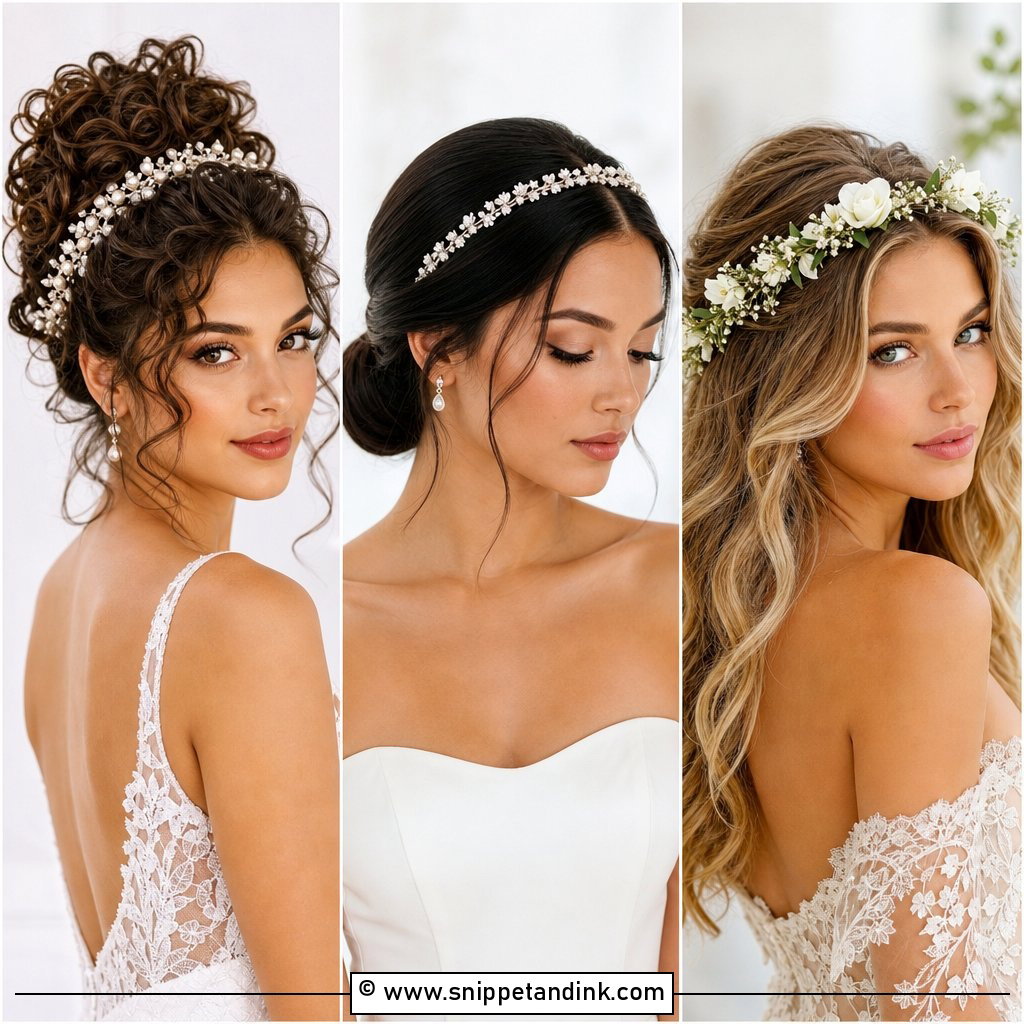
Undone waves and a flower-adorned headband suit garden and outdoor ceremonies, but fresh flowers are the weak point. They wilt against warm skin, so I wire small, sturdy blooms like spray roses or waxflower onto the band and keep them out of direct contact with the forehead. Silk or dried flowers last all day if the wedding is outside in summer. Prep the hair with a texturizing spray before waving it, otherwise loose waves fall flat within a couple of hours.
4. Classic Chignon With Gold Headband
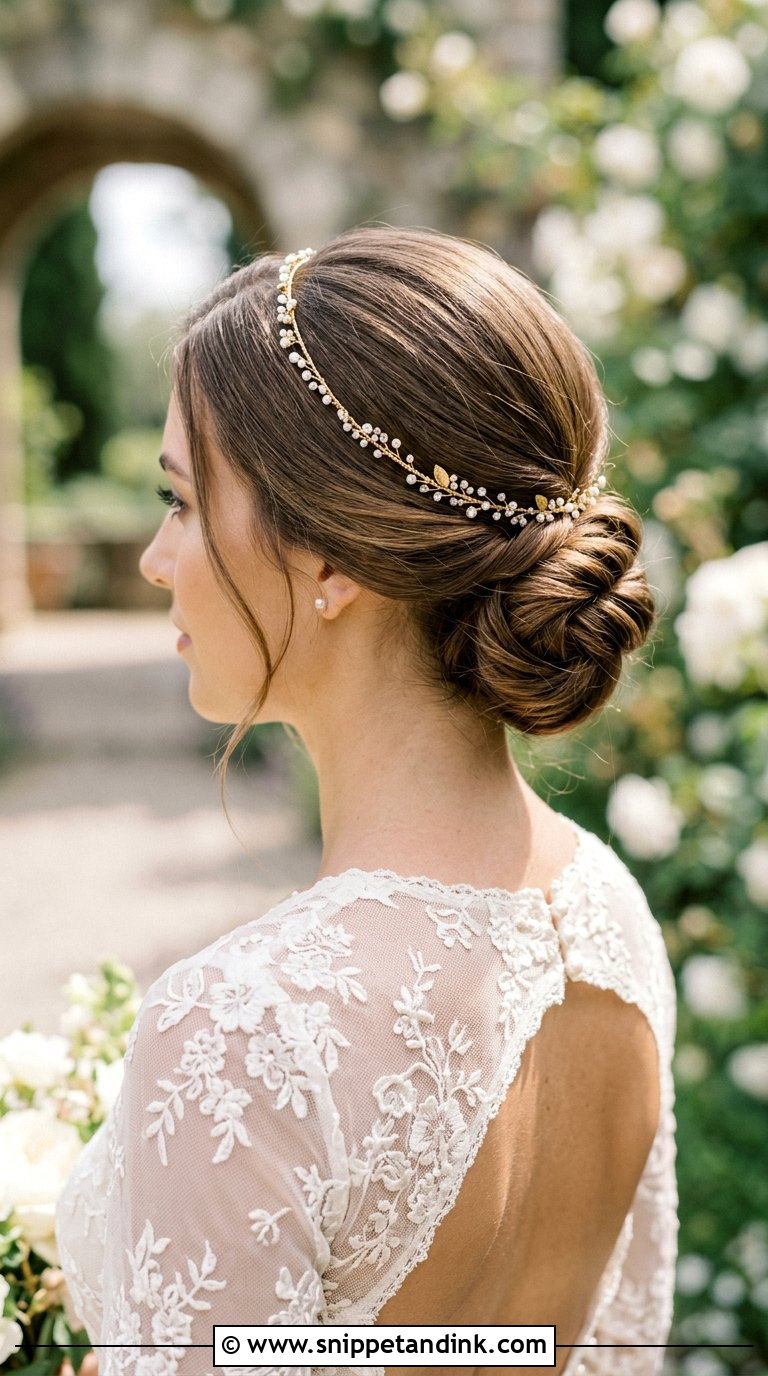
A chignon is quiet, so the gold band does most of the talking. I twist the hair into the knot first and only then place the band, about an inch behind the hairline, so the twist gives it something to rest on. Thin gold reads warm in photos and sits well against warm skin and yellow gold jewelry. If your rings and earrings are white gold, match the band to them instead; mixed metals right next to the face look accidental. It keeps the neck clear, which is a real relief at a summer wedding.
5. Long Loose Curls With Rhinestone Headband
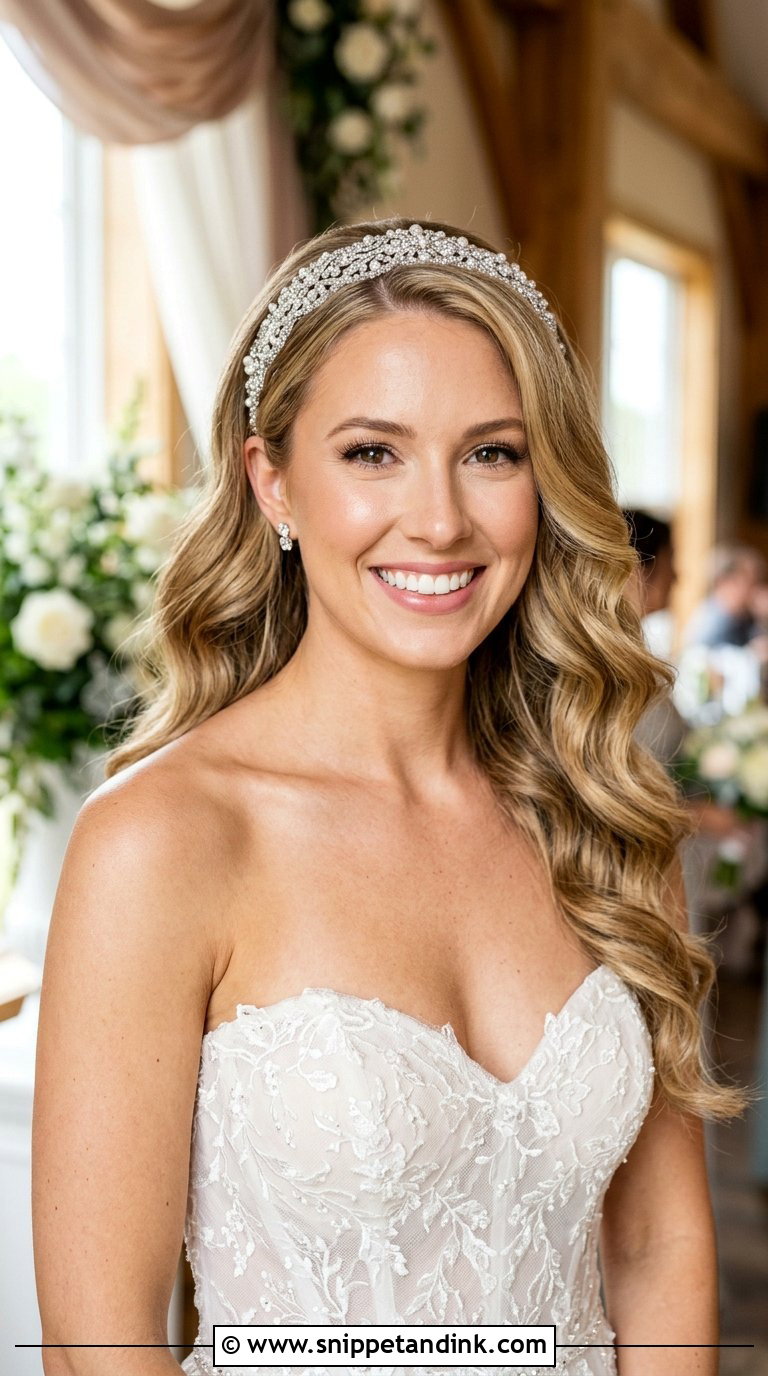
Long Hollywood-style curls need weight and hold, and a rhinestone band adds sparkle without adding volume to an already full look. I set every curl in a pin clip and leave them to cool for at least ten minutes before brushing. Skipping that step is why down styles drop by the first dance. The band goes on last and I tuck its ends under the top layer of curls so the hard edge doesn’t show. Down curls frame strapless necklines well, and with strapless or sweetheart necklines there’s no fabric to snag them. Heavy hair in humidity is the one case where I’d talk you into half up instead.
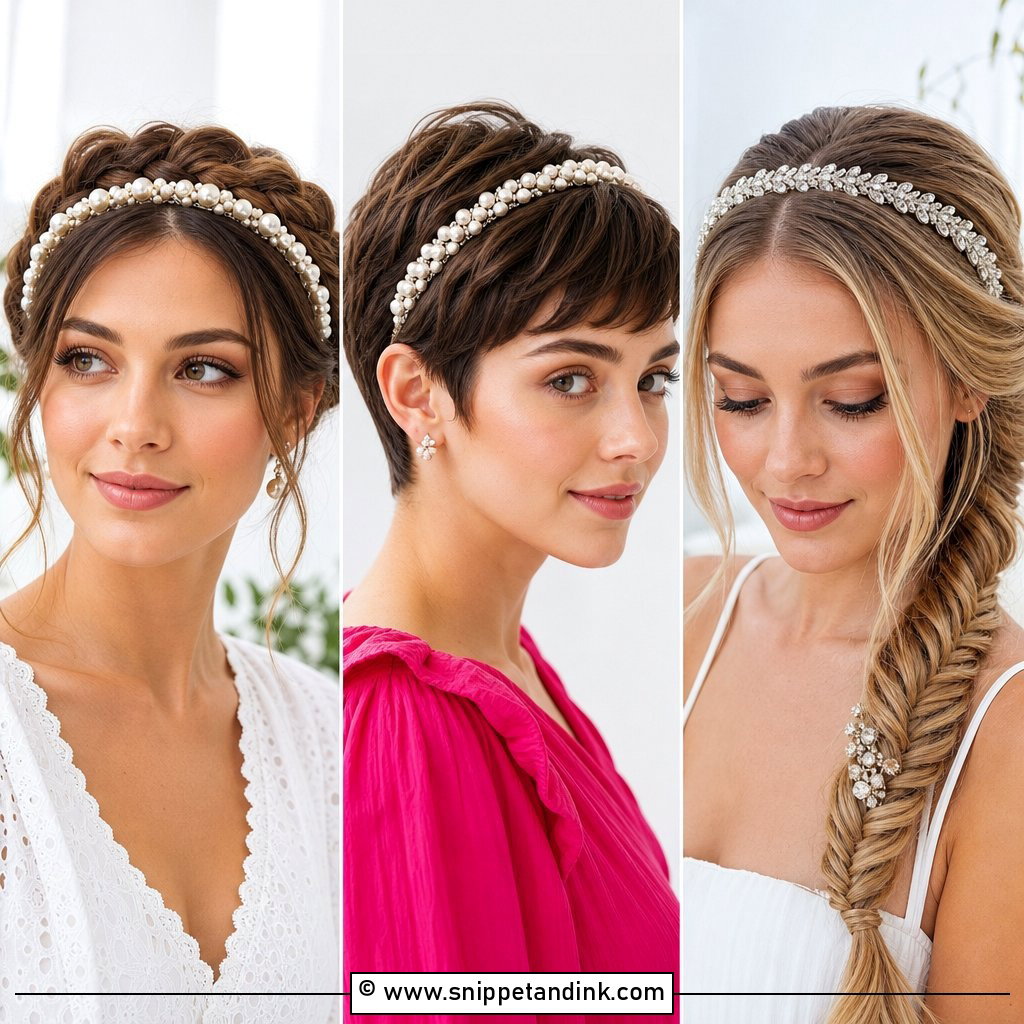
6. Braided Updo With Pearl Headband
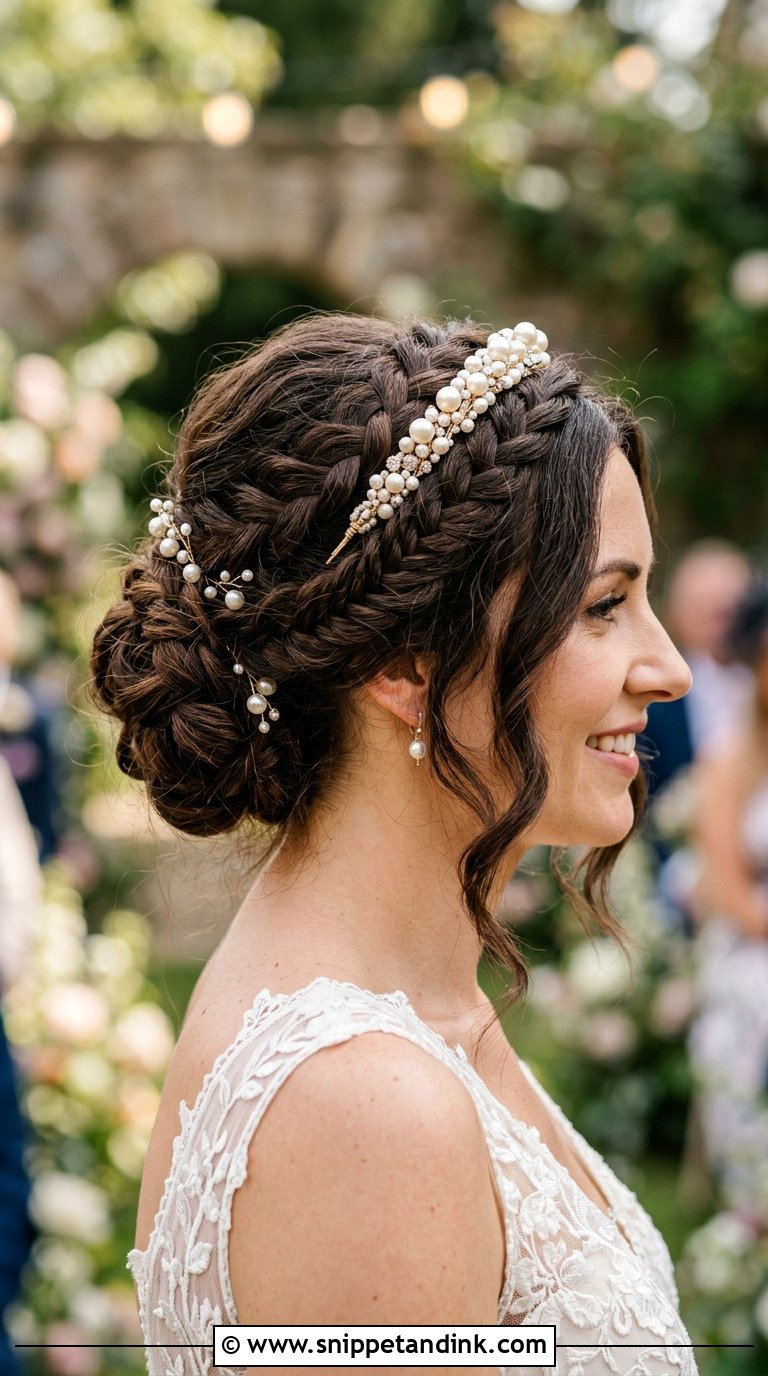
Braided updos are the most secure option on this list. Every crossing of the braid is a place to hide a pin, so the whole structure stays put through dancing and hugging. I usually work the pearl band into the braid itself, threading its ends under a few stitches so it can’t slide. Thick hair gives the fullest braids; fine hair still works if I pancake each section gently after braiding to widen it. Keep the earrings small here, because the braid already gives the eye plenty to look at.
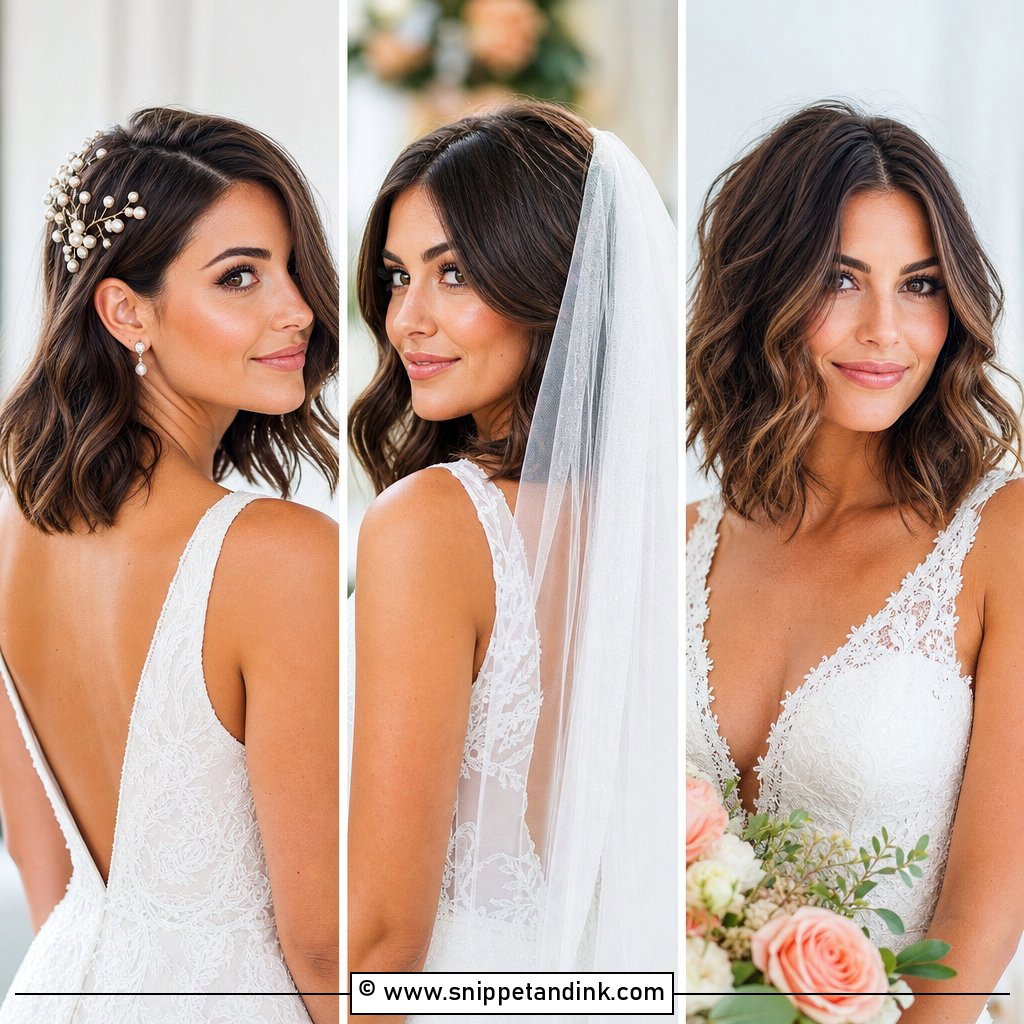
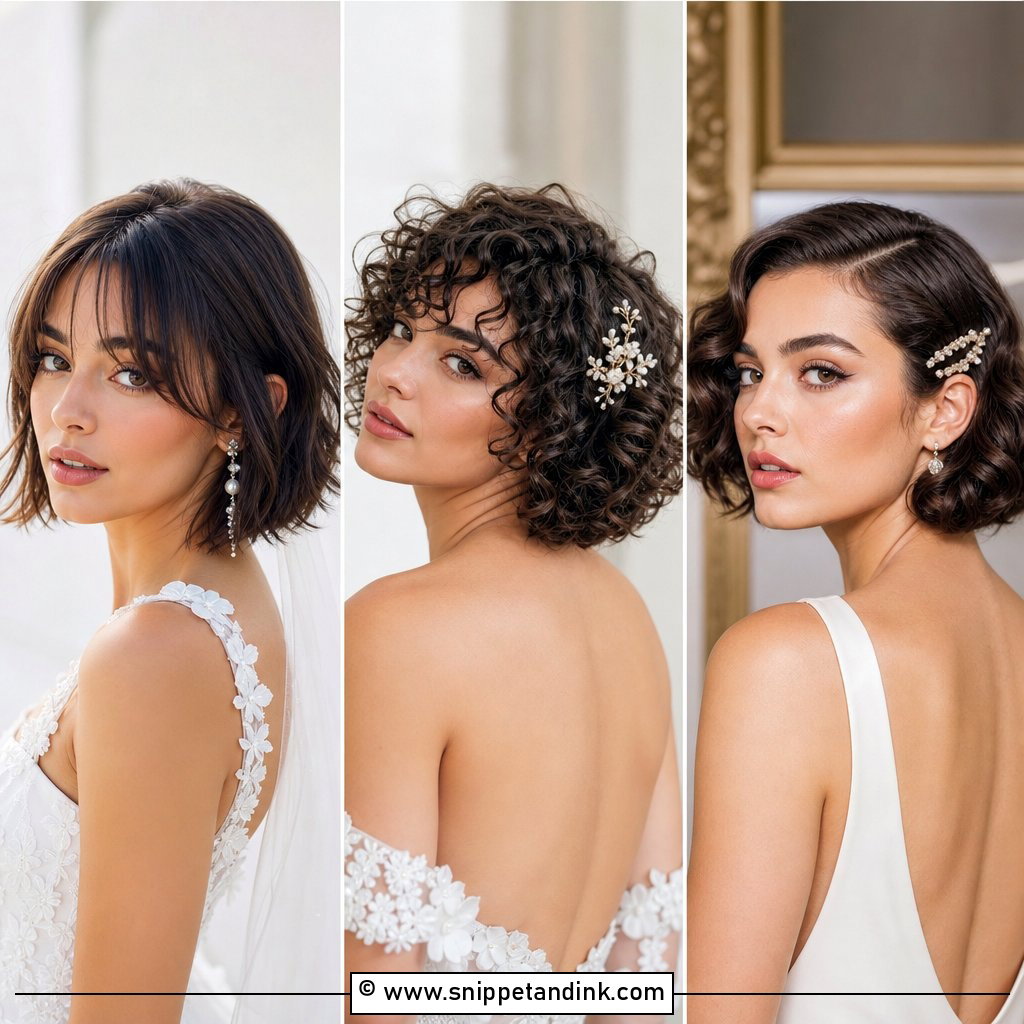
7. Short Bob With Jeweled Headband
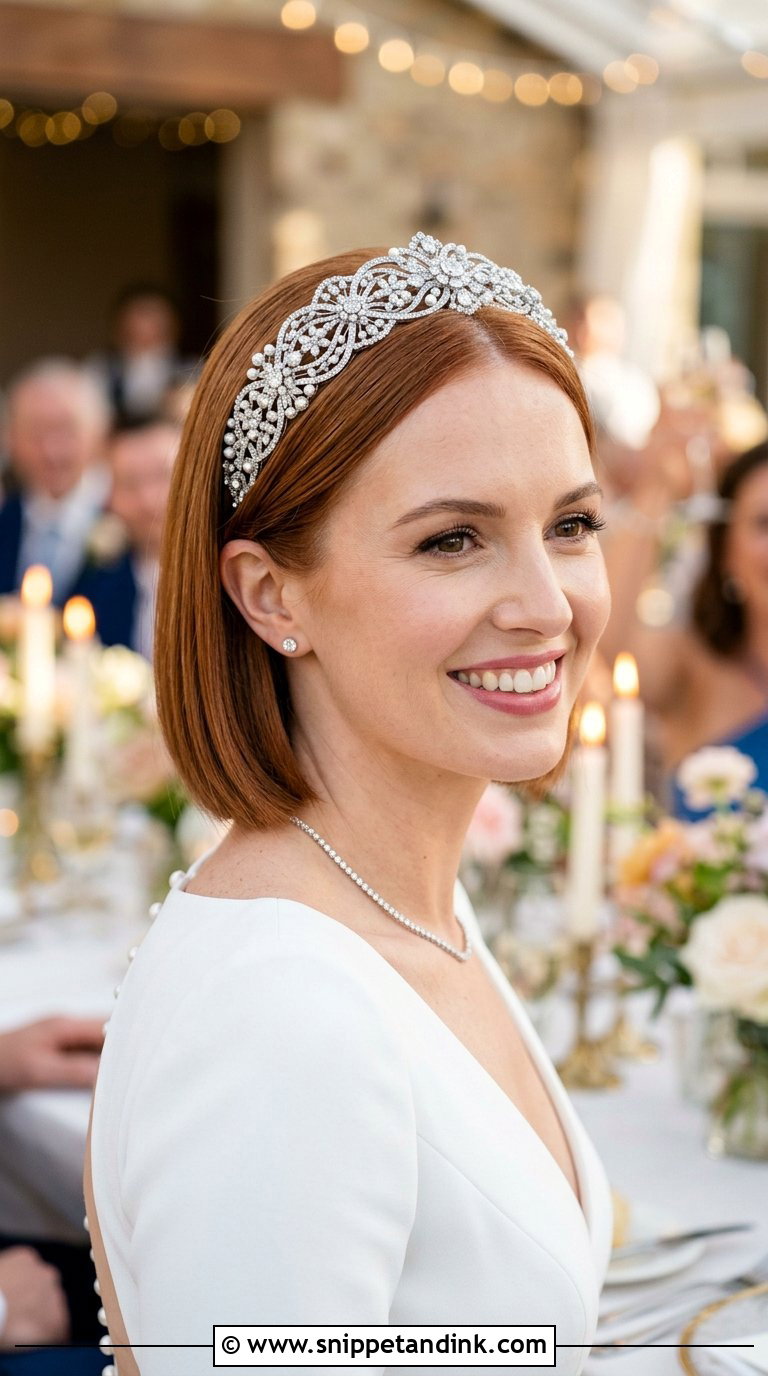
Short hair can absolutely wear a headband. The trick is where the band lands. On a bob, I set it a little further back than on long hair so the front pieces can sit forward and soften the face, and I secure the ends with a pin behind each ear, hidden under the hair. A jeweled band adds the occasion that a short cut sometimes feels like it lacks. Wear the bob sleek, or with a soft bend from a flat iron; tight curls on a bob tend to fight the band. If your cut is very blunt, ask your stylist not to trim it the week of the wedding, as a fresh blunt line can look harsh against sparkle.
8. Tousled Low Bun With Crystal Headband
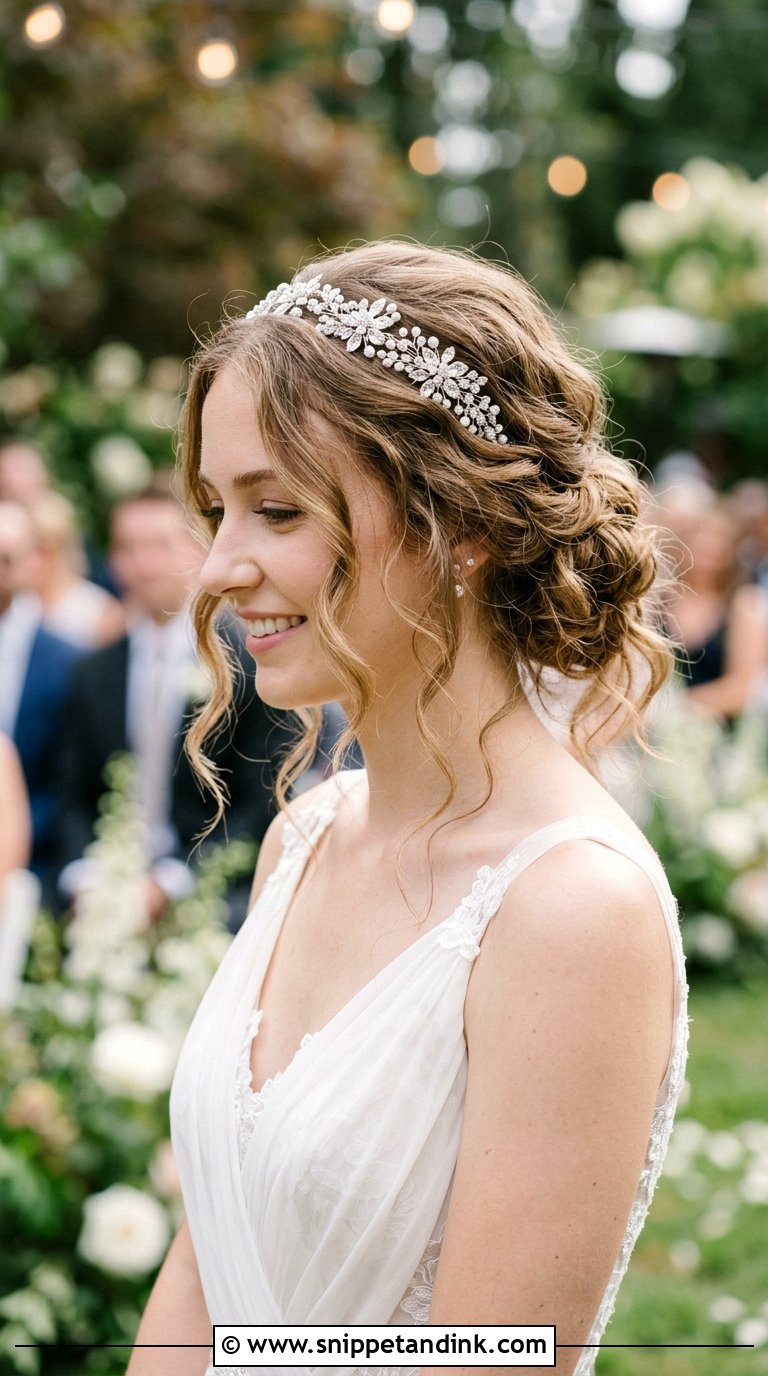
This is a messy bun that’s actually very planned. I build the bun neatly first, pin it, and only then pull out texture with my fingertips, because a bun that starts messy usually just falls apart. The face-framing tendrils should be curled in different directions so they don’t look like two matching sideburns. A crystal band softens the relaxed texture and makes it read as bridal. Outdoor and relaxed weddings suit it, and it sits comfortably under a fingertip veil anchored just above the bun.
9. Half Up Boho With Hair Vine Headband
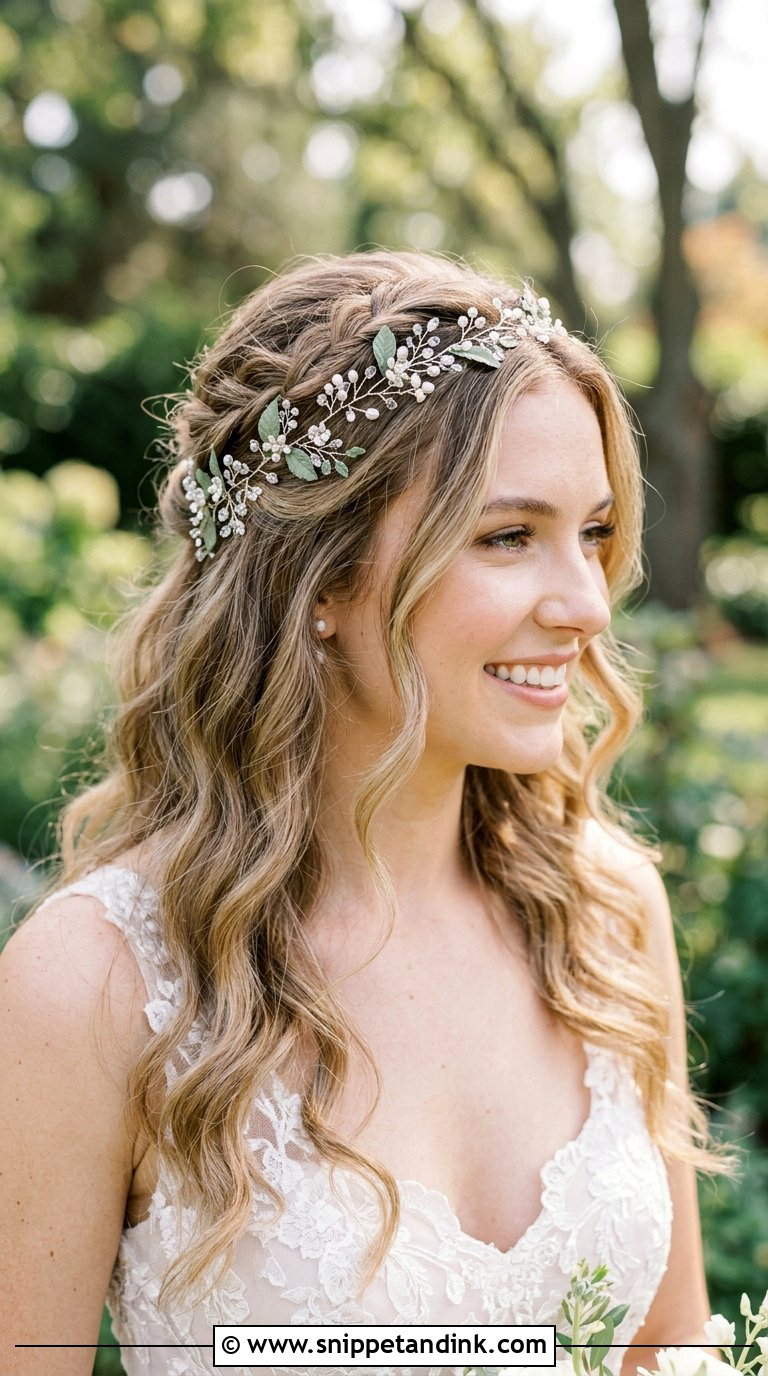
A hair vine is wire, not a rigid band, and that’s its advantage. I bend it to the shape of the half up section, then stitch it into place with small pins every few inches so it follows the head rather than floating on top. Because it weighs almost nothing, it’s comfortable for a full day, which is more than I can say for some crystal pieces. Natural texture and medium to long hair suit it best. Very fine, slippery hair needs a light texture spray first so the pins have something to grip.
10. Vintage Finger Waves With Art Deco Headband
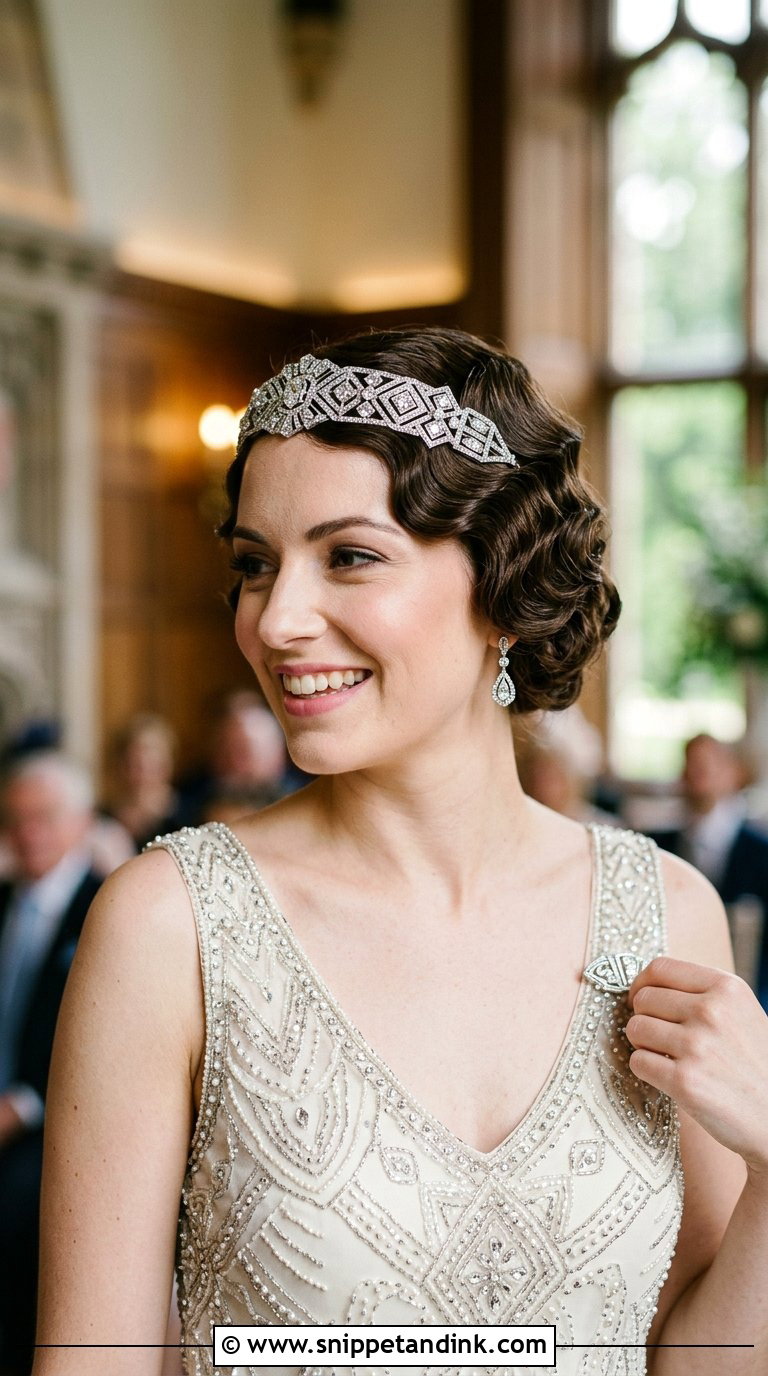
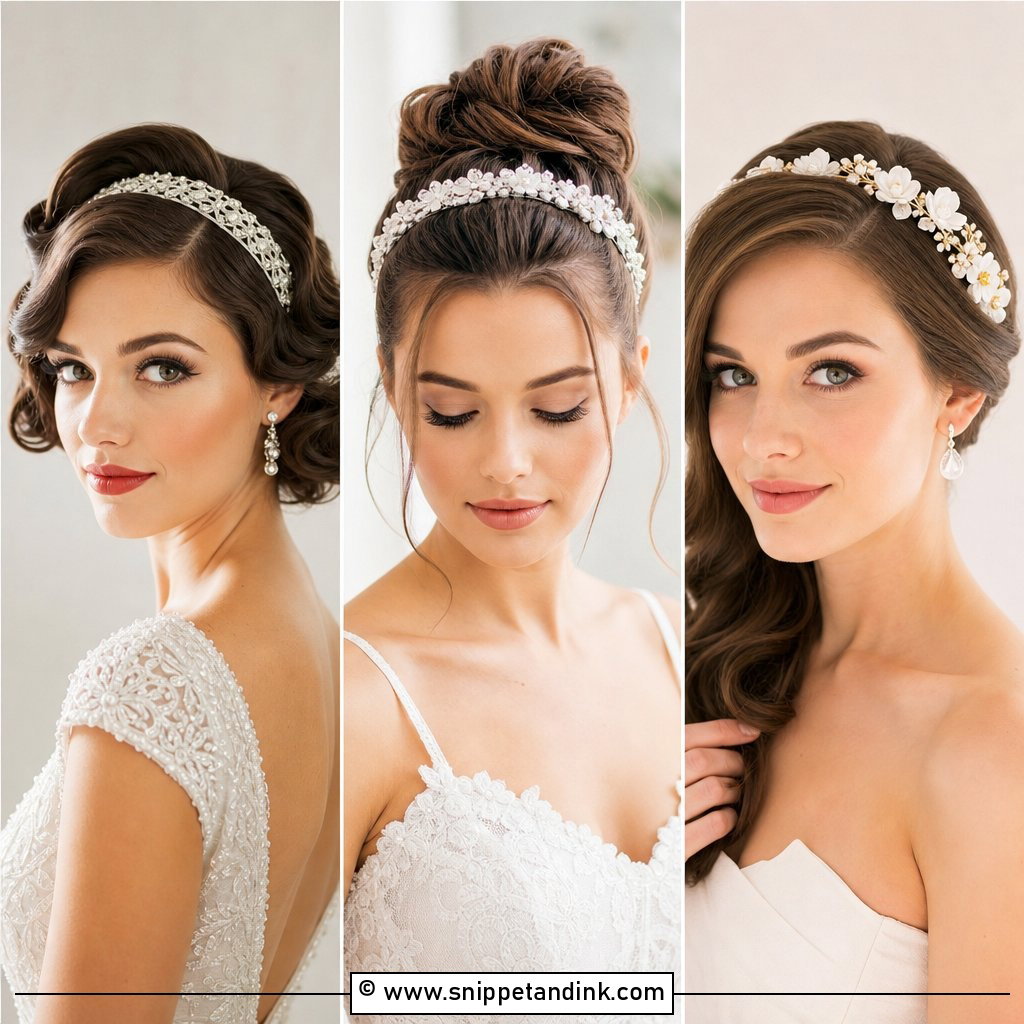
Finger waves are a skill job, and I’d only book this look with a stylist who has done them before. They’re set wet with gel and combs, then left to dry completely, so they need much more time in the chair than a curled style. Once set, they barely move, which is why they last so well. An Art Deco band with geometric crystals finishes the 1920s-inspired aesthetic, and it should sit at or just behind the hairline, the way it would have been worn originally. Short to medium hair is easiest. On long hair, I’ll pin the lengths into a faux bob at the nape.
11. Soft Side Swept Curls With Pearl Headband
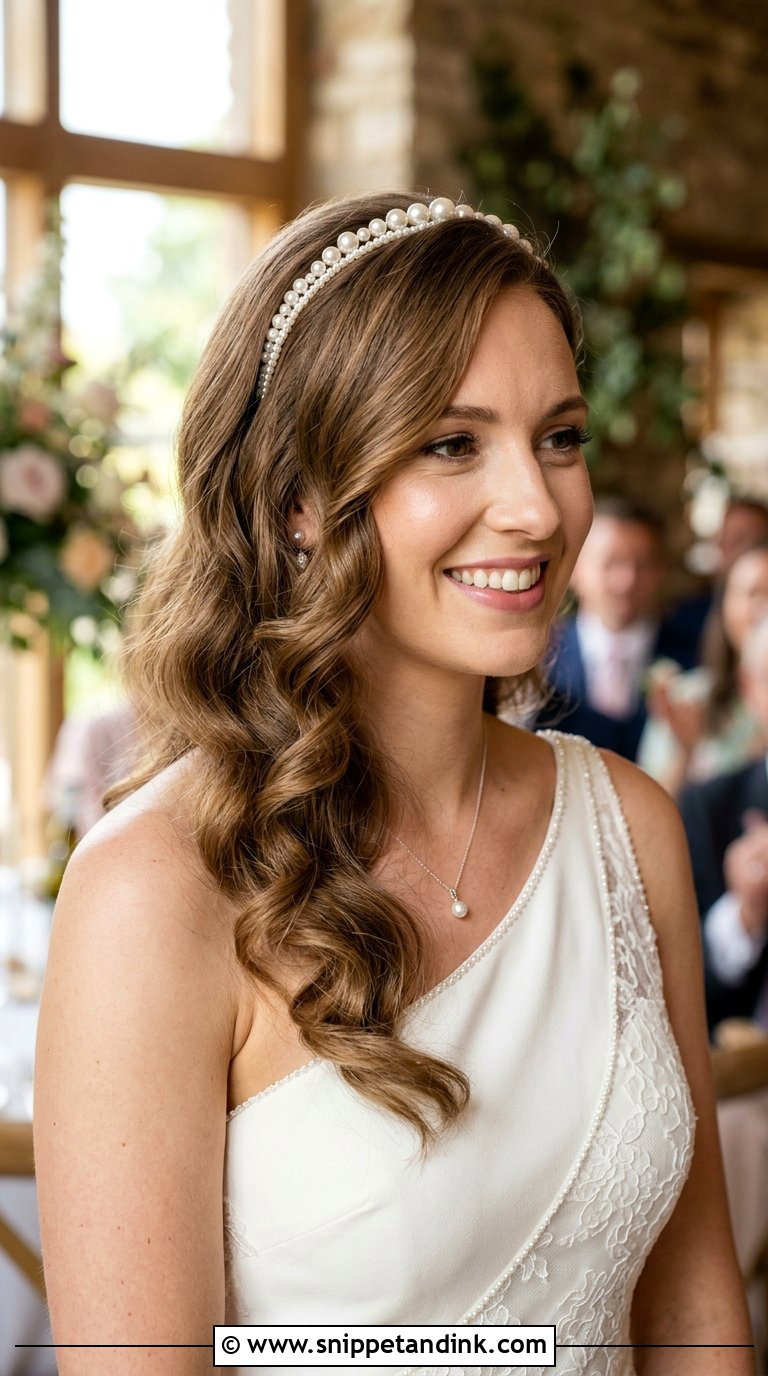
Side swept curls need a plan for the other side. I pin the hair behind the ear on the bare side with a couple of crossed pins hidden under the top layer, then sweep everything over. The pearl band crosses the crown and helps hold that sweep. This is the pairing I suggest when a bride wants to show a statement earring, because one side of the face is completely clear. It also echoes a one-shoulder or asymmetric gown. Long hair can get heavy on one shoulder by evening, so I keep the curls slightly looser at the ends to avoid a solid mass.
12. Sleek High Ponytail With Crystal Headband
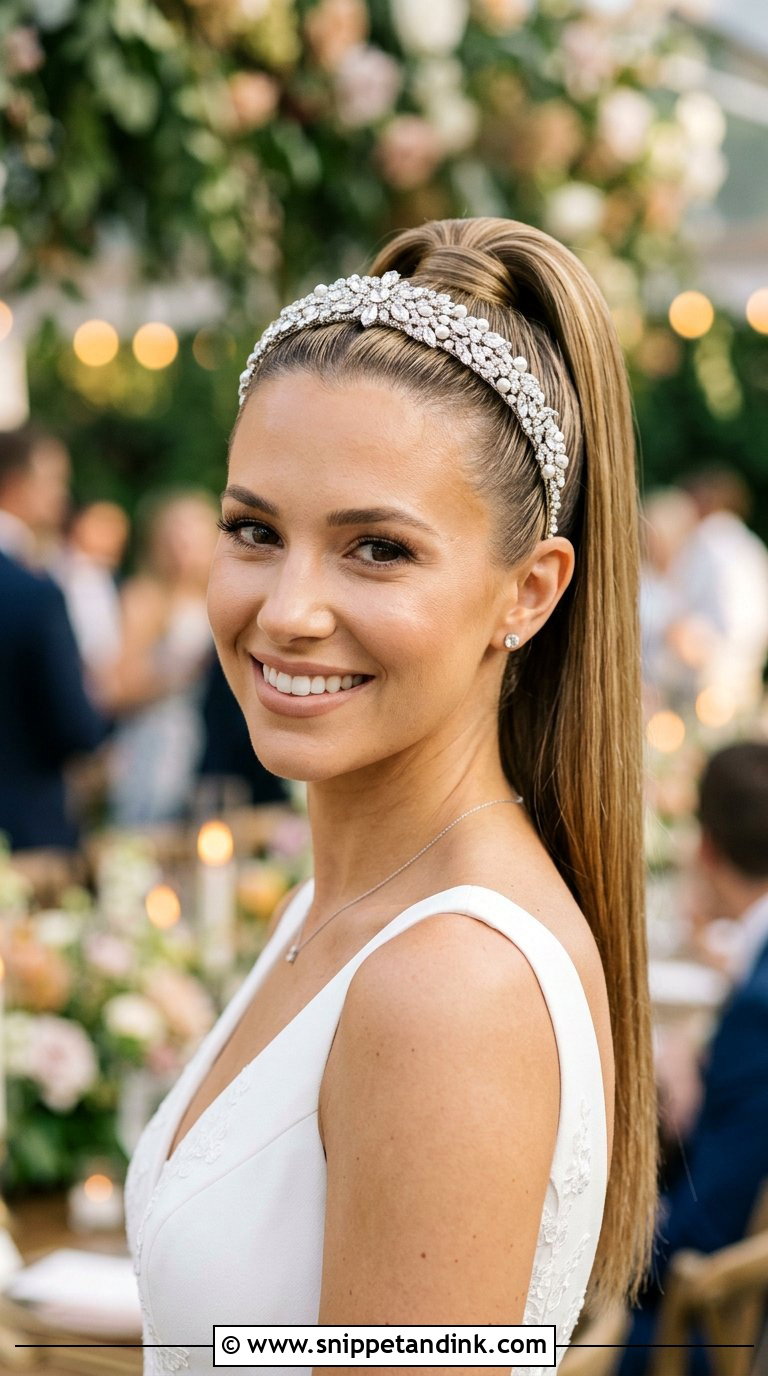
A high ponytail looks simple and is quite demanding. I brush it up into a firm base, wrap the elastic with a strand of hair, then pin under the base so it doesn’t sag after a few hours. The crystal band sits a few inches behind the hairline to soften the very pulled back front. Long hair or clip in extensions give the length that makes it work. Be honest about comfort: a tight high pony can give some brides a headache by mid afternoon, so test it at your trial for longer than half an hour.
13. Loose Braided Crown With Floral Headband
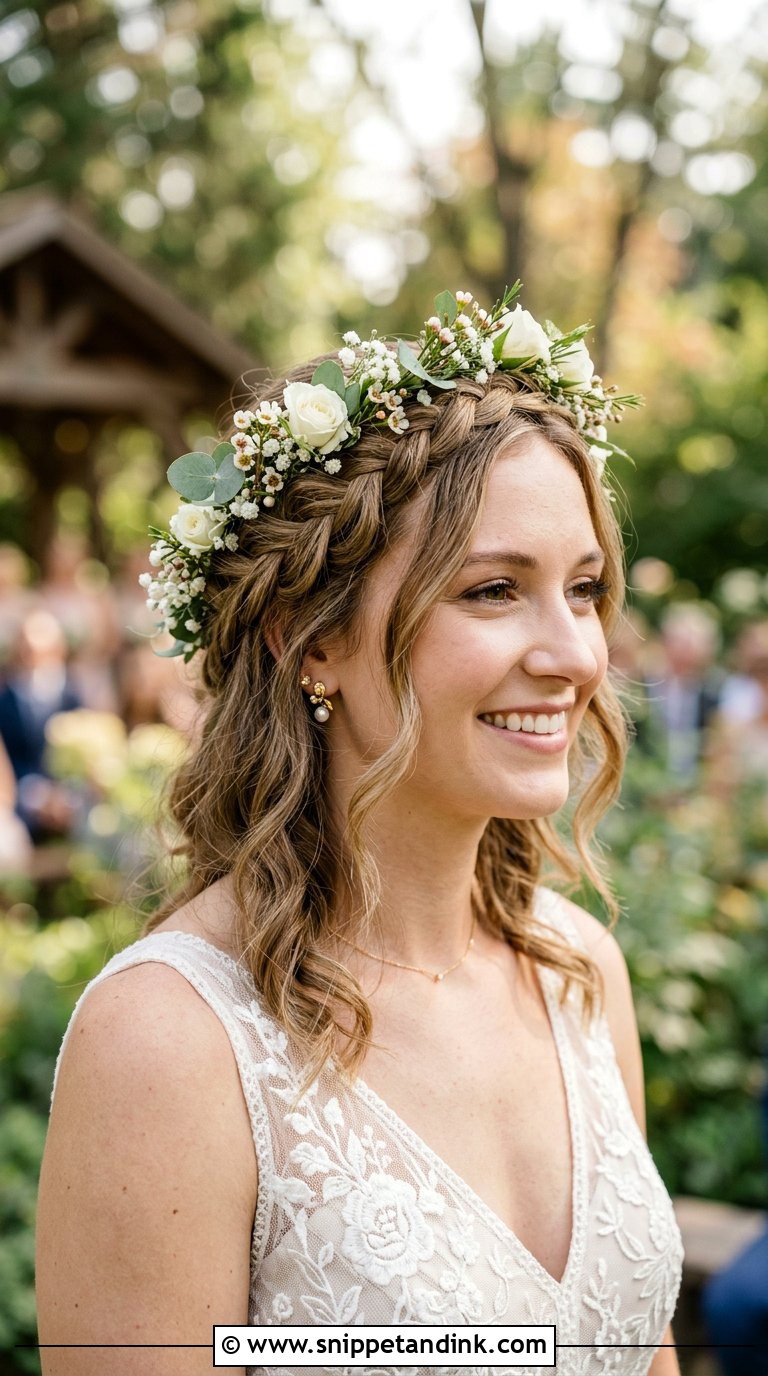
A loose braided crown wraps around the head, so a floral headband sits on top of the braid rather than against the scalp. I pin the braid first and then lay the band along its inside edge, where the flowers cover any pins. Matching the blooms to your bouquet ties the two together in photos. You can leave some lengths flowing or take it all up; flowing lengths suit natural waves, while full up is better for heat. Medium to long hair is needed for a braid that actually reaches around.
14. Polished Updo With Velvet Headband
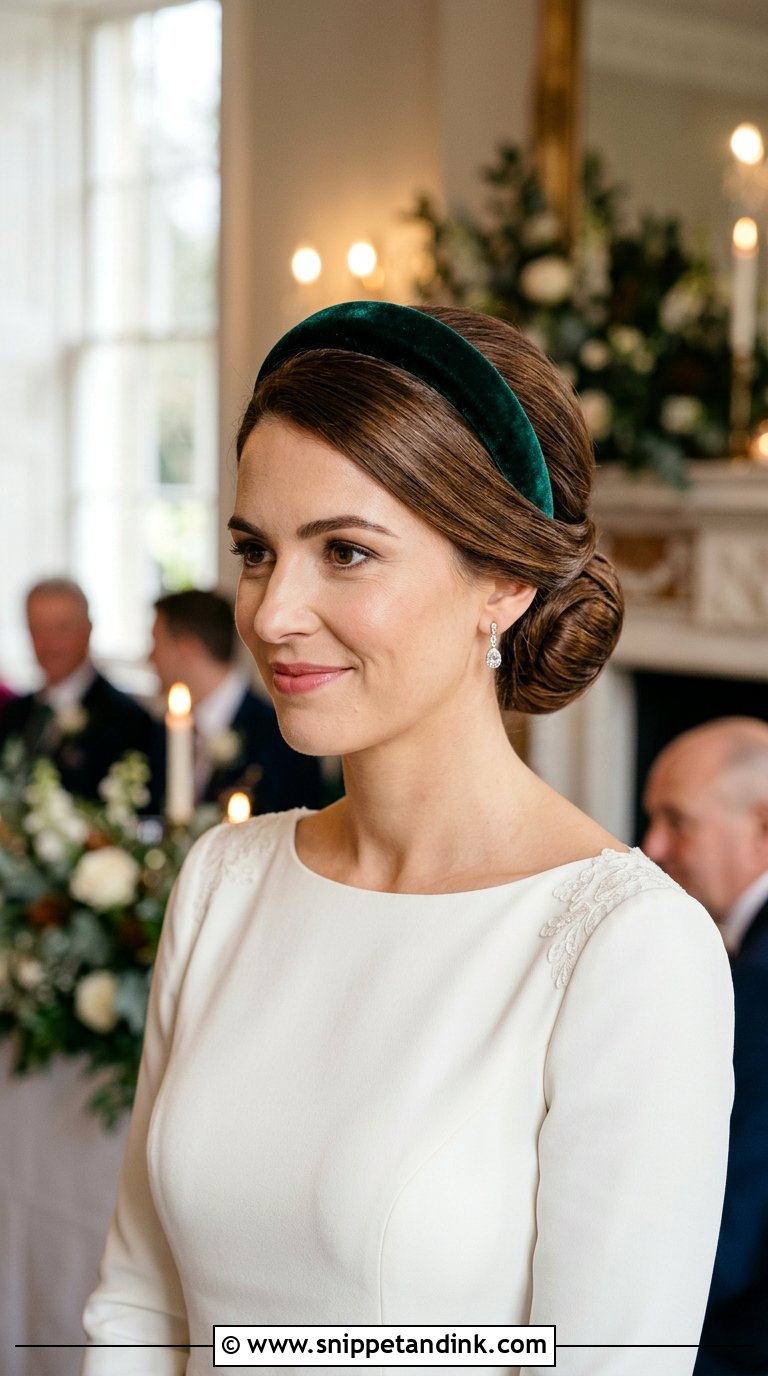
Velvet behaves differently from metal: it has grip. That means it slides less than a crystal band, and I need fewer pins to secure it. A velvet band in a deep jewel tone or black looks right at fall or winter weddings, and it adds texture against a smooth updo. The thing to check is the width. A wide velvet band can make the head look flat in profile, so I add a little lift at the crown before placing it. Pair it with a structured gown and one bold earring.
15. Beach Waves With Thin Pearl Headband
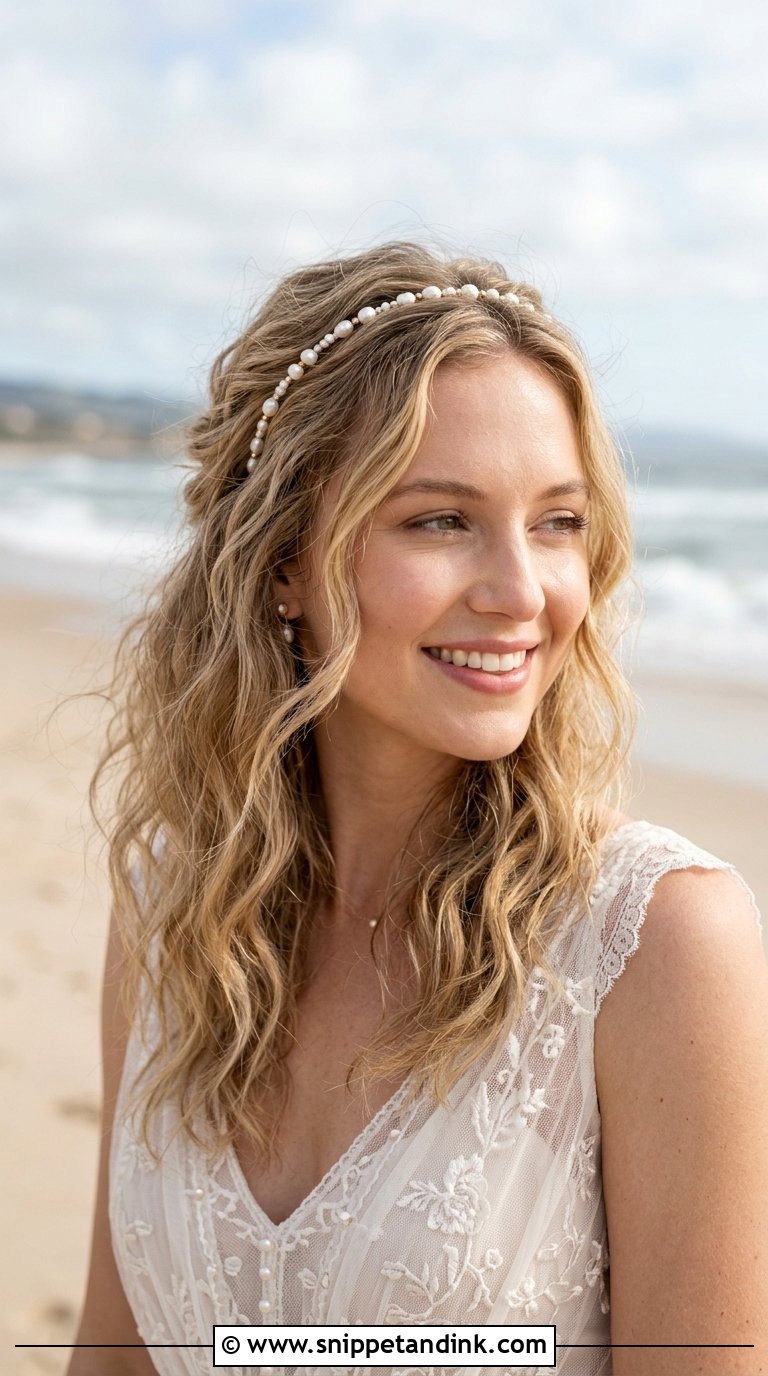
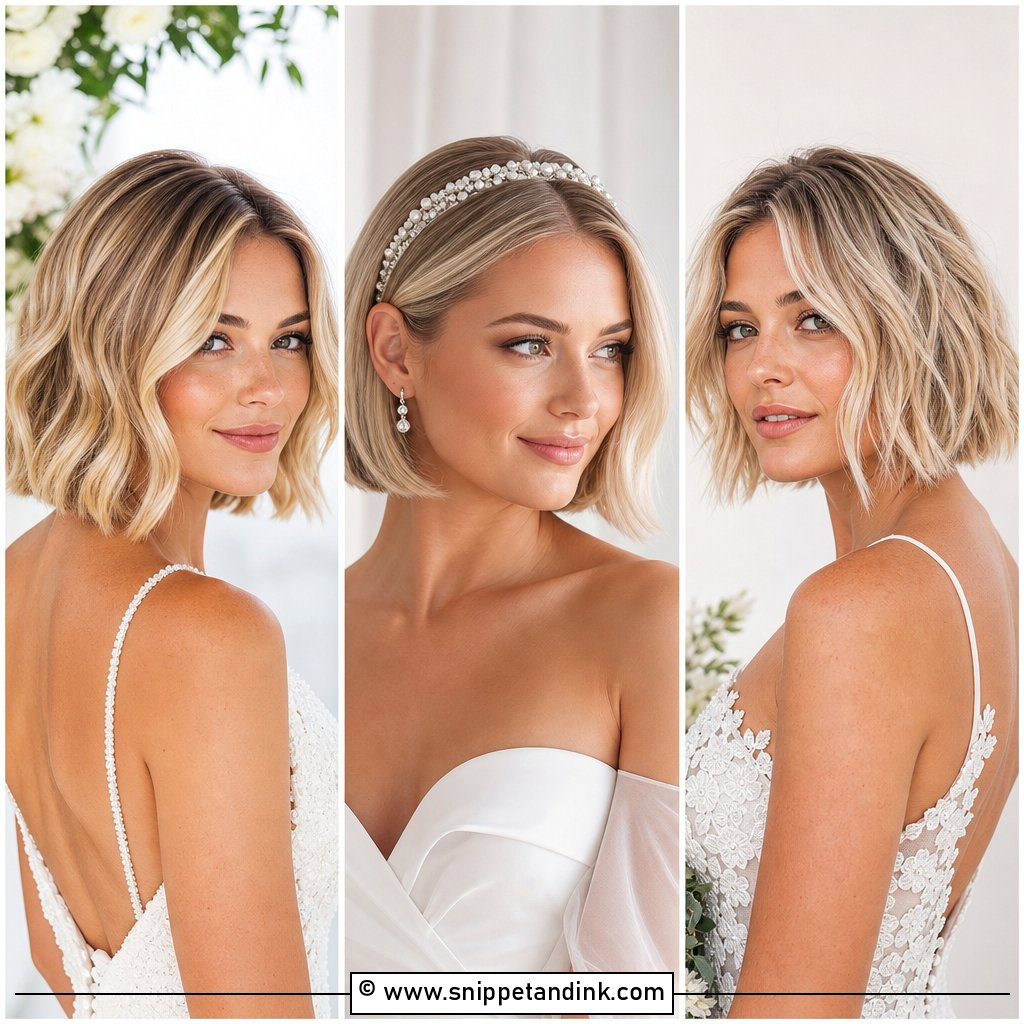
Beach waves look casual, but they need help to last. I use a flat iron or wand to make waves with straight ends, then break them up with a little sea salt or texture spray. Thin pearls keep the casual waves from reading as unfinished. Coastal and destination weddings are where I’d use it most, though humidity is the risk: frizz appears first along the hairline, right where the band sits. I bring a small smoothing balm and an anti-frizz spray for touch ups. It suits medium to long hair and natural movement.
16. Twisted Low Updo With Gold Leaf Headband
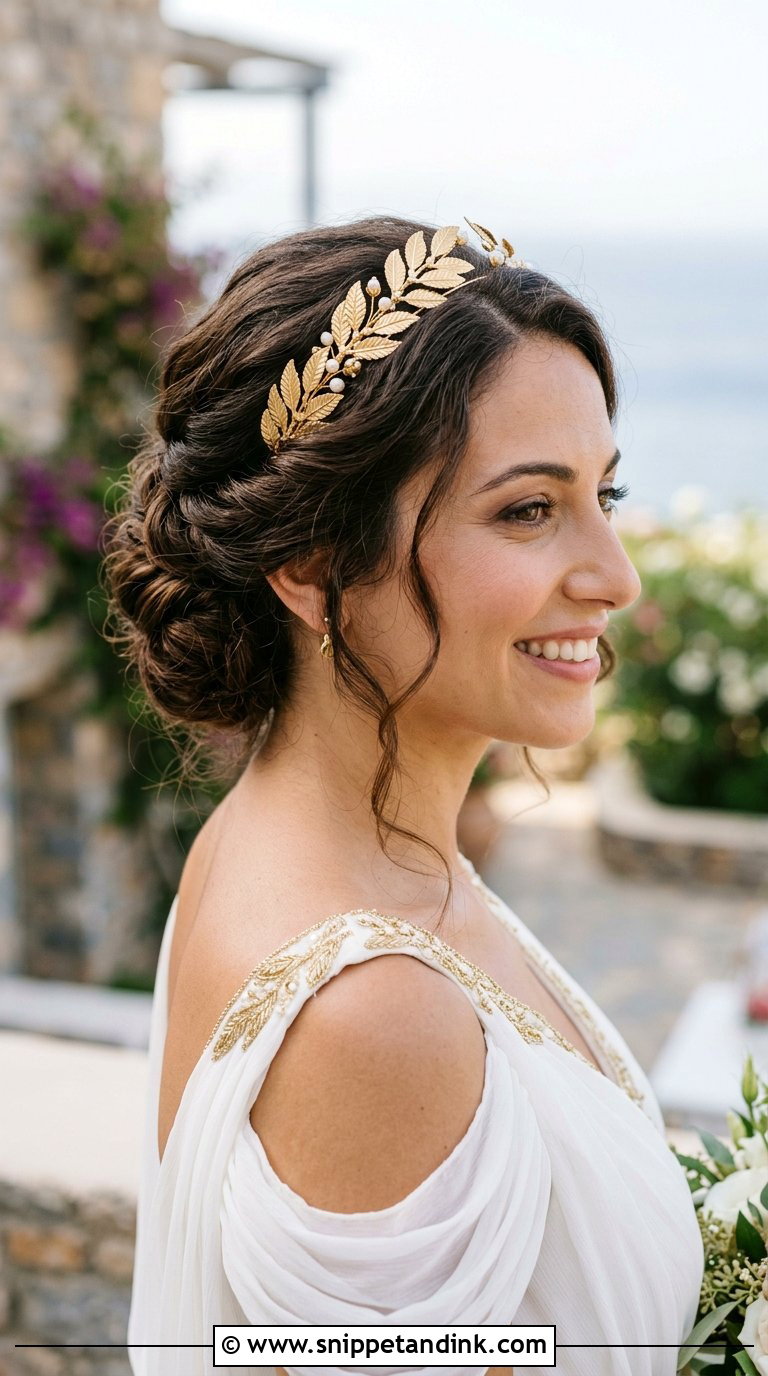
Gold leaf bands have a Grecian feel, and they pair with low twisted updos because the twists give the leaves something to sit in. I twist each section towards the nape and pin each twist, which creates a base that’s sturdier than a single bun. The leaves catch warm light and suit many skin tones. Thick, medium to long hair gives the deepest twists. A draped gown is the natural partner here; with a heavily beaded bodice, the leaf band can start to look like too many ideas at once.
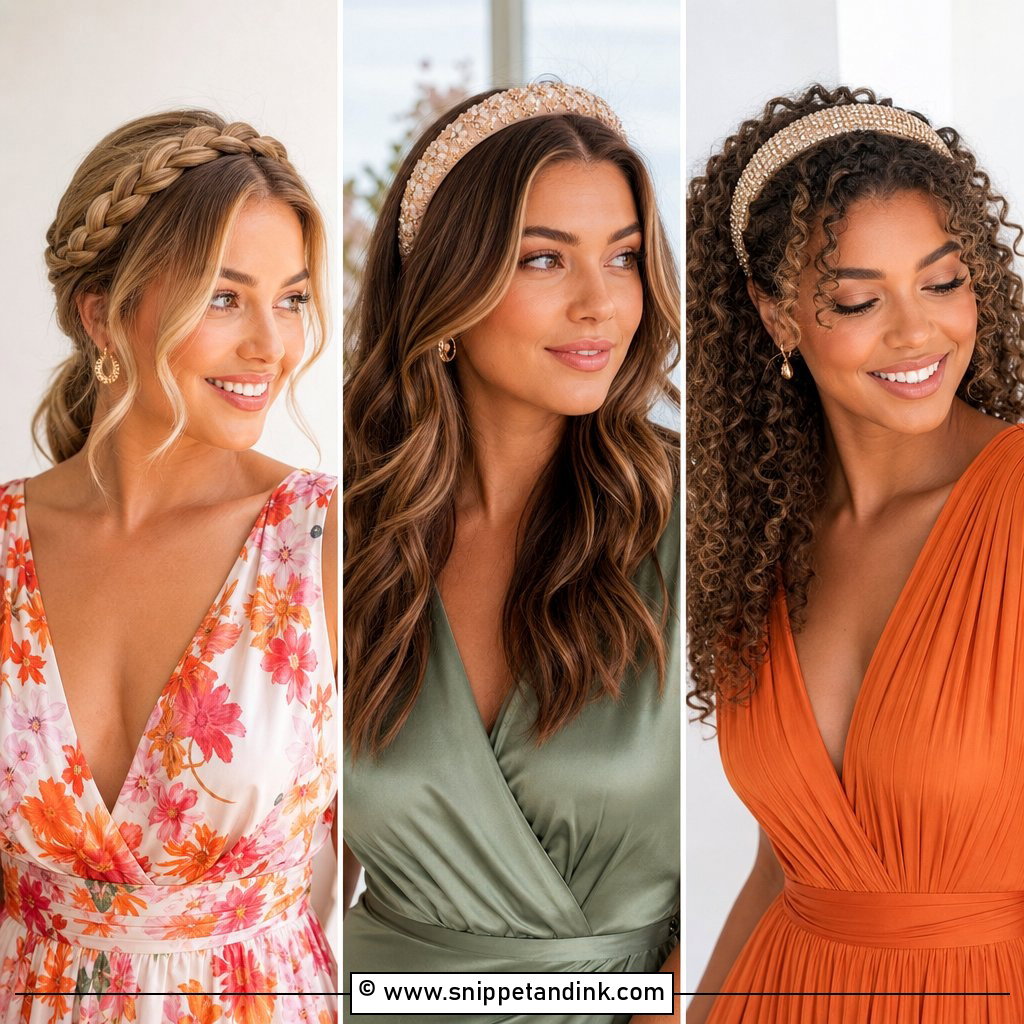
17. Curly Natural Hair With Beaded Headband
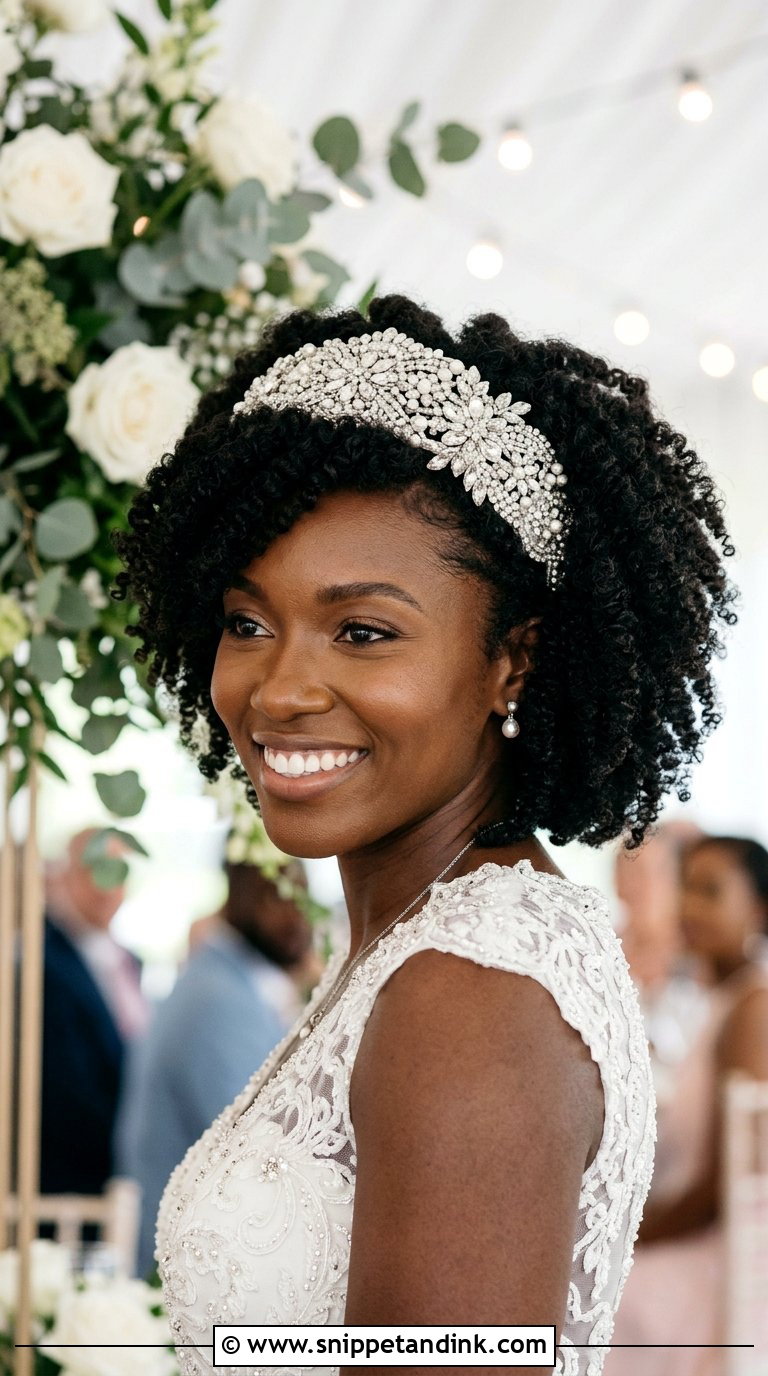
For curly natural hair, I start by asking the bride what her curls usually do over a day, because she knows that better than anyone. The style is simple: defined coils, volume kept, and a beaded band pushed back across the crown to clear the face. Beaded bands are good here because the beads don’t snag curls the way some crystal settings do. I’ll refresh the curl definition with a little cream on damp fingers rather than re-wetting the whole head. Bold earrings work because the volume can carry them.
18. Romantic Updo With Crystal Halo Headband
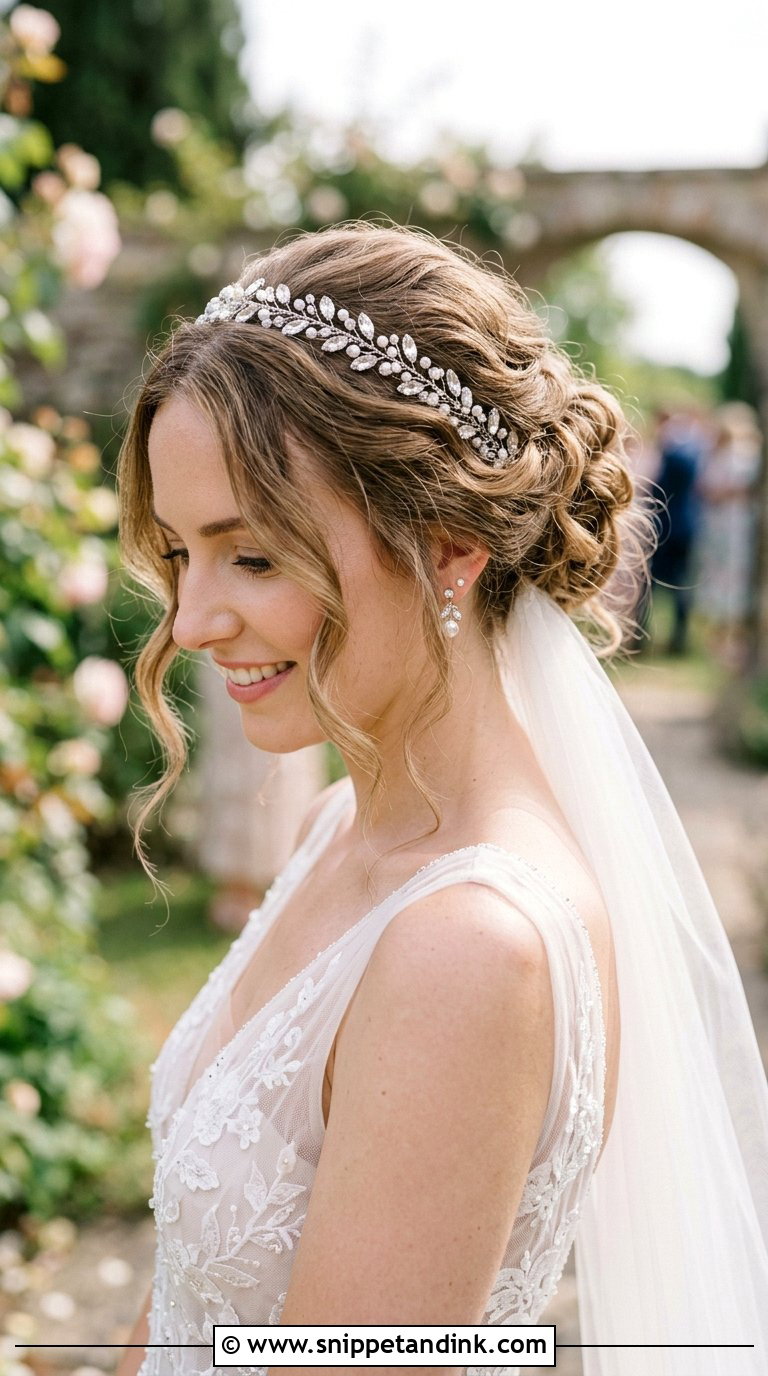
A crystal halo headband goes all the way around the head, so the updo has to be soft enough for it to sit in without denting the shape. I build a loose, textured updo first and leave a few tendrils out at the face, then settle the halo over it and pin it at four points: front, back and both sides. Halos sparkle in every direction, which works for evening ceremonies. It’s a good alternative for a bride who wants sparkle without a traditional tiara. With a veil, attach the veil comb under the back of the halo so they don’t clash.
19. Shoulder Length Waves With Rhinestone Headband
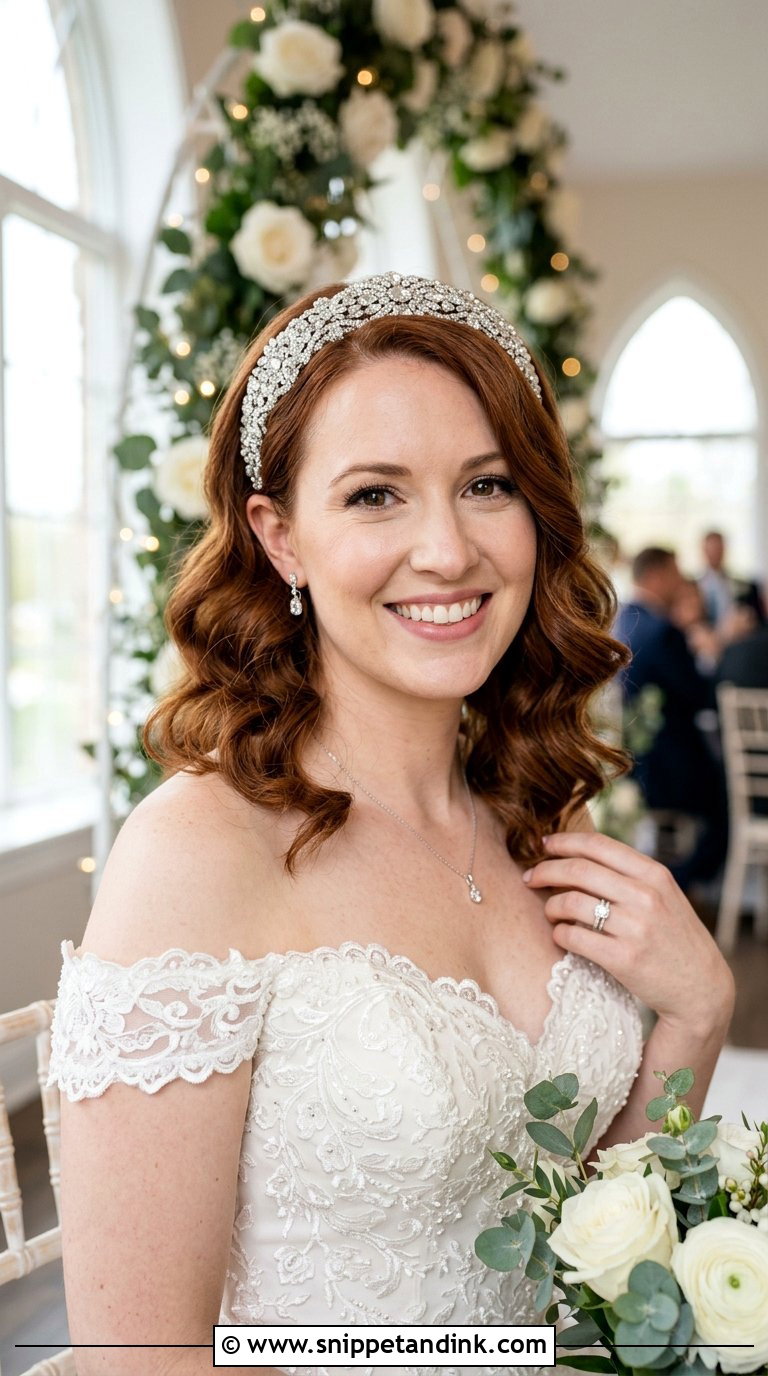
Shoulder length hair is easier to work with than people think. It’s long enough to wave, short enough to stay put. I use a larger barrel at this length so the waves stay soft rather than turning into ringlets that shorten the hair further. The rhinestone band adds the formal touch, and I place it just behind the hairline to keep the waves around the face. Comfortable for a full day, and it works with most necklines, from ceremony right through to reception.
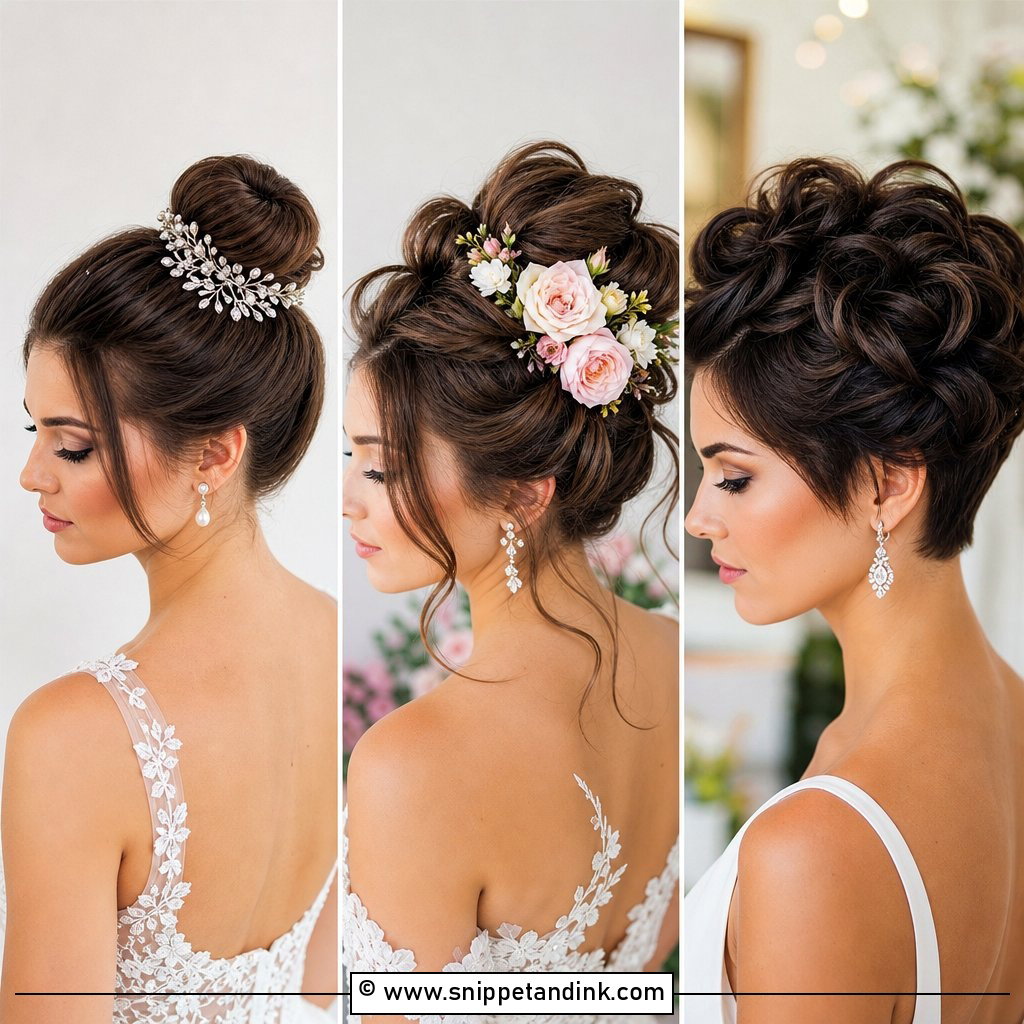
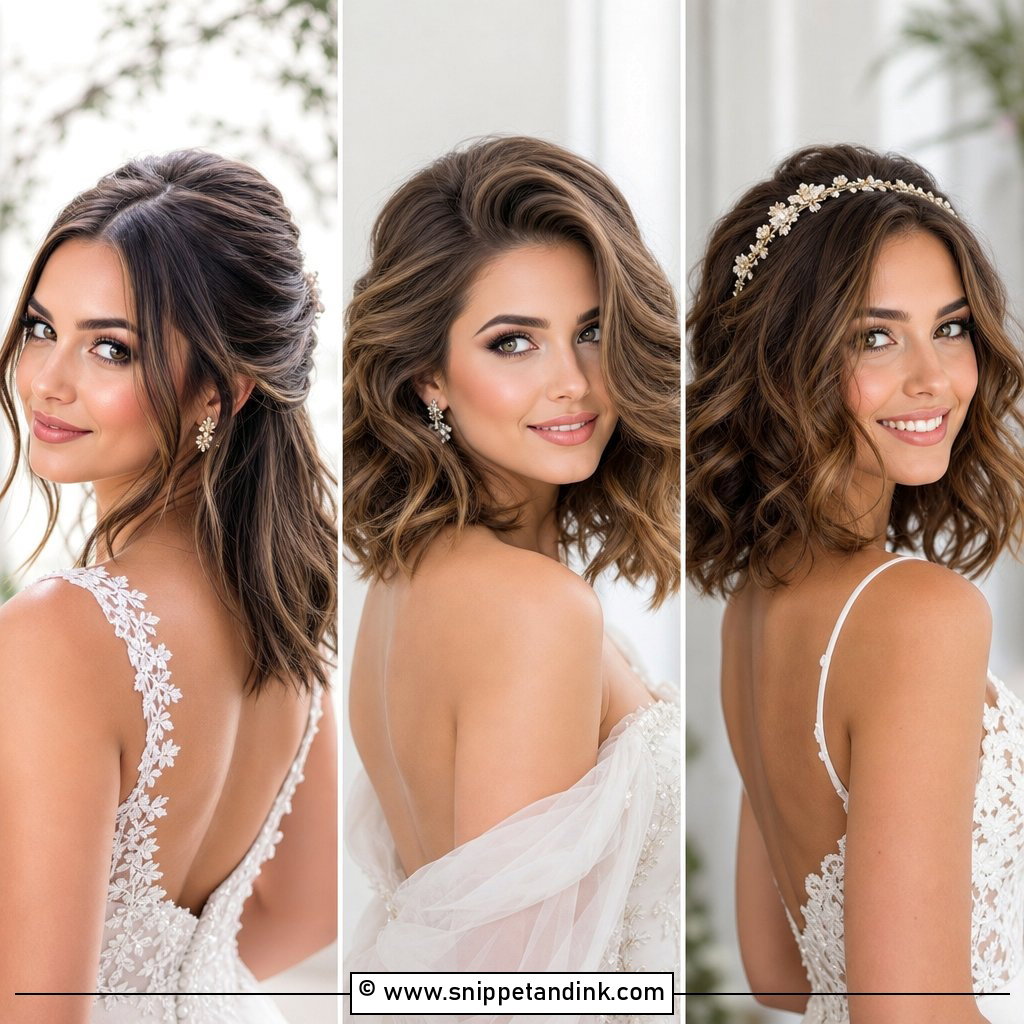
20. Sleek Straight Hair With Minimalist Headband
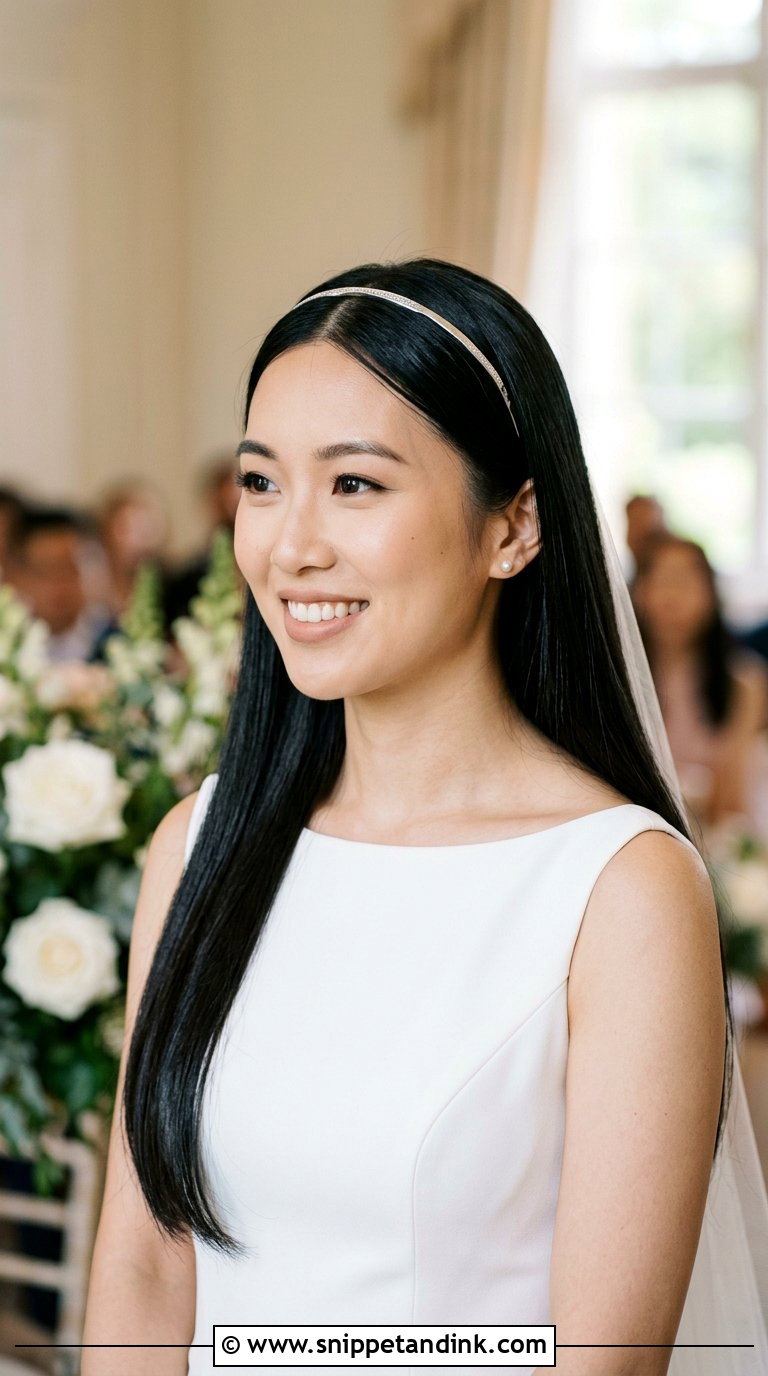
Sleek straight hair shows everything, so prep is the whole job. I blow dry with a paddle brush and finish with a flat iron on low heat, then smooth a tiny amount of serum through the lengths. A thin metal band adds structure without fuss. It suits straight hair of any length. My one warning: very sleek hair looks greasy in photos if too much product goes near the roots, so keep it light, and take a powder blotting sheet for the hairline.
Pairing the Band With a Veil Comb
A headband and a veil can absolutely be worn together, but they need to be placed in the right order. The band goes in first, then the veil comb sits behind it, usually at the crown for a half up style or just above the bun for an updo. Never slide the comb under the band itself. The weight of the veil pulls the band backward every time someone steps on the hem.
If you plan to remove the veil after the ceremony, ask your stylist to place it so it comes out without touching the band. I’ll often show a bridesmaid where the comb is anchored so she can lift it out cleanly. Large statement bands and cathedral veils compete for attention; if you love both, a simpler band and a sheer veil without beading is easier on the eye.
If the Band Slips or Snaps at the Reception
Dancing and hugging move things, so I always leave a few spare pins in a color that matches your hair with whoever holds your emergency kit. A slipping band is usually fixed by removing it, re-crossing two pins beneath where it sits, and replacing it. If a cheaper band breaks, a ribbon or a few loose pearls pinned into the hair will save the look for the rest of the night. Fresh flower bands should come with a spare bloom or two from your florist.
Wearing It From the Aisle to the Last Dance
Pick the band and the hairstyle together, not one after the other. Hair length, the dress neckline and how long you’ll be wearing it all change the right answer. Take your headband to your trial and wear it for the full session, not just for a quick photo. With the right fit and a style built around it, the band should still be where I placed it when you leave the reception.
You'll Like These Ideas:


Leave a Reply