
Seventies hair is built on air. Center parts, feathered layers, brushed curls and soft volume all depend on lift and movement rather than tight curls and spray, which is exactly why they feel relaxed at a wedding, and exactly why they need more planning than they appear to. Curtain bangs under a veil, loose waves with a flower crown, braided crowns and glossy disco volume all come from the same decade but behave very differently over a long day. I’ve noted what each of these 70s bridal hair looks needs from your cut, your prep and your stylist, and where each one tends to fall flat.
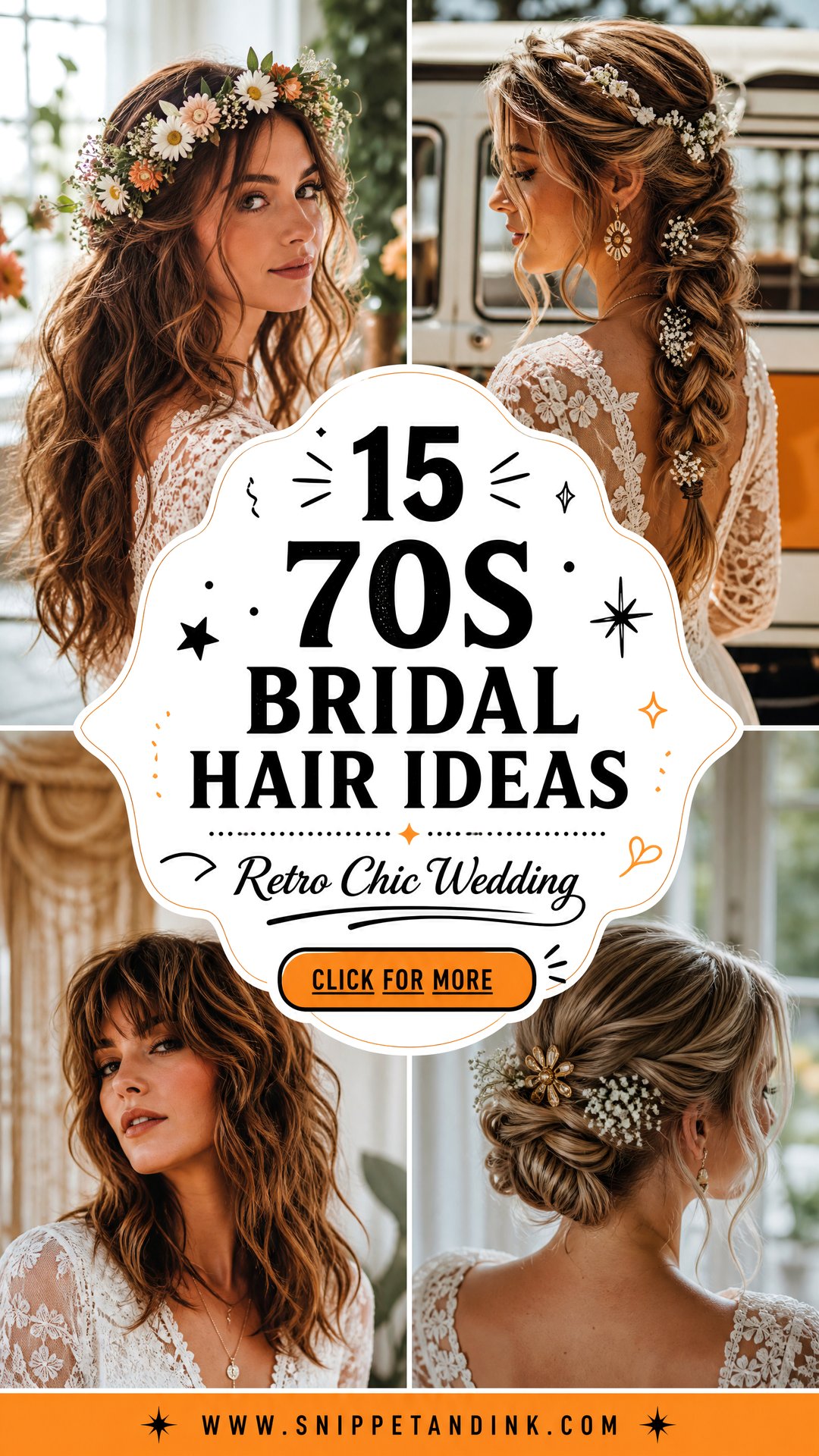
Retro Hair Without the Fancy Dress Effect
The line between a 70s-inspired bride and a theme party guest is thinner than it looks on a mood board. It usually comes down to how many decade signatures you stack at once. Feathered wings, a center part, a flower crown, blue shadow and a crochet dress together is a costume. One or two, done well, is a style.
- Choose one hair signature to lead: curtain bangs, feathering, disco volume or flowers. Keep everything else modern.
- Keep makeup current. Fresh skin and soft lashes stop retro hair tipping into period drama.
- Match the hair to the dress. A satin slip suits straight center-parted hair or a low twist; a lace bell-sleeve gown can take bigger waves and flowers.
- If nobody else in the wedding party is going retro, a lighter touch looks more deliberate.
A test I like at trials: take a photo and ask a friend to guess the decade. If the answer comes instantly, I’d pull one element back.
1. 70s Bridal Hair With Curtain Bangs
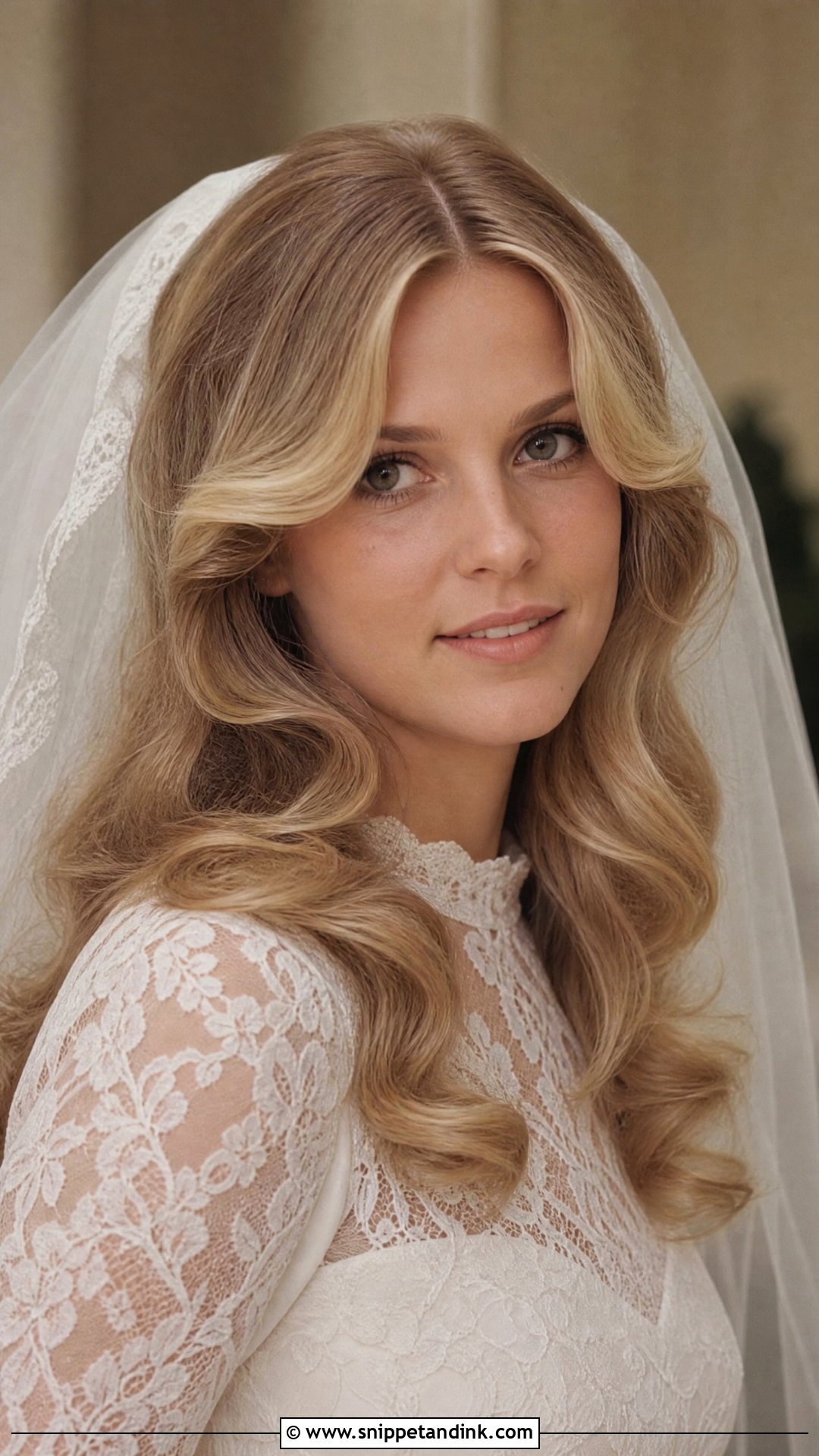
Curtain bangs are the quickest way to bring the decade into a wedding look without going full vintage. The center part sets the era, and the bangs sweep away from the face to frame the cheekbones. I dry them with a medium round brush, rolling each side away from the face, then pin them in a loose curl while they cool; that set is what keeps the swoop through the ceremony. Ask for long curtain bangs if you want them to blend into layered hair. They sit well with loose waves, a soft blowout or a low veil at the crown. If you have a strong cowlick at the front hairline, try them well before the wedding.
2. 70s Bridal Hair With Feathered Layers
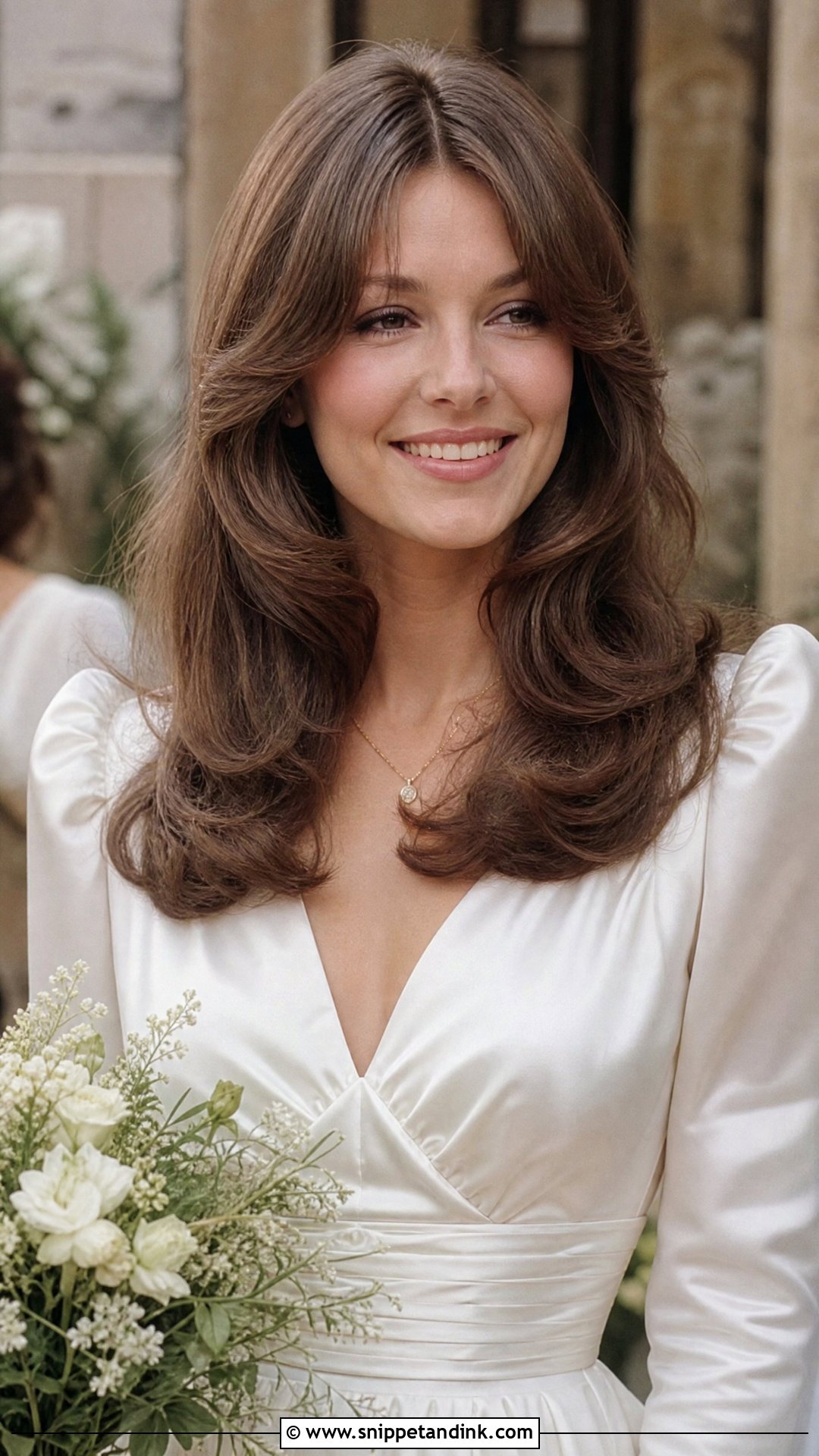
Feathering comes from the cut first and the blow-dry second. The layers have to be there for the flipped, winged shape to happen, so if your hair is one length, a stylist can only fake it with curling irons, and it drops faster. When the layers are right, I use a round brush to roll each one back and away from the face, which gives lift at the eyes and volume through the sides. Wear it down, half up, or with a veil behind the crown. It’s a good fit for medium to thick hair; very fine hair struggles to hold the wings for more than a few hours.
3. 70s Bridal Hair With Long Loose Waves
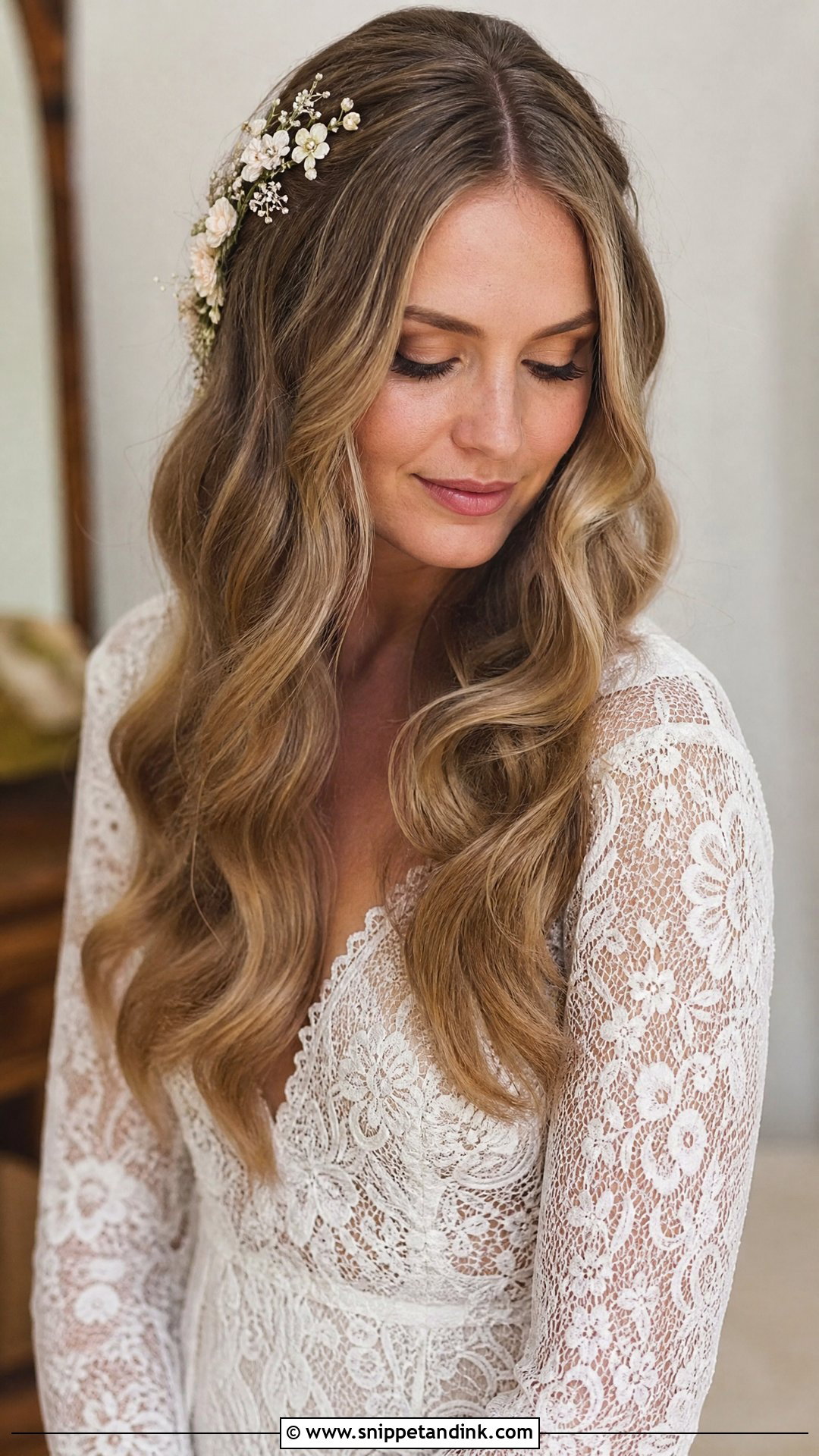
Long loose waves with a center part are the simplest version of the decade, and they sit easily with a lace dress, bell sleeves or a plain veil. I use a large barrel and curl away from the face, then brush them out gently so the hair falls in bends rather than defined ringlets. Healthy ends matter more here than in an updo, since everything is on show; book a trim three or four weeks out. Outdoors, a little shine spray helps the waves catch light. Leave them bare, or add tiny flowers or a hair vine.
4. 70s Bridal Hair With A Flower Crown
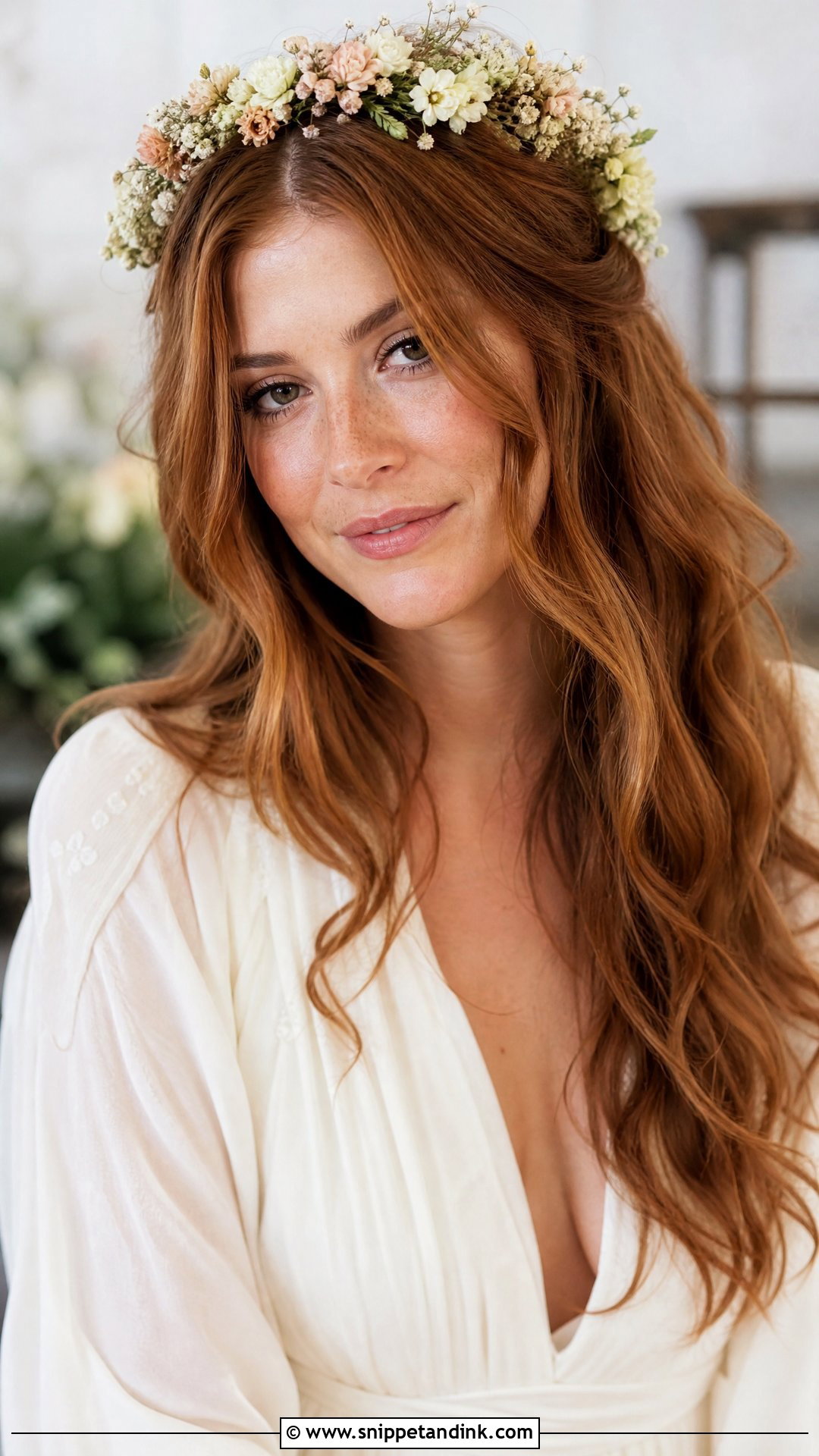
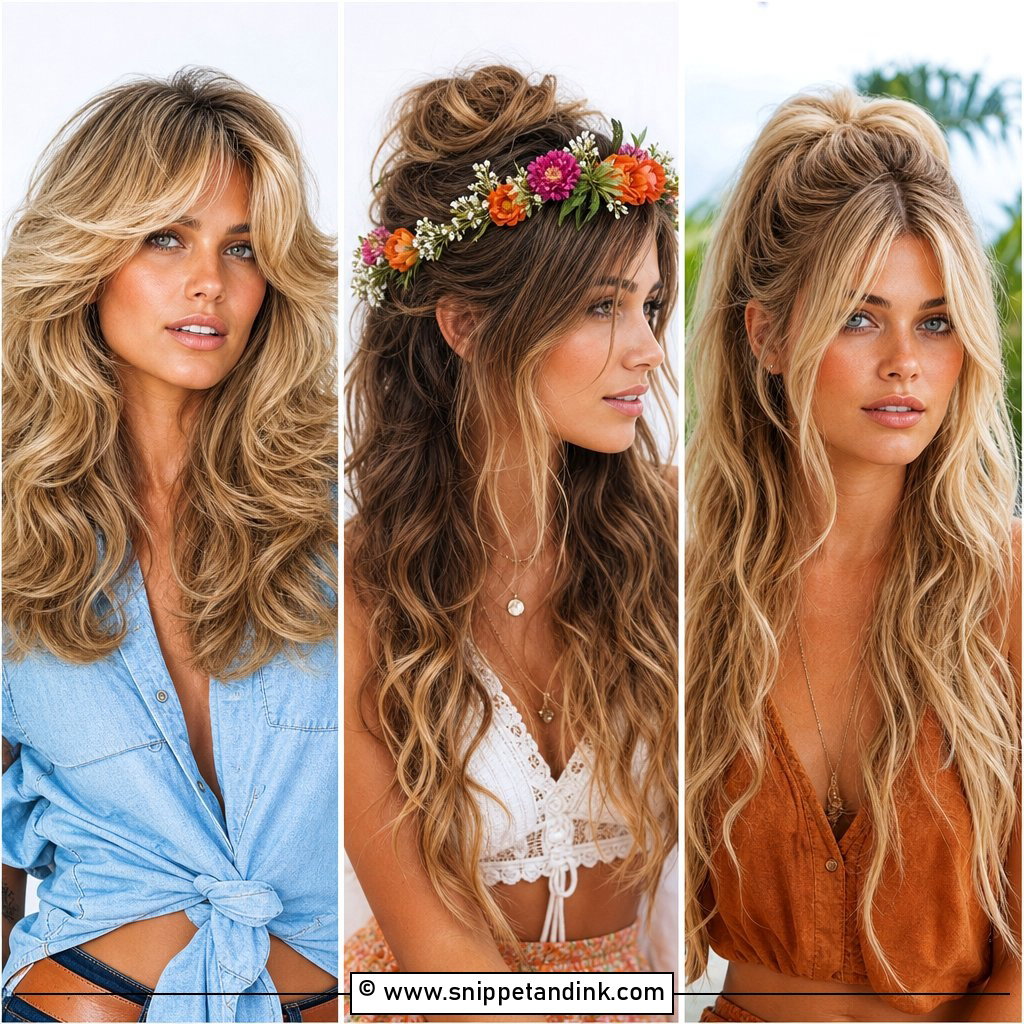
A flower crown suits loose waves, natural curls or a relaxed half-up shape, and it brings the soft bohemian side of the decade more than anything else. The hair should have some texture so the crown nestles in rather than sitting on top like a hat. Small blooms look delicate; larger ones make a stronger vintage statement, but they also add weight and slide on silky hair. I pin a crown through a small braid or teased section on each side above the ears, which holds it level. It photographs well from the front and side, less so from directly above.
5. 70s Bridal Hair With A Boho Braid
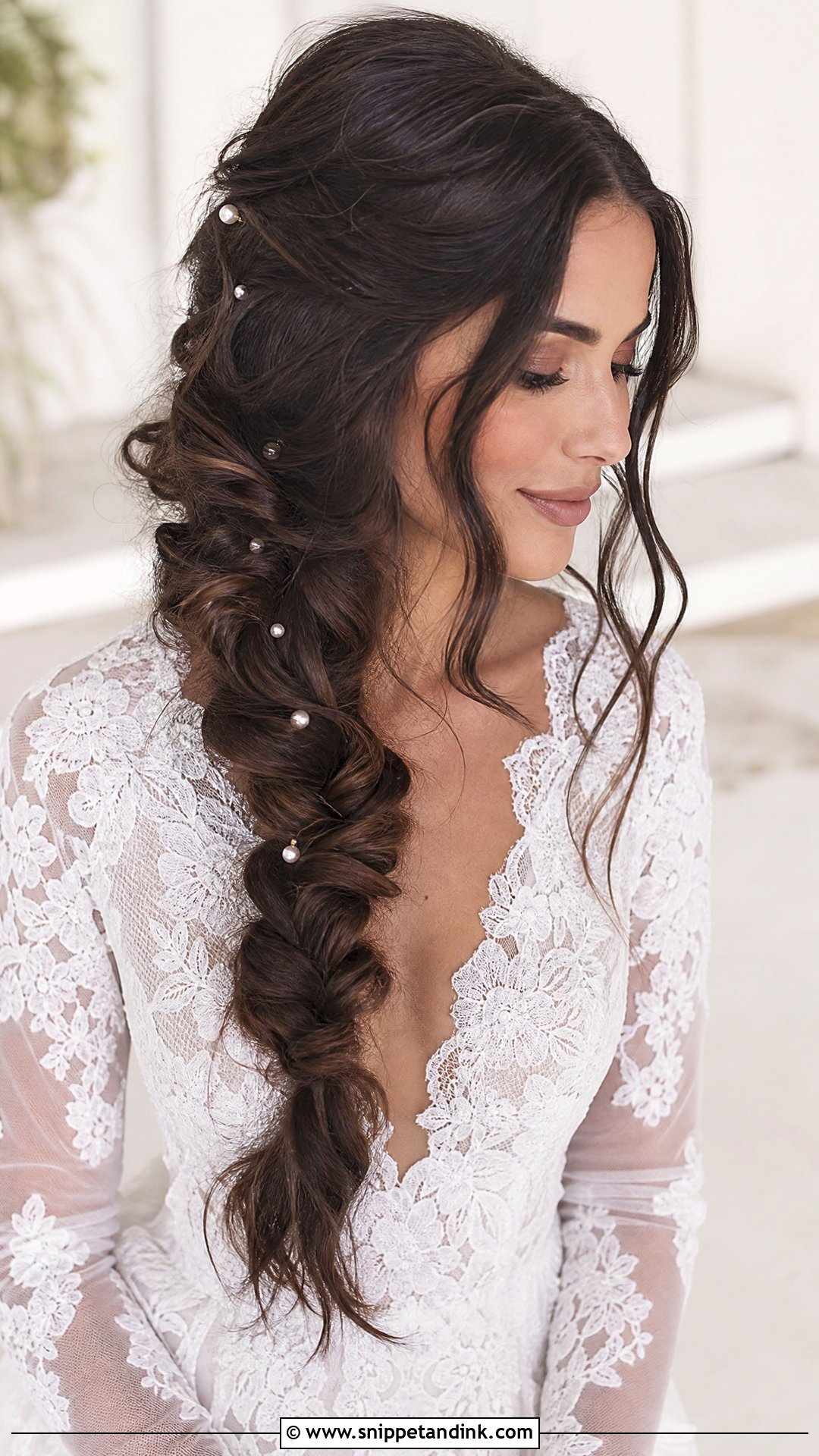
A loose braid gives texture and some free-spirited charm. It can sit to one side, wrap into a crown or blend into waves down the back. I braid fairly firmly first and only then loosen the edges with my fingers; a braid that starts loose falls apart by the reception. A few face-framing pieces curled away from the face give the 70s outline. It holds up well on a windy beach or at a rustic venue. Pearl pins or tiny flowers add a bridal touch, though the braid needs nothing else to work.
6. 70s Bridal Hair With A Center Part
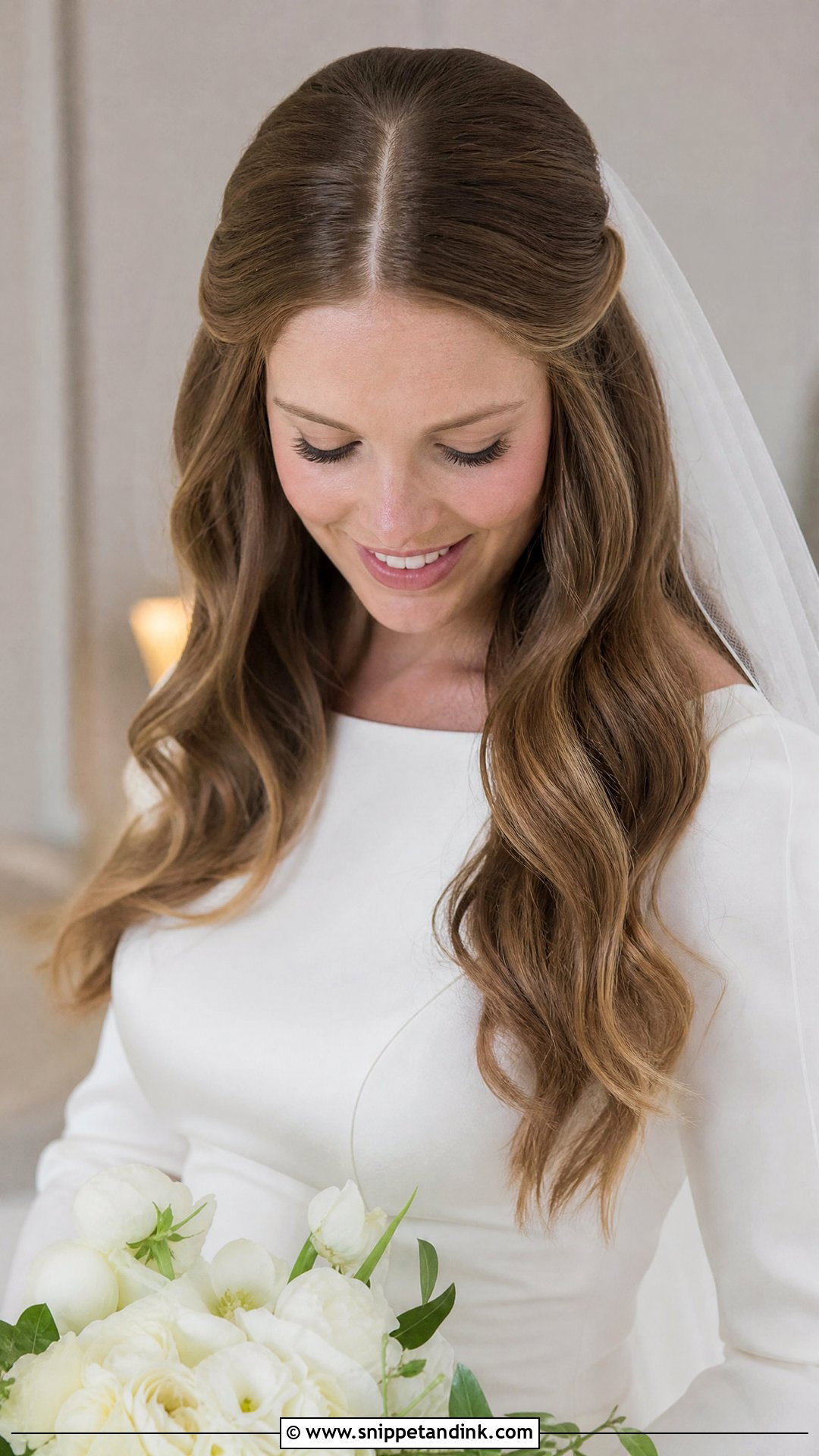
The center part was the signature of the decade, and on its own it sets a vintage mood. It’s also the least forgiving part line there is. I find the true center by tracing a line from the middle of the nose up over the crown, then check symmetry from above, because faces aren’t symmetrical and sometimes a part a few millimeters off-center looks more even. Wear it with straight lengths, brushed waves or soft curls. With bold lace or dramatic sleeves, it keeps everything calm. A veil at the back or small flowers near the ears is enough.
7. 70s Bridal Hair With A Shag Cut
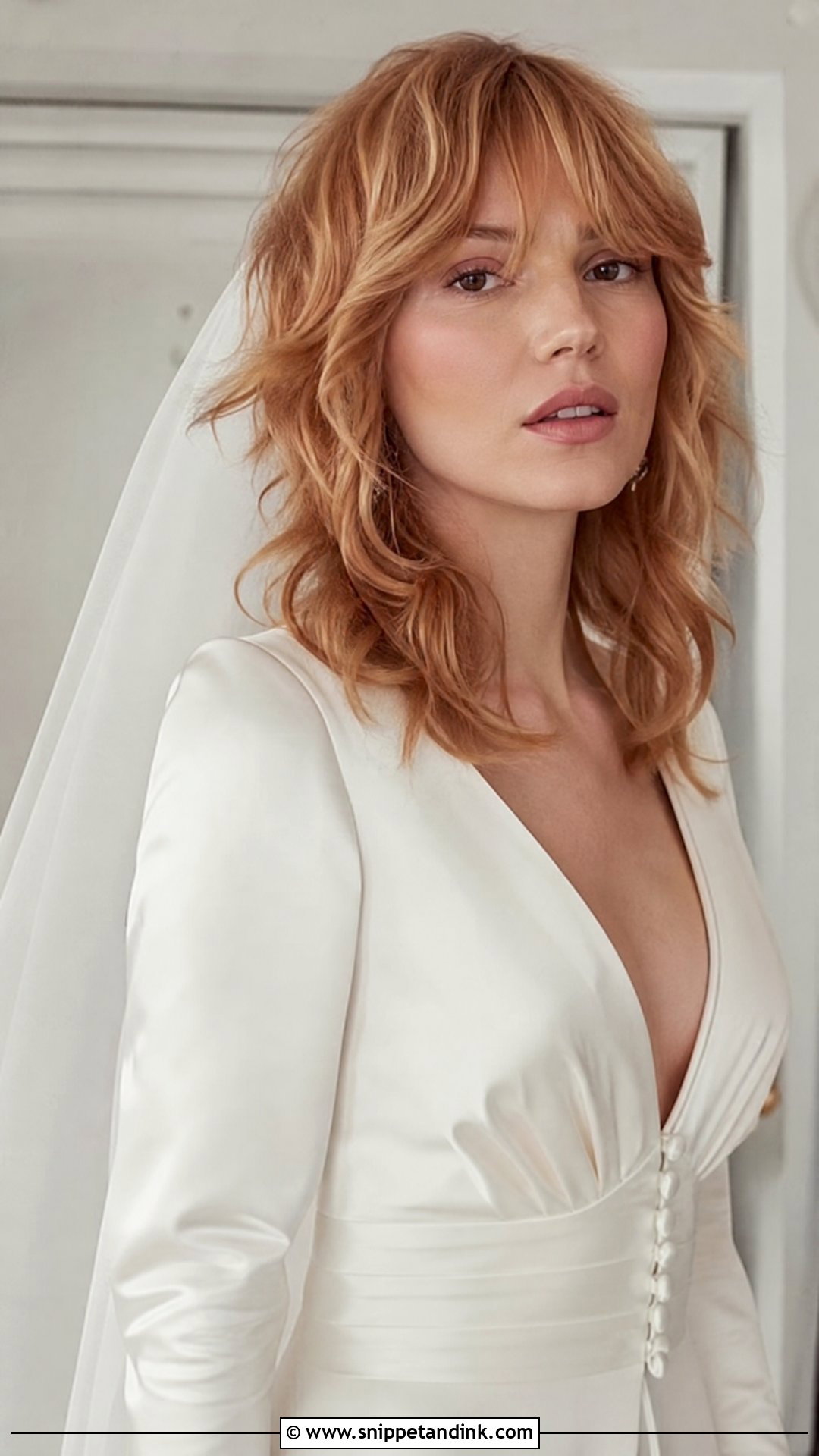
A shag gives personality and movement through choppy layers and face-framing shape. For a wedding, I keep the texture but polish the ends with a flat iron or small curling iron, so it reads deliberate rather than just-woke-up. Curtain bangs or wispy fringe make it more authentic. It pairs with vintage lace and satin slip dresses. A light texture spray keeps the layers moving; heavy hairspray glues them into clumps. Get the cut about a month before so the layers have softened and grown in slightly.
8. 70s Bridal Hair With Brushed Curls
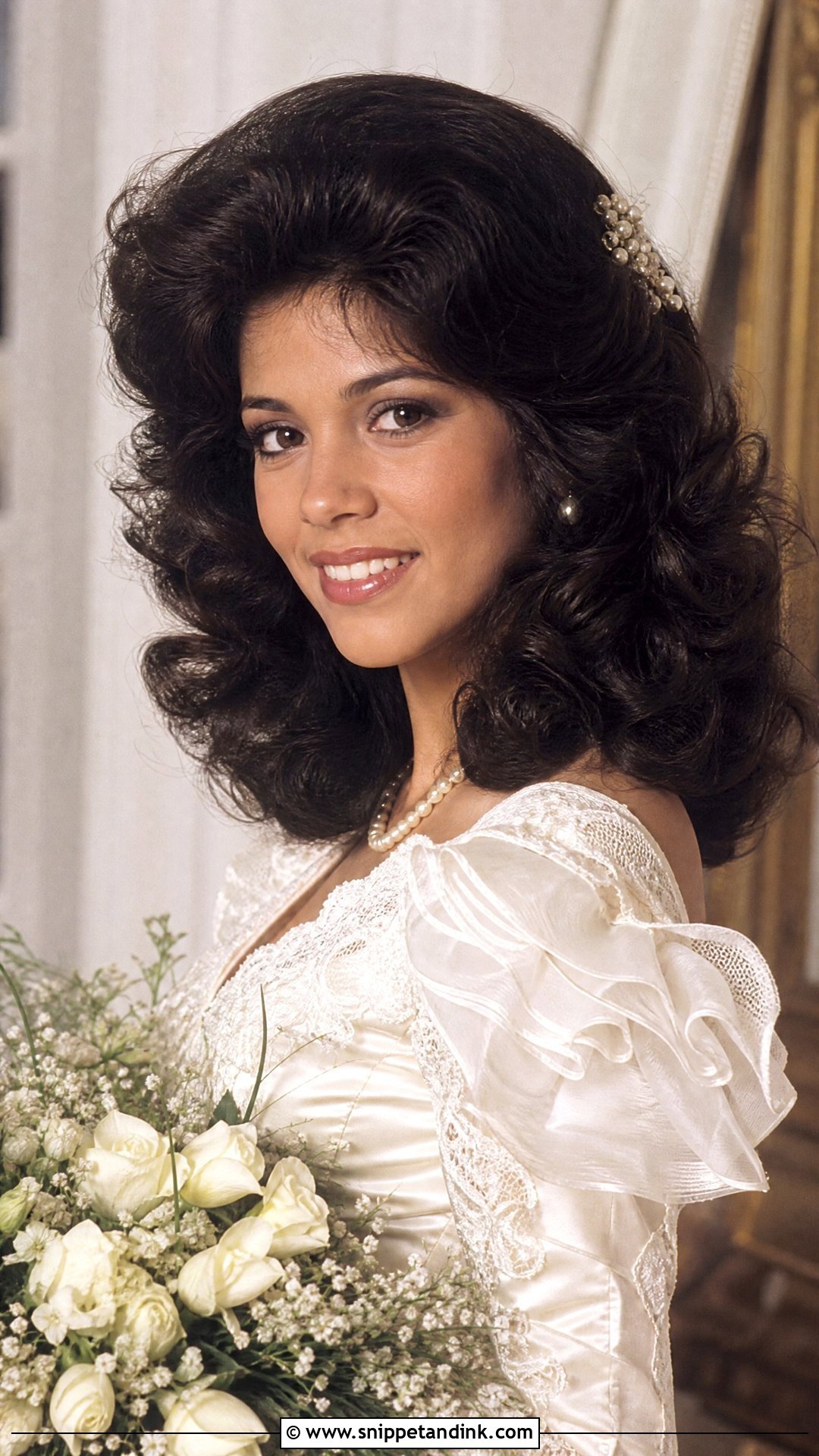
Brushed curls are set, cooled and then brushed out into a soft cloud. It feels like a lot of volume, and it is. I set the curls with pins, leave them to cool fully, and only then brush through with a paddle or boar bristle brush. Brushing warm curls flattens them. It suits medium to long hair, and pairs with a side comb, veil or headband. The crown needs gentle lift, or the shape collapses into a triangle over the day. Use a flexible spray, not a stiff one, so the cloud still moves.
9. 70s Bridal Hair With A Headband
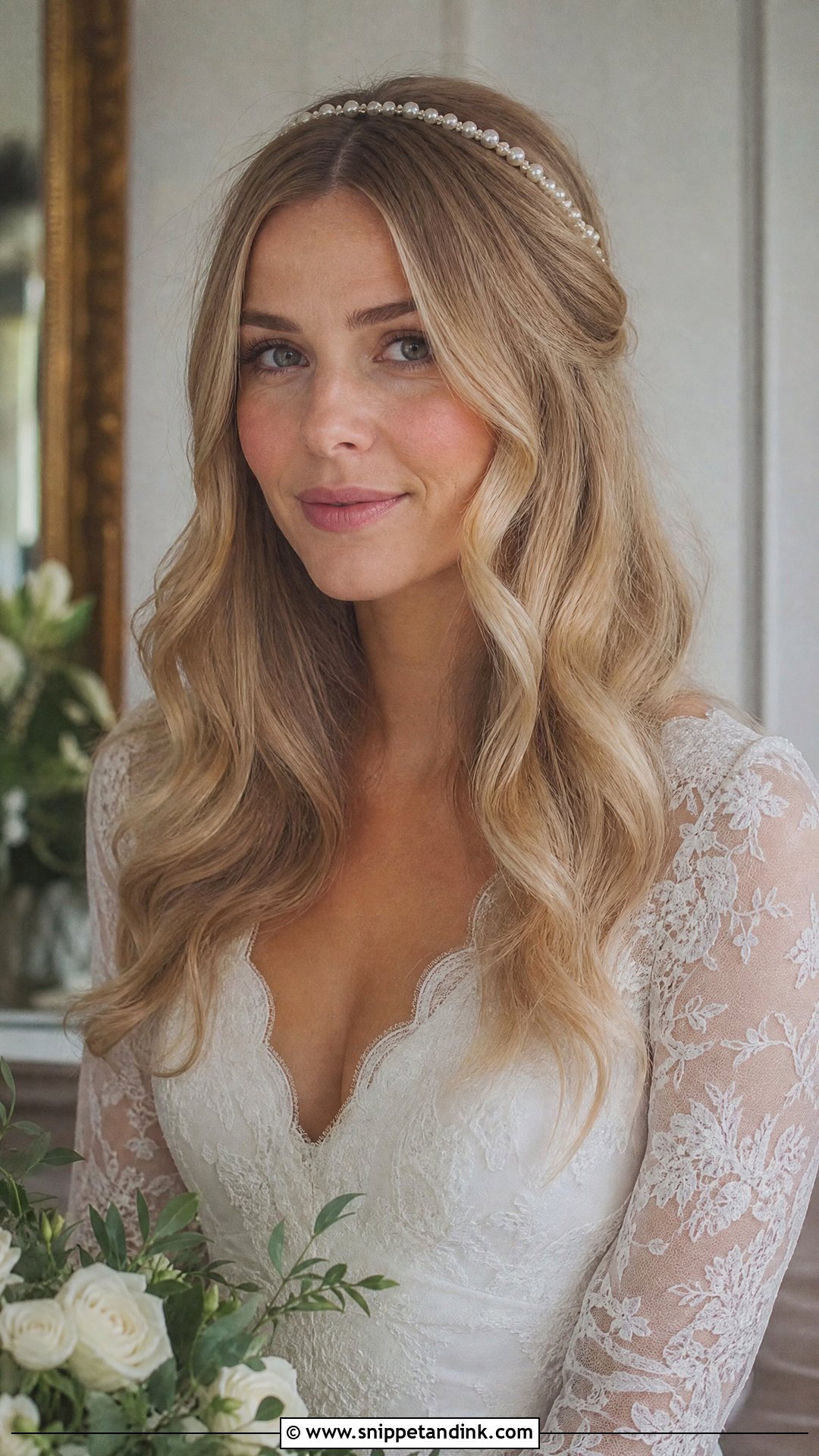
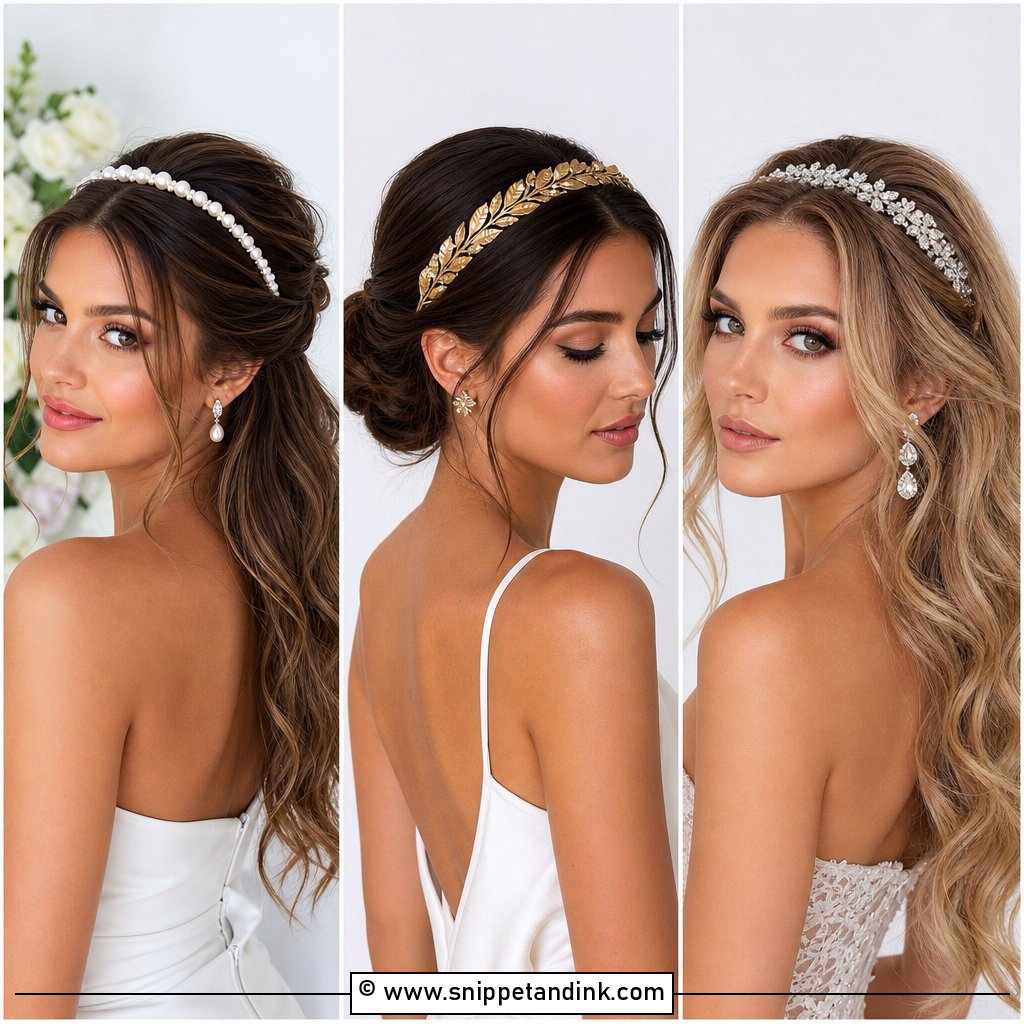
A headband turns loose waves or a soft blowout into a finished bridal look with almost no effort on the day. Satin, pearl, lace and floral bands all suit the era. For the most 70s shape, part the hair in the middle and set the band across the crown or lower near the forehead. Fit matters: a headband that’s even slightly tight gives a headache behind the ears within hours, so wear yours for an afternoon before the wedding. Keep the rest of the hair full, not sleek. It also stops face-framing pieces drifting into your eyes.
10. 70s Bridal Hair With A Low Twist
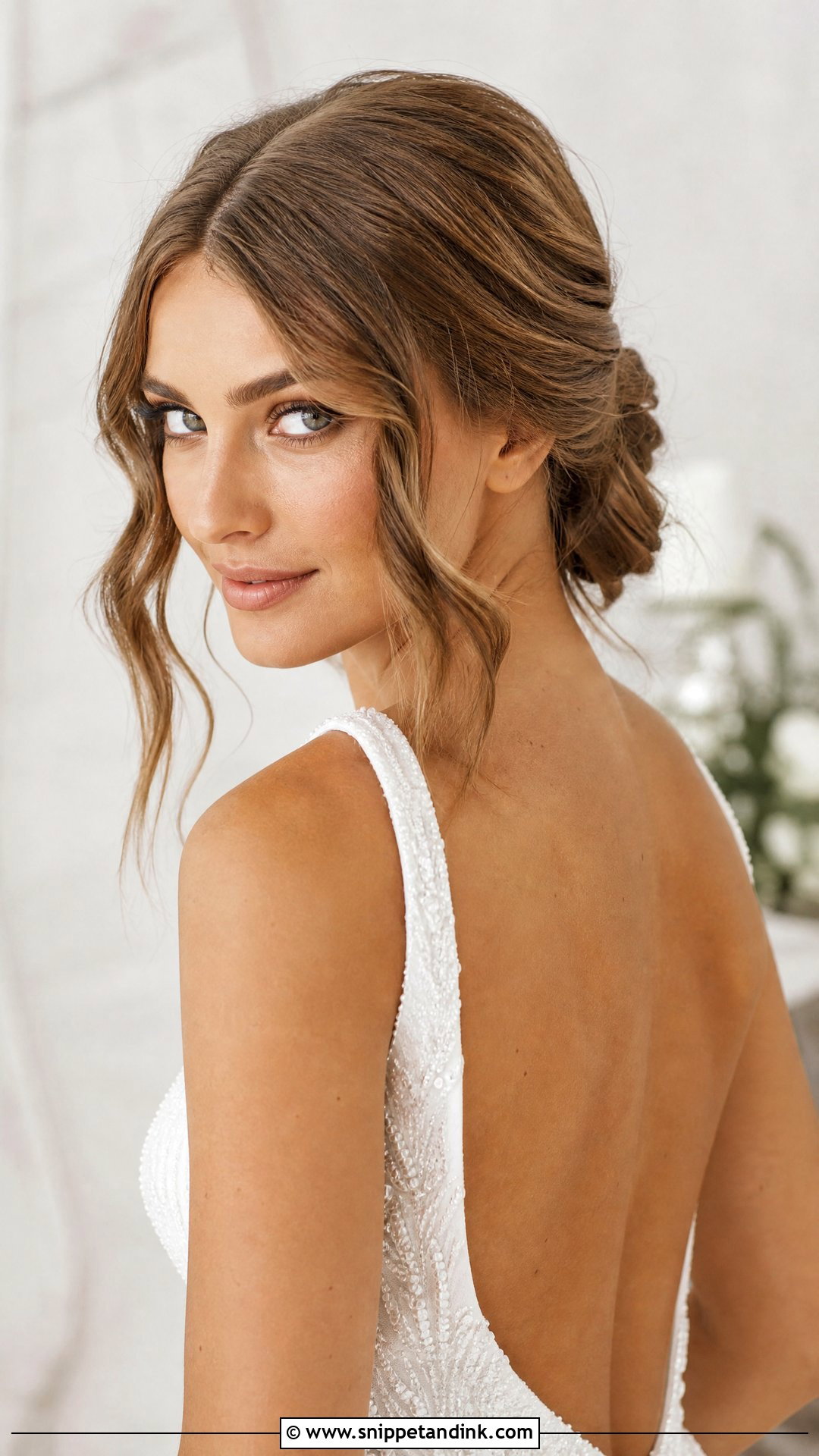
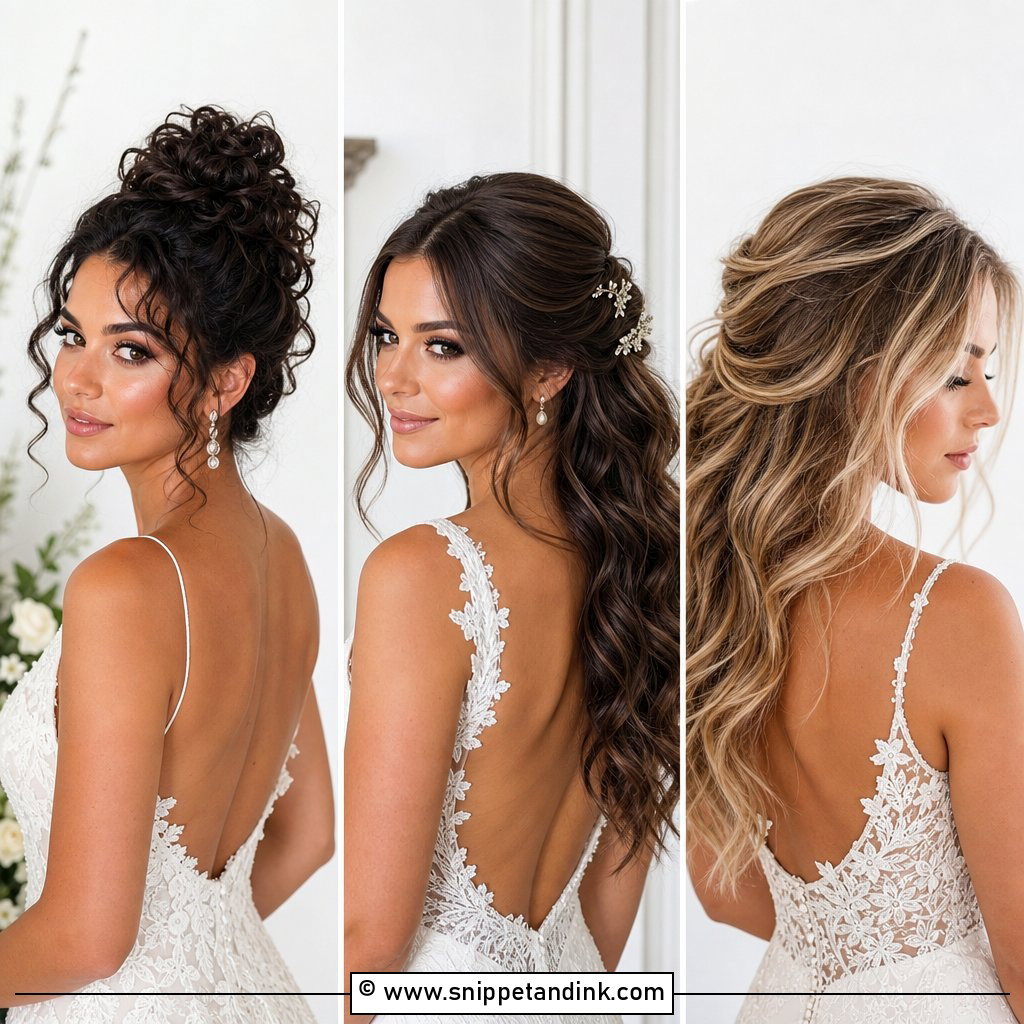
A low twist is the most formal option here, a vintage-inspired updo that sits at the nape and suits veils and backless dresses. To keep it from looking like a 1950s chignon, I add a center part, some lift at the crown and a couple of loose pieces at the temples. The twist itself should be smooth but not tight. On very thick hair, a single twist can get bulky, so I sometimes split the hair into two twists and cross them. It’s a sensible choice for a formal venue where loose hair would feel out of place.
11. 70s Bridal Hair With A Half Up Look
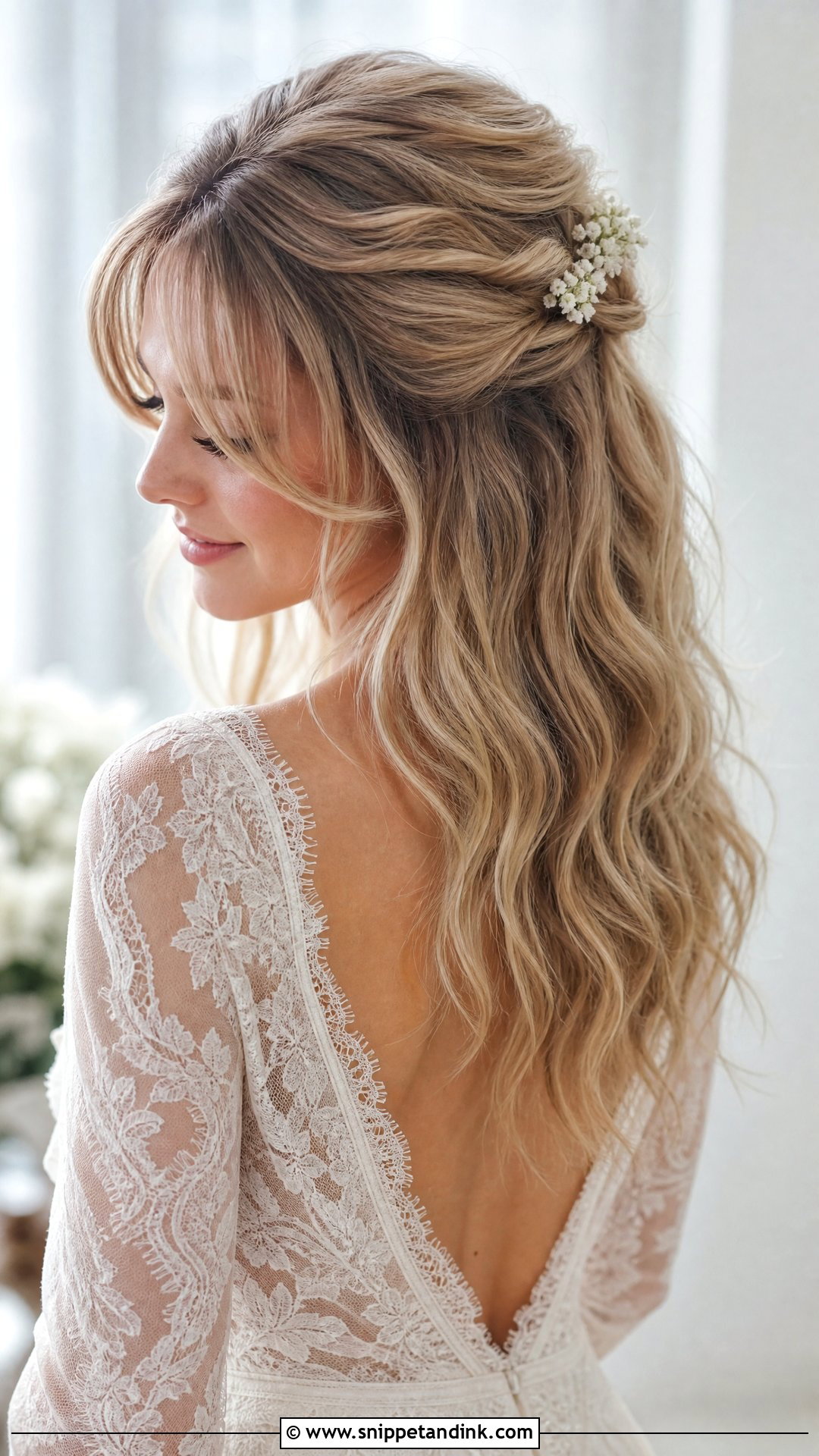
Half up gives volume at the crown and keeps length down the back. The top section is lifted, pinned and blended into loose waves or curls. Curtain bangs or feathered front layers connect it to the decade. I anchor the top with a small hidden braid or crossed pins, which also gives a veil comb or floral pins something firm to hold. Hide every pin. The lower half will relax over the evening, especially in warm rooms, and with 70s waves that softening actually suits the look.
12. 70s Bridal Hair With Straight Long Hair
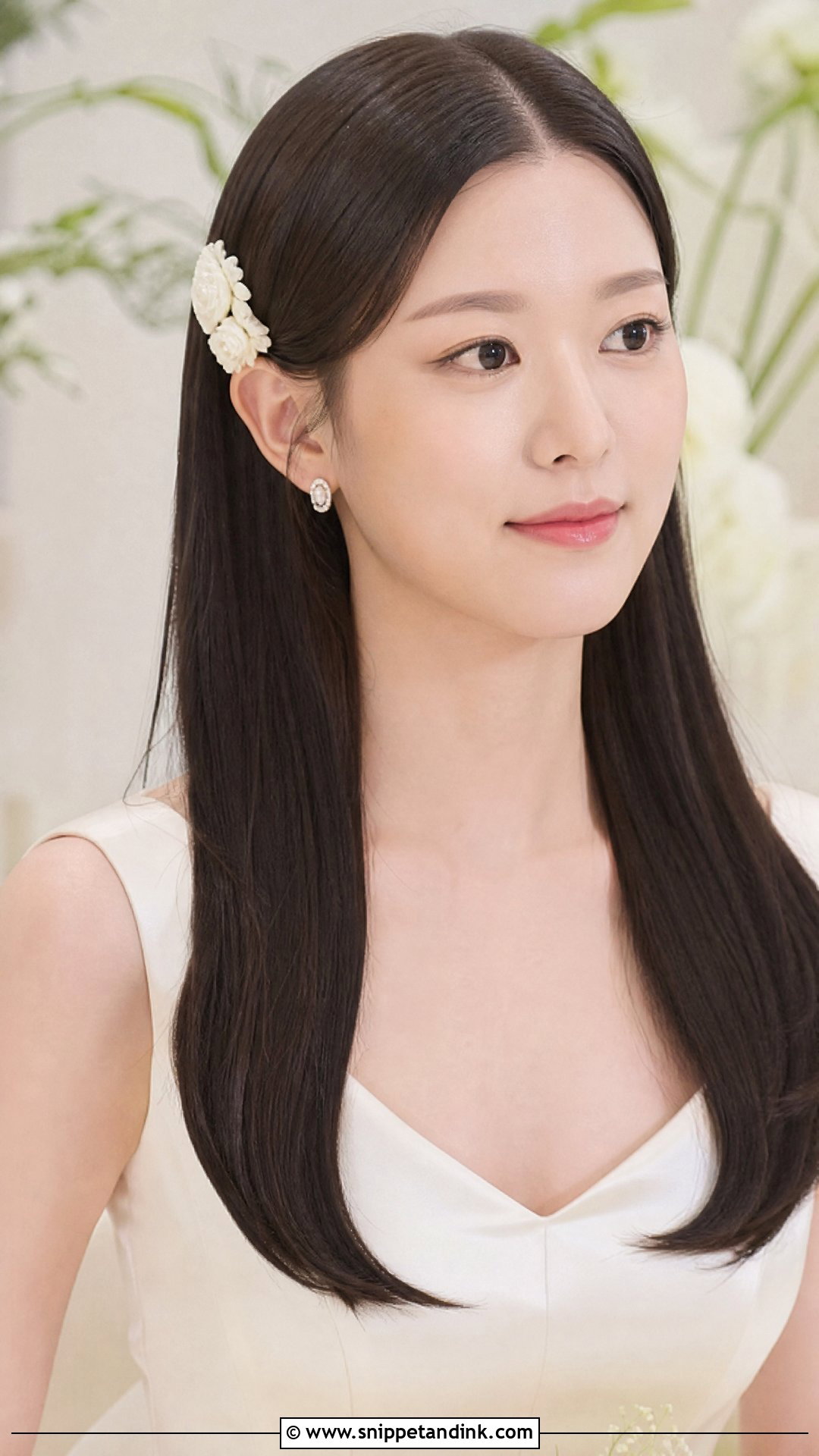
Straight, center-parted hair falling over the shoulders is the most iconic 70s look and the most revealing. Every split end and dull patch shows, so I’d book a trim and a gloss two to three weeks before. On the day I use a smoothing cream and a light shine spray, and I bend the very ends slightly so they don’t look flat. It pairs with sleek gowns, lace sleeves and simple veils. Very fine, straight hair can look limp by evening, so a little root lift with a round brush helps. A small flower clip is plenty.
13. 70s Bridal Hair With A Braided Crown
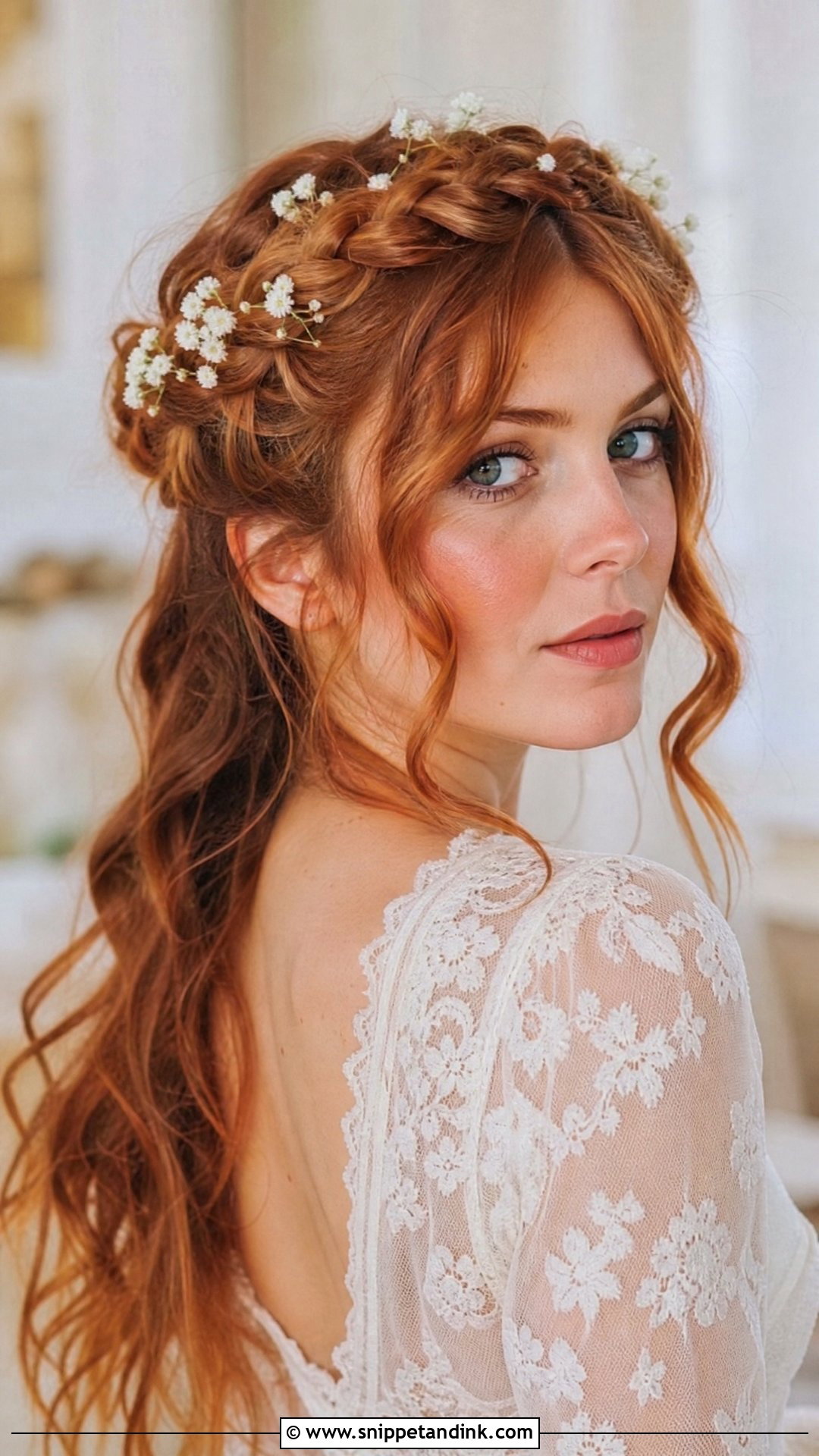
A braided crown keeps the hair off your face, which matters at an outdoor ceremony with wind. The braid wraps around the head like a halo, while the rest can be tucked up or left in waves. I usually braid two sections behind the ears and cross them over the top rather than one braid all the way around, because it sits more evenly. Pull the braid gently apart so it looks full rather than tight. Tiny flowers or greenery work tucked into the braid itself. It’s one of the most secure styles here.
14. 70s Bridal Hair With Natural Afro
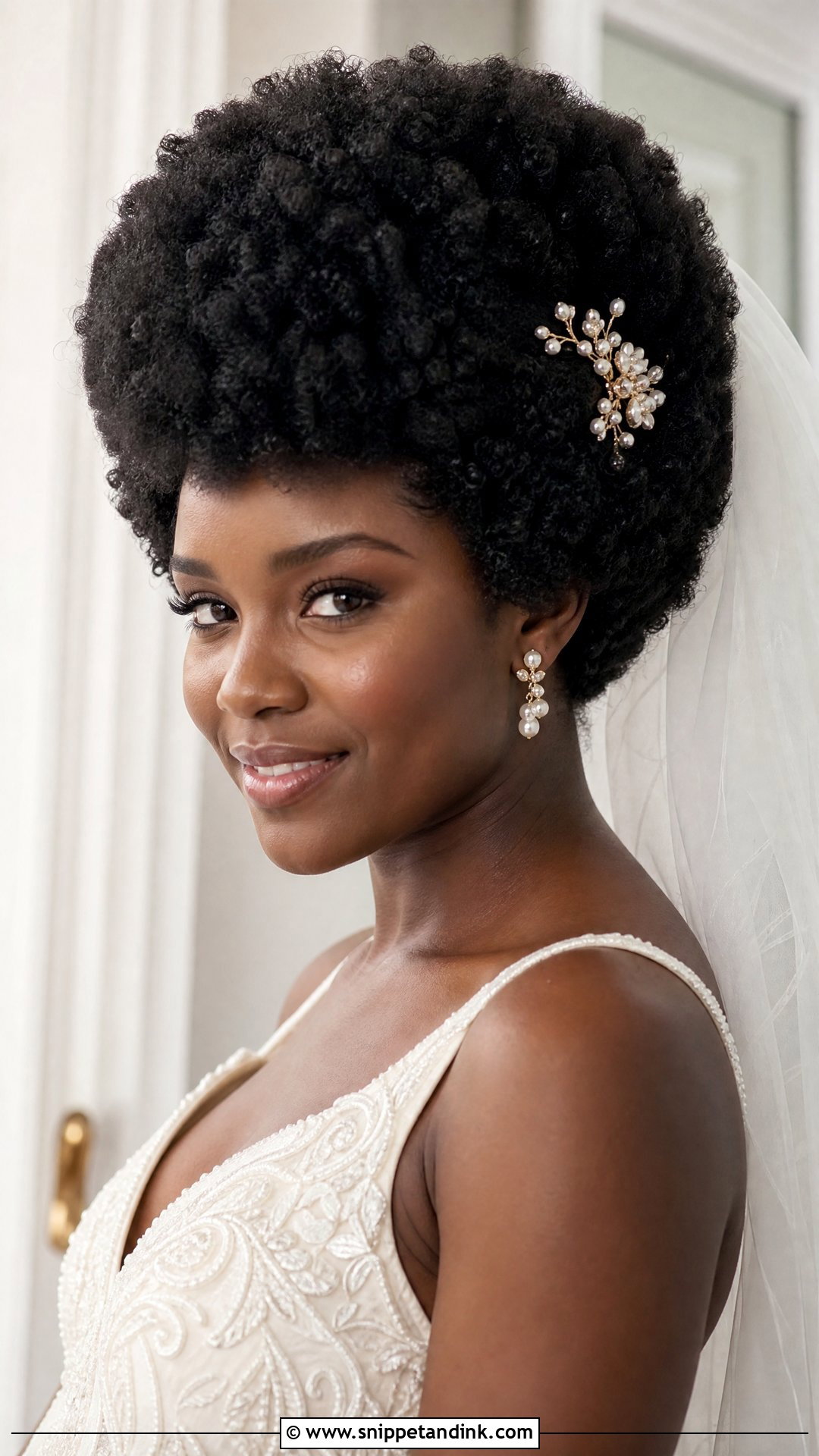
A natural afro celebrates volume and shape, and it’s one of the most powerful beauty statements of the 70s. For a wedding, I focus on moisture and definition: the coils need to look healthy and full, and shaping is done with a pick and fingers, never a fine comb. Prep starts days before with a hydrating wash and a stretched set, so the shape on the morning is even. A center part, floral pins, pearl accents or a veil tucked at the back can make it bridal without taking away from the texture. Humidity will grow it, so plan the shape a little smaller than you want it by evening.
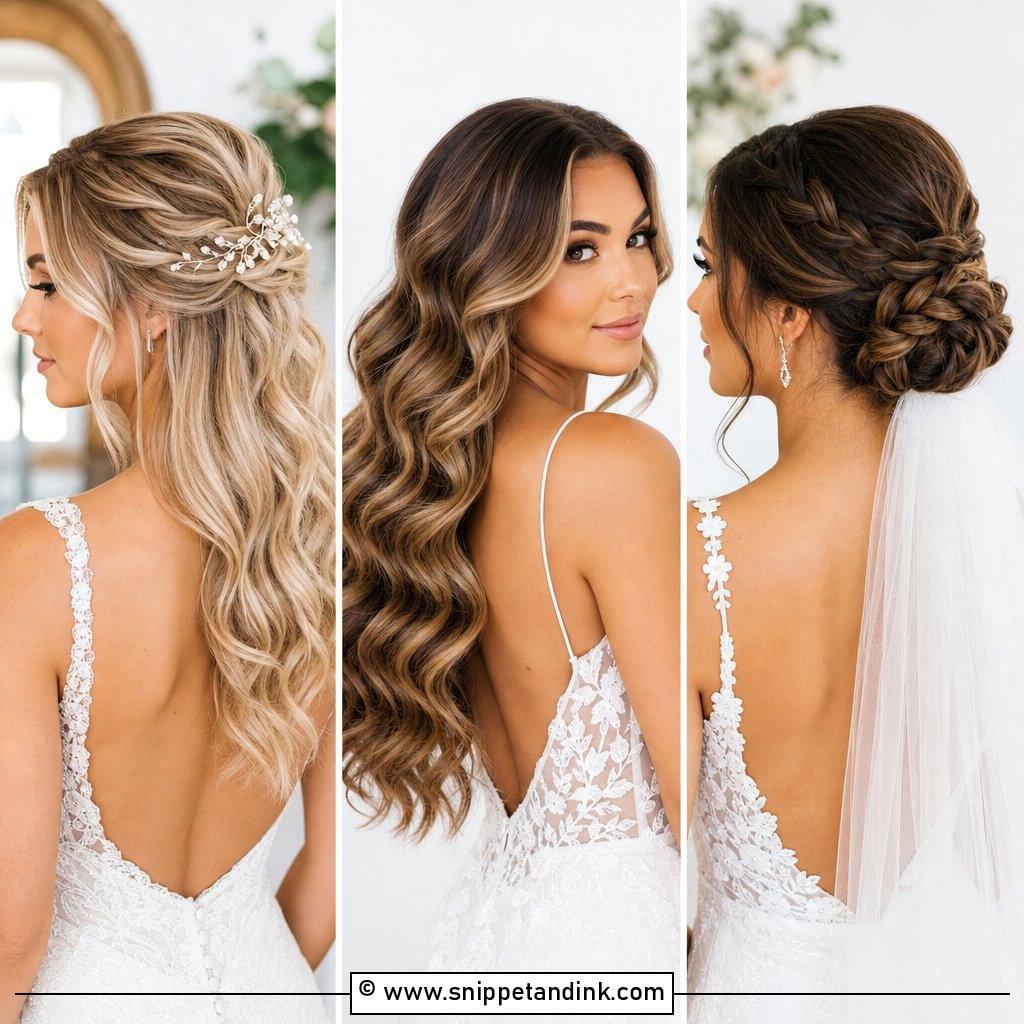
15. 70s Bridal Hair With Disco Curls
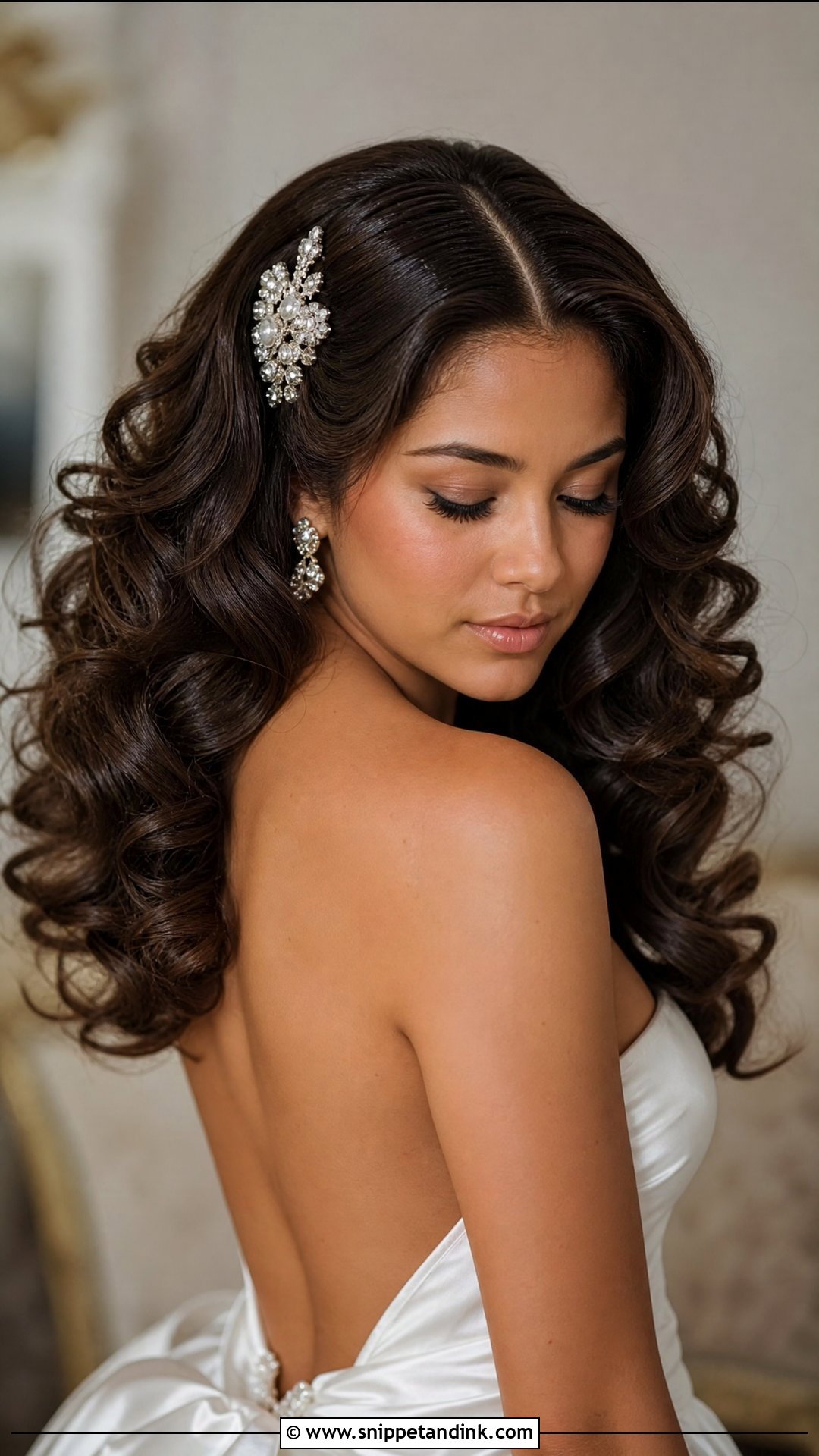
Disco curls are bigger and bouncier than soft waves, with volume through the sides and crown, and they suit a reception especially well. The difference between glam and messy is evenness: I use the same barrel size and the same direction on each side, then shape with fingers. A center part keeps it vintage, while a jeweled comb or veil makes it bridal. Use curl cream and a flexible spray, and pin around the front if the curls tend to fall into your face when you dance. It’s a lot of hair, so it isn’t a good match for a heavily embellished neckline.
Cutting Curtain Bangs and Shags Before the Wedding
Several of these looks depend on the cut, not the styling, and a cut needs time to settle. Fresh layers and new bangs often sit too short, too blunt, or reveal a cowlick nobody knew about. That’s fine three weeks out and miserable three days out.
- Never had bangs? Try them two to three months ahead, so there’s time to grow them out if you hate them.
- Get the main shag or layered cut three to four weeks before, so the shape has softened.
- Book a small fringe trim about a week out. A few millimeters change how bangs fall.
- Learn to set them yourself with a round brush; you’ll want them right for the after-party too.
Fresh Flower Crowns Wilt Faster Than You’d Think
A flower crown looks fresh at two in the afternoon and often tired by eight, especially outdoors in summer, because it sits against a warm head with no water. Spray roses, waxflower, baby’s breath, small orchids and eucalyptus hold up far better than soft petals like gardenias, sweet peas or hydrangea.
Ask your florist to make it the day before and keep it chilled in a box with a damp paper towel. Put it on as late as possible and have a bridesmaid mist it between photos. Dried or preserved flowers give the same feel, weigh less, and you can keep them. Whatever you choose, I pin it into a small braid on each side rather than balancing it on silky hair.
Center Part, Big Volume, and a Little Disco
The decade gives you more than one mood: bohemian, glamorous, natural or polished, depending on the bride and the venue. Curtain bangs, feathered layers, long waves, flower crowns, braids, low twists and big curls each bring a different side of it into a modern wedding. Pick the one that already resembles how you wear your hair, then refine it with shine, healthy ends and secure pinning. That’s the order I work in at a trial, and it suits a lace gown, a satin slip or a simple dress equally.
You'll Like These Ideas:


Leave a Reply