
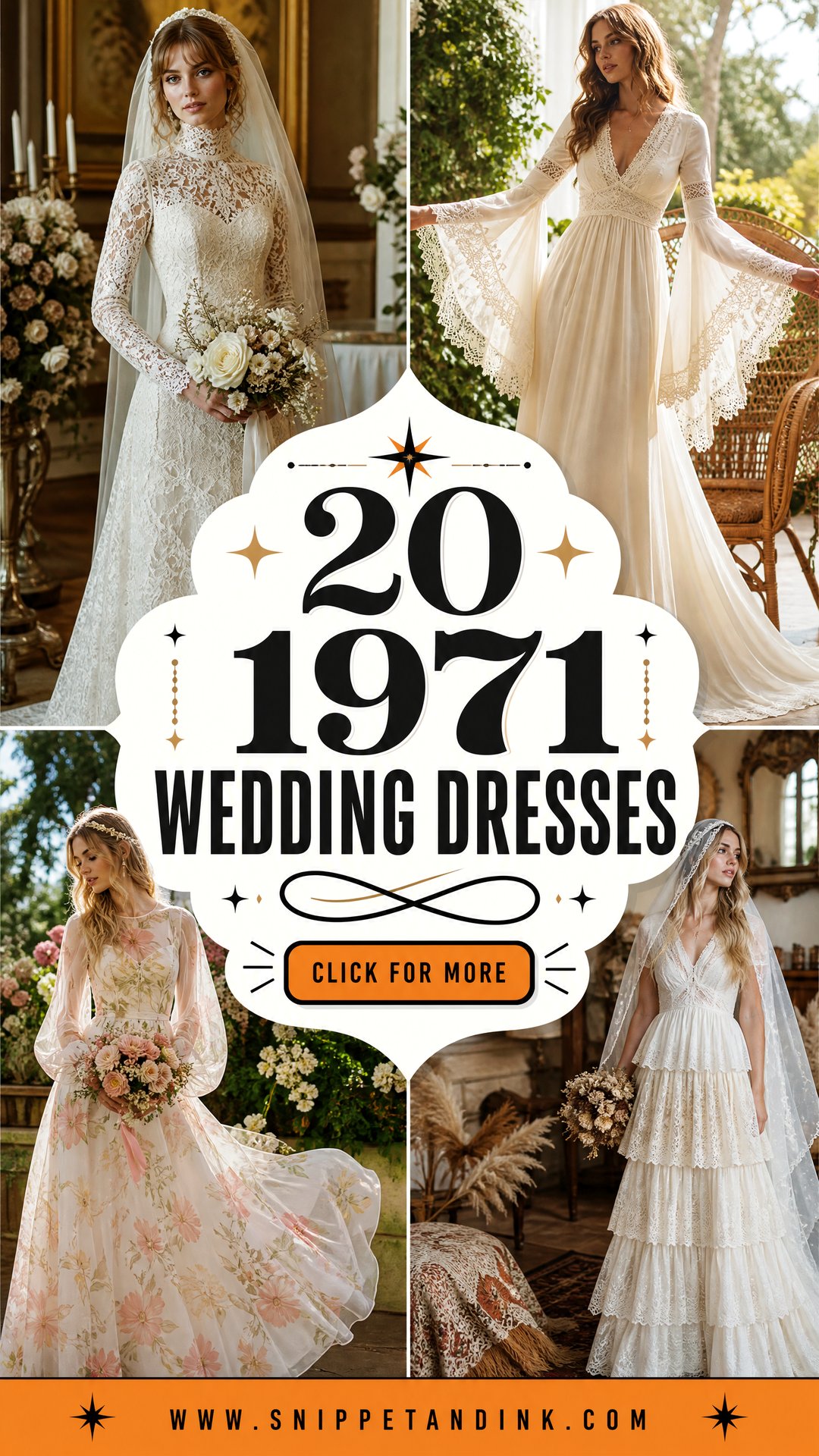
Bridal fashion in 1971 pulled in two directions at once. One was bohemian freedom: loose lace, bare feet, flowers in long hair. The other was a romantic look back to the Edwardian and Victorian wardrobe, with high collars, empire waists, maxi skirts and sleeves that took up half the dress. Prairie-style gowns with banded waists and tiered skirts were arriving too. What ties them together is softness; hardly anything from that year relies on boning or a cinched waist. When I style one of these now, I keep the shoes simple and the makeup fresh, and let the sleeves or the lace carry the look. Here are twenty dresses from that year, vintage or reproduction, each styled from the veil down.
A Juliet Cap, a Flower Wreath or Just a Center Part?
The hair and headpiece date a 1971 look faster than the dress. Long, smooth hair with a center parting was the signature of that year, and most of the headpieces were small and worn close to the head.
Juliet caps
A Juliet cap sits at the crown or slightly back, with the veil falling from it. On fine or very silky hair it slides, so I anchor it with small combs sewn inside the cap and a few crossed pins into a light braid hidden underneath. Try it on at your hair trial, not just at the dress fitting, because a cap that’s comfortable on dry, flat hair can feel different once the hair is styled.
Flower wreaths
Fresh wreaths wilt, especially in the sun, so ask your florist for hardy flowers like spray roses, waxflower or gypsophila and keep it cool until you put it on. A wreath sitting low on the forehead looks most like 1971, but it can leave a mark on the skin over a long day, so slightly higher is kinder.
Long, loose hair
Straight hair worn down needs a smoothing blow-dry and a light finishing product so it doesn’t frizz by the reception. If your hair is naturally curly, soft defined curls with a center part read just as seventies as straight hair does; nobody needs to iron their hair flat for the look.
1. 1971 High Neck Lace Wedding Dress
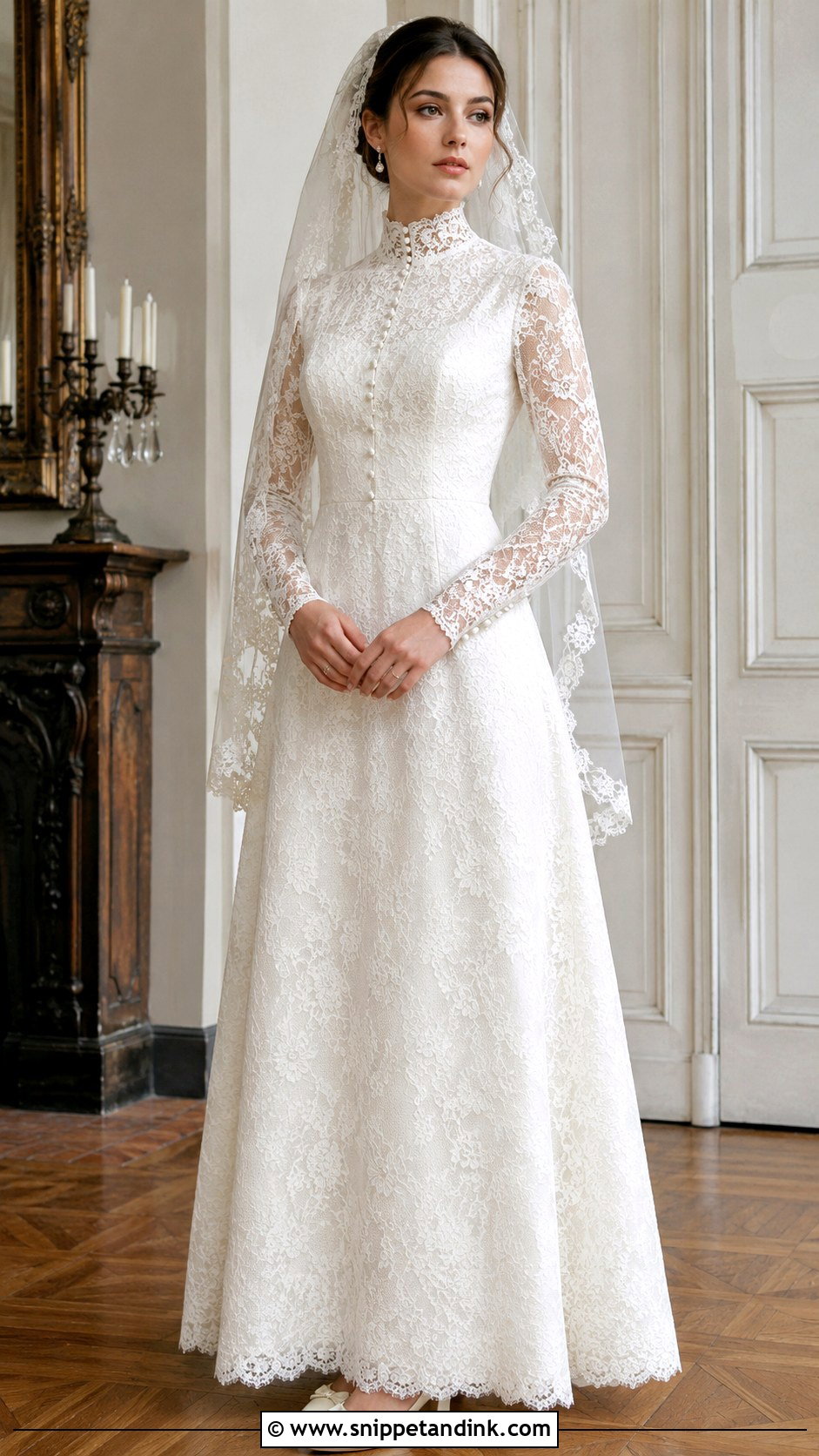
The high-neck lace gown is the refined side of 1971. It has a softly fitted bodice with a stand collar and covered buttons, an A-line skirt, and long sleeves in semi-sheer floral lace. The lining color matters more than people expect: a cream or winter-white lining makes ivory lace look rich, while a stark white one makes it look grubby. Ivory low-heeled pumps, pearl studs and a lace-edged fingertip veil complete it. A neat center-parted updo keeps the collar on show, since a stand collar disappears under loose hair. I’d carry a loose bouquet of white roses and seasonal greenery, and save it for an autumn ceremony in an old building.
2. 1971 Empire Waist Wedding Dress
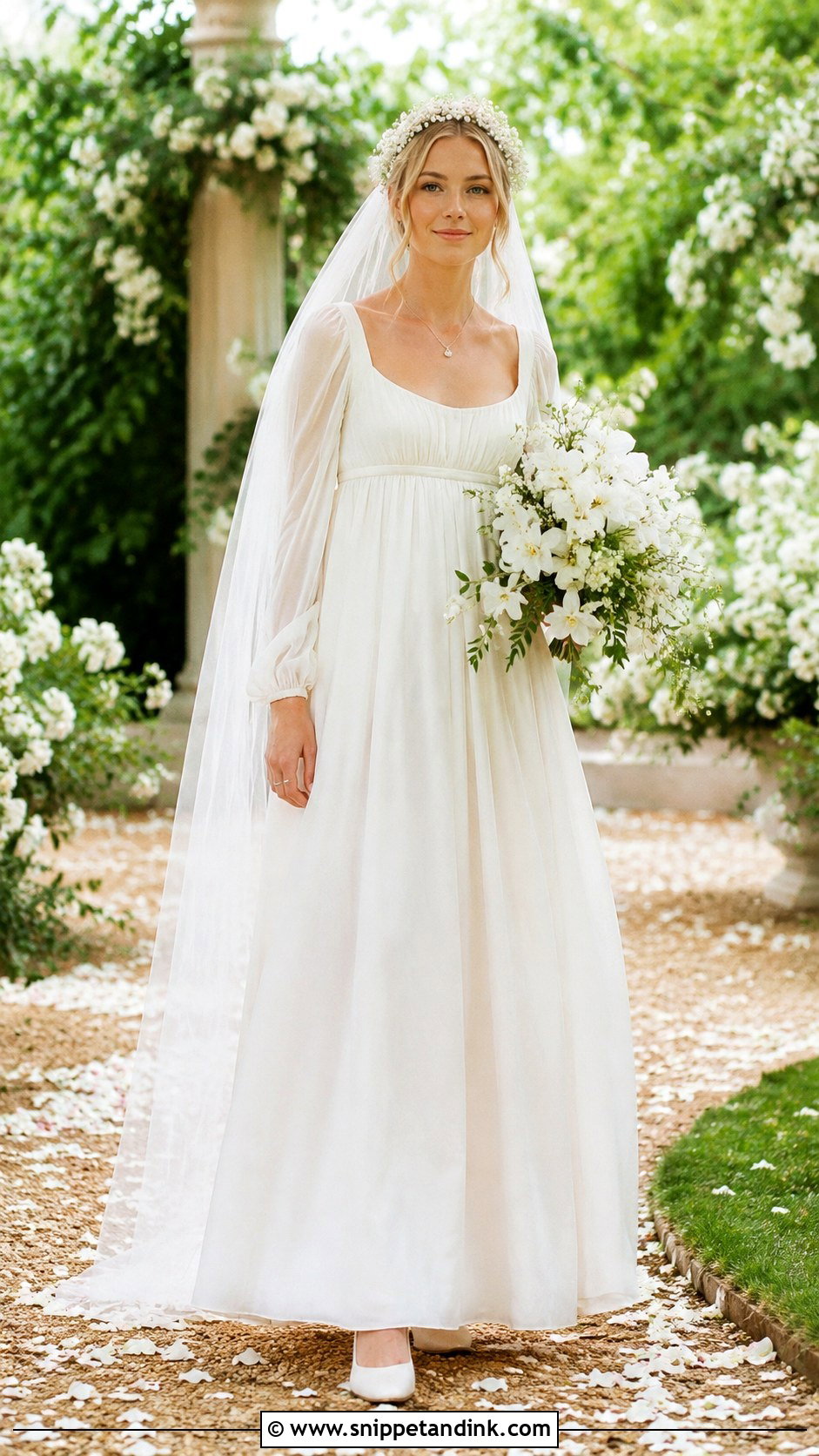
The empire waist is the shape most people picture for the early seventies. The seam sits just under the bust and the skirt falls long and lightly gathered from there, so there’s no fitted waist and no need for heavy shapewear. Silk chiffon, soft crepe or a light satin will move as you walk. Narrow bishop sleeves and a modest scoop neck balance it. The one fitting point I watch on empire gowns is the underbust seam: it has to sit exactly under the bust, and a quarter inch too high or low changes the whole line. Ivory block heels stay hidden under the hem. A simple pendant, a small floral headpiece and a floor-length veil set behind the crown finish it. The skirt skims rather than clings, which is why so many figures look easy in it.
3. 1971 Bishop Sleeve Wedding Dress
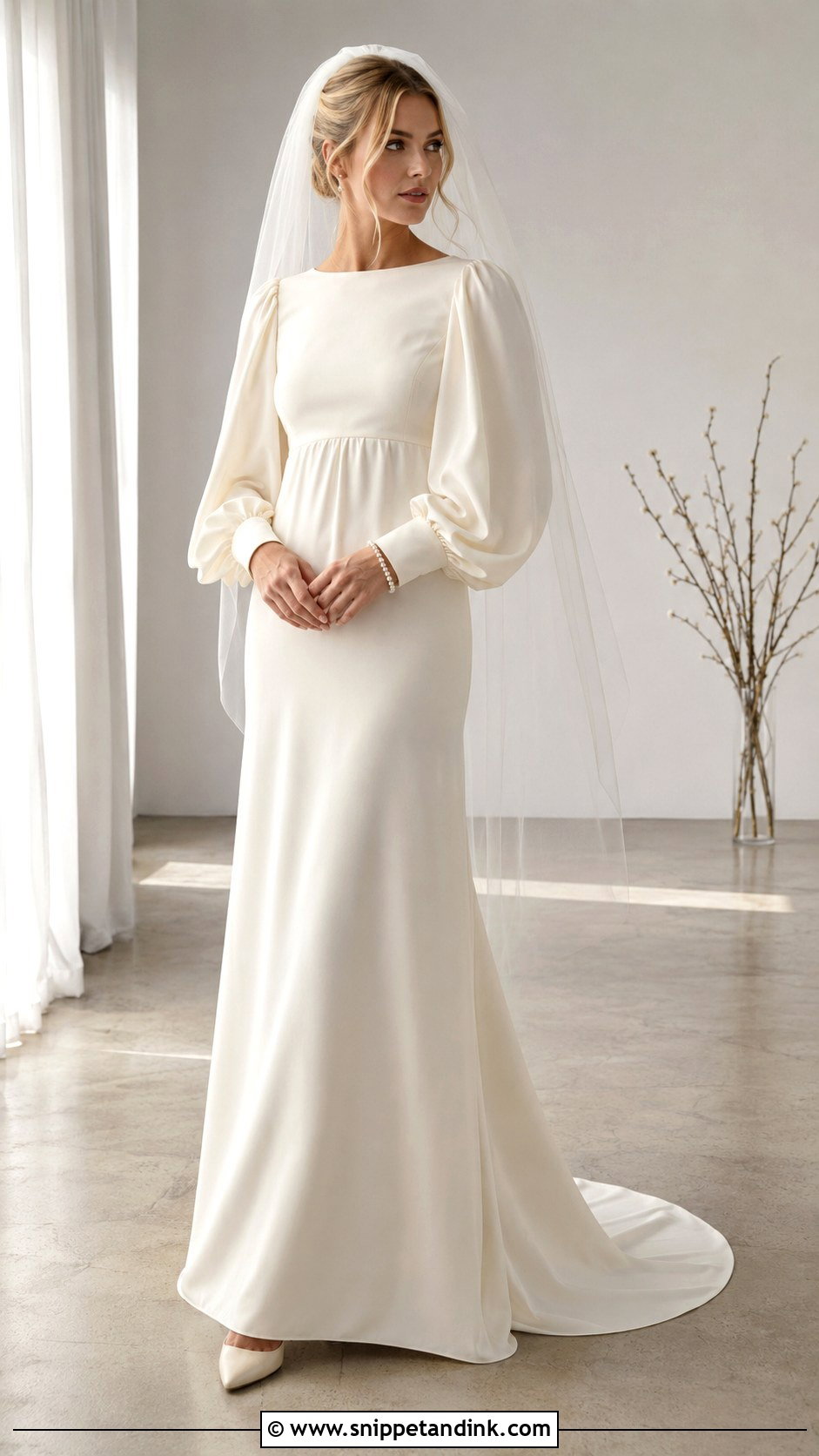
Bishop sleeves are full through the arm and gathered into a close cuff at the wrist, and they bring a lot of movement to an otherwise plain dress. Keep the bodice clean in satin or crepe so the sleeves aren’t fighting anything, with a lightly defined empire waist and a straight or gently flared skirt with a short train. Closed-toe ivory heels, a small pearl bracelet and a plain tulle veil are all it needs. Soft waves or a low chignon balance the volume at the shoulders. The cuff is the part I fuss over: a row of tiny buttons looks right but takes a few minutes per wrist, so I dress the sleeves first and leave nothing for the last minute. Skip the big necklace.
4. 1971 Prairie Wedding Dress
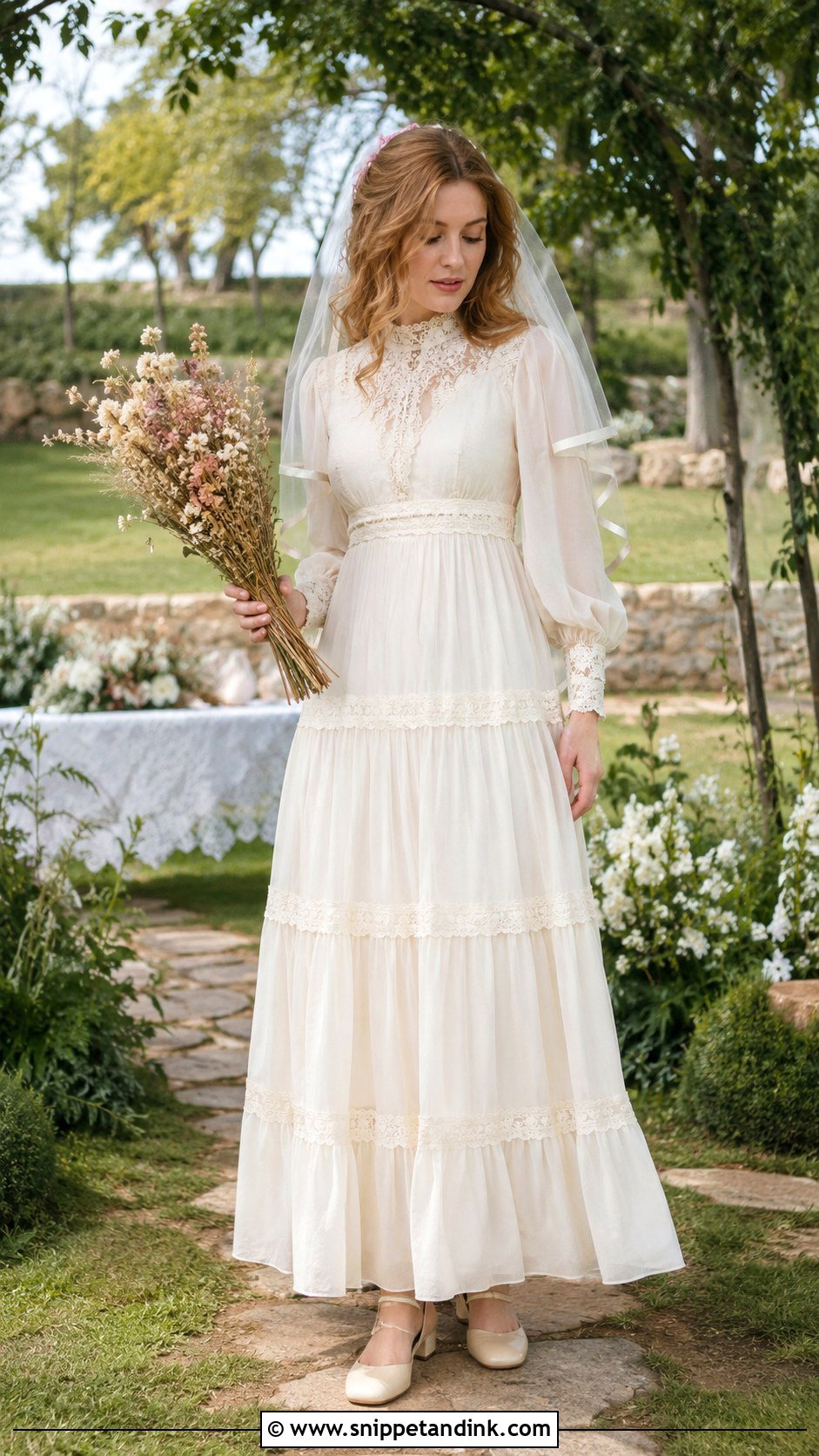
The prairie wedding dress is nostalgia you can actually move in. It pairs a long ivory skirt and a banded empire waist with a fitted bodice framed by lace or narrow ruffles, then adds a high neck, gathered sleeves and a tiered hem; that mix of Edwardian detail, maxi length and raised waist was everywhere in the early seventies. Cotton voile or a soft lace keeps it breathable for an outdoor wedding. Cream ankle-strap shoes, a small dried-flower bouquet and a ribbon-trimmed veil complete it, with loose braids or brushed-out waves. Cotton voile creases the moment you sit, so I’d steam it at the venue and accept a few soft wrinkles by evening as part of its charm.
5. 1971 Edwardian Wedding Dress
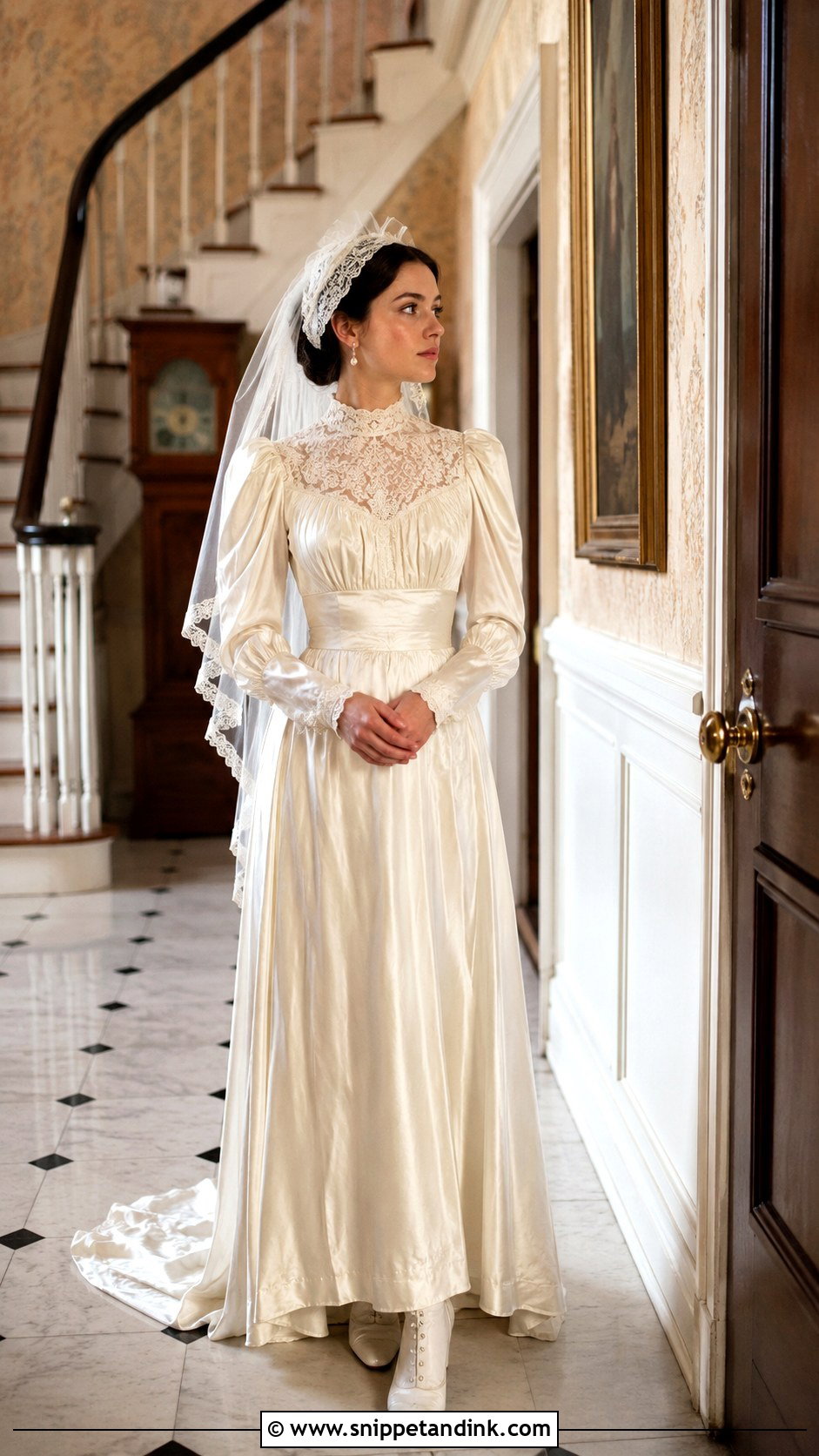
An Edwardian-inspired wedding dress is the most polished of the historical revivals from that year. Start with a high lace yoke, a softly gathered bodice and long sleeves finished in narrow cuffs, then a natural or slightly raised waist leading into a skirt with light pleating. Ivory satin under a lace overlay gives depth without sparkle. Buttoned boots or low pumps carry the period feel, and pearl drops add a little light at the face. A Juliet cap veil that sits close to the head and flows past the shoulders completes it. Lace yokes can scratch the neck by the evening, so I always check the lace edge against the skin and ask for a soft tulle backing if needed. Keep the makeup fresh with a muted rose lip.
6. 1971 Bohemian Lace Wedding Dress
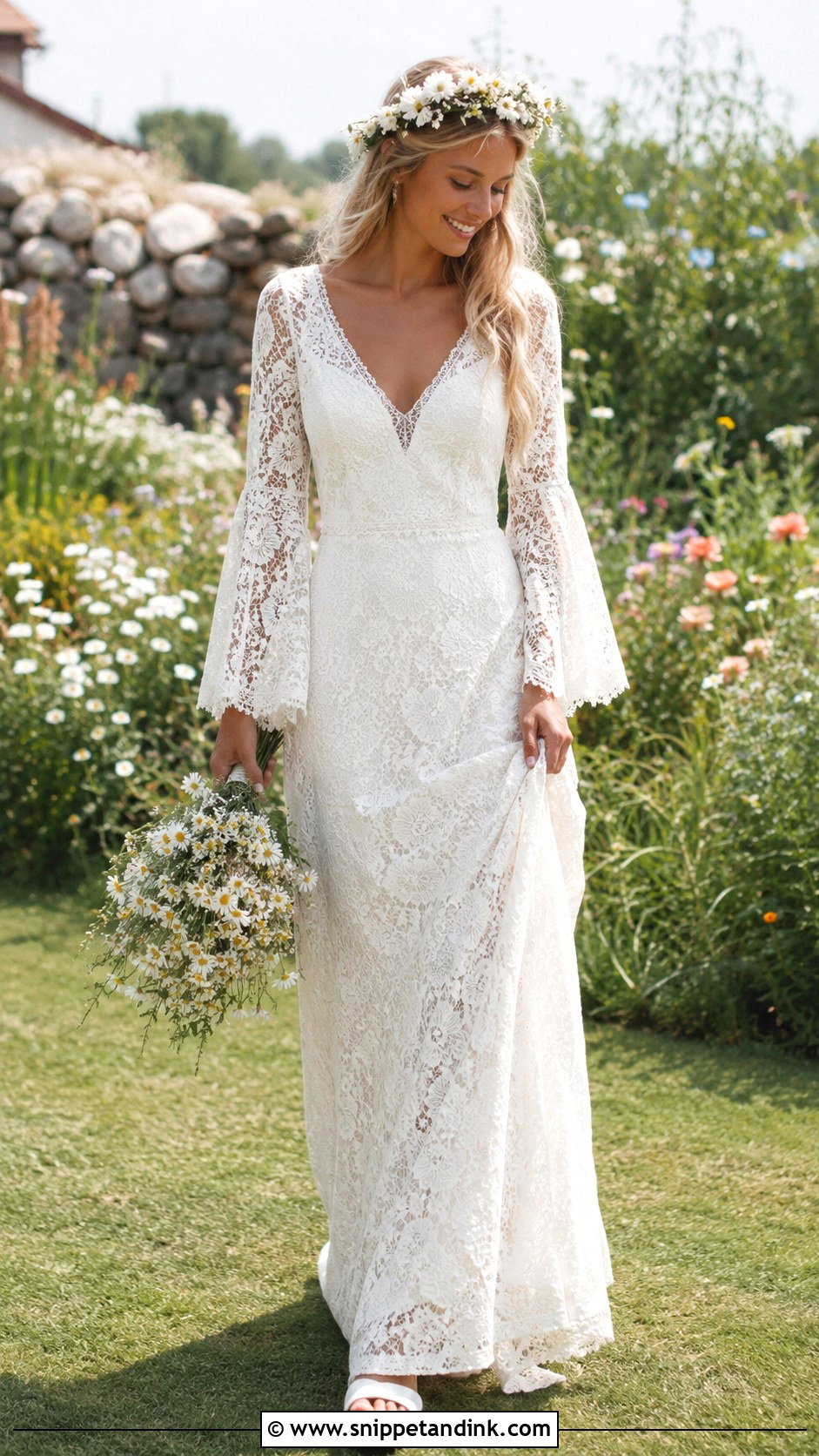
Soft lace and almost no structure give a 1971 bohemian wedding dress its carefree swing. A floor-length gown with a V-neck, a fitted upper bodice and a loose skirt is the shape, and long bell sleeves or flared lace cuffs give it away as vintage. A simple slip lining covers you without dulling the lace. Ivory leather sandals or low platforms depend on the ground; on sand or grass, flat soles every time. A floral crown, small hoops and a loose bunch of daisies and greenery finish it. Leave the hair in natural curls or relaxed waves, not an updo. Unlined lace is not a good idea for a beach ceremony in strong sun, since it becomes see-through against bright light.
7. 1971 Juliet Sleeve Wedding Dress
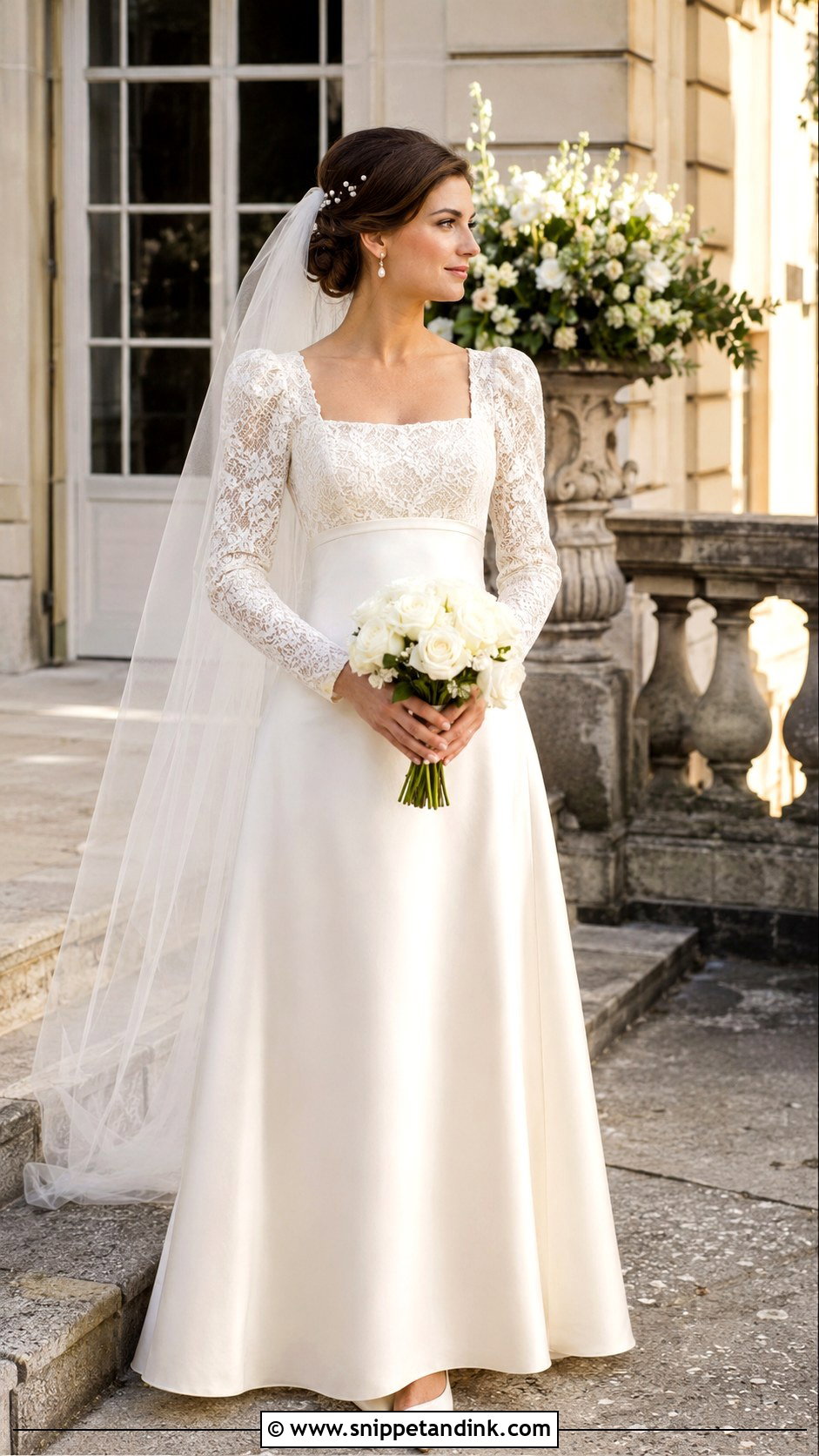
Juliet sleeves puff at the shoulder and fit close down the forearm, and they look best with a square neckline and a fitted lace bodice. The skirt falls from a raised waist into a smooth A-line with a modest sweep train. Ivory satin, a silk blend or a lined chiffon holds the puff without bulk. The trap is the puff itself: too much and it widens the shoulders, so I have the maker reduce the gathers if the bride’s frame is narrow. Pointed low heels, pearl hairpins and a cathedral veil set behind a small braided crown complete it, with a compact posy of white roses. You get statement sleeves and a long, clean line everywhere else.
8. 1971 Victorian Ruffle Wedding Dress
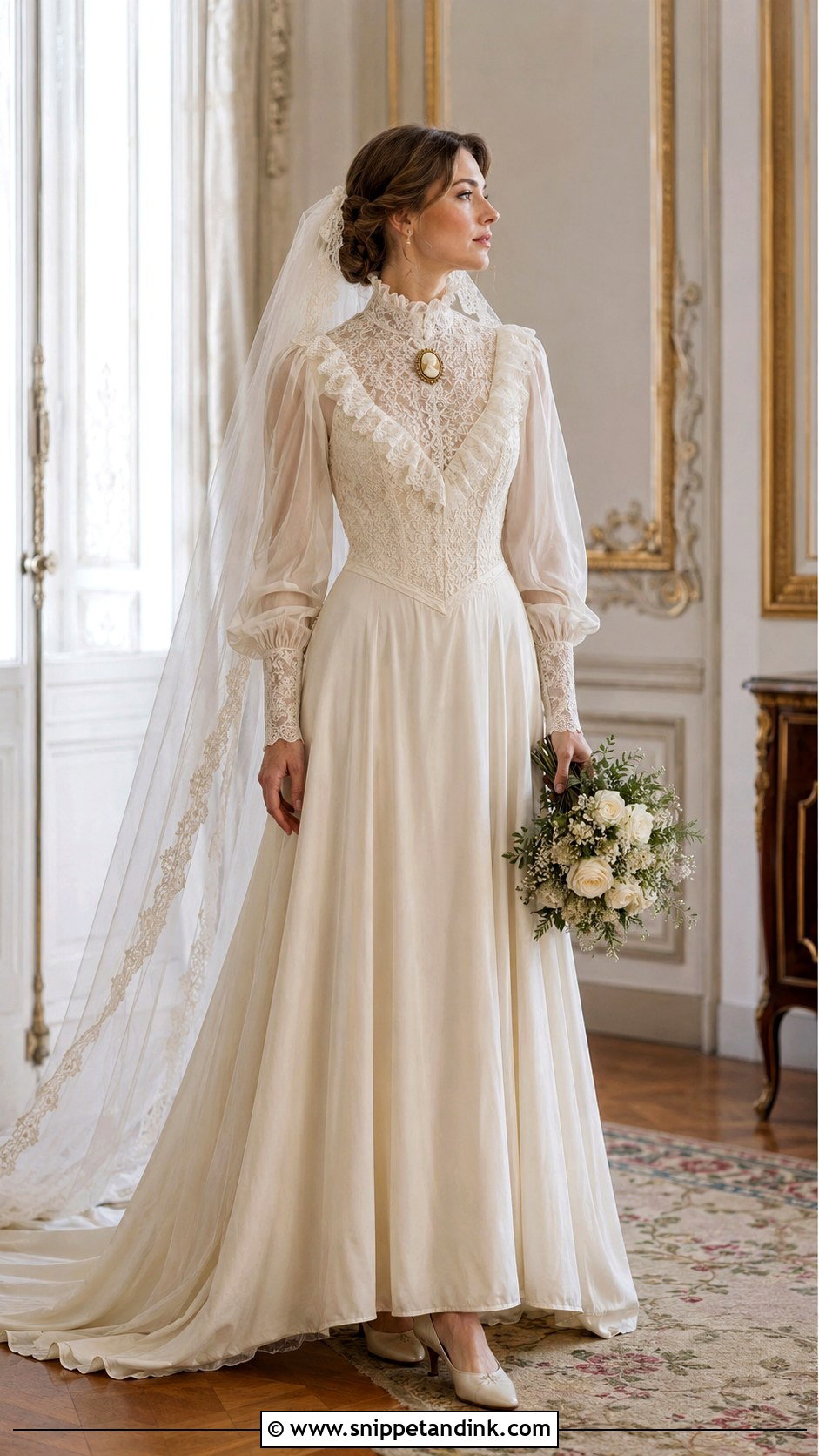
Ruffles were part of the Victorian revival that ran through seventies fashion. Choose a gown with a ruffled stand collar, a lace-covered bodice and long gathered sleeves. Small ruffles can repeat at the cuffs and hem, but keep them narrow; deep ruffles in three places tip quickly into costume. A softly defined waist and a fluid skirt keep the silhouette wearable. Ivory pumps, a delicate cameo pendant and a sheer veil edged with matching lace finish it, with a low bun and a few strands loose around the face. Ruffles from different laces or trims rarely match in color, so have every trim cut from the same bolt or dyed together. Winter weddings and old country houses suit it.
9. 1971 Bell Sleeve Wedding Dress
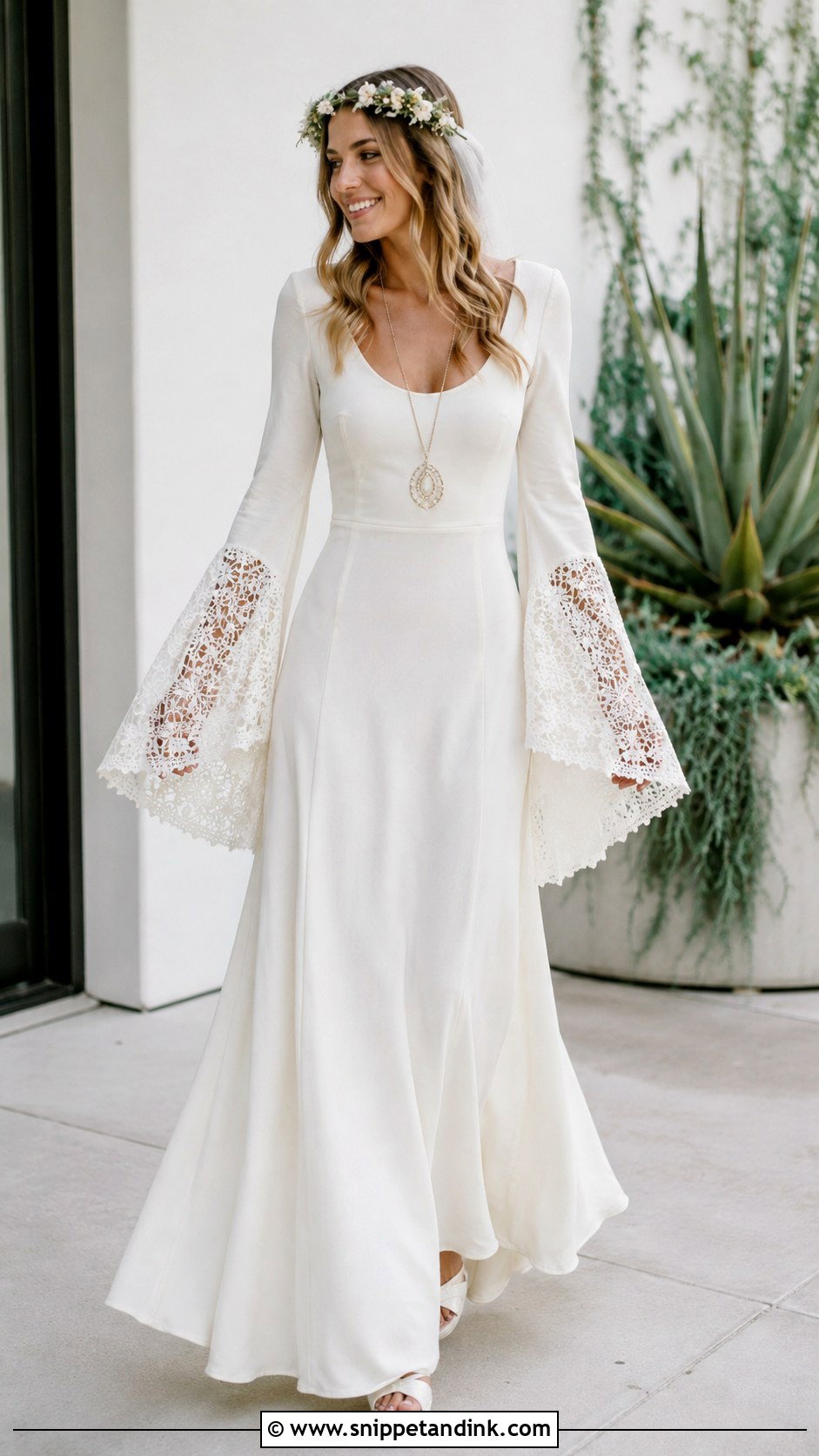
Wide bell sleeves turn a minimal gown into something expressive. They flare below the elbow and end near the wrist, so your hands stay free. Pair them with a fitted bodice, a simple scoop neck and a lightly flared maxi skirt in matte crepe, with lace inserts at the cuffs as the only decoration. Ivory platform sandals, a long pendant and a narrow floral headband finish it, with a short veil tucked behind the band. Carry a small bouquet; a large one hides the long line the sleeves create. Bell sleeves dangle into everything, from candle flames to the cake, which is why I talk about them again further down.
10. 1971 Floral Organza Wedding Dress
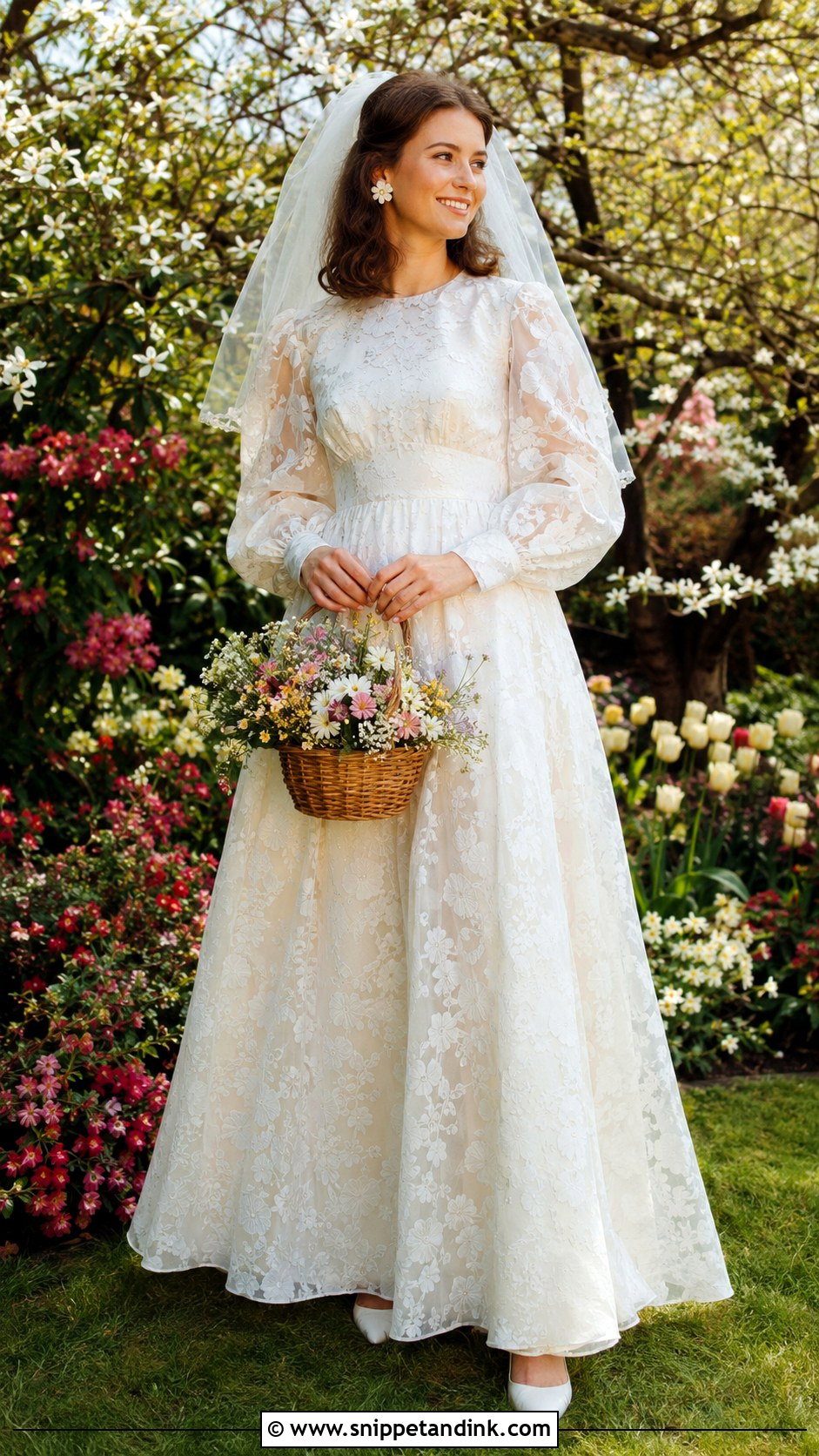
Floral organza softens an all-white dress without adding color. Look for sheer ivory organza woven or printed with tiny white flowers over an opaque lining, a raised waist, a gathered bodice and a full-length skirt, with sheer puff sleeves gathered into fitted cuffs and a modest rounded neckline. White satin pumps, floral studs and a plain shoulder-length veil complete it. A basket-style bouquet of pale blooms suits the early-seventies mood if you keep it small. Organza holds a crease stubbornly, so I’d travel it hanging in the car, not folded on a seat. Keep the hair smooth so the pattern stays the focus; a spring garden is its natural setting.
11. 1971 Silk Chiffon Wedding Dress
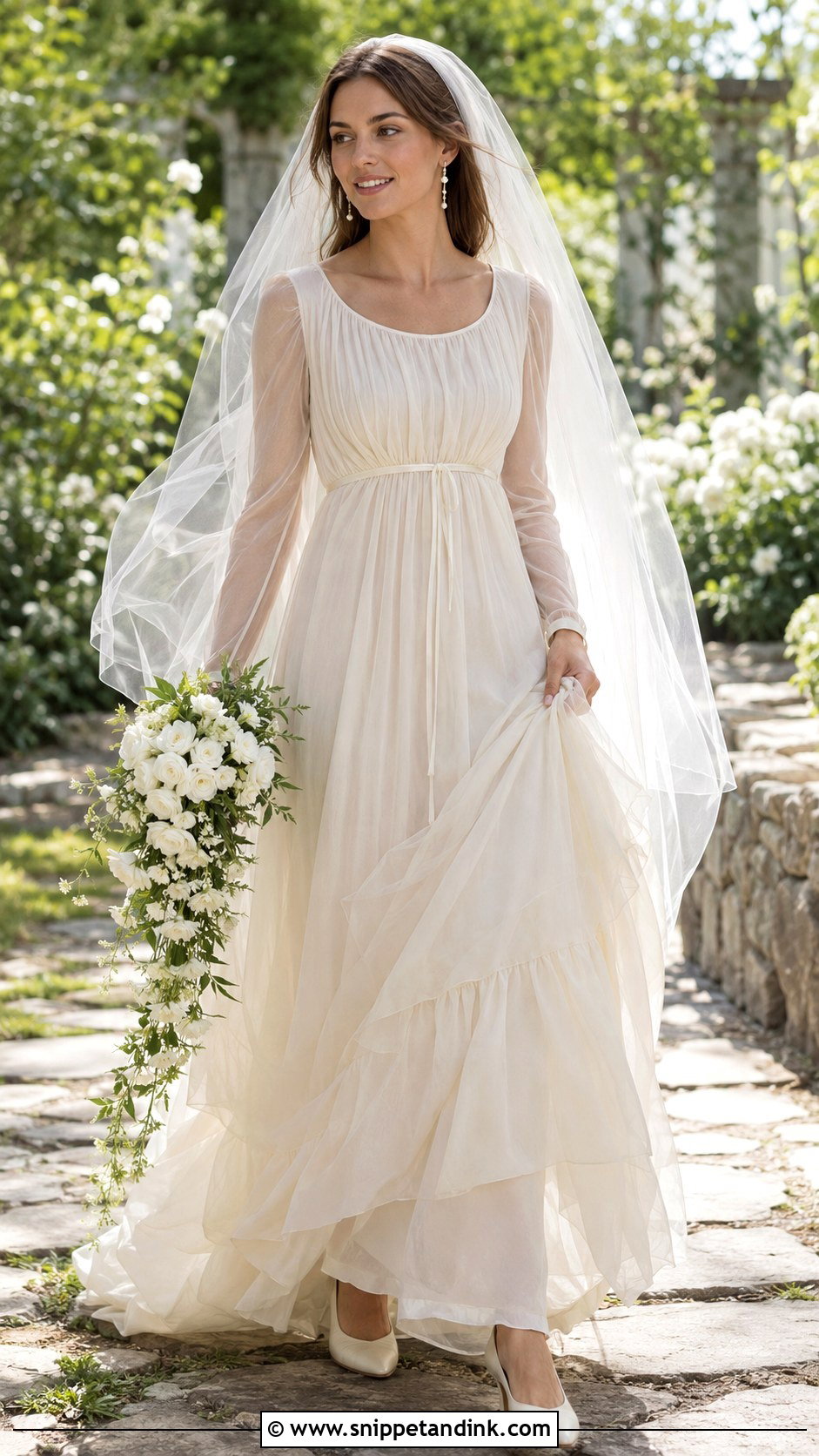
Silk chiffon is almost weightless, and in 1971 it was cut with a softly gathered empire bodice, long sheer sleeves and a floor-length skirt over an opaque slip. A narrow ribbon under the bust gives just enough shape. Low ivory heels, pearl drops and a long veil of plain tulle suit it, with the hair half up in gentle waves that move as the skirt does. A cascading bouquet of white flowers and greenery adds interest without weight. It’s a warm-weather choice that looks covered and formal while staying much cooler than satin. Real silk chiffon marks if splashed, though, so keep the champagne at arm’s length.
12. 1971 Square Neck Wedding Dress
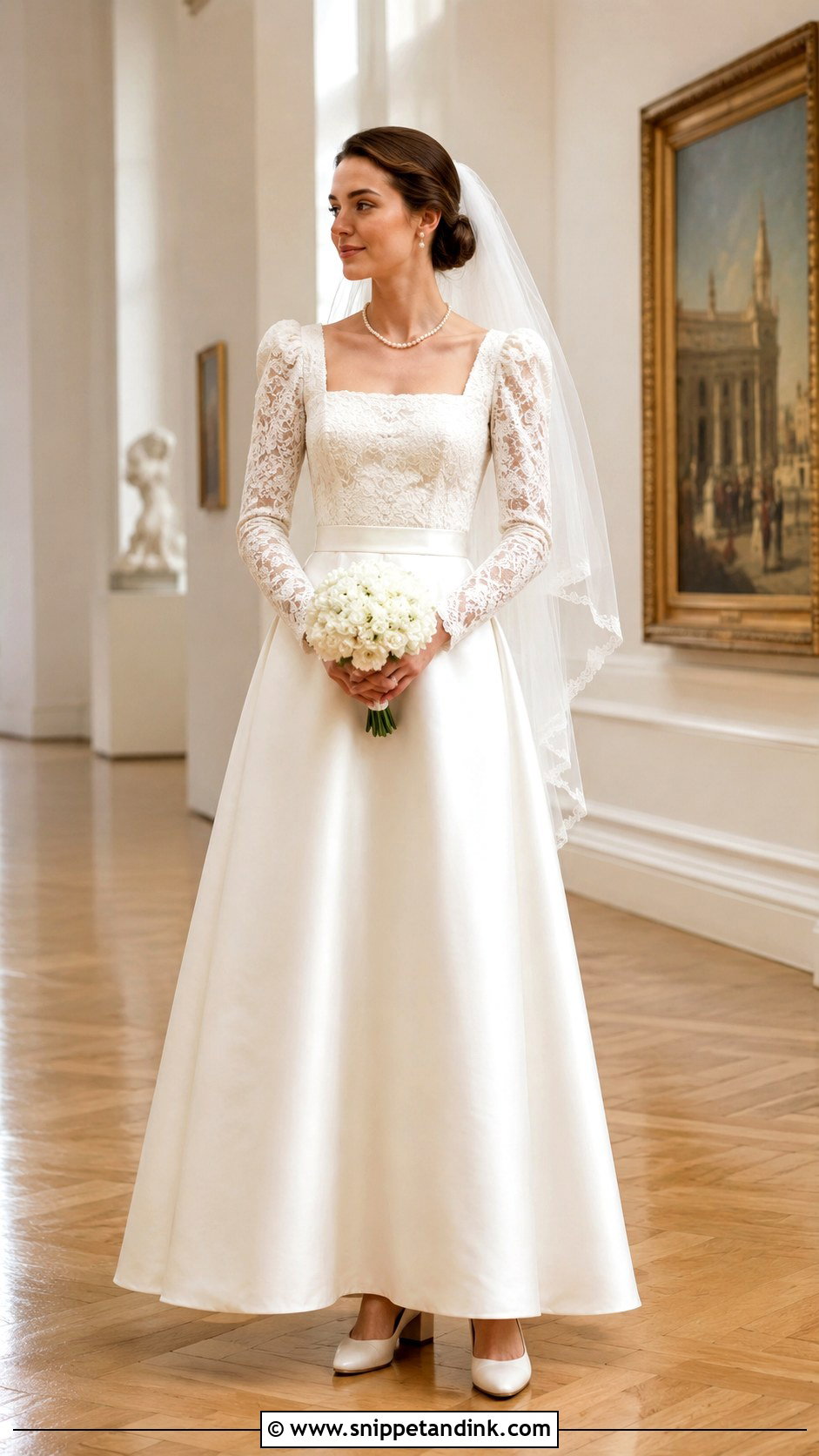
A square neckline frames the collarbones neatly, and it’s the option I give brides who want long sleeves but can’t bear a high collar. Combine it with a fitted lace bodice, lightly puffed shoulders and long sleeves narrowing at the wrist, and a skirt that starts at the natural waist and flows into an A-line with a short train. Ivory satin under the lace makes the pattern easy to read. A fine pearl necklace, closed-toe block heels and a veil set beneath a smooth low bun complete it. Square necks gape at the corners if the bodice isn’t fitted closely, so check it seated as well as standing. Keep the bouquet round and compact to echo the neat lines.
13. 1971 Crochet Lace Wedding Dress
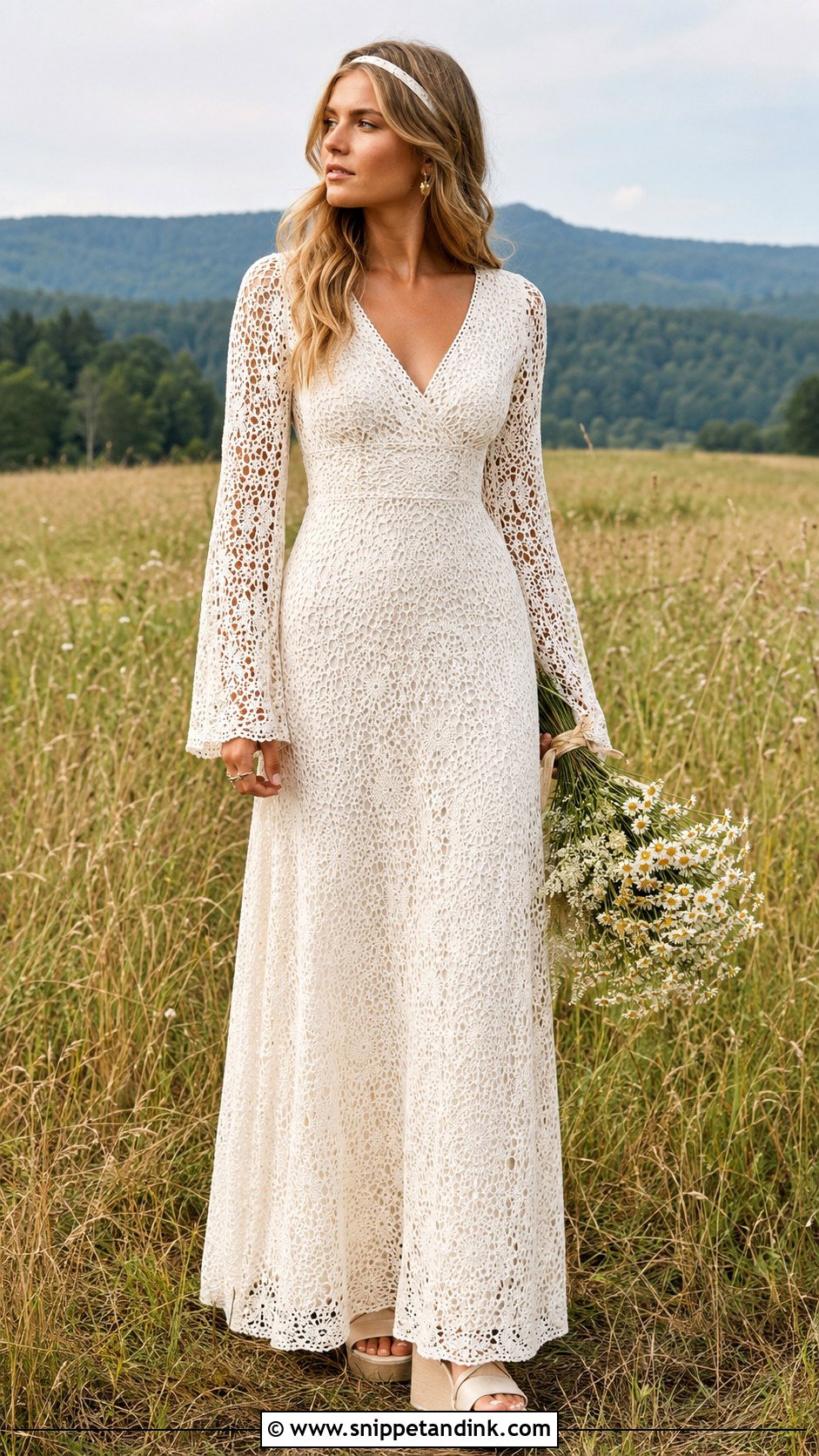
Crochet lace looks handmade, and in early-seventies dress it often was. Choose a lined maxi gown with an open crochet pattern across the bodice and sleeves, a V-neck and a lightly fitted waist; the heavier texture needs a plain skirt beside it. The slip underneath should match the crochet closely, so the pattern reads clearly without showing skin through every hole. Cream platforms or low wedges, a narrow leather or velvet headband, small gold earrings and white wildflowers finish it. Crochet stretches and grows when hung, so store it folded flat in tissue and only hang it for the last hours before you dress. A summer celebration outdoors suits it.
14. 1971 Cape Sleeve Wedding Dress
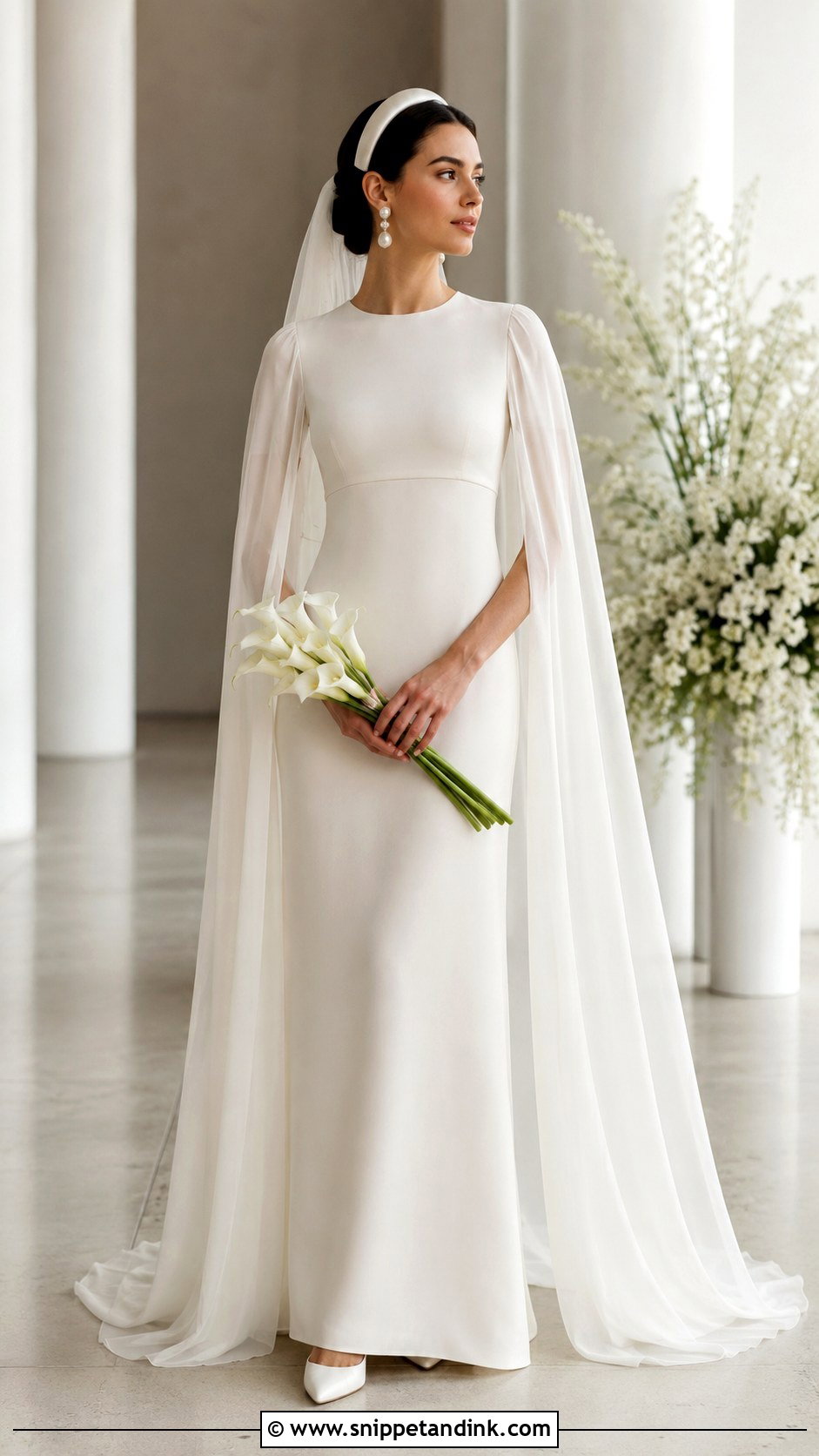
A chiffon cape attached at the shoulders gives coverage without the snug feel of fitted sleeves. Use it over a smooth ivory column or A-line with a high rounded neck and a lightly defined empire waist. The cape should fall toward the elbow or wrist and move separately from the skirt; that drift as you walk is the point. Pointed satin pumps, sculptural pearl earrings and a sleek headpiece with a plain veil complete it. A narrow bouquet of calla lilies or long-stemmed roses echoes the vertical line. On a breezy day a long cape blows into your face, so I’d have a few discreet hand stitches at the underarm. It suits a modern venue where the clean base feels current.
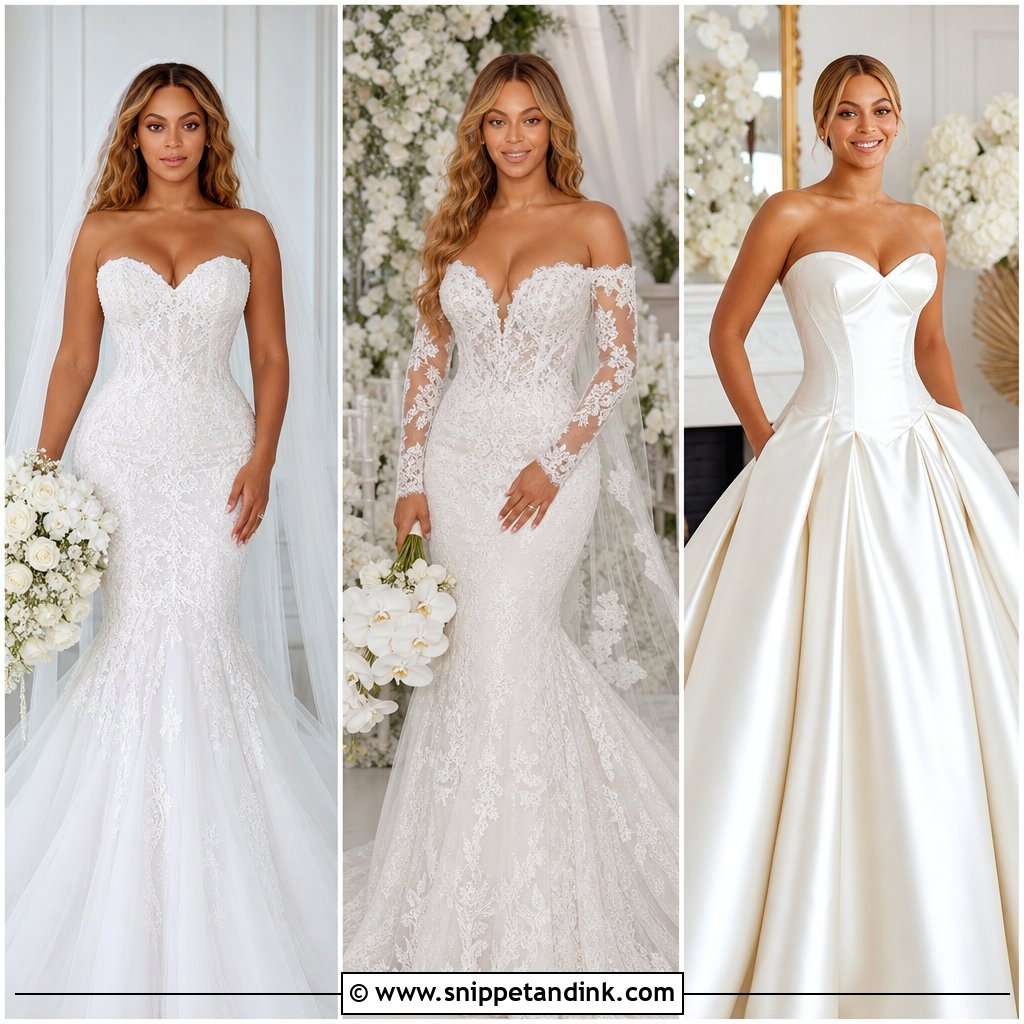
15. 1971 Satin Wedding Dress With Train
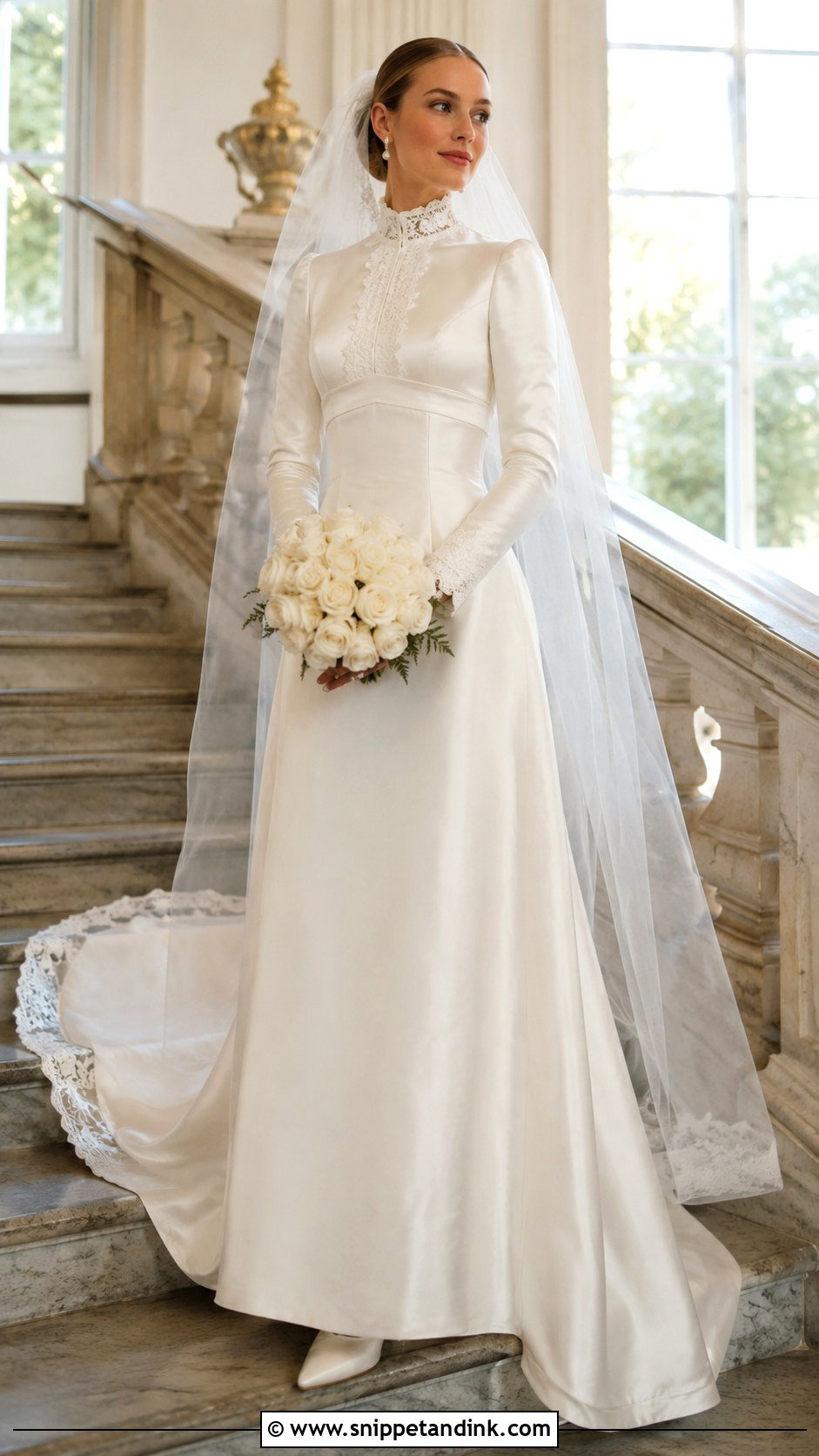
Smooth satin keeps a 1971 dress traditional while the period detail makes it distinct. Choose a fitted empire bodice with a high neck, long sleeves and a skirt widening gradually into a chapel train. Lace appliqué at the collar and cuffs softens it without covering the gown. Ivory pumps with a stable low heel, pearl earrings and a long veil ending close to the tip of the train complete it, with a structured bouquet of white roses. Satin reflects light and shows every crease and pull, so I’d skip extra beading and invest the money in fitting the bust seam properly. It feels formal enough for a large wedding and simpler than most heavily beaded modern gowns.
16. 1971 Scalloped Lace Wedding Dress
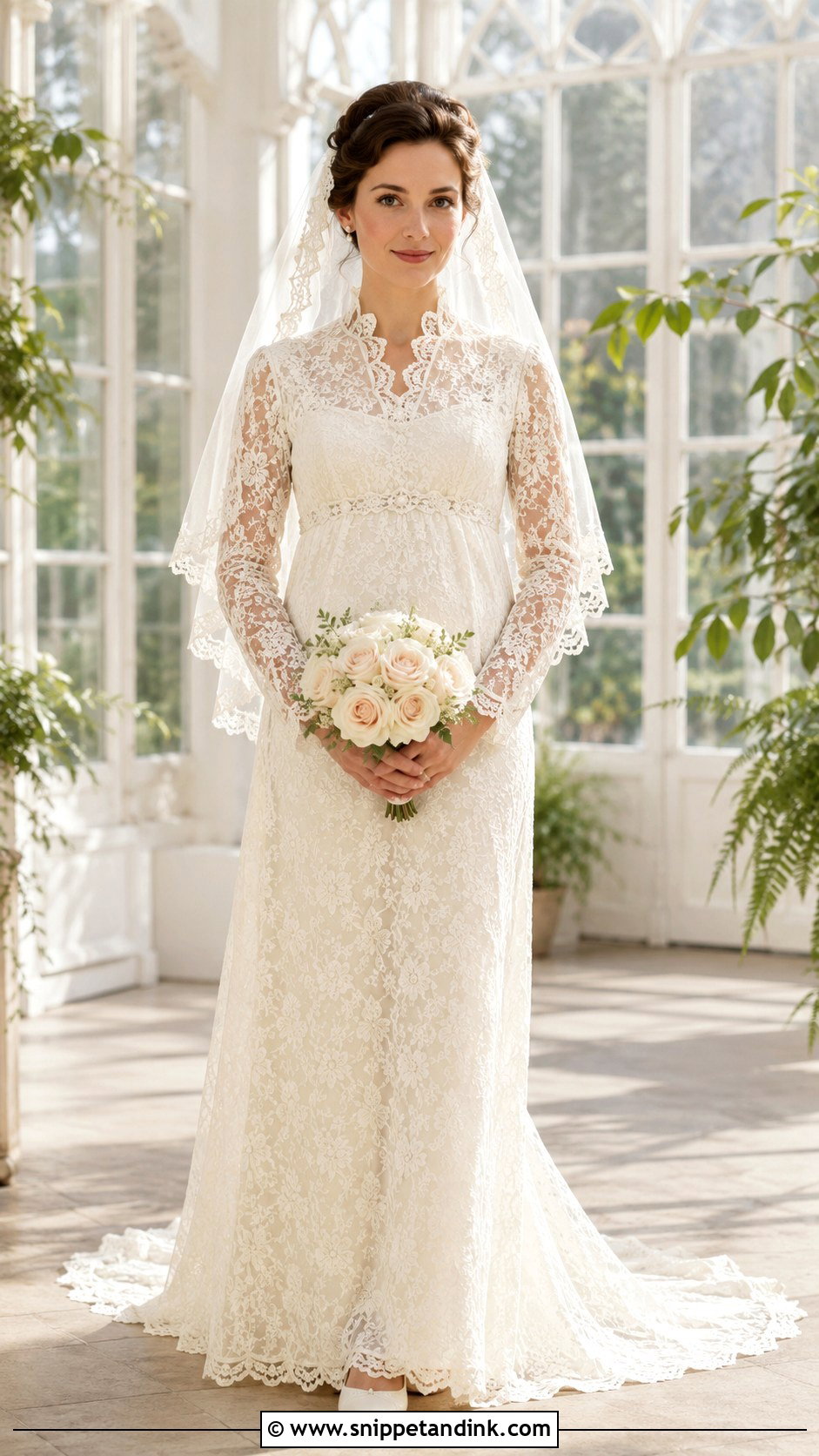
Scalloped lace edges are best used in a few places: the neckline, the cuffs and the hem. Pick a gown with an empire waist and a lightly fitted bodice over soft ivory satin, with semi-sheer sleeves so the scallops stand out at the wrists. A narrow train shows off the scalloped hem rather than hiding it. Simple round-toe pumps, pearl studs and a fingertip veil edged in the same lace complete it, with a soft updo so the neckline is visible from the back too. A bouquet of pale roses and trailing greenery echoes the curves. Hem scallops catch on heels and fray, so the bride should practise walking forward and turning in her actual shoes.
17. 1971 Ribbon Trim Wedding Dress
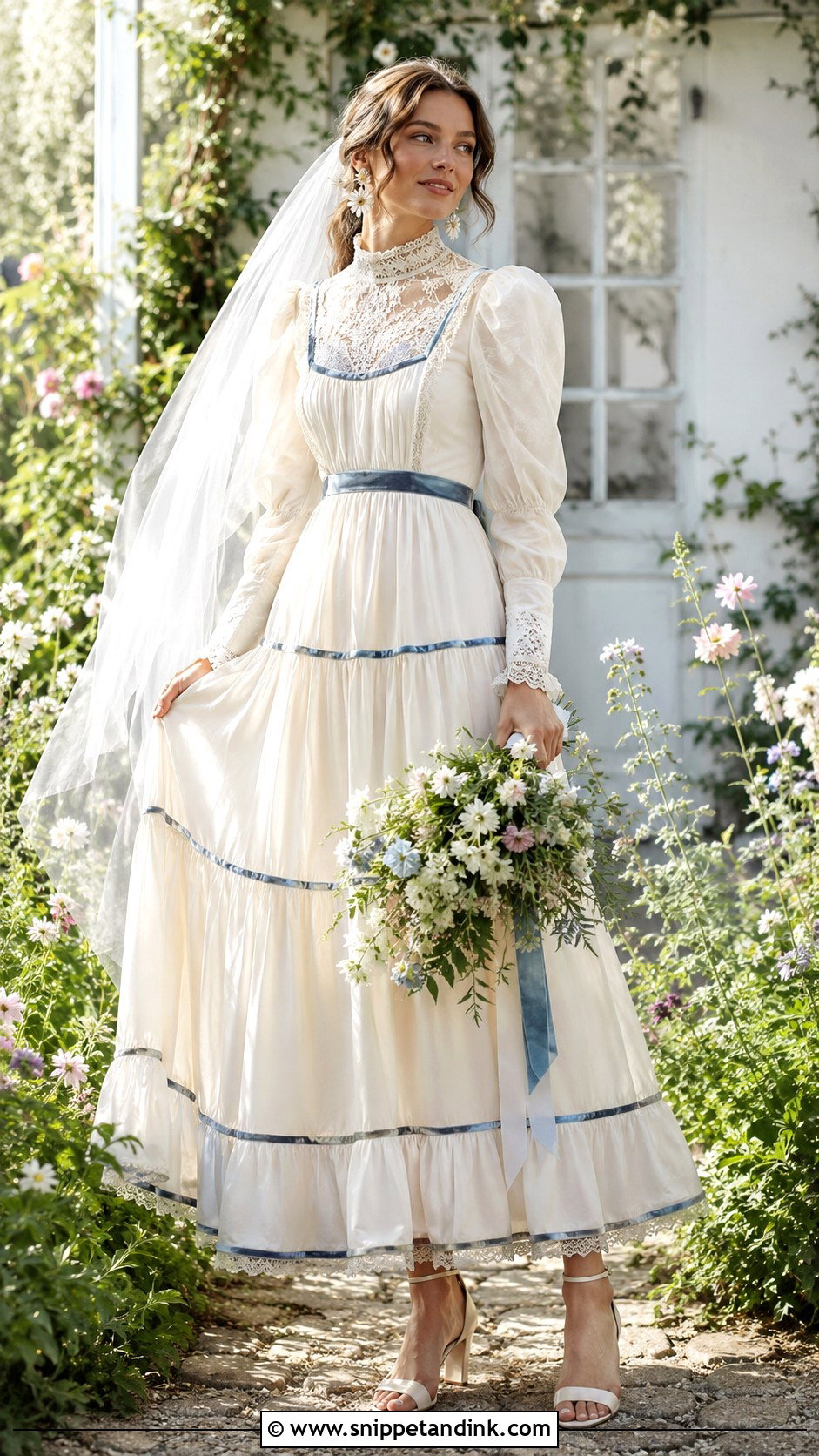
Ribbon trim is the most restrained way to add color to an ivory 1971 gown. Begin with a cream prairie-style dress with a high lace neck, puffed sleeves and a long tiered skirt, then run narrow velvet or satin ribbon under the bust, around the cuffs and down one skirt seam. Pale blue or dusty rose keeps it bridal. Cream ankle-strap heels, tiny floral earrings and a simple tulle veil finish it, and a couple of flowers in the bouquet can pick up the ribbon shade. Velvet ribbon in a strong color can bleed if it gets wet, so ask the maker to pre-wash it or use a colorfast satin. Keep everything else plain; the trim is already drawing a line through the outfit.
18. 1971 Short Wedding Dress
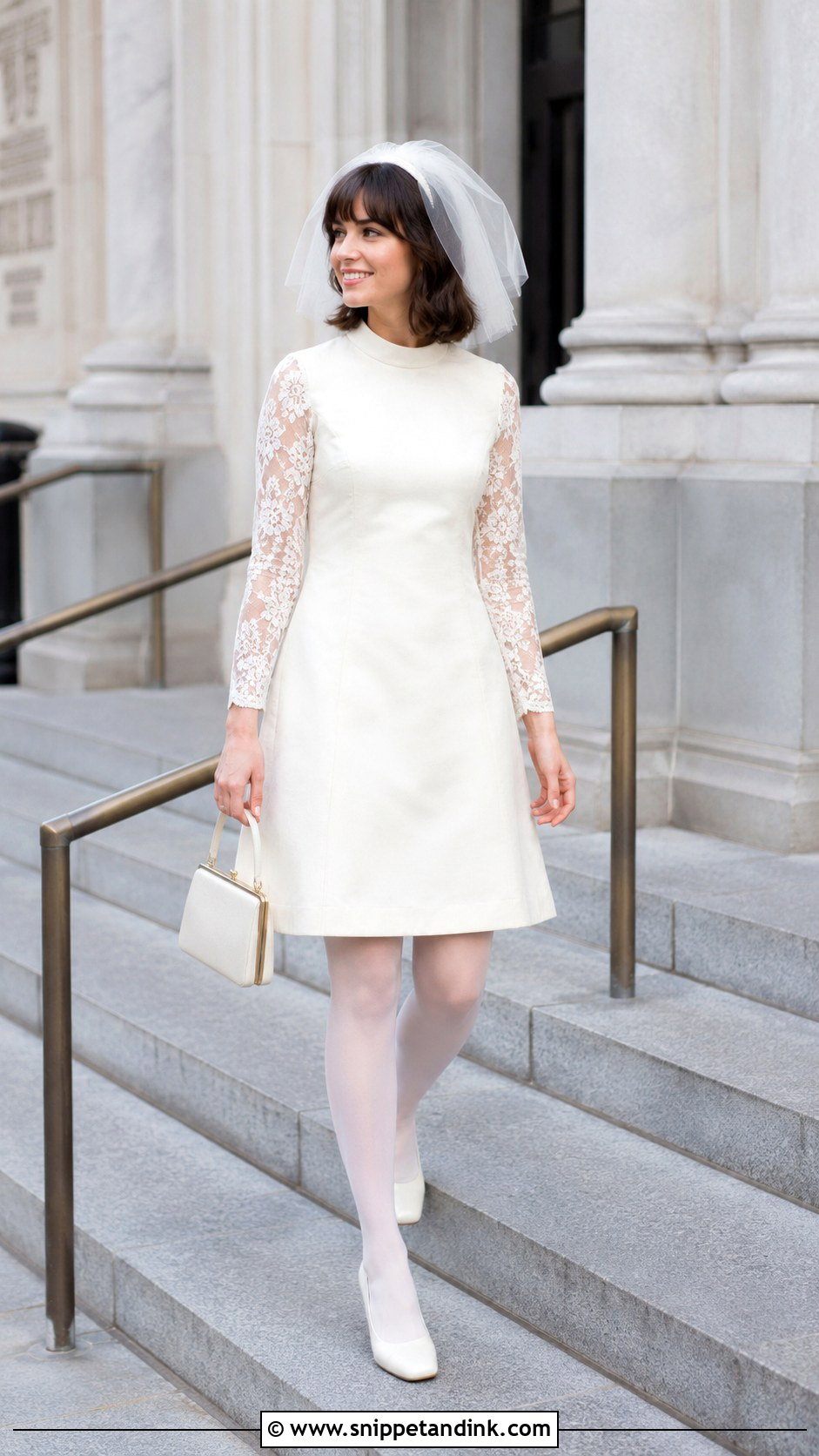
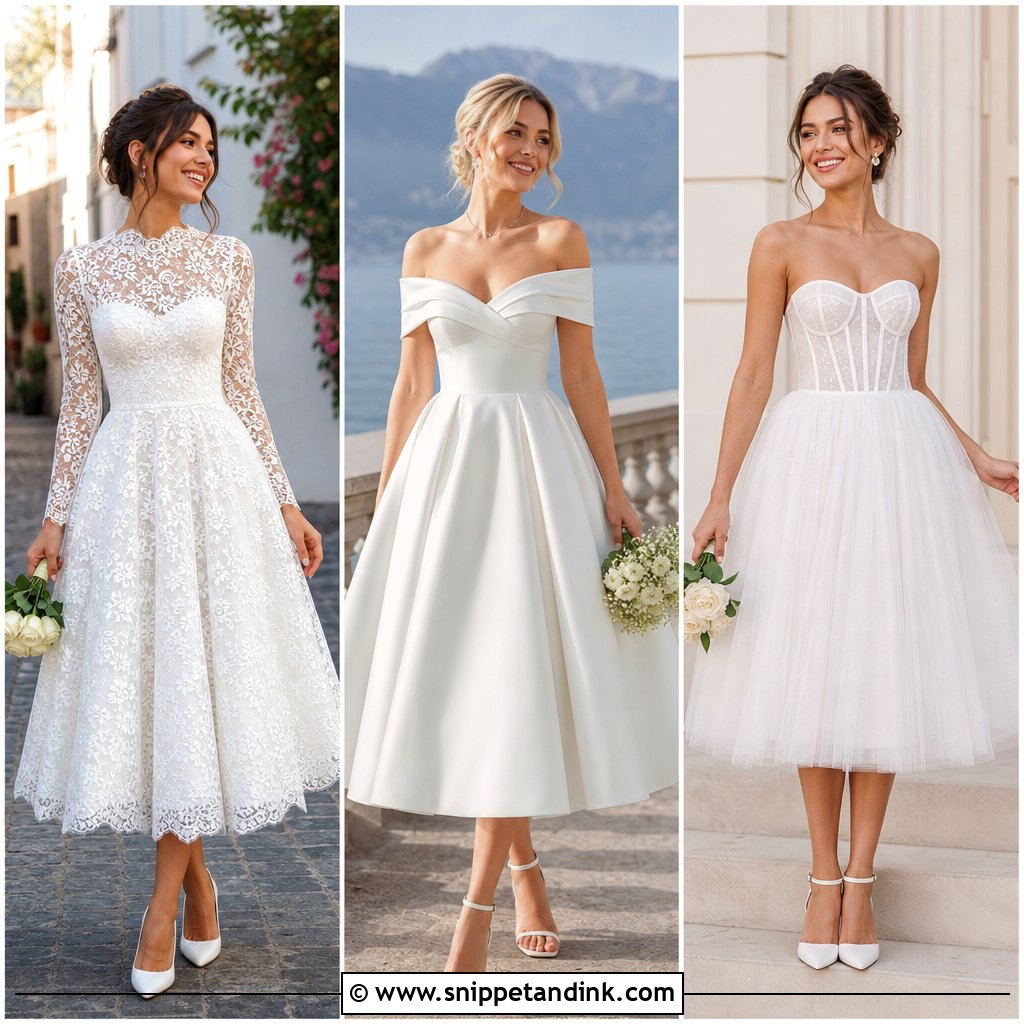
The short wedding dress is the youthful, modern side of early-seventies fashion. An ivory mini or knee-length A-line with a high neck, long sheer sleeves and lace appliqué across the bodice keeps the shape clean, and a lightly flared skirt lets you move. White block heels, opaque tights in cooler weather and a small structured bag complete it. A short bubble veil or a floral headband balances the hem far better than a long veil, which looks oddly weighted on a mini. Wear the hair in a smooth bob, soft waves or a simple half-up. Sit down in it at the fitting with your knees together; a mini that rides up when seated becomes a problem at dinner. City hall ceremonies and small daytime parties are its natural home.
19. 1971 Pleated Wedding Dress
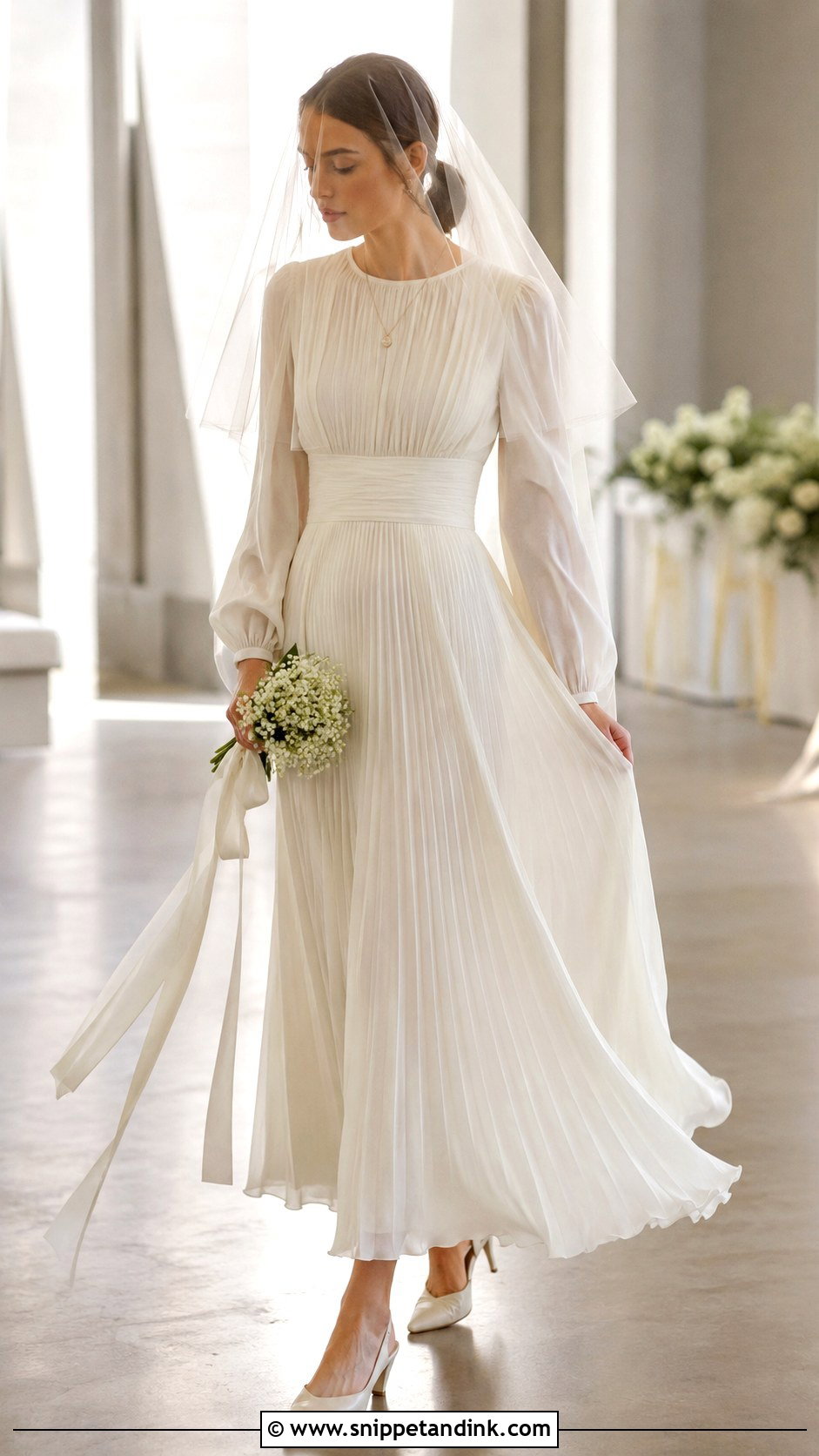
Fine pleats give a plain chiffon gown texture and movement. Look for a pleated bodice, a raised waist and a long skirt of narrow vertical folds, with sheer full-length sleeves repeating the pleating into slim cuffs. With that much detail in the fabric, keep the neckline plain and leave out heavy lace. Ivory slingbacks, a delicate pendant and a smooth fingertip veil complete it, with a low ponytail or relaxed bun as a clean contrast. Carry a small bouquet with long ribbon tails that move with the skirt. Fine pleats are often heat-set in synthetics, and an iron or a hot steamer can flatten them for good, so only steam lightly from a distance.
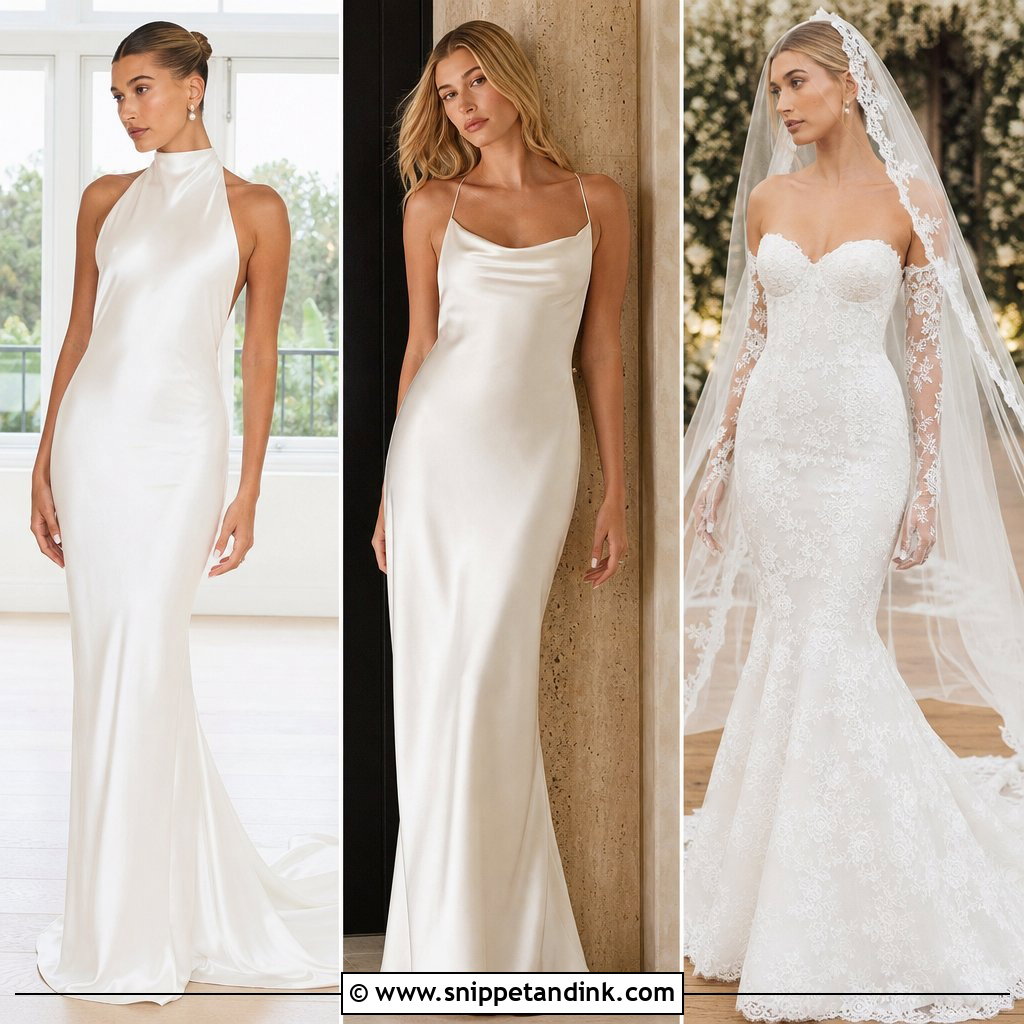
20. 1971 Tiered Maxi Wedding Dress
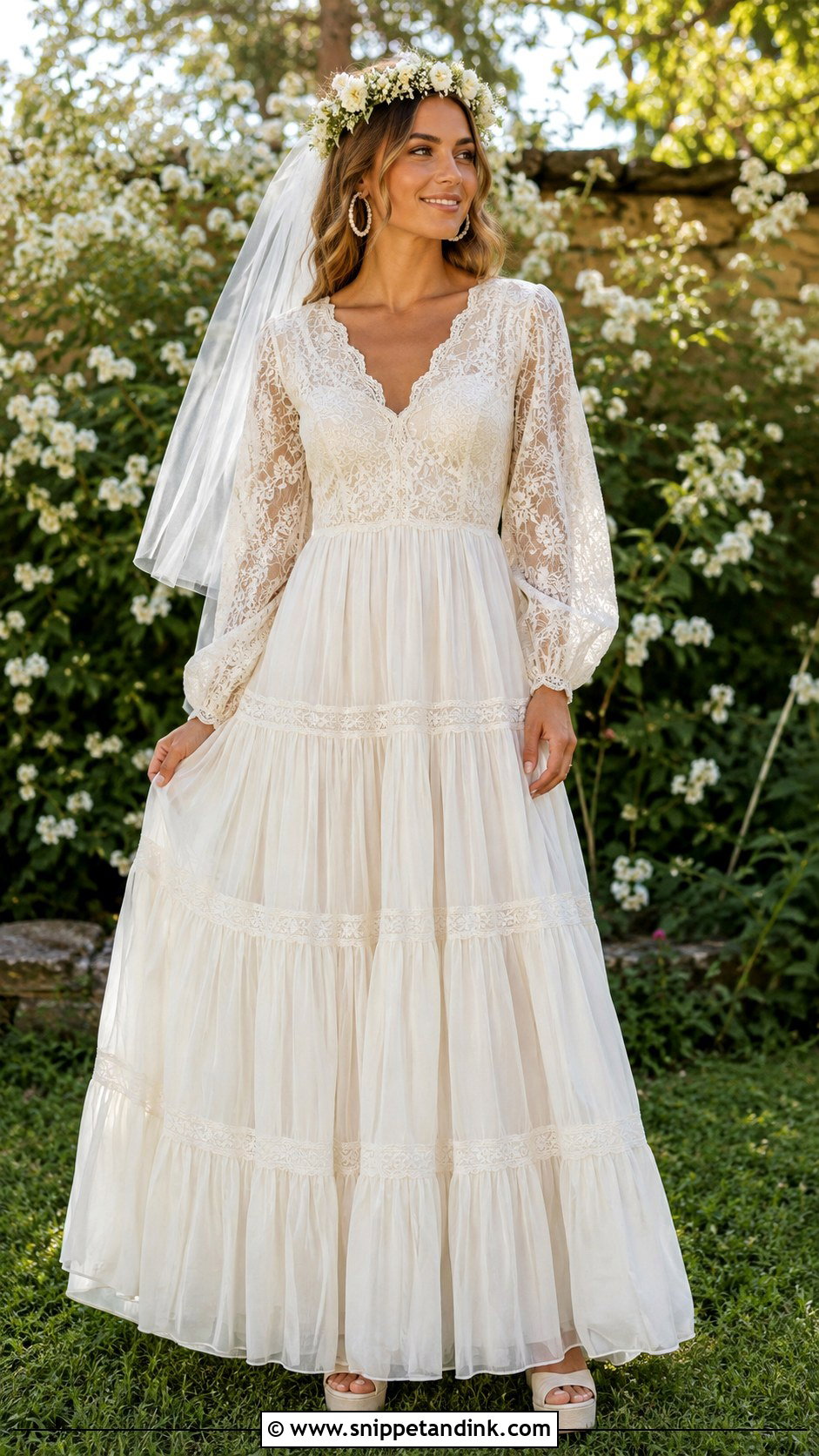
A tiered maxi gown is about as recognizably seventies as a silhouette gets. A fitted lace bodice leads into two or three softly gathered tiers, with long peasant sleeves, a modest V-neck and narrow lace bands linking top and skirt. Cream platform sandals, small pearl hoops and a floral wreath fixed to a light veil complete it, with loose waves and fresh makeup. Fabric choice decides whether the tiers fall or stick out: fluid cotton voile or chiffon drops smoothly, while a stiffer cotton adds width right at the hips. Outdoor summer weddings and barns suit it.
Big Sleeves Meet Cake Knives, Bouquets and Ring Exchanges
Half the dresses on this list have sleeves with real volume, and they behave very differently once the ceremony starts. These are the moments I walk brides through.
- The ring exchange: cuffs should stop at the wrist bone. If lace or a ruffle reaches the knuckles, the ring has to be pushed on through fabric, and it looks fumbled in photographs.
- Holding the bouquet: bishop and bell sleeves bunch at the elbow when your arms bend. Hold the flowers slightly lower than usual, at about hip height, so the sleeves hang properly.
- Eating and the cake: bell sleeves dip into plates and catch on candles. A small hidden loop and button inside the sleeve lets you fold the flare back for dinner.
- Sheer sleeves and tanning: fake tan and body shimmer rub off onto sheer chiffon or lace at the inner arm. Apply them at least a day ahead and test against a scrap of the fabric.
- Wrist buttons: rows of tiny buttons take time to fasten, and someone has to do them for you. Ask for elastic loops instead of thread loops; they’re faster and give a little when you reach.
If the sleeves are the reason you chose the dress, make the rest of the day suit them. A slightly smaller bouquet, a sleeveless reception change, or simply knowing how to lift a bell sleeve before reaching across a table will save you a lot of awkward moments.
Let the Sleeves or the Lace Lead, Not Both
Early-seventies bridal fashion covered a lot of ground. Empire waists and flowing skirts brought softness, while high collars, lace sleeves and ruffles showed the decade’s love of Edwardian and prairie clothing, and crochet, chiffon, floral organza and tiered maxis offered the relaxed end of things. The rule I keep coming back to is to find the dress’s strongest feature and style everything else around it. Shoes, veil, hair, bouquet and jewelry should all defer to the sleeves or the lace. Vintage or reproduction, good tailoring at the bust seam and cuffs is what makes it comfortable enough to forget you’re wearing it.
You'll Like These Ideas:


Leave a Reply