
Look at real wedding photos from the 1970s and the dresses share a few habits: sleeves that move, necklines either very high or very open, floral lace, and fabrics soft enough to sit on a lawn in. Seventies bridal fashion cared less about structure and more about motion, which is why so much of it suits a garden ceremony now and can still be dressed up for an indoor reception. In fittings I tell brides to keep one or two retro details and let everything else be modern: quiet accessories, shoes you can stand in for hours, natural hair and makeup. The dresses below run from folk lace and floating chiffon to satin and full disco sequins.
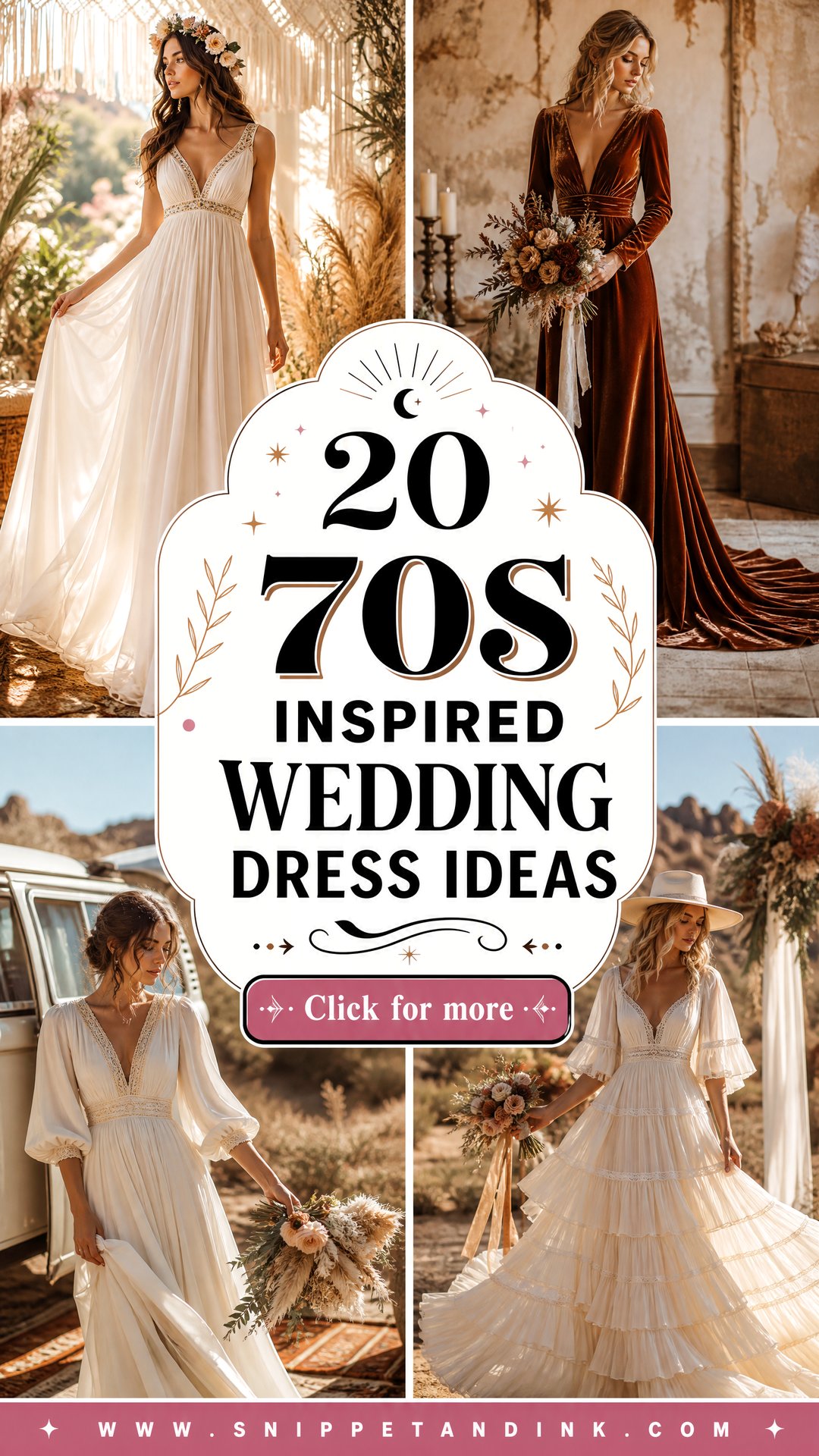
Lace in July, Velvet in December
Most 70s details were made for a specific kind of day, and the quickest way to narrow this list is to start with your date and venue, not the photos. A dress that looks right on a screen can be unbearable in the wrong season.
- Hot outdoor ceremonies: empire chiffon, flutter sleeves, eyelet and open crochet. Avoid velvet, heavy satin and long lined sleeves.
- Cool or indoor winter weddings: velvet, bishop sleeves, mock necks and cape styles that can be layered with a coat.
- Grass, sand or gravel: tiered and A-line skirts with block heels or boots. A column or bias cut drags and stains at the hem on soft ground.
- Late-night dancing: halters, flutter sleeves and disco sequins with a slit. Leave out anything with sleeves you’ll need to hold out of the way.
Then think about your body and the fabric together. Soft, fluid fabrics like chiffon and bias satin show everything underneath, while lace, crochet and velvet are forgiving but warm. I’d rather a bride picks the fabric she’s comfortable in and finds the 70s detail within it than the other way round.
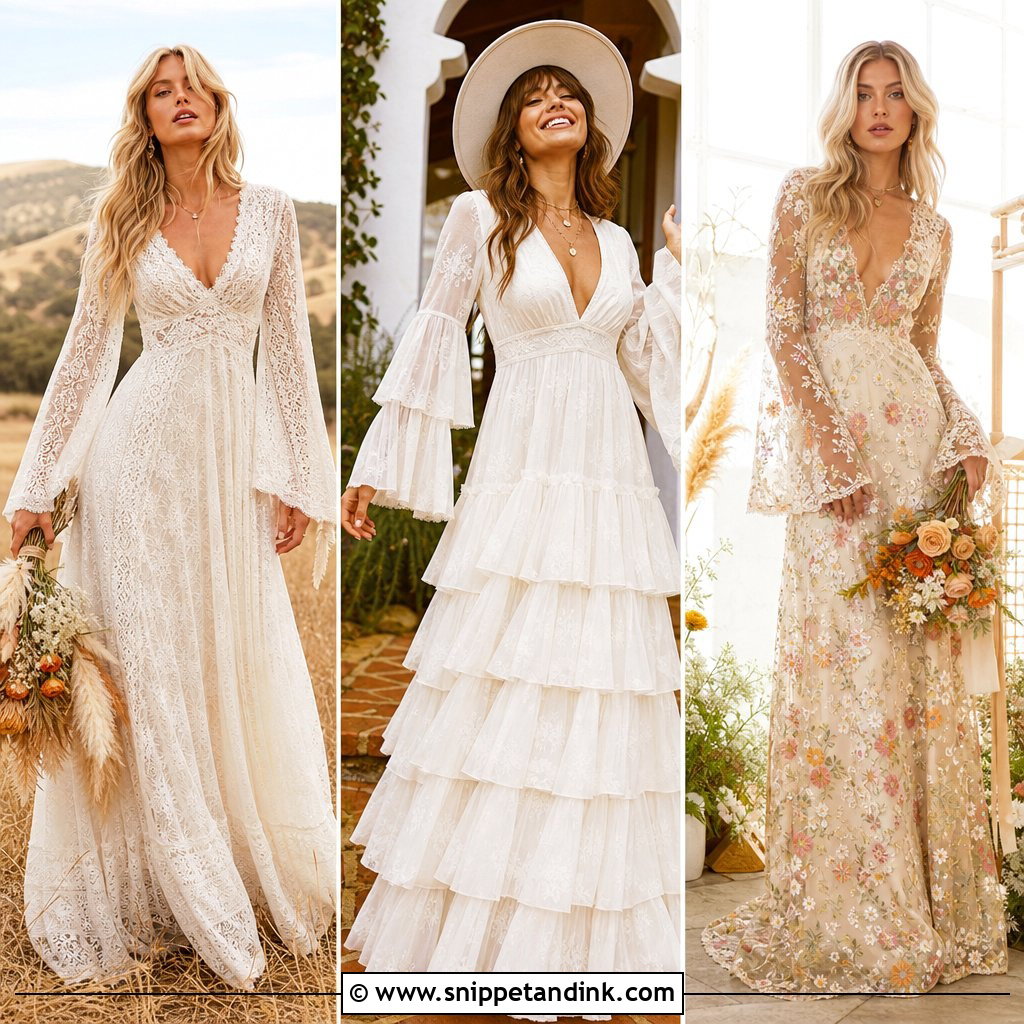
1. Boho Lace Bell Sleeve Wedding Dress
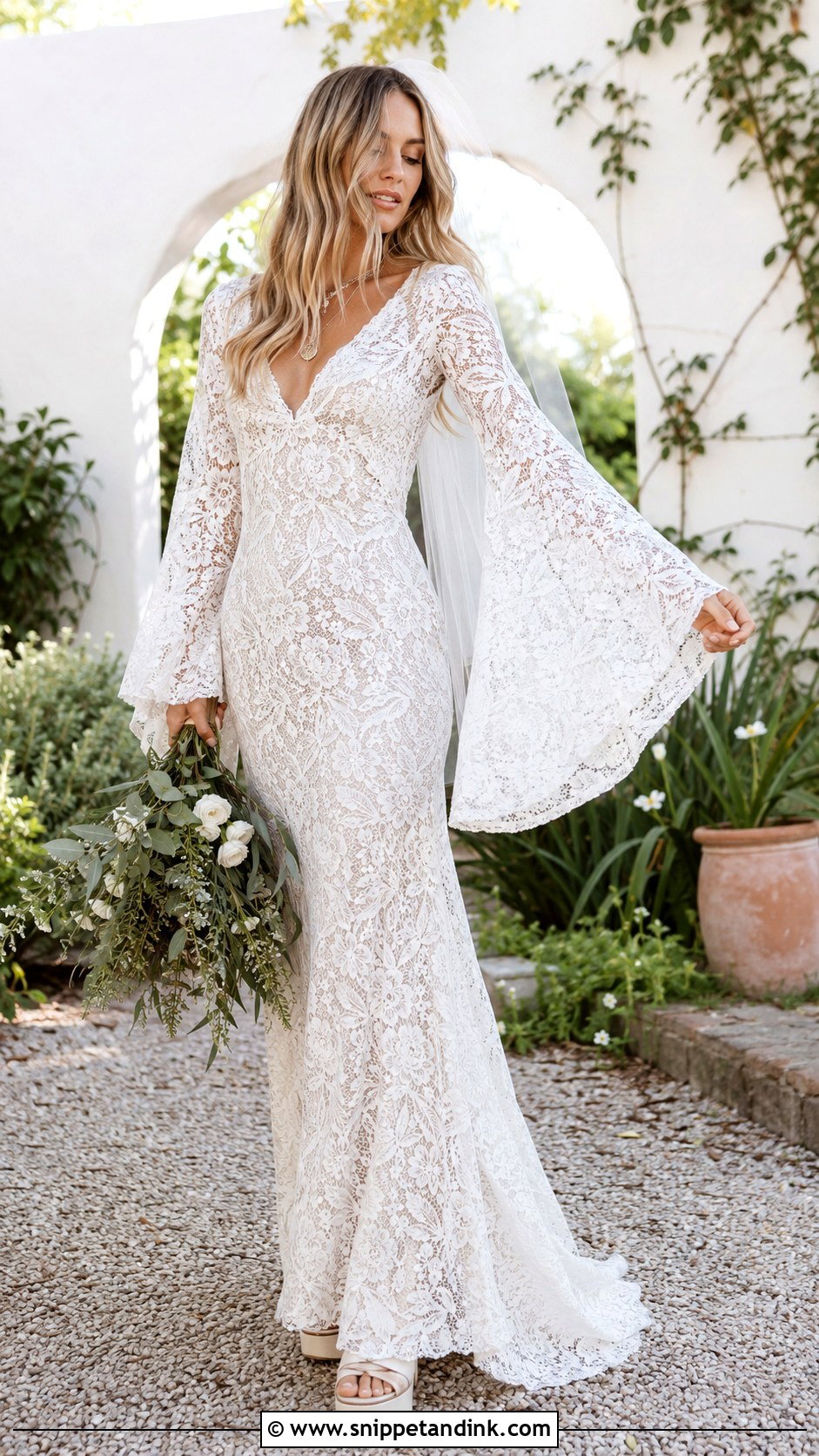
Bell sleeves say 1970s faster than any other detail. Soft floral lace suits them; stiff corded lace holds the bell out like a lampshade instead of letting it swing. A fitted bodice and gently flared skirt keep the sleeves as the main event. At fittings I have brides hold a bouquet and lift a glass, because a sleeve that drops past the knuckles gets in the way of both, and a seamstress can shorten it from the shoulder or the hem depending on where the lace edge sits. Ivory platforms or block heels steady you under a long hem. Small gold hoops, a delicate pendant and a loose green bouquet keep it light, and outdoors a fingertip veil won’t fight the sleeves.
2. High Neck Bishop Sleeve Wedding Dress
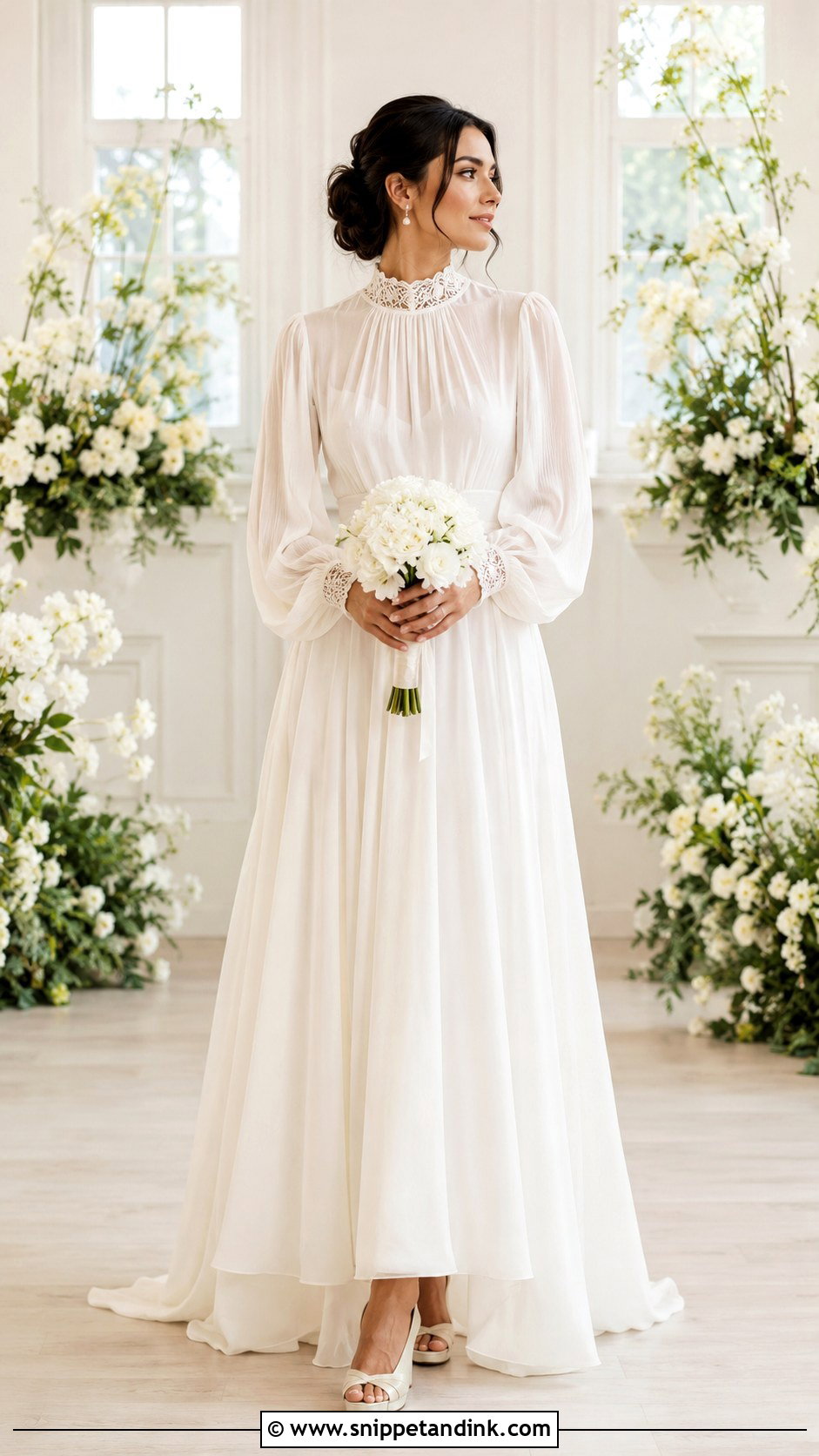
Sheer bishop sleeves gathered into a narrow cuff give movement with full coverage, and the lace collar carries the vintage feel on its own. A lightly defined waist and a chiffon or crepe skirt balance the volume up top. The cuff is what I check first. Too tight and it marks the wrist and stops the sleeve from blousing; too loose and the sleeve slides down into your bouquet. Covered buttons at the cuff take a few minutes to fasten, so give that job to someone. Ivory pumps indoors, block-heel sandals on grass, pearl drops and a low textured bun. Skip the necklace, and keep the bouquet small so the bodice stays visible.
3. Empire Waist Chiffon Wedding Dress
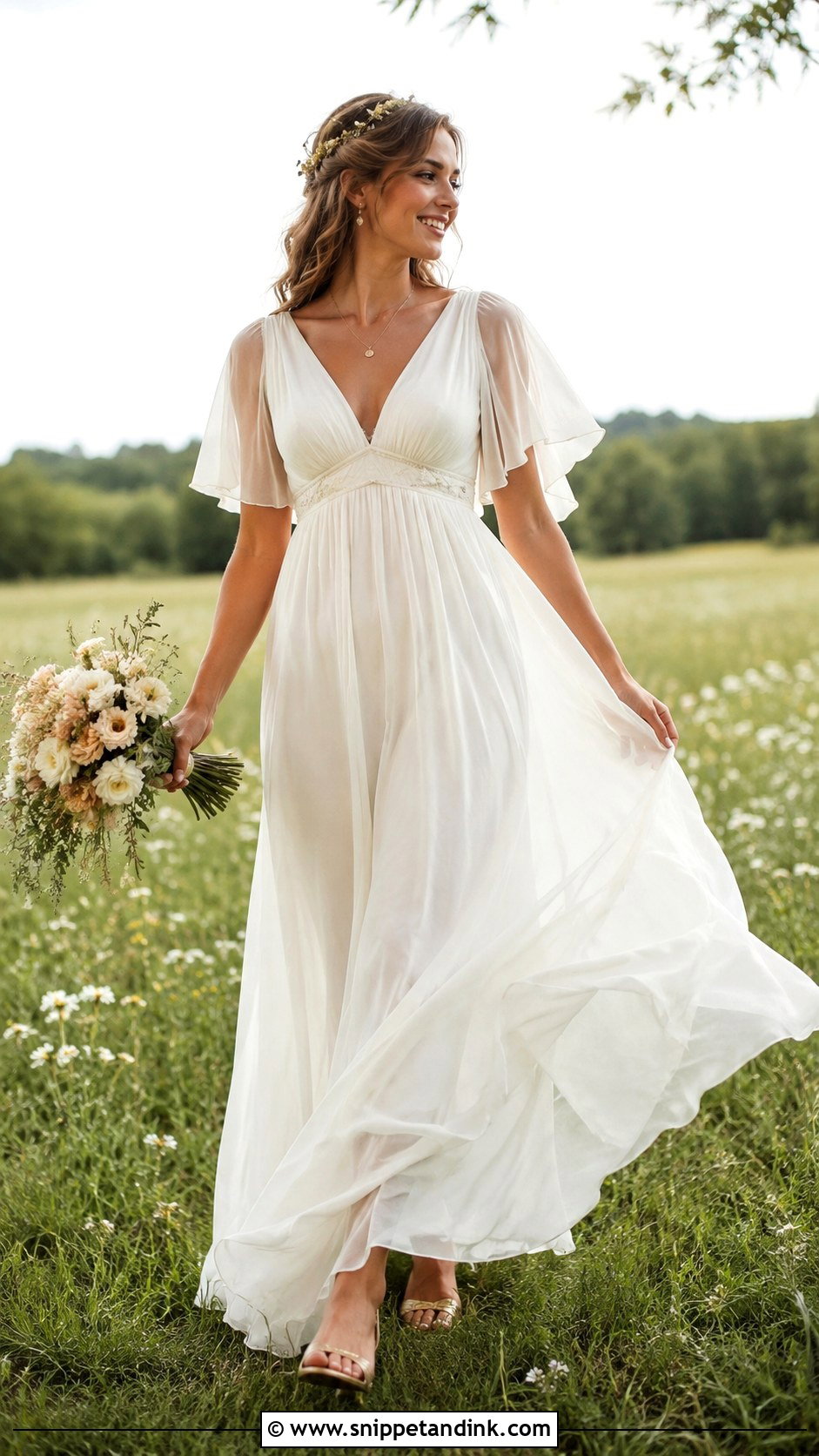
Empire waists are the kindest cut on this list for most bodies. The seam sits just under the bust and the chiffon falls from there, skimming the hips and stomach instead of holding them, which is why I also suggest it to brides who are pregnant on the day. Look for a V-neck, light gathers and sheer flutter sleeves. The risk is looking shapeless from the side, and a narrow satin ribbon under the bust solves it. Chiffon is thin, so check the lining against daylight before you commit. Metallic low heels, a fine chain and small drop earrings suit it, with loose waves or a half-up style and a small bouquet of daisies and greenery.
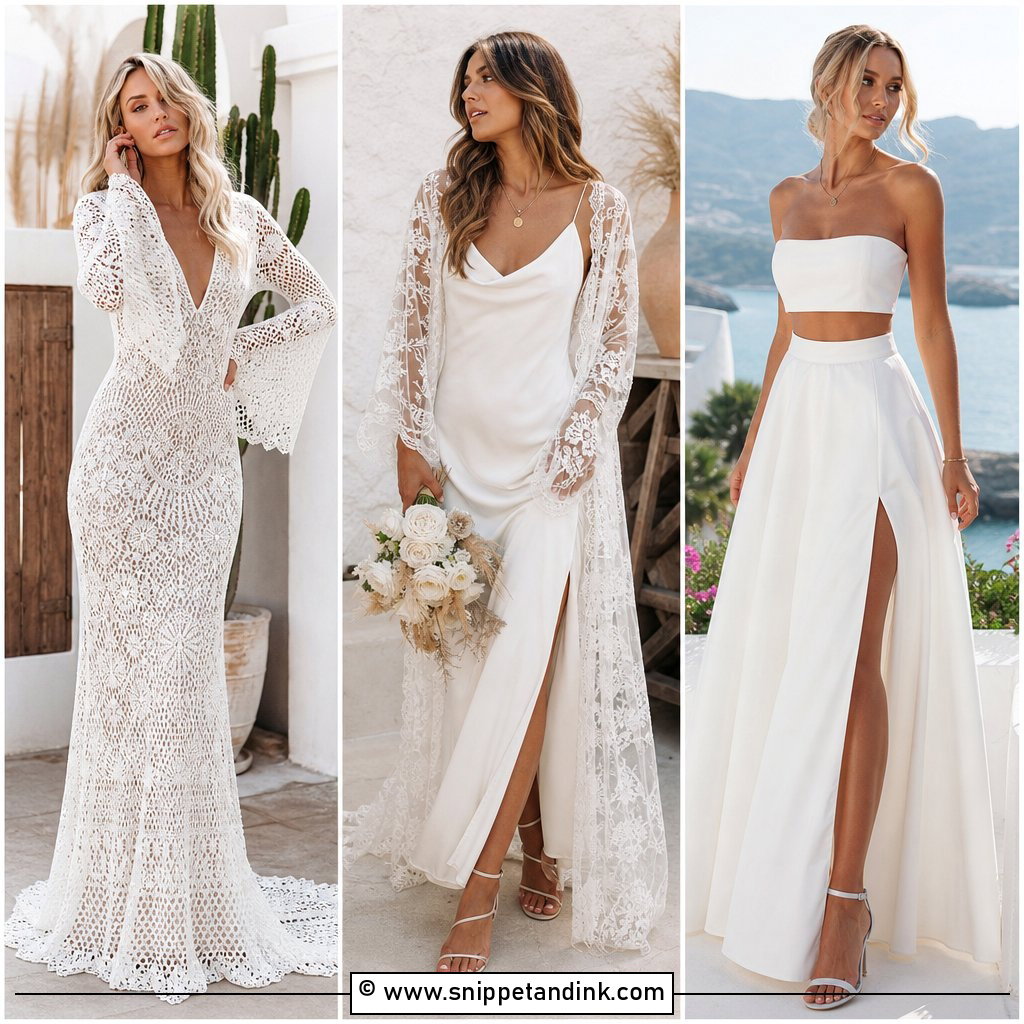
4. Crochet Lace Wedding Dress
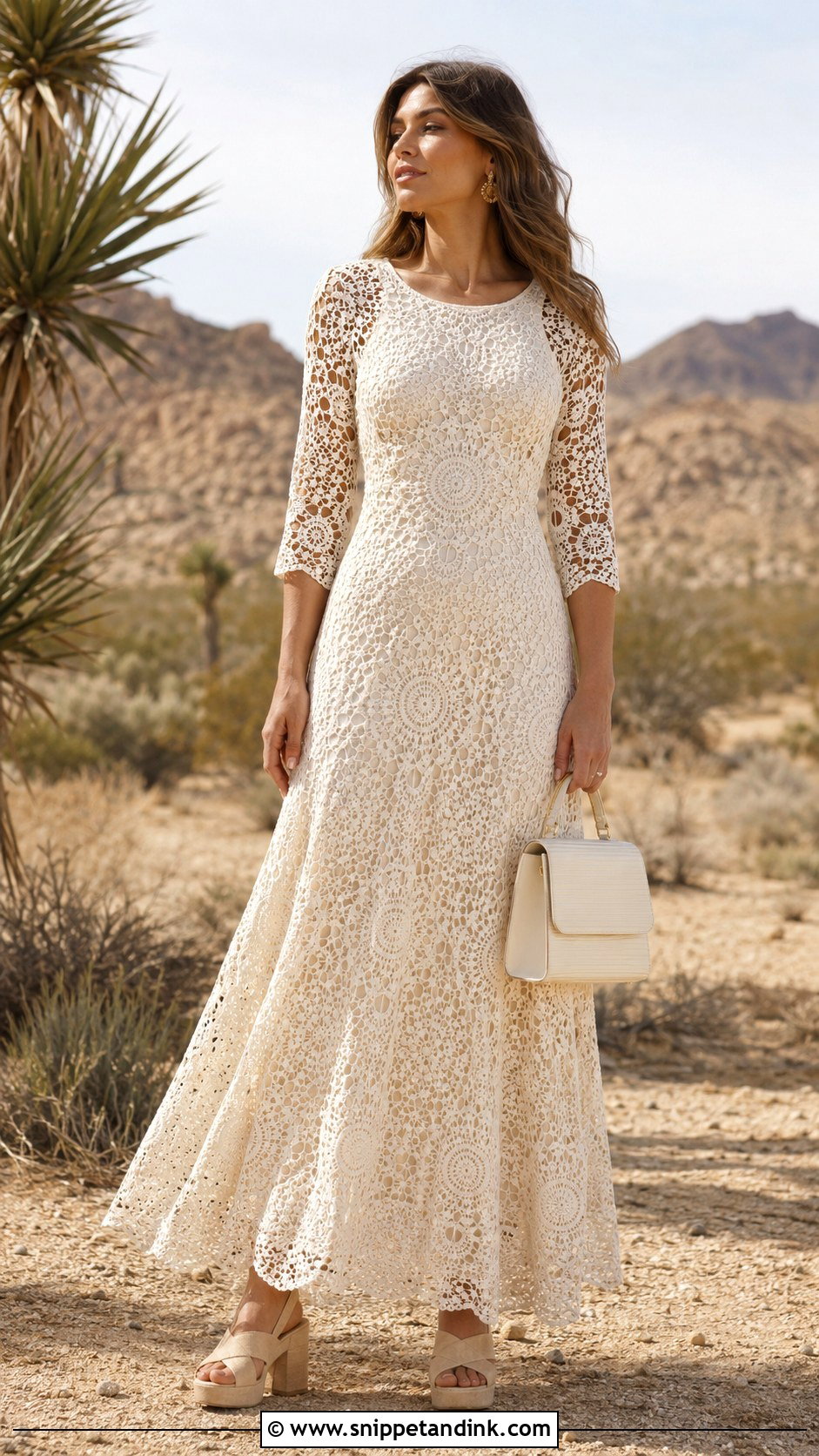
Crochet lace needs a bold pattern to register on camera; a fine stitch looks like plain white from a few meters back. I’d only consider it lined, with the open overlay over a solid slip, because unlined crochet shows everything underneath. It’s also heavy and stretches lengthways as it hangs, so get the final hem set close to the date rather than months out. A fitted waist, softly flared skirt and three-quarter or long straight sleeves give the vintage shape. Tan or ivory platforms, a cream structured bag and plain gold earrings finish it. A smooth low bun contrasts with the texture; loose curls lean more boho. Keep the veil plain, and save this one for a beach, desert, backyard or rustic setting.
5. Tiered Prairie Wedding Dress
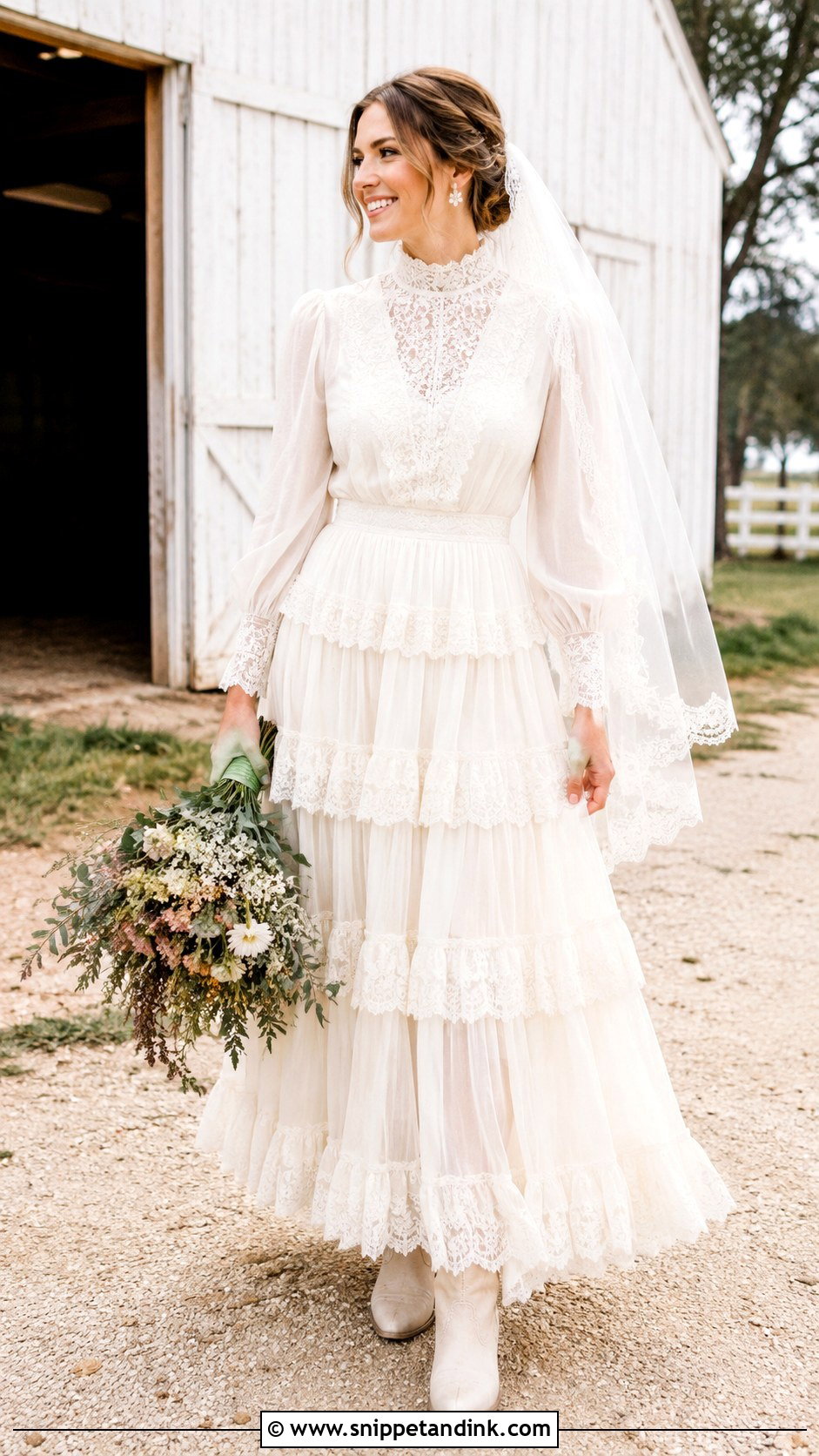
A tiered prairie wedding dress looks relaxed, but every tier adds fabric and weight near the hem, so ask how many layers of lining sit underneath. A gathered bodice, defined waist, high neck and long puffed sleeves give it the vintage read, with lace or small ruffles at each tier edge. Hemming tiers is a bigger job than hemming a plain skirt. Seamstresses often take it up at the top tier or the waist to keep the proportions, so book that alteration early. Lace-up block heels or ivory ankle boots depending on the season, tiny floral earrings, a ribbon in a half-up style and a short lace-trimmed veil. Woodland, barn, garden and countryside venues suit it best.
6. Floral Embroidered Wedding Dress
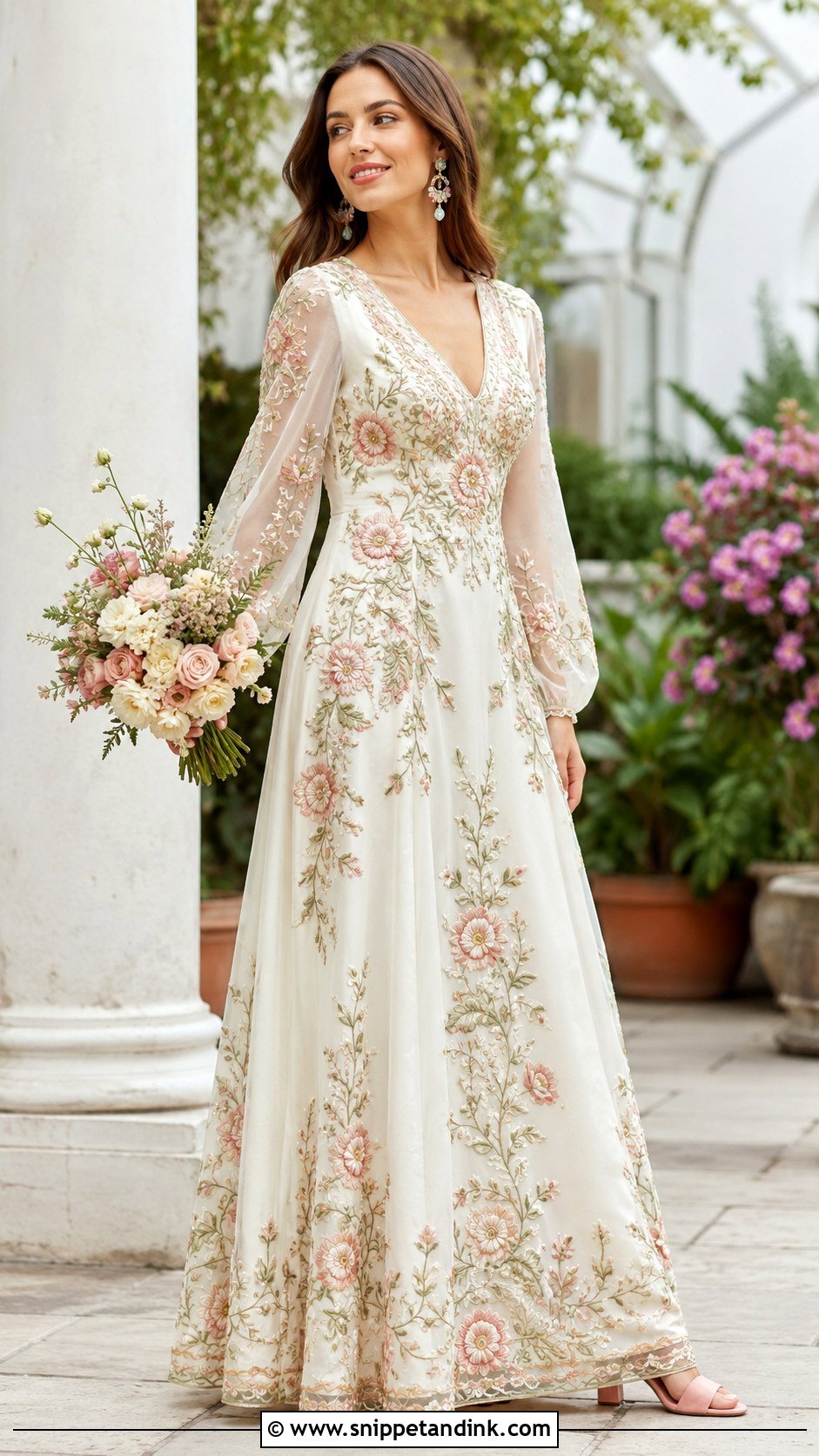
Embroidery is how 70s brides got color into a white dress. Muted thread works far better than rainbow brights: dusty pink, sage, faded blue, a little gold. Keep the cut a simple A-line so the pattern has room. Dense embroidery stiffens the fabric where it sits, so sit down in the fitting and check it doesn’t pull the bodice out of shape. Blush heels, gemstone studs and a small gold bracelet are enough jewelry. My habit is to pull one or two thread colors into the bouquet and stop there. A plain tulle veil with a clean edge, loose curls and fresh makeup let the stitching lead.
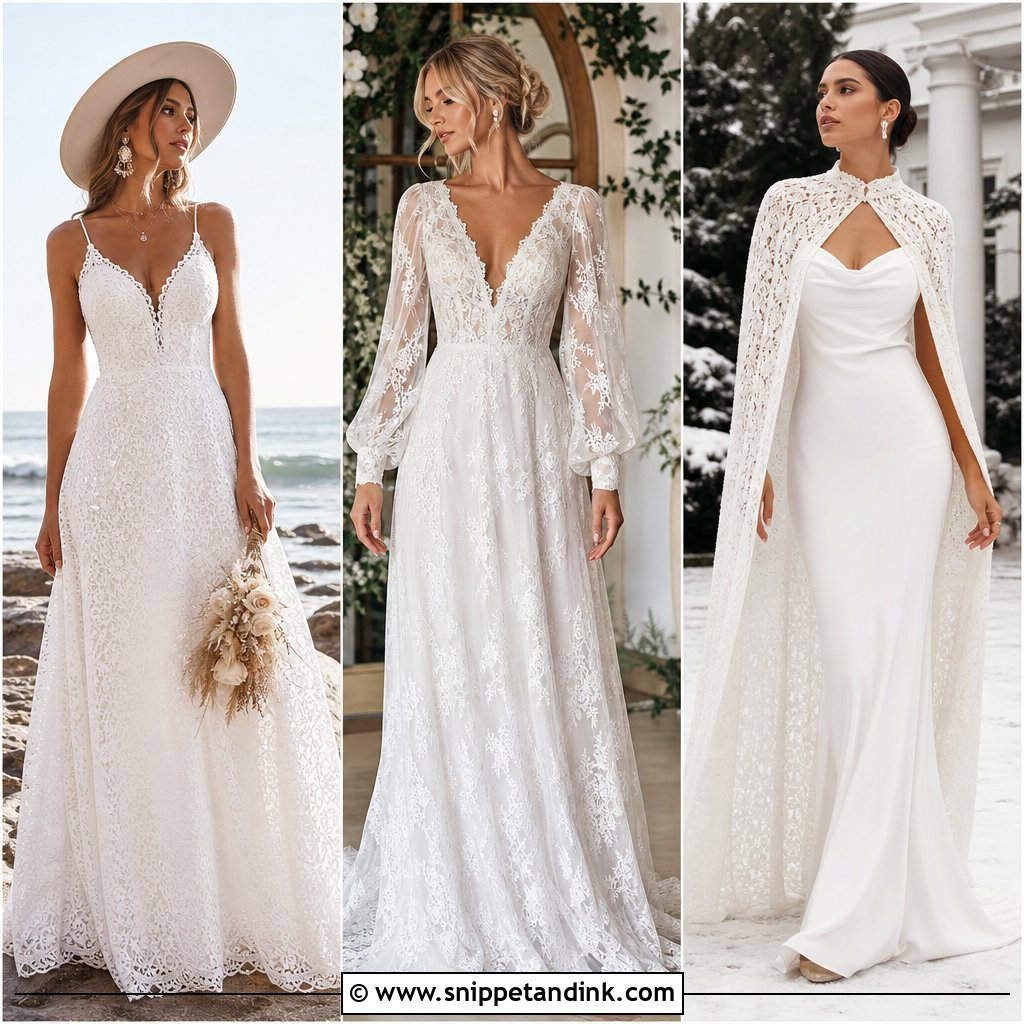
7. Cape Sleeve Wedding Dress
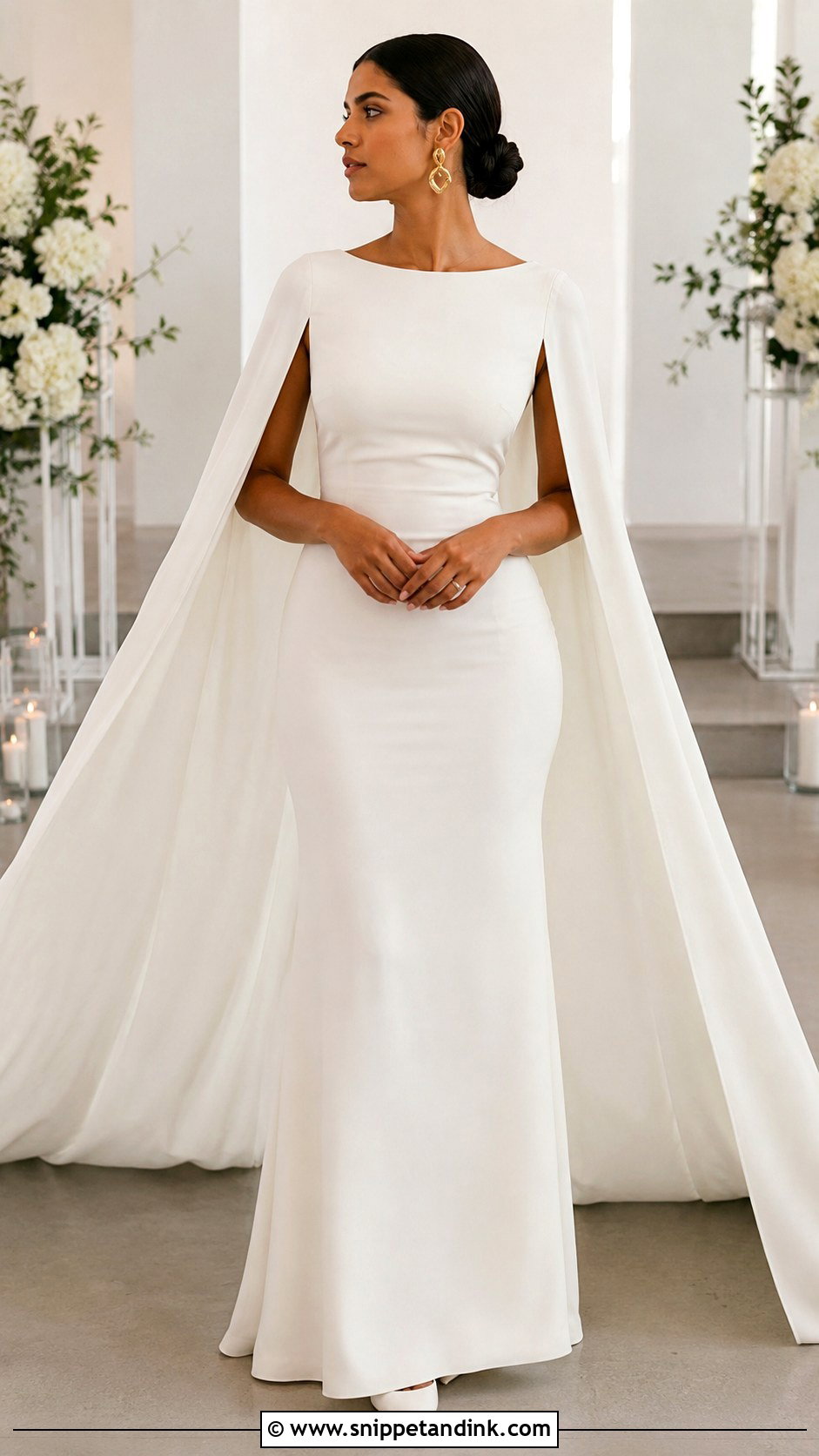
Cape sleeves give drama without the heat of full sleeves. Look for a fitted crepe or lace gown with panels falling from the shoulder and down the back; short capelets read boho, floor-length panels make an entrance. Long panels catch under your own feet and on chair backs, so in fittings I have brides sit, stand and take a few steps backwards, and I ask the seamstress for a small finger loop at each panel end. Pointed ivory heels, sculptural gold earrings and a sleek clutch suit the clean line. A low bun or smooth ponytail keeps the cape visible, and you can skip the veil since the back already moves. Of all twenty, this is the most current-looking version of the decade.
8. Halter Neck Wedding Dress
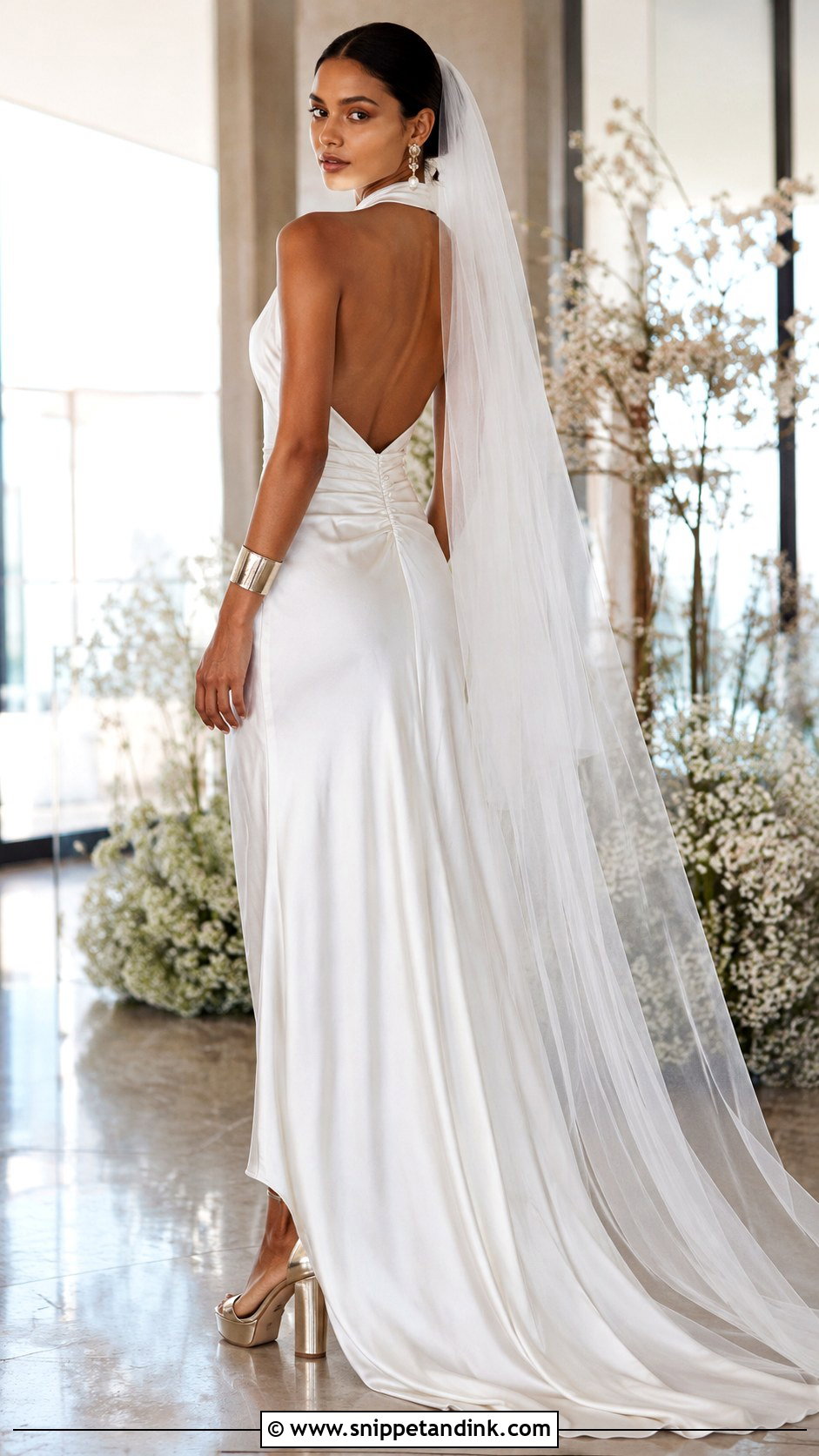
Halters are 70s glamour: shoulders out, back open. Choose soft satin, crepe or light jersey that skims instead of grips, with a gathered neckline and a fitted waist. The fit issue is weight. Everything below hangs from the back of your neck, and heavy satin on a halter strap starts to ache by the reception, so lighter fabric and a waistband that carries some of the load make a real difference. Bras are out, so you’ll need built-in cups or an adhesive option. Metallic platforms, bold drop earrings and a slim gold cuff, no necklace. Try a high textured bun, a polished ponytail or side-parted waves. A long sheer veil works for the ceremony; take it off for the party and carry a compact metallic bag.
9. Sequin Disco Wedding Dress
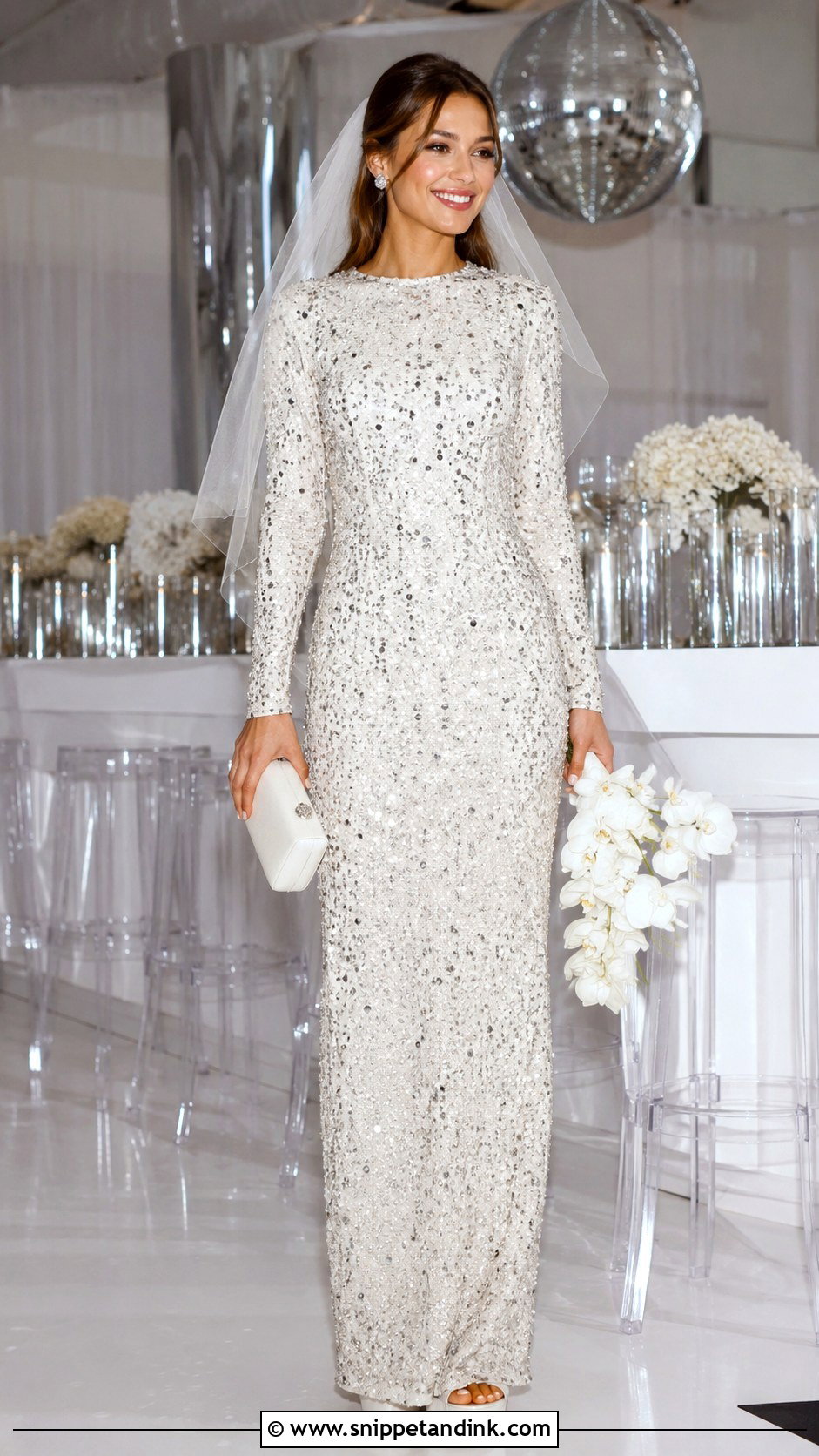
A sequin wedding dress takes the glam route through the decade. Ivory, silver or champagne in a column, A-line or slight flare, with long sleeves to balance the sparkle. Sequins are heavy and have almost no stretch. A column needs a slit or kick pleat so you can walk and dance, and alterations cost more because sequins have to be unpicked by hand from the seam line before anything is sewn. Platforms give the retro height, but block heels last longer on a dance floor. Crystal studs, a smooth clutch and a plain veil. Polished waves or a sleek center part, and a minimal bouquet such as white calla lilies, because the dress needs no props.
10. Satin Cowl Neck Wedding Dress
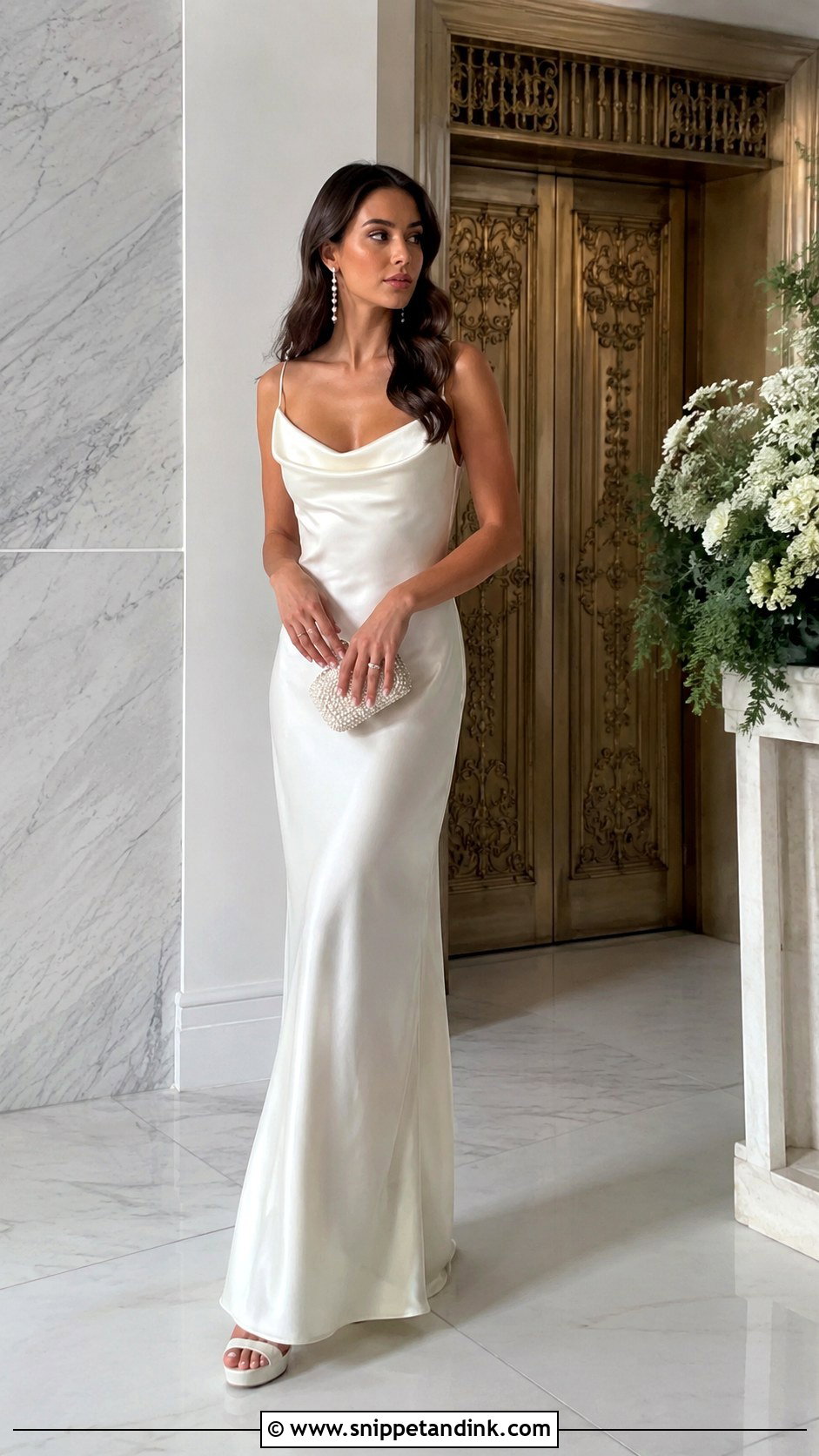
This is the quietest dress here, so the fabric has to be very good. Bias-cut satin follows the body, and bias cuts are fussy: they cling wherever anything is tight and ripple wherever it’s loose, so expect to try several sizes and to pay for careful alterations. A low back, slim straps or soft draped sleeves give it character. Underwear with flat, bonded edges keeps lines off the satin. Ivory platforms, a beaded clutch and long pearl or crystal earrings suit it, with a faux-fur wrap or cream coat for a cool ceremony. Brushed-out waves echo the drape. Sit and walk in it before you buy; it should feel as easy as it looks.
11. Ruffled Flutter Sleeve Wedding Dress
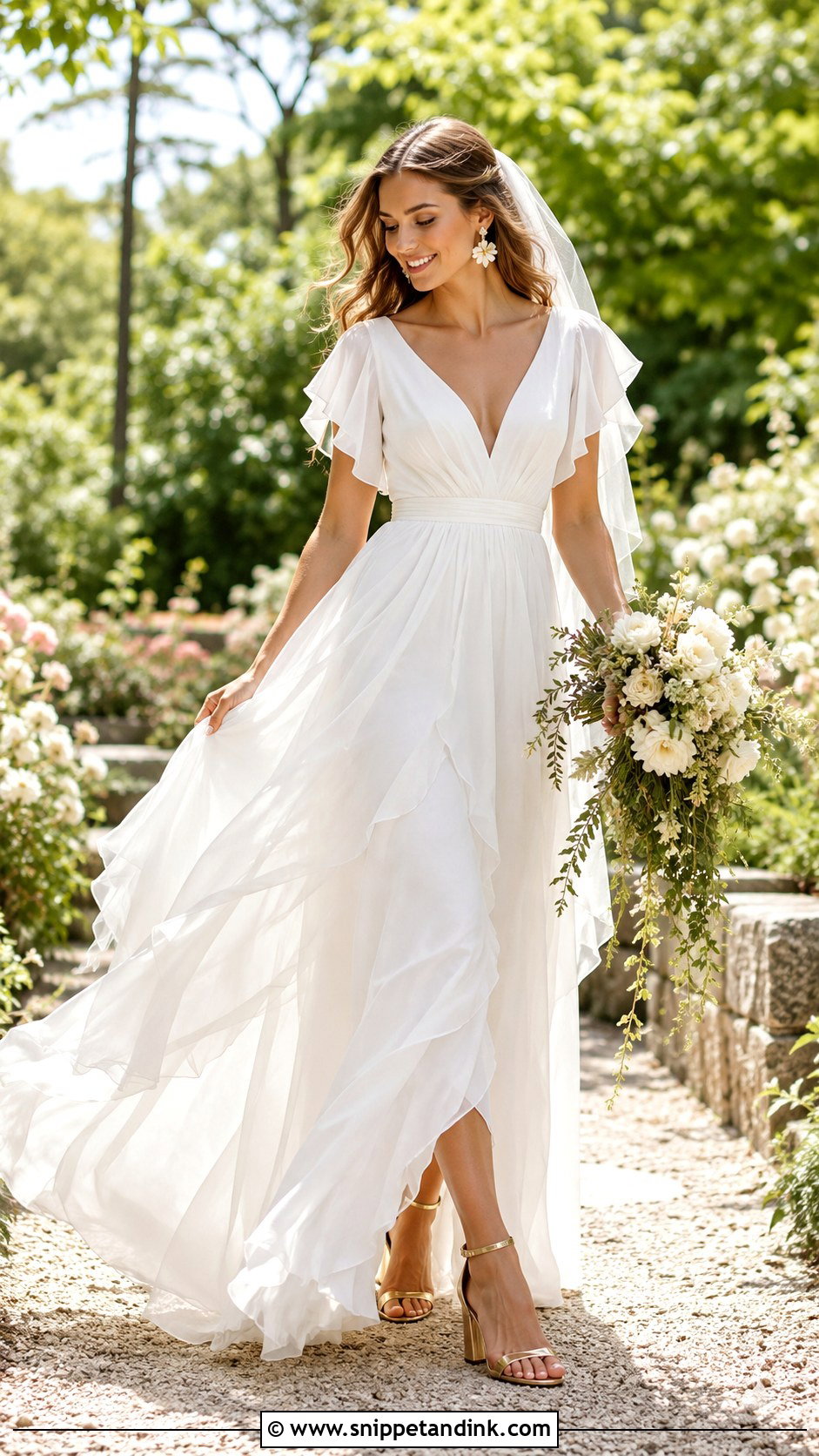
On a hot day, flutter sleeves are the airy answer. A V-neck or wrap bodice with sleeves that skim the upper arm, a soft waist and a cascading chiffon skirt. I’d keep ruffles to one zone, the neckline, the sleeves or the hem, otherwise the dress starts to look busy. Chiffon lifts in a breeze, which looks wonderful while you walk and less so in a seated portrait, so warn your photographer if the ceremony is exposed. Gold block-heel sandals, floral drop earrings and a small woven or satin clutch. A loose low ponytail, a simple veil and trailing greenery suit spring, summer and destination weddings.
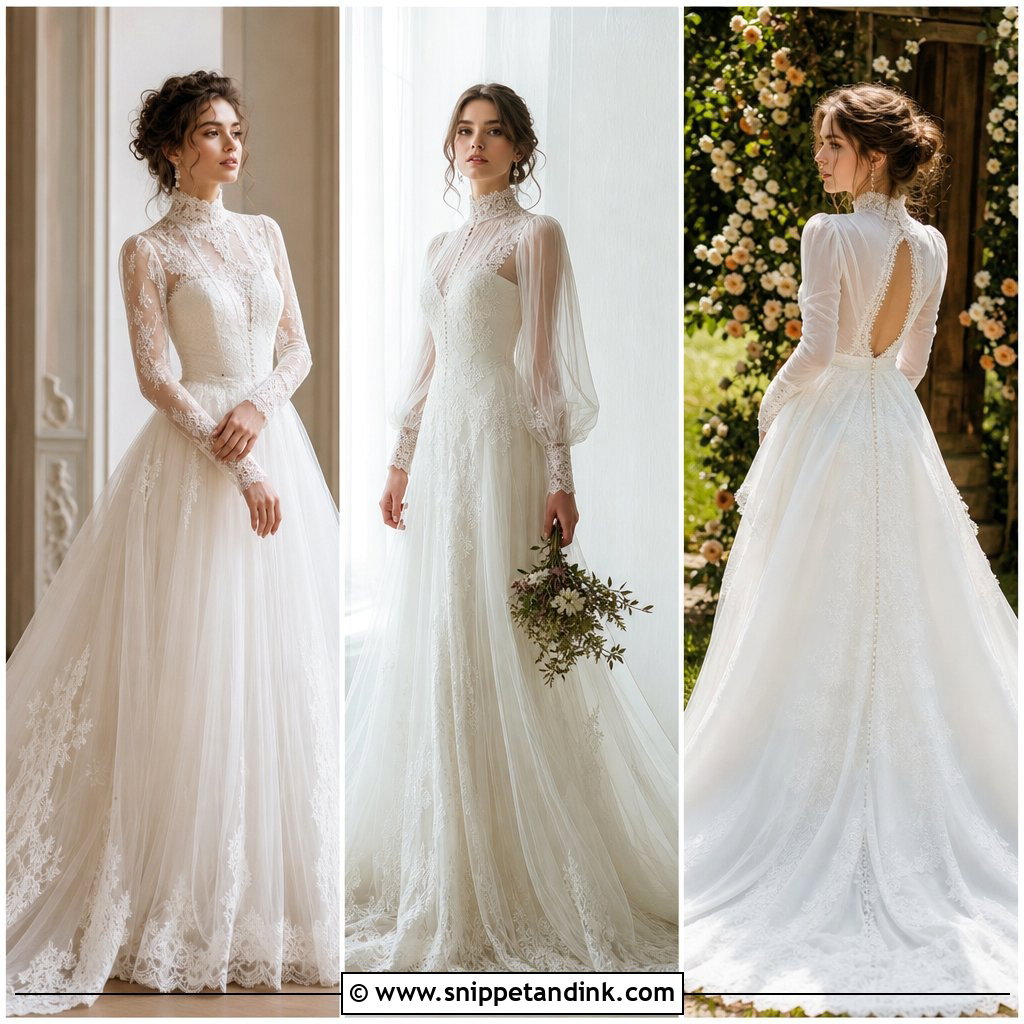
12. Mock Neck Lace Wedding Dress
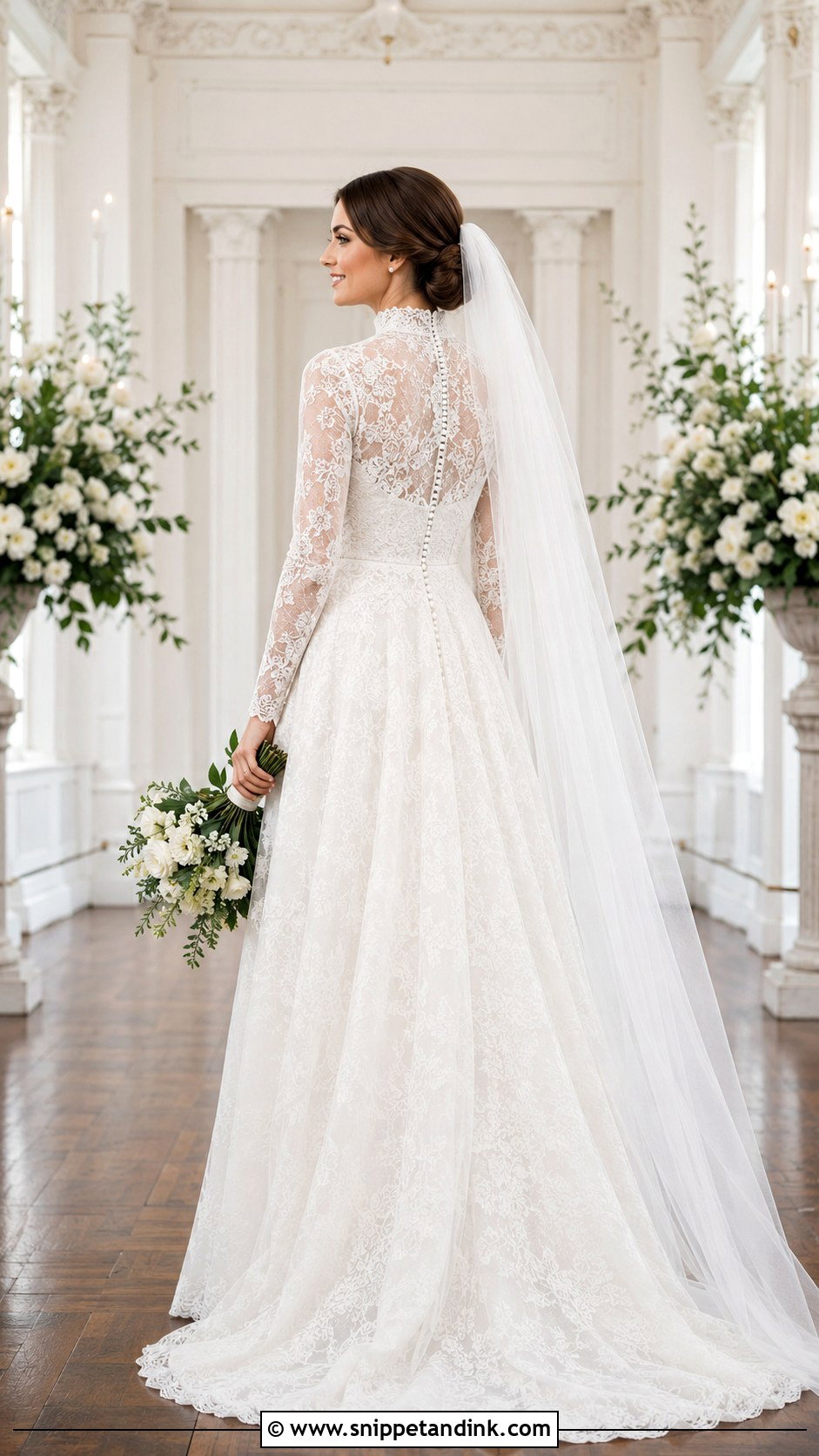
A mock neck covers almost to the jaw, and that changes hair and posture more than brides expect. Look for a sheer lace neckline, a fitted bodice, covered buttons down the back and wrist-length sleeves, straight or slightly puffed. A light chiffon or crepe A-line keeps it from feeling stiff. With a collar this high, I always suggest a low chignon, since loose hair catches on lace and hides the buttons. Give yourself extra time to get dressed; a small crochet hook pulls the loops over the buttons much faster than fingers. Ivory pumps, pearl studs and a narrow bracelet. A chapel veil for a traditional ceremony or a shorter plain one, plus a compact bouquet held below the lace.
13. Peasant Sleeve Wedding Dress
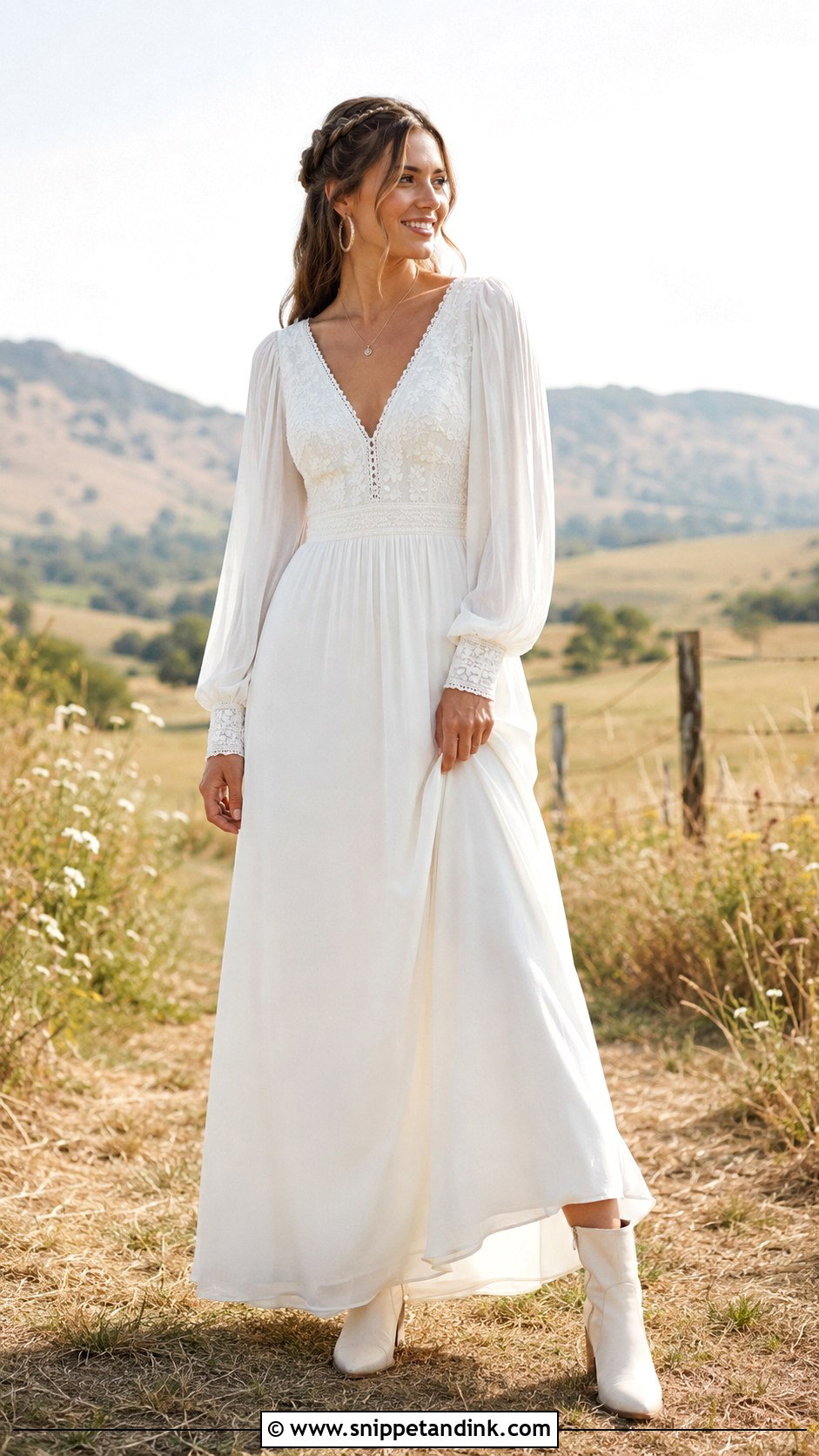
A peasant-sleeve wedding dress is the folk side of the decade: a soft square or V-neck, a fitted waistband and full sleeves gathered at the wrist. Cotton lace, embroidered tulle and chiffon all suit the shape. If you’re petite, watch the skirt. Too much fullness swamps a smaller frame, and a narrower skirt keeps the proportions right. Cotton lace also creases more than synthetic chiffon, so plan to steam it on the morning. Ivory ankle boots, a small pendant and fine hoops. A braided half-up style references the era, and a simple tulle veil or embroidered hair ribbon beats a big headpiece. Finish with white flowers, ferns and greenery.
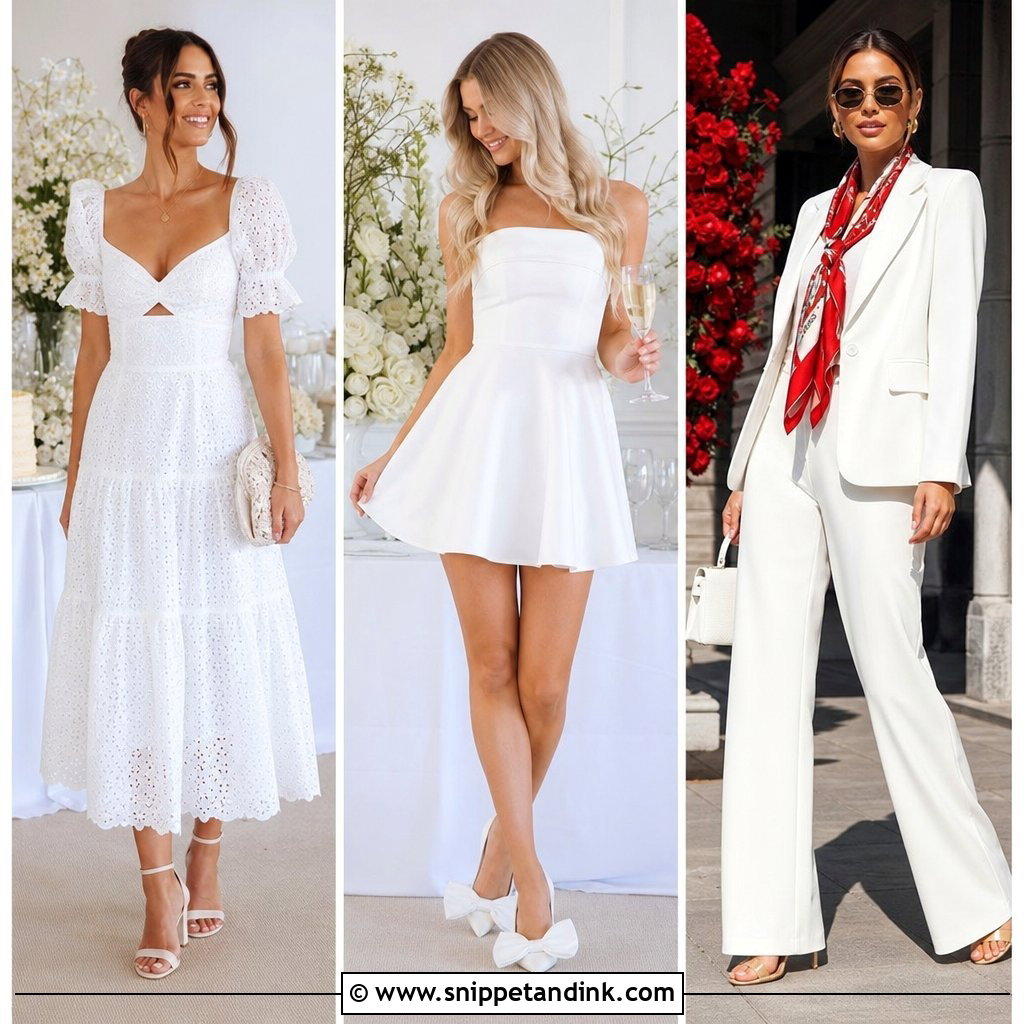
14. Eyelet Lace Mini Wedding Dress
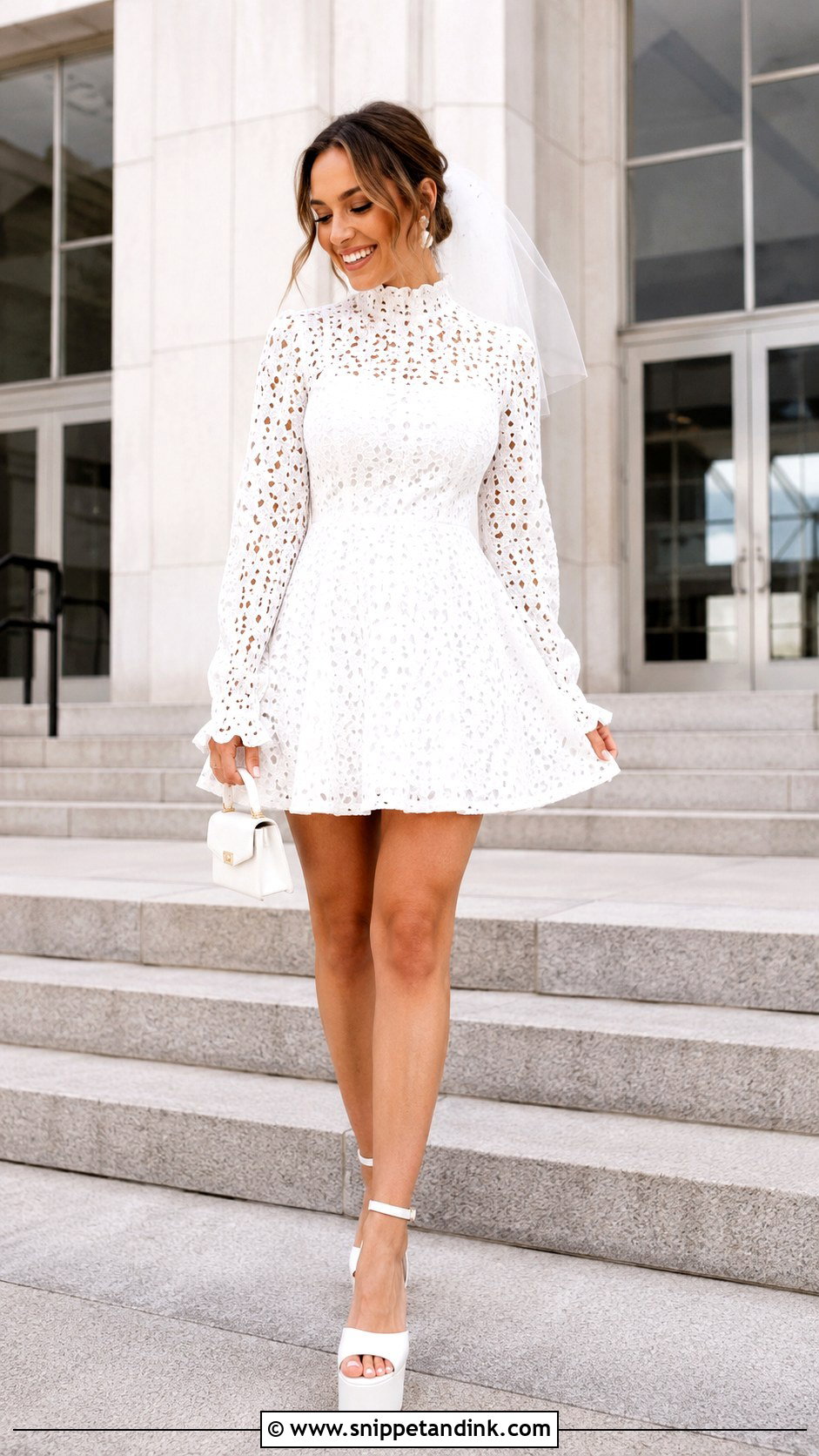
Eyelet is cotton with stitched, punched-out holes, which makes it lighter and more casual than formal lace. That suits a courthouse ceremony, a relaxed wedding or a reception change. Pick an A-line mini with long sleeves, a high ruffled neck or a soft waist. Cotton eyelet wrinkles fast in a hot car, so steam it at the venue rather than at home. White platforms or retro ankle boots, pearl hoops, a structured mini bag and a short veil that ends above the shoulders. Smooth waves or a bouncy ponytail. Check the length from behind and seated in a full mirror, and wear tailored shorts or a smooth slip if you want more cover.
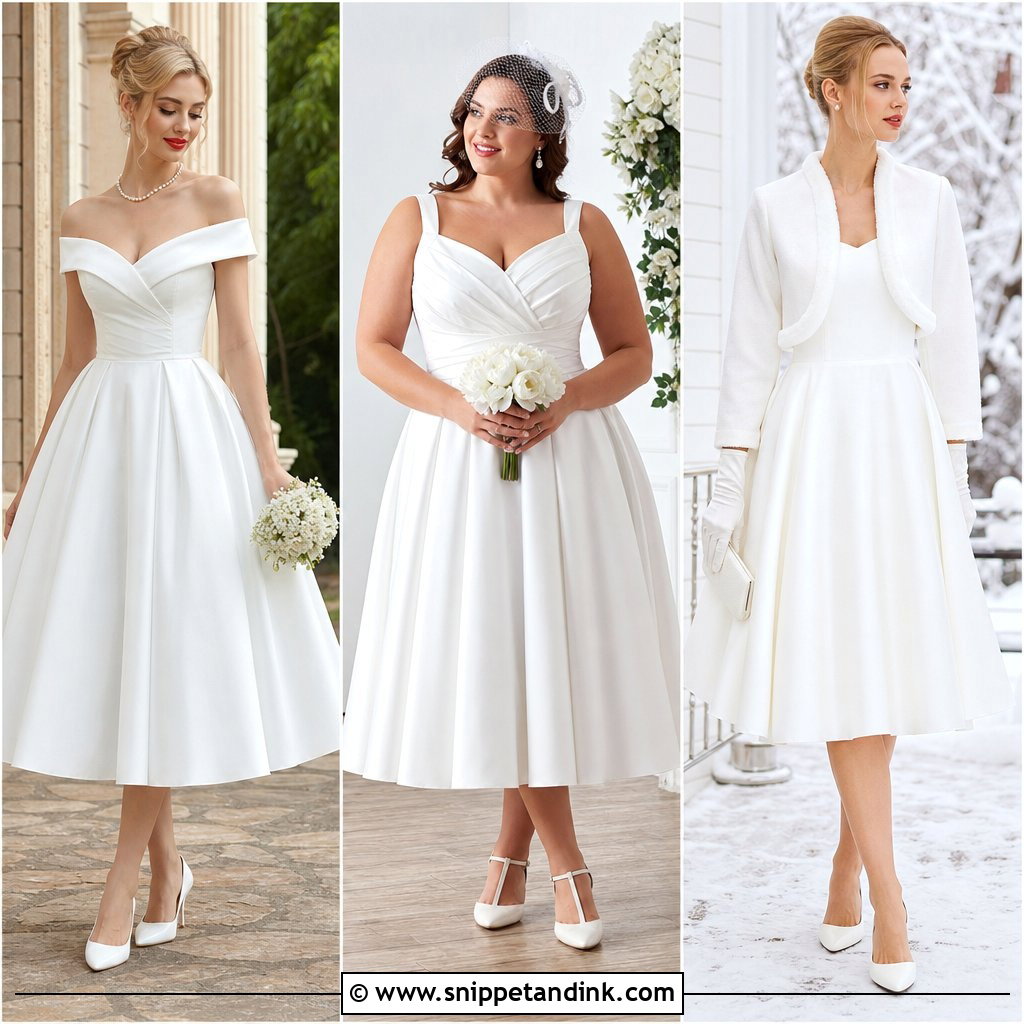
15. Velvet Long Sleeve Wedding Dress
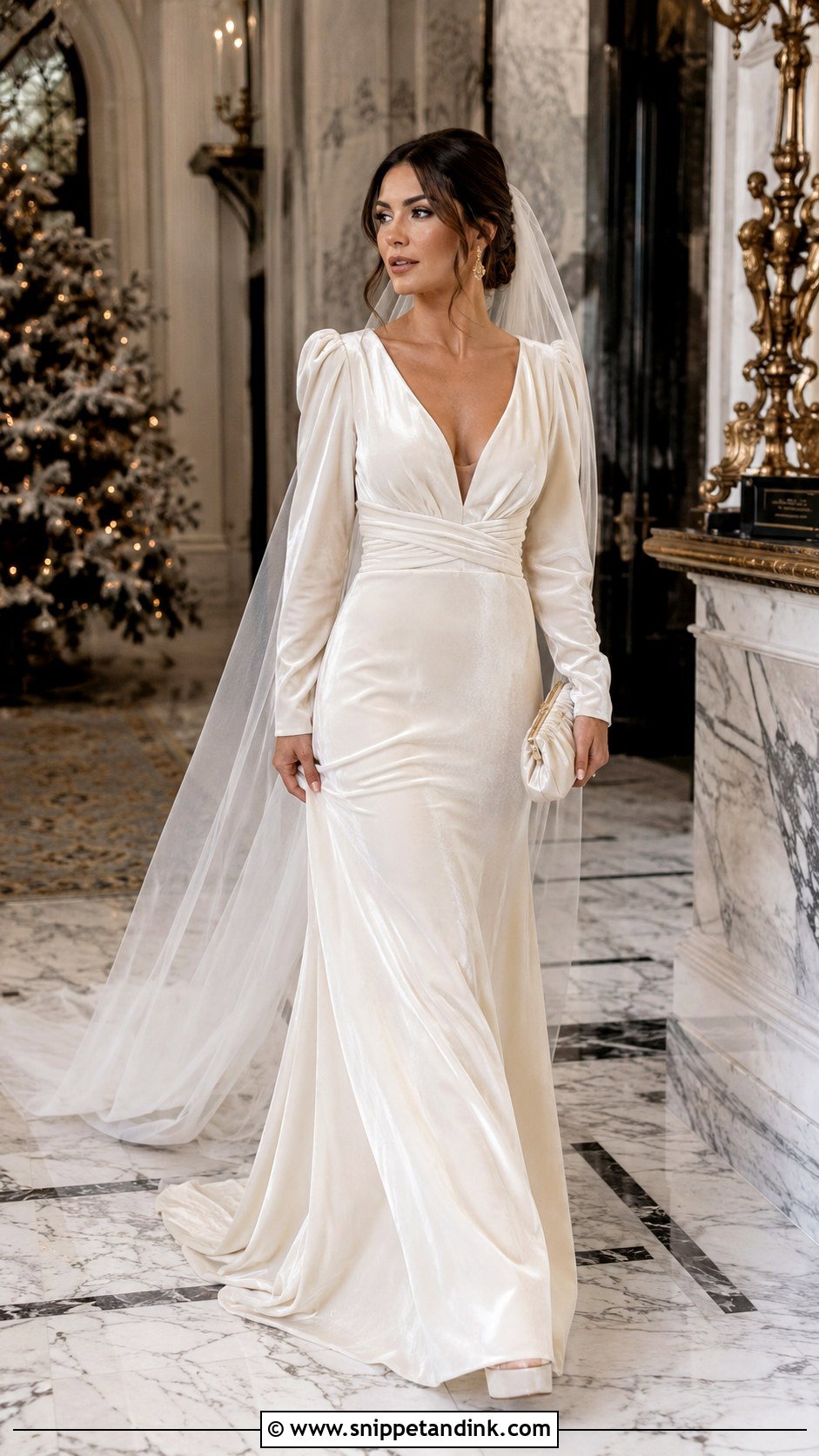
Velvet is a cold-weather fabric. In a summer marquee it’s miserable; in December it’s ideal. Go for ivory, cream or very pale champagne in an A-line or column, with long fitted sleeves, a deep V and a defined waist so the weight doesn’t hang shapeless. Velvet pile looks lighter or darker depending on which way it lies, and a panel set the wrong way shows as a shade change, so use a seamstress who has handled it before. Closed-toe platforms, gold drop earrings and a small satin clutch. A smooth low bun or glossy waves, a plain chiffon veil for contrast and a small structured bouquet. Historic hotels, city venues and mountain lodges suit it.
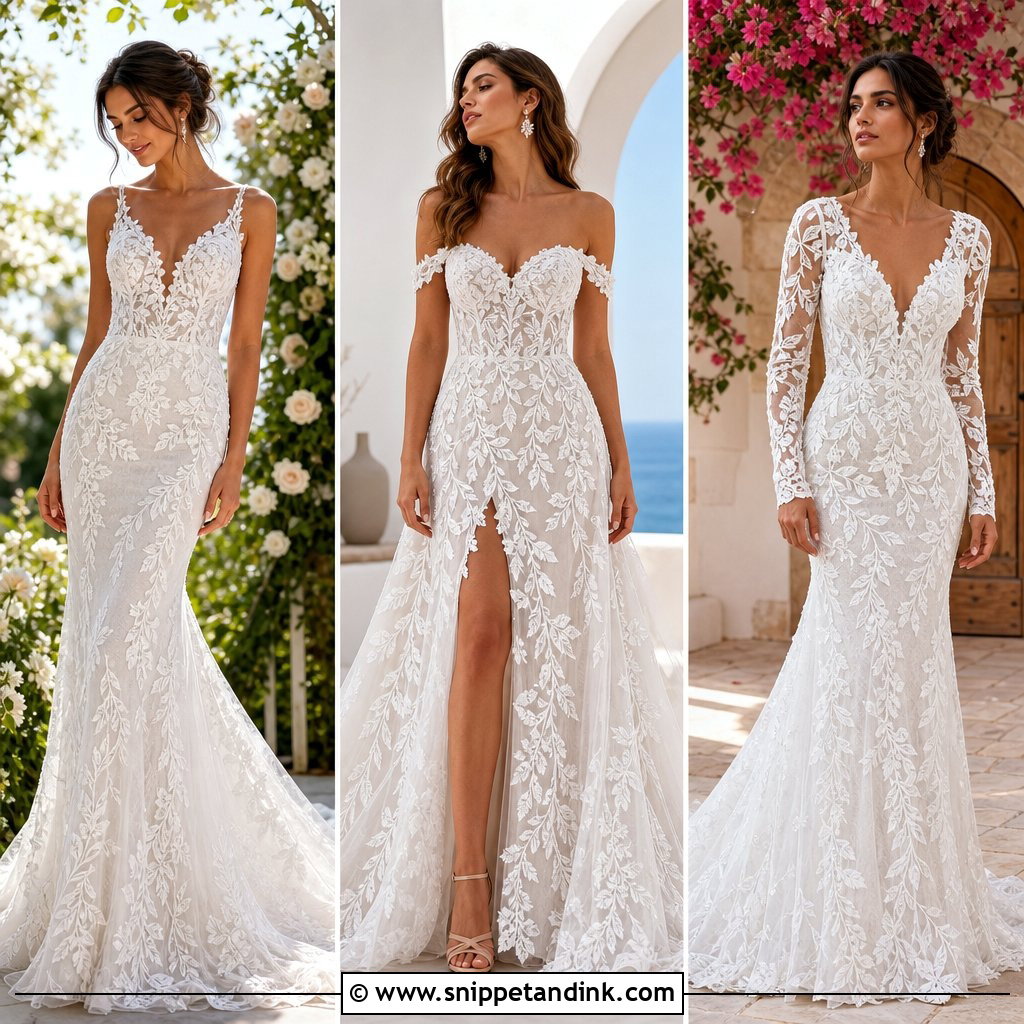
16. Off Shoulder Boho Wedding Dress
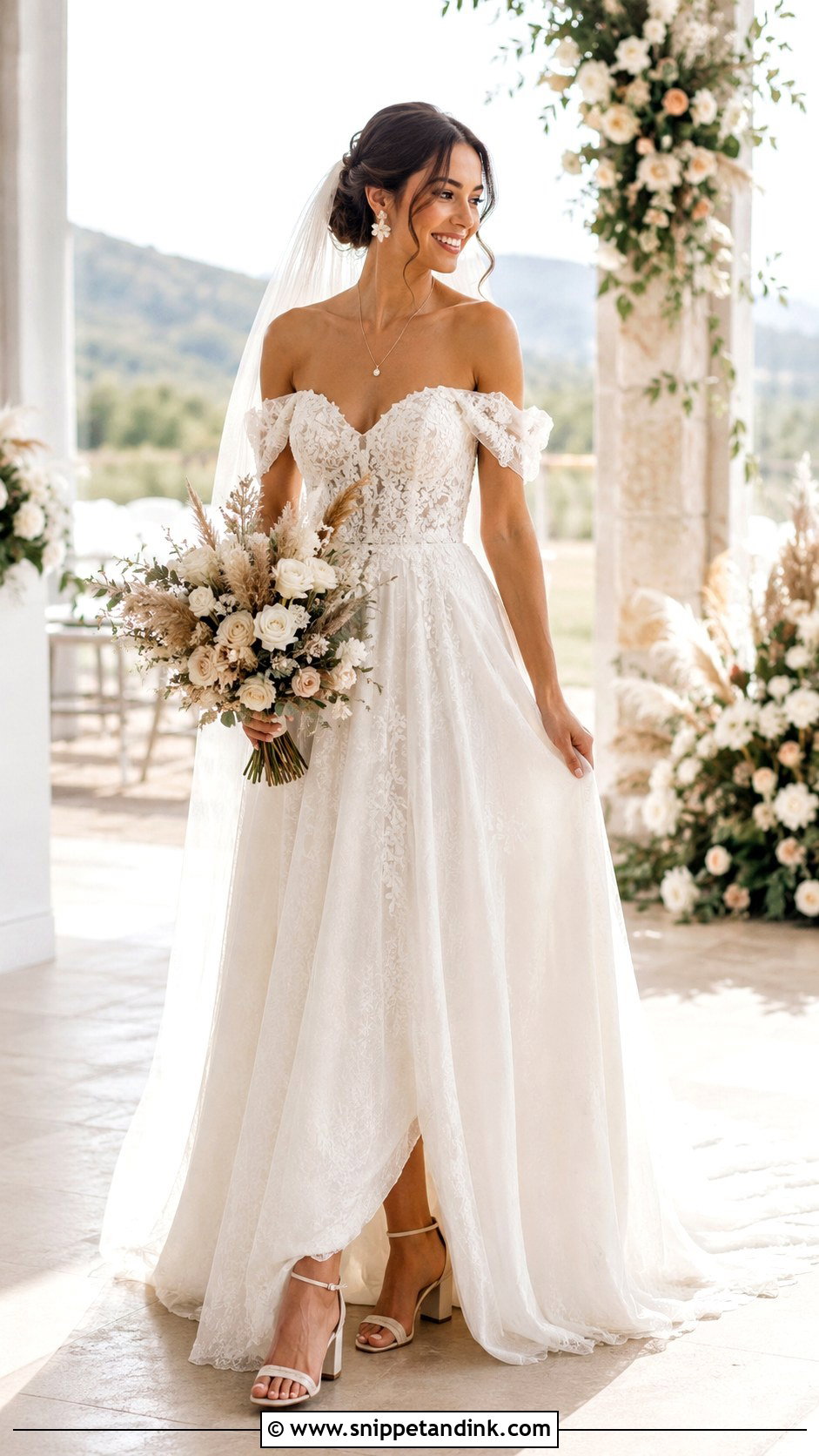
Off-shoulder sleeves are the detail I’m strictest about. They have to stay put when you lift your arms, hug someone or dance, and plenty don’t. Ask whether the bodice has boning or a gripper elastic along the neckline, then do a real hug test in the fitting room. A fitted lace bodice, gathered sleeves and a flowing A-line give the boho mood. Ivory wedges or block heels, a fine pendant and small floral earrings. Sweep your hair behind the shoulders so the neckline shows. A cathedral veil formalizes it; a short tulle veil keeps it casual outdoors. Well-fitted built-in cups will make the whole day feel more secure.
17. Blouson Sleeve Wedding Dress
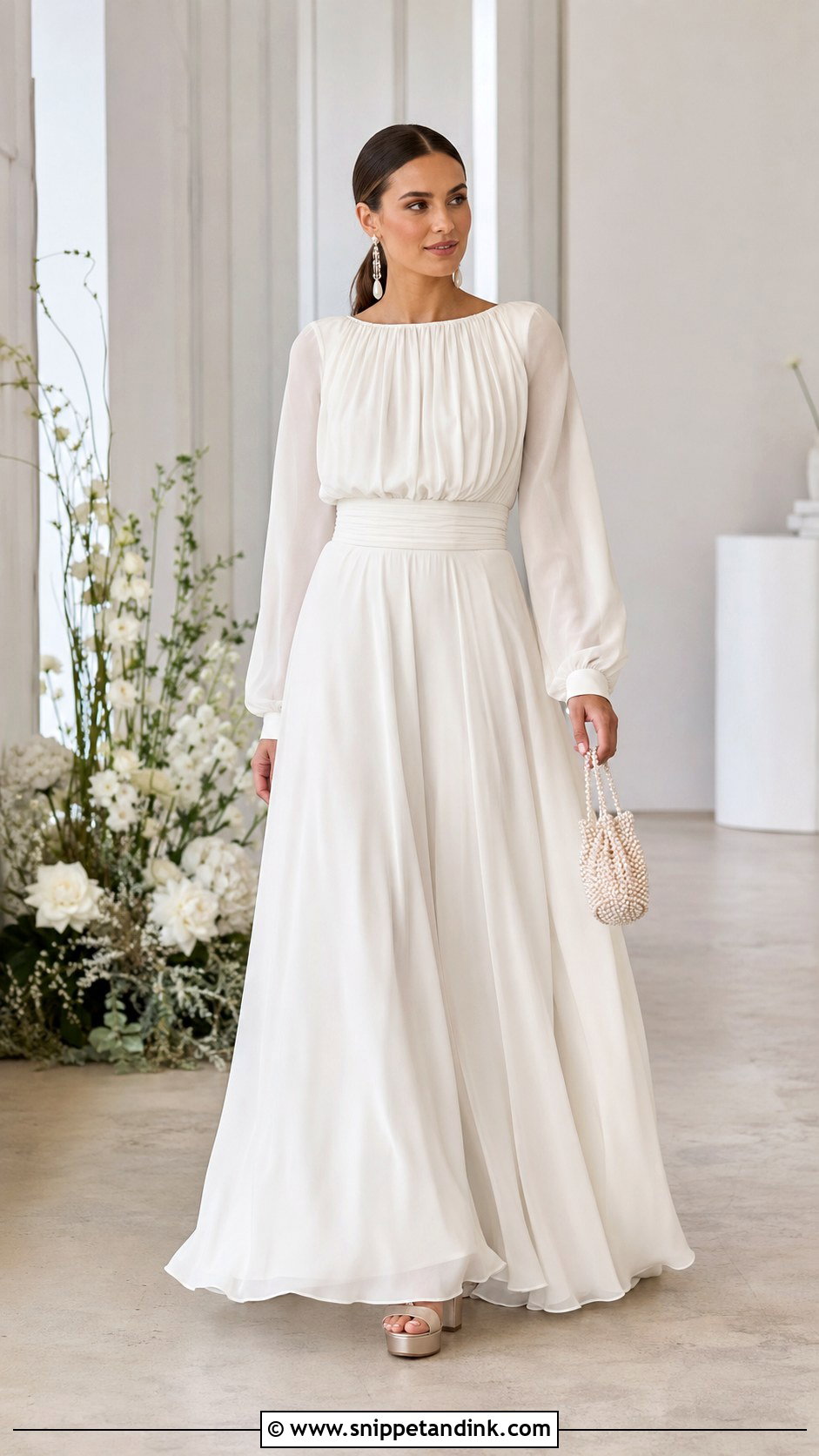
A blouson bodice is gathered so the fabric pools slightly over a fitted waistband, usually with full sleeves, narrow cuffs and a flowing chiffon skirt. The waistband has to sit firmly, or the blouse creeps up and the dress looks a size too big. I’d also ask for less overhang than looks right on the hanger, because it grows every time you raise your arms. Champagne platforms, long earrings and a small beaded bag. A center-parted low ponytail keeps it modern. Choose a plain fingertip veil you can lift off after the ceremony. The top half already has volume, so leave out the big necklace and the heavy bouquet.
18. Floral Lace A-Line Wedding Dress
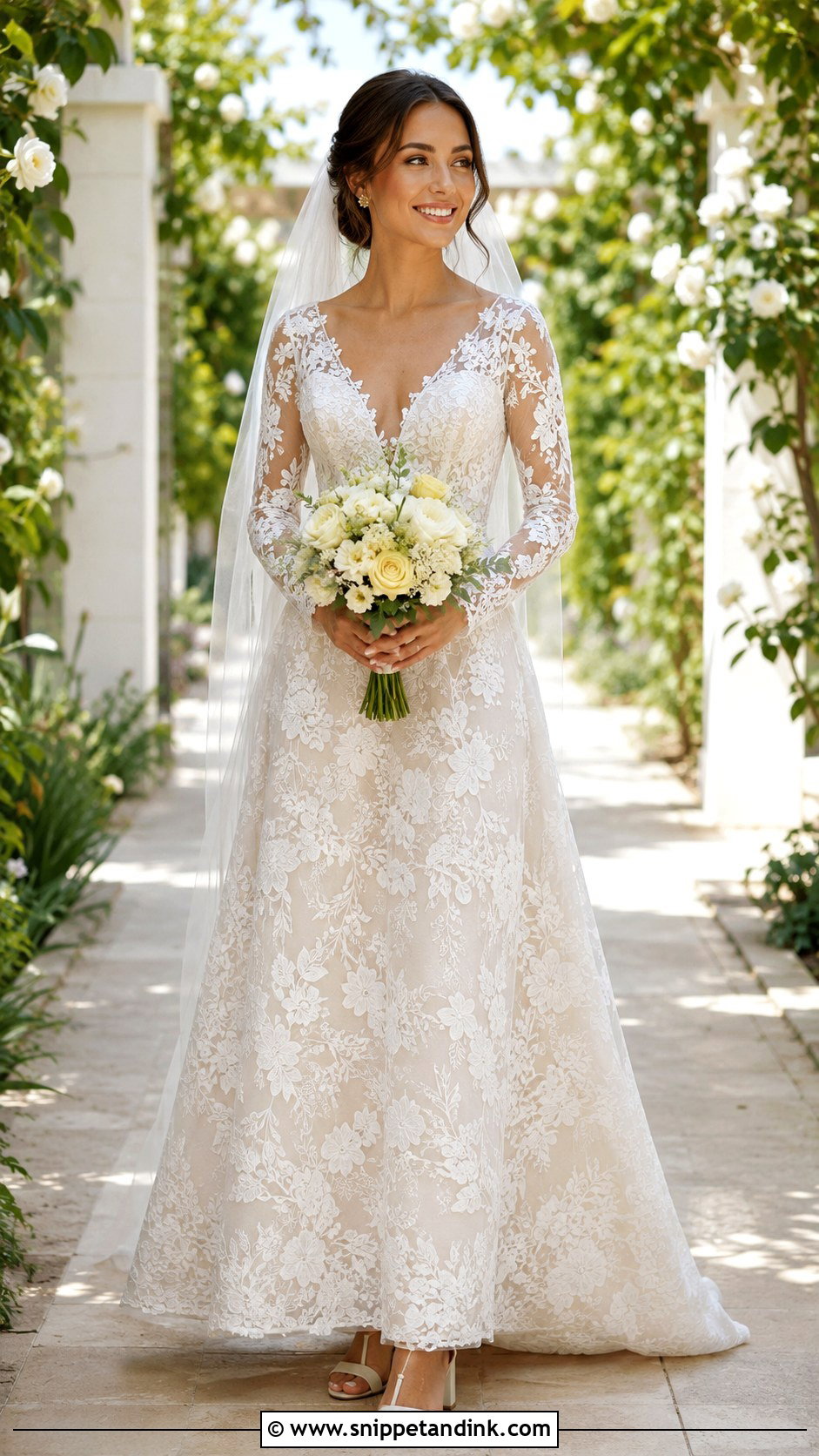
Big botanical lace motifs say 1970s; tiny allover patterns say traditional. A V-neck bodice, natural waist and a skirt that widens gradually suit a wide range of shapes, and sheer long sleeves give coverage while showing off the lace. If the sleeves need shortening, ask the seamstress to lift the scalloped edge and reattach it rather than cutting it away, so the finish stays intact. Ivory block heels, gold studs and a delicate bracelet. Natural waves or a soft updo with a simple comb, and a plain tulle veil. White and pale yellow flowers carry the cheerful, garden feeling of the lace.
19. Tiered Chiffon Wedding Dress
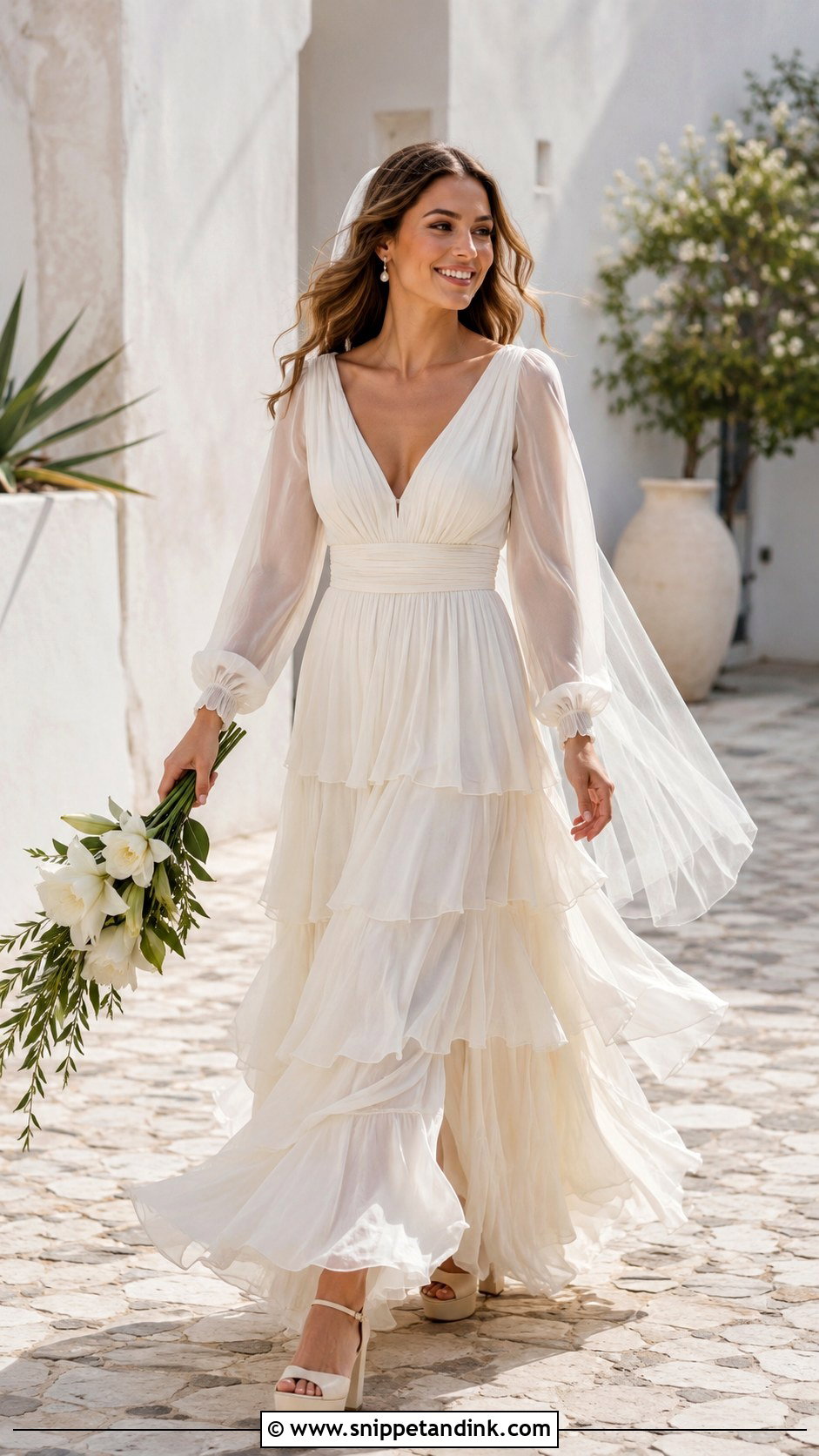
Chiffon tiers move with every step down the aisle. Choose a fitted bodice and tiered skirt, then add sheer long sleeves or a small ruffled collar for a stronger retro link. Proportion matters here: vertical seaming lengthens the body, while wide horizontal tiers add volume, which shorter brides should weigh carefully. Chiffon snags on buckles and sharp shoe edges, so check your platform sandals before the day. Pearl drops and a compact cream handbag for later. A loose updo keeps fabric away from your face outdoors, and the veil should stop above the fullest part of the skirt. Long-stemmed flowers suit the flowing line.
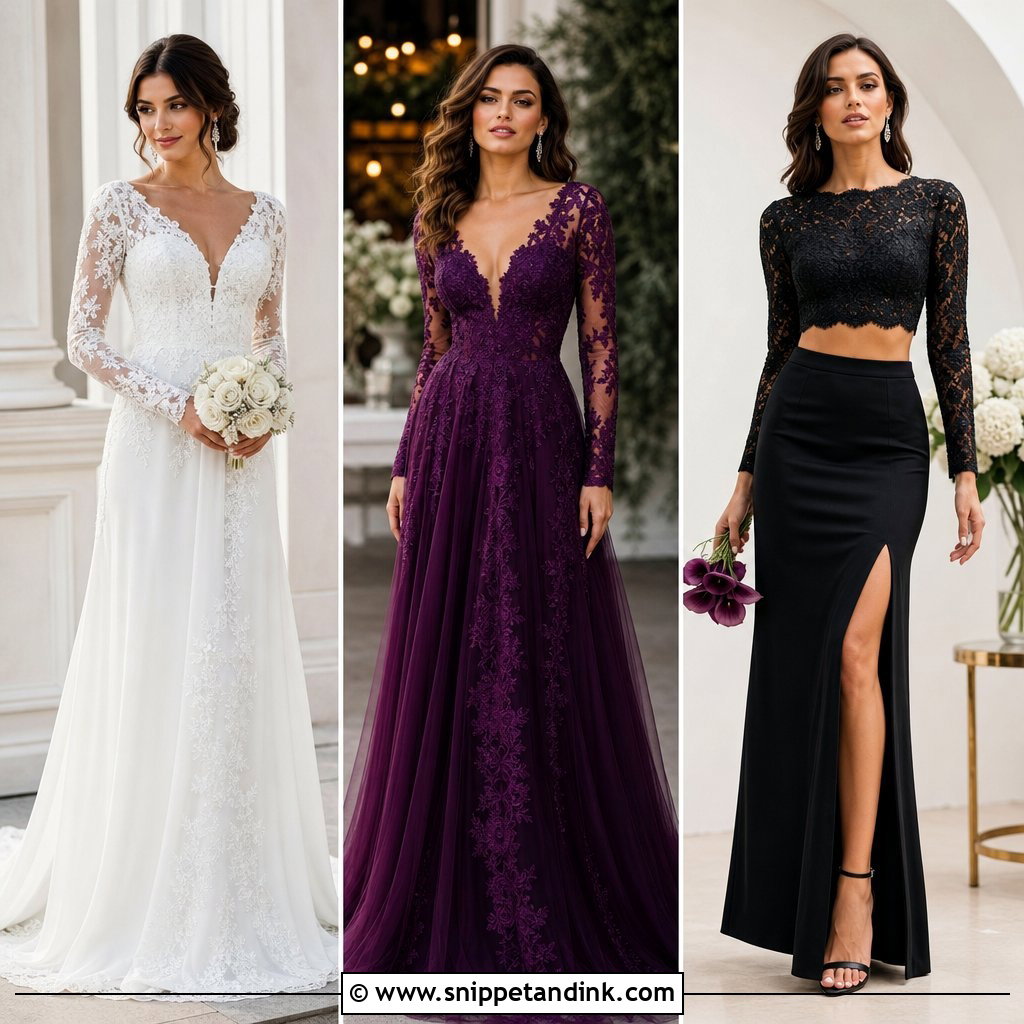
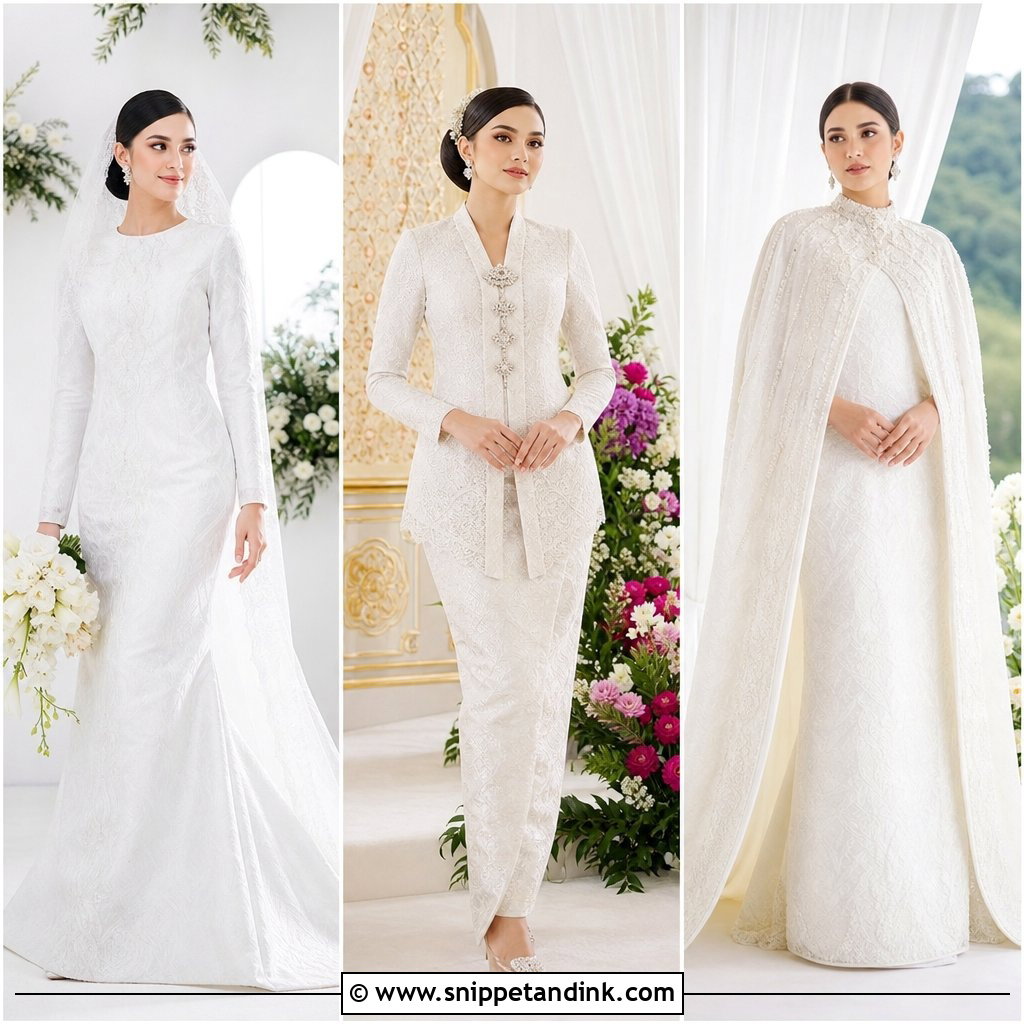
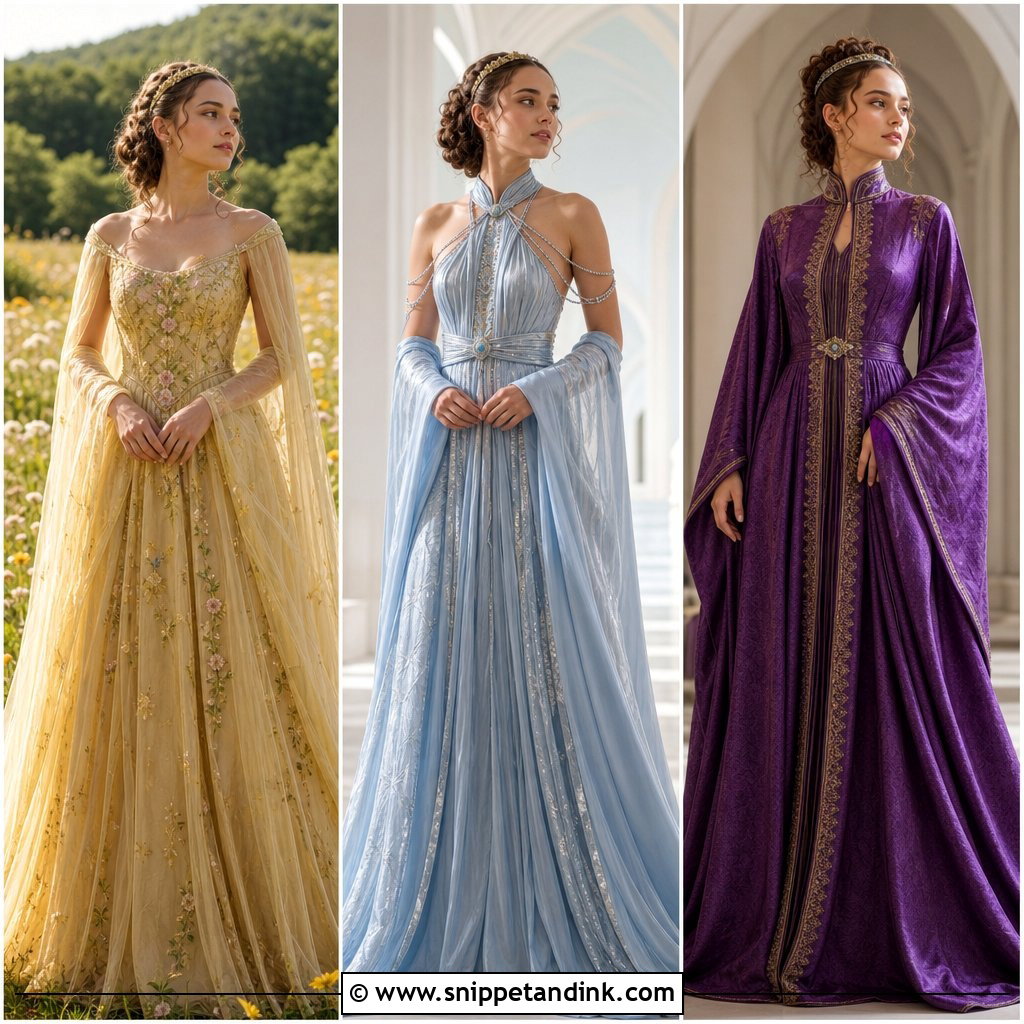
20. Hooded Cape Wedding Dress
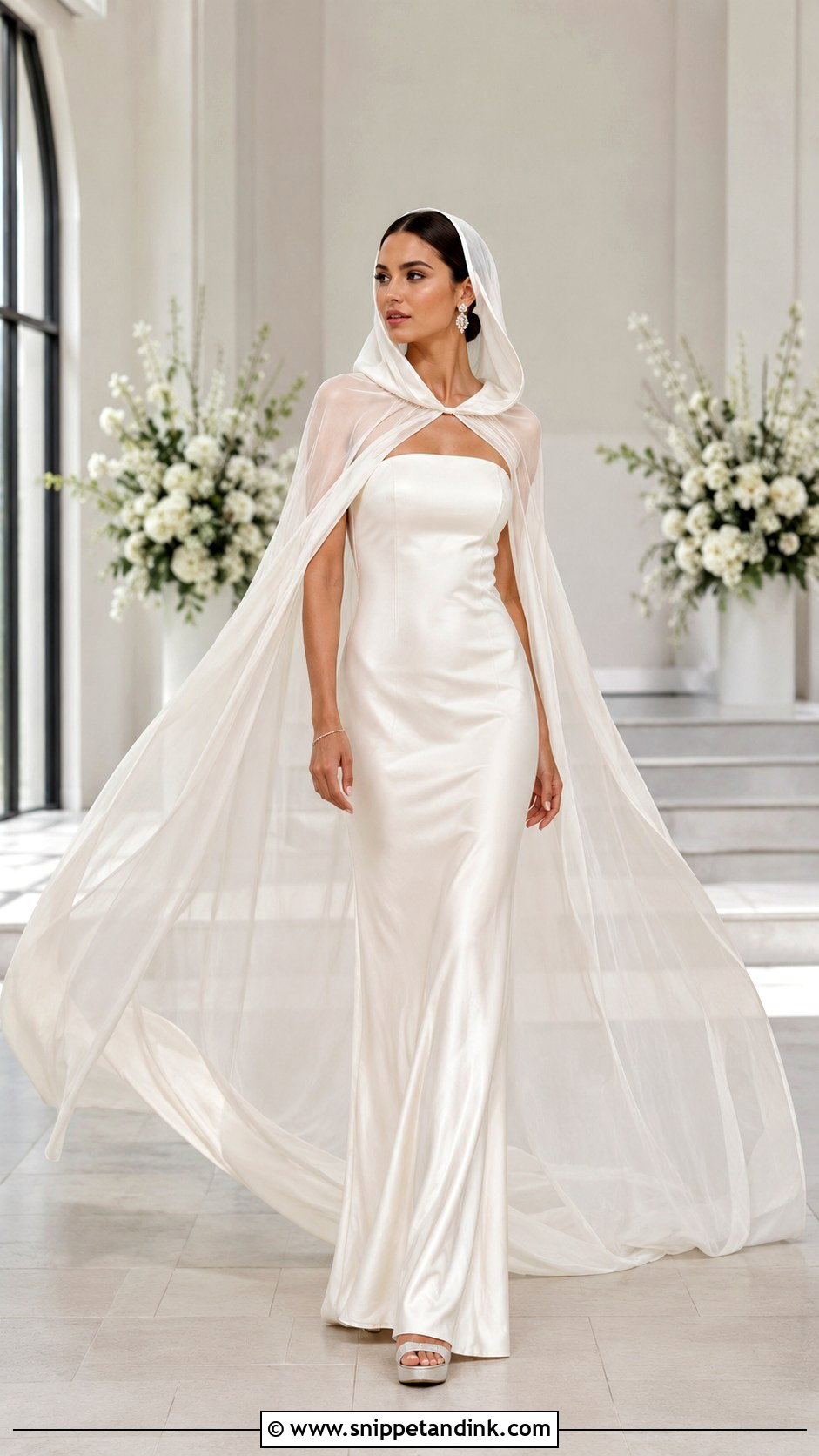
A sheer hooded cape over a plain dress is the most dramatic idea here and the easiest to adjust, because the cape comes off. Start with a clean column, slip or slightly flared gown in ivory crepe or satin, then layer a detachable chiffon or lace cape whose hood rests softly rather than fitting tight. Hoods flatten hair, so plan a smooth, low style; volume at the crown pushes the hood back off your head. A couple of hidden pins at the nape hold it in wind. Metallic platforms, statement earrings and a slim bracelet. No veil is needed, and once the cape comes off for the reception, the simple dress underneath still looks clearly bridal.
Wearing a Real 1970s Gown Instead of a Reproduction
Plenty of brides go looking for a genuine dress from the decade, and it can be a lovely choice, a mother’s dress especially. It just needs more checking than a new gown.
- Ignore the size label. Vintage sizing ran much smaller than modern sizing, so measure bust, waist and the back of the bodice yourself.
- Look at it in daylight. Older polyester and nylon lace often yellow along folds, underarms and the hem, and some marks never fully lift.
- Check zips and seam allowances. Many dresses from that era used metal or nylon zips that are easily replaced, but narrow seams leave very little room to let a dress out.
- Find a cleaner who handles vintage textiles before you book alterations, because cleaning can shrink or shift old fabric slightly.
After the Wedding
Whichever dress you wear, have it cleaned soon after the day, since sugar and sweat stains darken as they age. Store lace, chiffon and crochet folded in acid-free tissue inside a breathable box, never in plastic, and avoid hanging heavy crochet or sequins for months, which stretches the shoulders out of shape.
Individuality Was the Whole Point
Seventies dresses worked because they moved, and the versions that still look right now pair one expressive detail with modern construction underneath. Bell sleeves, floral lace, floating chiffon, a short eyelet dress or full disco sequins can each suit a formal venue, an outdoor ceremony or a relaxed reception. Judge every dress by how it behaves in motion: sit, walk, lift your arms, hug someone. Then let the shoes be comfortable, keep jewelry quiet and choose a hairstyle that shows the neckline or sleeves. Individuality defined the decade, so the most honest way to wear it is the version that feels like you.
You'll Like These Ideas:




Leave a Reply