
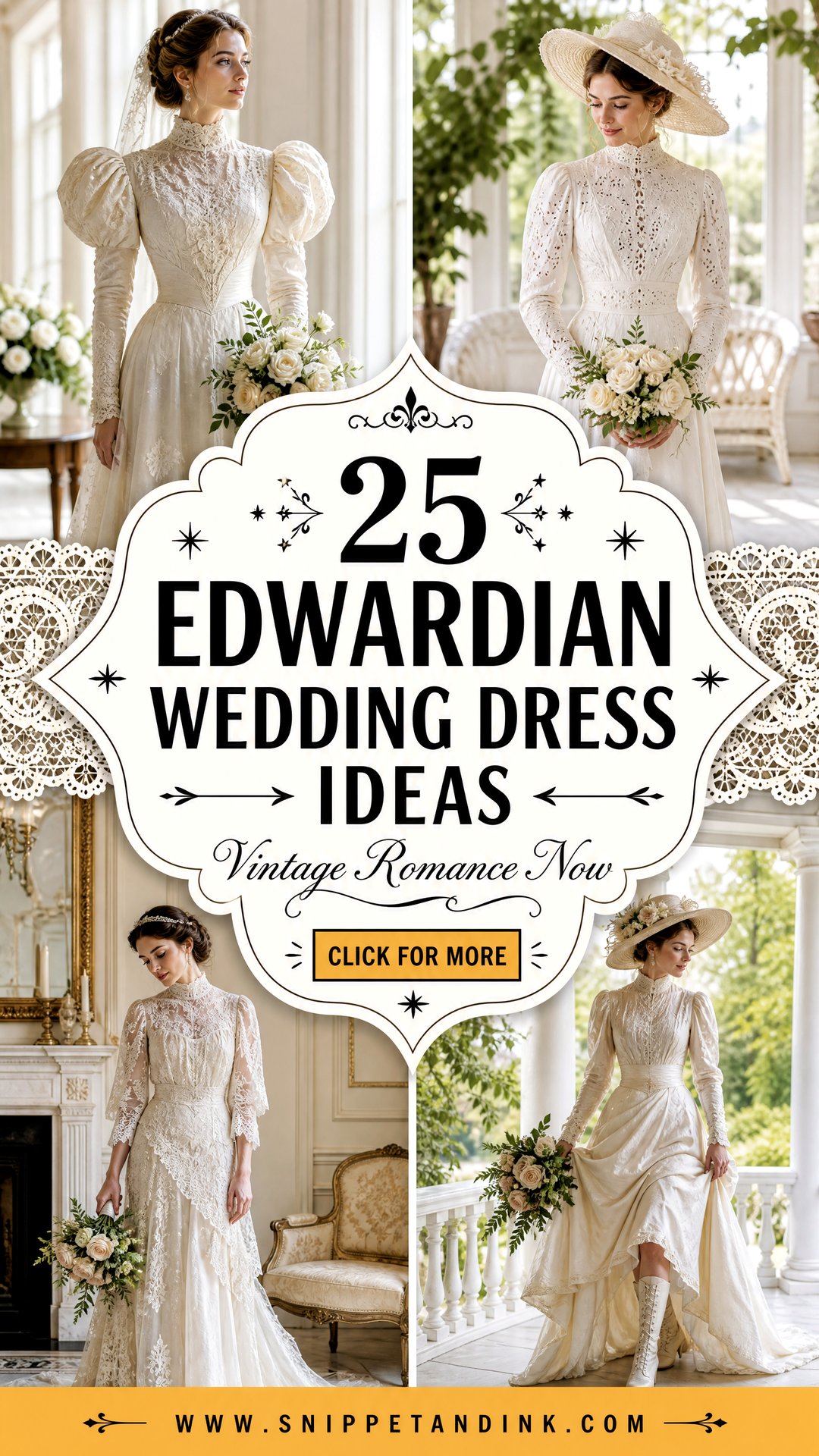
Early 1900s bridal wear is softer than people expect. Think high necklines, sheer yokes, a gently pouched bodice, lace let into fine cotton, and skirts that flow rather than balloon. What draws brides to it is that mix of modesty and lightness, and what worries them is looking like they’re in costume. I steer between the two by picking one or two real period features and letting the rest of the outfit stay simple. You can go fully historical with cotton lawn and heirloom lace, or choose a modern gown that only borrows the neckline or the sleeve. Below are 25 ways to do it, from tea gowns to pintucks, gloves and boots, with notes on how each detail actually wears.
Is It Edwardian or Just Vaguely Victorian?
Shops label almost anything with lace and a high neck as Victorian or Edwardian, so it helps to know what you’re actually looking for. The Edwardian years ran roughly from 1901 to 1910, and the style is often stretched to the start of the First World War.
- Fabrics got lighter. Victorian bridal wear leaned on heavy silk and stiff structure; Edwardian brides wore fine cotton, chiffon and soft lace in layers.
- The bodice pouched forward over the waist, a soft rounded front that came from the corsets of the time, instead of the tight, pointed bodice of earlier decades.
- Skirts were smooth over the hips and flared toward the hem, often cut in gored panels, with no bustle.
- Toward the end of the period the waist rose and the line became straighter and simpler.
If a gown has those first three features, it reads as Edwardian even if it was made last year. I’d use that list in the shop to cut through vague labels.
1. High Neck Edwardian Lace Wedding Dress
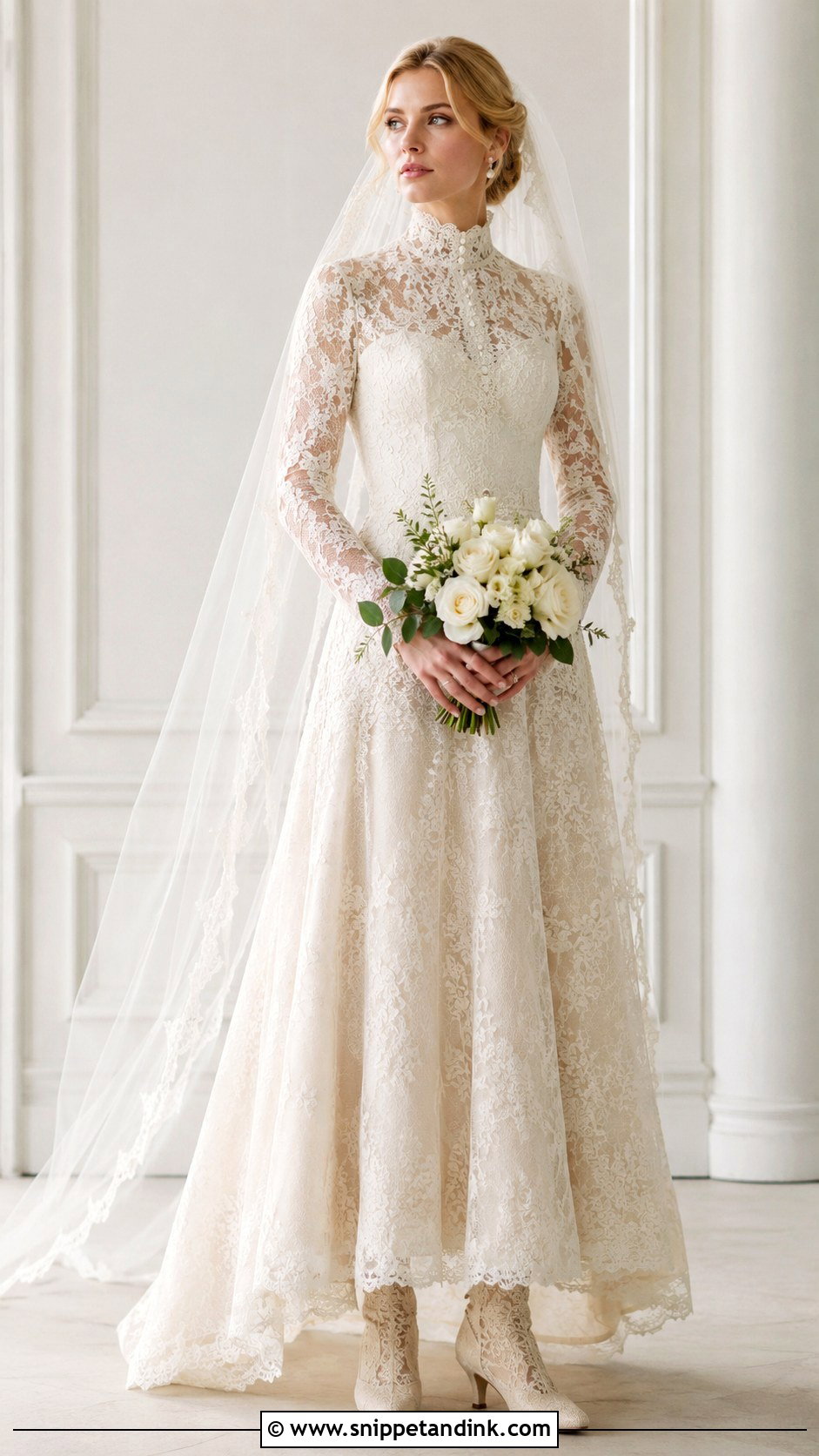
The high lace neck is the detail people recognise first. Sheer lace keeps it light even though it covers the throat, and a fitted waist with long sleeves and an A-line skirt gives the balanced shape of the period. Pick ivory, cream or antique white; bright white looks harsh next to old lace. My fitting check is the collar height. It should end just below the jaw when you look straight ahead, and stay put when you tilt your head down at the bouquet. A low braided bun, pearl drop earrings, lace ankle boots and a fingertip veil finish it.
2. Edwardian Tea Gown Wedding Dress
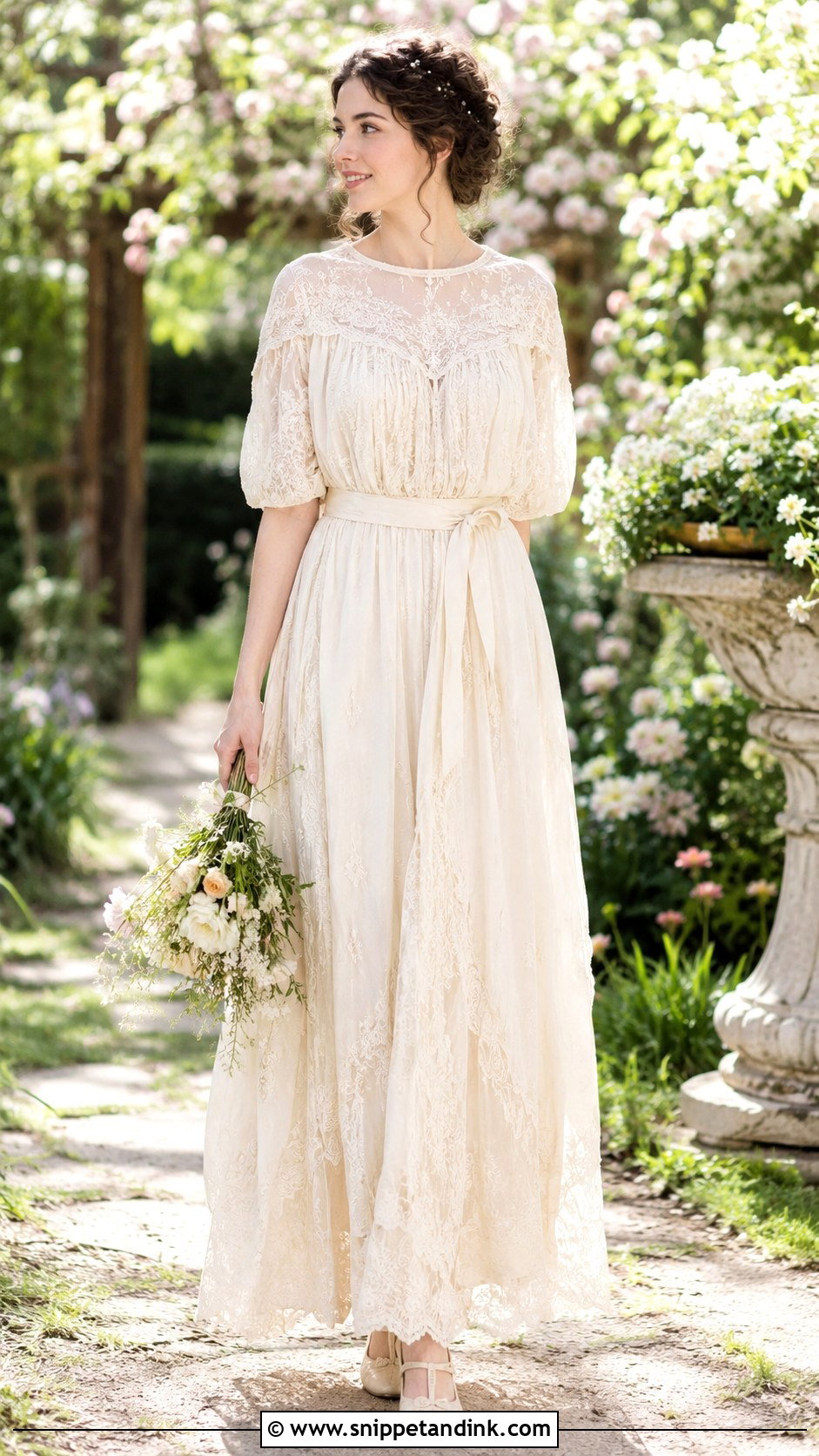
Tea gowns were the relaxed dresses of the era, worn at home without a rigid corset, which is why an Edwardian tea gown wedding dress feels so easy to move in. Expect a loose, flowing shape, lace panels, soft gathers and a barely defined waist. Lightweight cotton, silk, chiffon or embroidered voile keep it airy for gardens, elopements and small receptions. The thing I watch is that looseness: in photos, an unfitted gown can look shapeless, so I’d add a soft ribbon sash. Vintage-style ivory shoes, pearl hairpins and a small bouquet with trailing greenery suit it.
3. Edwardian Wedding Dress With Puff Sleeves
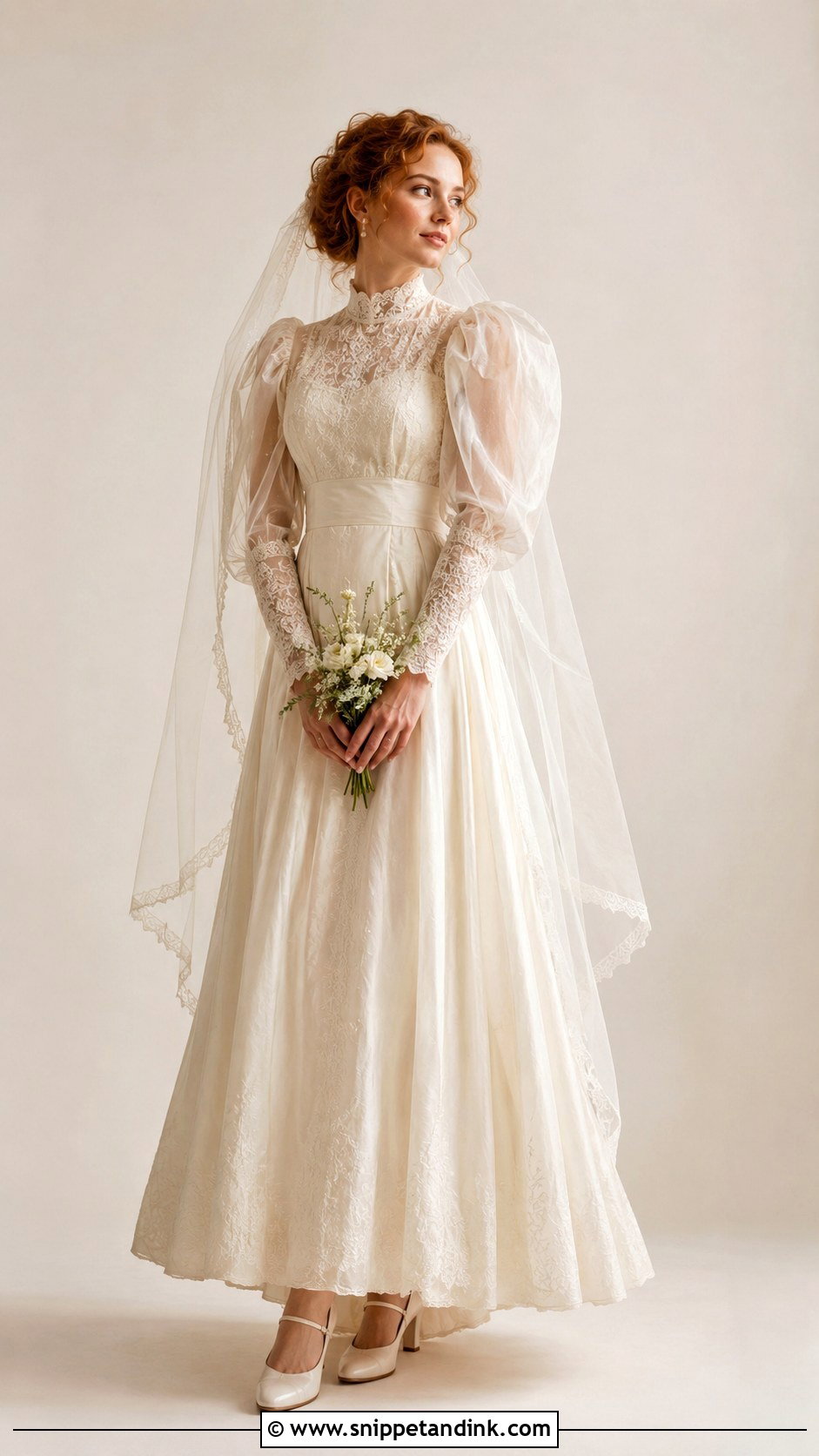
Volume at the shoulder is one of the quickest ways to say 1900s. Soft puff sleeves frame the upper body and balance a narrow waist and full skirt. For a modern version I’d choose sheer puffs with lace cuffs, or embroidered tulle, because a solid satin puff can look heavy and add width you may not want. Keep the bodice fitted or lightly bloused. Sleeves set high on the shoulder let you lift your arms; set low, they pin them. A simple updo, small pearl studs and ivory Mary Jane heels complete it.
4. Edwardian Wedding Dress With Lace Yoke
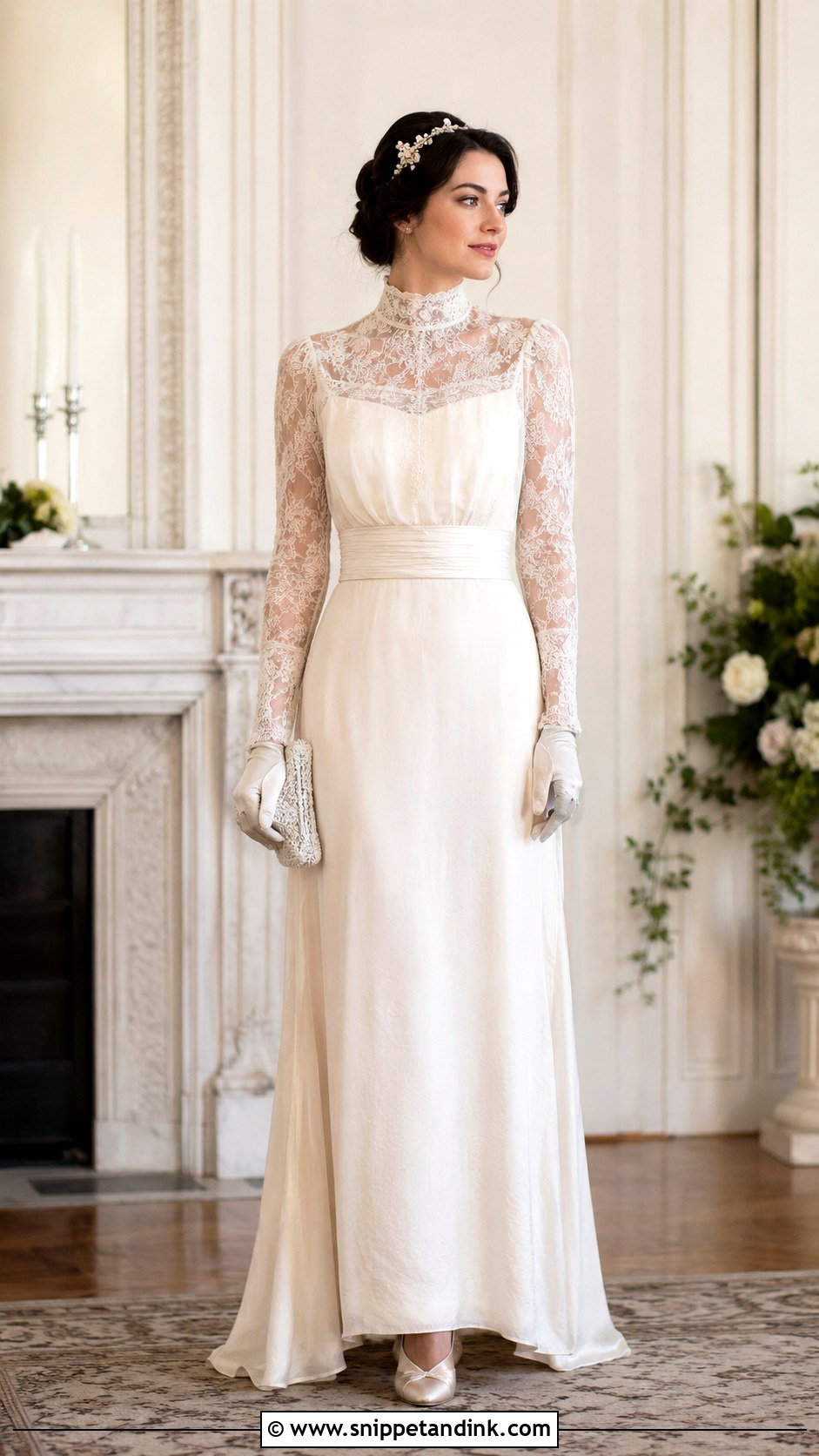
A yoke is the sheer panel across the upper chest and shoulders, and it’s a quieter way into the period than a full lace gown. Floral lace, Valenciennes-style lace or fine embroidered mesh gives the antique feel. It pairs naturally with a high collar, long sleeves and a softly fitted bodice. The join between yoke and bodice is where I look closely, since a lace edge that’s hand-scalloped and laid over the satin looks far more convincing than a straight machine seam. A smooth skirt keeps the neckline the focus. A long veil, pearl comb, ivory gloves and plain satin shoes.
5. Edwardian Cotton Lawn Wedding Dress
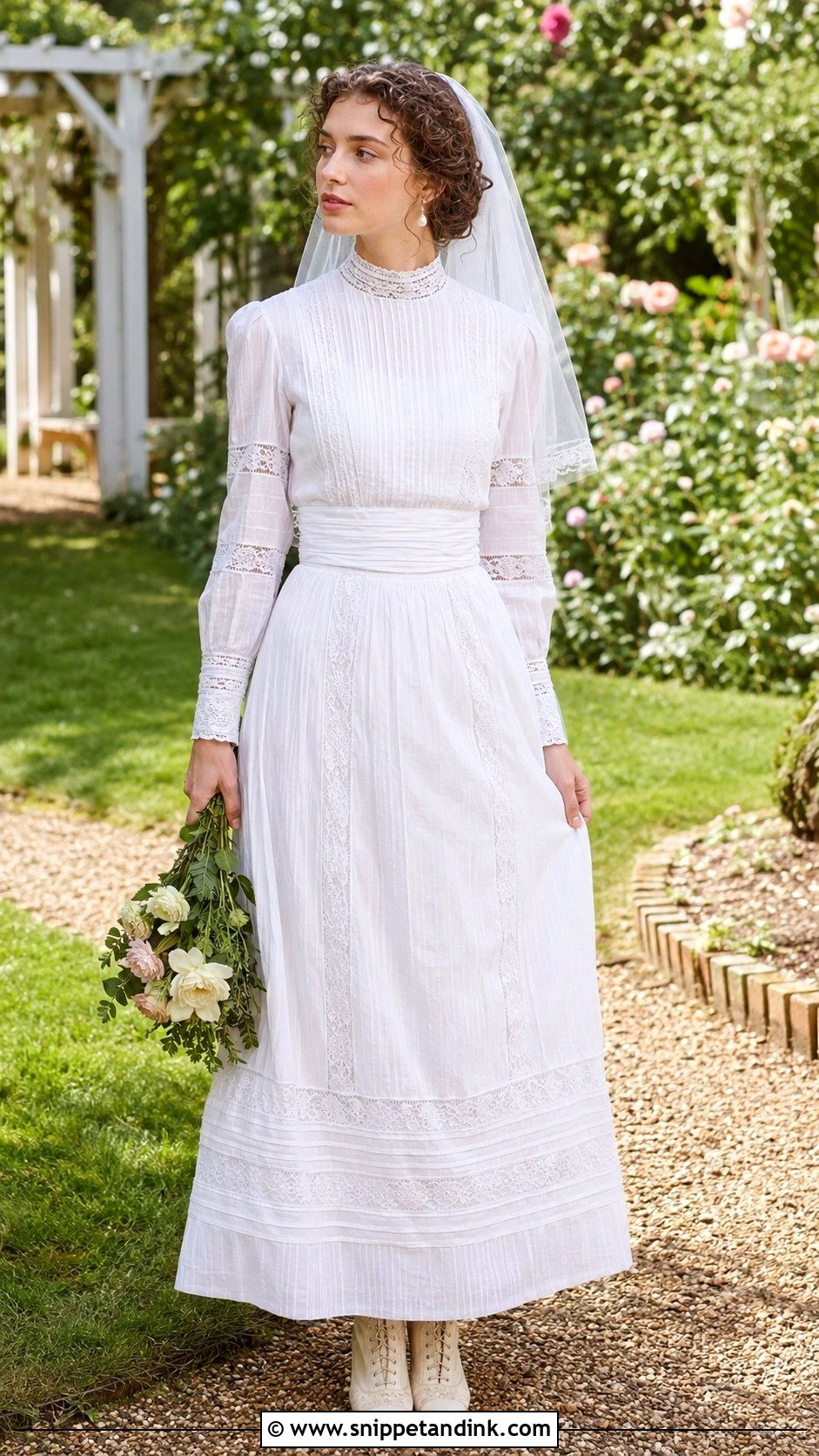
Cotton lawn is fine, crisp and breathable, the fabric of the white lingerie dresses of the period. It takes whitework, pintucks, lace insertion and ruffles beautifully, and it’s the most comfortable choice for a summer wedding. The appeal is texture, not shine. Do know that lawn wrinkles quickly, and that’s part of its character; I’d steam it on the morning and accept soft creases by the evening. A high neck, long or three-quarter sleeves and a softly flared skirt, then lace-up ivory boots, a slim sash, pearl earrings and a simple veil.
6. Edwardian Silk Satin Wedding Dress
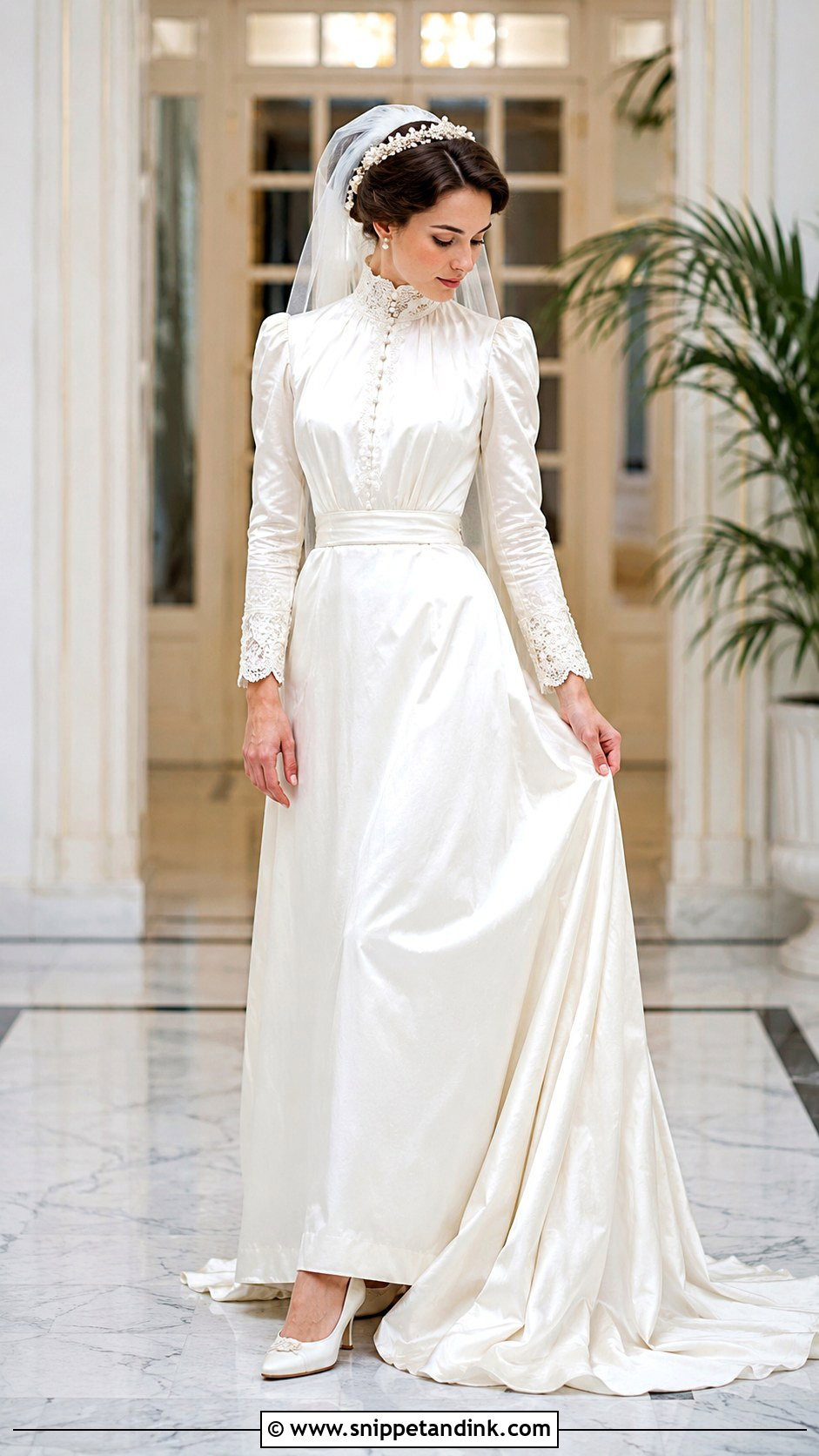
Satin is the dressier route. Its gentle shine suits a high collar, lace-trimmed sleeves and a sweeping skirt, and a slightly bloused bodice with a defined waist gives the period line without needing a real corset. Antique lace appliqué, pearl buttons and a chapel-length train add detail. Silk satin is soft and drapes into the bloused shape; polyester satin is stiffer and tends to stand away from the body, so I’d feel the fabric before ordering. Satin heels, pearl hair accessories and a sheer veil.
7. Edwardian Wedding Dress With Blouson Bodice
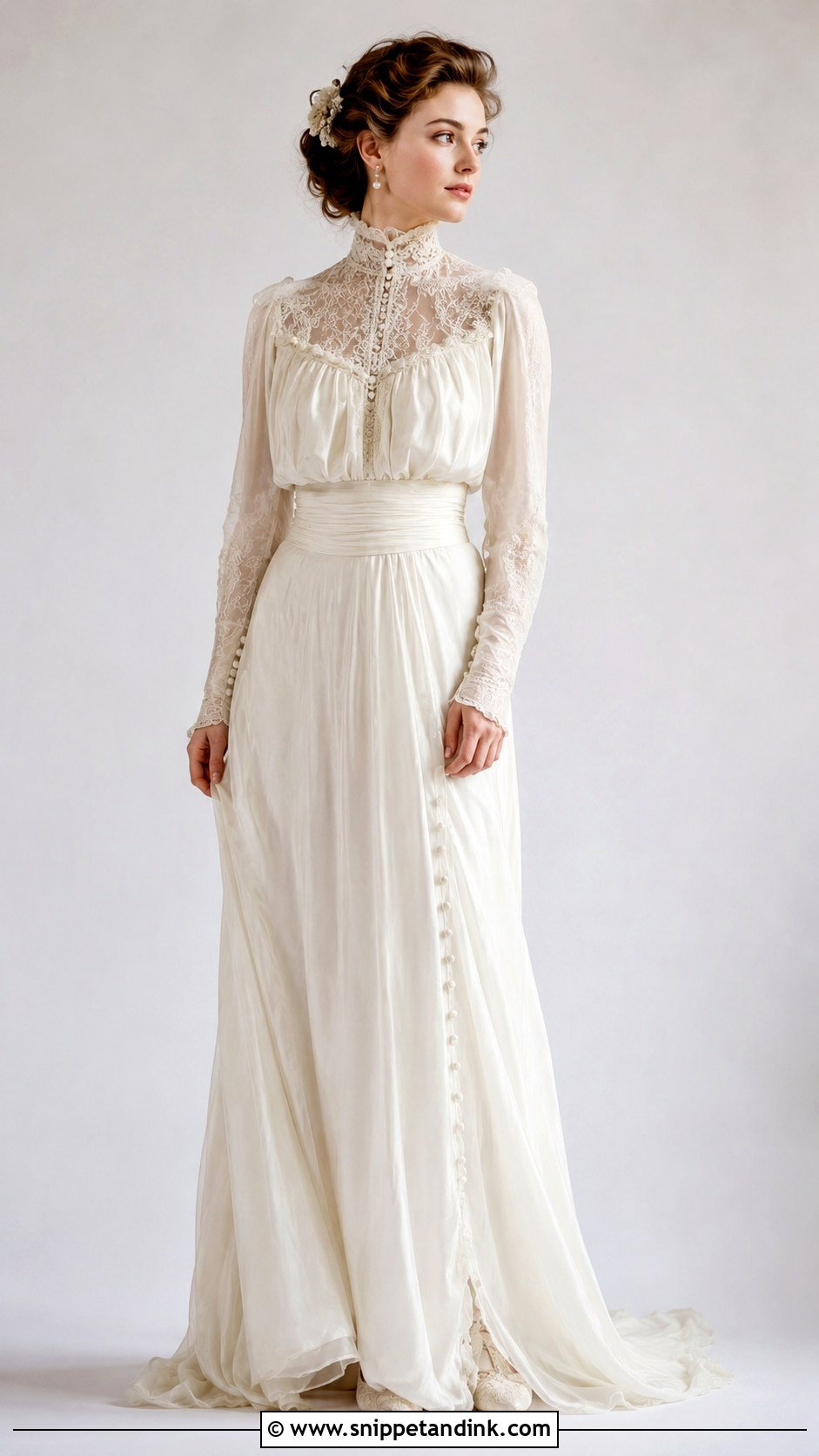
The pouch over the waist is the signature of Edwardian bodices, and a blouson bodice recreates it by draping fabric gently forward rather than pulling it tight. Lace, chiffon, silk or embroidered cotton all work. The risk is bulk. Without a defined waistband underneath, a blouson top can look loose rather than intentional, so I always pair it with a firm band and an A-line or gored skirt. Add a high neckline, covered buttons and delicate sleeves. A loose updo, pearl earrings and dainty ivory shoes keep it light.
8. Edwardian Wedding Dress With Ruffle Hem
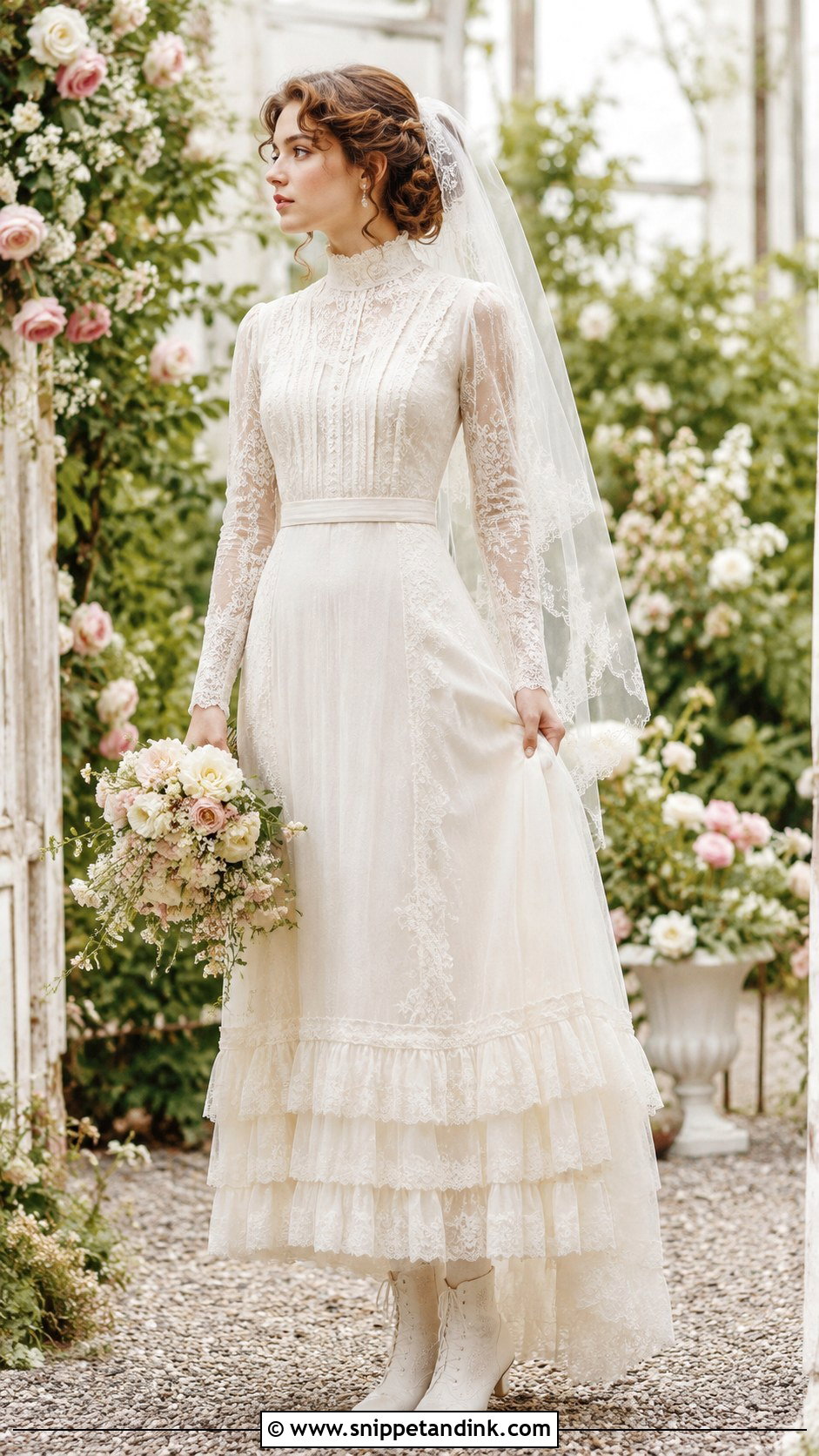
Ruffles at the hem move when you walk, which is exactly their charm. They look most at home when the rest of the gown carries related detail, lace inserts, pintucks or embroidered panels, so the ruffle doesn’t feel stuck on. A high neck and long sleeves keep it grounded. One practical point: a ruffled hem sweeps up grass, petals and dust, so I’d have it hemmed to just clear the floor in your shoes. Lace boots, a slim ribbon belt and a veil that stops above the ruffle so the skirt stays visible.
9. Edwardian Wedding Dress With Lace Sleeves
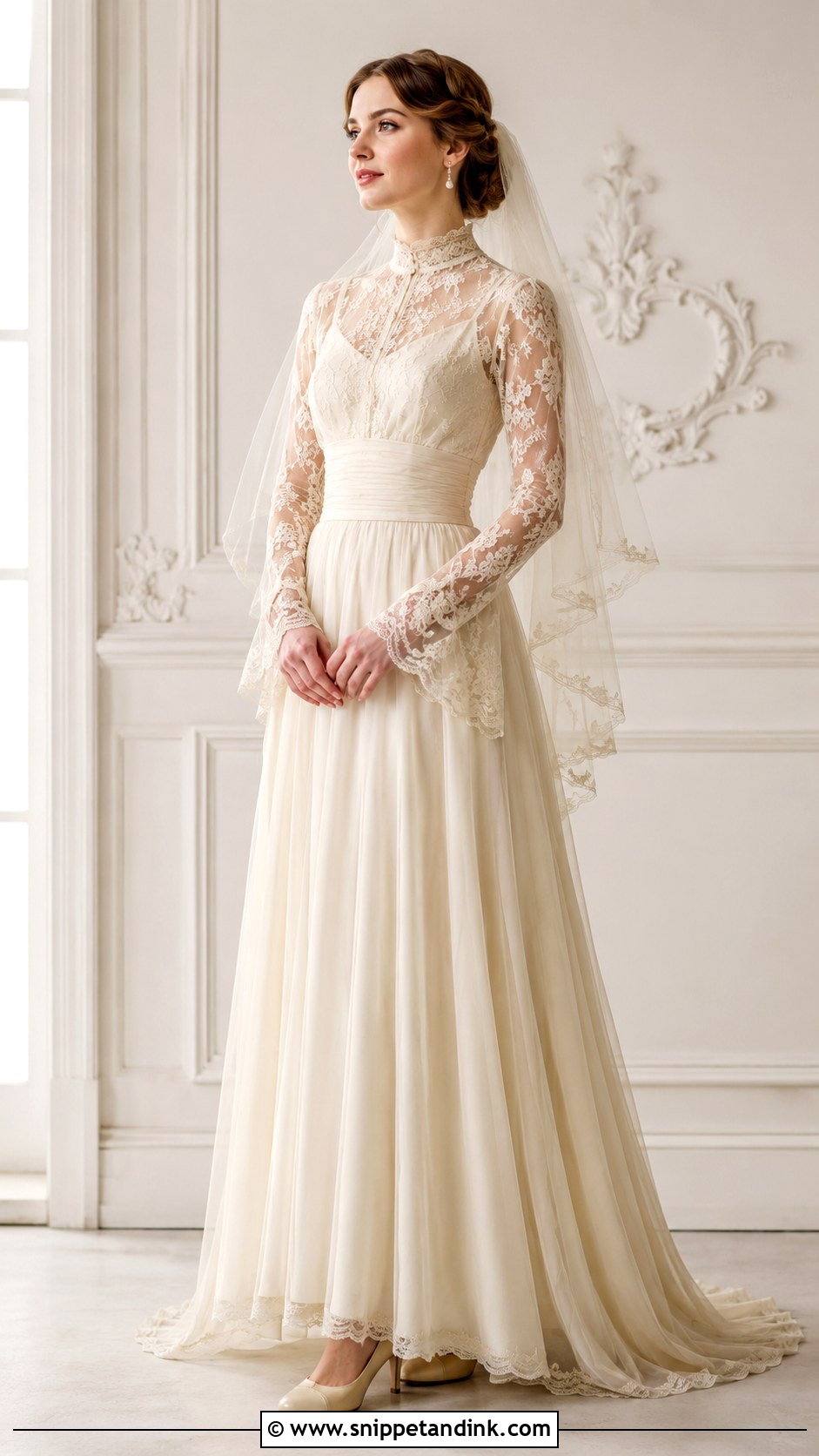
Lace sleeves give coverage without weight. Long ones feel classic and modest; sheer three-quarter ones are lighter for warm weather. Choose lace that drapes rather than lace that stands stiff on the arm, because stiff lace scratches the inner elbow over a long day. I check that by having the bride bend her arm repeatedly in the fitting room. Floral motifs, scalloped cuffs or tiny buttons add interest. Pair with a high neck, a soft bodice and a flowing skirt, then pearl earrings, a low bun, ivory heels and a soft veil.
10. Edwardian Wedding Dress With Empire Waist
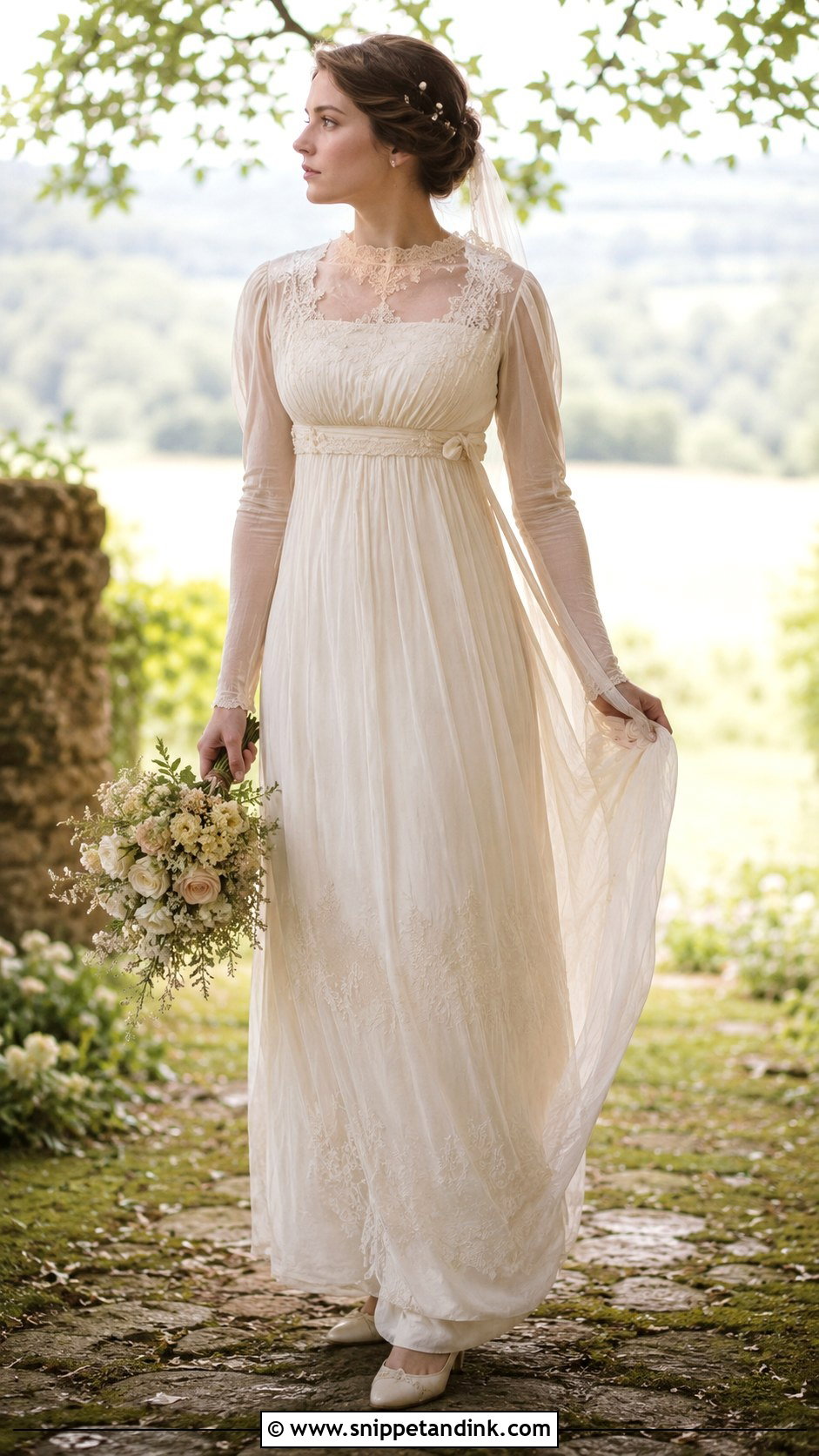
The late Edwardian years brought waistlines up again, so an empire waist is historically fair, not just a modern shortcut. The raised seam lets the skirt fall from under the bust, softer and less structured than a fitted waist. Chiffon, silk voile, lace or embroidered cotton suit it, and a high lace collar or sheer yoke keeps it reading as 1900s rather than Regency. A narrow satin ribbon under the bust defines the shape. Flats or low heels, a soft veil and pearl hairpins. It’s one of the most comfortable gowns here.
11. Edwardian Wedding Dress With Train
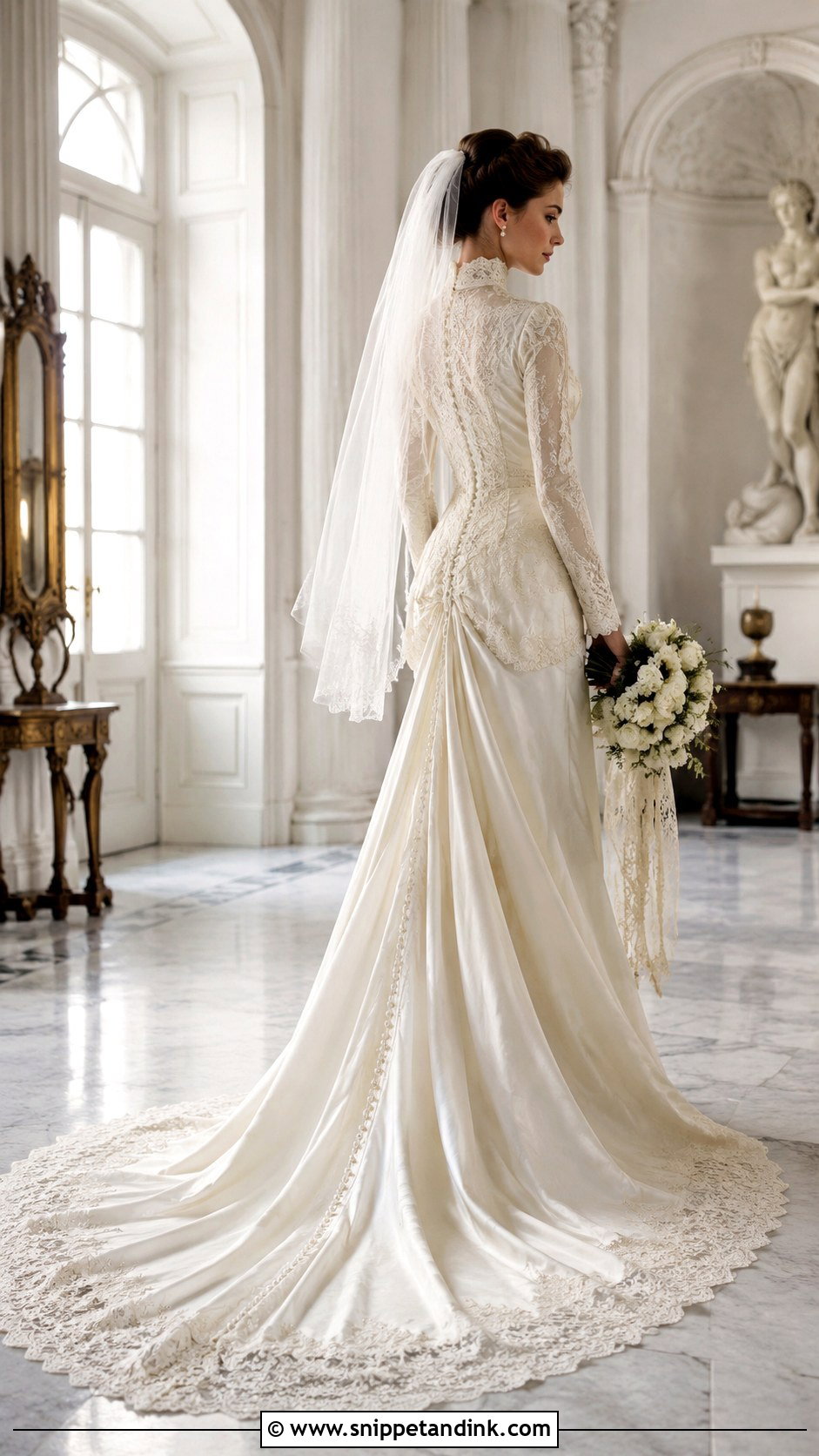
A train makes the gown formal, and the best Edwardian ones flow from the skirt rather than being tacked on. Lace edging, embroidered trim or satin panels show off as the fabric trails. I’d keep the bodice classic: high neck, long sleeves, pearl buttons. Plan the bustle at your fittings, because a lace-edged train catches on everything once the dancing starts, and a hand loop is the simplest fallback. With the train already doing the work, accessories stay refined: a simple veil, pearl studs, ivory shoes.
12. Edwardian Wedding Dress With Pearl Buttons
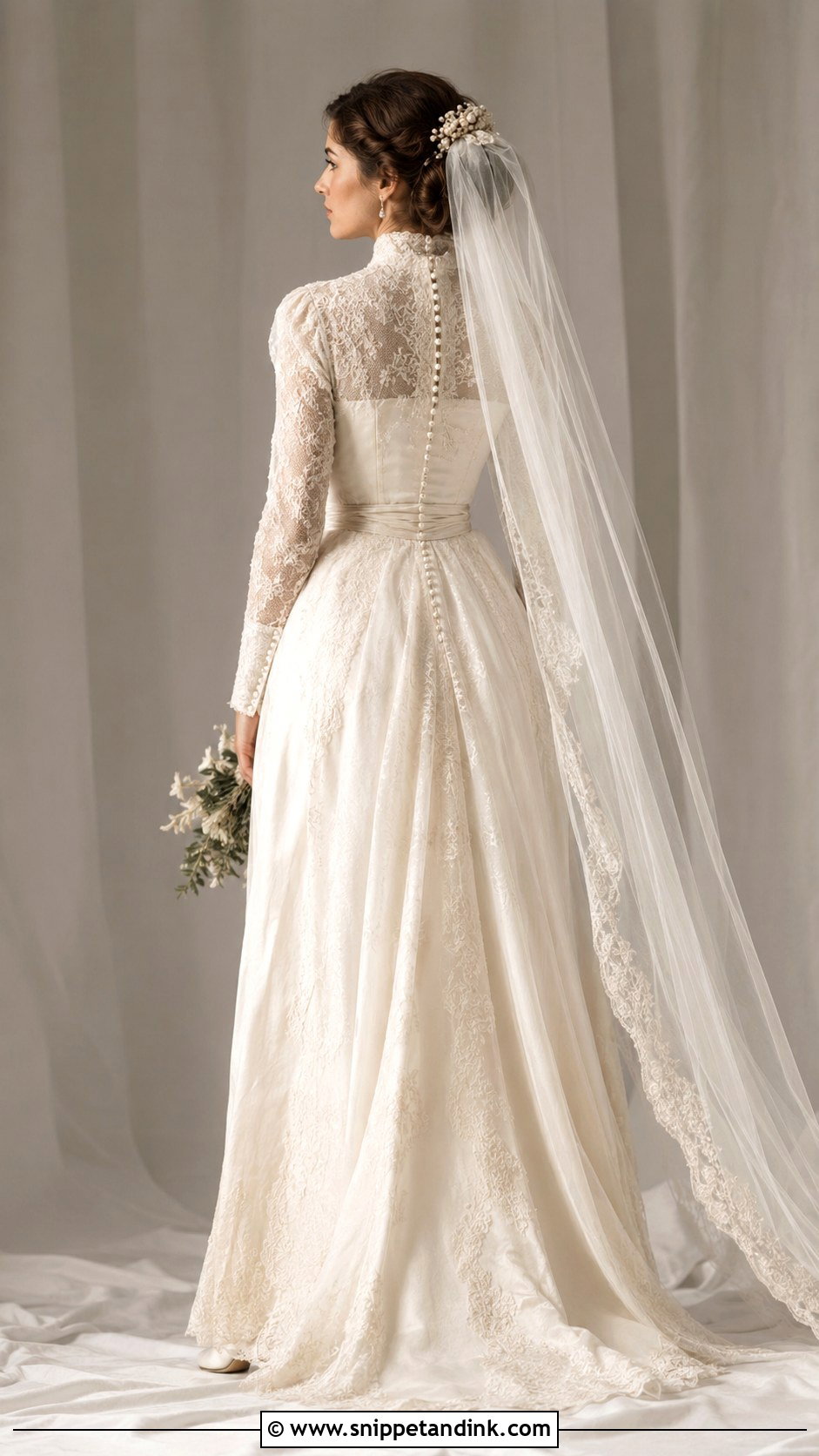
Pearl buttons are a detail people notice when you turn around. Down the back, along the cuffs or through the bodice, they add texture without overwhelming lace, silk, satin or embroidered cotton. A long row of them looks wonderful and takes time to fasten, so I’d book an extra ten minutes in the morning schedule and ask whether there’s a hidden zip behind them. A high collar, fitted waist and soft skirt keep it authentic. Pearl earrings, a pearl comb and ivory shoes, with a veil that doesn’t hide the back.
13. Edwardian Wedding Dress With Broderie Anglaise
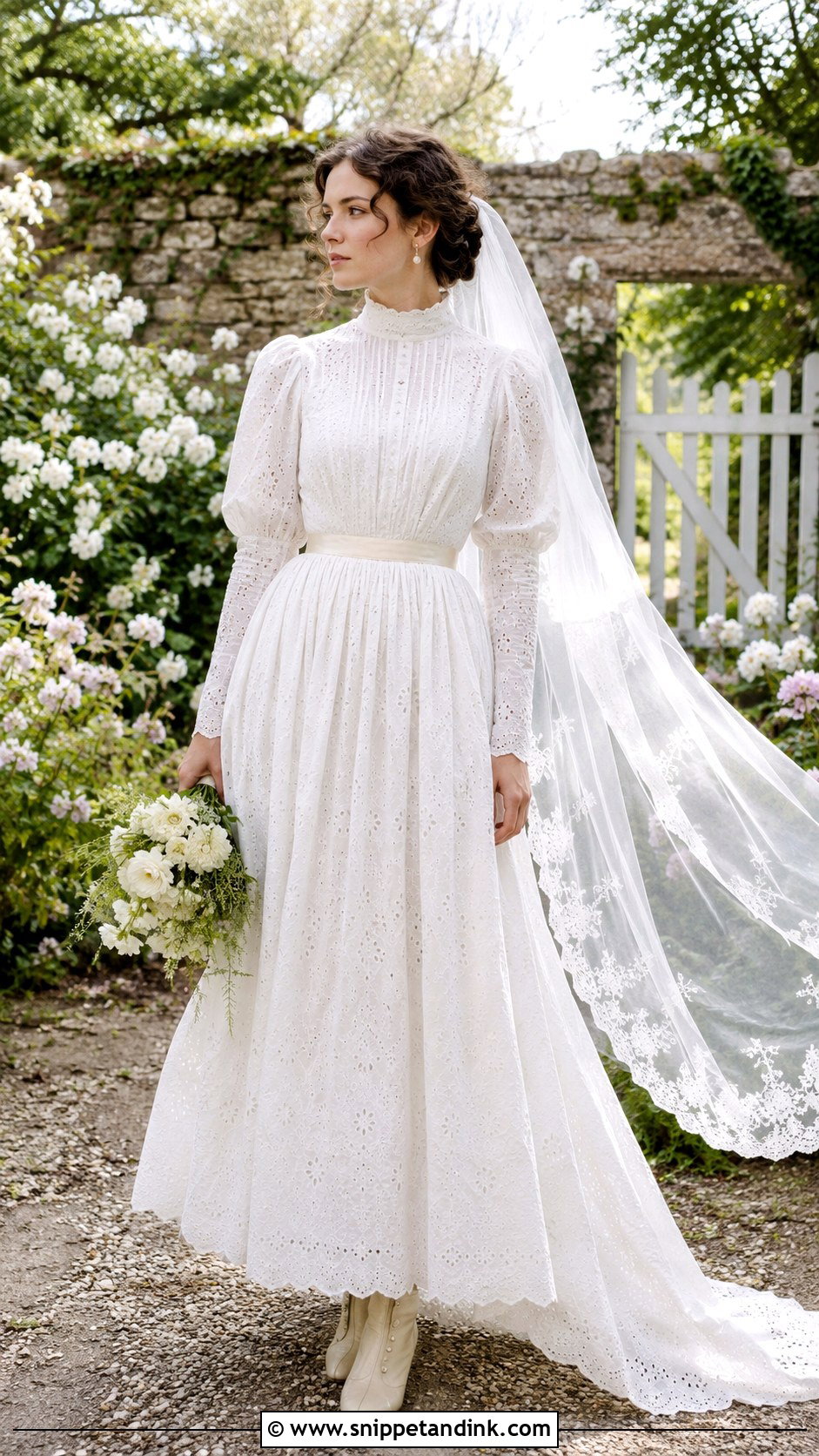
Broderie anglaise is eyelet embroidery: small holes cut and edged in stitching on white cotton. It’s fresh and handcrafted, and it suits spring and summer better than almost anything else on this list. A full-length cotton dress with a high neck, puff or long sleeves and a gathered skirt gives the historical shape. Because the fabric is literally full of holes, it needs a lining; I’d ask for a soft cotton one rather than polyester, which can feel clammy in heat. Ivory ankle boots, a ribbon belt, pearl earrings and a short or lace-trimmed veil.
14. Edwardian Wedding Dress With Tiered Skirt
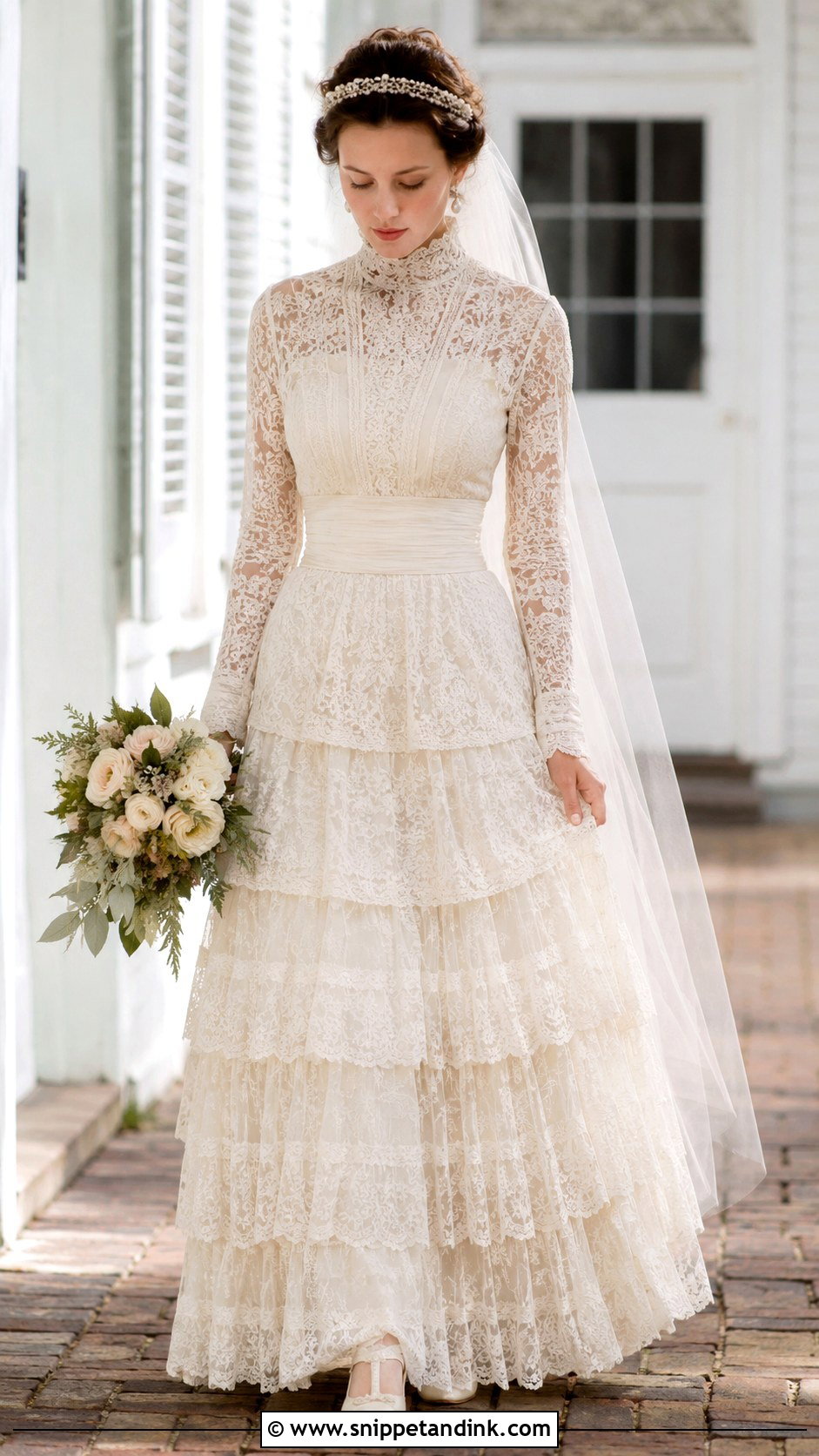
Tiers of lace, cotton or chiffon add motion without much weight. They work when the bodice stays refined, a high lace neckline, fitted waist and slim sleeves, and when the tiers fall gently instead of puffing out, which can tip into prairie rather than Edwardian. Look at the gown in profile in the shop mirror for that. Simple ivory shoes, a pearl hairpiece and a sheer veil complete it. Ask your photographer for a few walking shots; tiers show their best side in movement.

15. Edwardian Wedding Dress With Sheer Neckline
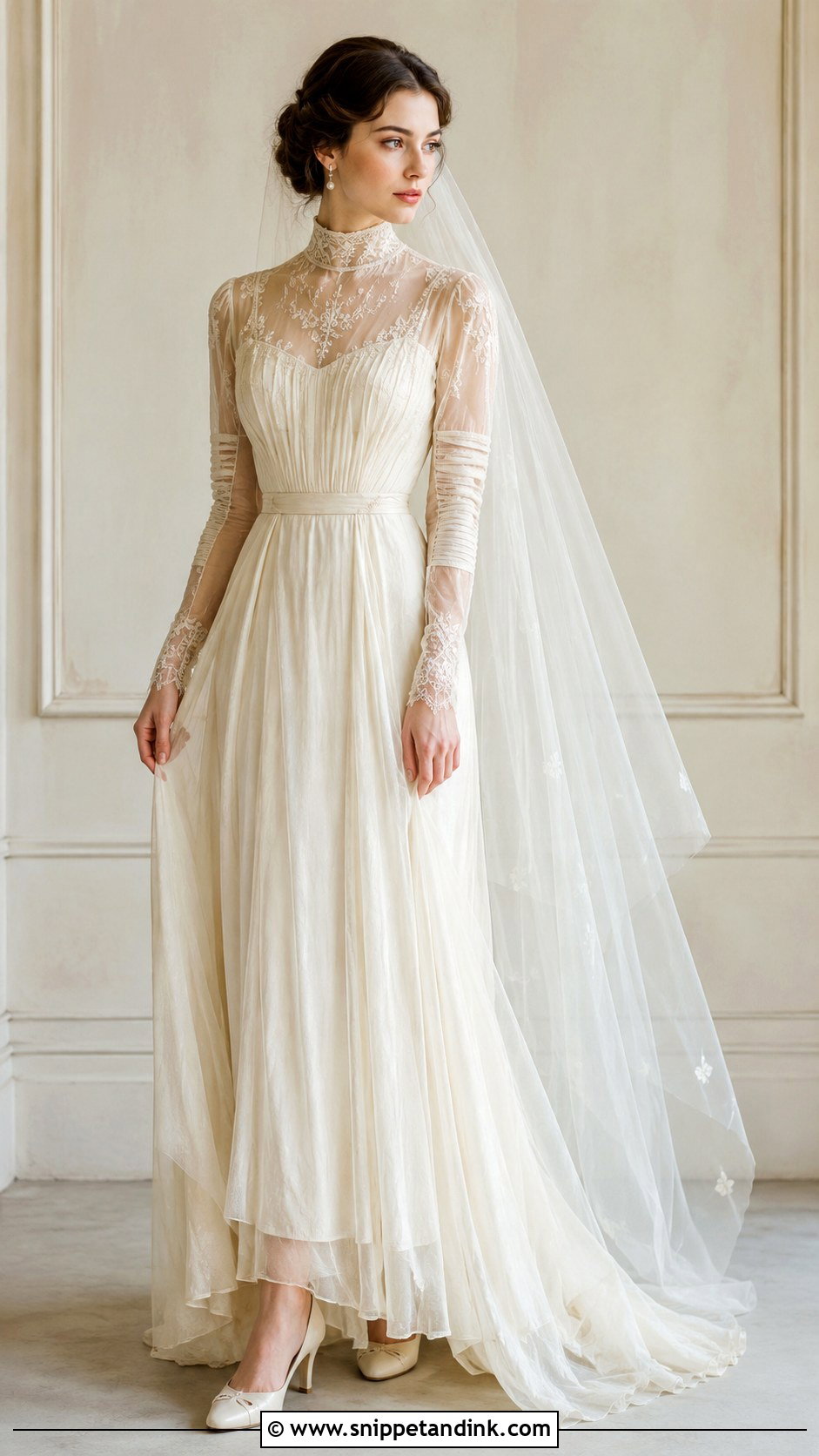
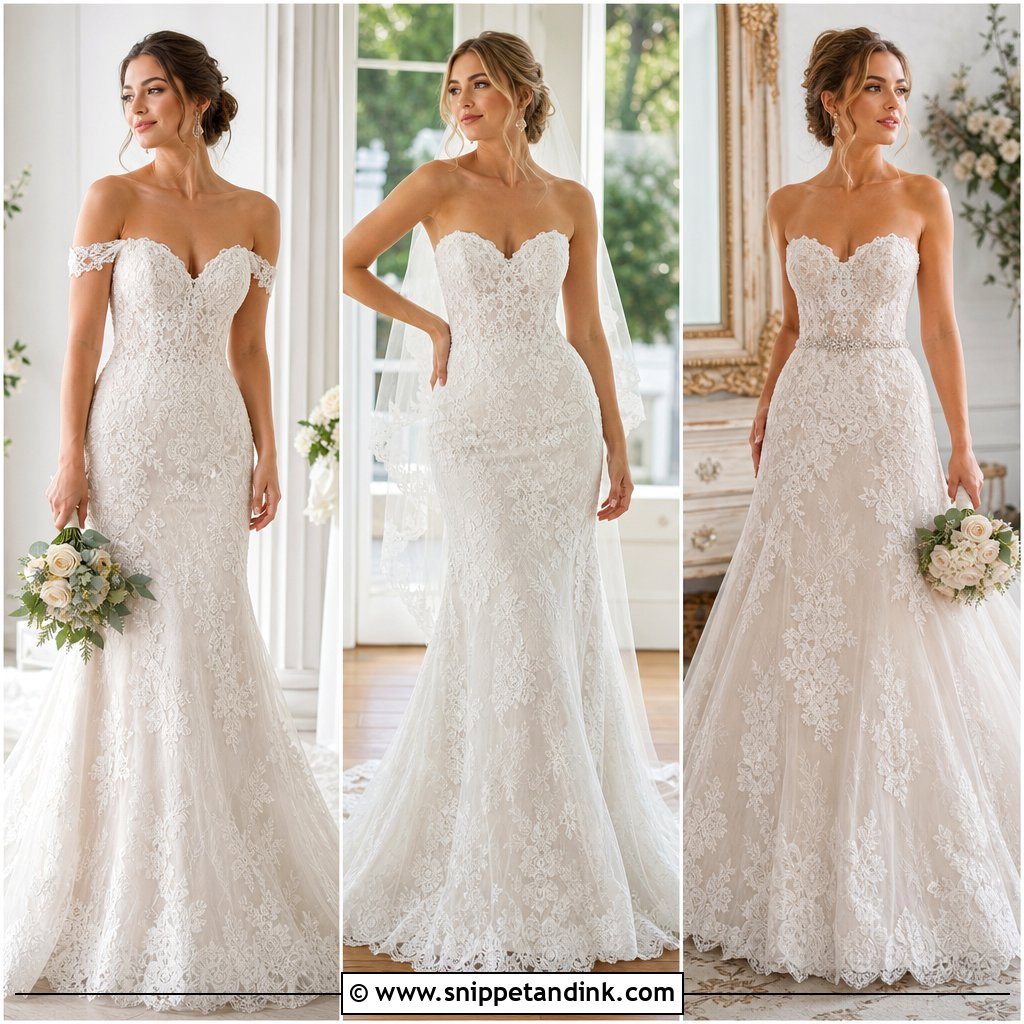
Sheer fabric across the chest and shoulders gives coverage without heaviness, which is the whole Edwardian idea in one detail. Tulle, lace or embroidered mesh all work, over a defined bodice with a flowing skirt. A high collar makes it historical; a soft round neckline makes it modern. I’d match the mesh to your skin tone where possible, because a stark white mesh can look like a separate layer in flash photos. A delicate updo, small pearl earrings and ivory heels.
16. Edwardian Wedding Dress With Lace Collar
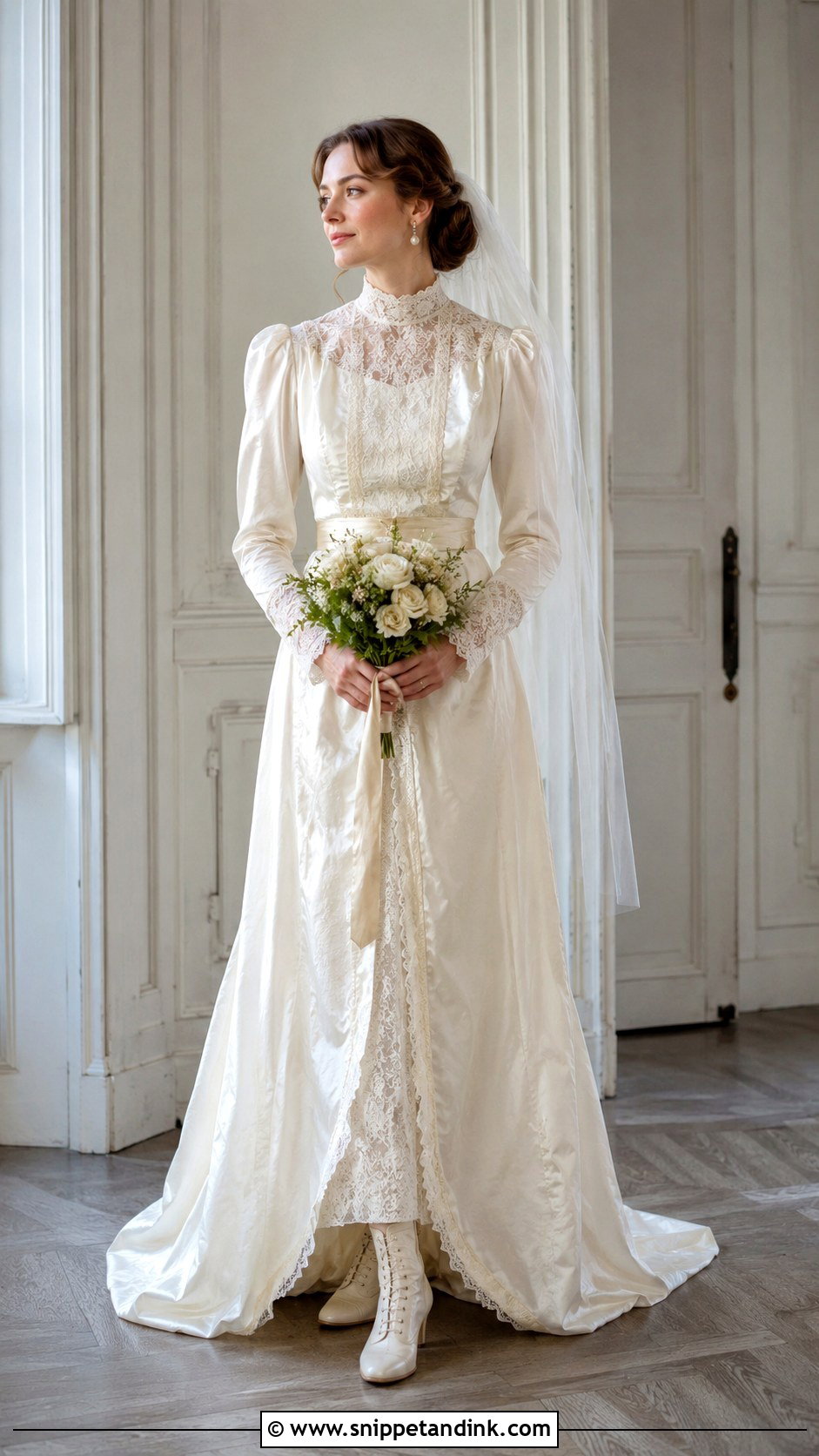
A lace collar frames the face, so it’s the detail that shows up in every close portrait. A stand collar is the historical version; a softer flat collar is easier and less formal. The rest of the gown can stay plain in satin, cotton or chiffon. Makeup is my concern here. Foundation transfers onto lace right under the jaw, so I set the neck well with powder and do the collar up last. Pearl earrings, a low bun and lace-up boots, with the veil tucked behind the hair so the collar shows.
17. Edwardian Wedding Dress With Pintuck Detail
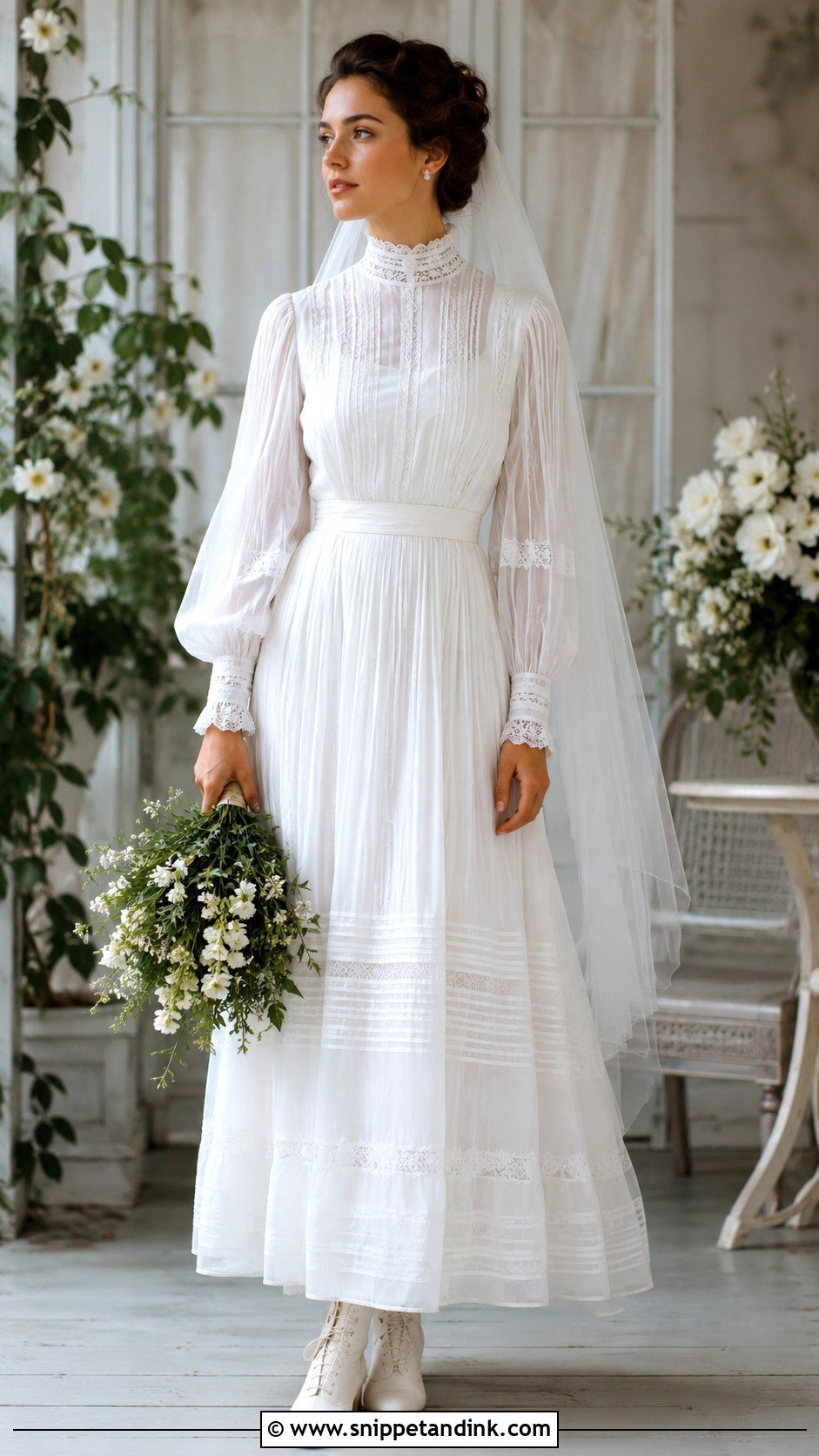
Pintucks are tiny stitched folds, often in rows, and they were one of the commonest decorations on fine cotton of the period. They give texture without beading, especially in cotton lawn, batiste or fine voile, and pair well with lace inserts, a high neck and a narrow sash. Pintucked panels don’t stretch, so the fit through the bodice has to be right in the first place; a seamstress can’t let them out easily. Keep accessories simple so the sewing shows: ivory boots, pearl studs, a soft veil.
18. Edwardian Wedding Dress With Bishop Sleeves
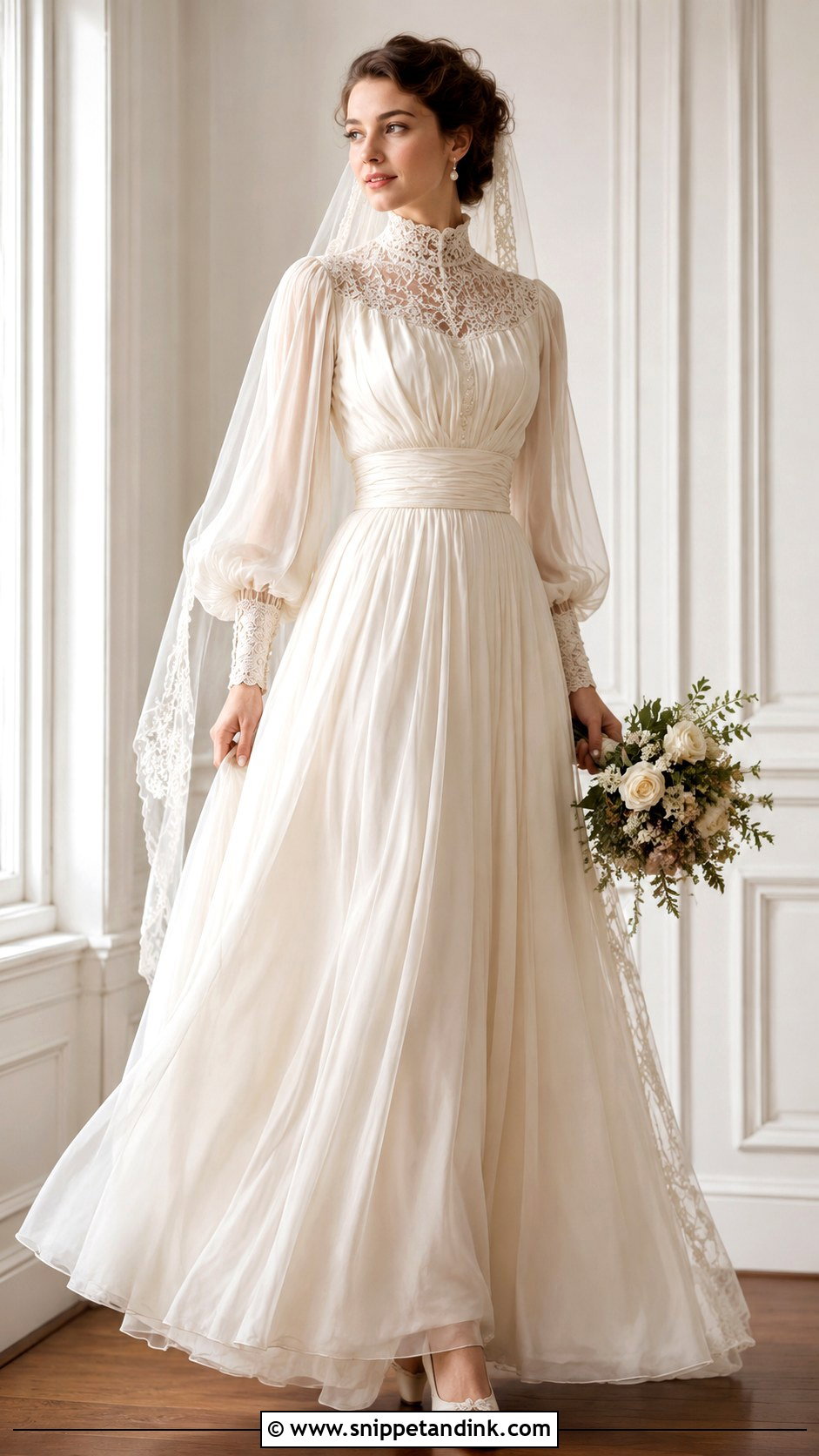
Bishop sleeves are full through the arm and gathered into a cuff at the wrist, so they move without much drama. Sheer chiffon, lace or fine cotton keeps them light. I suggest them to anyone after arm coverage who hates tight sleeves, because they allow complete freedom of movement. The cuff should be snug enough not to dip into the cake or your plate. Pearl buttons at the cuff add detail. Pair with a high neckline, fitted waistband and flowing skirt, then ivory shoes, a loose bun and a long veil.
19. Edwardian Wedding Dress With Embroidered Bodice
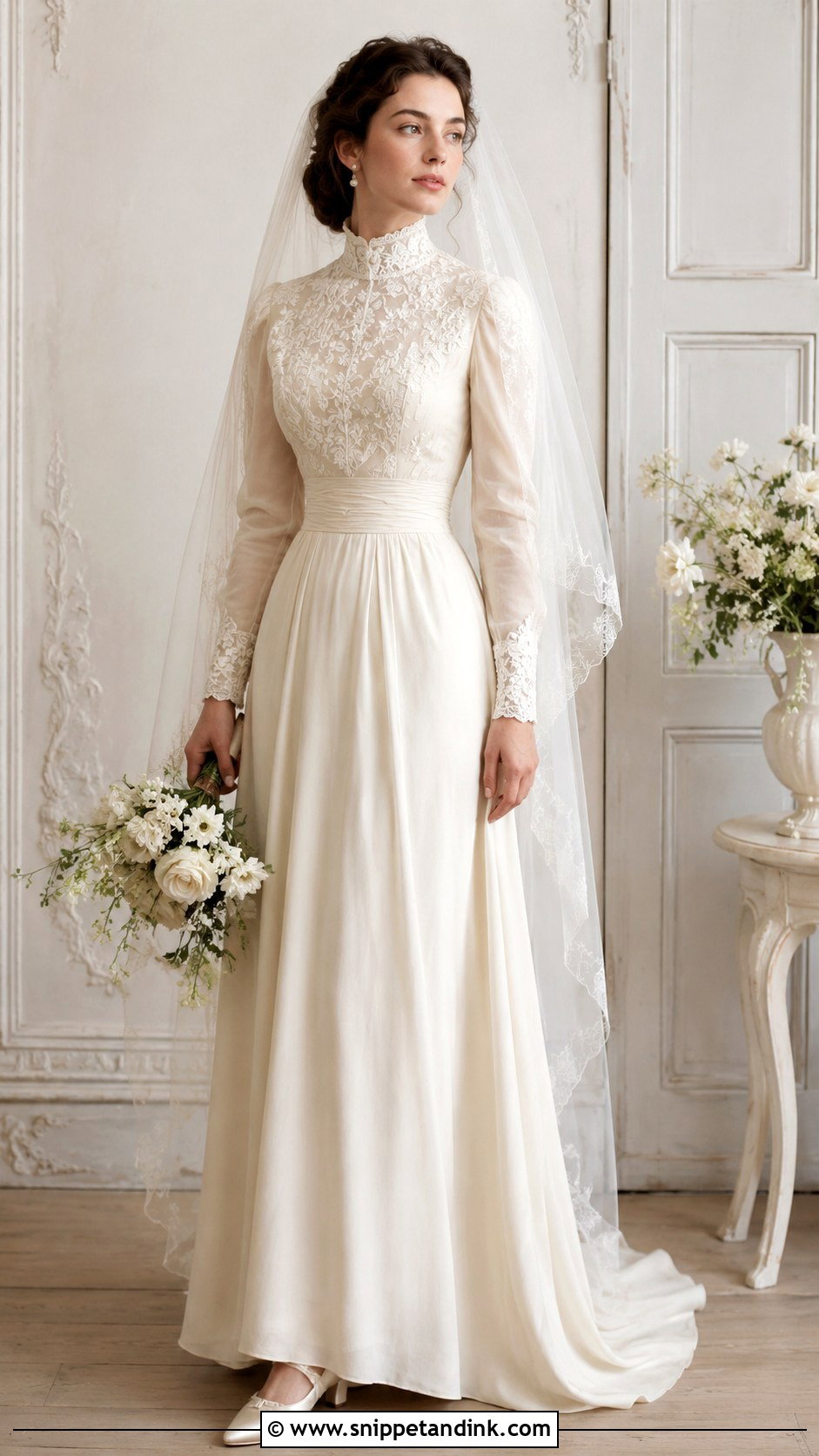
Embroidery makes a gown feel personal. Floral work, whitework, vines and tiny bead accents all suit the period, kept to the bodice, neckline and sleeves so the outfit stays refined. Ivory or cream thread gives an antique effect; soft pearl beading adds a gentle glow. Some brides have initials or a date stitched discreetly into the lining at the same time, a lovely touch that costs little extra. A plain skirt lets the upper half lead. Pearl earrings, an updo and satin or lace shoes.
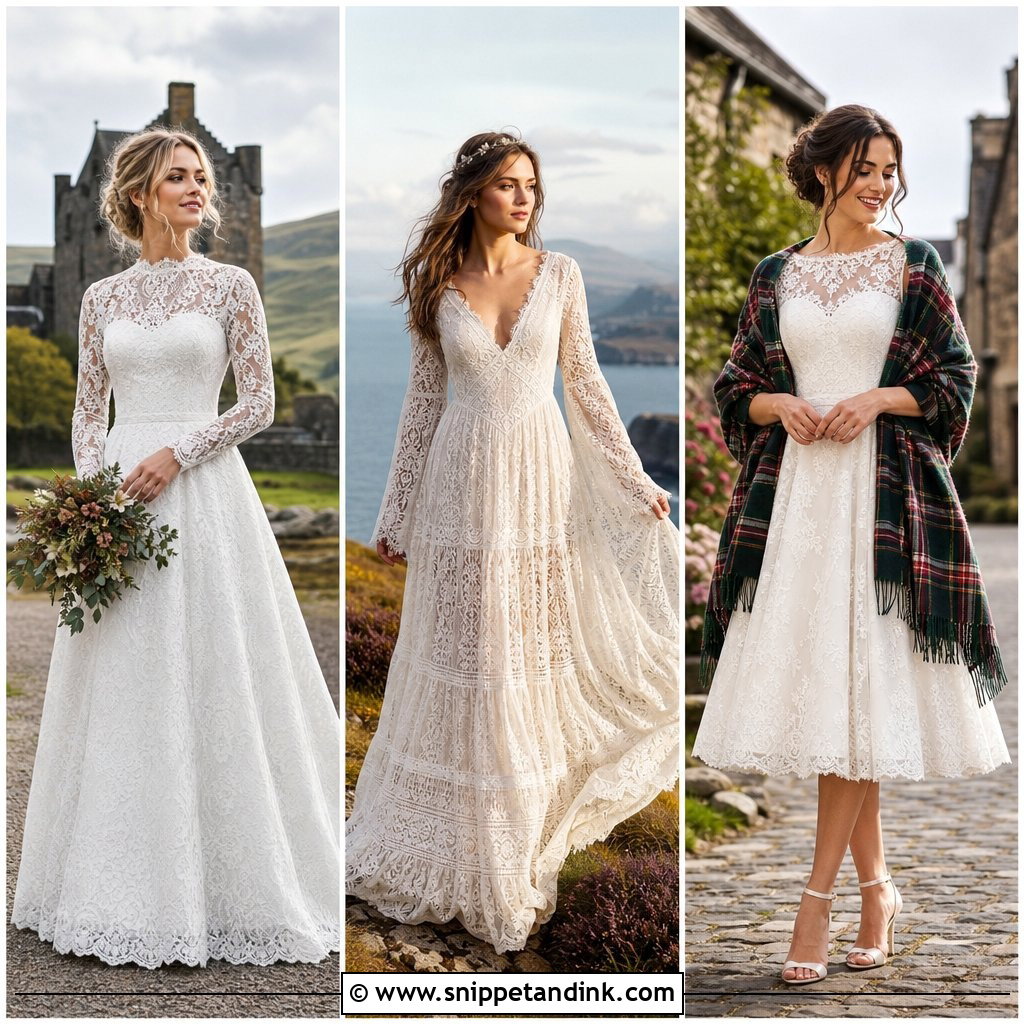
20. Edwardian Wedding Dress With Lace Overlay
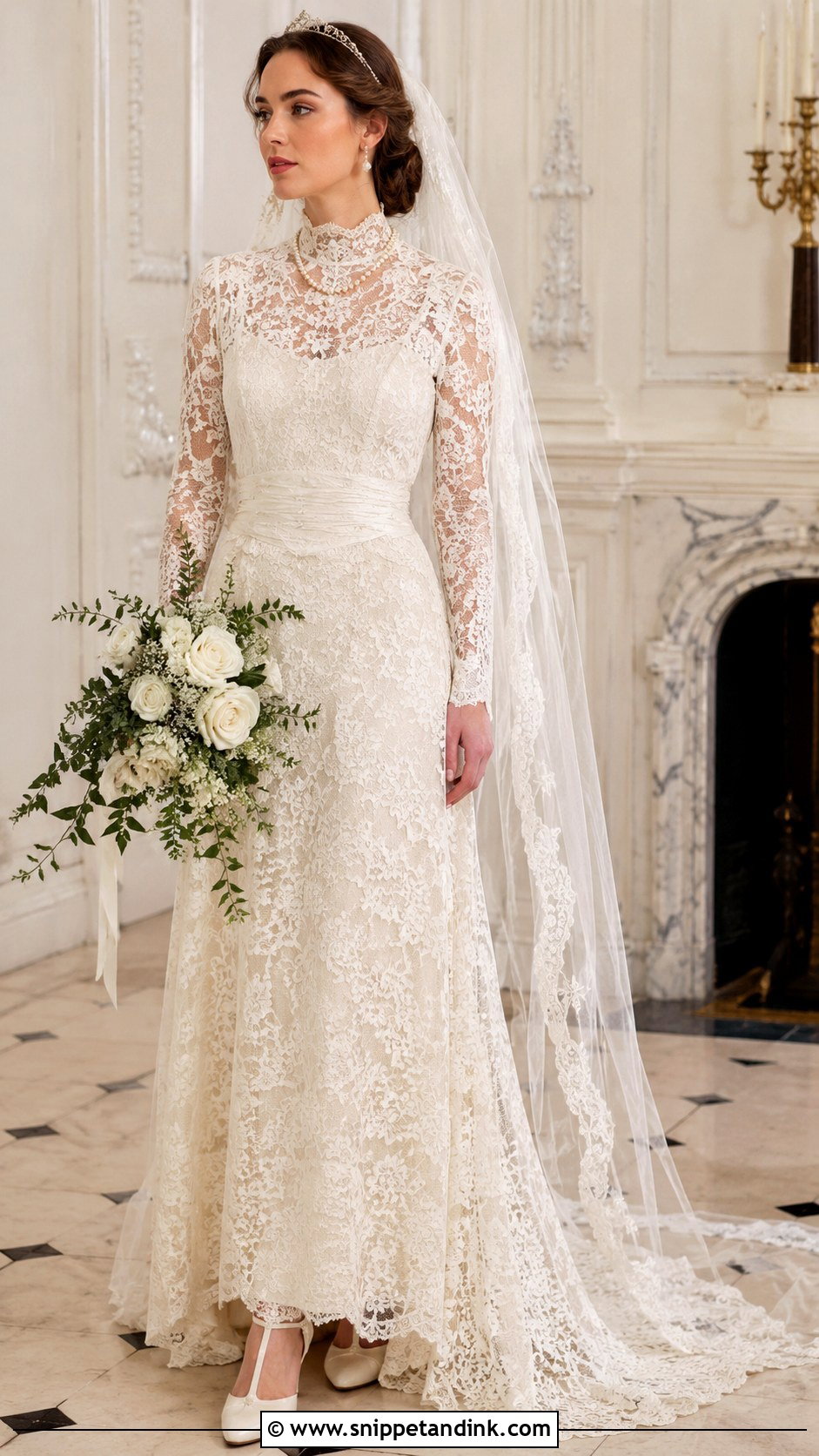
Lace over a solid underdress gives depth: silk, satin or cotton beneath, pattern and softness on top. A high neck, long sleeves and a fitted waist keep it true to the era, and a scalloped hem or lace-covered train adds grace. The colour of the underdress changes everything. Ivory under ivory lace looks soft and antique; a warmer champagne underlayer makes the lace pattern pop. I’d try both before deciding. Simple pearl jewellery, ivory heels and a sheer veil. It sits well at formal and vintage-themed weddings.
21. Edwardian Wedding Dress With Ribbon Sash
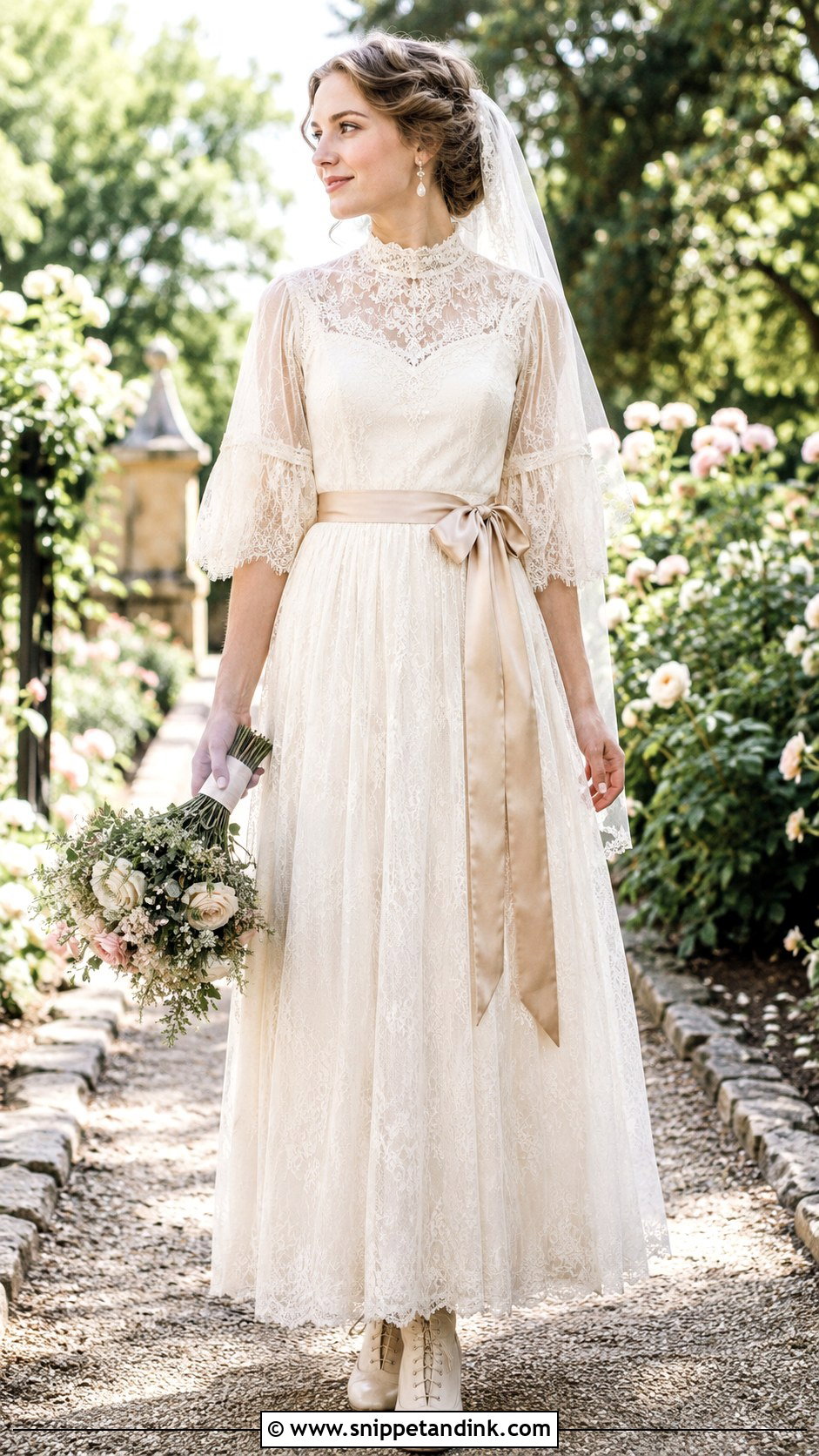
A ribbon sash defines the waist on tea gowns, lace dresses, cotton lawn and soft silk alike. Ivory keeps it tonal, champagne adds warmth, pale blue gives a soft vintage accent. Tie it in a loose bow at the back or the side depending on the dress shape. I’d use silk or double-faced satin ribbon rather than a single-sided one, since the dull back shows every time the tails turn over. Add a high neckline, lace sleeves, pearl earrings, lace-up shoes and a light veil.
22. Edwardian Wedding Dress With Antique Veil
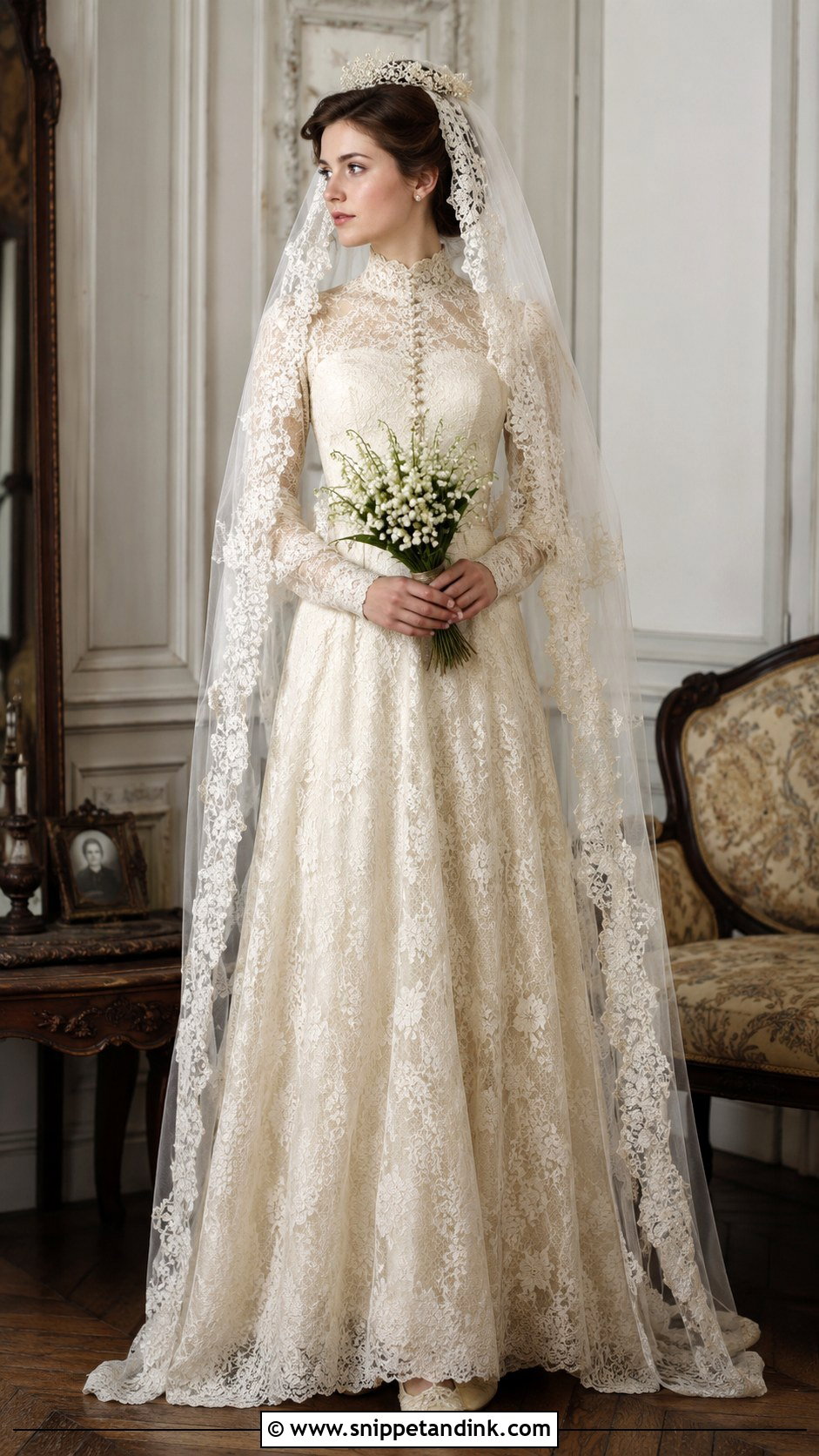
The veil can do more period work than the gown. A lace-trimmed veil, a soft tulle one or a Juliet-style cap veil turns a fairly simple dress into a full vintage look, with a high collar, lace yoke, long sleeves and a gently flared skirt underneath. Real antique veils are often fragile, so I’d have a seamstress mount one onto a new comb rather than pushing pins through old lace. Keep the rest soft: pearl pins, ivory shoes, a small bouquet.
23. Edwardian Wedding Dress With Lace Gloves
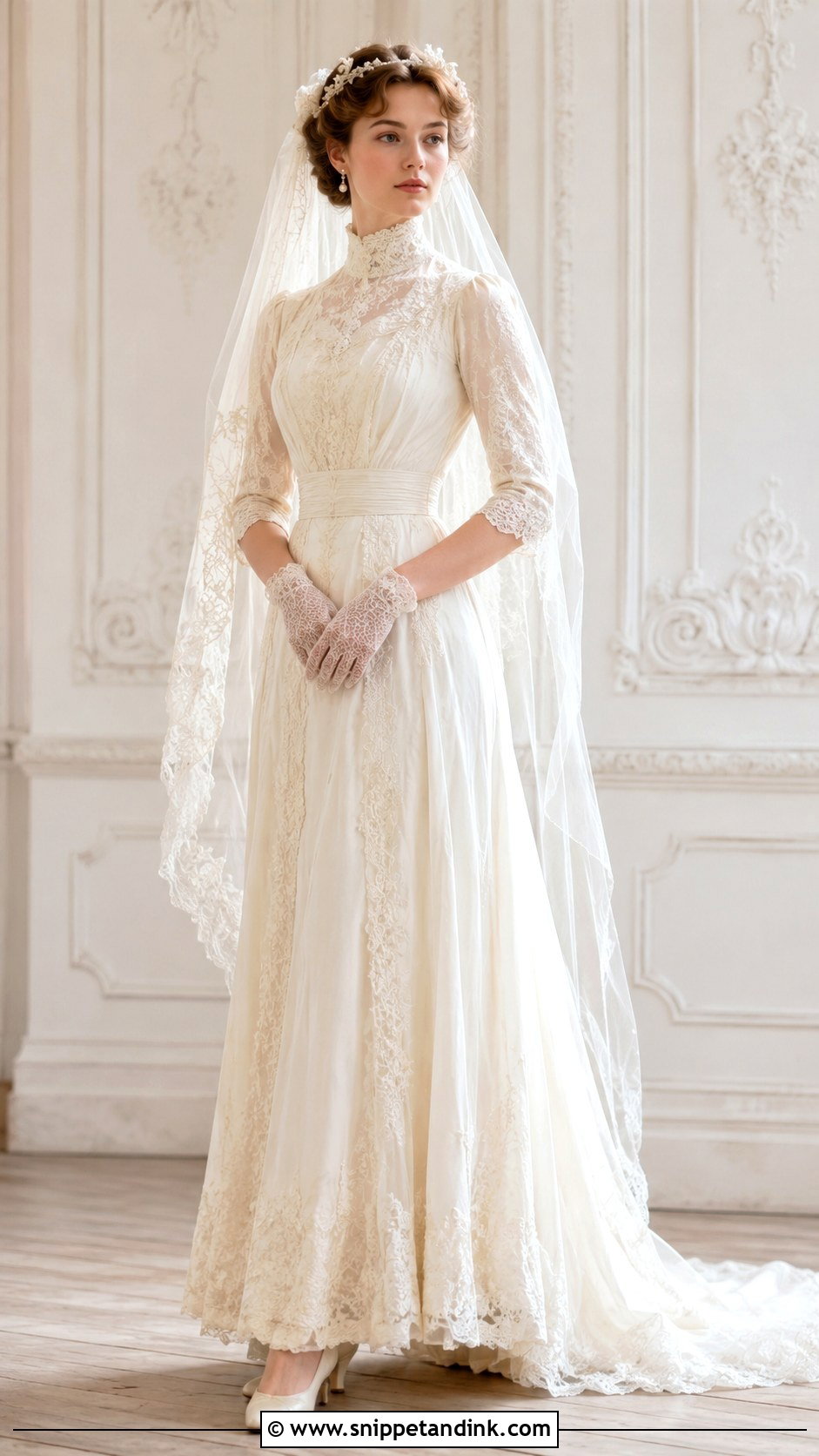
Gloves suit gowns with high necks and shorter sleeves, three-quarter or puff, where the lace shows clearly. Wrist-length gloves feel light; longer ones read more formal. The dress should carry enough vintage detail to support them, in lace, silk or embroidered cotton. Plan the ring exchange: either remove the left glove before the vows, or have a seamstress open the ring finger seam so the band can go straight on. Pearl earrings, ivory heels and a soft veil complete it.
24. Edwardian Wedding Dress With Ivory Boots
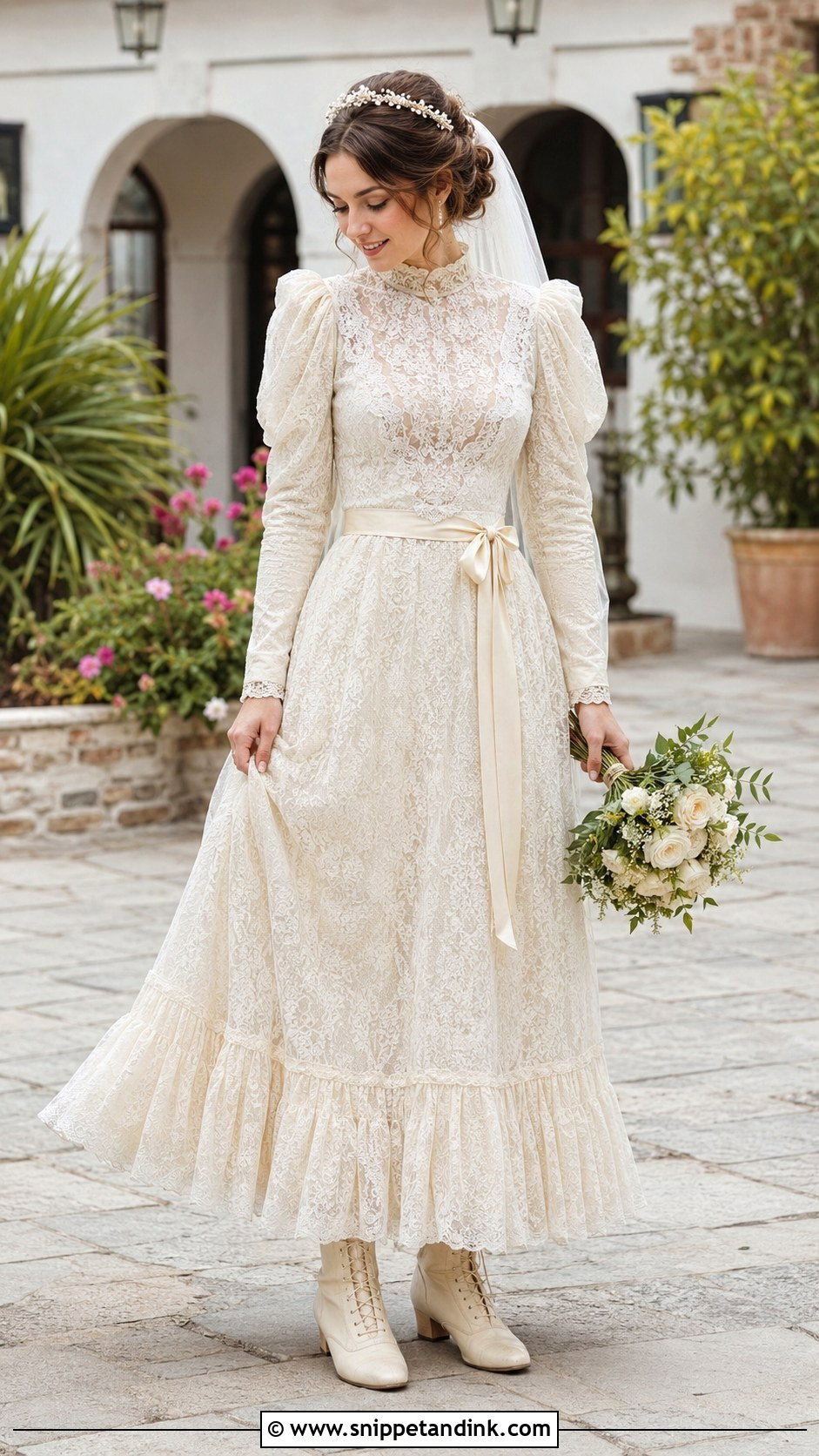
Boots were what a bride of the period actually walked in, so Ivory boots are both historical and practical, especially on grass. Lace-up ankle boots with a low or medium heel feel vintage and stay comfortable. They suit lace, cotton and tea-gown shapes, and if the skirt is slightly shorter or swings as you move, they become part of the outfit. Lace-up boots take a while, so put them on before the dress, not after. A pearl comb, simple veil and ribbon sash finish it.
25. Edwardian Wedding Dress With Garden Bouquet
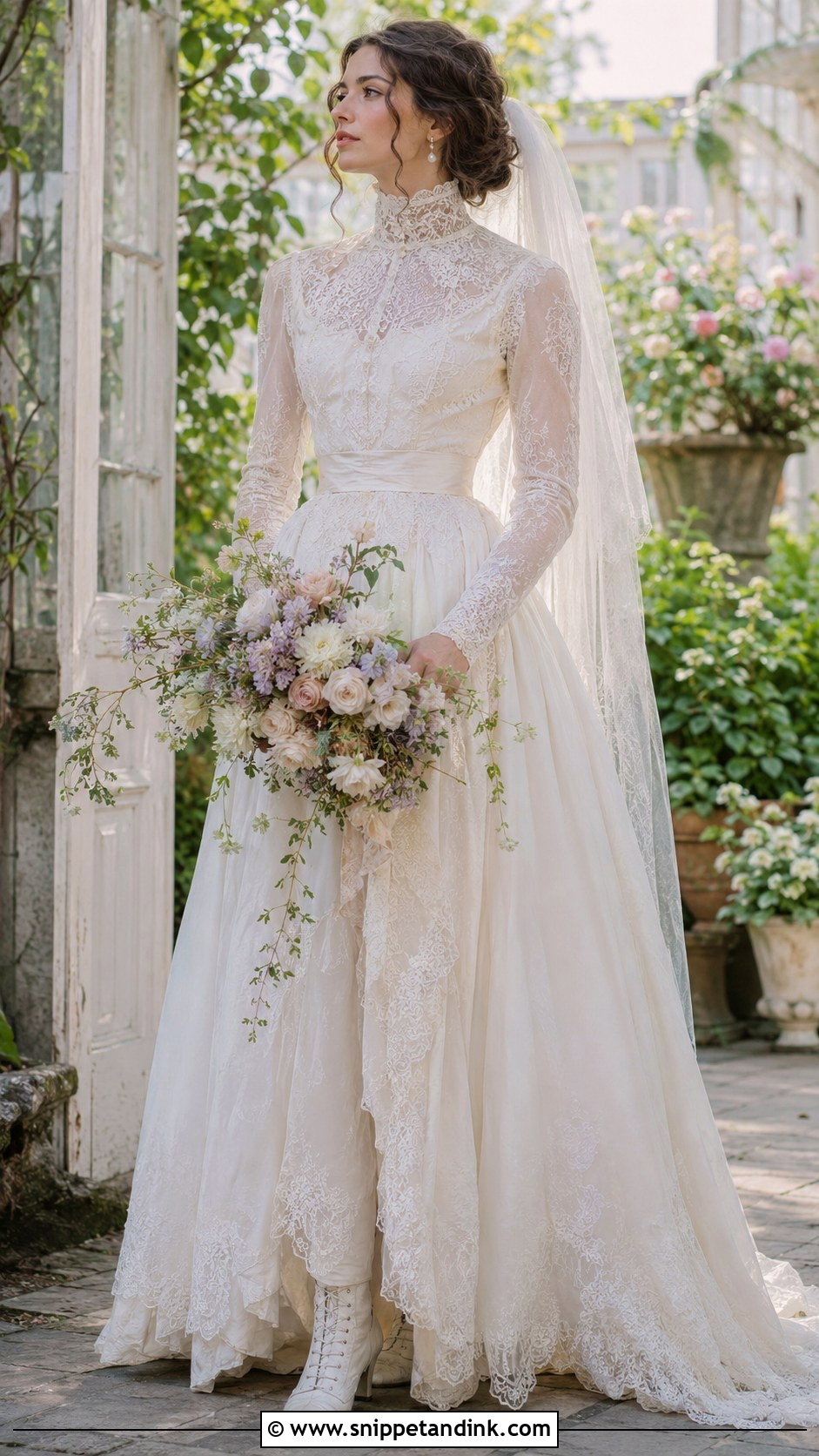
The bouquet should look gathered rather than arranged. Loose shapes, trailing greenery and soft ivory, blush, cream or pale lavender suit any of the gowns here, from a high-neck lace dress to a cotton tea gown or embroidered satin. Keep it in proportion to the skirt: a full skirt can carry a looser, wider bunch, while a slim tea gown wants something smaller. Lace boots, pearl earrings, a soft veil and a relaxed updo finish the outfit. It belongs outdoors or in an old house.
Genuine Antique Gowns Need a Gentler Hand
Wearing a real 1900s dress is a romantic idea, and I’d only say yes after seeing it in person. People were generally smaller then, and the gowns were built around the corsetry of the time, so most original dresses fit a narrow waist and a short torso. Many can’t be let out, because there’s no spare fabric in the seams.
Condition matters even more than size. Cotton and linen whitework usually survive well. Old silk is another story: it can split along folds and seams, sometimes just from being handled, and that damage can’t be reversed. Hold the fabric up to daylight and look for fine cracks or areas that look thin before you fall in love with it.
If you go ahead
- Find a seamstress or textile conservator who works on antique clothing, not a general alterations shop.
- Never let an antique gown go through ordinary dry cleaning without asking a specialist first.
- Wear it for the ceremony and portraits, then change into something sturdier for the dancing.
- Afterwards, store it flat or loosely folded in acid-free tissue in a cool, dark place, never in plastic or on a wire hanger.
If the original is too fragile, a reproduction made to your measurements, or a modern gown with a single antique element such as a lace collar or veil, gives you the history without the risk.
One Period Detail, Then Restraint
The early 1900s gave brides a rare mix of modesty, texture and softness, and you can borrow as much or as little of it as you like. High lace collars, puff sleeves, tea gowns, pearl buttons, cotton lawn and antique veils each say the era on their own. My advice is to choose one or two of those features and let the rest of the outfit stay calm and comfortable. Soft ivory, a little lace, refined accessories and shoes you can walk in will carry the look the rest of the way.
You'll Like These Ideas:




Leave a Reply