
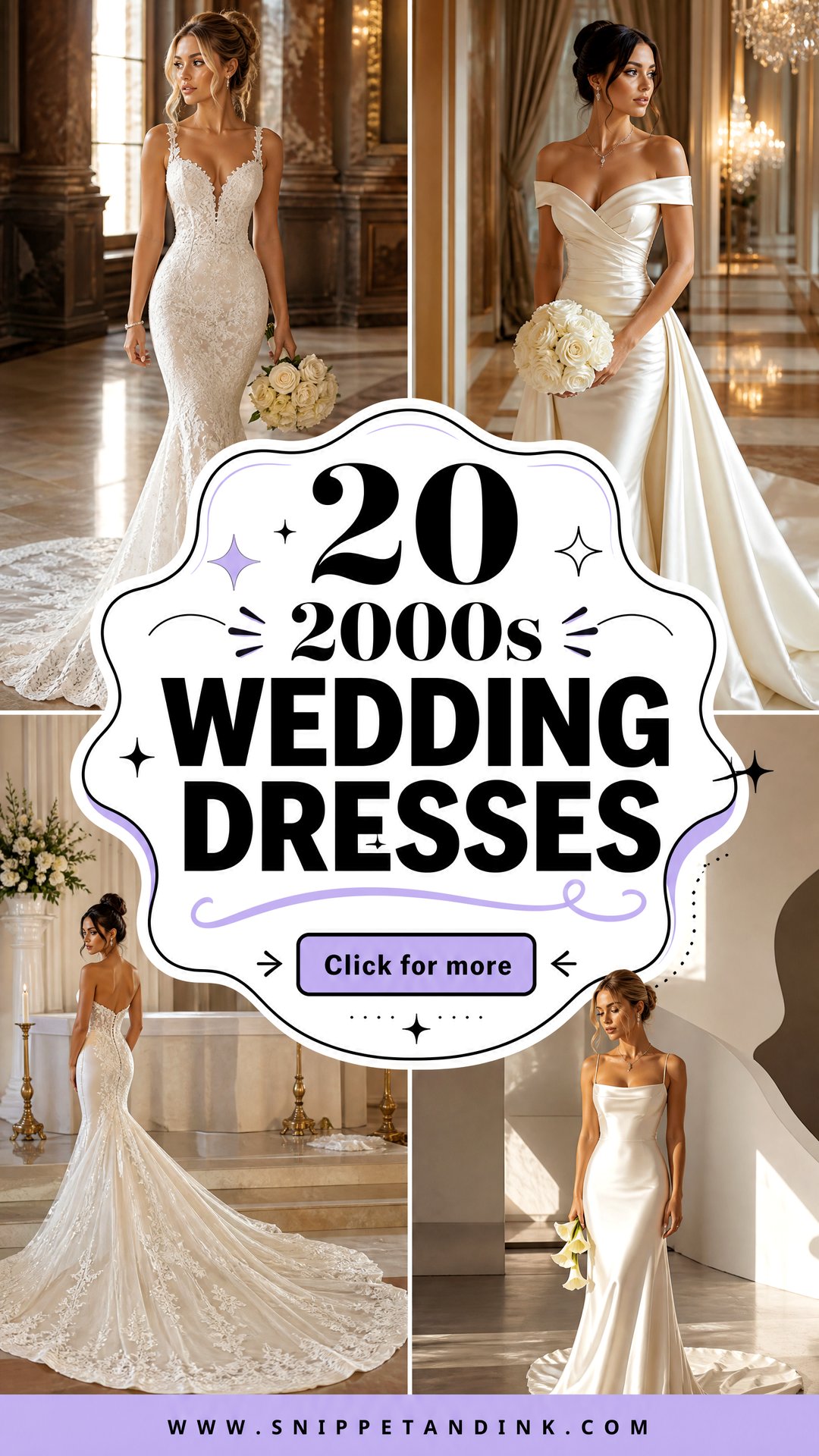
Early or Late Noughties? The Two Halves of the Decade Look Different
Brides often ask me for a 2000s dress as if the decade had one look. It didn’t. Knowing which end you’re drawn to makes shopping much quicker, because the shapes, necklines and details changed quite a bit over those ten years.
The first few years
Think straight strapless necklines, smooth satin, A-lines and full ball gowns, beaded or embroidered bodices, lace-up corset backs and thin spaghetti straps on slips. Accessories were crystal: tiaras, chokers, small studs.
The later years
Sweetheart necklines took over, along with diagonal ruching, mermaid and trumpet shapes, a crystal brooch at one hip, and pickup skirts and drop waists on ball gowns. Taffeta came back, and colored sashes appeared. If you want a dress that reads as nostalgic but not old, the late shapes in a plain fabric usually do it best.
1. Strapless Satin Ball Gown
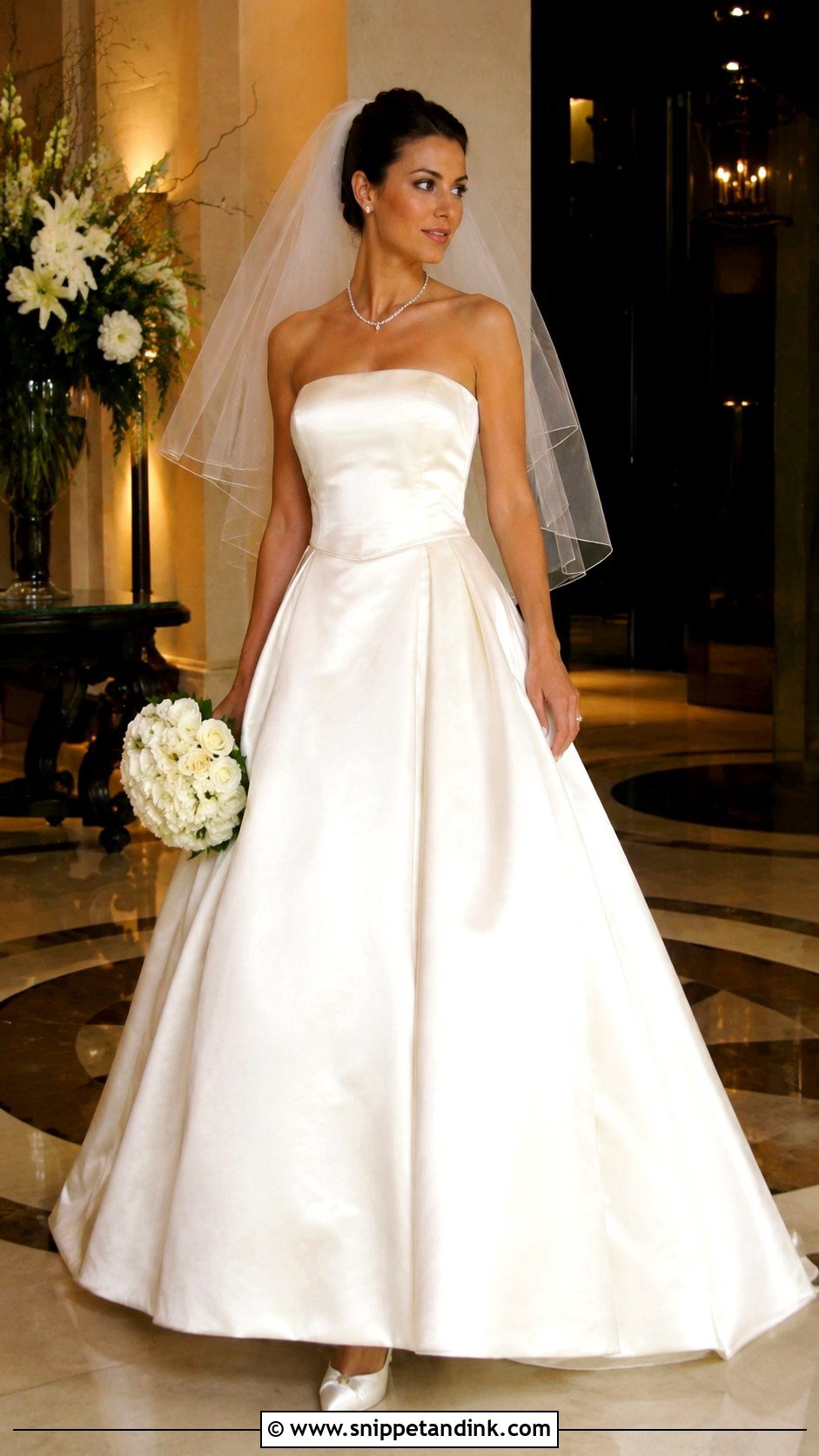
Straight-across neckline, fitted bodice, wide skirt from the natural waist: this was the default wedding dress of the early 2000s, and it still flatters most figures. Smooth ivory satin gives the shine of the period without any decoration at all. The thing to watch is the top edge. A straight neckline has nowhere to hide a gap, so it has to sit firmly against the chest all the way round. A fingertip veil with narrow satin edging, a crystal necklace, small studs and pointed satin pumps finish it, with a structured white bouquet. A thin jeweled belt can define the waist if you want it. Keep hair sleek in a low bun or soft updo.
2. Sweetheart Mermaid Wedding Dress
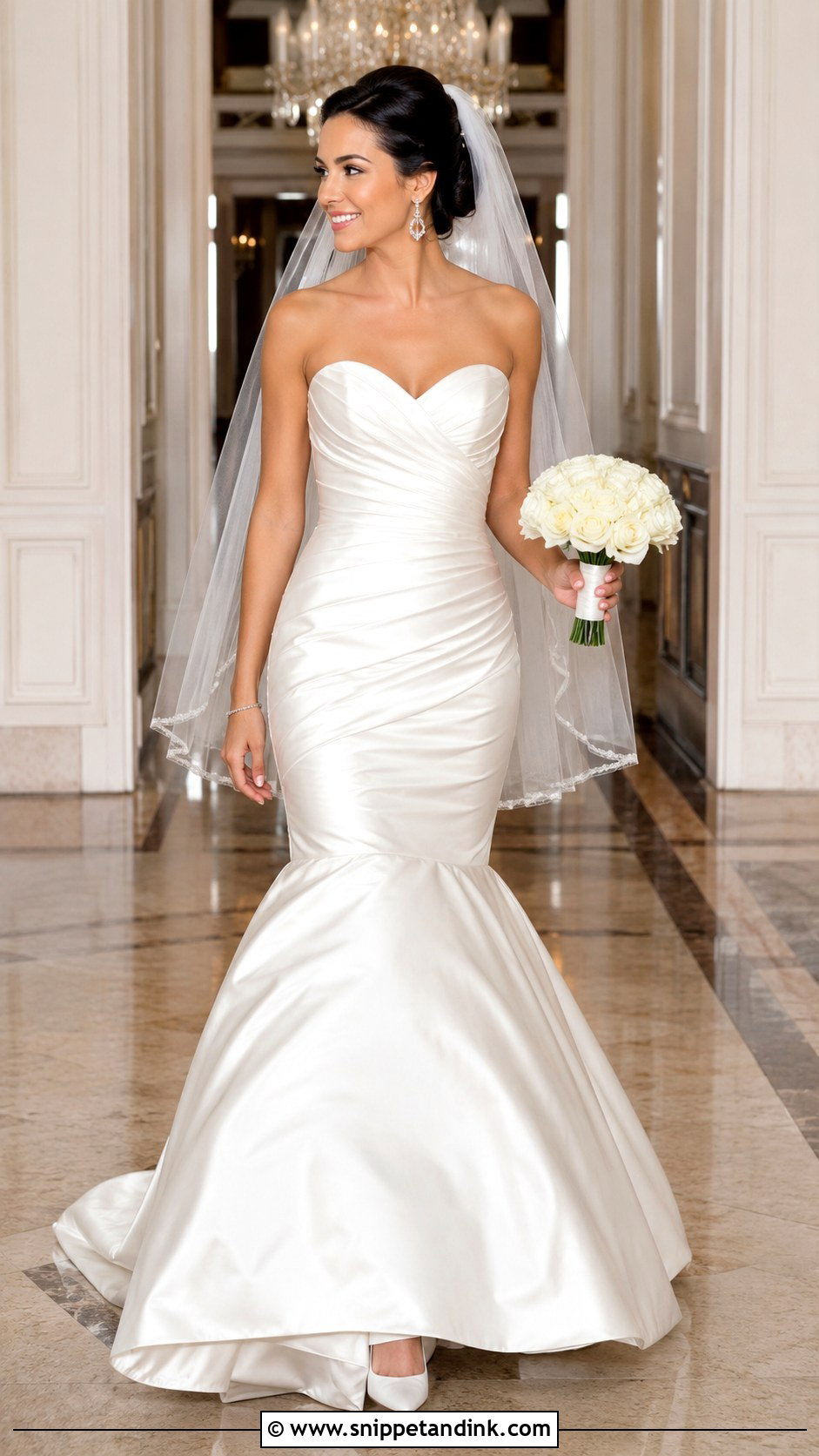
The sweetheart mermaid dress took over in the later 2000s, usually with ruching and a crystal detail somewhere on the bodice. The structured bodice follows the waist and hips, then flares near the knee. Satin or taffeta gives that slightly glossy surface. My honest advice: a knee-level flare shortens your stride a lot, and I’d want you to try climbing a step and sitting in a dining chair before you buy. If either feels awkward, look at the trumpet further down. Crystal drops, a narrow tennis bracelet and pointed pumps go with it, plus a chapel veil, side-swept curls and a compact bouquet.
3. Corset Pickup Ball Gown
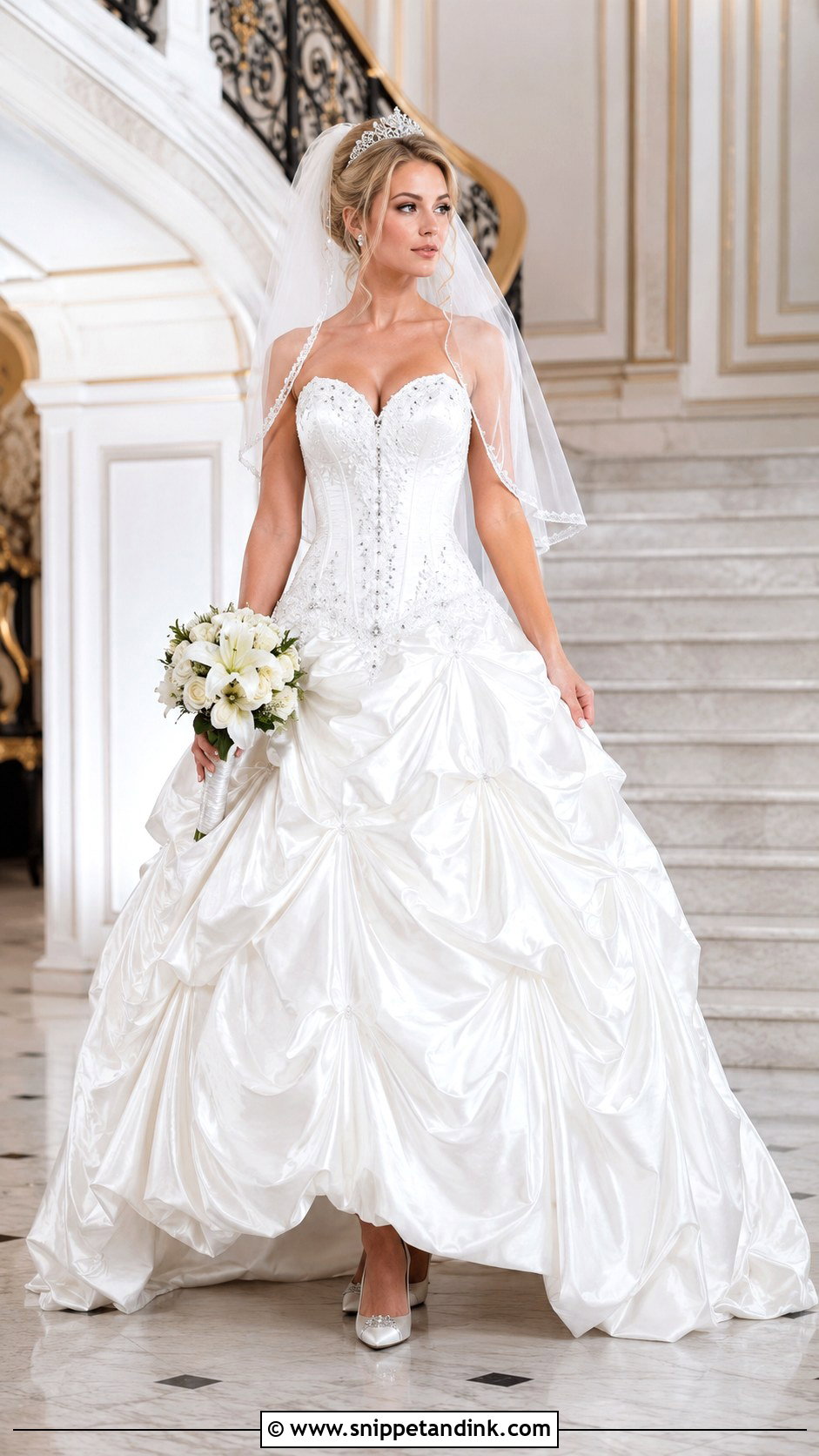
Corset bodices over a pickup skirt are the most 2000s dress there is. The bodice has visible seams, embroidery or lace-up construction, and the skirt is gathered up in rounded folds all over, a detail that defined the end of the decade along with drop-waist ball gowns. A simple tiara, elbow veil, crystal studs and satin heels suit it; skip a big necklace if the corset is beaded. Buying secondhand? Check every pickup point, because a loose tack lets one fold drop and the whole skirt looks lopsided. Each pickup also needs steaming from the inside so it looks rounded rather than squashed. Ballrooms and formal hotel ceremonies give it room.
4. Beaded Bodice A-Line Dress
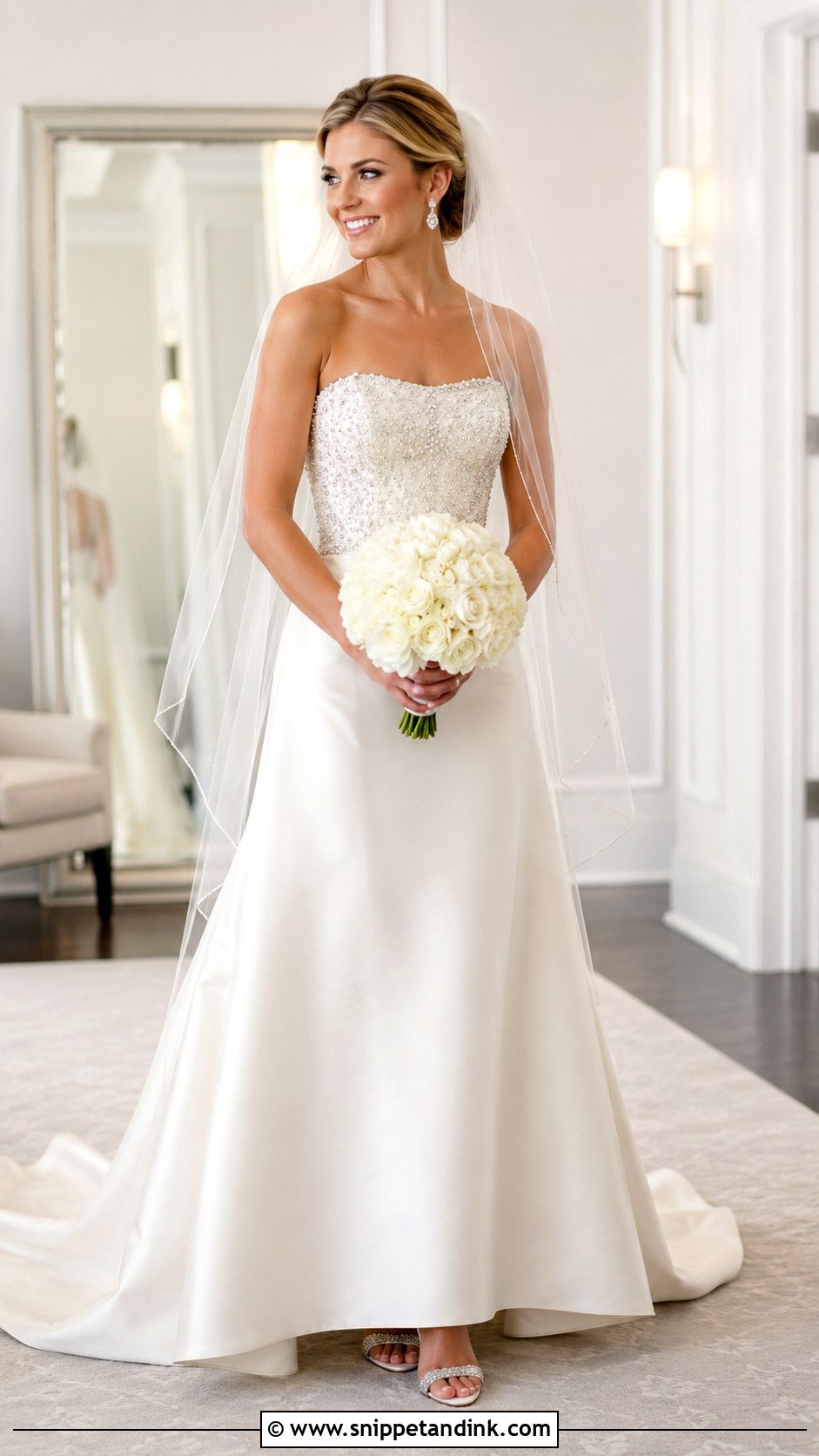
Sparkle on top, plain satin below: a beaded bodice with a simple A-line skirt gives you shine without turning the whole gown into a chandelier. Keep the beading around the bust and waist on a strapless or spaghetti-strap neckline. The A-line is far easier to move in than a ball gown, which is why I suggest it to brides with a long day ahead. Dense beading makes a necklace redundant, so leave the neckline open. A sheer fingertip veil, silver-toned earrings and low embellished heels work, with a soft updo or half-up style and a rounded bouquet with a plain ribbon wrap.
5. Halter Satin Wedding Dress
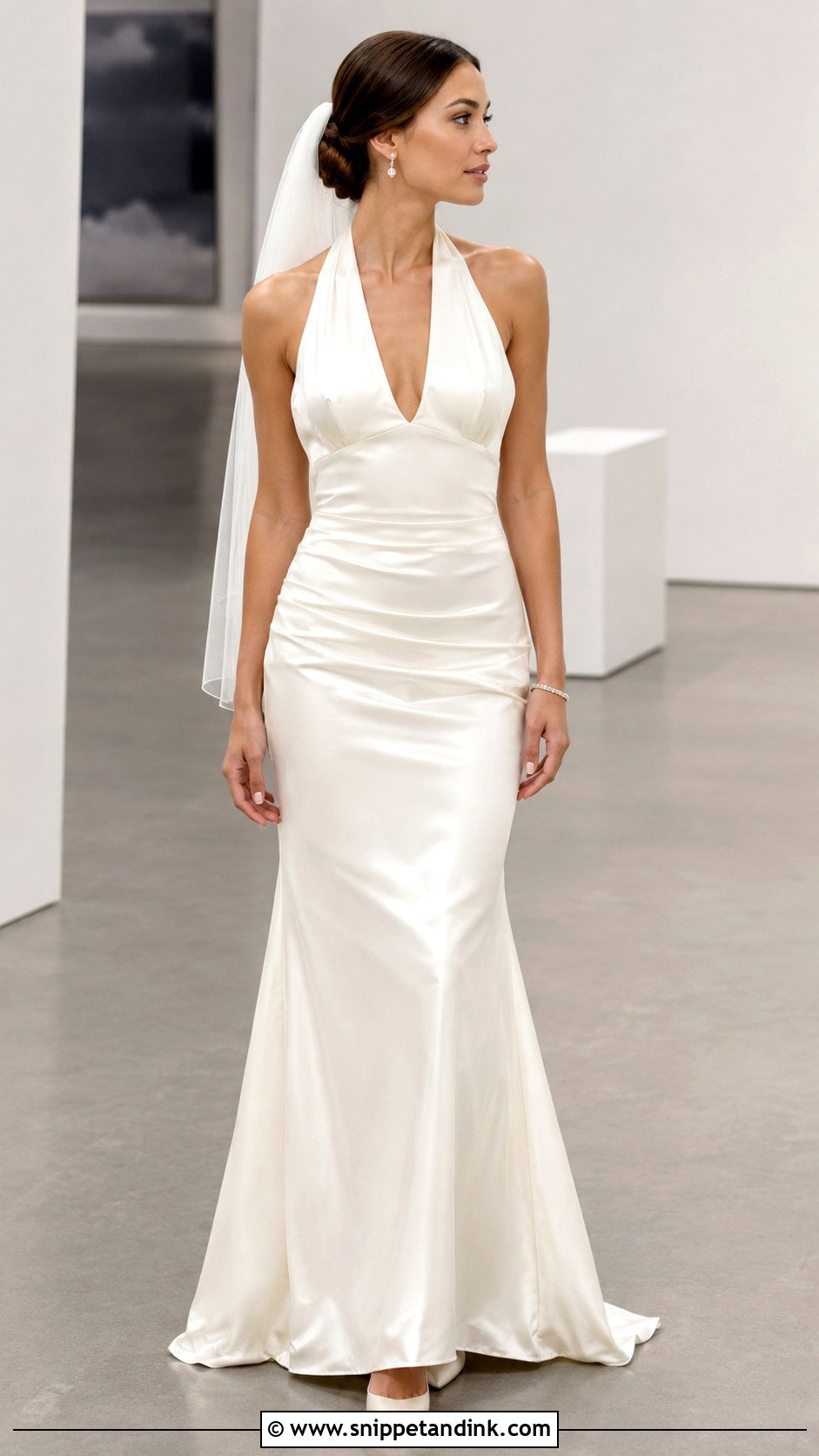
Halters were the alternative to strapless all through the decade, sleek and a little more daring. Choose a high or softly plunging halter with a fitted waist and an A-line, sheath or subtle trumpet skirt. Because the strap hangs from the back of the neck, its weight matters: a heavy satin halter can leave you with a stiff neck by the speeches, so ask whether the bodice itself carries the dress. No necklace here. Crystal drops, a slim bracelet and a smooth bun suit it, with metallic sandals or ivory pointed heels and a narrow chapel veil below the bun, or a small jeweled comb instead.
6. Spaghetti Strap Slip Wedding Dress
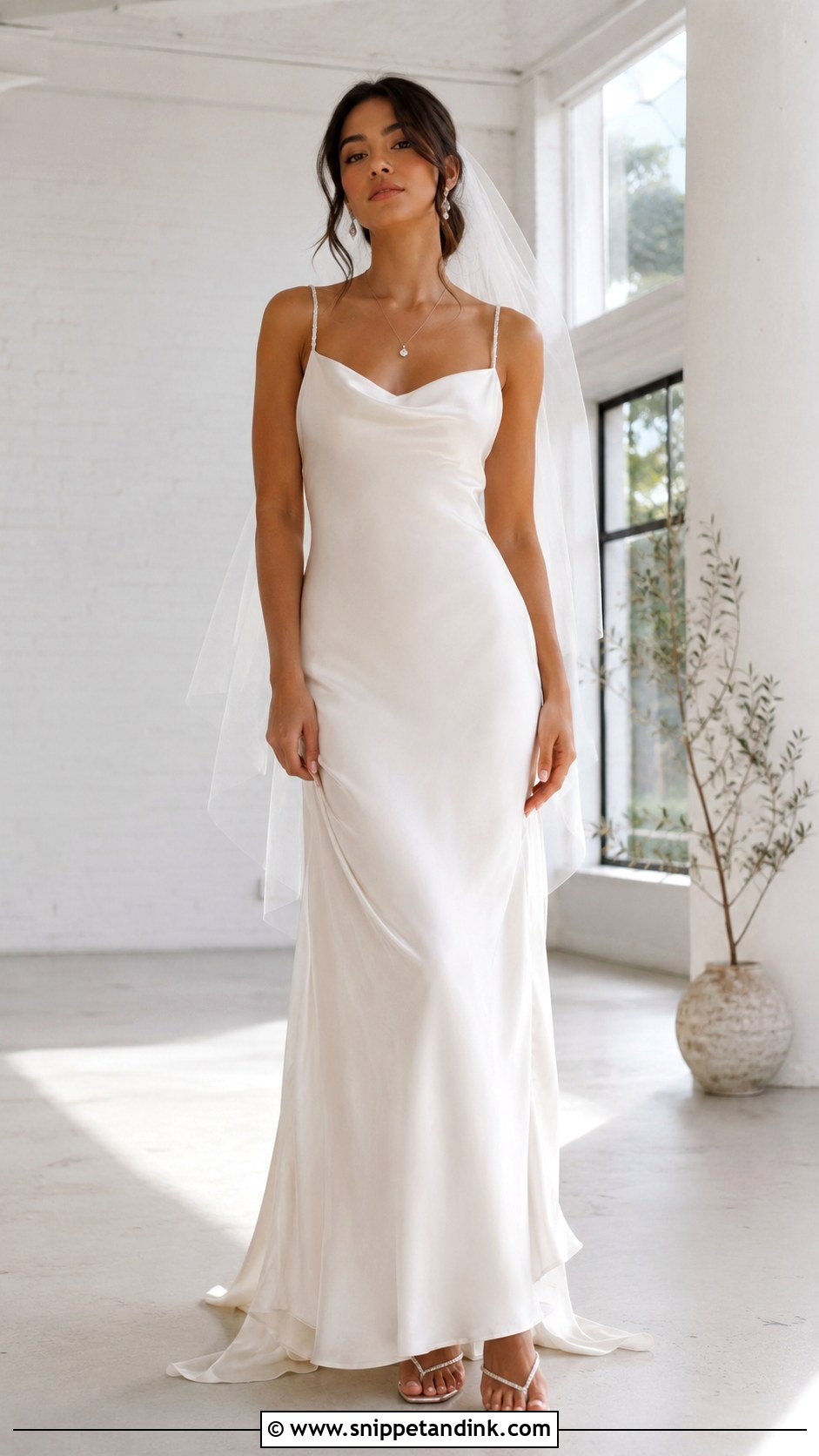
For a quieter take on the decade, a spaghetti-strap slip in silk or satin should skim the body rather than grip it, with a soft V-neck and a fluid floor-length hem. Crystal straps add the period touch. Silk slips are the most fragile dress here: they water-spot, crease the moment you sit and show any line underneath, so plan the underwear early and have it pressed on the day. Narrow metallic sandals, a small pendant and understated drops suit it, with a light veil or sheer wrap and loose waves or a low twisted bun. Destination ceremonies and lofts fit it.
7. Ruched Drop Waist Wedding Dress
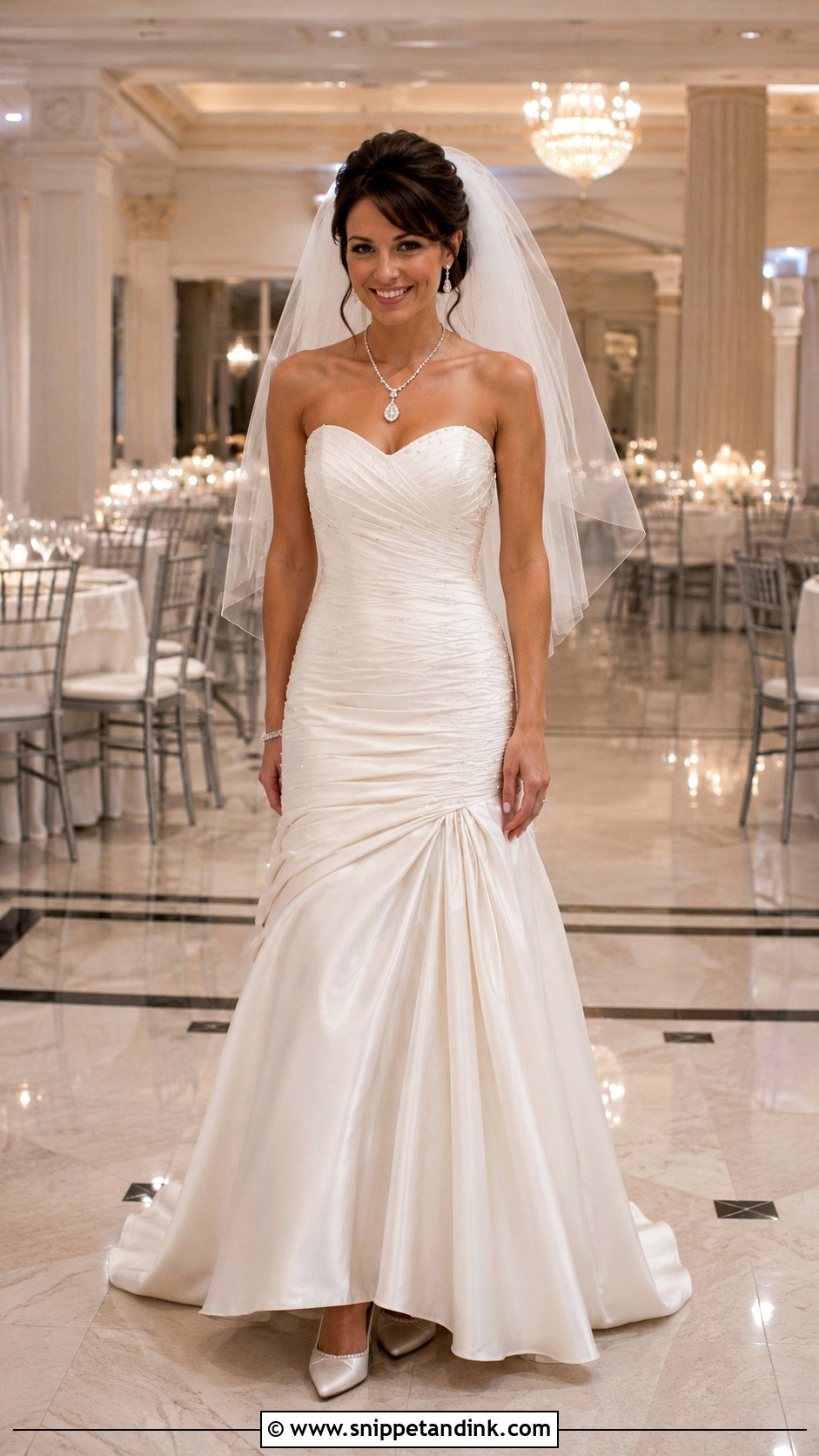
Ruching on a dropped waist gives the long, sculpted torso so many collections showed in those years. The fitted bodice runs below the natural waist before opening into an A-line or full skirt, and diagonal gathers define the middle without beading. When you sit, a dropped waist pushes into the tops of the thighs, so I always pin it with the bride seated; a waist that’s fine standing can dig in at dinner. Check the ruching is stitched down firmly near the zip and the hips. A sweetheart neckline, a simple pendant, crystal studs, pointed ivory pumps and a medium veil complete it, with a side-parted updo or smooth curls.
8. Taffeta Wedding Dress With Colored Sash
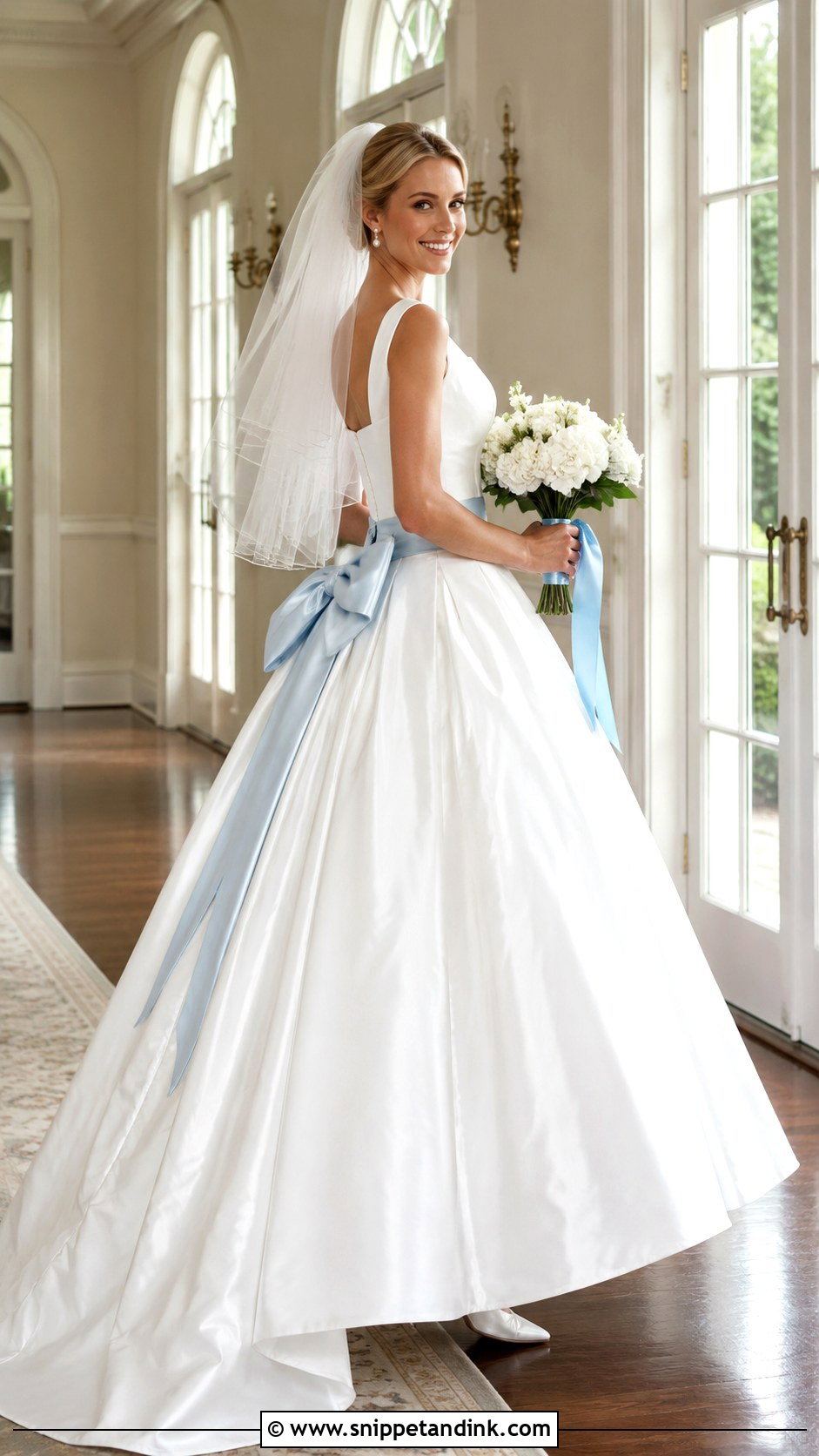
A crisp taffeta gown with a colored sash shows how brides of that decade personalized a white dress. Start with a strapless A-line or ball gown in white or ivory, then add a satin ribbon in blue, champagne, blush or another shade at the waist, tied in a small bow at the back. Colored sashes and appliqués were a common way to customize those glossy full skirts. Taffeta holds its shape well, which suits a structured skirt, but it also shows creases sharply. Let the bouquet ribbon repeat the sash color and leave everything else neutral. Pearl earrings, satin pumps and a clean-edged fingertip veil are enough.
9. One Shoulder Wedding Dress
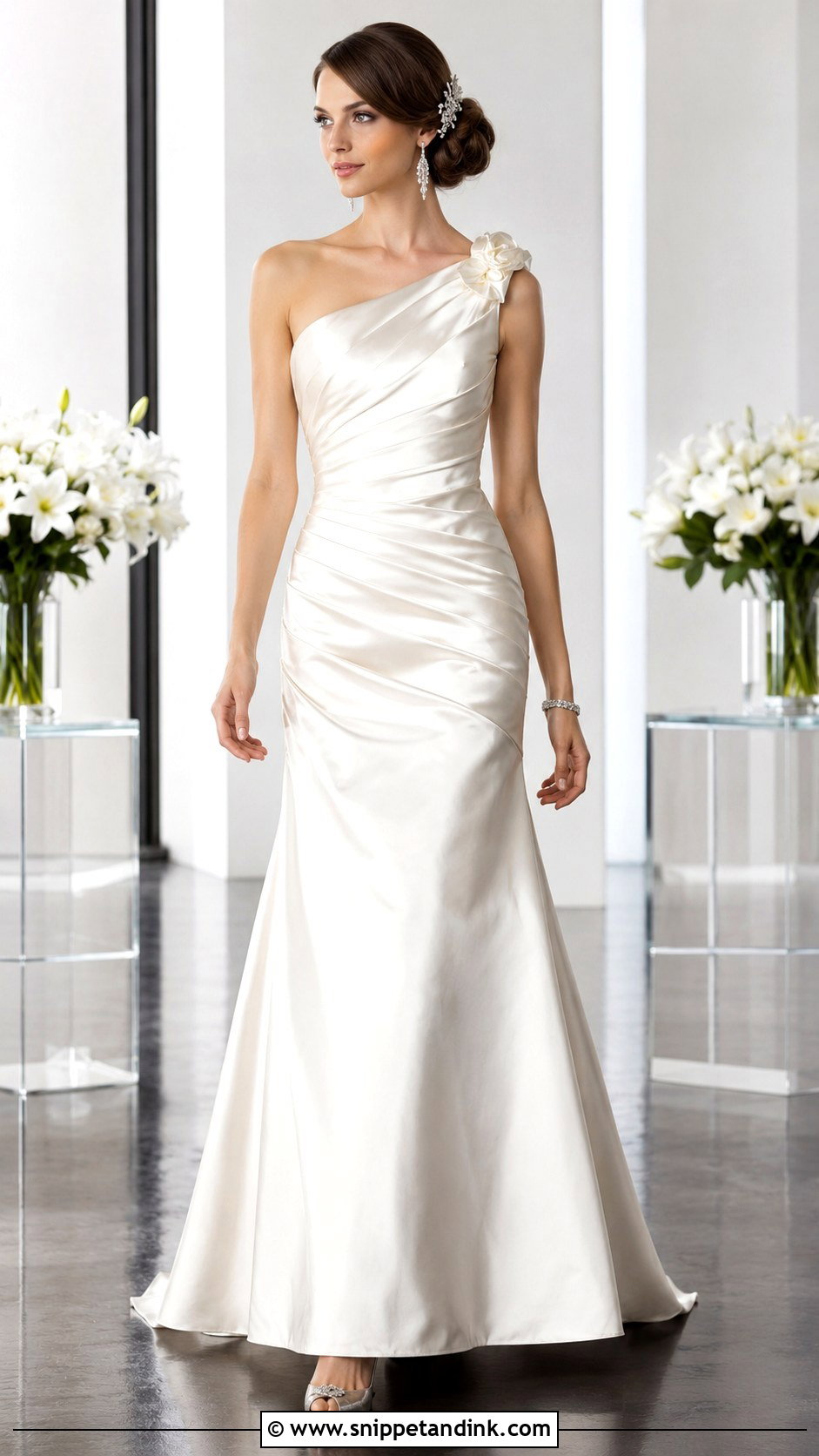
One shoulder breaks up the sea of strapless gowns from the era. Smooth satin with a diagonal neckline, fitted waist and soft flare is the classic version, sometimes with a draped panel or a fabric rosette on the shoulder. Structure is the question I ask first. The single strap shouldn’t carry the dress; if it does, it pulls toward the neck all day. Sweep the hair to the opposite side, add long earrings, a thin bracelet and metallic pumps, and skip the necklace. A small comb or short veil works better than a big headpiece, and side ruching means fewer accessories still.
10. Lace Mermaid Wedding Dress
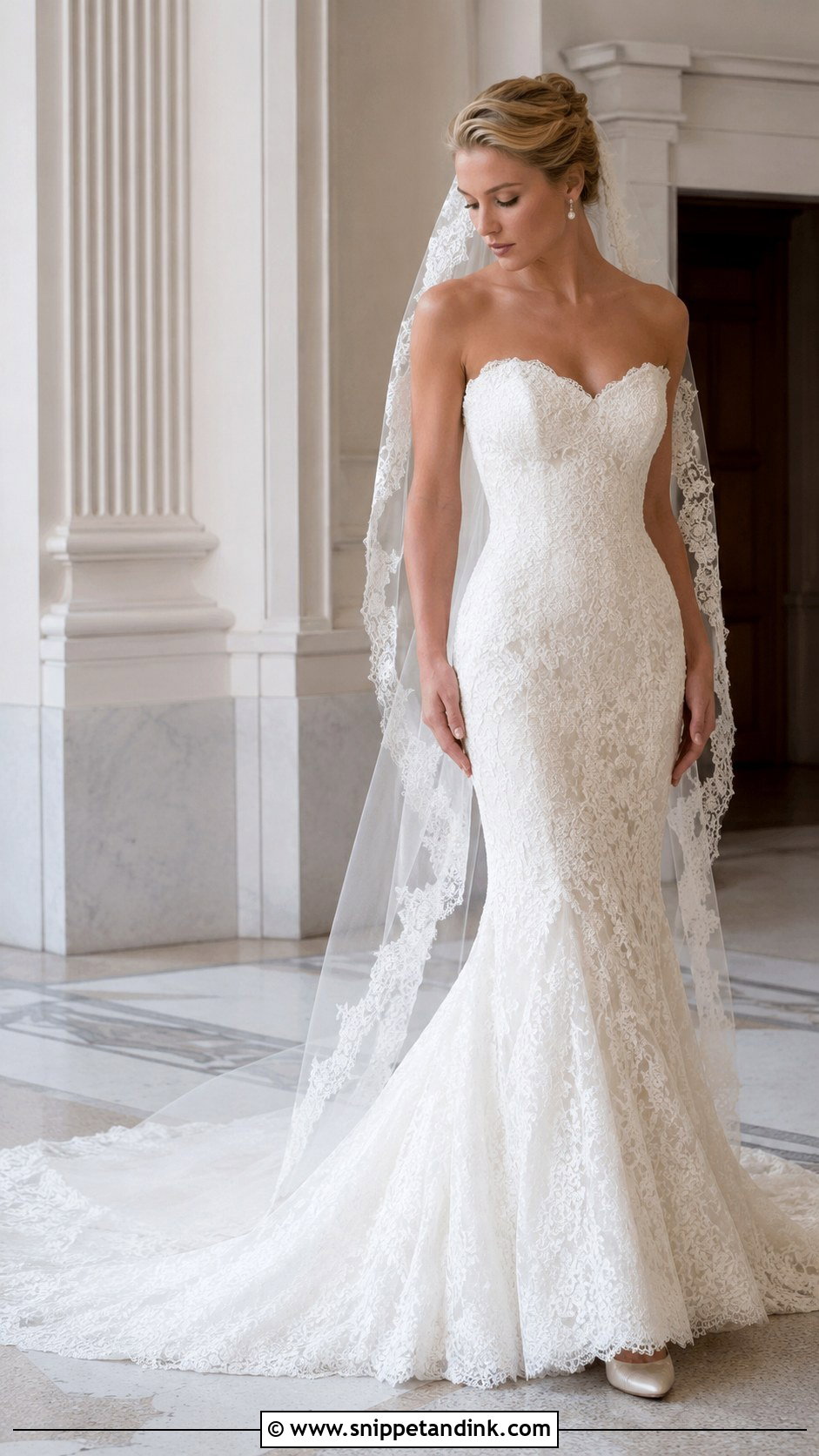
Lace mermaids were the softer answer to all that shiny satin. A strapless sweetheart bodice with lace running through the hips onto the flare, finished with scalloped edges at the neckline or train, is the look. At fittings, look hard at the side seams: lace motifs should line up across them, and on cheaper gowns they often don’t. Also check the lining shade, since ivory, white and champagne linings change how the lace reads. Pearl drops, a slim bracelet and ivory pumps suit it, with a lace-edged cathedral veil or a plainer chapel one, and soft curls or a low chignon rather than a tiara.
11. Empire Waist Chiffon Wedding Dress
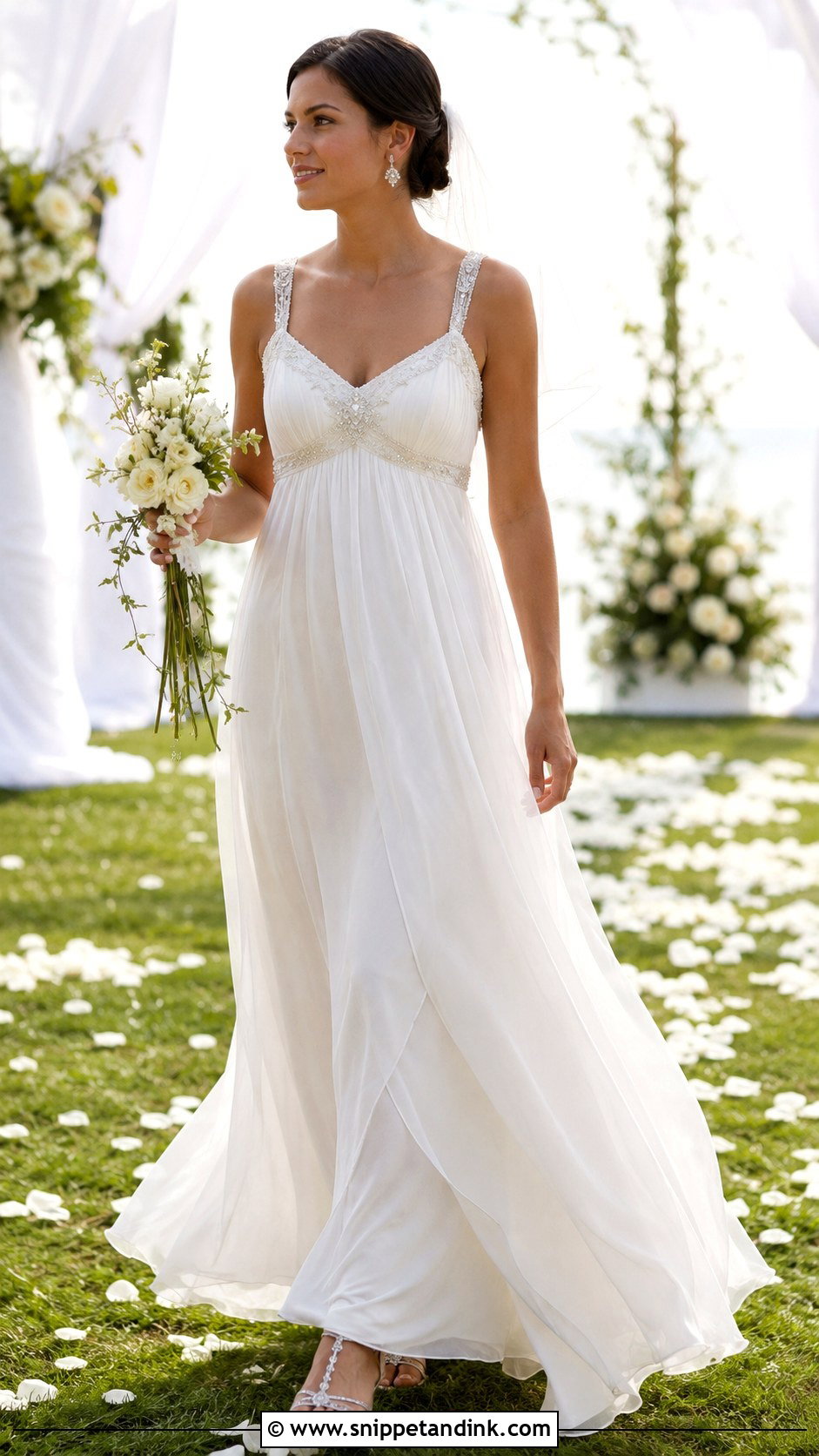
Chiffon falling from an empire waist is the comfortable end of the decade: no structure at the waist, and a skirt that moves easily outdoors. The bodice can have spaghetti straps, a halter or light beading. Make sure the skirt is fully lined and wide enough at the hips, because unlined chiffon turns see-through against bright sun. Low silver sandals, small crystal earrings and a sheer elbow veil suit it, with a loose bun or pinned curls and a narrow bouquet rather than a big round one. Steam the layers lightly so they fall evenly.
12. Tiered Organza Wedding Dress
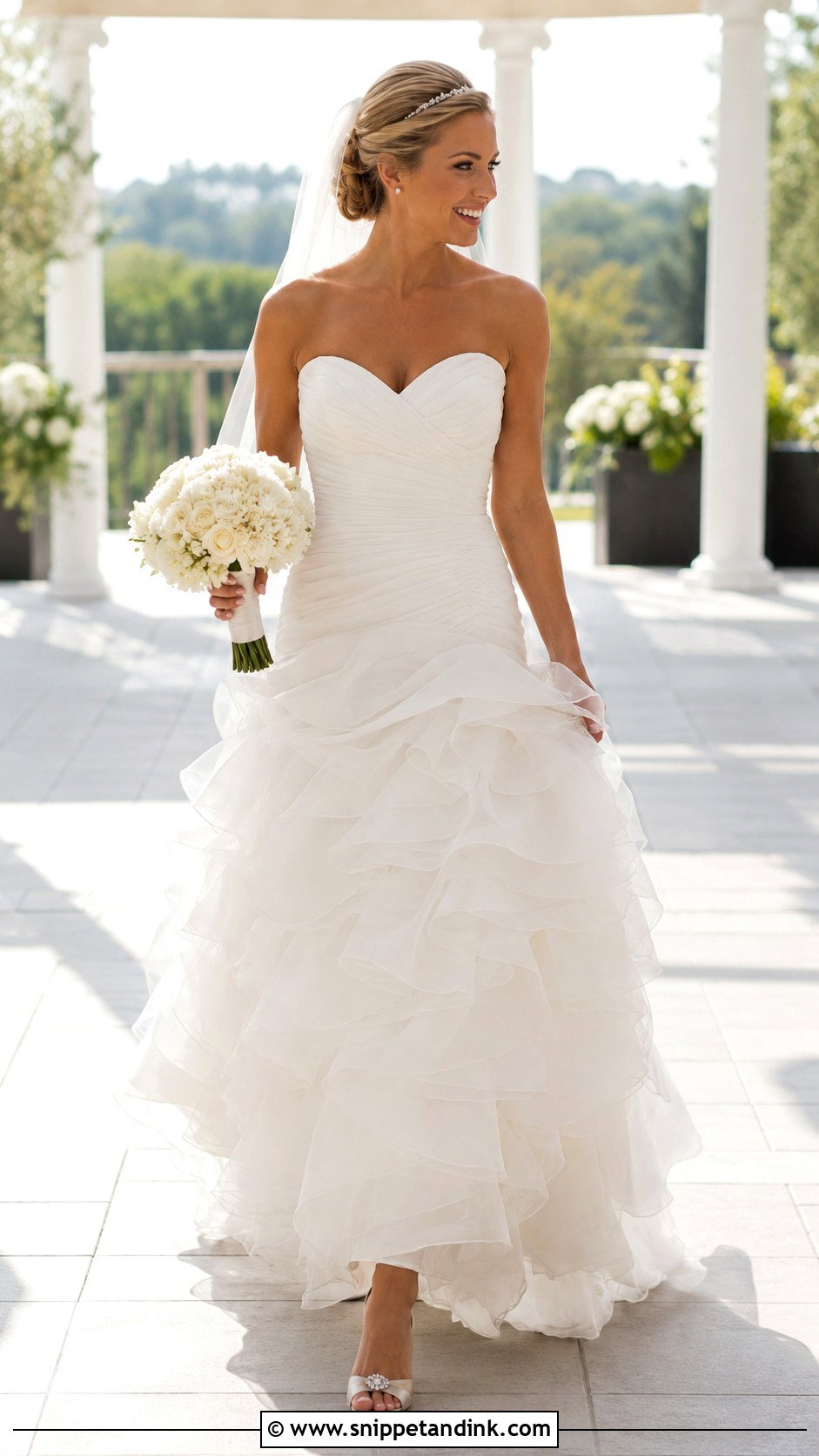
Tiered organza gives real volume without the weight of satin. A fitted strapless bodice tops horizontal layers, soft ruffles or cascading panels, and the airy fabric looks lively outdoors or in a bright reception room. Organza tiers flatten in transport and stick together, so I separate and steam each layer just before the dress goes on. A simple crystal headband, stud earrings and satin or metallic heels suit it, with a plain tulle veil and a compact, structured bouquet. Light beading along the bodice edge brings it closer to the original era.
13. Crystal Princess Wedding Dress
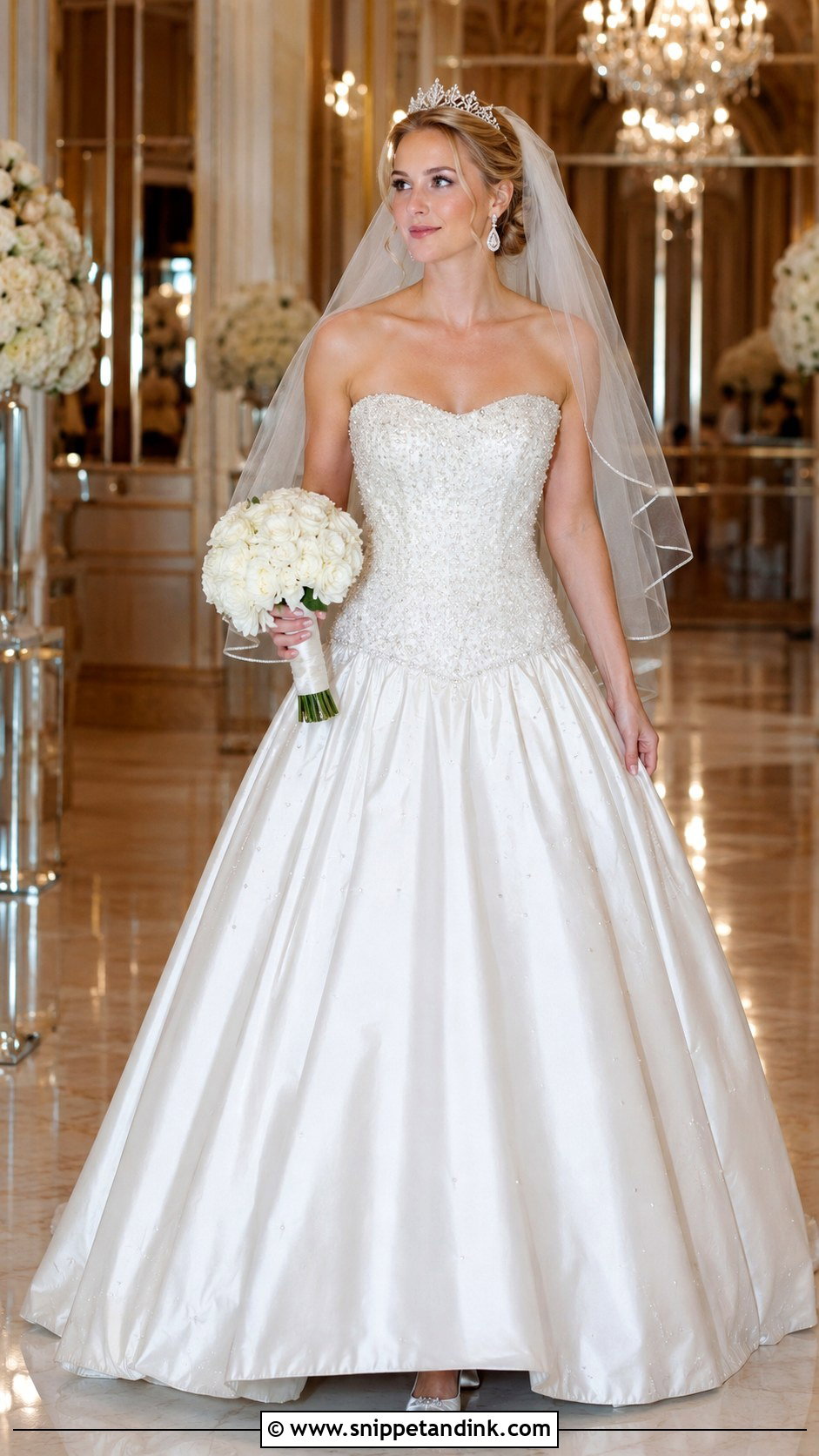
Want the glossy bridal-magazine look of those years? Then this is your dress: a fitted bodice, defined waist and sweeping full skirt with sparkle placed carefully around the neckline and torso. A straight strapless neckline dates it to the early 2000s; a sweetheart shape places it later. Under strong venue lighting, moderate crystal work photographs cleanly, while heavy gem coverage can flare and blur. A delicate tiara, crystal studs, satin pumps and a fingertip veil finish it, with a smooth updo to anchor the tiara and a bouquet with a satin-wrapped handle.
14. Tea Length 2000s Wedding Dress
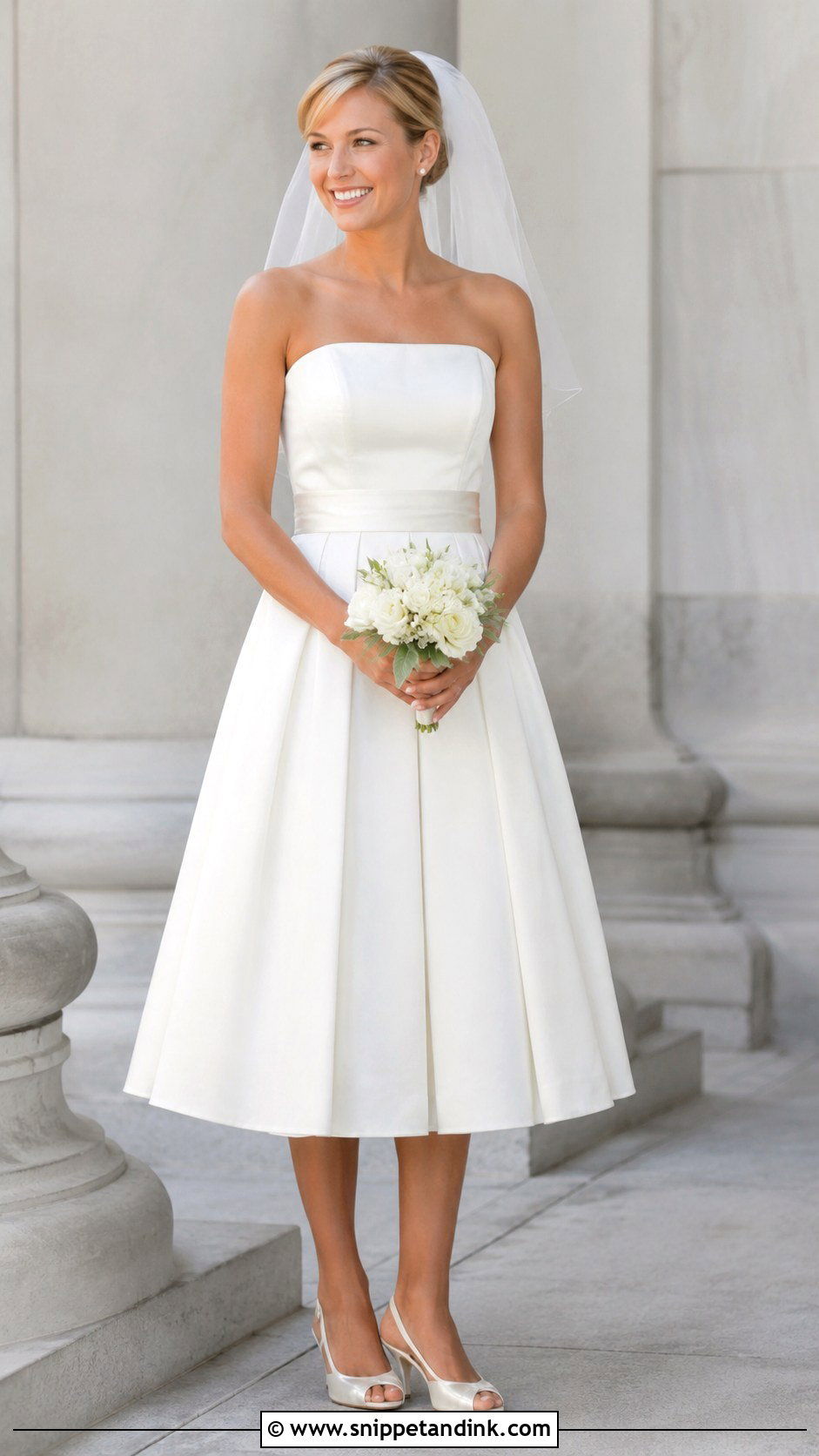
Tea length takes the decade somewhere more relaxed. A strapless satin bodice with a skirt ending between knee and ankle can borrow box pleats, a narrow sash or light beading from the era. Hem placement decides everything here. I aim for the narrowest part of the lower leg, because an inch higher or lower changes the whole proportion. Your shoes are on show, so pick pointed pumps, peep toes or slingbacks in ivory or silver. A short veil, pearl studs and a compact bouquet fit, with a neat bun or soft bob. It’s a sensible choice for a courthouse ceremony, a daytime party or a reception change.



15. Off The Shoulder Satin Wedding Dress
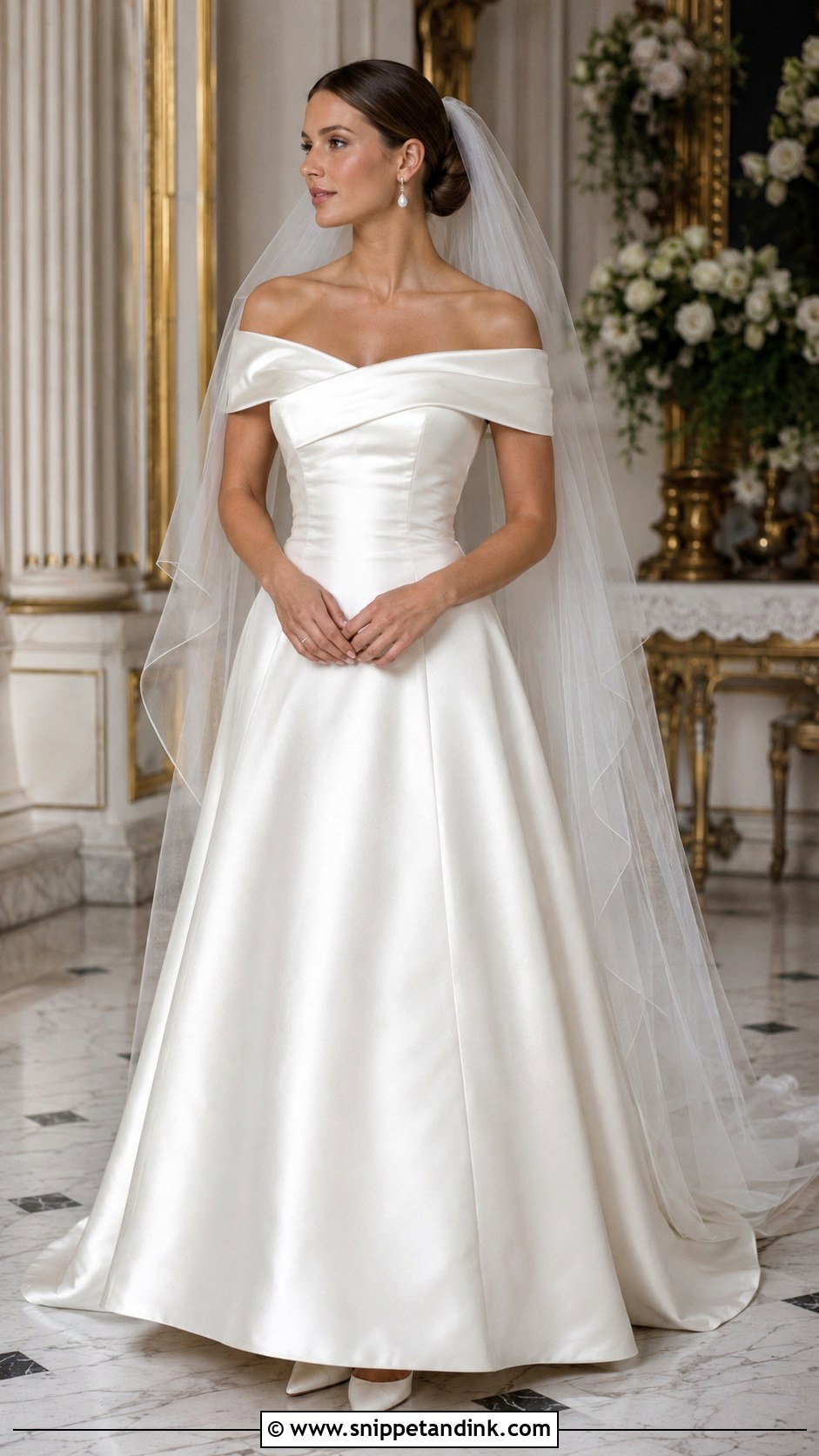
A folded off-shoulder neckline frames the collarbone and softens a fitted satin bodice over an A-line or ball gown skirt. A little embroidery at the waist adds detail without pulling focus. Raise your arms at every fitting. If the band slides down or rides up into the armpit, it isn’t fitted tightly enough around the arm, and you’ll be adjusting it all evening. Choose a short pendant or pearl drops depending on how much skin the neckline shows, plus pointed satin shoes and a chapel veil. A low bun, side-swept curls or half-up style all suit it.
16. Square Neck Satin Wedding Dress
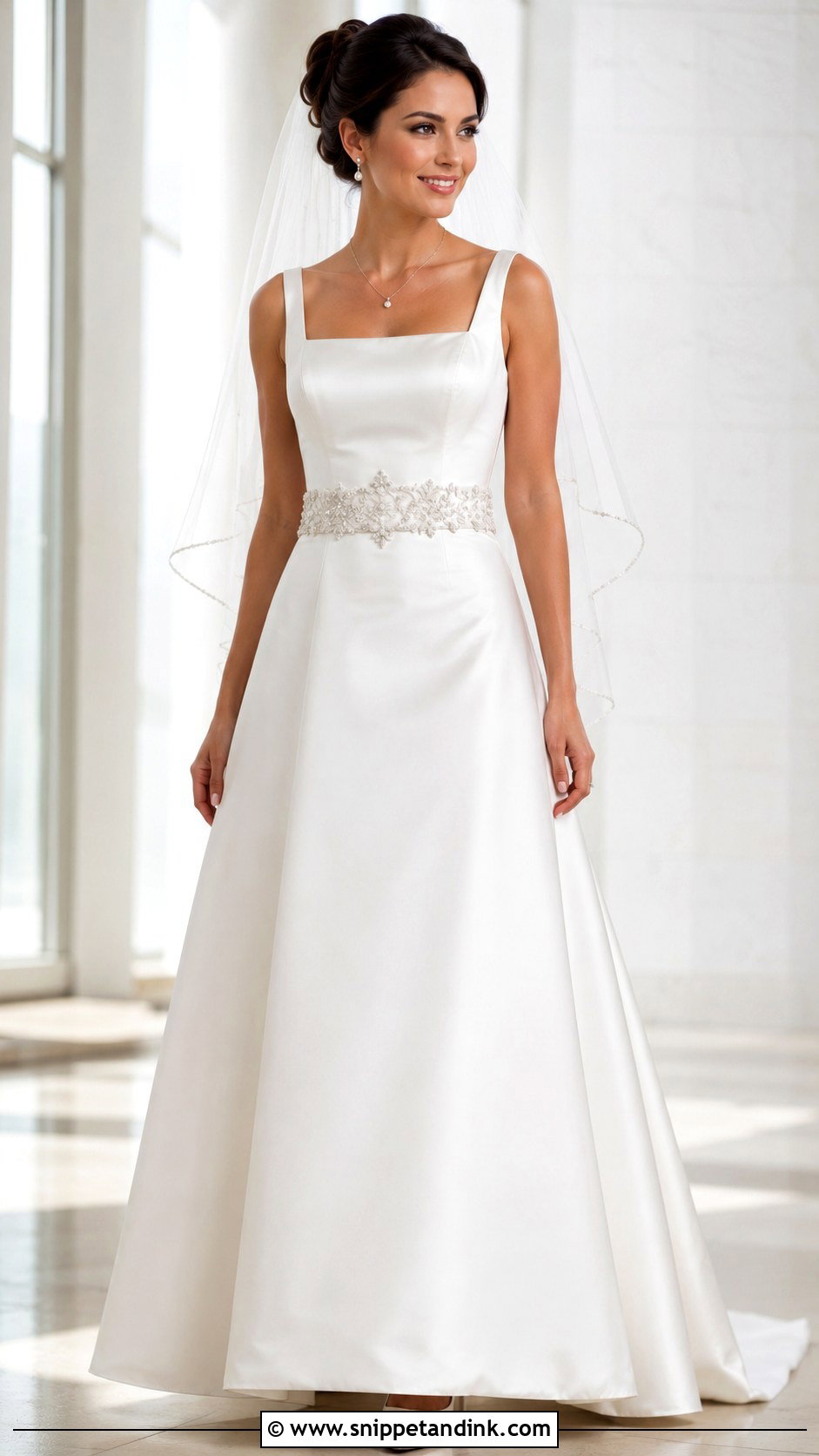
Square necks look clean in satin, even with period details added. Wide straps, a structured bodice and a simple A-line skirt with a small train are the basics; crystal embroidery at the neckline or waist adds 2000s character. It’s my pick for brides who like the decade’s polished fabrics but want more support than strapless gives. The straps must lie flat and the neckline stay level, which takes precise tailoring. A short pendant, pearl earrings and a neat updo pair well, with pointed ivory pumps and a sheer veil. A matching satin wrap helps for outdoor photos.
17. Trumpet Wedding Dress With Chapel Train
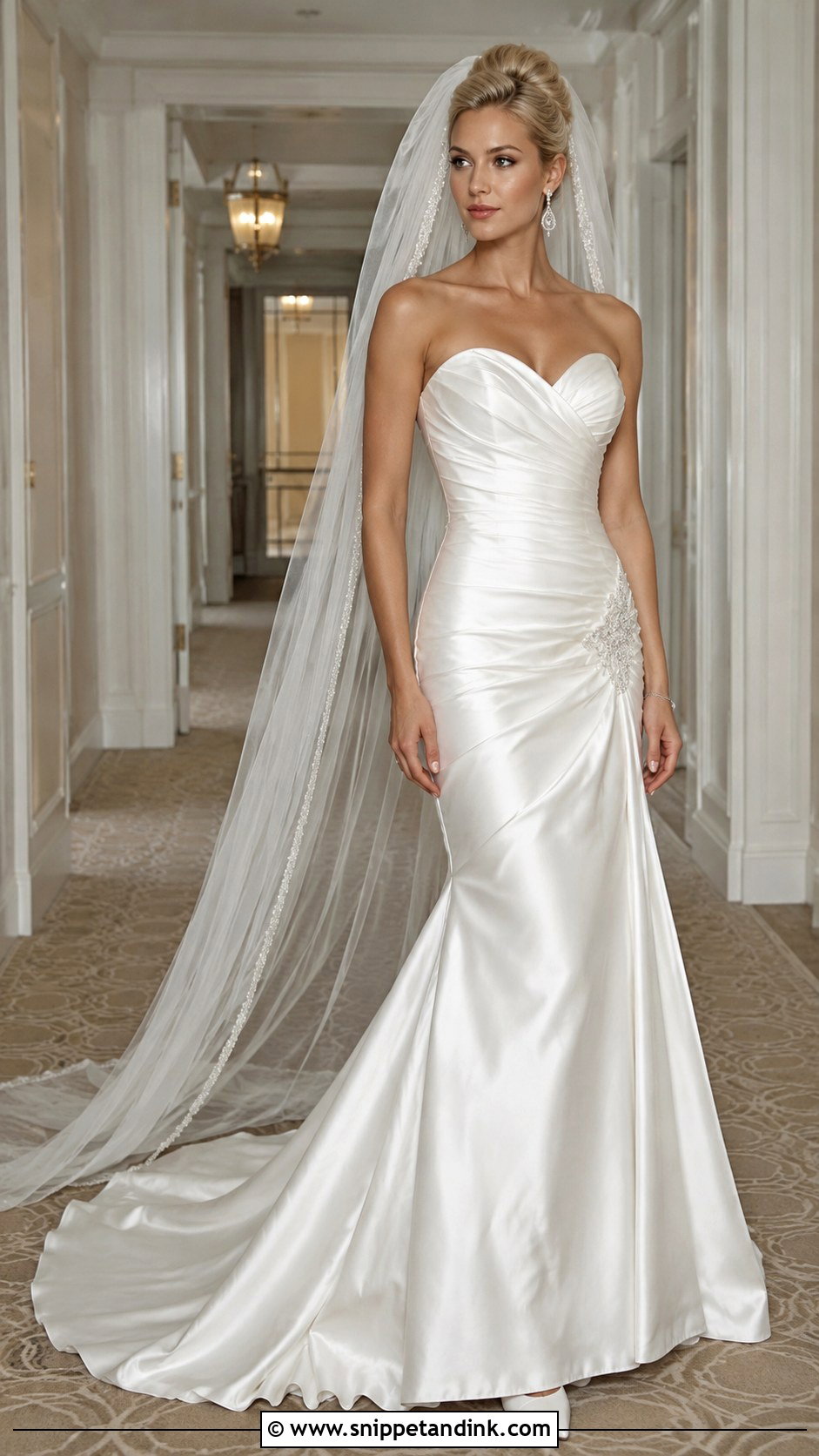
A trumpet gown with a chapel train flares from higher on the thigh than a mermaid does, which means you can actually walk in it. Satin with diagonal ruching, a sweetheart neckline and light beading at one hip gives the late-2000s finish. Ask the tailor for a secure bustle, and practice walking and sitting after the final fitting; the dress should follow your body without pulling across the hips. Crystal drops, a slim bracelet and closed-toe heels suit it, with a chapel veil, side-swept curls or a low textured bun.
18. Beach Halter Wedding Dress
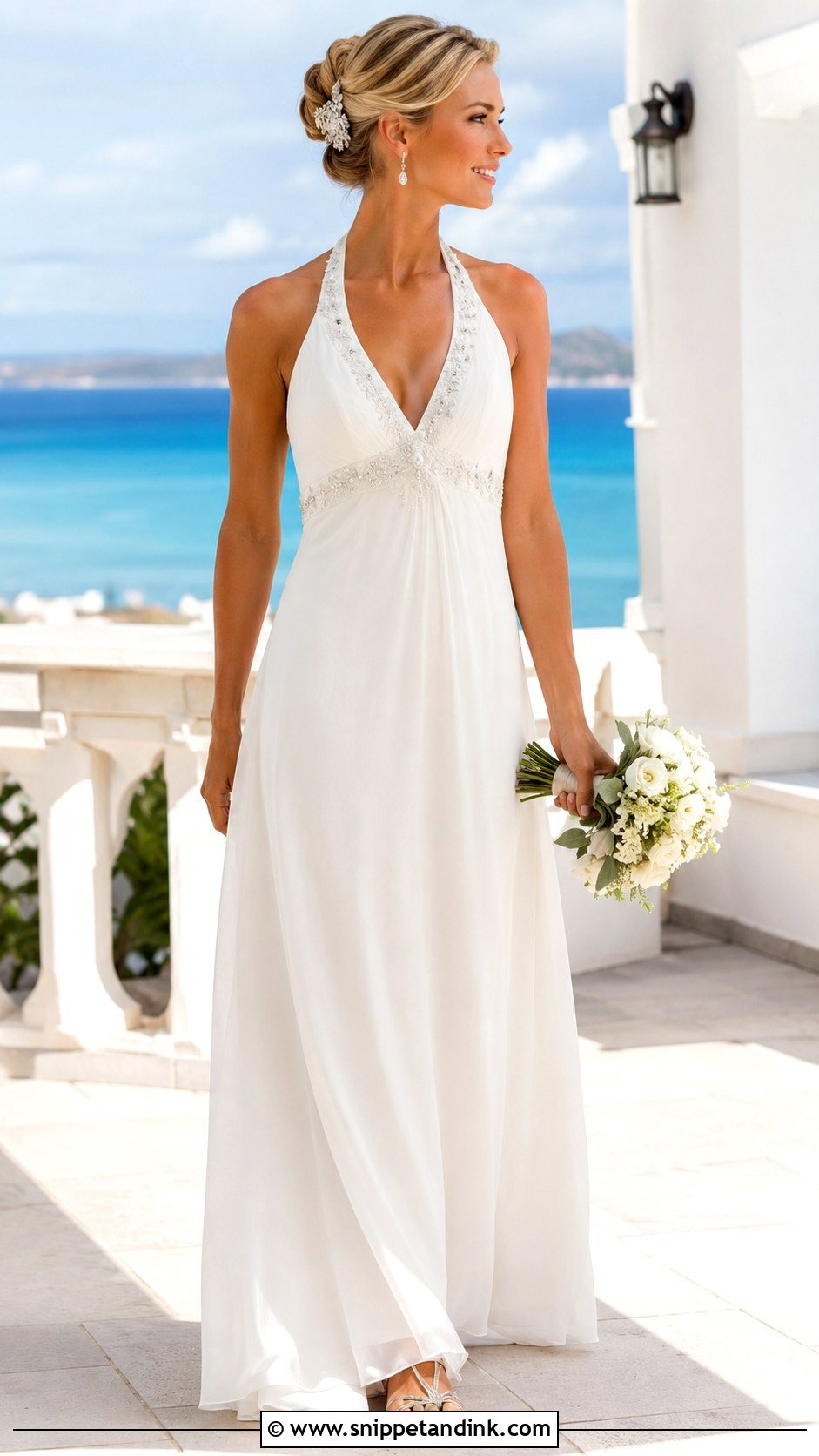
Barefoot ceremonies and resort weddings brought relaxed destination gowns into the decade. Not all of them were basic slips; many used good fabrics and handwork while still packing well. A light halter in silk crepe, chiffon or soft organza with a narrow A-line skirt suits warm weather, with a little beading at the neckline. Chiffon packs better than organza, which holds fold lines after a flight, so I suggest carrying the dress on board and hanging it the moment you arrive. Flat metallic sandals, small drops and a loose low bun suit it. Skip a train on sand and use a short veil, jeweled comb or chiffon wrap.
19. Minimalist Satin Column Wedding Dress
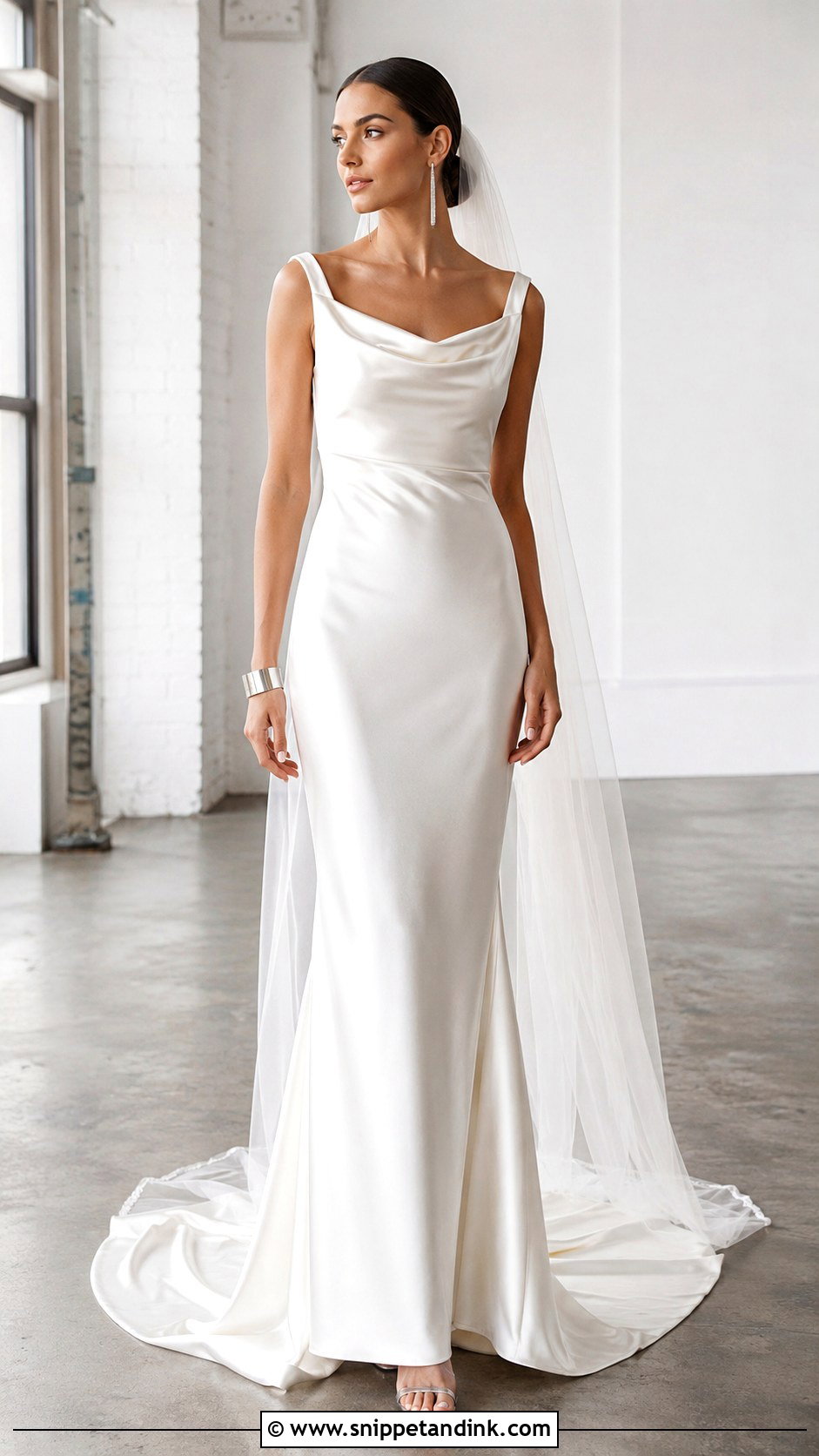
Not every 2000s bride wanted crystals or pickups. A minimalist satin column has a straight silhouette, subtle shine and a strapless, cowl or draped neckline with very few seams and a small sweep train. Plain satin is the least forgiving fabric in this list. It shows pulling, creases and an uneven hem, so tailoring and smooth underwear matter more here than anywhere else. A sleek low bun, long drops and narrow metallic sandals suit it, with a sheer chapel veil for the ceremony and a single cuff bracelet. Keep the bouquet streamlined and the makeup fresh.

20. Ruffled Train Wedding Dress
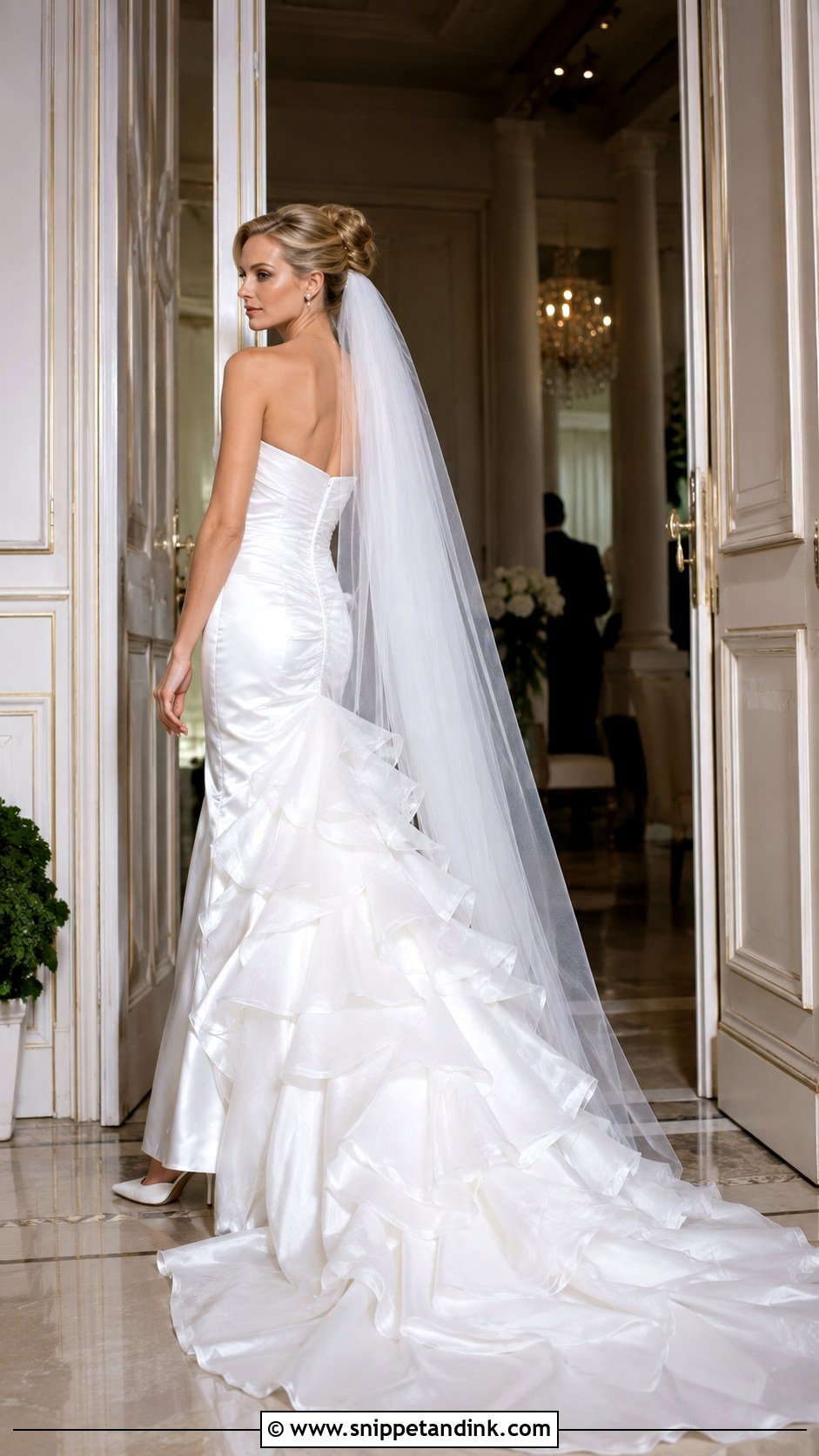
Ruffled trains are for the bride who wants the back of the dress to be the moment. A fitted strapless or one-shoulder bodice opens into layered ruffles behind; satin, organza and taffeta all hold the shape. Pick a veil that ends before the ruffles or runs past them, never one that stops in the middle of the busiest part. All those layers make a heavy train, so the bustle has to be designed for it, often with more lift points than a plain train. Simple studs, a smooth updo and understated pointed heels keep the front calm.
Steaming, Bustling and Getting a Big Satin Skirt to the Venue
Many of these gowns are big, glossy and crease-prone, and they need a bit of handling on the day. Satin, taffeta and organza each react differently. Satin water-spots, so a steamer that spits can leave marks; empty and refill it before use and steam from the inside of the skirt where possible. Taffeta and organza hold sharp folds and want steaming close to the time you dress.
Know your bustle before the day
There are two common types. An over bustle lifts the train up with hooks or buttons onto the back of the skirt; an under bustle tucks the train under and ties it with ribbons inside. Under bustles on ruffled or pickup skirts often need several ties, and the ribbons are usually numbered or color-coded. Have your seamstress show the person doing it, and let her take a phone video at the final fitting.
- Travel with the gown in a long breathable bag, laid flat across a back seat rather than folded in a trunk.
- Hang it from the inner hanging loops, not the shoulders or straps, so the weight of the skirt doesn’t stretch the bodice.
- Bring a white cloth and a small hand steamer for last-minute creases after the car ride.
Wearing the Noughties Without Wearing a Costume
Strapless satin, sweetheart mermaids, corset ball gowns, halter dresses, beaded bodices, colored sashes and pickup skirts each show a different side of the decade. To make them feel current, pick one or two of those features rather than all of them. Clean jewelry, shoes you can stand in, careful alterations and a simple veil will update even a dramatic original gown. Secondhand, borrowed from family or newly made in the style, the dress that works is the one that fits well and lets you move.
You'll Like These Ideas:




Leave a Reply