
A sleeved vintage dress gives you coverage and a sense of history at the same time, which is a rare pairing in bridal wear. The range is wide: high-neck Victorian lace, slippery thirties satin, structured fifties ball gowns, loose seventies prairie dresses. Sleeves make a gown warmer for a cold church, more formal for a grand room, and more comfortable for anyone who simply prefers her arms covered. Lace, silk, satin, crepe and embroidered tulle each push the mood toward a different decade. I style the veil, shoes, jewelry and bouquet together with the dress from the start, because with vintage those pieces decide whether the look reads bridal or theatrical. Here are twenty, from the most formal to the most relaxed.
Ivory, Champagne or Tea-Stained? Getting the Shade Right
Almost every gown below is described in some shade of off-white, and that choice changes a vintage dress more than most brides expect. Bright white tends to make lace look brand new. Warmer shades make it look like it has a past. But the shade also sits right next to your face, so it has to suit your skin as well as the era.
- Ivory is the safe middle. It flatters most skin tones and still reads as clearly bridal.
- Champagne and gold-toned linings flatter warm and olive skin and make lace patterns stand out. On very fair, cool-toned skin they can look sallow, so test them close to the face.
- Tea-stained or antiqued lace has an uneven, softly aged look. Lovely on a Victorian or Edwardian style, odd on a clean thirties satin.
- Blush underlays warm up cool skin but turn pink in some photos, especially under tungsten light.
I always look at swatches in daylight and again under indoor light, held under the chin, before a dress is ordered. Then match everything else to the dress, not to a color name. One maker’s ivory can be another’s cream, and a veil that’s a shade whiter than the gown makes the dress look dingy next to it.
1. Victorian High Neck Lace Wedding Dress
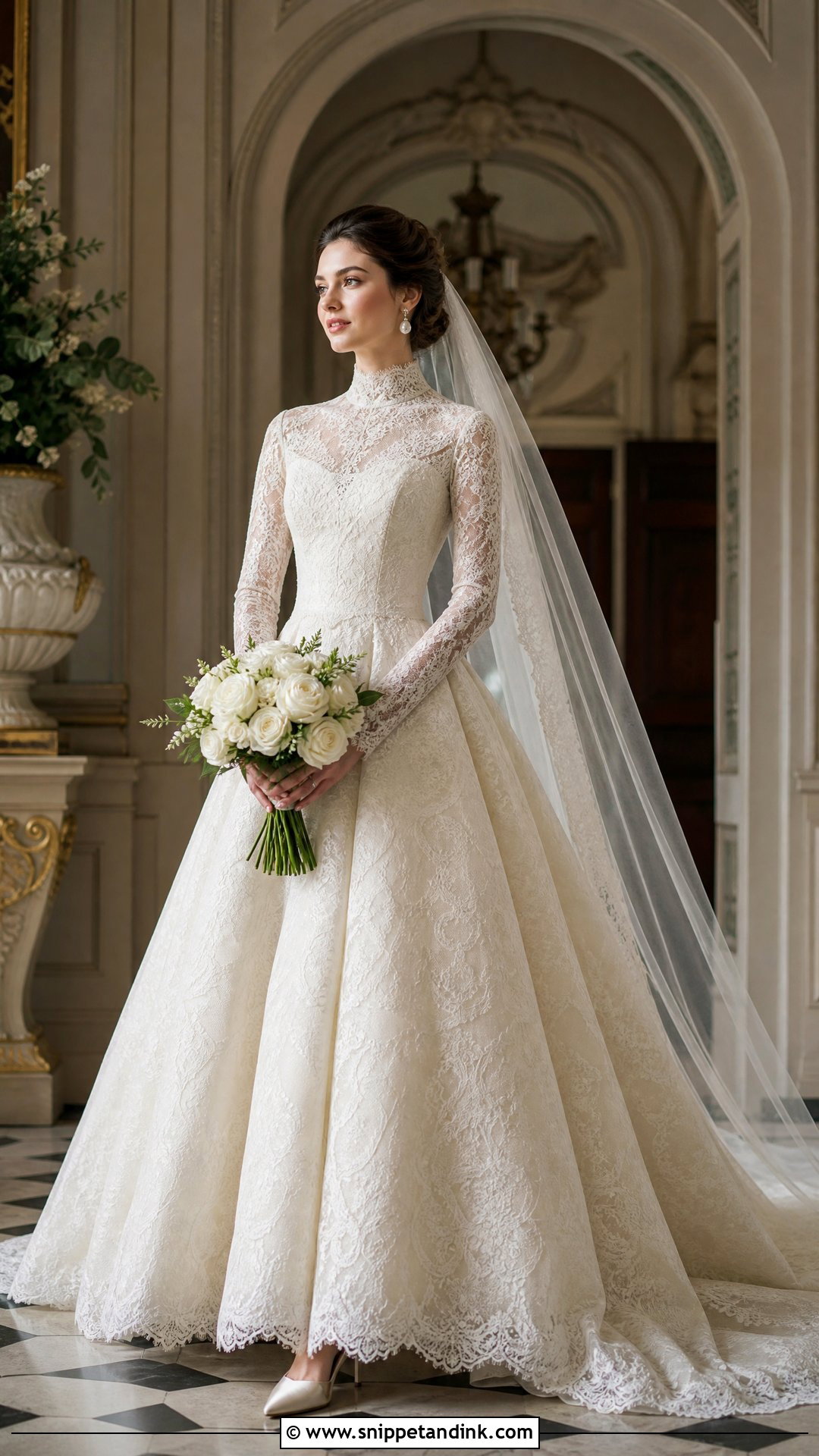
Victorian gowns were all about the high neck and the long sleeve, and a modern version keeps both while softening the construction underneath. Look for a fitted bodice, a defined waist, a floor-length skirt and small buttons down the back or at the cuffs. I prefer ivory lace over a champagne lining here; the warmer base lets the pattern show without the dress looking heavy. Pearl earrings, a cathedral veil and pointed satin pumps are enough. Keep the bouquet compact, white roses with a little greenery, since a big arrangement hides a bodice that took the most work. Historic estates, museums and ballrooms suit it, and so does a formal garden.
2. Victorian Basque Waist Wedding Dress with Puff Sleeves
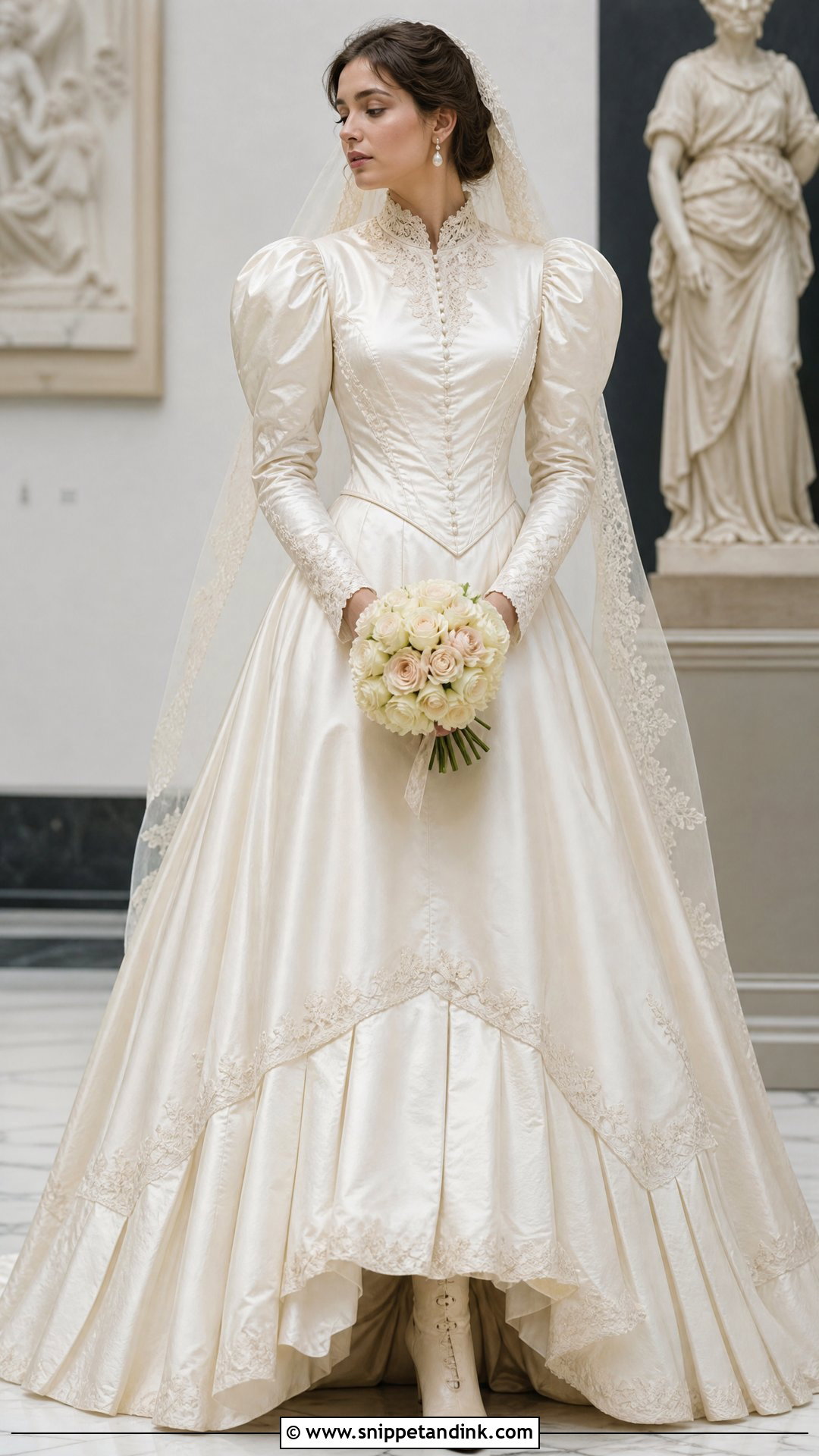
That pointed dip at the front is what makes a basque waist so flattering on this Victorian wedding dress. It draws a V that makes the waist look narrower than a straight seam does. Puff sleeves rise gently at the shoulder and narrow to the wrist; in smooth satin or matte silk they stay polished instead of frilly. Keep the skirt full but controlled, not stacked with layers, so the waist stays the point. A lace-trimmed veil, pearl drops and low-heeled button boots carry the era. Light boning and covered buttons through the bodice sharpen it further. The bouquet can be looser here: cream roses, sweet peas and trailing greenery soften all that structure.
3. Edwardian Lace Wedding Dress with Bishop Sleeves
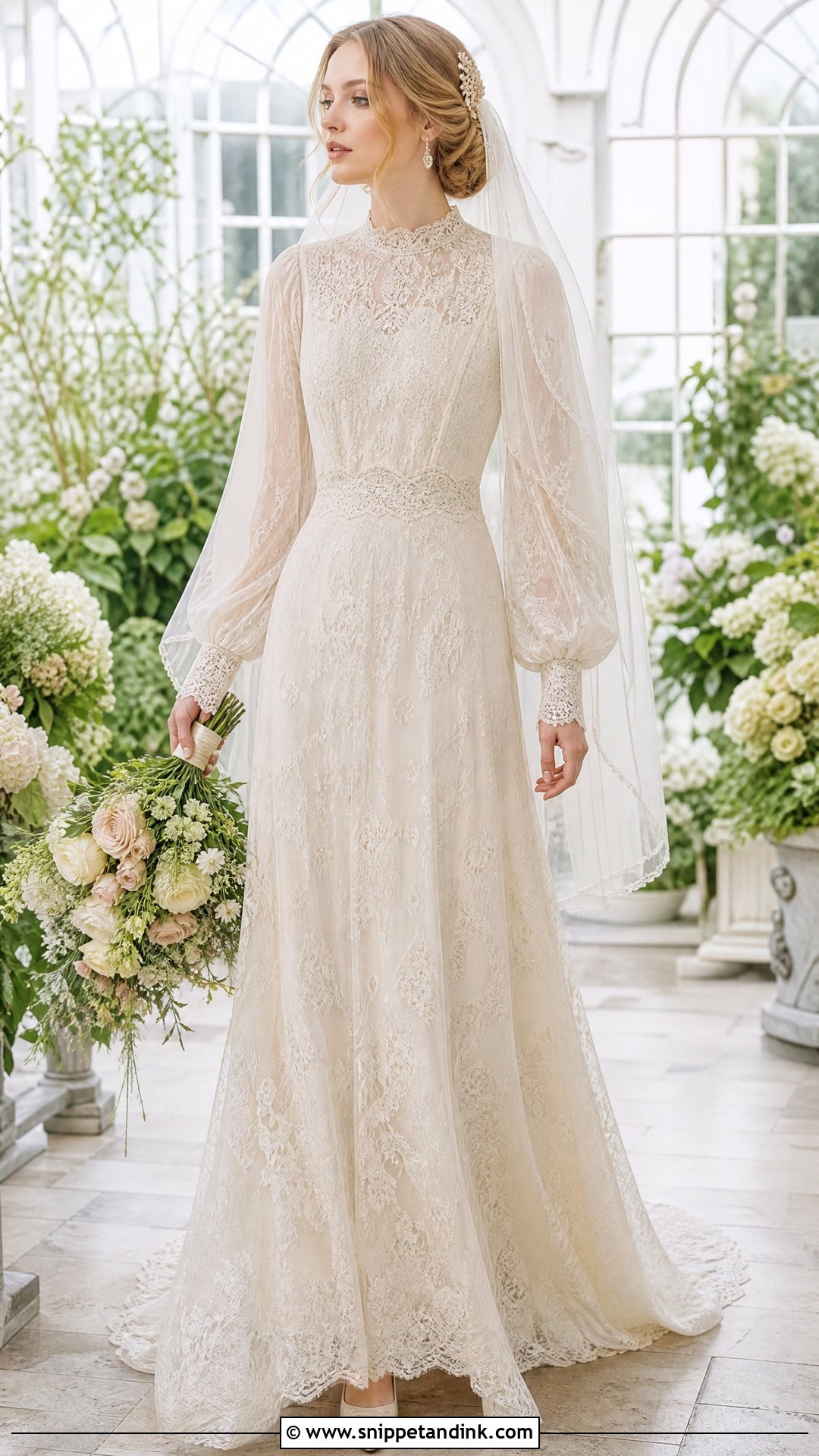
Edwardian romance is mostly in the lace, so I let the fabric lead. Billowing bishop sleeves, full through the arm and gathered into narrow lace cuffs, sit above a lightly fitted bodice and an airy skirt that falls from the waist without stiffness. The high neck and floor-length proportions are faithful to the period. Champagne, pale blush or soft ivory looks more aged than bright white. Add a fingertip veil, an antique-style comb and ivory leather heels, and nothing louder. Watch the cuffs at fittings: lace cuffs gathered too tight leave red marks at the wrist by evening. A conservatory, an old inn or a spring garden full of flowers is where it belongs.
4. Edwardian Empire Waist Wedding Dress with Sheer Sleeves
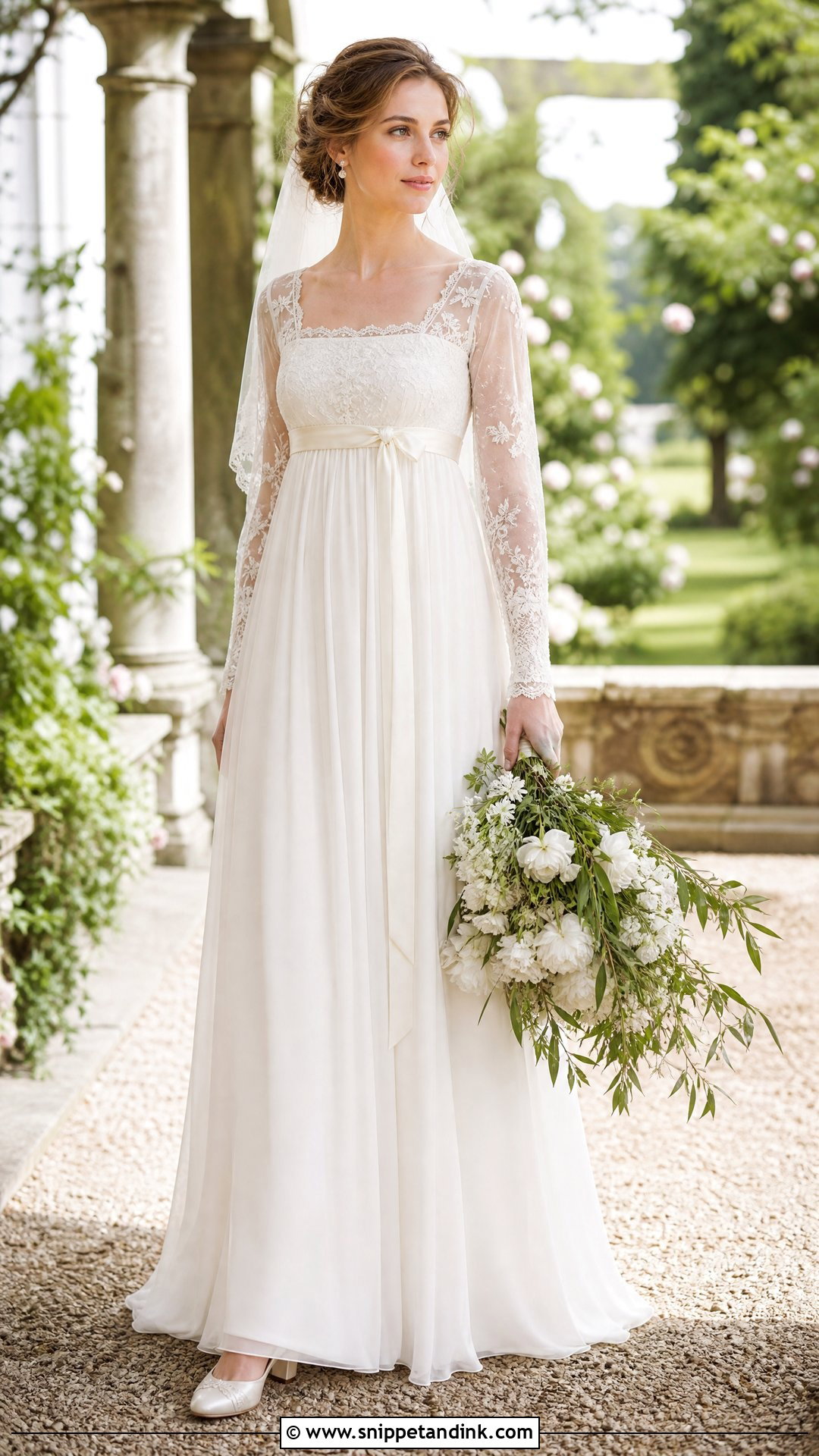
Raised waists were already appearing in early twentieth-century bridal dress, so an empire line is a faithful, and far more relaxed, way into Edwardian style. The seam sits just under a fitted lace bodice and the chiffon or silk skirt falls loose from there. Sheer long sleeves with floral embroidery cover without weight. I’d add a narrow satin ribbon at the seam only if the dress looks shapeless on you; on many brides it doesn’t need it. A delicate veil, small pearl studs and low ivory pumps, with a loose bouquet of white garden flowers. It’s comfortable to sit in through a long ceremony and to dance in afterward, which is rarer than you’d think among period gowns.
5. 1920s Beaded Drop Waist Wedding Dress with Sleeves
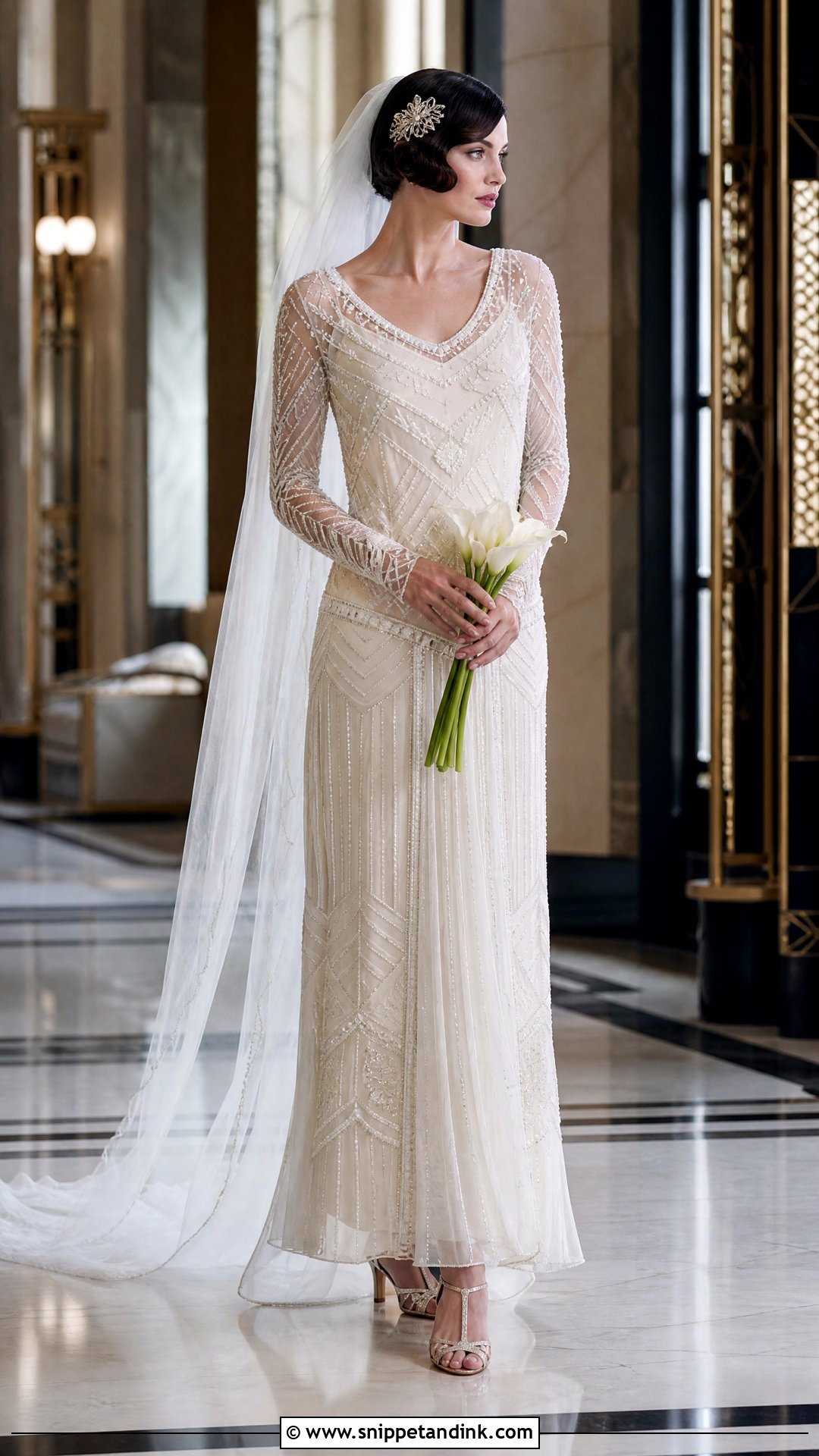
Beadwork makes a simple drop-waist dress into a glamorous 1920s bridal look, but it changes how a dress hangs. Twenties dresses were straight chemise shapes with low waists and geometric decoration, and all that beading pulls the fabric down. On a floor-length version I check the hem after the bride has stood for a few minutes, since heavy beading can drop it slightly. Sheer fitted sleeves let the beads look as if they float on the arms; silver, pearl and crystal over ivory or pale champagne show best. Low T-strap heels, a long veil and a jeweled comb above soft waves. No big necklace. A slim bouquet of calla lilies or white tulips follows the vertical line.
6. 1920s Tea Length Wedding Dress with Flutter Sleeves
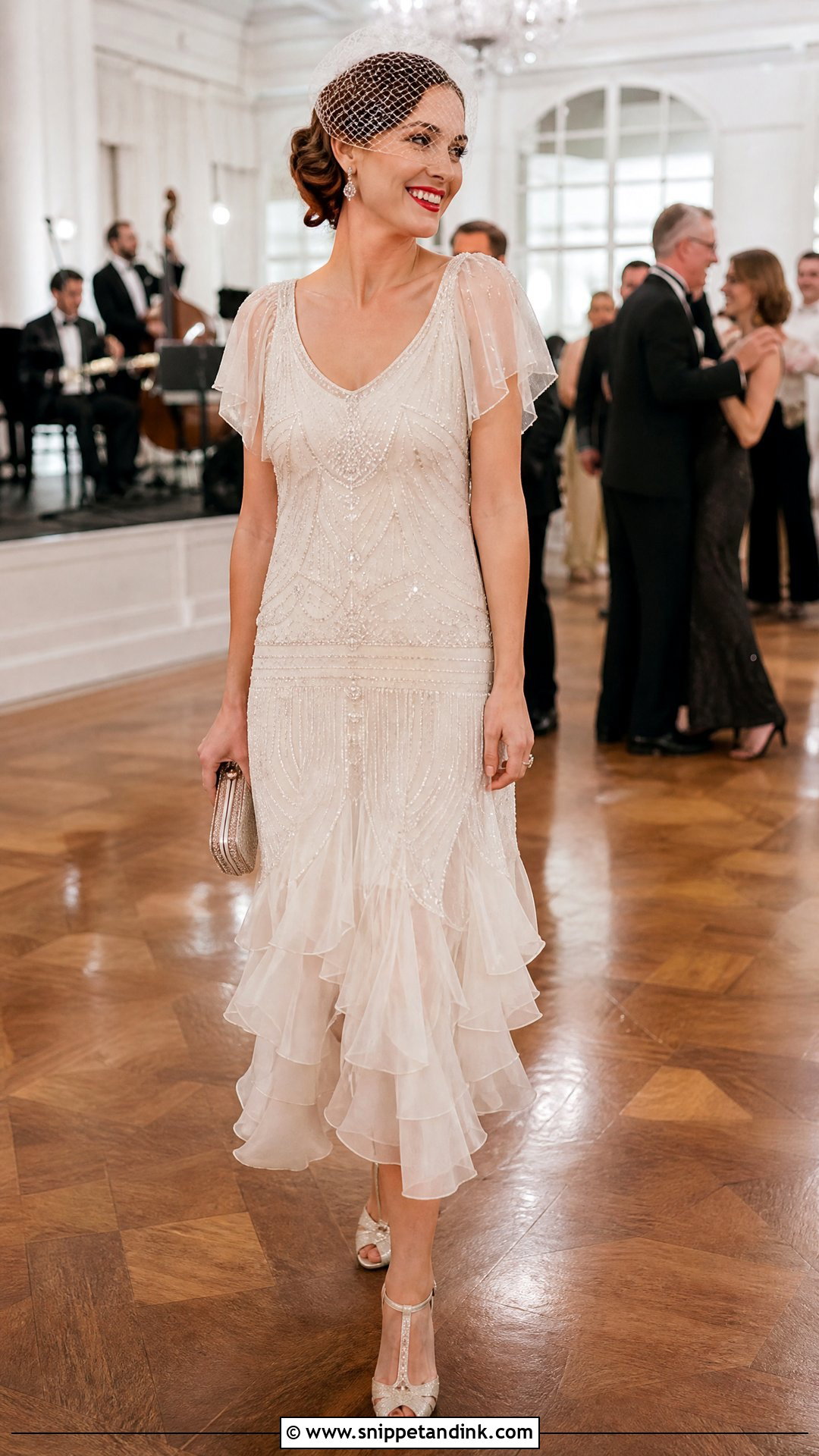
Short hem, layered flutter sleeves, and a dress you can actually dance the Charleston in. This one suits a lively wedding. Soft chiffon, silk crepe or lightly beaded tulle moves best; anything stiff fights the loose twenties line. A slightly dropped waist and a little geometric embellishment give period character. Metallic T-strap shoes, a birdcage veil and a small crystal clutch, with short waves or a low tucked style that leaves the sleeves clear. I’d keep jewelry to Art Deco earrings and stop there. The flapper costume is one fringe and feather away, so restraint is what keeps it bridal. Courthouse ceremonies and small receptions suit it.
7. 1930s Bias Cut Satin Wedding Dress with Long Sleeves
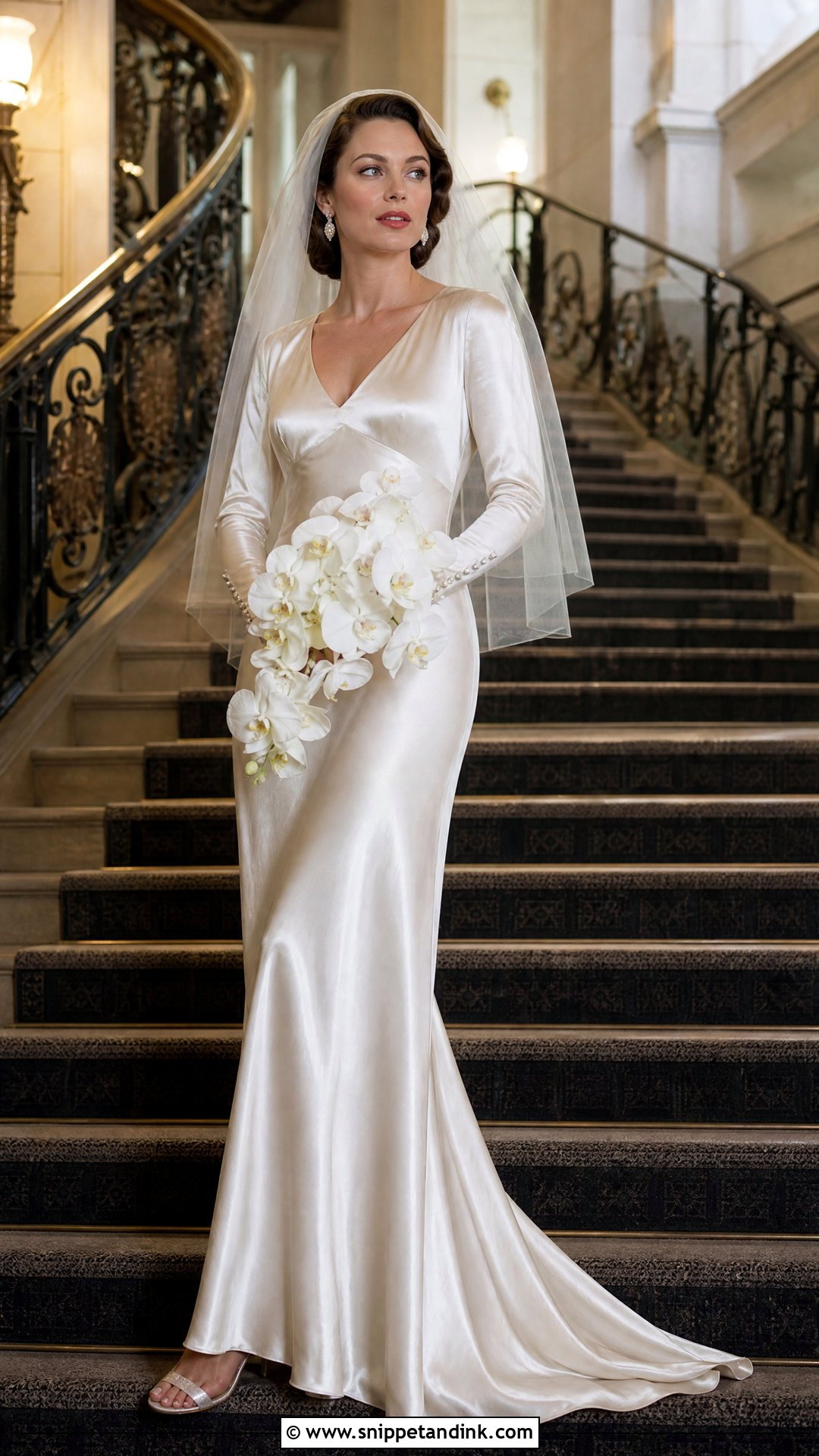
Thirties brides wore something close to evening wear: fluid fabric, a narrow line, long sleeves, very little decoration. A 1930s-inspired wedding dress in smooth satin keeps that Old Hollywood quiet. The bias-cut skirt follows the body and opens into a small train, giving shape with no corsetry at all. Slim sleeves with fabric-covered buttons and a soft V-neck lengthen the upper body. Ivory satin is classic; pearl or champagne makes it look older. Peep-toe heels, a fingertip veil, crystal drop earrings, side-parted waves and white orchids. Underneath, smooth-edged foundations only. Bias satin shows every ridge, and I’d do a fitting in the exact underwear you’ll wear.
8. 1930s Cowl Neck Wedding Dress with Cape Sleeves
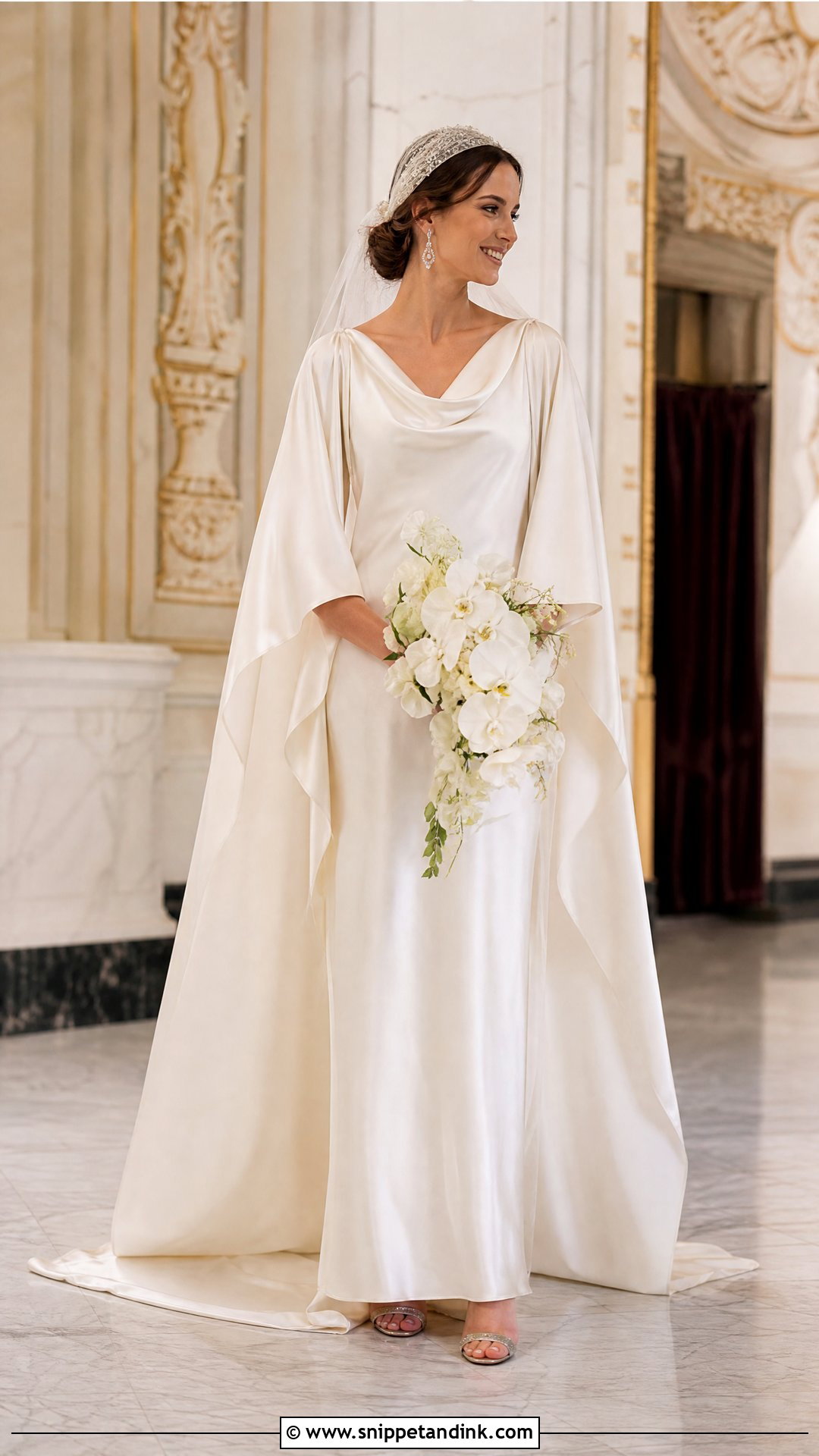
Could a sleeved gown feel dramatic and still move easily? A satin dress with a softly draped cowl neck and cape sleeves manages both. Choose a column that skims the hips and opens into a modest train, with cape sleeves falling from the shoulders without widening the narrow shape. Silk crepe or satin gives the fluid drape thirties evening wear was known for. A Juliet cap veil, slim metallic sandals and understated crystal earrings, with a low chignon so the cowl stays visible. The cowl needs a small weight or a few hidden stitches to sit in the same fold all day; ask your seamstress, or it slides off-center by the speeches. Carry a long, narrow bouquet. Museums, theaters and hotel ballrooms suit it.
9. 1940s Button Back Wedding Dress with Long Sleeves
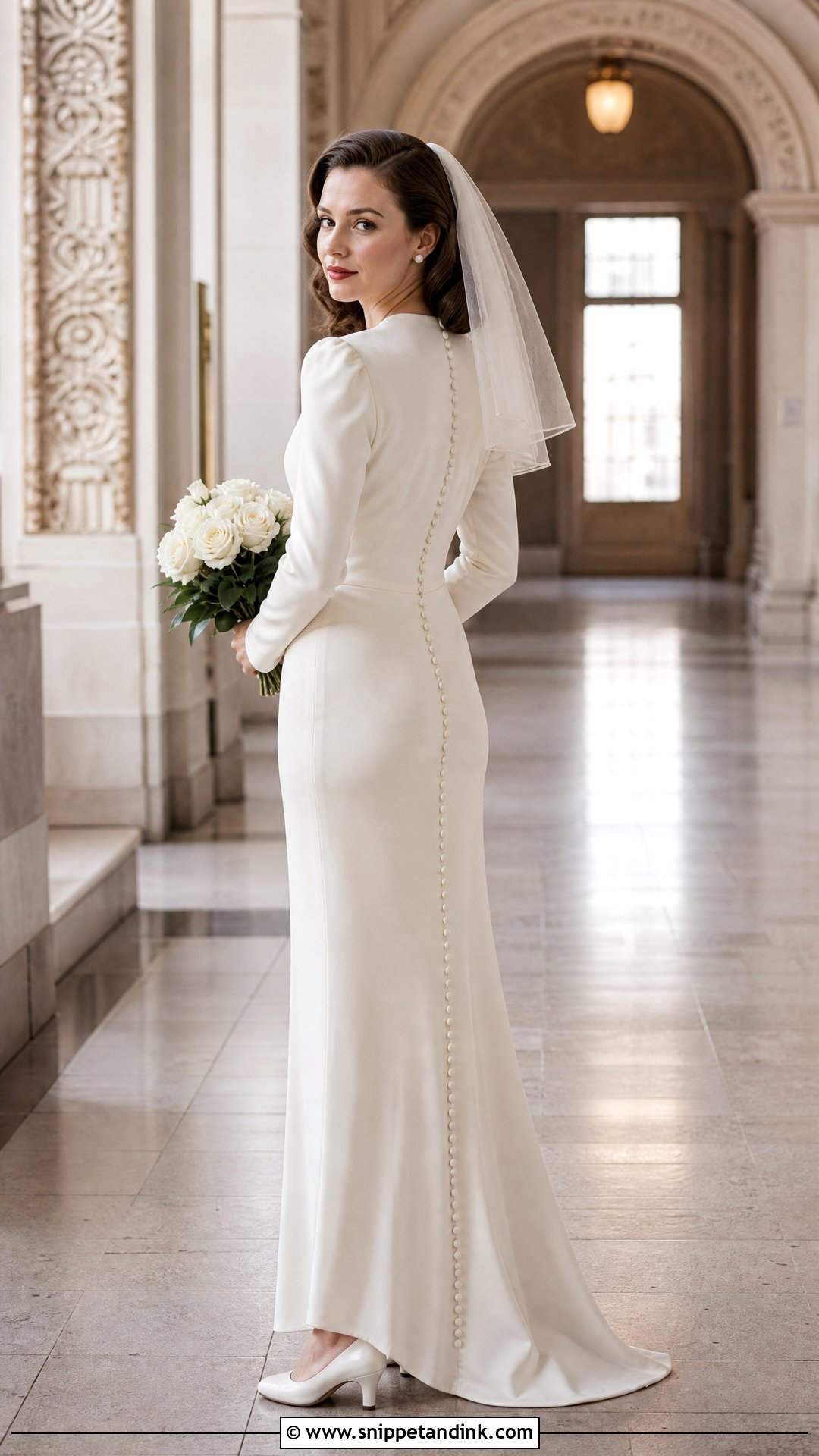
Practical elegance defined many 1940s bridal gowns, particularly in wartime: long sleeves, modest necklines, narrow skirts, simple construction. A button-back dress keeps that spirit. I’d choose matte crepe or lightweight satin with a fitted waist and gently structured shoulders, and a row of covered buttons running from the neckline toward the train for interest without decoration. Round-toe pumps, a shoulder-length veil, pearl studs and white roses. Victory rolls are the strong period reference; a smooth low bun is the subtle one, and it’s easier to wear a veil with. Allow time for those buttons on the morning. A long row done up by nervous hands takes longer than you’d think.
10. 1940s Tea Length Suit Wedding Dress with Sleeves
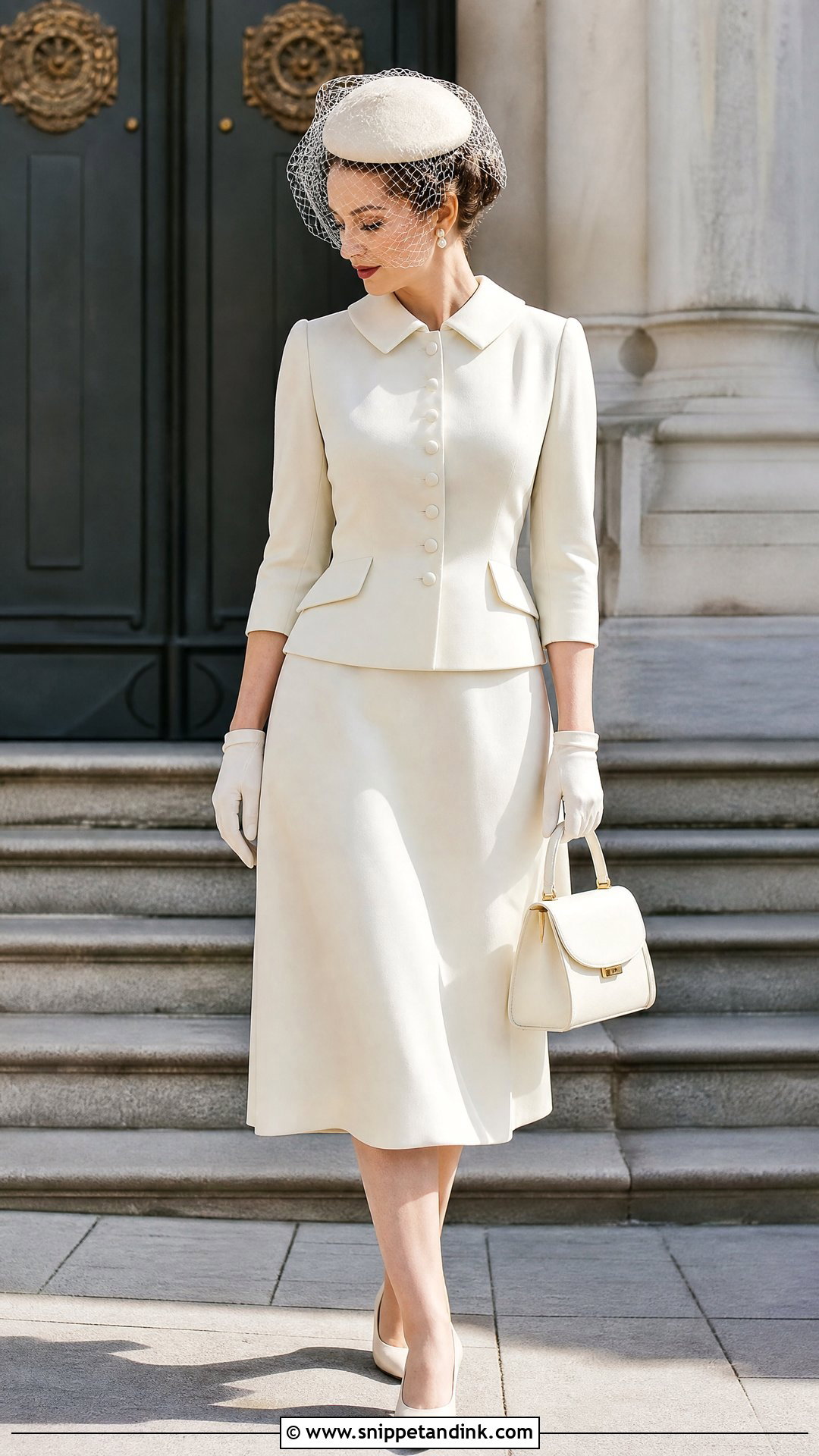
The suit is the most underrated vintage option there is. Plenty of brides in the thirties and forties married in tailored day wear, shorter dresses and hats, so it’s grounded in real practice, not a modern compromise. Start with a fitted ivory jacket with bracelet sleeves, a defined waist and covered buttons, over a matching A-line or pencil skirt below the knee. A small veiled hat, pearl earrings, gloves and closed-toe pumps complete it, and a structured handbag can take over from flowers after the ceremony. Tailoring is everything. The shoulder seam has to sit exactly on your shoulder point and the jacket must close smoothly at the waist, or it reads as office wear. City hall and second weddings are its natural fit.
11. 1950s Lace Ball Gown with Fitted Sleeves
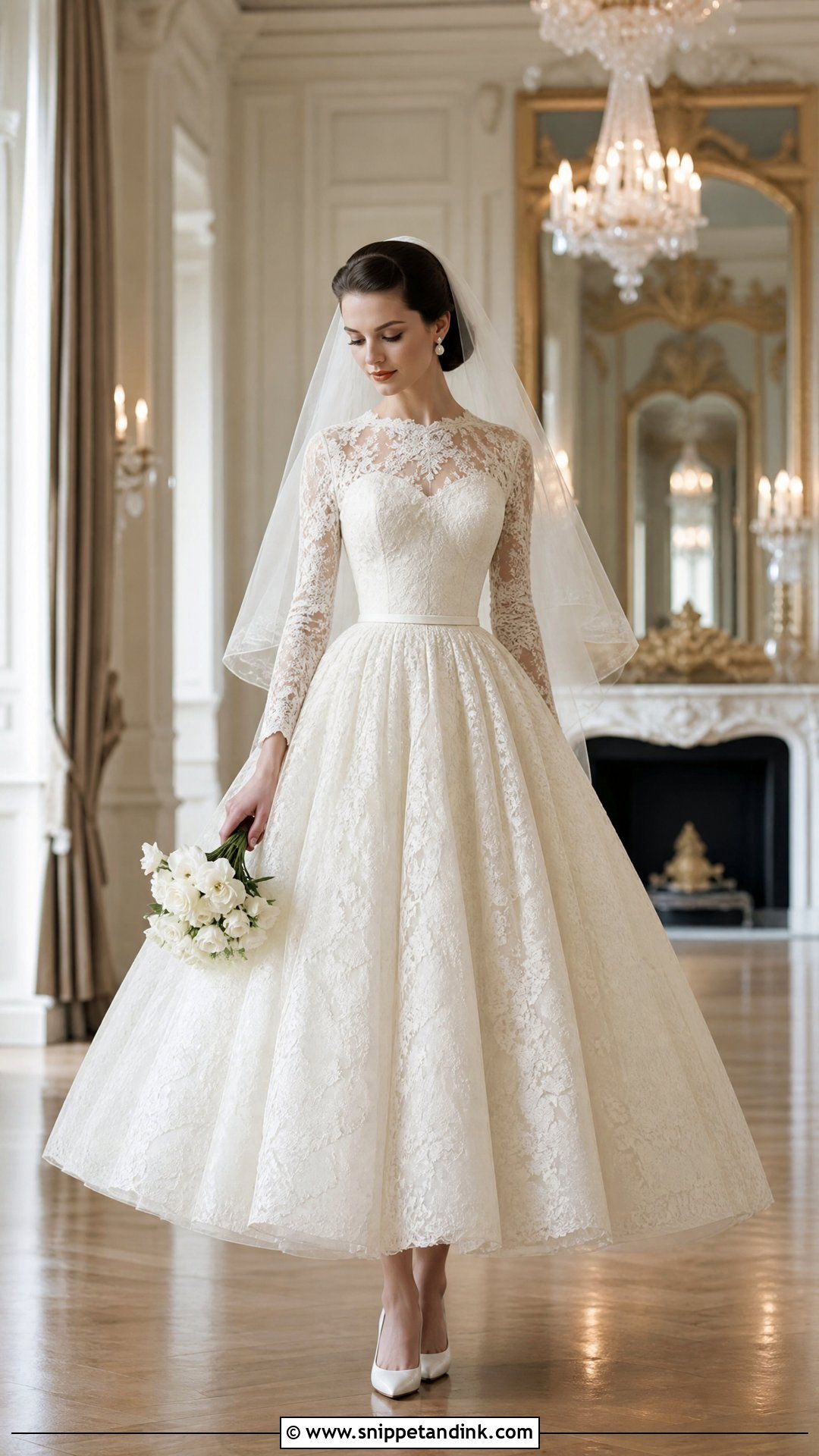
Fitted waist, full skirt: the fifties lace ball gown is the shape everyone recognizes, and Hollywood weddings of the time made lace, high necks and beading the formal standard. Choose a structured bodice with fitted lace sleeves and a skirt supported by layered petticoats. An illusion neckline gives coverage while keeping the upper body open. A waist-length veil, pearl earrings, pointed pumps and a compact bouquet. If you add a satin ribbon or a narrow beaded belt, that’s your one extra; a belt plus beaded sleeves plus a necklace is a pile-up. For something less traditional, I like tea-stained ivory lace over a champagne foundation. It looks lived-in rather than new. Ballrooms and grand indoor venues give the skirt its space.
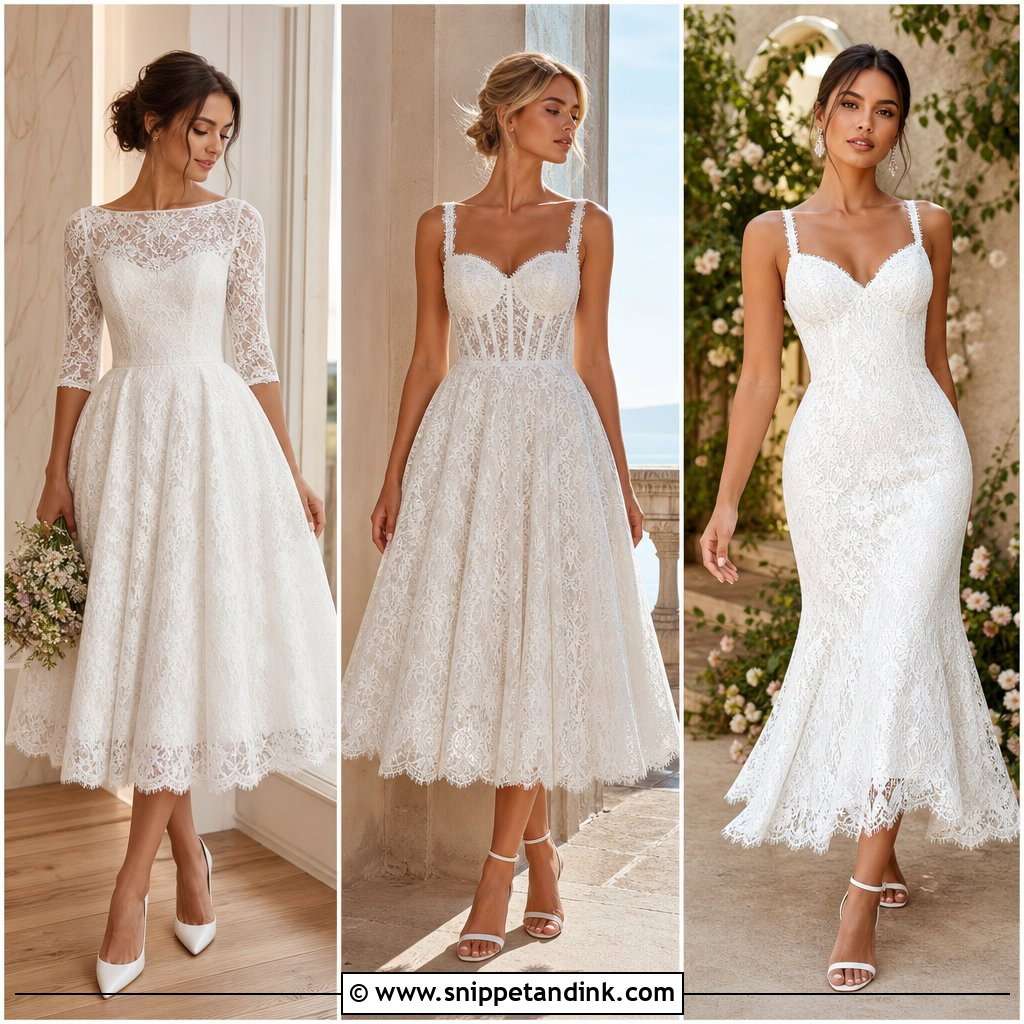
12. 1950s Tea Length Wedding Dress with Three Quarter Sleeves
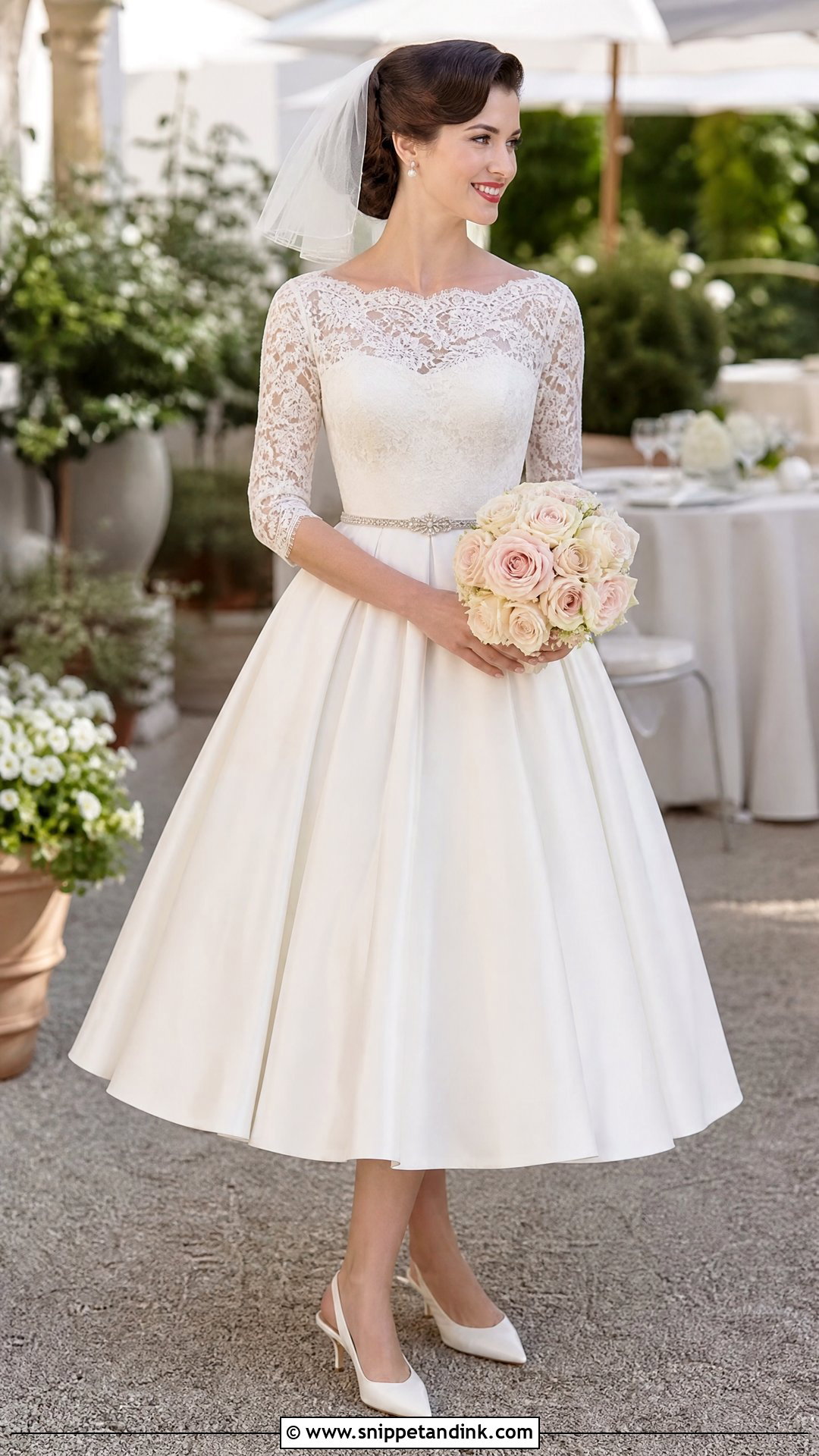
This is the easiest gown on the list to spend a whole day in. A fitted bodice, natural waist and full skirt ending between knee and ankle, with lace three-quarter sleeves softening the structure and a satin or mikado skirt that holds its shape on its own. The raised hem makes your shoes part of the look, so pointed slingbacks are worth investing in. A short veil and pearl studs, plus a slim belt if you’d like a touch of metallic or beading at the waist. A small round bouquet keeps the proportions right; a big cascade overwhelms a short skirt. No train means nothing to bustle, nothing to step on. Garden, restaurant and daytime weddings suit it.
13. 1960s A Line Wedding Dress with Bell Sleeves
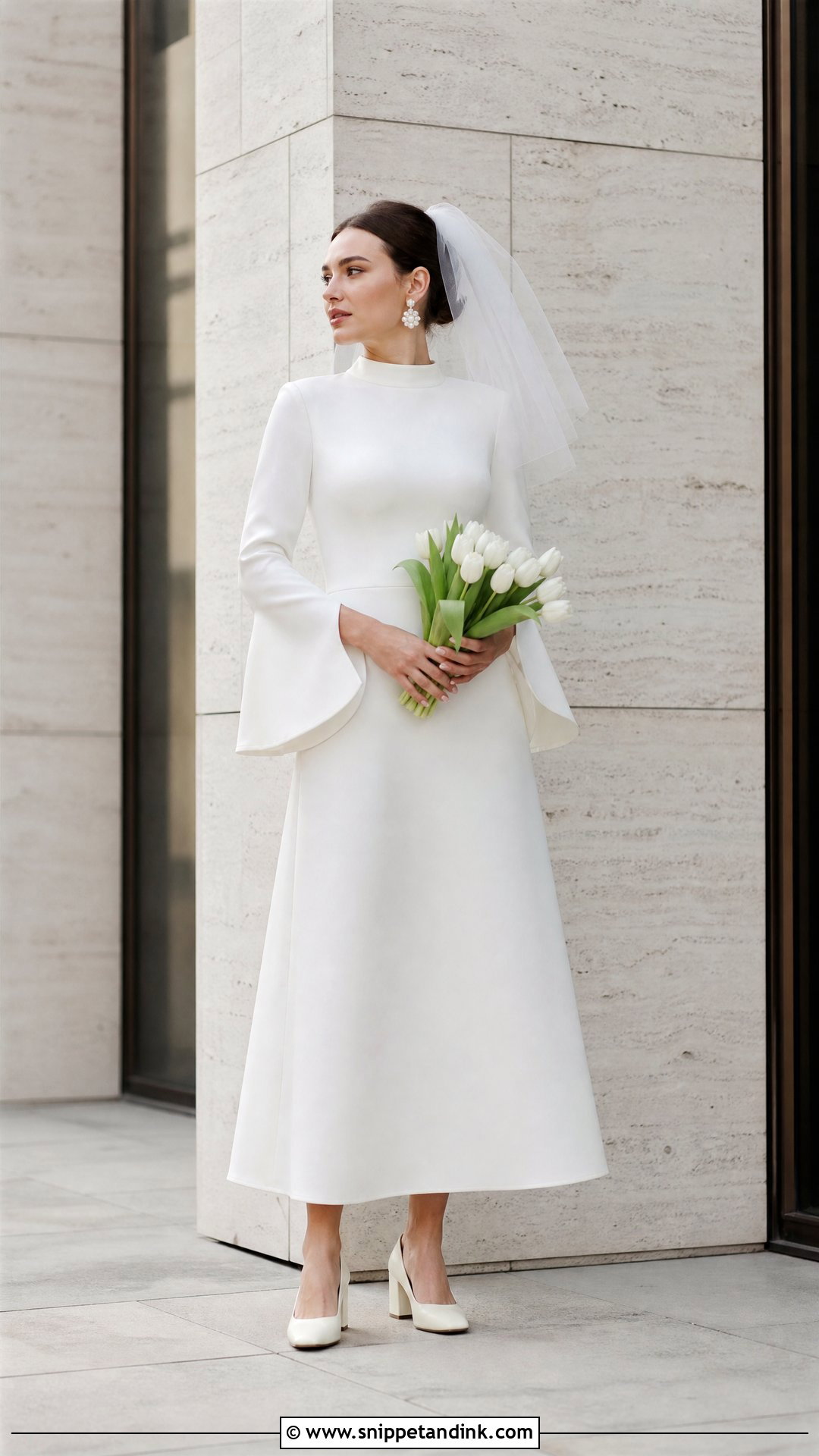
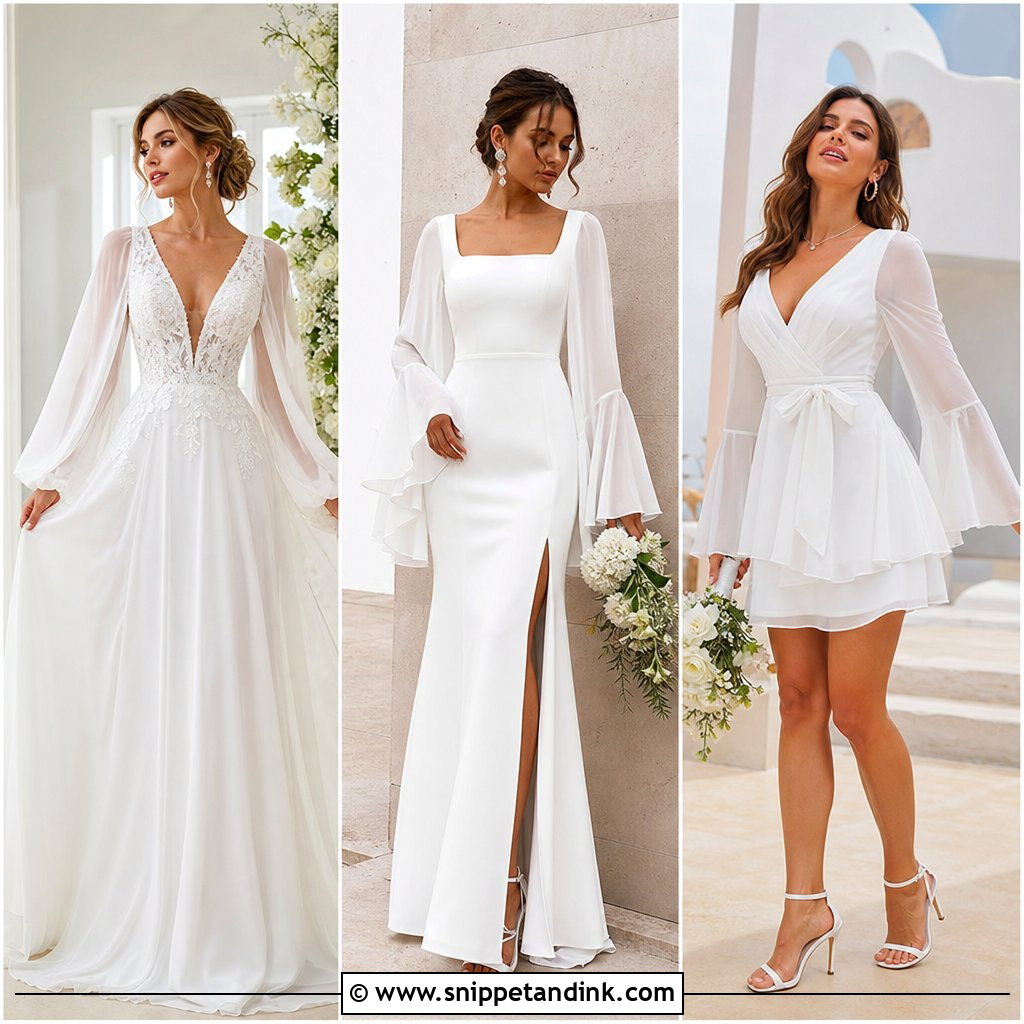
A-line and empire shapes took over bridal wear as the sixties went on, and sleeves ranged from neat caps to dramatic flares. A 1960s A-line with bell sleeves brings the playful end of that. Choose a lightly structured dress at mini, ankle or floor length with a high neckline and softly flared sleeves; crepe is sleek, lace or textured jacquard more vintage. Block-heel pumps, a short veil and bold pearl or crystal earrings. A smooth bouffant updo is the period choice and a low ponytail the modern one. On a mini, I’d watch the sleeve-to-hem ratio: very full bells with a very short skirt can look top-heavy. Graphic flowers, white tulips or callas, suit a city venue.
14. 1960s Empire Waist Wedding Dress with Bishop Sleeves
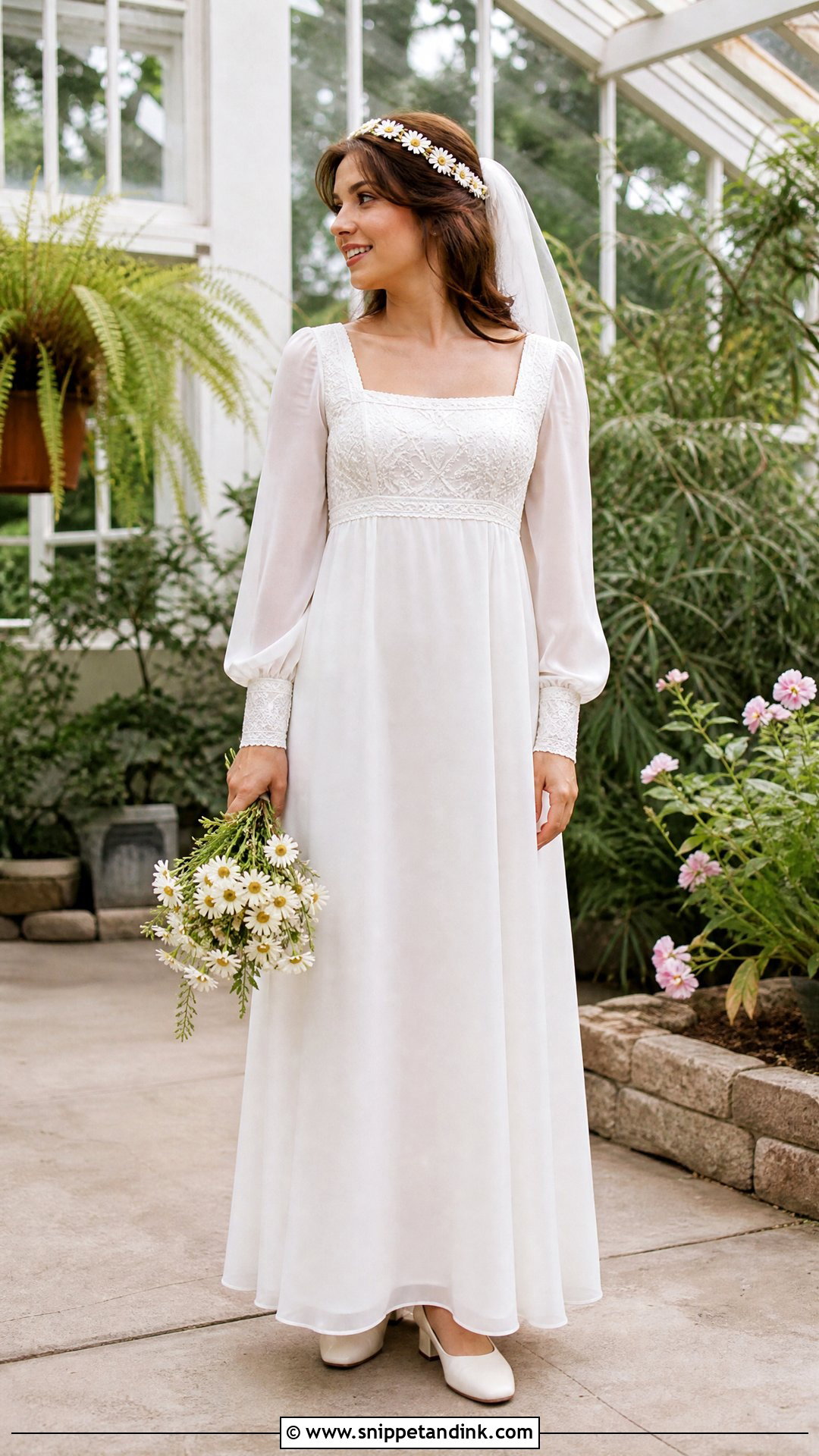
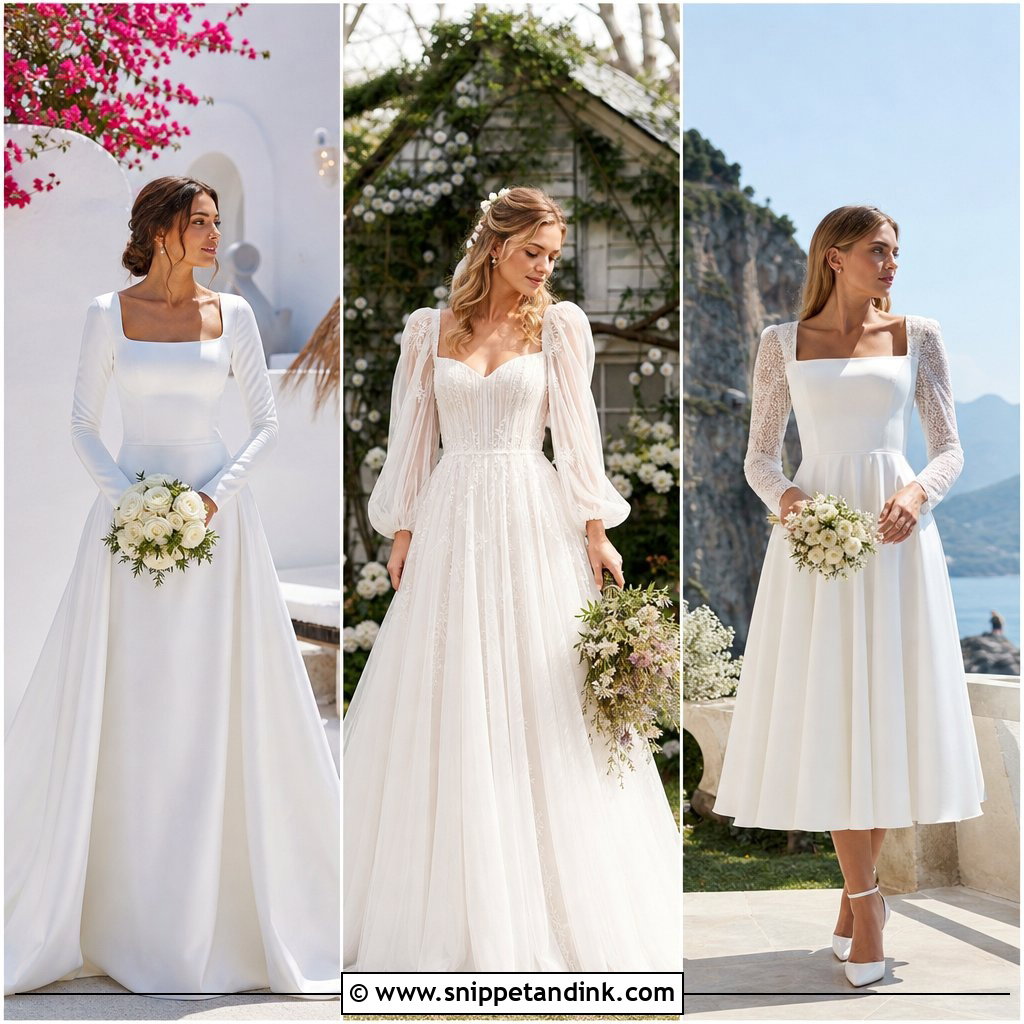
Everything on an empire-waist dress hangs from the shoulders and bust, which is why the fit up there matters more than anywhere else. Get the shoulder seams and the bust right in alterations and the rest falls into place; get them wrong and the whole skirt swings off-center. Choose a lace or chiffon bodice with a raised waist and a loose skirt to the floor, full bishop sleeves gathered at fitted cuffs, and a square or softly rounded neckline with room for a small pendant. A floral headband, a simple veil, low block heels and a loose bouquet of daisies and white roses fit the late-sixties mood. Plain ivory from neckline to hem makes you look taller. The shape is forgiving on many body types.
15. 1970s Prairie Wedding Dress with Puff Sleeves
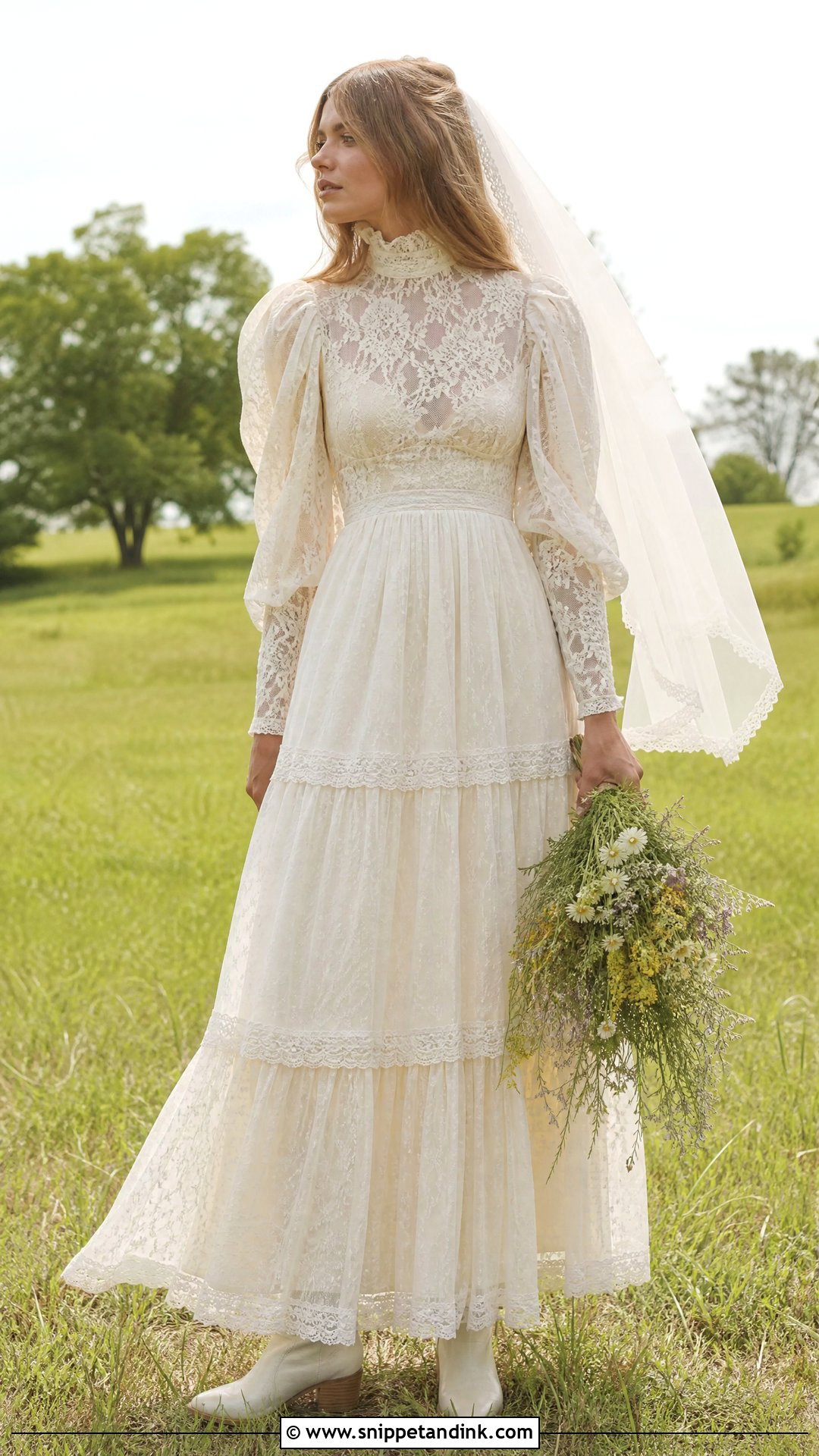
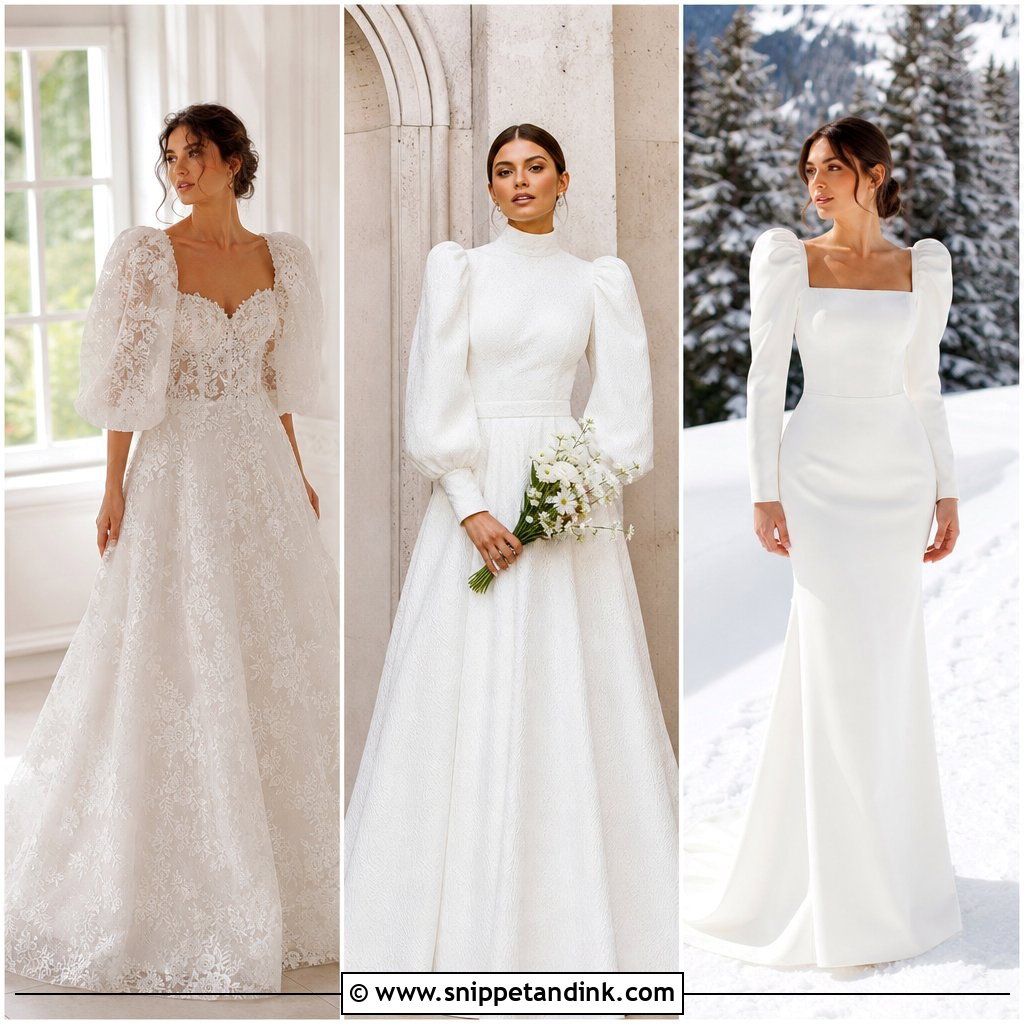
A prairie dress is the comfortable end of vintage. Bridal fashion in the 1970s borrowed freely from Victorian and medieval dress, raised waists, ruffles and big sleeves among them, and this look carries all three. Look for a high lace neckline, gently puffed shoulders, fitted cuffs and a soft tiered or ruffled skirt. Cotton lace and light chiffon feel genuinely soft rather than formal. Low-heeled boots, a fingertip veil and a loose bunch of white wildflowers with greenery. A braided updo or natural waves. Cotton lace creases more than synthetic, so I steam it on site rather than trusting it to travel well. Meadows, barns and farmhouse venues suit it.
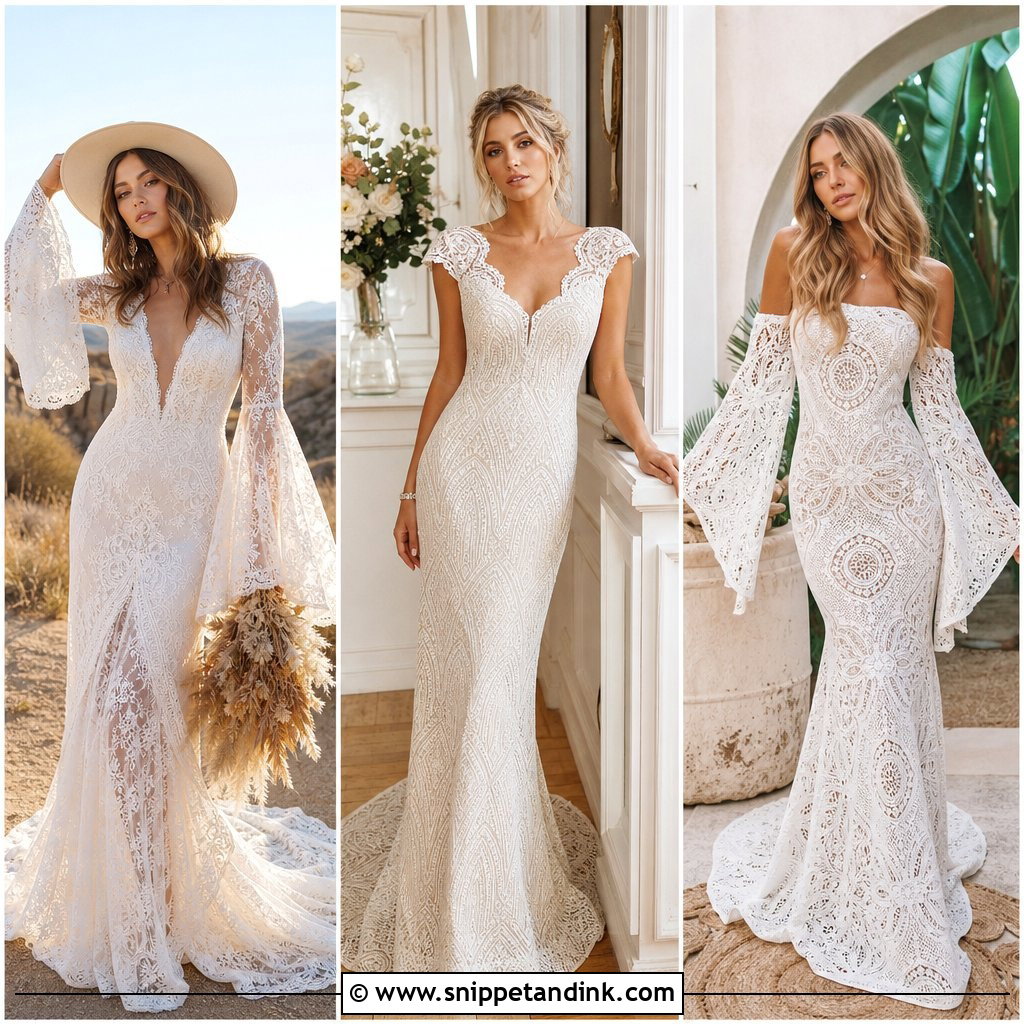
16. 1970s Boho Crochet Wedding Dress with Bell Sleeves
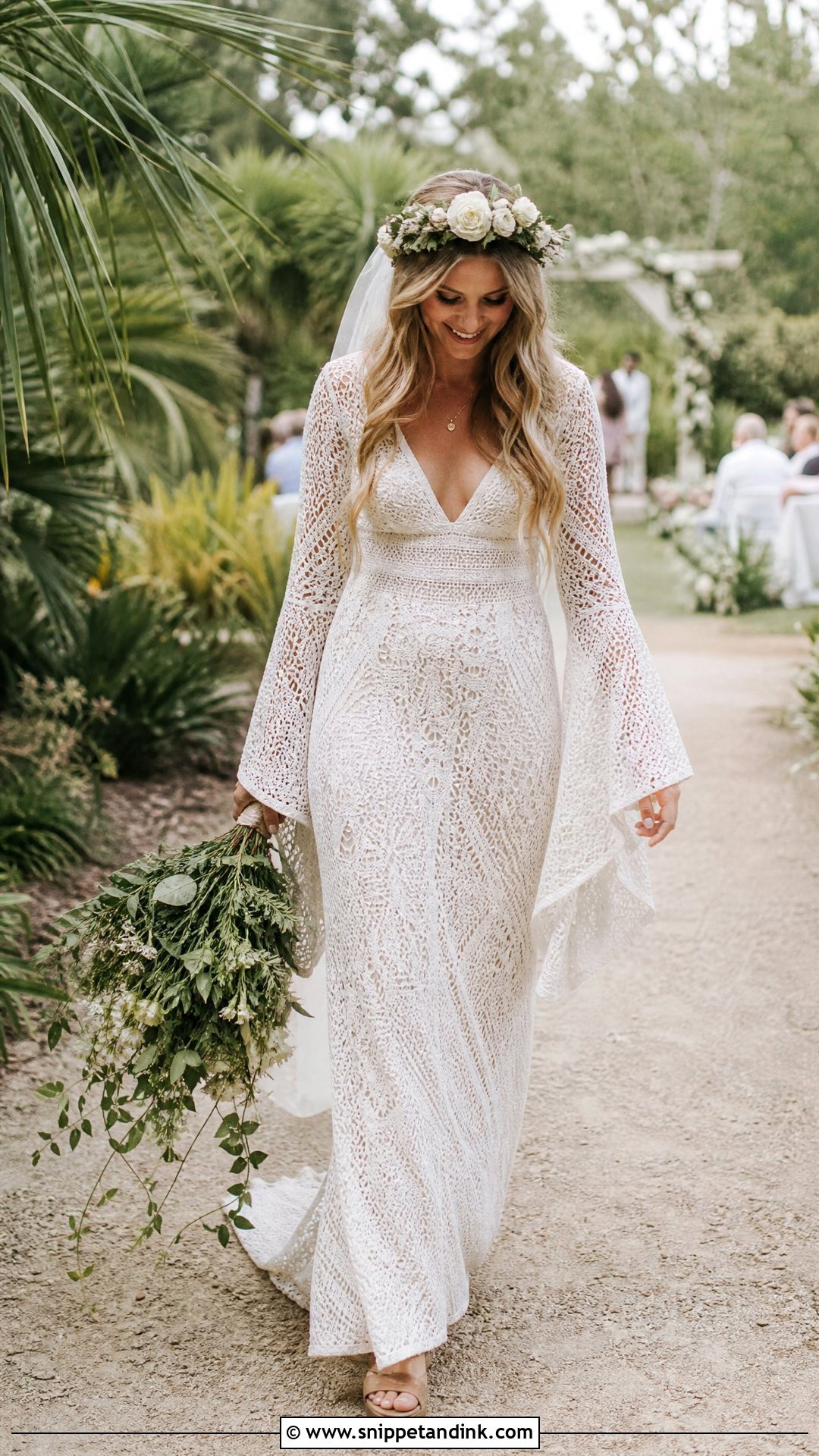
Crochet lace looks handmade because it often is, and that openwork texture is what sets a seventies dress apart. A softly fitted gown with a V-neck, a defined waist and wide bell sleeves that move freely is the shape. The lining matters: a smooth one stops the open pattern from looking busy and lets the texture show. Platform sandals or low leather heels, a floral headpiece and a simple veil tucked under loose waves. White flowers, ferns and trailing greenery in your hands. Rhinestones and structured accessories clash with the relaxed construction, so I’d leave them out. Summer ceremonies outdoors, desert venues and creative indoor spaces are where it sits best.
17. Renaissance Wedding Dress with Juliet Sleeves
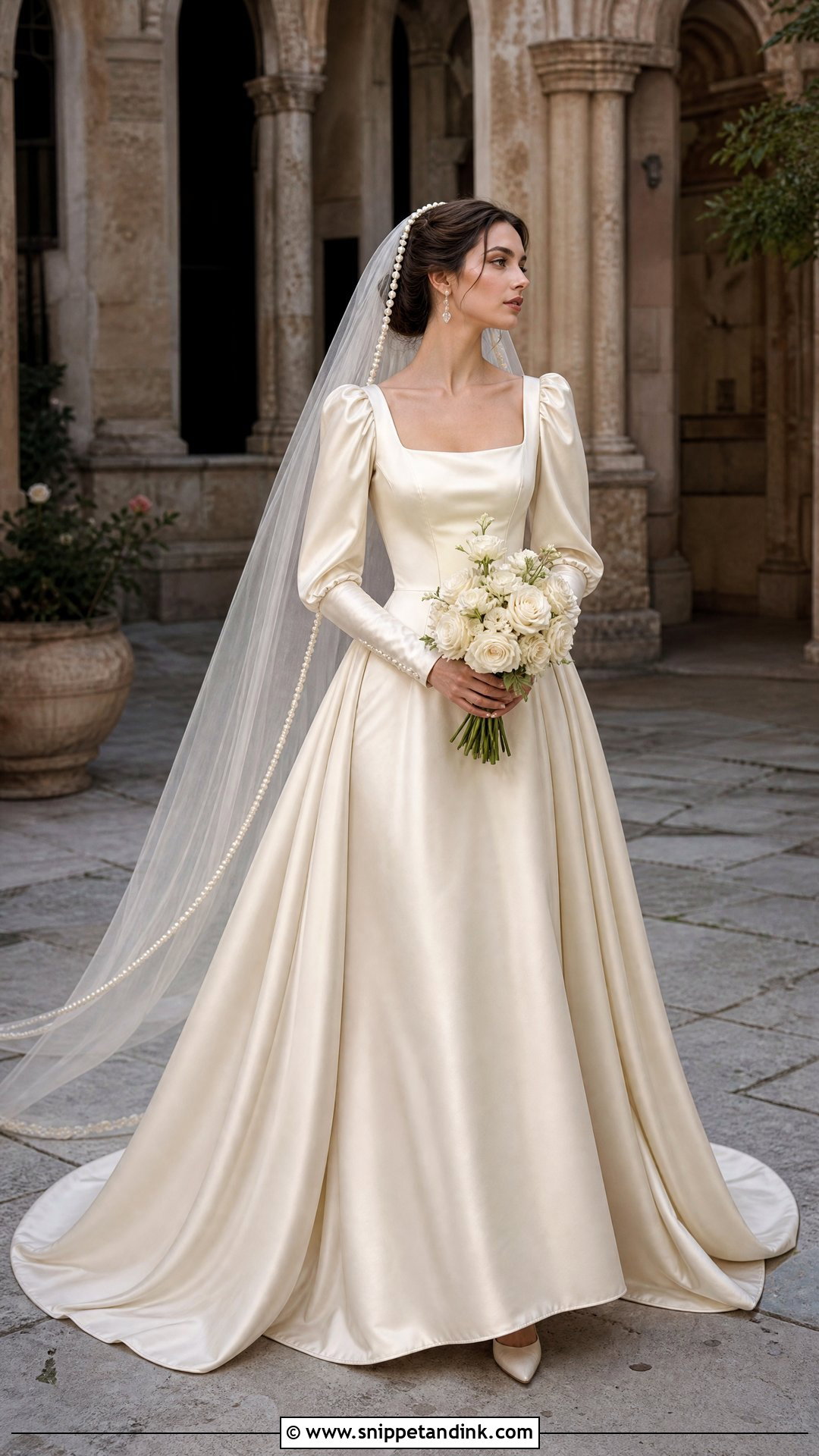
Renaissance style is the easiest of all these to overdo. The fix is restraint and very good tailoring. Choose a square neckline, an elongated bodice and a sweeping skirt in matte satin, silk or embroidered fabric. The Juliet sleeves carry small puffs at the shoulder and narrow toward covered buttons at the wrist. Keep the waist defined but not tight; a long bodice that pinches shows when you sit. A pearl-edged veil, delicate drops and pointed satin shoes. White roses mixed with herbs and soft greenery give a natural texture that suits the period. Stone courtyards, historic manors and grand halls make the right setting.
18. Old Hollywood Satin Wedding Dress with Long Sleeves
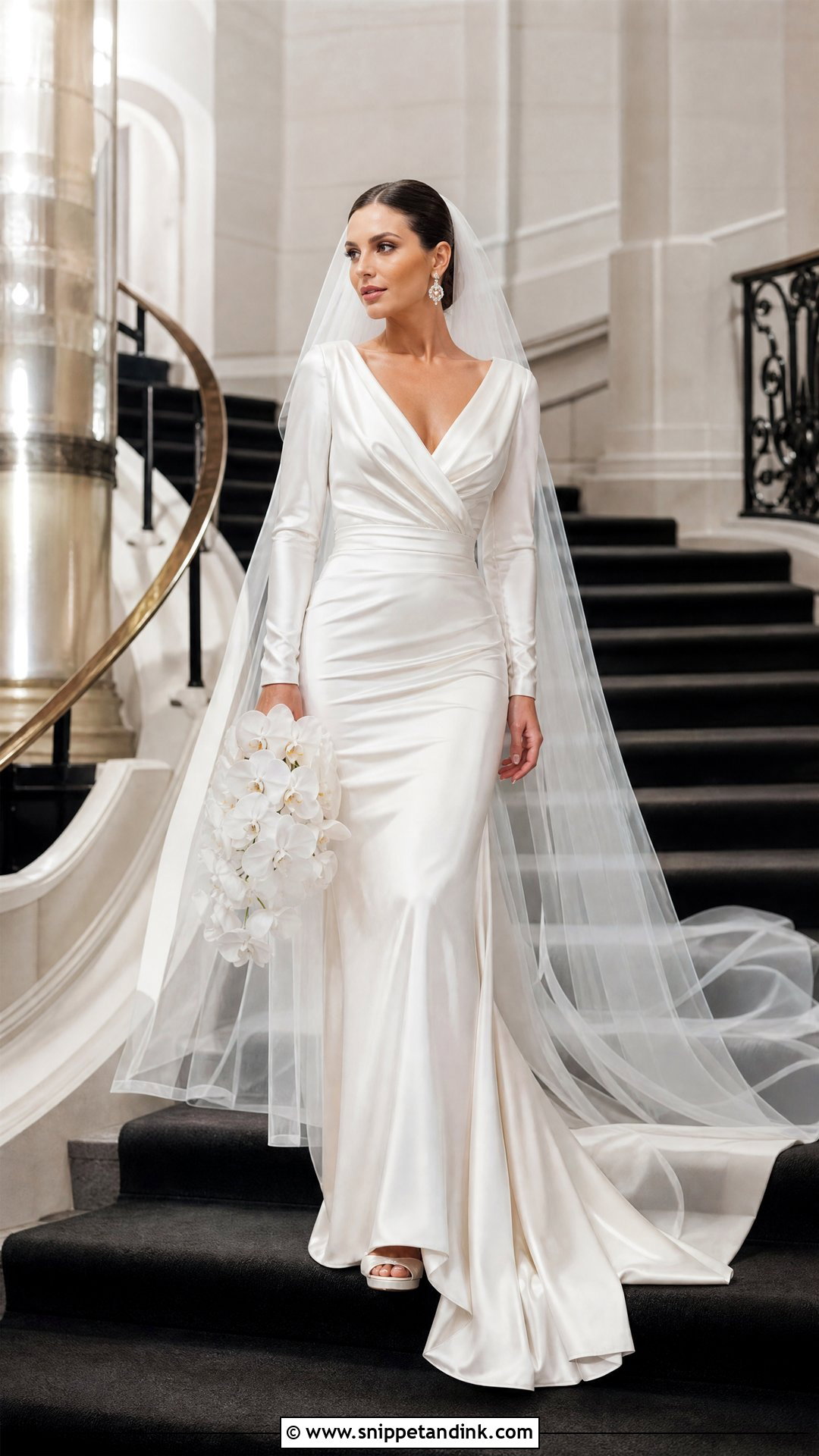
Glossy satin and a long train turn a plain long-sleeve dress into an Old Hollywood entrance. The bodice is fitted, the waist strongly defined, and the skirt follows the hips before flaring near the floor. A deep V or a softly draped neckline gives contrast to the covered arms. Crystal earrings, peep-toe heels and a long veil set under sculpted side waves. For cooler weather, a satin wrap can go on between photographs. Keep the bouquet sleek with orchids, roses or calla lilies. Satin shows every seam and line beneath it, so alterations have to be smooth, and the underwear chosen before the final fitting, not after. Grand hotels, theaters and anywhere with a staircase suit it.
19. Champagne Lace Wedding Dress with Illusion Sleeves
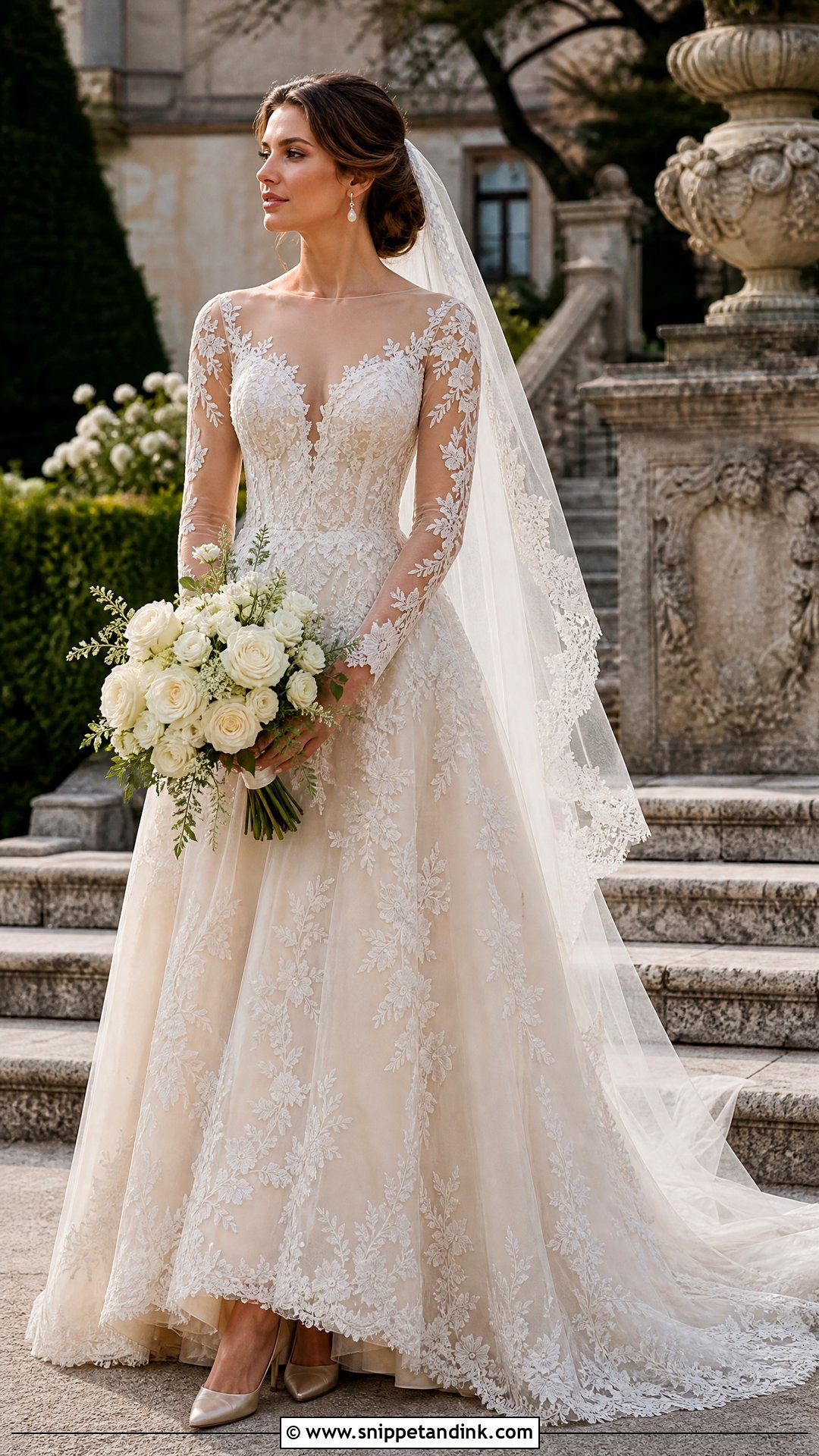
Champagne lining shows lace better than a matching ivory one does. Against a warmer base, the pattern stands out instead of disappearing into one flat color. That’s the logic of this gown: a fitted bodice with sheer illusion sleeves and delicate appliqués, a softly flared skirt, and a base that looks quietly aged without losing its bridal feel. An ivory veil with a narrow lace border, champagne pumps and antique-style pearl earrings, with a low bun so hair doesn’t cover the sleeve pattern. Detailed lace calls for a plain bouquet of white roses and greenery. It doesn’t copy any one decade, which makes it adaptable to a garden, a historic home or a ballroom.
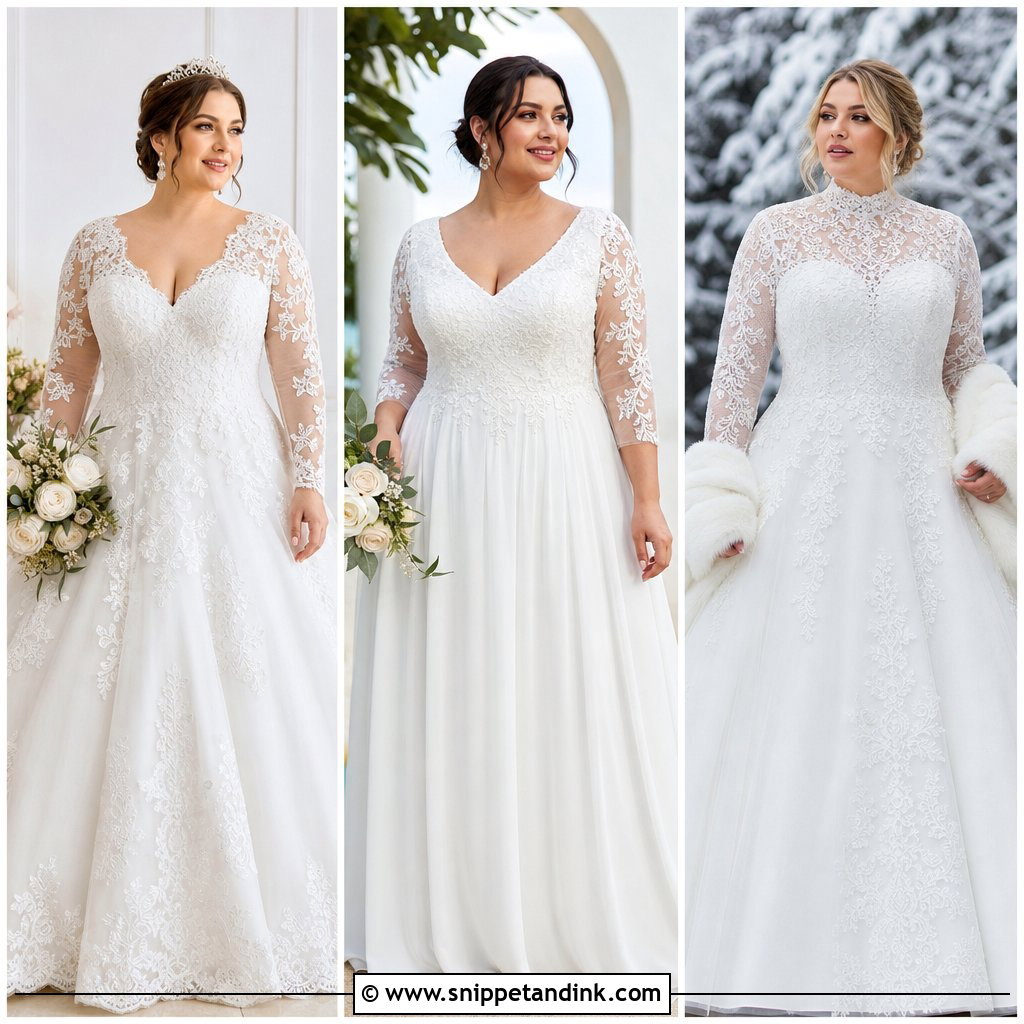
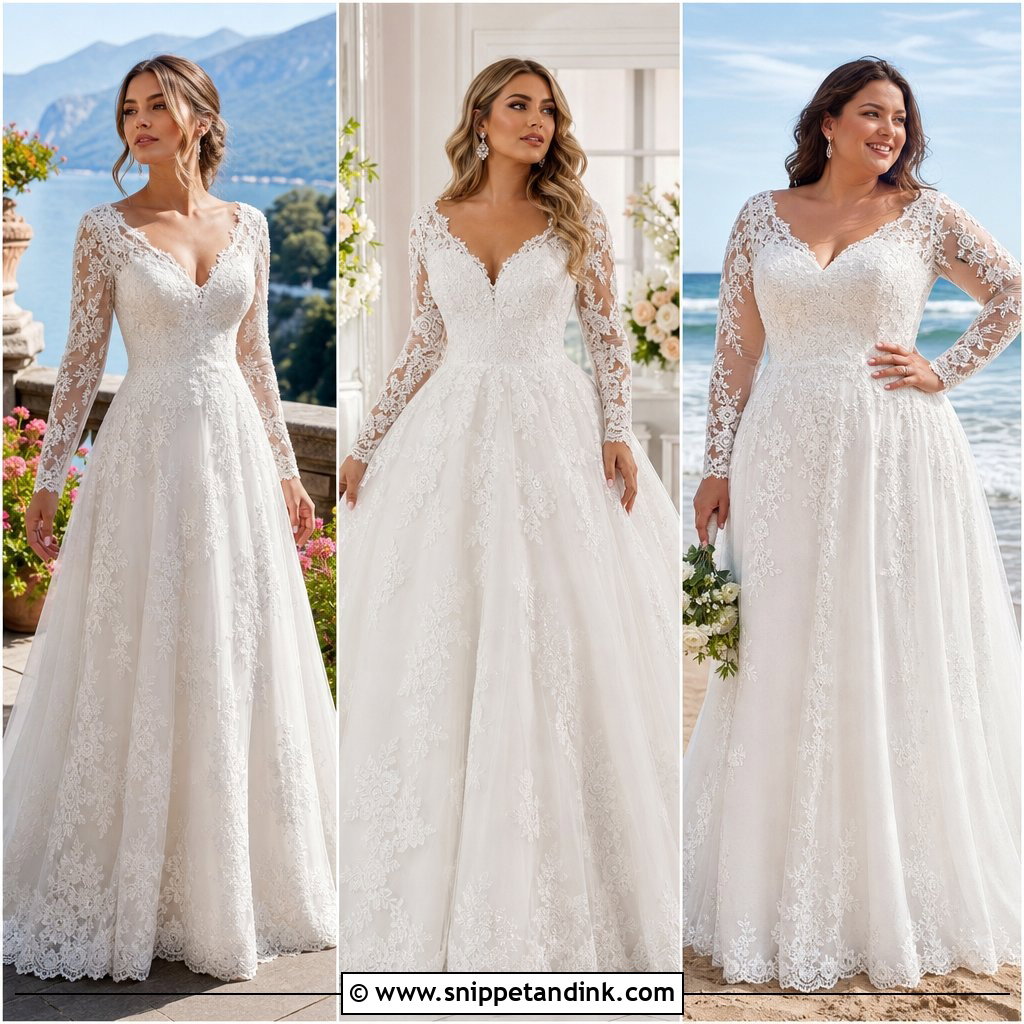
20. Plus Size Vintage Lace Wedding Dress with Sleeves
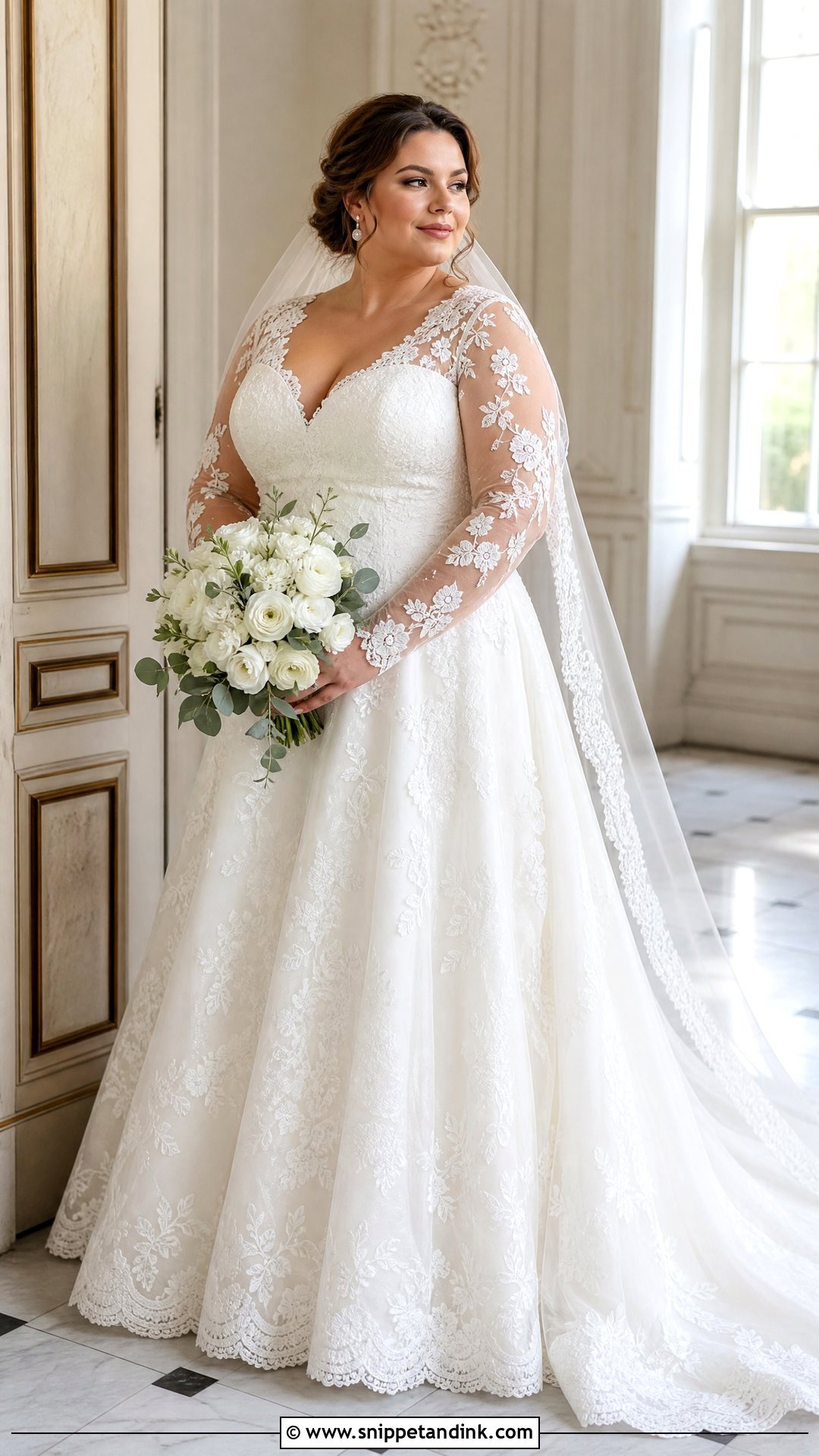
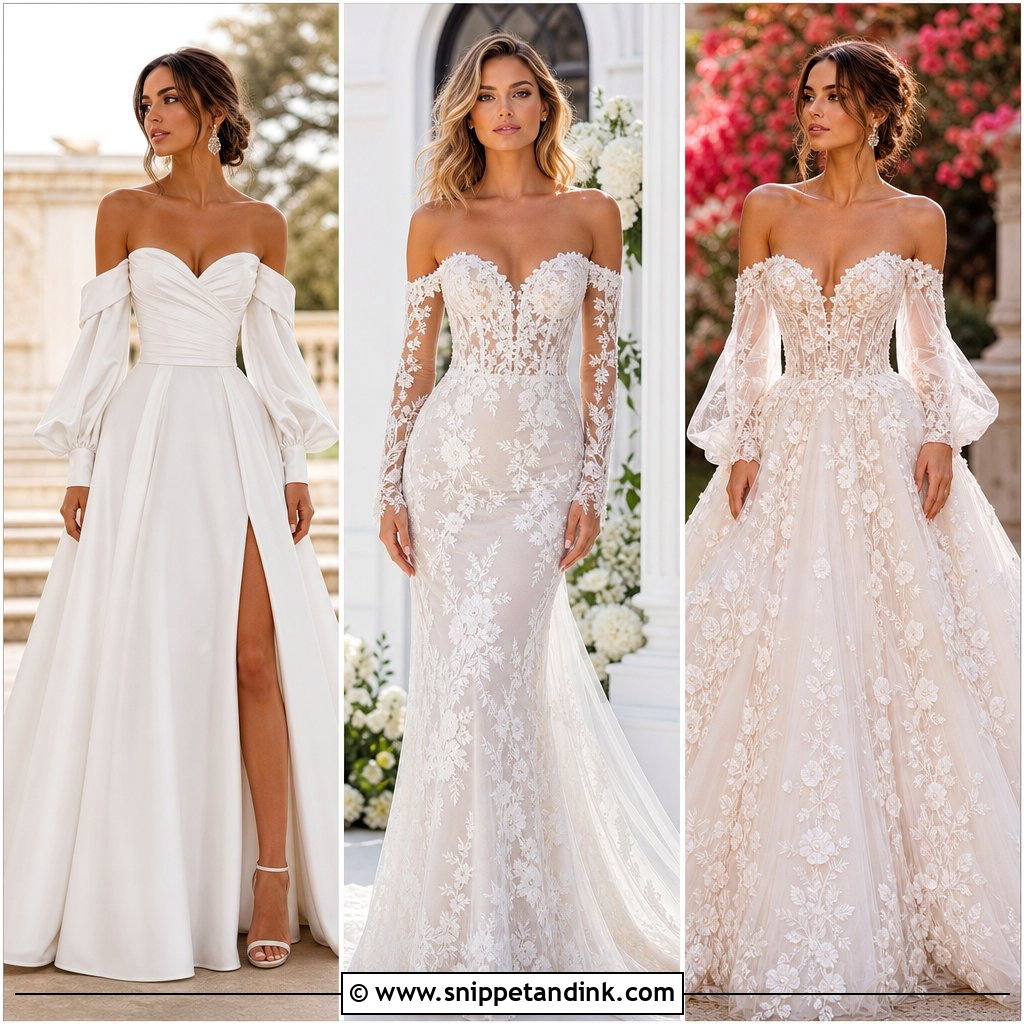
Support first, then proportion. A plus-size vintage wedding dress should hold you comfortably and show off the parts of your shape you like best. I’d look at a structured lace bodice with a natural or basque waist, and long illusion sleeves with appliqués placed around the arms. An A-line skirt moves easily; a fuller ball gown gives more drama. Good inner construction defines the waist so the outer fabric doesn’t need to be stiff or tight. A chapel veil, stable block heels, pearl earrings and a bouquet sized to the skirt. At fittings ask your seamstress to check shoulder movement, cuff width, sitting comfort and any pulling along the sleeve. Original or reproduction, fit is what lets you move with confidence all day.
A Veil That Doesn’t Fight the Sleeves
With a strapless gown, almost any veil works. Add sleeves and the veil suddenly has to share space with them, especially from behind and in the ceremony photos taken from the aisle. These are the pairings I use.
Long fitted lace sleeves
A veil with a lace edge right where the sleeve lace sits can look like one blurry mass. Choose a plain cut edge, or a lace border on a long cathedral that falls well below the hands.
Puff, Juliet and leg-of-mutton
Volume at the shoulder pushes a veil outward. Set the comb lower, at the back of the head rather than the crown, so the tulle falls behind the puffs instead of resting on them.
Bell, bishop and cape sleeves
Avoid an elbow or fingertip veil that ends at the same point as the widest part of the sleeve. Two edges in one place look cut off. Go shorter, a birdcage or shoulder length, or go long past the cuffs.
Whatever you choose, take the veil to a fitting, or at least a sample of the same length. It’s the only way to see how the two layers fall together when you turn and walk.
Sleeves, Shade and Shape Have to Agree
Sleeves let vintage bridal fashion cover a surprising range of moods. Victorian lace is formal, twenties beading sparkles, thirties satin feels like film, and the seventies are relaxed and romantic. Look past the decade when you decide, though, and think about how it moves, how warm it is, the venue and the weather. The sleeve should fit smoothly without trapping your arms, and the waist and neckline should hold the outline together. Then add only the accessories that strengthen the gown’s character. Careful alterations, shoes you can stand in and a veil chosen with the sleeves in mind are what turn a vintage idea into something that feels like yours.
You'll Like These Ideas:


Leave a Reply