
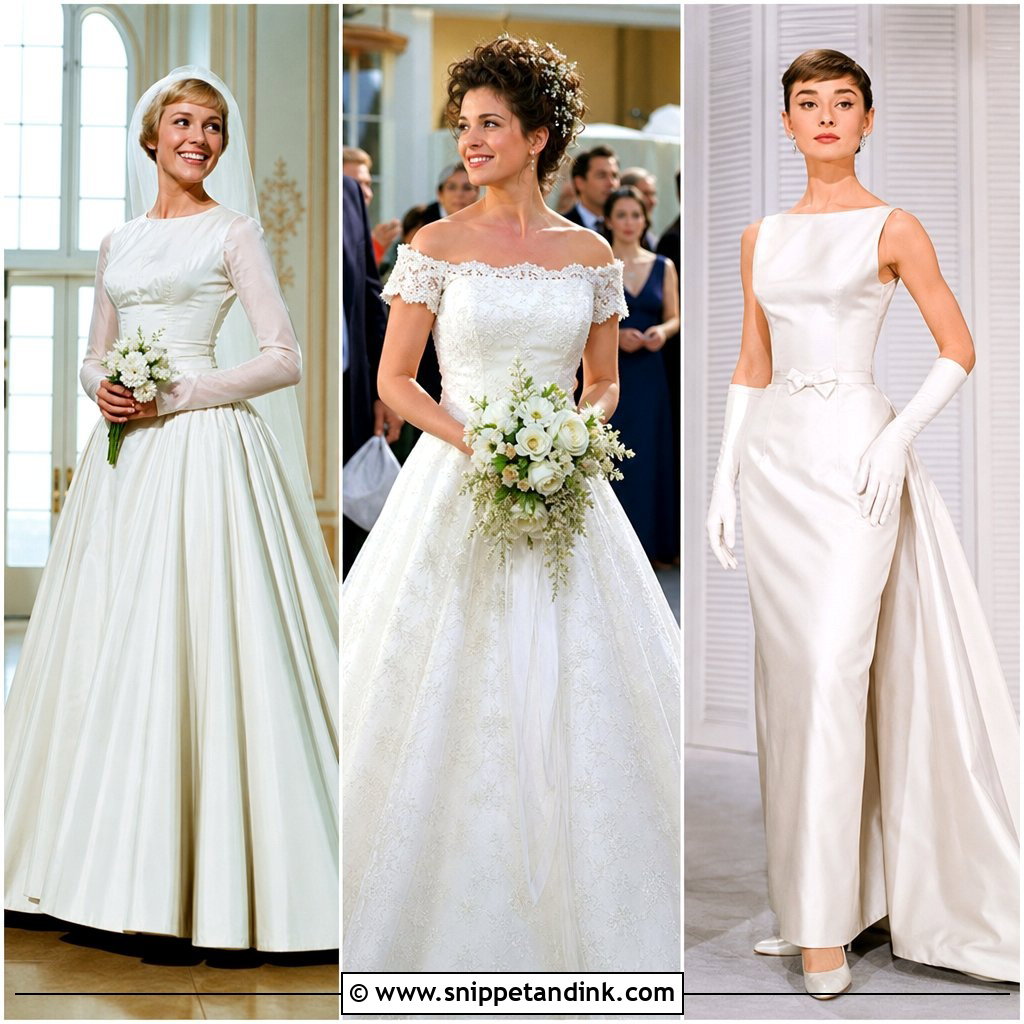
Sixties dresses suit brides who like vintage but find the fifties a little too sugary. Across the decade, bridal fashion dropped the heavy ball gown for cleaner A-lines, empire waists, lace sleeves, mod minis, high necklines and bows, then softened toward a bohemian mood at the end. Some brides wanted polish. Others wanted a short hem, a quick city-hall look, or a gown inspired by Twiggy, Audrey Hepburn, Priscilla Presley, or the flower-child spirit of the late years. The 25 shapes below cover formal weddings, courthouse ceremonies, gardens and retro receptions, and for each one I’ve added what I’d check in the fitting room.
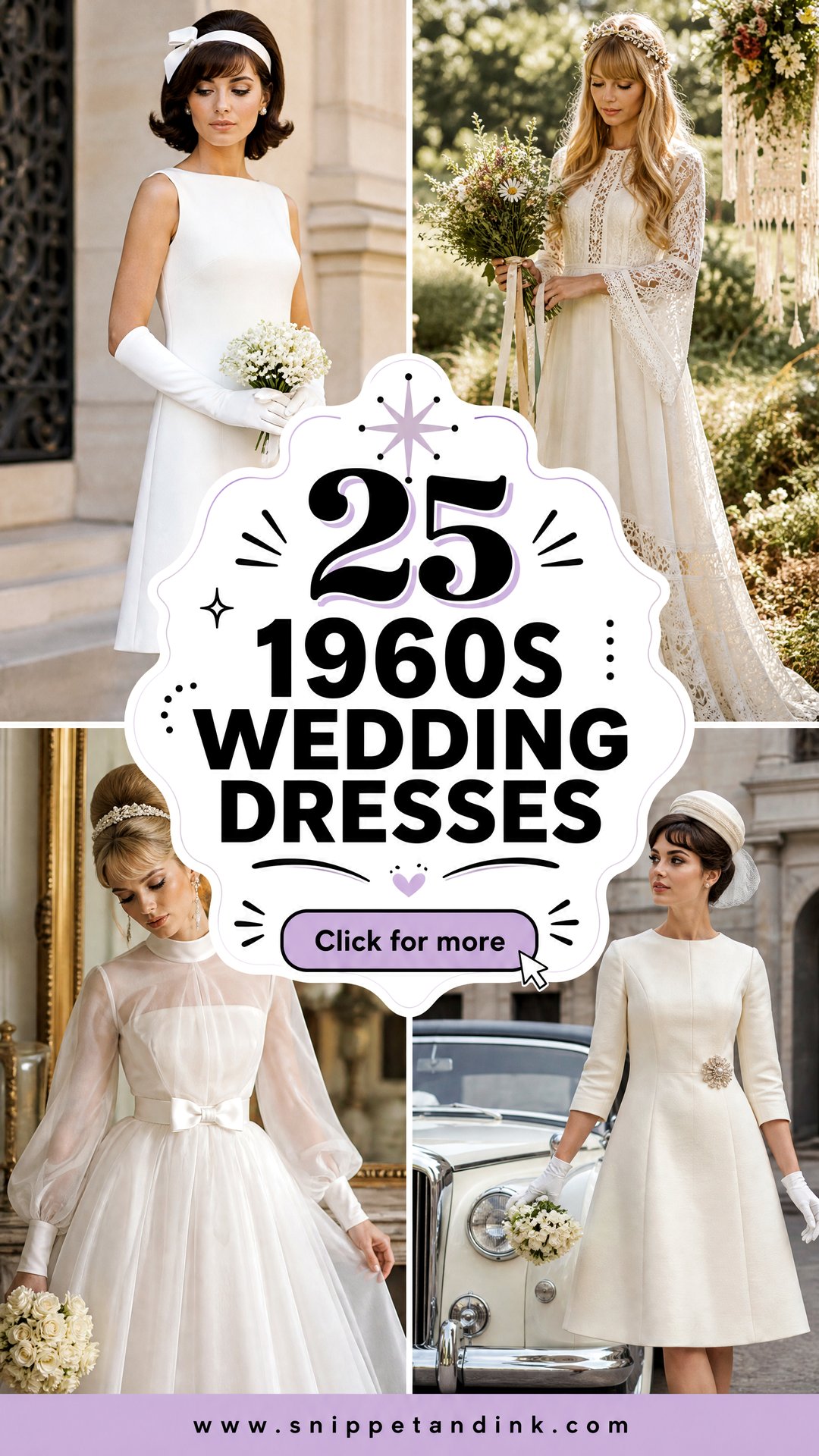
Early Sixties and Late Sixties Are Two Different Brides
The decade changed so much from start to finish that “sixties bride” can mean almost opposite things. I ask brides which part they’re picturing before we pull a single dress.
- Early years: still close to the fifties. Structured A-lines, peau de soie and satin, bouffant hair, short gloves and a crown veil.
- Middle years: the mod moment. Shifts, minis, empire waists, bold clean lines, pillbox hats and flat or low shoes.
- Late years: softer and looser. Chiffon, cotton lace, bell sleeves, daisies, loose hair and flower crowns.
Pick one and keep the hair, veil and shoes in that same window. A beehive with bell sleeves and sandals sends mixed signals, and the outfit starts to look assembled rather than worn. Mixing can work, but it’s easier to do on purpose once the base look is settled.
1. 1960s Empire Waist Wedding Dress
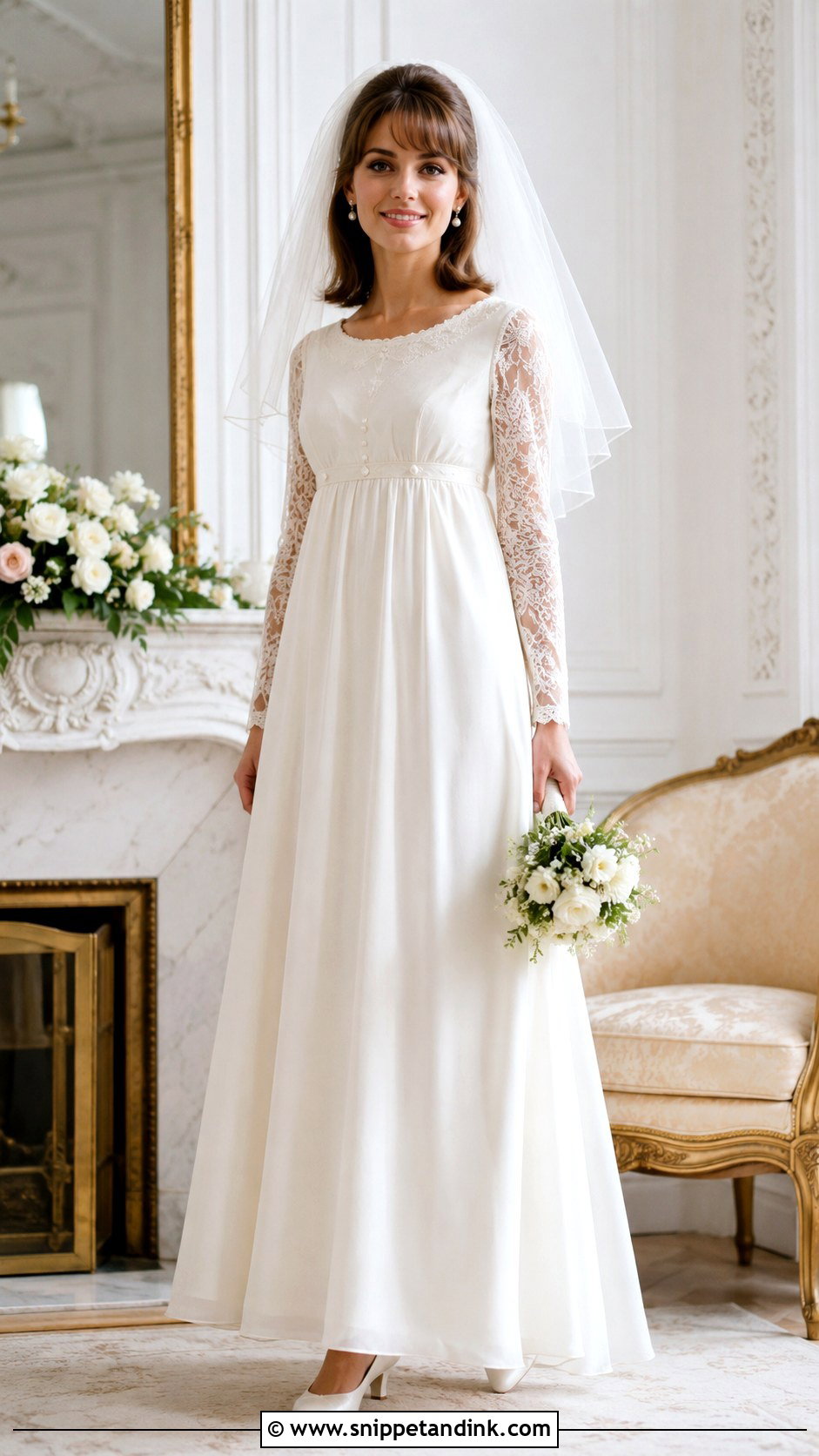
A 1960s empire waist wedding dress is one of the decade’s most recognizable shapes. The seam sits just under the bust and the skirt falls away, skimming rather than clinging, which leaves room through the waist and hips and lengthens the frame. Ivory chiffon, silk organza or lightweight crepe keeps it authentic, and long lace sleeves, a high neckline, pearl buttons and a shoulder-length veil push it further into period. That seam has to sit exactly under the bust; a little too low and it cuts across the fullest point, so I fit it before anything else. Low satin heels, pearl studs and daisies or white roses finish it.
2. 1960s Lace Wedding Dress
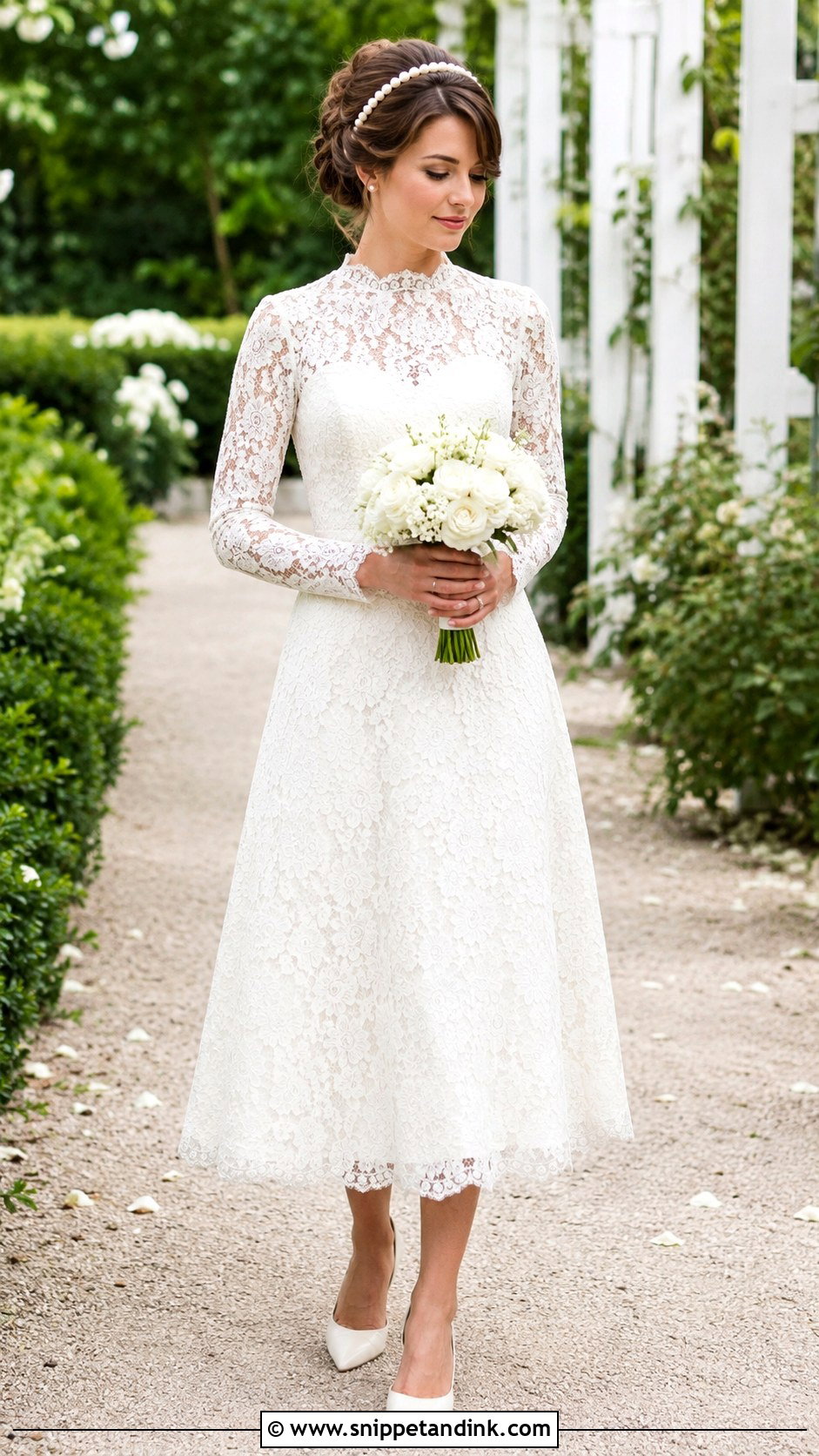
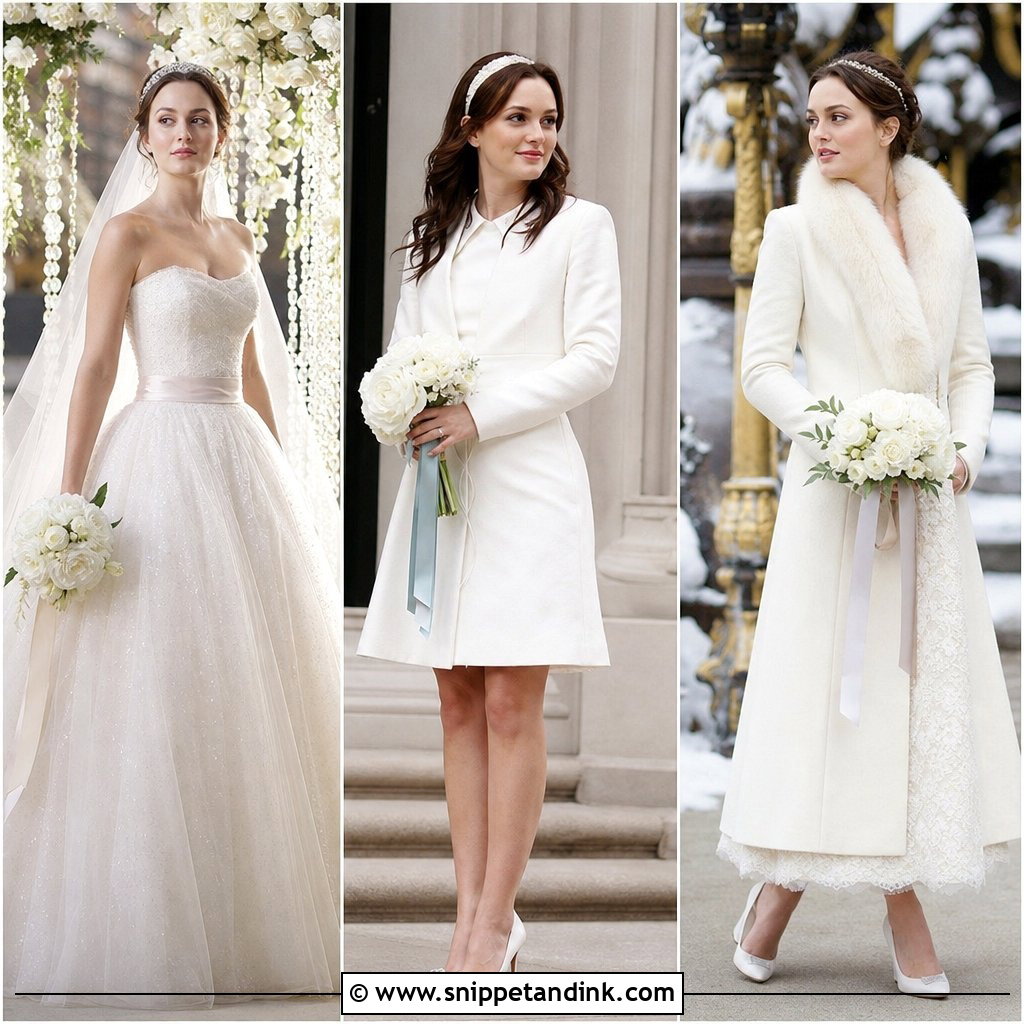
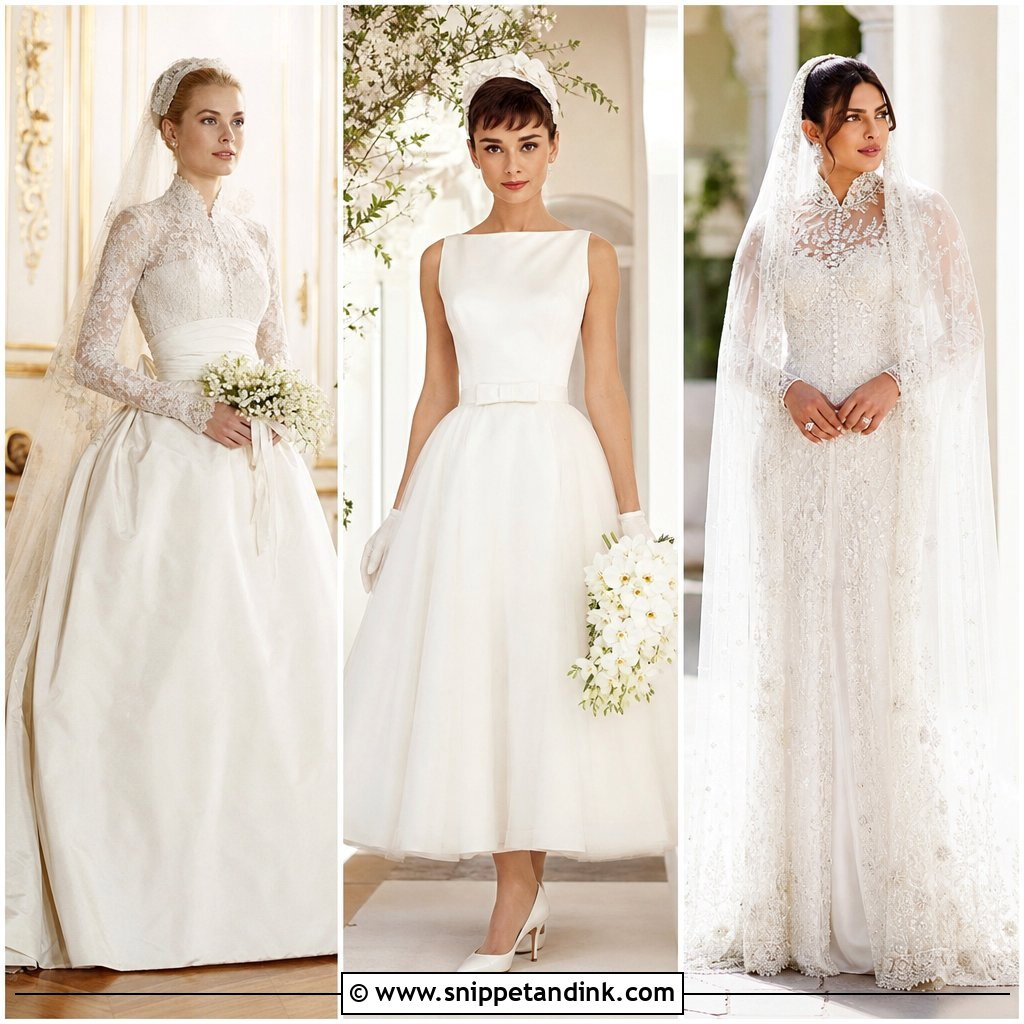
Lace turned up everywhere in sixties bridal: full gowns, bodices, sleeves, jackets and veils. The trick is wearing it without looking like a costume. A lace A-line with a fitted bodice, modest neckline and slim long sleeves is the safest version, while lace over a plain sheath lining is lighter and keeps the pattern crisp. Accessories stay clean: a pearl headband, short gloves, pointed ivory pumps and a structured bouquet. Look at how the lace meets at the seams. A careful dressmaker matches or appliqués the motifs across them, and when that’s skipped, a hard line runs through the pattern right at the side of the bodice.
3. 1960s Mod Mini Wedding Dress
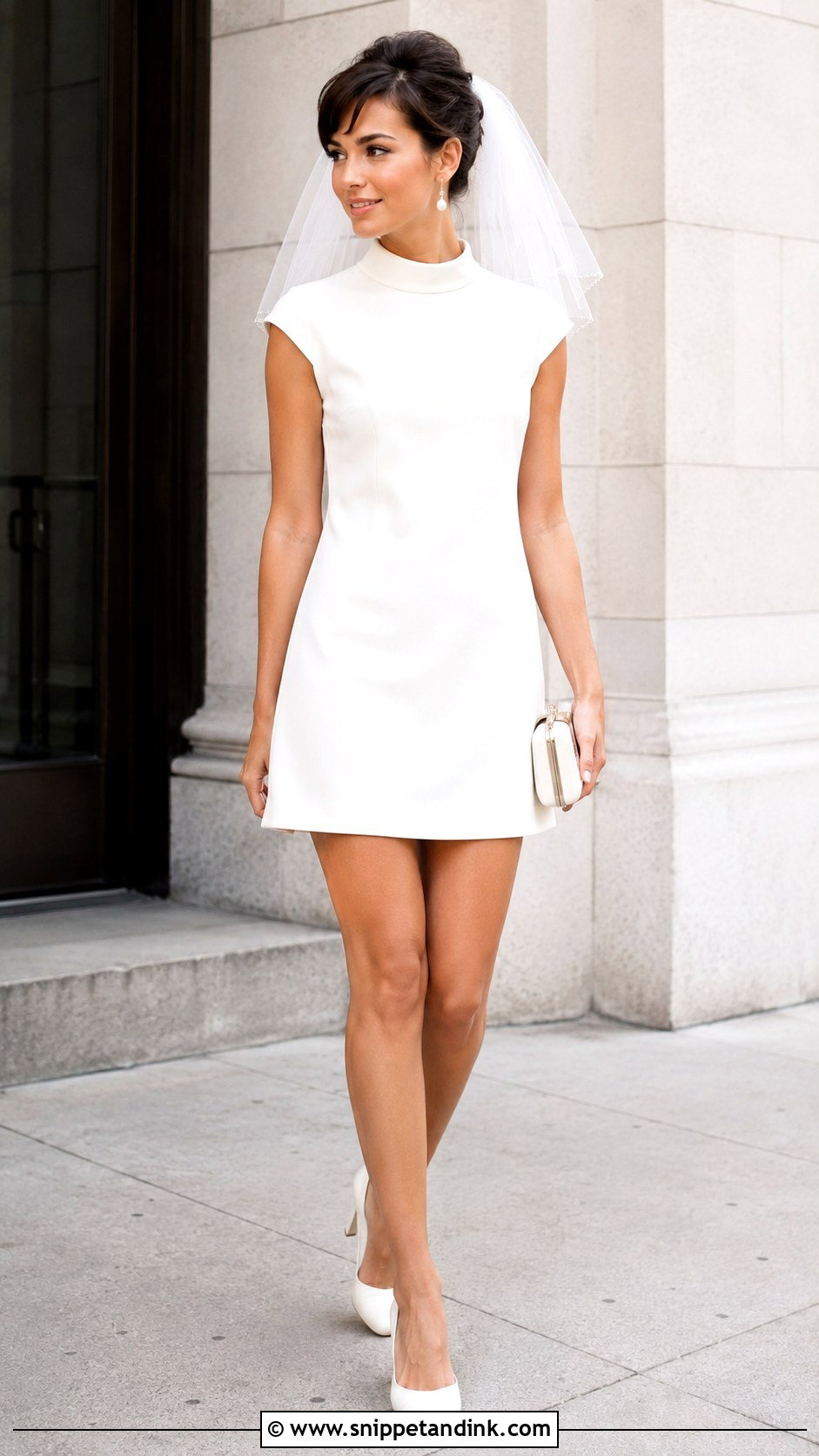
Bold and young, the mod mini belongs at a courthouse or as a reception change. It’s straight or slightly A-line, above the knee, with clean seams and little decoration, so the fabric has to do the structural work: thick crepe, satin or textured cotton lace. A high neckline, cap sleeves or bracelet sleeves keep it polished. White block heels, a short veil, pearl drops and a small box clutch complete it, and a bow headband or white patent shoes push the mod side further. Sit down in it before you buy. A mini rides up noticeably when you’re seated, and a hem that looks fine standing can be too short at the signing table.
4. 1960s A Line Wedding Dress
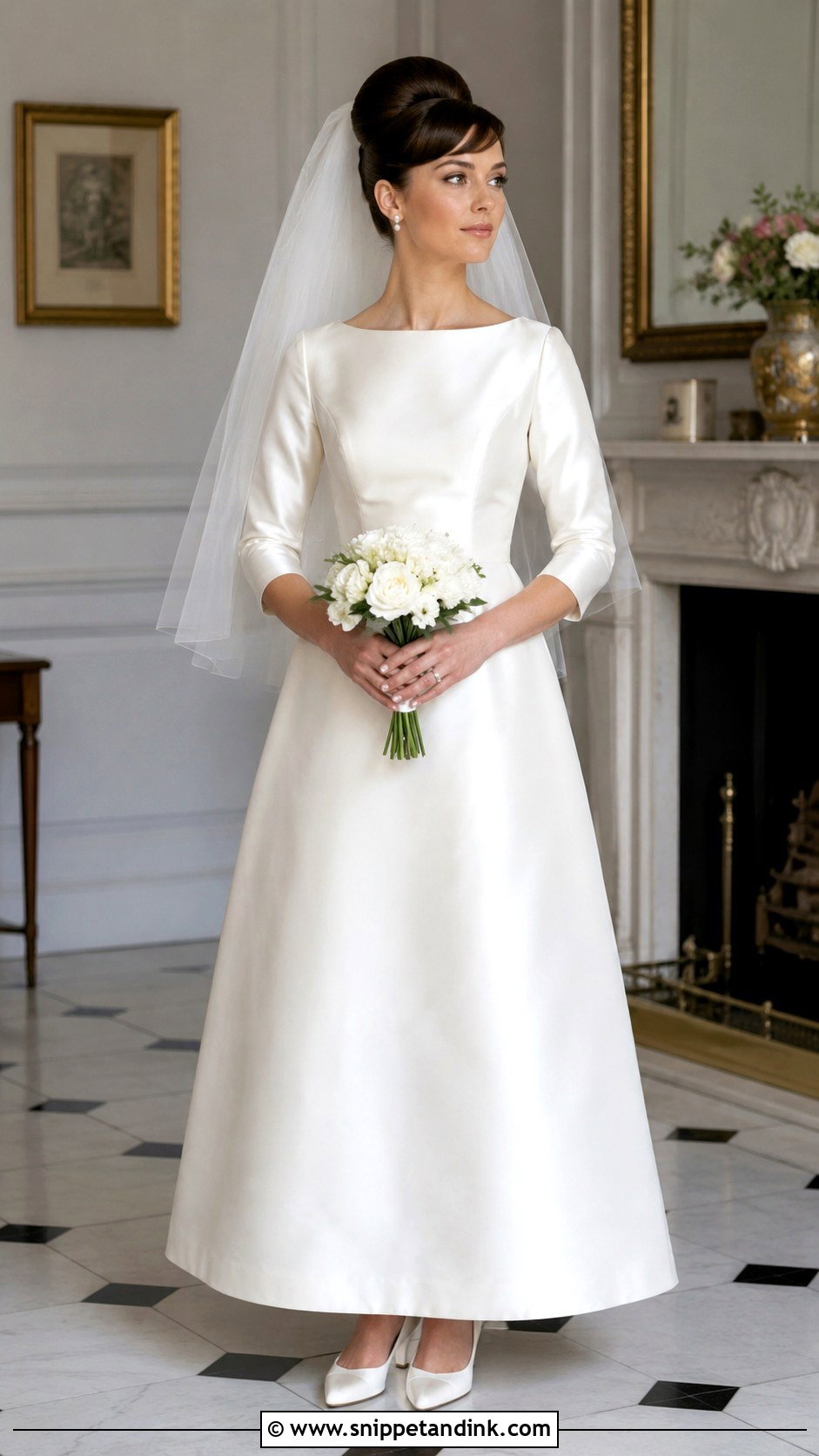
The A-line replaced many of the fuller fifties skirts and gave brides a smoother, more modern profile. It’s fitted through the shoulders or bust and widens gradually to the hem, so it moves easily and never feels heavy. Satin, peau de soie, lace or organza gives a traditional finish, and a bateau neckline, three-quarter sleeves and a simple chapel veil make it refined. I recommend it often because it forgives a lot: the flare skims the hips, and the hem can be adjusted without upsetting the line. Low heels, pearl earrings and a neat updo are enough for a formal ceremony or a relaxed one.
5. 1960s High Neck Wedding Dress
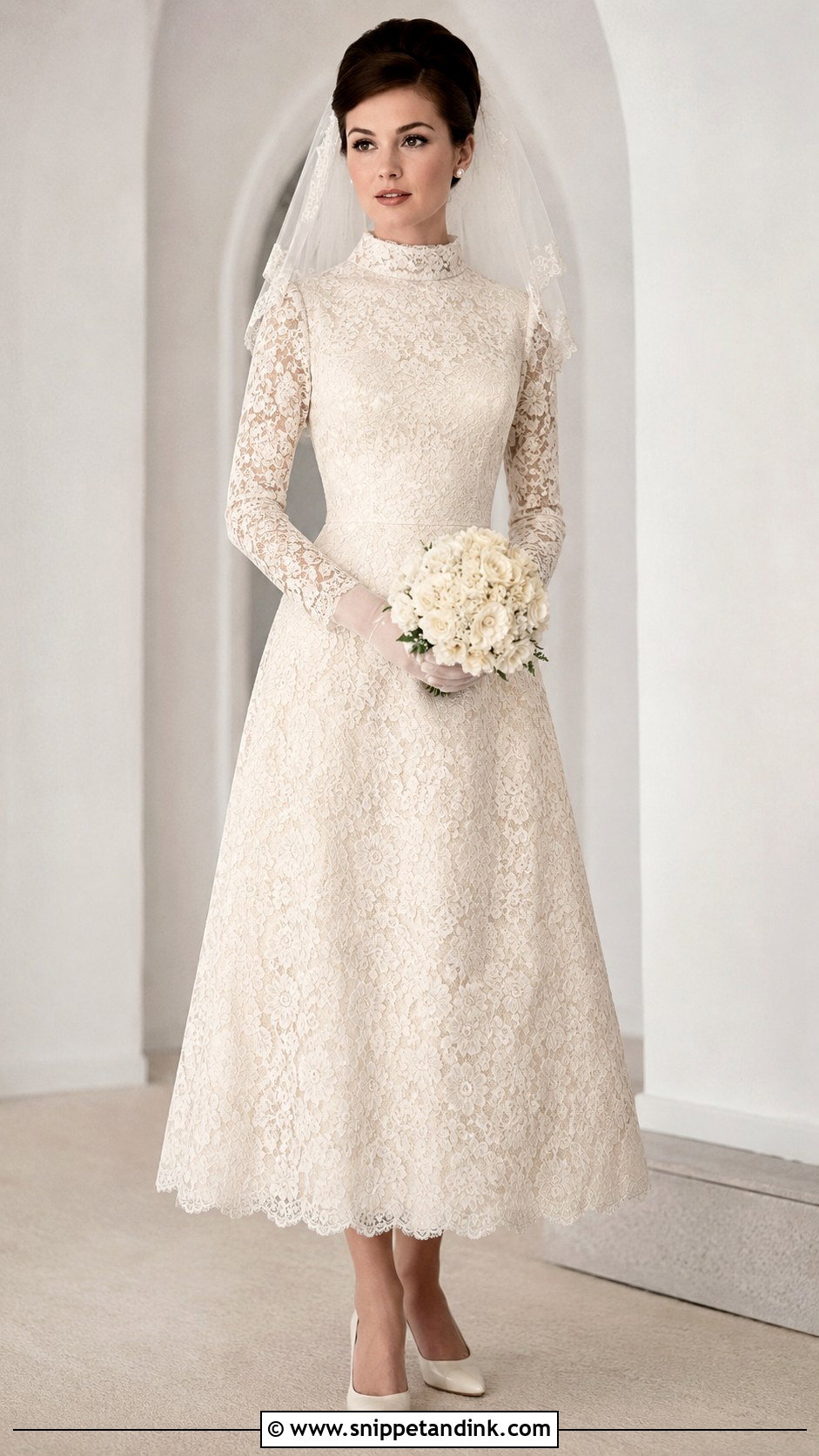
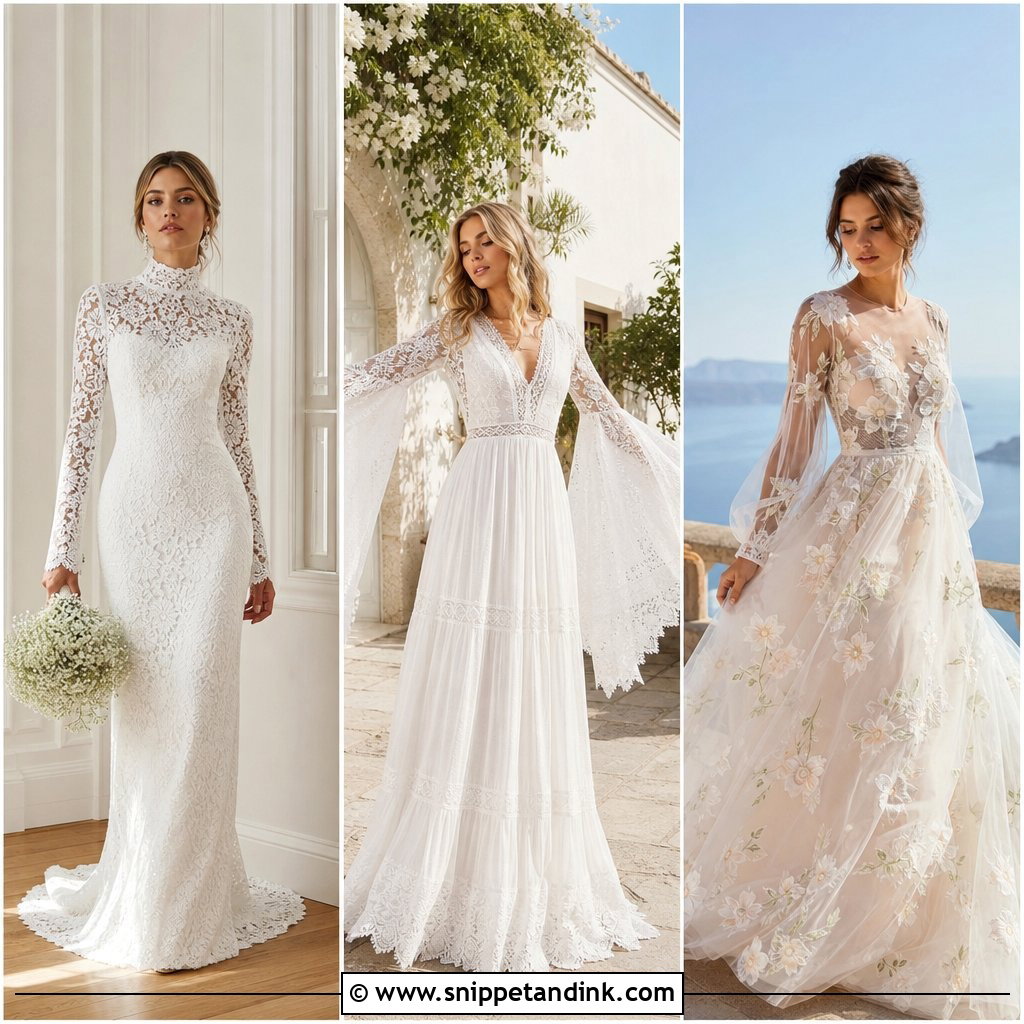
High necks frame the face, which is why I’d leave the necklace in its box. Lace, sheer organza or embroidered tulle gives the neckline its detail, and a slim bodice, long sleeves and an A-line or column skirt keep it balanced. Pearl buttons down the back or a small keyhole add interest. With a bouffant-inspired updo, pearl studs and a short veil at the crown, it is very much of the decade. Check the top edge where sheer fabric meets skin, because a raw or stiff edge scratches by evening and a soft binding solves it.
6. 1960s Long Sleeve Wedding Dress
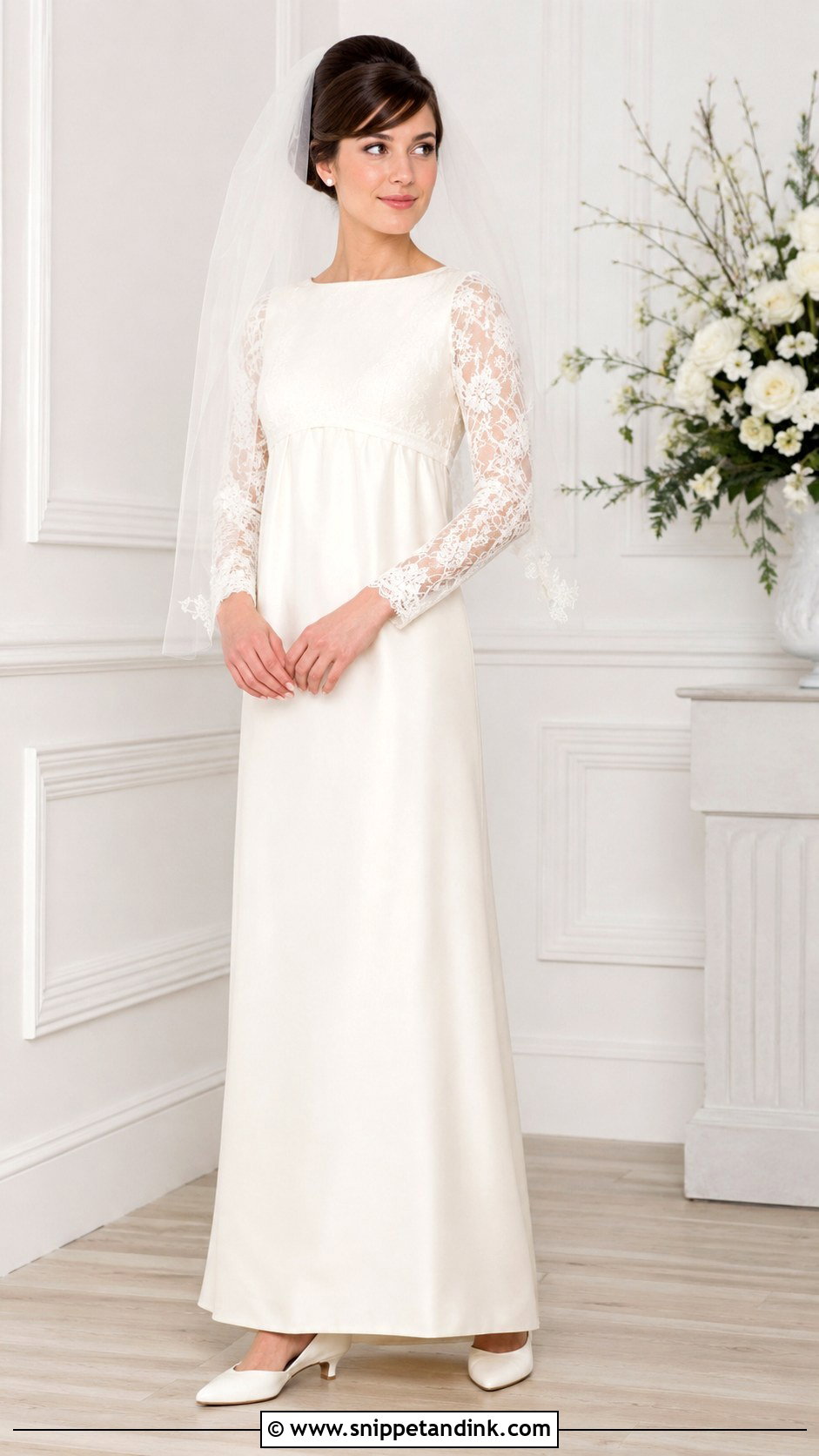
Sixties long sleeves tend to be delicate: lace, chiffon or sheer organza rather than heavy satin. A fitted sleeve looks formal, and a slightly gathered one softer. Brides of the decade often paired them with high necklines, empire waists or simple A-lines, and they suit fall, winter or anyone wanting coverage. Sheer chiffon adds no warmth, though, so for a cold venue I’d plan a coat or cover-up rather than rely on the sleeves. Satin kitten heels, pearl earrings and a waist-length veil complete it, with a smooth low bun or a soft beehive.
7. 1960s Tea Length Wedding Dress
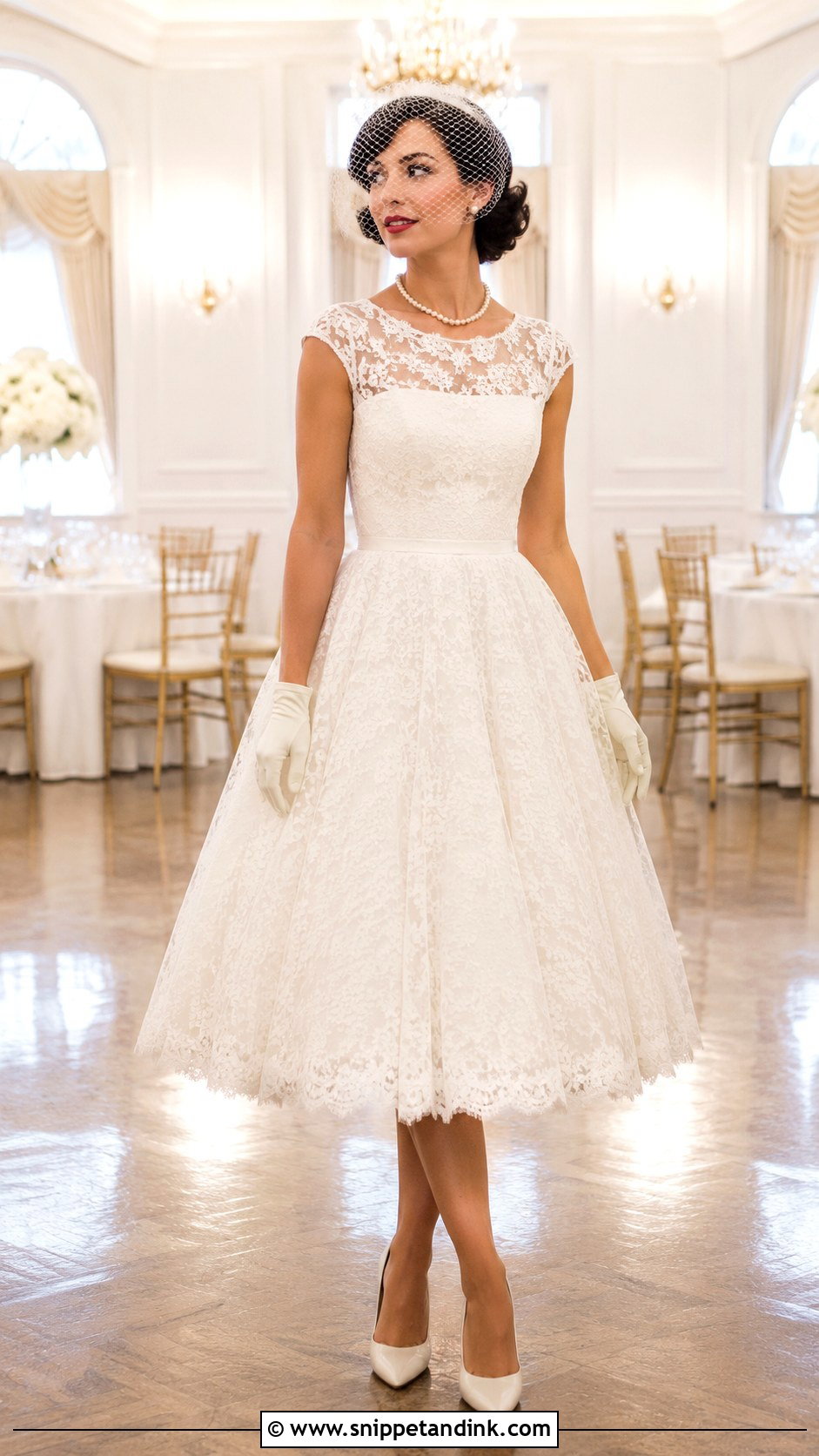
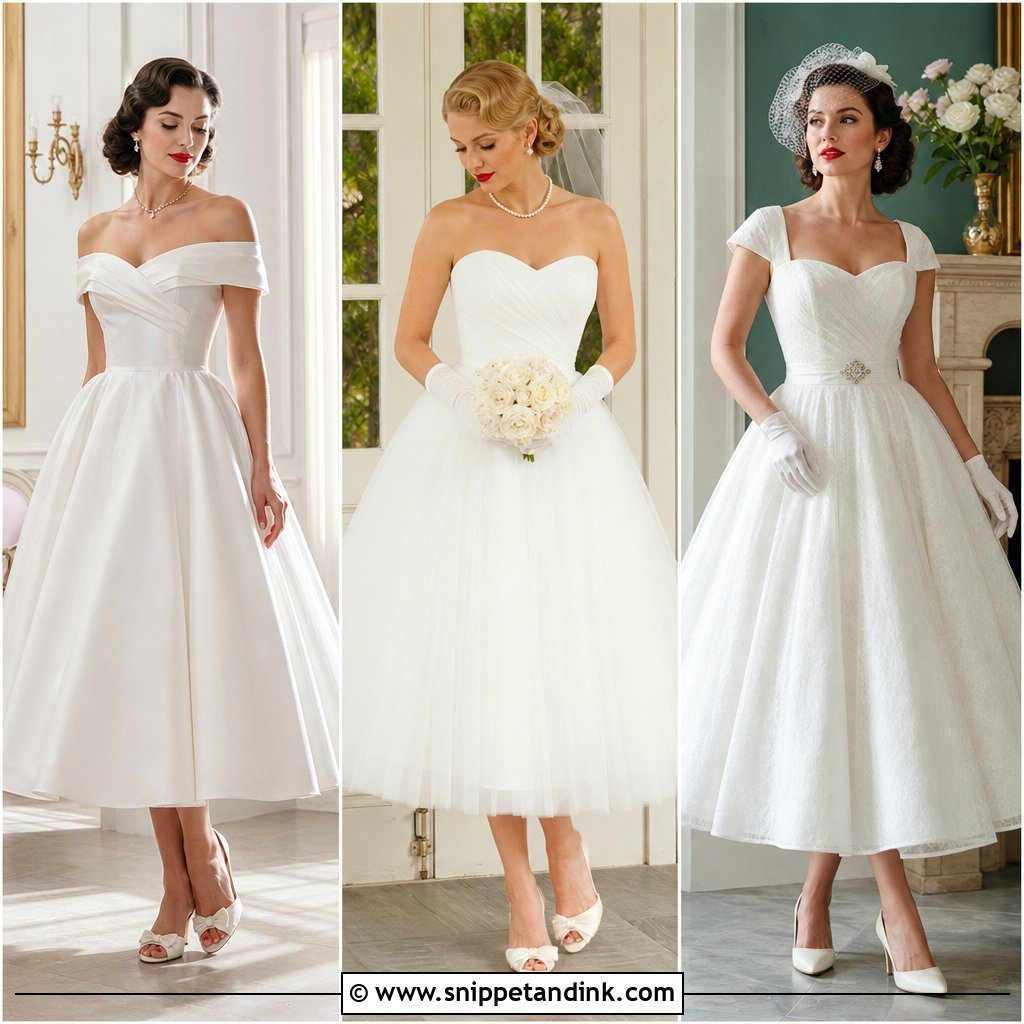
Tea length carried over from the fifties, though the skirt grew straighter as the decade went on. The hem falls below the knee or around the calf. Choose a fitted bodice and flared skirt for an early-sixties feel, or a straighter A-line for later; lace, satin and crisp organza all work. With your shoes in full view, go for pointed pumps, slingbacks or low block heels. Slingbacks need a test walk, since the strap slides down the heel on many feet and a small grip pad inside fixes it. Short gloves, a pearl necklace and a birdcage veil finish the outfit.
8. 1960s Shift Wedding Dress
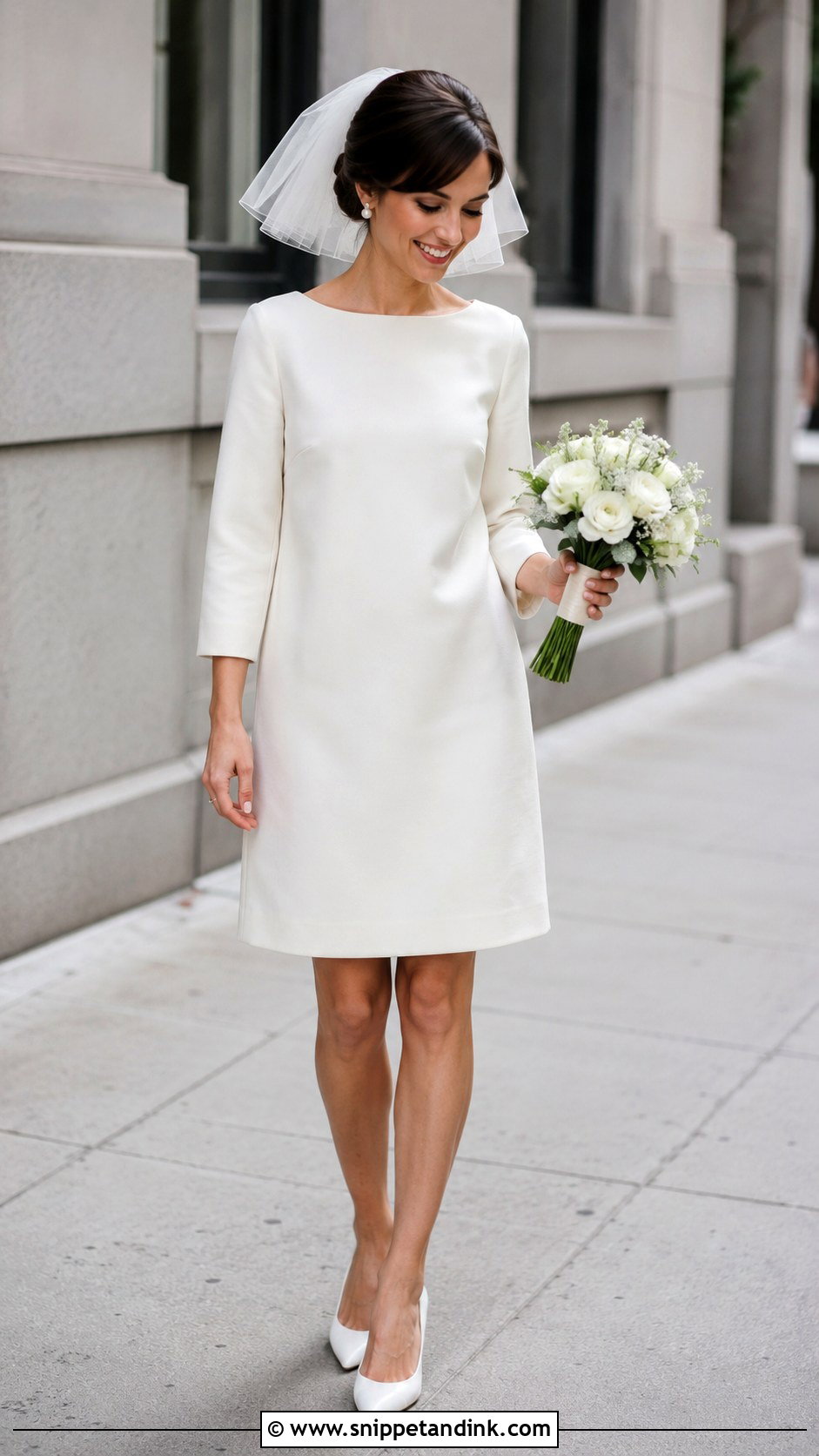
A 1960s shift wedding dress hangs straight from the shoulders with little waist definition, which makes it the purest mod shape here. Ivory crepe, silk or textured jacquard keeps it structured, and a knee-length hem, bateau neckline and bracelet sleeves give a polished finish without volume. White kitten heels, pearl earrings and a short veil or pillbox hat complete it. Because nothing is fitted at the waist, the shoulders and bust carry the whole fit, and a shift that’s too wide through the hips loses its clean column, so I’d check the side seams there. City weddings, courthouses and small restaurant receptions suit it.
9. 1960s Satin Wedding Dress
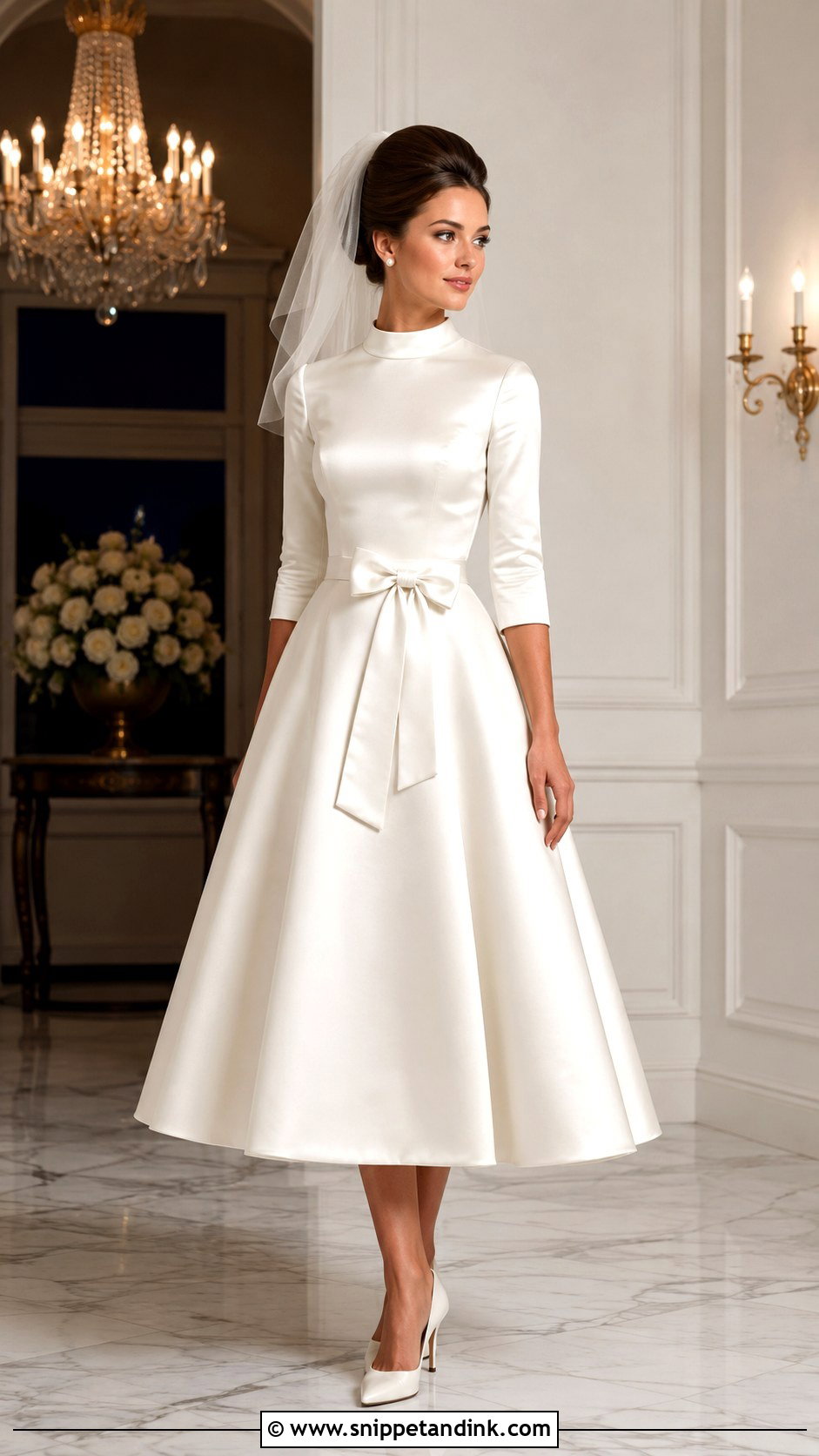
Satin gives the sixties shapes structure while staying soft. It suits A-lines, sheaths and empire waists, and a clean bodice, high neckline, three-quarter sleeves or a single waist bow keeps the mood right. Skip sparkle, since satin already reflects plenty of light. Ivory satin pumps, pearl studs, a narrow veil and a sleek updo complete it for an indoor formal wedding, a hotel ballroom or an evening ceremony. Dyed satin shoes rarely match a satin gown exactly, so I always take a fabric swatch to the shoe fitting.
10. 1960s Chiffon Wedding Dress
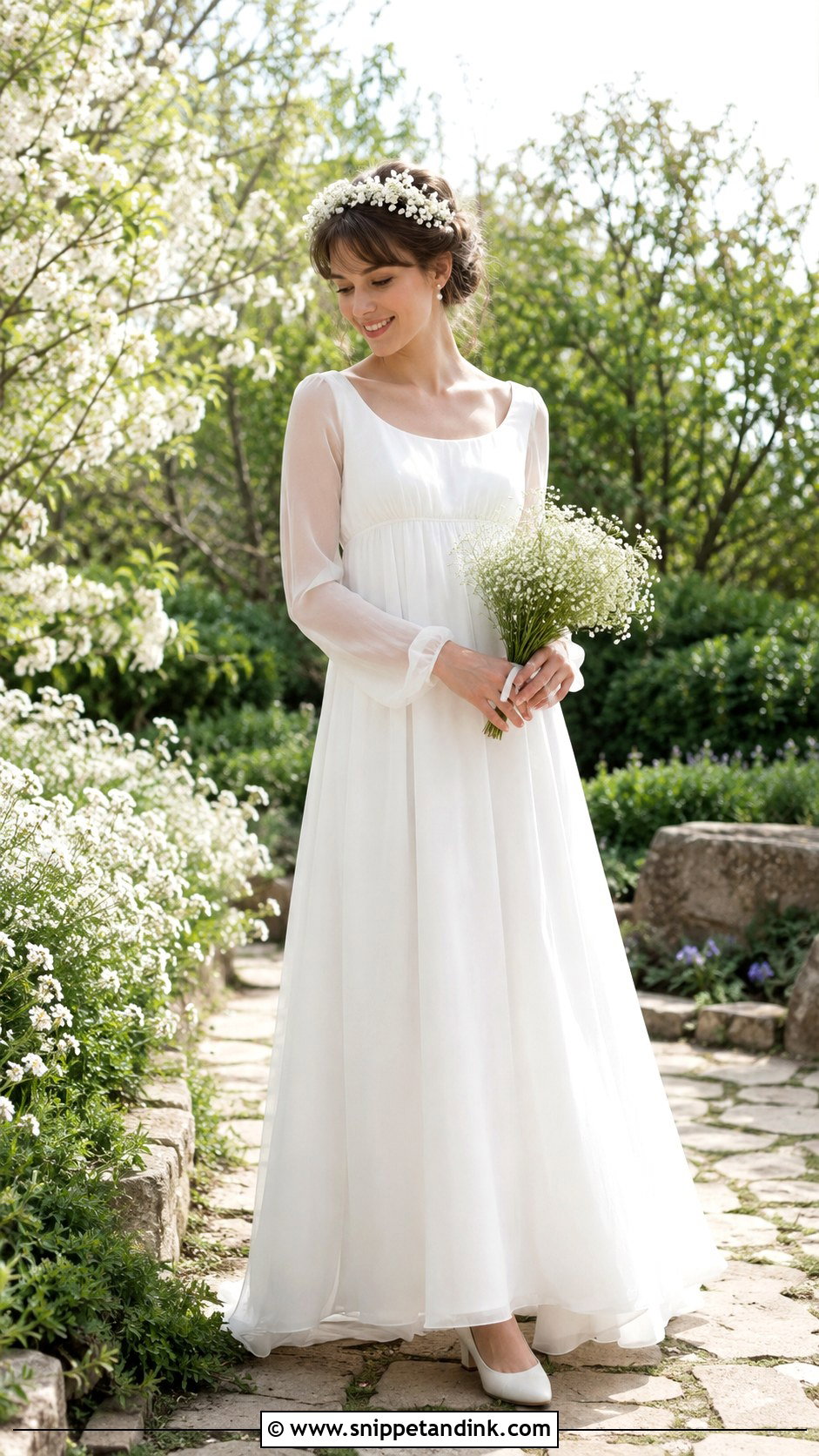
Chiffon floats, and it’s at its best on an empire waist, where it falls straight from the bust and moves as you walk. Sheer sleeves, a scoop neckline and a soft A-line skirt keep it light enough for spring, summer or a destination wedding. Keep the styling delicate: low heels, pearl earrings, a flower crown or short veil, and daisies, baby’s breath or white blooms for the late-sixties mood. Chiffon snags on bouquet wire and jewelry clasps, so I ask florists to wrap stems completely and check bracelets for sharp edges.
11. 1960s Courthouse Wedding Dress
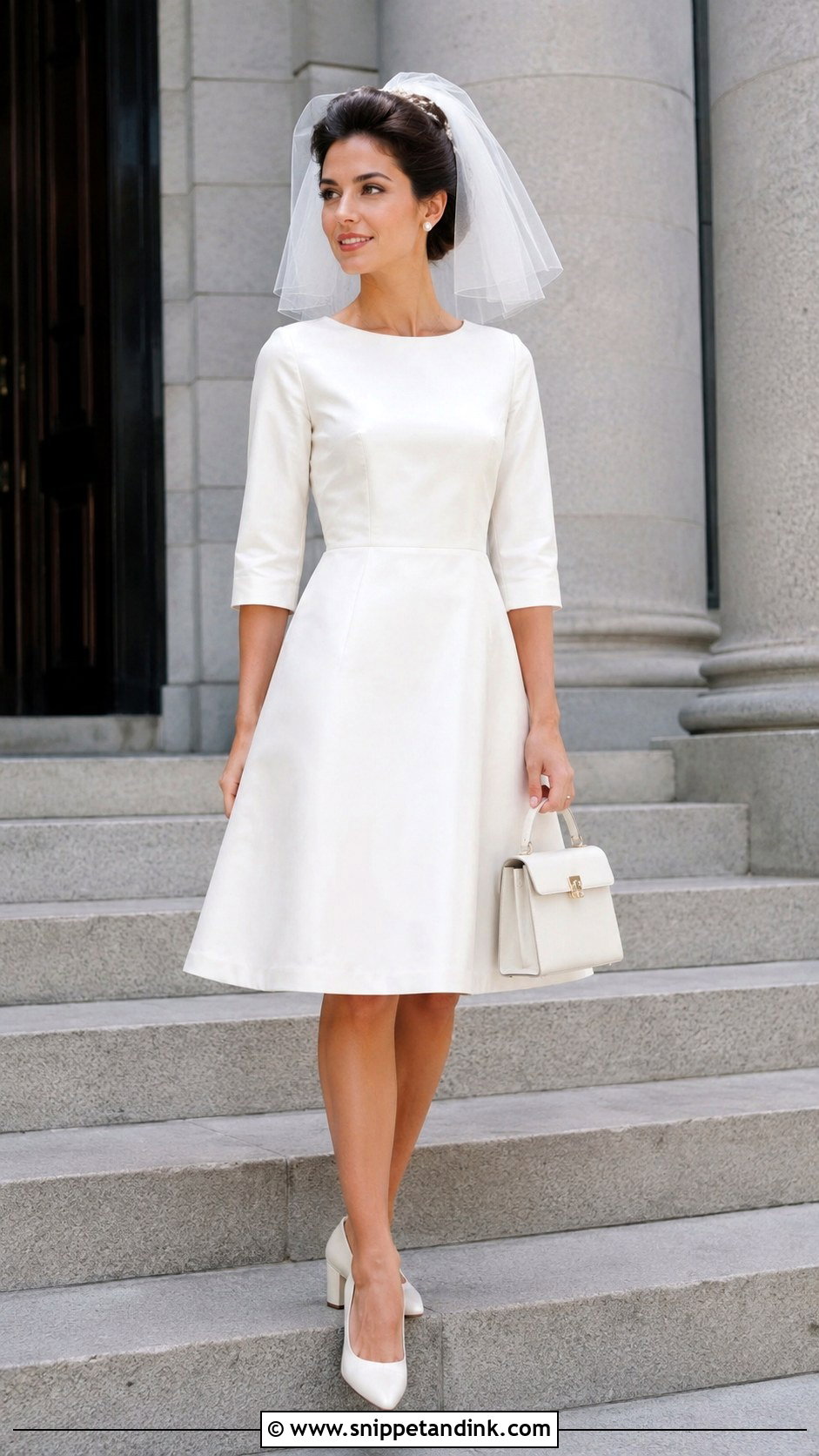
For a courthouse, a knee-length shift, lace mini or short A-line captures the decade and stays easy to wear. Ivory and cream are classic, and a soft pastel adds a vintage twist; a high neckline, bracelet sleeves or a tiny bow keeps it neat. Block heels, a structured handbag, pearl earrings and a short veil or pillbox hat complete it. Courthouse steps and city sidewalks make good photo backdrops, but they’re often windy, so I’d skip a long, loose veil here. A pillbox or birdcage stays put.
12. 1960s Boho Wedding Dress
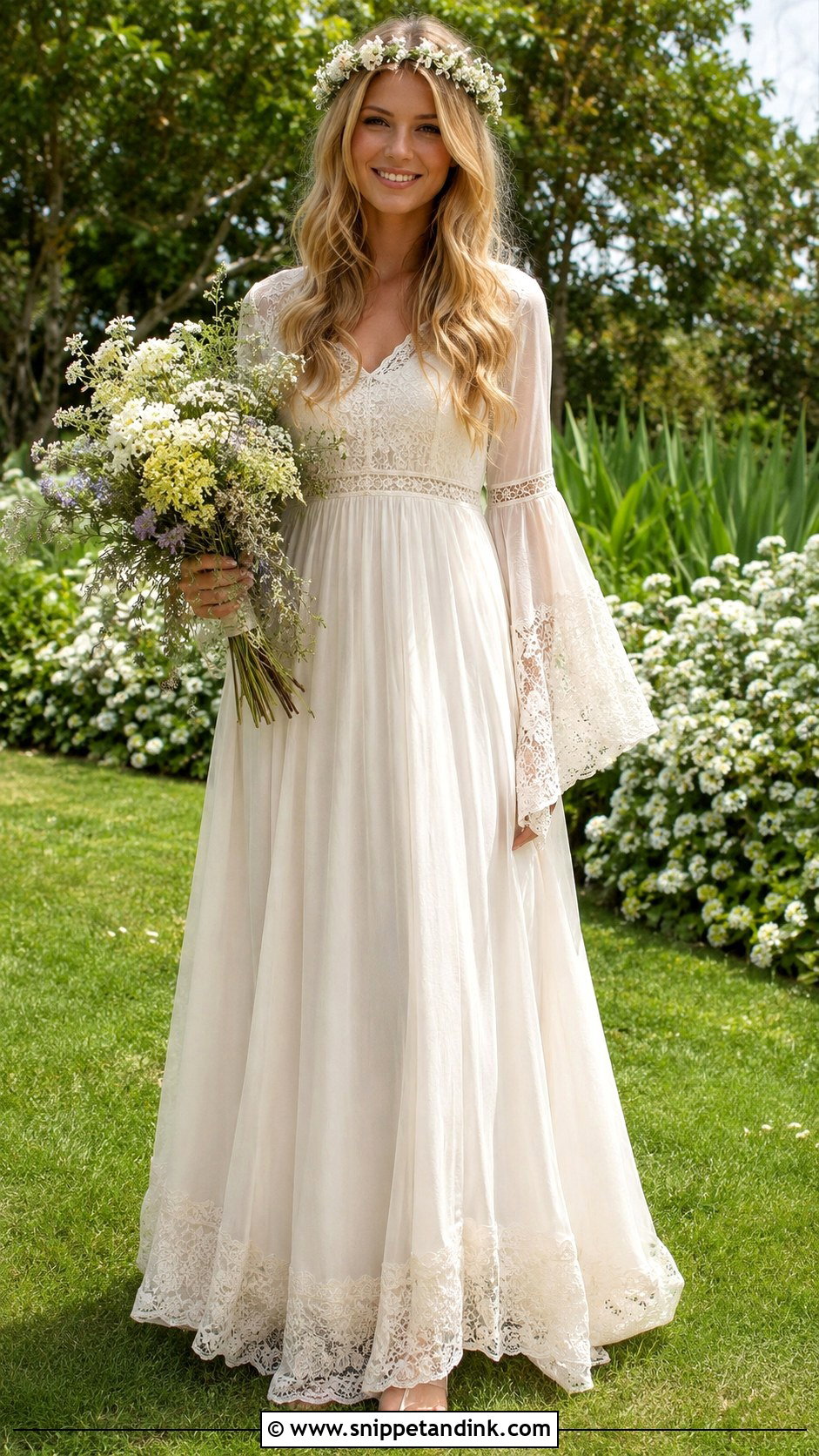
By the late sixties bridal had relaxed, and this is where boho begins. Flowing chiffon, cotton lace, bell sleeves, daisy embroidery or an empire waist with a loose skirt all fit, and the result should look natural rather than structured. Ivory sandals, soft waves and a flower crown finish it, with a sheer veil or embroidered cape for more drama. Cotton lace wrinkles more readily than synthetic lace and will show creases from the car, which plenty of boho brides happily accept. Jewelry stays small: fine pearls, delicate gold hoops or a thin pendant.
13. 1960s Pillbox Hat Wedding Dress
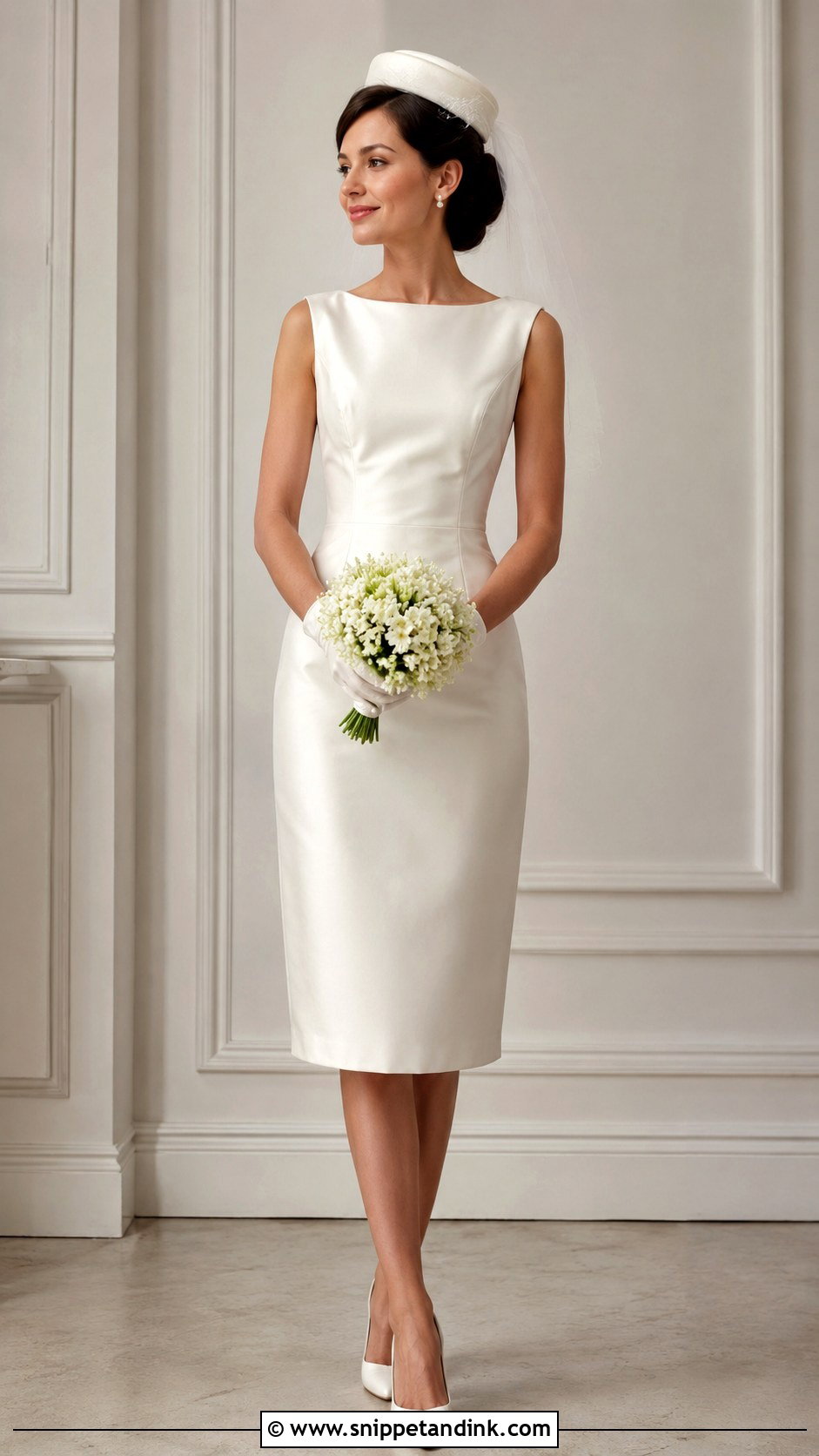
A pillbox hat turns a simple dress into a complete sixties outfit. It looks best with a clean sheath, an A-line or a tailored knee-length dress in satin, crepe or lace, and a white or ivory pillbox with a short attached veil carries the ceremony. Pointed pumps, pearl earrings and a small bouquet complete it. The hair underneath matters more than people think. A pillbox needs a little lift or a smooth updo to sit at the right angle, and it’s secured with pins through its comb or loops, so I’d always do the hair trial wearing the actual hat.
14. 1960s Peter Pan Collar Wedding Dress
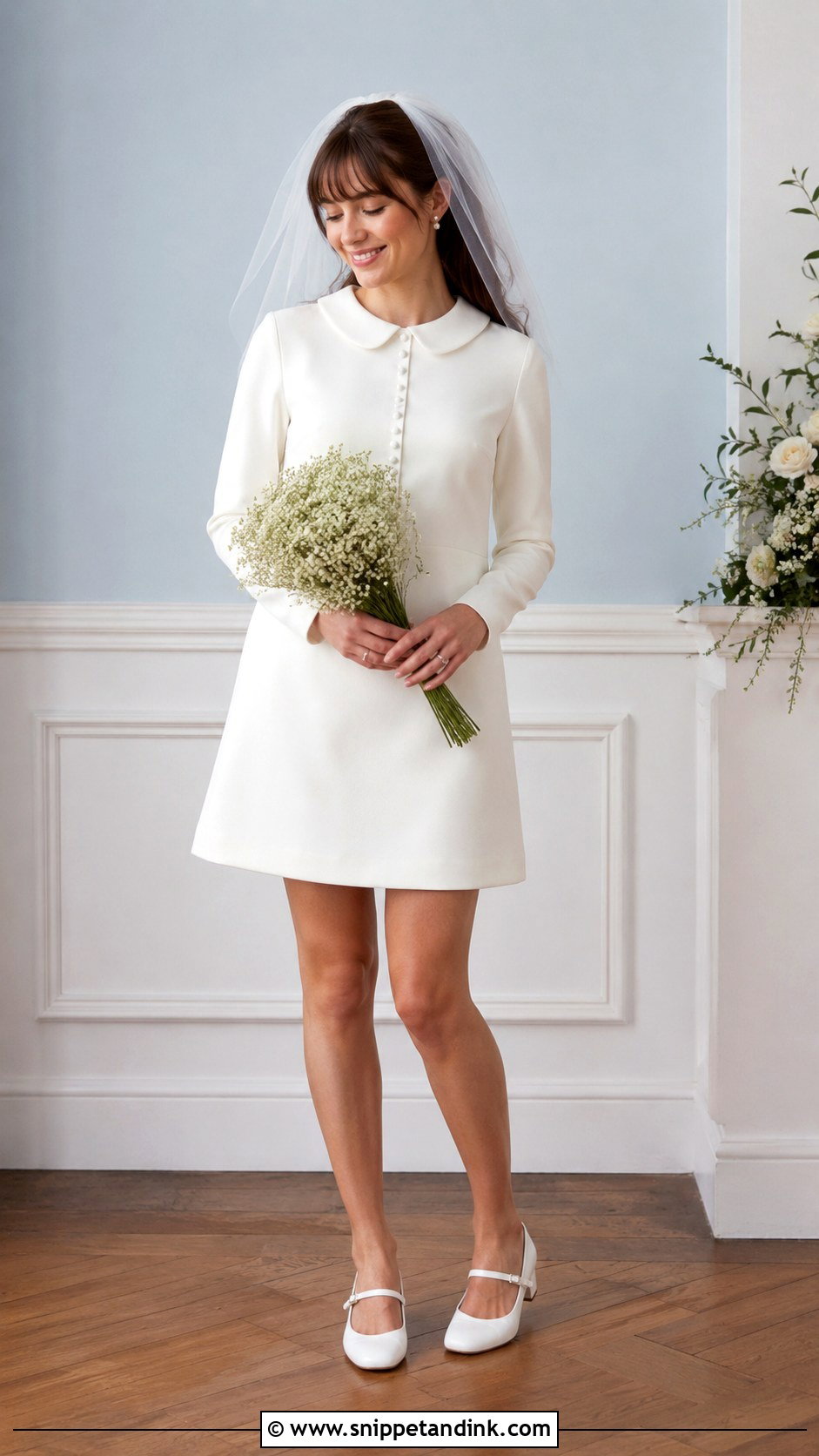
A Peter Pan collar softens the neckline and suits mini dresses, shifts and empire waist gowns, in lace, crepe or satin with small buttons down the front or back. Keep the skirt clean and the extras simple: white Mary Jane heels, pearl studs and a short veil. The collar should lie flat on your collarbone. If the points flip up, the dress needs a tiny tack stitch or a light interfacing, both quick fixes for a seamstress. Modest and slightly nostalgic, it suits a courthouse, a garden or a retro reception.


15. 1960s Bell Sleeve Wedding Dress
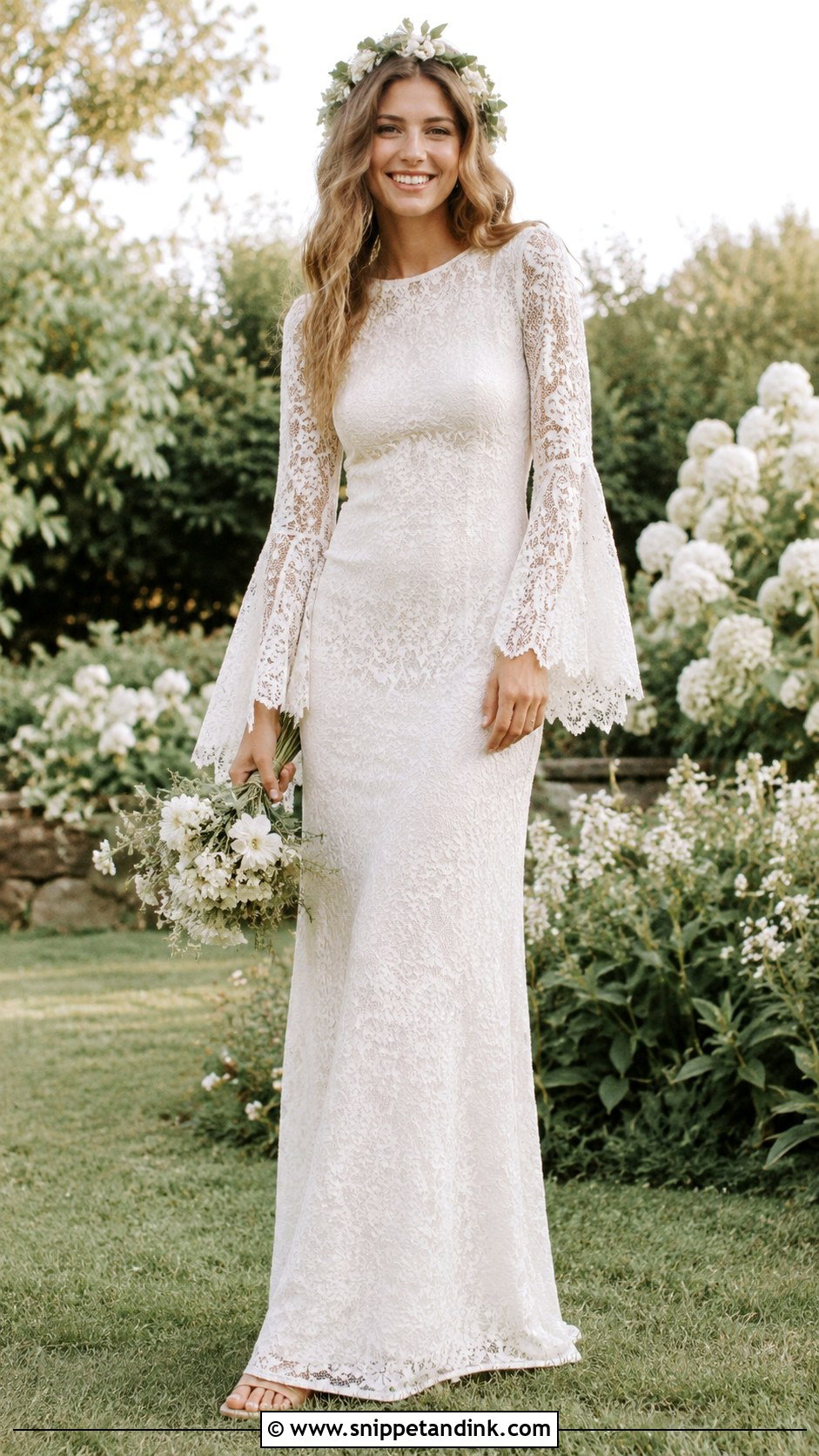
Bell sleeves arrived late in the decade as fashion loosened up. A lace or chiffon gown with slim lines through the body and sleeves flaring at the wrist keeps it balanced, and an empire or sheath shape stops it feeling oversized. Pair it with low sandals or block heels, loose waves and a flower crown or simple veil, plus a small bouquet of white wildflowers. One honest catch: a wide bell drags through food and frosting. That’s no reason to avoid it, just to keep the flare moderate and pin it back for the cake cutting.
16. 1960s Bateau Neck Wedding Dress
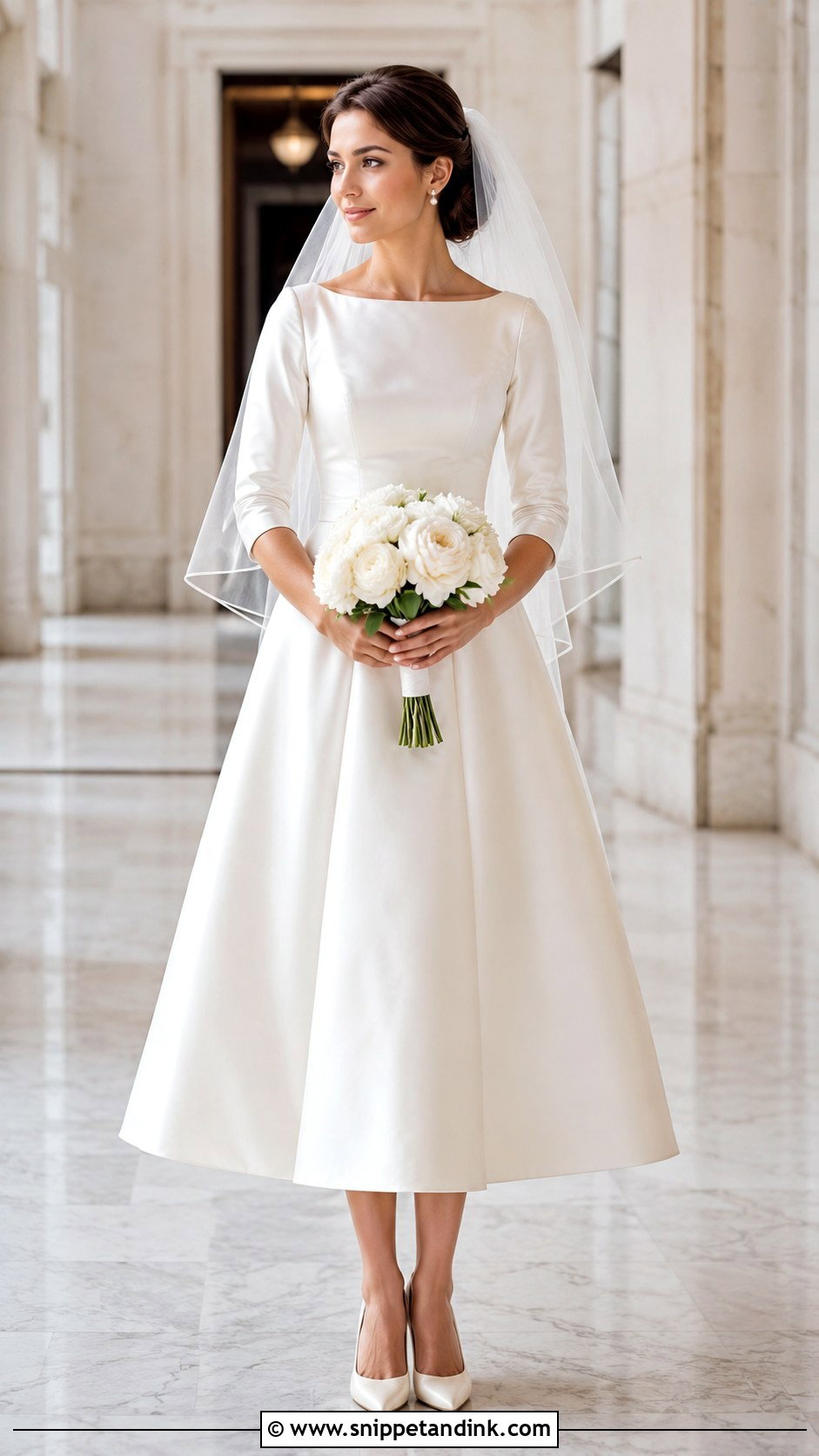
The bateau neckline runs wide across the collarbone and shows very little skin. It pairs with A-line skirts, satin sheaths and lace gowns: three-quarter sleeves and a fitted bodice for a classic look, or sleeveless with gloves and pearl earrings for something simpler. A neat updo, ivory pumps and a fingertip veil finish it. On very narrow shoulders the line can read too wide, and I’d ask for the neckline to be brought in slightly at each end. Keep accessories refined, since the neckline is the detail.
17. 1960s Pearl Beaded Wedding Dress
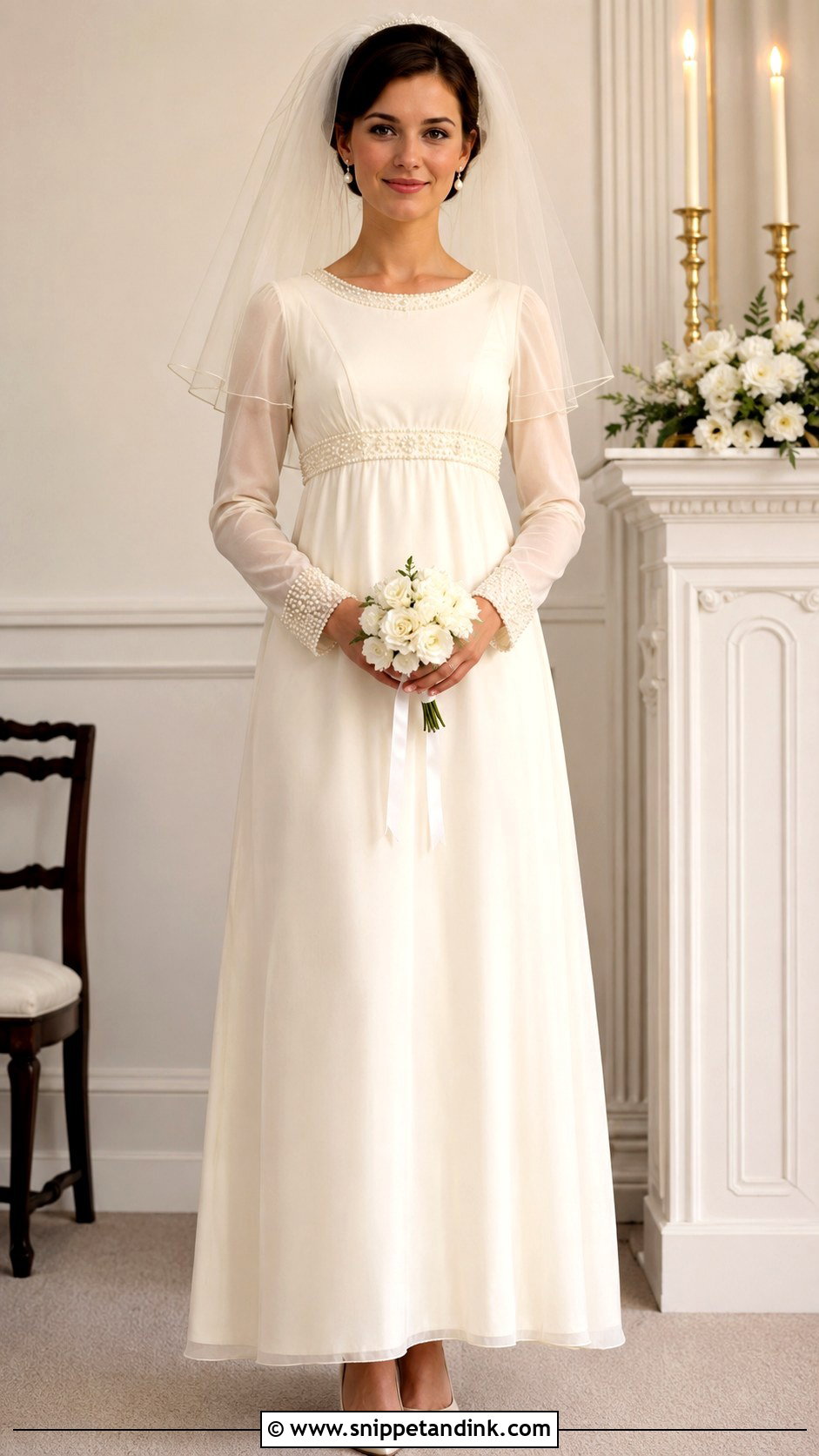
Pearl beading works best placed, not scattered. Around the neckline, cuffs, bodice or waist it adds shine without taking over, and pearl trim on an empire waist ties straight back to the decade’s most famous bridal looks. A lace or chiffon base keeps it soft; pearl earrings, satin pumps and a short veil complete it. Skip the necklace if the bodice is already decorated. Pearls add weight to chiffon, so I check that the beaded area isn’t dragging the fabric or making the neckline sag.
18. 1960s Daisy Wedding Dress
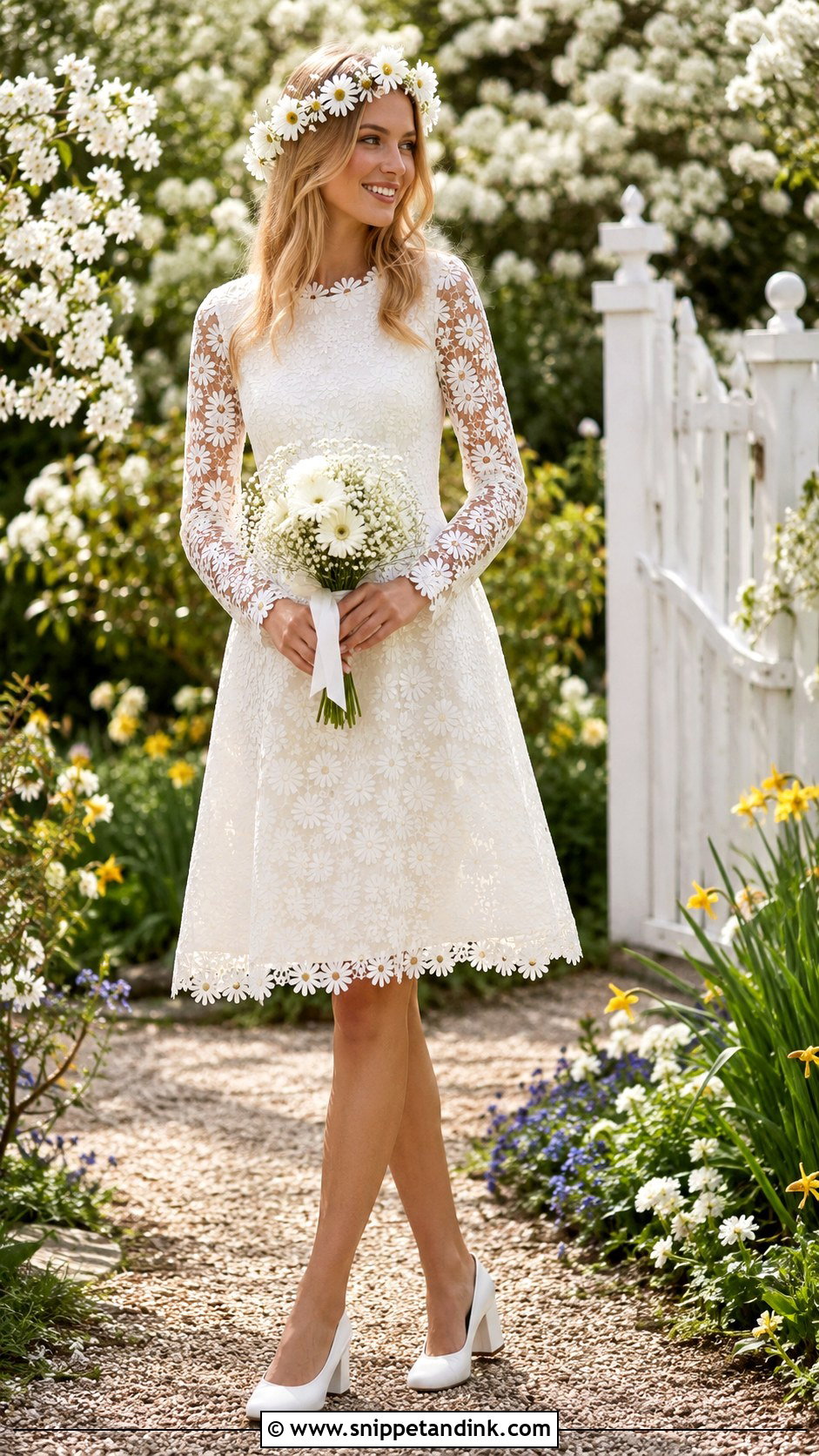
Daisies are the late-sixties flower-child signature, as lace motifs, embroidered trim, appliqués or the bouquet itself. For an elegant version, choose an ivory A-line or empire dress with subtle daisy lace on the sleeves or hem, then add white block heels, natural makeup and soft hair with a daisy crown or veil. Fresh daisies droop out of water sooner than sturdier blooms, so for a real crown I’d ask the florist to make it as close to the ceremony as possible. Keep jewelry delicate so the floral detail leads.
19. 1960s Bow Wedding Dress
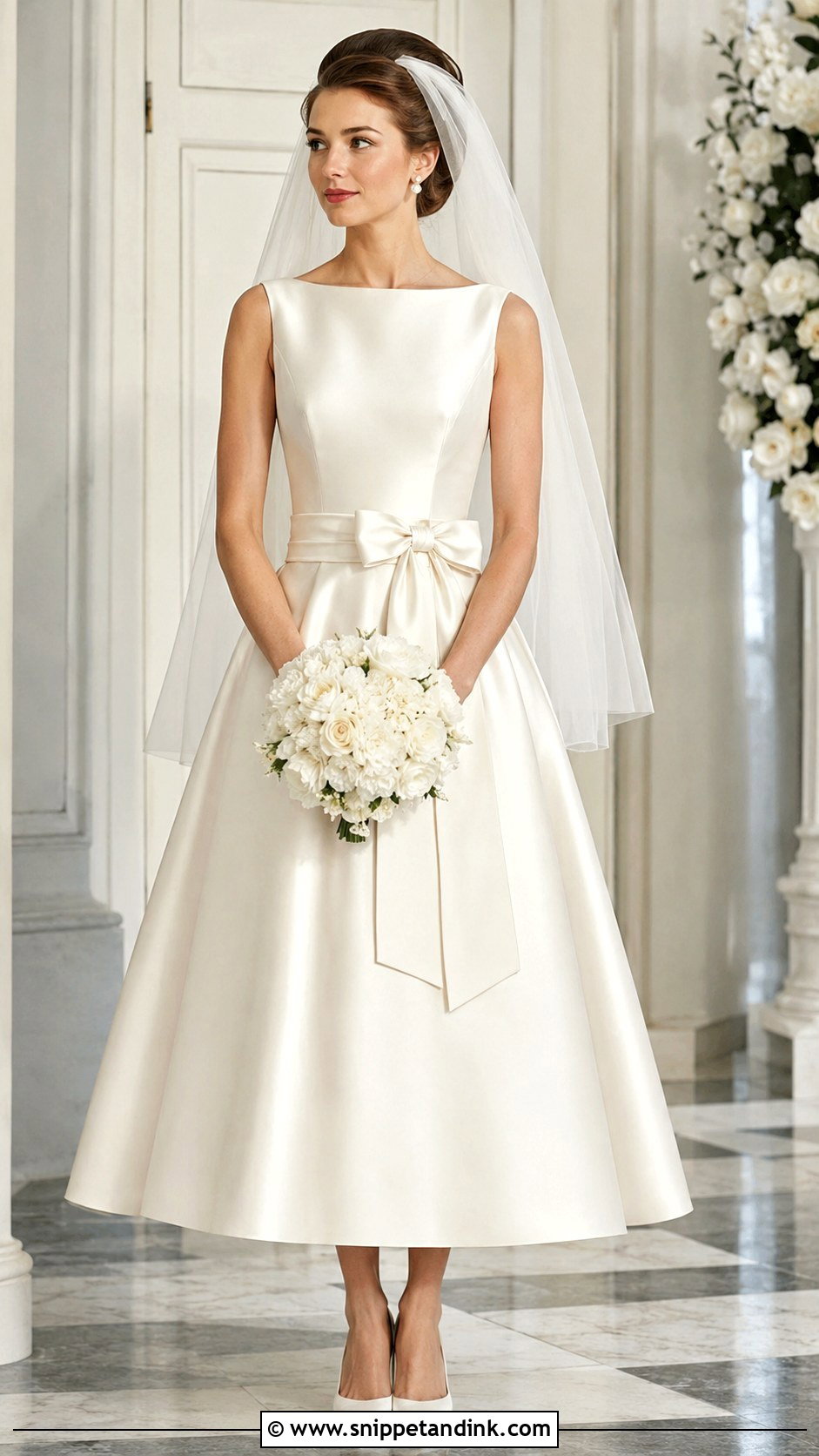
A bow can sit at the waist, neckline, back or shoulder. A satin A-line with a waist bow reads classic, while a mod mini with a back bow reads playful. Keep the rest of the dress plain so the bow looks deliberate, and balance it with pointed pumps, pearl earrings, a clean veil and a structured bouquet. A large back bow gets crushed against every chair you sit on, so I’d ask whether it can be made detachable, or keep it small if dinner is long.
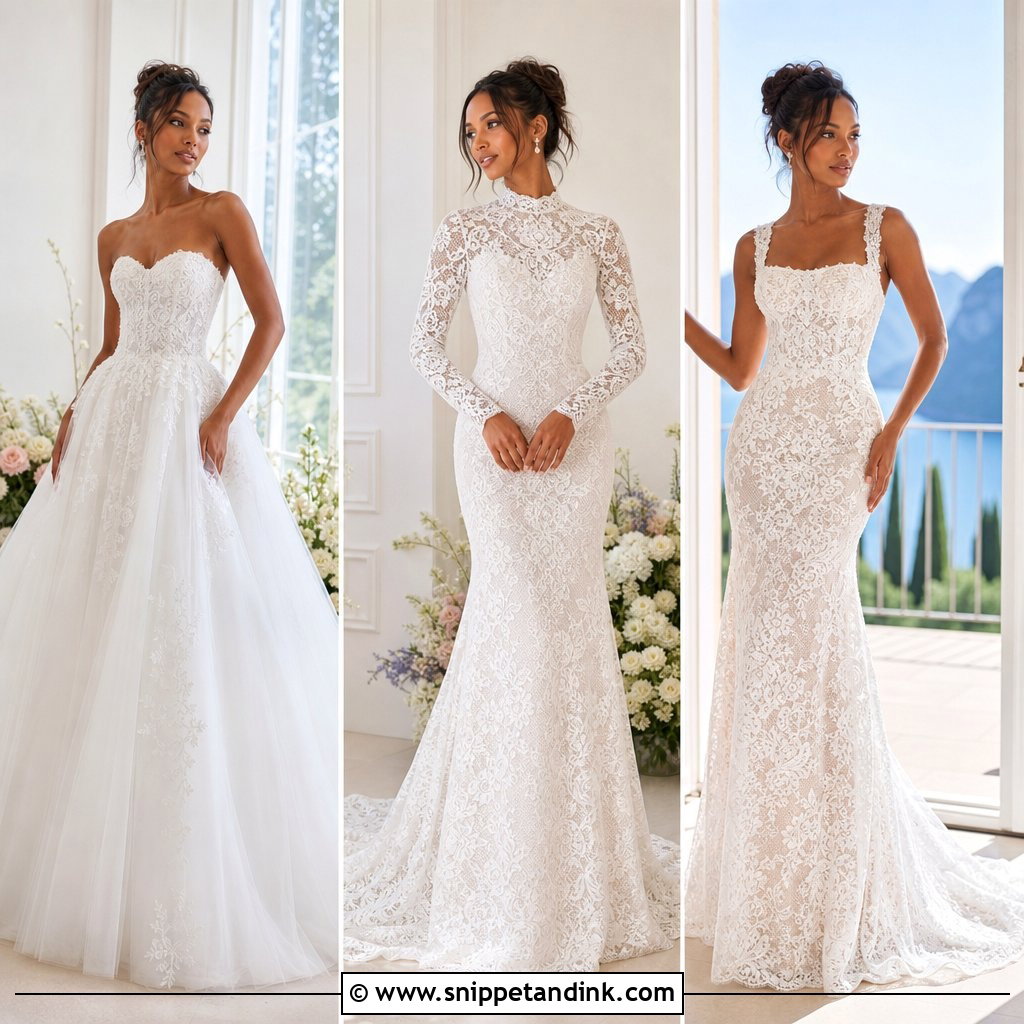
20. 1960s Sheath Wedding Dress
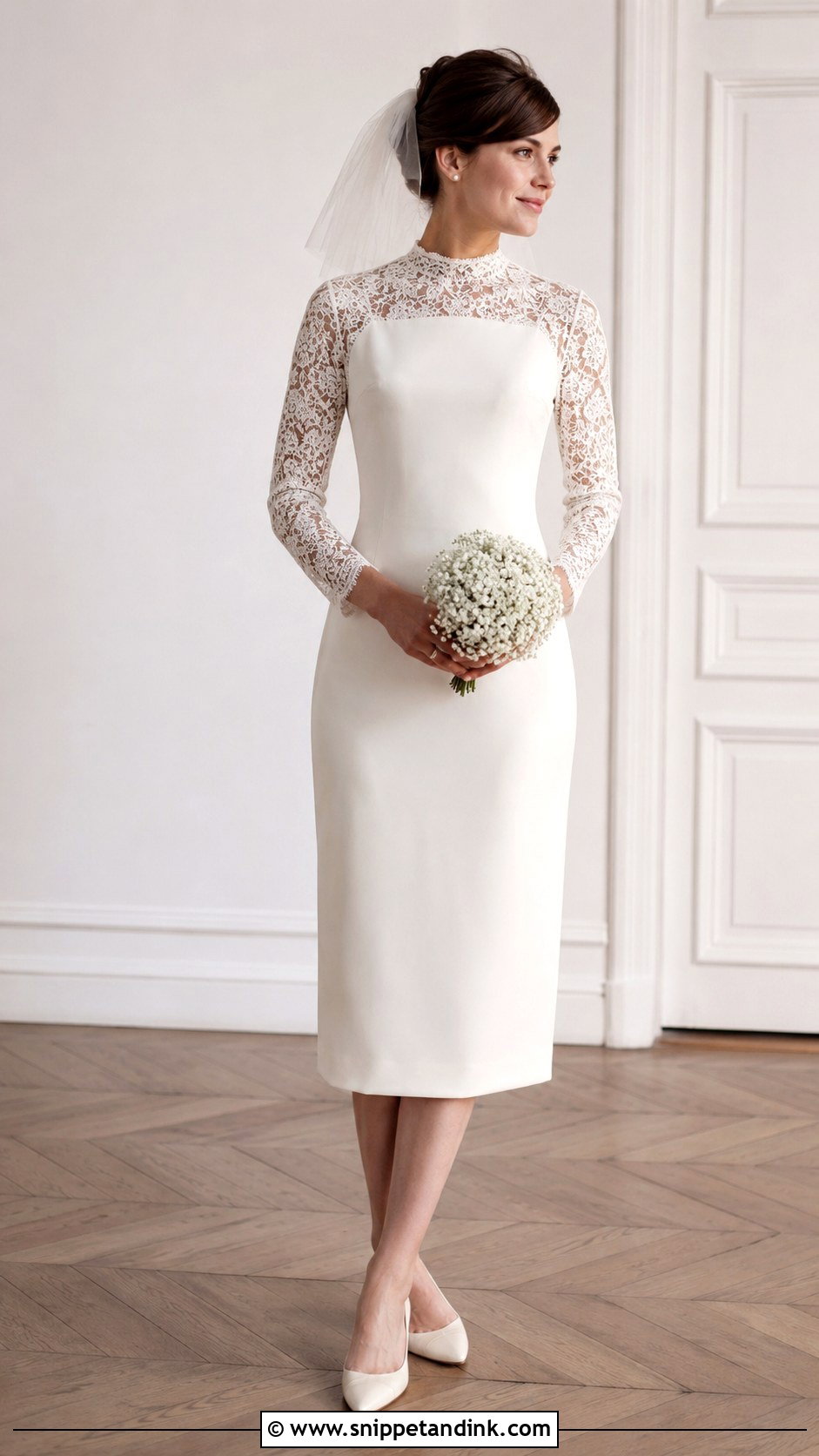
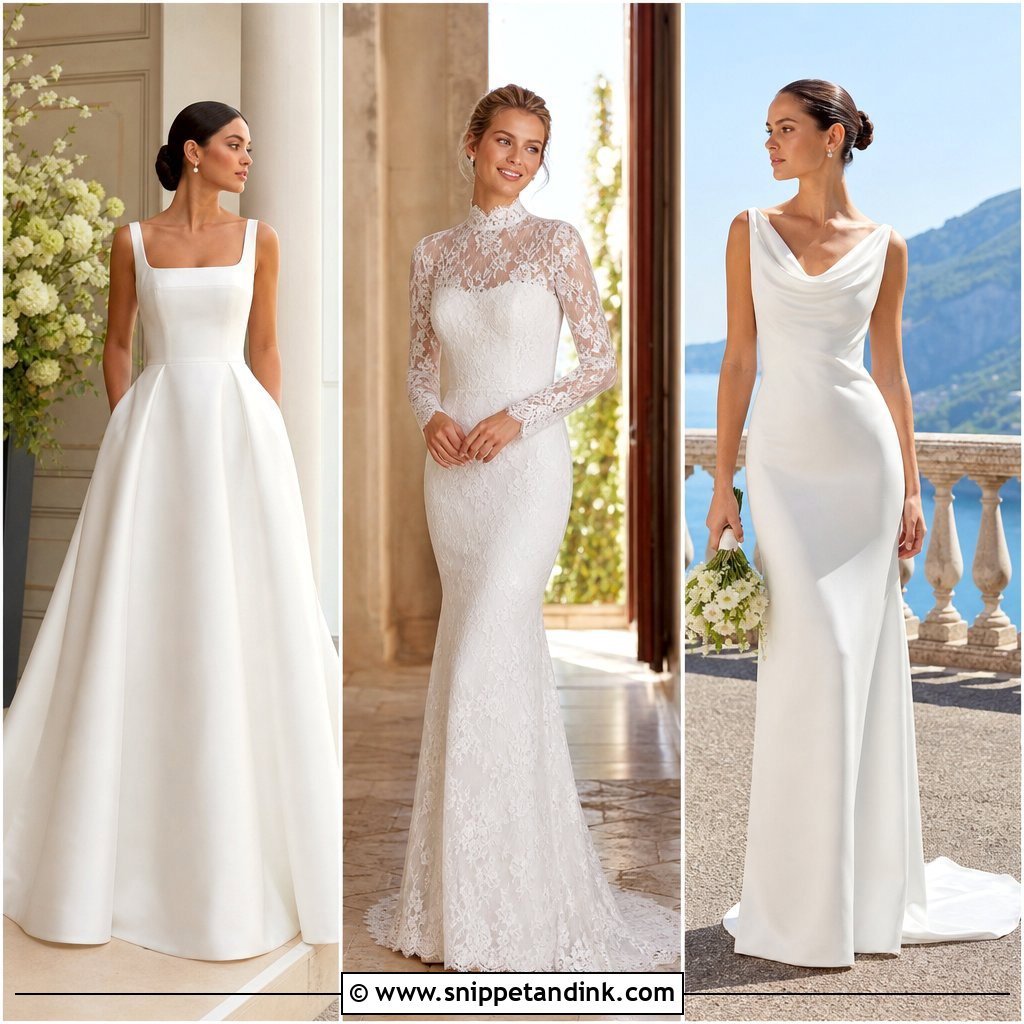
The sheath follows the body in a straight line: sleek, but not revealing. Many sixties sheaths were softer and less structured than modern fitted gowns, which makes them comfortable through a long day. Lace, crepe, satin or silk with a high or bateau neckline or long sleeves all work, plus kitten heels, pearl studs and a short veil, and a column or small round bouquet suits the slim line. Stairs are the real test. A straight skirt needs a kick pleat or slit at the back to climb steps, so make sure there is one before the hem is set.
21. 1960s Organza Wedding Dress
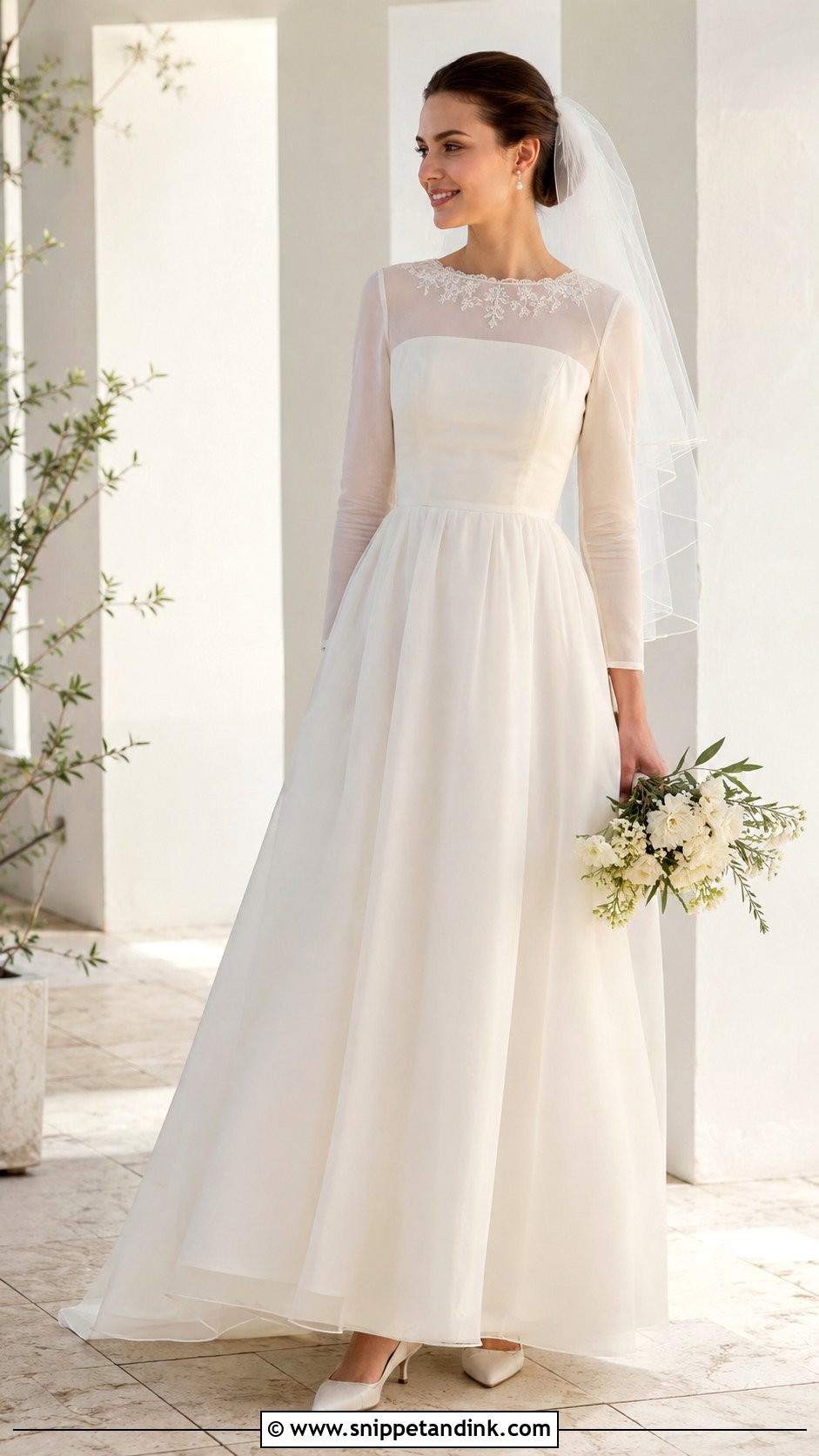
Organza gives crisp structure that still feels romantic. It suits A-line skirts, sheer sleeves, overlays and softly flared tea lengths, and a plain organza dress with a fitted bodice and floating skirt looks bridal without heavy volume. Embroidered organza or a lace-trimmed neckline adds detail; low satin heels, pearl earrings and a fingertip veil finish it. In daylight it catches the light softly. The downside is that organza creases sharply and doesn’t relax by itself, so a careful steam on the morning is part of the plan.
22. 1960s Off White Wedding Dress
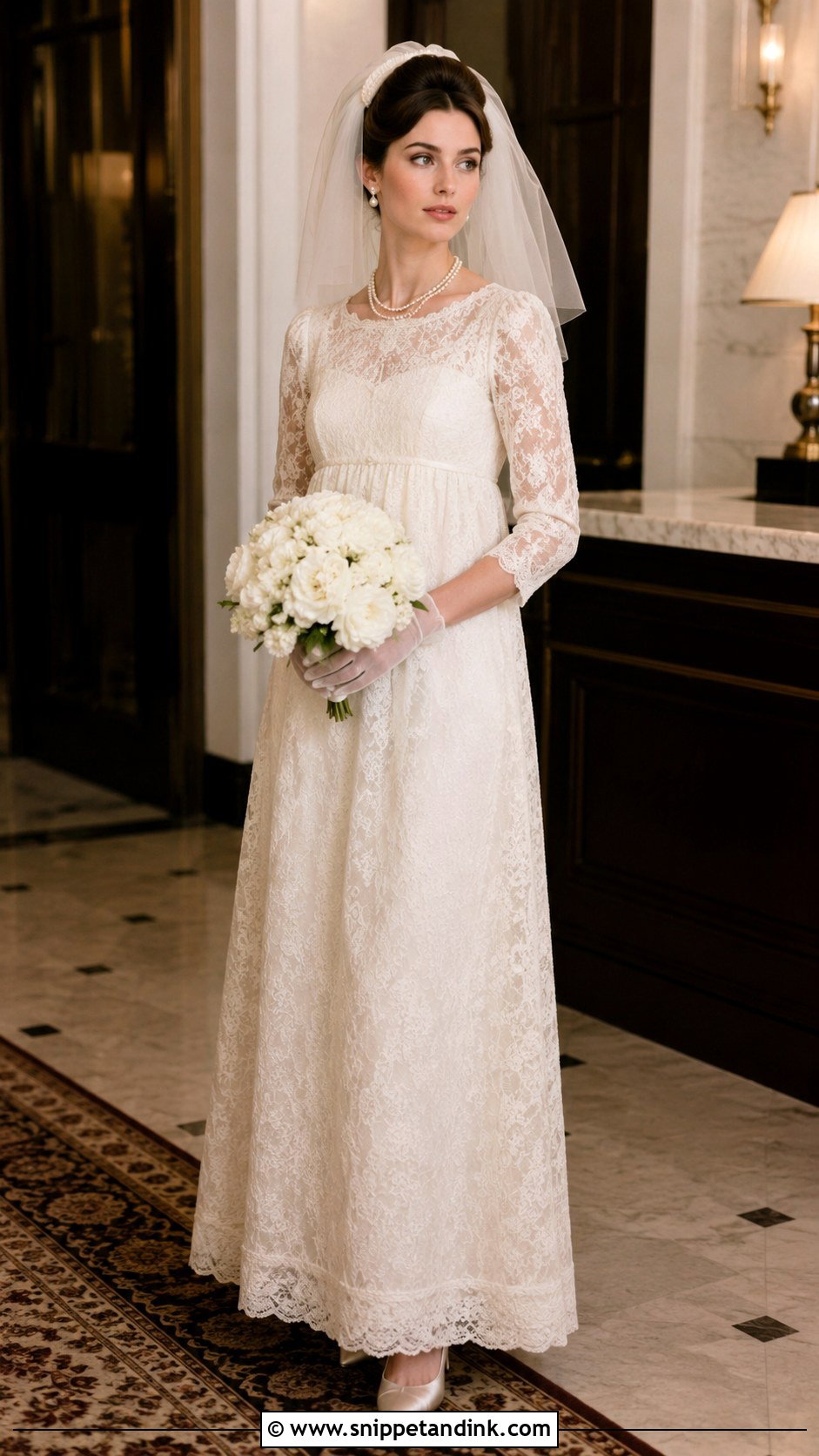
Off white suits more skin tones than bright white, and ivory, cream, candlelight and pale champagne all sit comfortably in a sixties look. These shades work with lace, satin, chiffon and vintage embroidery, on an empire waist or an A-line. Match your shoes and veil to the dress, because mixed whites look patchy in photos. I compare veil tulle to the dress fabric in daylight rather than under shop lighting, since ivory tulle and ivory satin can read quite differently. Vintage hotels, gardens and small celebrations suit it.
23. 1960s Colored Wedding Dress
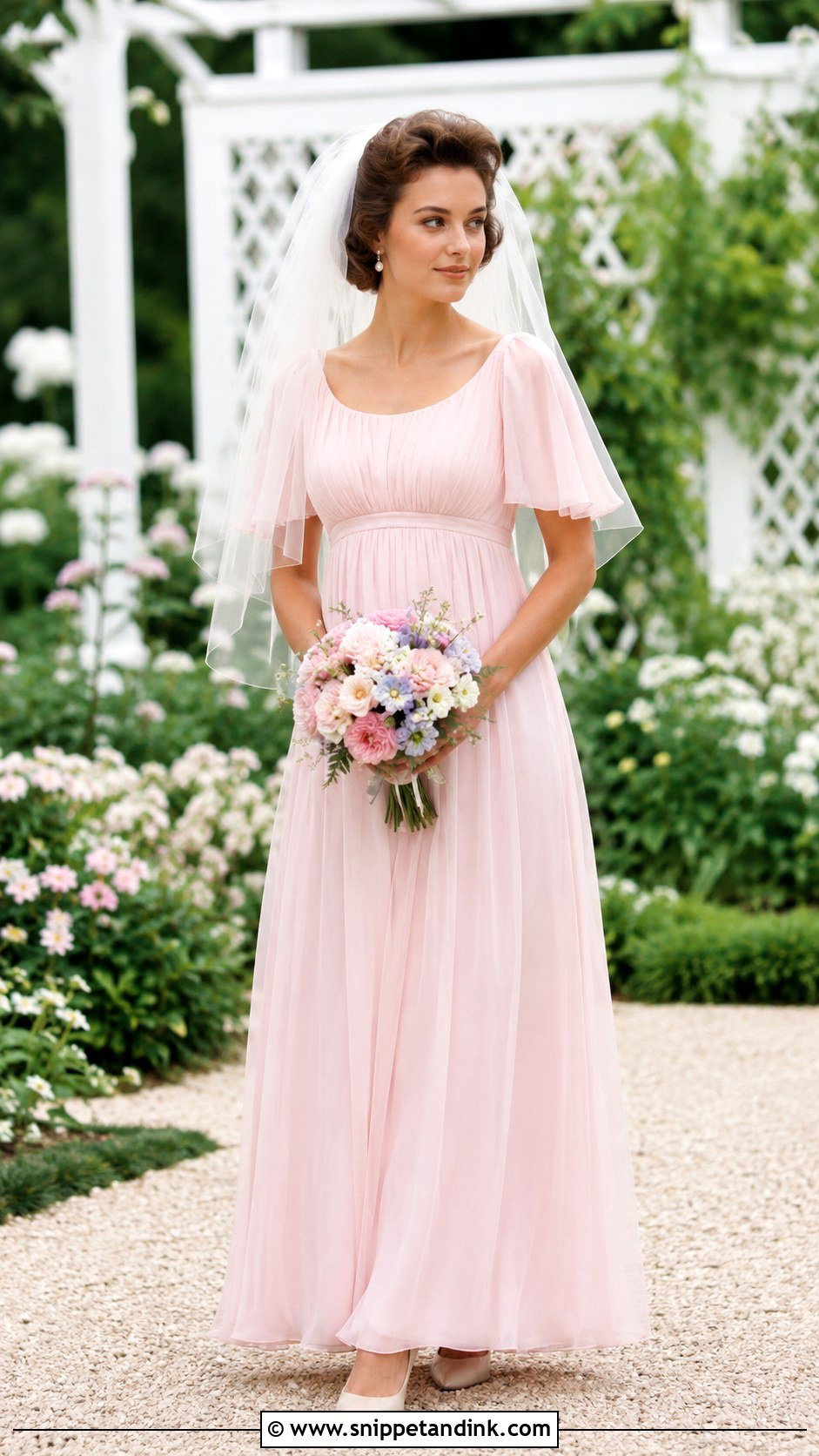
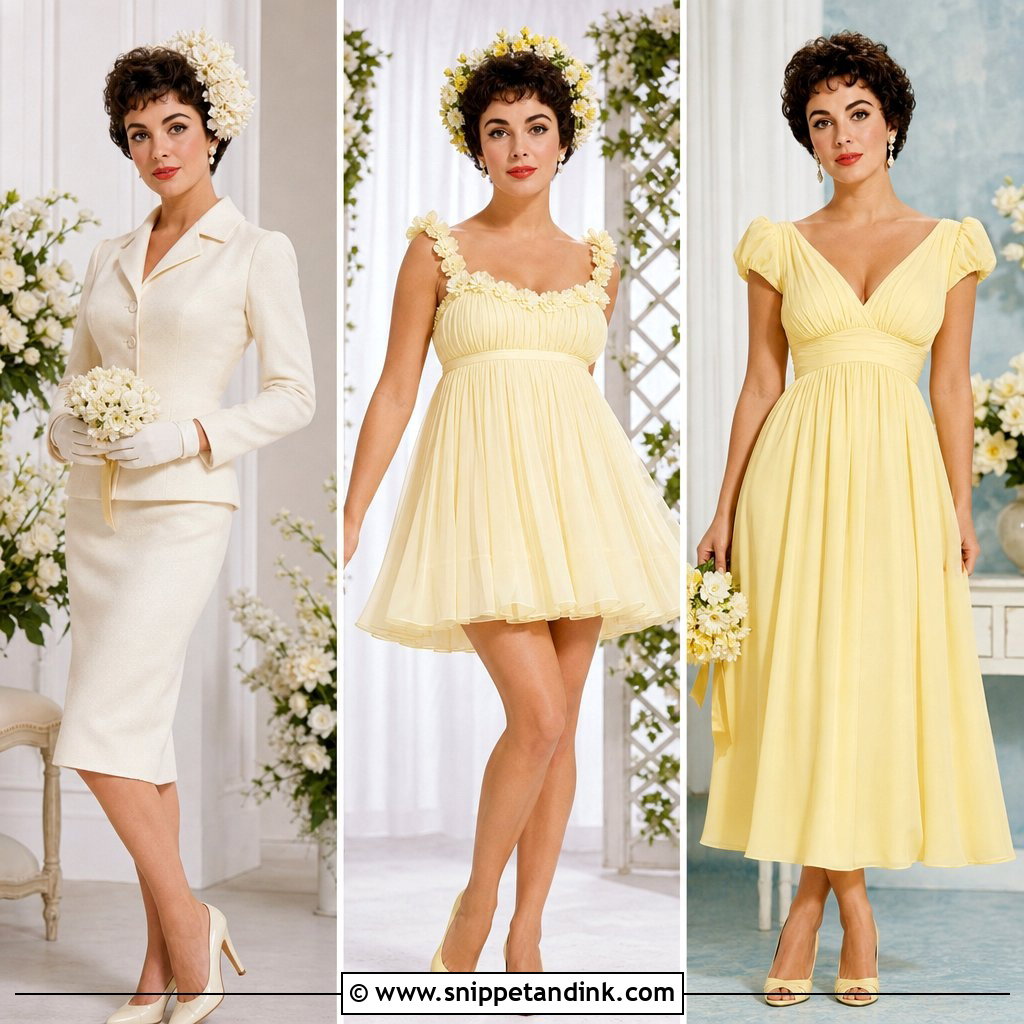
Color is the decade’s playful side: soft pink, pale blue, butter yellow or pastel peach. To keep it bridal, choose a classic shape such as an empire waist, an A-line or a knee-length shift, in chiffon, satin or lace. Ivory heels, pearl earrings and a simple veil or flower crown complete it, and a matching pastel bouquet ties it together. Pastels react to skin tone far more than ivory does. I hold the swatch up to your face in daylight, because a blue that looks fresh on the hanger can wash some complexions out. Second looks, courthouses and retro receptions suit it.
24. 1960s Wedding Dress With Gloves
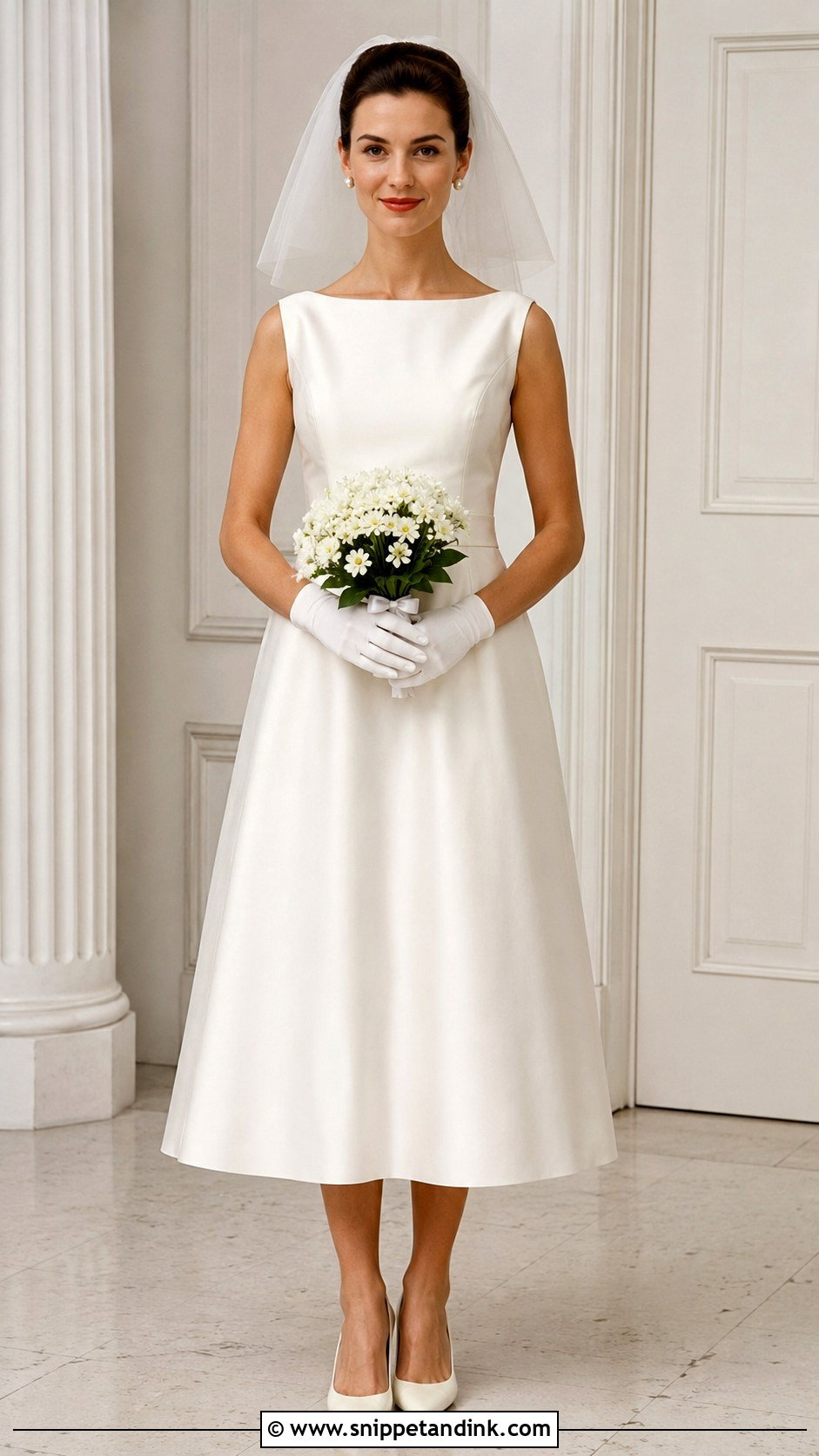
Gloves finish a sixties outfit. Short gloves go with tea lengths, mod minis and courthouse looks, while wrist-length or opera gloves suit formal gowns. The dress should have a clean shape, such as a bateau neckline, a shift or an A-line skirt, so the gloves aren’t competing with busy detail. Pointed pumps, pearl earrings and a short veil complete it. Plan the ring exchange in advance: either the left glove comes off and your maid of honor holds it, or you choose gloves with a small opening at the ring finger.
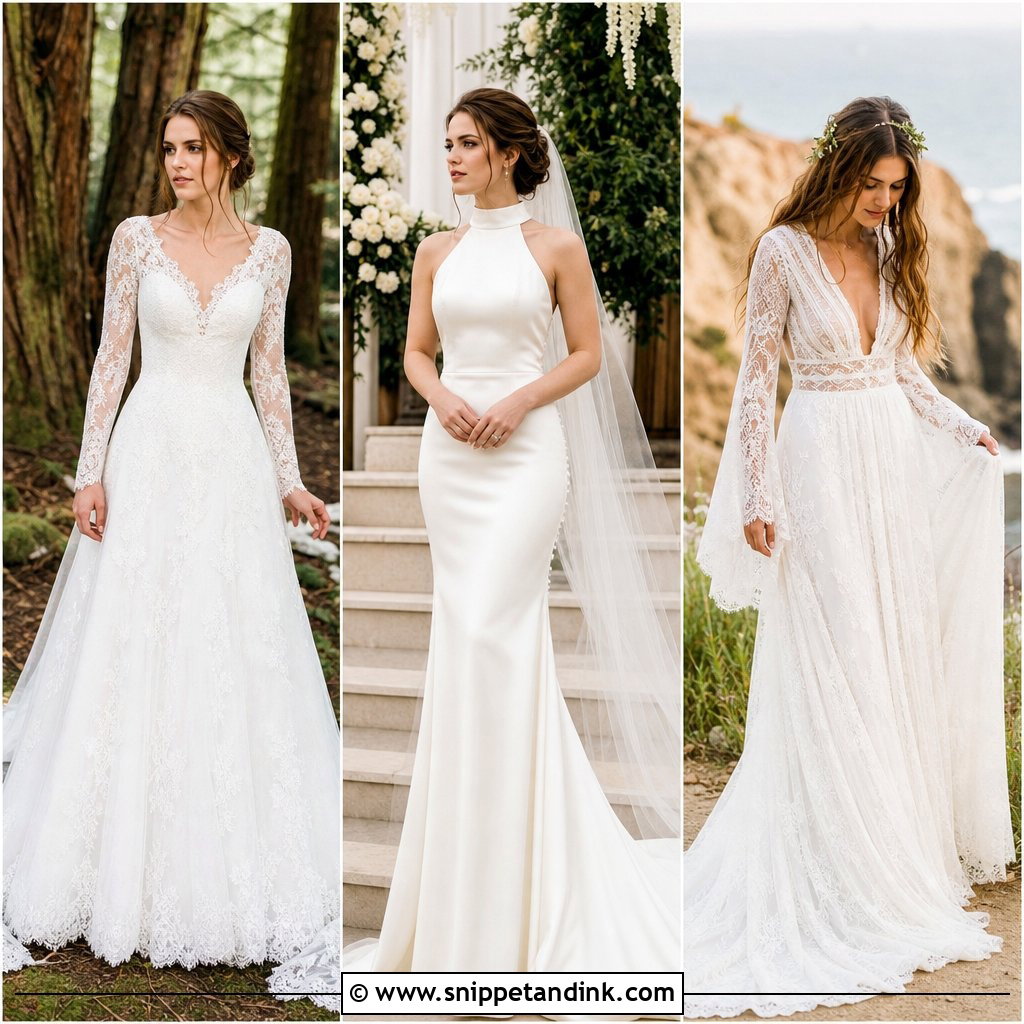
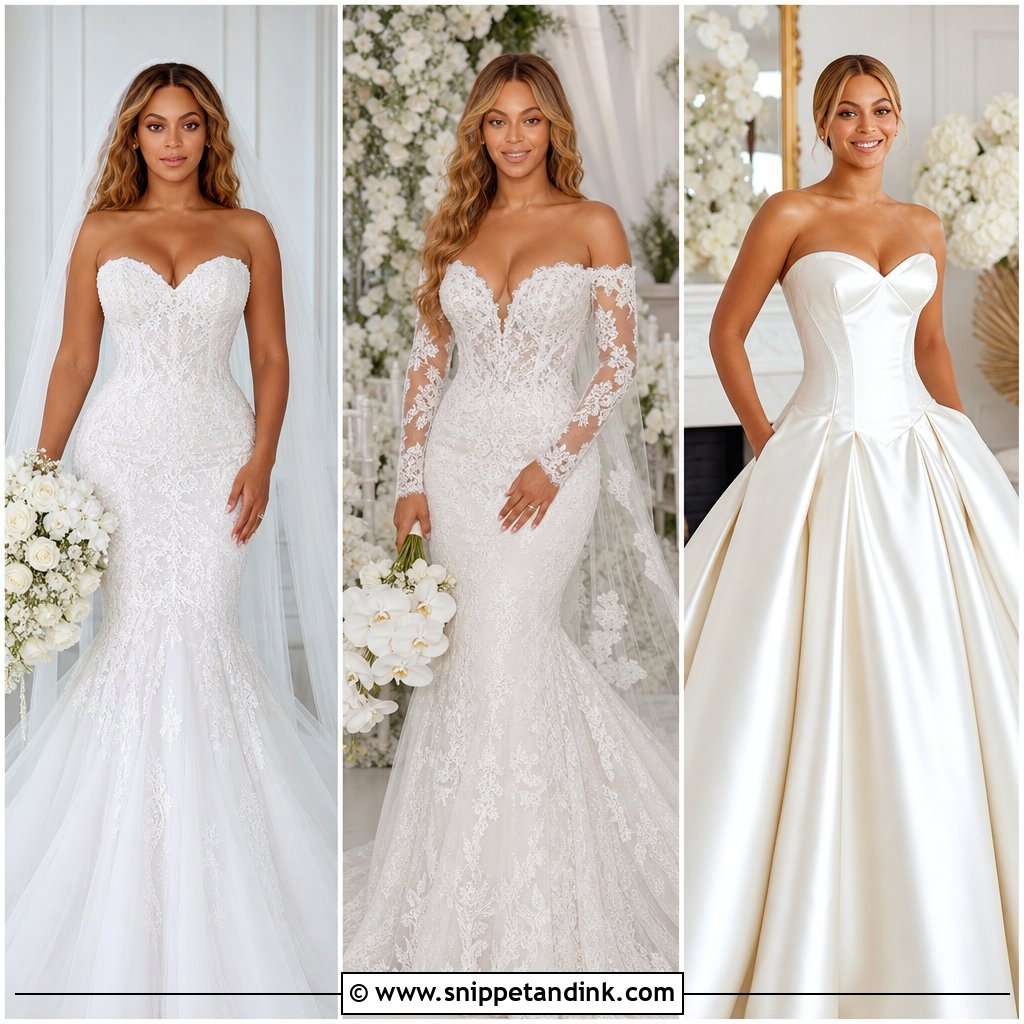
25. 1960s Wedding Reception Dress
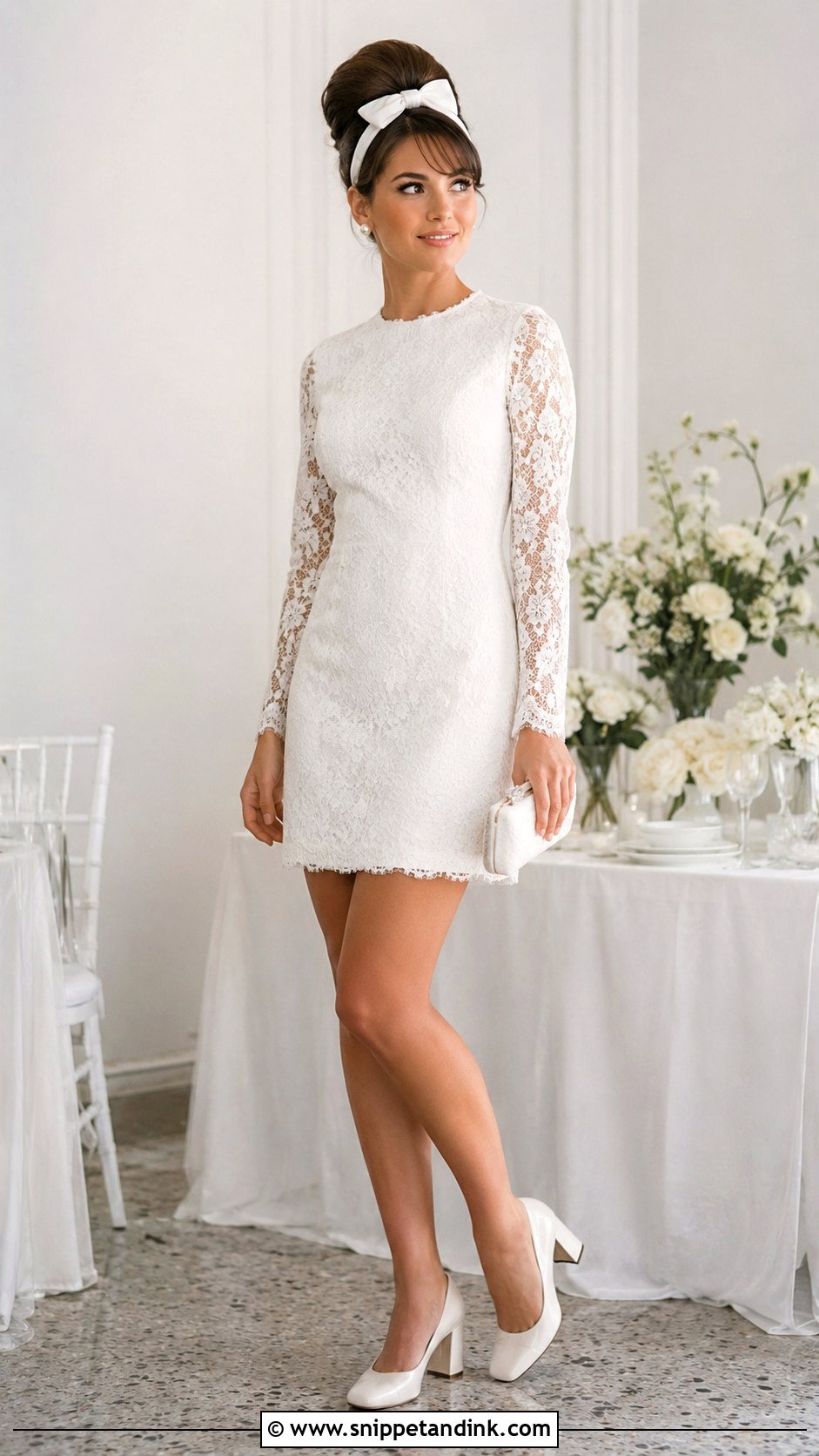
A reception dress is for moving. A mini, short shift or tea-length A-line keeps the decade going, in lace, satin, crepe or textured jacquard. Block heels or low pumps let you dance and greet guests, and a bow headband, pearl earrings and a small clutch finish it. If your ceremony gown is formal, this is the lighter change. Try both outfits back to back at the final fitting, so the hairstyle you wear for the ceremony also works with the second neckline.
Wearing an Above-the-Knee Dress at a Formal Ceremony
Several of the shapes above sit at or above the knee, and a short hem behaves differently from a gown once the ceremony starts. These are the things I go through with any bride choosing one.
Check the venue’s expectations
Some houses of worship ask for covered knees and shoulders. Ask the officiant early, and if a short dress isn’t welcome, a long removable overskirt or a tailored ceremony coat lets you keep the mini for the party.
Rehearse the moves, not just the walk
Kneeling, stepping up onto a platform, signing at a low table and sitting in a front pew all lift a short hem. Try each one in the dress at a fitting, in front of a mirror, and have the length adjusted if anything shows that you’d rather it didn’t.
Legs and shoes are part of the outfit now
White or ivory opaque tights were a real mod detail and solve chilly venues too. Bare legs need the same thought as your face: skin prep a few days ahead, and shoes that are already broken in, since they’ll be in every full-length photo.
Mod, Classic or Flower Child?
The sixties fit polished lace gowns, playful mod minis and soft boho silhouettes into a single decade, and that range is why it still works today. For a traditional look, start with an A-line, satin, a high neck or long sleeves. For something bolder, a mini, a colored dress or a courthouse shift. For romance, chiffon, daisies, pearl beading or bell sleeves. Settle which part of the decade you belong to first, then the accessories, and the dress will feel like yours rather than a costume.
You'll Like These Ideas:






Leave a Reply