
A wedding face has to work in three places at once: across a table from your guests, in a close-up lens, and on your own skin for twelve hours or more. That’s why I never plan bridal makeup around one feature. I decide the skin finish first, because everything else has to sit on it, then balance eyes, cheeks and lips around the dress and the light. Below are 35 directions I use, from bare-looking to full glam, with notes on how each one wears and who I’d steer away from it.
Skin Prep Runs on a Calendar, Not the Morning Of
The finish you pick below only looks right if the skin under it is calm and hydrated. Most of that happens weeks out. Here’s the rough timeline I give brides:
- Two to three months out: settle on a simple routine and stop experimenting. If you want a facial or peel, this is the window, so any reaction has time to heal.
- Four to six weeks out: no new active products. Retinoids and strong acids can leave skin flaky or sensitive, and flakes show through foundation.
- One week out: no waxing or threading on the face, and no first-time self-tan. Brows should be shaped by now so any redness has gone.
- The night before: a rich moisturizer and lip balm, plenty of water, and as little salty food and alcohol as you can manage, which helps with morning puffiness.
On the morning, I’d ask you to arrive with a clean, moisturized face and no makeup. If you have a skincare product you trust, bring it; I’d rather use something your skin knows than introduce something new.
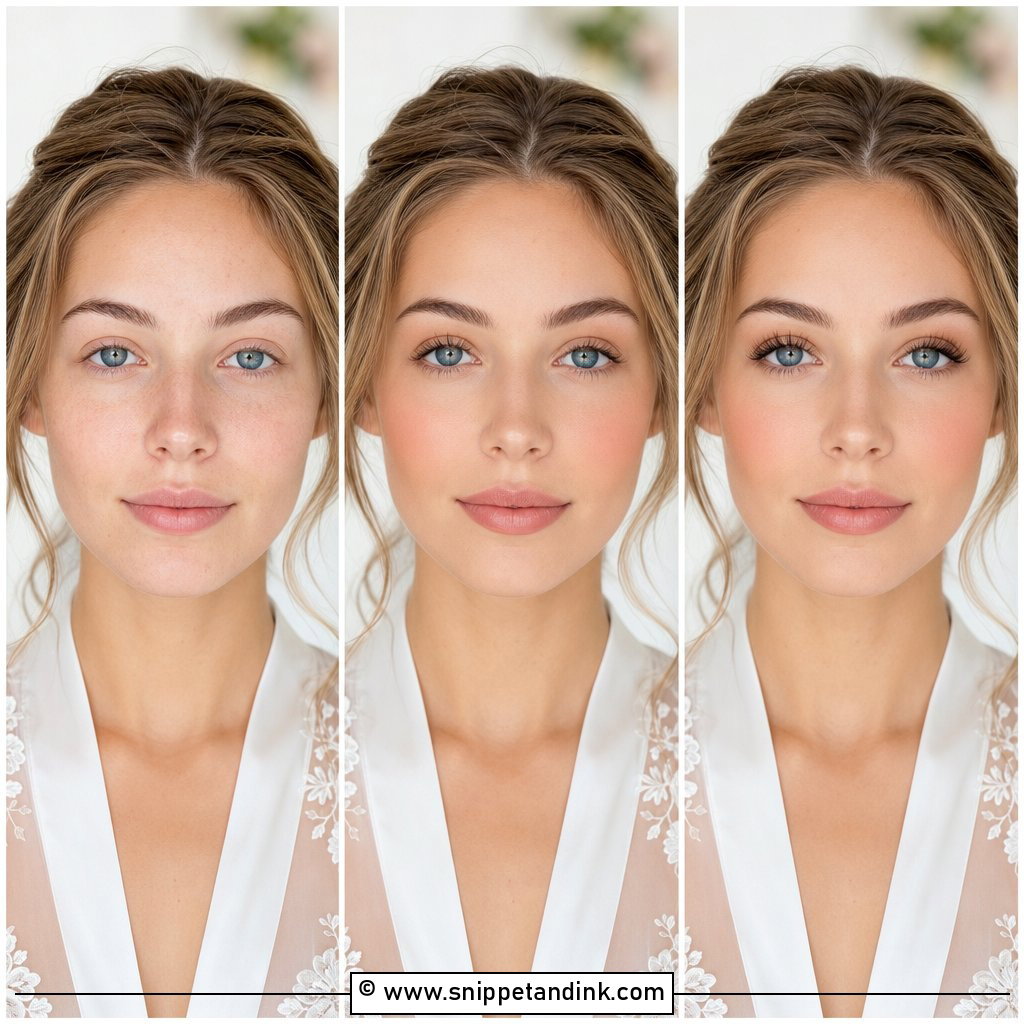
1. Natural Bridal Makeup
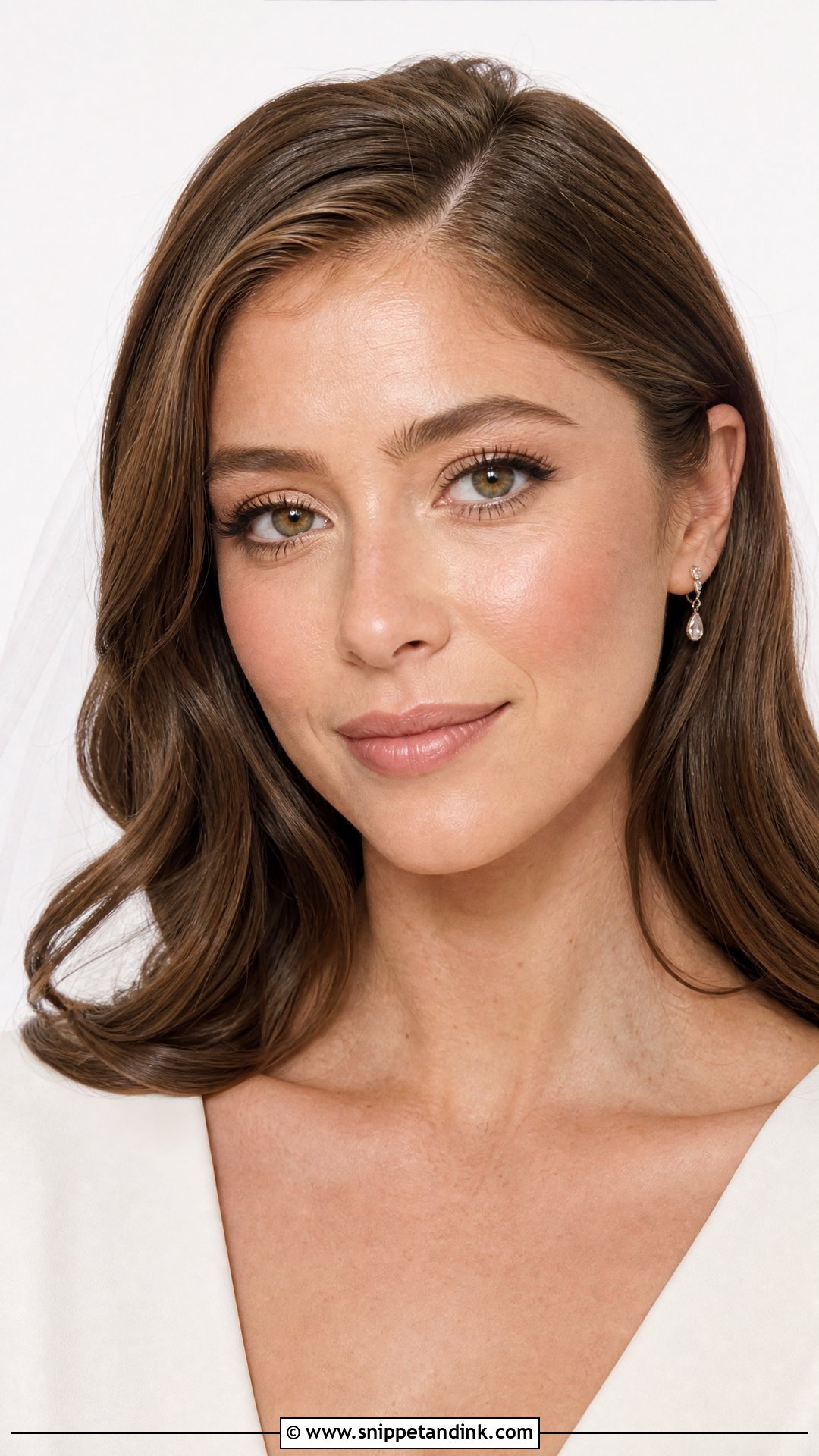
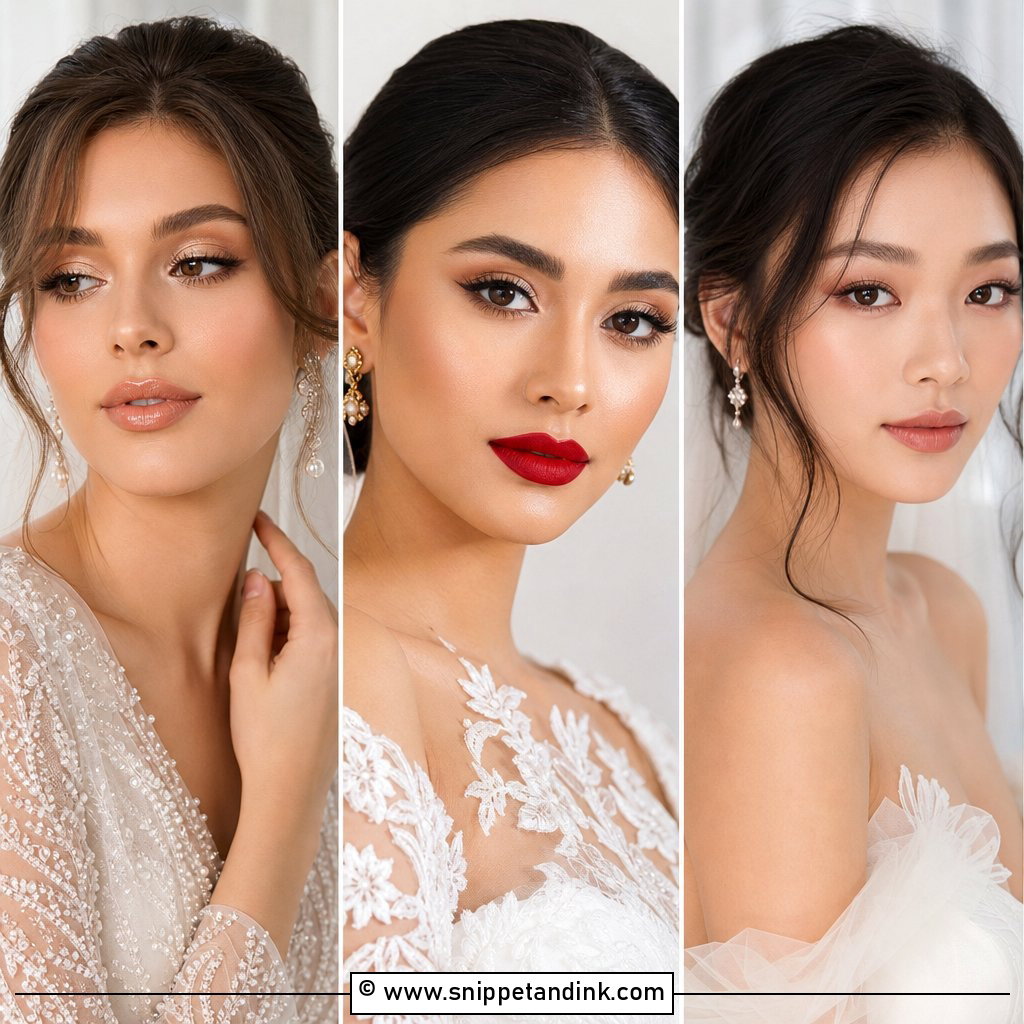
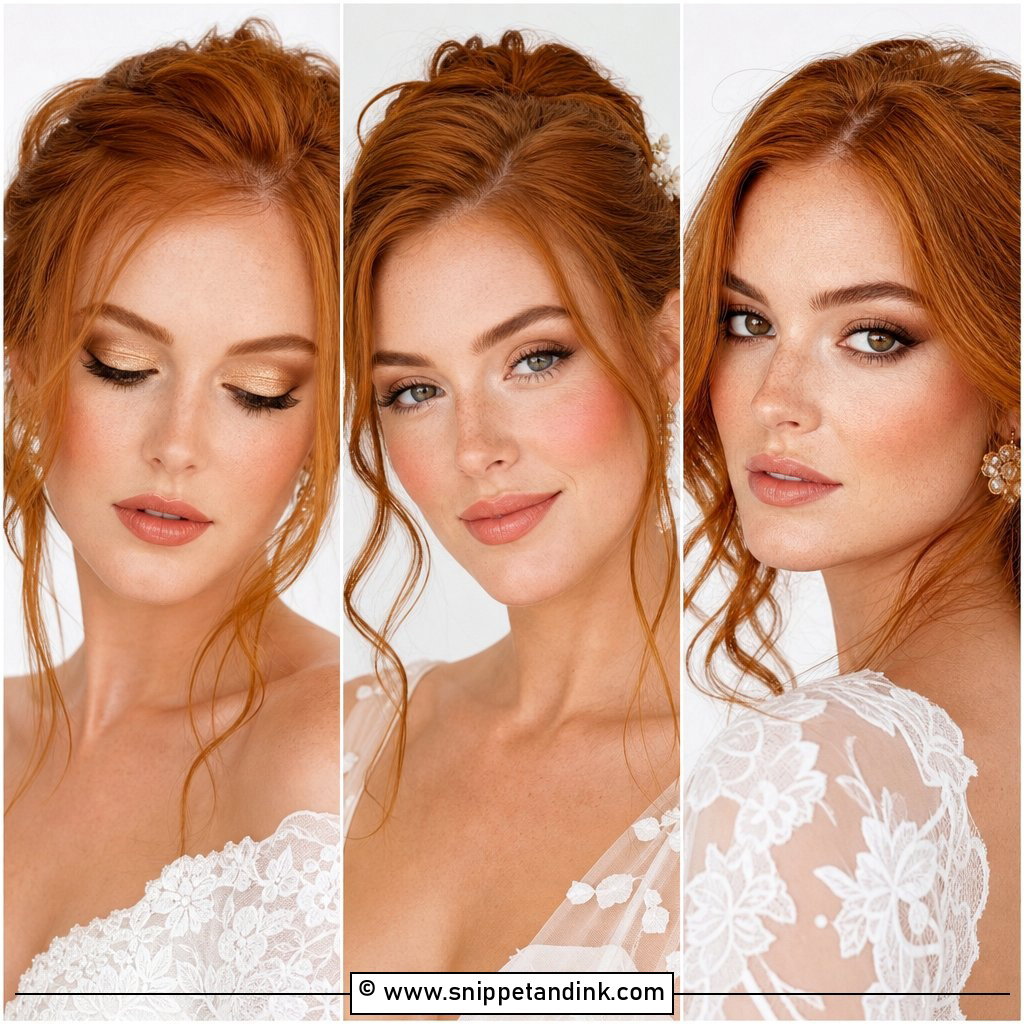
The goal of natural makeup is that people see you, not product. I use a sheer to medium foundation only where you need it and leave freckles visible, then add a cream blush in pink, peach or rose to put color back in the face. Eyes stay simple: a beige or taupe wash, curled lashes, and a thin brown liner pressed into the lash roots. A satin nude or pink lip finishes it. The mistake I see most is doing too little; under flash, an unfinished face looks washed out, so I still define the lash line and brows properly.
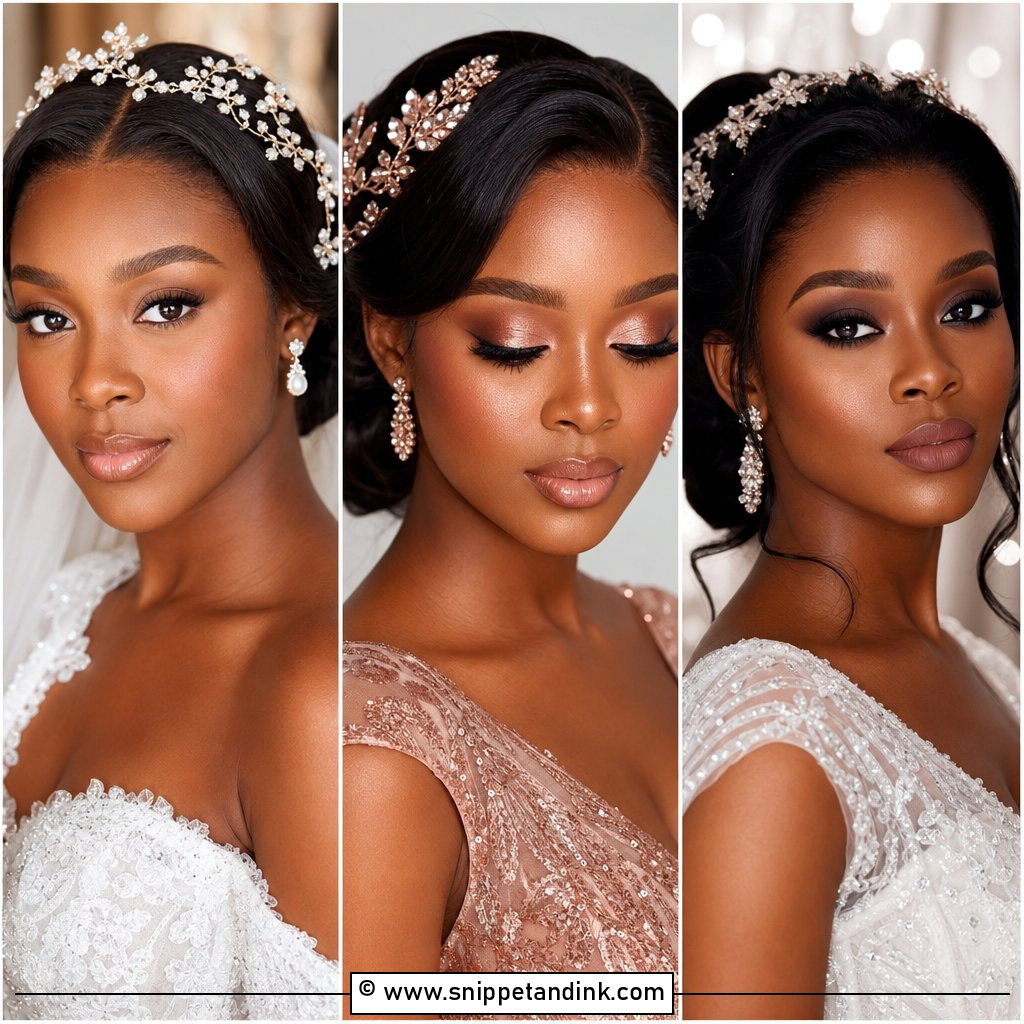
2. Soft Glam Bridal Makeup
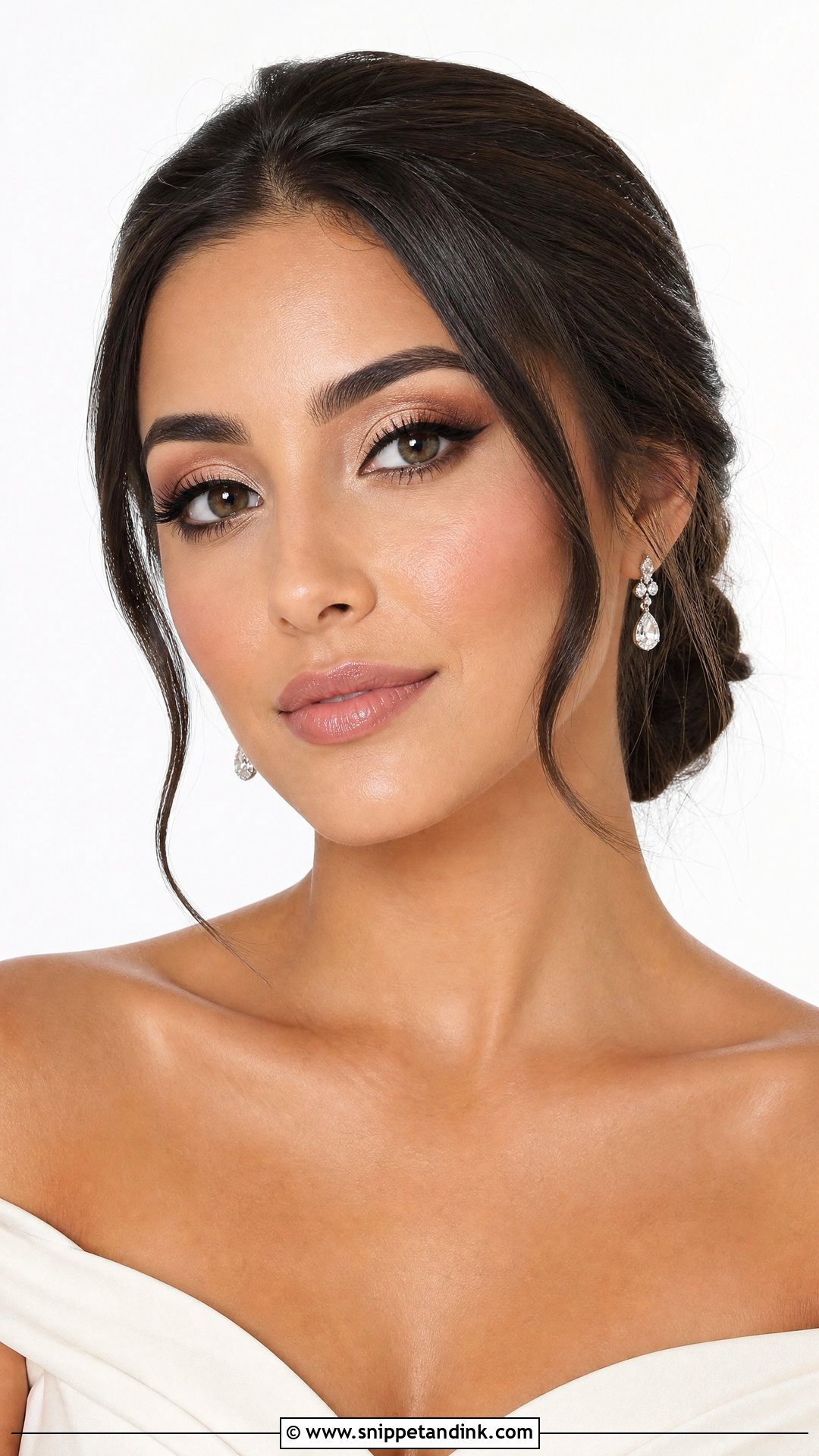
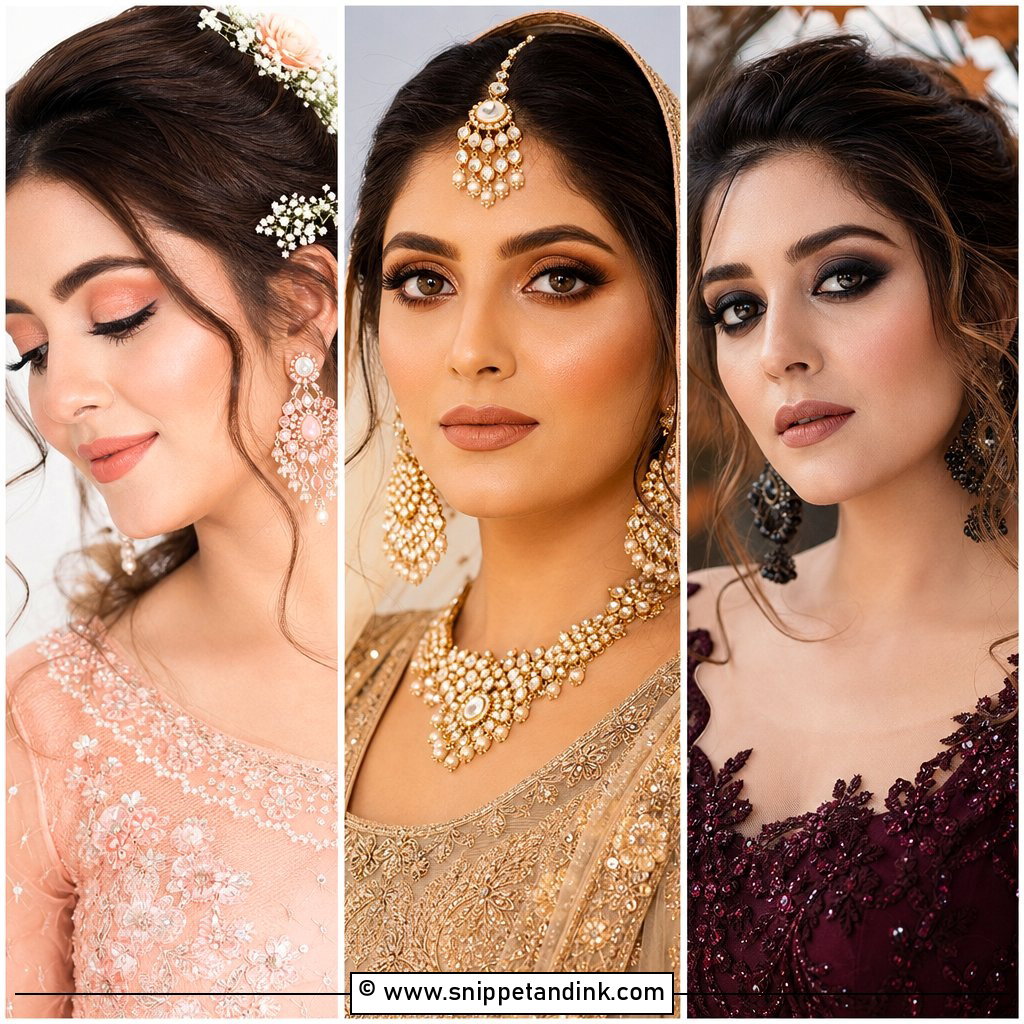
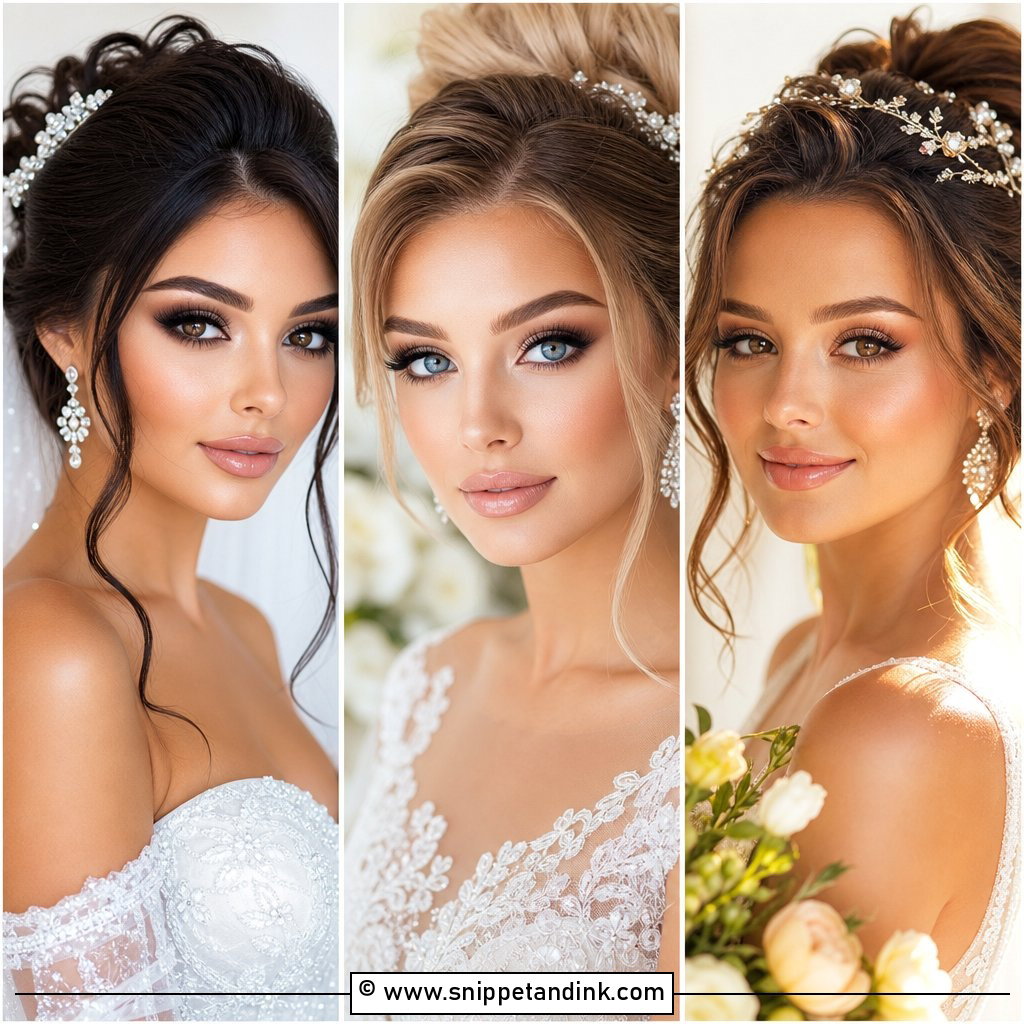
Soft glam is the most requested look in my kit, and it earns that by suiting almost every face shape and gown. Smooth satin skin, softly sculpted cheeks, warm neutral shadow and fluttery lashes do the work. Champagne shimmer on the lid brightens, and a blended brown crease gives depth that shows up in photos. I keep the liner diffused rather than sharp, then finish with a nude pink, rose beige or peachy nude lip. If you can’t decide between natural and glam, this is usually where we land.
3. Dewy Bridal Makeup
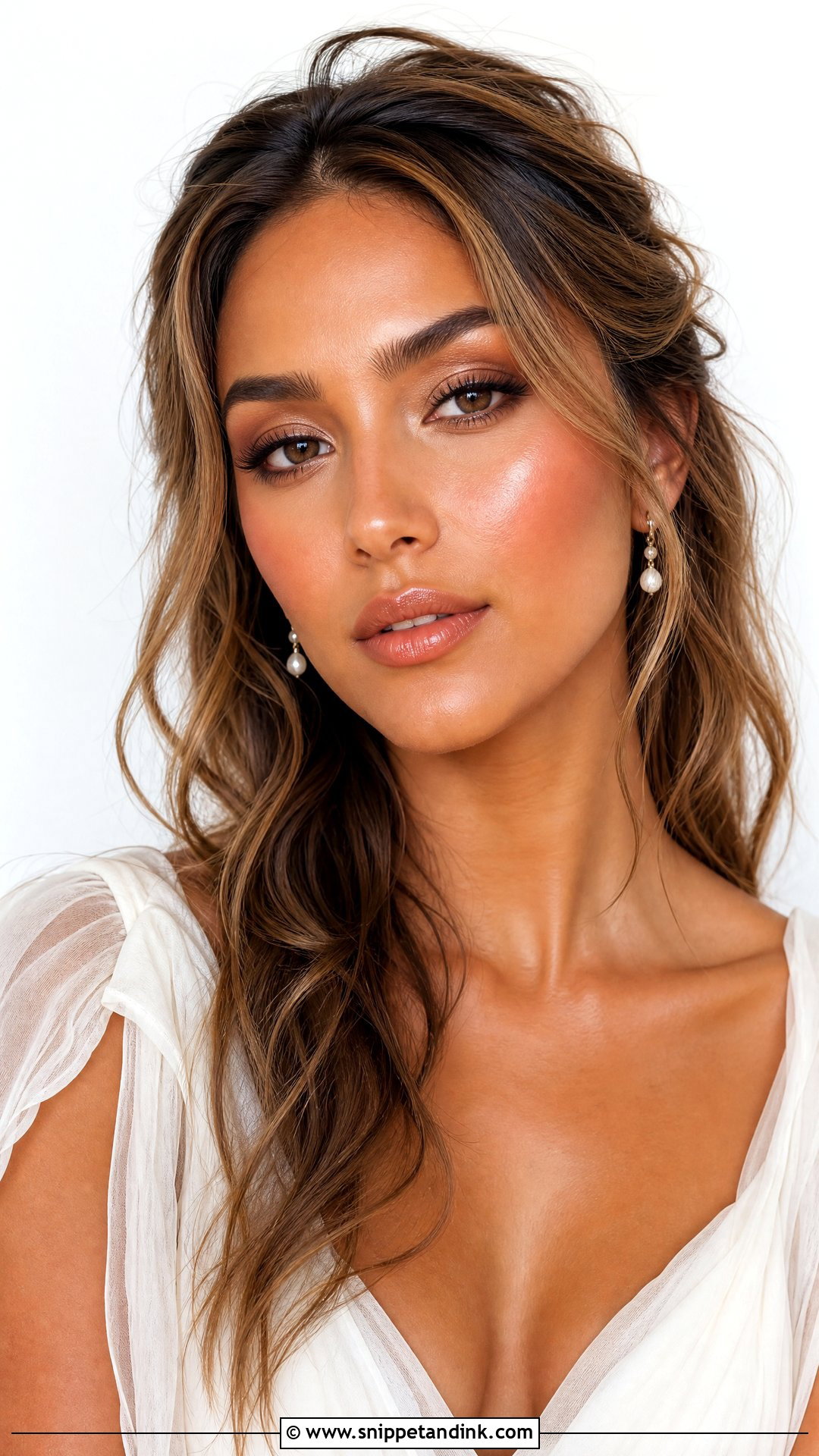
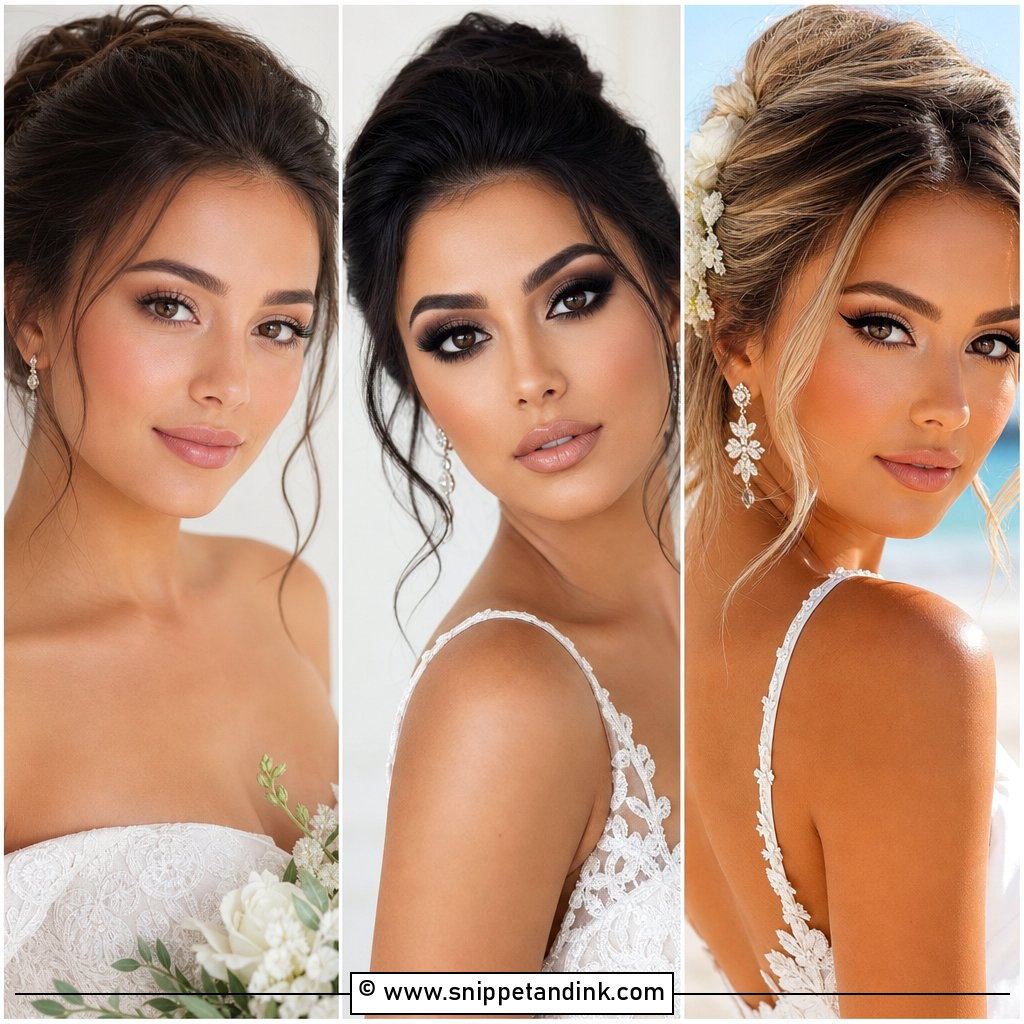
Dewy skin is about controlled shine, not shine everywhere. I use a luminous primer and skin-like foundation, then cream blush and a liquid highlighter only on the high points of the face. Shimmer stays away from the nose, the center of the forehead and any texture, because those areas already reflect light and look oily in photos. Soft brown shadow, wispy lashes and a glossy nude lip keep the rest clean. I set the T-zone lightly with powder. On oily skin or in a hot outdoor venue, I’d move you to satin instead.
4. Matte Bridal Makeup
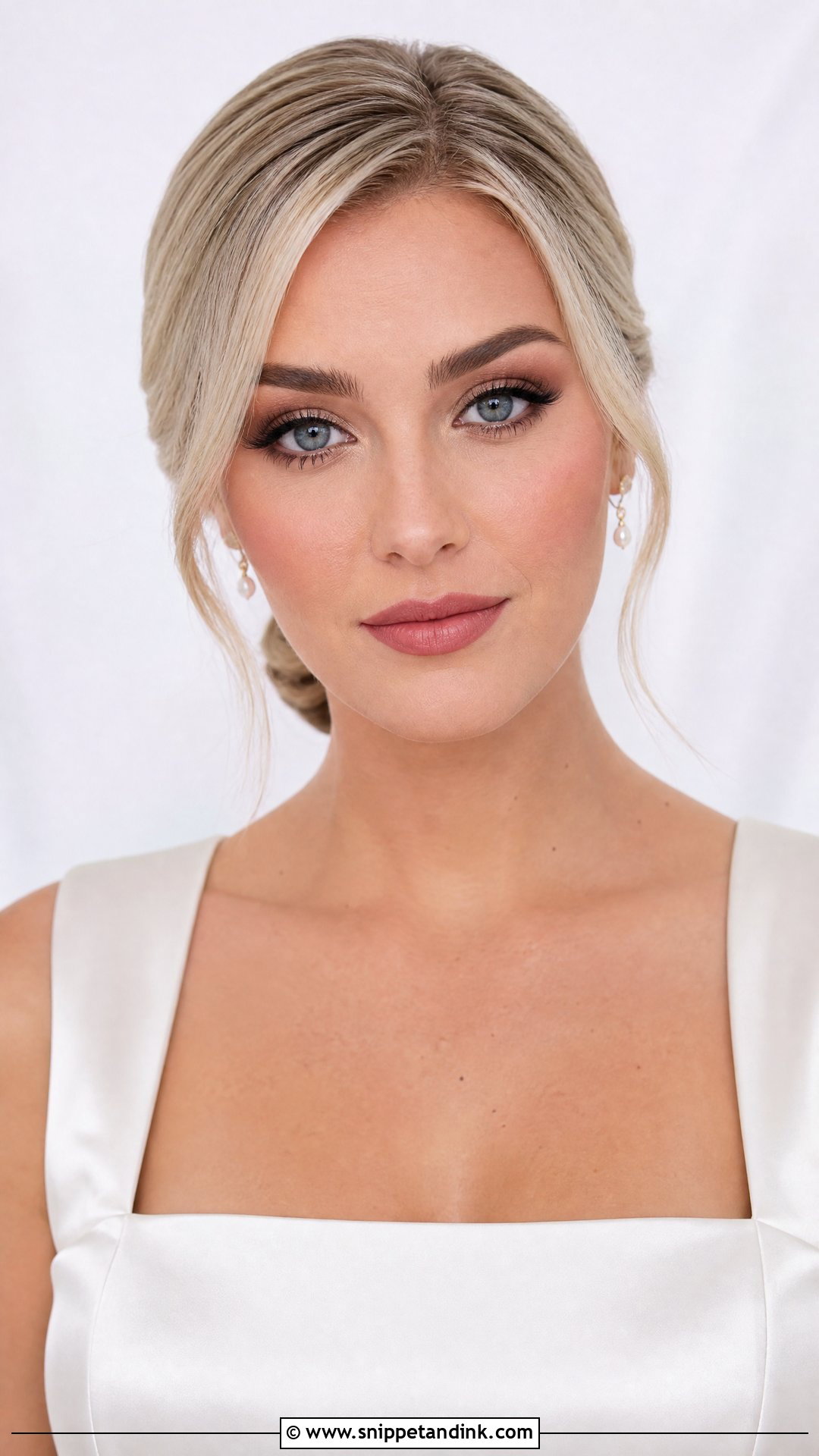
Matte makeup lasts longest, but modern matte should never look dry or flat. I prep with hydration under a comfortable matte foundation, then use a soft-focus powder only where you get shiny. A natural contour and a matte blush in peach, mauve or warm pink stop the face from looking one-dimensional, which is the main risk with this finish. Neutral matte eyes, clean liner and a velvet nude or rose lip complete it. Oily skin, humid weather and long evening receptions are where it pays off. On dry or mature skin, I’d use it sparingly.
5. Classic Bridal Makeup
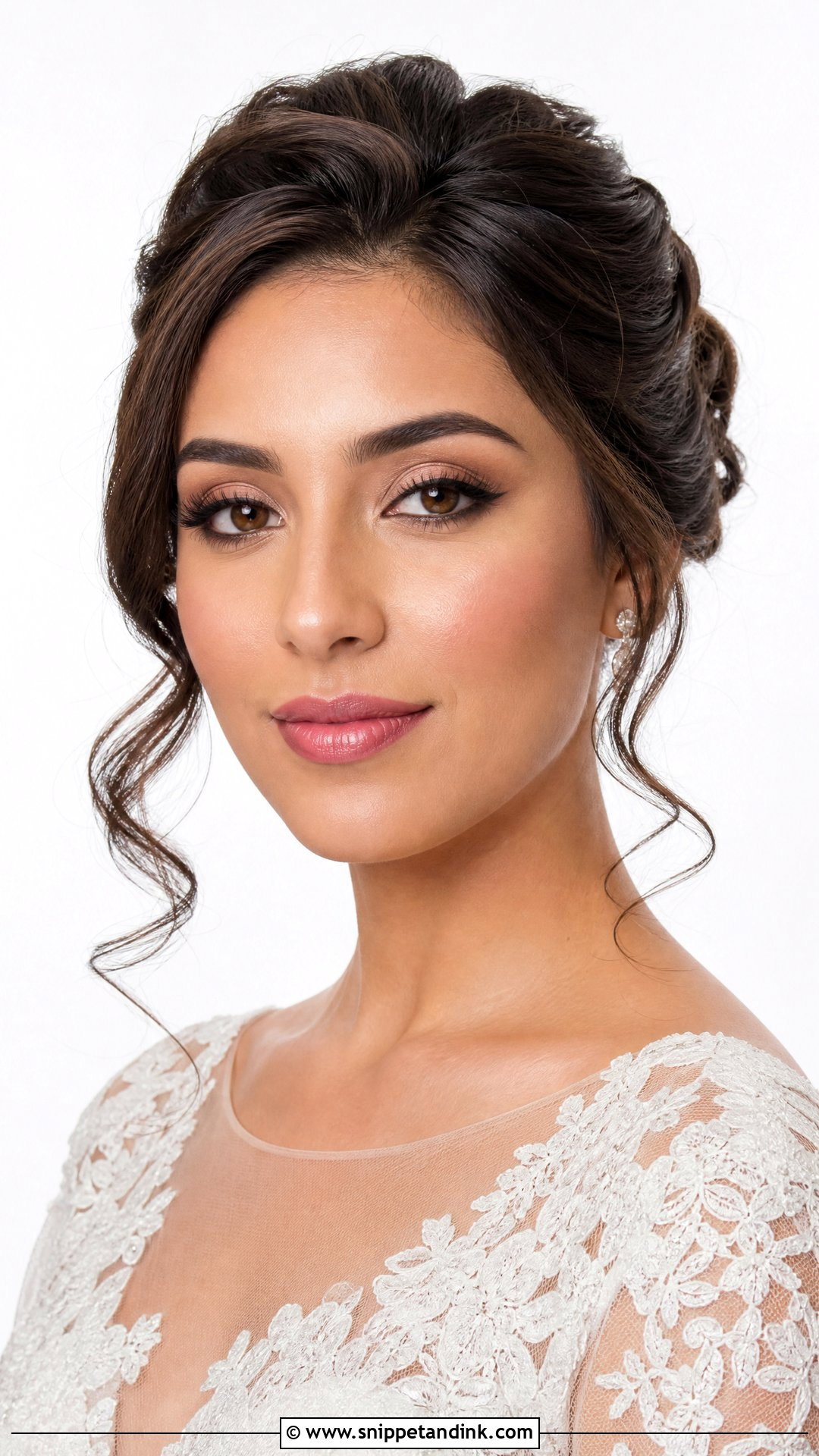
Classic makeup is a balancing act: smooth skin that isn’t shiny, eyes that are defined but not dramatic, and a lip with enough color to read without stealing focus. I use neutral brown shadow, a subtle wing, soft lashes and a rosy nude or pink lip, with a natural flush and a light highlight on the cheekbones. It’s the look I suggest when you want an album you’ll still recognize yourself in decades from now. Veils, structured gowns and pearls all sit comfortably with it.
6. Full Glam Bridal Makeup
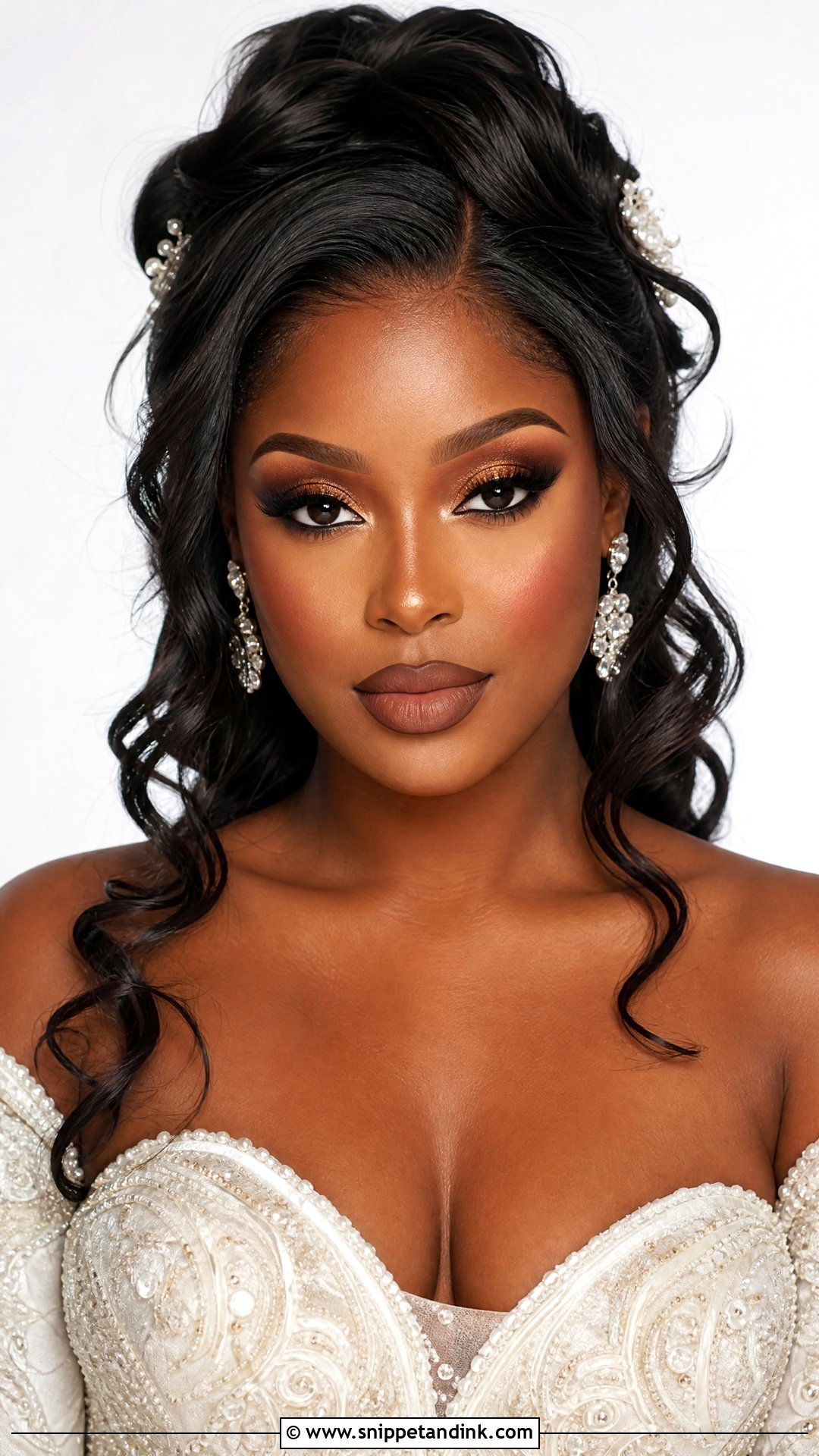
Full glam is high impact, and it needs a strong base to hold it. I start with a flawless full-coverage base, then sculpt contour, brighten under the eyes and define the cheek. Eyes get deeper browns, bronze shimmer, black or dark brown liner and fuller lashes. Brows are shaped and softly filled, never blocky. A lined nude, mauve or soft brown lip balances the eye. Most of my time goes into blending, because an edge you can’t see across a room is obvious in a close-up. If you rarely wear makeup, test this at a trial first; it can feel heavy on the day.
7. Minimal Bridal Makeup
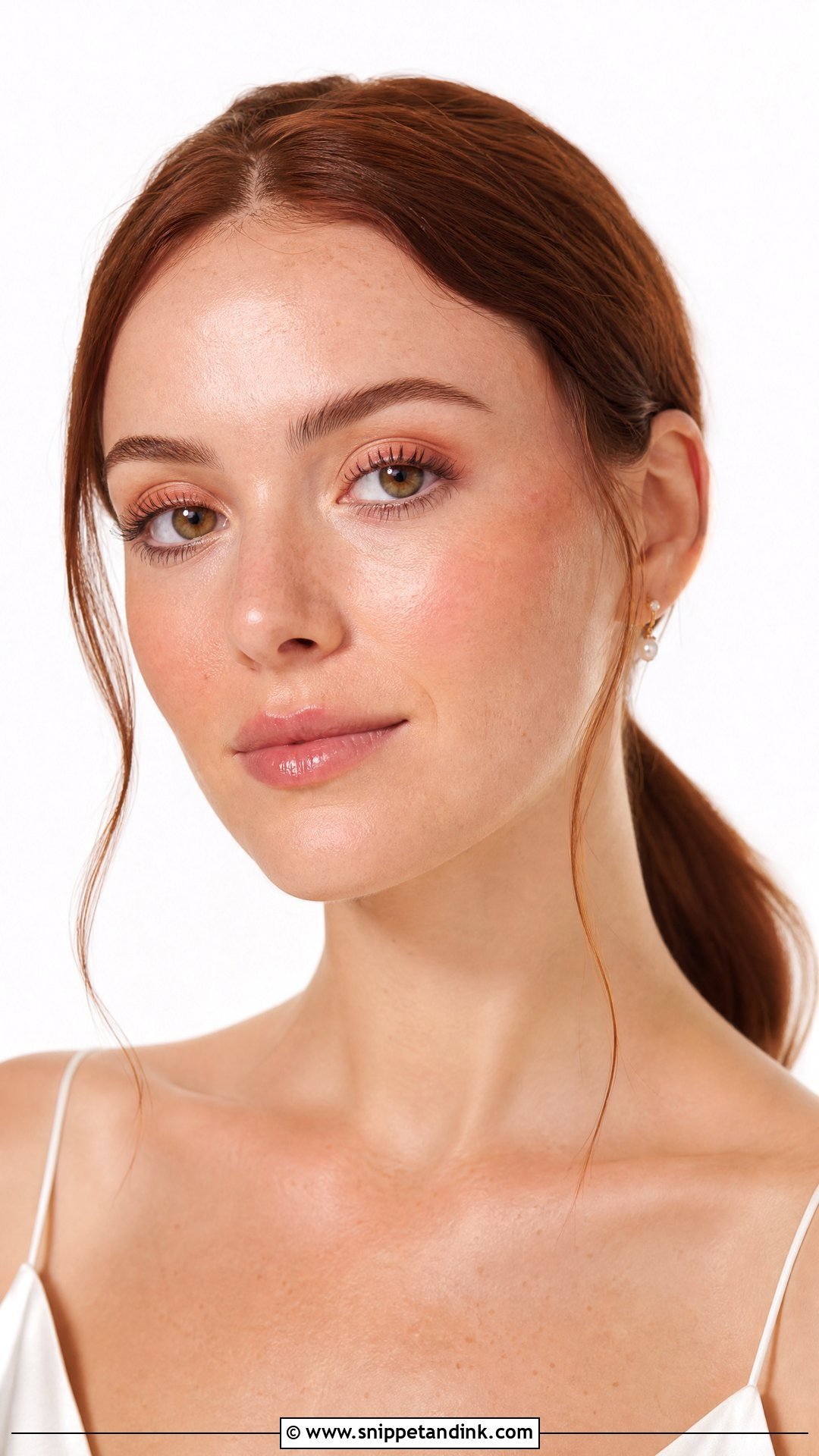
Minimal makeup relies almost entirely on skin prep, so the weeks before matter more than the morning of. On the day I use a tinted moisturizer or light foundation, concealer only on spots, cream blush, tinted brow gel and one coat of mascara. A sheer wash of taupe or peach on the lid adds polish without visible color. A tinted balm, soft gloss or satin nude lip finishes it. City hall ceremonies and relaxed weddings suit it, and so does anyone who feels uneasy in a made-up face. Expect to blot more often, since there’s little product to absorb oil.
8. Romantic Bridal Makeup
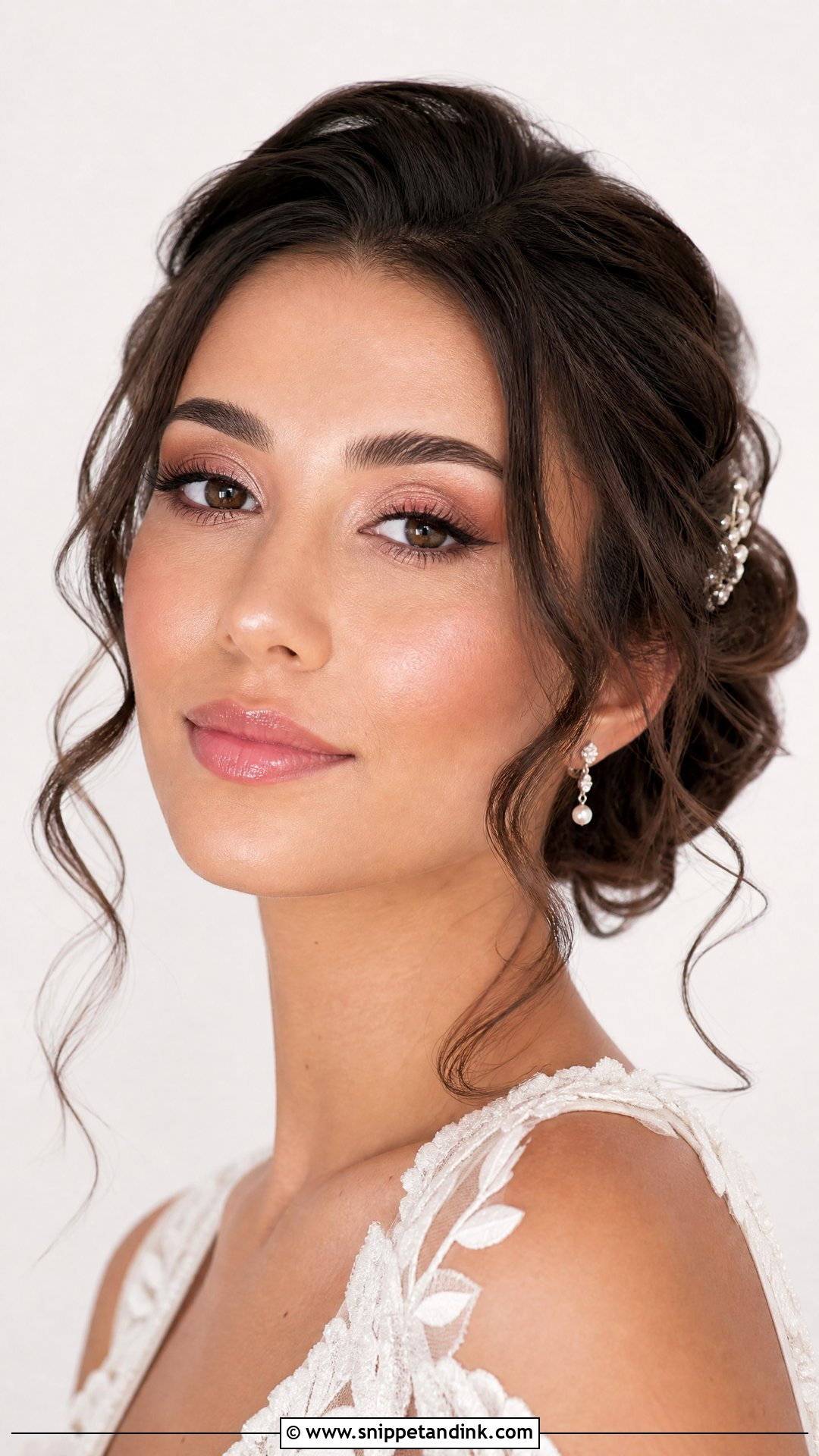
Romantic makeup uses one rosy tone across eyes, cheeks and lips, which is why it looks soft rather than busy. Pink champagne shimmer goes on the lids, with brown liner and wispy lashes keeping the eyes defined so they don’t disappear. I keep the skin smooth with a natural glow on the cheekbones and use a rose, petal pink or soft mauve lip. Pink on the eyes can look puffy if it goes too high, so I keep a neutral brown in the crease. It pairs well with lace, tulle and soft curls.
9. Bronze Bridal Makeup
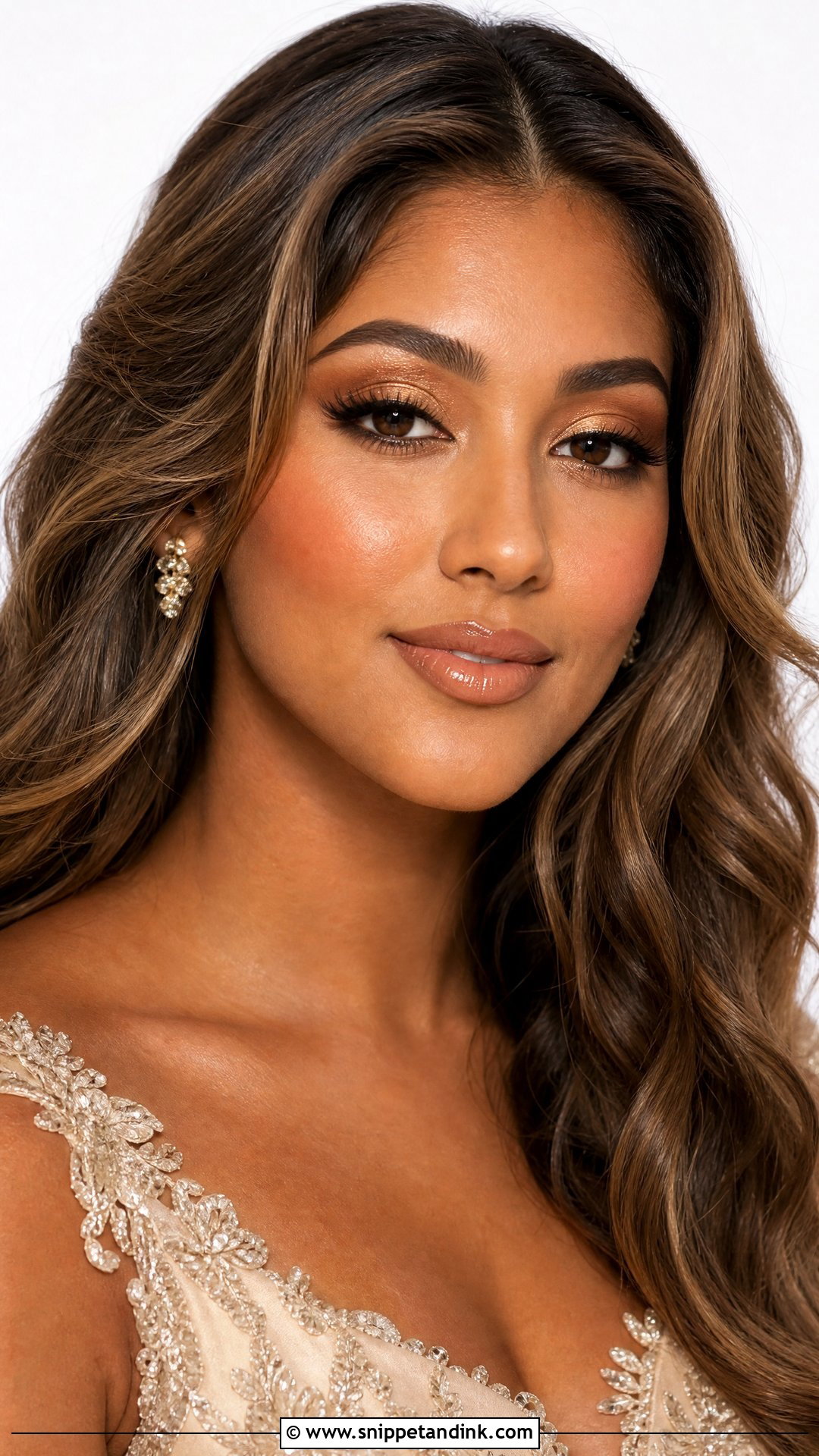
Bronze makeup warms the whole face, so I use it when the setting is golden-hour or outdoors. Golden bronze shadow goes on the lids, warm brown in the crease and a smoked liner along the lashes. Bronzer sits where the sun would hit, around the forehead, cheekbones and jaw, with a peachy blush and a gold highlighter kept light. A caramel nude, peach nude, or glossy brown lip finishes it. On cool, pale skin, too much bronzer turns muddy; I’d keep the bronze on the eyes and use rose on the cheeks instead.
10. Rose Gold Bridal Makeup
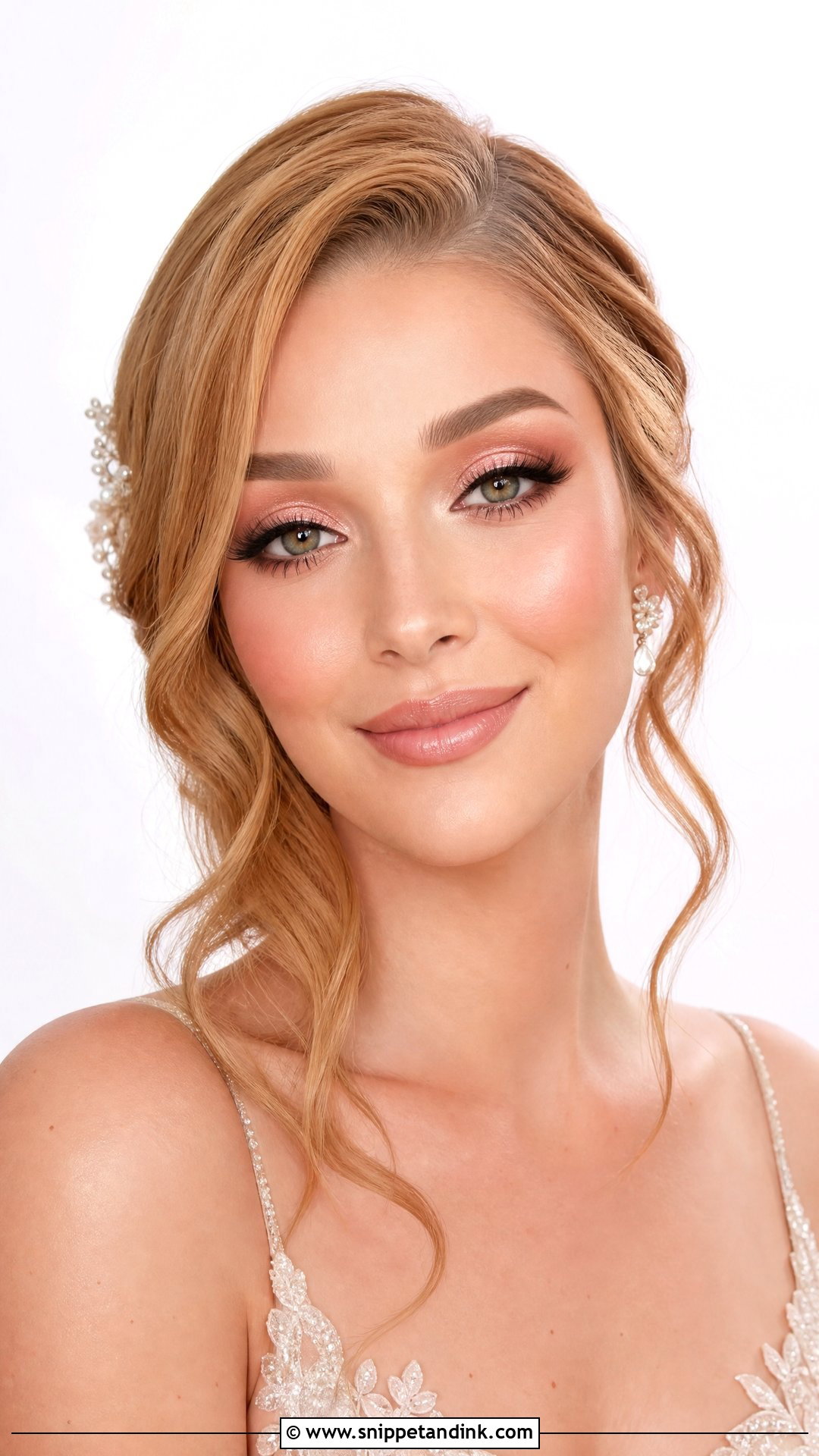
Rose gold gives shimmer that still reads soft, because it sits between pink and gold. I put the shimmer across the lid, warm taupe in the crease and brown liner for definition. The skin stays luminous with rose blush and a champagne highlight, and a pink nude or rosy gloss ties it together. It suits a wide range of skin tones for that same pink-gold reason. The thing I check is lid redness: if your lids are naturally pink, I neutralize them first or the shimmer amplifies it.
11. Champagne Bridal Makeup
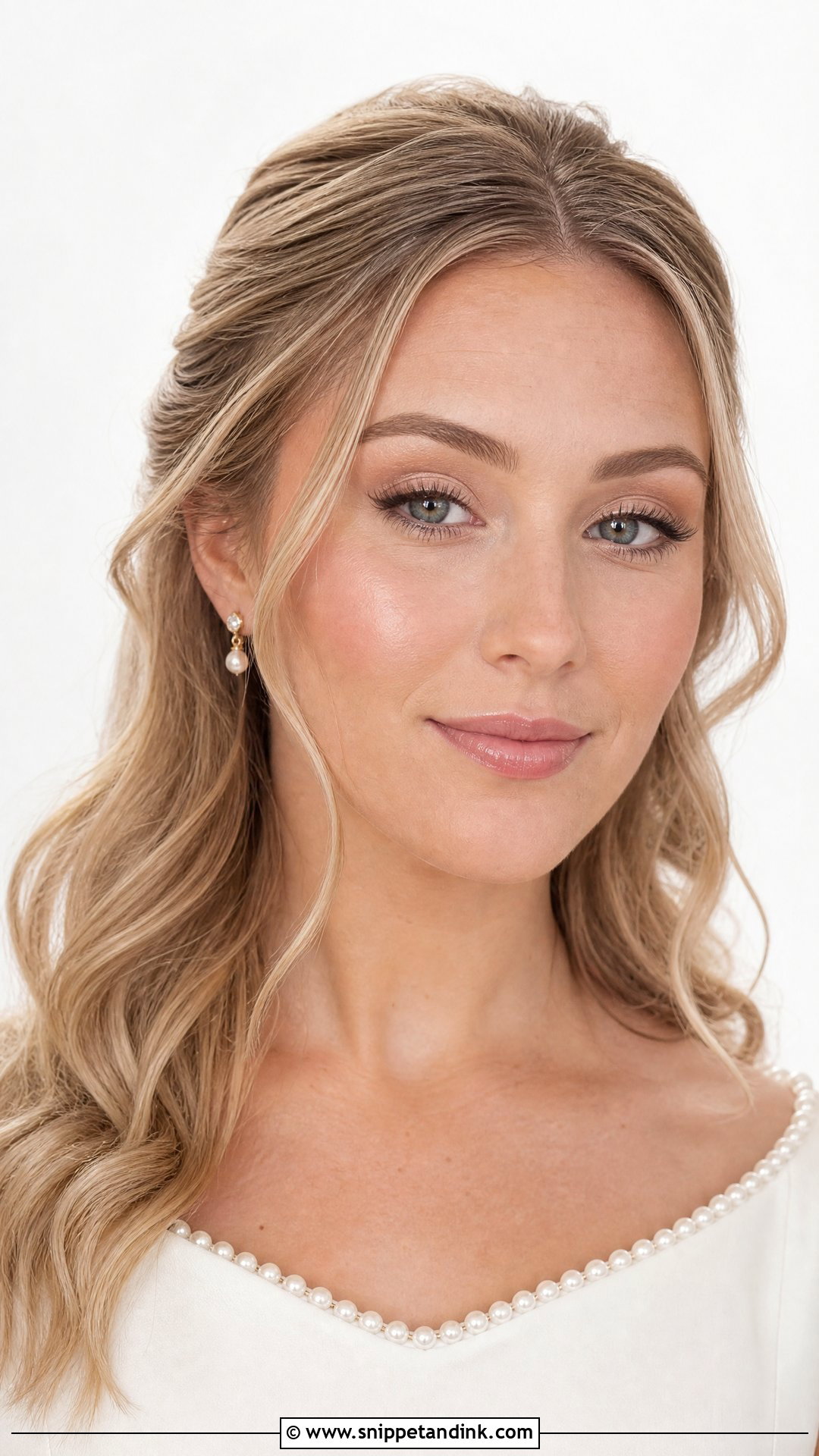
Champagne is my safest light-reflecting shade, because it brightens without adding color. It goes on the lids and inner corners to open the eyes, with soft beige or light brown in the crease and curled lashes with a thin brown or black liner. Skin is smooth and softly glowing, with peach or pink blush and a nude satin lip. On very fair skin it can blend into the lid, so I add a little more depth at the outer corner. It photographs well in both daylight and evening light.
12. Smokey Eye Bridal Makeup
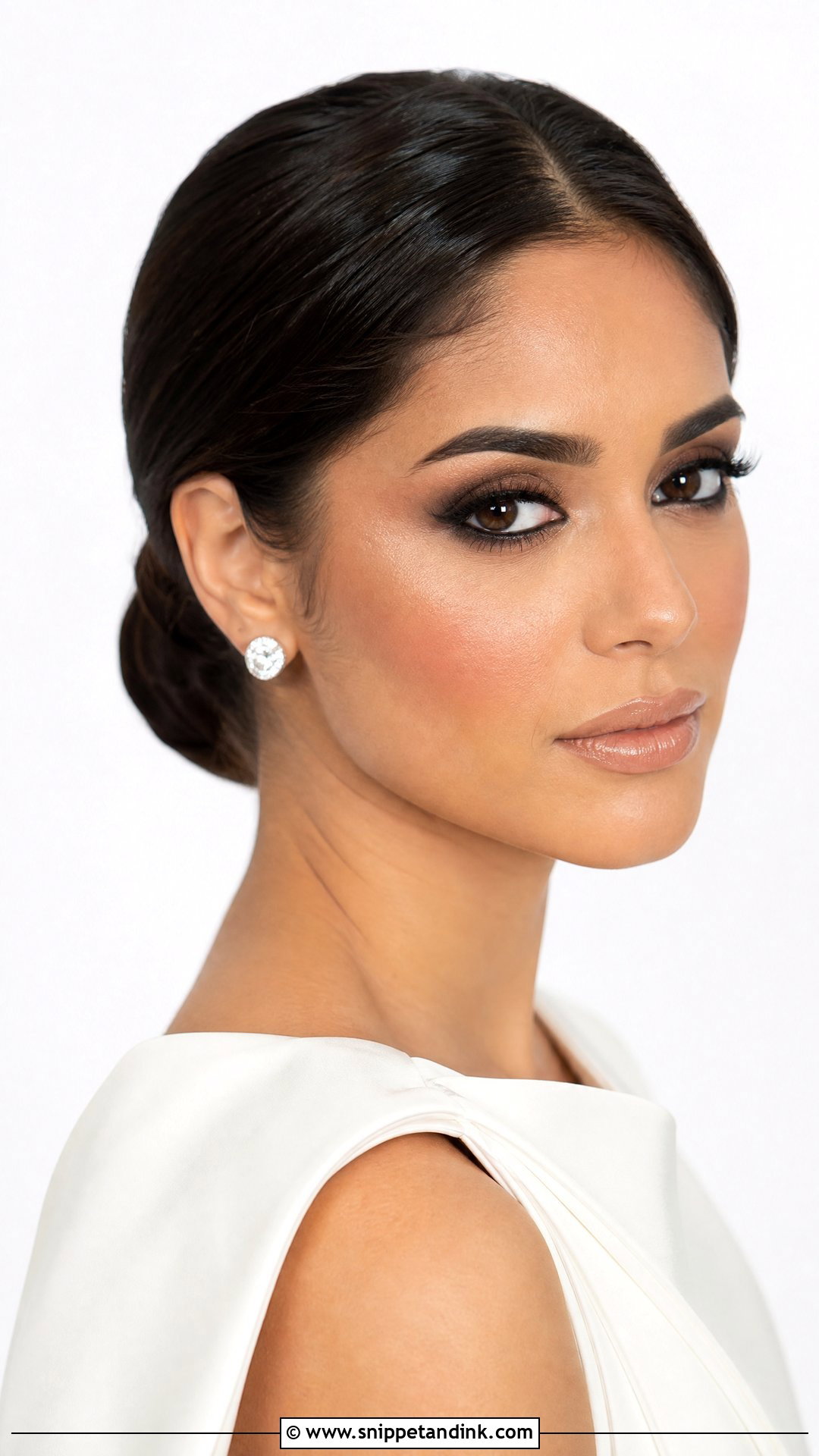
A bridal smoky eye works when the edges are soft. I rarely use pure black; brown, bronze, taupe, charcoal or plum are more forgiving in daylight. The darkest color stays at the lash line and blends upward for lift, never downward, which drags the eye. Full lashes and soft brows complete it, with a clean complexion and a nude, beige pink or muted rose lip. I avoid heavy shadow on the lower lash line for anyone who expects to cry, since it migrates. Evening and black-tie weddings carry it best.
13. Brown Smokey Bridal Makeup
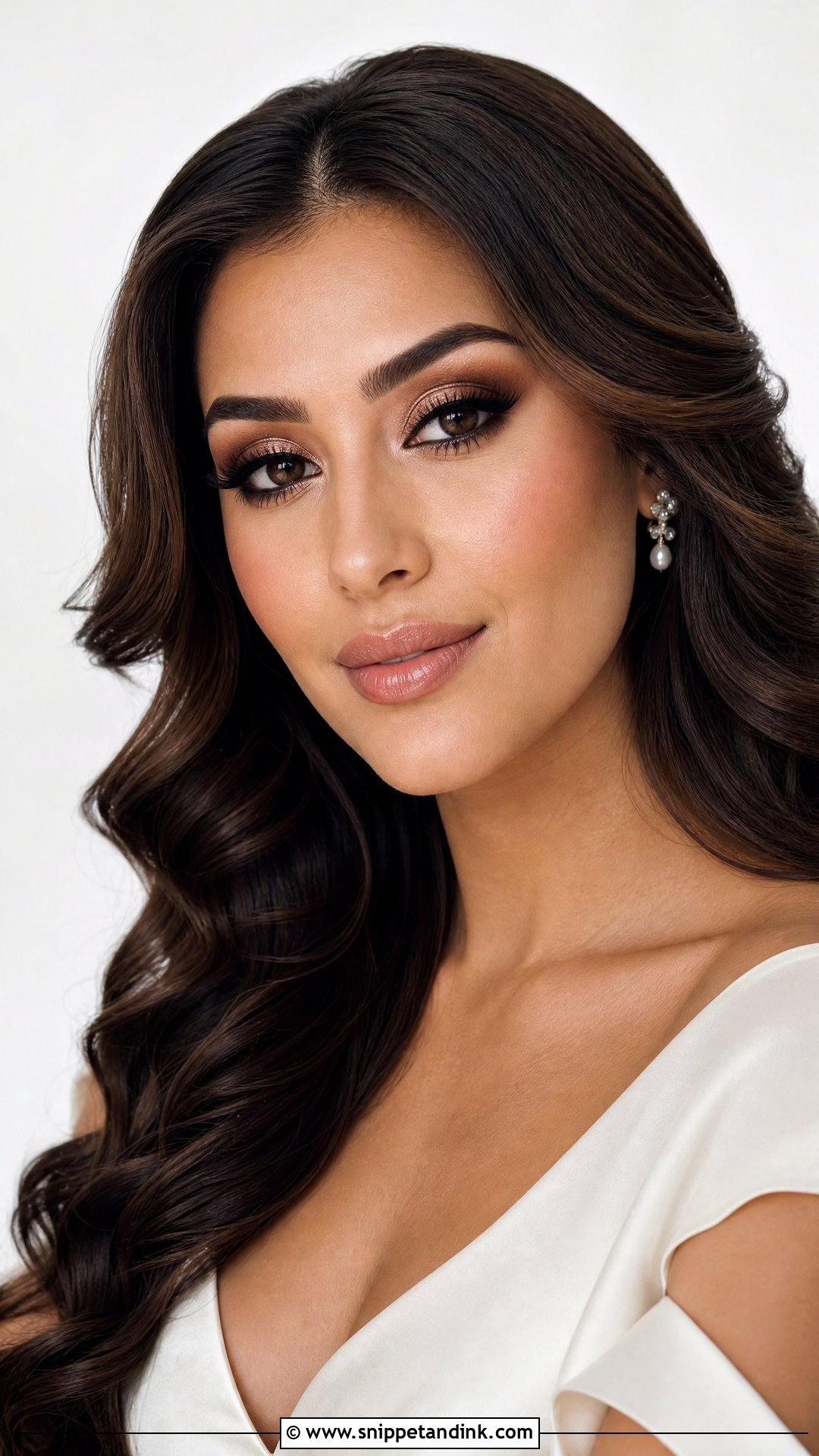
Brown smoke gives definition with much less risk than black. I layer chocolate, espresso, bronze and warm taupe, then smudge brown liner along the upper and lower lash lines and blend until there’s no edge. The skin stays satin or softly matte, with warm bronzer and natural blush, and a peach nude, caramel nude or pink brown lip. Brown, hazel and green eyes all get something from it: brown deepens, hazel warms, green looks greener. It suits most wedding styles because it looks defined rather than dramatic.
14. Winged Liner Bridal Makeup
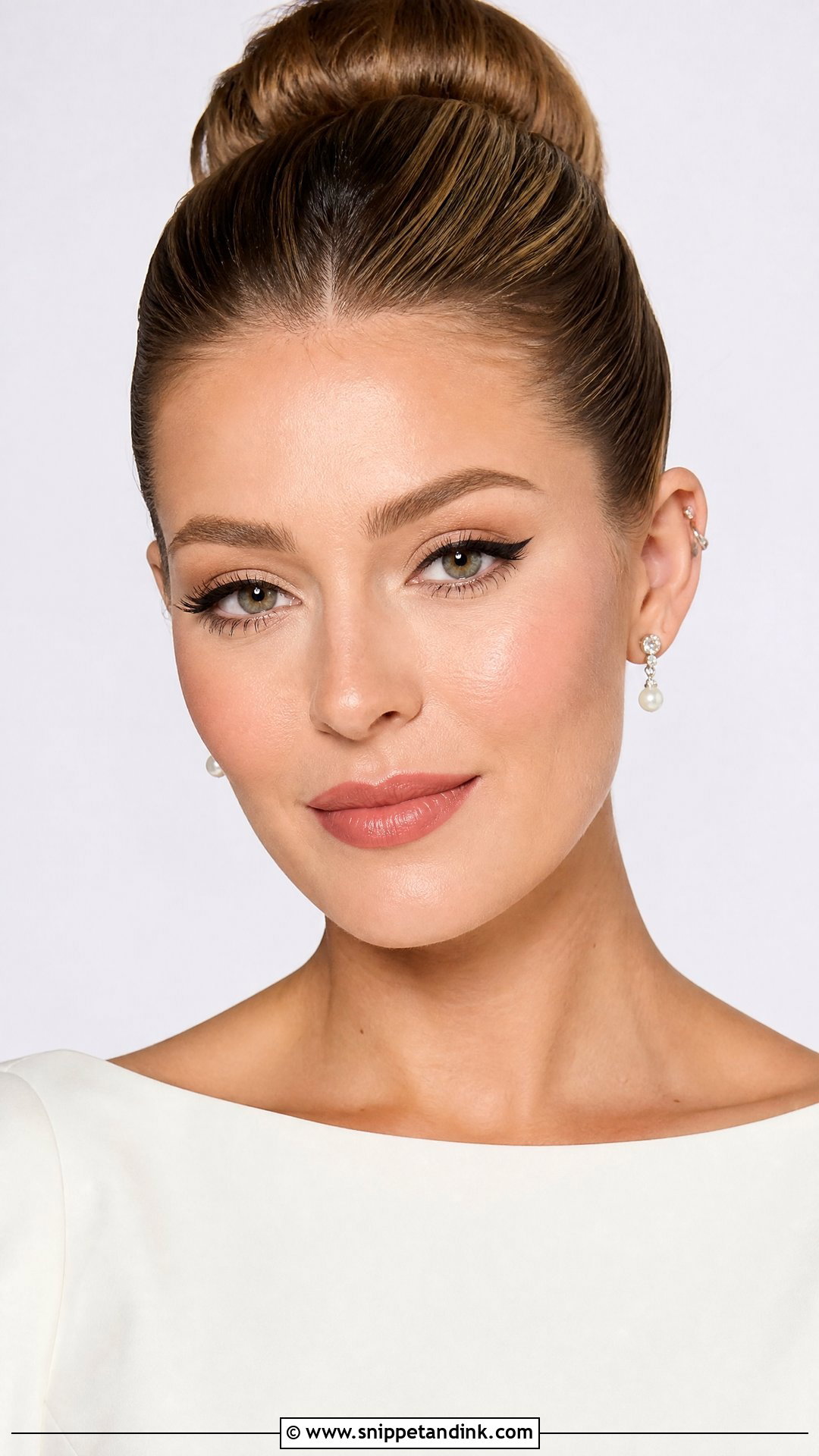
A wing should be drawn to your eye shape, not to a picture. On hooded lids I keep it thinner and draw it with your eyes open and looking straight ahead, because a wing drawn on a closed lid breaks when you look up. Almond and upturned eyes can take a longer flick. I keep the rest of the face quiet: smooth skin, soft contour, a neutral lid, soft lashes and brushed brows. A nude pink, peach or classic red lip all work. It’s very readable in photos, even from the back of the room.
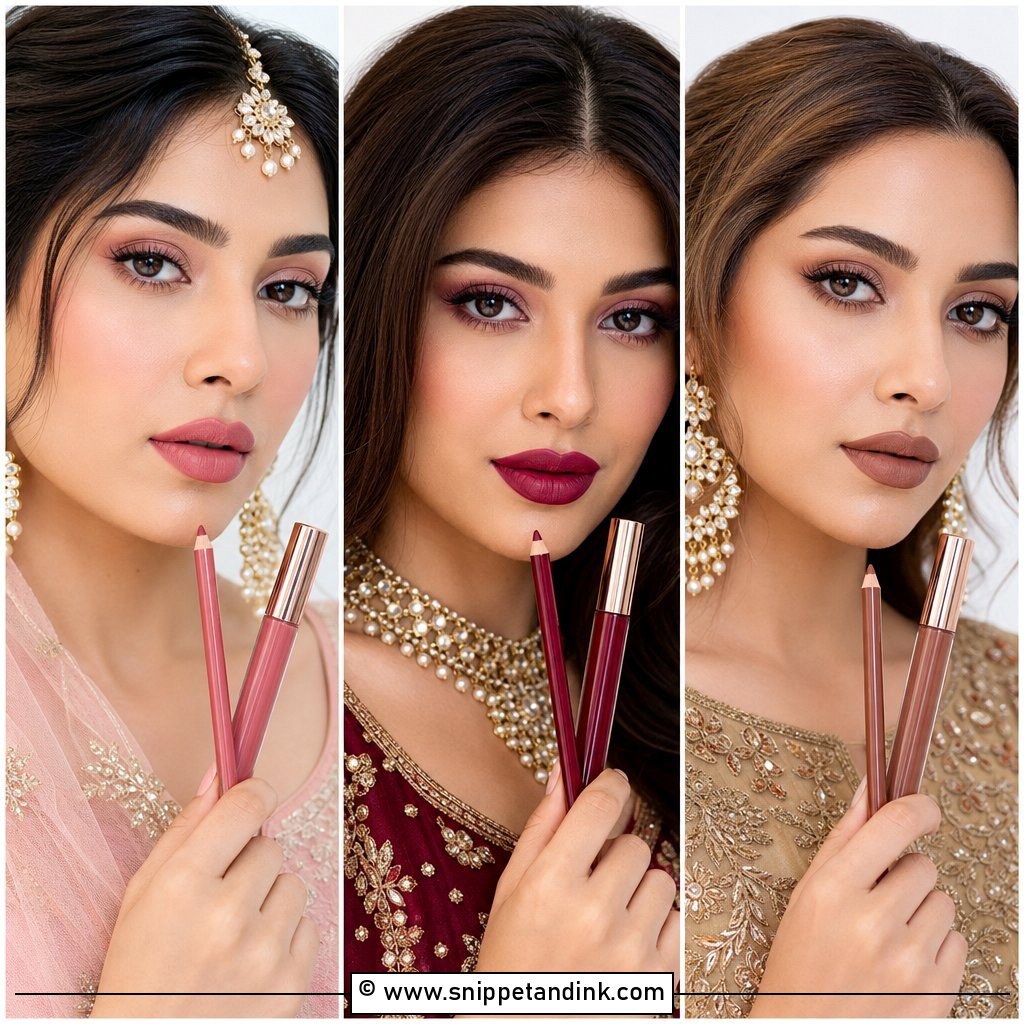
15. Red Lip Bridal Makeup
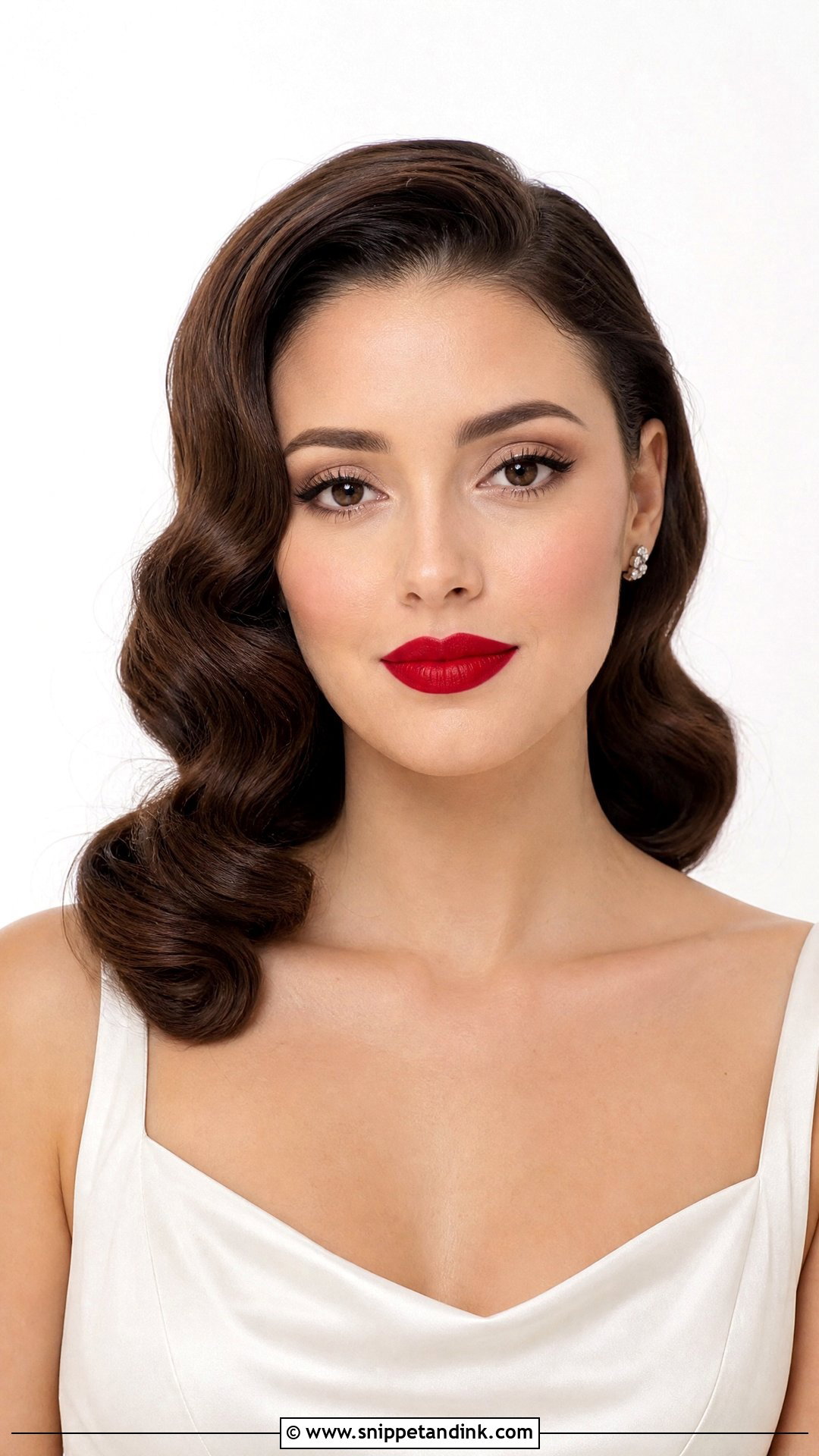
A red lip is the whole statement, so everything else steps back. I keep the skin smooth and the eyes to neutral matte shadow, a tightline or thin wing, curled lashes and groomed brows. The undertone matters most: blue-red for cool skin, orange-red for warm, a true red for neutral. I line and fill the entire lip with liner before the lipstick, which keeps it from fading into a ring after drinks. Blush should still be present, or the face looks pale next to the lip. Wear it if red is already part of your normal life; it’s hard to feel at ease in it for the first time on the day.
16. Pink Lip Bridal Makeup
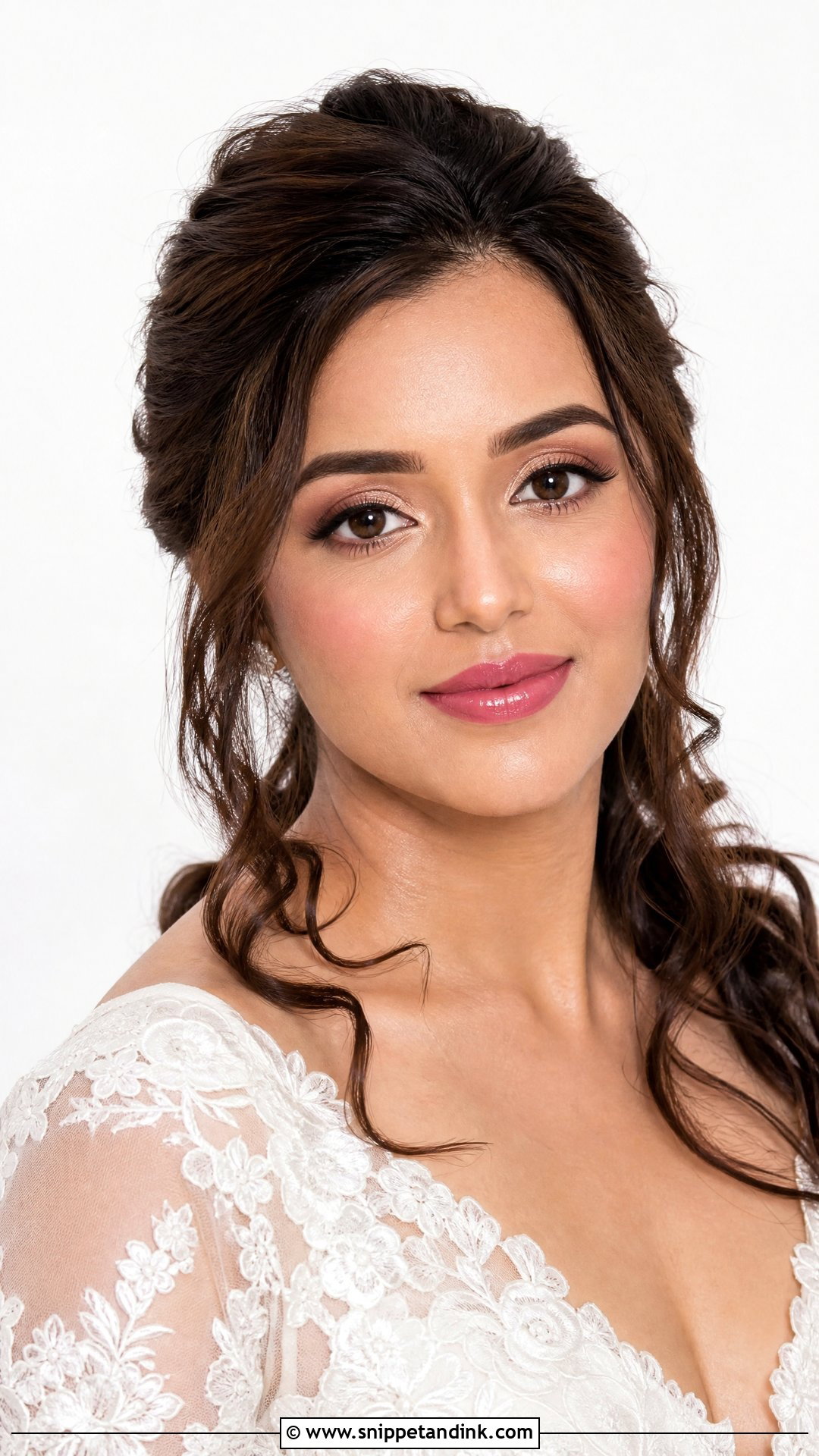
Pink lips bring color to the face without the commitment of red. The shade can be soft baby pink, warm rose, muted mauve or a deeper berry pink, and I choose it by testing against your teeth as well as your skin; blue-based pinks make teeth look whiter, while very warm pinks can do the opposite. Smooth skin, rosy blush, neutral shadow, soft lashes and a touch of champagne on the lid keep it bright. A satin formula is more comfortable over a long day than matte. Daytime and spring weddings suit it well.
17. Nude Lip Bridal Makeup
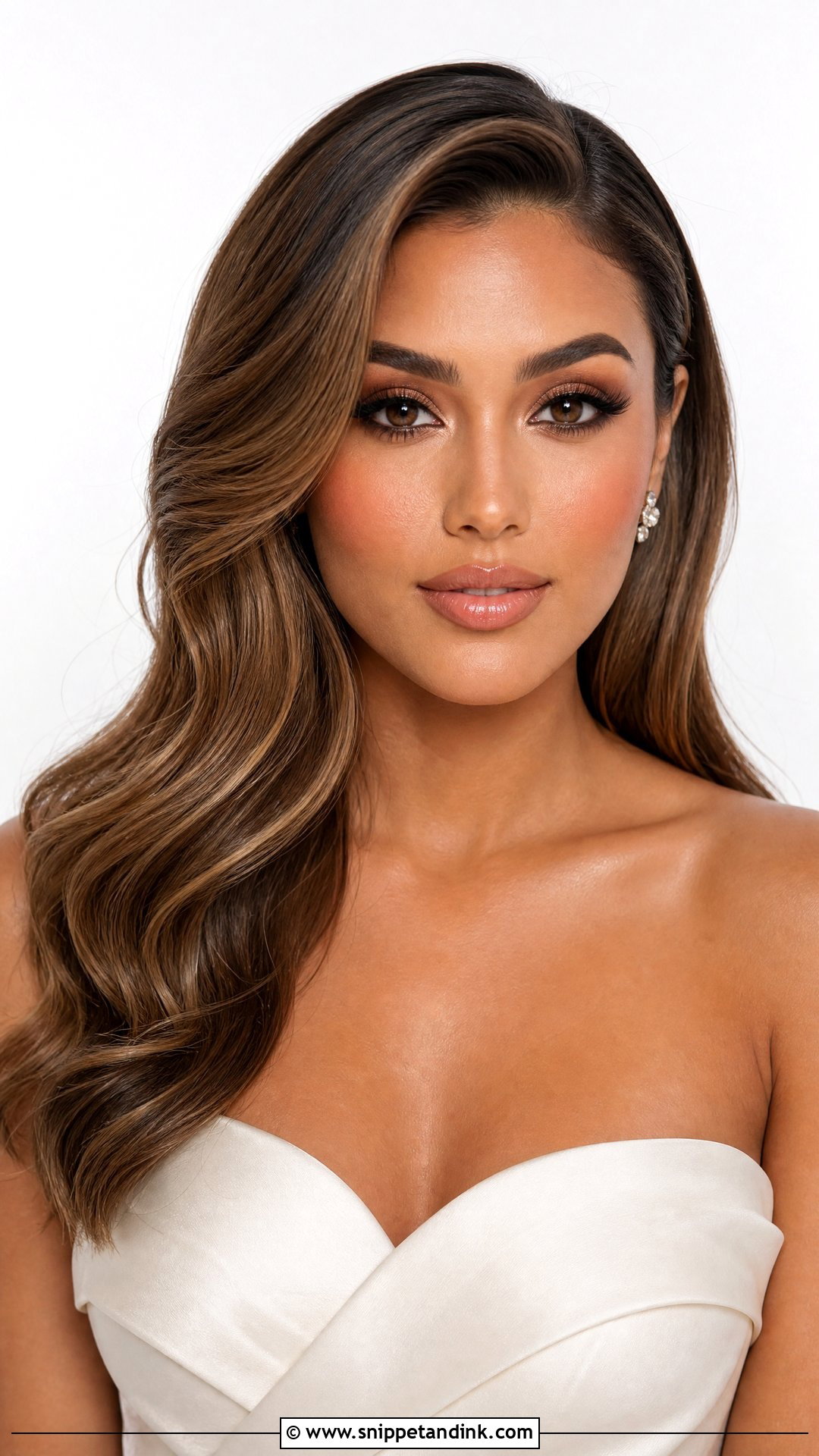
A nude lip should not erase your mouth, and that’s the most common mistake I correct. I pick a shade slightly deeper than your natural lip color and use a matching liner for shape, so the lips still read in photos. Warm, pink, peach and brown nudes all work depending on undertone. With the lips quiet, I give the eyes more definition and keep blush soft on a glowing or satin complexion. It lets the dress and hair carry the attention.
18. Glossy Bridal Makeup
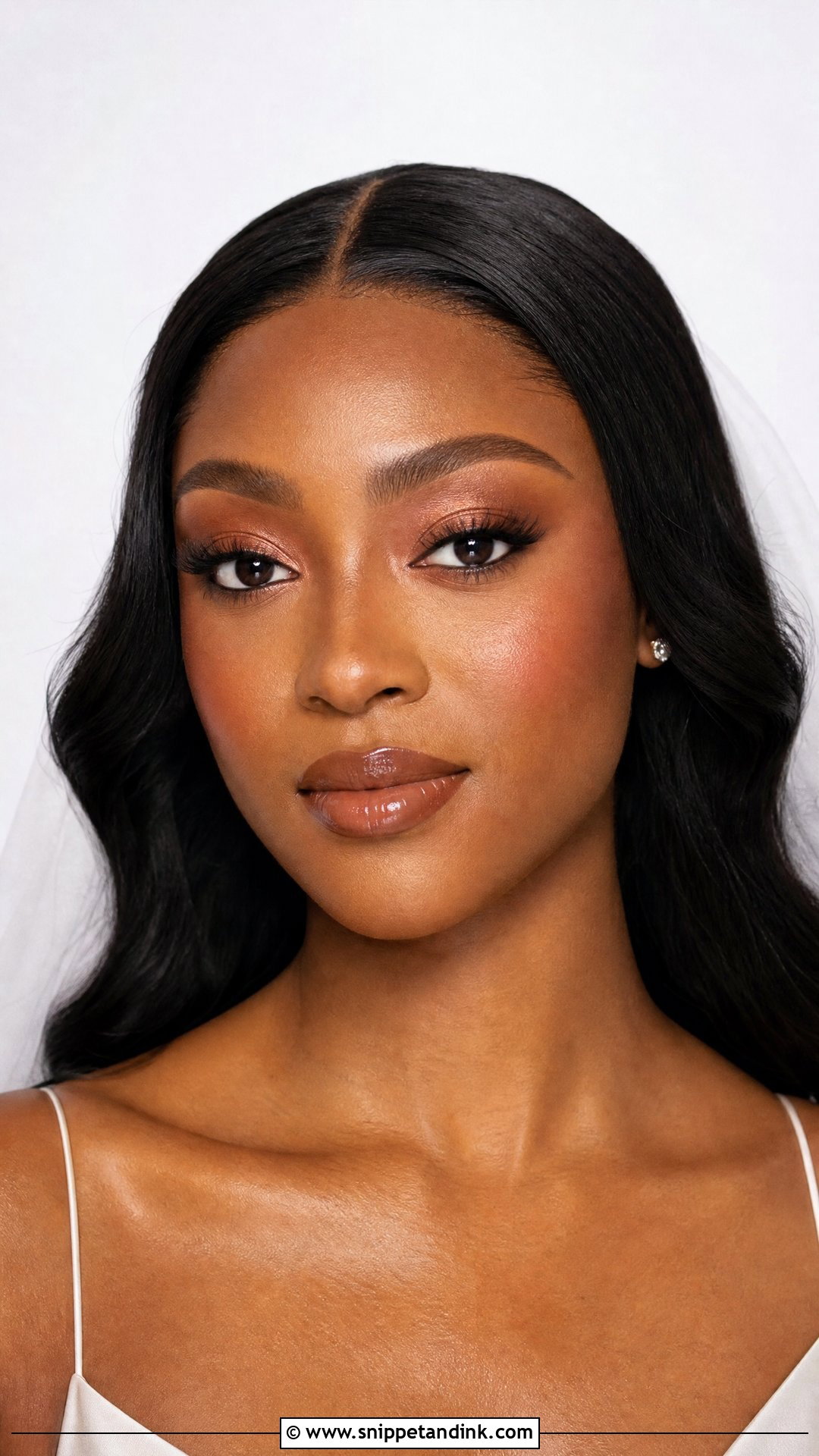
Glossy makeup is youthful, and it’s high maintenance. The skin is hydrated with a luminous base, cream blush and subtle highlighter, and eyes stay defined with mascara and a thin liner so the face doesn’t go bare. A clear, pink, peach or nude gloss makes the lips look fuller. Gloss moves, though: it catches hair in wind, transfers onto glasses and partners, and needs topping up after meals. I put a long-wear lip stain underneath, so when the gloss wears off the color stays. Keep blotting papers and the gloss in your clutch.
19. Peach Bridal Makeup
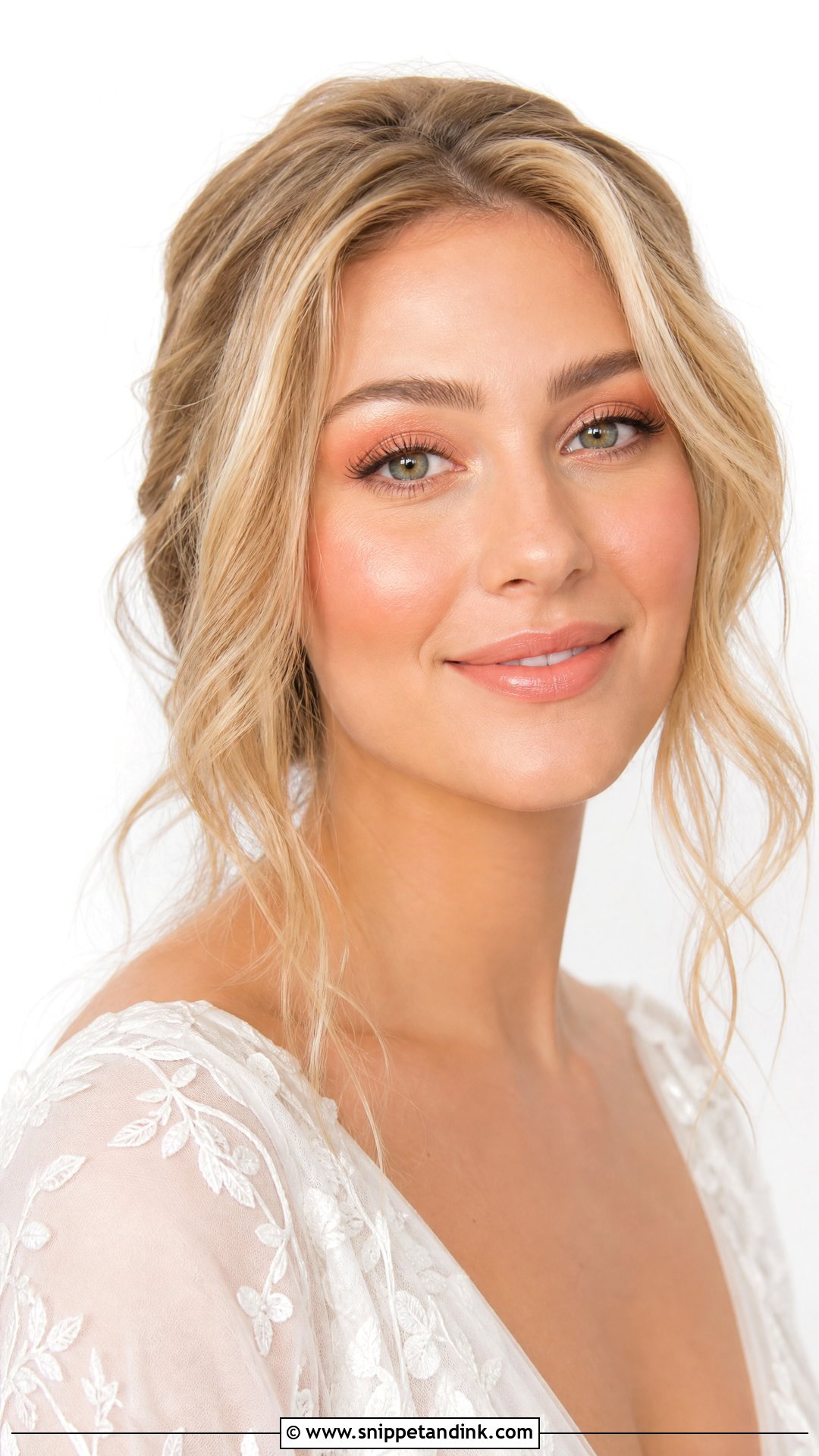
Peach works as a single tone repeated across the face. I build from the blush outward, then echo it on the lips and as a peach shimmer or matte wash on the lids, with brown liner and natural lashes. Skin is satin or dewy, with a little golden highlight if your undertone suits it. Lips can run from pale peach nude to deeper coral. Warm and golden undertones wear it best; on very cool pink skin, peach can look slightly sallow, and I’d swap in a warm rose.
20. Mauve Bridal Makeup
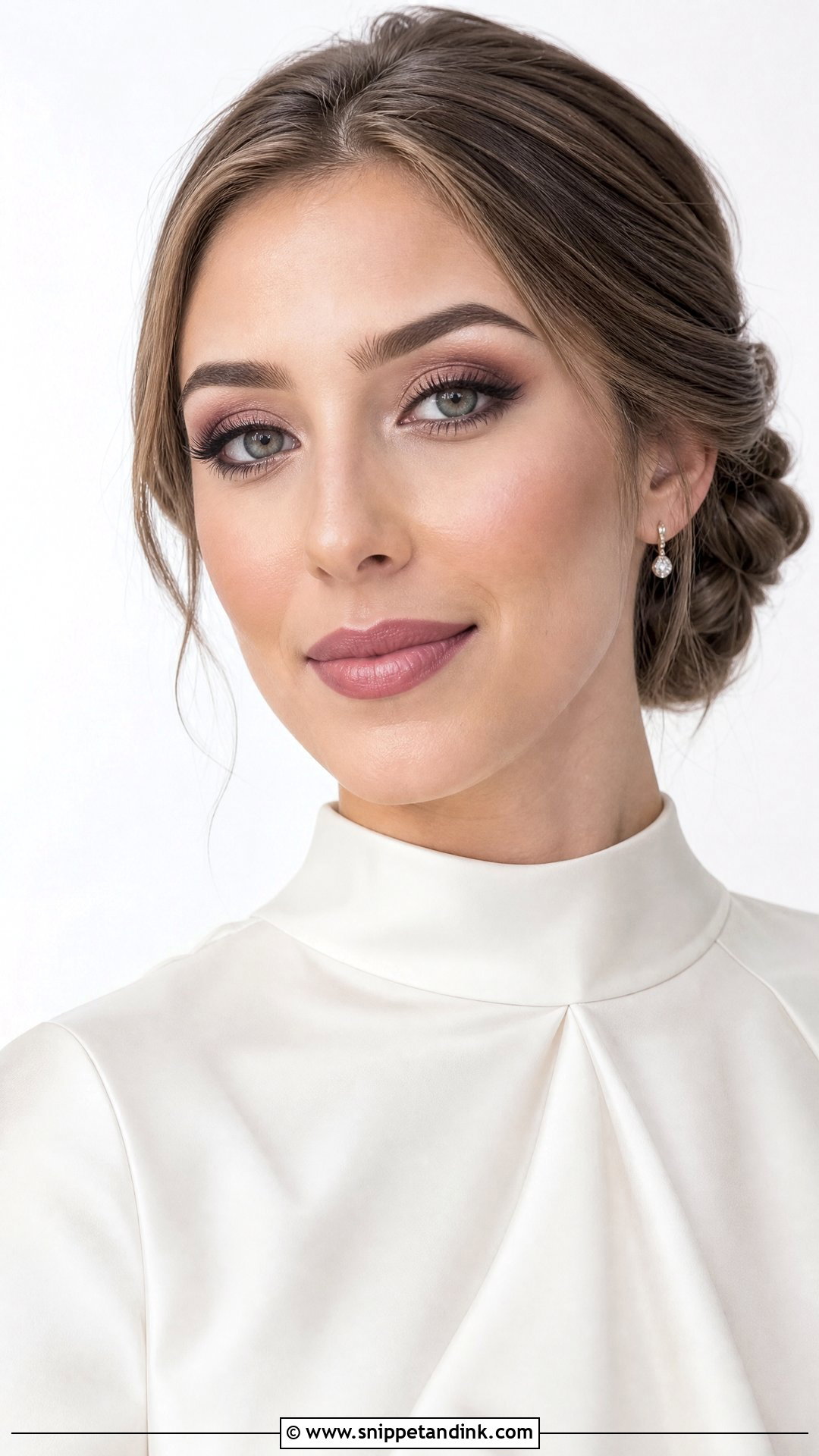
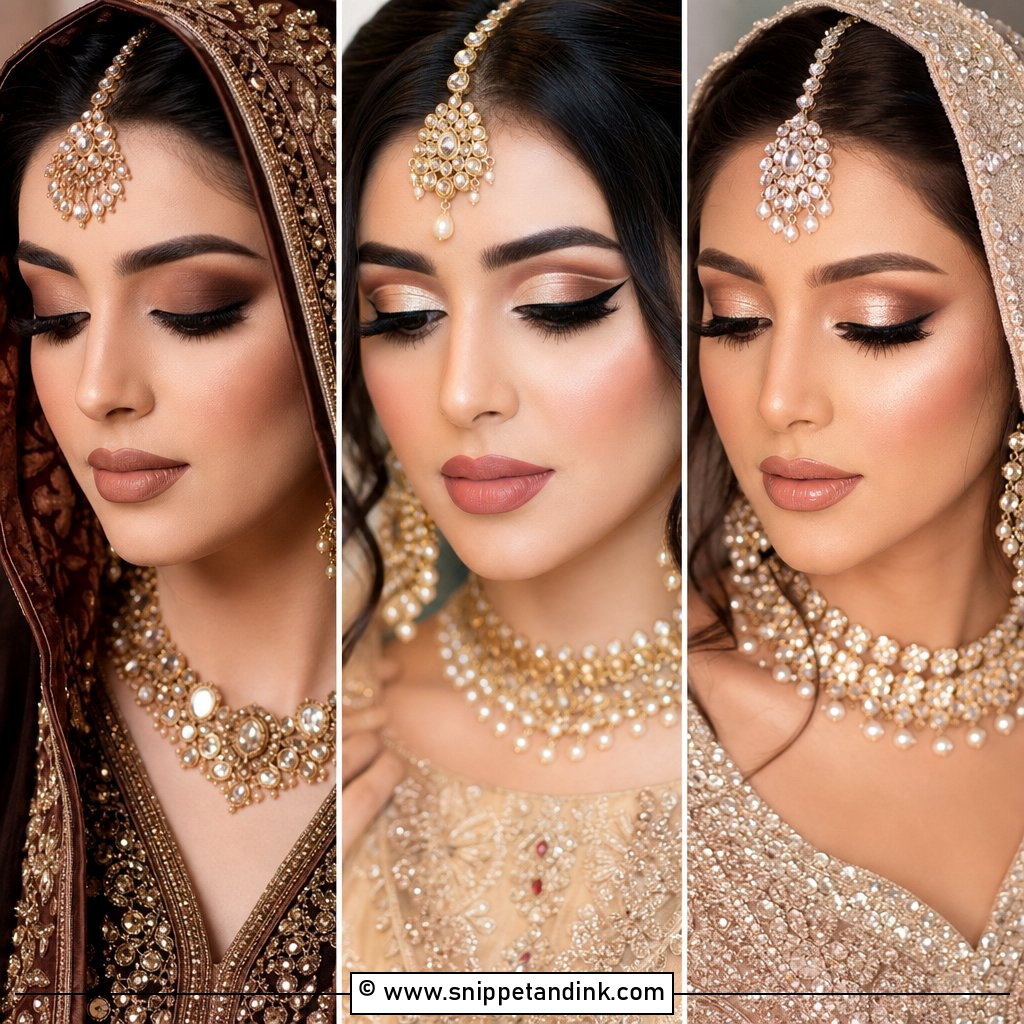
Mauve is pink with gray in it, which gives it a more grown-up feel. I use dusty mauve or taupe-mauve shadow, soft brown liner and wispy lashes, then a muted mauve blush and a satin mauve lip so the tones match. The complexion stays natural so the colors look refined rather than painted. Cool and neutral undertones suit it most easily; on golden skin I choose a warmer, browner mauve. Fall, winter, evening and indoor weddings are its natural home.
21. Berry Bridal Makeup
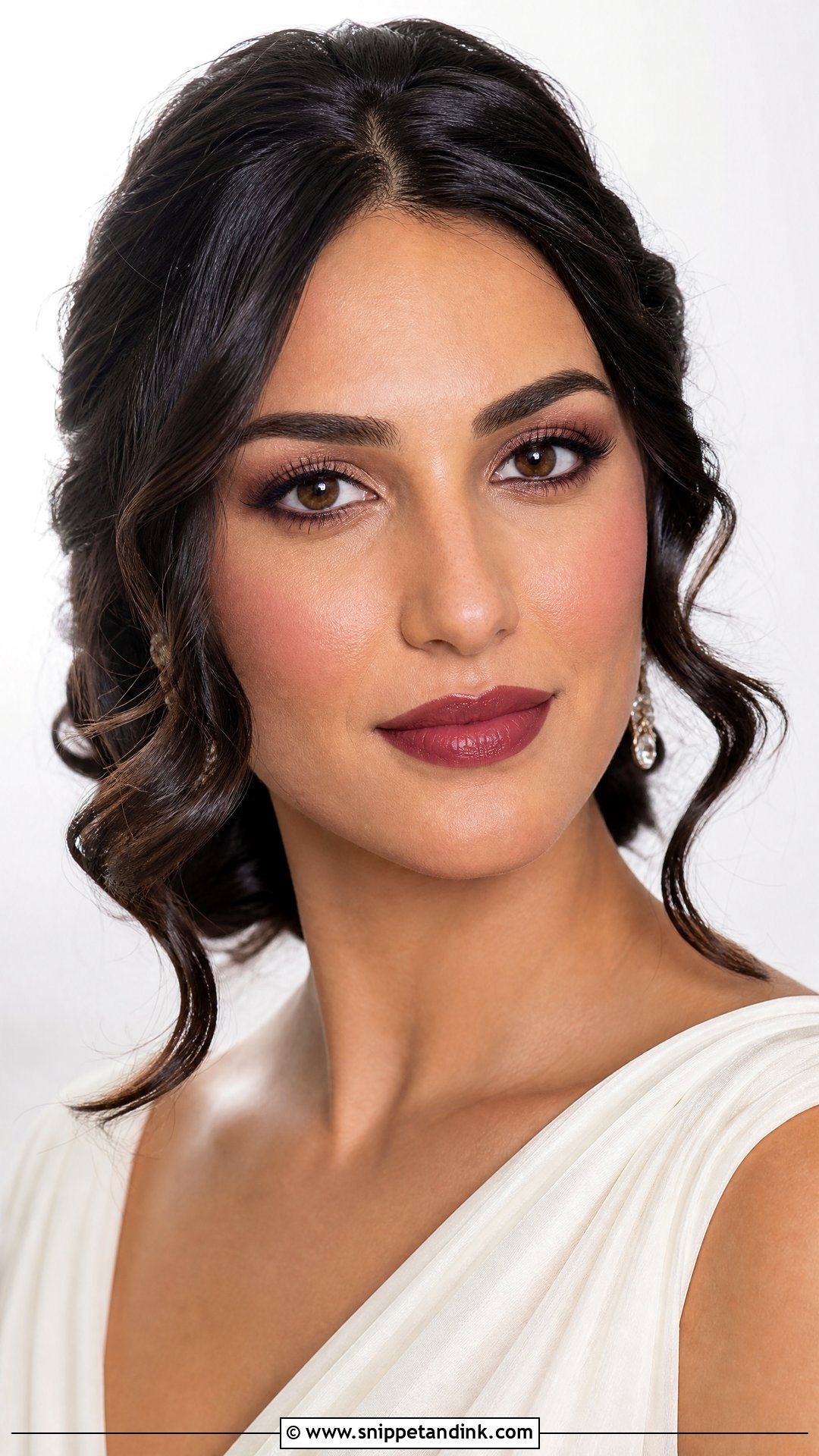
Berry adds richness, and the rule I follow is one dark feature at a time. If the lip is berry, the eyes stay neutral or lightly smoked; if the cheeks carry berry, the lip goes softer. A berry lip can be sheer, satin or softly matte depending on how bold you want it. Smooth skin, rose or plum blush and soft brown shadow keep it bridal. Berry shades photograph well because they give the face depth and contrast. Darker lip colors show any feathering, so I always line first.
22. Gold Bridal Makeup
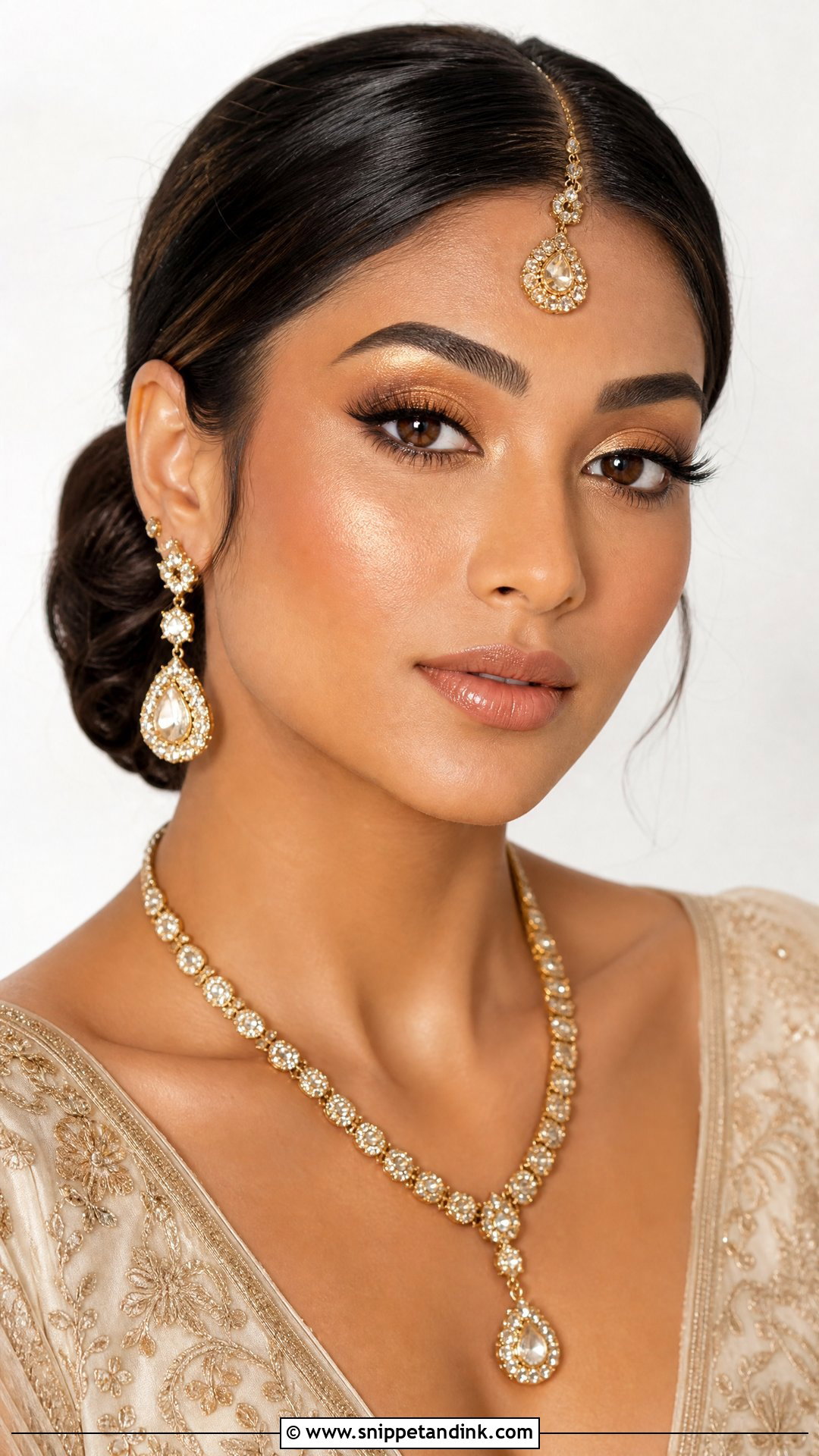
Gold reads festive while still sitting comfortably with ivory. I use a soft gold shimmer on the lids, warm brown in the crease and brown or black liner close to the lashes, then glow the skin with bronzer, peach blush and a lightly applied golden highlighter. A nude, caramel or peach lip balances the shine on the eyes. Medium, tan, olive and deep skin tones carry gold most easily; on fair skin I choose a paler, champagne-gold. It pairs naturally with gold jewelry and warm ivory gowns.
23. Silver Bridal Makeup
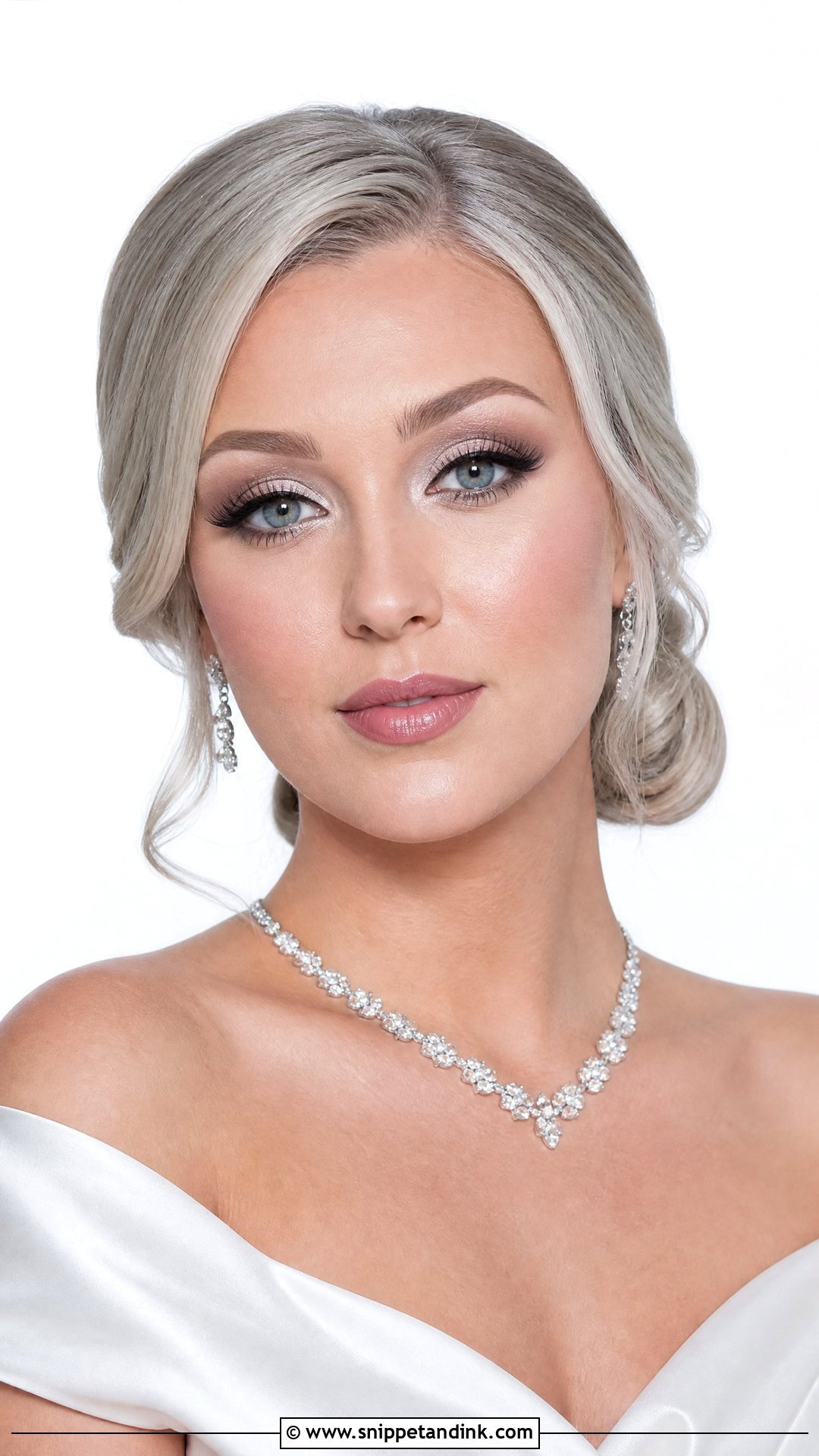
Silver is the cool-toned answer to gold, and it can look frosty if it’s overdone. I use a soft silver or icy shimmer on the lid only, blended into taupe, gray or cool brown in the crease. Precise liner and defined lashes keep the eye lifted rather than chalky. Smooth skin with a neutral or cool pink blush, and a pink nude, mauve or soft rose lip complete it. Platinum jewelry, sleek gowns and winter weddings suit it, and cool undertones wear it best. Think of silver as a glow, never a solid metallic lid.
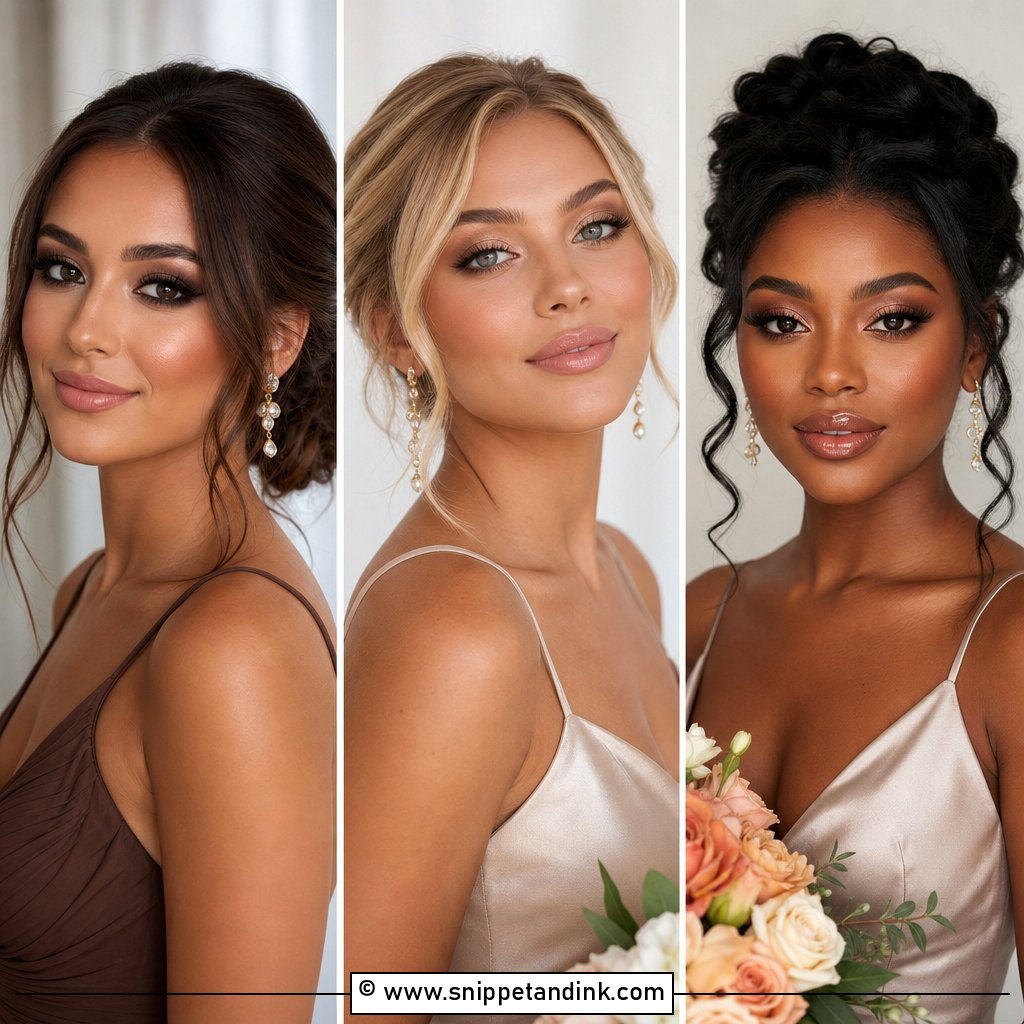
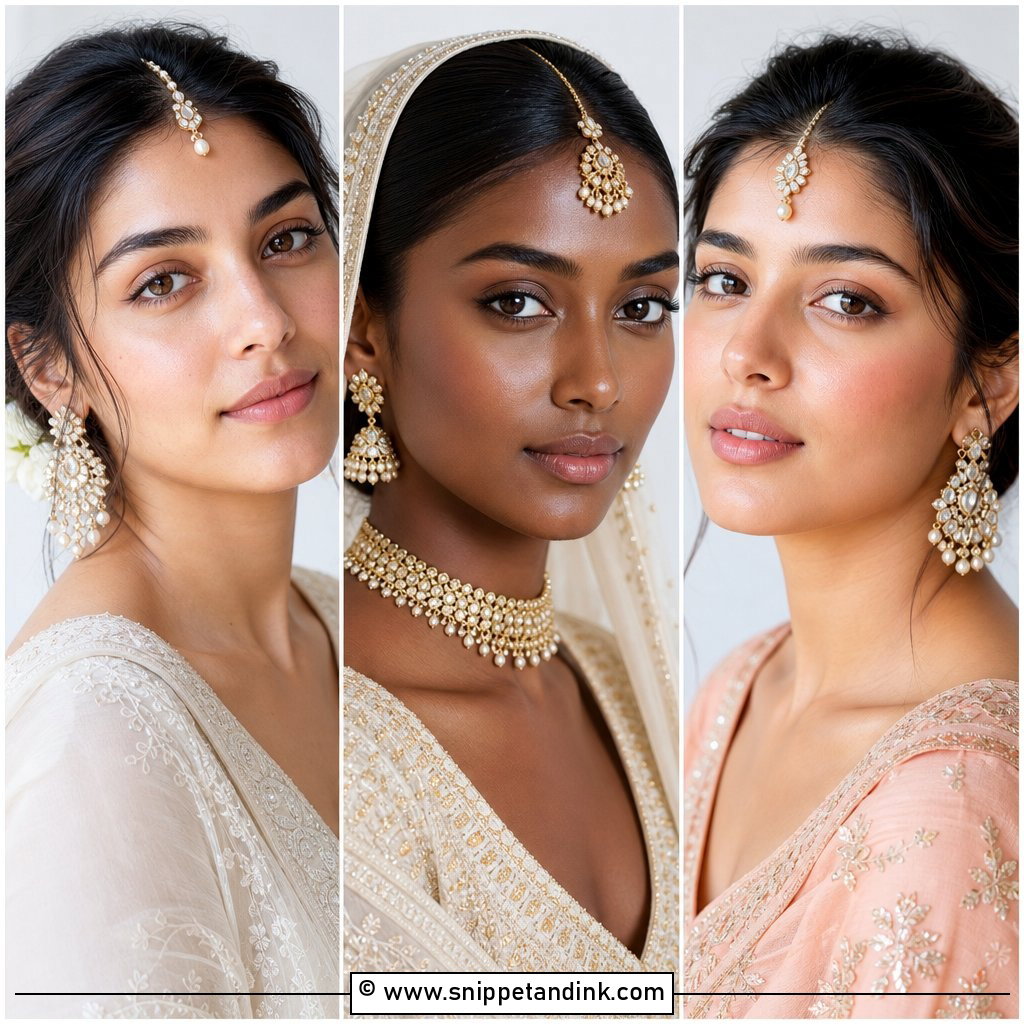
24. Black Bride Bridal Makeup
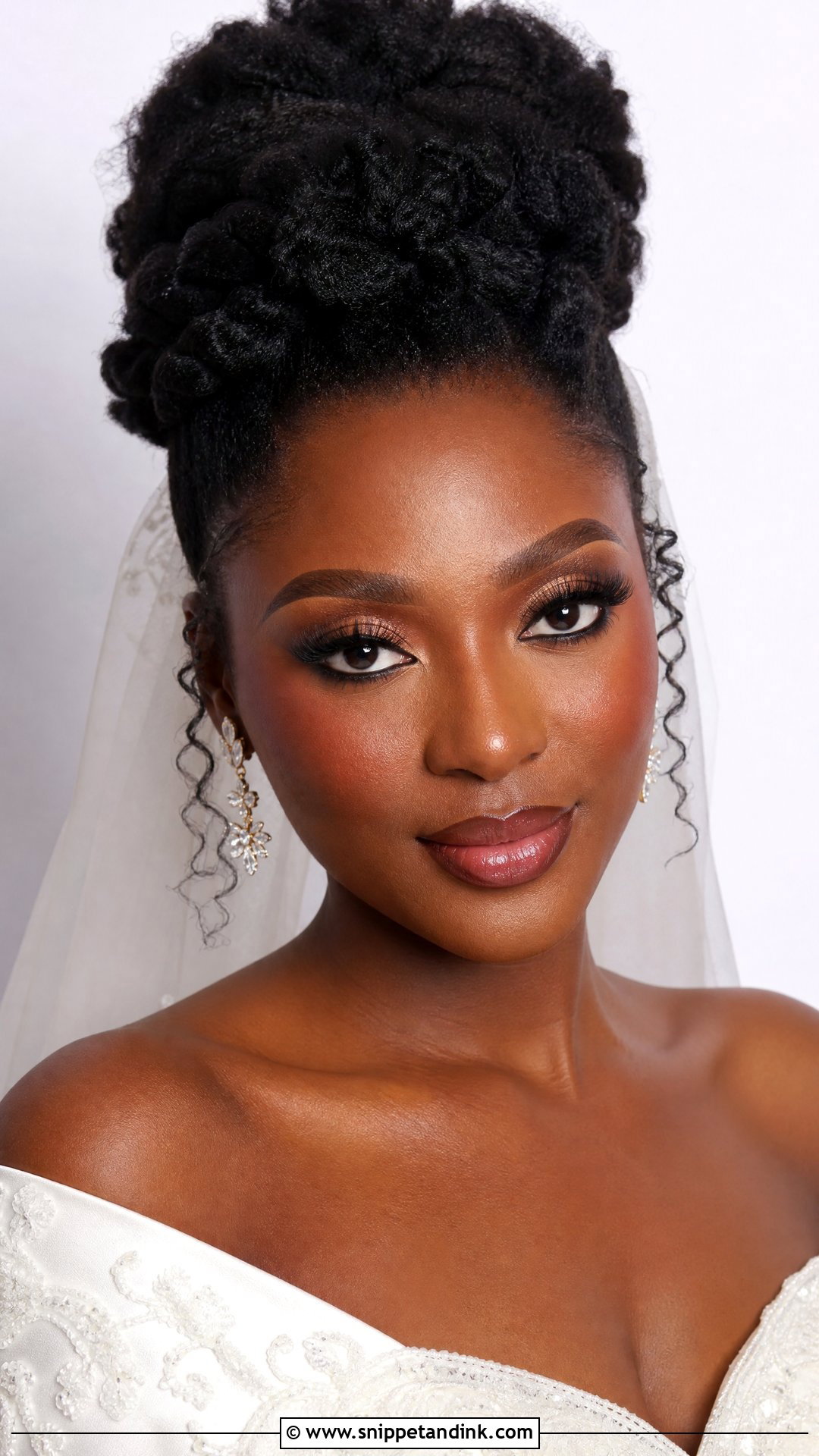
Makeup for Black brides starts with the foundation match, because deep skin often has more than one undertone across the face. I match the jaw and the center of the face separately if needed, and avoid shades that turn gray or too red. Warm bronzer, terracotta blush, berry blush, or deep rose blush all give real color that shows up. Bronze, gold, plum, chocolate and copper shadows add dimension to the eyes. I check the setting powder under flash, since some powders leave a white cast on deep skin. A brown nude, berry, rose or classic red lip all work, with a golden, bronze or champagne highlight.
25. Asian Bridal Makeup
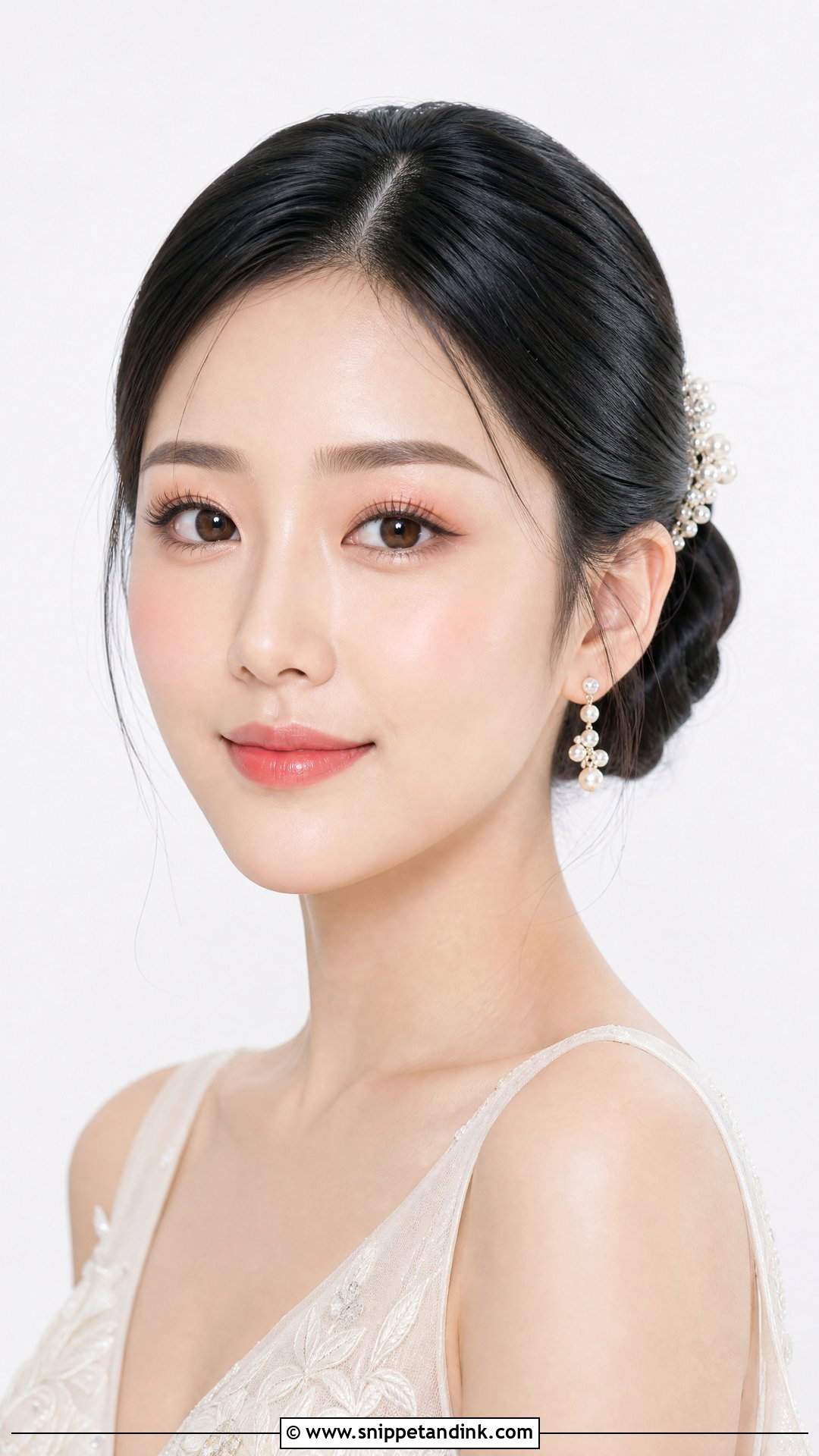
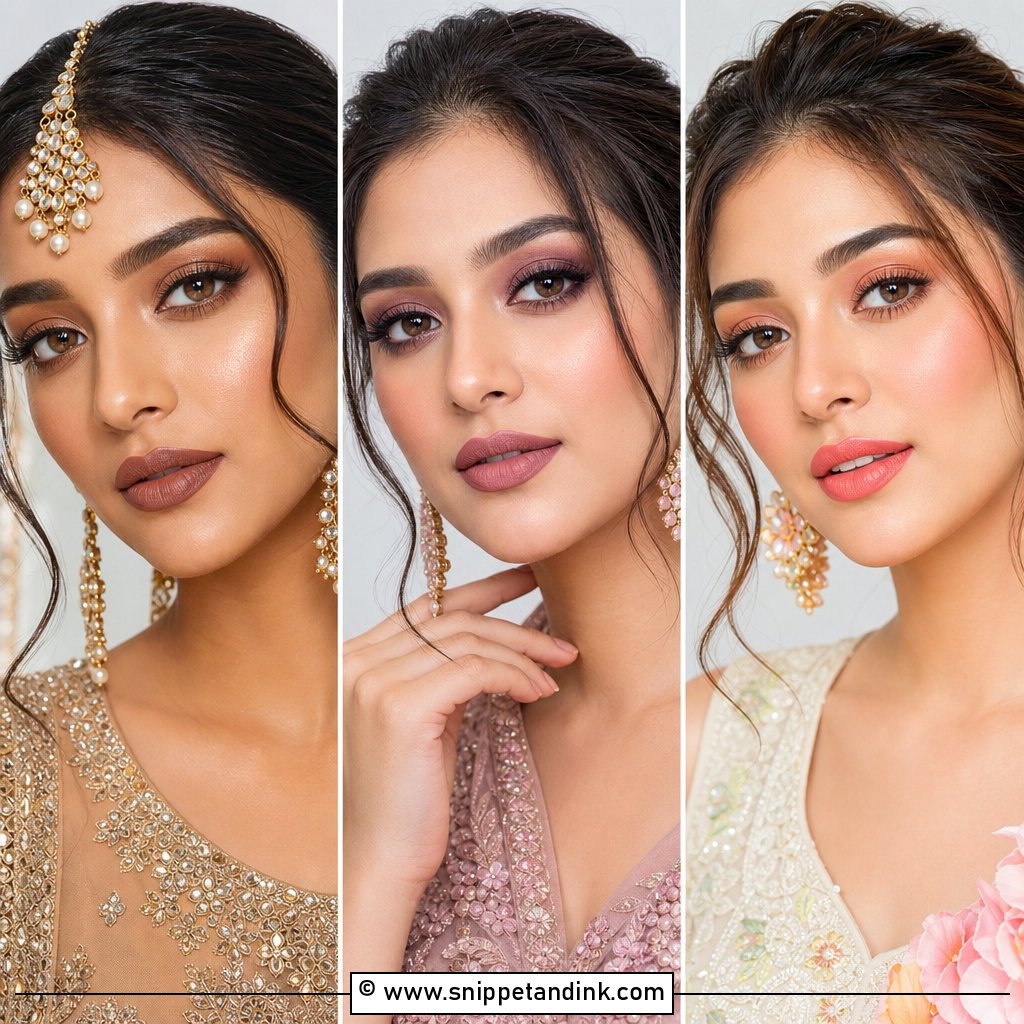
Asian bridal makeup often centers on smooth skin, lifted eyes and soft definition. On monolids or hooded lids, I place depth slightly above the natural crease so it shows with eyes open, and build shadow as a gradient from the lash line rather than a defined crease. Soft brown, peach, rose, champagne and taupe all work. Thin liner and half lashes or individual lashes lift without closing the eye, which full strip lashes can do. Gentle blush placed high and a pink, coral, rose or soft red lip finish it. The same base can be taken natural or glam.
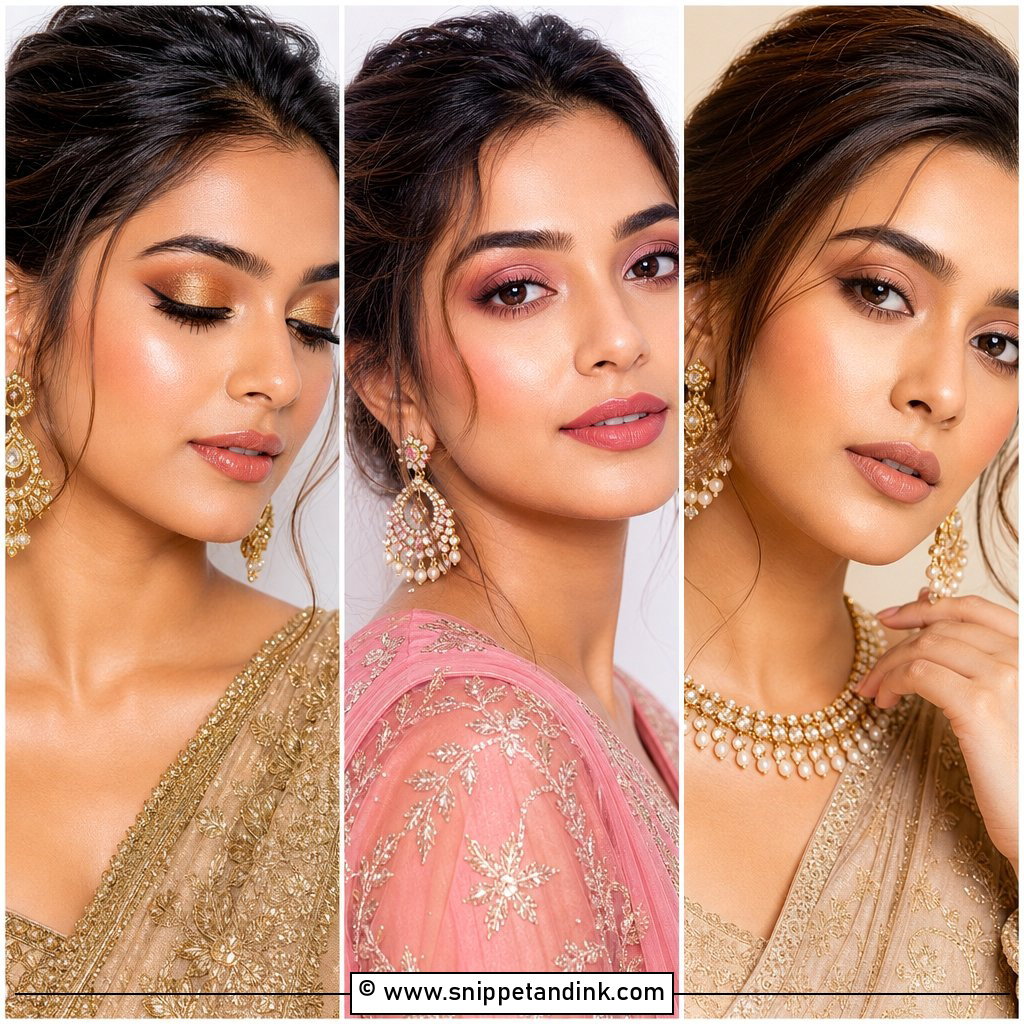
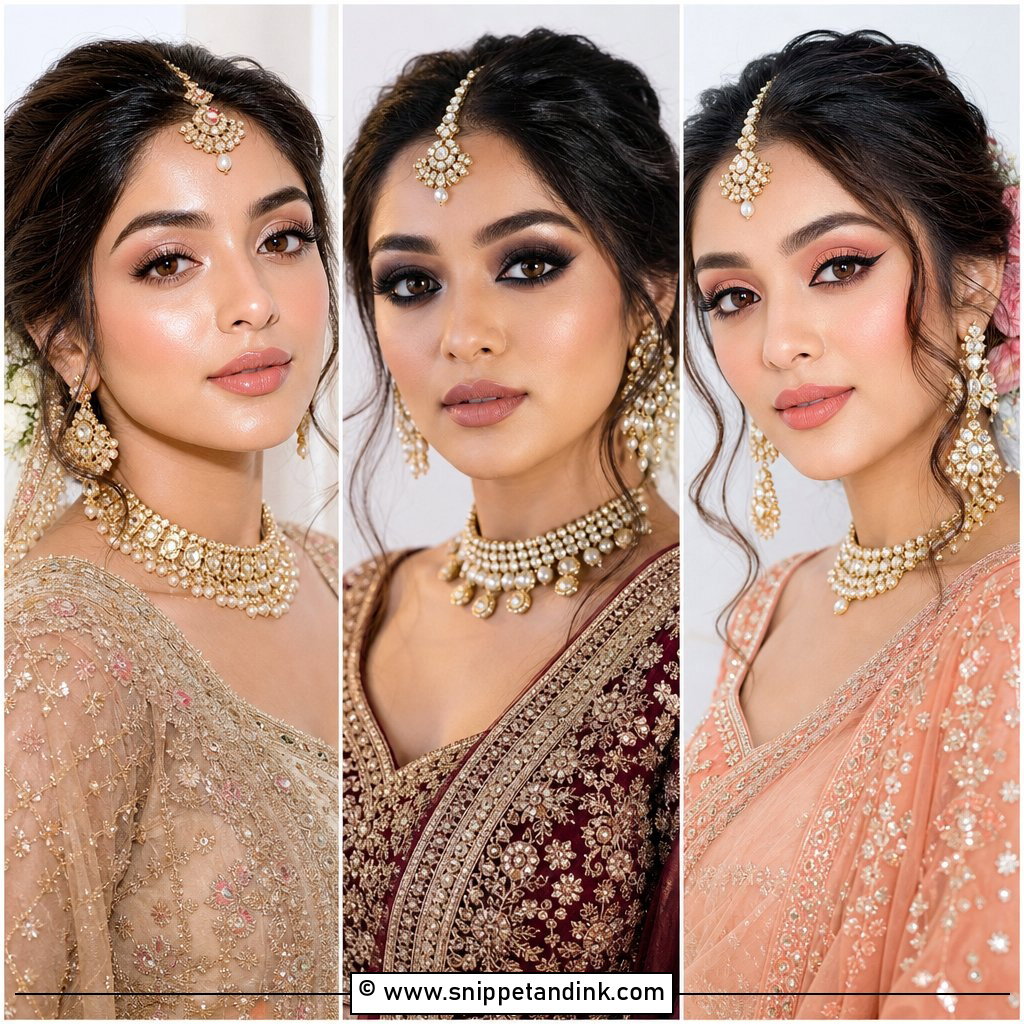
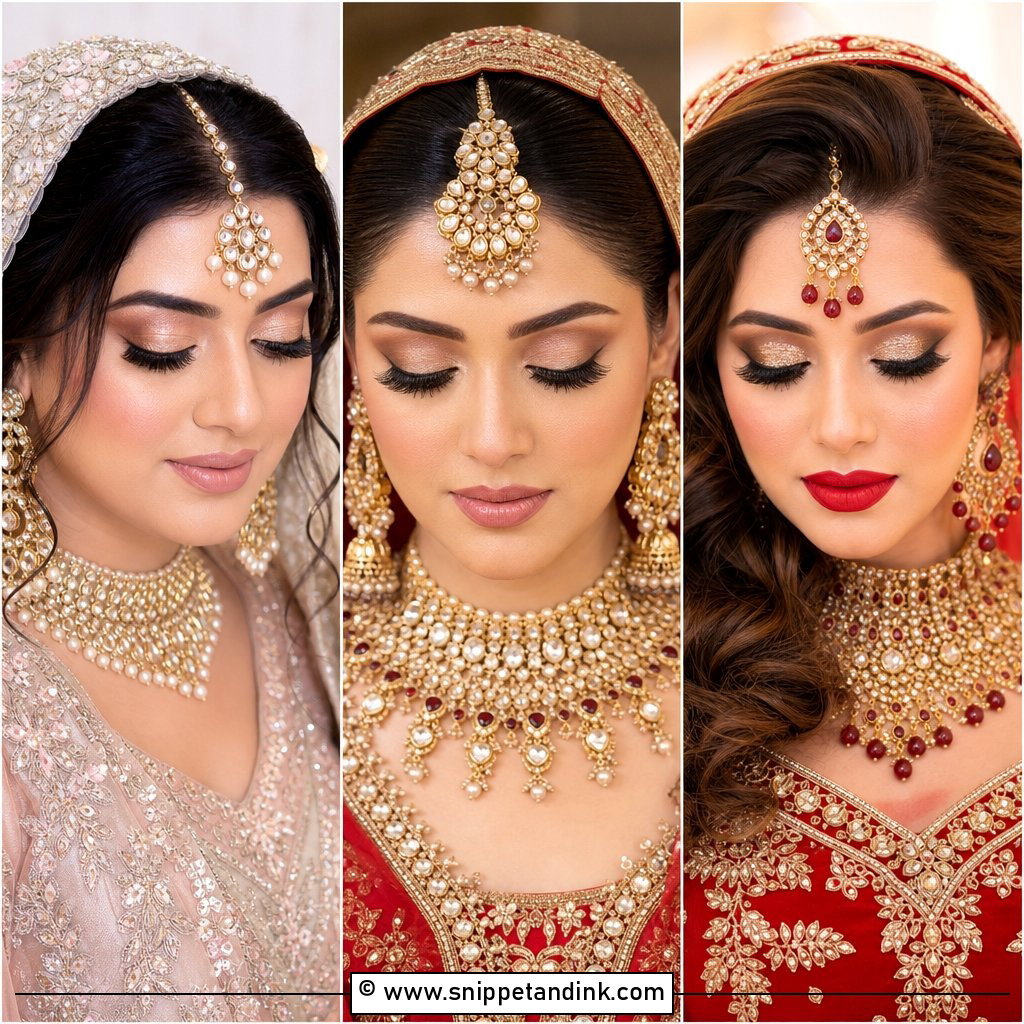
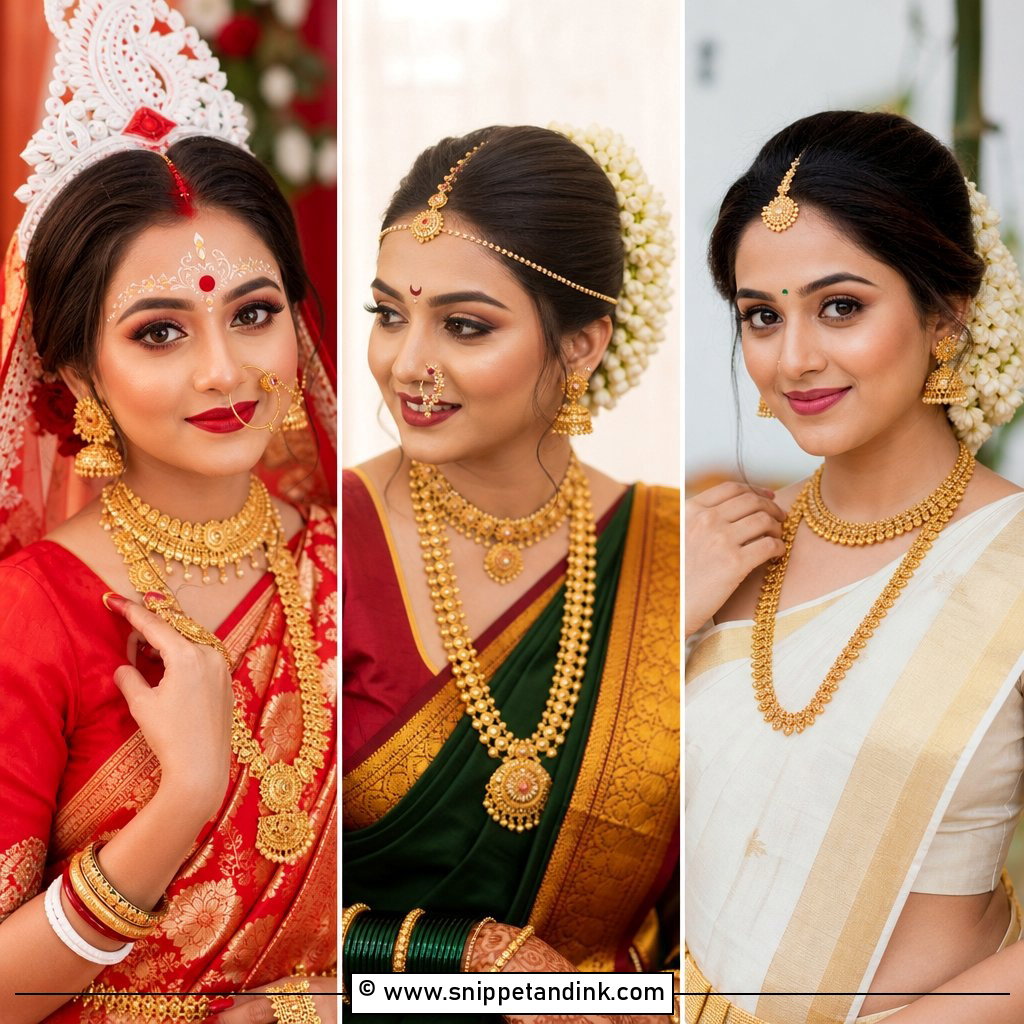
26. Indian Bridal Makeup
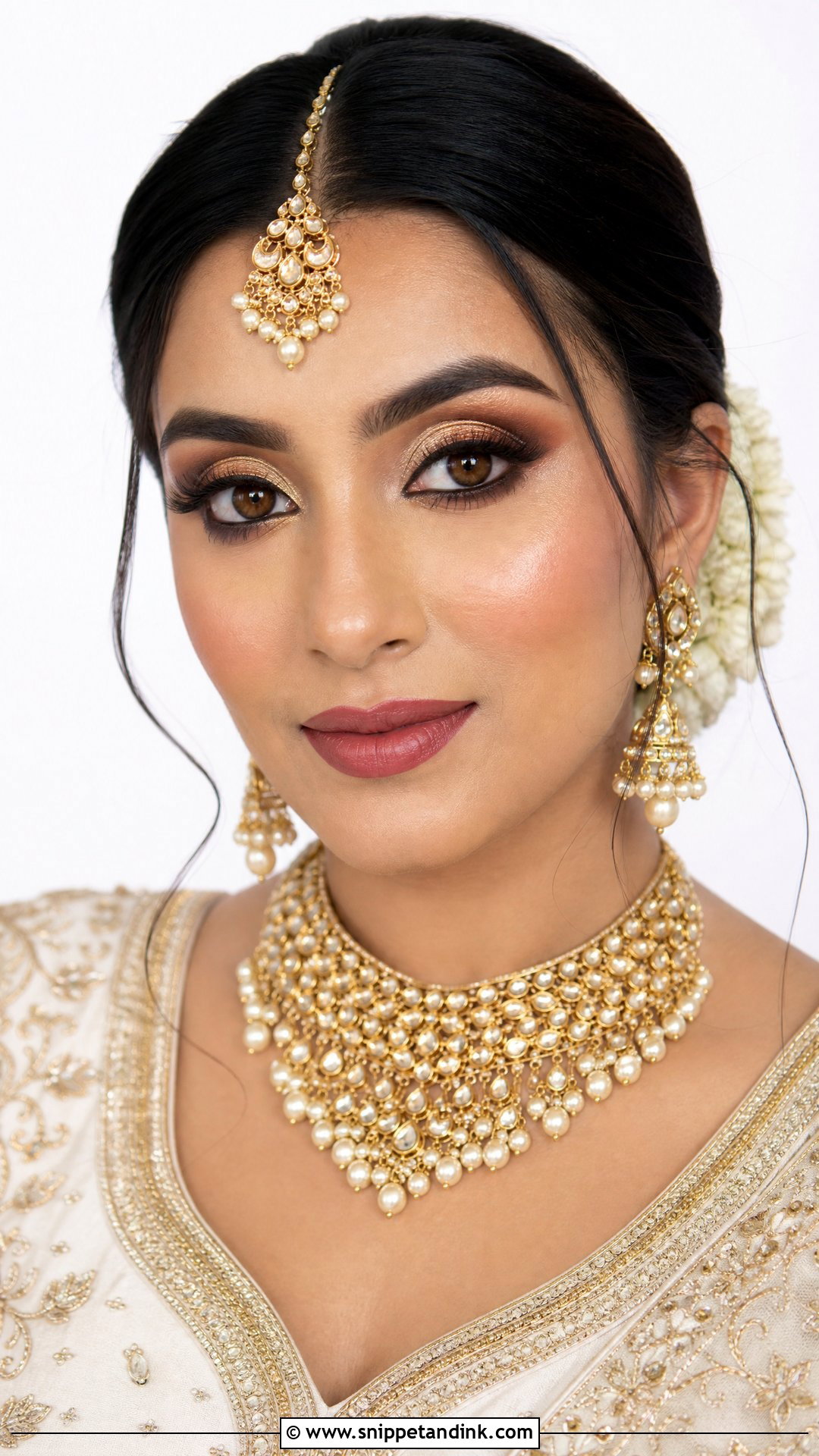
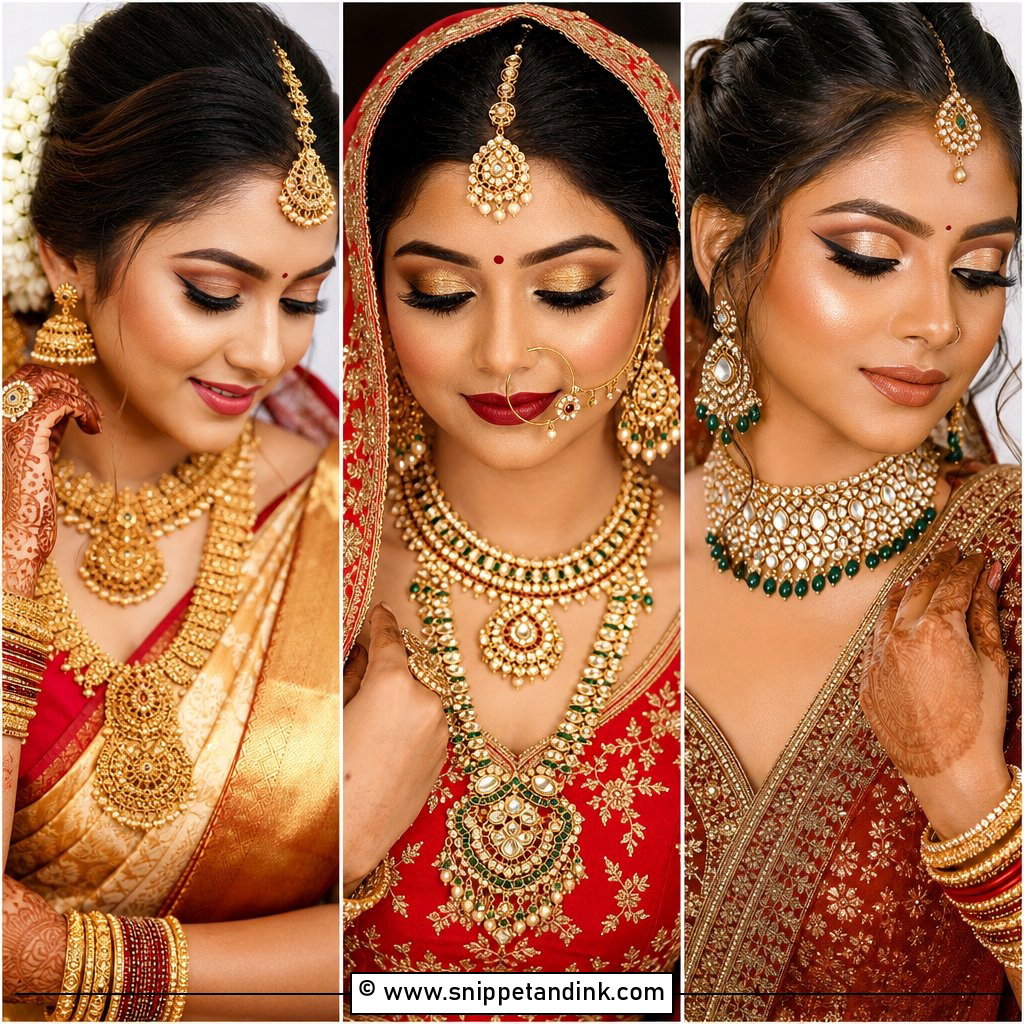
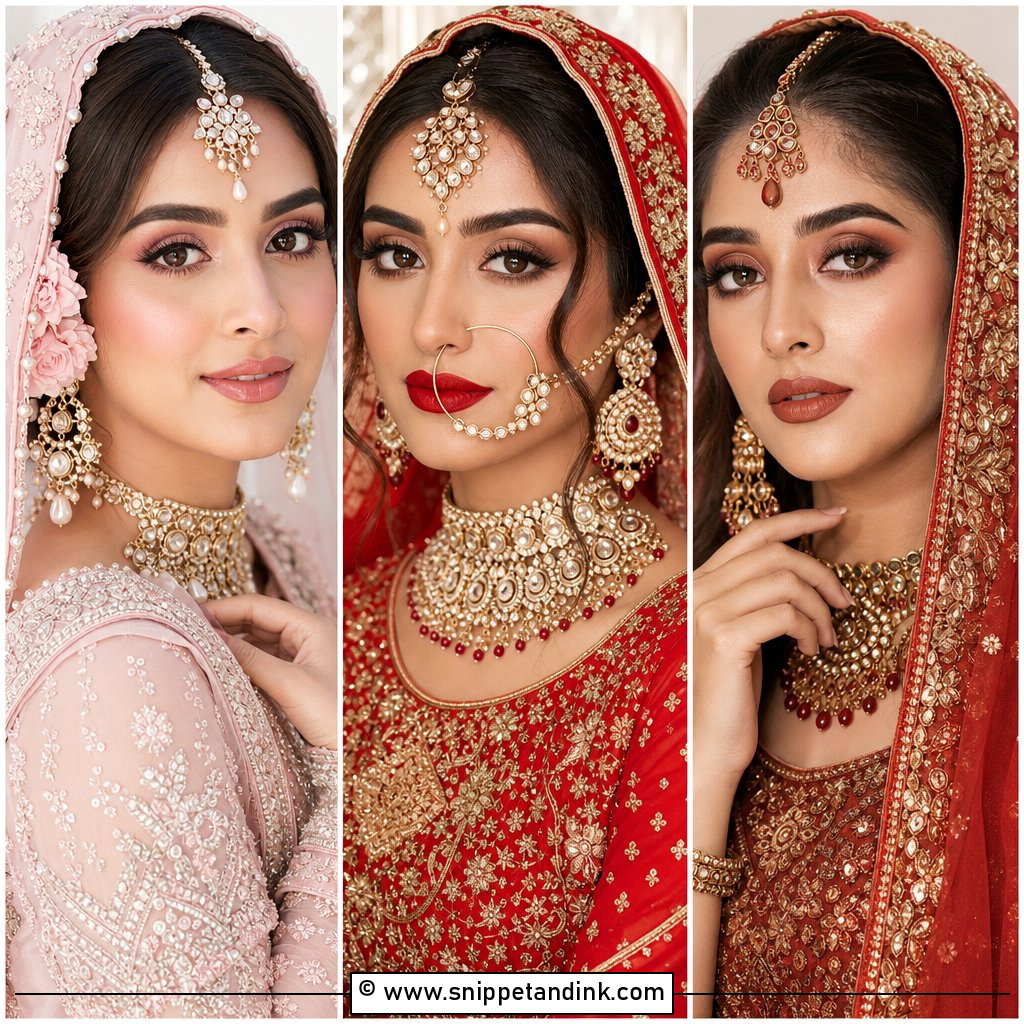
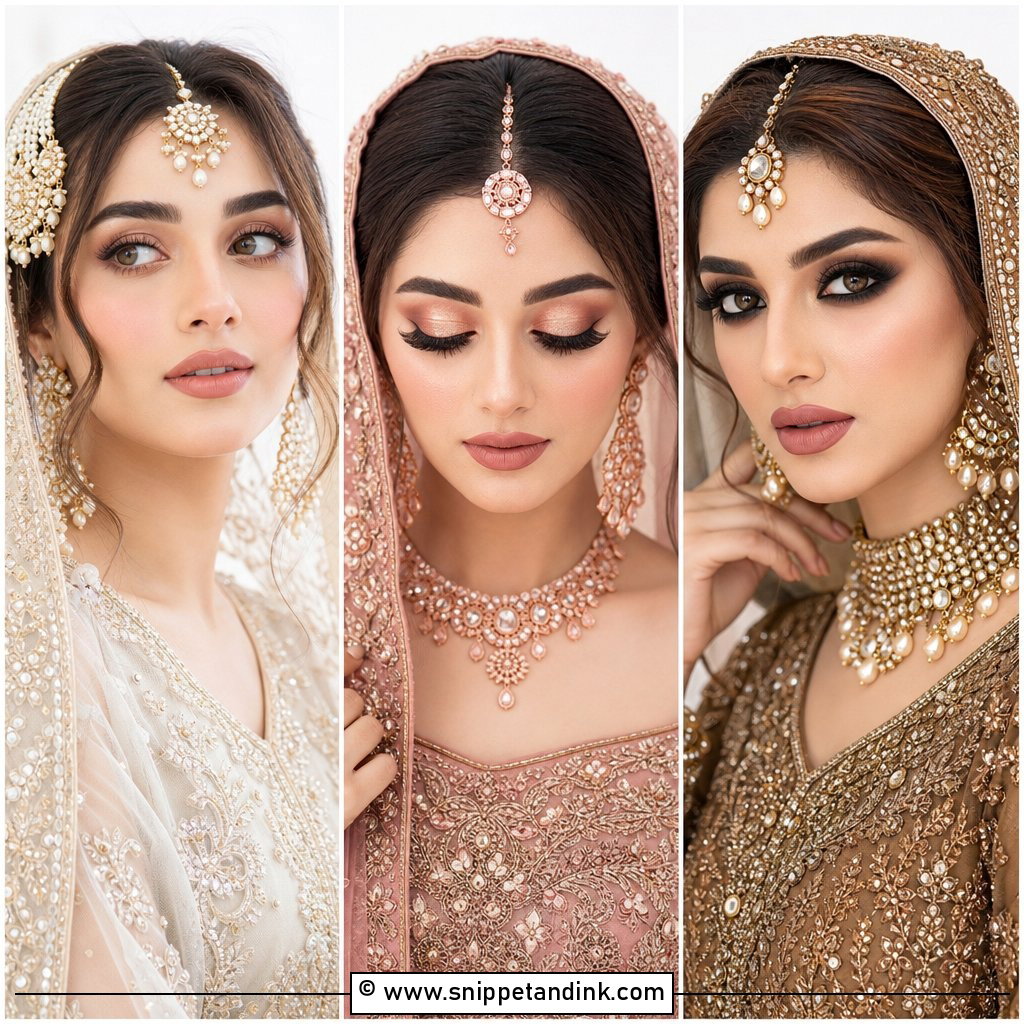
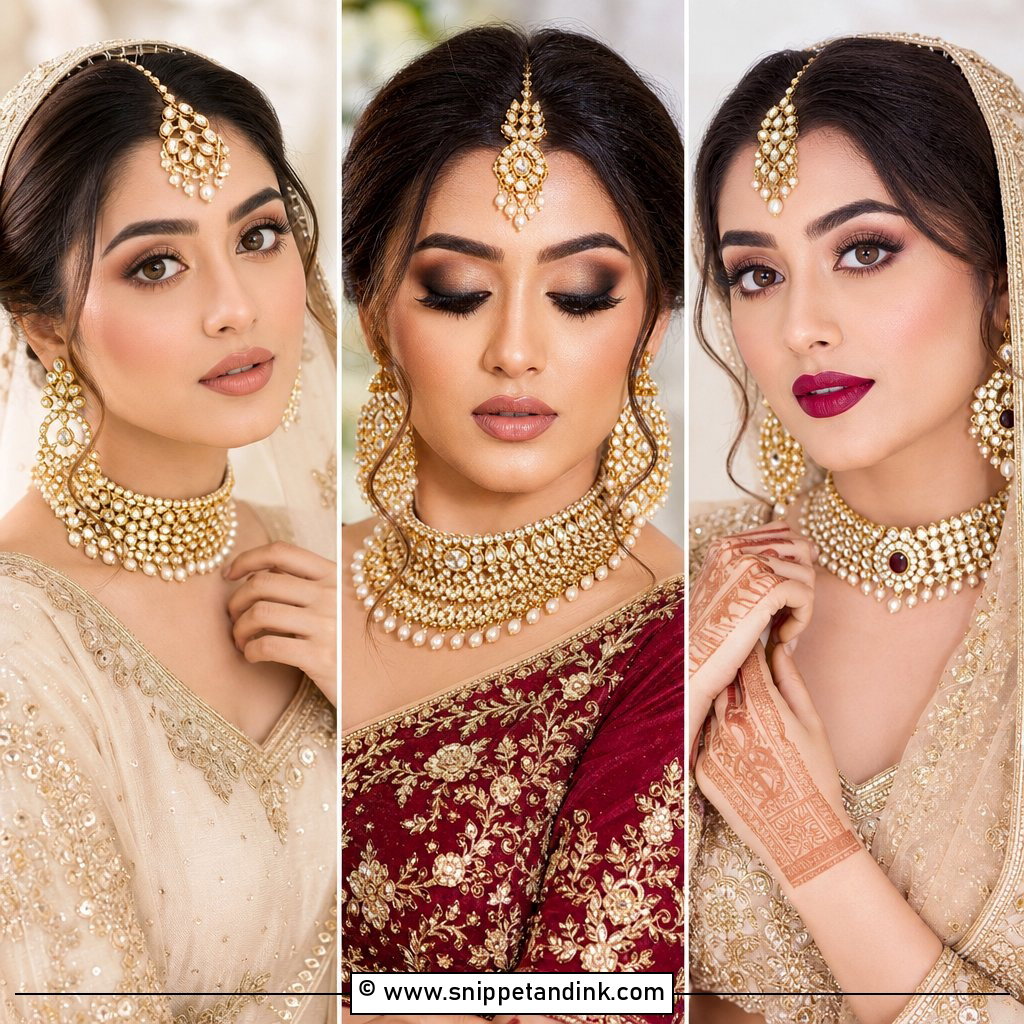
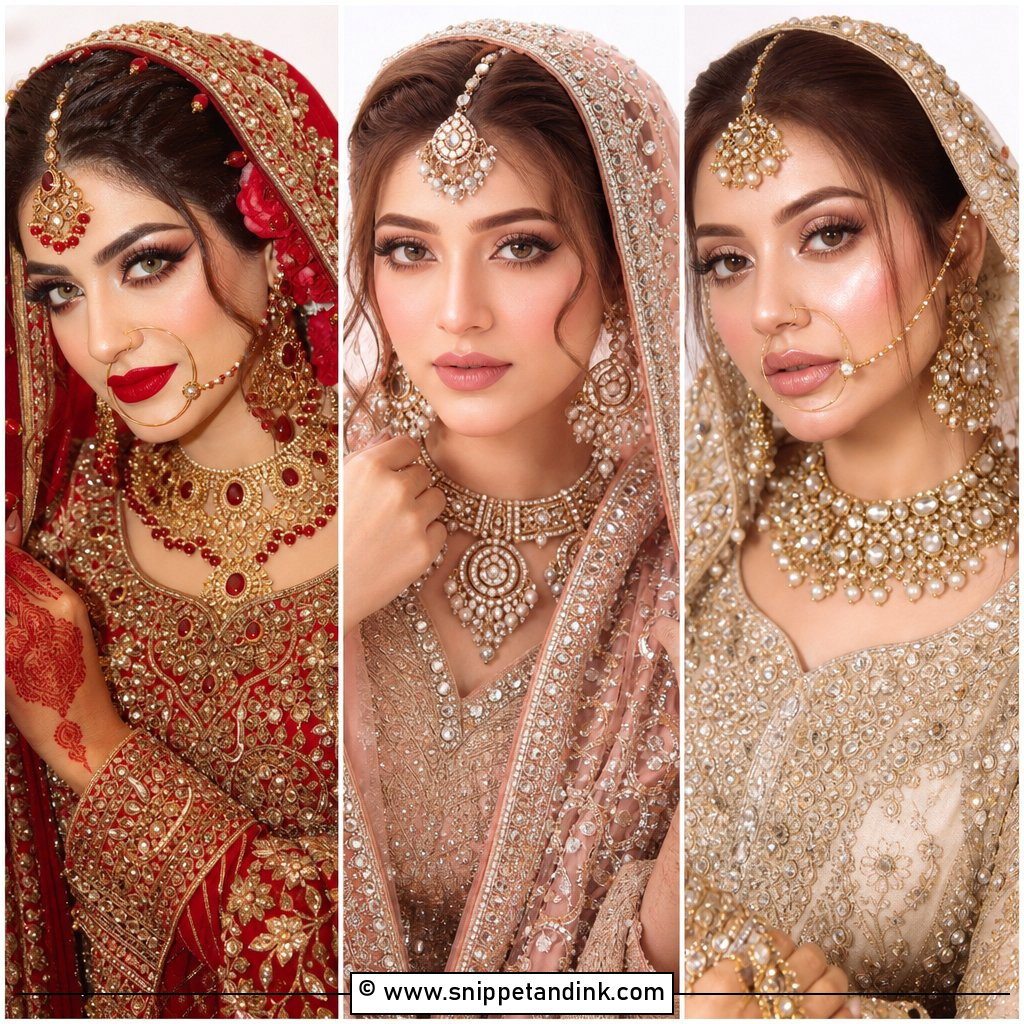
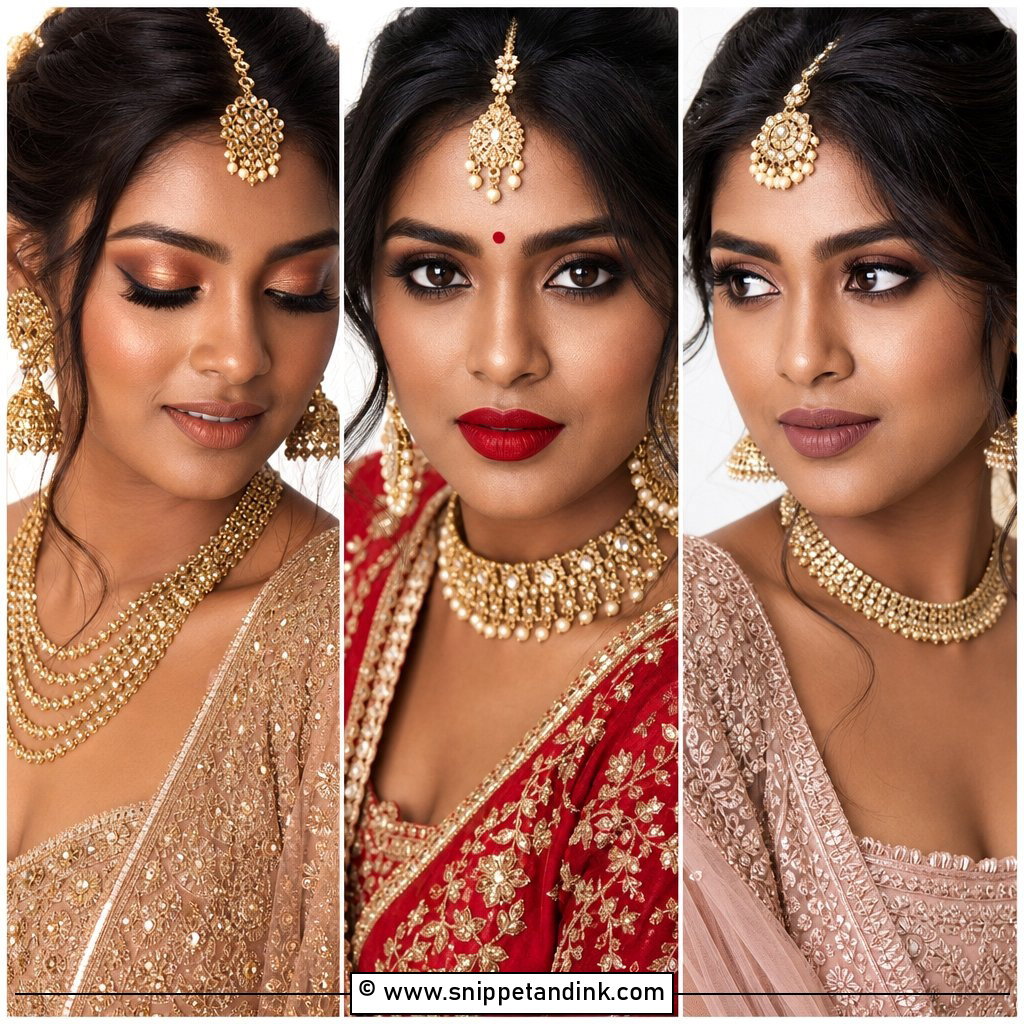
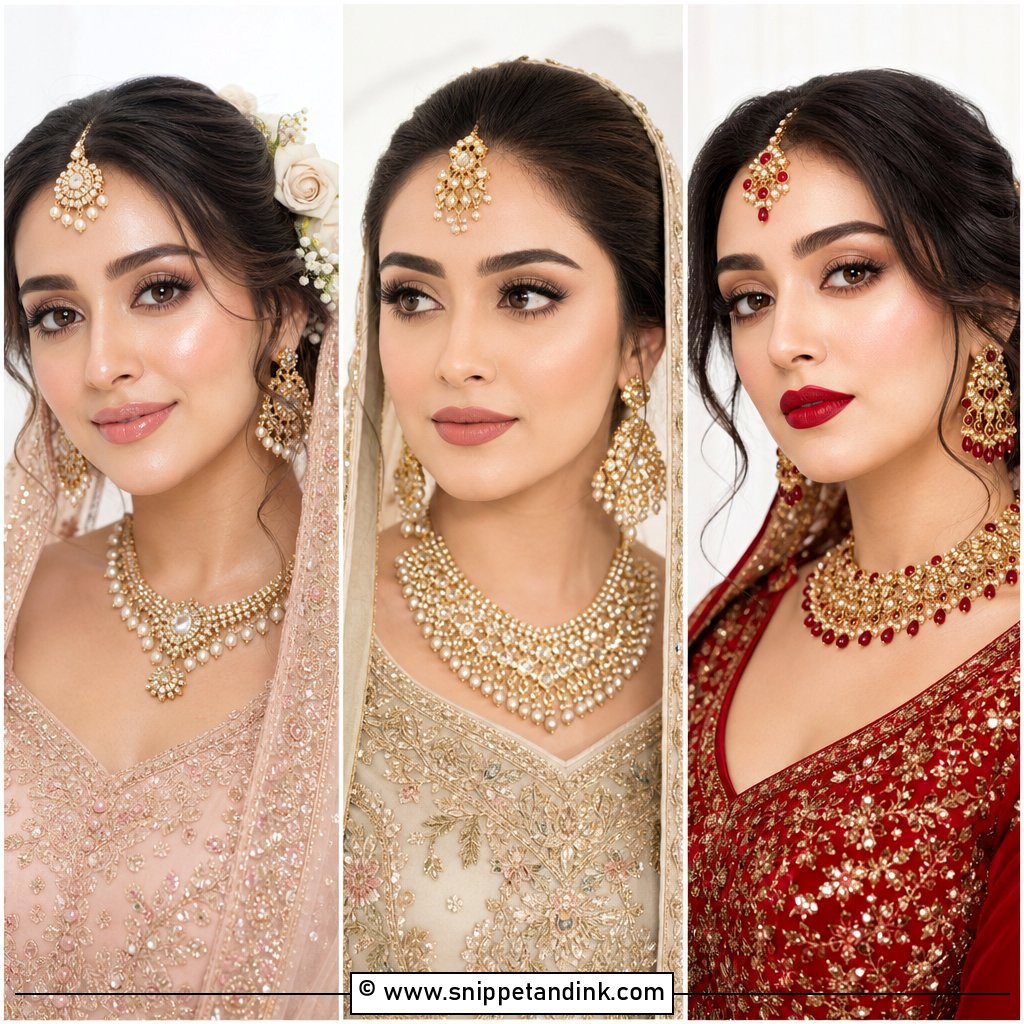
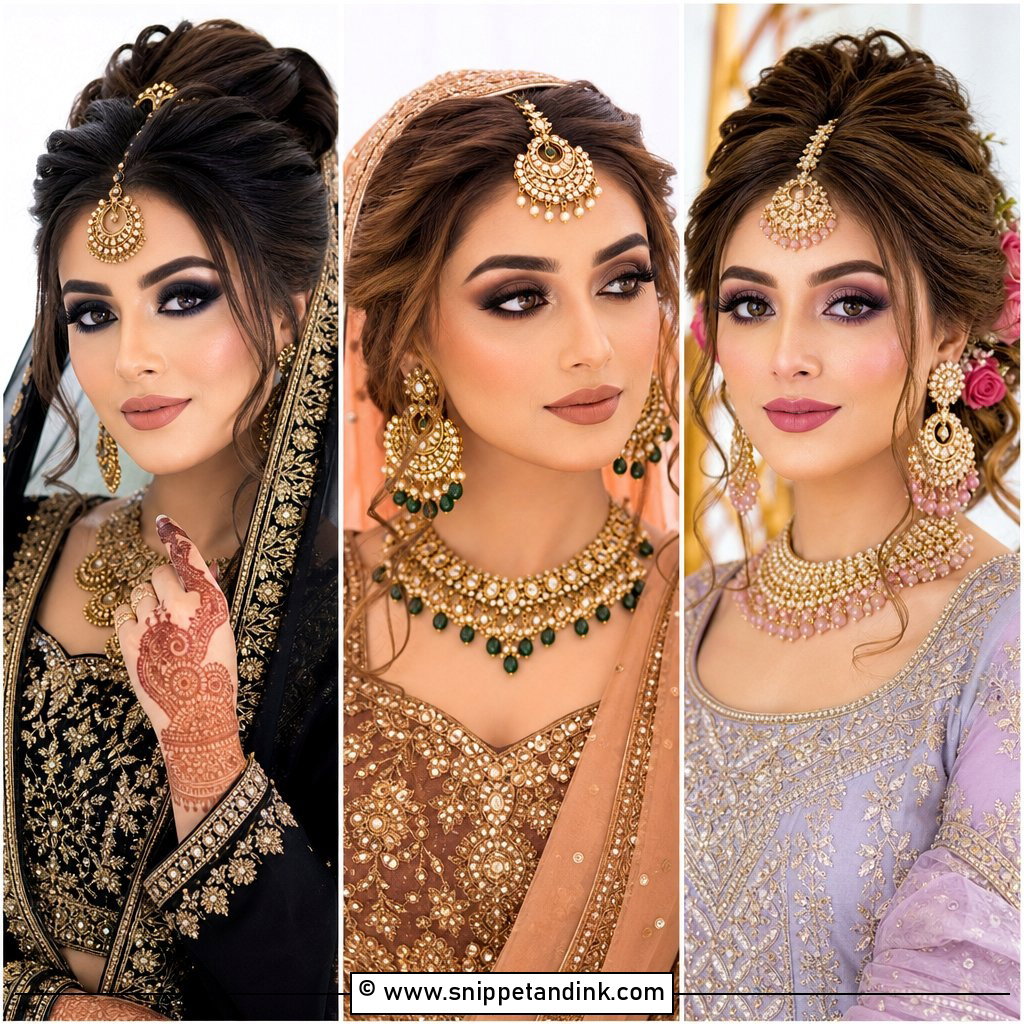
Indian bridal makeup has to hold up through long celebrations and stand next to heavy jewelry and embroidery. The complexion needs to be smooth and long-wearing, with powder used strategically to control shine under hot lights. Gold, bronze, copper, plum, or rose shimmer on the eyes pairs naturally with traditional bridal colors. Defined liner, lashes and brows keep the eyes from being lost under a dupatta or matha patti. Blush needs to be visible, and the lip can be nude, rose, berry, maroon or red. I match the makeup undertone to the outfit, warm reds with warm makeup, so nothing looks accidental.
27. Latina Bridal Makeup
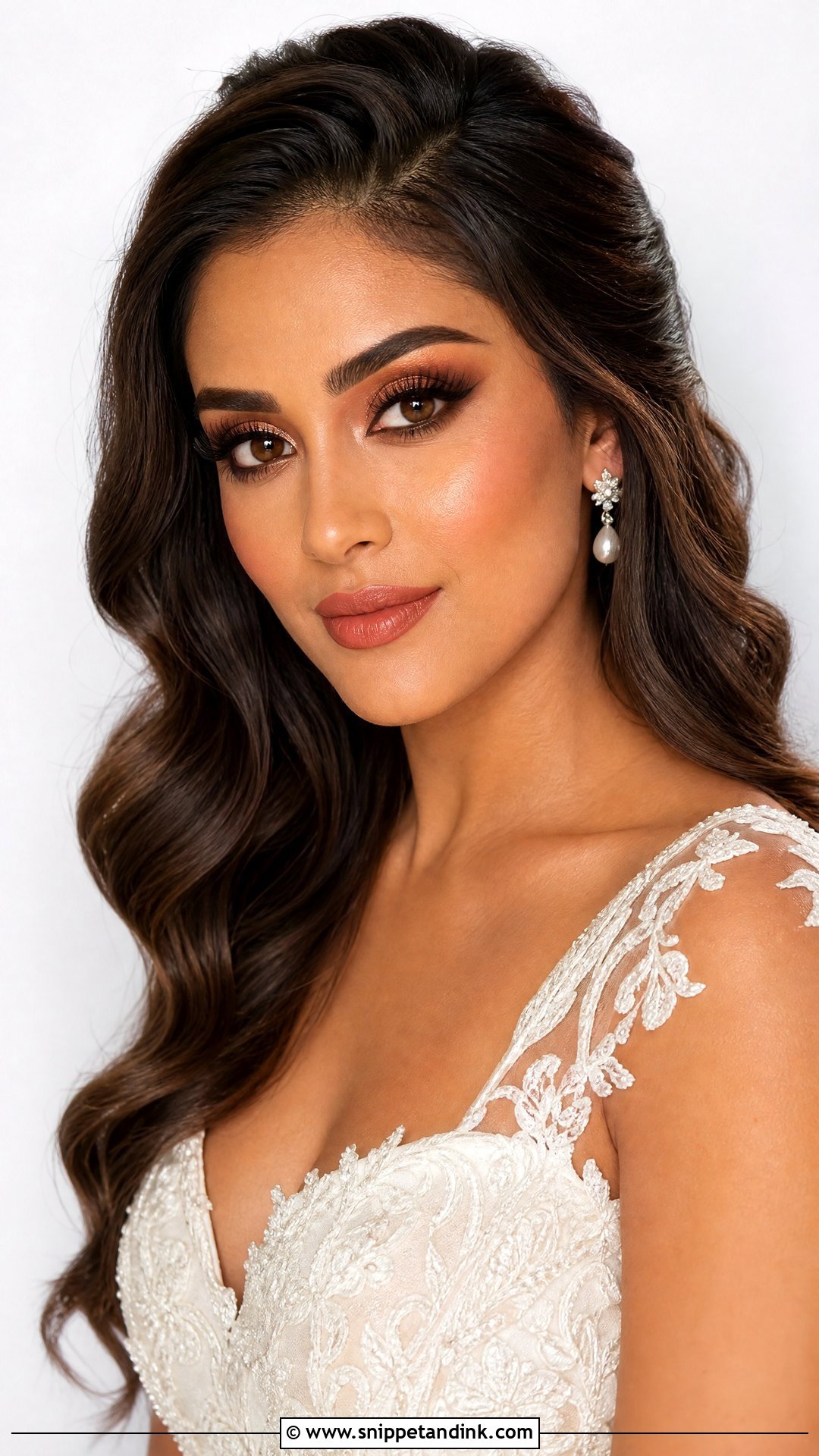
Latina brides span every skin tone, so I don’t start from one palette; I start from the foundation match, golden or neutral. Soft contour, bronzer and peach or rose blush add dimension. Bronze, brown, copper or champagne shadow warms the eyes, with a winged or smoked liner for shape and lashes that range from wispy to full. Nude brown, pink nude, terracotta and red lips all work. The look can sit natural, classic or glam, and I let the dress and venue decide how far to push it.
28. Fair Skin Bridal Makeup
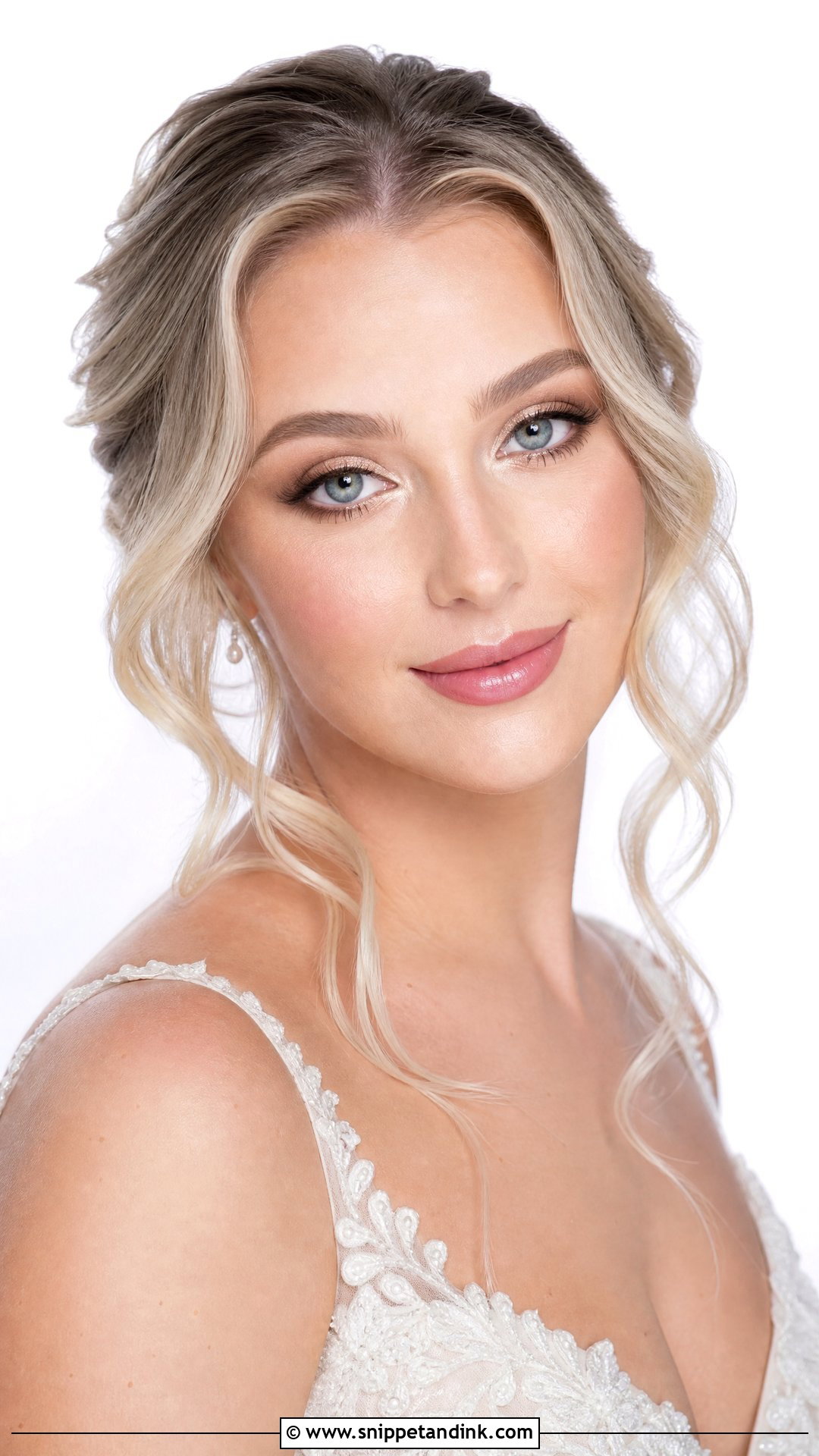
Fair skin shows every color, so I add life without overpowering the face. Soft pink, peach, rose, taupe, champagne and light brown are my main shades. Foundation is where fair brides most often go wrong: too yellow, too dark or too matte looks obvious in photos, so I match in daylight at the jaw. A sheer rose or peach blush keeps the face fresh. Soft brown liner is gentler than black. Pink nude, rose, mauve or soft red lips all work, as long as there’s enough contrast for the camera.
29. Olive Skin Bridal Makeup
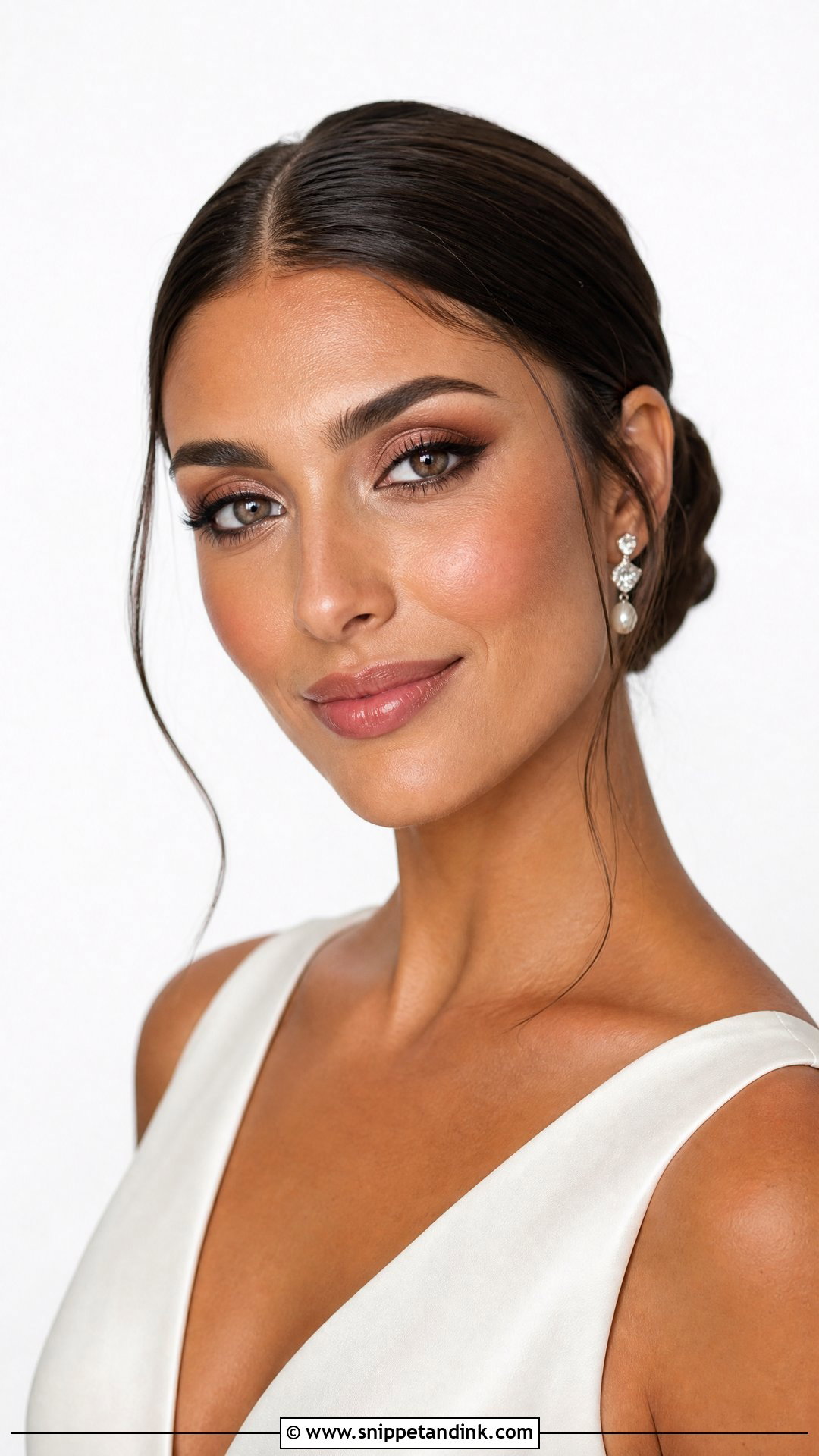
Olive skin can lean green, golden or neutral, and that undertone decides everything, so foundation matching comes first. Warm taupe, bronze, champagne, copper, rose and terracotta usually flatter. I use bronzer carefully, because on olive skin the wrong one turns orange quickly. Peach, rose or warm mauve blush brings the face to life, and caramel nude, rosy brown, peach nude or muted berry lips suit it. The base can be dewy, satin, or softly matte. What I avoid is anything ashy or gray, which makes olive skin look tired.
30. Mature Bride Bridal Makeup
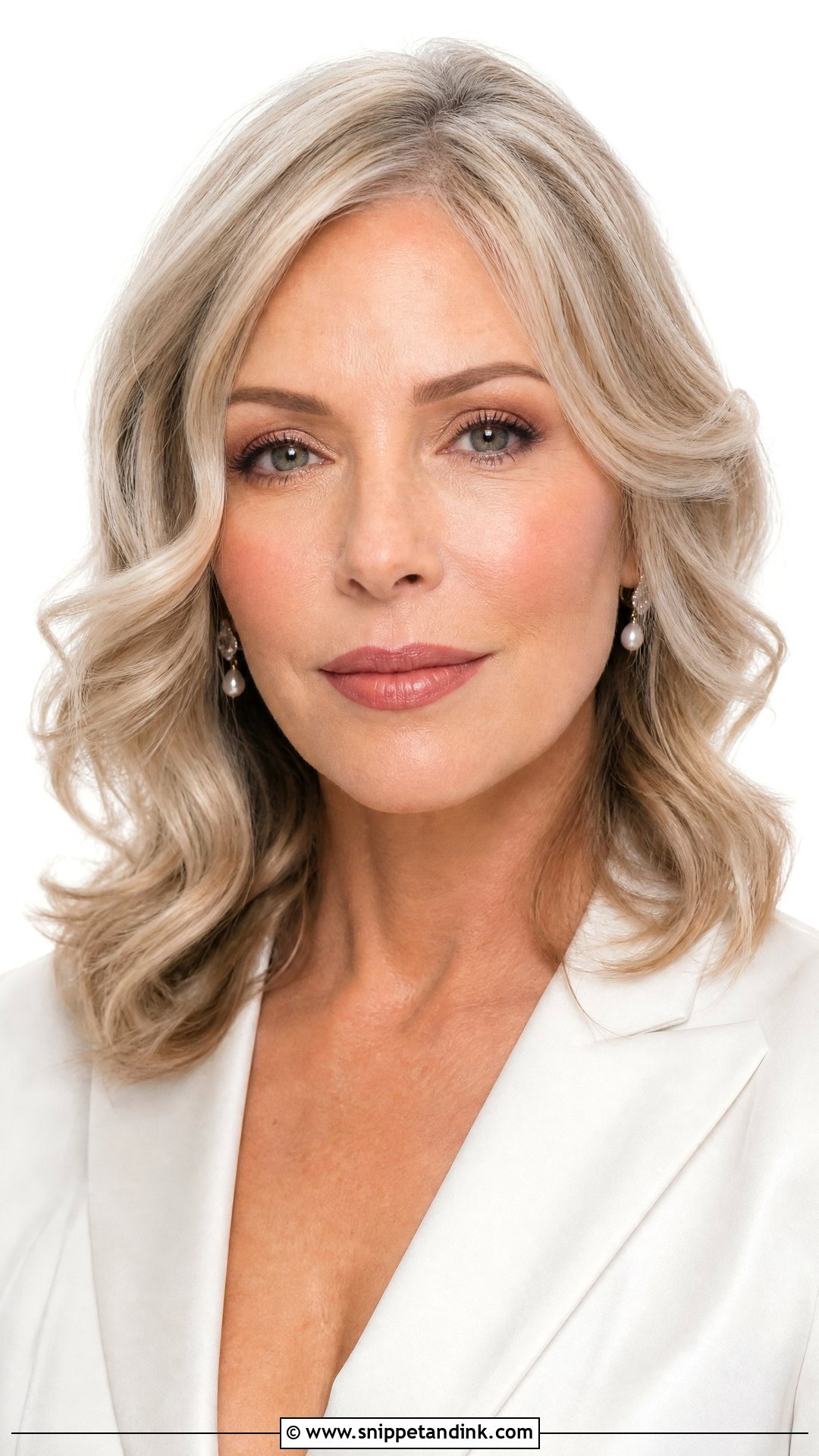
On mature skin, less product is almost always more. I spend longer on hydrating prep, use thin layers of foundation and put concealer only where it’s needed. Powder goes only where you crease or shine, never across fine lines. Satin shadows sit smoother than chunky shimmer, and soft brown or charcoal liner defines without harshness. Heavy strip lashes can weigh down a softening lid, so I prefer natural lashes or a few individual clusters. Cream blush placed slightly higher on the cheek lifts the face, and a rose, berry, mauve or soft nude lip finishes it.
31. Summer Bridal Makeup
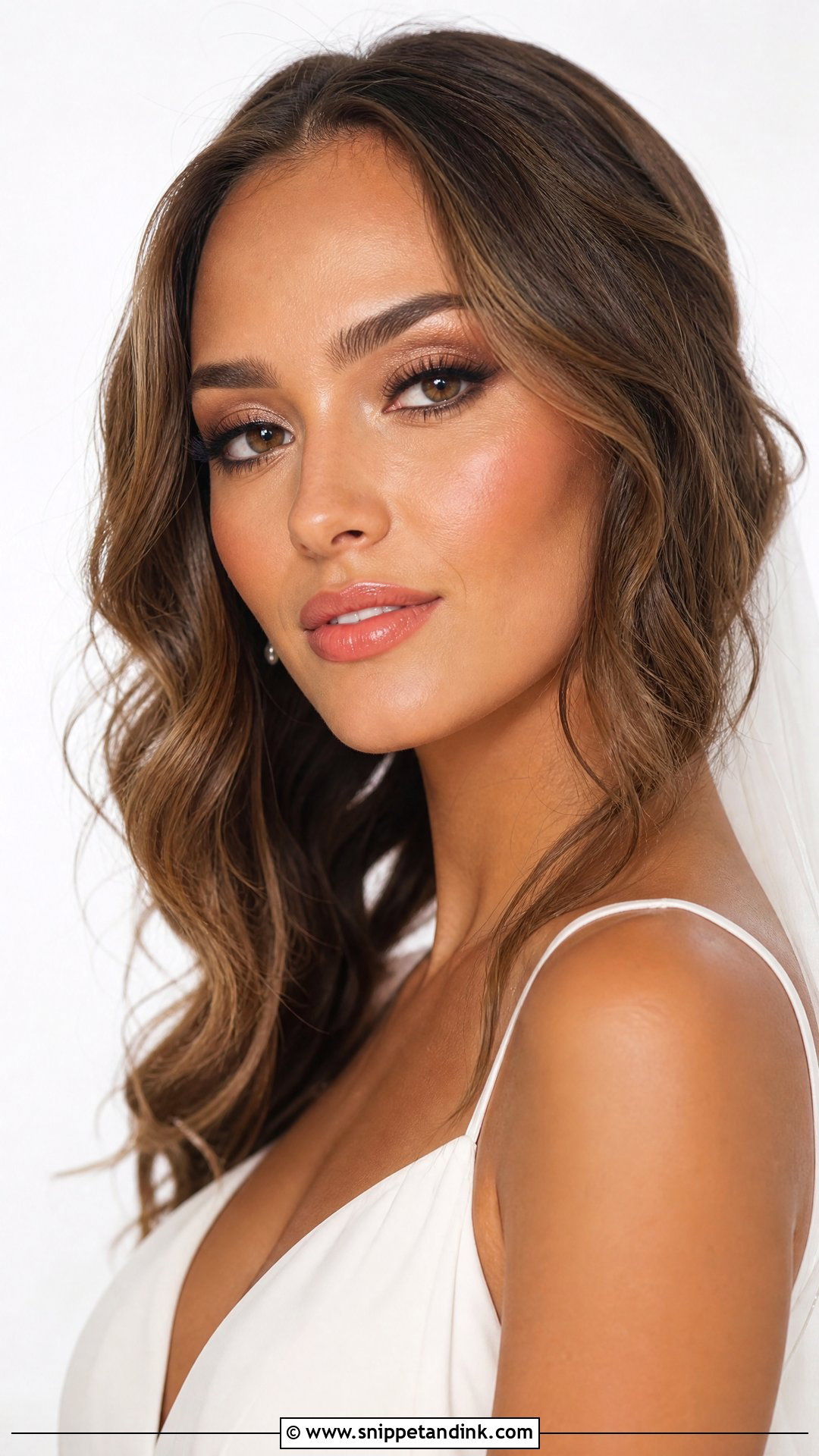
Heat breaks down makeup faster than anything else, so summer looks are built for staying power. Lightweight layers, a gripping primer, waterproof mascara and powder through the T-zone are my basics. A satin or natural matte base usually outlasts a very wet glow, though cream highlight on the cheekbones still works. Peach, coral, bronze and champagne look natural in sunlight, and smudge-resistant liner keeps the eye clean. Choose a lip that’s easy to reapply without a mirror. If you sweat on the upper lip, tell me at the trial so I can prep that area.
32. Winter Bridal Makeup
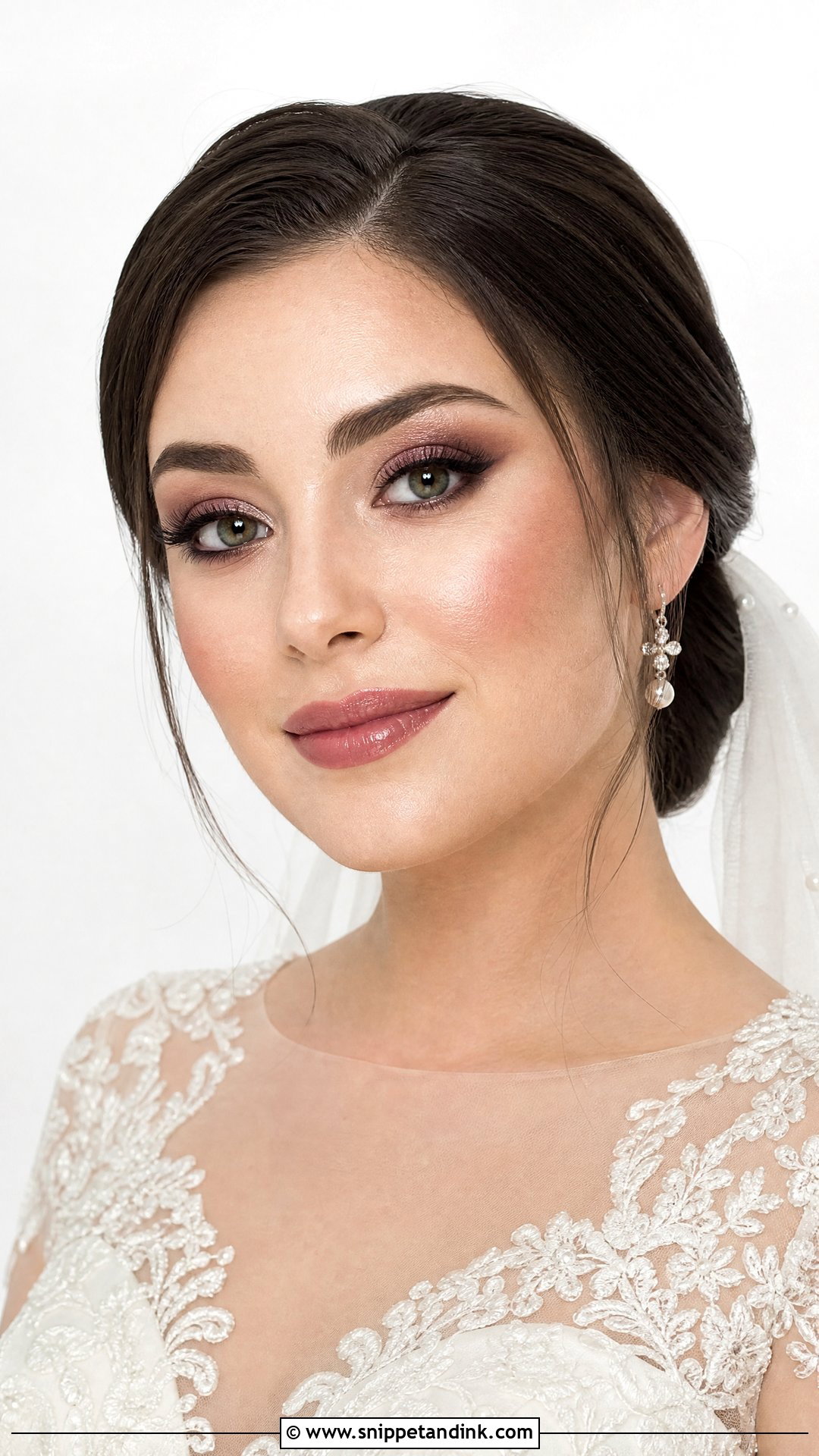
Winter is when skin is driest, so I hydrate before anything else; foundation clings to flaky patches if you skip that step. A satin or soft matte base, rose or berry blush and a controlled highlight suit the season. Taupe, champagne, plum, brown or soft charcoal work on the eyes, and lips can go rose, mauve, berry, red or deep nude. I scrub and balm the lips well before lipstick, since cold air cracks them. It pairs with long sleeves, structured gowns, sleek buns and indoor venues.
33. Beach Bridal Makeup
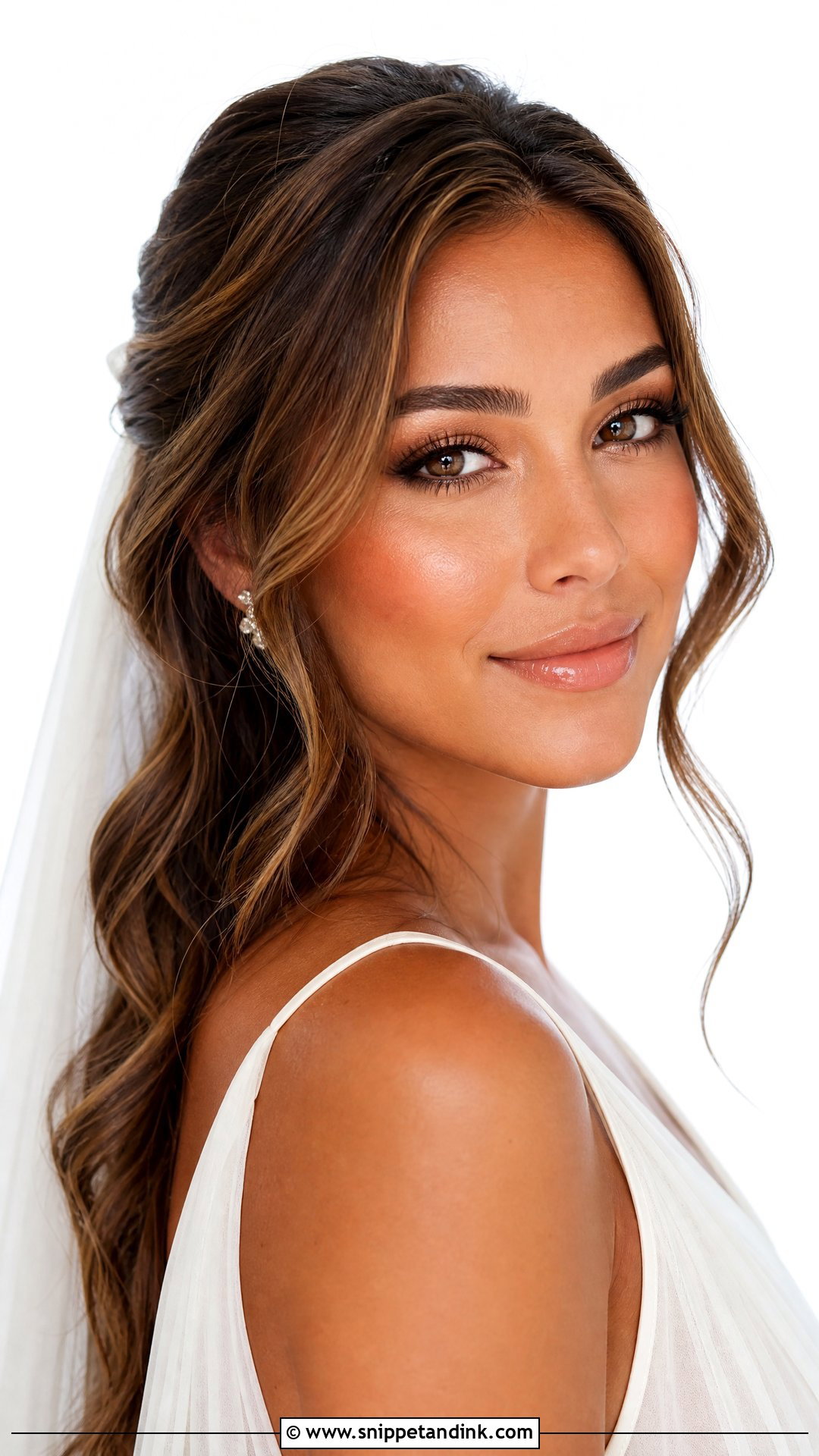
Beach weddings mean humidity, wind and bright reflected light. I use a water-resistant base, waterproof mascara and cream products that melt into the skin, with powder only where makeup tends to move. Bronze, peach, champagne and soft brown look natural in coastal light. Very heavy lashes lift in moisture and wind, so I stick to lighter ones. A glossy nude, peach or soft pink lip works, but keep it in your pocket for touch-ups. Sand and sunscreen don’t mix well with fresh foundation, so apply sunscreen early and let it set.
34. Garden Bridal Makeup
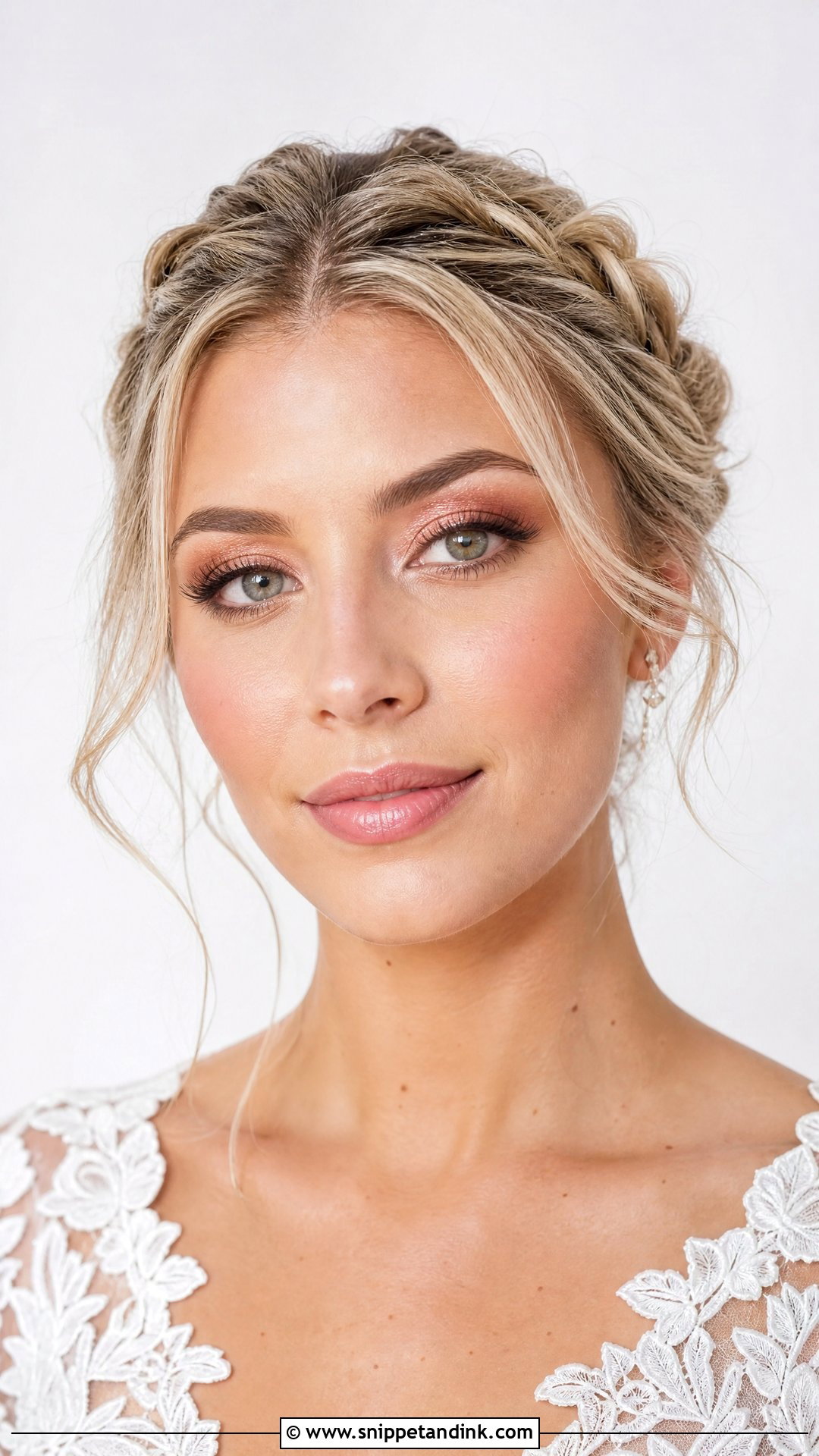
Garden light changes through the day, shade under trees and then full sun, so I avoid anything too glittery or too flat. A glowing but controlled base, petal pink or peach blush and champagne, rose or soft bronze shadow give soft radiance. Brown liner defines without looking sharp in daylight, and wispy lashes and groomed brows complete the eye. Rose, pink nude, peach or a sheer berry stain suit the lips. It pairs naturally with florals and outdoor portraits.
35. Elegant Bridal Makeup
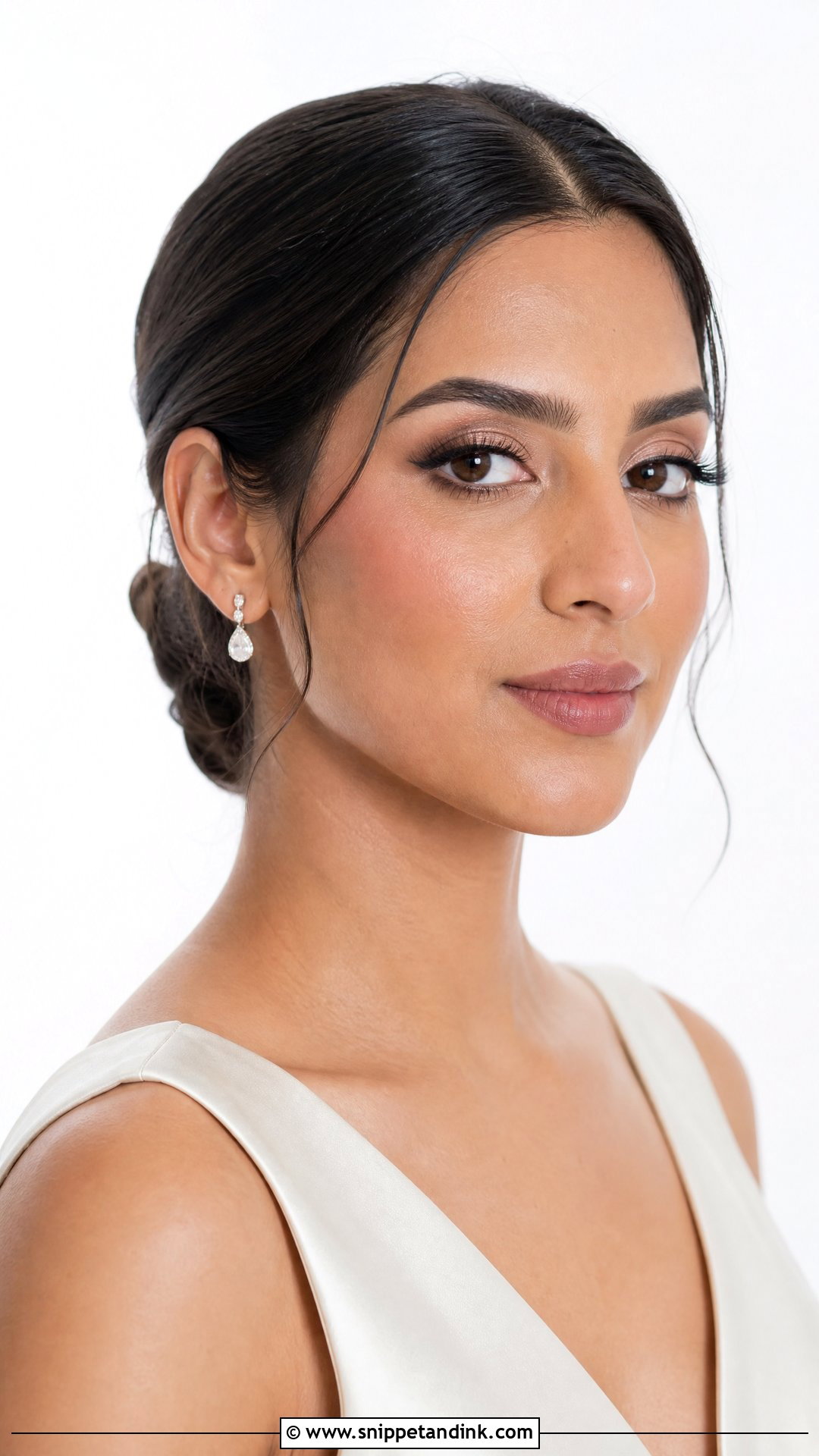
Elegant makeup is defined by what’s left out. The complexion is smooth with soft contour, natural blush and a subtle highlight. Eyes stay in taupe, brown, champagne or soft beige with clean liner and lifted lashes, and brows are shaped but not blocky. A satin nude, rose or muted pink lip keeps it graceful. It works with nearly every gown, minimal satin or detailed lace, and it won’t date because it doesn’t lean on any one trend.
How Venue Lighting Changes What You Should Wear
The same face can look perfect in one room and wrong in another. Before I settle on a finish, I ask what time of day the ceremony is and whether it’s indoors.
Bright midday sun is the least forgiving. It shows texture, heavy powder and any line where foundation ends, so I keep the base thin and blend down the neck. Golden hour is kind to warm tones and shimmer. Church interiors and ballrooms are often dim with warm bulbs, which flatten makeup, so I add a little more definition to the eyes and more color to the cheeks than looks right in a bright mirror.
Flash adds one more test. Some setting powders contain ingredients that reflect light and leave a white haze under the eyes in flash photos. I check by taking a flash photo at the trial, and I’d recommend you do the same if you’re doing your own makeup. Mixed lighting, like daylight through windows plus tungsten lamps, is common at receptions, so a satin finish usually survives it better than either fully matte or very dewy skin.
Live in Your Trial Look for an Afternoon
The right bridal makeup fits your face, your venue and the way you normally wear makeup. A natural bride may feel most herself in glowing skin and a soft nude lip; a glam bride may want sculpted cheeks, lashes and a smoky eye. Trends give direction, but comfort decides how you’ll feel by hour ten. Wear your trial look for a few hours afterward, take photos in daylight and with flash, and notice what fades first. Those notes tell me exactly what to adjust before the wedding.
You'll Like These Ideas:


Leave a Reply