
Wedding makeup has a harder job than any other makeup you’ll wear. It has to look like you at arm’s length, survive crying and hugging, hold for ten or twelve hours and still read correctly under flash and daylight. Right now most brides I work with lean toward fresher, skin-focused looks with a soft flush and defined lashes, but a red lip, a bronze eye or full glam are just as valid when they suit the person wearing them. Below are twenty complete faces, from barely-there to dramatic. For each one I’ve noted the skin type it suits, the product choices that help it last and where it tends to go wrong.
What Does Your Skin Do by Four in the Afternoon?
Before I talk about colors with a bride, I ask how her skin behaves on a normal day. Does it get shiny by lunch, tight and flaky by evening, or stay about the same? That answer decides the finish more than any photo on a mood board.
- Oily or combination skin suits a matte or satin base with powder through the center of the face. Full dewy skin will often look greasy in photos by the reception.
- Dry skin needs a hydrating prep and a satin or luminous foundation. Heavy matte formulas can crack around the nose and mouth.
- Mature skin looks best with thin layers, cream products and very little powder under the eyes.
Timing matters too. I’d avoid any new facial, peel or brow treatment in the two weeks before the wedding, since a reaction or peeling skin is hard to cover. And when you do your trial, look at it in daylight, under indoor light and in a photo taken with flash. Some setting powders and high-SPF products leave a white cast under flash that you’d never see in the mirror.
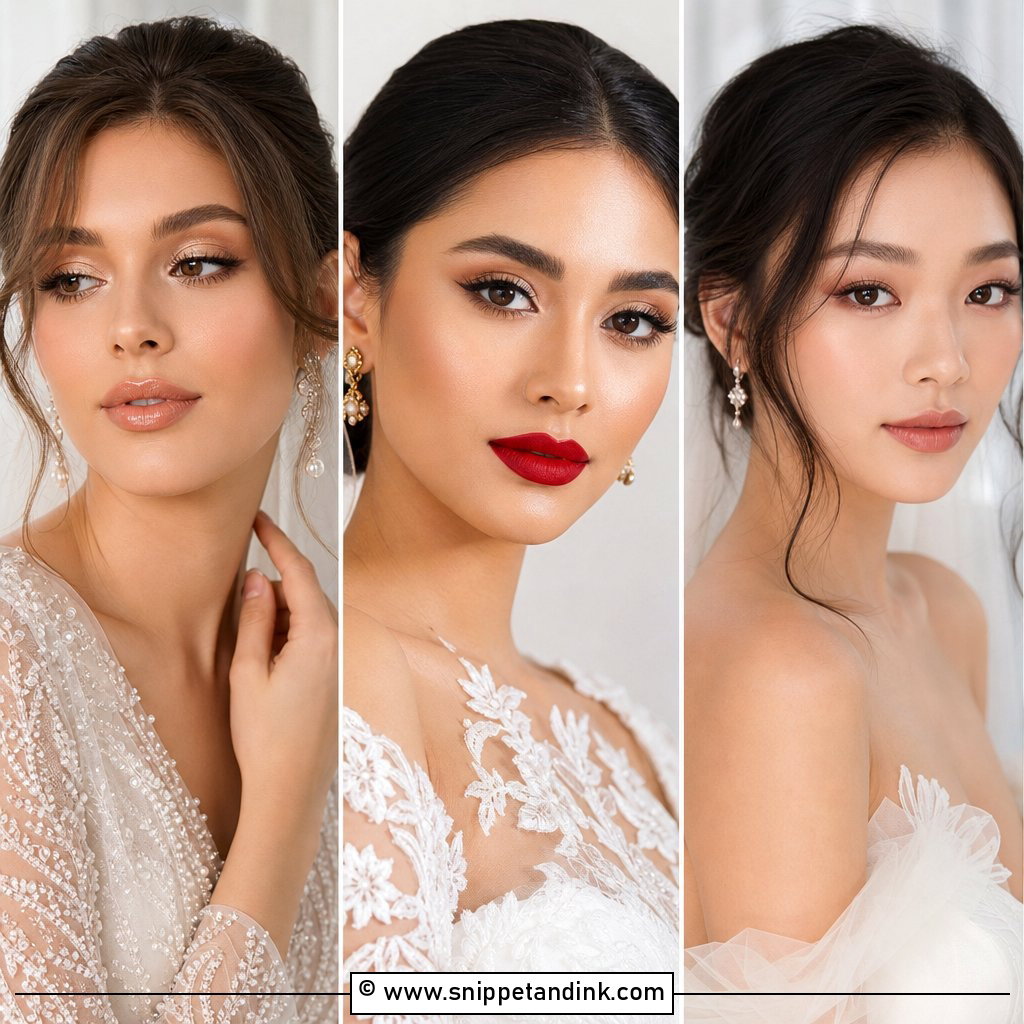
1. Natural Wedding Makeup
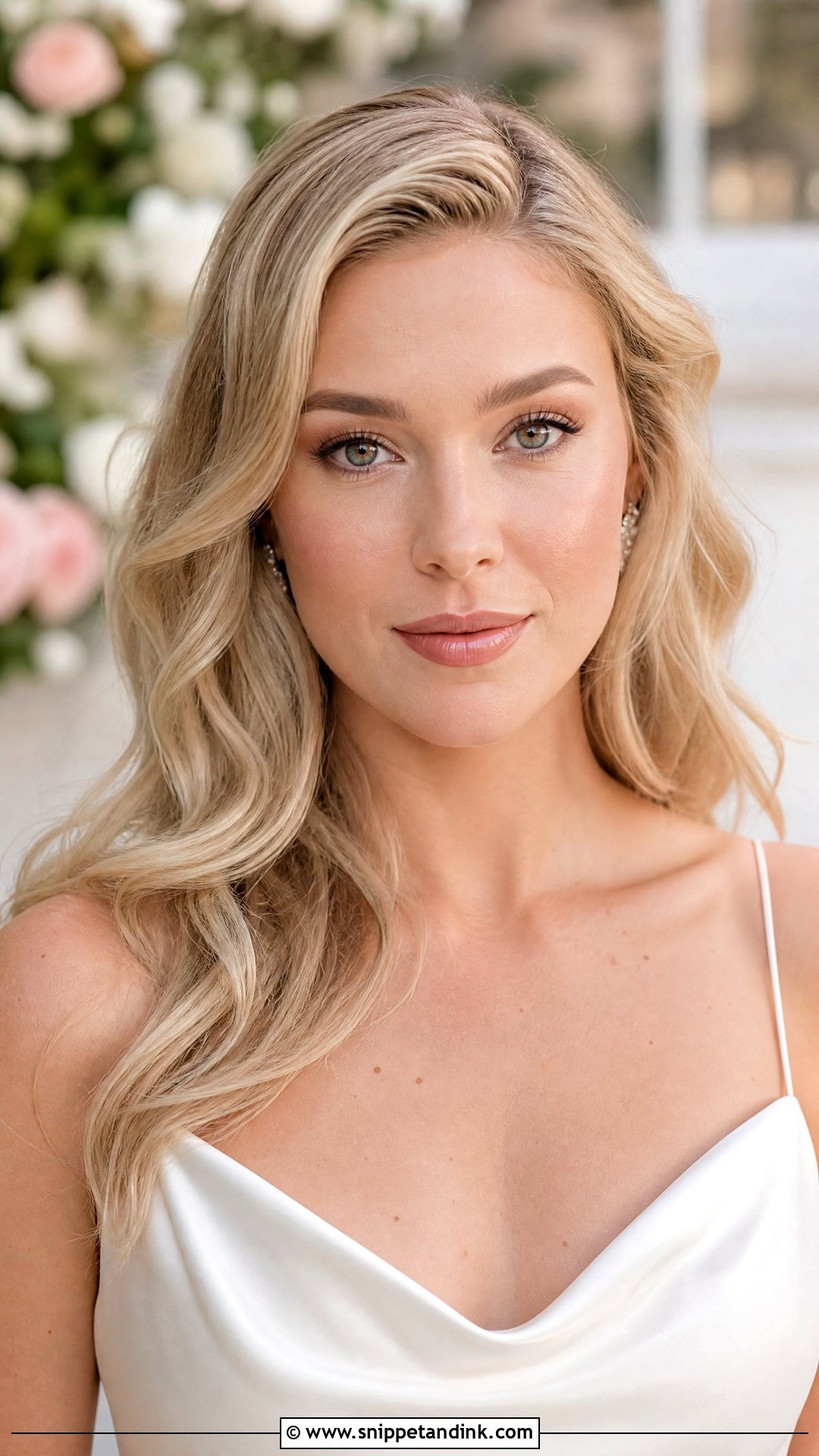
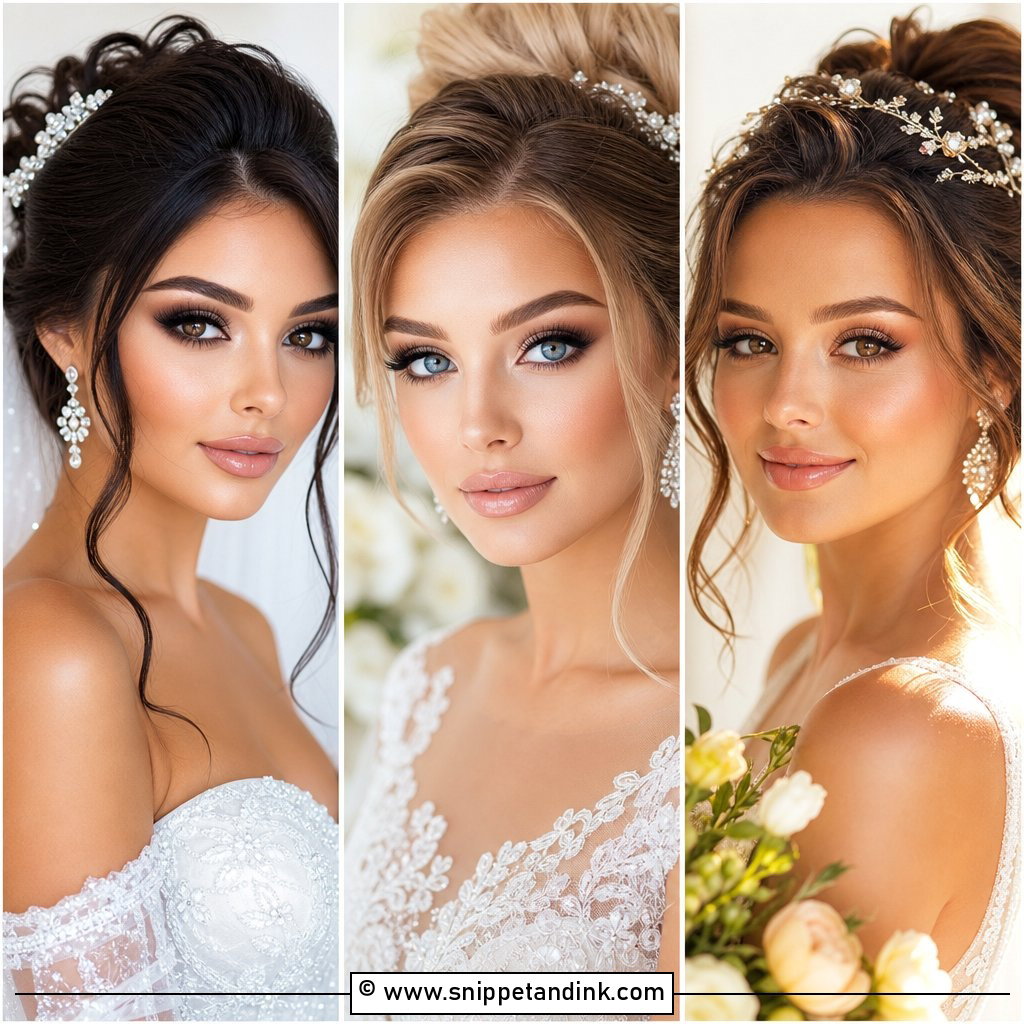
Natural makeup is harder to do well than it looks, because there’s nothing to hide behind. I use a light skin tint, conceal only redness and under-eye shadows, and press a cream blush in soft rose or peach into the cheeks so it melts into the skin. Eyes get a taupe shadow, thin brown liner pushed into the lash roots, and curled lashes. Brows are brushed up and filled only where they’re sparse. The risk is going too light: in photos, a face with no definition can look washed out next to a white dress, so I always add a little more than feels necessary in the mirror.
2. Soft Glam Wedding Makeup
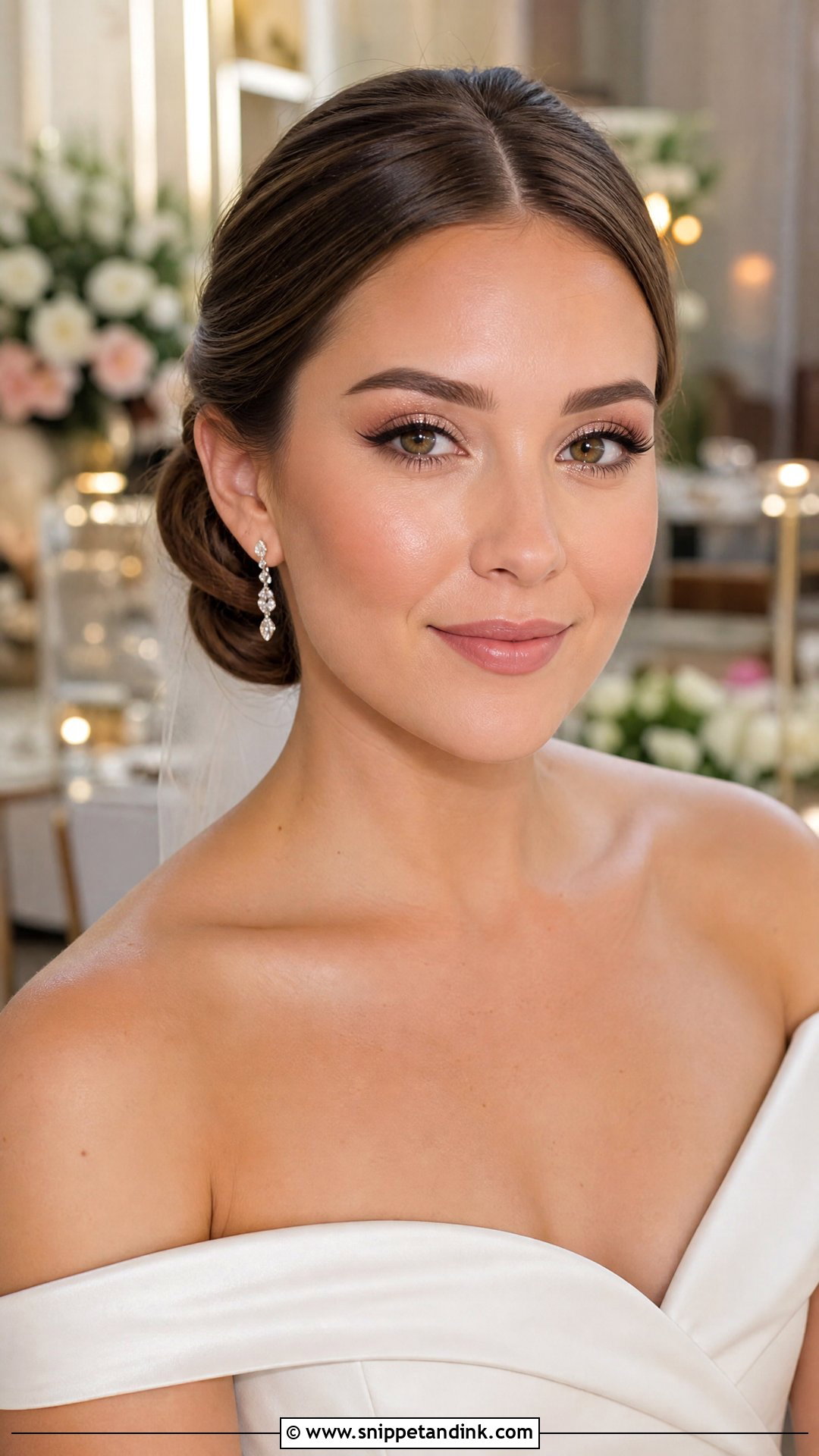
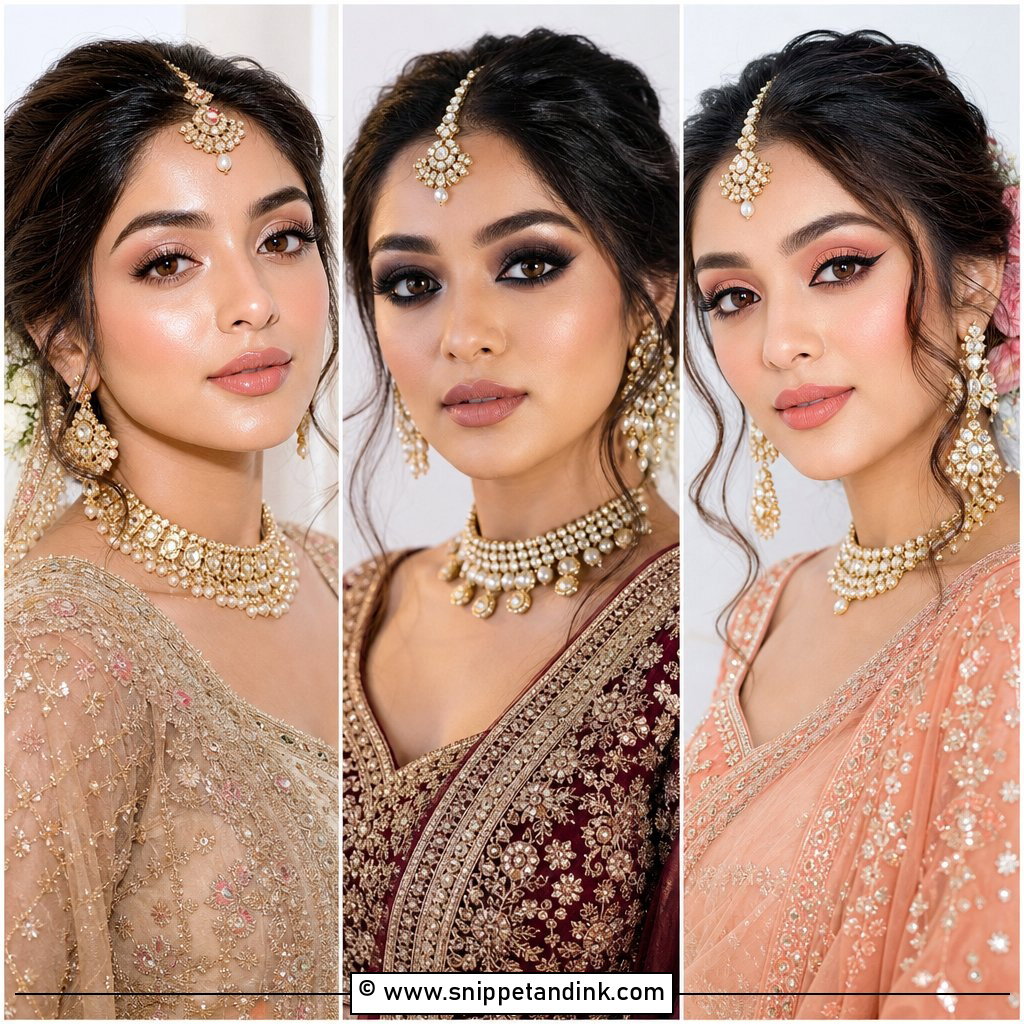
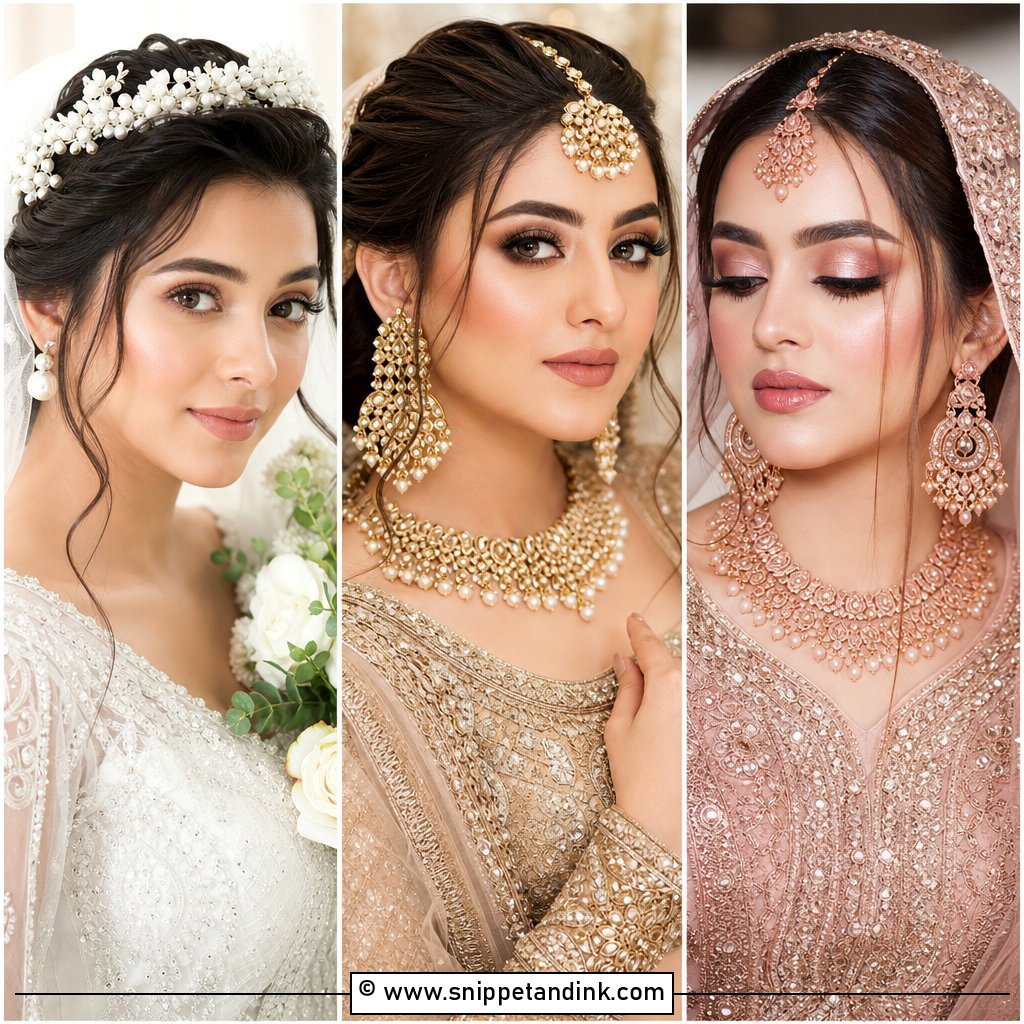
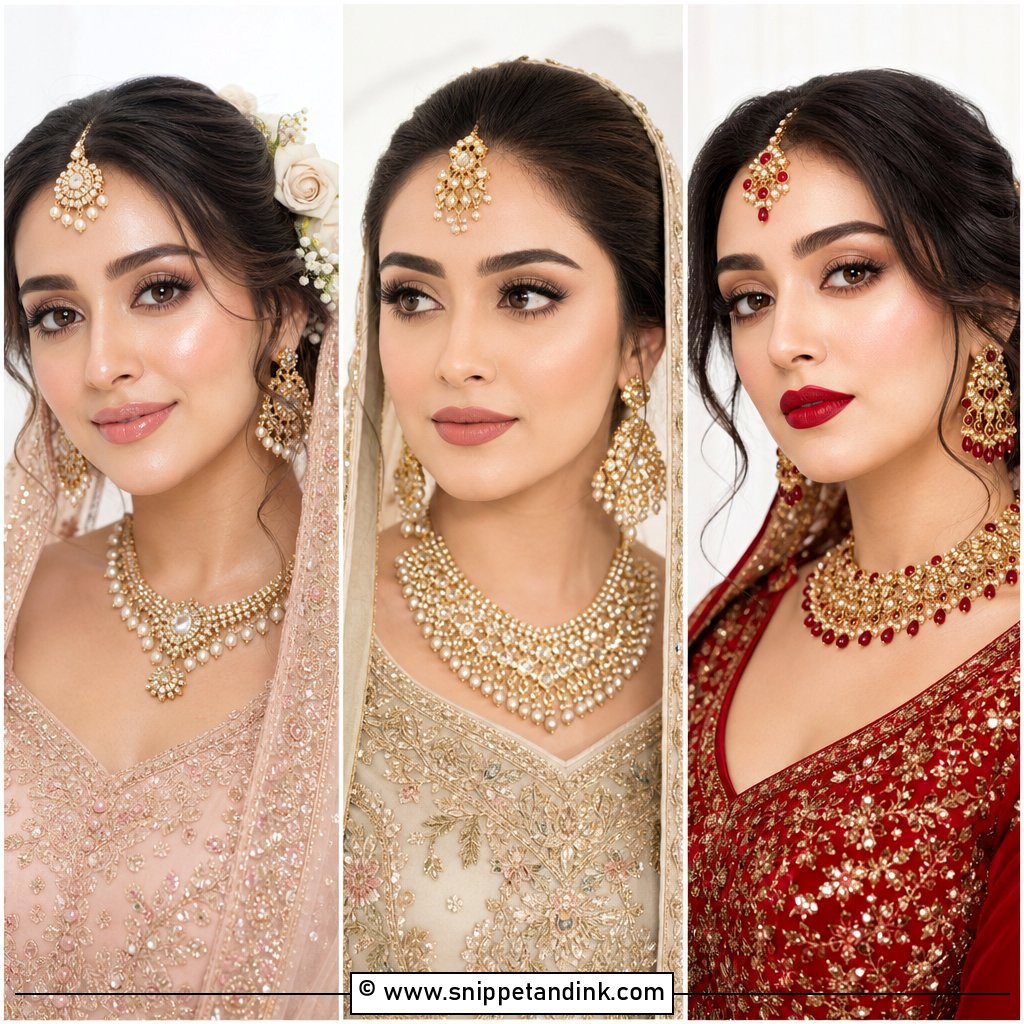
Soft glam is the look I’m asked for most. It gives shape without looking heavy: a satin foundation, softly sculpted cheeks, a warm brown eyeshadow blended through the crease, champagne shimmer on the lid and a short wing to lift the outer corner. Wispy half lashes are lighter than a full strip and won’t lift at the corners as the day goes on. The lip is a liner close to your natural shade with a creamy nude on top. It works on most faces and in almost any venue, which is why it’s such a reliable choice.
3. Dewy Wedding Makeup
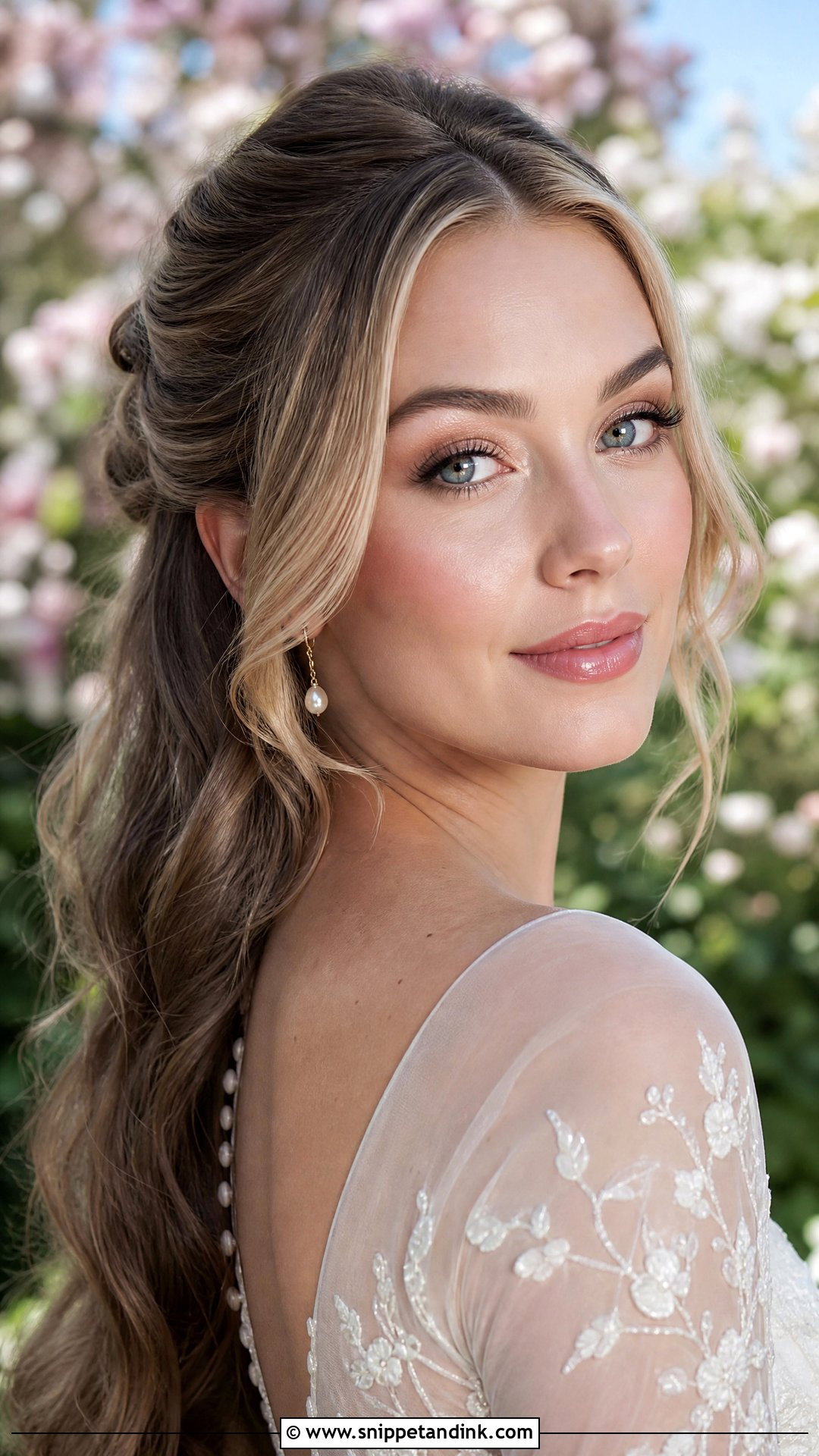
Dewy skin works when the glow is placed, not everywhere. I prep with a hydrating serum and a moisturizer that sinks in fully before foundation, then use a luminous base only where coverage is needed. The center of the face, around the nose and chin, gets a fine layer of powder; the tops of the cheekbones stay glowy with a liquid highlighter. A sheer rosy lip and soft pink cream blush keep it fresh. On oily skin, dewy can turn to shine by the reception, so I’d only recommend it if your skin stays fairly matte through the day. Blotting papers in the touch-up bag help.
4. Matte Wedding Makeup
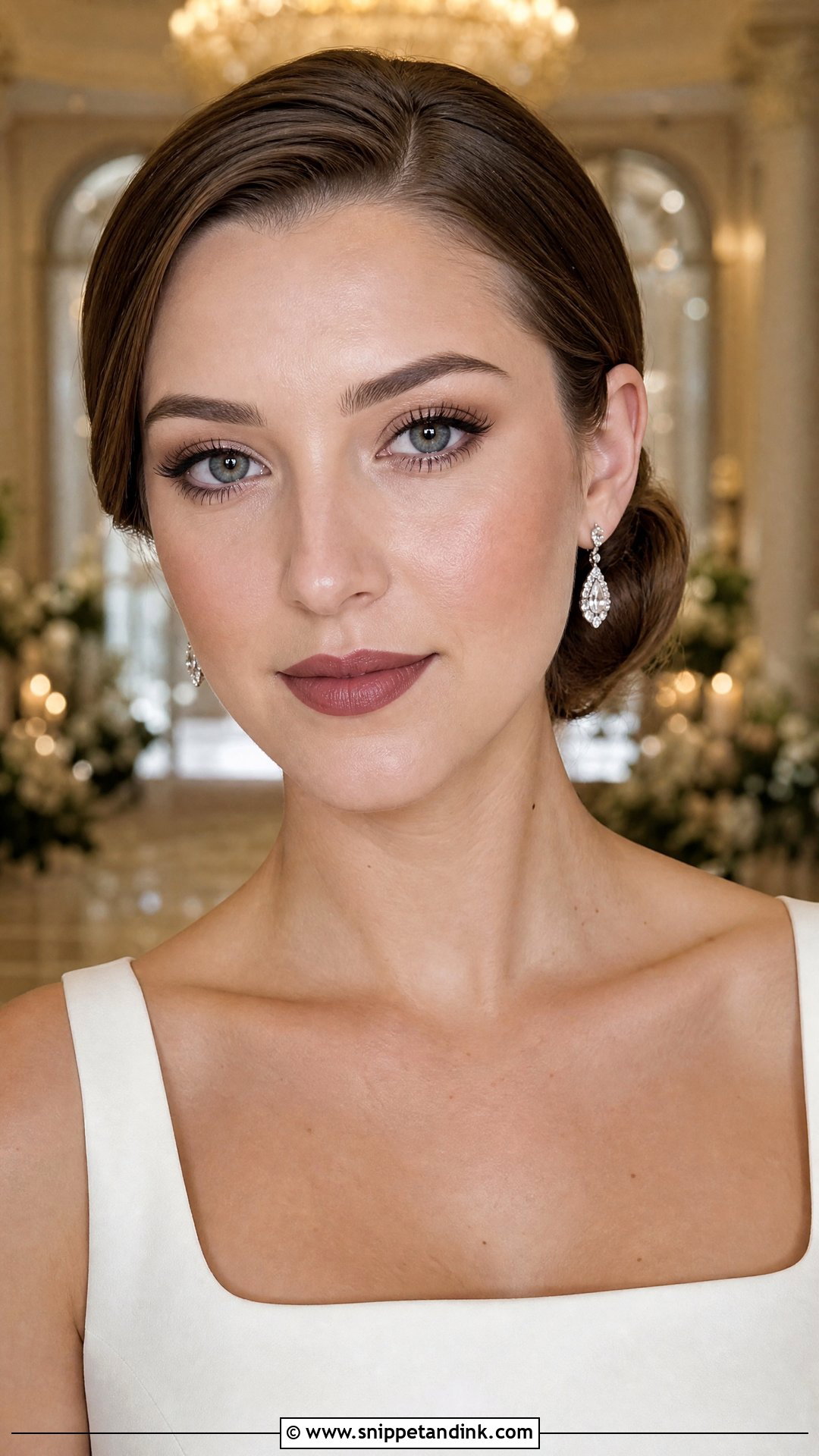
Matte is the most reliable finish for heat, oily skin and long days, and it no longer has to look flat. I use a long-wear foundation with a natural matte finish, add dimension with soft contour and a muted blush, and put a satin highlight only on the very top of the cheekbones. Neutral brown shadow, a tightline and a matte rose or nude lip complete it. The one thing I watch for is dryness: on dry or mature skin, matte foundation can settle into lines and flake by evening, so hydration under it is essential.
5. Classic Red Lip Wedding Makeup
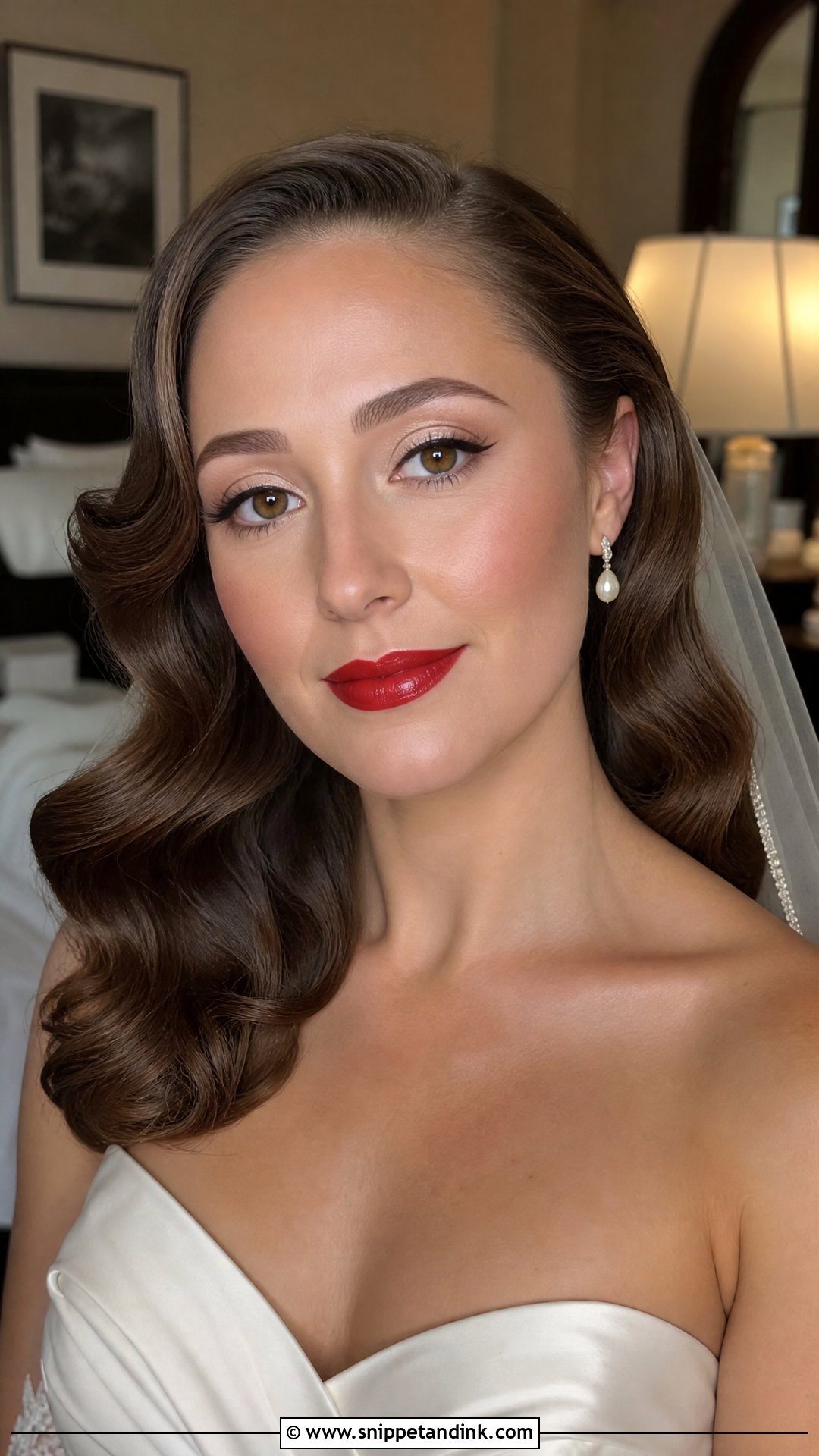
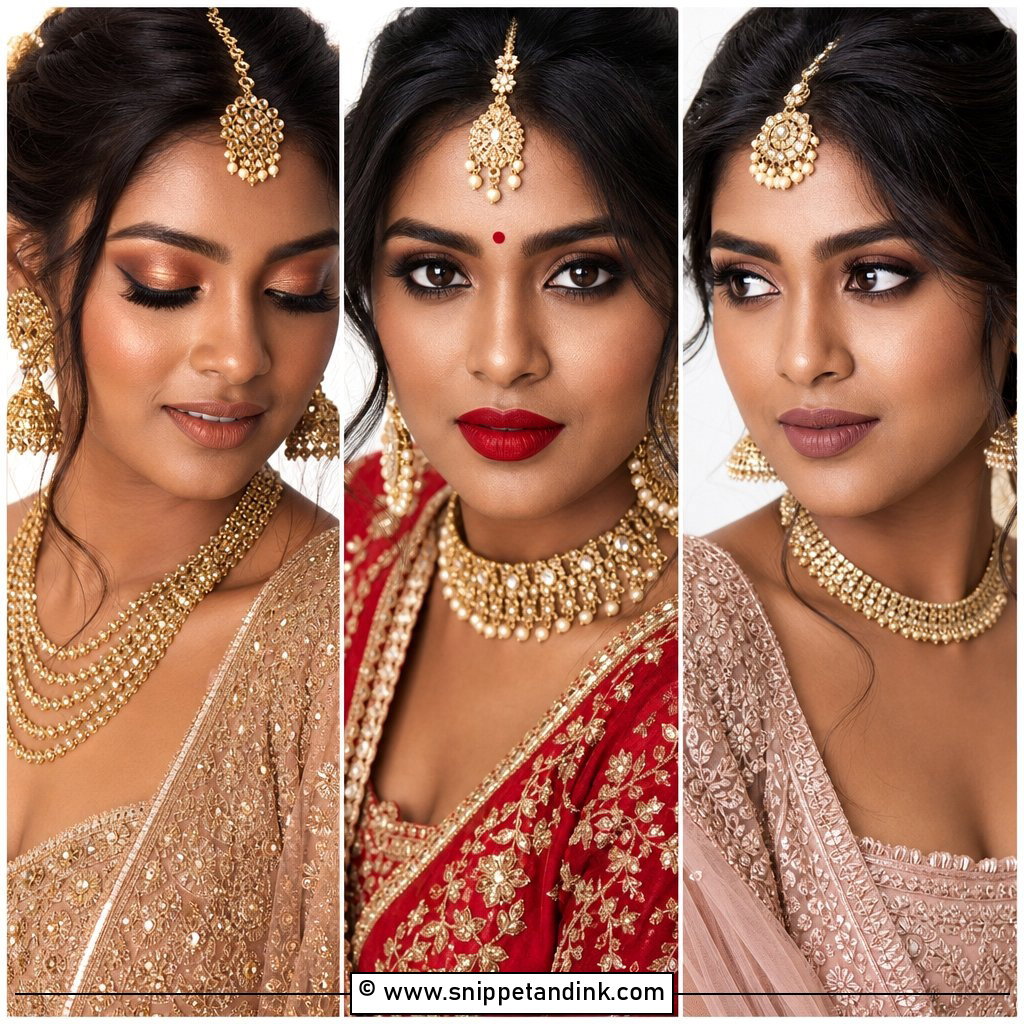
A red lip is classic for a reason, and the trick is choosing the right red for your skin. Cooler undertones suit a blue-red; balanced undertones can wear a true red. I keep everything else quiet: satin skin, a soft blush, champagne shadow and a thin liner. Then I line and fill the whole lip with a matching liner before applying a long-wear lipstick, so it fades evenly instead of leaving a ring. Red transfers onto glasses, cheeks and the groom, so pack the lipstick and liner, and blot after every drink and meal.
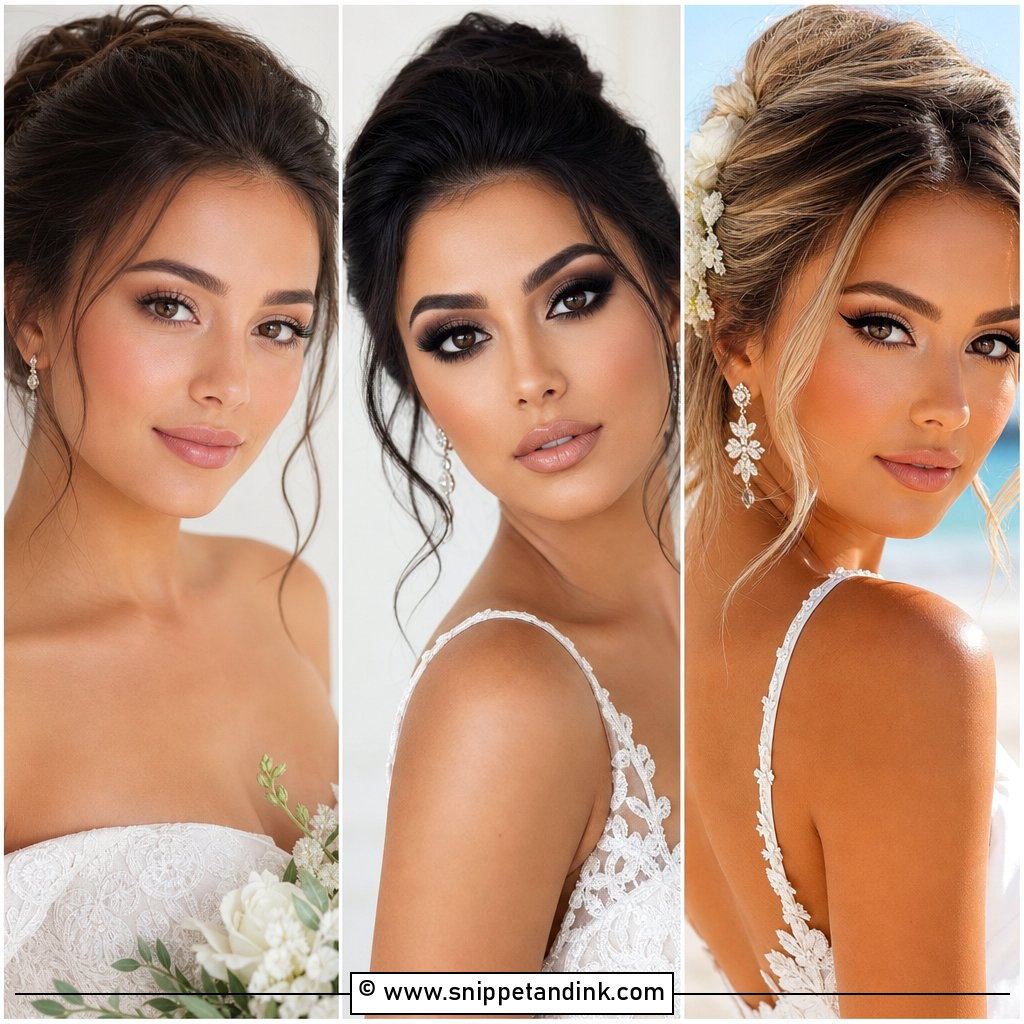
6. Smokey Eye Wedding Makeup
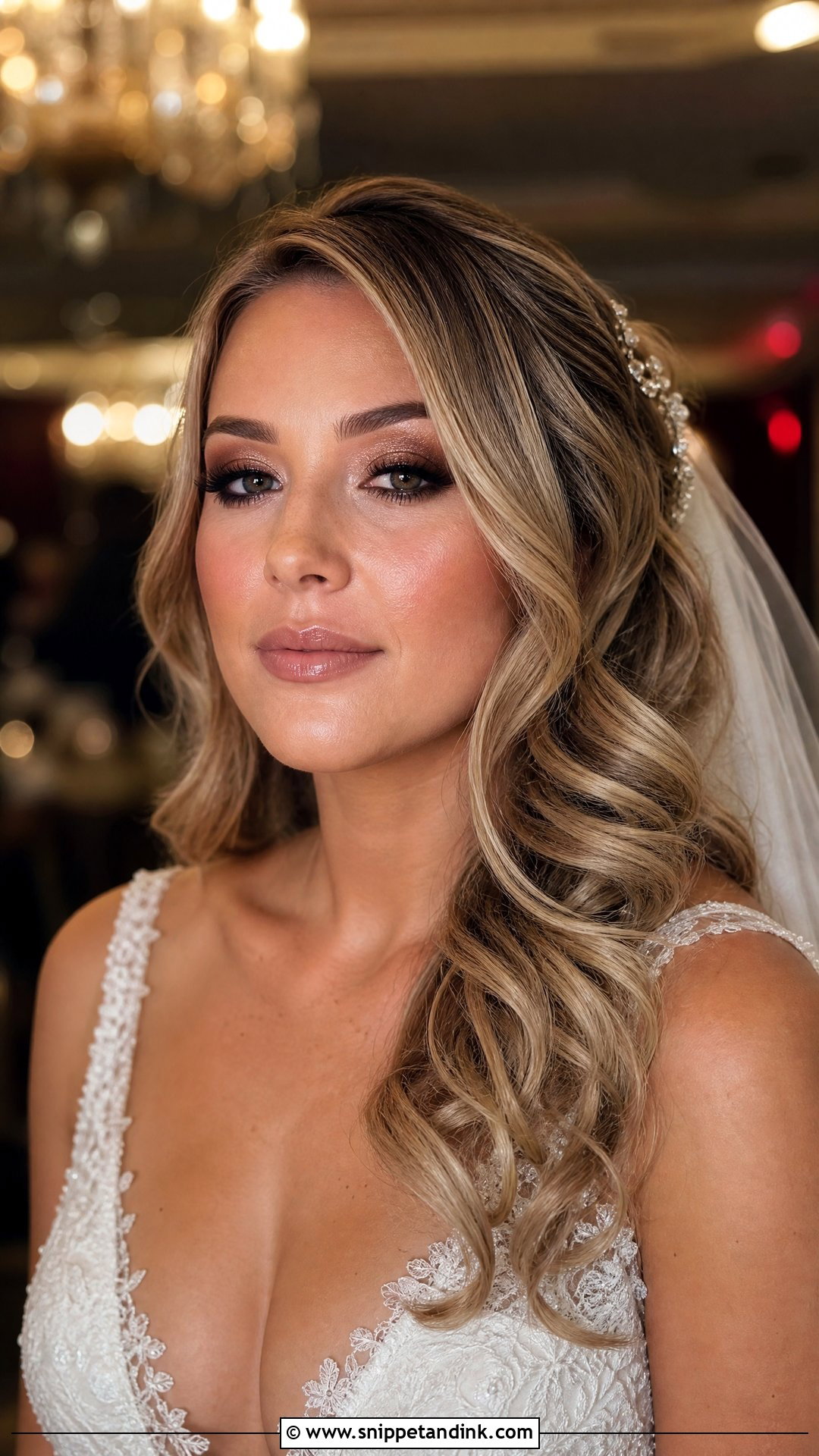
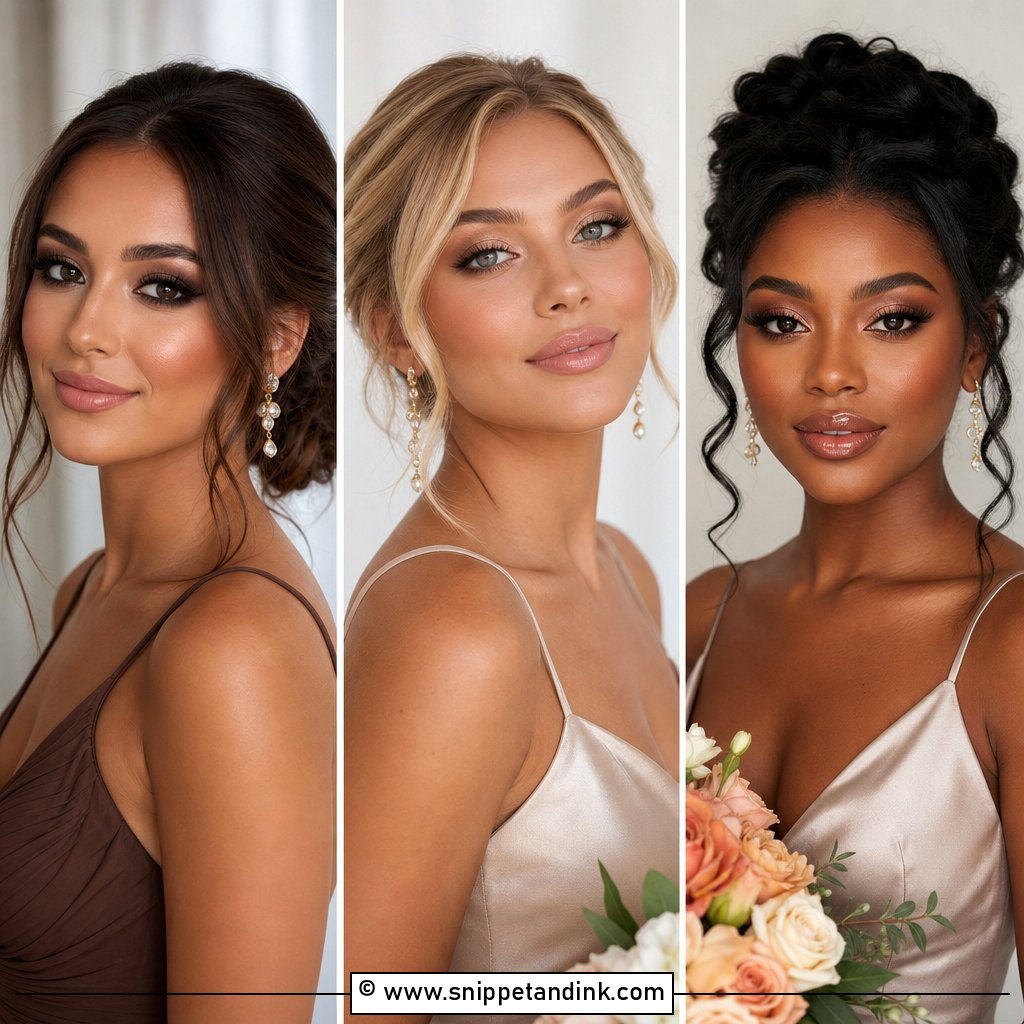
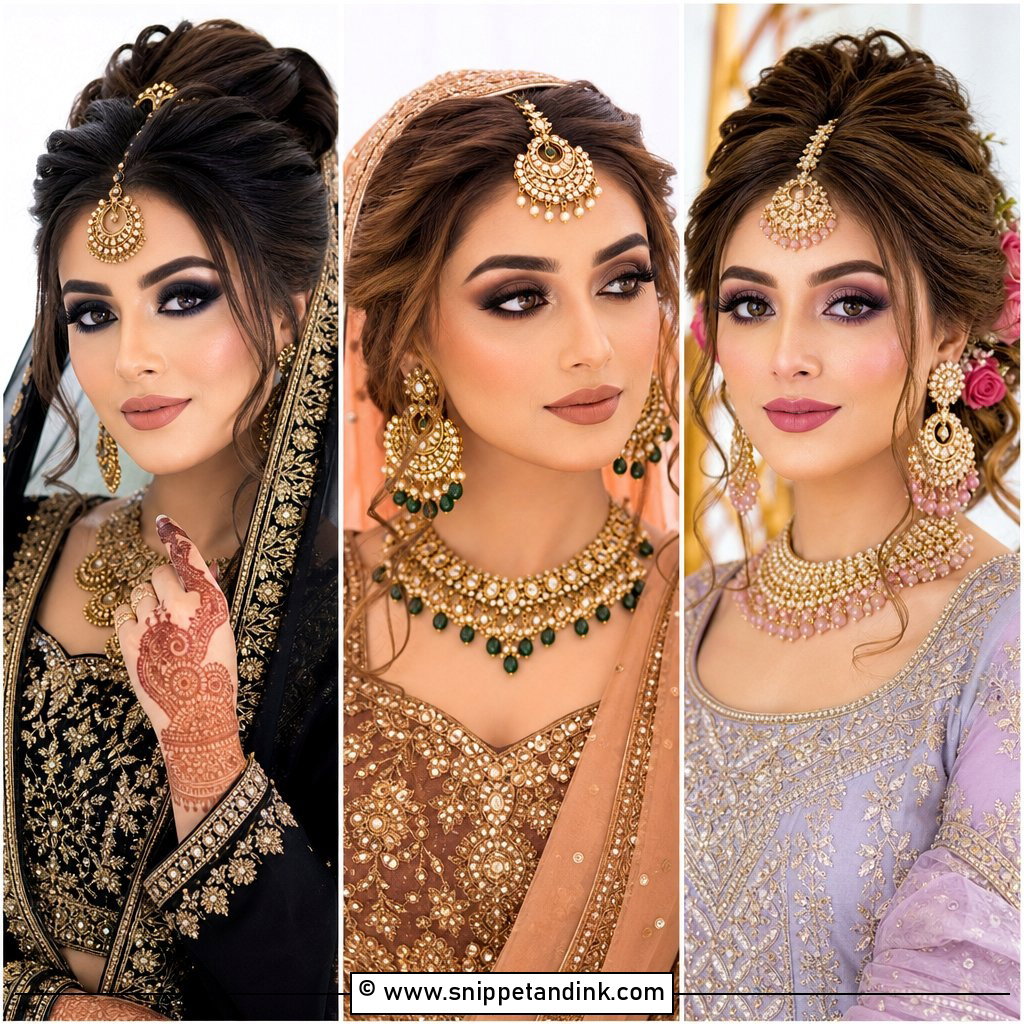
For a bridal smokey eye, I use brown, bronze, taupe or plum rather than black, which can look heavy in daylight and harsh in close-up photos. The deepest shade goes along the lash line and gets blended upward until the edge disappears. Shimmer on the center of the lid catches the light. I do the eyes before foundation, so any fallout can be cleaned off without ruining the skin. Medium-coverage foundation, warm blush and a muted lip keep the focus on the eyes. It suits an evening reception or a formal venue.
7. Bronze Wedding Makeup
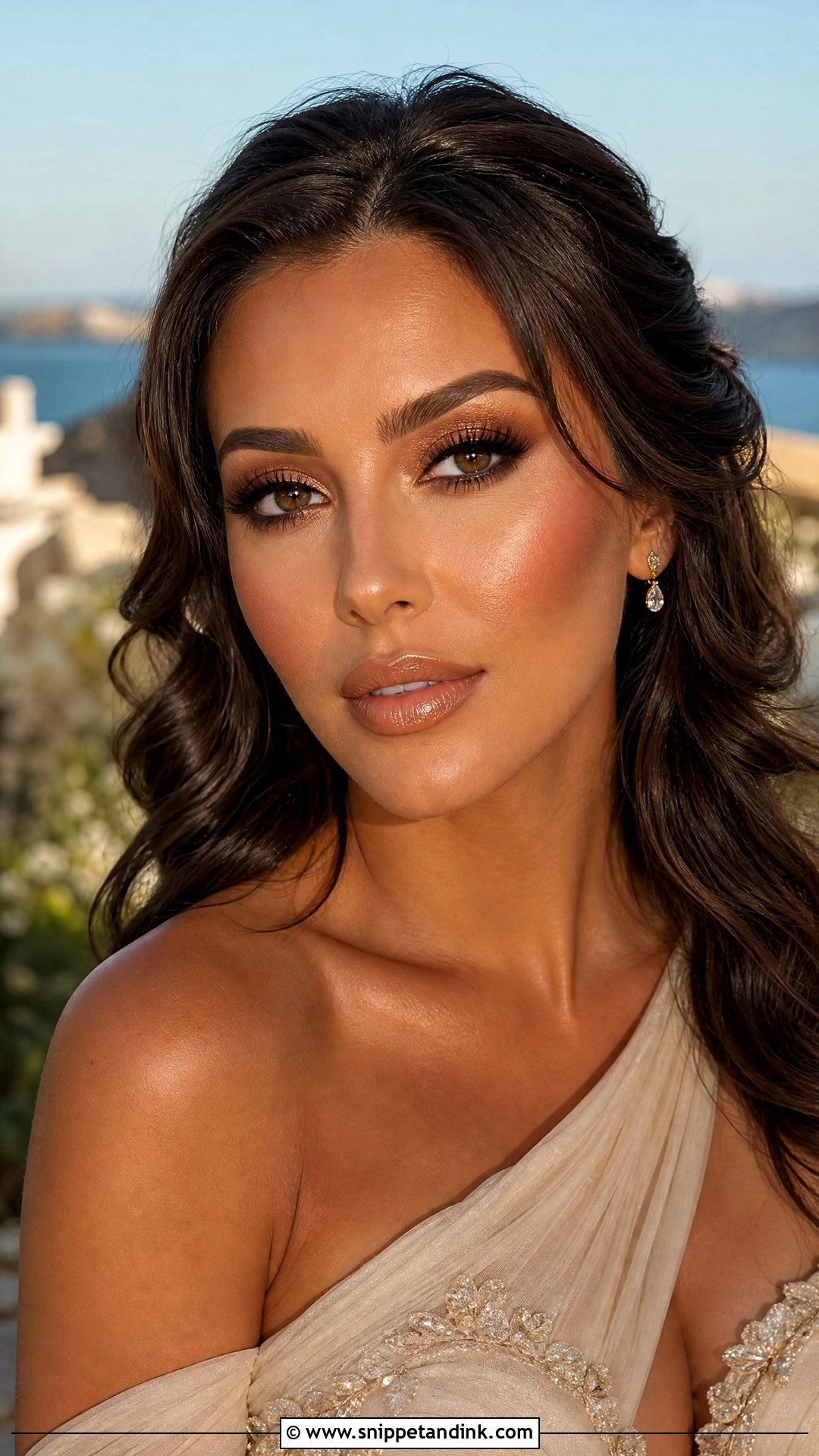
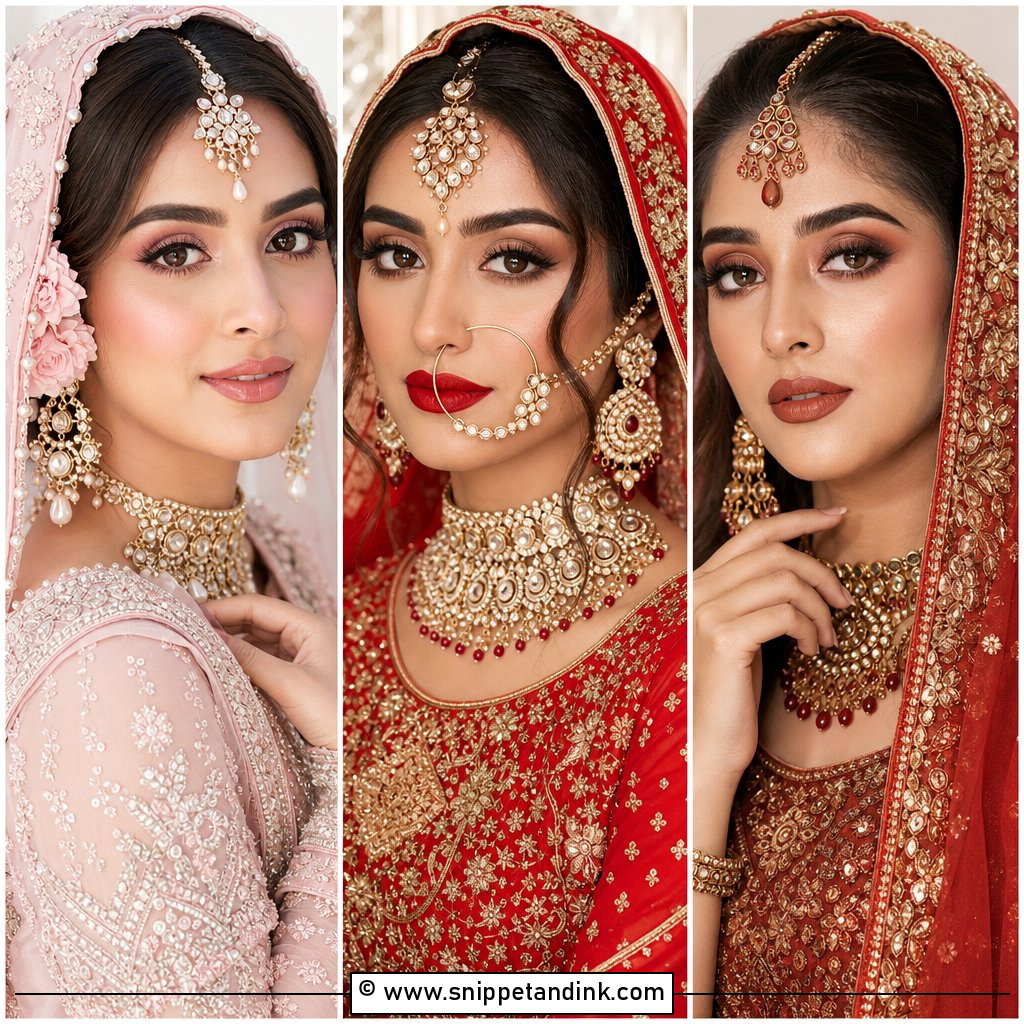
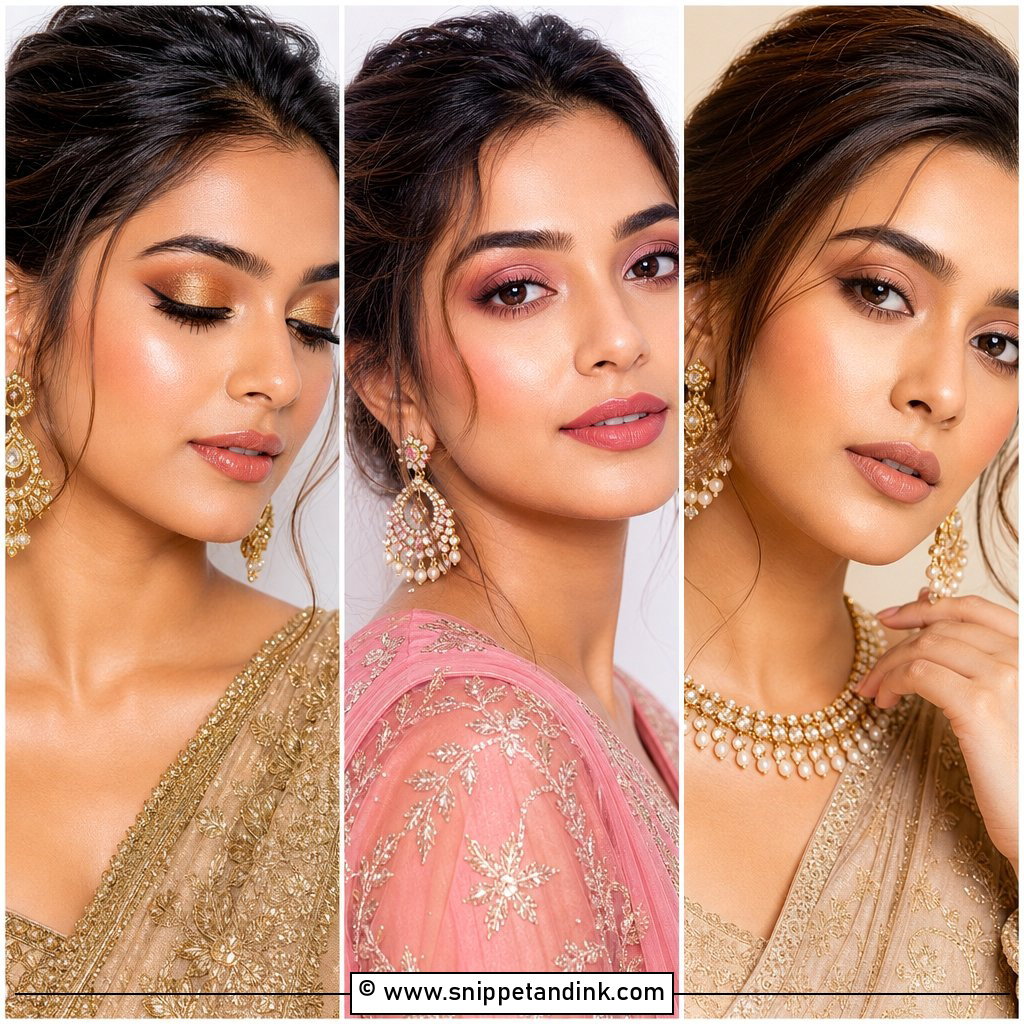
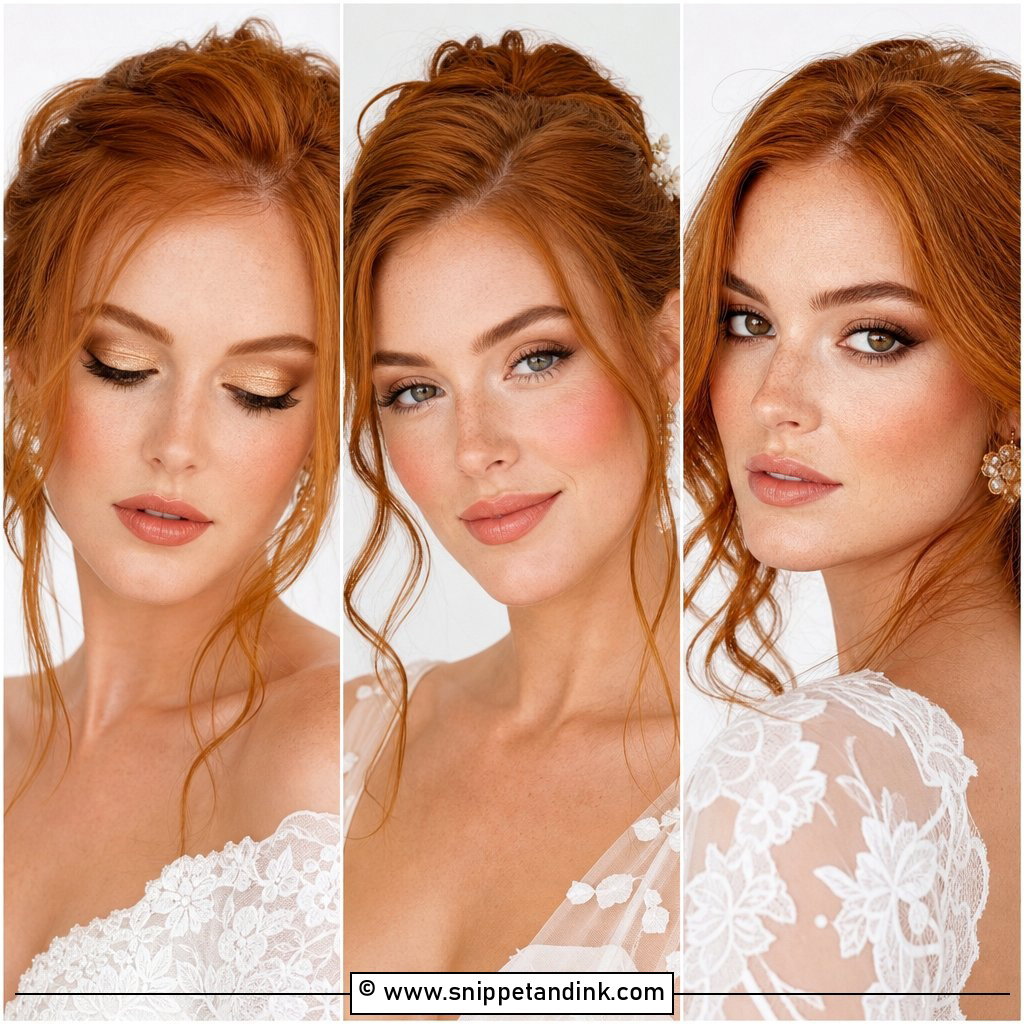
Bronze makeup warms the face and gives definition without much color. It’s easiest on golden, olive, tan and deeper skin, but fair skin can wear it too with a lighter, less orange bronzer. I sweep bronzer around the edges of the face, add peach or terracotta blush, and keep the highlight soft gold. The eyes get bronze, caramel and brown shadows with a smudged liner. A warm nude or peach beige lip finishes the look. It suits a beach, desert or summer ceremony, and anyone who loves a healthy, golden finish.
8. Rose Gold Wedding Makeup
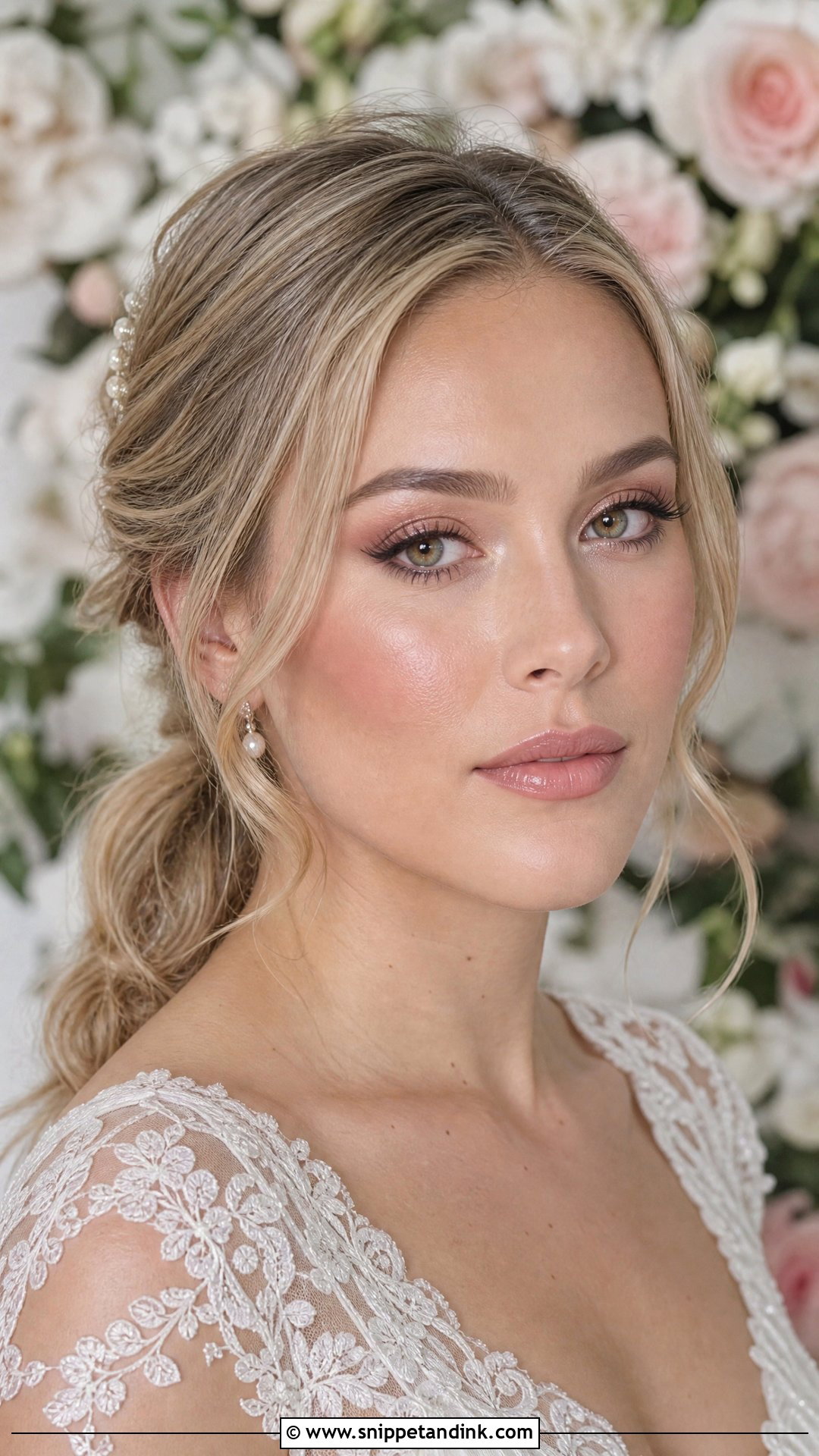
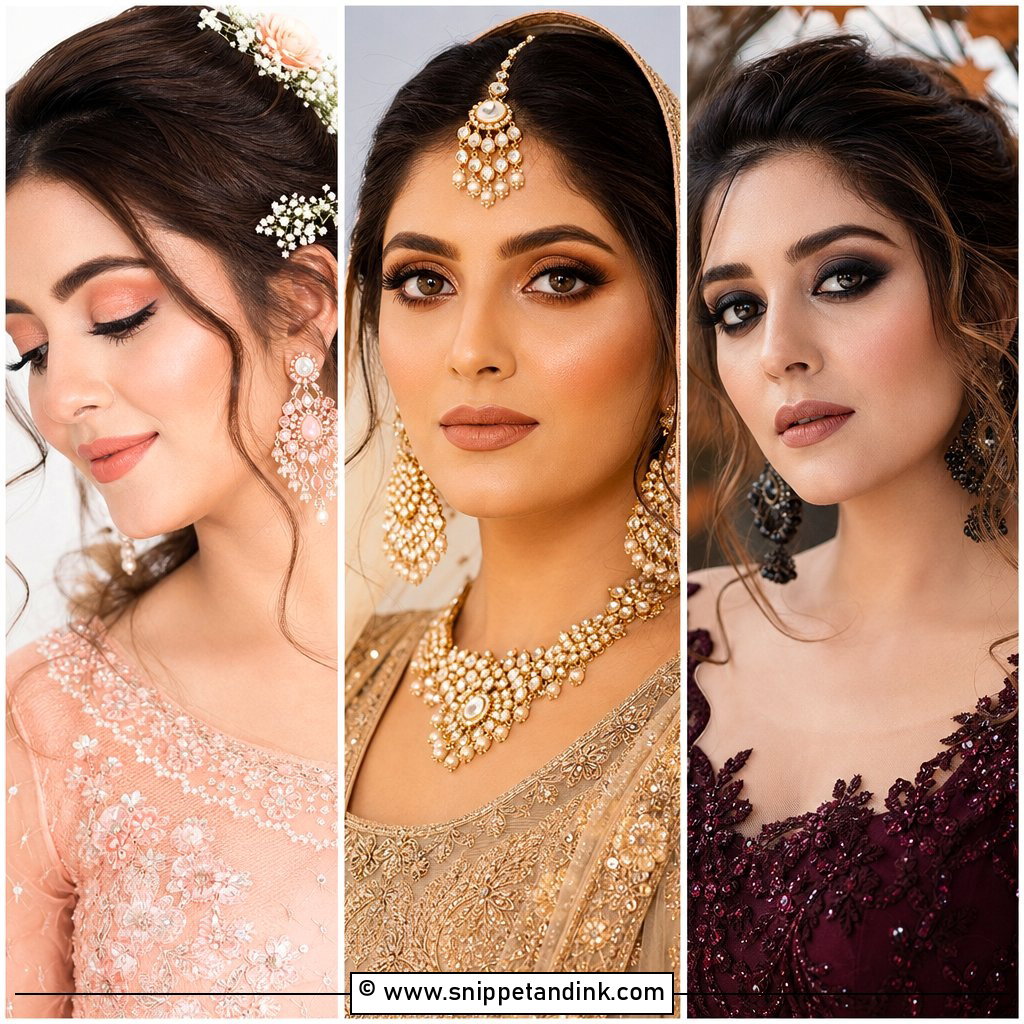
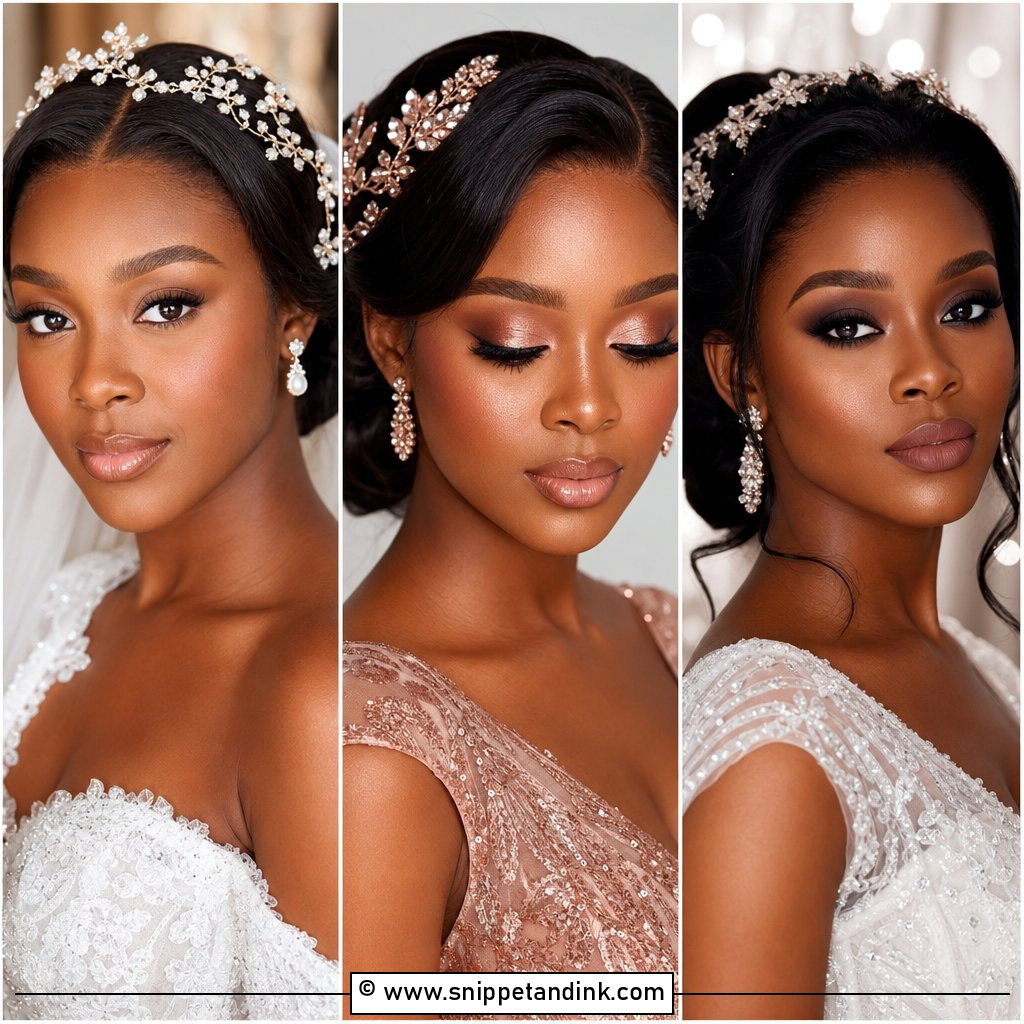
Rose gold sits between pink and bronze, which is why it flatters so many skin tones. I start with luminous skin and a soft flush, then press rose gold shimmer onto the lids with a finger so it catches the most light. Soft mauve or warm brown through the crease gives the shimmer some depth, and brown liner keeps it soft. Shimmer shadows can crease on oily lids, so I always use an eyeshadow primer first. A pink nude or rose beige gloss matches the eyes and ties in with blush-toned flowers.
9. Peach Wedding Makeup
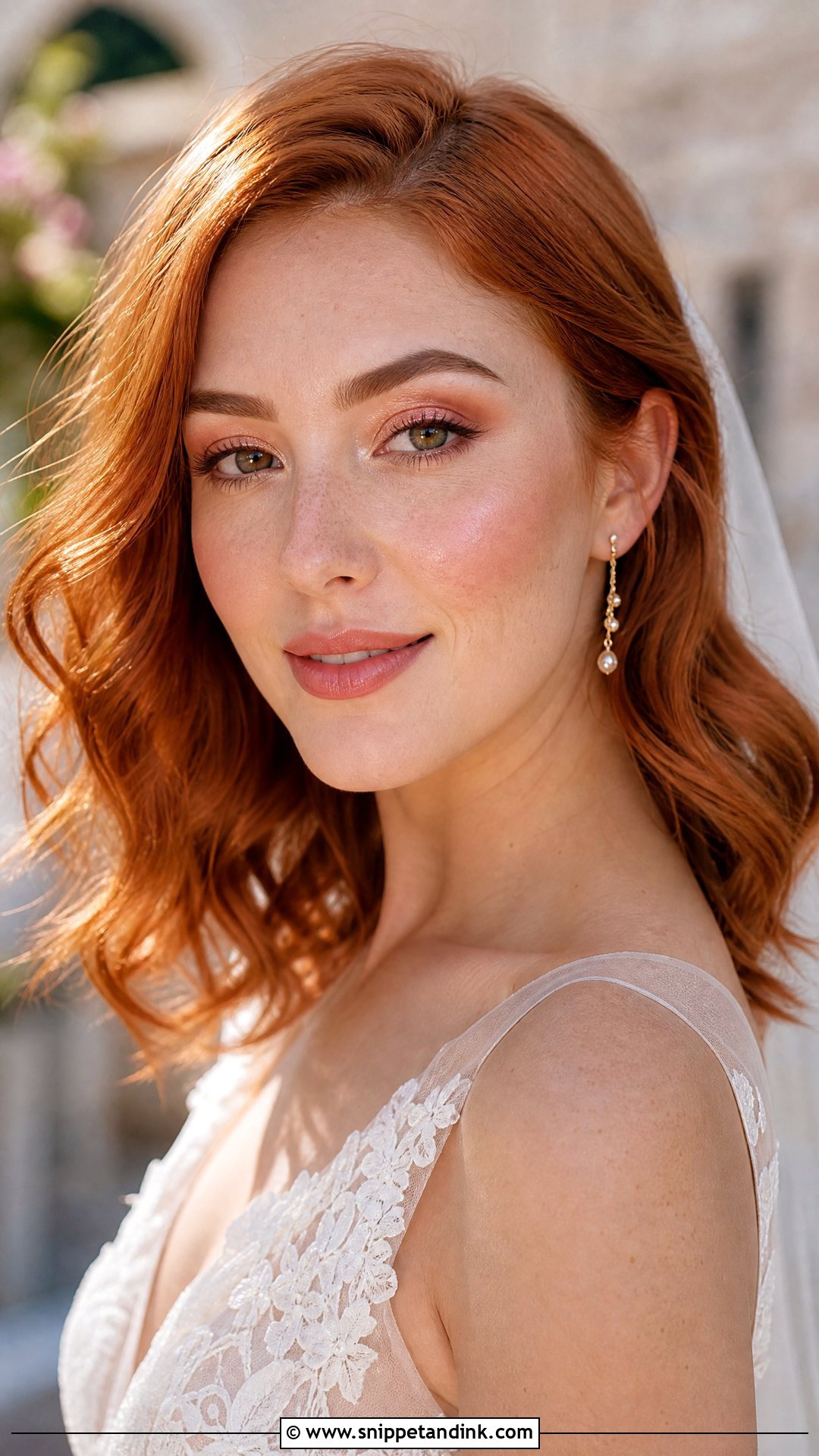
Peach is warm, bright and suits daytime light. The skin stays fresh with a satin finish, peach blush across the cheeks and a gentle golden highlight. For the eyes, I blend peach, apricot and soft brown with a brown liner, which looks gentler than black. A peach nude or coral pink lip in a satin finish completes it. On very fair or very cool-toned skin, peach can look a little orange, so test the blush and lip against your skin in daylight before choosing. Bridesmaids can wear the same palette in a lighter hand.
10. Pink Wedding Makeup
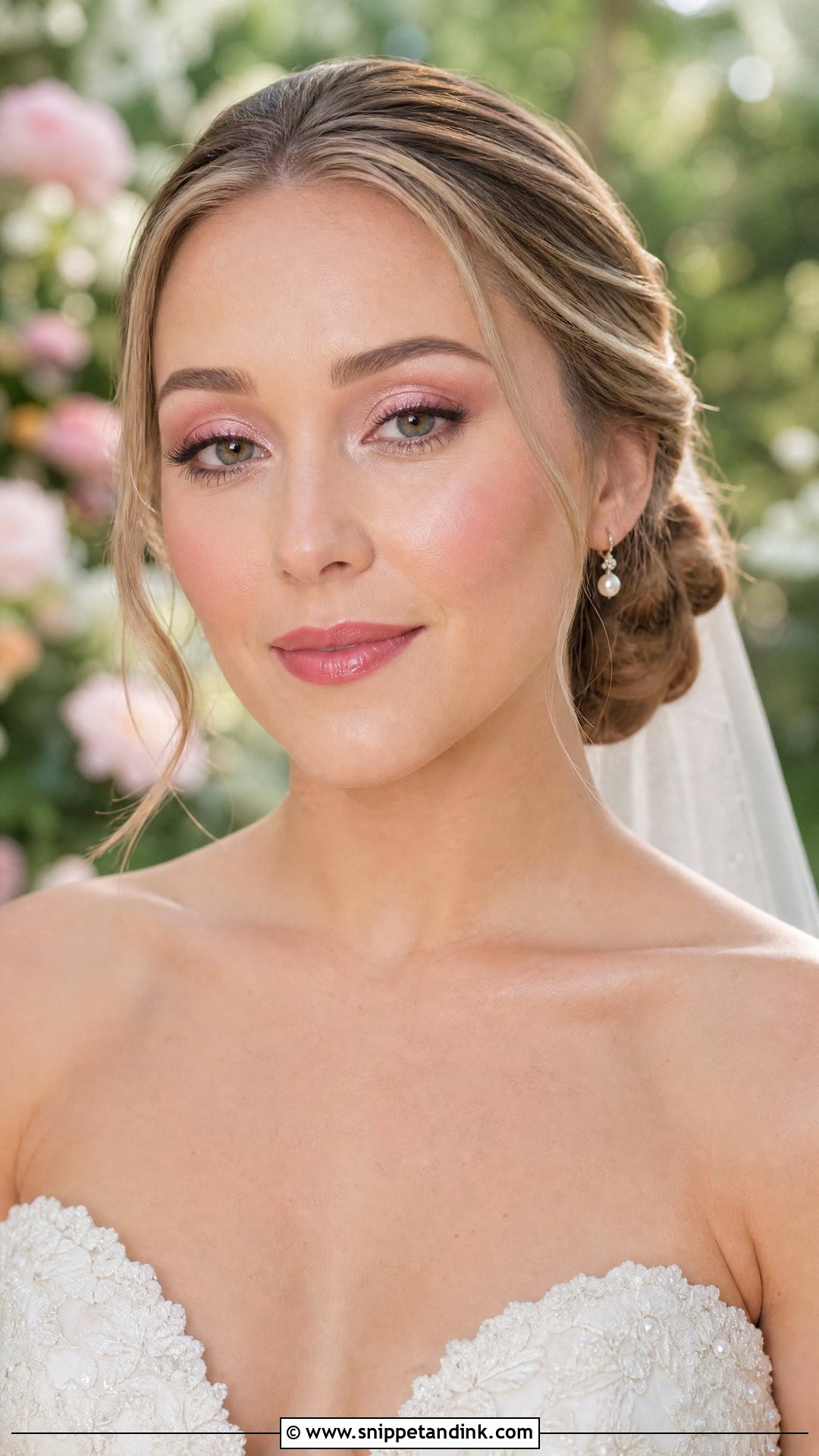
Pink makeup looks grown-up when the shades are muted: petal pink, dusty rose or soft mauve instead of bright bubblegum. I place blush high on the cheekbones and blend it toward the temples for a lift. Pale pink shimmer goes on the lid with taupe or rose brown in the crease, which stops pink eyeshadow from making the eyes look tired or irritated. A thin liner and separated lashes keep it clean. Match the lip to the blush family. It suits a romantic dress and someone who wants a soft look without looking too young.
11. Brown Smokey Wedding Makeup
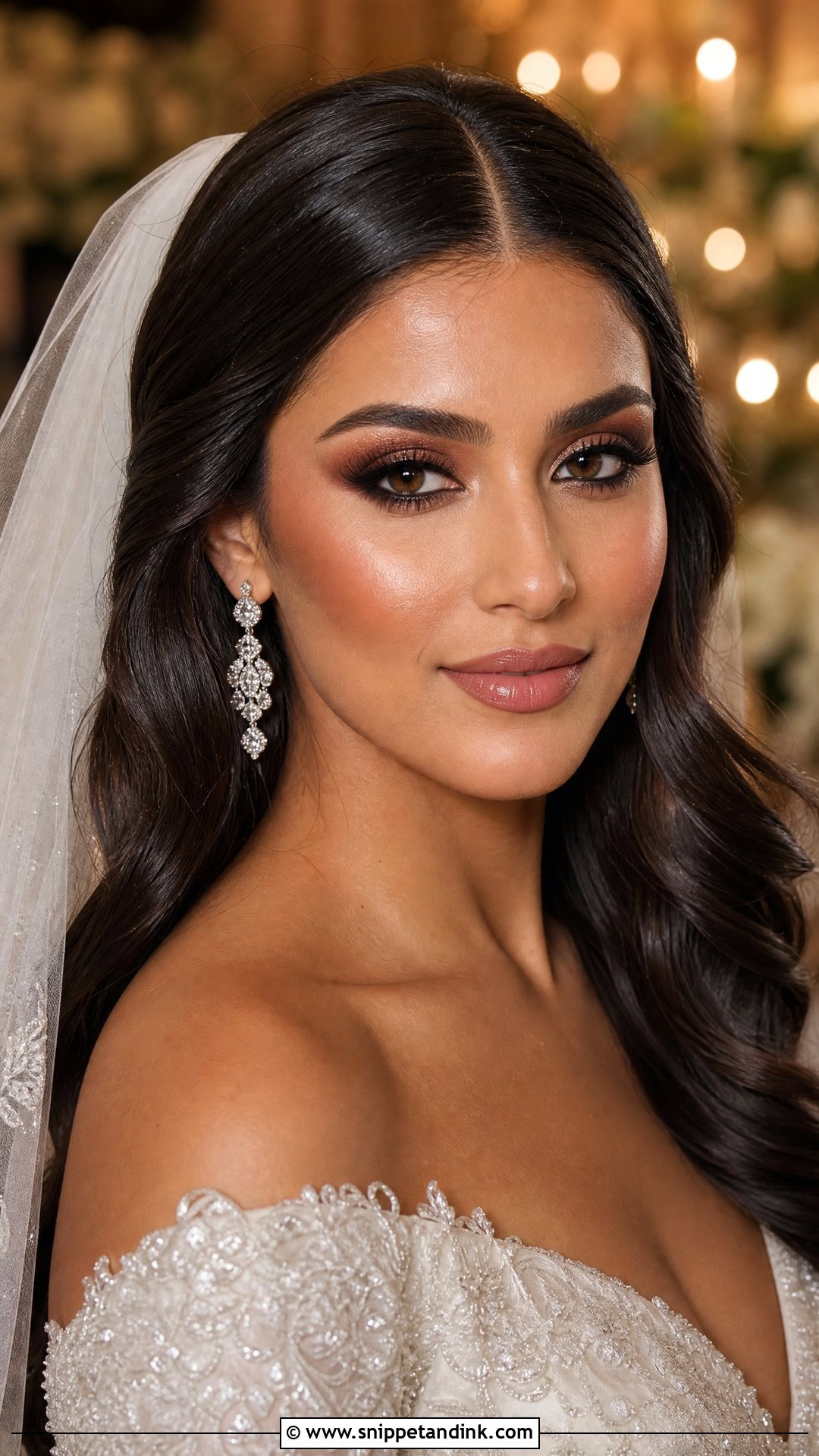
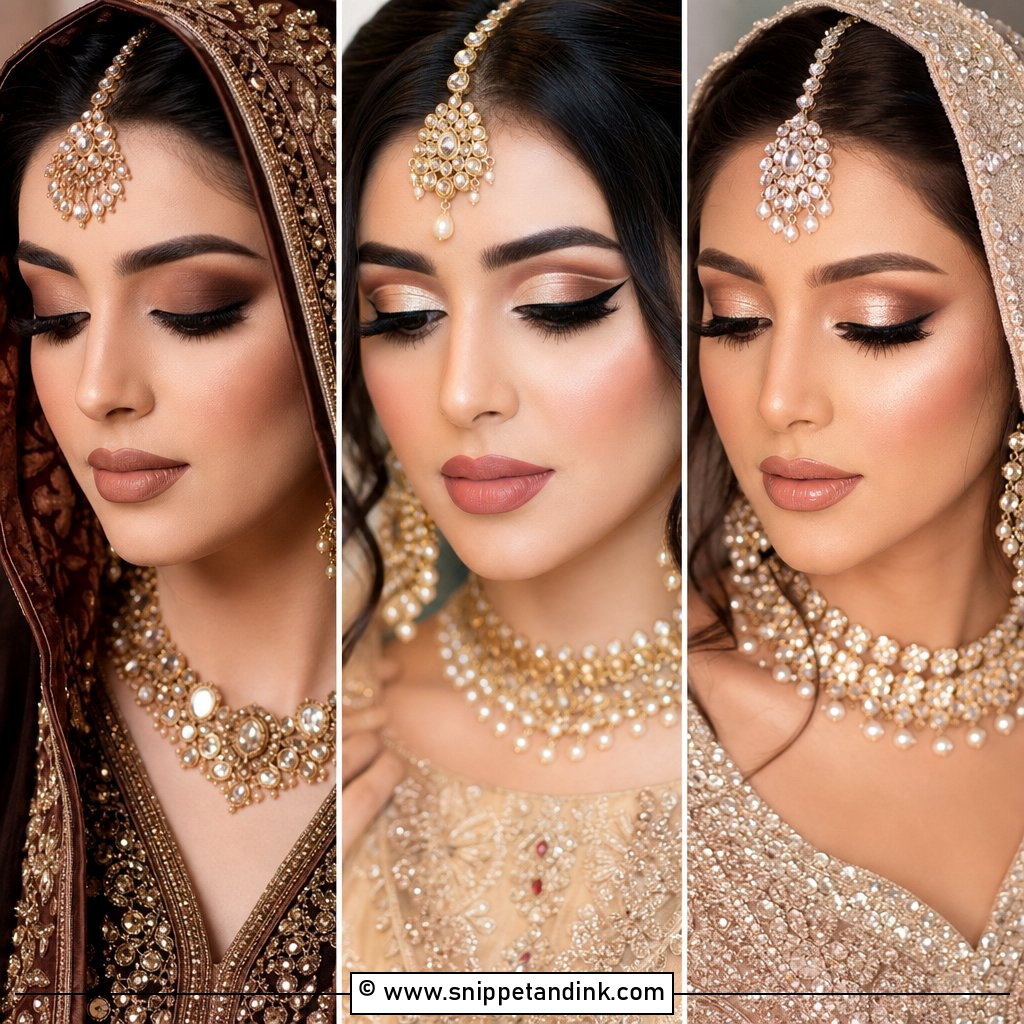
Brown smokey eyes give depth that suits almost everyone and holds up well in photos. I lay a warm or neutral brown transition shade through the crease first, then press espresso or chocolate along the lash line and blend until there are no edges. A little bronze or soft gold shimmer on the lid adds dimension. Full lashes and softly filled brows frame it. The skin stays smooth with a satin finish, warm rose or peach blush, and a nude brown, pink beige or caramel lip. It works in any season.
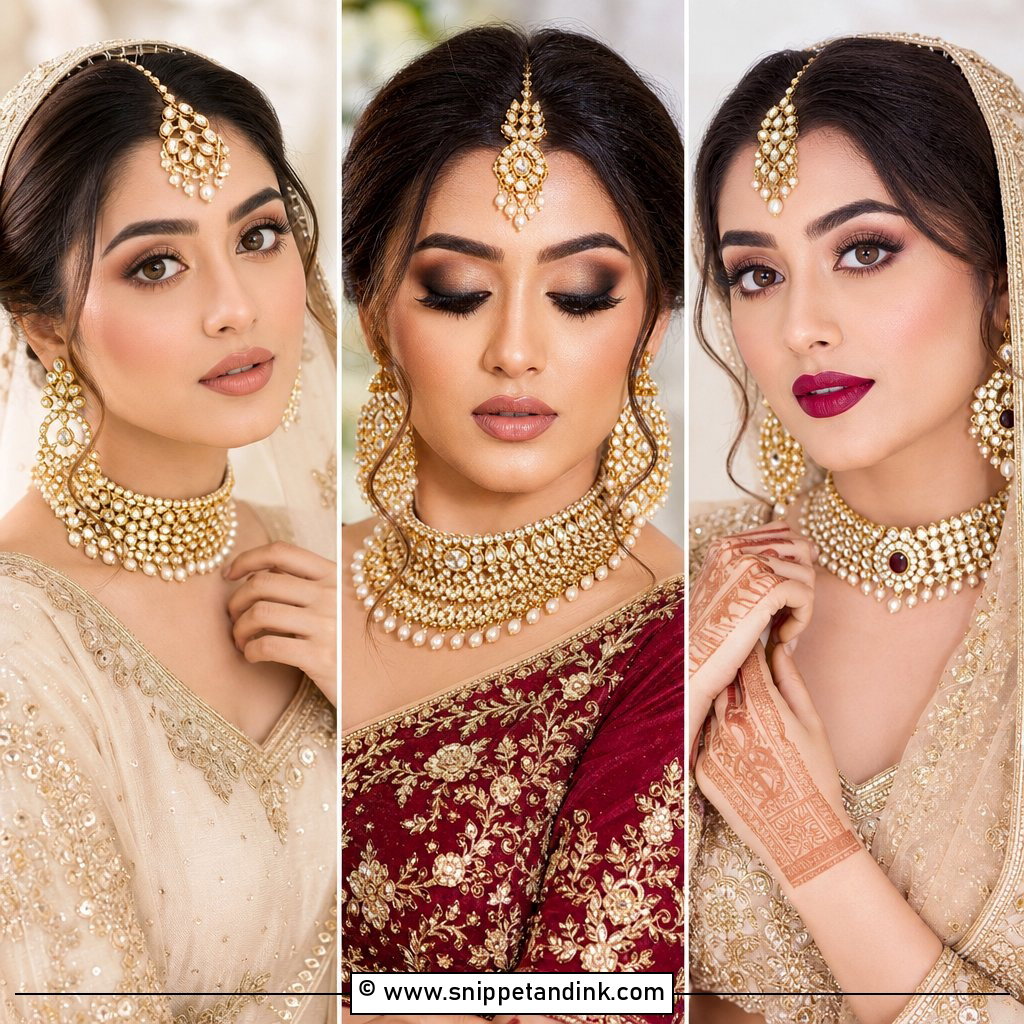
12. Gold Wedding Makeup
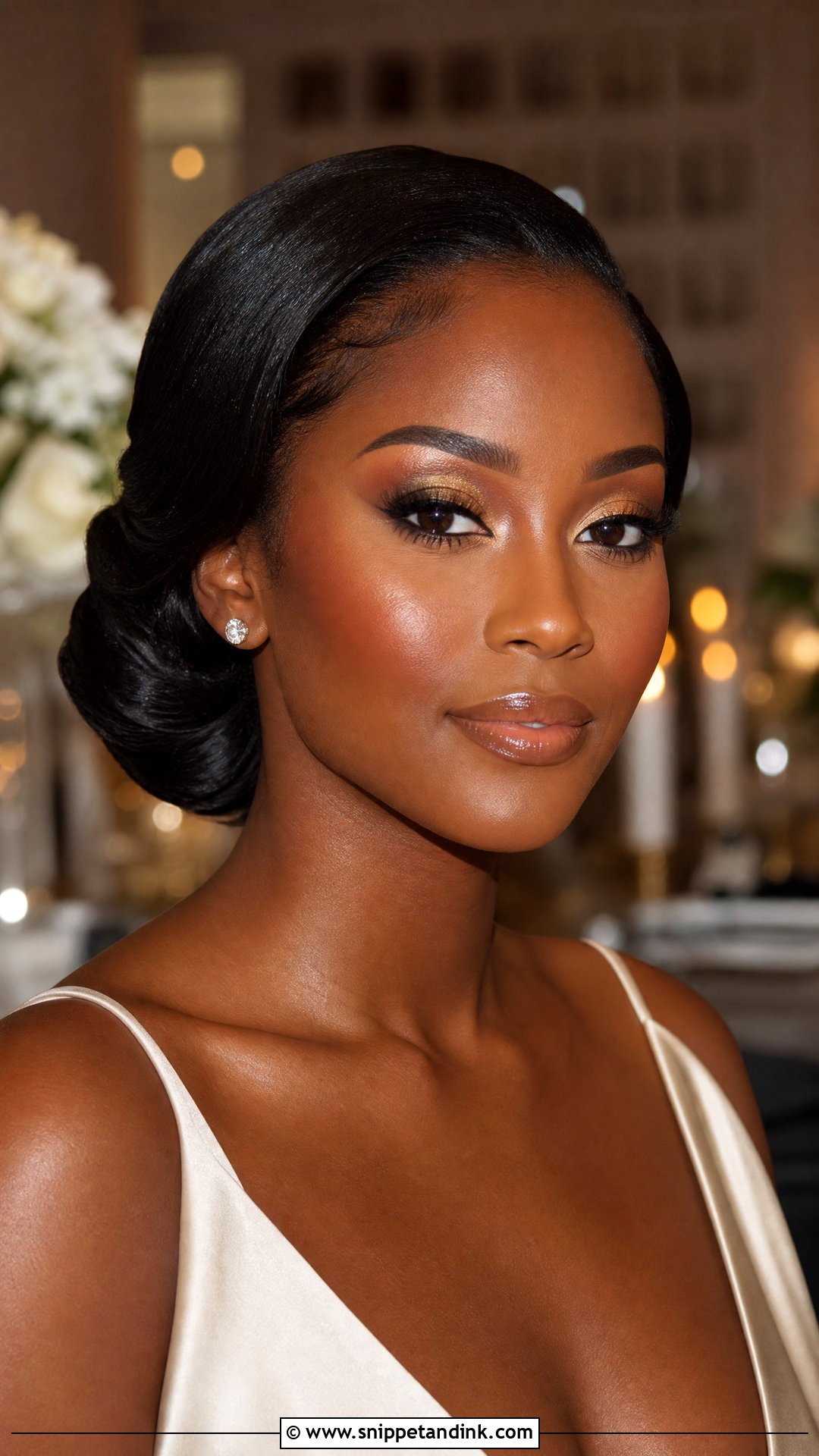
Gold eyeshadow adds brightness without much color. I use a soft metallic gold on the lid, warm brown in the crease and a clean liner. The skin should glow but not shine, with bronzer, peach blush and a champagne highlight. If your dress has warm ivory, champagne or gold details, gold makeup ties it together. A warm nude, peach beige or soft rose lip keeps the eyes in focus. It’s especially flattering on medium, tan and deep skin; fair skin can wear a pale antique gold instead of yellow gold.
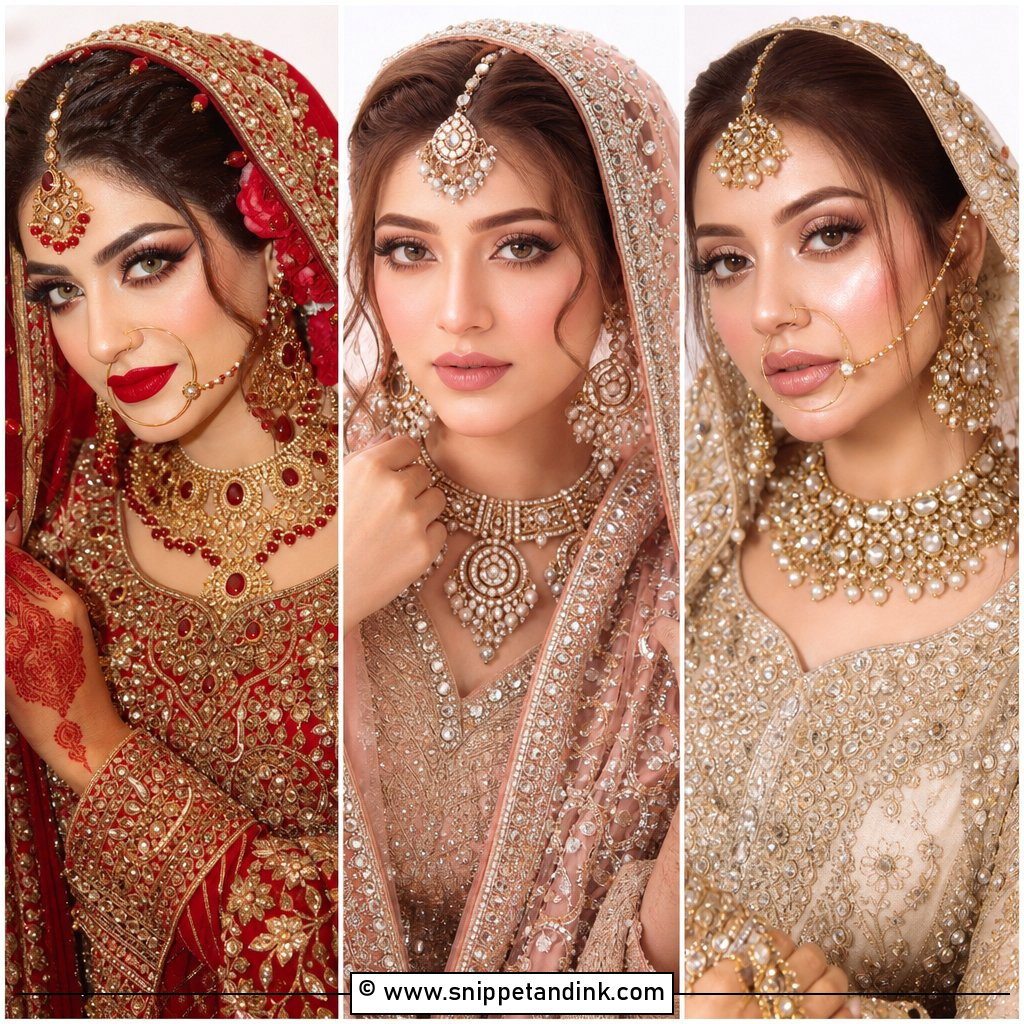
13. Full Glam Wedding Makeup
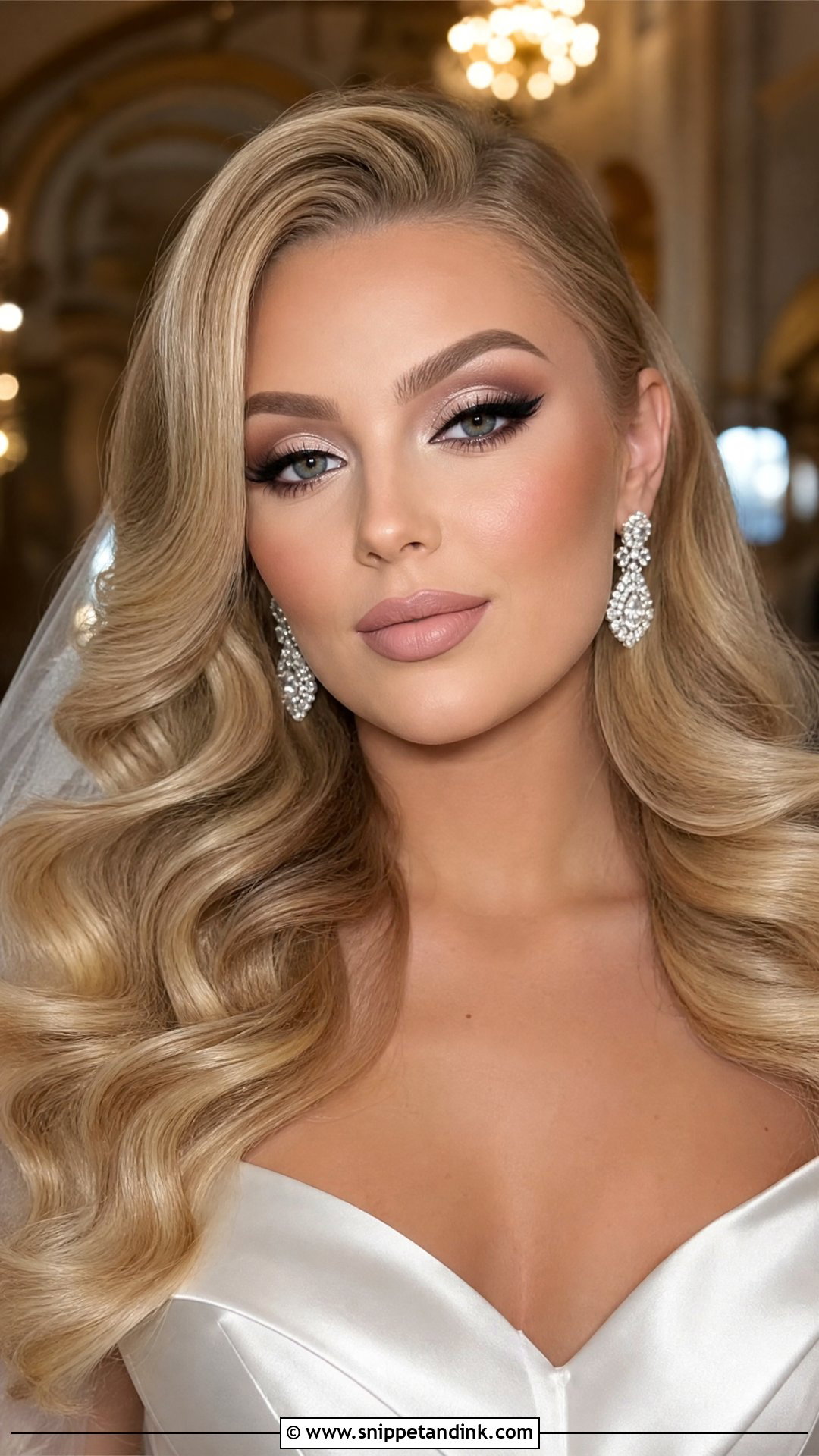
Full glam is for brides who already love dramatic makeup and want to feel like themselves on the day. The complexion is fully covered and sculpted, with a controlled highlight. The eyes can have a cut crease, a defined wing, a shimmer lid and full lashes. The thing that keeps it bridal is blending: every edge should be soft. Choose a lip that balances the eyes, such as nude pink, beige or soft brown. If you rarely wear much makeup, though, I’d suggest soft glam instead, because full coverage can feel heavy after several hours and look unfamiliar to you in photos.
14. Minimalist Wedding Makeup
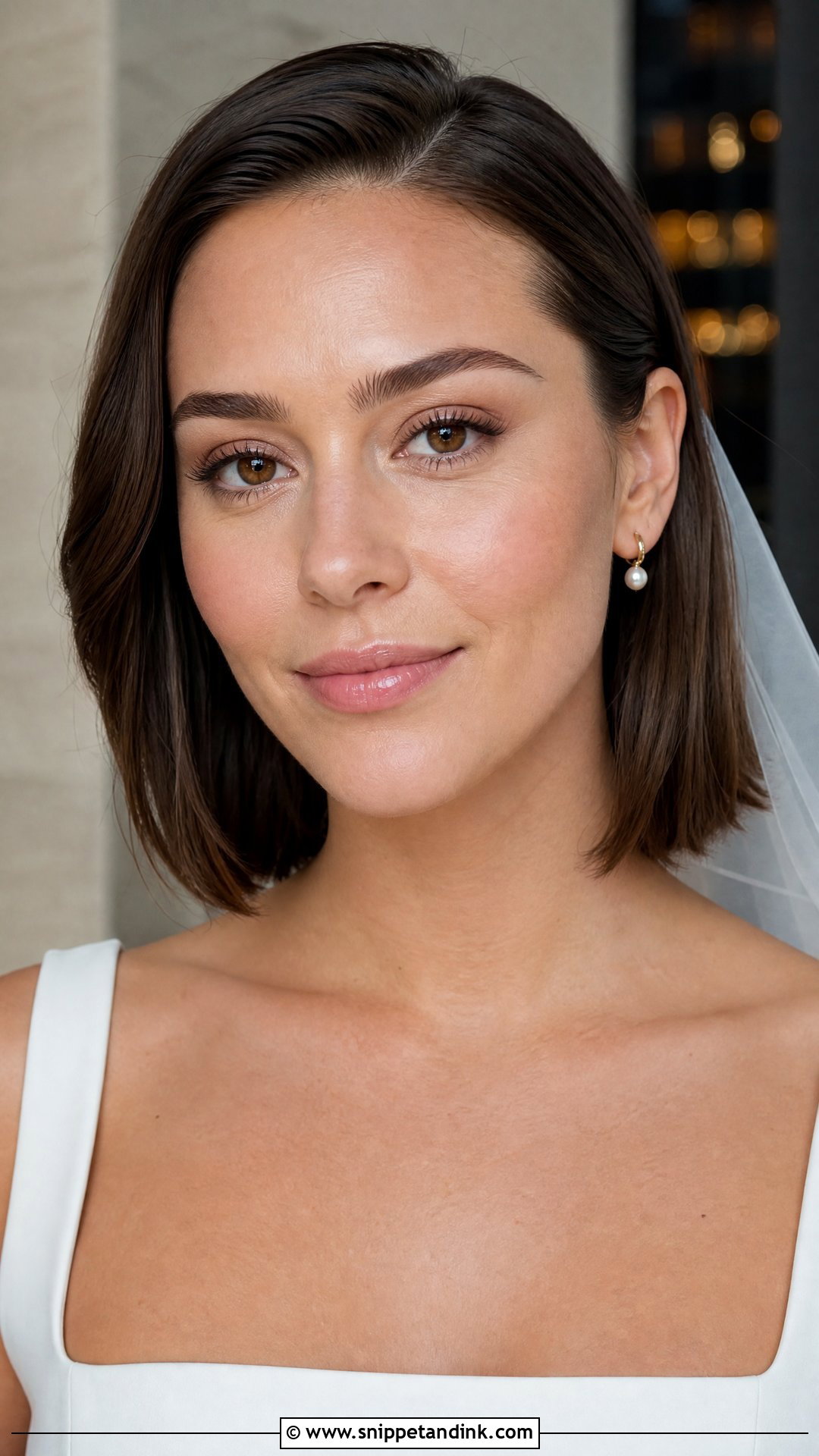
Minimalist makeup puts the focus on healthy skin and well-groomed brows, with only gentle enhancement elsewhere. I use a sheer foundation or tinted moisturizer and conceal only where needed. A cream blush, a pearly highlight and brushed brows give enough definition. For eyes, a single beige or taupe shadow, mascara and maybe a tightline at the roots. The lip stays close to your natural color in a balm or satin finish. I’d still use a primer and setting spray, because a sheer base fades faster than a full one.
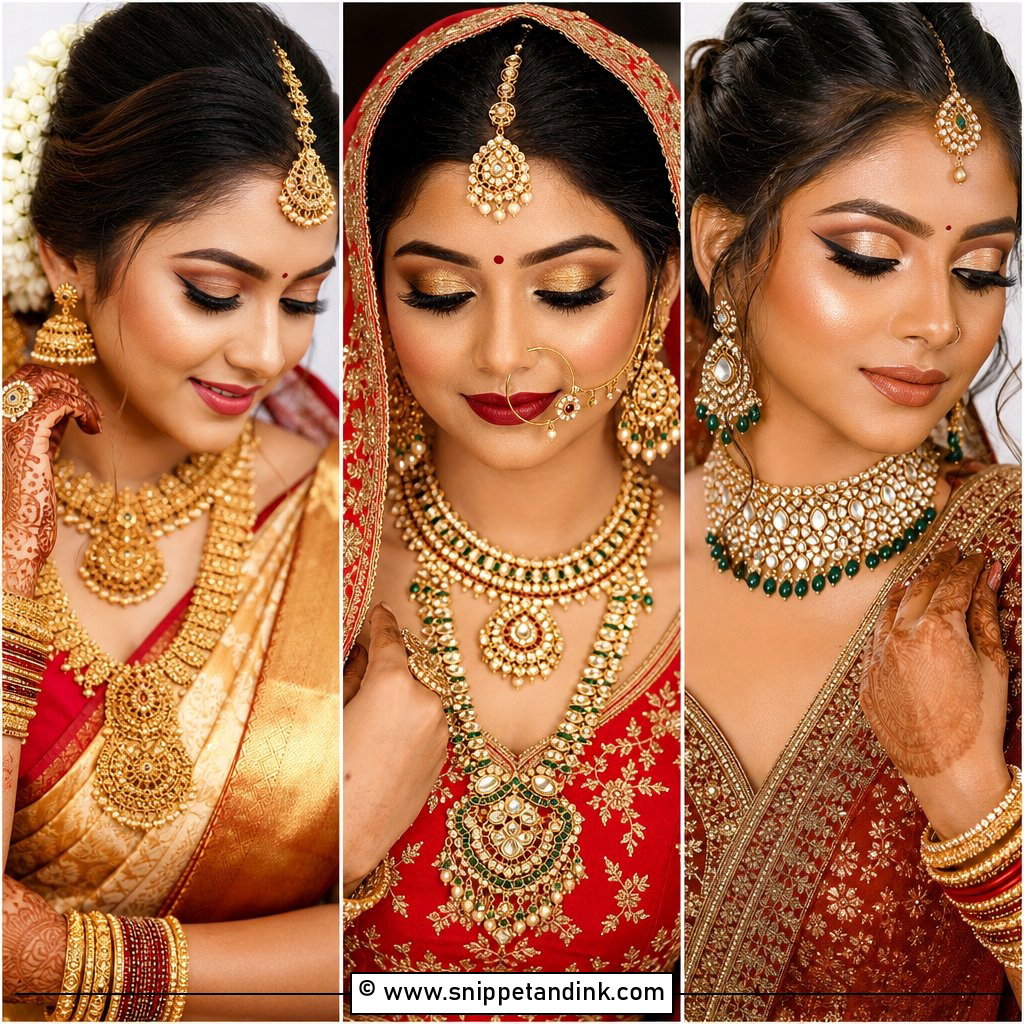
15. Vintage Wedding Makeup
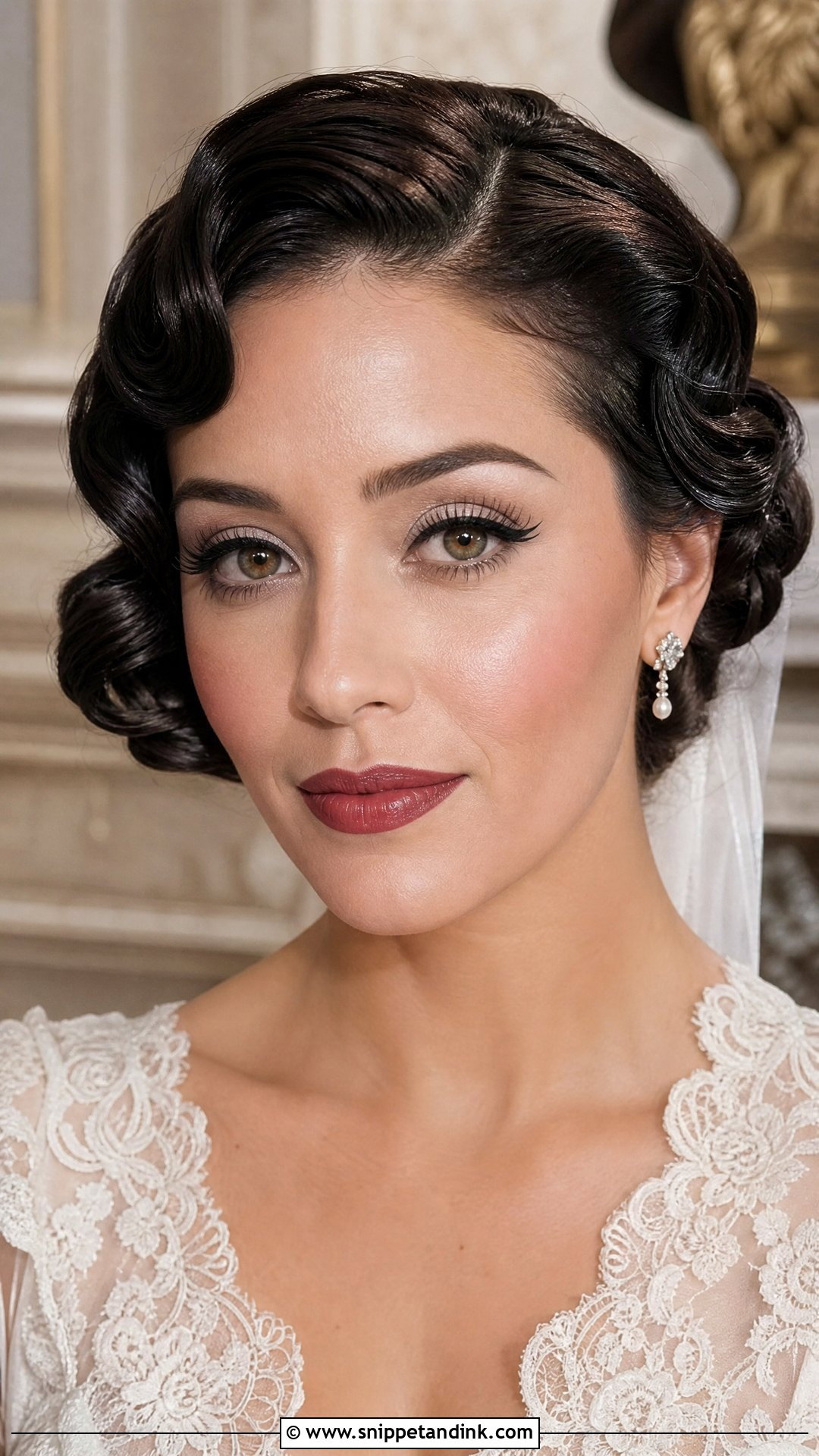
Vintage makeup works when you soften the details so it doesn’t look like a costume. Smooth satin skin, a clean winged liner and a defined lip are the key elements. I keep the shadow neutral, curl the lashes, and shape the brows into a soft arch. A rosy blush and a red, berry or deep rose lip complete it. A satin lip is usually more comfortable than a very dry matte over a long day. It pairs naturally with a lace gown, a birdcage veil, Hollywood waves or a structured updo.
16. Boho Wedding Makeup
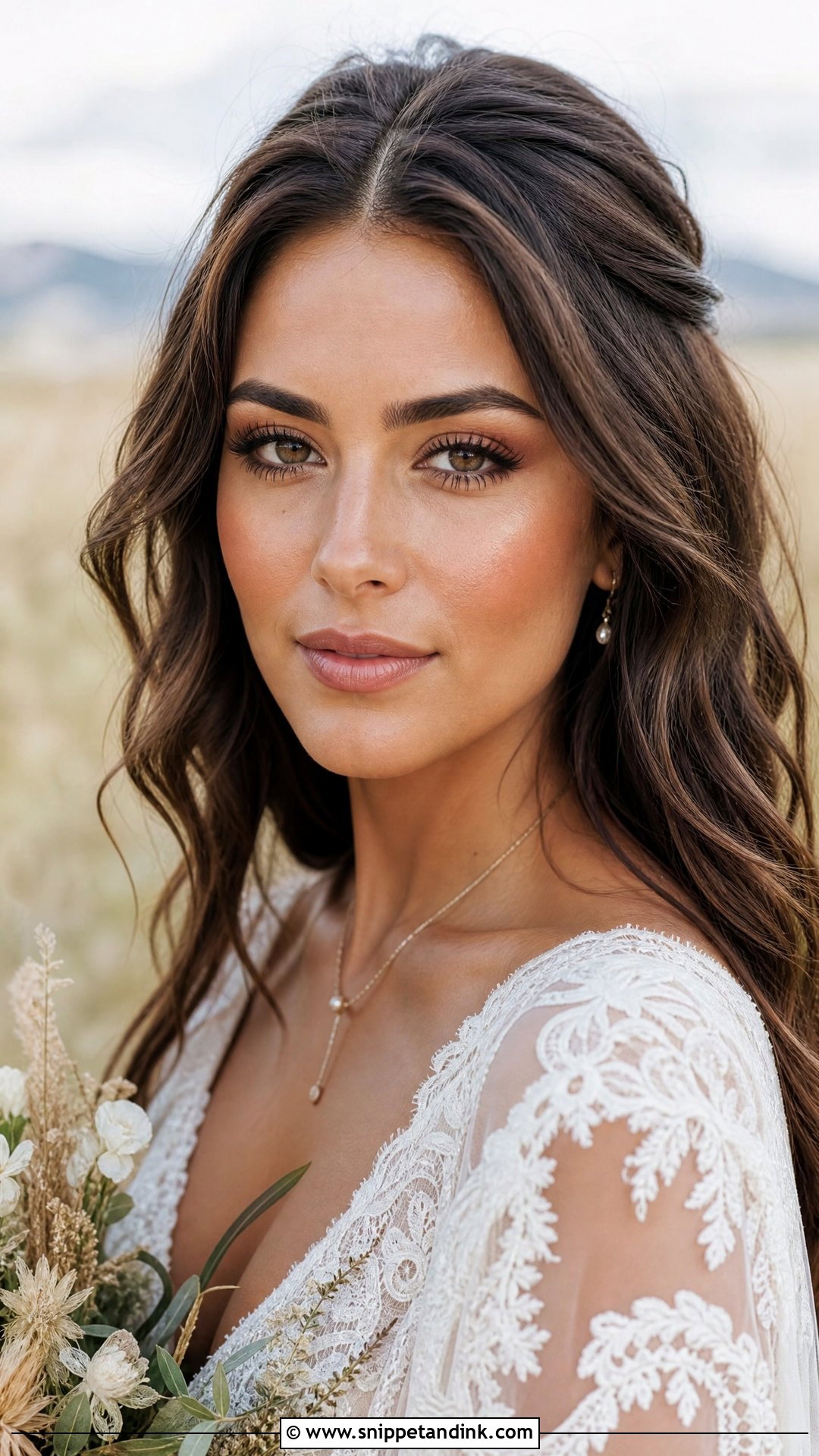
Boho makeup should look relaxed and warm, but it still needs to last. I use a sheer to medium base with a radiant finish, and leave freckles or natural texture showing if you like them. Warm bronzer, peach blush and soft highlight give a sun-kissed glow. The eyes get earthy shades like sand, bronze and copper with a smudged liner. Brows stay fluffy and natural. A tinted balm or warm rose lip finishes it, but balm wears off fast, so a stain underneath helps it last.
17. Beach Wedding Makeup
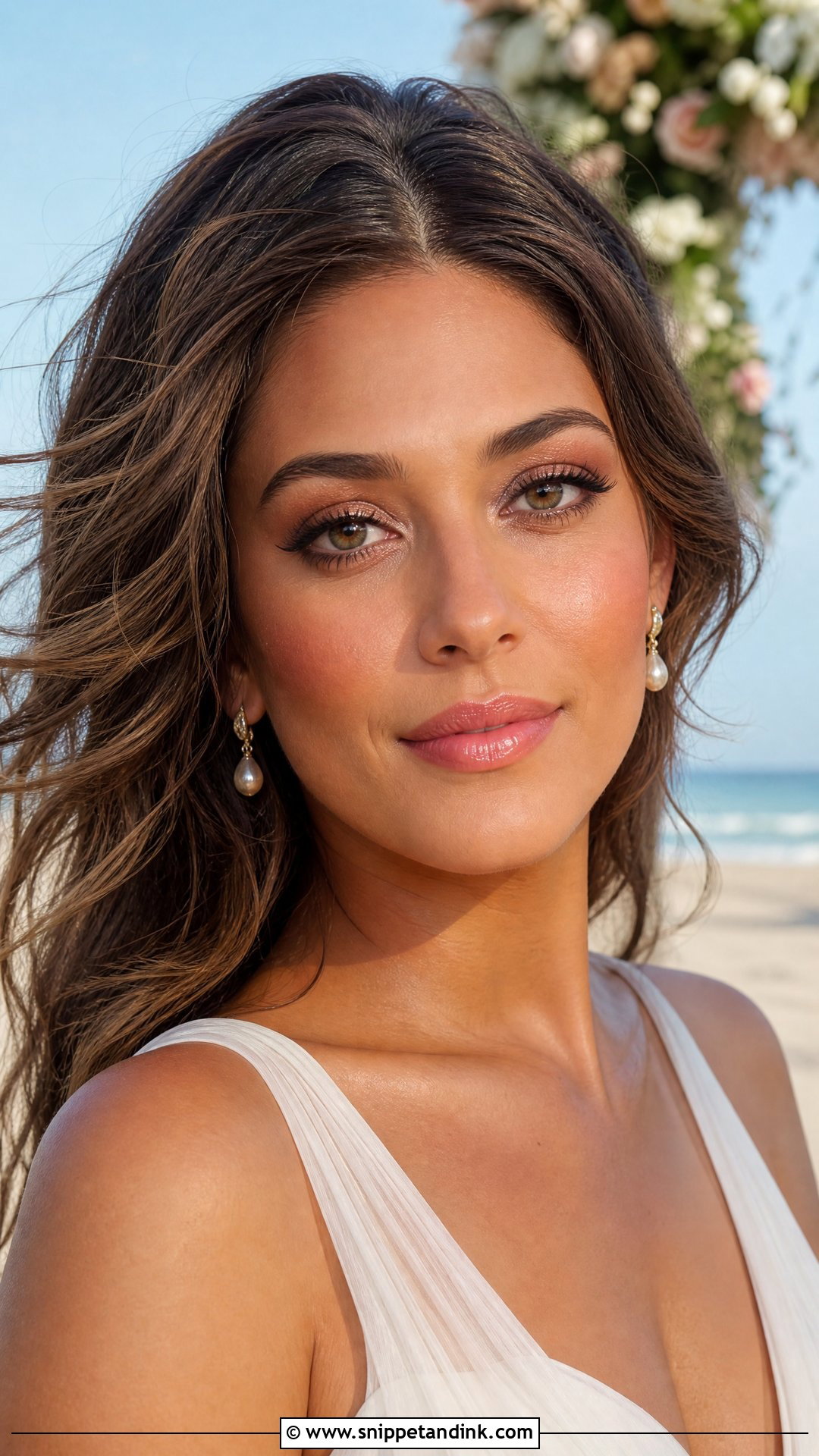
Beach makeup has to handle sun, wind and humidity. I keep the base light and long-wearing with waterproof concealer and powder only through the T-zone. A bronzed complexion, coral blush and soft golden highlight give a healthy glow. For eyes, waterproof mascara, bronze cream shadow and smudged brown liner hold up better than black. Set brows with clear or tinted gel. Use a mineral or makeup-friendly SPF, and skip high SPF products with a white cast if there’ll be flash photography.
18. Winter Wedding Makeup
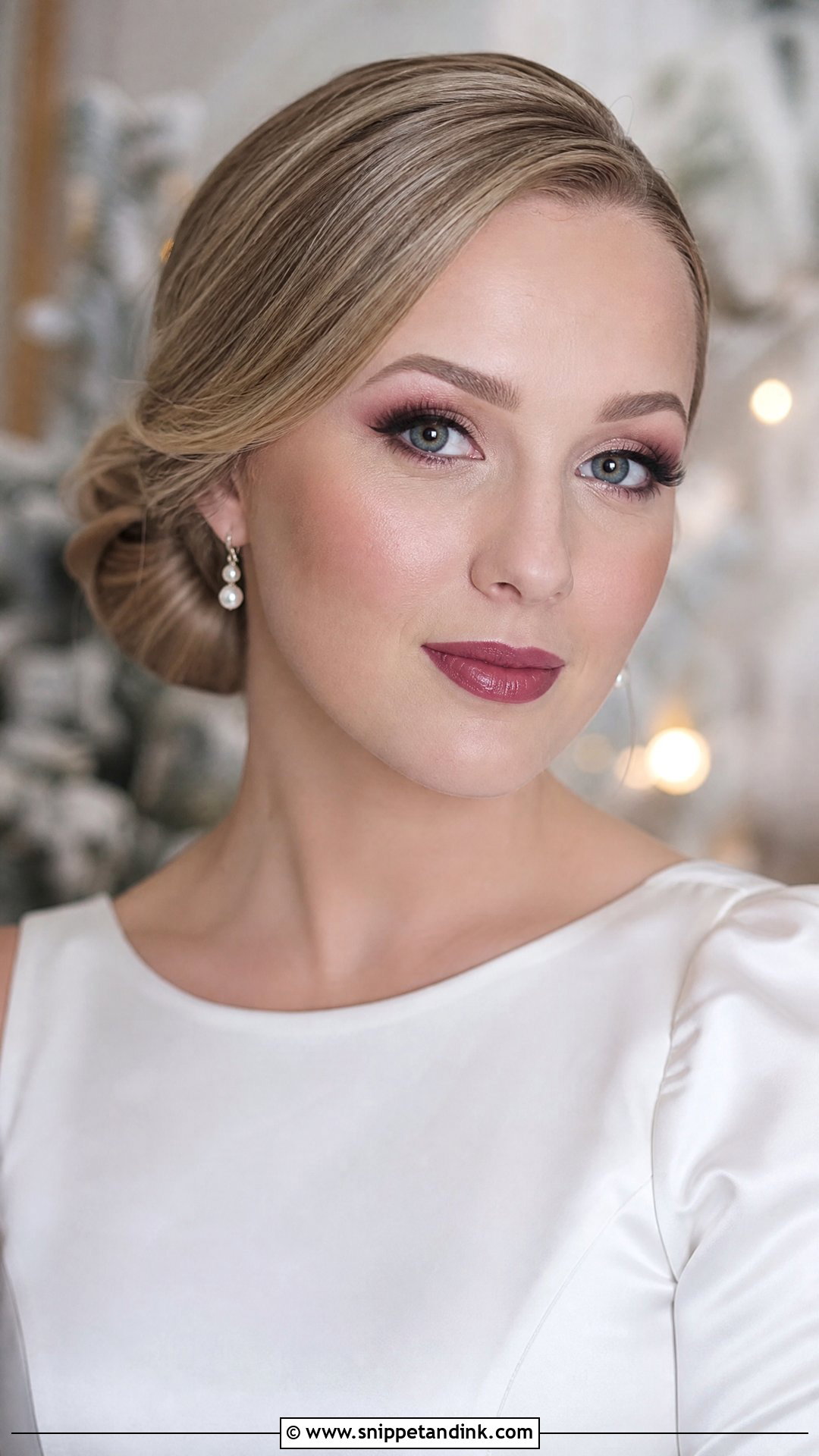
Winter makeup can go richer without looking dark. Cold air and indoor heating dry the skin, so I prep with a richer moisturizer and use a satin foundation that won’t cling to dry patches. Rose, berry or mauve blush adds a healthy flush. For eyes, taupe, champagne, cocoa or plum shadows with defined lashes. A subtle highlight brightens the face under indoor lights. The lip can be rosy nude, mauve, berry or red. It suits long sleeves, satin gowns and pearl accessories.
19. Colorful Wedding Makeup
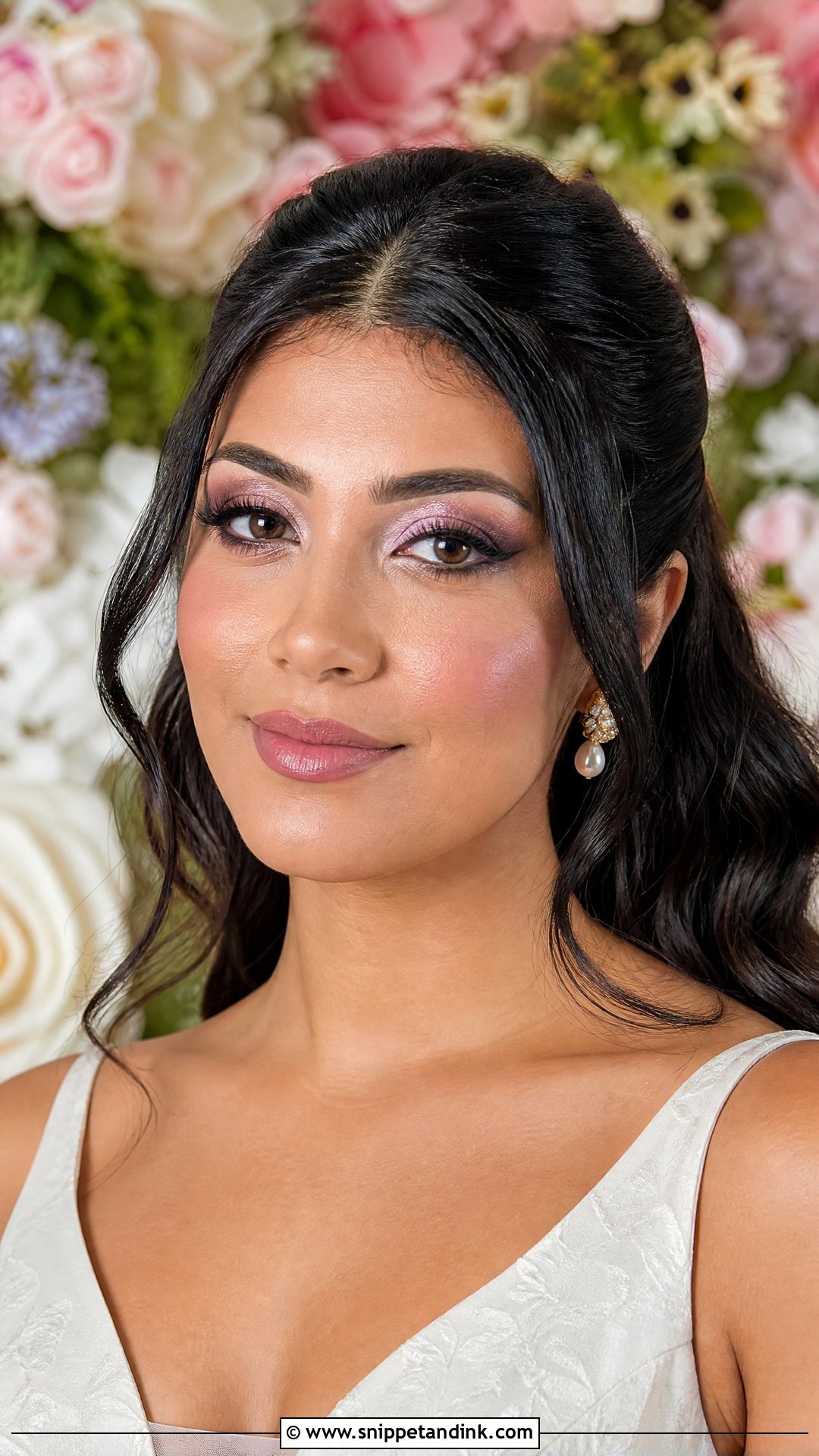
Colorful makeup works best with one color story and everything else kept neutral. Try lavender eyes with pink blush, a soft blue liner with a nude lip or sage green shadow with warm skin. I use sheer washes rather than solid blocks of color, which can look heavy in close-up photos. Lashes and groomed brows add definition. The skin should stay smooth and fresh, with a blush that complements the eye color, and a neutral lip so the color looks intentional. It suits a creative bride and bright flowers.
20. Mature Skin Wedding Makeup
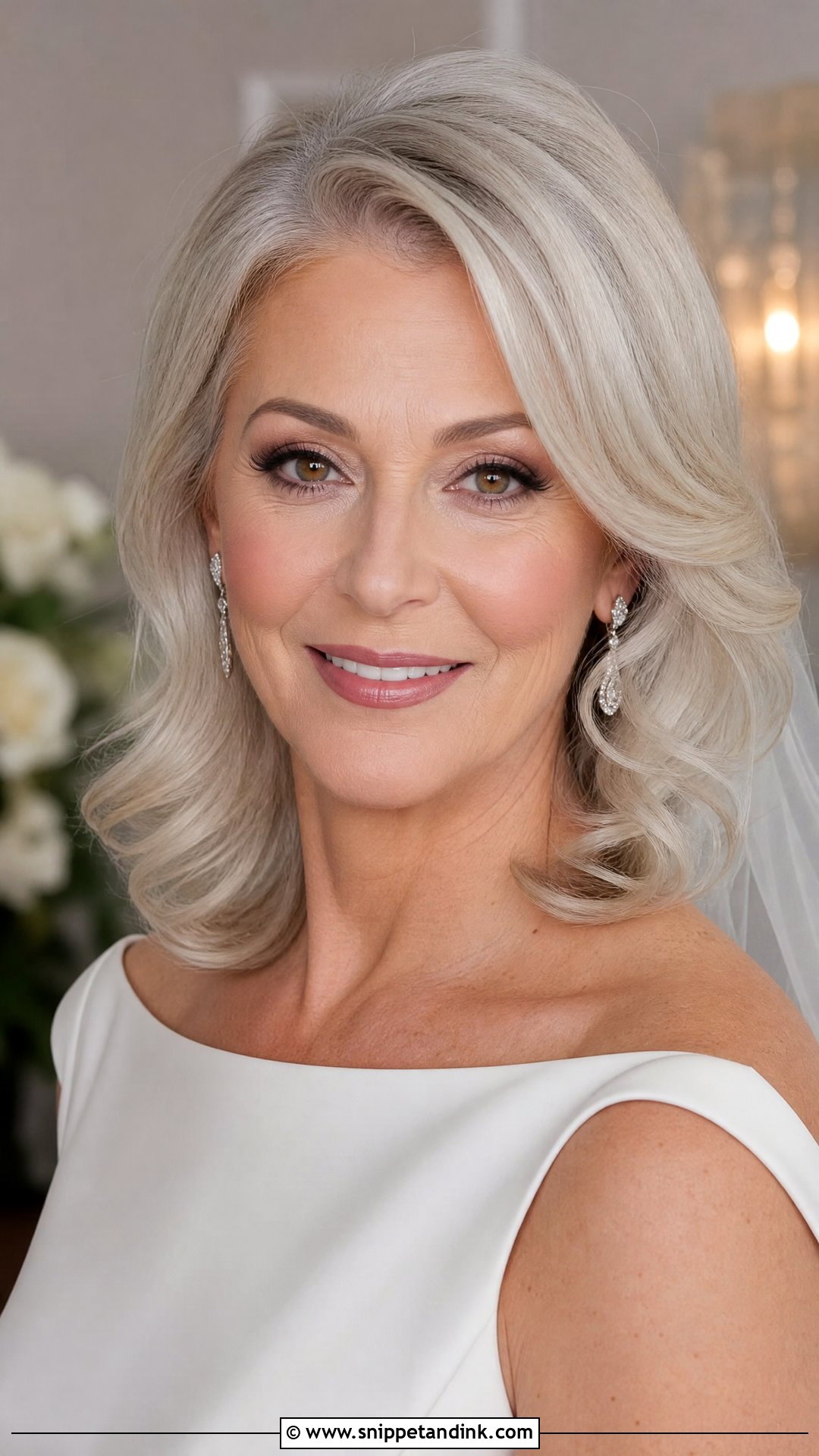
Mature skin needs hydration and thin layers more than anything else. I prep with a hydrating serum and moisturizer, then use thin layers of foundation, building coverage only where needed. Cream blush placed slightly higher on the cheeks lifts the face. Satin or matte shadows in taupe, brown, rose or plum work better than chunky glitter, which can highlight texture. Soft liner close to the lashes and individual lashes or lengthening mascara define the eyes without closing them. Line the lips and choose a creamy rose, mauve, berry or nude.
A Plan for Tears, Kisses and Long Dinners
Most makeup that fails on a wedding day fails in three places: under the eyes when you cry, on the lips after eating and kissing, and in the T-zone as the room warms up. I plan for each one.
For tears, I use a waterproof or tubing mascara on the lower lashes and keep the lower lash line light, so if anything smudges, it can be fixed with a cotton swab. Lash glue that’s set fully holds through crying.
For lips, I line and fill the whole lip with a liner first, then add the lipstick, and blot after meals and drinks. A long-wear formula helps, but it can feel drying over many hours, so a balm on top later in the evening is fine.
Give your maid of honor or a close friend a small pouch with your lipstick and liner, blotting papers, cotton swabs and a small powder. That’s enough to keep you photo-ready through the evening.
Your Face, Six Hours Into the Reception
The makeup that works best is the one that still looks right late in the evening, not just in the first portrait. Your skin type, the season, your dress and how you usually wear makeup matter more than any trend. A natural bride might suit dewy skin and a rosy lip, while someone who loves glam might feel most like herself with sculpted cheeks and full lashes. Test your look at a trial, take photos in daylight and with flash, and wear it for several hours. Pack lipstick, blotting papers and a few cotton swabs, and you’ll be ready for the most photographed day of your life.
You'll Like These Ideas:


Leave a Reply