
A wedding asks more of your makeup than almost any other day out. It has to sit under phone flash and daylight, survive hugs, a cry during the vows and a long dinner, and still look like your own face at eleven at night. Below are twenty full looks I’d happily do on a guest, a bridesmaid or a mother of the couple, from bare-skin finishes and soft glam to bronze eyes and a proper red lip. What changes between them is where the attention sits. Pick one feature to lead, keep the rest quieter, and the face reads finished instead of busy.
Reading the Invitation Before You Pick a Face
I start every guest or bridesmaid face with three questions: what time is the ceremony, where is it, and what are you wearing? The answers decide more than any trend does.
- Daylight ceremonies. Outdoor sun is unforgiving to heavy contour and glitter. Lean toward the natural, dewy, peach and blush-led looks below, and keep powder to a minimum.
- Evening and black tie. Low light swallows soft makeup. This is where smokey eyes, gold lids, a sharp wing and a red lip earn their place.
- Your role. Bridesmaids stand next to the bride in most photos, so stay a notch softer than her and agree on a lip family as a group. Guests have more freedom, but the couple should still be the brightest faces in the album.
- Your outfit. Photograph the dress fabric in daylight. Rust, gold and peach fabrics pair well with bronze and peach makeup; lavender, navy and silver sit better beside mauve, pink and cool brown.
Undertone Without Overthinking It
Look at the veins on your inner wrist in daylight. Mostly blue or purple suggests a cool undertone, greenish suggests warm, and if you honestly can’t tell, you’re probably neutral and can wear most of these looks. It isn’t a perfect test, but it’s enough to avoid the two mismatches I fix most often: a too-orange bronzer on cool skin and an icy pink lip on warm skin.
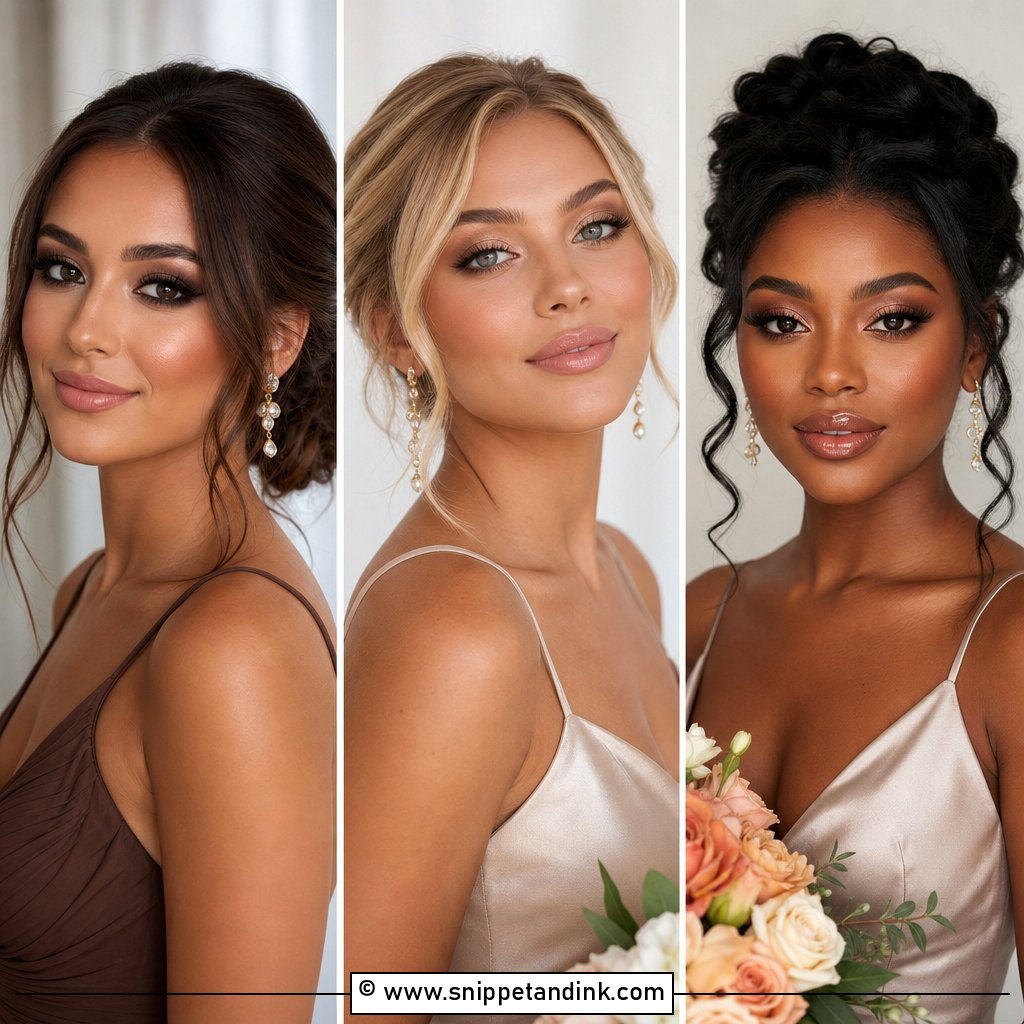
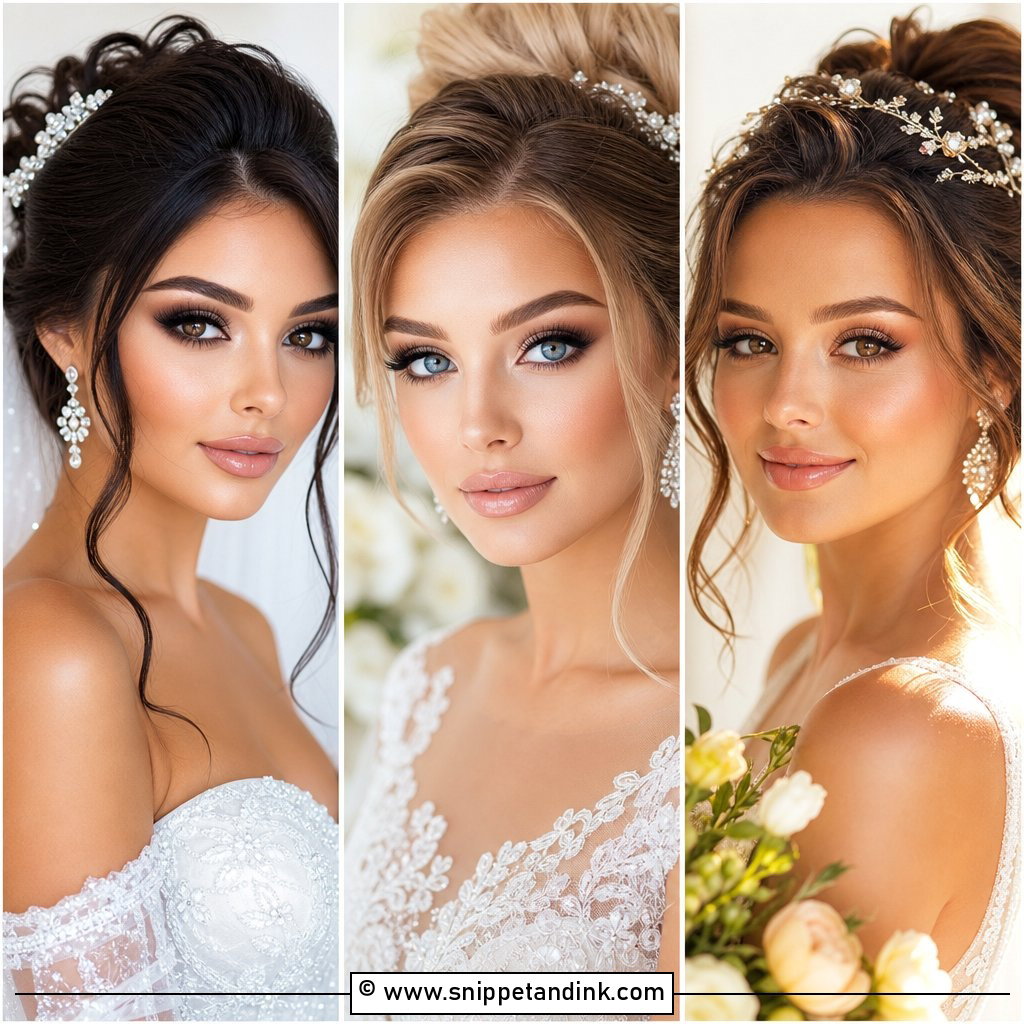
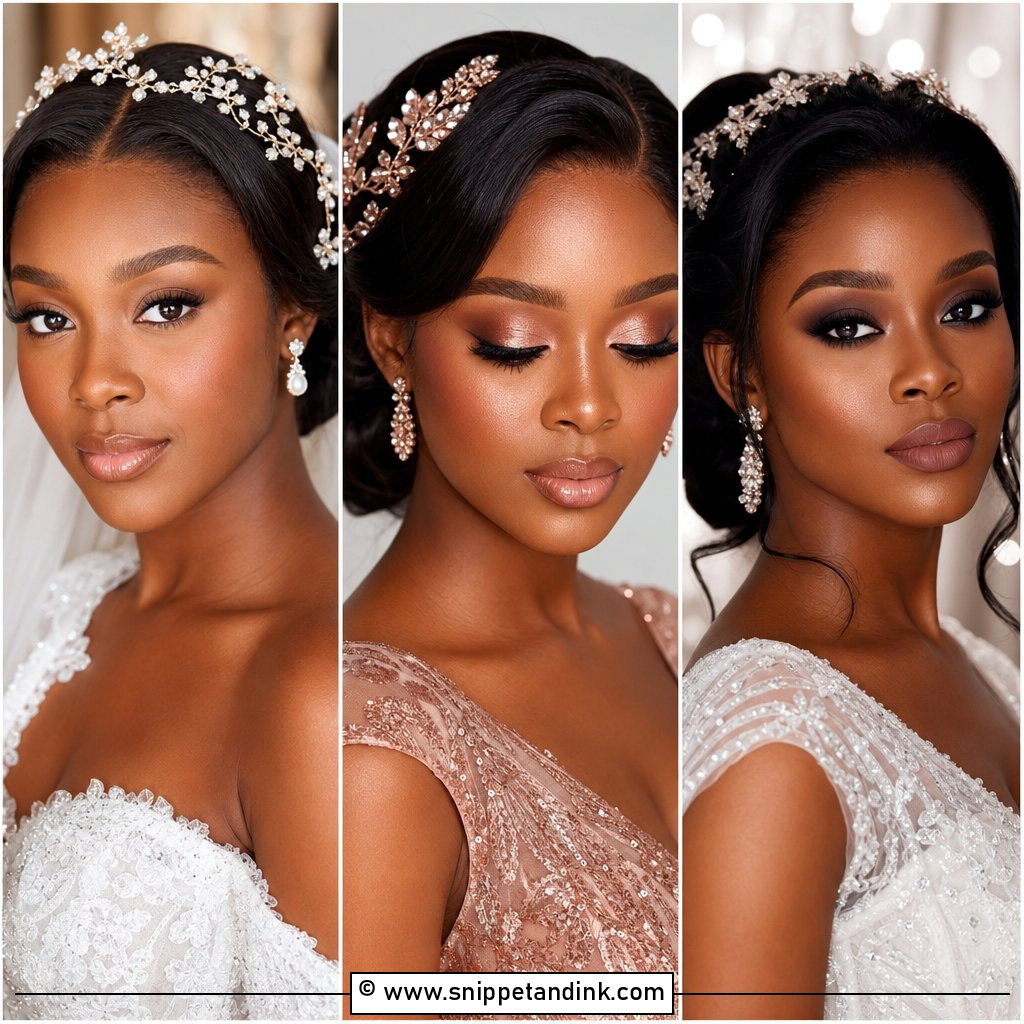
1. Soft Glam Wedding Makeup
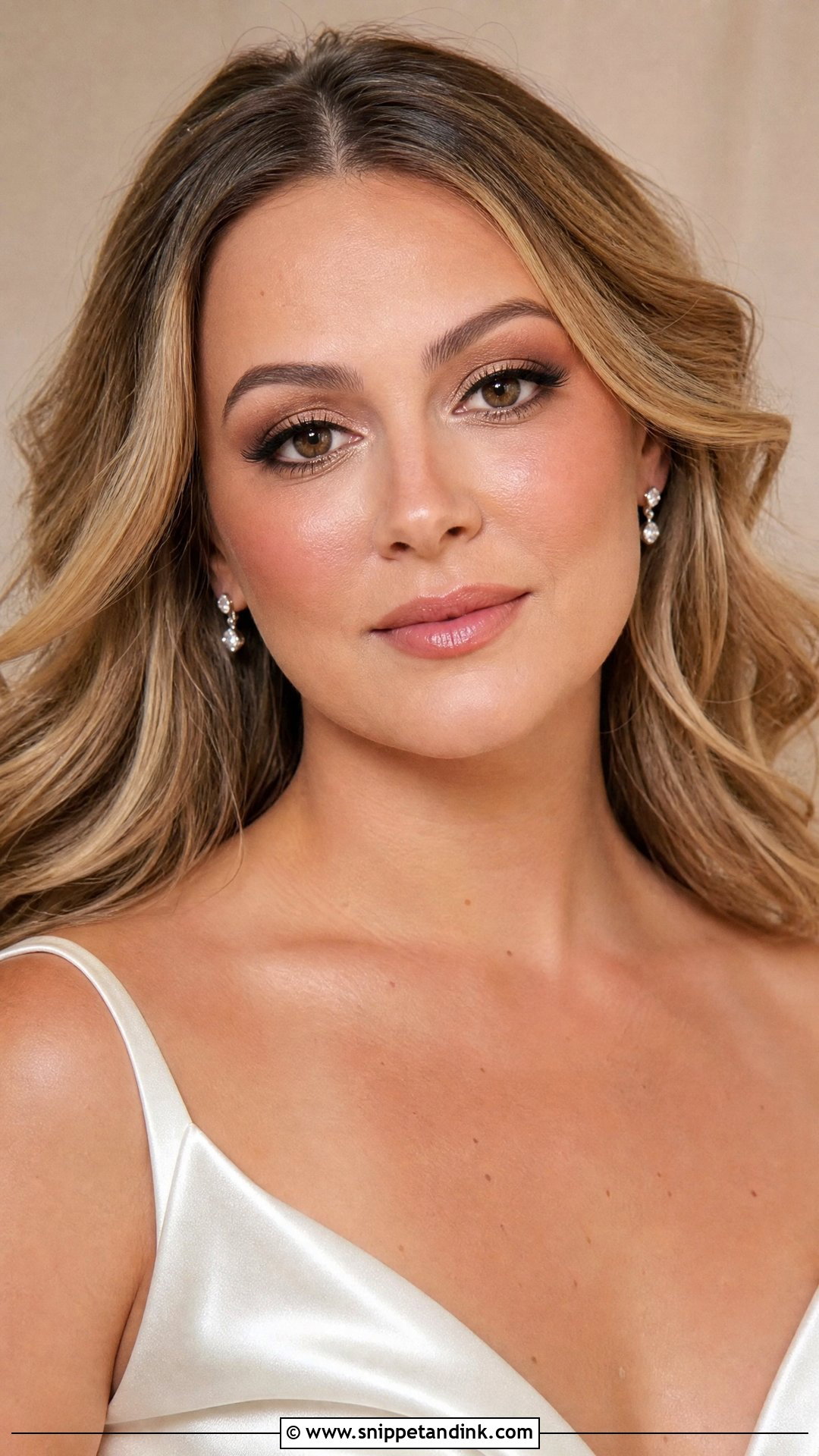
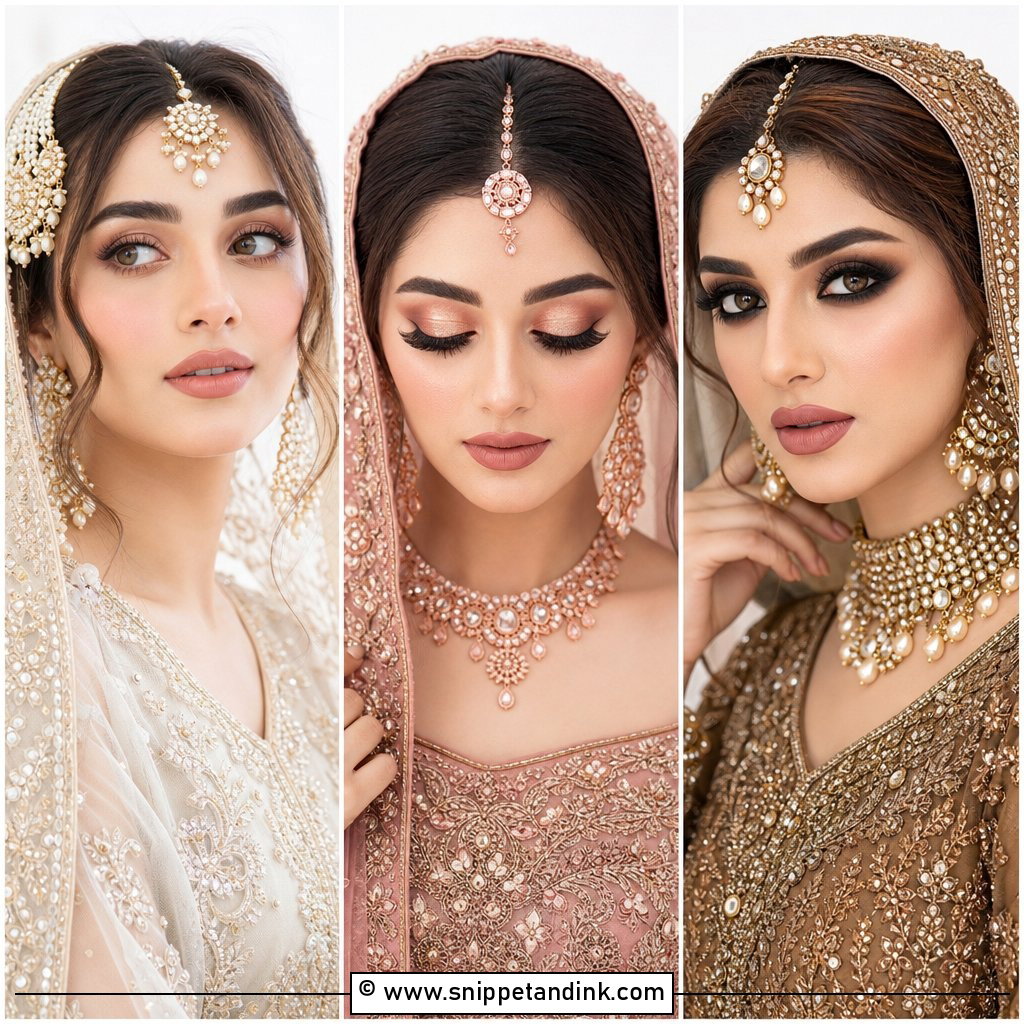
Soft glam is the look I reach for most when someone asks for definition without weight. I start with a satin base that evens tone but lets real skin texture show, because a full matte mask looks flat once the room warms up. Soft brown goes through the crease, champagne shimmer sits only on the center of the lid, and a thin brown or black liner hugs the lash line. Fluffy lashes open the eye for photos, rose or peach blush keeps warmth in the cheeks, and a pink-nude satin lip finishes it. The one thing I watch is the crease: on hooded lids I place the brown slightly above the natural fold so it still shows when the eyes are open.
2. Natural Wedding Makeup
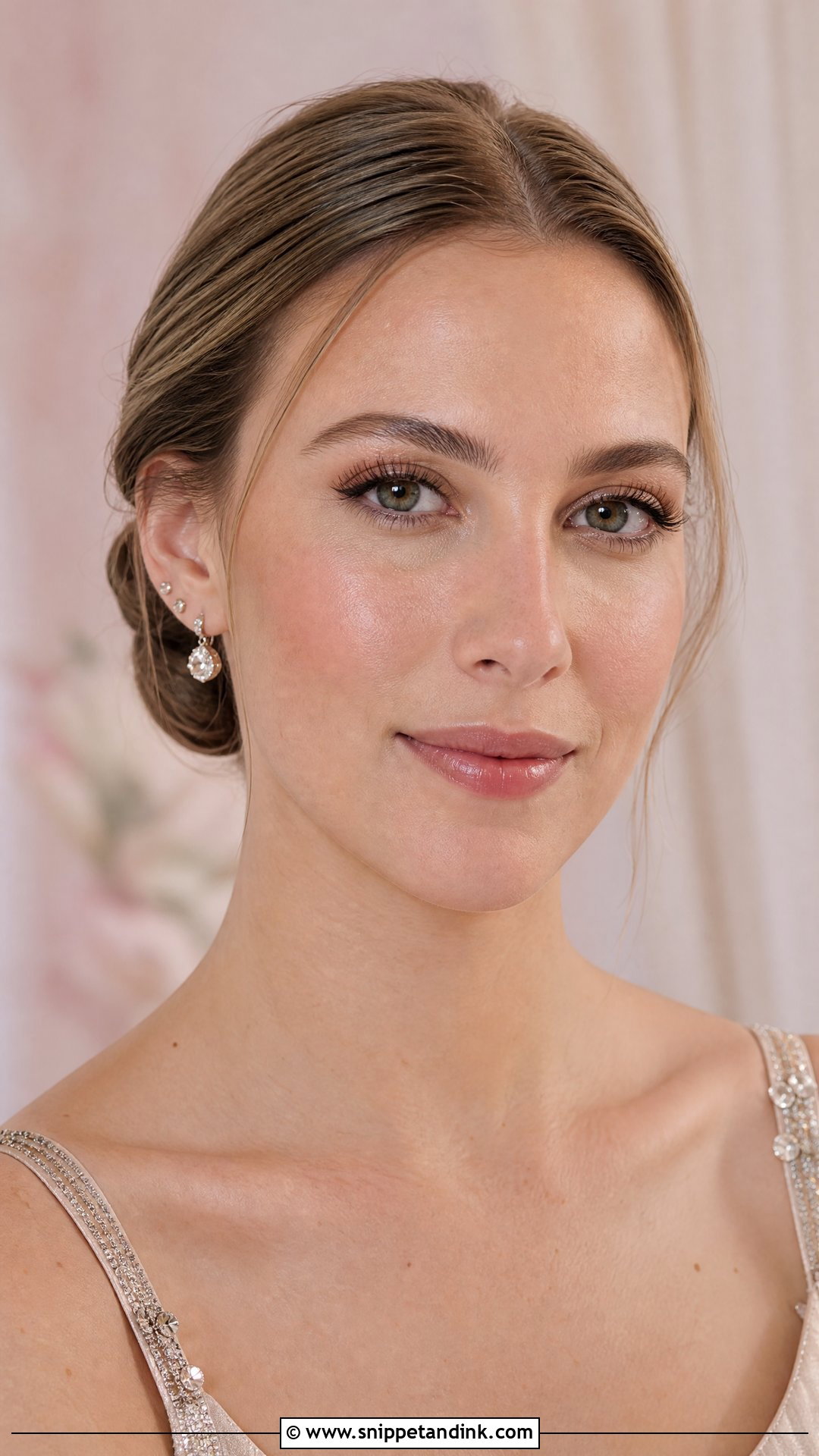
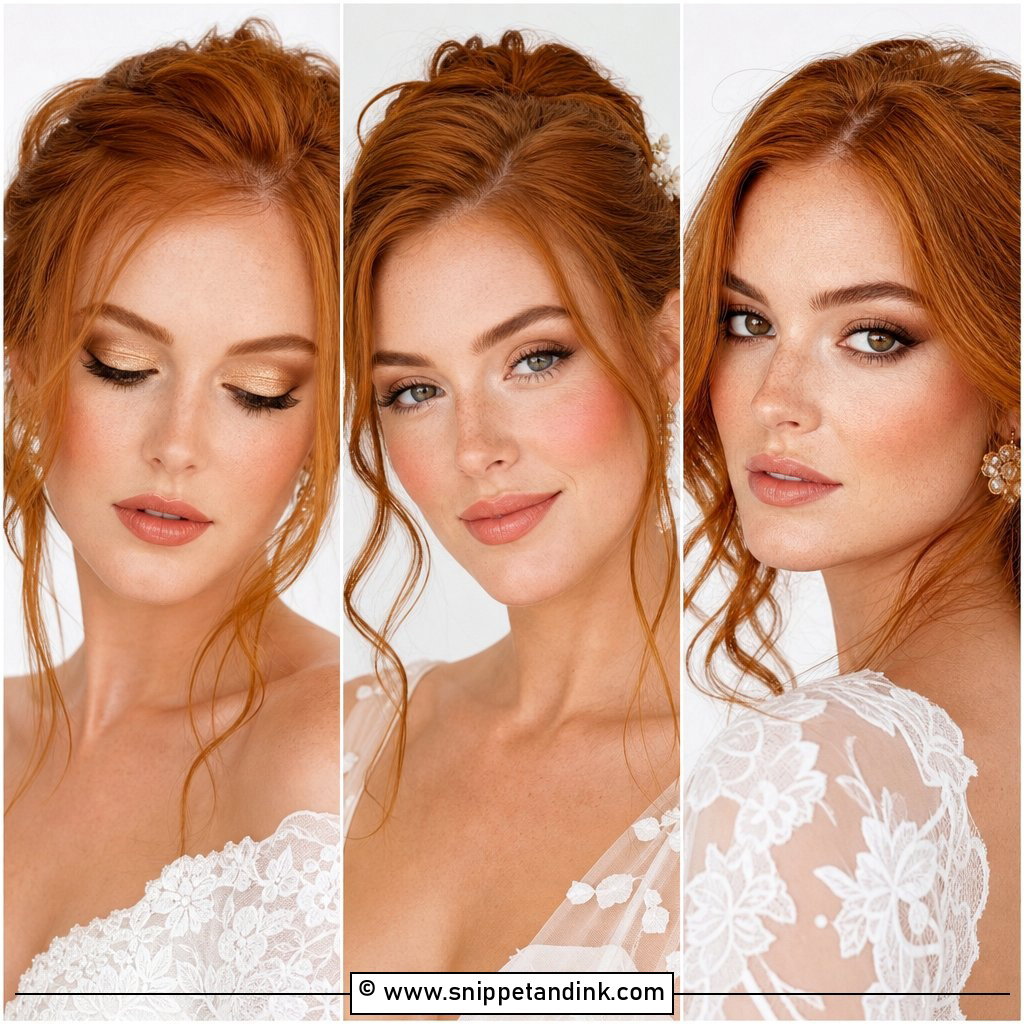
Natural doesn’t mean bare. What I’m after is skin that looks calm and hydrated, with nothing that announces itself. A skin tint or light foundation goes on first, then concealer only where it’s needed: under the eyes, around the nose, on a blemish. Taupe shadow gives shape, brown mascara and brushed-up brows do the rest, and a little liner at the outer lashes stops the eyes disappearing in group photos. Cream blush chosen by undertone and a tinted balm or sheer nude lip finish it. Daytime and outdoor ceremonies suit it best. In a dim reception hall it can read almost invisible on camera, so for evening I add a second coat of mascara and a touch more blush.
3. Dewy Wedding Makeup
Dewy skin is about controlled shine, and most people get it wrong by glowing everywhere. Hydrating primer and a luminous foundation go on first, then I press powder through the T-zone only, so the cheekbones keep their light while the nose and forehead stay quiet. Eyes stay soft in warm beige or light bronze, with a thin liner and wispy lashes. Cream blush is the real star. Highlighter goes on the cheekbones, inner corners and cupid’s bow, never chunky glitter, and a glossy soft pink lip keeps it fresh. I’d skip this on very oily skin in summer heat; by the speeches the dew has turned to slip.
4. Matte Wedding Makeup
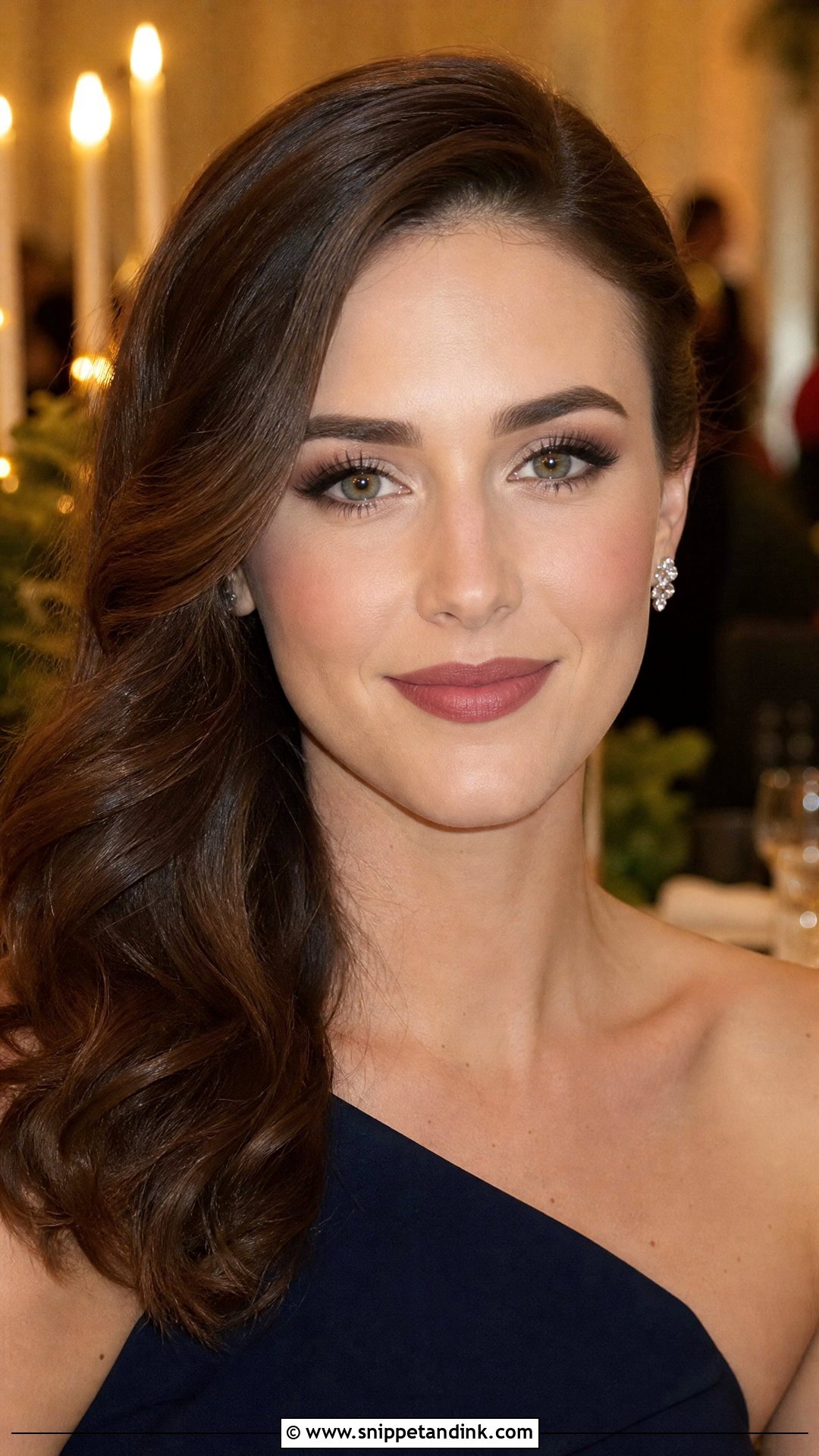
If you run warm or have oily skin, matte is the finish that will still be there at the last dance. The risk is flatness, so I build dimension back with soft contour under the cheekbones and a matte rose blush. A velvet-matte foundation pressed on in thin layers, rather than one thick coat, avoids that dried-out look around the mouth. Neutral brown shadow with a deeper shade near the lashes, then a clean wing or smudged liner, and shimmer only in the inner corner if anywhere. A satin-matte lip in nude or berry finishes it. On dry skin I prep with a richer moisturizer and let it sink in for ten minutes first, or matte foundation catches on every flake.
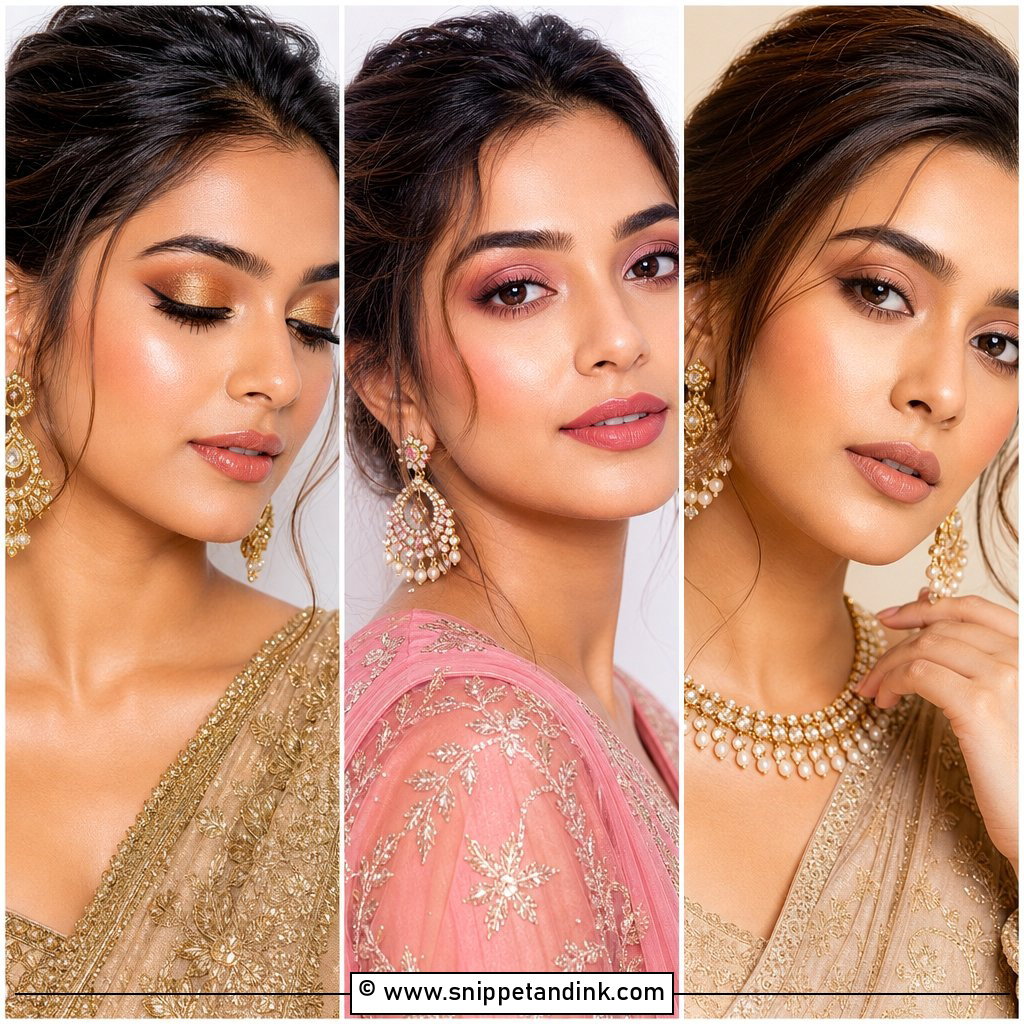
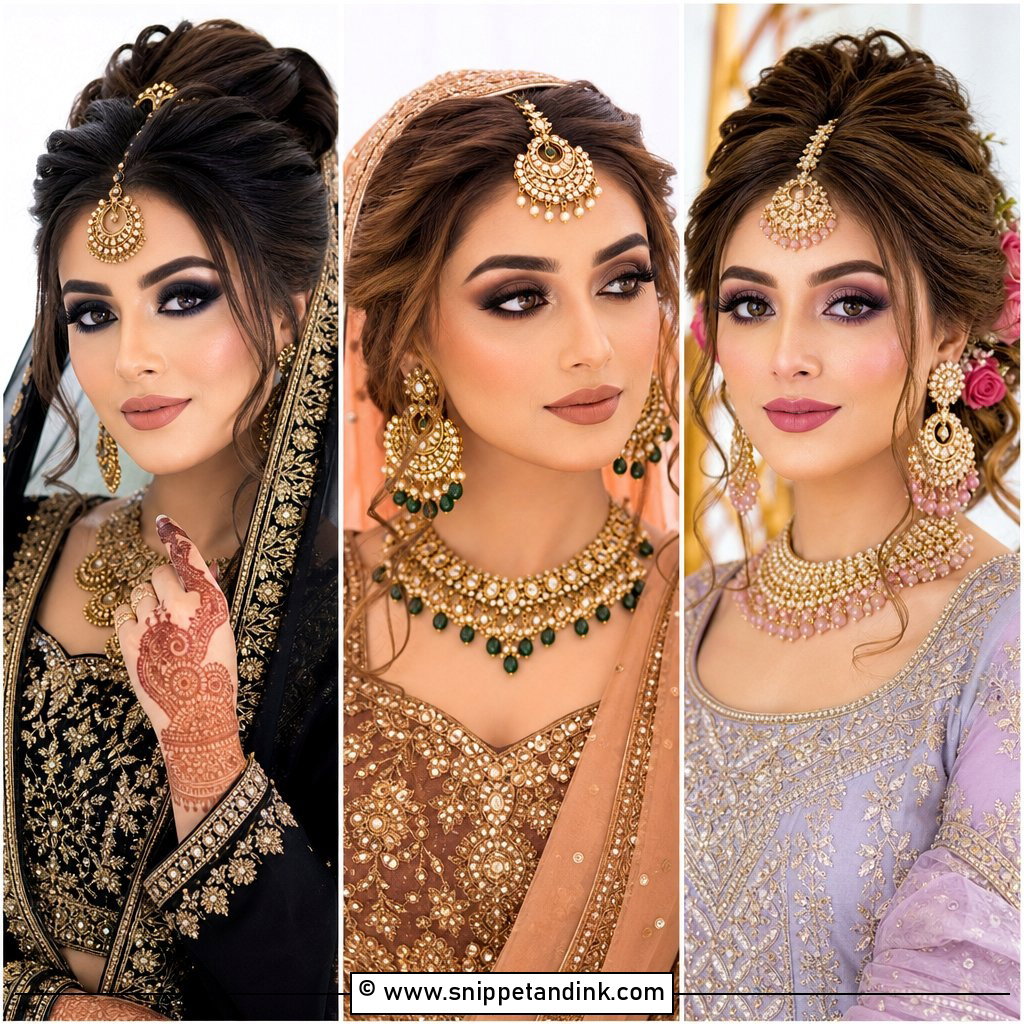
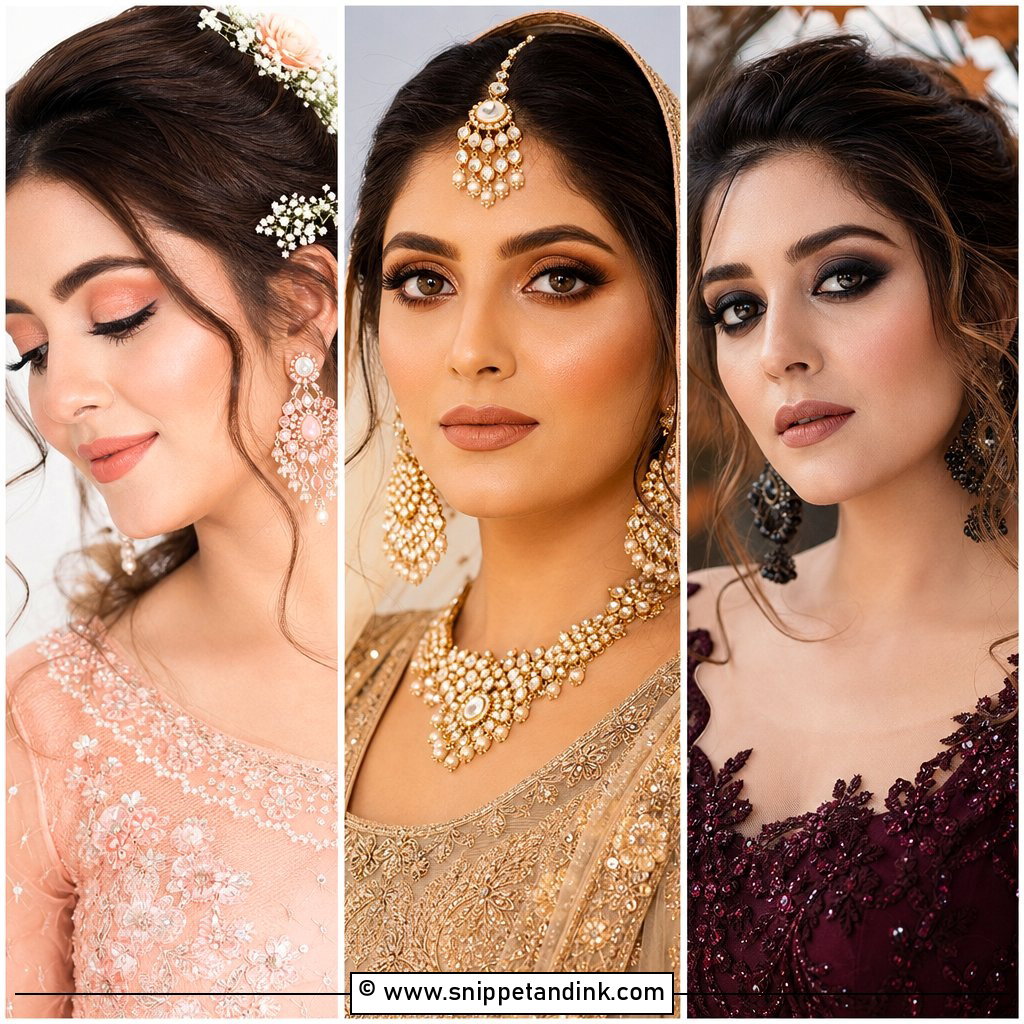
5. Bronze Wedding Makeup
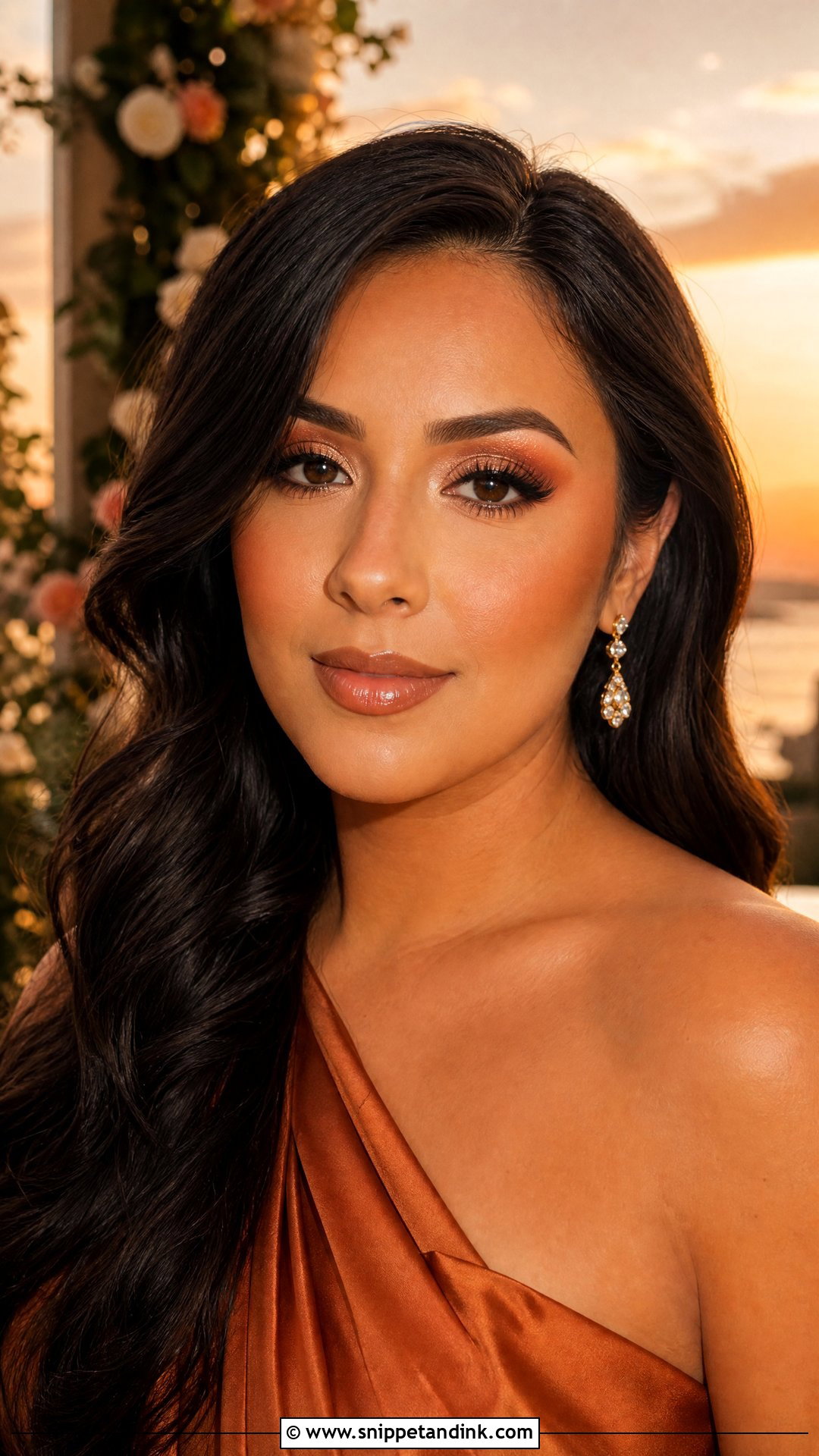
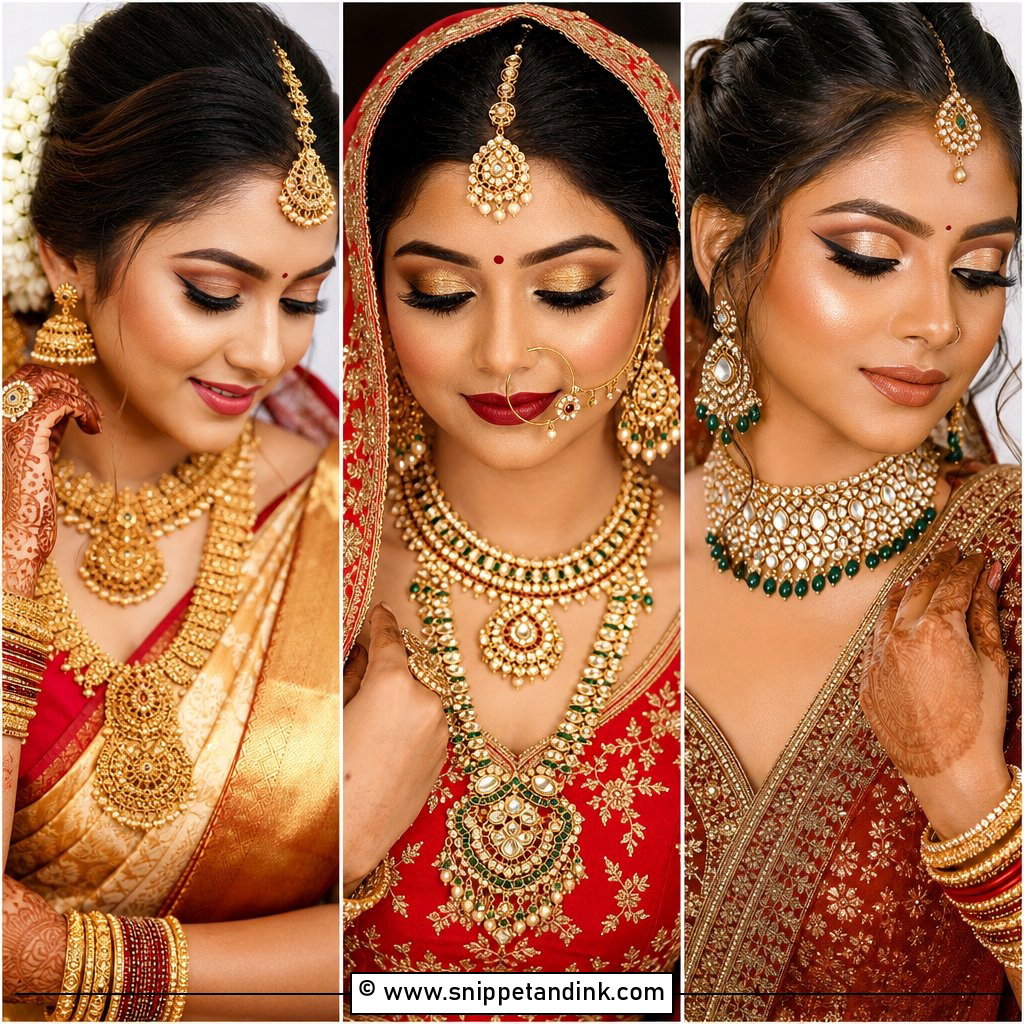
Bronze is the most forgiving warm look I know, and it sits well with ivory, sage, rust and most jewel-tone dresses. I keep the base satin and place warm bronzer where the sun would actually hit: forehead edges, cheekbones, along the jaw. On the eyes, caramel through the crease, bronze on the lid and a touch of gold in the center to catch light, with dark liner and separated lashes. Terracotta blush stops the face going muddy, and a caramel gloss suits the lips. The trap is a bronzer that’s too orange for cool skin. On a cooler undertone I pick a taupe-leaning shade so it reads as shadow, not fake tan.
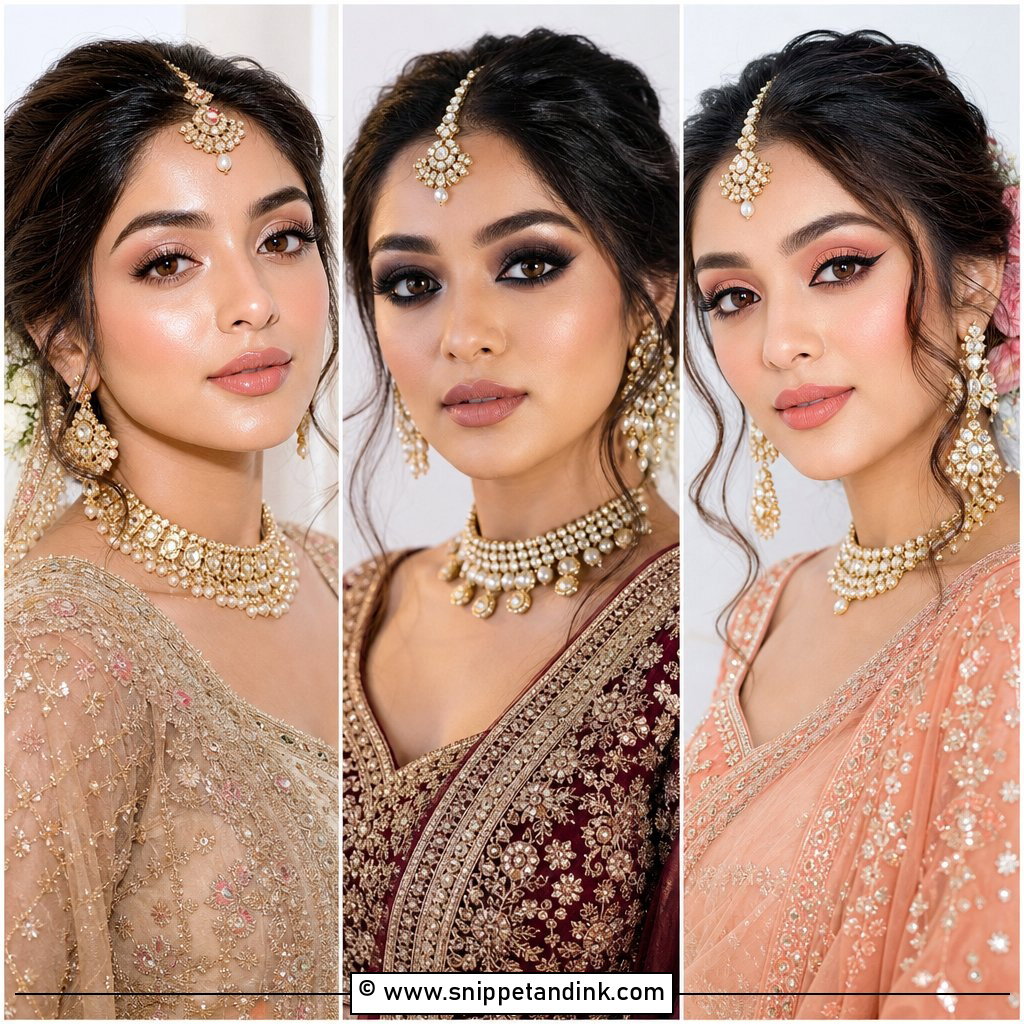
6. Pink Wedding Makeup
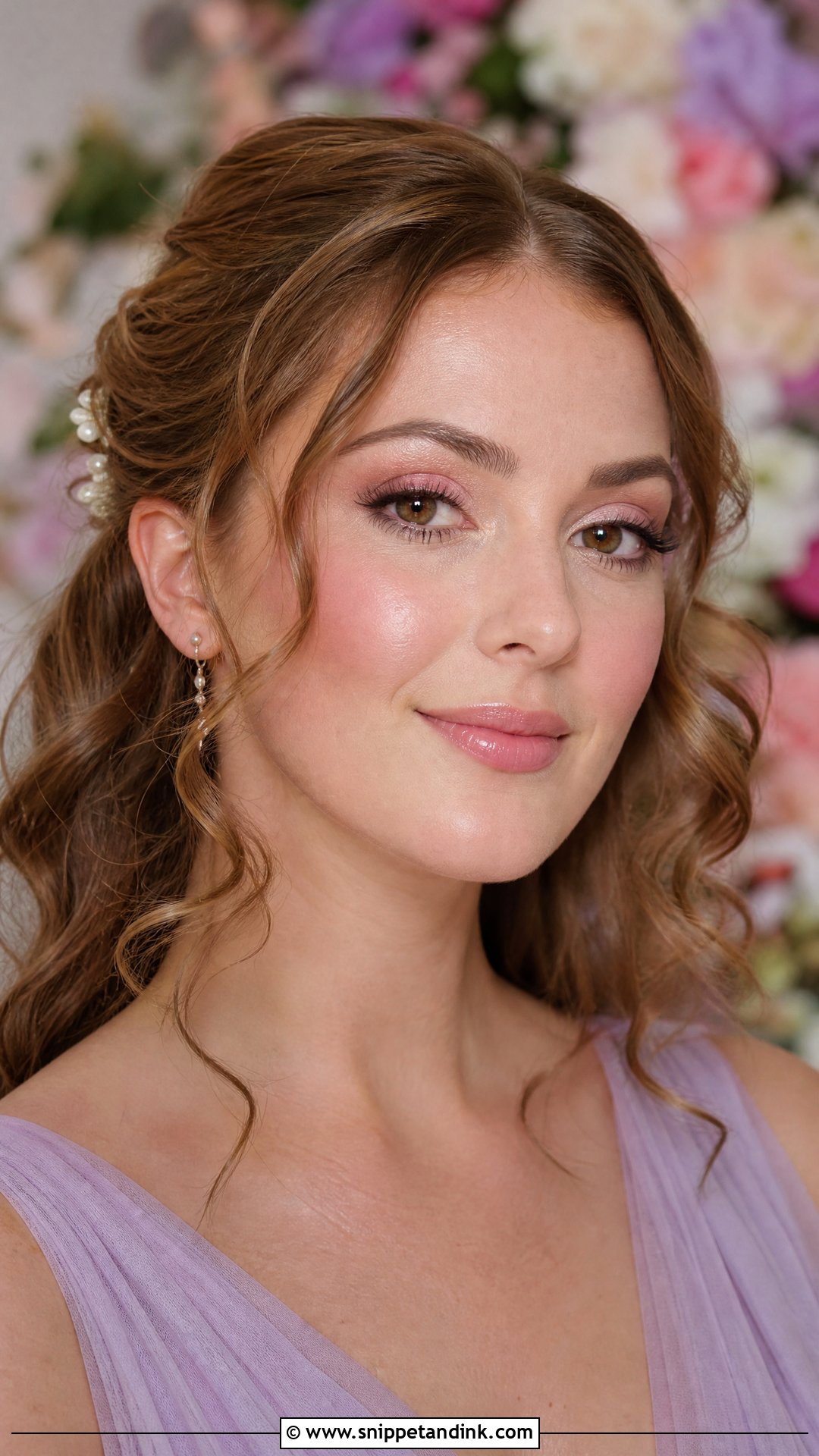
Pink works when it’s layered, not when one bright shade goes everywhere. I put a pale rose on the lid, a dustier mauve in the crease, and then ground the whole thing with a soft brown liner. Without that brown, pink eyes can look tired or slightly irritated, especially on fair skin with visible redness. The complexion stays natural, and the blush goes high on the cheekbone and blends up toward the temple so it looks like a real flush. A rose satin lipstick ties it together. It’s sweet without being childish, which makes it a good fit for a spring bridesmaid line.
7. Peach Wedding Makeup
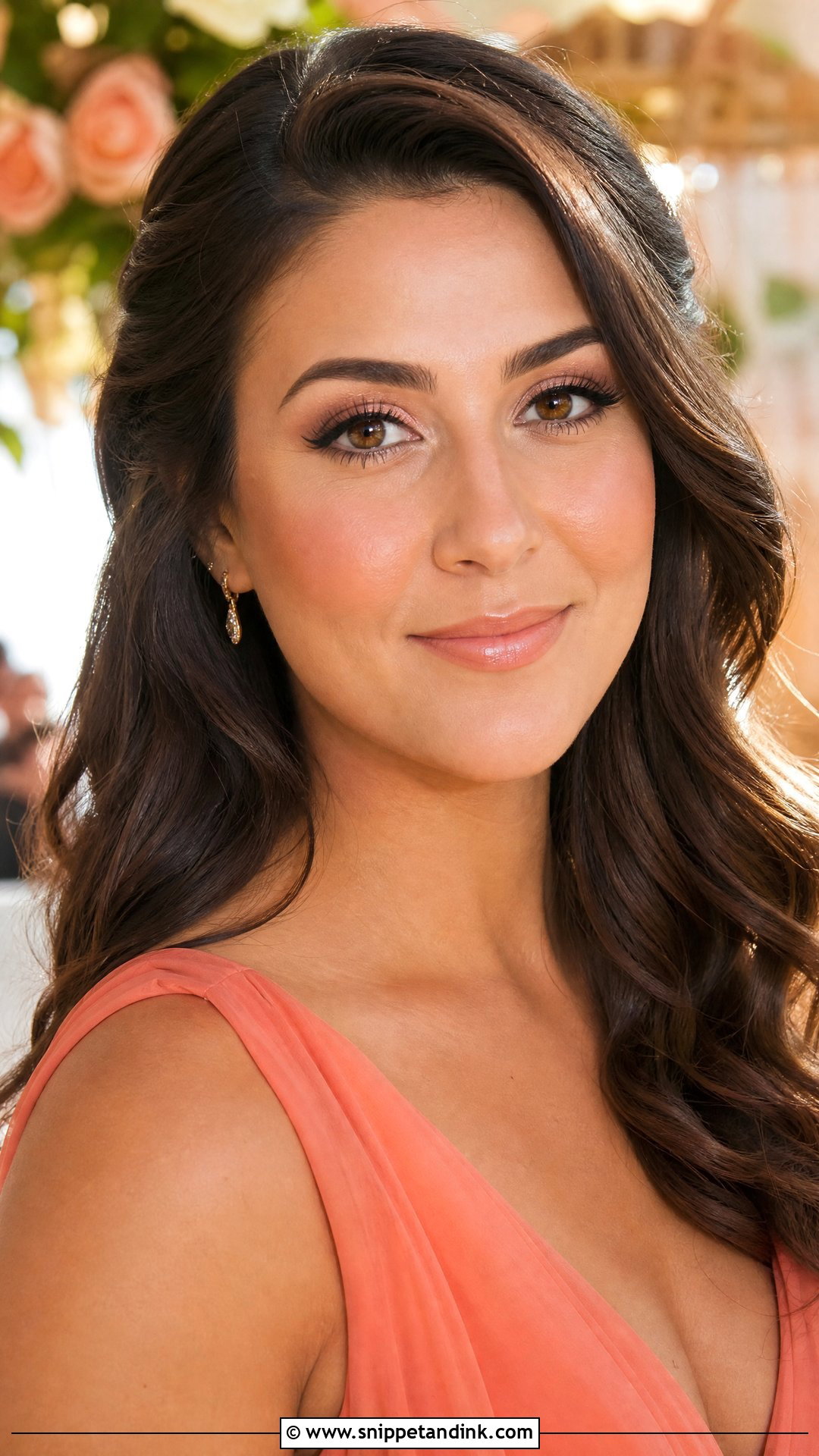
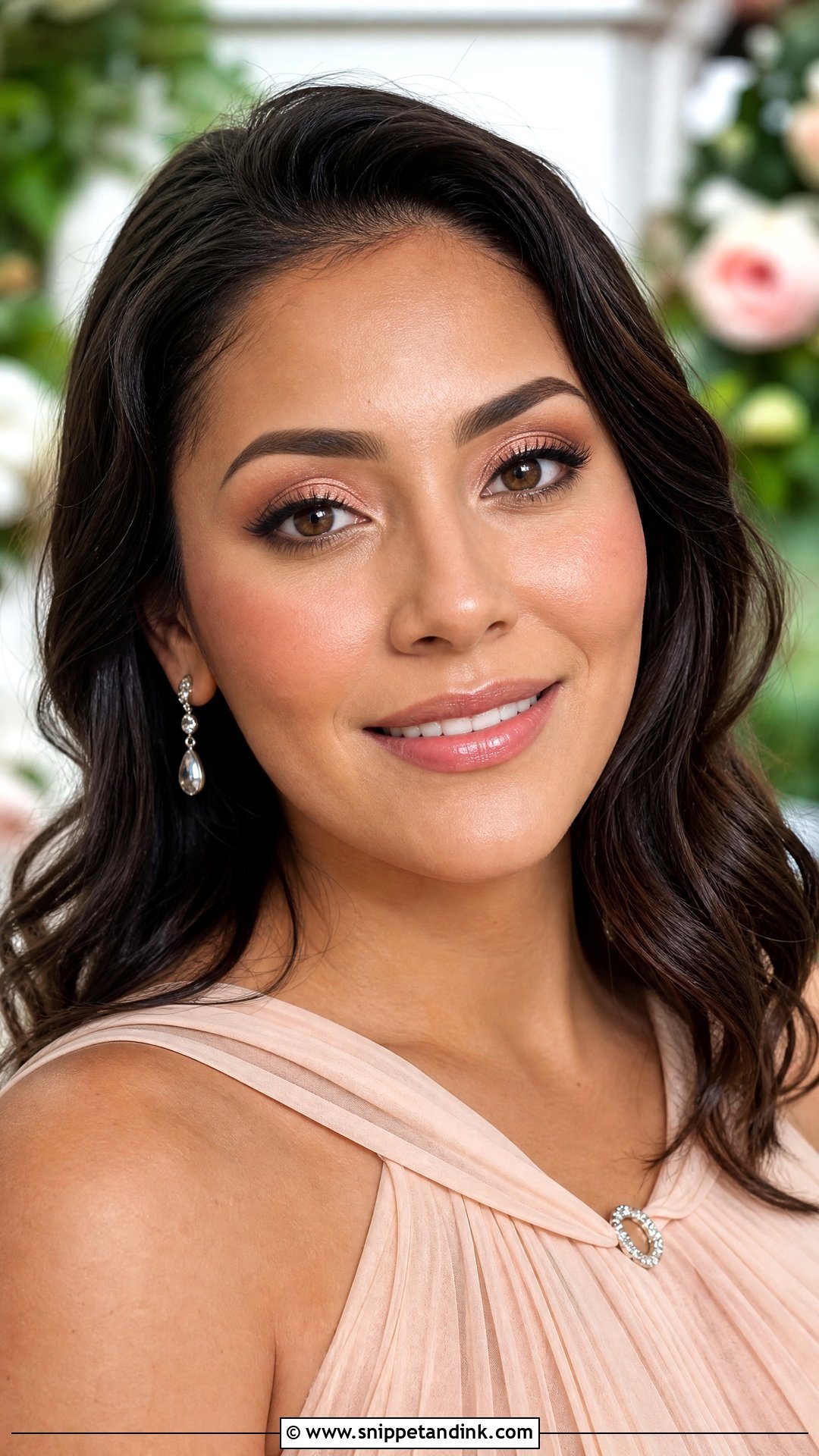
Peach wedding makeup wakes up a tired face faster than almost any other color family. I use light-to-medium coverage with a bit of glow and press peach cream blush onto the apples of the cheeks. The eyes get peach, champagne and soft brown blended together, with a brown wing instead of black so the look stays fresh. Fluttery lashes, softly filled brows, then a peachy nude lipstick or coral-tinted balm. On very deep skin, a pastel peach can turn chalky, so I switch to a richer apricot blush that actually shows up.
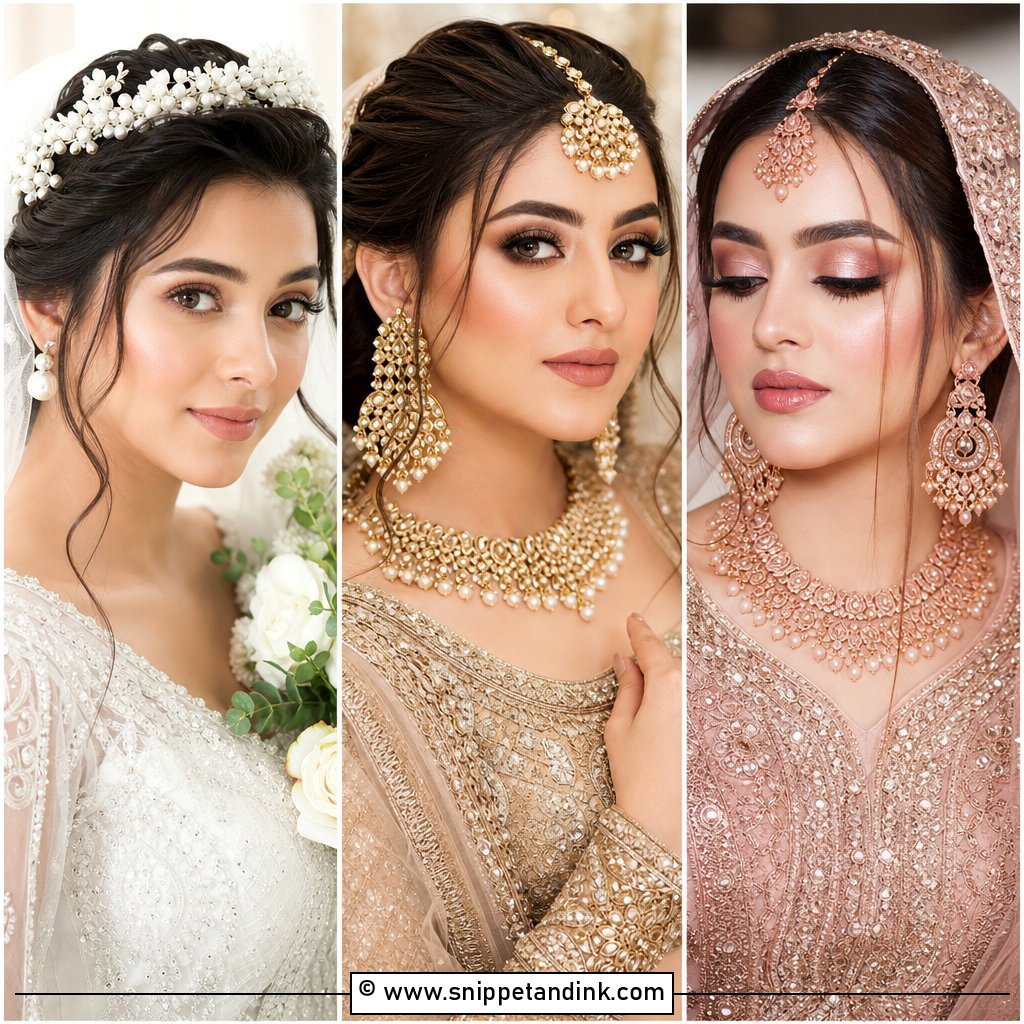
8. Rose Gold Wedding Makeup
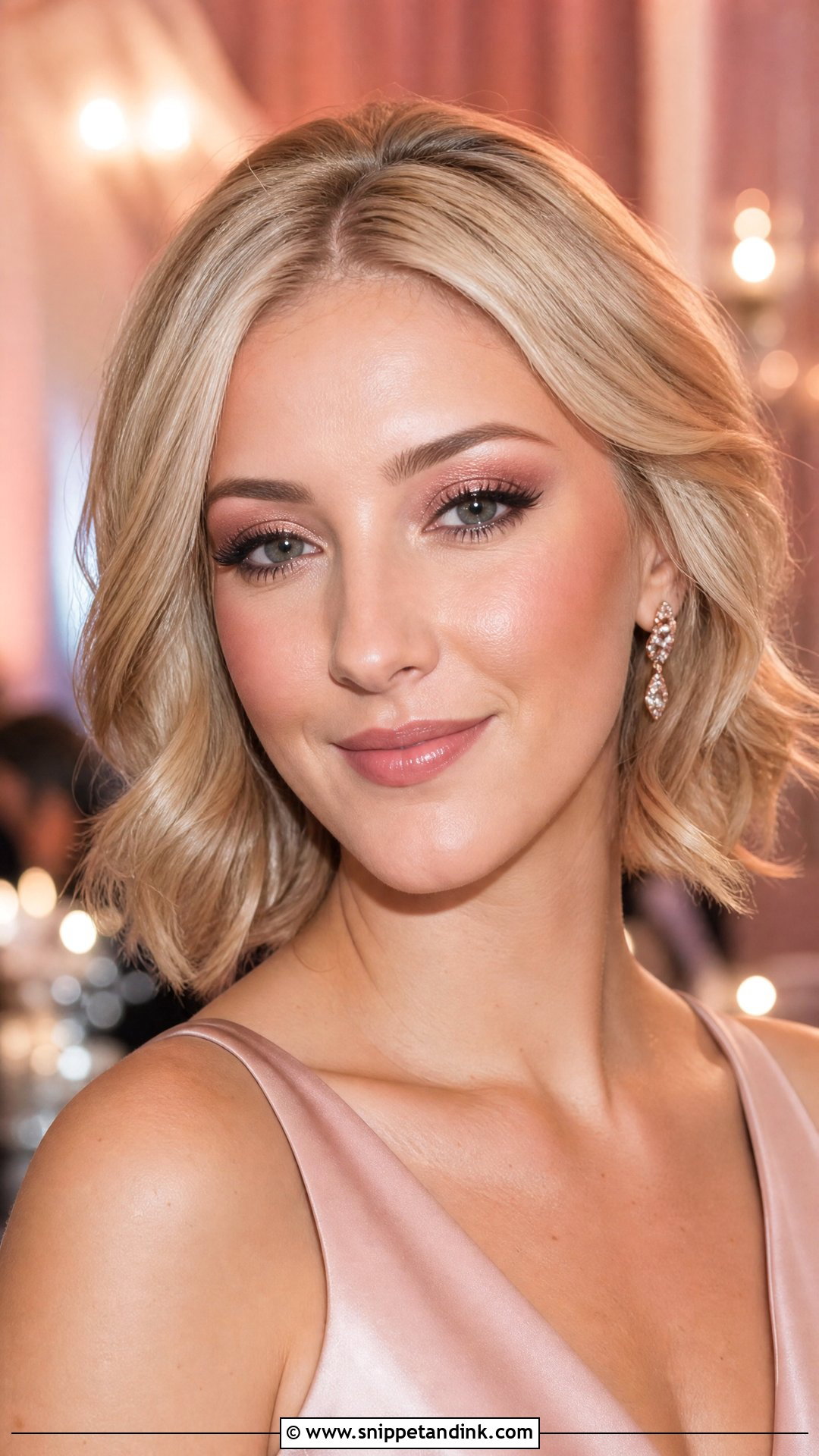
Rose gold shimmer needs a calm face around it to look grown-up. I press the metallic onto the lid with a fingertip, which gives far more shine than a brush, then blend soft brown into the crease. A thin liner keeps the shape. I choose wispy lashes over heavy strips, because a thick band hides half the shimmer once the eye is open. Skin stays smooth with rosy blush and only a whisper of champagne highlight, and a pink-beige lip supports the eyes. One caution: chunky shimmer on crepey lids settles into lines, so for mothers of the couple I use a finer satin rose gold.
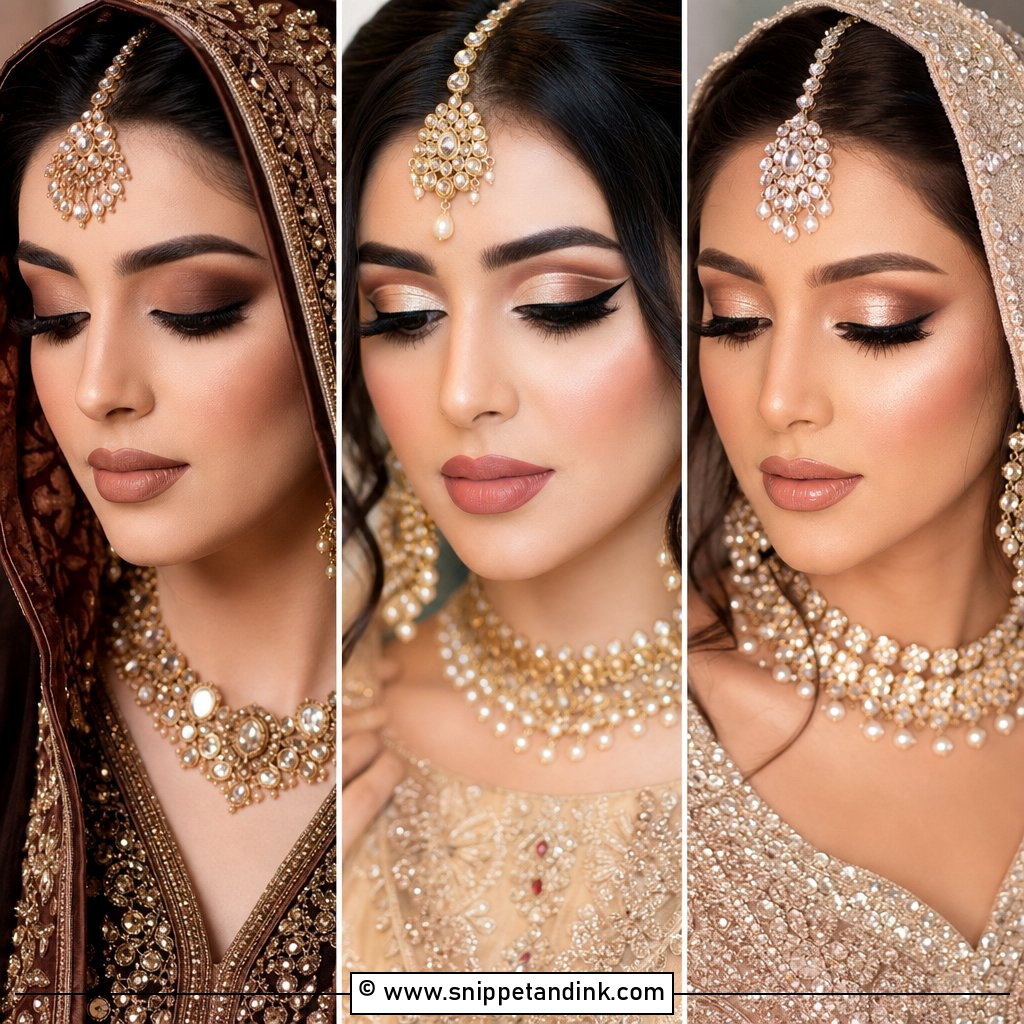
9. Smokey Eye Wedding Makeup
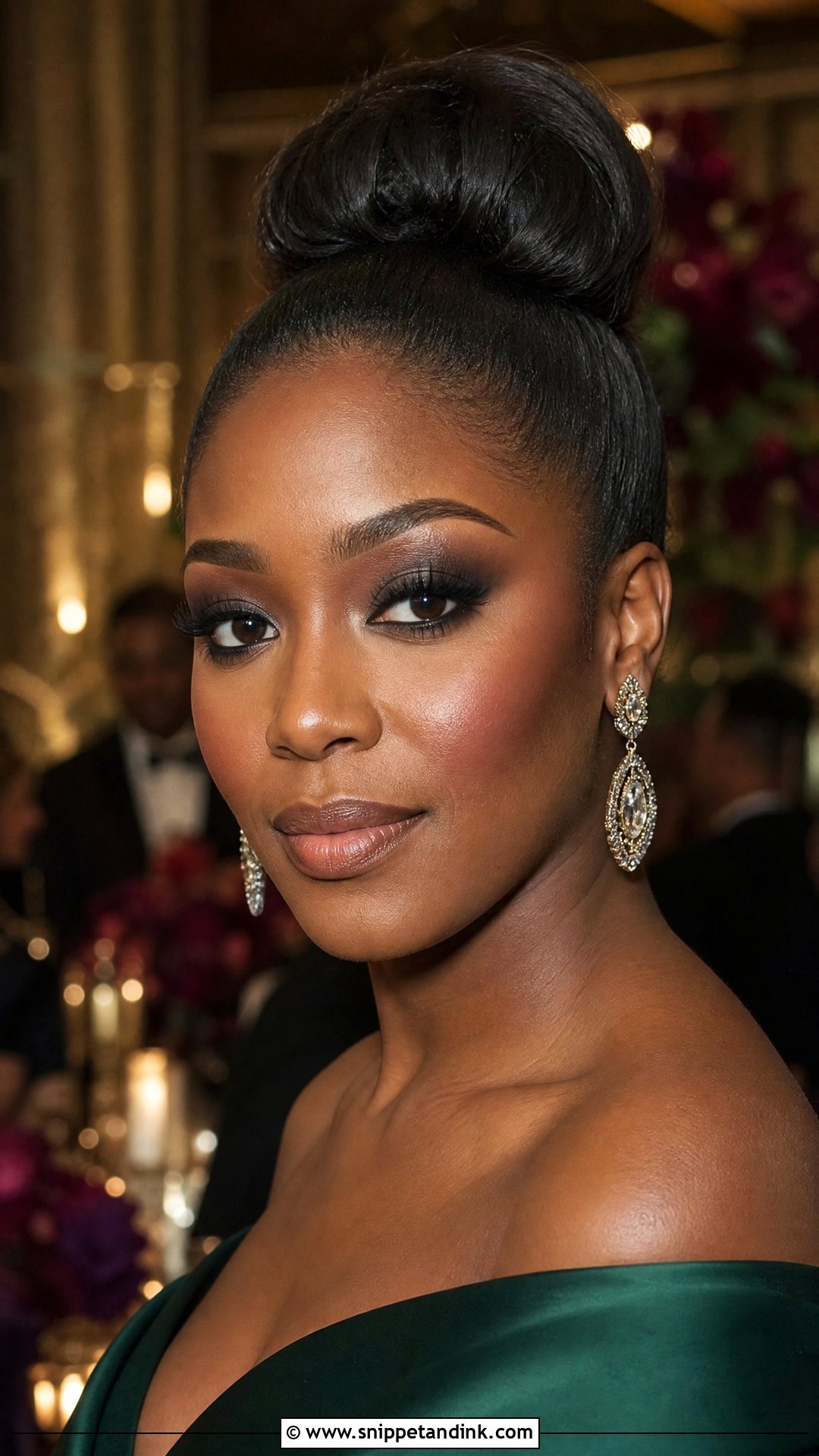
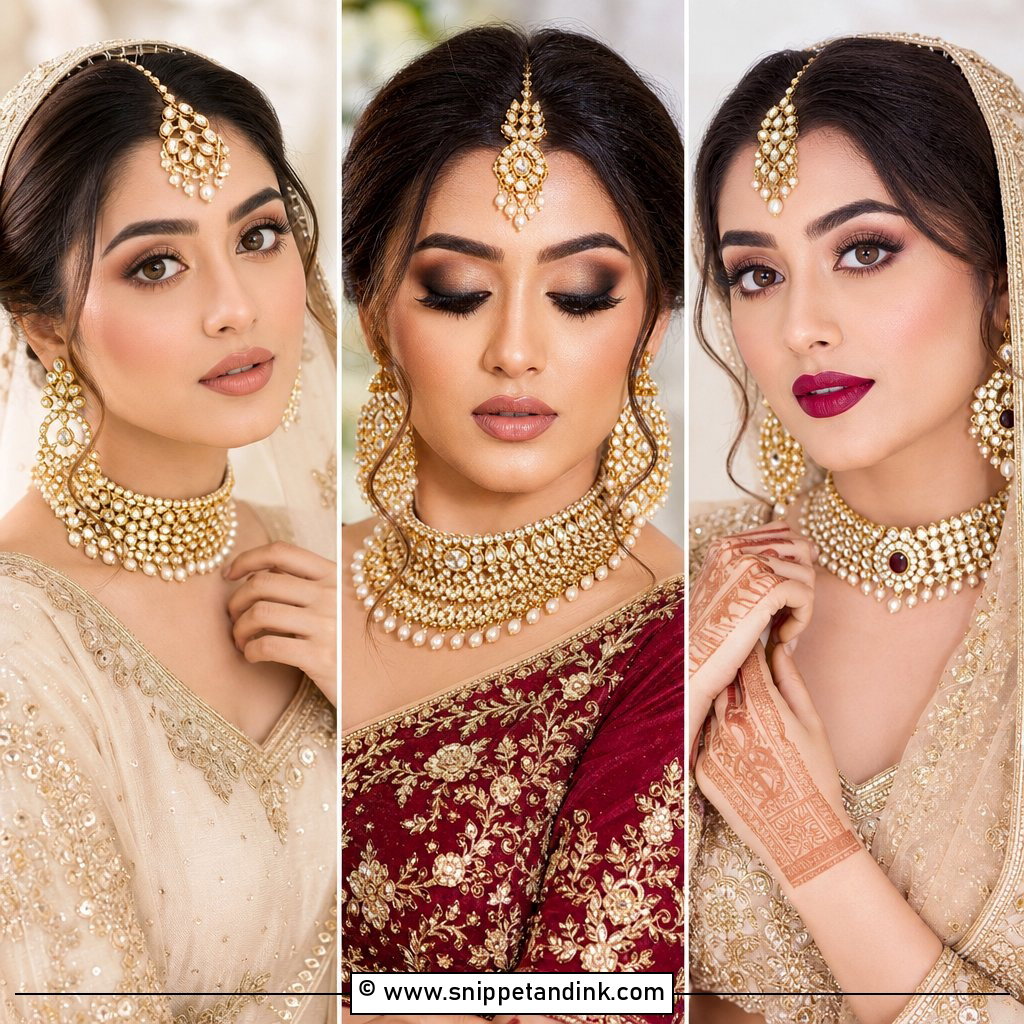
Smokey eye wedding makeup looks elegant when the edges are soft, and that matters more than the color. I rarely go true black at a wedding; espresso, plum or charcoal tends to look richer next to the iris. The darkest shade sits closest to the lashes, a medium transition shade softens upward, and a little shadow smudges along the lower lash line. Before any of it, I do the eyes first or lay a pad of loose powder under them to catch fallout, because dark pigment dropping onto finished concealer is the most common smokey eye disaster. Keep the skin polished, the blush neutral and the lip a nude satin. It’s an evening look. At an outdoor noon ceremony it can look heavy.
10. Brown Smokey Wedding Makeup
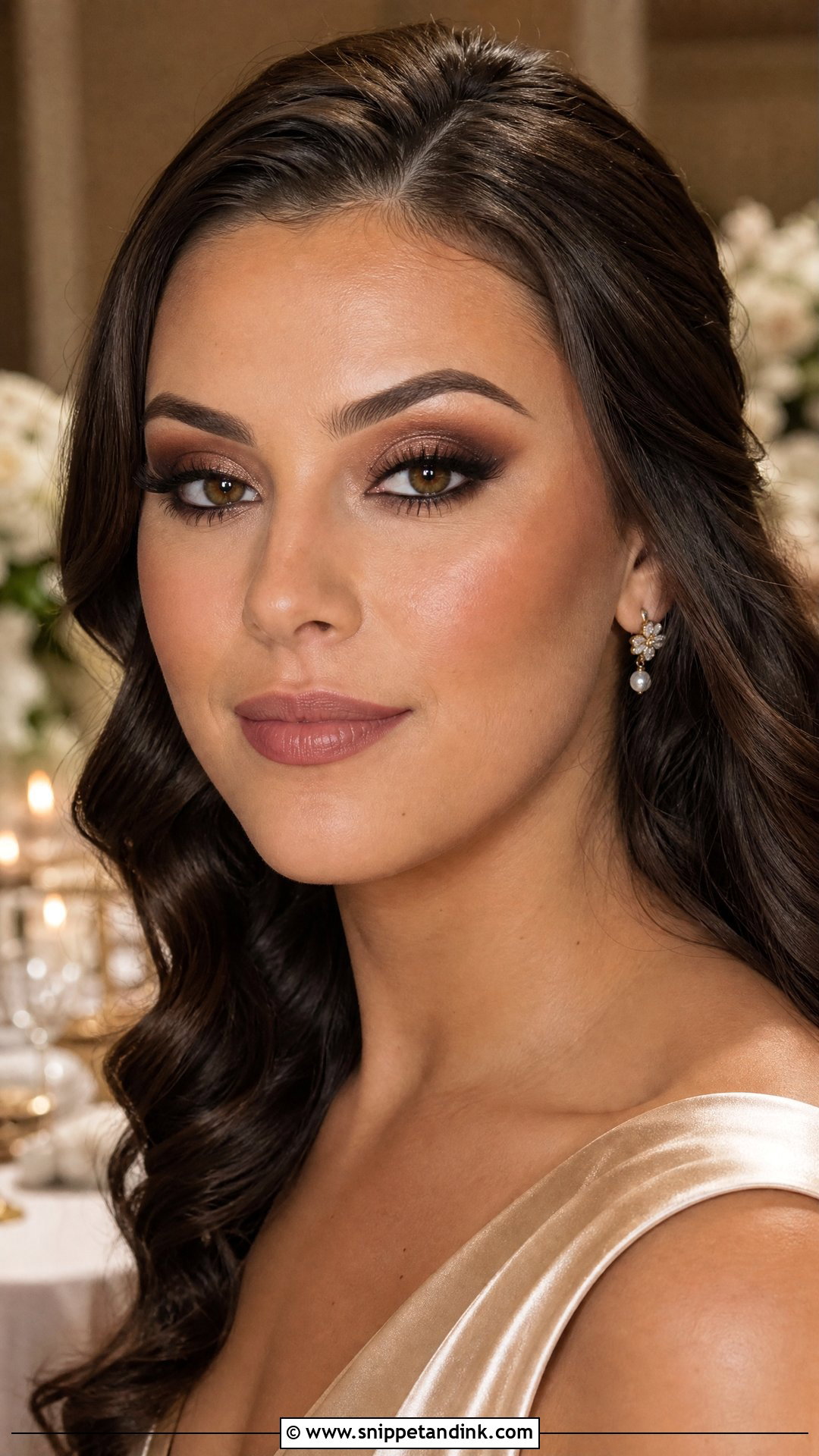
Brown smokey wedding makeup gives depth without the drama of black, and it holds up well in photos because it defines the eye without shrinking it. I pick chocolate for warm undertones and a cooler taupe for cool ones. The shadow blends outward in a lifted shape rather than straight across, which keeps the eye from looking droopy late in the day. Dark brown liner goes tight to the lashes, with a touch of bronze on the lid. Smooth skin, warm bronzer and a muted rose lip finish it. It sits right between natural and full glam.
11. Classic Red Lip Wedding Makeup
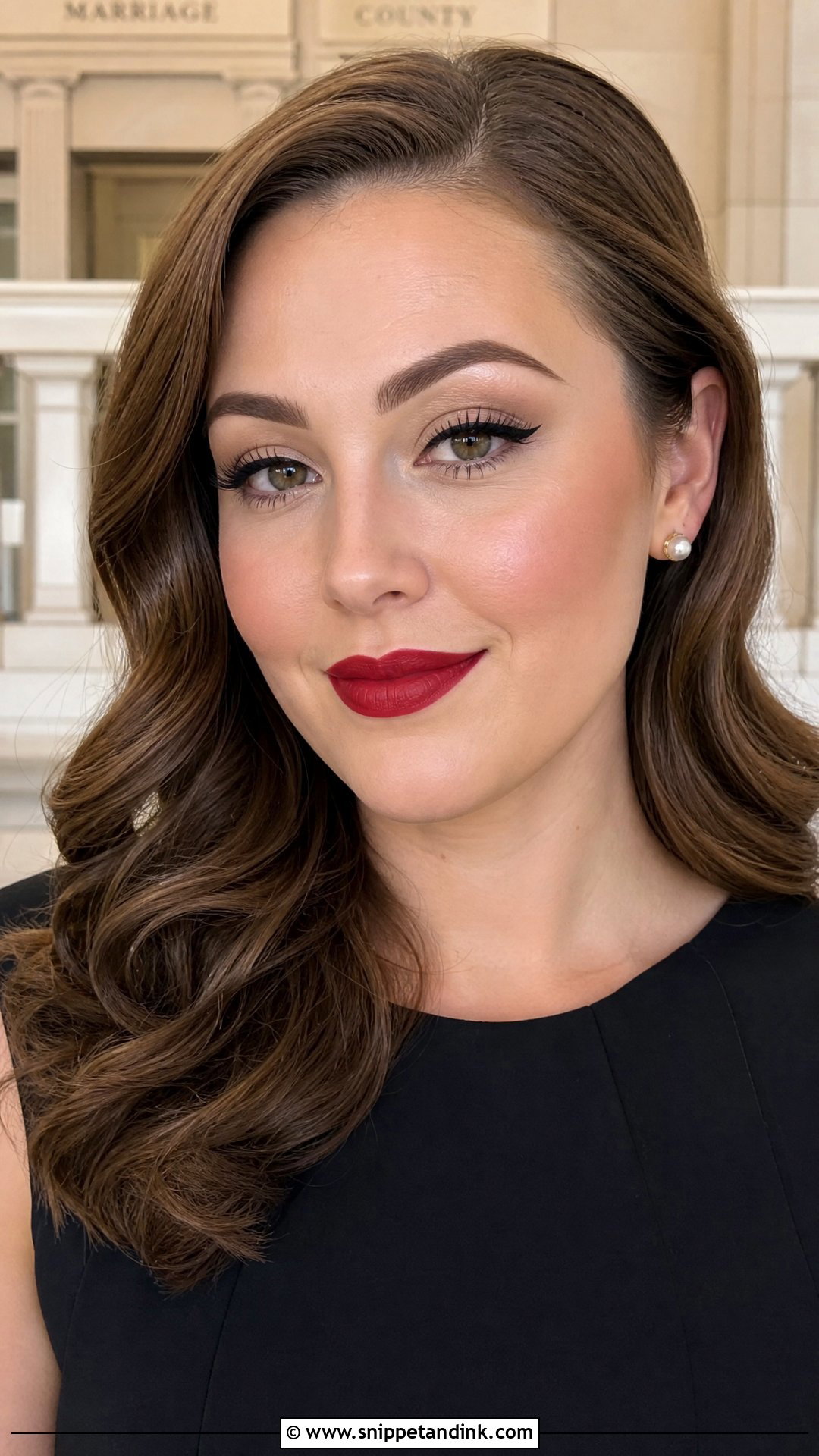
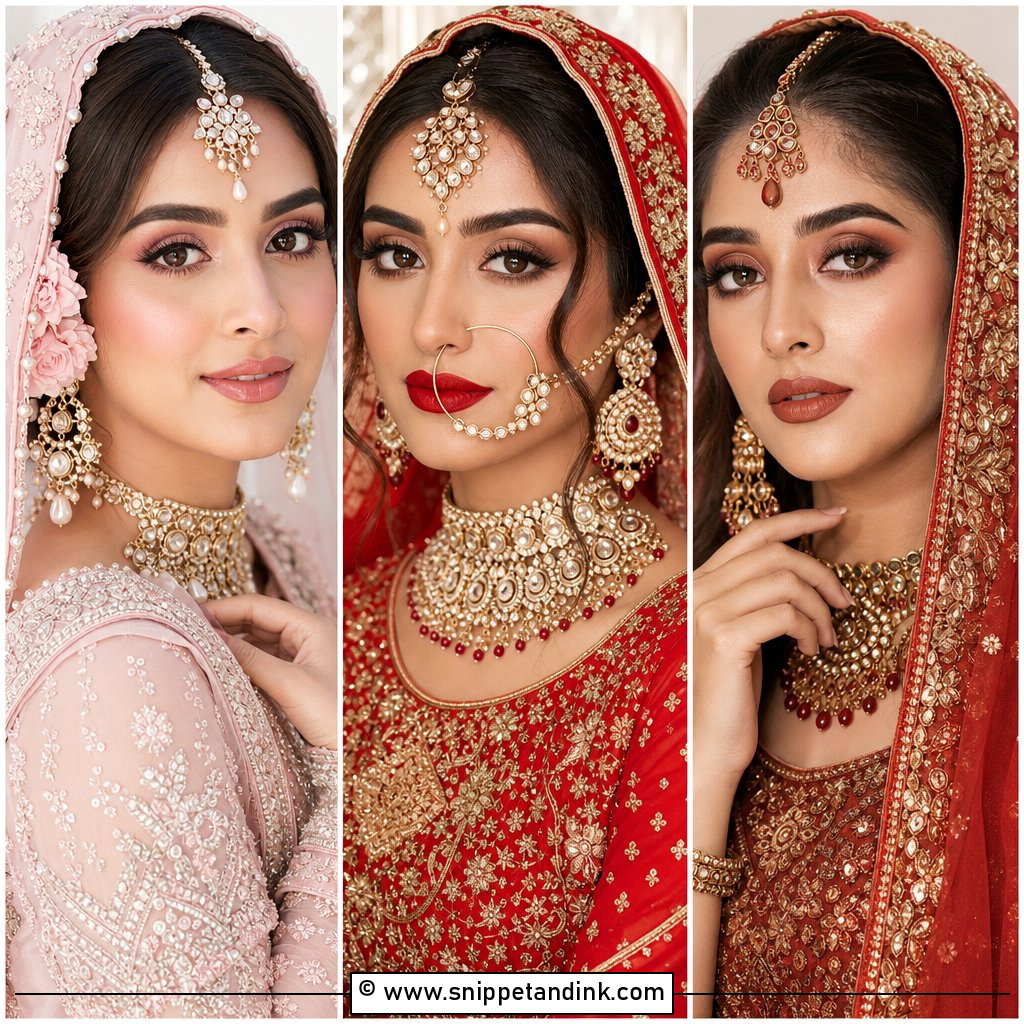
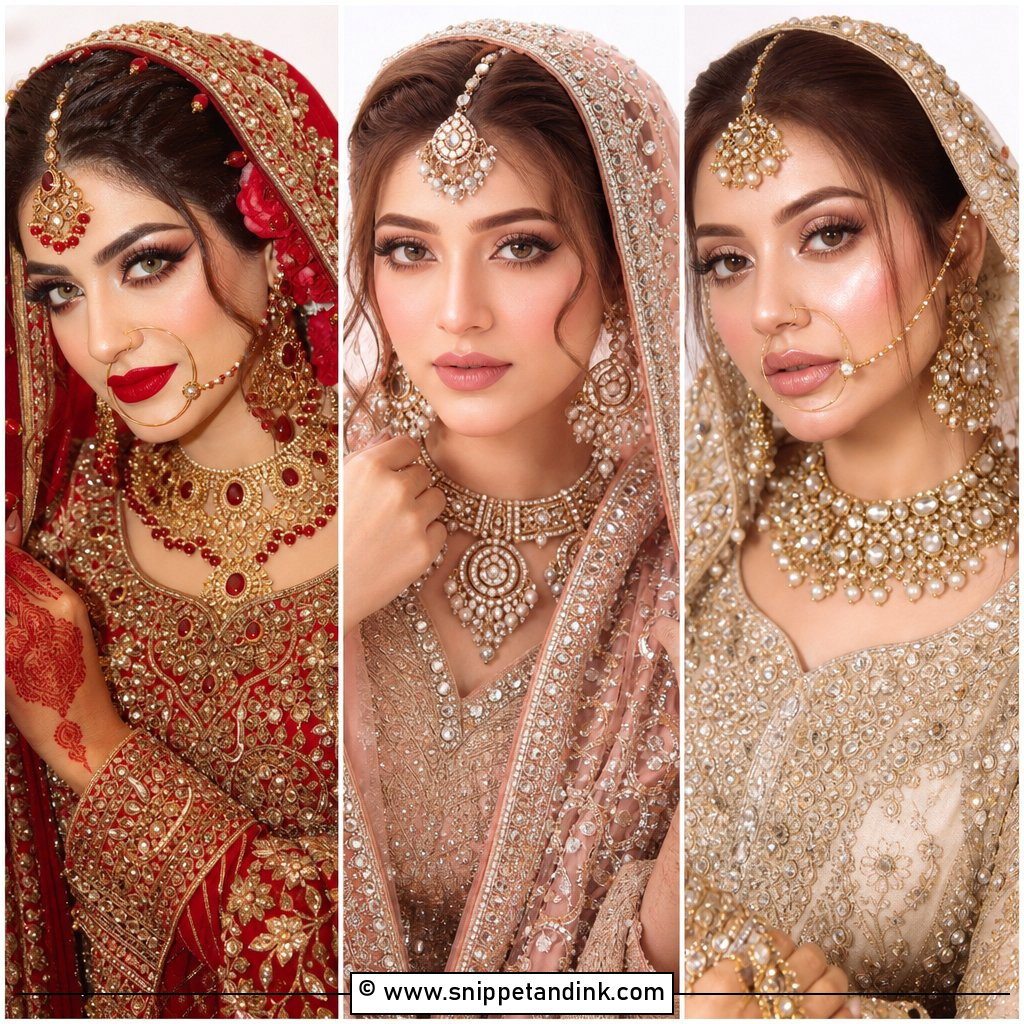
A red lip asks the rest of the face to step back. I keep the eyes clean with taupe shadow, a slim wing and defined lashes, and use a natural blush that doesn’t fight the lipstick. Matching the red to undertone matters: blue-reds suit cooler skin and make teeth look whiter, tomato reds suit warm skin, and a neutral red works on most people. I line the whole lip, fill it in with the liner, blot, then apply a long-wear formula on top. That base is what stops feathering and the faded ring around the mouth after dinner. Carry the lipstick and liner, because a red lip needs at least one check after eating.
12. Nude Lip Wedding Makeup
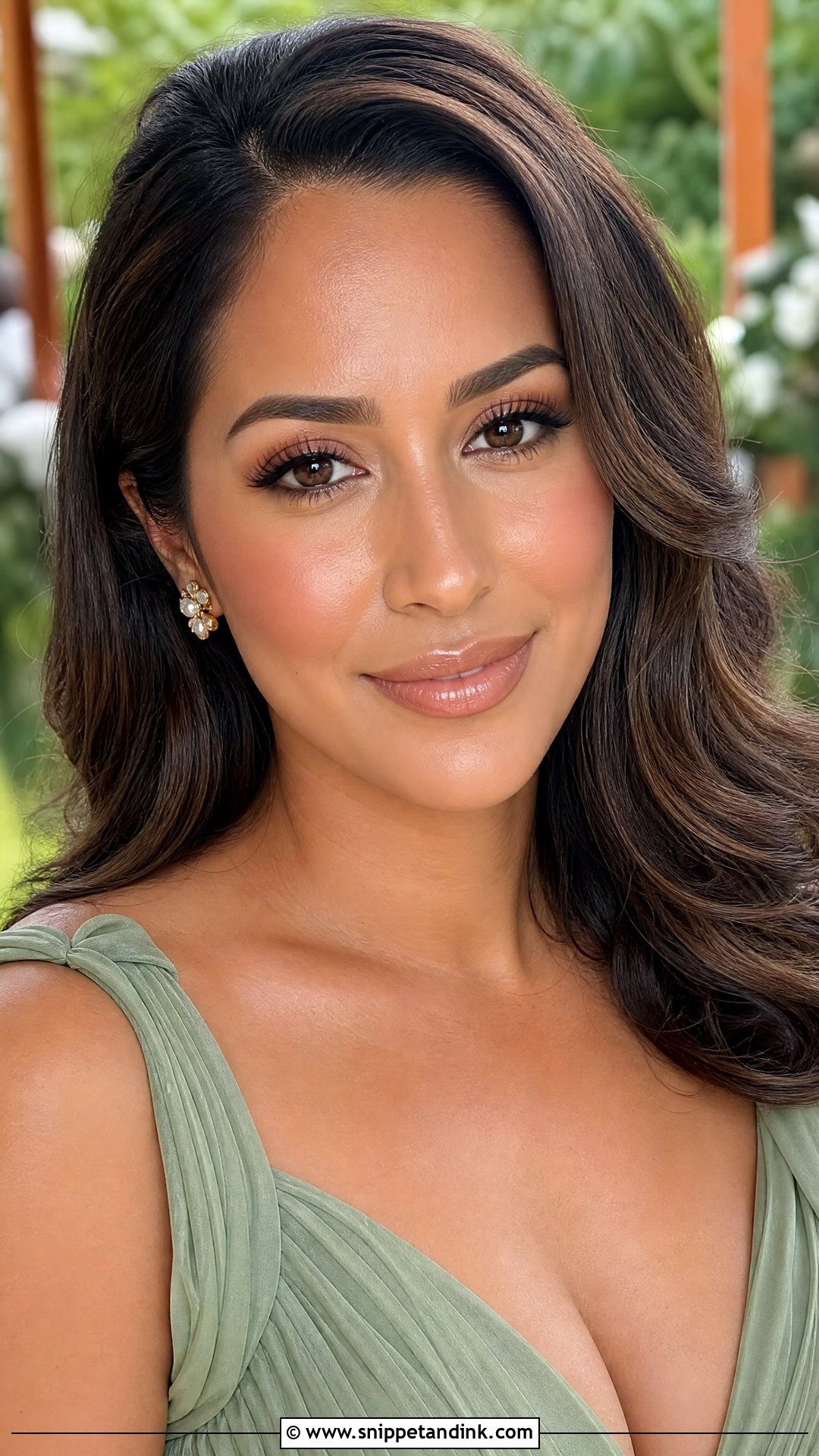
The hard part with a nude lip is picking one that still has color. A true skin match disappears in photos and leaves you looking washed out. As a starting point, fair skin tends to suit pink-nude, medium skin peachy beige, tan skin caramel, and deep skin brown rose or cocoa. I always add more blush than usual with a nude lip to put life back in the face, then balance it with softly defined eyes and curled lashes. A satin or cream nude flatters more than a flat matte, which can make lips look dry by mid-afternoon.
13. Winged Liner Wedding Makeup
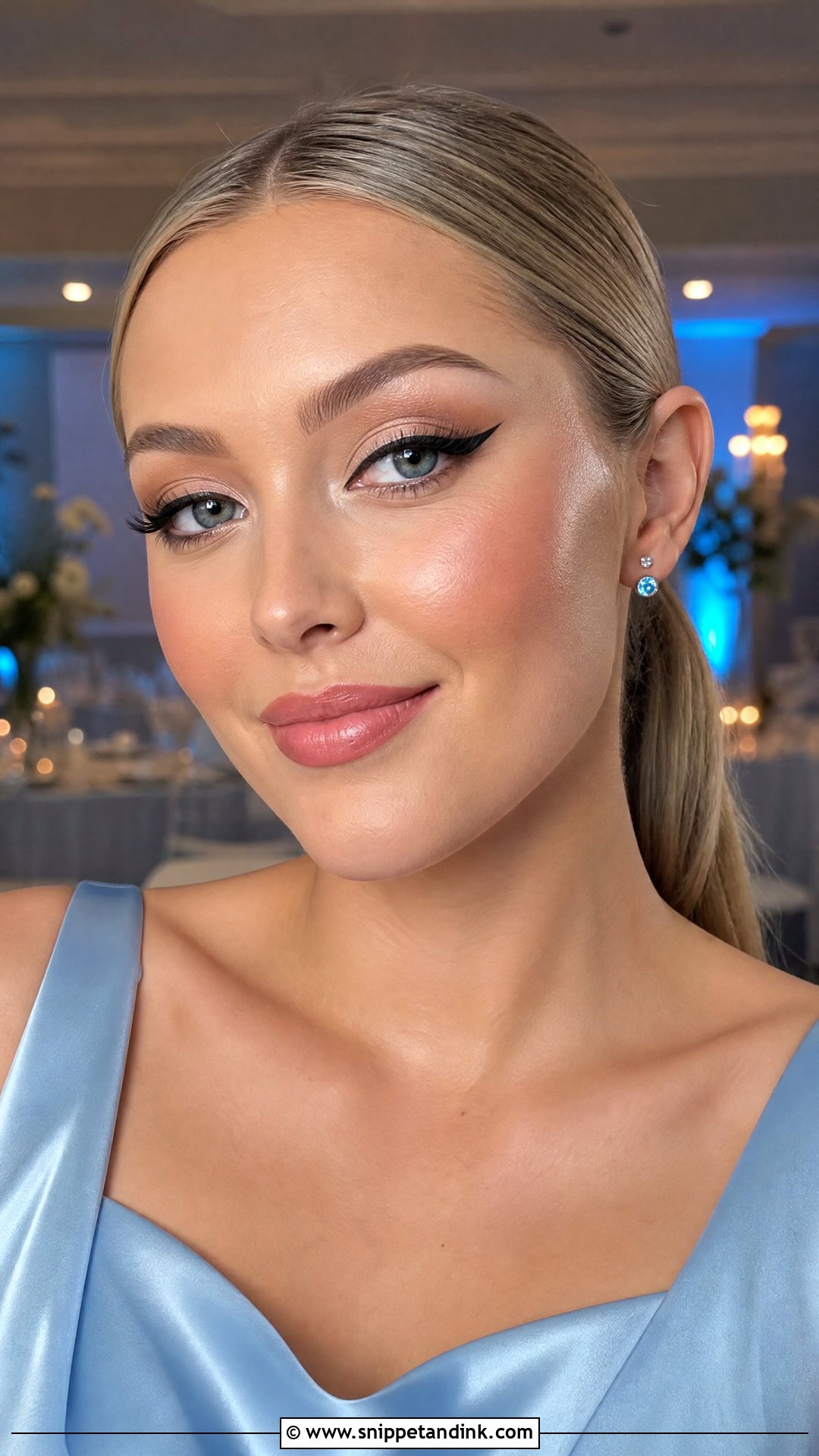
A wing only gives lift if it follows your own eye shape. I map it with the eyes open and looking straight ahead, because a wing drawn with the eye closed often folds into a hooded lid and comes out bent. Thin reads soft; slightly thicker reads more vintage. Matte beige on the lid makes the line stand out, and half lashes at the outer corners finish the lift. Peach blush balances the face, and the lip can go nude or red depending on the evening. If your lids are oily, press a little black shadow over the liner to set it, or it will print onto the crease within a couple of hours.
14. Full Glam Wedding Makeup
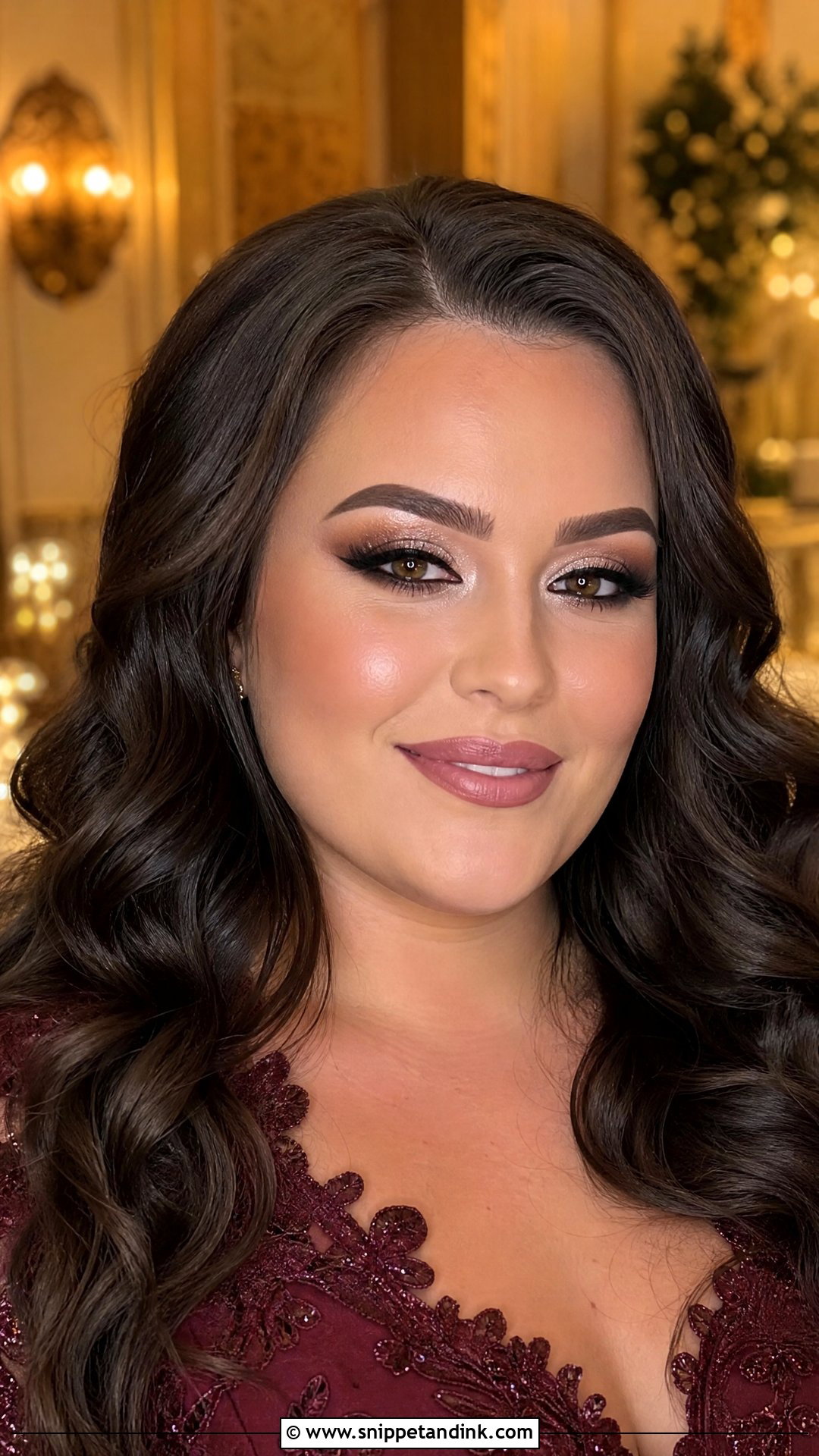
Full glam is the one where blending decides everything. Fuller coverage foundation, contour, sculpted brows, structured eyeshadow and noticeable lashes can look expensive or heavy, and the difference is usually in the edges. I build warm bronze shadow with a brighter lid, black liner and fluffy lashes, then layer bronzer, blush and highlight thinly so the face has dimension instead of stripes. The lip leans nude rose or soft brown. I set the T-zone and finish with setting spray. Watch flash photography with this look: some setting powders and high-SPF foundations bounce back white, so I avoid heavy loose powder under the eyes for an evening event.
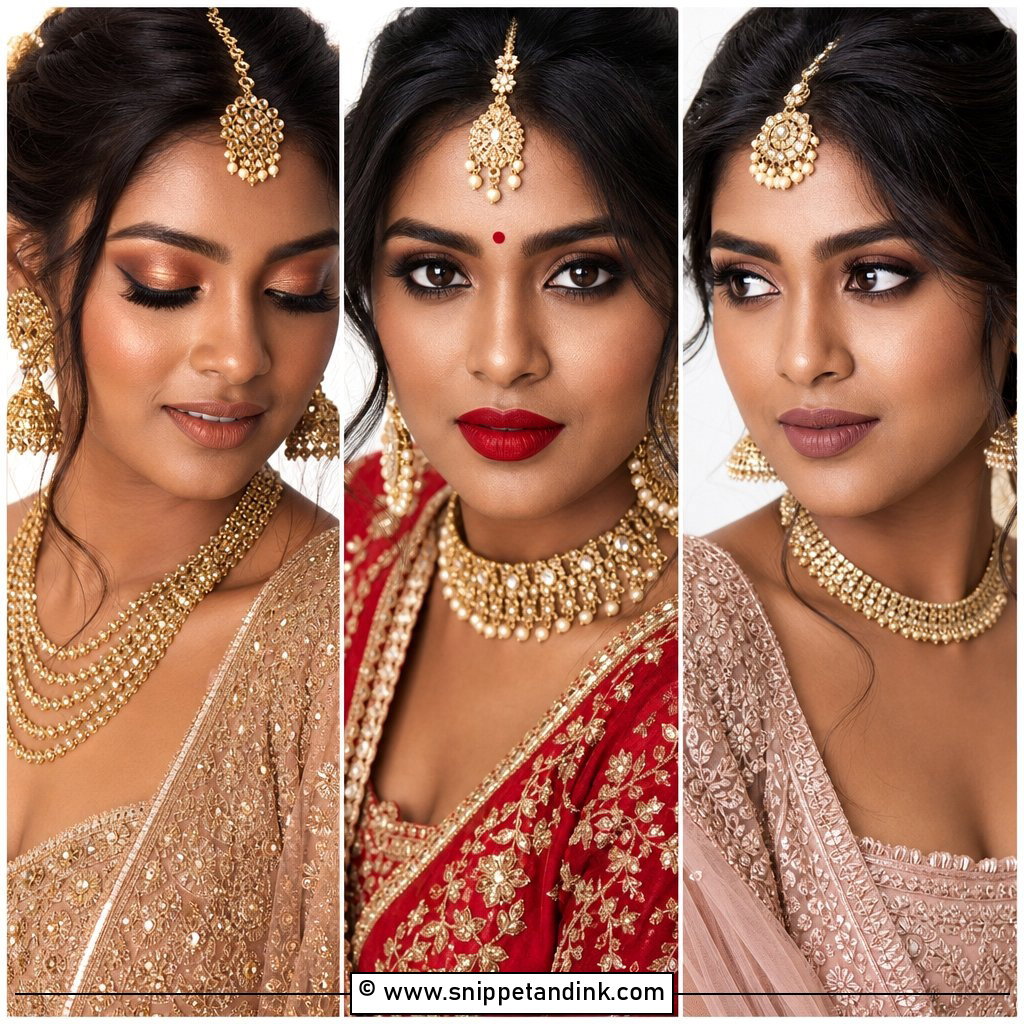
15. Minimal Wedding Makeup
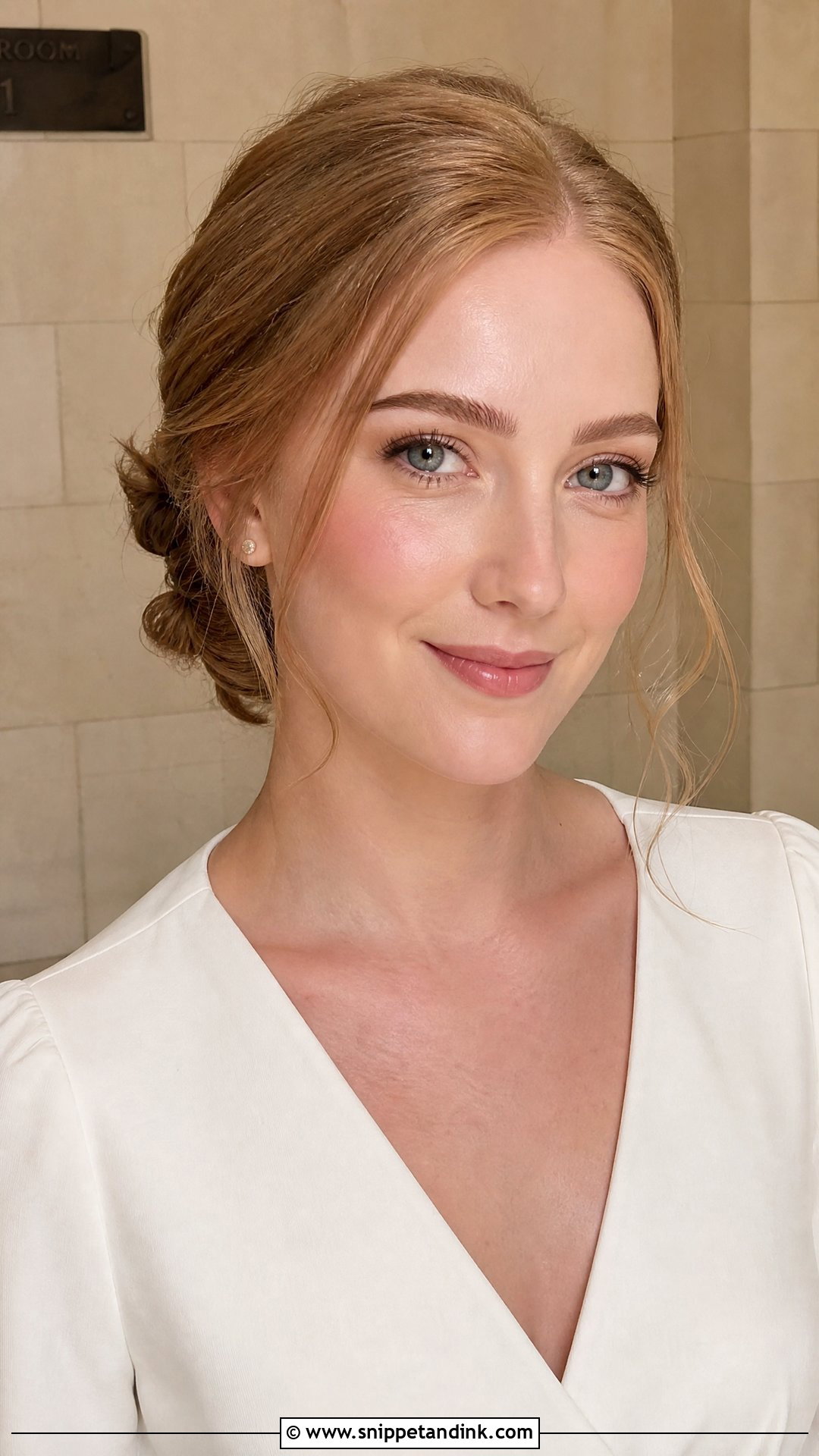
Minimal makeup lives or dies on skin prep, since there’s so little product to hide behind. I spend longer on moisturizer and eye cream than on any color. Then a lightweight base, creamy concealer and powder only where shine appears. Brows brushed upward with tinted gel, lashes curled, one coat of lengthening mascara, and a wash of beige on the lids. I use one cream blush on the cheeks and tap the same shade onto the lips, or reach for a tinted balm, so the face reads as one. City hall weddings and relaxed receptions suit it well.
16. Blush Wedding Makeup
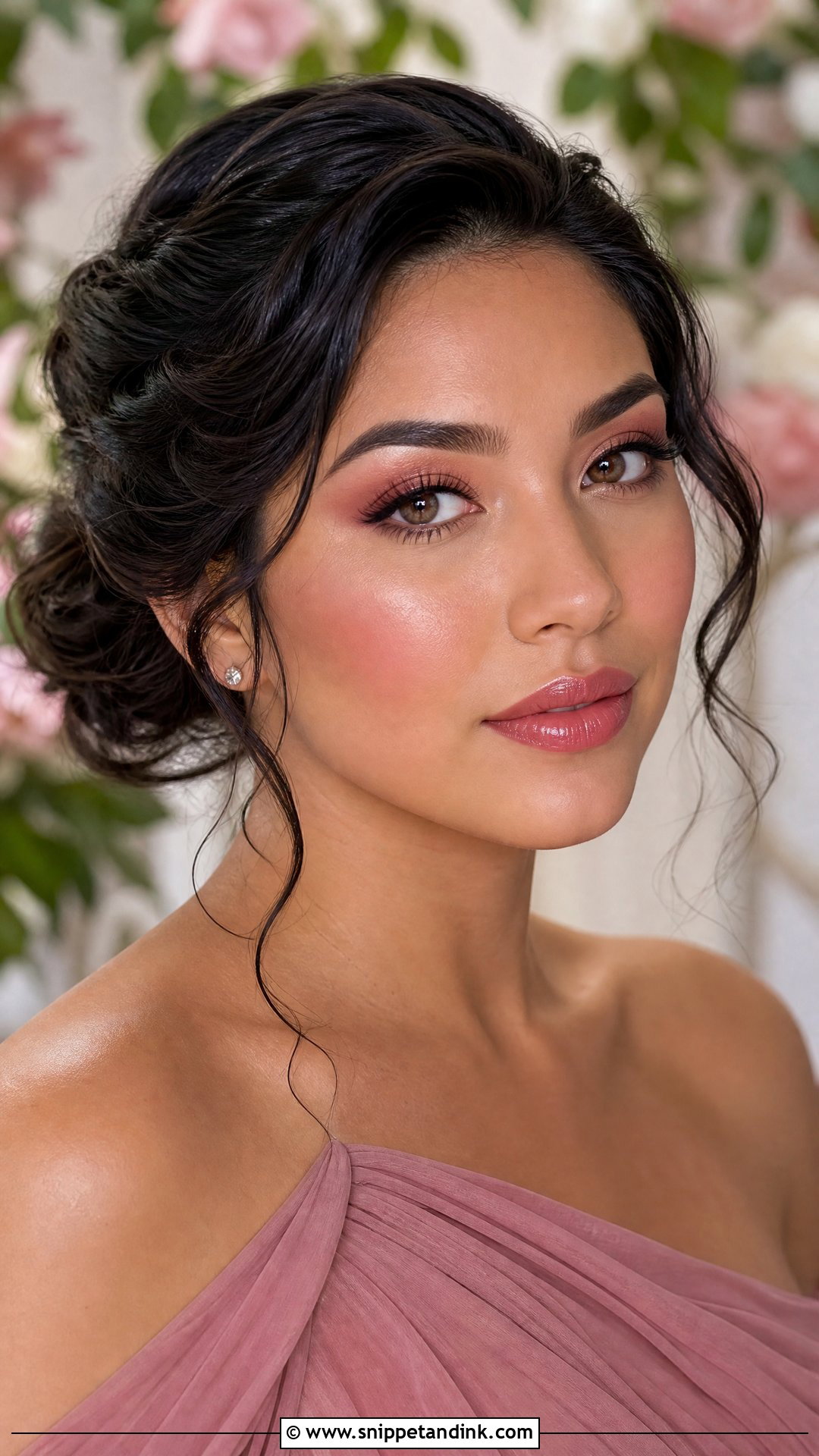
Blush-led makeup is the quickest way to make a face look rested after a short night. I start with a natural foundation finish and apply cream or liquid blush high on the cheeks, blending toward the temples. The same tone goes softly on the eyes, which ties everything together without obvious eyeshadow. Liner stays delicate, lashes stay airy, and highlight goes only where light naturally lands. A blurred berry lip finishes it. Liquid blush sets fast, so I work one cheek at a time. Dot it on both sides at once and the second cheek grabs before you can blend it.
17. Gold Eye Wedding Makeup
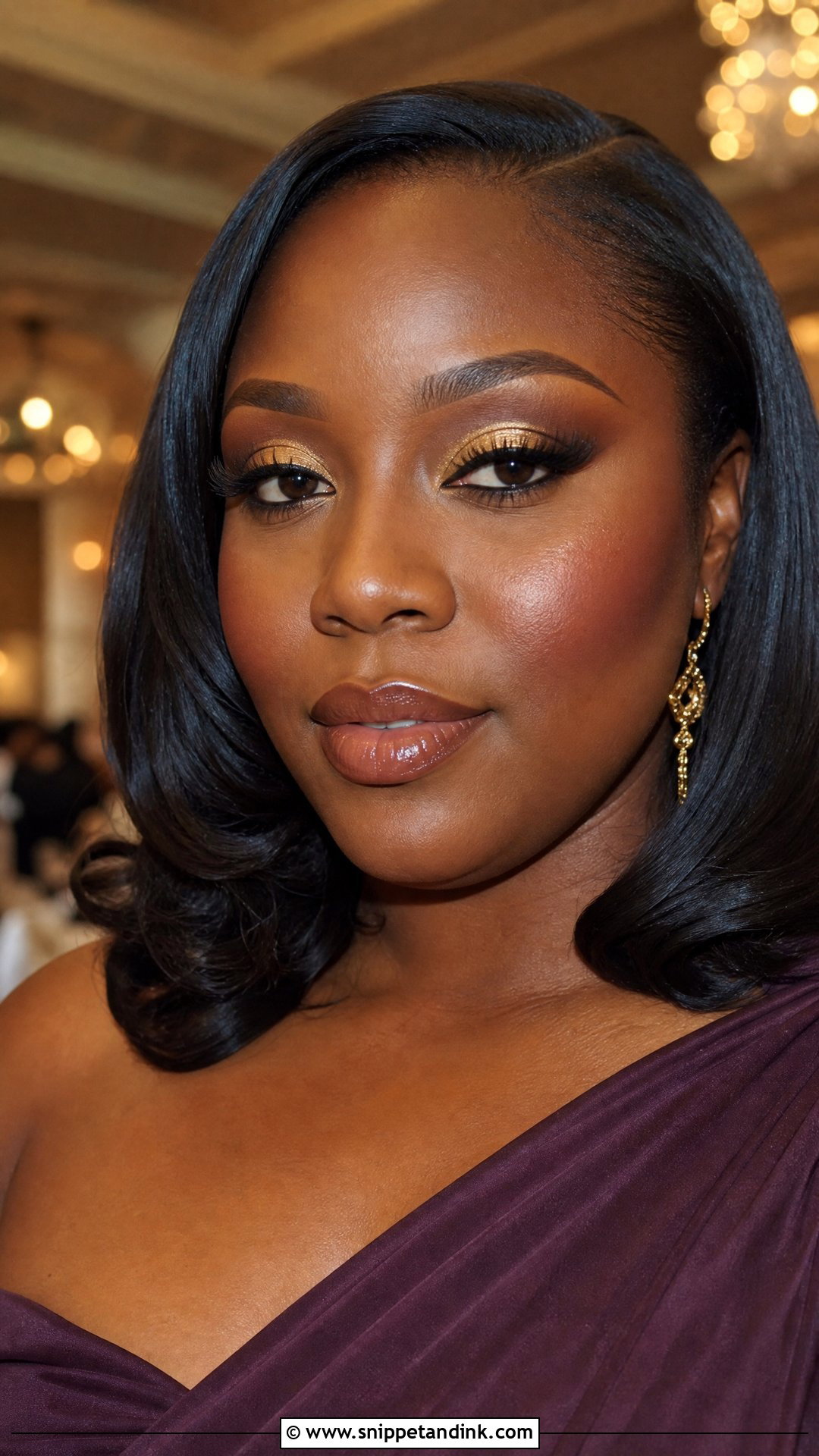
Gold on the eyelid catches candlelight and string lights better than almost any other shade, which is why I love it for evening receptions and for cultural celebrations with a lot of gold in the outfits. I press metallic gold onto the lid and blend caramel through the crease. Dark liner close to the lashes and wispy lashes keep it defined. Because the eyes are already reflective, I go light on highlighter, since two shiny zones compete. Warm bronzer, peach blush and a caramel gloss keep the face in one family. Yellow gold flatters warm skin; on cooler skin I’d go for a paler champagne gold.
18. Mauve Wedding Makeup
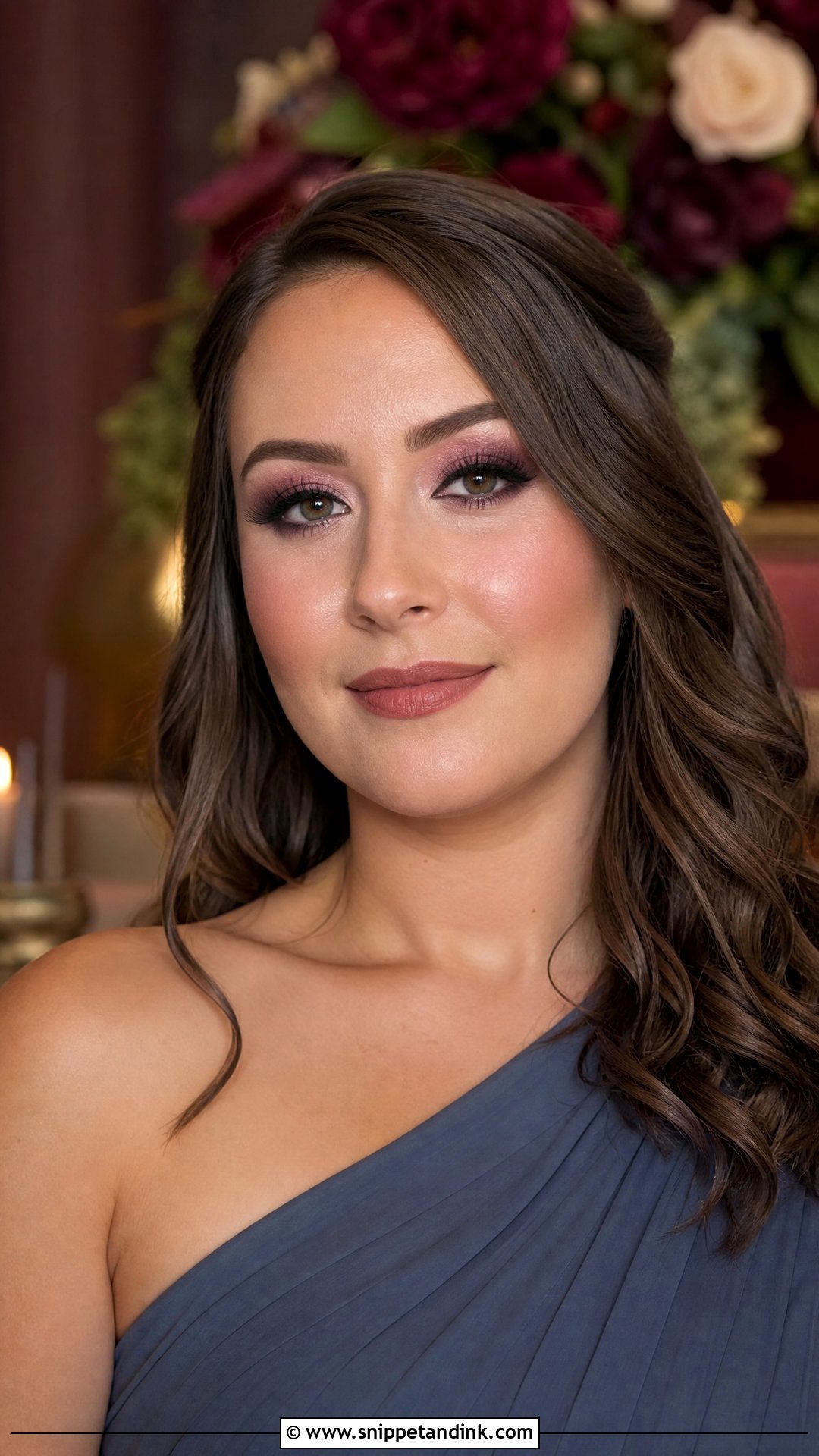
Mauve is pink with the sugar taken out. I put dusty rose on the lid and a deeper plum-brown in the outer corner, add brown liner and soft lashes, then match the cheeks with a muted mauve blush pressed in gently. A mauve nude lip finishes the palette. It suits fall weddings and cool-toned outfits, and it adds quiet contrast for green, hazel, brown and blue eyes. On very warm or olive skin, though, some mauves pull grey, so I test the lip shade in daylight before committing to it.
19. Beach Wedding Makeup
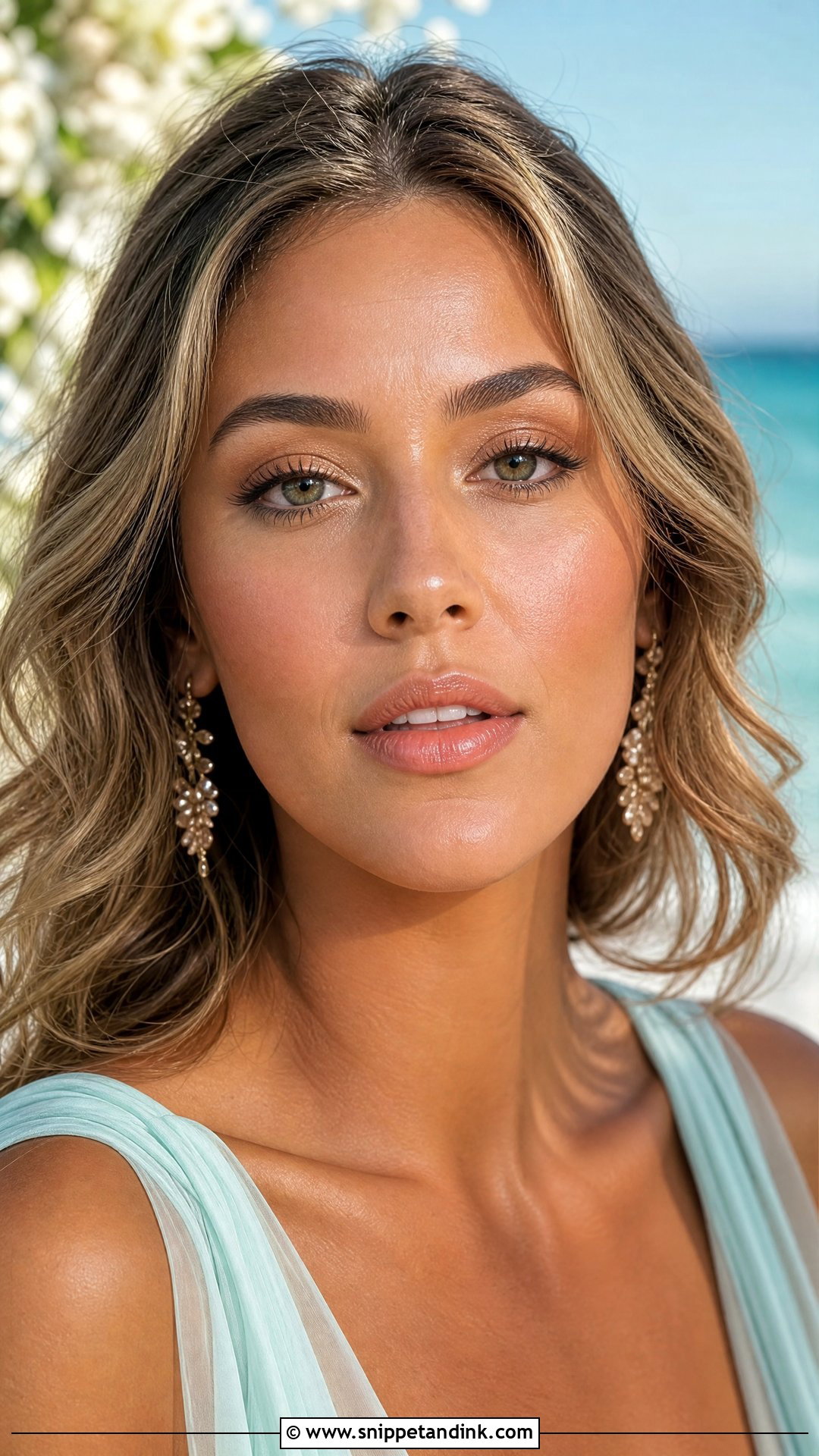
Beach makeup fights two things at once: humidity and sun. I switch to long-wear, water-resistant formulas for mascara, liner and base, and keep the foundation light so the skin can breathe. Cream bronzer, peach blush and a soft golden highlight give the sunlit look. Eyes stay simple in warm sand tones with minimal liner. I always use waterproof mascara and natural lashes, since strip lash glue can loosen in damp, salty air. A coral gloss is easy to reapply from a pocket. Sunscreen goes on first and needs a few minutes to settle, or the base slides straight off it.
20. Winter Wedding Makeup
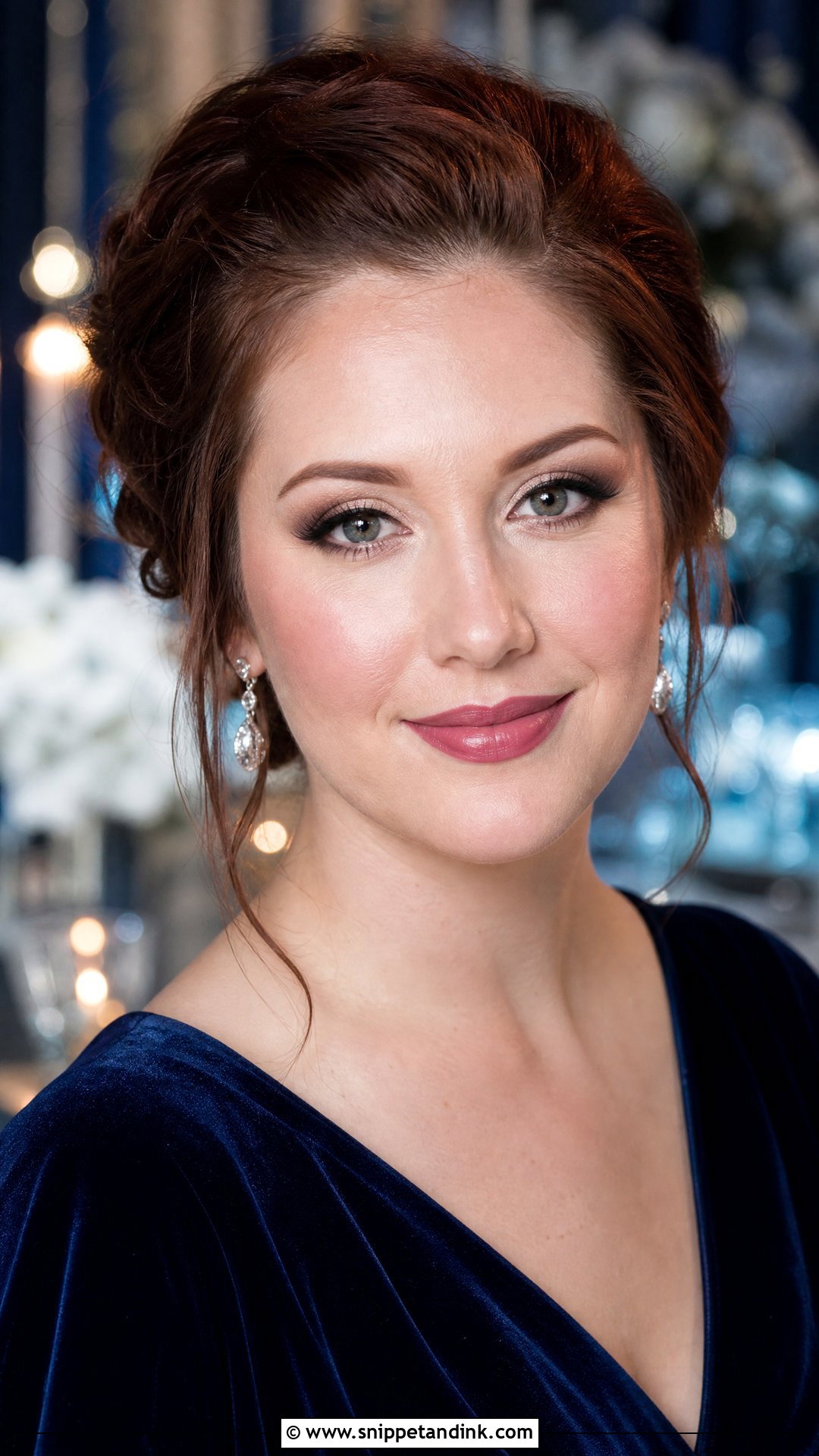
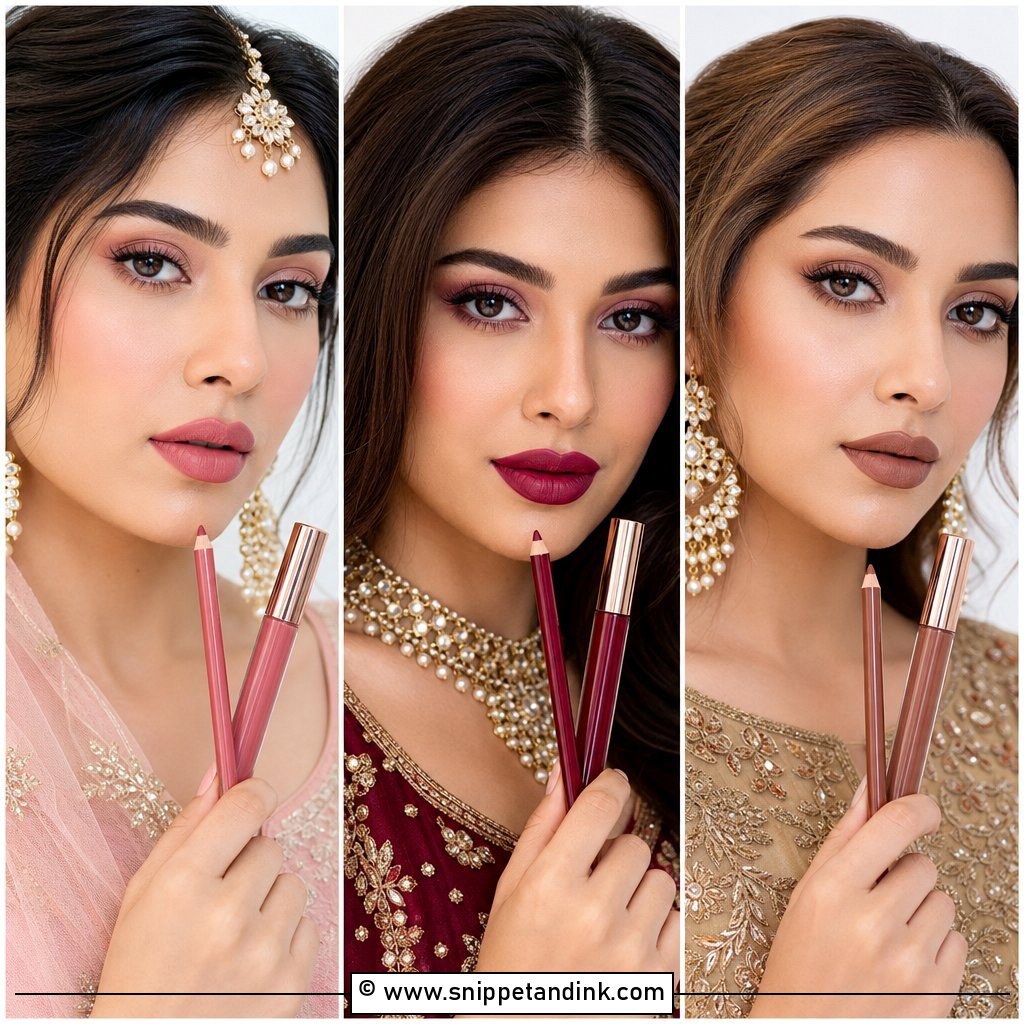
Winter wedding makeup starts with hydration, because cold air outside and heating inside can make skin flaky within a few hours. I prep with a richer cream, then use a satin foundation, creamy concealer and powder only where needed. Cool brown or soft plum on the eyes, black or brown liner, fluttery lashes. A rosy blush brings warmth to the complexion, and a subtle highlight stops it looking flat. Lips can go deeper in winter, and berry or a deep nude both suit the season’s richer palettes. I’d avoid very matte liquid lipstick in the cold; on dry lips it cracks before dessert.
What Ten Hours, Flash and Happy Tears Do to Makeup
Even as a guest, you may be in your makeup from early afternoon until well after midnight. In that time it goes through a cry, a meal, a dance floor and a lot of cheek kisses, and it doesn’t wear down evenly.
The Order Things Usually Break
Base wears through first around the nose and chin. The lip fades from the center outward once you’ve eaten. Liner on oily lids starts transferring to the crease within a few hours, and mascara smudges under the eye the moment you cry if it isn’t waterproof. Knowing that order tells you exactly what to carry.
A Clutch-Sized Touch-Up Kit
- Blotting papers instead of powder. Powder pressed over oil builds into a cakey layer by evening.
- The lip liner and lipstick or gloss you actually wore, not a similar shade.
- A cotton bud and a dab of concealer for smudges under the eyes.
- A small mirror you can take to a window, because venue bathroom lighting is often yellow and misleading.
One more check before the day: if you’re wearing a sunscreen or setting powder you’ve never photographed, take a single phone photo with the flash on at home. White patches under the eyes or across the forehead show up straight away, and it’s far better to spot them in your bathroom than in the wedding album.
A Dress Rehearsal for Your Face, One Week Out
Any of these looks will work if it’s built for your face and your day rather than copied from a photo. Do a full run-through about a week ahead, in the outfit if you can, and photograph it near a window and again with your phone flash on. Then wear it for a few hours. Check how the base sits around your nose by lunch, whether the lip has faded to a ring, and whether the liner has printed onto your lid. Whatever survives that test is your look. Whatever didn’t, change it now while there’s still time to swap a product.
You'll Like These Ideas:


Leave a Reply