
Most brides who sit in my chair want to look polished and photo-ready without looking like someone else. That balance comes from three decisions: how much coverage your skin needs, where the definition goes, and how long the face has to last. Some brides want soft glam and a neutral lip. Others are happiest in matte skin with a red lip, a smoky eye or a near-bare face. Below are 20 full-face looks I build for weddings, with the products and placement behind each one, so you can see which suits your dress, venue, season and skin.
Your Skin Type Picks the Finish Before Your Mood Board Does
Brides usually arrive with photos of a look. The first thing I do is ignore the photos for a minute and look at the skin, because the finish has to suit the skin before it can suit the dress. A dewy face on oily skin or a matte face on dry skin will look wrong by the reception, however good it was at 10 a.m.
- Oily skin: a mattifying primer on the T-zone, long-wear foundation, and powder pressed in rather than swept. Glow goes only on the very top of the cheekbones.
- Dry skin: a rich moisturizer given time to sink in, a hydrating primer, and cream products over powders. Powder only where creasing happens, like under the eyes.
- Combination skin: treat it as two faces. Matte through the center, satin on the cheeks. This is the most common skin I see.
- Mature skin: less powder, more cream, and a light hand under the eyes. Shimmer on the lid is fine if it’s fine-milled; heavy matte settles into lines.
- Texture or breakouts: I spot-conceal and keep the foundation thin. Piling on coverage makes texture more visible, especially with any shine on top.
Tell your makeup artist honestly how your skin behaves by mid-afternoon on a normal day. That one detail tells me more than any inspiration photo.
1. Soft Glam Bridal Makeup
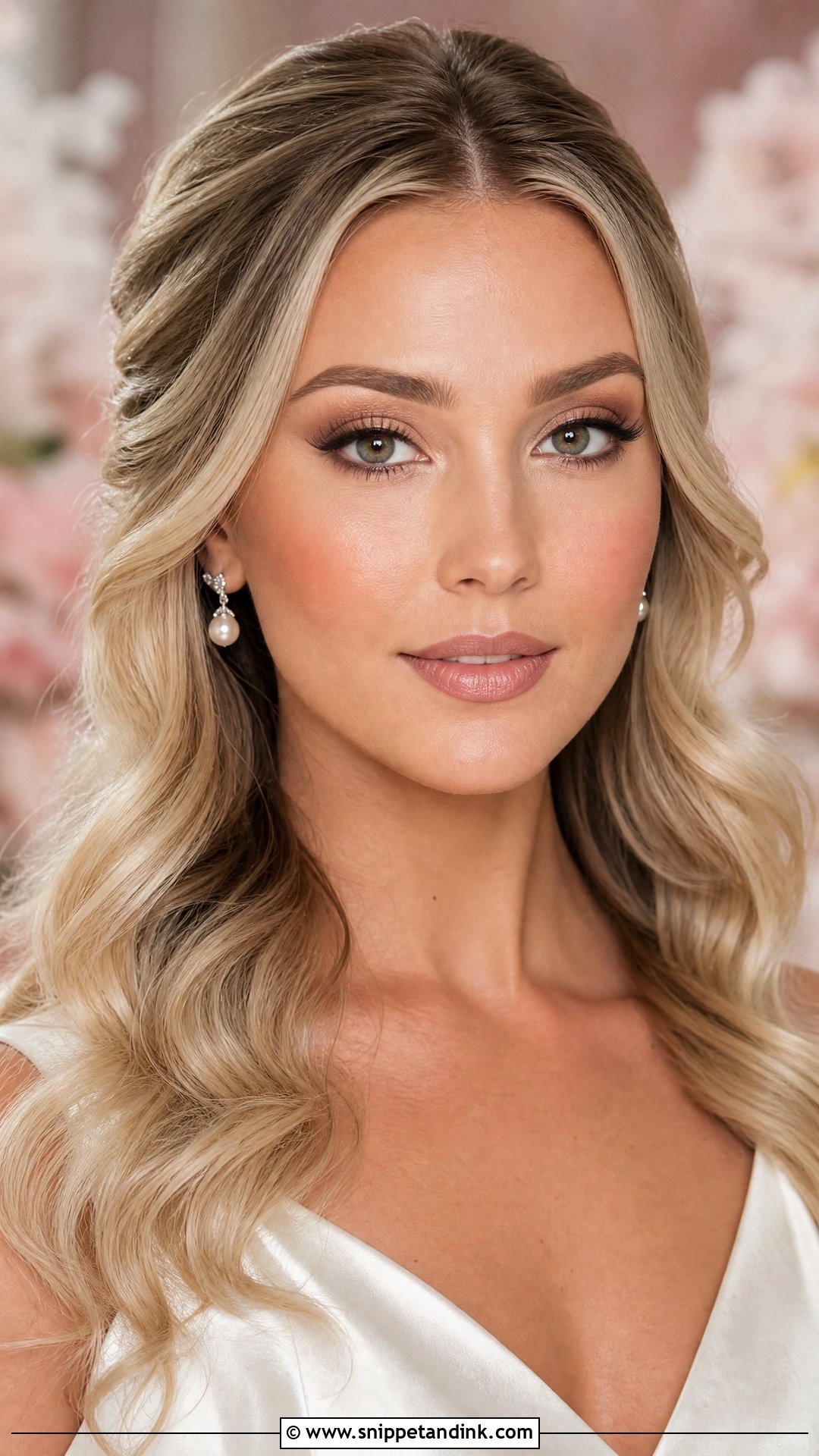
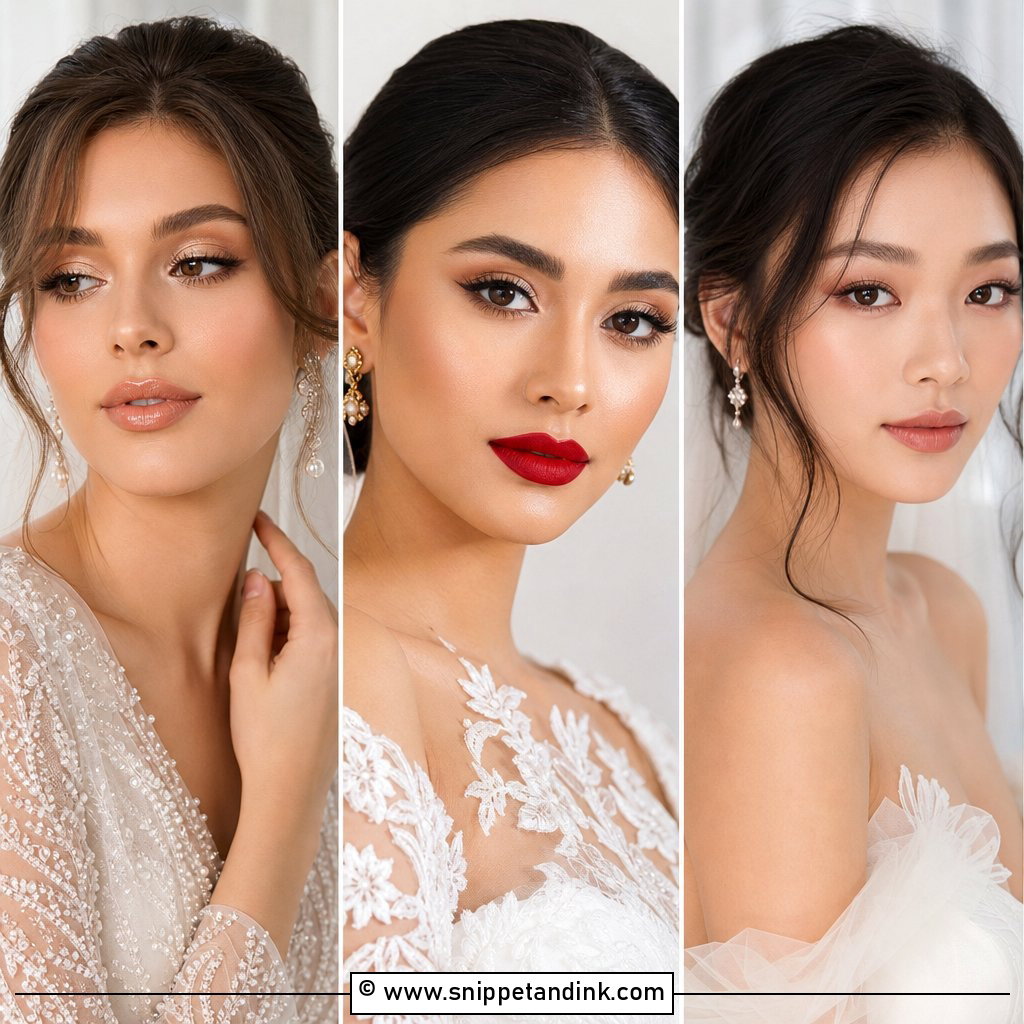
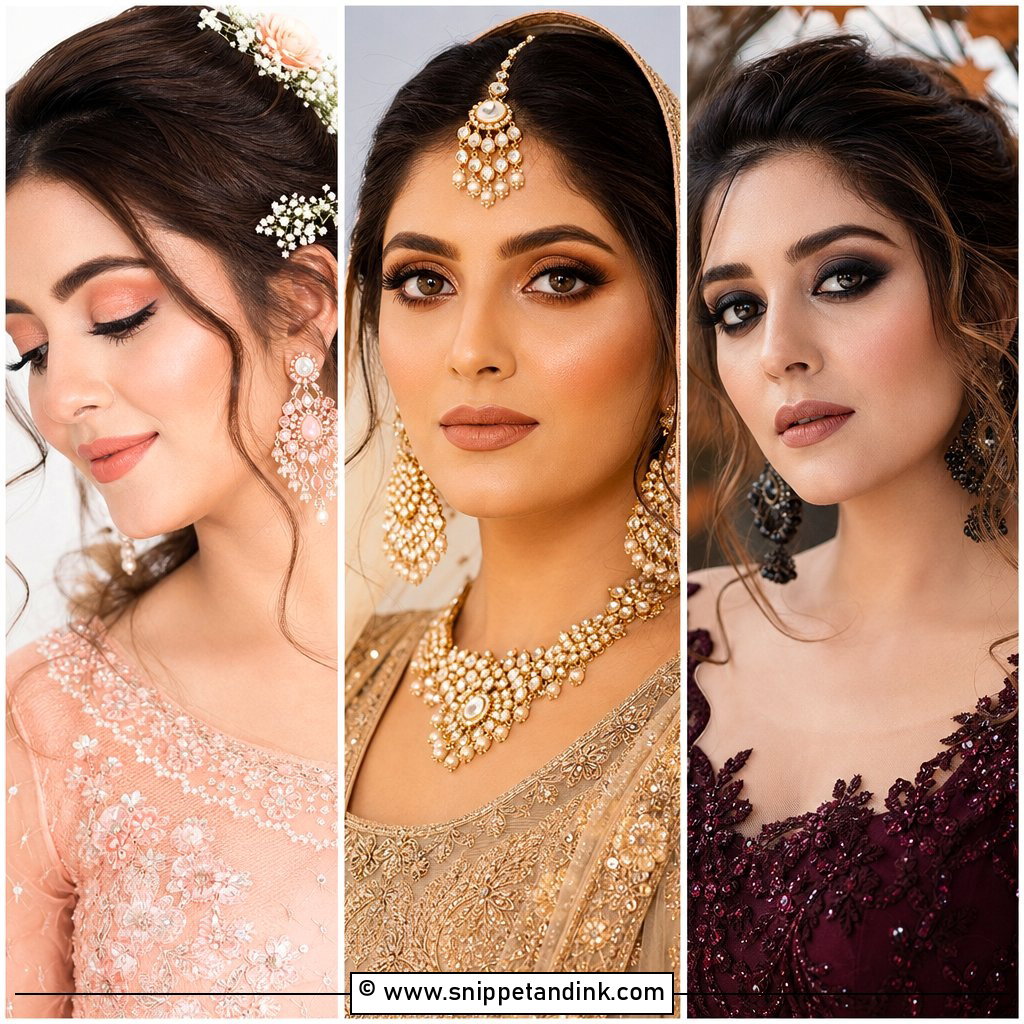
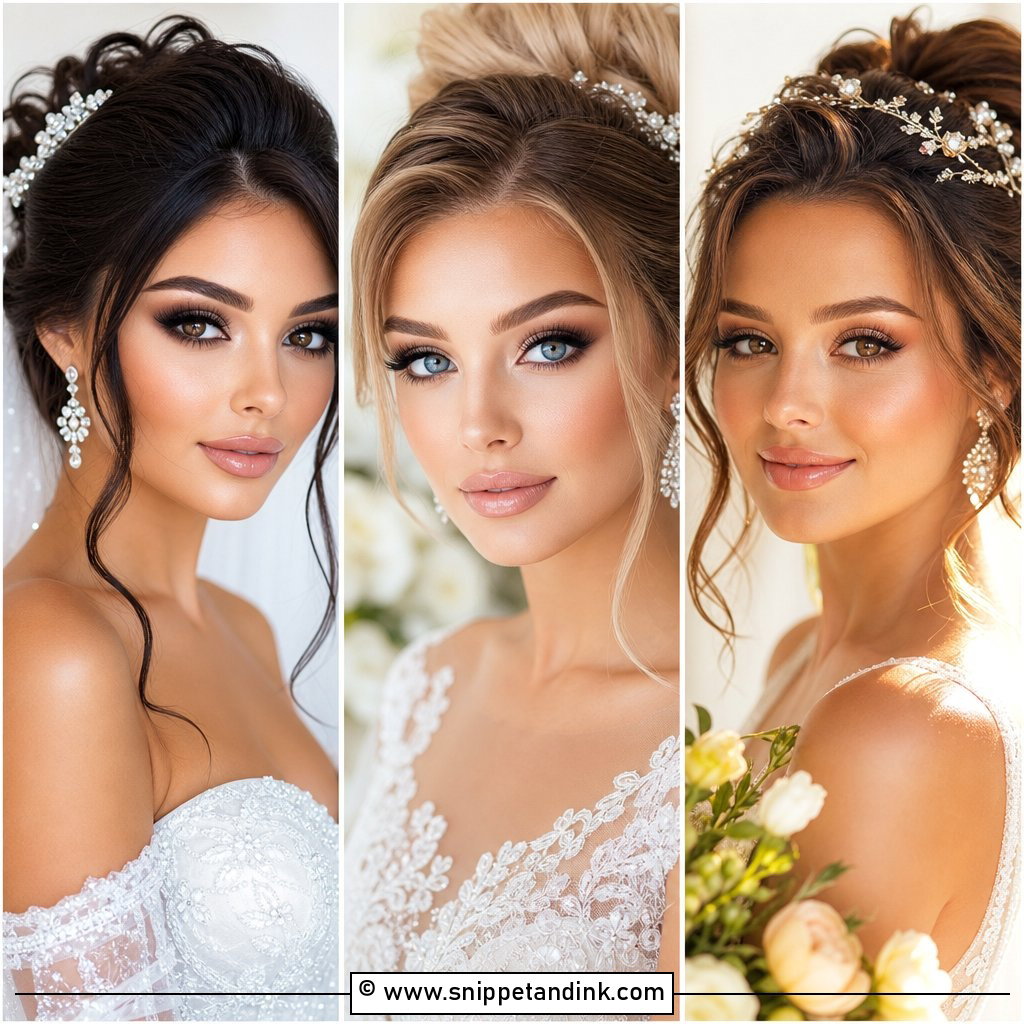
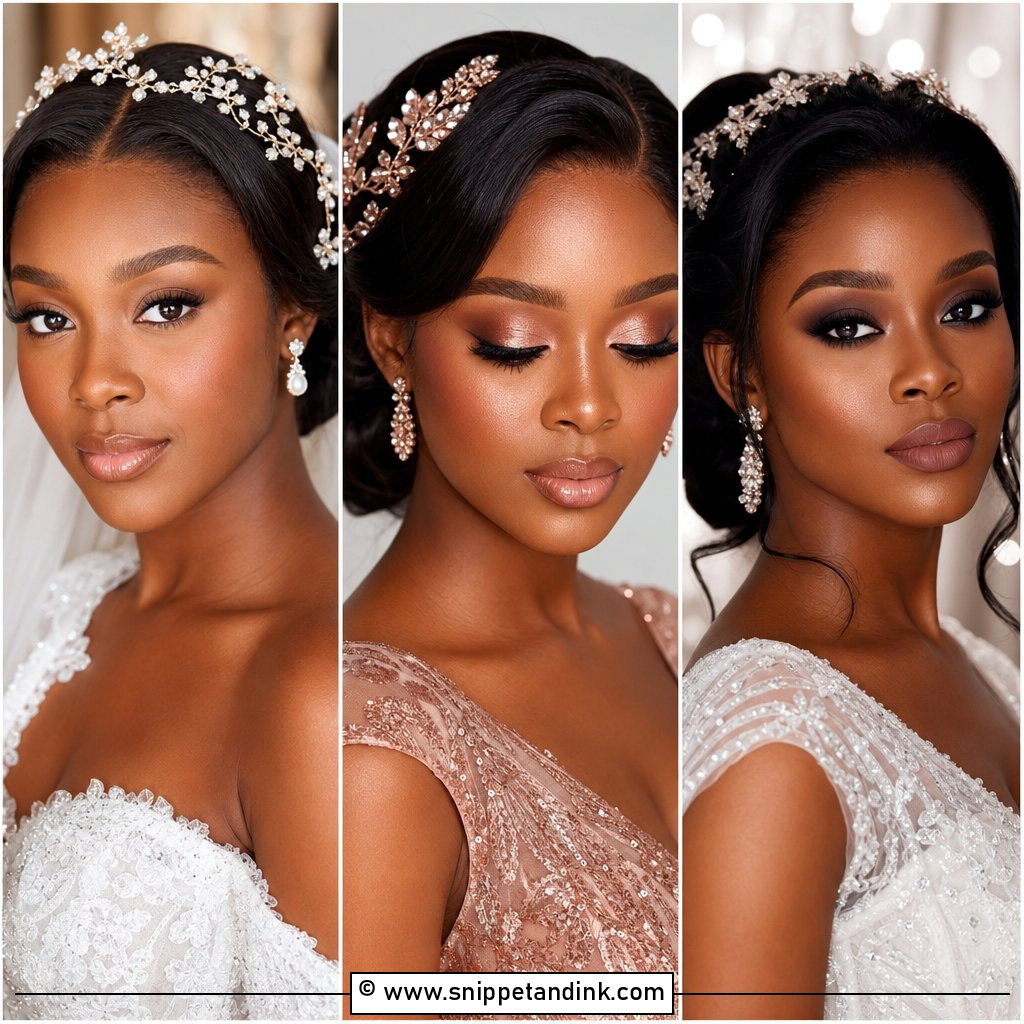
Soft glam is the look I’m asked for more than any other, because it adds definition without reading heavy in person or harsh on camera. I start with a satin foundation that evens the skin but lets some texture show, then build soft brown eyeshadow with a slightly deeper crease, a thin liner and wispy lashes. Peachy pink blush keeps it fresh and a champagne highlight lifts the cheekbones. A nude rose lip finishes it. The trick is restraint: each step is one notch more than everyday, never three.
2. Natural Bridal Makeup
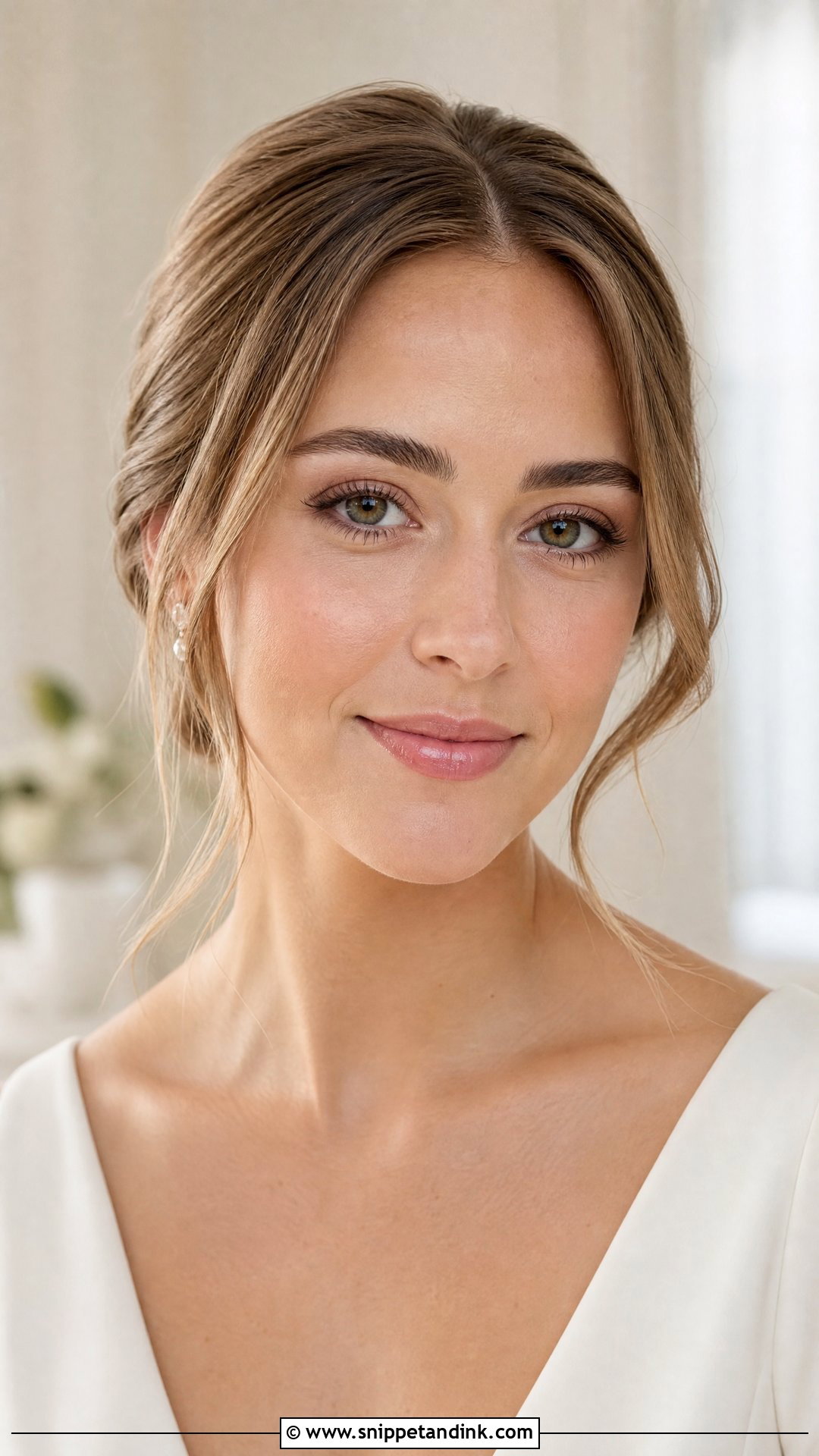
Natural makeup suits the bride who rarely wears a full face, but it’s not less work for me. With so little product, the skin has to be well prepped or every dry patch shows. I use a skin tint or light foundation and conceal only where it’s needed, then a taupe shadow, brown mascara, groomed brows and a soft tightline at the roots of the upper lashes. Cream blush brings color back, and a tinted balm or satin nude keeps the lips comfortable. A light powder and setting spray are what get it through the ceremony.
3. Dewy Bridal Makeup
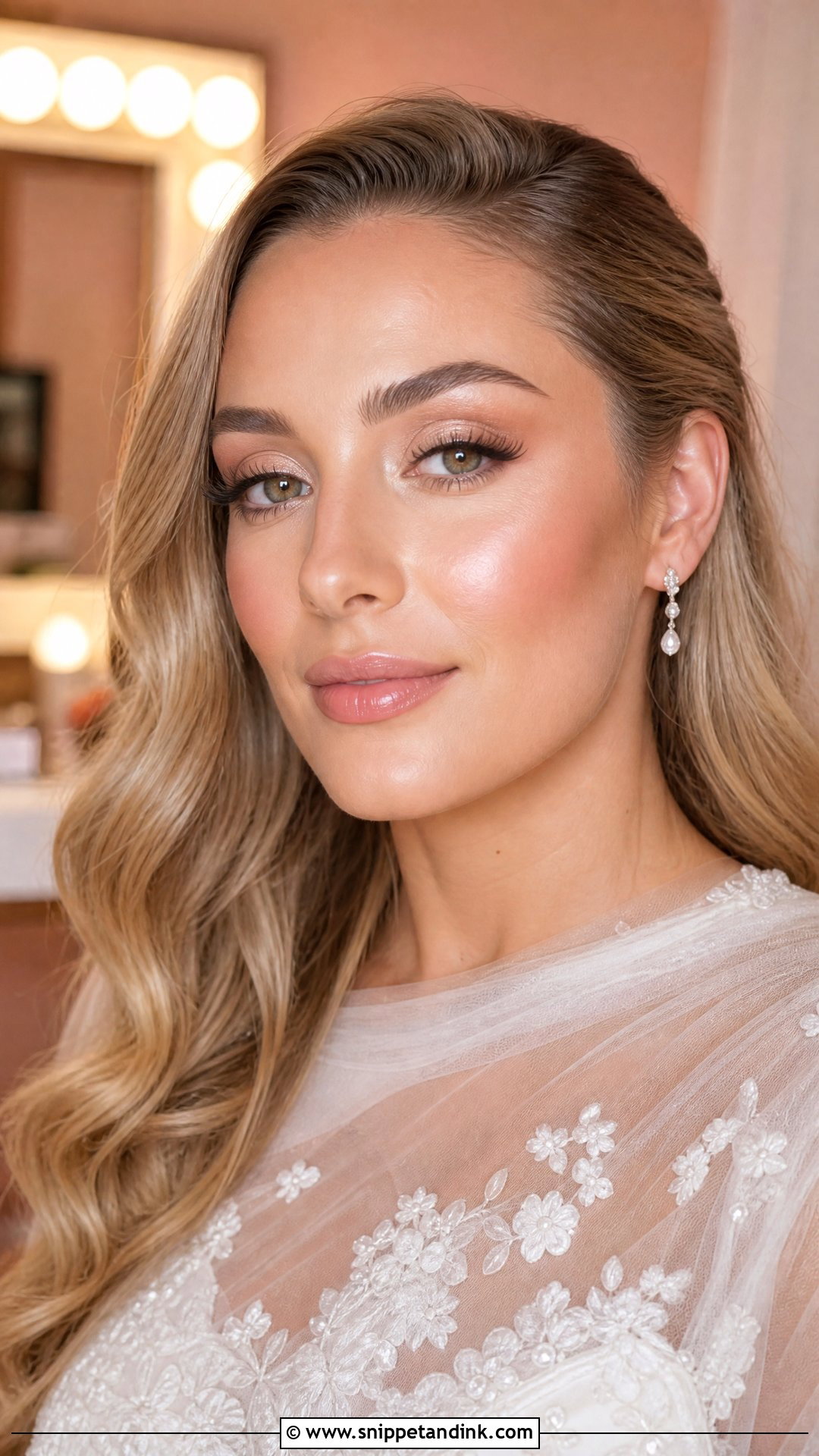
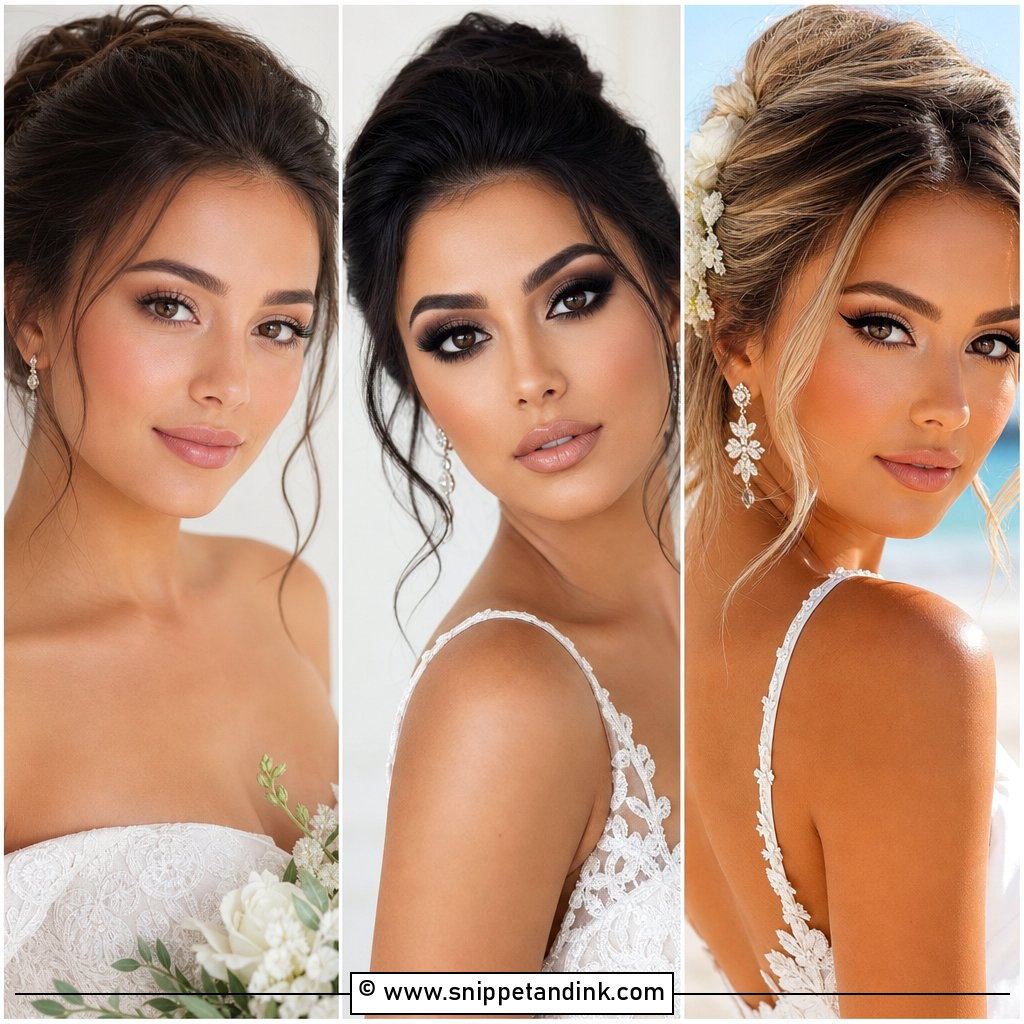
Dewy skin should look hydrated, not oily, and the difference is where you put the shine. I prep with moisturizer and a luminous primer, use a radiant medium-coverage foundation, then powder only the center of the face, around the nose and under the eyes. The cheekbones stay glowy. Soft champagne or rose gold on the eyes and cream blush with a liquid highlight complete it. It’s lovely for spring, garden and beach weddings, but I’d steer an oily-skinned bride away from it in summer heat, because the glow turns to grease by the speeches.
4. Matte Bridal Makeup
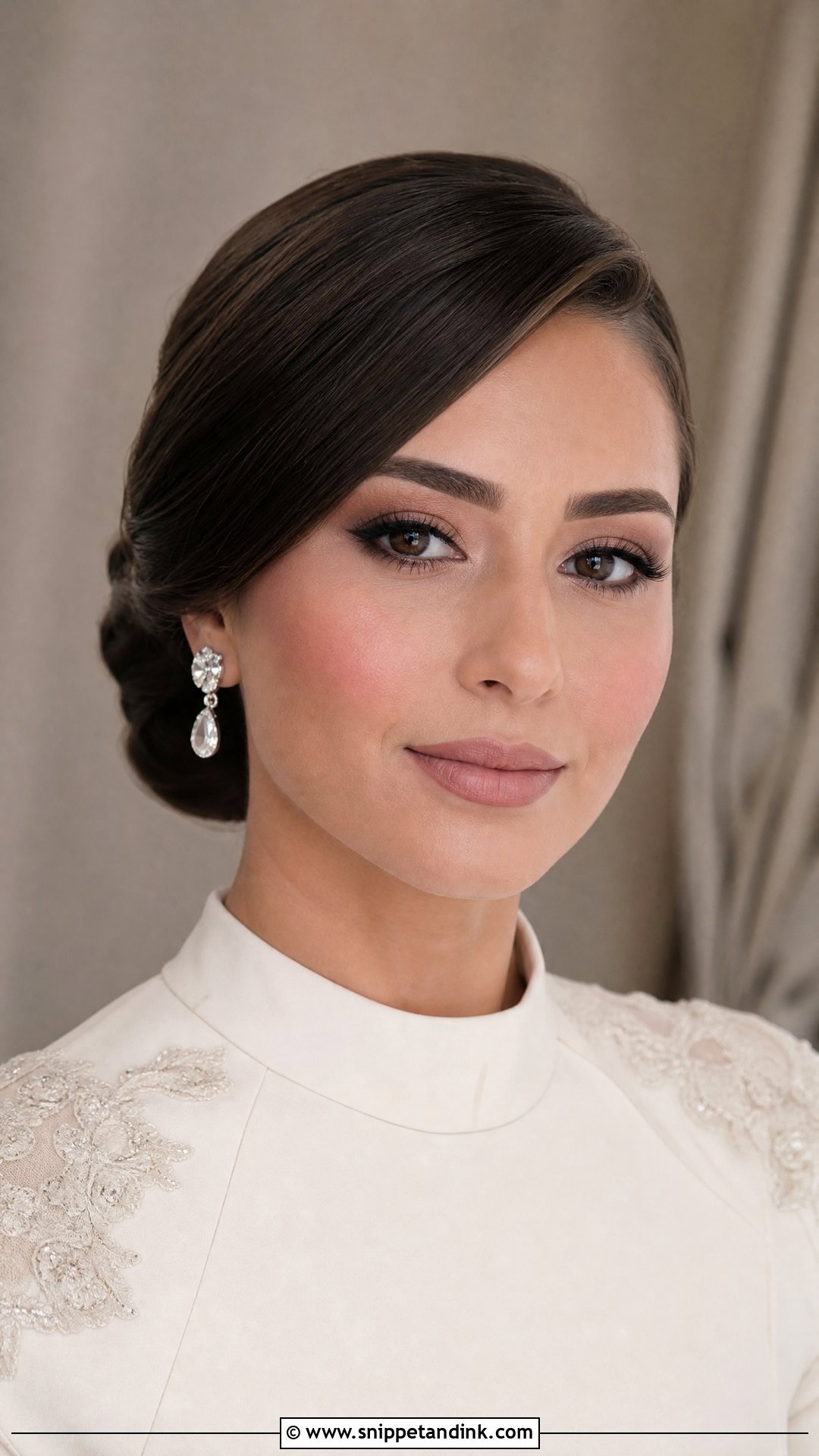
Matte makeup is the practical answer for oily skin, hot weather or a very long day of photos. Done well, it looks velvety rather than flat, and that comes down to the powder: a finely milled one, pressed in with a puff, not dusted on in layers. I use a blurring primer and long-wear foundation, a soft matte bronzer, and matte taupe or mauve on the eyes with a clean lash line. A small touch of satin highlight on the cheekbones stops it looking mask-like. On dry or mature skin I’d go satin instead, since full matte settles into fine lines.
5. Classic Red Lip Bridal Makeup
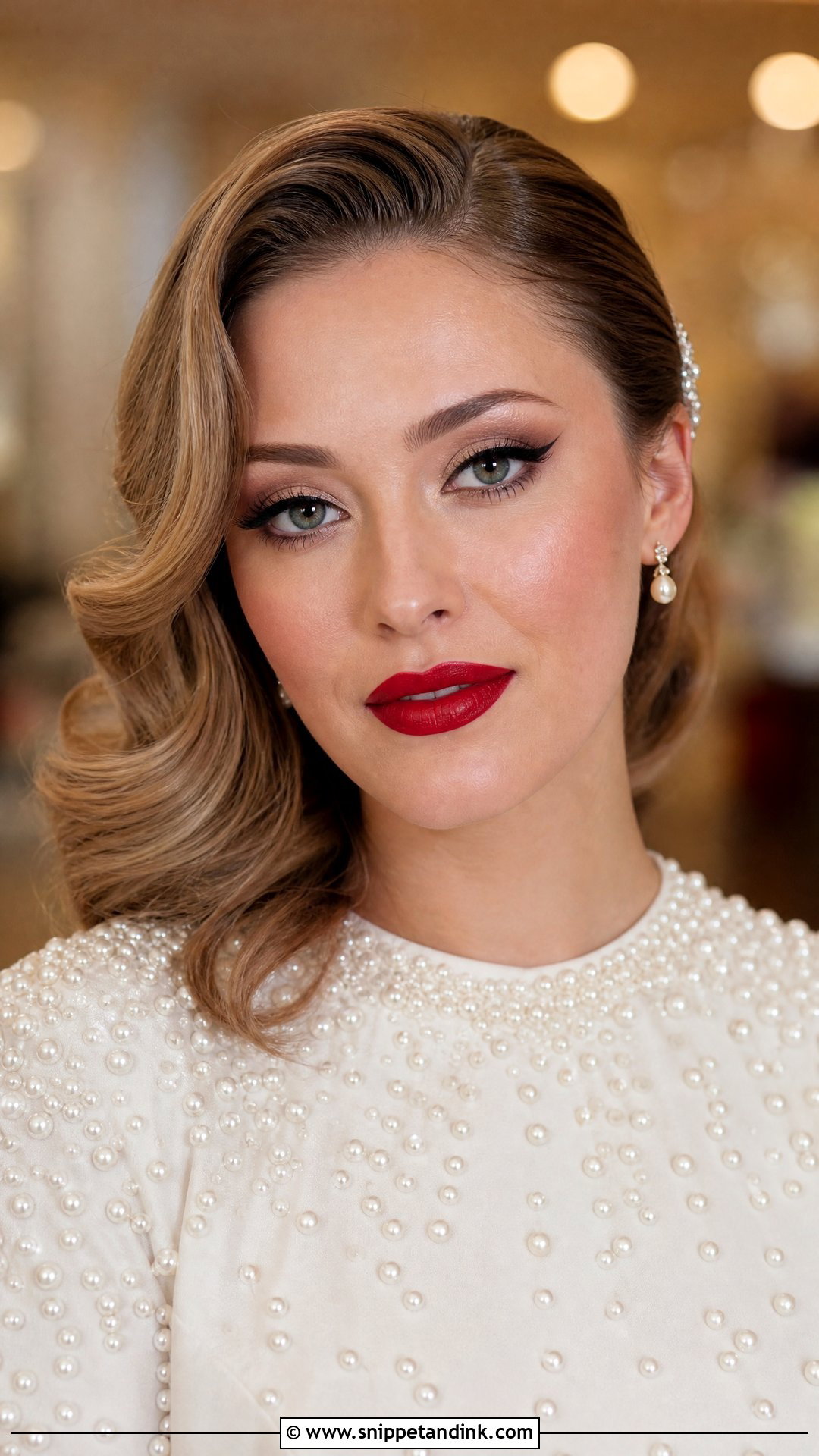
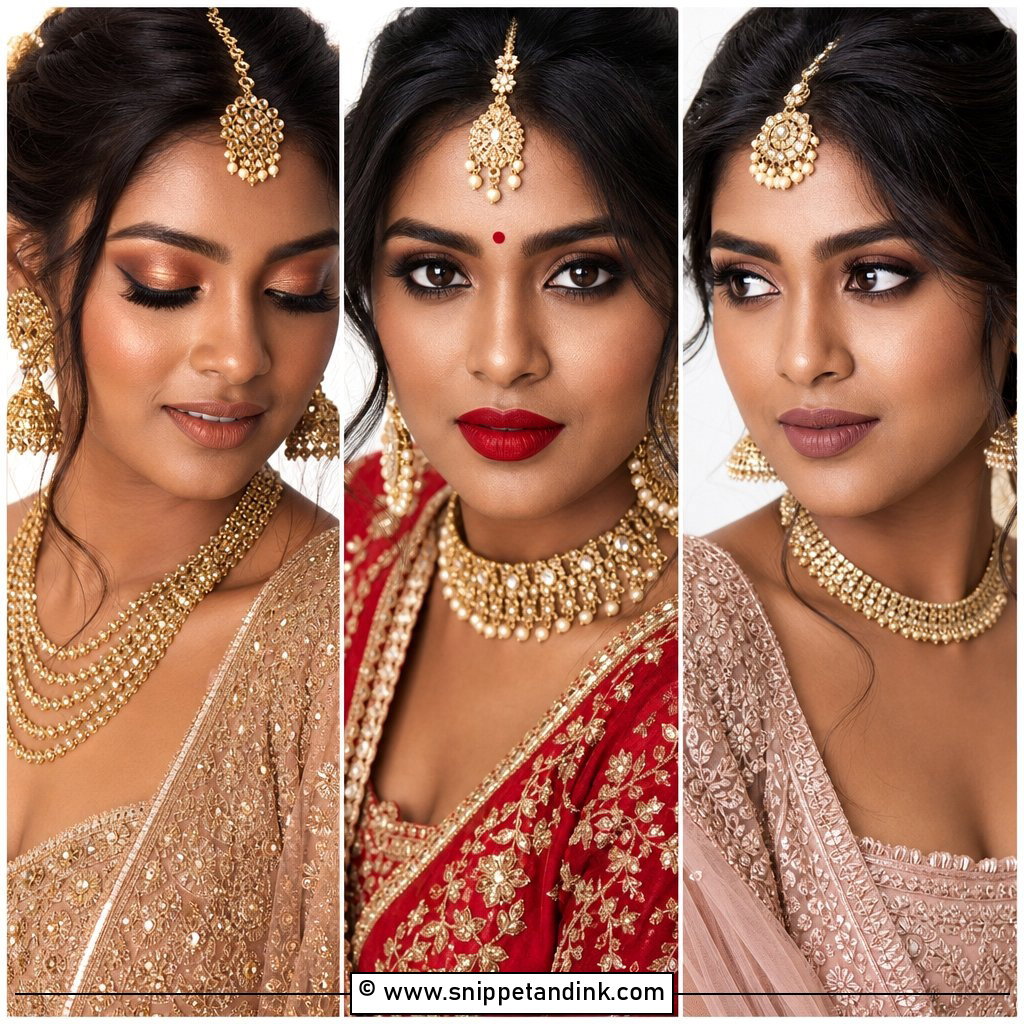
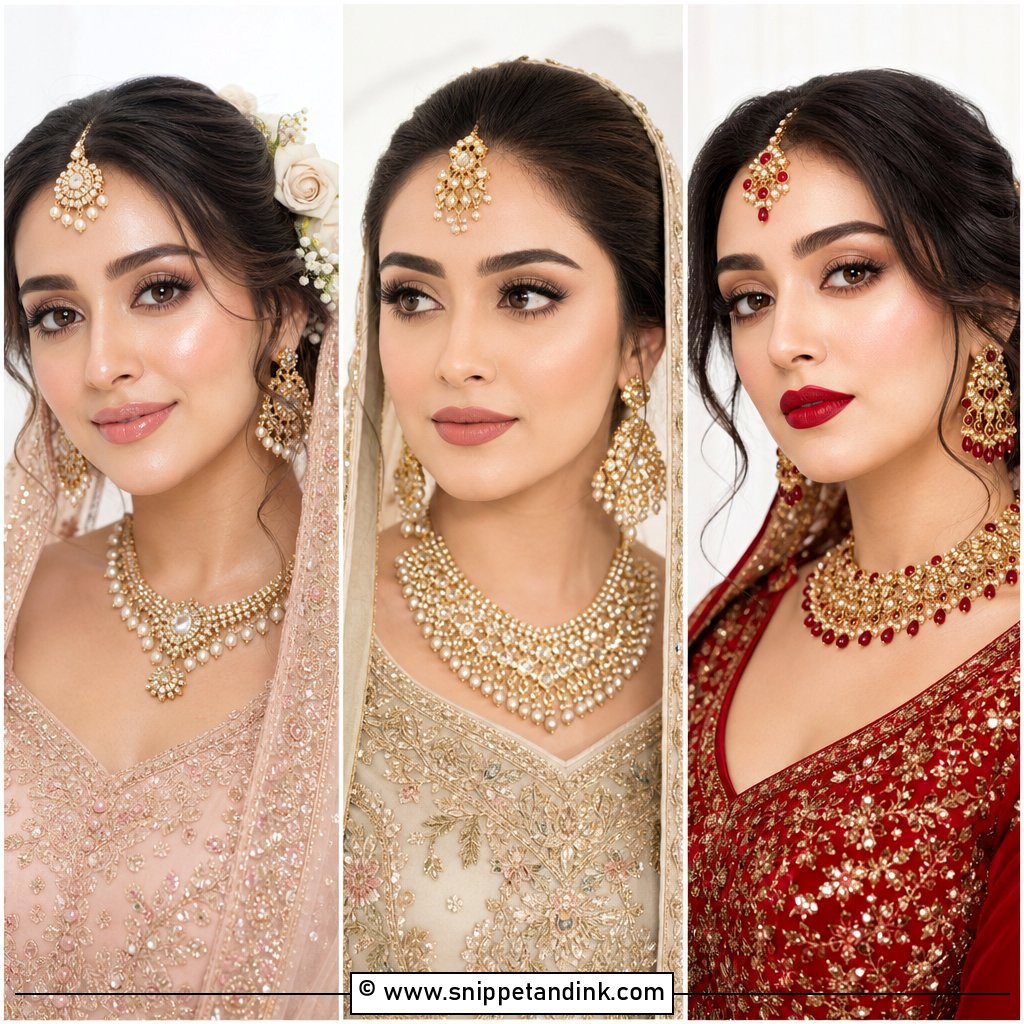
A red lip is one of the boldest bridal choices, and it only works when everything else steps back: soft eyes and flawless skin. Match the red to your undertone, blue-red for cool skin, true red for neutral, warm tomato red for golden skin. Keep the blush quiet so it doesn’t compete. On the eyes, champagne shadow, thin liner and defined lashes are enough, and brows should be shaped but not dark. I’d suggest this only to brides who already wear red and like it. If it’s new to you, the wedding isn’t the day to start.
6. Pink Bridal Makeup
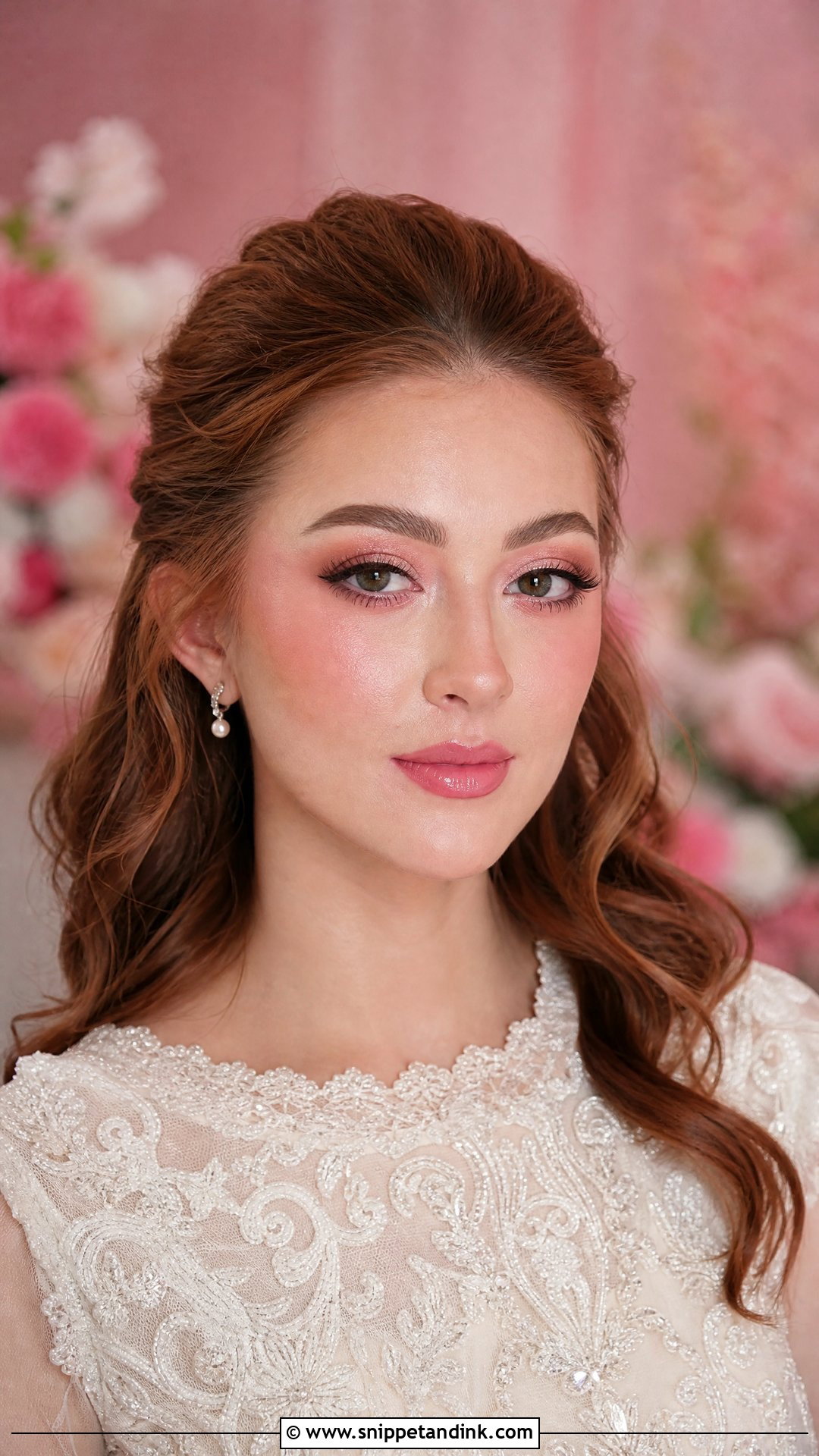
Pink can look sweet very quickly, so I build it in layers rather than one flat shade everywhere. Rosy beige on the eyes, a muted pink on the cheeks, a petal pink on the lips. Fair skin suits cool baby pink or rose. Medium and tan skin come alive in warm pink, coral pink or mauve rose, and deep skin glows in berry pink and rich rose. Brown liner and wispy lashes keep the eyes defined so the face doesn’t go soft-focus. A satin base keeps it modern rather than doll-like.
7. Peach Bridal Makeup
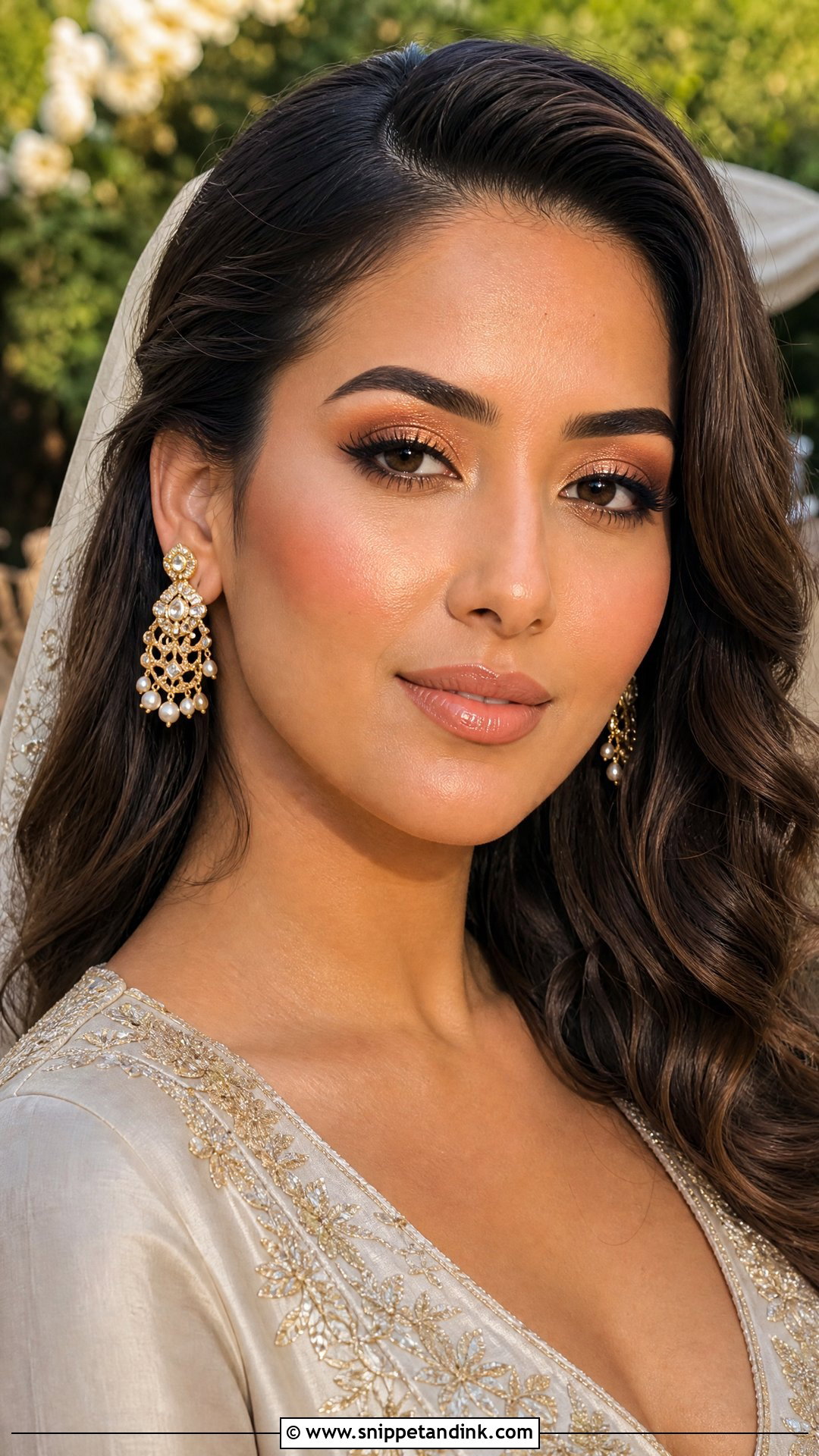
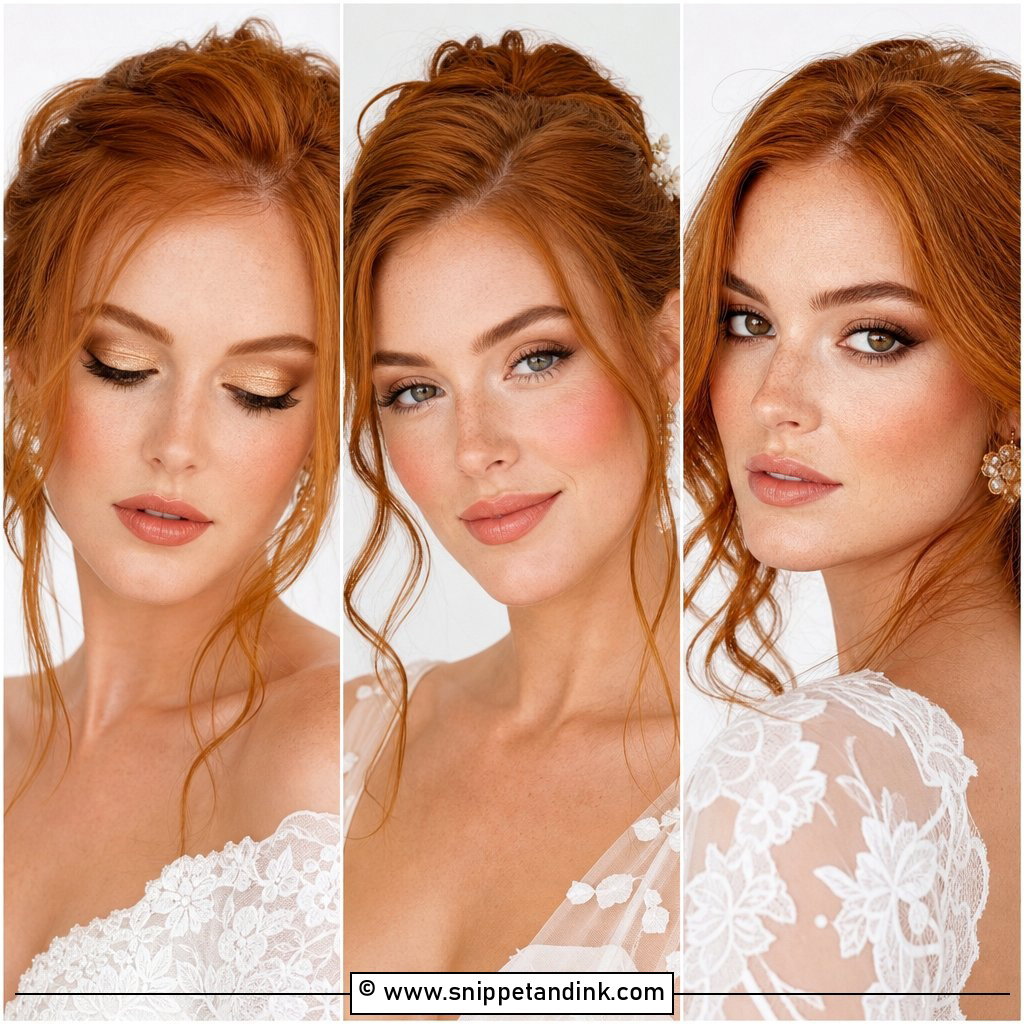
Peach warms and brightens the complexion without looking bold, which is why I often use it for outdoor and summer weddings. I lay a warm neutral base on the lid with a peach shimmer on top and a soft brown liner. Peach or apricot blush goes high on the cheeks, angled up toward the temple, which lifts the face in photos. A little bronzer at the hairline keeps it balanced. Lips can be peach nude or a warm beige gloss. It sits well with ivory dresses and warm-toned florals. On very fair, pink-toned skin, though, too much peach can look sunburned, so keep it sheer.
8. Smokey Eye Bridal Makeup
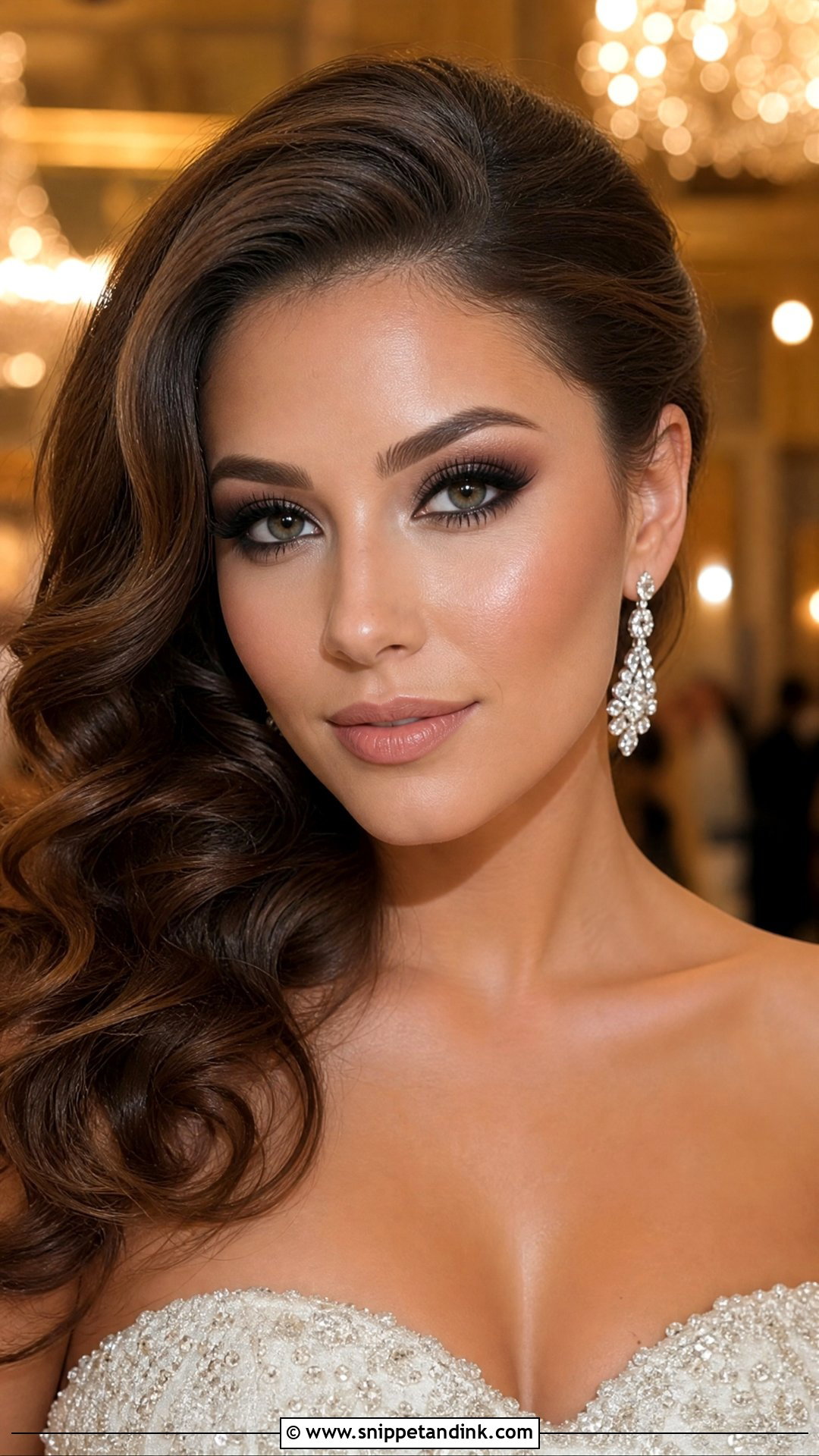
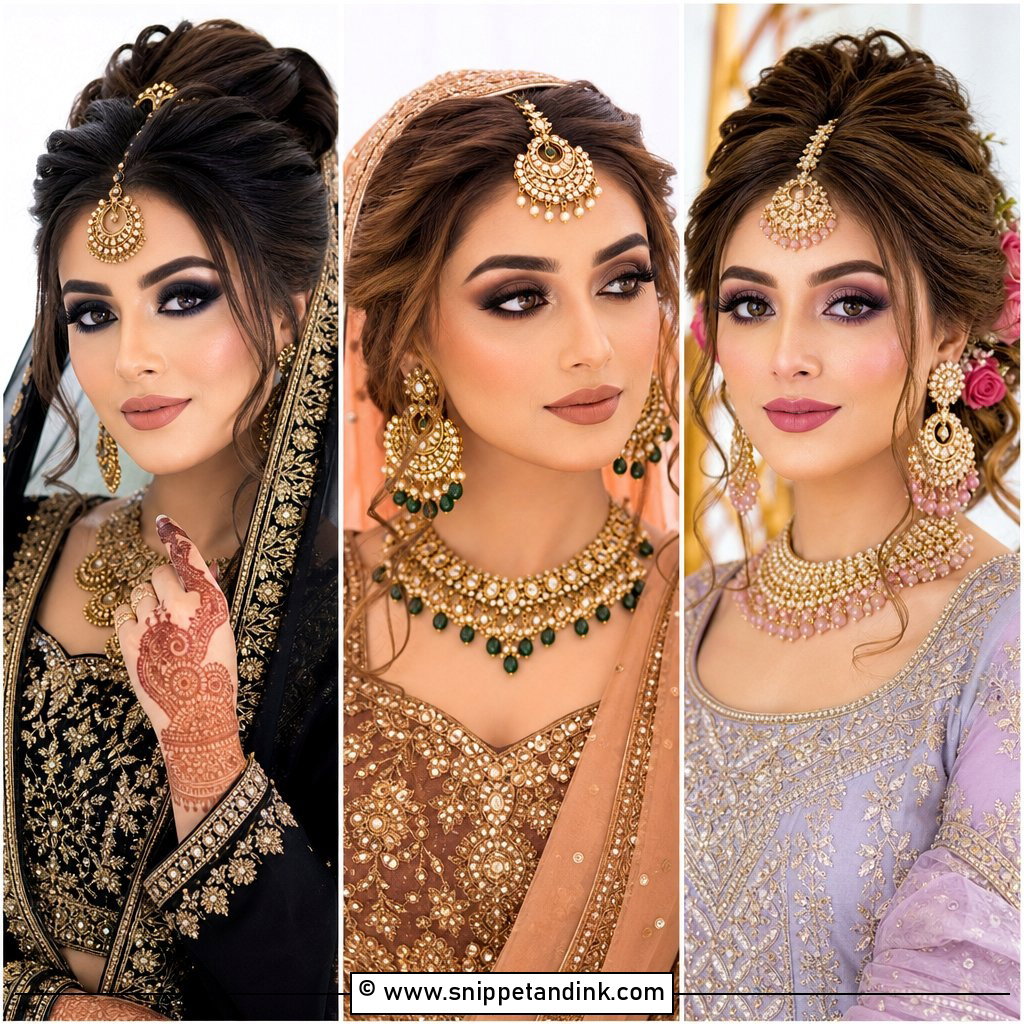
Smokey eye bridal makeup works when it lifts the eye rather than closing it. I skip flat black and use brown, bronze, plum or soft charcoal, with the deepest shade close to the lash line and blended upward and outward. Waterproof liner matters here; a smoky eye that smudges under the eye after crying reads as tired. Individual lashes and filled brows finish it. The skin stays clean, with neutral blush and only subtle contour, and the lip stays nude or soft mauve so the eye is the only focal point. I save it mostly for evening and formal receptions.
9. Bronzed Bridal Makeup
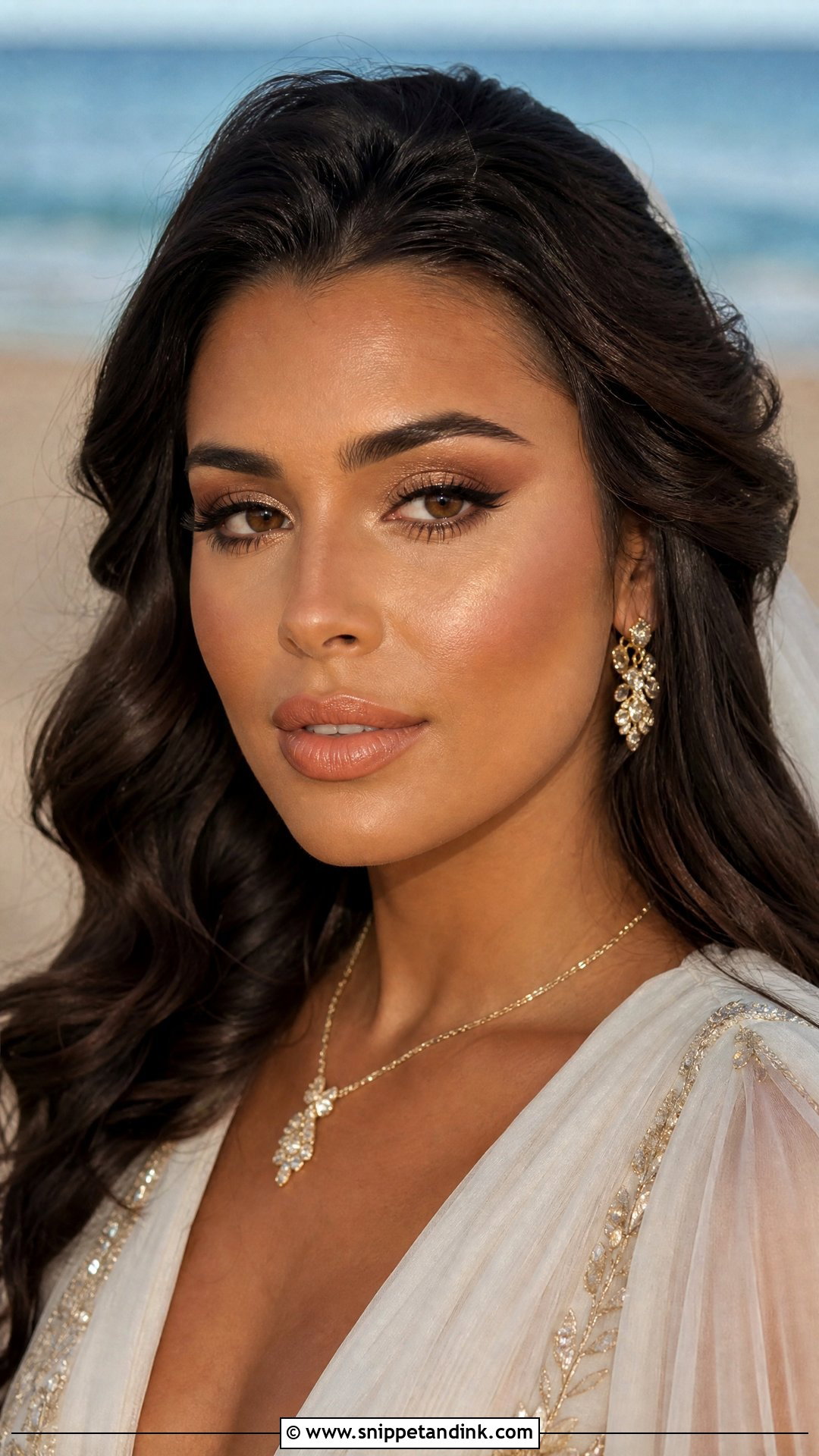
Bronzed makeup gives shape and warmth without needing heavy contour. I use a satin or natural matte foundation, then a soft bronzer where the sun would actually hit: forehead, cheekbones and the bridge of the nose, with a little along the jaw. Bronze or soft gold on the eyes with brown liner and fluffy lashes, then peach or terracotta blush. The highlight should be golden, never icy, or it fights the warmth. It suits summer and destination weddings. The common mistake is a bronzer that’s too orange for the skin, so test it next to your neck in daylight.
10. Rose Gold Bridal Makeup
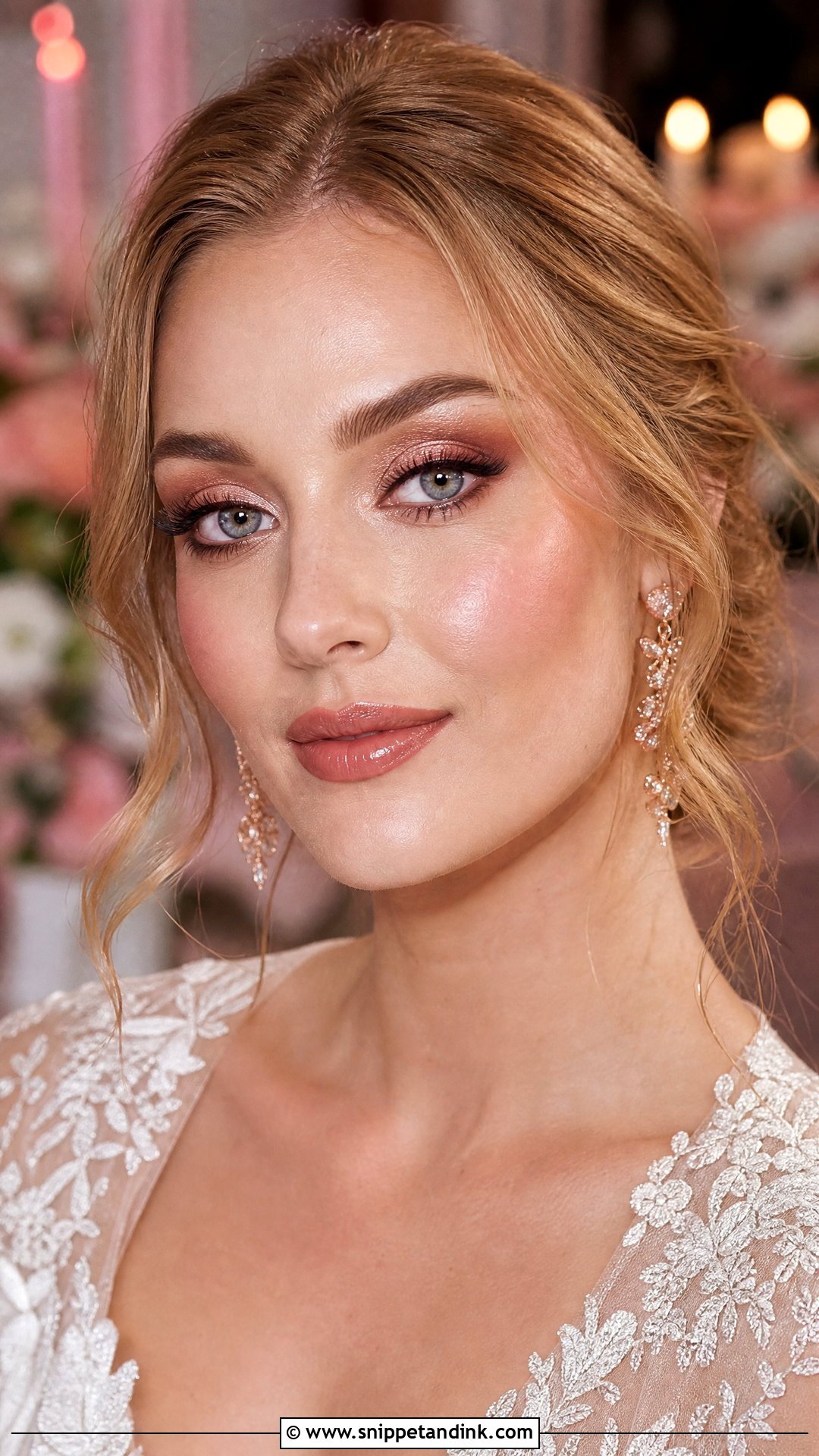
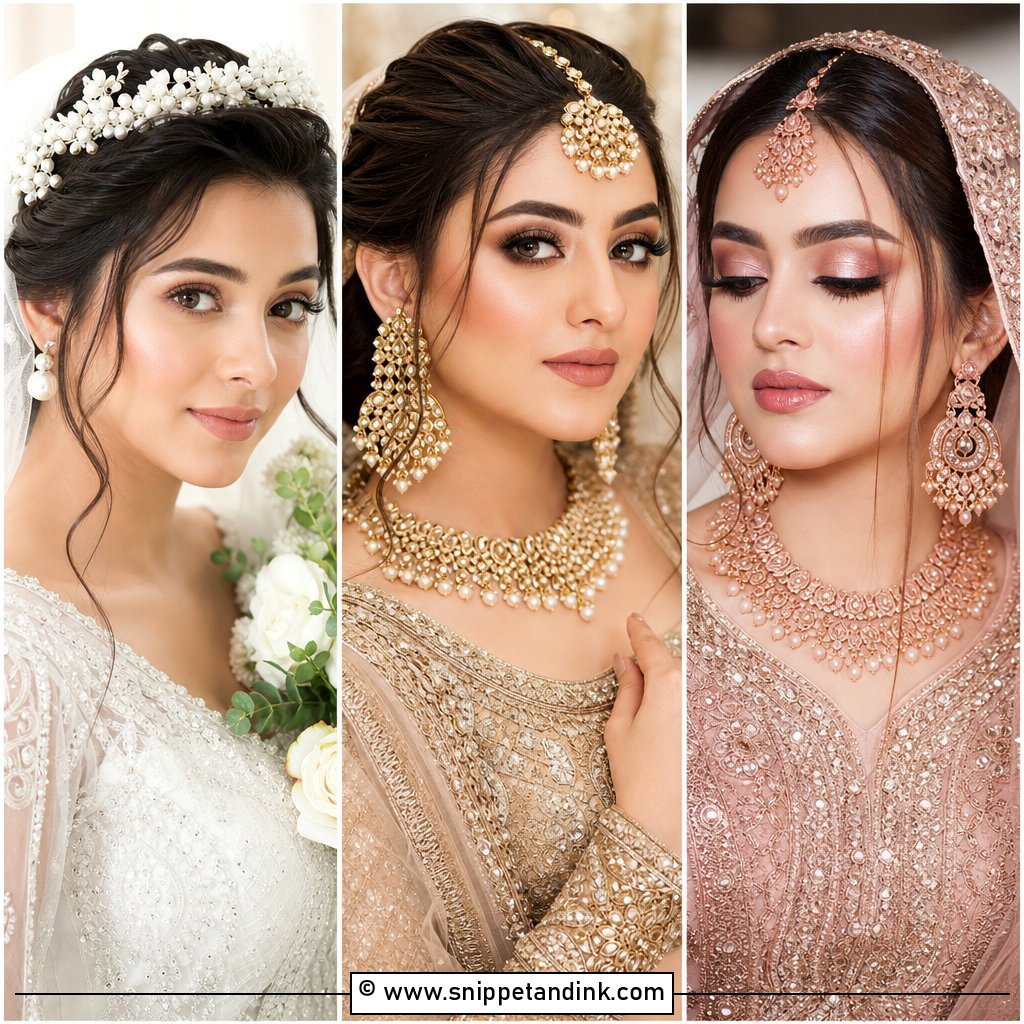
Rose gold puts the focus on the eyes with a shimmer that’s softer than gold and warmer than pink. I press rose gold shimmer onto the lid with a fingertip, which gives more shine than a brush, then blend matte mauve or warm brown through the crease and line with brown. Rose blush and a champagne-pink highlight carry the color into the cheeks, and a mauve gloss finishes it. It sits well with gold jewelry, blush-toned flowers and warm ivory gowns. Choose fine shimmer over chunky glitter, which lands on the cheeks and reads as oil in close-ups.
11. Brown Smokey Bridal Makeup
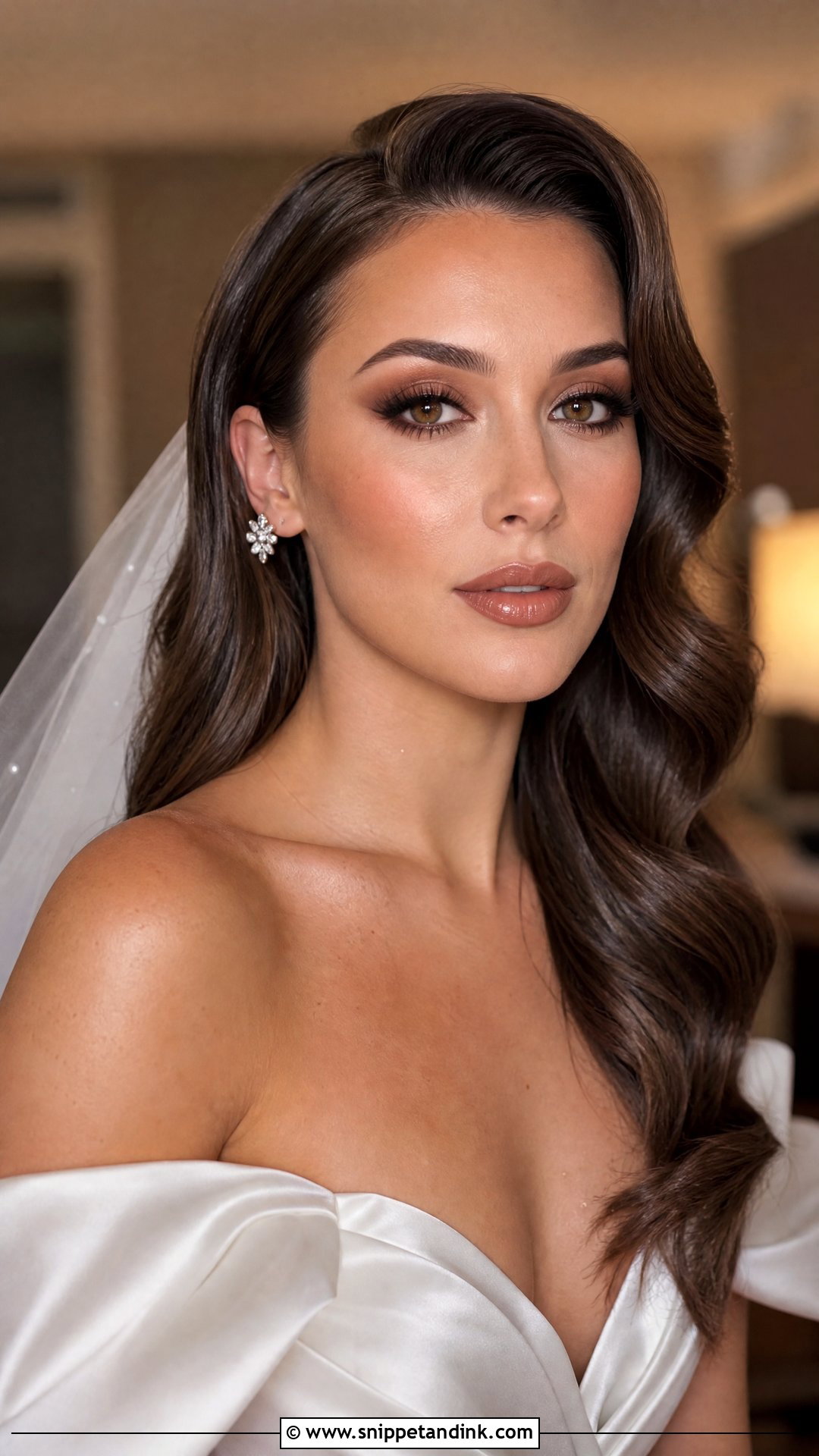
A brown smoky eye is softer than black but still gives strong definition, and brown flatters almost every eye color. I lay a matte beige base, medium brown in the crease and espresso at the lash line, with a touch of bronze shimmer on the center of the lid for brightness. The lower lash line stays soft. If you have hooded lids, I place the crease color slightly above your natural crease so it still shows with your eyes open. Cheeks stay warm but not heavily sculpted, and the lip is nude brown or soft caramel.
12. Winged Liner Bridal Makeup
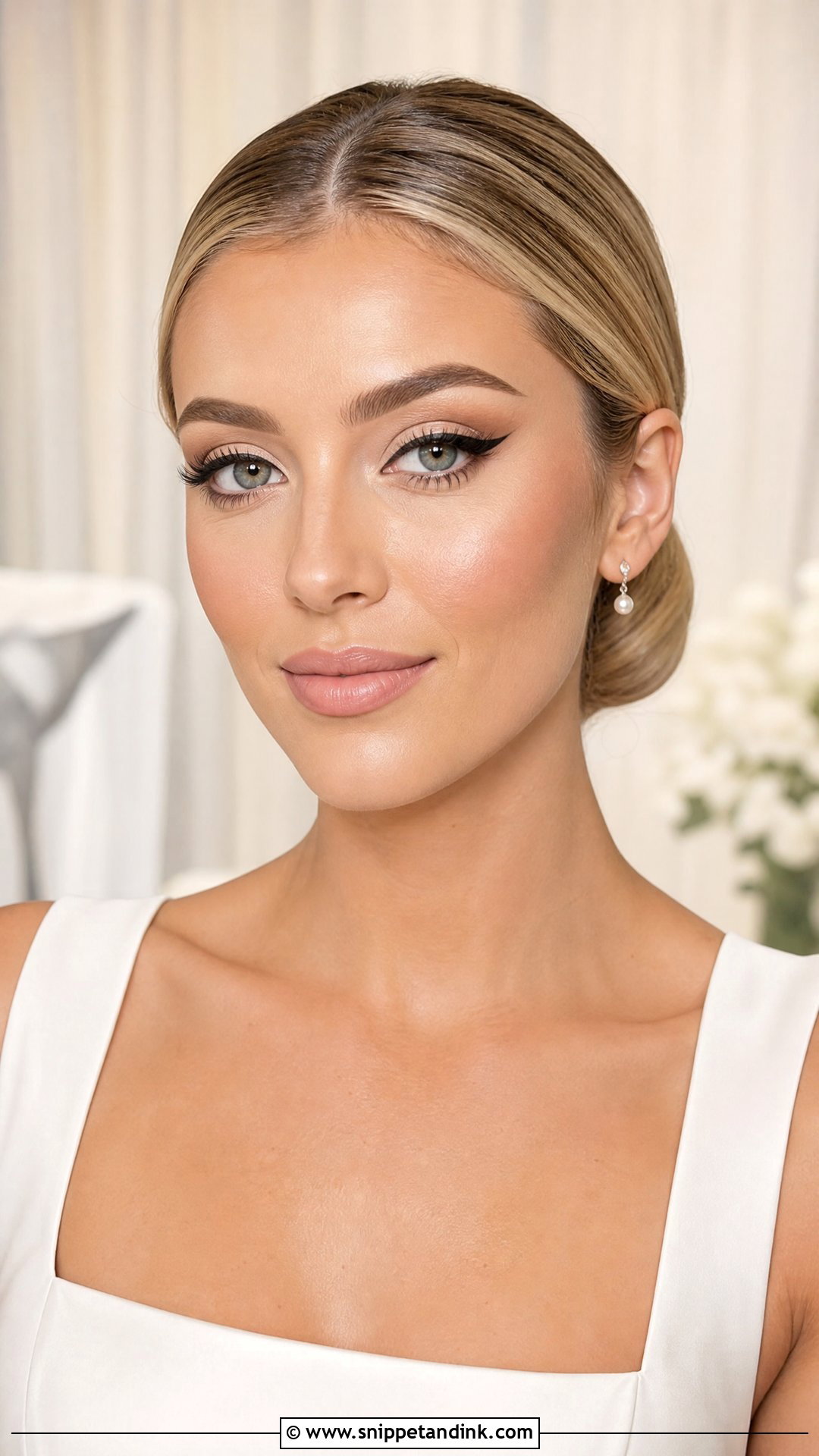
A winged liner needs the rest of the face to stay quiet. Matte cream, beige or soft taupe shades on the lid are enough. I draw a thin wing that follows the angle of your lower lash line, checking it with your eyes open, because a wing that looks right with the eye closed often kinks once you open it, especially on hooded lids. Waterproof mascara and comfortable lashes come next. Lips can be nude pink, peach or a classic red for more impact. It sits well with sleek buns, veils and minimalist gowns.
13. Full Glam Bridal Makeup
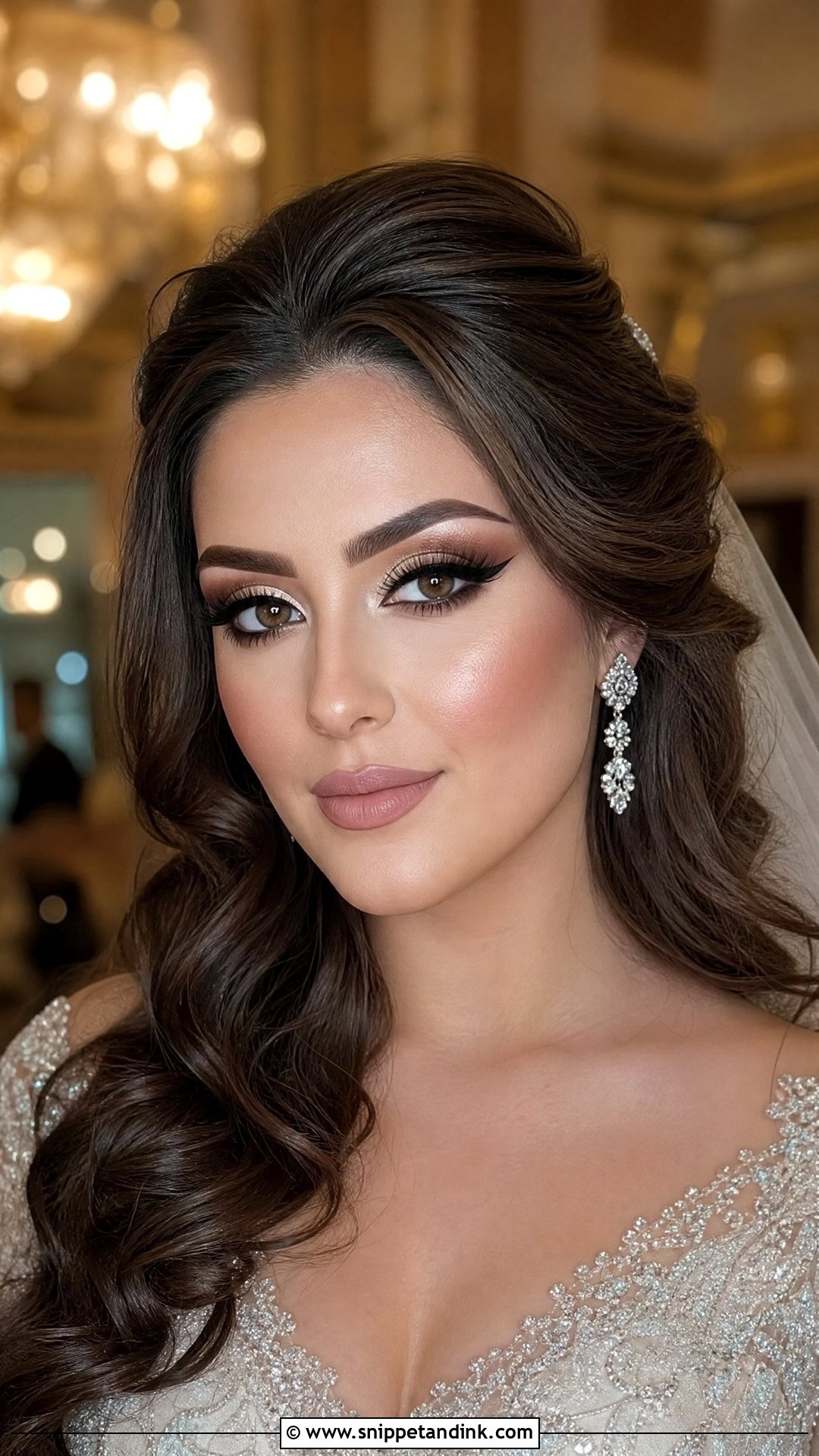
Full glam is for brides who wear makeup often and want their features to stand out. The danger is looking harsh in daylight, so everything has to be blended. I use full-coverage foundation, brighten the under-eyes, add soft contour and set the base well. The eyes can carry a cut crease, shimmer, winged liner and fuller lashes, with sculpted brows and a lined lip in a satin or matte nude, mauve or caramel. It suits formal venues, evening weddings and dramatic gowns. If you rarely wear this much makeup, try it for a full afternoon at your trial before committing, as it can feel heavy.
14. Minimal Bridal Makeup
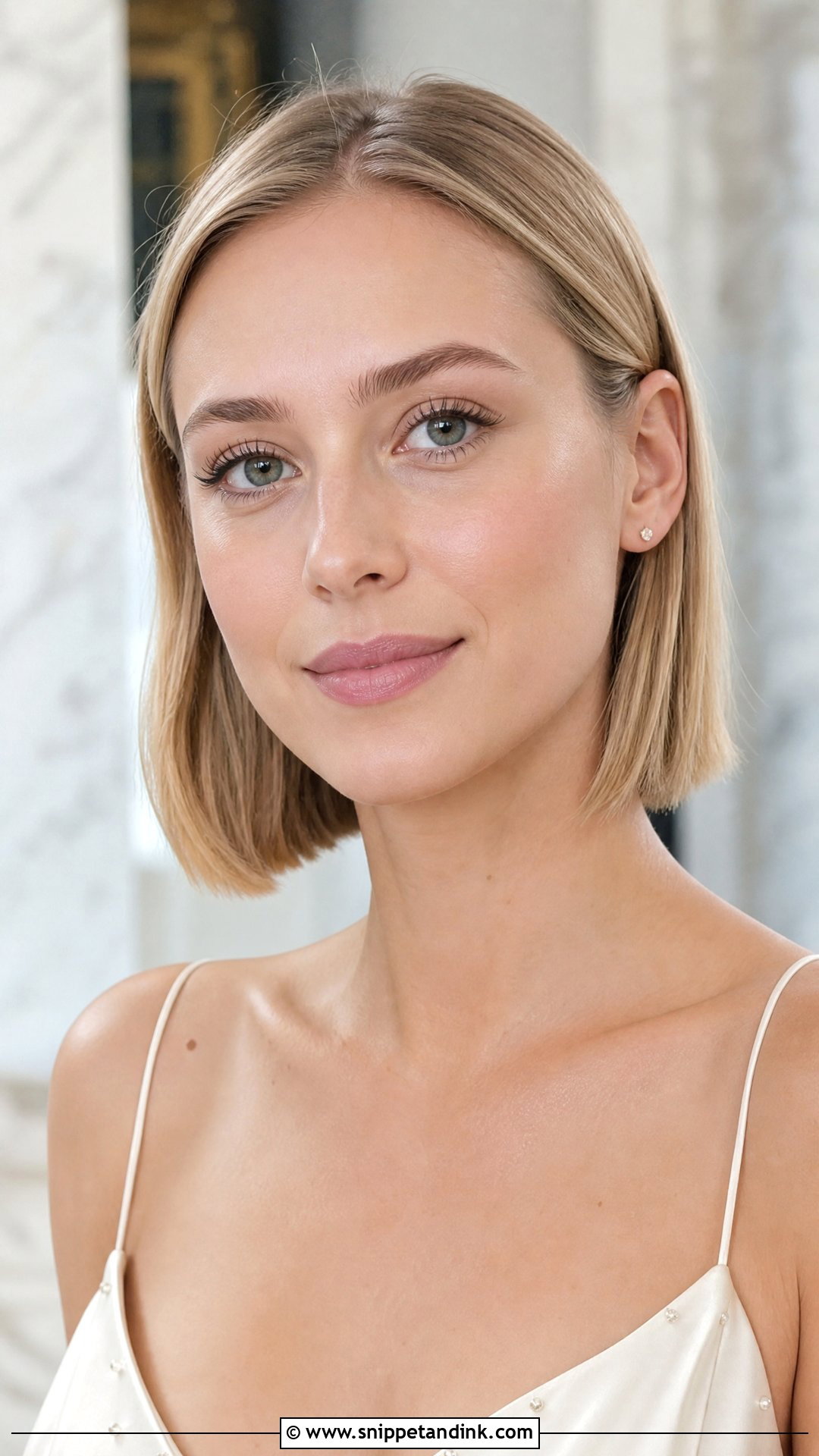
Minimal makeup is not the same as no makeup. It’s fewer products placed carefully. I prep the skin well, use a sheer foundation and spot-conceal, brush the brows up with gel and fill only the gaps with pencil. A wash of cream shadow, curled lashes and light mascara define the eyes. Cream blush and a lip tint keep it fresh, and a tiny amount of powder controls shine where you need it. It suits courthouse weddings, casual ceremonies and modern gowns. Because there’s so little coverage, start your skincare routine early; good skin does most of the work here.
15. Vintage Bridal Makeup
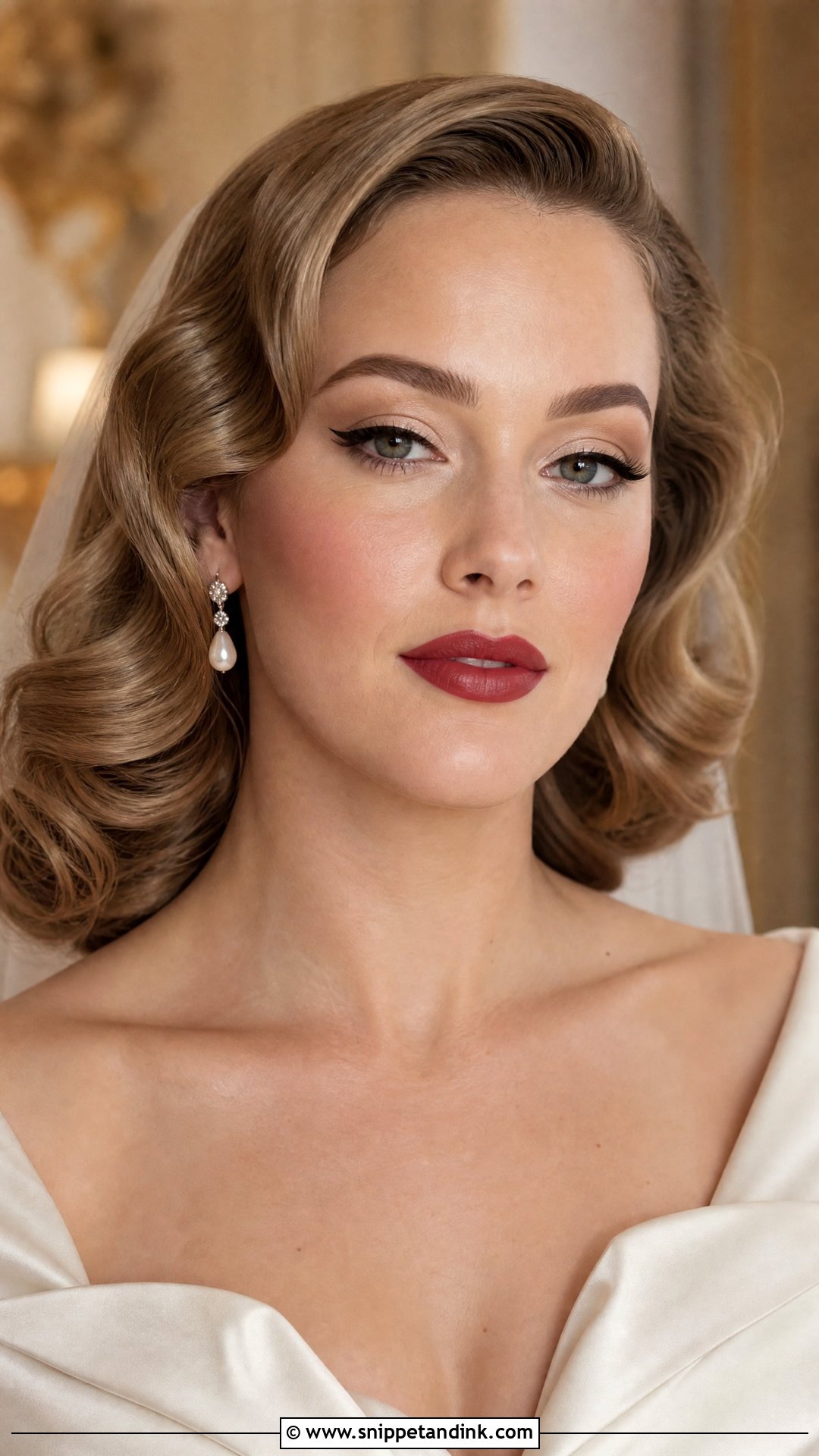
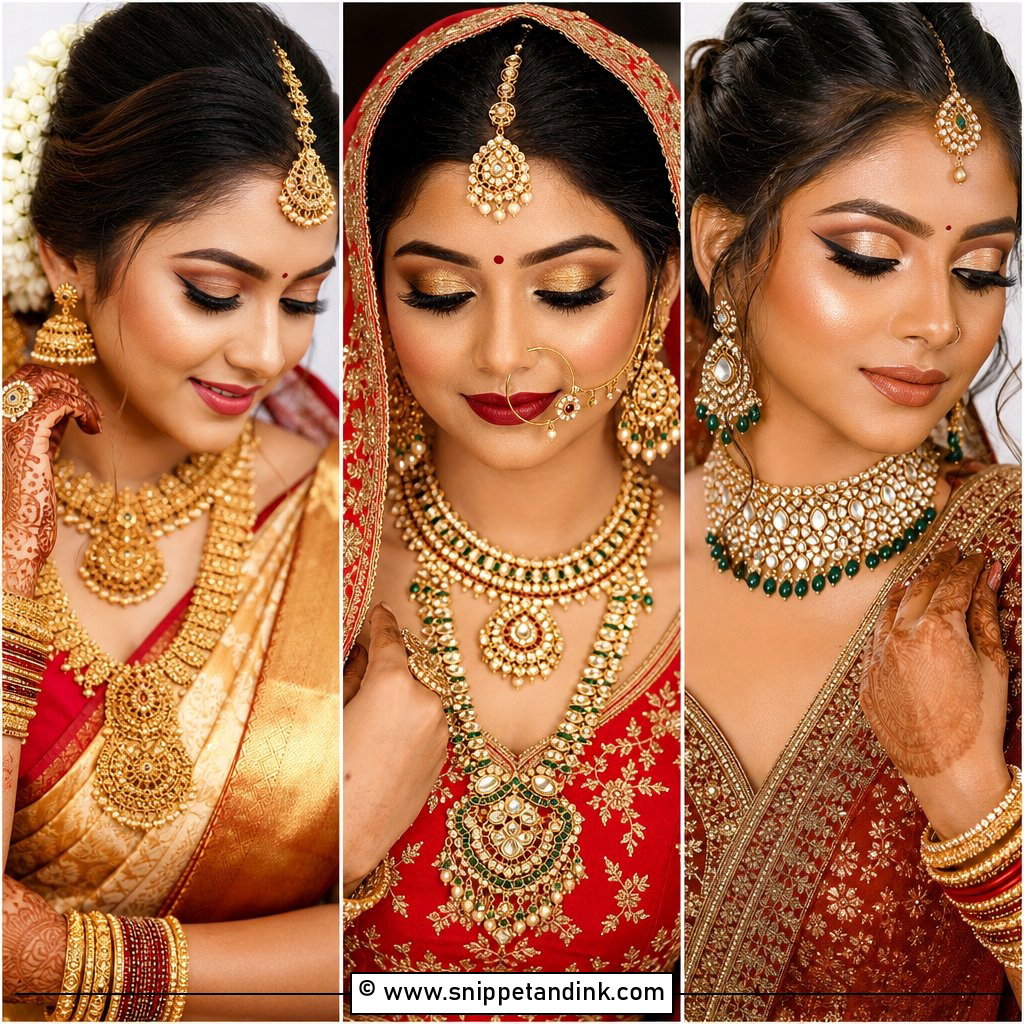
Vintage makeup works best when you choose one or two classic details and keep the skin modern. I’d go with a defined brow, clean black liner and a red, berry or rose lip, over softly powdered satin skin. The eyes stay simple with cream shadow and subtle crease contour. Blush goes on the apples, not low or heavy, which is what tends to make vintage looks feel dated. A touch of highlight on the high points keeps the face fresh. It pairs well with structured gowns, pearls, sleek waves and classic updos.
16. Neutral Bridal Makeup
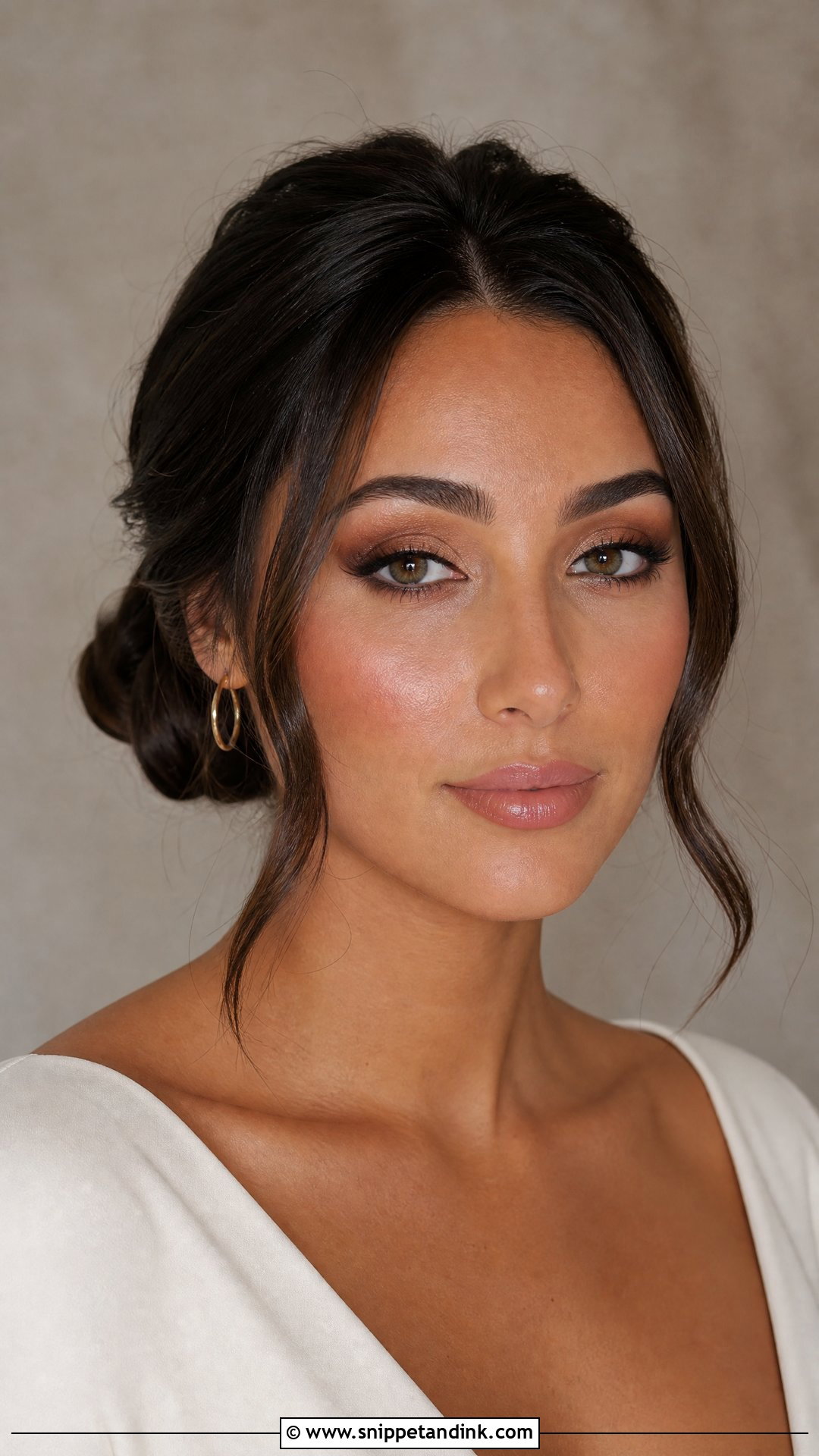
Neutral makeup is the safest choice, since it works with almost every dress, season and color palette. The shades sit close to natural skin: beige, taupe, soft brown, champagne and muted rose. Eyes get gentle depth with brown liner and natural lashes, and the skin can be satin, matte or softly dewy depending on what yours prefers. My rule for the lip is one or two shades deeper than your natural color, enough to show up on camera without becoming a feature. It’s easy to personalize, and it won’t look tied to a particular year in photos later.
17. Mauve Bridal Makeup
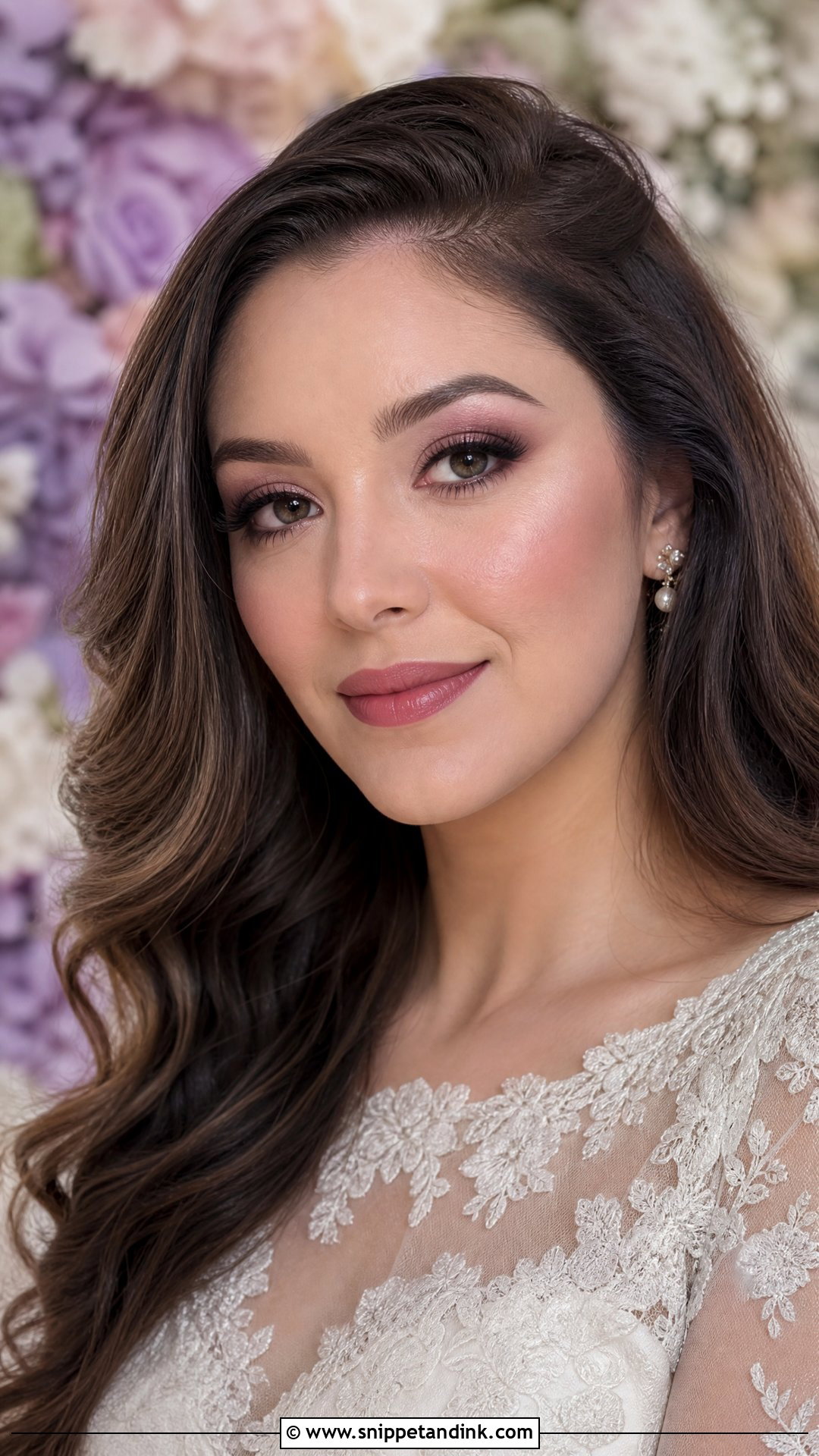
Mauve bridal makeup gives more color than nude but less intensity than berry or red. I use mauve-taupe in the crease, a satin pink-mauve on the lid and brown liner, then a rosy mauve blush and a matching lipstick or gloss. On deeper skin tones, a richer plum-mauve shows up properly where a pale mauve can look ashy. Mauve suits fall and winter especially but works year-round. Keeping the eyes, cheeks and lips in the same color family is what makes it look considered rather than mismatched.
18. Champagne Bridal Makeup
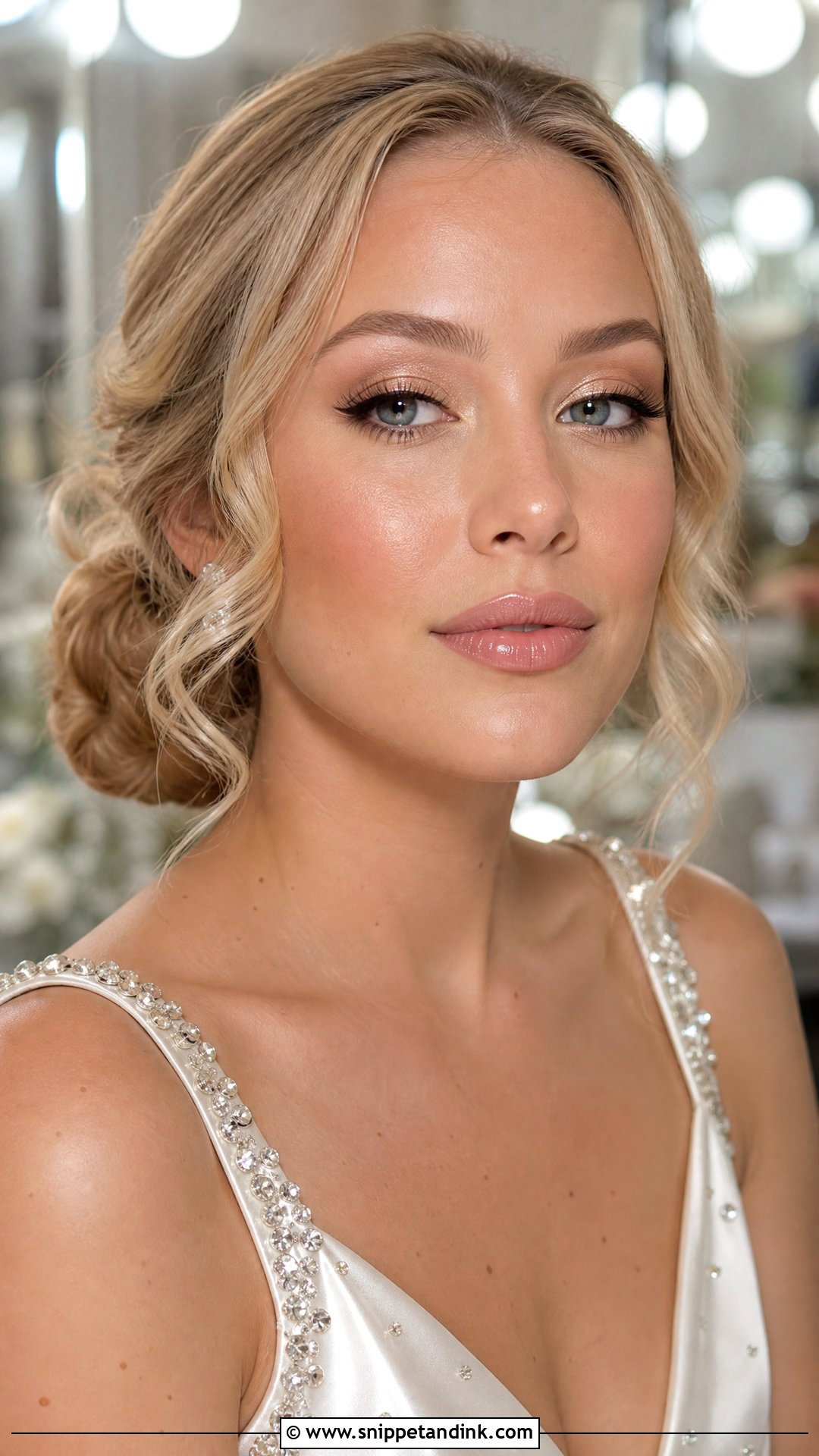
Champagne opens the eyes and lifts the face with light rather than color. I put champagne shimmer on the lids and inner corners, blend soft taupe or warm beige through the crease, and add thin liner, curled lashes and natural brows. The skin stays smooth, with peach or pink blush and a soft champagne highlight. Lips stay neutral. It suits satin gowns and crystal details. Be careful with highlight placement: champagne on the cheek, inner corner and brow bone is plenty, and adding it to the nose and chin too often reads as shine in flash.
19. Berry Lip Bridal Makeup
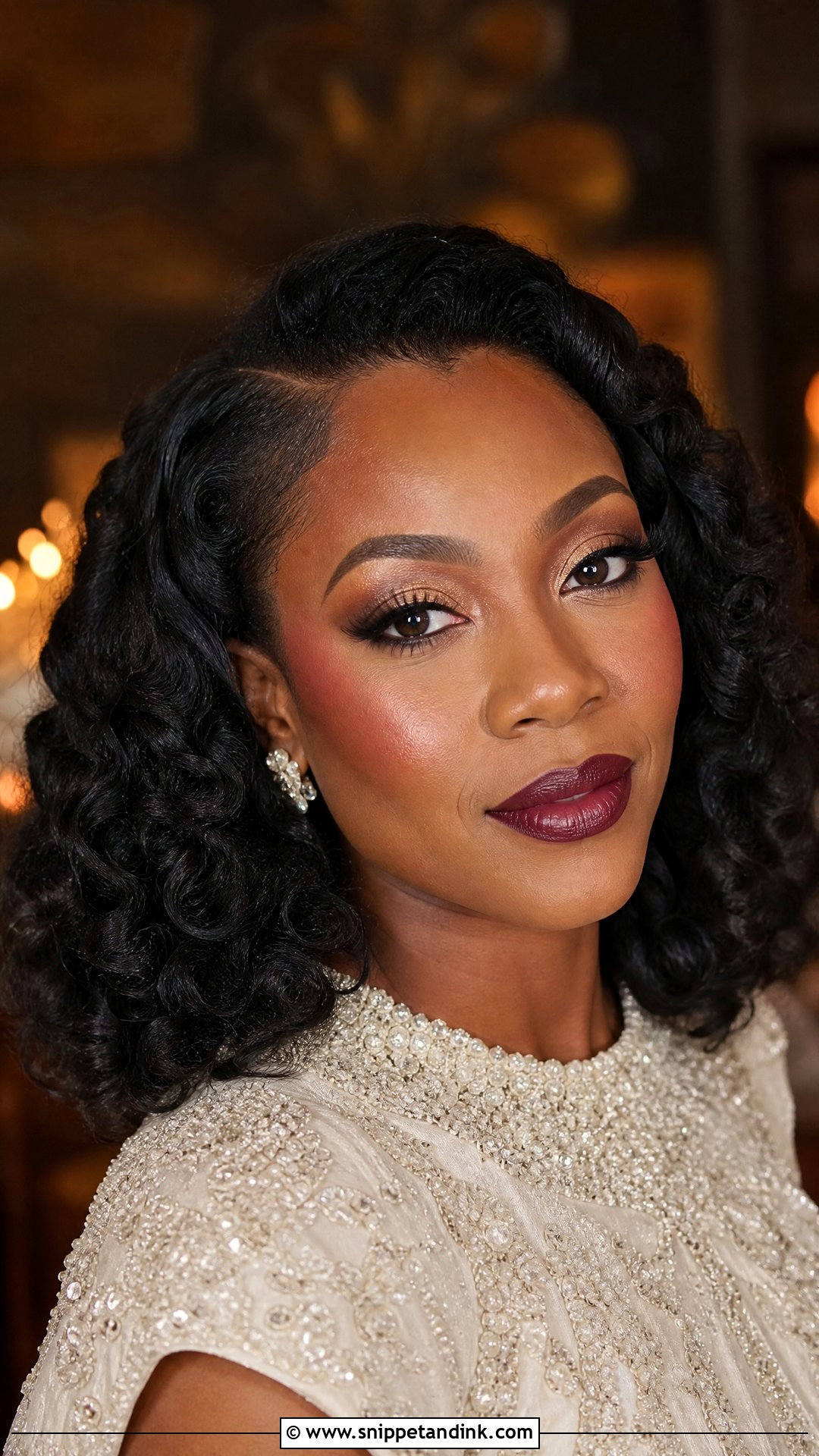
A berry lip is a softer alternative to red and suits fall, winter and evening weddings. Choose the shade by your depth: raspberry for lighter skin, cranberry for medium, wine berry for deep. I keep the eyes soft with champagne or taupe, then define the lashes and groom the brows so the face doesn’t feel unfinished next to a strong lip. A blush with a hint of berry connects cheeks and lips. I line the whole lip before the lipstick, because berry is the shade that leaves an obvious ring once the center wears off.
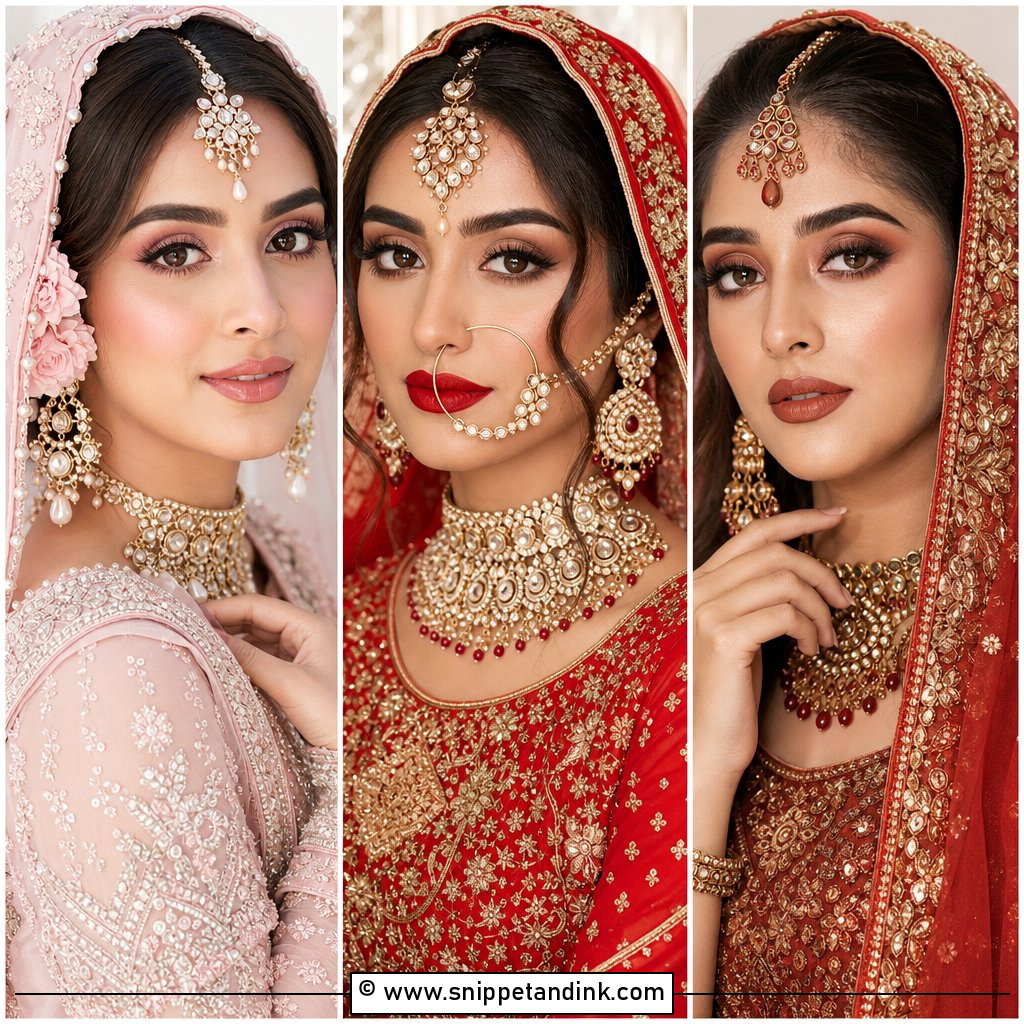
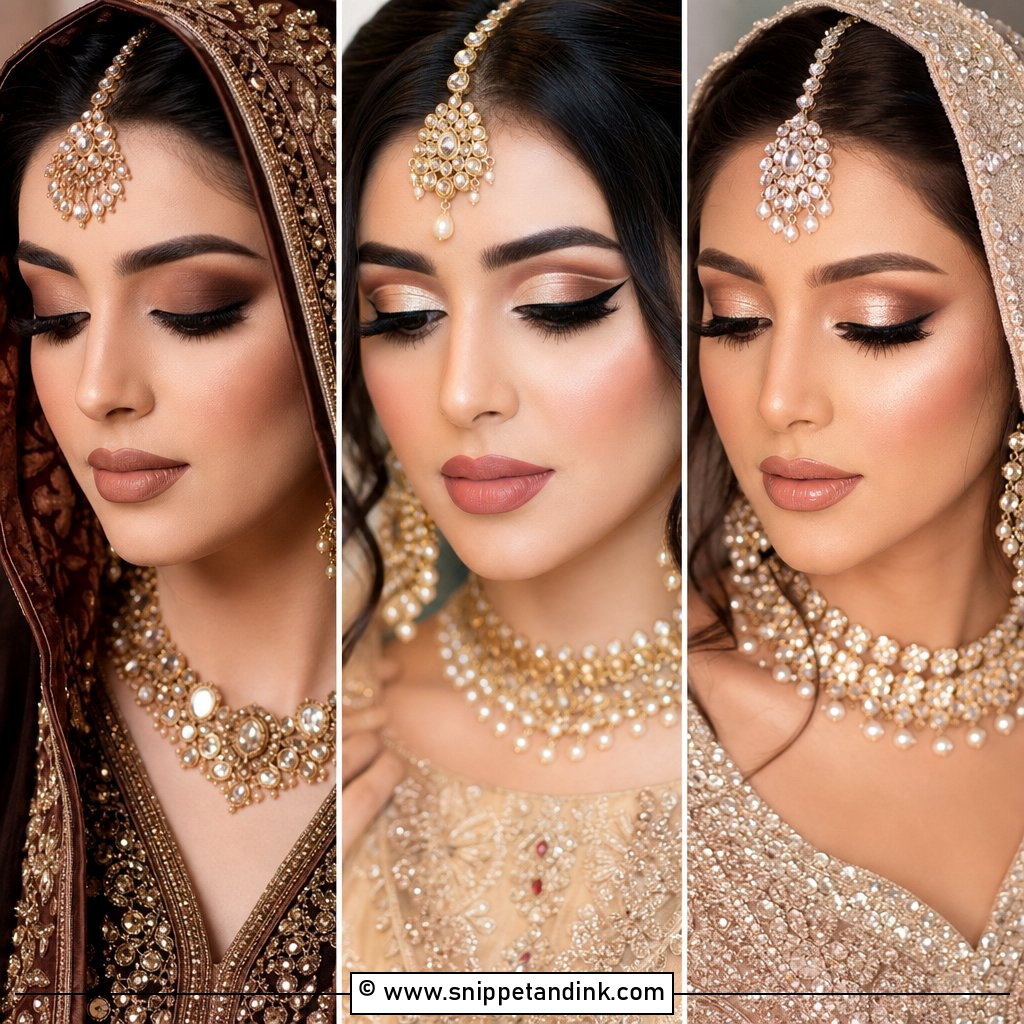
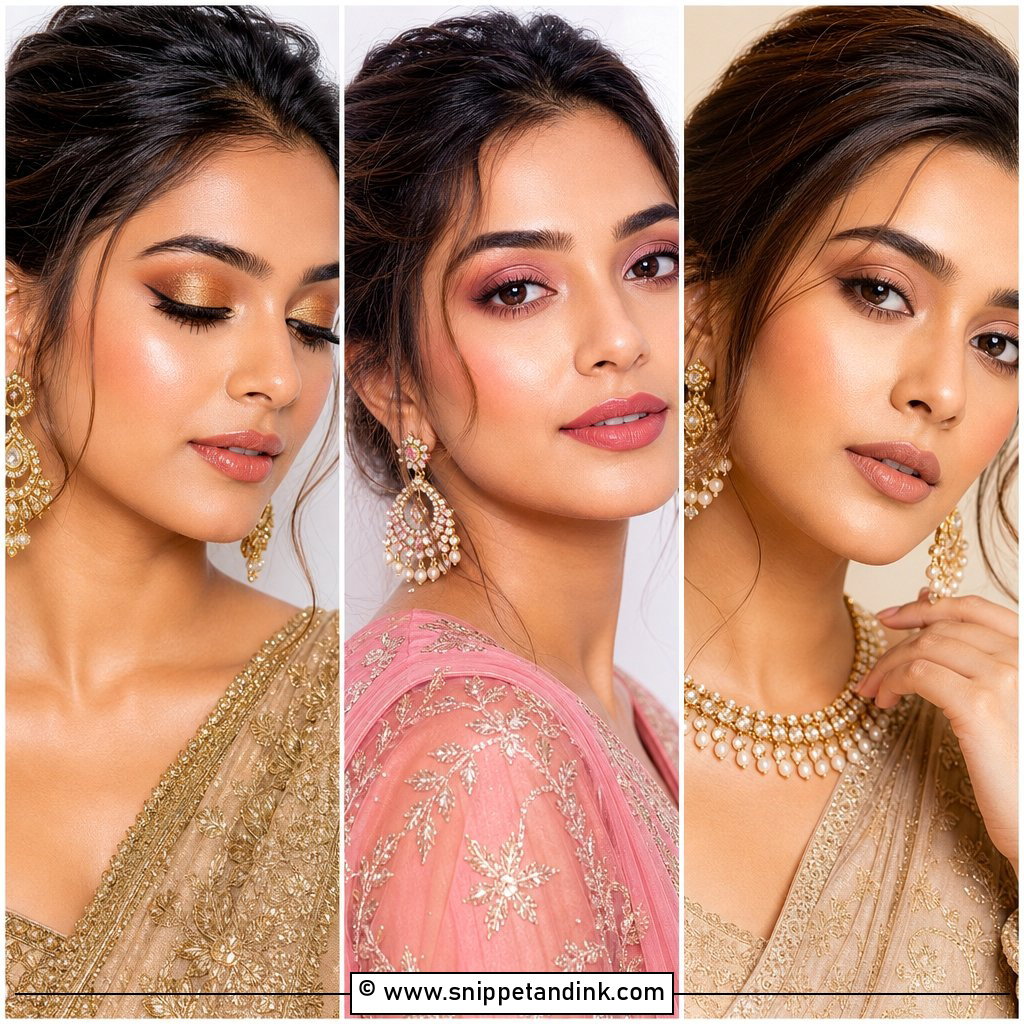
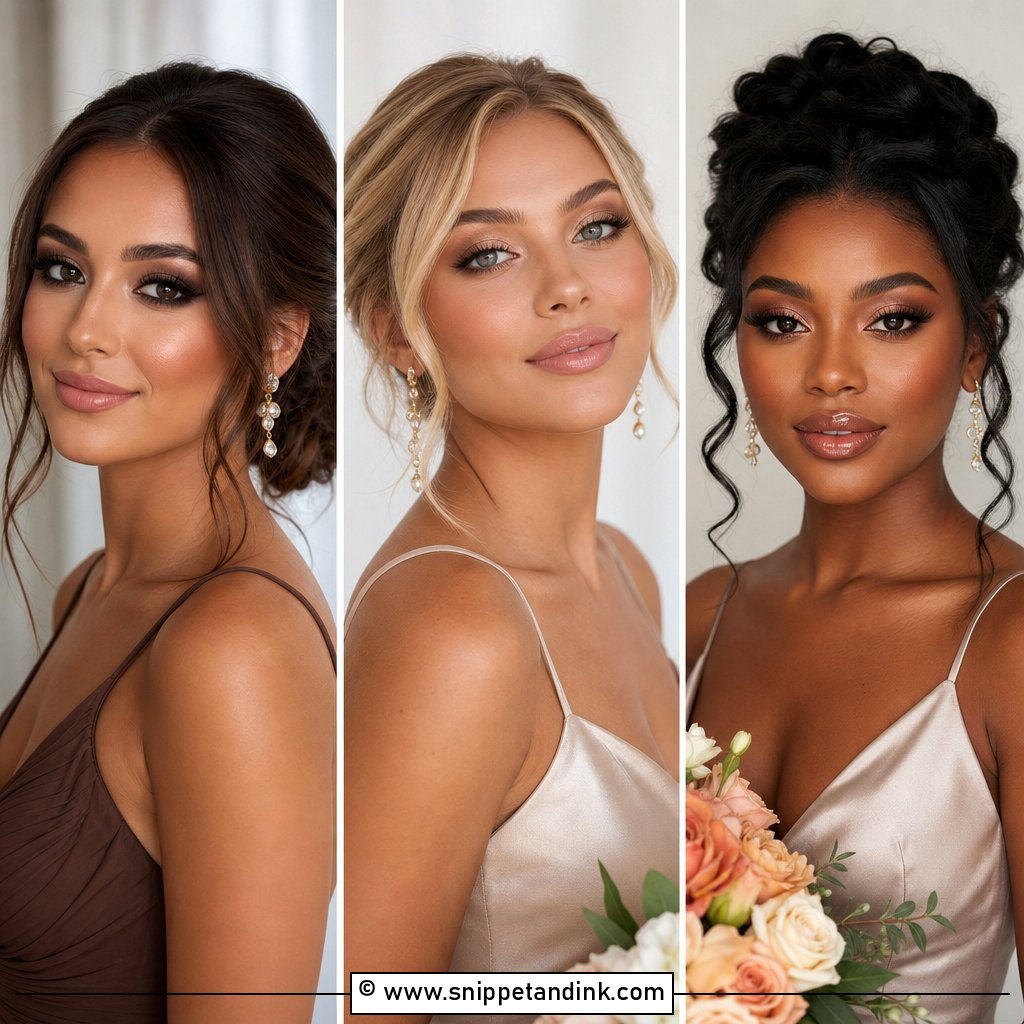
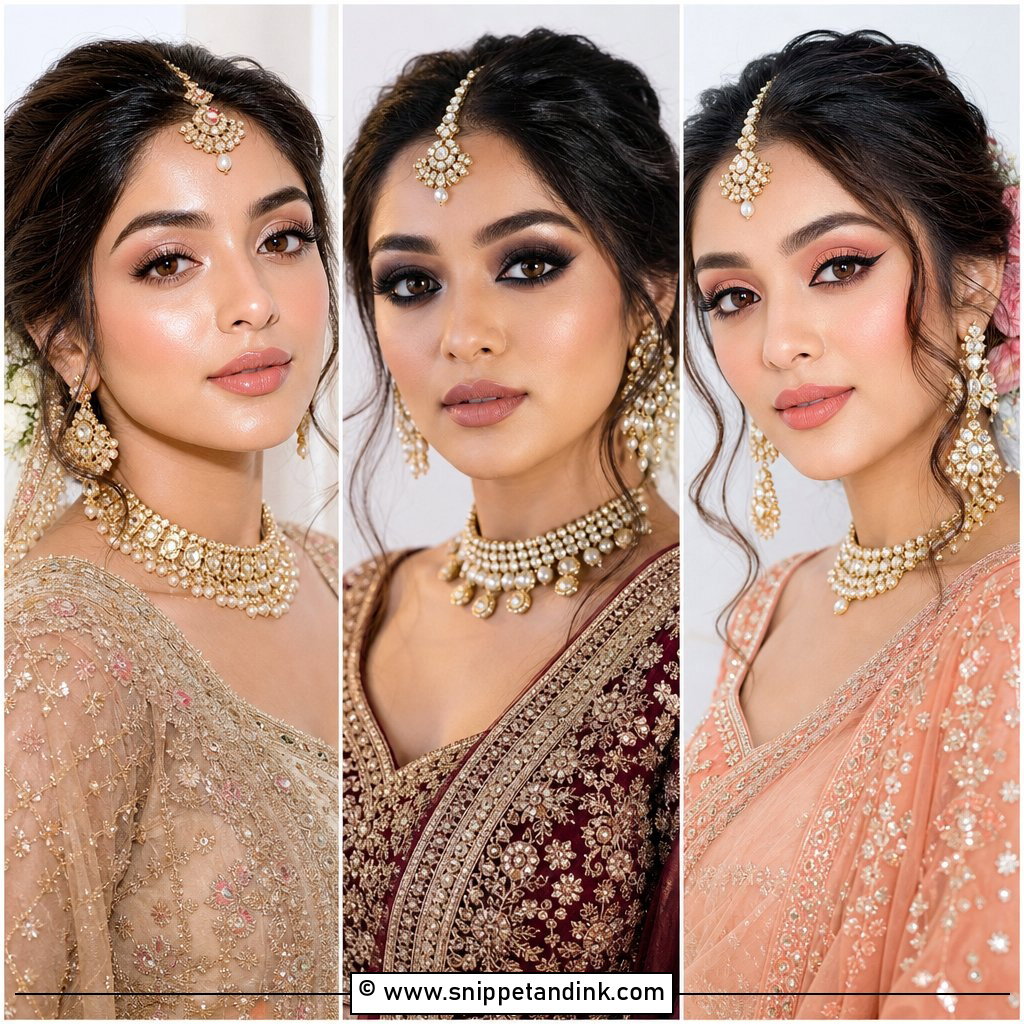
20. Golden Bridal Makeup
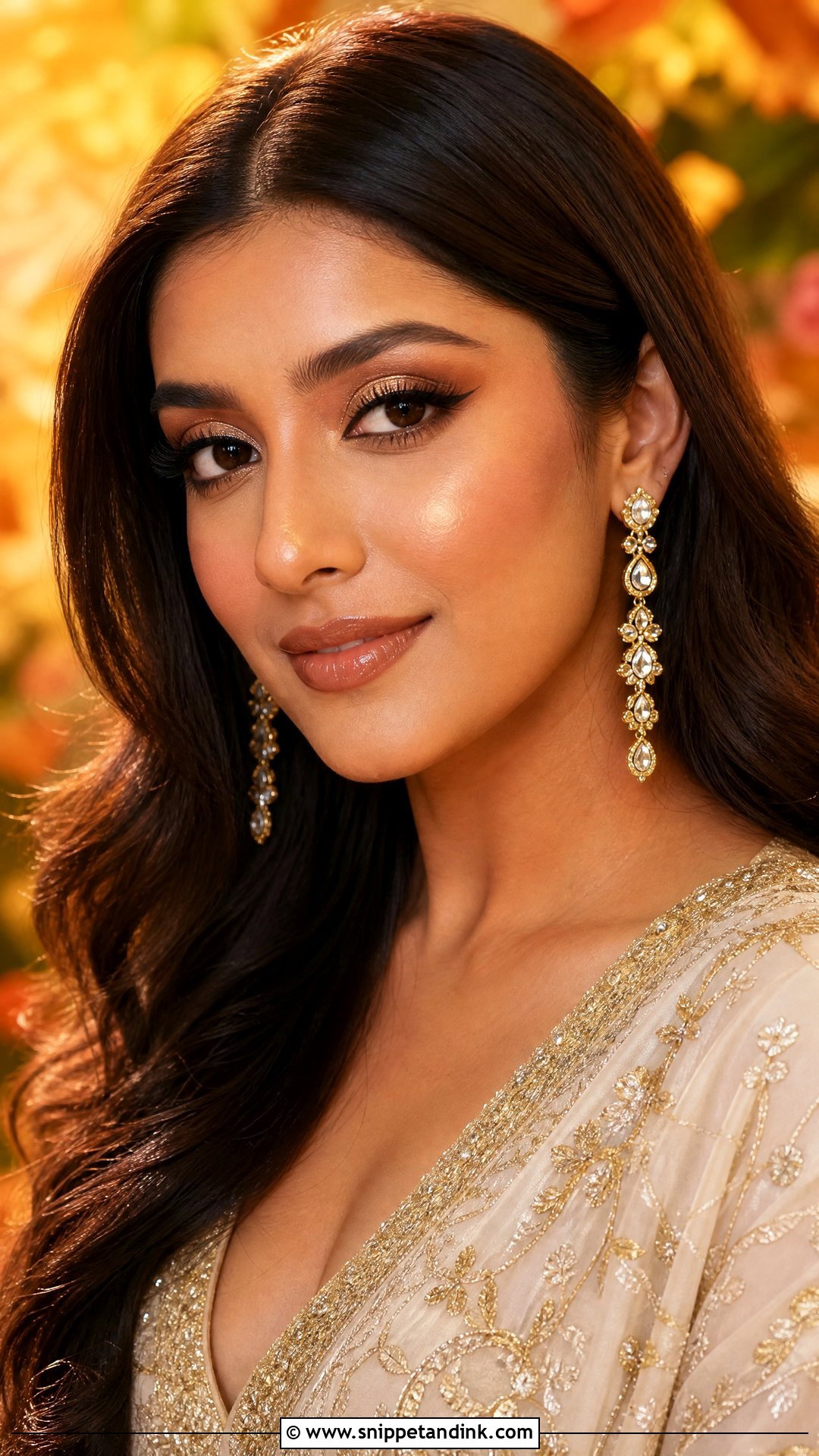
Golden makeup adds warmth and a celebratory glow, and it shines at sunset ceremonies with gold jewelry and ivory gowns. I use gold or antique gold shimmer on the lids, blend caramel or bronze into the crease and line with brown, which keeps it softer than black. Bronzer, warm peach blush and a golden highlight follow, with a peach nude or caramel gloss on the lips. Warm undertones wear it best; on cool skin I mix in a little rose gold. Set the base well, or the glow tips into looking shiny.
Why the Camera Wants a Little More Than the Mirror
Wedding makeup is seen twice: once by guests standing a few feet away, and once by a camera with strong light. The camera flattens a face. It softens cheekbones, washes out blush and makes lips look paler, so I place a touch more definition than you’d wear to dinner. In the mirror that can feel like a lot. In the photos it looks like you on a good day.
Flash also shows things the mirror doesn’t. Some sunscreens and very white setting powders reflect flash and leave a pale cast on the face, so I avoid heavy SPF under bridal foundation and press in powder that matches the skin. Chunky shimmer reads as oil in close-ups, and lash glue can catch light if it isn’t dry before the lashes go on.
Then check the neck and chest. A foundation that matches your jaw but not your chest shows in every strapless or open-neckline photo. I blend down onto the neck and, for open necklines, add a little bronzer or body glow to tie them together. At your trial, ask someone to take flash photos from a few steps back and look at them on a big screen. They show far more than a mirror does.
Test It in Daylight, Under Flash and After Six Hours
The right look is the one you still feel like yourself in at the last dance. Trends can point you somewhere, but your skin type, features, dress and venue should make the final call. Soft glam, bronzed skin, a red lip, a smoky eye or a near-bare face can all be bridal when the details are balanced. Wear your trial makeup for the rest of the day: look at it in daylight, take flash photos and check it after several hours. Then pack your lip color and blotting papers for touch-ups.
You'll Like These Ideas:


Leave a Reply