
That floating, lit-from-within look comes from fabric more than from decoration. Angelic wedding dresses rely on airy tulle, flowing chiffon, soft satin, fine lace and a light hand with embellishment. Some brides find it in a ball gown with drifting layers; others feel most themselves in plain silk with a long, sheer veil. Either way, the dress has to suit your venue, your proportions and how much you want to move, and the shoes, jewelry, hairpiece and flowers should stay quieter than the gown. The twenty looks below cover gardens, ballrooms, woodland and the coast, with my notes on where each fabric needs care.
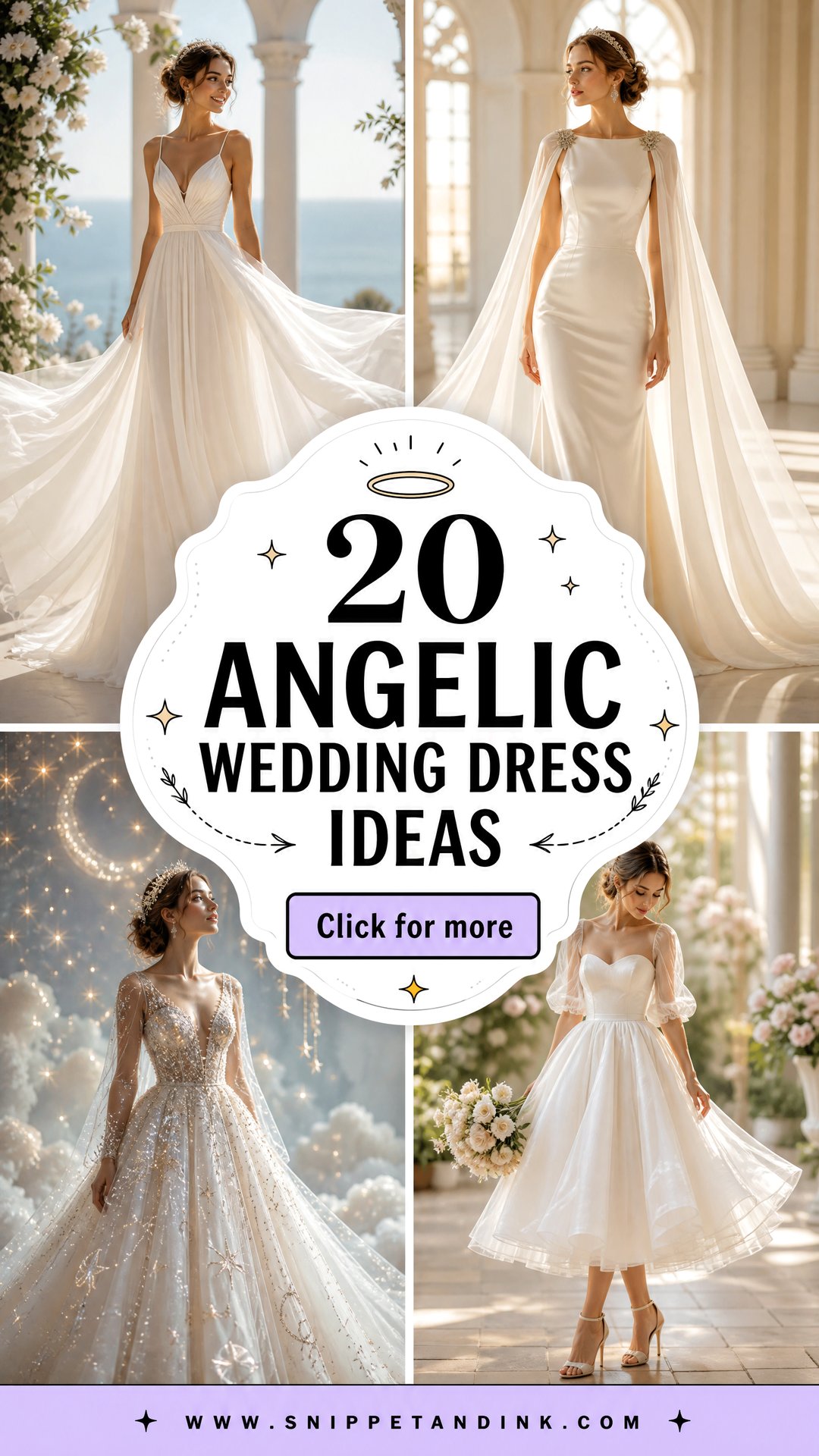
Why Sheer Layers Glow in Daylight and Go Flat Under Flash
Much of what makes a dress look heavenly is light passing through it. Tulle, chiffon and organza are partly see-through, so when sun or a bright window is behind you, the layers glow at the edges. Under a direct flash or harsh overhead lighting, the same fabric can look flat and grey. That is worth knowing before you choose.
- Look at a sheer gown near a window at the shop, not only under the fitting-room lights.
- Ivory and soft white layered over a nude or champagne lining usually keep more depth in photos than bright white over white.
- If your ceremony is outdoors, ask your photographer about the time of day. Softer afternoon light flatters layered tulle far more than midday sun overhead.
- For an evening reception indoors, a little pearl or fine beading helps the dress catch light when the room gets dark.
I’d also stand in the dress with the light behind you and check what shows through. Sheer layers can reveal the outline of the legs when backlit, and some brides love that while others want one more lining layer.
1. A-Line Tulle Wedding Dress
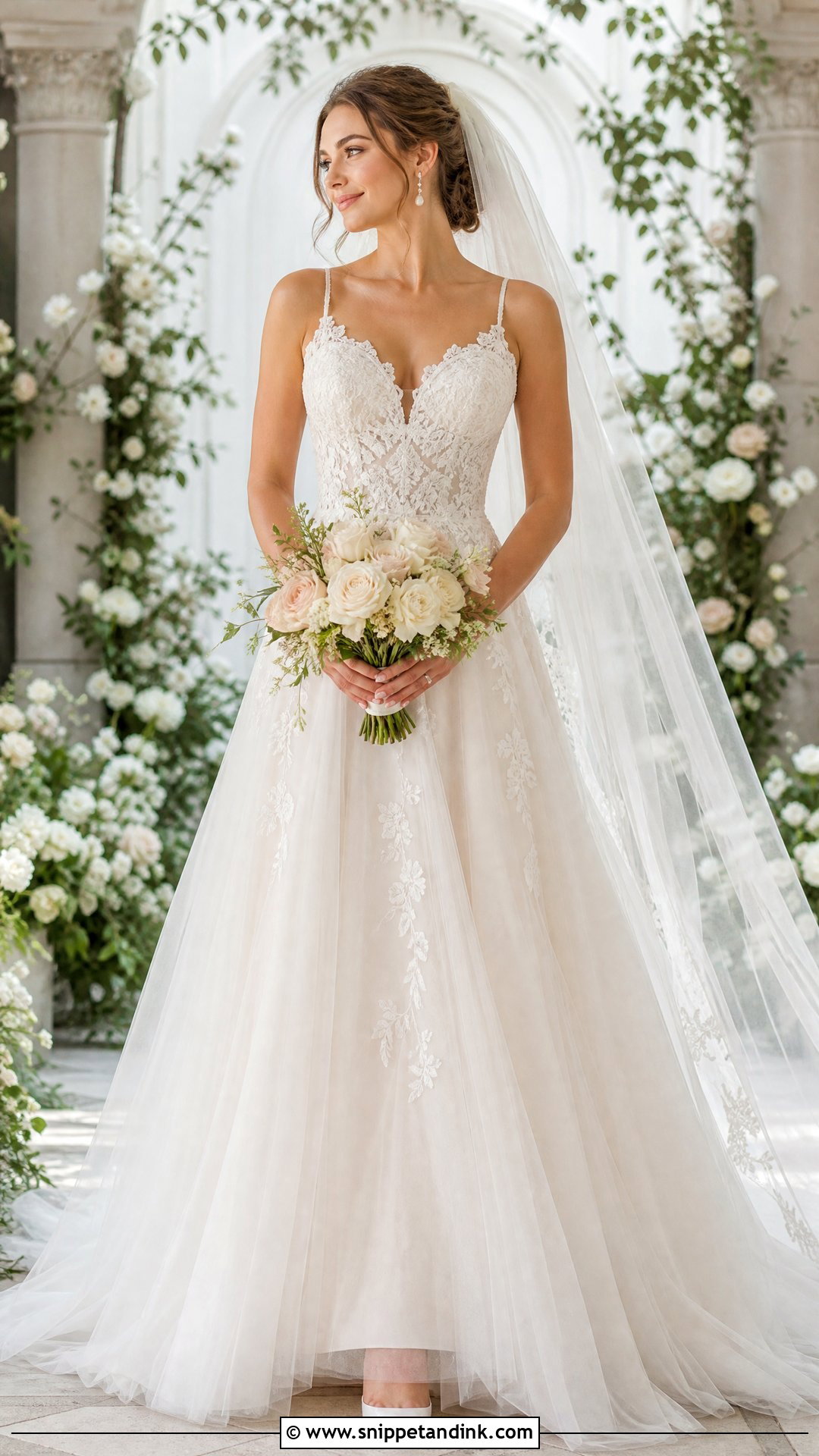
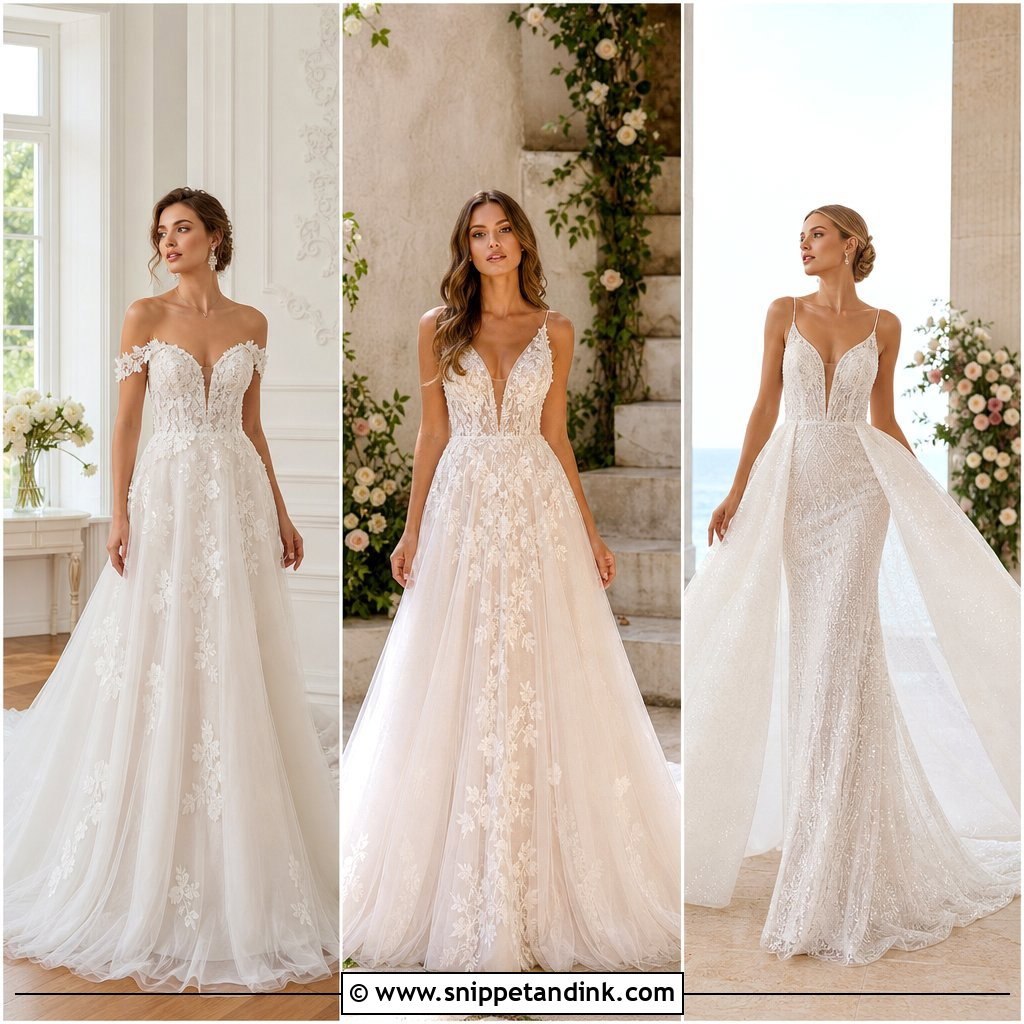
Tulle on an A-line keeps the dreamy effect without the weight of a full ball gown. A fitted bodice with a softly defined waist sits over several light layers; fine floral appliqués add dimension and still let the skirt move. The number of layers matters more than people think. Too few and the skirt clings to your legs as you walk; I usually look for a soft net underlayer that holds the shape without stiffness. Pearl drops, a narrow chapel-length veil and ivory pointed low heels complete it, with a loose updo or polished waves. The fitted bodice and gentle skirt flatter most figures, indoors or in a garden.
2. Long Sleeve Lace Wedding Dress
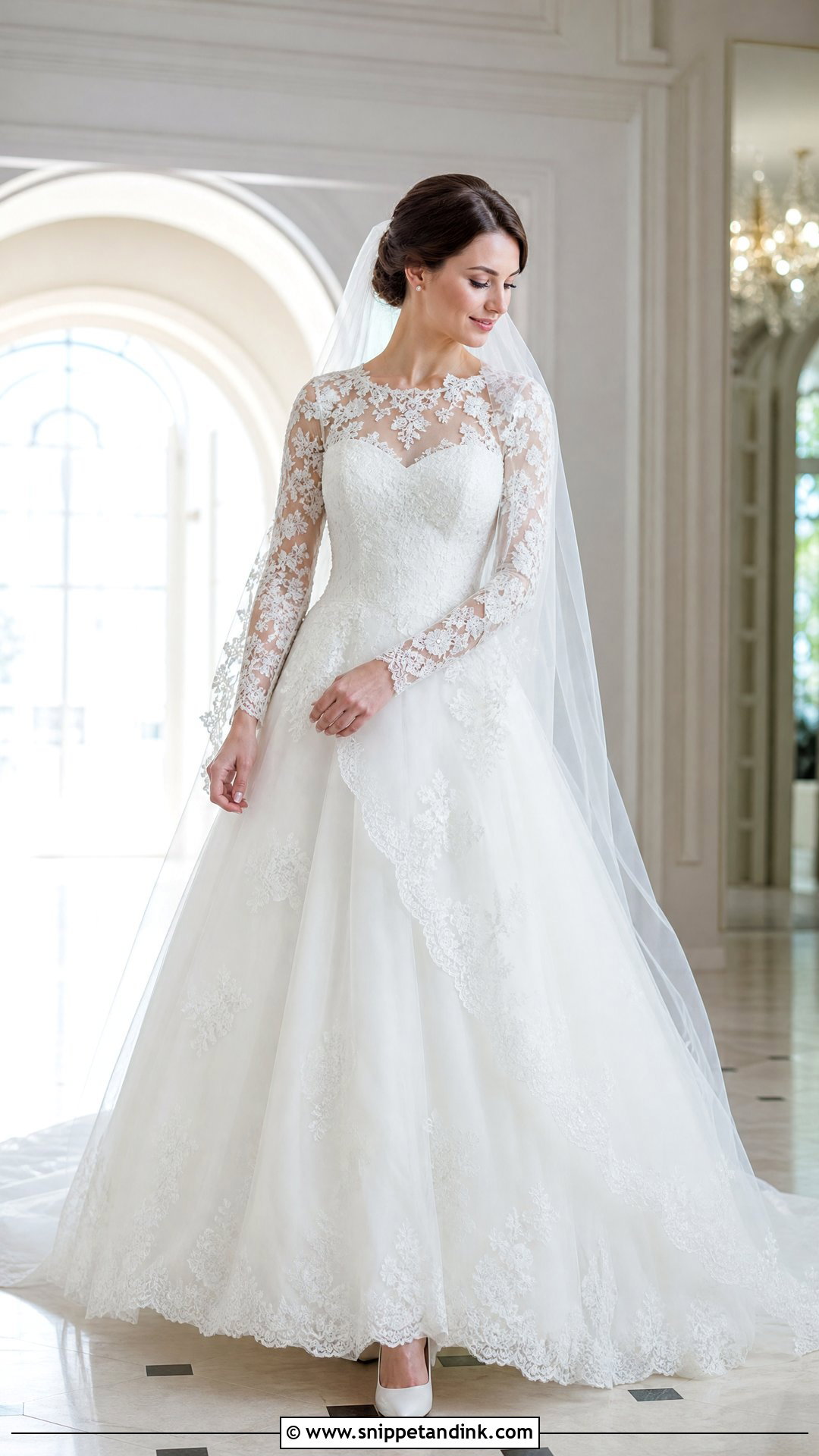
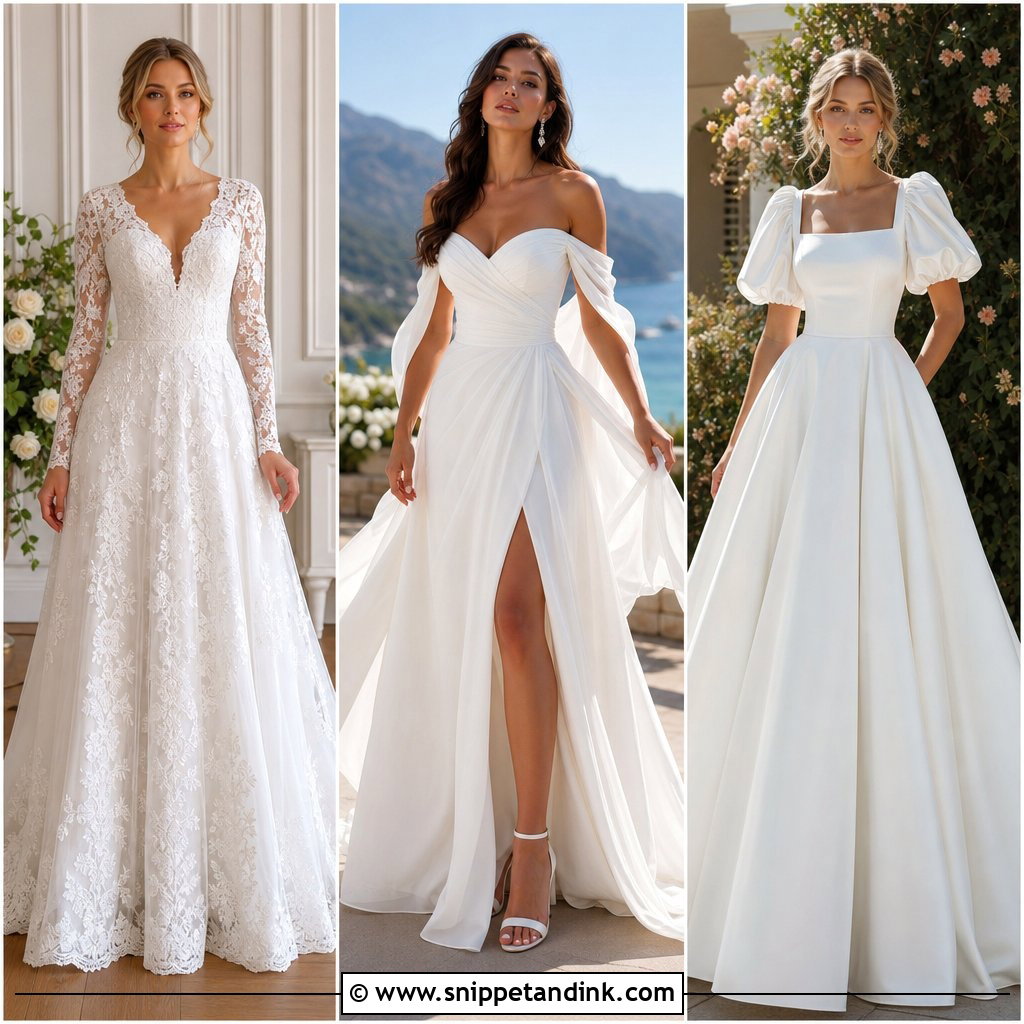
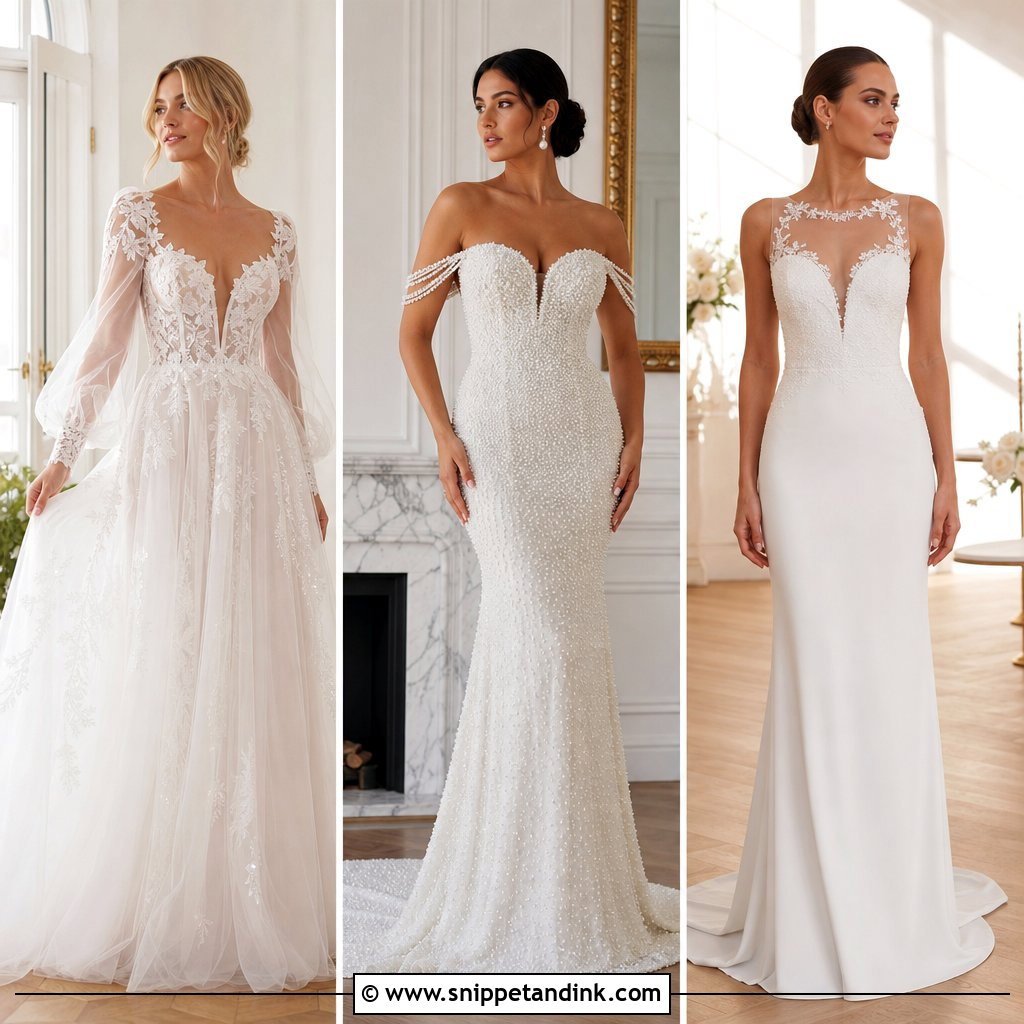
Lace sleeves give coverage and softness, but only if the lace is light. Heavily corded lace on the arm feels stiff and hot; fine Chantilly-style lace moves with you. An illusion neckline, fitted bodice and gently flared skirt keep the line graceful. Pearl studs, an embroidered veil and satin pumps finish it, and a small bouquet of white flowers and greenery echoes the lace pattern. Spring, autumn and cool summer evenings suit sleeves best. At the fitting I have brides hug me and lift the bouquet up to chest height. If the lace strains across the back of the arm, the sleeve needs easing.
3. Flowing Chiffon Wedding Dress
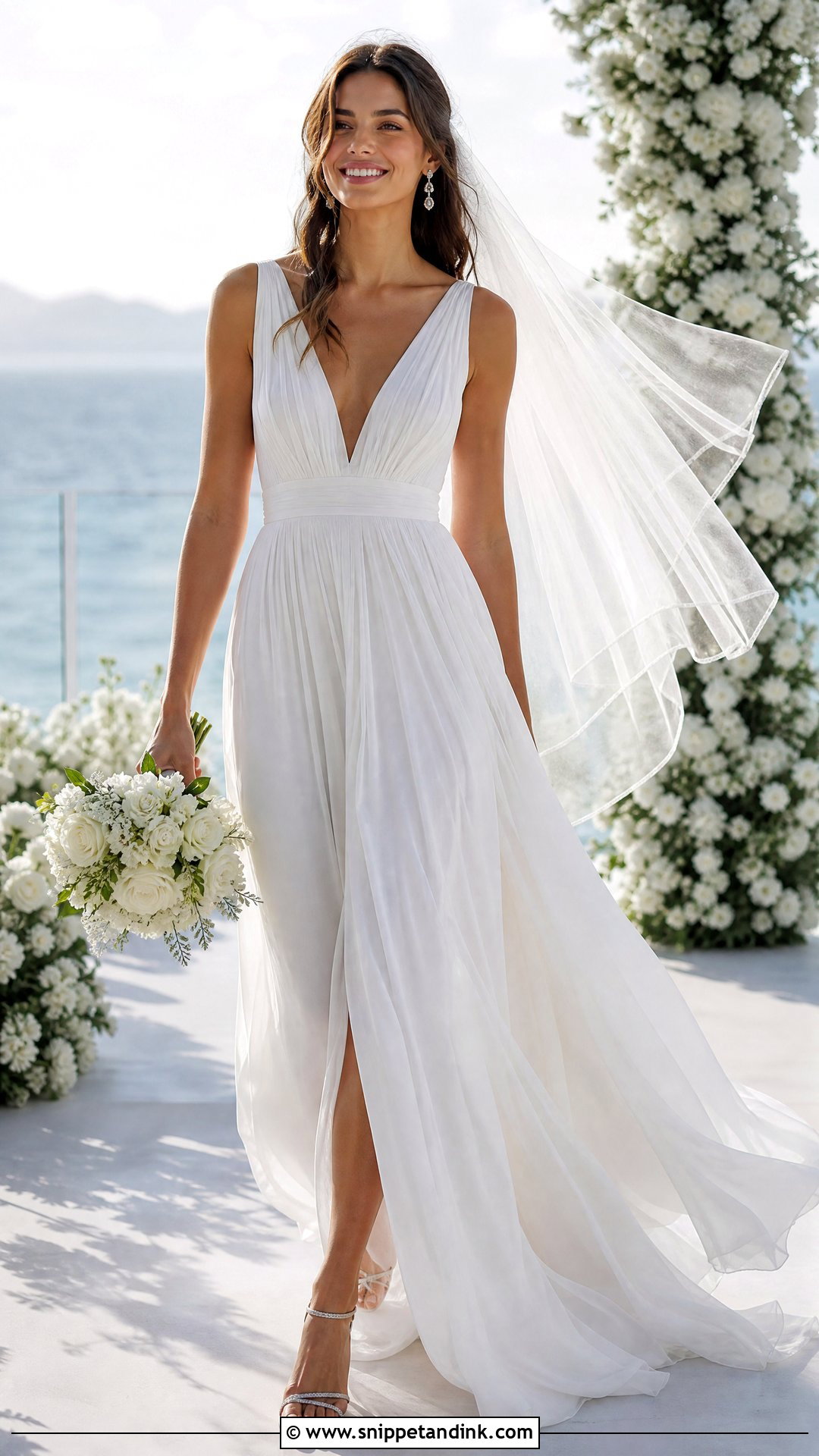
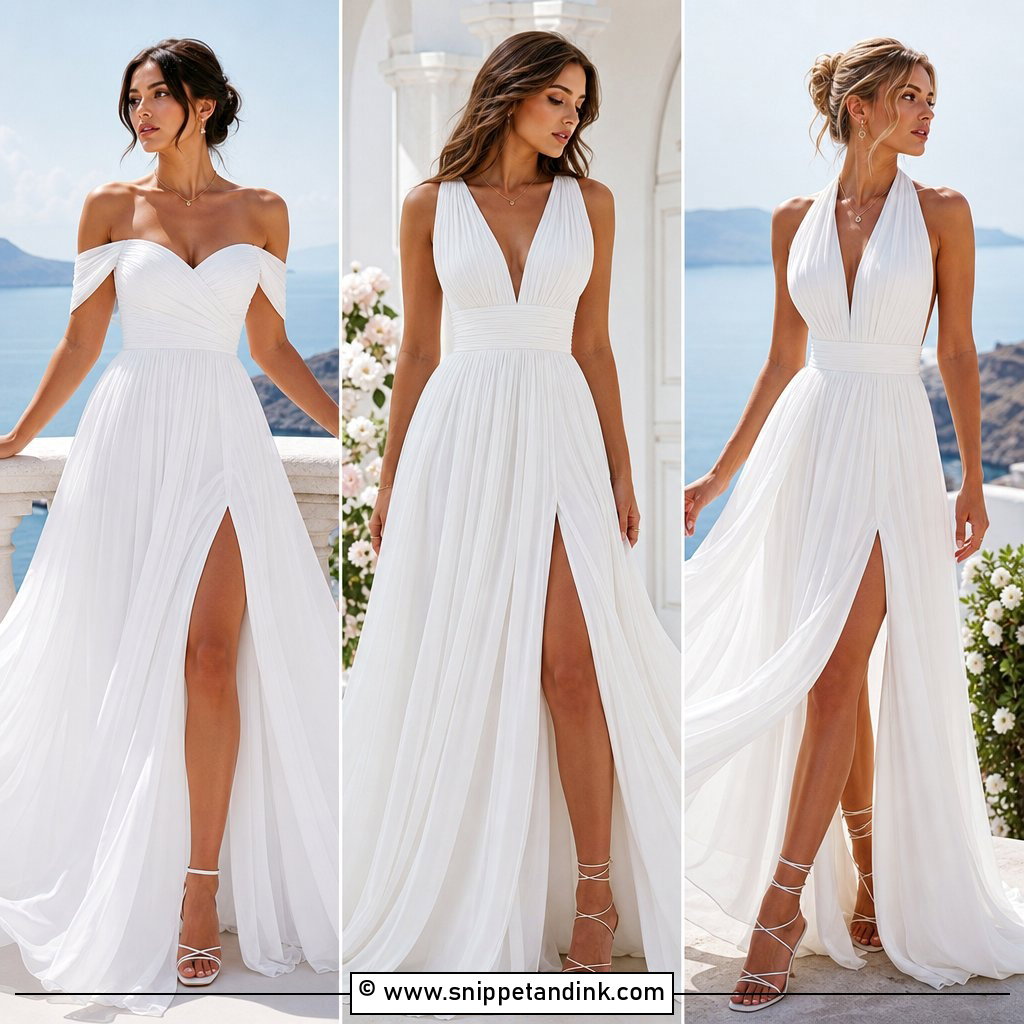
Chiffon moves more than almost anything else on an aisle. A gathered bodice or soft V-neck keeps it relaxed, and the skirt should have enough fabric to swing but not so many layers that an outdoor breeze turns it into a sail. Delicate sandals, a fingertip veil, small crystal earrings and a natural low bun suit it; a narrow ribbon at the waist adds shape without breaking the line. Beaches, destinations and countryside settings are its home. It also travels well. I pack chiffon gowns rolled in tissue inside the garment bag and steam them gently on arrival, never with an iron, which leaves shiny marks on the weave.
4. 3D Floral Wedding Dress
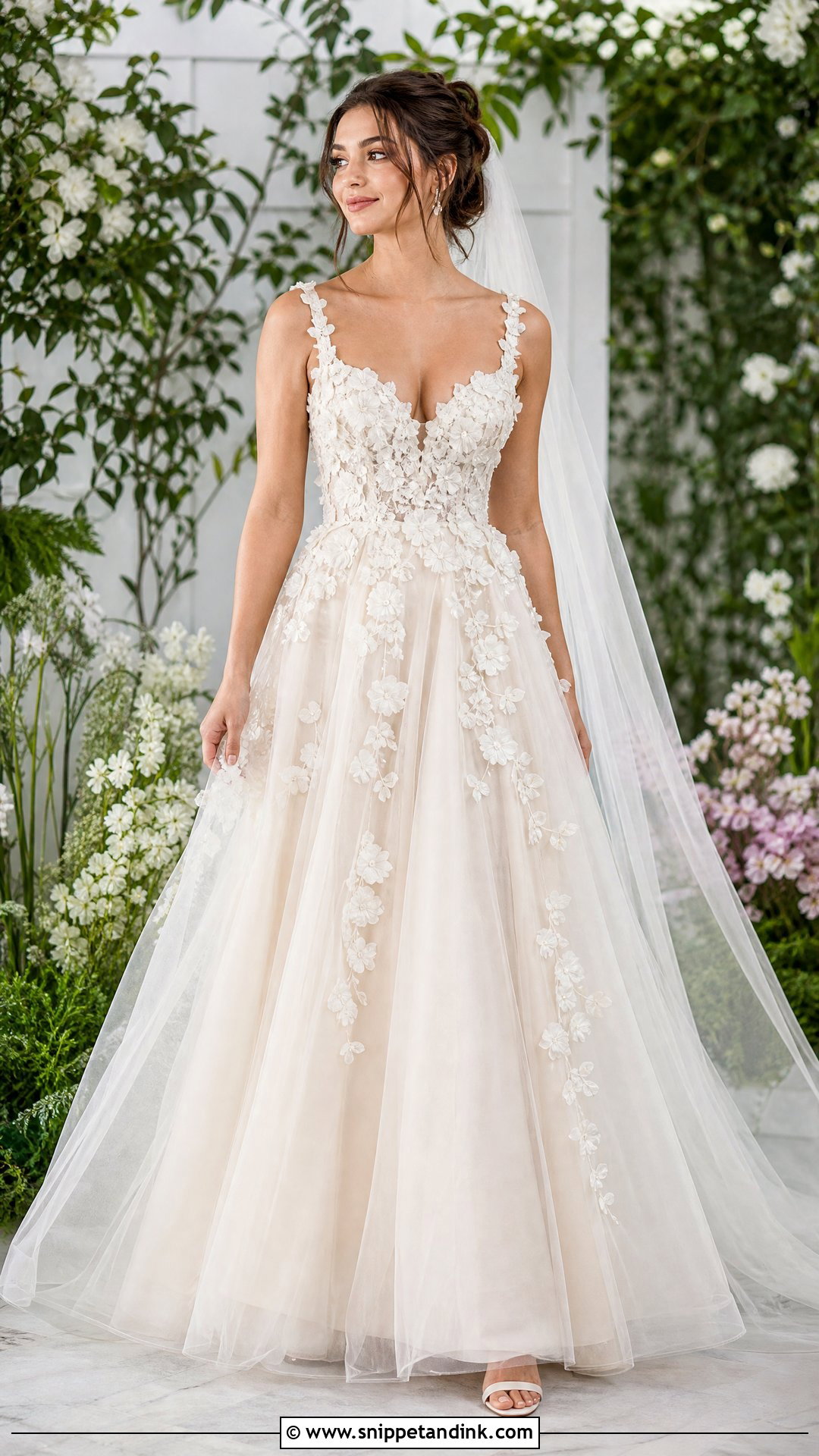
Three-dimensional flowers bring the garden onto the dress. The best placement starts dense on the bodice and scatters over a tulle or organza skirt, so the eye moves downward and the flowers don’t swamp you. Raised petals catch on veils with decorated edges, so I’d always pair this with a sheer, clean-edged veil. Simple pearl earrings and barely-there ivory heels keep the rest calm. A softly textured updo leaves the neckline appliqués visible. Ask your florist for white and green only, since coloured blooms compete with the dress. Spring gardens and greenhouses suit it, and it softens a formal ballroom too.
5. Off-Shoulder Ball Gown Wedding Dress
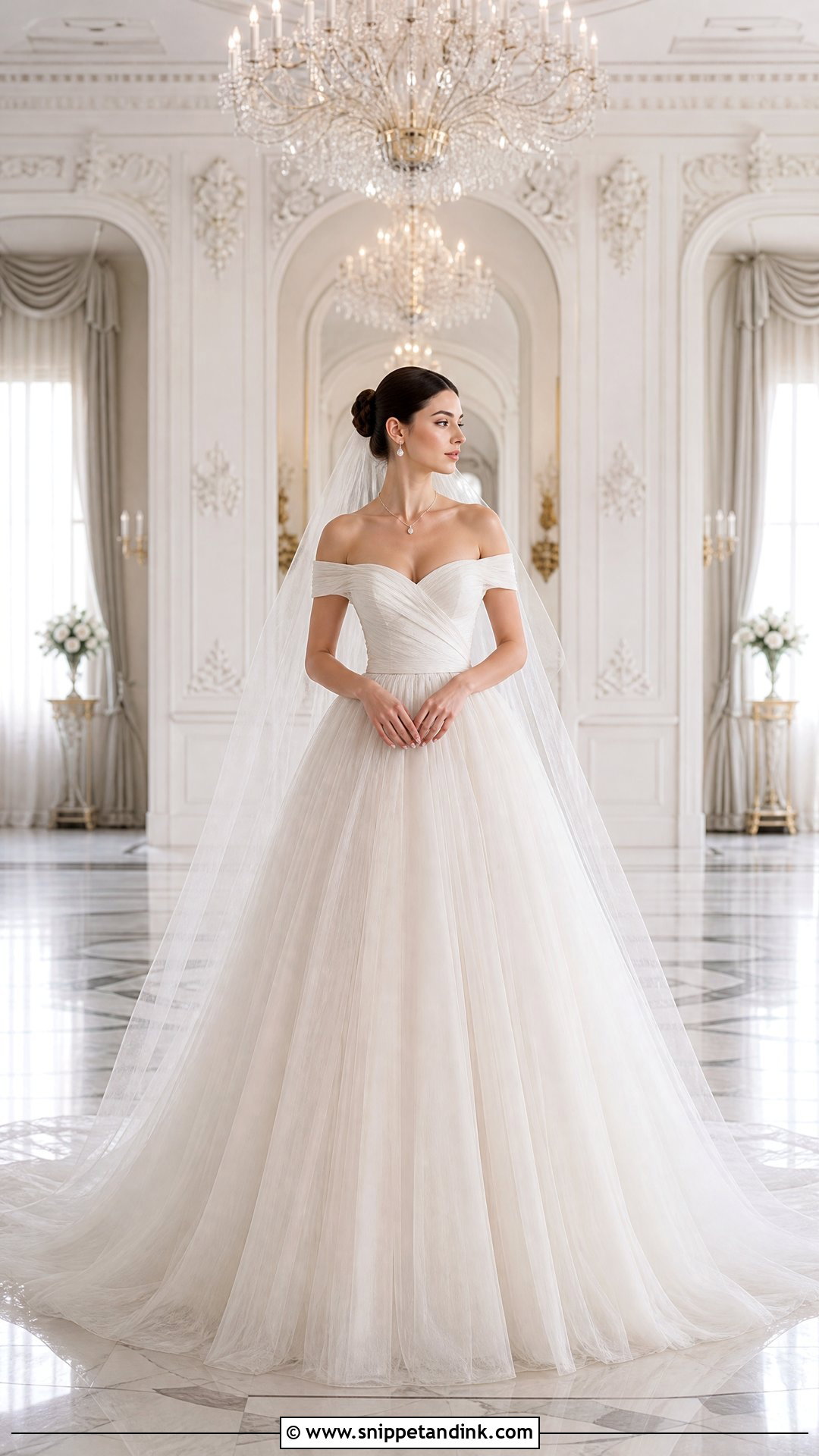
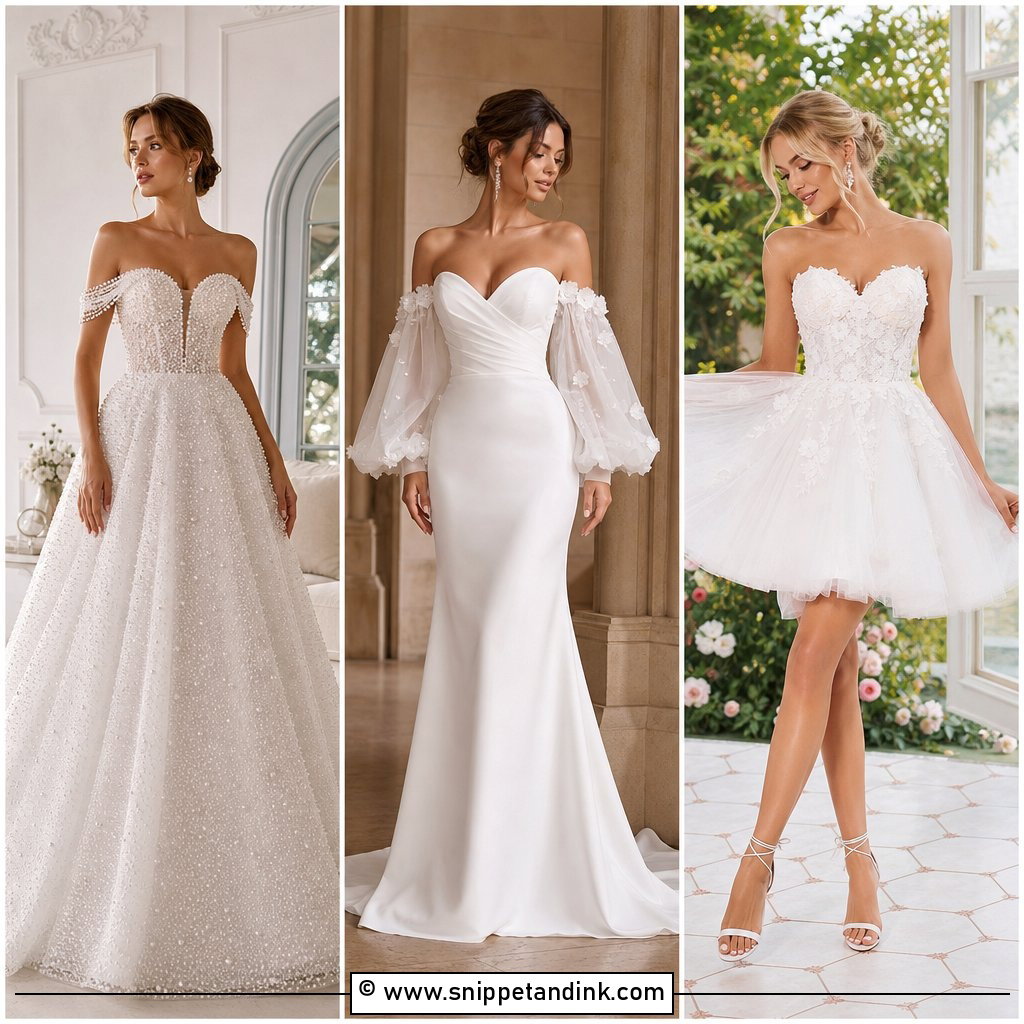
An off-shoulder ball gown is the classic princess shape made lighter. The neckline frames the collarbones, and a fitted bodice balances a full skirt. Airy tulle or light organza keeps it angelic; stiff, heavy layers turn it formal and hot. A fine pendant, pearl earrings, closed-toe satin heels and a long sheer veil that runs past the train finish it, with a smooth low bun to show the shoulders. Petite brides often avoid ball gowns, but they can work well. The trick I use is starting the skirt volume exactly at the natural waist and keeping the bodice fitted to the millimetre, so the skirt doesn’t swallow the frame.
6. Satin Wedding Dress With Cape Veil
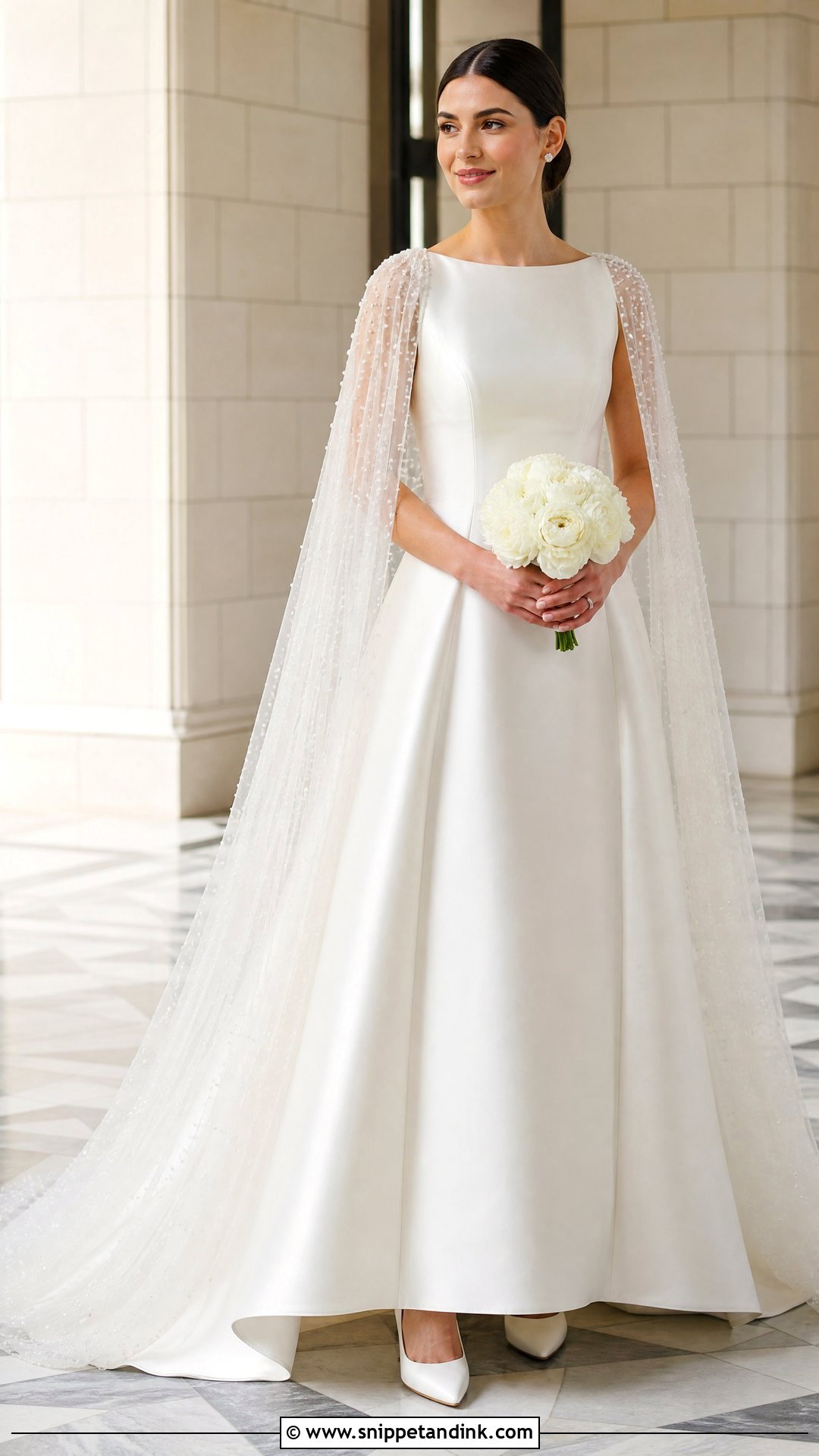
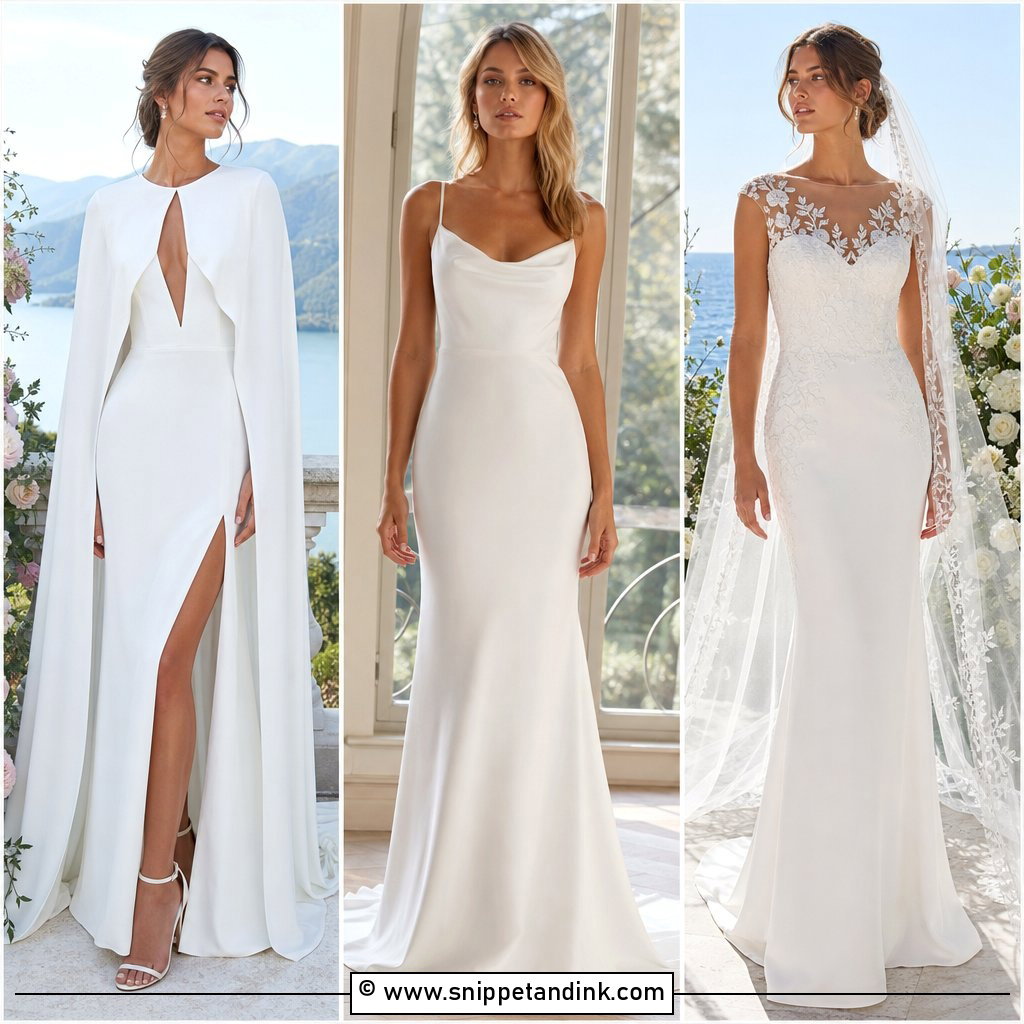
Picture smooth satin with a sheer cape veil floating behind each step. You get a veil’s drama in a cleaner, more modern shape. Start with a column or A-line dress with minimal seams and a softly structured bodice, and attach a floor-length tulle cape at the shoulders, with a few pearls or crystals near the neckline if you like. Cape veils pull back on the shoulders, so I prefer them fixed with small hidden hooks to the dress straps rather than clipped into the hair. Pointed satin pumps, small studs and a compact white bouquet keep it uncluttered. The cape is the decoration, so skip statement necklaces and jeweled shoes.
7. High Neck Lace Wedding Dress
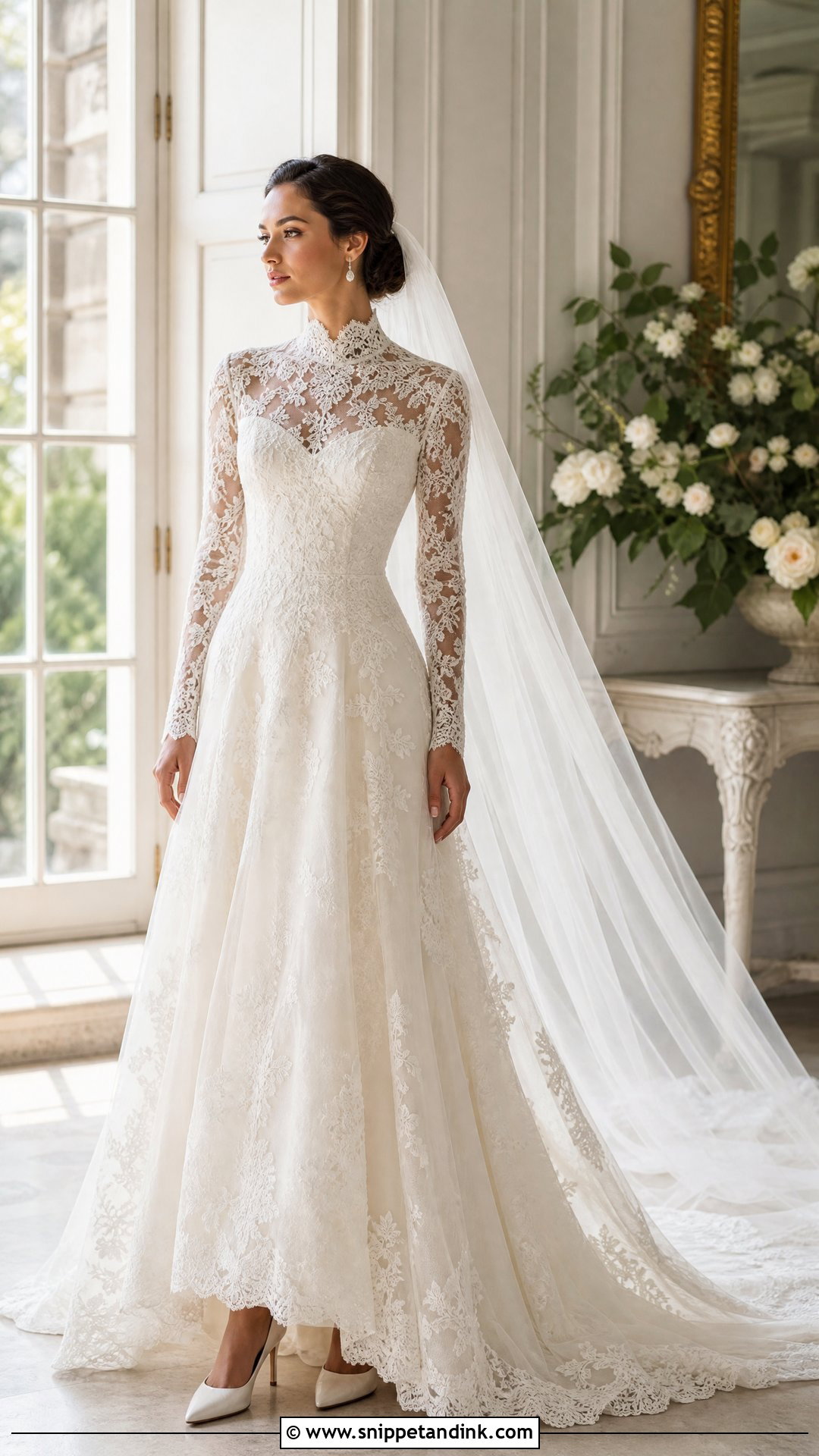
Covered necklines read graceful and slightly vintage. The most angelic versions put sheer lace at the throat over a lined sweetheart or straight bodice, so you see skin through the lace rather than a solid collar. A narrow waist and flowing skirt keep it from feeling severe. Pearl buttons, classic ivory pumps, small earrings and a long veil under a neat updo complete it; with intricate lace, keep the veil plain. On a shorter neck, a high collar can feel like it’s swallowing you, and I’d suggest a slightly lowered mock neckline or an open lace pattern instead. Indoor ceremonies and cold-weather estates suit it.
8. Corset Tulle Wedding Dress
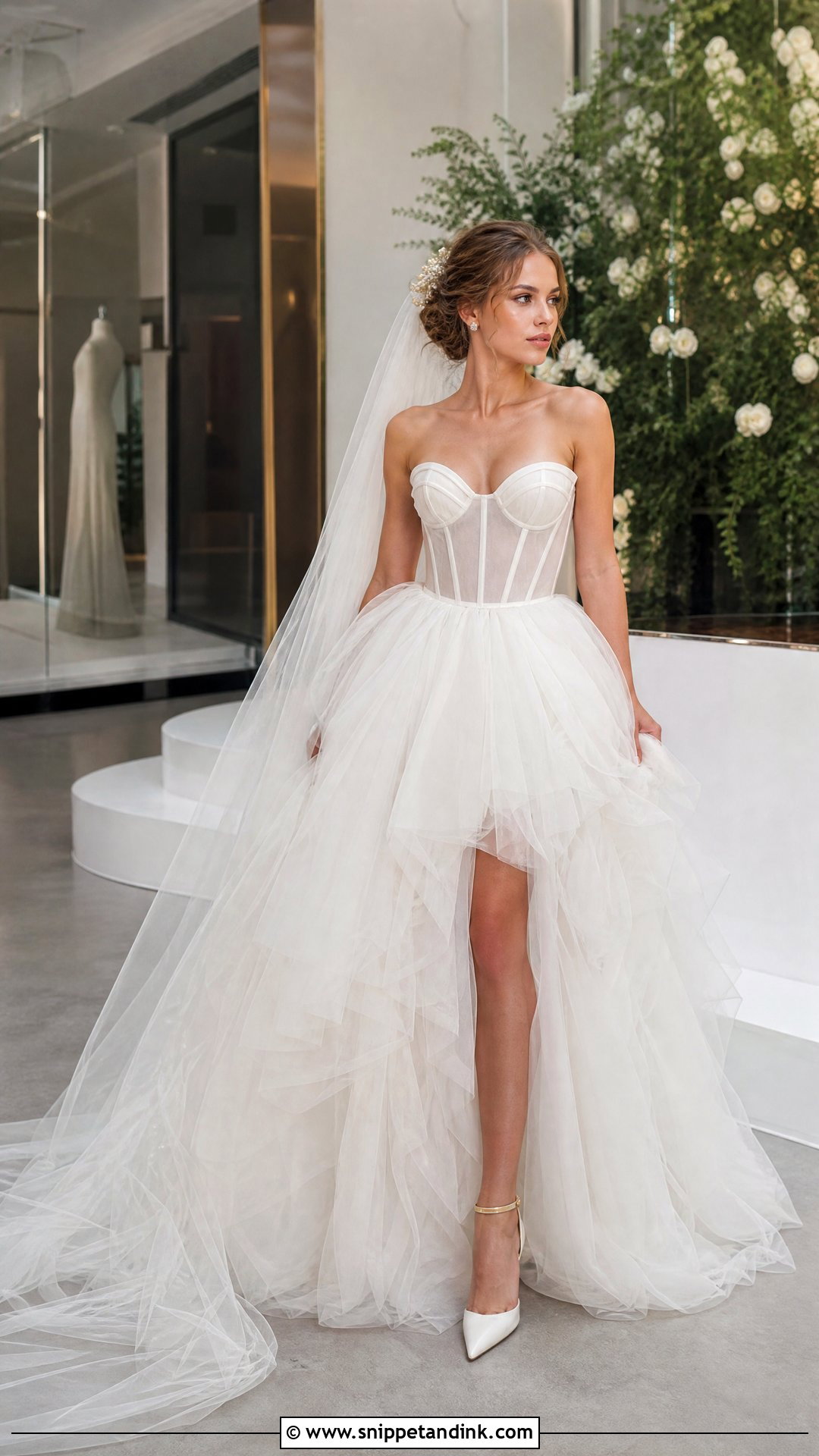
Visible structure and soft tulle make a strong pairing here. Look for neatly placed boning, supportive cups and a subtle basque or natural waist, without an extremely sheer bodice that shows every bone. Fine tulle falls from the waist in contrast. A simple cathedral veil, crystal studs, ivory heels and a loose bun complete it, with a small floral comb for detail. This is the gown I suggest to brides who want real support and still want to look light. At fittings, sit, walk and raise your arms; a corset that shifts when you lift a glass will shift all night.
9. Pearl Beaded Wedding Dress
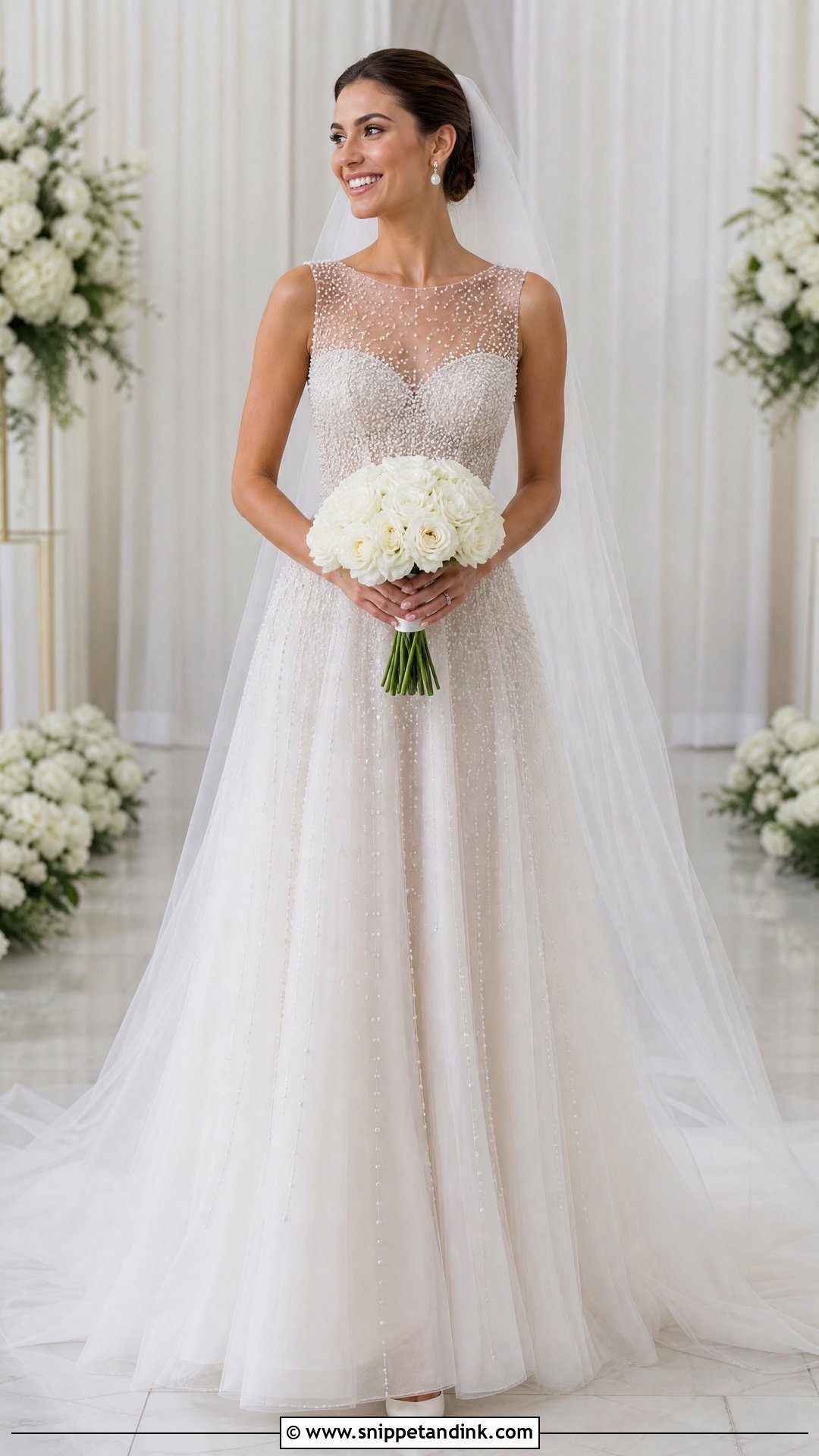
Pearls glow rather than sparkle, which is exactly why they suit this look. Scatter them across an illusion bodice, fitted sleeves or the top of a flowing skirt, and leave the rest plain. Pearl earrings, satin shoes and a clean tulle veil are enough jewelry, with a polished chignon and white bouquet. Bright ceremony rooms show the texture well. Beading adds weight, and on illusion fabric that weight can pull the mesh out of shape at the shoulders, so I check how the bodice sits after the bride has worn it for twenty minutes, and ask whether an extra lining would make it softer against the skin.
10. Empire Waist Chiffon Wedding Dress
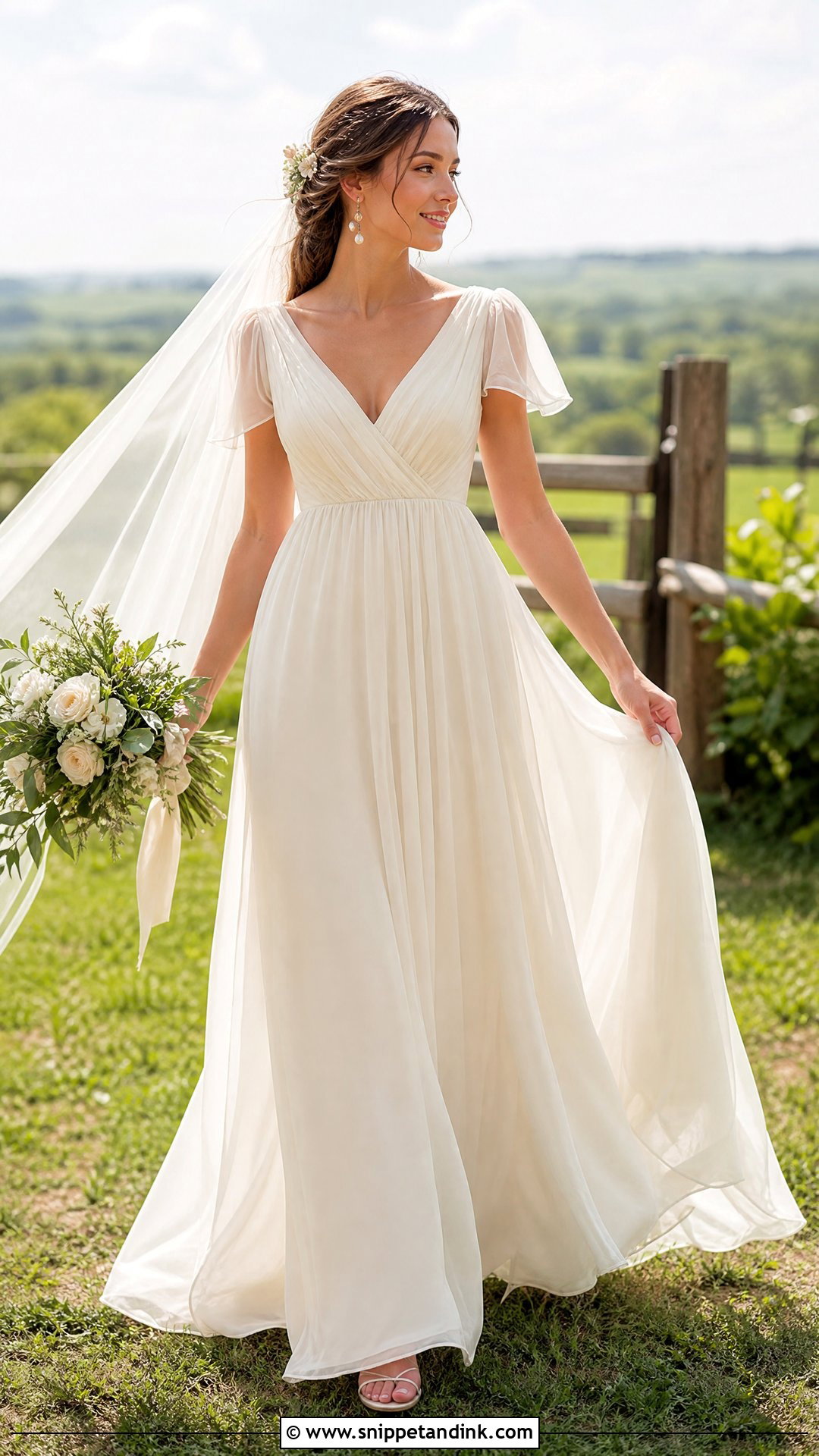
Seaming just under the bust lets an empire waist chiffon dress fall in one long, fluid line. Gathered chiffon, flutter sleeves or a draped neckline make it feel even softer. Flat sandals or low heels, a floral comb, small drop earrings and a light fingertip veil suit it, with a loose half-up style. Outdoor weddings, destinations and brides who want to move freely all suit the shape, and it leaves room around the waist. Hemming chiffon is finicky because the fabric is slippery and stretches on the cross grain. I’d let the dress hang overnight before the hem is marked, so it skims the floor without catching.
11. Drop Waist Organza Ball Gown Wedding Dress
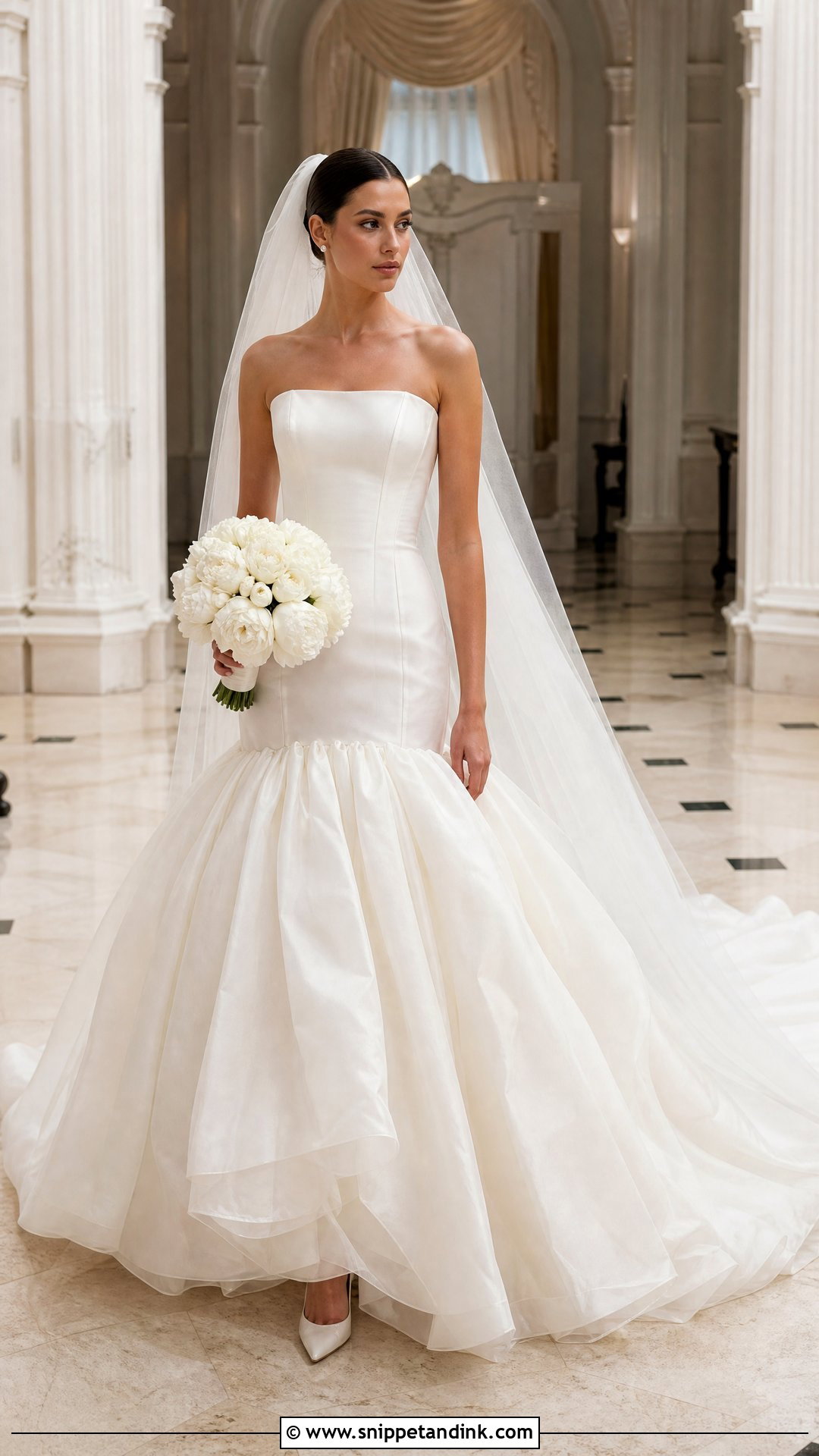
Drop waists are a fresh take on the princess shape. The fitted bodice extends a little below the natural waist before opening into a full, cloudlike organza skirt. Organza is crisp enough to hold that volume while still looking light. A plain cathedral veil, pearl studs, pointed ivory pumps and a structured white bouquet keep it classic; a sculpted updo leaves the long bodice visible. Large venues give the skirt room. Waist placement is the critical alteration here. An inch too low and the legs look short; an inch too high and it loses the elongating effect, so I’d mark it standing in the wedding shoes.
12. Basque Waist Lace Wedding Dress
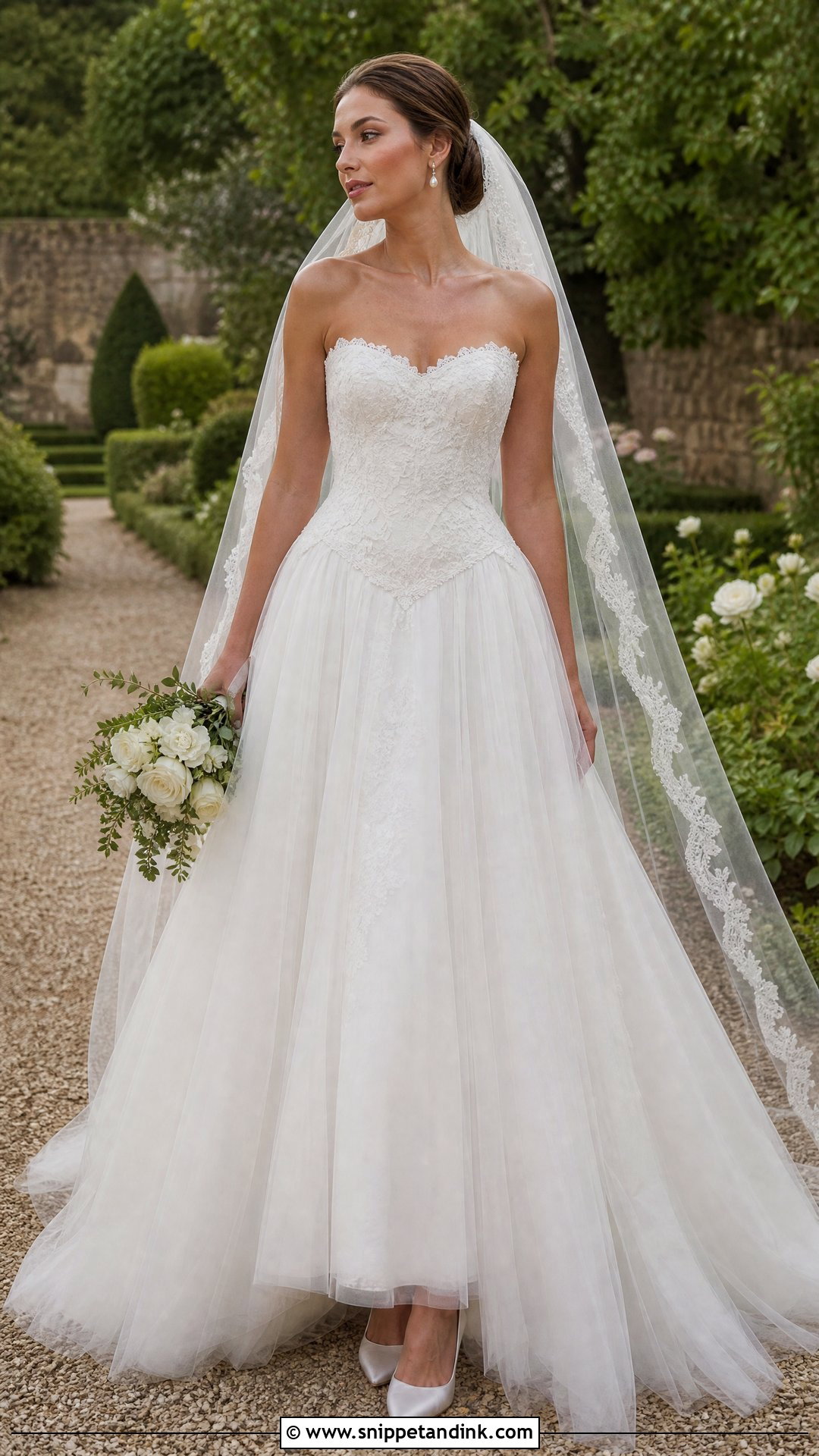
The pointed shape of a basque waist draws the eye to the centre and lengthens the torso before the skirt opens. For an angelic version, pair a lace bodice with soft tulle layers instead of rigid fabric. A sheer chapel veil with a few lace motifs repeated from the dress, pearl drops, satin heels and a smooth low bun complete it. Gardens, estates and ballrooms all suit the historical hint. A basque point that’s too long digs into the lap when you sit, so I always test it seated at the alterations appointment. It should feel supportive, not like a ruler against your stomach.
13. Square Neck Satin Wedding Dress
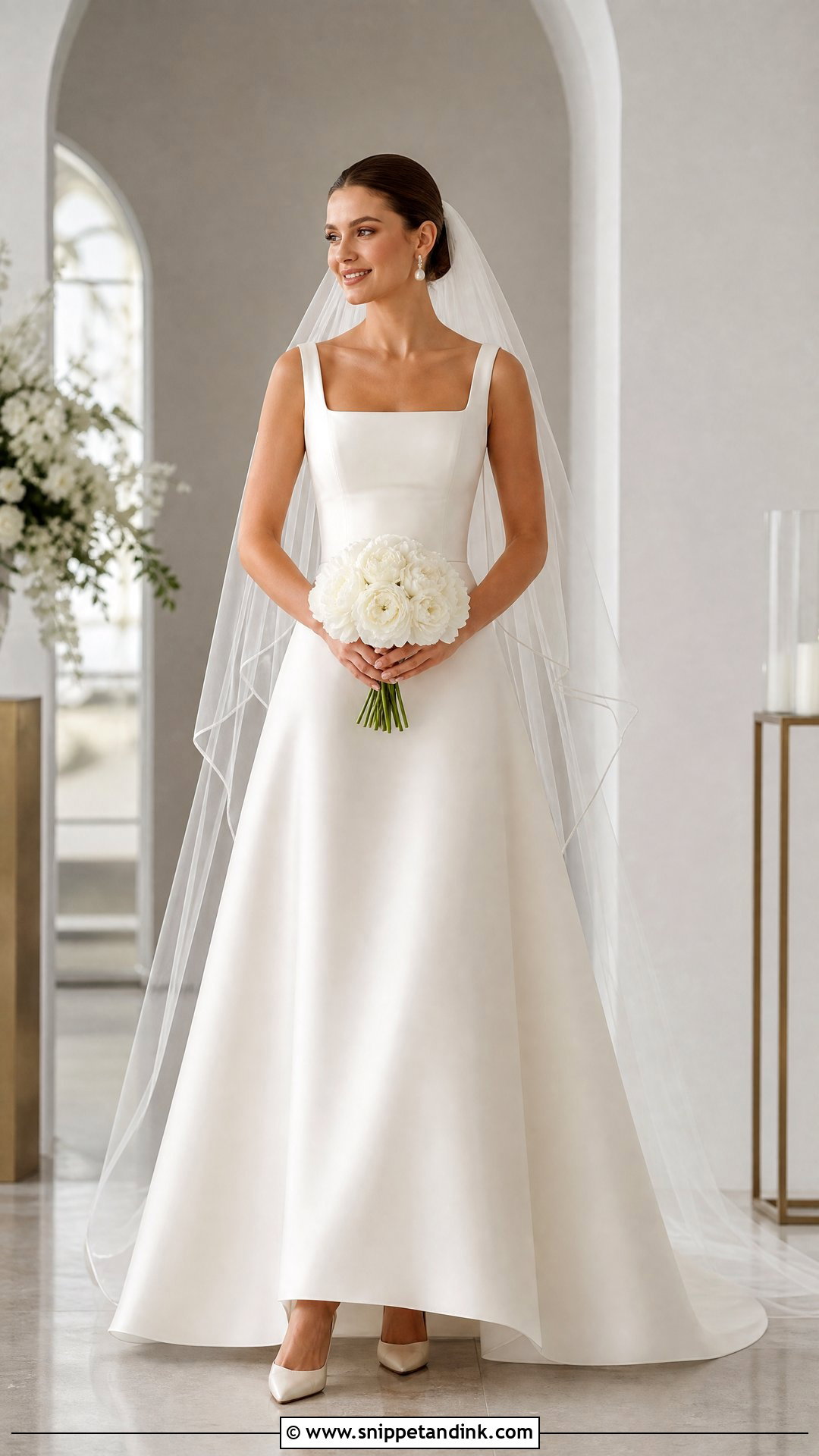
Clean lines can feel just as heavenly as lace. A square neck in satin frames the face and collarbones, and you can pair it with an A-line skirt, fitted long sleeves or wide straps depending on the season. A sheer cathedral veil, pearl earrings, pointed slingbacks and a compact white bouquet are enough, with a centre-parted low bun. I’d look for satin with a soft lustre; a highly reflective finish turns bright white in flash and loses its depth. Plain satin also shows every seam and every hem ripple, so the tailoring has to be precise.
14. Illusion Sleeve Wedding Dress
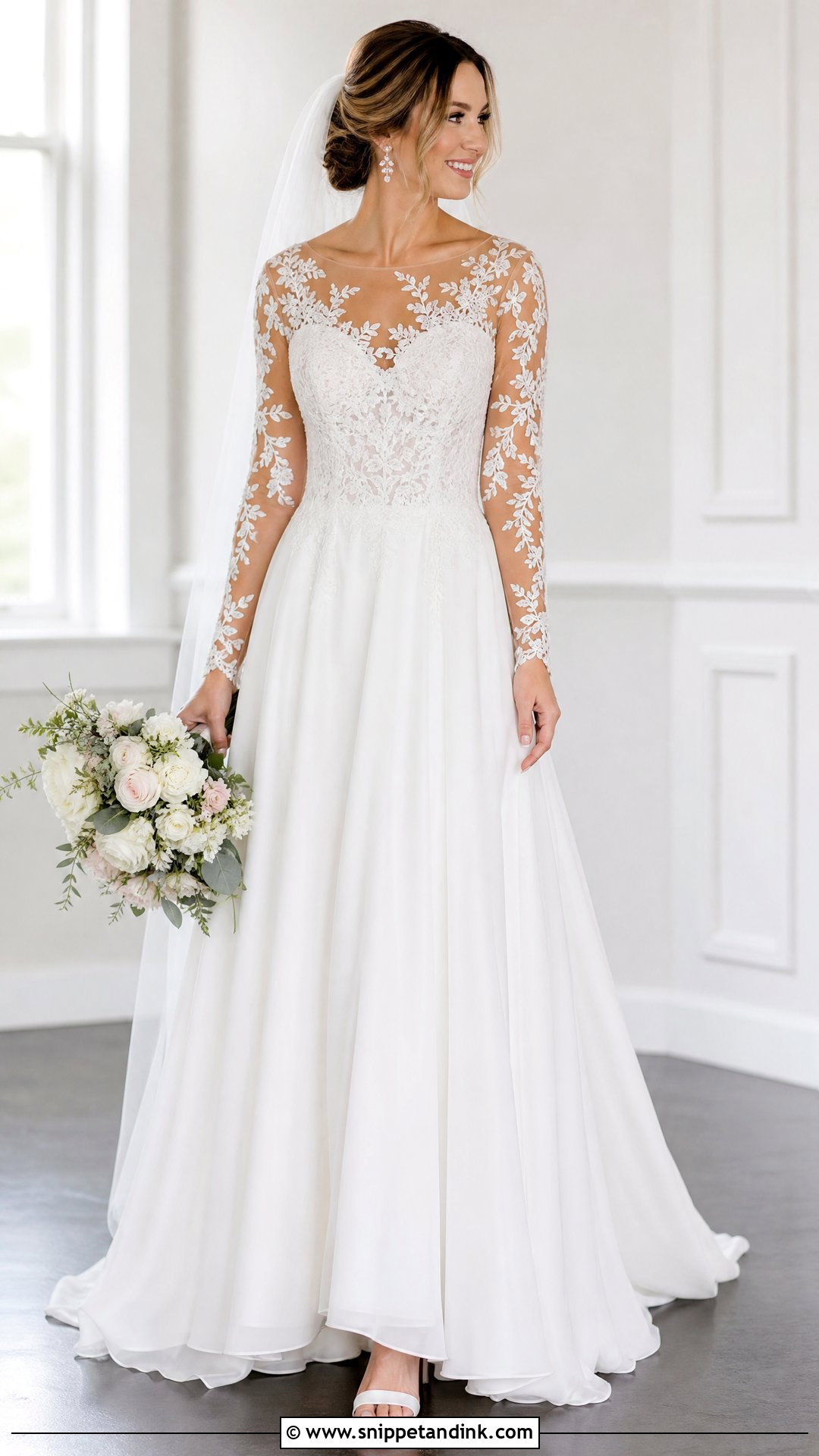
Illusion sleeves seem to float on the arm, which suits a delicate gown. Transparent tulle with light lace vines, tiny pearls or a few appliqués gives coverage without the weight of lined sleeves, and pairs well with an A-line or fit-and-flare skirt. Simple satin heels, an unembellished veil, small crystal earrings and a low textured bun suit it. Keep bracelets minimal, because fine mesh catches on clasps. The armhole is the alteration that matters most. Cut too high, it digs; too low, the whole sleeve lifts the bodice when you raise your arm. Spring and autumn suit it best.
15. Cape Sleeve Wedding Dress
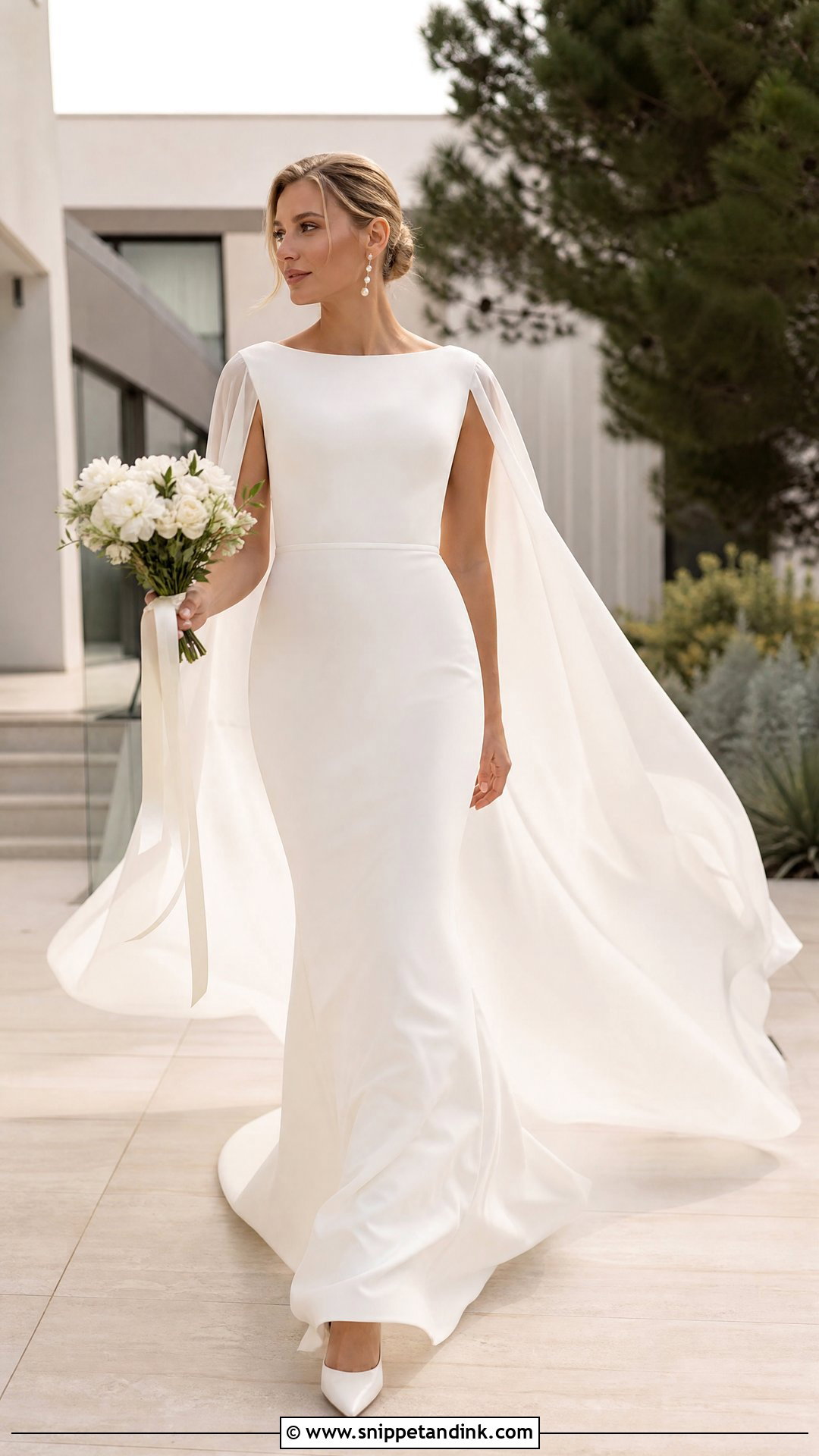
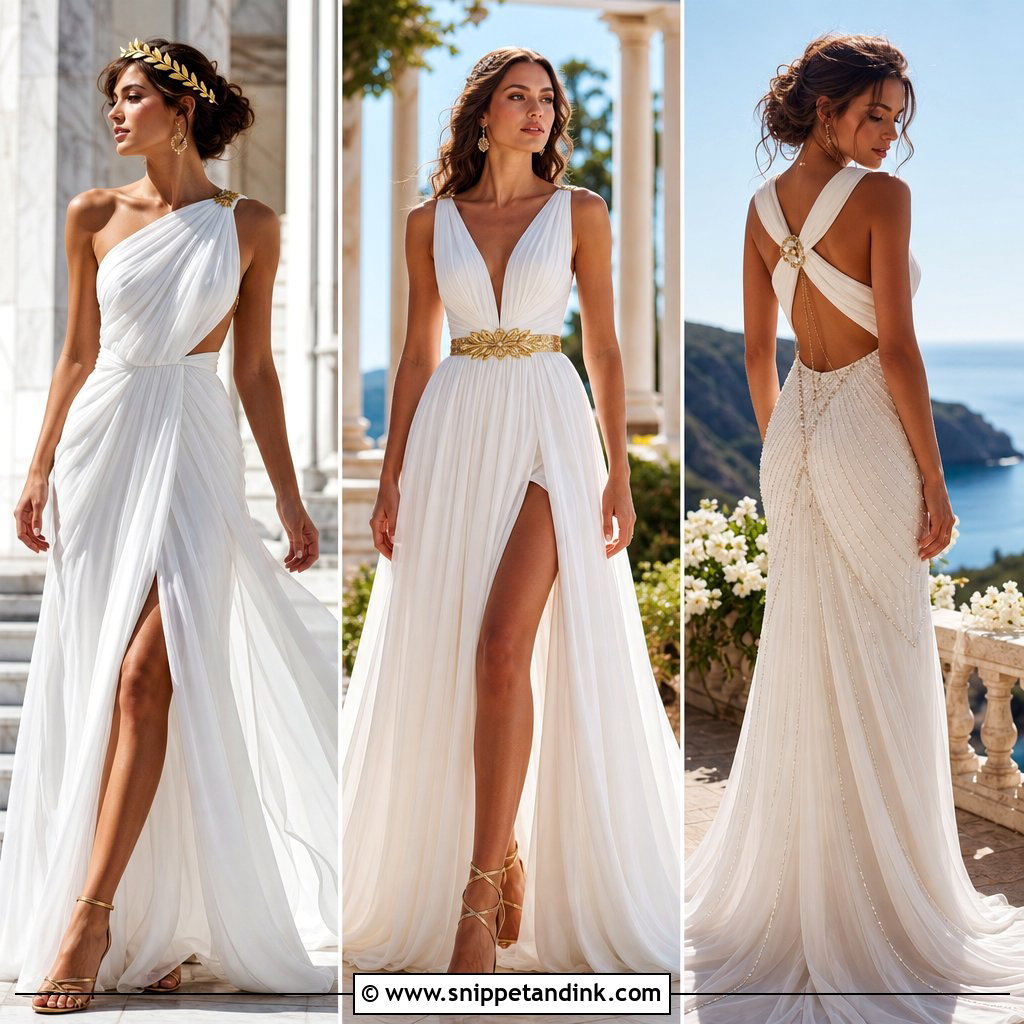
Cape sleeves drift from the shoulders and replace both a separate cape and a veil. Light chiffon or tulle panels over a simple crepe, satin or lace dress trail behind you like wings as you walk. A sleek updo, drop earrings, pointed shoes and a small bouquet with long silk ribbons suit it; skip the necklace if the panels attach near the neckline. I measure cape sleeves with the bride holding her bouquet, since the panels can trap under the arms or catch in the stems, and they must clear the ground by a little so they don’t trail through grass or gravel.
16. Celestial Beaded Wedding Dress
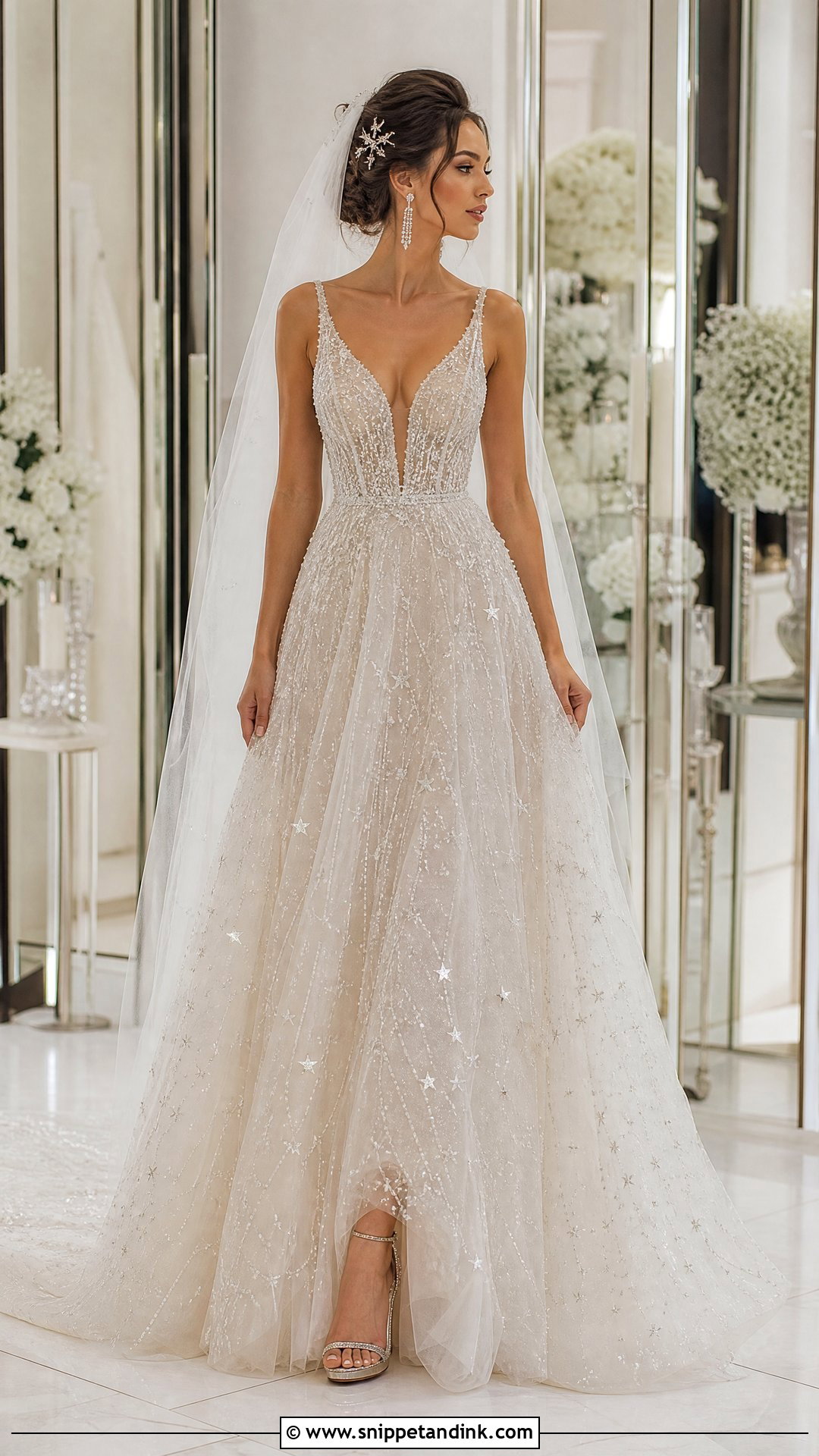
Tiny stars, crystals and fine beadwork scattered over translucent tulle give a quiet celestial glow. Keep motifs small; large, theatrical stars tip into costume. A fitted bodice and flowing A-line give the details space. Crystal earrings, metallic ivory heels, a fine veil and a small star-shaped hairpin finish it, with white flowers and silvery greenery. Evening ceremonies and glasshouses catch the sparkle best. Beading at the underarm rubs skin raw over a long day, so I check that area is smooth or left bare. A very pale tinted lining helps the pattern stand out in photographs.
17. Blush Tulle Wedding Dress
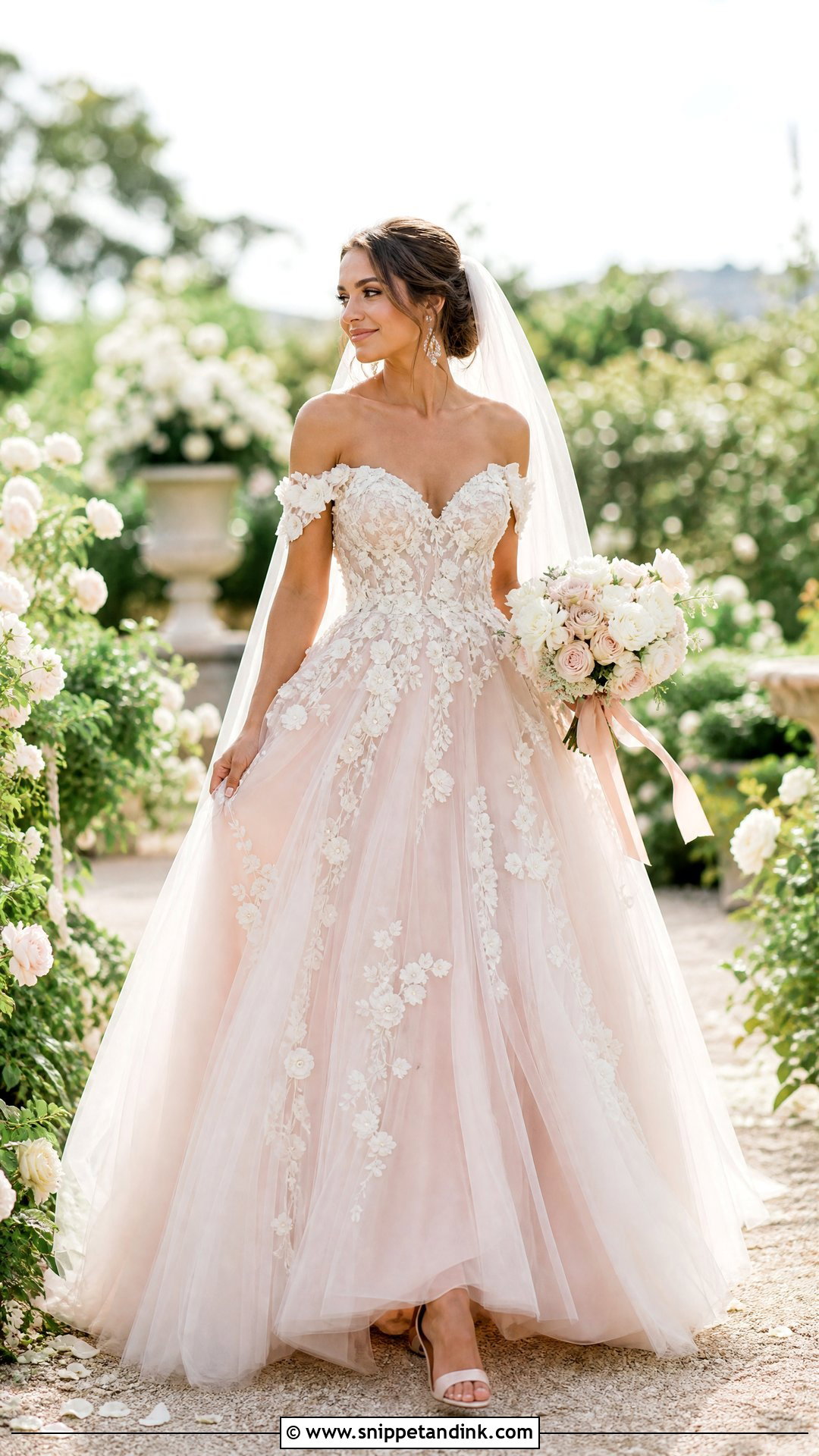
Blush adds warmth without giving up the bridal feeling. The usual approach is a pale blush lining beneath ivory tulle, so the colour reads as depth rather than pink. Floral appliqués, a draped bodice or an off-shoulder neckline strengthen the effect. Ivory heels, rose-toned pearl earrings, a sheer veil and white and pale pink flowers suit it, with loose waves or a pinned updo. Gardens and sunset light are especially flattering. Blush changes more with light than any other bridal colour, so I always look at the fabric outdoors and under warm indoor bulbs before ordering, since it can turn peachy or nearly white.
18. Minimalist Silk Wedding Dress
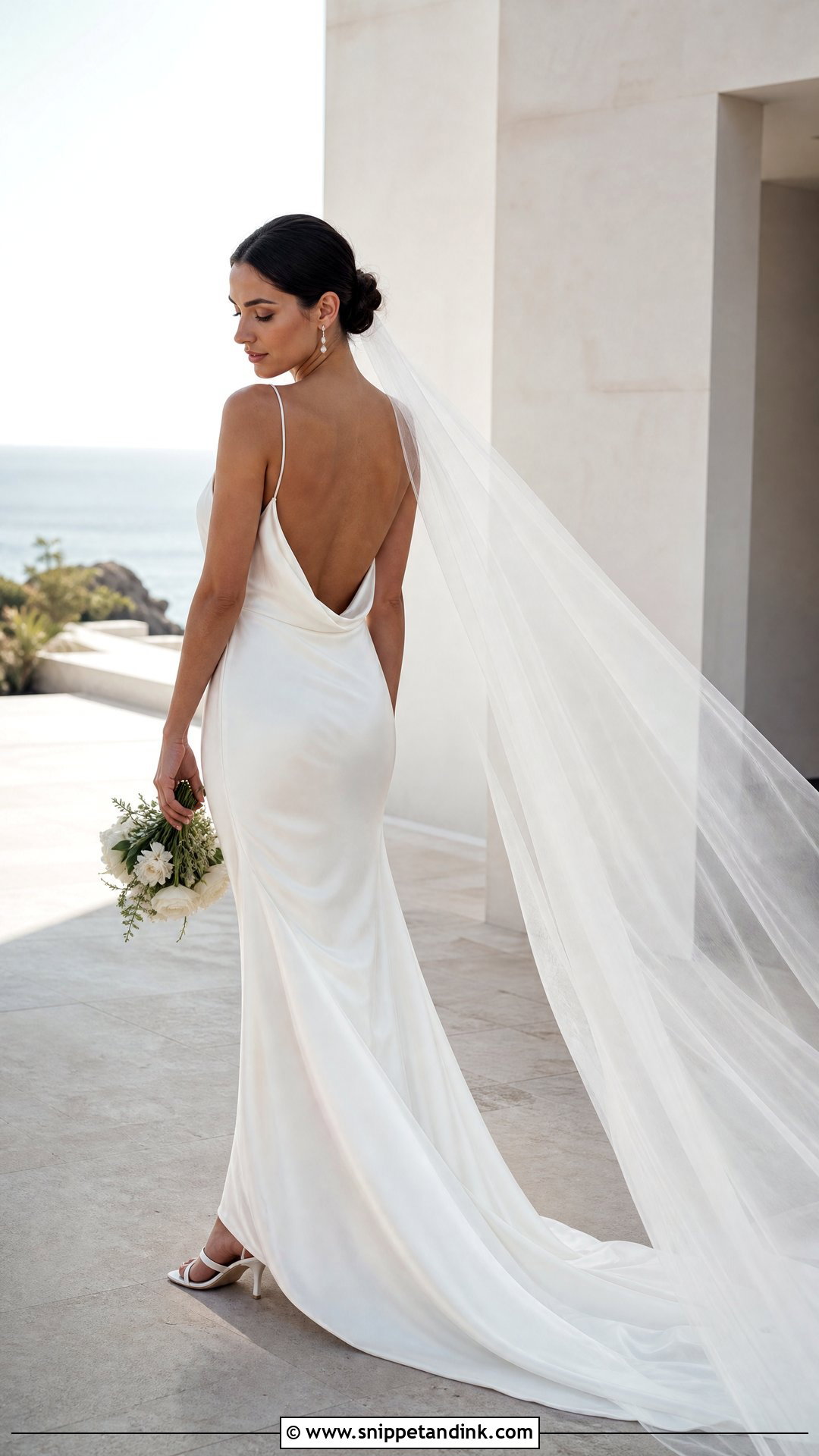
Plain silk relies on cut and the way light runs over it. A bias-cut silhouette, softly draped neckline, fitted waist and open back let the fabric skim the body without clinging. A long sheer veil, delicate earrings, ivory slingbacks and one hair accessory keep it pared back, with a low bun or glossy waves. Galleries, coastal venues and small city weddings suit it. Silk creases and shows every undergarment line, so plan a professional steam on the morning and smooth, edge-free underwear. Bring the exact wedding shoes to every fitting for a clean, floor-skimming hem.
19. Wedding Dress With Detachable Overskirt
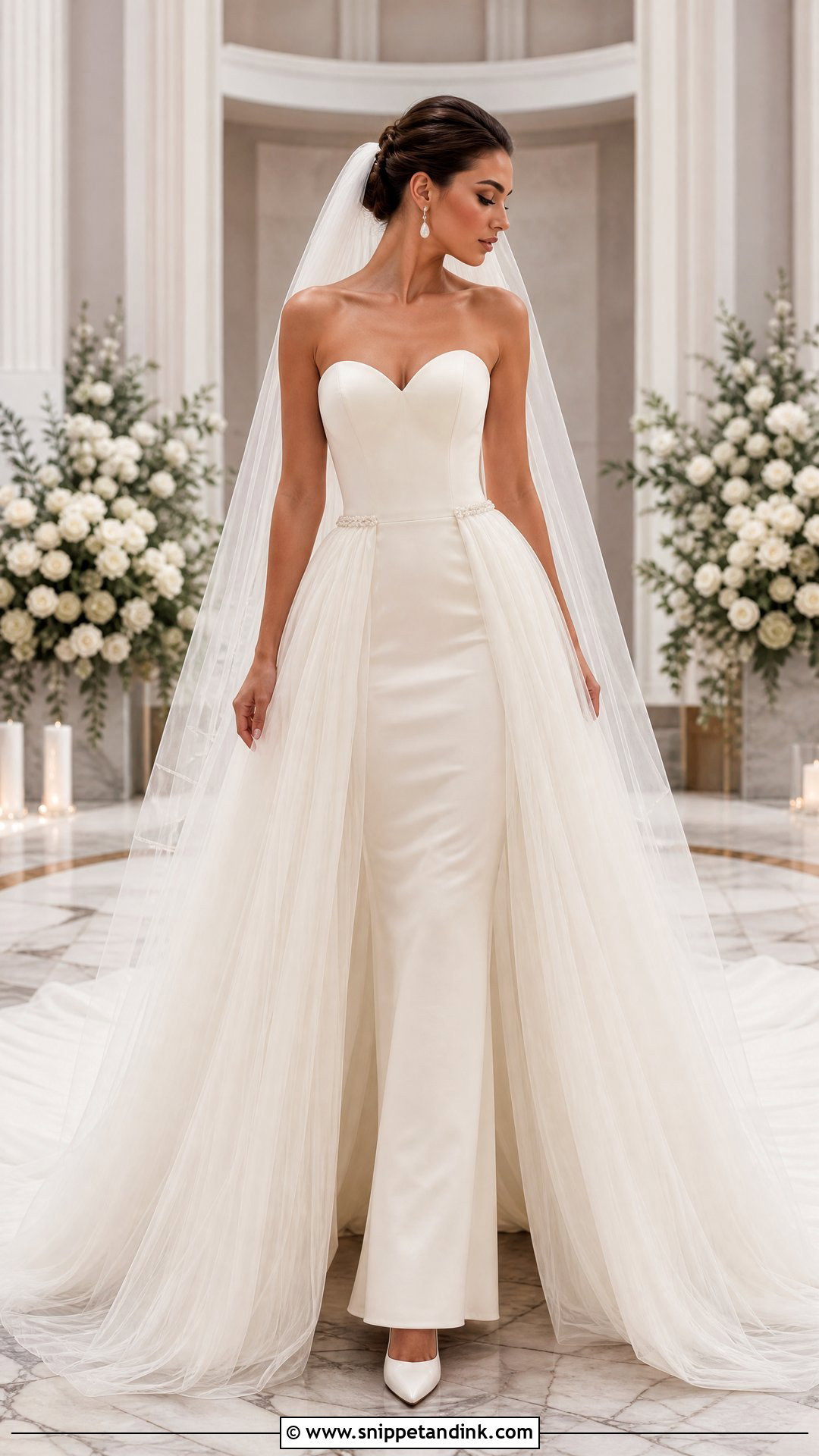
Two silhouettes, one dress. A full tulle or organza overskirt gives a soft, dramatic entrance; remove it and a streamlined fitted gown takes you through the reception. The overskirt must attach firmly at the waist and match the bodice exactly in shade, or the join will show. A cathedral veil, pearl earrings and satin heels suit the ceremony; once the skirt and veil come off, add a sparkling comb or statement earrings. I’d practise the change at the final fitting and hand the fastenings to one calm helper, since hooks and hidden buttons are fiddly with nervous fingers.


20. Tea Length Organza Wedding Dress
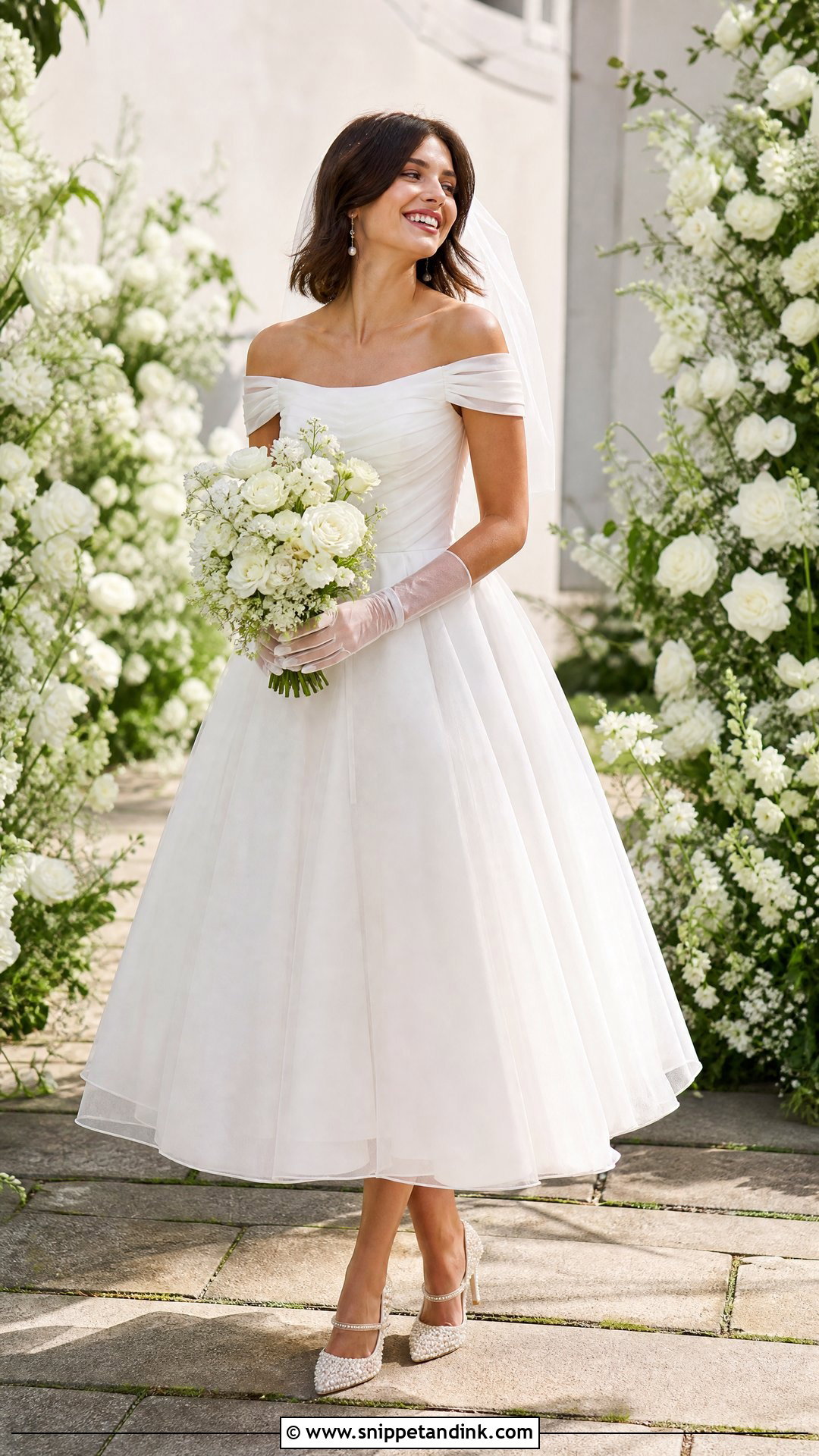
Tea length keeps the lightness and shows off the shoes. A fitted bodice with a scoop, square or off-shoulder neckline over a skirt that ends between lower calf and ankle gives a joyful, easy outfit, and sheer organza layers add volume without weight. Pearl-trimmed pumps, delicate earrings, short gloves if you like and a shoulder-length veil complete it, with a polished bun or soft curled bob. Courthouse and daytime weddings suit it well. Small changes in tea length make a big difference, so I pin two or three hem options with the final shoes on and decide in a full-length mirror.
Grass, Gravel and Red Wine: Protecting a Floating Hem
Soft fabrics are the first to show the day. Tulle and chiffon hems pick up grass stains, dust and gravel within minutes outdoors, and they’re harder to clean than satin because marks sink into the open weave.
Before the day
Have the hem finished just clear of the ground in your wedding shoes, and ask for a bustle on any train you’ll wear after the ceremony. Walk the venue path in advance and tell your planner if a gravel aisle needs a runner.
On the day
Pack a small kit: white chalk for dabbing over light marks, clean white cloths, a few safety pins and a travel steamer. Blot spills gently and never rub chiffon or tulle, which roughens the fibres and spreads the stain. Red wine and grass are jobs for a specialist cleaner afterwards, so leave them alone beyond a light blot.
After the wedding
Get the gown to a wedding dress cleaner within a few weeks. Sugary drinks can dry invisibly and yellow later, and the longer they sit in the fabric the harder they are to lift.
Soft Fabric, a Sure Fit and a Veil That Floats
The bride who looks angelic is the one who’s comfortable enough to forget her dress. Flowing fabric, careful construction, restrained embellishment and quiet accessories can bring that feeling to many silhouettes. Weigh your venue, season, coverage and how much you’ll move when comparing gowns, and test every finalist while walking, sitting and raising your arms before alterations are signed off. Let the shoes, veil, jewelry, flowers and hair support the dress. From cloudlike tulle to clean silk, there’s an airy version for every bride.
You'll Like These Ideas:



Leave a Reply