
Coverage and style aren’t opposites in bridal. A high neckline, lined sleeves, a closed back and a floor-length skirt still leave you every silhouette and fabric to choose from, quiet crepe, embroidered lace or a satin with real presence. Most of my work on covered gowns happens in details nobody notices in photos: how opaque the lining is, whether the sleeves let you lift your arms, which undergarments disappear under a high back. The gowns below run from flowing A-lines to sculpted mermaids, each with notes on what to check and what to wear with it. Season and venue shape the choice as much as taste does.
Adding Sleeves or Lining to a Gown That Shows Too Much
Plenty of brides fall for a dress that is almost covered enough. Often it can be adapted, and good bridal seamstresses do this kind of work all the time. What’s possible depends on the fabric and on how much time you have.
- Lining sheer areas: an illusion back or sheer sleeves can be lined in a skin-toned or ivory fabric. This is usually the simplest change.
- Adding sleeves: long sleeves can be made from matching lace or crepe and set into the armhole. Ask whether spare fabric from the same roll is available, because whites from different batches rarely match exactly.
- Raising a neckline: a modesty panel, or a high illusion yoke finished with lace appliqué, can fill in a V or sweetheart neck.
- Adding a separate layer: a lace bolero or fitted jacket covers shoulders and arms without altering the dress at all, and it can come off later if you wish.
Allow extra weeks for any of these on top of the usual alterations, and see the change at a fitting before the final hem is done. A sleeve set into the armhole changes how the whole bodice sits.
1. High Neck Long Sleeve Lace Wedding Dress
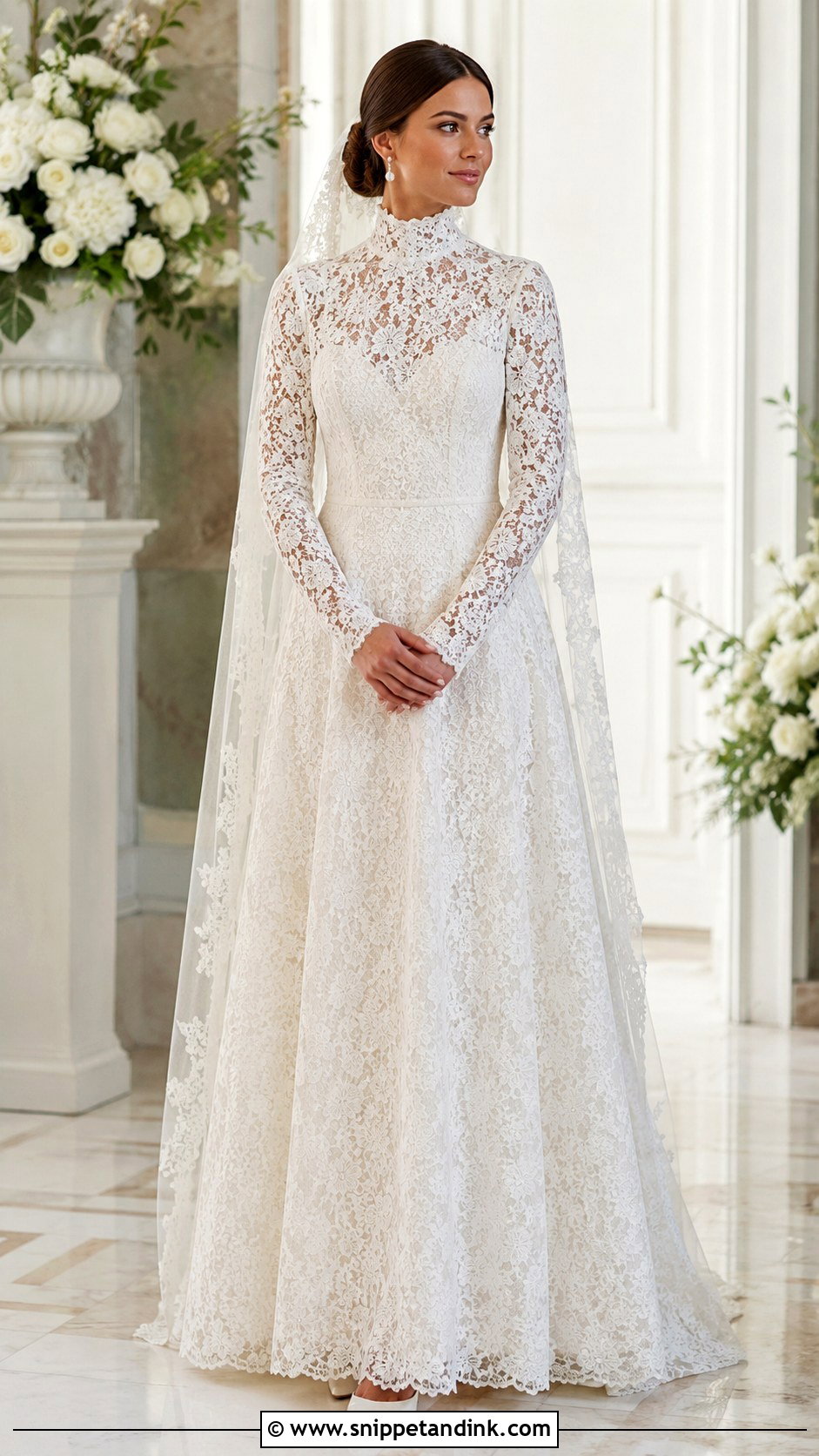
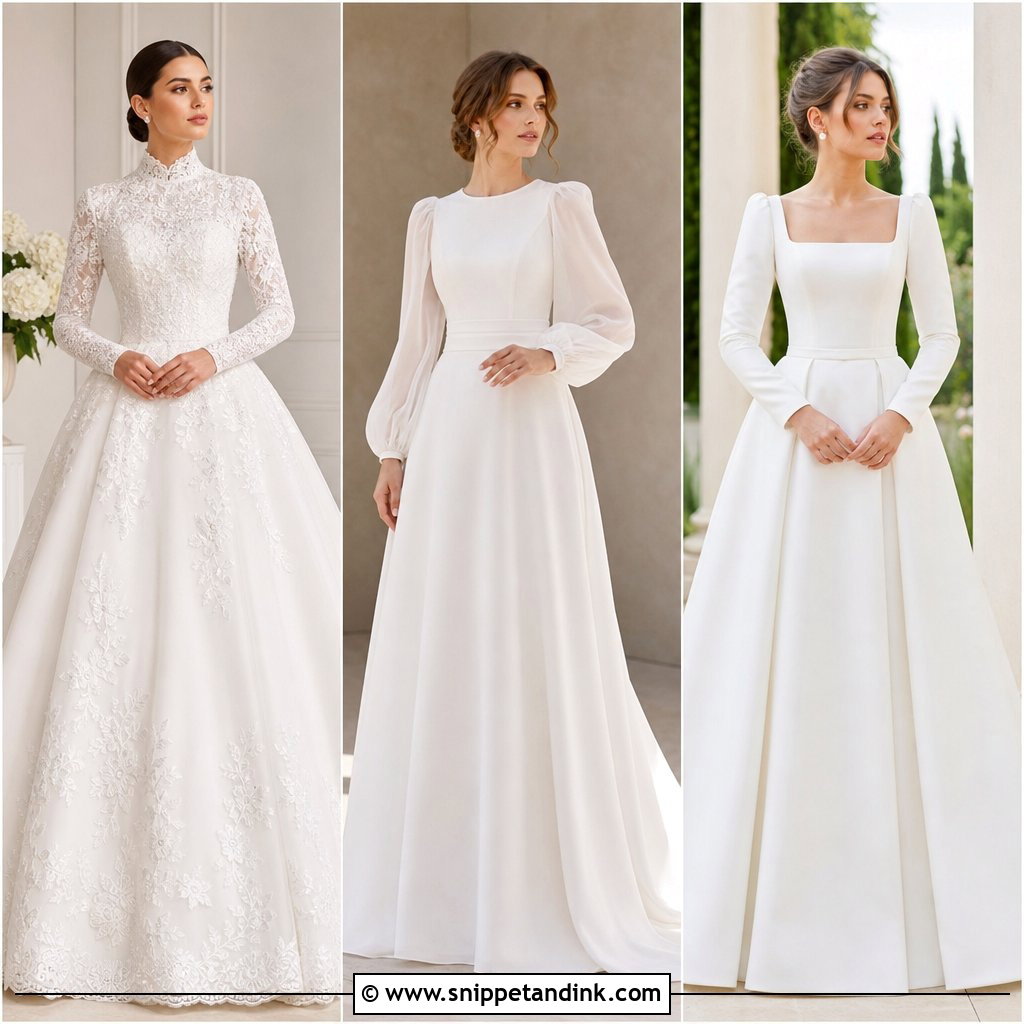
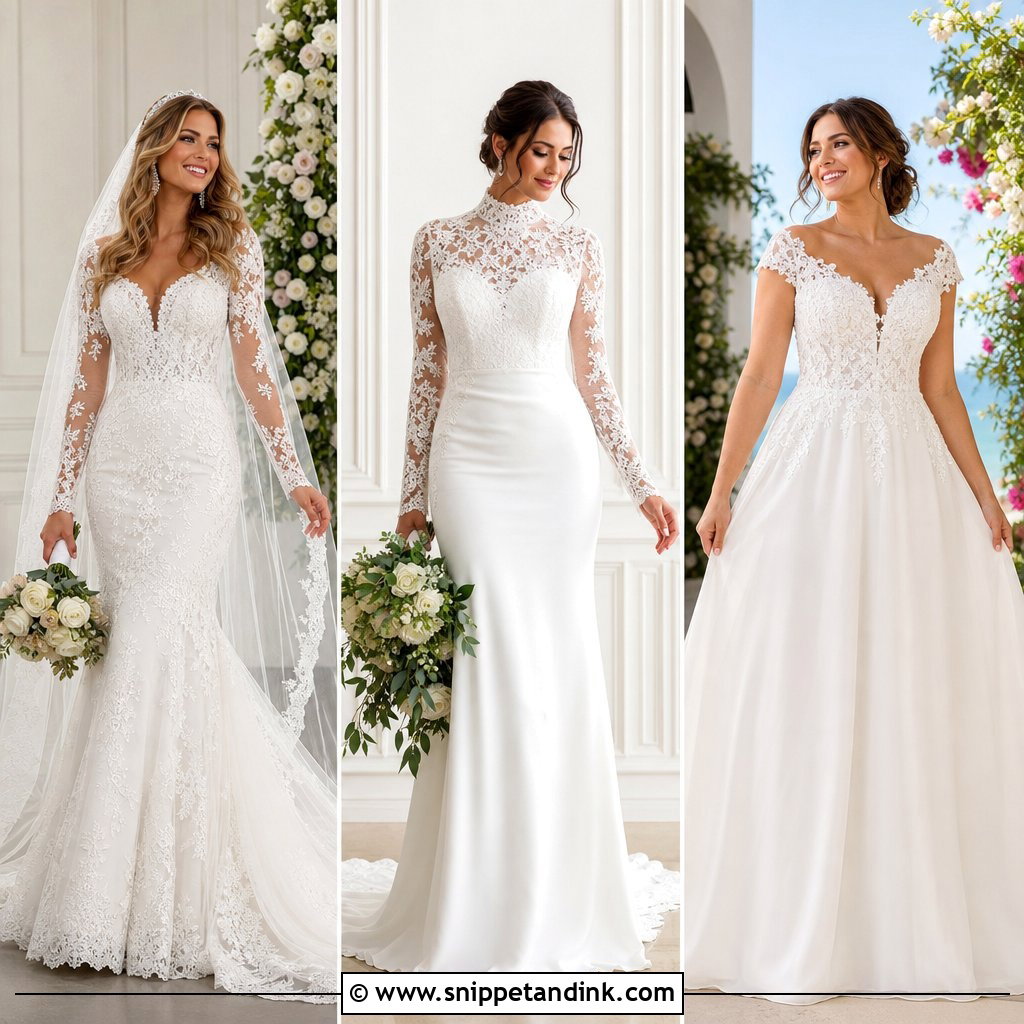
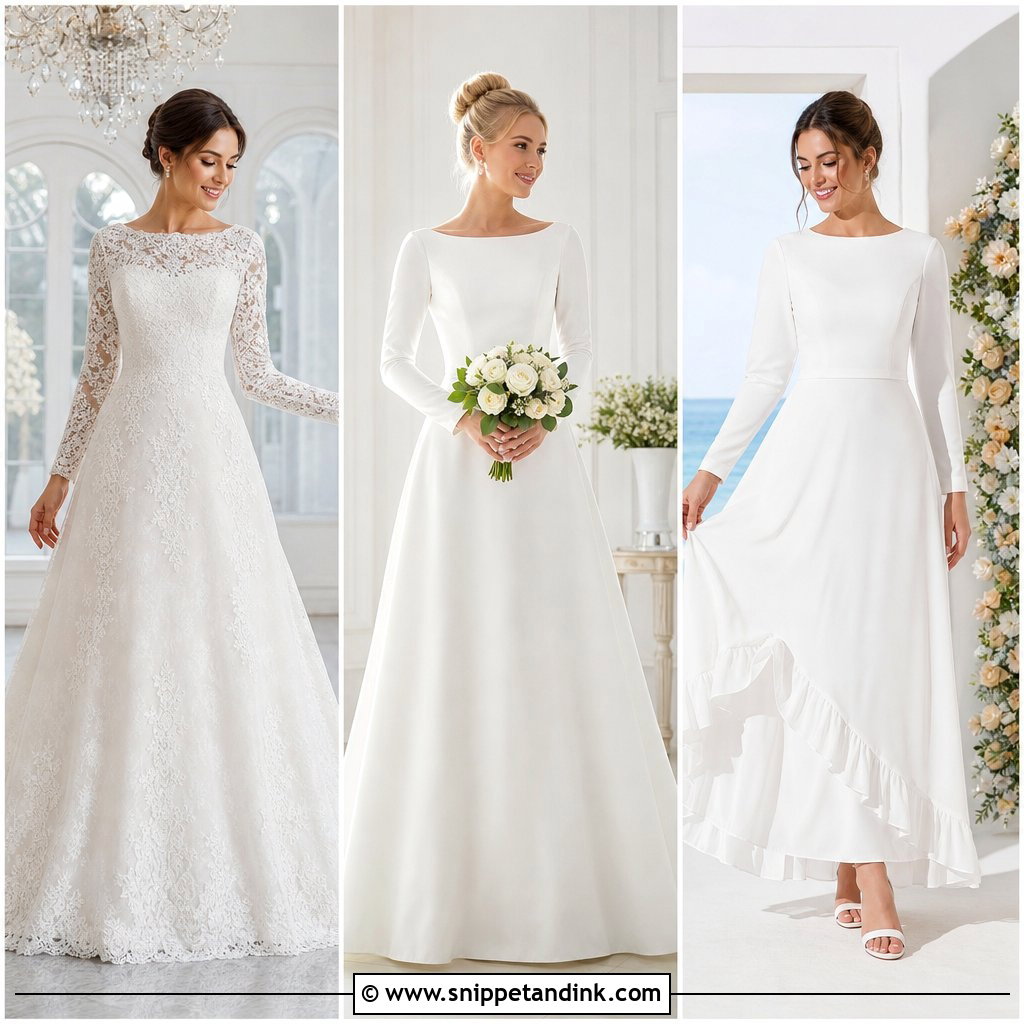
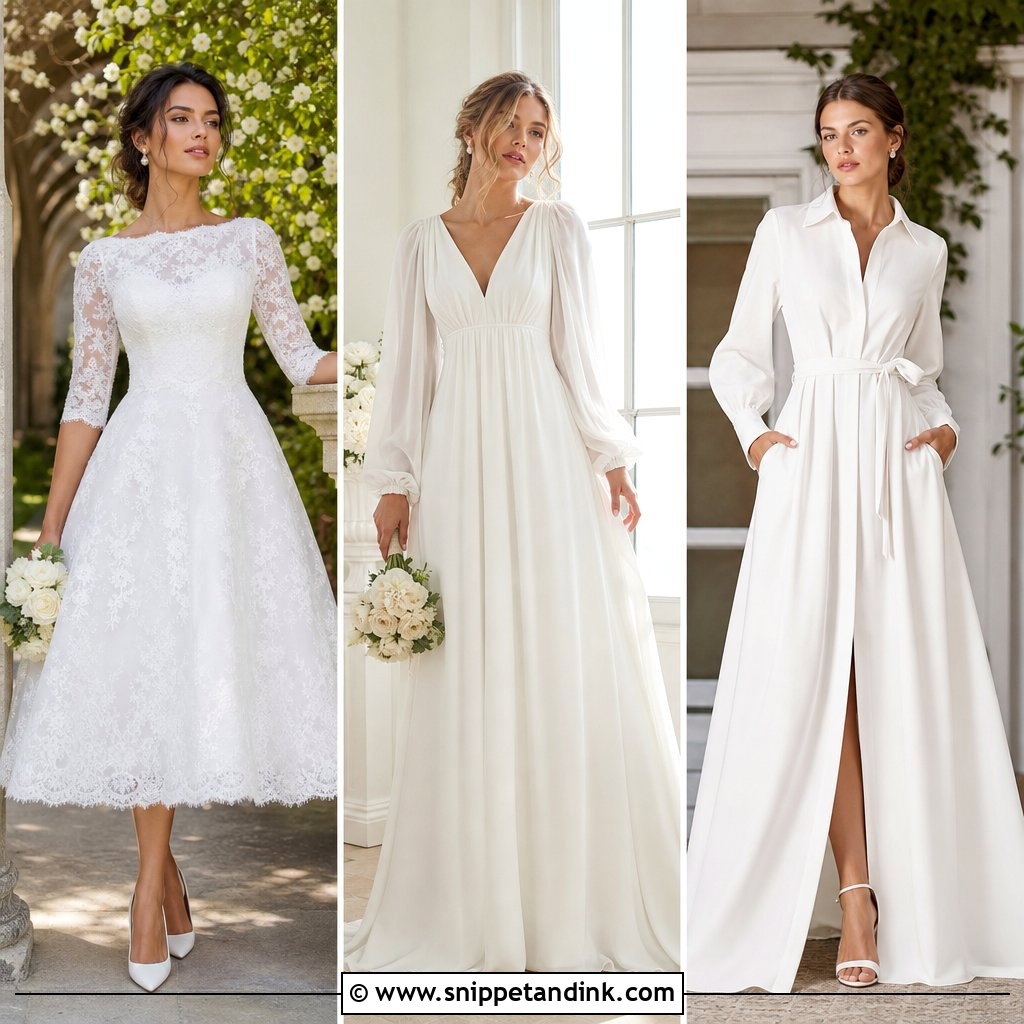
Lace with a full lining is the most reliable way to keep a high-neck gown looking light. The lace gives texture and the lining does the covering, so the dress stays opaque even under a photographer’s flash, which can make unlined lace read far sheerer than it looked in the shop. Choose an A-line with lace across bodice, sleeves and back so coverage is consistent from every side. Covered buttons down the back add detail without breaking the shape. I’d style it with ivory pointed heels, pearl drops, a fingertip veil edged in matching lace and a low bun. In the fitting, sit down and raise your arms; the high neck and fitted sleeves have to stay comfortable together.
2. Satin Ball Gown Wedding Dress With Sleeves
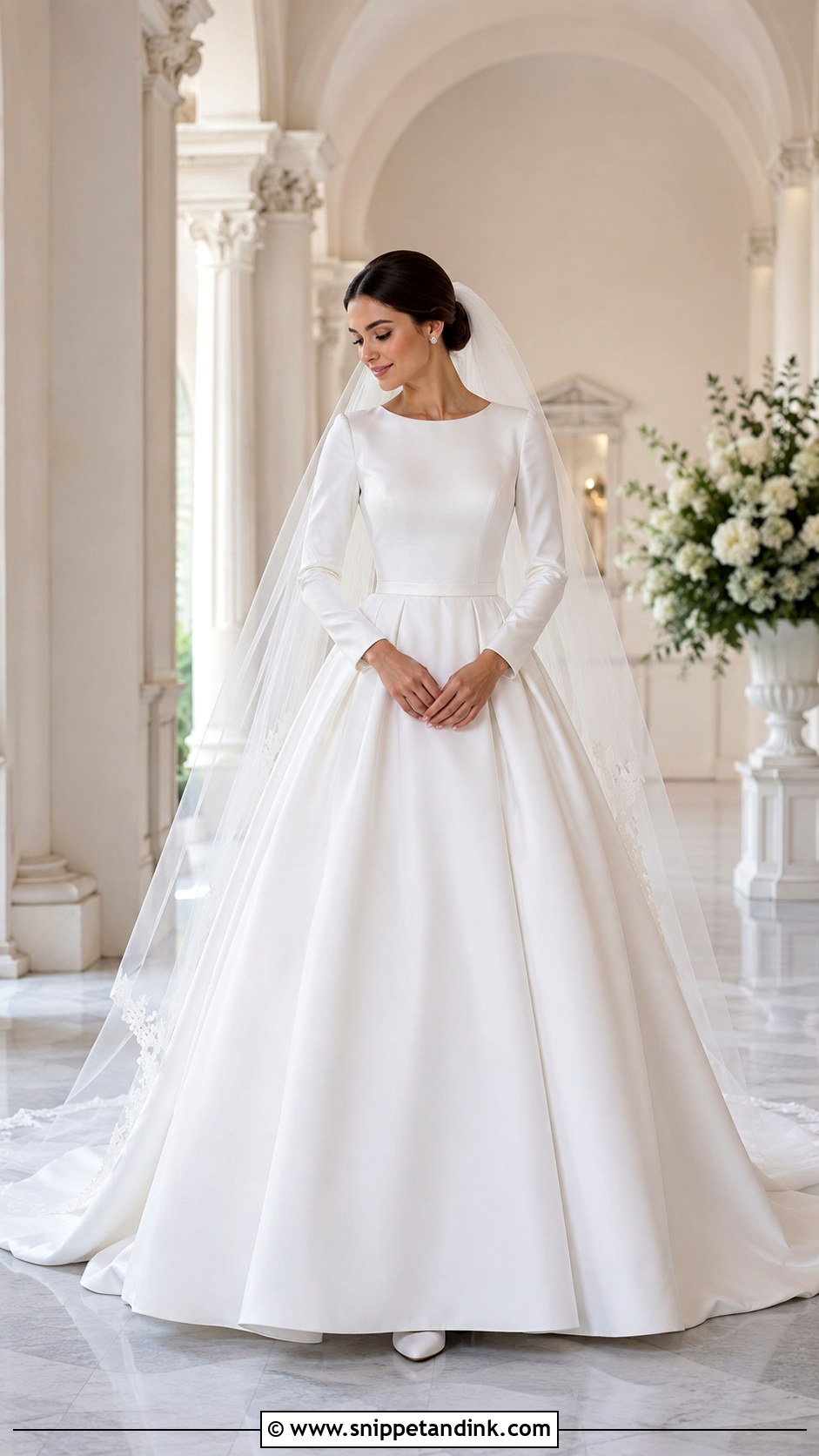
A satin ball gown with sleeves is the grandest look here, and it needs a big room to move through. The bodice should be structured, with a modest round neck, wrist-length sleeves and a fully closed back. Box pleats or soft gathers give the skirt volume, and satin’s sheen does the decorating. Sleeves on a heavy gown are tricky. If the armhole is cut low, the whole bodice lifts when you raise a hand, so ask for a high, close armhole. A cathedral veil, crystal studs, closed-toe pumps and a compact bouquet are plenty, with a narrow satin belt if you’d like more waist. Set the hem while wearing your real shoes and petticoat.
3. Crepe A-Line Covered Wedding Dress
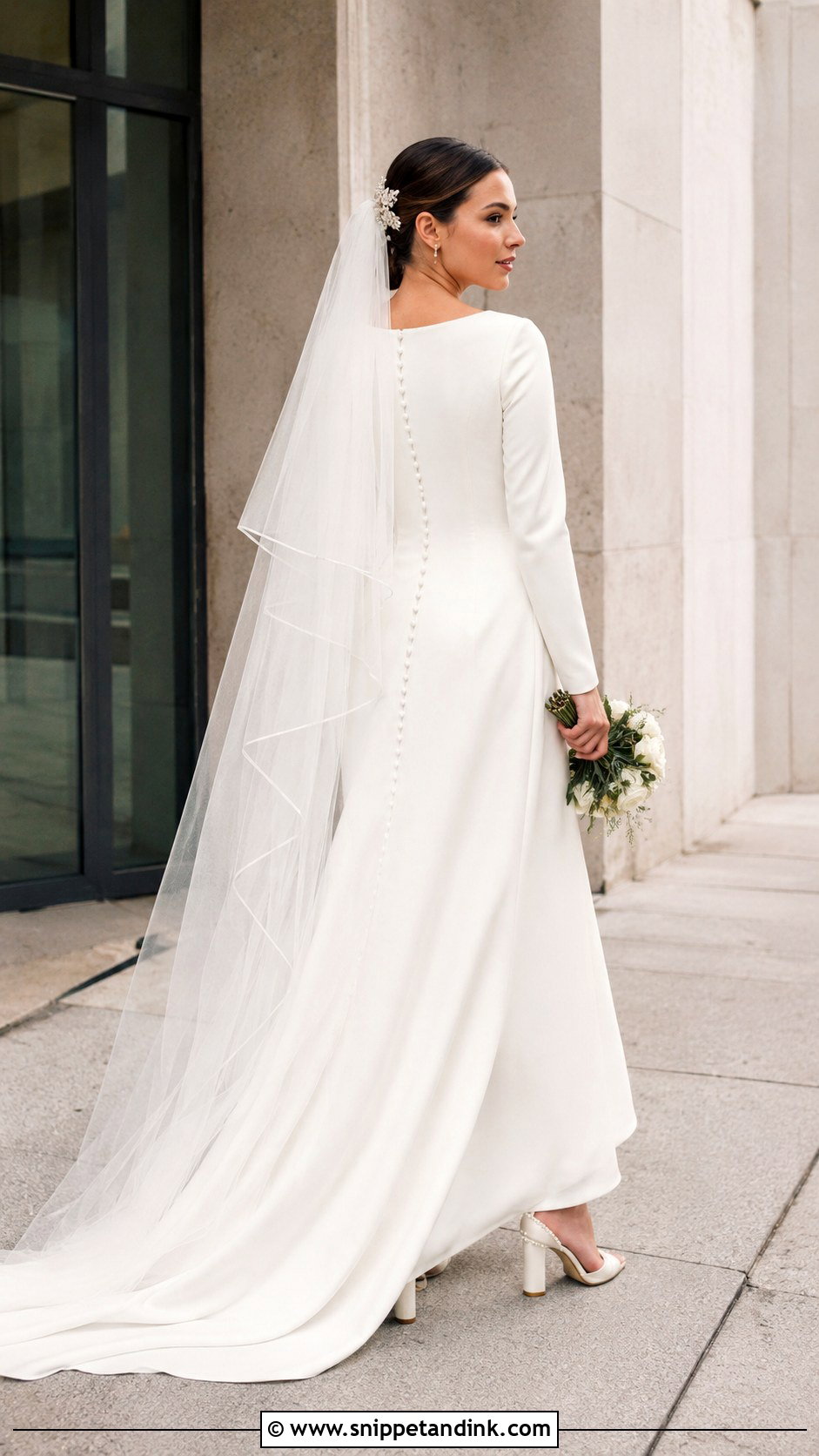
Crepe makes a covered gown look current. An A-line with a bateau neckline, long fitted sleeves and a closed button back gives one smooth line from shoulder to floor. Crepe follows the body more closely than stiff satin, so it shows what’s underneath; plan your foundation garments early and wear them to every fitting. For waist definition I prefer shaped seams to a contrasting belt, which breaks up the clean surface. Pearl-embellished block heels, a structured mini bag, a simple chapel veil and a slim metallic comb suit it. Before you approve the hem, check there’s enough width in the skirt to sit and dance.
4. Chiffon Wedding Dress With Bishop Sleeves
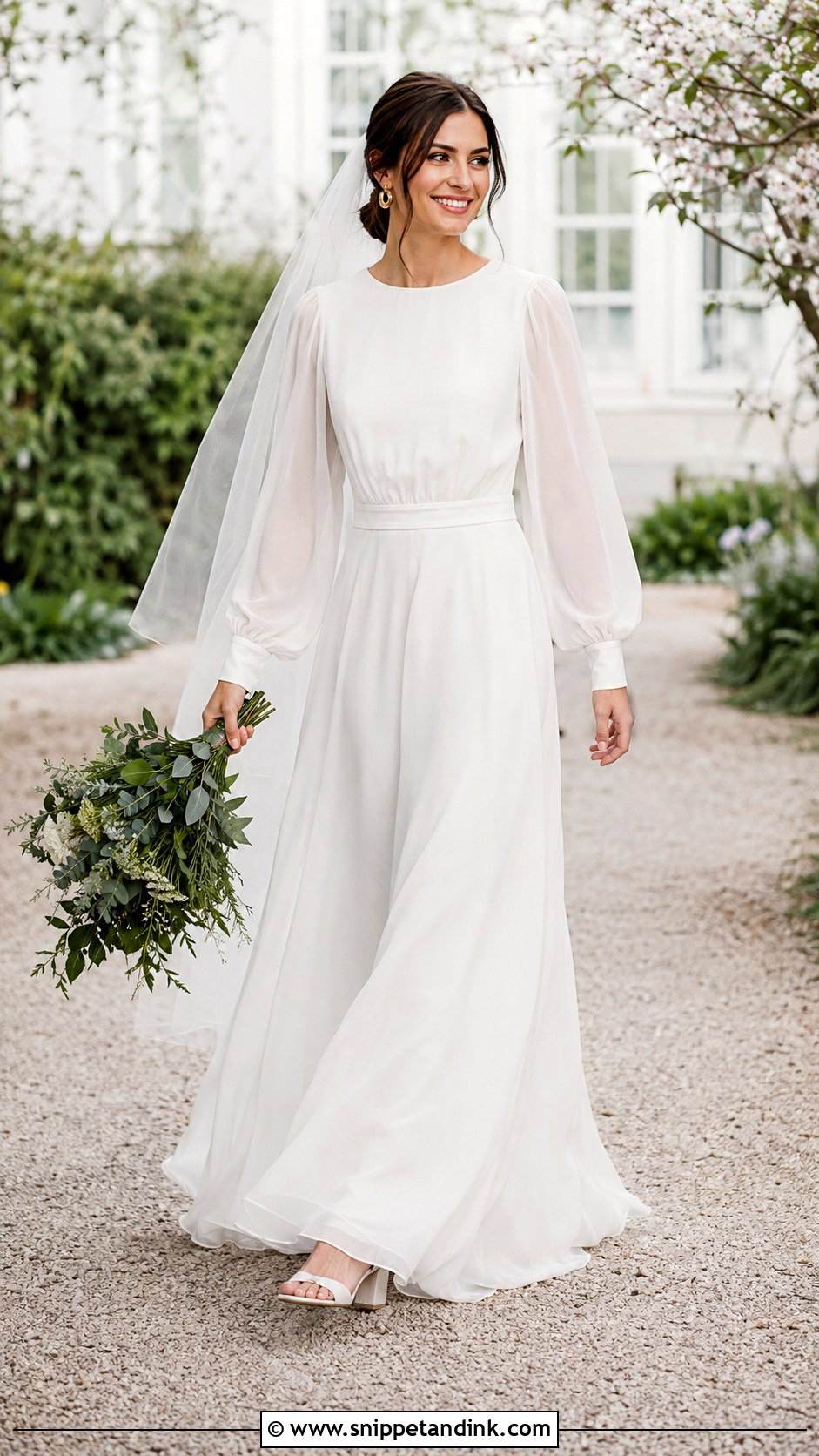
Bishop sleeves billow from shoulder to wrist and gather into a cuff, and in chiffon they move with every gesture. Choose a lined bodice with a modest scoop or jewel neck and an empire or soft natural waist so the skirt floats. Single-layer chiffon sleeves are sheerer in sunlight than they look indoors, and a second layer or a light sleeve lining solves it. The cuffs should close snugly enough not to slide over your hands while you hold the bouquet. Low block heels, a light veil, fine gold earrings and a loose bouquet with trailing greenery suit it. Leave big bracelets at home, since they snag chiffon.
5. Mock Neck Illusion Lace Wedding Dress
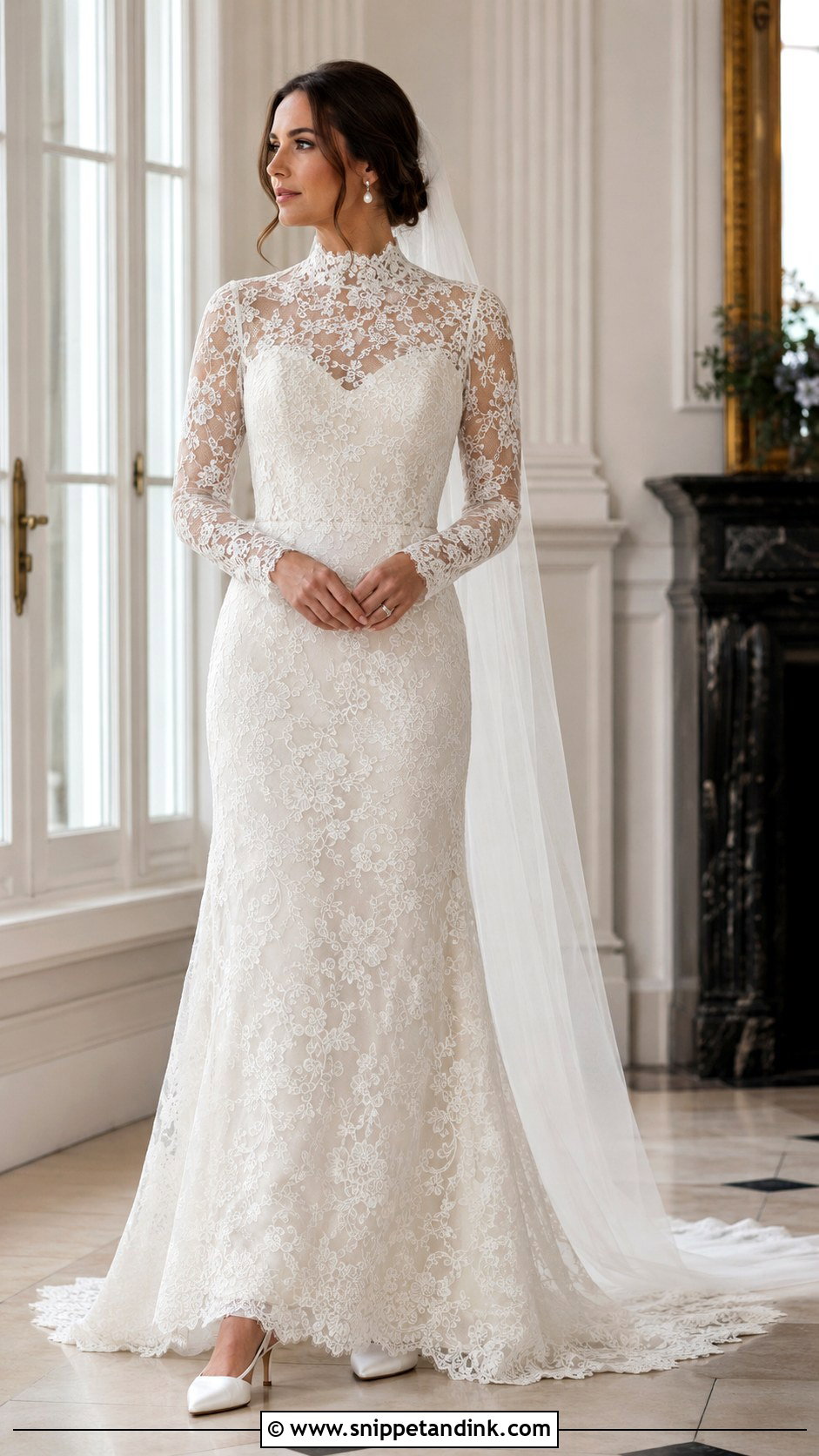
A mock-neck gown pairs decorative lace with dependable coverage as long as the bodice is properly lined. Look for an opaque base across chest and back with lace appliqué laid over it. Long illusion sleeves are where coverage usually falls short. If you need fully opaque arms, ask for the sleeves to be lined in a skin-toned or ivory fabric, a job most bridal seamstresses can do. Satin slingbacks, small pearl earrings and a plain tulle veil let the neckline lead, and a softly twisted updo shows off the collar. View the dress in daylight, indoor light and with a camera flash, because flash finds sheer patches that the fitting room hides.
6. Boat Neck Long Sleeve Wedding Dress
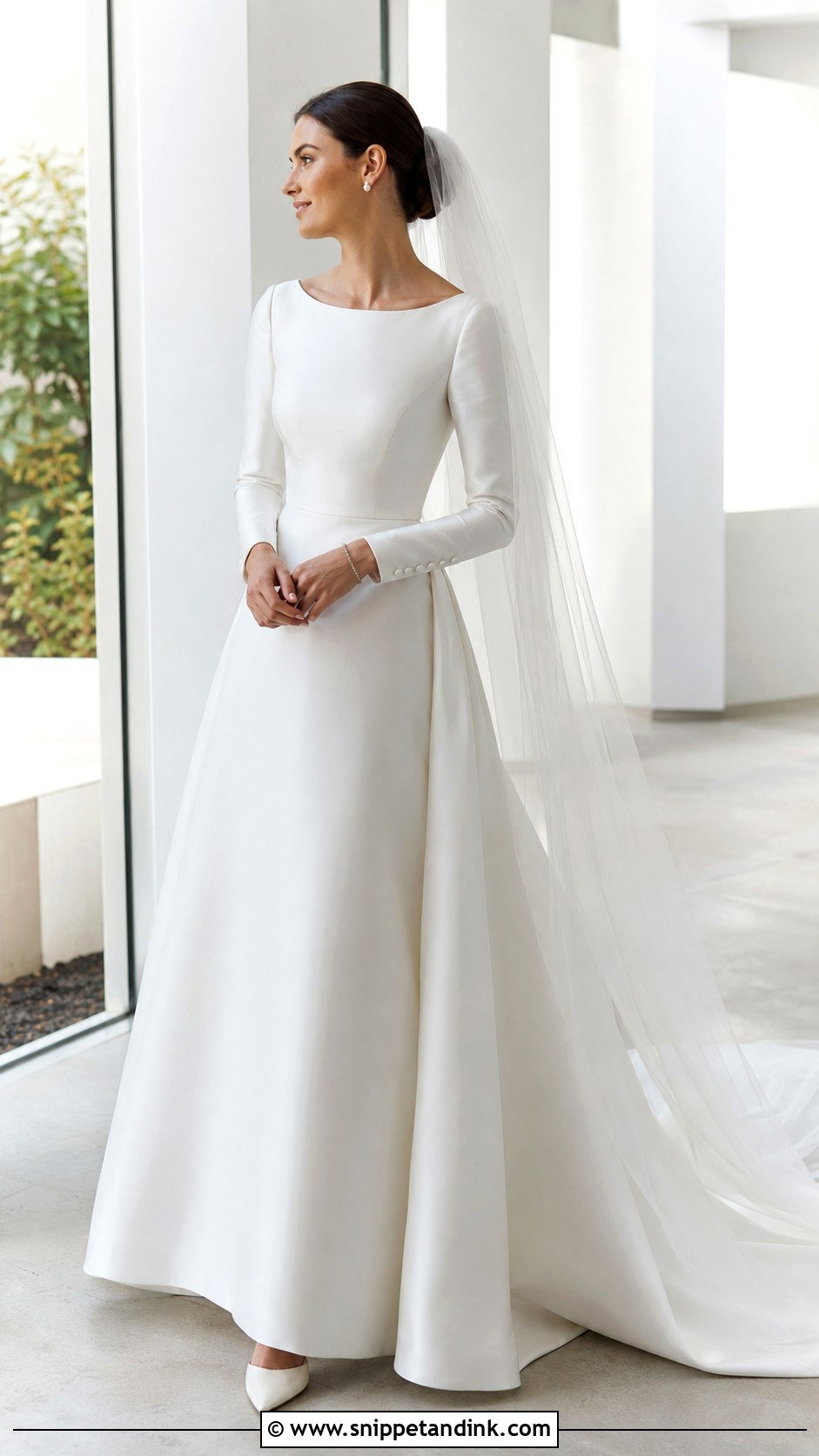
A boat-neck wedding dress runs almost shoulder to shoulder, showing only a line of collarbone while covering chest, shoulders and back. It sits well on a fit-and-flare or softly structured A-line in opaque mikado, crepe or matte satin, with wrist-length sleeves buttoned at the cuff. The upper back is where these go wrong. Too loose and it wrinkles; too tight and you can’t reach forward to take a hand. I ask the tailor to fit it with the bride’s arms extended. The neckline already draws a strong horizontal line, so skip the necklace and wear pearl studs, a low chignon, pointed ivory pumps and a long plain veil.
7. Square Neck Covered Wedding Dress
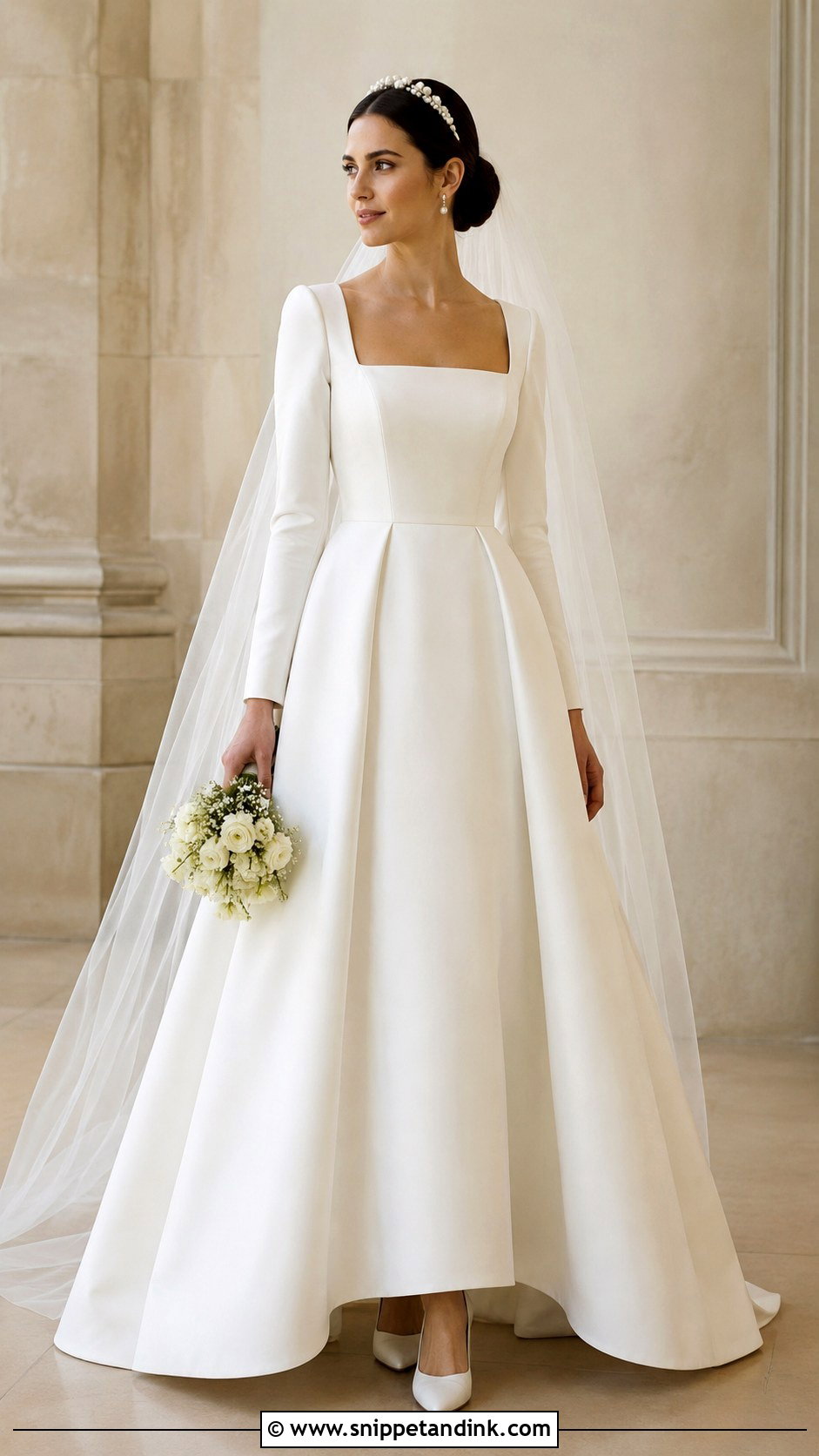
A square neck with wide shoulder panels gives a structured, feminine shape and covers far more than a plunging bodice. The corners are the weak spot. On a bodice without enough internal support they lift or gape as you move, and the fix is shaping at the side seams, not tightening the neckline itself. A full A-line skirt balances the defined top half. A fine pendant can sit inside the open space if its chain is short enough not to touch the fabric. Closed-toe block heels, a pearl headband, short drop earrings and a chapel veil under a neat bun complete it.
8. Closed Back Mermaid Wedding Dress With Sleeves
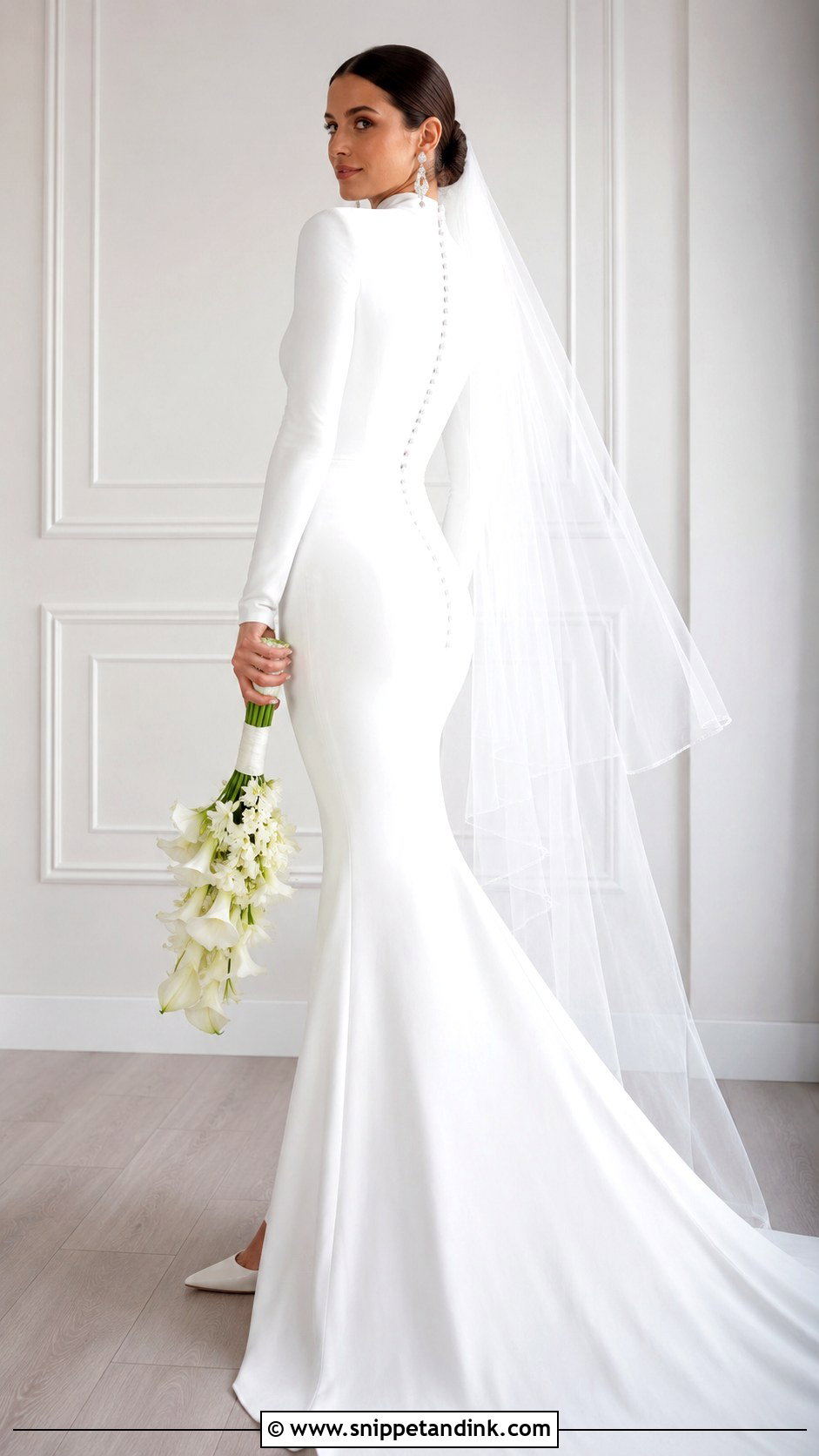
Full coverage and a mermaid shape do go together. Choose an opaque high neck, fitted long sleeves and a closed back with fabric-covered buttons, in stretch crepe or lined lace with enough give to move. The flare point decides your stride: start it too high and the shape is lost, too low and your knees are locked together. Take full steps and sit down at the fitting before anything is finalized. Well-placed seams shape the hip without pulling. Pointed pumps, statement earrings, a sleek low bun and a fingertip veil suit it, and a narrow bouquet keeps the waist in view.
9. Victorian High Neck Wedding Dress
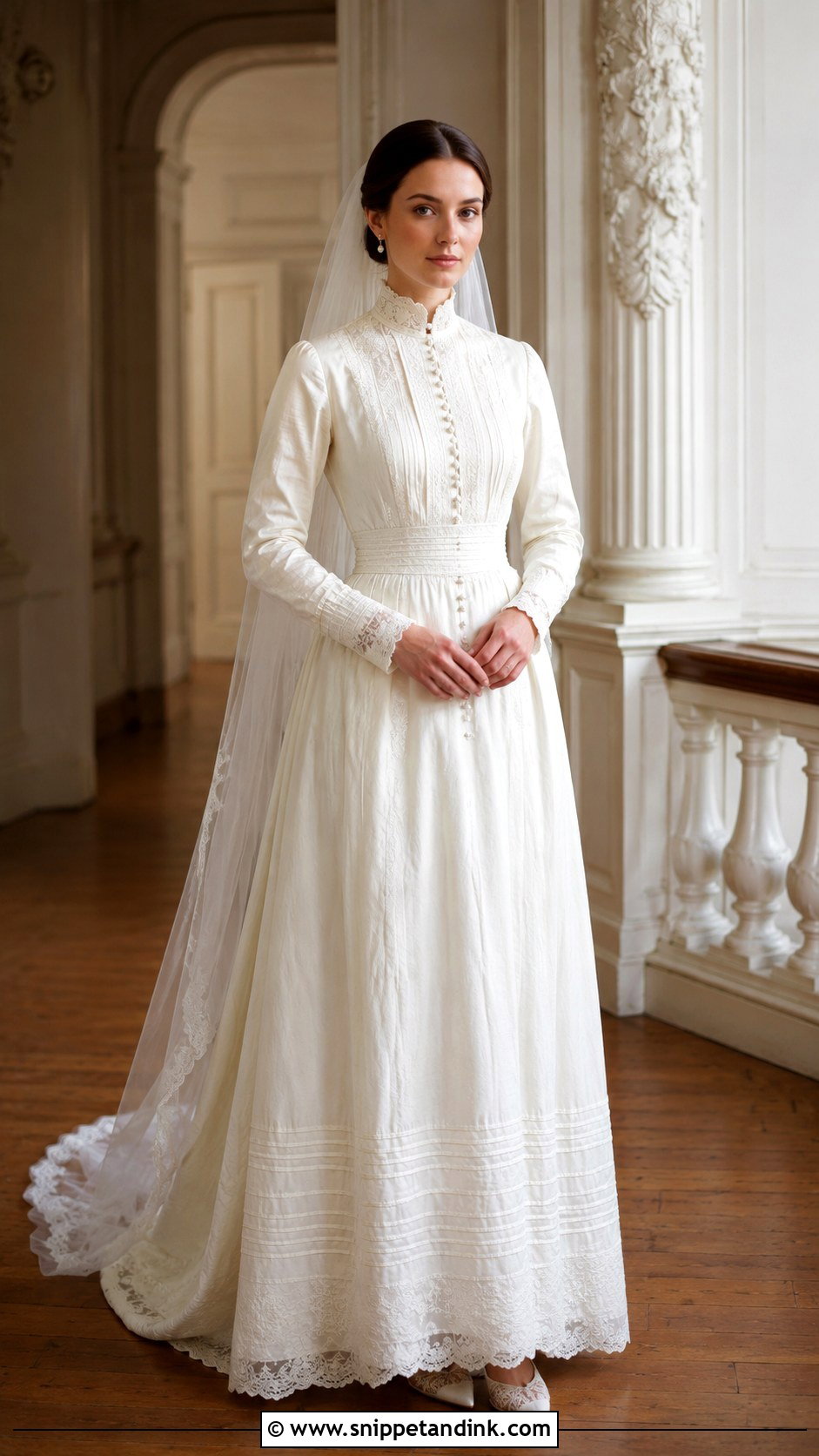
Victorian details look fresh when the fit underneath is modern. Look for a high lace collar, lined long sleeves, a fitted waist and a floor-length skirt, with pintucks, covered buttons or restrained embroidery for period character. Pile on every historic detail and it tips into costume, so I’d pick two or three. The collar must leave room to swallow and turn your head; a boned collar that’s a fraction tight becomes miserable by evening. Lace-trimmed pumps, a delicate comb, pearl earrings and a soft veil set low suit it, with a smooth center-parted bun. Historic houses and libraries are its natural setting.
10. Tea Length Covered Wedding Dress
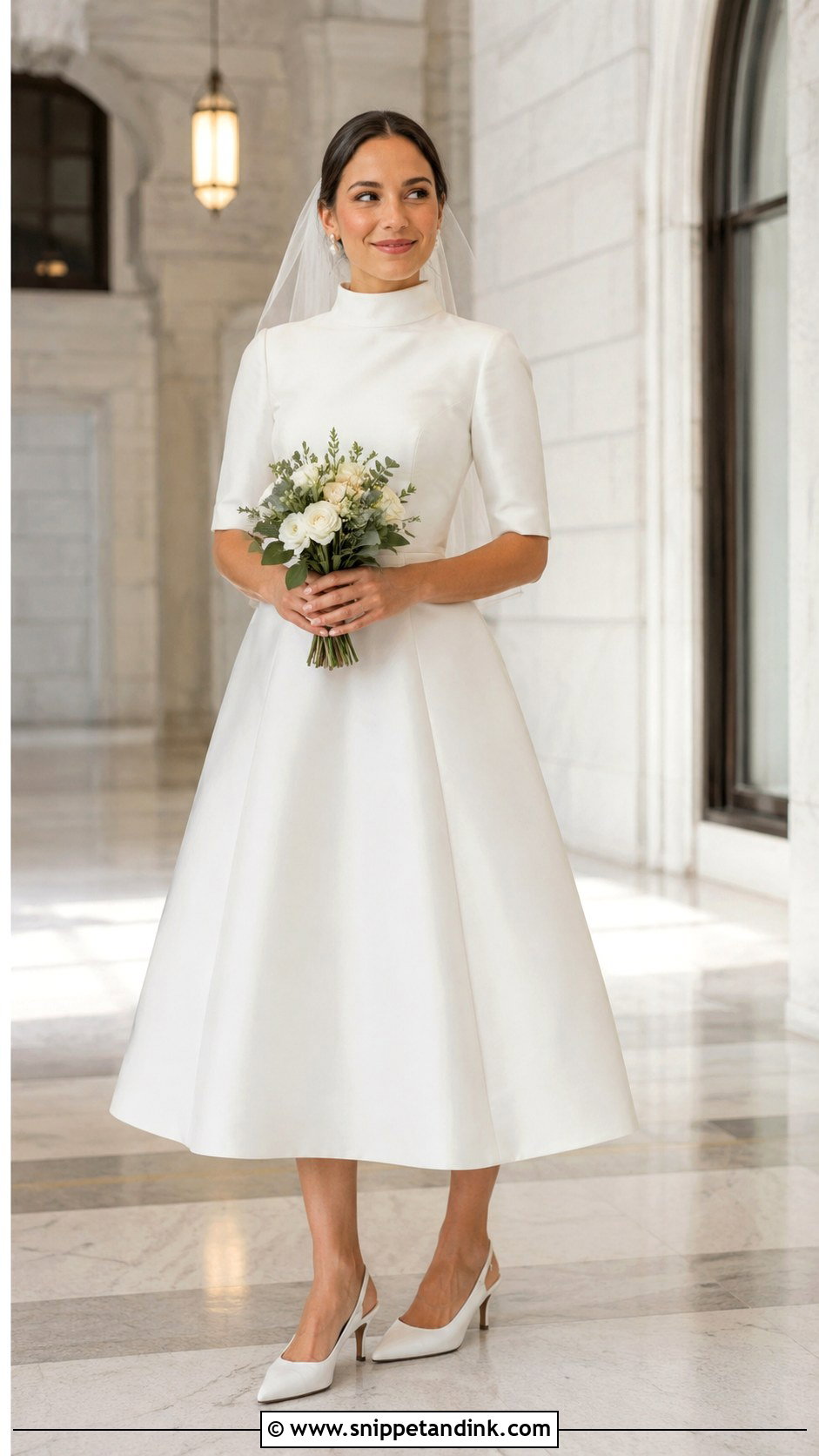
Tea length gives coverage without a floor-sweeping skirt, and your shoes become part of the outfit. The shape is a high-neck A-line with elbow or full sleeves and a hem between knee and ankle. Structured satin, mikado or heavier crepe keeps the skirt standing away from the legs. Hem placement takes real care. Ending at the widest part of the calf visually shortens the leg, so I have it moved to a narrower point that suits the bride’s height and heels. Polished slingbacks, low pumps or embellished flats deserve the attention, with a short veil and pearl studs. It sits naturally at a courthouse, a daytime reception or a small venue.
11. Pearl Beaded Long Sleeve Wedding Dress
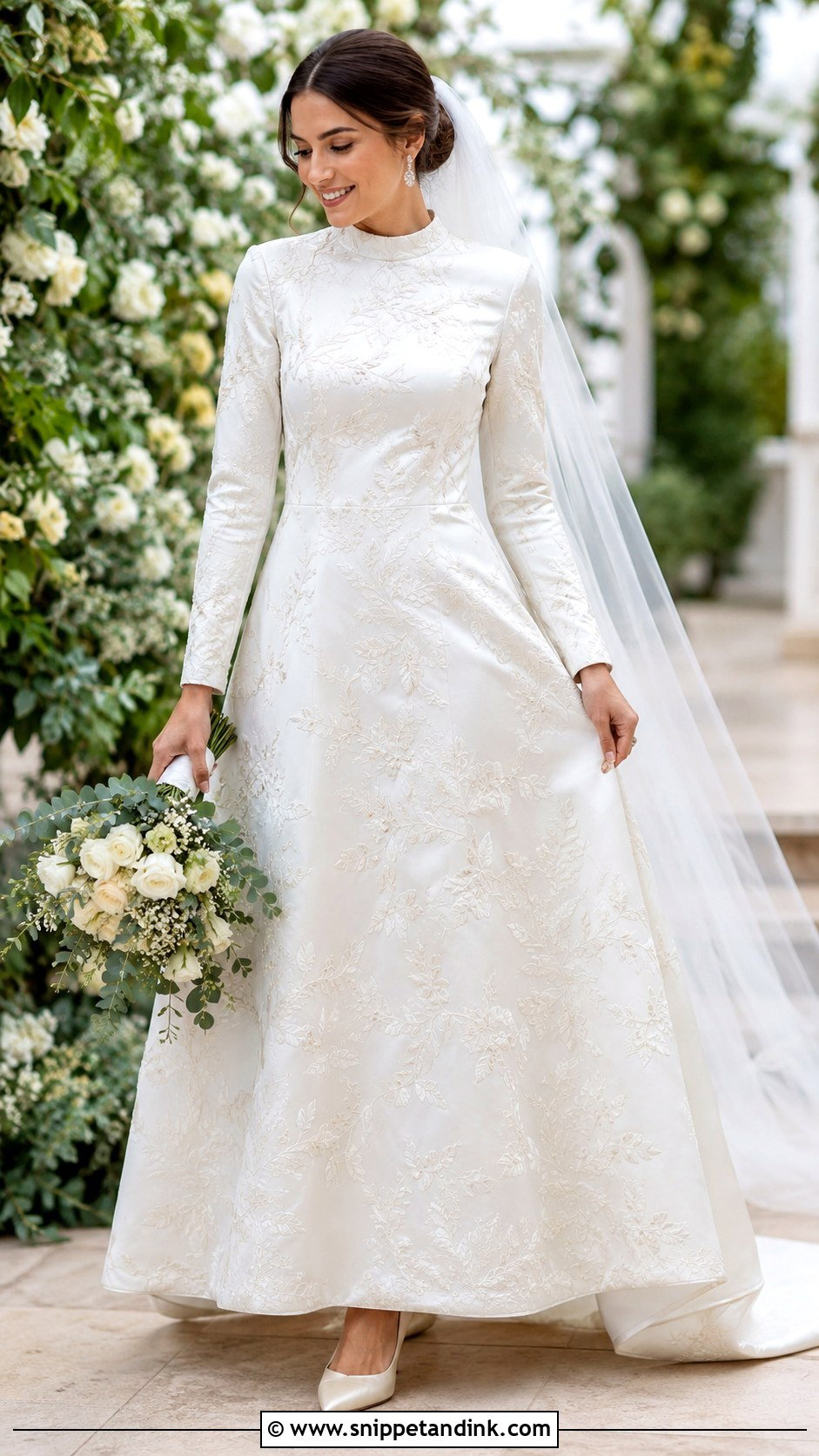
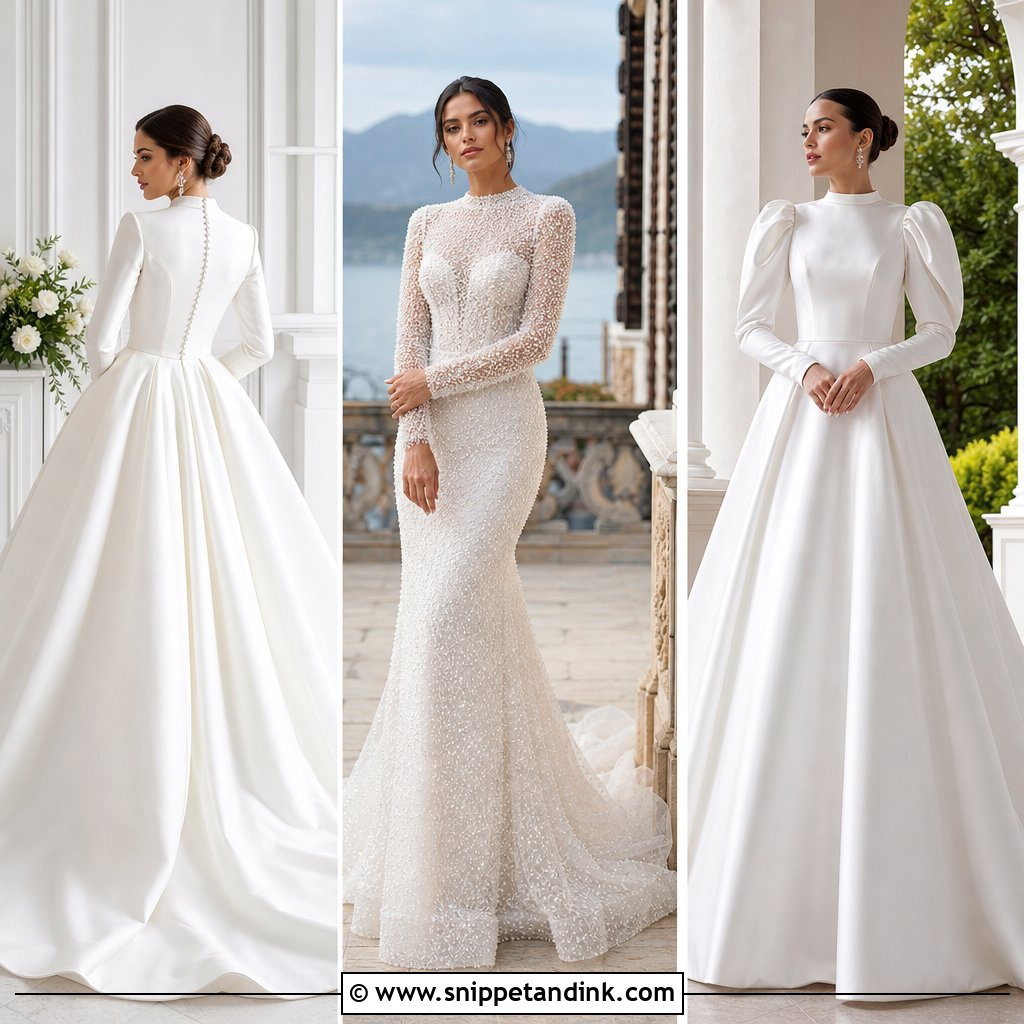
Pearls give a covered gown texture without any skin showing. A fitted bodice with a jewel neck, opaque long sleeves and pearls across lace or tulle, over a plain satin or crepe skirt, keeps the balance right. The pearls near the underarm and cuff cause most of the trouble, rubbing the inner arm or catching on the bodice as you move, so ask for that area to be beaded lightly or left plain. The bodice may also feel heavier than you expect. Repeat pearls in one accessory only, simple studs, then add satin heels, a sheer plain veil and a low twisted bun.
12. Minimalist High Neck Column Wedding Dress
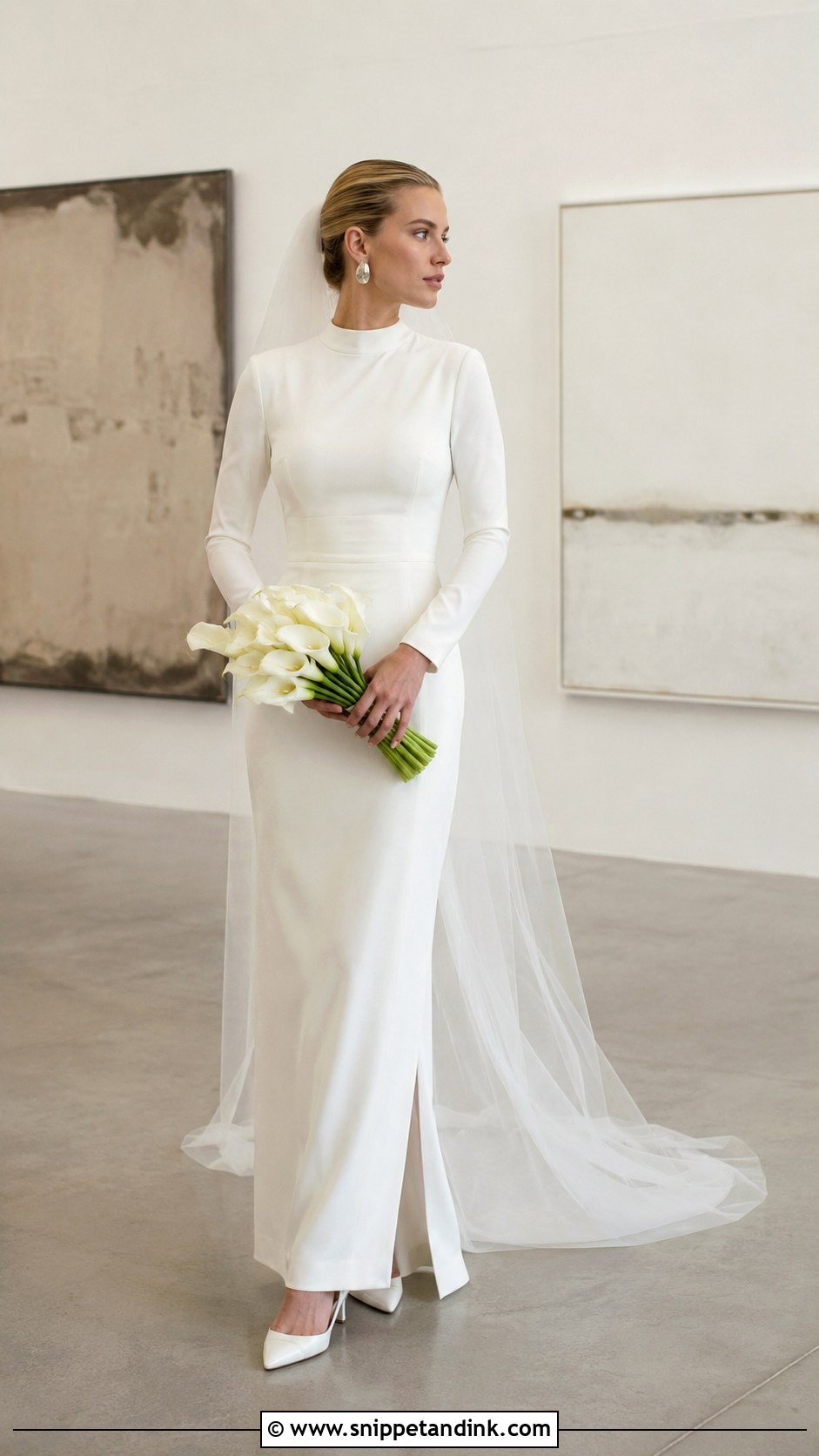
A high-neck column in smooth crepe is about as clean as bridal gets, with long fitted sleeves, a closed back and vertical seams that follow the body without squeezing it. A small back slit or concealed kick pleat lets you walk while keeping coverage, and I’d insist on one, because without it a column hobbles you on stairs. Columns show any fit change quickly, so alterations focus on shoulders, waist, hips and hem, and smooth no-line underwear lets the fabric fall cleanly. Pointed kitten heels, sculptural earrings, a slim comb and a plain cathedral veil suit galleries and rooftop venues.
13. Embroidered A-Line Wedding Dress With Sleeves
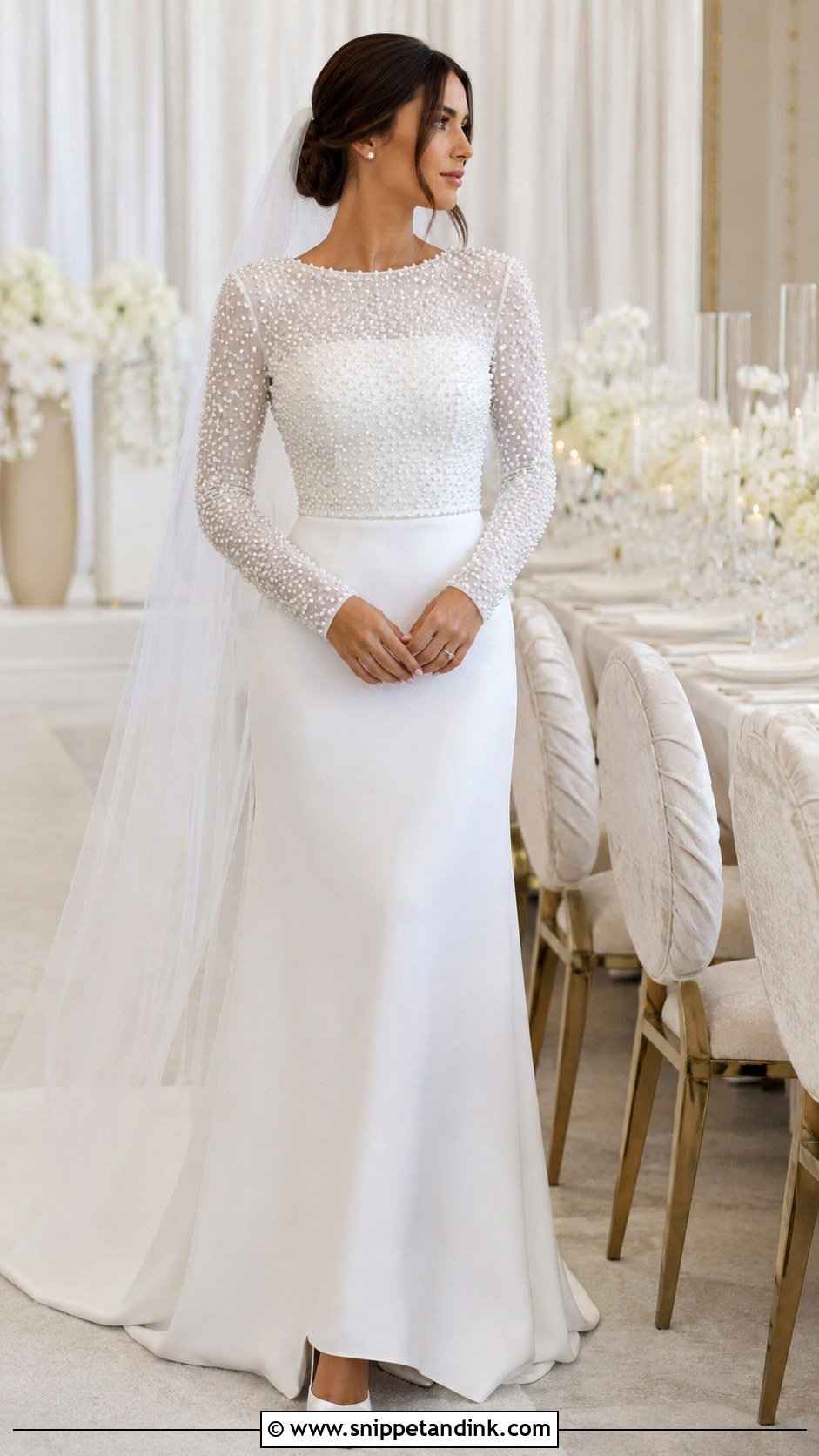
Embroidery makes a covered A-line personal. Botanical or geometric stitching runs across an opaque bodice, full sleeves and a closed back, with a softly flared skirt giving the work room. Look closely at the seams and back closure before you buy. Badly matched pattern placement breaks the design at exactly the spots people see as you walk away. Raised threads near the cuffs can also catch on the veil or a bouquet ribbon. Neutral satin heels, small gemstone earrings and a plain veil keep the focus on the stitching, and the bouquet can pick up one color or shape from it.
14. Covered Wedding Dress With Cape Sleeves
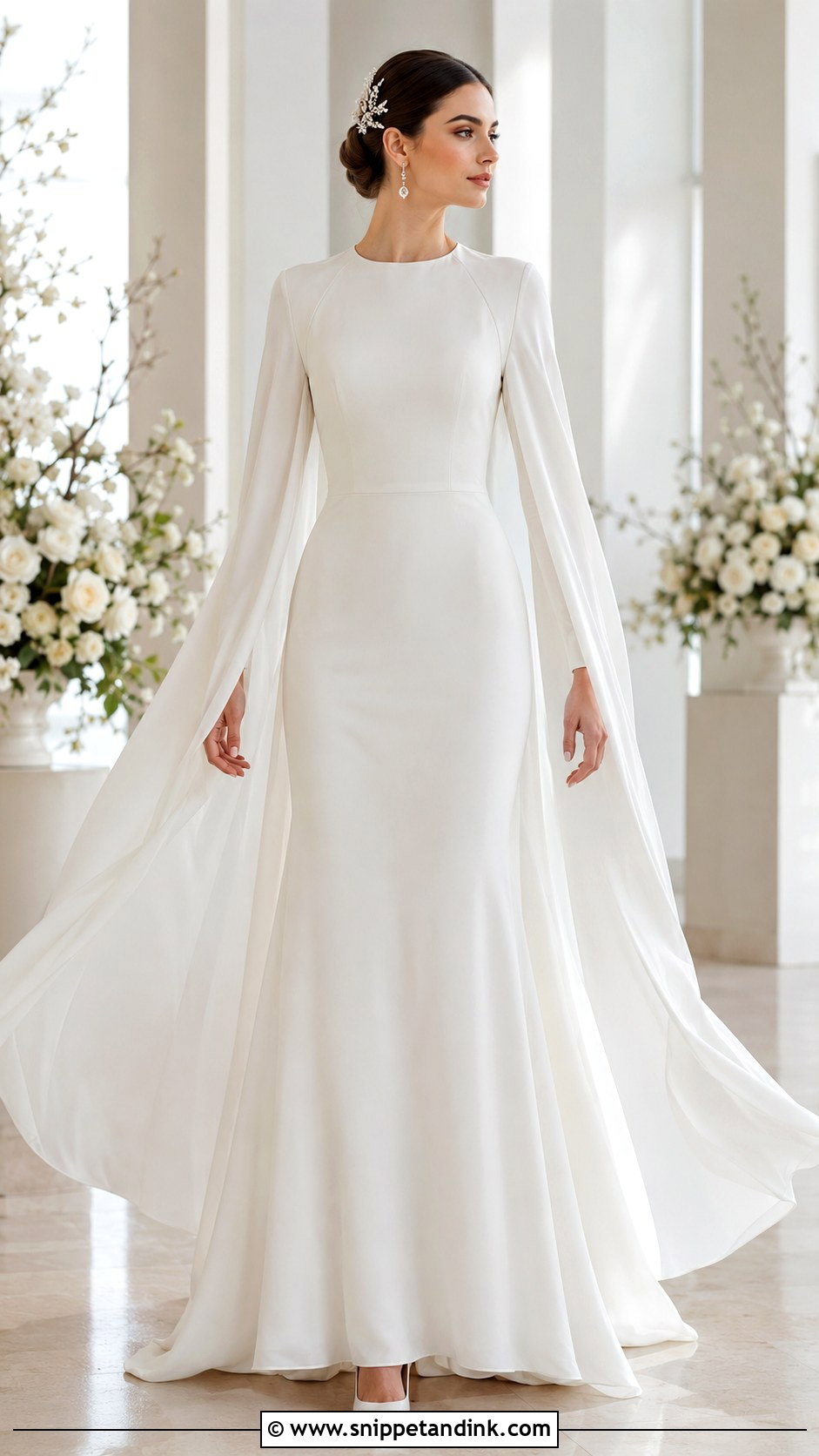
A cape covers the upper arms and shoulders with movement, but it shouldn’t do the covering alone. Choose a gown with an opaque fitted bodice under the cape, a high round neckline and a closed back. Over a strapless bodice, a cape shows everything beneath the moment you raise your arms or turn. A gently flared skirt balances the sleeve panels. A long veil fights the cape, so I’d go for a short veil or a jeweled hairpiece. Walk in different directions at the fitting and watch whether the fabric wraps your wrists or hides the gown’s shape. Understated earrings, closed-toe heels and a smooth bun complete it.

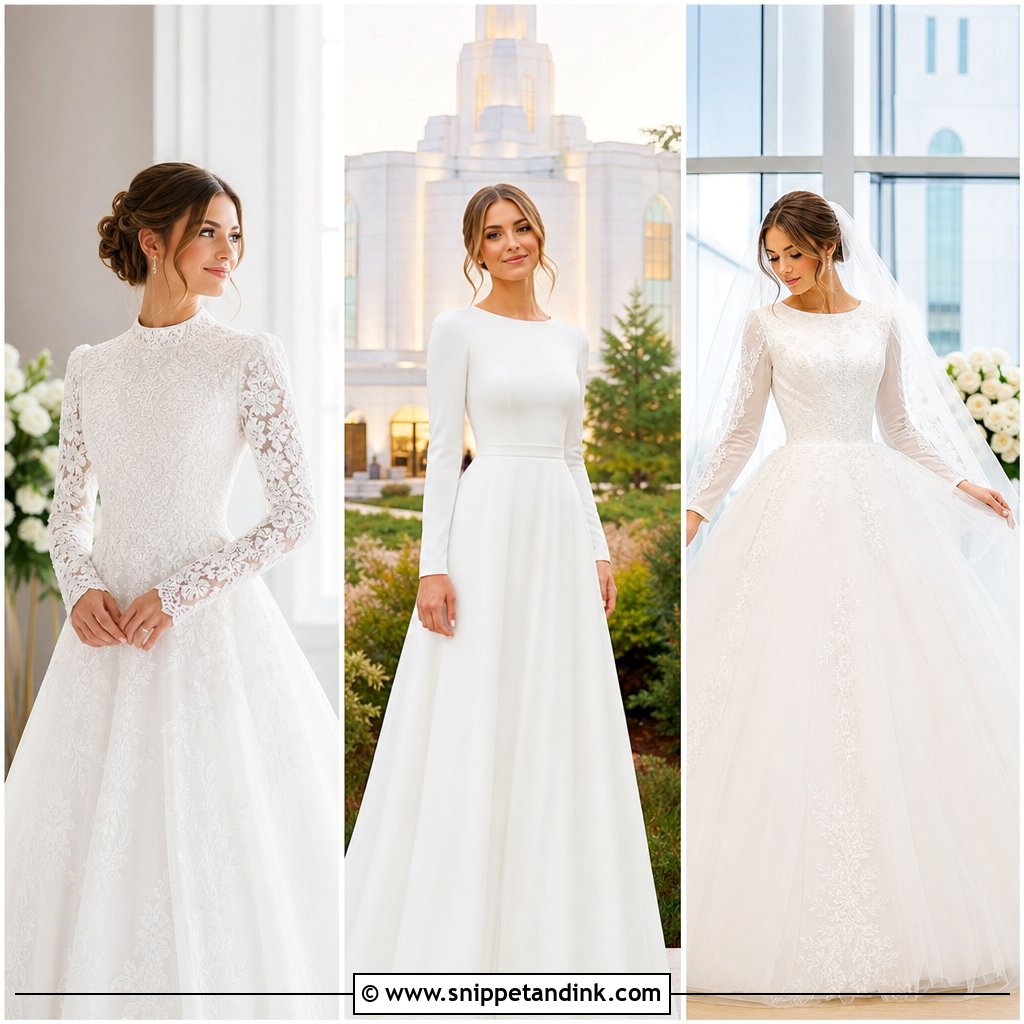
15. Modest Wedding Dress With Floral Appliqué
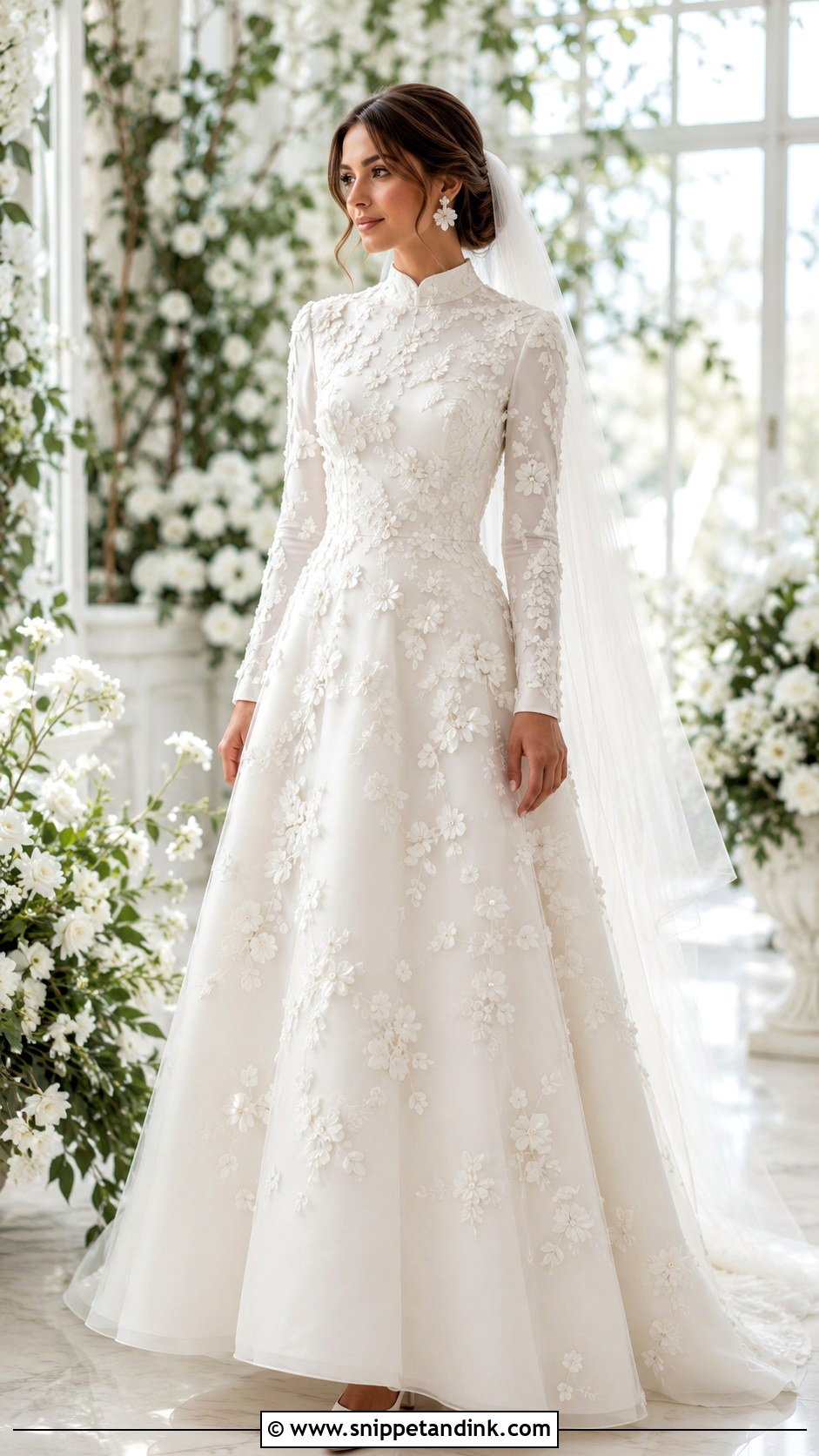
Dimensional flowers soften a fully covered gown and give close-up photos something to linger on. An A-line or ball gown with a high neck, opaque long sleeves and a lined back works well, with heavier florals on the bodice that thin out toward the skirt. Check that the edges lie flat against your arms, since stiff petal edges on a sleeve can scratch. Three-dimensional petals crush in a packed garment bag, so transport the dress with room around it and have it steamed professionally. Plain satin pumps, floral earrings, a fingertip veil and a bouquet that echoes rather than copies the appliqué suit it.
16. Plus Size Covered Wedding Dress With Empire Waist
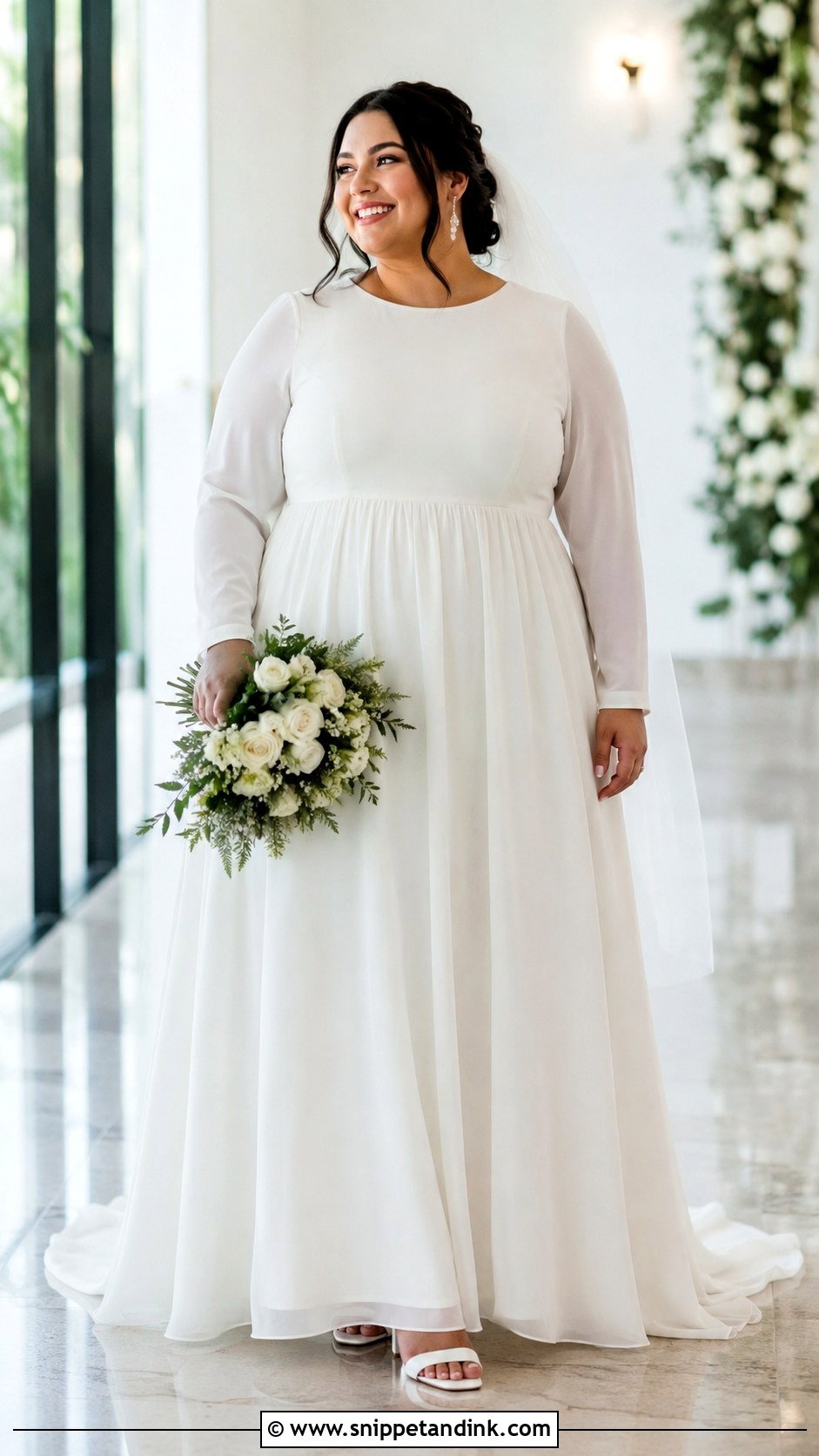
An empire waist gives a plus-size bride a comfortable, flowing line with coverage built in. Look for a supportive lined bodice, a modest V or round neck, wide shoulder coverage and full sleeves, with the skirt falling smoothly from under the bust. Heavy gathering adds bulk at the stomach, so keep it minimal. Chiffon over a soft lining moves; crepe looks cleaner. Bridal sizes rarely match everyday ones, so shop by your current measurements and expect sleeve and bust alterations. In the fitting, sit, walk and lift your arms. The underbust seam should feel secure without digging in when you breathe.
17. Petite Covered Wedding Dress With Fitted Sleeves
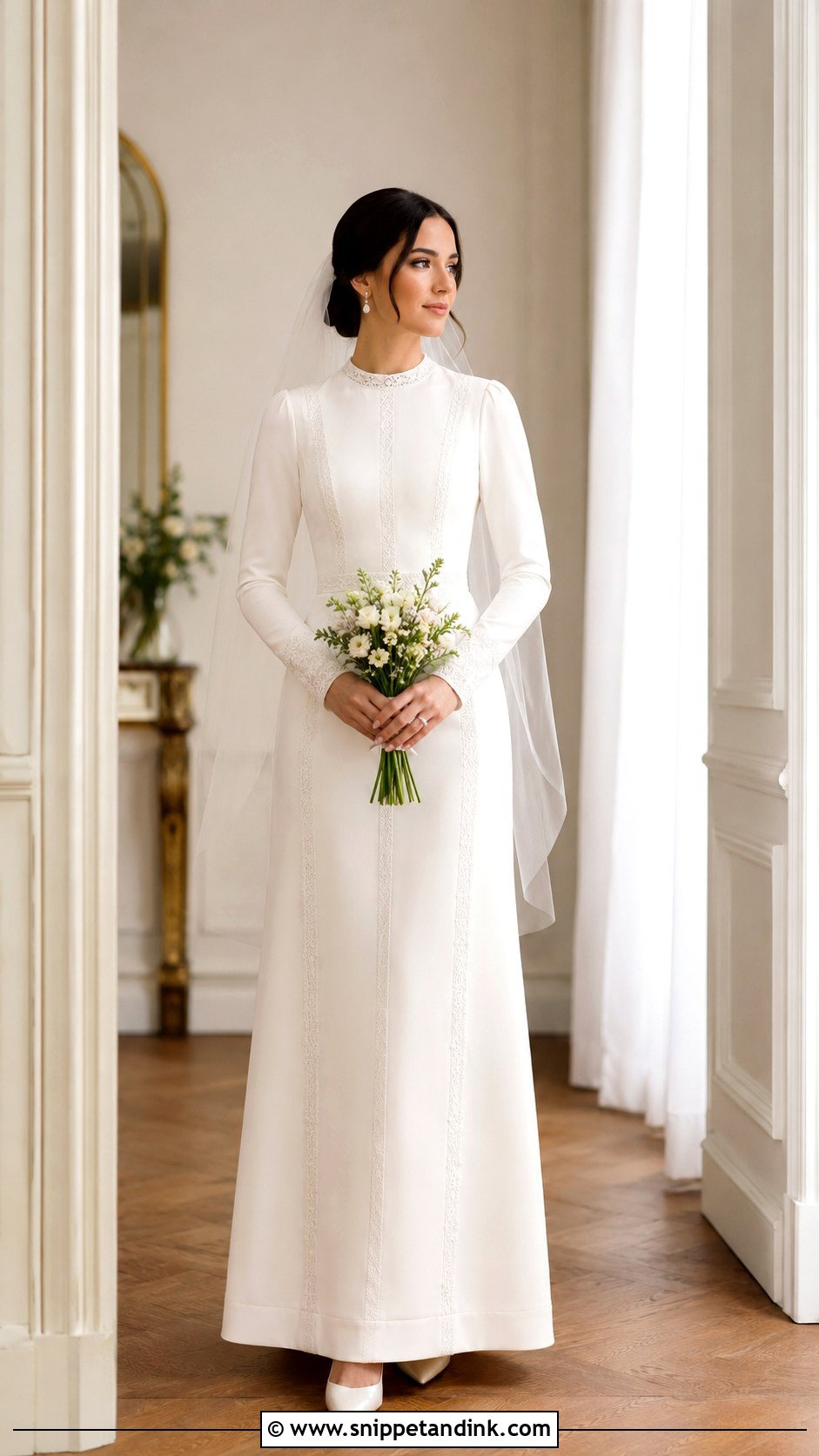
Petite brides need the proportions adjusted, not just a shorter hem. A narrow A-line or column with a high neck, fitted sleeves and little bulk at the waist keeps the line long, and small-scale lace sits better on a smaller frame than oversized motifs. Wide cuffs and very full skirts tend to swamp you. Petite alterations often mean raising the bodice and waist and shortening the sleeves, because taking length only from the hem can cut away part of the skirt’s pattern. Ask the tailor to keep the design placement intact. Pointed heels, delicate earrings, a slim bouquet and a veil in one clean layer suit it.
18. Hijab Wedding Dress With Long Sleeves
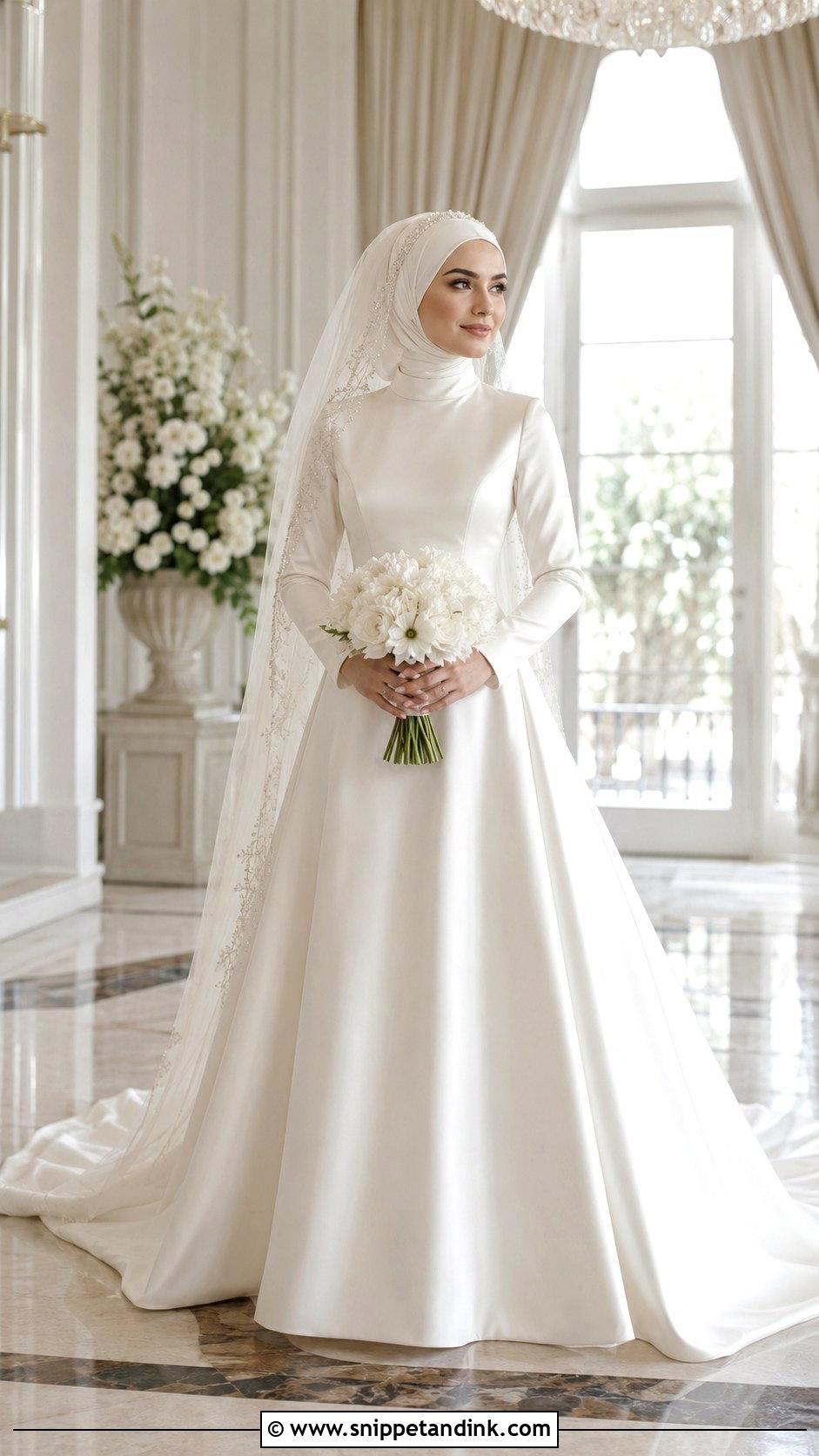
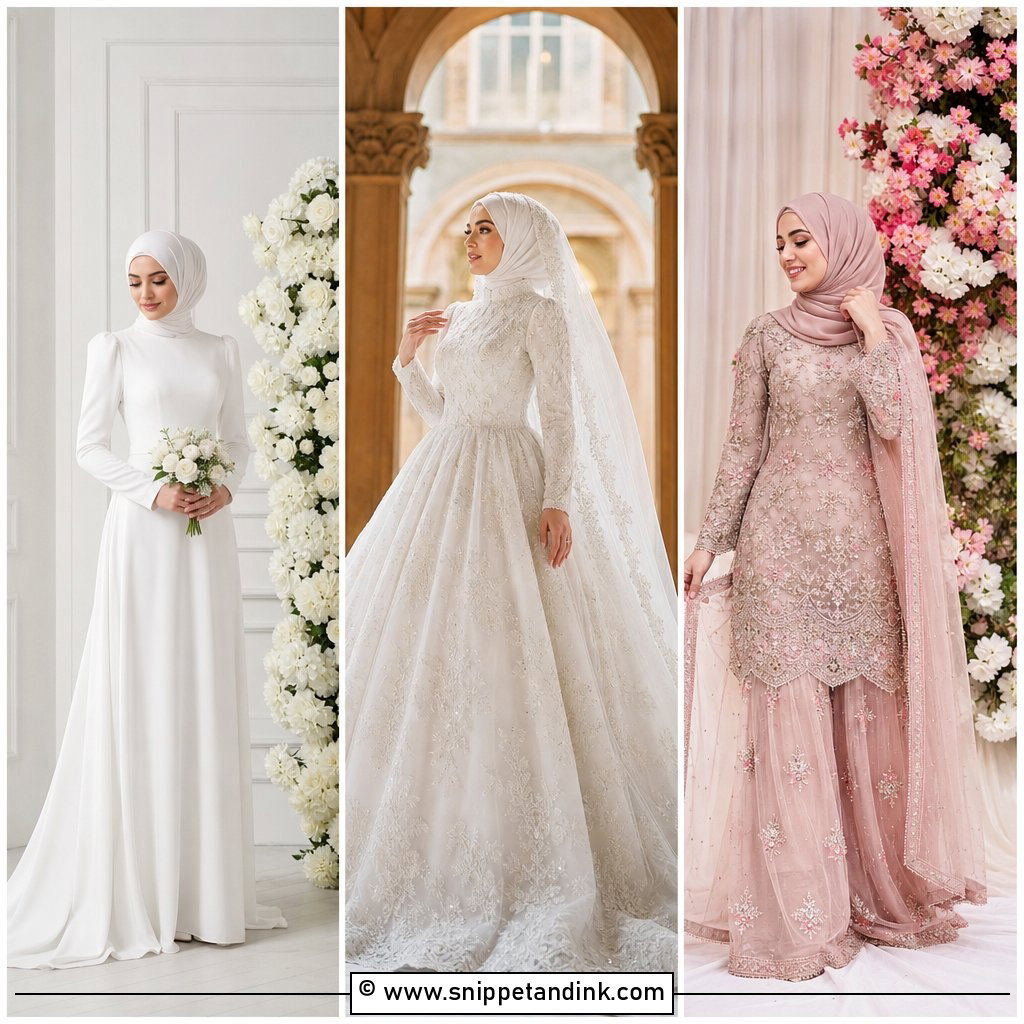
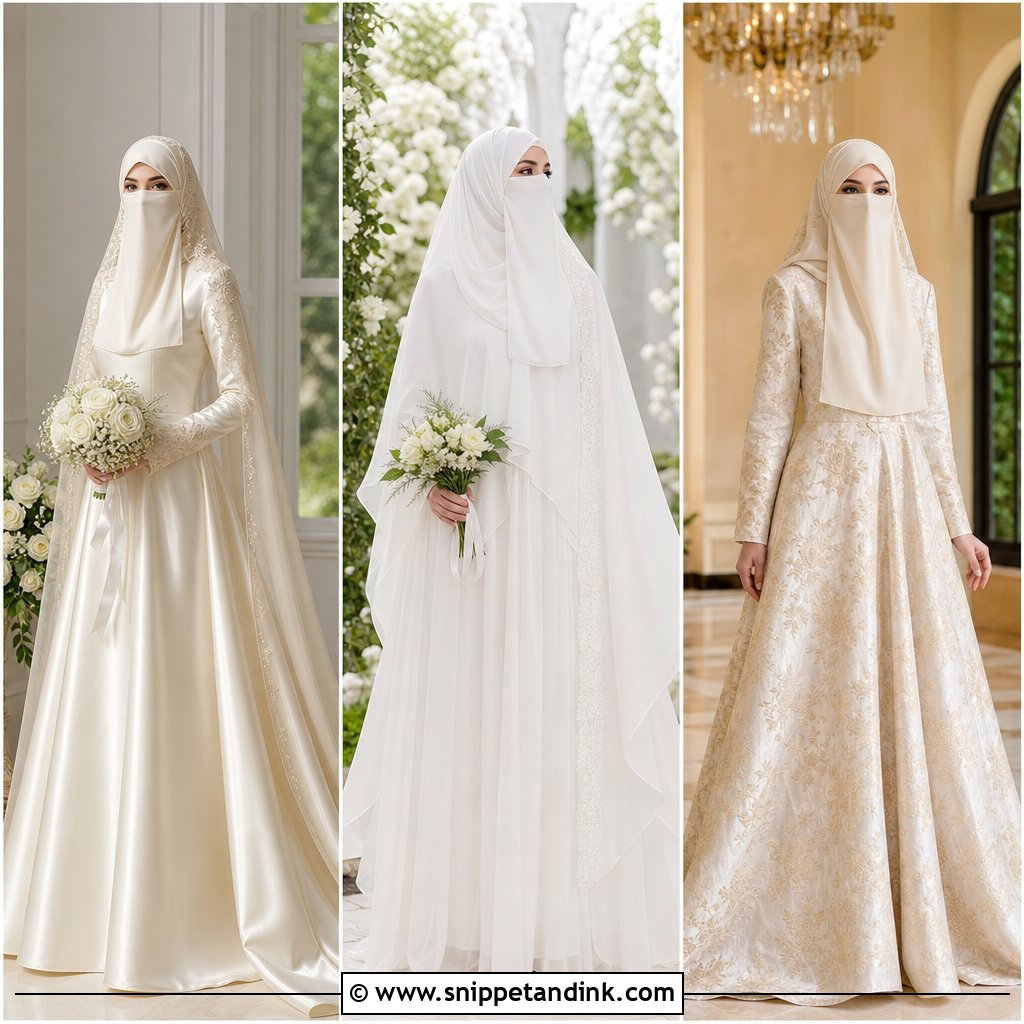
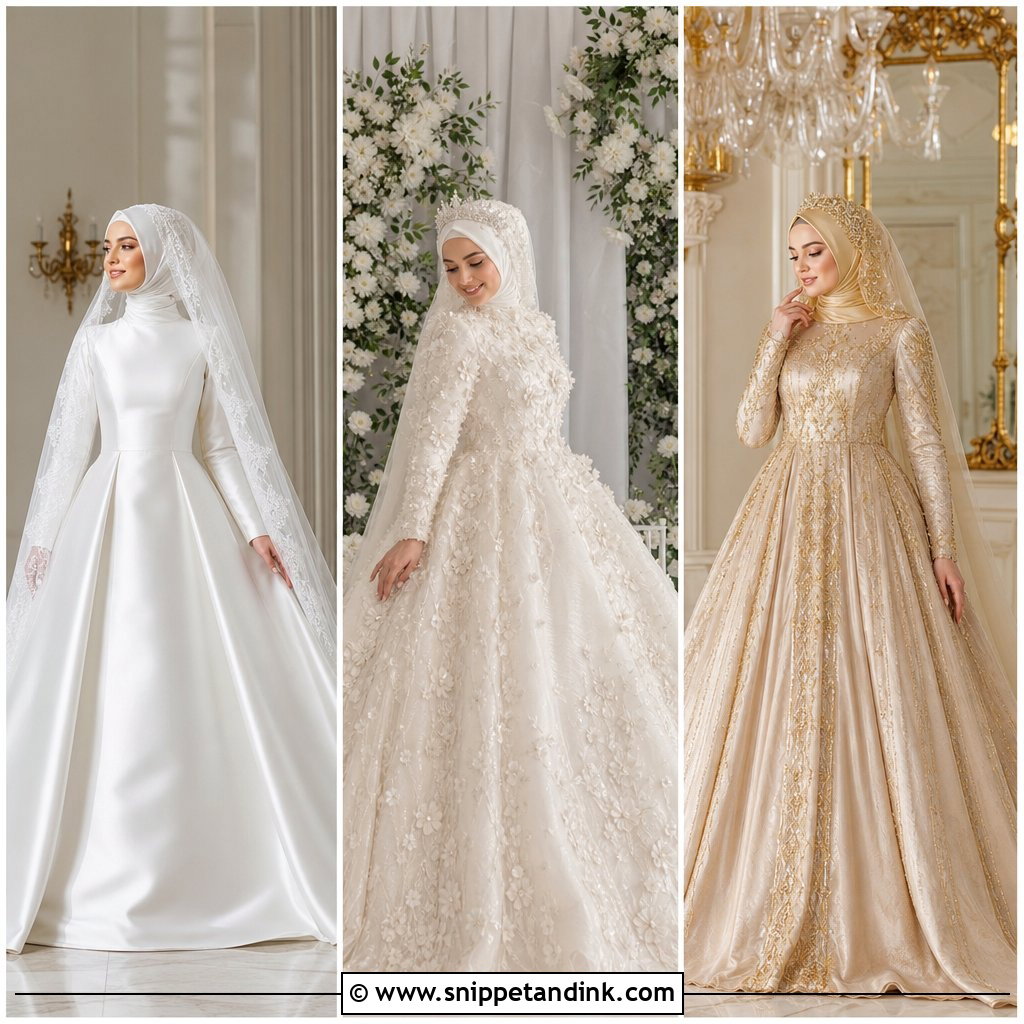
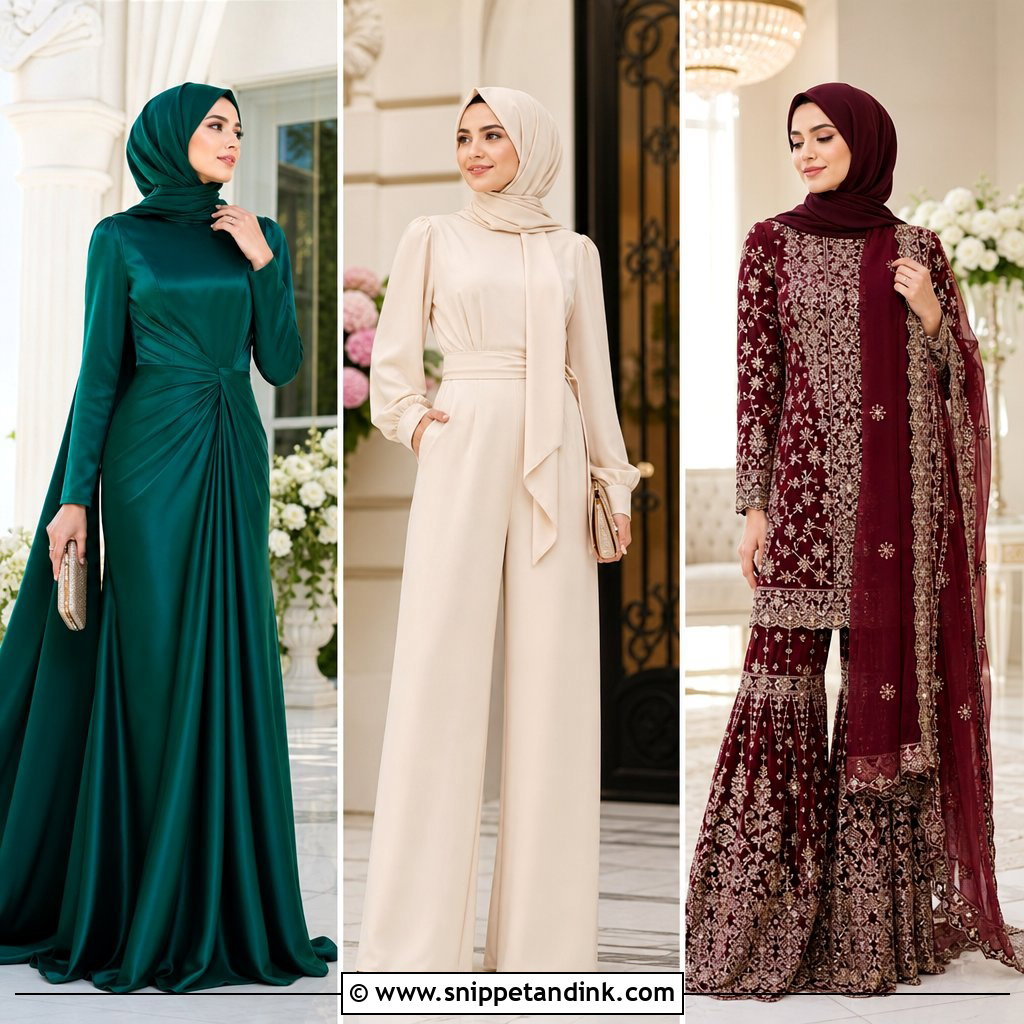
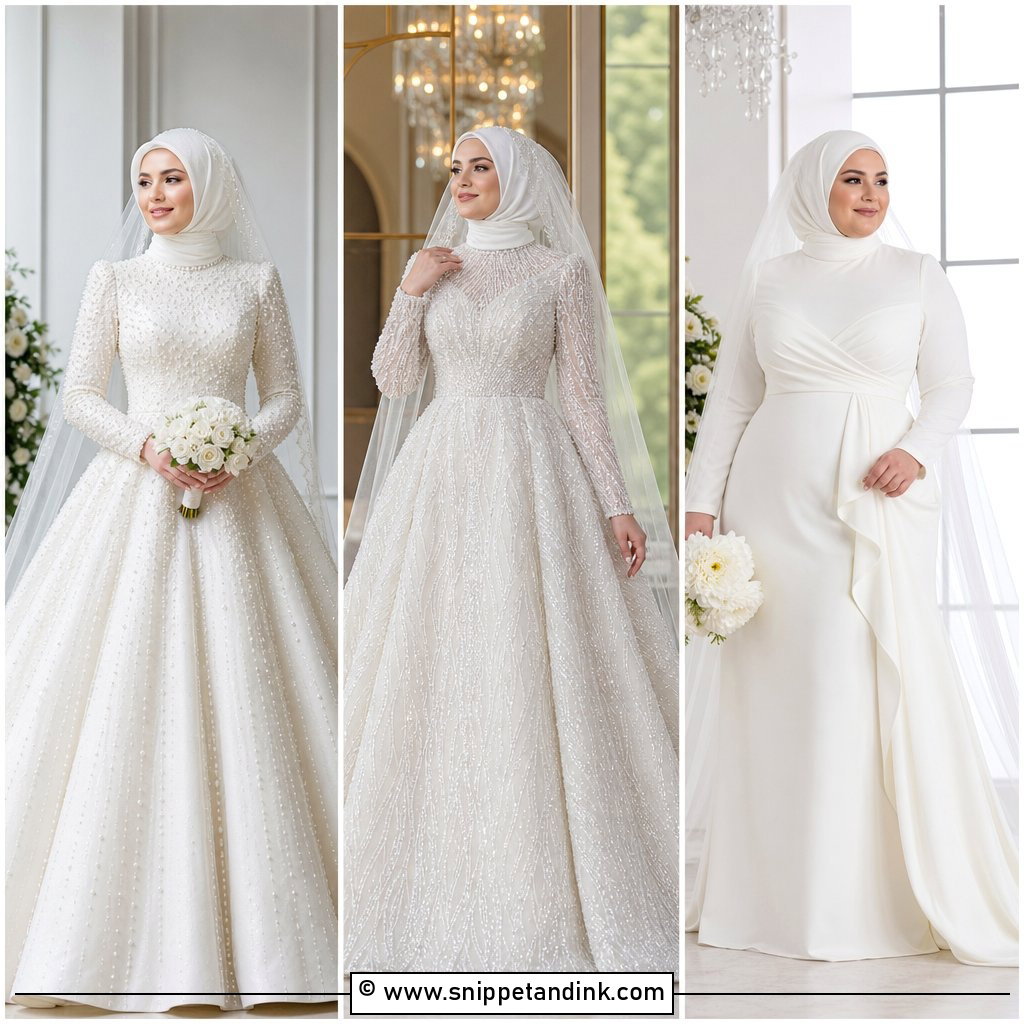
A hijab-friendly wedding gown has to work as one outfit with the hijab, not as a dress with a scarf added on top. A high neck, opaque wrist-length sleeves, a closed back and a full A-line skirt make the base, and matte satin, lined crepe or opaque chiffon drape smoothly. Match the hijab to the gown’s exact ivory or white; two different whites beside the face show clearly in photos. The veil can sit over or under it, as you prefer. Keep bulky embellishment away from the neckline, where it disturbs the drape. Bring the hijab fabric and undercap to every fitting so the tailor can check all the layers together.
19. Winter Covered Wedding Dress With Full Skirt
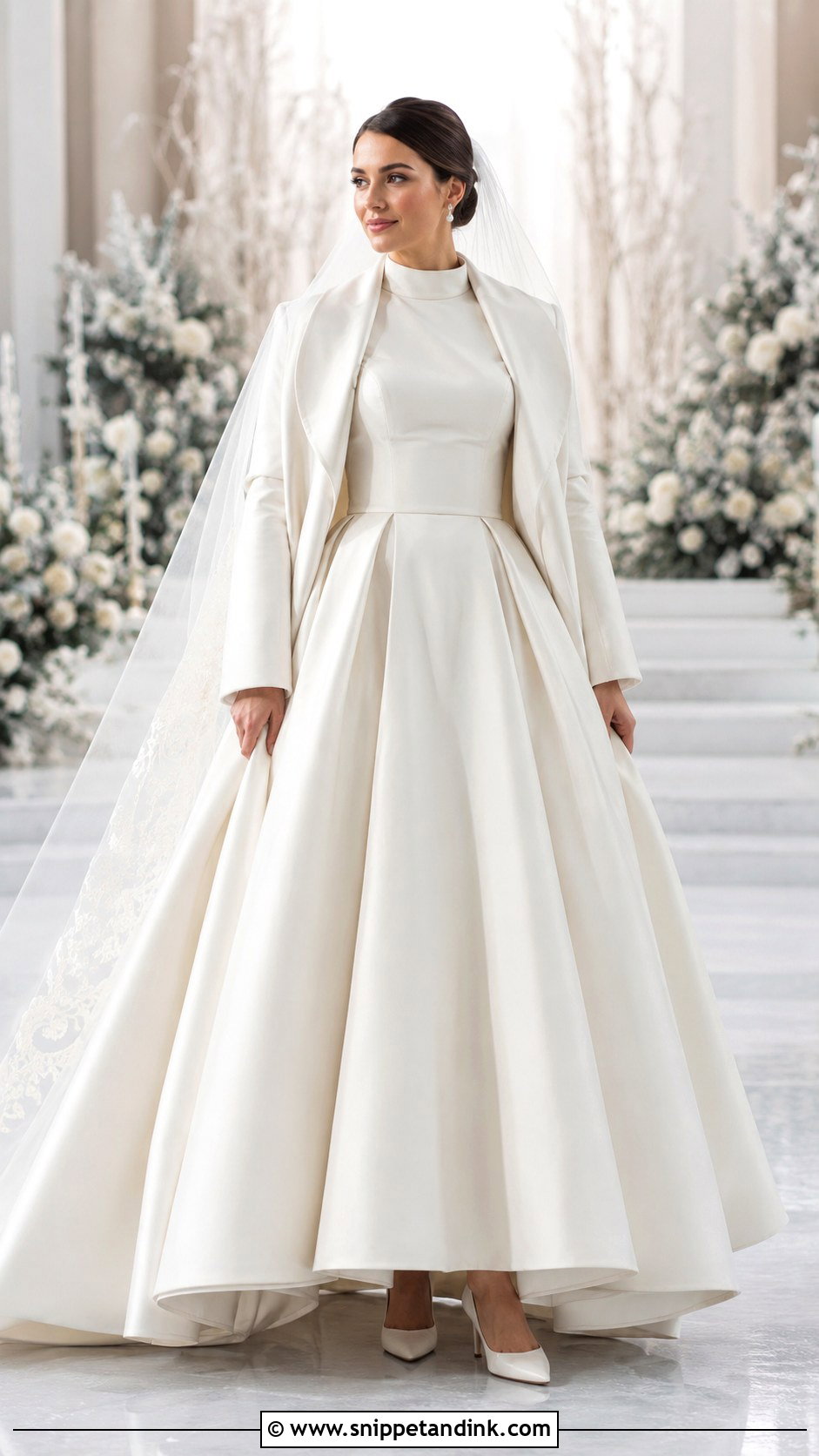
A substantial covered gown comes into its own in winter. Think full skirt in mikado, satin or layered crepe, a high neck, long sleeves and an opaque back, with a fitted waist so the weight of fabric doesn’t swamp you. Winter venues are often overheated indoors, so breathable lining still matters, and discreet stretch panels in the sleeves make the day easier. Add an ivory wrap or tailored coat for outdoor portraits, plus closed-toe heels, pearl earrings and a long veil. A smooth updo keeps hair clear of scarves and collars. With a long train, get a secure bustle and practice it before the wedding.
20. Simple Covered Wedding Dress With Buttons
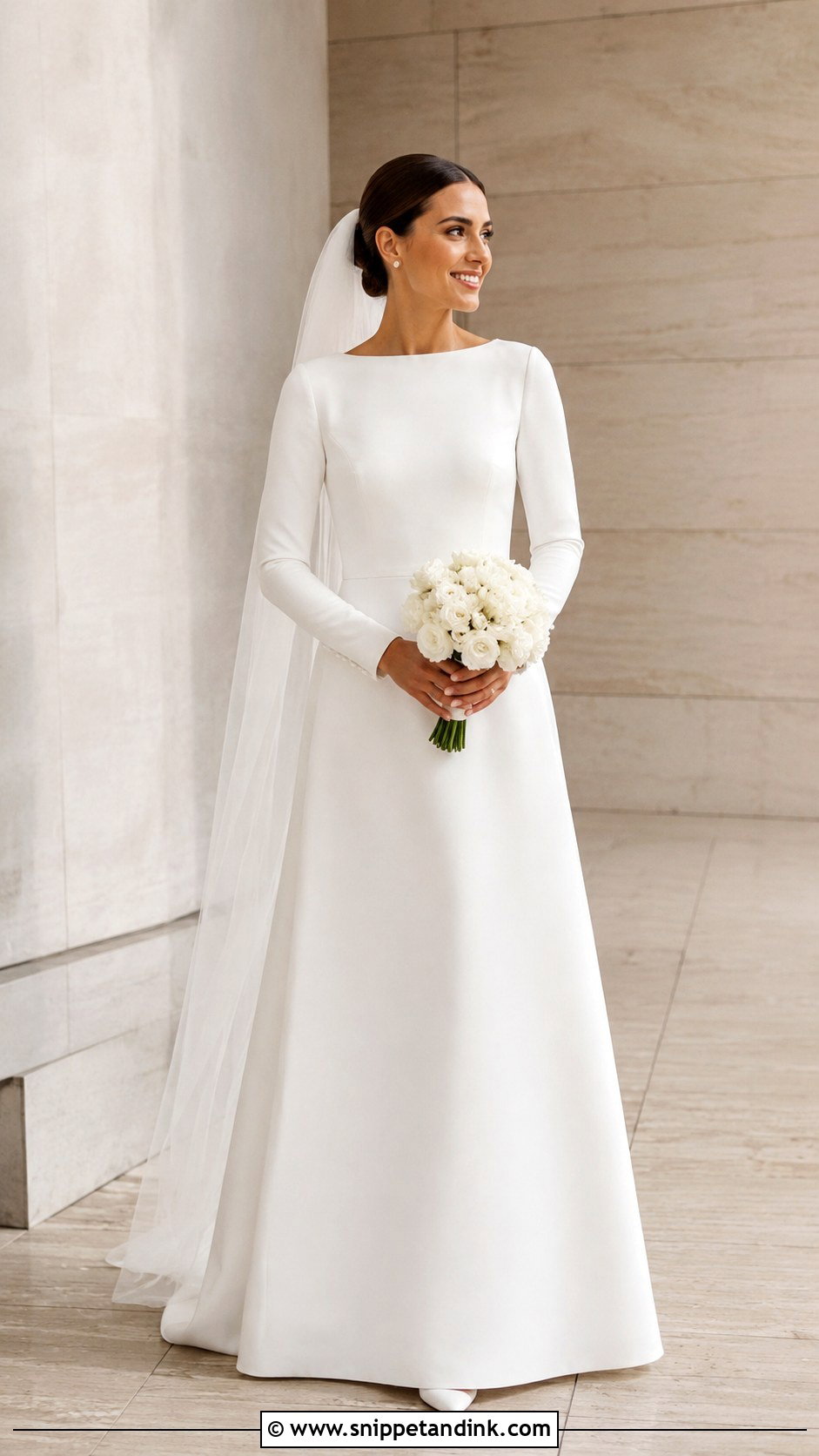
One detail on a well-cut dress can be enough. A covered gown with a jewel neck, full sleeves, an A-line skirt and a line of fabric-covered buttons is plain in the best sense. The buttons are what I check. They should lie flat, with hidden hooks or a zip carrying the tension underneath, or they pull and gape across the back. Matte crepe and smooth satin show every construction detail once pressed, so the seams need to be clean. Pointed pumps, pearl studs, a single-layer veil and a compact white bouquet suit it, with a low bun to keep the back on view.
A High Neck and Long Sleeves in Summer Heat
Full coverage on a hot day is manageable, but it needs planning from the fabric up rather than a fan in your bag at the last minute.
Fabrics That Let Heat Out
Silk, cotton-lined lace and lightweight crepe let heat escape, while heavy polyester satin holds it in. Ask what the lining is made of, since the lining is what touches your skin all day. A lined chiffon sleeve is far cooler to wear than a lace sleeve on a stretch mesh base.
Small Fixes for a Long, Warm Day
- Underarm shields, stitched or adhesive, protect the fabric and keep marks out of photos.
- A thin cotton slip under the skirt handles moisture better than synthetic shapewear.
- Schedule outdoor portraits for early morning or late afternoon, and keep time standing in direct sun short.
- Give an attendant cold water, a hand fan and blotting papers for your face.
Which Coverage Details Can’t You Compromise On?
A covered gown should respect your values and your taste and still feel like a celebration. Start with the coverage details that matter most to you, an opaque neckline, lined sleeves, a closed back or a longer skirt, then compare silhouettes and fabrics for how they move and suit the venue. Bring your shoes, undergarments, veil and any head covering to fittings, because each layer changes the fit and proportions. Careful tailoring makes even the plainest gown look finished. Lace, structured satin or clean crepe, any of them gives you a strong place to start.
You'll Like These Ideas:





Leave a Reply