
A Basque waist is a seam doing a lot of work. Instead of running straight across at the natural waist, it drops into a V below it, so the torso looks longer and the middle looks narrower before the skirt opens out. Satin is the fabric that shows this off best, and also the one that exposes a poor fit fastest, because its smooth face catches light along every seam and fold. Heavier satins hold up a full skirt and a sharply tailored bodice; lighter ones give a softer, more fluid result. In the fitting room I’ve seen the same waistline look regal on a ball gown and quietly modern on a plain A-line. The twenty gowns below cover that whole range, with veil, shoe, jewelry and hair ideas that support the waist rather than distract from it.
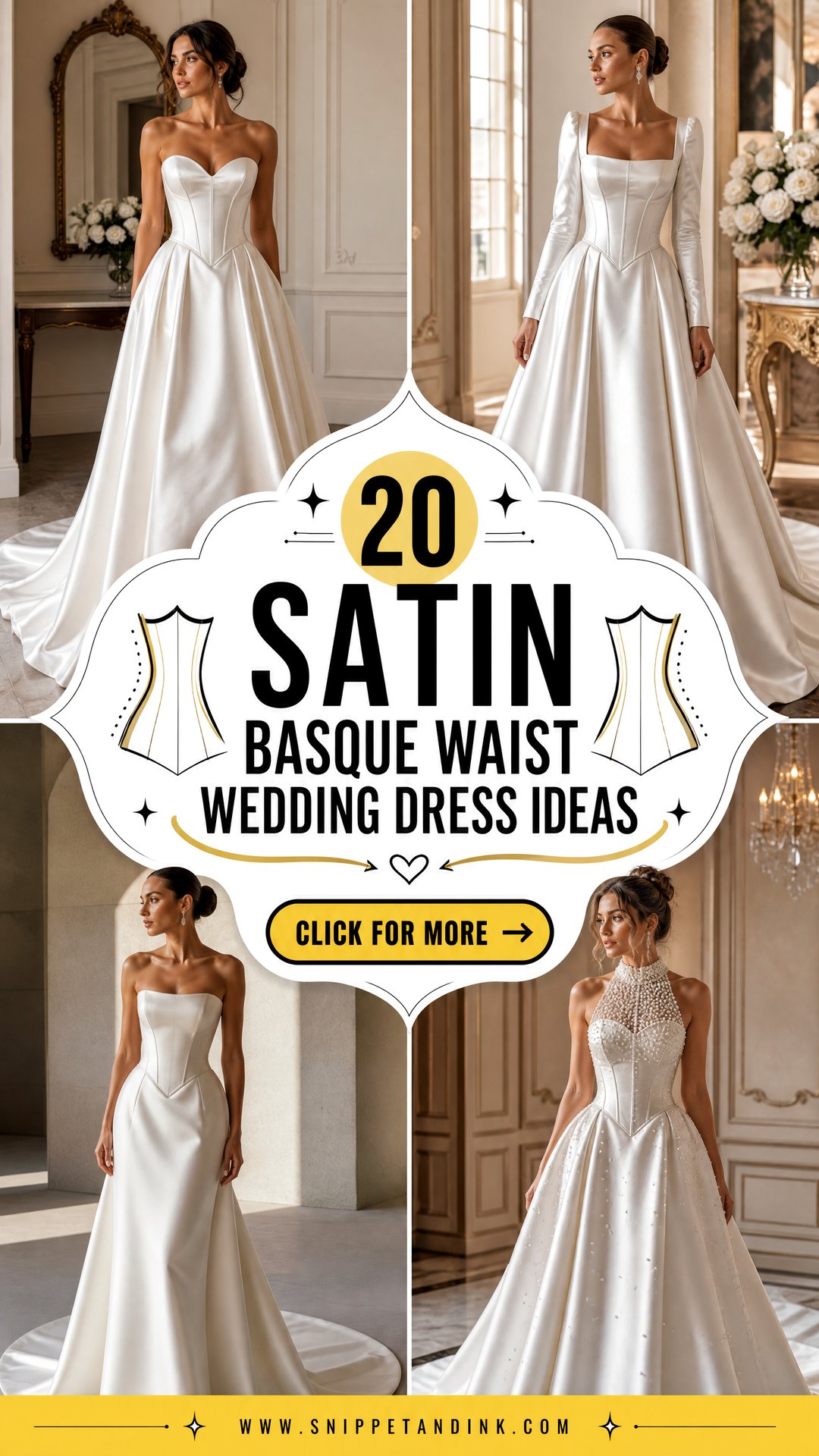
Where Should the Point Sit on Your Body?
Not every Basque waist is the same depth, and in my fittings the depth matters more than the neckline. Some dip only a couple of centimetres below the natural waist; others plunge toward the hip bones. The right one depends on your torso, not the photo you saved.
- Find your natural waist. Bend sideways; the crease that forms is it. The seam’s sides should sit at or just above that line.
- Look at your torso length. If you are short-waisted, a deeper point gives you length you don’t naturally have. If you are long-waisted, a shallow or medium point keeps your legs from looking short.
- Sit down in the sample. The tip of the V should rest above your lap, not fold into it. A point that digs in when seated will crease the satin and hurt by dinner.
- Check the centre line. The tip of the V should line up with your belly button. Even a small drift to one side is easy to spot in photos.
A deeper point also needs firmer boning to stay flat against the stomach, so if you want comfort above all, a medium dip on a lightly boned bodice is the gentler choice.
1. Strapless Satin Basque Waist Wedding Dress
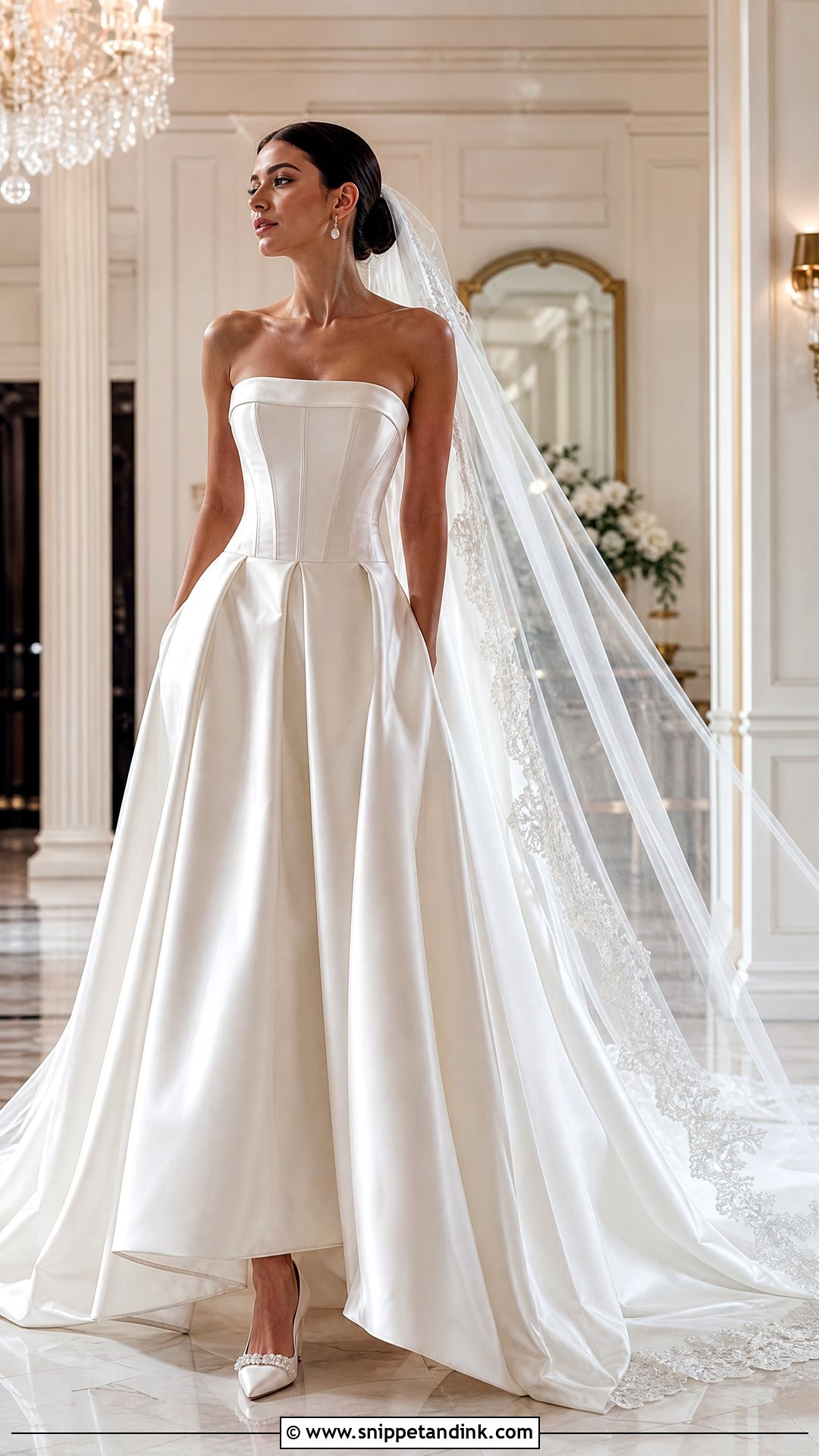
Strapless is the purest way to wear the shape, since nothing above the bodice interrupts the line down to the point. A fitted bodice with internal boning and a moderate point that matches your own proportions sits on a full satin skirt that swings as you walk. Pointed ivory pumps, pearl drops and a single-layer cathedral veil complete it, with a low bun to keep the neckline open. Ask your seamstress about a hidden waist stay, a grosgrain band sewn inside that anchors the bodice at your waist so it can’t creep down. A grip strip along the top edge helps too. Ballrooms and historic venues show off the satin under warm light.
2. Sweetheart Satin Basque Waist Wedding Dress
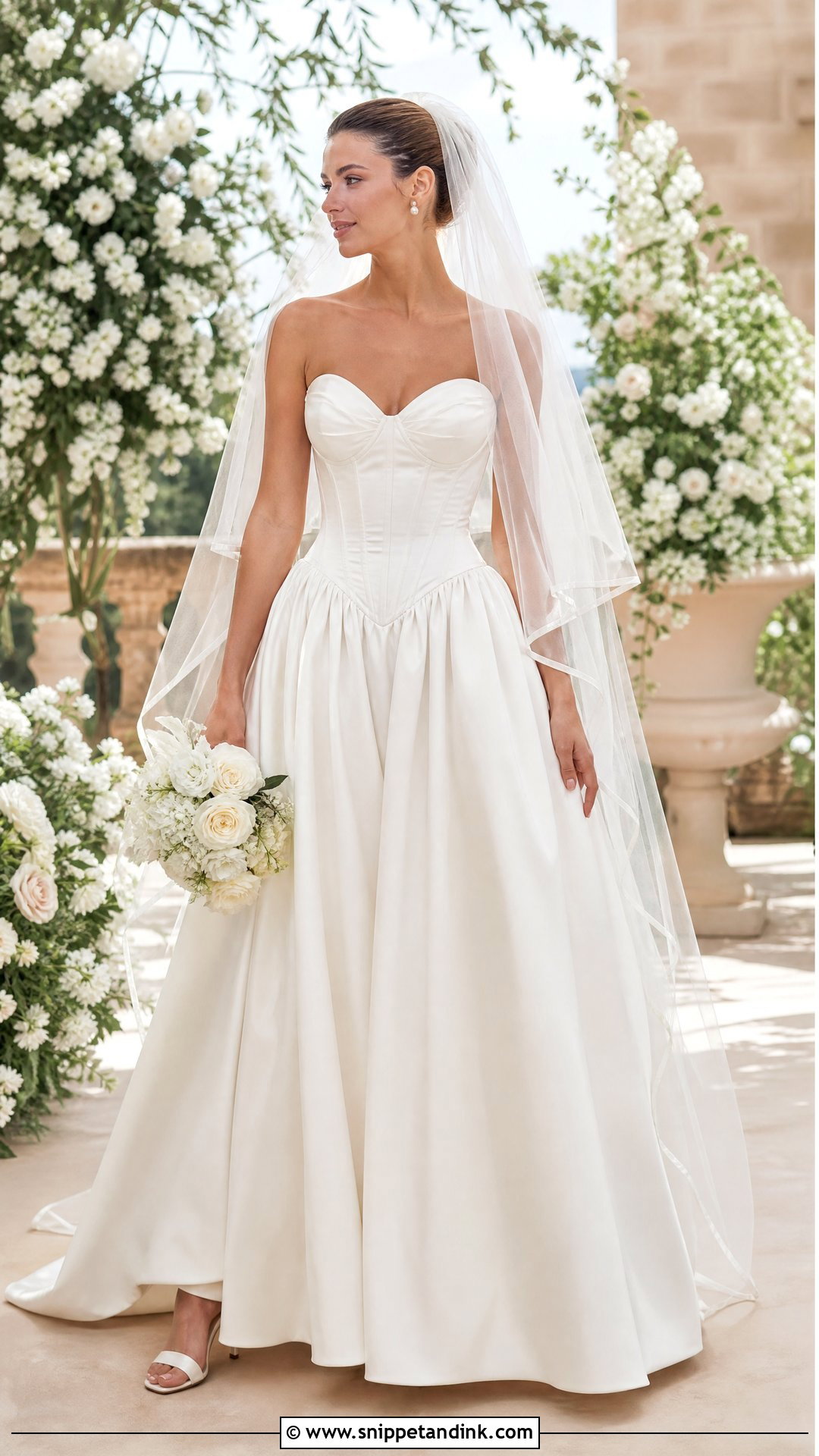
The curve at the top softens the point at the bottom, which is why a sweetheart satin Basque waist wedding dress reads romantic rather than severe. An A-line or softly gathered skirt keeps the volume manageable. Style it with pearl studs, a fine bracelet, ivory satin heels and a fingertip veil edged in narrow ribbon. Loose waves pushed behind the shoulders contrast with the structured bodice. If you need more support, ask for a slightly higher sweetheart with moulded cups; a deep dip in the middle can leave a fuller bust under-supported. Garden estates and hotel ceremonies suit it.
3. Cat Eye Satin Basque Waist Wedding Dress
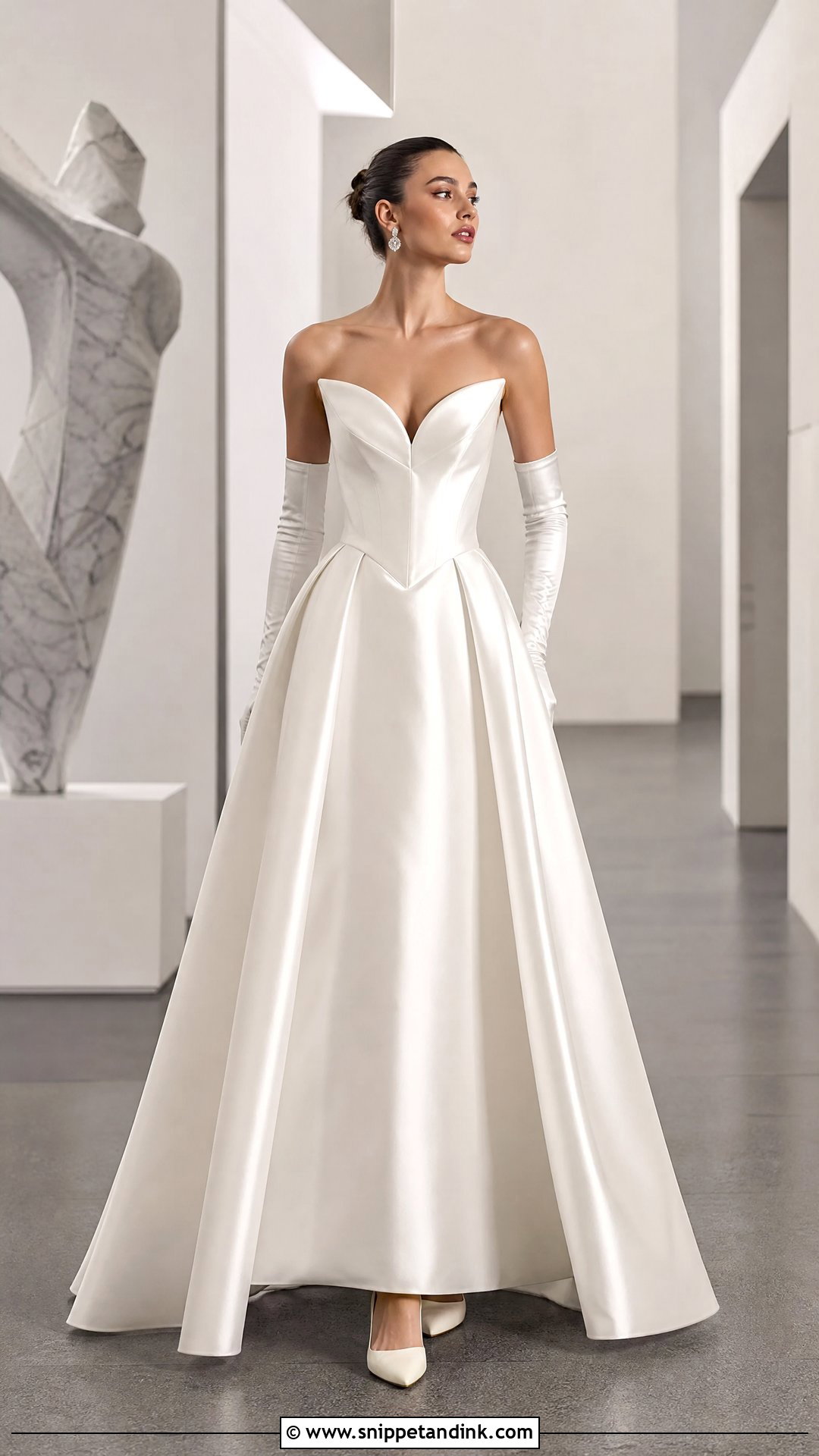
A cat eye neckline is the sharpest way to wear a Basque waist wedding dress. The neckline lifts into small points near the outer edges, so you have a point at the top and a point at the waist, and the bodice looks almost carved. Keep the skirt smooth and full so the two points don’t make the gown feel busy. Long satin gloves, crystal studs and pointed pumps add polish; a sleek chignon with a plain chapel veil tucked beneath it finishes the look. The first thing I check is that both neckline points sit flat and level. If one tips forward even slightly, it’s obvious in close-up portraits, so check it from the side at every fitting.
4. Straight Neck Satin Basque Waist Wedding Dress
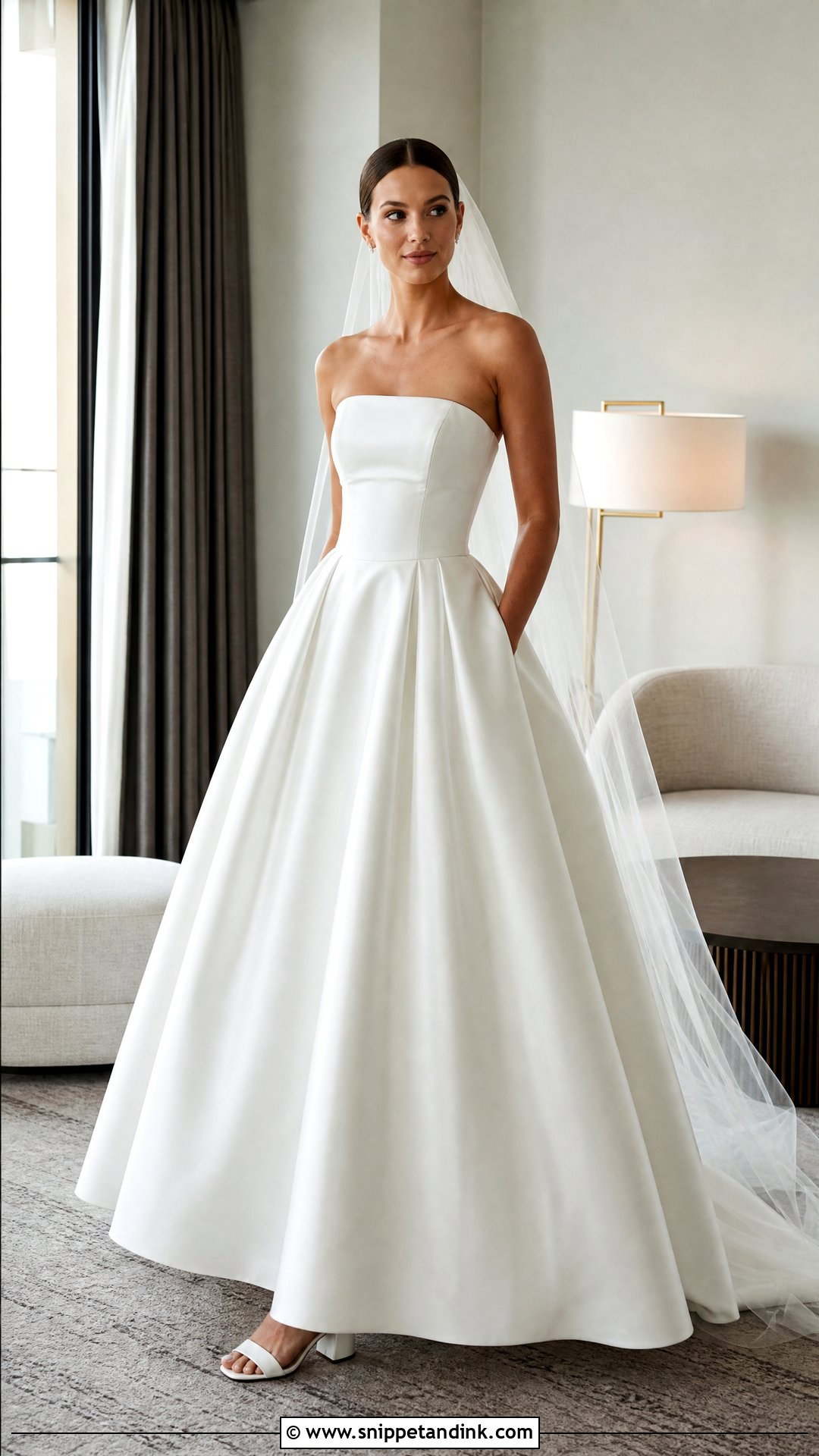
A straight neckline drawn across the top and a V at the bottom give the bodice a geometric balance I find very modern. Choose wide-set straps or go strapless, depending on support. A pleated ball gown skirt adds volume, and covered satin buttons down the back keep the finish clean. Block-heel bridal shoes, small diamond earrings and a long sheer veil with no lace or beading suit it, plus a smooth centre-parted bun. Because the design is all lines, any asymmetry shows. The neckline must sit perfectly level and the point dead centre, which is a fair test of your seamstress.
5. Square Neck Satin Basque Waist Wedding Dress
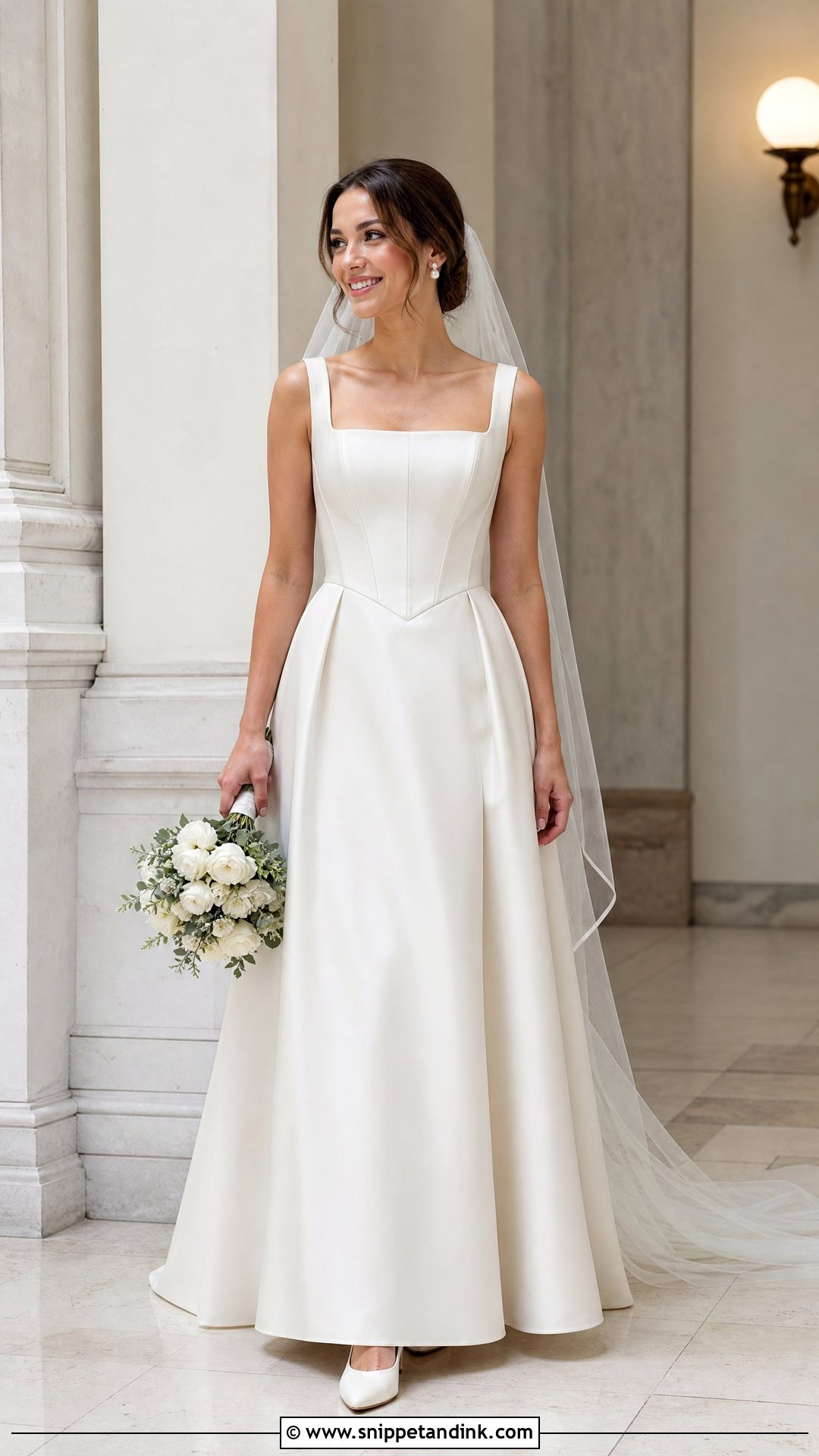
Wide satin straps and a square neck give coverage, support and a clean frame for the collarbone, and with a paneled bodice the dress stays comfortable from the vows to the last dance. A softly structured A-line keeps the neckline in charge. Wear pearl button earrings, a simple tennis bracelet, low ivory heels and a chapel veil with a raw edge, with hair in a low twist or tucked behind the ears. On a fuller bust, the square corners can lift or gap, so straps need to be fitted to exactly the right length and the bodice built firmly. It looks right at a courthouse as well as a classic estate.
6. Off Shoulder Satin Basque Waist Wedding Dress
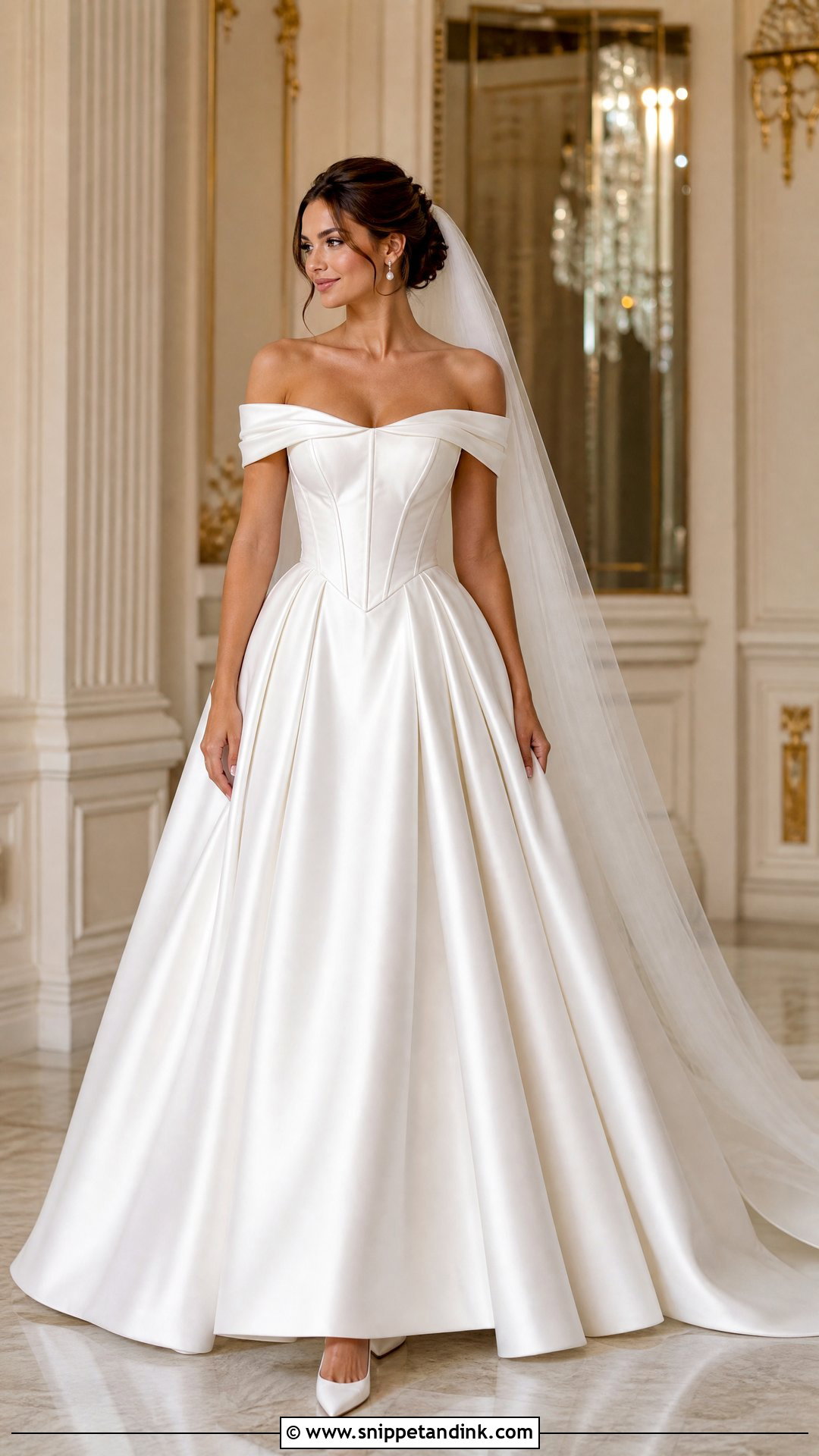
Folded satin bands across the shoulders soften a bodice that’s otherwise all structure. The boned bodice carries the support, so the bands only need to rest on the arm, not hold anything up. A full skirt with gentle box pleats falls from the point. Pearl drops, satin pumps and a long veil under a low romantic bun complete it; leave the neck bare. Detachable bands help if you want your arms free at the reception. I’d make sure the bands are fitted while you hold your arms out in front of you, since that’s how you’ll hold the bouquet for an hour.
7. Long Sleeve Satin Basque Waist Wedding Dress
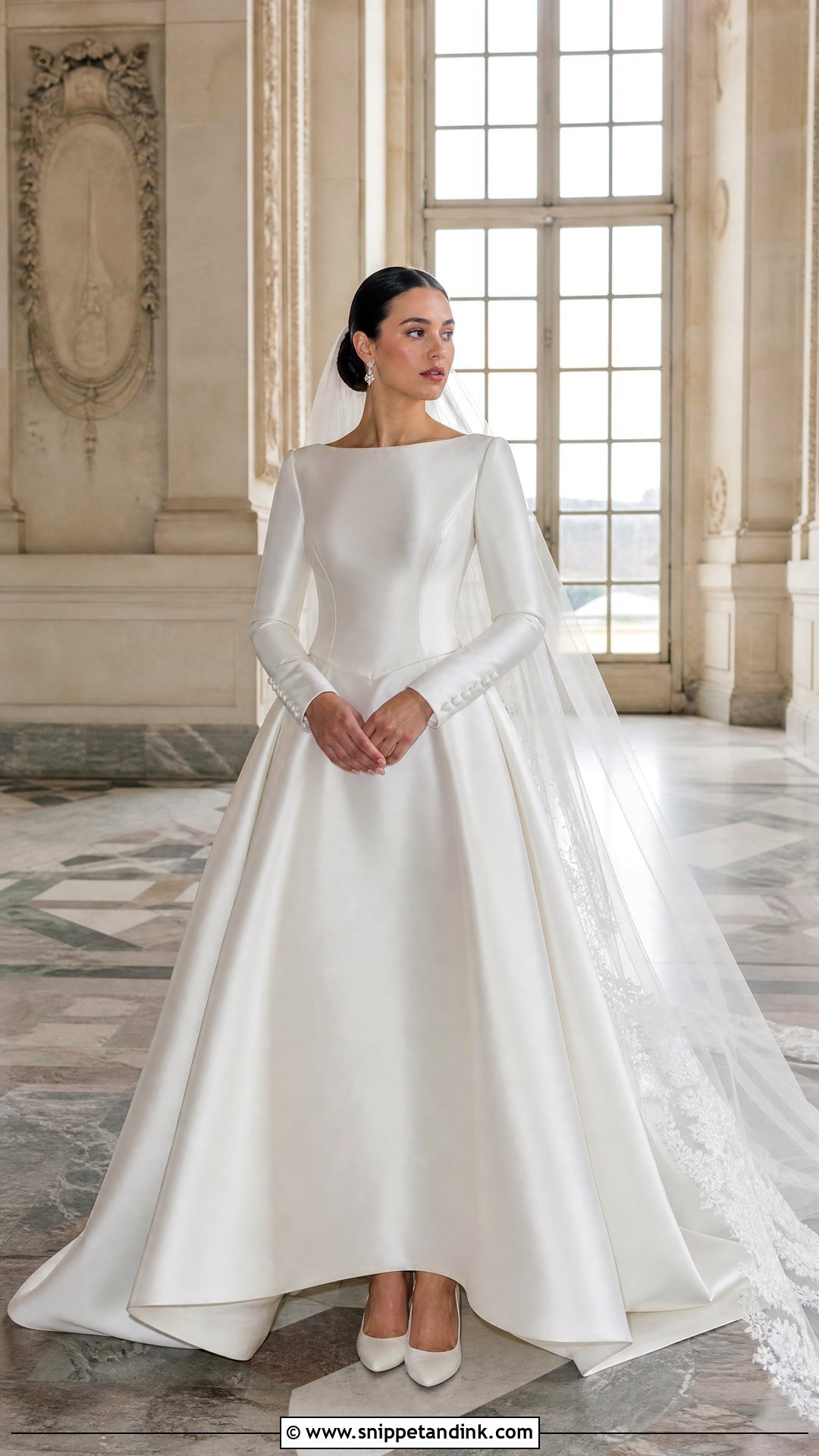
In autumn and winter I like full sleeves on this silhouette, with covered buttons at the wrist and a structured bodice running down into the point. A wide A-line skirt keeps it from looking stern and gives you room to move. Closed ivory pumps, crystal earrings and a cathedral veil longer than the train suit it, with a neat low bun or French twist. Stacked bracelets catch on fitted cuffs, so leave them off. Satin sleeves don’t stretch. If the armhole is set too low, lifting your arm drags the whole bodice up and the waist point lifts off its line.
8. Detachable Sleeve Satin Basque Waist Wedding Dress
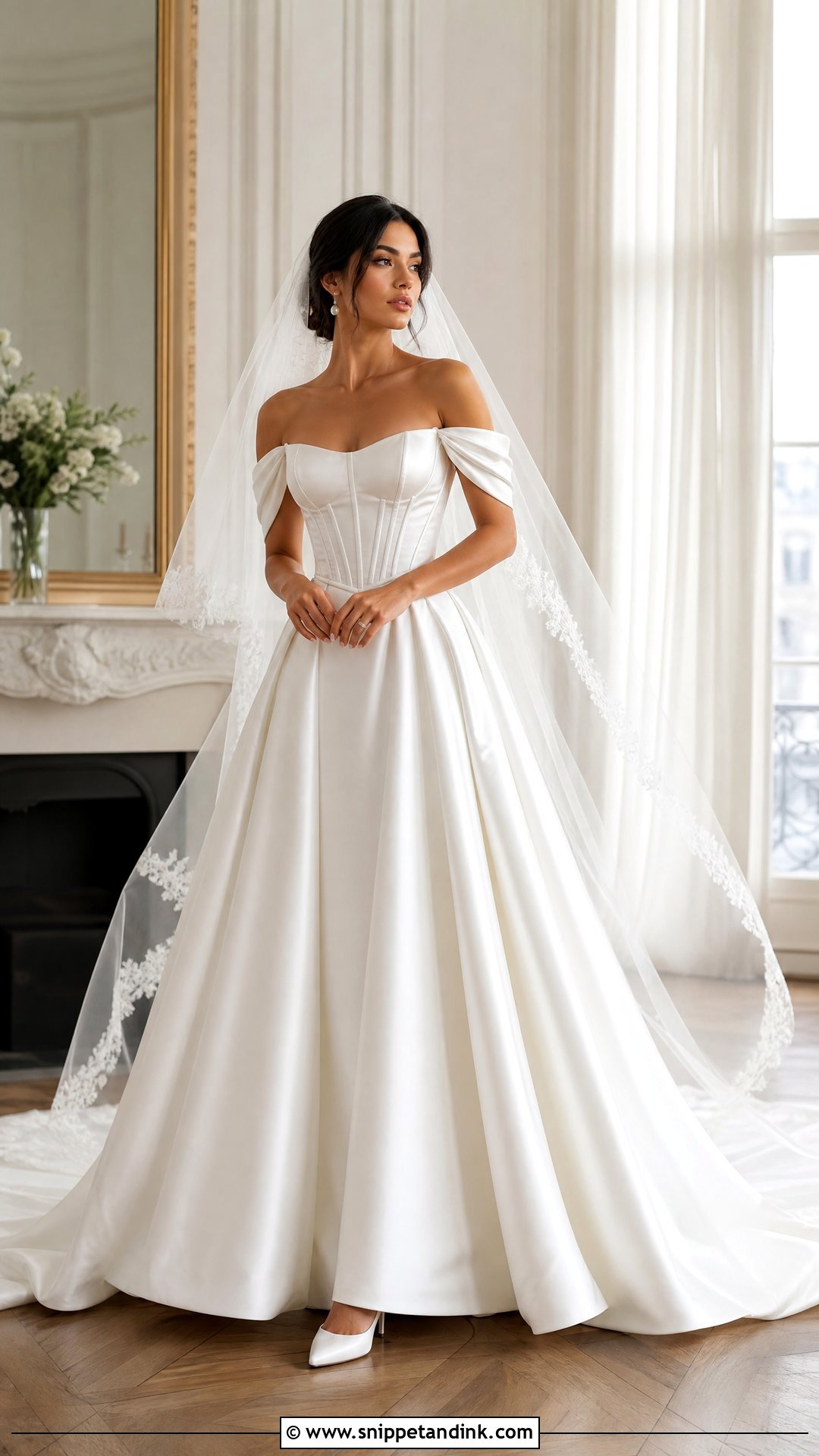
Detachable sleeves give you two gowns out of one. For the ceremony, fitted off-shoulder sleeves or long illusion-lined satin sleeves fasten discreetly to the corset bodice; with a generous ball gown skirt, pearl earrings, closed heels and a sweeping chapel veil, it reads formal. After the portraits, take off the sleeves and veil and you’re in a lighter strapless gown for dancing, maybe with smaller studs. Snaps or hooks along the bodice edge can leave small marks or ridges on satin, so ask the seamstress to test the attachment points while you move, and make sure they’re hidden when the sleeves come off.
9. Corset Satin Basque Waist Wedding Dress
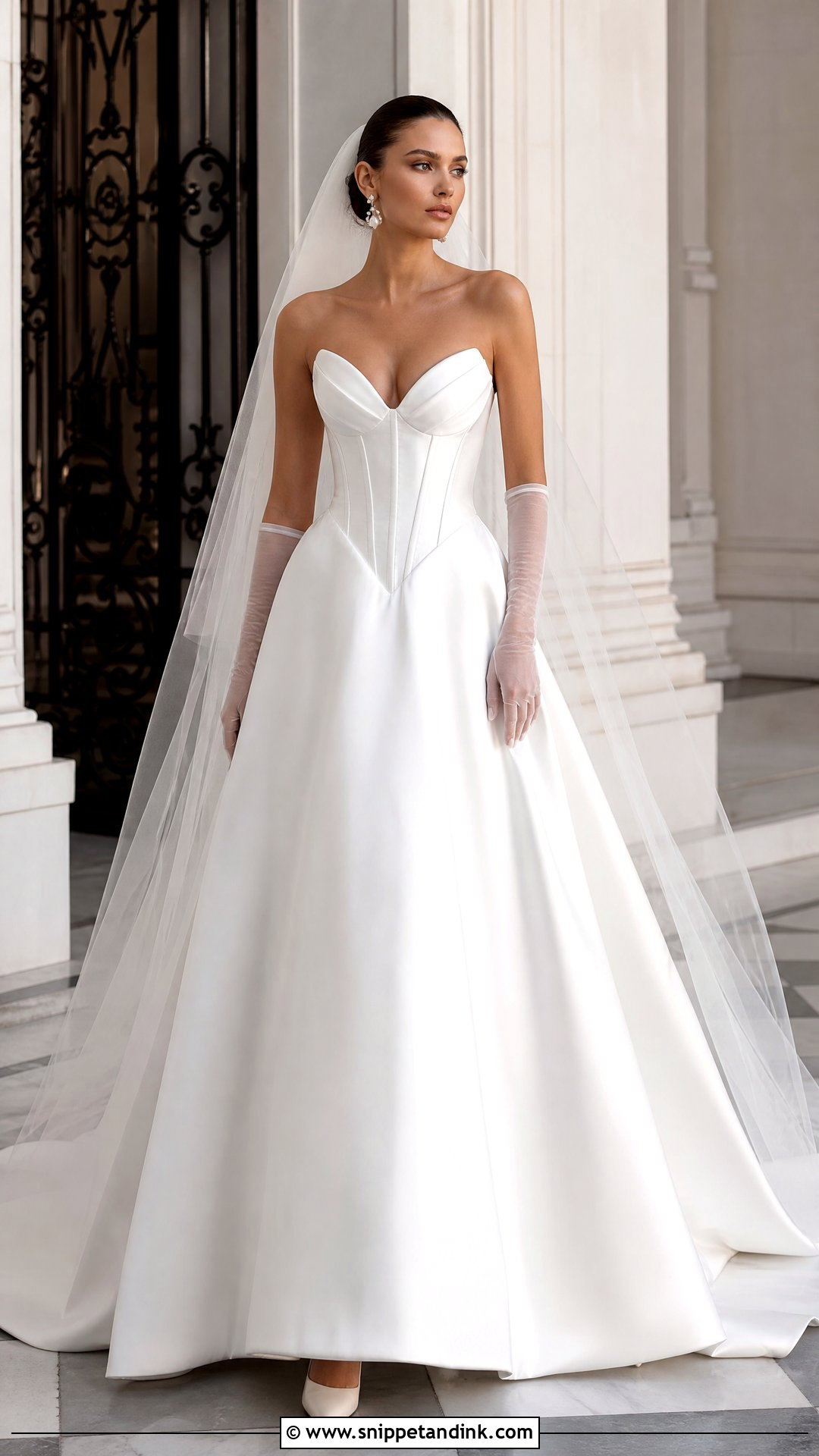
Visible corset seams make this the most fashion-led take on the shape. The panels, boning and back closure should be secure without squeezing. A smooth satin ball gown skirt keeps all eyes on the waist and builds a clear hourglass. Sheer gloves, pearl and crystal earrings, pointed heels and a plain cathedral veil suit it, with a sculpted bun. If the boning channels are exposed, cut the accessories back further still. I always book a seated fitting as well as a standing one. A deep point that feels fine standing can press into your thighs once you sit down to dinner.
10. Draped Satin Basque Waist Wedding Dress
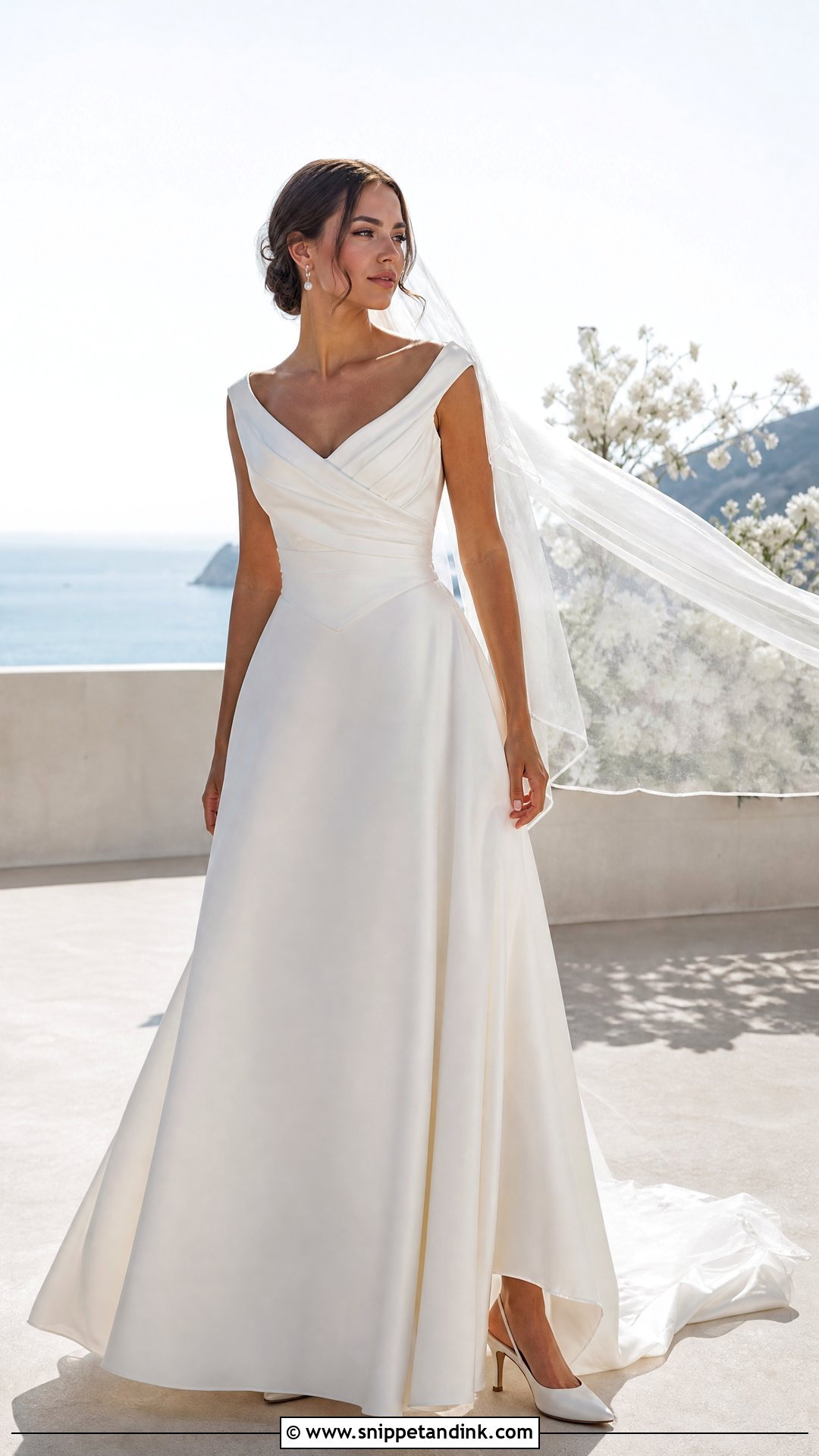
Draping takes the stiffness out of the Basque line. A softly gathered bodice that crosses the bust or sweeps diagonally toward the point adds movement without a single bead. Pair it with a flowing A-line skirt and a modest train for something less formal than a ball gown. Fine drop earrings, ivory slingbacks and a light veil that moves outdoors suit it, with a loose low bun and a few face-framing pieces. I always stop the draping short of the point. Once folds run across the seam itself, the V disappears and you’ve lost the reason for choosing the shape. Coastal venues and bright conservatories suit its relaxed mood.
11. Pleated Satin Basque Waist Wedding Dress
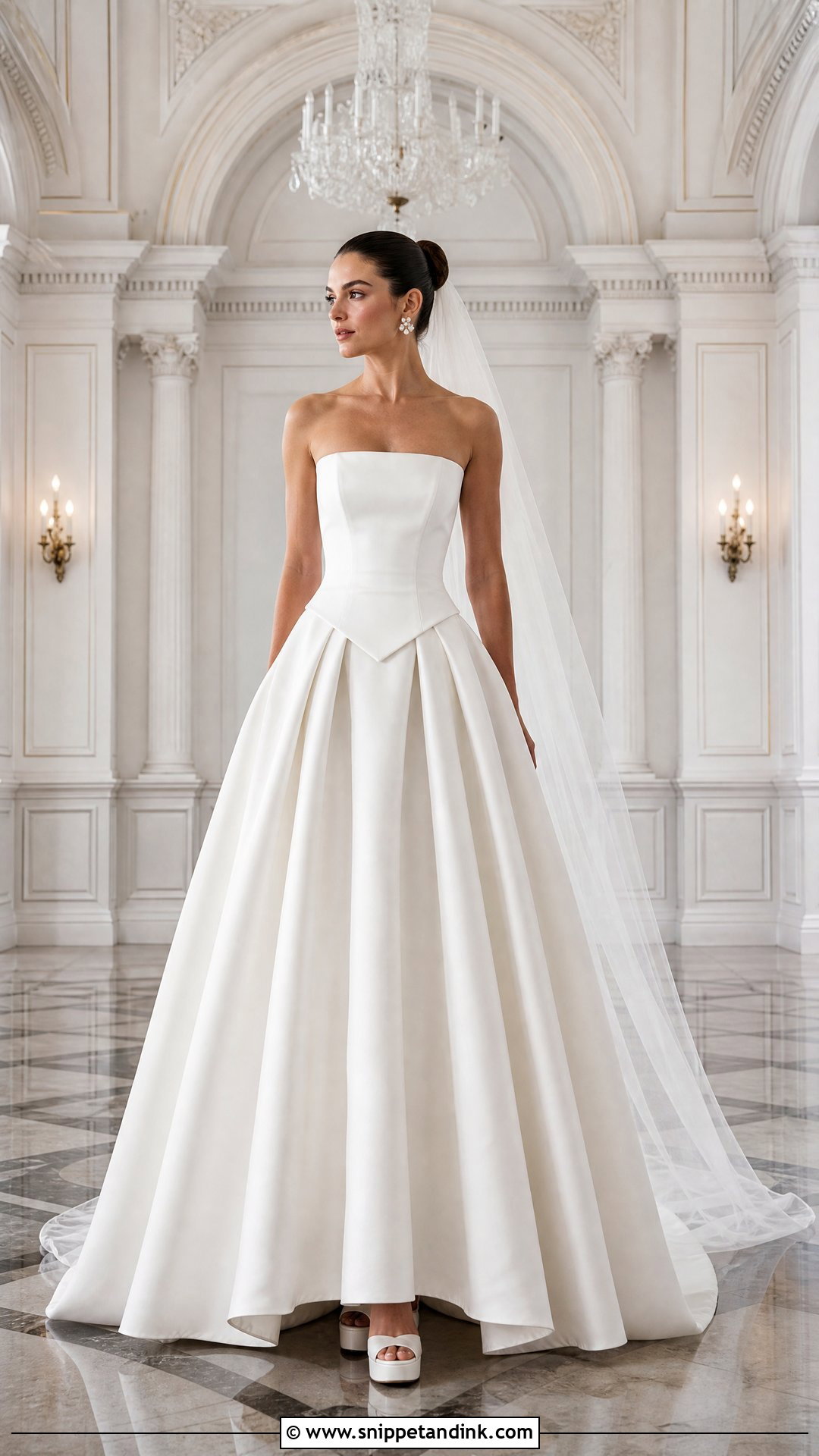
Pleats are how you get grand volume without fuss. On a fitted strapless or straight-neck bodice, wide box pleats starting just below the point let the torso stay narrow before the skirt opens out. Pearl cluster earrings, satin platform heels and a long veil with a plain finished edge suit it, along with a polished updo that keeps the shoulders clear. Pleated satin skirts are heavy, so ask about hidden loops or a proper bustle for the evening. Large ballrooms and wide aisles let the skirt be seen from every side.
12. Minimalist Satin Basque Waist Wedding Dress
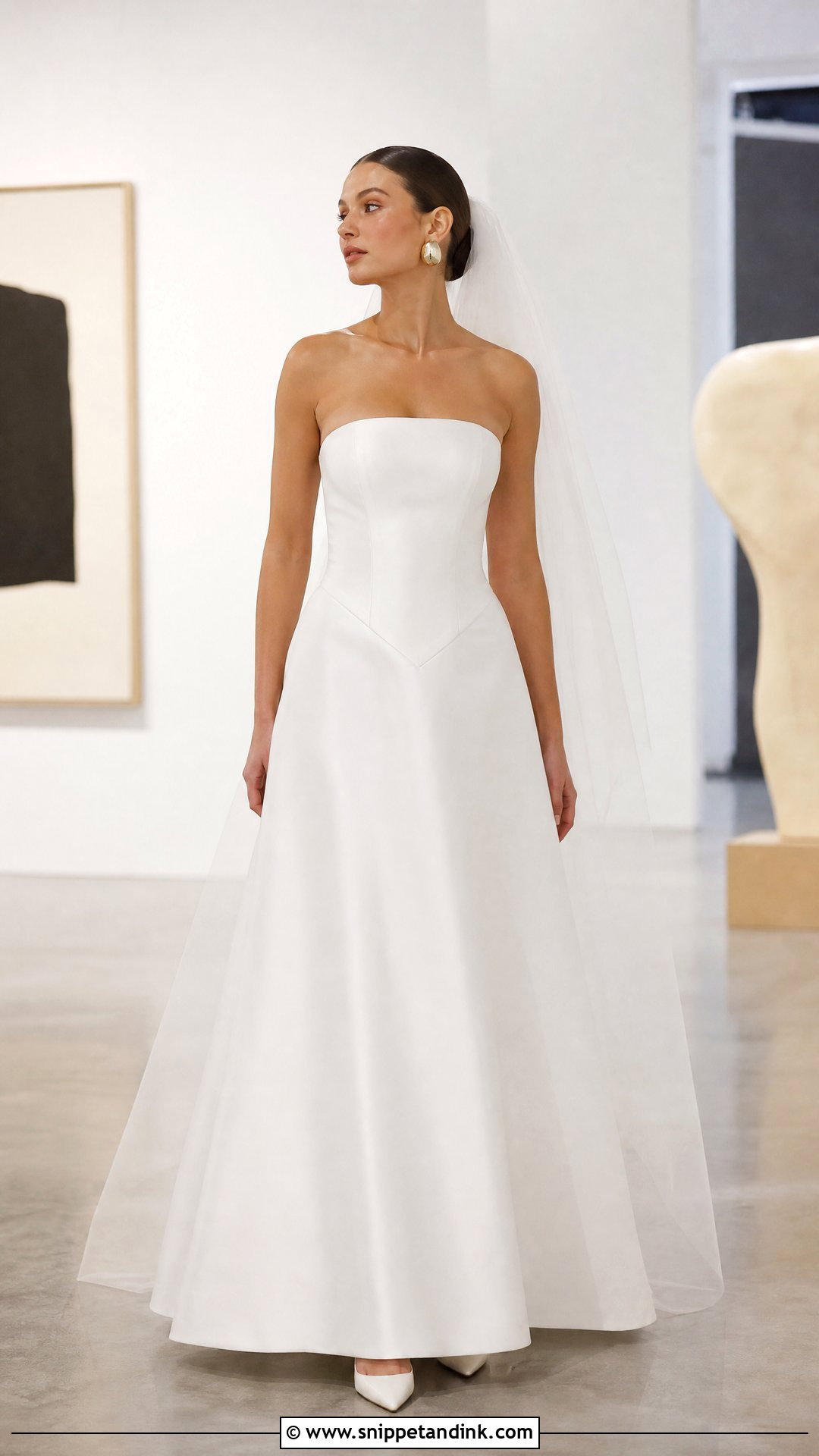
With no decoration at all, the construction becomes the design. A smooth strapless bodice, clean princess seams and a shallow point lengthen the torso subtly, while a plain A-line skirt and medium train keep the line simple. Sculptural studs, pointed ivory heels, a structured mini bag and a plain chapel veil suit it. A sleek centre-parted bun and natural makeup support the quiet aesthetic. This is the version where tailoring matters most, because plain satin shows every seam and every pull. Galleries, city venues and couples planning restrained décor suit it best.
13. A Line Satin Basque Waist Wedding Dress
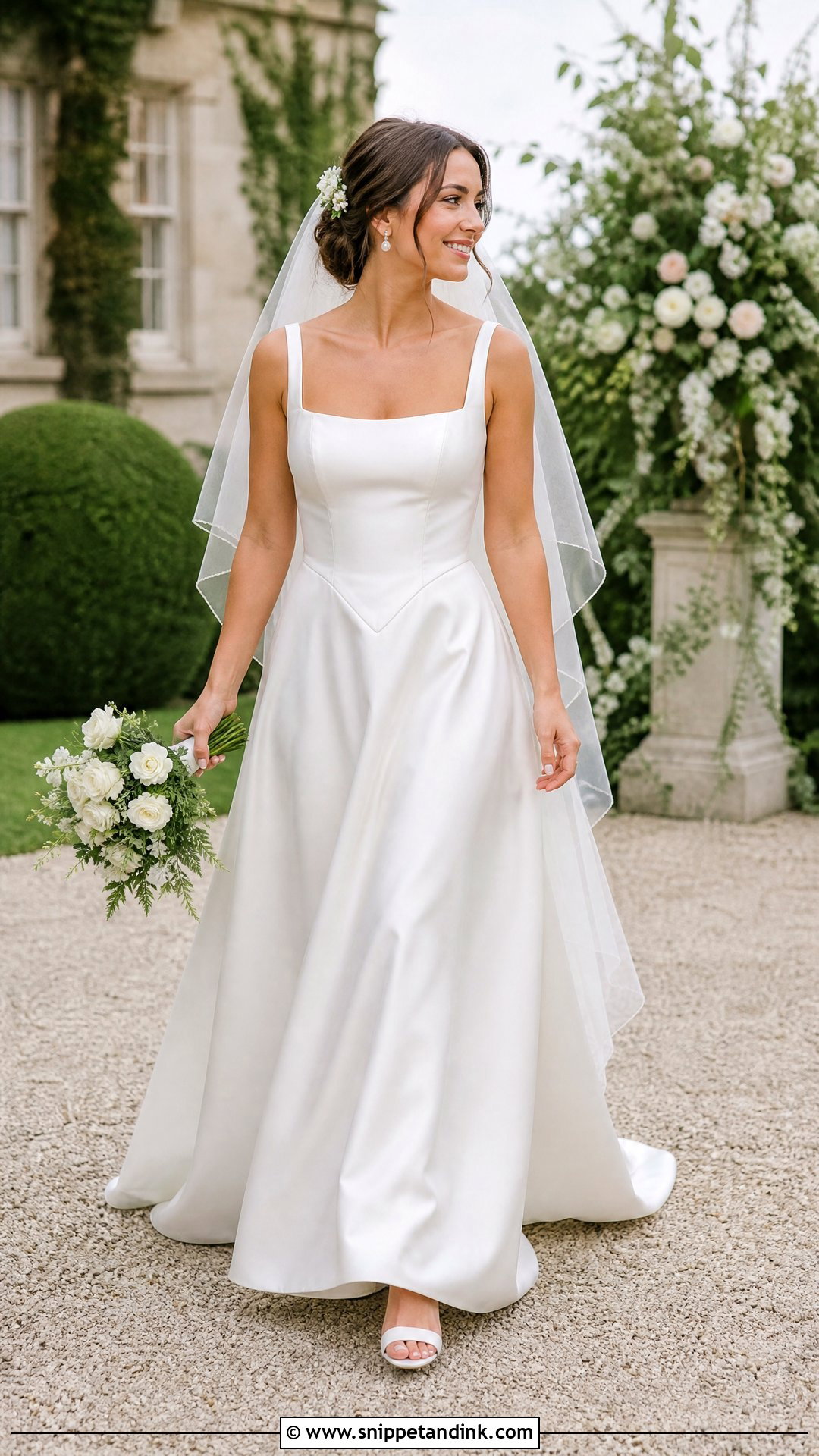
The A-line version is the easiest to live in. A medium point defines the bodice, and the skirt widens slowly from the hips rather than ballooning, so you can walk, sit and dance without thinking about it. Wear a fingertip veil, pearl earrings, comfortable block heels and a small floral comb, with soft waves or a textured low bun. Pockets can sit inside the side seams without spoiling the line if they’re set in properly. Hands in pockets also stops you clutching your bouquet in every candid. Country estates, gardens and hotels all suit it.
14. Satin Basque Waist Ball Gown Wedding Dress
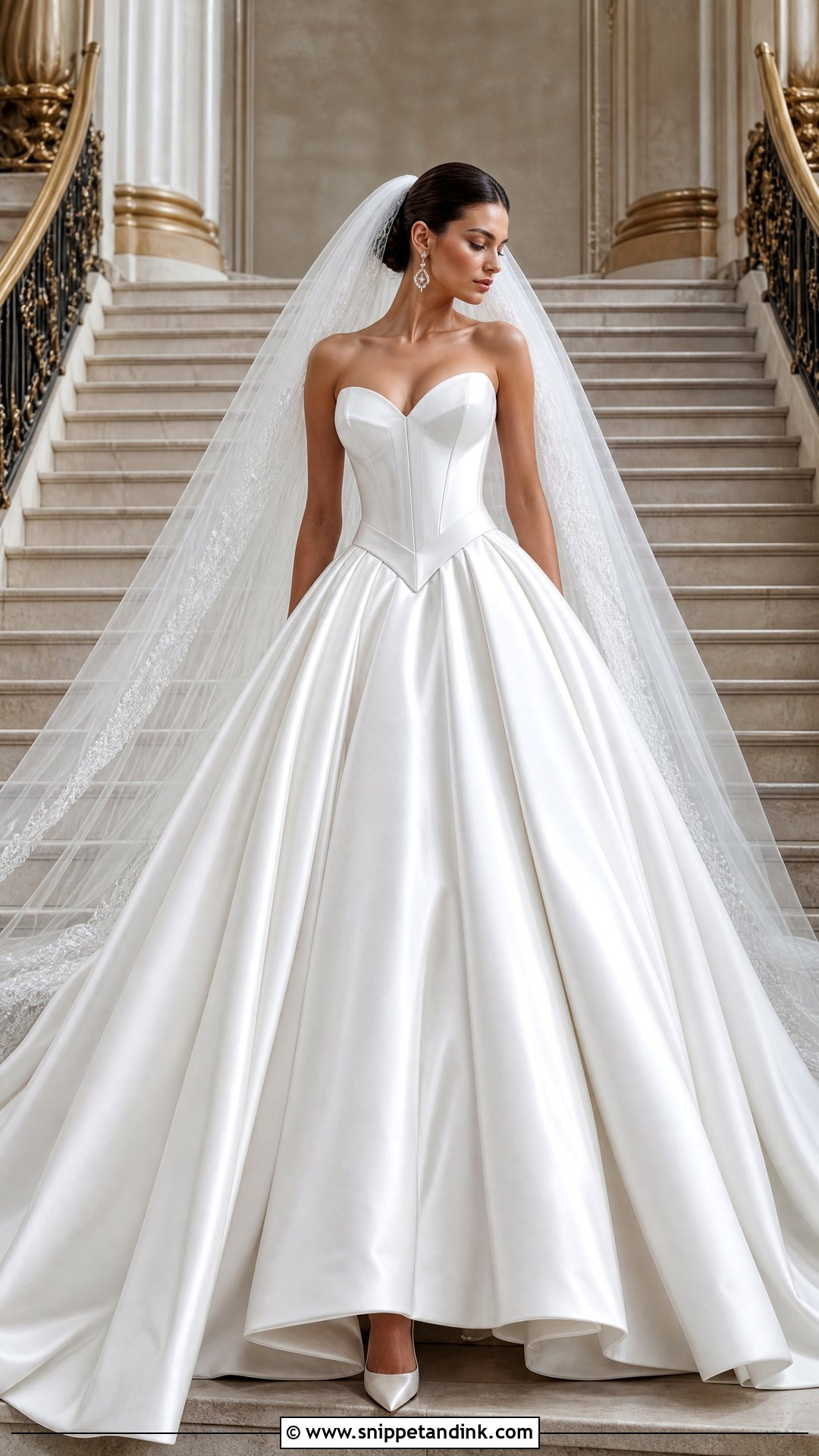
Few shapes feel as ceremonial as a satin Basque waist ball gown with a deep pointed bodice. The torso looks long and sculpted, and then the skirt opens into real volume held out by layered internal support. Pick a sweetheart, straight or soft curved neckline for the coverage you want. A cathedral veil, crystal earrings, satin pumps and an updo are enough; a necklace is optional at best. I have brides practise walking and turning at their fittings, because a skirt this full has momentum, and you need to know how it swings before you turn at the altar. It needs a wide aisle and a big room.


15. Mermaid Satin Basque Waist Wedding Dress
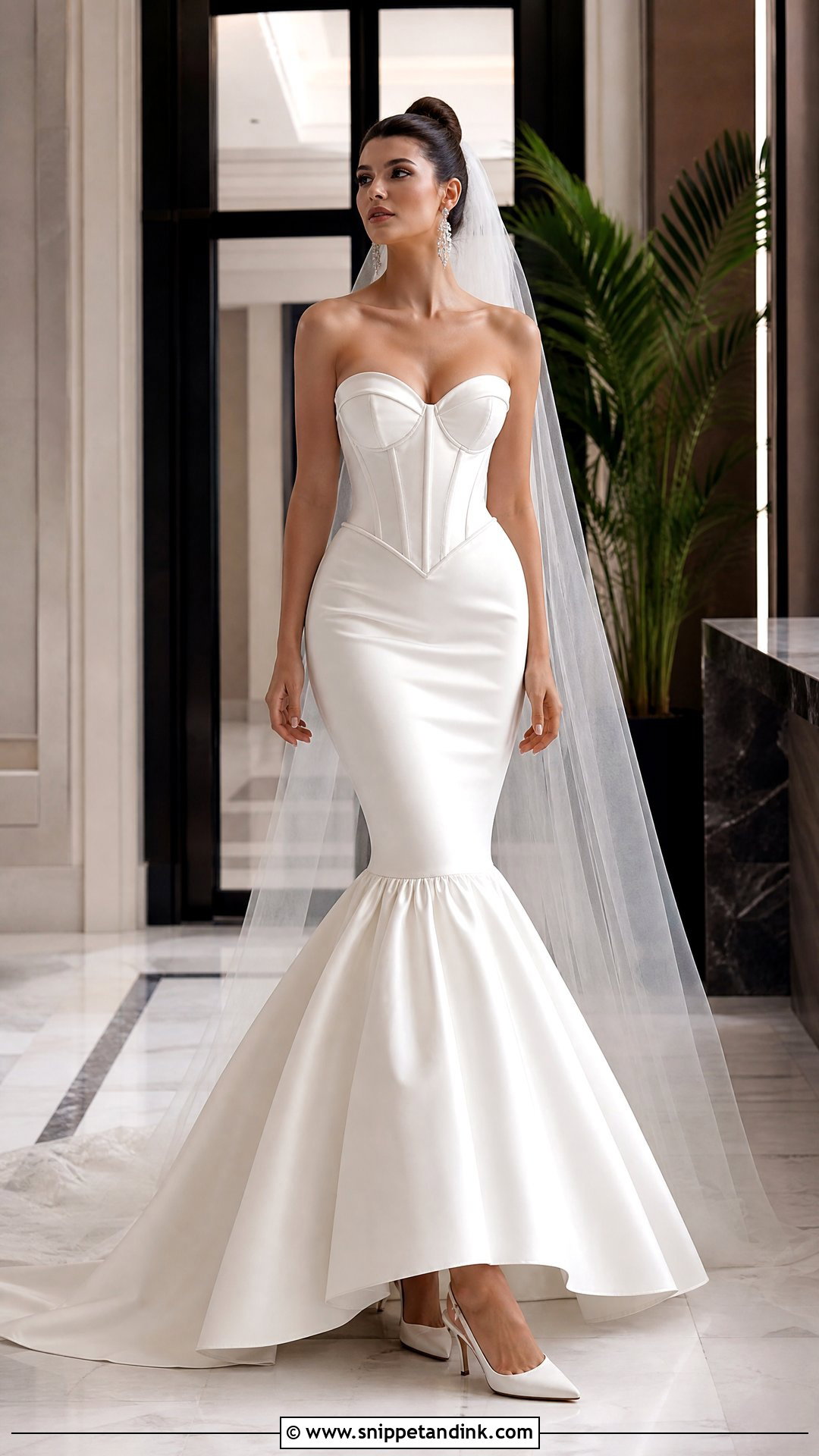
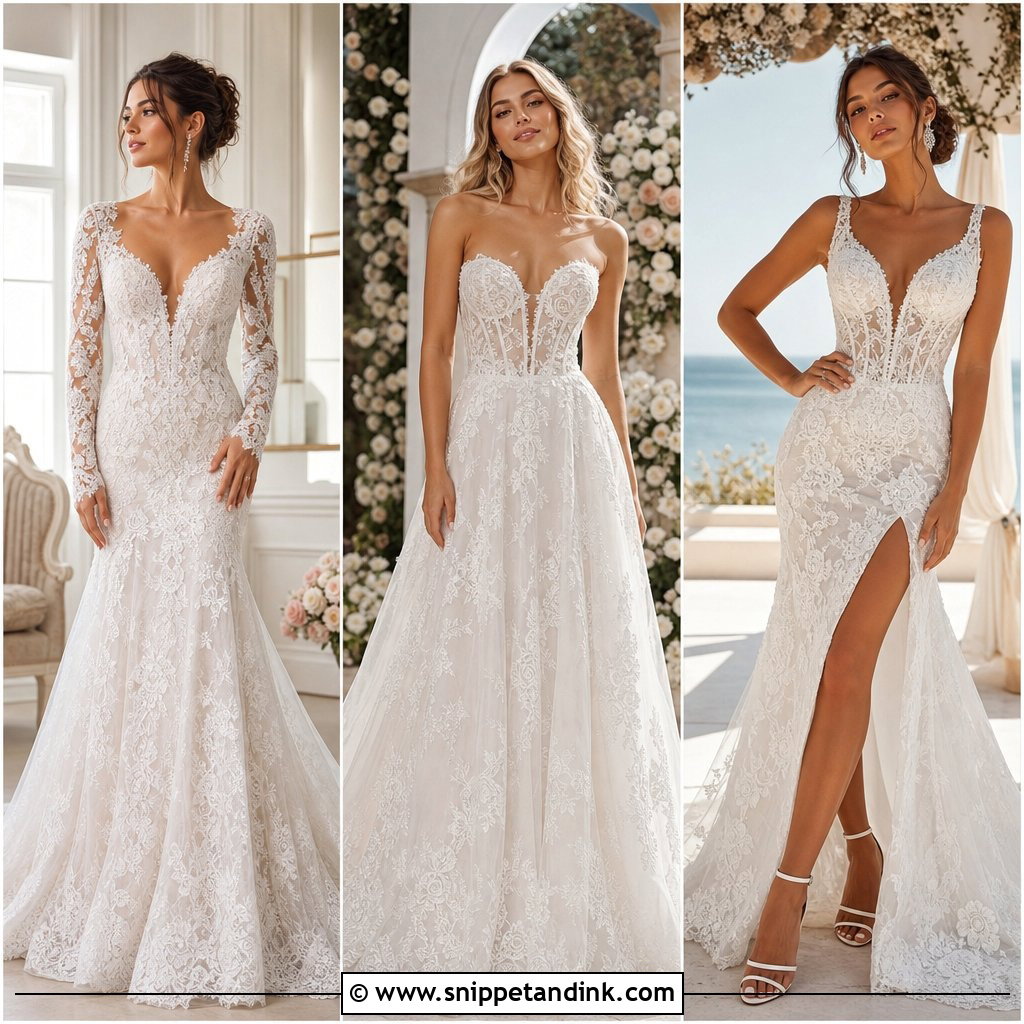
A mermaid cut keeps the bodice sharp and pushes the drama to the hem. The point should flow smoothly over the hips before the skirt flares near the knee. Stretch satin or cleverly placed interior panels give more movement without changing the outline. Pointed slingbacks, long drops and a narrow chapel veil suit it, with a side-parted bun or glossy waves. Close-fitting satin shows every edge underneath, so skip bulky shapewear and ask the salon which smooth foundation garments they’d recommend for this particular gown. Glamorous hotels and evening receptions are where it belongs.
16. Satin Basque Waist Wedding Dress With Chapel Train
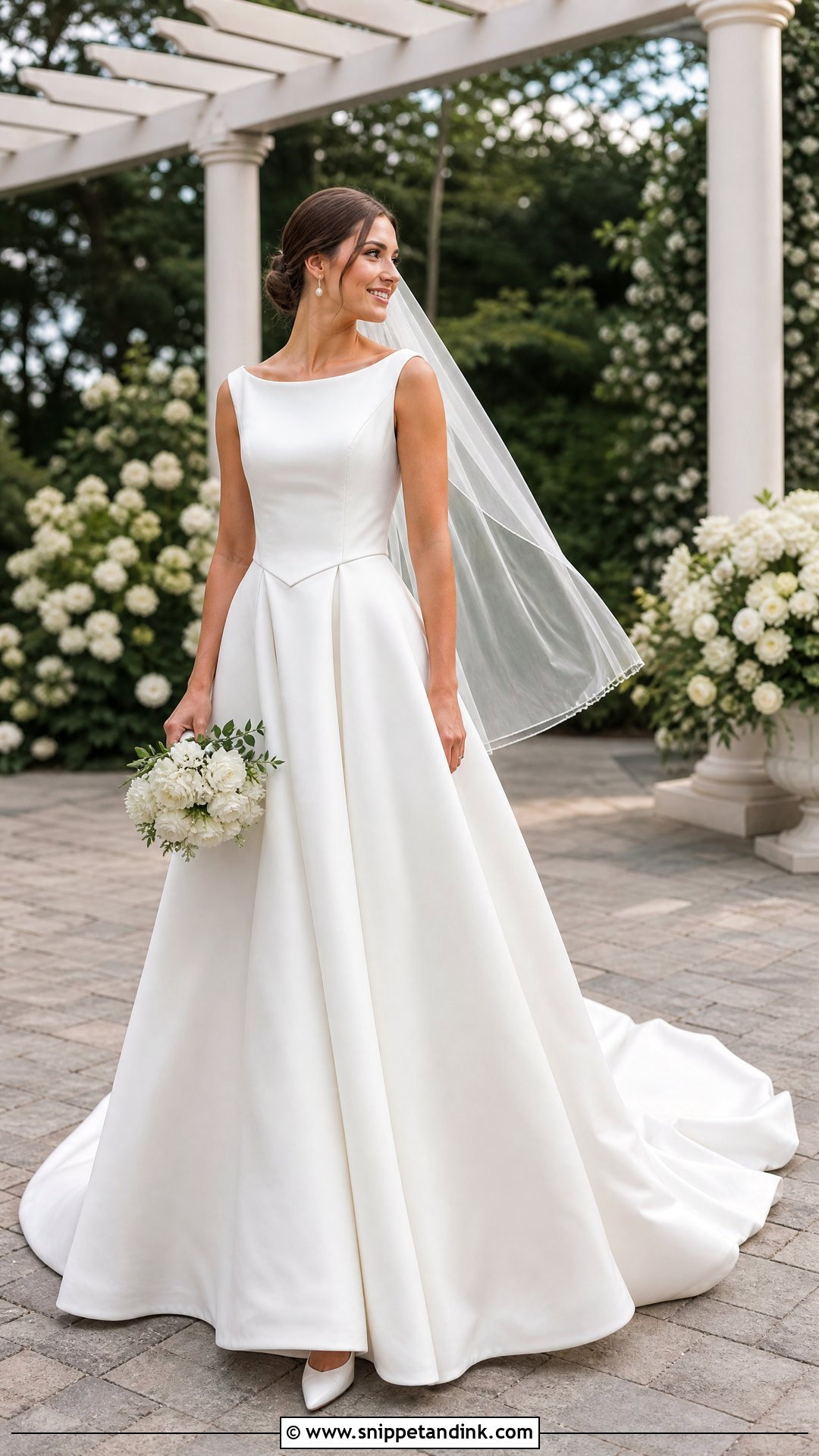
A chapel train adds length without turning into a logistics problem. Choose a structured A-line with a moderate point and a skirt that extends smoothly behind you; the train should look substantial in ceremony photos but bustle up easily for the reception. Pearl earrings, closed pumps and a fingertip or chapel veil that frames the train rather than covering it suit it, with a classic low chignon. Ask for a secure bustle with colour-coded loops, and have one bridesmaid practise it at the last fitting. On the day, there’s no time to learn.
17. Satin Basque Waist Wedding Dress With Cathedral Train
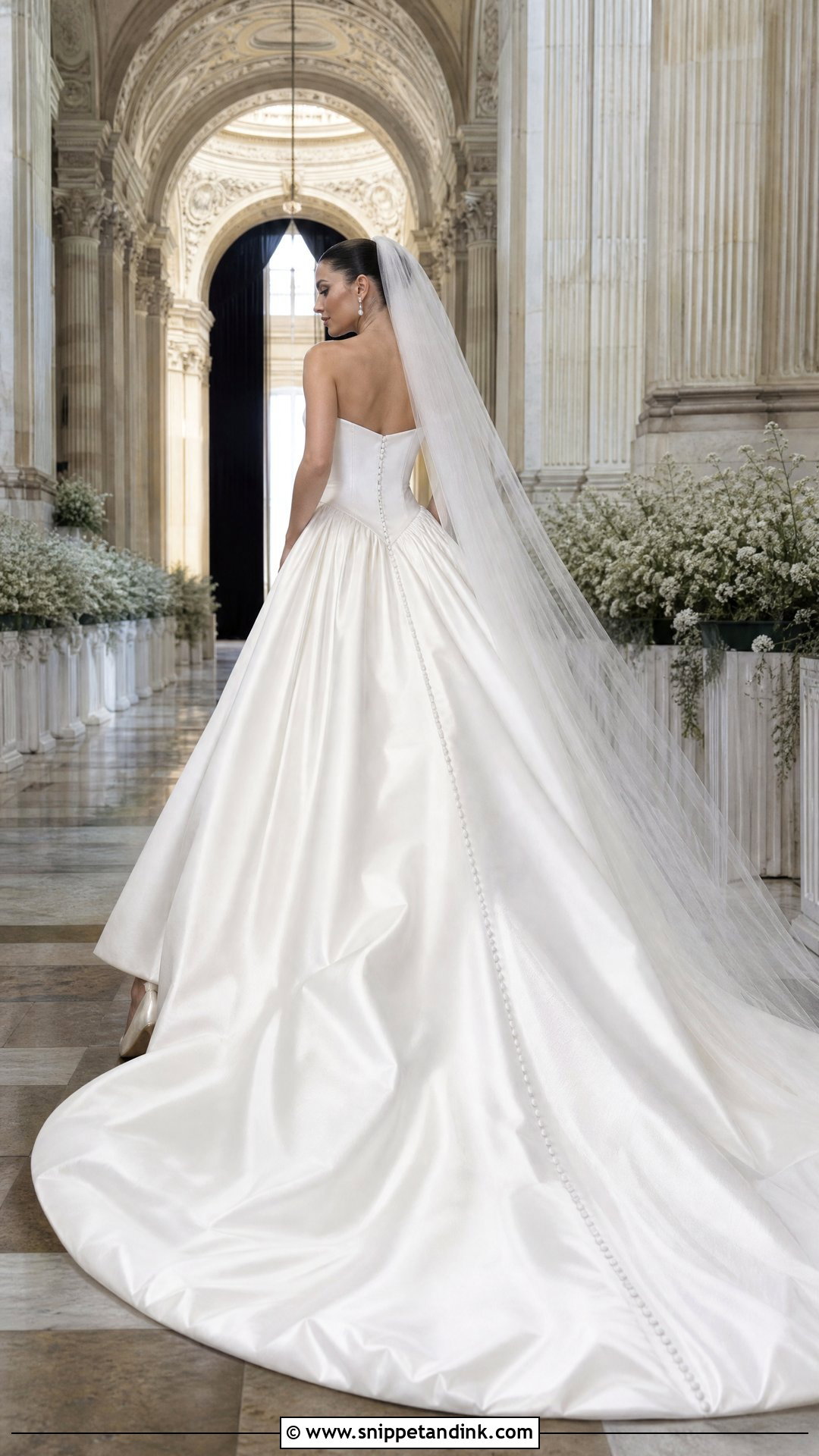
The cathedral train is the full entrance. A strapless corset bodice and full skirt provide the structure needed to carry all that length, and covered buttons can run from the back of the bodice right down to the hem so the detail shows in every photo from behind. A sheer cathedral veil, pearl and crystal studs, satin pumps and a sleek bun complete it. Keep the bouquet and jewelry simple against a gown this size. A cathedral train needs aisle space, careful steaming the morning of, and a bustle that can carry its weight. Large historic halls suit it; a narrow chapel does not.
18. Bow Back Satin Basque Waist Wedding Dress
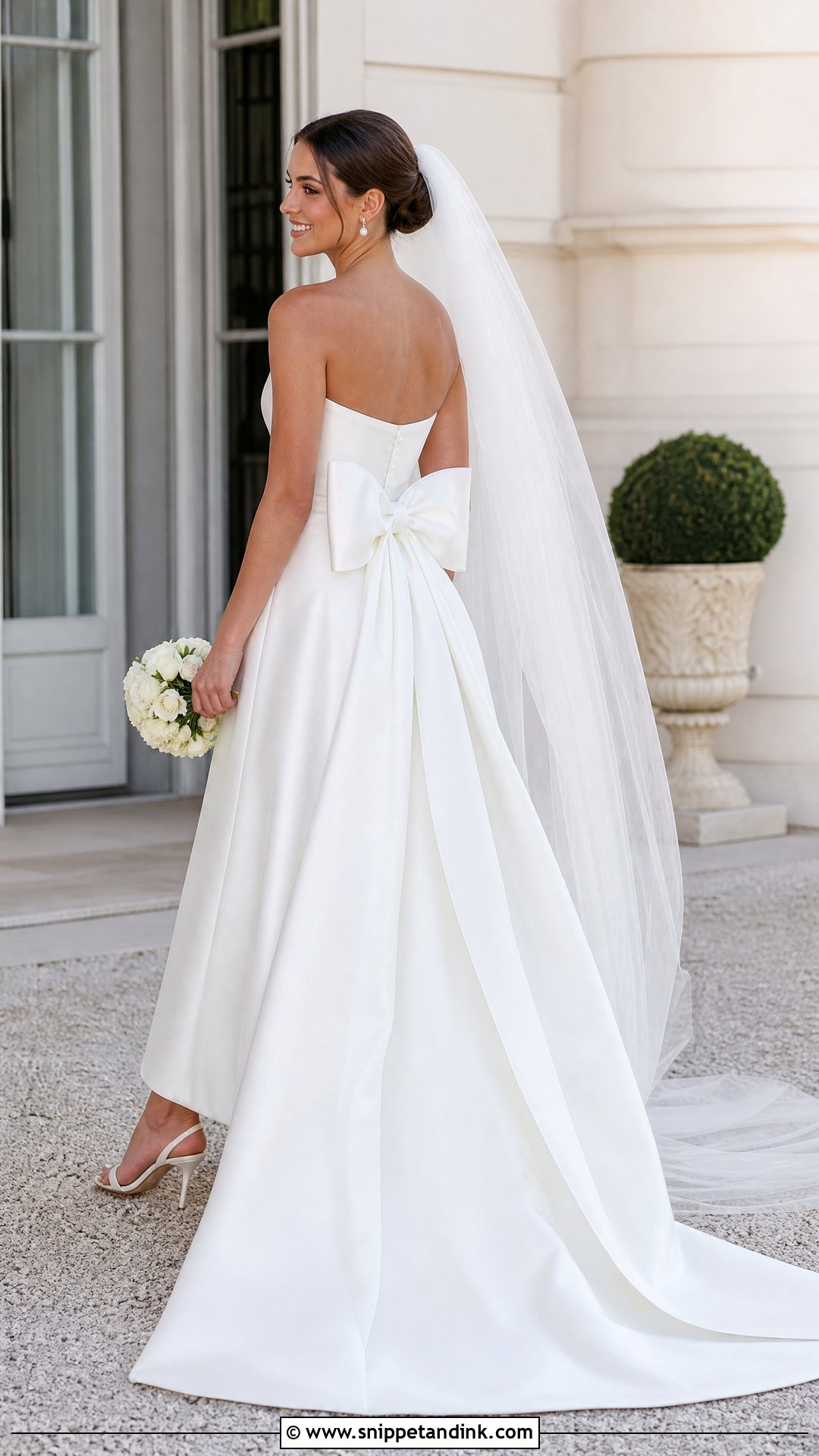
A structured bow at the back gives the gown a second focal point for the walk away. Place a detachable bow just above the waist seam so it adds interest without hiding the point of the V. A straight neckline and smooth A-line skirt keep things balanced. Pearl studs, ivory slingbacks, a low bun and a sheer veil placed above or below the bow, depending on its size, finish the look. Take the bow off after the ceremony if you want an easier reception. Large bows tilt as the evening goes on, so ask for two attachment points instead of one.
19. Pearl Satin Basque Waist Wedding Dress
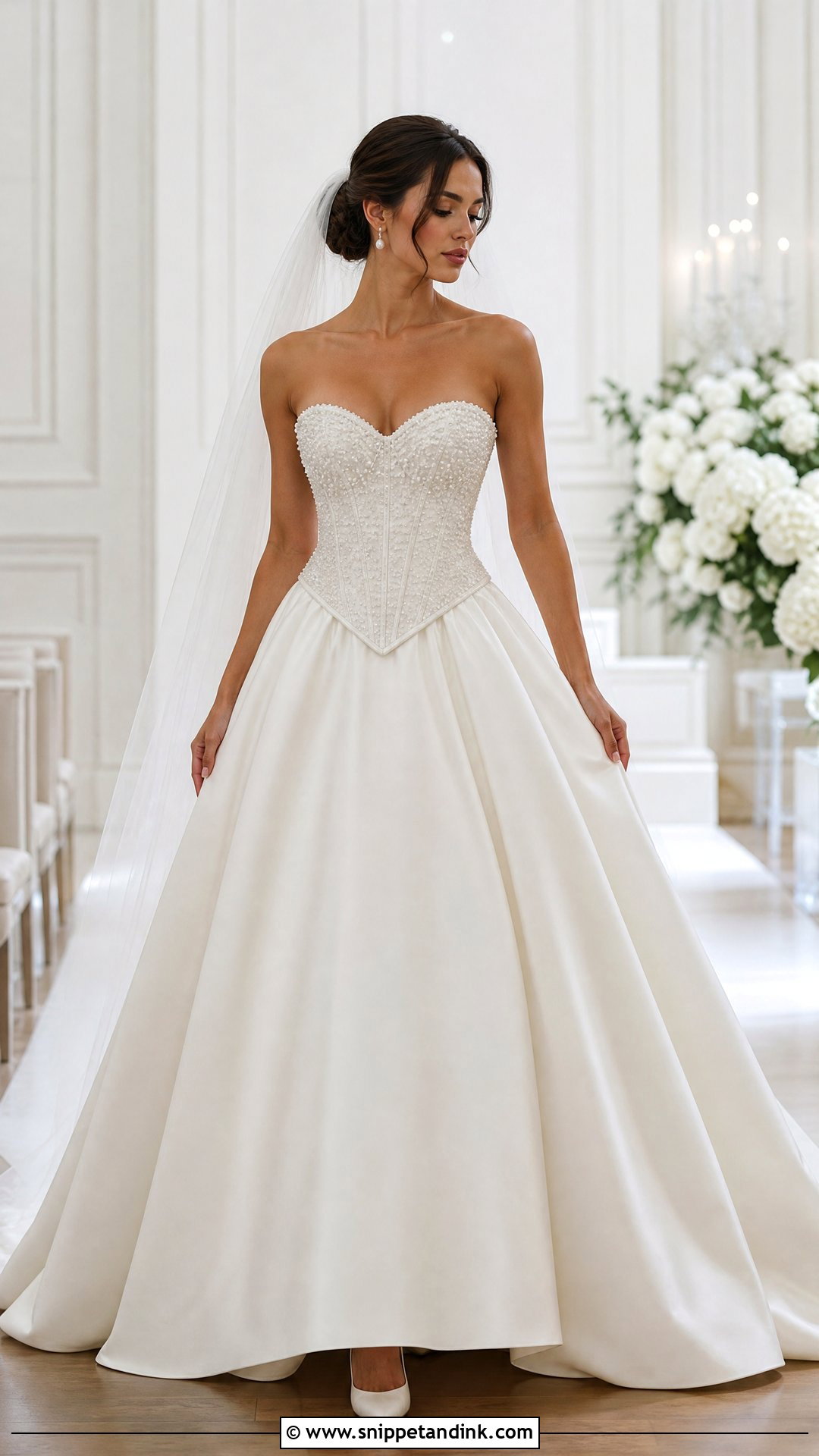
Scattered pearls add texture without fighting the clean waist. Concentrate them around the neckline or upper bodice, and keep the point and skirt smooth so the shape still reads. A strapless corset top on a full A-line gives a calm base. Simple pearl earrings, plain satin heels and a sheer veil without beading suit it, with a soft updo so hair doesn’t snag on the pearls. Pearls that are glued rather than stitched pop off when the bodice flexes, so check them at your final fitting and ask for a few spares to keep in the emergency kit. Daytime ceremonies and bright rooms suit the soft glow.

20. Lace Trim Satin Basque Waist Wedding Dress
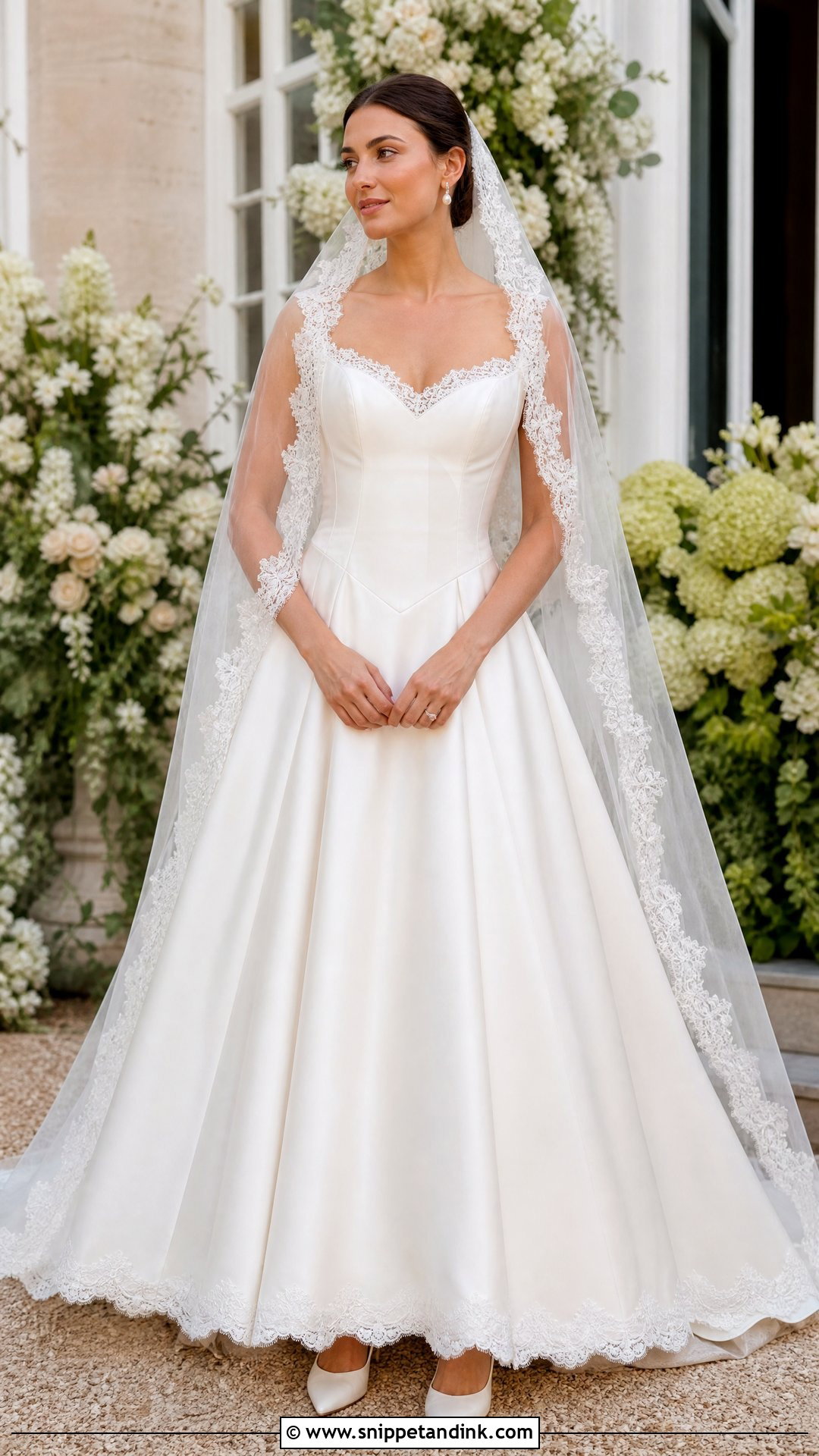
Lace as a trim, rather than an all-over layer, keeps the point crisp. Place it along the neckline, back or hem and let the satin carry the bodice. A full A-line skirt, lace-edged veil, pearl drops and classic ivory pumps complete it, with a low textured bun. The biggest risk is colour: ivory lace on white satin, or the reverse, looks like a mismatch in daylight photos even when it seems fine under shop lights. I hold the two together by a window before anyone commits. Historic estates and garden ceremonies suit the traditional feel.
Why a V-Shaped Seam Makes Alterations Slower
A straight waist seam can be taken in at the sides with little effect elsewhere. A Basque seam is different. The skirt is joined along a diagonal on each side, often with pleats or gathers stitched into it, so taking in the bodice can shift the point off centre or pull the pleats out of line. Good seamstresses handle this all the time, but it takes more fittings.
- Plan for at least three fittings and start roughly two to three months out, earlier if the gown needs major changes.
- Bring the exact shoes and underwear you’ll wear. The hem and the depth of the point both shift with them.
- Try to keep your weight steady in the final weeks. A boned bodice fitted closely to the waist has very little room to give.
- Ask to see the gown on a stand from the side after each fitting. The point should lie flat, not lift away from the body.
If you’re buying a sample or a secondhand gown, take it to a seamstress before you buy, if you can. Moving a Basque point up or down is a major job, and sometimes the honest answer is that the dress can’t be changed enough to suit you.
The Point That Holds Every One of These Gowns Together
One waistline, twenty very different brides. A plain A-line is quiet and wearable, while a corset ball gown or cathedral train goes all out on drama. Necklines, sleeves, skirt volume and embellishment let you adjust the shape to your comfort and your venue. When you try gowns on, look at the waist from the front, side and back, then sit, walk and lift your arms before deciding. Satin rewards good tailoring and exposes poor tailoring, so give your fittings proper time. Then choose accessories that support the structure instead of competing with it.
You'll Like These Ideas:







Leave a Reply