
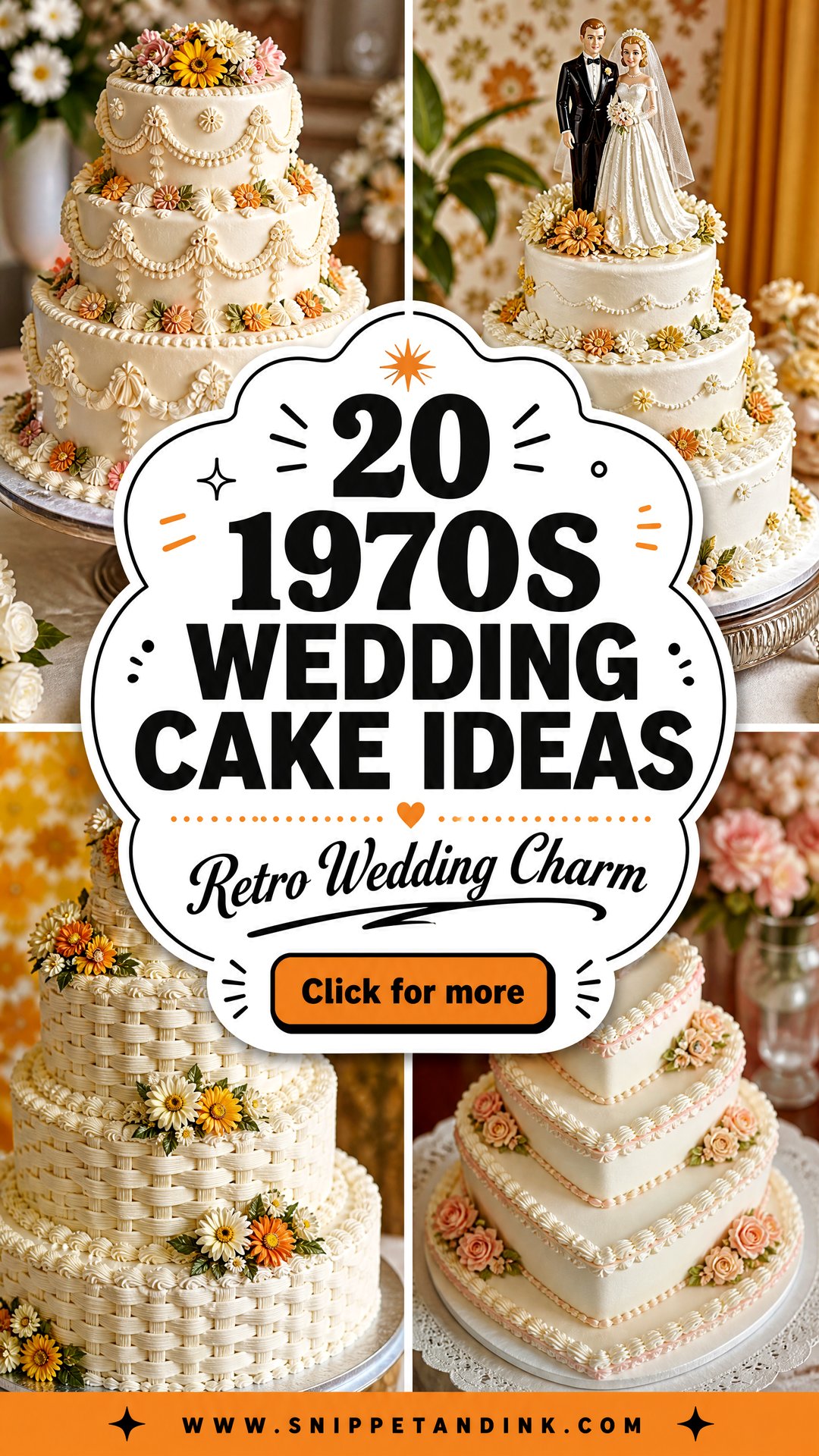
Seventies wedding cakes were built to be seen from the back of the hall: tall tiers on columns, white buttercream, royal icing scrolls, pastel roses, swags, doves, bells and a proud little couple on top. Couples are asking for them again because they look handmade, and because many of us grew up staring at one in a parents’ album. From the baking side, the look is very achievable now with lighter frostings, better flavours and hidden supports that are far more stable than the old plastic pillars. I’ve kept the retro charm front and centre below, with notes on what each feature takes to build and serve, whether your reception is in a vintage hall or a backyard.
Bring Your Parents’ Wedding Photo to the Tasting
The most useful thing you can hand me for a retro cake is a real photograph from the era, ideally from your own family. It shows the proportions, the piping density and the kind of topper you’re drawn to far better than a mood board. Then we can decide what to keep exactly and what to modernise.
Questions worth settling at the first meeting
- Royal icing, real buttercream or a crusting buttercream? Royal icing gives the sharpest overpiping; buttercream tastes better but softens in heat.
- Are the pillars and stairs real supports or decoration? You want hidden dowels doing the work.
- Who supplies props like fountains, stairs and vintage toppers, and are they rented or bought?
- How many servings do you actually need? Tall separated cakes look bigger than they serve, and side cakes or a kitchen cake can fill the gap.
- When does the order need confirming? Detailed piped cakes take a lot of hand time, so busy bakers often book up months ahead. Lead times vary, so ask rather than assume.
1. 1970s Wedding Cake With Pillars
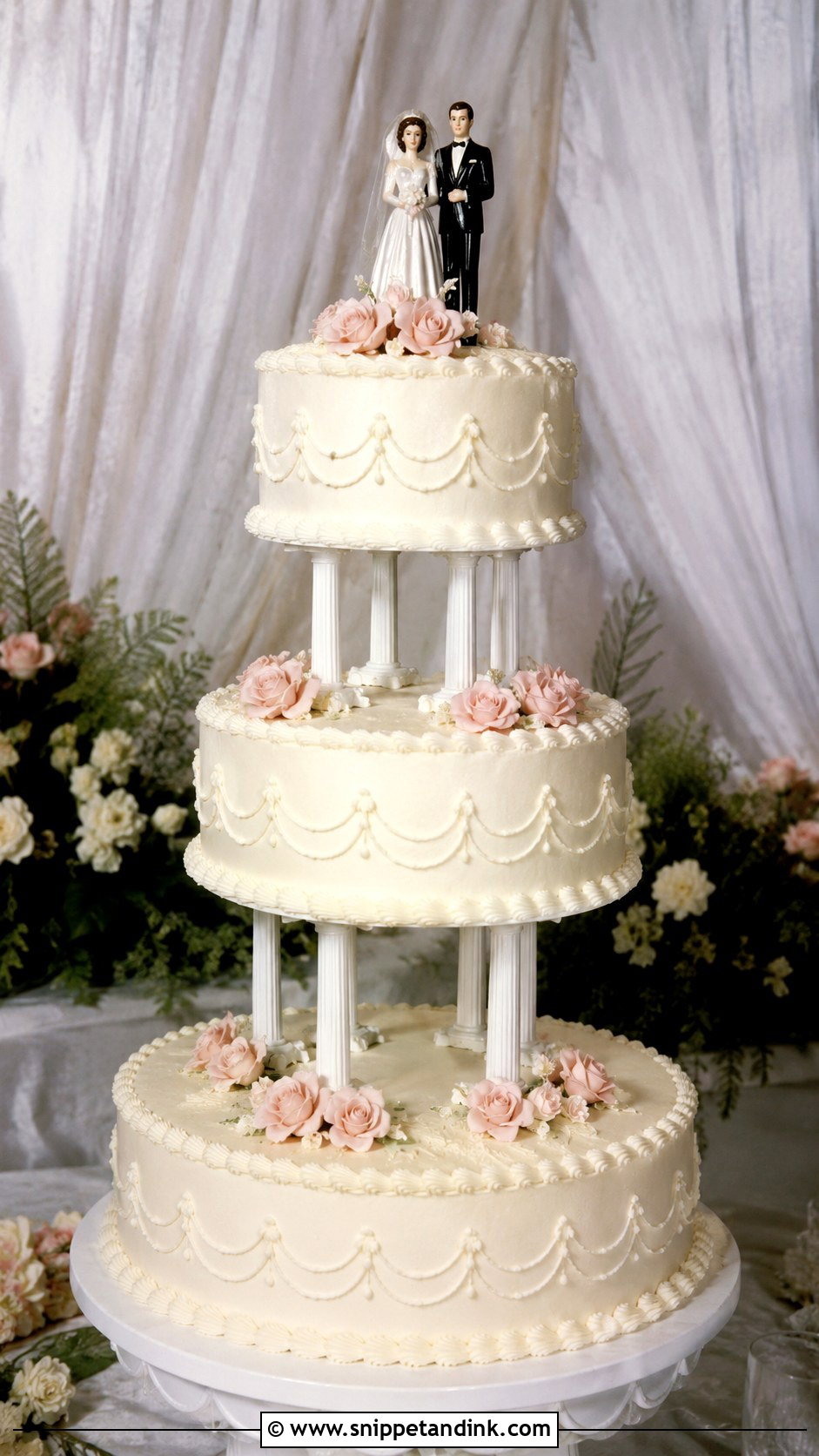
Pillars are the signature of the decade. Separating the tiers gives height and lets you tuck flowers into the gaps. Today I build each tier on its own board with internal dowels, so the visible decorative columns are only carrying a plate, not the whole weight. White or ivory buttercream with shell borders and scallops keeps it period. Classic flavours fit: vanilla, almond, or a yellow sponge with raspberry. A bride and groom topper finishes it without tipping into costume.
2. 1970s Wedding Cake With Fountain
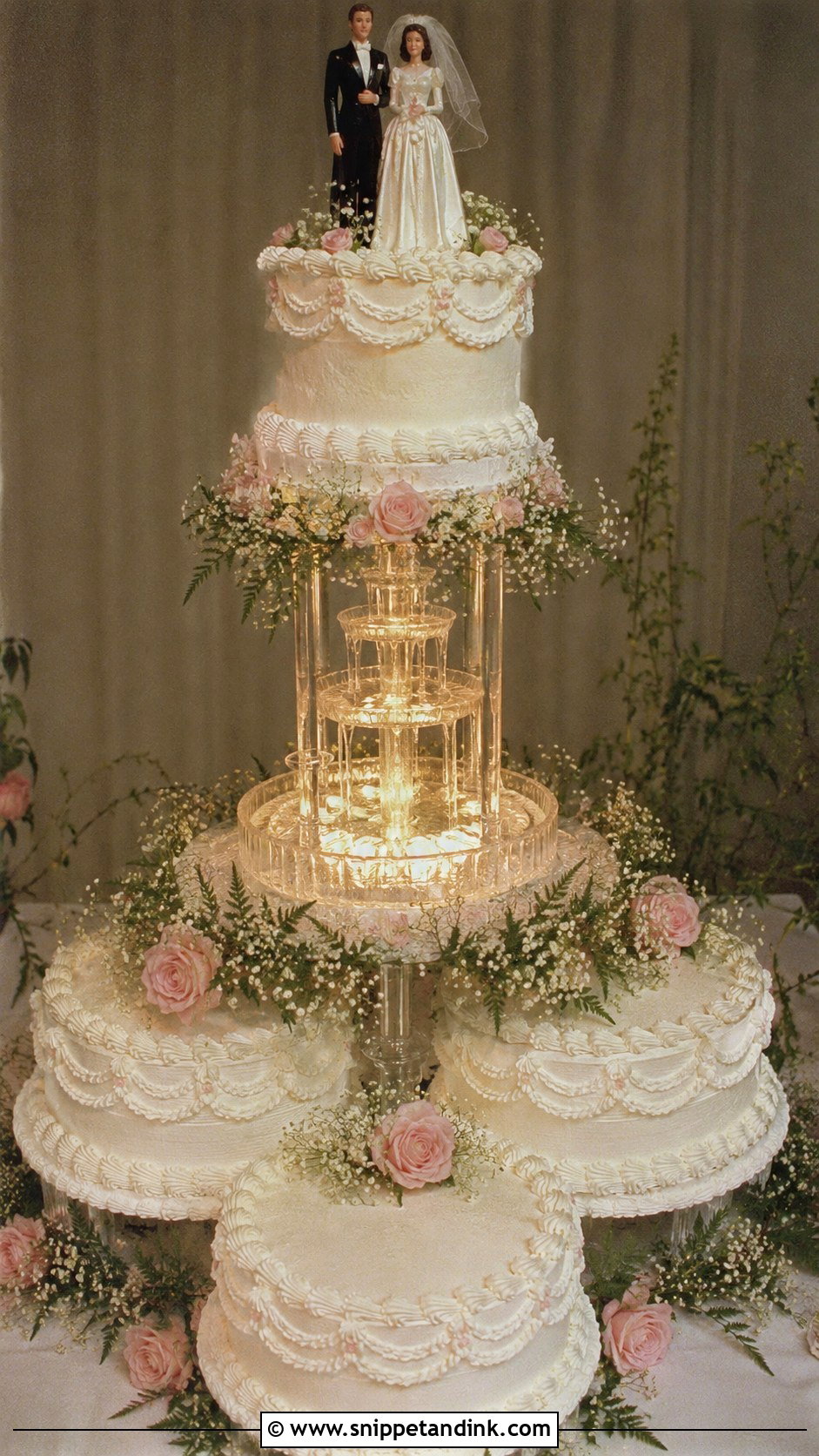
The fountain cake is the full reception-hall memory: tiers raised above or around a small working fountain, often with stairs, pillars and a topper. It needs a sturdy, level table with a power point nearby, and room around it, because the fountain sits under the cake plates and must not splash the icing. I’d choose clear water or a soft light over coloured water, which looks dated rather than nostalgic. Pastel roses at the base soften the hardware. In a small venue it simply won’t fit.
3. 1970s Wedding Cake With Stairs
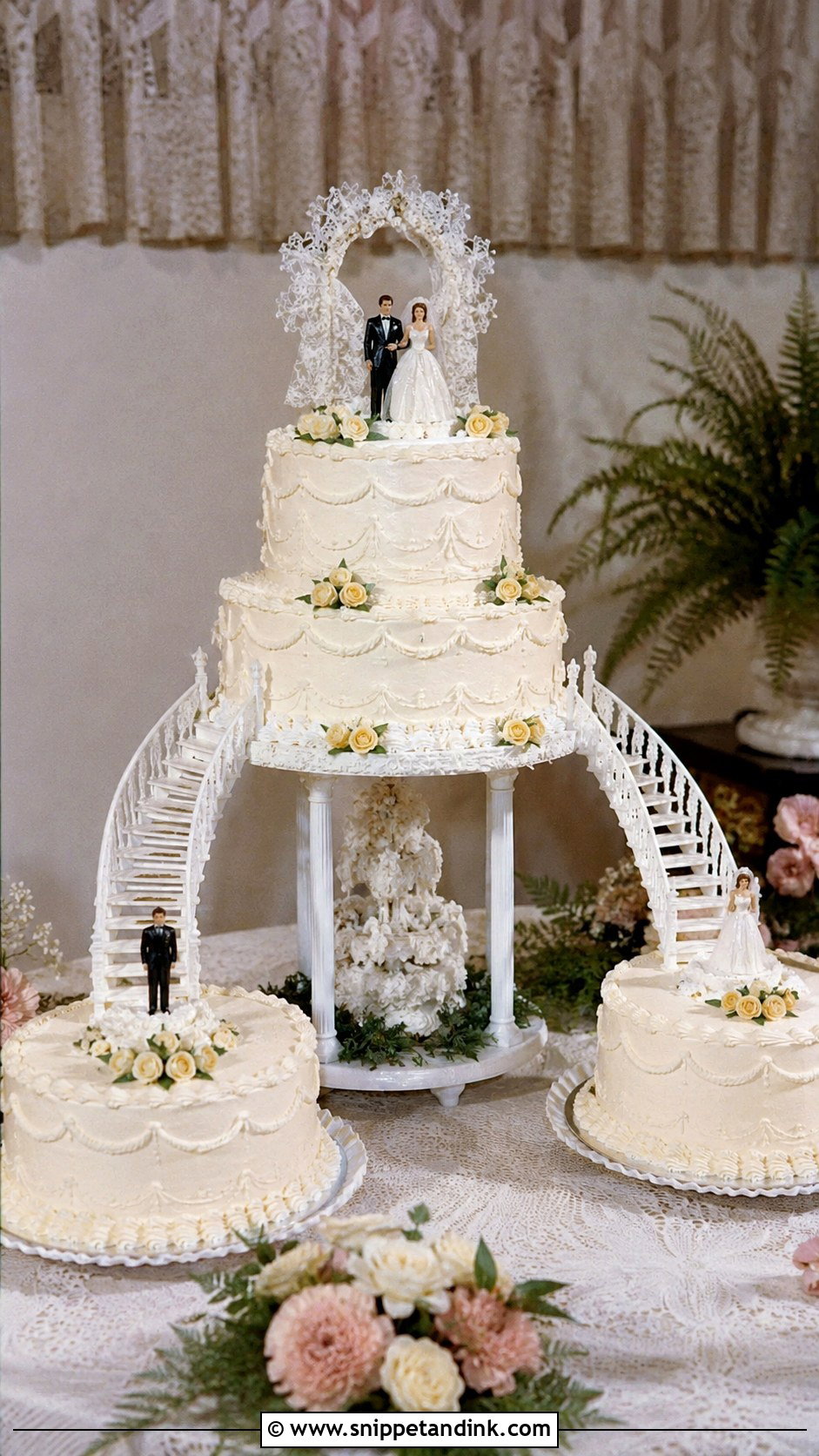
Stairs connect side cakes to a taller centre cake and turn the table into a little scene, often with figurines climbing them. The stair pieces are usually plastic and light, so they need to be set in place after the cakes are positioned, not before. For a cleaner update I’d do two side cakes with simple piped borders and keep the stairs white or clear. The symmetry is what makes it read as seventies. Vanilla or almond suits it.
4. 1970s Wedding Cake With Lambeth Piping
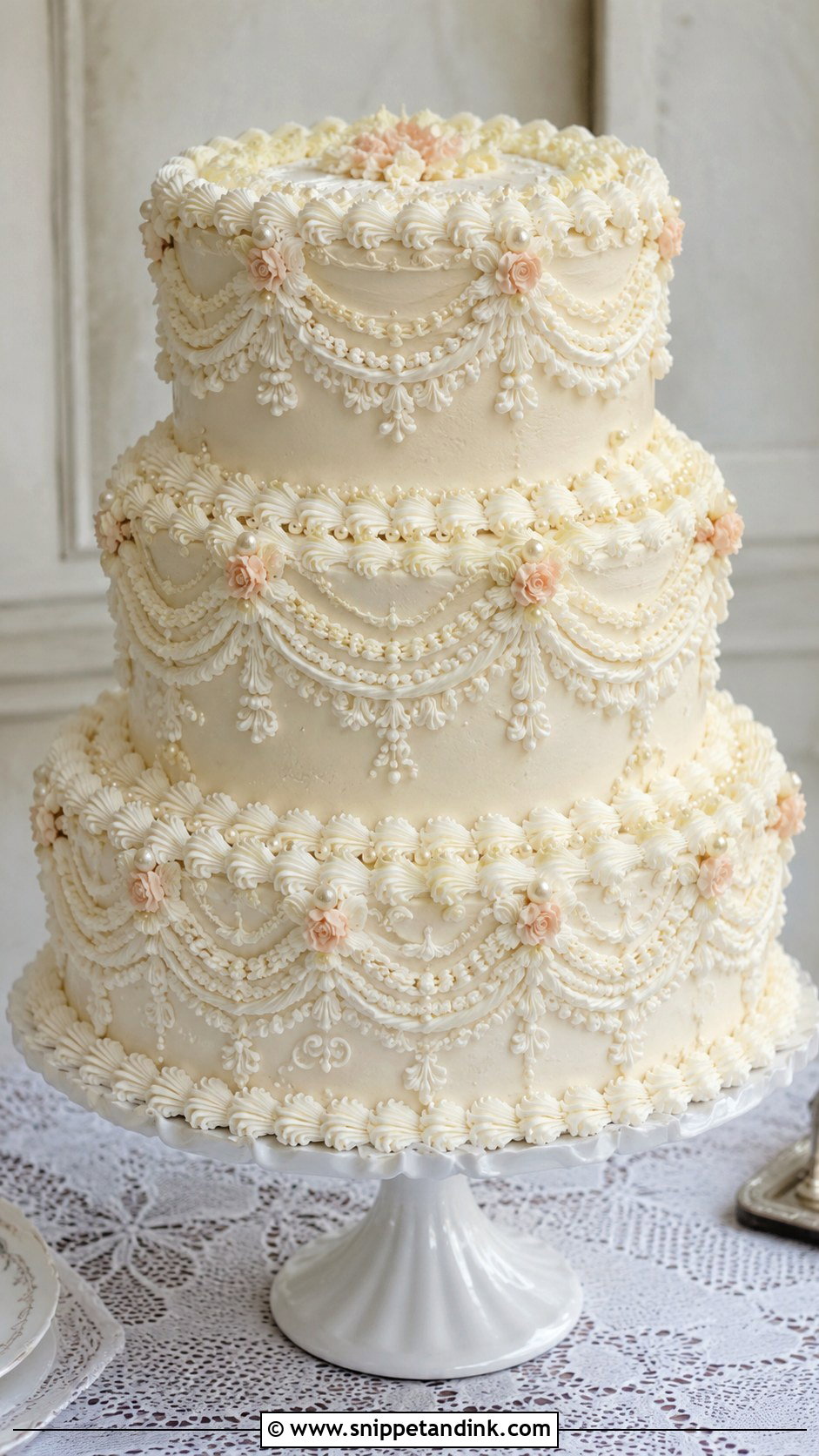
Lambeth is overpiping: layer upon layer of scrolls, shells, swags and beading built out from the side of the cake. It’s slow, skilled work and it’s what gives these cakes their depth. Traditionally it’s done in royal icing, which dries hard and holds crisp edges; buttercream gives a softer bite but a slightly rounder line. White on white is the classic, with pale pink, butter yellow or soft blue as the only accent. Wide, shorter round tiers suit the method better than tall narrow ones. Ask to see photos of your baker’s own overpiping, because it’s a specialist skill.
5. 1970s Wedding Cake With Bride And Groom Topper
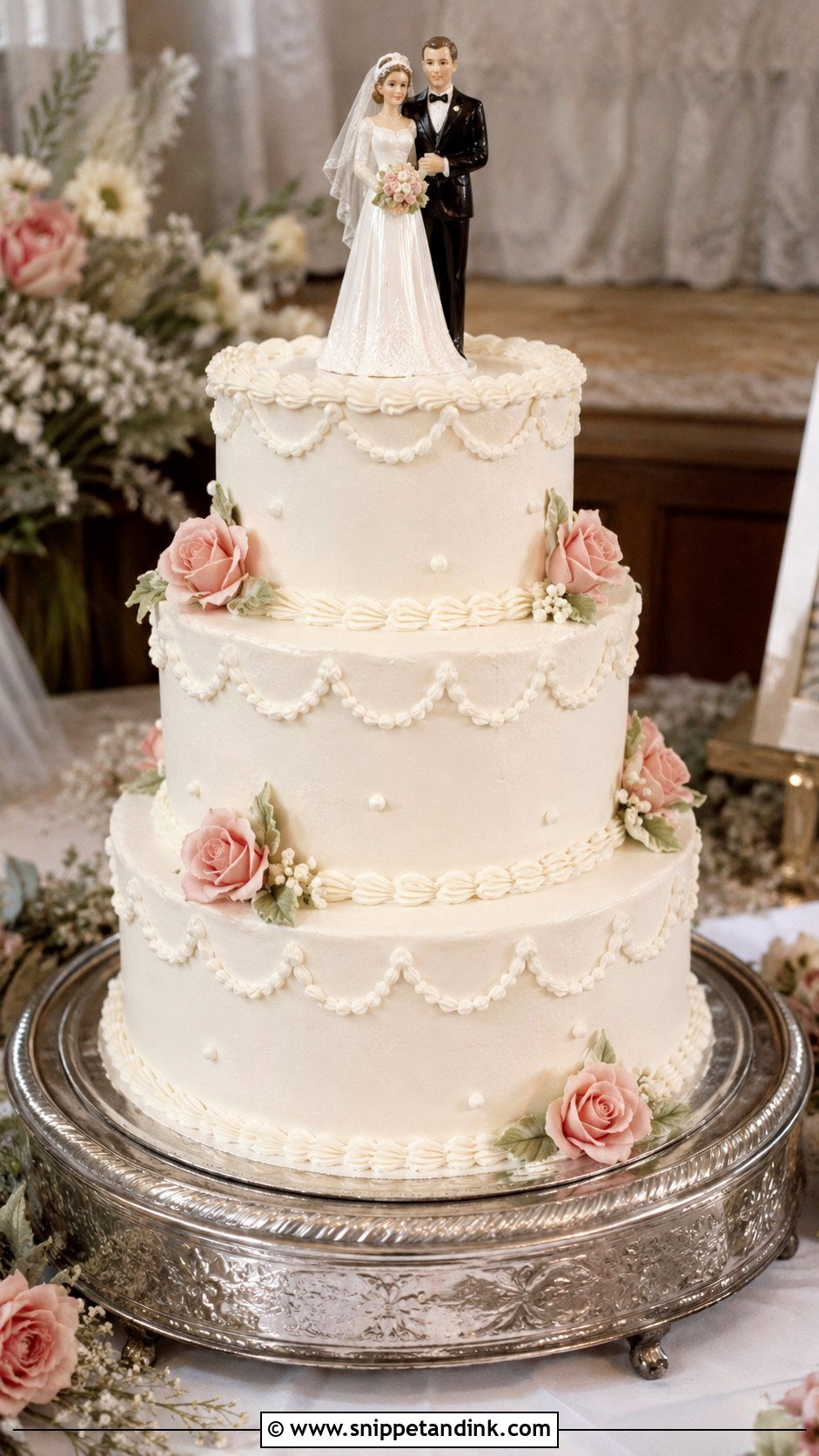
A couple topper does more for the seventies look than any piping. It can be porcelain, plastic, ceramic or a family keepsake. If you’re using a vintage one, I design the rest of the cake around it, matching the white and the scale. A small topper belongs on a plain top tier; a larger one can sit inside a ring of flowers. Old toppers are often fragile and not food-safe, so I place them on a small board or a clean disc rather than straight onto icing. Three stacked tiers with shells and piped roses is all it needs underneath.
6. 1970s Wedding Cake With Sugar Bells
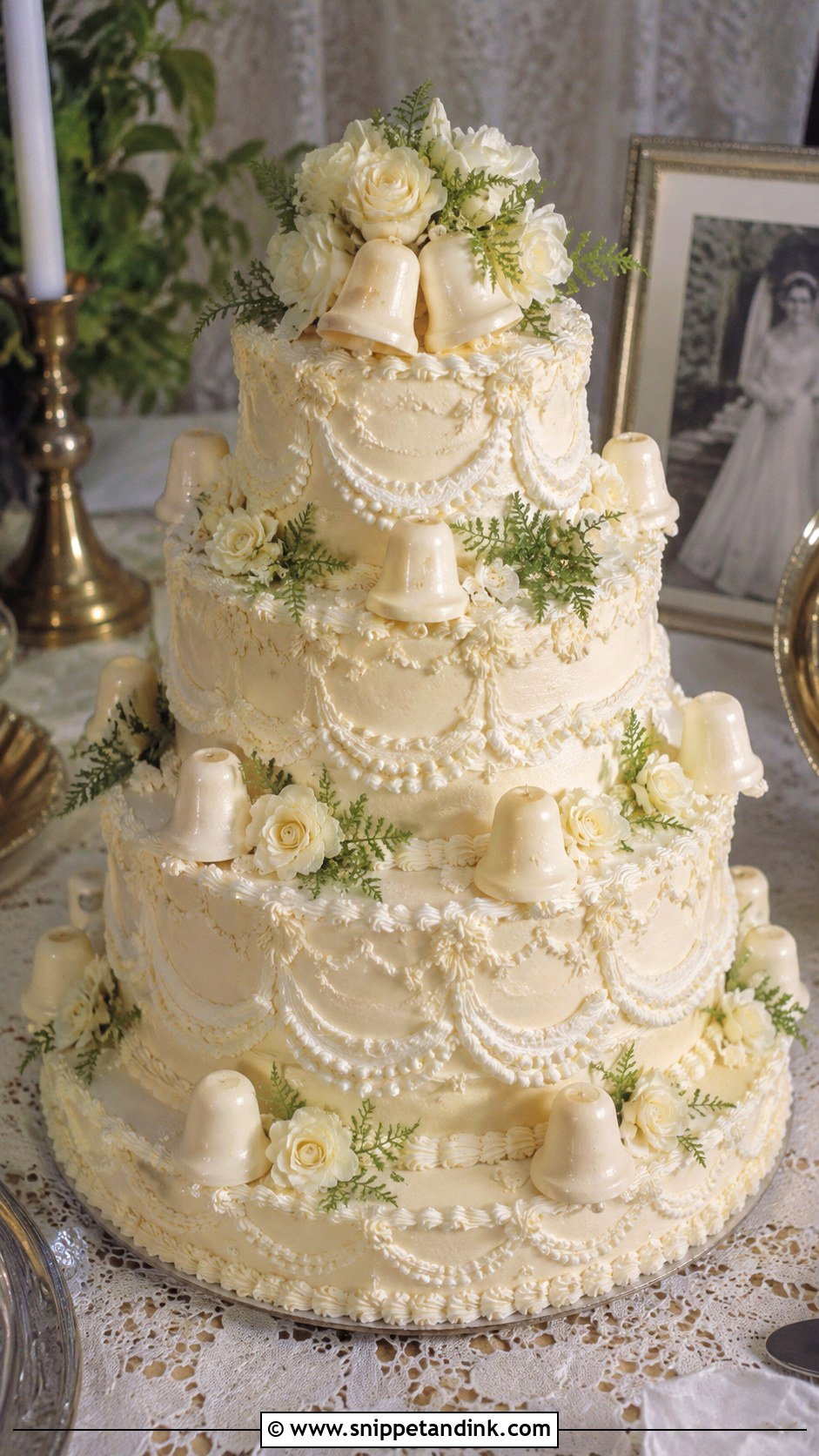
Bells were everywhere at seventies weddings, alongside doves and ribbons. On a cake they work best small, in white or ivory, either one per tier or gathered around the topper. Sugar bells are brittle, so I make spares. Keep the rest calm: smooth buttercream, shell borders and simple scallops, with a line of pearl piping. Too many bells and it starts to look cluttered instead of charming.
7. 1970s Wedding Cake With Piped Roses
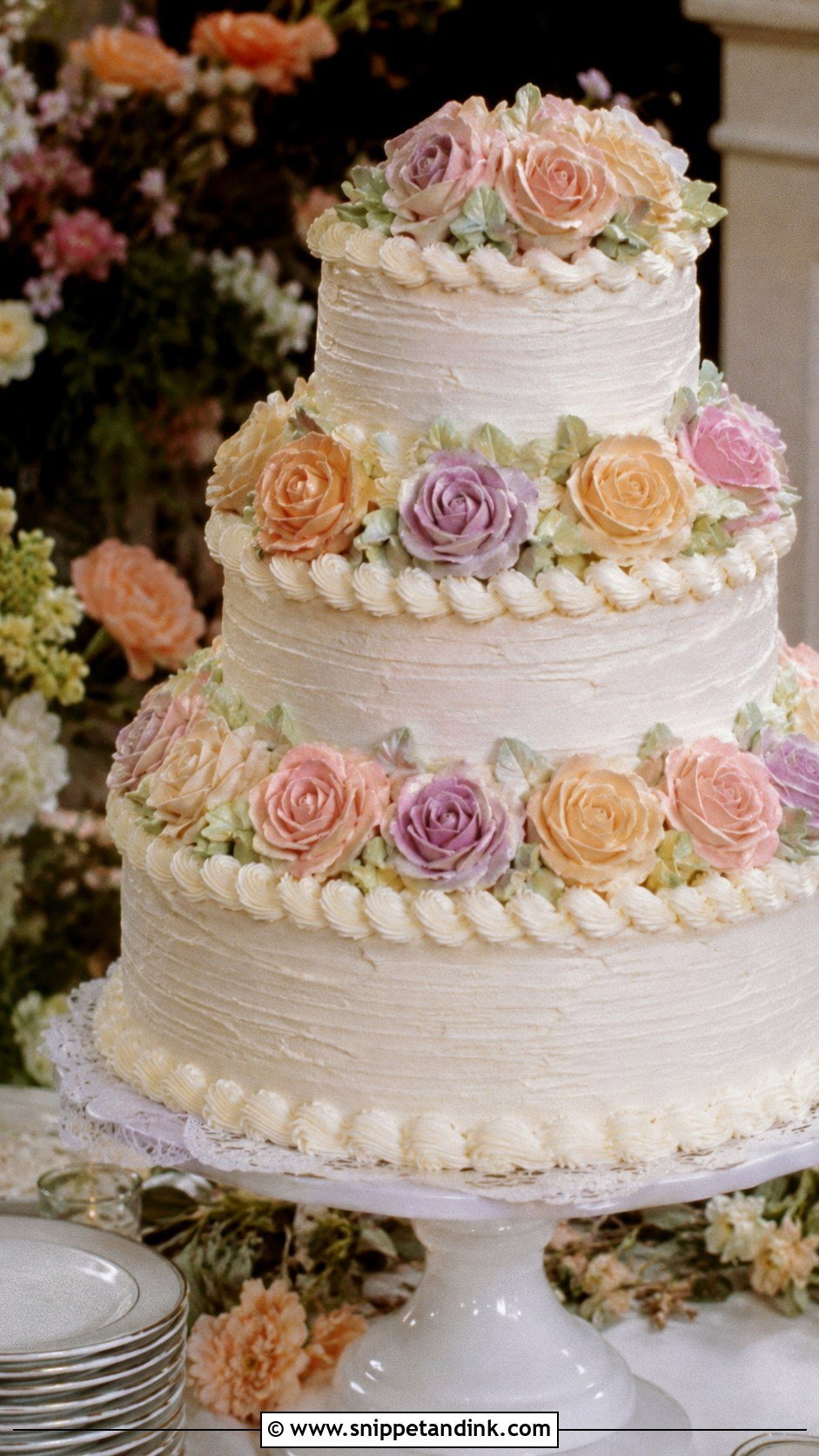
Piped buttercream roses are what most people remember tasting. They can be white, pale pink, peach, yellow or lavender, grouped in clusters along the borders, between tiers or near the topper. A lot of old wedding cakes used very sweet, shortening-heavy icing for these because it held up well. I make them with a firmer real-butter buttercream instead, which tastes far better but softens in heat, so the cake needs to stay cool until it’s served.
8. 1970s Wedding Cake With Fresh Flowers
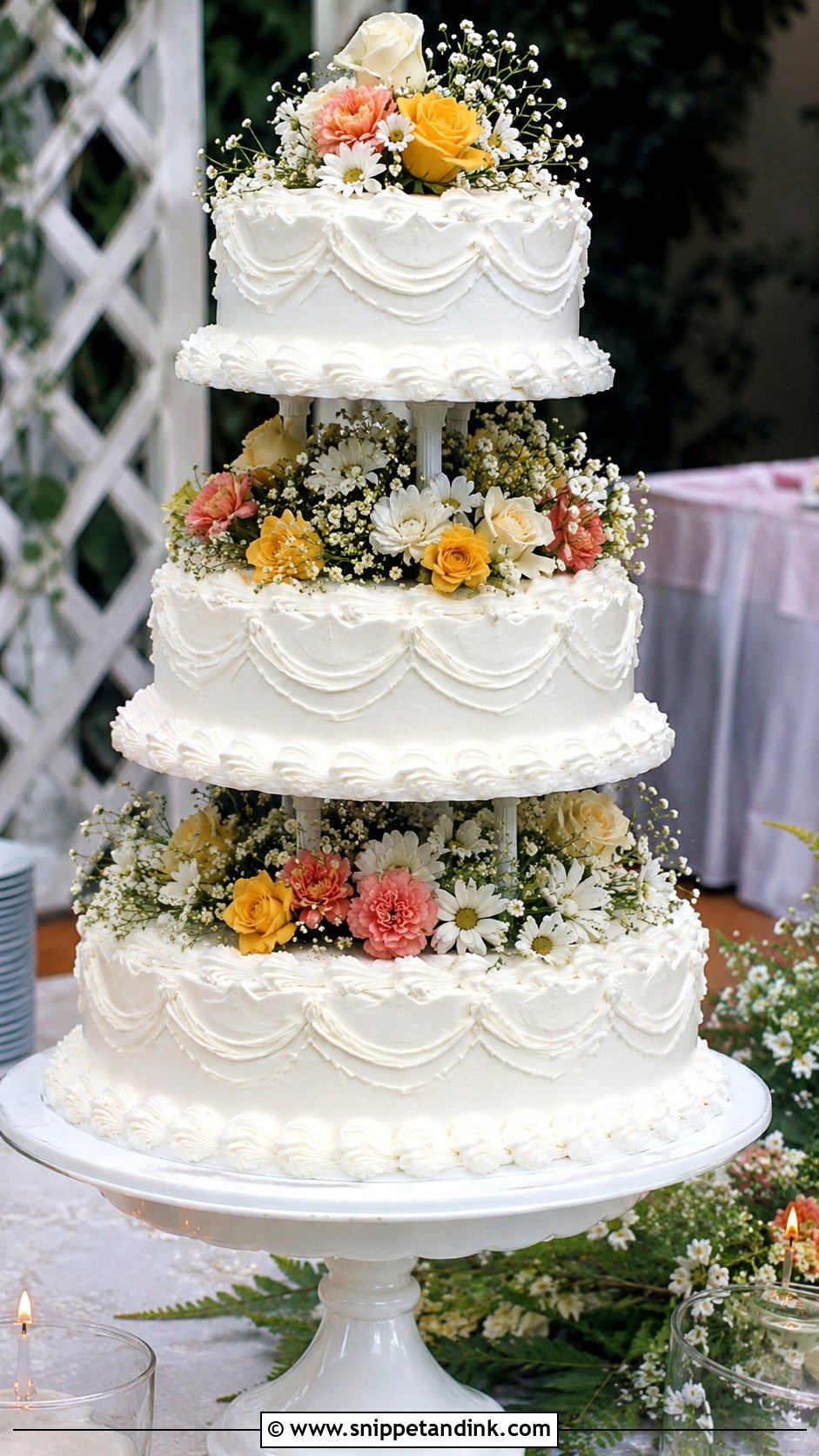
Fresh flowers on a tall tiered cake soften the structure. Carnations, roses and daisies all suit the period. Every stem should be pesticide-free and kept off the icing with a pick, wrap or small barrier, and I keep baby’s breath away from the cake surface entirely since it isn’t food-safe. Place flowers at the base, between tiers and near the topper, and keep the arrangement tight. White buttercream with piped borders keeps it tied to the decade. Your florist and baker should agree on who supplies and places the flowers before the day.
9. 1970s Wedding Cake With Ruffles
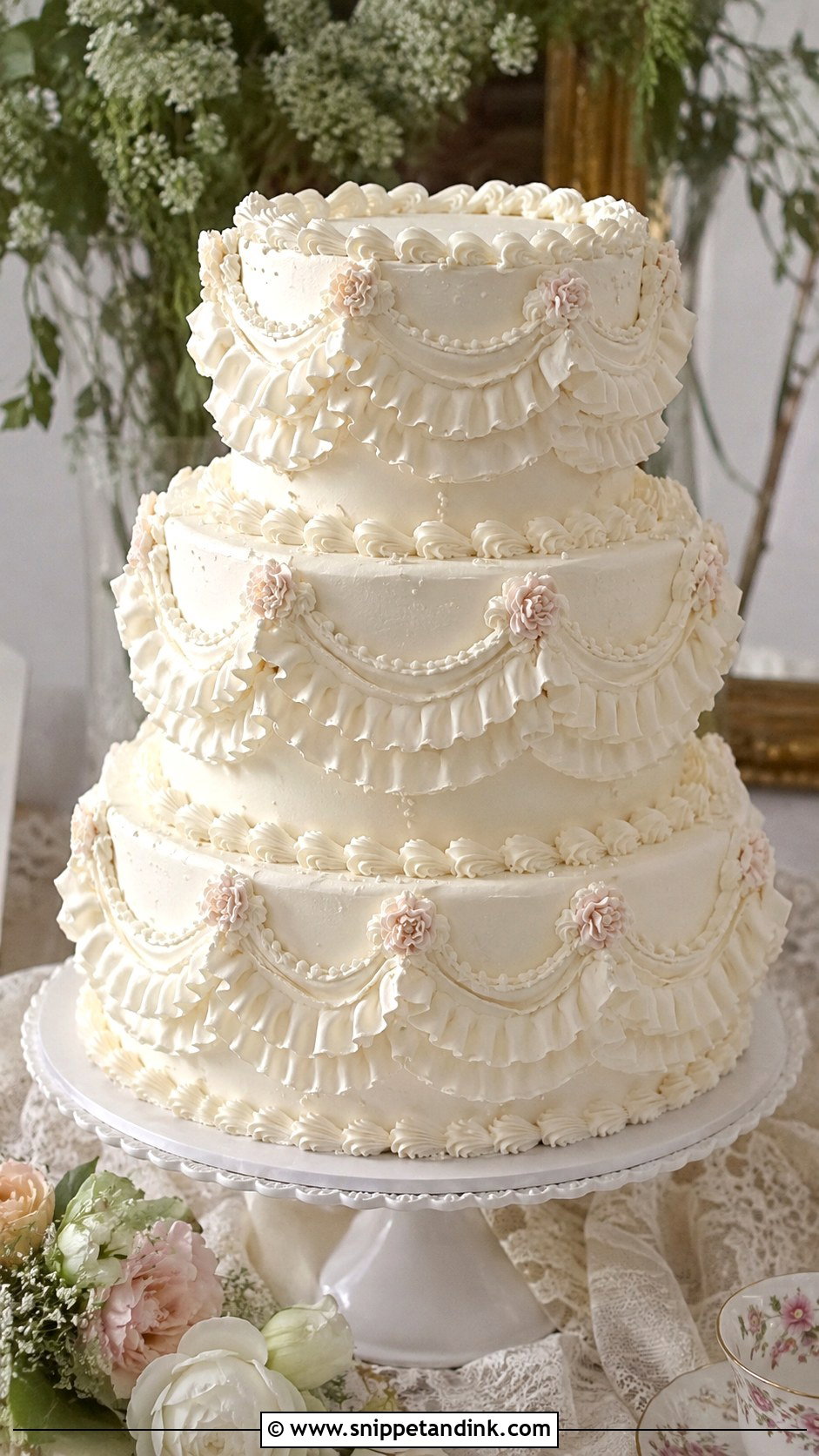
Buttercream ruffles piped around each tier, or swags draped between shell borders, give movement without extra decoration. Three tiers is usually right, since the repeated texture needs space. Ruffles are piped with a petal tip and are delicate on the edges, so they’re the first thing to suffer in a warm room. Ivory or white keeps it traditional; a faint pastel edge sweetens it. Vanilla bean with strawberry or lemon keeps it light.
10. 1970s Wedding Cake With Doves
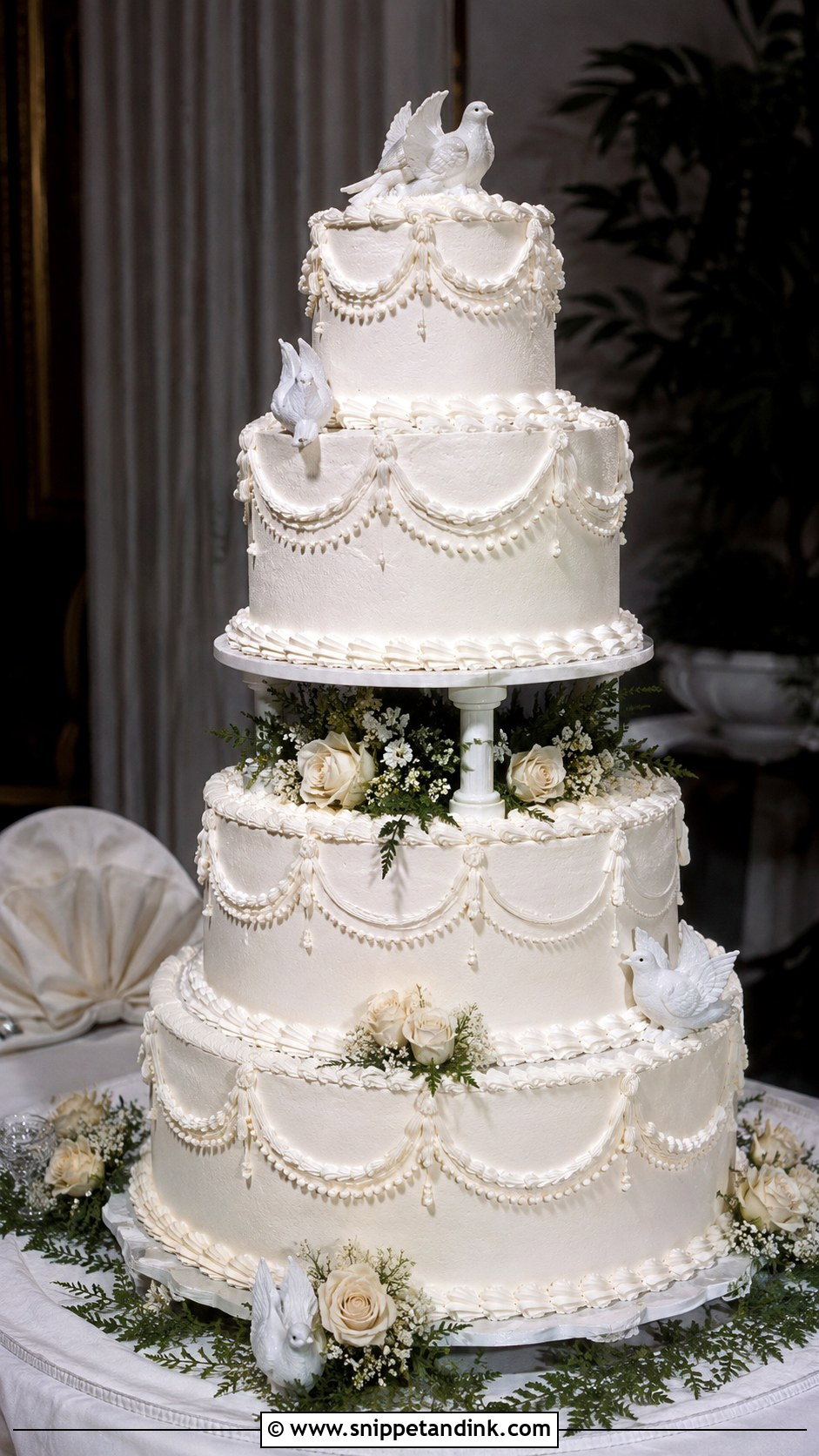
Doves were the decade’s symbol of love, and they show up as toppers, side decorations or white piped silhouettes. They look best with pillars, fine borders and small flower clusters, all on white frosting so they blend in. Oversized plastic doves cheapen the look; a pair of small porcelain-style birds reads much more refined. A little pearl piping and soft greenery keep the balance.
11. 1970s Wedding Cake With Pastel Flowers
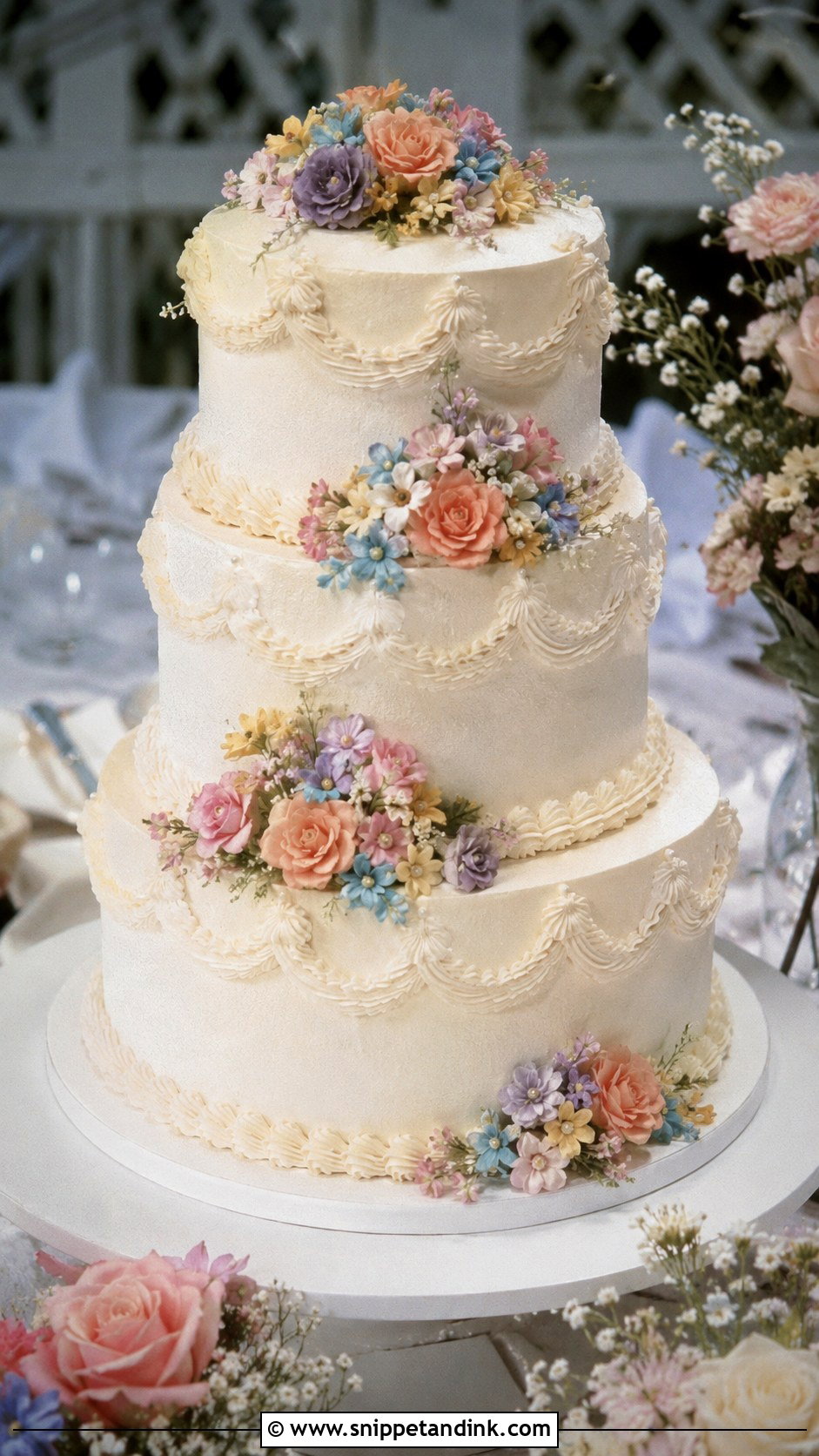
Pastel flowers bring colour without losing the white wedding base. Soft pink, peach, lavender, yellow and blue all feel right. Buttercream roses are the most affordable; sugar flowers last longest and can be kept afterward; fresh blooms depend on the season. I place them in small clusters framed by piped borders and scallops, rather than covering the cake. Matching them to a bridesmaid dress or a linen colour is an easy way to tie the room together.
12. 1970s Wedding Cake With Shell Borders
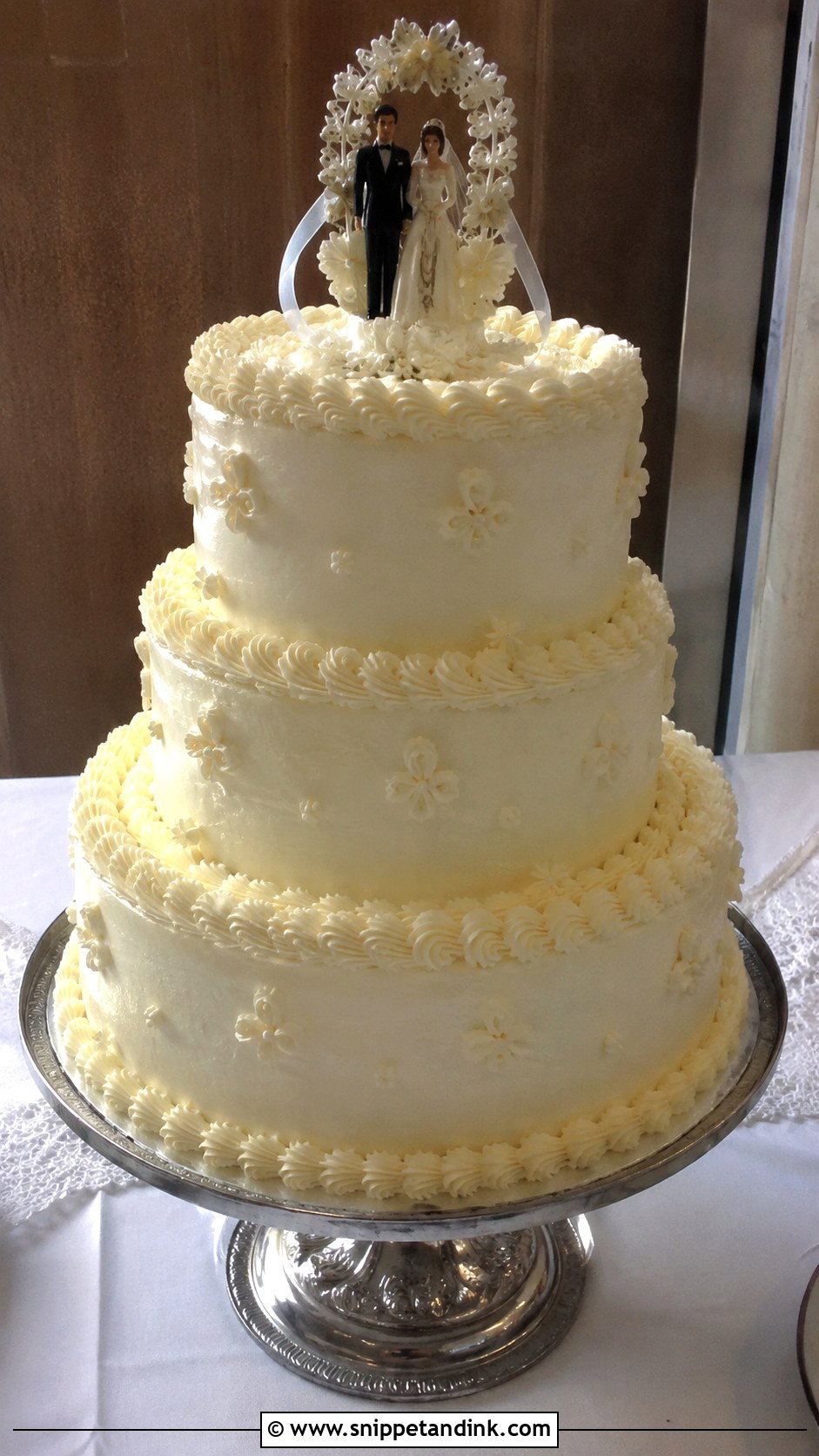
Shell borders are the plainest seventies detail and the one that instantly says vintage. They framed every tier of the era’s cakes. If you want something retro without fountains, stairs or heavy toppers, ask for thick shells round the top and bottom of each tier with a few piped flowers or pearls. A classic three-tier white cake is the shape for it. Almond sponge with vanilla buttercream is a natural partner.
13. 1970s Wedding Cake With Basketweave
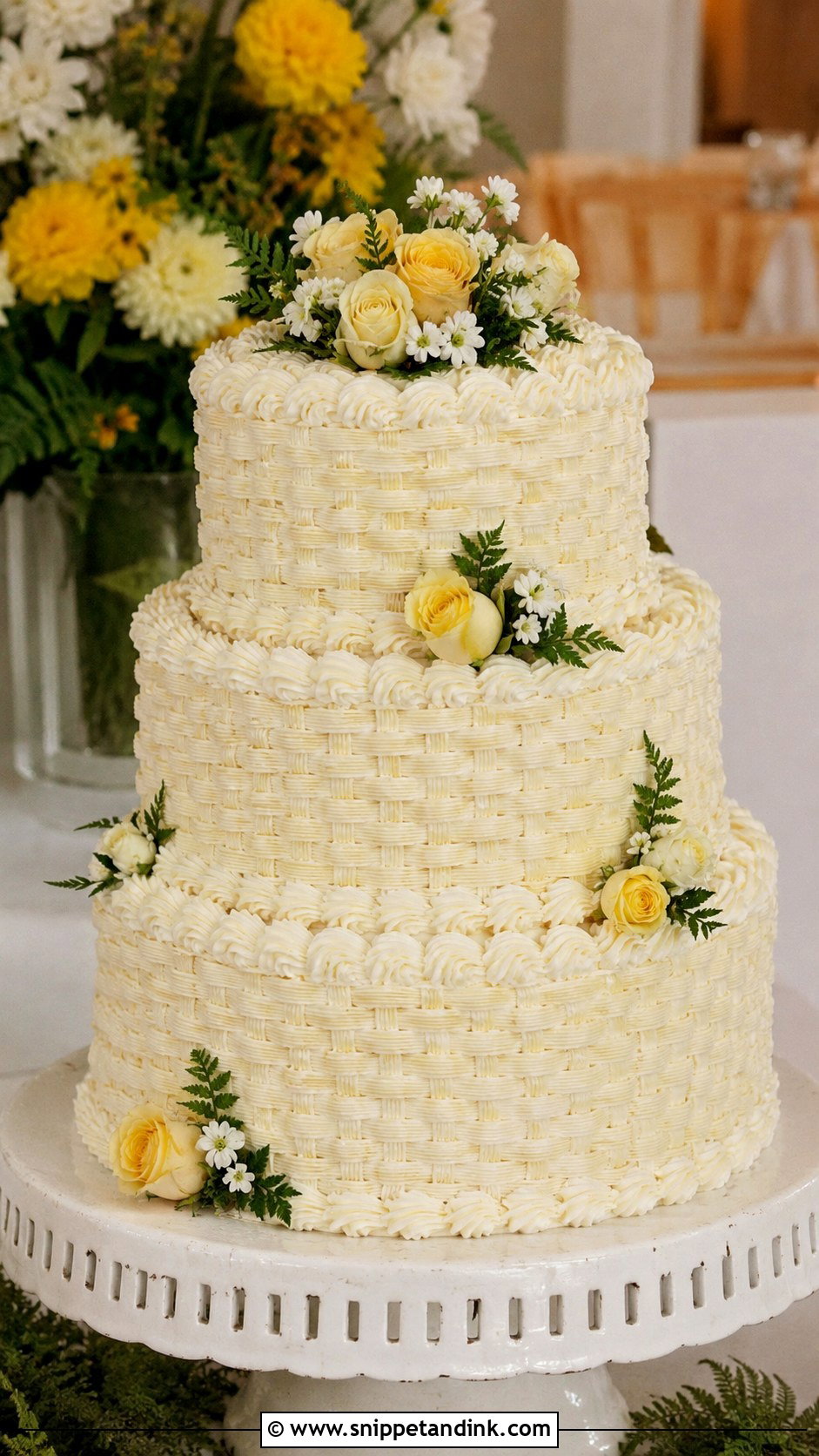
Basketweave is piped in interlocking bands with a ridged tip, and it covers a lot of the cake’s surface, so it’s heavier on buttercream than smoother finishes. That texture looks homely and warm in rustic halls and backyard receptions. Keep it ivory, or try a pale yellow for a warmer mood. Because the sides are already busy, simple flowers are enough. Short stacked tiers make the weave read neatly, like an old album cake.
14. 1970s Wedding Cake With Drop Swags
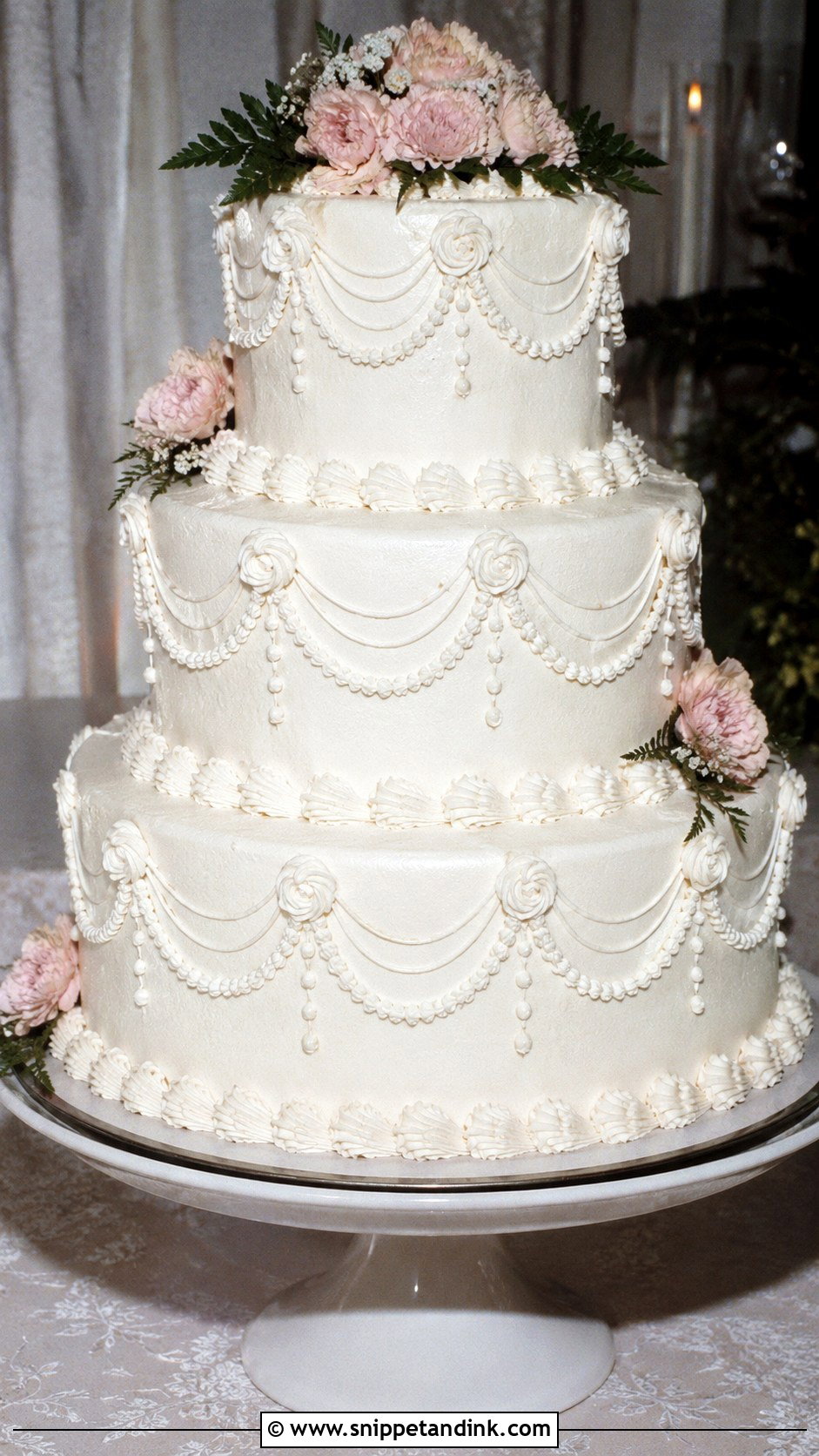
Drop swags are piped loops hanging around each tier, often finished with tiny rosettes, pearl dots and shell borders. They give a formal look with very little colour. If you love vintage piping but find full Lambeth too heavy, this is the step down. I measure and mark the tier into equal sections before piping so the loops hang evenly all round. White buttercream on round tiers, with one pastel accent in the flowers or topper.
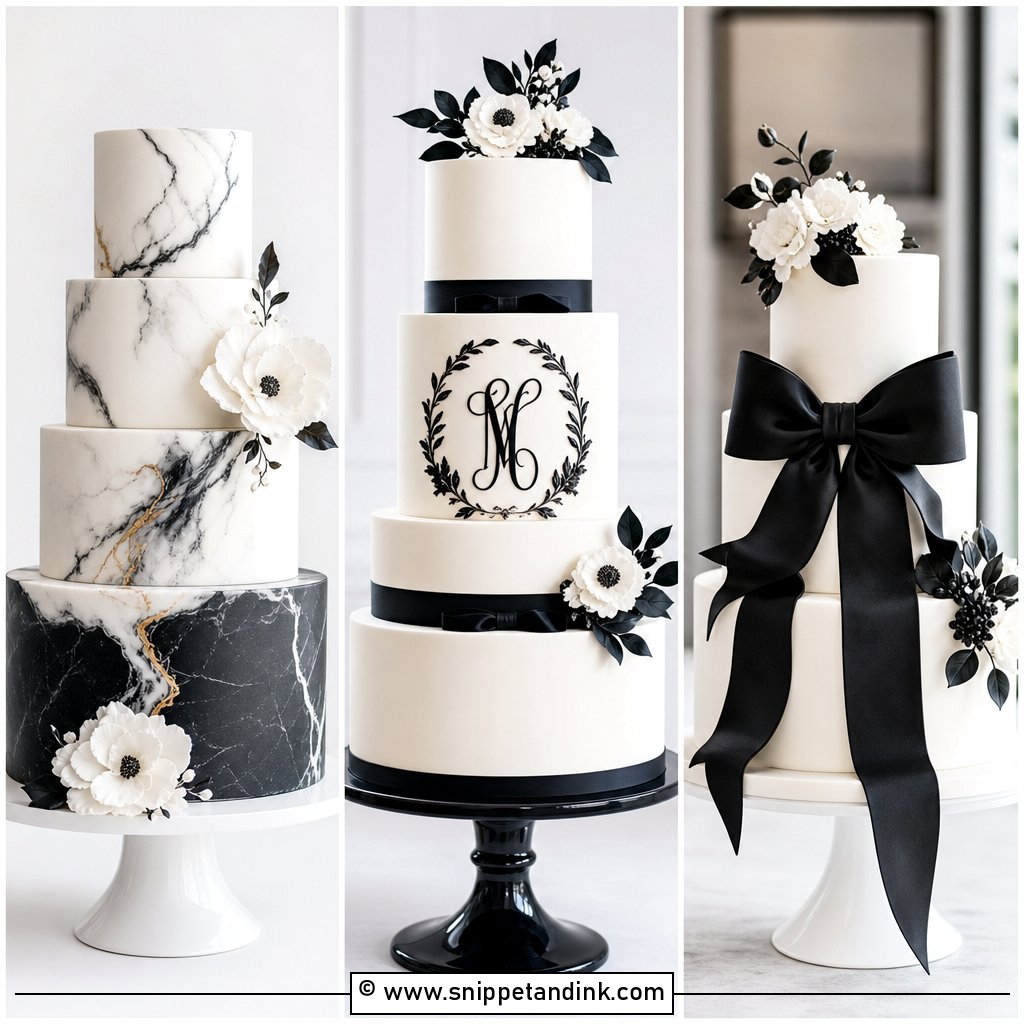


15. 1970s Wedding Cake With Anniversary Tier
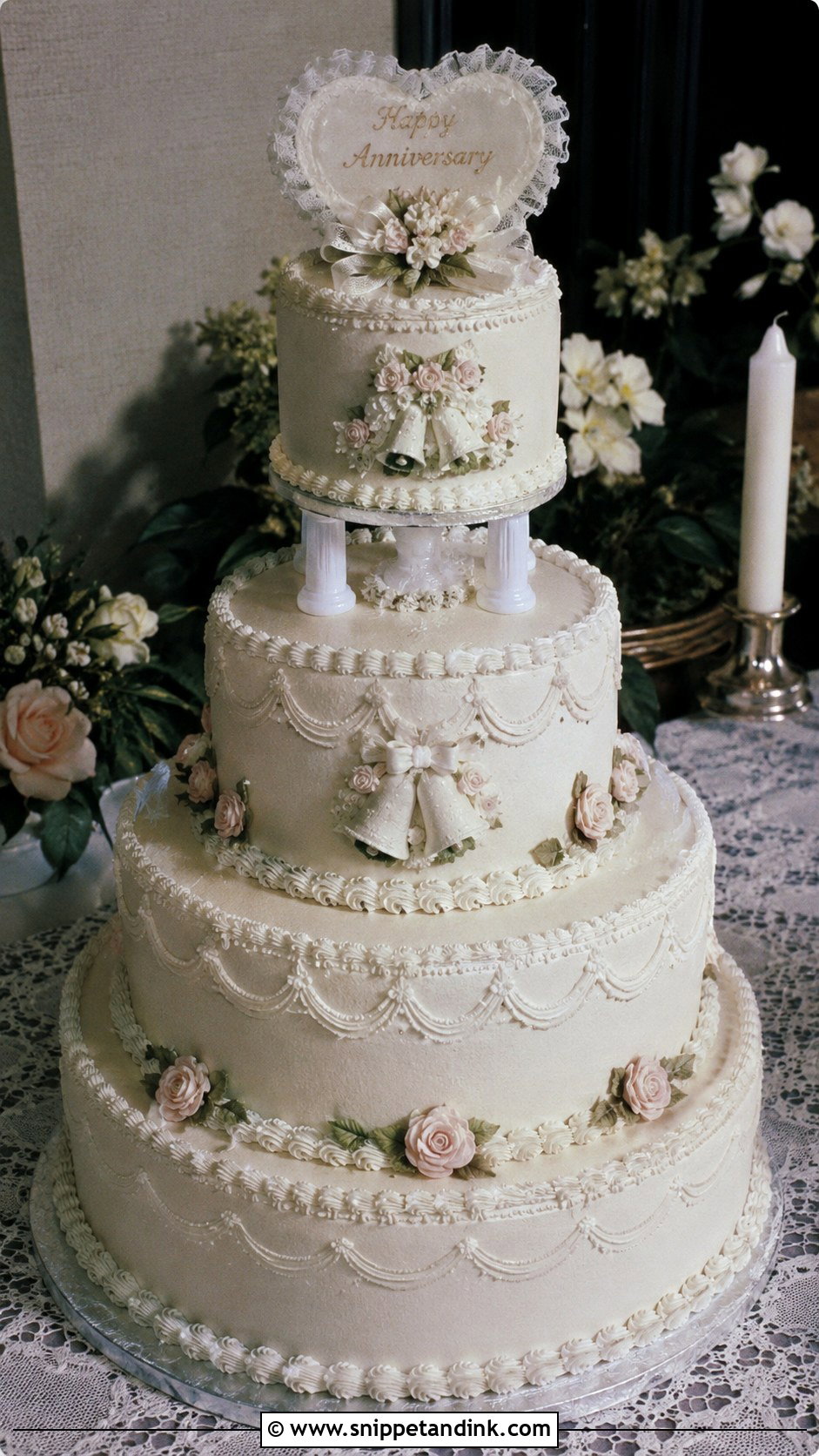
Saving the top tier for your first anniversary is where the anniversary tier idea comes from. The cake has a small, carefully piped top tier above larger lower tiers. Keep that top tier simple but special, with roses, bells or a monogram, and put the shells, swags and columns lower down. If you plan to freeze it, tell your baker early: dense almond, vanilla or white cake freezes much better than delicate mousse or fresh fruit fillings.
16. 1970s Wedding Cake With Yellow Roses
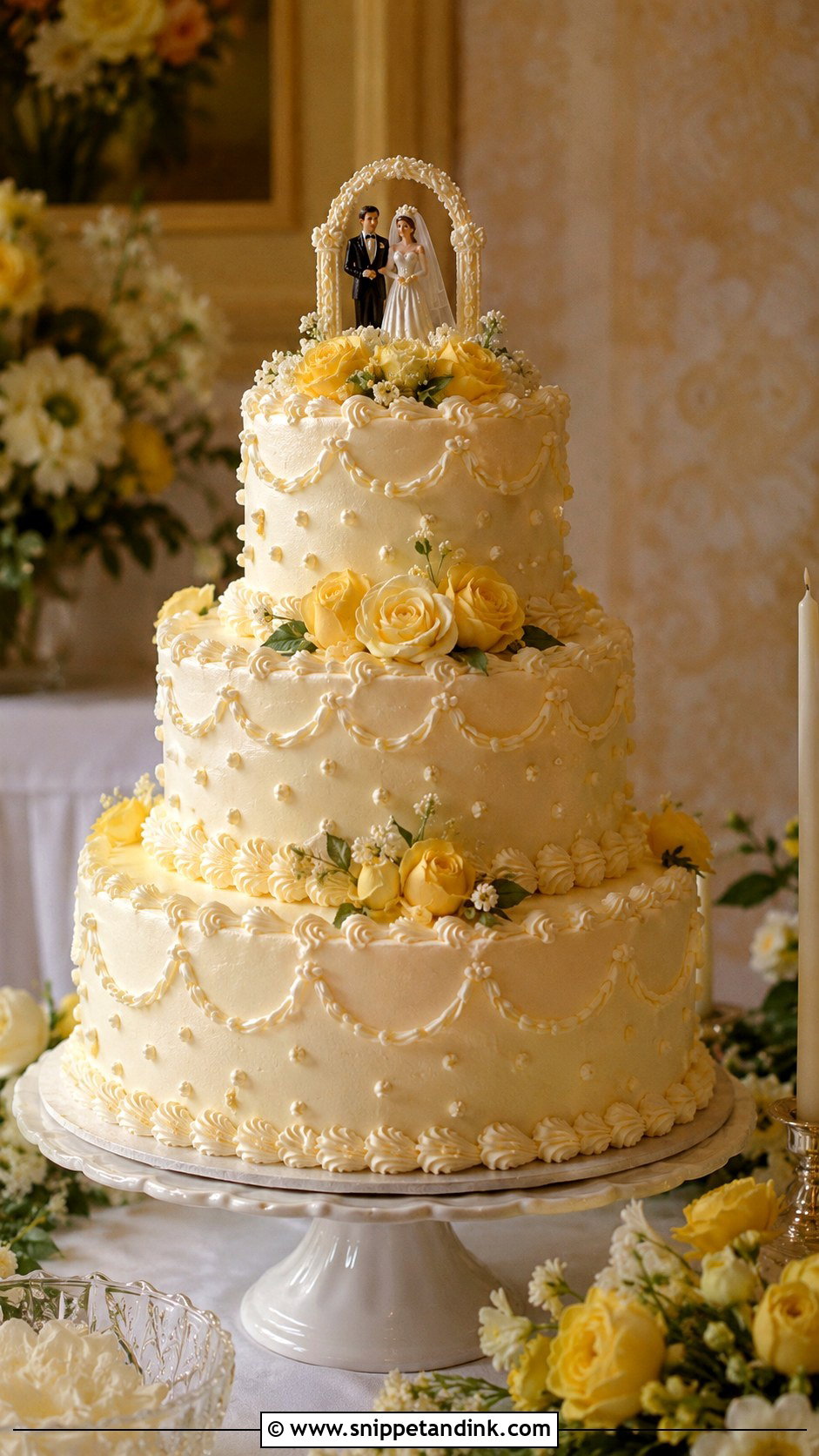
Yellow roses with white frosting and greenery were a common seventies pairing. I’d go for a soft butter yellow rather than anything bright. They sit around the tier edges, between pillars or round the topper. Shell borders and pearl dots keep it in period. A lemon or yellow sponge echoes the colour quietly. It suits late spring and summer, though buttercream roses need shade if the cake table is anywhere near a window.
17. 1970s Wedding Cake With Heart Tiers
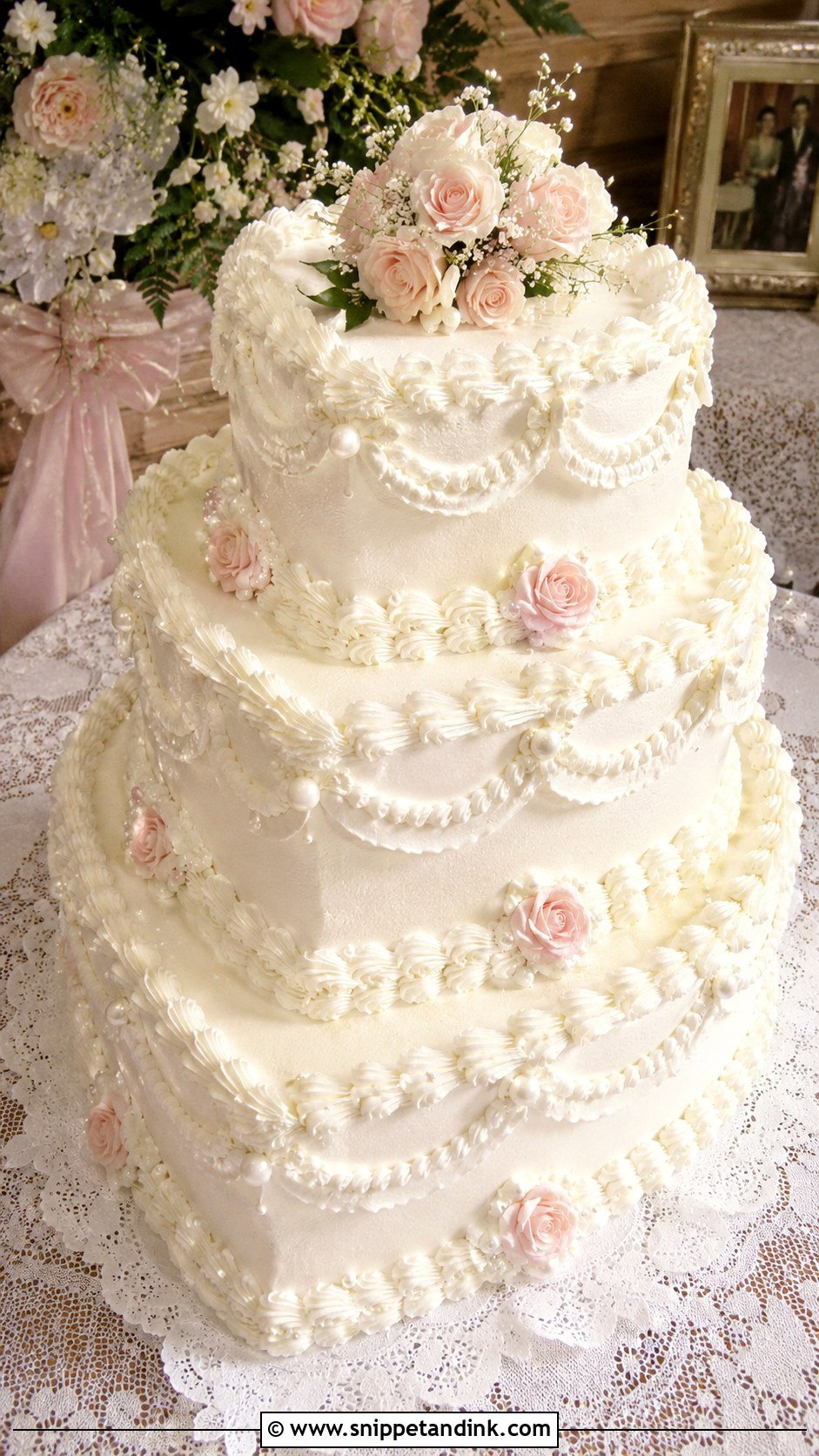
Heart-shaped tiers became a wedding and anniversary favourite in the decade. Two or three hearts with white buttercream, piped ruffles, shell borders and pastel roses is the classic version. Hearts are harder to ice cleanly than rounds, especially at the point and the dip, and they cut into fewer neat portions, so they suit a smaller guest count. A small topper or floral spray on the top heart is plenty.
18. 1970s Wedding Cake With Lace Piping
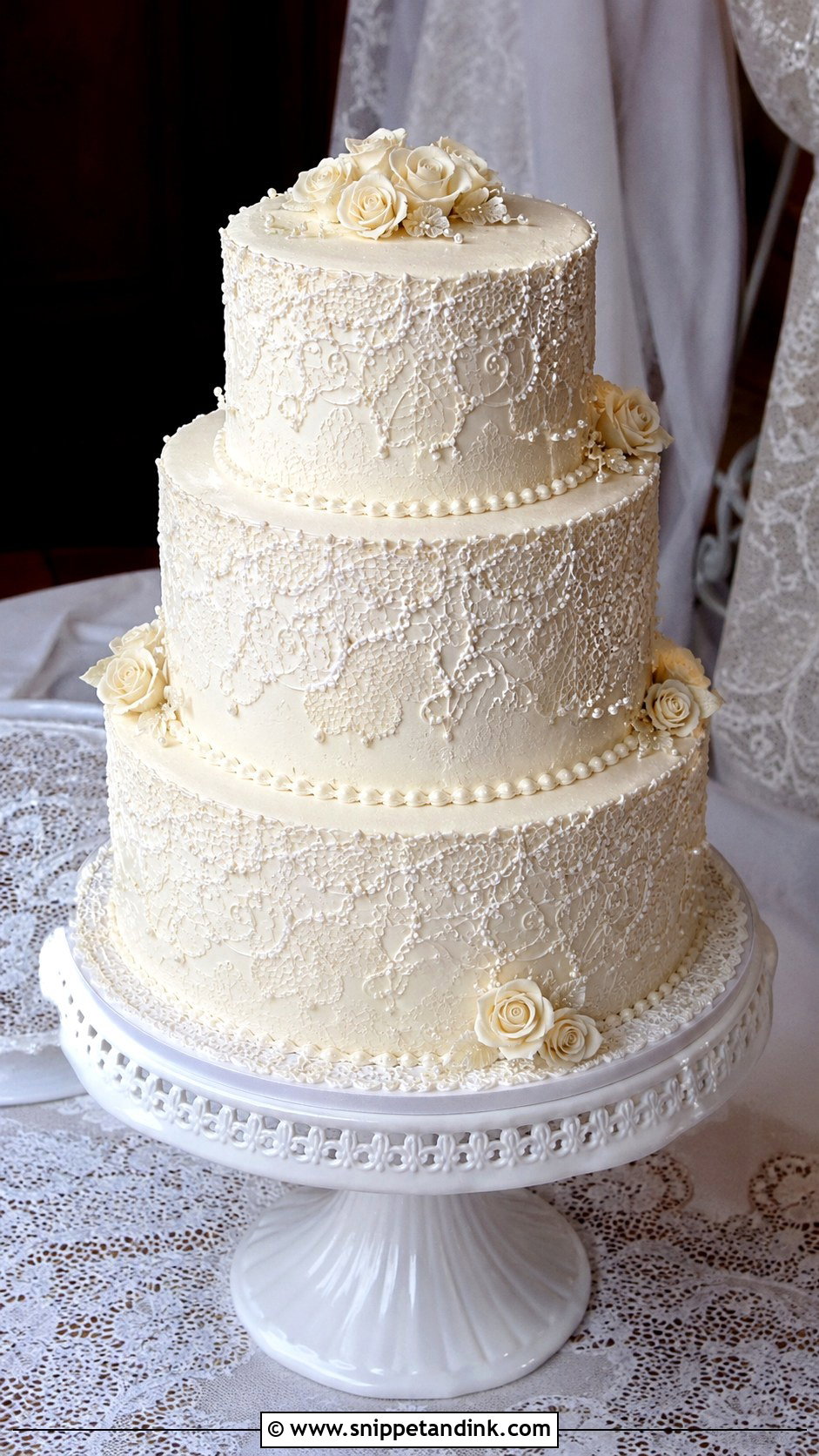
Lace piping copies the pattern of a dress or veil with fine scrolls, dots and loops. If you want the cake to match your lace, bring a fabric swatch or a clear photo of the motif, and I’ll scale it down to something that can be piped. White on white on a smooth buttercream base is the most refined. It’s quieter than a fountain cake but still clearly retro. Ask your baker for piping samples before you settle the pattern.
19. 1970s Wedding Cake With Side Cakes
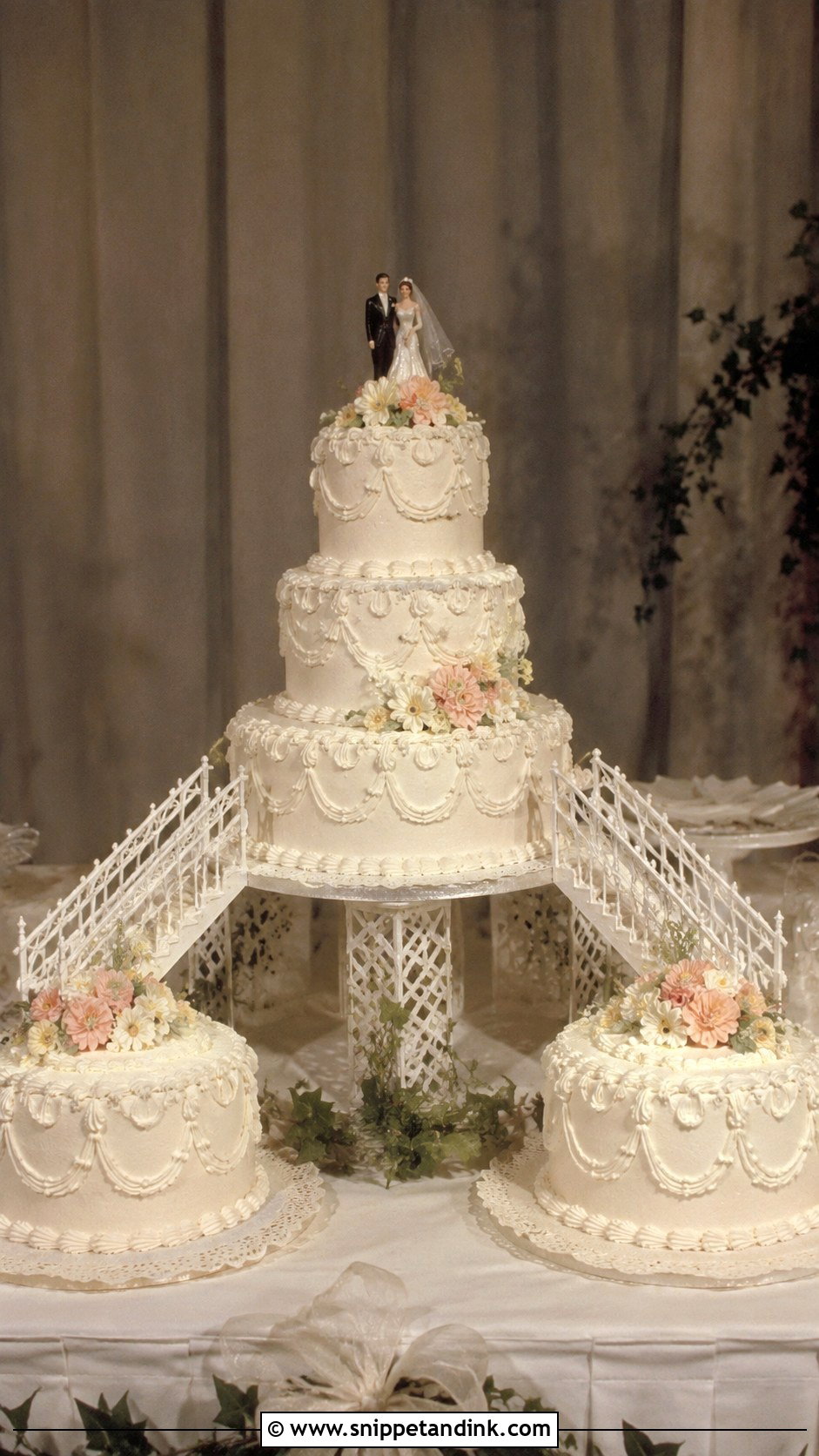
Side cakes around a taller centre cake make a wide display, sometimes linked by stairs or garlands. They also add servings, which helps with a large guest list. Every cake should match: white frosting, shells and the same flowers. For a modern feel, use fewer figurines and leave clear space between the cakes. Each cake is transported separately and assembled on the table, so allow setup time in the venue schedule.

20. 1970s Wedding Cake With Silver Cake Topper
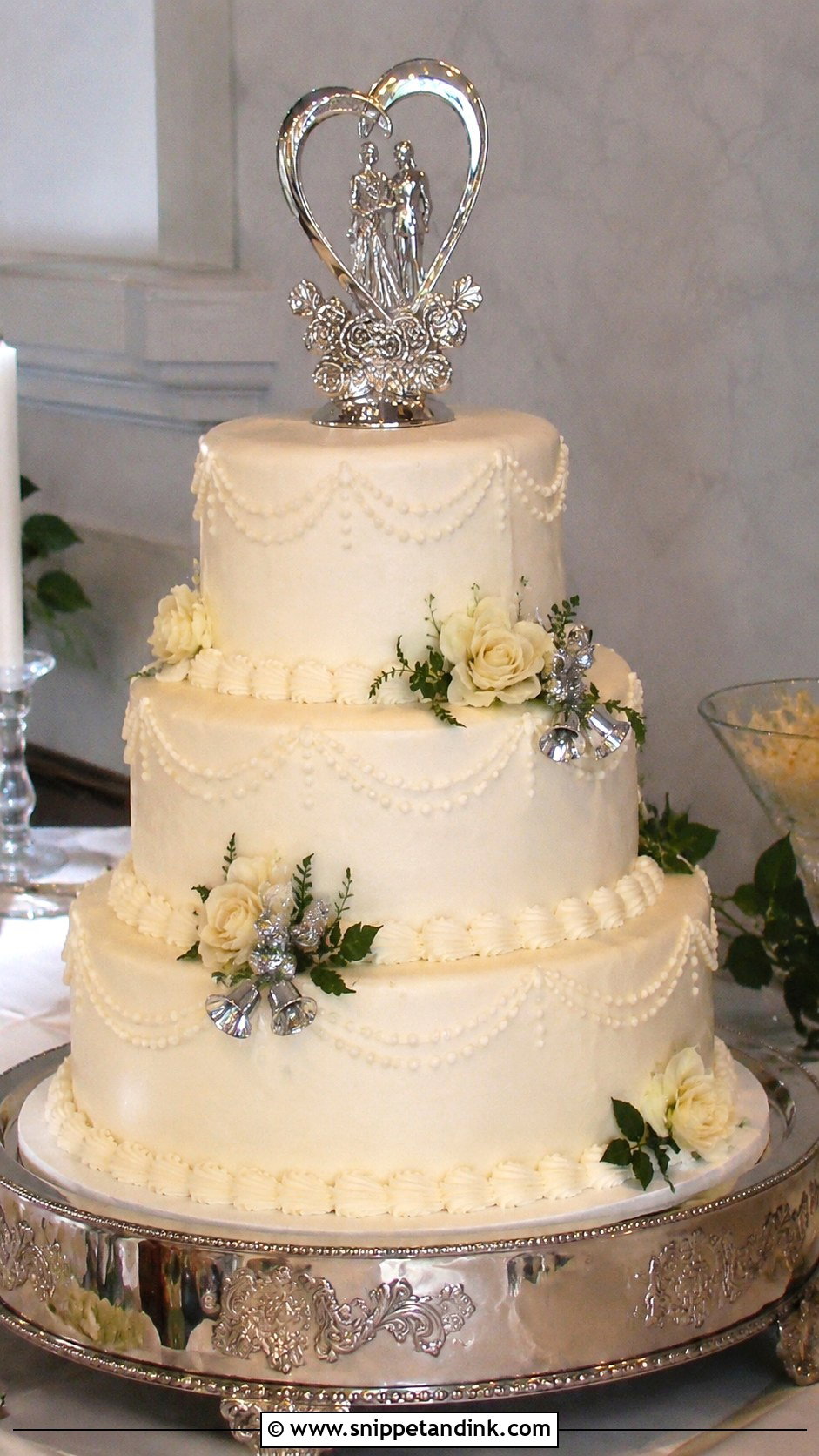
Silver bells, hearts, monograms or a couple figurine on top gives a formal, slightly glittering finish. Underneath, keep it traditional with white frosting, round tiers, piped borders and soft flowers. Silver adds shine without colour, which suits evening and banquet hall receptions. Polish a vintage silver topper before the day; tarnish shows up in close-ups. Ivory roses, pearl dots and a good cake stand finish it.
Pillar Cakes Travel in Pieces
A separated cake is never driven to the venue fully assembled. Each tier rides on its own board in a box, flat on the floor or in a cool van, and I stack it on site once the table is level. That’s why your venue needs to give your baker access to the room ahead of guests, and why the cake table shouldn’t sit in direct sun, next to a heater or under hot lighting. Buttercream piping starts to slump once the room warms up, and fine details go first.
Saving the Top Tier Until Your First Anniversary
If you want to eat the top tier a year later, it needs to go into the freezer properly the day after the wedding, not after a week in the fridge.
- Remove any flowers, toppers, ribbon and supports.
- Chill the tier uncovered for an hour or so until the icing is firm, so the wrap doesn’t stick.
- Wrap it tightly in several layers of cling film, then foil, and put it in an airtight box.
- Thaw it still wrapped in the fridge overnight, then let it come to room temperature before cutting.
Even wrapped well, a year in the freezer dulls the flavour a bit. Some couples prefer to order a fresh small cake in the same flavour for the anniversary, and keep only the topper.
Start With One Retro Feature and Build Outward
A seventies cake carries family history as much as flavour. Pillars, fountains, stairs, Lambeth piping, pastel flowers or a couple topper: pick the one feature you love most and let it lead. Then keep everything else simpler, so the cake feels nostalgic rather than overloaded. Improve what the era got wrong, which was mostly the icing and the supports, and keep the rest.
You'll Like These Ideas:




Leave a Reply