
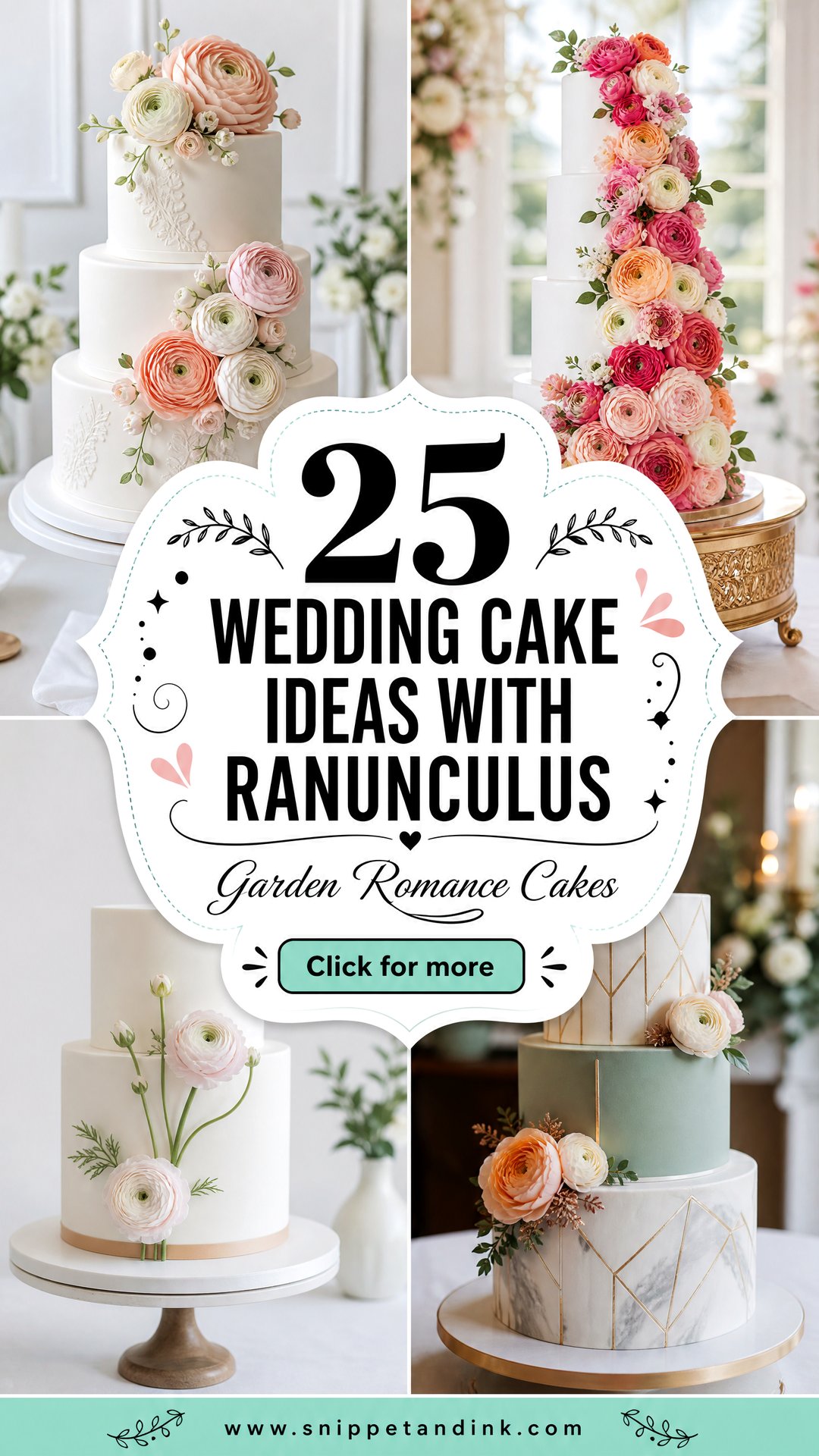
If I had to pick one flower to make in sugar for the rest of my life, it would be the ranunculus. Its tight, paper-thin layers of petals look delicate without being fussy, so a cake can carry a lot of them and still feel light. They work with smooth fondant, textured buttercream, pressed flowers, sugar flowers and modern tier shapes, and they come in almost every color a wedding palette uses, from ivory and blush to coral, burgundy, lavender and sage. One bloom can be the whole design; a cascade can make the cake the centerpiece of the room. Here are 25 ways I’d use them, with notes on how each is built and what to ask for.
What Goes Into a Single Sugar Ranunculus
Couples are often surprised by the price of a sugar flower cake until they see how a ranunculus is built. It starts with a small ball of gum paste on a wire for the tight center. Then dozens of petals are rolled almost paper thin, cut, cupped and attached one at a time, each row slightly larger and more open than the last, with drying time between rows so the bloom keeps its shape.
Color goes on last, dusted in layers so the petals deepen toward the center the way real ones do. That’s why a ranunculus in sugar can look more convincing than almost any other flower, and also why a cake with twenty of them takes days of work before the sponge is even baked.
- Bring a fabric swatch, a ribbon or a real petal from your florist. Sugar dust is matched by eye, and a photo on a phone screen is never the true color.
- Agree the number of full blooms, half-open blooms and buds, not just the number of flowers. Buds take less time and make the arrangement look natural.
- Ask when the color is final. Most designers need it settled a few weeks before the wedding to finish the flowers.
1. White Ranunculus Wedding Cake
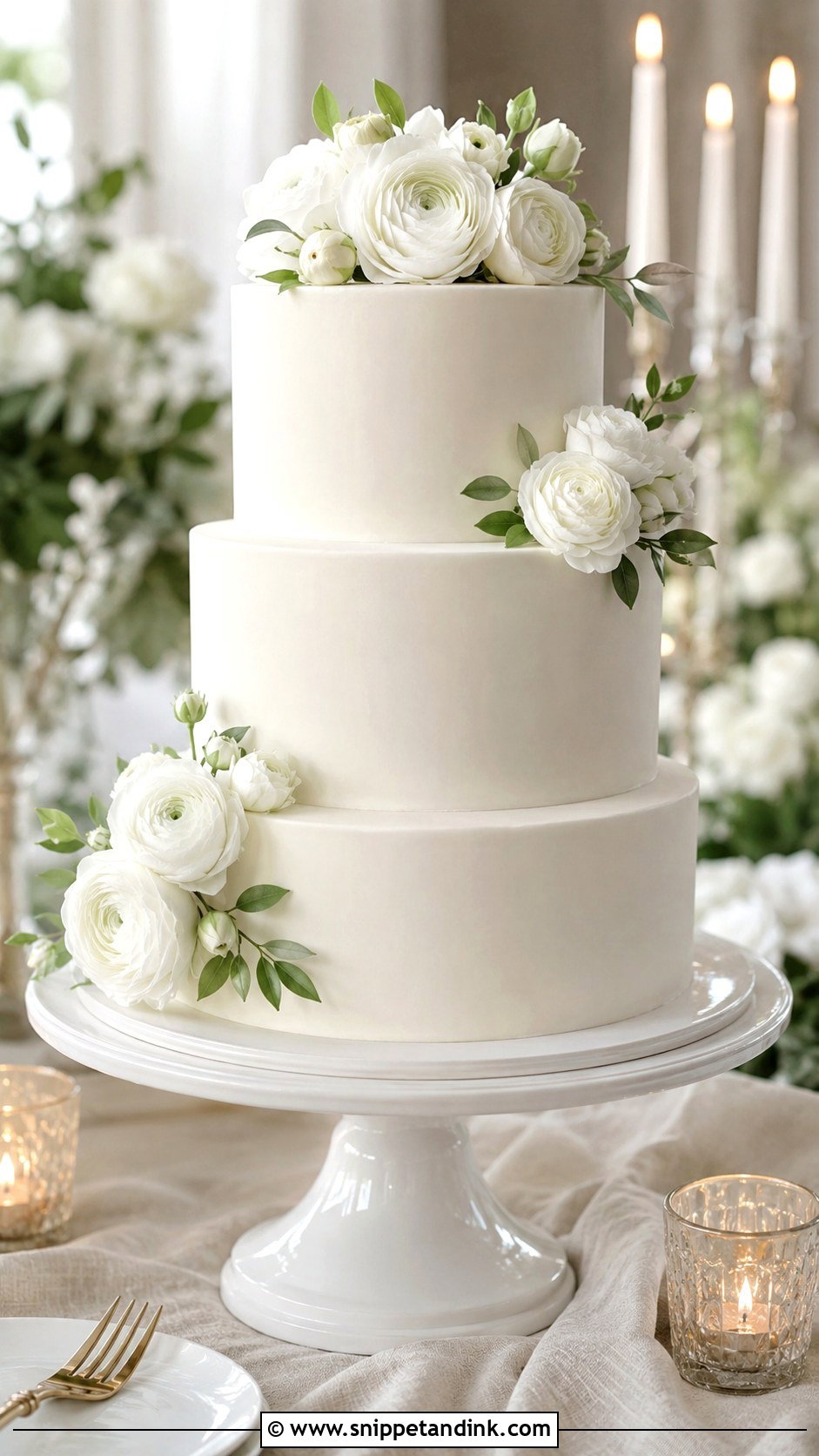
White on ivory is the calmest floral cake you can order, and it never argues with the rest of the room. Ivory buttercream or smooth white fondant, with fresh or sugar ranunculus in soft white. The detail that makes or breaks it is size: if every flower is the same, the cake looks flat. I mix full open blooms, half-open ones and tight buds, and tint the centers a very pale green, which is what real white ranunculus have. A few leaves or tiny filler blooms add movement. Ballroom, chapel, garden or modern venue, it fits.
2. Blush Ranunculus Wedding Cake
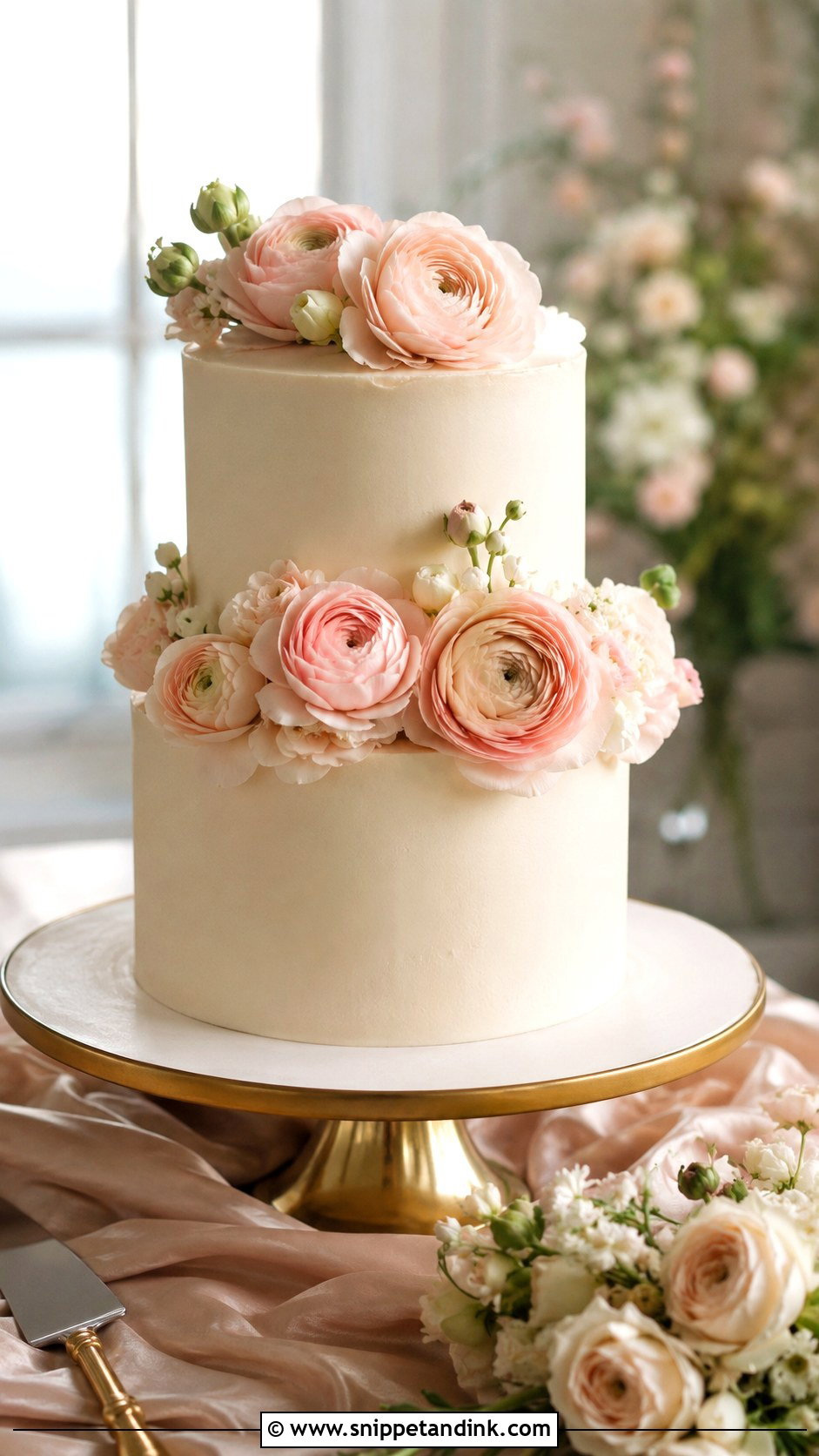
Blush ranunculus gives a pink accent without turning the cake pink. It sits well on ivory buttercream, pearl fondant or a light texture, and the blooms can tuck between tiers, crown the top or trail down one side. Champagne, dusty rose, pale peach and sage palettes all suit it. Blush is also the hardest shade to match to a real bouquet, because fresh petals vary from flower to flower; in sugar I build it up in thin layers of dust so it can be tuned against a sample petal. If you use fresh flowers instead, your florist and baker need to agree on who places them and how.
3. Two Tier Ranunculus Wedding Cake
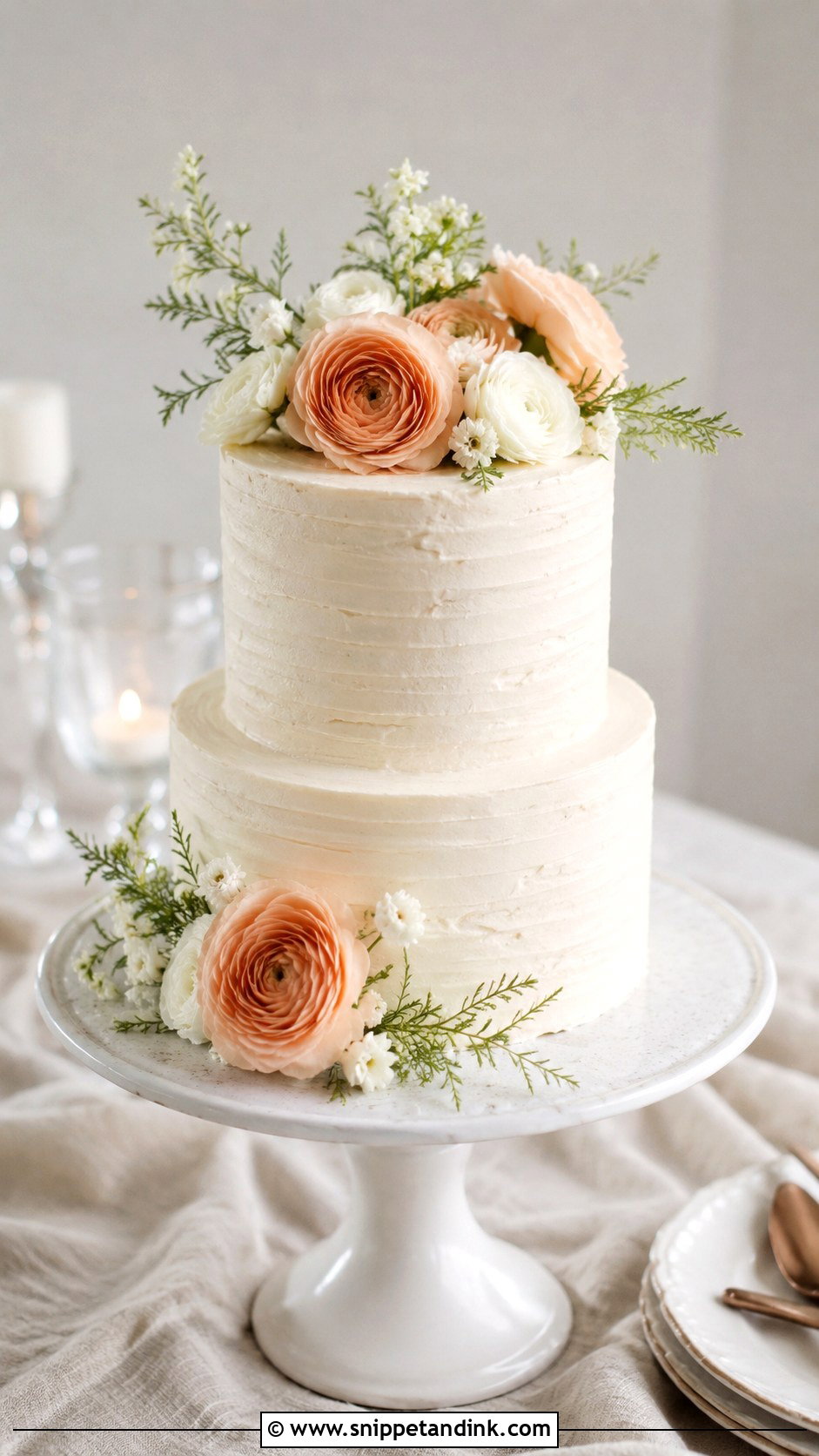
Two tiers suit a small reception, an elopement dinner, a shower or a cutting cake with kitchen cake behind it. Let the flowers do the styling: one larger bloom on top, a few smaller ones at the base, or a diagonal line from the upper tier to the lower. Pale sponges like vanilla, almond, lemon or champagne fit the soft theme. On a cake this size, flower scale matters more than on a big one. A full-size ranunculus on a five or six inch top tier can look like a hat, so I often make the top bloom slightly smaller than life.
4. Three Tier Ranunculus Wedding Cake
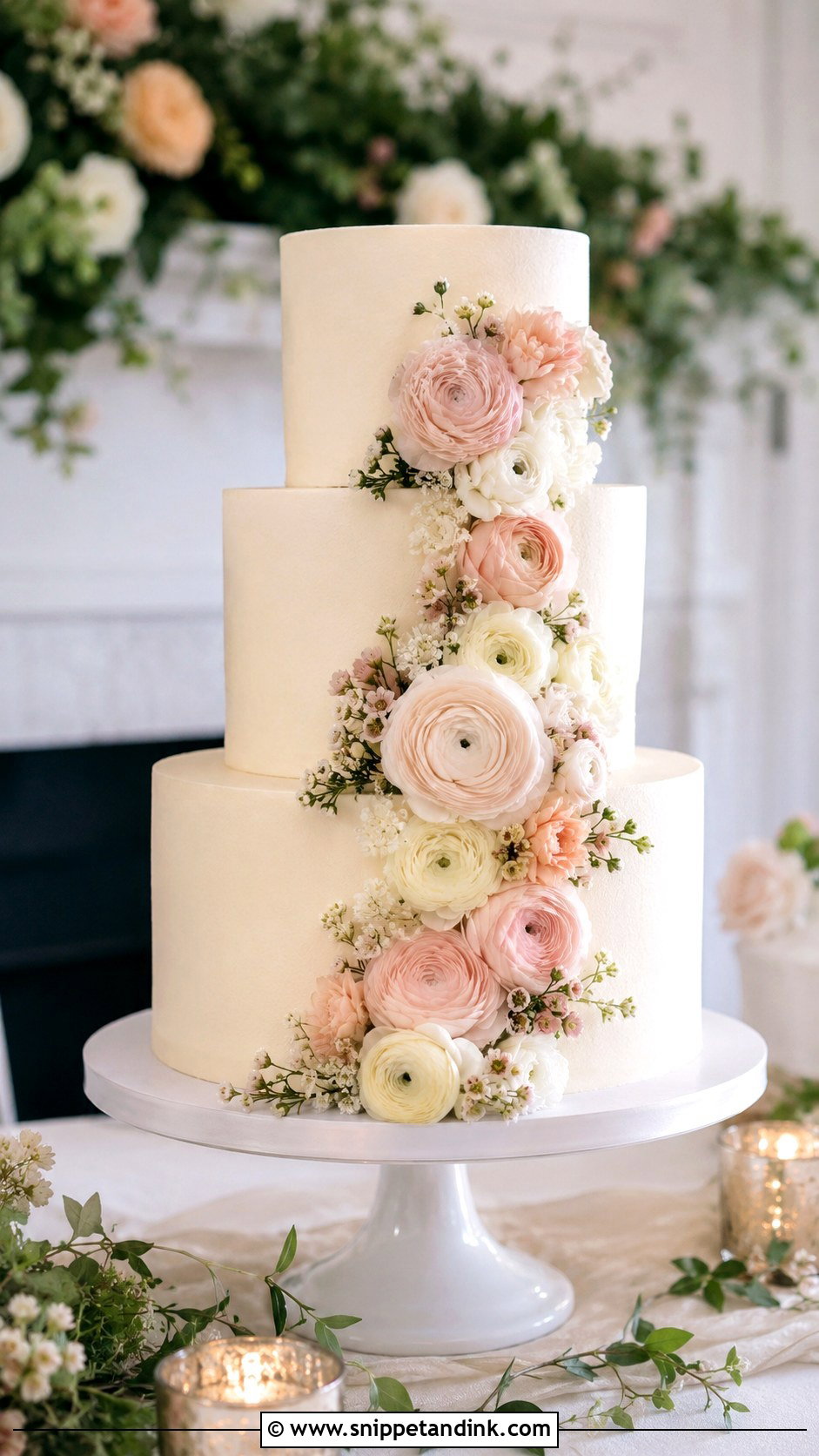
Three tiers give you height, room for texture and one clear focal point, which is why it’s my most-ordered size for medium weddings. Ranunculus can run as a full band, sit in a top cluster or cascade down one side. For a formal room, smooth fondant and neat spacing; for a garden feel, soft buttercream texture and looser placement. If your bouquet carries ranunculus, repeating two or three of its exact shades on the cake ties the photos together.
5. Buttercream Ranunculus Wedding Cake
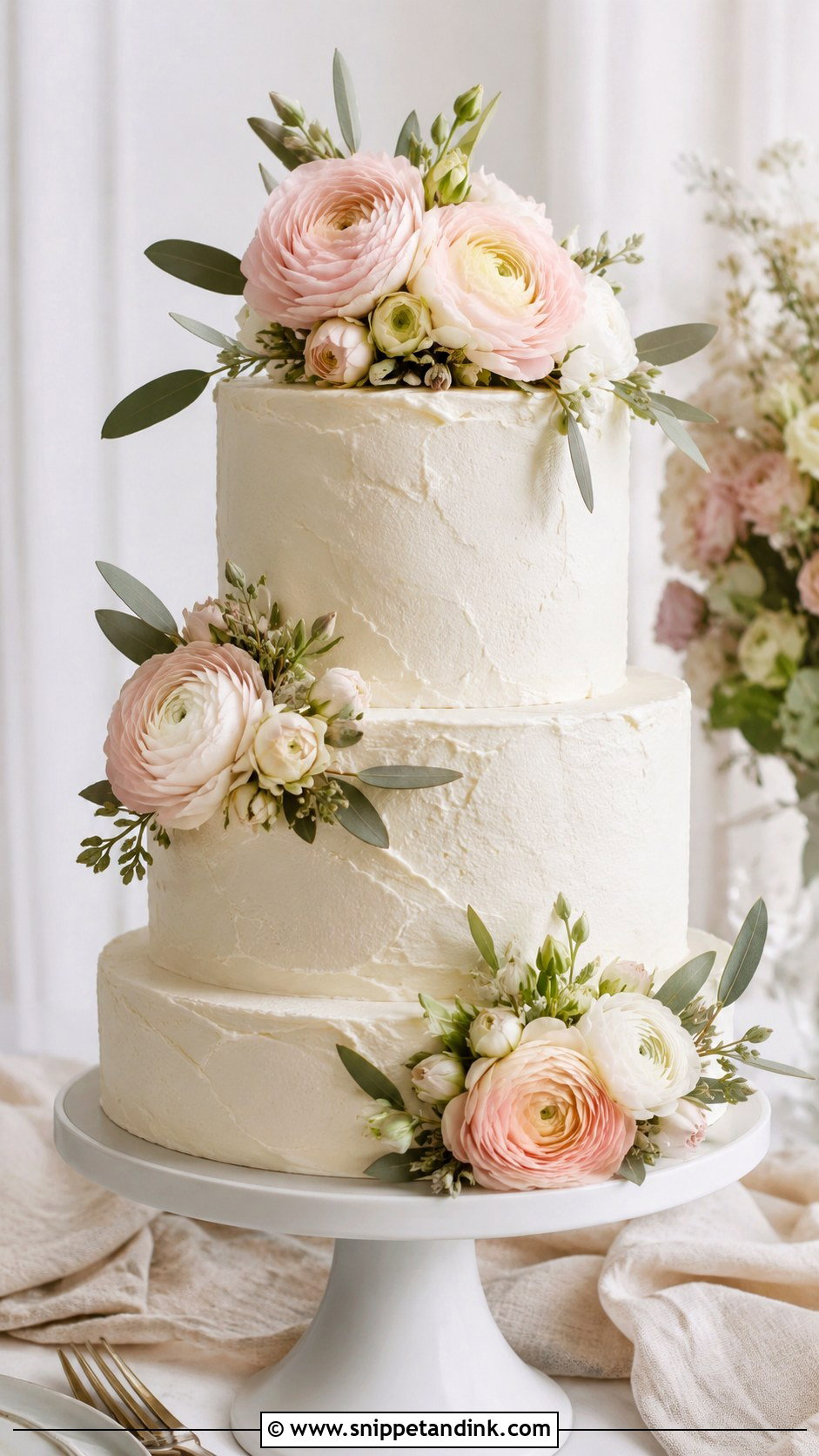
Buttercream suits ranunculus because neither is stiff. Smooth gives a clean base; light texture gives a handmade look. Flowers can sit in clusters around the tiers, and the cake can be any flavor you like, from vanilla bean, lemon, almond to strawberry or coconut. Sugar flowers are heavier than they look, so on buttercream I set them on small picks or a hidden plate rather than pressing them into the icing, which can crack the surface as it softens. For an outdoor wedding, agree with your baker on when the cake is set up and how long it stands before cutting.
6. Fondant Ranunculus Wedding Cake
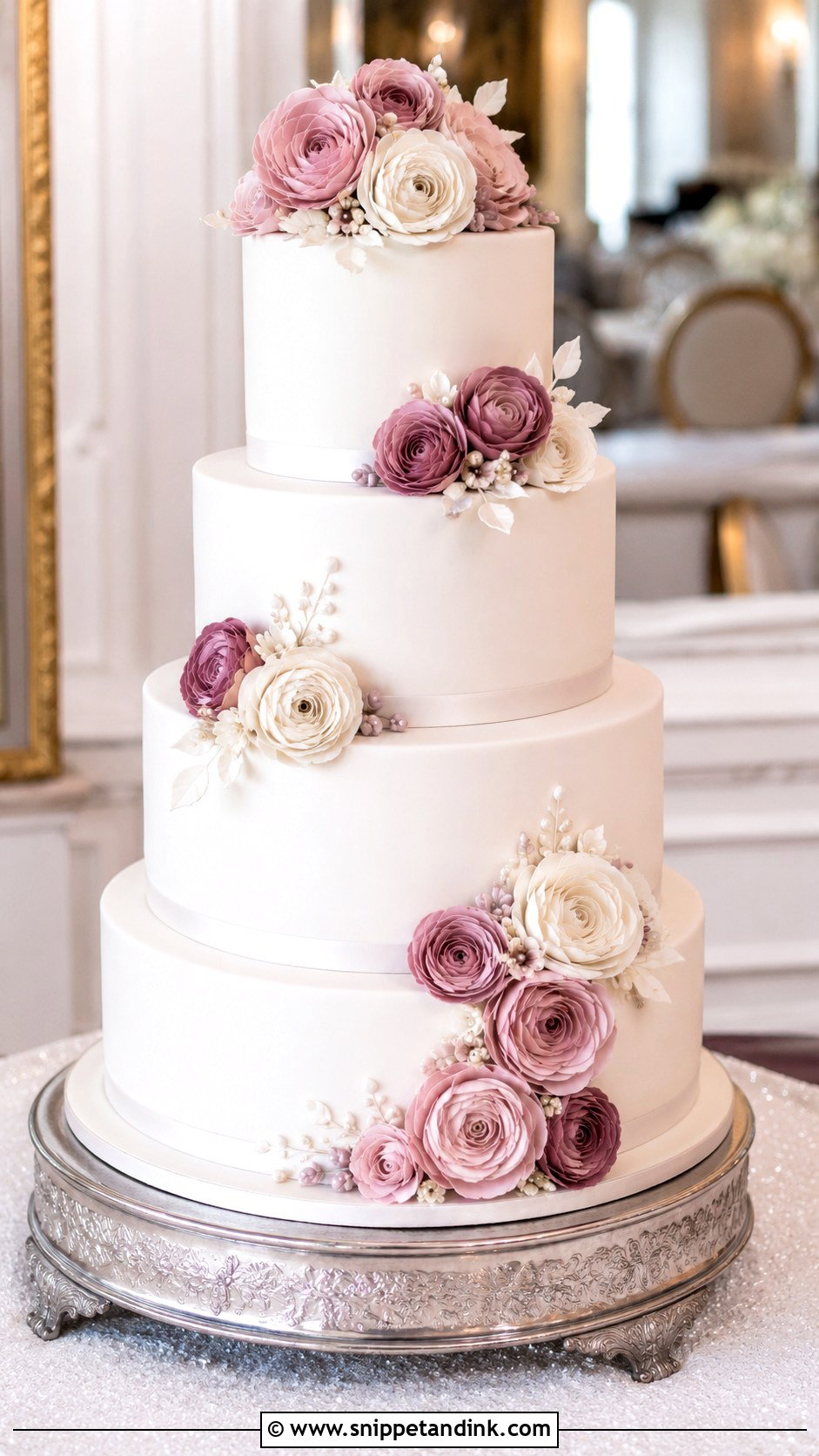
Fondant gives a sculptural, polished cake for black-tie dinners, hotels and ballrooms. Its smooth surface makes every flower read clearly, especially sugar ranunculus with shaded petals that go deeper toward the center. White, ivory, blush, mauve and champagne blooms all suit it, along with thin piping, pearls or a satin ribbon at each tier. Fondant is also what I use for crisp edges and extra-tall tiers. My one rule is restraint in placement, since an over-filled fondant cake looks heavier than the same flowers on buttercream.
7. Naked Ranunculus Wedding Cake
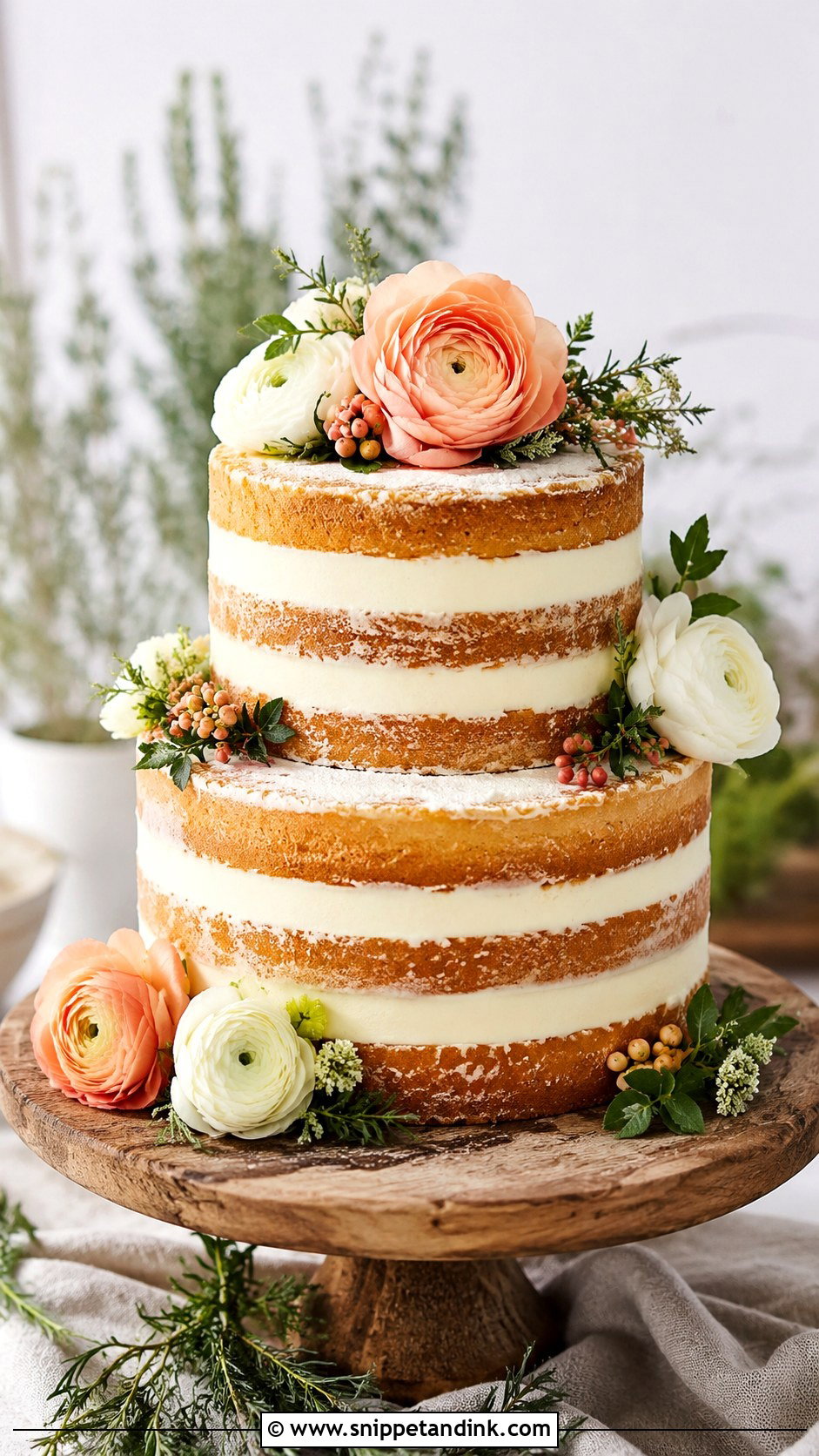
Barns, vineyards and backyard gardens suit a naked cake, where the bare sponge brings warmth and ranunculus brings softness. Vanilla, carrot, spice, almond or lemon layers look natural against cream filling, and peach, ivory, blush or butter yellow flowers keep it seasonal. A little fruit is fine if the flowers stay the focus. The practical catch: a naked cake has no icing to keep moisture in, so it dries out quickly. I assemble these as close to the event as I can and keep them covered until display. A wooden stand, linen or a simple ceramic pedestal finishes it.
8. Semi Naked Ranunculus Wedding Cake
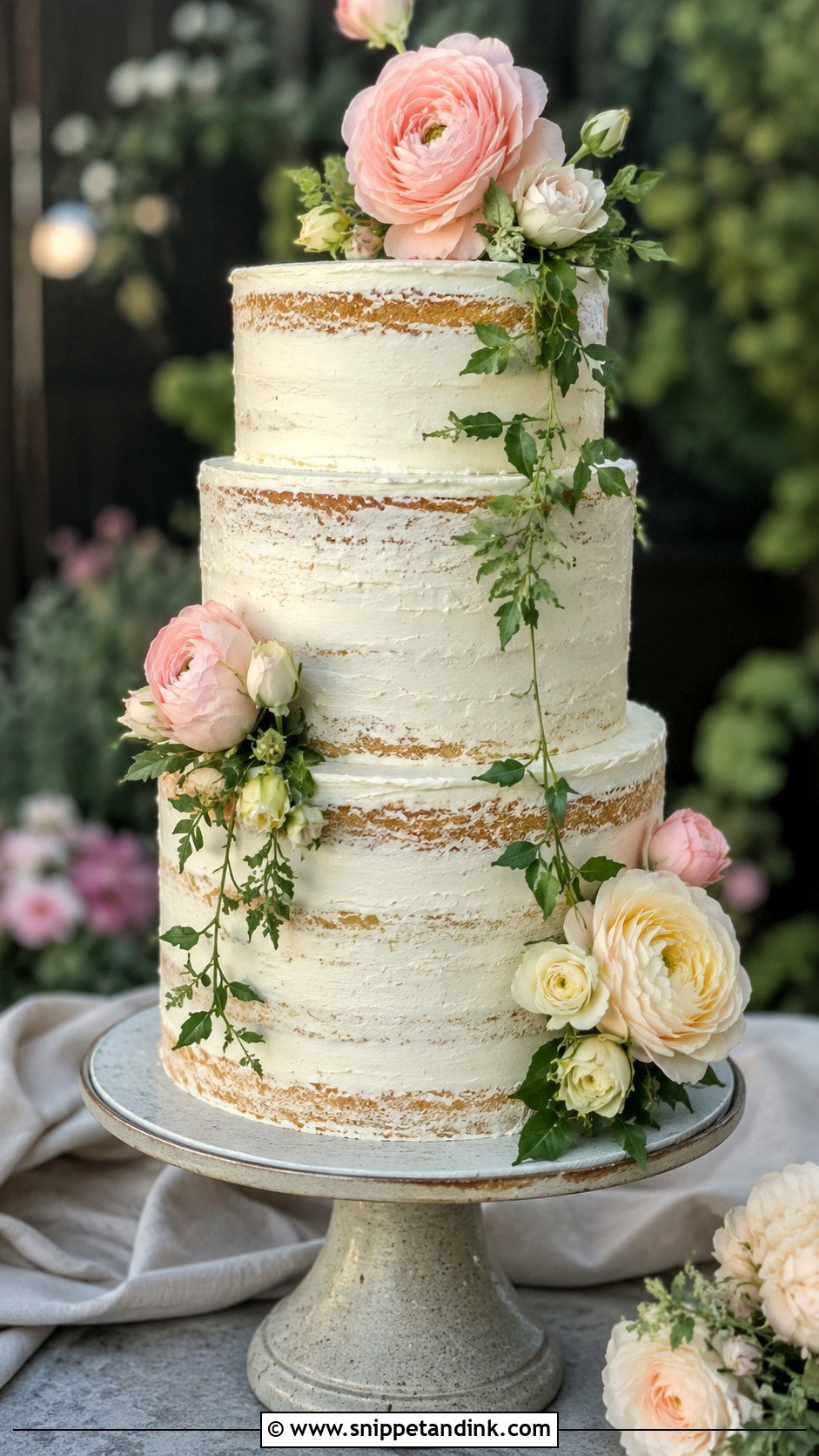
Semi-naked is the compromise most couples end up loving: a thin coat of buttercream scraped back so the layers show through, softer and a little more finished than a fully naked cake. Ranunculus suit that texture well. Place them along the base of each tier or let them climb in a loose diagonal, with soft greenery, buds and seasonal berries filling gaps without much weight. It’s simple and natural, and polished enough for a formal reception if the scraping is even.
9. Pressed Flower Ranunculus Wedding Cake
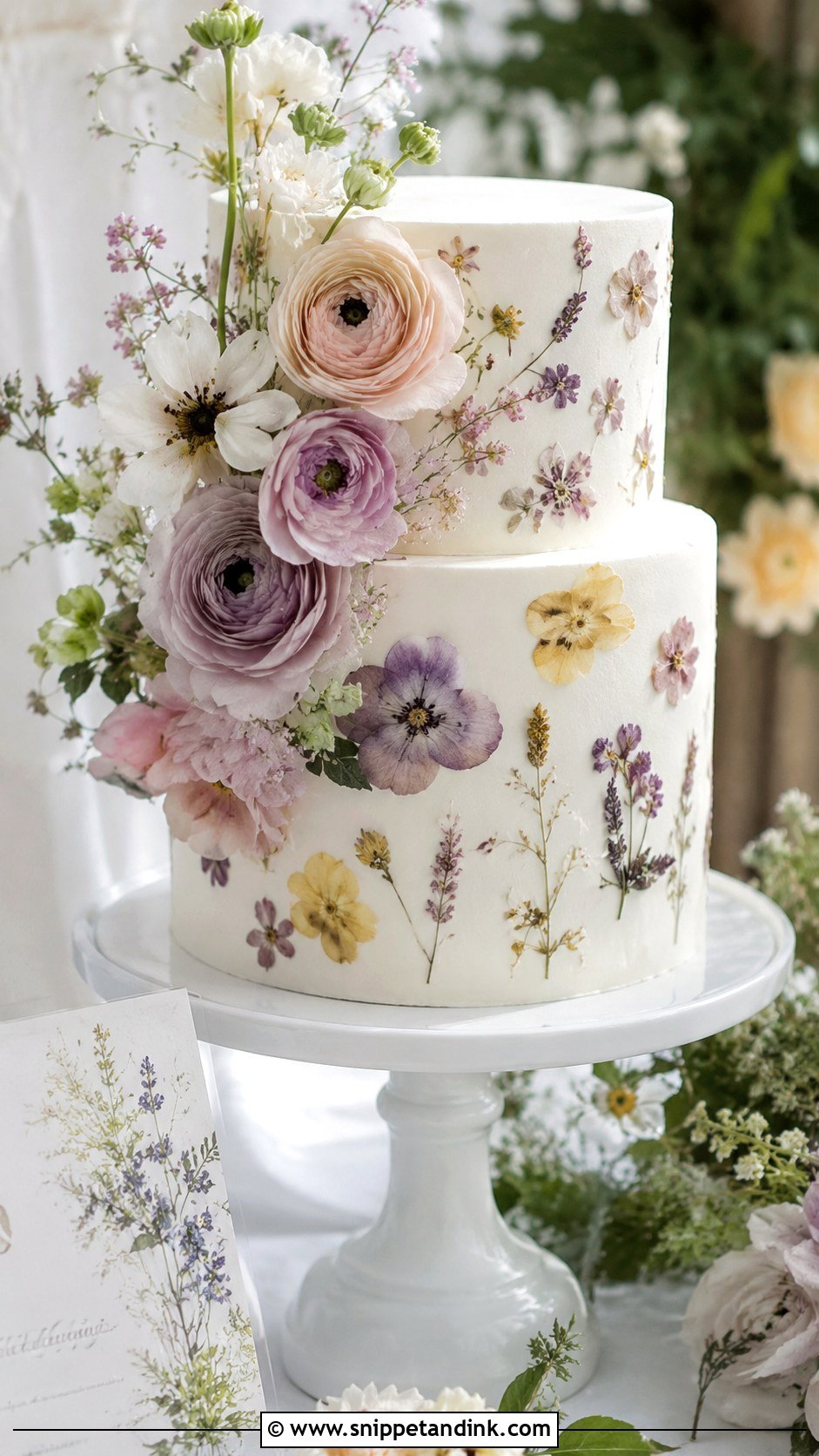
A pressed flower ranunculus wedding cake turns the whole surface into a flat floral pattern. Whole ranunculus are too thick and layered to press flat, so in practice I press individual petals and pair them with small edible flowers, then add painted or sugar ranunculus where you need a recognizable bloom. Smooth white buttercream or fondant gives a clean background. Keep to two or three colors, such as blush, lavender and pale orange, and it reads like a watercolor rather than a scrapbook. It suits spring, botanical venues and small receptions.
10. Sugar Ranunculus Wedding Cake
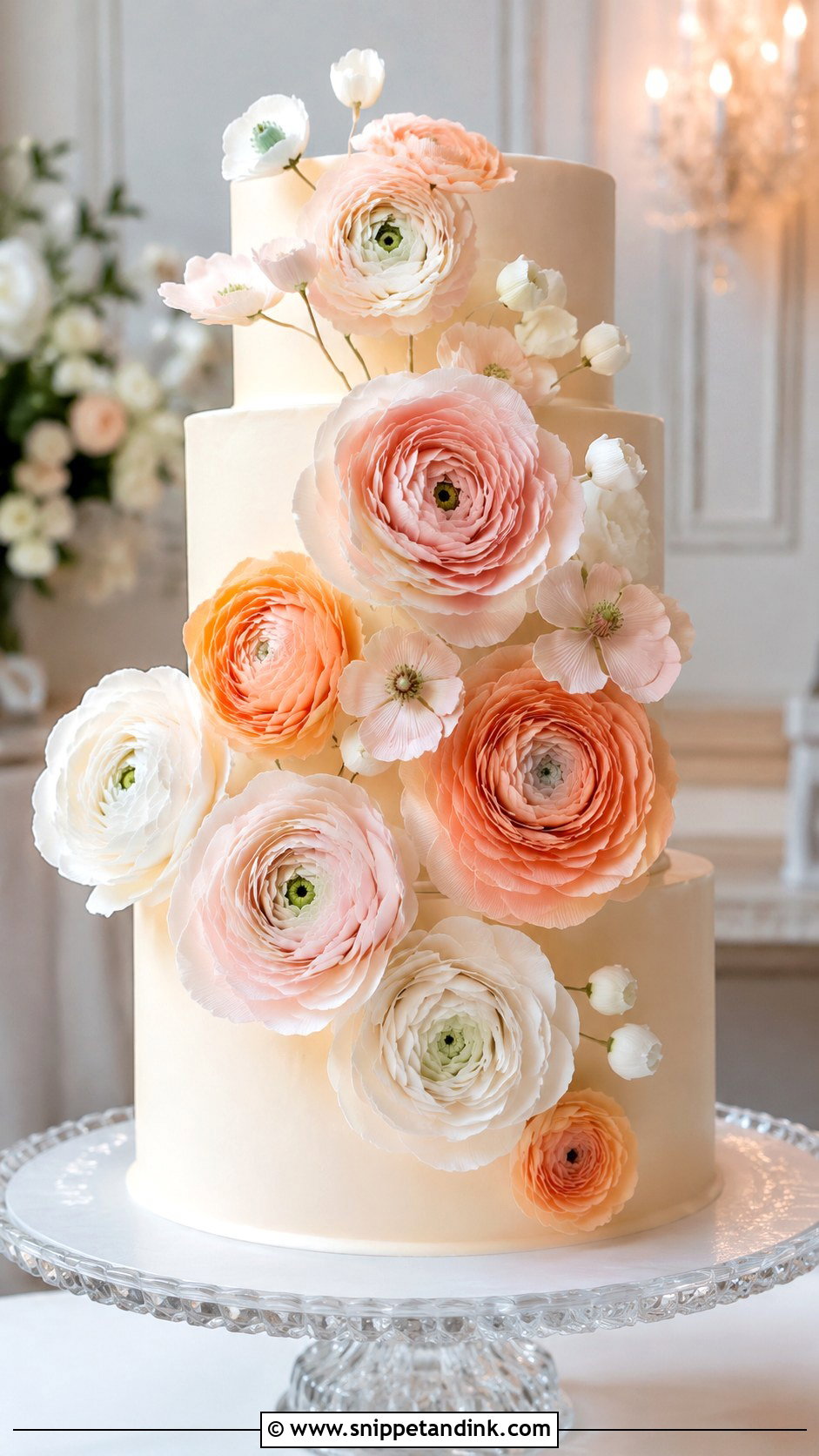
Sugar ranunculus won’t wilt, won’t brown at the edges and can be matched to your palette exactly. Each one is shaped, wired, dusted and colored by hand, and a full ranunculus has a lot of petals, so a cake with many blooms represents serious hours of work. They’re my first suggestion for destination weddings, warm venues and cakes on display for hours. Smooth fondant makes them look refined; textured buttercream makes them softer. Order early, because large sugar flower orders are made weeks ahead, and bring a real petal or fabric swatch for color matching.
11. Fresh Ranunculus Wedding Cake
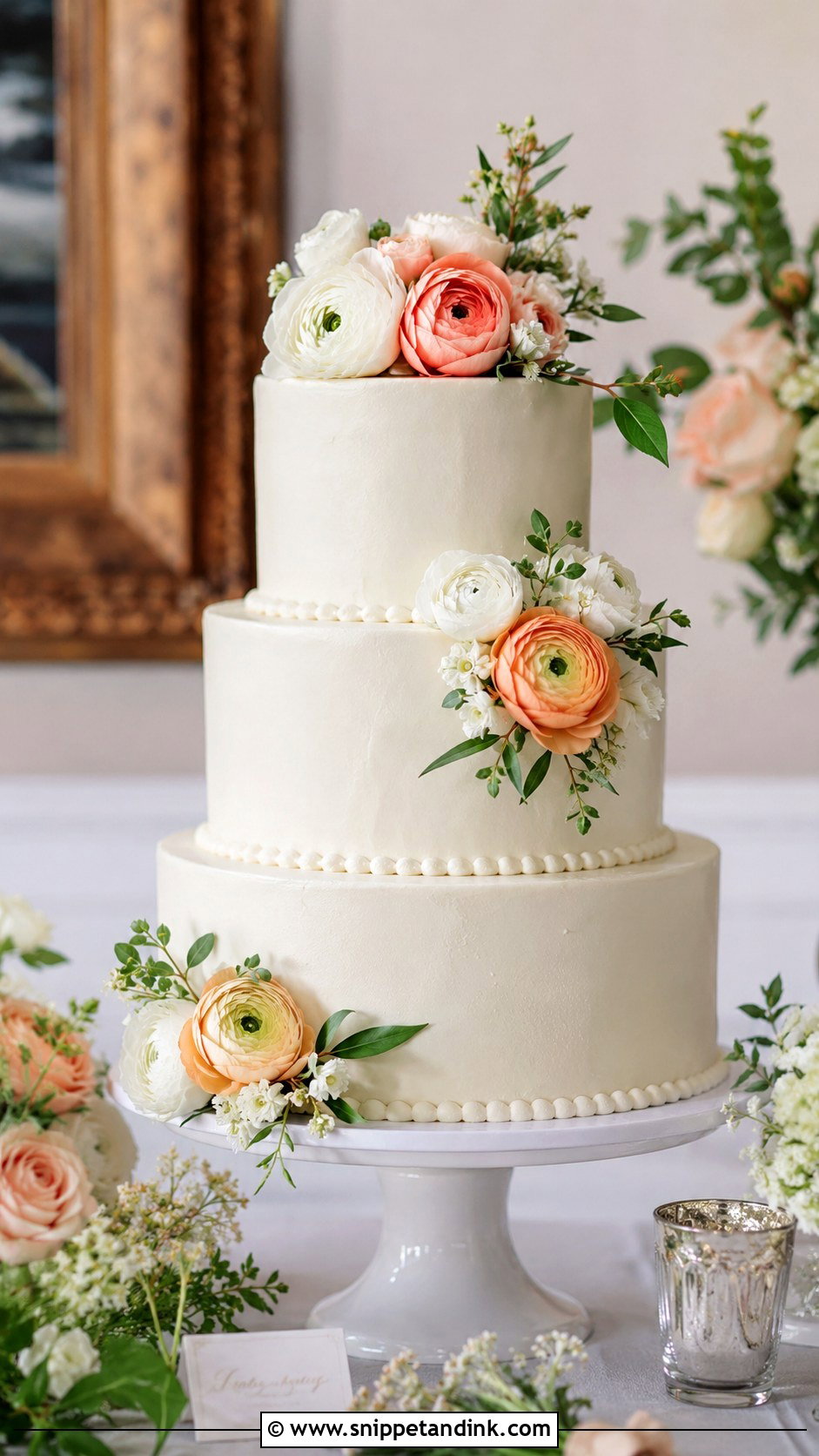
Fresh ranunculus links the cake directly to the bouquet and centerpieces. The catch is that ranunculus belongs to the buttercup family, and its sap is an irritant, so fresh stems must be sealed and kept off the icing with picks or a barrier, and the flowers come off before cutting. Pick firm blooms with strong stems, avoid overcrowding, and know that ranunculus is a cool-season flower: in late summer and autumn, good fresh stems are harder to find and cost more. Ivory buttercream, simple fondant or a semi-naked finish all suit fresh flowers.
12. Cascading Ranunculus Wedding Cake
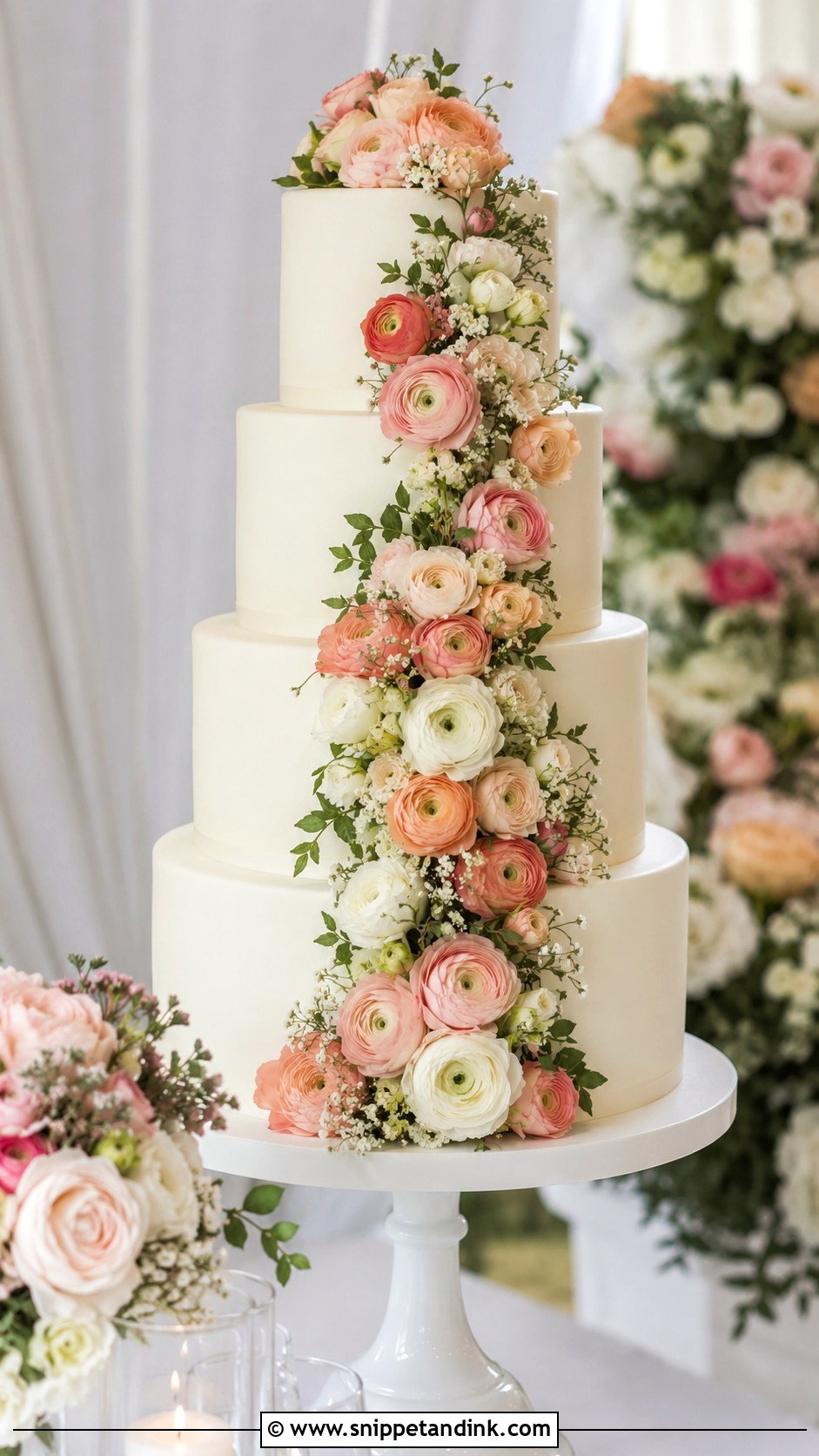
Movement from top to bottom is the whole point of a cascade. I start with a full cluster on top and thin the flowers as they travel down, usually on a diagonal across three tiers or more, because a cascade of even density looks like a stripe. Blush, peach, white, burgundy or mixed garden colors all work. Keep the icing plain. For a fuller look, add sweet peas, small roses or greenery around the ranunculus. A long cascade is heavy, so it’s anchored with picks and supports, never just stuck to the side.
13. Minimal Ranunculus Wedding Cake
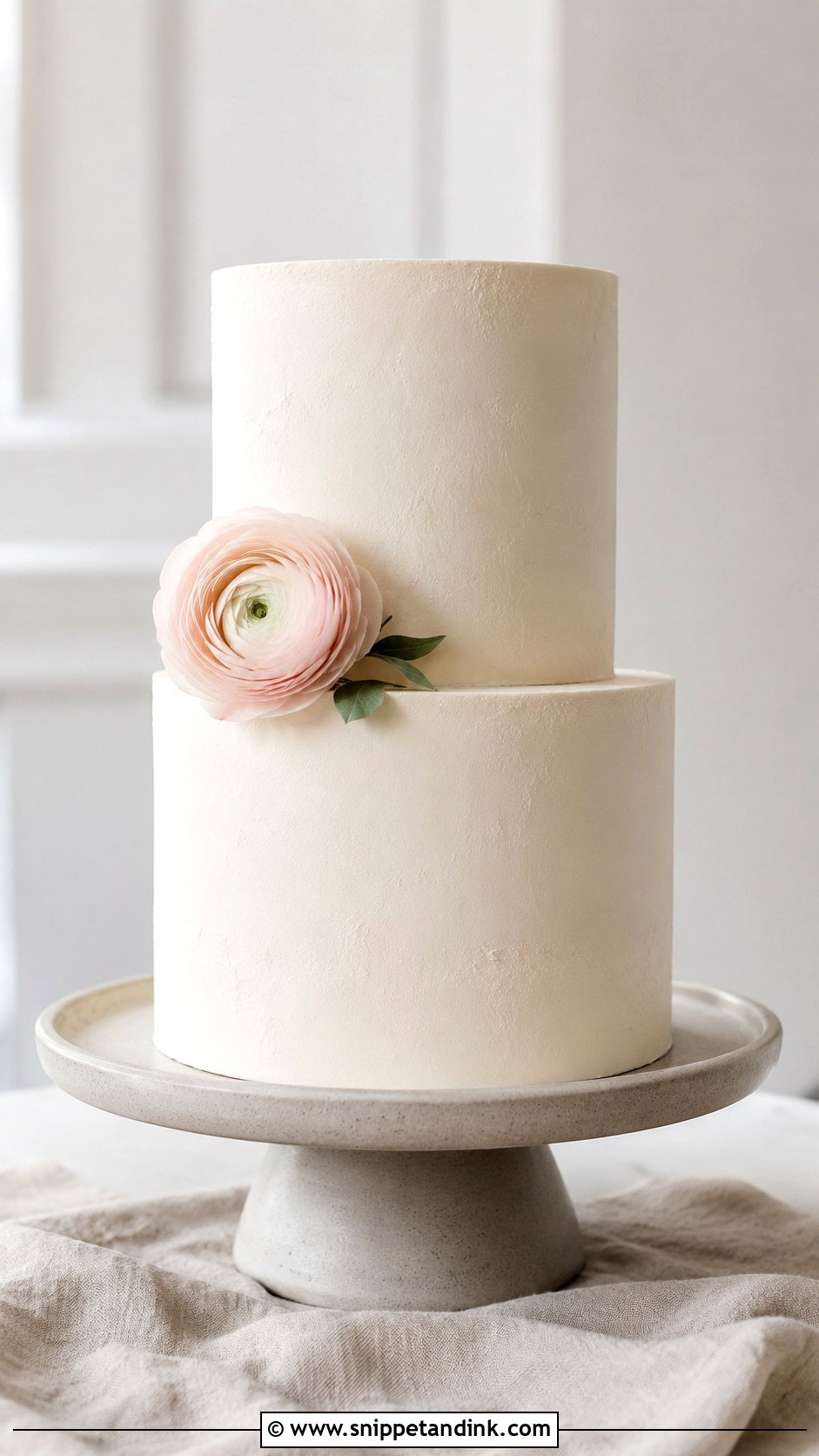
One or two blooms, placed well, can carry a whole cake. A single white or blush ranunculus on the top tier of smooth buttercream, or one at the base for asymmetry, is enough. Keep the palette quiet: ivory, cream, pale pink, beige. Minimal cakes show everything, so the stand, the spacing and the angle of that one flower all have to be deliberate. I usually tilt a lone bloom slightly toward where guests will stand, so it faces them rather than the ceiling.
14. Vintage Ranunculus Wedding Cake
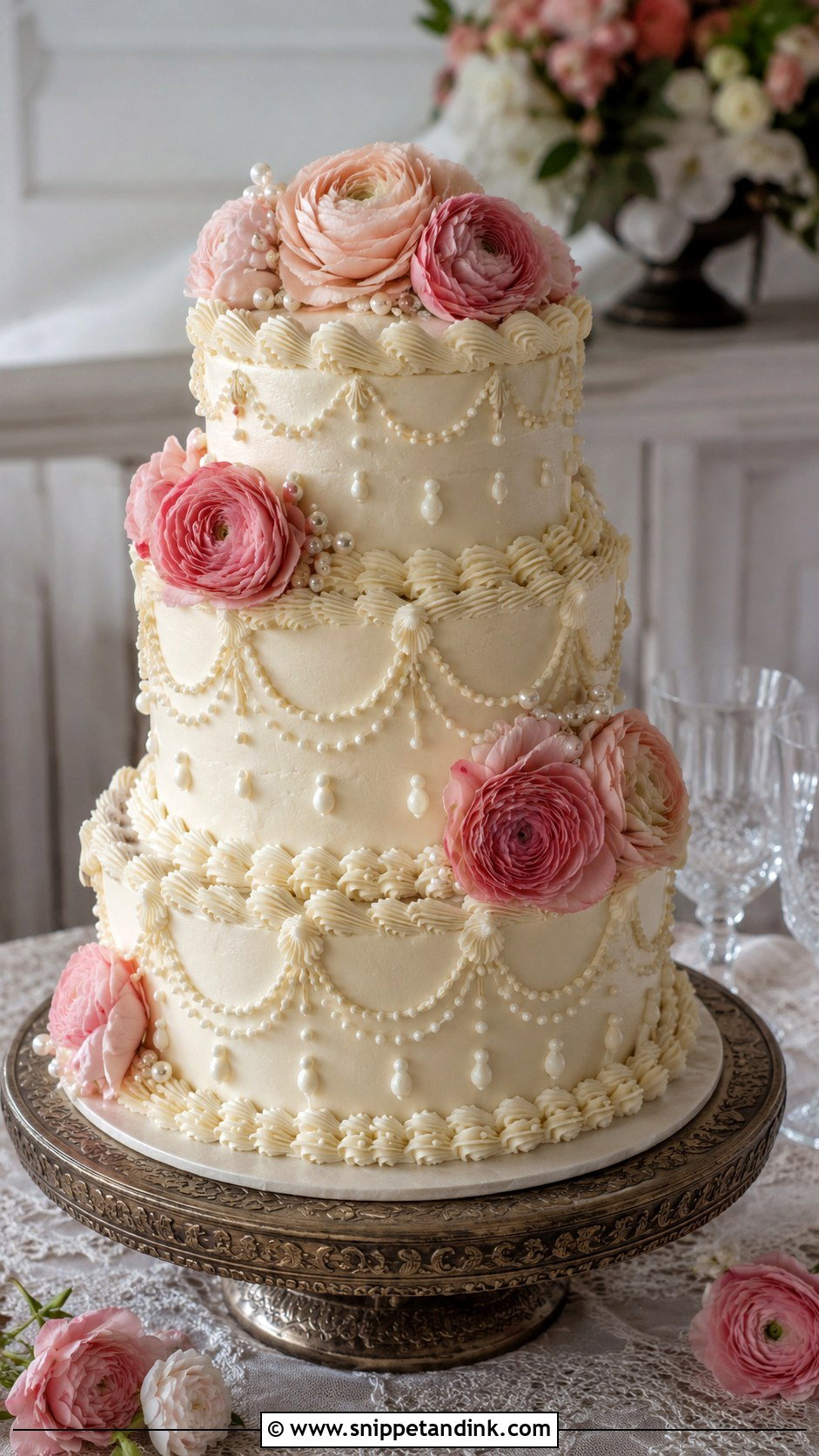
Vintage ranunculus cakes need balance. Soft buttercream piping, fine shell borders, pearl accents and flowers in blush, ivory, mauve or dusty rose, on one tall tier, two tiers or three. Choose one piping style and one color story, or it becomes busy fast. The flowers soften the structure of the piping, which is why the pairing works. Historic venues, estates and antique-styled receptions suit it.

15. Modern Ranunculus Wedding Cake
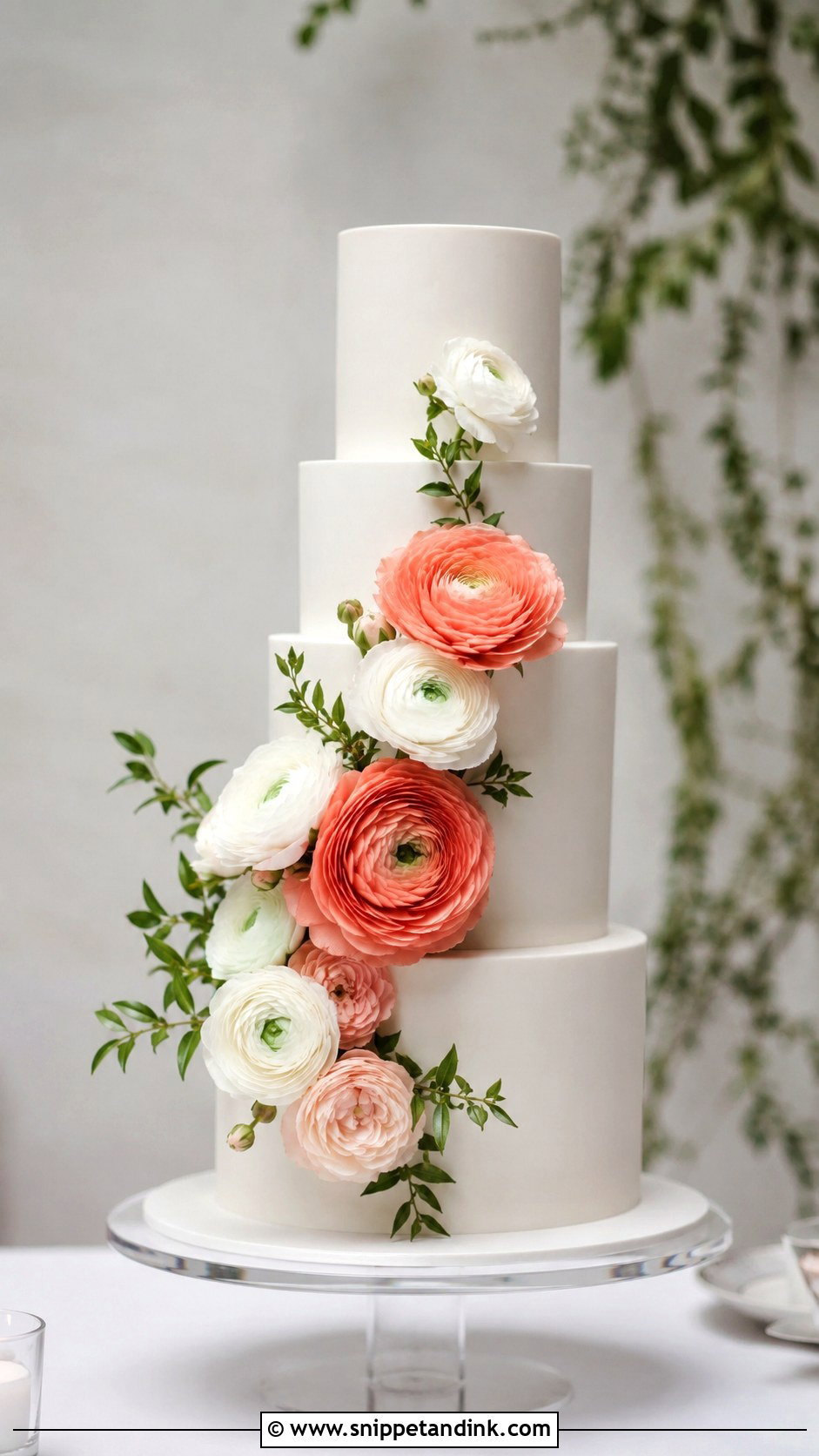
Modern designs swap the cascade for a single sculptural cluster or a sharp vertical line of flowers, often on tall, offset or square tiers in one color. White fondant with coral ranunculus looks bright and editorial. Ivory buttercream with butterfly ranunculus, a lighter variety with fewer, glossy petals and dark centers, looks more fashion-led. Keep extra decoration to almost nothing. A modern cake depends on contrast and empty space, so each bloom must look placed, not added.
16. Rustic Ranunculus Wedding Cake
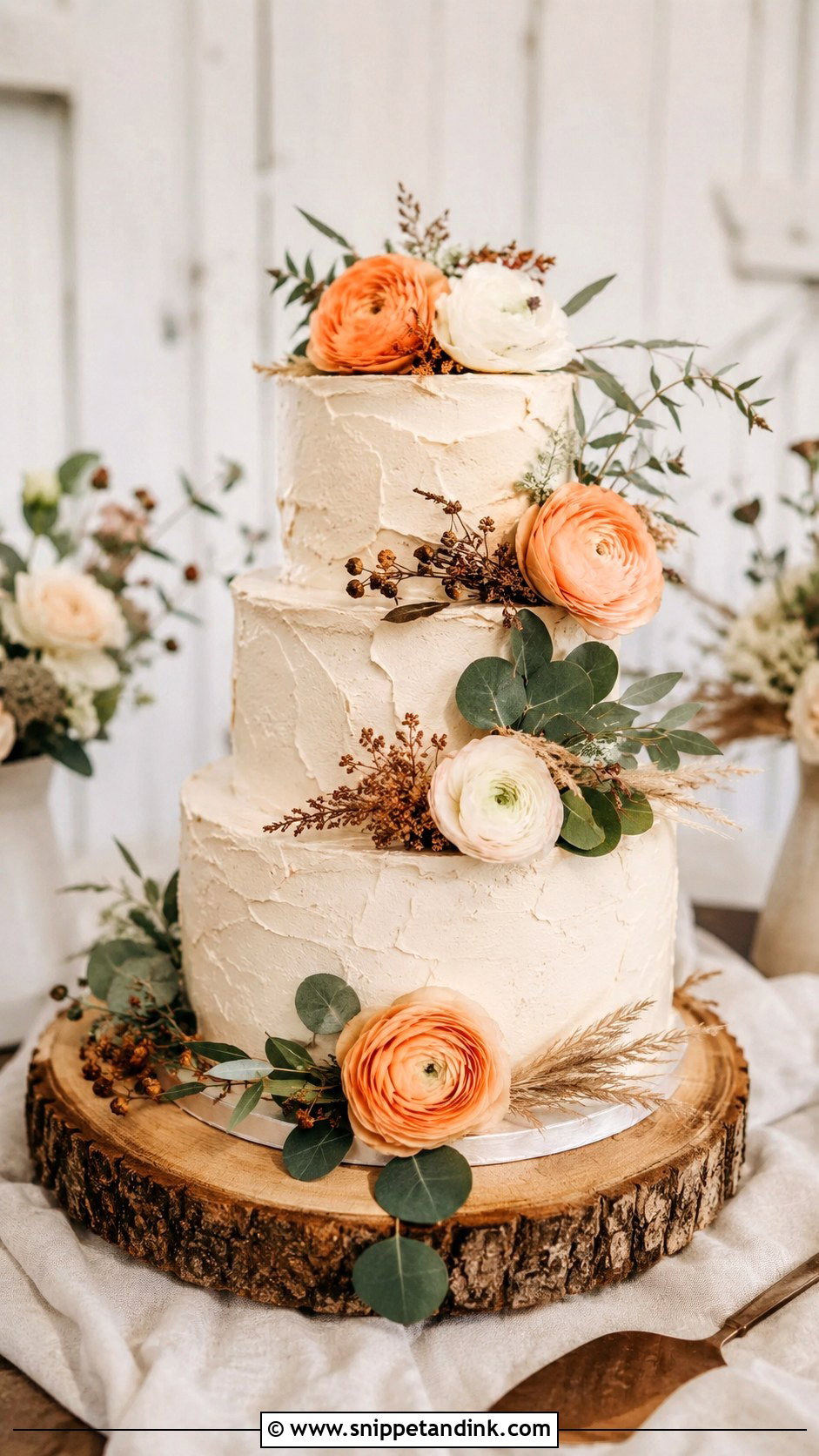
A rustic ranunculus wedding cake leans on buttercream, a semi-naked finish or a hand-smoothed surface. Peach, cream, yellow and blush flowers sit well with olive leaves, eucalyptus, dried grasses or small berries, though eucalyptus and dried grasses need a barrier between them and the icing. Barns, mountain lodges, vineyards and tents suit it, along with a wood slice, a stoneware stand or a linen-covered table. Slight texture, loose placement and gentle color variation make it feel personal.
17. Garden Ranunculus Wedding Cake
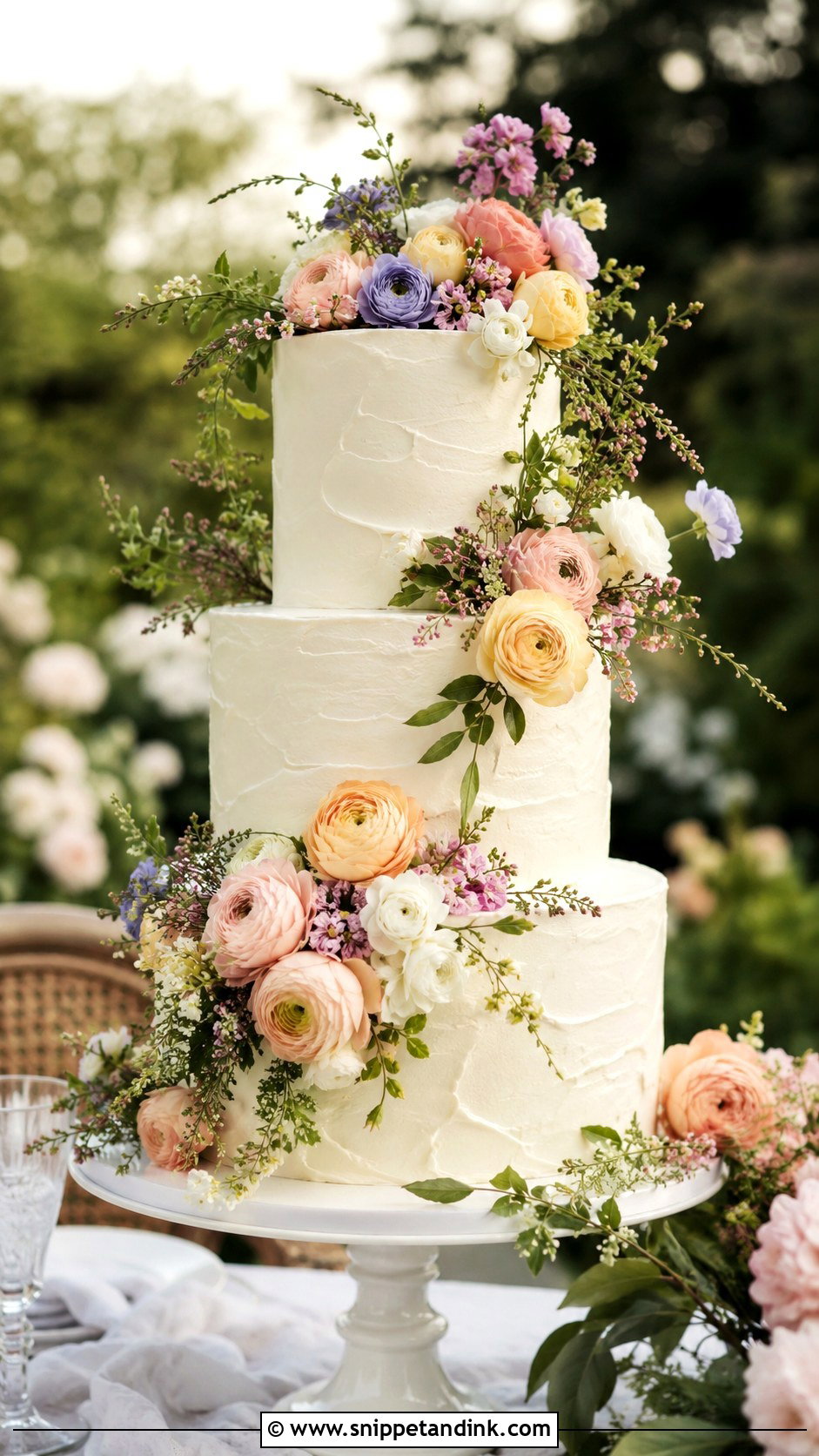
This is the multicolor version: blush, butter yellow, ivory, peach and soft lavender together, circling the tiers, gathering at the base or climbing one side with leaves and buds. Soft buttercream reads organic; fondant reads garden party. The trick with several colors is to group them, putting two or three of the same shade together, rather than alternating every flower, which looks like a candy mix. Spring and summer weddings in tents, courtyards, conservatories and estates suit it.
18. Peach Ranunculus Wedding Cake
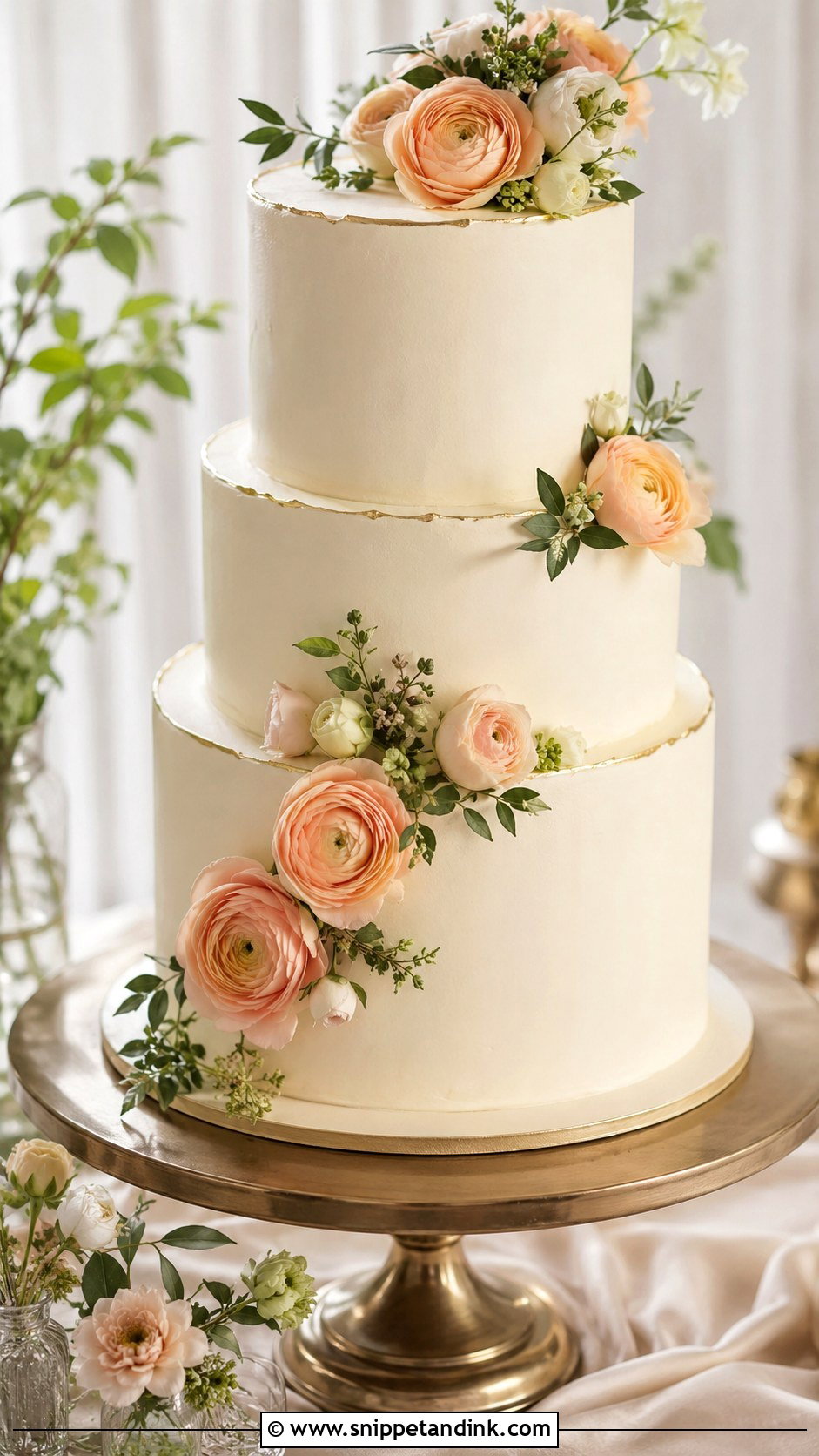
Peach is warm without being loud, which makes it one of the easiest ranunculus colors to place. It pairs with ivory icing, champagne accents, pale coral flowers and soft green leaves, and works from spring into early fall. Smooth buttercream with peach blooms along the tier edges is fresh and simple; a thin gold line, tiny piped pearls or a little ruffled texture adds detail. Inside, vanilla bean, almond, honey, lemon or brown butter all suit it.
19. Coral Ranunculus Wedding Cake
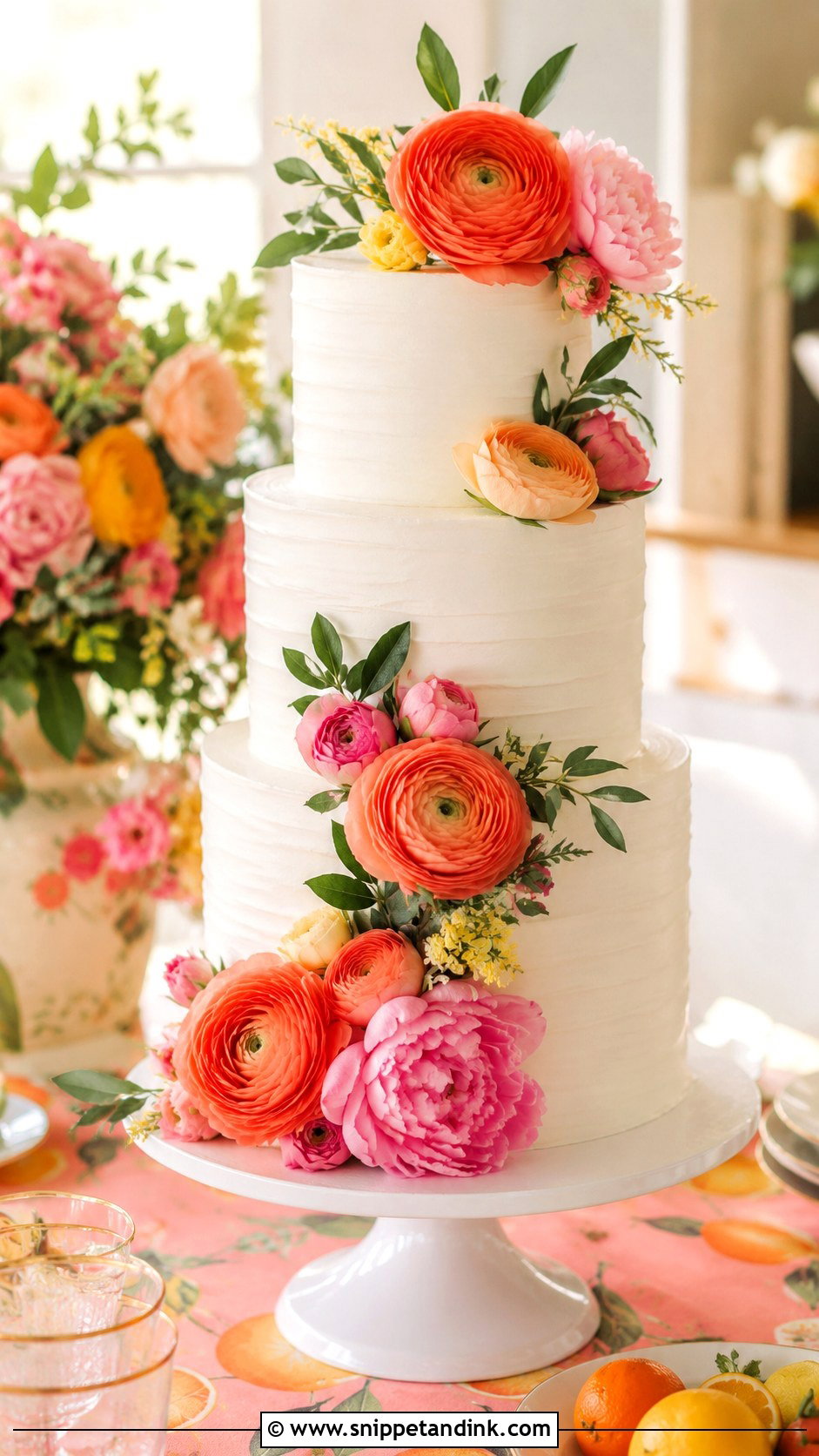
Coral has more energy than peach and stands out against white, ivory or pale blush icing, so it reads clearly even in a crowded reception photo. Summer weddings, coastal venues and colorful gardens suit it. Coral pairs with peach, orange, pink or yellow accents for a warmer palette. Keep the tiers clean and the shape simple, because bright blooms on a busy cake overwhelm quickly. In sugar, coral is one of the colors that can shift under different light, so I always check the finished color in daylight, not just under the studio lamp.

20. Burgundy Ranunculus Wedding Cake
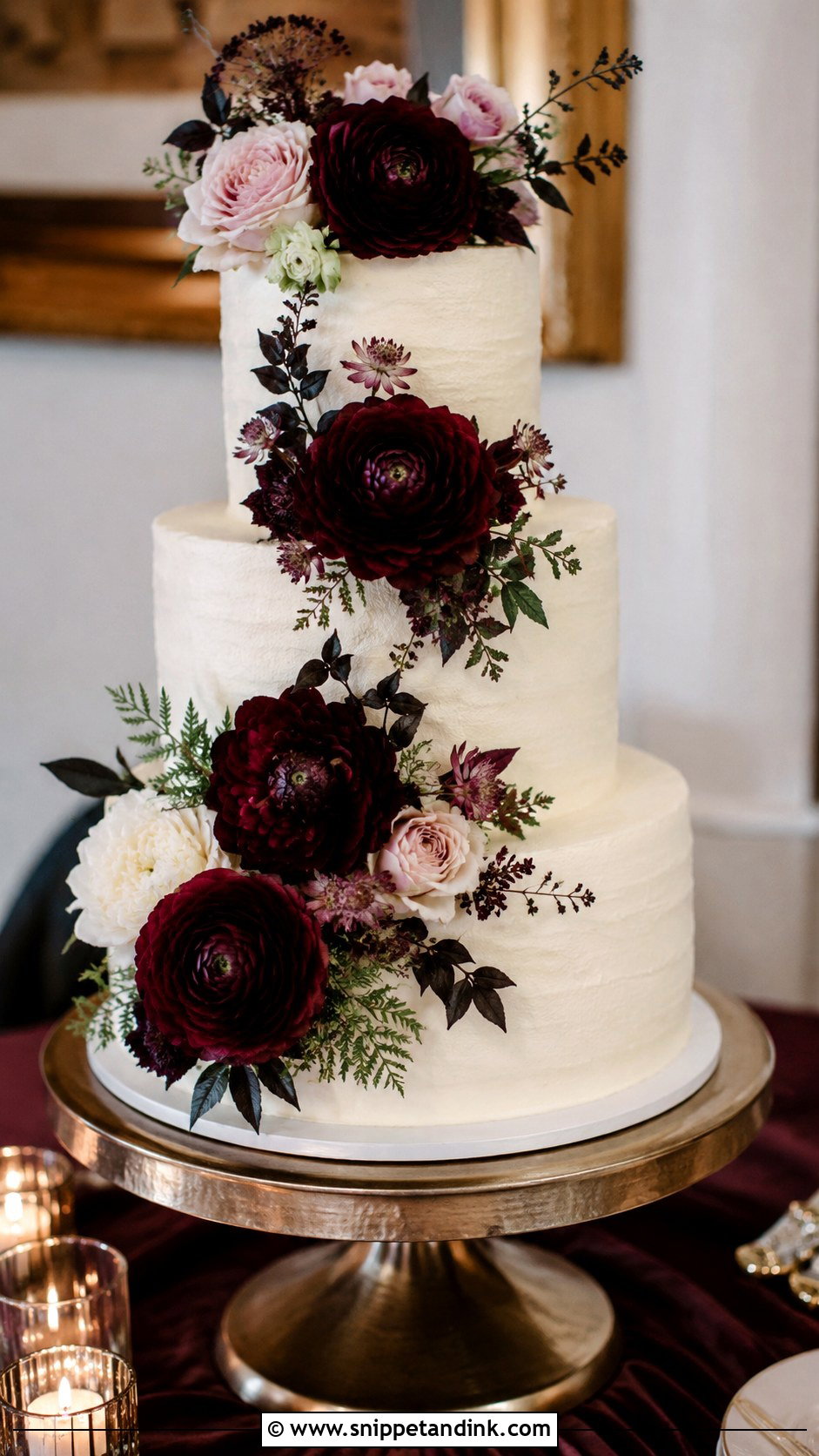
Burgundy gives depth against ivory or soft beige icing and suits fall weddings, moody gardens and evening receptions. It pairs with blush, mauve, dusty pink, cream and dark greenery. A few well-placed blooms are enough to create contrast, and textured buttercream or subtle gold softens the mood if you want it more romantic. Very deep sugar flowers take a lot of color, and on a pale cake any dust that falls shows, so I fix the color and place them carefully. A classic sponge and filling keep the focus outside.
21. Lavender Ranunculus Wedding Cake
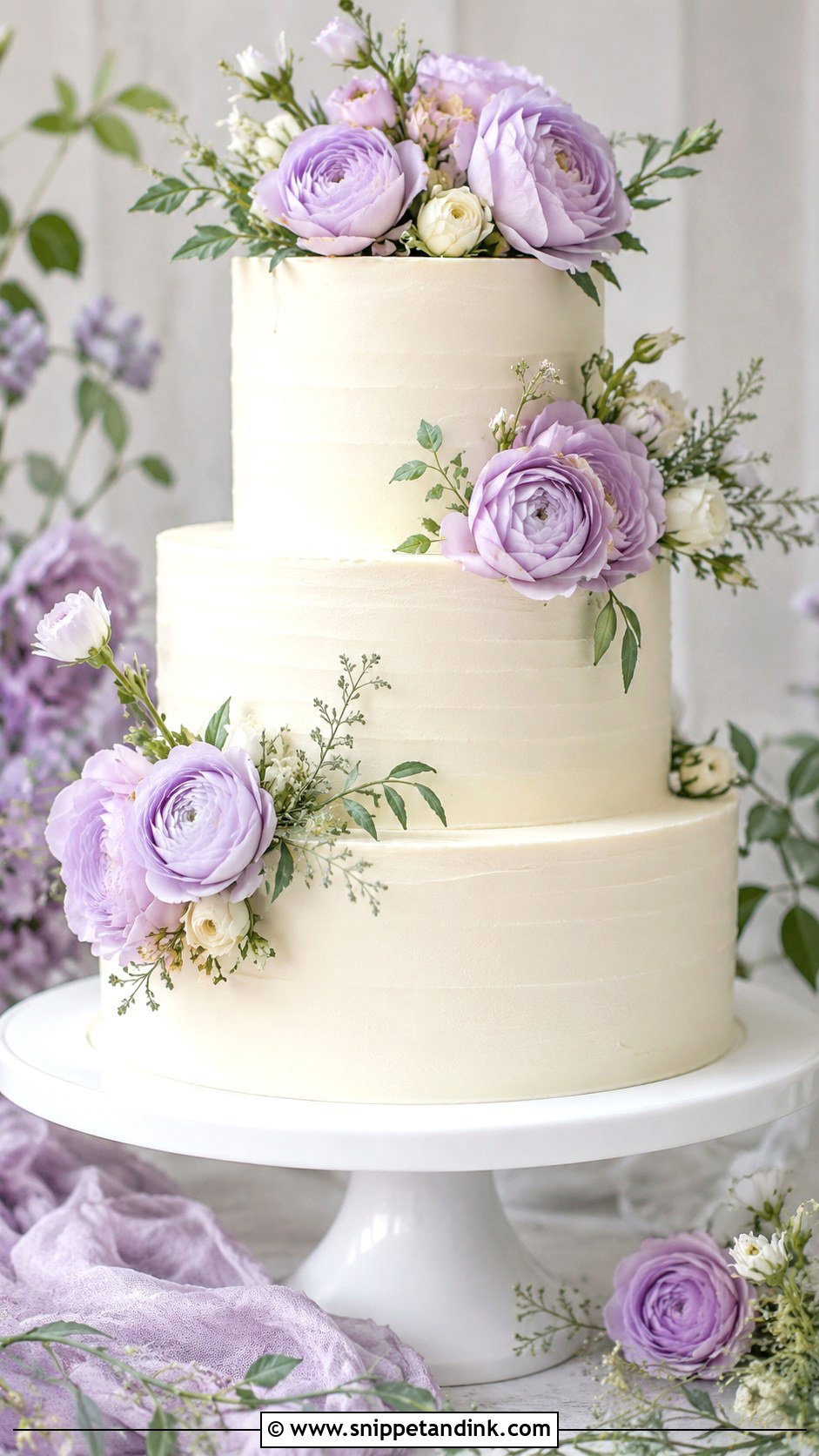
Lavender ranunculus give a soft, airy color for spring, garden ceremonies and pastel receptions. White buttercream, pale gray fondant, ivory icing or a faint lilac wash all suit them, along with white flowers, small blue accents or fine greenery. Keep the purple gentle; saturated purple sugar can look gray under some lighting, and pale lilac holds up better in photos. Lemon, vanilla, almond or honey sponge keeps the inside bright.
22. Yellow Ranunculus Wedding Cake
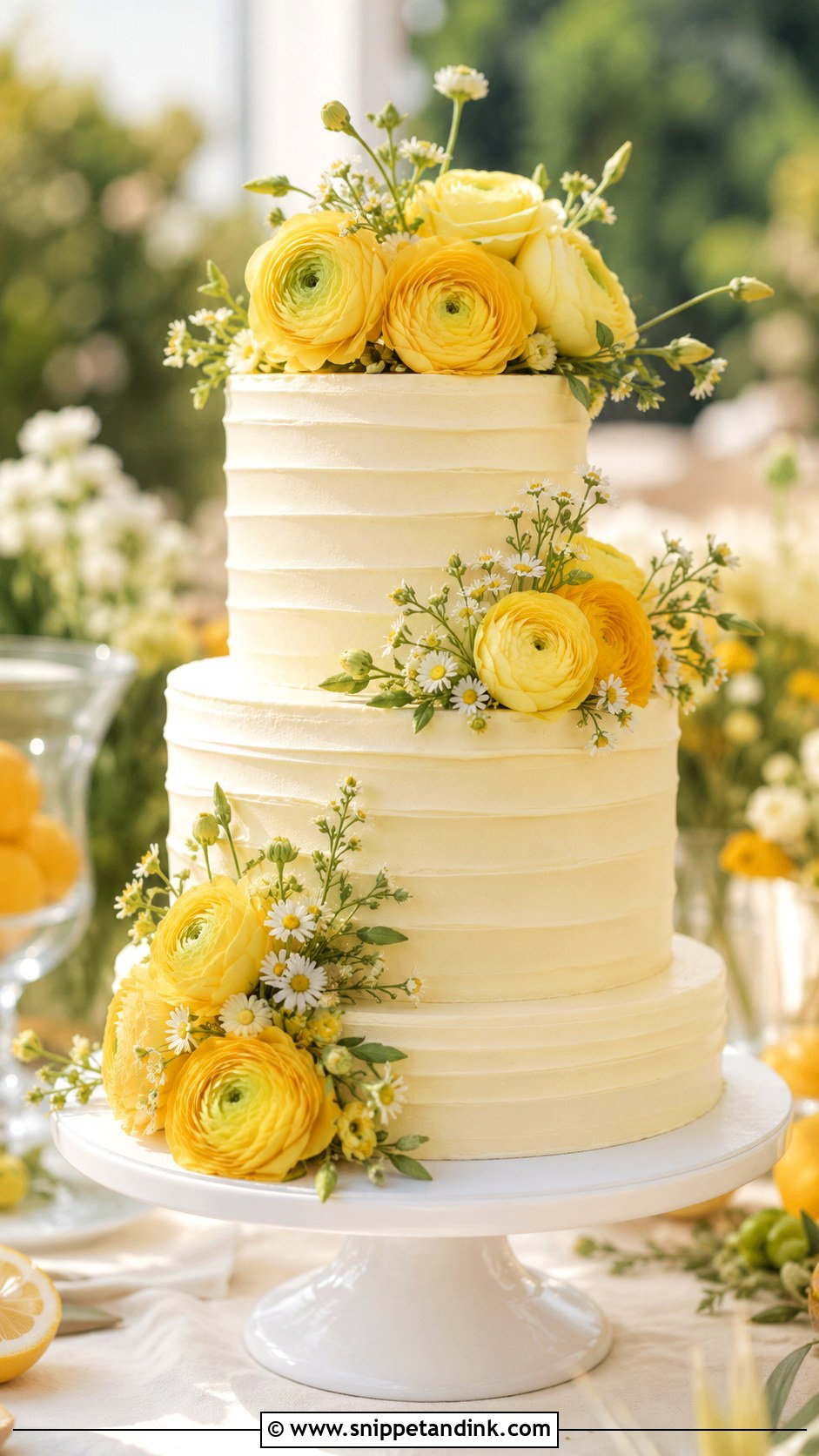
Butter yellow reads romantic and spring-like; brighter yellow reads summer. Both suit white buttercream and lemon, almond or pale vanilla sponge, with small white flowers, light greenery or a few peach accents filling it out. Outdoor weddings, brunches and citrus-led menus suit it. Yellow is cheerful, so keep the icing finish simple and let the flowers be the only color on the cake.
23. Greenery Ranunculus Wedding Cake
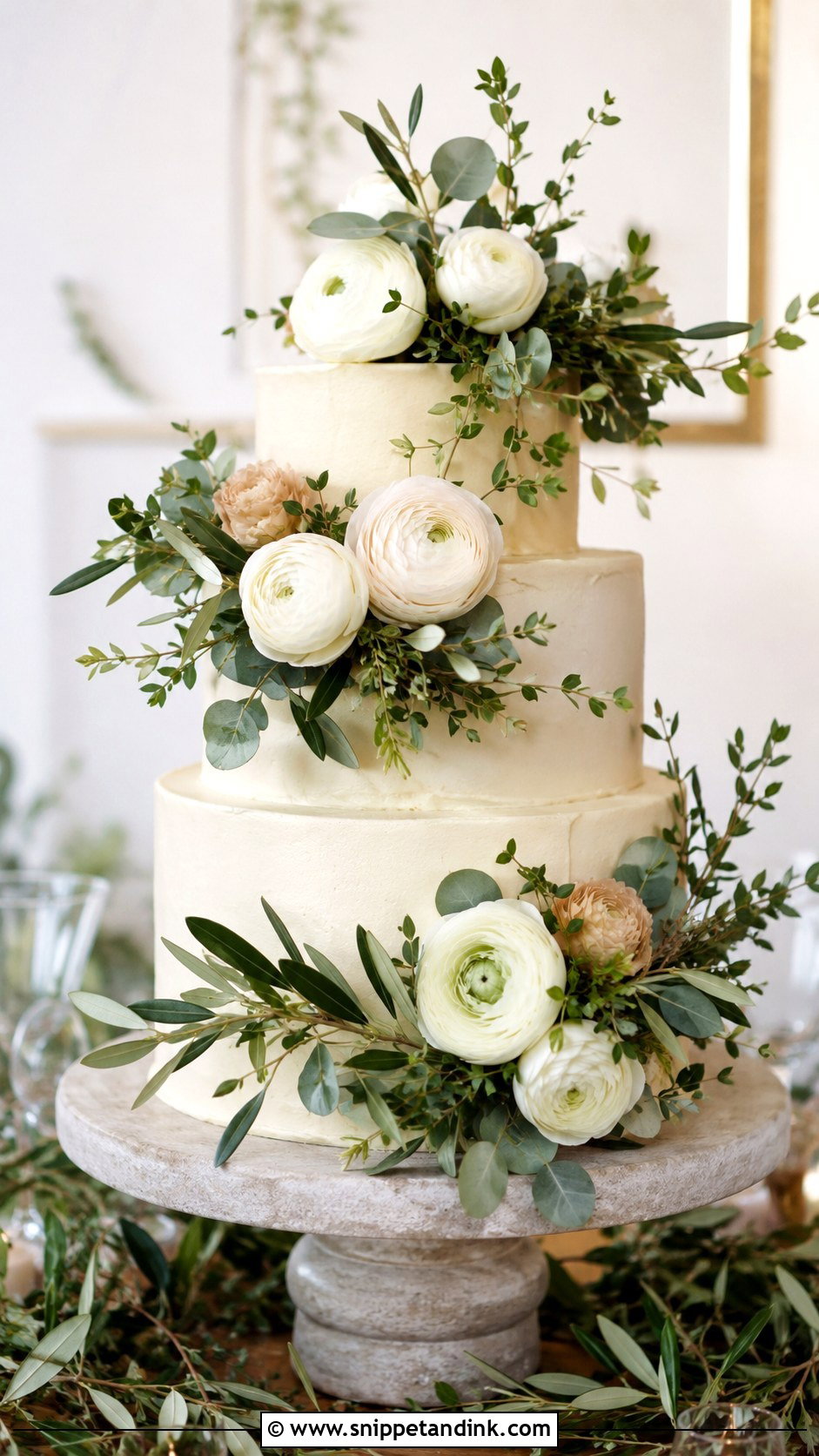
Leaves frame ranunculus and keep the cake looking fresh. White, blush or peach flowers can tuck into eucalyptus, olive branches, ruscus or delicate fern-like greens. Smooth buttercream, fondant or semi-naked all work, and the same cake can look rustic or refined depending on how loose the greenery is. Leave clear icing between leaves so the cake still reads as cake. Many florist greens aren’t food safe, so I prefer sugar leaves or herbs where foliage touches the icing directly.
24. Gold Ranunculus Wedding Cake
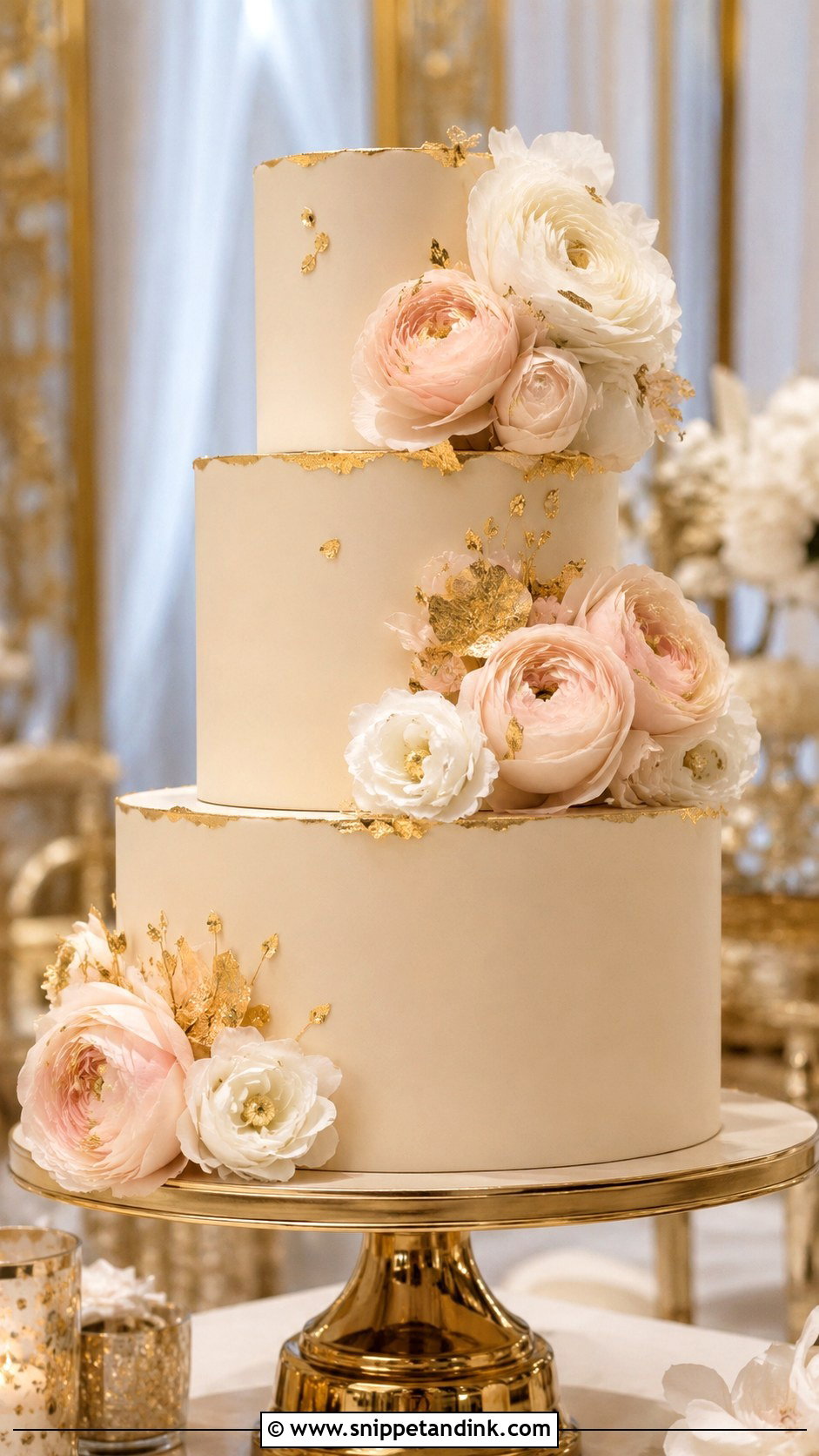
A gold ranunculus wedding cake keeps the flowers white, blush, peach or burgundy and brings the gold in through thin leaf, painted edges, metallic flecks or a fine tier band. It suits formal and evening receptions. Use gold sparingly. Smooth fondant gives the cleanest base for leaf and paint, though buttercream can take soft brushed gold. Check that every metallic element is edible gold, not decorative dust. The flowers soften the shine so the cake reads warm rather than hard.


25. Small Ranunculus Wedding Cake
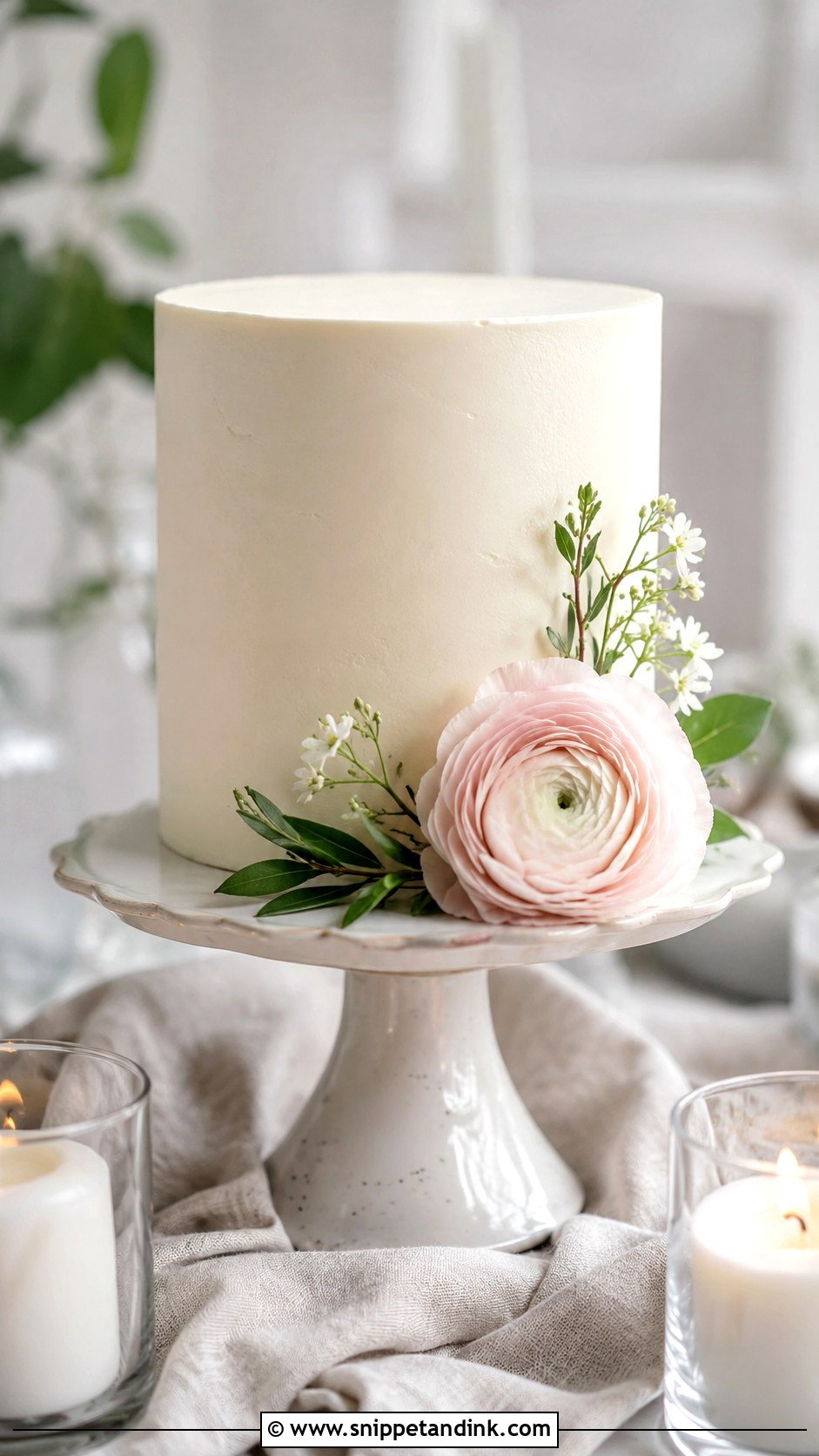
Small cakes suit micro weddings, elopements and dessert bars, or a couple who just wants something to cut. One tall single tier or two petite tiers can carry the flowers well. Put one statement bloom on top and smaller buds near the base for balance, on smooth buttercream, soft texture or a semi-naked finish. Candles, linen and a small arrangement beside it complete the table. Size has nothing to do with how much a cake means.
Matching Flower Size to Each Tier
Proportion is the most common thing I correct in reference photos. A real ranunculus head is fairly modest, but on cakes people expect large, open blooms, and a flower that’s right for a ten inch base tier can swamp a six inch top. As a working habit, I scale the flowers down as the tiers get smaller and keep the largest blooms low, where the cake can carry their visual weight.
It’s also why a cascade usually starts with medium blooms at the top, opens out to the largest around the middle tier and ends in buds and leaves near the base. Ask your designer to sketch the flower placement on each tier at the consultation, and check it against the tier sizes, not just the overall height.
After the Cutting, Keeping the Sugar Flowers
Sugar ranunculus aren’t meant to be eaten. They’re made on florist wire and tape and dry rock hard, so they come off the cake before it’s served. Many couples keep them, and they can last for years if they’re looked after.
- Ask the venue to lift the flowers off and set them aside before the cake is cut, or they may end up in the bin.
- Brush off any crumbs or icing gently with a soft dry brush once they’re home.
- Store them in a lidded box or glass dome with a sachet of silica gel, because humidity softens sugar and makes petals droop.
- Keep them out of direct sunlight, which fades the dusted color within months.
Settle the Mood Before the Bloom Count
Ranunculus suits almost every cake style because it softens a formal fondant cake, warms a rustic one and adds movement to a modern design. Decide the mood first. White and blush are classic, peach and yellow are warm, burgundy is dramatic, lavender is soft. Then talk to your baker and florist early, especially if fresh flowers are involved, so the color, placement and timing are settled long before the week of the wedding.
You'll Like These Ideas:








Leave a Reply