
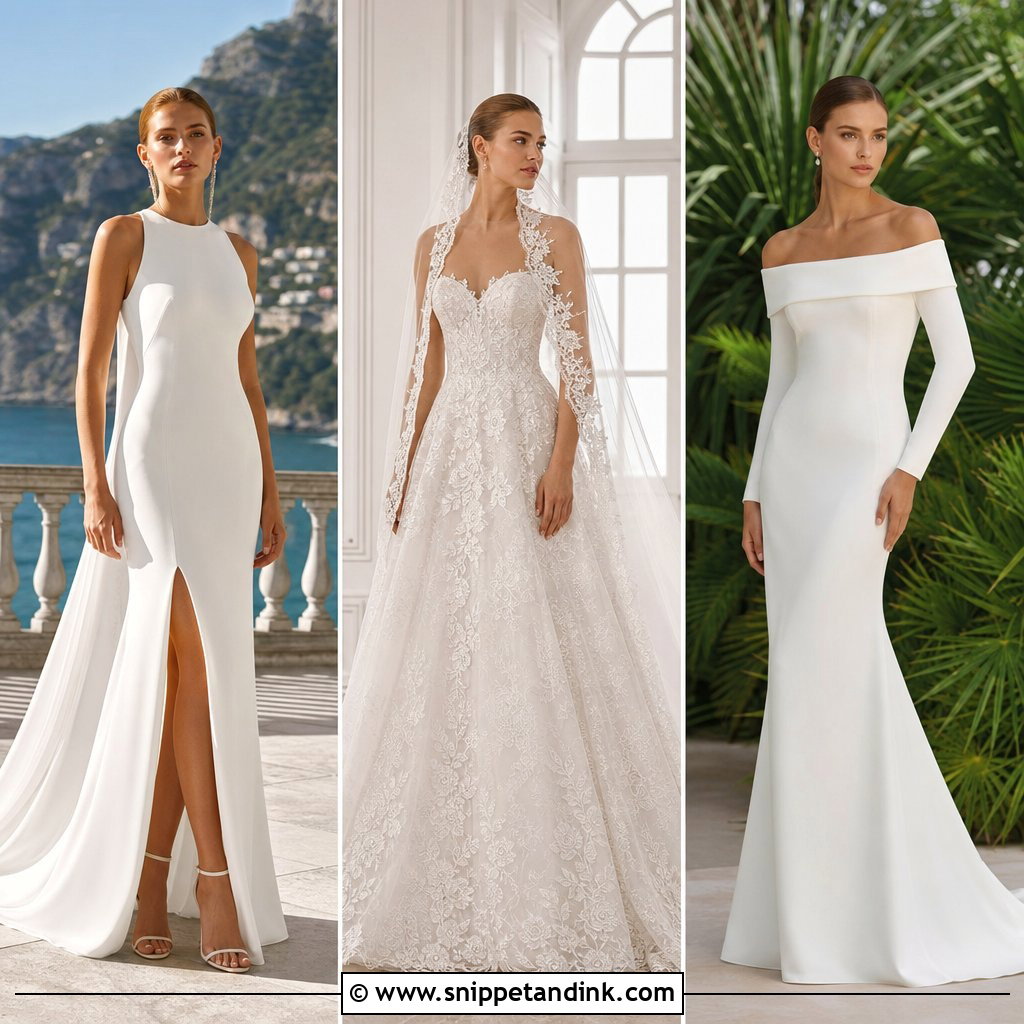
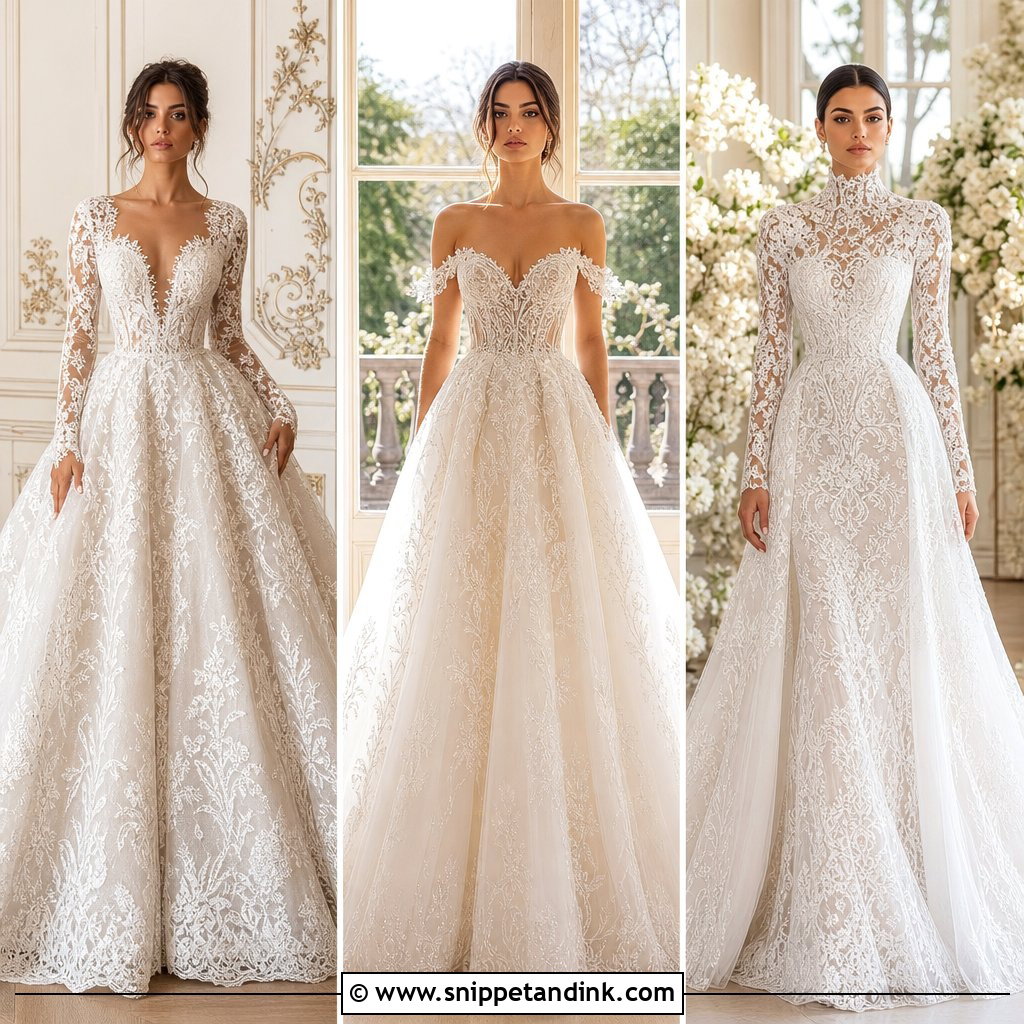
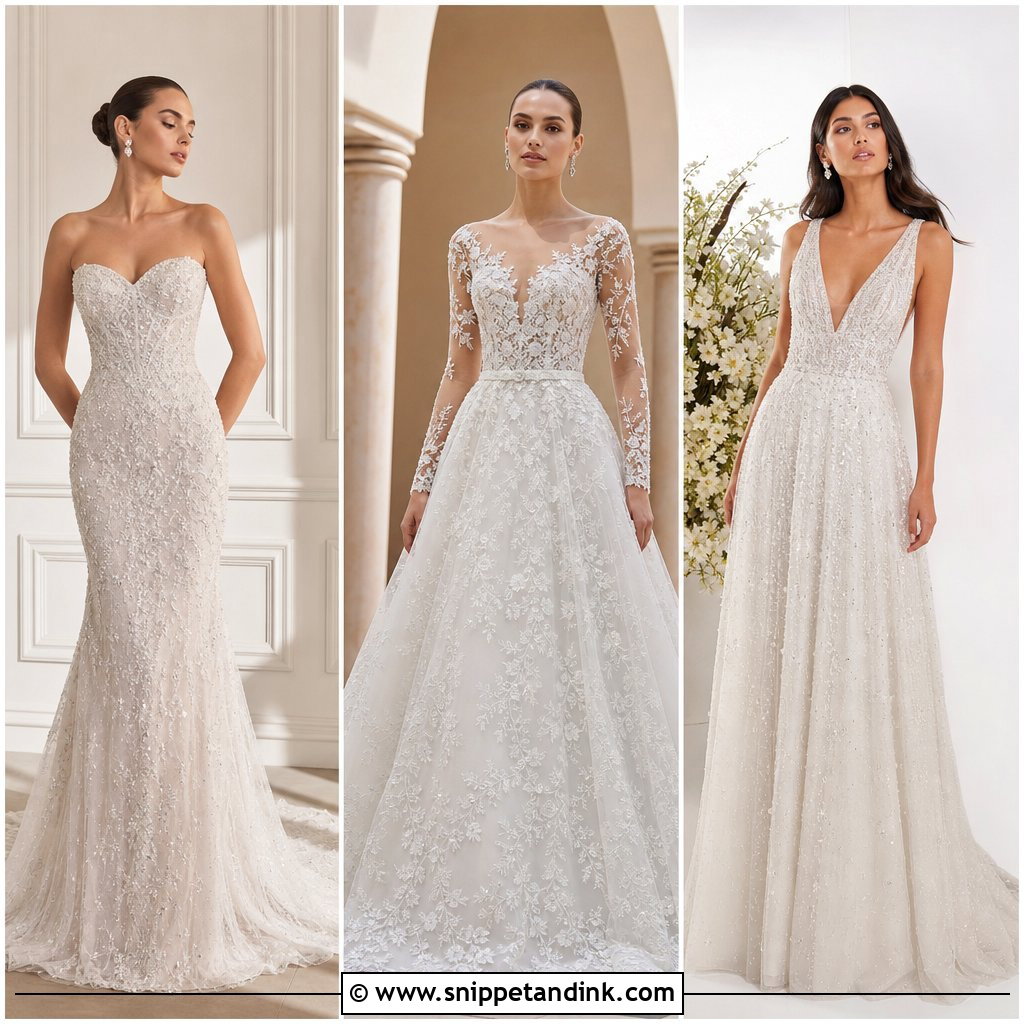
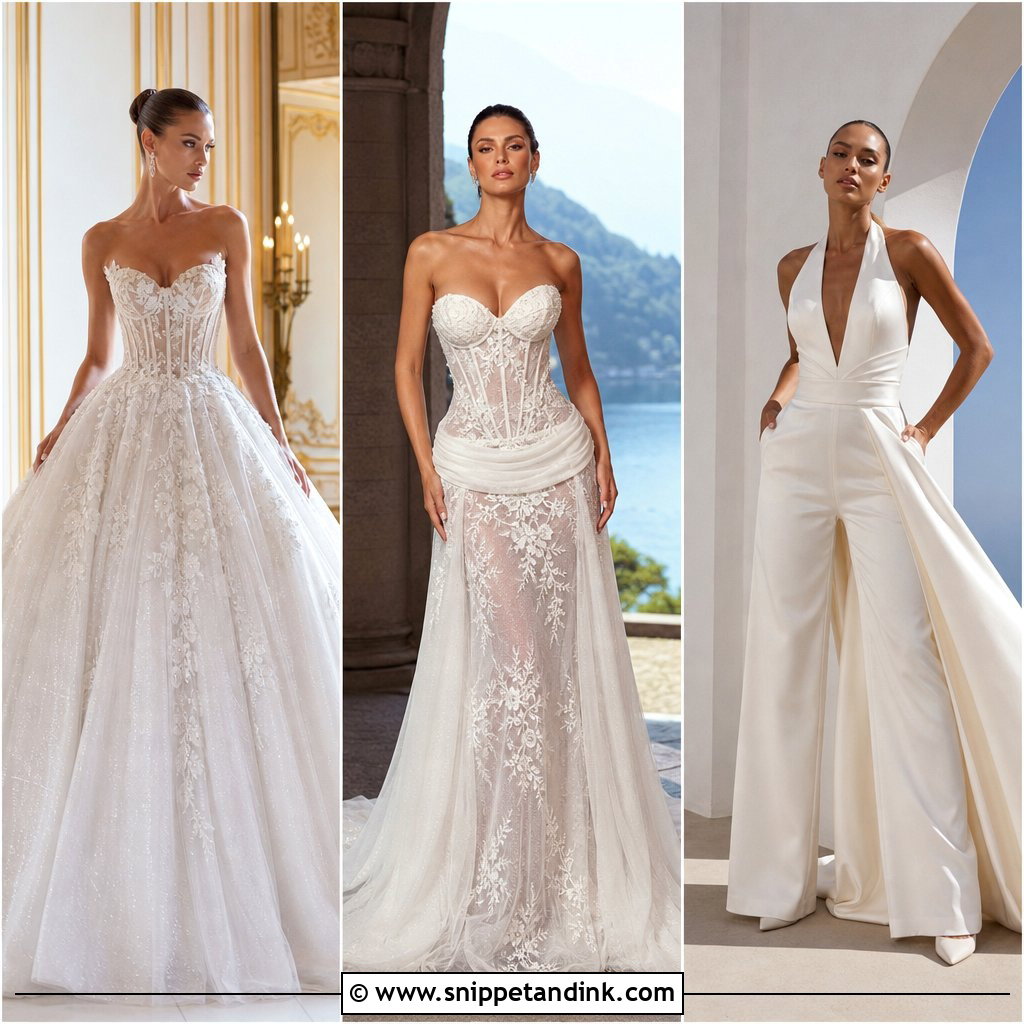
Most brides walk into an atelier expecting to pick a dress. What actually happens is closer to building one: a pattern adjusted to your measurements, a mock-up in plain cotton, and a run of fittings where the bodice, hem and veil are worked out together. The twenty looks below cover structured satin, lace, column shapes, tailored separates and a short reception change, each shown with shoes, jewelry and hair so you can judge the whole outfit rather than the hanger. I’ve written them the way I’d talk a bride through a rail of samples, with notes on how each one sits, moves and sometimes fails. Use them to work out what suits your body, your venue and how much you want to move, not to chase whatever the season is pushing.
How a Bespoke Gown Actually Gets Made, Appointment by Appointment
An atelier isn’t a bridal shop with nicer lighting. The garment is cut for you, and that takes time and several visits. Most made-to-measure and custom gowns need somewhere around six to nine months from first appointment to final fitting, and fully bespoke work with hand beading or lace can take longer, so I’d open the conversation roughly a year out if you can. Lead times vary a great deal between houses, so ask for theirs in writing.
The visits you can expect
- Consultation: sketches, fabric swatches and a frank talk about budget, venue and how much you want to move.
- Measurements and a toile, a mock-up in plain cotton so the cut can be corrected before expensive fabric is touched.
- A first fitting in the real fabric, usually with the bodice built and the skirt still rough.
- A second fitting for hem, bustle and sleeve length, done in your wedding shoes and underwear.
- A final fitting a few weeks before the date, when the dress is pressed and you learn how to get in and out of it.
The toile stage is the one brides tend to rush, and it’s the one I’d protect. Moving a seam on cotton costs nothing. Moving it on silk can leave visible needle holes, and some fabrics can’t be let out at all once they’ve been cut close.
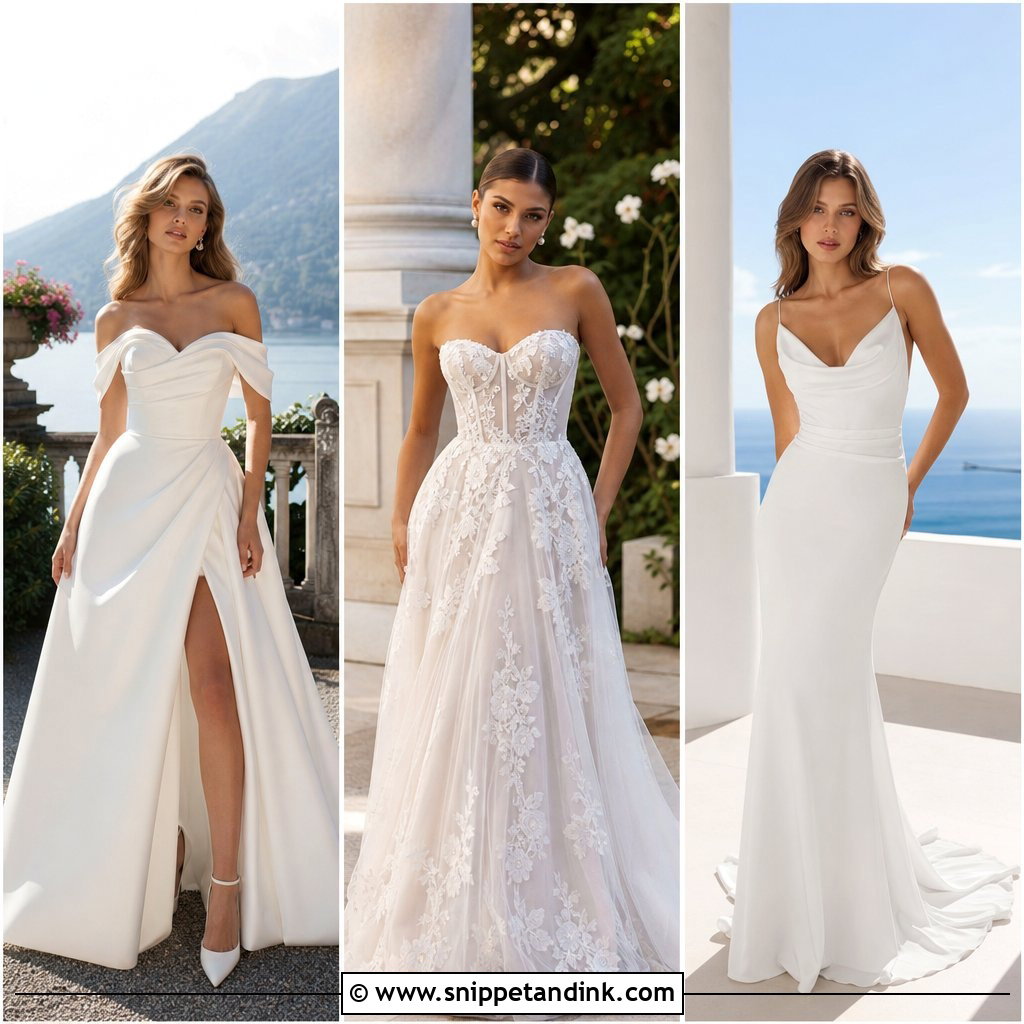
1. Bridal Atelier Satin A-Line Gown
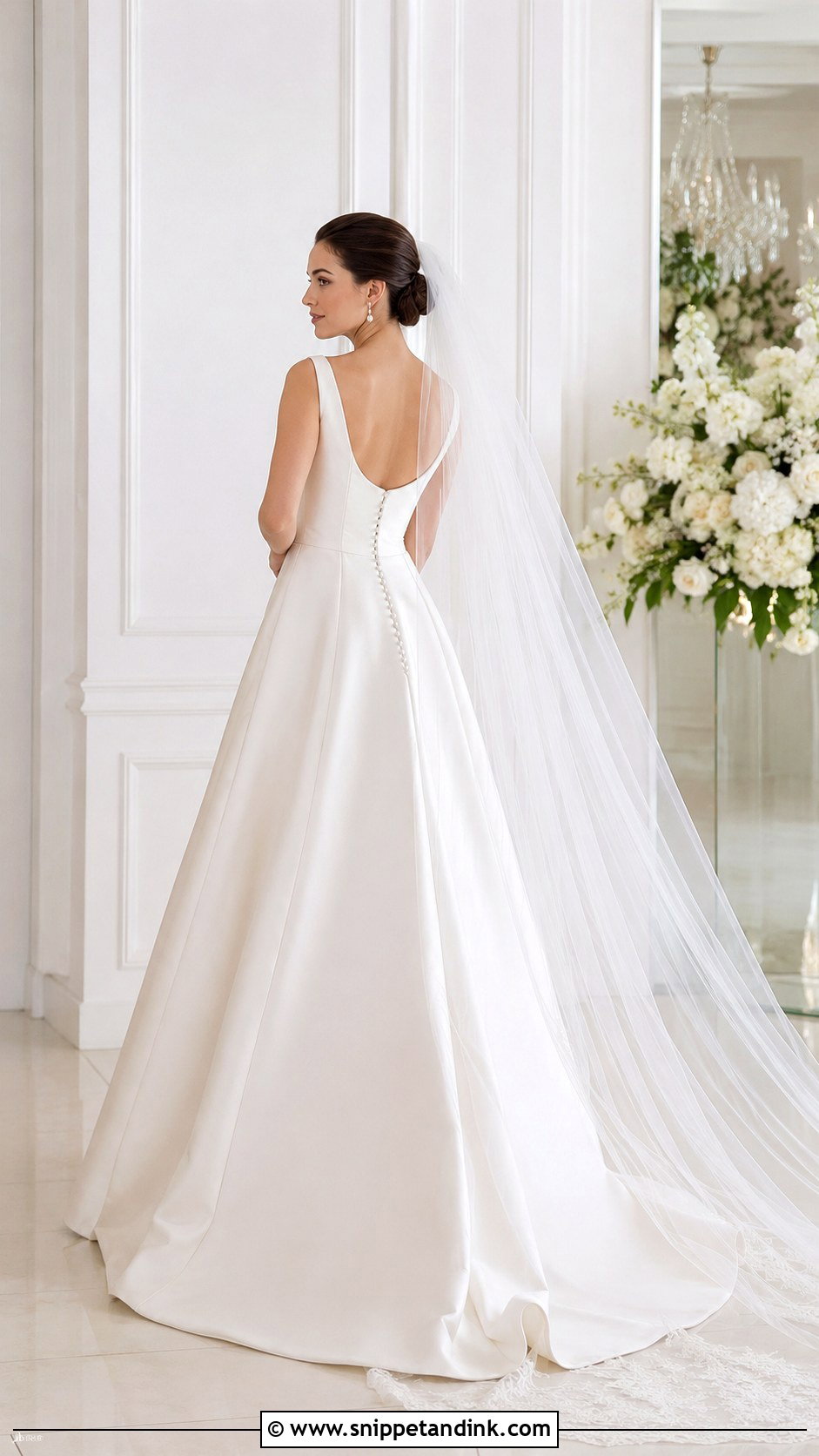
Satin A-lines are the shape I reach for when a bride wants structure without carrying a heavy skirt all day. The fabric is honest, though: it shows every ripple at the zip and every pull across the hips, so the fit through the waist matters more here than it would in lace. Ivory satin catches warm light, and covered buttons down the back give the photographer something to frame. Pointed pumps, pearl drops and a plain cathedral veil keep the line clean, with a sleek low bun so the neckline stays visible. If the bodice is strapless, ask for a removable wrap cut from the same bolt so the shade matches exactly. And sit down in it at every fitting. Satin creases across the lap faster than people expect.
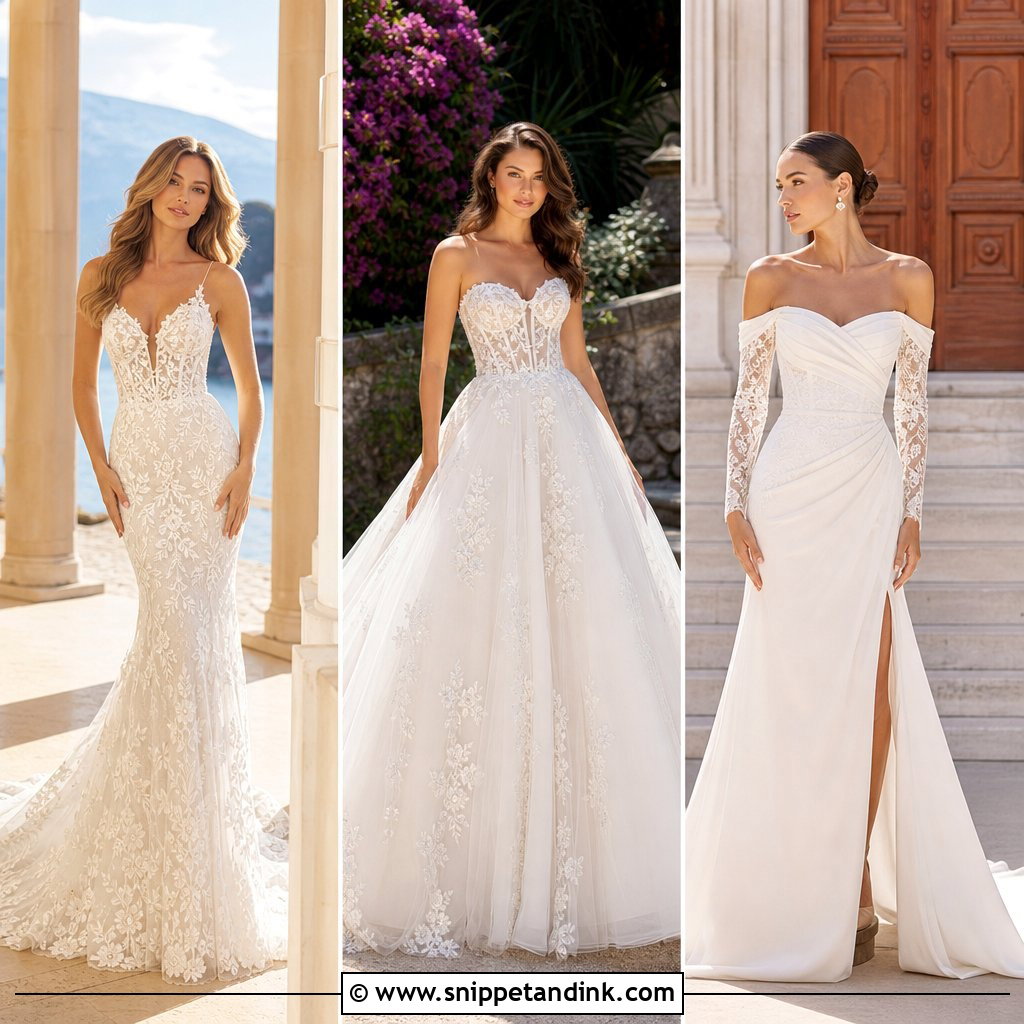
2. Bridal Atelier Lace Ball Gown
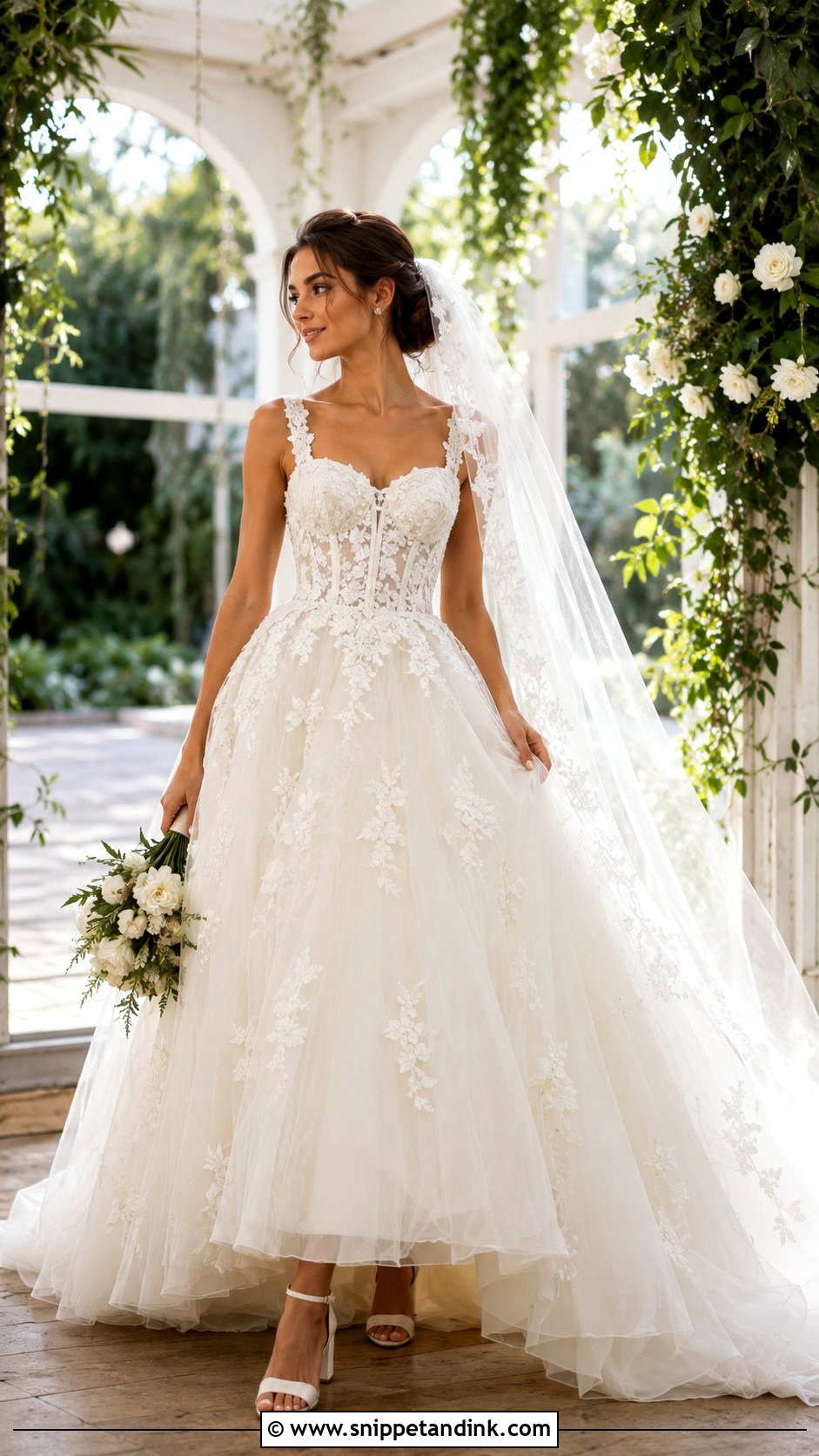
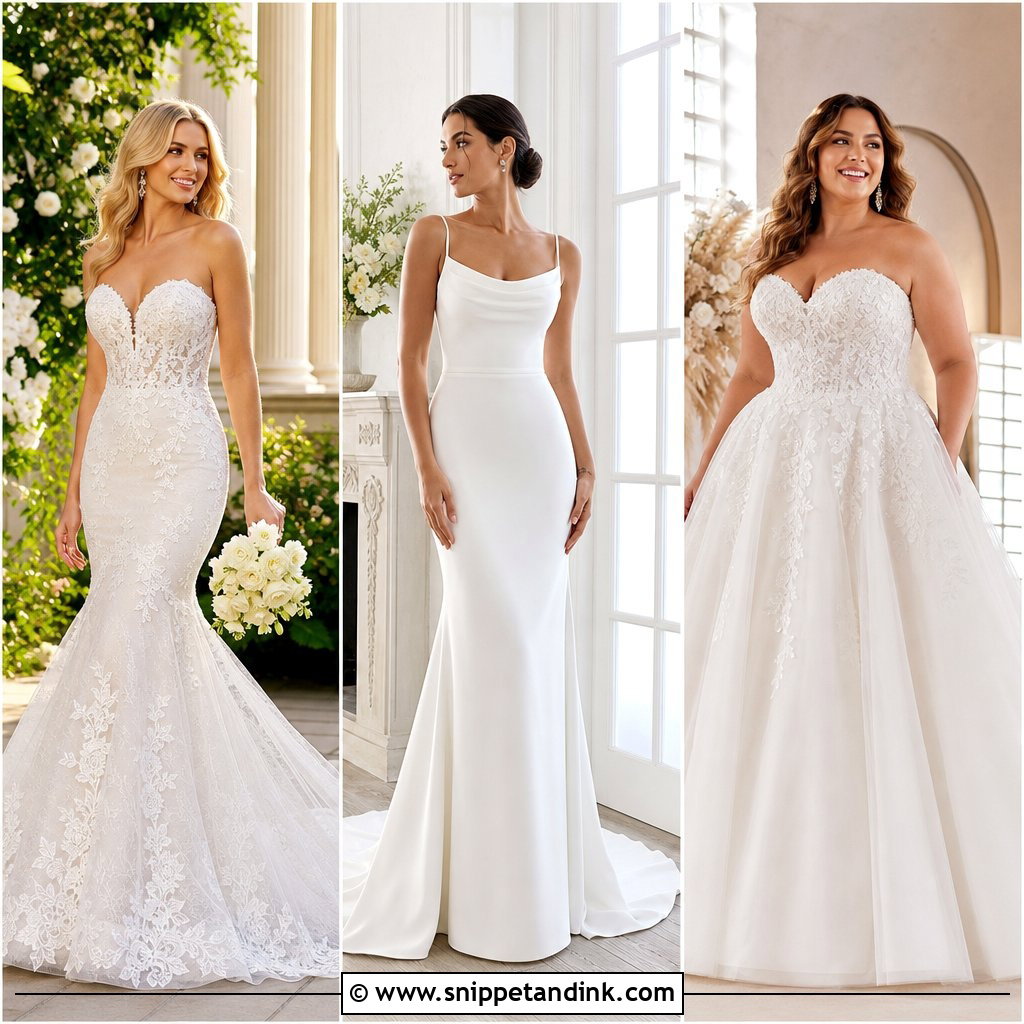
A lace ball gown is heavier than it looks, and most of that weight hangs from the waist. That’s why I check the internal boning and the waist stay before I even look at the lace pattern; a well-built bodice carries the skirt so your shoulders don’t have to. Floral appliqués give texture without extra beading, and a fingertip veil edged in matching lace ties the top to the skirt. Crystal studs and ivory block heels hidden under the hem are enough, with a softly curled updo to balance the volume. Leave the big necklace out and let the lace do the talking. Walk the full length of the fitting room in your actual shoes, because a hem cut for flats will catch under a heel. Grand rooms and formal traditional ceremonies suit the scale of this skirt.
3. Bridal Atelier Minimalist Slip Dress
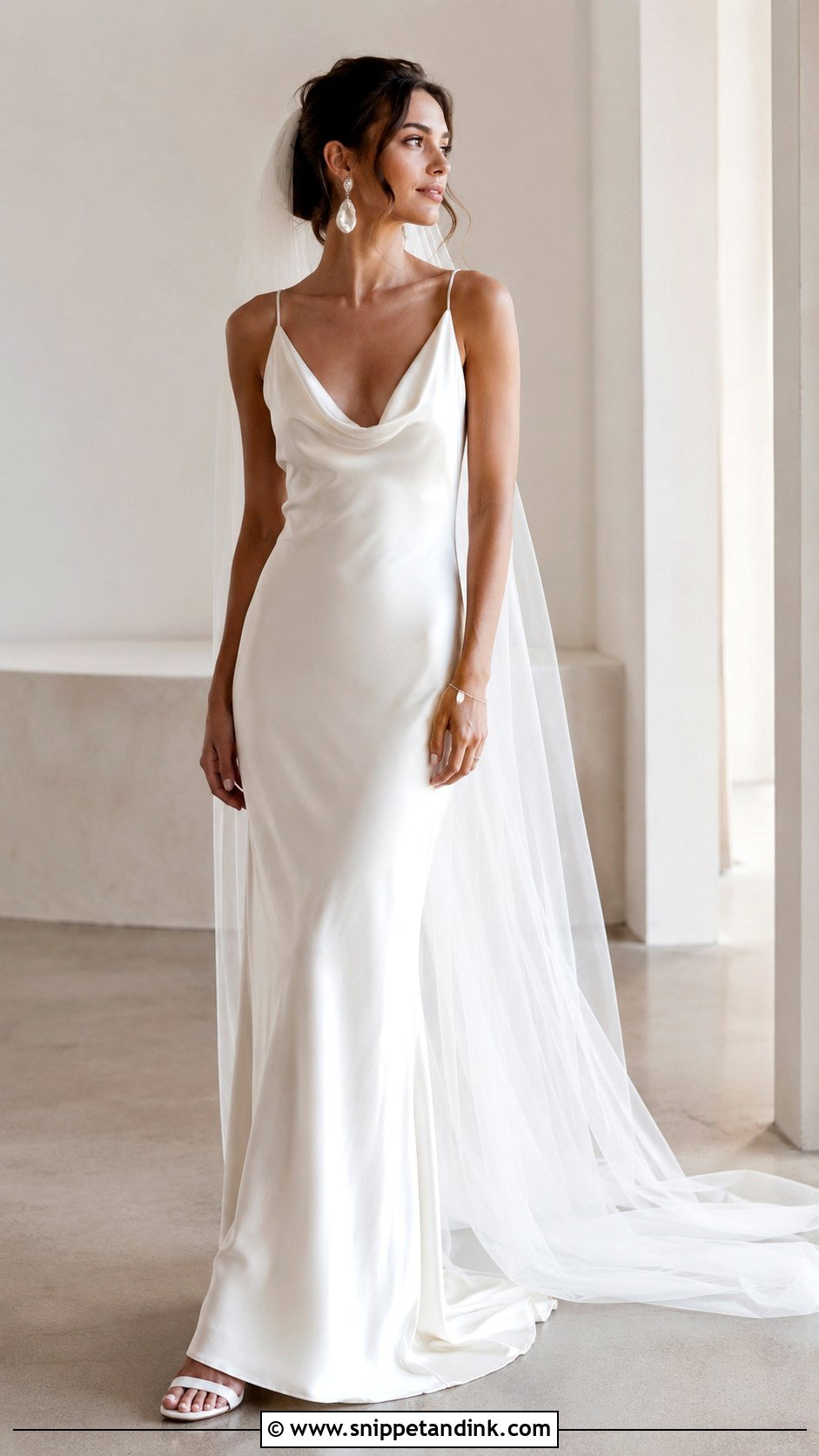
Slip dresses look simple and are among the hardest garments to fit. Heavyweight silk or satin skims the body; lightweight fabric clings and shows every line underneath, so the first thing I check is the weight of the cloth and what’s being worn beneath it. A subtle cowl neckline or a clean square neckline gives the plain silhouette a deliberate shape. Slim ivory sandals, sculptural earrings and one fine bracelet are plenty. A sheer floor-length veil adds movement without clutter, and a tailored coat or cashmere wrap covers a cold evening. Bias-cut pieces can drop slightly after hanging, so I’d only have the hem finished once the dress has rested on its hanger for a while.
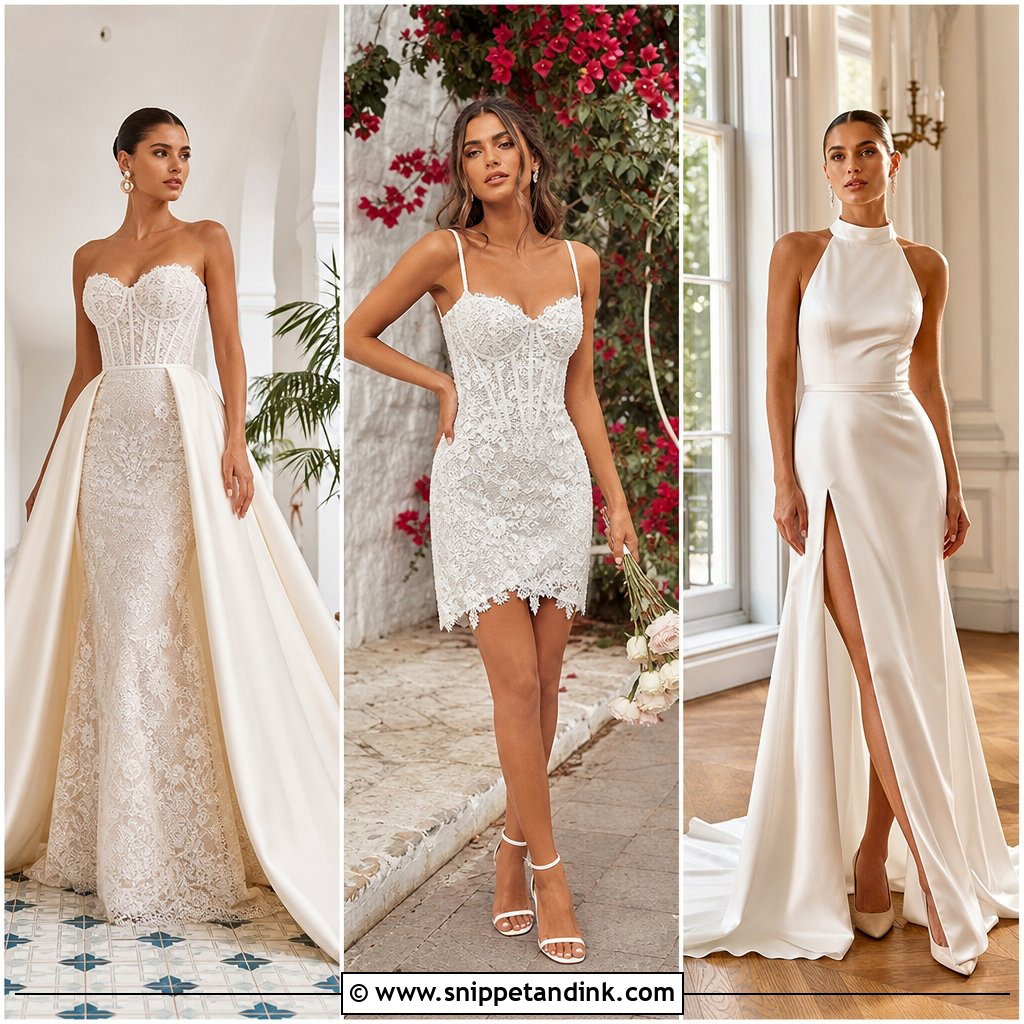
4. Bridal Atelier Basque Waist Gown
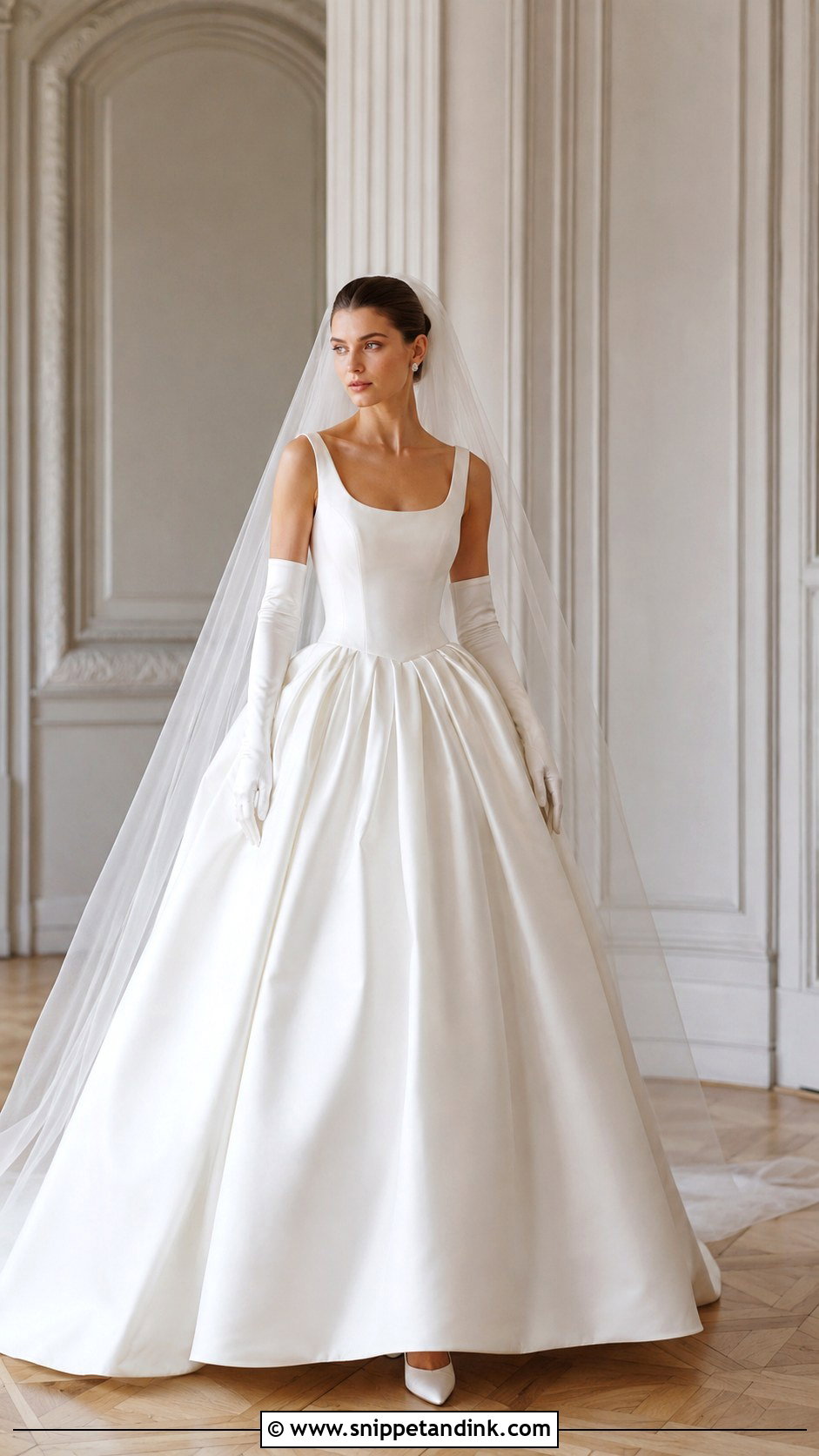
A basque waist gown dips its bodice into a V or U below the natural waist, which lengthens the torso and sets up a full skirt in satin, mikado or tulle. Where that point lands on your body is everything. Set it a little too low and it digs in every time you sit, so I mark it with the bride seated as well as standing. Choose a neckline that stays put without constant hitching: a structured scoop, a straight strapless edge or a soft sweetheart. Satin pumps, a long plain veil and small crystal earrings finish it. Opera gloves add drama, but only when they match the gown’s fabric and shade closely; ivory gloves against a white dress read as a mistake in photos. Keep the hair smooth and lifted so the waistline stays the focus.
5. Bridal Atelier Off-Shoulder Wedding Dress
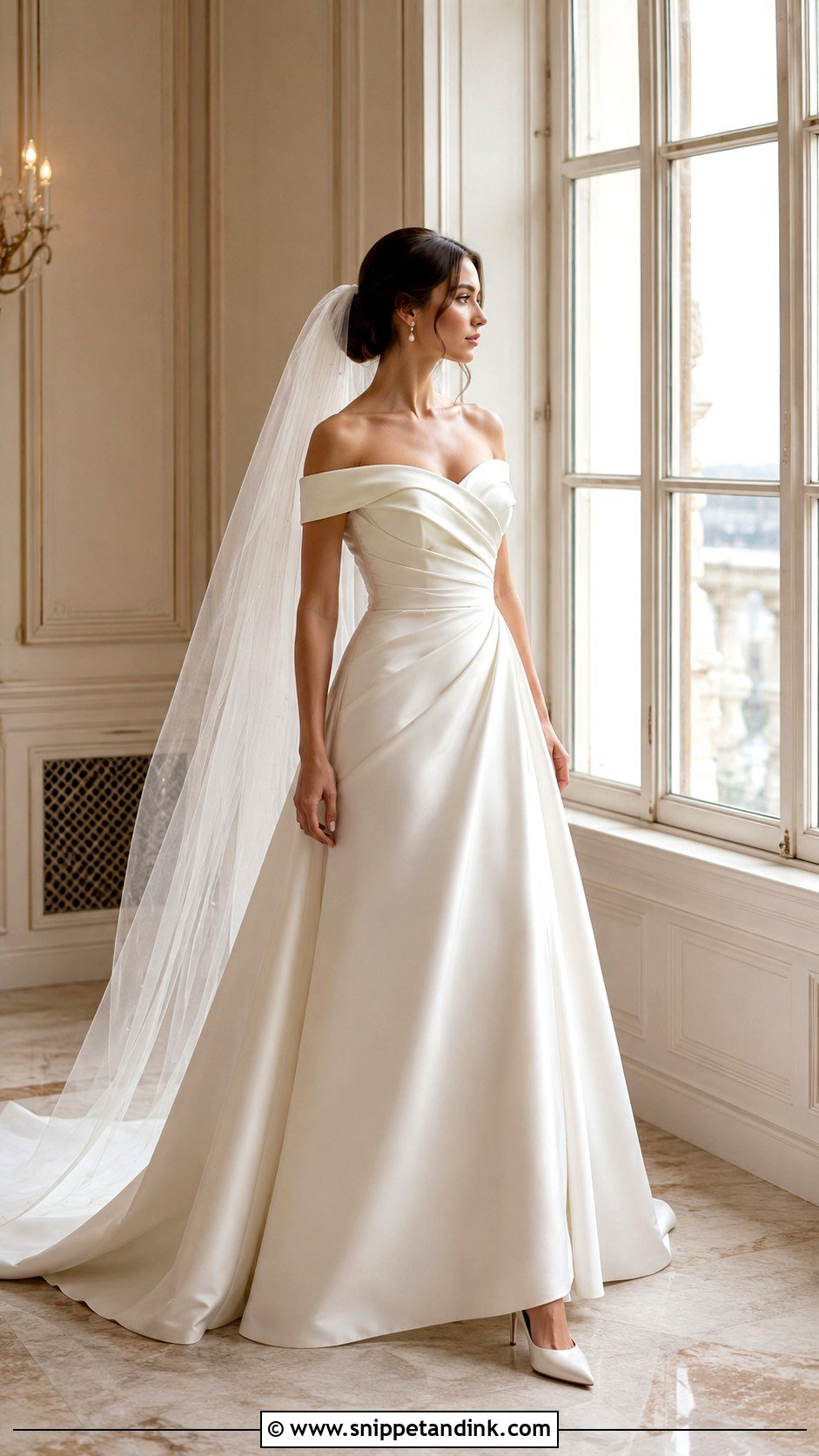
Off-shoulder sleeves frame the collarbone softly, but they live or die on the bodice underneath. If the support isn’t built in, the sleeves creep upward and you spend the reception tugging them down, so I sort the structure before we discuss accessories or alterations. Draped satin sleeves give a clean finish; lace or tulle ones read more romantic. Pearl earrings, a small hair comb and pointed ivory heels are enough. Pin a chapel-length veil beneath a low bun so the neckline shows from every angle, and leave the heavy necklace at home. At the fitting, raise your arms as if you’re hugging someone. That’s the movement that exposes a weak bodice, and it’s better found in the atelier than on the dance floor.
6. Bridal Atelier Long Sleeve Lace Gown
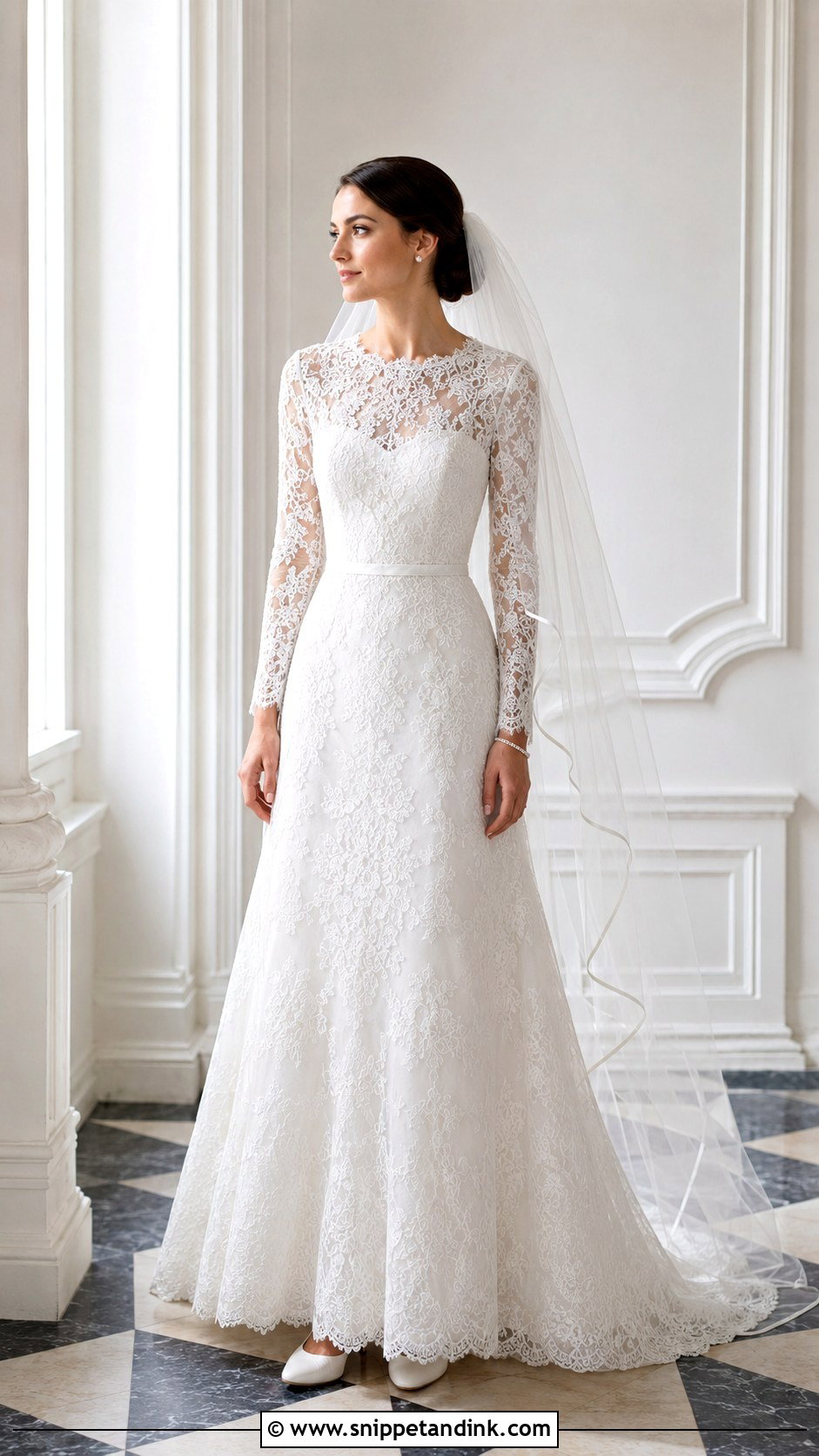
Long lace sleeves give coverage while still looking light, provided the lace is soft and the sleeve has room at the elbow. A tight sleeve looks lovely standing still and becomes miserable the first time you lift a glass or hug a grandparent. I check the cuffs too, since a rough edge scratches the wrist by evening. A fitted bodice with an A-line skirt keeps it classic; a slim column skirt moves it toward modern. Closed-toe pumps, pearl studs and a narrow ribbon-edged veil keep things tidy, with a smooth chignon so the shoulders and back stay clear. With a high neckline, swap the necklace for a fine bracelet. It earns its place in cooler months and formal indoor venues.
7. Bridal Atelier Square Neck Wedding Dress
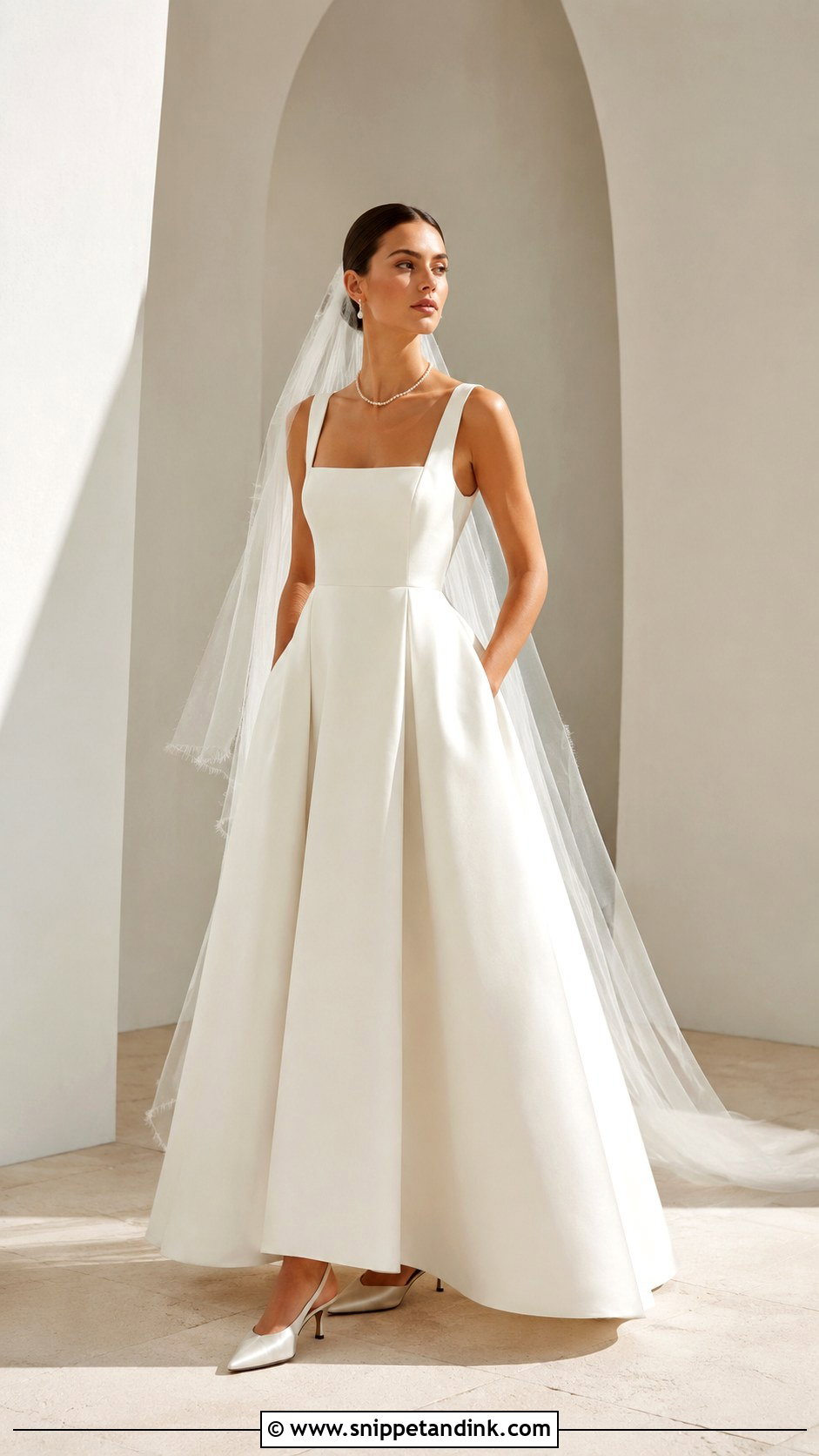
A square neckline gives the upper body crisp edges, which is why it sits so well with wide straps or fitted sleeves. Satin, crepe and mikado hold those corners; softer fabrics let them droop by mid-afternoon. An A-line skirt keeps the proportions classic, while a fitted skirt sharpens them. I’d choose a short pearl necklace that sits inside the neckline rather than crossing it, then drop earrings and closed-toe slingbacks. A raw-edge sheer veil won’t fight the strong top line. Finish with a center-parted bun or a soft half-up style. It’s a sensible middle ground for a bride who wants some modesty and a modern shape without an intricate design.
8. Bridal Atelier Corset Tulle Gown
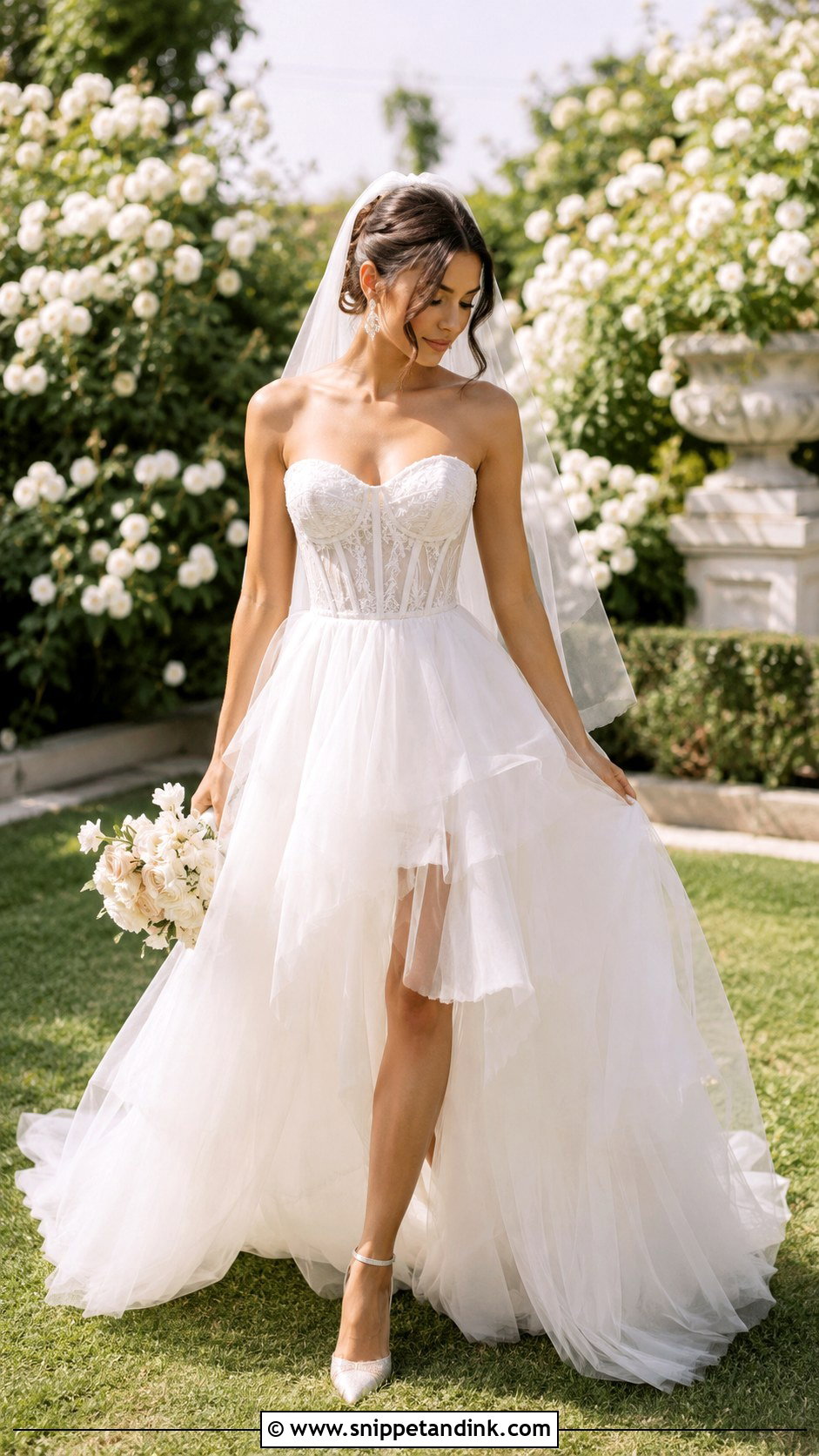
Corset tulle gowns pair visible structure with airy layers, and the structure is where I spend fitting time. Look for proper cups, boning that follows your ribs instead of pressing into them, and enough lining for the coverage you want. Soft tulle builds volume without stiffness, though it snags on rough floors and bouquet wire; a small tear in the outer layer is common and easy to hide in the folds, so don’t panic if it happens. Crystal earrings, metallic ivory heels and a fine tulle veil running just past the train finish it. A loose updo stops it feeling too formal. When the bodice is heavily detailed, hold back on everything else. Garden venues make the most of the movement.
9. Bridal Atelier Mikado Mermaid Gown
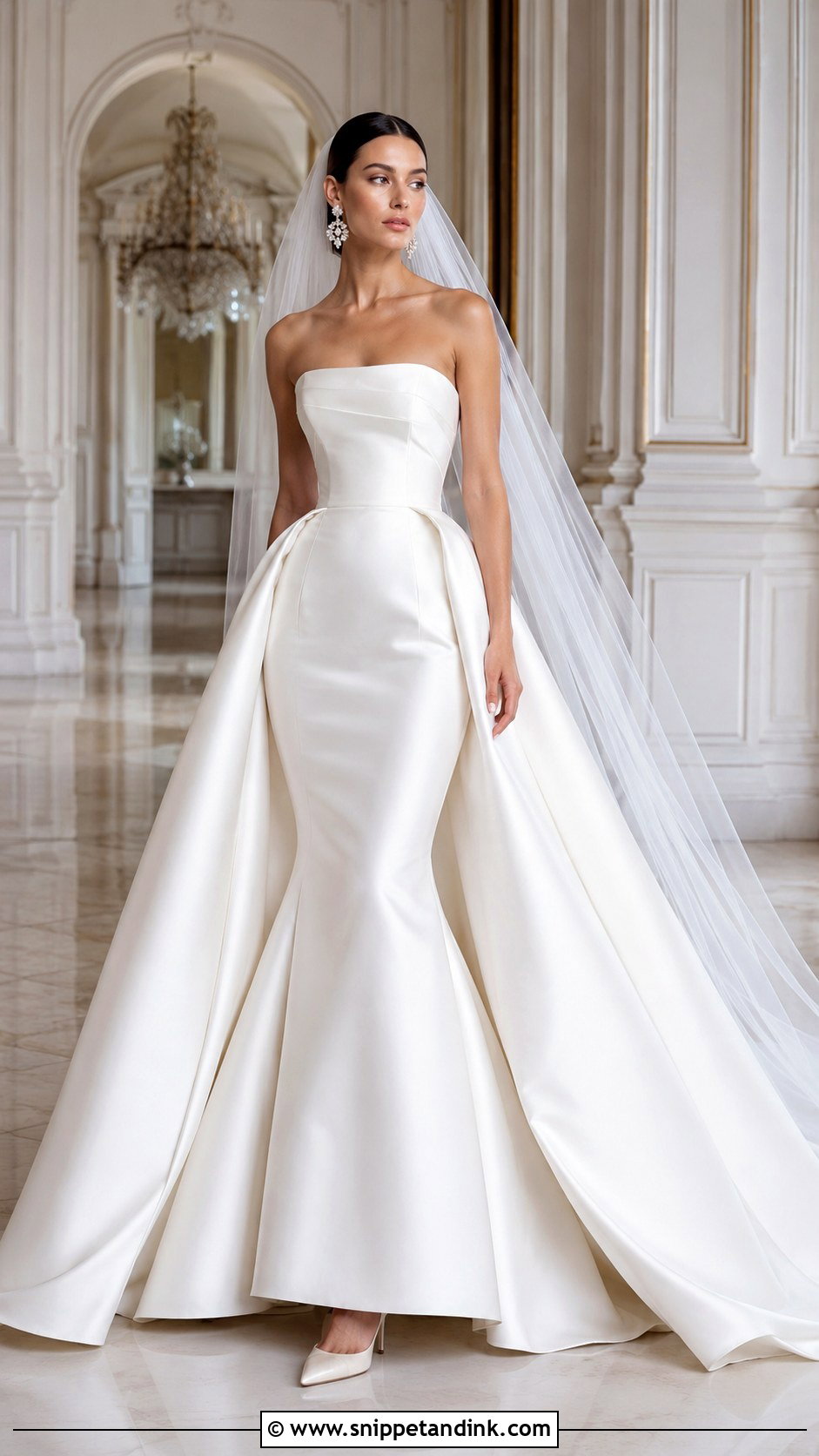
Mikado is stiff enough to hold a mermaid flare on its own, which is why I prefer it to soft satin for this shape. The flare point decides everything: set too high and you can’t take a full stride, set too low and you shuffle all night. I have brides sit, climb a step and do a few dance turns at each fitting before the hem is touched. A straight strapless or supportive off-shoulder neckline gives a clean top. Add pointed satin pumps, statement earrings and a long veil with minimal trim, plus a sleek ponytail or low bun. A removable overskirt can bring extra ceremony volume. Give this gown space; it reads best in a big room where the train can be laid out fully.
10. Bridal Atelier Chiffon Empire Waist Gown
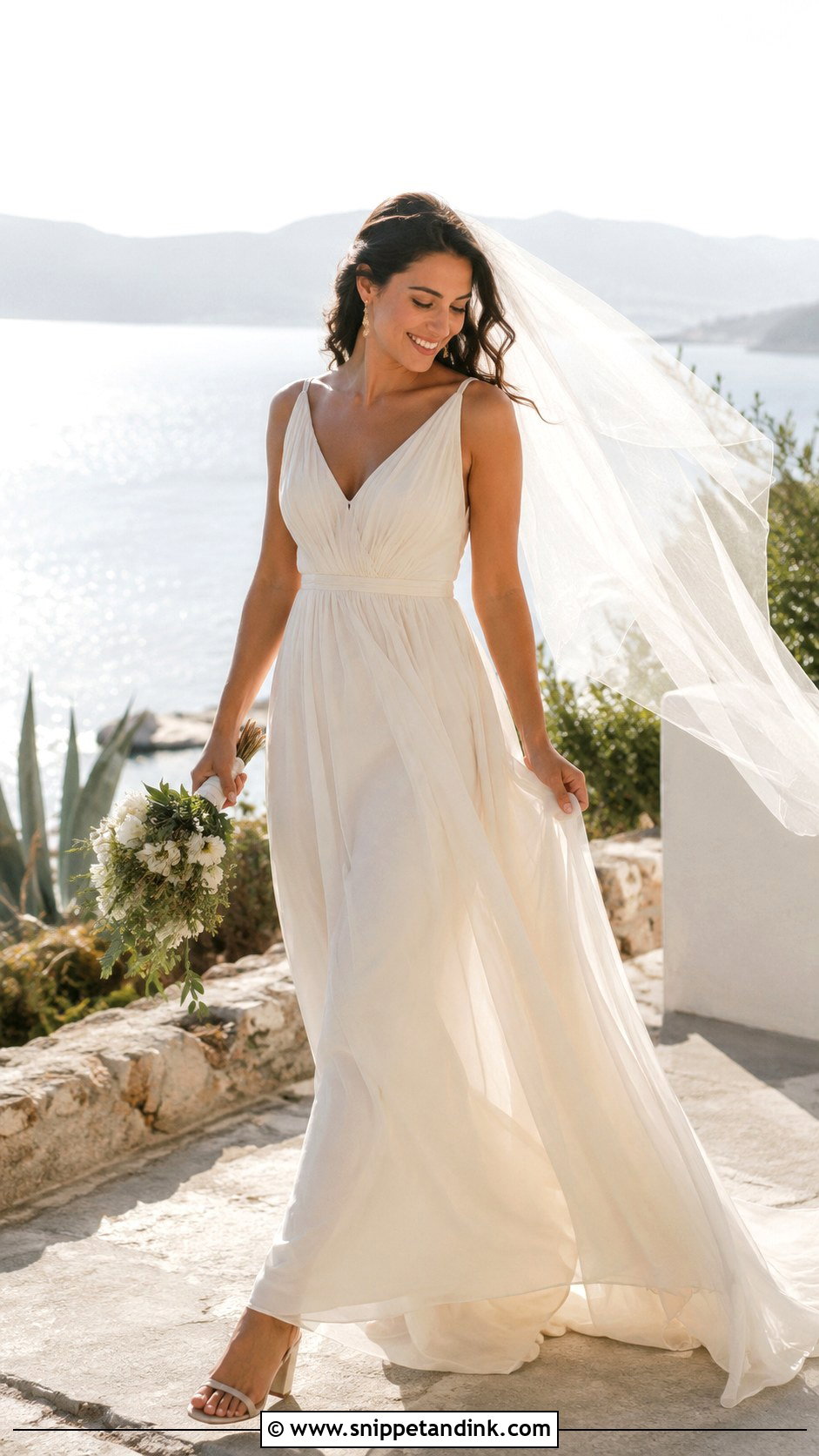
Soft chiffon and an empire waist make one of the easiest gowns to wear through a long day. The seam sits just under the bust and the skirt falls freely, so nothing presses on the waist or hips after dinner. Chiffon’s weak spot is light. Unlined chiffon can turn see-through in strong sun, so I always check it standing by a bright window before signing off. A lined bodice with narrow straps, flutter sleeves or a soft V gives as much coverage as you like. Low block-heel sandals sink less into lawns and sand than stilettos. Delicate gold earrings, a lightweight fingertip veil, loose waves or a braided updo and a small bouquet keep the outfit uncluttered.
11. Bridal Atelier Tea-Length Wedding Dress
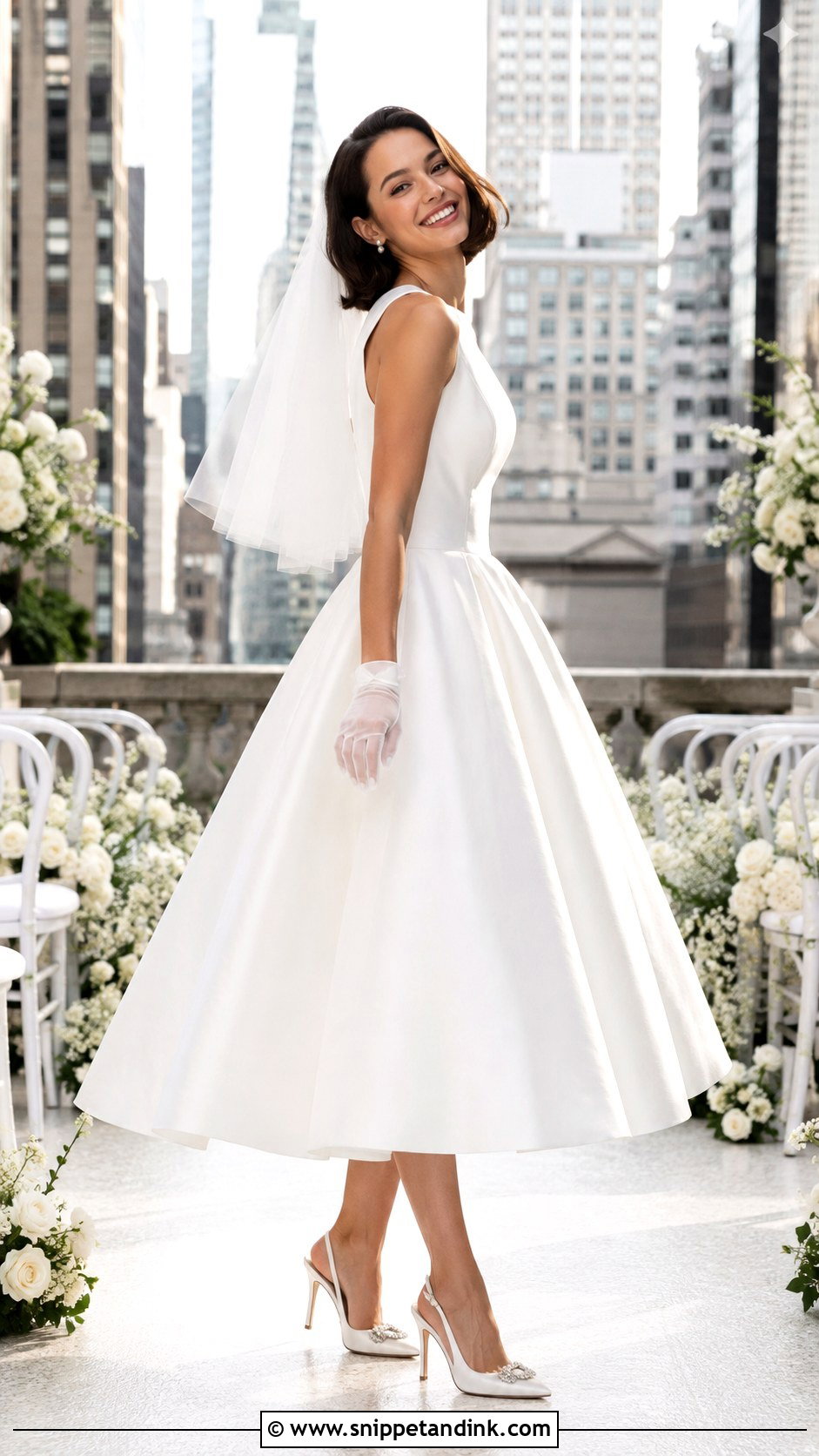
With a tea-length dress the shoes are suddenly on show, and I treat them as part of the outfit from the first fitting. The hem falls somewhere between knee and ankle, and exactly where changes the leg line. Ending at the widest part of the calf tends to look heavy, so I’ll move it up or down to avoid that spot. A fitted bodice with a full skirt reads vintage; a streamlined cut reads modern. Satin pumps, embellished slingbacks or ivory ankle-straps all work. Pearl studs, short gloves and a shoulder-length veil complete it, and a waved bob or neat updo matches the shorter proportion. It sits comfortably at courthouse ceremonies, daytime receptions and smaller venues.
12. Bridal Atelier White Pantsuit
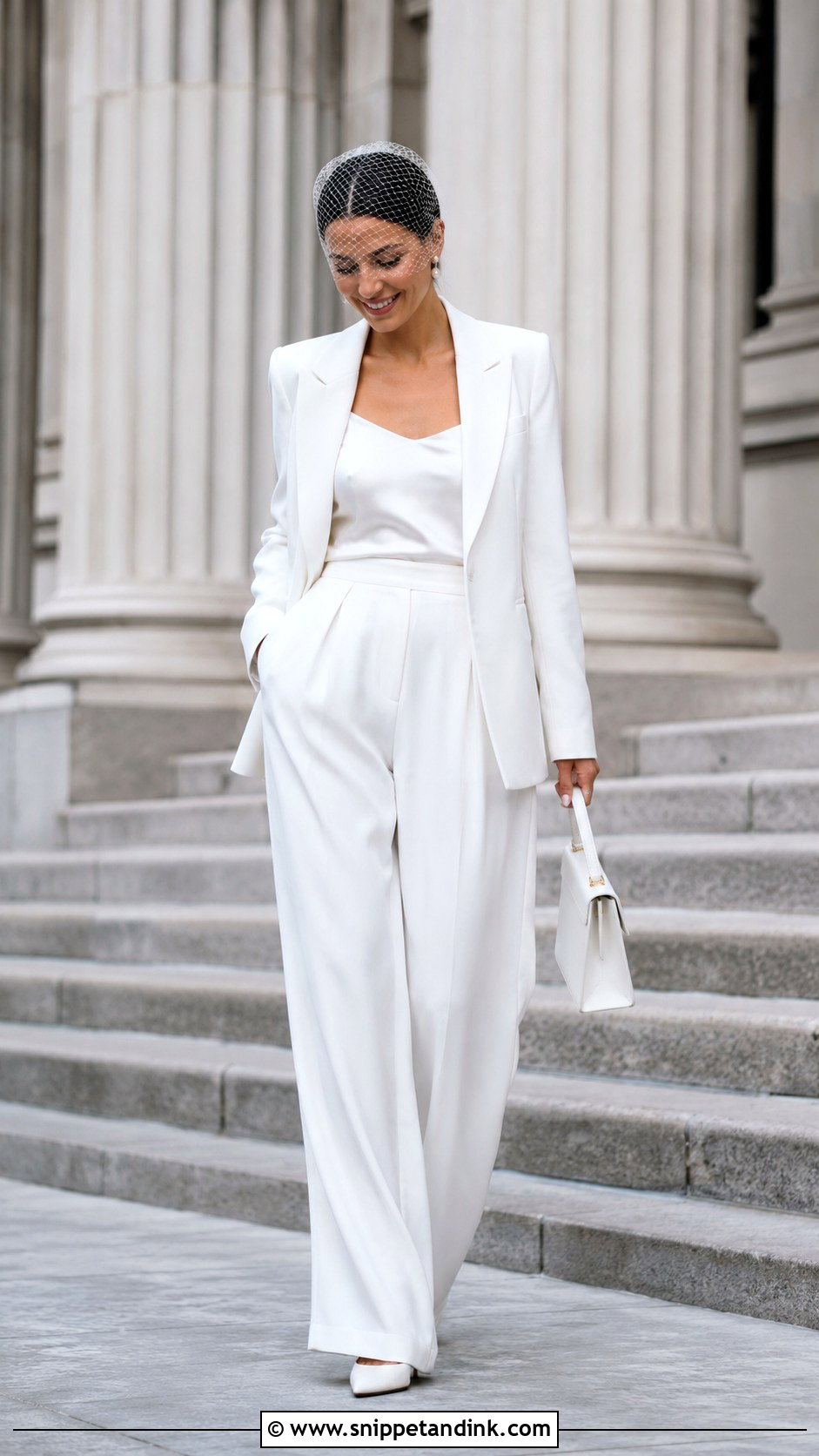
What if a traditional gown just doesn’t feel like you? A white pantsuit gives clean tailoring and real comfort, but white trousers are unforgiving and every pull line across the seat shows. I set the trouser length with the exact heels you’ll wear, leaving a slight break so the hem doesn’t flash ankle when you walk. A fitted or softly oversized blazer goes over high-waisted trousers, with a silk camisole, lace shell or structured corset top underneath. Pointed pumps, pearl earrings and a small top-handle bag finish it. A birdcage veil adds one clear bridal note, and sleek hair tucked behind the ears shows off the lapels. The pieces can be worn again, which civil-ceremony brides often appreciate.
13. Bridal Atelier Wedding Jumpsuit
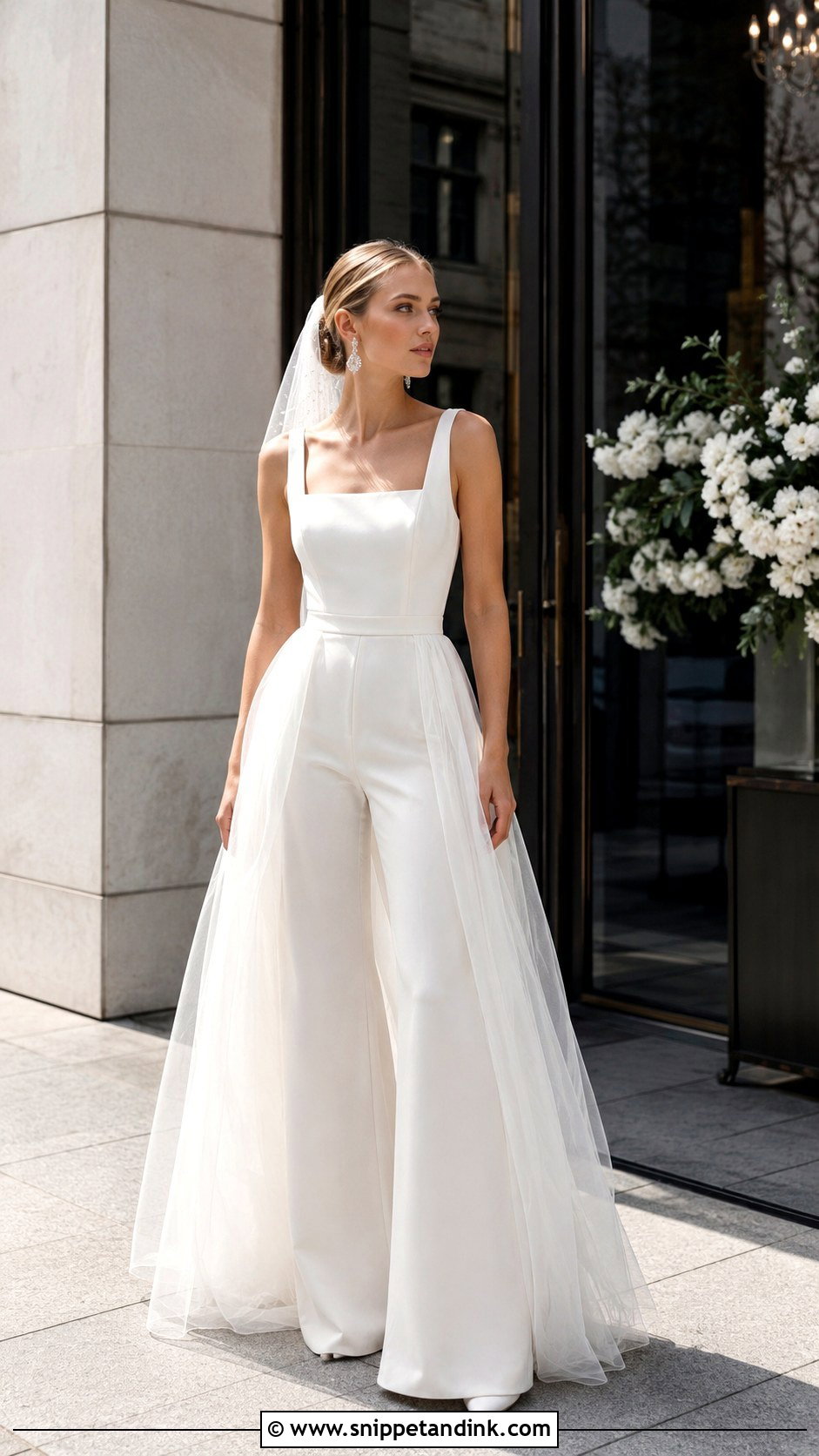
Jumpsuits fail on one measurement more than any other: torso length. Too short and the crotch pulls every time you sit or lift your arms; too long and the fabric pools at the waist. That’s the first thing I pin, followed by zipper placement, because a side zip is far easier to manage alone in a restroom than a long back zip. Wide-leg trousers give movement, and a defined waist keeps the shape from going boxy. A halter, square-neck, one-shoulder or wrap bodice can be chosen for the support you need. Pointed heels, statement earrings and a short veil or detachable tulle train finish it, with a smooth bun or high ponytail. City weddings and reception changes are where it shines.
14. Bridal Atelier Two-Piece Wedding Outfit
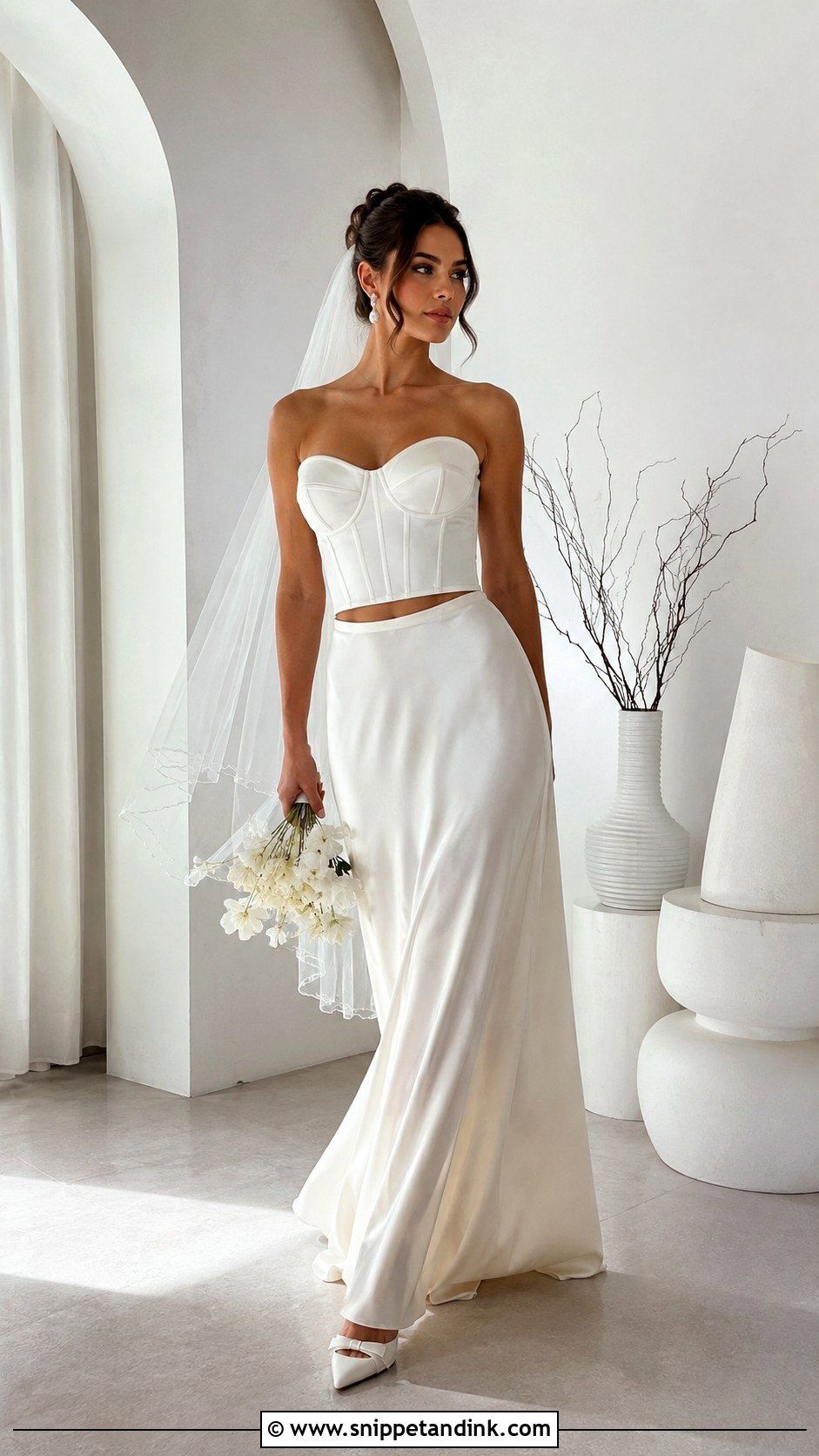
Two-piece outfits quietly solve a problem many brides have: a top and bottom that need different sizes. Pair a structured corset top with a flowing satin skirt, or a long-sleeve lace top with a crepe column skirt. A sliver of visible waist reads modern; overlapping pieces give more coverage. The risk is the top riding up when your arms go up, so I ask for silicone gripper along the skirt waistband or a hidden hook joining the layers. Ivory heels, simple drop earrings and a light veil are plenty, with a low ponytail or softly pinned hair. Separates can also be swapped at the reception, which gives you a change without buying a second complete outfit.
15. Bridal Atelier Cape Wedding Gown
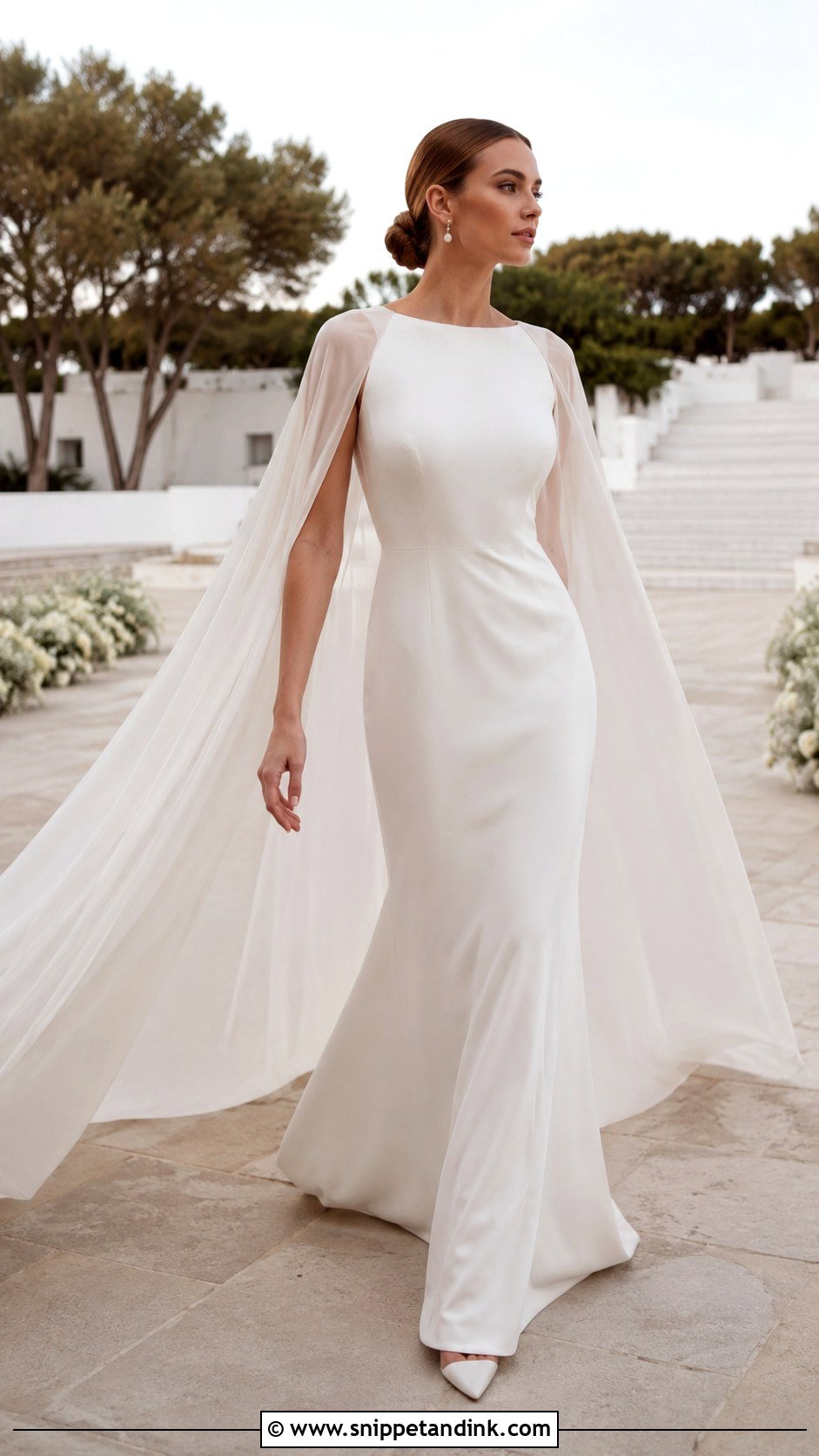
A cape gives you the entrance a veil would, plus coverage across the shoulders and back. Sheer tulle creates an ethereal effect, lace adds texture, and structured crepe keeps things crisp. I keep the gown underneath plain so the cape has room; a fitted column, satin A-line or minimalist jumpsuit will all carry one. Understated earrings, pointed heels and a smooth updo complete it. Find out how the cape attaches before the final fitting. Snaps at the shoulder seams come off in seconds, while a cape stitched into the neckline doesn’t, and you’ll want it off before the first dance. Practise on stairs too; a long cape catches behind your heels.
16. Bridal Atelier Detachable Overskirt Gown
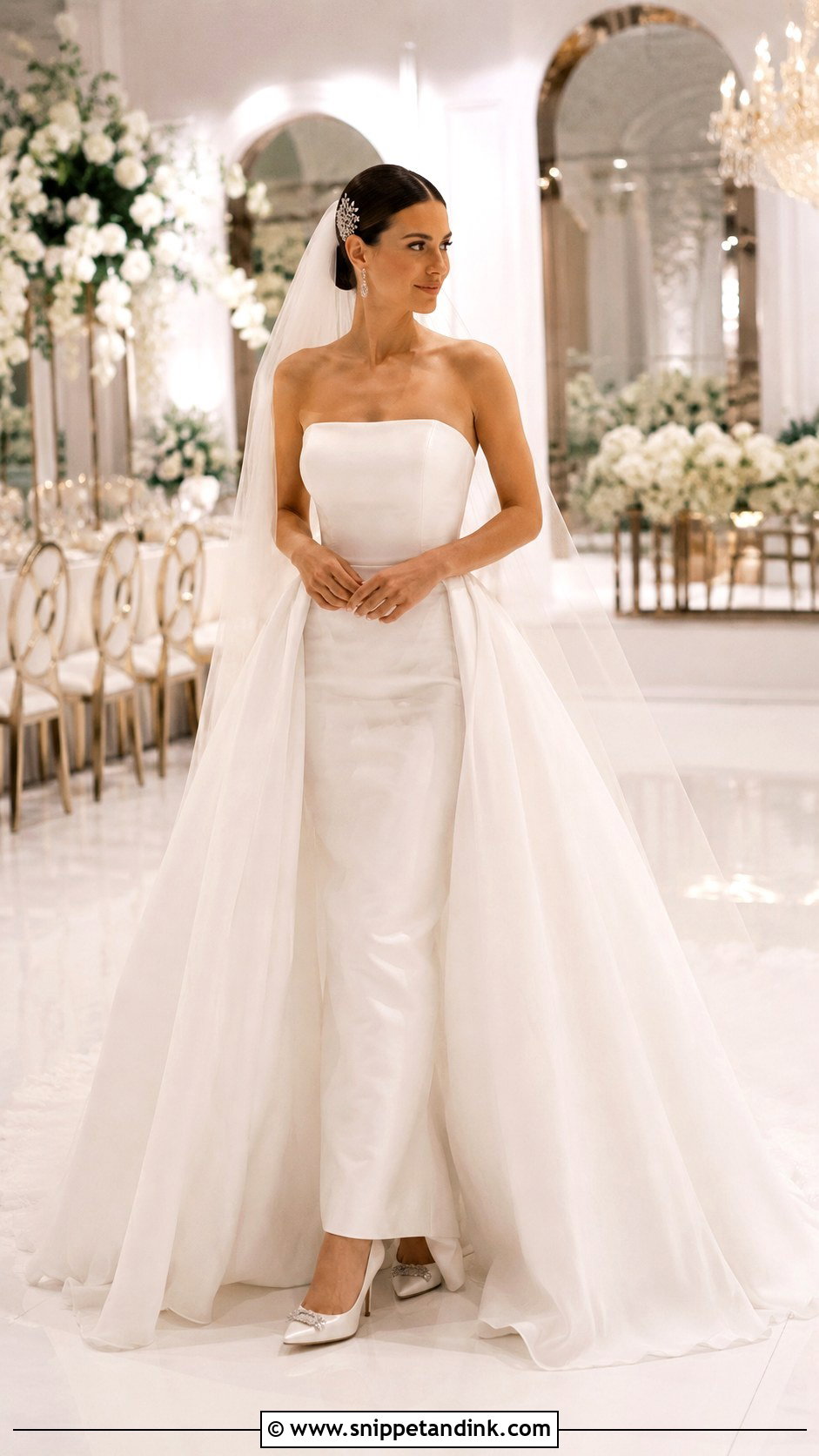
Overskirts give you two looks without a full outfit change. For the ceremony, a satin, organza or tulle skirt goes over a fitted gown for volume and a longer train; later it comes off to reveal a sleek column, mermaid or short dress. The detail I check is the closure. Hooks hidden in the waistband are discreet, but someone has to know how to undo them in a hurry, so I walk a bridesmaid through it at the last fitting. Keep the earrings and shoes the same for both versions. A long veil suits the fuller ceremony shape, and a jeweled clip can take over afterward. Ask the atelier to bury the attachment points properly; a visible row of hooks on the base gown is a giveaway in close-up photos.
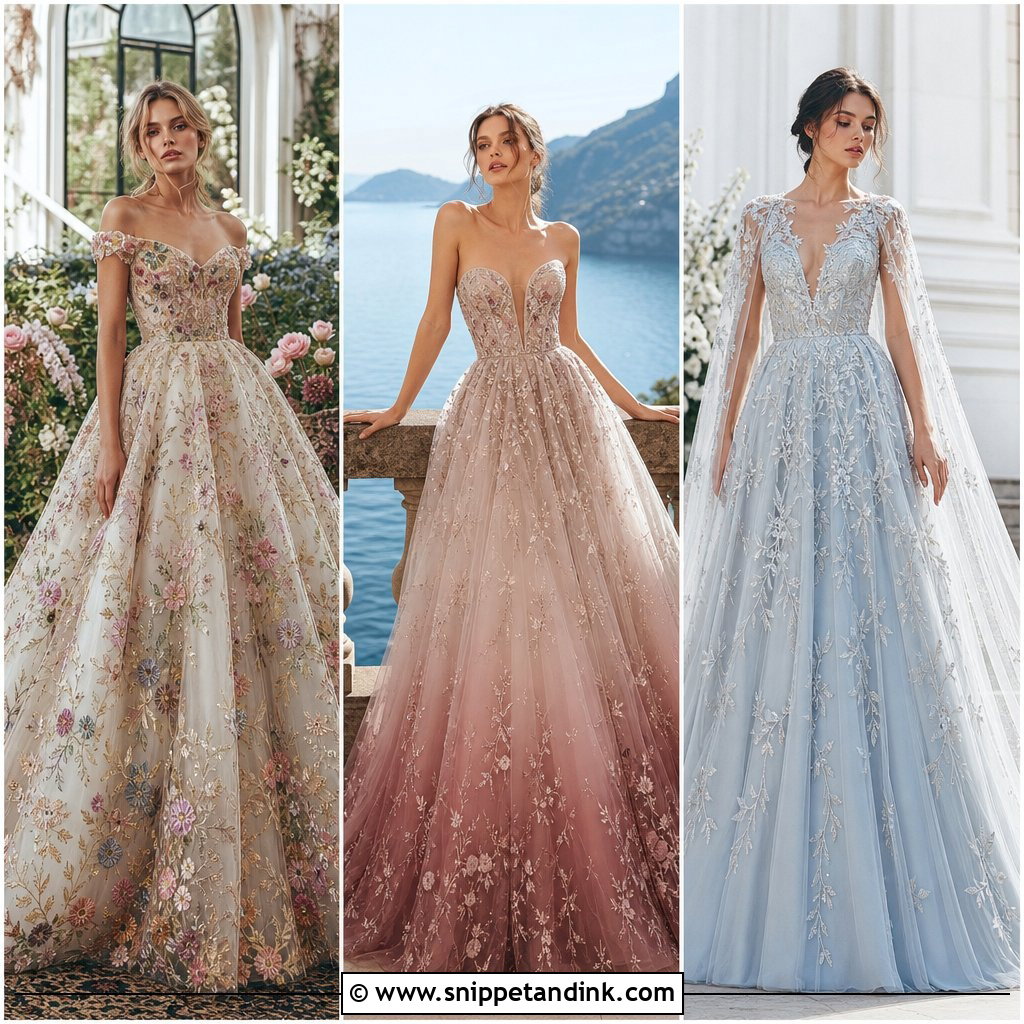
17. Bridal Atelier Floral Appliqué Gown
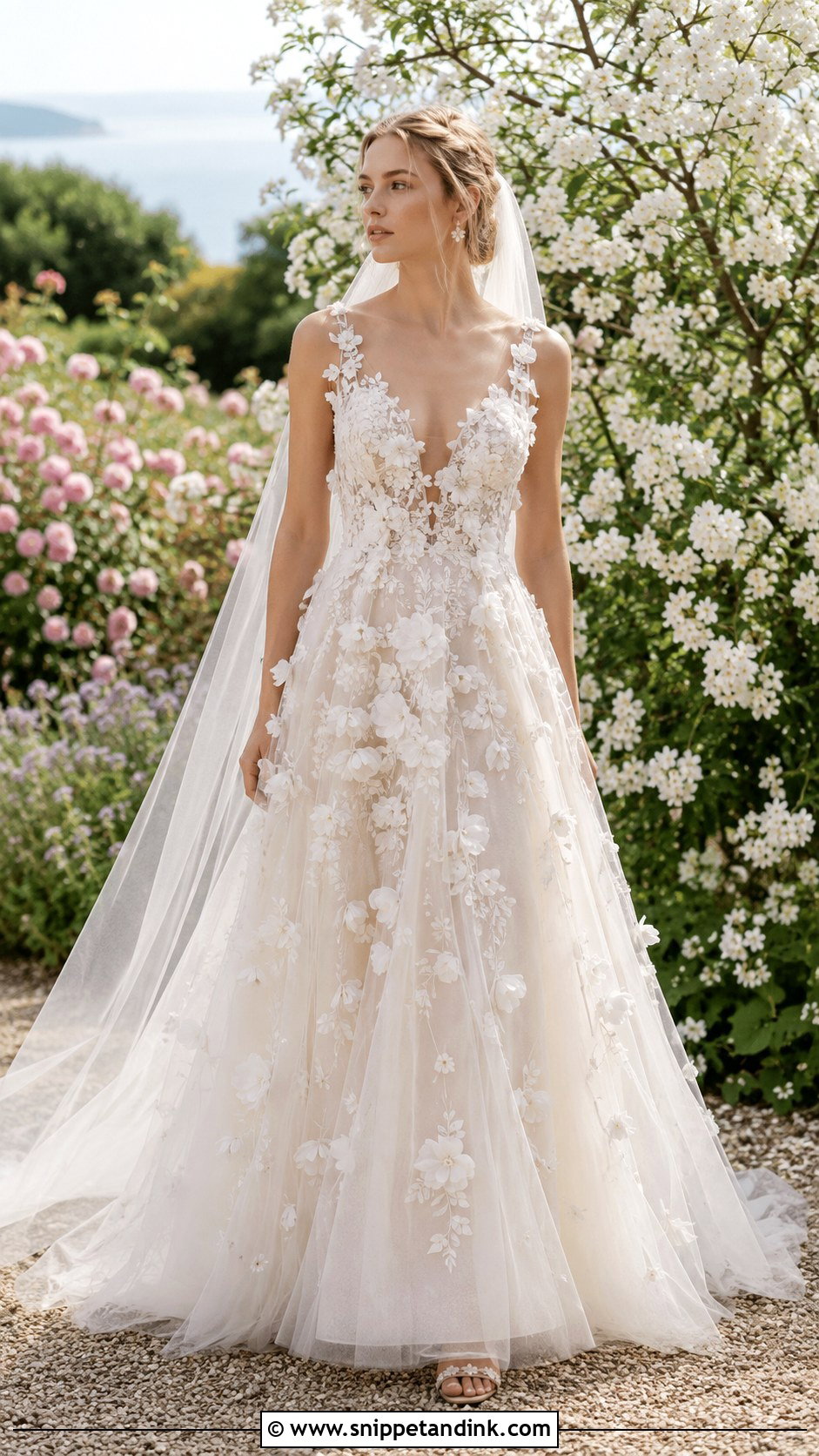
Raised appliqués give a gown texture, but placement decides whether it looks crafted or crowded. I look for flowers concentrated on the bodice and thinning toward the hem, so the eye travels down without the skirt looking heavy. Three-dimensional petals also catch on things: a beaded bracelet, a cufflink or a lace-edged veil can tug them loose, which is why I keep the veil plain. An A-line or fitted tulle silhouette suits this detail, with delicate sandals and small earrings. A loose bun with a few face-framing pieces fits the mood. Don’t stack floral hair pieces on top of floral appliqués. Spring dates and botanical venues show it off best.
18. Bridal Atelier Pearl Beaded Column Gown
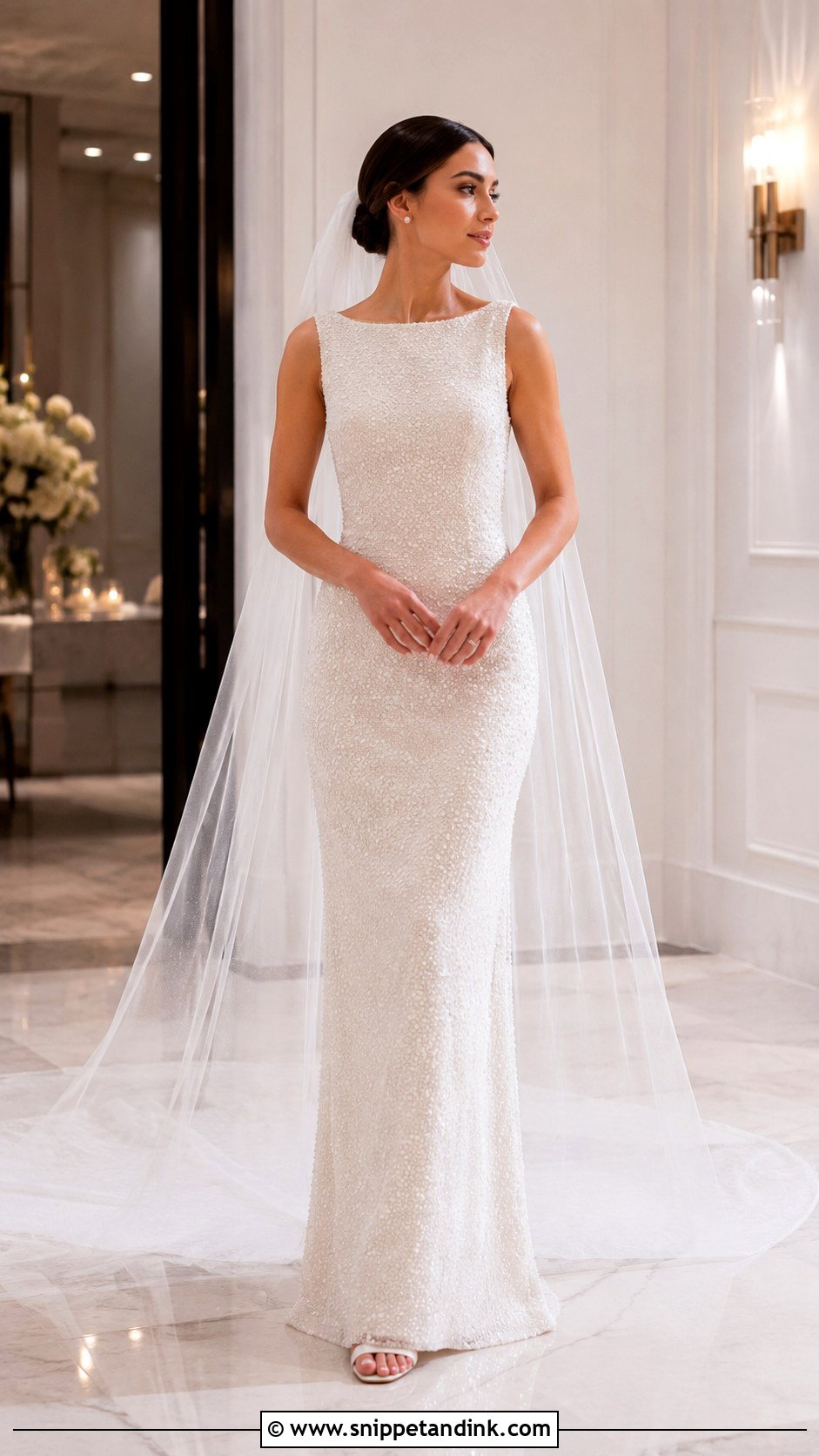
Pearl beading catches light along a straight column without needing a full skirt. My comfort test is the inner arm: I have brides swing their arms and hug at the fitting, because beads set too close to the underarm seam rub the skin raw by late evening. Ask whether the beads are knotted off in short sections; on one long continuous thread, a single snag can loosen a whole row. A lined bodice and smooth underlayer let the dress sit flat. Simple satin heels, pearl studs and a plain sheer veil are enough, with hair polished into a low bun or side-parted waves. Skip a large necklace unless the neckline is very plain. Evening venues with warm lighting bring out the shimmer.
19. Bridal Atelier Modest High Neck Gown
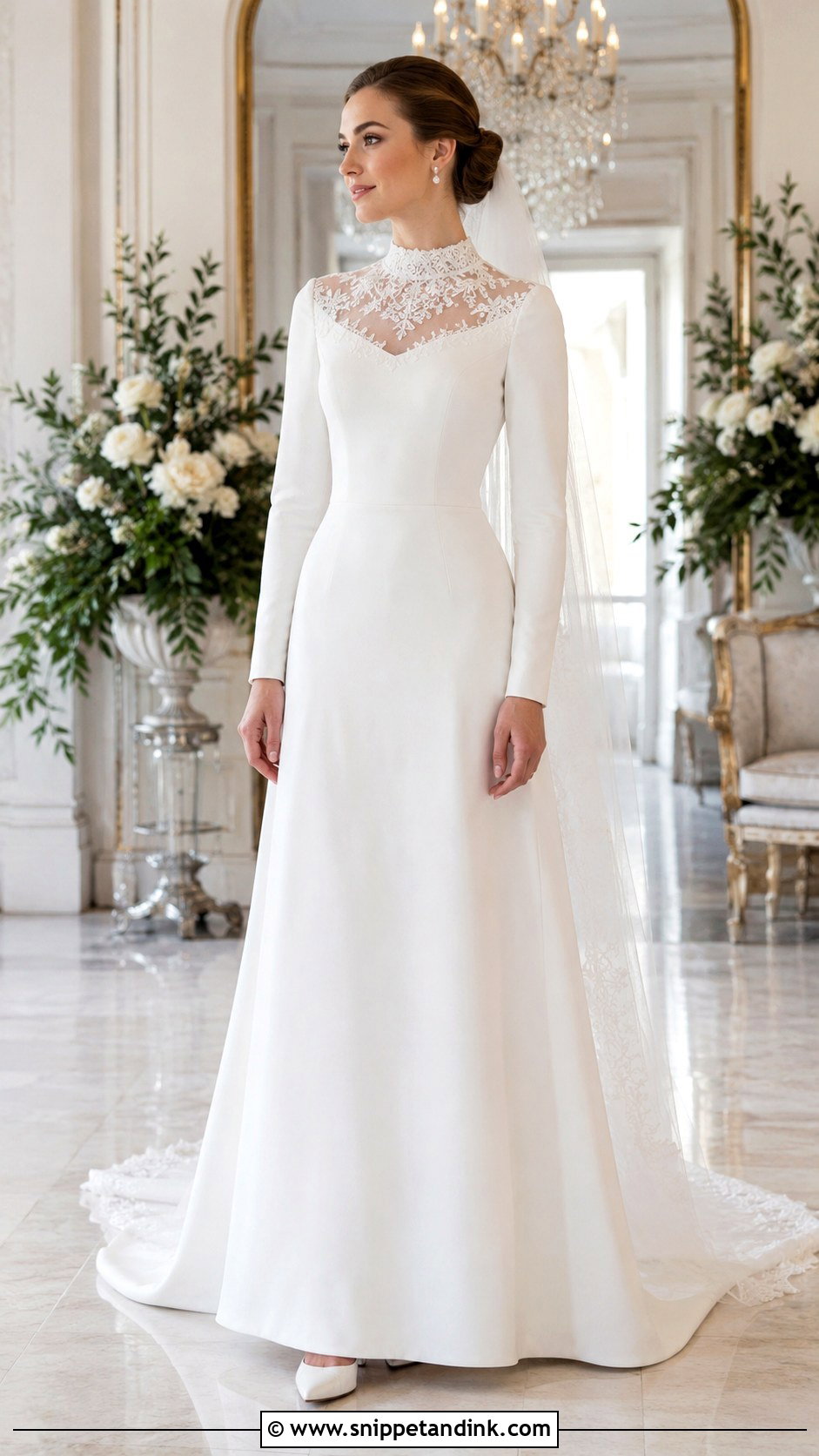
High necklines look graceful as long as the fabric stays light, so I point brides toward illusion lace, smooth crepe or satin with carefully shaped bodice seams. Heavy fabric right up to the throat can feel tight within a few hours, and at the fitting I check that you can turn your head and swallow without the collar pressing. Long sleeves add more coverage; a sleeveless high neck gives a cleaner line. Balance the covered top with an A-line, fitted column or gently flared hem. Pearl earrings, closed-toe heels and a veil set beneath a neat bun finish it, with no necklace competing at the collar. Brides who want secure coverage still get real shape here.
20. Bridal Atelier Reception Mini Dress
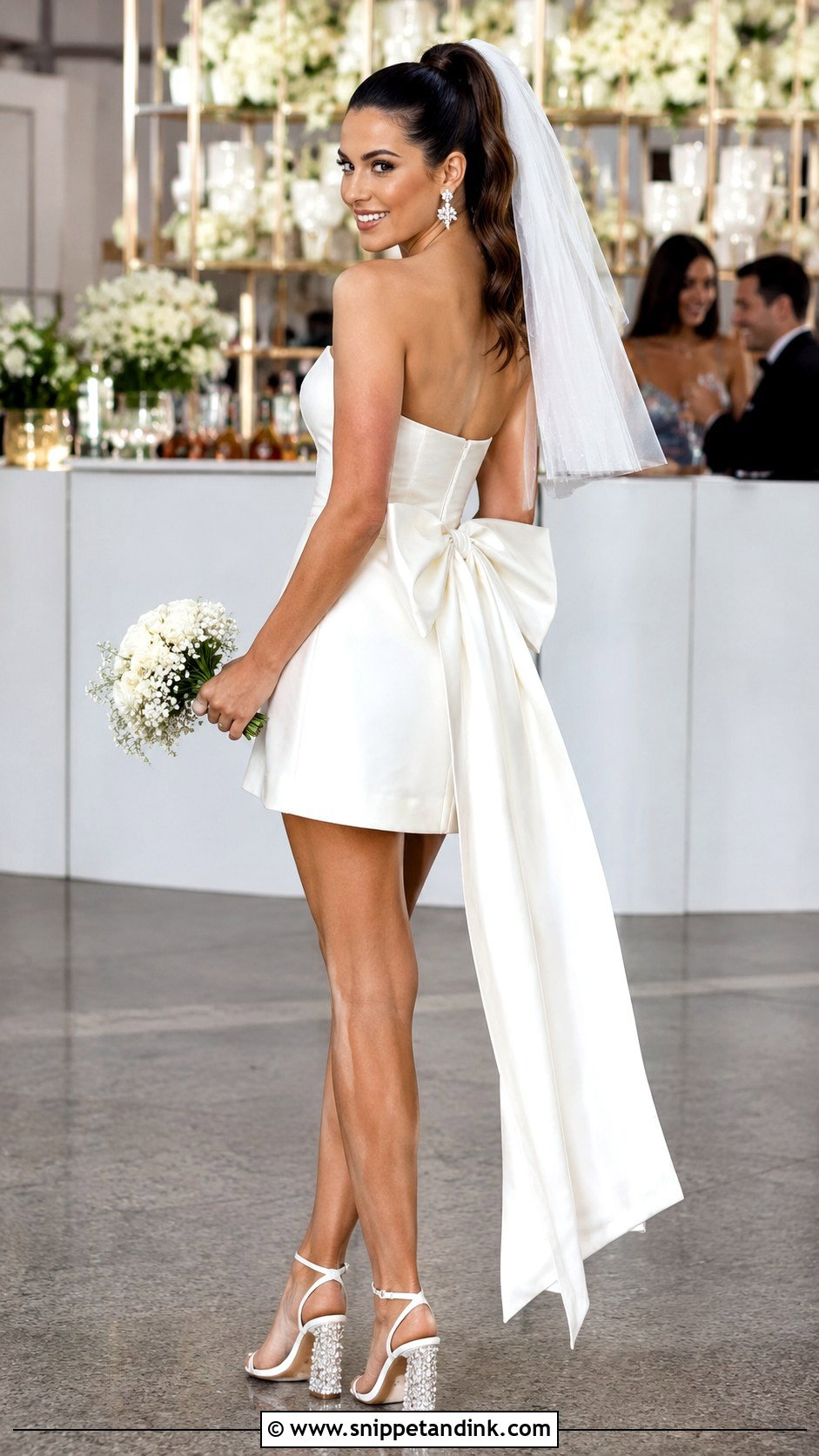
A reception mini dress is the fun second look, and it still needs to read as bridal. Structured satin, a feather-trimmed shift, a lace mini or a fitted dress with a detachable bow all manage that. Because legs and feet now carry the outfit, the shoes matter: statement heels you can genuinely dance in, or embellished flats. Sparkly earrings, a small hair bow and a short veil keep it playful, with a high ponytail or loose waves. I always check the hem with the bride perched on a low chair. A mini that looks fine standing can ride up more than you’d like once you sit. Save it for the late reception or an after-party.
Underwear, Shoes and Weight Changes Can Undo a Good Fitting
Most of the last-minute problems I’m asked to fix trace back to something that changed after the previous appointment. A new bra lifts the bust slightly and the neckline gapes. Heels bought late are a little taller or lower than the pair the hem was set to. Stress in the final month changes a bride’s weight, and the bodice suddenly needs taking in.
- Buy your shoes and bridal underwear before the second fitting, then wear them to every appointment after that.
- Tell the atelier early if you expect your weight or training routine to change; they can leave extra seam allowance so the dress can be adjusted later.
- Bring the person who will dress you on the morning to the final fitting, so they practise the lacing, buttons and bustle while the seamstress watches.
- Ask whether a last-minute adjustment close to the date is included or charged separately, since policies differ.
One more test before you take the dress home: sit on an ordinary dining chair for ten minutes. Boning that feels fine standing can press into the ribs once you’re seated, and it’s far easier to trim a bone channel now than to sit through dinner putting up with it.
The Dress Should Fit Your Day, Not the Sample Rack
A made-to-measure dress should fit the person wearing it before it fits a trend. The looks above run from lace ball gowns and sculpted satin to tailored pantsuits and short reception dresses, and each one is a starting point. Change the neckline, fabric, sleeve, shoes or accessories to suit your proportions and the day you’re planning. Then test the whole outfit at your fittings: sit, walk, climb a step, raise your arms and stay in the shoes for an hour. That’s where good tailoring shows itself, and where a dress you liked on the hanger turns into one that feels like yours.
You'll Like These Ideas:


Leave a Reply