
A simple gown only reads as romantic when one detail is doing the work: a sleeve that moves, a neckline that frames the collarbone, satin that catches the light as you walk. Strip away the beading and that single feature has to be right, and so does the fit, because plain fabric shows everything. Below are 25 dresses, each with the detail that makes it romantic, what I’d pair with it, and the practical catch I’d point out at the fitting.
What a Plain Gown Shows That a Beaded One Hides
Beading and heavy lace cover a lot: small fit issues, a slightly uneven seam, a bodice that isn’t quite snug. A simple gown hides none of that, so I look at these dresses differently at an appointment.
Seams and the zip. On plain satin or crepe, every seam is visible. Run your eye down the side seams and along the zip, because puckering there will show in every photo from behind.
The fabric in daylight. Ask to see the dress near a window. Satin’s sheen exaggerates wrinkles, crepe shows body lines, and chiffon shows where the lining ends. Shop spotlights are kind in ways the outdoors isn’t.
Movement. Walk, sit, lift your arms and hug whoever came with you. A gown that stays where it should through all four will stay put through the day.
Remember that samples are often a different size from yours and clipped at the back. Judge the shape and the fabric in the shop; the fit is what alterations are for.
1. Square Neck Satin A-Line Wedding Dress
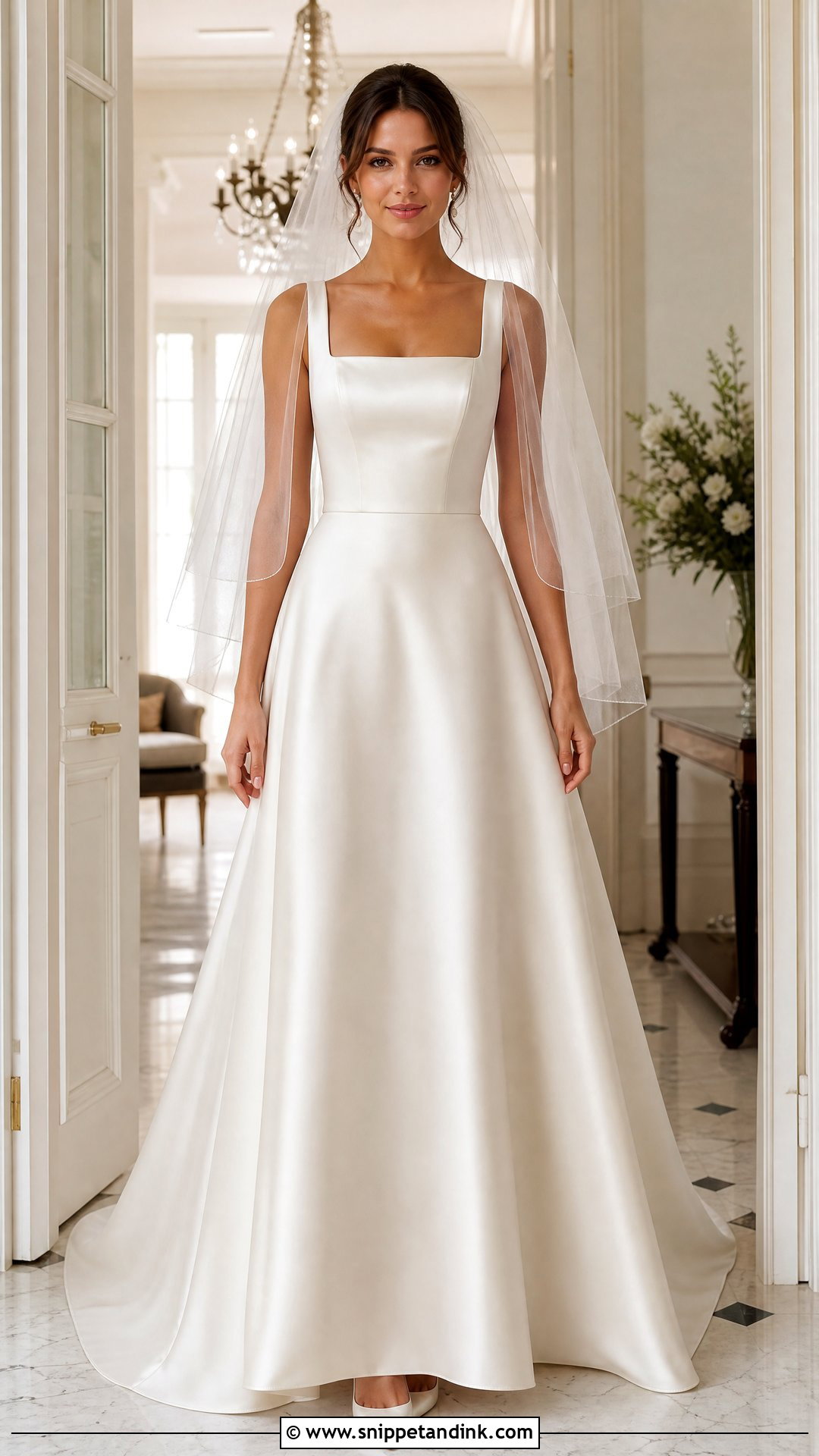
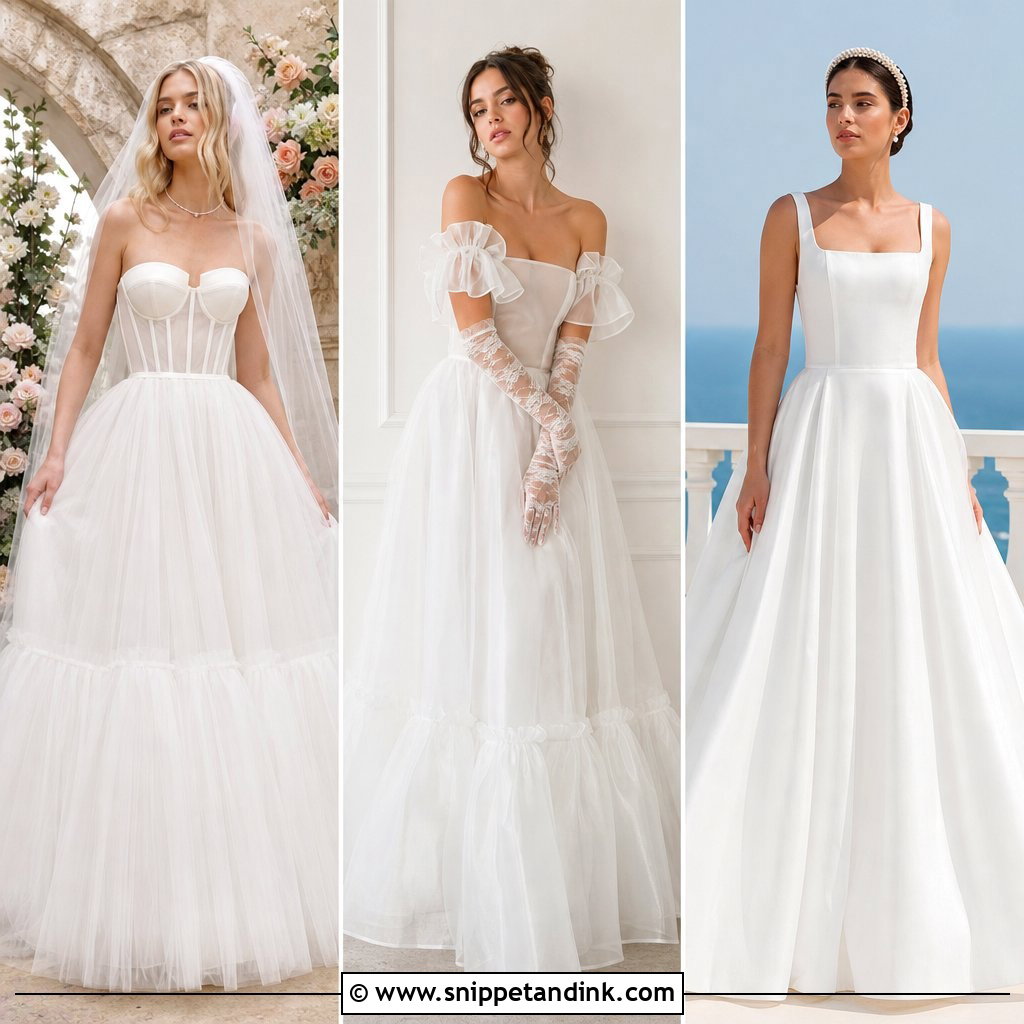
A square neckline is one of the most forgiving shapes I fit, because its straight edge frames the collarbone and gives the bodice a clean top line. The catch is gaping. On a smaller bust the corners can stand away from the body when you lean forward, so have your seamstress check them while you bend. Keep the skirt softly gathered rather than pleated, wear pearl drops and a low chignon, and the ivory satin will carry the rest.
2. Off-The-Shoulder Crepe Wedding Dress
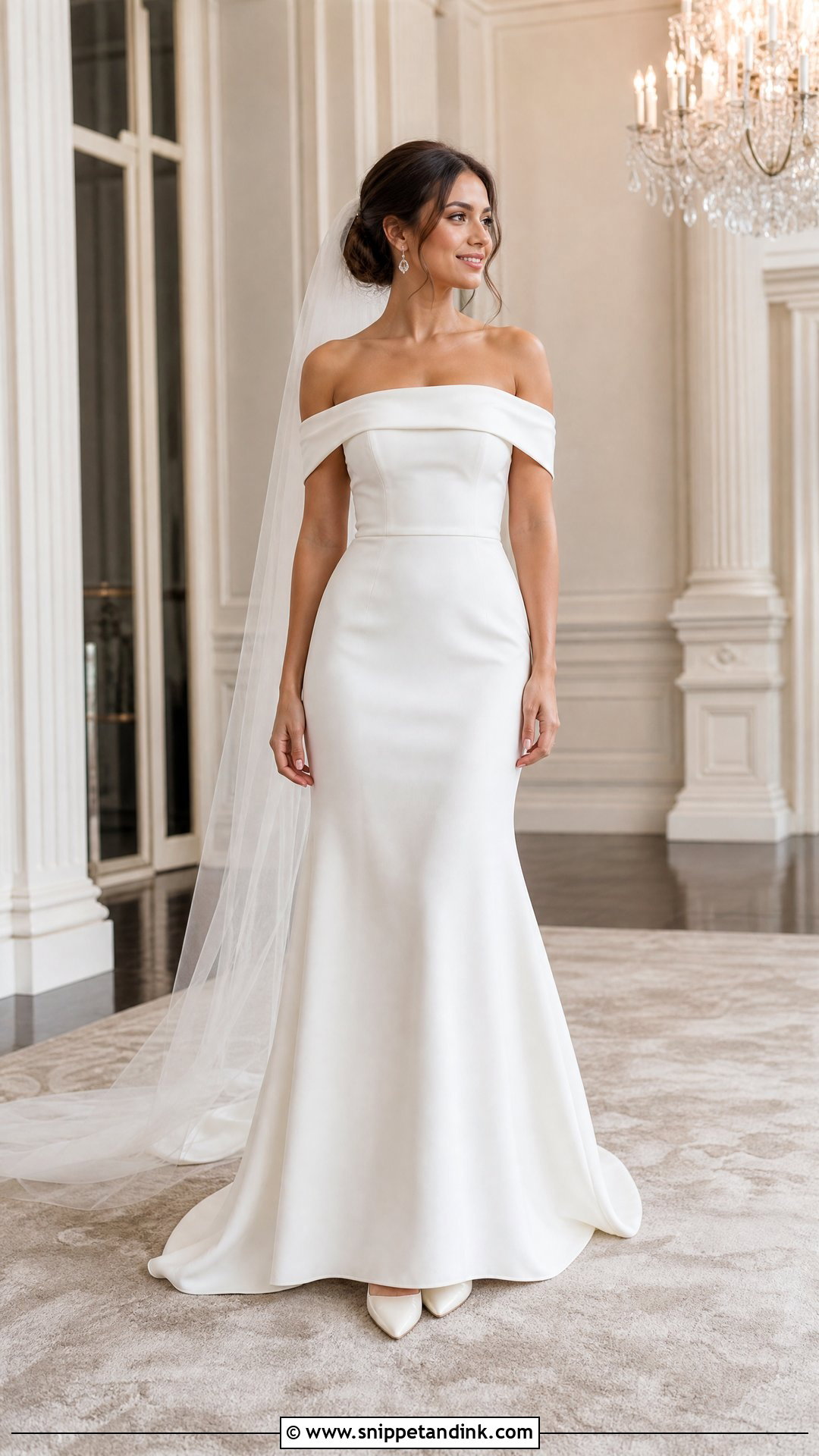
Off-the-shoulder sleeves need internal structure to stay in place, and that’s the first thing I check inside the bodice: light boning and a silicone grip strip along the top edge. Without them the sleeves creep up every time you raise your arms. Crepe suits this neckline because its smooth face leaves the shoulder line as the only feature. A small pendant and a low bun with loose strands are enough.
3. Long Sleeve Chiffon Wedding Dress
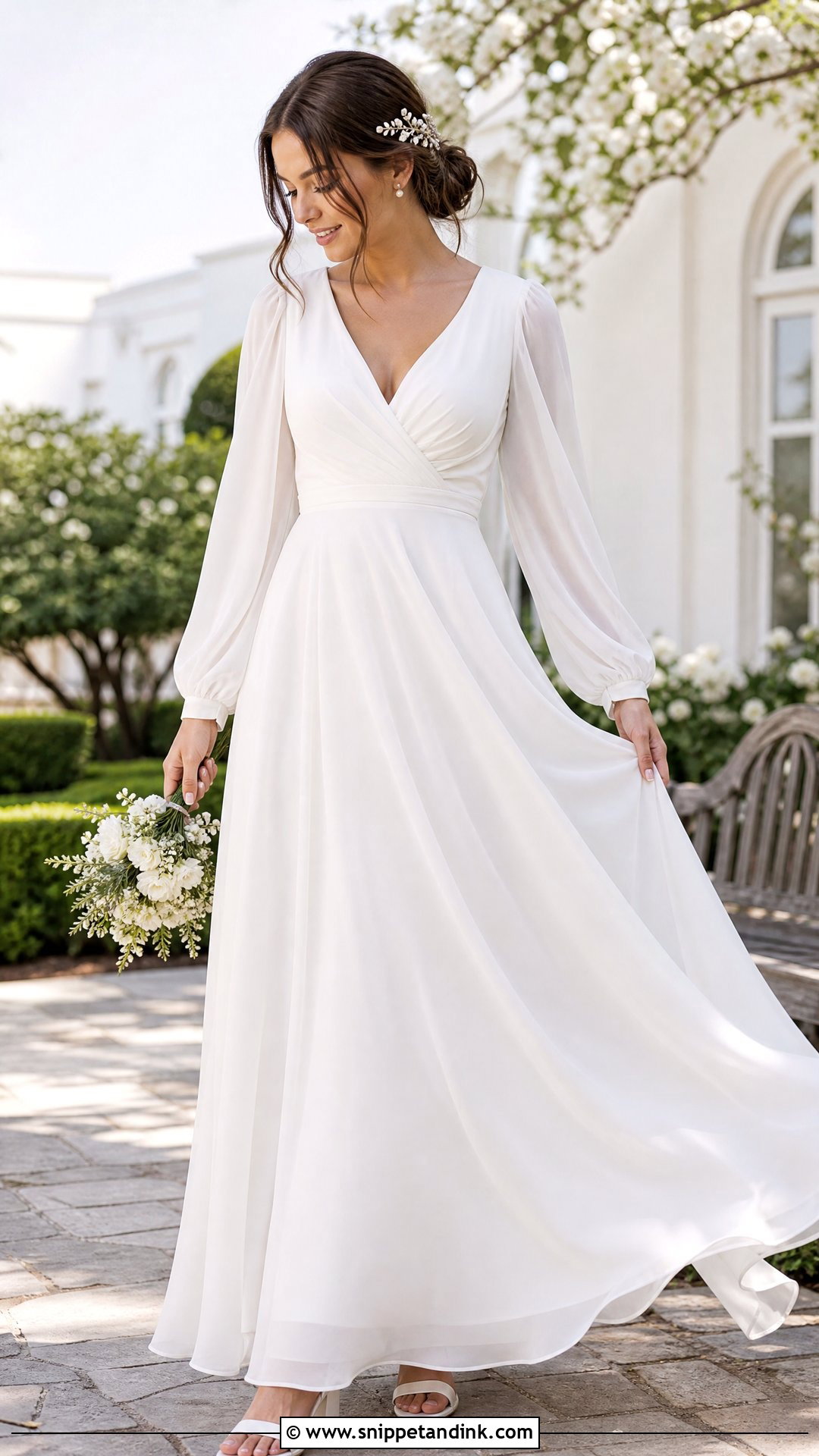
Sheer chiffon sleeves give coverage without heat, which is why I suggest them for outdoor spring and autumn ceremonies. Gathered sleeves need a narrow cuff to stop them ballooning in the wind, and the bodice has to be lined because chiffon on its own is see-through. Block-heel sandals keep you from sinking into a lawn. A floral comb in a loose low bun matches the softness of the fabric.
4. Lace Bodice A-Line Wedding Dress
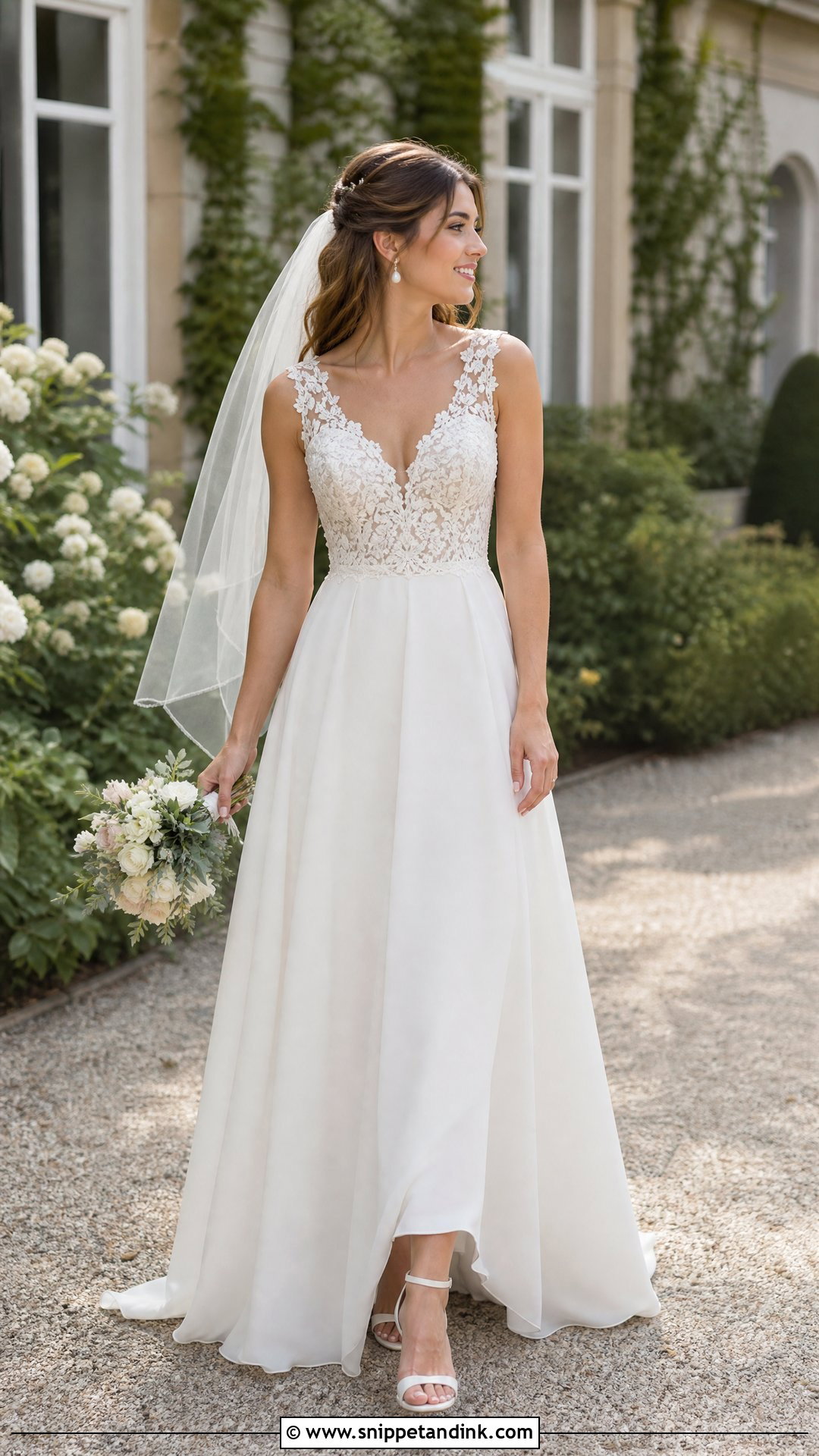
Putting lace only on the bodice keeps a plain skirt plain, which is the whole idea. Open floral lace looks softer than dense corded lace and is lighter to wear. I’d choose a tulle veil with no lace edge, because two different laces near each other rarely match. Later you can personalize it with a ribbon sash or an heirloom hair piece without anything clashing.
5. Silk Slip Wedding Dress
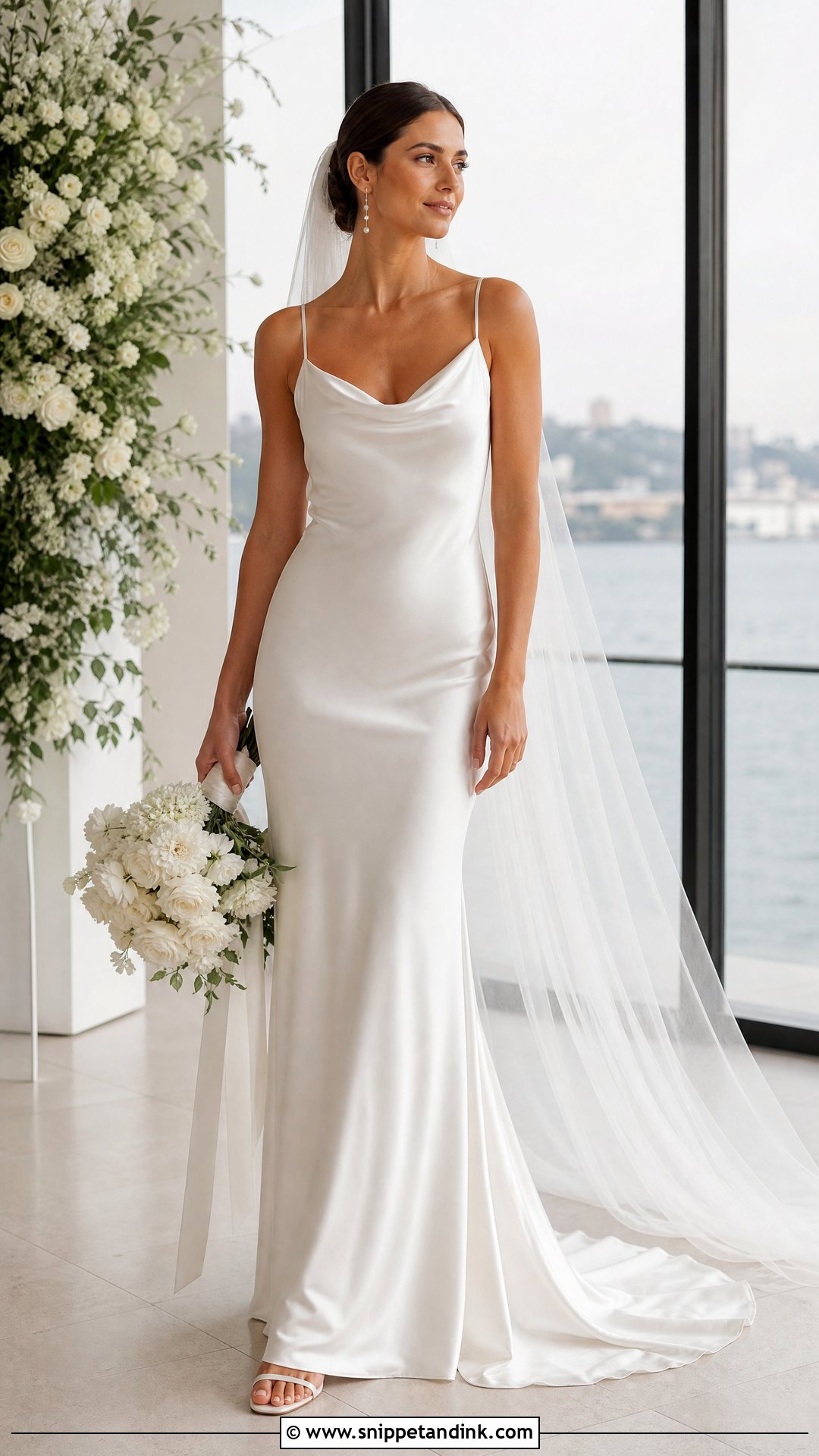
Slip dresses are the most honest gowns in a bridal shop: bias-cut silk skims every curve and shows every line beneath it. That’s why underwear is the first thing I discuss with a slip bride. Real silk softens and wrinkles over a long day, while a heavier silk-like satin holds up better. Wear a cathedral veil for the ceremony and take it off afterward, and you get two moods from one dress.
6. Sweetheart Satin Ball Gown Wedding Dress
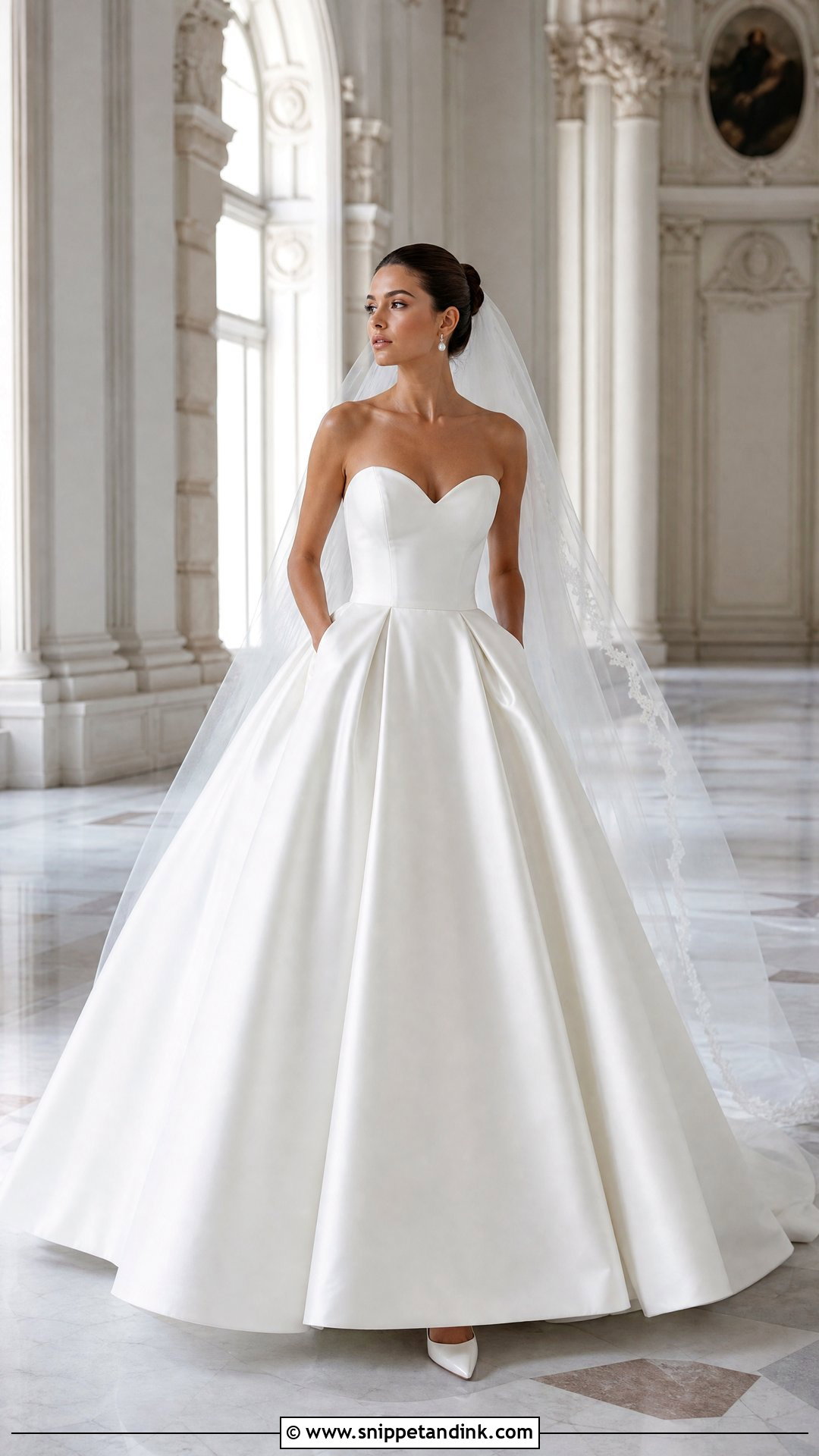
Can a ball gown still look simple? Yes, if the bodice is plain and the satin does the work. A full skirt needs a petticoat or a built-in crinoline to keep its shape, and that adds weight, so walk around in it for a few minutes at the appointment before you decide. Ask for pockets; they vanish into the volume. A compact bouquet keeps the proportions in check.
7. Tea-Length Wedding Dress
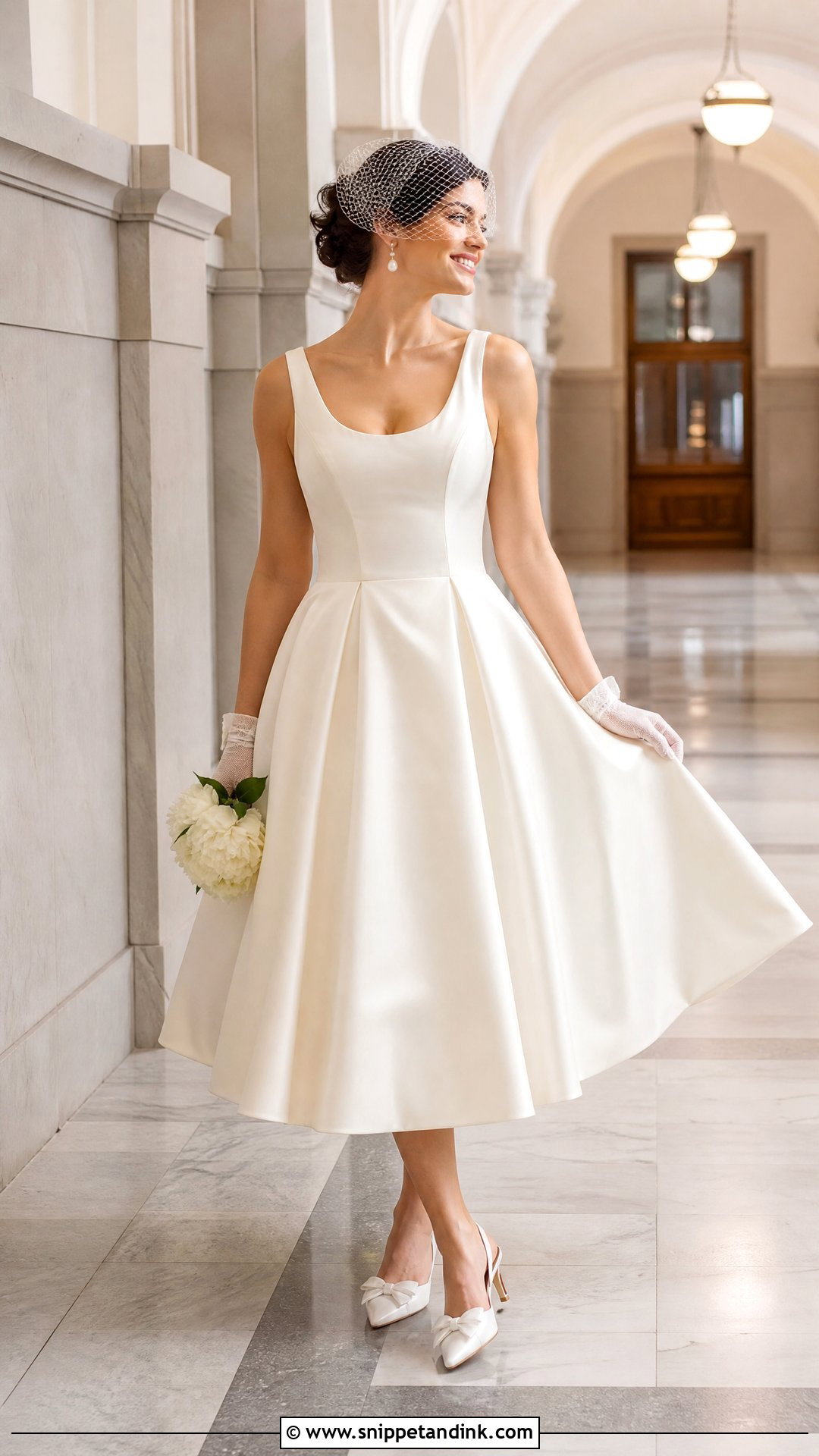
A tea-length hem brings playful vintage charm, and it also puts your shoes on full view, so buy them before the first fitting. The hem should land between knee and ankle at whatever point flatters your calf, which is often an inch or two away from where the sample sits. Plain satin, crepe or a little layered organza keep it light. It’s the easiest length on this list to dance in.
8. Soft Tulle A-Line Wedding Dress
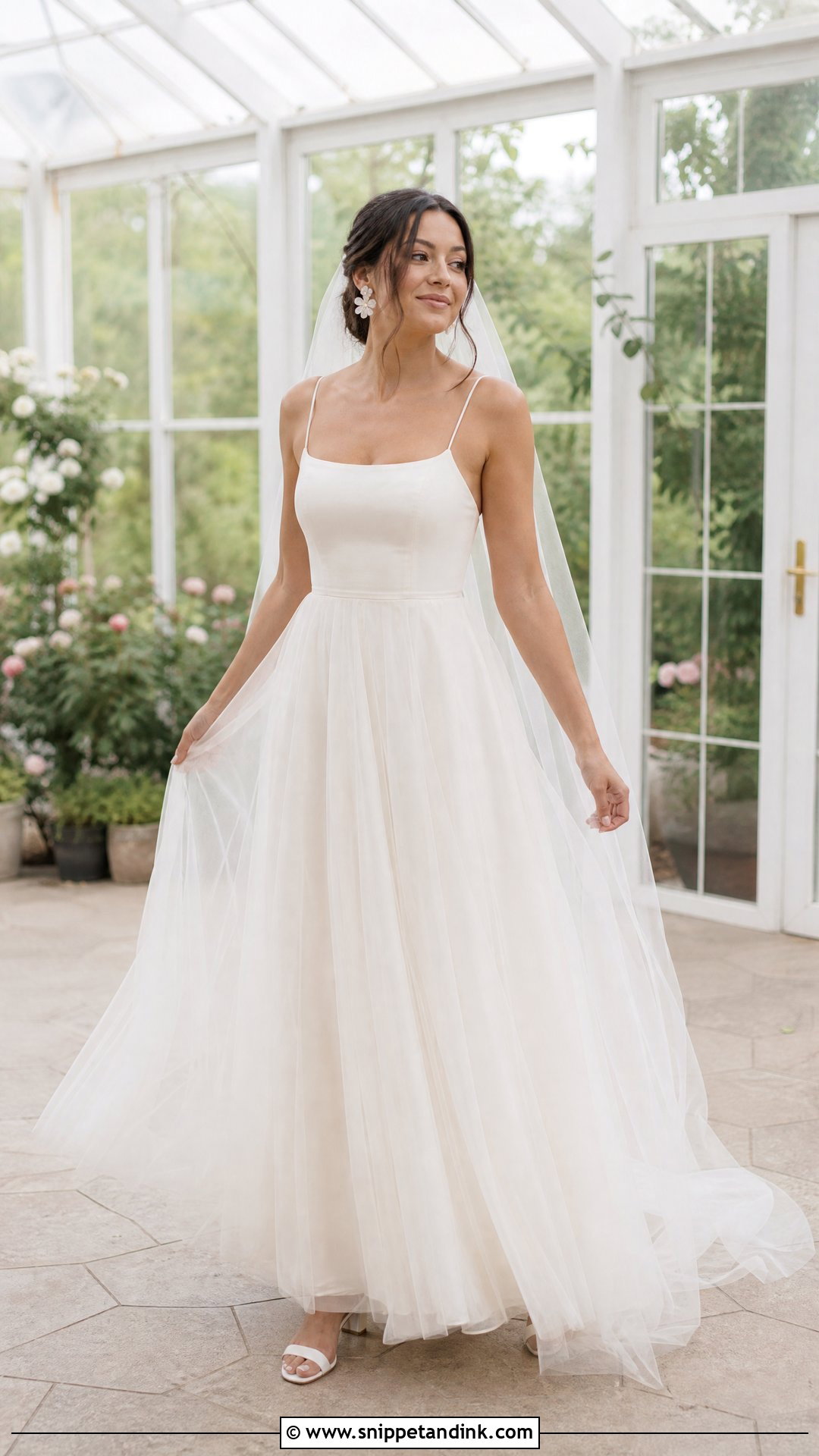
Tulle looks soft when there are only a few layers over a good lining; stack too many and the skirt goes stiff. I’d ask how many layers the dress has and whether one can come out. Tulle also catches on bracelets, rough nails and bouquet wire, so check the hem after the ceremony and snip any pulled threads rather than tugging them. A loose chignon and low block heels keep it relaxed.
9. Cap Sleeve Lace Wedding Dress
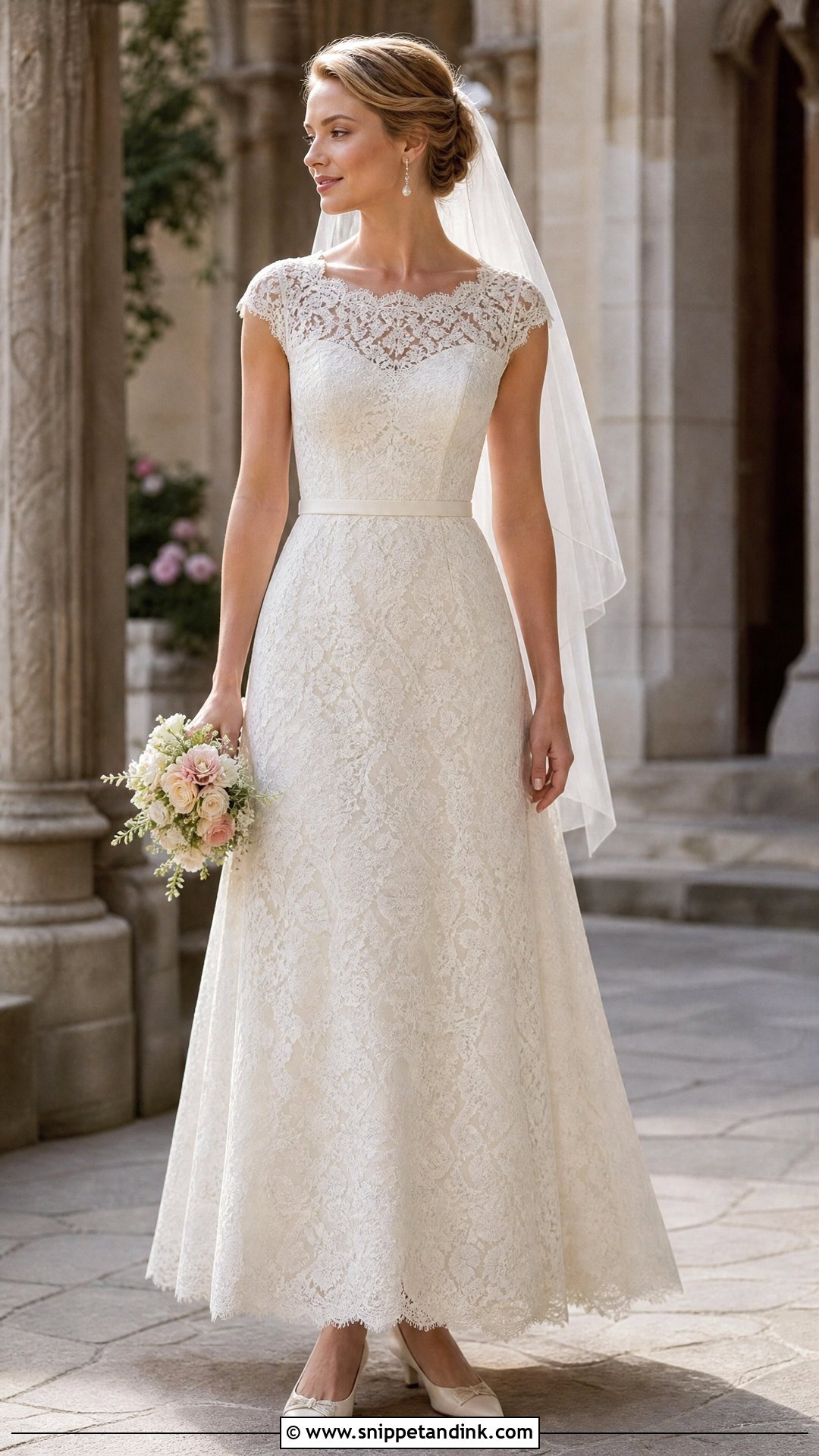
Cap sleeves give a little shoulder coverage without restricting movement, as long as they’re cut to sit at the edge of the shoulder rather than over it. Too wide, and they ride up every time you hug someone. Choose lightweight lace over a simple sheath lining, keep the pattern consistent, and let a natural waist give shape instead of a sparkly belt. A French twist shows off the sleeves.
10. V-Neck Chiffon Wedding Dress
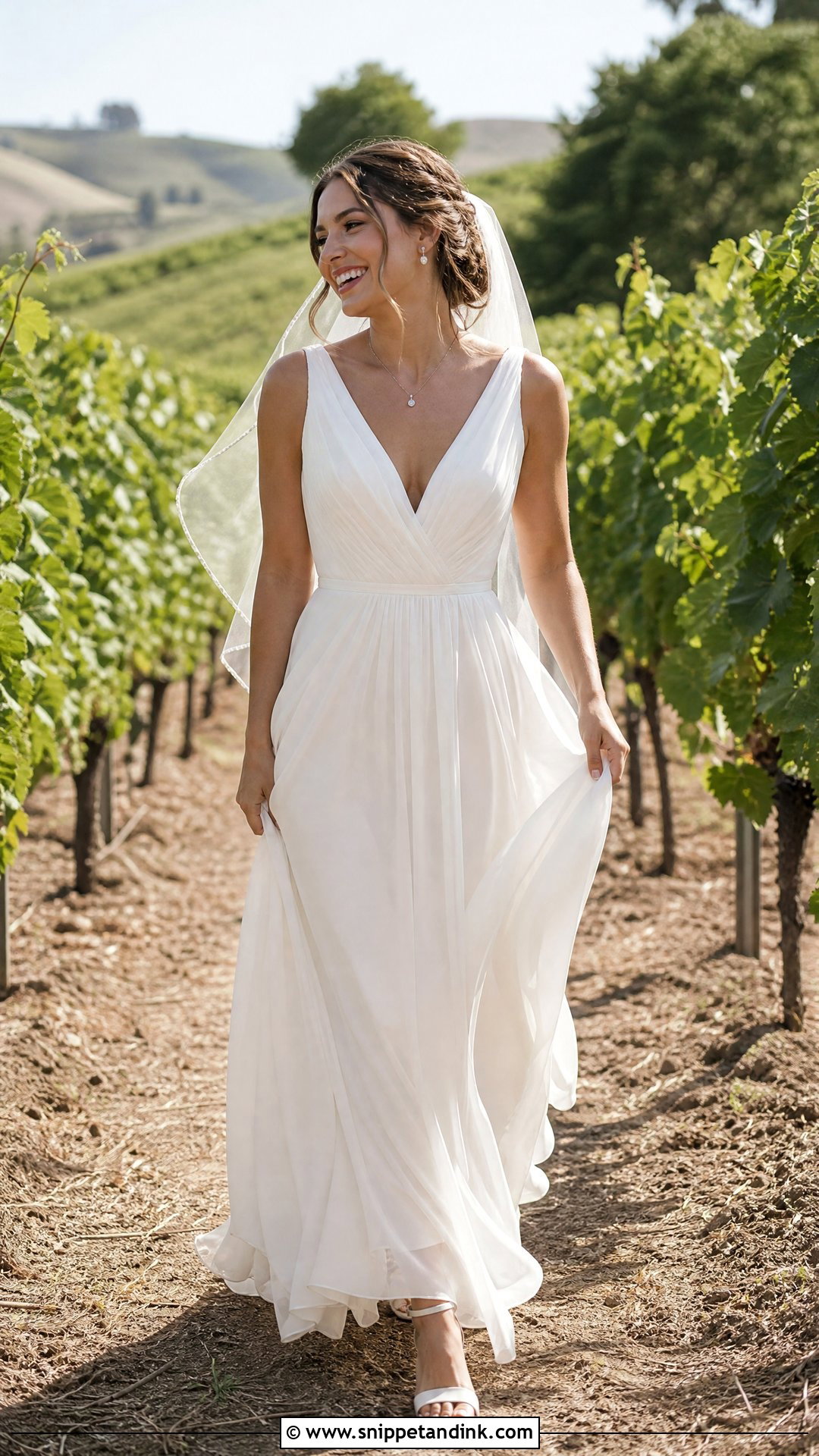
A V-neck in chiffon flatters most figures because the vertical line lengthens the torso. How deep that V goes is the fitting question I always raise, since chiffon moves and a deep neckline can shift when you dance. A hidden modesty panel or a strip of fashion tape solves it. Two or three skirt layers give movement without bulk, which suits beaches, vineyards and warm gardens.
11. Strapless Column Wedding Dress
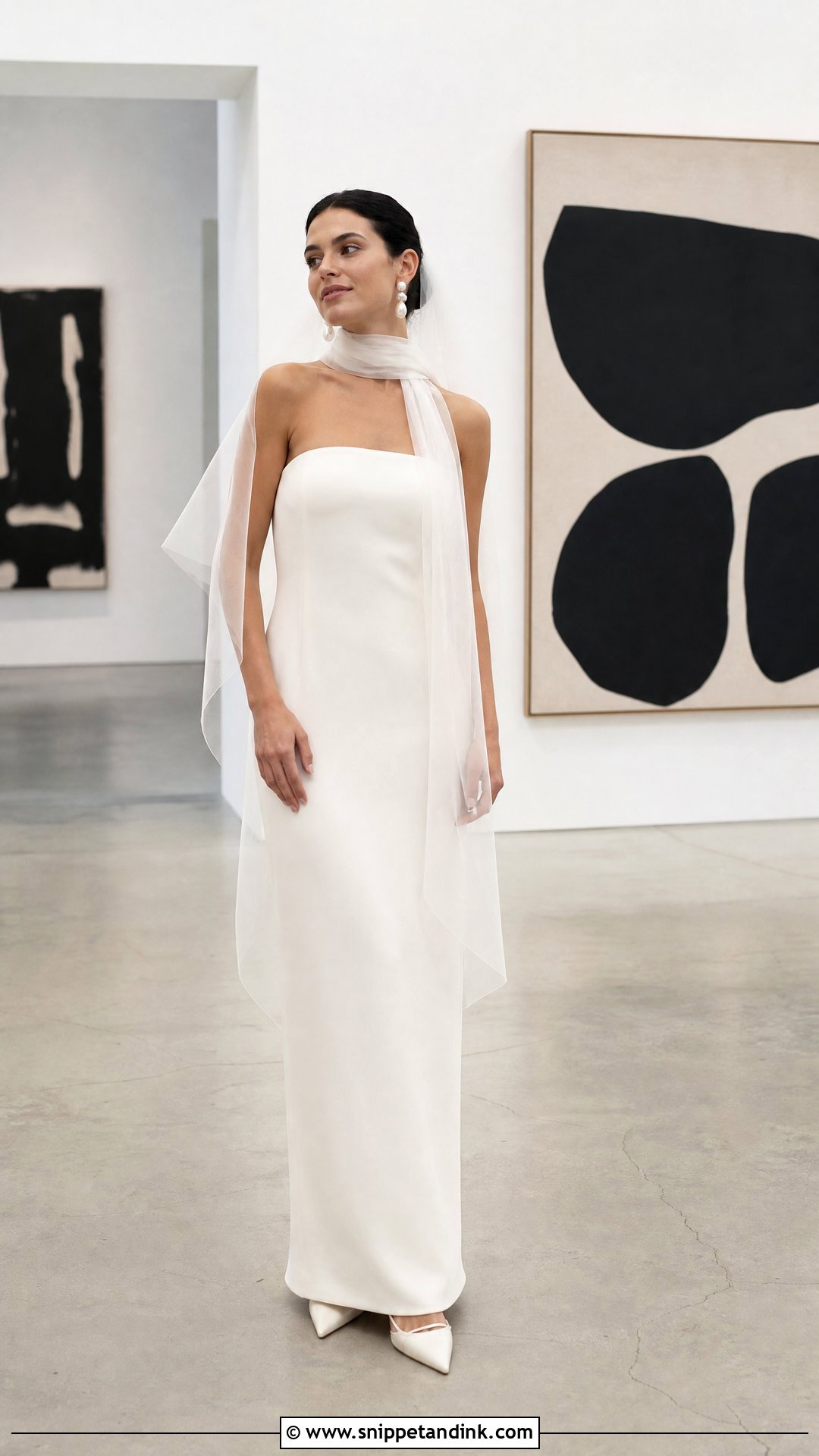
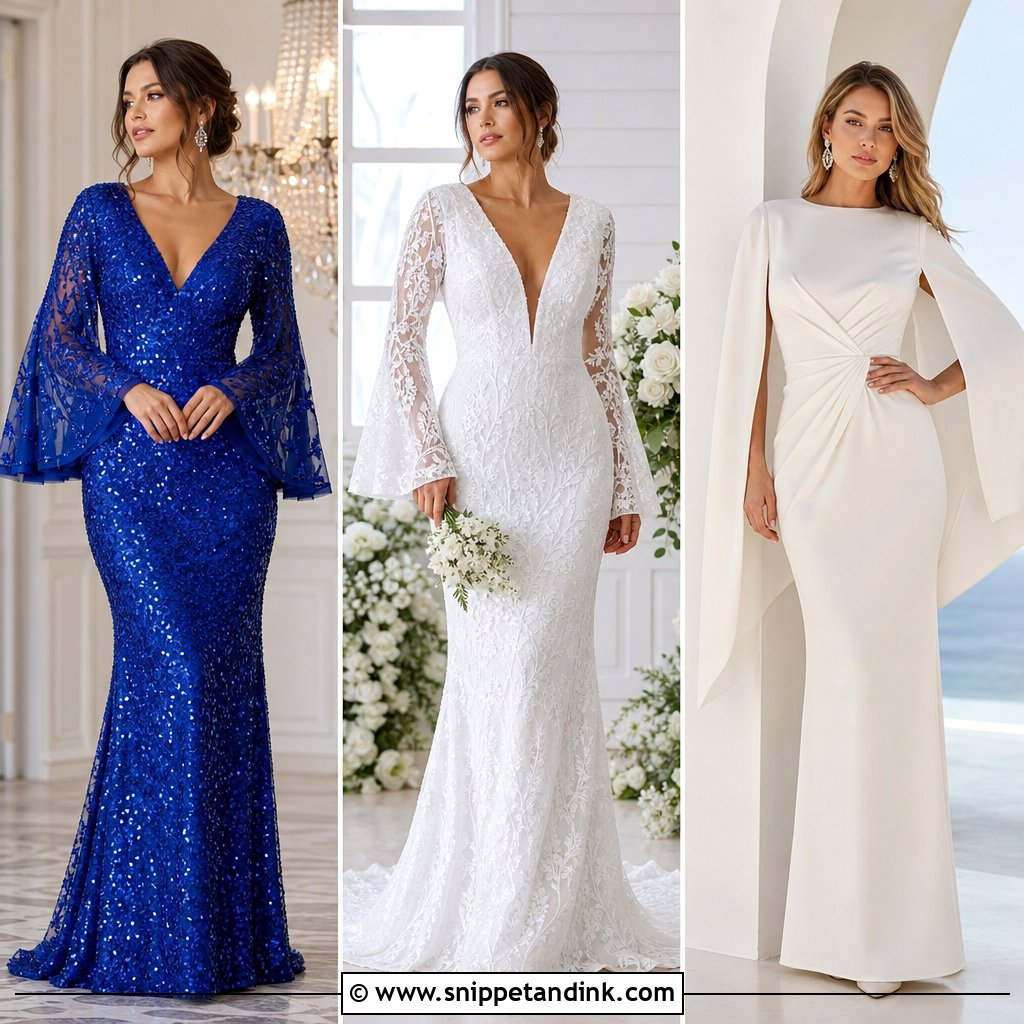
Everything about a strapless column depends on what’s inside it: boning, a firm waist stay, and a bodice fitted closely enough that it doesn’t slide when you sit. If you’re tugging it up in the fitting room, it isn’t fitted yet. Crepe, matte satin or mikado will hold the straight line. A detachable sheer wrap gives you a softer layer for the ceremony and comes off for the party.
12. Scoop Neck Mikado Wedding Dress
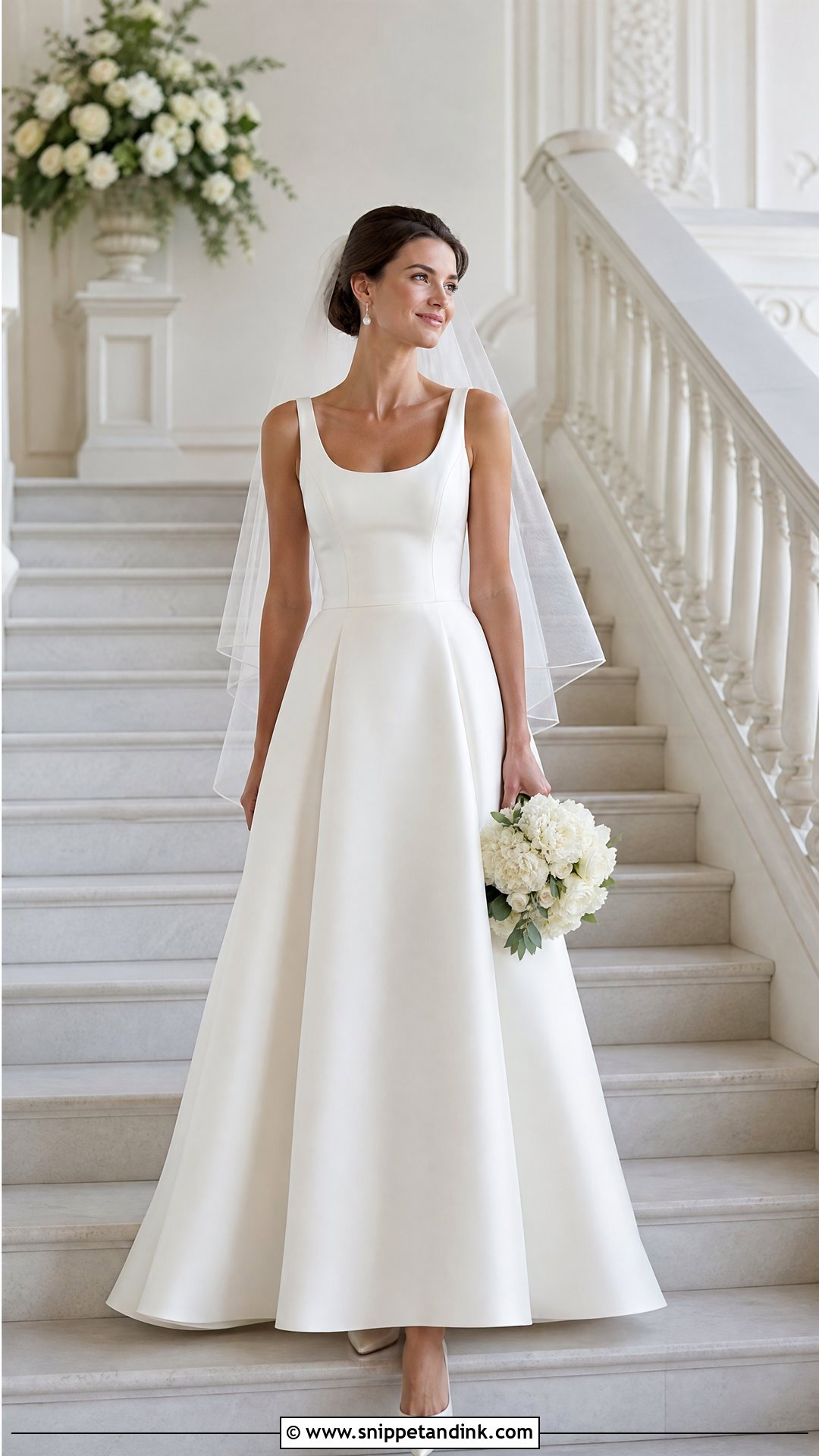
Mikado is a heavy silk or silk blend with a slight sheen and enough body to stand on its own, so a scoop-neck mikado gown needs very little added to it. The neckline should frame the collarbone and still feel secure when you lift your arms. Mikado holds creases stubbornly, so hang it the moment it arrives and have it steamed professionally. A thin ribbon at the waist is plenty of personal detail.
13. Flutter Sleeve Wedding Dress
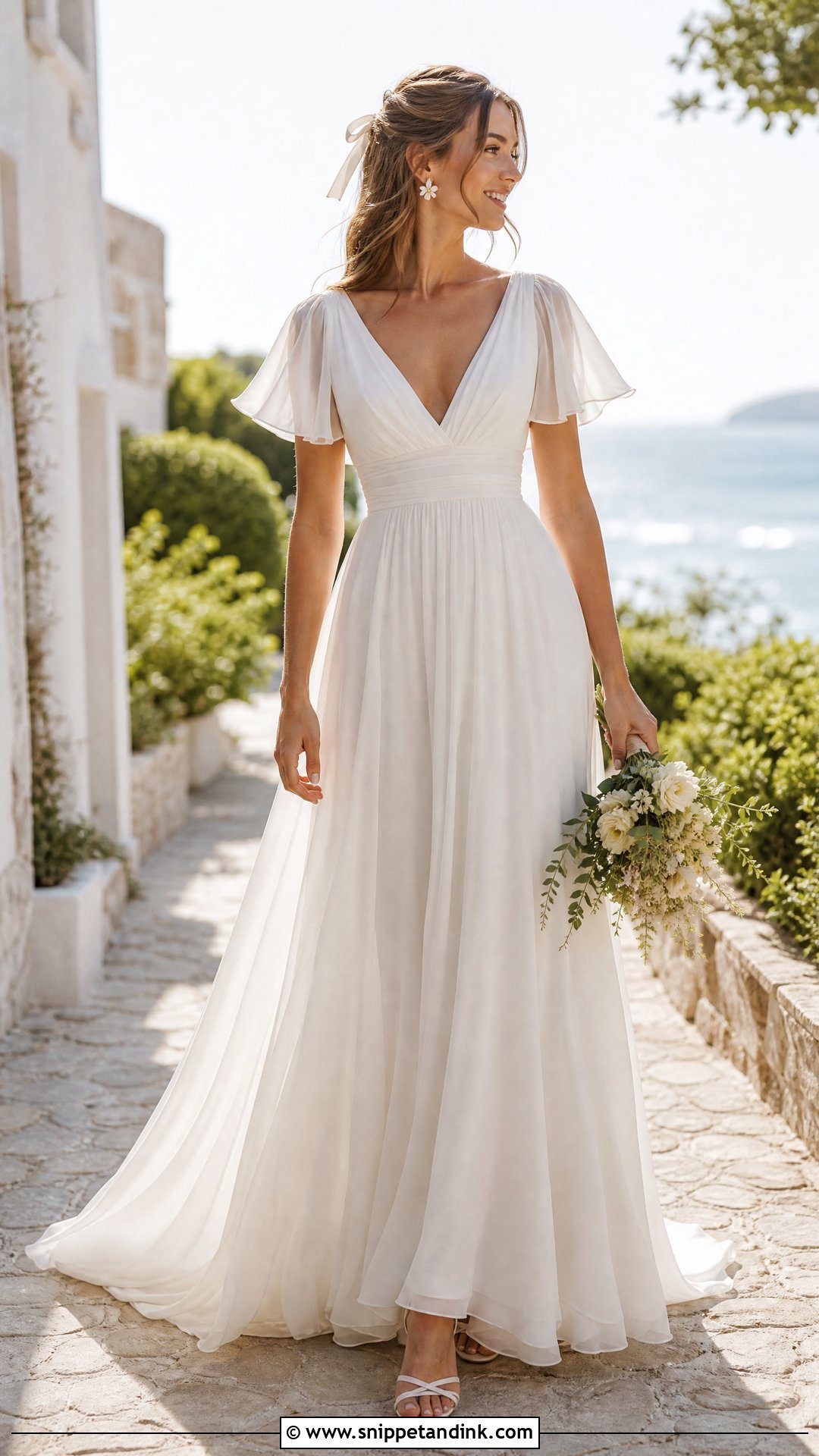
Flutter sleeves suit brides who want a little coverage at the upper arm without anything fitted there. They need chiffon or a light crepe that falls rather than stands, and they turn fussy once there’s more than a single ruffle. A V-neck bodice and a defined waist keep the shape from going loose. A ribbon tied into a half-up style matches the movement.
14. Satin Halter Wedding Dress
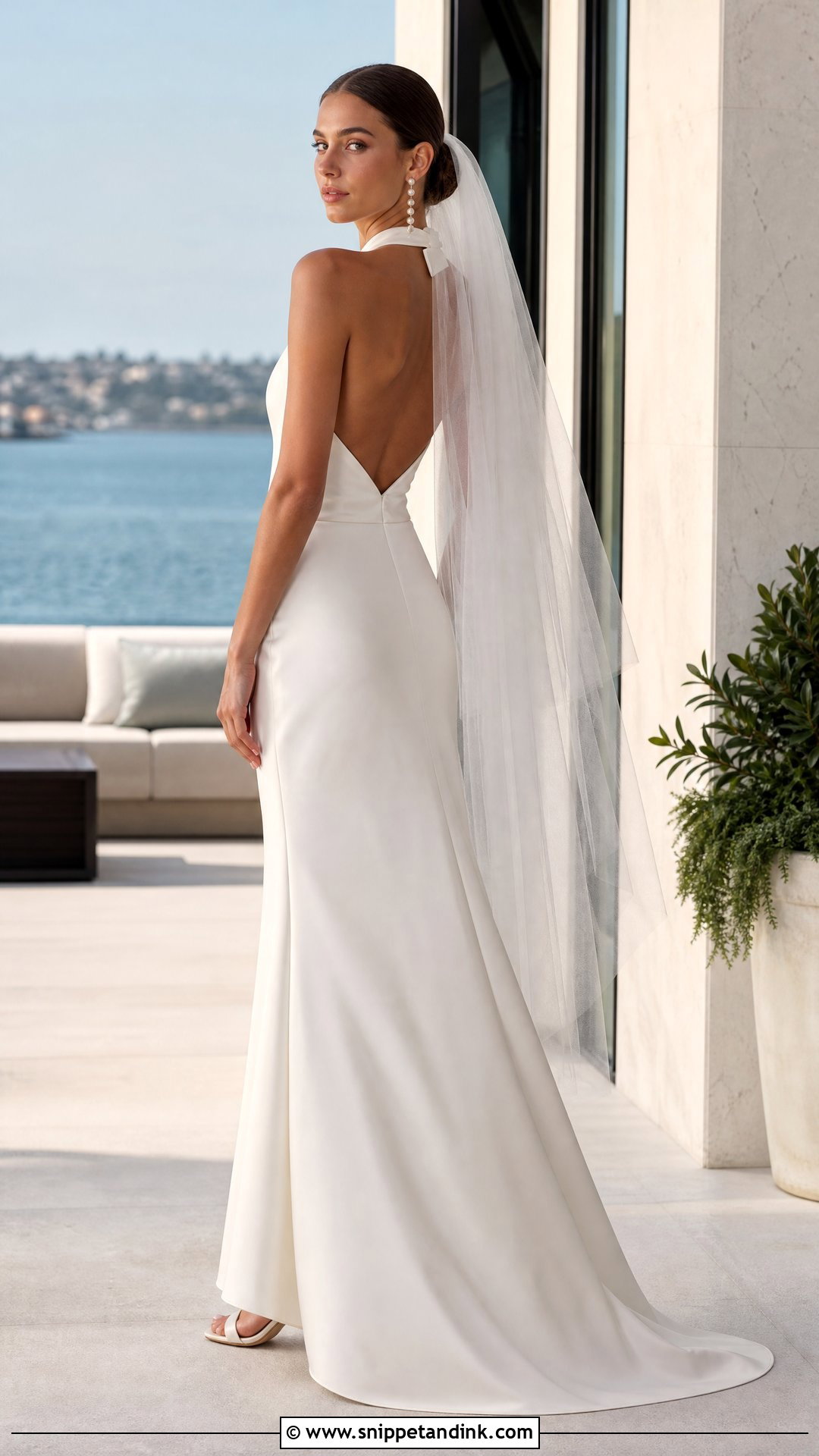
A halter draws the eye up to the face and shoulders, and it’s especially good on brides with strong shoulders. Ask for a softly gathered neck rather than a stiff collar, which can rub by evening. Support is the real challenge with the open back, so look for built-in cups. Skip the necklace and let long pearl earrings do that job, and pack a light wrap in case the evening turns cool.
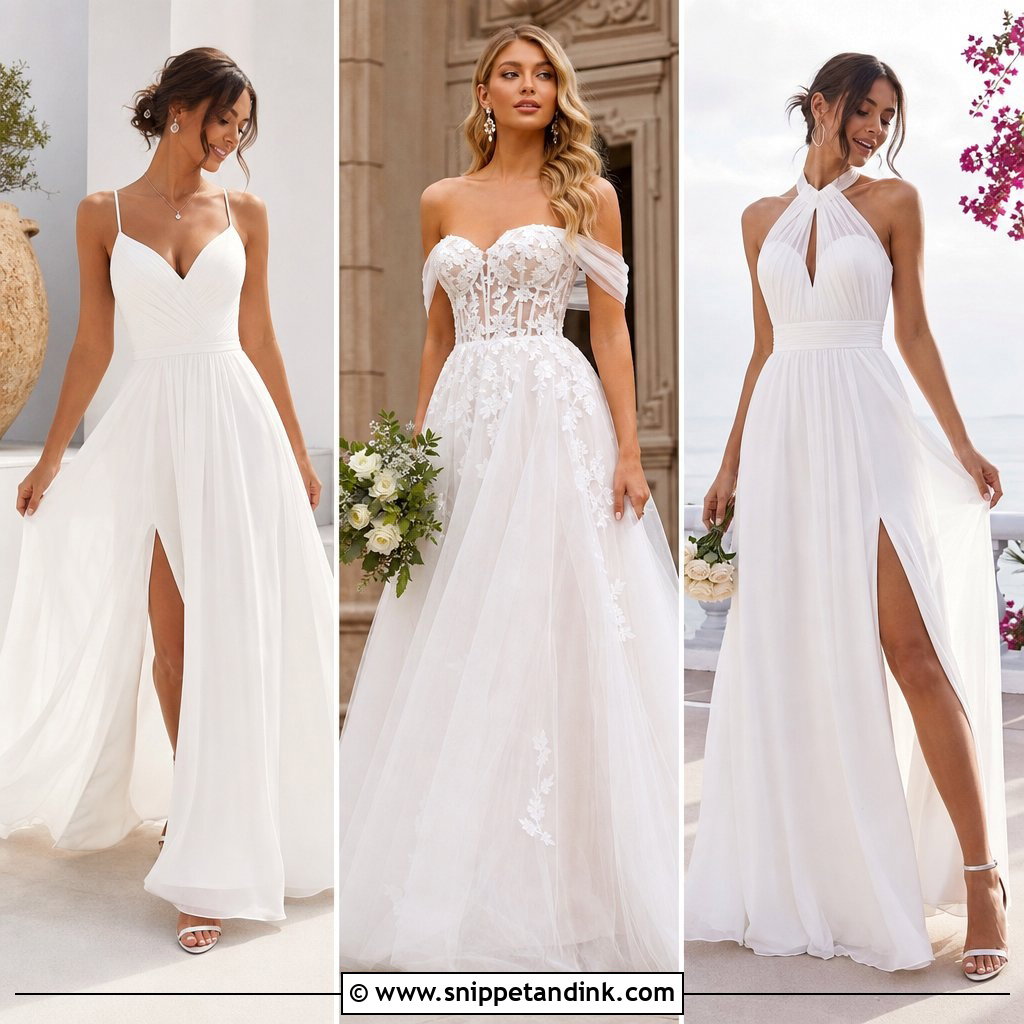
15. Puff Sleeve Organza Wedding Dress
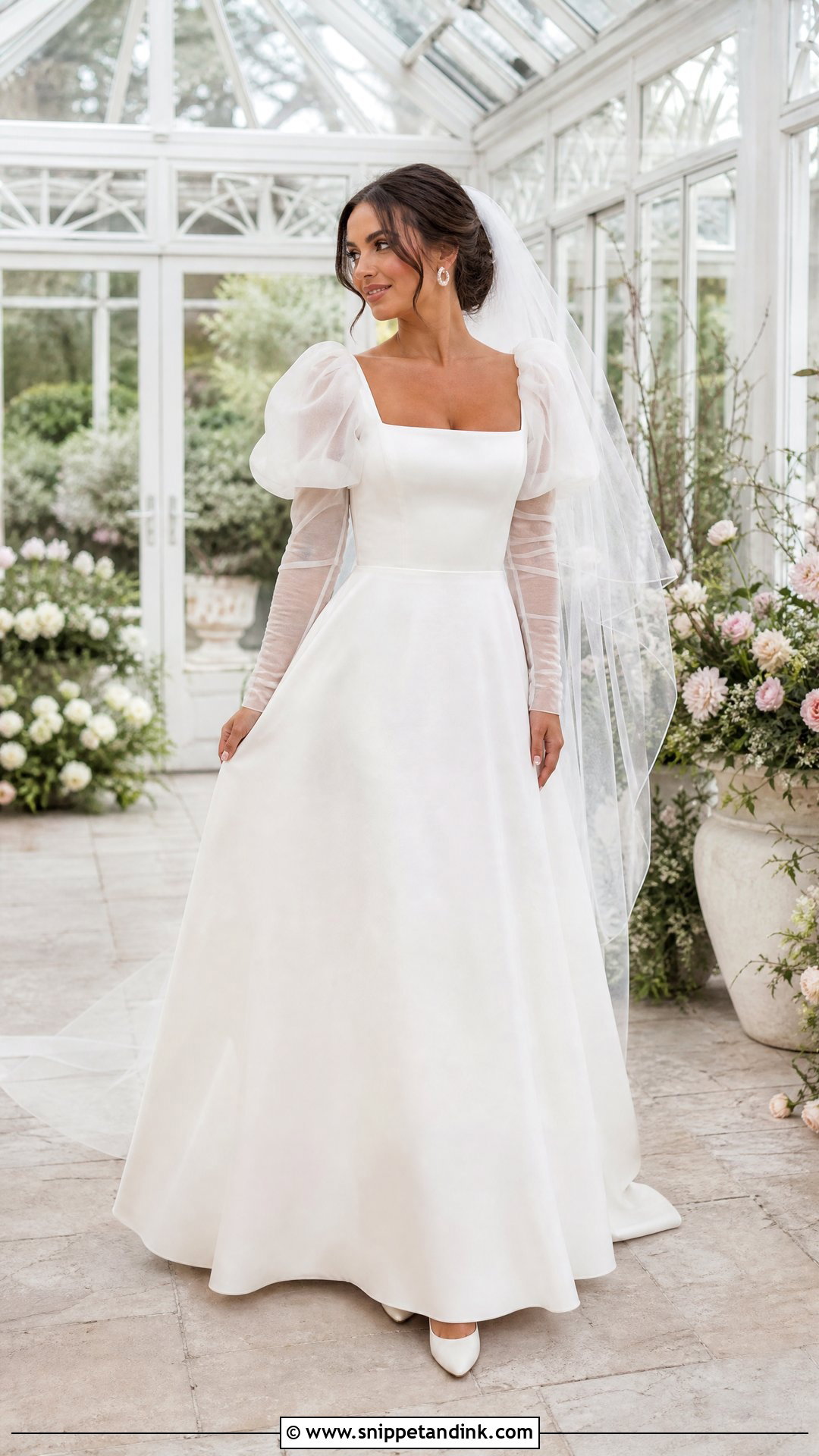
Organza puff sleeves keep their shape because the fabric is crisp, which is exactly why they need restraint. I like a sleeve gathered gently at the shoulder and tapering toward the elbow or wrist, over a fitted crepe or satin bodice. Organza creases sharply, so steam the sleeves on the morning itself rather than the night before. Detachable versions give you a second look for the reception.
16. Illusion Sleeve Lace Wedding Dress
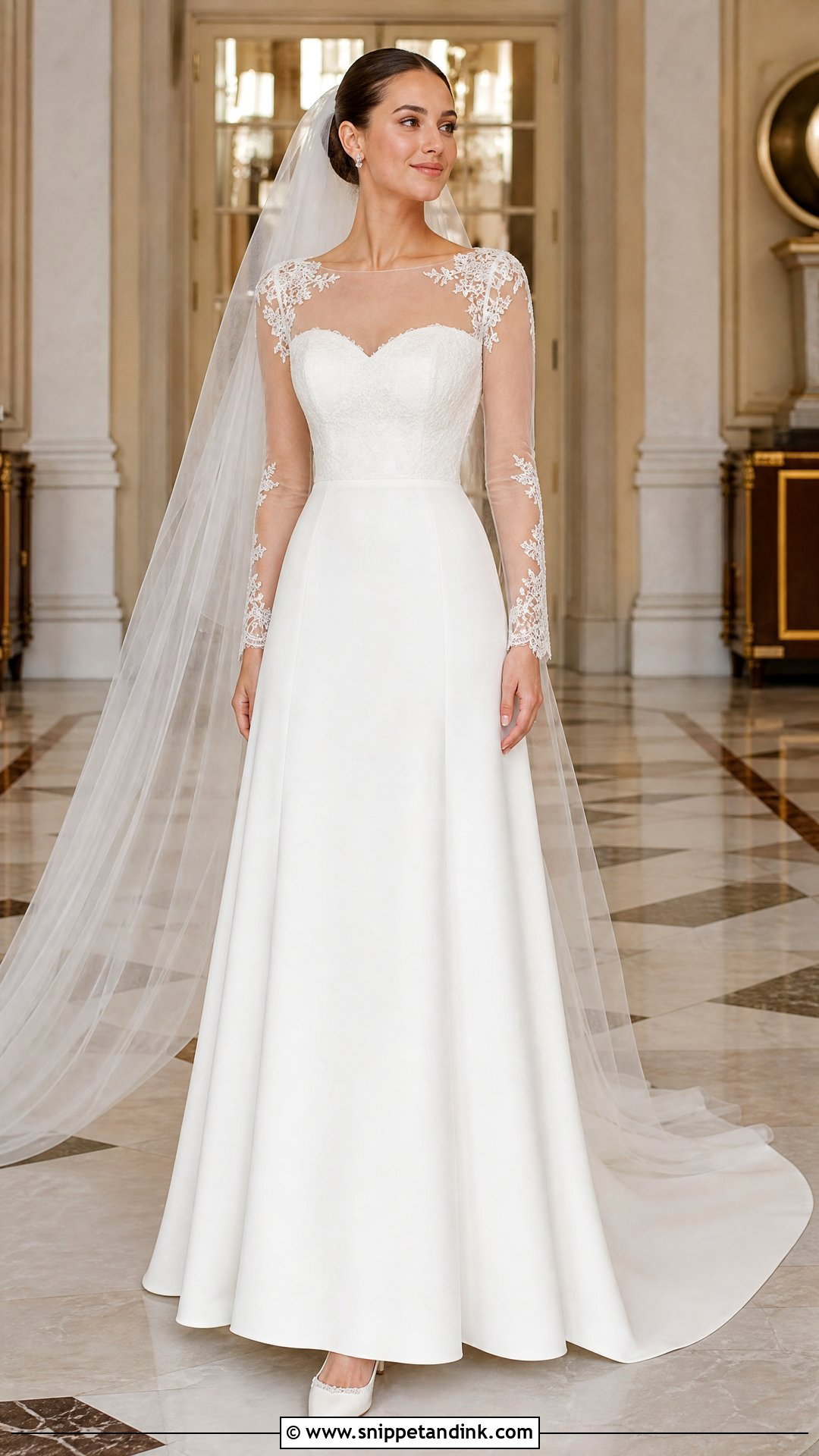
Illusion sleeves are fine mesh with lace laid on top, and the skill lies in where that lace sits. Lace at the wrists and shoulders with clear mesh between gives coverage and lightness at once. I always check the mesh color against the bride’s skin in daylight, because a mismatch turns grey in photos. A low updo keeps the lace across the back visible.
17. Empire Waist Chiffon Wedding Dress
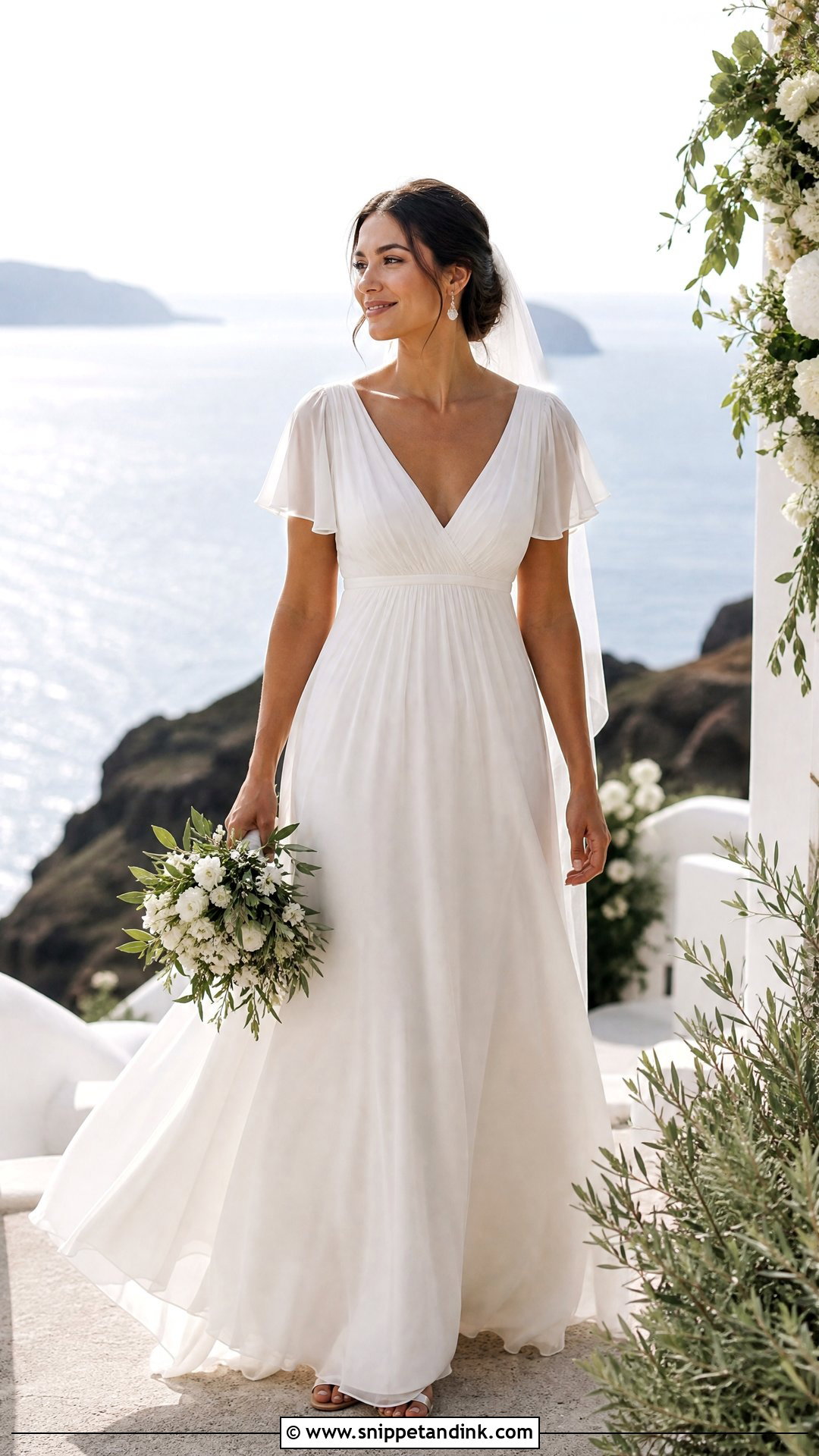
An empire-waist chiffon dress places the seam just under the bust and lets the skirt fall straight from there, which makes it one of the most comfortable shapes to wear for hours, and a kind one for pregnant brides. Skip heavy trim at the waist, since it shortens the line. A light lining stops the chiffon turning see-through in bright sun.
18. Wrap Wedding Dress
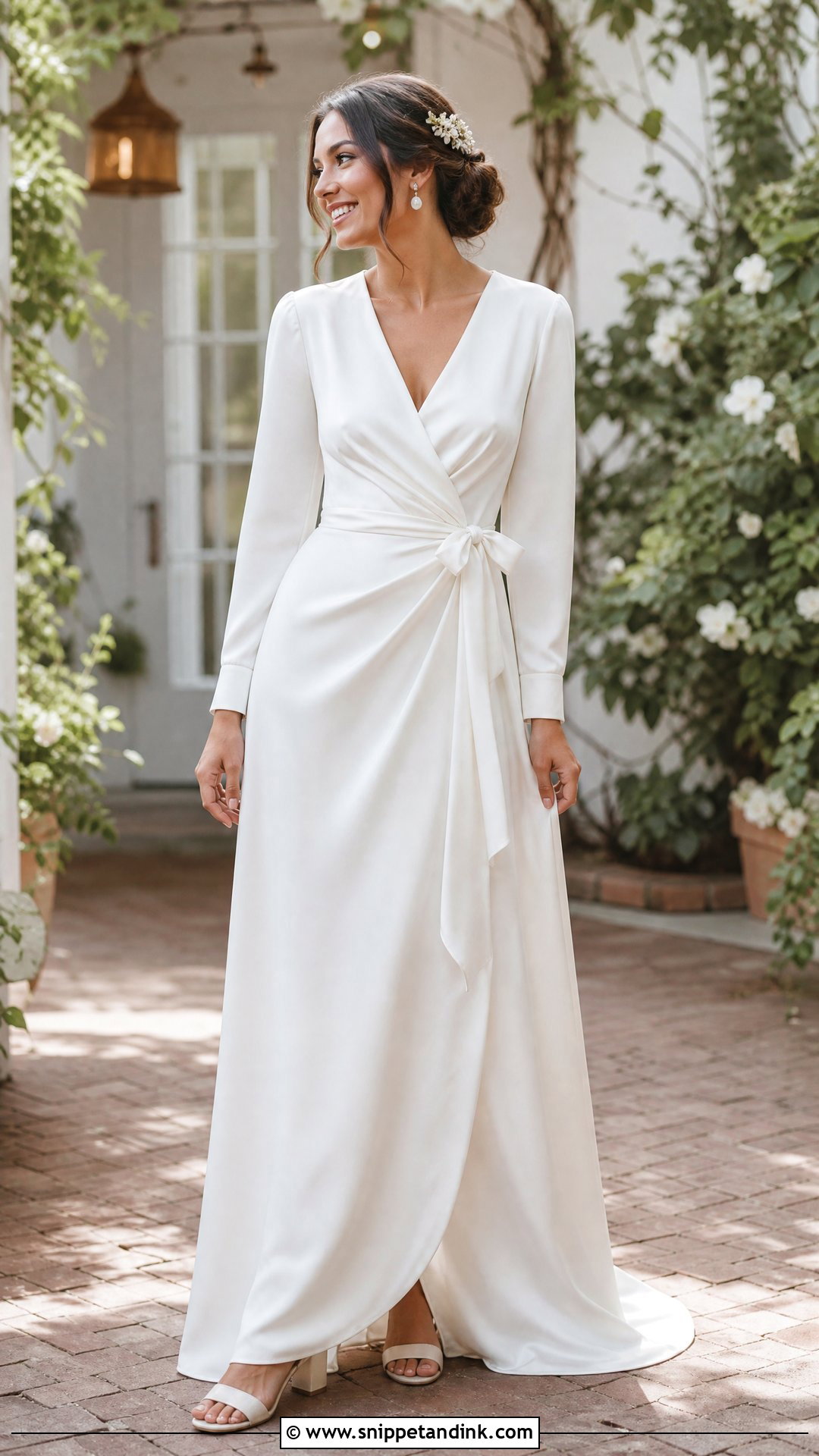
A wrap dress adjusts with you, so it’s forgiving if your weight shifts in the months before the wedding. The inner closure matters more than the outer bow: without a secure tie or hook inside, the neckline loosens as the day goes on. A slim tie at the side is all the decoration it needs, with low block heels and a relaxed bun.
19. Bow Back Crepe Wedding Dress
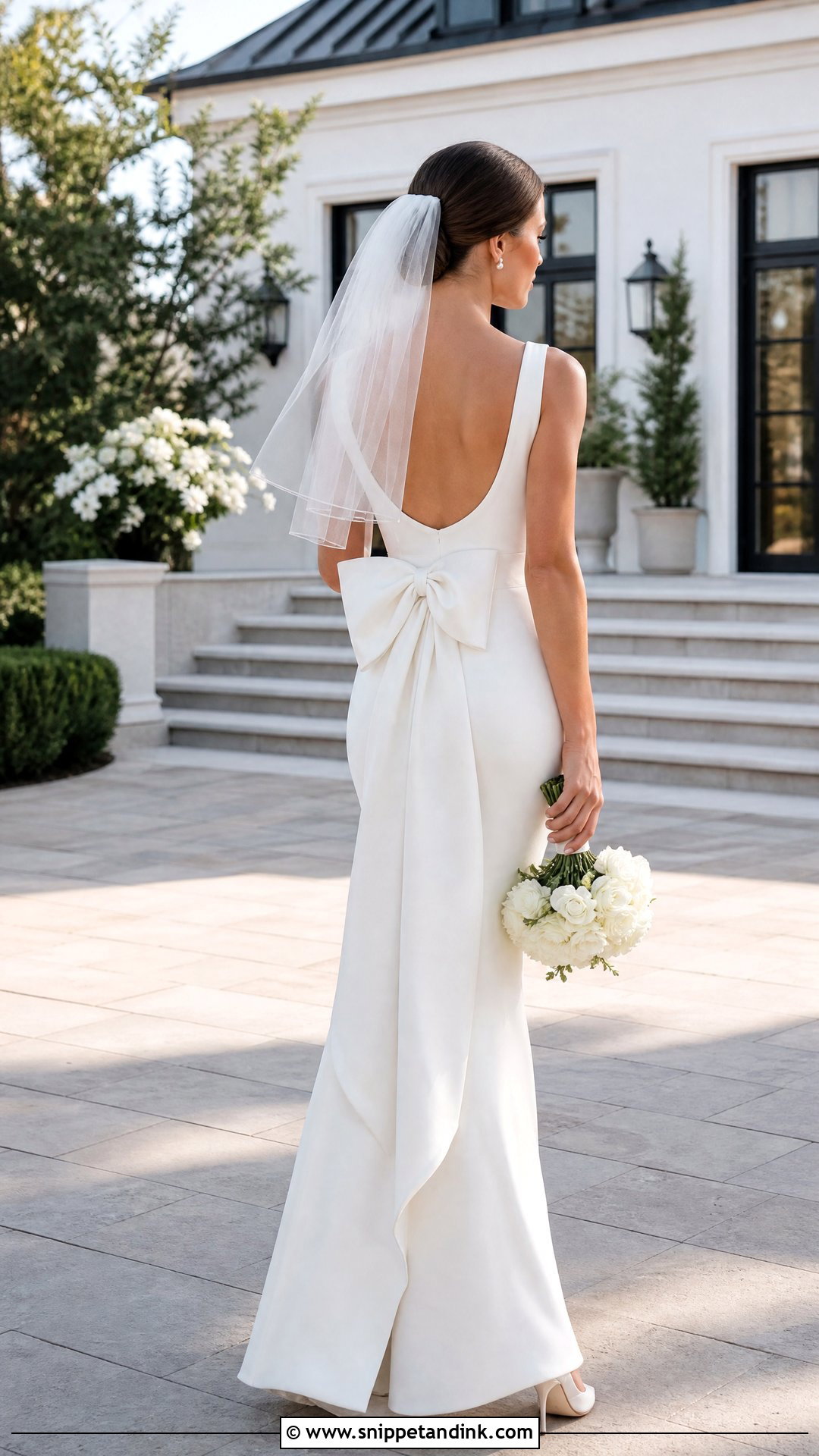
With a bow back, plan the veil around the bow. A veil that falls over it hides your one feature during the whole ceremony, so choose a length that ends above it or attach it underneath. Keep the bow soft; stiff oversized bows dent the moment you lean back in a chair. A neat bun stops the back view from looking crowded.



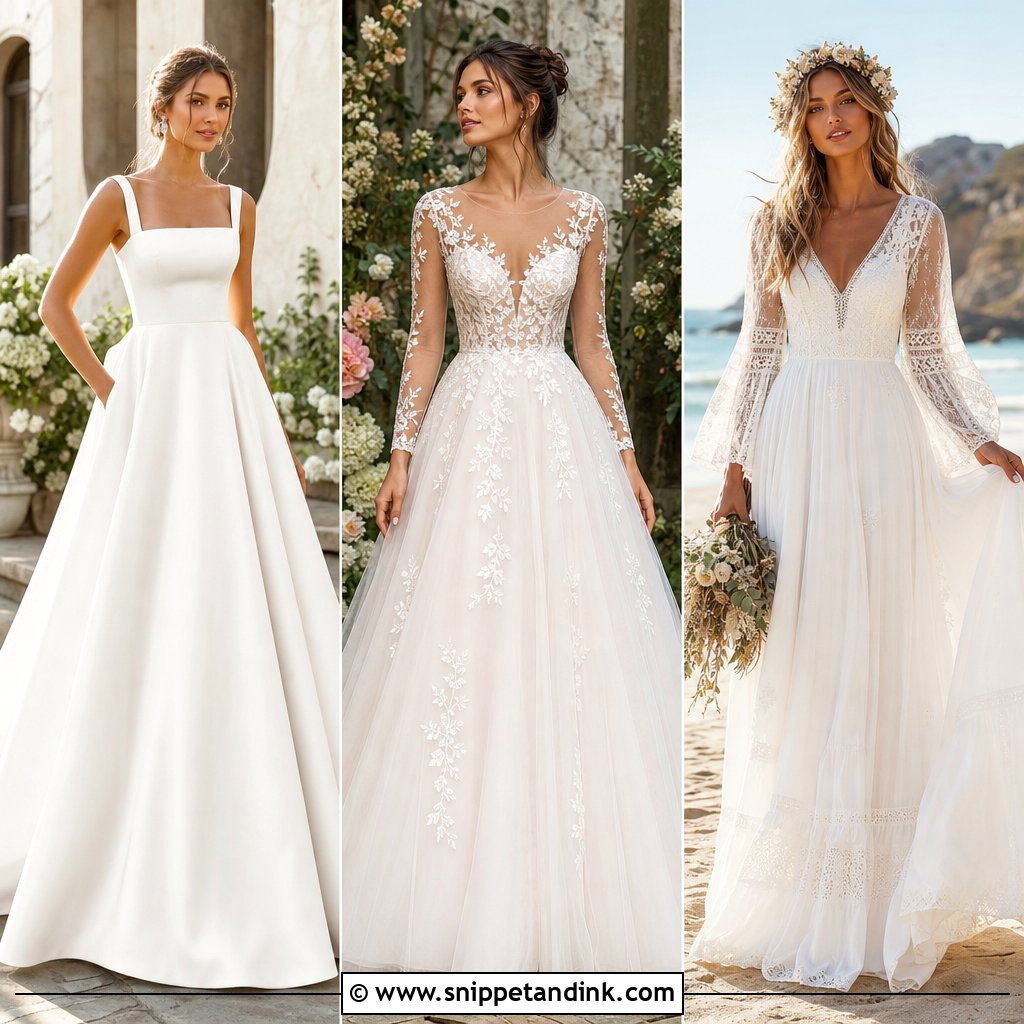
20. Basque Waist Satin Wedding Dress
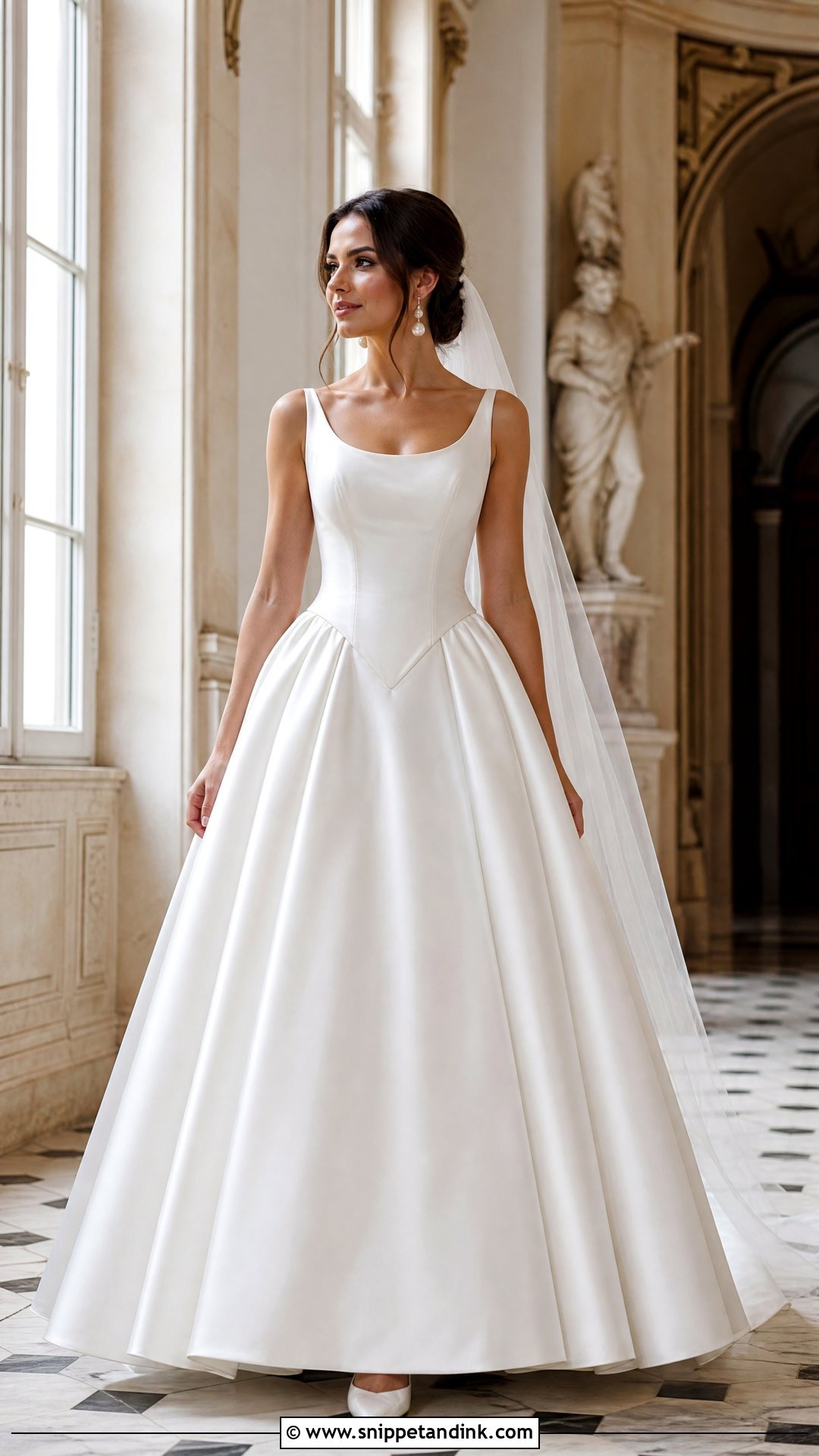
A basque waist dips into a gentle V below the natural waist, and that point is what makes the architectural waistline work. It has to sit perfectly centered and smooth, so tailoring matters more on this gown than anything you add to it. Keep the satin plain. Short-waisted brides should try one on before committing, because the dropped point can shorten the legs on some figures.
21. Floral Jacquard Wedding Dress
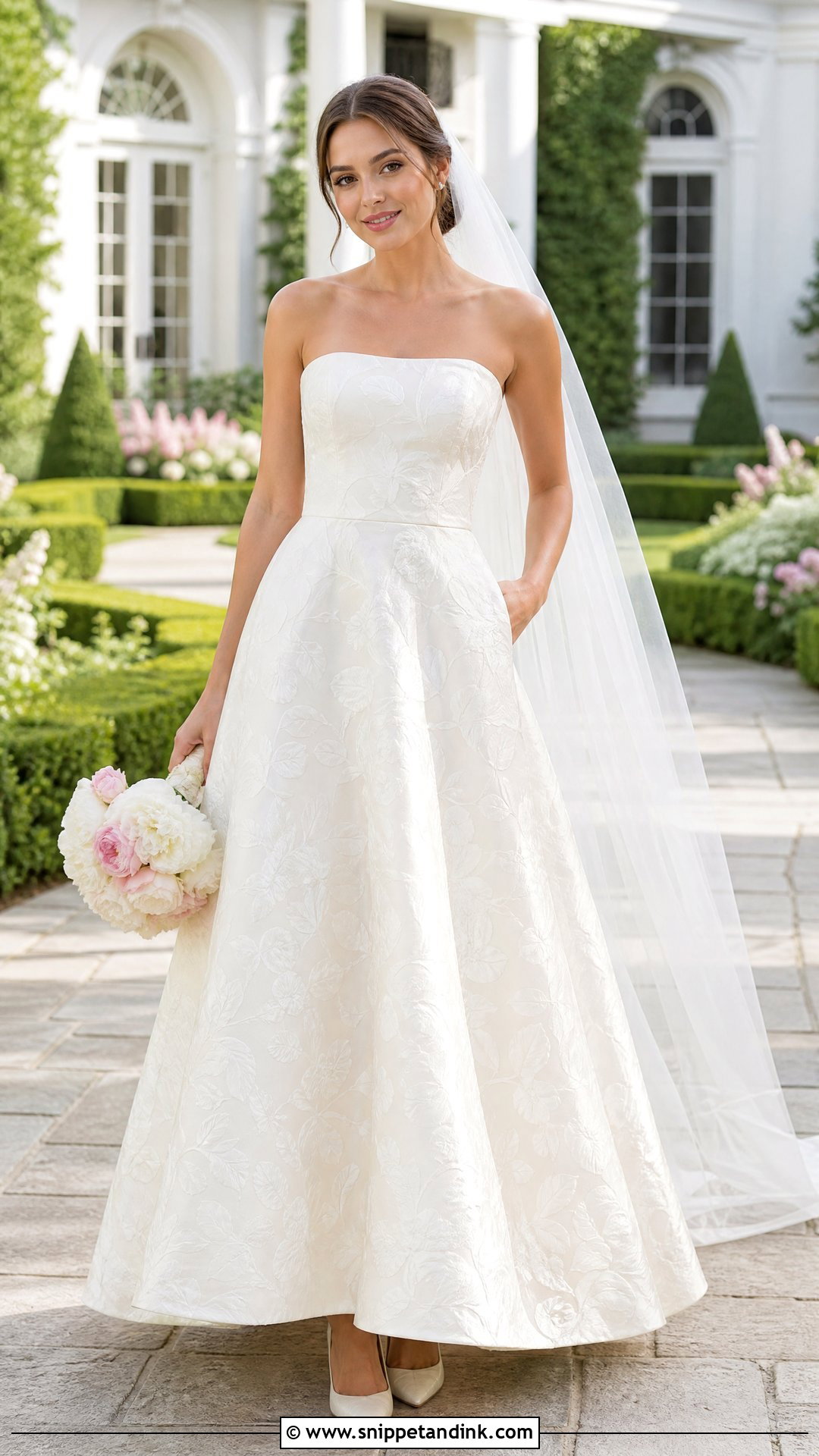
Jacquard has its pattern woven in rather than stitched on, so tonal ivory florals in satin or mikado give texture with no embroidery at all. The fabric is structured, which means the skirt should fall smoothly with few gathers. In flat light the pattern can almost disappear, while side light from a window brings it out, so tell your photographer. Keep the bouquet small and softly colored.
22. One-Shoulder Satin Wedding Dress
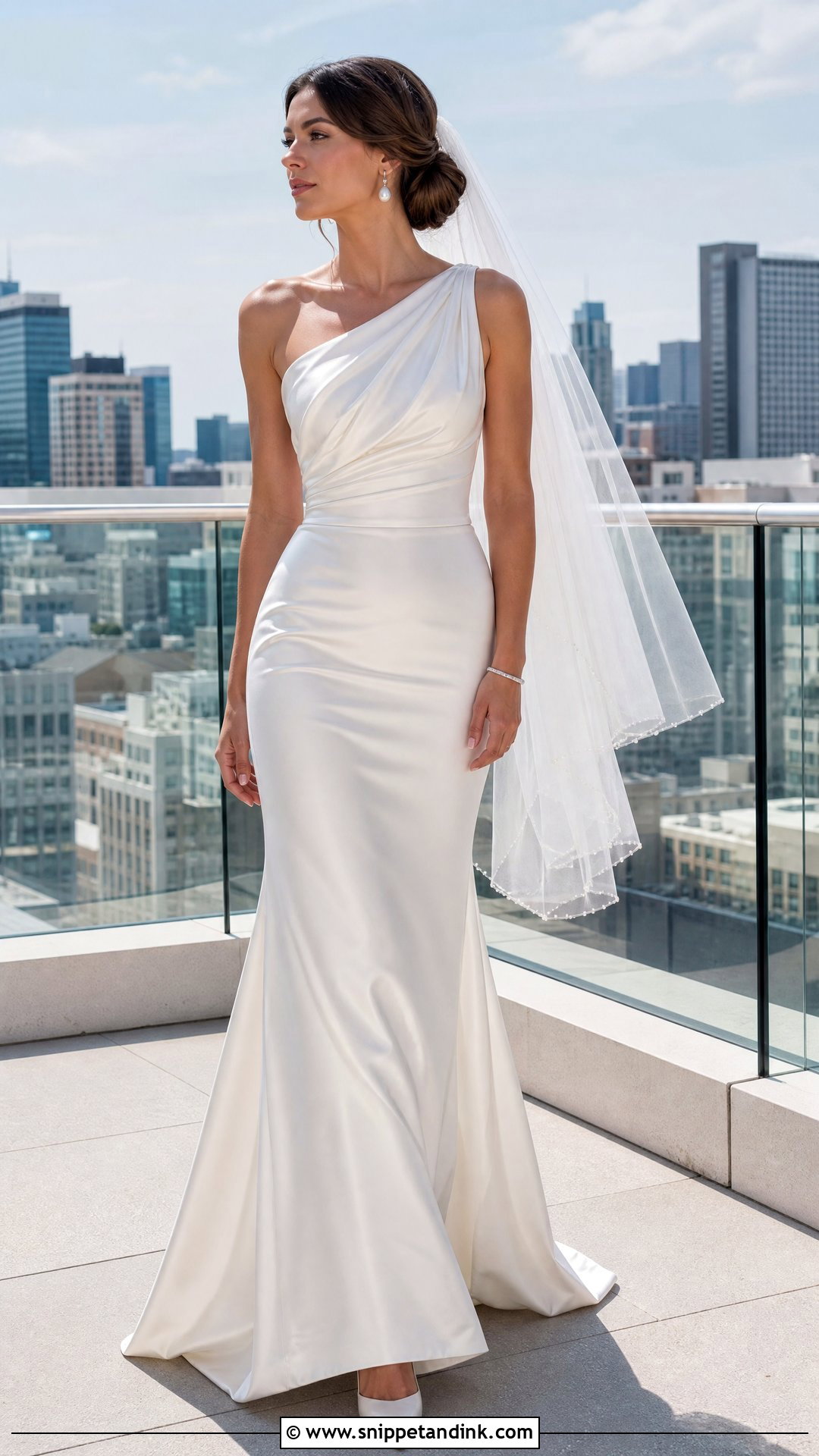
One-shoulder necklines need a firmly anchored strap, otherwise the whole bodice pulls toward that side as you move. Gentle draping across the bodice spreads the tension. Leave off the necklace, wear pearl drops and a slim bracelet, and sweep your hair to the opposite side from the strap so the asymmetry stays clear.
23. High Neck Lace Wedding Dress
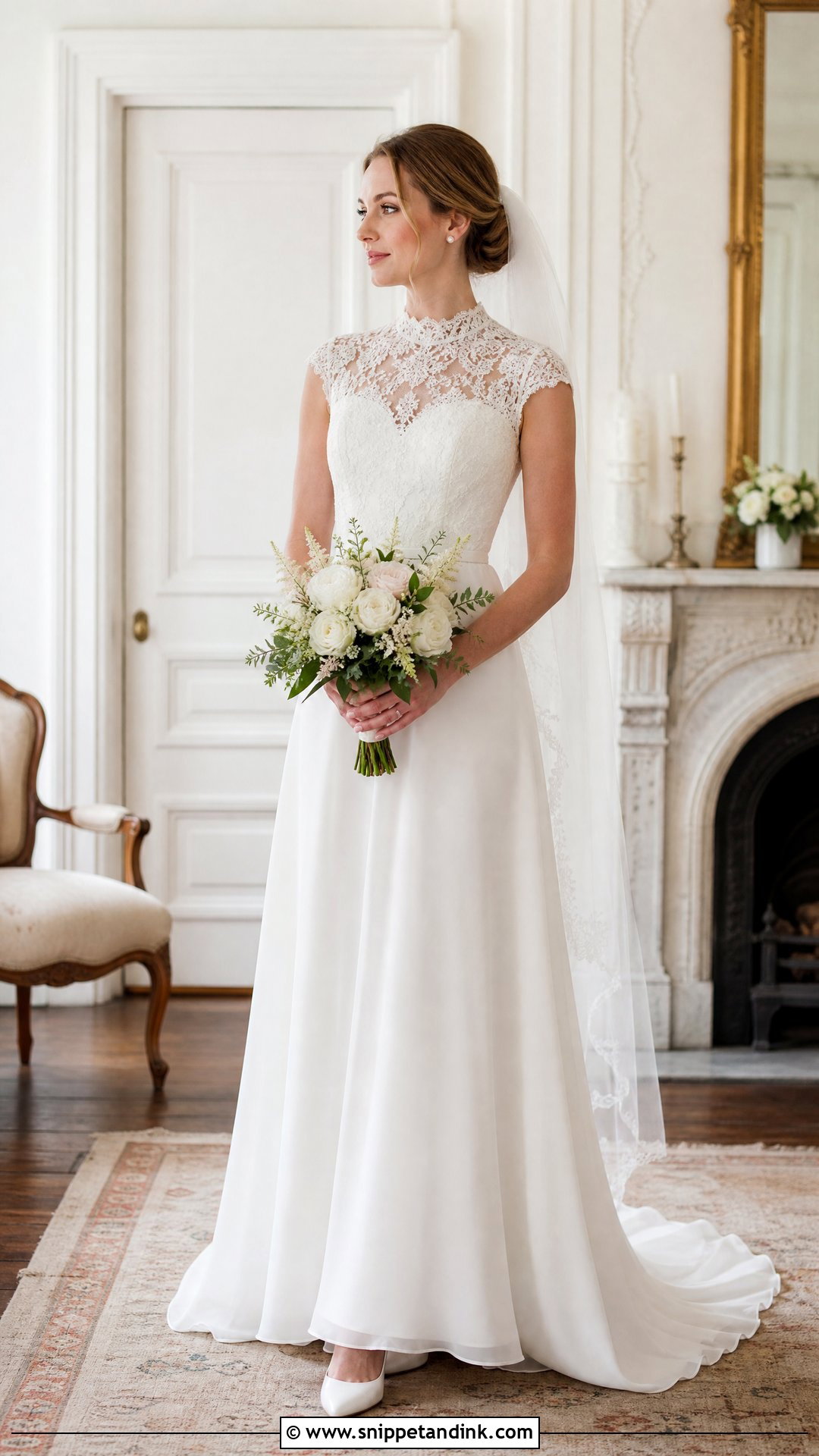
A high lace neck can feel heavy at the throat, which is why I like it paired with a plain crepe or chiffon skirt and an open or keyhole back. Make sure the collar doesn’t press when you turn your head; a collar that’s even slightly snug becomes uncomfortable within an hour. Keep your hair off it so the lace pattern shows.
24. Minimalist Mermaid Wedding Dress
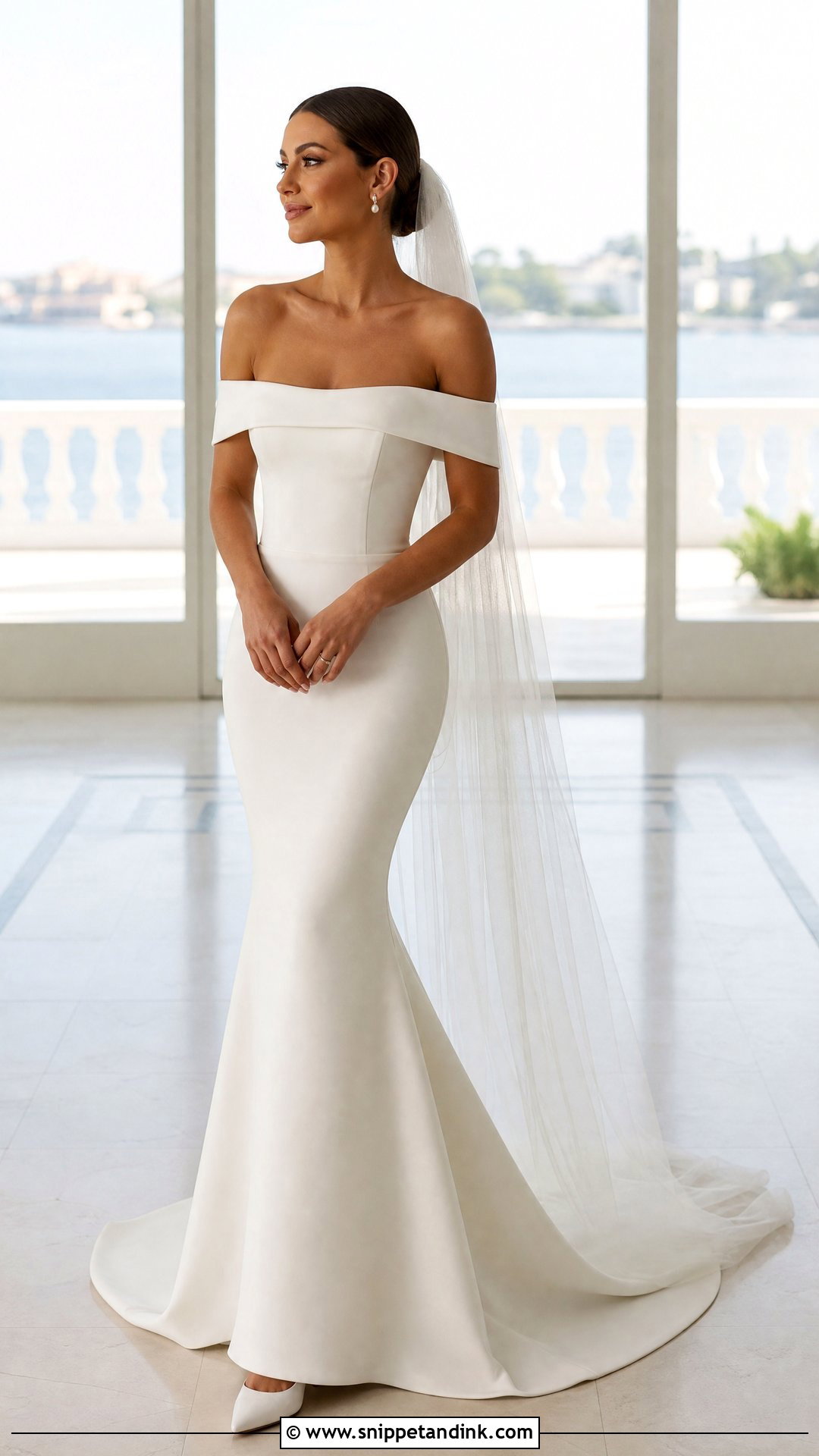
A mermaid gets its drama from shape, so the flare point decides everything. One that opens around the knee is far easier to walk, sit and climb steps in than a deep fishtail. Crepe or matte satin hold the sculpted line without embellishment. Arrange a proper bustle during alterations, because mermaid trains tend to be long and need lifting before the dancing starts.
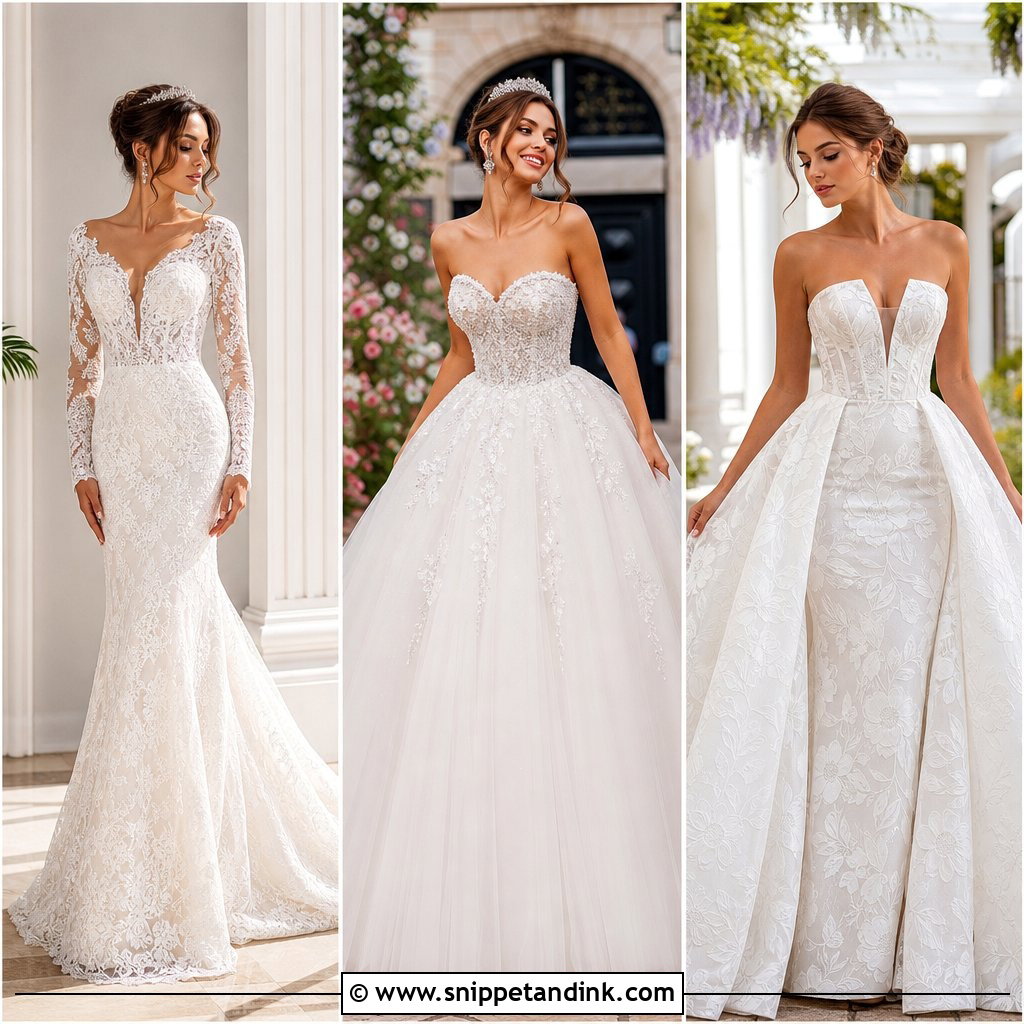
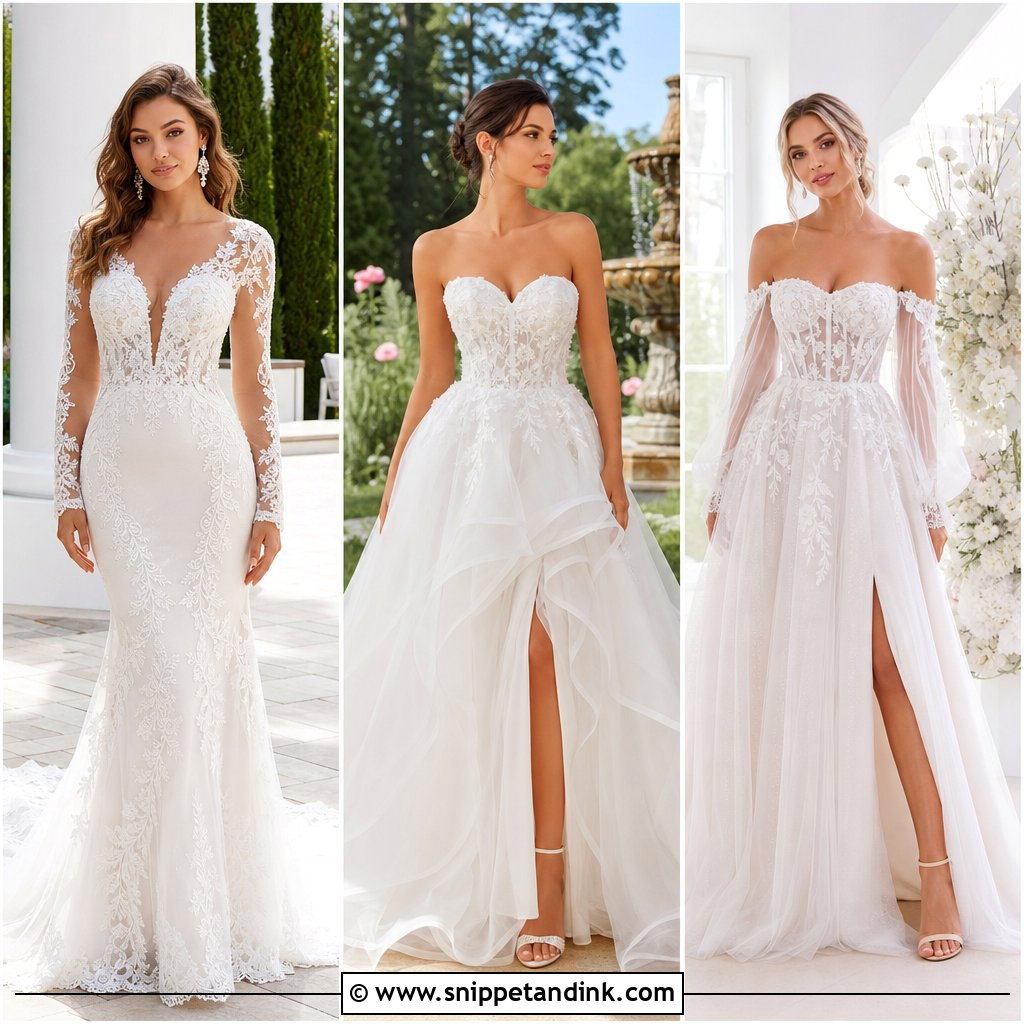

25. Courthouse Midi Wedding Dress
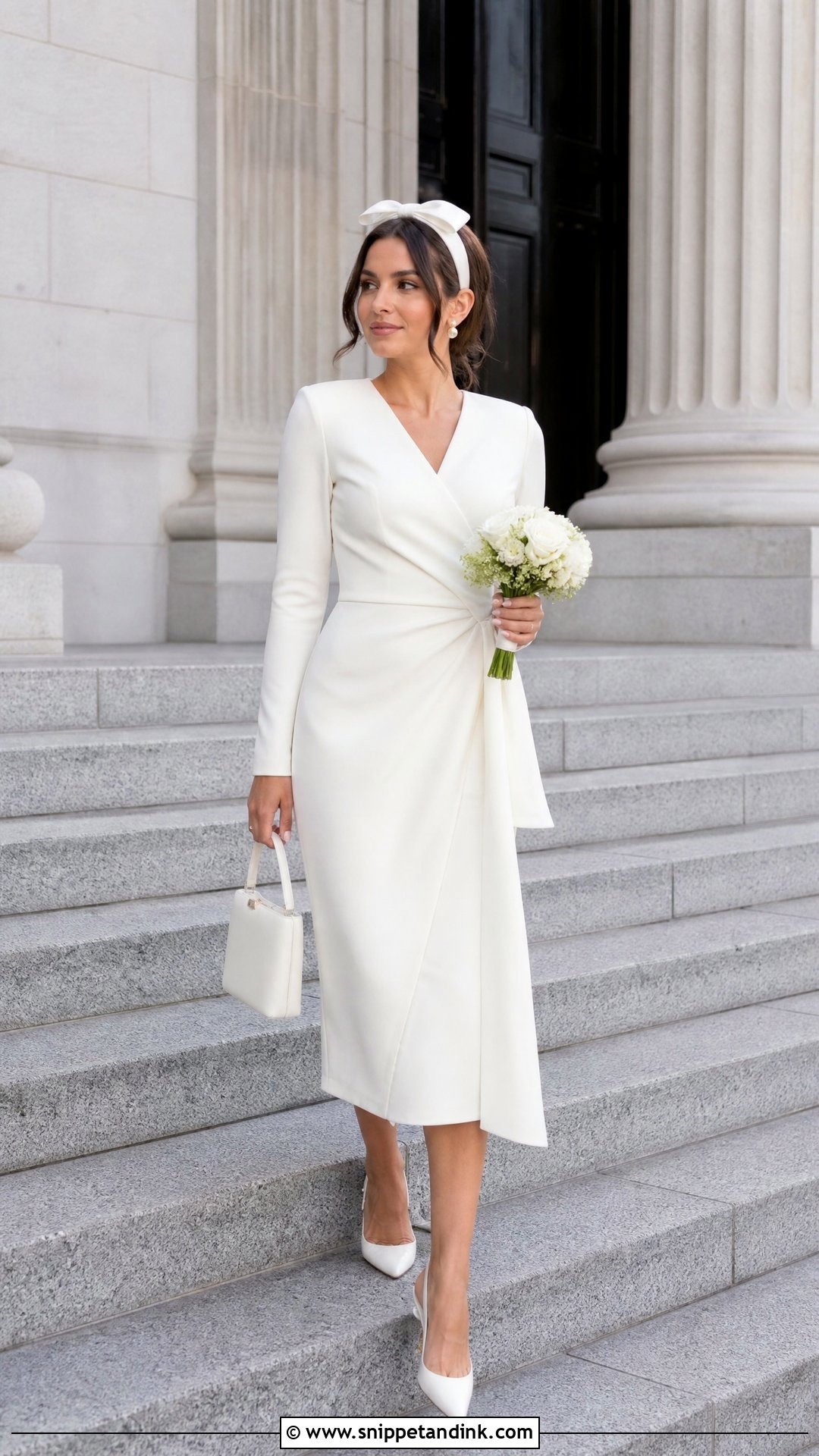
This is the most practical dress here, and the one you’re most likely to wear again. The hem should sit below the knee or near the ankle; right at the knee it starts to look like a cocktail dress. Ivory crepe, satin or textured jacquard give it some weight. A short veil, headband or structured bow makes it read as bridal, and a tailored white coat covers you at a cool-weather courthouse ceremony.
Bustles, Underpinnings and the Alteration Calendar
Underneath the dress
Simple gowns show underwear lines far more than embellished ones. Slip dresses and halters need built-in cups or adhesive support, plus smooth no-line underwear in a shade close to your skin. White underwear can show through ivory, which surprises a lot of brides. Bring the actual pieces to every fitting, because a different bra changes how the bodice sits.
The bustle
Any train longer than a sweep needs a bustle for the reception. An over-bustle hooks the train up onto the back of the skirt, while a French or under-bustle tucks it beneath with ribbon ties. Ask your seamstress which suits your fabric, then have whoever will do it on the day practice at the final fitting. Color-coded ribbon ties make the right pairs far easier to find in a dim corridor.
How the fittings usually run
Most gowns need two or three fittings, usually starting a couple of months before the wedding, with the last one a week or two out. Buy your shoes before the first fitting since the hem depends on them, and mention any planned weight change early so the seamstress can leave room for it.
Romance Comes From the Fit
A plain gown asks for one strong feature and a good fit, not more decoration. Satin brings structure, chiffon brings movement, and lace or jacquard add texture in small doses. Build your accessories around the neckline and leave proper time for alterations, because a simple dress that moves with your body looks more romantic than an elaborate one that doesn’t.
You'll Like These Ideas:







Leave a Reply