
Ethereal is a fabric word before it is a style word. A gown reads as light and floating because of what it is made from and how many layers sit over the lining, not because of a mood board. When I pull dresses for a bride who asks for this feeling, I start with fine tulle, chiffon, organza and soft lace, then watch how the skirt moves when she takes three steps. The 35 gowns below run from barely-there slips to full organza skirts, with notes on the veil, shoes and hair that keep each one from getting heavy, and on the venues where each holds up best.
Tulle, Chiffon and Organza Behave Differently Once You Sit Down
Most of the gowns below are built from three sheer fabrics, and brides often treat them as interchangeable. They aren’t. Each one moves, creases and photographs in its own way, and I’d rather you know that before an appointment than after the order goes in.
Tulle
Tulle is a fine net. Soft bridal tulle drapes and builds volume in layers; cheaper tulle is stiffer and looks scratchy up close. It hides creases well, which makes it forgiving over a long day, but it snags on rough bracelets, chair edges and beaded clutches. In dry winter air the layers can cling with static, so a little anti-static spray on the lining is worth carrying.
Chiffon
Chiffon is a light, plain weave, usually silk or polyester. It flows close to the body and lifts with every breeze, which is why it reads so soft in pictures. It also shows seams, damp patches and any tightness in the fit, so the bodice usually needs a structured lining underneath. I don’t suggest it to brides who want a lot of volume.
Organza
Organza is sheer but crisp, with a slight sheen. It holds its shape, so it builds a full skirt with less weight than satin. The catch is creasing: it wrinkles when you sit and keeps those wrinkles, so plan for a handheld steamer between the ceremony and portraits.
One test I ask every bride to do at a fitting: have someone take a phone photo of you with the flash on. Sheer bodices and lightly lined skirts that look opaque in the shop can turn see-through under flash, and adding a lining layer now is far easier than discovering it in the gallery.
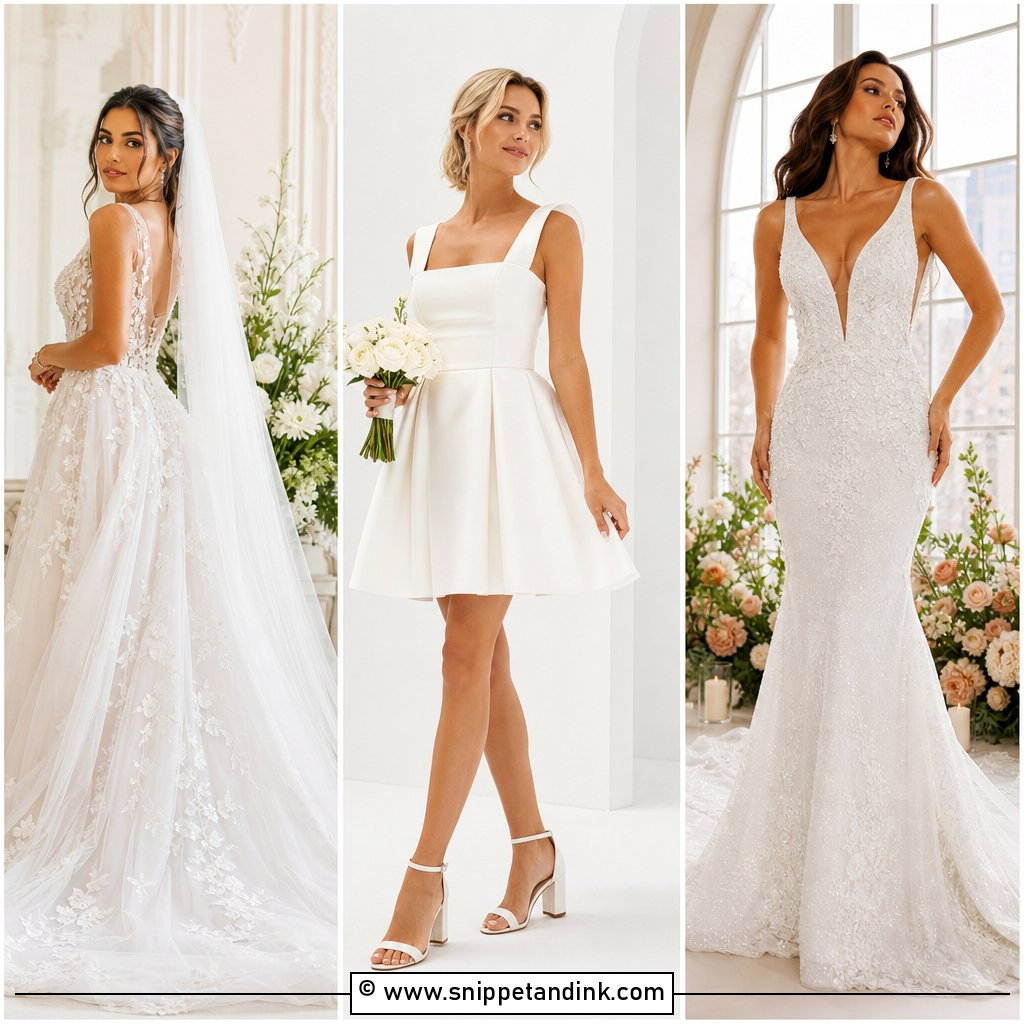
1. Tulle A Line Wedding Dress
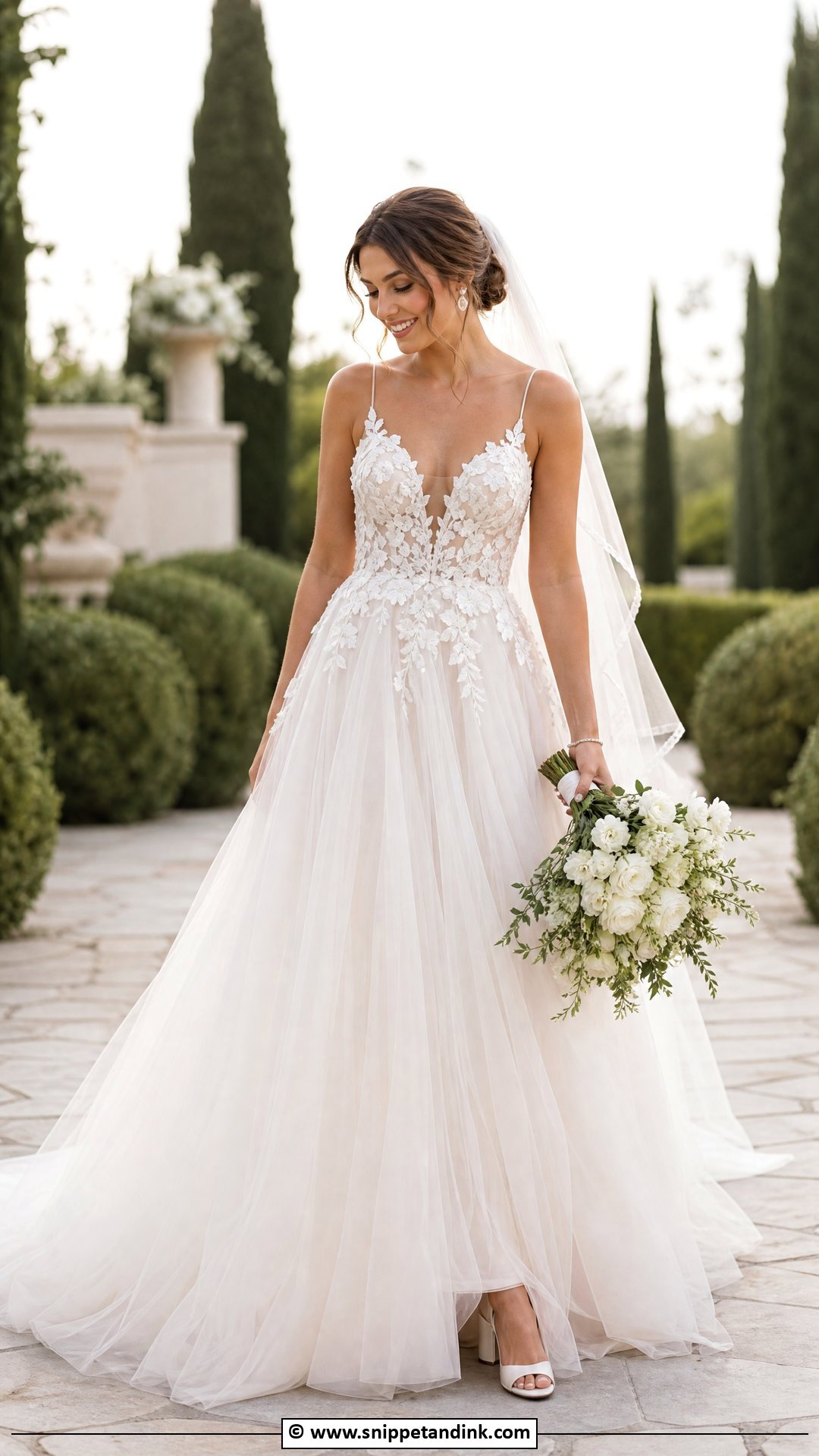
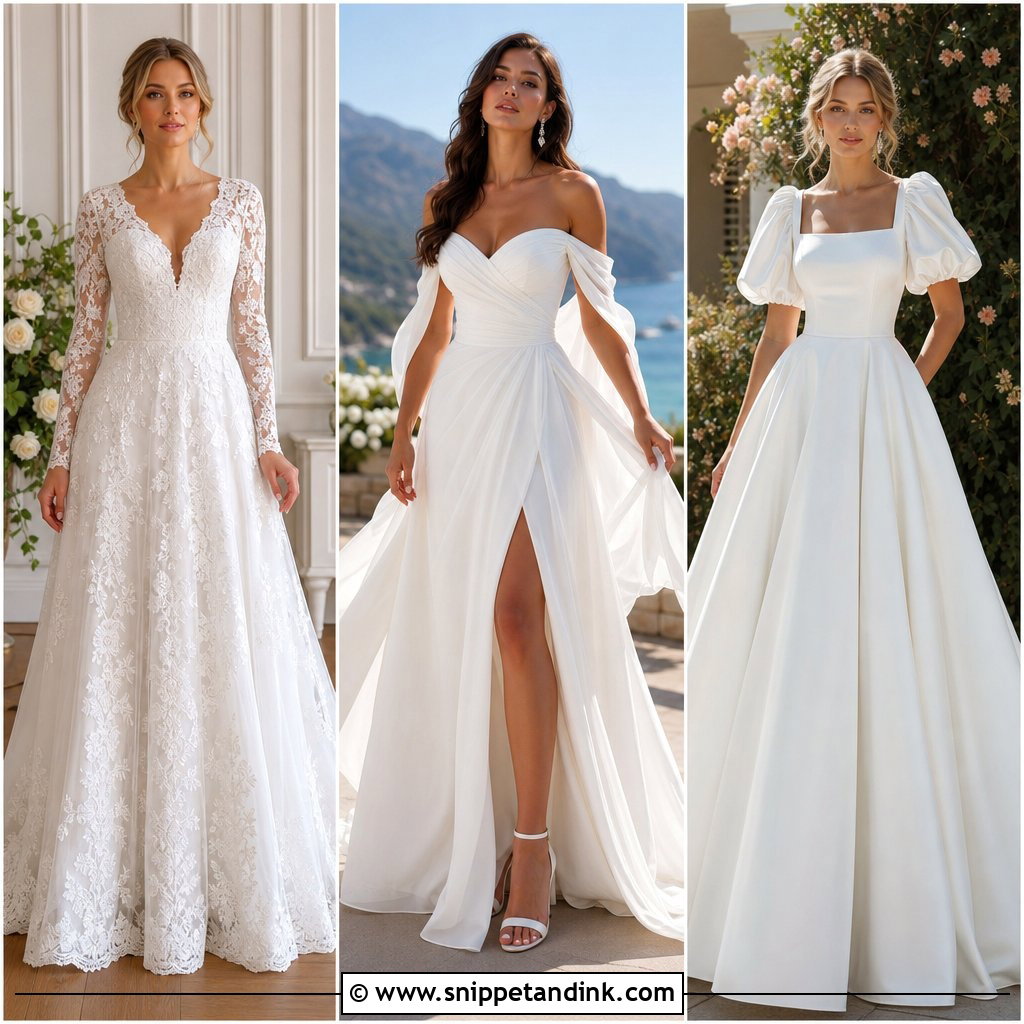
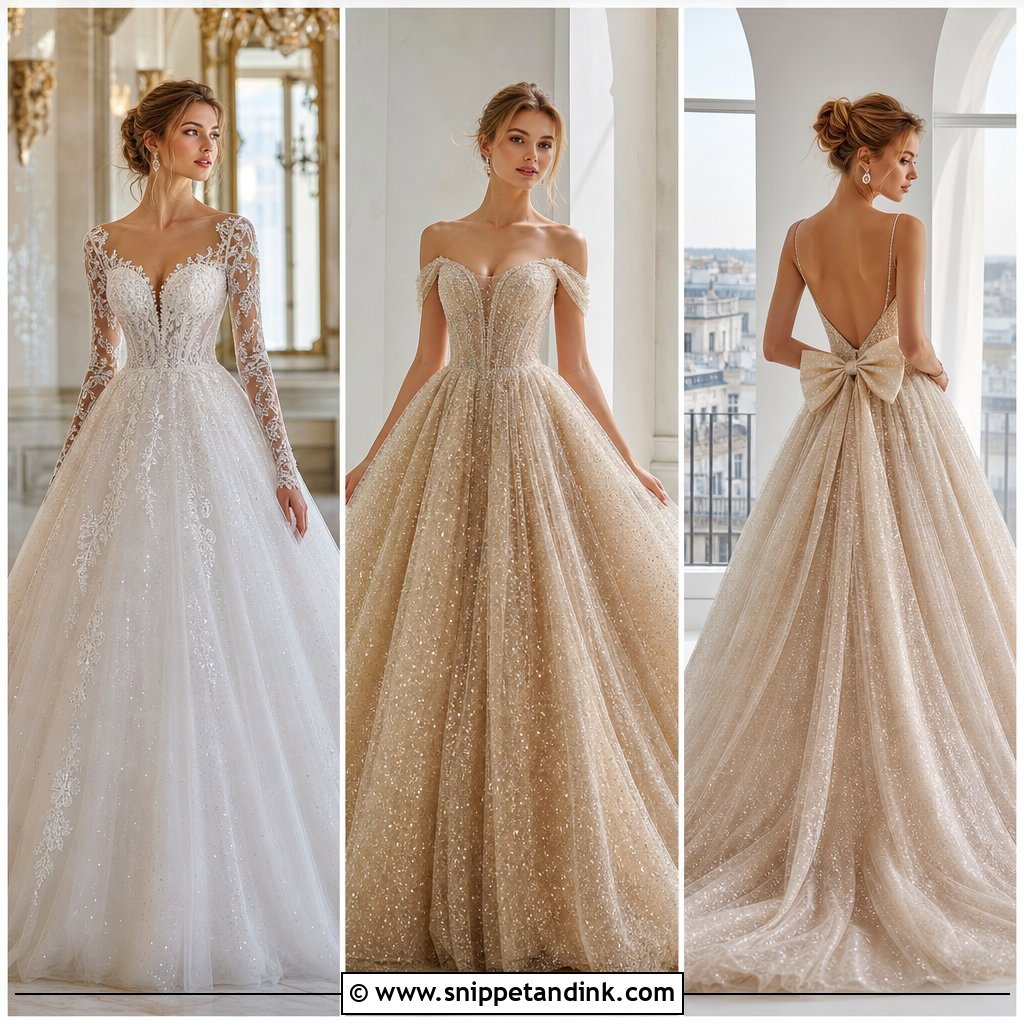
An A-line in fine tulle is the shape I reach for first when a bride says she wants to float but also wants to sit, dance and climb steps. The waist is defined, then the skirt drops away from the hips without clinging, so it forgives a lot. Ask how many tulle layers sit over the lining; three or four fine layers move far better than one stiff petticoat doing all the work. A sheer bodice with sparse floral appliqué keeps the top interesting, and a fingertip veil, pearl drops and ivory satin block heels balance it. Those block heels matter on lawns, which is where this dress usually ends up, next to a loose bouquet of white blooms and greenery.
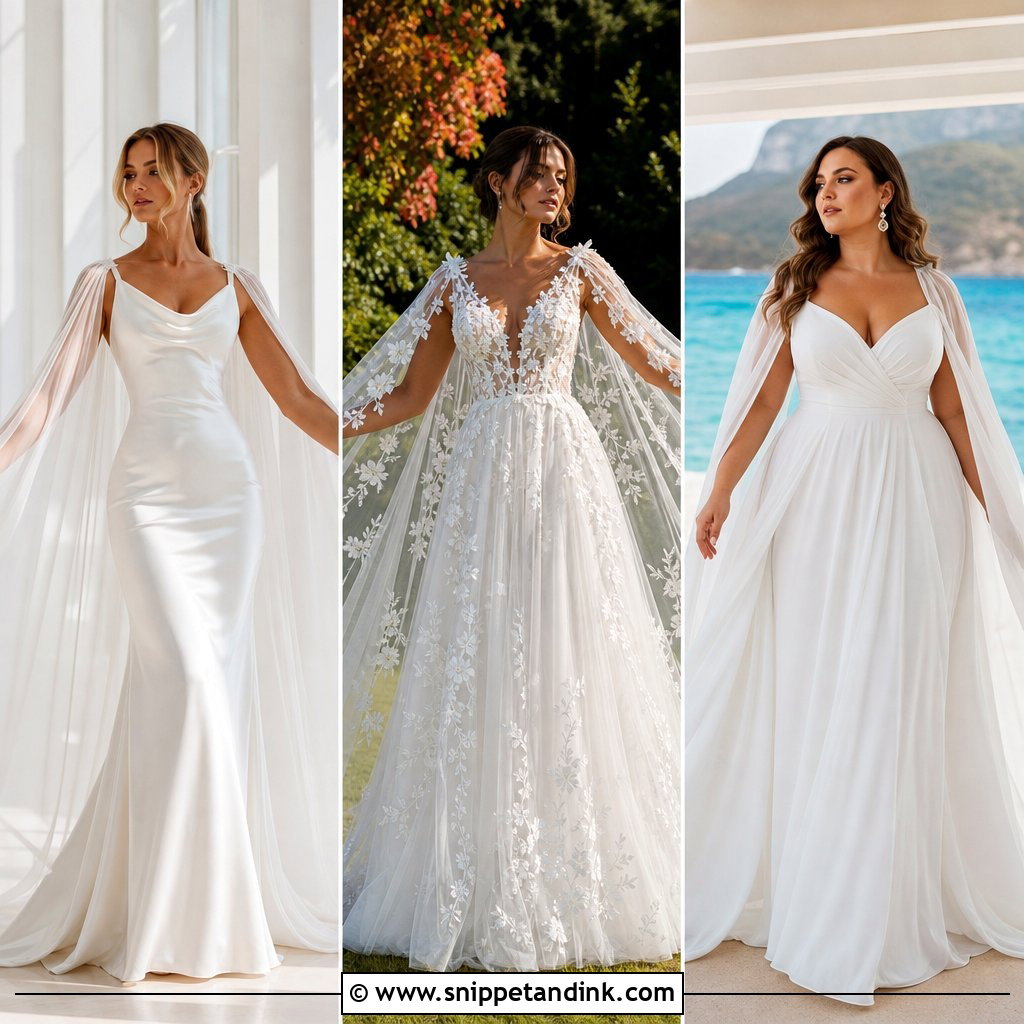
2. Floral Applique Wedding Dress
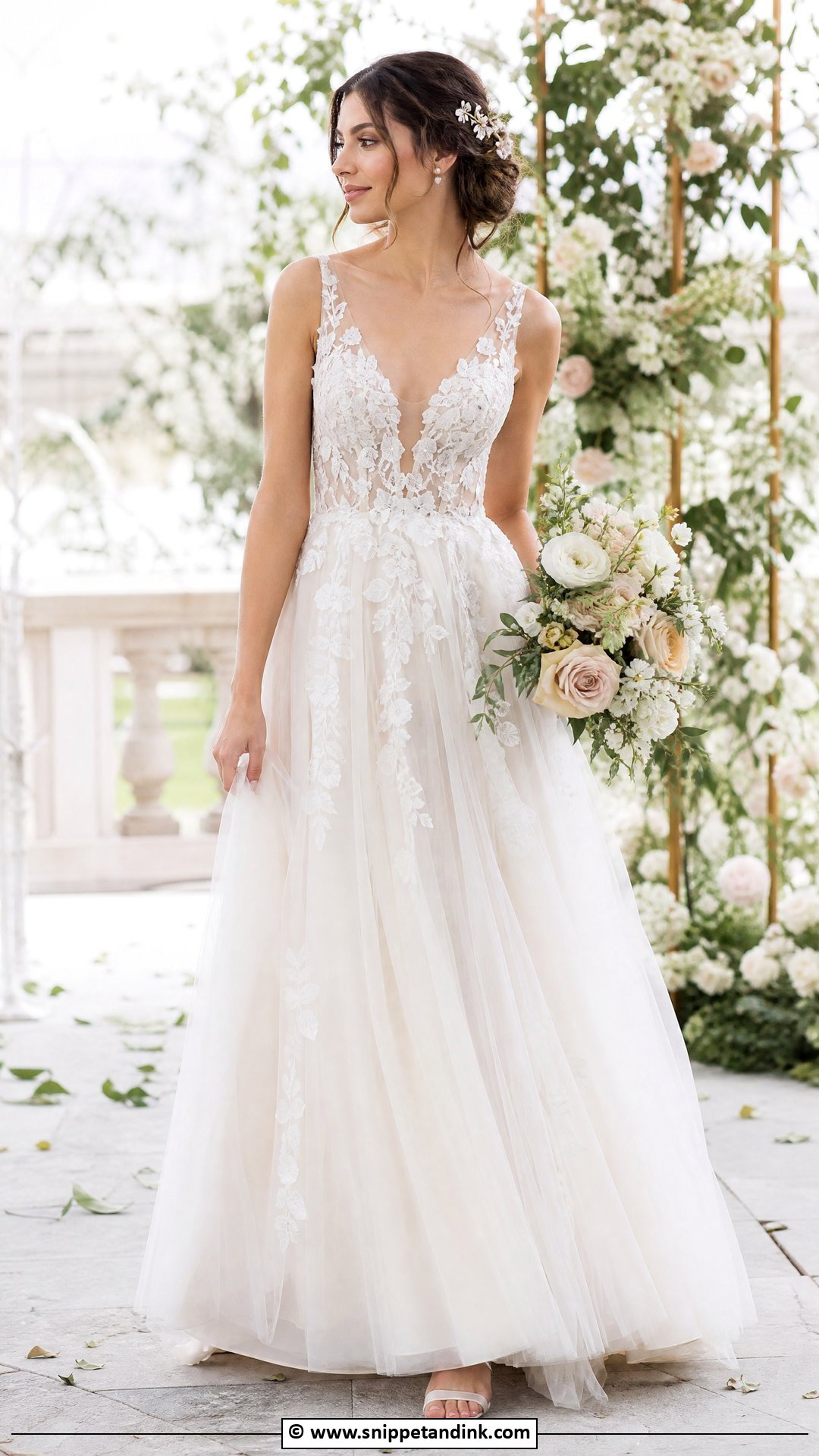
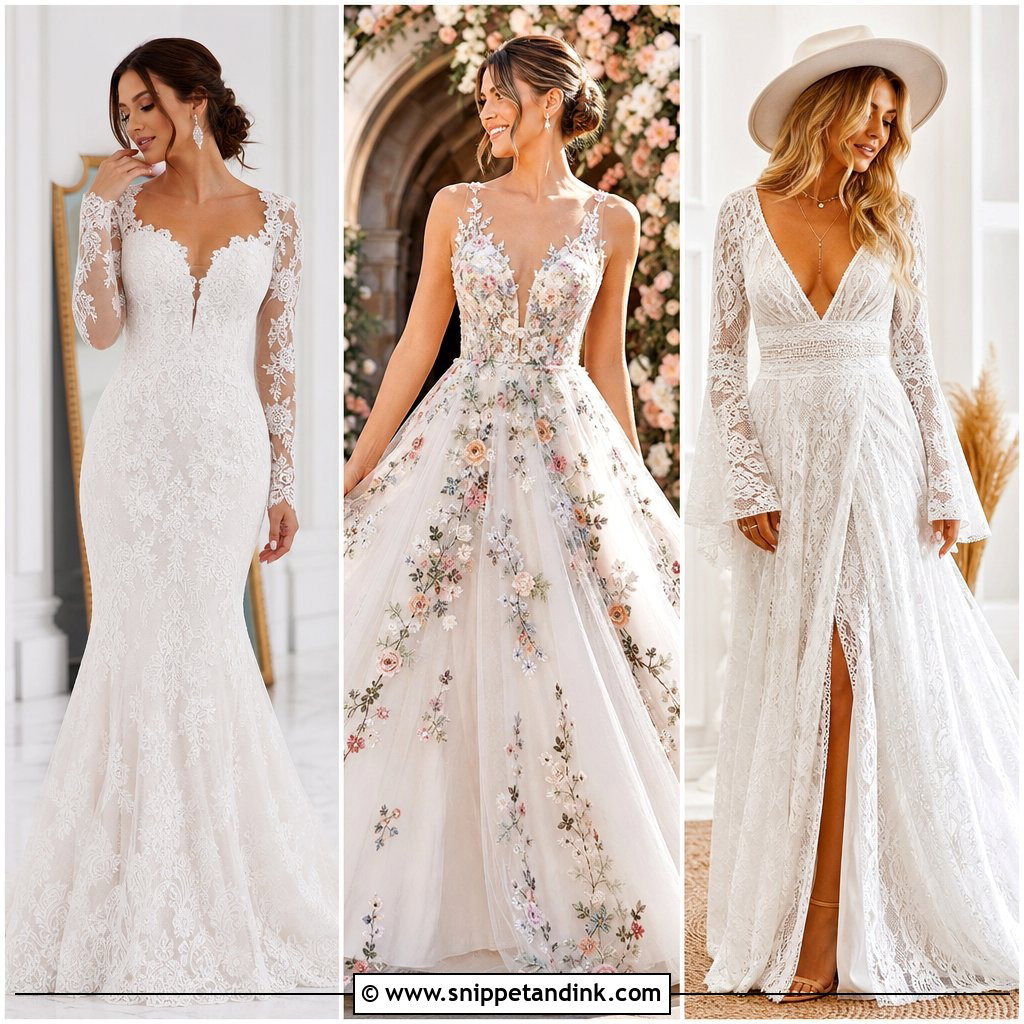
With a floral applique wedding dress, placement is everything. I look for flowers that cluster at the bodice and thin out as they travel down the skirt, because an even scatter tends to read as a print from across the room. The base should be sheer tulle, soft organza or light lace so the appliqués look as if they grew there rather than were glued on. One thing to check at the fitting: hand-sewn appliqués catch on beaded bracelets, so I keep jewelry to small pearl studs. Barely-there sandals, a sheer veil and floral pins in loose waves or a low bun finish it.
3. Long Sleeve Lace Wedding Dress
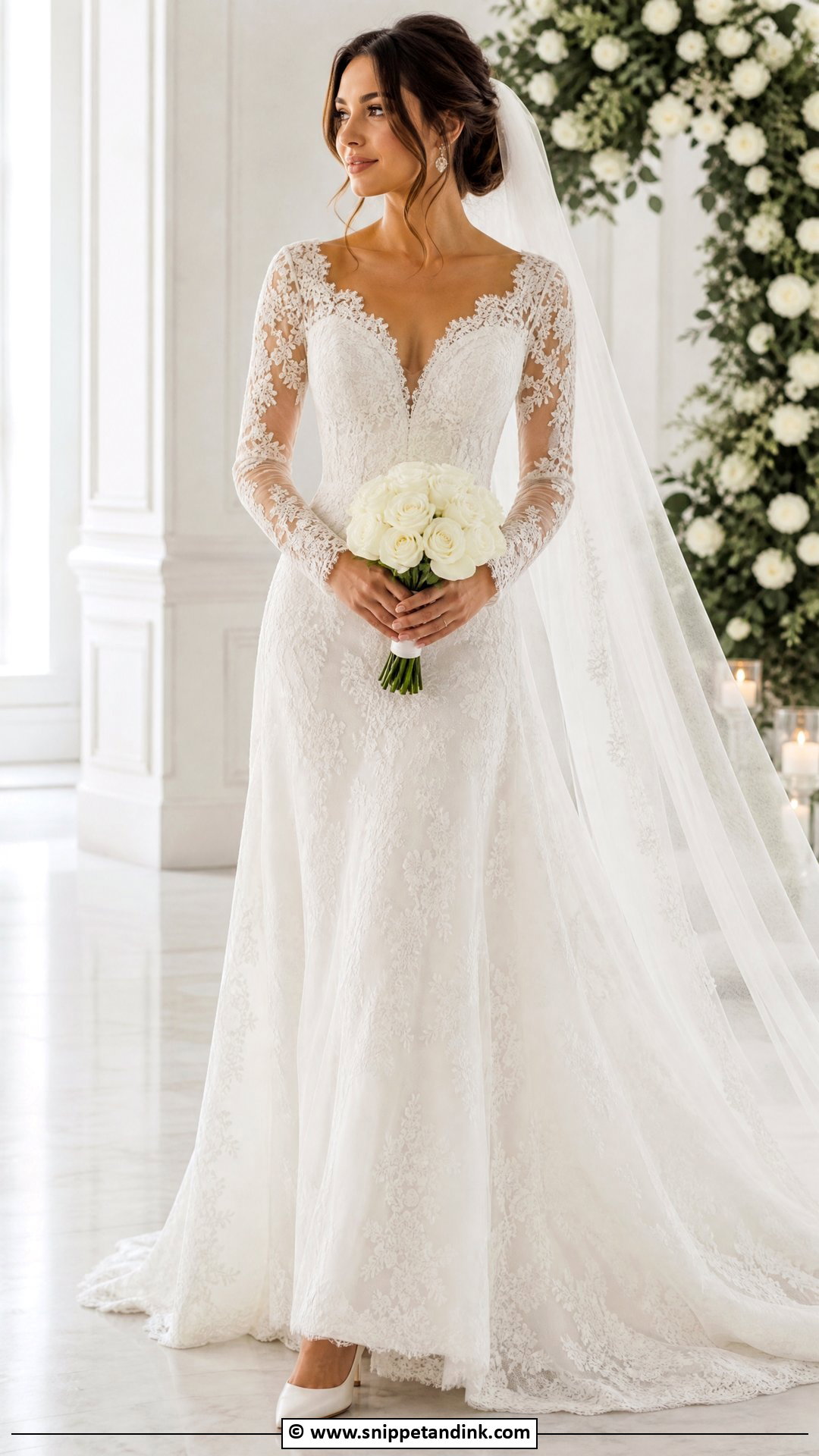
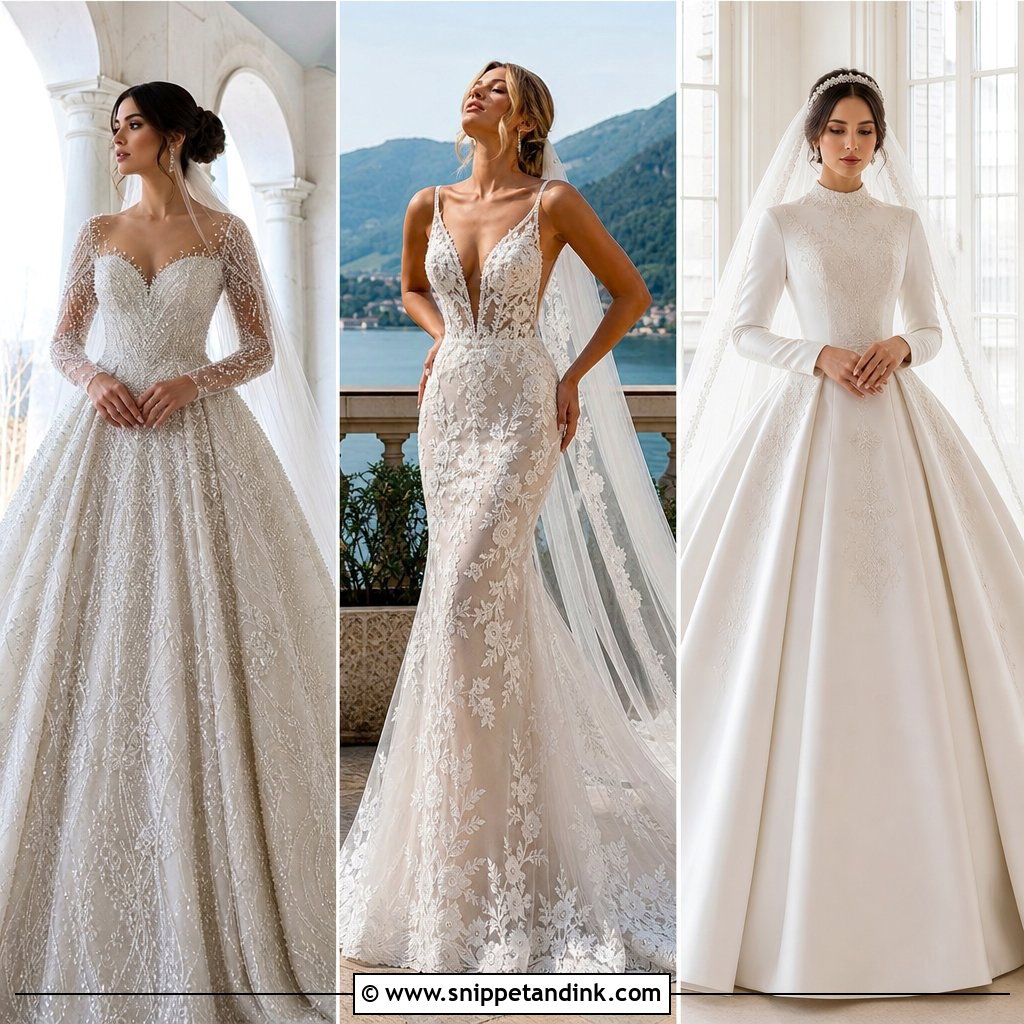
Long lace sleeves can feel airy or wintry, and the lace itself decides which. Soft, sheer floral or vine lace on an illusion base looks light; heavy corded lace makes the same sleeve look stiff. I always have the bride raise her arms to shoulder height at a fitting, because a tight sleeve drags the bodice up with it. A fitted bodice and flowing skirt, pointed ivory heels, a long veil and a low chignon keep the line clean, and a small bouquet of white roses, ranunculus or baby’s breath stays in scale. Cooler months and formal ceremonies suit it best.
4. Chiffon Wedding Dress
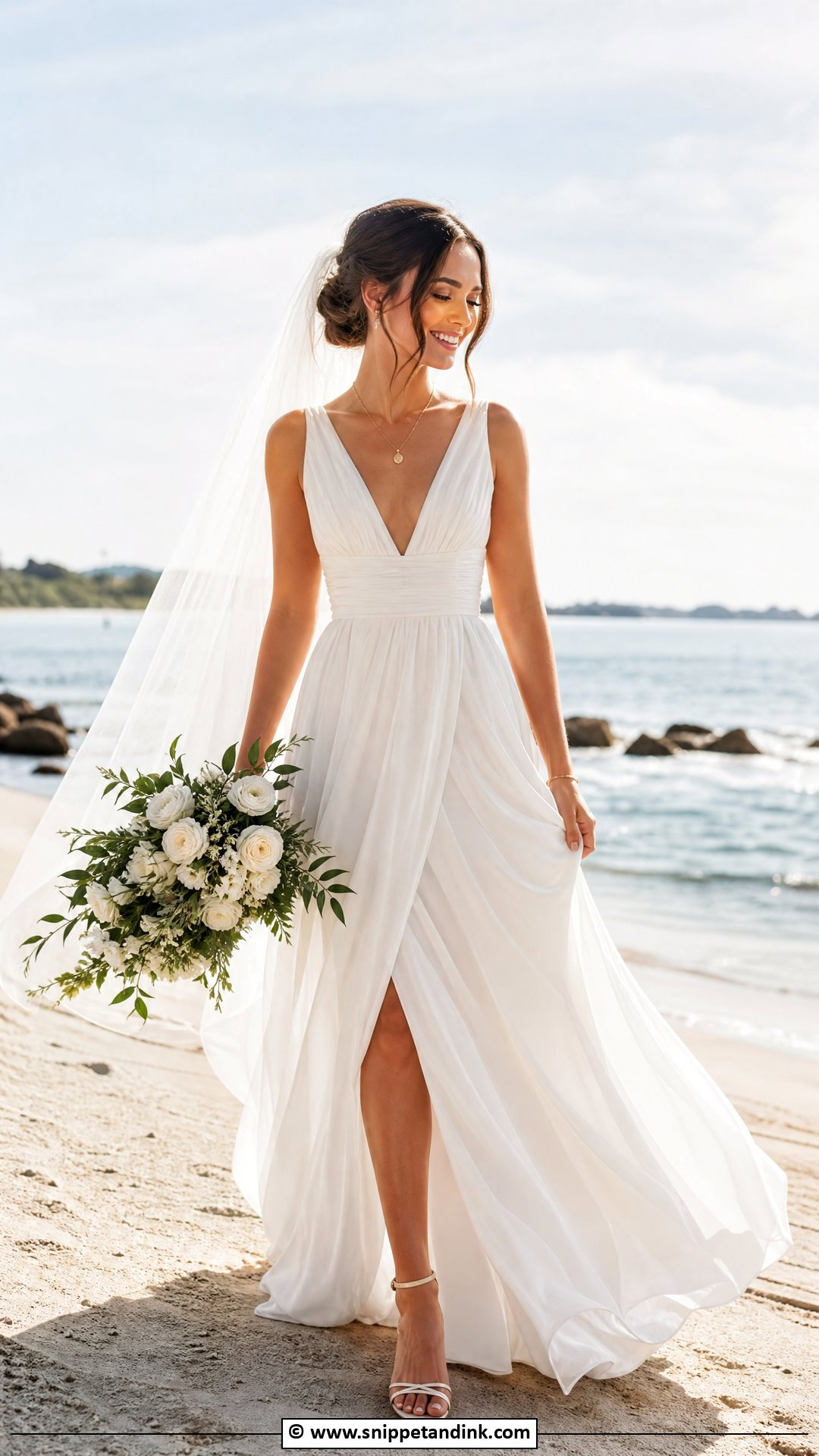
Chiffon is the most relaxed of the floaty fabrics. It moves with the body and catches any breeze, which is the whole appeal, but it also shows every pull and seam, so the fit through the waist has to be right. A soft V neckline with a gathered waist and flowing skirt is the classic version. I keep accessories light: a sheer veil, strappy ivory sandals and fine gold or pearl jewelry. If the dress is plain, a soft braid or a floral comb adds detail without weight. Beaches and destination ceremonies are where chiffon makes the most sense, since it packs better than tulle and dries quickly if it meets sea spray.
5. Off Shoulder Wedding Dress
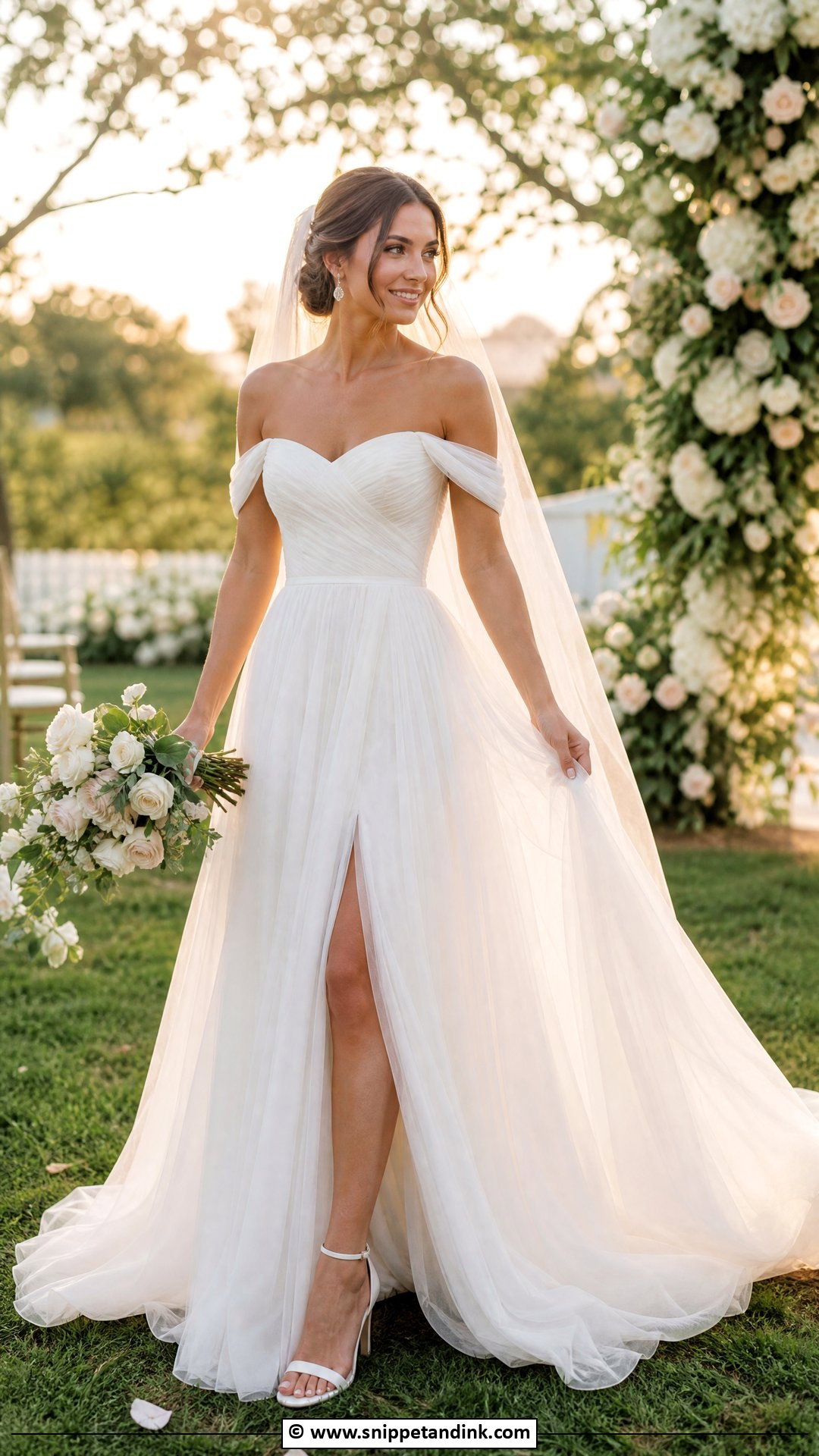
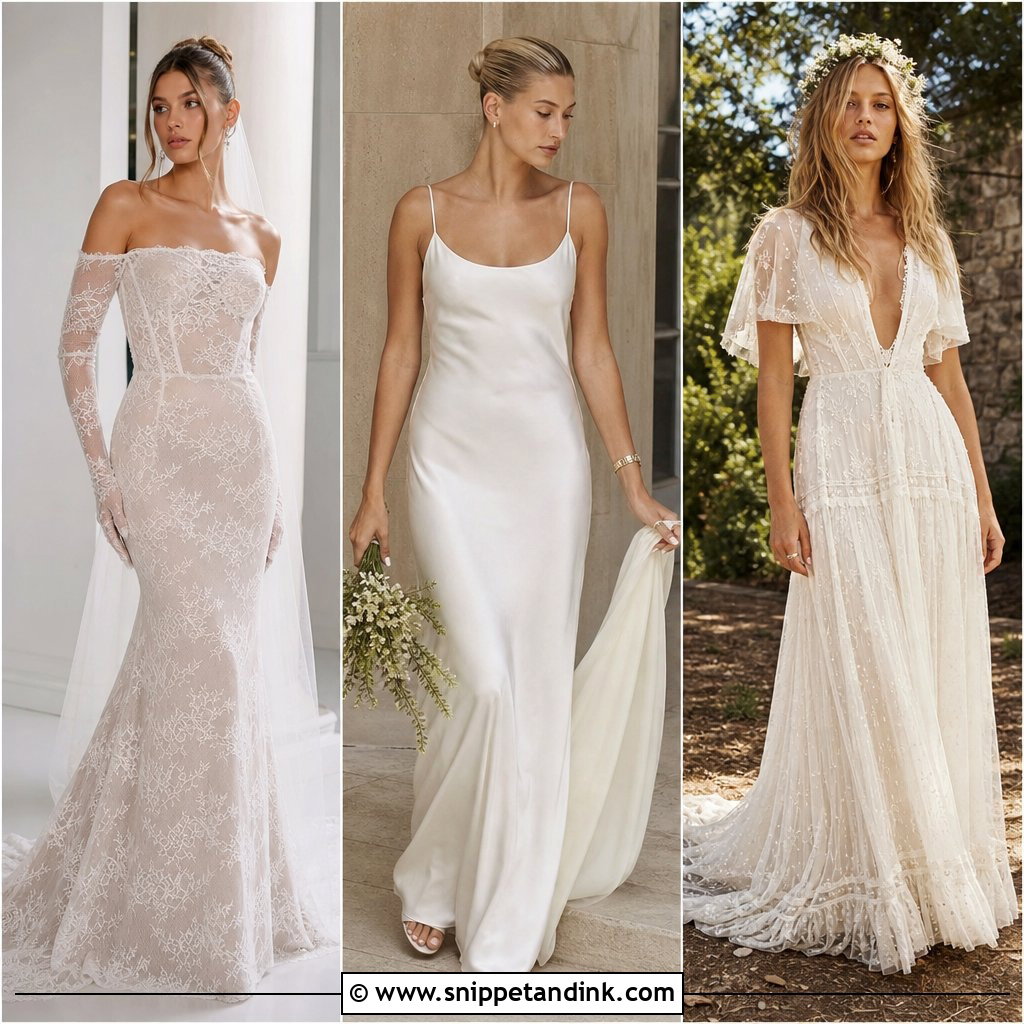
An off-shoulder neckline frames the collarbones, and it is the most fit-sensitive neckline I deal with. If the band is even slightly loose it creeps up every time the arms lift; too tight and it digs in by the speeches. For the ethereal version, look for sleeves that drape rather than stand stiffly, in tulle, lace, chiffon or organza. A cathedral veil adds drama and a shorter sheer one keeps things lighter. Pearl earrings, soft waves and satin heels finish it, and that open neckline glows in sunset light.
6. Sheer Sleeve Wedding Dress
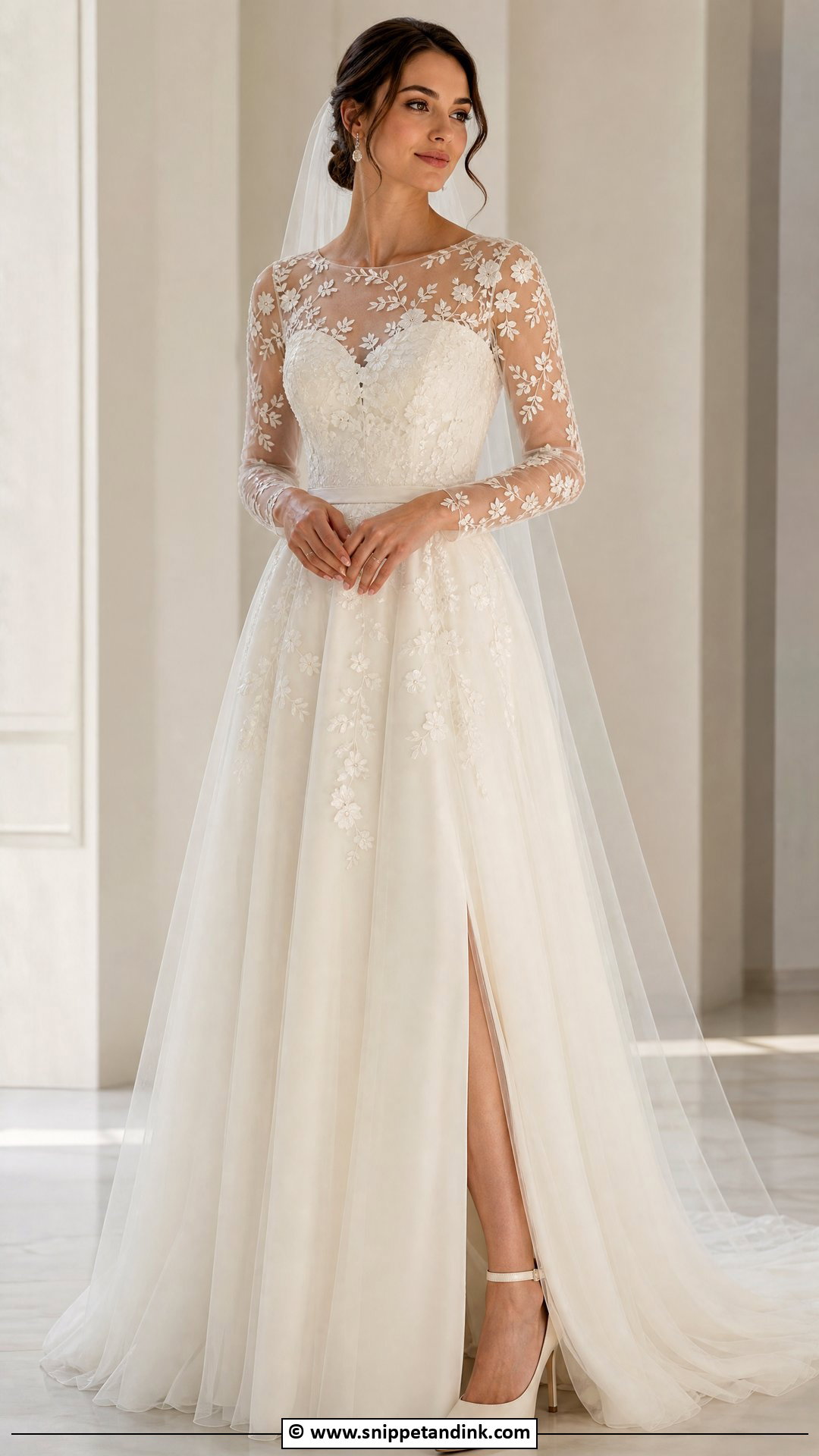
Sheer sleeves give coverage while still showing the arm, which is why so many brides who are unsure about strapless land here. The detail does the work: illusion mesh, fine lace, tiny pearls or embroidered flowers that seem to float on the skin. I check the mesh shade against the bride’s skin in daylight, since a mismatch shows up as a visible band in photos. Pair the sleeves with a light A-line or flowing sheath, a sleek veil and simple drop earrings, then closed heels or soft sandals depending on the ground. A low bun with face-framing pieces leaves the sleeves fully on show.
7. Organza Ball Gown Wedding Dress
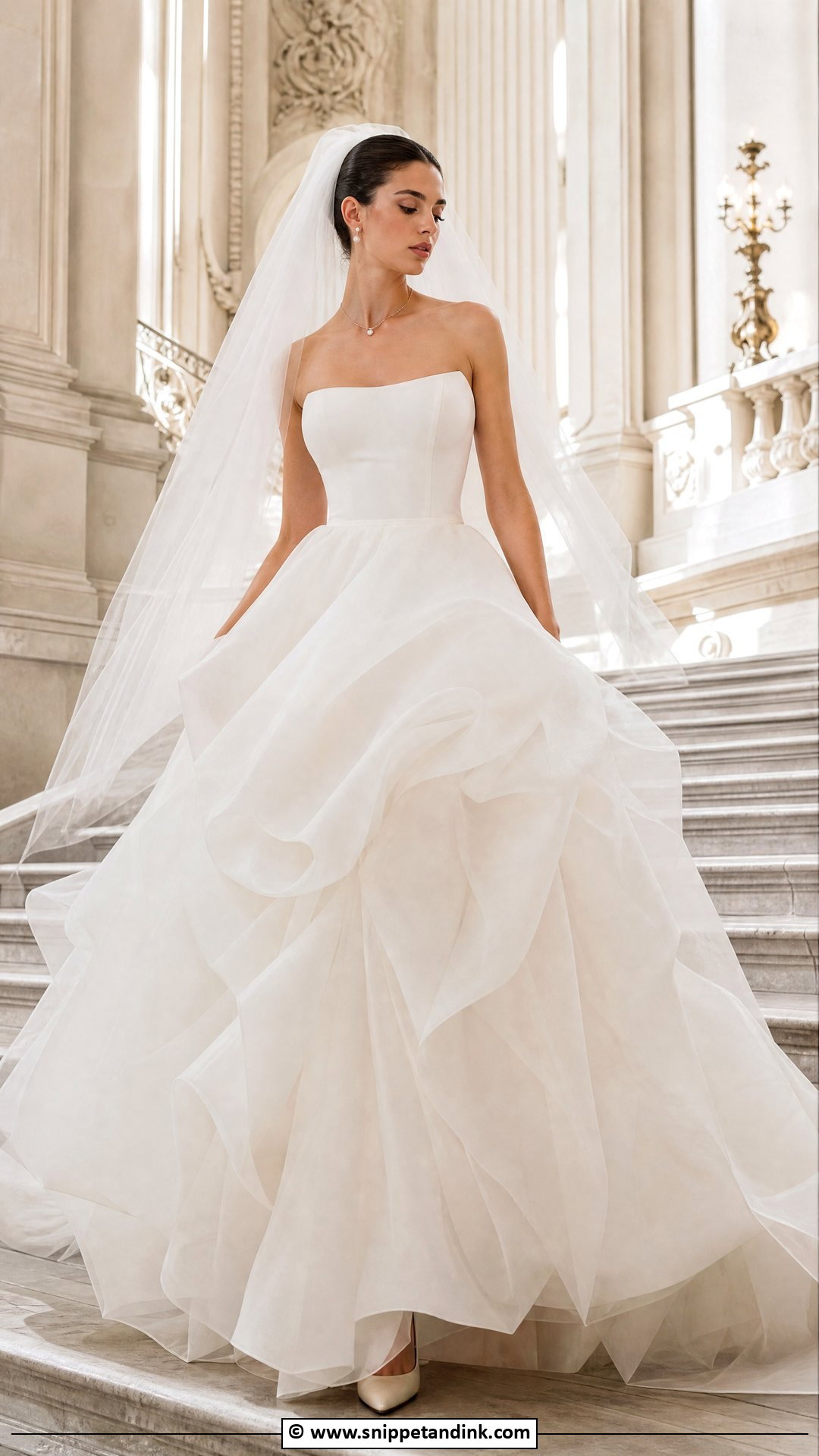
Organza is how you get ball-gown volume without ball-gown weight. It is crisp, so the skirt holds a full, cloudy shape on far less fabric than satin needs. The trade-off: organza creases when you sit, and those creases stay, so I tell brides to expect a quick steam between ceremony and portraits. Choose soft layers over heavy boning, and keep the bodice simple, lightly embroidered or sheer at the neckline. A long veil, minimal jewelry, classic ivory pumps and a neat updo that shows off the neckline complete it.
8. Pearl Wedding Dress
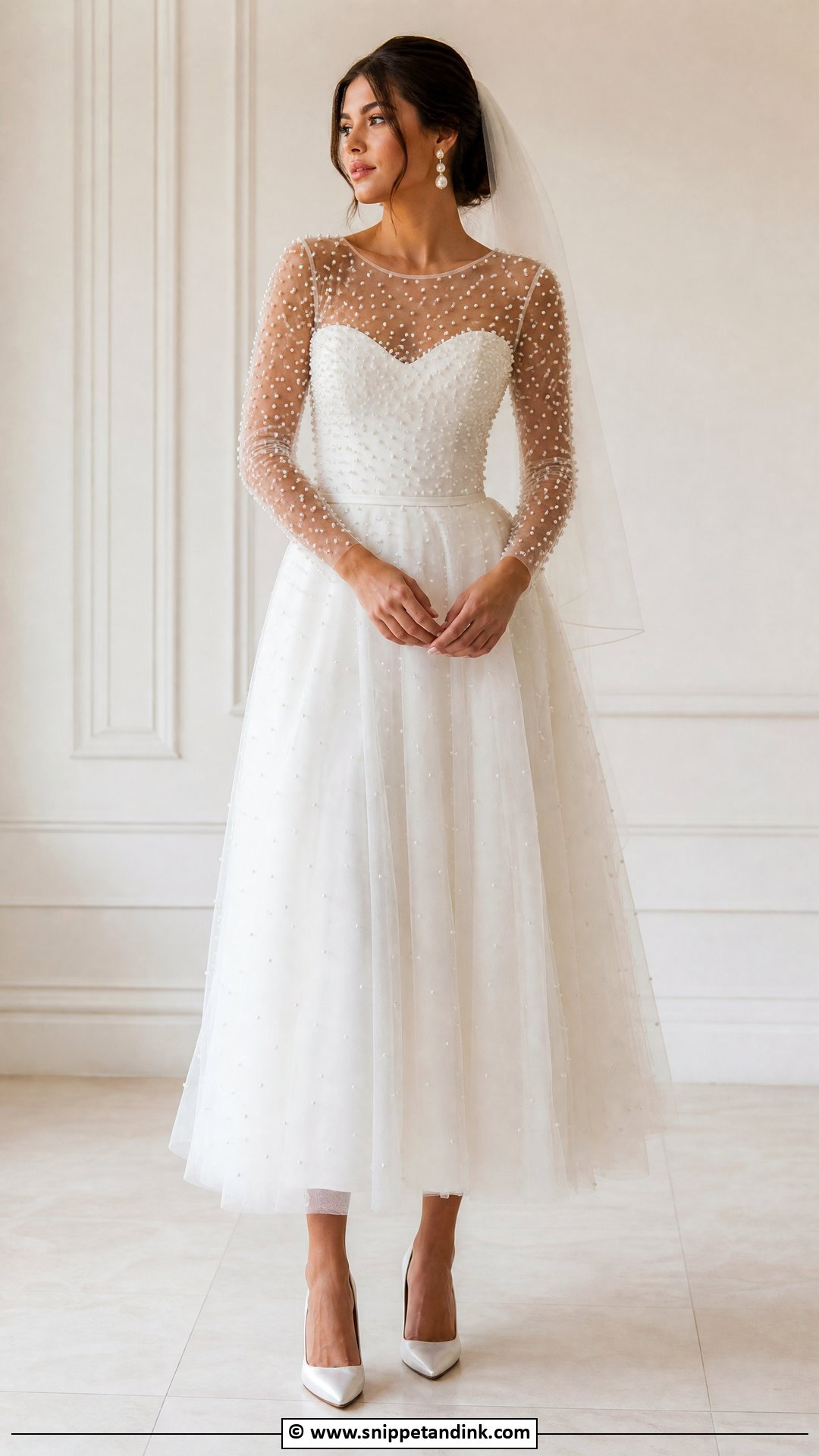
Pearls glow rather than sparkle, which is why they suit this mood better than crystals. Scattered across sheer sleeves, the bodice or the skirt, they seem to hover on the fabric. I’d steer you toward pearl accents on tulle, chiffon or lace rather than a fully beaded gown; heavily beaded ones weigh more than you expect and can pull sheer fabric out of shape. Since the dress already brings texture, stop at pearl earrings, a simple veil and satin heels. A smooth bun or soft waves suit indoor venues, garden ceremonies and evening receptions alike.
9. Boho Lace Wedding Dress
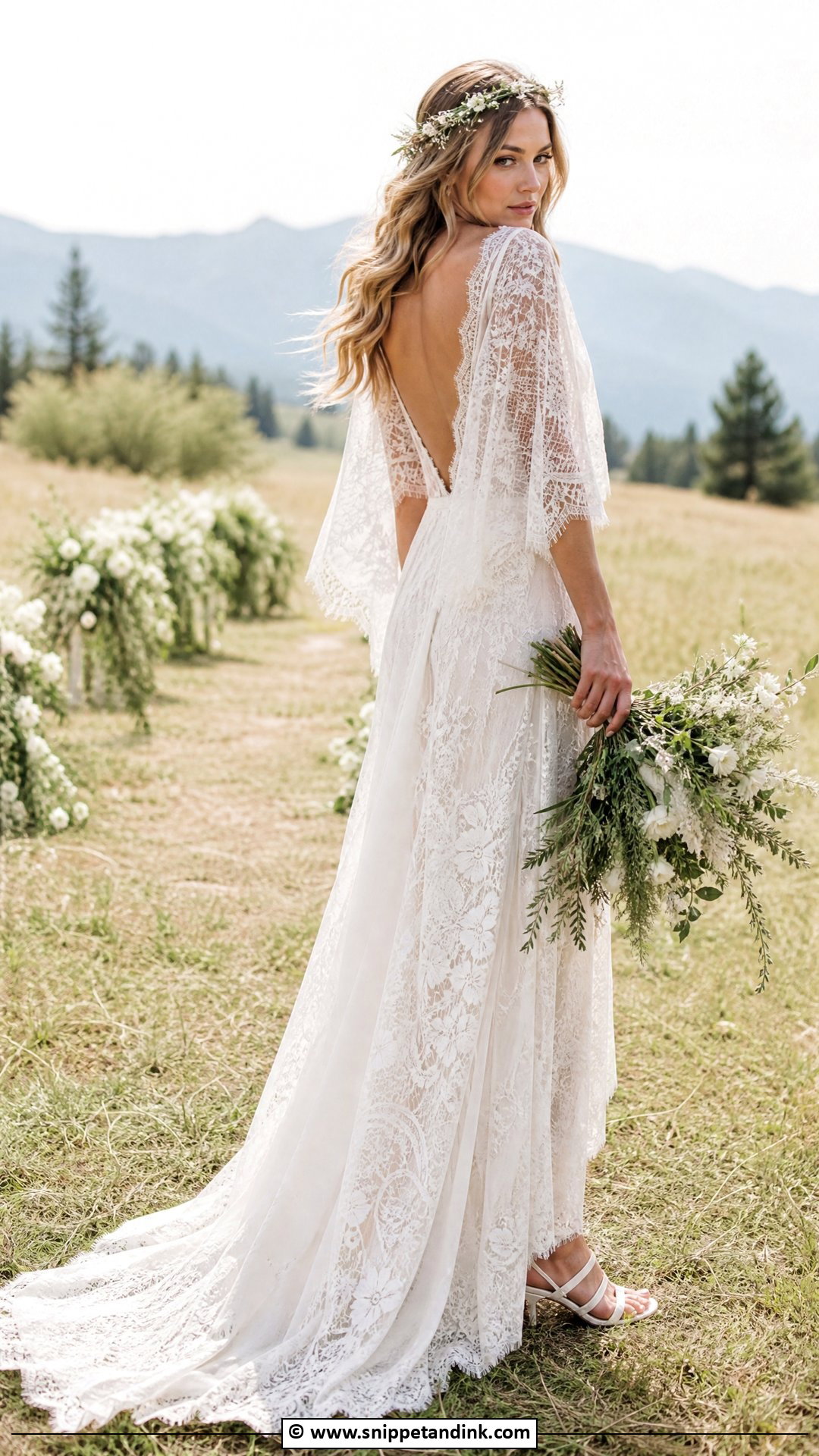
Boho lace is the relaxed end of this list: soft lace, flowing sleeves, open backs and a skirt that moves easily. A nude or ivory lining under the lace makes the pattern stand out, and I check the lining shade against skin so it doesn’t look like a slip peeking through. Simple sandals, loose waves and a hair vine or floral comb keep it free. A long veil adds drama; a short one keeps it casual. Finish with a wild-looking bouquet of white flowers and greenery for meadows, outdoor ceremonies and rustic barns.
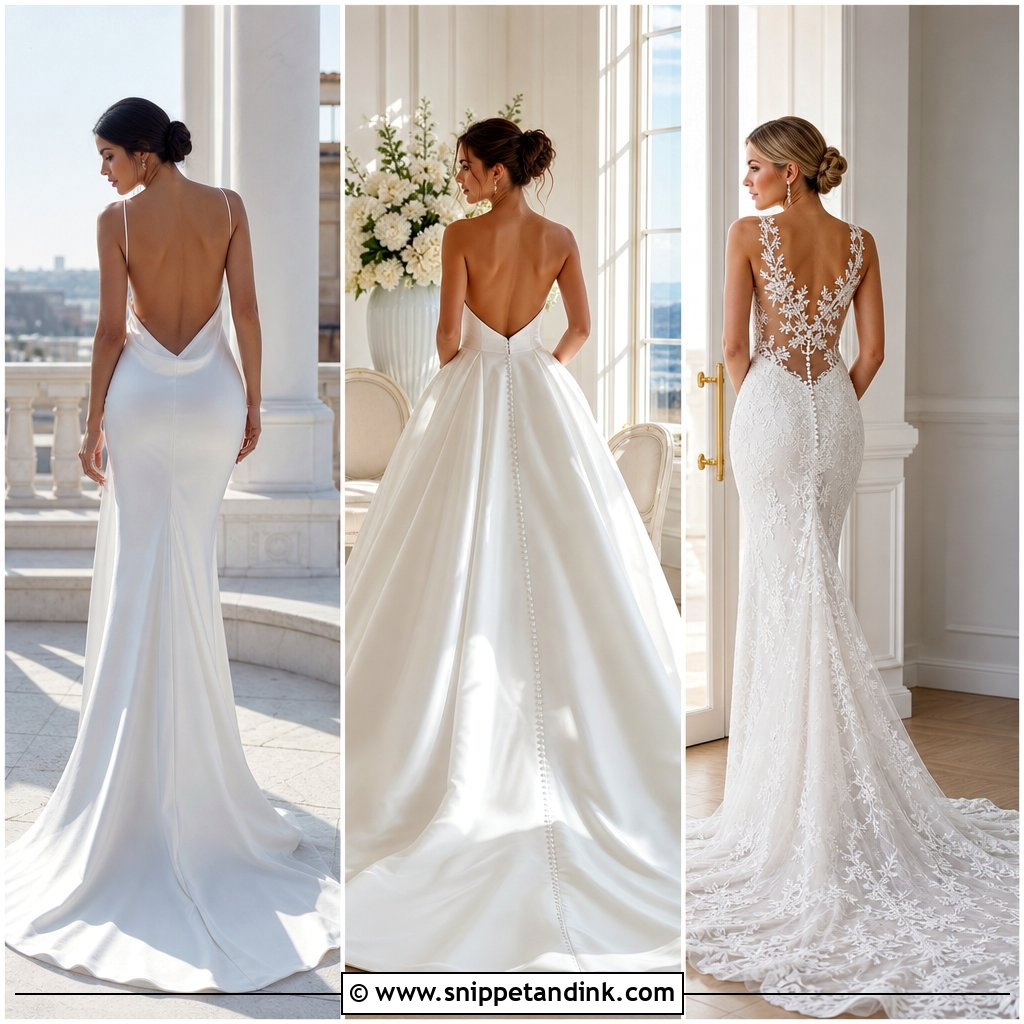
10. Simple Ethereal Wedding Dress
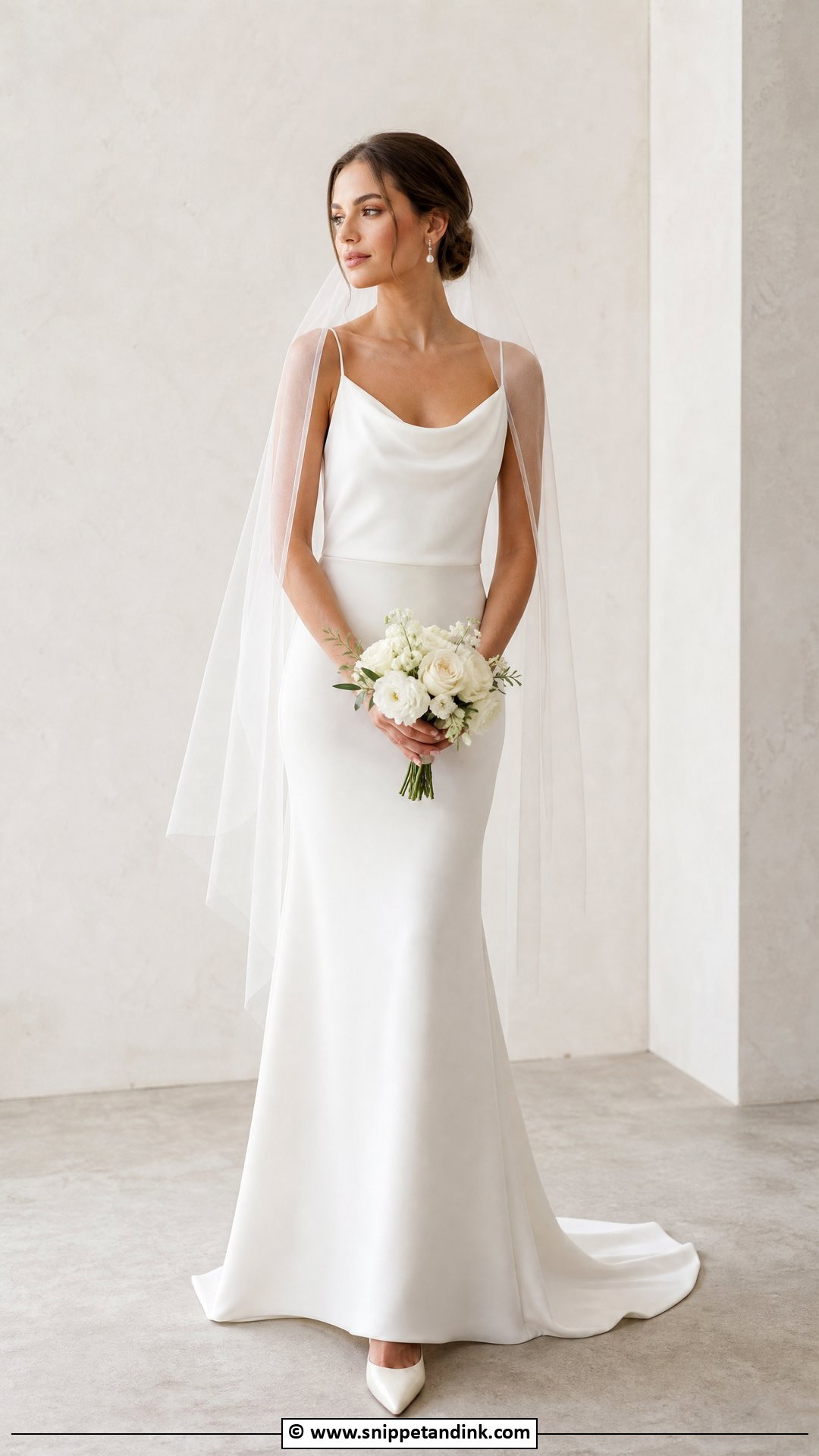
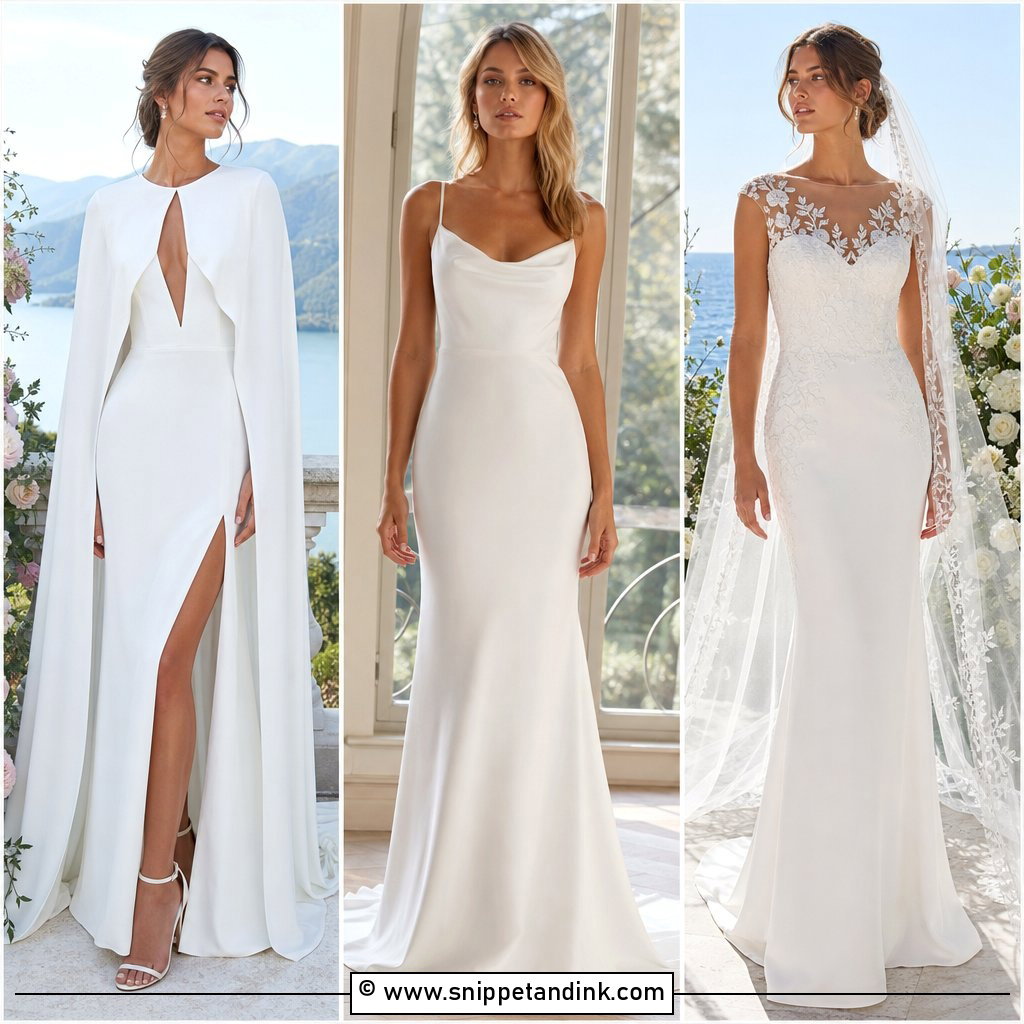
You don’t need lace or beading for this mood. Clean lines in chiffon, crepe, silk or soft satin, cut in a relaxed silhouette, can look just as light. A minimal gown has nowhere to hide, though, so I pay more attention to hem length and strap position on a plain dress than on a lace one. A draped neckline, light train or open back adds interest. Add a sheer veil, delicate earrings and sandals or pumps, plus a smooth low bun and fresh makeup. Of everything here, it’s the easiest gown to wear for twelve hours straight.
11. Fairy Wedding Dress
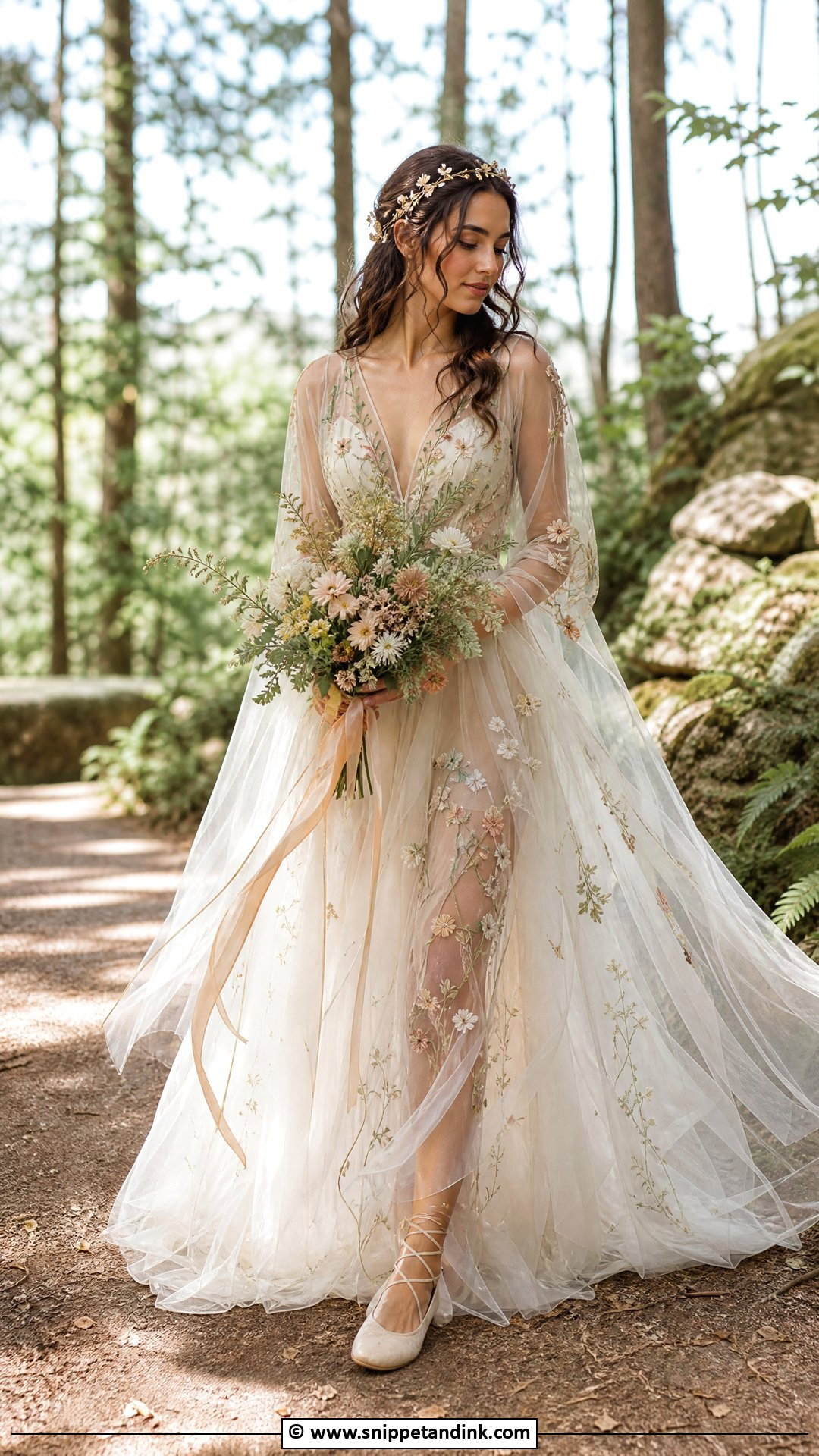
Sheer layers, floral embroidery, delicate sleeves and a skirt light enough to float: that’s the fairy brief, and the risk is costume. I keep it bridal by choosing refined details and saying no to glitter tulle or wing-like back panels unless that truly is the plan. An ivory or blush underlay adds warmth, and scattered appliqués suggest woodland without spelling it out. Lace-up flats or delicate sandals, a sheer veil and a hair vine through loose curls suit it, with small white blooms, greenery and trailing ribbon in the bouquet.
12. Blush Wedding Dress
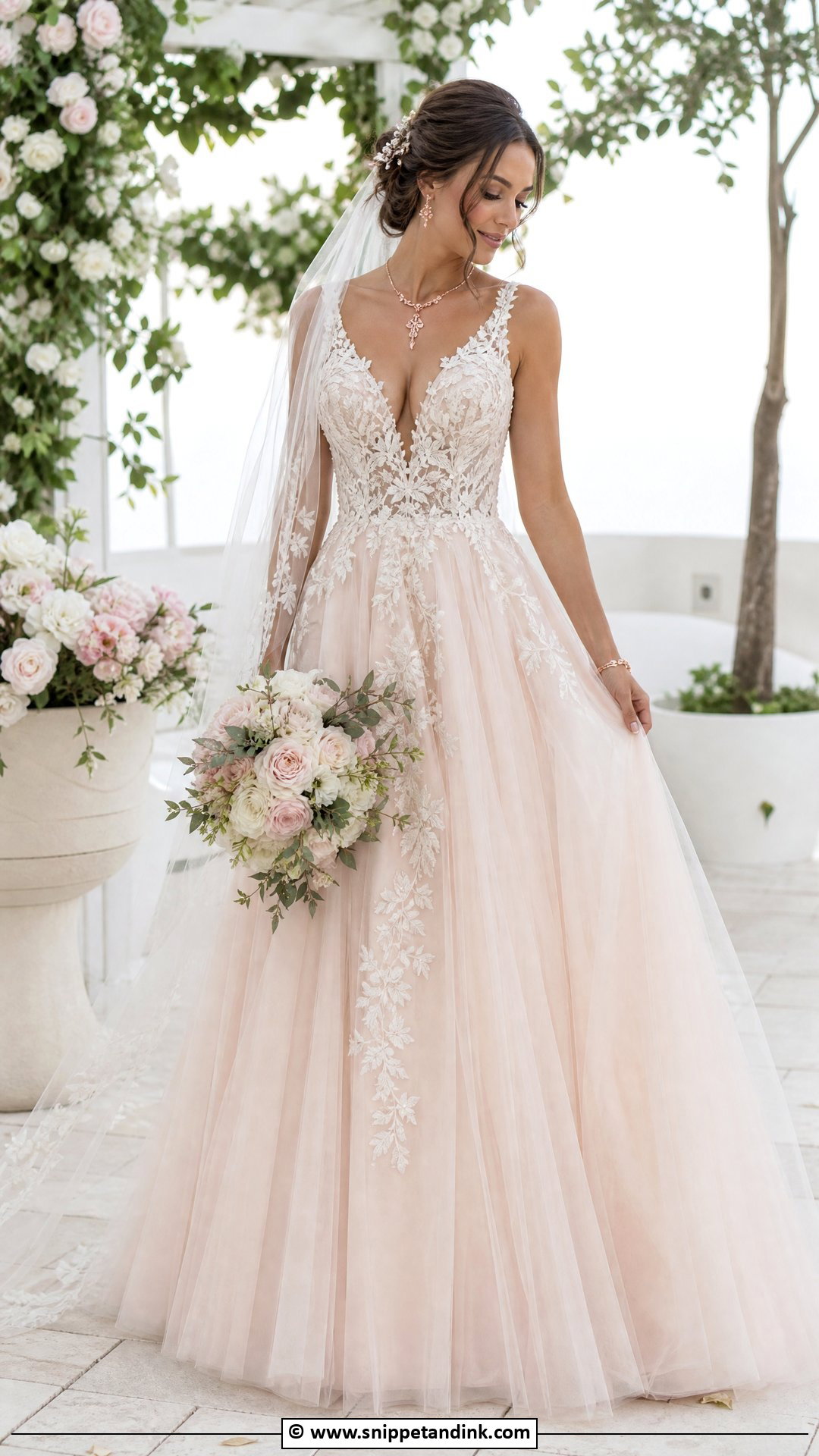
Blush only works if the shade suits the bride. I hold the fabric under her chin in daylight, because some blush linings turn skin sallow while others warm it up. Under ivory tulle, organza or lace the pink softens to something barely there, and a blush lining beneath ivory appliqué gives the flowers depth. Ivory heels, rose-gold or pearl jewelry and a sheer veil that lets the color through keep it bridal. A bouquet in white, cream and pale pink, rosy cheeks and a soft lip tie it together.
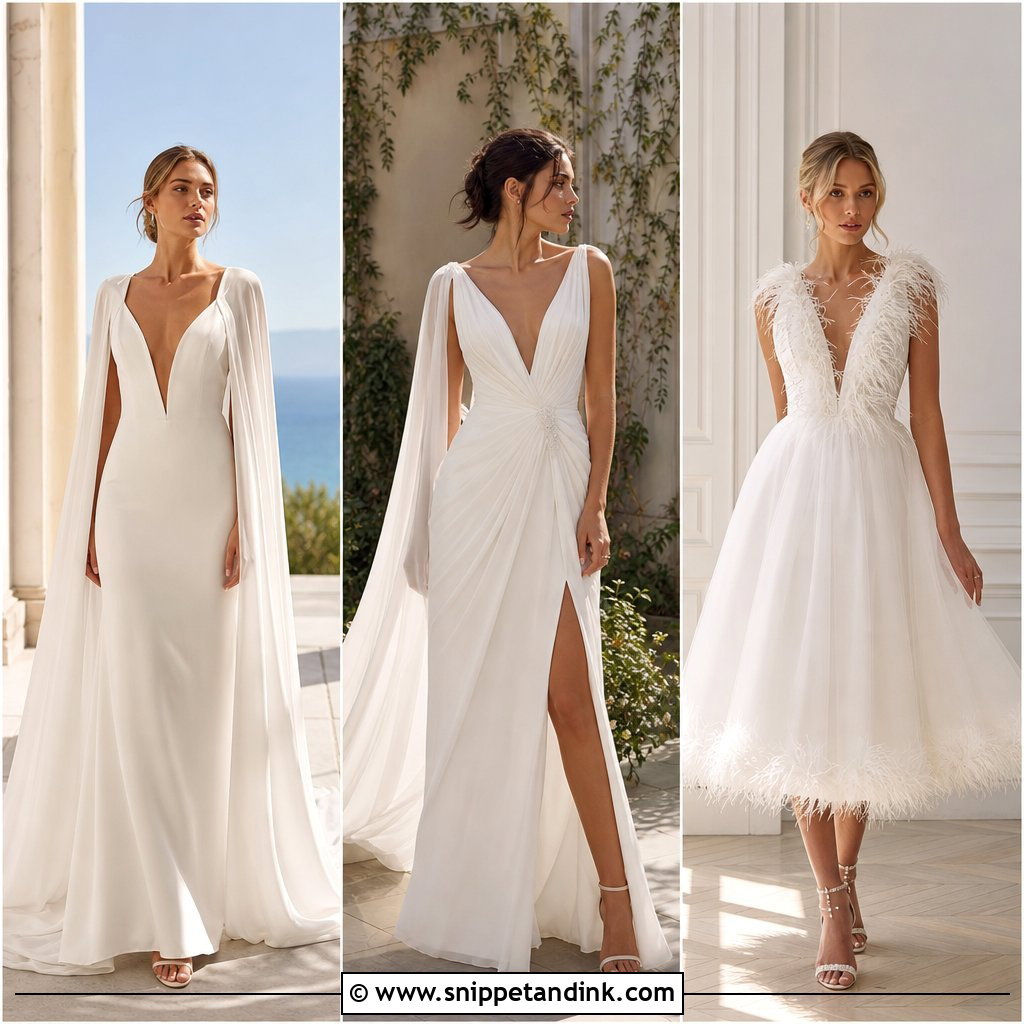
13. Cape Wedding Dress
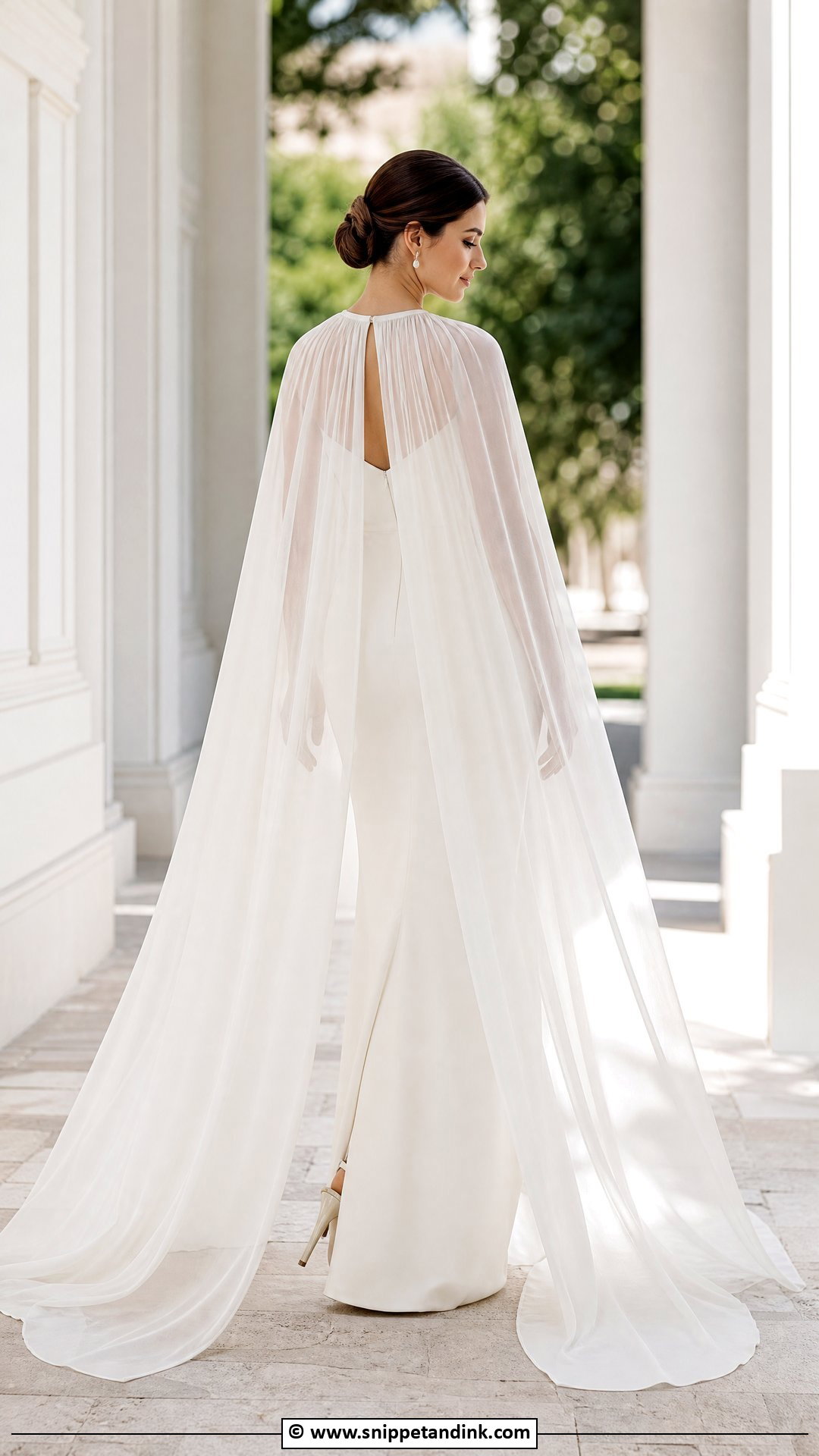
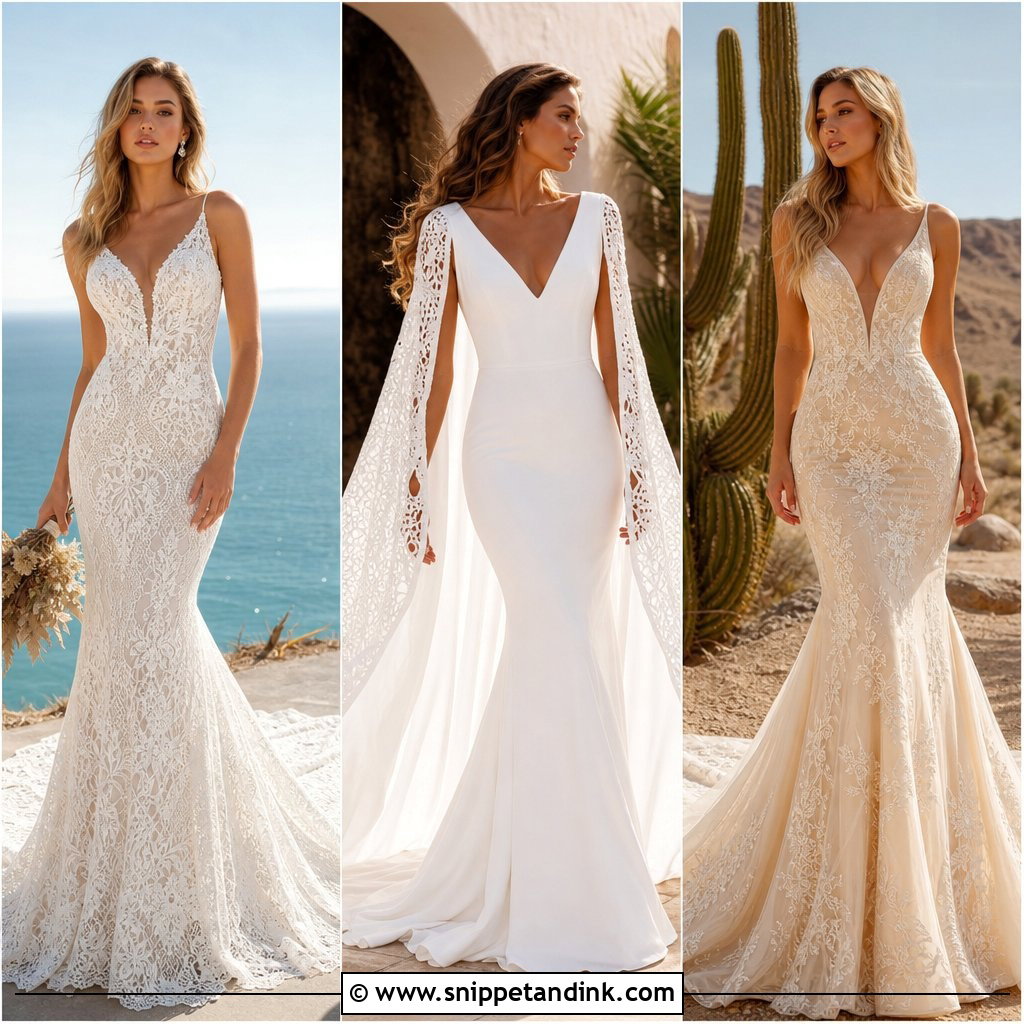
A cape replaces the veil and frames the whole back of the gown, so it does best over a simple dress where it becomes the focus. Sheer tulle or chiffon falls from the shoulders, and embroidery, pearl trim or a plain edge sets how minimal it feels. Check how it attaches. Capes that fasten at the shoulder seams stay put; ones tied loosely at the neck slide back and pull at the throat. Sleek heels, small earrings and a clean hairstyle leave room for it, and walking shots from behind show the movement best.
14. Embroidered Wedding Dress
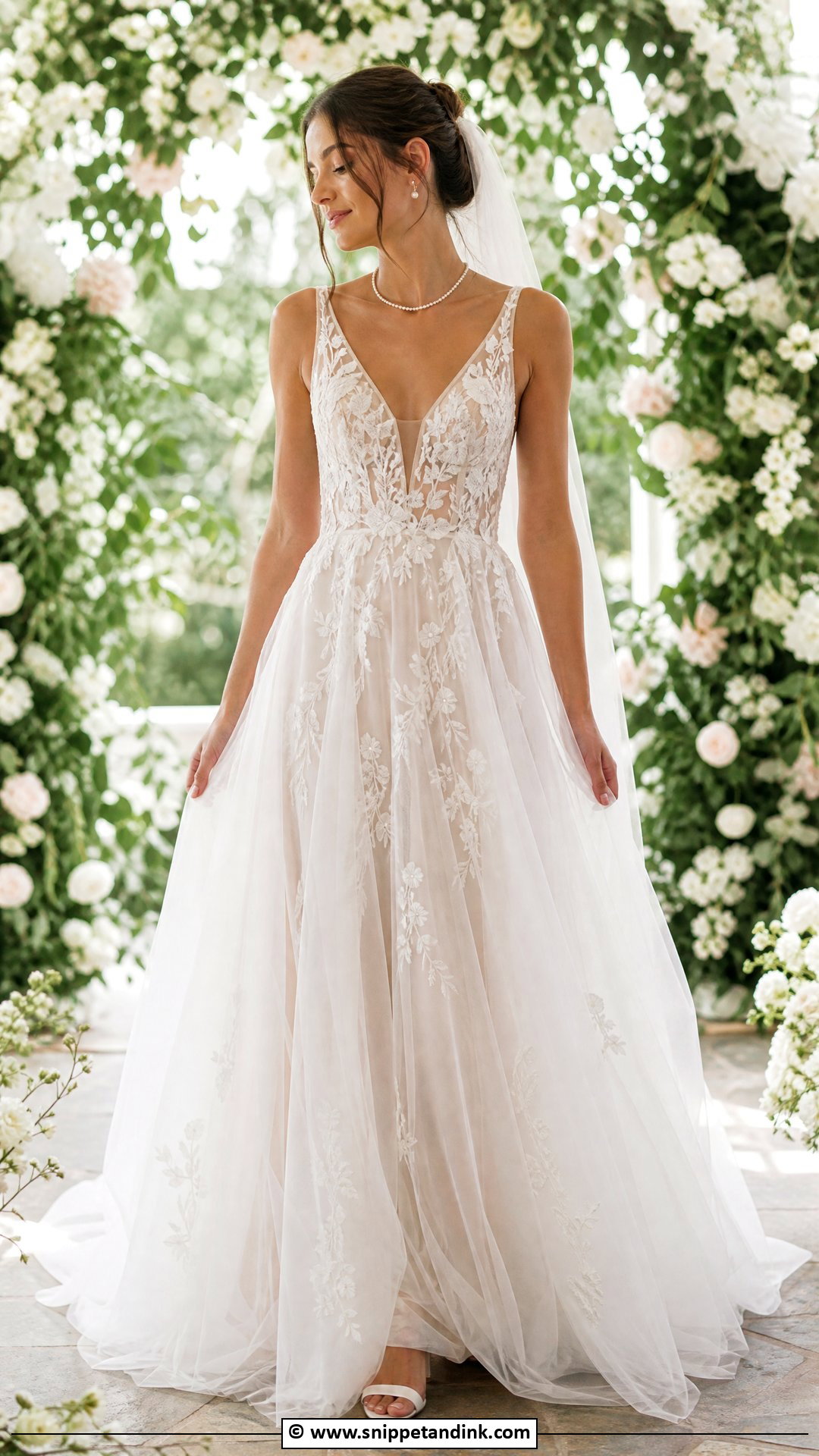
Embroidery adds pattern without shine: flowers, vines, stars or botanical motifs worked in fine thread over sheer tulle, organza or lace. A flowing skirt keeps it light and a fitted bodice gives shape. If the stitching uses colored thread, I pull one of those shades into the bouquet so dress and flowers talk to each other. Keep the veil simple, the shoes ivory and the jewelry understated. It’s the gown I suggest when a bride wants the dress itself to carry something personal.
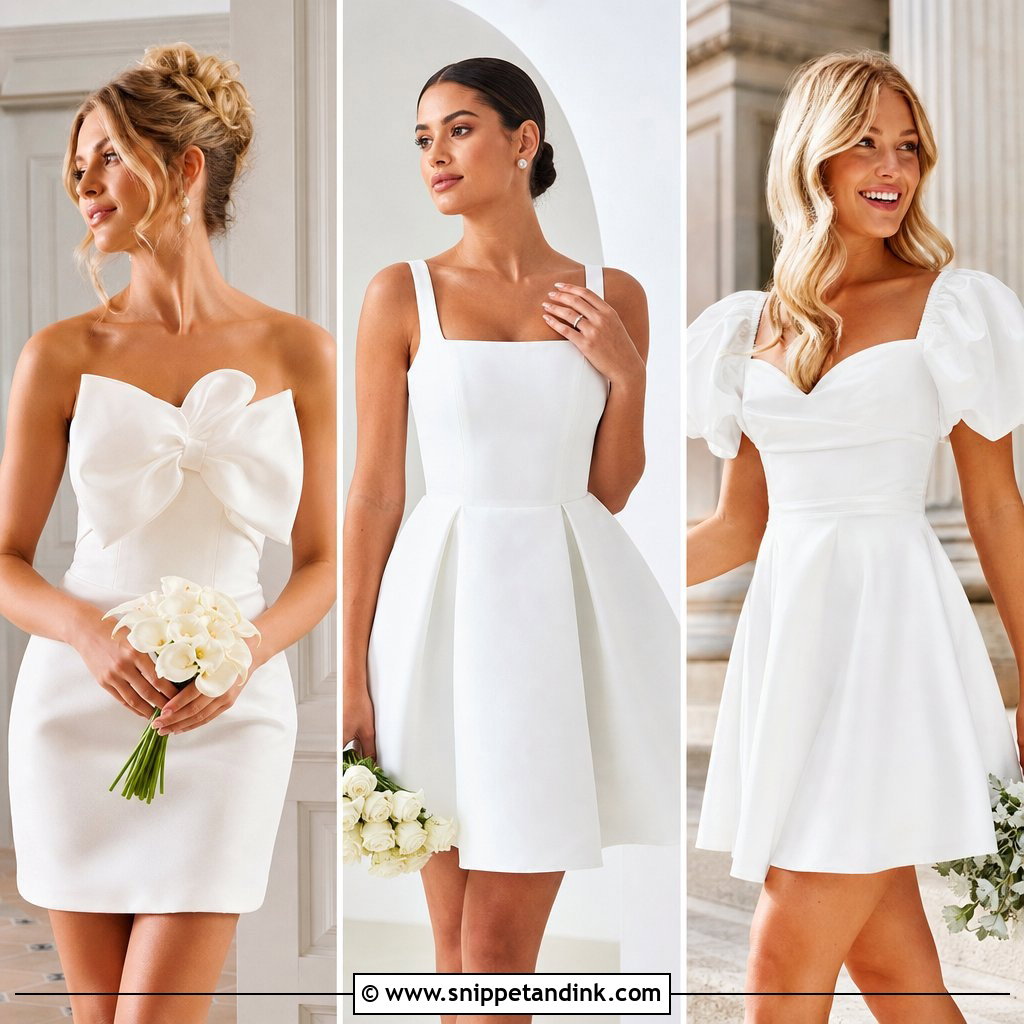
15. High Neck Wedding Dress
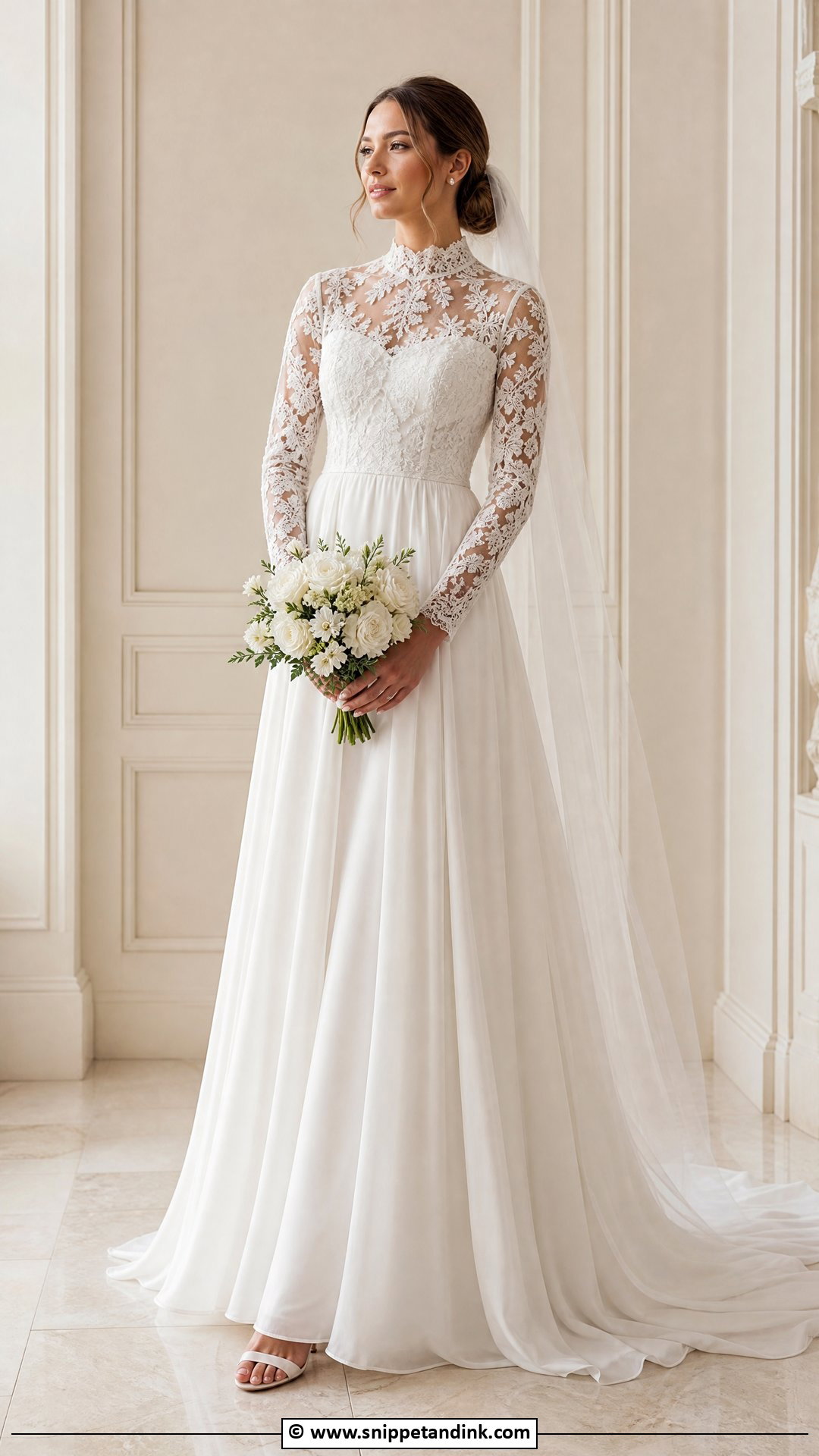
A high neck reads as formal, so it needs transparency to stay light. Sheer lace, illusion tulle, fine embroidery or a keyhole back let it breathe. The fitting point I watch most is the closure: a high neck that fits while standing can press on the throat when you sit or look down, so I test both positions. Pulled-back hair, pearl studs and elegant heels suit it, and a veil attached low at the back of the head lengthens the line. Cooler weather, formal venues and classic portraits are its territory.
16. Open Back Wedding Dress
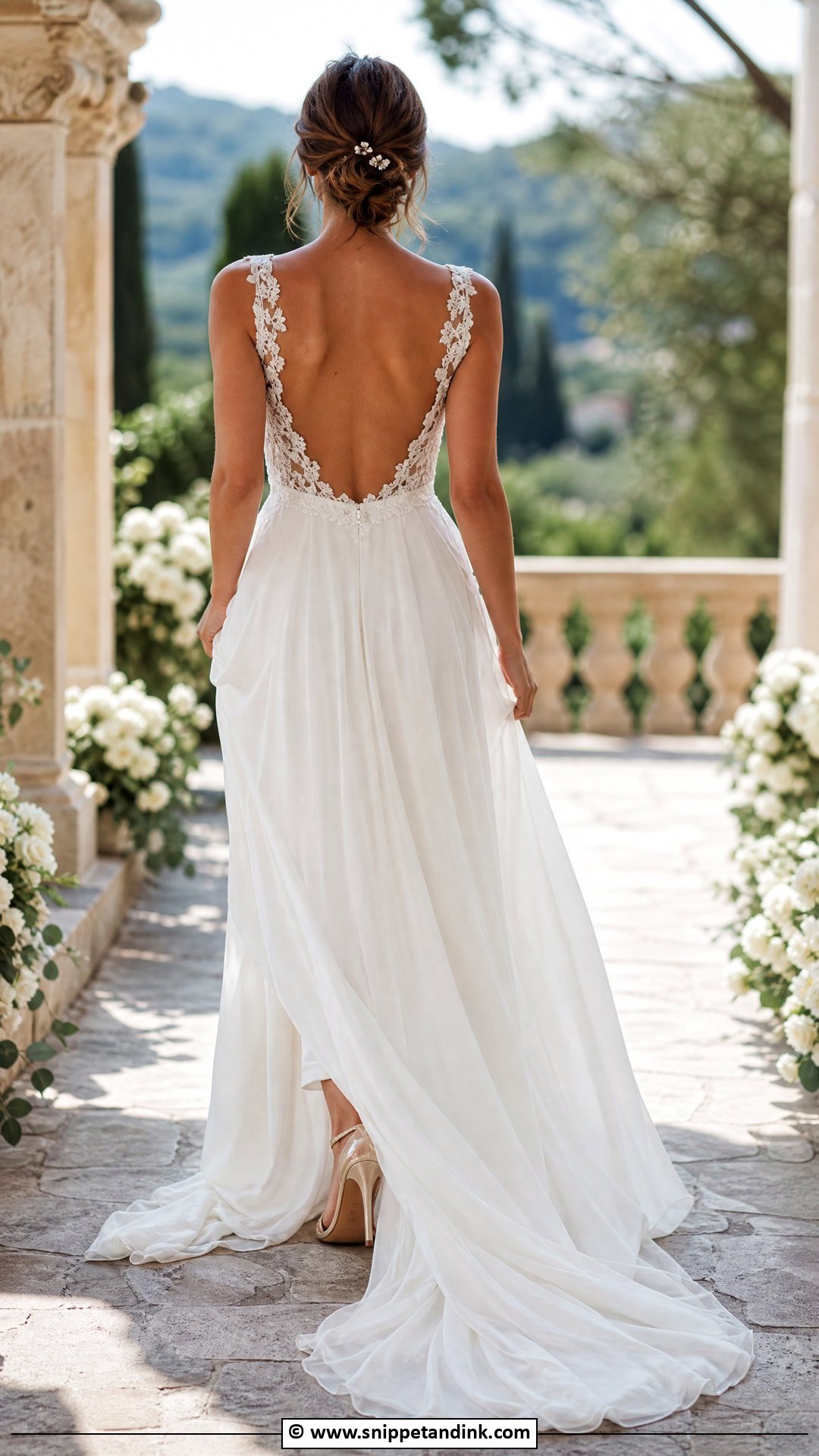
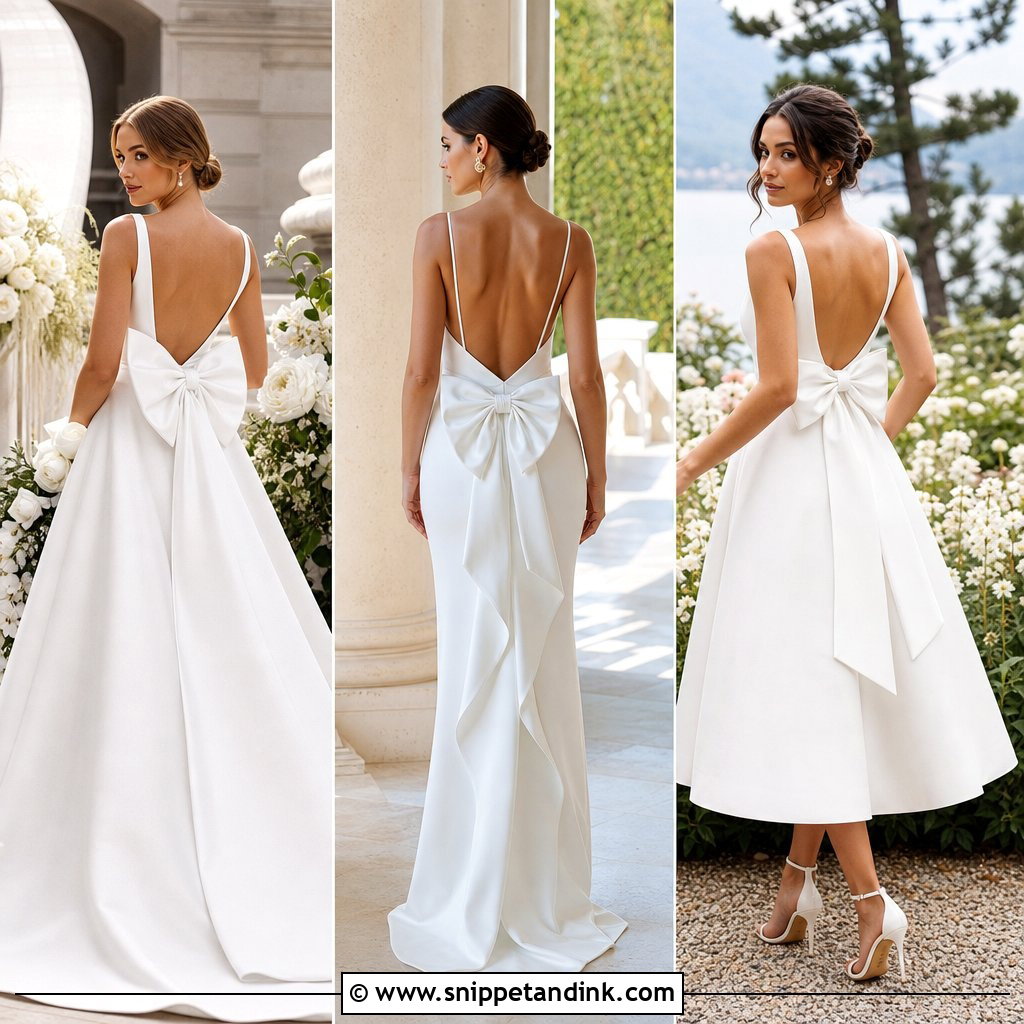
An open back is a quiet reveal: simple from the front, then lace edges, fine straps or sheer panels from behind. Guests spend the whole ceremony looking at your back, so it earns its place. My first check is support, since an open back rules out most bras; ask whether cups can be sewn in or the bodice built with internal structure. An updo or side-swept waves show the detail, and a veil attached below the crown sits under it rather than over it. Or skip the veil and wear pins instead.
17. Butterfly Sleeve Wedding Dress
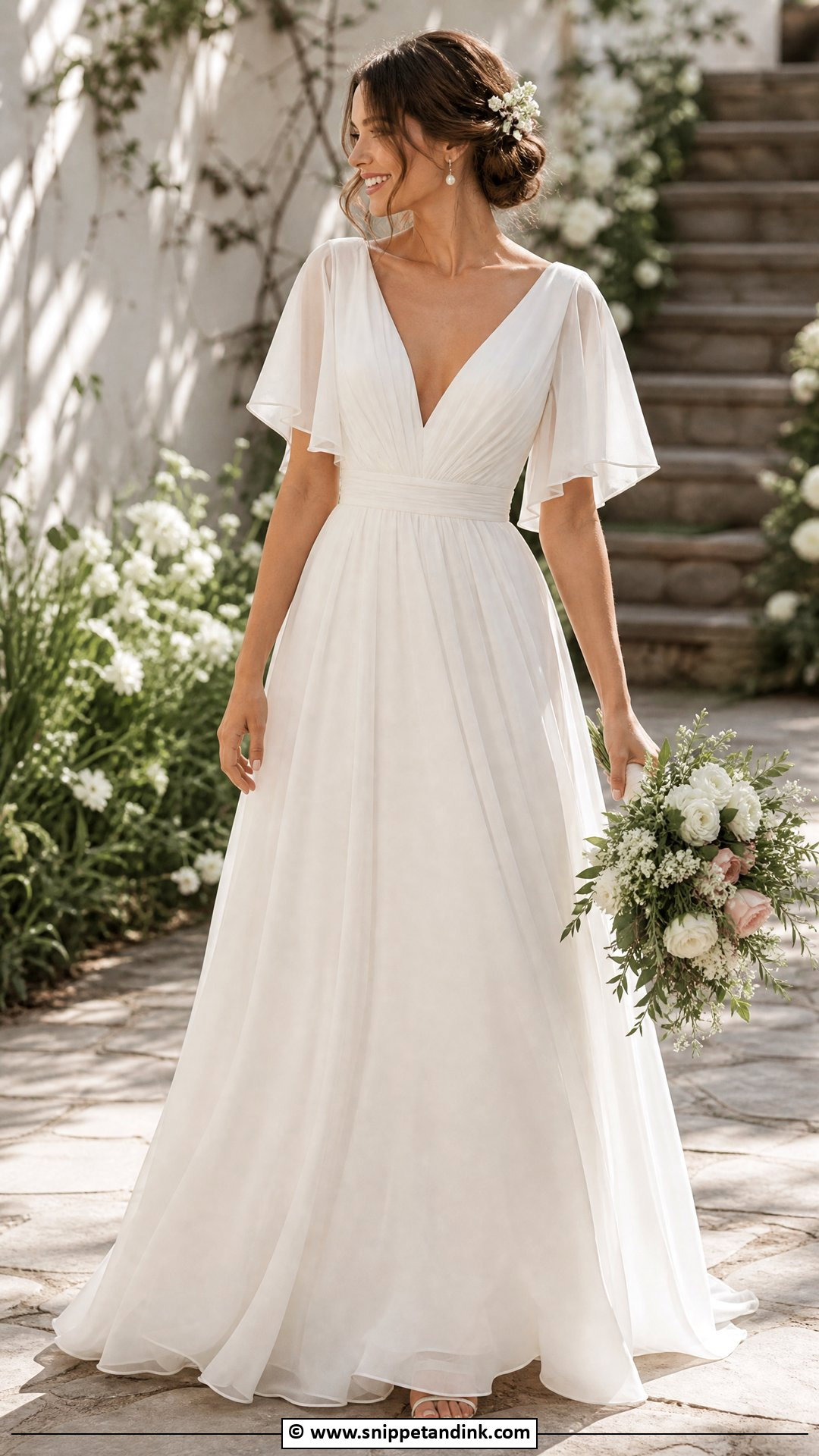
A butterfly sleeve wedding dress has sleeves that fall loosely from the shoulder seam, so you get movement and coverage without the restriction of fitted sleeves. They suit chiffon, lace and sheer tulle, and I like them on brides who want to lift their arms freely for hugs and dancing. A defined waist and flowing skirt keep the shape flattering. Delicate sandals, small pearl earrings and a loose updo match it, with a simple veil or floral comb for polish. Warm outdoor weddings are where it feels most at home.
18. Layered Tulle Wedding Dress
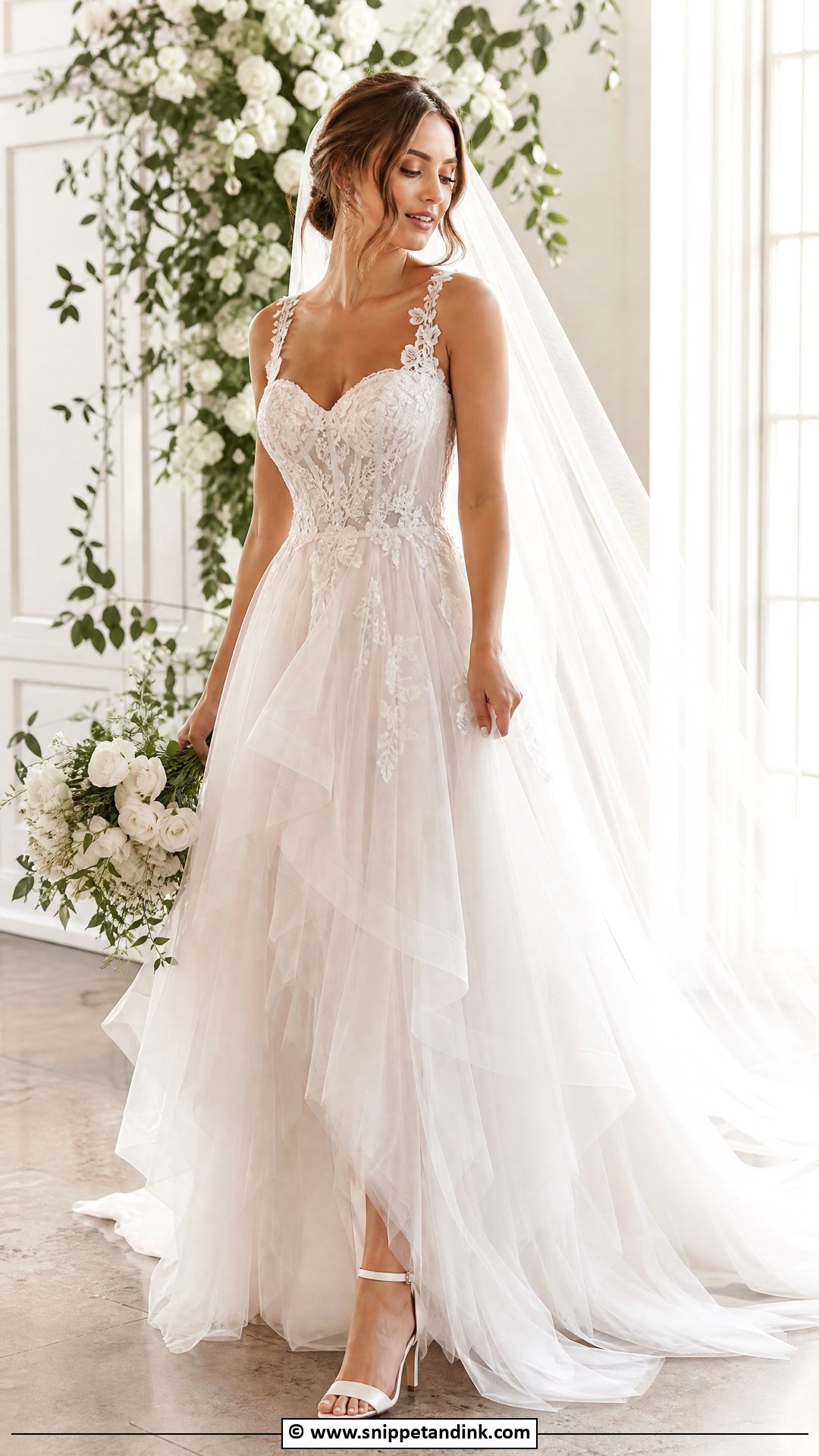
The cloud-like skirt people picture comes from layers, and the quality of the tulle decides whether it floats or puffs. Fine, soft tulle drapes; stiff netting stands out like a petticoat. At appointments I scrunch a corner of the sample in my fist: good tulle springs back without holding the crease. A fitted bodice, sheer straps or light appliqué stop the dress from feeling plain, alongside satin heels, a sheer veil and fine jewelry. If the skirt is very full, keep the bouquet medium-sized and loose so the proportions hold.
19. Cottagecore Wedding Dress
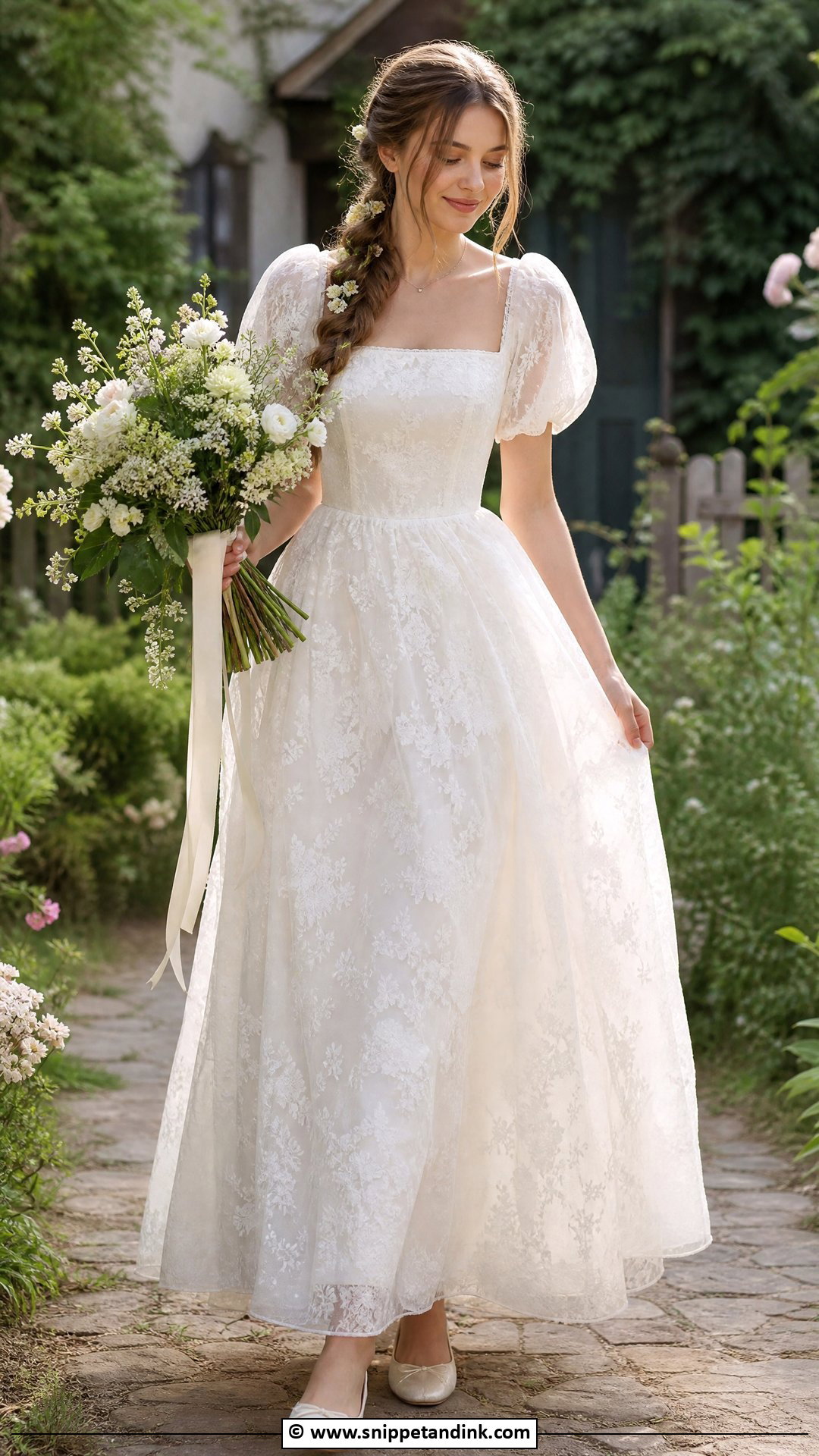
Cottagecore borrows from old day dresses: puff sleeves, floral lace, square necklines, smocked-style bodices and light, flowing skirts. What separates bridal from costume is fabric quality, so I’d rather see a simple shape in good silk or cotton lace than a pile of details in cheap material. Low ivory heels or ballet flats, a ribboned bouquet and a soft veil fit it, with a loose braid or half-up style. Daisies, baby’s breath, garden roses and greenery look freshly gathered, and the whole look belongs in gardens and countryside venues.
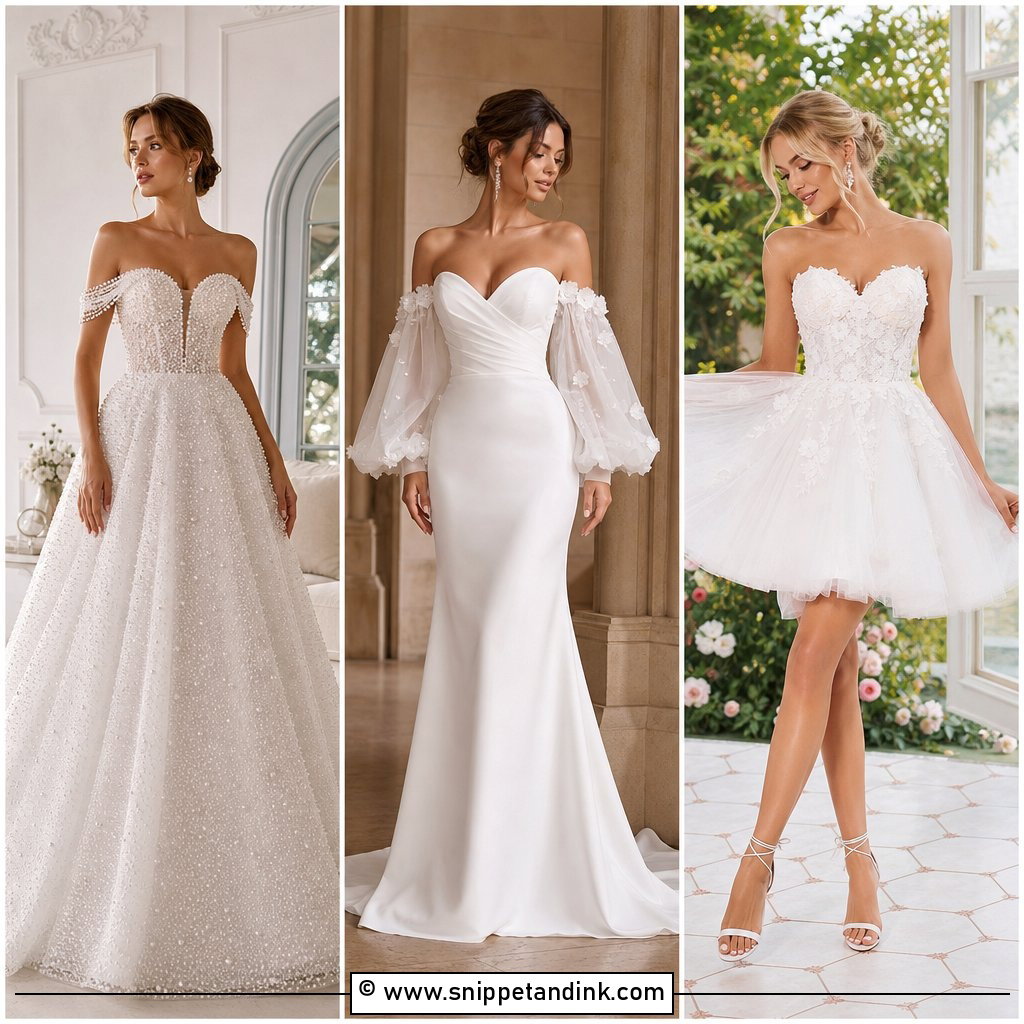
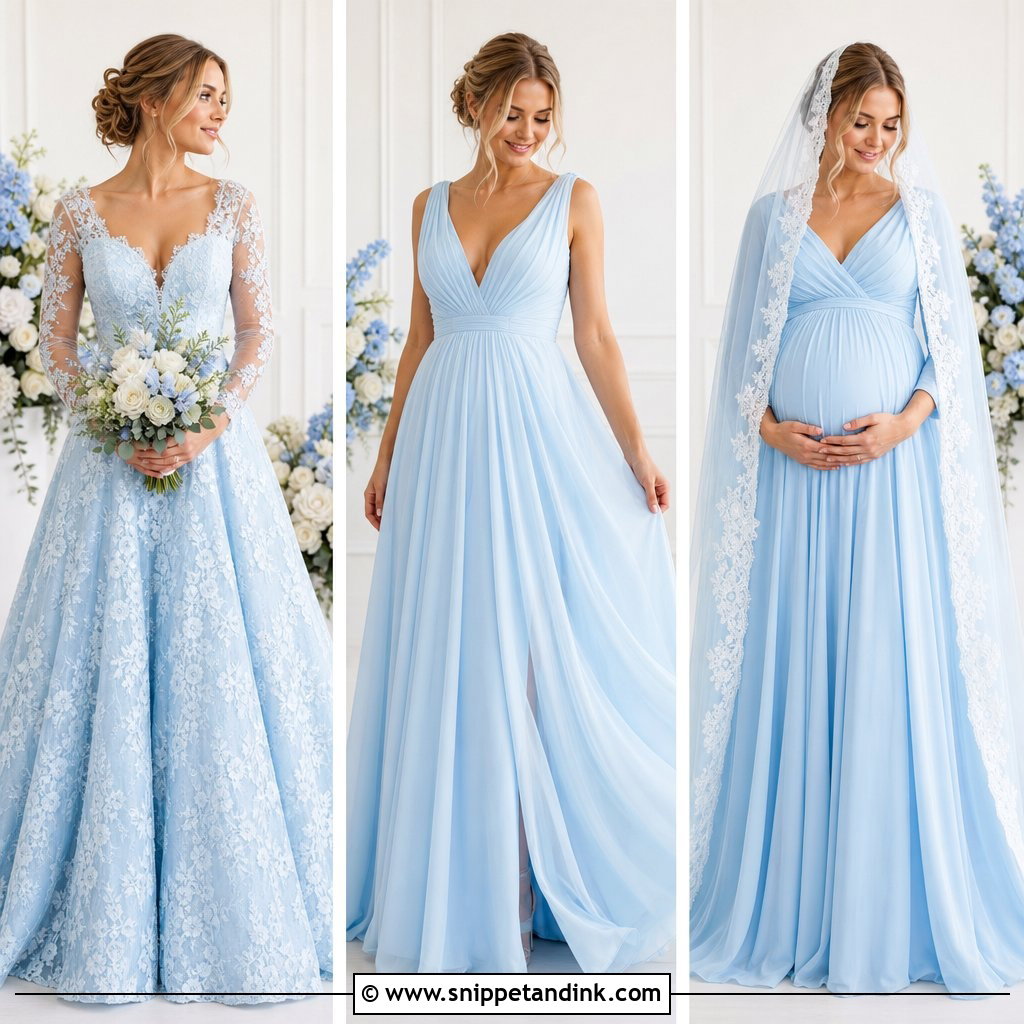
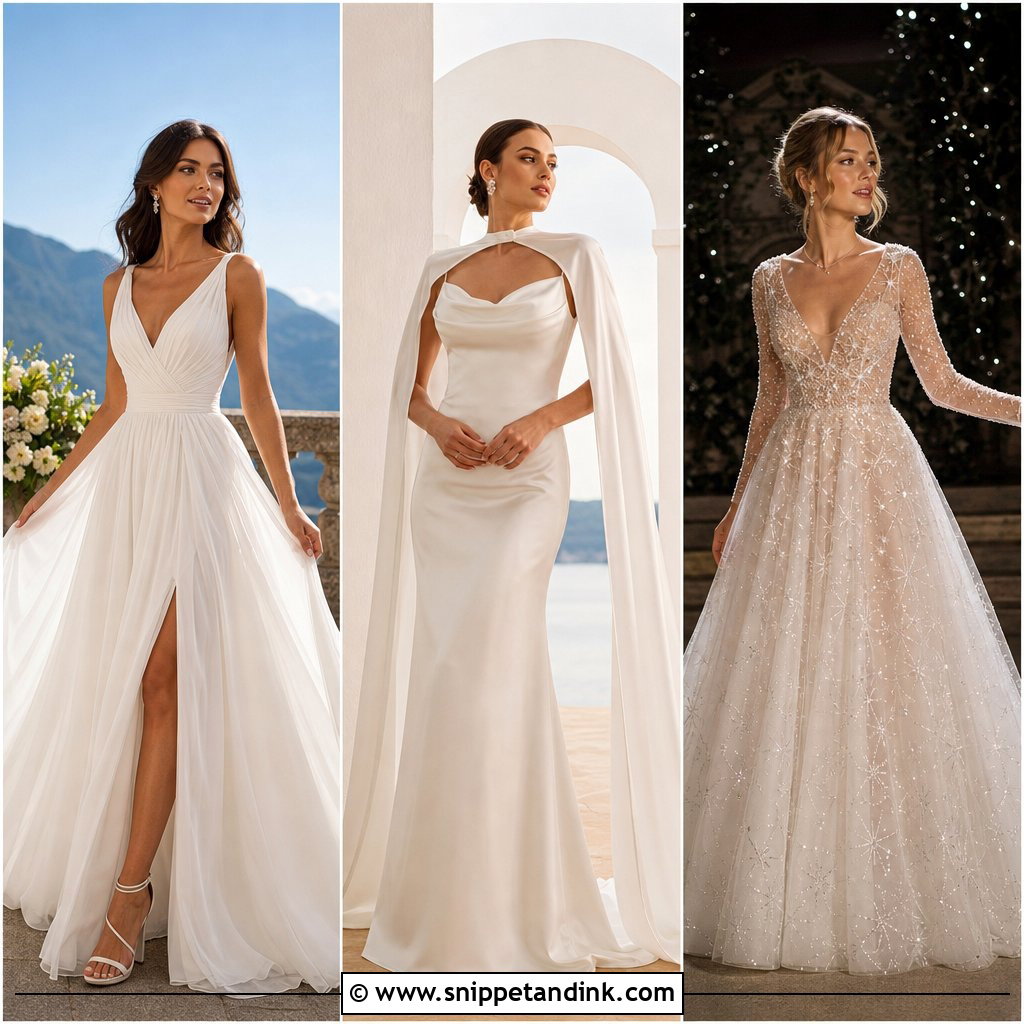
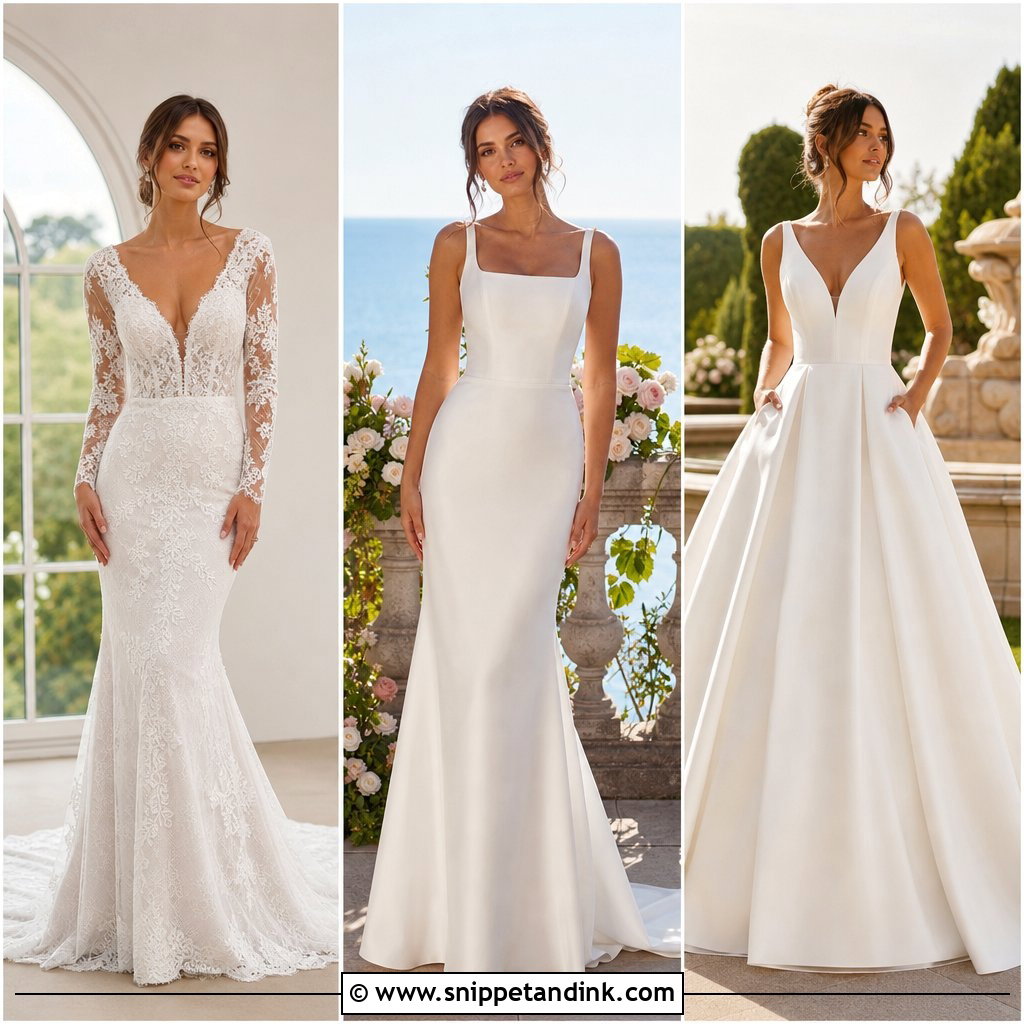
20. Grecian Wedding Dress
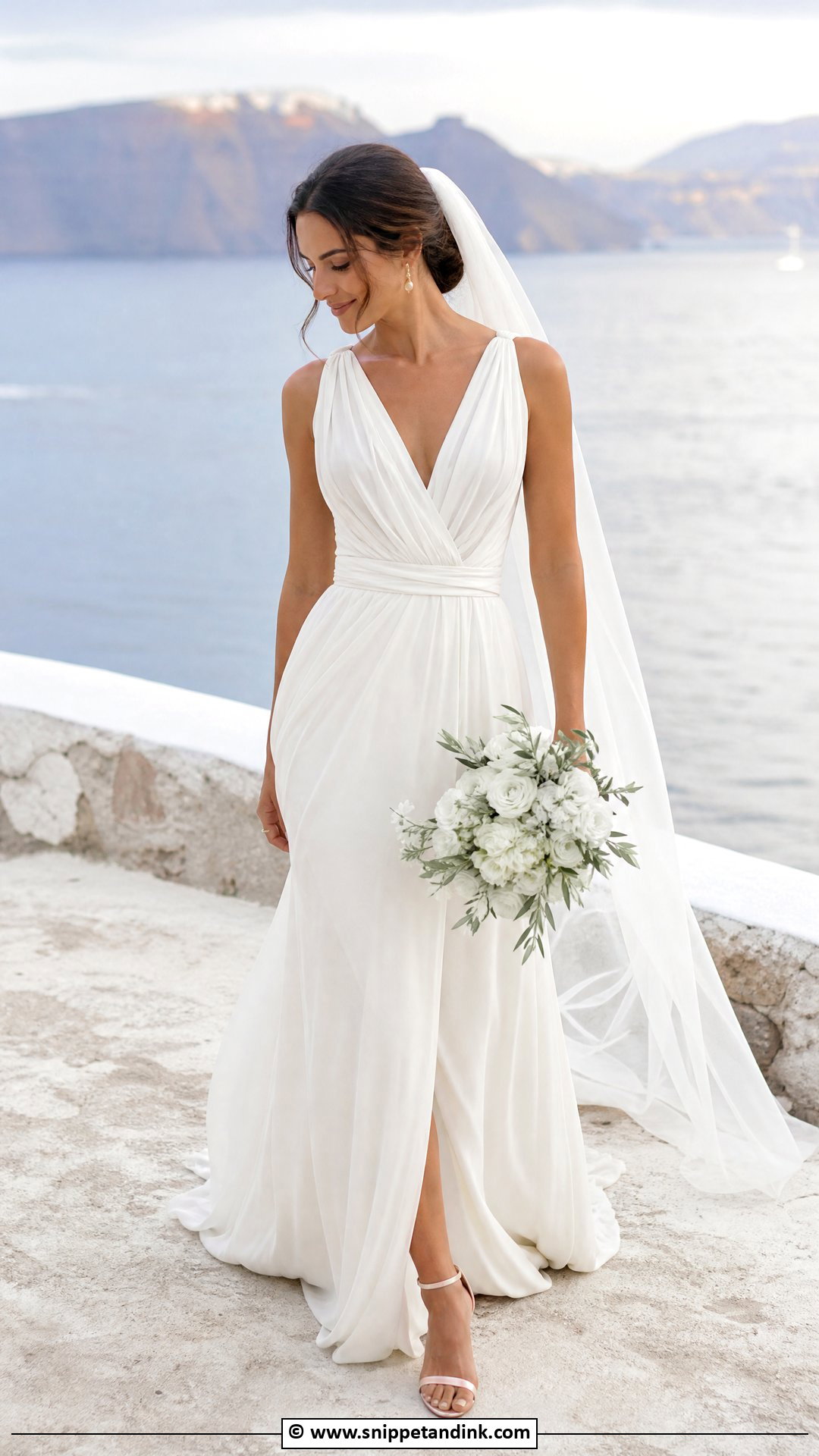
Grecian gowns get their softness from draping: a gathered bodice, a waist detail and a skirt that falls straight from it. Chiffon and silk-like fabrics hang best. Draped bodices depend on the pleats lying flat, so I check they don’t gape when the bride leans forward to sign the register. Delicate sandals, gold or pearl earrings, a soft veil and a low twisted bun or loose waves complete it, with white flowers and a few green stems. Destination and waterfront weddings suit it, as does anyone after a goddess-inspired look that still feels modern and wearable.
21. Minimal Satin Wedding Dress
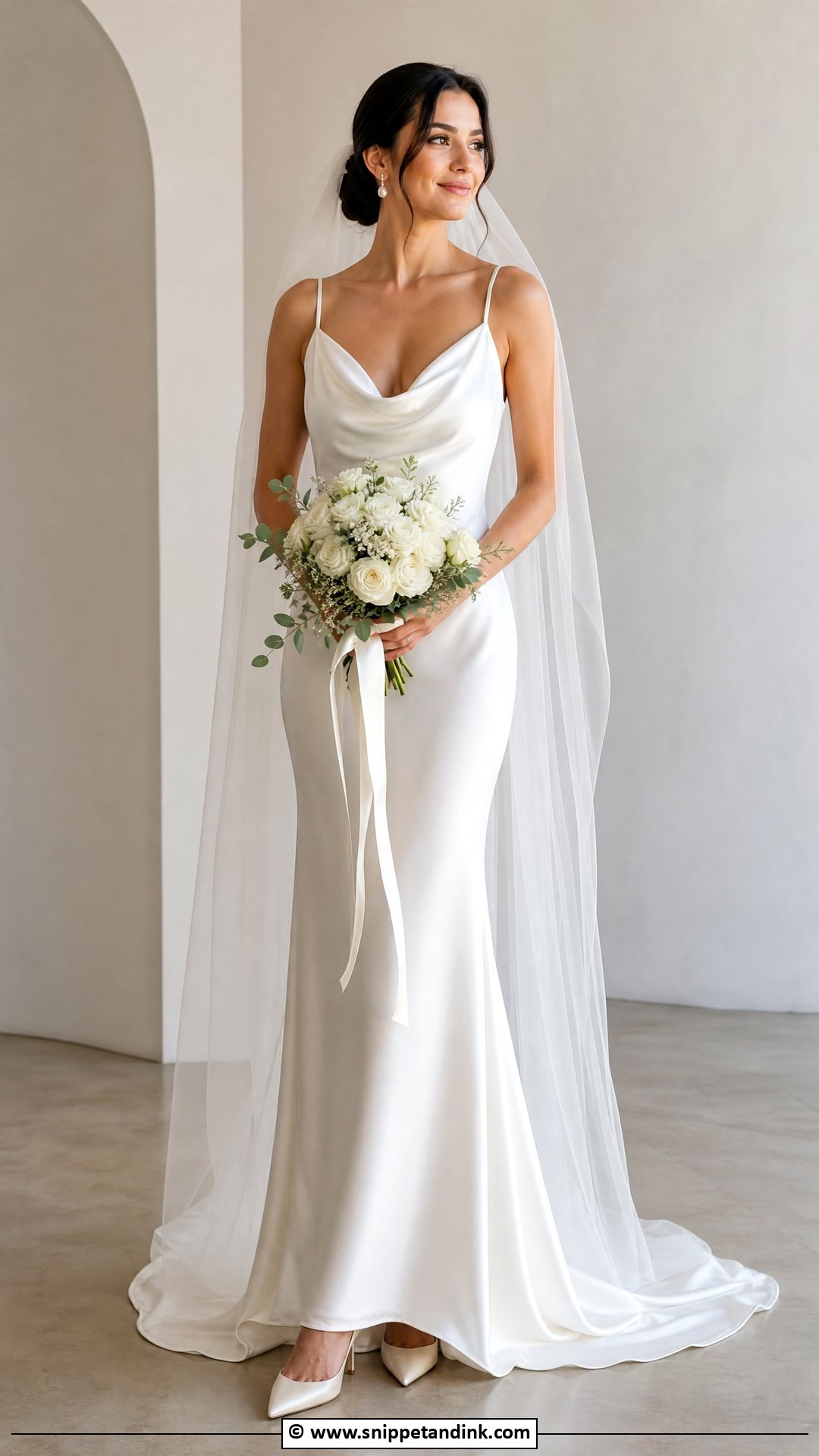
Satin can still look light if it’s fluid and low in shine. Bias-cut shapes, draped necklines, gentle trains and slim straps are the way in. Bias-cut satin is unforgiving, though: it follows every line underneath, so I plan underwear at the first fitting, not the last. With a dress this pared back, each accessory carries weight. A sheer veil softens it, pearl earrings add glow, sleek ivory heels add polish, and a smooth bun or soft waves keep it refined. A bouquet with long ribbon brings in movement.
22. 3D Floral Wedding Dress
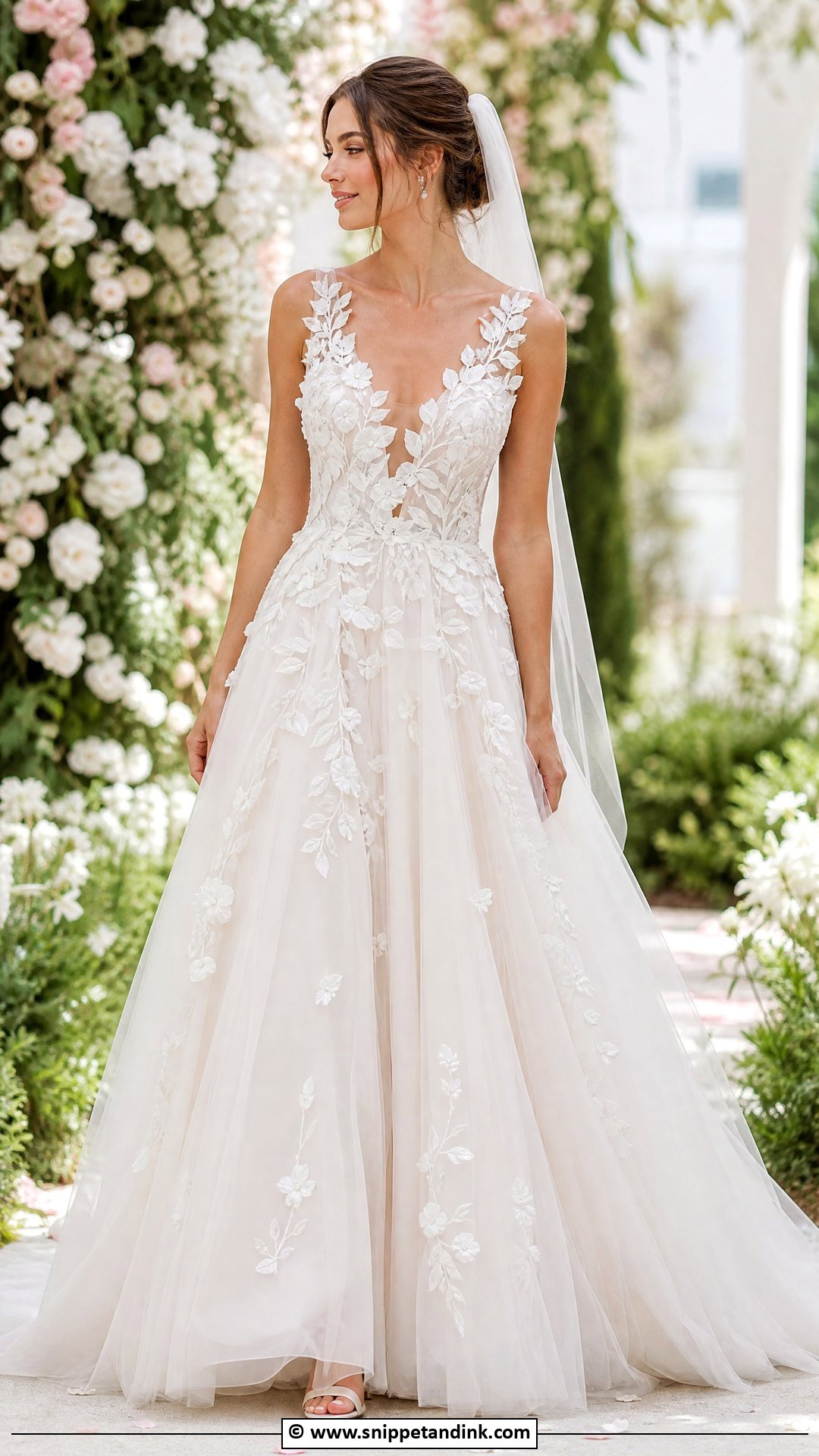
Raised petals and layered appliqués give texture and depth without sparkle. Spacing is the difference between romantic and crowded, and I look for flowers that cluster in a few places with sheer fabric left between them. Three-dimensional petals flatten under a seatbelt or a closing car door, so plan how the dress travels. A sheer bodice, light skirt or soft train suits the detail. Simple heels, a plain veil and small earrings avoid overload, with a low bun or loose curls. Spring gardens suit it best.
23. Cathedral Veil Wedding Dress
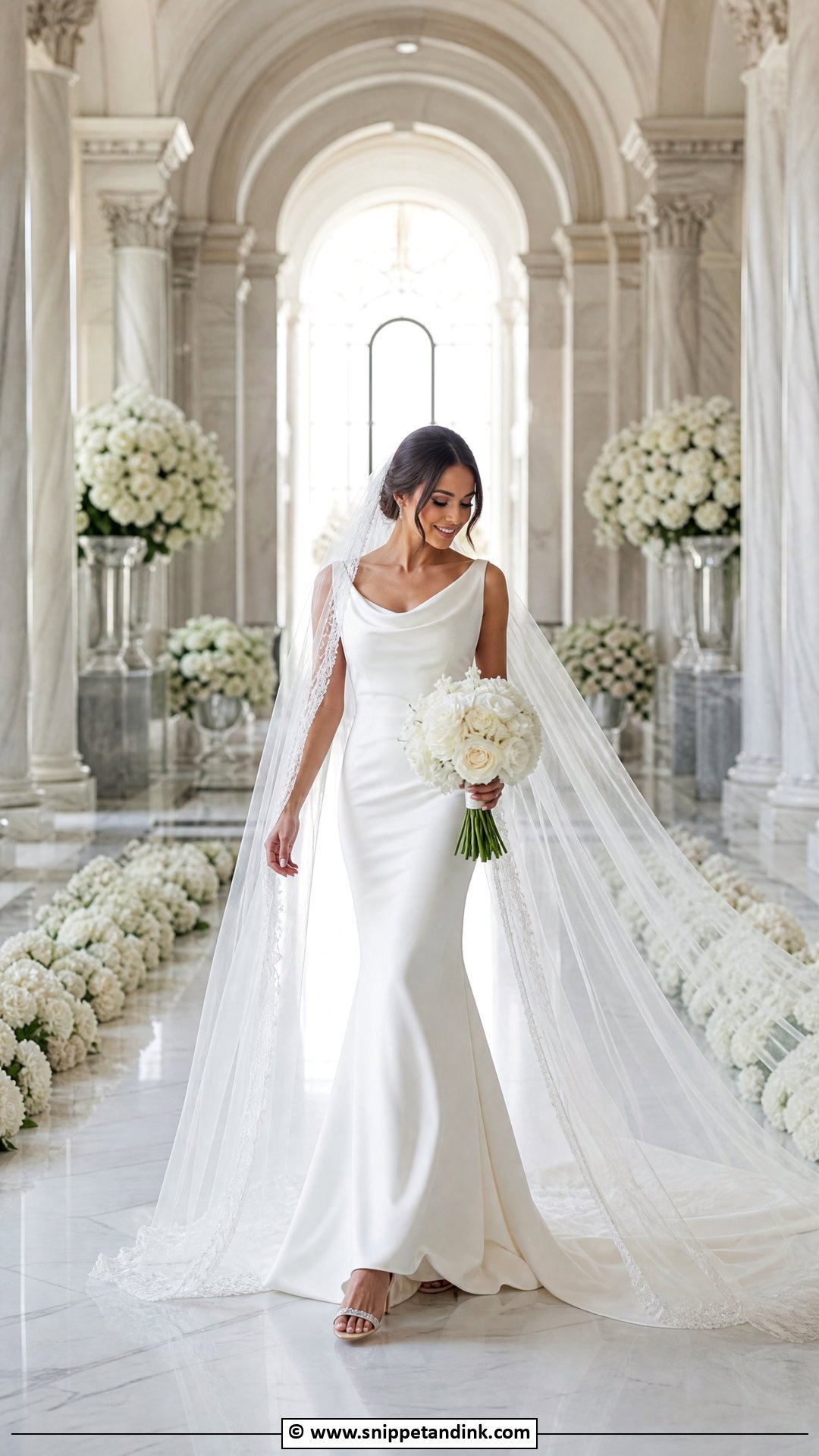
Here the dress can be plain lace, tulle, satin or chiffon; the cathedral-length veil supplies the movement. Choose soft, lightweight tulle so it floats rather than drags, with lace trim, scattered pearls or a raw edge depending on the gown. A long veil pulls hard at the comb, so I make sure it’s anchored into a secure pinned base rather than slid into loose hair. Keep heels elegant and jewelry minimal. It’s at its best in aisle shots, outdoor portraits and wide venues, and gives drama without heavy embellishment.
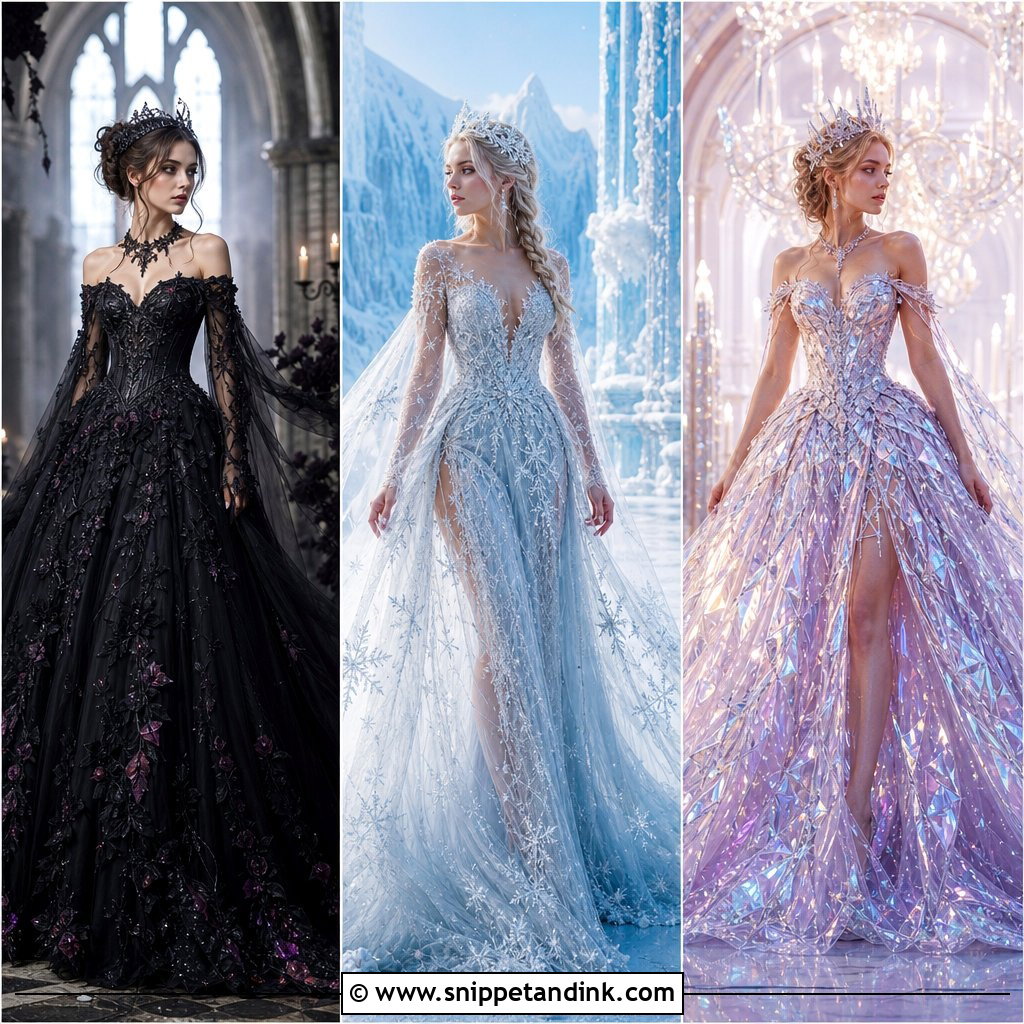
24. Watercolor Wedding Dress
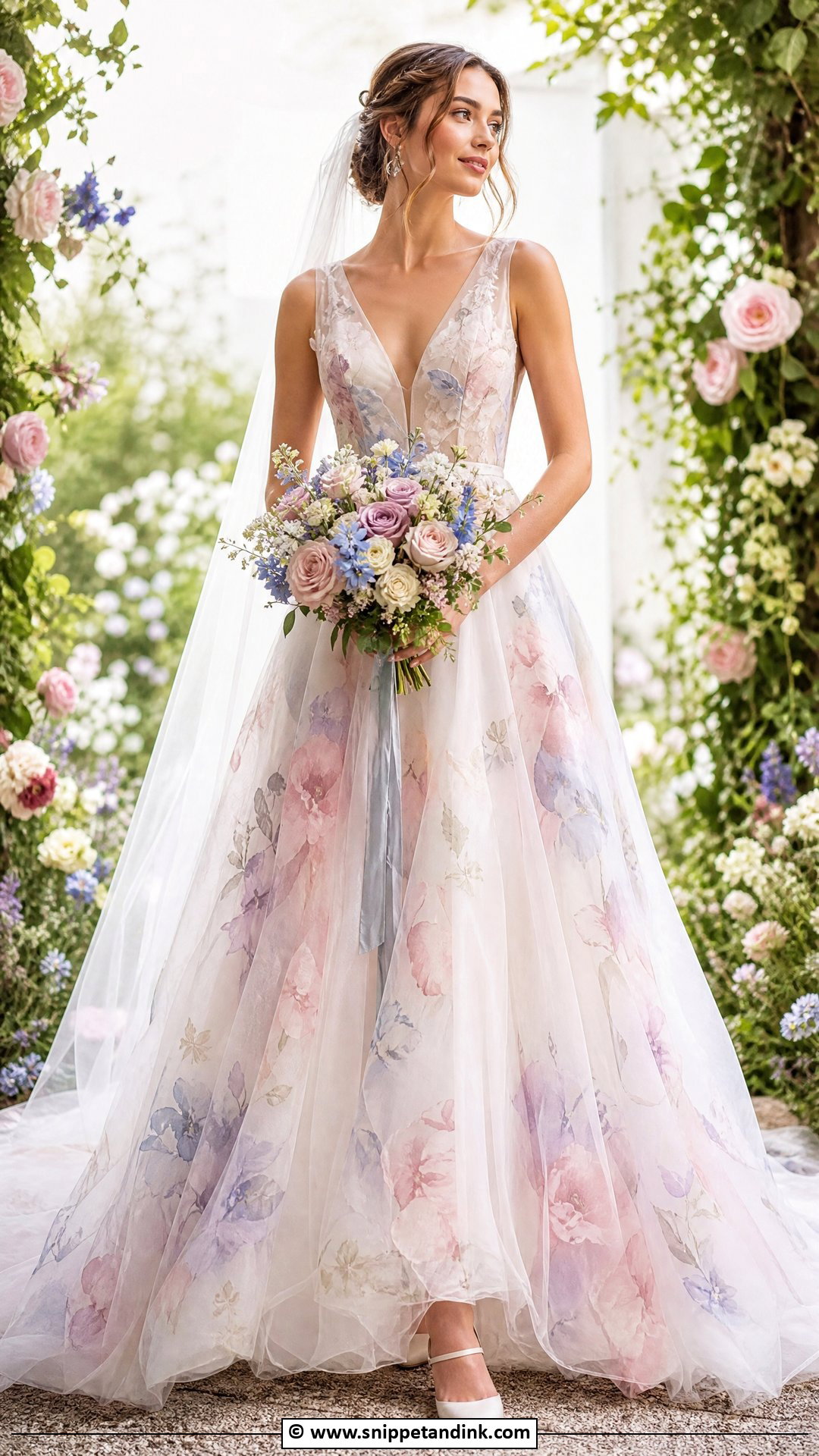
A watercolor gown carries faded blush, pale blue, lavender, champagne or soft floral prints that look washed into the fabric. Tulle and organza diffuse color, so a print underneath them softens nicely. I always ask to see printed fabric by a window, since color that reads soft under shop lights can look much stronger outdoors. Keep accessories quiet with ivory shoes, delicate earrings and a sheer veil. Repeat one or two shades in the bouquet rather than matching everything. Gardens and creative venues are its natural setting.
25. Ruffle Wedding Dress
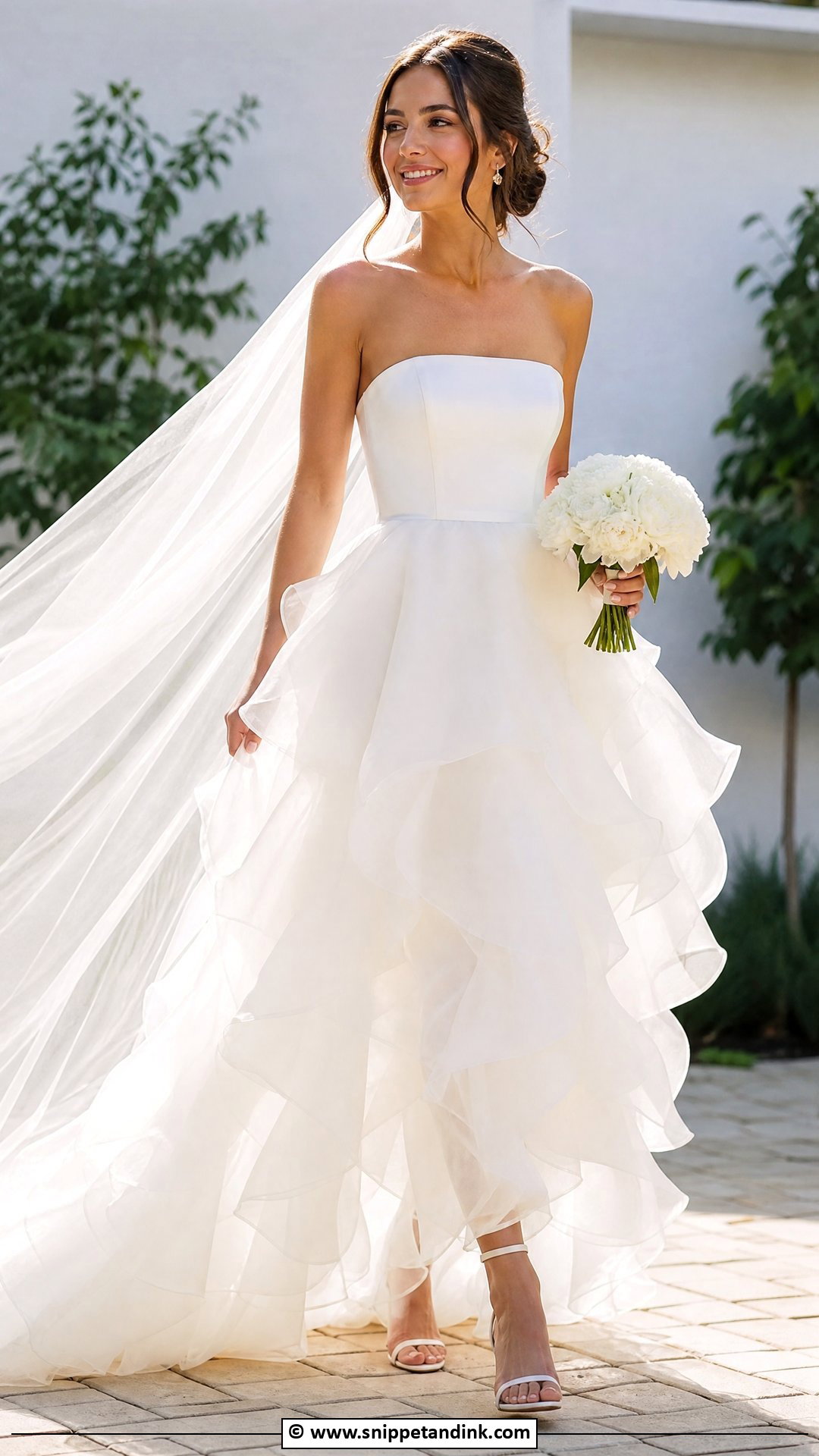
Ruffles look light only when they’re cut from airy organza, tulle or chiffon and placed to flutter as you walk; heavy tiers start to resemble a cake. A simple bodice balances the textured skirt, with fine straps or sheer sleeves. I watch the hem ruffle at fittings, because the bottom tier is the one that catches heels on stairs. Minimal jewelry, a clean veil and elegant heels keep it calm, and if the ruffles are dramatic, scale the bouquet down. Movement is the point, so walking portraits outdoors show it at its best.
26. Illusion Neckline Wedding Dress
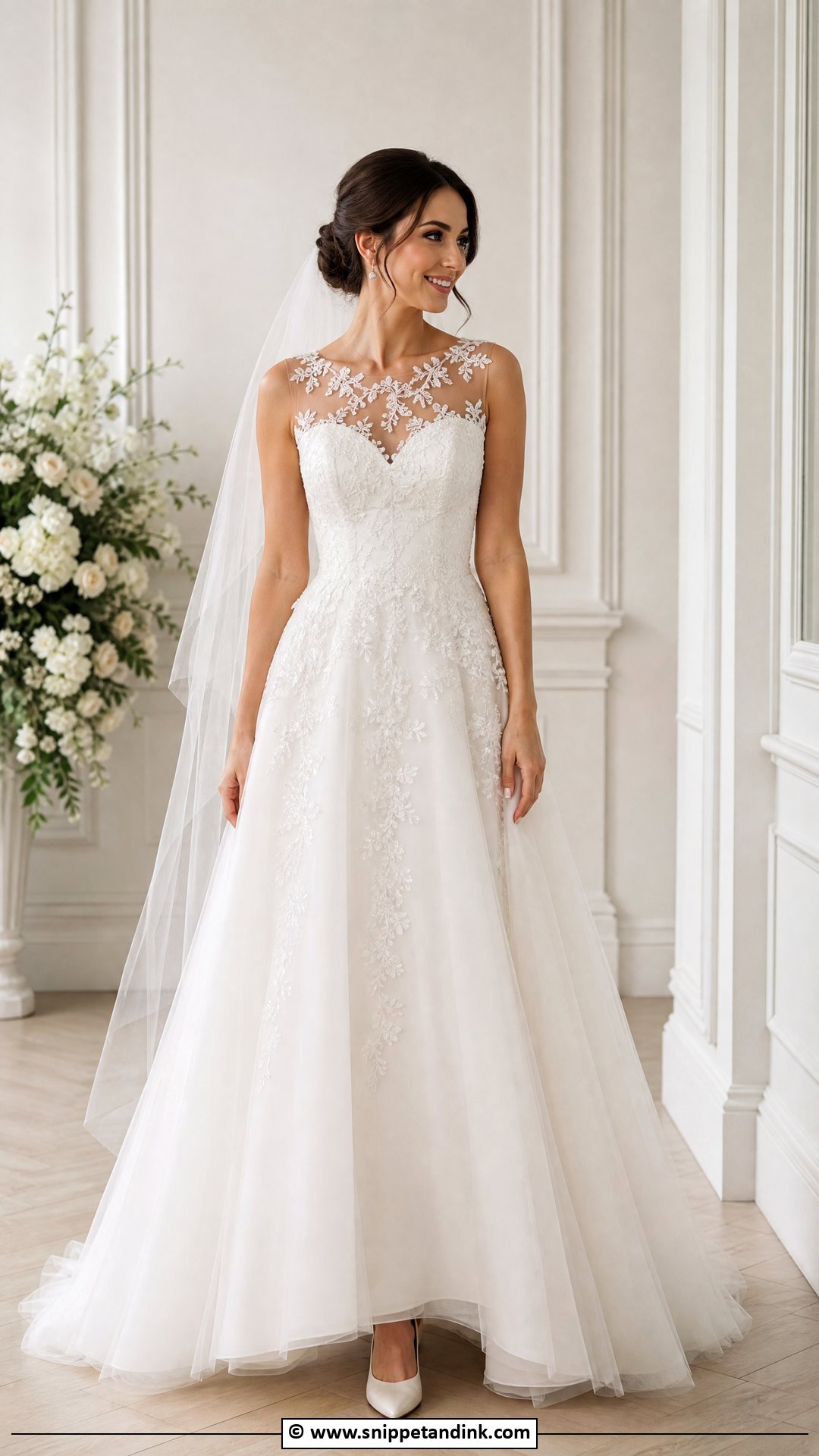
An illusion neckline sets lace, pearls or embroidery on sheer mesh so the detail seems to sit directly on skin. It gives structure and coverage at once, which brides who need support appreciate. Mesh color is the thing to get right; I compare it with skin in both window light and indoor light. Pair it with an A-line, sheath or soft ball gown, a neat updo, small earrings and a simple veil. Skip necklaces entirely, since the neckline already carries detail. Formal ceremonies and elegant venues are its home.
27. Soft Mermaid Wedding Dress
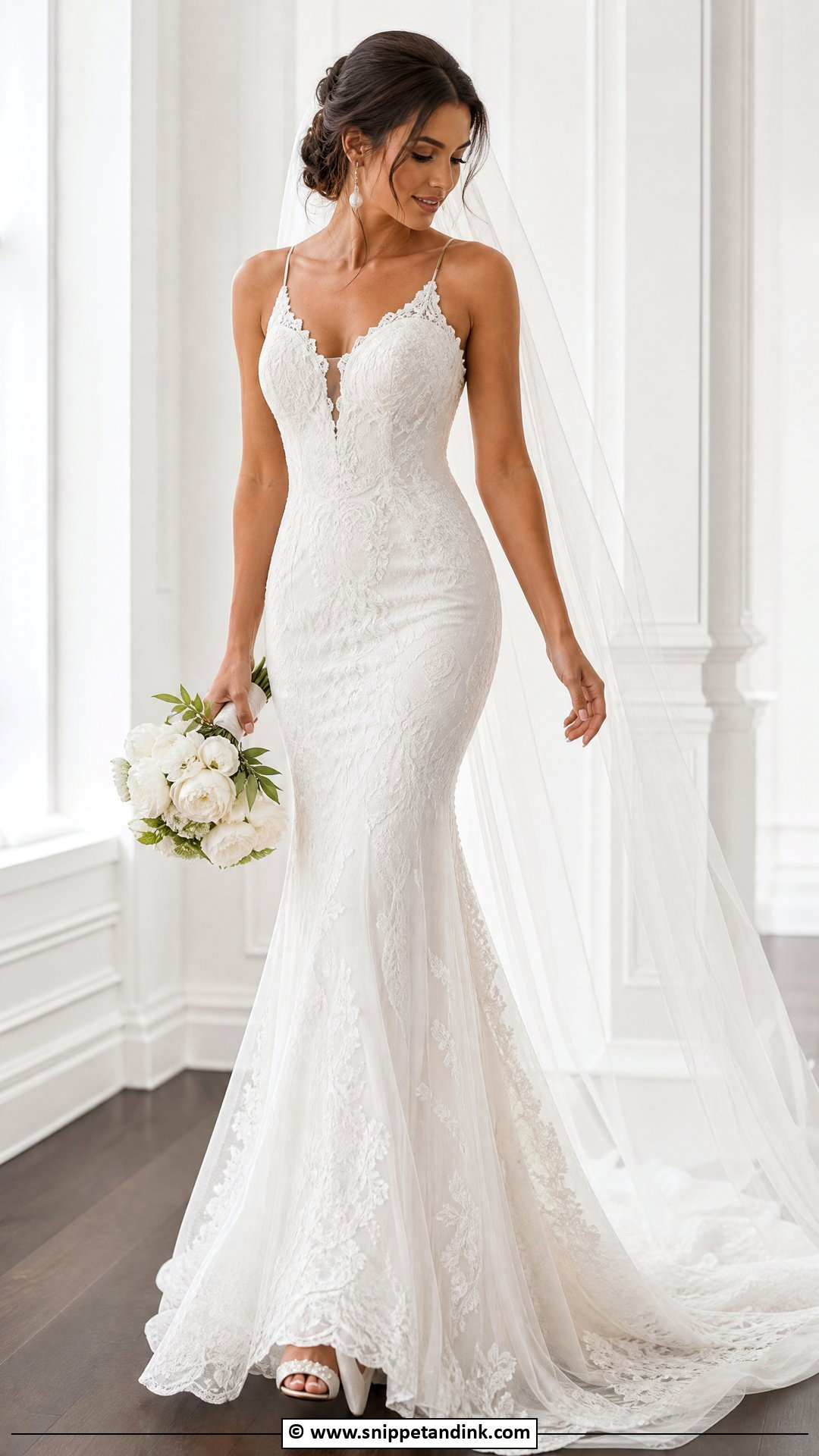
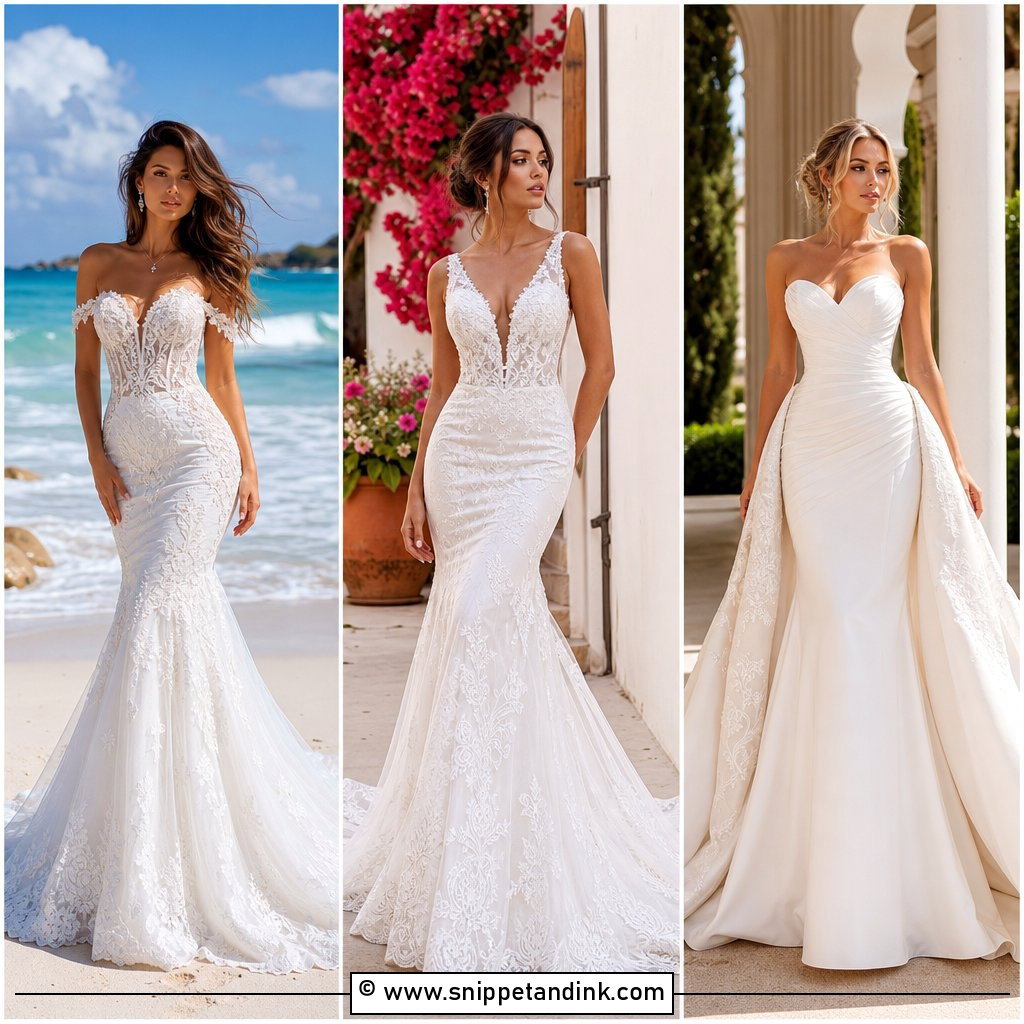
A mermaid can be ethereal if the shape is gentle. Lace, tulle or crepe follows the body and then releases into a flowing skirt, and where it releases matters. A flare that starts at mid-thigh lets you walk and sit; one that starts at the knee makes stairs a struggle. I ask every bride to sit down and climb a step in it before deciding. A light train, sheer details or appliqué keep it soft. Delicate heels, a long veil, earrings with a little light, and soft waves or a low bun finish it.
28. Slip Wedding Dress With Veil
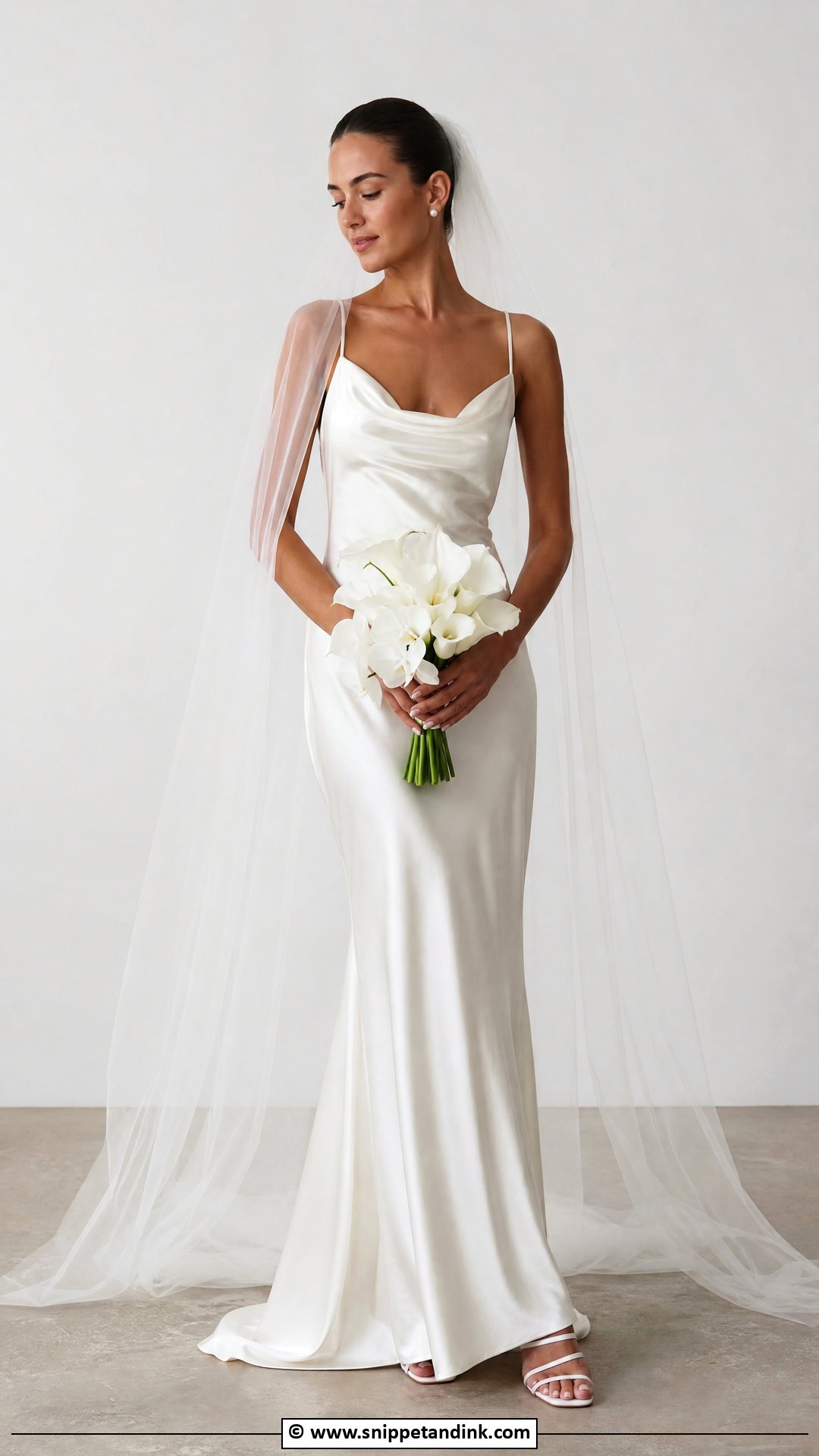
The slip is the most minimal option here, and the veil does most of the romantic work. The dress should skim rather than cling, in silk, satin or fluid crepe, with a long sheer veil to balance it. Strappy ivory heels, pearl studs and a sleek bouquet keep it modern; a sheer cape, light wrap or hair pins add softness. I’d steer you away from a slip for a cold outdoor evening without a cover-up planned, because fine silk gives no warmth at all. Intimate celebrations, modern venues and warm weather suit it.
29. Vintage Lace Wedding Dress
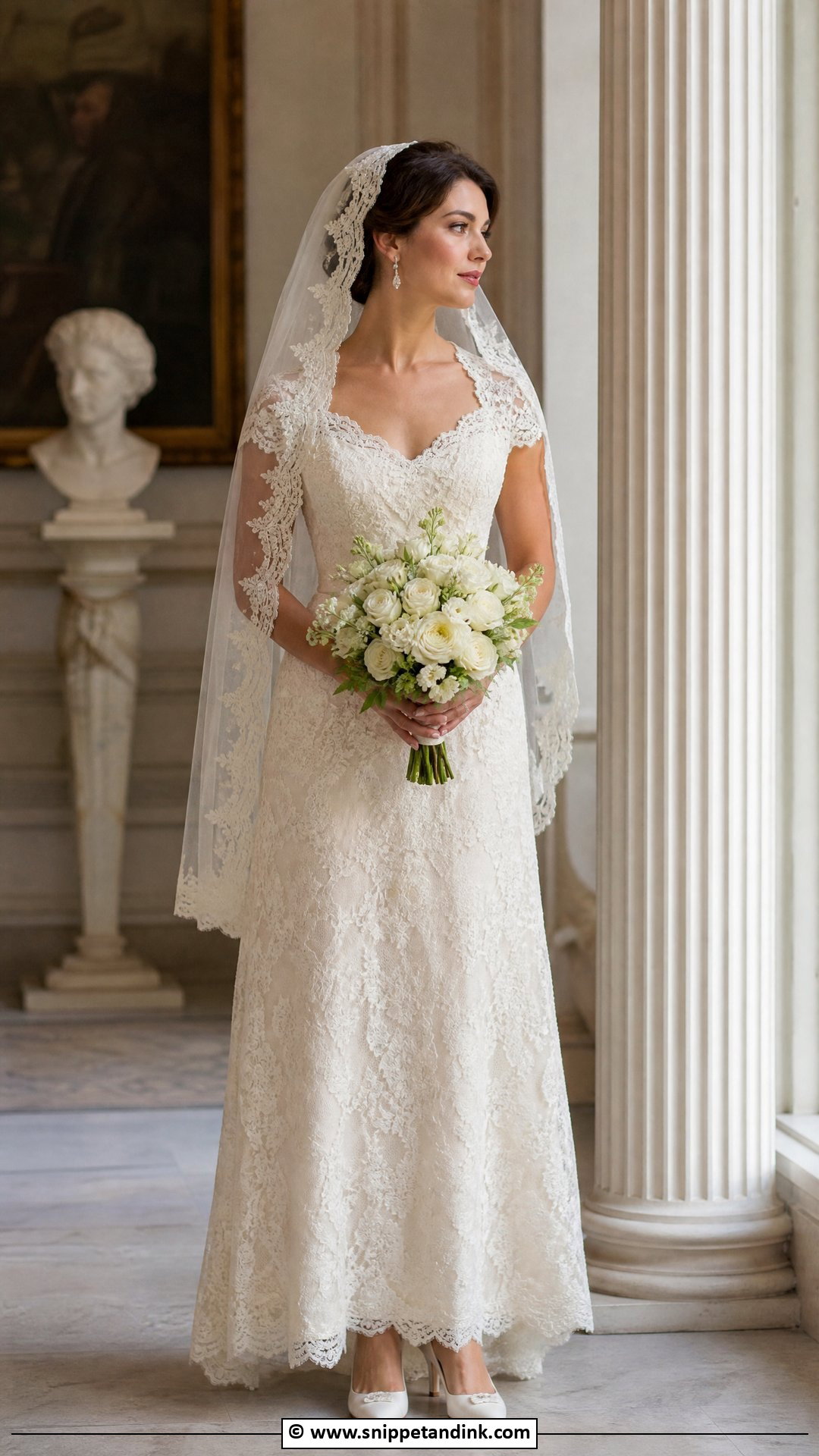
Vintage lace brings scalloped edges, delicate sleeves and an heirloom feel. Ivory, champagne and soft white suit it better than bright white, which can make old-style lace look brand new. If you’re wearing a genuinely vintage gown, I’d have a specialist check the lace for weak spots before any alterations begin. Pearl earrings, low heels and a lace-trimmed veil add detail, with a soft updo, finger waves or loose curls. Keep the styling to one era so it never tips into costume.
30. Whimsical Wedding Dress
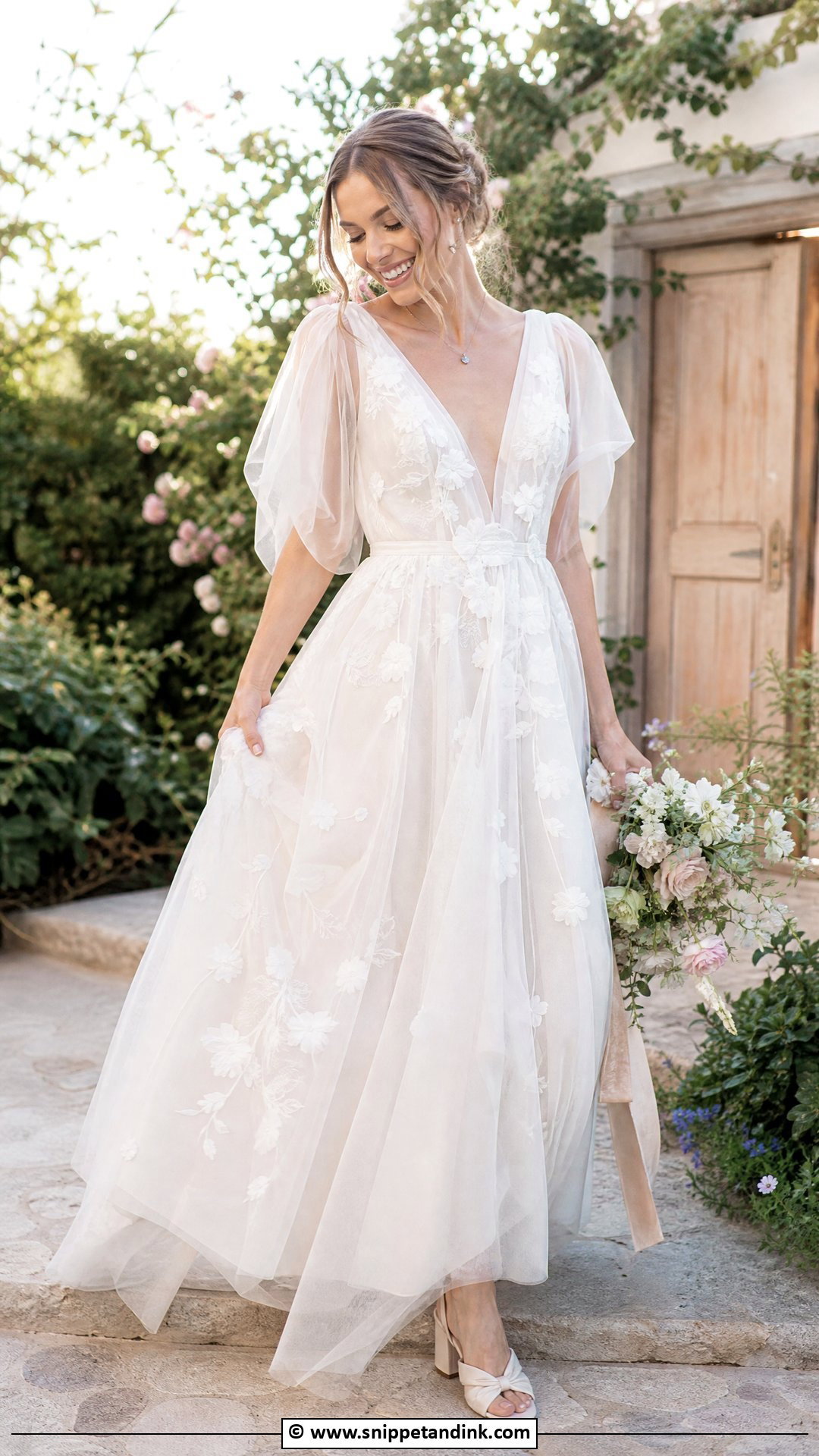
Whimsical is easy to overdo. Airy layers, soft sleeves, scattered flowers, a little sparkle: pick one or two of those, not all four. A tulle gown with floral appliqué and a simple veil gets there without chaos. I edit the accessories as hard as the dress, so comfortable heels or flats, fine jewelry and a loose hairstyle are plenty. A bouquet with soft shapes and trailing ribbon carries the playful side while the gown stays polished.
31. Star Embellished Wedding Dress
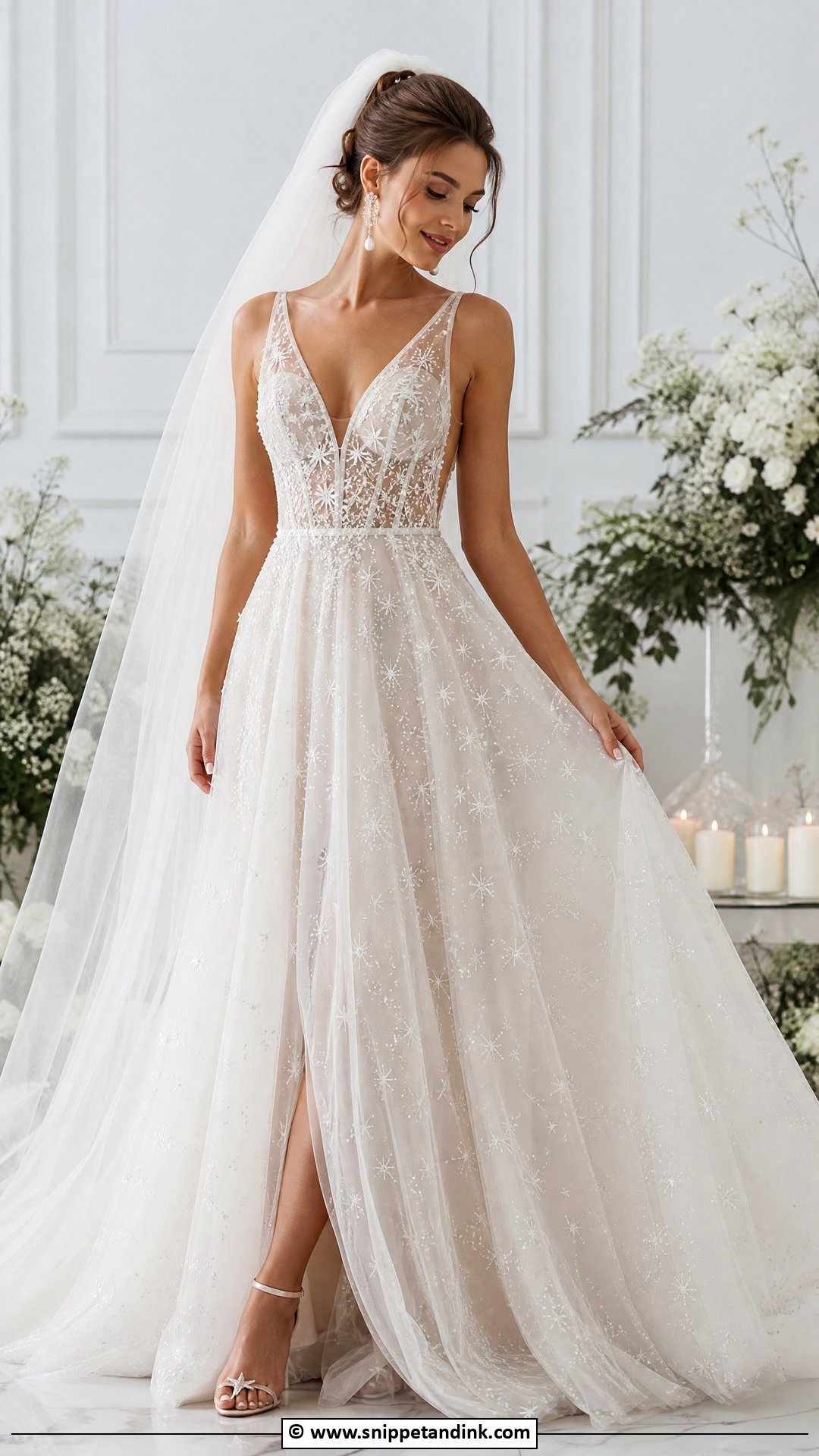
A star embellished wedding dress brings a celestial feel with tiny stars, soft shimmer and sheer tulle. Fine embroidery or subtle beading catches candlelight gently, while large sequin stars can look flat in daylight, so I look at the sample in both. A flowing skirt with a simple bodice or sheer sleeves keeps it balanced. Silver or pearl earrings, delicate heels and a plain veil leave the stars in charge. Evening receptions, where low light picks out every star, are where it comes alive.
32. Garden Wedding Dress
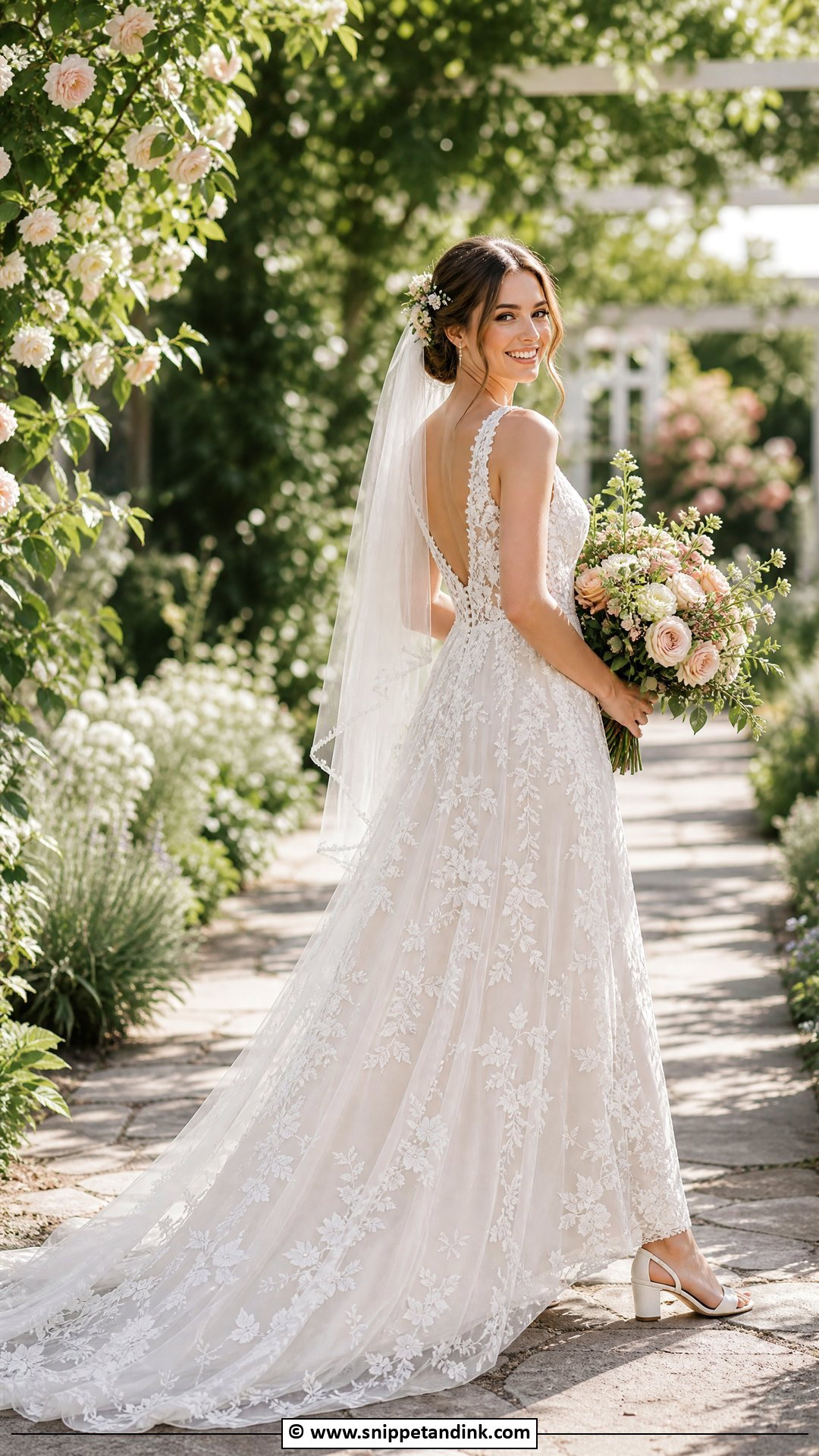
Garden ground is the reason this gown needs to stay light. Heavy trains collect grass and damp, and a long hem picks up green stains from lawns. I lean toward A-line, sheath or soft empire shapes in lightweight lace, chiffon, appliqué or tulle, and always ask for a bustle so the train comes up after the ceremony. Block heels won’t sink into turf. Floral hair pins, a sheer veil that moves in the breeze and a bouquet of garden roses, greenery and textured white flowers suit the setting.
33. Beach Wedding Dress
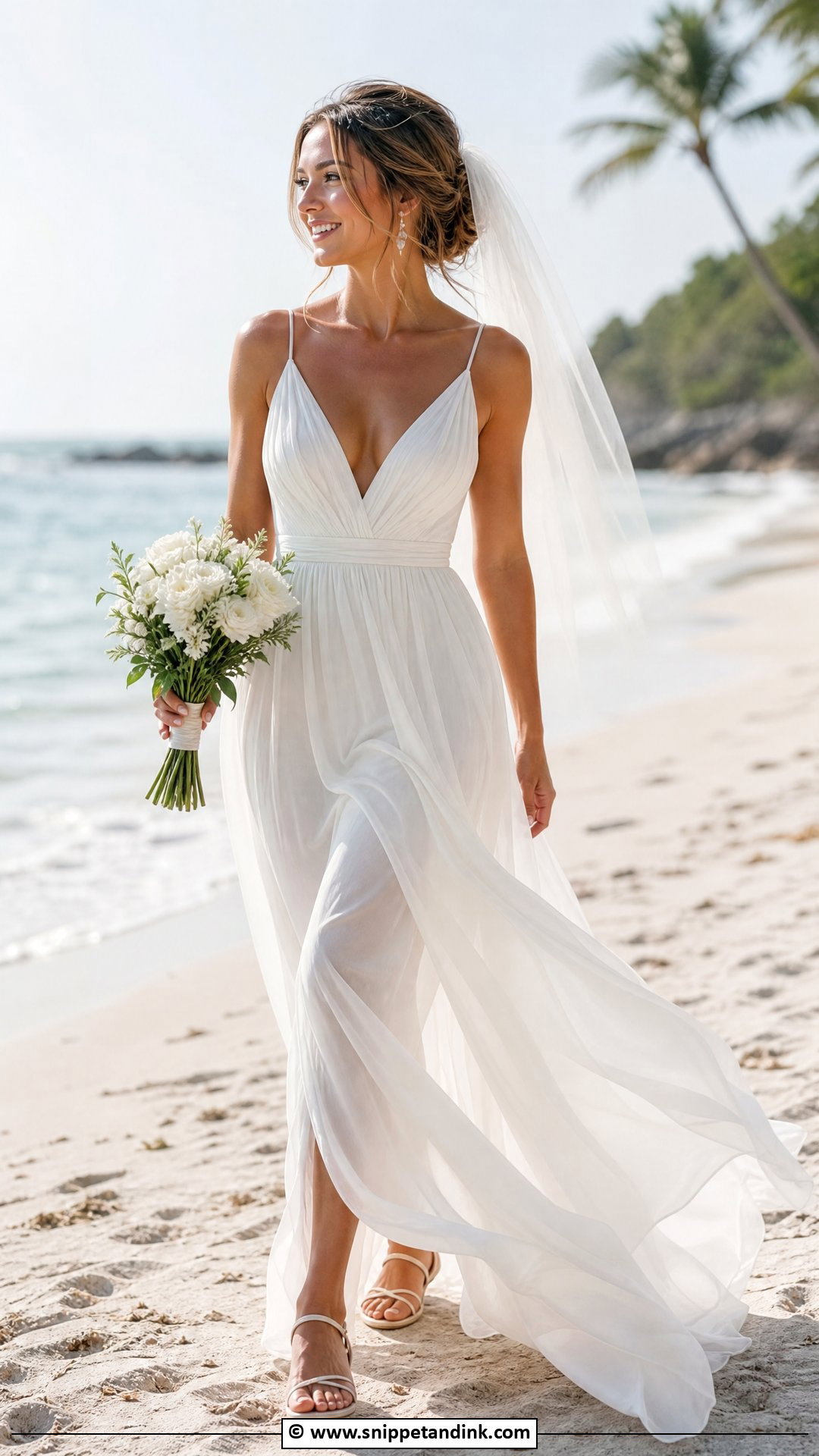
On sand, practicality decides almost everything. Chiffon, soft tulle and fluid crepe move well and don’t trap heat. A short train or none at all keeps the hem out of wet sand, and flat sandals or bare feet are honestly better than heels. A sheer veil or hair scarf catches the breeze, but sea wind is strong, so I’d pin a veil firmly or save it for portraits. Delicate earrings, a bouquet of white flowers and greenery, and no heavy embellishment let the setting carry the look.
34. Forest Wedding Dress
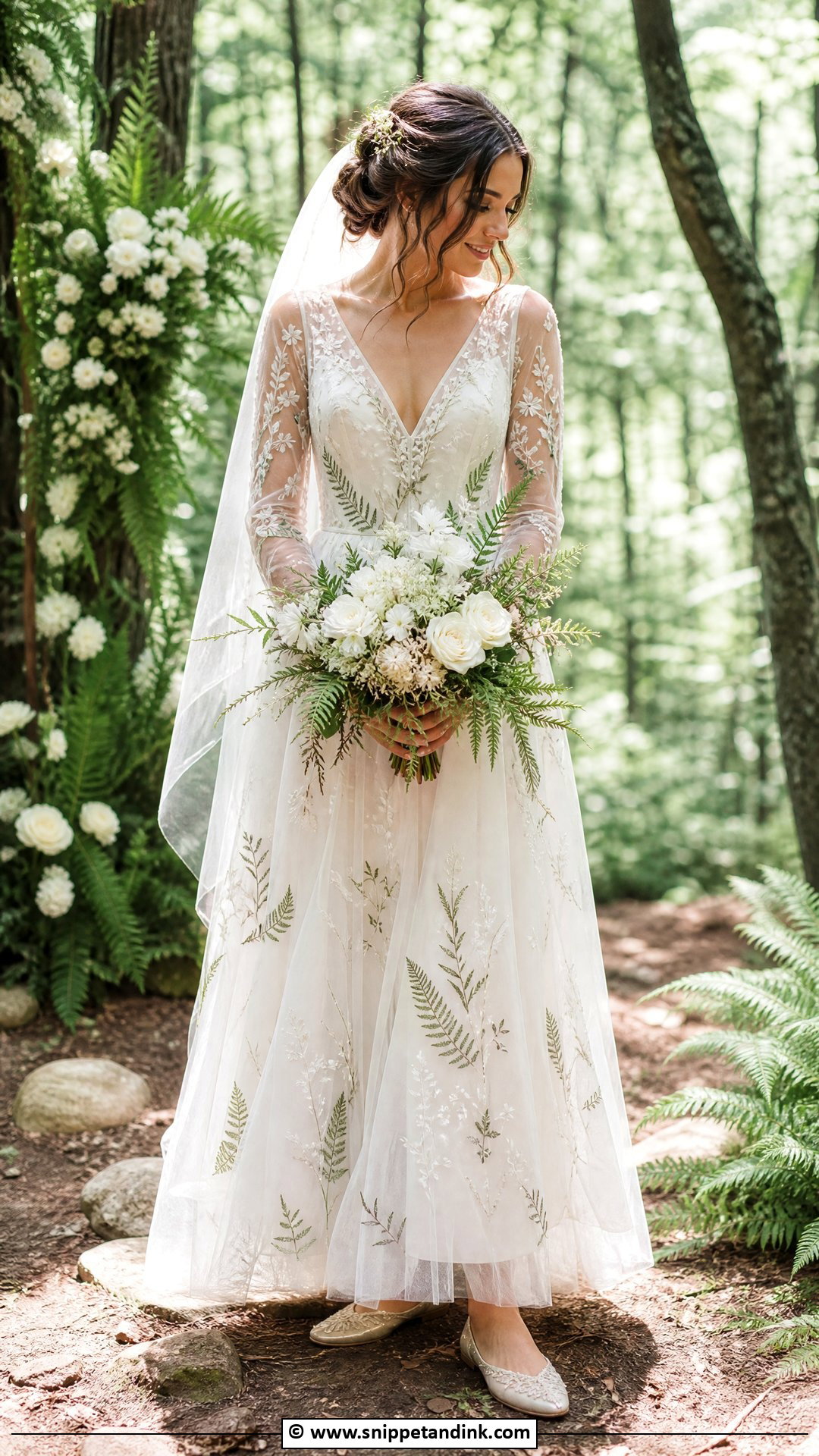
A forest wedding dress leans on soft lace, flowing tulle and botanical embroidery. The ground is the real challenge: roots, moss and uneven paths. I’d pick a manageable train with a proper bustle, and comfortable block heels or embellished flats over stilettos. Long sheer sleeves, appliqués or a cape add drama. A loose hairstyle, a light veil and a bouquet of white flowers, ferns and greenery tie the look to the trees around it.
35. Winter Ethereal Wedding Dress
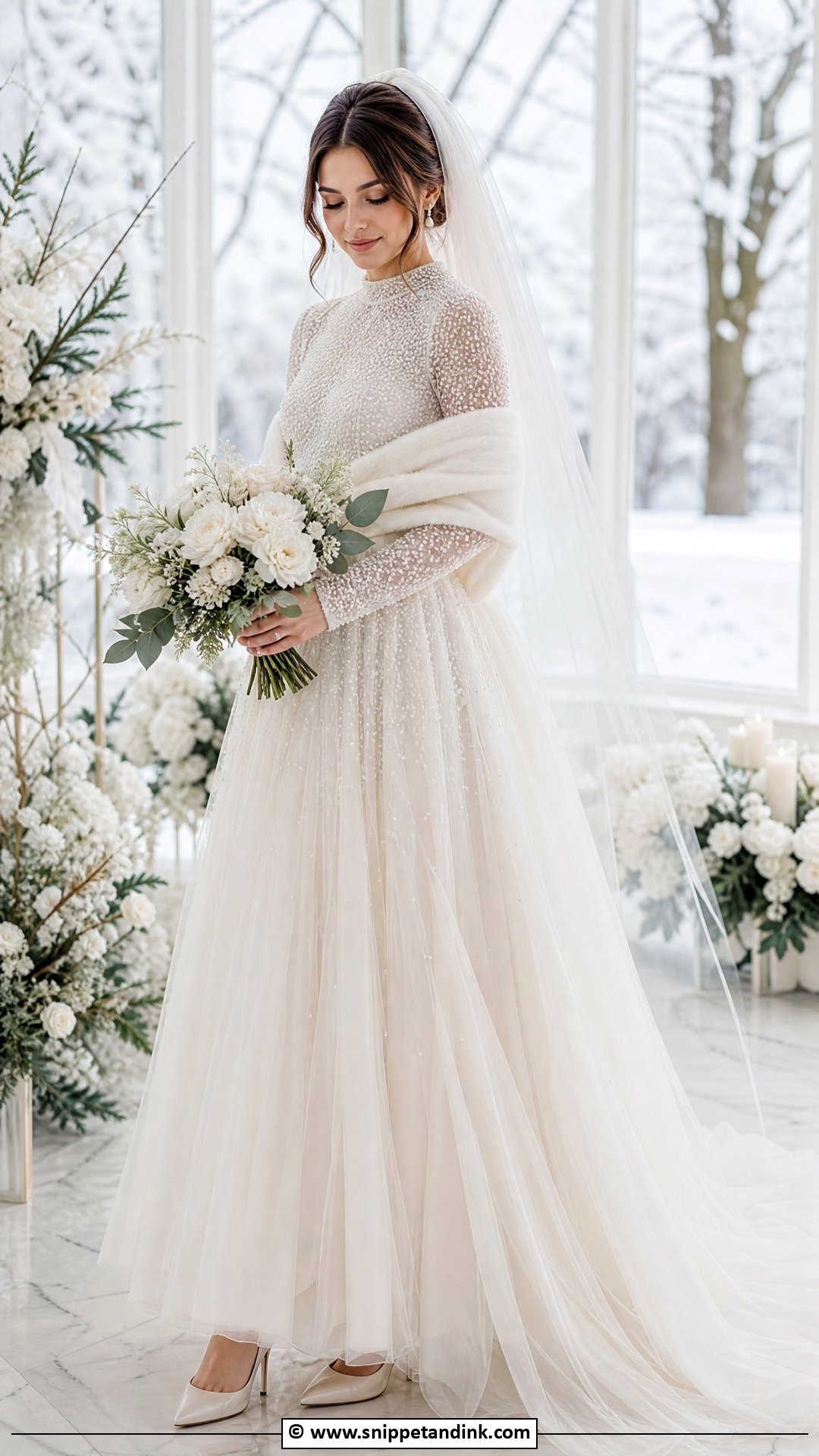
A winter ethereal wedding dress works with long sleeves, pearl details, lace, layered tulle or satin with a gentle glow. Warmth is the practical question, so I plan a sheer cape, faux-fur wrap or bridal coat that comes off easily for photos. Closed-toe heels, pearl earrings and a long veil finish it. Soft makeup with a fresh glow beats anything heavy in cold, flat winter light, and white flowers, pale greenery and ribbon keep the palette cool.
Ordering, Altering and Steaming a Floaty Gown Without a Last-Minute Panic
Lightweight gowns need as much lead time as heavy ones. Many bridal shops quote several months for a made-to-order dress, and alterations usually stretch across two or three fittings in the final couple of months. Timelines vary a lot between shops and designers, so ask for the production estimate in writing and count backwards from your date.
Bustling a skirt with several layers
A multi-layer tulle skirt rarely bustles neatly as one piece. I ask the seamstress to bustle the outer layers separately, otherwise the train drags the underlayers into a lump at the back. Practise the bustle at your last fitting with whoever will do it on the day, and photograph each hook or ribbon tie so nobody is guessing at the reception.
On the morning
- Steam, never iron. Keep the steamer a few inches away from tulle and chiffon, because direct heat can melt synthetic net.
- Hang the gown by its inner hanging loops, not the straps, so the bodice weight doesn’t stretch them out.
- Lay a clean sheet in the car. Layered skirts crush on a seat and organza keeps every fold.
- Pack a lint roller, small scissors for stray threads and a few safety pins for the lining.
Afterwards, get the gown cleaned by someone who handles bridal fabric before any marks set; spilled champagne or sugary drinks can dry clear and turn yellow months later. Store it in a breathable bag or acid-free box away from light, never sealed in plastic.
Walk, Sit and Reach in It Before You Say Yes
Silhouette is only part of it. What makes a dress feel ethereal is how the fabric moves, how the details sit on it and whether the whole look suits your venue. Across tulle gowns, appliqué, lace sleeves, plain satin, soft color and dresses built for beaches, gardens, forests and winter, the test I use never changes: walk, sit and lift your arms in it. The one that lets you do all three comfortably, and still feel like yourself in the mirror, is the one to say yes to.
You'll Like These Ideas:



Leave a Reply