
A Basque waist dips into a point or soft U below the natural waist, and that one seam changes how a whole gown sits on you. Add long sleeves and you get a dress with real structure top to bottom, which suits brides who like to feel held in. In my fittings, the conversation always comes back to three things: where the point lands on your torso, how the sleeves let you move, and how much skirt you want below that seam. The twenty gowns here run from plain crepe to full mikado ball gowns, and for each one I’ve noted what I’d look at before you say yes.
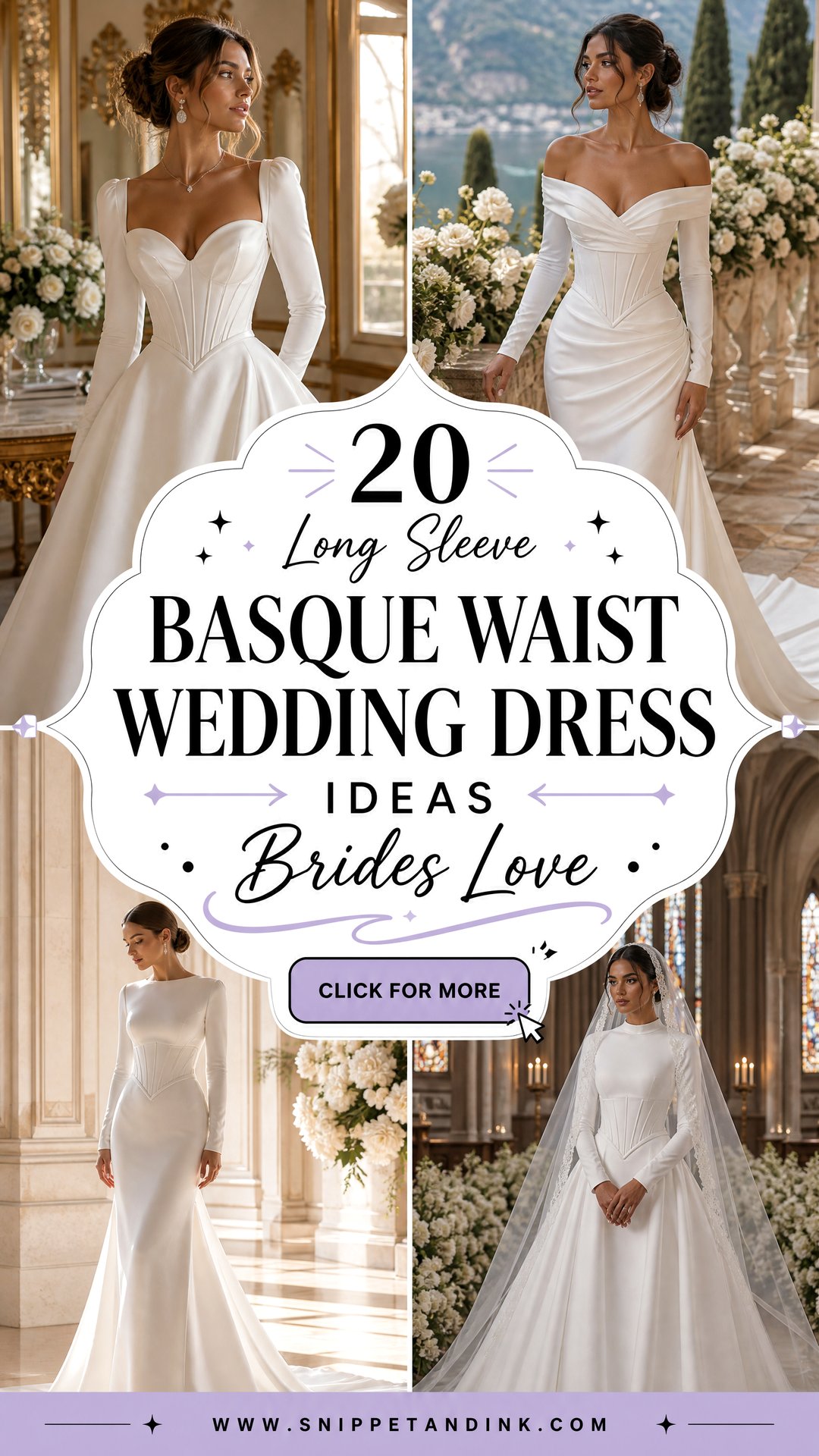
Where the Point Should Land on Your Torso
A Basque waist is cut to sit below your natural waist, and how far below changes everything. Sample gowns are made for one torso length, so the point you see in the mirror at a boutique may not be where it should end up on you.
- Short torso: a deep V can run almost to the hip bone and make the bodice look longer than your legs. Ask about a shallower point or a soft U.
- Long torso: you can carry a sharp, deep point well. A shallow one may sit at the natural waist and look like a standard seam.
- Fuller hips: a softer curve with the skirt gathered or pleated just below it flatters more than a sharp V, which can widen the hip line.
- Petite overall: keep the skirt volume moderate. A full ball gown under a deep point can make the bodice look short.
When I pin a Basque bodice, I watch the point as the bride sits. If it presses into her lap, it’s too deep for her proportions, even if it looked perfect standing.
1. Satin Long Sleeve Basque Waist Wedding Dress
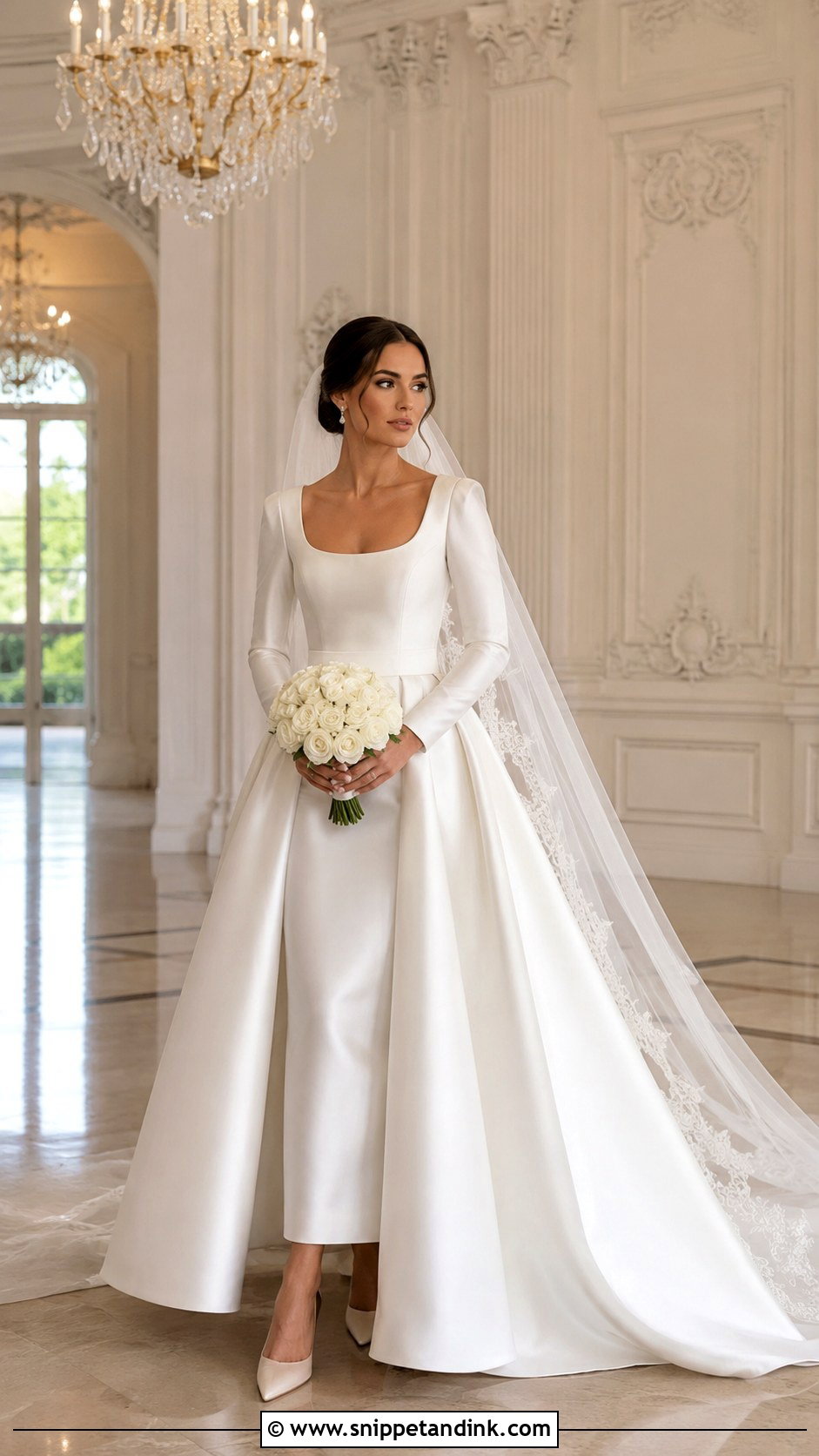
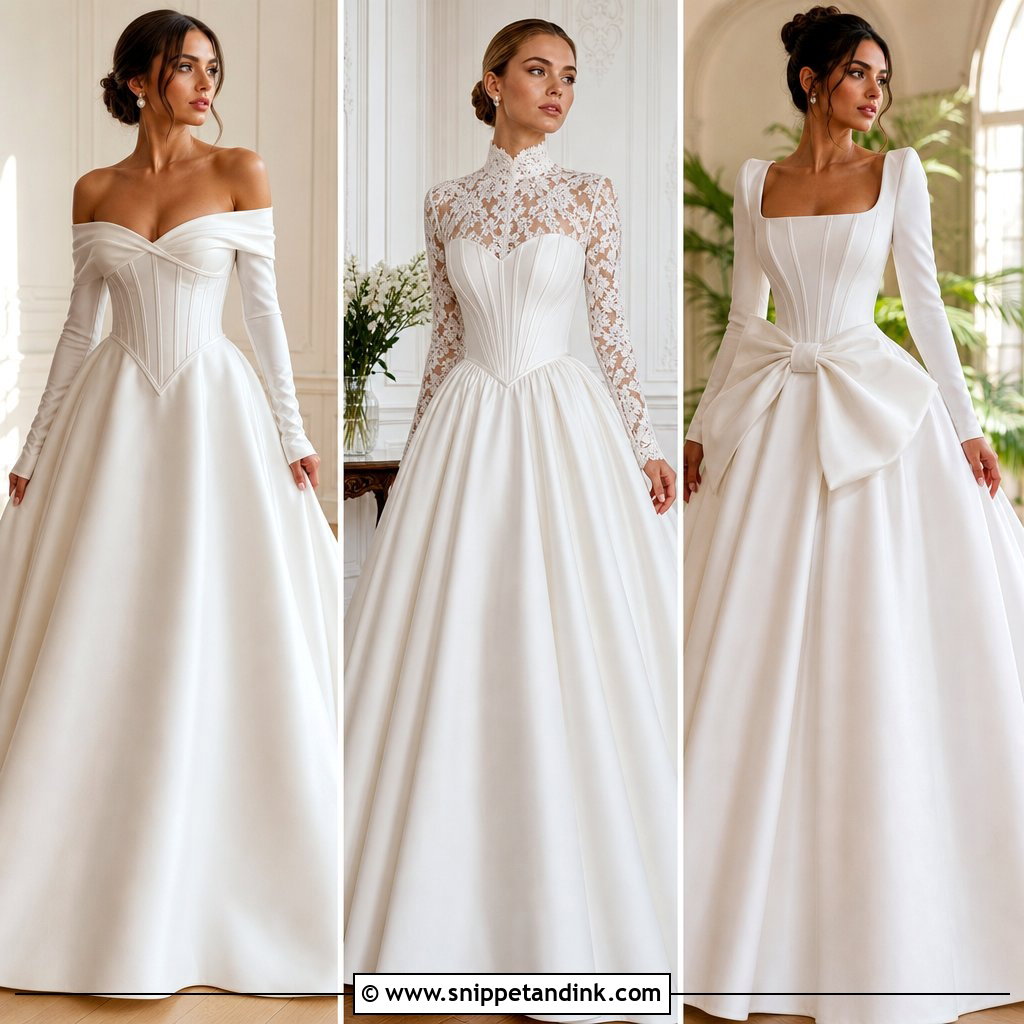
Satin shows the line of a Basque point more clearly than any other fabric, because nothing on the surface distracts from the seam. A structured bodice, a soft scoop neck and fitted sleeves closed with covered buttons at the wrist are all this gown needs. Add pearl drops, pointed pumps and a cathedral veil with a thin satin edge. The thing I check every time: sit the bride down. A satin point that sits flat standing can dig into the tops of the thighs in a chair, and the fix is a small adjustment to the depth of the V, made early.
2. Lace Corset Long Sleeve Basque Waist Wedding Dress
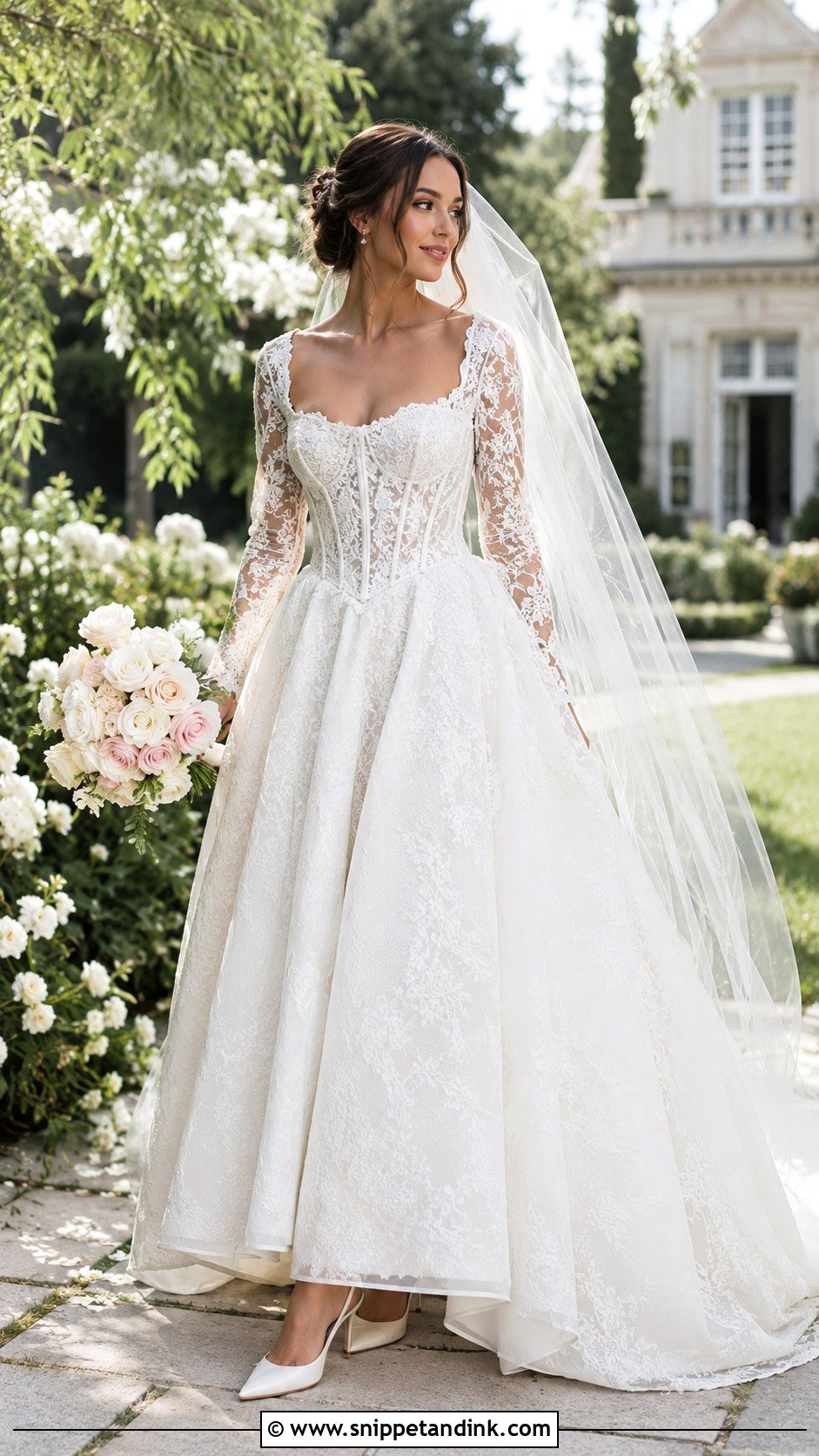
Lace is how I soften a corseted point for a bride who loves structure but not severity. Internal boning does the shaping; lace sleeves over a comfortable lining keep it pretty. Motifs that flow from bodice to skirt hide the waist seam nicely. Pair it with a fingertip veil and garden roses, and keep any lace on the veil simpler than the dress. At the fitting, have her lift both arms and take a full breath. Corseted bodices that pass that test will last the night.
3. High Neck Long Sleeve Basque Waist Wedding Dress
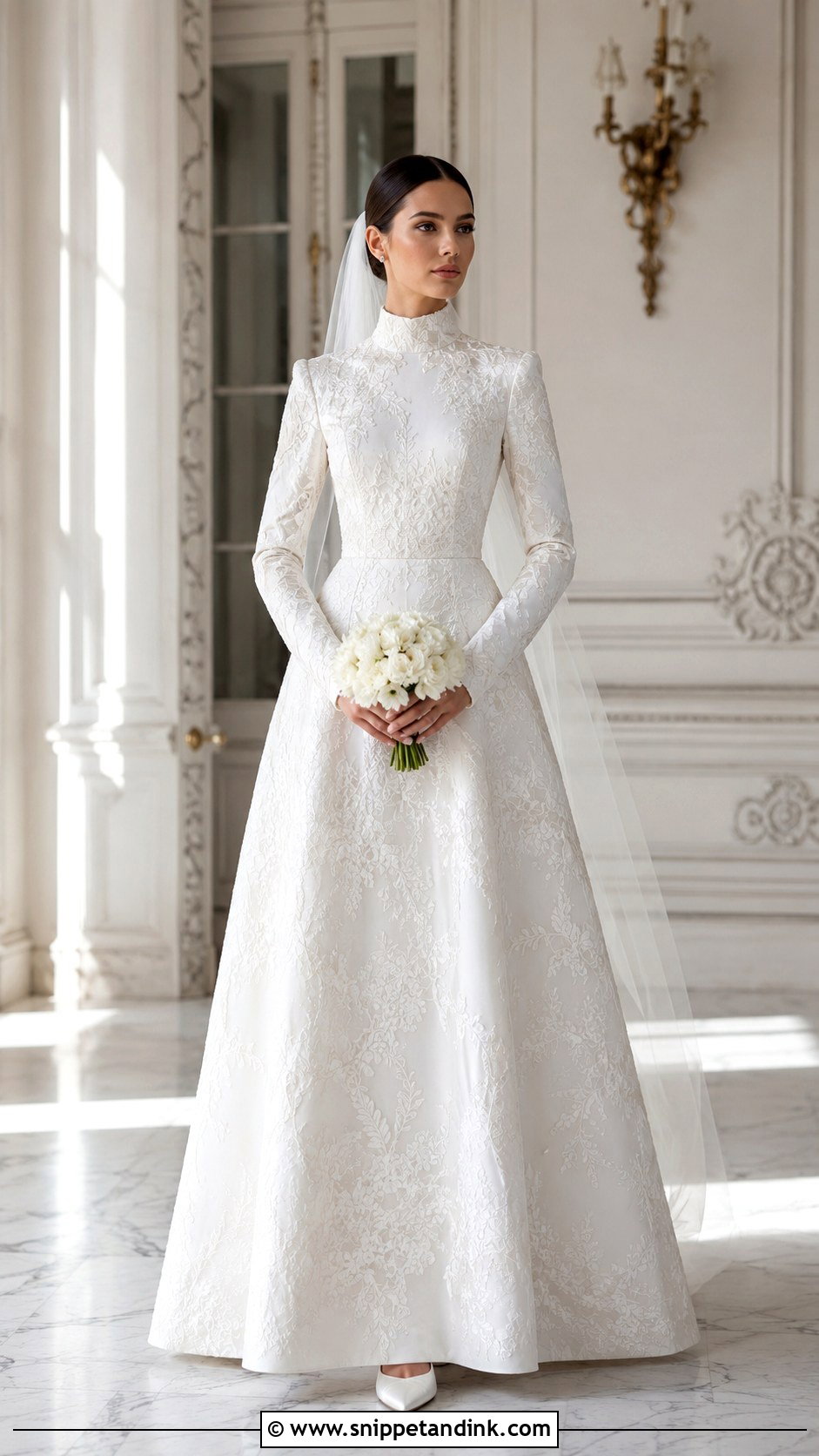
High necklines and pointed waists balance each other: one frames the face, the other draws the eye down to the center. The secret is keeping the neck light, in sheer embroidered tulle or fine lace, so the top half doesn’t feel heavy. No necklace. Small studs, a low chignon and a plain long veil. I always ask brides to turn their head fully left and right in a high neck. If anything scratches at the jaw, a soft facing inside the collar solves it.
4. Square Neck Long Sleeve Basque Waist Wedding Dress
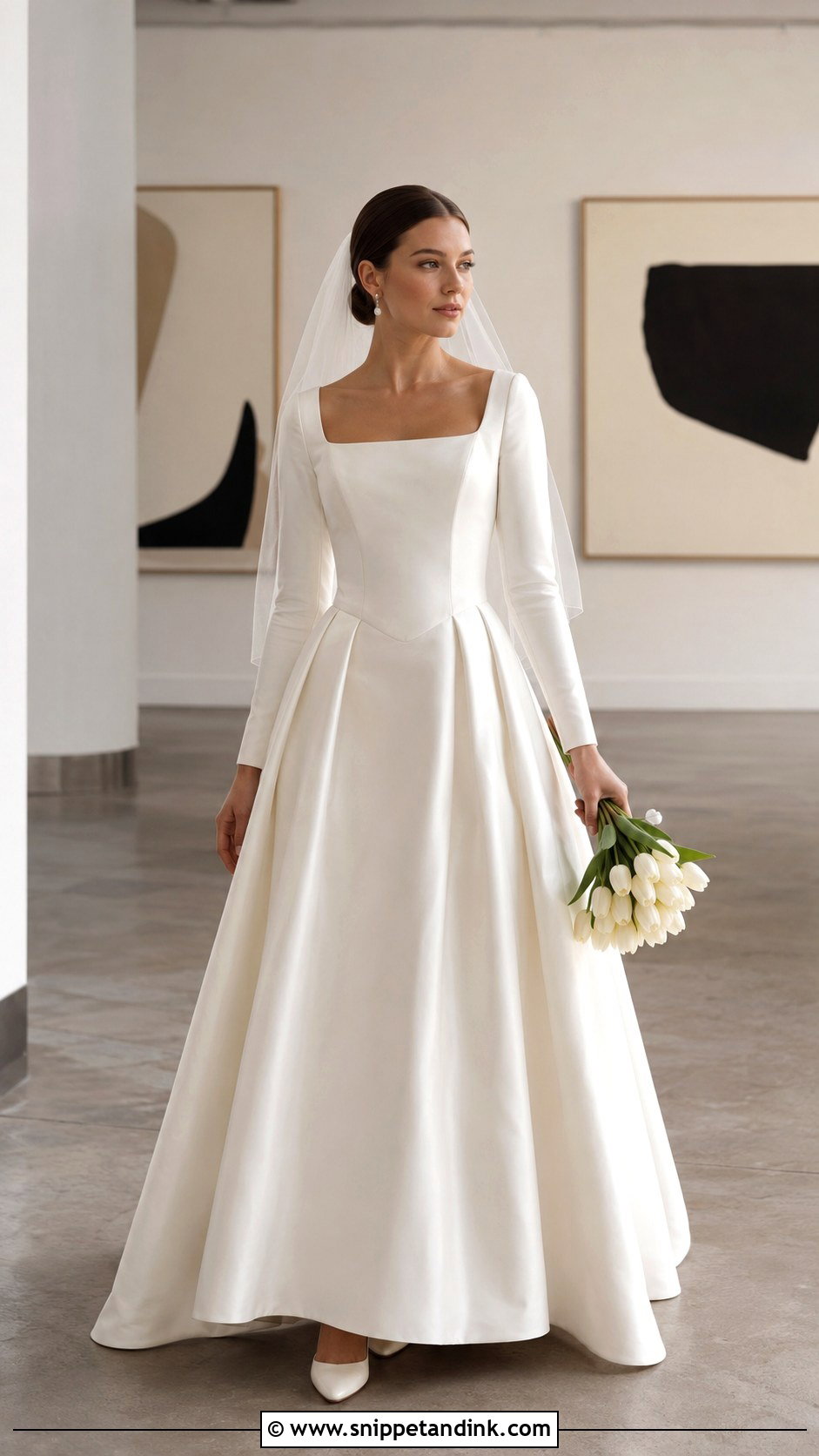
Two geometric lines, the square neck and the pointed waist, look sharp together in a matte satin or mikado gown, and neither needs embroidery to hold attention. Slim sleeves and a moderately full skirt keep it modern without going stark. A waist-length veil leaves the neckline on show. Square necks gape when the shoulder fit is off, so watch the top edge as the bride reaches forward. If it lifts away from the chest, the shoulders need taking in, not the neckline.
5. Scoop Neck Long Sleeve Basque Waist Wedding Dress
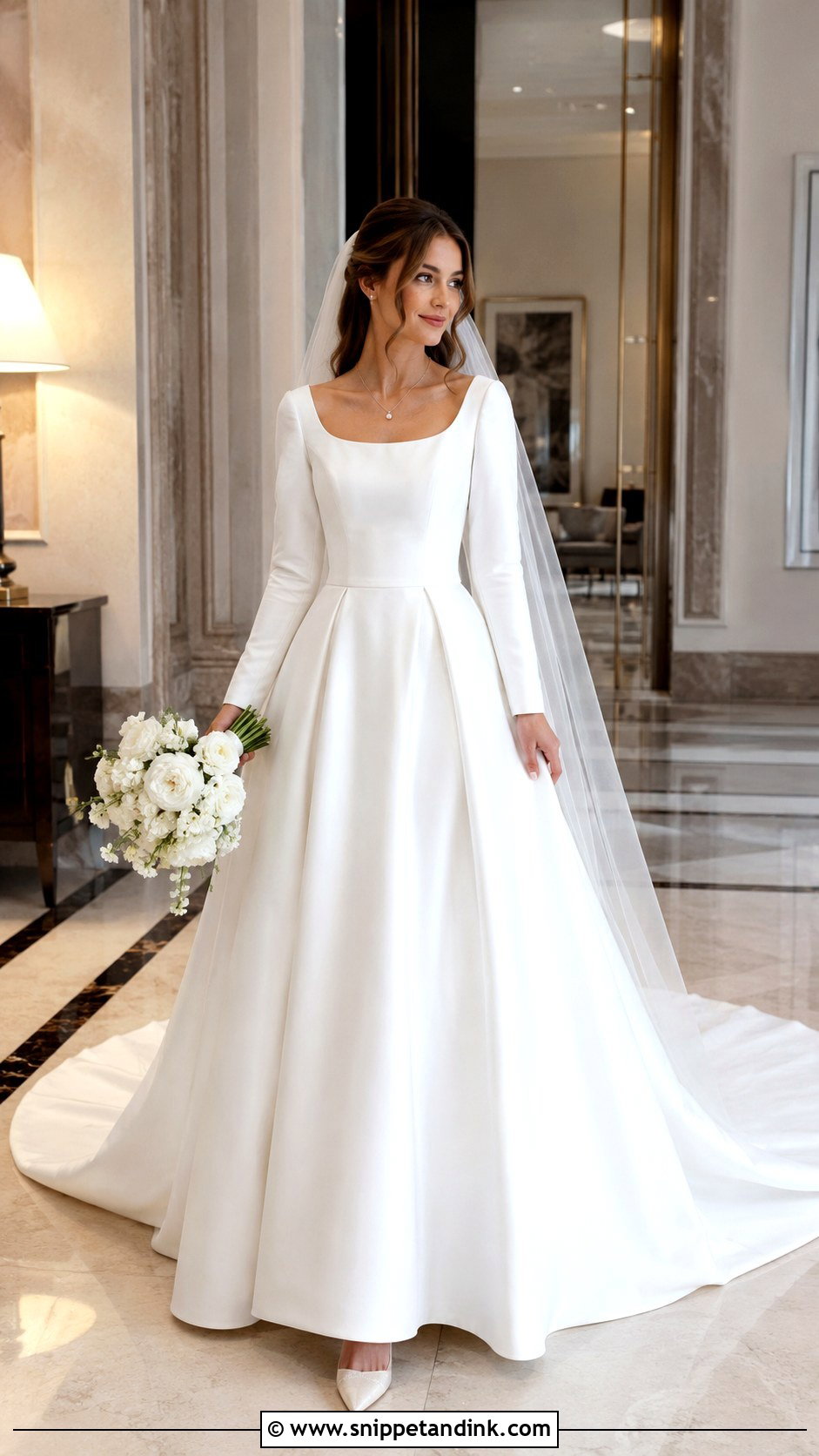
Scoop necks are the easiest neckline to wear with fitted long sleeves. They open the chest without going low, and they suit almost every bust size. Silk satin or crepe, an A-line skirt with a chapel train, and a pendant necklace finish it simply. Loose waves or a half-up style echo the curve. During alterations, bend forward at the waist. A scoop that shifts or shows too much needs either a small hidden cup or a tighter shoulder seam, and both are easy fixes.
6. Sweetheart Long Sleeve Basque Waist Wedding Dress
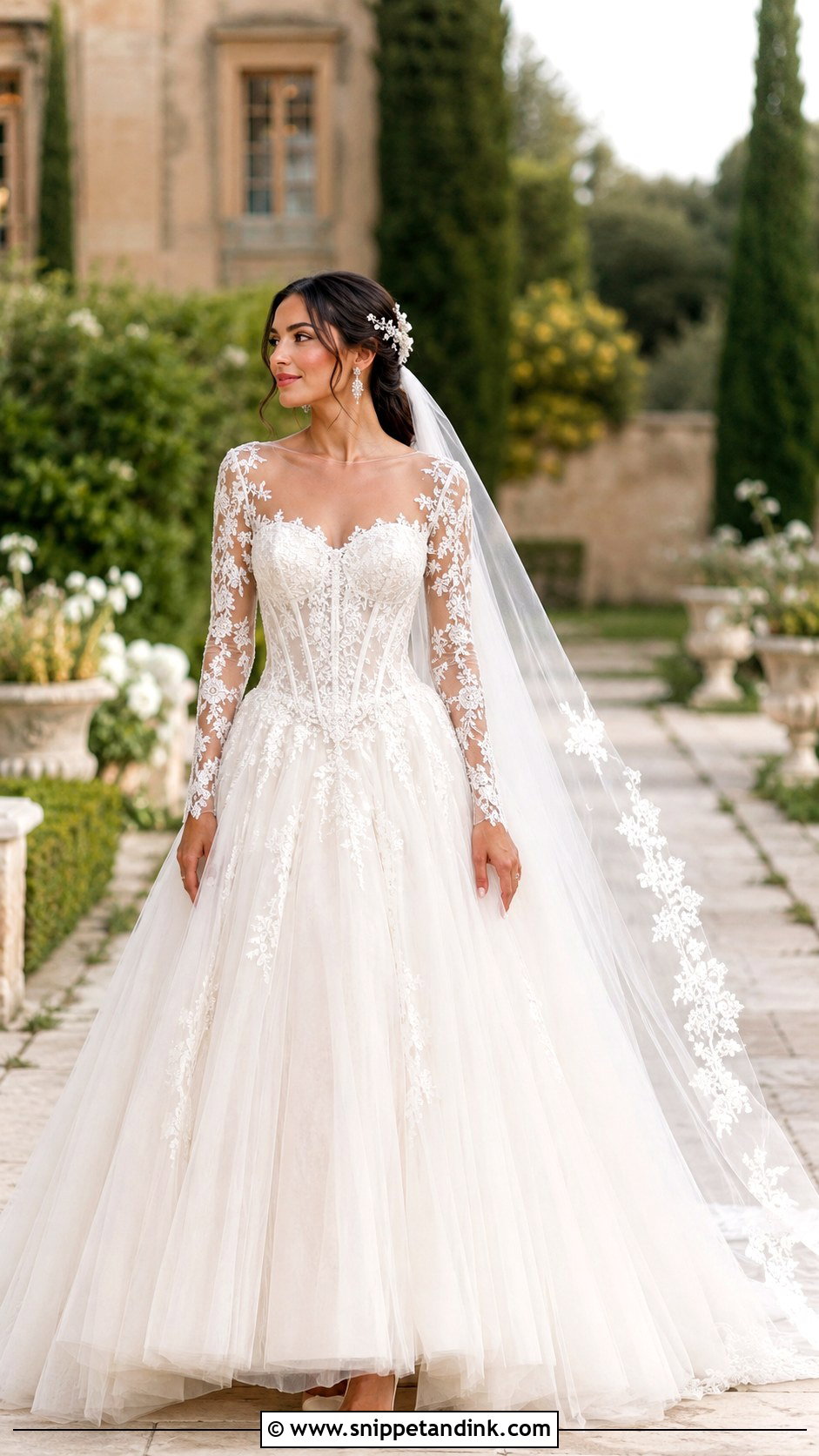
Pairing a sweetheart neck with sheer sleeves means the sleeves need something to anchor to, and an illusion panel across the upper chest does that. A pointed Basque waist and a full tulle skirt make the classic hourglass. I’d style it with a floral comb, crystal earrings and a chapel veil with scattered appliqués. Look at the illusion tulle in daylight, not just under shop bulbs. Shades labeled nude vary a lot, and the wrong one shows as a visible band across the chest.
7. Off Shoulder Long Sleeve Basque Waist Wedding Dress
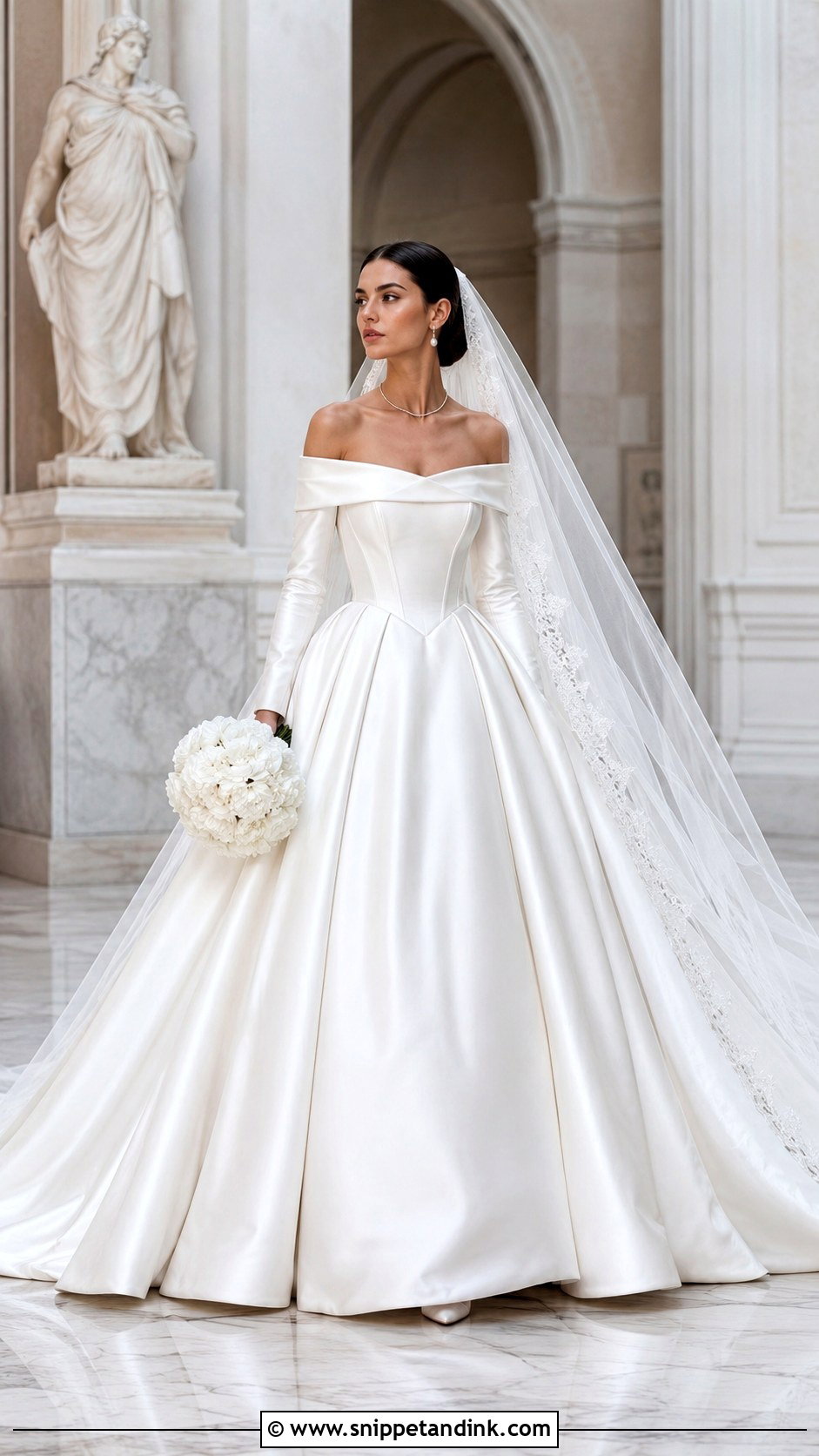
Off-the-shoulder long sleeves look regal, and they are also the hardest style to move in. The sleeve starts below the shoulder, so lifting your arms pulls on the bodice. Here’s what I have brides do at the fitting: lift your arms, hug someone, sit down. If the bodice slides or the sleeves bite, ask about tightening the band or swapping to detachable sleeves for the reception. Styled with a short necklace, a sleek bun and a cathedral veil, it suits a ballroom or historic estate.
8. Bishop Sleeve Basque Waist Wedding Dress
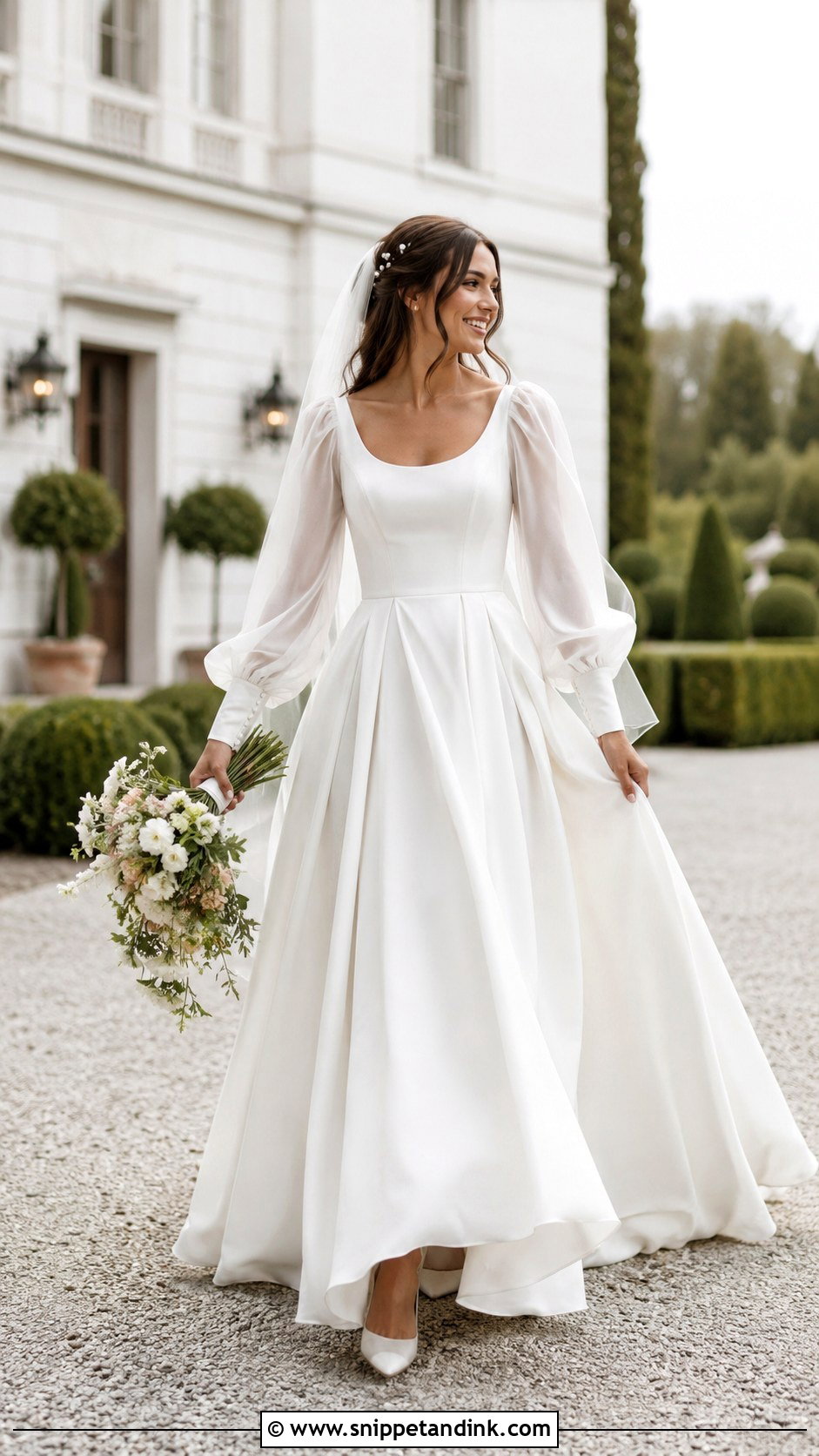
Airy bishop sleeves bring motion to an otherwise sharp silhouette. Chiffon, organza or sheer tulle, gathered into a fitted cuff. With all that volume at the arm, I keep the neckline quiet, a soft scoop or modest V, and the skirt a flowing A-line rather than a full ball gown. Cuff placement is the detail to fuss over. Too low and the fabric drops over your hands every time you hold the bouquet or sign the register.
9. Puff Sleeve Basque Waist Wedding Dress
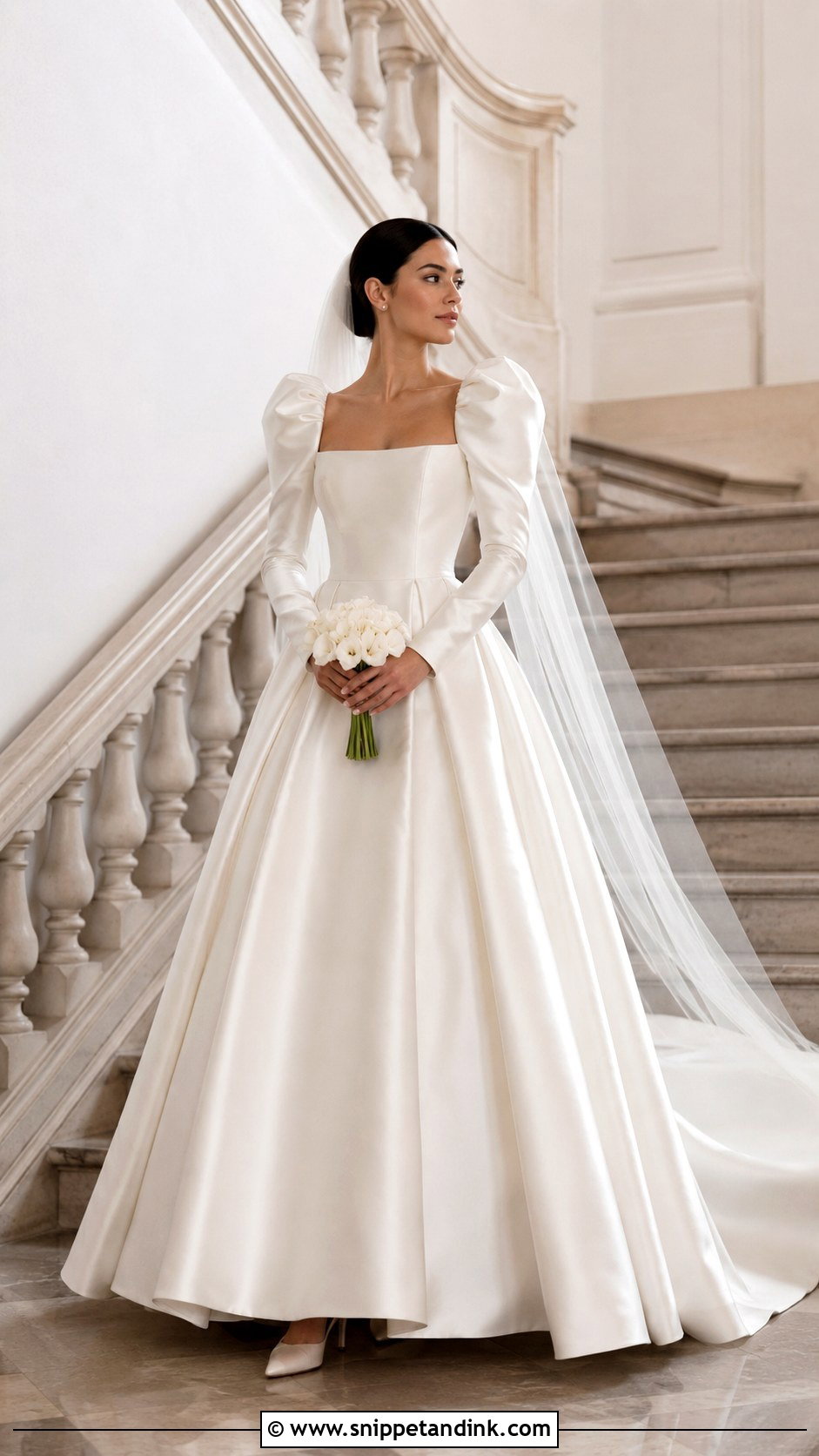
Puff sleeves make a bold, confident gown, and they need a fabric that holds shape: matte satin or mikado. I like volume at the shoulder tapering to a fitted sleeve below the elbow. Small studs, a smooth updo, a plain long veil and a small bouquet. On a petite frame, a big puff can swallow the shoulders, so I’d go for a gentler version. Check that the sleeve head sits at your actual shoulder point. If it’s even slightly off, the puff tips forward.
10. Sheer Lace Sleeve Basque Waist Wedding Dress
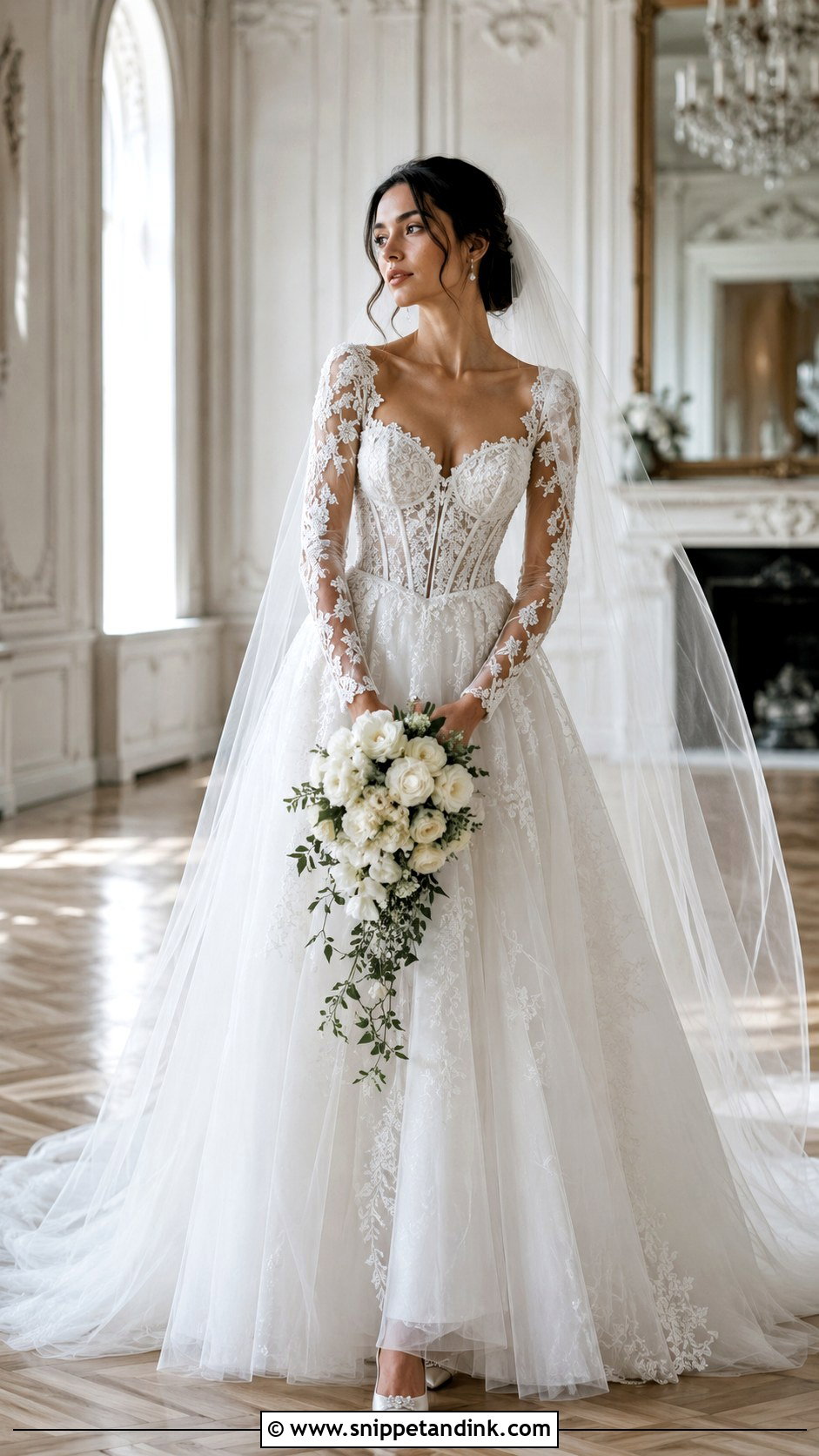
Sheer lace sleeves give coverage and still feel light. The best versions place lace motifs over fine tulle and carry them into a corseted bodice, then let the skirt go plain in layered tulle so the gown doesn’t get busy. A raw-edge veil and pearl drops keep it simple. Underarms are where illusion fabric fails. It takes the most strain, and a small, discreet reinforcement there costs little and saves a split seam at the reception.
11. Pearl Beaded Long Sleeve Basque Waist Wedding Dress
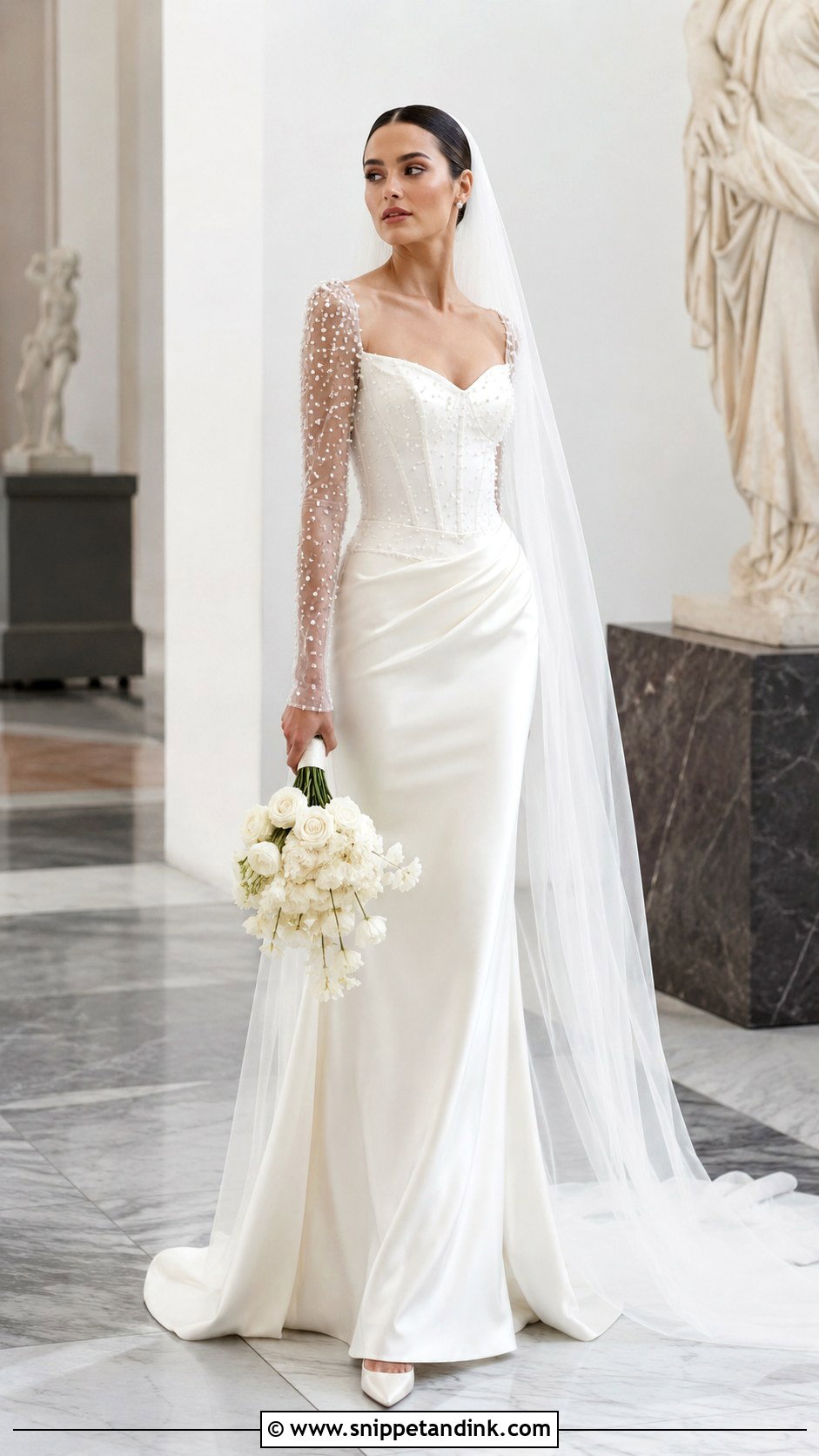
Pearls give a softer shine than crystals, more of a glow than a sparkle. I like them scattered on the sleeves and gathered more densely along the Basque bodice, with a plain satin skirt underneath. Pearl studs, a low bun, a plain veil. The thing to feel for is weight. Heavily beaded sleeves drag, and rough threads inside can rub the inner arm raw over a long day. Ask the shop to show you the inside of the sleeve lining.
12. Floral Appliqué Long Sleeve Basque Waist Wedding Dress
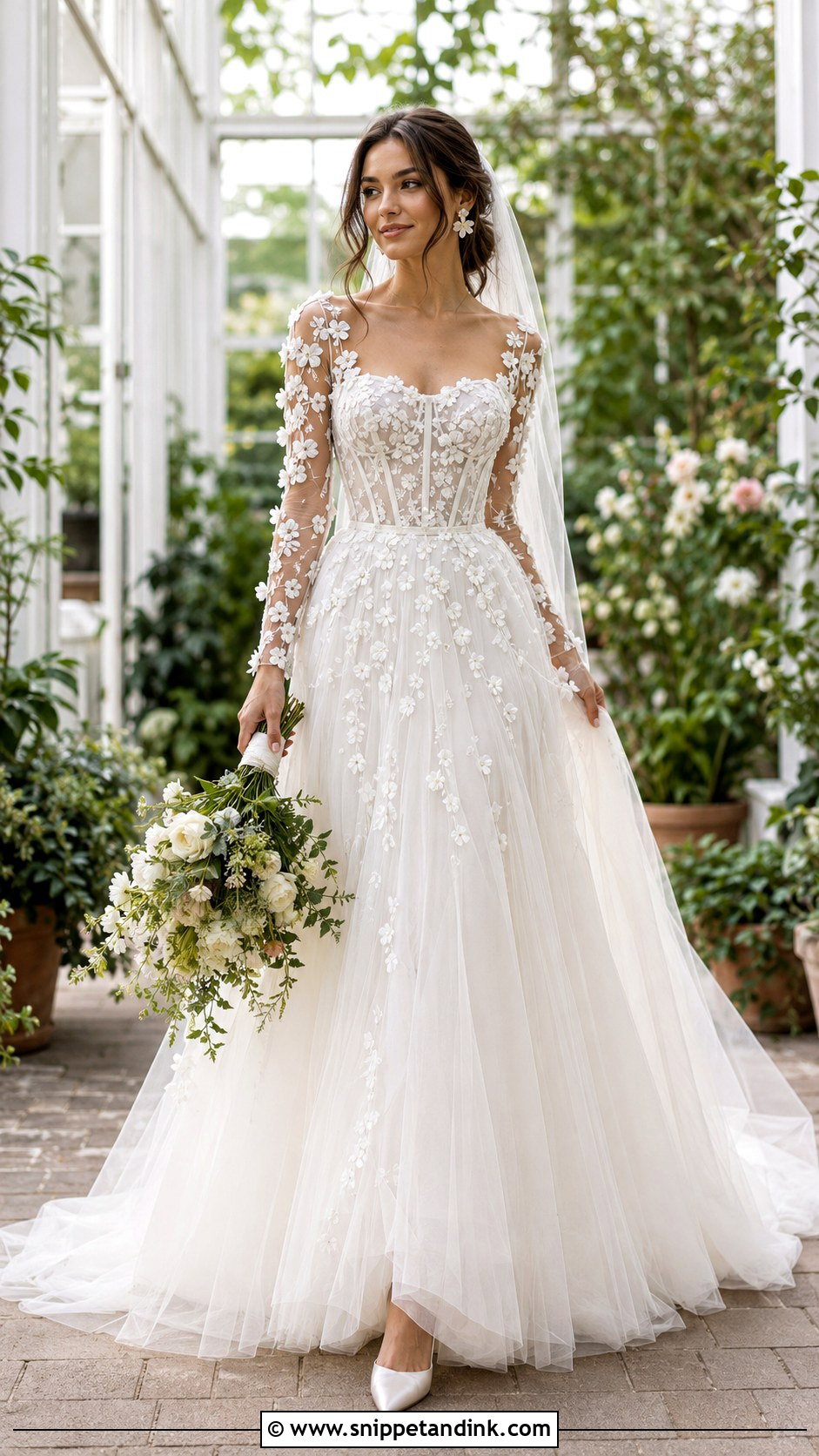
Three-dimensional appliqués emphasize a pointed waist when they trail down along it and fade onto a tulle skirt. Smaller matching flowers on sheer sleeves pull the design together. Hair and jewelry should stay simple here; floral earrings at most. During alterations, I look closely at where the biggest blooms sit. One placed right at the underarm or bunched on the waist seam adds bulk exactly where you need to bend.
13. Simple Crepe Long Sleeve Basque Waist Wedding Dress
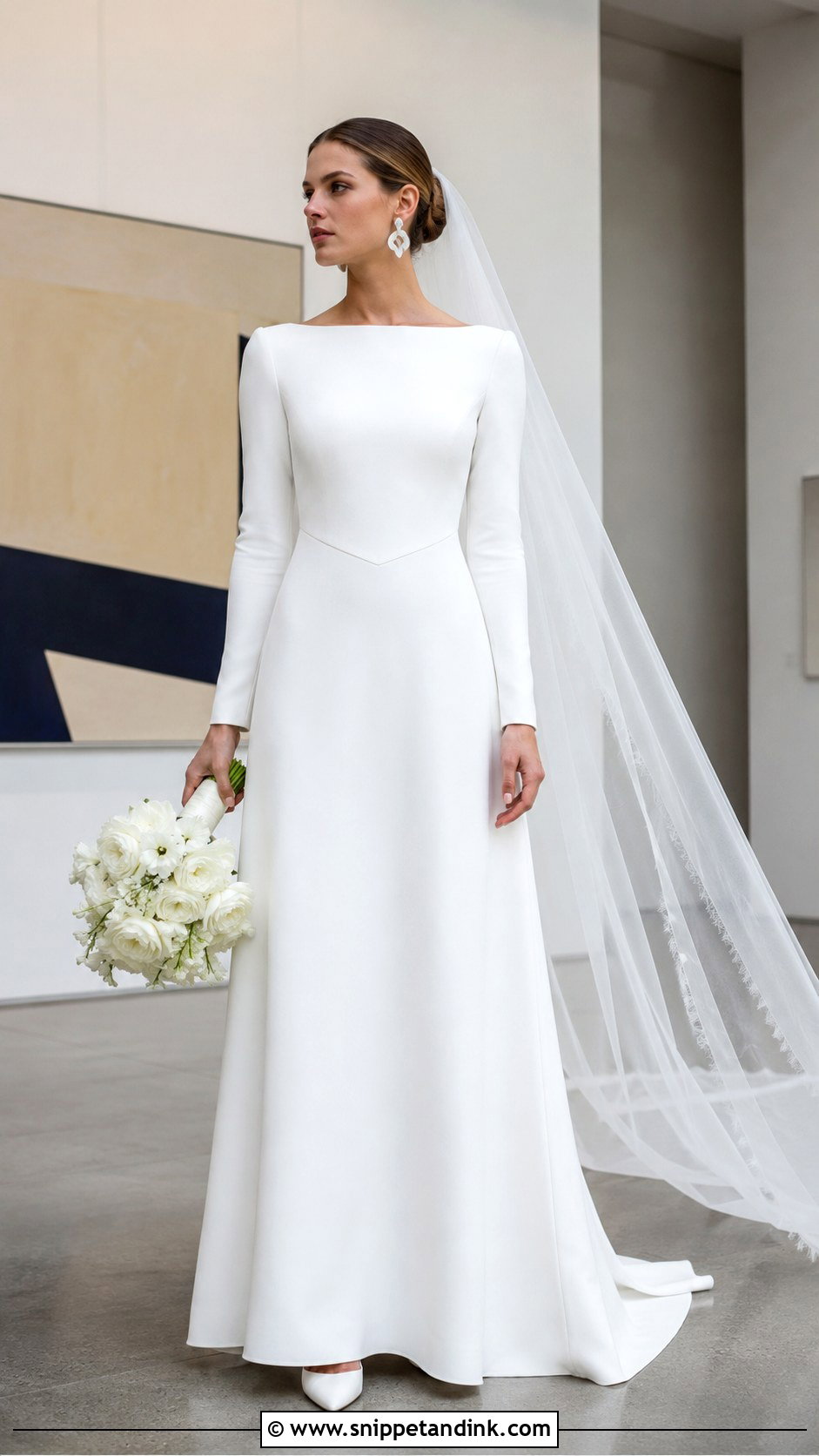
Crepe is the minimalist’s choice, and it hides nothing. A structured inner bodice, long fitted sleeves, and an A-line that falls cleanly from the point. A bateau, scoop, or shallow V-neckline keeps the lines clean. Sculptural earrings and an unembellished veil suit a gallery or city venue. Buy smooth, edge-free underwear before the final fitting, not after, because crepe shows every edge. On a plain gown, a wobbly zip or a waist seam that’s a few millimeters off is visible from the back row.
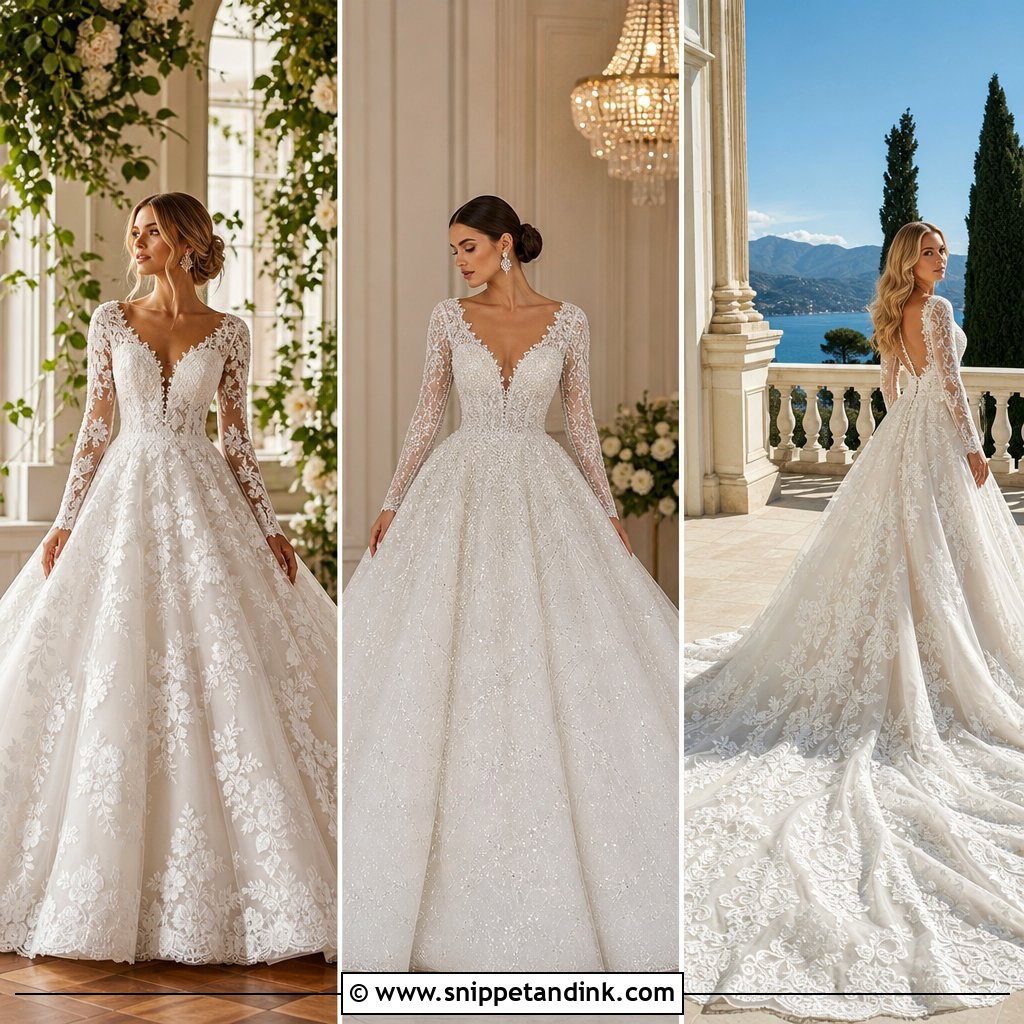
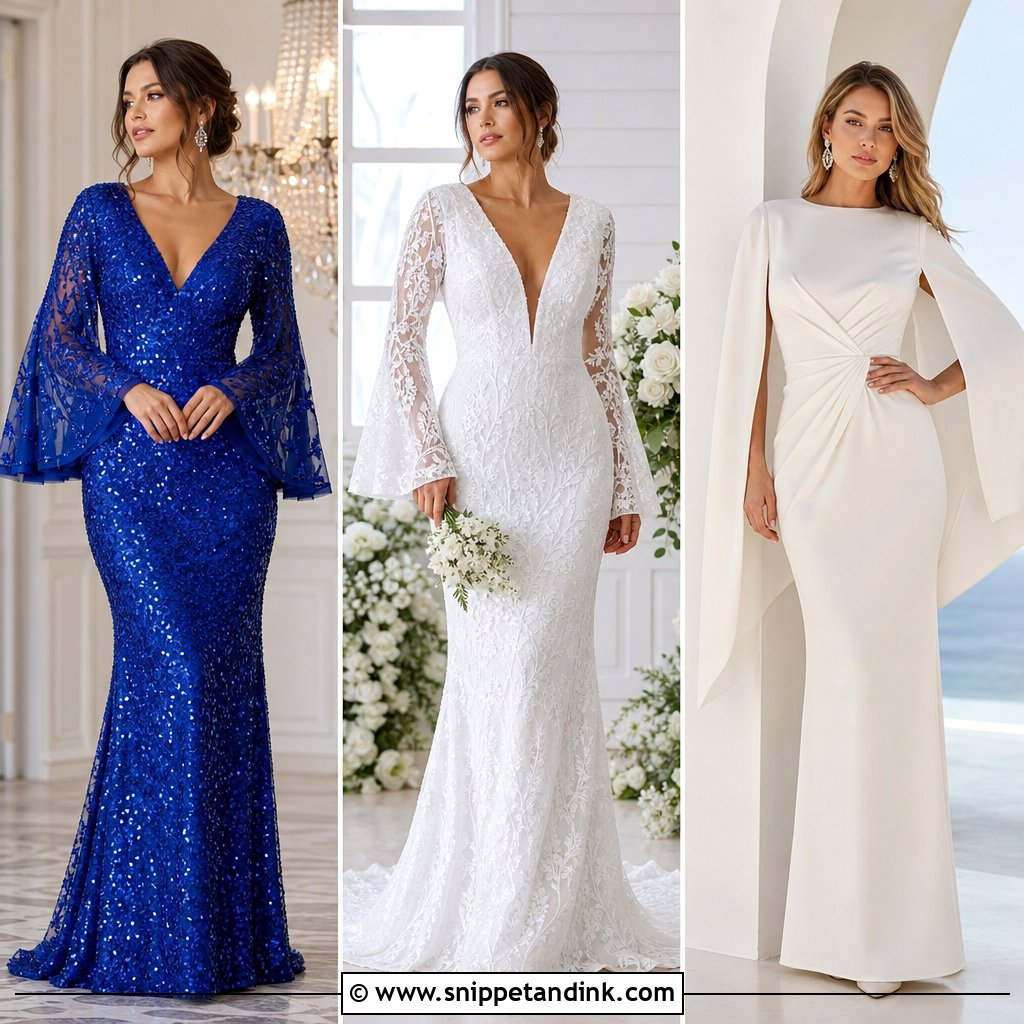
14. Mikado Ball Gown Long Sleeve Basque Waist Wedding Dress
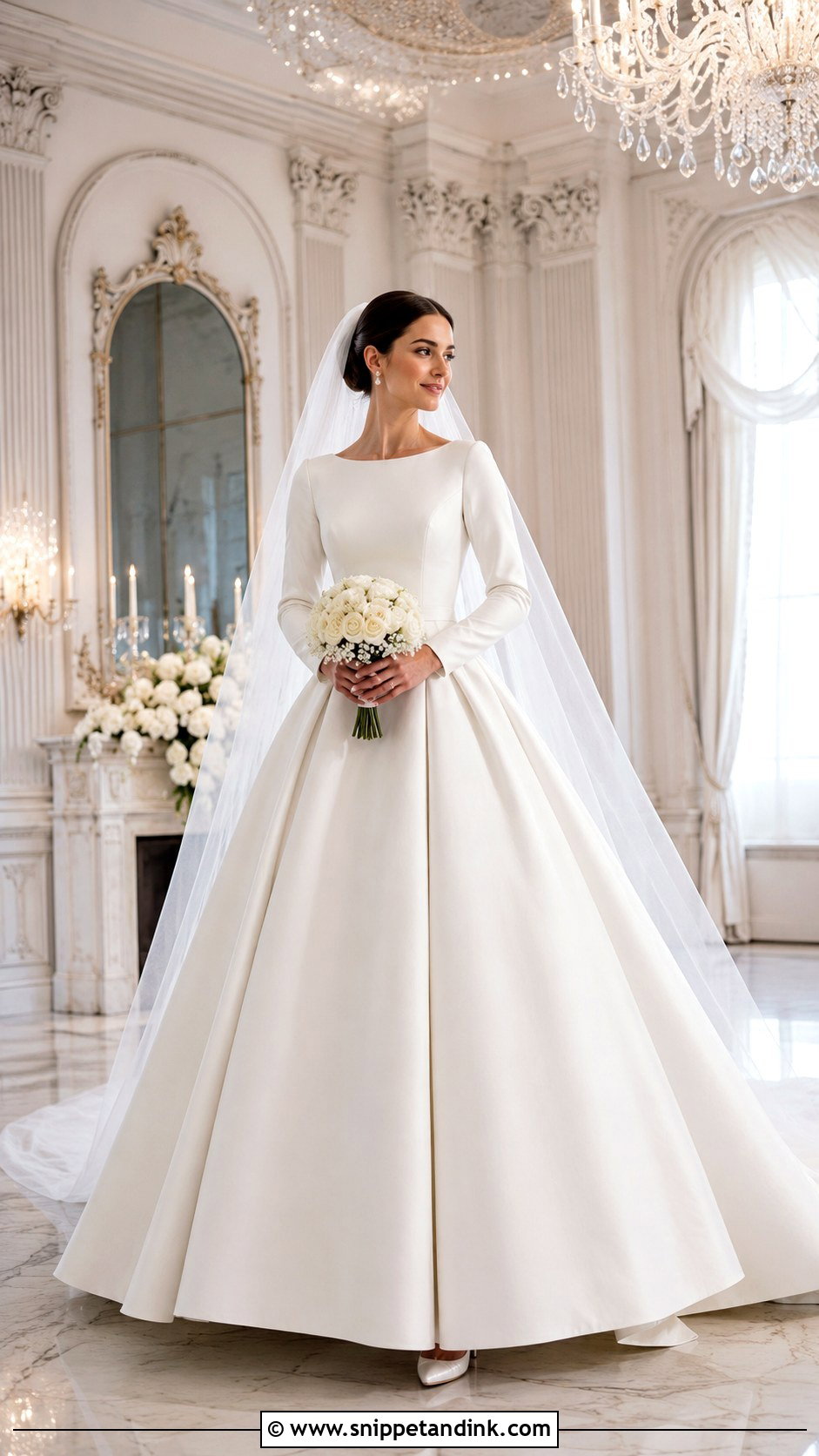
Mikado has body. It stands out from the waist in crisp folds, so a Basque ball gown in it holds its volume without layers of petticoat. Long tailored sleeves, a clean neckline, and neat pleats below the point. Cathedral veil, pearl earrings, a polished chignon. The downside is that mikado is stiff, so walk the stairs and sit at a table in it before you lock in the skirt width. Pleats should begin just below the point, never bunched right at it.
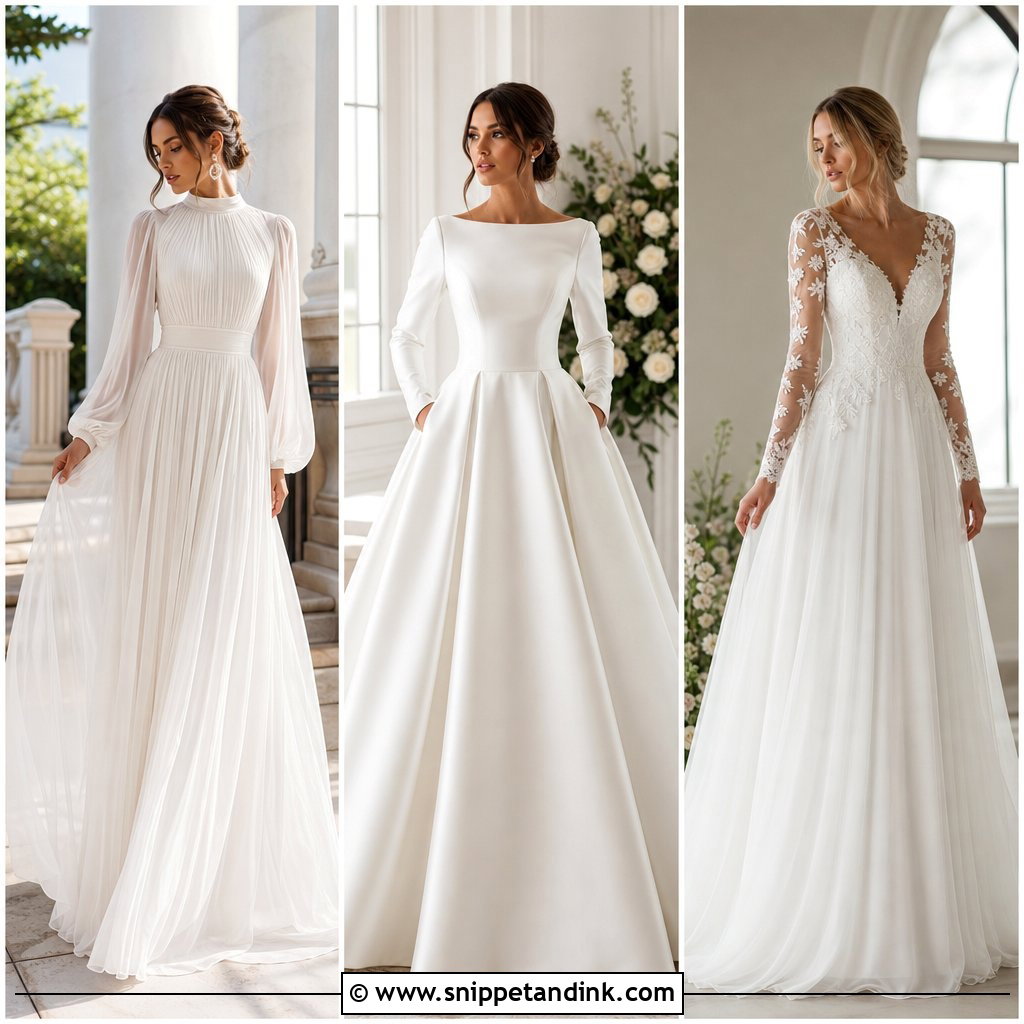
15. Tulle Ball Gown Long Sleeve Basque Waist Wedding Dress
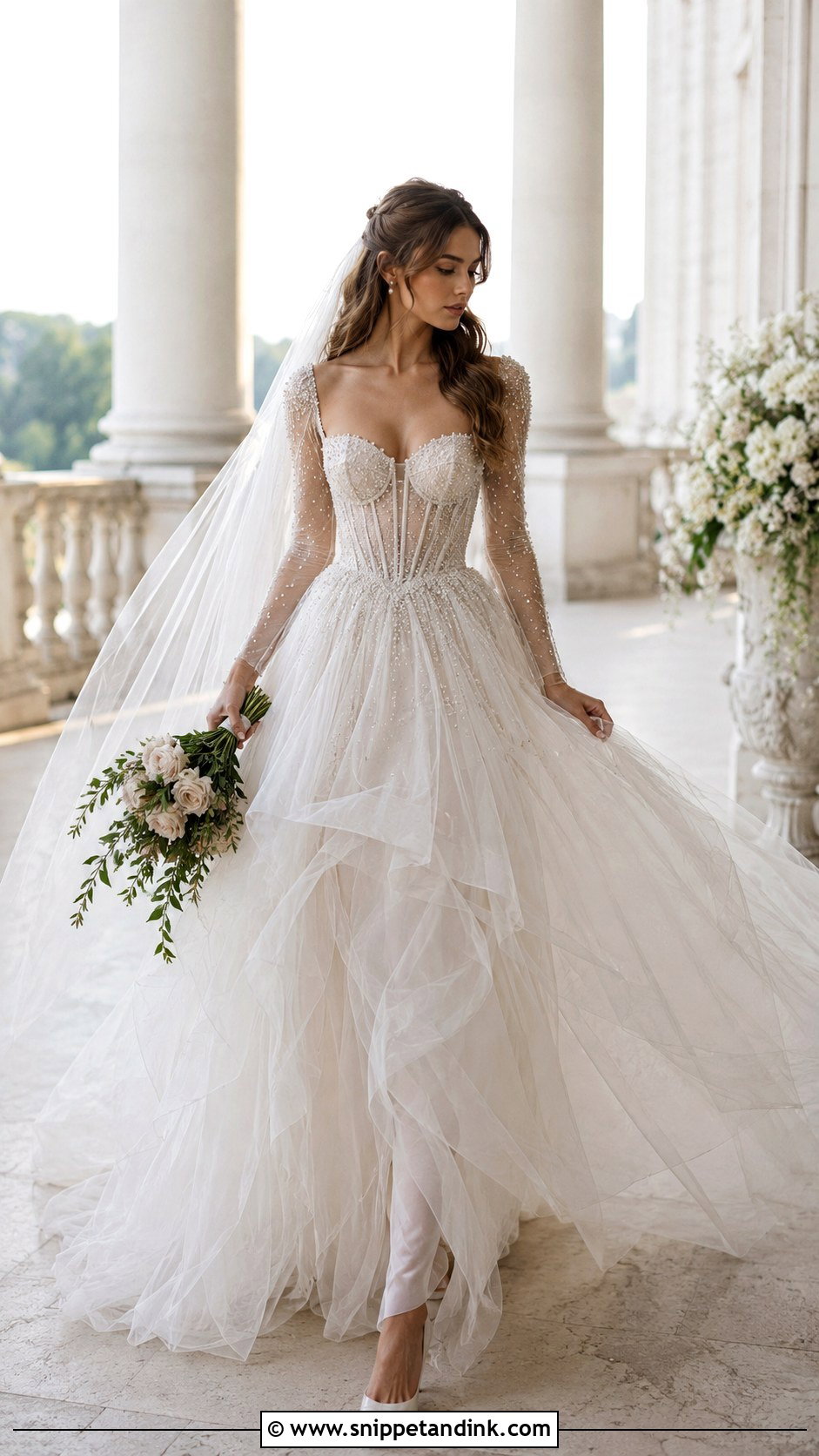
Tulle softens a strong bodice, and graduated layers keep the skirt light rather than stiff. A corset top with illusion sleeves and a little embroidery at the waist bridges bodice and skirt. Crystal studs, a sheer chapel veil and a half-up style finish it. Ask how the bustle will work before you order. Tulle tangles on itself and can look crushed when bustled badly; a French or ballroom bustle with ribbon loops usually holds layered tulle better.
16. Fit And Flare Long Sleeve Basque Waist Wedding Dress
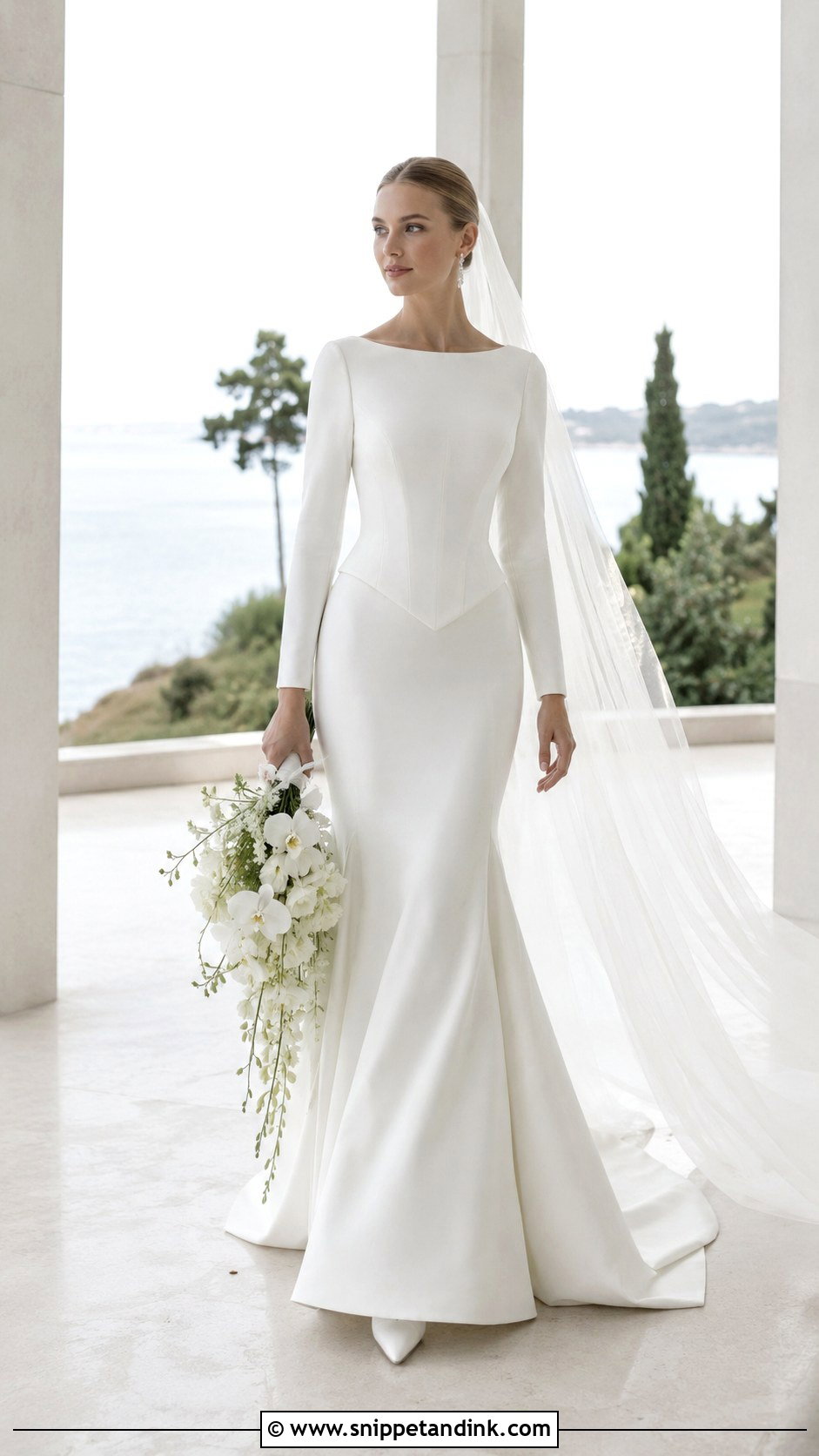
Fit and flare is the slim version of a Basque gown: the point dips subtly, the dress follows the hips, then opens below the thighs. Stretch crepe, lined lace or satin with some give make walking easier. Keep accessories refined and the bouquet long. I spend most of this fitting at the hip. The lower edge of the point has to lie flat, and if it folds or rides up when you climb a step, the bodice is either too short or too tight across the seat.
17. Vintage Long Sleeve Basque Waist Wedding Dress
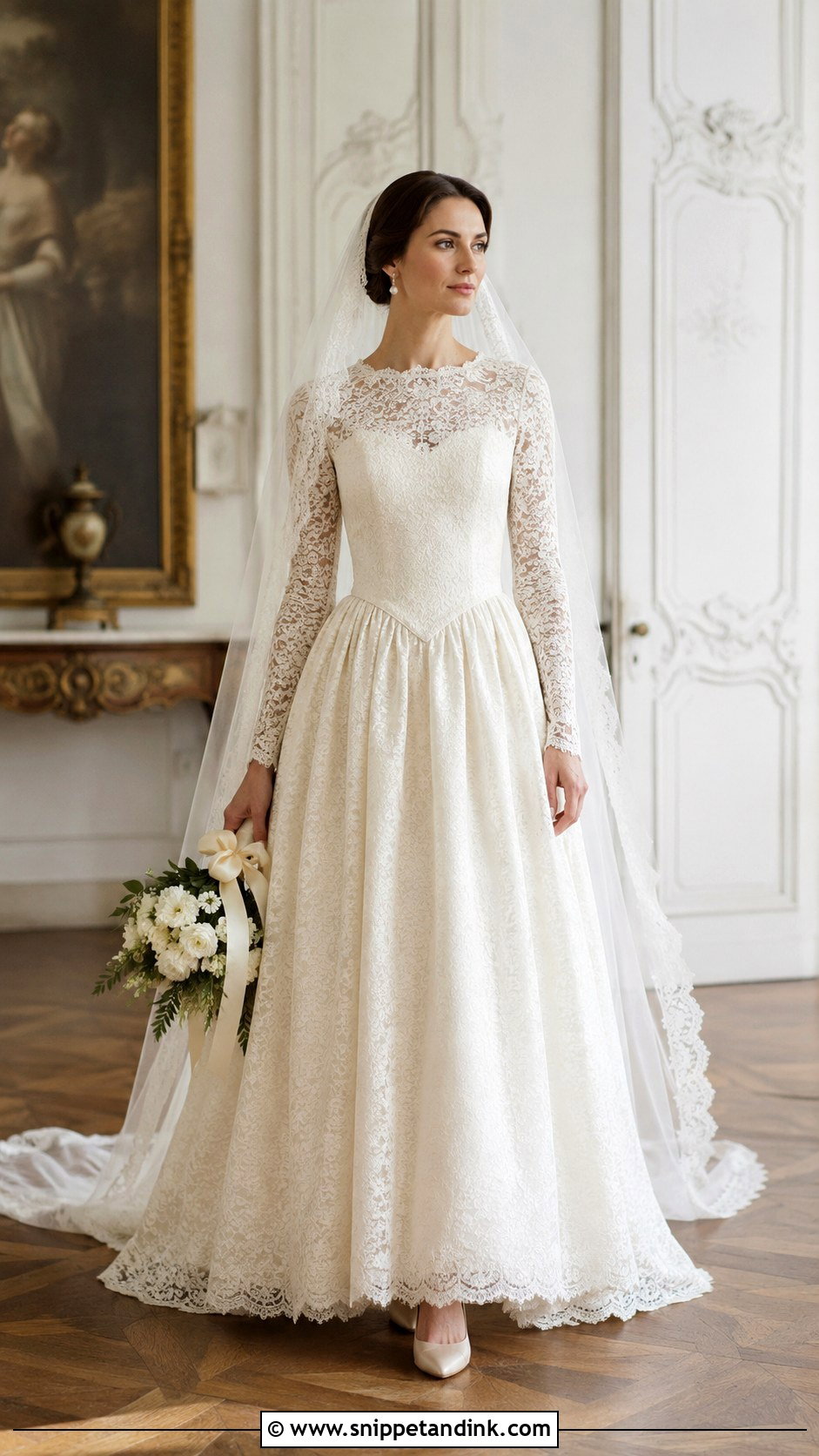
Vintage-inspired means picking a few period details, a deep point, covered buttons, lace sleeves, a gathered skirt, and keeping the rest clean so it doesn’t tip into costume. A high or soft scoop neck, a lace-edged veil, ribbon-tied flowers and a soft chignon. Original vintage construction can be rigid and unforgiving, so if you’re adapting an old gown, I’d ask for modern lining, built-in cups and a little stretch in the sleeve fabric.
18. Modest Long Sleeve Basque Waist Wedding Dress
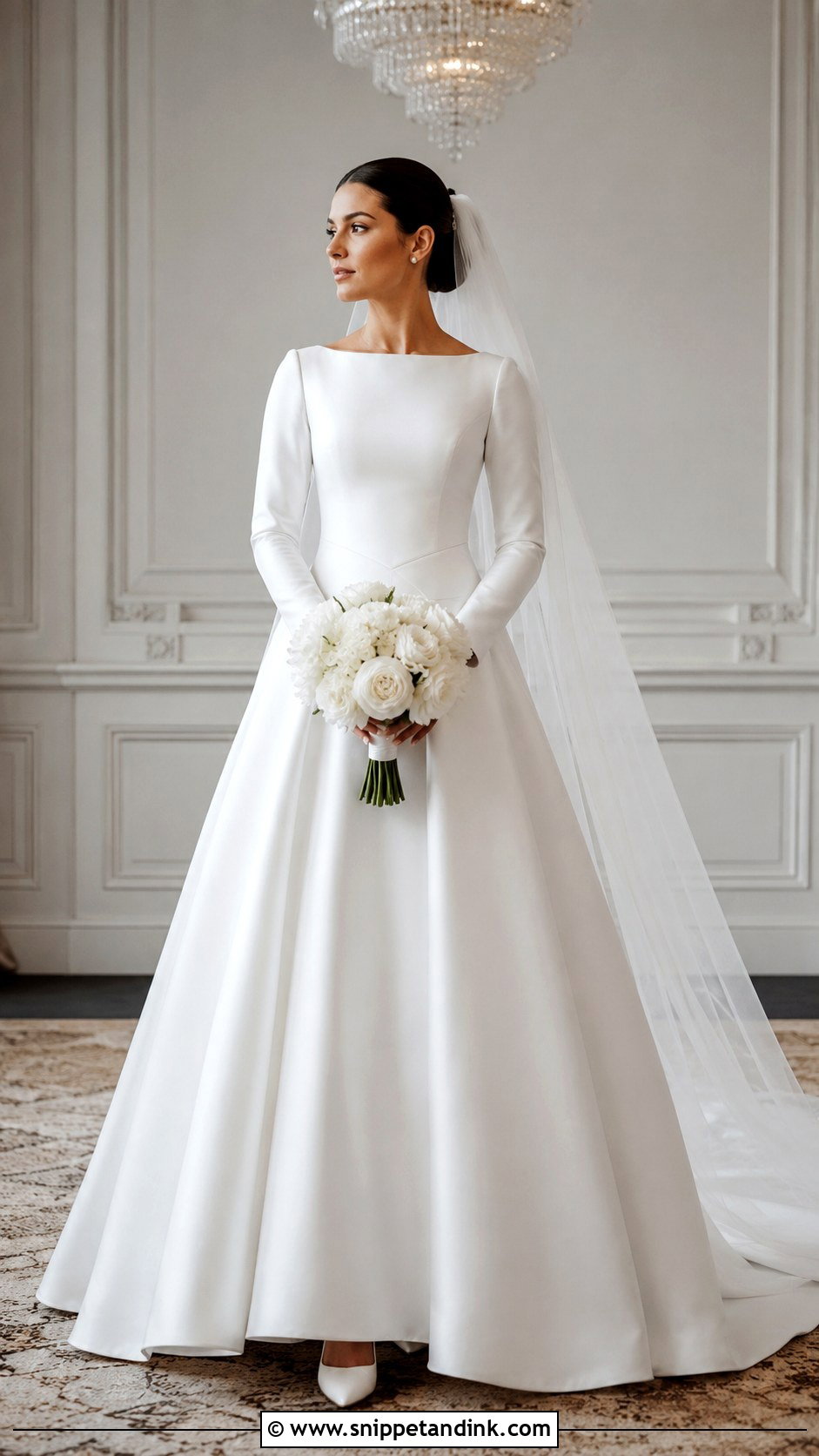
A modest Basque waist gown still gives a defined, graceful outline. An opaque bodice, lined full-length sleeves, a high scoop or bateau neck, and a gentle point into an A-line. Pearl studs and a cathedral veil. What I watch for is heaviness: clean seams and a light lining stop full coverage from looking weighty. Also check the bodice length. If it’s too short in the torso, the point ends up at your natural waist and the whole effect is lost.
19. Plus Size Long Sleeve Basque Waist Wedding Dress
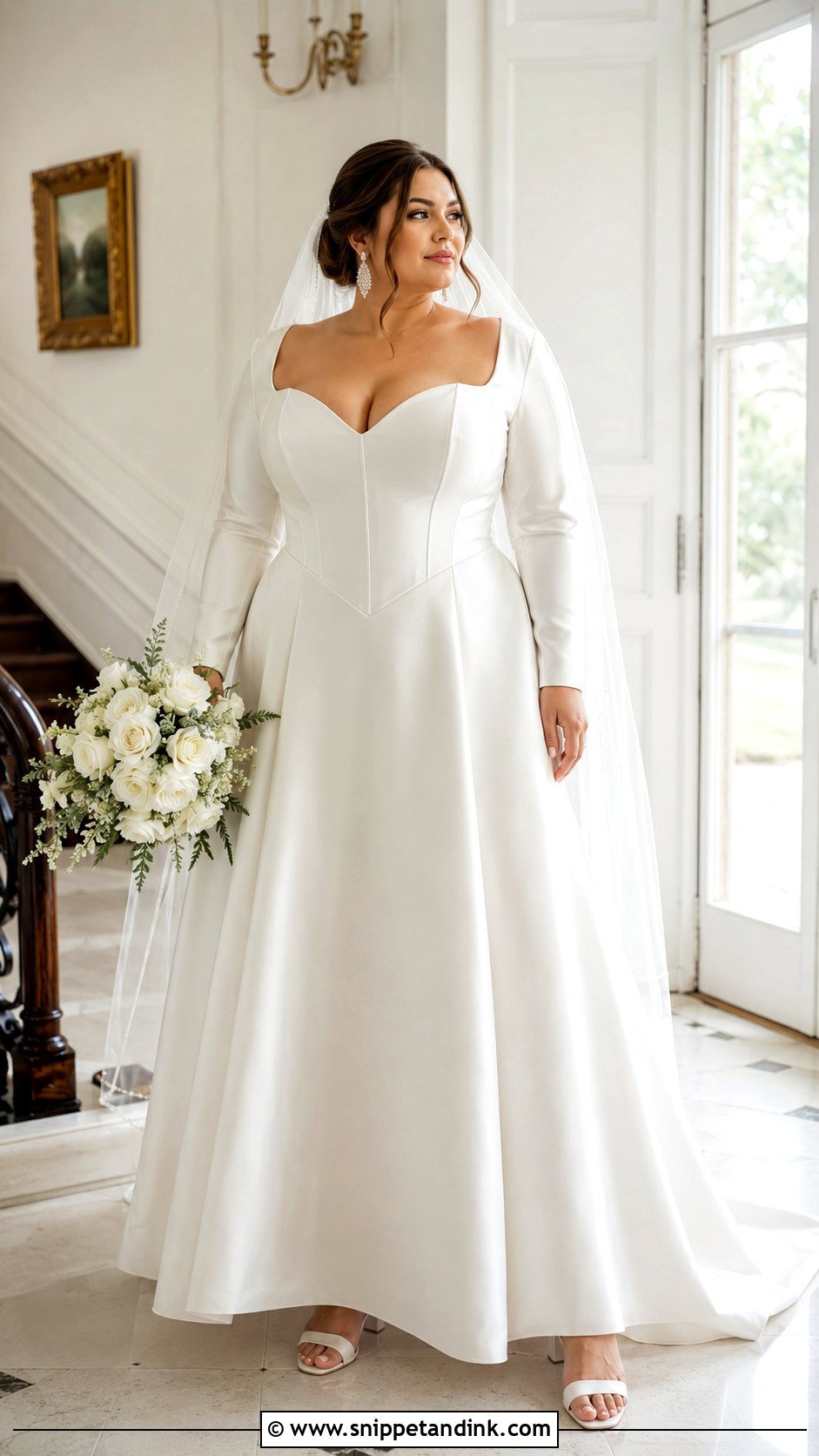
A well-built Basque bodice supports and defines a fuller figure better than most waistlines, provided it’s adjusted to you. Flexible boning, real bust support, sleeves with room through the upper arm, and a point placed for your torso length. An A-line or a controlled ball gown skirt balances it. Don’t judge by the size on the sample label; bridal sizing runs small and inconsistent. Look at where the seams fall on your body. A skilled bridal tailor can refine the neckline, sleeve width, point depth and hem without changing the gown’s design.


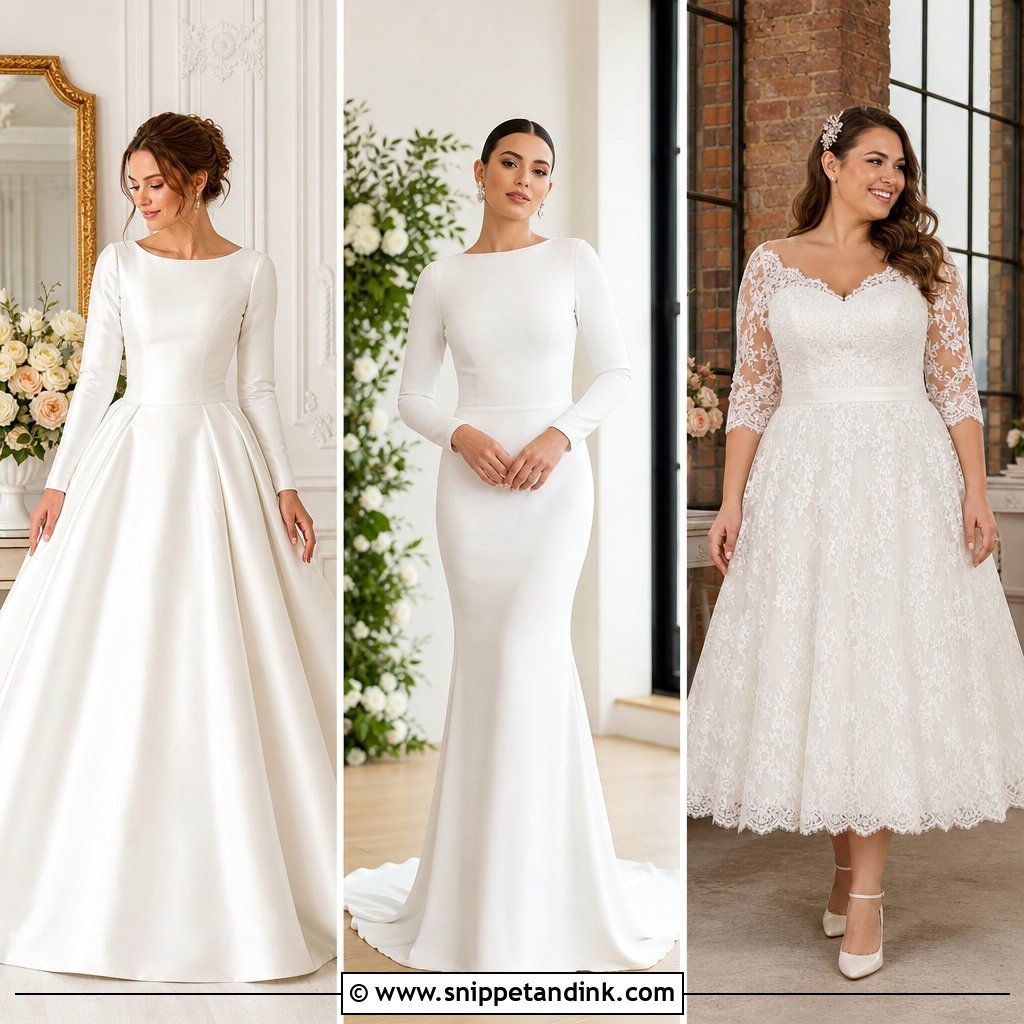
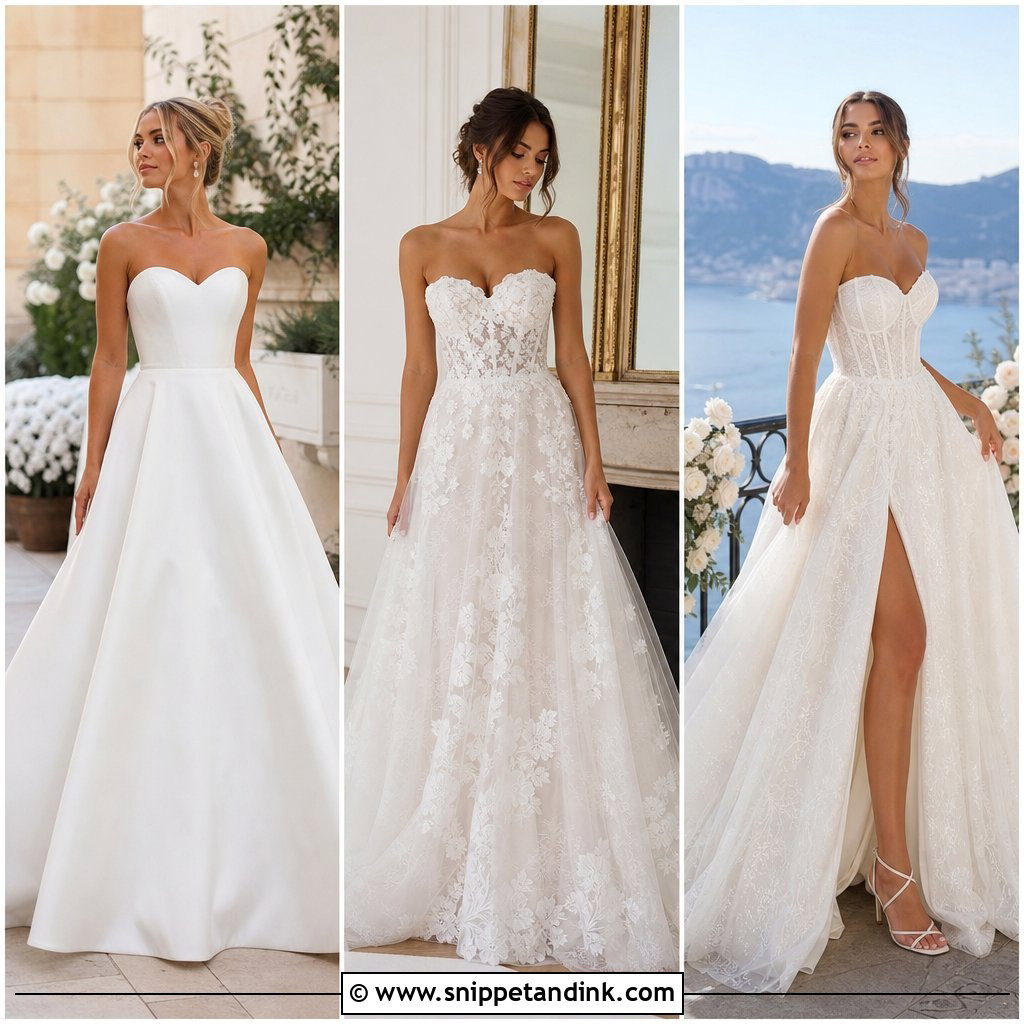
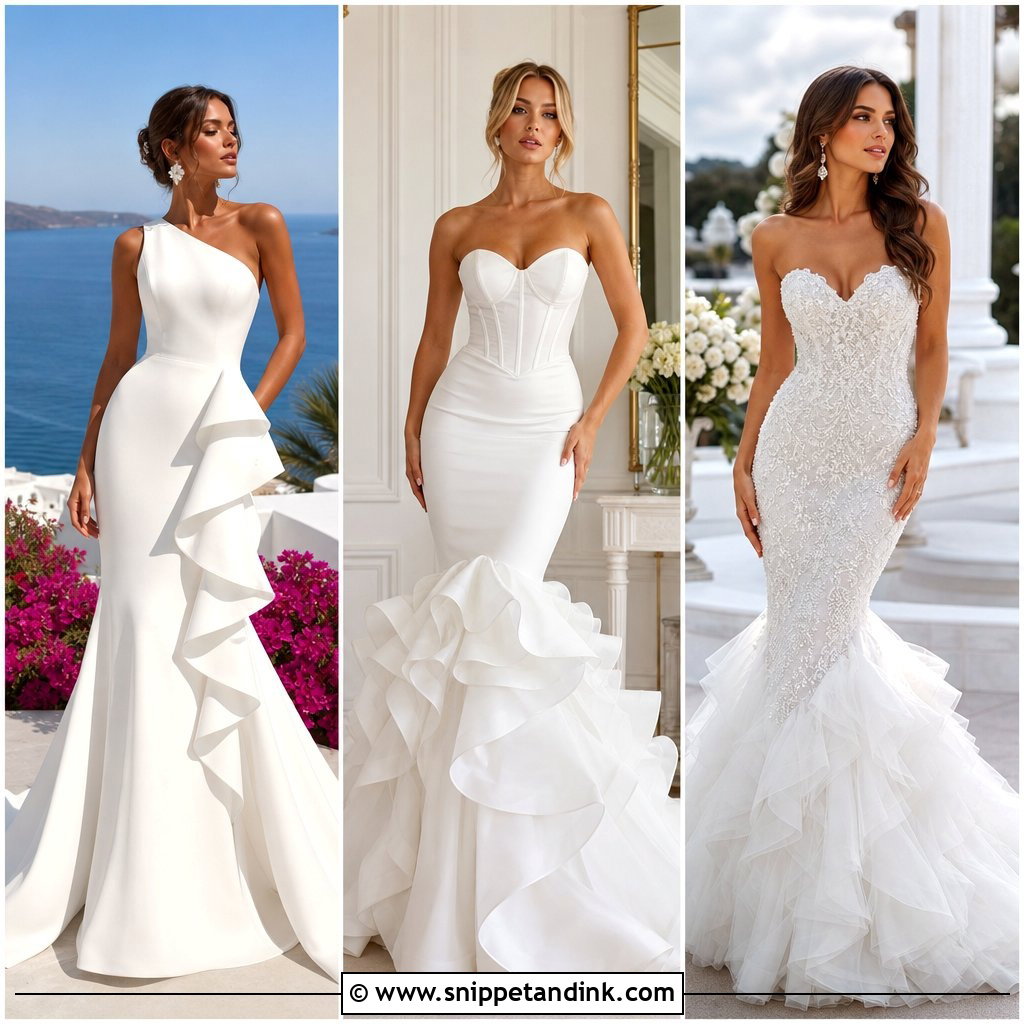
20. Winter Long Sleeve Basque Waist Wedding Dress
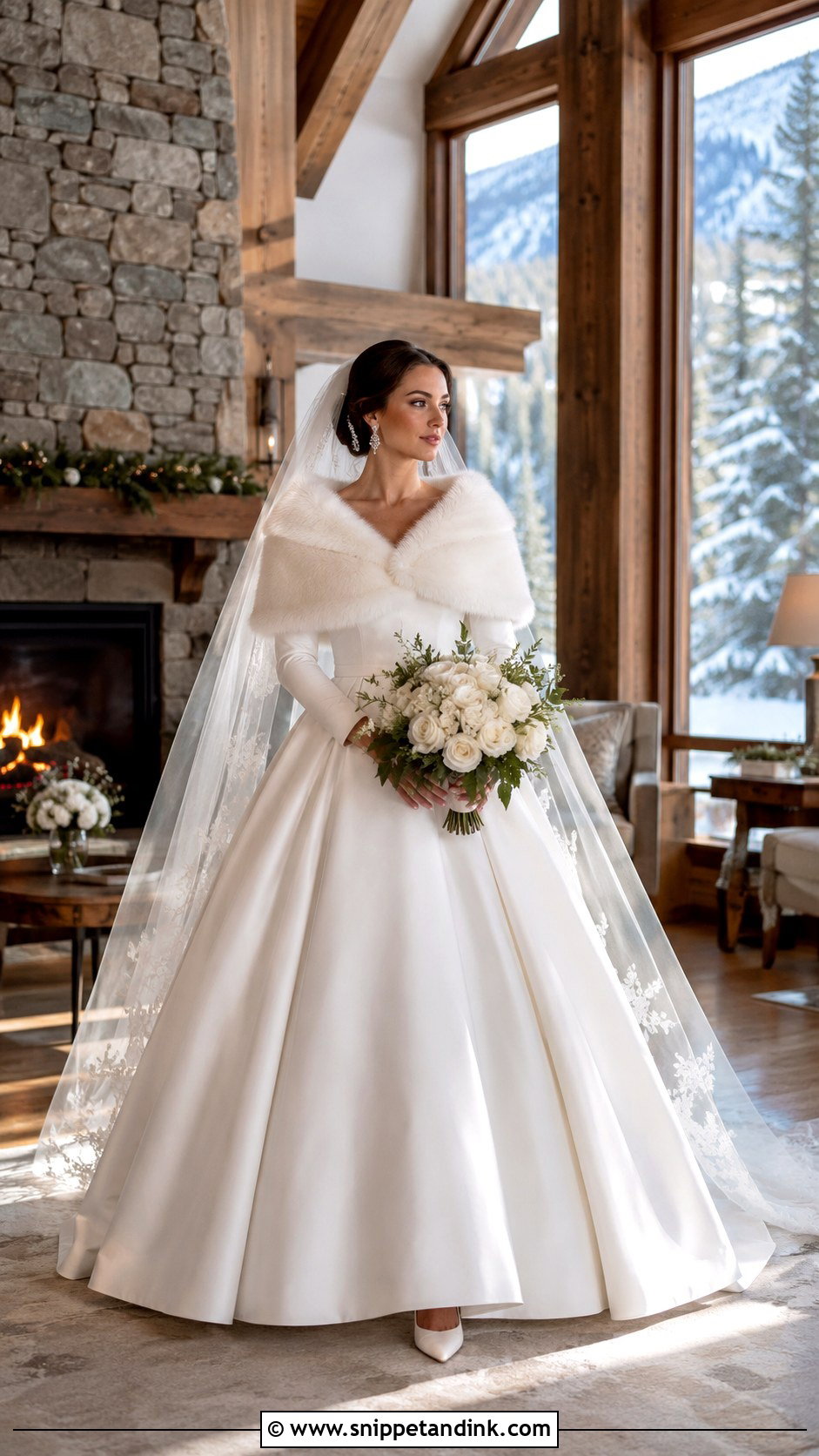
Long sleeves alone won’t keep you warm at a winter bridal outfit photo session outside. Satin, mikado or lined lace in a full skirt with a long train looks right for the season. Add a faux-fur or tailored bridal wrap for outdoor shots, white flowers with deep green foliage, closed-toe pumps. Plan warm transport between locations. And try the wrap on with the veil in place. You want to slip it on and off without catching the comb or crushing the sleeve heads.
Long Sleeves Are the Hardest Part to Alter
Hems and side seams are routine. Sleeves are not. Lace sleeves often have a scalloped edge at the wrist, so shortening them means moving the lace by hand. Taking in a sleeve on a beaded or appliquéd gown means removing and resewing the decoration. That work takes time, and most shops charge more for it.
Questions I’d ask at the bridal shop
- Can the sleeves be ordered to my arm length, or will they arrive at standard length?
- Is there enough room through the upper arm to lift my arms and hug people?
- Can the sleeves be detachable, or replaced with a shorter pair for dancing?
- How long will alterations take for sleeve work on this fabric?
Give the timeline room
Made-to-order gowns commonly take several months to arrive, and alterations usually need two or three fittings spread over a couple of months on top of that. If you’re choosing heavy lace or beaded sleeves, plan for the longer end of every range and leave a gap before the wedding in case a fitting needs repeating.
Try It Sitting Down, Arms Up, Before You Commit
A gown can look impressive on a hanger and still be the wrong one. The right one supports your body, suits your venue and lets you move. Try a structured satin and a soft lace, a full skirt and a fitted one, before you decide, because the same pointed waist looks very different in each. Bring your actual shoes and underwear to every fitting so the alterations hold. And judge each dress sitting down, arms raised, as well as standing still in the mirror.
You'll Like These Ideas:




Leave a Reply