
I rarely let a bride judge a gown on the hanger. A dress only makes sense once you see it with the shoes, the veil and the hair it will actually be worn with, so that’s how the twenty looks below are put together. They cover satin ball gowns, lace A-lines, crepe, chiffon, modest cuts and gowns with sleeves or capes that come off. Mary’s is known for curated designer collections, a wide size range and room for customization, though which styles your local stockist carries will vary. Start with your venue and how formal the day is, and the list narrows itself quickly.
Which Gown Shapes Struggle at Which Venues
Before I pull a single dress, I ask where the ceremony is, what the floor is made of and whether there are stairs. Those three answers rule out more gowns than any style preference. Here is where the shapes in this list tend to run into trouble.
- Mermaids on uneven ground: grass, gravel and steep church steps are hard when your knees can only move a short distance.
- Full ball gowns in small rooms: a skirt that wide needs space at the aisle, the head table and the restroom door.
- Chiffon on a windy coast: lovely in movement, but the skirt and veil will wrap around your legs unless the hem is weighted.
- Plain satin outdoors in heat: it shows perspiration and water marks quickly, so I’d only choose it with shade or air conditioning.
- Long trains on sand: they drag sand back up the aisle and get heavy, so plan a bustle or a detachable train.
None of this means you can’t break a rule. It means you go into the appointment knowing which compromise you’re accepting.
1. Mary’s Bridal Satin Ball Gown
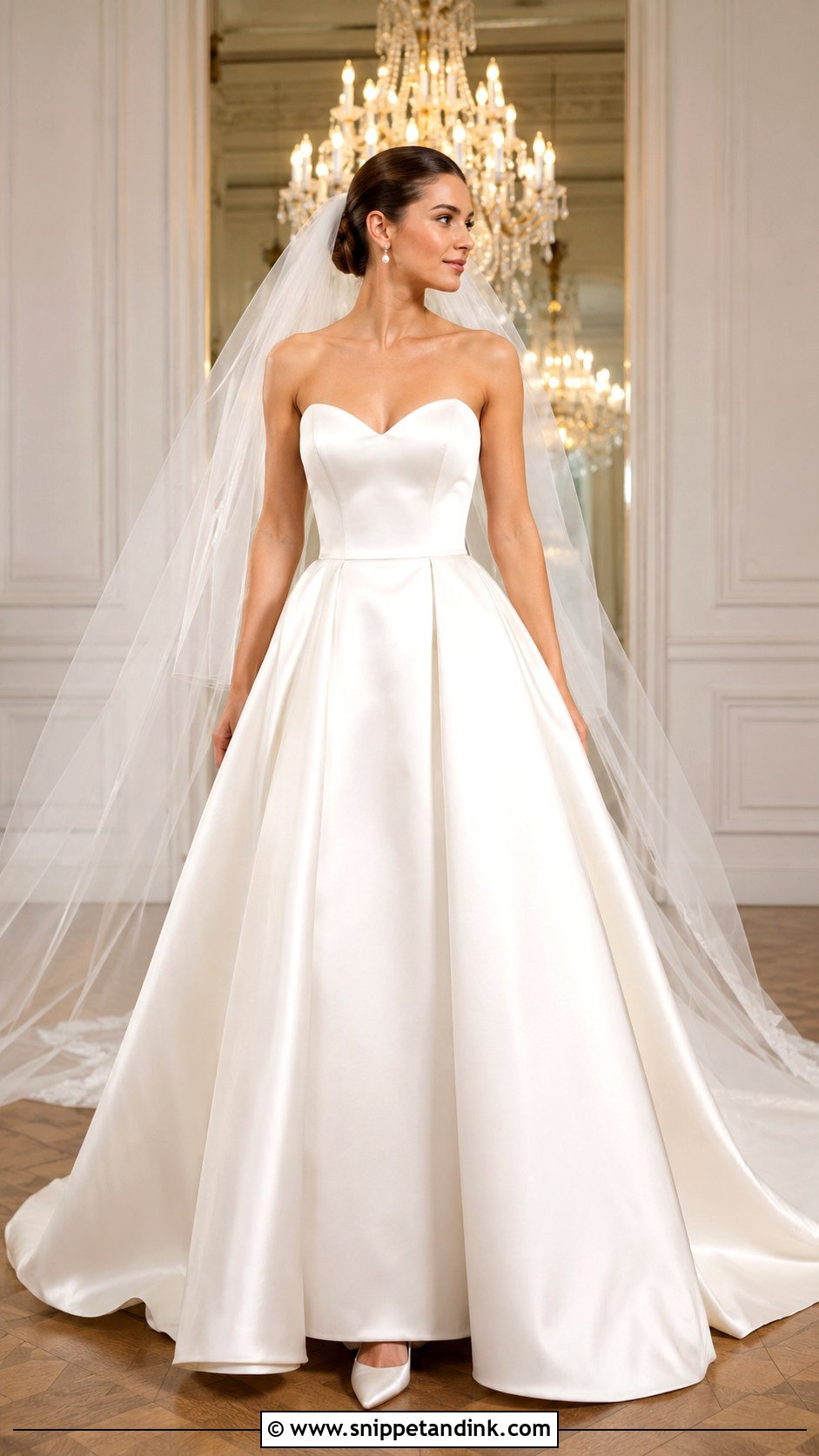
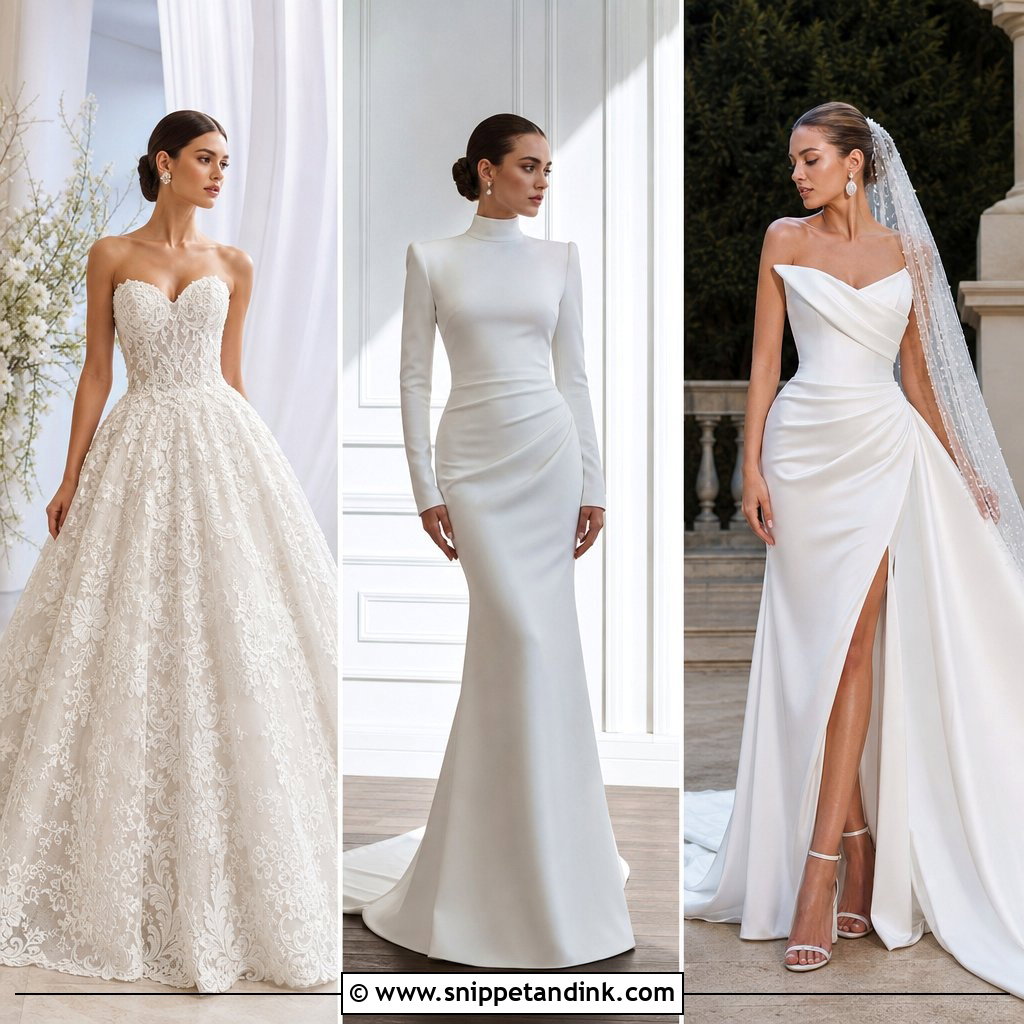
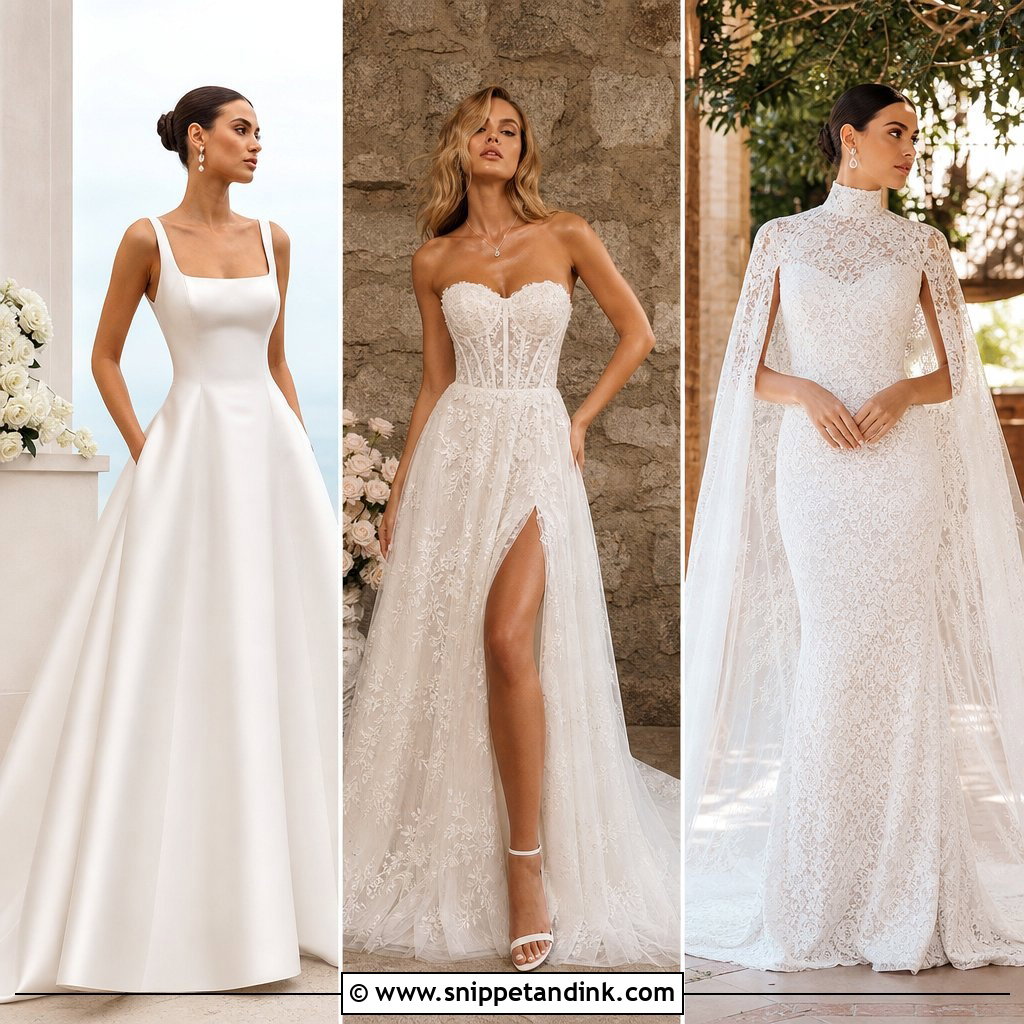
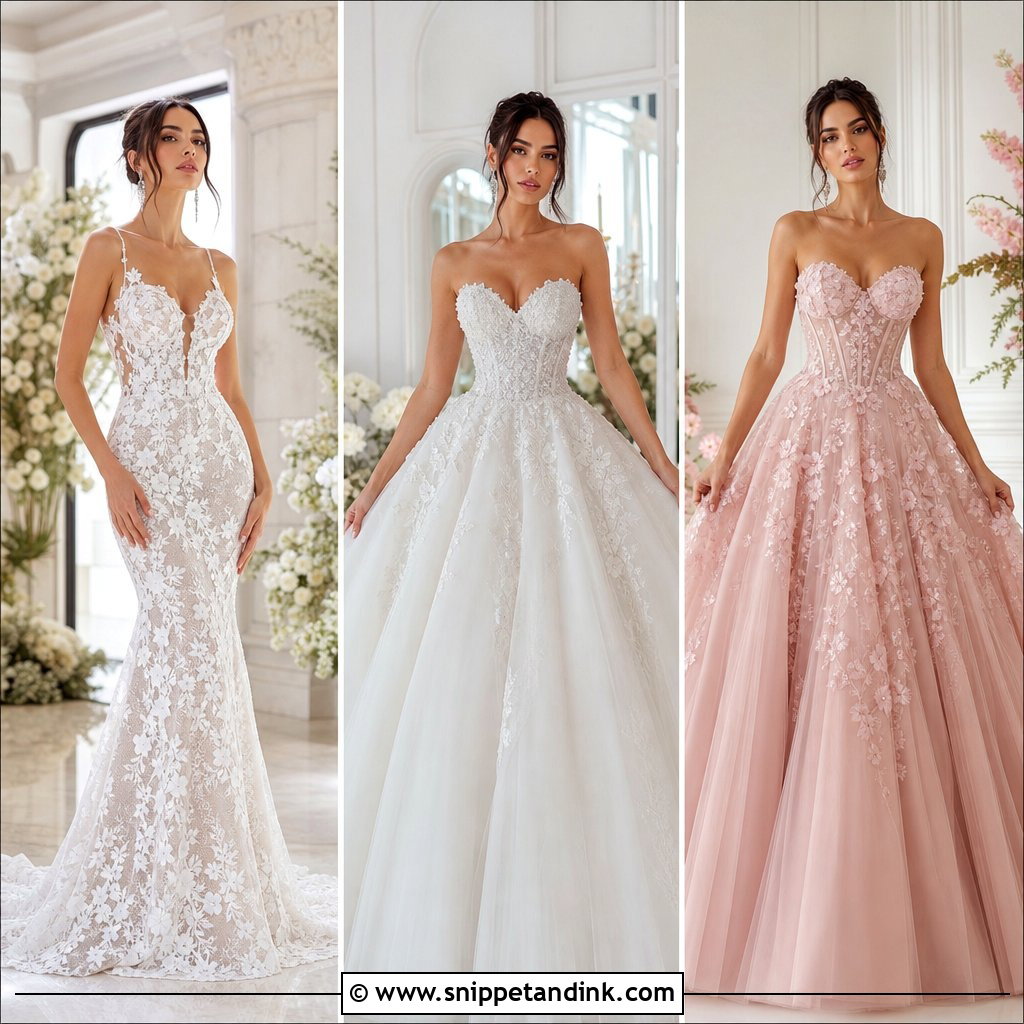
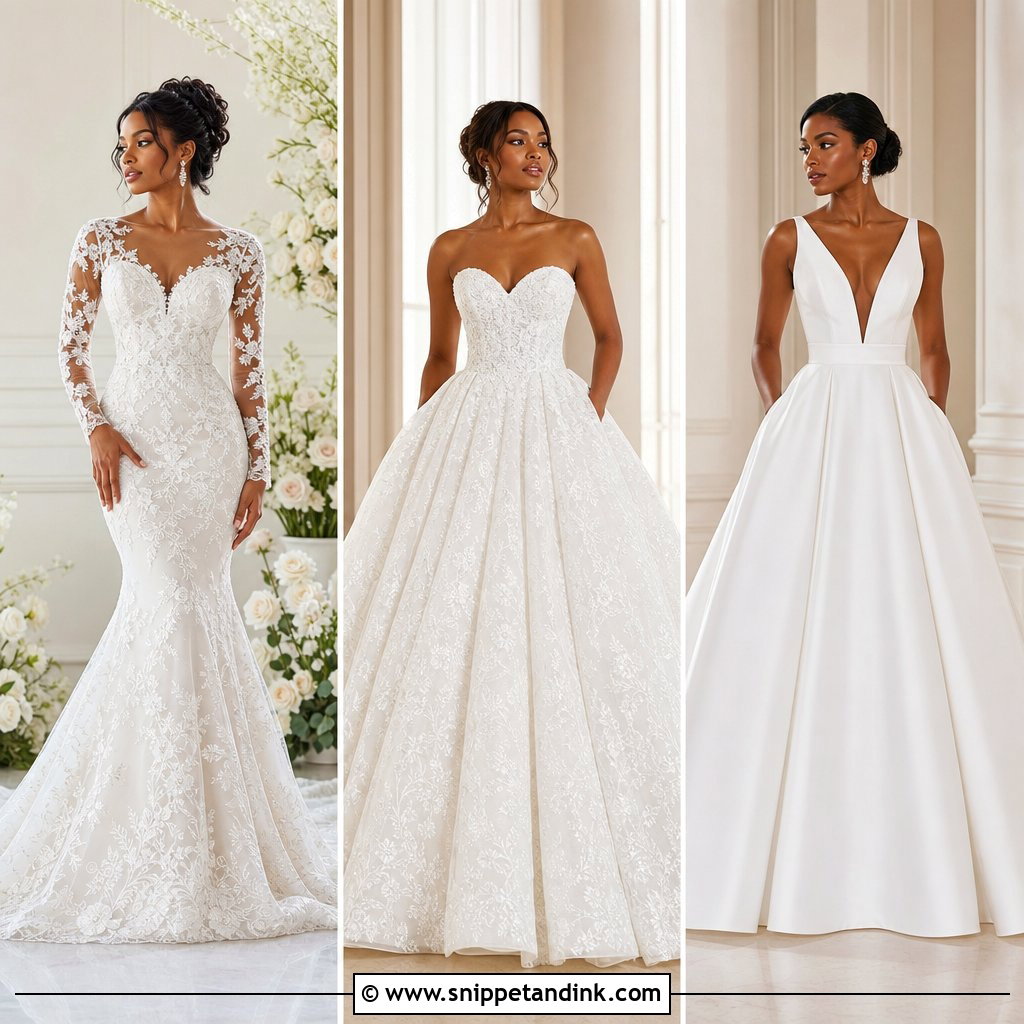
Satin ball gowns stand on their own structure, which is why they look so composed in a big room. I’d pair a fitted bodice with a sweetheart, scoop or gently curved neckline with the full skirt, and let a natural or Basque waist do the shaping rather than heavy beading. Ivory pointed pumps, pearl drops and a cathedral veil trimmed in narrow satin finish it, with a neat chignon so the neckline stays clear. With a long train, keep the veil modest so the two don’t fight. Satin needs a ballroom or hotel; on a hot outdoor afternoon it shows every damp patch.
2. Mary’s Bridal Lace A-Line Gown
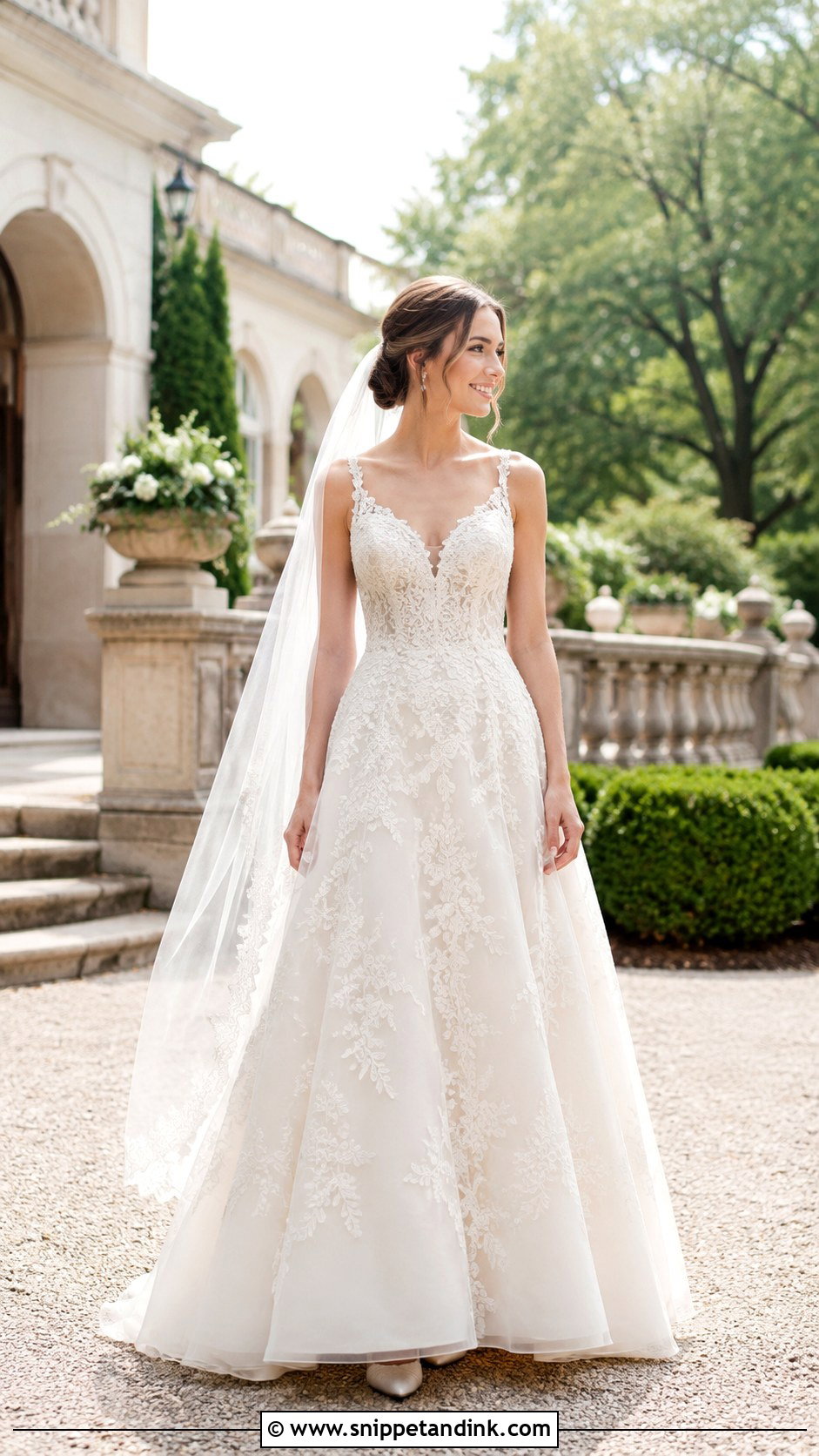
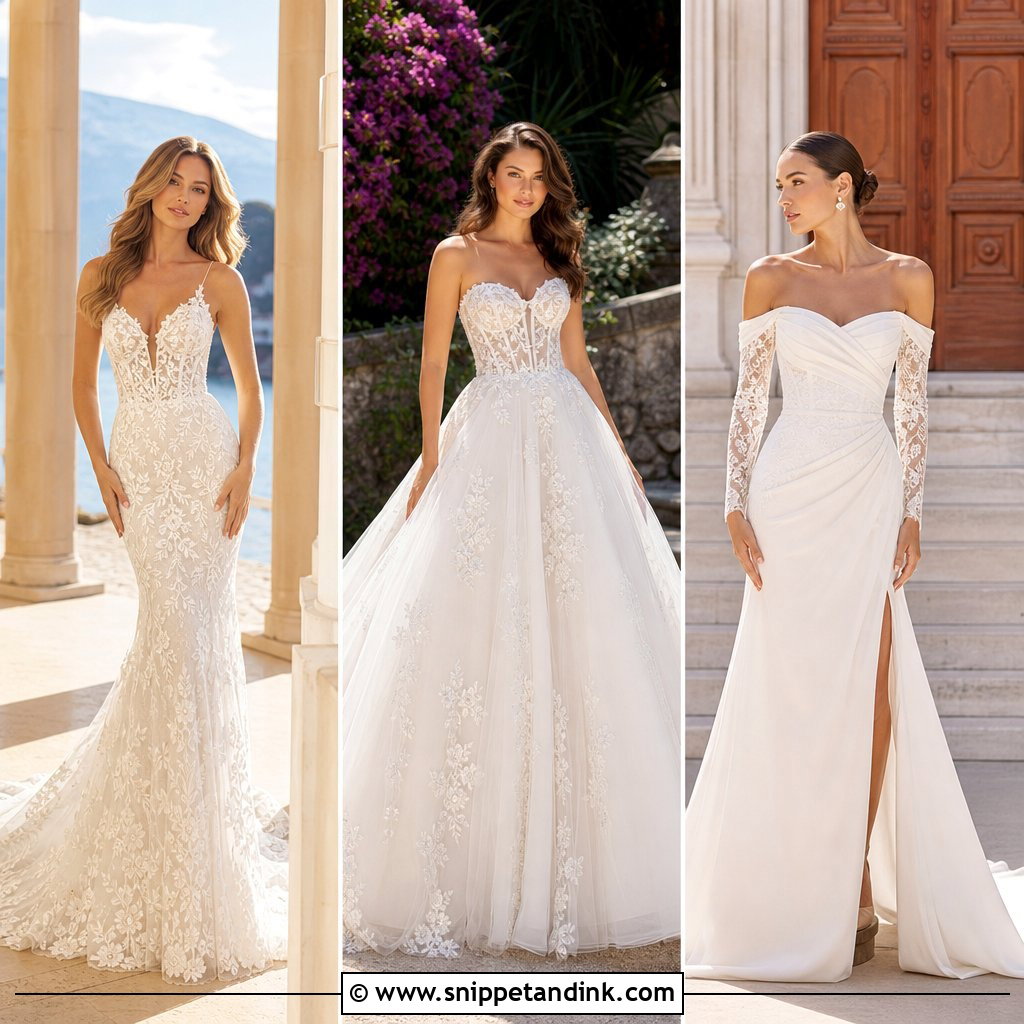
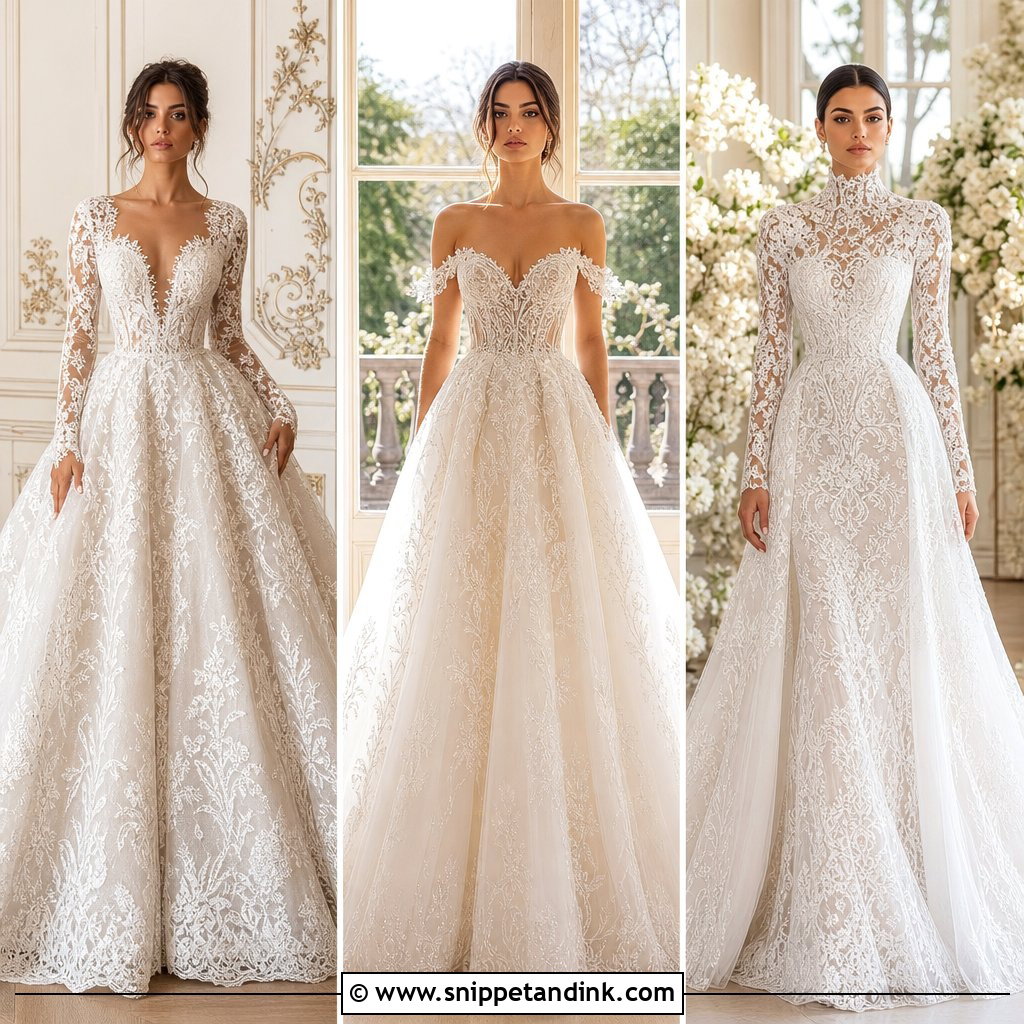
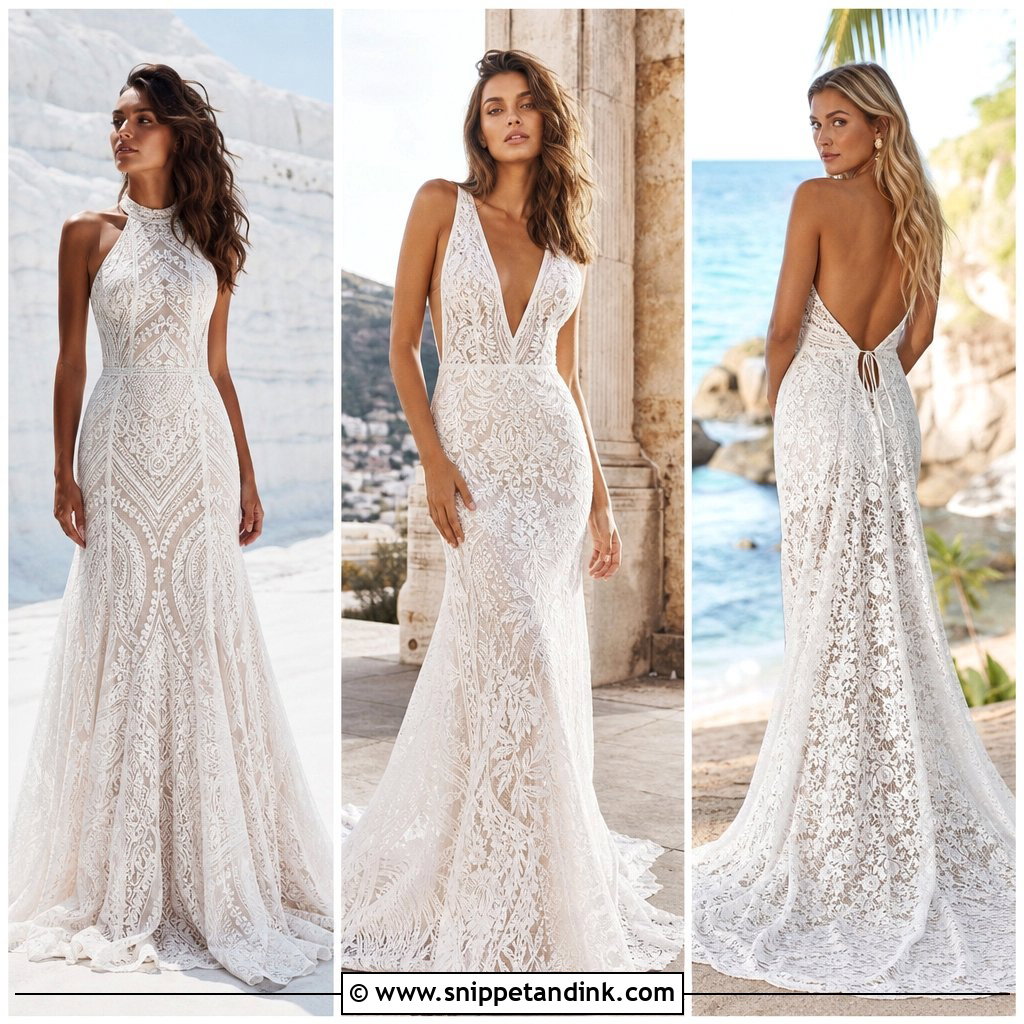
Lace on an A-line adds texture without weight, especially when the appliqués run unbroken from the bodice into the skirt and pull the eye downward. Check the side seams at your fitting: on cheaper lace the motifs stop abruptly there, and that break shows in side-on photos. Almond-toe heels, a plain fingertip veil and small pearl or crystal earrings suit it. A low bun with a few curled pieces around the face is enough. Busy lace wants a plain veil and quiet jewelry, plus natural makeup with a rosy lip. It works for a garden, a traditional church or a country estate.
3. Mary’s Bridal Long Sleeve Wedding Gown
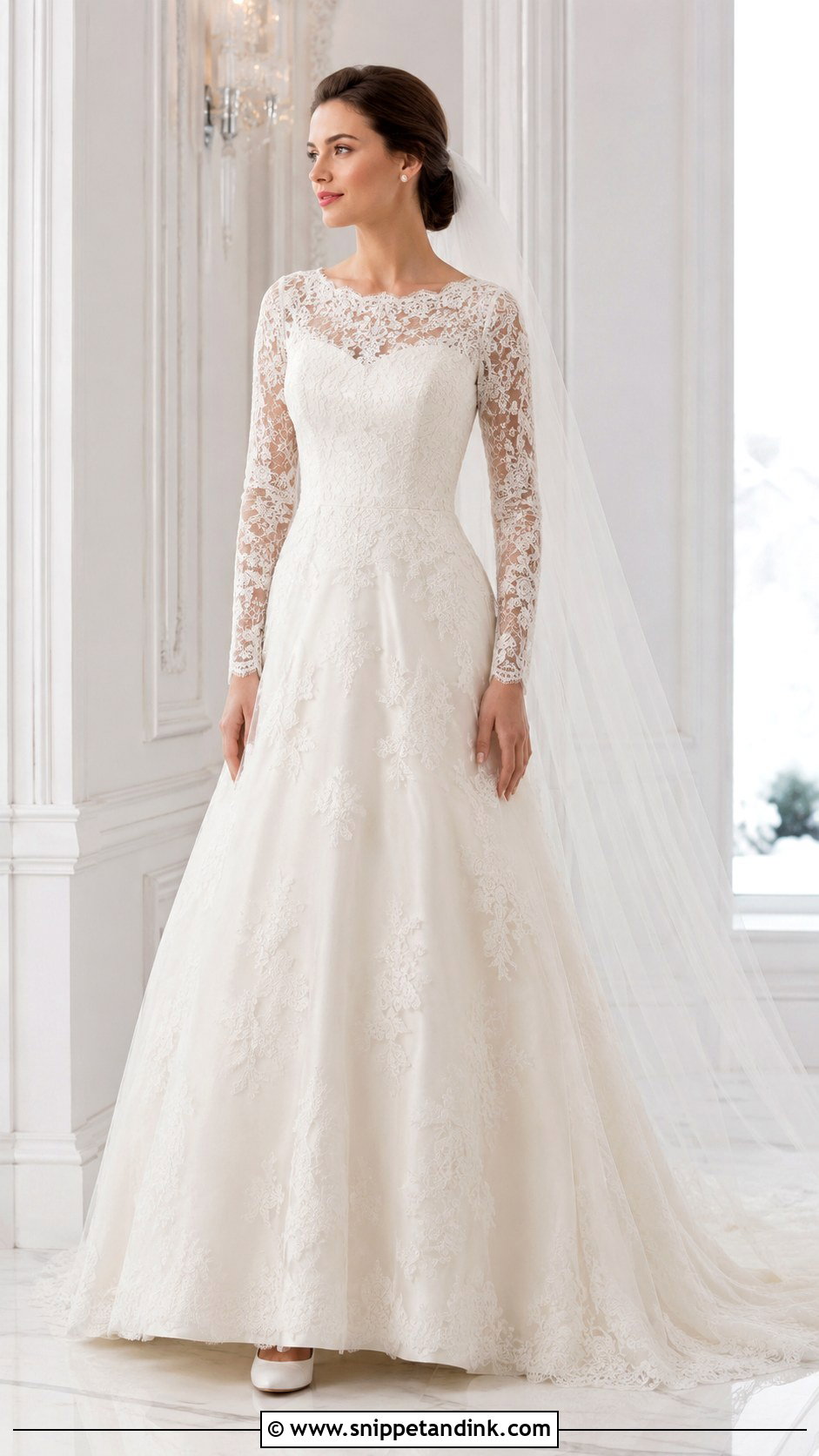
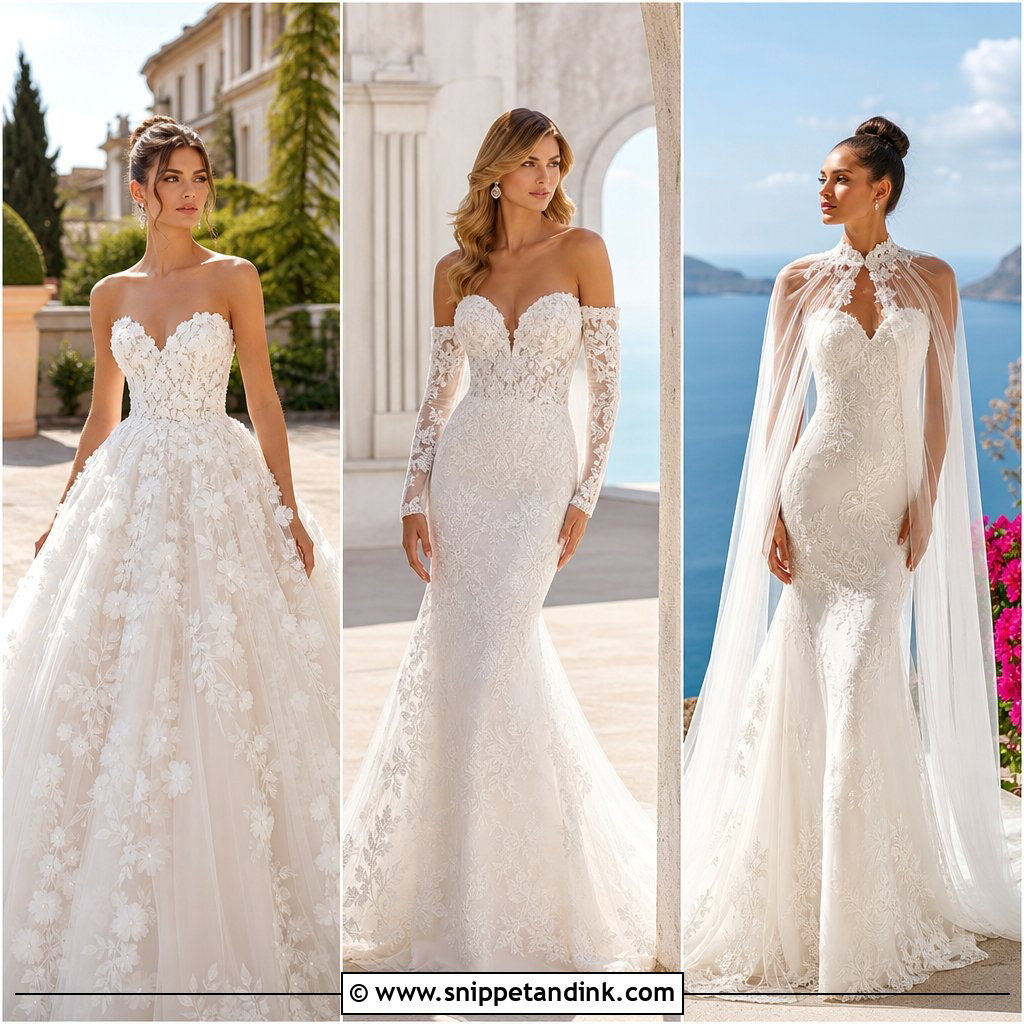
Long sleeves give coverage and still look bridal. Sheer lace sleeves feel lighter; lined crepe or satin ones read cleaner and more modest. The first thing I check is the elbow: ask the bride to touch her shoulder, then lift a glass, and watch whether the sleeve pulls at the armhole. If it does, a seamstress can add a little ease there. Pearl studs and a narrow bracelet beat a necklace, which crowds a high neckline. Closed-toe pumps and a sleek low bun or smooth half-up style suit the tailored line. For an outdoor ceremony, a plain chapel veil moves freely without hiding the sleeves. Cooler months are when this gown makes the most sense.
4. Mary’s Bridal Mermaid Wedding Dress
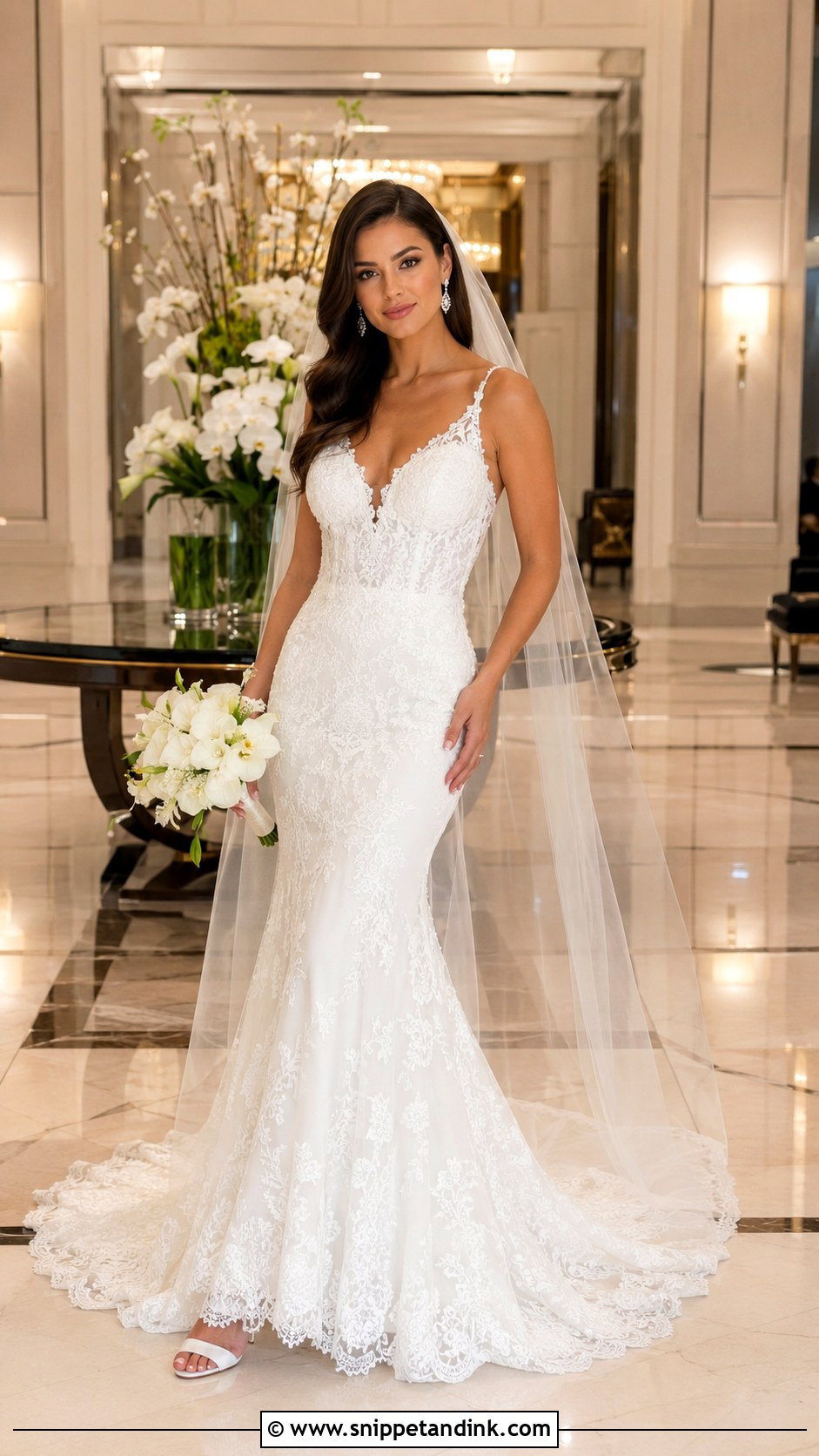
A mermaid fits through the bodice and hips, then flares near the knee, and where that flare starts decides whether you can walk. Too high and it looks like a fit-and-flare; too low and you’ll shuffle. Ask for a flexible lining and test sitting down. Block-heel sandals keep you steady, and long drop earrings plus a fine-edged chapel veil balance the shape. Side-swept waves soften the shoulders. If the dress is already heavy with lace or beading, carry a round, simple bouquet and skip a statement necklace. Hotel ballrooms and evening receptions suit it best.
5. Mary’s Bridal Off Shoulder Ball Gown
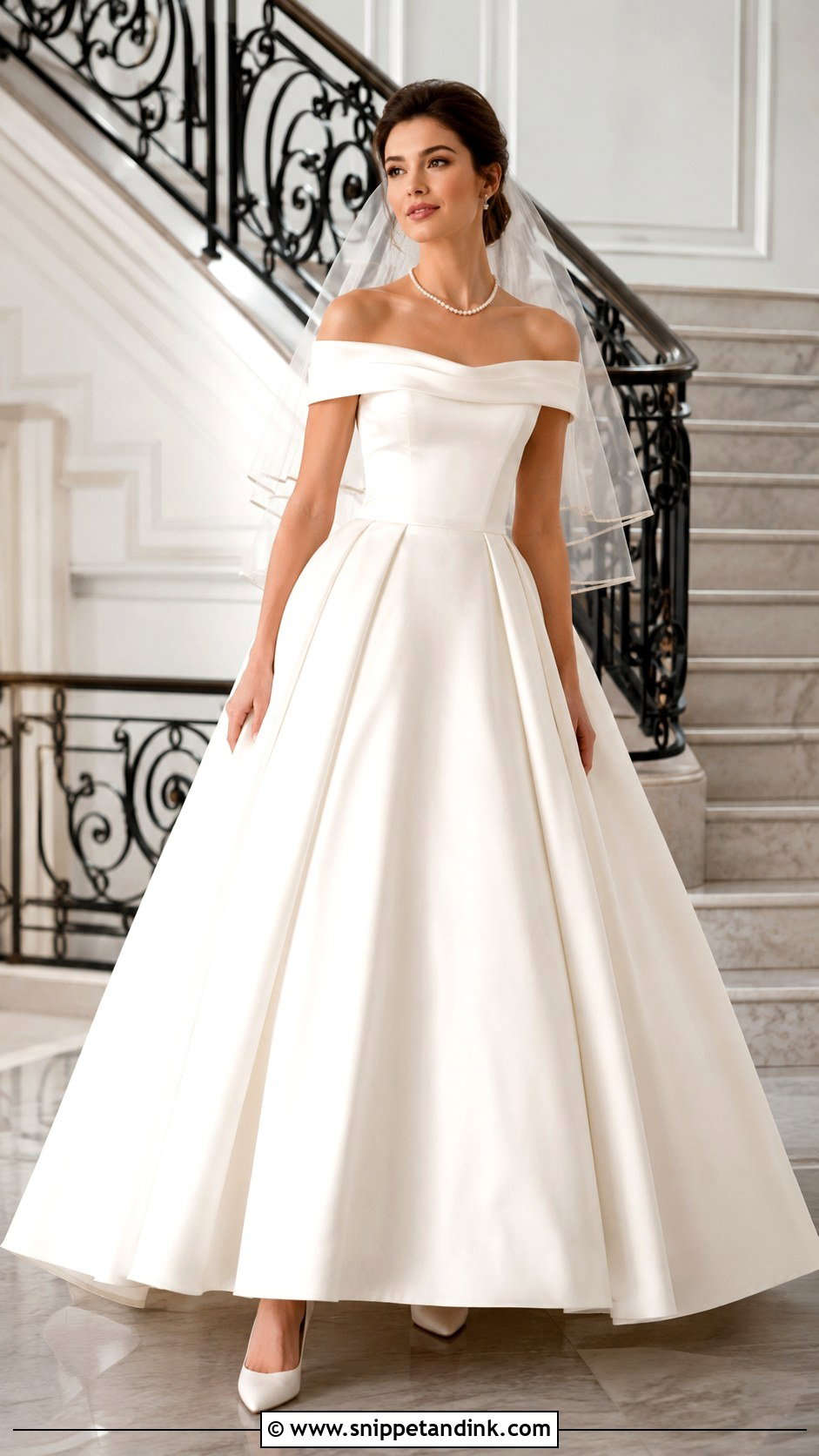
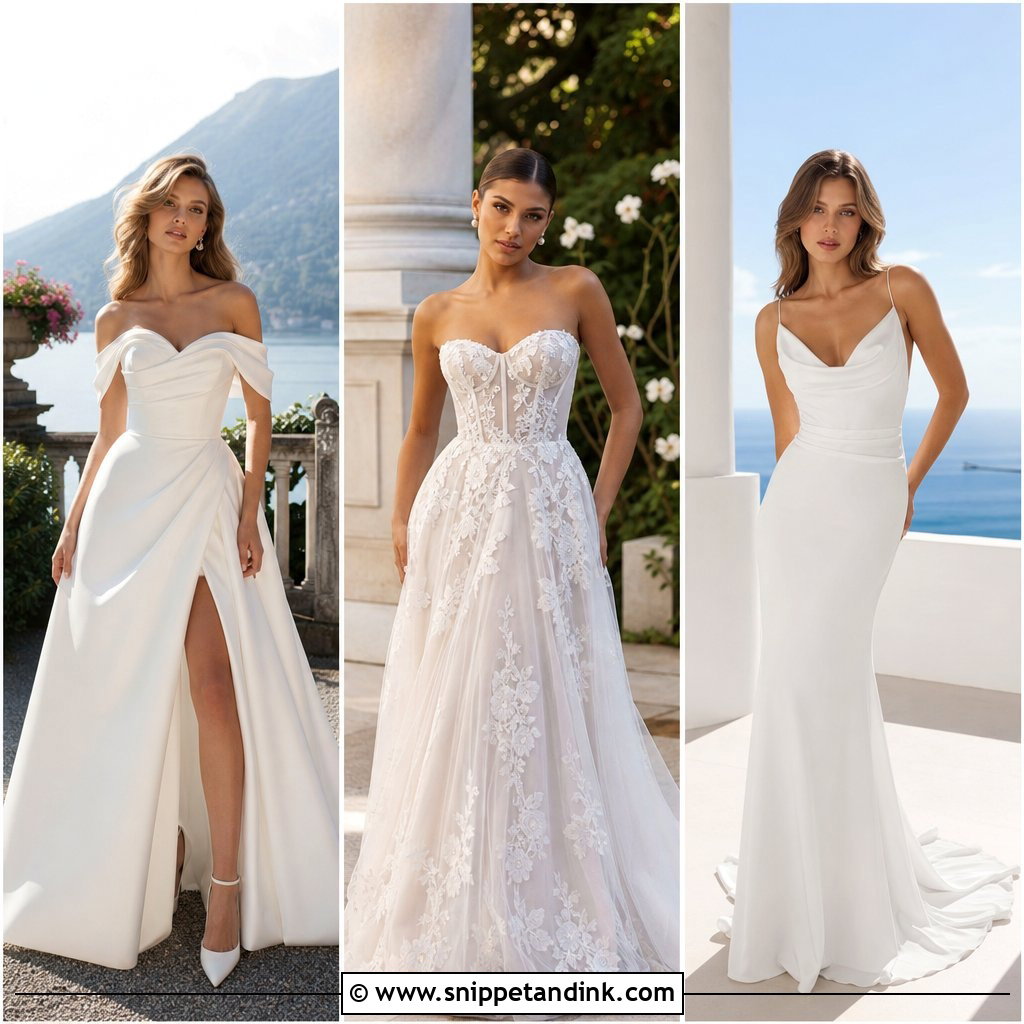
Off-the-shoulder necklines show the collarbone and keep all the drama of a full skirt. The risk is the band sliding as you move, so I have brides raise their arms, hug me and turn around before we commit. If it shifts, ask for clear silicone gripper tape or a small elastic inside the band. A short pearl necklace or delicate pendant, crystal studs and ivory pumps suit it, and a soft updo makes the shoulders the focus. A mid-length veil adds movement without covering them. Satin skirts feel formal; layered tulle feels softer. Grand staircases and large ceremony spaces are where it reads best.
6. Mary’s Bridal Square Neck Wedding Dress
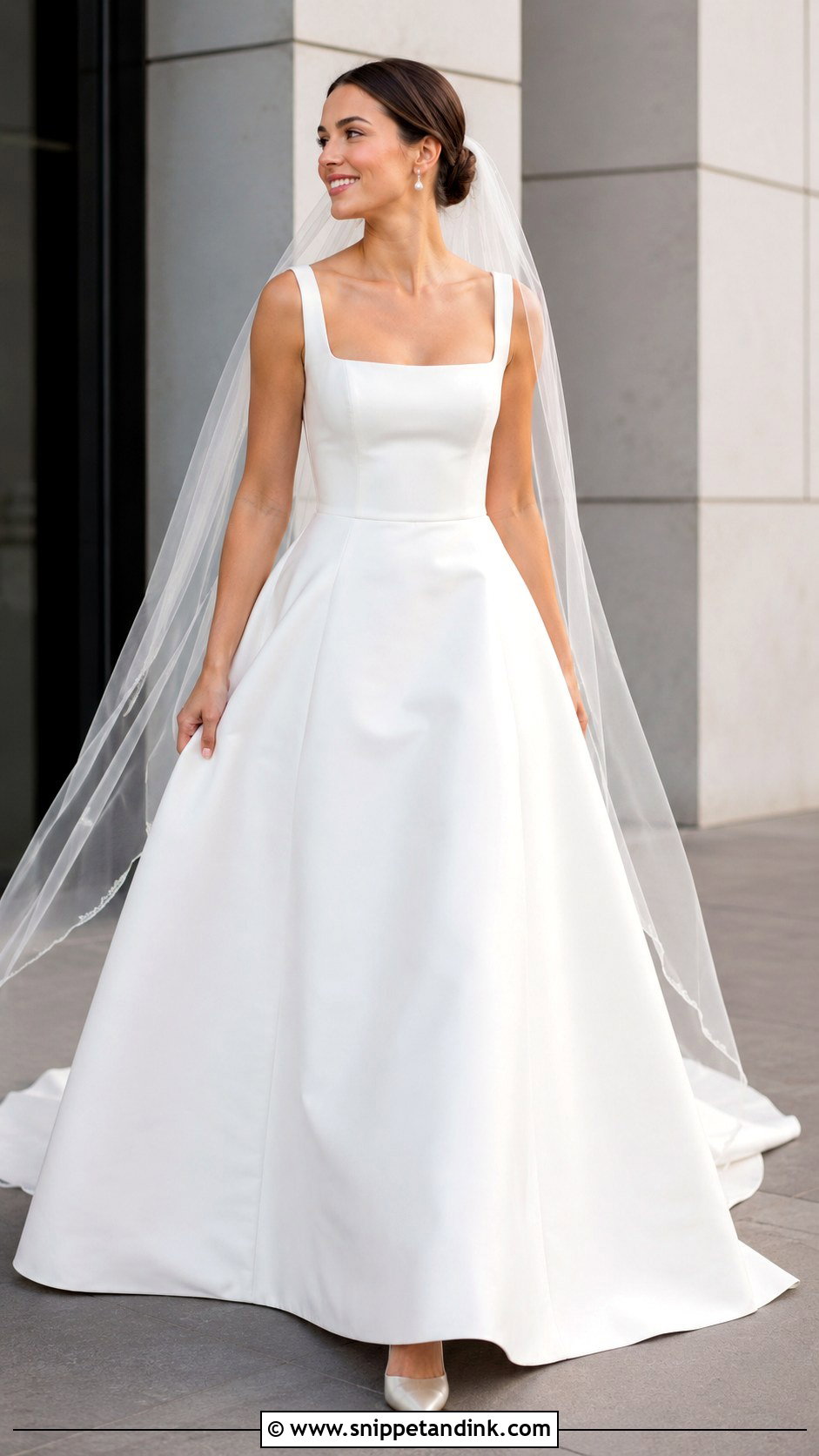
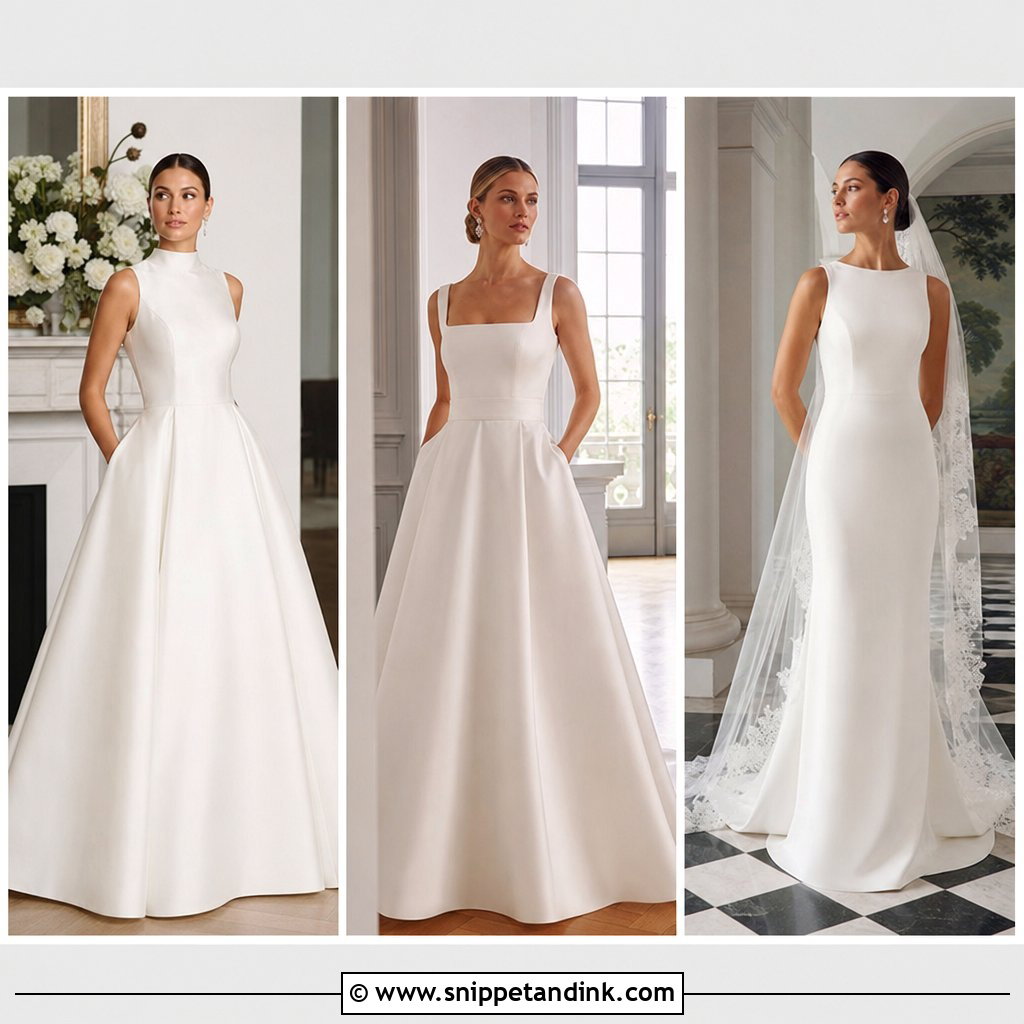
A square neckline is clean and architectural, and it frames the collarbone in a way a sweetheart doesn’t. It works with wide straps, fitted sleeves or a structured sleeveless bodice. Pearl drops, a smooth low bun and pointed heels keep the line sharp, and a narrow cathedral veil adds ceremony drama. Hold a bouquet with a simple outline so you don’t cover the bodice. Satin, Mikado and crepe make the shape stronger; subtle lace softens it. The neckline corners must sit flat. If they gape when you lean forward, that’s an alteration to fix early, not the week before.
7. Mary’s Bridal Strapless Sparkle Gown
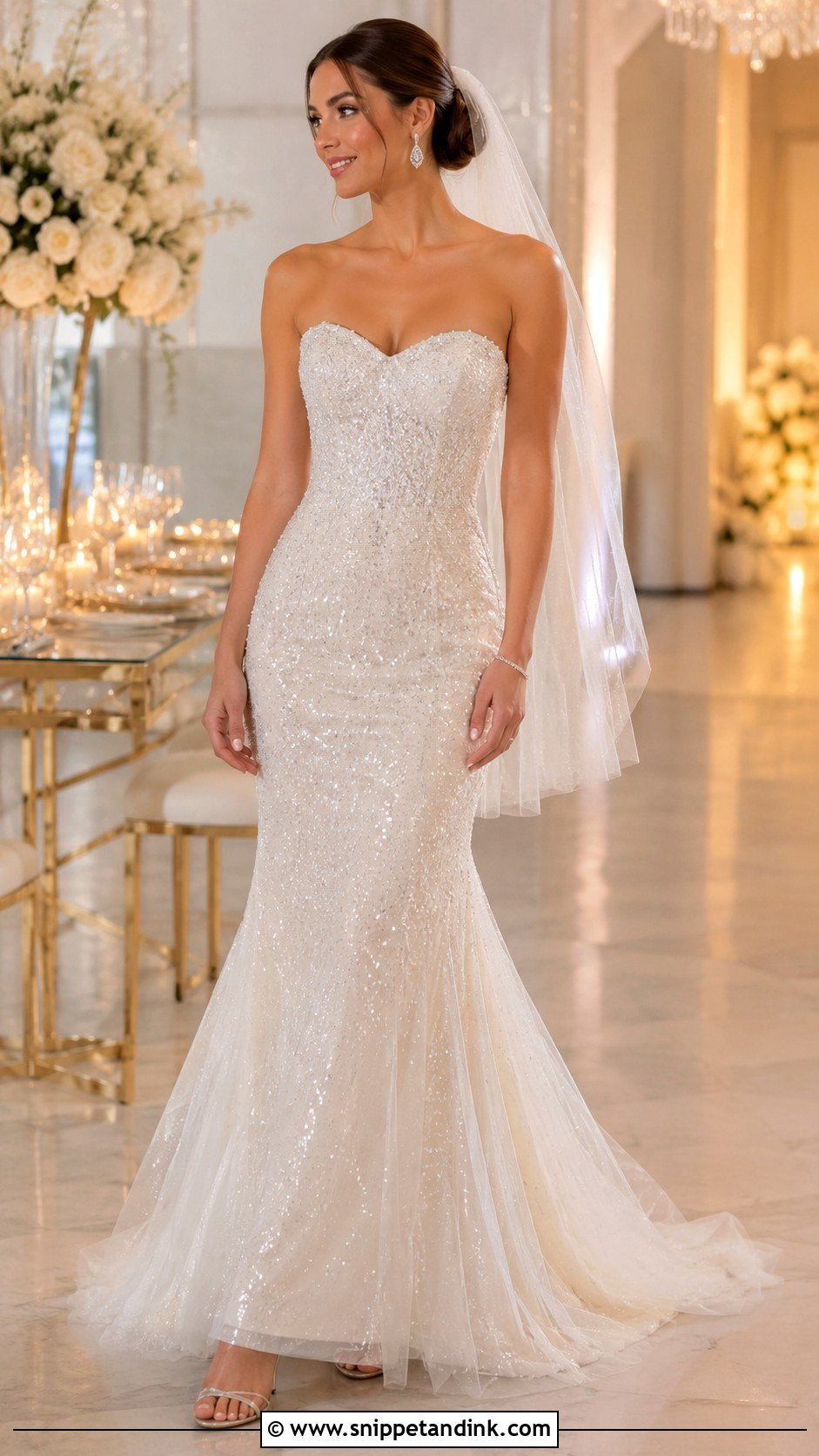
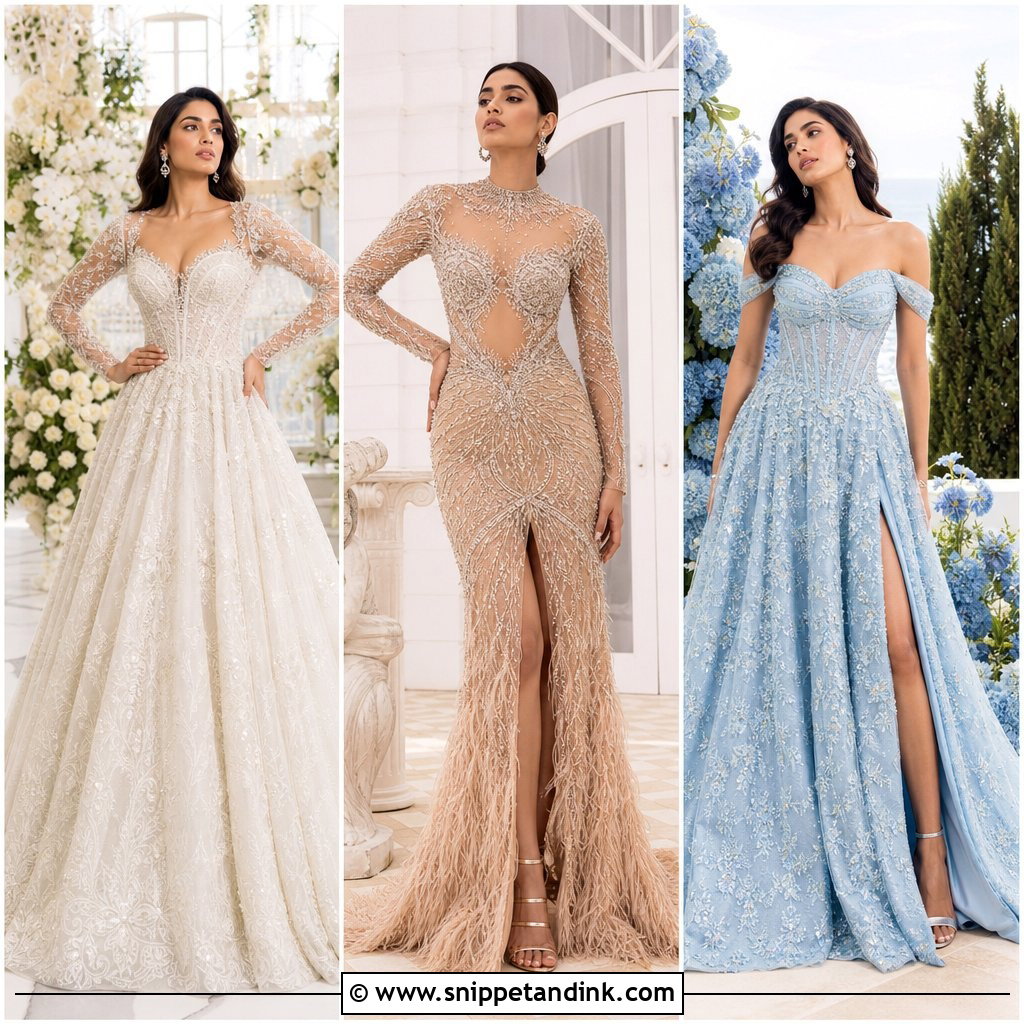
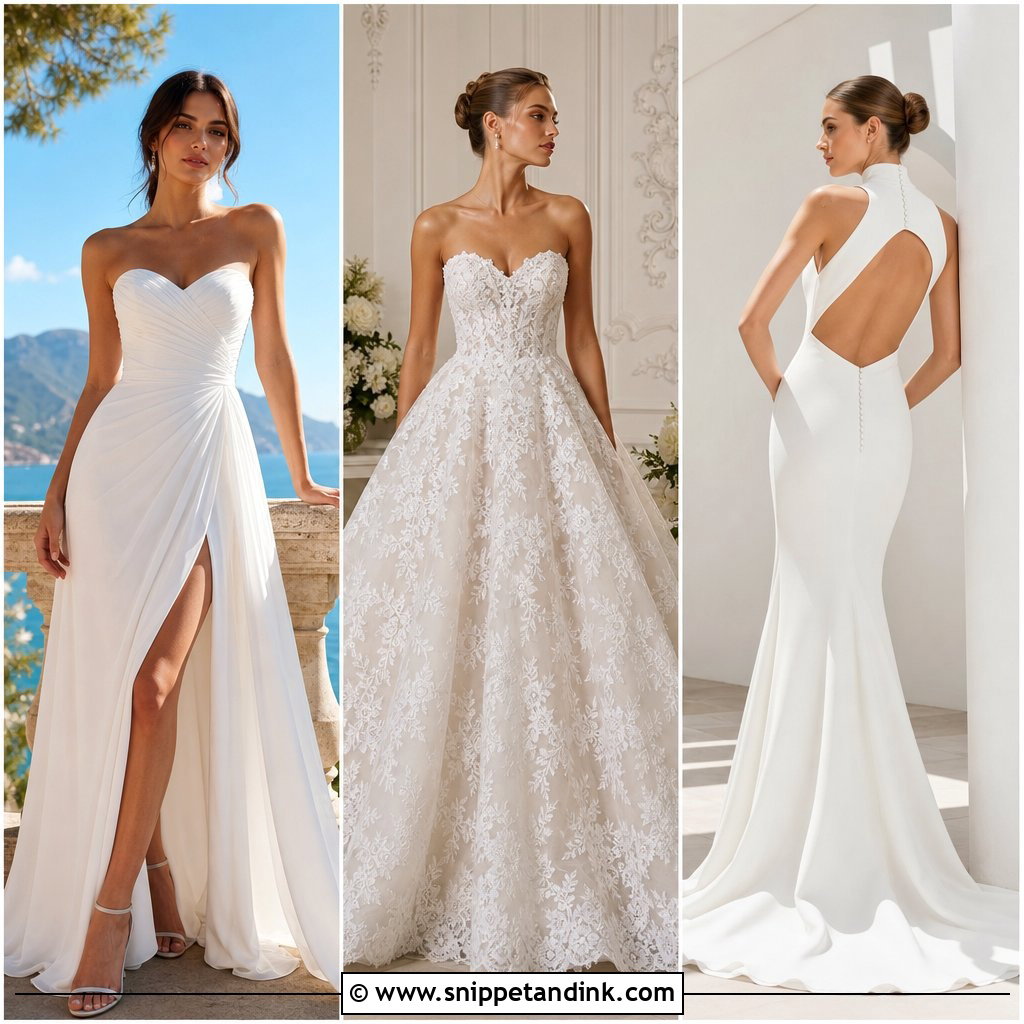
Sparkly tulle turns a strapless gown into an evening look. Fine, scattered glitter gives a soft glow in photos, while large sequins can flare into white spots under flash. Crystal drops, metallic ivory sandals and a slim tennis bracelet repeat the shine. A smooth updo clears the neckline, and a plain fingertip veil keeps things balanced. Strapless bodices need real internal boning and a waist stay; ask the consultant to show you both. With the fabric already working hard, keep makeup and flowers simple. Ballrooms and modern venues with clear lighting suit it.
8. Mary’s Bridal Crepe Fit And Flare Gown
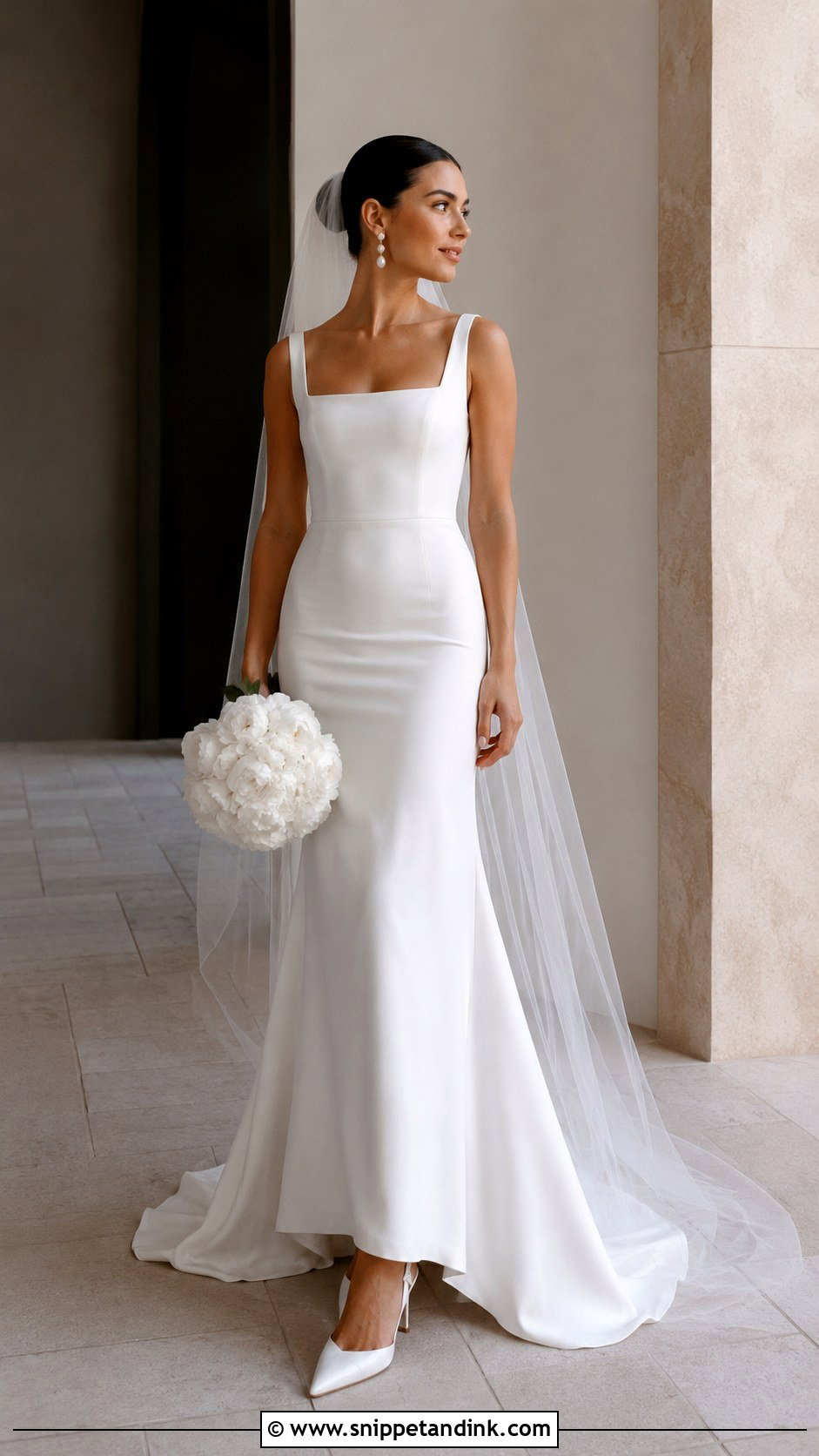
Crepe is the fabric I suggest to brides who want a sleek line without volume. A fit-and-flare in crepe follows the body, then opens gradually below the hip, so it moves more easily than a tight mermaid. Pointed slingbacks, sculptural pearl earrings and a long plain veil suit it, with a polished bun or glossy waves. One detail is plenty: covered buttons, a square back or a detachable bow. Crepe shows every line underneath, so smooth, no-show underwear matters more here than with lace. It belongs in a gallery, a rooftop or a minimalist venue.
9. Mary’s Bridal Floral Lace Wedding Gown
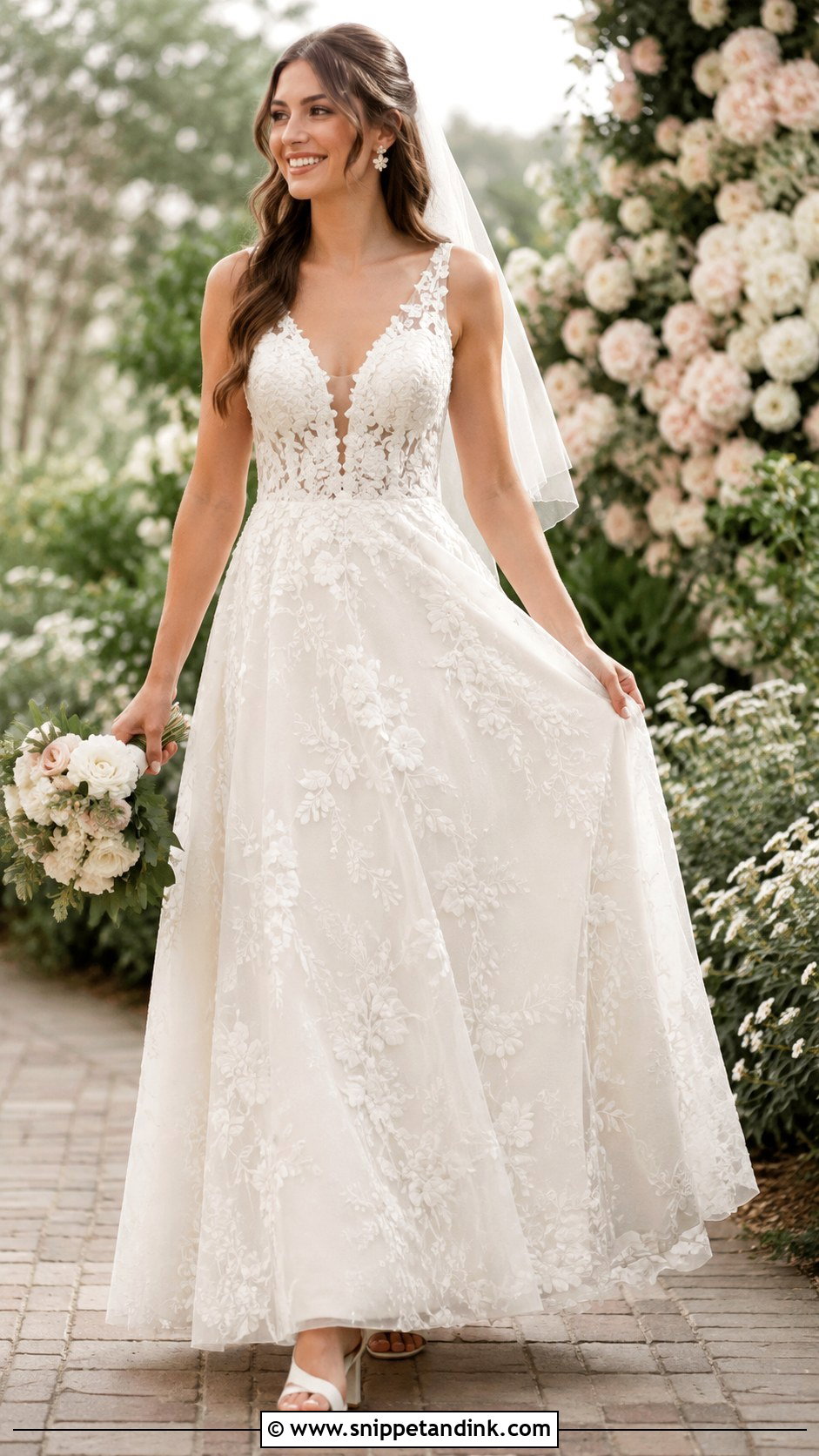
Floral lace looks at home outdoors. Raised, dimensional appliqués give texture you can see from the aisle; flat motifs feel softer and more traditional. On grass, a lace hem picks up seeds and damp, so I suggest a bustle for the reception or a hem that just clears the ground. Block heels, flower-shaped earrings and a lightweight veil suit it, with loose waves, a low textured bun or a half-up style. If the dress has large botanical details, keep hair flowers small. A bouquet with greenery and a narrow color range stops it looking busy. It suits a garden, vineyard, greenhouse, or estate wedding.
10. Mary’s Bridal Modest A-Line Gown
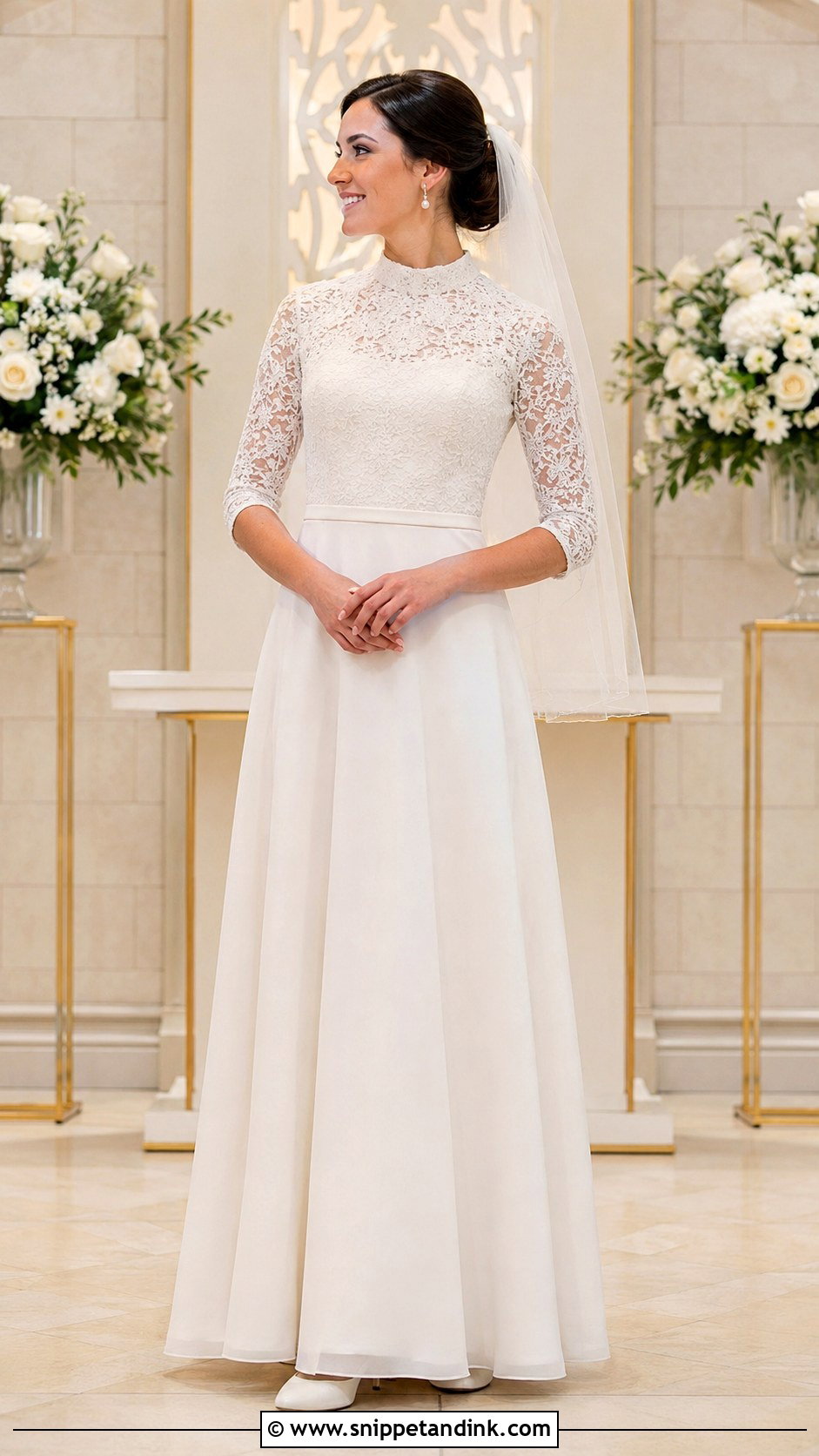
A modest A-line gives coverage and still shapes the waist. Look for a lined bodice, a higher neckline, full or three-quarter sleeves and a skirt that falls gently from the waist. Movement is where modest gowns succeed or fail, so at the appointment I ask brides to reach forward as if hugging a grandparent and see whether the back pulls. Closed-toe heels, pearl earrings, a plain chapel veil and a small structured clutch for later suit it. A low twisted bun keeps it neat. Lace appliqué, covered buttons or a slim waistband add interest without exposing more skin. Family-centered and religious ceremonies are a natural fit.
11. Mary’s Bridal Chiffon Wedding Dress
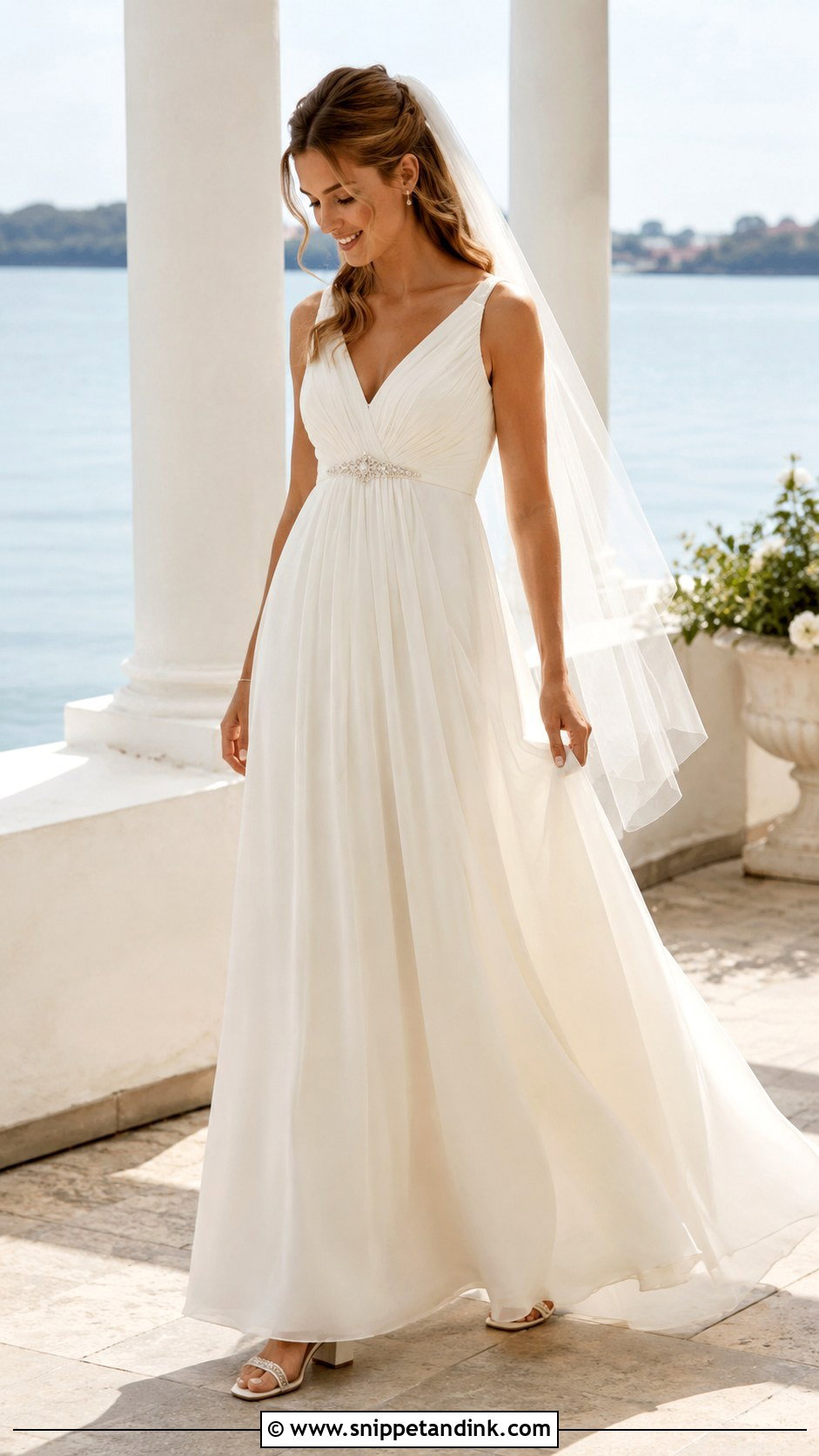
Chiffon is the easiest fabric to live in on a hot day. It drapes and moves, and an A-line or empire-waist chiffon gown is about as comfortable as bridal wear gets. Low block-heel sandals, small drops and a sheer fingertip veil keep the airy feel, with a loose bun or a waved half-up style. Underneath, you need a structured bodice; chiffon over nothing looks shapeless by mid-afternoon. A narrow beaded belt can mark the waist. Chiffon frays at raw edges and shows water marks, so keep drinks at arm’s length at a waterside venue. Beaches, destination weddings and summer gardens suit it.
12. Mary’s Bridal Pearl Wedding Gown
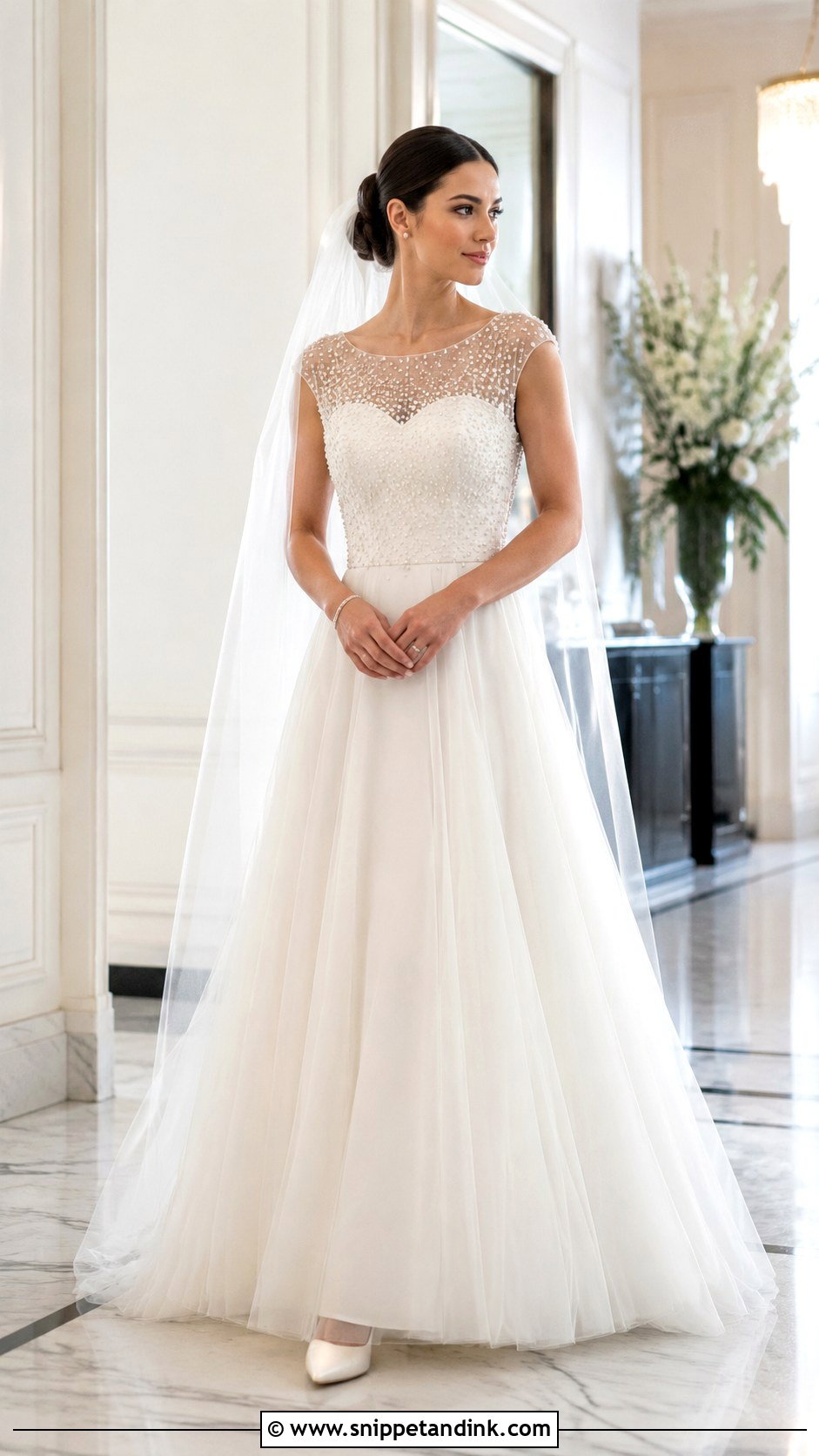
Pearls add texture that stays soft. A pearl-covered bodice over a plain tulle or satin skirt keeps the gown from looking over-decorated. Wear pearl studs or a single drop rather than several statement pieces, plus ivory pumps and a plain-edged veil. A sleek bun keeps the neckline and shoulders visible. Raised pearls can snag a tulle veil and catch fine hairs, so move your arms and swing your veil around at the fitting. If anything catches, ask whether a few pearls near the shoulder can be flattened or moved. Hotel receptions and formal indoor ceremonies are its home.
13. Mary’s Bridal Basque Waist Gown
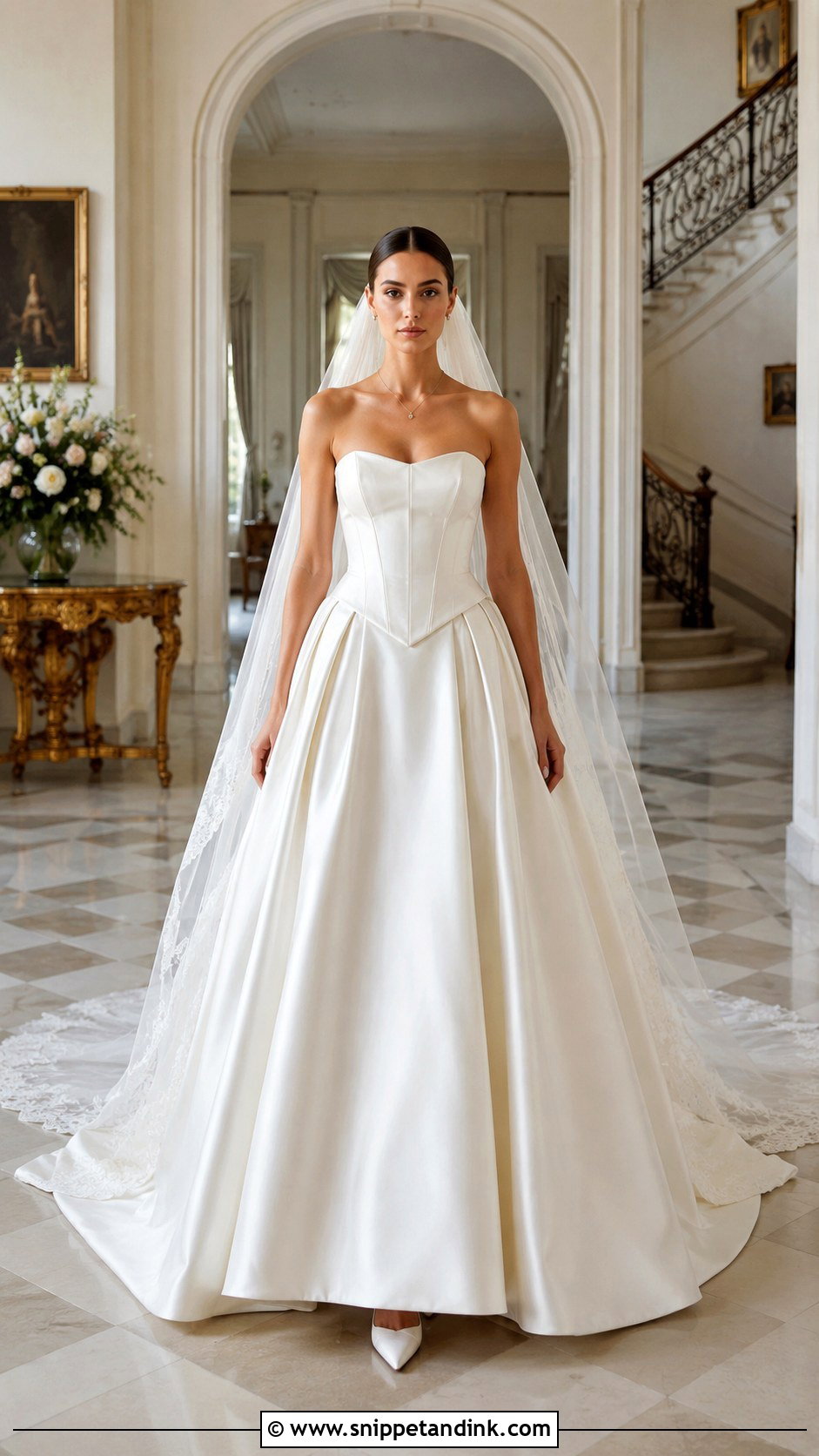
A Basque waist dips to a point or curve at the center front, which lengthens the torso. It suits full satin, organza or tulle skirts. Pointed pumps, a delicate pendant and a cathedral veil carry the long line, and the hair can go from a smooth bun to structured waves. Never put a belt over it; the seam is the detail. Let seams, lace placement or a little beading define the bodice. On a short torso a deep Basque point can make the skirt look as if it starts too low, so try a shallow V first. Grand halls and estates with formal architecture suit it.
14. Mary’s Bridal Detachable Sleeve Gown
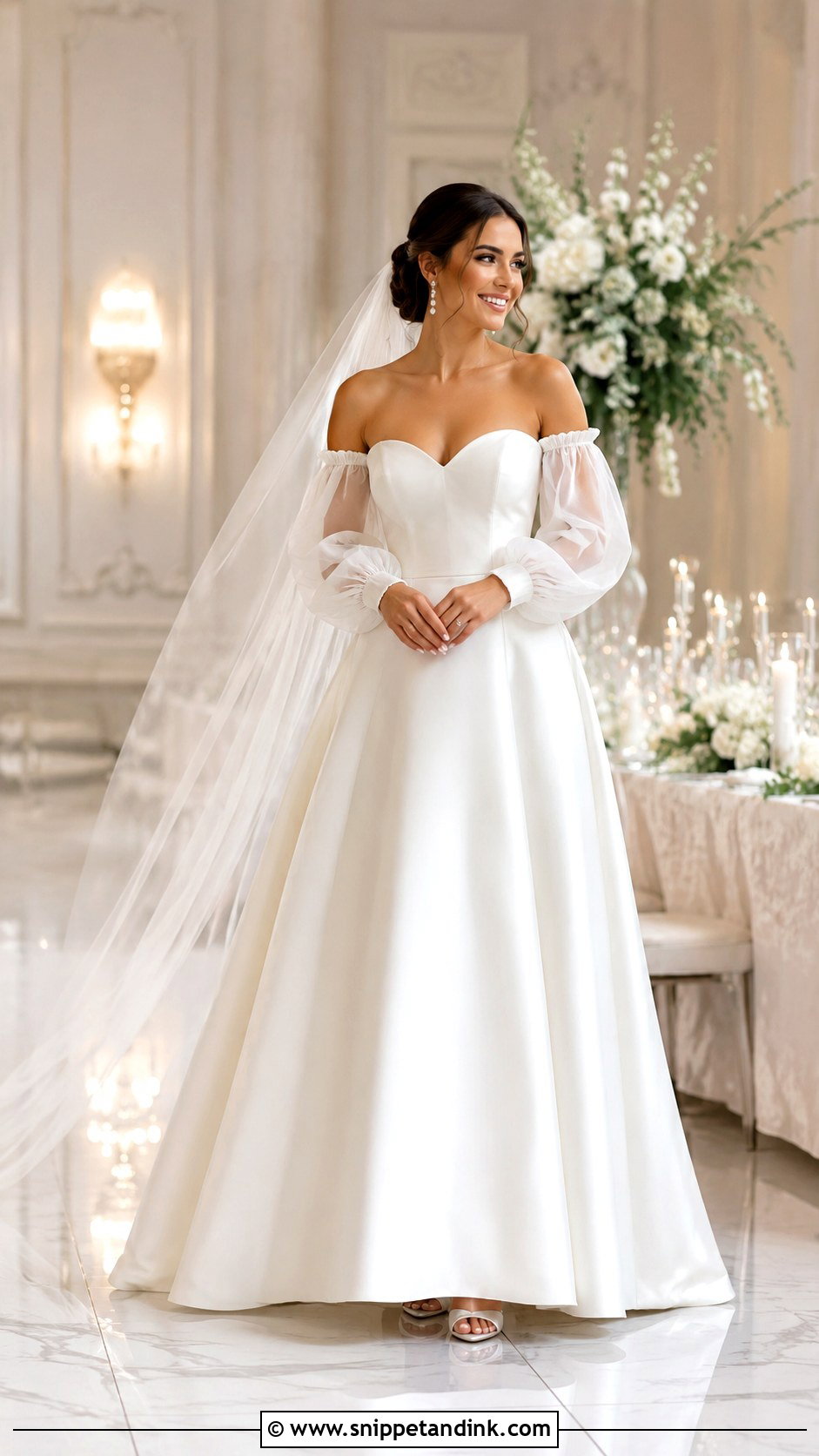
Detachable sleeves let one gown do two jobs. Fitted lace sleeves, draped off-the-shoulder bands or airy tulle sleeves cover you for the ceremony, then come off for the reception. Fastenings are the thing to inspect: hooks, snaps or tiny buttons should disappear when you turn. Versatile ivory heels, drop earrings and a veil that suits both versions keep the change simple, and an updo lets guests see it. Put the removed sleeves in a labeled garment bag and give it to one named person. It’s a smart fit when the vows are formal and the dancing isn’t.
15. Mary’s Bridal Bow Back Wedding Dress
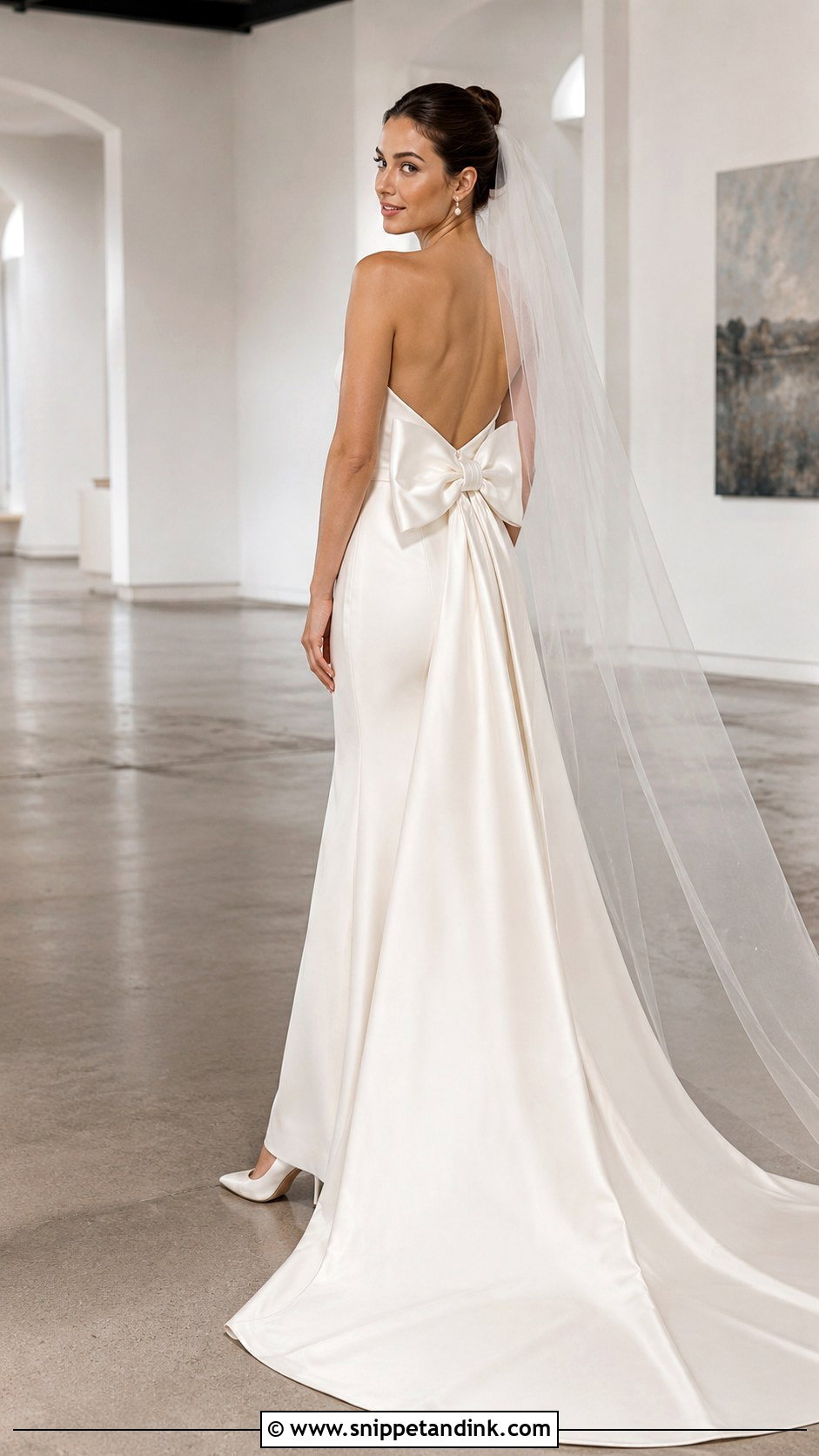
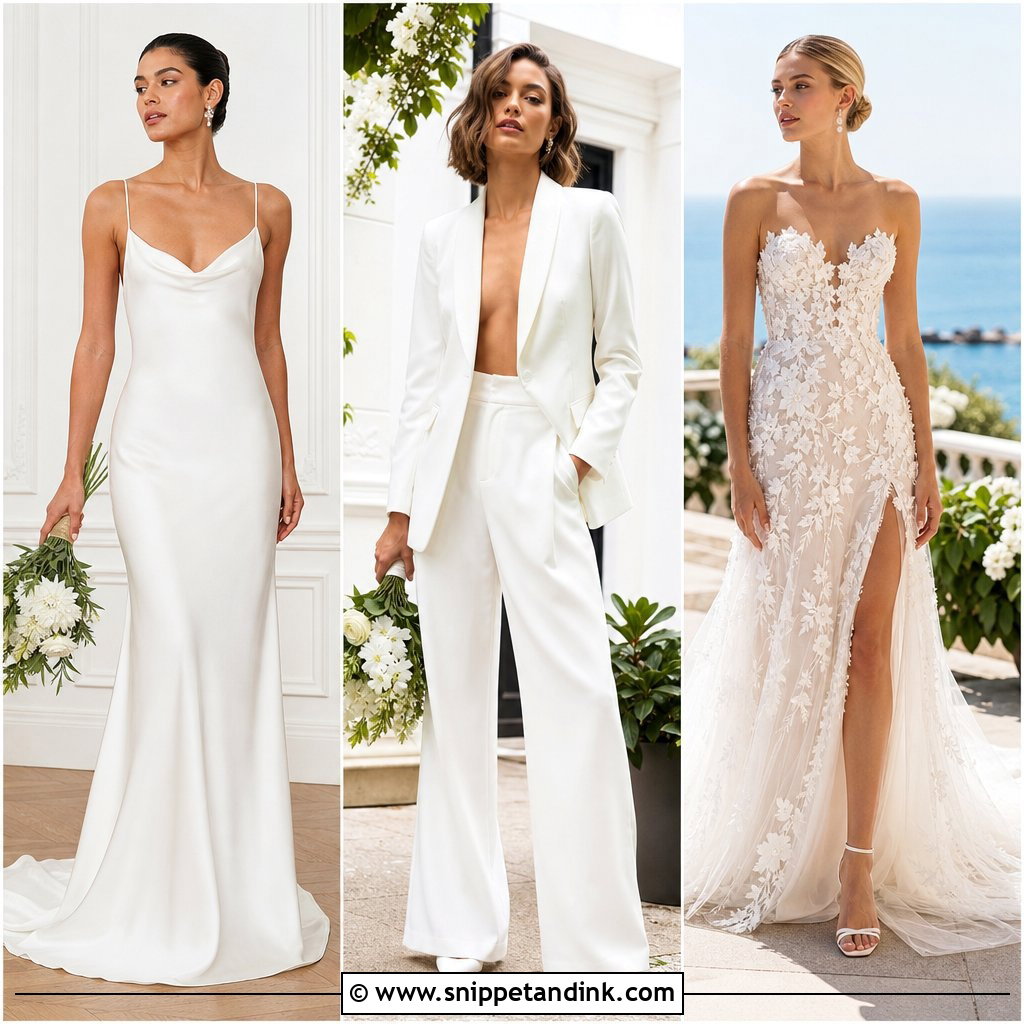
A bow at the back gives guests something to look at through the whole ceremony, since they see your back most of the time. Structured satin holds a crisp shape; organza moves more softly. Keep the front quiet with pearl studs, a clean neckline and pointed heels. A sheer veil lets the bow show through, and hair worn up or to one side keeps it uncovered. Large bows crush when you sit back in a chair, so a detachable one is worth asking about; it can come off before dinner. One clear detail is enough here.
16. Mary’s Bridal High Neck Lace Gown
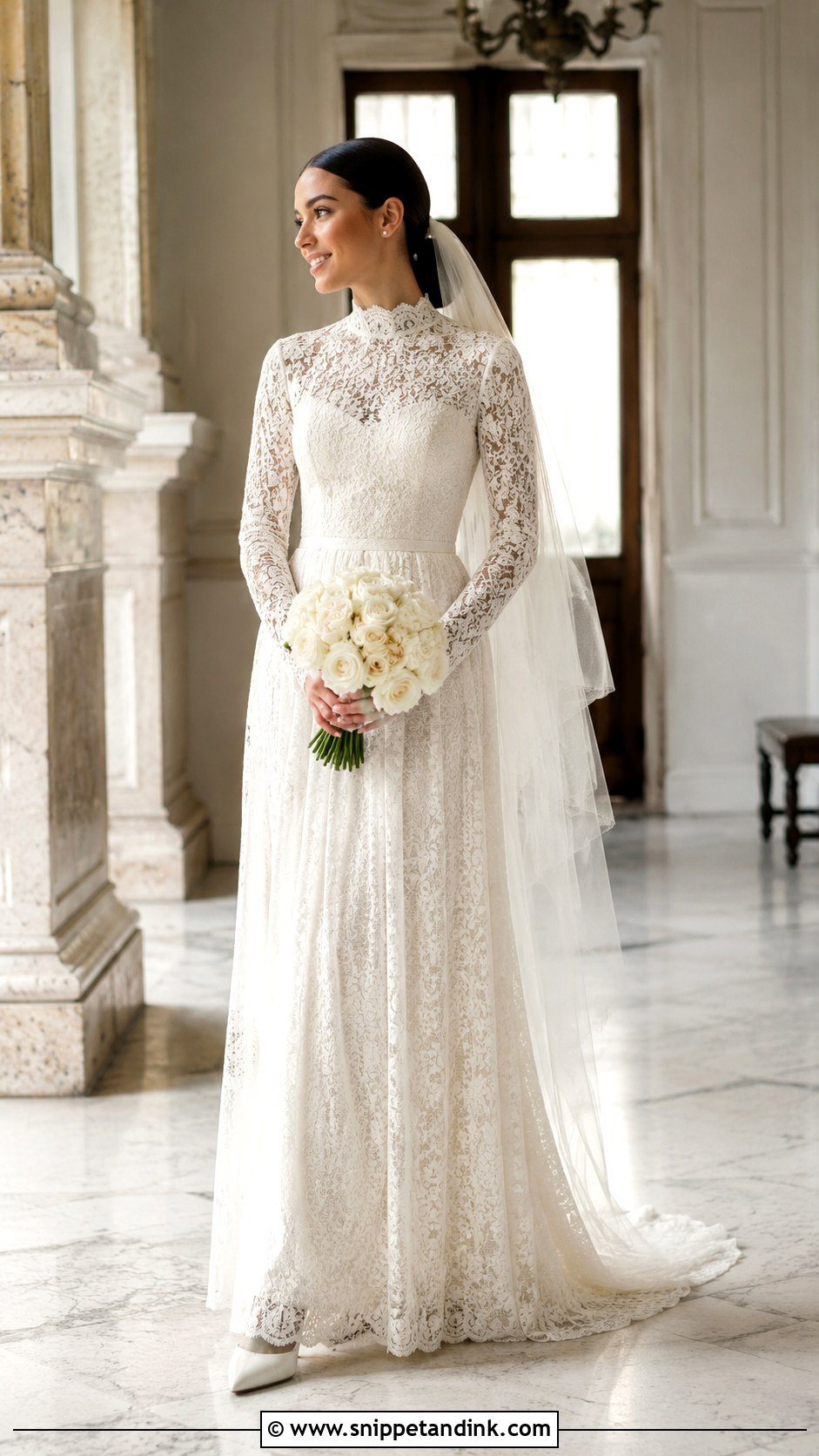
High neck lace gives coverage and lots of texture at once. A lined bodice reads modest; an illusion neckline looks lighter. Skip the necklace, wear small earrings and choose closed-toe pumps with a plain veil. A low bun or sleek ponytail keeps hair from tangling in the lace at the collar. Rub the neckline trim against the inside of your wrist at the fitting. Some lace edges are scratchy, and after eight hours that becomes a red line at the throat. Ask whether the edge can be bound in soft tulle. It suits cooler weather and historic venues.
17. Mary’s Bridal Tea Length Wedding Dress
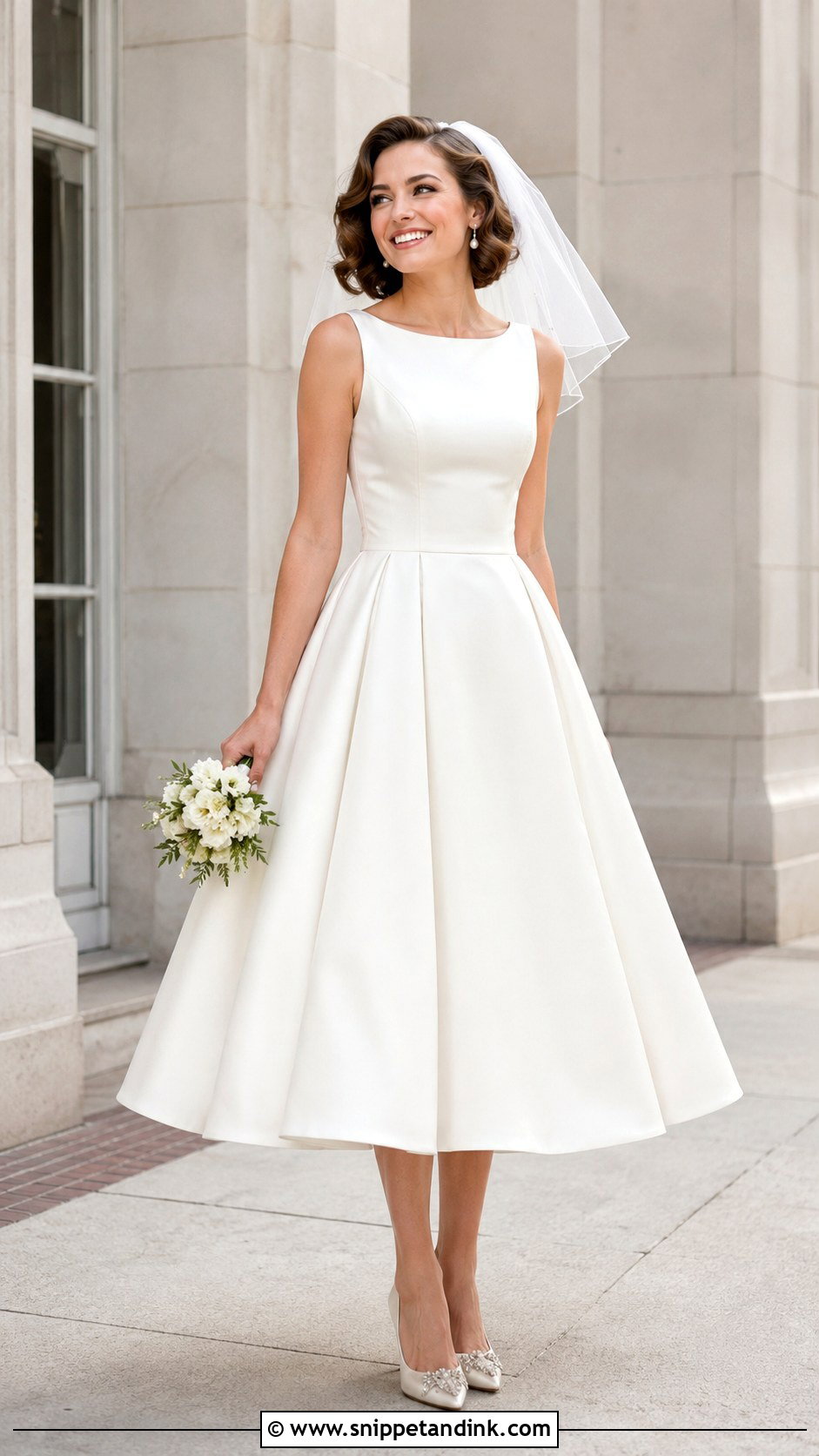
Tea-length dresses end between knee and ankle, which puts your shoes on show. A fitted bodice with a fuller skirt works best, and embellished pumps, pearl earrings and a short veil or structured hair bow suit the shorter line. A polished ponytail, smooth bun or softly curled bob all fit. A light petticoat adds volume without stiffness. Because the hem is visible all the way round, it must be level, so stand on a flat floor in your real shoes at the final fitting. Courthouse ceremonies, daytime receptions and small venues are where it shines.
18. Mary’s Bridal Cape Wedding Gown
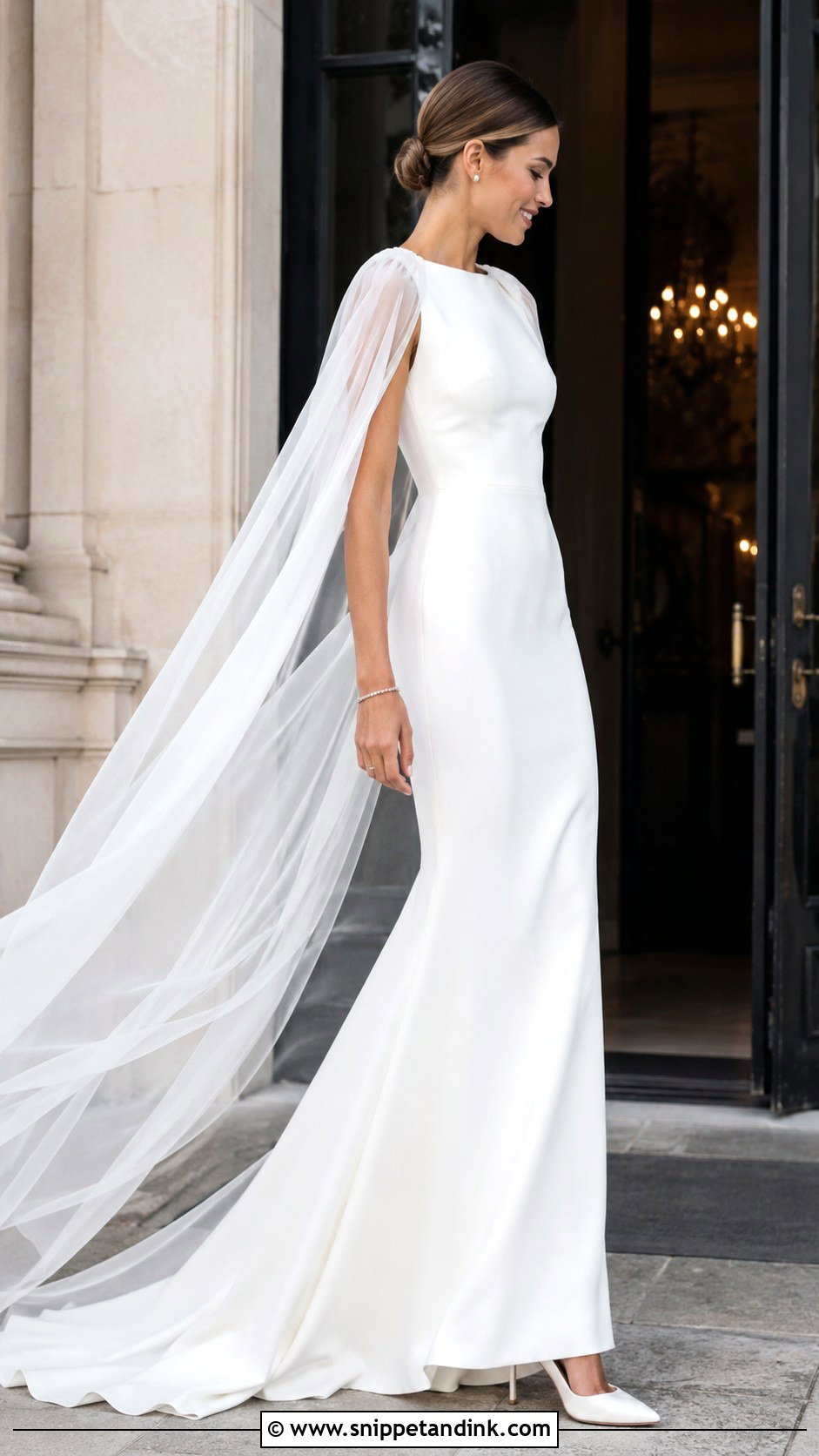
A cape adds coverage and movement without changing the gown beneath. Pair a simple crepe or satin dress with a sheer tulle cape, a pearl-detailed capelet or a flowing chiffon layer. Small earrings, a thin bracelet, pointed heels and a smooth updo keep it clean. Match the cape length to the train, and practice walking in both; a cape longer than the train tangles at your heels on turns. Capes usually fasten at the shoulder or neckline, so they come off easily for the reception. They work well in place of a veil, especially for outdoor portraits and grand entrances.
19. Mary’s Bridal Plus Size Ball Gown
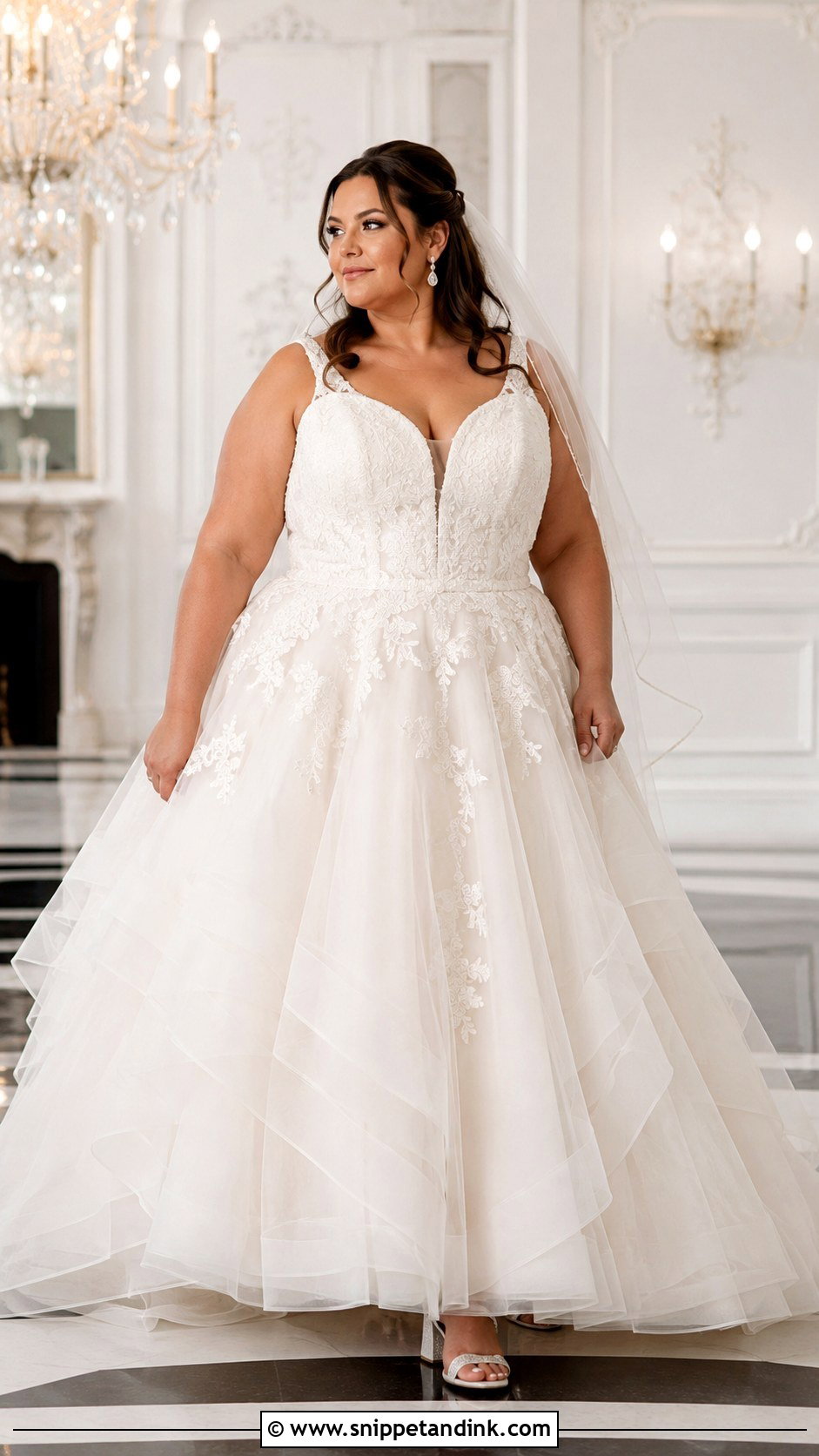
A ball gown can give real support and balanced proportions at any size, but construction matters more than the sample on the rail. Look for internal boning, an adjustable corset back or carefully placed seams that feel secure while you breathe deeply and sit. Many boutiques stock samples in a limited size range, so I always ask which sample shows the intended fit best and how alterations will change the neckline, waist and skirt volume. Stable block heels, a comfortable fingertip veil and earrings that echo the gown’s embellishment suit it, with an updo or half-up hair. Ask to see a fabric swatch in your own size’s color lot.
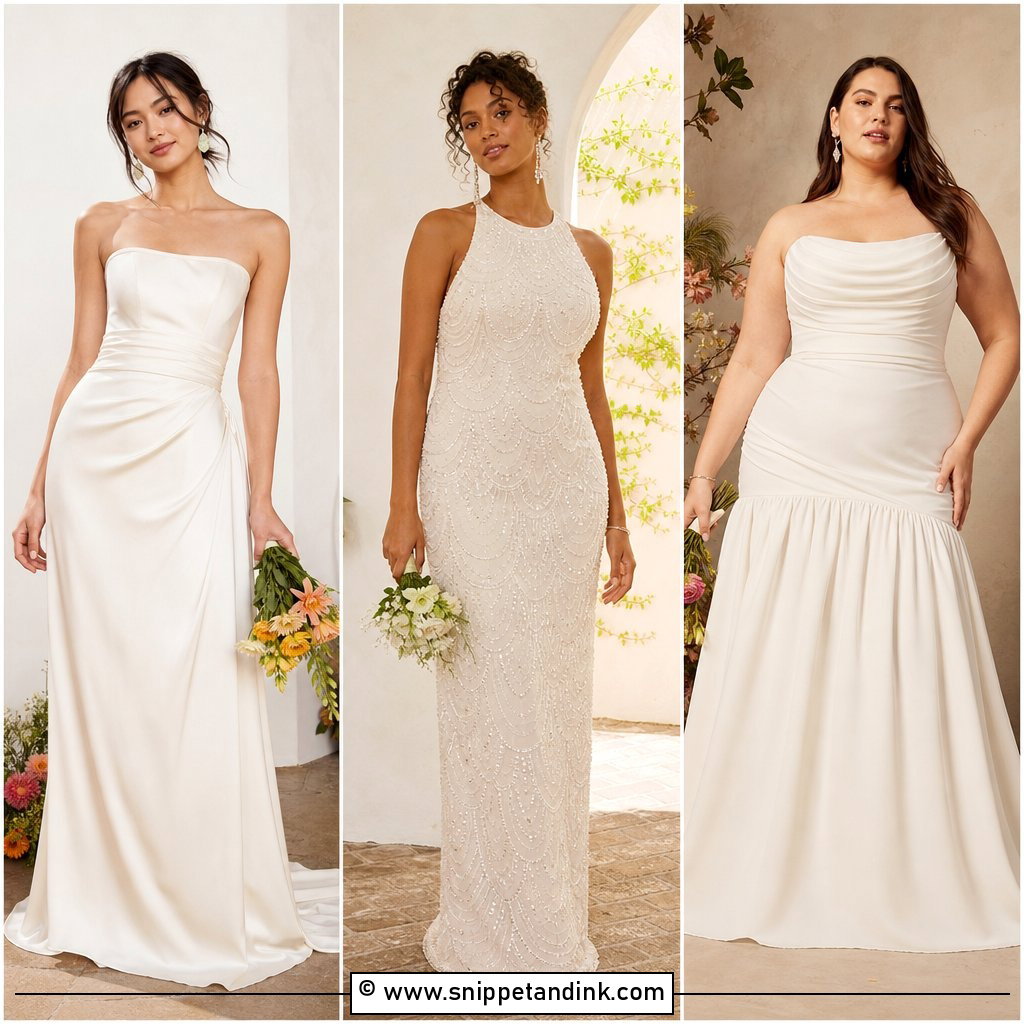
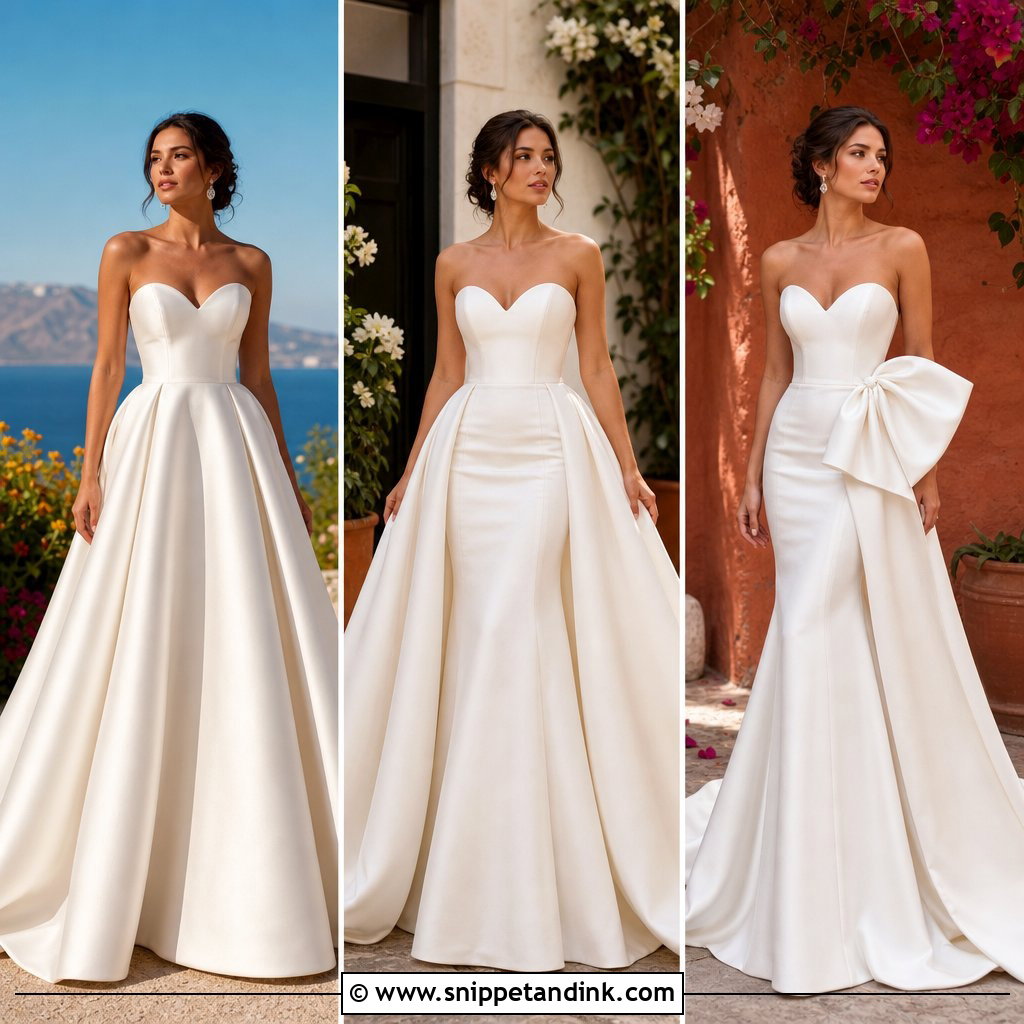
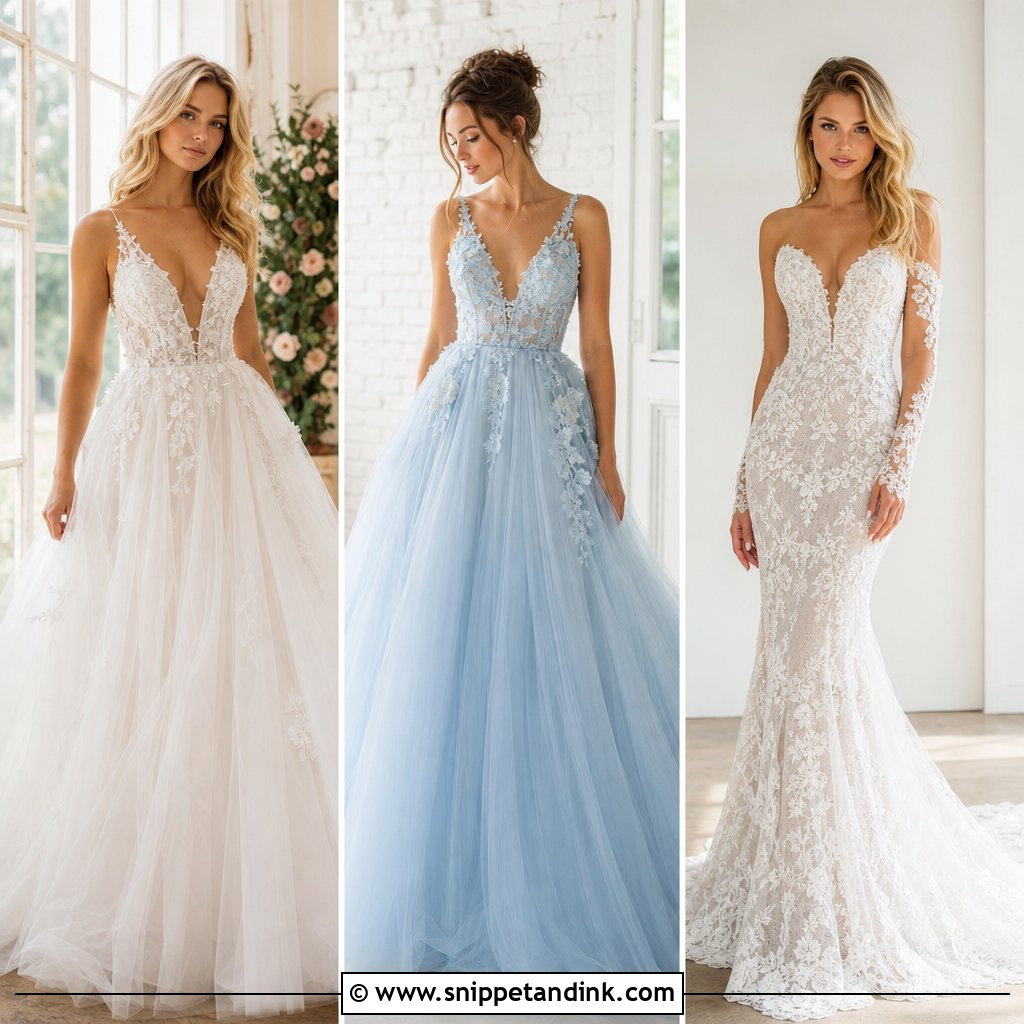
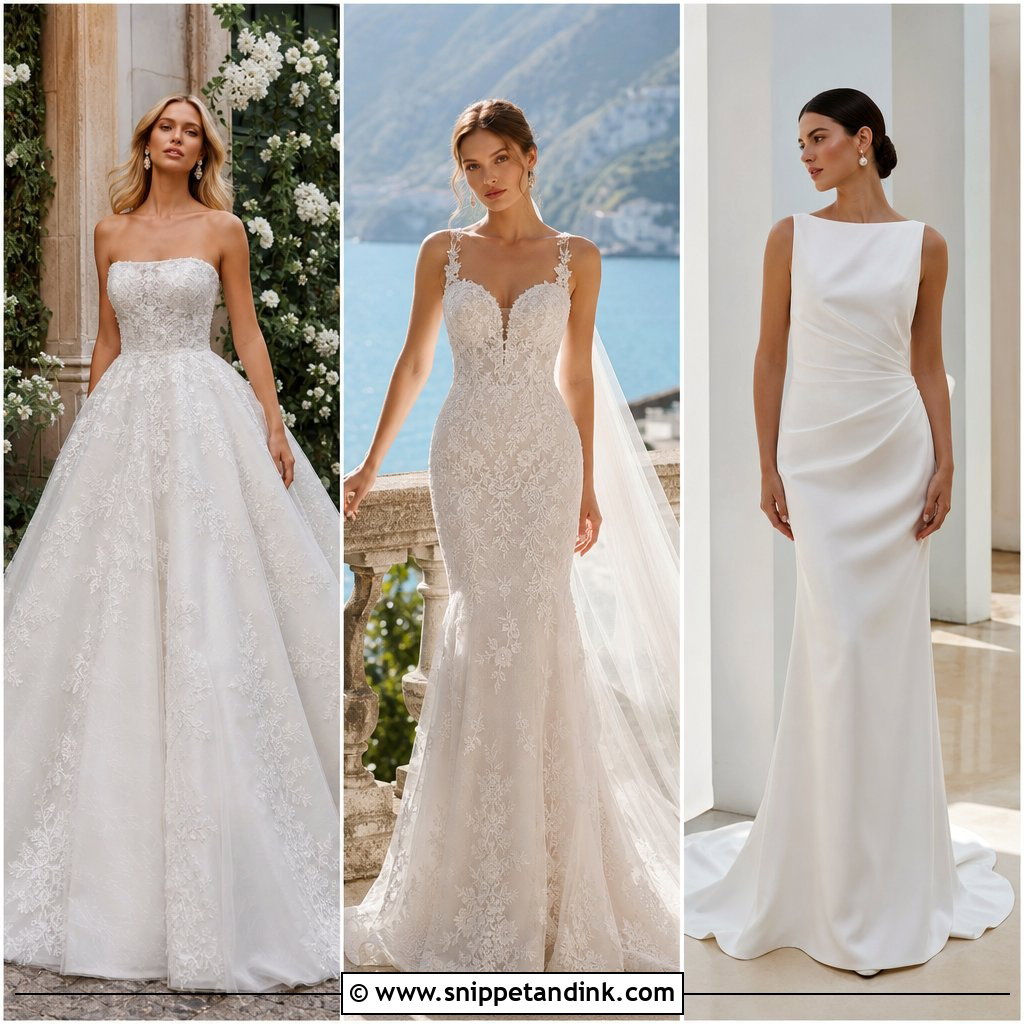
20. Mary’s Bridal Minimal Satin Gown
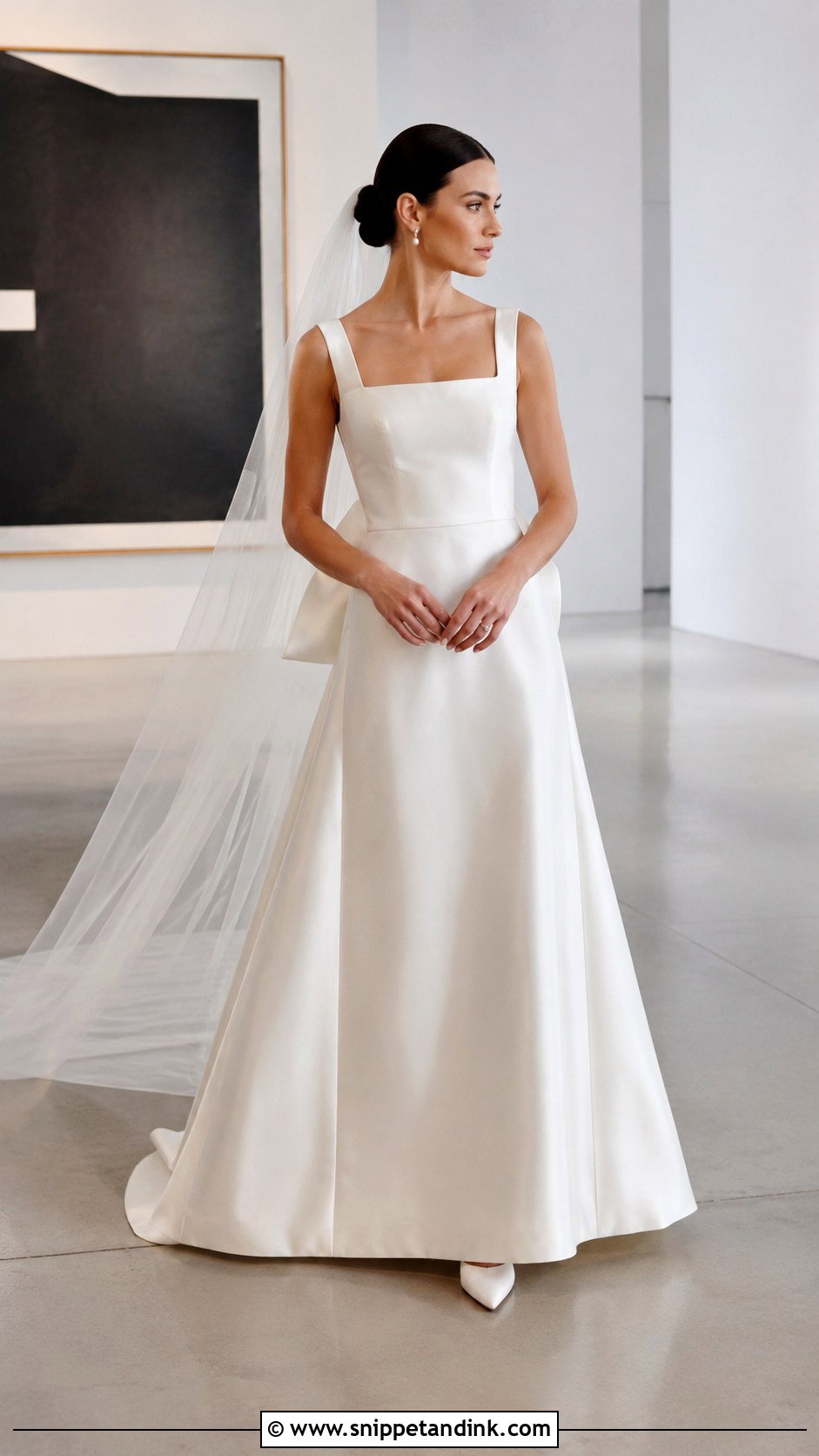
Sometimes immaculate fabric and precise tailoring say more than any embellishment. A minimal satin gown might have a square neckline, slim straps, a column skirt or a gentle A-line. Pointed pumps, pearl drops, a long plain-edged veil and a sleek bun keep it clean, with fresh, balanced makeup. With nothing to hide behind, seams, fabric tension and hem length all show, so this is the gown where I’d spend the alteration budget. A detachable overskirt or bow adds drama without changing the core design. It suits a city hall, gallery or formal hotel.
A Realistic Calendar From First Appointment to Final Fitting
Most made-to-order bridal gowns take several months to arrive after you place the order, and the exact time depends on the designer and how much customization you ask for. That’s why I suggest starting appointments roughly nine to twelve months out, and ordering by about seven or eight months if you can. Rush options exist at many stores, but they often cost extra and limit your choices.
How alterations usually unfold
- First fitting, about two to three months before the wedding: the seamstress pins the main changes to length, waist and bust.
- Second fitting: you check the fit after the first round of sewing, and the bustle is planned.
- Final fitting, a couple of weeks out: shoes, undergarments and anyone helping you dress come along to learn the bustle and fastenings.
Heavily beaded or lace gowns often need extra time in the alterations room, because motifs have to be lifted and re-stitched rather than simply cut. If your dress is one of those, tell the seamstress at the start so she can schedule accordingly.
Three Things to Settle Before Your Second Appointment
The gown with the most detail isn’t automatically the right one. The right one supports your body, suits your venue and still feels comfortable at the end of the reception. The looks above run from structured satin ball gowns and lace to crepe, modest cuts and gowns with removable sleeves, bows or capes. Compare each with your actual shoes, veil, jewelry and hair. Move during every fitting and check the front, side and back. Good alterations will change the result more than extra beading ever will.
You'll Like These Ideas:


Leave a Reply