
A plain wedding dress has nowhere to hide. With no lace, beading or embroidery to pull the eye, the cut, the fabric and the fit carry everything, and that is exactly why I love dressing minimalist brides. The best simple gowns get their impact from silhouette, neckline, drape and precise tailoring. Satin, silk, crepe, mikado, organza and tulle each bring a different surface, from soft sheen to crisp structure. You might end up in a fitted column, a structured ball gown or a relaxed slip. Shoes, jewellery, flowers and a veil finish the outfit, but they should stay quiet. Here are twenty clean shapes, with what I check on each one before a bride says yes.
Shop-Floor Checks for a Dress With No Lace to Hide Behind
Embellishment covers a lot of sins. Lace hides a crooked seam, beading distracts from a thin fabric. A plain dress gives you no cover, so I check quality in a way brides rarely think to. You can do the same in any bridal shop in about five minutes.
- Turn the dress inside out. Seams should be finished cleanly and boning channels should run straight; lumpy channels show through smooth satin.
- Pinch a fold of the skirt between your fingers. Good crepe and satin feel dense and spring back; thin fabric creases instantly and stays creased.
- Look at the zip. On a plain back it is the only visible hardware, so it should be invisible or neatly covered, and lie flat when zipped.
- Hold the hem up to the light. A plain skirt with a short or thin lining turns sheer outdoors.
- Ask what the fabric actually is. Silk and polyester satin look similar in a sample but behave very differently in heat and photos.
Colour matters more too. Plain dresses come in bright white, soft white, ivory, diamond white and champagne, and without detail the shade is the first thing people notice. I hold the fabric near the bride’s face in daylight. Bright white flatters cool, very fair or very deep skin; ivory and soft white suit most warm tones; champagne can look like a stain next to a white veil, so match the veil to the dress, not the other way round.
1. Satin A-Line Wedding Dress
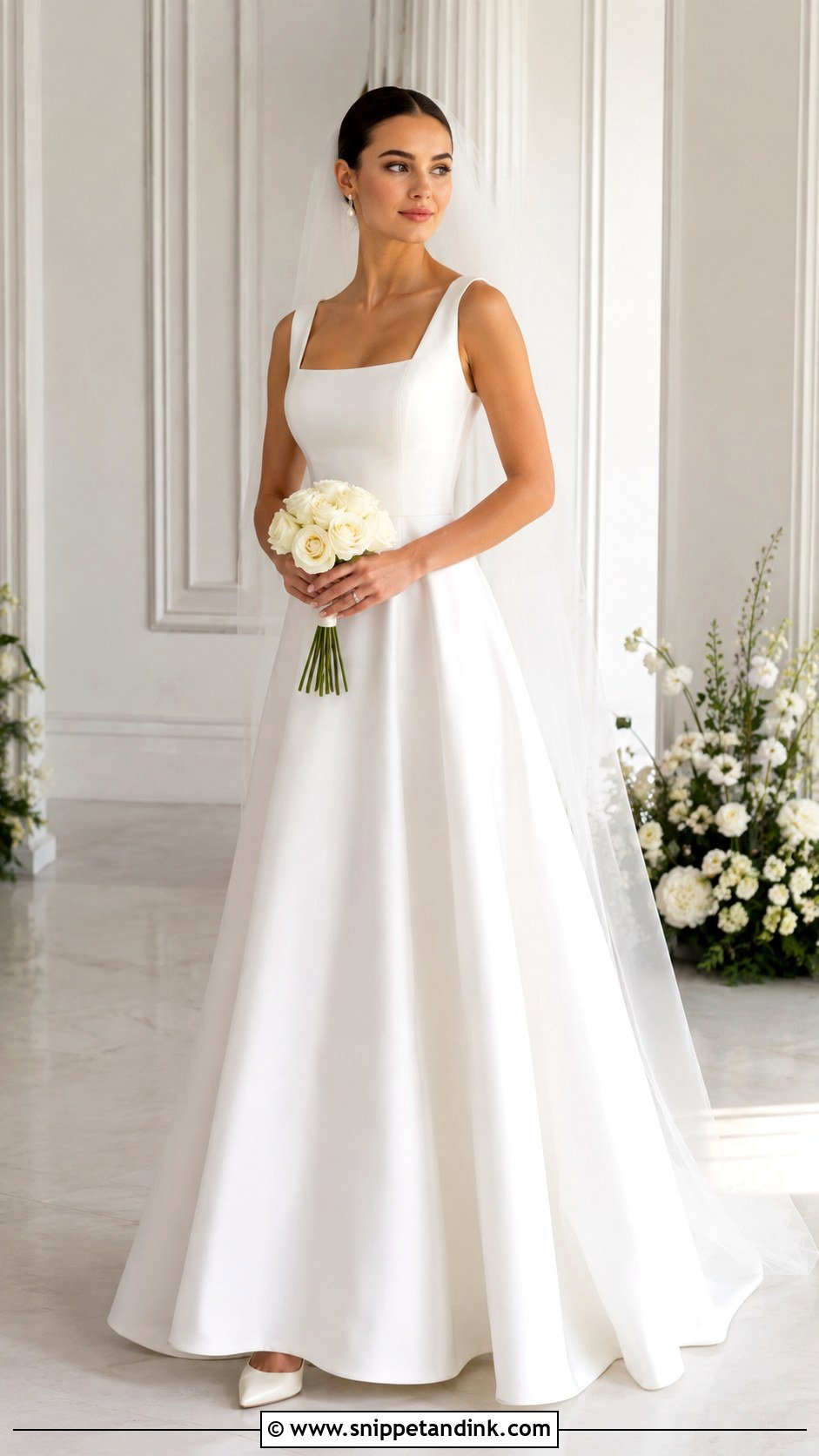
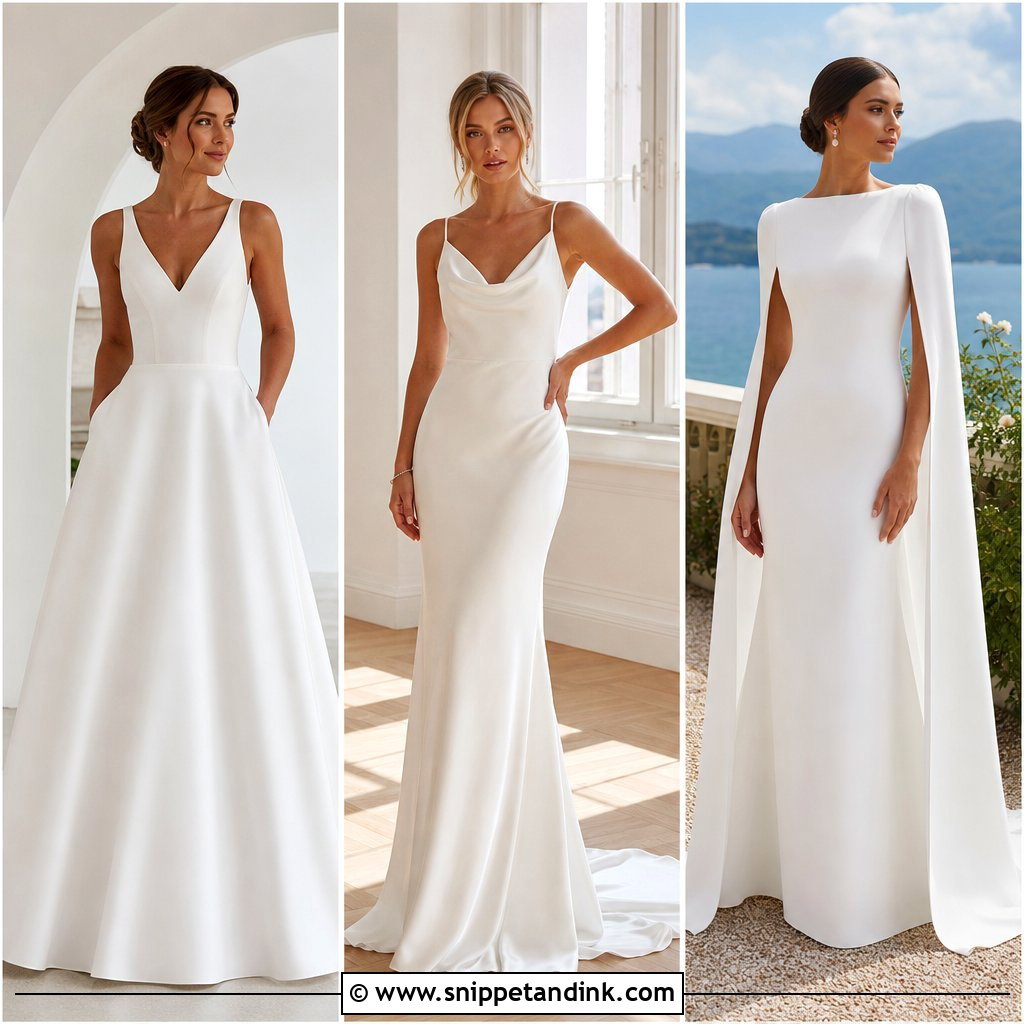
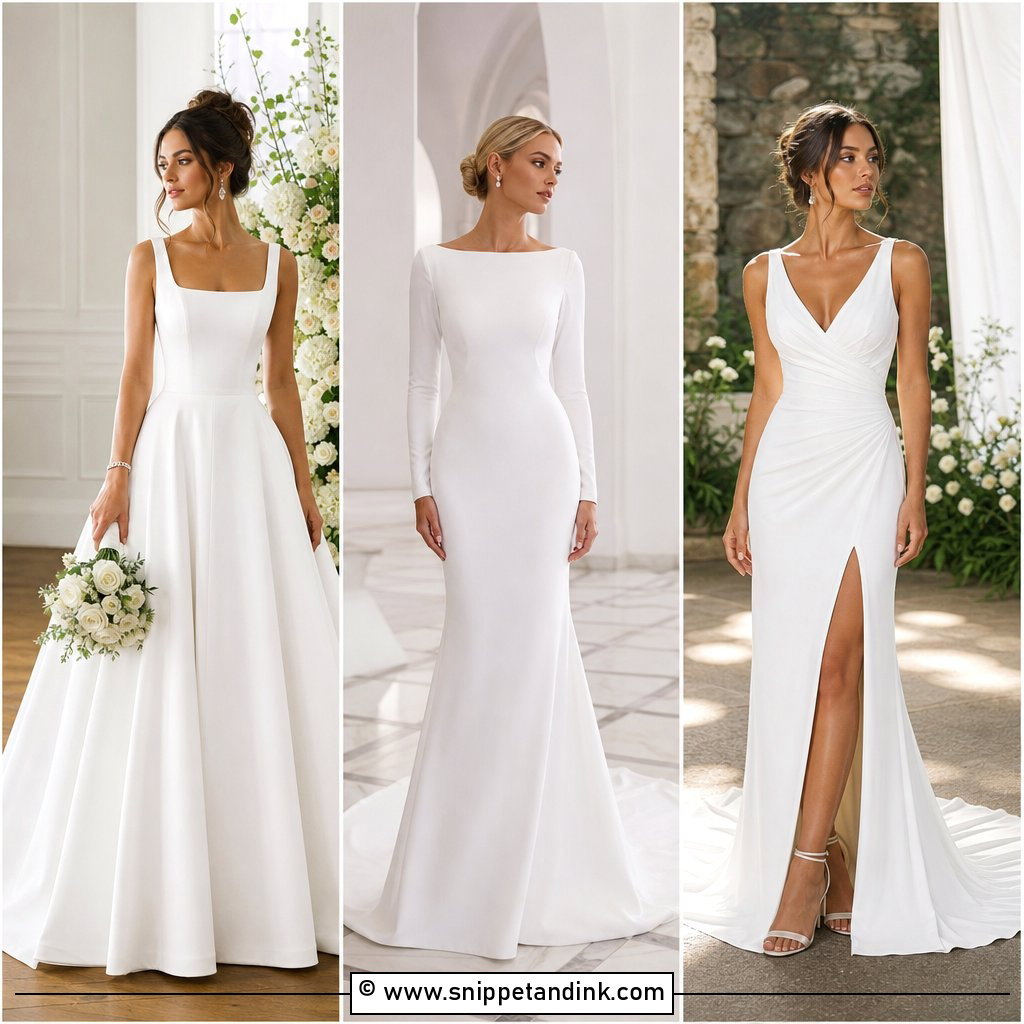
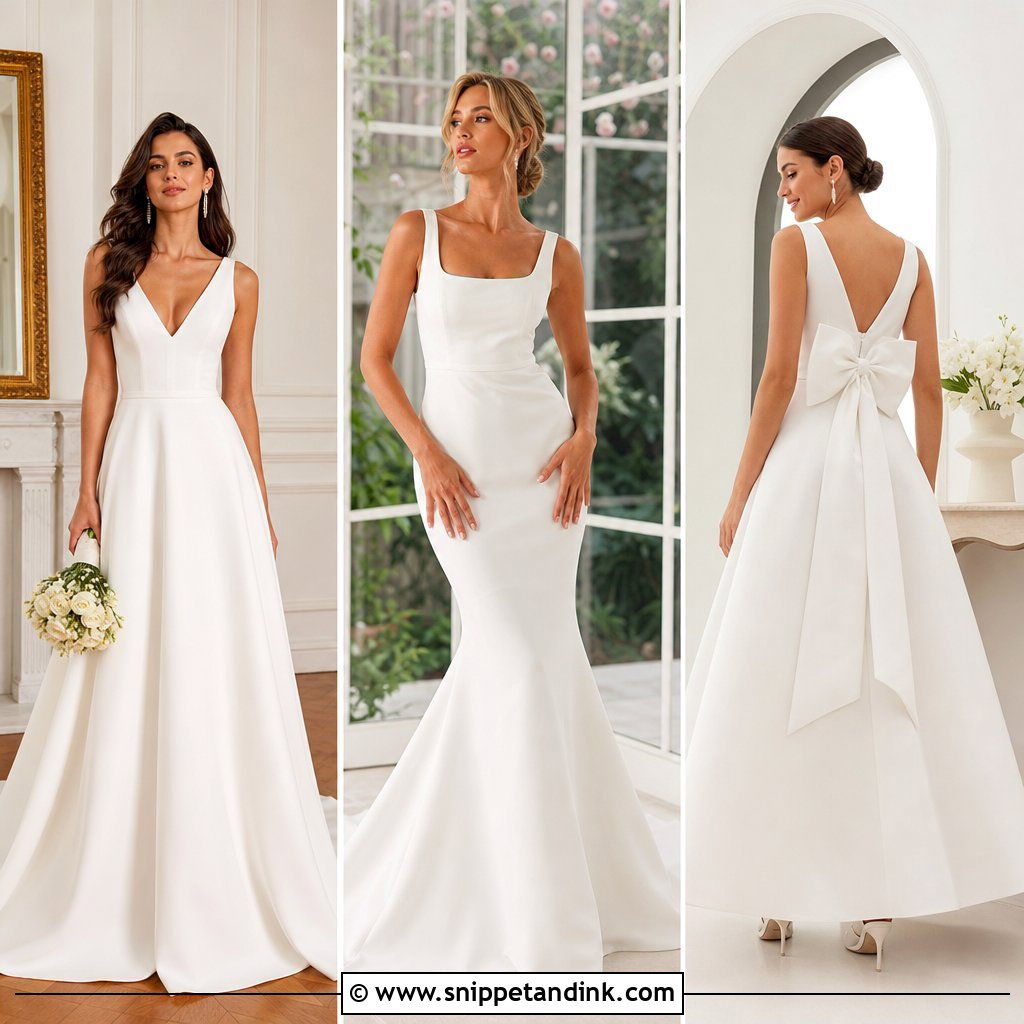
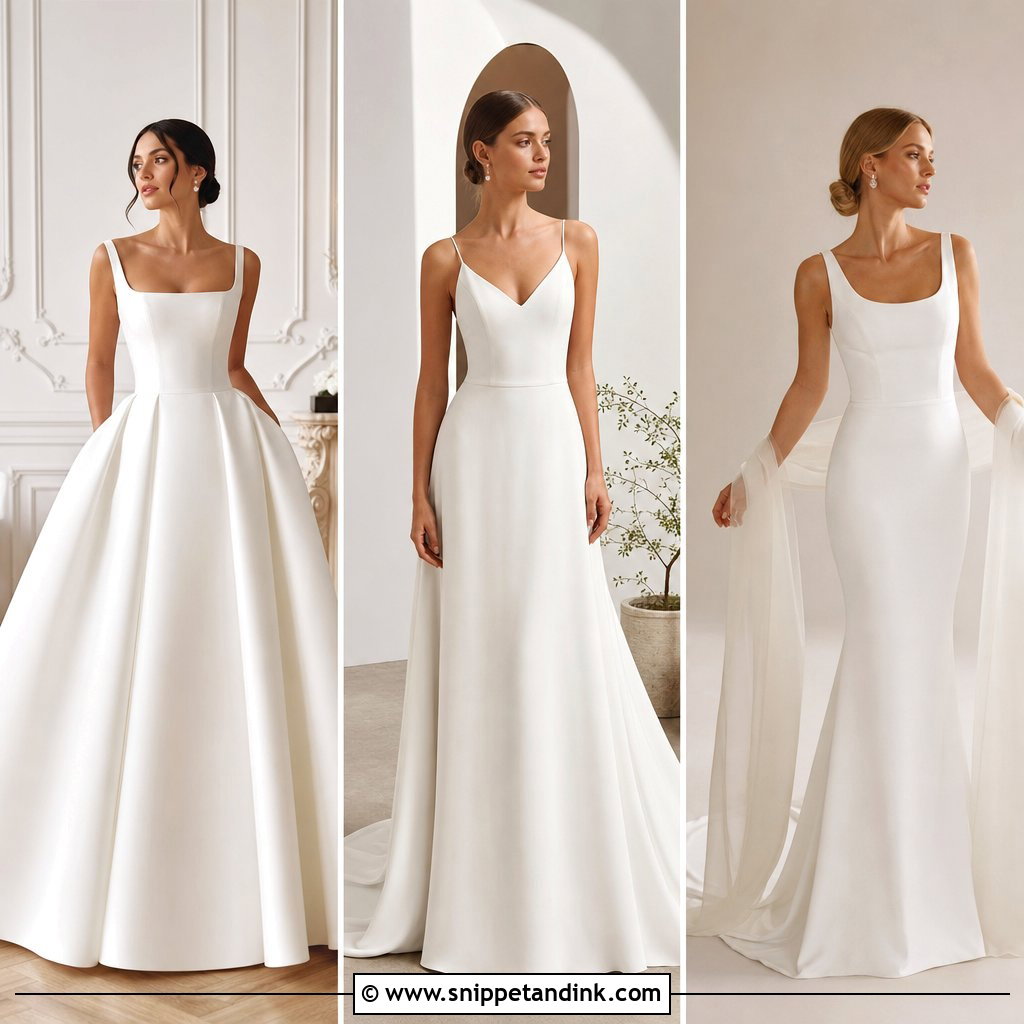
Satin on an A-line is the classic starting point, and it suits almost every figure. The bodice fits, with wide straps or a clean strapless line, and the skirt opens from the natural waist. Smooth satin reflects light in soft bands, so the dress has depth without any surface decoration. Pearl drops, pointed ivory pumps and a fingertip veil with a raw, unfinished edge are all it needs; white roses or calla lilies keep the bouquet calm. On a dress this bare, I look hardest at the waist seam. If it sits even slightly high or low on your body, the whole gown looks borrowed, so have your tailor mark your true waist while you stand naturally.
2. Crepe Sheath Wedding Dress
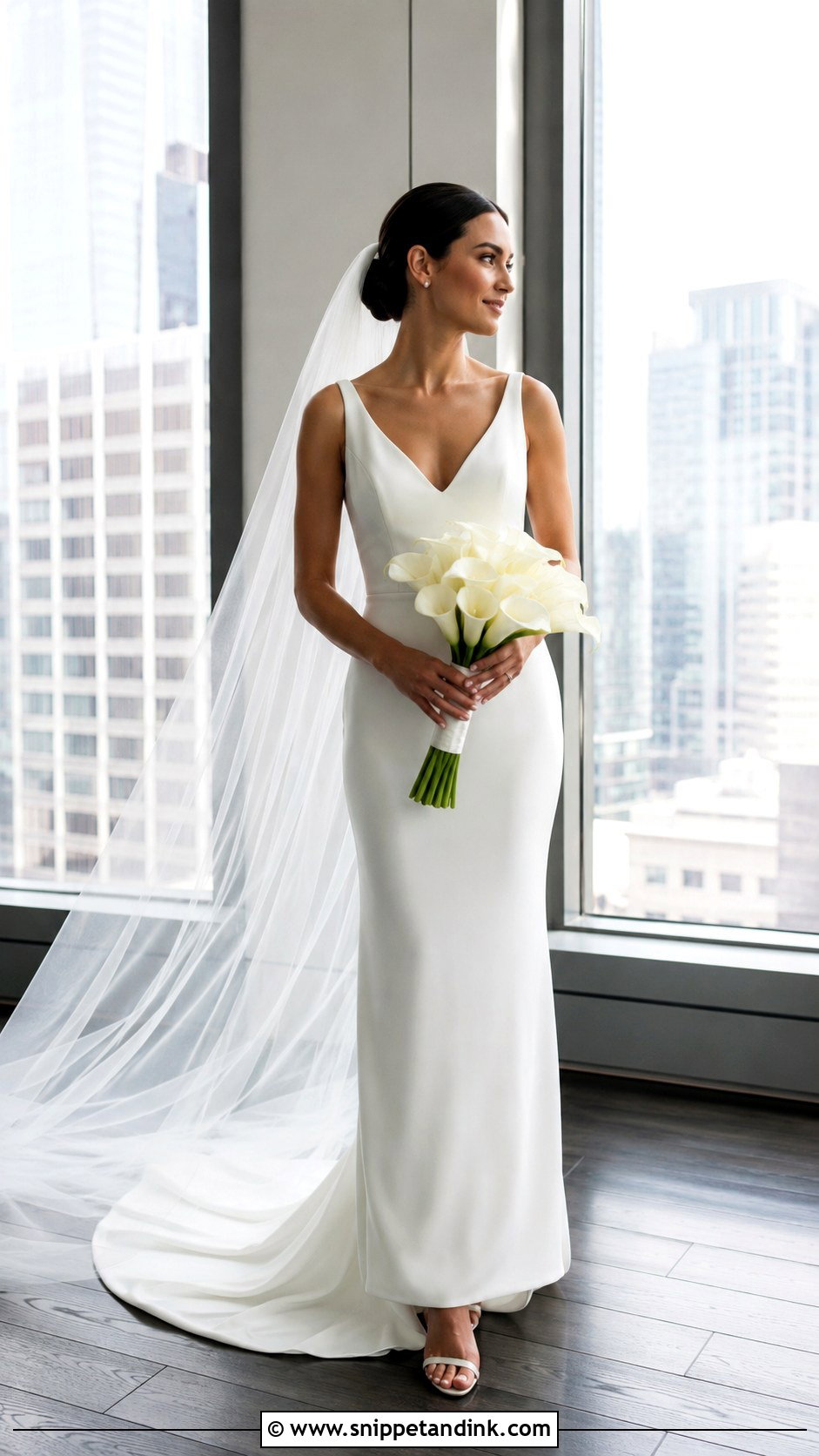
A plain crepe sheath follows the body closely, which means the weight of the crepe decides how it looks on you. Thin crepe shows every line underneath and pulls across the hips; a heavier, double-faced crepe falls straight and smooths things out. A soft V or a gentle scoop gives the face a frame, and a clean back keeps it modern. Slim ankle-strap heels, small studs and a long cathedral veil add contrast to the narrow shape. If you want coverage for a religious ceremony, a removable crepe cape solves it without changing the dress. Keep makeup fresh and the hair low; this dress looks best when nothing competes with it.
3. Strapless Mikado Ball Gown Wedding Dress
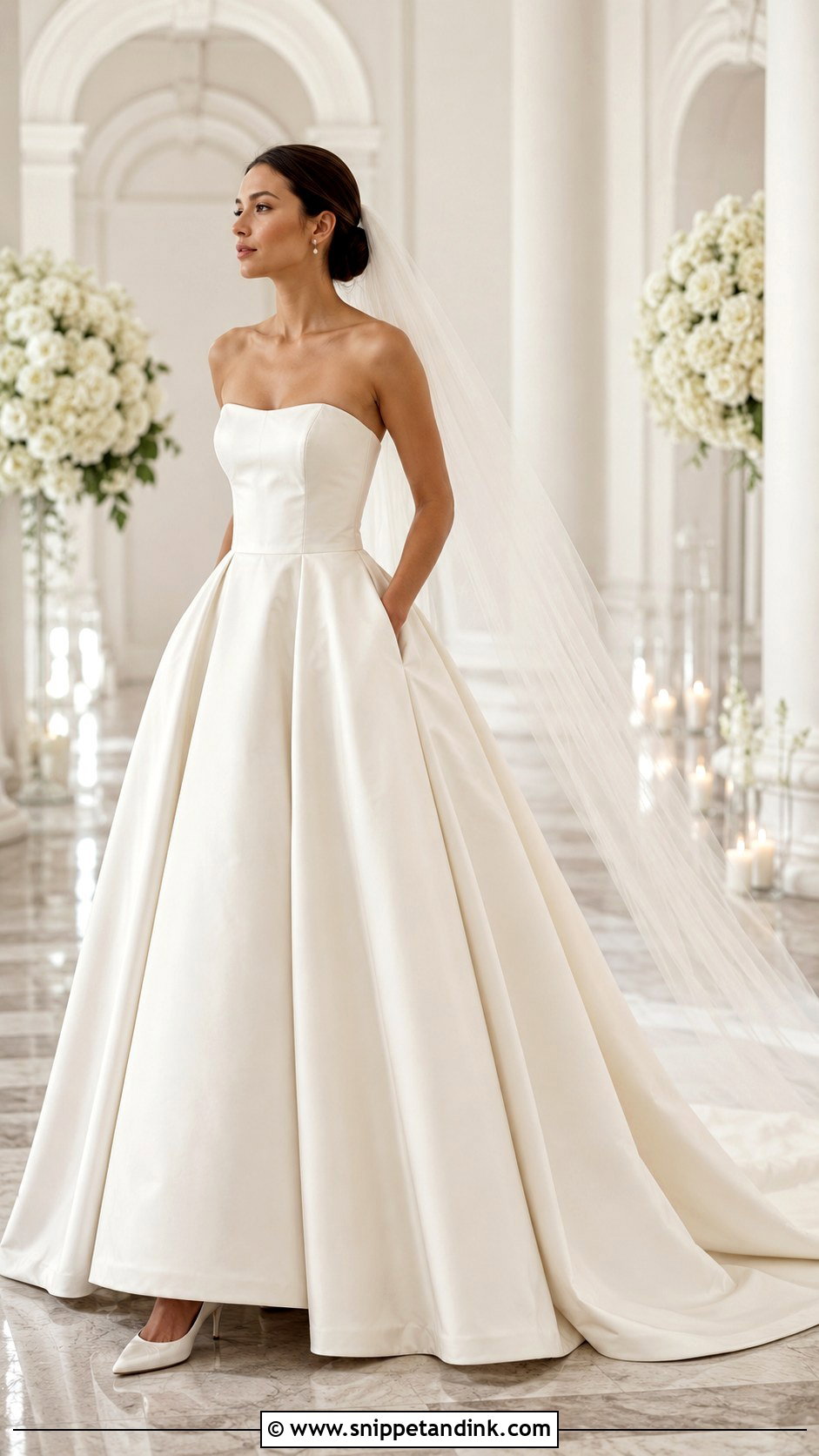
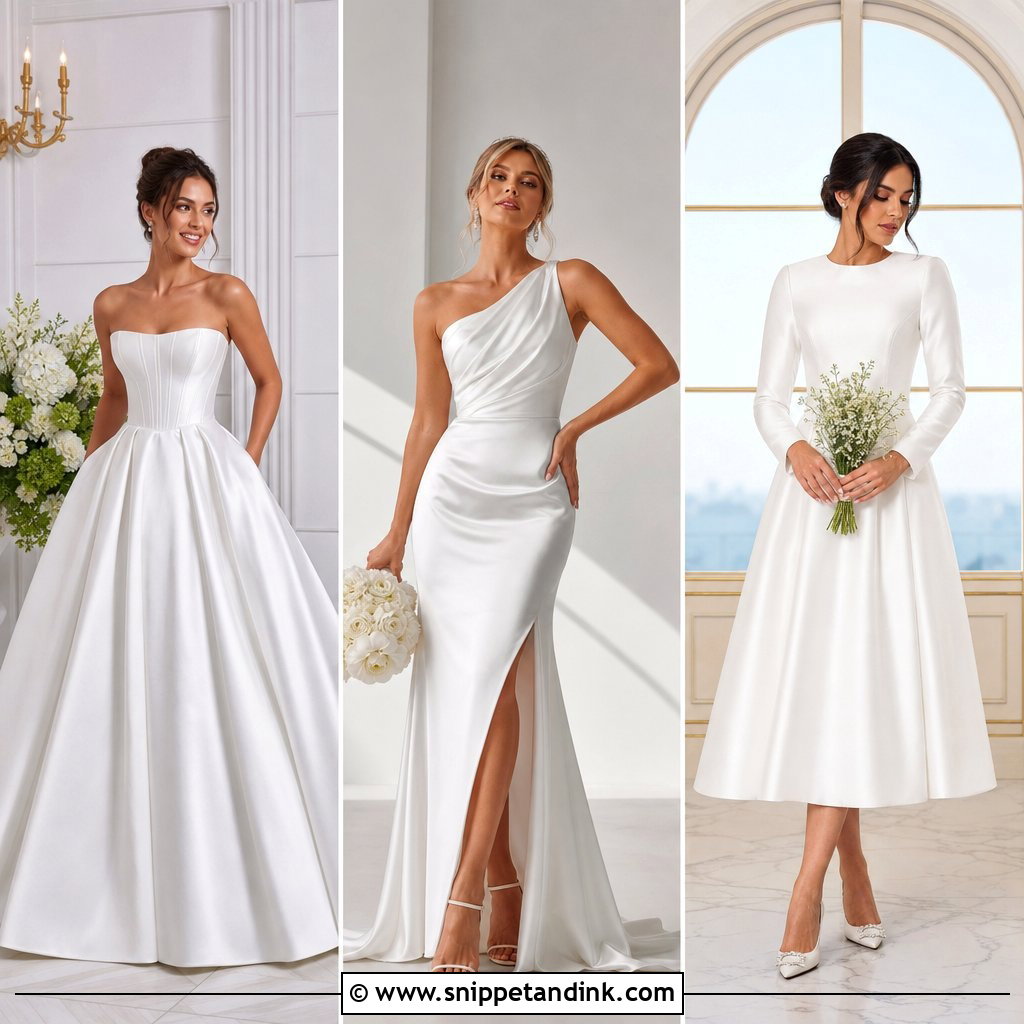
A full ball gown with no sparkle at all takes some nerve, and I admire brides who choose it. Structured Mikado gives this plain wedding dress its presence, because the fabric has a slight ribbed texture and holds a sculpted skirt without layers of netting underneath. Look for a supportive strapless bodice, a straight or softly curved neckline and a defined natural waist. A sleek bun, pearl studs, ivory pumps and a long single-layer veil are plenty, and a compact bouquet stops the outfit getting heavy. Ask about pockets; mikado hides them well. The bodice is the hard part. It has to grip enough to stay up through dancing, yet leave room to breathe and eat.
4. Square-Neck Column Wedding Dress
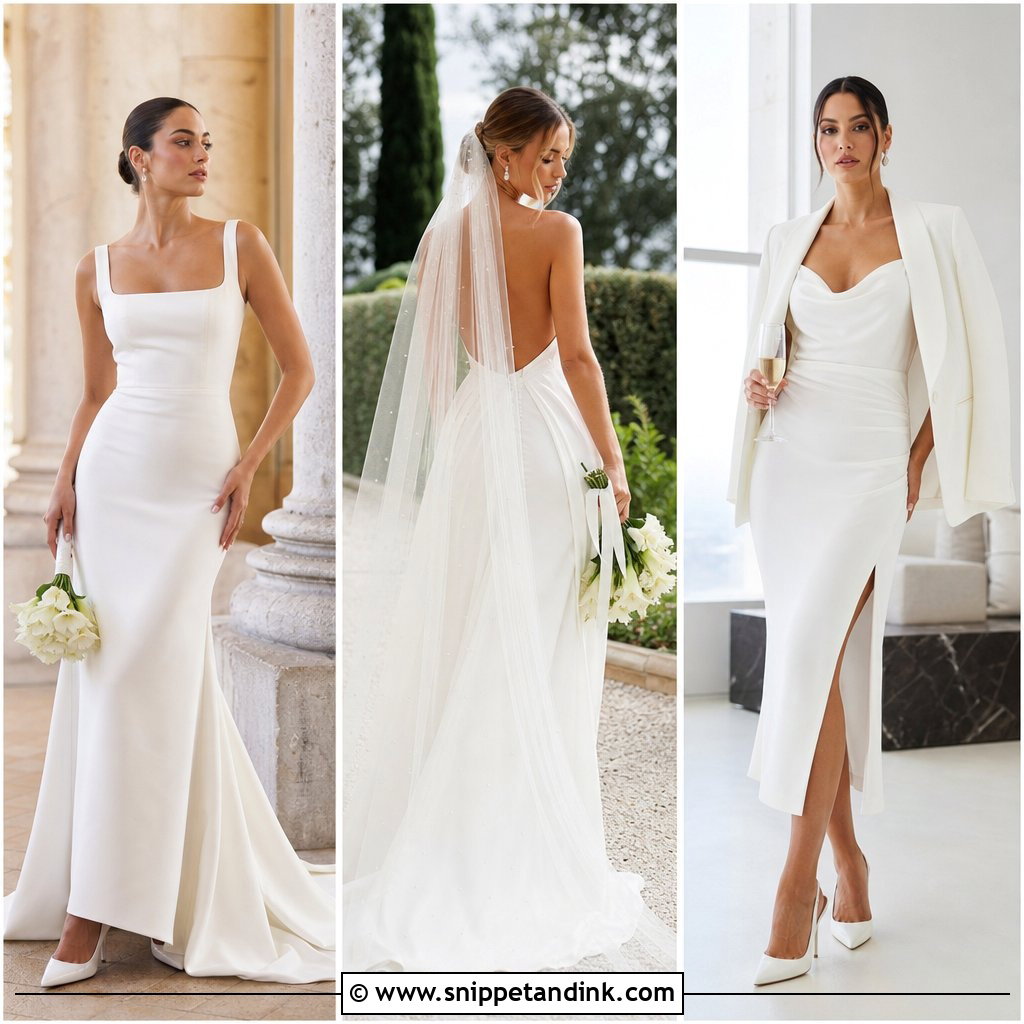
The square neck frames the collarbones like a picture, and a column skirt keeps the rest of the dress out of the way. Smooth crepe or matte satin, wide straps and princess seams give a clean, continuous line. A neat low bun suits it best, with delicate drop earrings, closed-toe slingbacks and a short tulle or birdcage veil. White tulips soften the geometry. The square neck is unforgiving, though: if the straps are a touch long, the top edge tips forward and gapes whenever you bend. I have the bride lean over a table during fittings and adjust the straps until the edge stays flat against the chest.
5. Off-the-Shoulder A-Line Wedding Dress
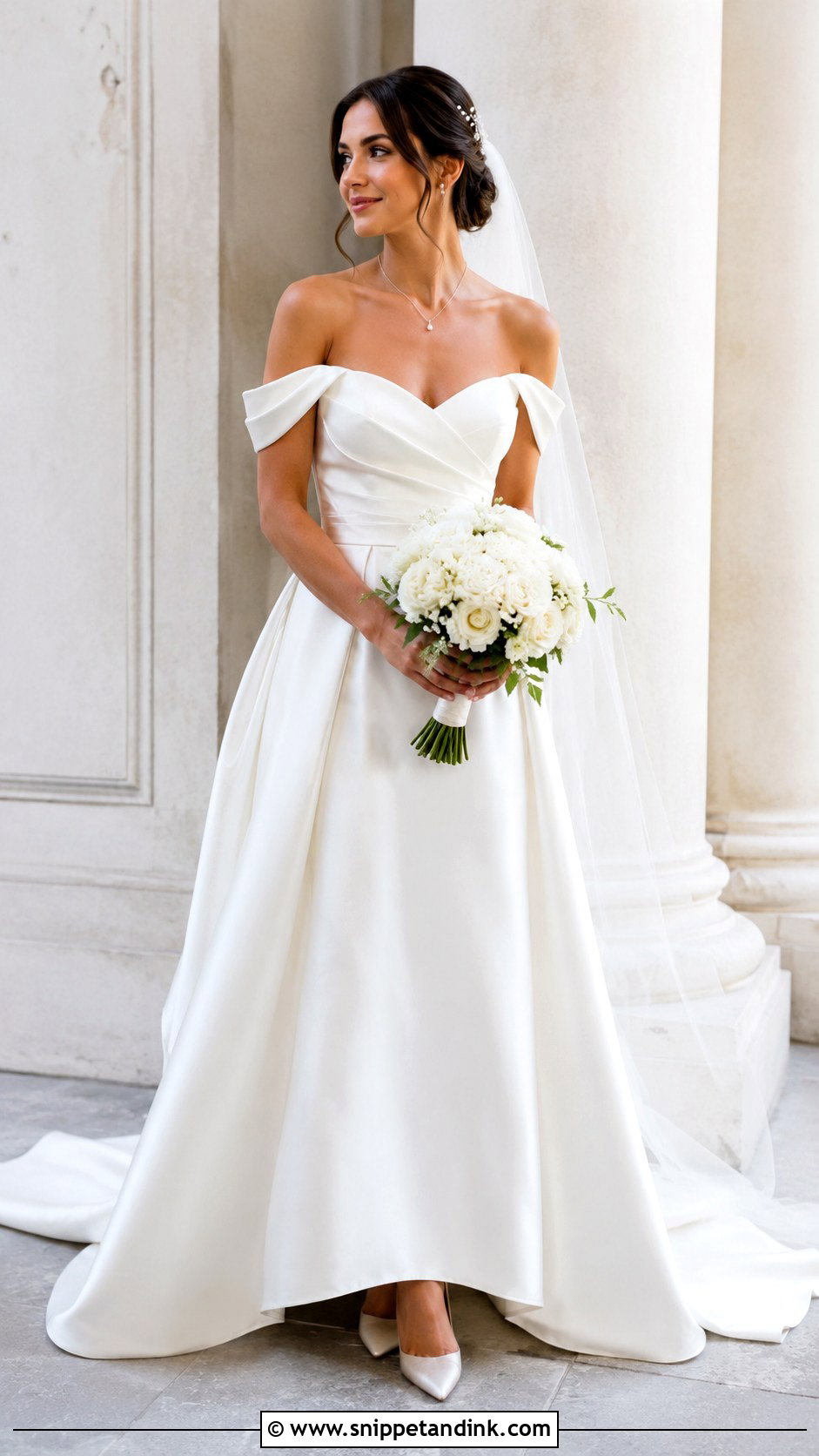
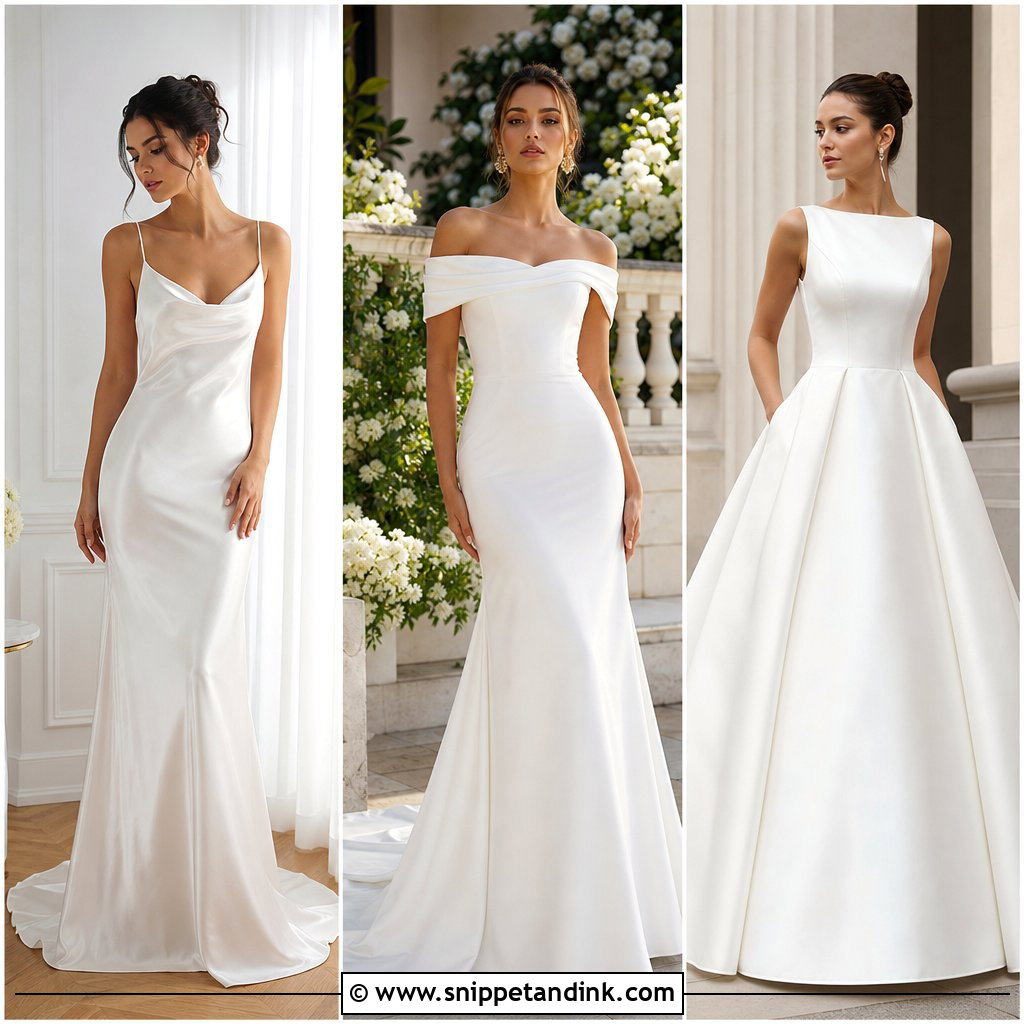
Off-the-shoulder sleeves bring softness to a plain A-line without adding a single bead. Fabric choice sets the mood: satin or stretch crepe moves fluidly, while mikado makes a stiffer, more formal skirt. A delicate pendant, pearl hairpins, pointed pumps and a chapel-length veil suit it, and a loose low chignon leaves the shoulders bare. Construction varies hugely between designers here. Some bands are elasticated and comfortable; others are rigid and pin your arms at your sides. At the fitting, I make brides raise their arms as if hugging a guest. If you can’t, the dress will annoy you all night, however good it looks in the mirror.
6. Long-Sleeve Crepe Wedding Dress
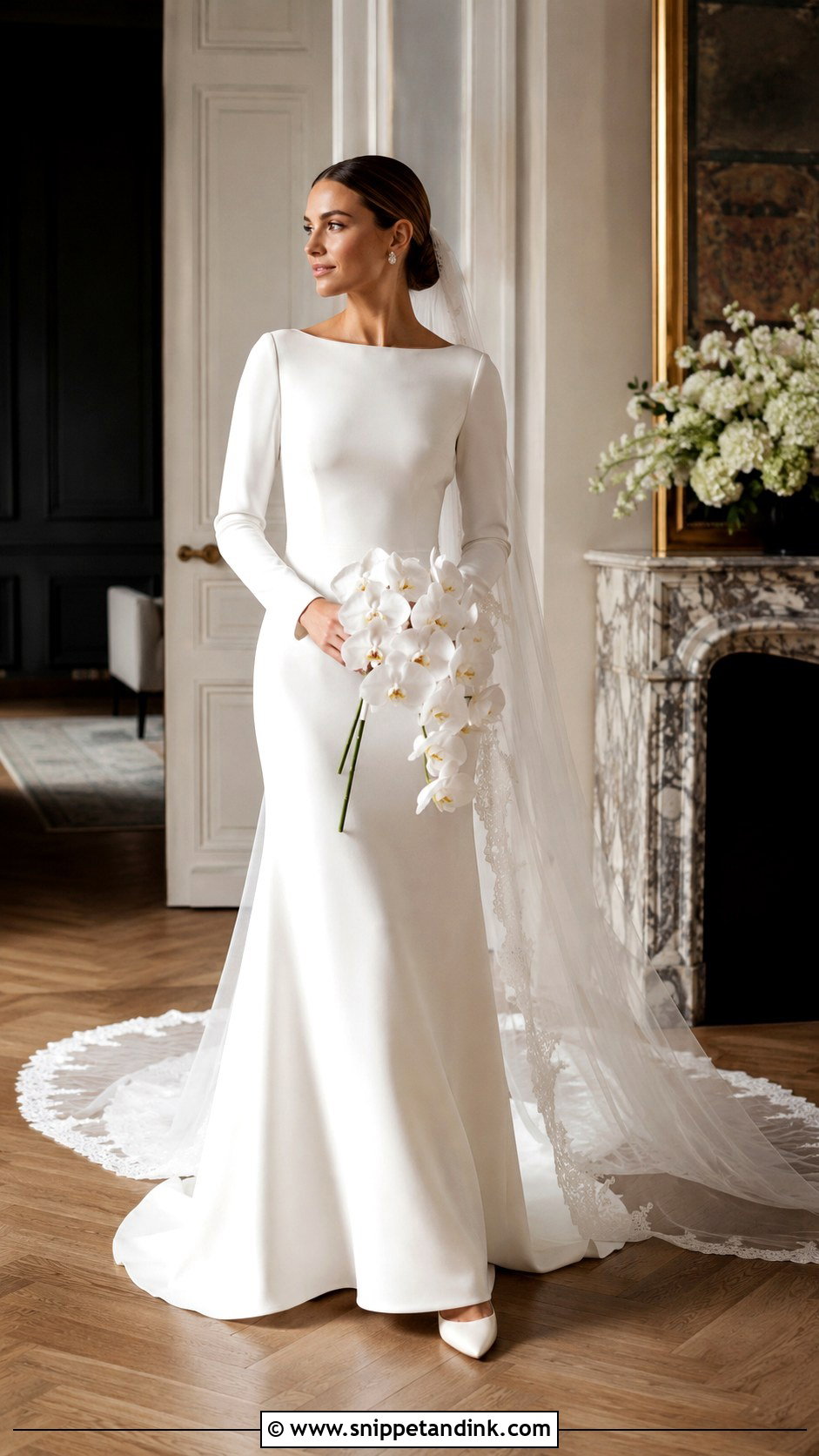
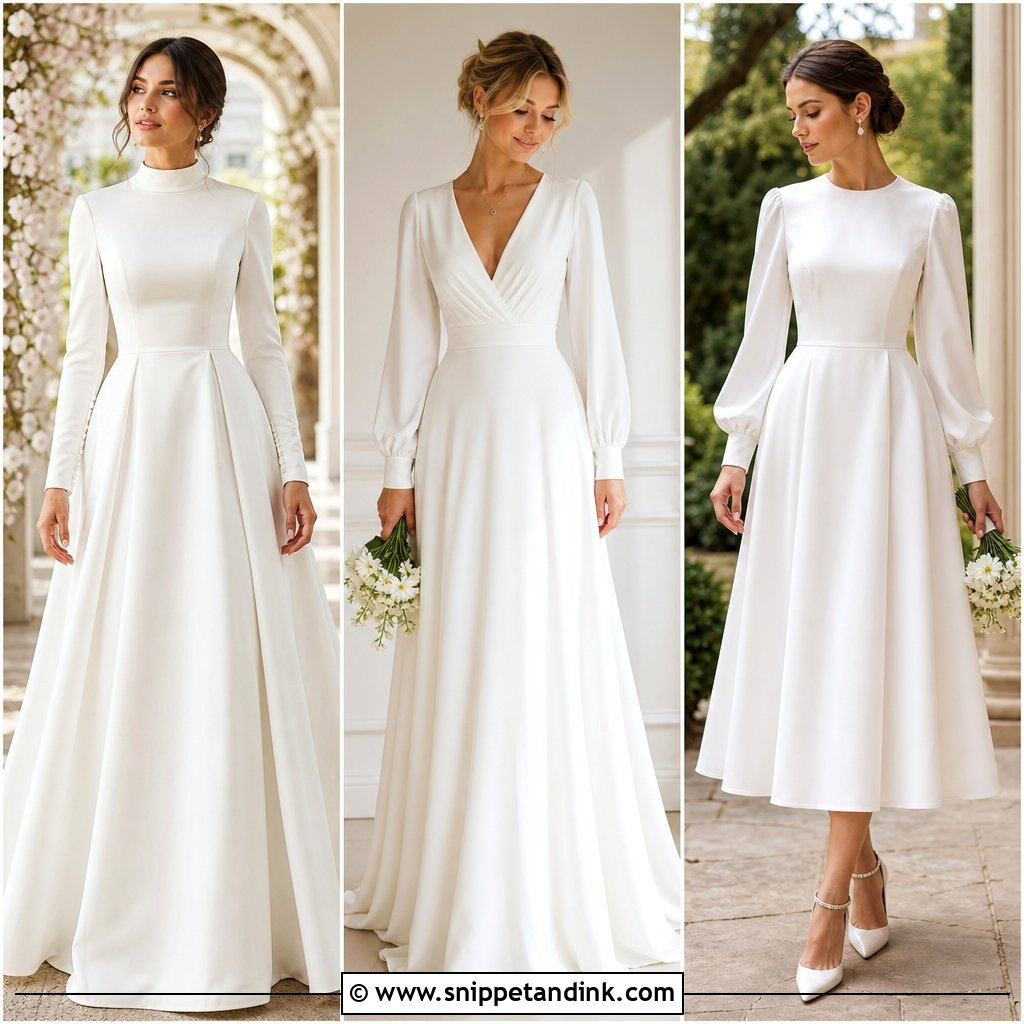
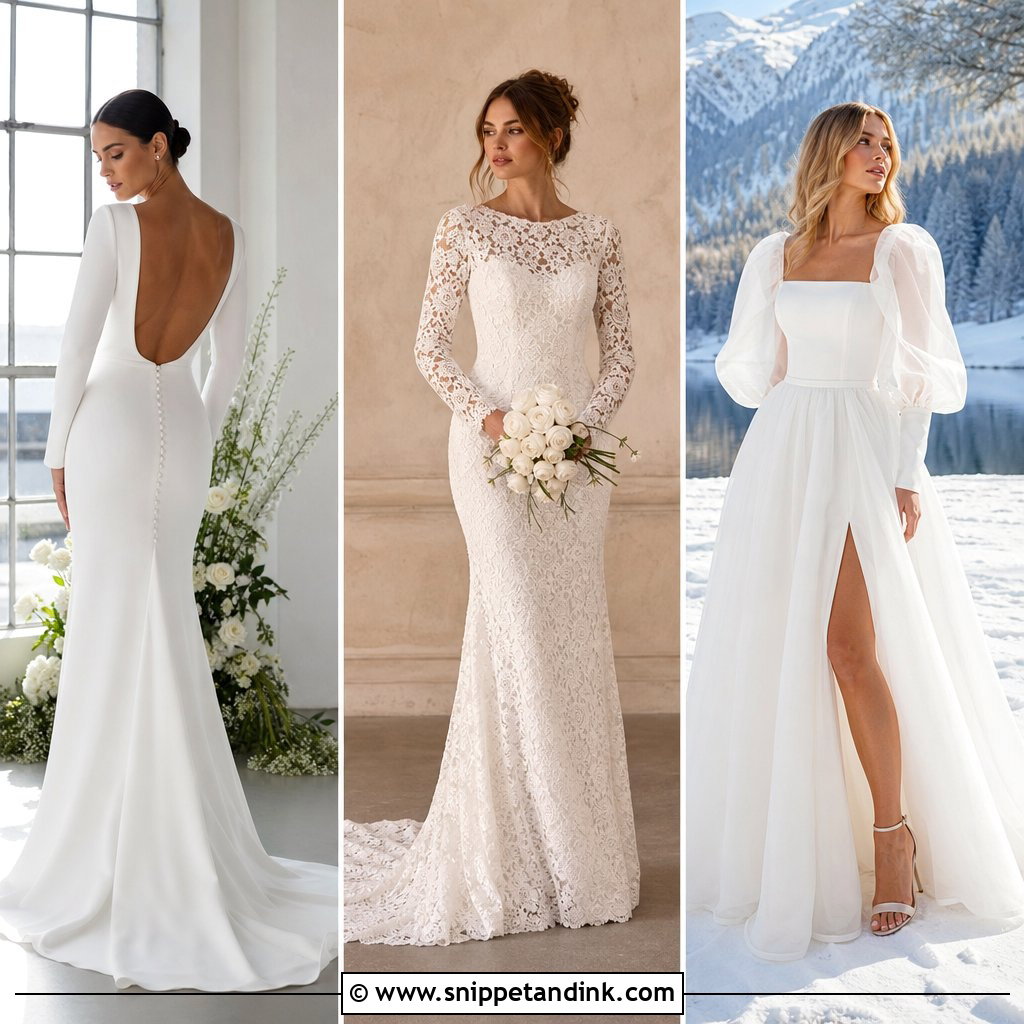
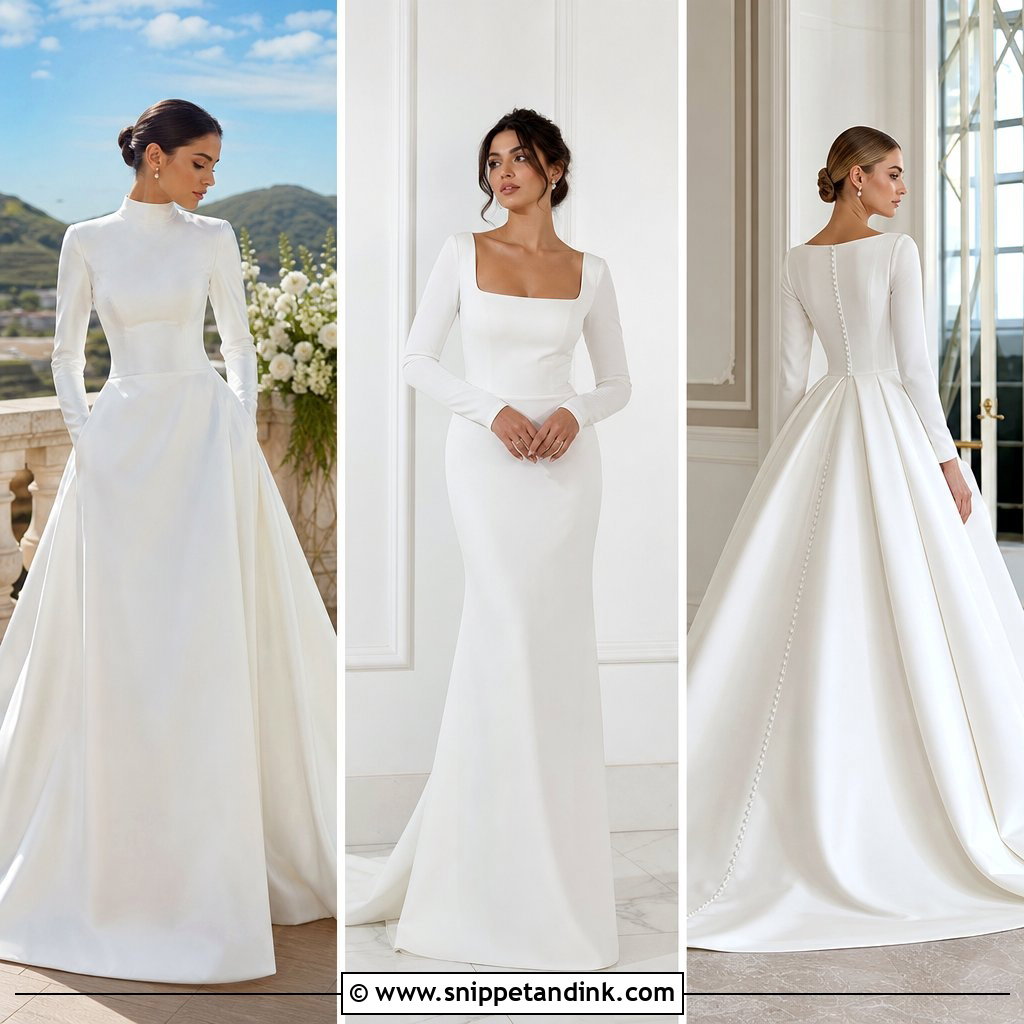
Long crepe sleeves give coverage without any of the weight of lace. The dress needs a fitted bodice, a lightly shaped waist and a straight or softly flared skirt, and a bateau, V or scoop neck keeps it from looking severe. Pearl earrings, a low bun, closed-toe heels and a narrow cathedral veil finish it; I’d skip the necklace entirely. Orchids or long-stemmed calla lilies echo the straight lines. Sleeves are where plain dresses go wrong. Too tight and they wrinkle in rings at the elbow and ride up the forearm. I ask brides to bend their arms fully and reach forward, because that is what holding a bouquet and hugging people looks like for eight hours.
7. Cowl-Neck Slip Wedding Dress
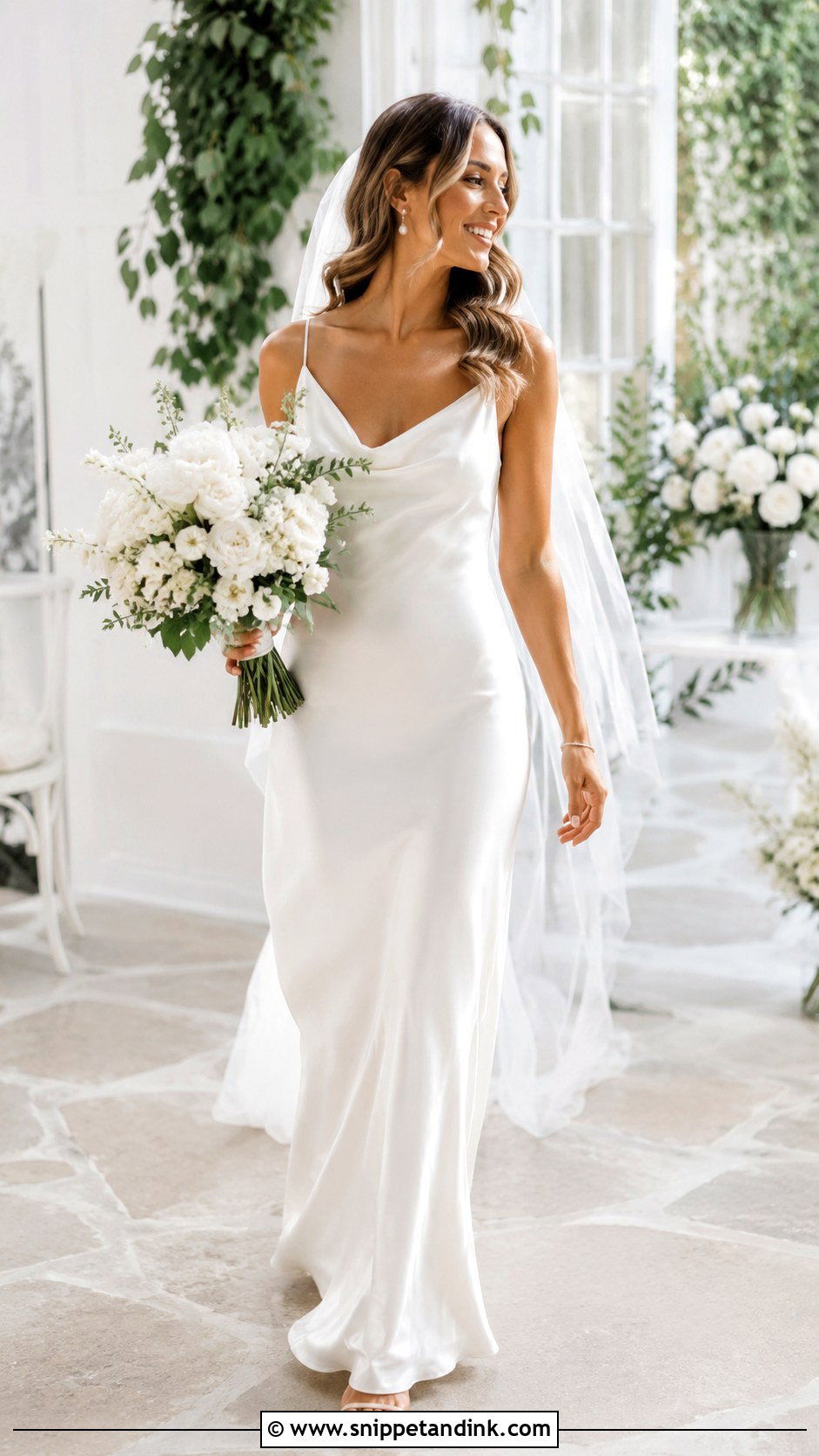
The cowl neck relies on the fabric folding under its own weight, so silk satin or a good satin blend cut on the bias is the only real choice. Cheap polyester satin won’t drape; it just bunches. The shape should skim rather than cling, with slim straps adjusted so the cowl doesn’t fall open when you lean. Barely-there sandals, a fine bracelet, small pearls and a sheer fingertip veil keep it relaxed, with soft waves or a simple twist in the hair. A fuller bouquet gives welcome contrast. Under fluid satin, underwear lines show at once, so try on seamfree, skin-tone underwear with the dress and check every angle in daylight.
8. Halter-Neck Wedding Dress
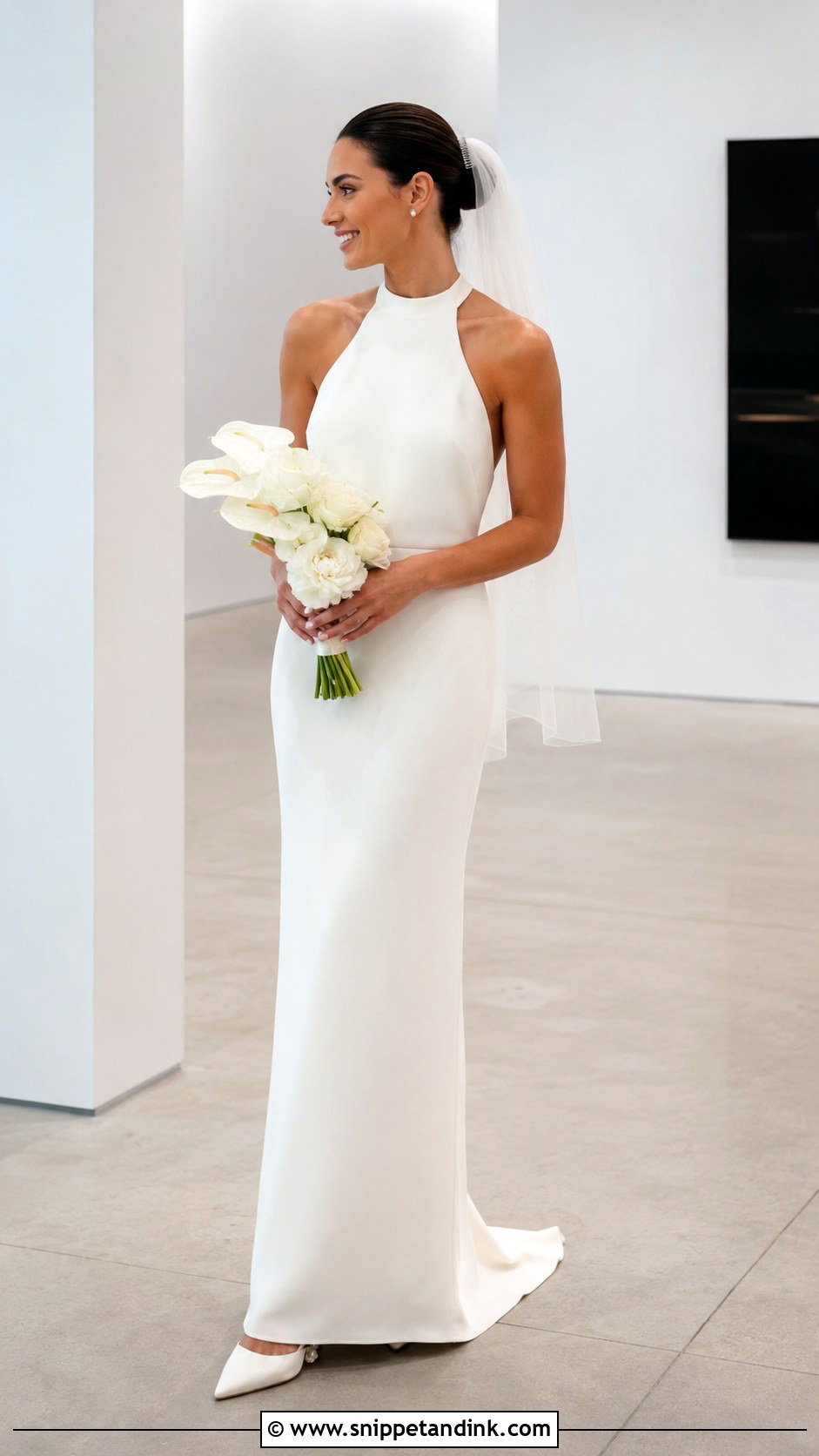
A halter lifts the eye to the face and shoulders and makes most brides look taller. Crepe columns and satin A-lines both suit it, with a high front and an open or gently scooped back. Because the neckline is the focal point, I keep jewellery to small earrings and put the hair up in a polished bun or ponytail. Pointed slingbacks, a simple comb veil and a structured bouquet finish it. Watch the fit at the back of the neck and under the arms. A halter that is cut too narrow rubs at the nape by evening, and one cut too wide shows the side of the bra, so get the strap tension right before the hem.
9. One-Shoulder Wedding Dress
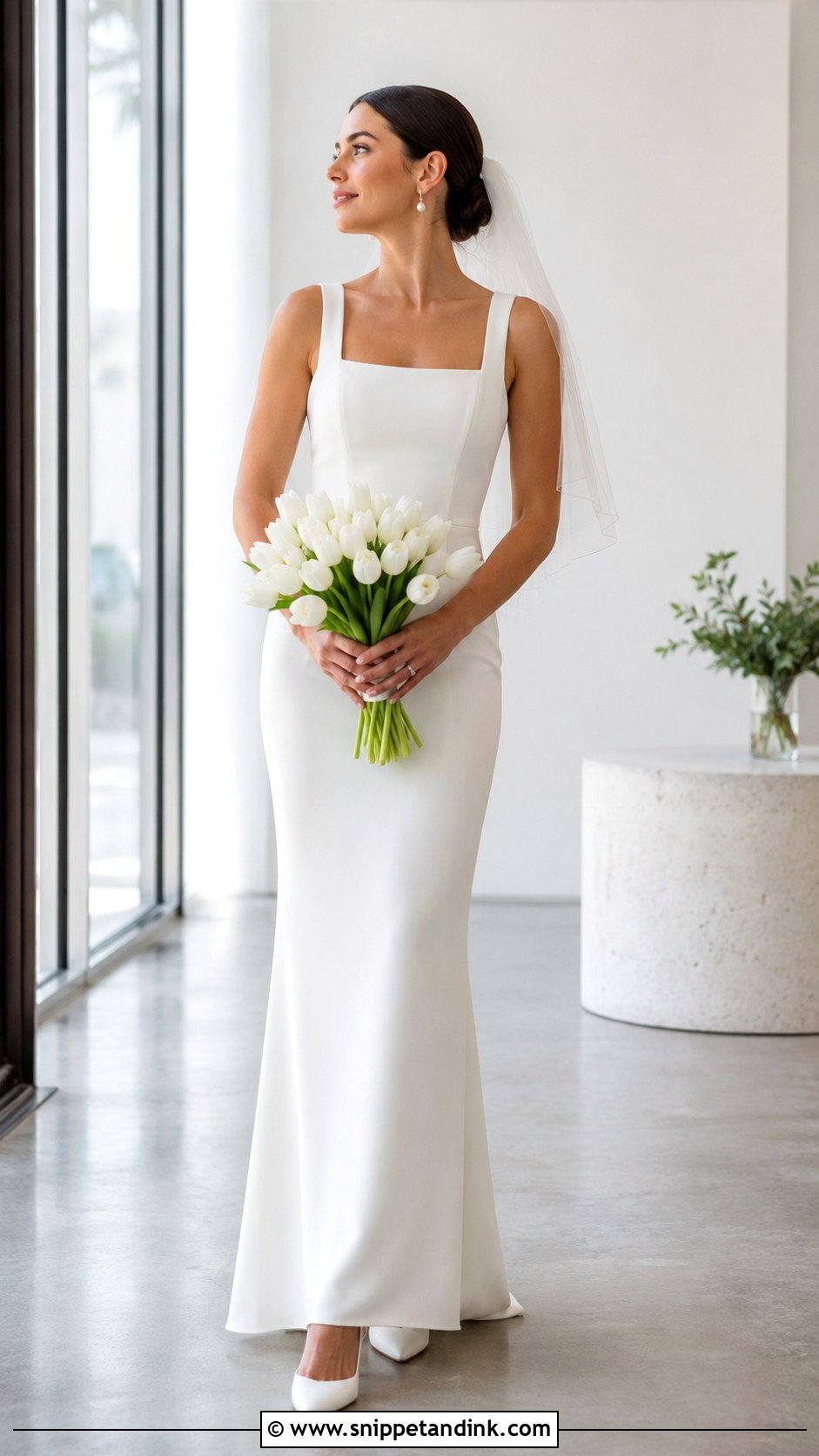
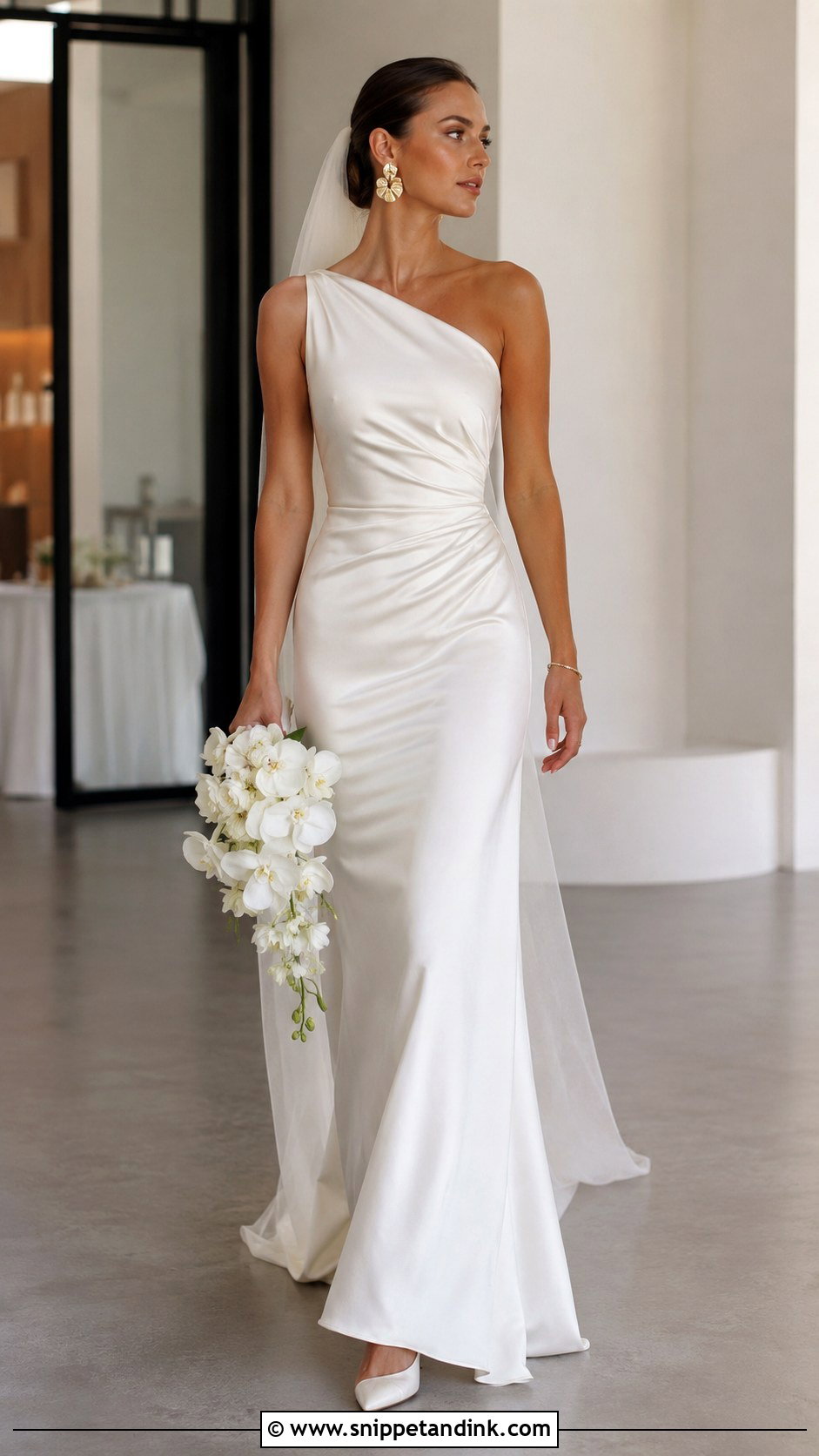
One bare shoulder is enough decoration for a plain gown. A one-shoulder neckline in stretch crepe, satin or mikado puts a clean diagonal across the bodice, and the skirt can stay straight or flare gently. Balance it with a sleek updo and a single bold earring on the bare side, or matching studs if you prefer calm. Pointed pumps, a slim bracelet and a veil fixed low beneath the hair complete it; a small cascading bouquet can follow the diagonal. Asymmetric bodices twist when the internal support is weak. I check the neckline standing and seated, because the strapped side often slides toward the neck once you sit down to dinner.
10. V-Neck Empire Wedding Dress
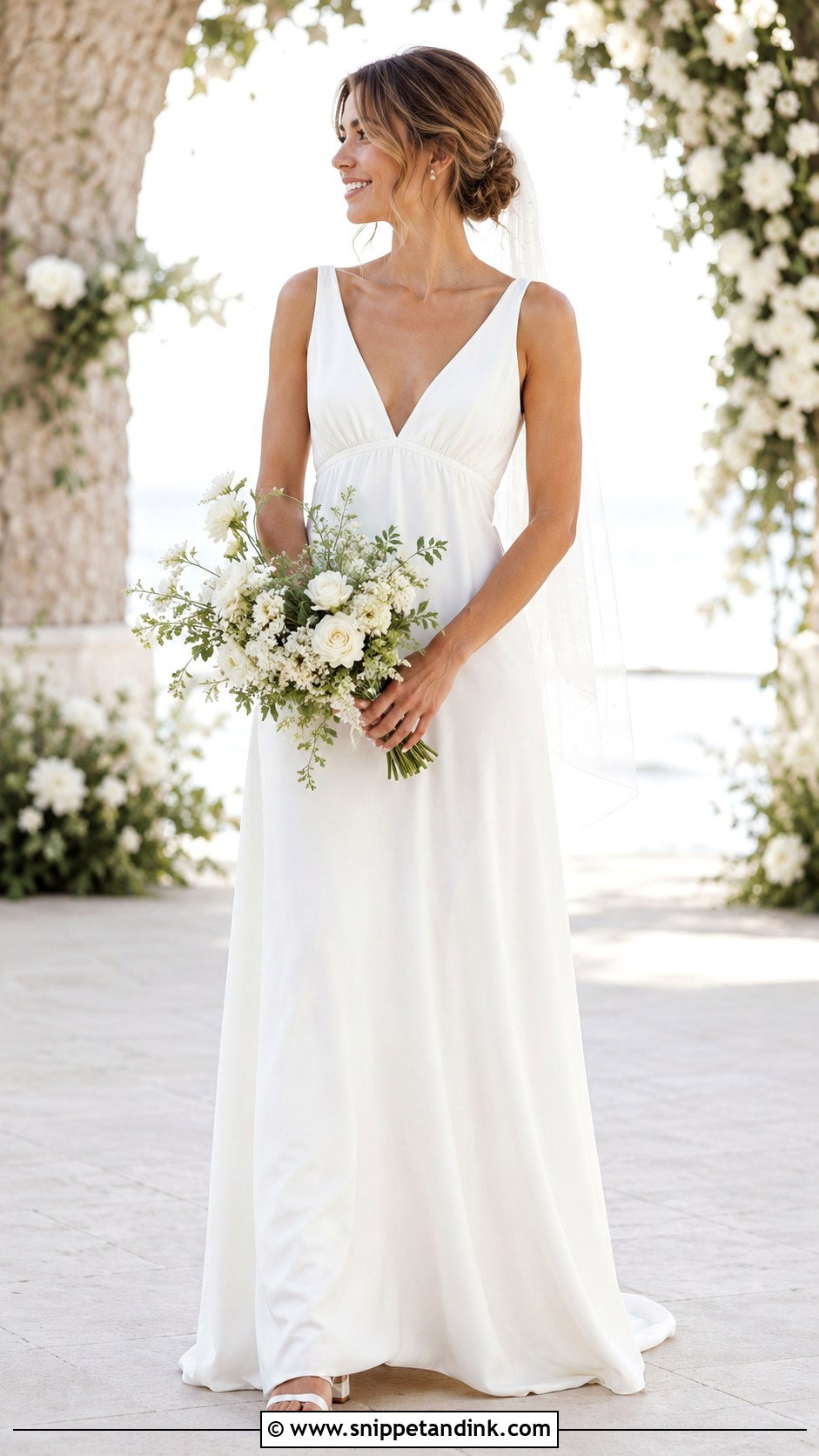
An empire waist sits just under the bust and lets the skirt fall loosely from there, which makes it one of the most comfortable dresses I fit. Fluid crepe, silk or chiffon over an opaque lining works well, with a V-neck and wide straps for balance. The raised seam should lie flat against the ribcage, never cutting in or puffing out. Pearl or crystal studs, low block-heel sandals, a light fingertip veil and a loose bun suit the airy shape, with a hand-tied bouquet of white flowers and greenery. Before buying, stand by a bright window: thin chiffon over a short lining shows your legs in outdoor photos. Pin the length with your final shoes on.
11. Sweetheart Mermaid Wedding Dress
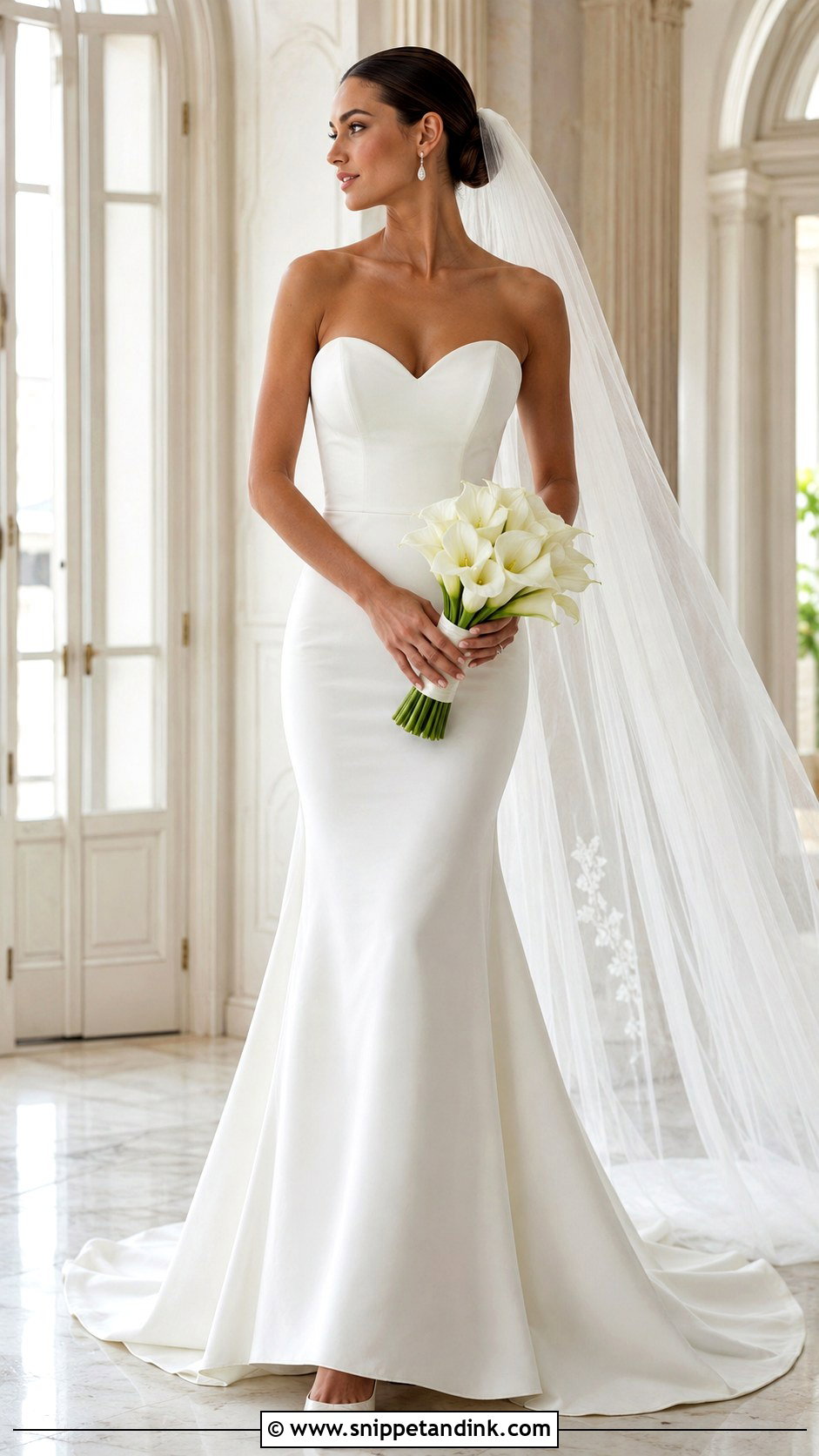
Mermaid gowns make their drama through shape, and a plain one shows your figure more honestly than any other cut here. Smooth stretch crepe or heavy satin, a supportive sweetheart bodice, fitted hips and a flare starting at or just above the knee give the classic outline. A simple cathedral veil, drop earrings, pointed pumps and a polished low bun keep it sculpted, with a narrow bouquet. Where the flare begins matters a great deal. Set too low and you will shuffle; set a little higher and you can walk, sit and climb steps. Detachable straps add security for the reception. I’d always do a slow dance in it at the final fitting.
12. Basque-Waist Satin Wedding Dress
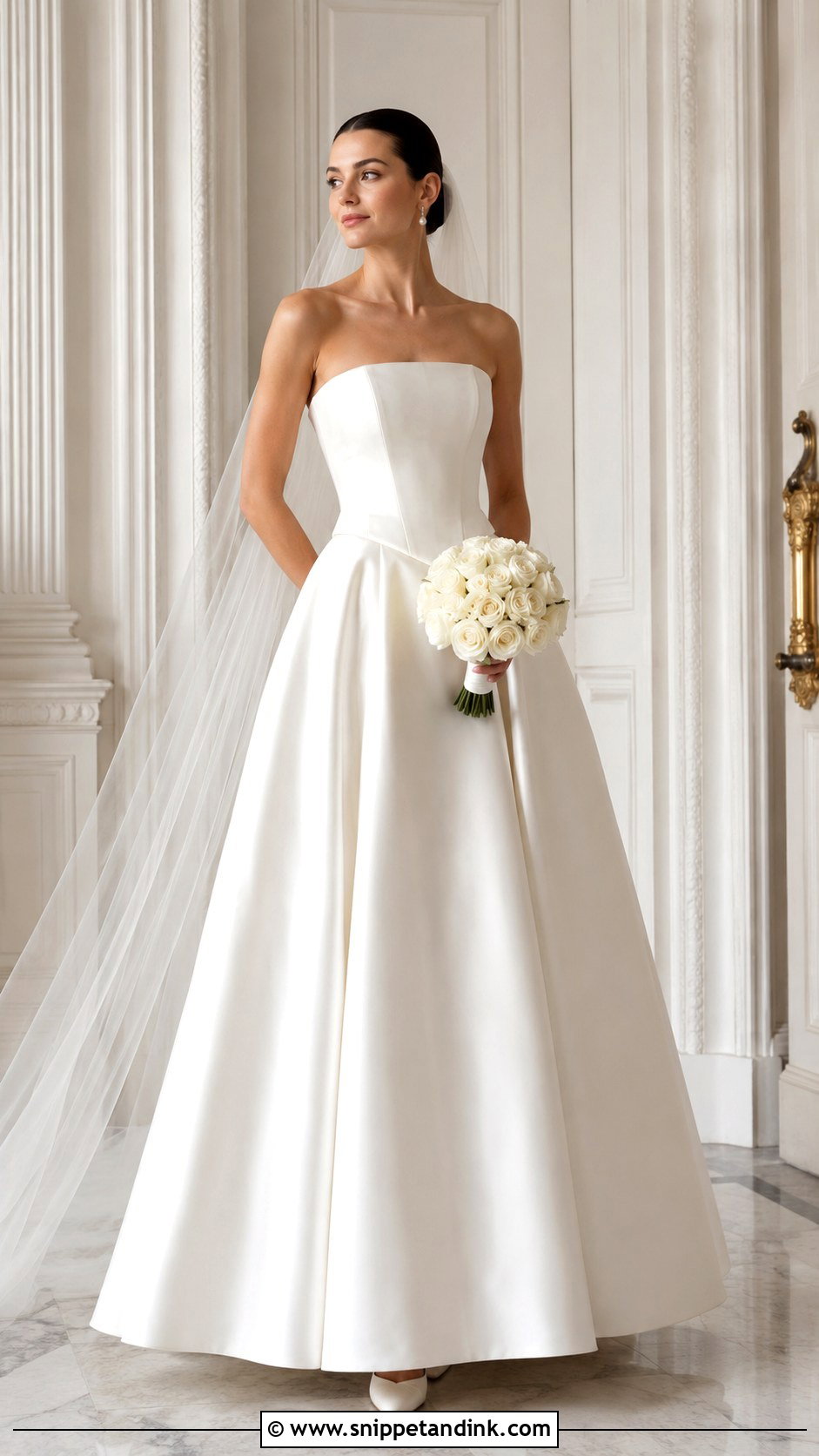
A basque-waist gown has a waistline that dips to a point at centre front, and on a plain dress that seam becomes the main detail. Luminous satin or mikado, a strapless or wide-strap bodice and a full plain skirt suit it. The point lengthens the torso while the skirt carries the volume. Pearl drops, a long sheer veil, closed-toe pumps and a compact bouquet of white roses are plenty. No belt; it would sit right across the point. The thing I check is symmetry. A point that drifts even slightly off centre is obvious in photos, and the boning should support the bodice without pressing into the hips when you sit.
13. High-Neck Column Wedding Dress
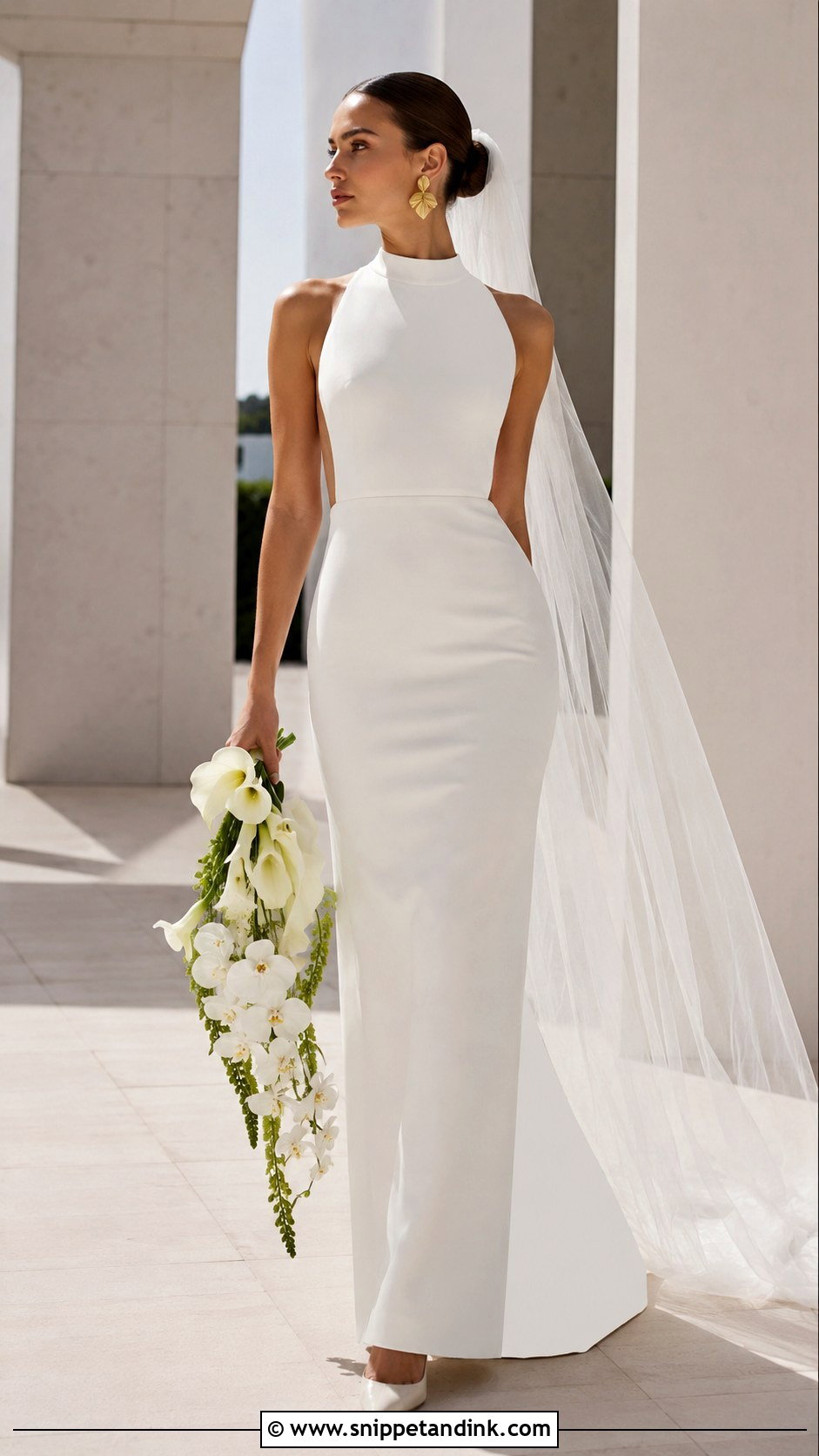
High neck, no sleeves and a skirt that falls close to the body: this is the most architectural dress on the list. Matte crepe, satin or silk with clean shoulder seams and a defined waist keeps it sharp, and an open back gives contrast. Going sleeveless stops the high neck from feeling heavy. Sculptural earrings, a smooth bun, pointed heels and a veil tucked beneath the hair suit it, and long-stemmed flowers repeat the vertical line. Skip the necklace. Two fit points matter most. The collar must let you turn your head without lifting, and the armholes should lie flat; high-neck sleeveless cuts often gape at the front of the arm.
14. Scoop-Neck A-Line Wedding Dress
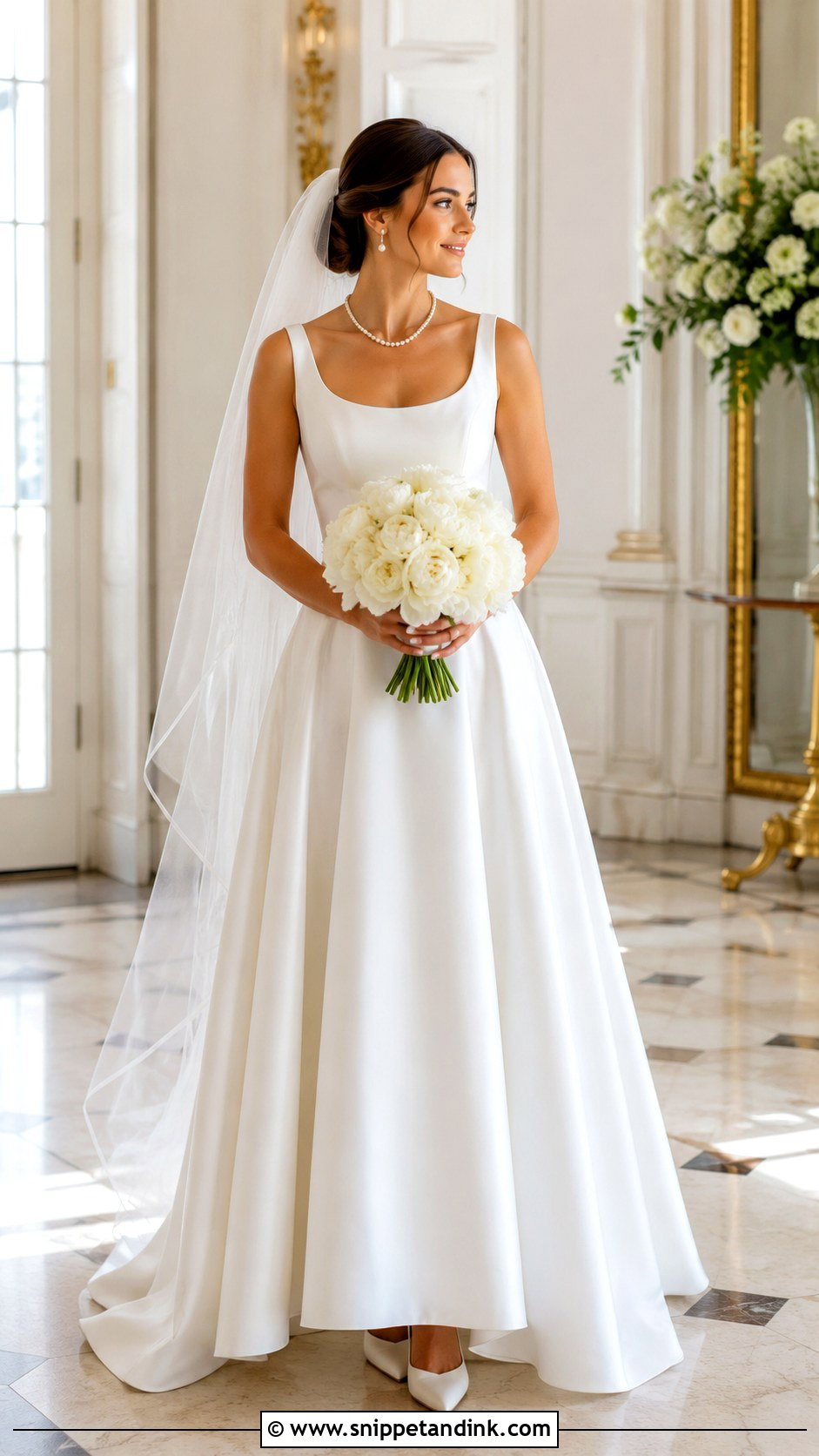
The scoop neck is familiar for a reason: it softens the upper body and suits nearly everyone. Plain satin, mikado or matte crepe works, with a fitted bodice, wide straps and a skirt that opens gradually. This is the one plain dress where I’m happy to add a necklace, since the rounded neck leaves space for a fine pendant or a short pearl necklace. Pearl earrings, ivory pumps, a chapel veil with a raw edge and a low chignon keep it traditional. Peonies, roses or tulips in a rounded posy suit it. A scoop can stand away from the chest when you lean forward, so check that and adjust the bust support before anything else.
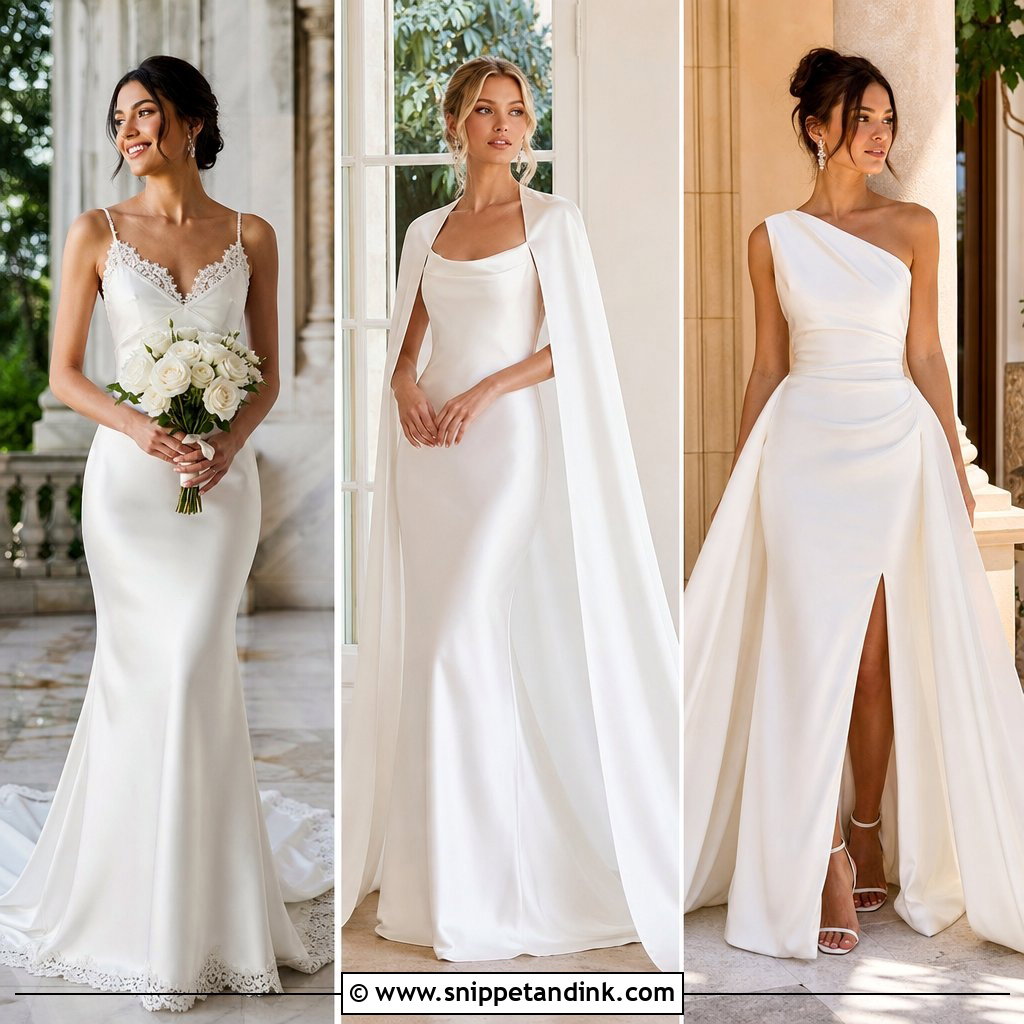
15. Boat-Neck Wedding Dress
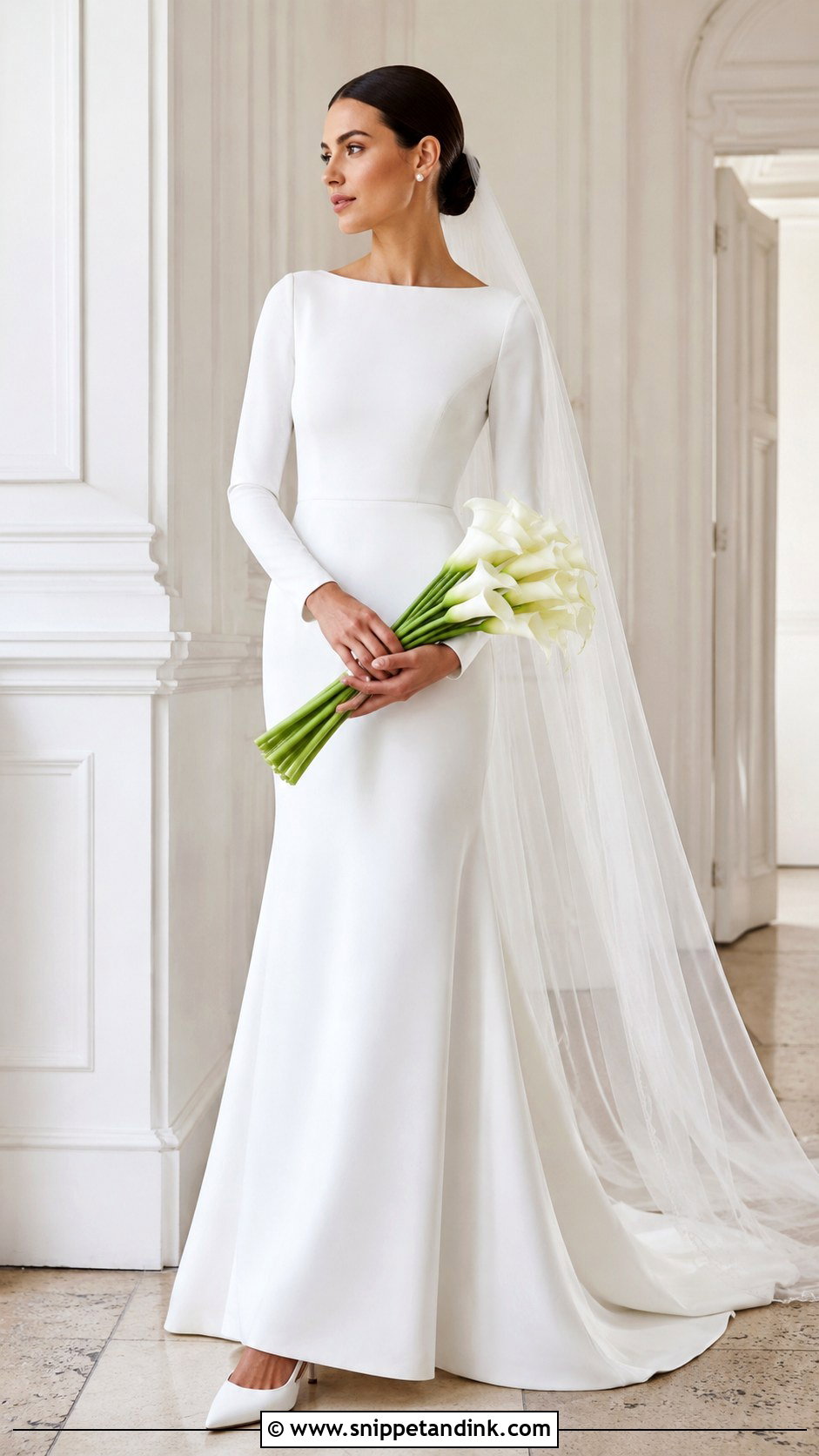
A boat-neck wedding dress draws a horizontal line from shoulder to shoulder, which widens narrow shoulders nicely and suits brides with a long neck. Smooth crepe or satin, cap sleeves or long sleeves, and a straight, A-line or softly flared skirt all work. Hair low, pearl studs instead of a necklace, pointed slingbacks and a narrow cathedral veil keep it quiet; long-stemmed white flowers add height. Broad-shouldered brides may find the line too wide. The shoulder fit has to be exact because the neckline sits right on the bone, and the slightest ripple across the upper back shows. Move your arms around while the tailor watches.
16. Tea-Length Wedding Dress
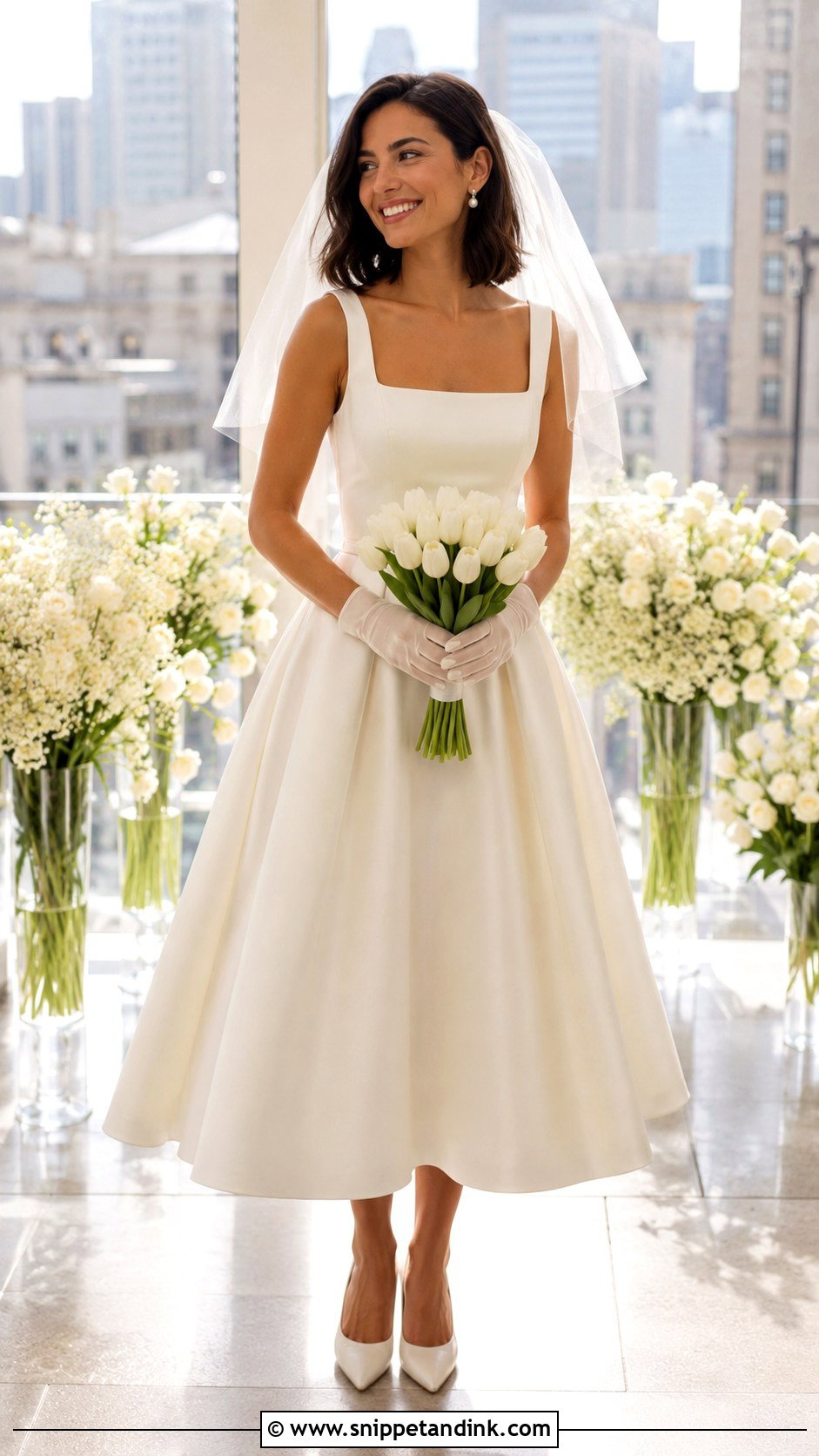
Ending somewhere between knee and ankle, a tea-length dress feels lighter than a full gown and still clearly bridal. A plain satin or Mikado design with a fitted bodice and defined waist holds the skirt out nicely, and square, scoop or strapless necklines all suit it. Your shoes are on show, so choose them as carefully as the dress: ivory pumps, slingbacks or low block heels. Pearl earrings, optional short gloves and a shoulder-length veil or a structured hair bow finish the period feel. The skirt needs body but not stiffness; too much petticoat makes it look like a costume. Pin the hem with the final shoes on.
17. Plain Mini Wedding Dress
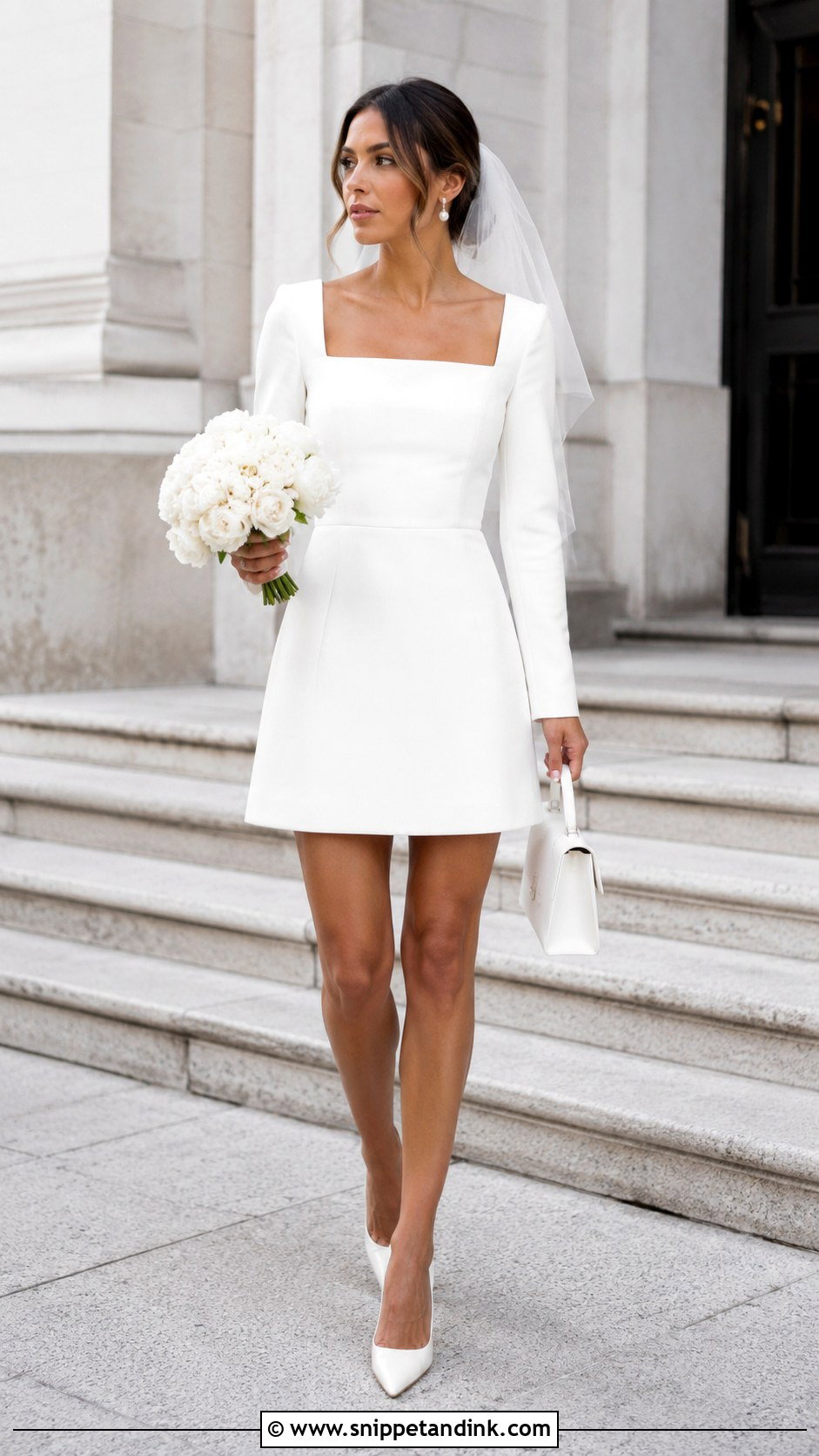
A plain mini is a confident choice for a courthouse ceremony, a small celebration or a change for the party. A structured shift, a fitted A-line or a tailored sheath with a clean neckline all work, as long as the lining is solid. Long sleeves balance the short hem; strapless or square necks look more current. Pointed pumps, pearl earrings, a small top-handle bag and a short veil or simple bow are enough, with sheer tights for a cold day. Keep the bouquet small. Short hems have one big test. Sit on a low chair, climb a staircase and get in and out of a car, because a mini that rides up will have you tugging it all evening.
18. Drop-Waist Satin Wedding Dress
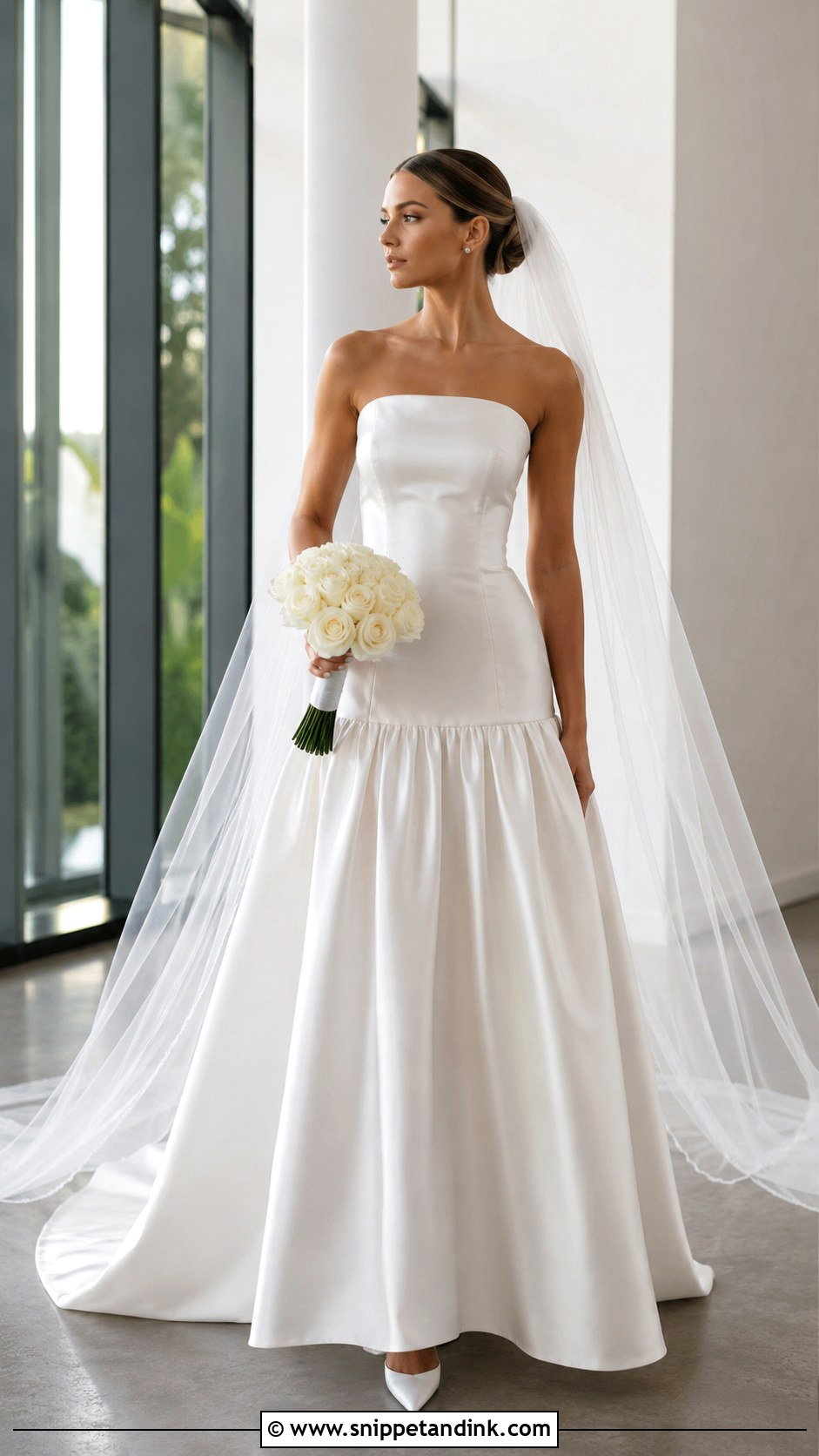
The dropped waist runs the bodice down past the natural waist and releases the skirt around the upper hips. On plain satin or mikado, that long seam becomes the decoration. Strapless, scoop or wide-strap bodices all work if the internal support holds the extended shape. Crystal studs, pointed pumps, a polished bun, a long untrimmed veil and a simple bouquet of white roses suit it; skip the necklace and the belt. This silhouette favours longer torsos. On petite brides I raise the seam closer to the hip bone, because just a couple of centimetres too low and the legs look short. Check the seam from the side as well as the front.
19. Cape-Sleeve Wedding Dress
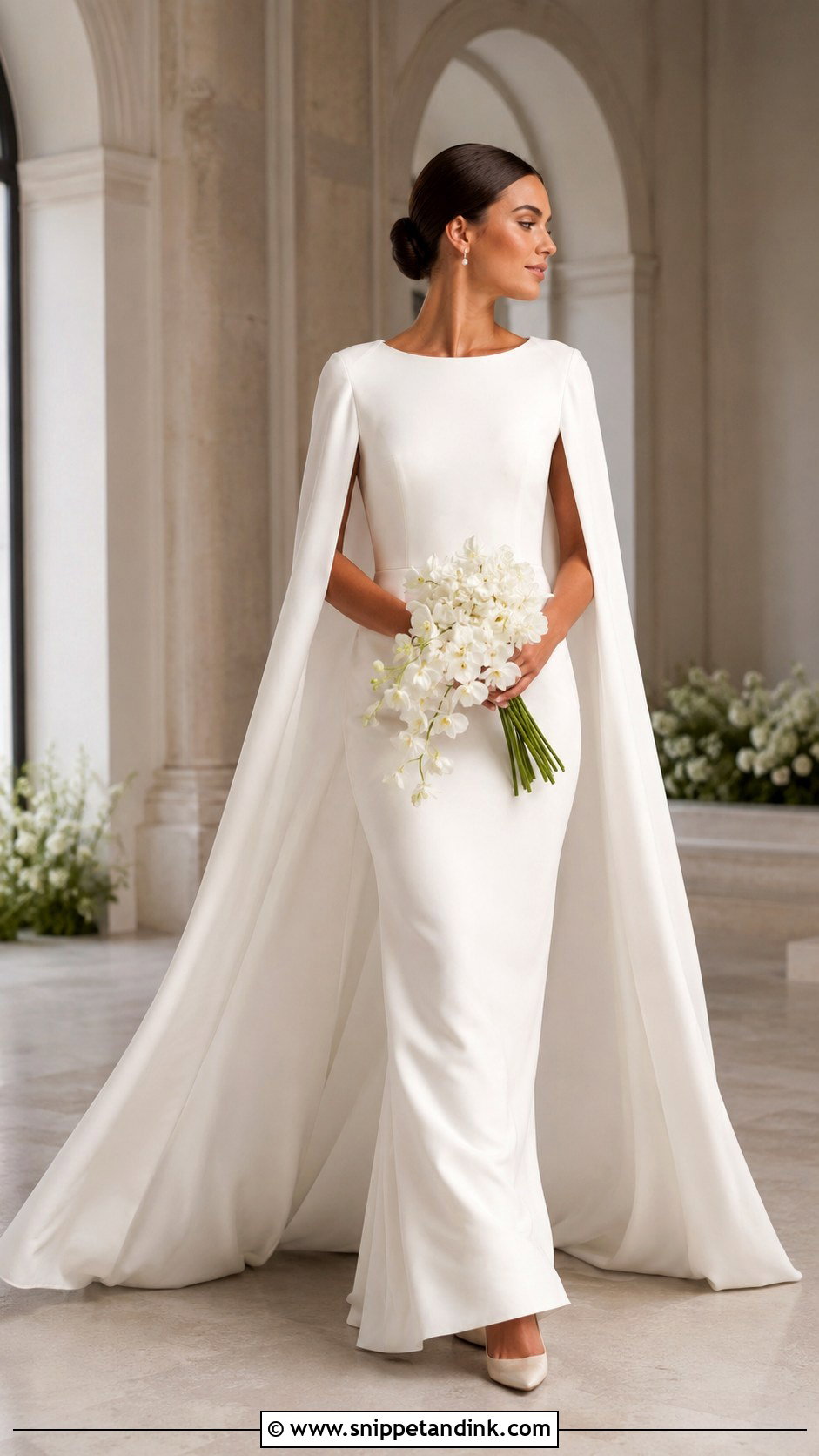
Cape panels add movement and shoulder coverage to a plain dress, and they let you skip a veil. They attach at the shoulders of a crepe column or simple A-line and can fall to the elbow, the wrist or all the way to the floor. Small earrings, pointed heels and a low bun are enough. A slim bouquet won’t hide the front. Floor-length capes are the risky one. They catch under your heels on steps and get sat on at dinner, so I usually suggest wrist length or a cape that unhooks. The shoulder construction has to be firm, because the extra fabric pulls backward and drags the neckline toward your throat.

20. Low-Back Crepe Wedding Dress
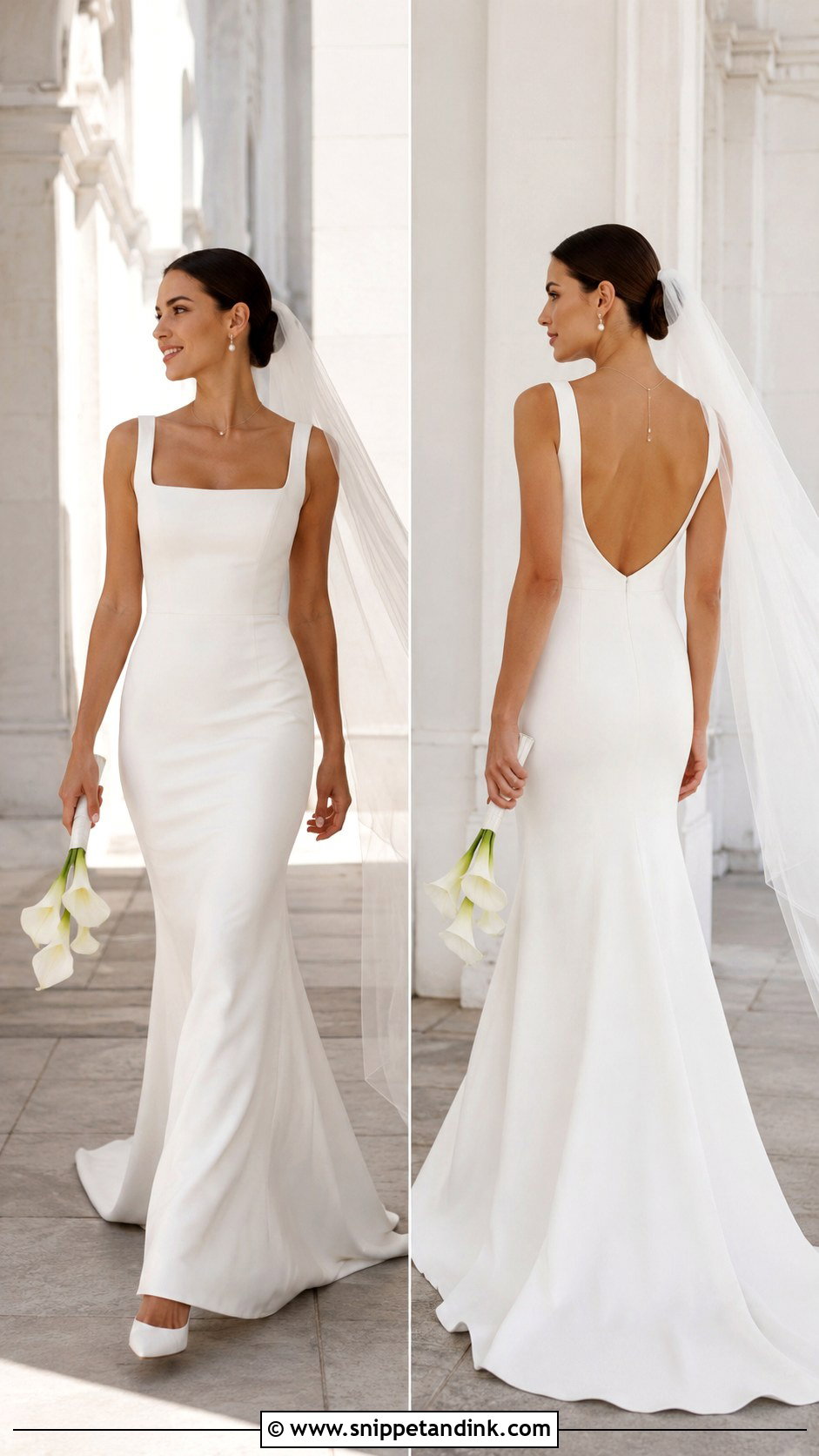
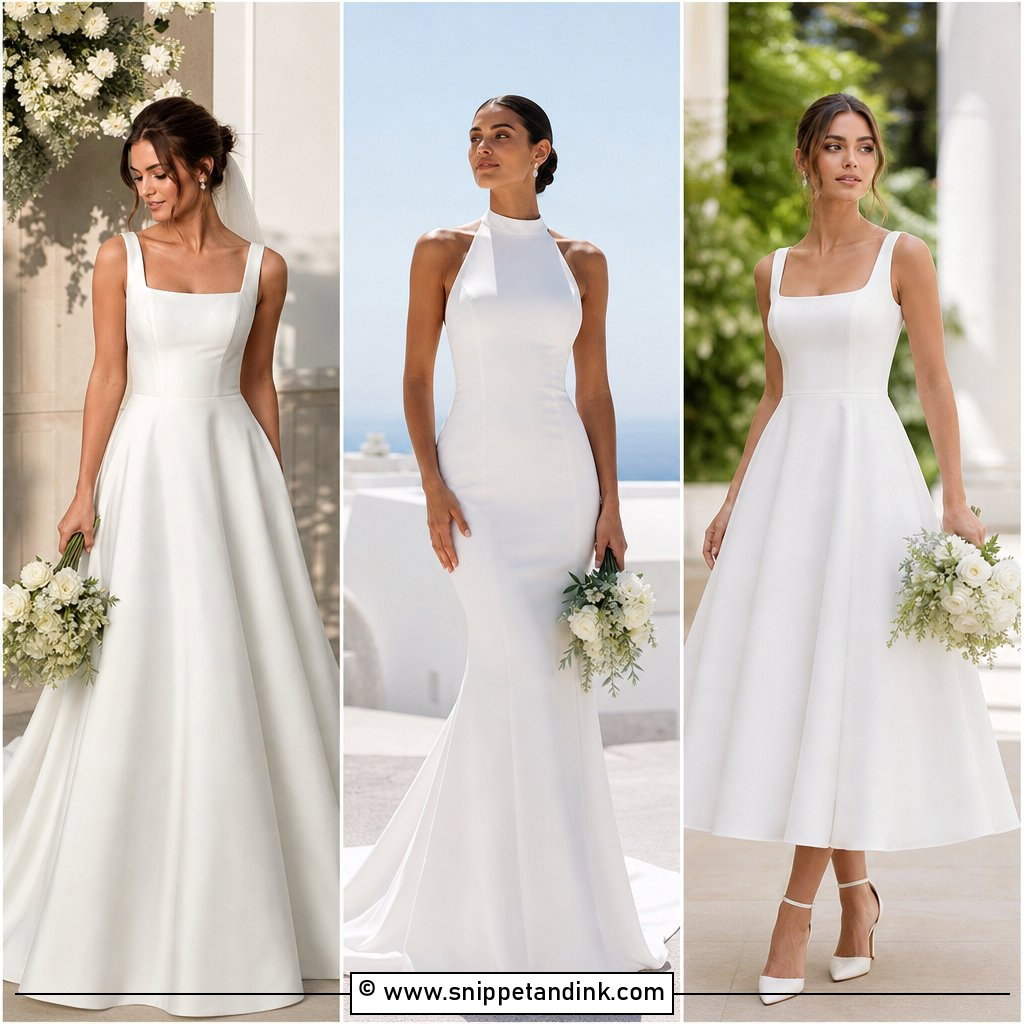
From the front this dress is restrained; then you turn around. A low back on a crepe sheath, column or fitted A-line works best with a high front or wide straps for balance. Backward-facing pearl jewellery, delicate earrings, pointed heels and a veil fixed beneath a smooth bun suit it, with a long, narrow bouquet. The first conversation I have about a low back is underwear. Normal bras are out, so you need built-in cups, a low-back longline or adhesive support, and that should be decided before you buy. The back edge must lie flat against the skin, especially when you lift your arms for the first dance.
Small Touches That Stop a Simple Gown Feeling Unfinished
Some minimalist brides reach the final fitting and feel the dress is a little too bare. Usually the answer is one carefully placed detail rather than a change of dress. These are the ones I suggest, because each can be added or removed without touching the main design.
- Covered buttons down the back, either functional or set over the zip. A seamstress can add them in matching fabric.
- A detachable bow or overskirt in the same satin, for the ceremony only.
- A veil with a narrow satin edge or a long cathedral length, which adds drama while the dress stays quiet.
- A coloured lining or a hidden embroidered date inside the hem, seen only by you.
- Structured shoes in an unexpected tone such as pale blue or metallic.
What I’d steer away from is adding too much at once. Pick one area, back, head or feet, and leave the rest clean. If you feel the urge to add a belt, a statement necklace and gloves together, the dress probably wasn’t right for you, and that is worth admitting before the final alteration rather than after.
Plain gowns also photograph differently. Without texture, light and shadow define the shape, so satin can bleach out in hard midday sun and crepe can look flat in a dim church. Mention the fabric to your photographer; it changes how they’ll expose and where they’ll place you.
Plain Is a Fitting Decision, Not a Shortcut
A plain gown is not the one with the fewest details; it is the one where the fabric, proportion and construction are good enough to stand alone. Try each shortlisted dress standing, seated, walking and dancing. Bring your wedding shoes and underwear to every fitting and look at the dress by a window, not just under shop lights. Let a veil, earrings, a bouquet and a neat hairstyle do the accessorising. If you finish a fitting and forget you are wearing the dress, it is probably the one.
You'll Like These Ideas:





Leave a Reply