
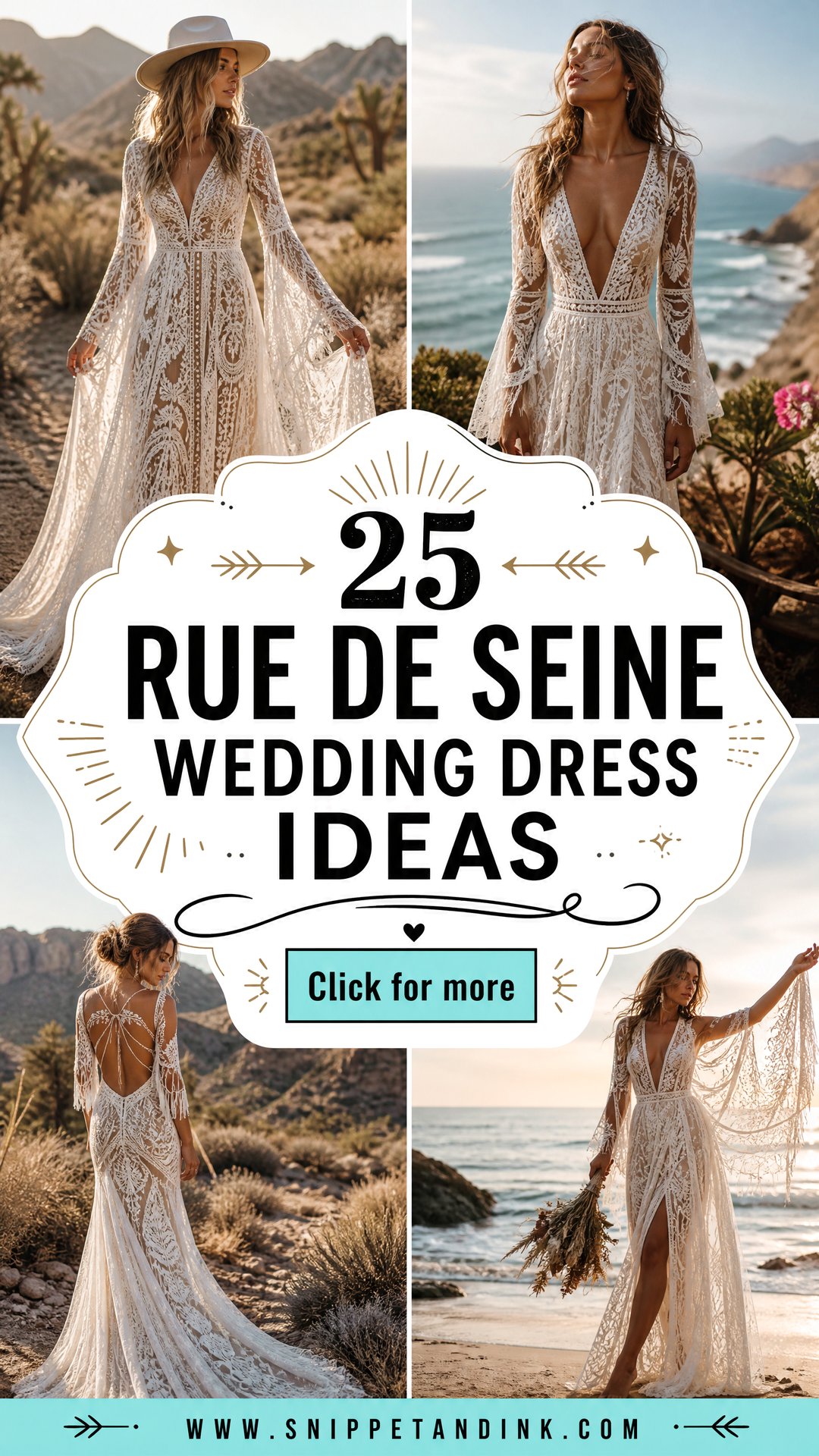
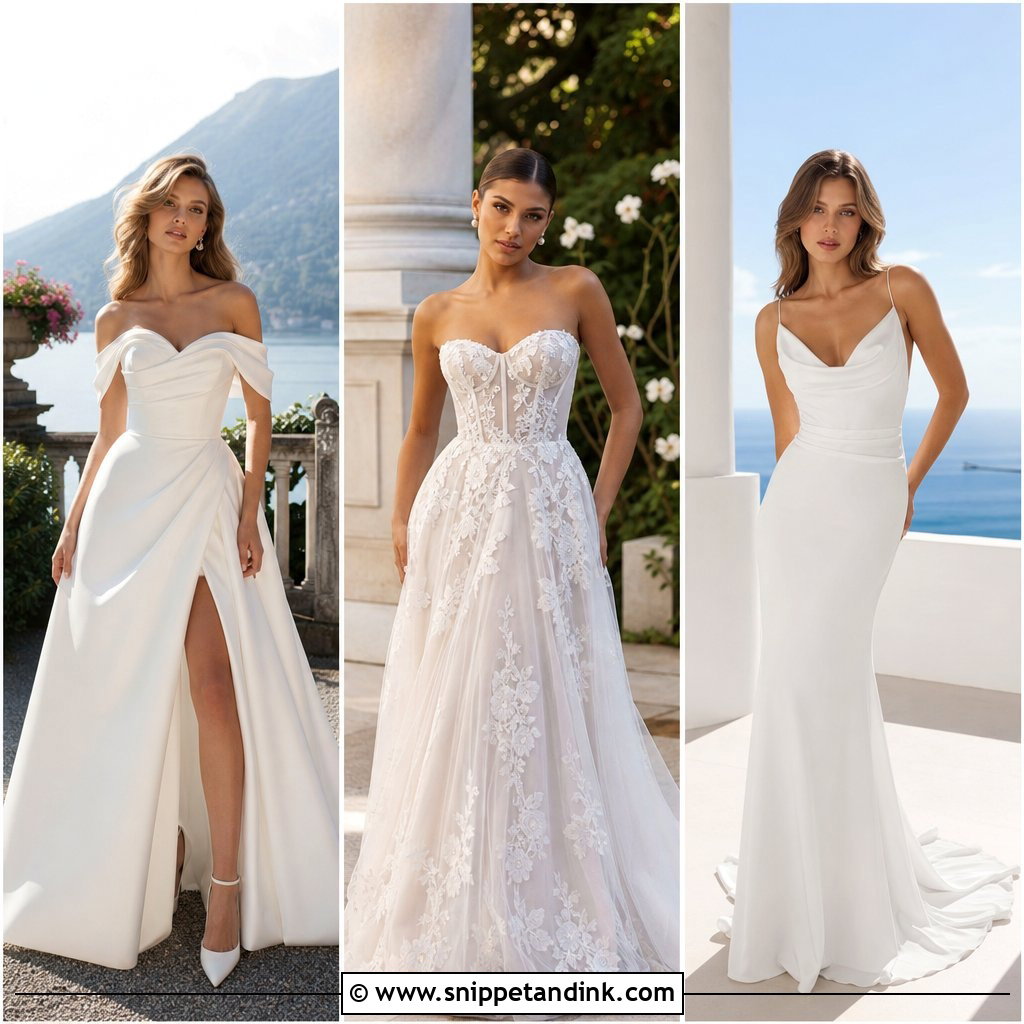
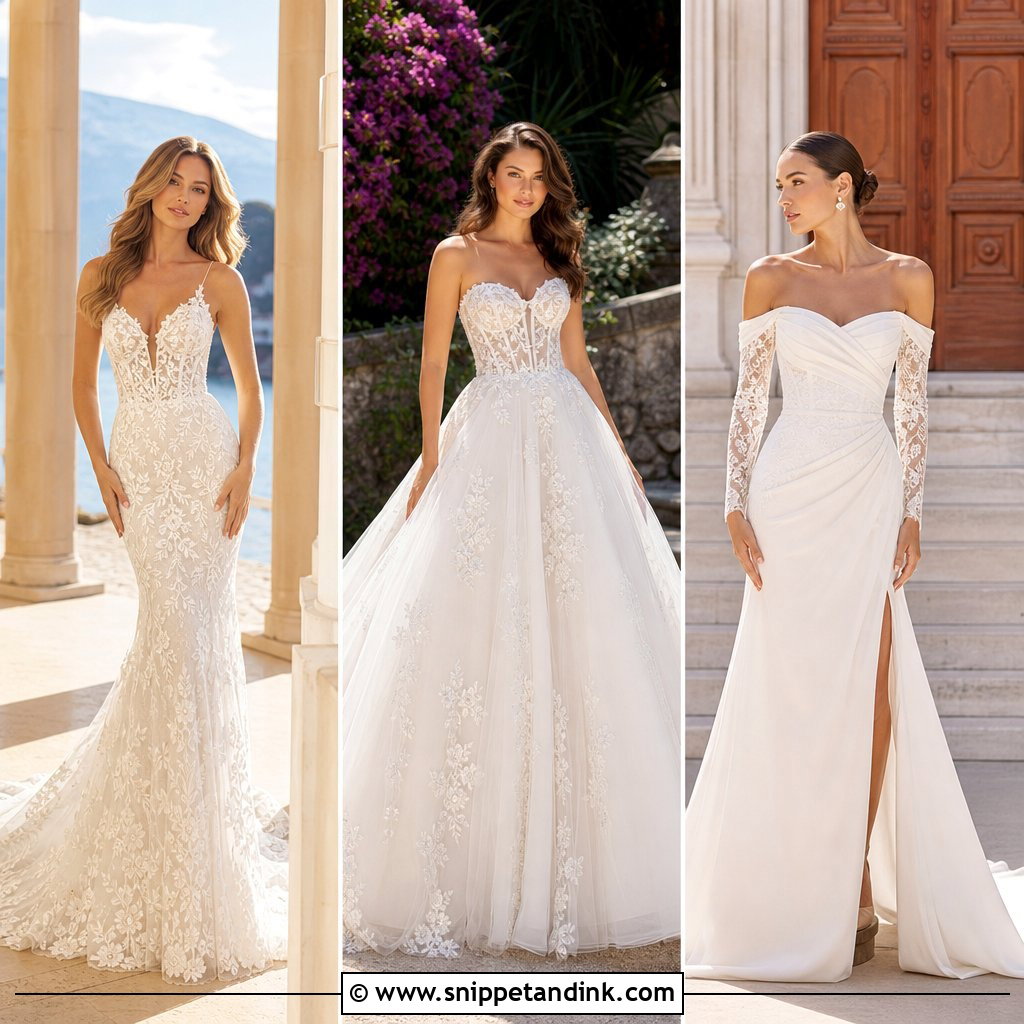
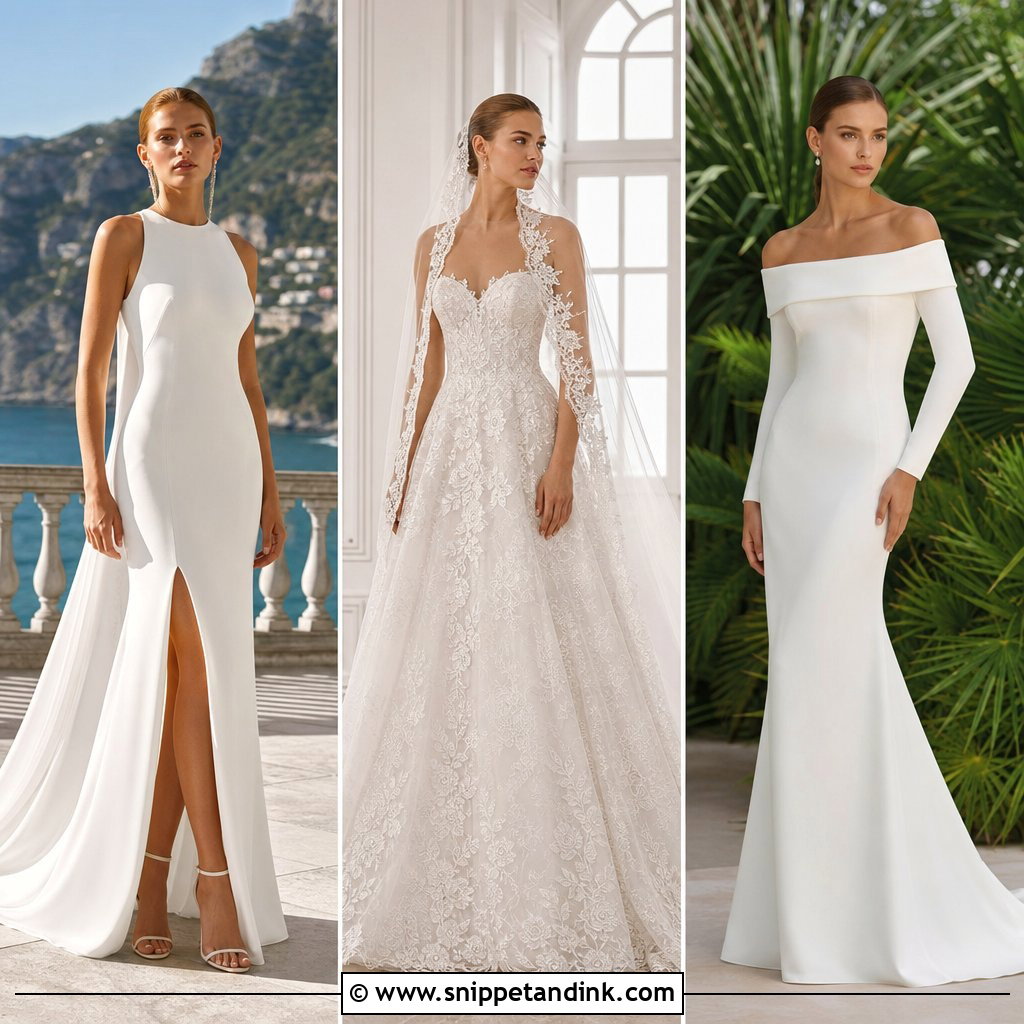
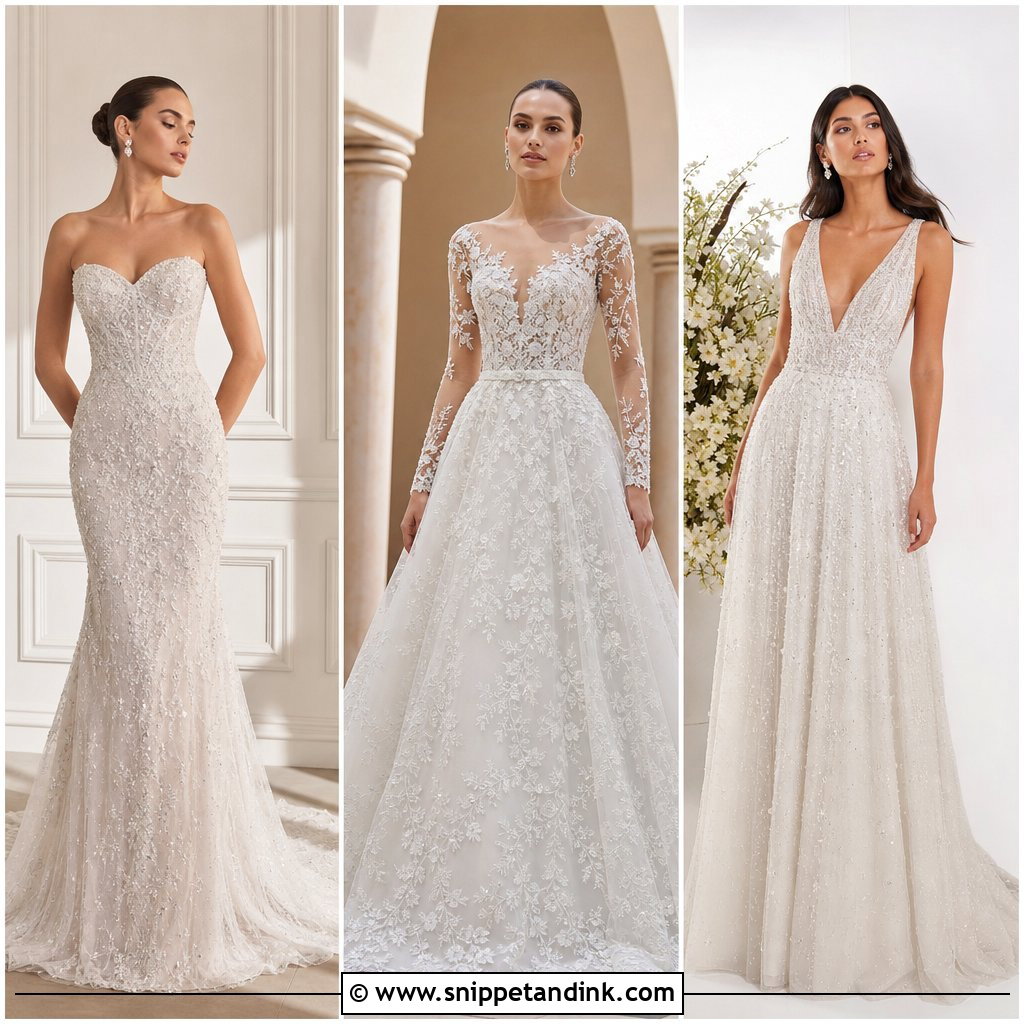
Rue De Seine wedding dress ideas tend to attract brides who already know they don’t want a plain gown. The label designs its own lace and builds its dresses in a New Zealand atelier, so the fabric itself carries most of the personality: oversized florals, sun motifs, colored embroidery, deep sleeves. When I style one of these gowns, my job is mostly subtraction. The lace has already made the big decision, and the shoes, veil, hair and flowers only need to keep out of its way. Below are 25 complete looks, from elopement boots to black-tie pumps, with notes on what I’d actually check at a fitting for each one.
How Designer Lace Changes Your Fitting Schedule
Gowns with placed lace motifs are slower to alter than plain fabric. A seamstress can’t simply take in a side seam on a dress like this; she often has to lift the lace appliqués, adjust the base layer and then stitch the motifs back so the pattern still lines up. That hand work is why I tell brides to order early and expect more fittings than a friend with a crepe sheath needed.
- Order the gown roughly eight to ten months before the wedding where you can. Made-to-order designer dresses commonly take several months to arrive, and timings vary by store and season.
- Plan on three fittings, sometimes four, starting about two to three months out. Lace-heavy hems and bustles take the longest.
- Bring your actual wedding shoes and underwear to the first fitting, not a similar pair. The hem and the bodice are both set around them.
- Ask whether sleeves, straps or lining can be customized when you order, since changes built in at the start are cleaner than alterations after delivery.
What to try at the sample appointment
Samples rarely fit, so clips will pull the back closed. I ask brides to ignore the fit and look at three things: where the largest motifs fall on their own body, how the lace feels against bare arms, and whether the skirt weight is something they can move in. Those details don’t change much in alterations, so judge them now.
1. Rue De Seine Boho Floral Lace Wedding Dress
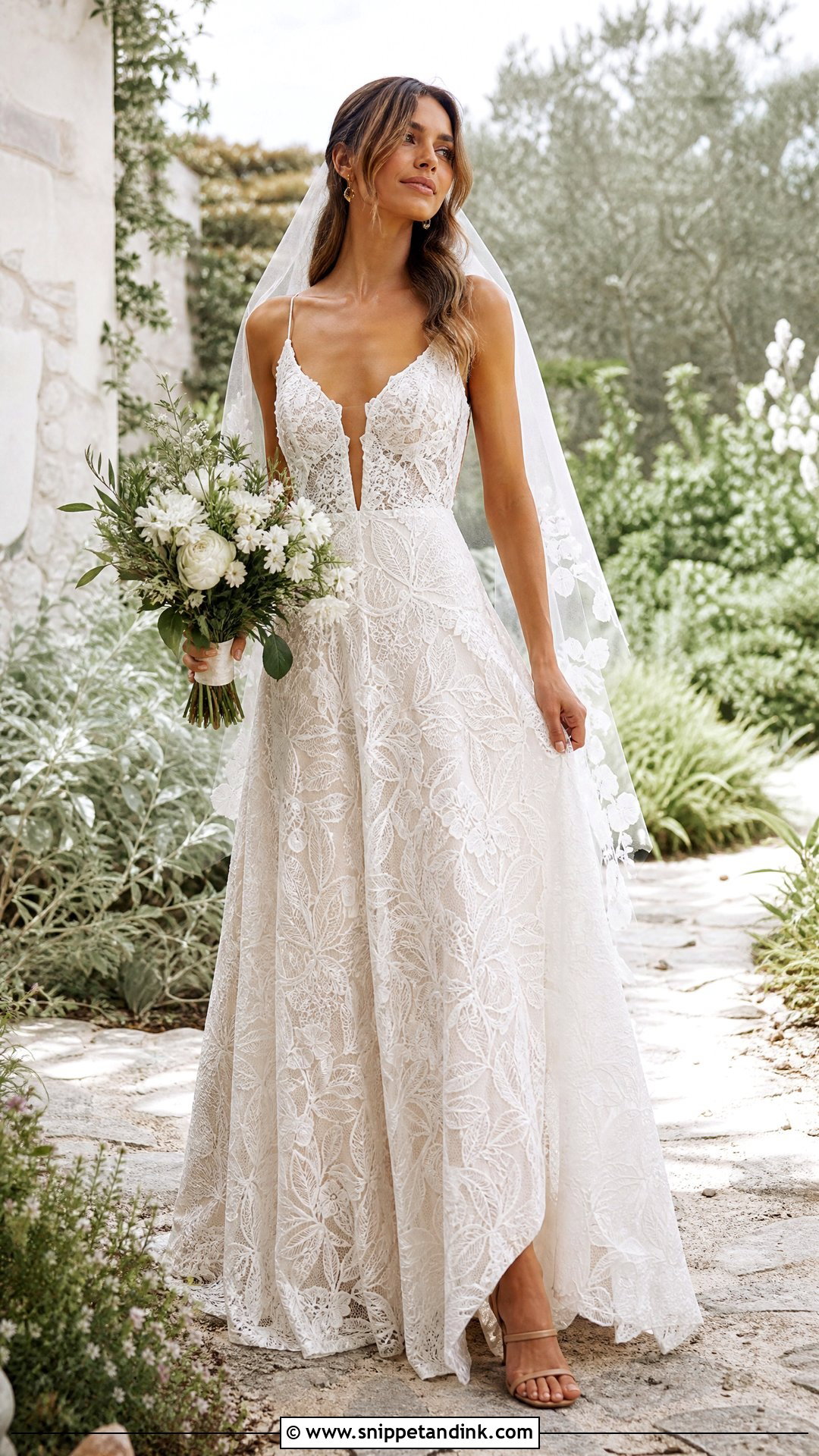
Big botanical lace on an ivory A-line is the dress most people picture when they hear the name. Nude block heels or pointed flats keep it grounded, and a plain fingertip veil moves in the breeze without sitting on the motifs for long. I pair it with small gold earrings, loose waves and a bouquet with some grasses in it, because a stiff round posy looks oddly formal against this kind of lace. Skip the necklace entirely. The neckline lace already ends somewhere deliberate, and a chain cutting across it makes the pattern look interrupted in close-ups.
2. Rue De Seine Long Sleeve Lace Wedding Dress
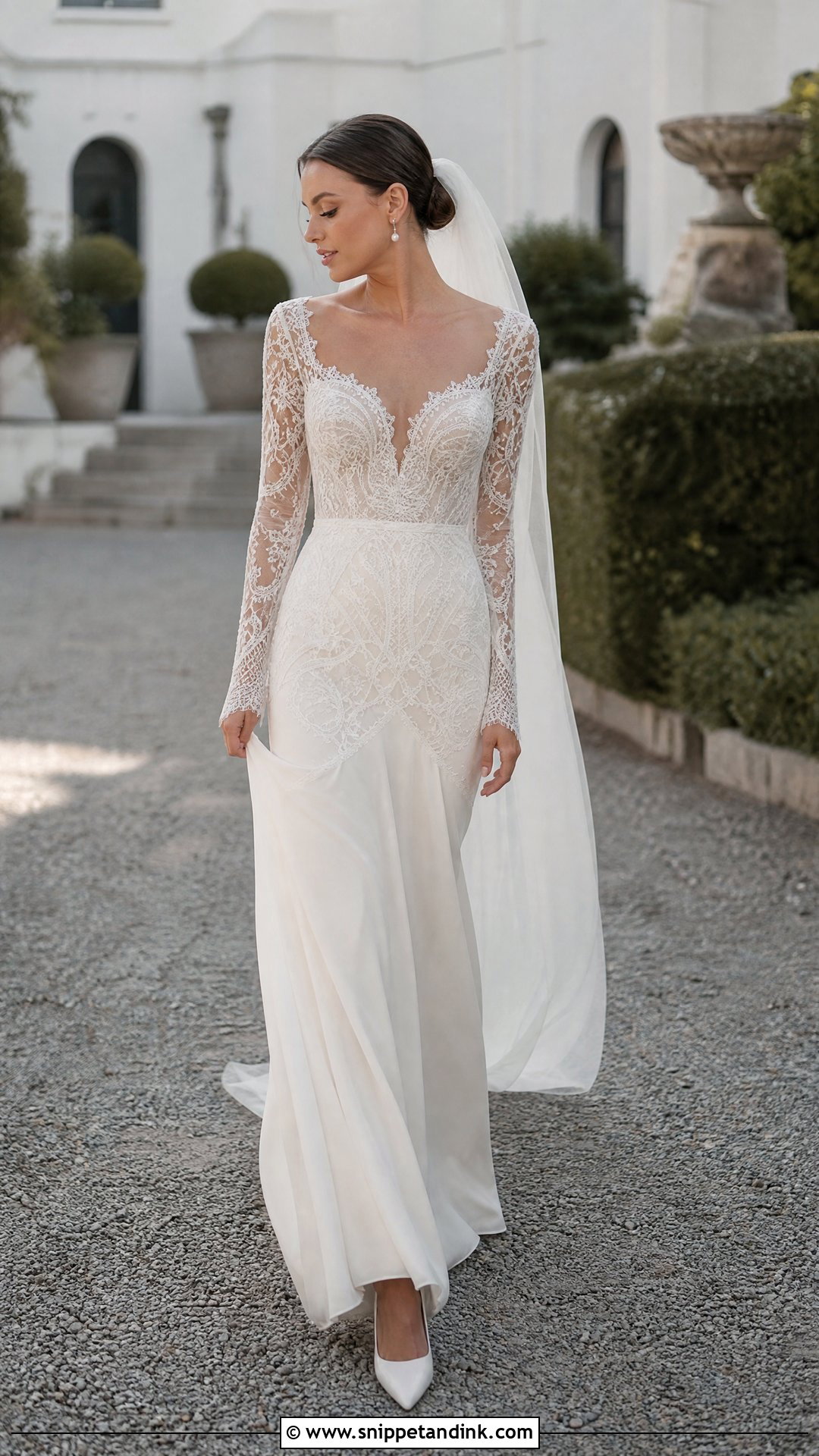
Sheer lace sleeves give coverage without weight, which is why they suit spring and autumn ceremonies so well. The thing I watch at fittings is where the sleeve lace meets the bodice lace: on a good gown the motifs flow across that seam, and on a rushed alteration they jump. Style it with ivory pointed shoes, small drop earrings and a low gathered bun, then add a long untrimmed veil so the sleeves stay visible through it. If you need more support than the sheer back allows, ask for a structured lining or sewn-in cups. A wool wrap is fine for a cold walk to the ceremony, as long as it comes off before the aisle.
3. Rue De Seine Strapless Corset Wedding Dress
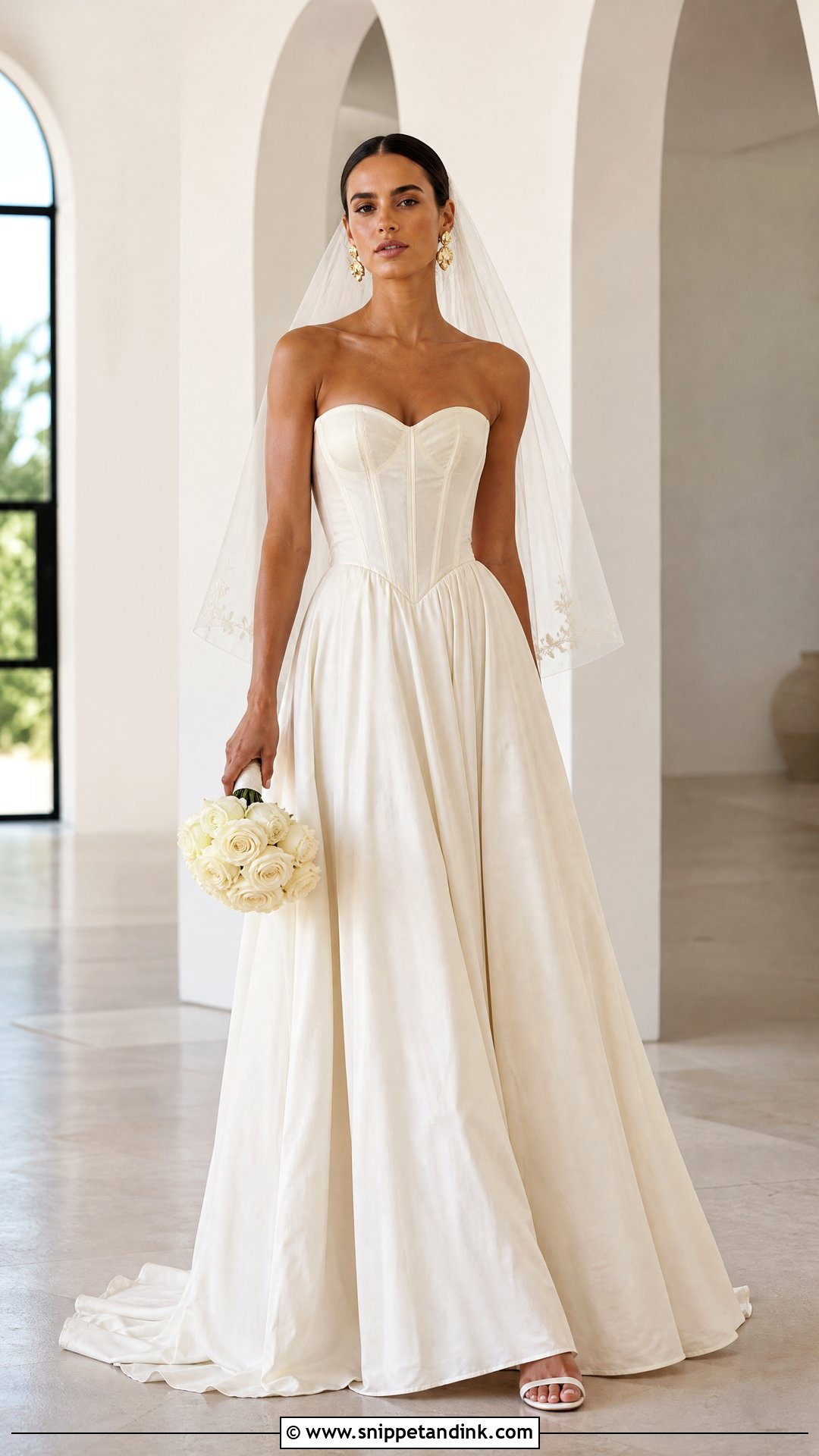
A strapless corset reads modern because the boning shows through the fabric and sculpts the waist. The skirt needs some flow to soften that structure, otherwise the whole dress looks armored. I usually swap the necklace for a slim tennis bracelet and let pearl or sculptural earrings do the work near the face, with an elbow-length veil and sleek ivory heels. Hair goes up in a polished bun for formal venues or brushed waves for a garden. The real test at your fitting is movement: sit down, lift both arms as if hugging someone taller, and bend to pick up a dropped bouquet. If the top edge gaps or slides at any point, the seamstress needs to take it in before you leave.
4. Rue De Seine Off Shoulder Wedding Dress
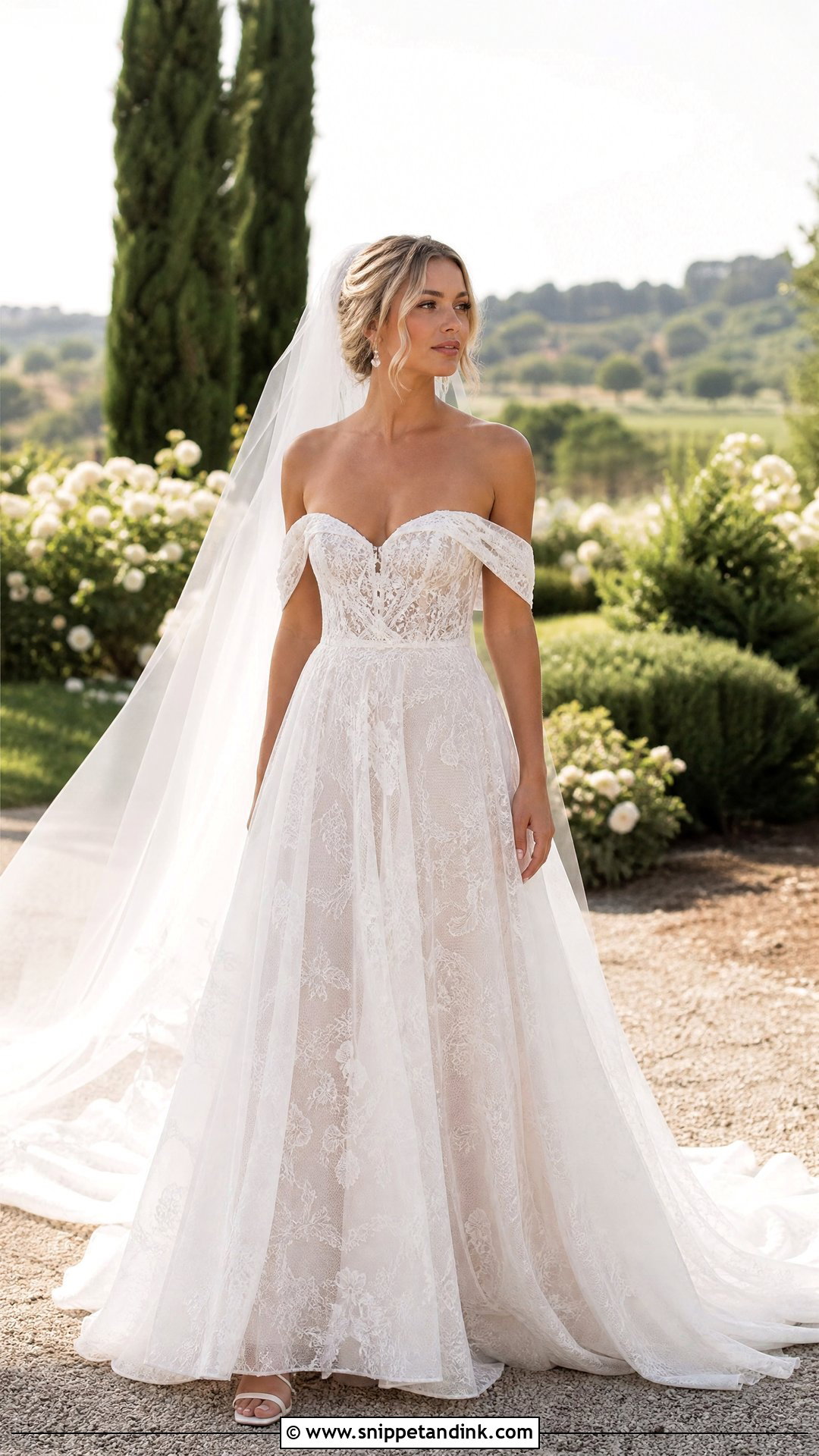
Off-shoulder sleeves frame the collarbone, but they also restrict how high you can lift your arms, which few brides discover until the first dance. I always have clients raise their arms at the fitting so they know their range. Balance the draped sleeves with an A-line skirt, slim drop earrings, a fine bracelet and low heels. A loose updo with a few face-framing pieces keeps the shoulders clear. Choose a sheer cathedral veil if the skirt is plain, or a shorter one if the lace is bold, and leave the neck bare.
5. Rue De Seine Colorful Floral Wedding Dress
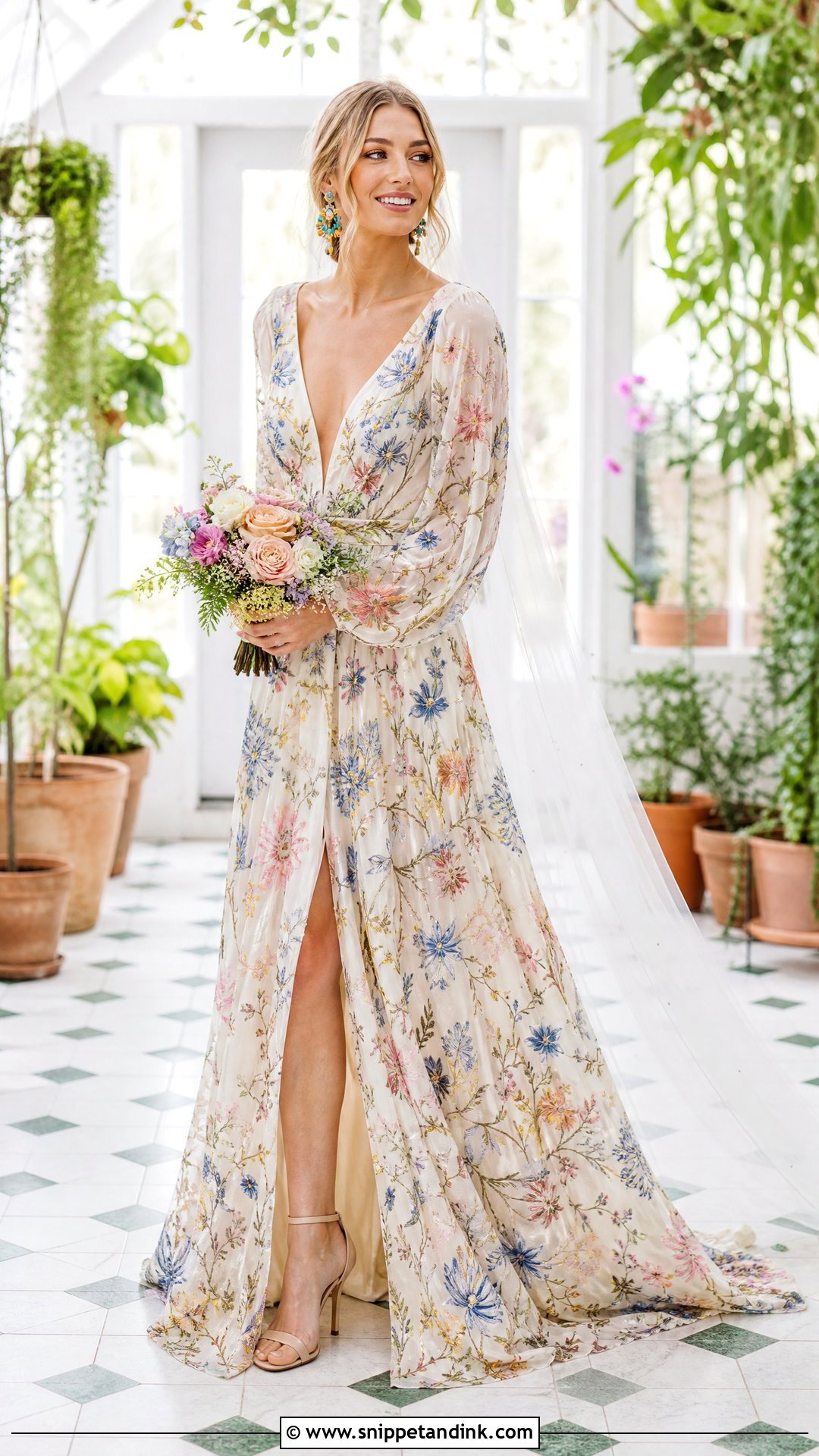
Why limit a bridal look to solid ivory when colorful flowers can be stitched right into the dress? Blue, blush or gold embroidery is unusual enough that I treat it as the whole color story. Shoes should be ivory or one quiet shade pulled from the thread, never a third new color. Earrings stay small, the veil stays plain and the bouquet stays compact. Makeup matters more than usual here: a lip that clashes with the embroidery shows up instantly in photos, so I bring a swatch of the gown to the makeup trial. Gardens and bright rooms show the thread colors best; dim venues flatten them.
6. Rue De Seine Minimal Satin Wedding Dress
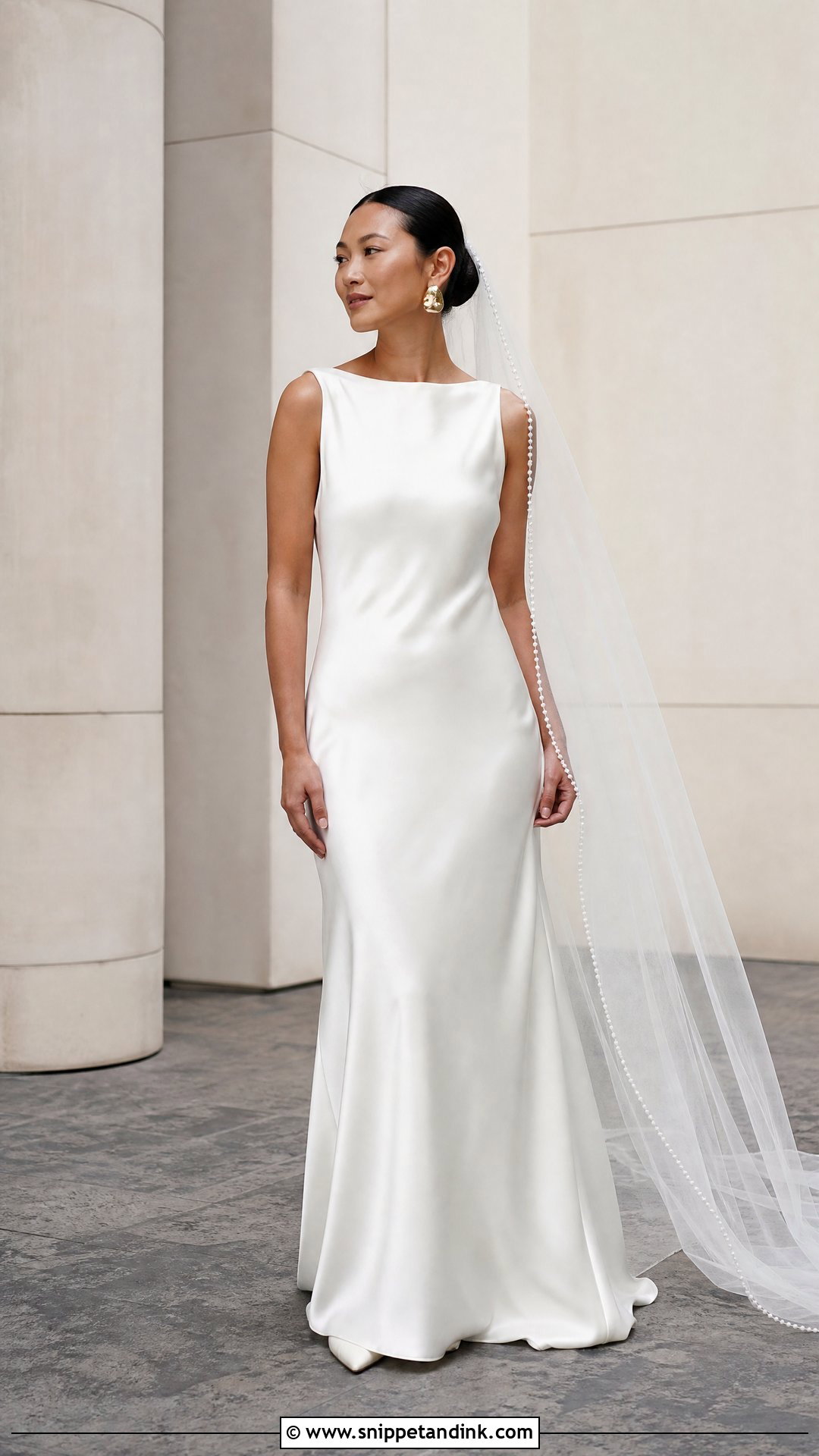
Plain satin is the quiet end of the range, and it is the least forgiving fabric on the list. Satin shows every pull line at the bust, waist and hip, so I budget an extra fitting for it. A column or soft A-line with a clean neckline gives you room to add personality elsewhere: sculptural gold earrings, a pearl-edged veil, pointed ivory pumps. A sleek low bun matches the smooth lines. One flower variety in the bouquet keeps everything as calm as the dress.
7. Rue De Seine Graphic Lace A Line Wedding Dress
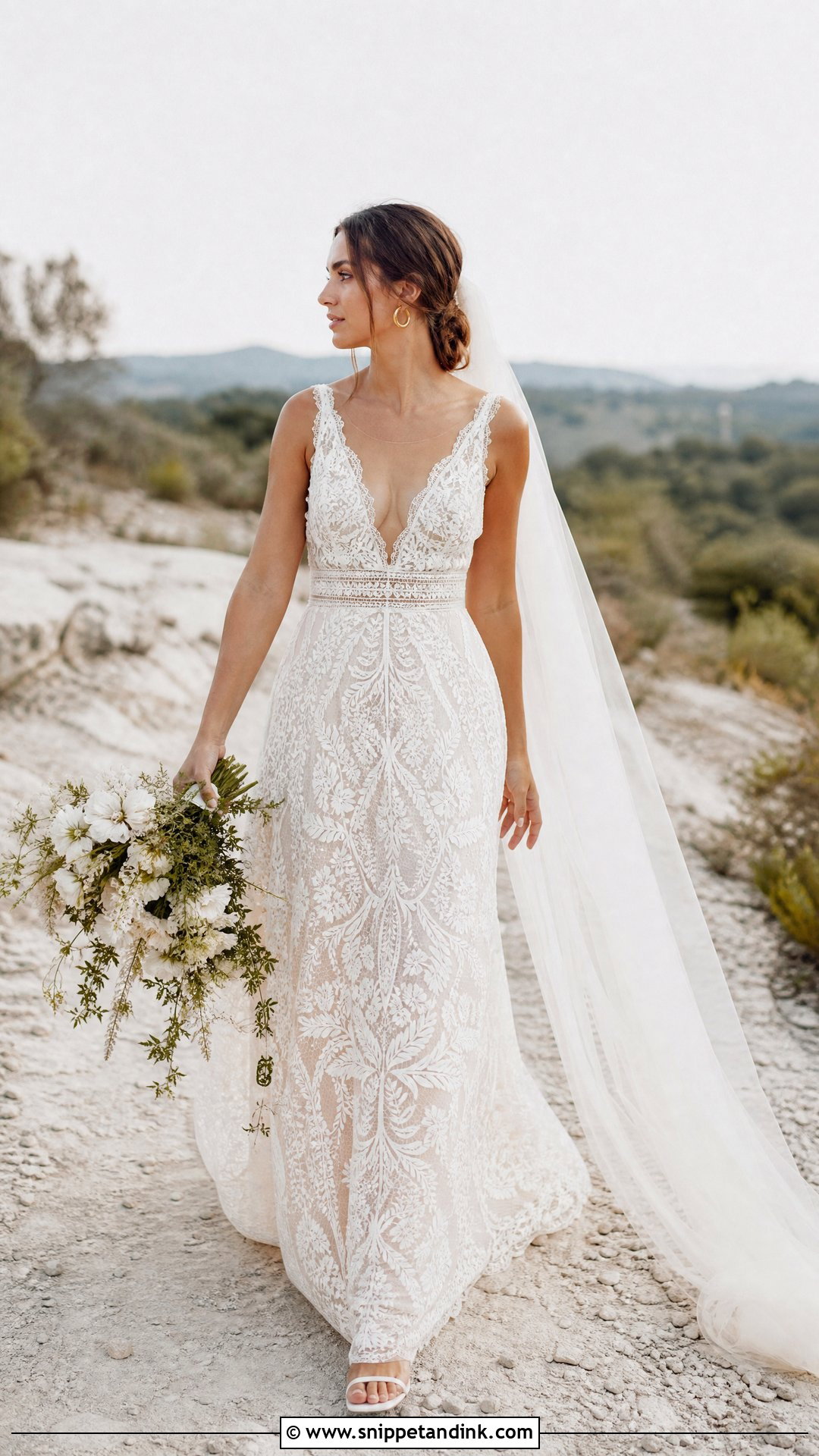
Graphic lace turns an ordinary A-line into something you would recognize from across a room. Because the motifs are large, their placement is the thing I study first. At the side seams and neckline a careless alteration can slice a flower in half, and on a dress like this that cut is visible in every full-length photo. Ask your seamstress whether she can move lace appliqués rather than simply taking in the seam. Keep the rest plain: ivory sandals, small hoops, a veil with no lace edging and a loose white bouquet. A center-parted low bun gives the pattern a clean frame, while brushed-out waves pull it toward boho.
8. Rue De Seine Fitted Lace Wedding Dress
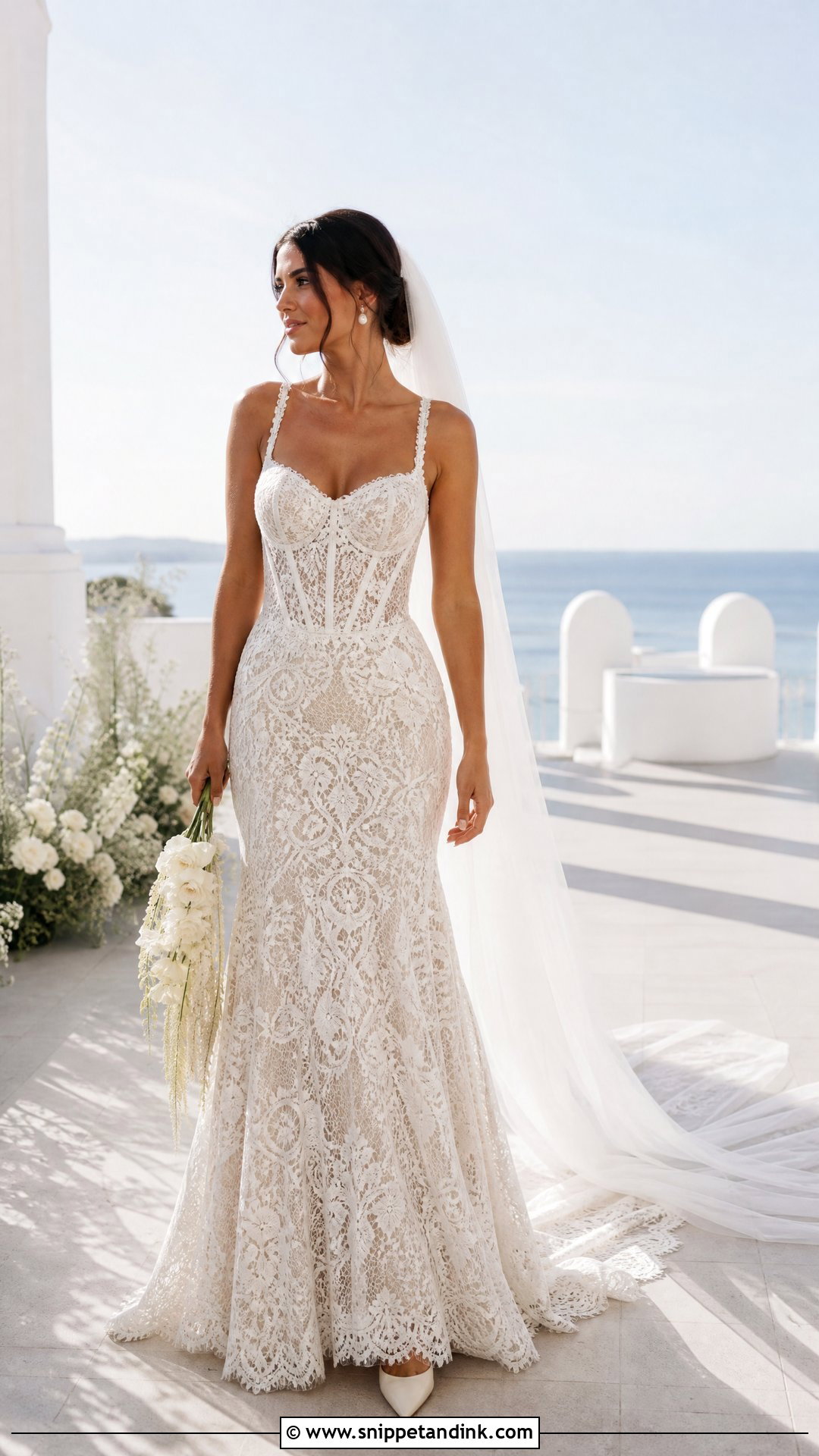
Fitted lace with a flare near the knee is lovely to look at and harder to live in than brides expect. The flare point decides how much you can walk; set it too high and you shuffle, too low and stairs become a problem. I make clients walk a full circle and sit on a low chair before I approve it. Pointed heels, understated earrings and a long plain veil under a low updo suit formal rooms. For a relaxed coastal ceremony, embroidered flats and loose waves work just as well. Carry a narrow bouquet, since a wide one widens the silhouette right where the dress narrows.
9. Rue De Seine Tiered Skirt Wedding Dress
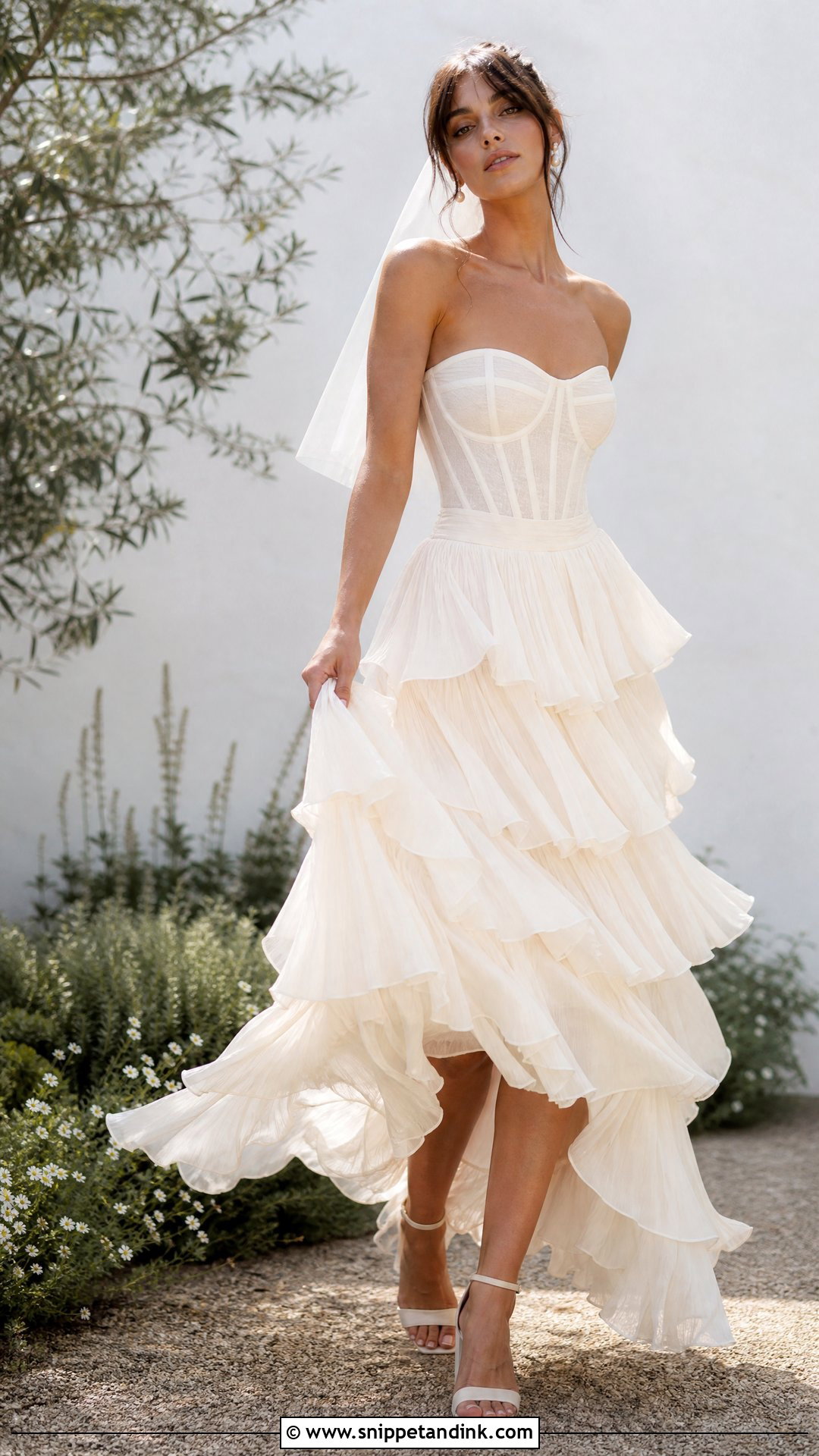
Tiers give the skirt bounce, and they also add weight at the hem that pulls on the waist seam by evening. A fitted or corseted bodice is what keeps the volume from swallowing you. I end the veil above the busiest tier so the two textures don’t pile on top of each other, and keep shoes simple with ankle straps. A half-up style shows the neckline. Leave the oversized bouquet behind; a loose arrangement with a few trailing stems suits the movement better. Check that the front hem clears your toes, because tiers catch on a shoe edge easily when you dance.
10. Rue De Seine High Neck Lace Wedding Dress
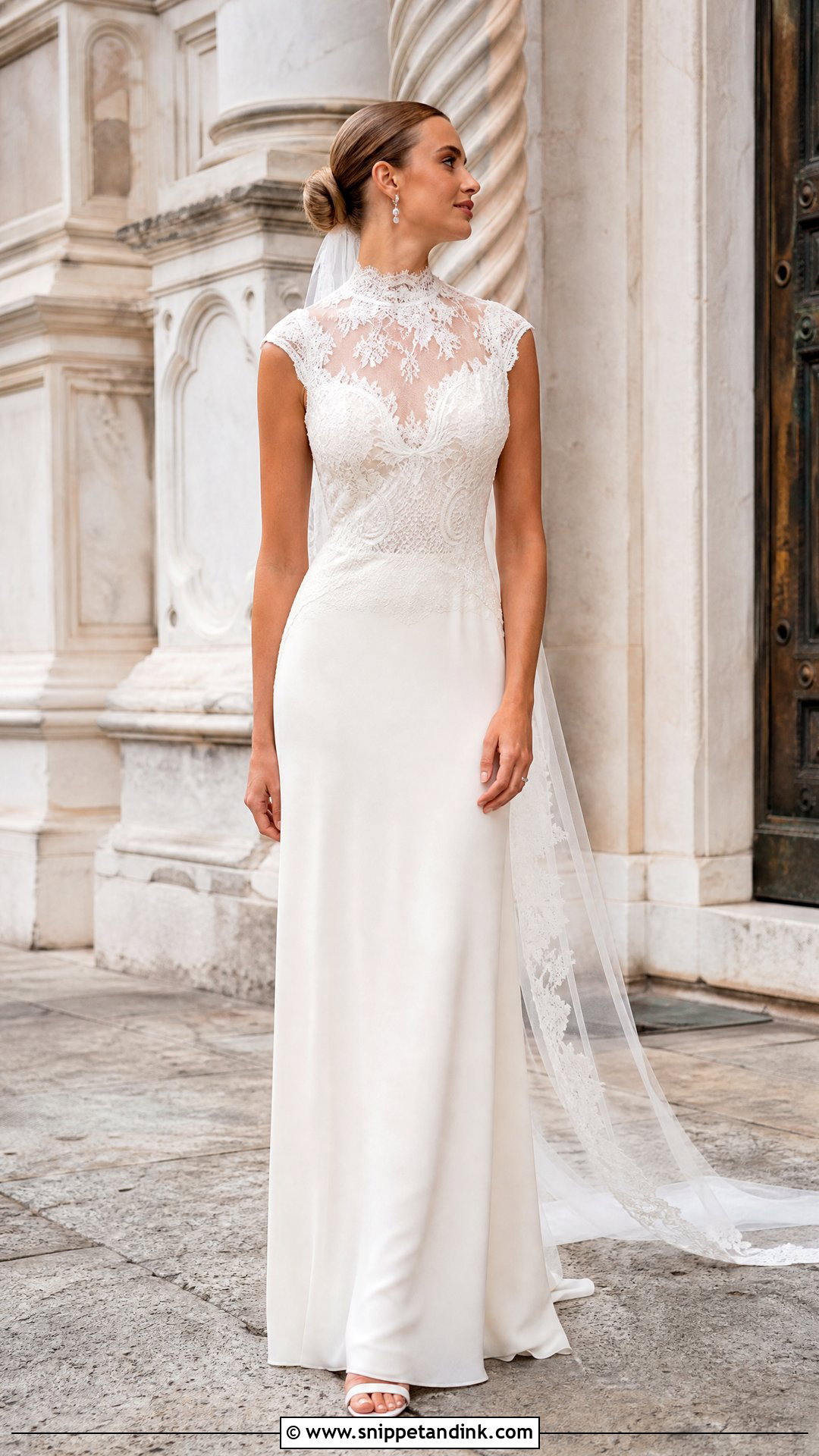
A high lace neck has a vintage feel that turns modern the moment you strip back the accessories. No necklace, small drop earrings, one ring, clean ivory shoes. Hair goes up, either a low bun or a high ponytail, so the collar line stays fully visible, and the veil attaches beneath the style. The fit point I’m strict about is the collar itself. Turn your head both ways and look down at your shoes; if the lace scratches or presses on your throat now, it will feel far worse at hour eight. Historic venues and autumn ceremonies suit this one particularly well.
11. Rue De Seine Plunging V Neck Wedding Dress
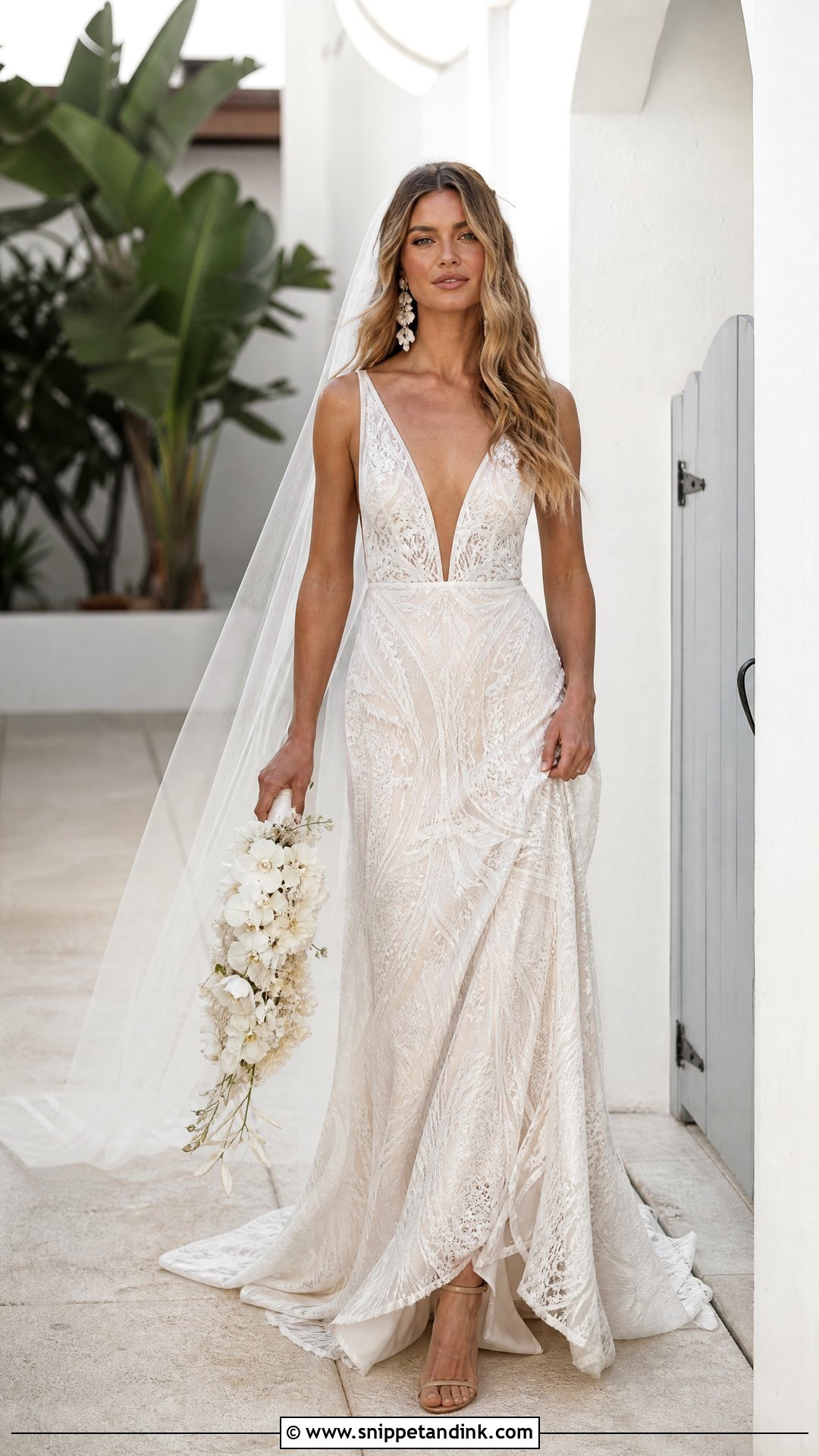
A plunging V lengthens the upper body, and it only works if the structure underneath is right. Supportive side panels or illusion mesh carry most of the load, and correct tailoring should be your main security, with fashion tape as backup, not the plan. At the fitting I ask brides to lean forward as if signing the register; that is when a poorly fitted V gapes. Then style it: a fine pendant that follows the V or statement earrings instead, heeled sandals, a fingertip veil and textured waves. A narrow bouquet keeps the neckline and waist visible in photos.
12. Rue De Seine Open Back Wedding Dress
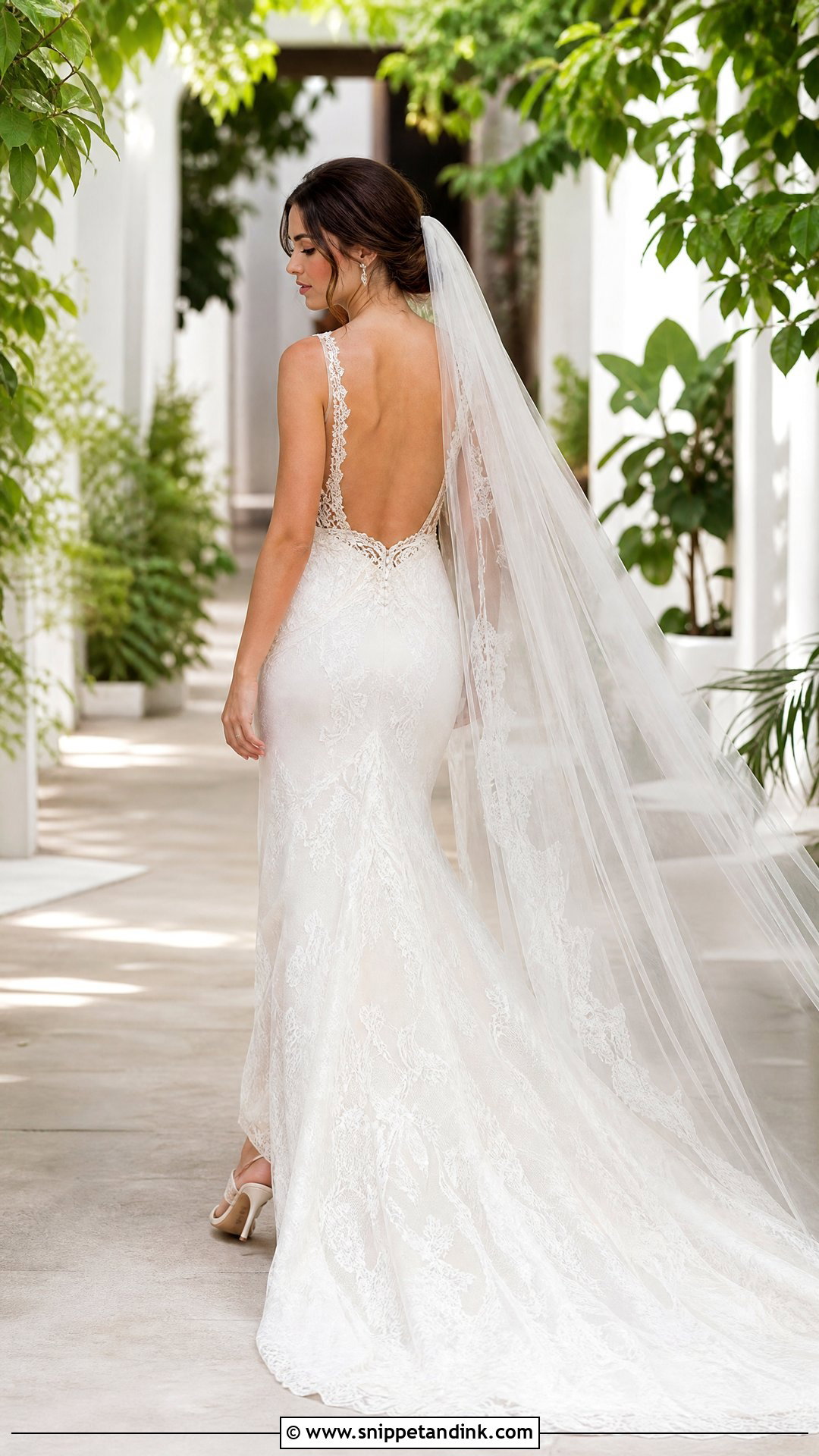
An open back gets its moment when you walk away from guests at the start of the aisle, so the hair has to be up or swept to one side. Secure straps and a fitted waist matter more than any trim. Bust support is the problem I raise first with open backs, because standard bras are out and stick-on solutions behave differently once you’re warm. Test your backless option weeks ahead and ask the seamstress about built-in cups. A low-set cathedral veil adds drama and comes off for portraits. Delicate earrings, a slim bracelet and comfortable heels finish it, with a trailing bouquet to echo the line of the back.
13. Rue De Seine Bell Sleeve Wedding Dress
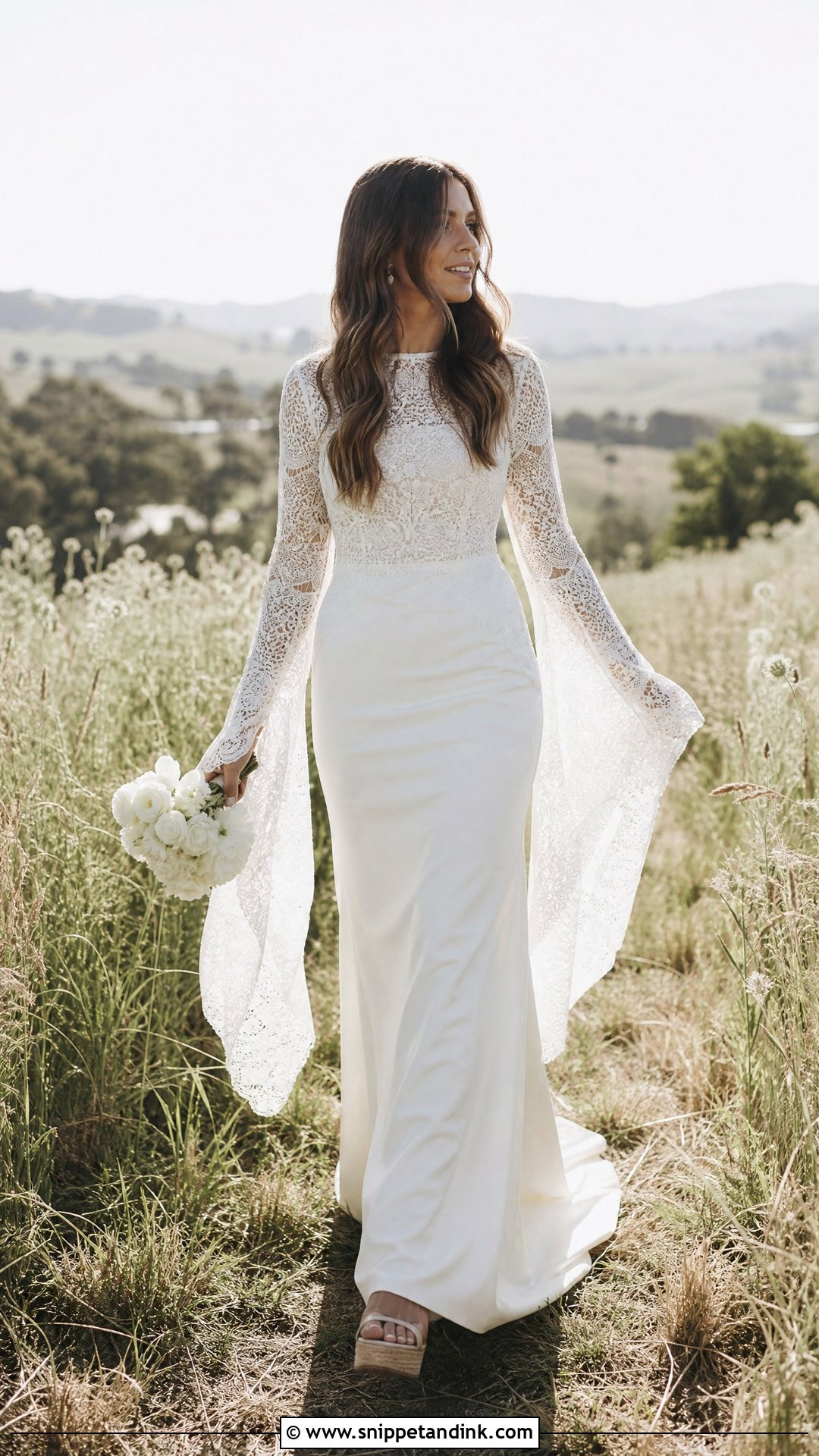
Bell sleeves bring the most obvious boho note in this collection. Fitted lace through the upper arm and a flare from the elbow or wrist give the movement; keep the skirt cleaner so the sleeves stay the feature. A veil is optional, and if you want one, choose a sheer untrimmed piece. Ivory platform sandals, small earrings and center-parted waves with a narrow crown or a few pins suit outdoor venues. Before you commit, mime eating dinner and holding your bouquet in front of a mirror. Sleeves that drop past the wrist will trail through sauce and cover the flowers, and that is a common reason I suggest having them shortened slightly.
14. Rue De Seine Cape Sleeve Wedding Dress
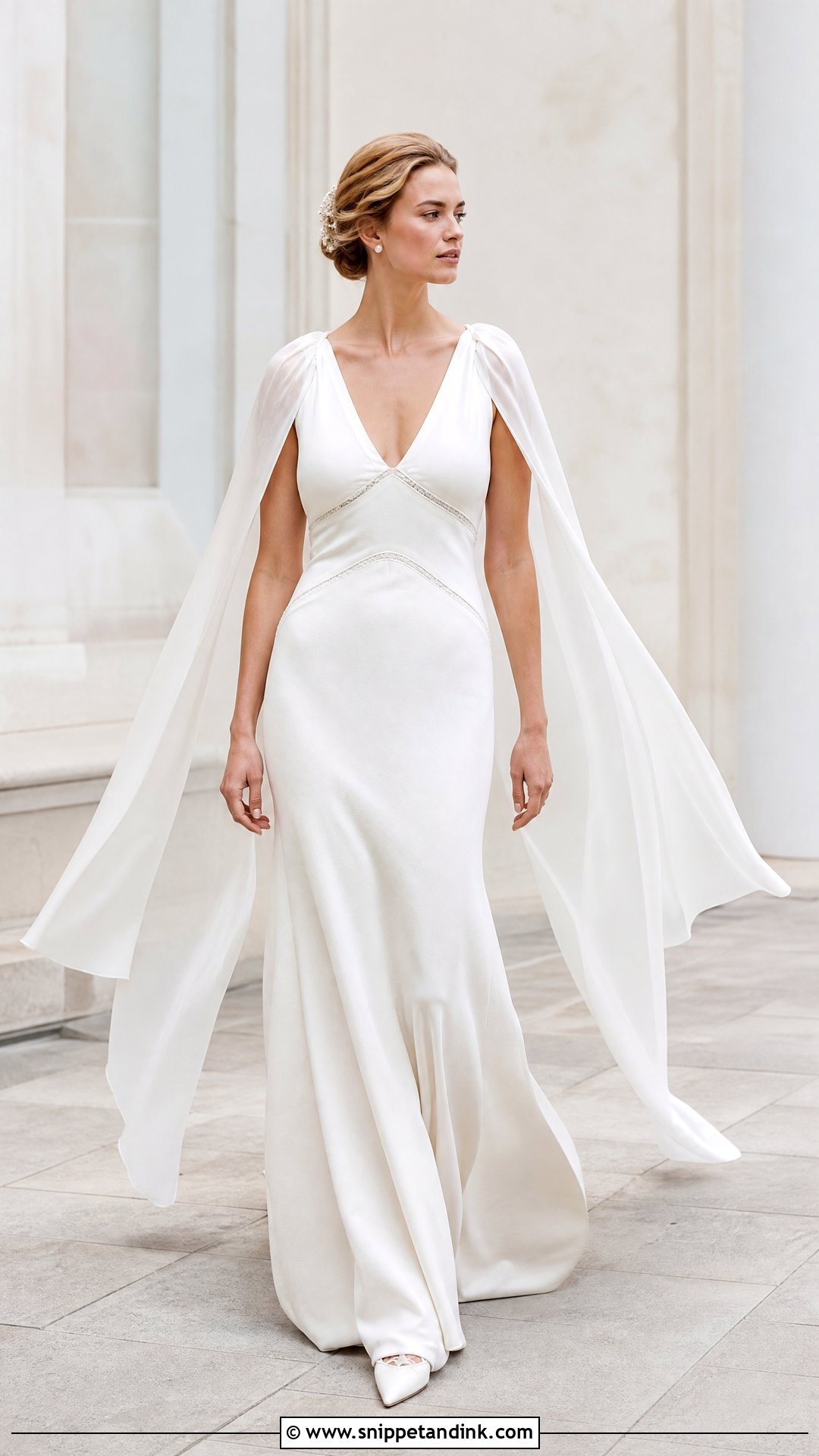
Cape sleeves replace the usual gown-and-veil drama with chiffon or lace panels that float behind you. I nearly always skip the long veil here because the two tangle at the shoulders and neither falls properly. A short face veil or a decorative comb does the job instead. Keep the dress underneath fitted or a soft A-line, with pointed ivory shoes, stud earrings and a smooth low bun. Walk, turn, and wave at the fitting: the cape should fall cleanly and not tuck under your arms. Breezy outdoor ceremonies show it off best.
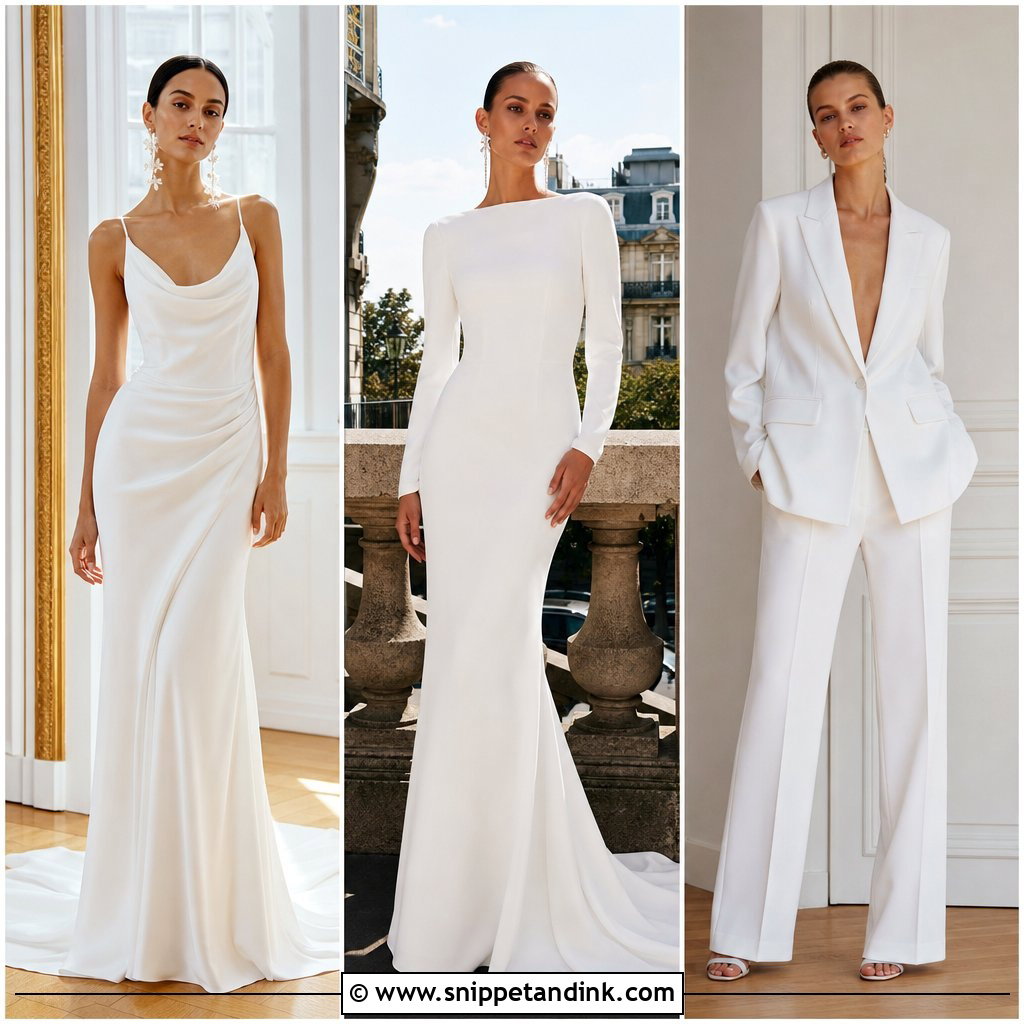
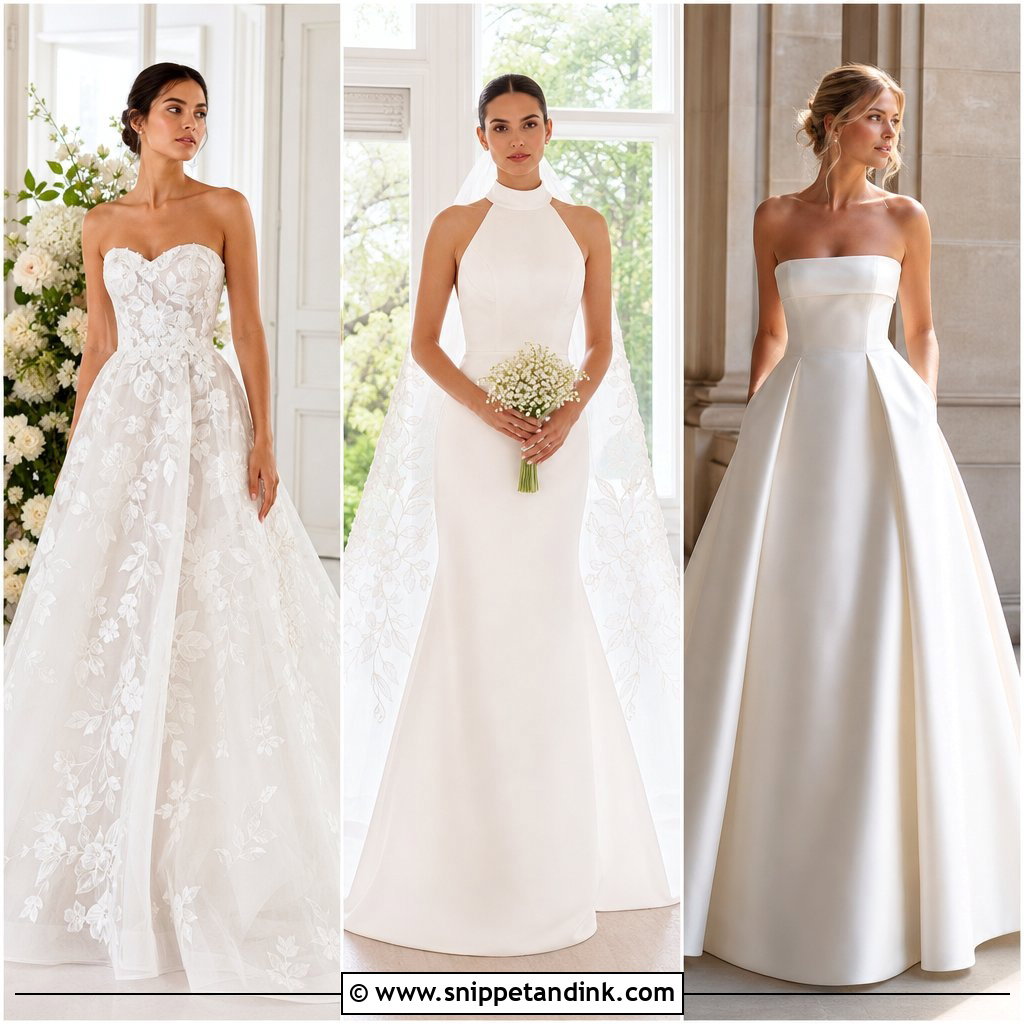
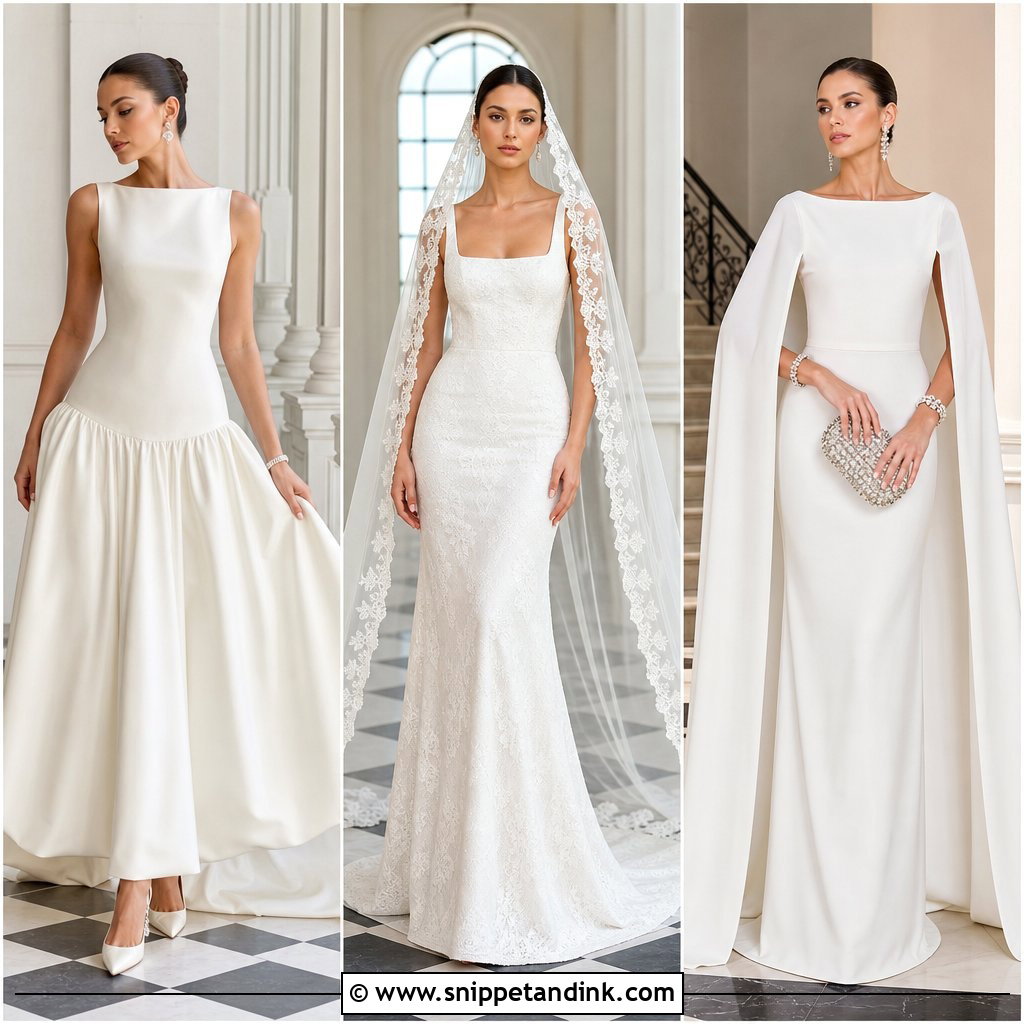
15. Rue De Seine Wedding Dress With Detachable Sleeves
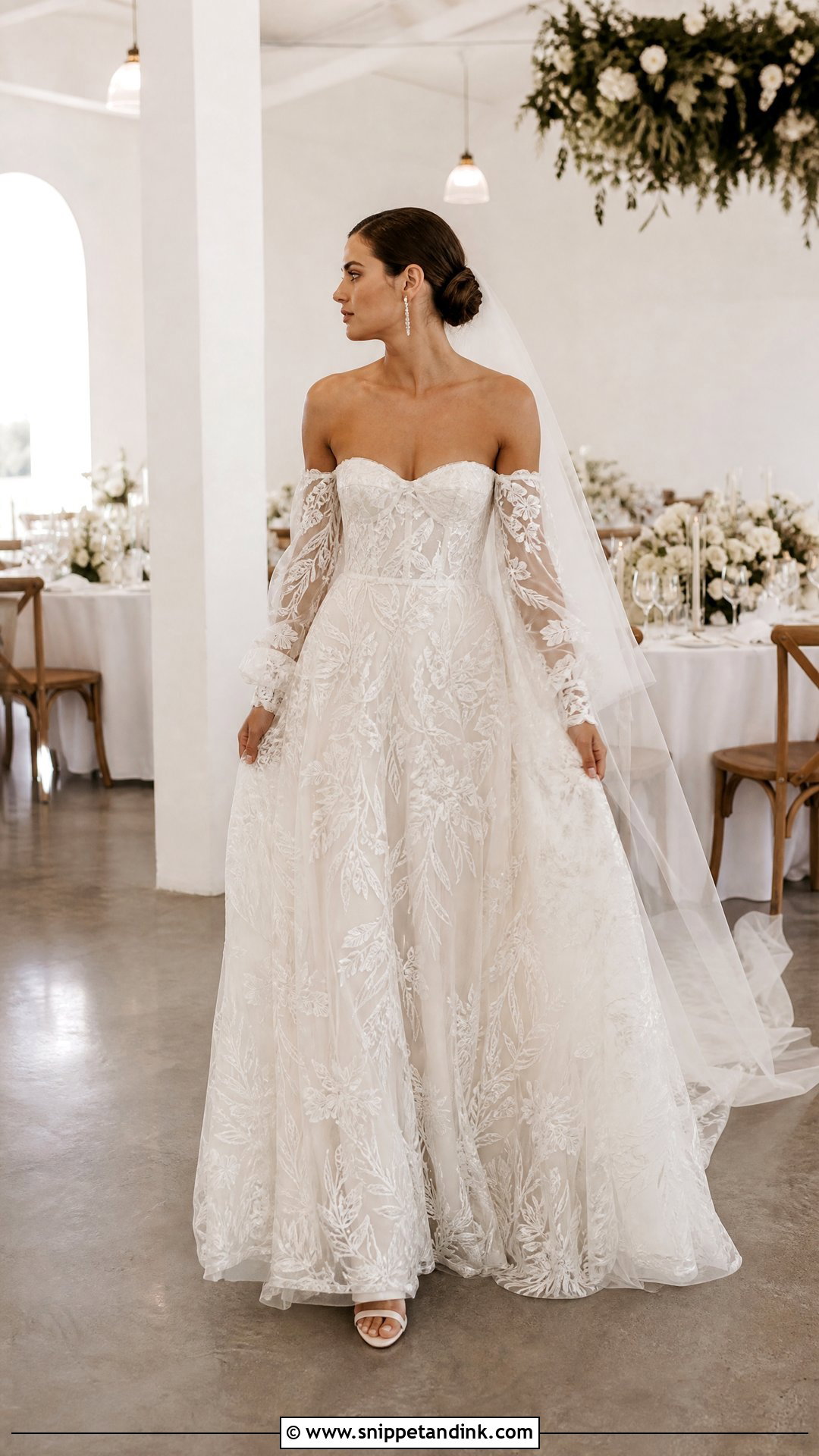
Detachable sleeves turn one strapless gown into two looks. The ceremony version takes the sleeves, a long sheer veil, drop earrings and heels; after photos you remove both and dance in the cleaner base dress. A sleek bun works with each stage so the change is obvious without a restyle. The fastenings are what I worry about. Ask the salon to show you how the sleeves attach, then practice taking them off yourself, because loose hooks or snaps tend to shift and show in photos. Swap to embellished flats after dinner if you like, as long as they stay in the same ivory family.
16. Rue De Seine Beach Wedding Dress
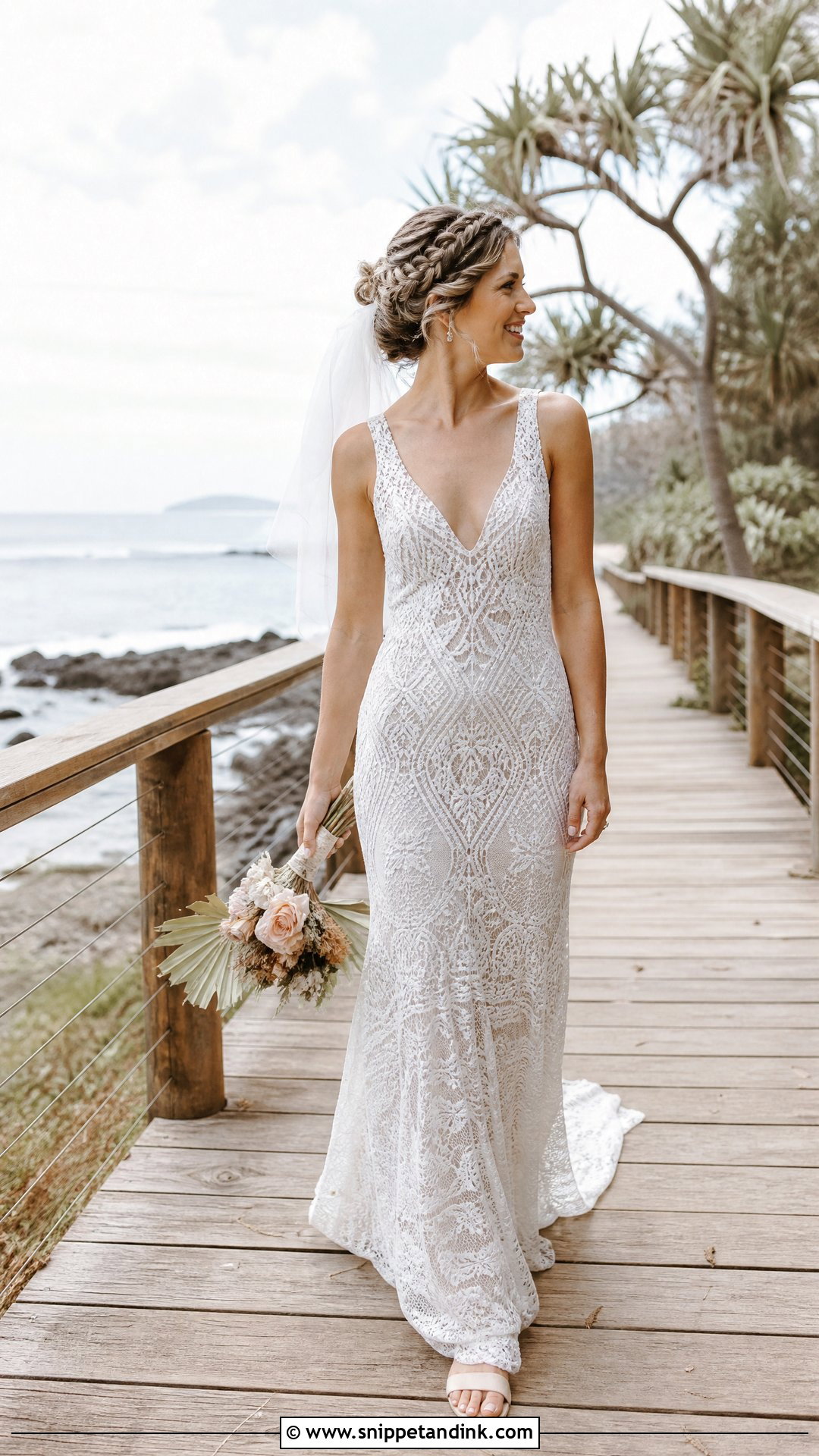
On a beach the dress has to cope with wind and sand before it worries about looking special. Breathable lace or chiffon, a manageable train and a bodice that won’t shift in a gust are the foundation. Most brides go barefoot or in flat sandals on sand and low block heels on a boardwalk, and the hem must be cut for whichever you choose, since a hem set for heels drags through wet sand. I’d swap a long veil for a short one or a detachable cape that can come off if the breeze picks up. A textured updo or braided ponytail stays controlled, with small earrings, a single hairpin and a compact bouquet.
17. Rue De Seine Desert Elopement Wedding Dress
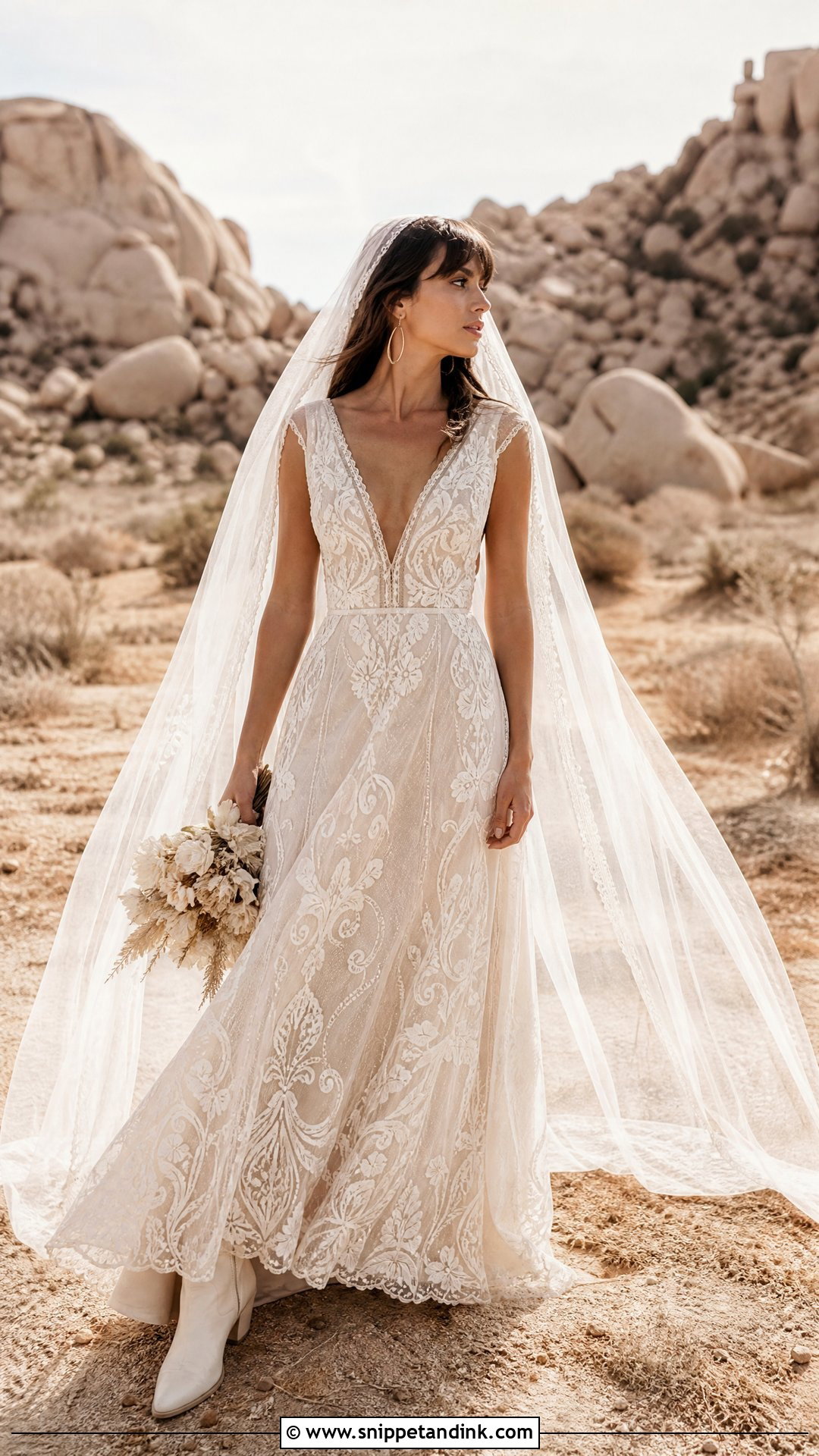
A desert elopement needs a dress that looks dramatic against bare landscape and still survives rocks and scrub. An embroidered A-line with a lightweight train is my first suggestion, worn with sturdy ivory ankle boots and simple metal earrings. Pack a wide-brim hat for a few portraits only. Loose waves work on a still day, but a low braided bun is the safer plan if there’s wind. Thorny brush will snag a cathedral veil, so a detachable fingertip length is less risky. Deserts get cold quickly after sunset, so bring a clean wrap, and have the final hem set around the boots.
18. Rue De Seine Mountain Wedding Dress
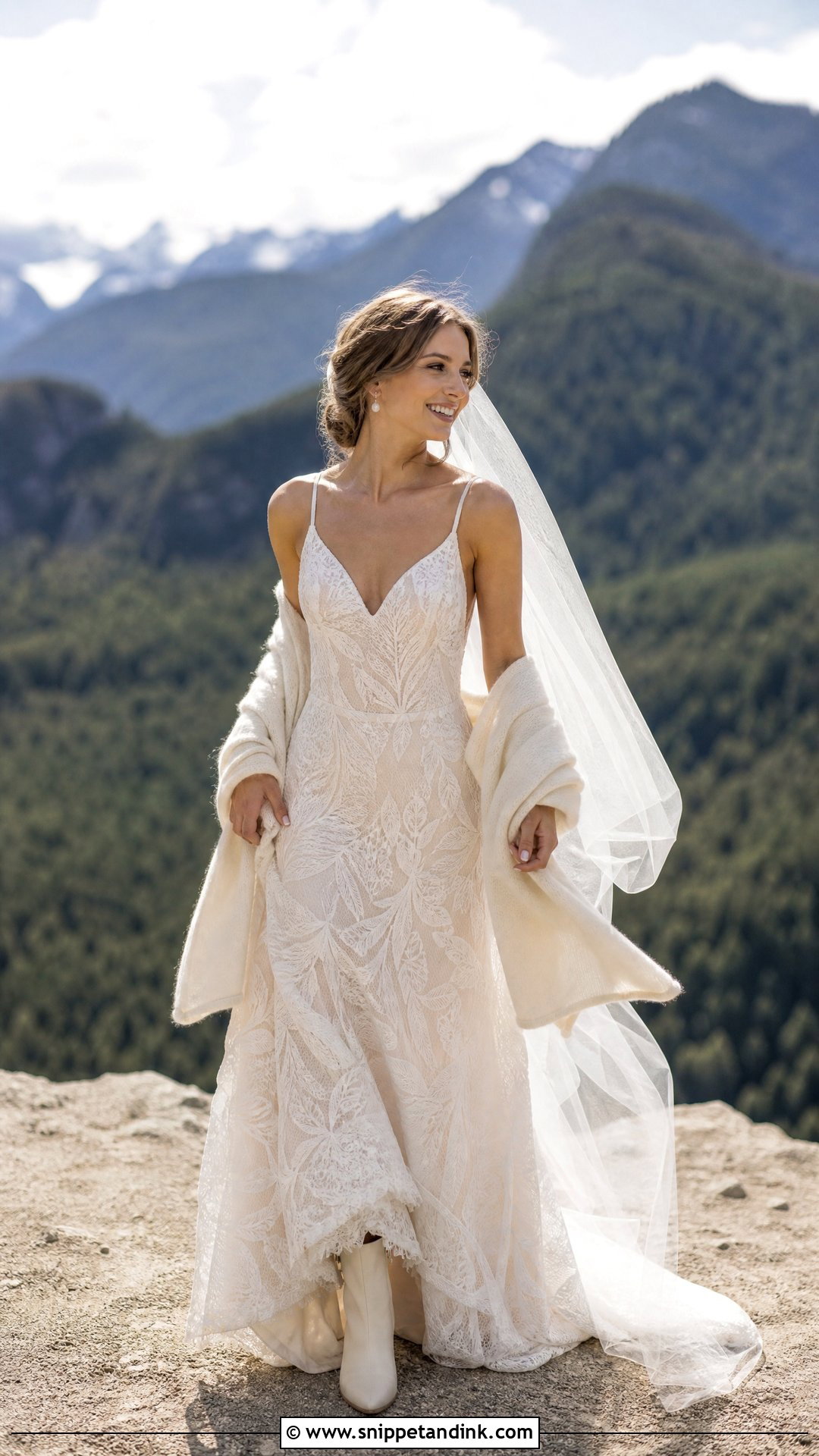
Mountain ceremonies change weather inside an hour, and the outfit should allow for it. An A-line with supportive straps, a soft train and botanical lace looks right against rock and pine; add a lining if the lace is sheer and temperatures drop. Stilettos sink and twist on trails, so leather boots or stable block heels are what I’d send you up in. A wool wrap, small earrings and a low textured style handle wind better than loose hair. Keep the veil fingertip length. Walk the full outfit on similar terrain before the day. Comfortable footwear and a practical bustle let you climb to the photo spot without holding your skirt in both fists.
19. Rue De Seine Garden Wedding Dress
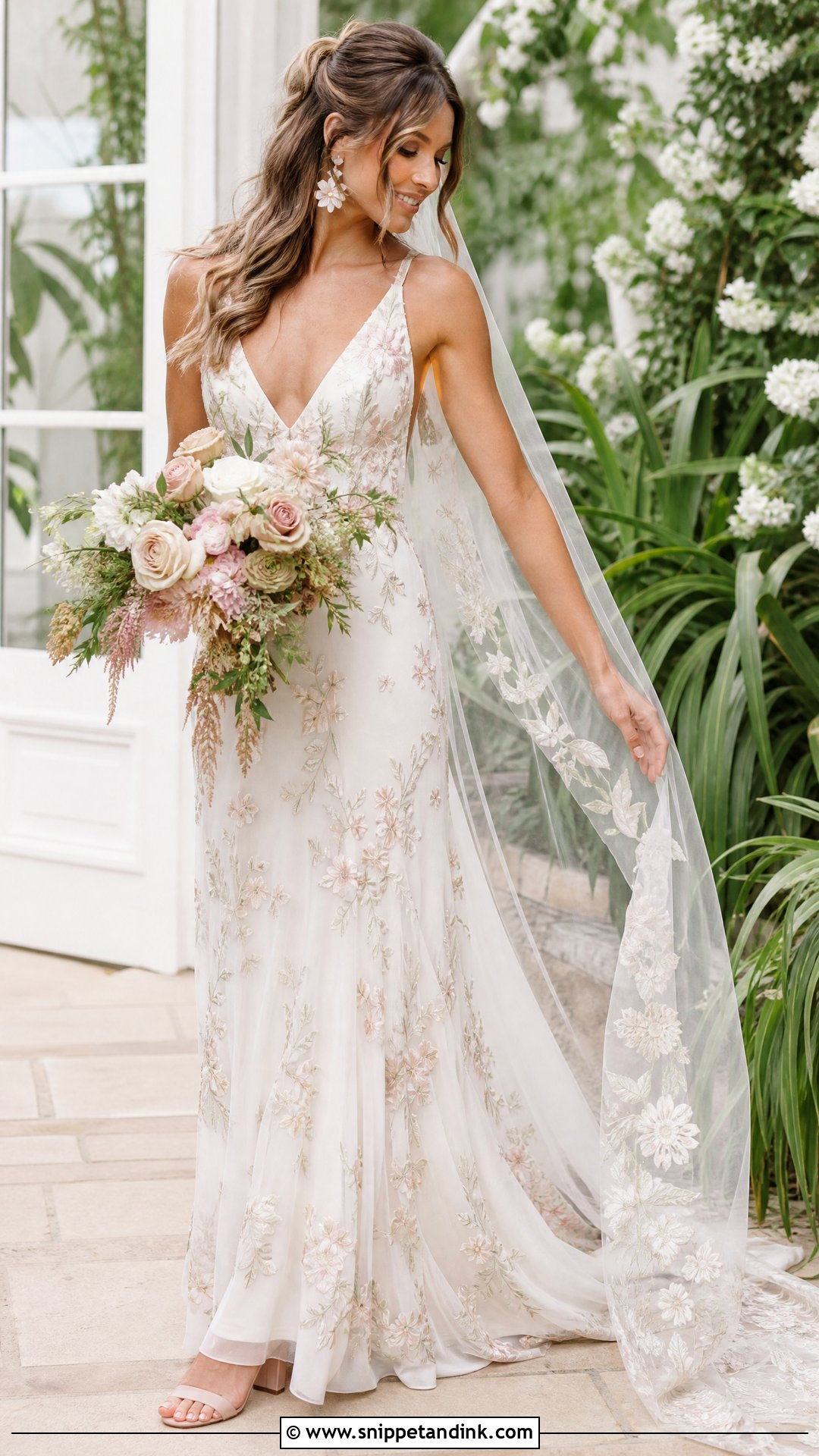
Garden weddings are where lightly tinted gowns with embroidered flowers make the most sense. A fitted waist and a skirt that moves when you walk suit the setting; pale block-heel sandals, floral earrings and a sheer veil with only a few scattered appliqués complete it. I coordinate the bouquet with the embroidery but never copy it. Pulling one or two thread colors is enough, and if the gown is boldly multicolored, the accessories should go neutral. Ask about grass versus gravel versus paving before you pick heel height, and plan a bustle so the train isn’t dragging over lawn all reception.
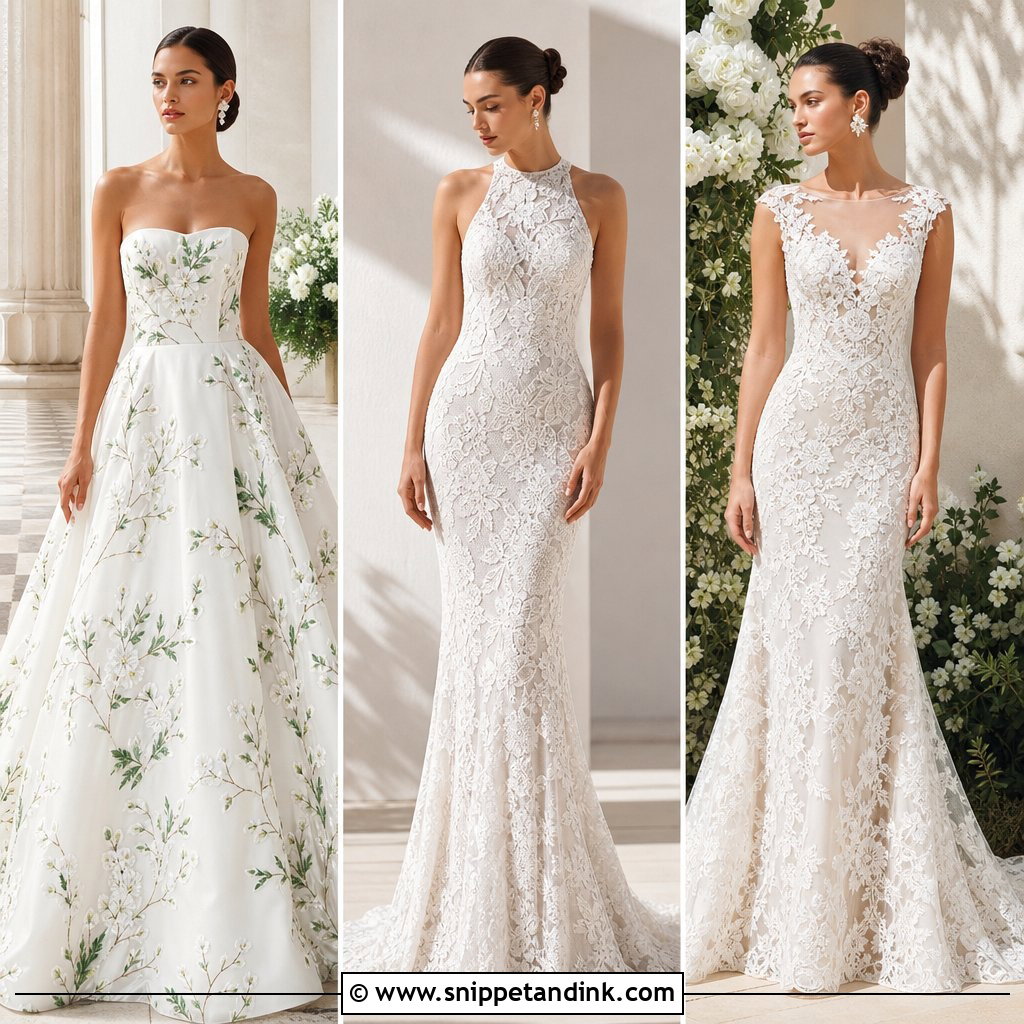
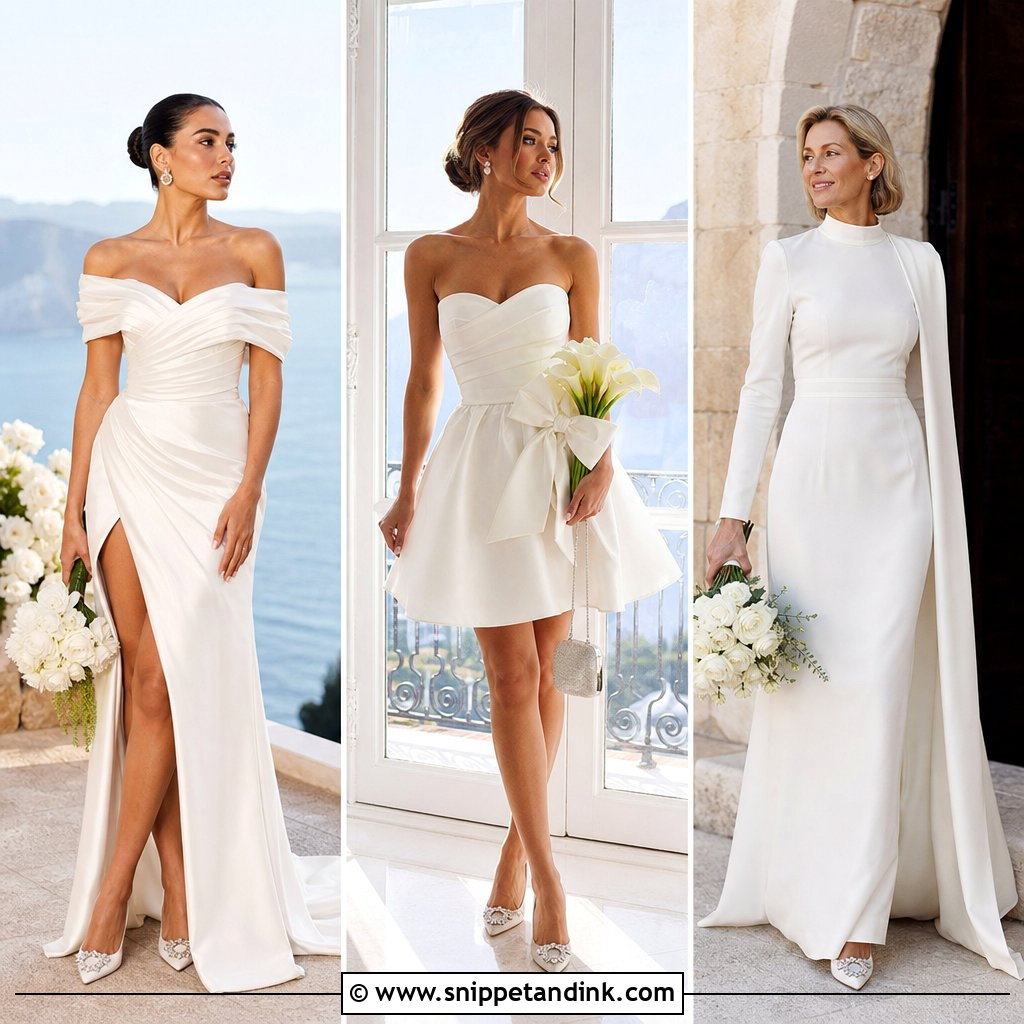
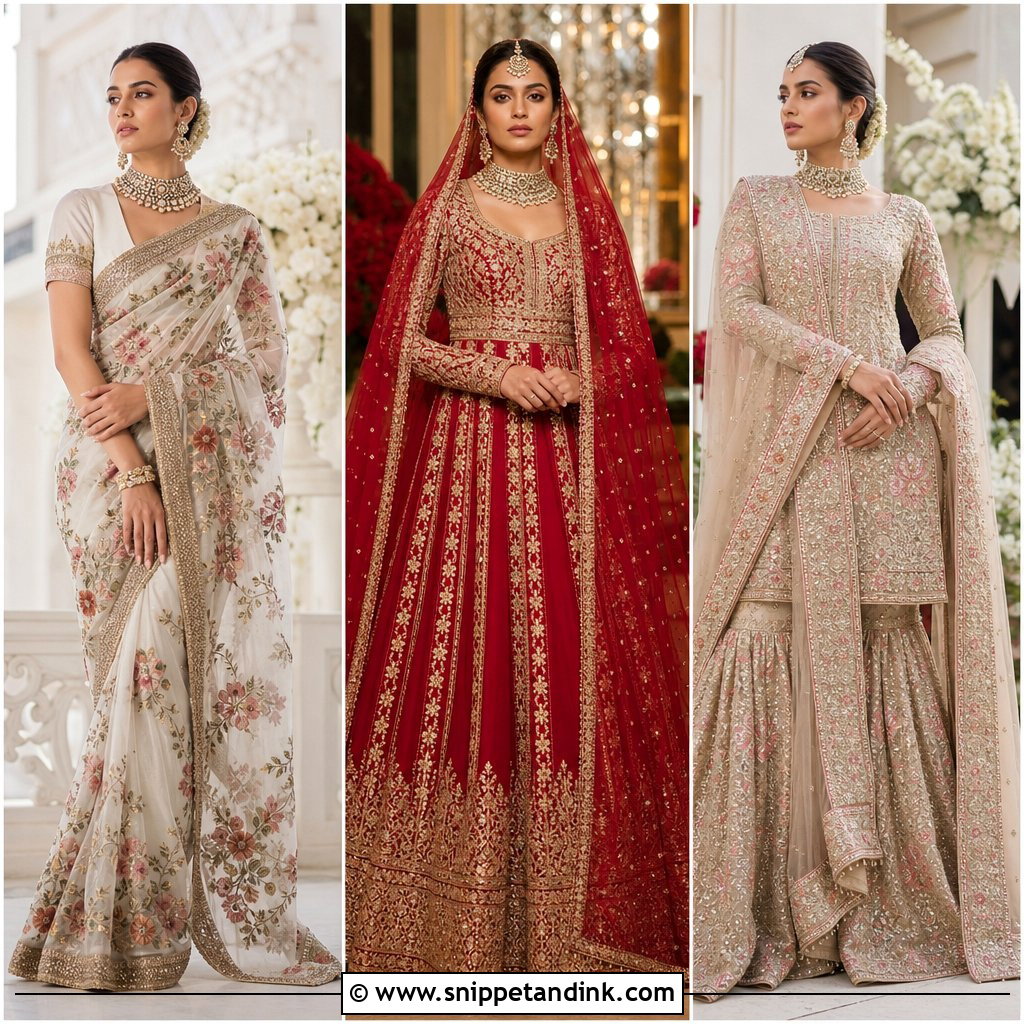
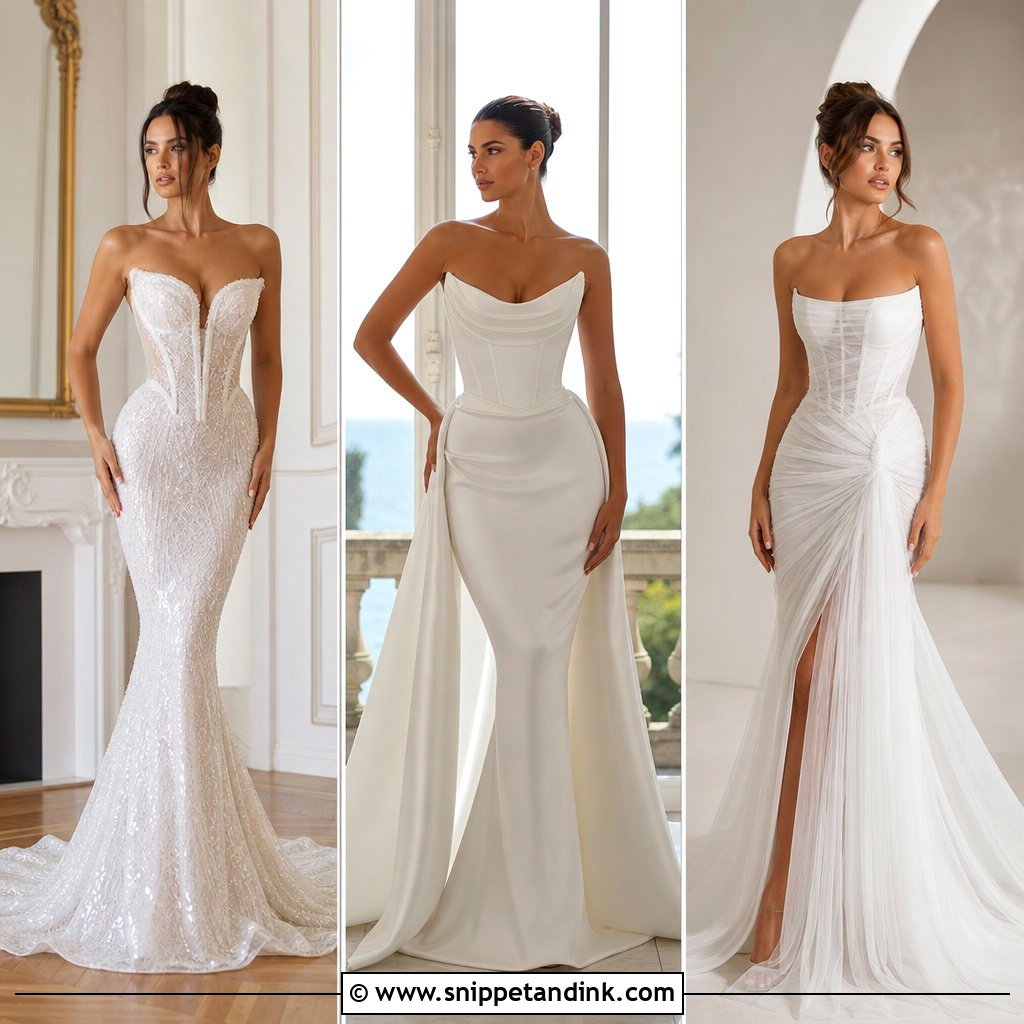
20. Rue De Seine Courthouse Wedding Dress
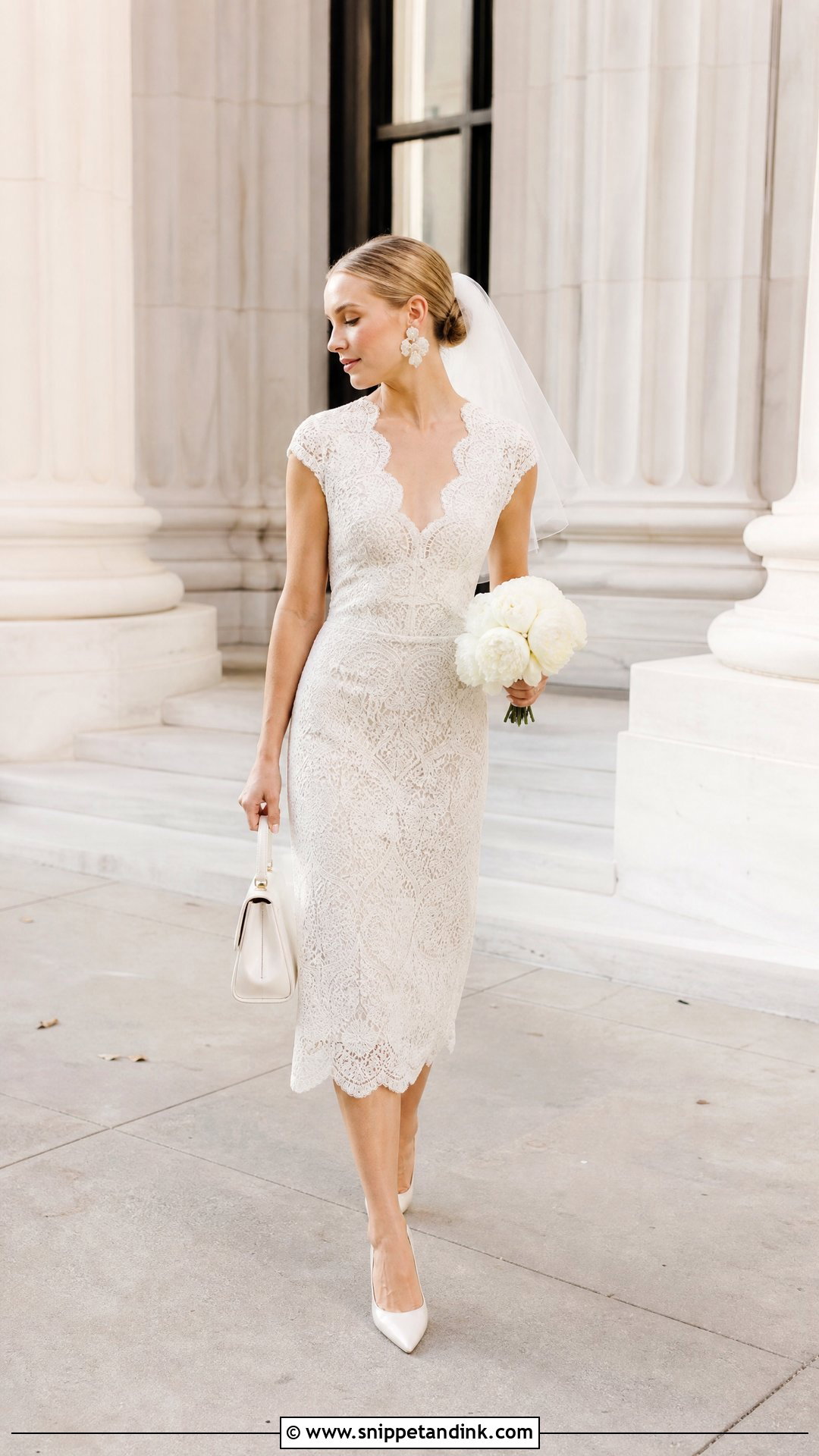
A courthouse ceremony is a chance to wear something streamlined that still feels like a wedding dress. Tea-length lace, a simple column or a fitted midi suit the setting without swamping the corridors. Pointed pumps, sculptural earrings and a structured ivory bag give a polished city look. A birdcage veil or short tulle veil adds ceremony and fits through elevators and hallways. Keep the bouquet small and hand-tied. If lunch or a party follows, you will be on your feet for hours, so choose shoes I’d trust for city pavement, not just the steps of the building.
21. Rue De Seine Black Tie Wedding Dress
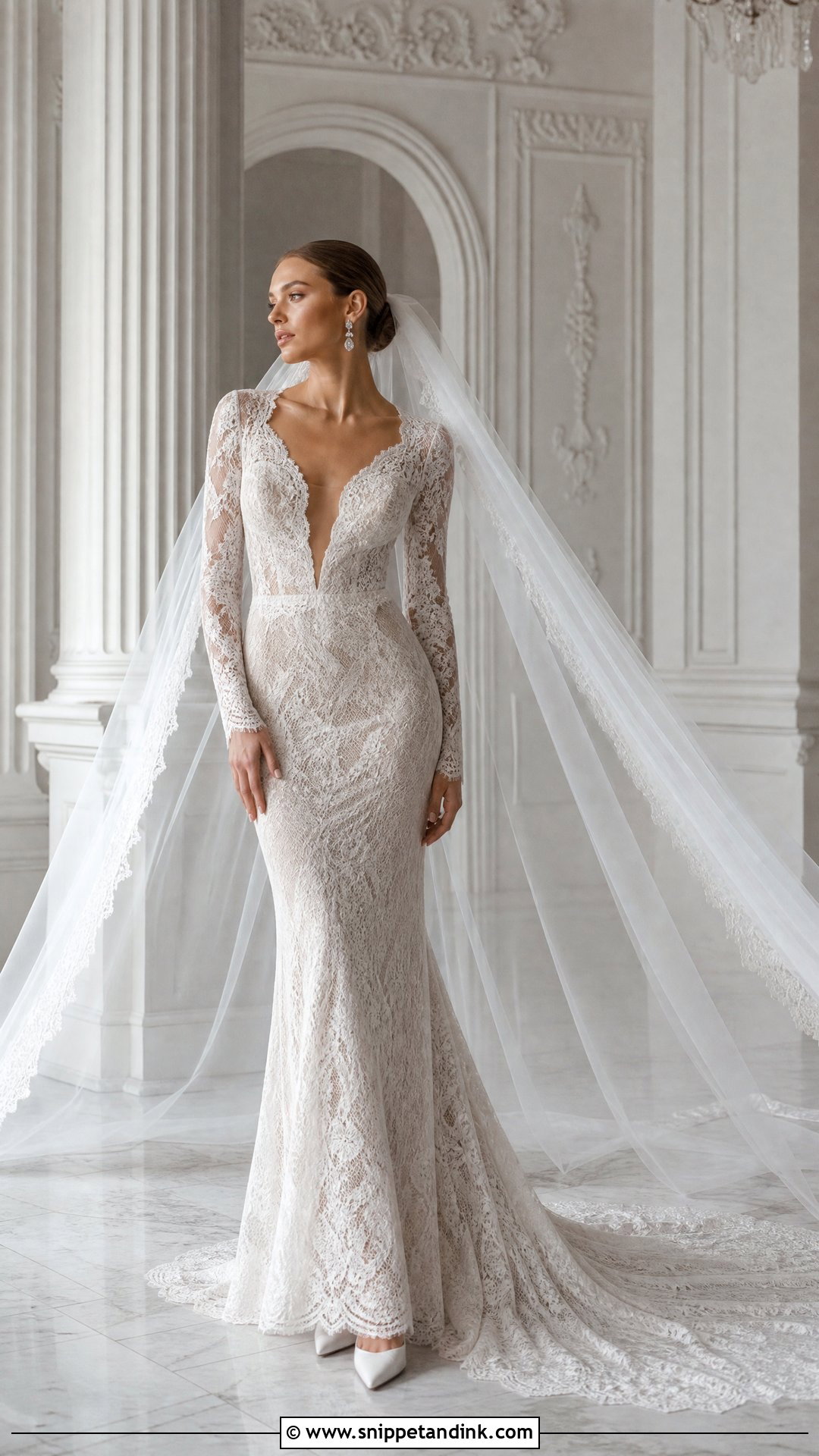
Rue De Seine lace can go black tie, but the styling has to tighten up around it. A floor-length fitted gown or a dramatic A-line with structured lace and a defined train sets the level, paired with pointed satin pumps, refined drop earrings and a cathedral veil. A smooth bun or glossy side-parted waves suit the formality better than loose texture. Keep the bouquet tonal and neatly shaped. With graphic lace, one strong piece of jewelry is plenty. The detail I insist on at formal venues is a properly anchored bustle, because a train that drops during dinner service gets stepped on by waiting staff.
22. Rue De Seine Rustic Wedding Dress
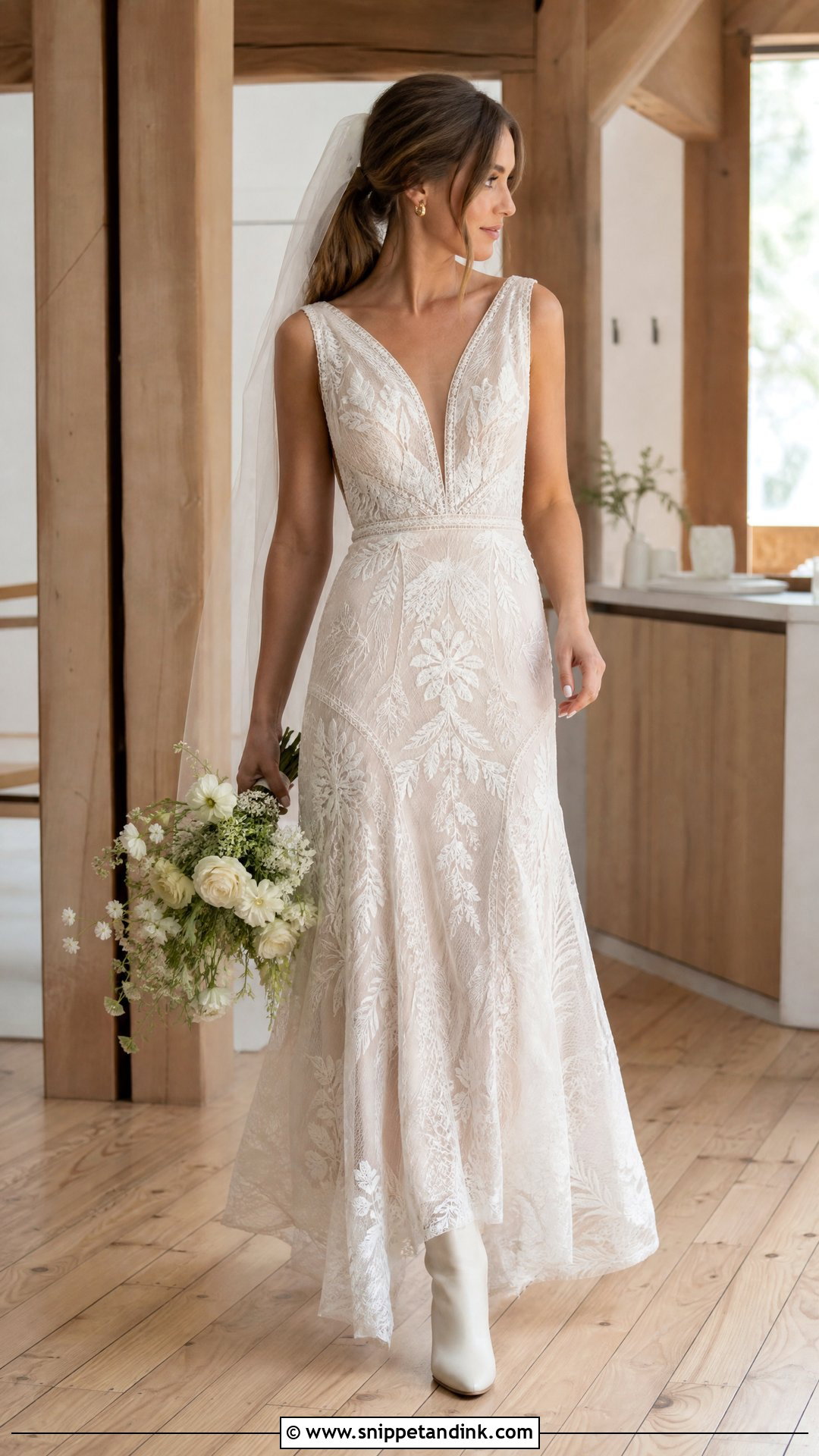
Rustic venues tempt brides into costume: fringe, hat, boots and chunky jewelry all at once. One or two of those touches is enough. Start with an A-line or softly fitted botanical lace dress with comfortable straps and a medium train. Ivory ankle boots or low block heels depend on the floor, since old barn boards have gaps that catch a narrow heel. Small gold earrings, a textured low ponytail and a plain fingertip veil complete it, with a loose bouquet of white flowers and seasonal foliage. A practical bustle protects the lace from hay, gravel and dance-floor dust later on.
23. Rue De Seine Winter Wedding Dress
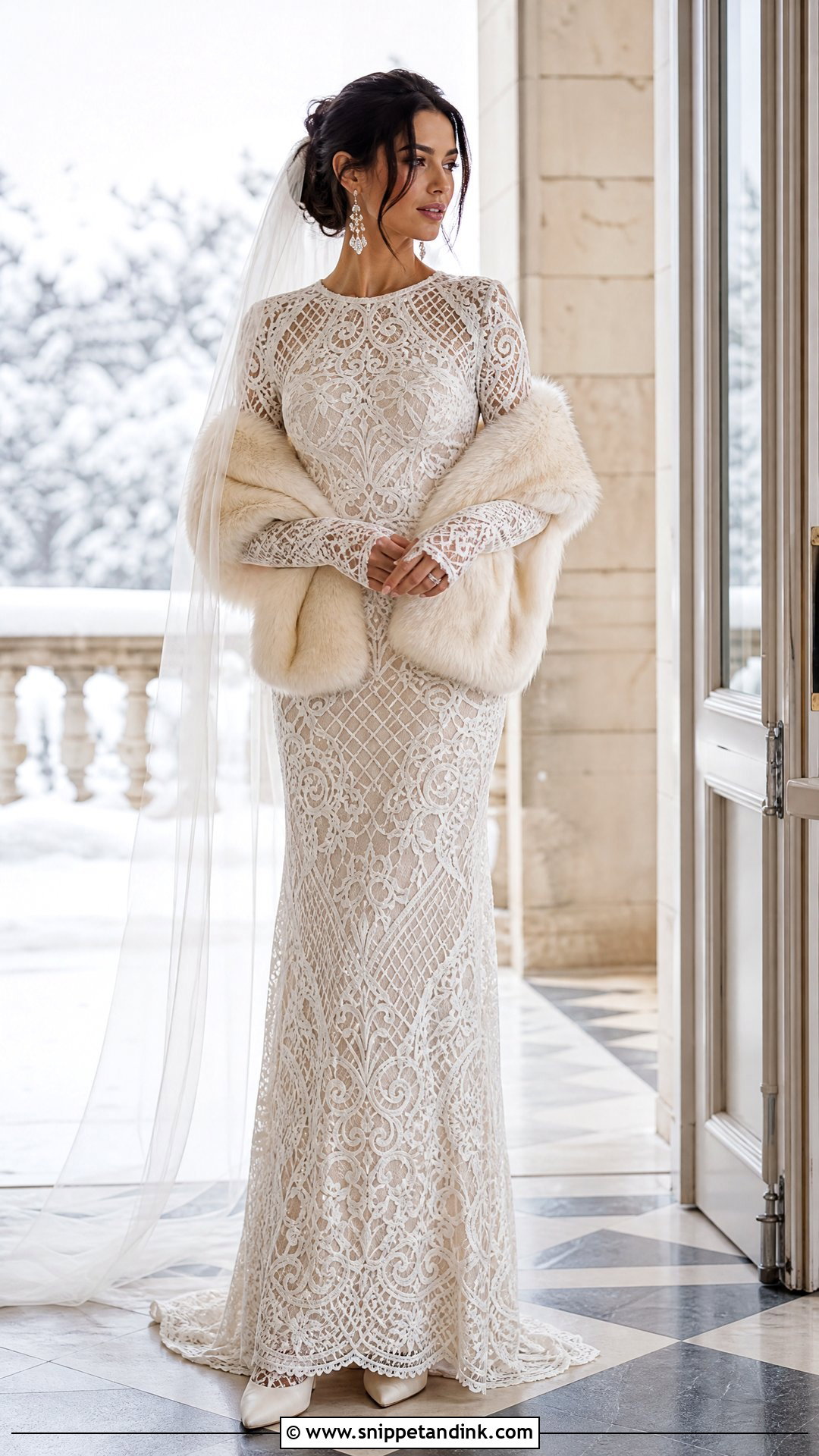
Winter lets you wear the heaviest lace and full sleeves without overheating outside. A lined gown with a fitted bodice and a fluid skirt keeps you warm on the walk between buildings. Closed-toe ivory heels, crystal earrings and a long veil give a formal finish. For outdoor portraits add a clean faux-fur stole or a tailored wool cape, chosen so it frames the gown rather than hiding it. A smooth low bun stops hair from catching on high collars. What brides forget is the heating: winter venues run warm, so make every outer layer easy to drop, and hem the gown for both your ceremony and reception shoes.
24. Rue De Seine Plus Size Wedding Dress
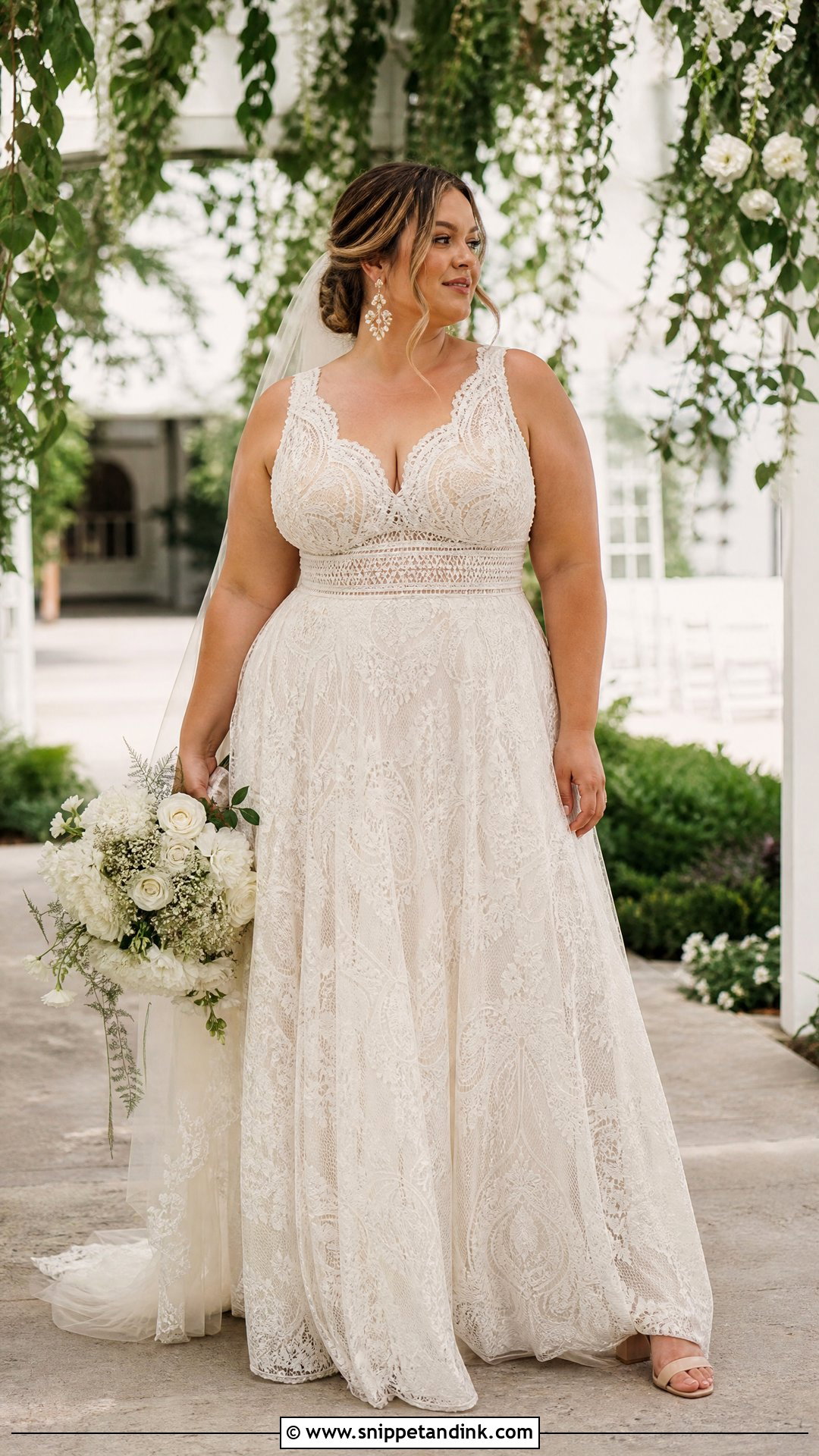
For plus-size brides I start with fit, support and how you feel, not with rules about which silhouette is supposedly flattering. Structured bodices, well-placed lace and a skirt that moves without pulling are what I look for in the sample. An A-line can define the waist and a fitted shape can show off curves once it has been properly altered. Built-in cups, reinforced straps and custom lining add comfort without changing the design. Choose hair and accessories by the neckline, not by body size. Call the bridal salon ahead to ask which sample sizes they carry, then judge the dress by how well you can sit, walk, hug and dance in it.
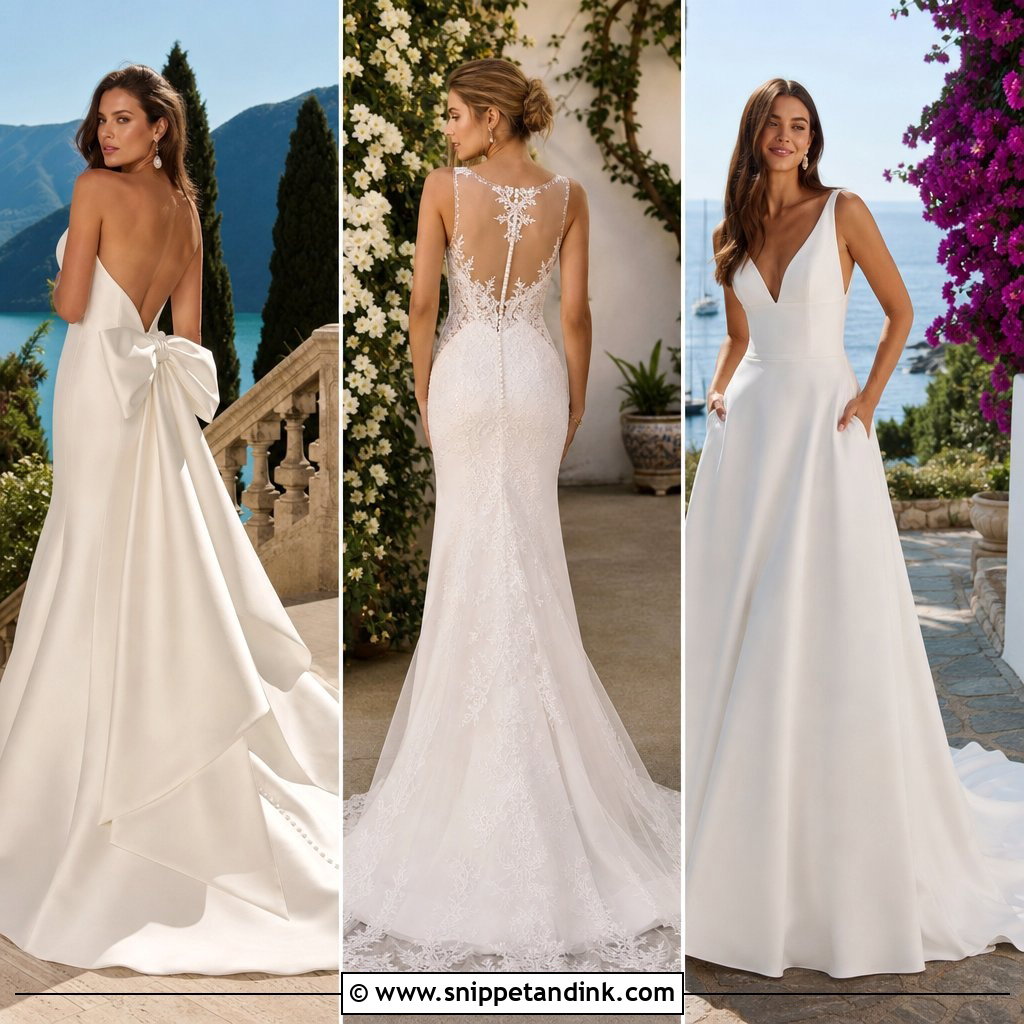
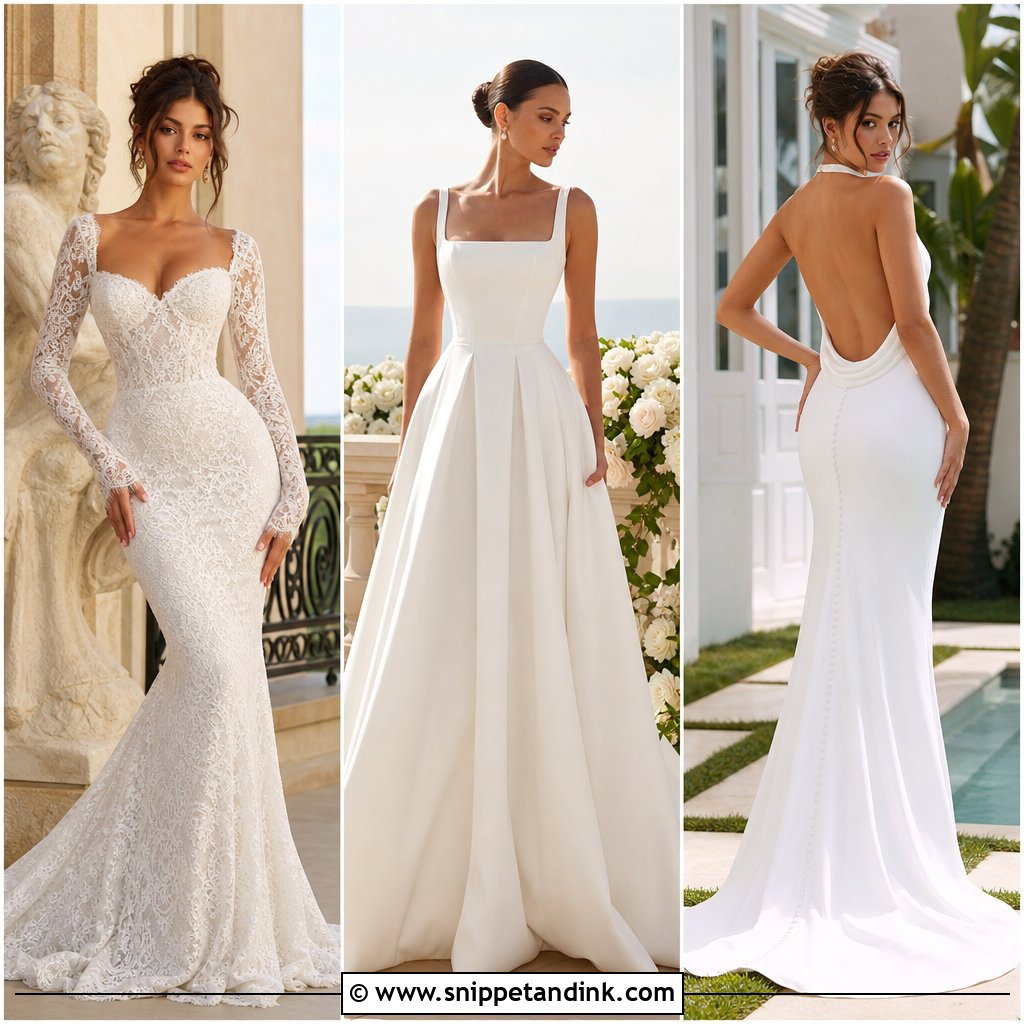
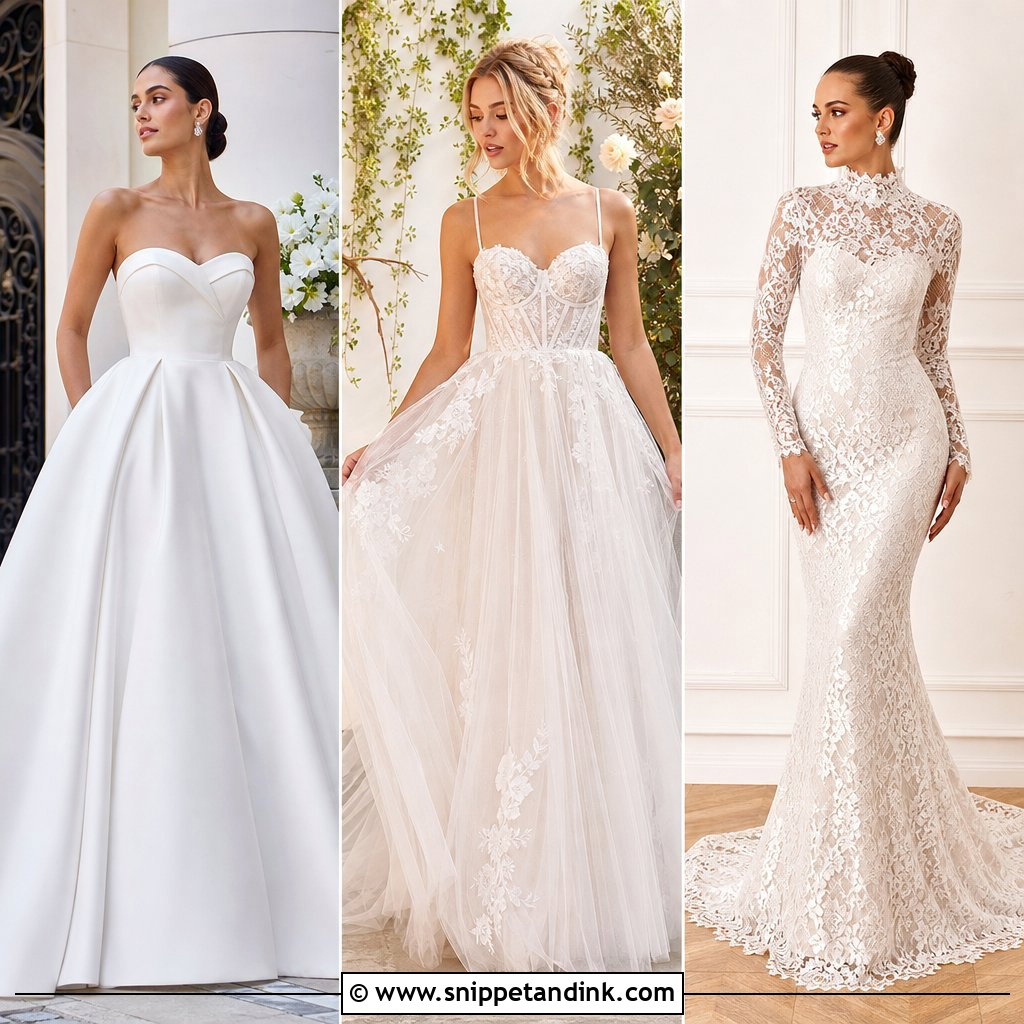
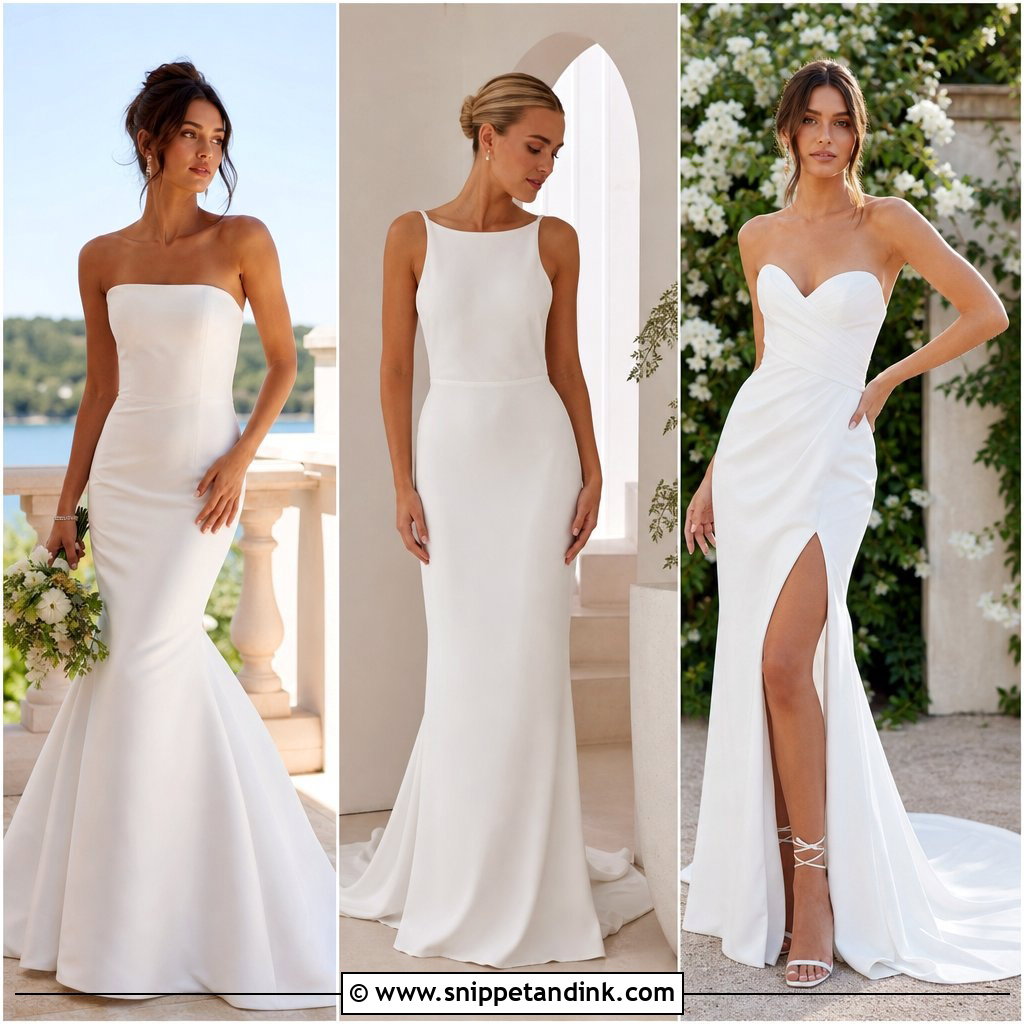
25. Rue De Seine Two Look Wedding Dress
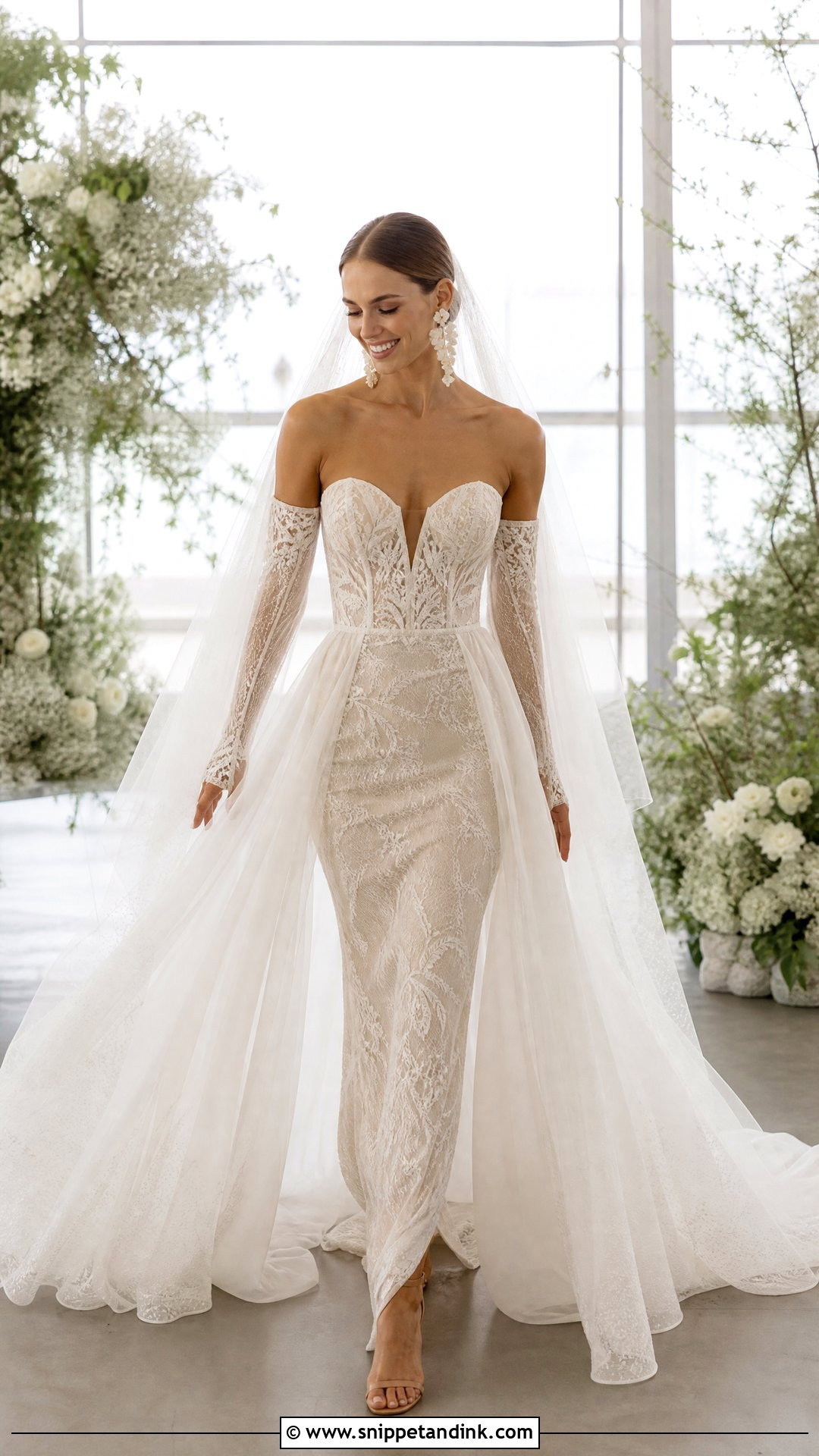
Two looks from one outfit is cheaper and calmer than buying a second dress. Start with a fitted Rue De Seine base and layer it for the ceremony with detachable sleeves, an overskirt, a cape or a long veil, plus heels, statement earrings and a polished hairstyle. Before the reception the dramatic layer comes off and comfortable ivory shoes go on; brighter earrings or a colored hair accessory make the change visible. The base gown has to stand on its own because it carries the second half of the night. I always rehearse the change with the bride and whoever is helping her, and assign someone to fold and store the removed pieces away from food and drinks.
Caring for Embroidered Lace From Delivery to Storage
Heavy lace and colored embroidery need a bit more handling than a plain gown, both before the wedding and long after it. Most of the damage I see comes from hangers, steam held too close and dresses sealed in plastic.
- Hang it by the inner hanging loops, not the shoulders or straps. A heavy lace skirt will stretch thin straps over a few weeks.
- Steam from the inside of the skirt and keep the nozzle a hand’s width away from embroidery, because direct heat can pucker colored thread and flatten raised lace.
- Keep a white cotton bag over it at home. Plastic traps moisture and can yellow ivory fabric.
- After the wedding, send it to a specialist cleaner within a few weeks. Sugar from champagne or cake dries clear and turns brown later, even when you can’t see it now.
- For long-term storage, ask for acid-free tissue and an acid-free box, and keep it somewhere cool and dark, never in a loft or a damp basement.
If you plan to have the dress shortened or dyed for a later party, tell the cleaner first. Some embroidery threads take dye differently from the lace, and the result can surprise you.
Start With the Lace and Let Everything Else Follow
Most styling decisions on these gowns come back to one question: which detail of the dress do you love most? Once you know it is the graphic lace, the embroidery color or a dramatic sleeve, the accessories either support it or get cut. Let the venue, weather and how much you’ll move decide shoes, veil, hair and outer layers. Leave time for careful alterations on open backs, plunging necklines, fitted skirts and detachable pieces, since those are where these dresses need the most attention. If the finished outfit still feels like you when you sit down in it, you’ve got it right.
You'll Like These Ideas:


Leave a Reply