
Wedding hair has been drifting away from stiff, sprayed-solid shapes toward styles with structure underneath and softness on top. In my chair, the most complicated look is rarely the right one. The right one fits your neckline, sits properly under the veil, suits your hair’s real texture and survives the weather at your venue. Some brides only feel like themselves in a sleek bun; others want hair moving on their shoulders. Below are twenty styles I’d happily put on a bride, each with notes on how it’s built and where it struggles.
Let the Neckline Make the First Cut
When a bride sits down with a folder of forty hairstyles, the first thing I ask is what the top of her dress looks like. The neckline rules out half the folder straight away, and that makes the rest much easier.
- High neck or halter: hair up. Hair falling onto a high collar hides the detail and gets caught in it.
- Strapless or sweetheart: almost anything works, but bare shoulders suit hair down or side swept nicely.
- Open or low back: an updo or a sleek pony, since loose hair covers the very feature you paid for.
- Off-shoulder: a low bun or chignon, which mirrors the horizontal line of the sleeves.
- One-shoulder: sweep the hair to the bare side so the two don’t crowd each other.
- Heavily beaded or lace bodice: keep the hair simpler, or the two compete in photos.
After the neckline, I look at texture. A style that fights your hair’s natural pattern will take longer to do and won’t last as long, so I’d rather adapt a look to your hair than force your hair into the look.
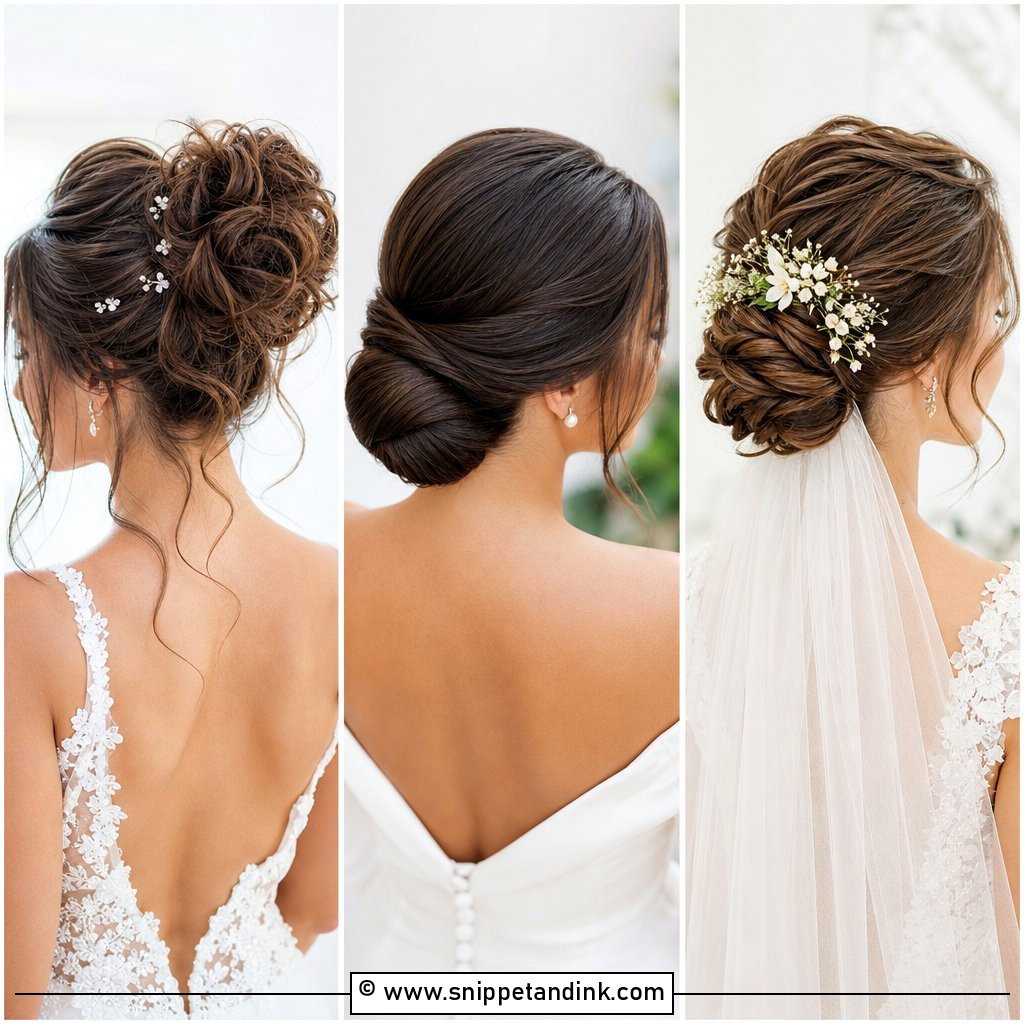
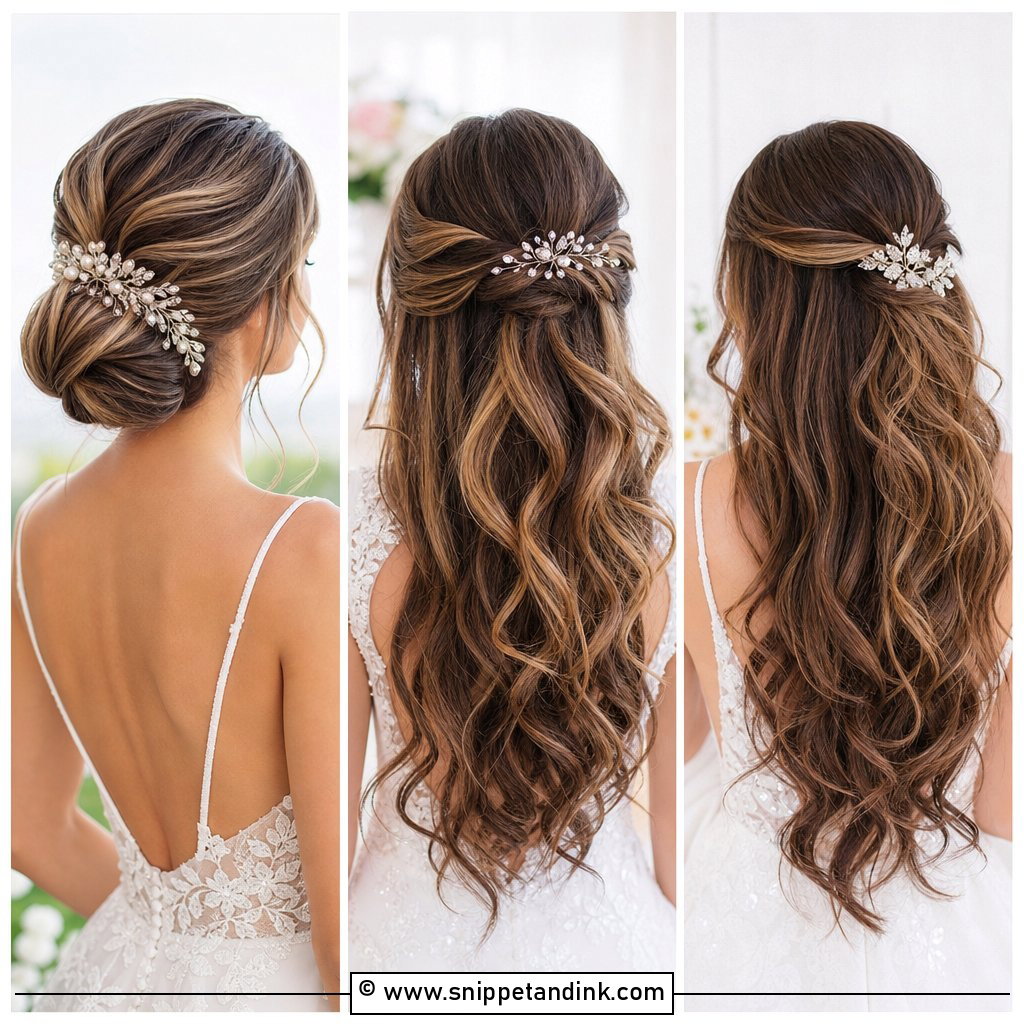
1. Bridal Low Chignon
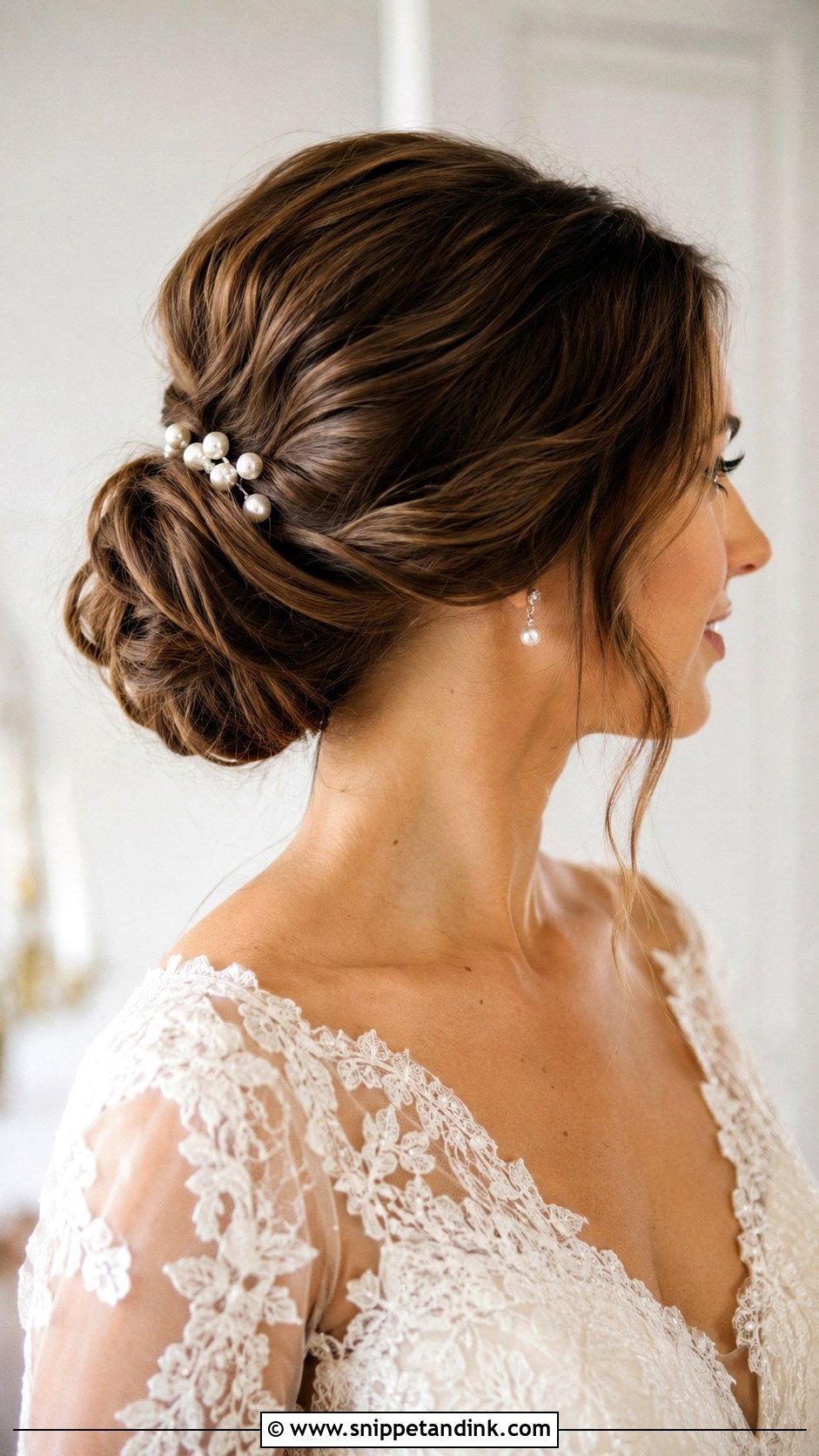
If a bride can’t decide, the low chignon is usually where I steer her. It sits at the nape, looks finished from every angle the photographer will shoot, and holds for hours because the weight rests low and close to the head. Veils, pearl pins, combs and hair vines all have somewhere to grip. Open backs, high necks and lace all suit it. Ask for crown volume if you want it softer, or a smooth top if the dress is very minimal.
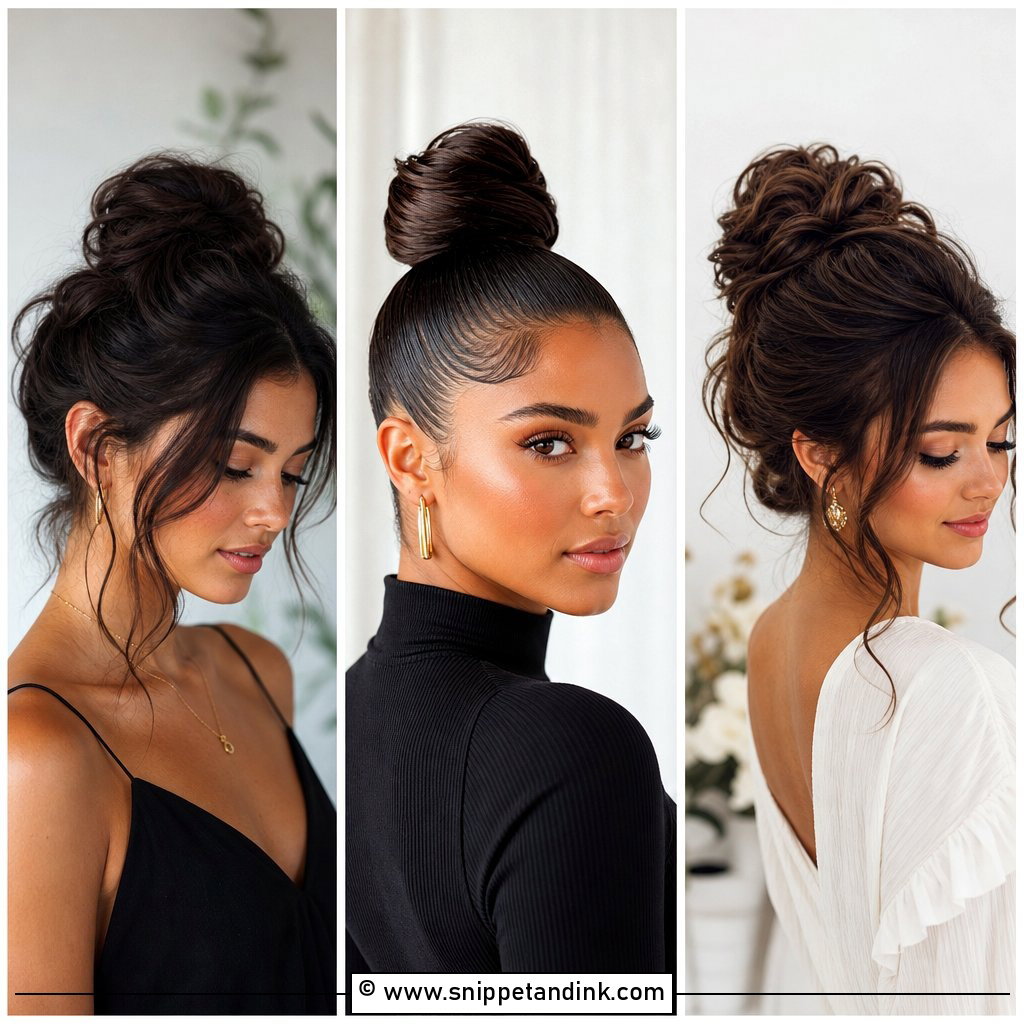
2. Bridal Sleek Bun
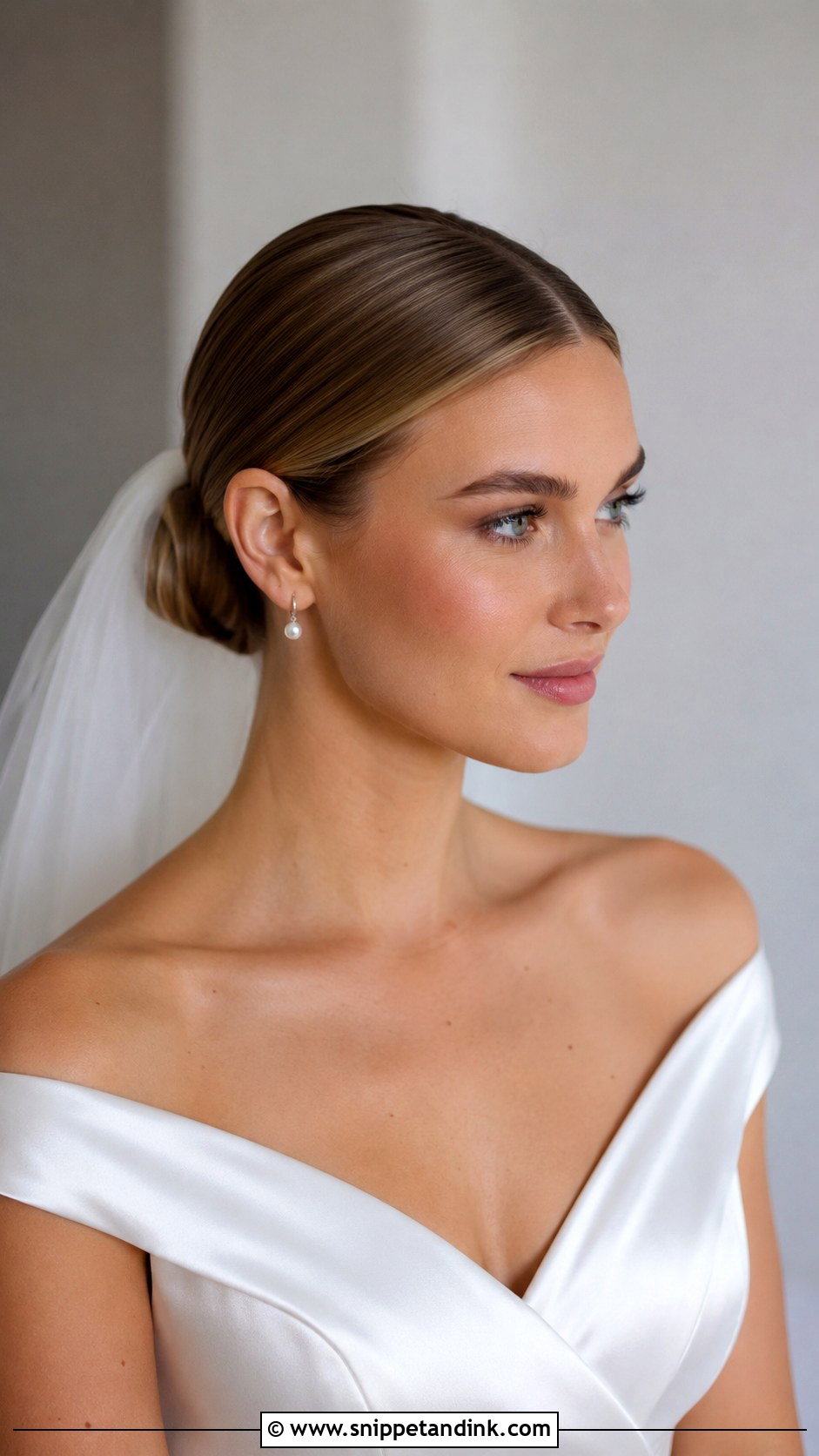
Sleek buns look simple and are anything but. Every bump shows, so I blow-dry the hair completely straight first, then brush it back with a boar bristle brush and a smoothing cream before the elastic goes in. Center part, side part or none: decide at the trial, because the choice changes the face a lot. It’s a clean match for satin, square necklines and structured gowns, and it keeps hair out of your face at a windy outdoor ceremony. Tuck the veil comb under the bun so it doesn’t break the line.
3. Bridal Messy Bun
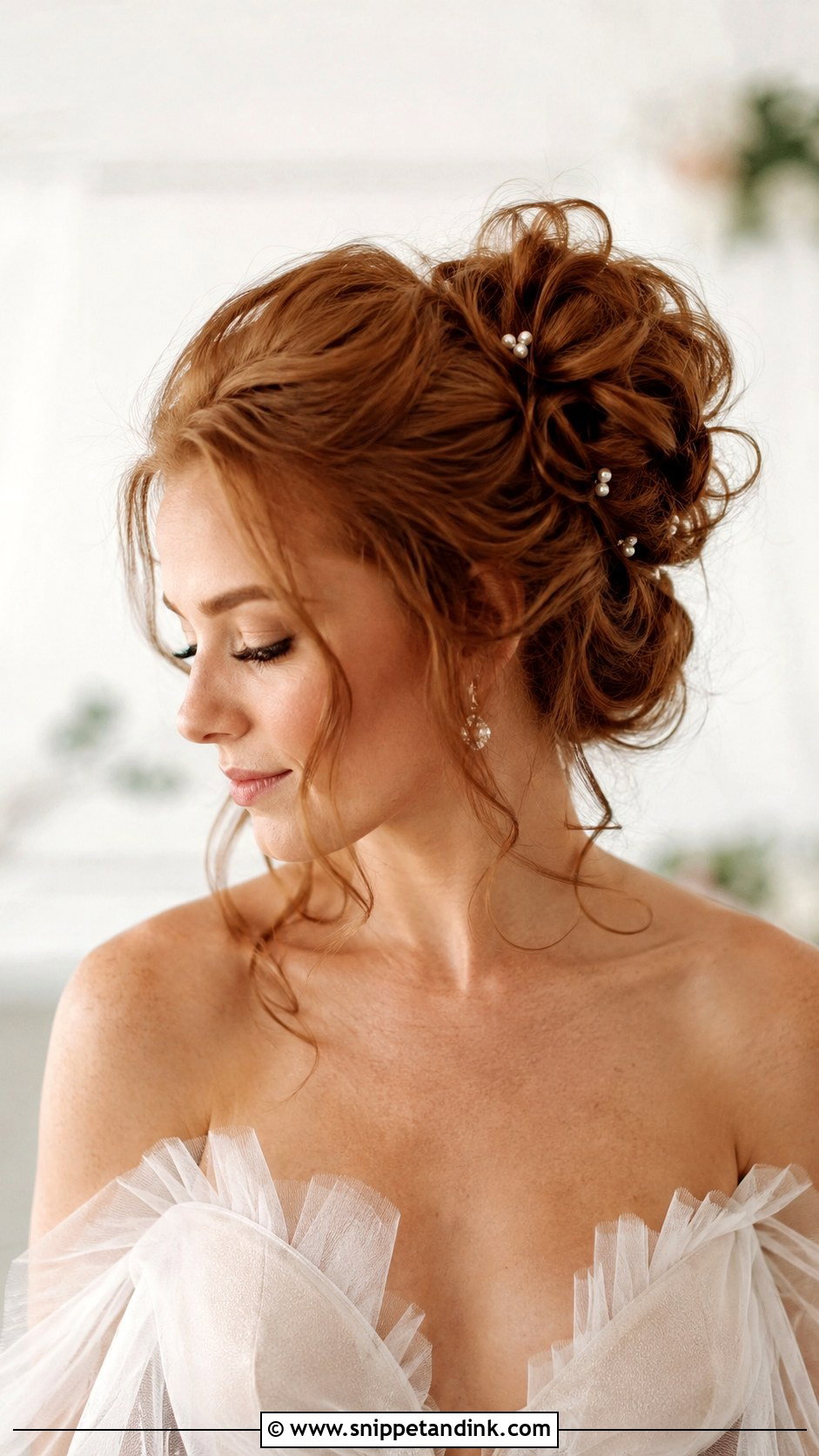
The trick with a messy bun is that none of it is actually messy. I curl everything first, then pin the bun loosely in sections, so each twist has some shape and the whole thing doesn’t collapse into one blob by the afternoon. Tendrils go where they flatter, not wherever they fall. It suits garden, barn and beach weddings and softer gowns, and it needs medium to long hair that holds a curl. Small pearl pins or a delicate comb add enough detail.
4. Bridal Half Up Half Down Hair
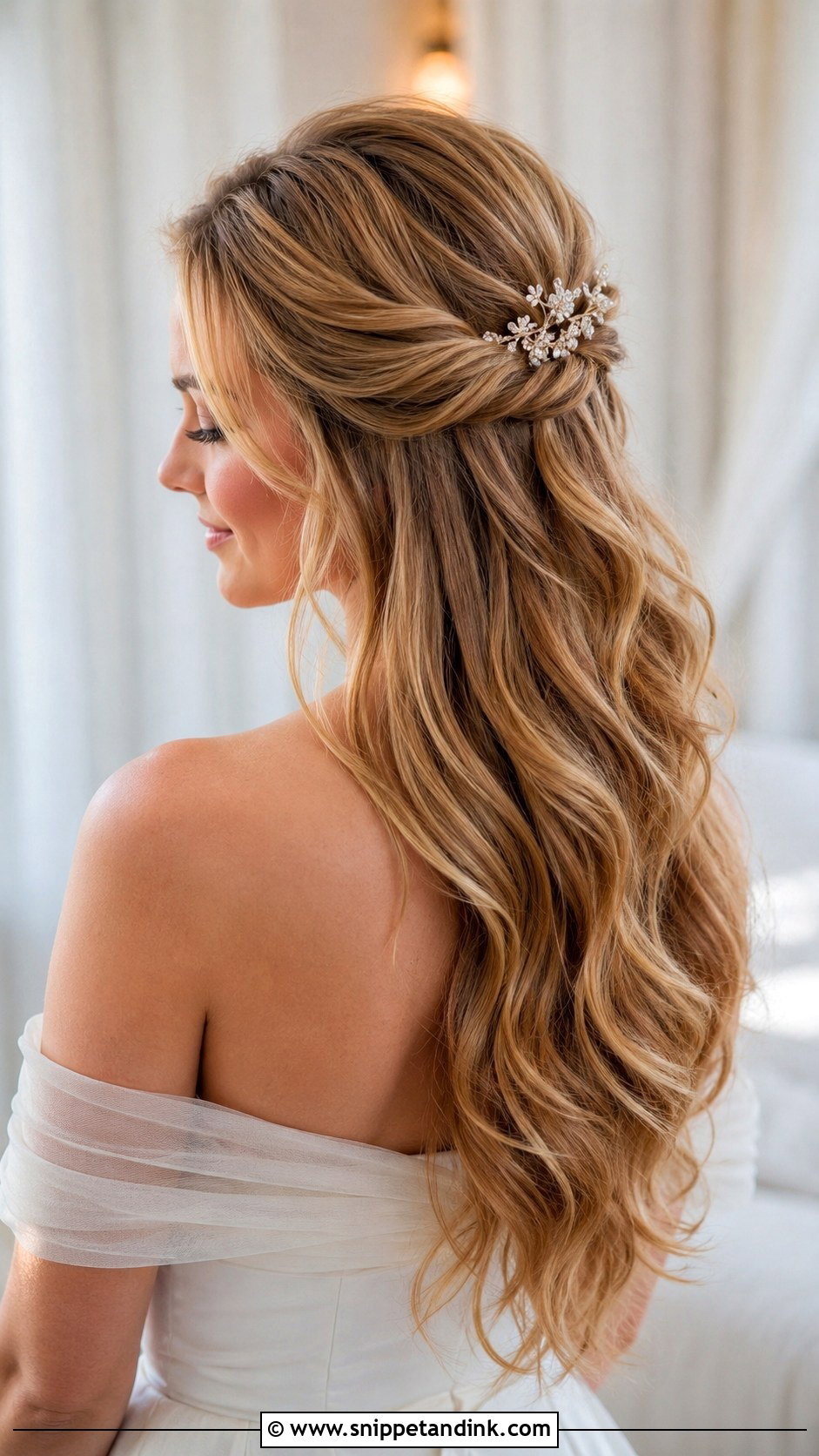
Half up, half down gives you hair on your shoulders with the front pinned out of the way for dancing. The top section can be twisted, braided, knotted or just lifted at the crown. My worry with this style is always the bottom half, since loose curls drop faster than pinned ones. I set them in pin curls while I do the top, and I’m generous with crossed bobby pins under the pinned section so the veil comb has something solid to grip. Brides who wear their hair down every day tend to feel most at home in it.
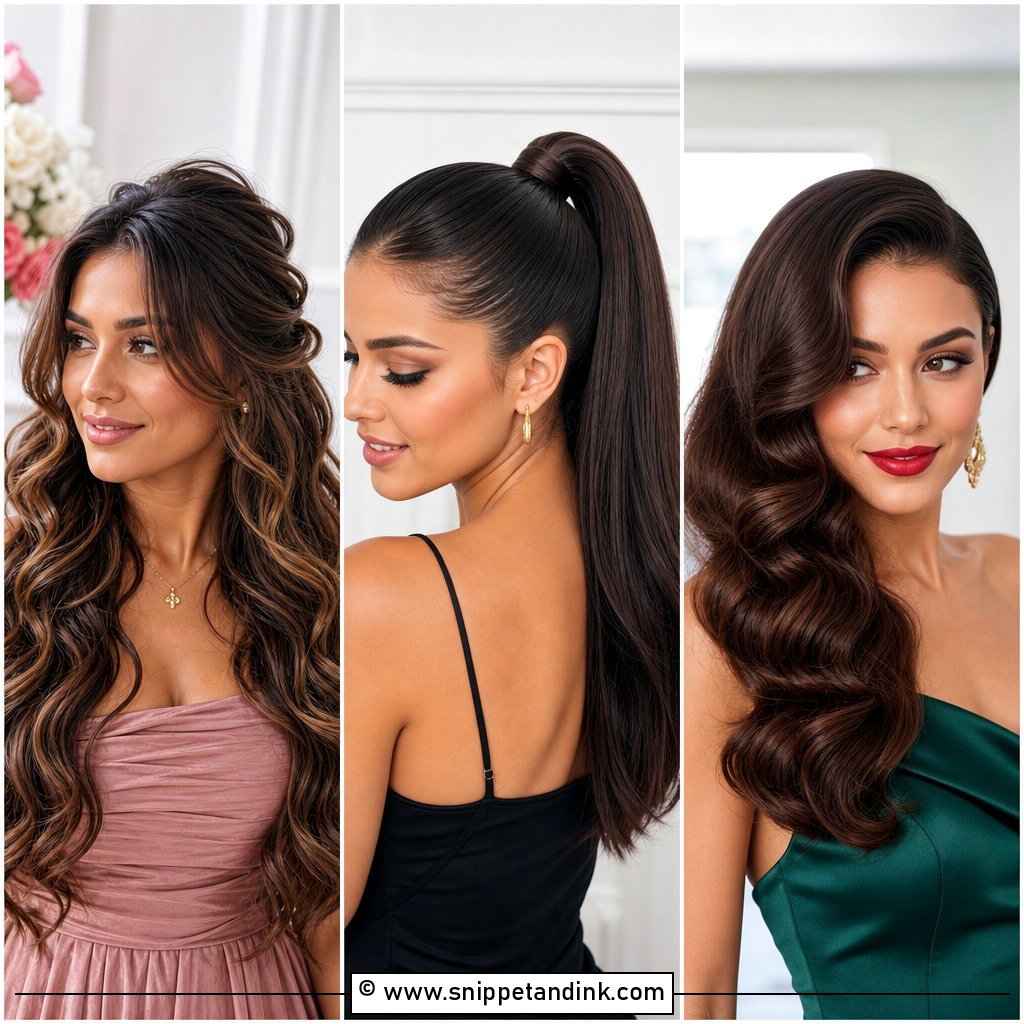
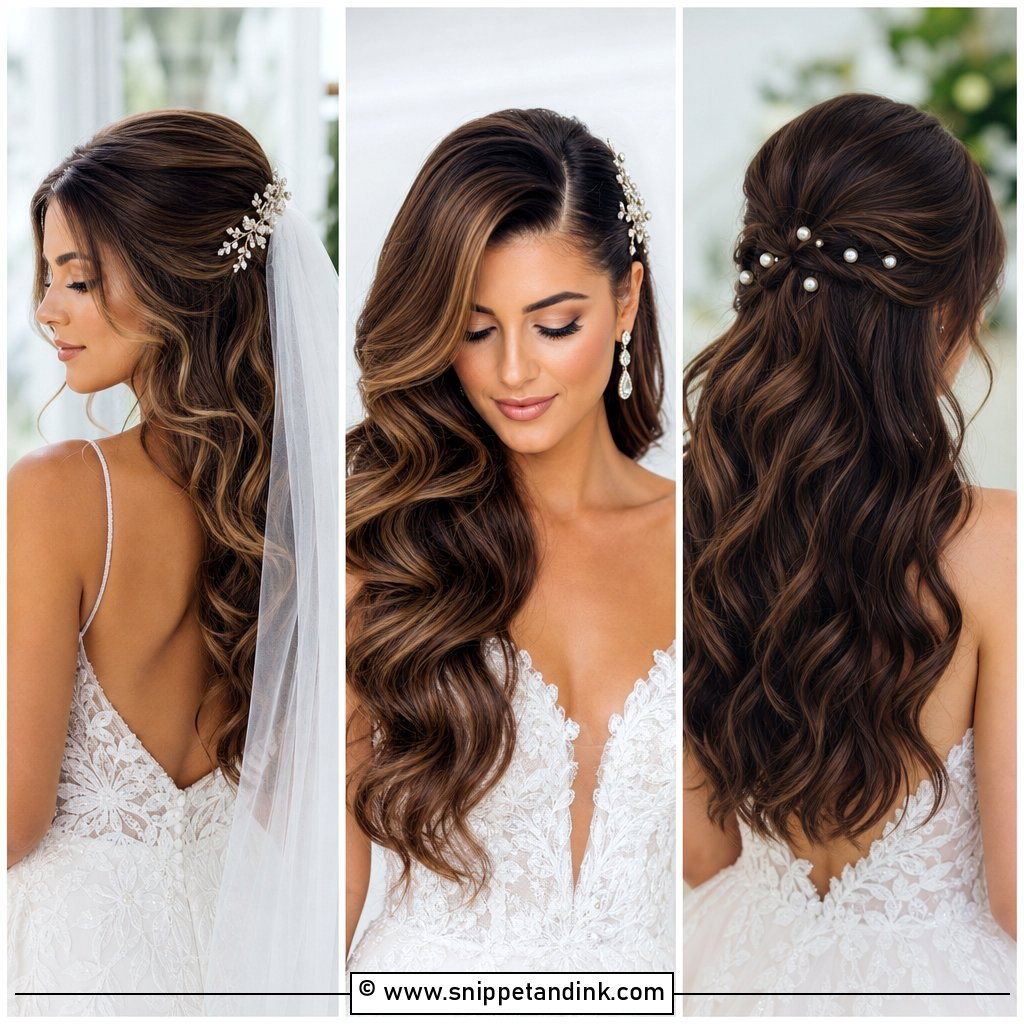
5. Bridal Hollywood Waves
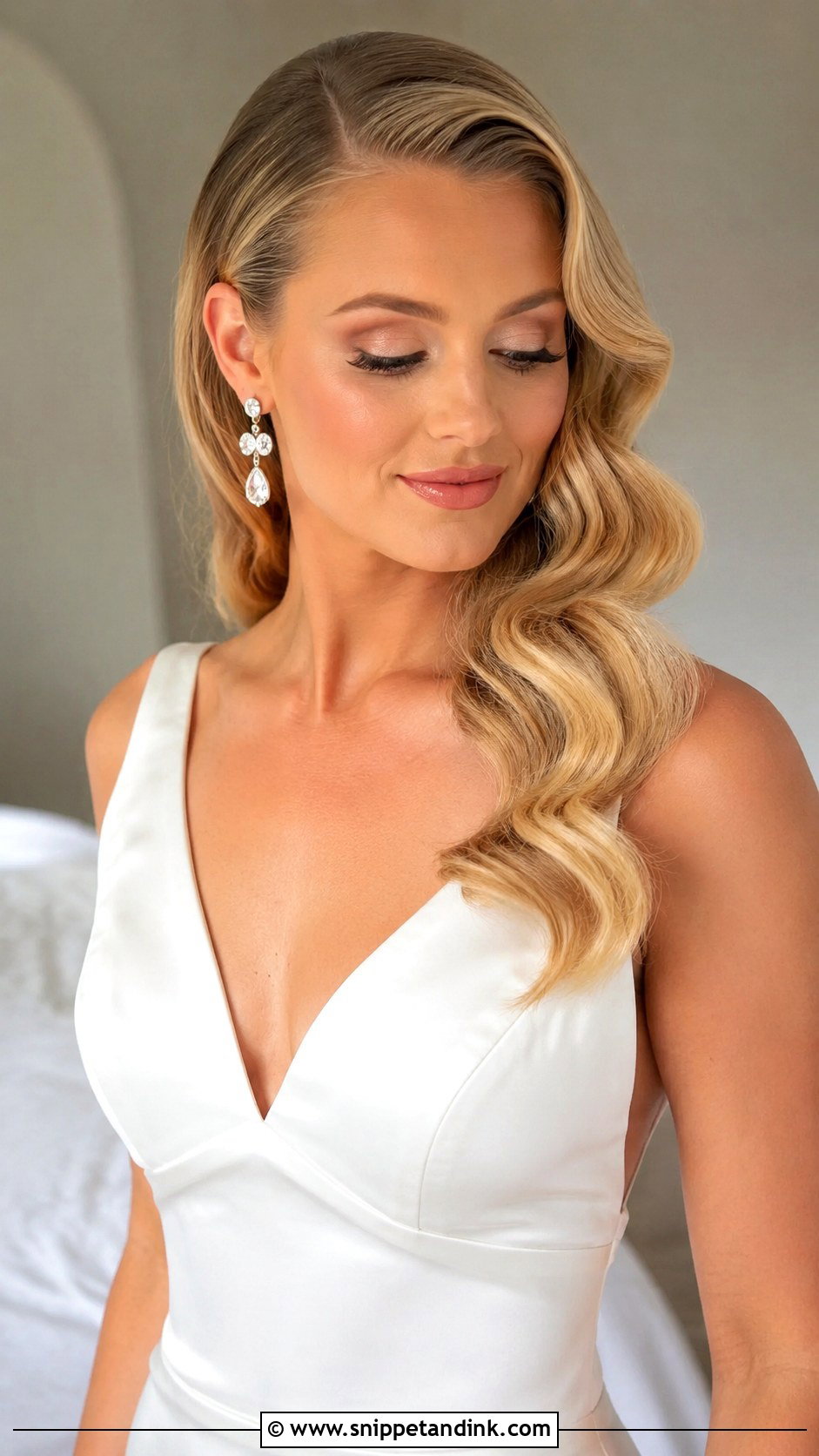
Hollywood waves are pure technique. I curl every section in the same direction, pin each curl to set while it cools, then brush the whole head out into one continuous S pattern and press the ridges with clips while the spray dries. A deep side part does most of the drama. It’s made for strapless, fitted and vintage-style gowns and a classic veil. Humidity is its weak spot, so I’d book a trial, and in damp weather I’d use an anti-humidity spray before every section.
6. Bridal Soft Waves
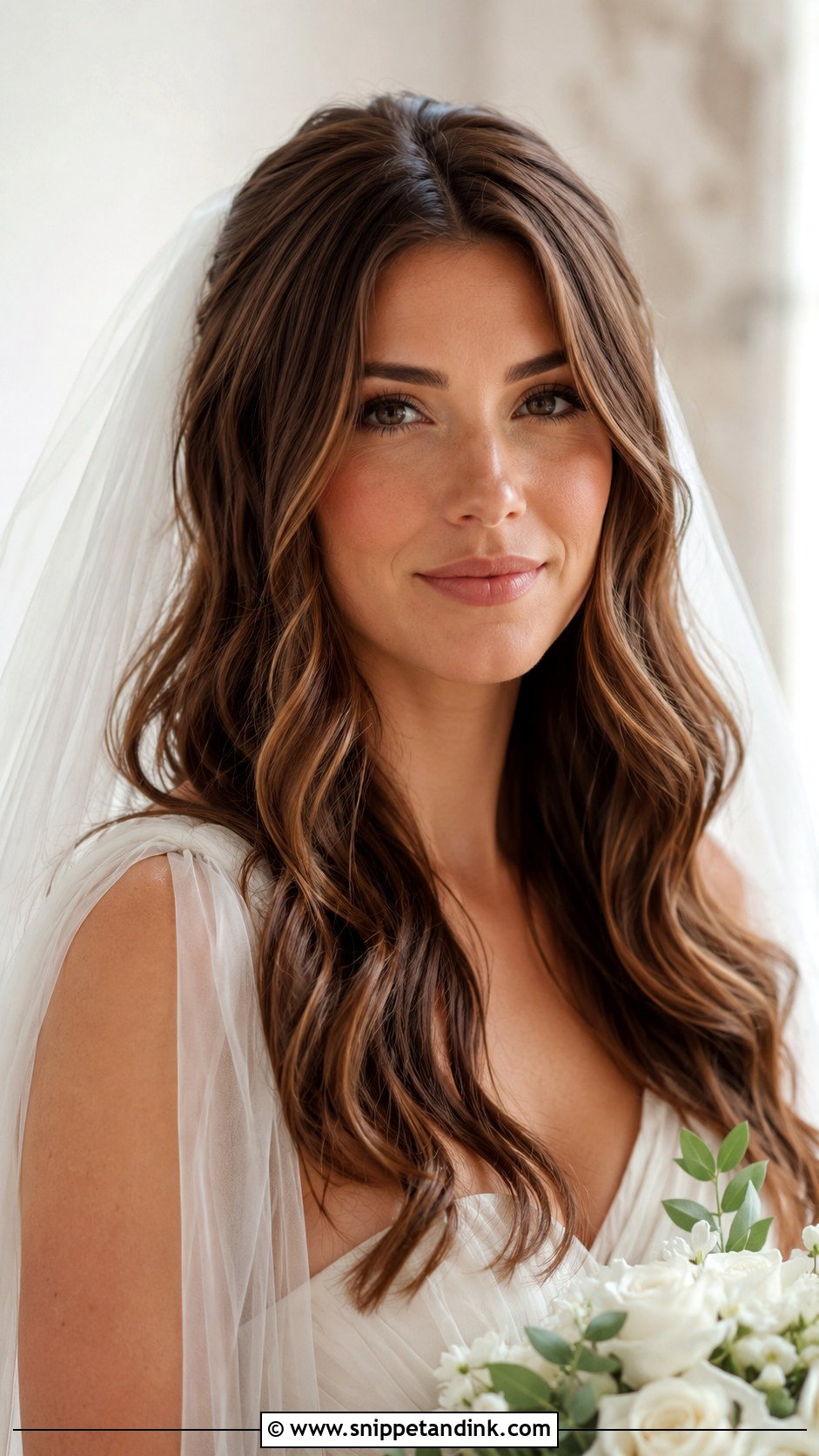
Soft waves are the down style I’m asked for most. Wedding waves differ from beach waves in finish: smoother, glossier and set more carefully. They can be worn with a center part, side part, veil, tiara, barrette or tiny pins at the temple, on long or medium hair or extensions. The hold comes from small sections and patience. I curl smaller pieces than the finished wave needs, let each one cool completely, and only then brush them out.
7. Bridal Braided Updo
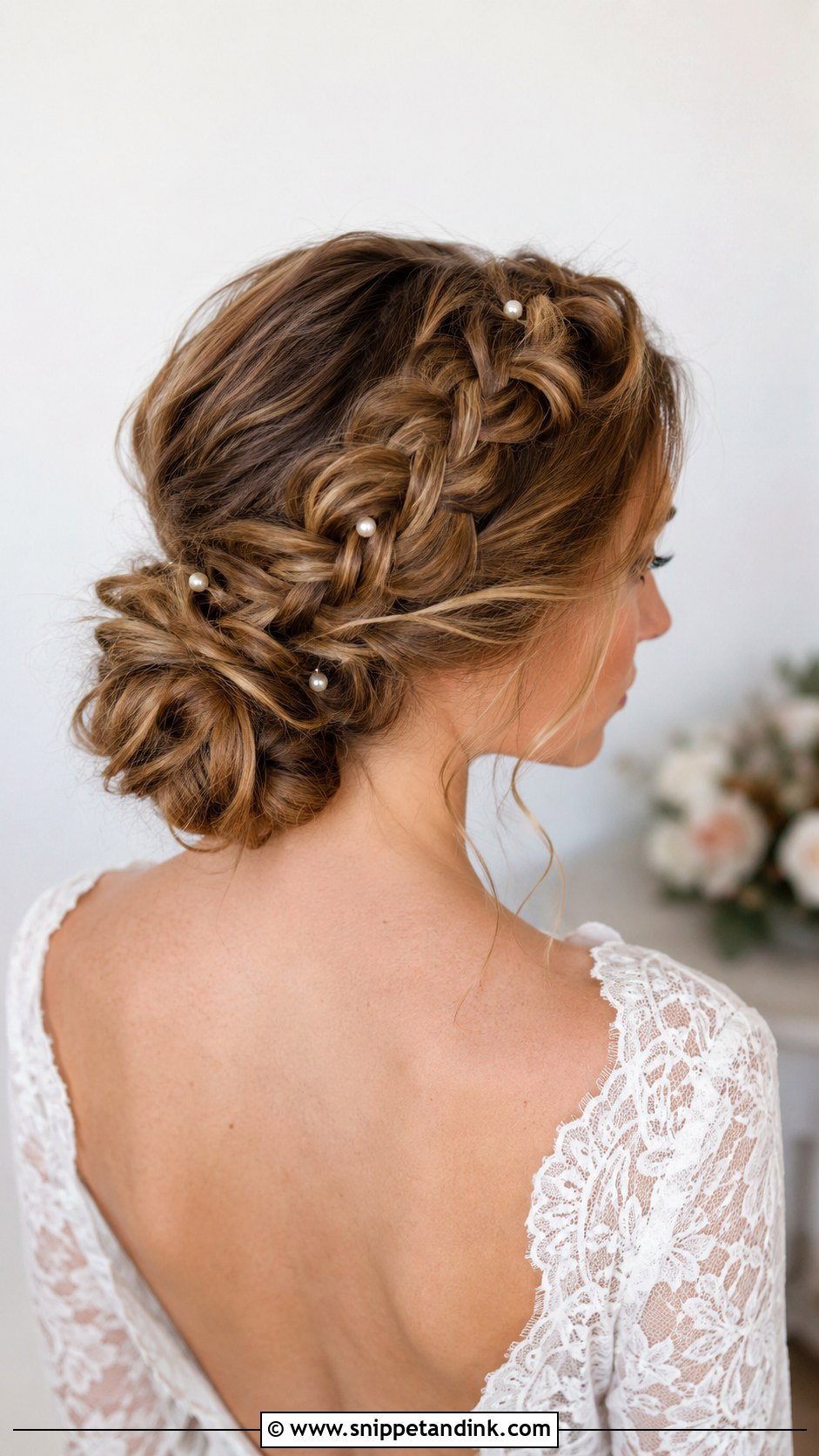
A braided updo is a romantic look with real structure underneath. The braids act like scaffolding: pins slide into them and stay put, so accessories have plenty of places to sit. The braid can wrap a low bun, cross the crown or fade into twists. Outdoors, it outlasts almost any loose style. If your dress has lace or floral embroidery, a braided texture picks up that feeling without fighting the gown.
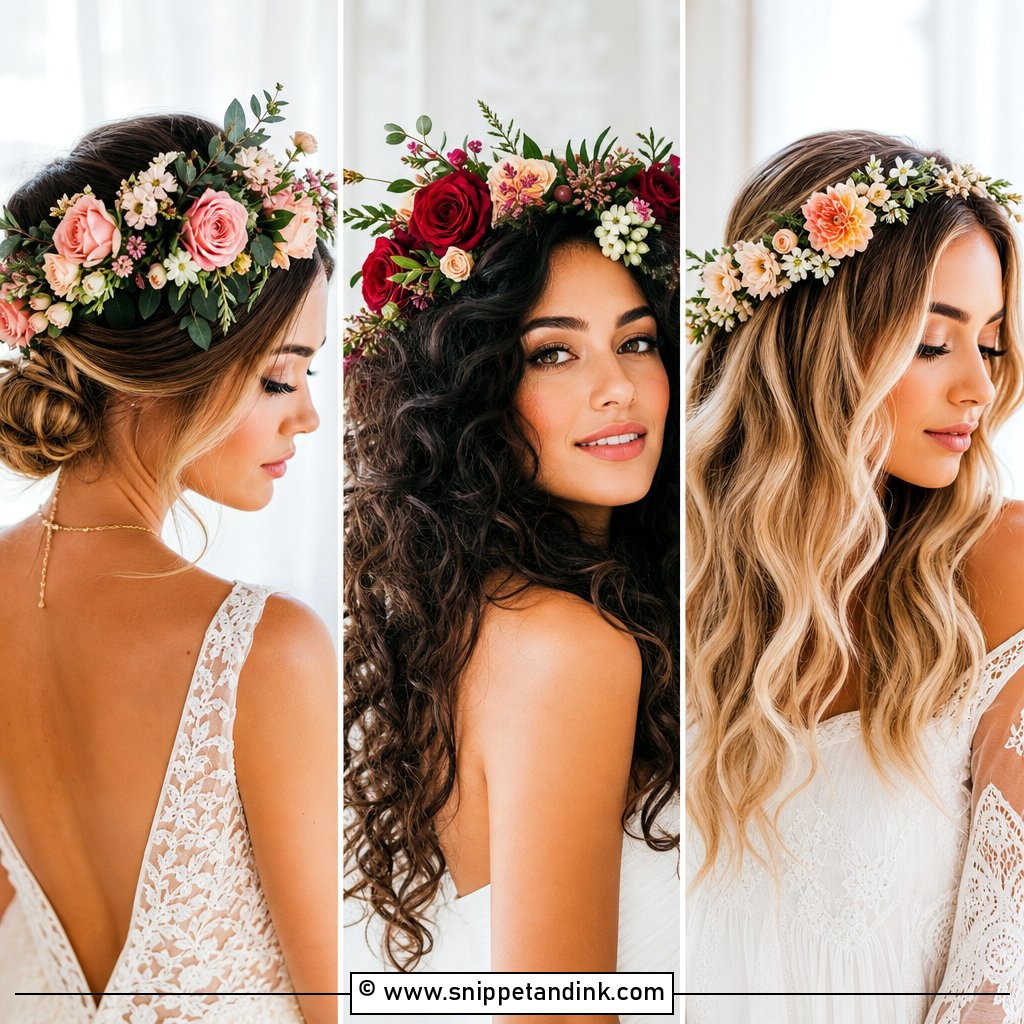
8. Bridal Crown Braid
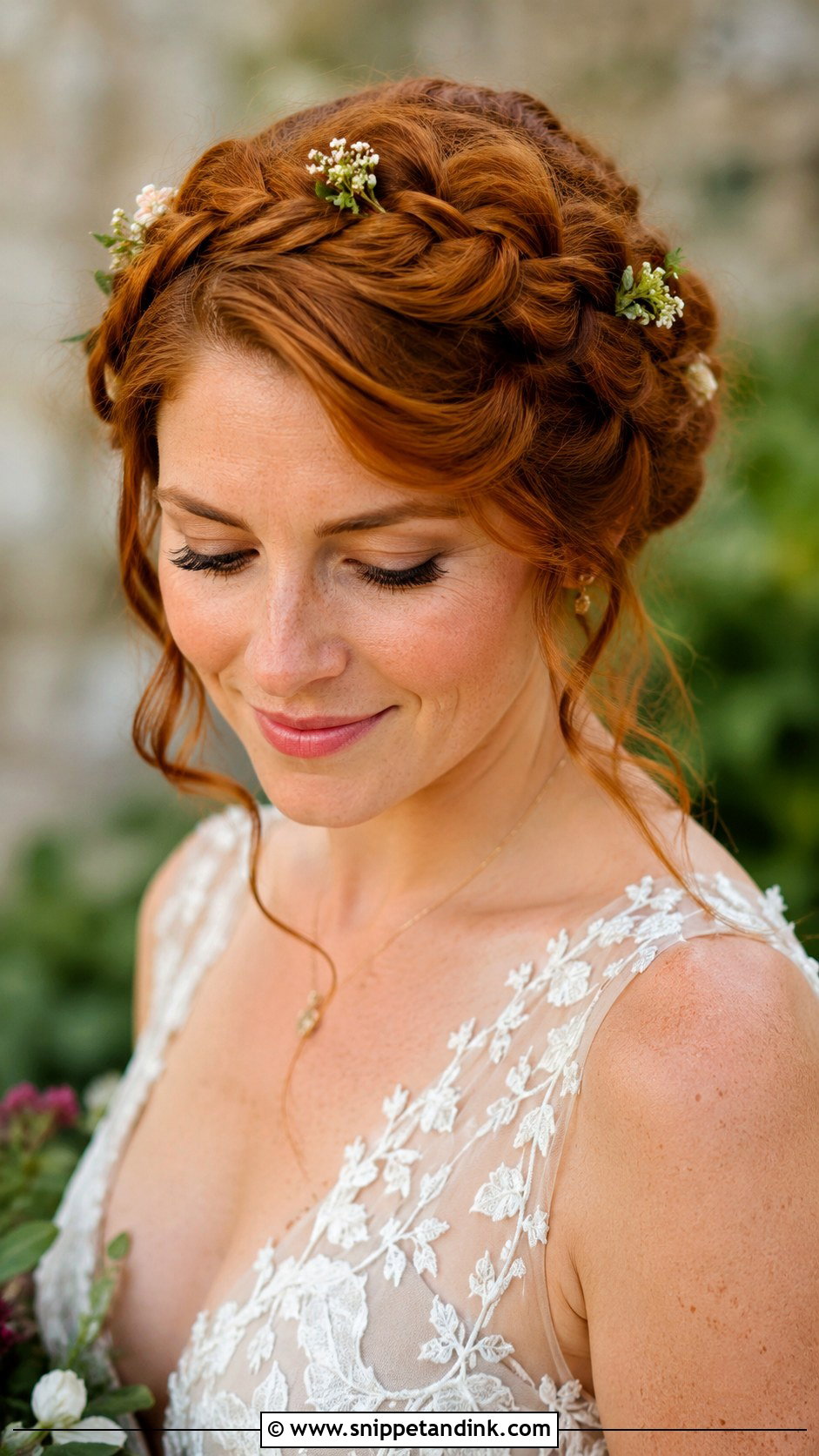
Crown braids need length. To wrap all the way around, hair usually has to reach past the shoulder blades, and if it doesn’t, I add clip-in extensions braided in with the natural hair. The braid can be full and textured or tight and compact. It keeps the neck bare, which helps in warm weather, and small flowers or pearl pins slot easily into the weave. Curly, wavy and curled straight hair all suit. Pull out a few face-framing pieces so it doesn’t look like a sports-day braid.
9. Bridal Fishtail Braid
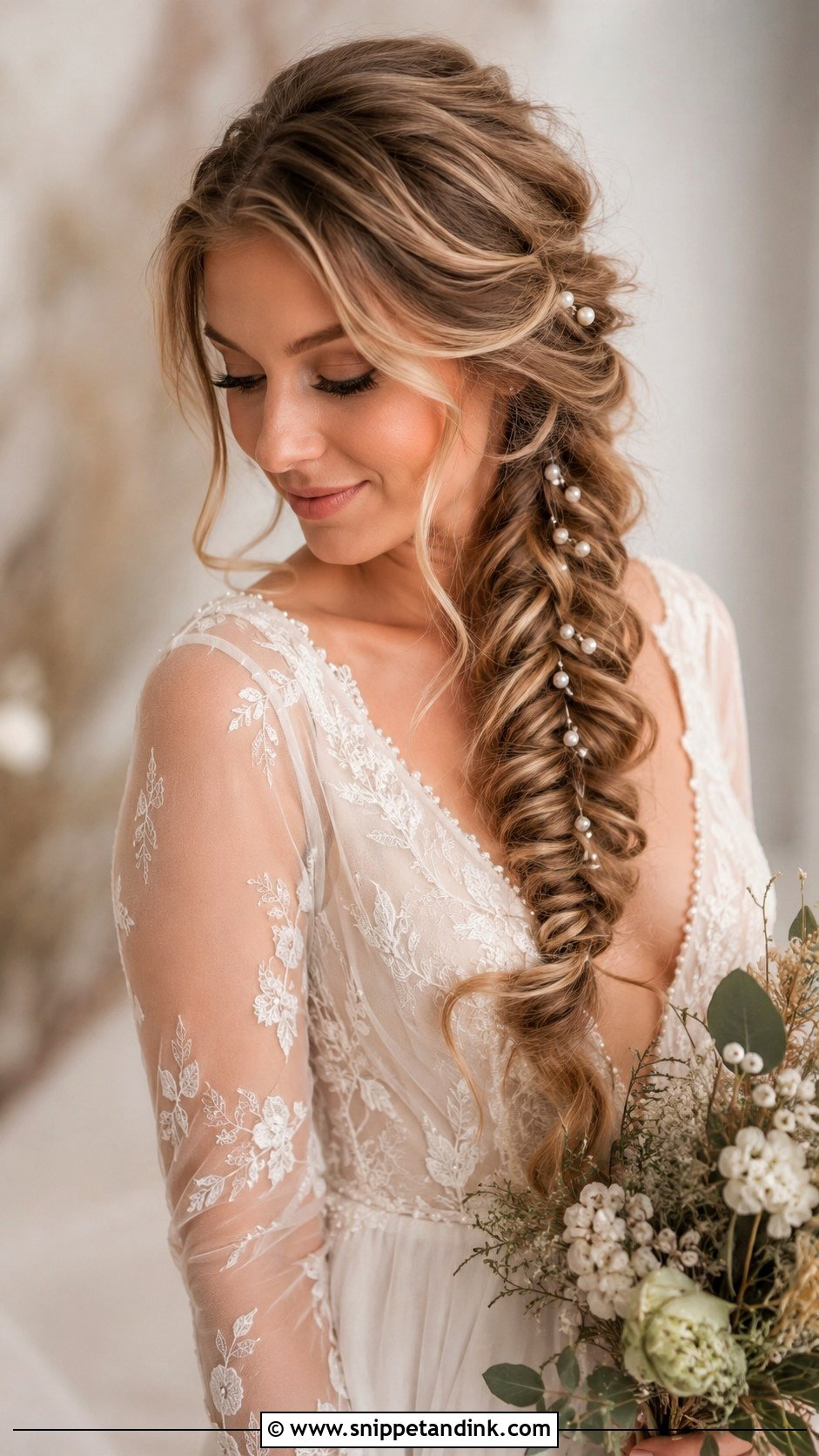
Fishtails look complicated, but they’re just two sections crossing thin pieces over and over, which is why the pattern reads so well up close. I braid it slightly tight, secure the end, then pancake the edges outward for fullness. It can hang down the back, sit over one shoulder or finish a half-up style. Boho gowns and destination or garden weddings suit it. Short layers poke out of fishtails, so on layered hair I’d use a little pomade on the fingers while braiding.
10. Bridal Side Swept Curls
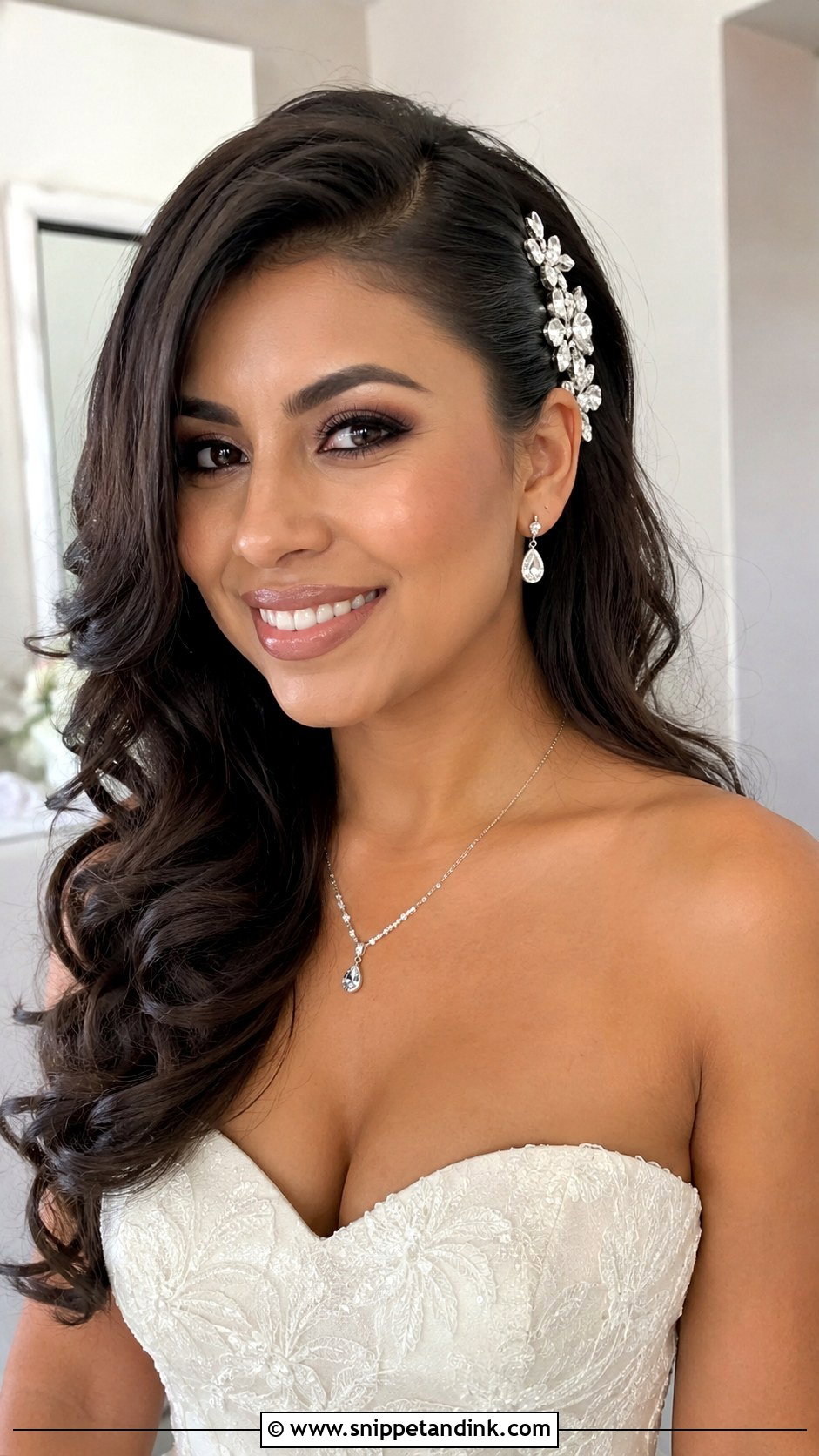
Side swept curls keep the hair visible in front-on photos while leaving one side open. I curl and brush the hair, then pin it behind the ear with bobby pins crossed in an X and buried under a top layer, since a visible pin line on the clean side gives the game away. One-shoulder gowns, strapless dresses and sweetheart necklines suit it, as do big earrings. It also converts well: wear a veil for the ceremony, take it out for the reception, and the shape stays.
11. Bridal High Bun
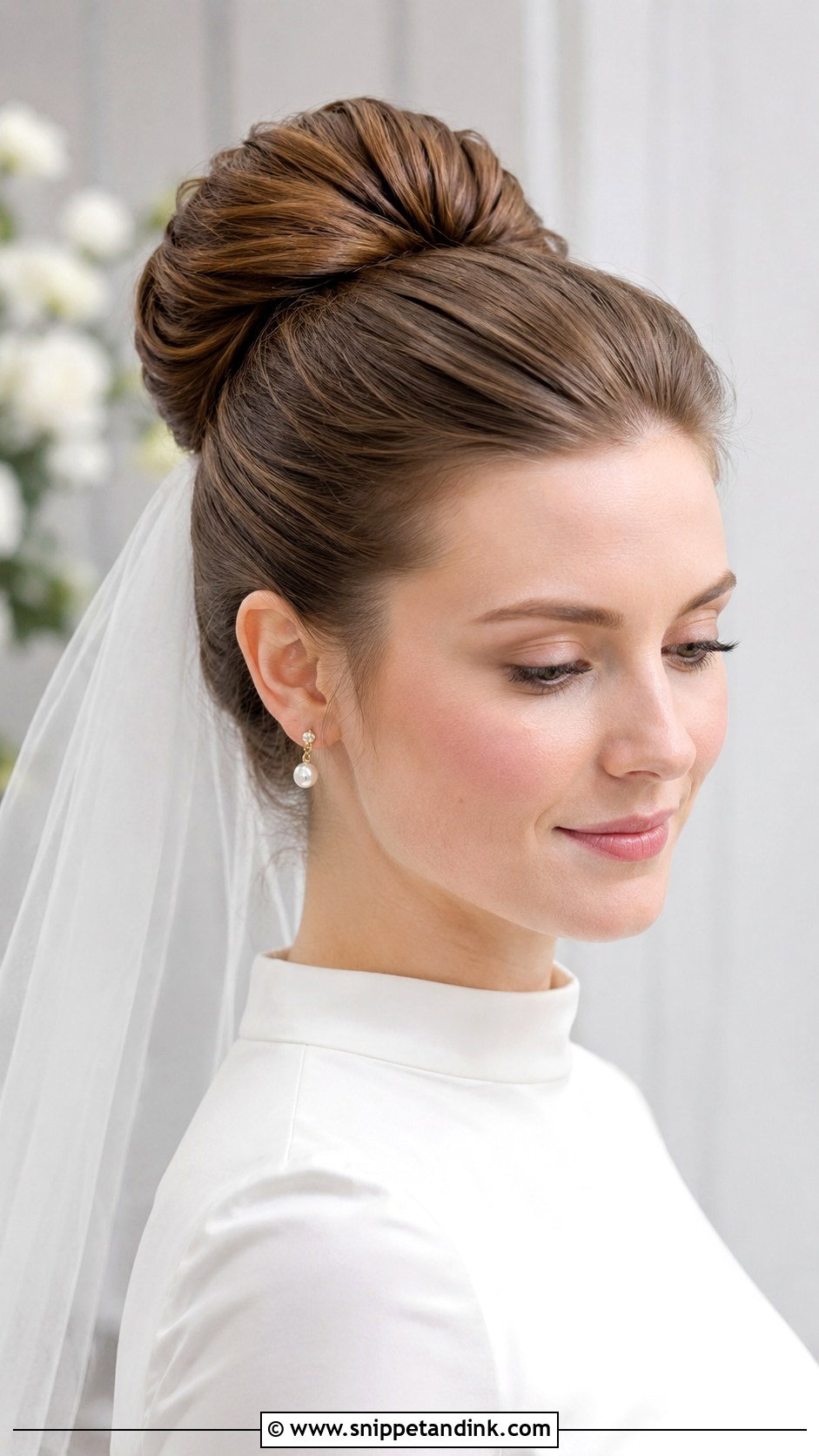
High buns lift the whole silhouette and leave the neckline completely clear, which is why I suggest them for high-neck gowns, halter dresses, busy bodices and dramatic sleeves. Sleek, textured, twisted or full, the bun should be anchored on a firm ponytail base, or its own weight will tilt it backward within a few hours. A veil can sit beneath the bun, which looks classic, or above it for more drama. Keep a little lift or a soft part at the front so it doesn’t look strict.
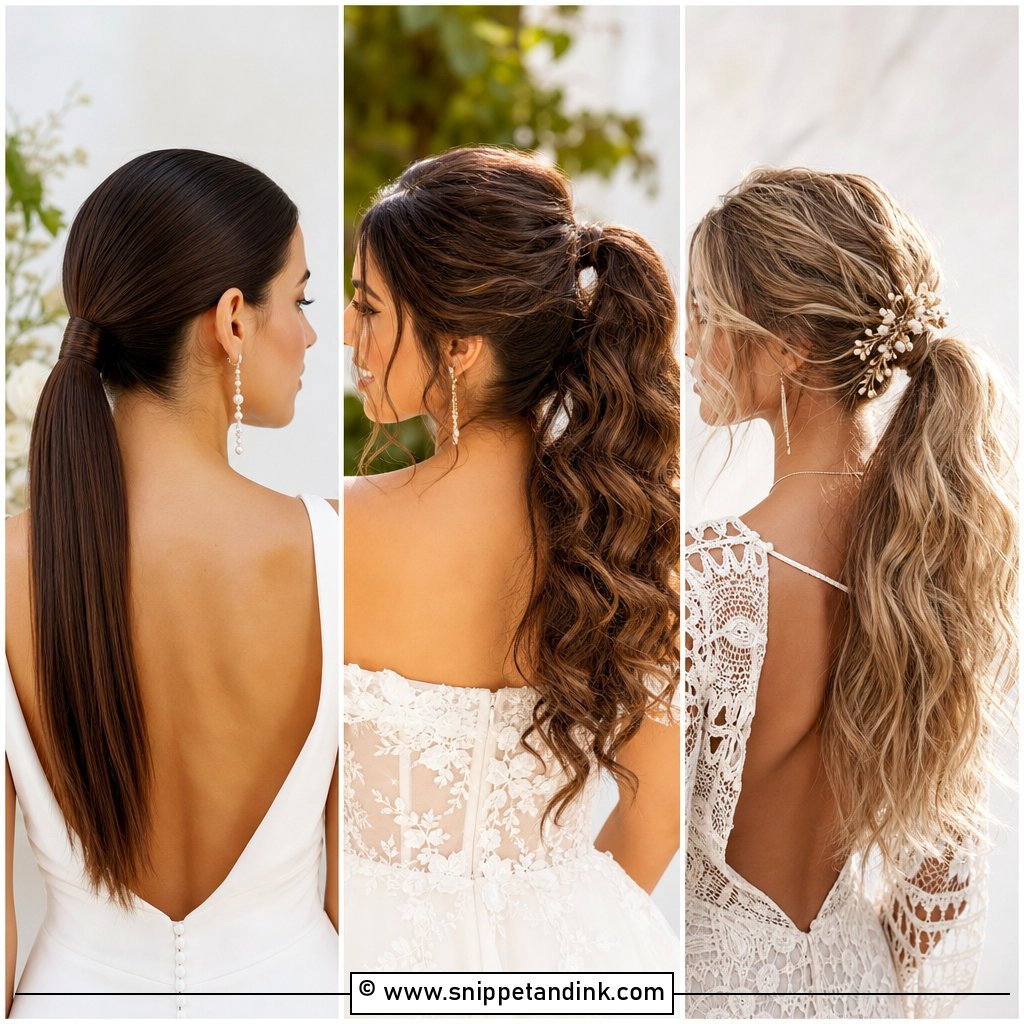
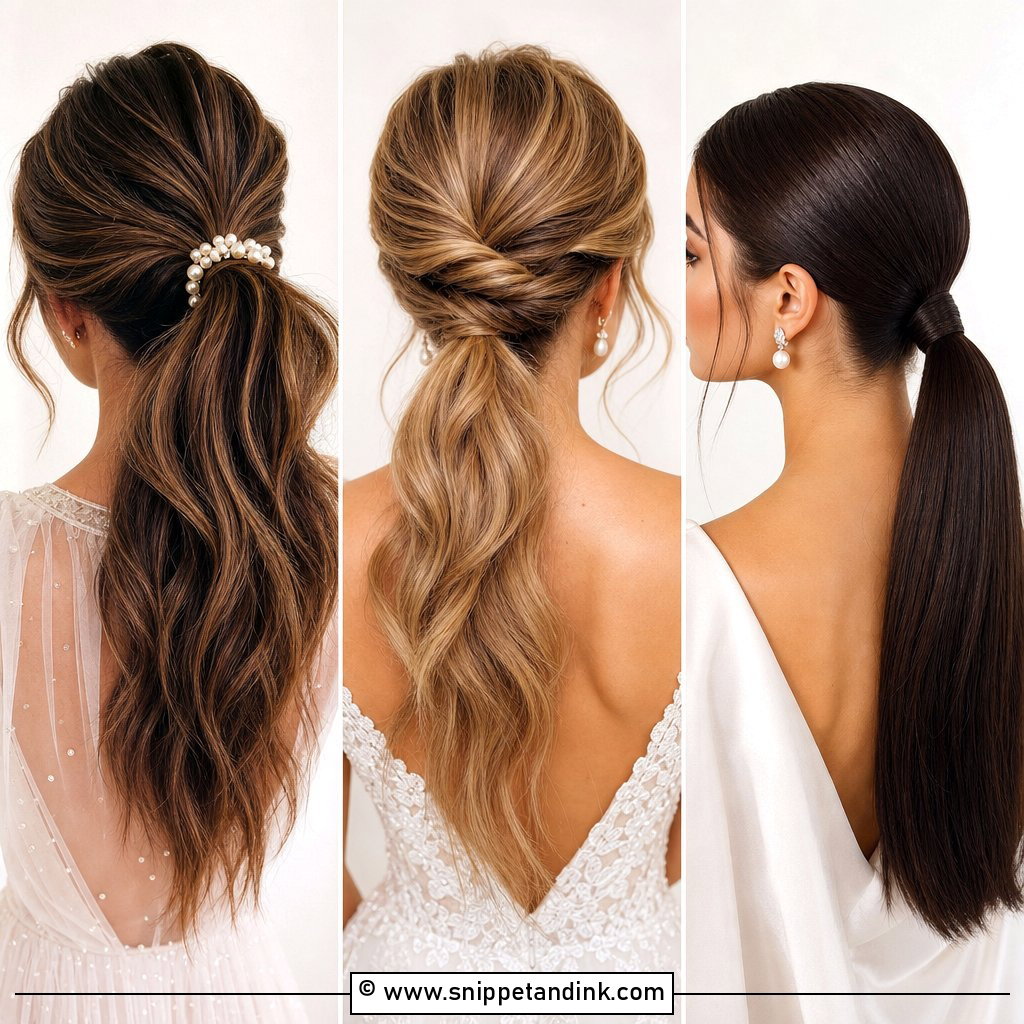
12. Bridal Ponytail
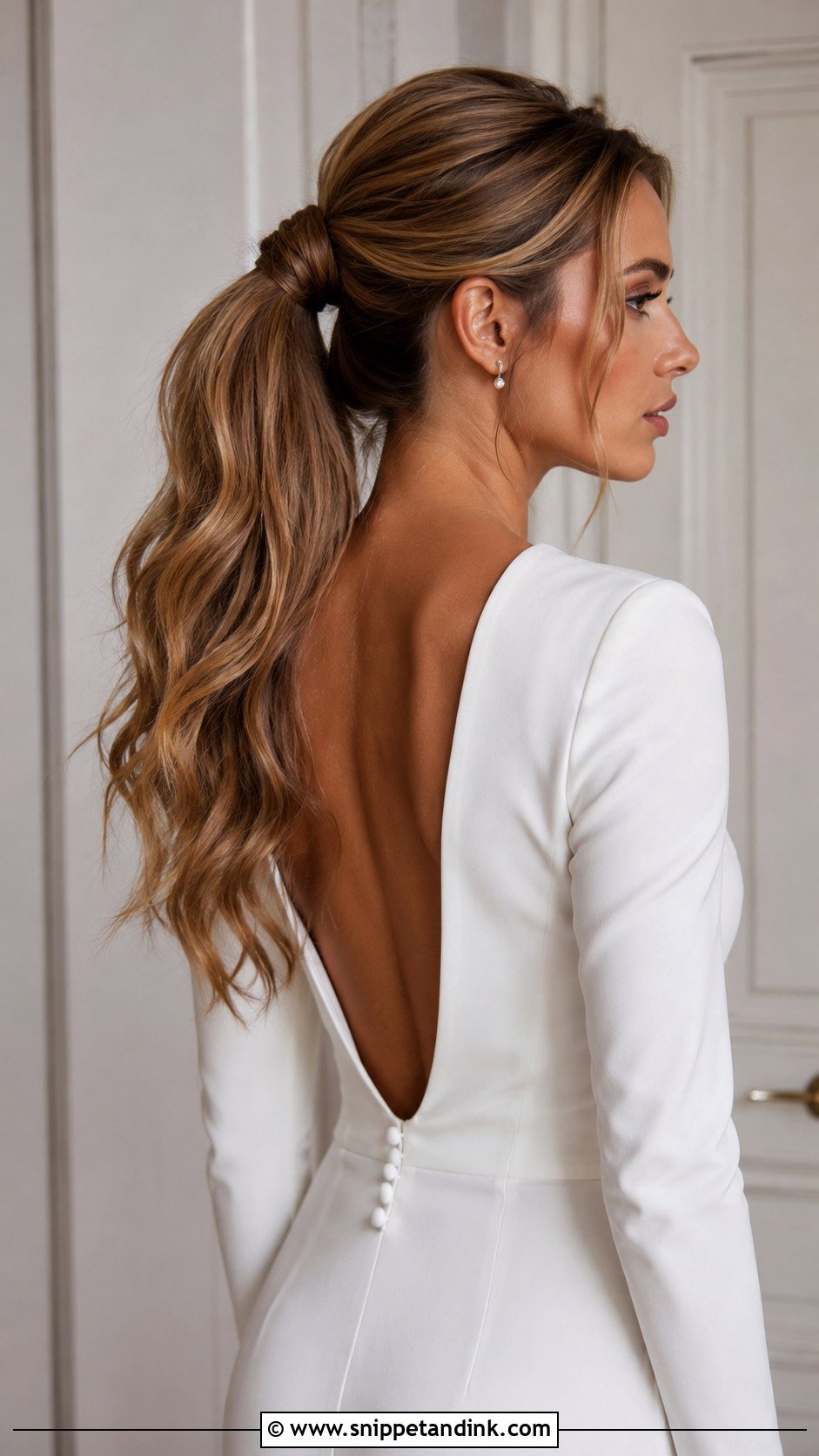
A bridal ponytail is fresh and modern, and with enough volume and shine it looks every bit as finished as an updo. Low reads polished and soft; high reads confident and fashion-led. Waves through the length add movement, and a wrapped strand hides the elastic. I use two elastics on thick hair, one for the base and one just below, so the weight doesn’t pull it loose. Veils, bows and pearl pins all sit well with it.
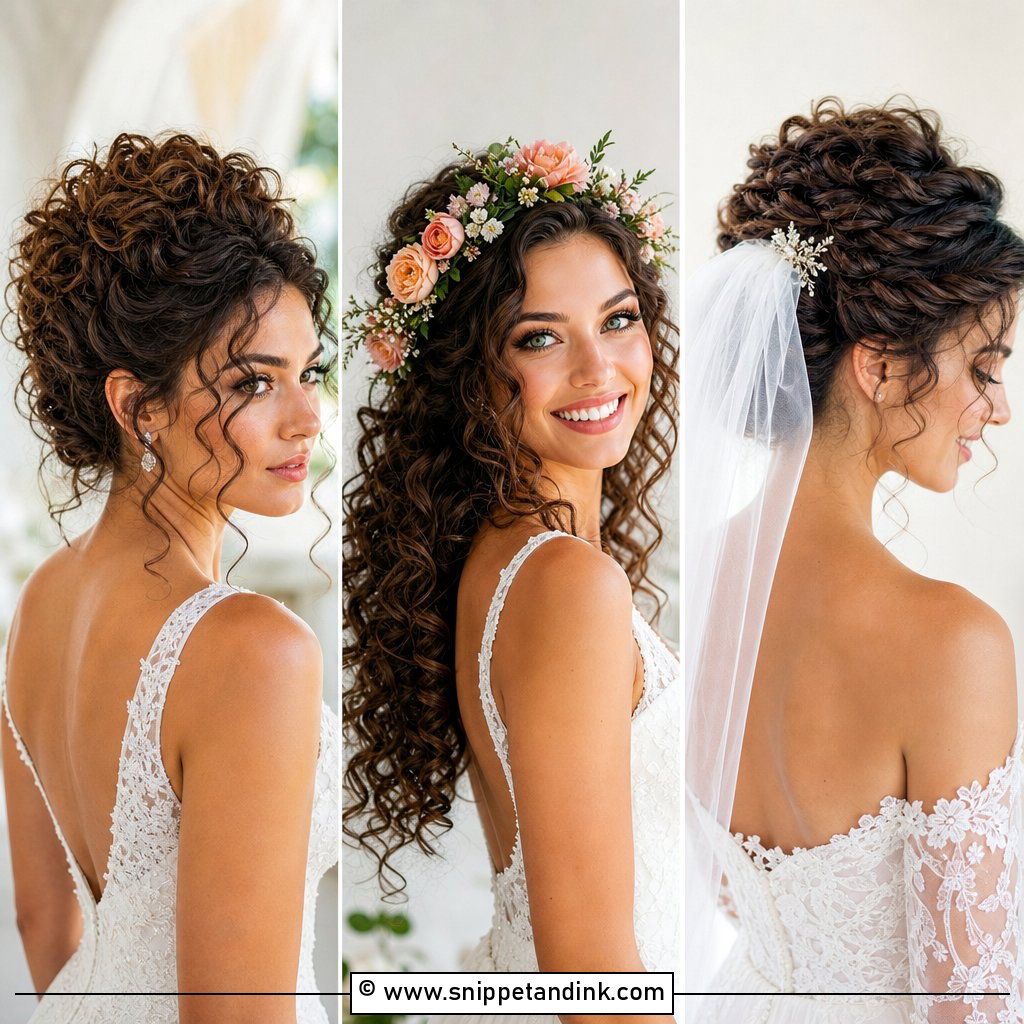
13. Bridal Curly Updo
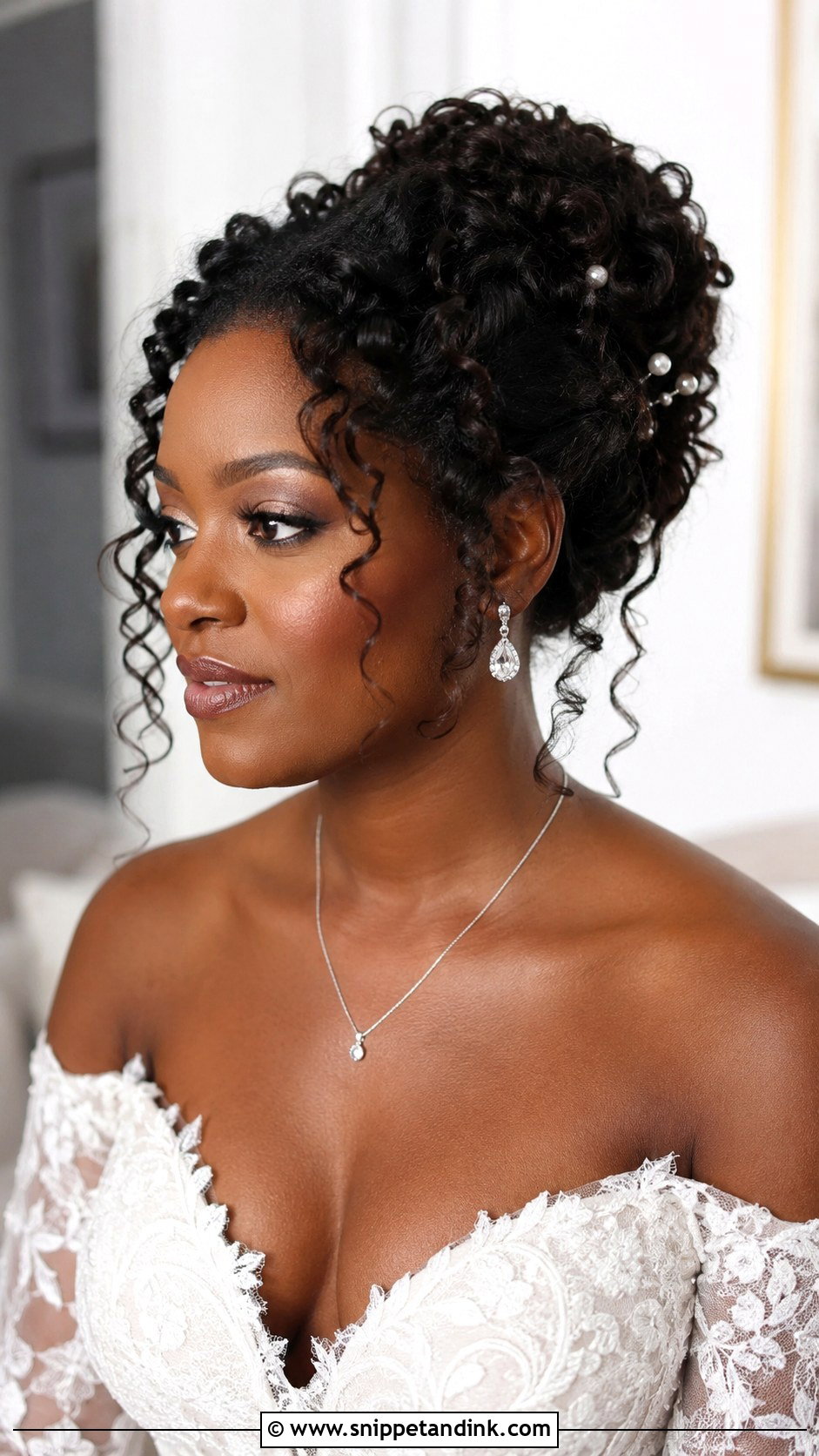
With a curly updo I don’t fight the texture; I arrange it. Curls are pinned in clusters so they keep their definition, with the volume placed where it flatters and a few curls left free around the face. Brushing dry curls is the fastest way to turn them into frizz, so I work with fingers, a wide-tooth comb and curl-friendly products. Book a trial with someone who works on textured hair regularly, because pinning curls without flattening them is a skill of its own.
14. Bridal Natural Hair Updo
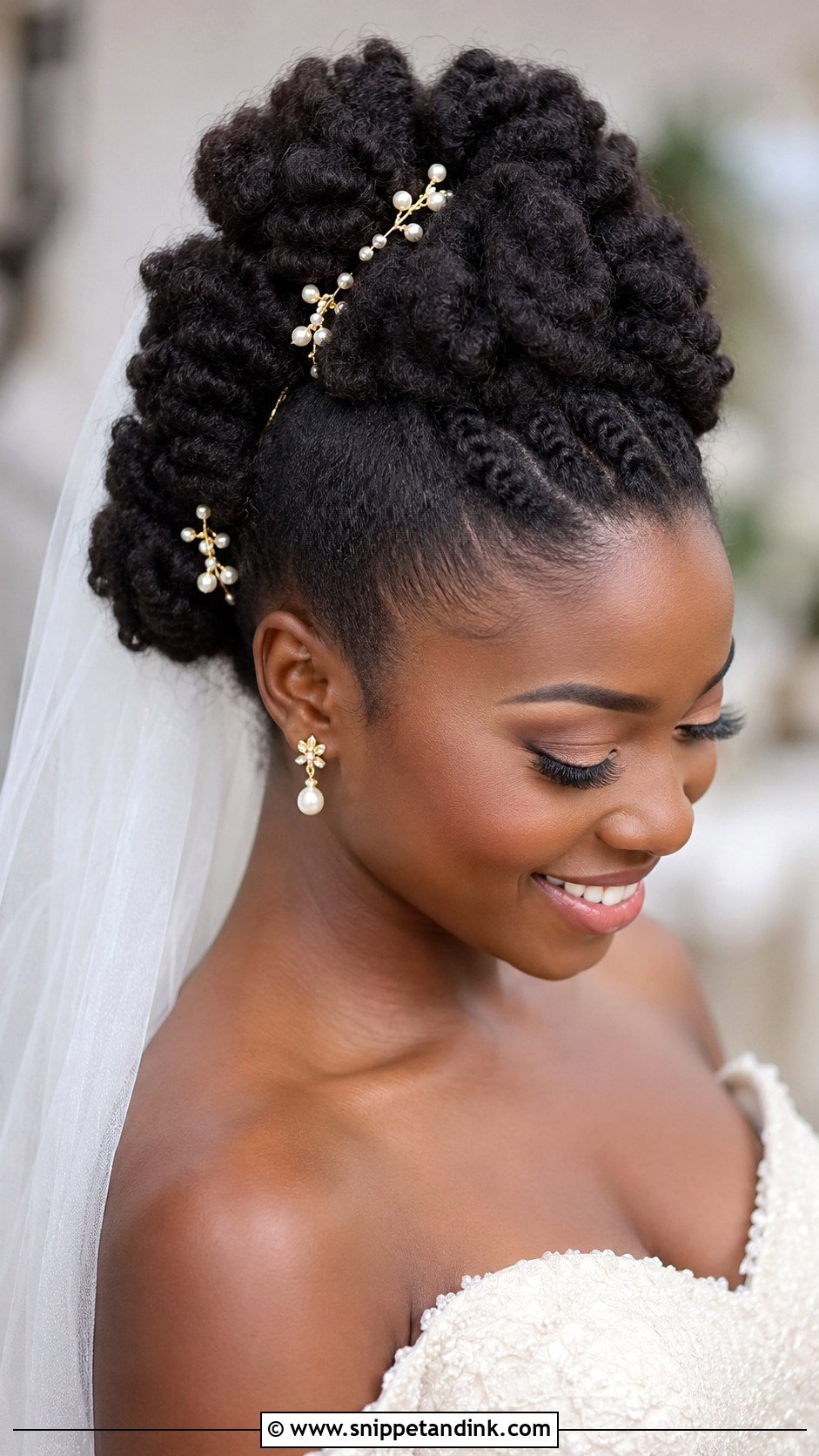
Coils, kinks, twist-outs and braid-outs can all be shaped into a puff, a sculpted bun, a flat-twist updo or a pinned crown. Prep is everything here. I start with well-moisturized hair and use products that hold definition without leaving white flakes, which show up badly in close-ups. Gold pins, pearls, a headpiece, a veil or fresh flowers sit well in natural texture. Because the shape is sculpted rather than just pinned, it can be dressed up for a ballroom or kept soft for a small outdoor ceremony.
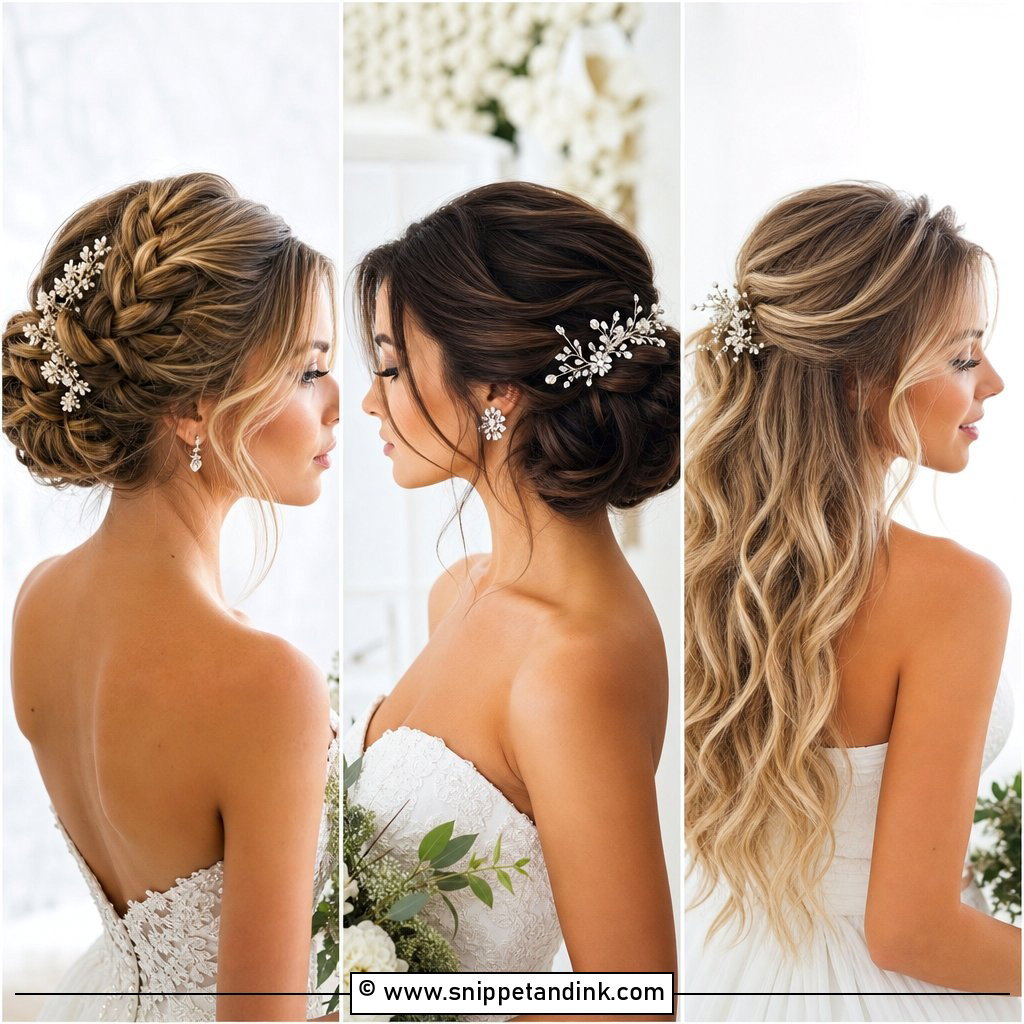
15. Bridal Short Hair Waves
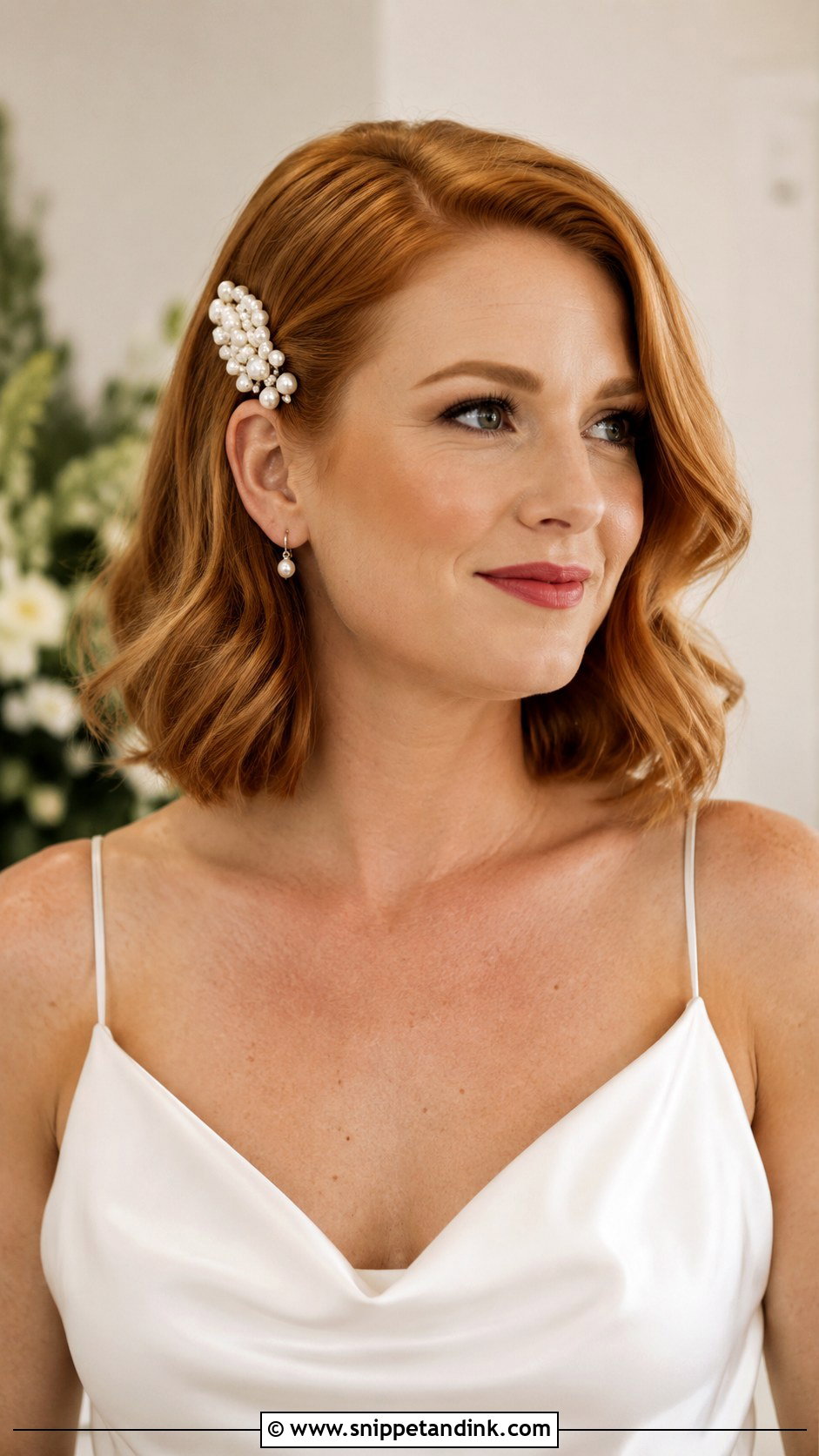
You don’t need long hair for a wedding look that feels special. A bob, lob, or short crop takes soft waves, a polished side part and one well-chosen accessory: a pearl clip, a crystal comb, a birdcage veil or a fine headband. On chin- or collarbone-length hair, I use a flat iron for bends rather than a curling iron for curls, because tight curls on short hair spring up and shorten the cut. Root lift and a touch of shine spray finish it.
16. Bridal Bob Hairstyle
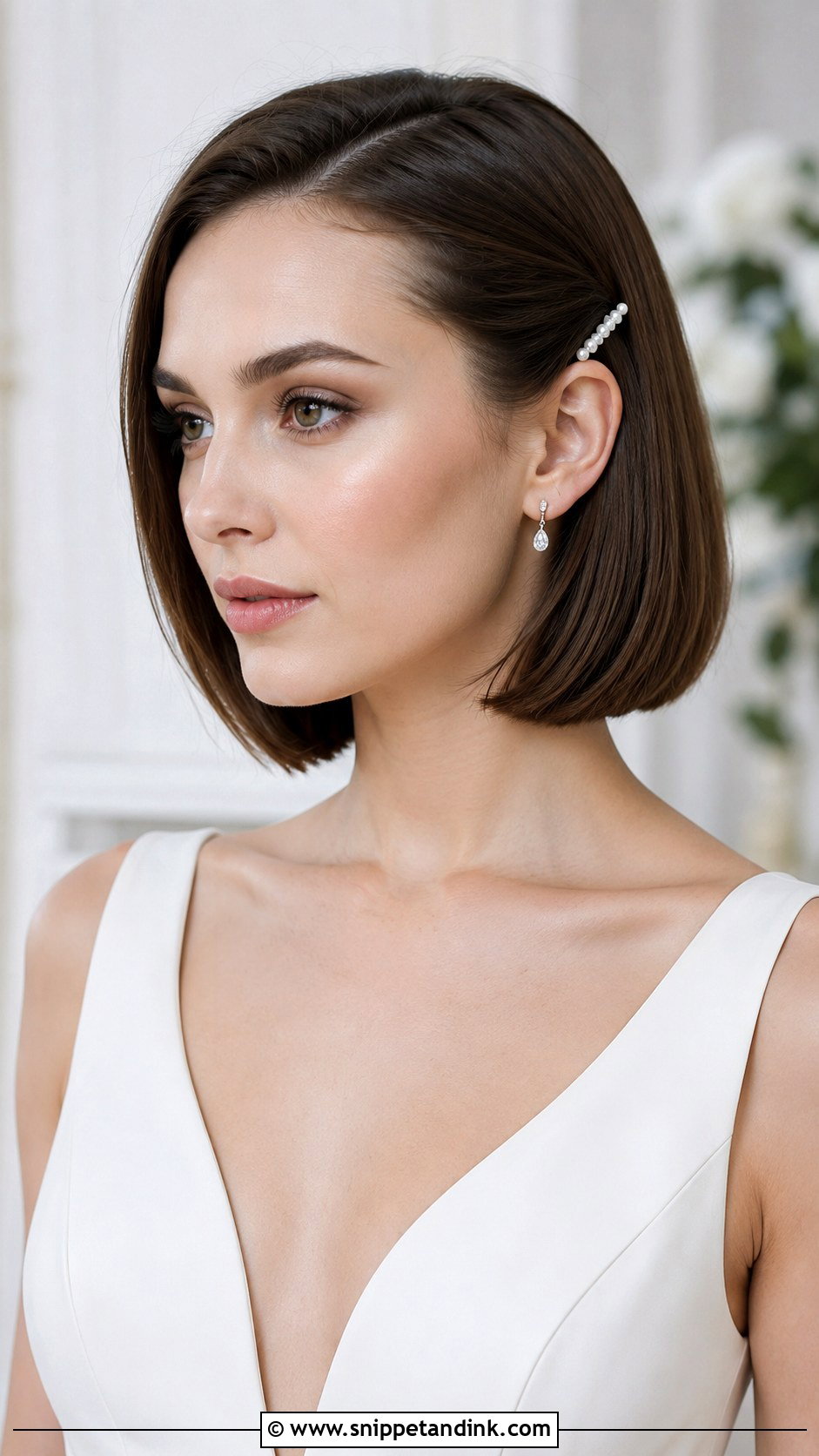
With a bob, the cut itself is the hairstyle, so get it trimmed about a week or two before the wedding to keep the line crisp without looking freshly chopped. The bob can be worn sleek and tucked behind one ear, softly waved, side-parted or curved under at the ends. It suits modern dresses, satin, courthouse weddings and minimal veils. A barrette, pearl clip or low veil comb adds polish without swamping the length. Your everyday bob, just finished with more care, is often the best version.
17. Bridal Long Hair Curls
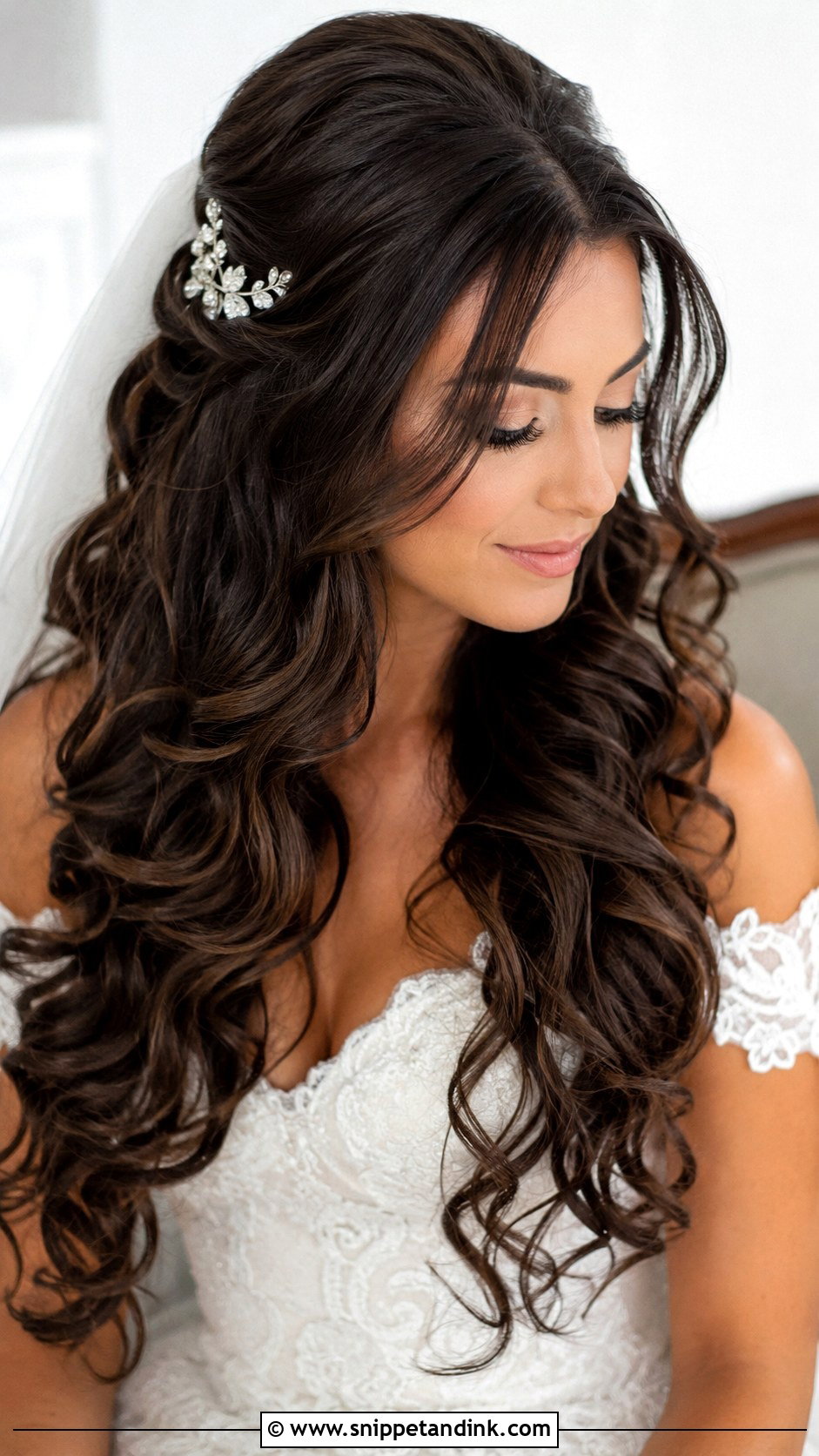
Long curls want structure. I curl, pin to set, then brush and reshape, so they look soft rather than stiff and keep their fullness for hours. Strapless, off-shoulder and cap-sleeve gowns show them off. Hair that won’t hold a curl does better with extensions, which add both length and grip for the iron. I build the volume at the crown and keep the front smooth so the head doesn’t look bottom-heavy. One small accessory on the side is plenty; the movement does the rest.
18. Bridal Twisted Updo
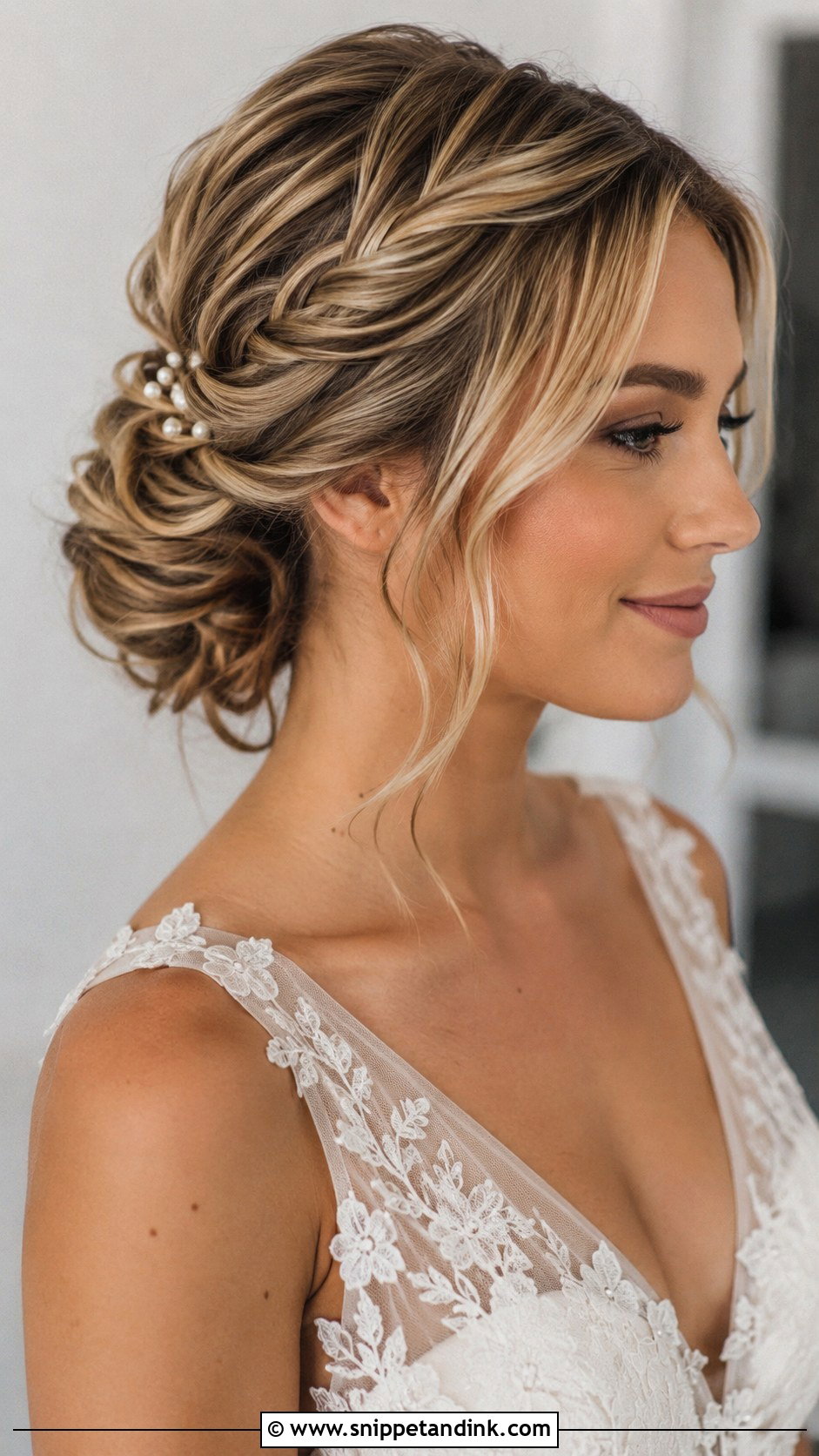
A twisted updo sits halfway between a sleek bun and a braided style. Sections are rolled back and pinned into a low or mid-height shape, which gives texture without the time a full braid takes. It suits lace, garden venues and soft veils. On fine hair I backcomb the root of each section before twisting so the twists don’t look thin, and on thick hair I take bigger sections to stop it getting bulky. The twists also give pins somewhere secure to grip. Leave a few soft pieces at the face.
19. Bridal Veil Hairstyle
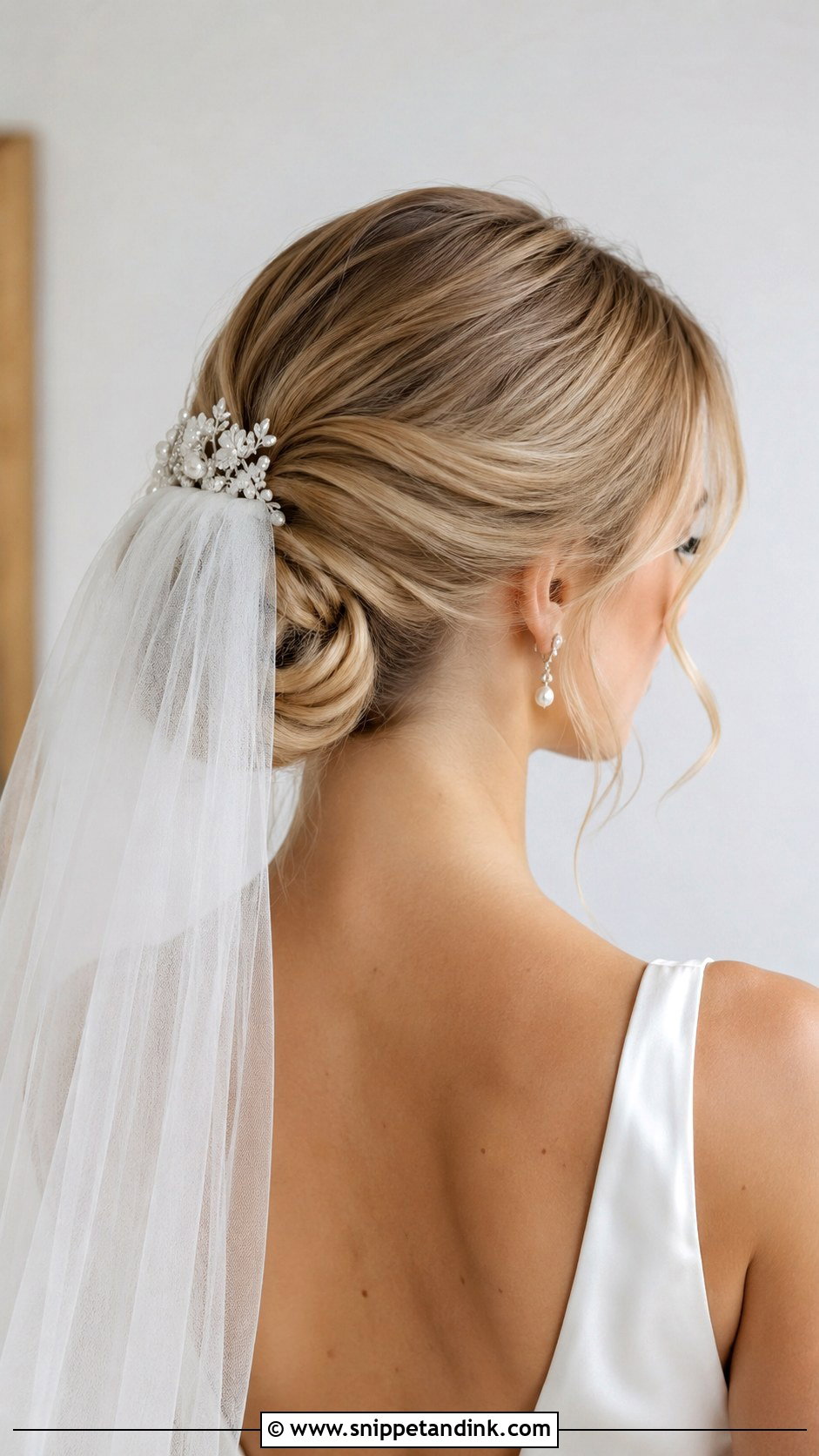
Decide the veil first, then build the hair to carry it. Low buns, chignons, half-up waves and soft updos give a comb a solid base without hiding the style. A heavy or long veil needs an anchor: I make a small backcombed pad where the comb will go and lock in a row of crossed bobby pins for the teeth to grab. Lighter veils can sit on soft waves or even a bob. Check the look both ways, with the veil on for the ceremony and off for the evening, since it has to feel complete in each.
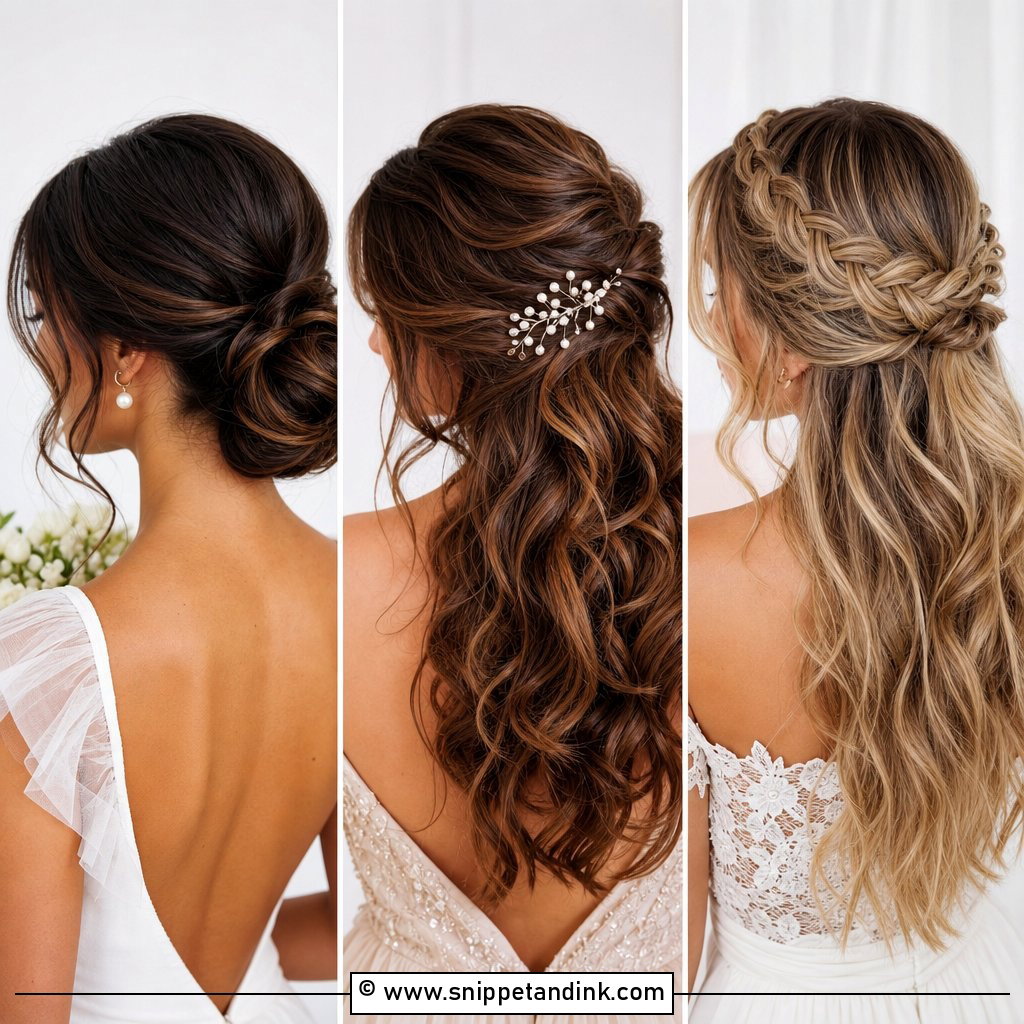
20. Bridal Hair With Pearl Pins
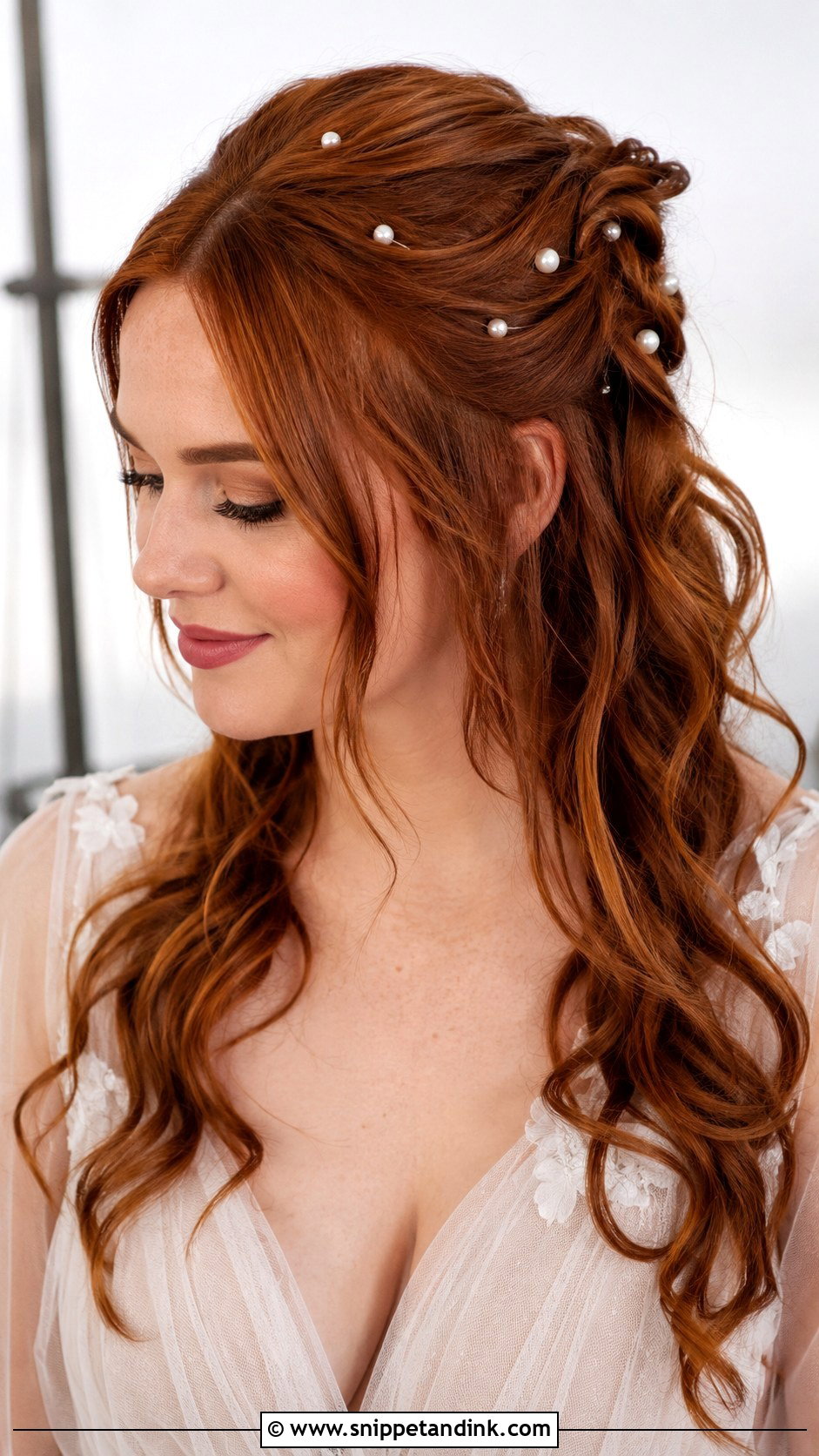
Pearl pins are the easiest way I know to make a simple style look bridal. They go into low buns, messy buns, half-up waves, braids, ponytails and short hair, adding detail without taking over. I place them in small clusters of three, or scatter them along a braid, and I push each one into a bobby pin’s grip or a twist so it doesn’t slide out over the evening. Lace, satin, tulle and beading all suit pearls. Keep the arrangement balanced; a random sprinkling looks like it fell in.
How the Morning in My Chair Usually Runs
Brides often underestimate how long hair takes, then the whole schedule slips. Times vary with hair length, thickness and the style, so treat these as rough guides and confirm yours at the trial.
- Wash the night before, or the morning of if your hair gets oily fast. Arrive with it completely dry; drying very thick hair can add most of an hour.
- Prep and curl or blow-dry: often the longest stage on long hair, since curls need time to cool before they’re touched.
- Pinning and shaping: quick for a ponytail, much slower for a crown braid or a sculpted natural updo.
- Accessories and veil placement go in last, after the dress if the neckline is tight or the dress goes over the head.
- Final spray and a check from the back with a hand mirror.
If there are bridesmaids and mothers in the queue, I do the bride’s hair toward the end but not last, so there’s a buffer for a touch-up before photos. Wear a button-front shirt so nothing has to come off over your head.
If a Curl Drops or a Pin Slips at the Reception
Things move over a long day, and most of it can be fixed in a few minutes if someone has the right small kit. I’d give a bridesmaid a pouch with matching bobby pins, a mini hairspray, a few clear elastics and a small comb.
A fallen curl can be twisted around a finger and pinned flat against the head for ten minutes, then released; it’ll come back with most of its shape. A loose bun gets a couple of fresh pins pushed in at an angle toward the center, never straight in. If waves have gone flat in humidity, don’t try to recurl them; sweep them to one side and pin them behind the ear, and the look turns into a side style that still looks planned.
Your Dress, Your Texture and the Forecast Decide It
Trends can point your mood board somewhere, but your dress, venue, hair texture, weather, veil and personal style matter more. A sleek bun may be right for one bride and wrong for the next, who’d feel more herself in natural curls or a braided updo. Save the looks that keep pulling you back, book a trial, and show your stylist photos of the back and side, not just the front. When the hair suits the whole outfit, nobody looks at it in isolation, and that’s the point.
You'll Like These Ideas:


Leave a Reply