
Minimal hair is harder than it looks, and I say that as the person who has to build it. With no pile of curls and no braid to hide behind, every flyaway, every uneven part and every bump at the crown is on show. That is also why it reads so modern: the shape does the talking and your face stays in charge. Below are 20 pared-back styles I would genuinely put on a bride, from a slick low bun to natural texture worn down, with notes on what each one needs from your hair and where it tends to struggle.
Minimal Styles Show Everything, So the Prep Starts Weeks Out
In a big curled updo, a few frizzy ends disappear into the volume. A minimal style has no such cover, so the condition of your hair becomes part of the look. These are the things I ask brides to sort out before their trial, not after it.
- Get a proper trim four to six weeks before, then only a light dusting about two weeks out. A blunt cut taken the day before can look too harsh in a sleek style.
- Book color or a gloss roughly two weeks ahead. Regrowth shows clearly along a center part or a slicked hairline.
- Skip new smoothing or keratin treatments in the final month. They change how hair takes a curl and grips a pin, which makes your trial result unreliable.
- Plan your wash around the style: the day before for buns, twists and updos, the morning of for sleek hair worn down. Second-day hair holds pins better, while freshly washed hair has the most shine.
- Bring a photo of your neckline and your actual veil or hair accessory to the trial. A low bun and a long veil comb have to be placed together, not one after the other.
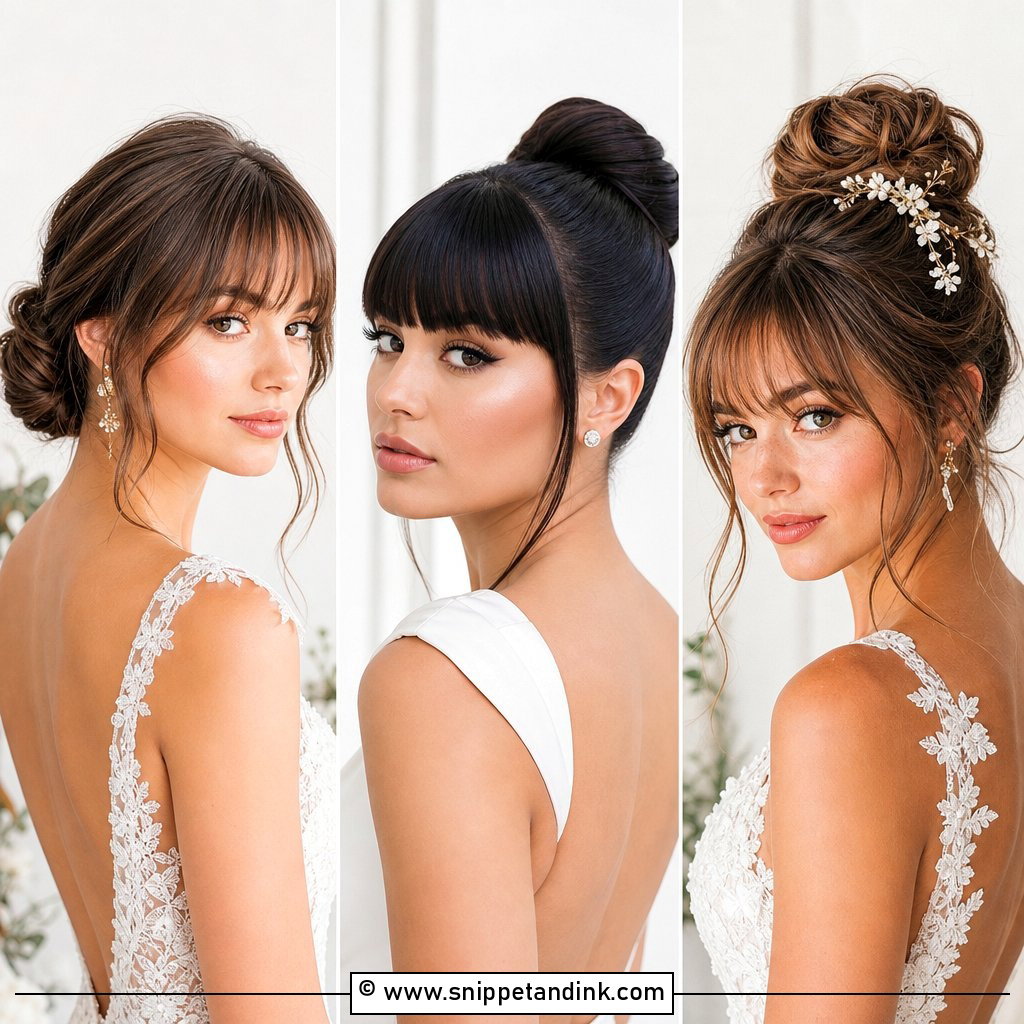
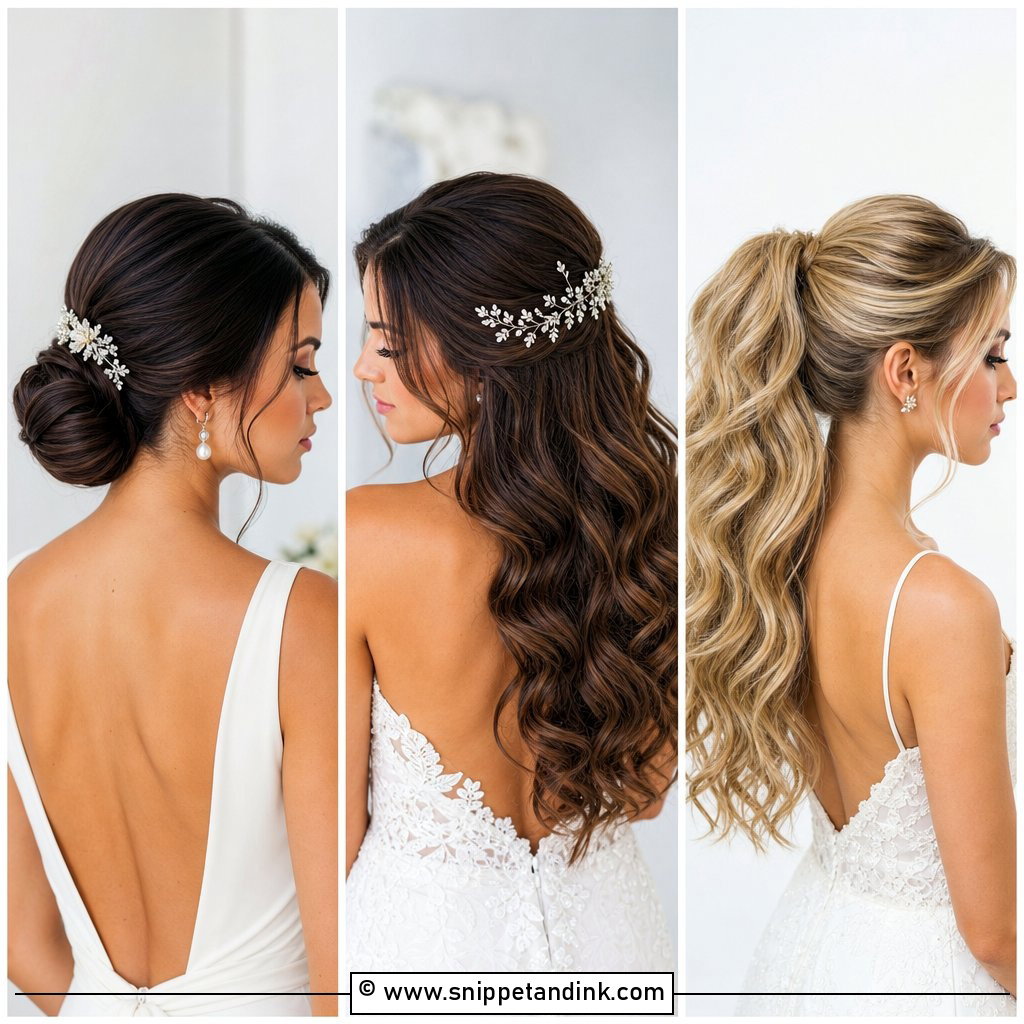
1. Sleek Low Bun
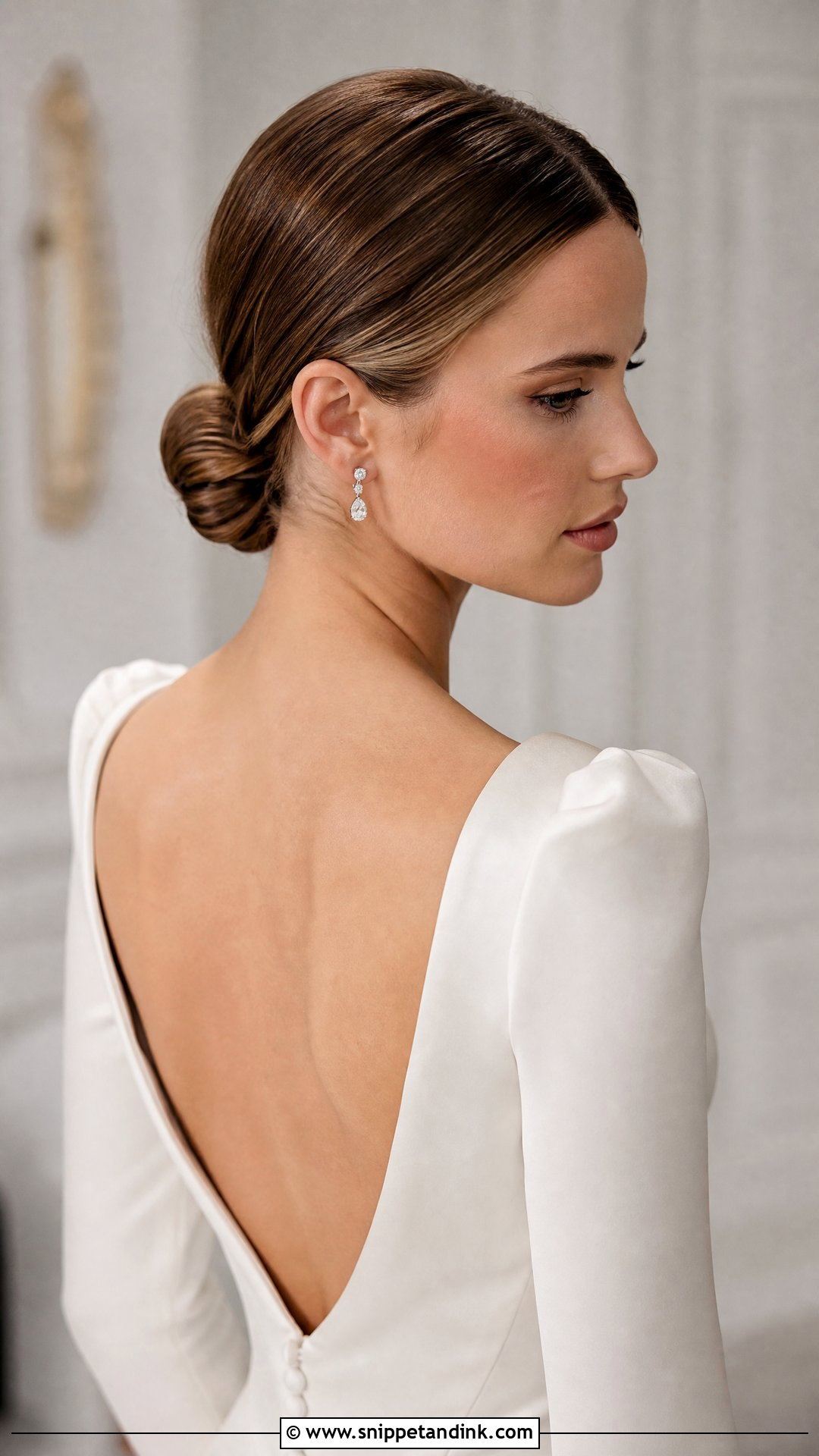
This is the style I get asked for most by brides who want clean lines, and it rewards patience more than skill. I brush the hair back while it is still slightly damp with a smoothing cream, set the ponytail base exactly at the nape, then wrap the bun and secure it with U-pins, which hold it flatter against the head than bobby pins. The center part has to be dead straight, because on a sleek style a wobbly part is the first thing a camera finds. On very fine hair I pad the bun with a small donut so it doesn’t look tiny from behind. With nothing loose to drop, it lasts through hours of dancing.
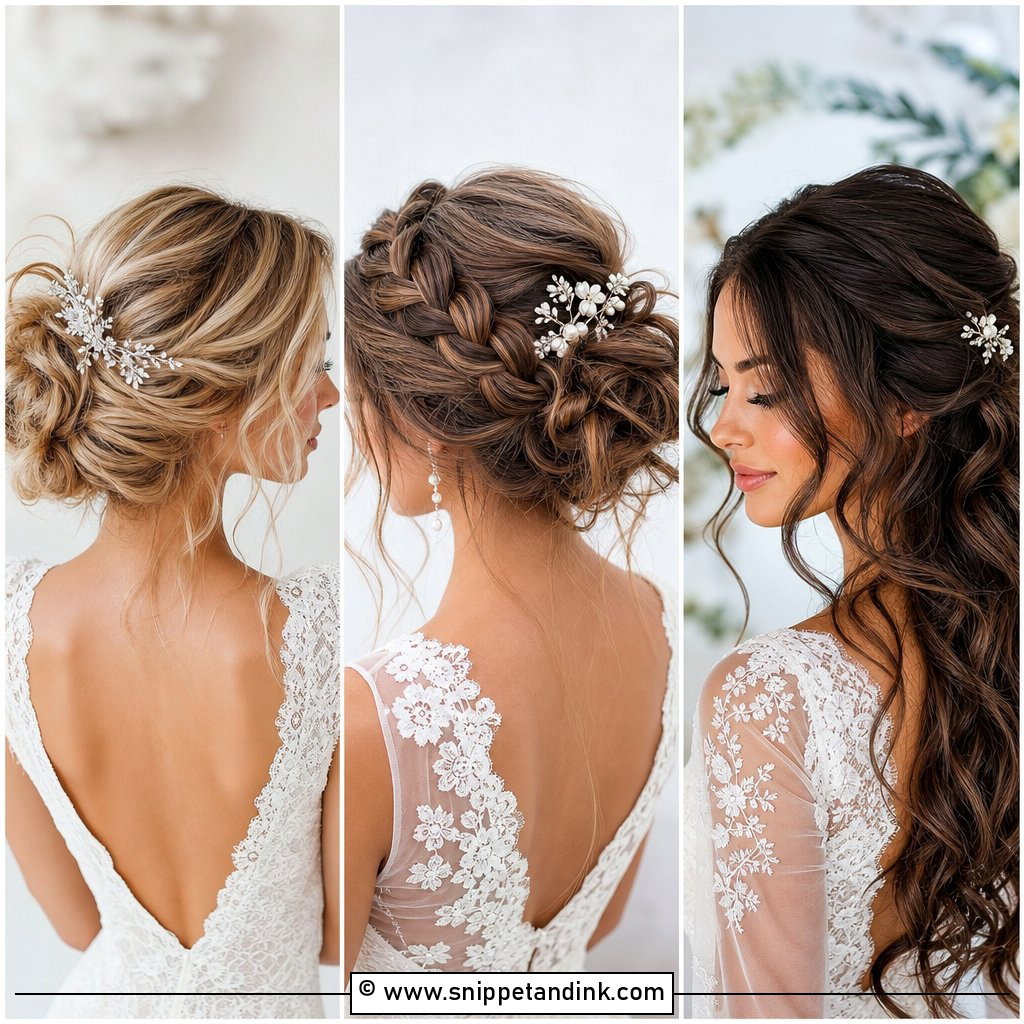
2. Low Twisted Chignon
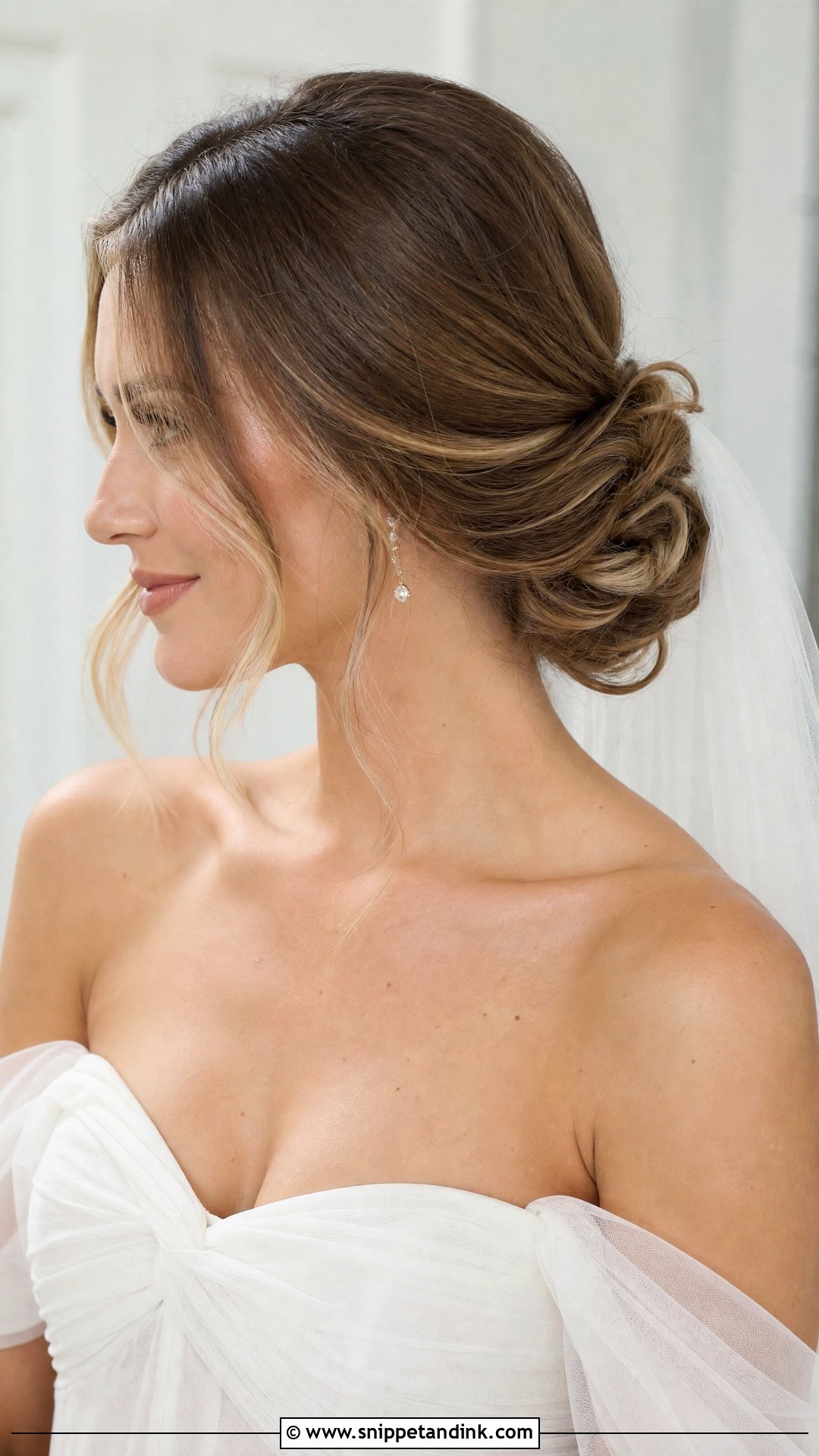
Think of a twisted chignon as the softer relative of the sleek bun. Instead of wrapping hair around an elastic, I twist sections and roll them into a low knot, so the shape keeps visible movement. I leave two thin face-framing pieces out, and I curl them before the rest goes up; straight wisps left out on their own tend to look like hair that escaped. Short layers are its weak point. If yours stop above the chin, expect extra pins and a little hairspray worked in at the roots so the twist doesn’t split open by evening.
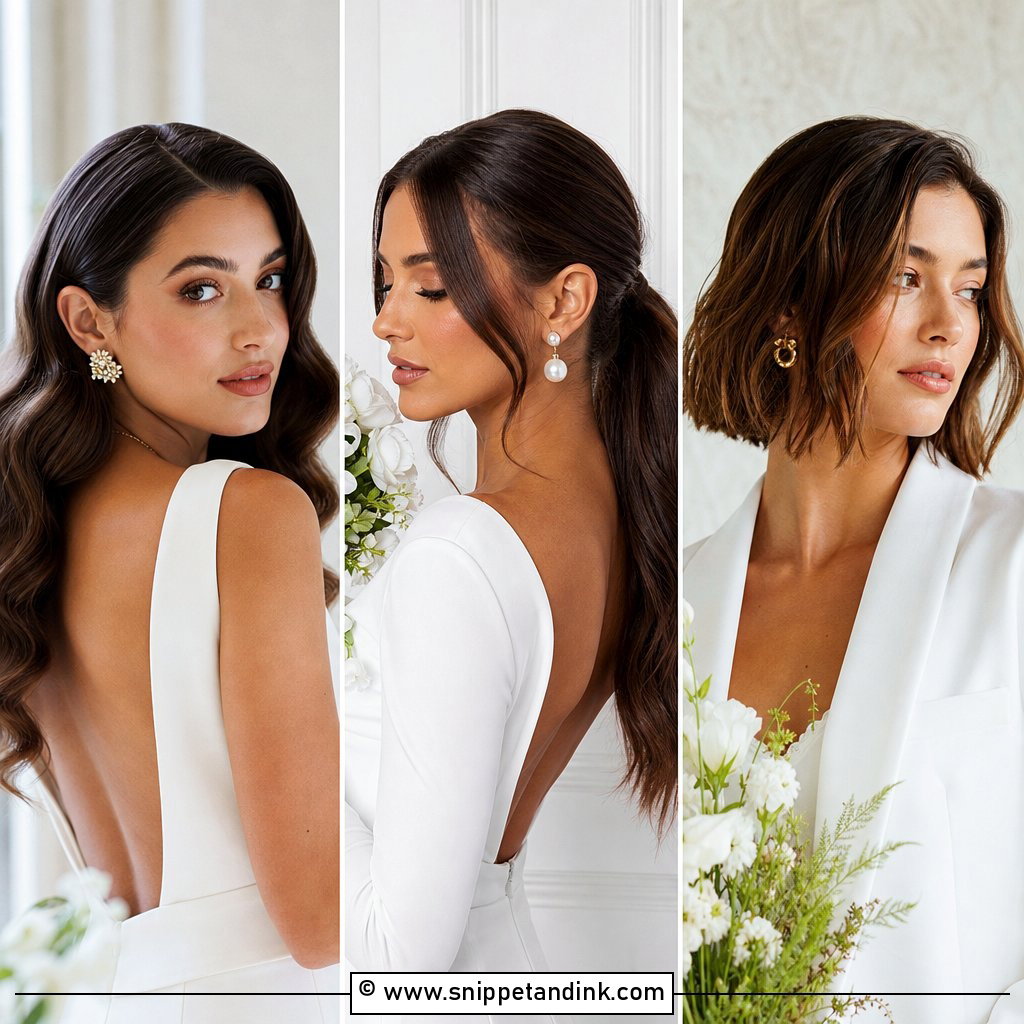
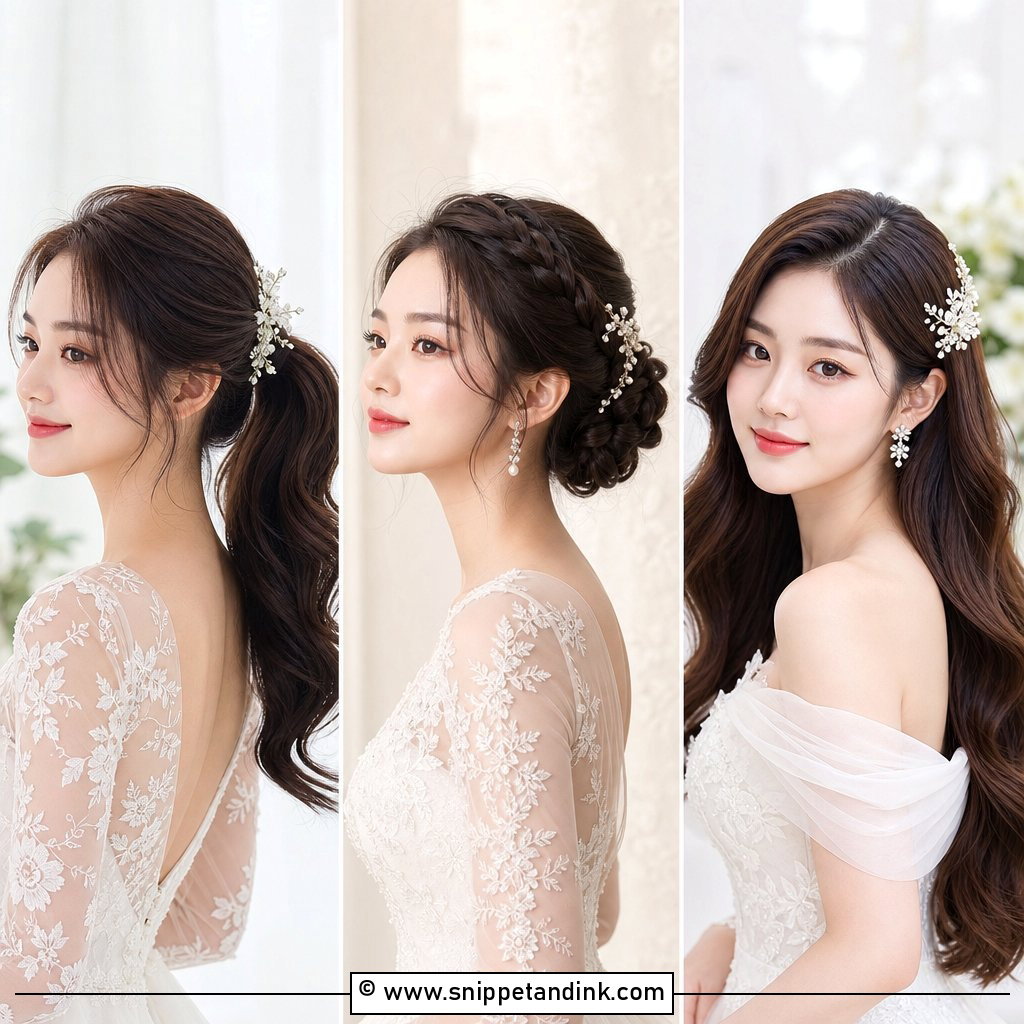
3. Loose Soft Waves
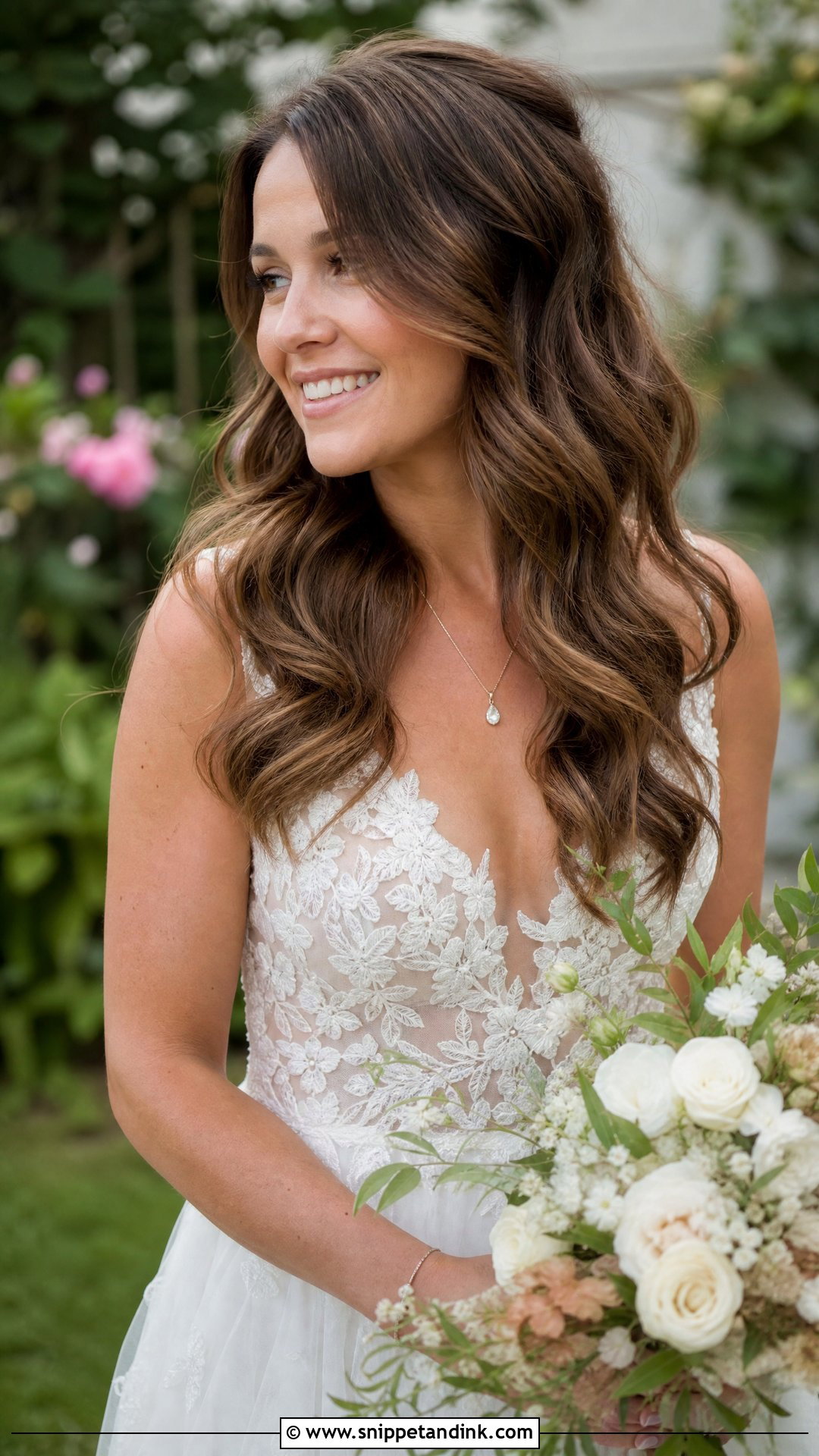
Waves worn down look simple and are the least predictable style on this list. Hair that is down has nothing holding it, so humidity, a veil brushing against it and a day of hugs all flatten the bend. I curl with a large barrel, pin each section to cool before brushing it out, and finish with a flexible spray so the waves stay soft to touch. If your hair normally drops a curl within an hour, say so at the trial; a texture spray first and a slightly smaller barrel give the wave something to fall back into. Expect it looser by the speeches than at the ceremony.
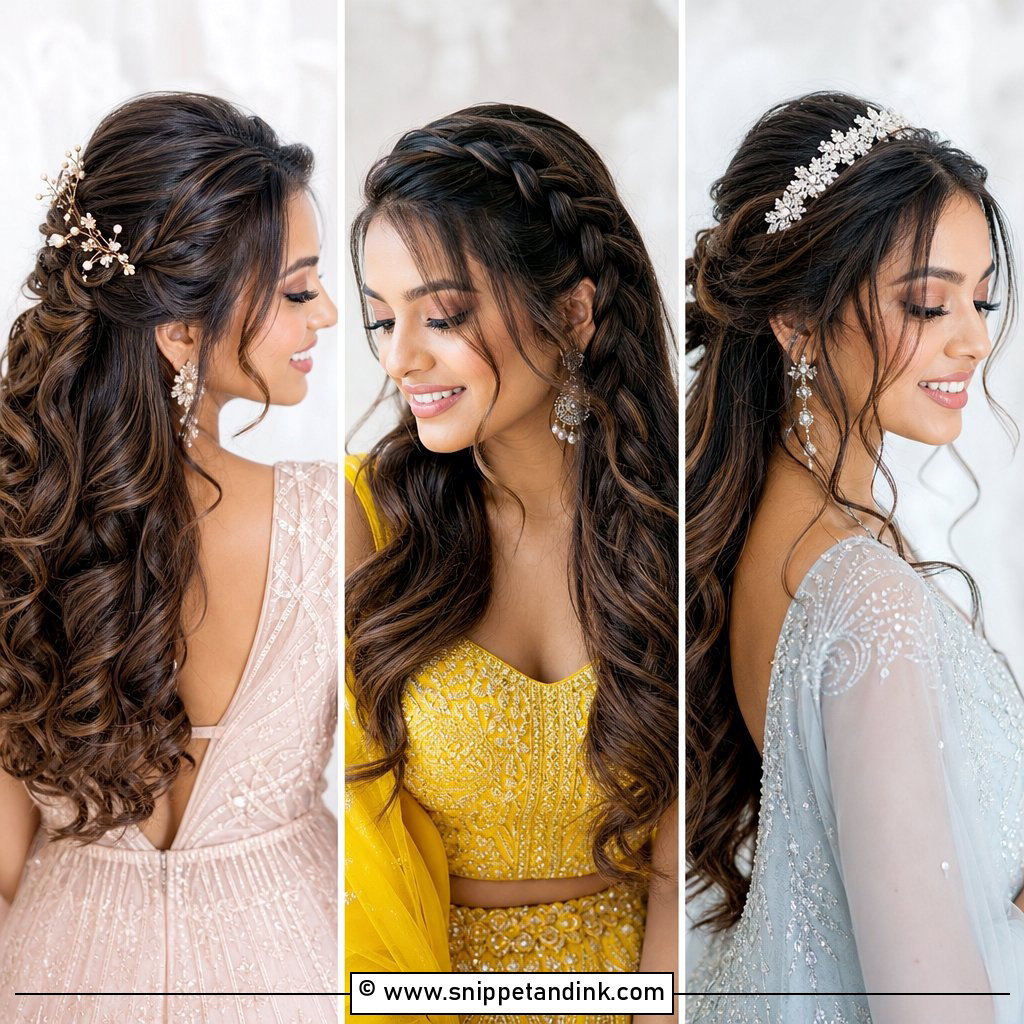
4. Half-Up Half-Down
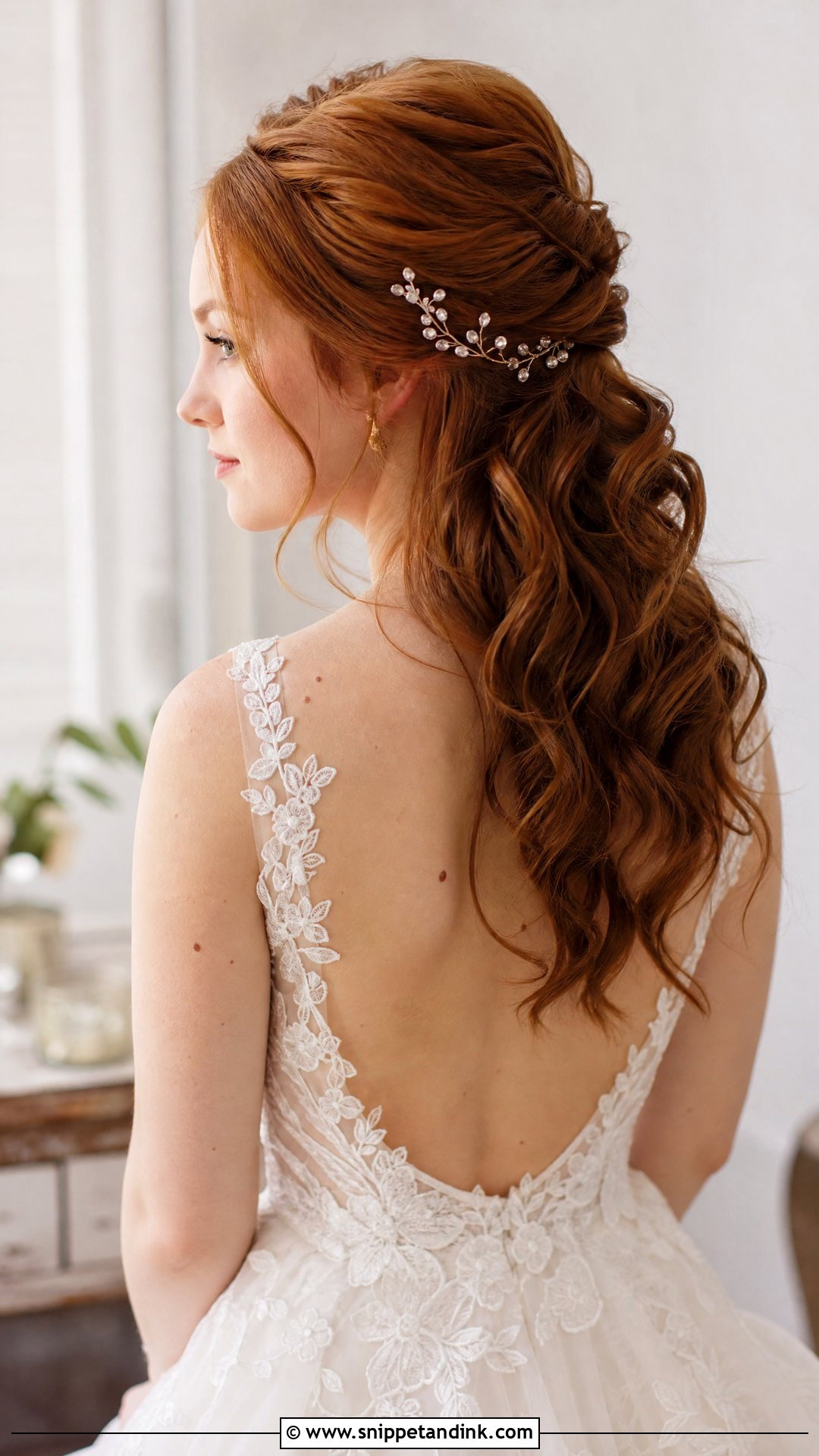
Half-up suits almost any length, which is why I suggest it to brides who can’t decide. What matters most is where the top section comes from. Taken from the temples, it sits flat and polished; taken higher from the crown, it gives lift that balances a round face. I secure the section with a small elastic underneath and cross two pins over it, because a clip alone slides down heavy hair within a few hours. A veil comb sits neatly right on top of the join.
5. Sleek Straight Hair
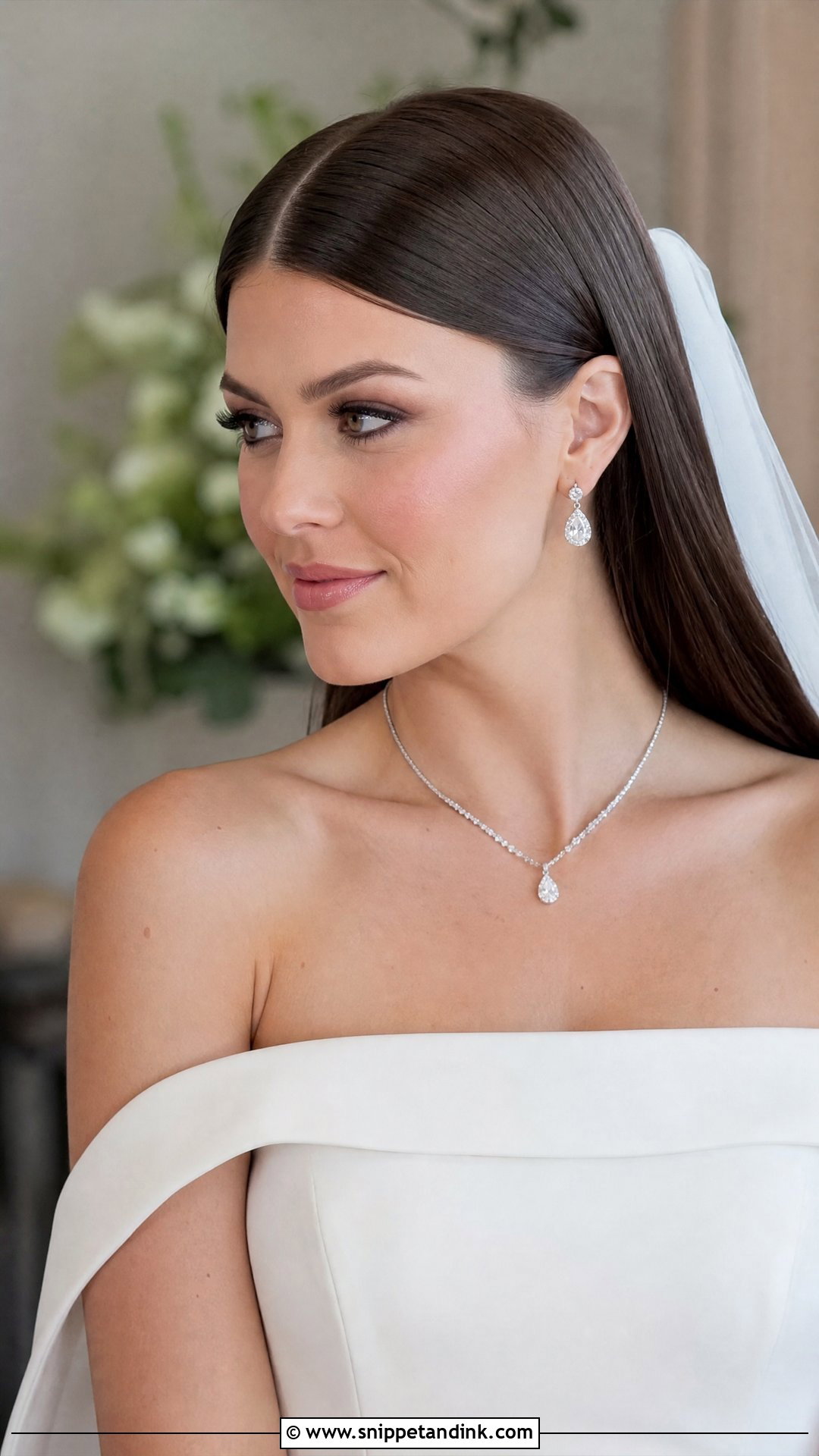
Sometimes the plainest option is the most striking, but sleek straight hair is honest about condition. Split ends and dry mid-lengths show as fuzz once the hair is pressed flat, so I’d book a trim about two weeks before. Use a heat protectant, iron in thin sections at a moderate temperature, and put serum on the lengths only, never the roots, or the hair goes limp by dinner. Very curly hair can be pressed straight for the day, but it reverts quickly in damp air, so I only suggest it for an indoor, air-conditioned venue.
6. Sleek Ballerina Bun
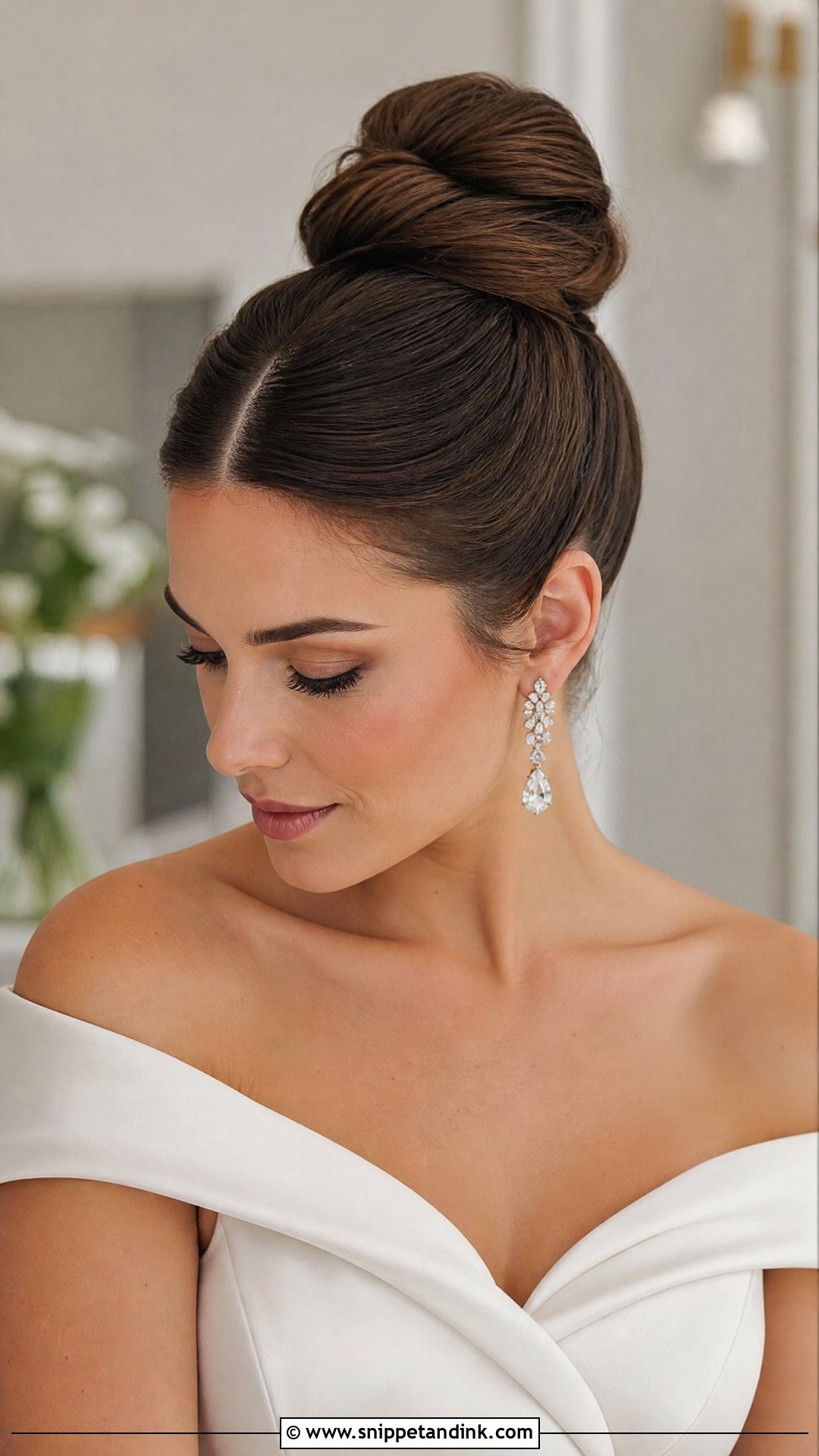
The ballerina bun sits high at the crown, and that changes how it works with your dress and veil. It shows off an off-shoulder or high neckline and keeps your neck cool in summer heat. The awkward part is the veil: a high bun leaves little room above it for a comb, so I usually anchor the veil underneath the bun instead. I brush the hair up with the bride’s head tipped slightly forward, which keeps the nape tight once she stands upright. If you have lots of short nape hairs, a little gel there holds the line.
7. Low Loose Bun
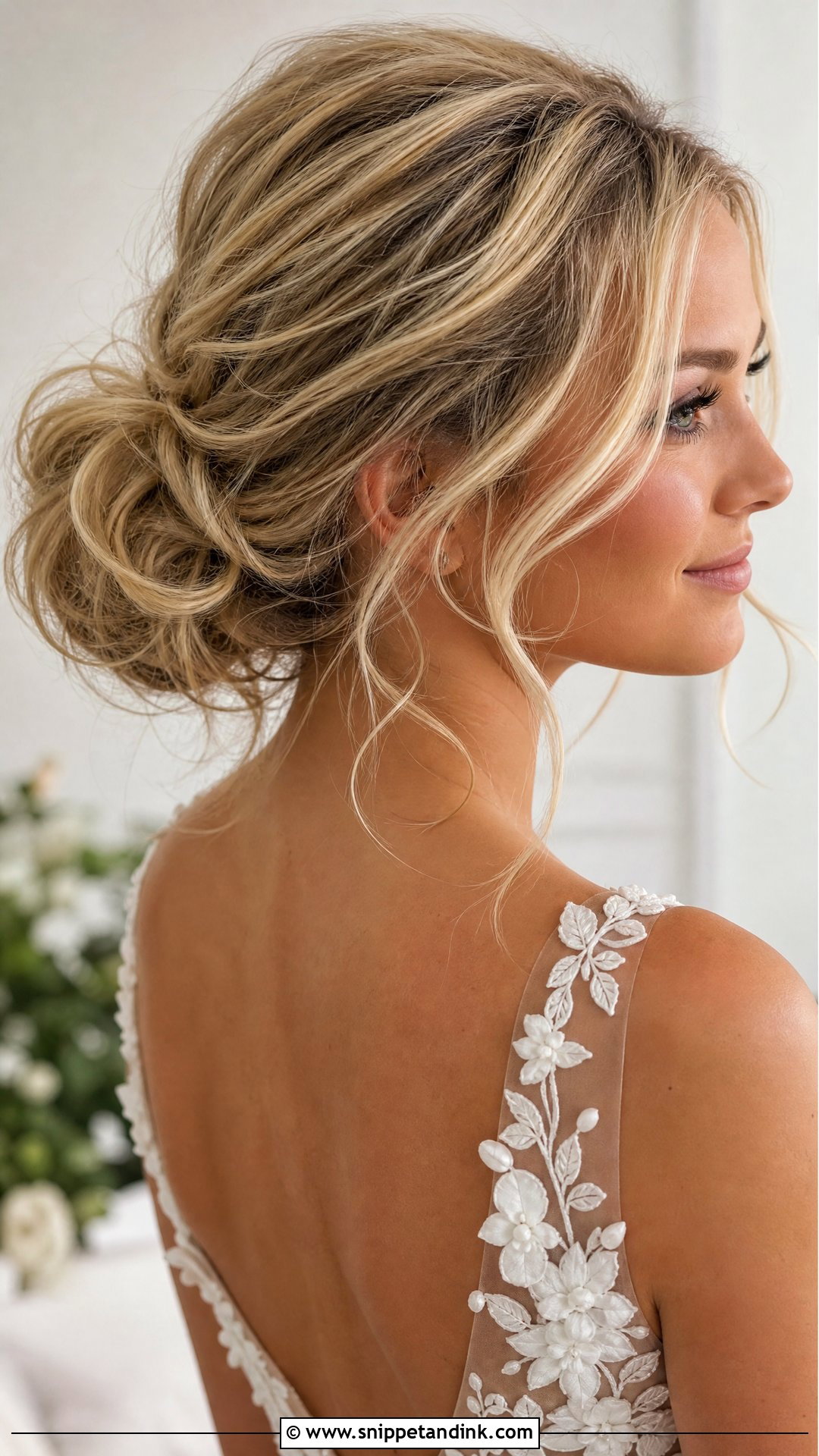
Here is the low bun with the rules relaxed. I build it from loosely pinned sections rather than one tight knot, then pull a few wisps free around the face. Because softness is the point, a bit of movement through the evening doesn’t spoil it, so it is one of the most forgiving choices here for a long day. Watch the balance from the side: a flat crown over a full bun looks lopsided in profile, so I add light backcombing under the top layer before anything gets pinned.
8. Classic French Twist
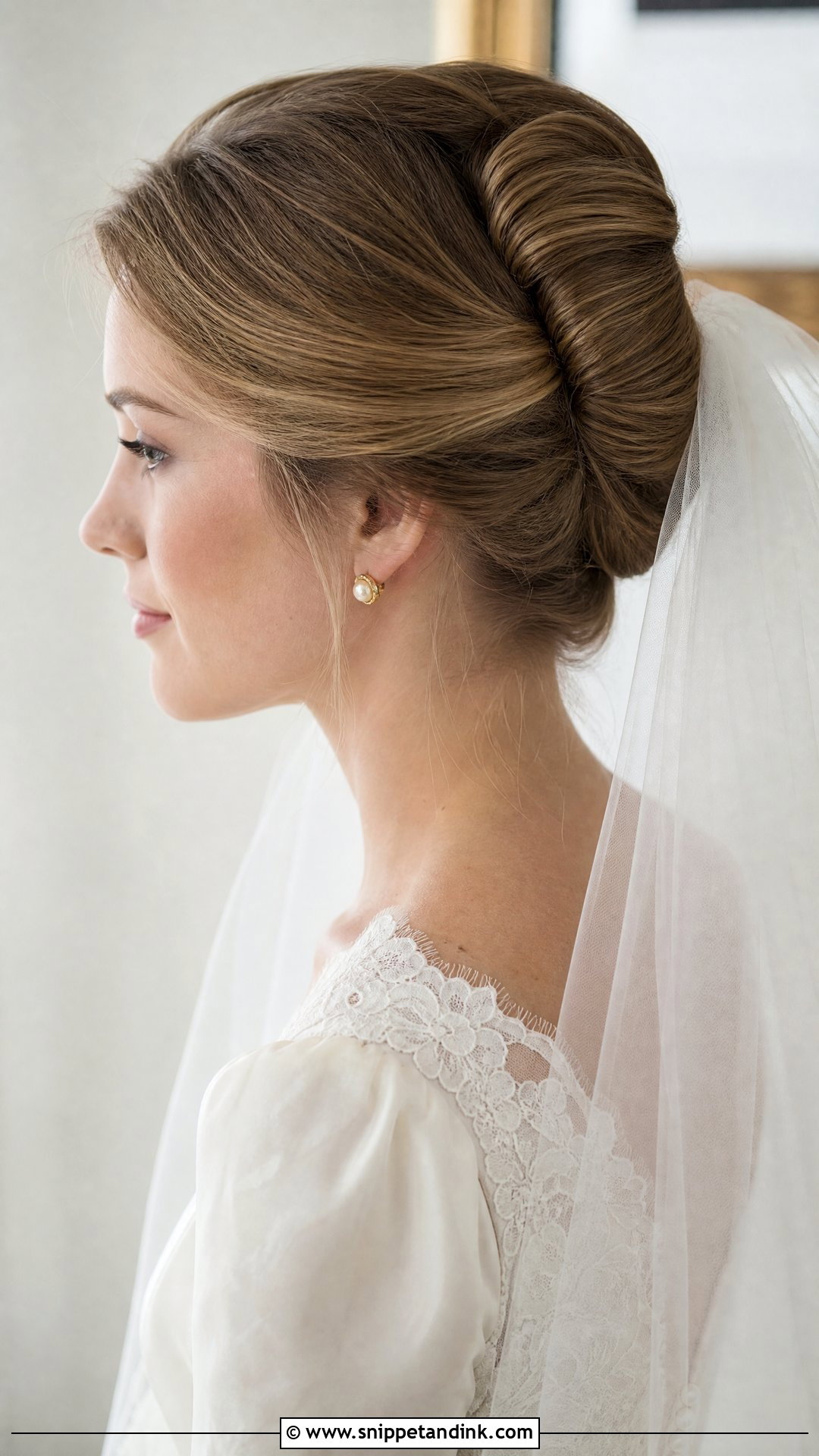
A French twist is a vertical roll tucked against the back of the head, and it has suited formal weddings for decades. It needs hair at least past the shoulders and some grip. Very silky, freshly washed hair slides out of the fold, so I prefer hair washed the day before and misted with dry texture spray. I lock it with a row of crisscrossed bobby pins hidden inside the roll, then smooth the sides with a little cream. A veil sits neatly just under the top of the twist.
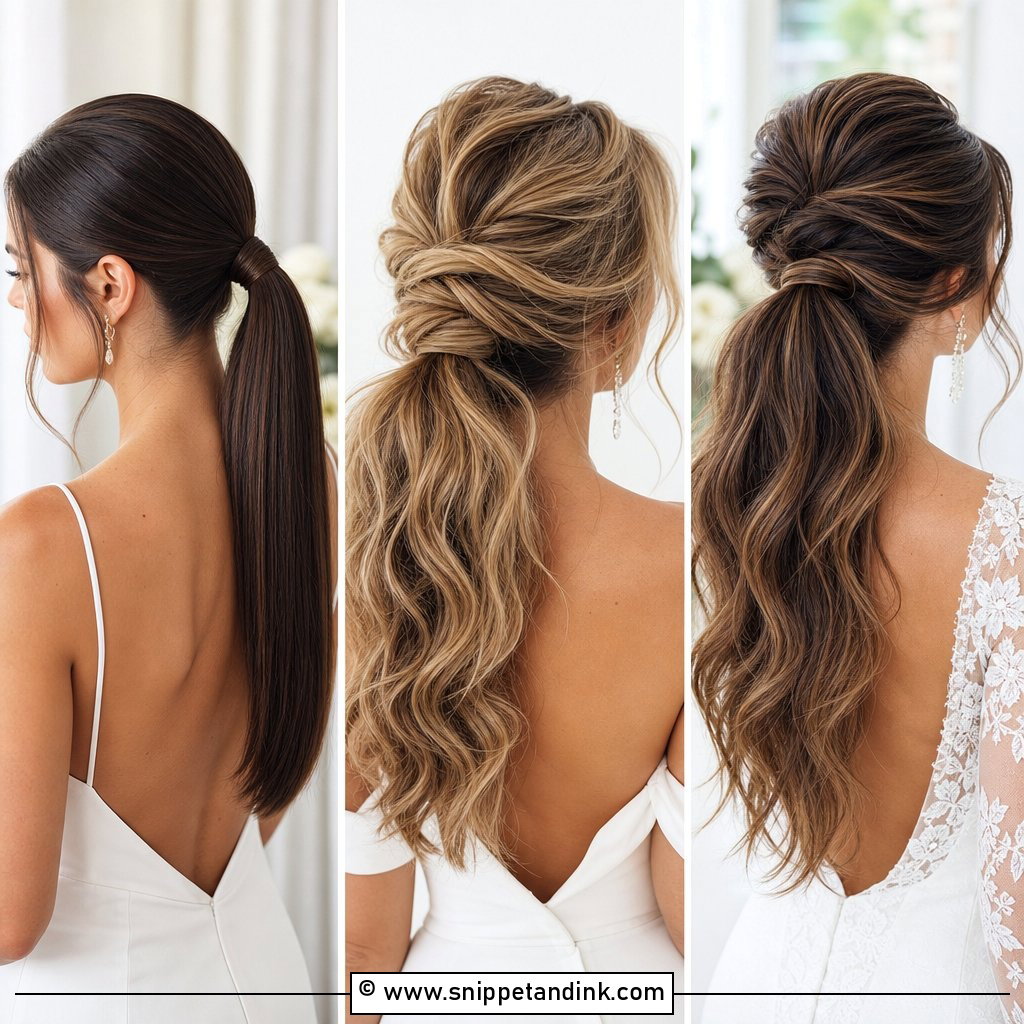
9. Sleek Low Ponytail
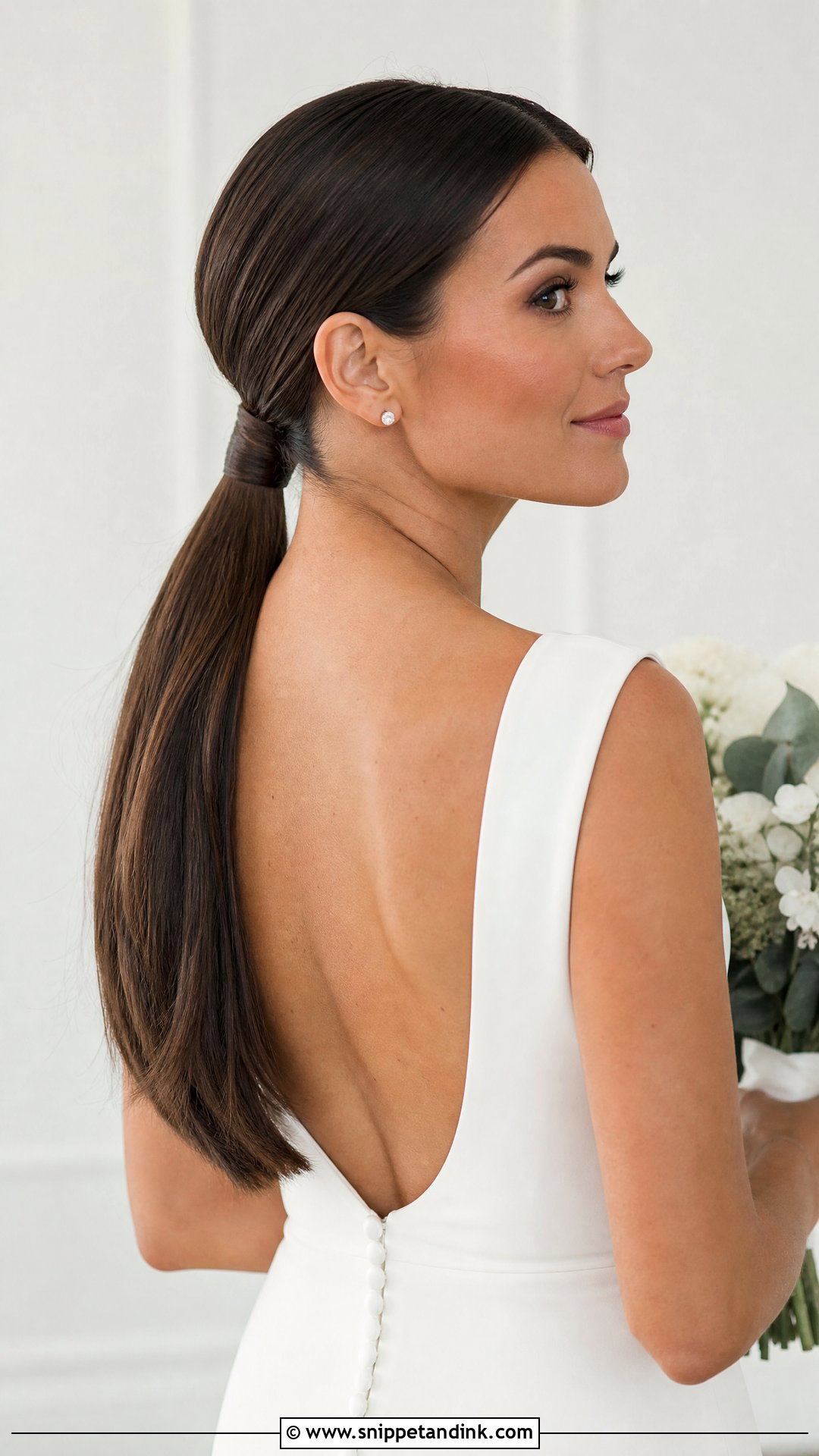
The low ponytail feels the most modern of the lot, and it is also the one that moves the most. I gather it at the nape with a strong elastic, wrap a small strand around the band and pin it underneath to hide it. On long, heavy hair the elastic slips down over the hours, so I add a second band an inch lower and hide that too. It needs real length to look intentional. Hair that barely reaches past the nape tends to read as unfinished rather than chic.
10. Soft Romantic Updo
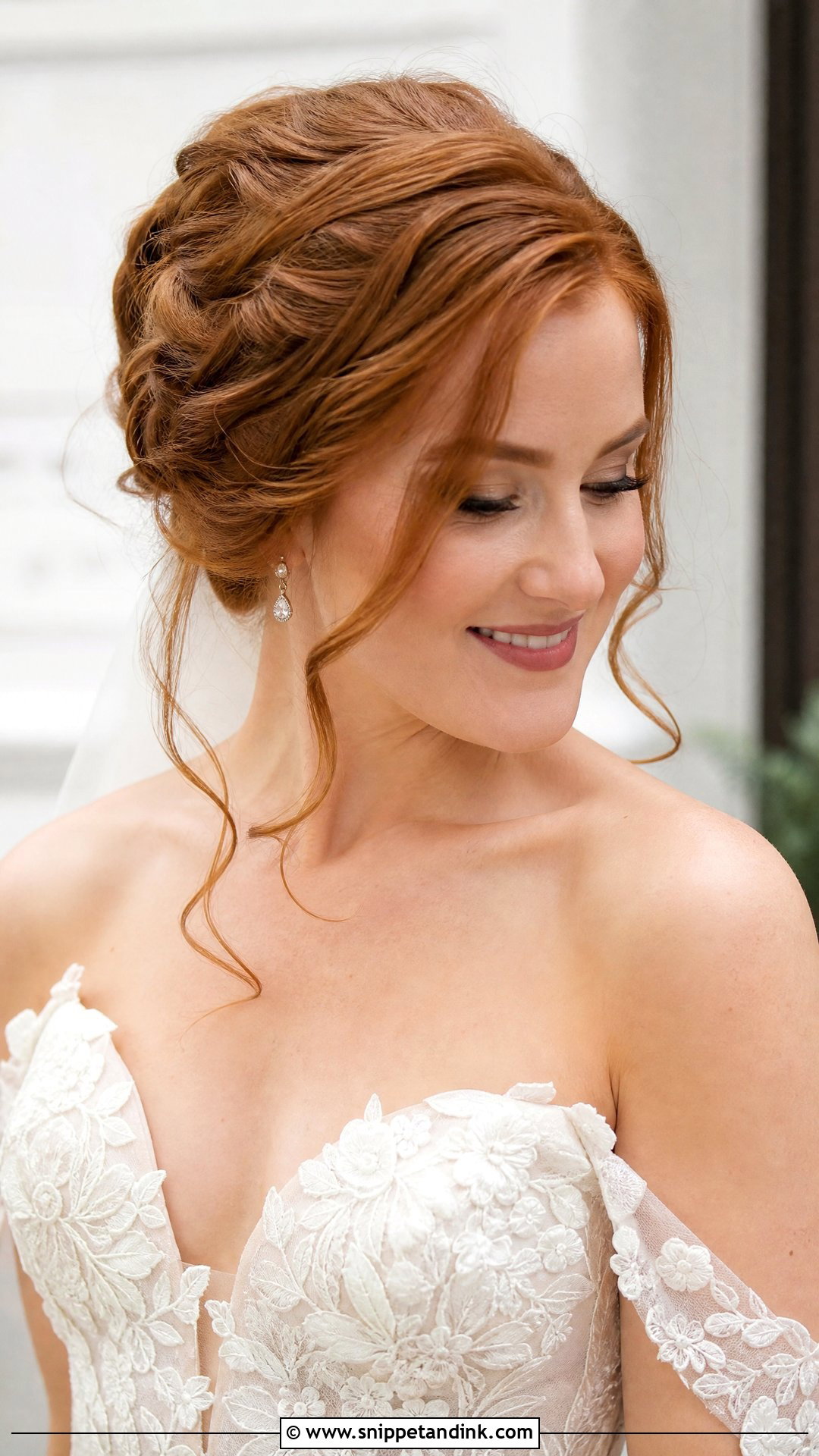
Soft updos are where I spend the most time making hair look as if I spent very little. I pin curled sections loosely so they keep their shape instead of pulling everything tight, and I leave a few curled tendrils around the face. Garden and smaller weddings suit it, and it takes tucked-in flowers well. Fine hair can look thin in a loose updo, though. In that case I’d add a couple of clip-in wefts underneath for body rather than teasing the roots until they’re brittle.
11. Center-Parted Tucked Bob
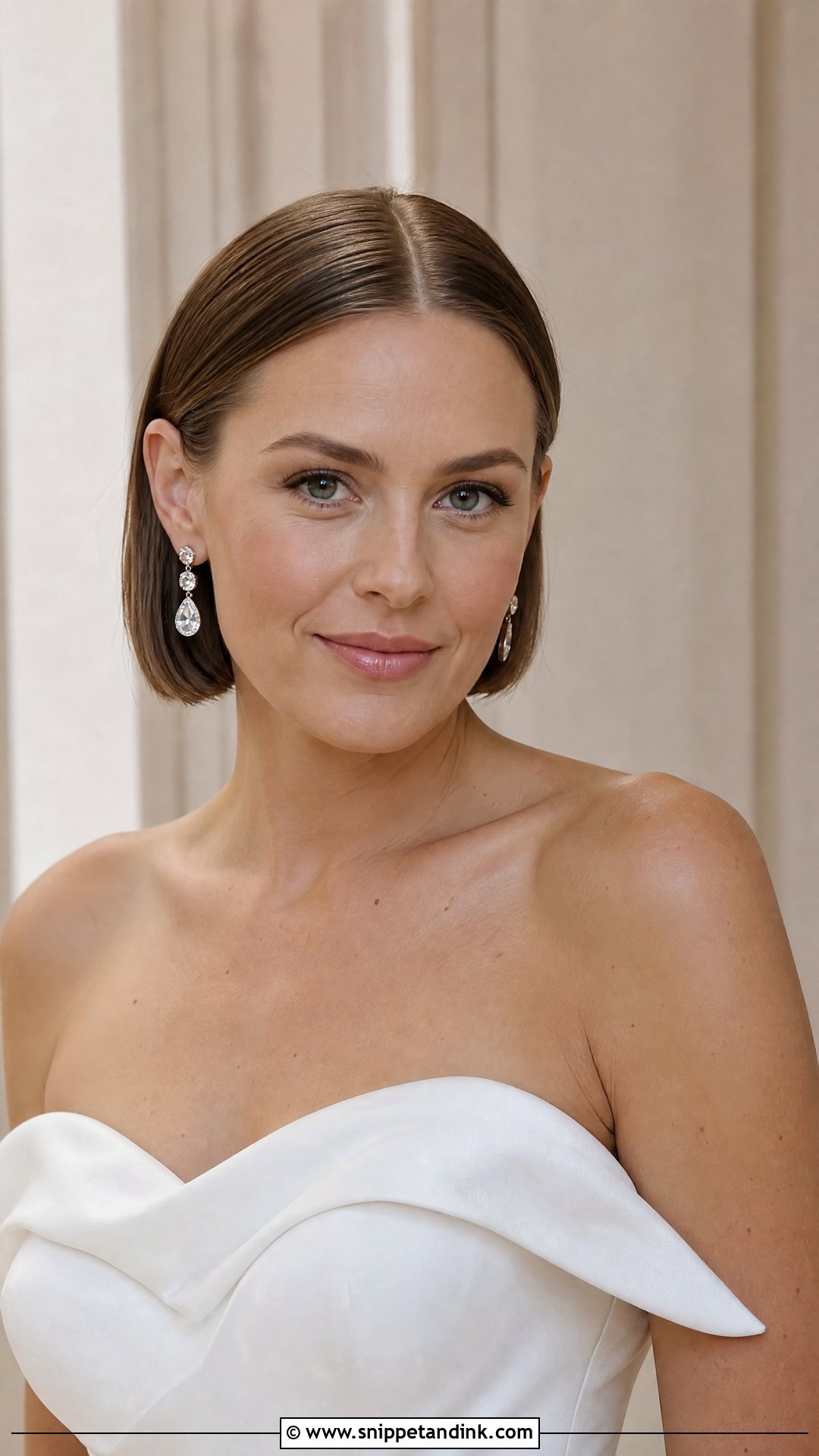
Short-haired brides, this one takes minutes and looks sharp. A center part, the sides tucked neatly behind the ears and a touch of serum through the ends is the whole method. The first thing I check is how the hair behaves behind the ear. If it keeps springing forward, a clear pin slid in from behind holds it with nothing showing. Your jawline and earrings end up on display, and a bob with blunt ends looks crisper here than a heavily layered one.
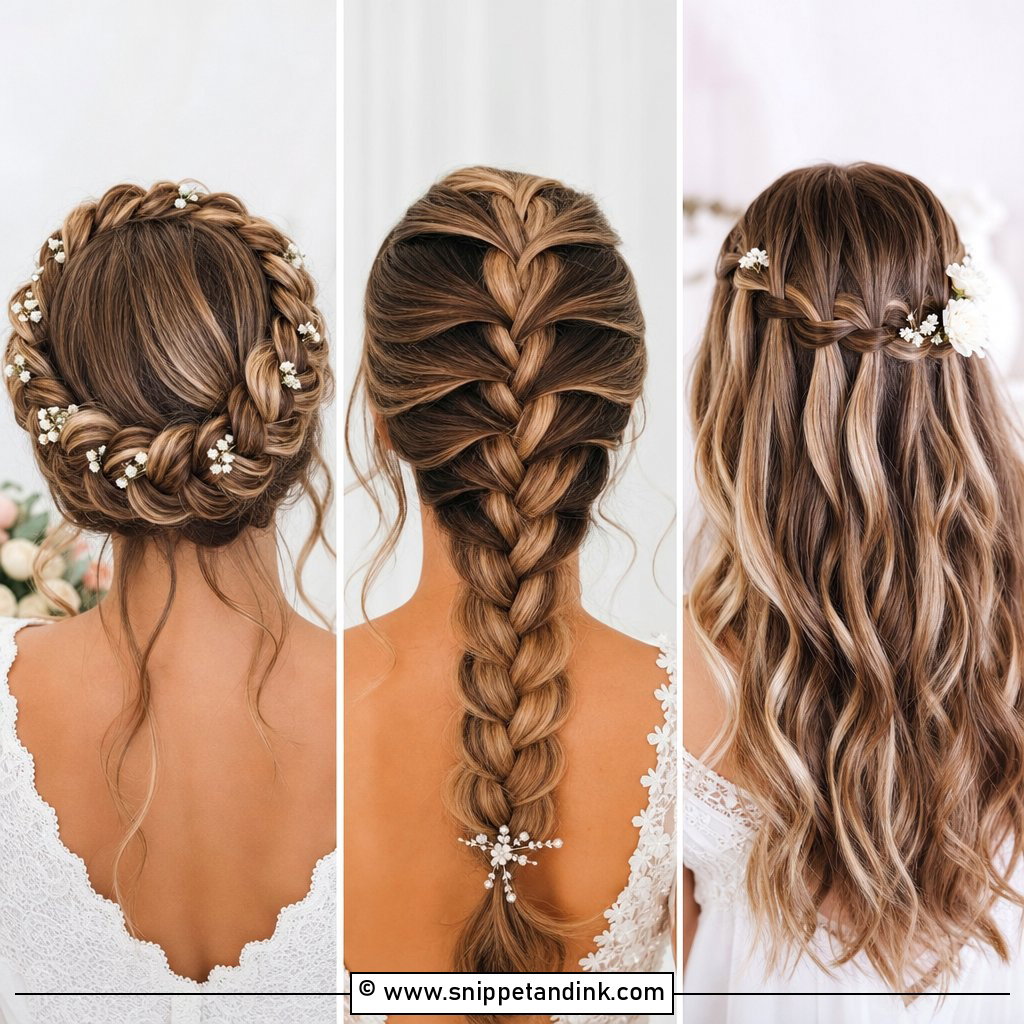
12. Loose Braided Updo
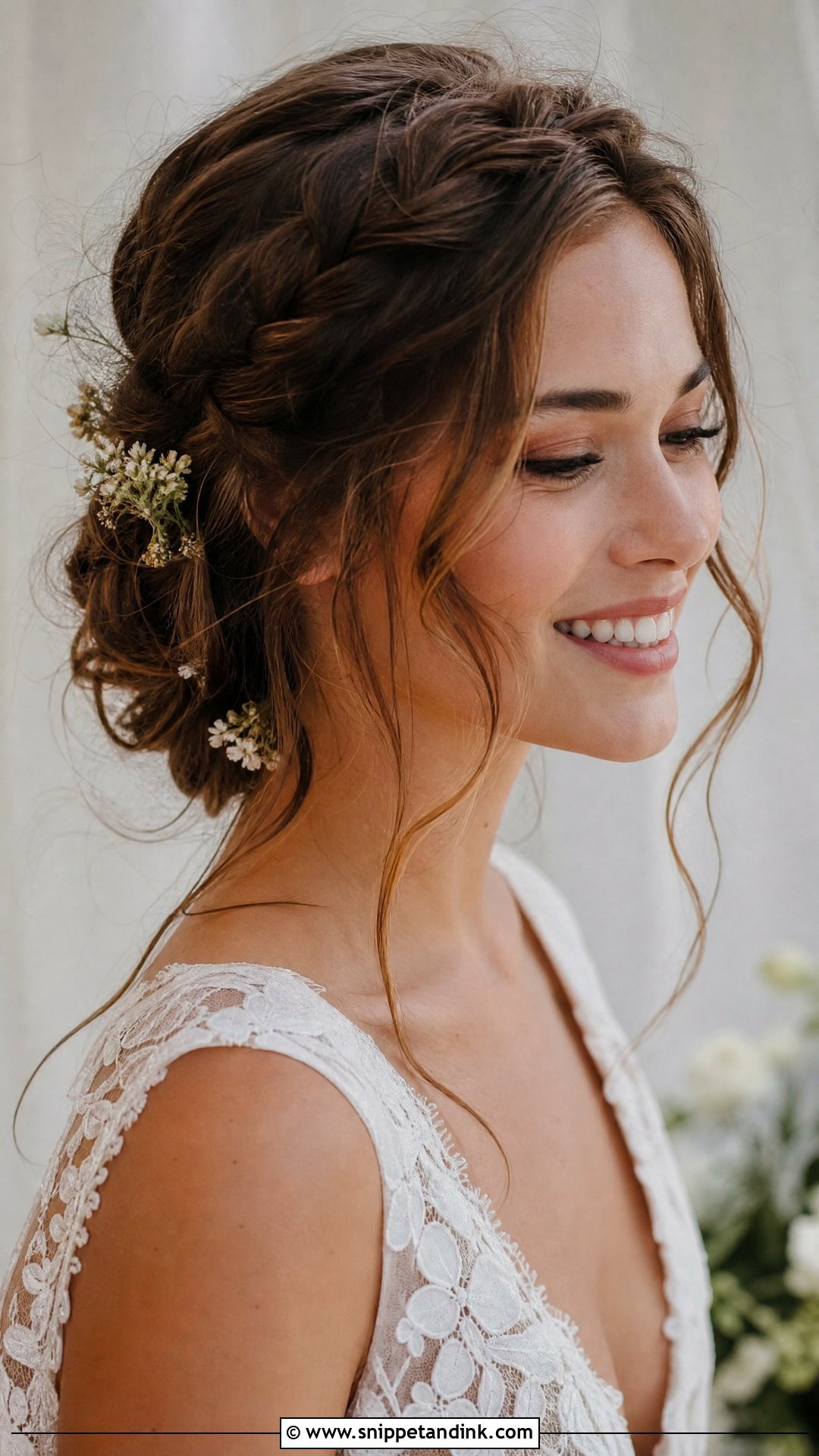
Texture without fuss is what a loose braided updo gives you. I braid fairly firmly first, then pull the edges of each loop outward to widen it, which creates that slightly tousled texture without the braid collapsing later. It gets pinned up at the back with a few face-framing pieces left out, and small flowers slot easily into the loops for an outdoor or rustic wedding. On hair shorter than the shoulders the braid ends up too short to pin up neatly, so I’d point those brides toward the twisted half-up instead.
13. Wavy Lob With Middle Part
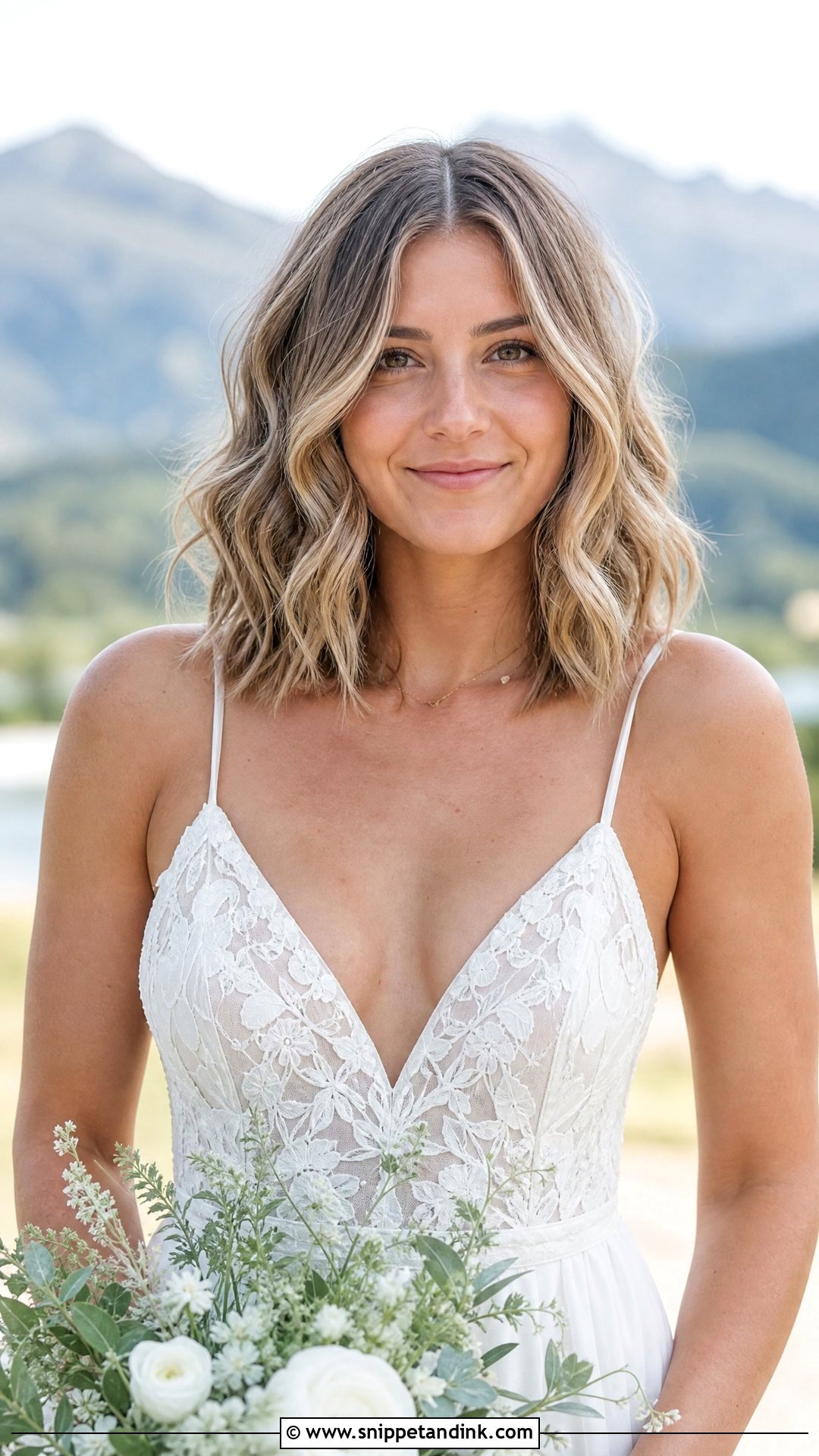
A wavy lob is the right call if you’d rather look like your best everyday self than someone transformed. Add soft, undone waves with a flat iron or medium barrel, leaving the last inch of the ends straight so the wave looks modern rather than prom-like. A texturizing spray gives grip and movement, and the middle part keeps it balanced. Lobs tend to flick outward when they hit the shoulders, so test the waves with your real neckline at the trial before you commit.
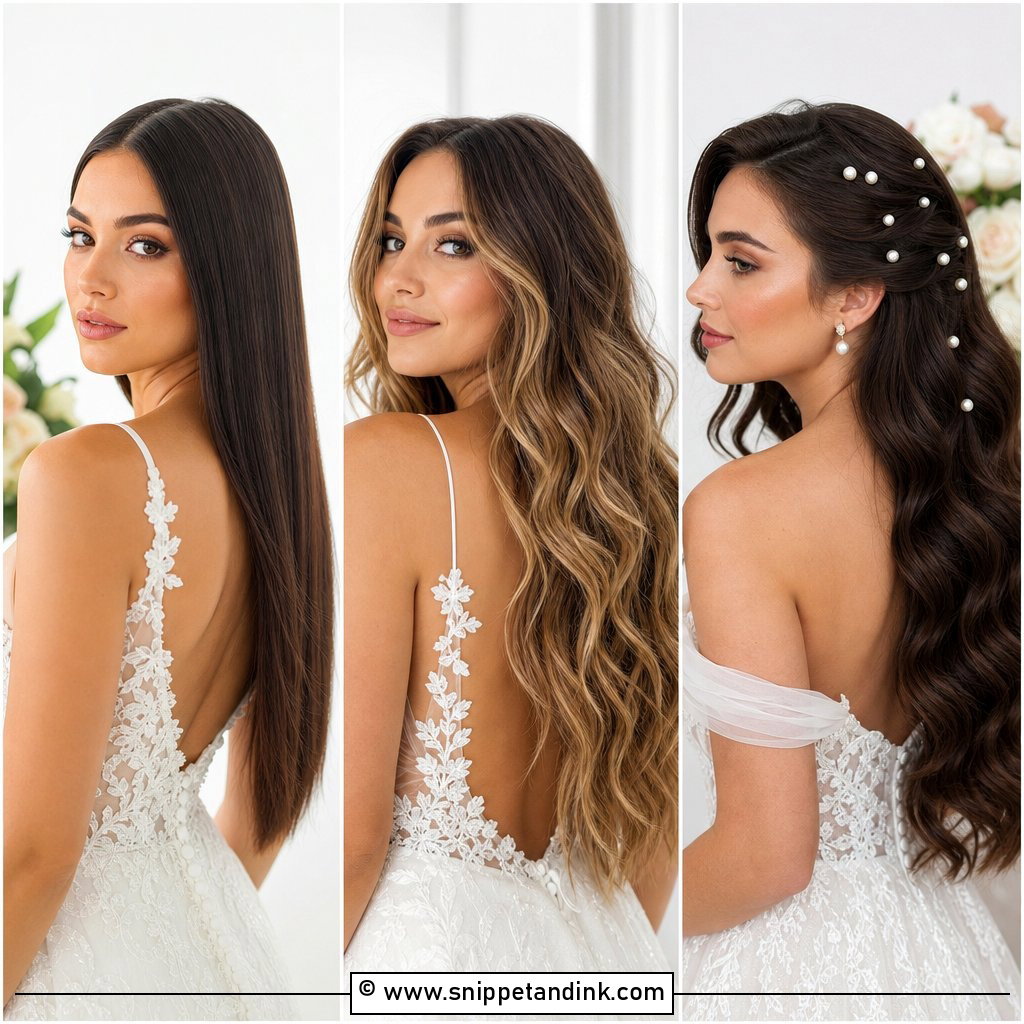
14. Slicked-Back Bun
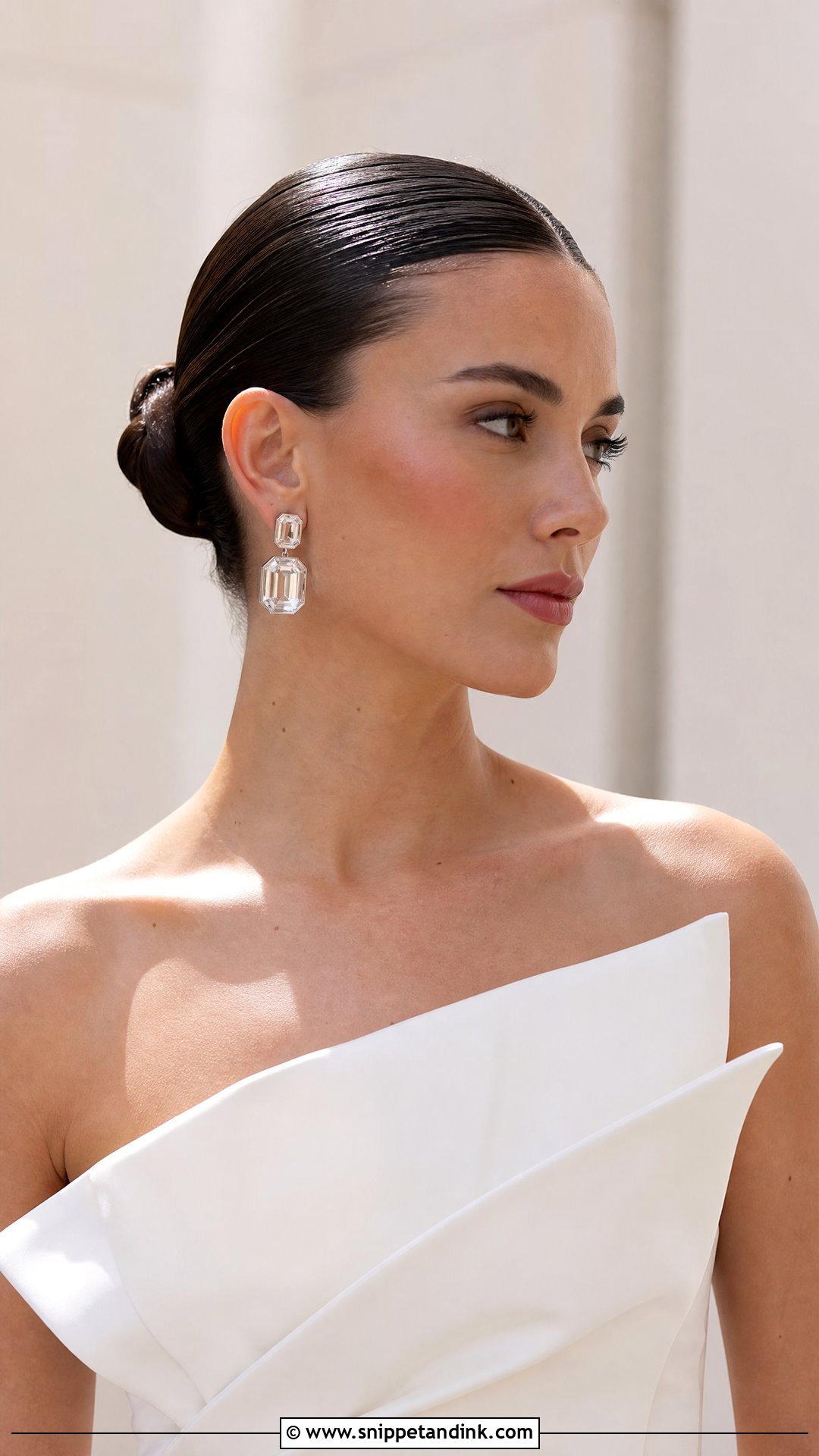
Zero loose pieces and a wet-look finish make the slicked-back bun the boldest option here. I comb a strong gel through with a fine-tooth comb, then press the surface down with a boar bristle brush for that glassy look. Nothing competes with your face, so it pairs naturally with architectural gowns and strong makeup. Two cautions. Gel layered on top of hairspray can flake, so I keep the products separate, and a pulled-back hairline shows any regrowth, so plan your color appointment around it.
15. Twisted Half-Up Style
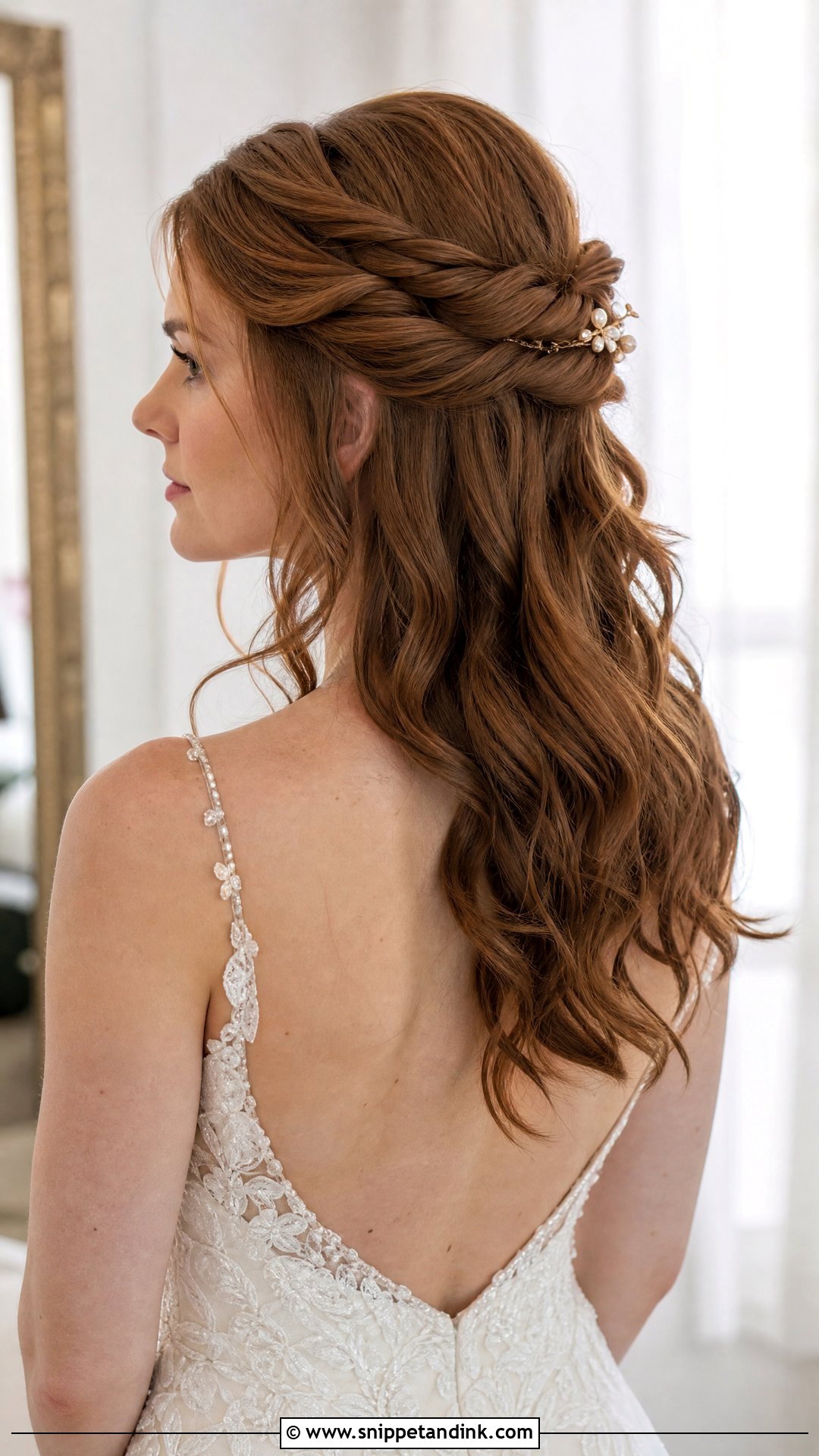
This version adds one detail to the classic half-up: two side sections twisted back and pinned where they meet. It’s a small change that makes the style look considered. I twist each section away from the face and pin each twist on its own before joining them, so if one loosens during the day the other still holds. The rest falls below, sleek or waved, and a couple of small decorative pins can cover the join.
16. Tousled Low Bun With Tendrils
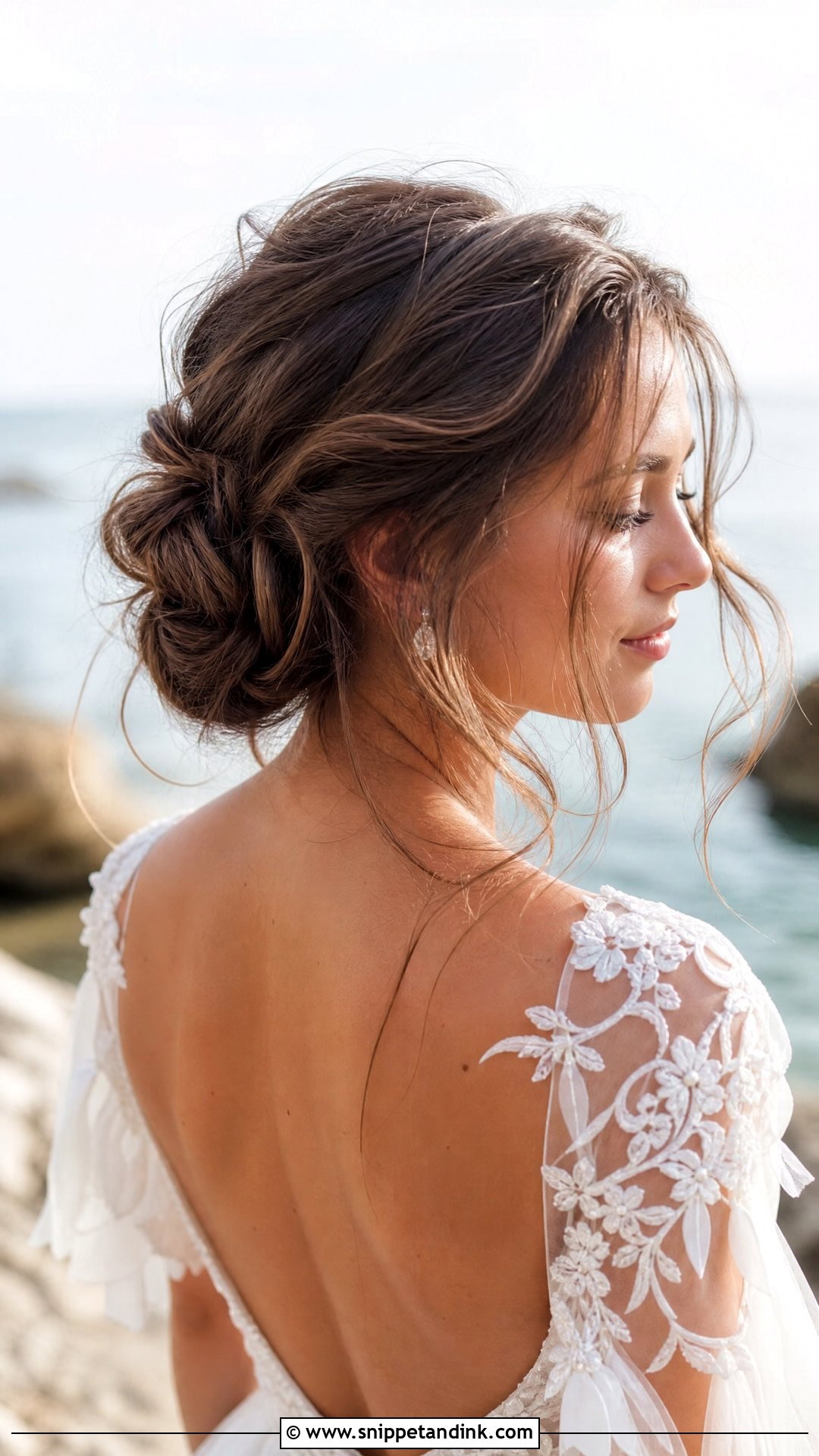
A tousled low bun trades sleek perfection for texture. Soft tendrils left loose around the face give it warmth. I curl the hair before building the bun so the texture has something to hold onto, then tease pieces out gently for volume. Being slightly messy by design, it forgives a long day and a breezy garden or beach setting. On very silky hair I spray texture in first, otherwise the pulled-out pieces slide straight back into the knot.
17. Pinned-Back Pixie
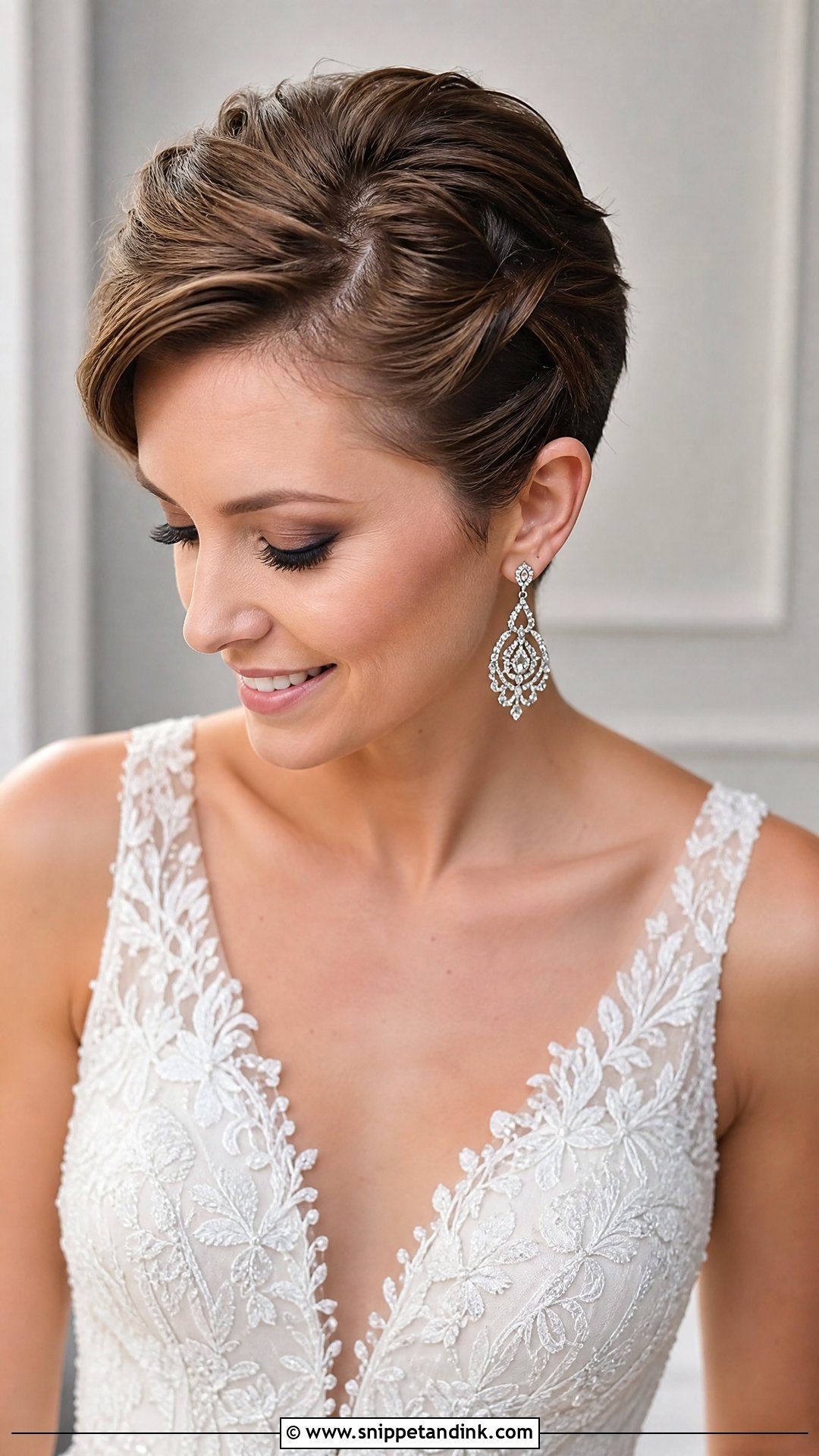
Pixie cuts need very little to look ready for a wedding. The sides are pinned back sleekly and a dab of pomade defines the top. I’d book your trim about a week before rather than the day before, so the cut softens and loses its freshly clipped edge. One or two small pins or a tiny accessory are plenty, and your face and earrings stay fully visible. Of everything here, the pinned-back pixie needs the fewest touch-ups through the night.
18. Straight Hair With Deep Side Part
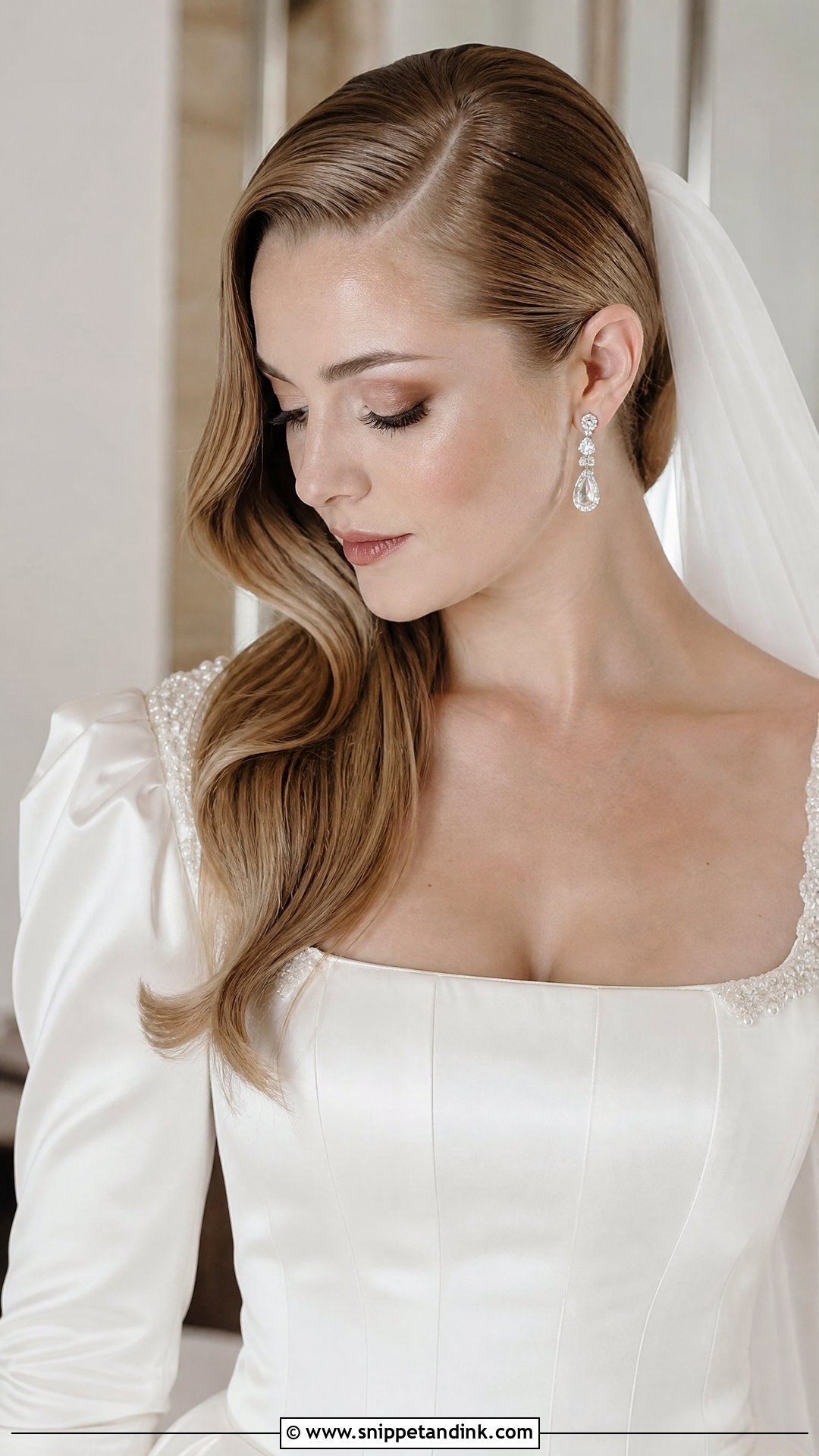
A deep side part sweeps straight hair heavily to one side for volume and a hint of old Hollywood. Because the sweep shows the hair’s surface, glossy, healthy lengths matter. I set the part while the hair is still damp where possible; a part moved on dry hair often tries to flip back by evening. One hidden pin behind the ear on the heavy side stops it falling across your face during the vows. Done this way it nods to vintage glamour without looking like a costume.
19. Soft Curled Half-Up
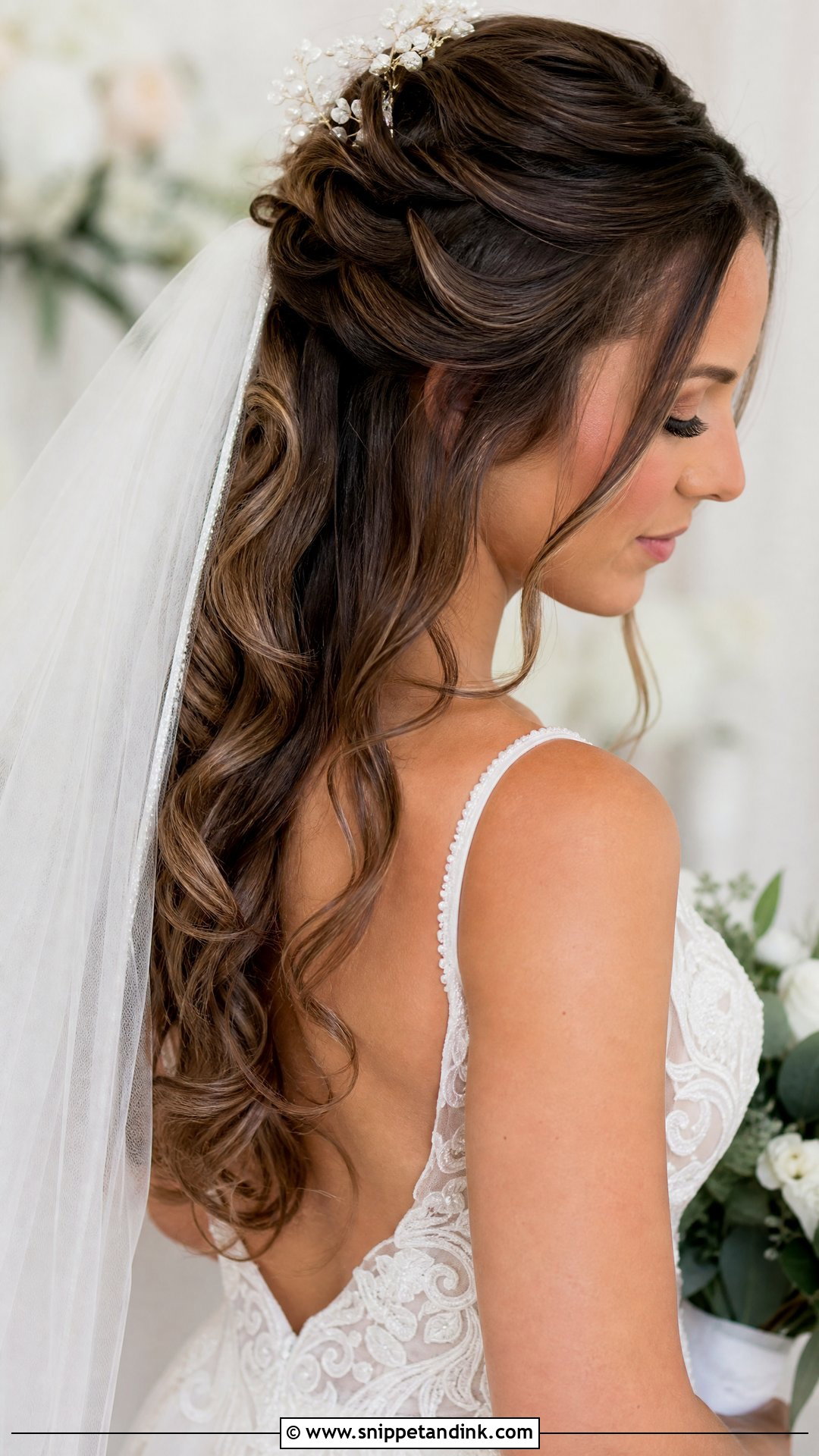
Gathering only the crown and leaving soft curls below gives you movement without a full updo. I curl with a medium barrel and let each curl cool pinned up before brushing it out. Veils and small floral accents both sit well on the gathered section, and it suits long and medium hair best. The curls will relax as the day goes on, which is fine for this style. Brides with very straight hair should plan a quick touch-up with the iron after the portraits.
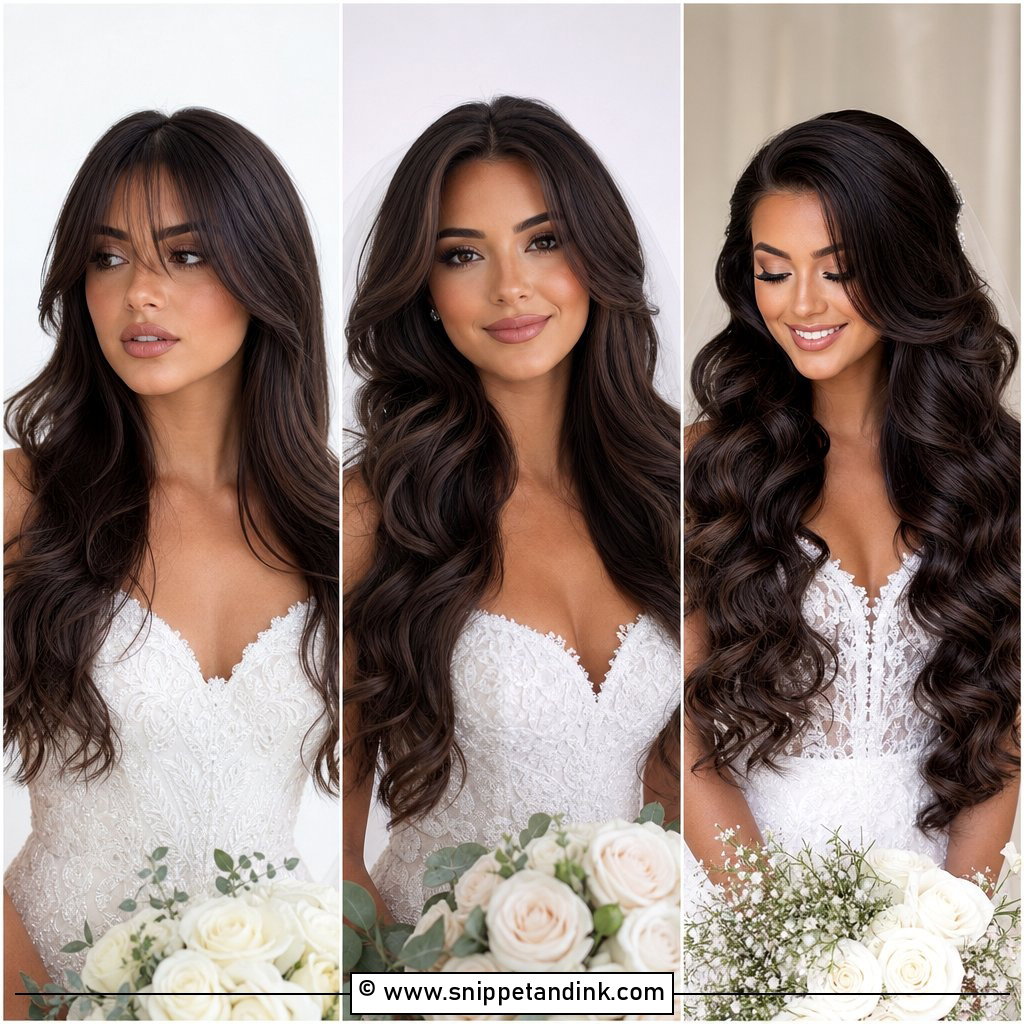

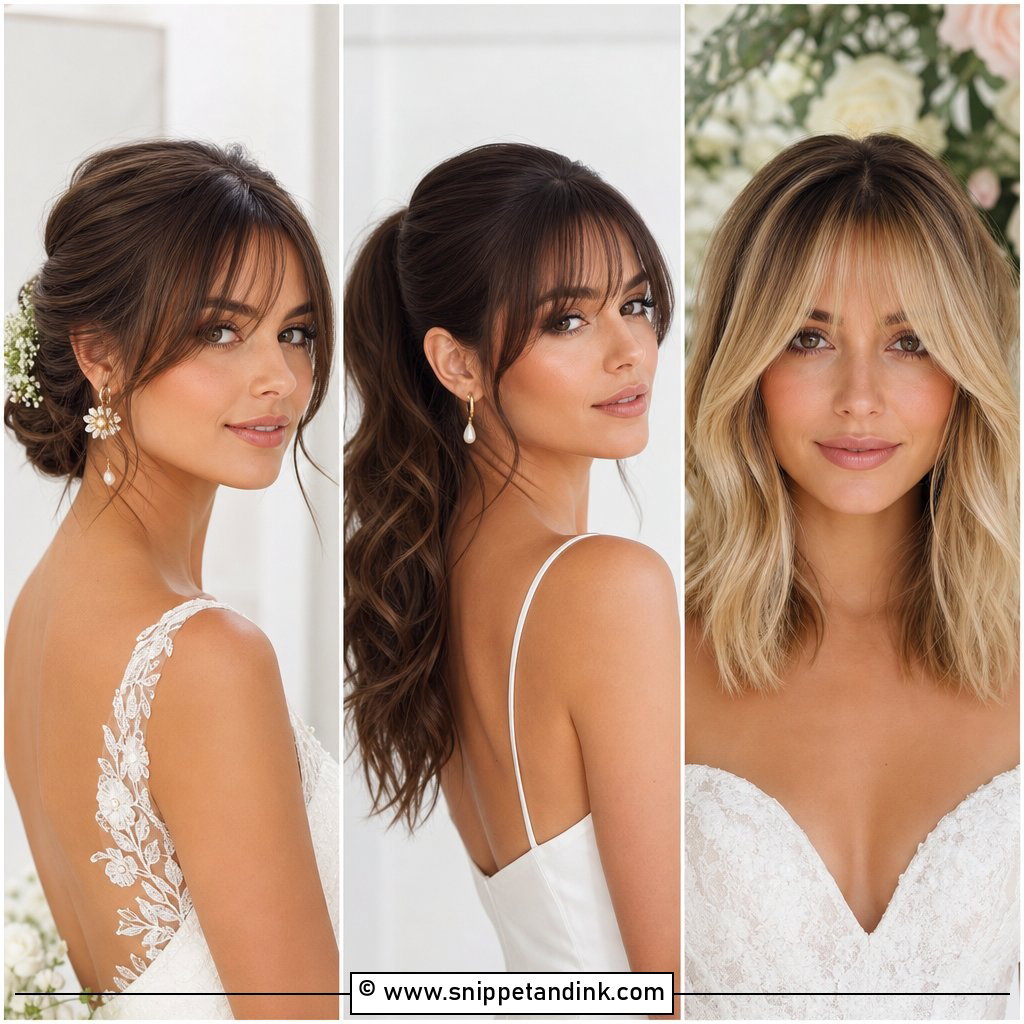
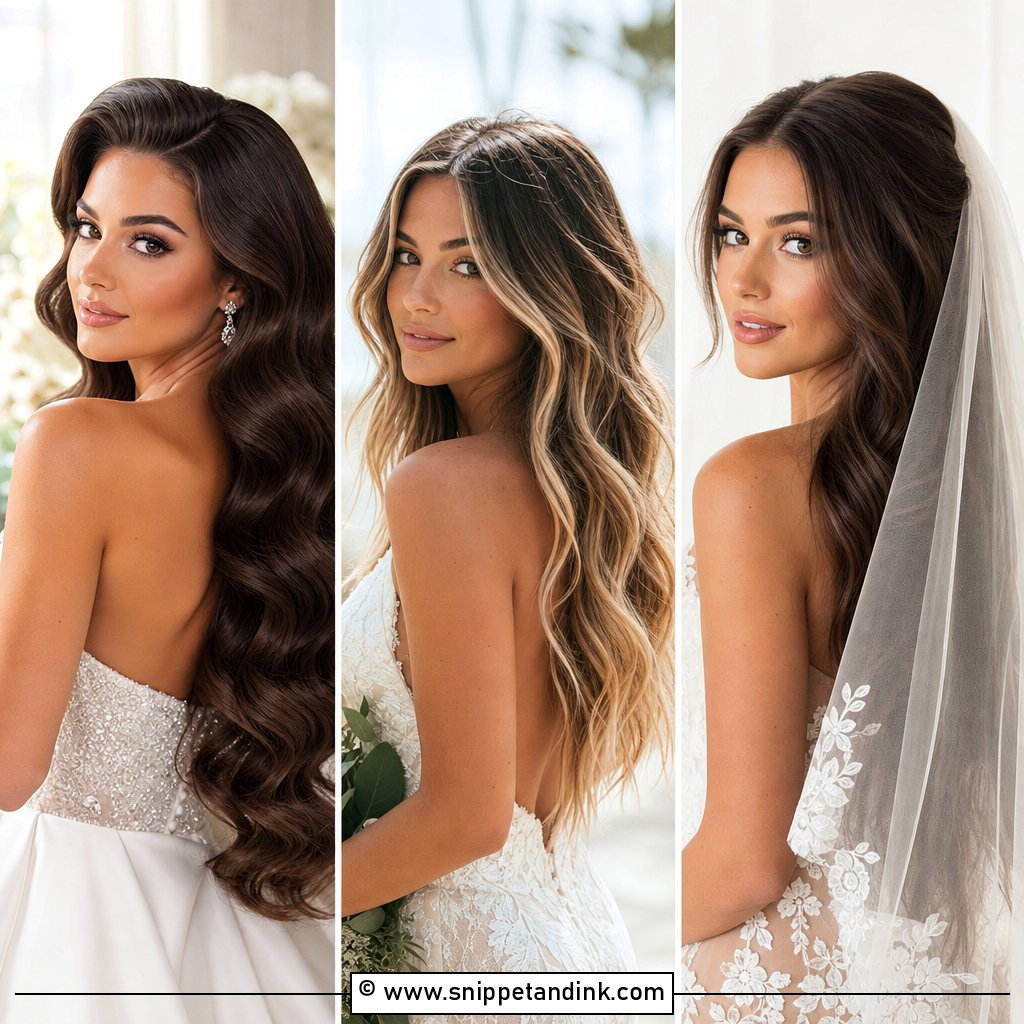
20. Natural Texture Worn Down
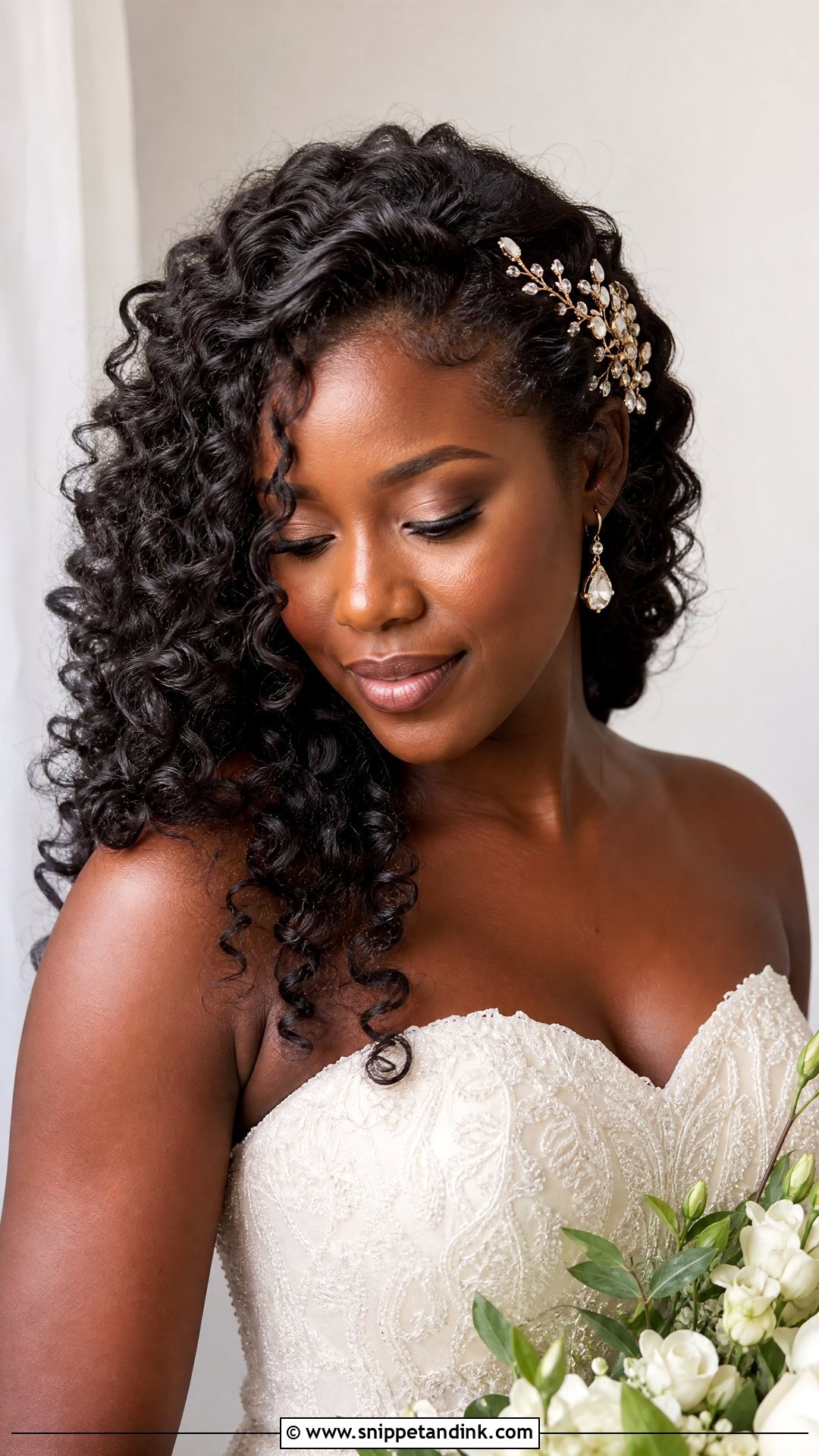
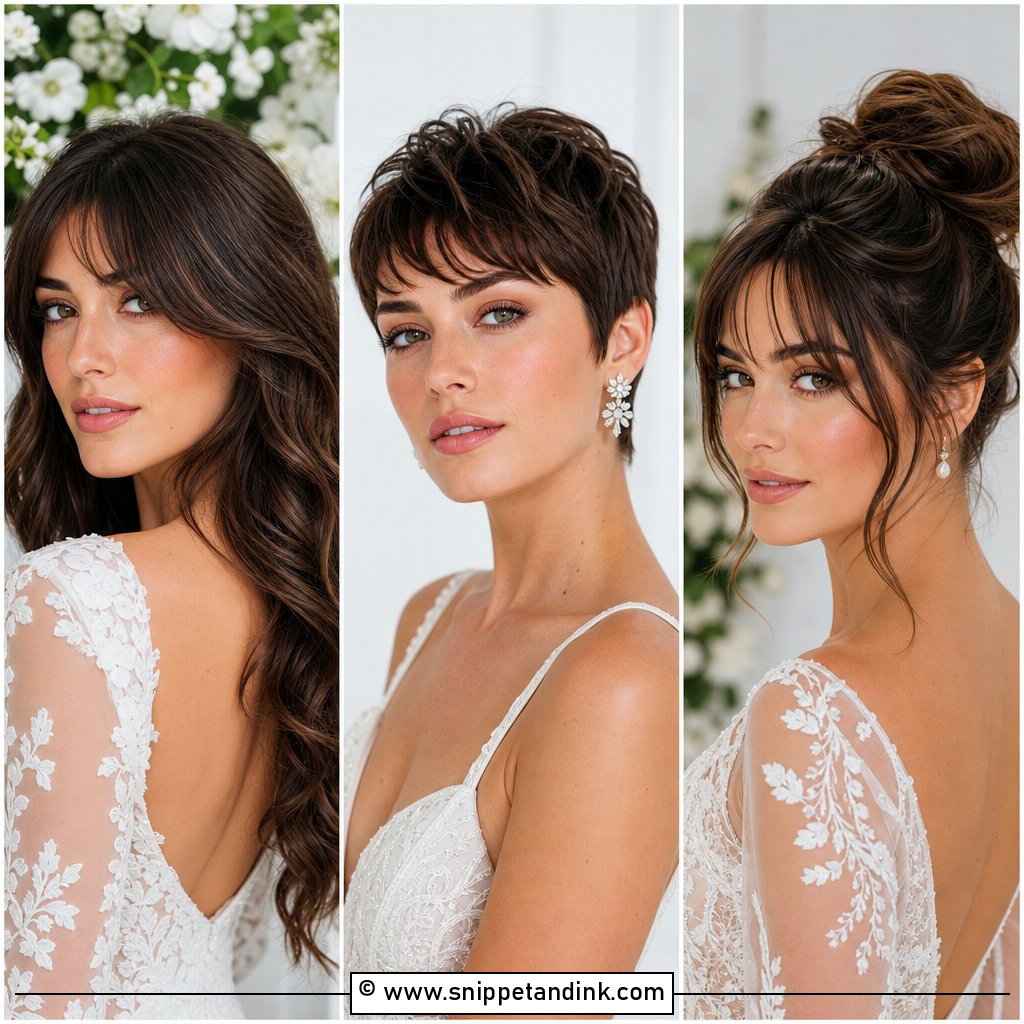
Wearing your natural texture, wavy, curly or coily, is about knowing your own hair better than any stylist does. A good leave-in conditioner and a light cream for definition are the base. I’d encourage you to do your usual wash routine a day or two before rather than on the morning, so the curls have settled and you already know how they’ll behave. A small accessory can sit at the side if you like. Nothing about it is pretending, and that is exactly its appeal.
How Sleek and Soft Styles Wear Differently After the Ceremony
Minimal styles split into two camps once the day gets going. Sleek ones, like the slicked bun, the low ponytail and the French twist, stay almost unchanged for hours because they are locked down with gel and pins. Their weakness is small: flyaways and a fuzzy part line once you get warm. Soft ones, like waves, loose buns and half-ups, are moving from the start, so they drop gradually and simply look more relaxed as the night goes on.
For a humid or outdoor venue
Curls fall fastest in damp air. If your ceremony is by water or in summer heat, I’d lean toward a soft updo or a loose bun rather than waves worn down, and I put anti-humidity spray in before curling, not after, so it is sealed into the shape.
What your bridesmaid should carry
- A handful of bobby pins and U-pins in your hair color
- A travel-size flexible hairspray
- A clean spoolie or old toothbrush with a little gel for flattening flyaways on sleek styles
- A tiny bottle of serum for straight lengths that start to look dry
A Plain Style Still Needs a Proper Trial
Each of these styles works when it matches the hair wearing it. Look at your texture and length, your neckline and the weather where you’re marrying, and let those three narrow the list for you. A trial will tell you more than any photo can. Whichever you pick, ask your stylist to show you how to fix the one part most likely to slip, because on a minimal style there is nowhere for it to hide.
You'll Like These Ideas:


Leave a Reply