
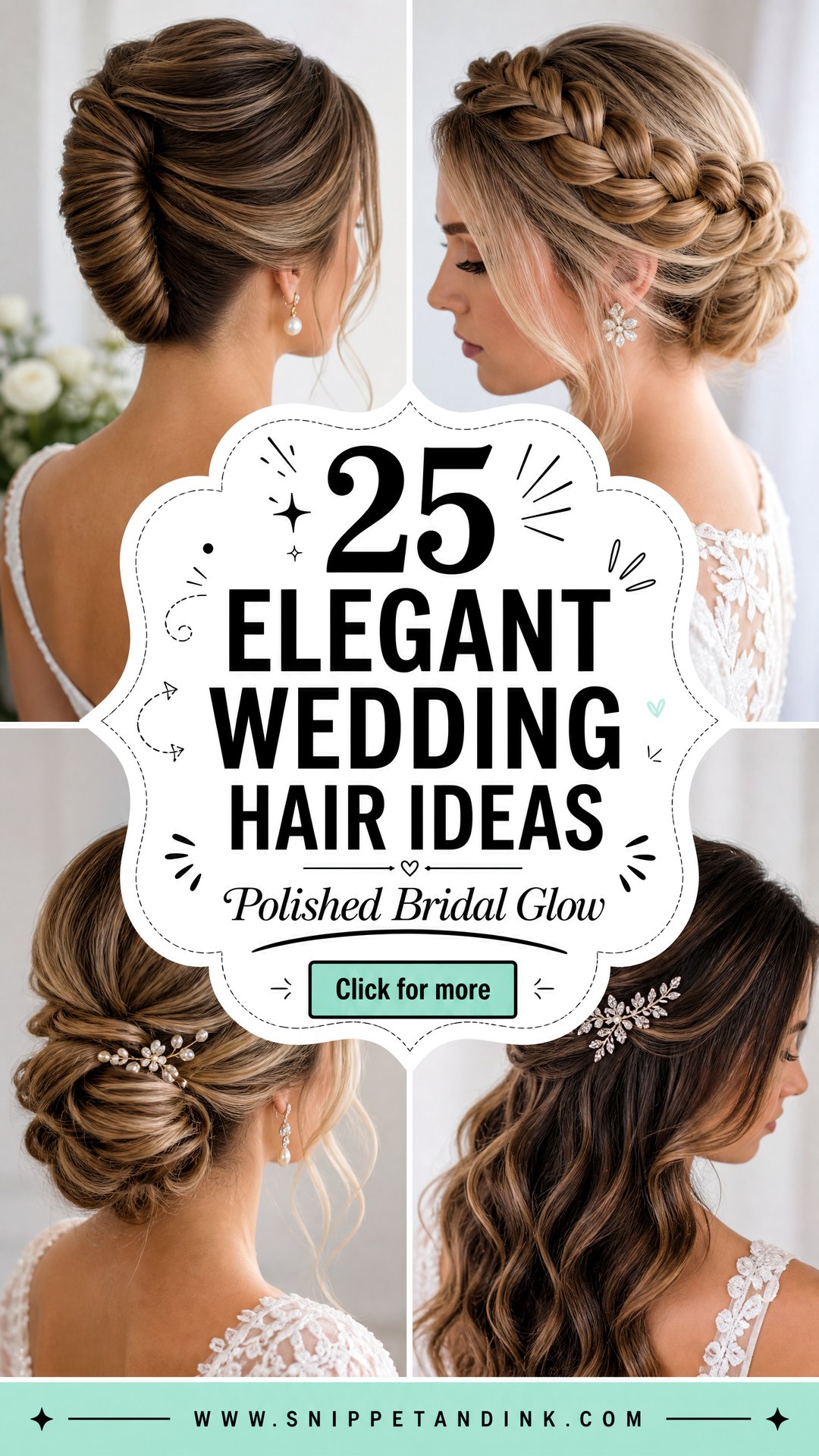
Bridal hair has to work from every angle: from behind during the vows, in profile at the first kiss and up close at dinner. That’s why I start with the dress, the veil and the venue before anyone shows me a photo. The styles below run from sleek low buns and French twists to braids, ponytails and natural curly updos. For each one I’ve noted how it’s built, how well it holds, and the bride I’d honestly steer toward it or away from it.
Your Neckline Decides More Than Your Hair Length
Before I suggest a single style, I look at the dress. The neckline tells me how much of your neck and shoulders the hair should cover, and the back of the gown matters just as much as the front, because that’s what guests see during the ceremony.
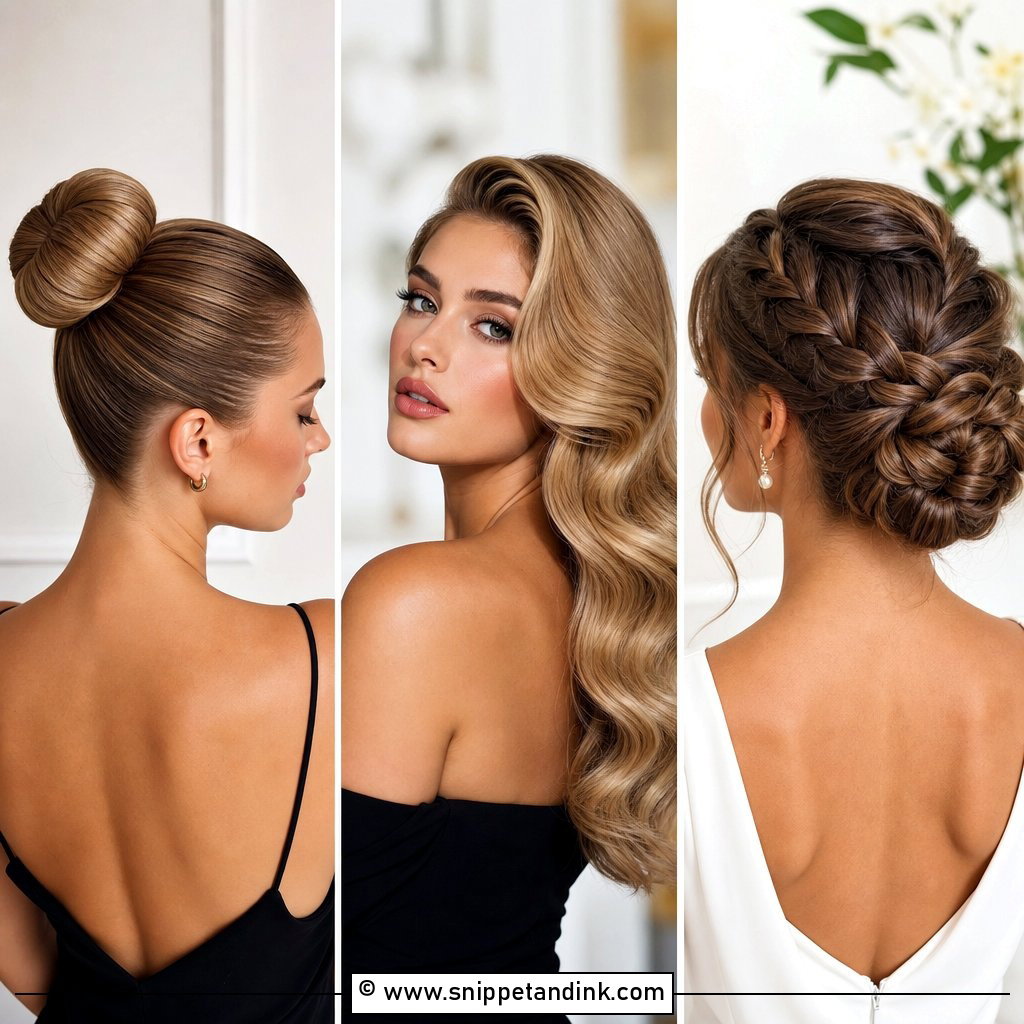
- Strapless and sweetheart: almost anything works. Low buns and loose waves both balance bare shoulders.
- High neck and halter: hair up. Down hair crowds a high collar and hides the line of the gown, while a sleek bun or ponytail shows it off.
- Off-the-shoulder: a low bun or a side sweep that leaves the collarbones clear.
- V-neck and plunging: soft waves or half-up, which echo the long vertical line.
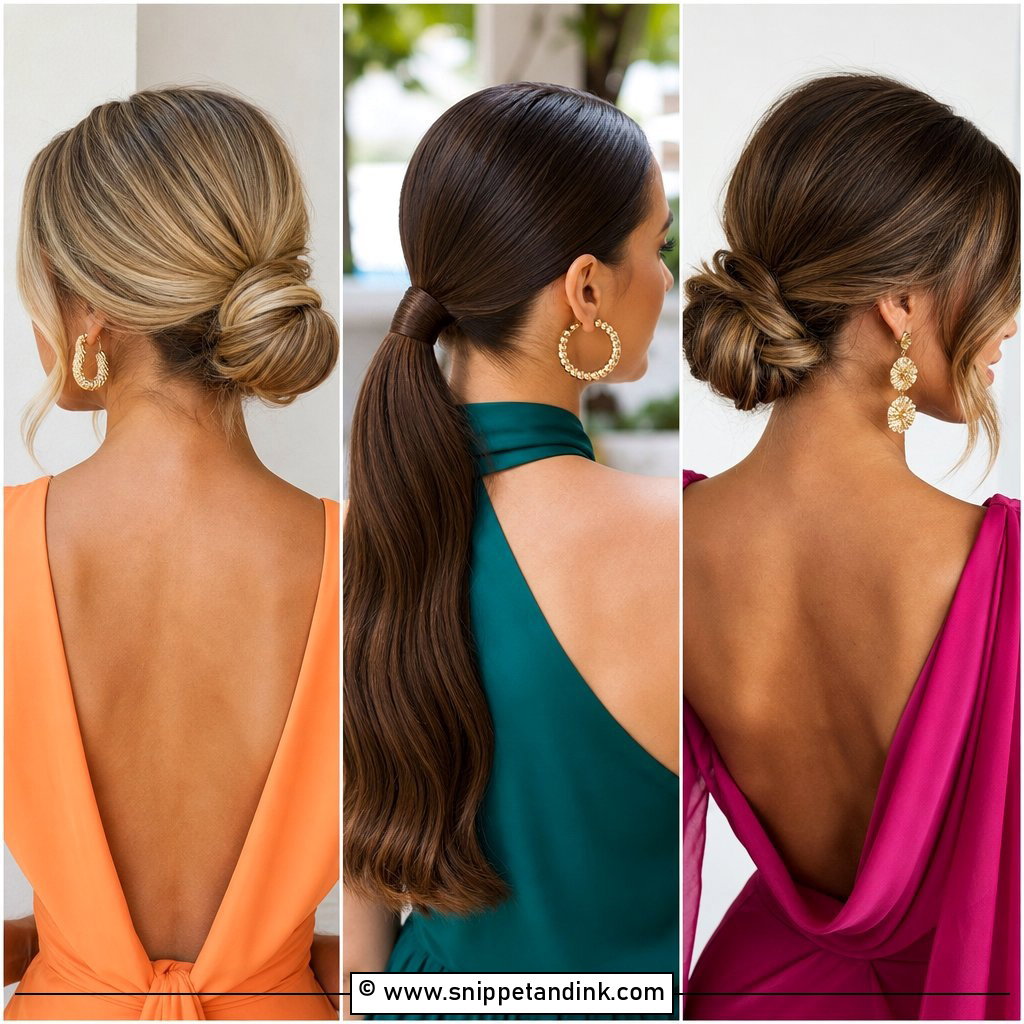
- Open or low back: hair up or swept to one side, otherwise the back detail disappears behind your hair.
Bring a photo of the back of your dress to the consultation. I change my first suggestion surprisingly often once I see it.
1. Low Bun Wedding Updo
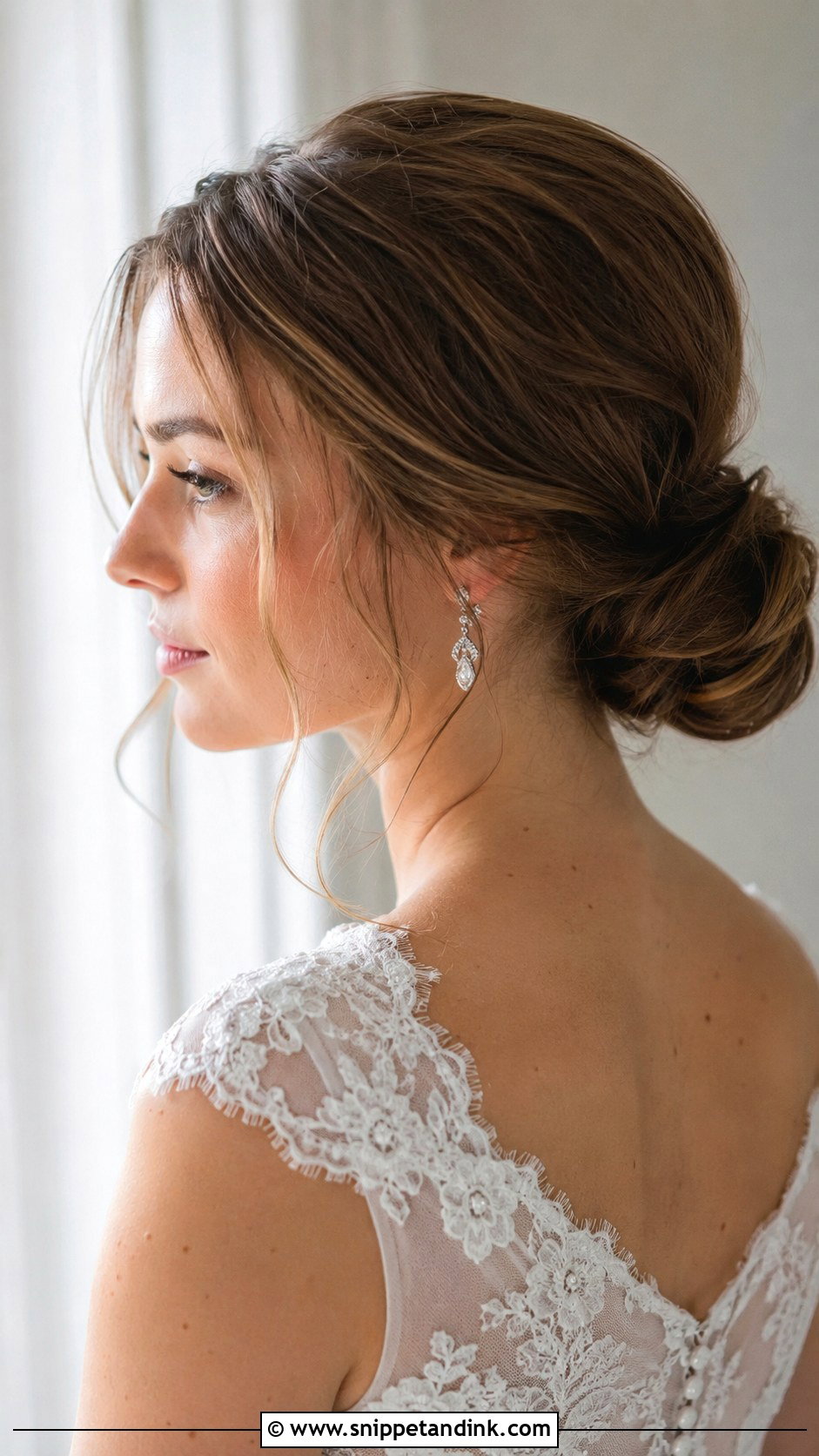
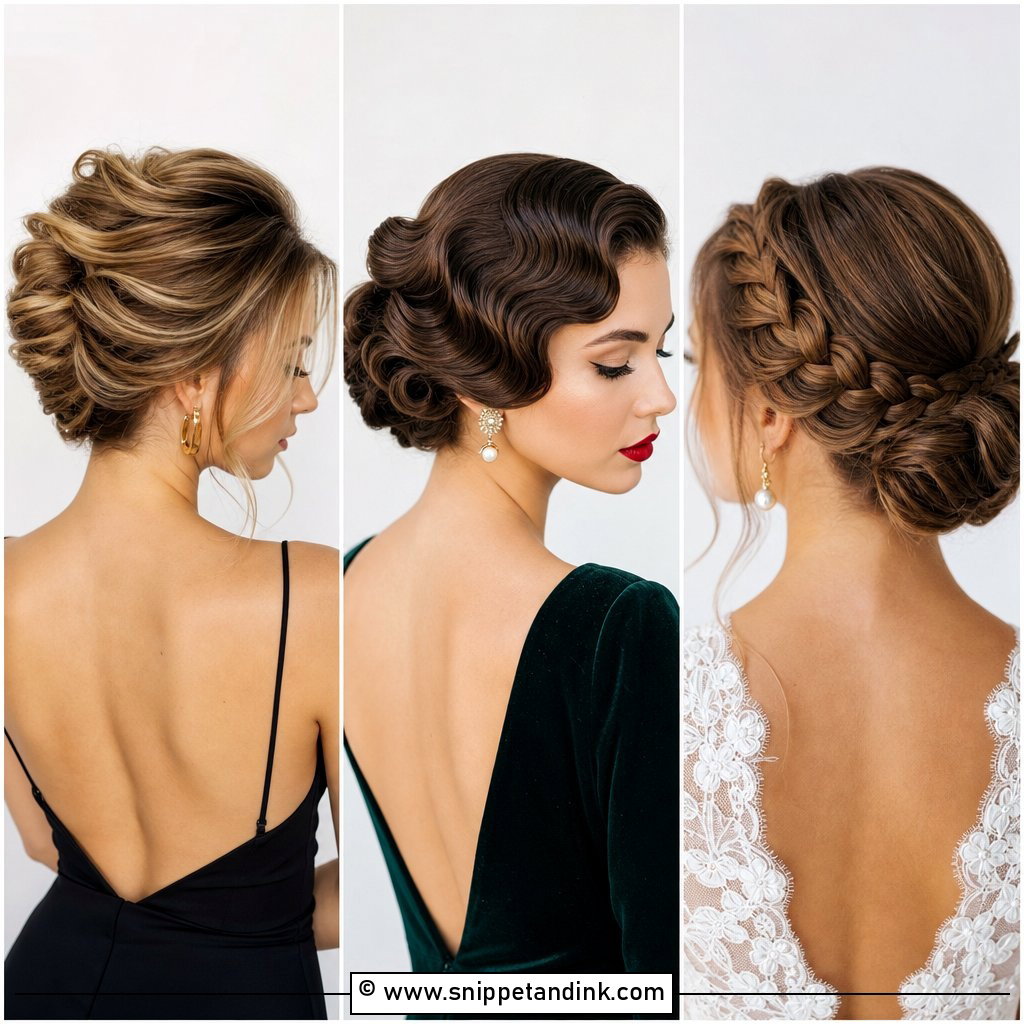
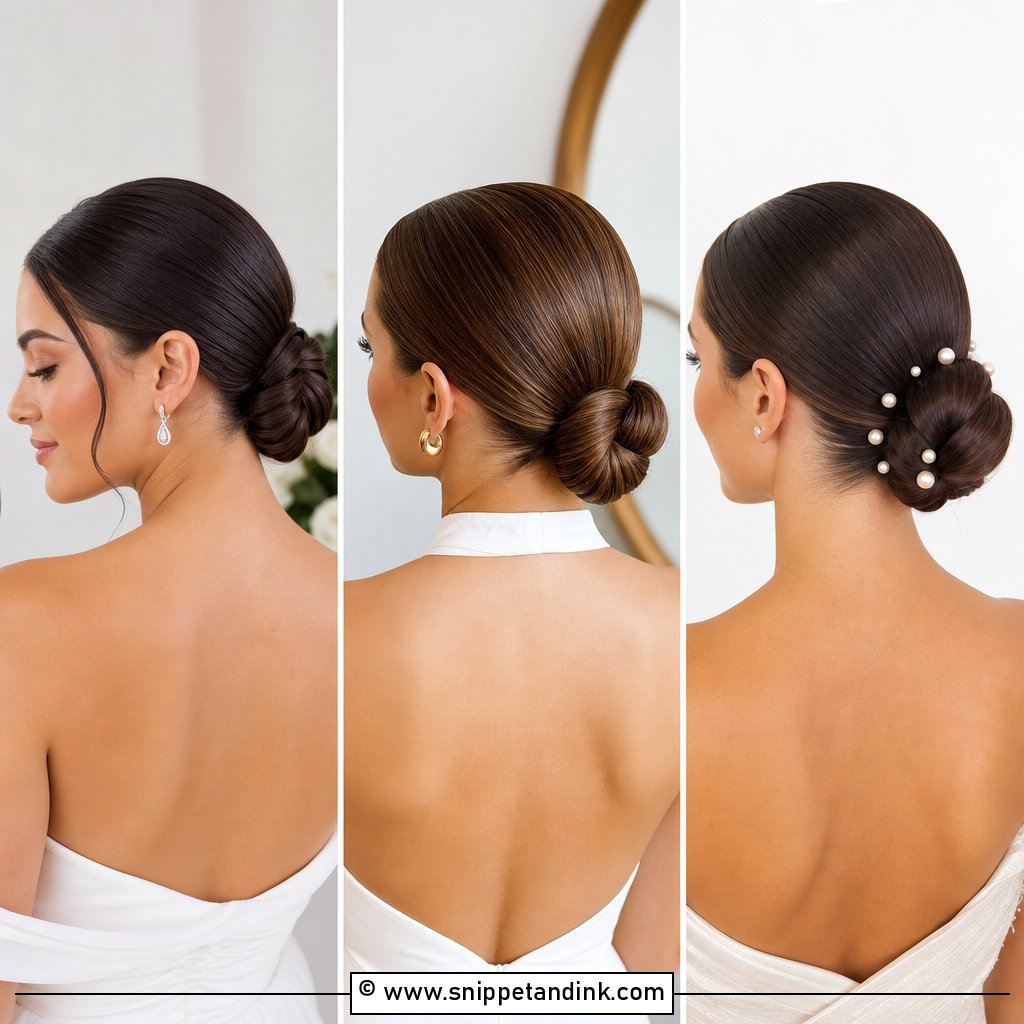
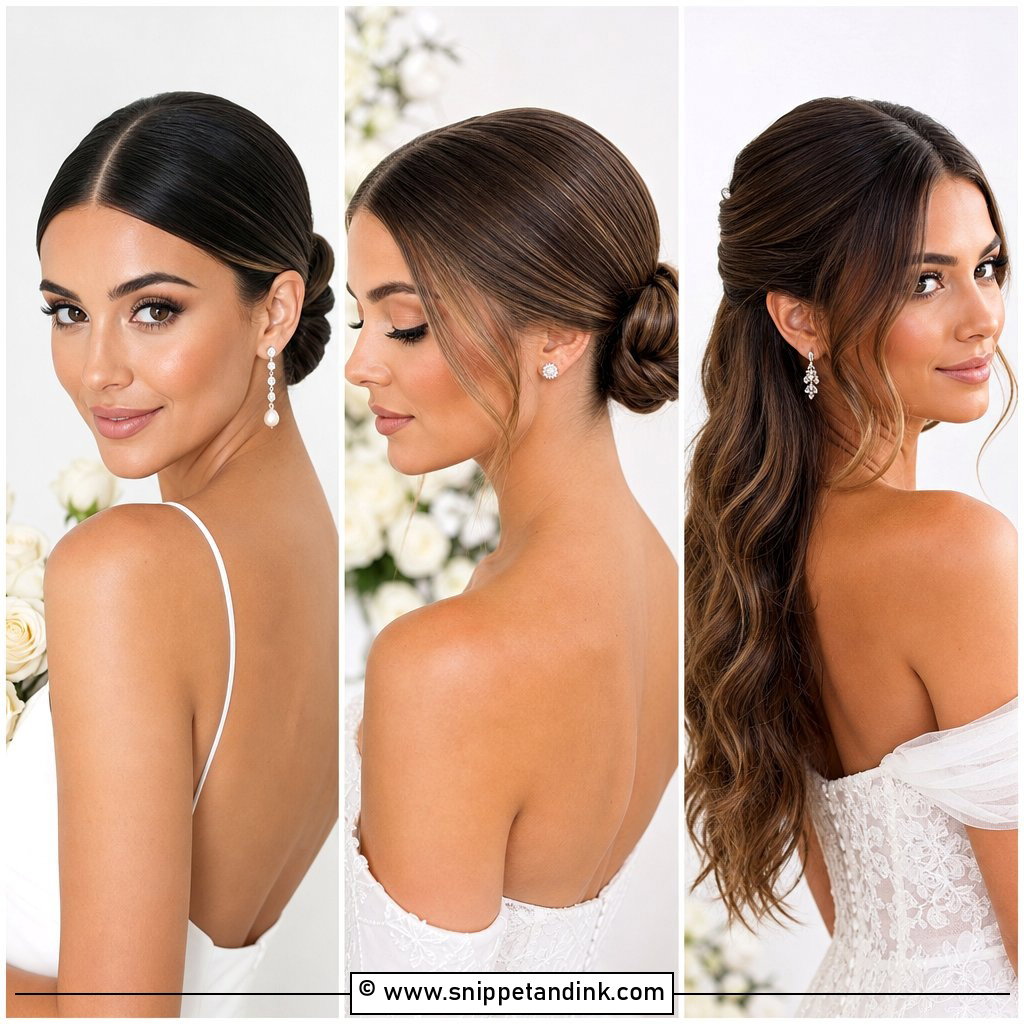
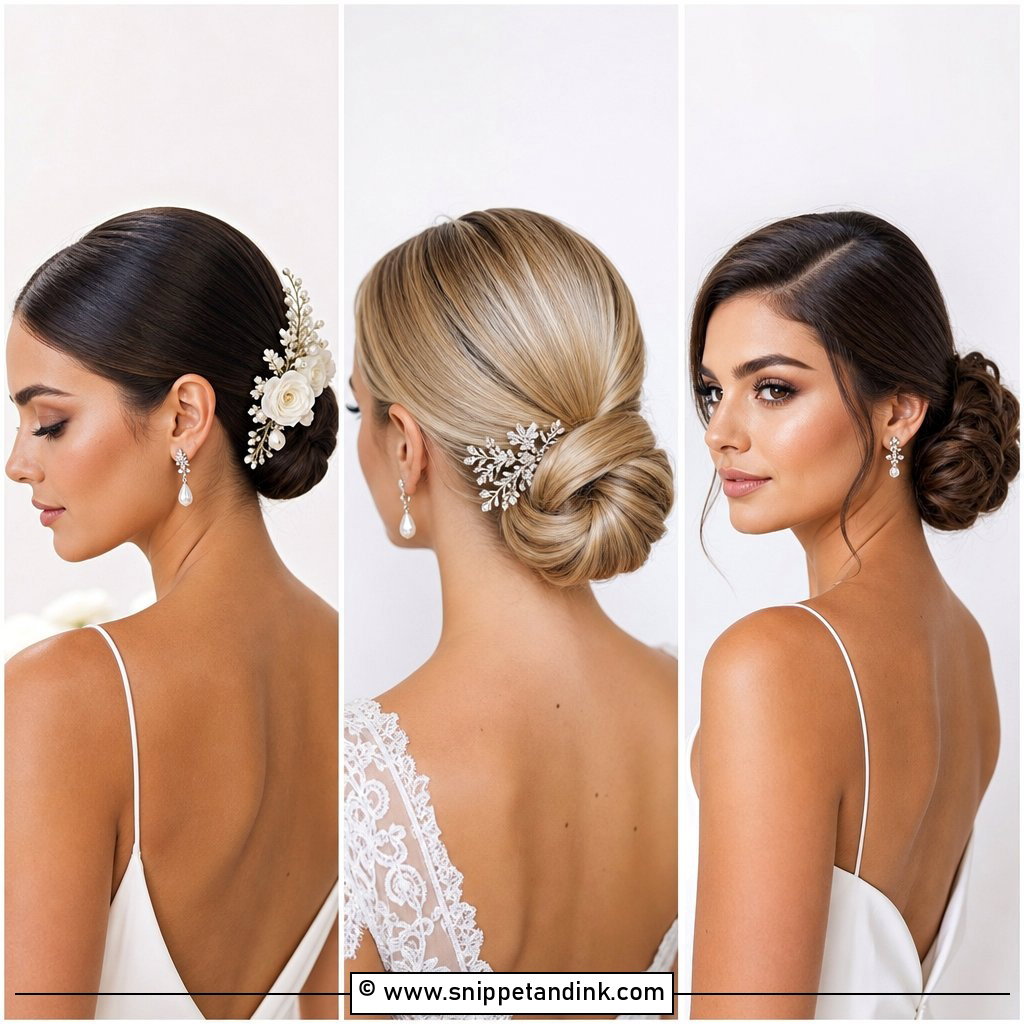
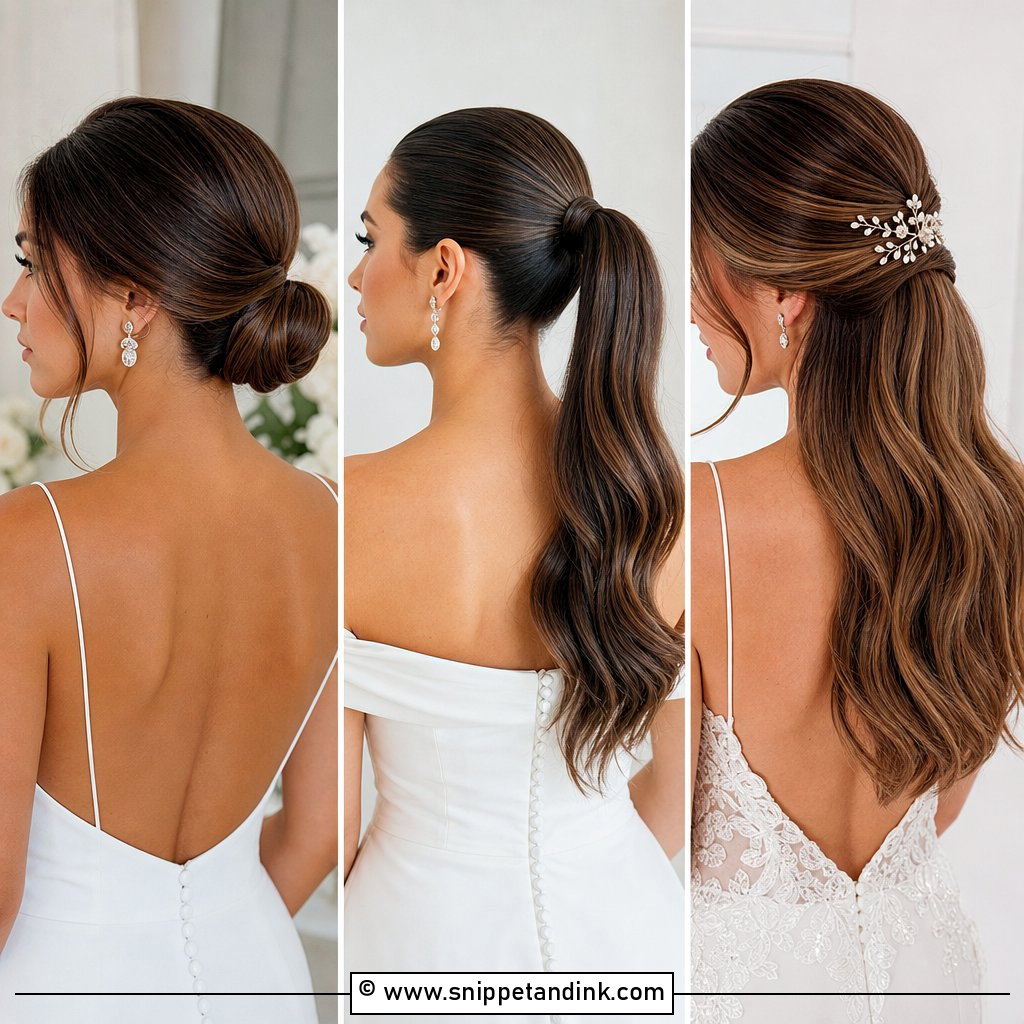
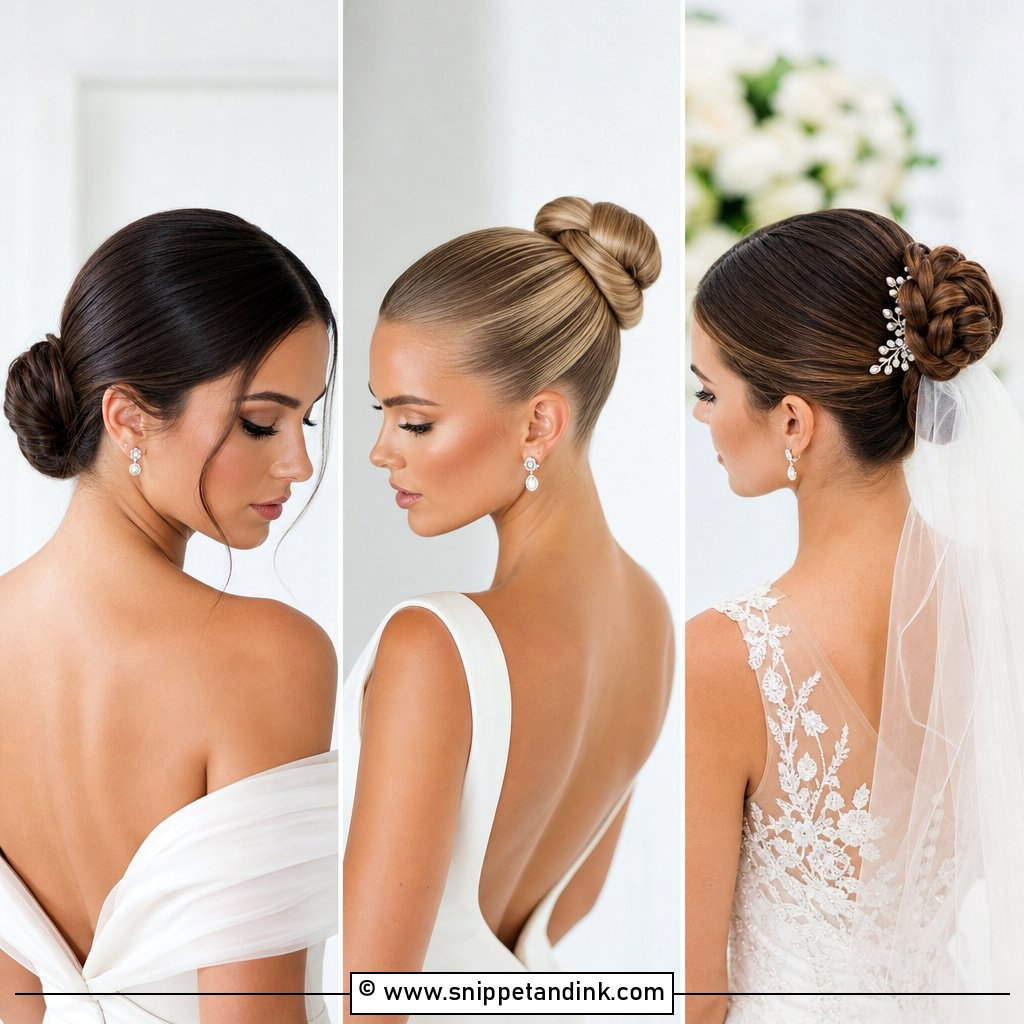
Low buns are my default for a long veil, for a practical reason: a comb placed just above a nape bun sits on solid hair, so even a cathedral veil can hang its full weight without tugging. I build the bun around a small elastic base and pin into that, which is far more secure than pinning loose hair. Leave out a couple of face-framing pieces for softness, or smooth everything for a cleaner line. Almost any neckline works, though a high collar can hide it, and statement earrings get plenty of room.
2. Half-Up Half-Down Bridal Hairstyle
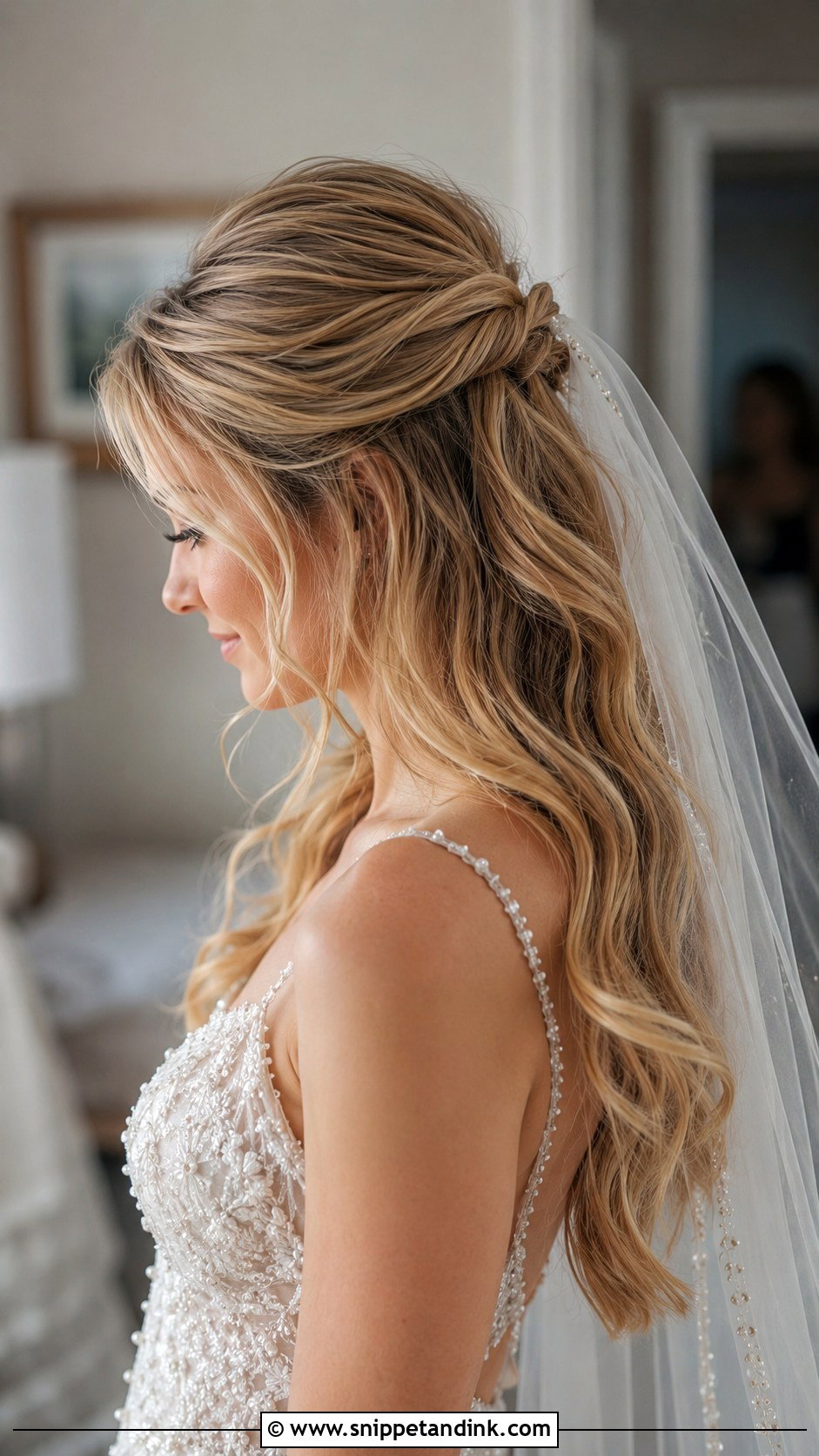
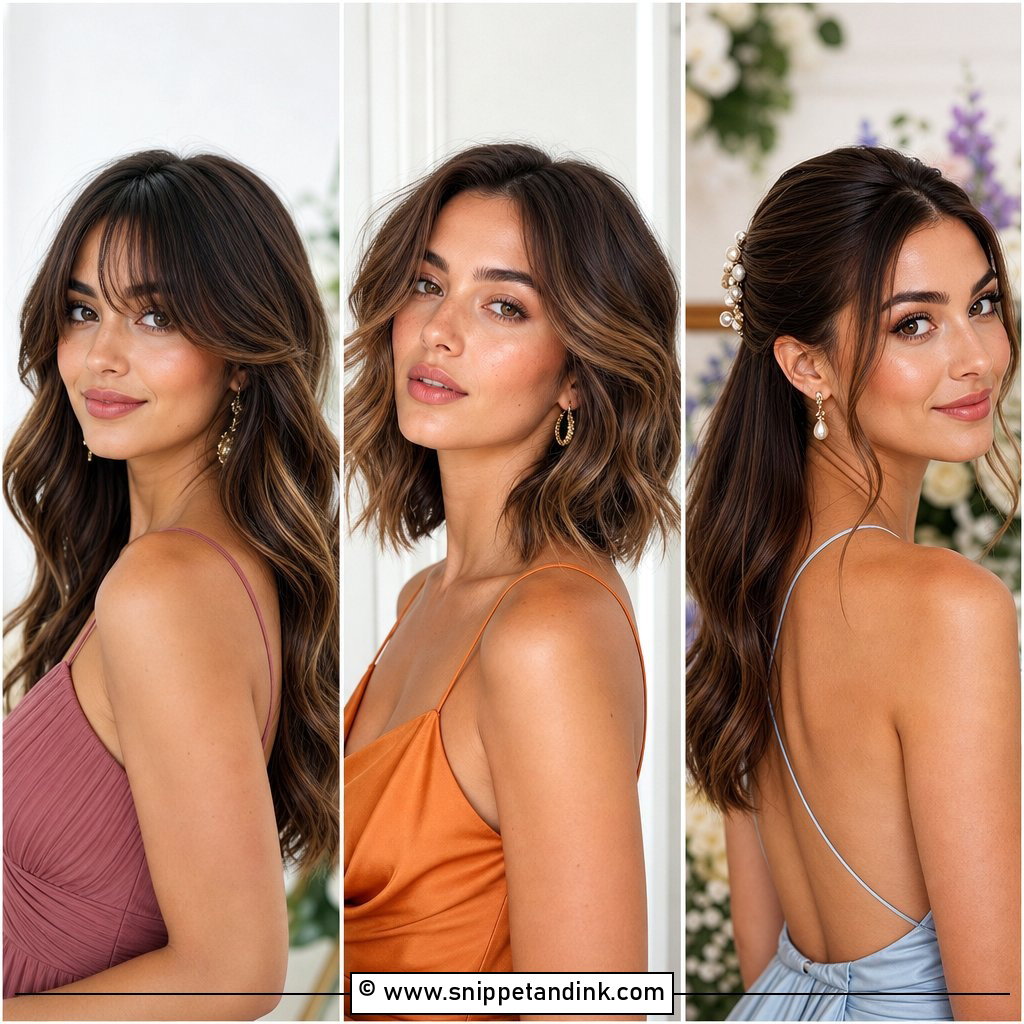
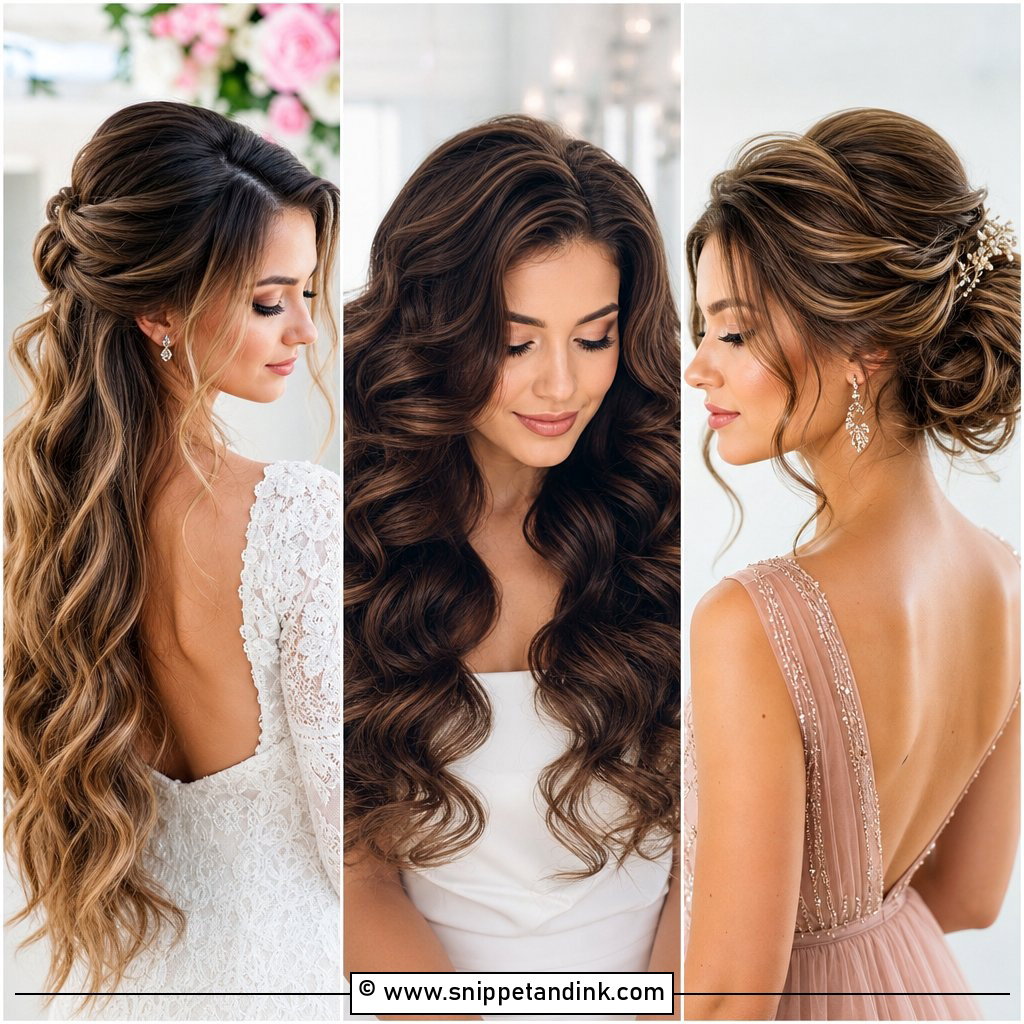
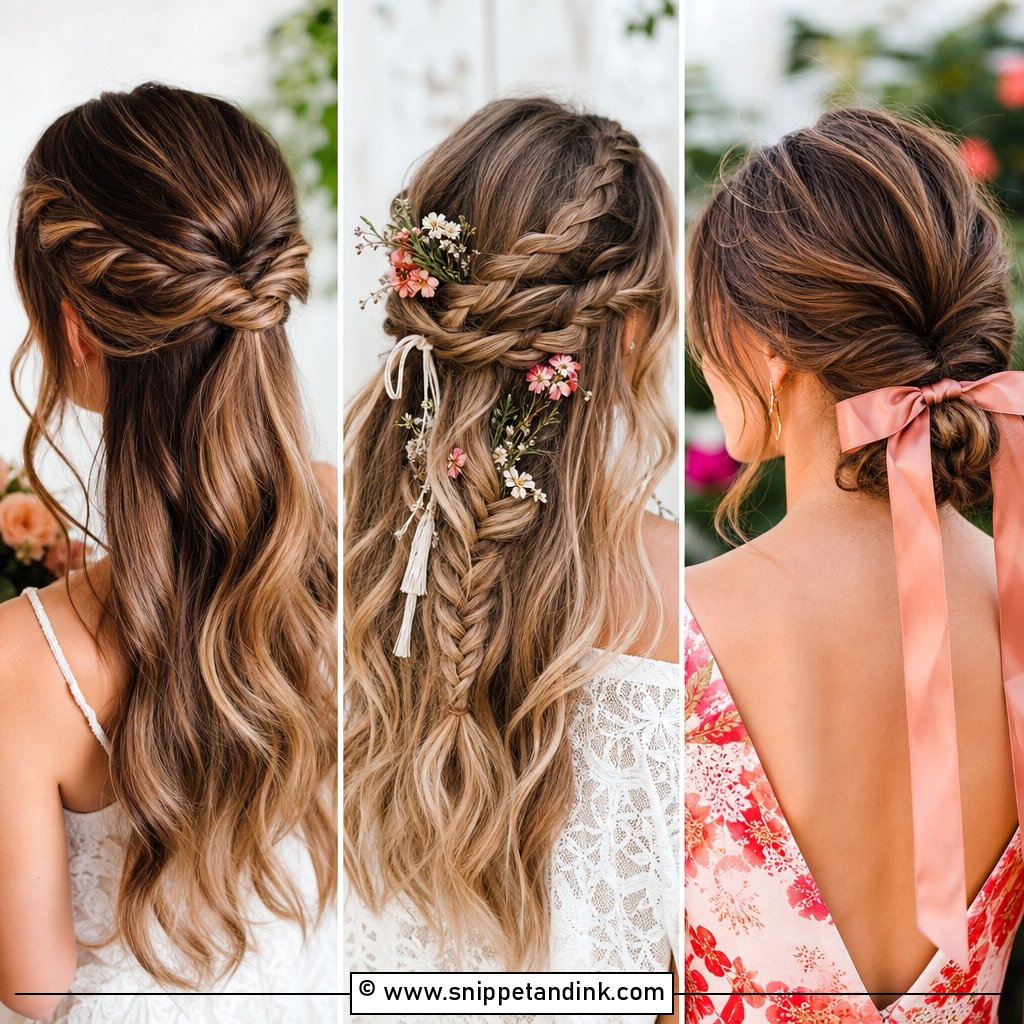
Half-up gives you the frame of an updo and the movement of loose hair. The weak point is the crown, so I tease lightly underneath before pinning the top sections back; pins slide straight out of smooth, unprepared hair. A little height there also stops the style looking flat in profile shots. Tendrils, a floral crown or a simple veil all sit happily with it, at a formal or bohemian wedding.
3. Sleek Ballerina Bun
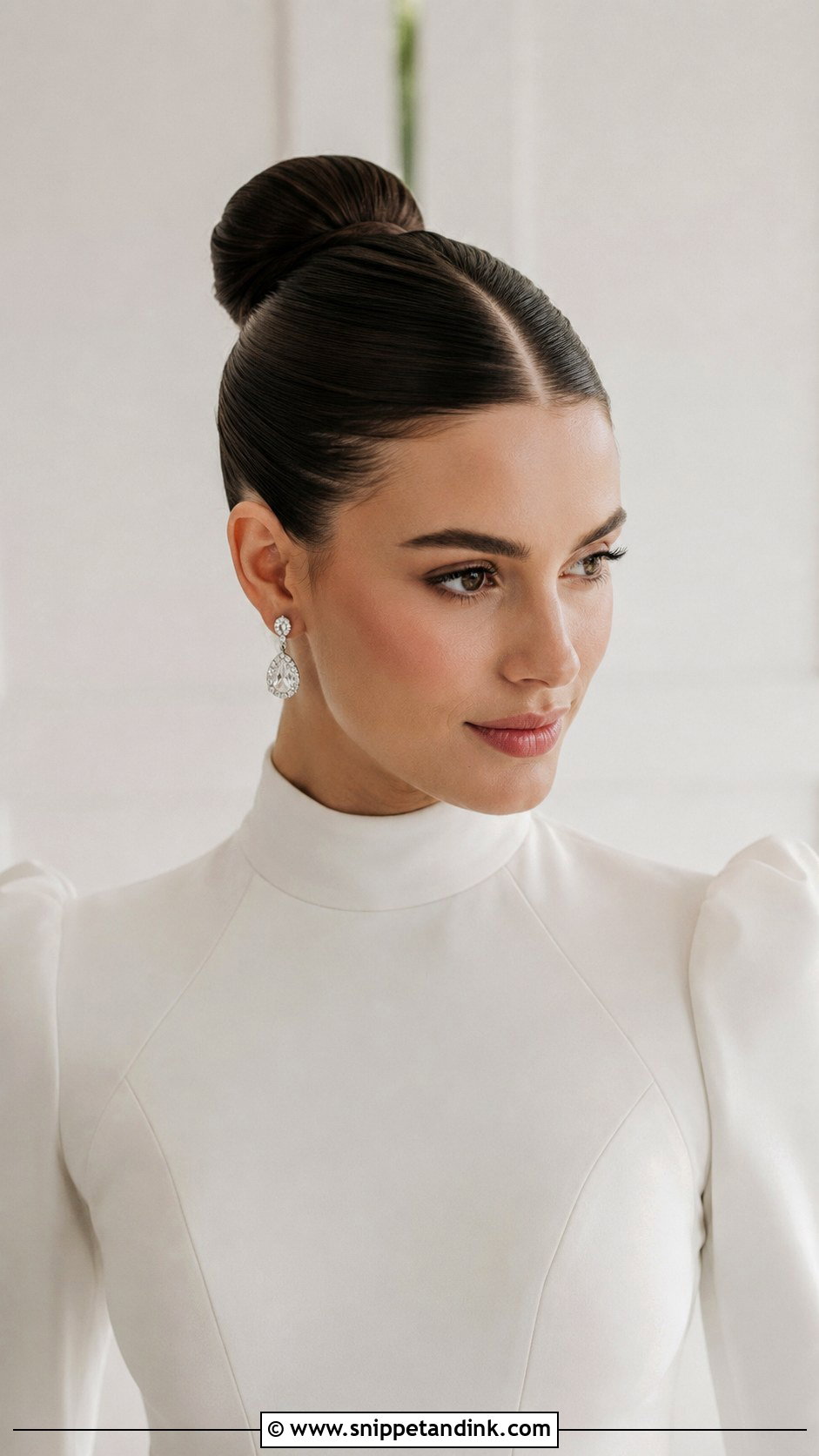
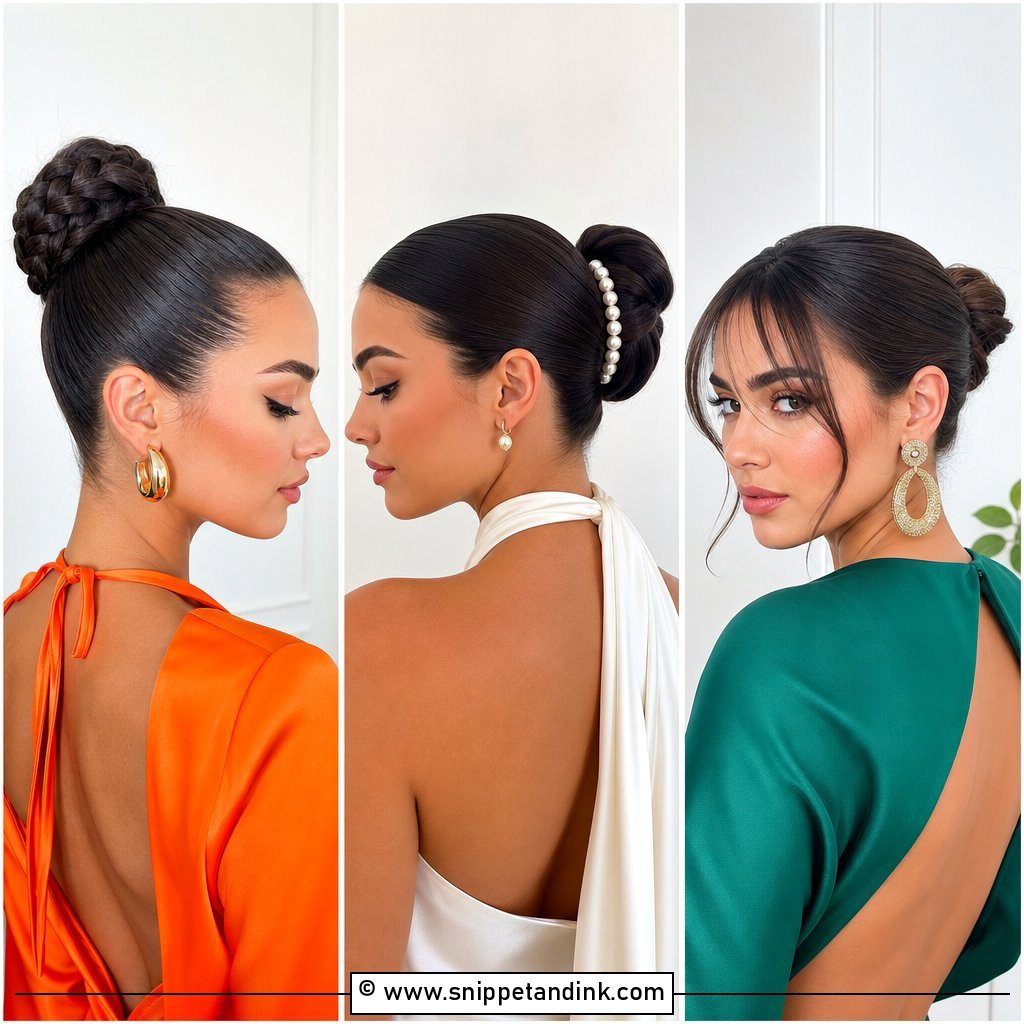
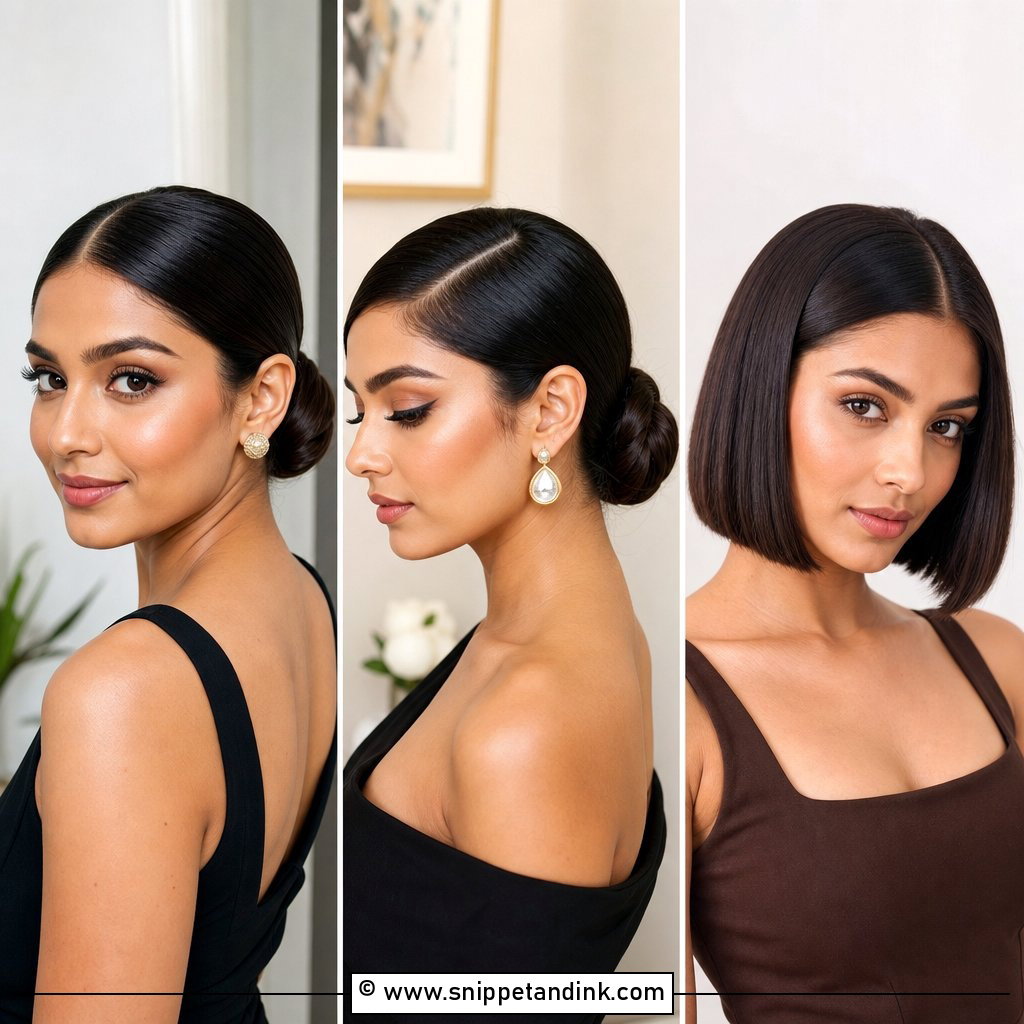
The sleek ballerina bun is the least forgiving style here. Every bump shows, so I brush the hair back with a boar bristle brush and a little gel, then wrap and pin the bun tightly; flyaways get a wax stick and a clean toothbrush. It puts the face and jewelry front and center, and suits structured gowns and high necklines. I’d steer you away if you have strong cowlicks at the nape, which break the clean line. A tight pull for ten hours also gives some brides a headache, so I test the tension at the trial.
4. Hollywood Waves
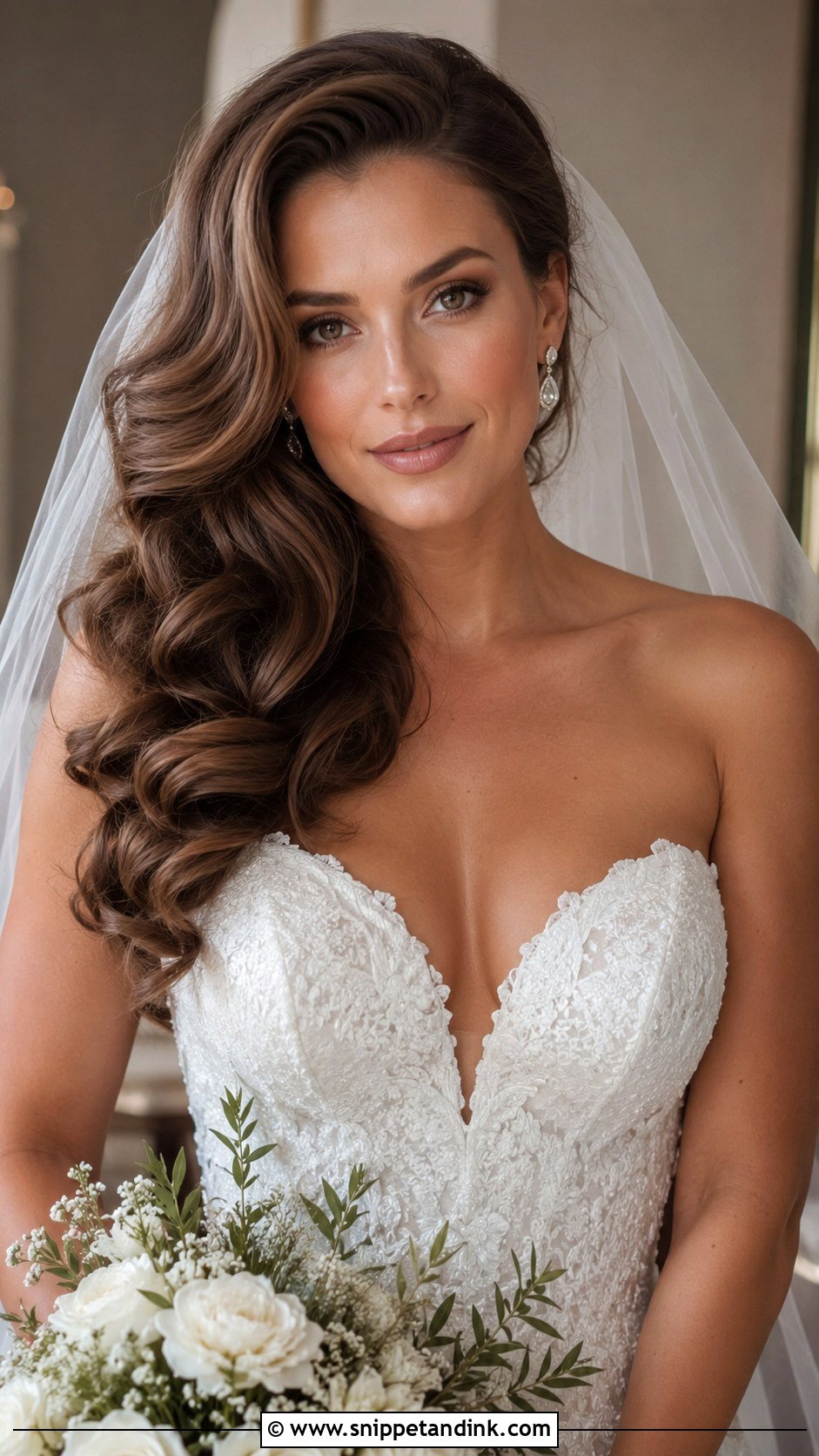
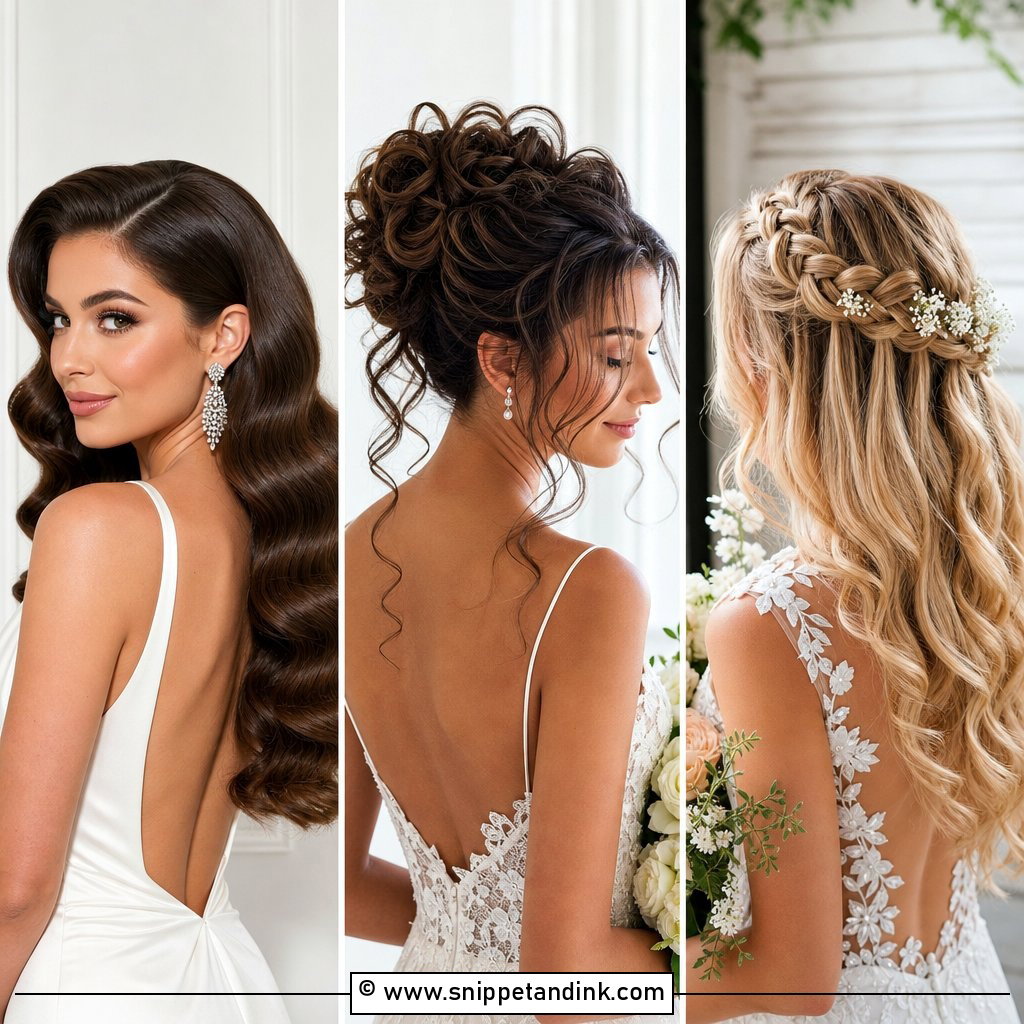
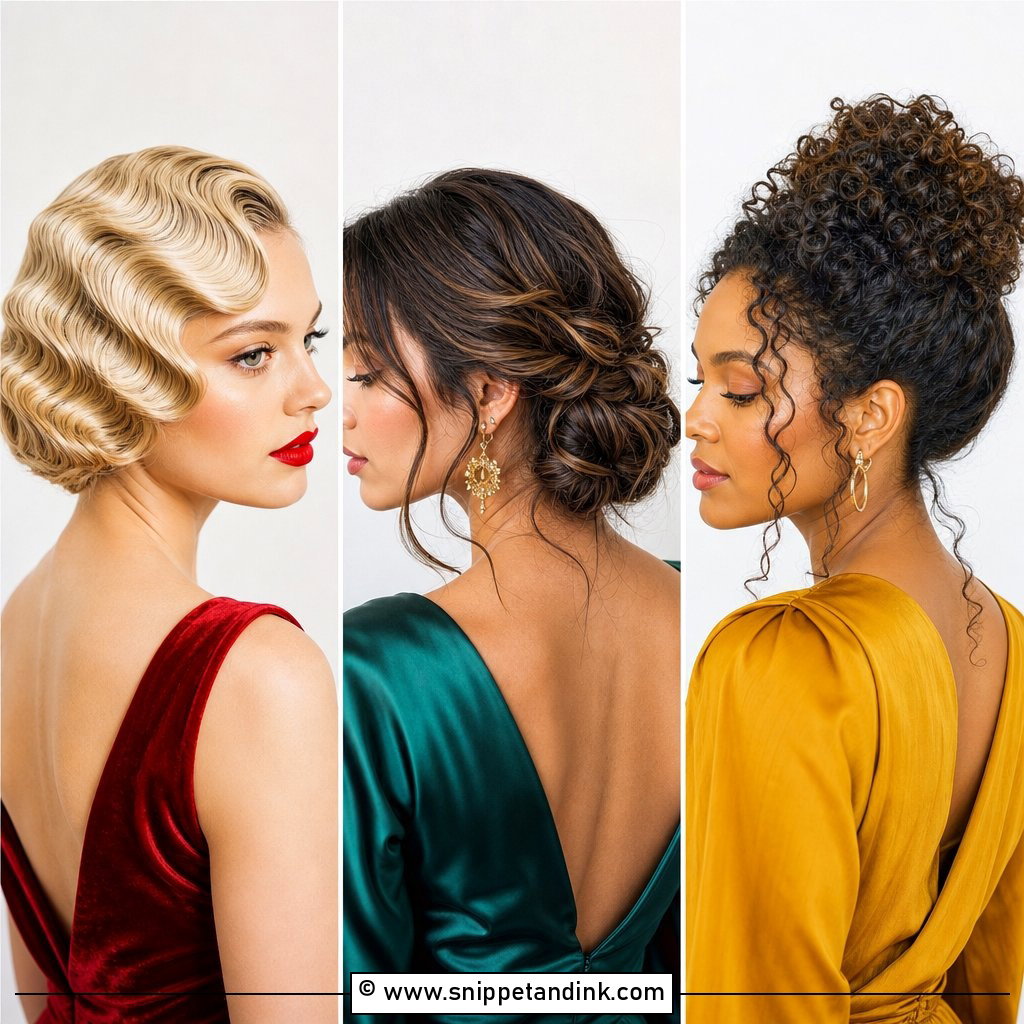
Old Hollywood waves are curled in one direction, cooled in pin curls and brushed out until the curls join into deep, glossy ridges. The brush-out is the real skill. I shape each ridge with my fingers and hold it with flat clips while the spray sets, then remove the clips. A side part gives the sweeping outline. Sweetheart necklines and formal gowns suit it, and the ridges read especially well in black and white portraits.
5. French Twist Updo
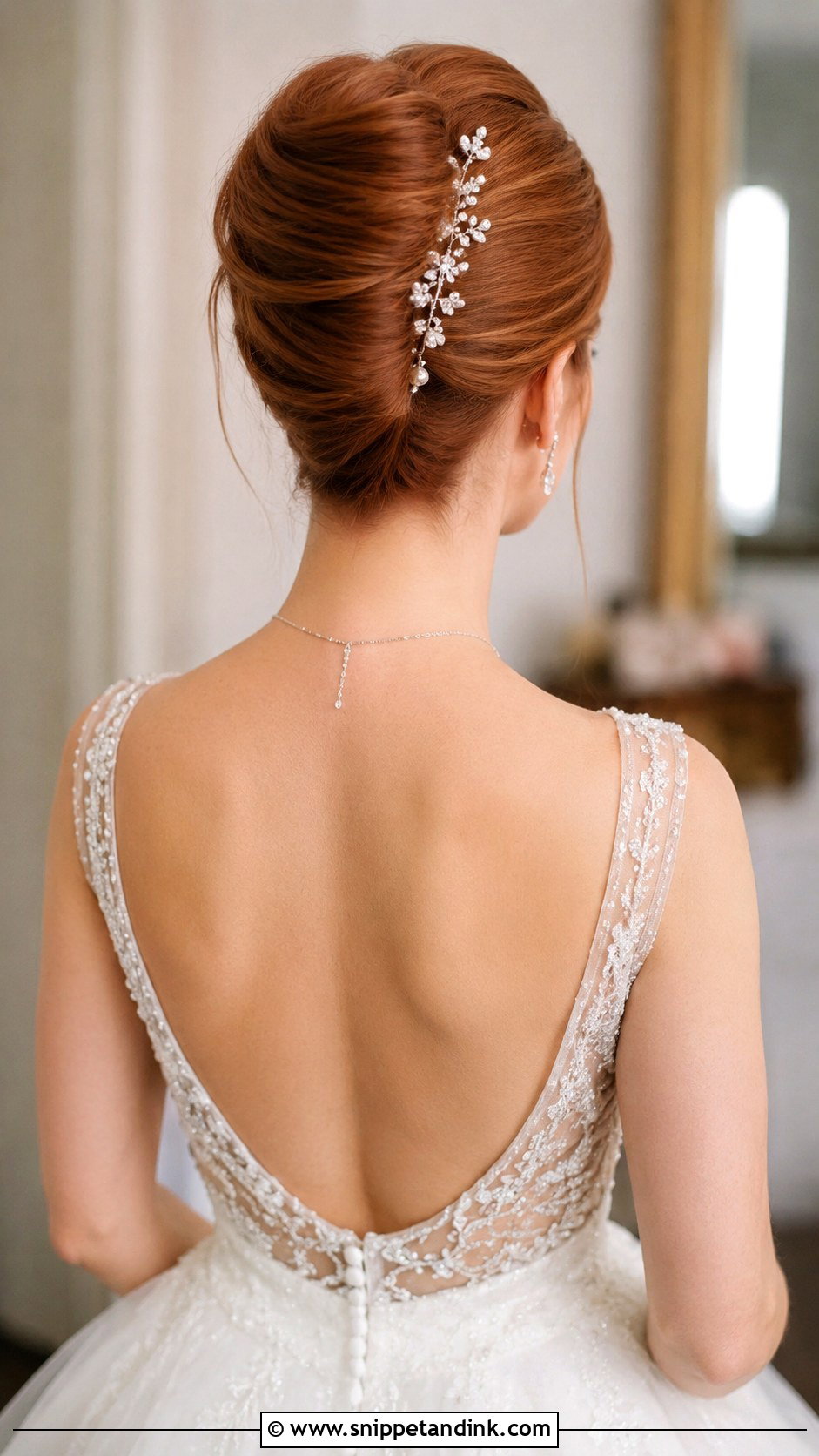
A French twist is a vertical roll, and its hidden structure is a column of crisscrossed pins along the back of the head before the hair is folded over them. Without that base it loosens every time you turn your head. It’s one of the best styles for a veil tucked underneath, since the comb slides neatly beneath the roll, and decorative pins can trace the seam. Heavily layered or shoulder-length hair can struggle to reach around, which I’d check at the trial.
6. Braided Crown Wedding Hairstyle
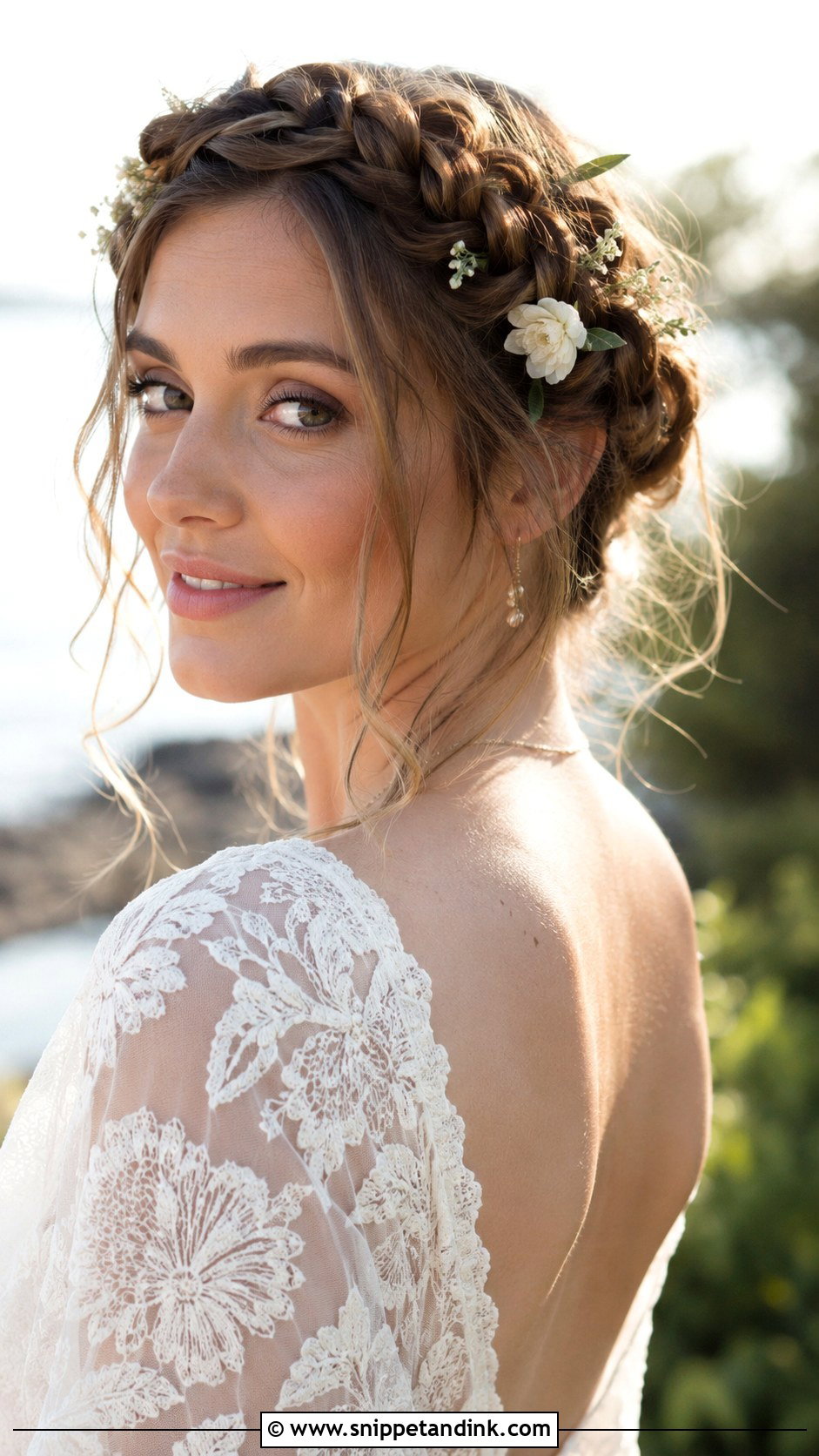
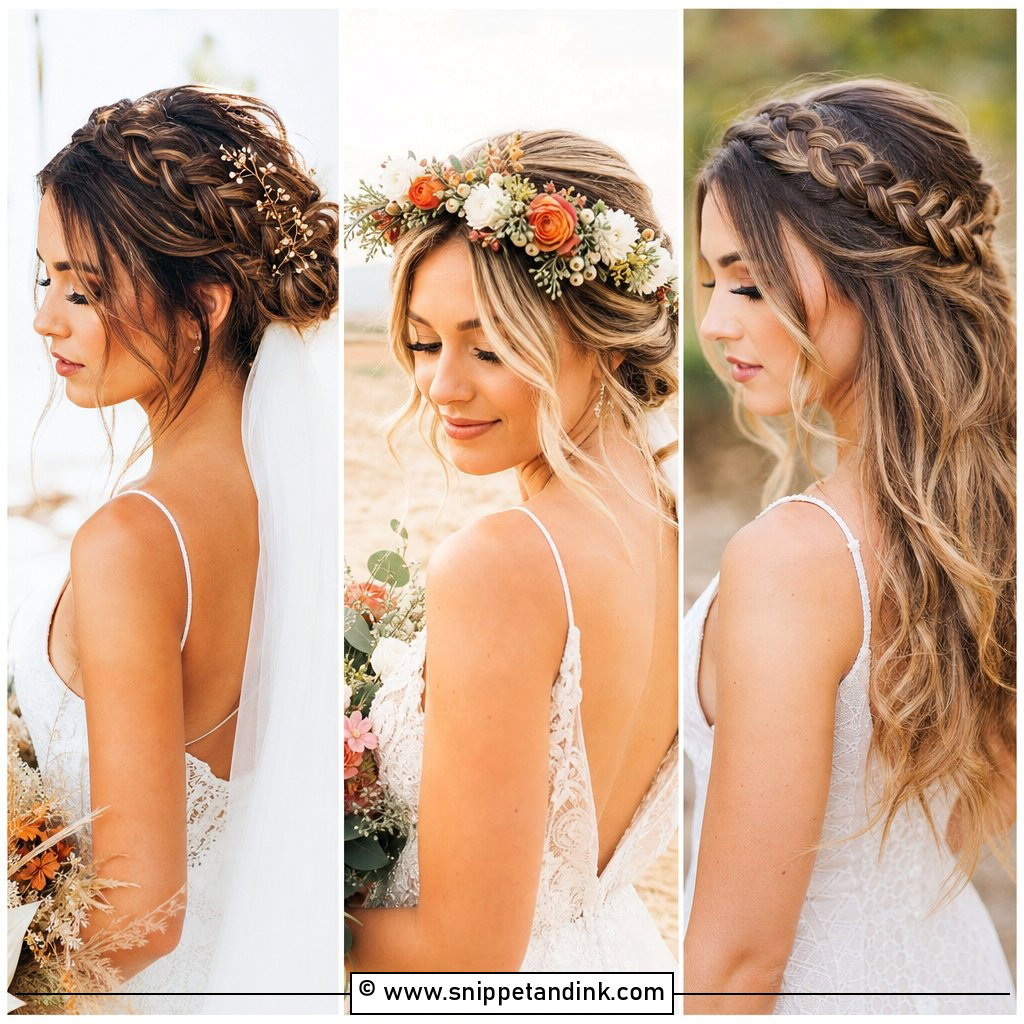
A braided crown runs along the hairline and around the head, giving a goddess-inspired effect without much bulk. I usually braid two Dutch braids up from the nape and pin them over the top, which is sturdier than one long braid wrapped around. The rest of the hair can flow or be gathered into a small bun. It keeps everything firmly off the face, which is welcome at a windy outdoor ceremony, and small flowers tuck neatly into the plait.
7. Low Braided Bun
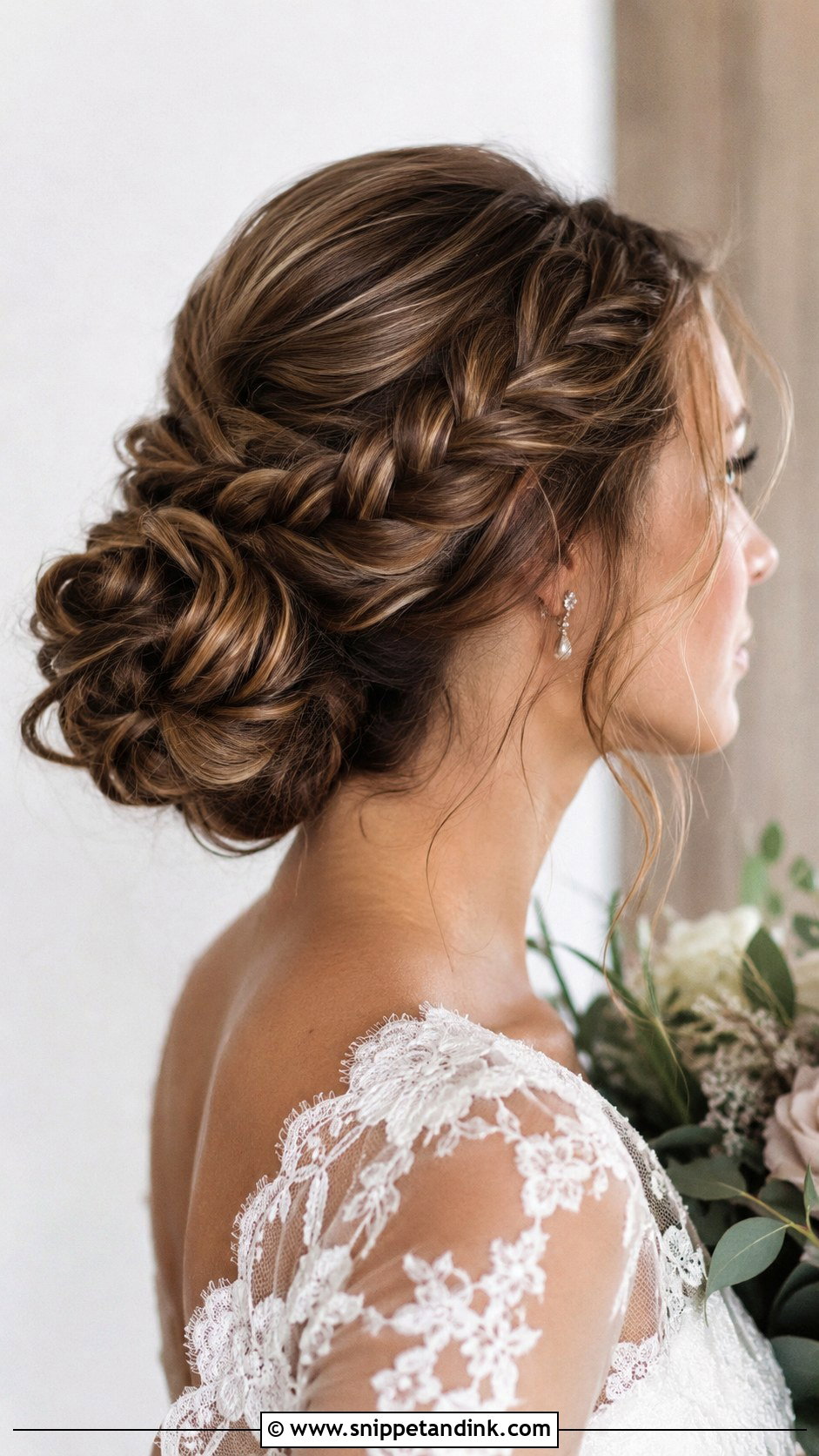
Guests spend the vows looking at the back of your head, and braided sections pinned into a nape bun give texture they can actually see from the back row. I braid first, pancake each braid wider, then wrap and pin. Pins vanish into braids, which makes this one of the most secure updos I do. A couple of loose face-framing pieces soften the front, and pins or fresh blooms can go wherever there’s a gap in the weave.
8. Bridal Ponytail
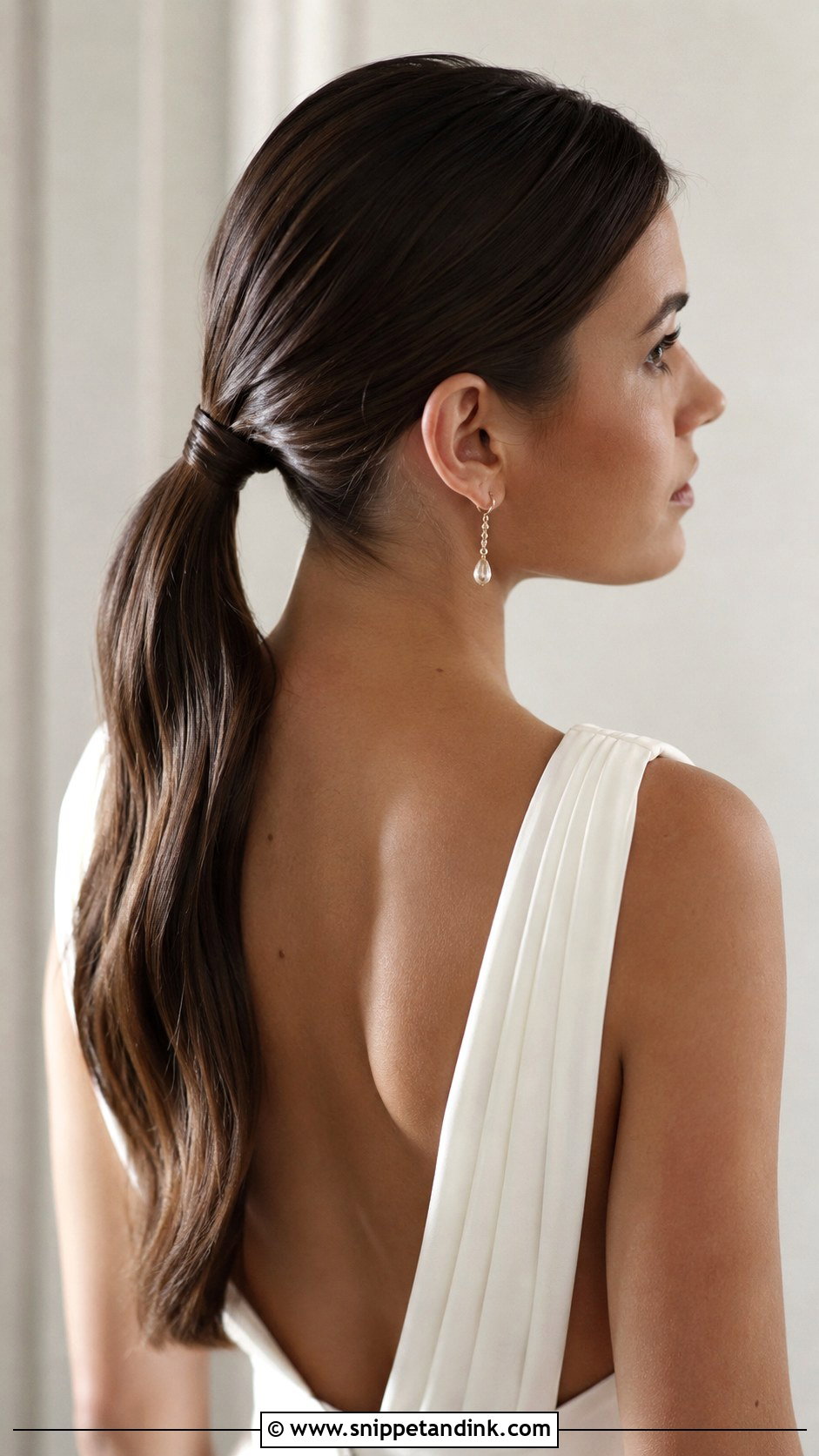
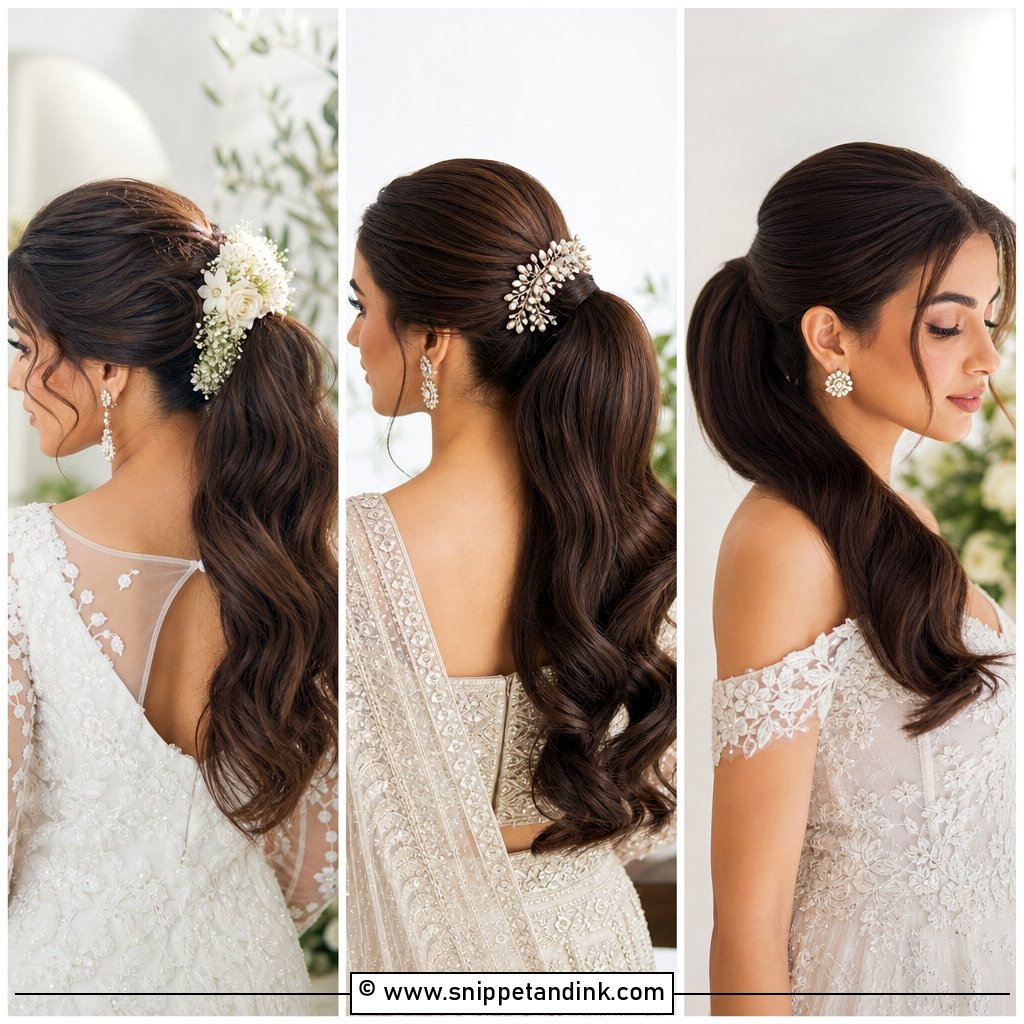
Ponytails still surprise people at weddings. A high, sleek pony looks editorial; a low, textured one looks softer. I wrap a strand around the base to hide the elastic and pin it from underneath. For lift and swing I often use two elastics, one just above the other, so the pony doesn’t droop by evening. It’s cool on the neck on a hot day, and a veil fixes neatly just above the elastic.
9. Romantic Loose Curls
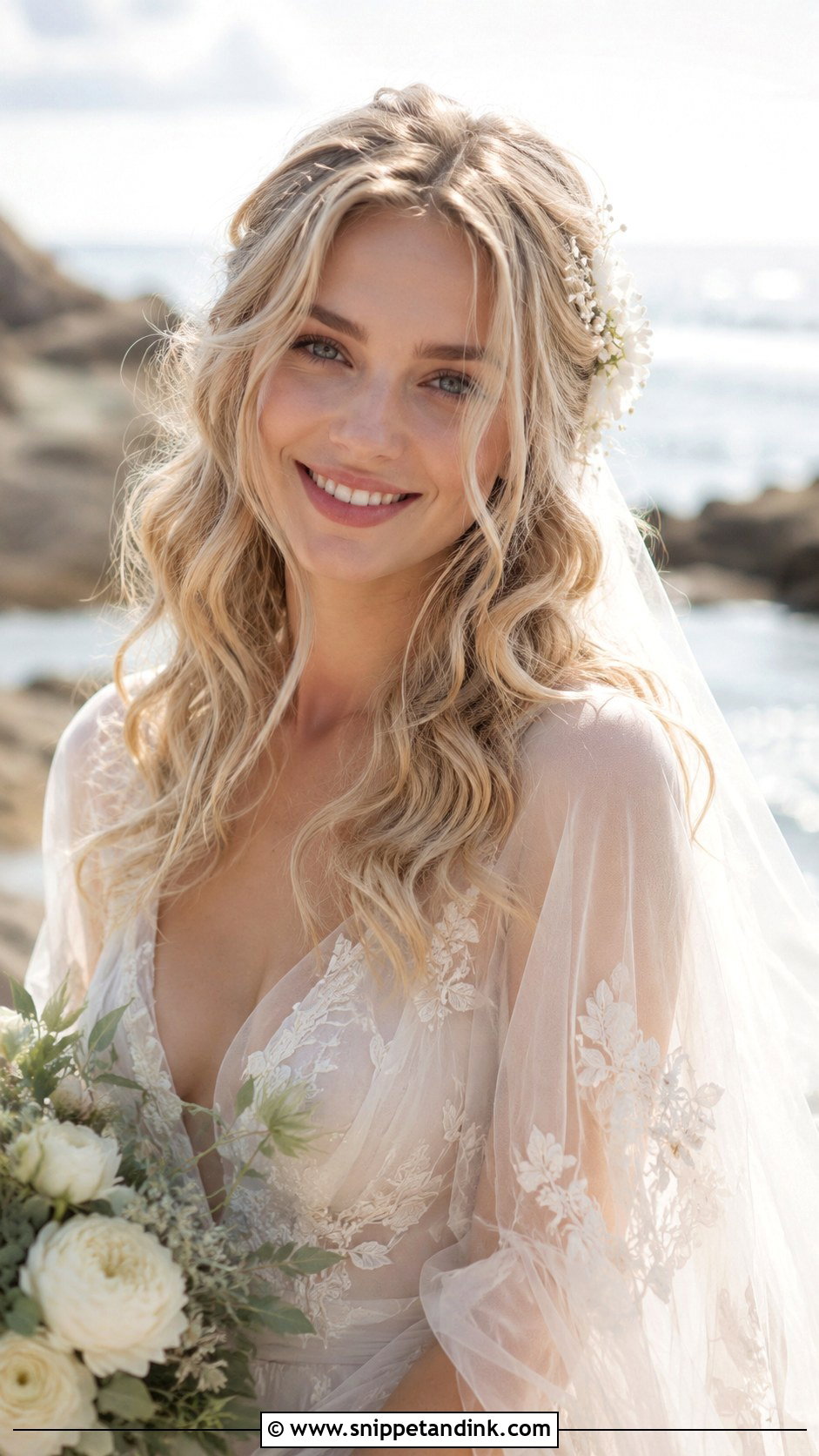
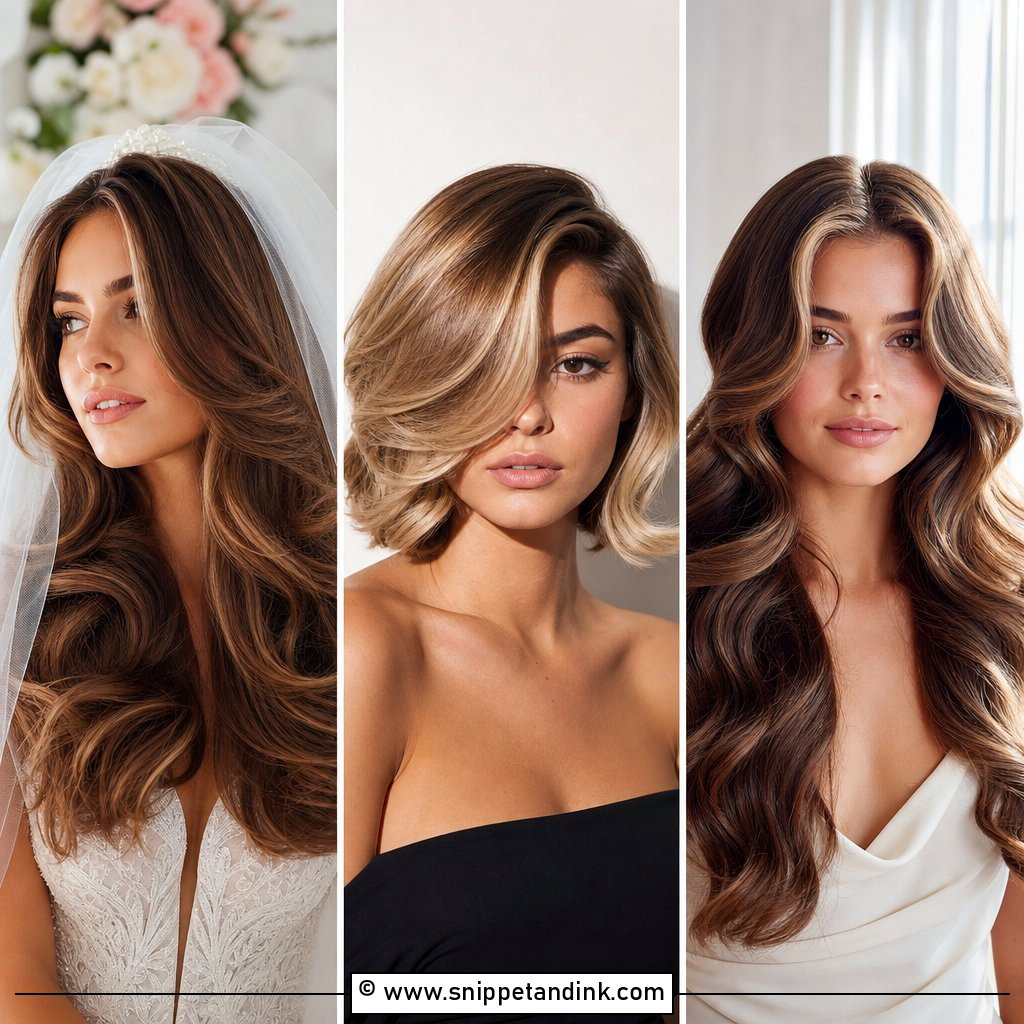
Loose, tumbling waves worn down look casual, but they still need a full set to last outside. I curl, pin each curl to cool, then shake them out loosely. On humid days I keep the product light, because a stiff, heavily sprayed curl turns crunchy once moisture gets to it. Floral pins or a delicate veil are enough decoration for a garden or beach setting.
10. Chignon Updo
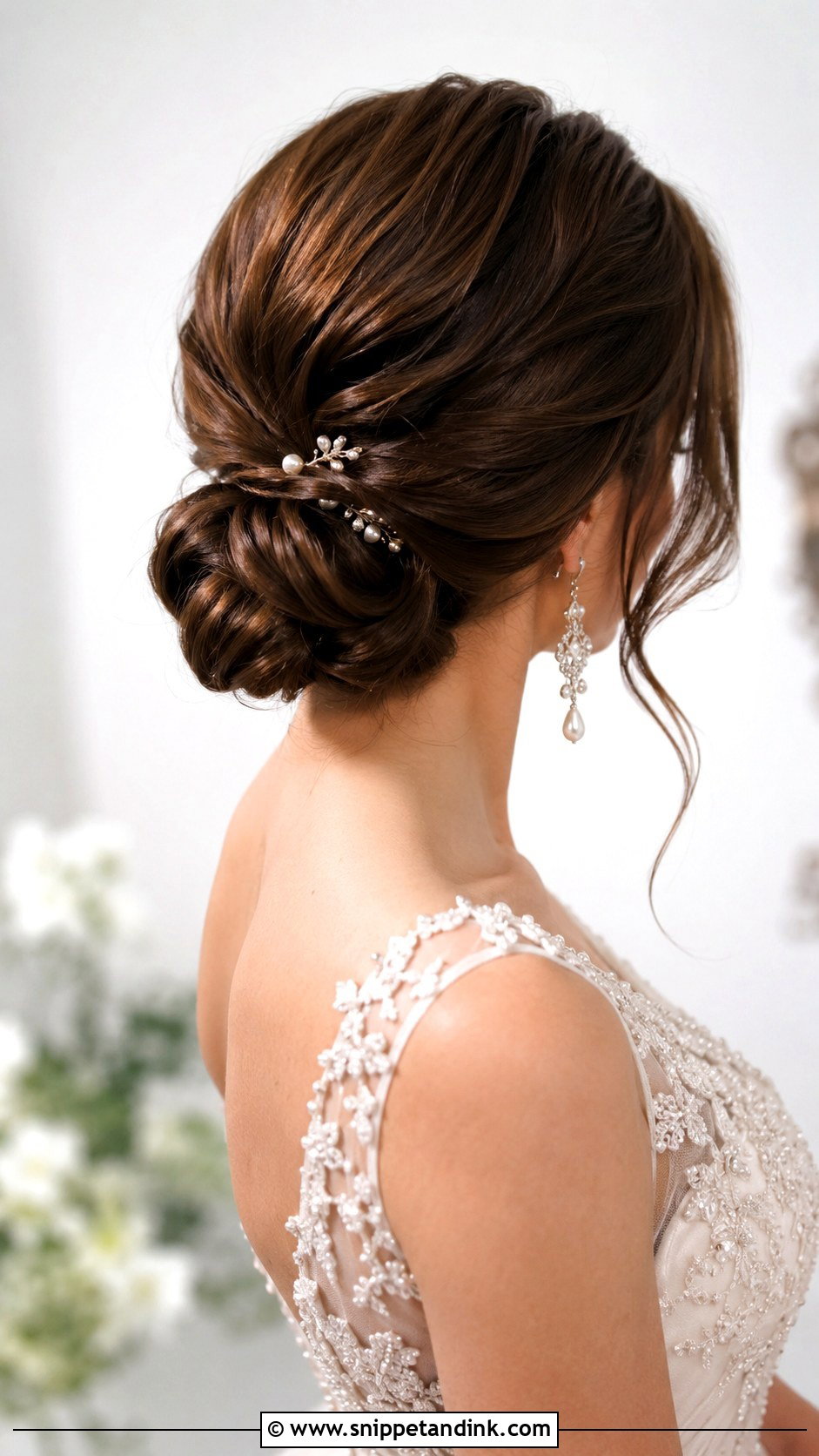
A chignon is a looped knot at the back of the head, and the loop can be sleek and tight or soft and pulled out. I decide which by looking at the fabric: lace and chiffon suit the looser version, crepe and satin suit the sleek one. Earrings and an elegant neckline both get room to show. Veils and tiaras pair easily because the knot gives them a firm base.
11. Boho Braided Half-Up
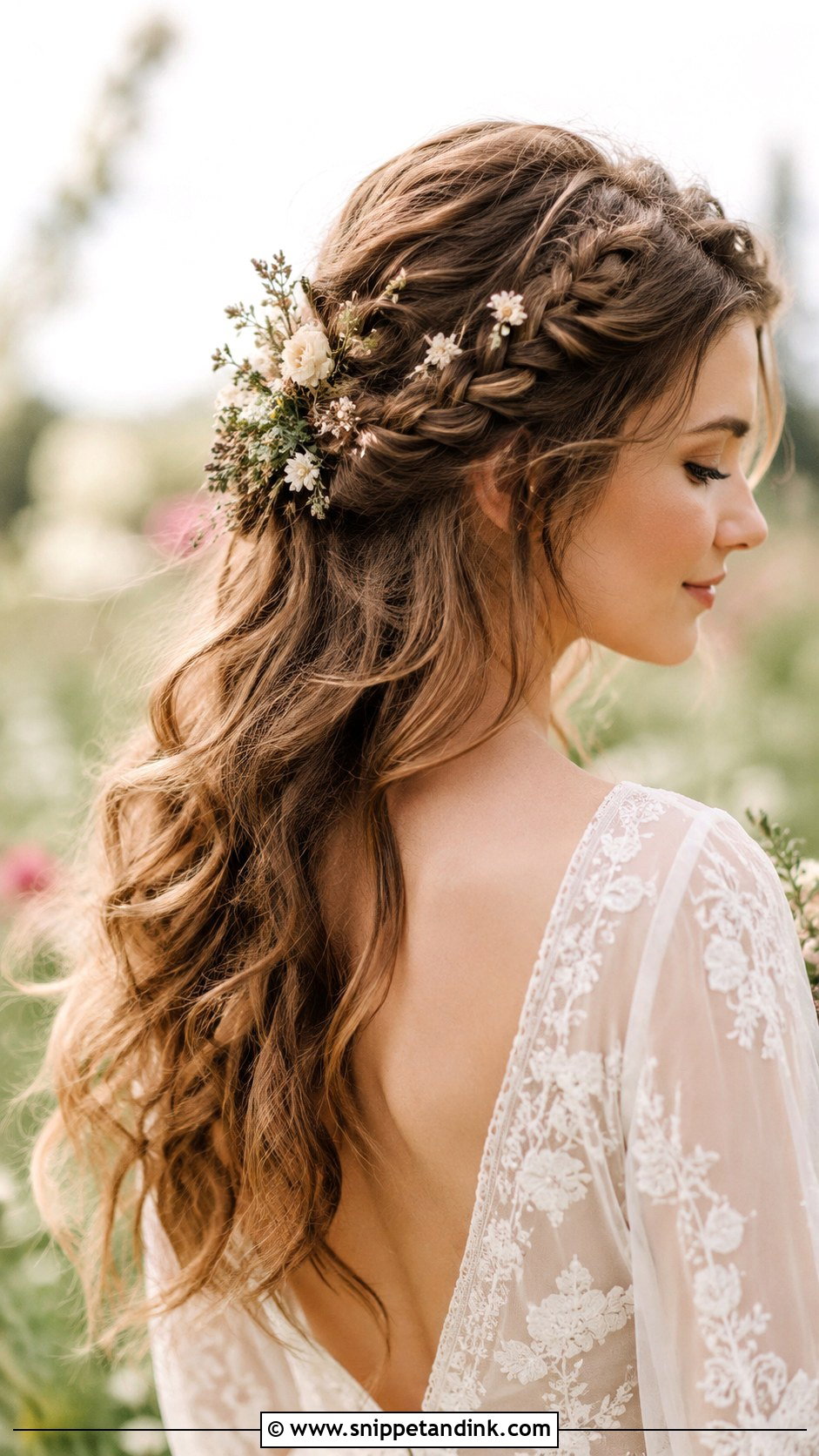
A loose braid through the top section keeps a boho mood while giving the style a backbone. I pancake the braids so they look relaxed but secure them with tiny elastics, because a truly loose braid comes apart by the reception. Soft tendrils around the face finish the shape. Wildflowers or greenery suit an outdoor or festival-style wedding; pin them through the braid itself, not just the loose hair, or they’ll fall out during the first hug.
12. Sleek Low Chignon With Center Part
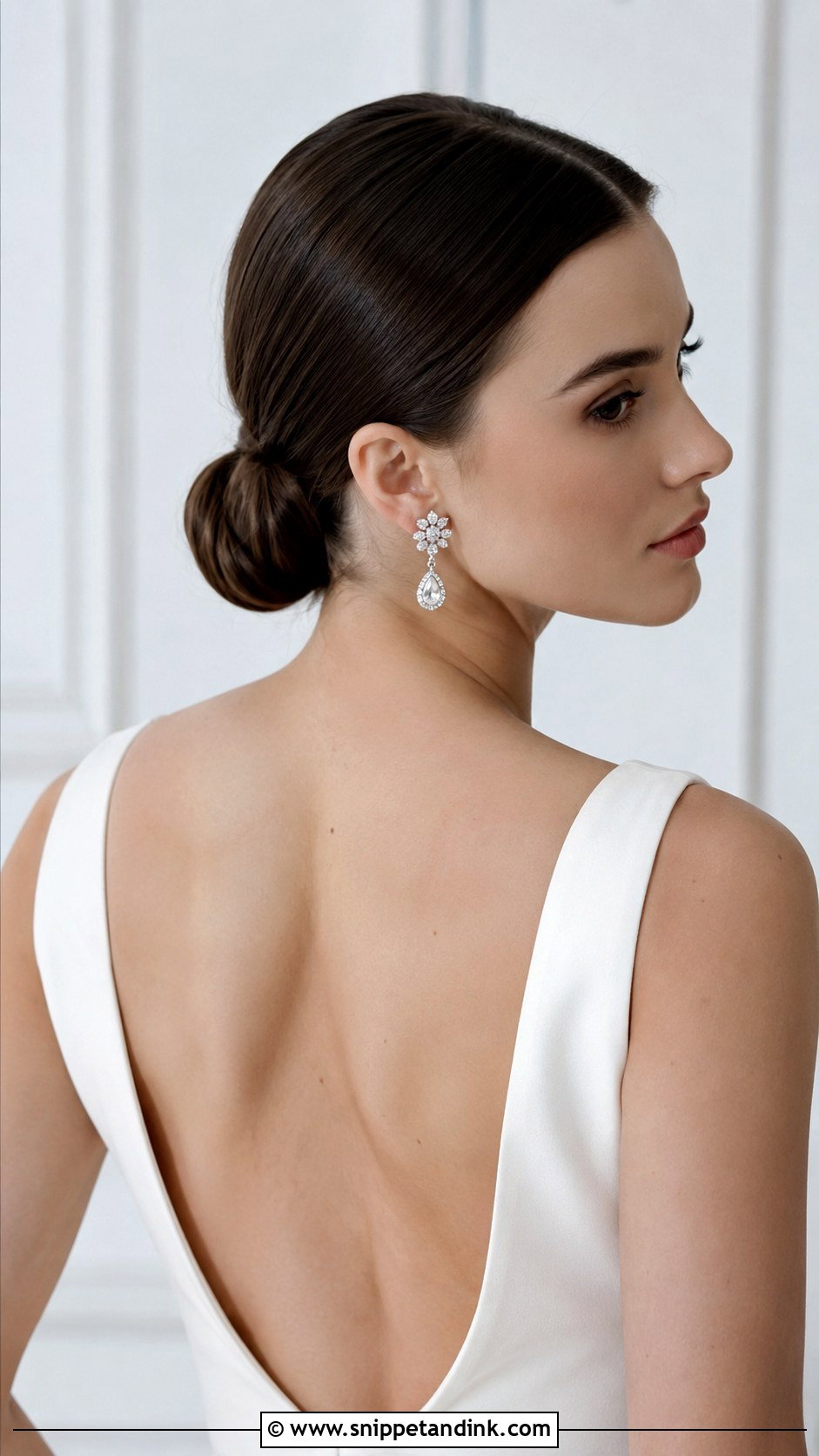
A center part with a sleek low knot is minimal and very exposing. The part has to be dead straight, so I line it up with the bridge of the nose and comb it in while the hair is still damp. Smoothing product goes on at the roots, then everything is brushed down tight to the nape and twisted into a neat knot. Strong features and contemporary gowns carry it well. If you have lots of baby hairs at the temples, plan for a little gel to set them.
13. Wedding Updo With Tendrils
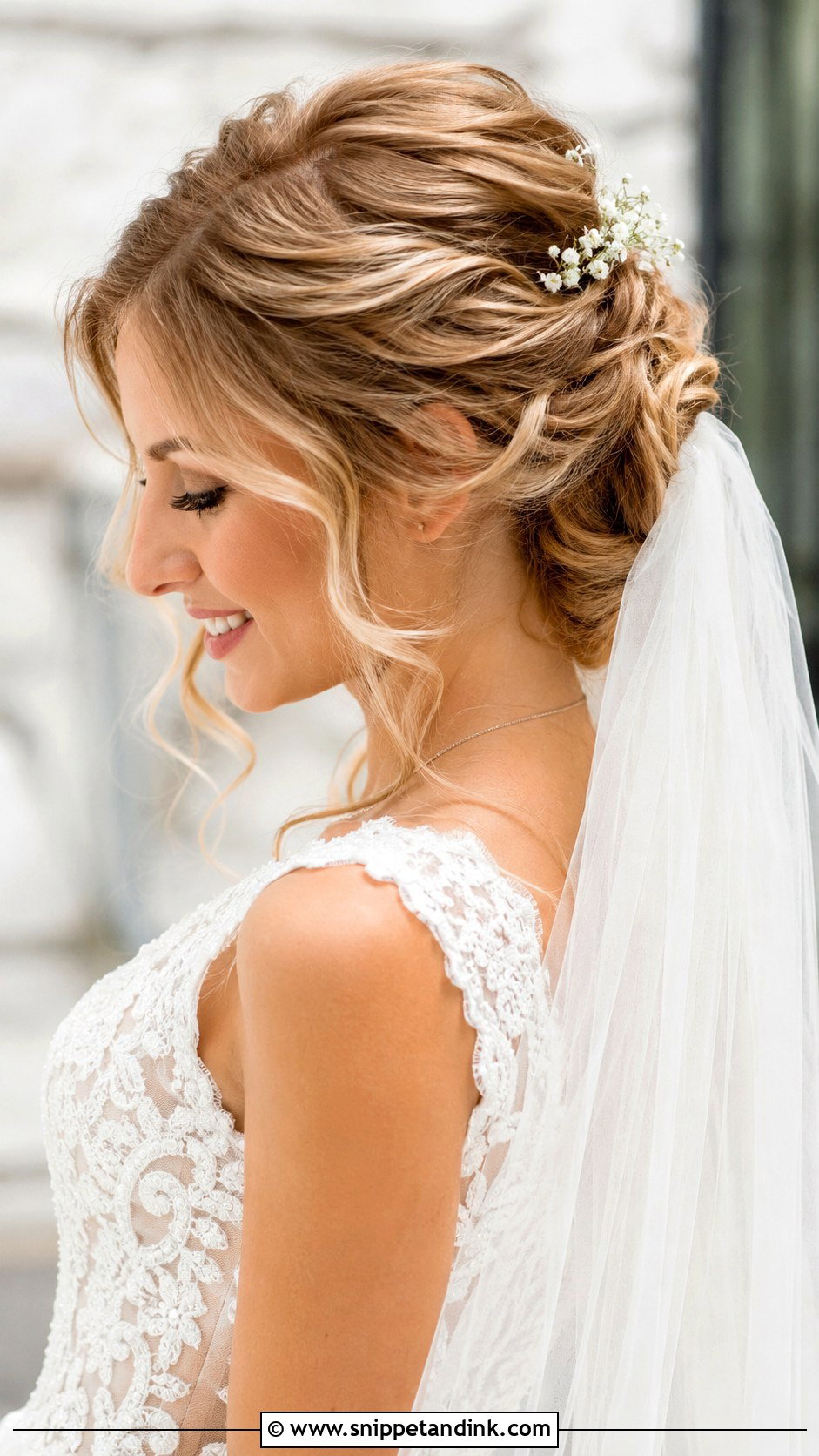
Tendrils are tiny but they decide whether an updo feels soft or stiff. I leave them longer than you’d expect, because they spring up shorter once curled, and I curl them loosely with a small iron so they don’t look like ringlets. They soften the line of the cheekbone, which flatters most faces. One caution: tendrils stick to lip gloss in wind, so on a breezy day I leave fewer of them and set them with a light mist.
14. Vintage Finger Waves
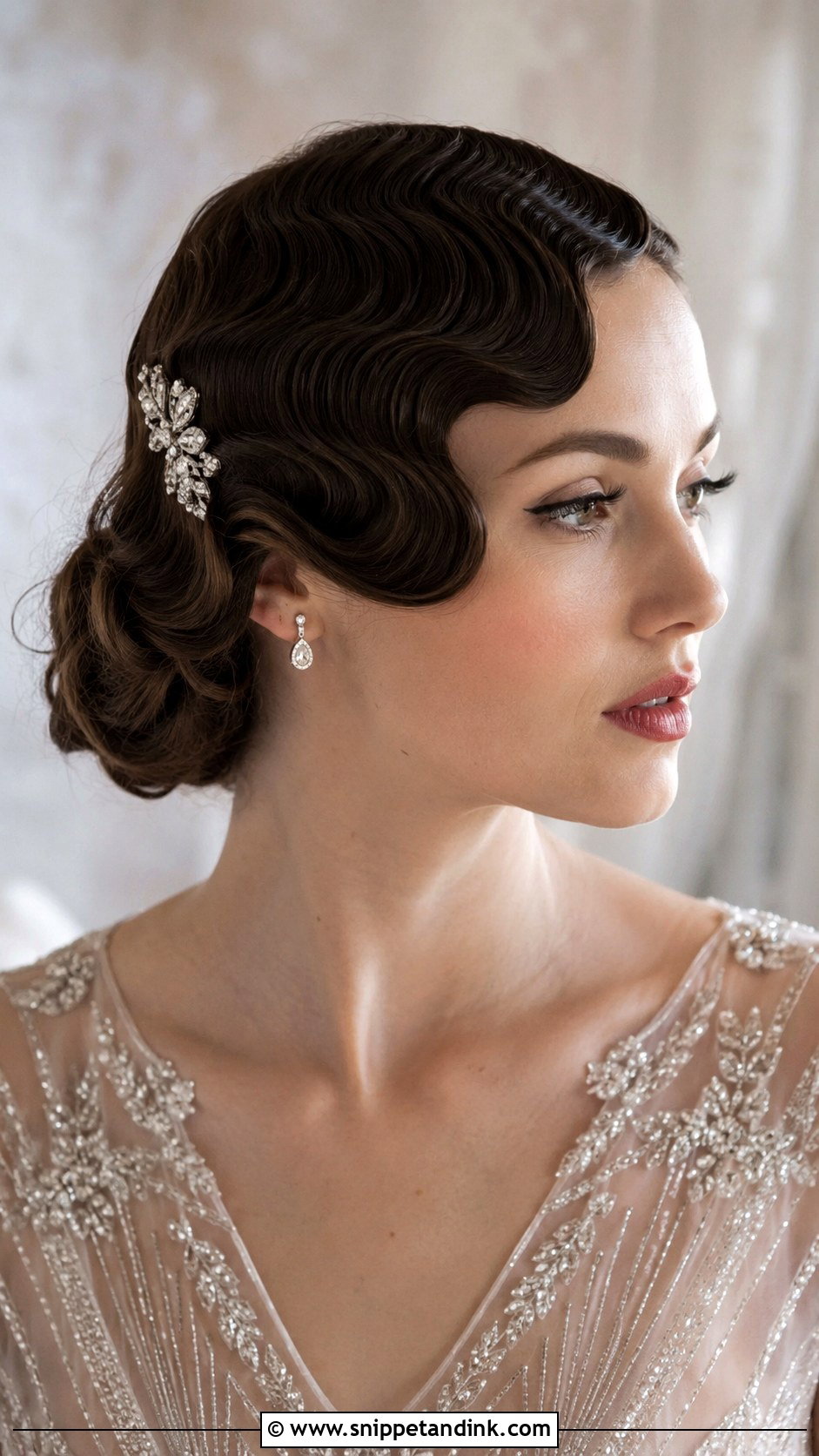
Finger waves are sculpted S-curves set close to the head with setting lotion, combs and clips, then dried completely. They work on short hair, or at the front with the length pinned into a low roll. I’d only book a stylist who can show you this technique, because the ridges have to line up on both sides of the part. The look belongs at art deco, Great Gatsby-inspired or vintage weddings, and a jeweled pin at the side completes the period feel.
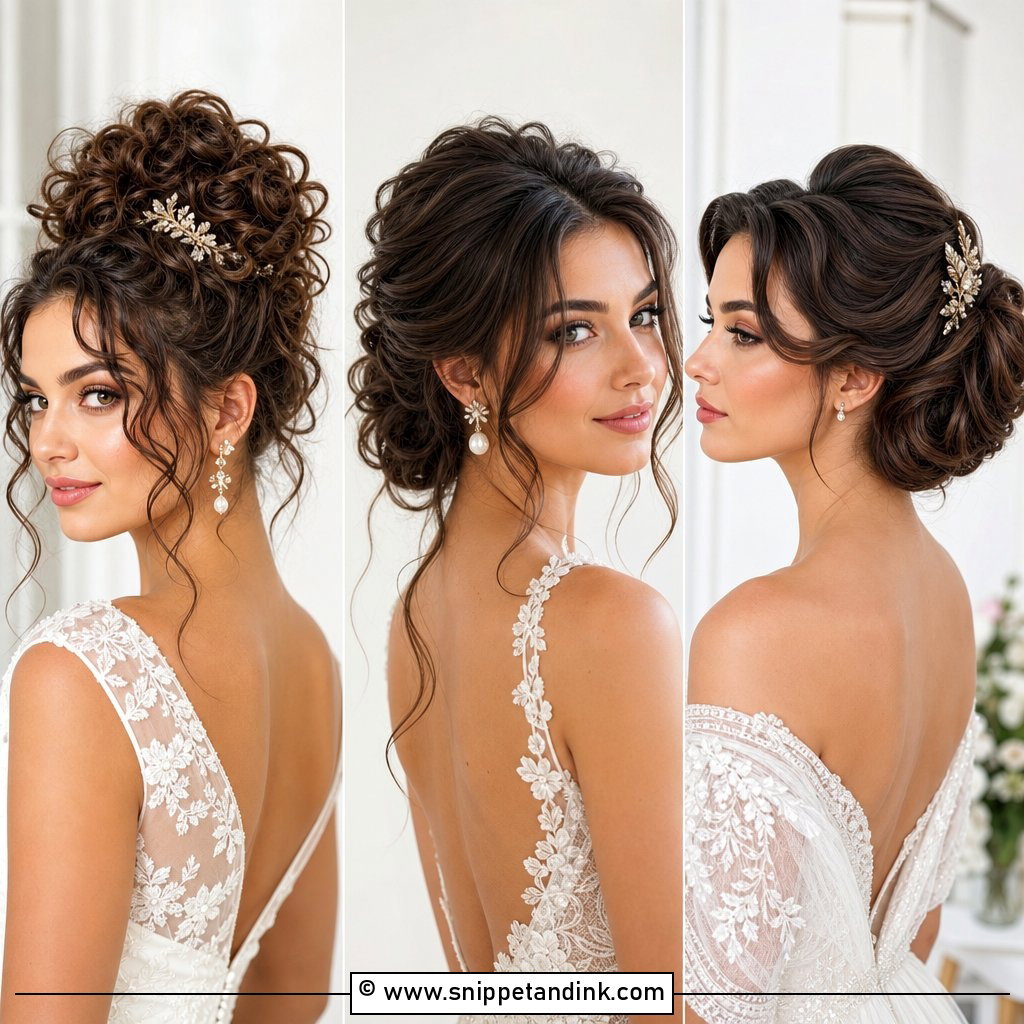
15. Floral Adorned Updo
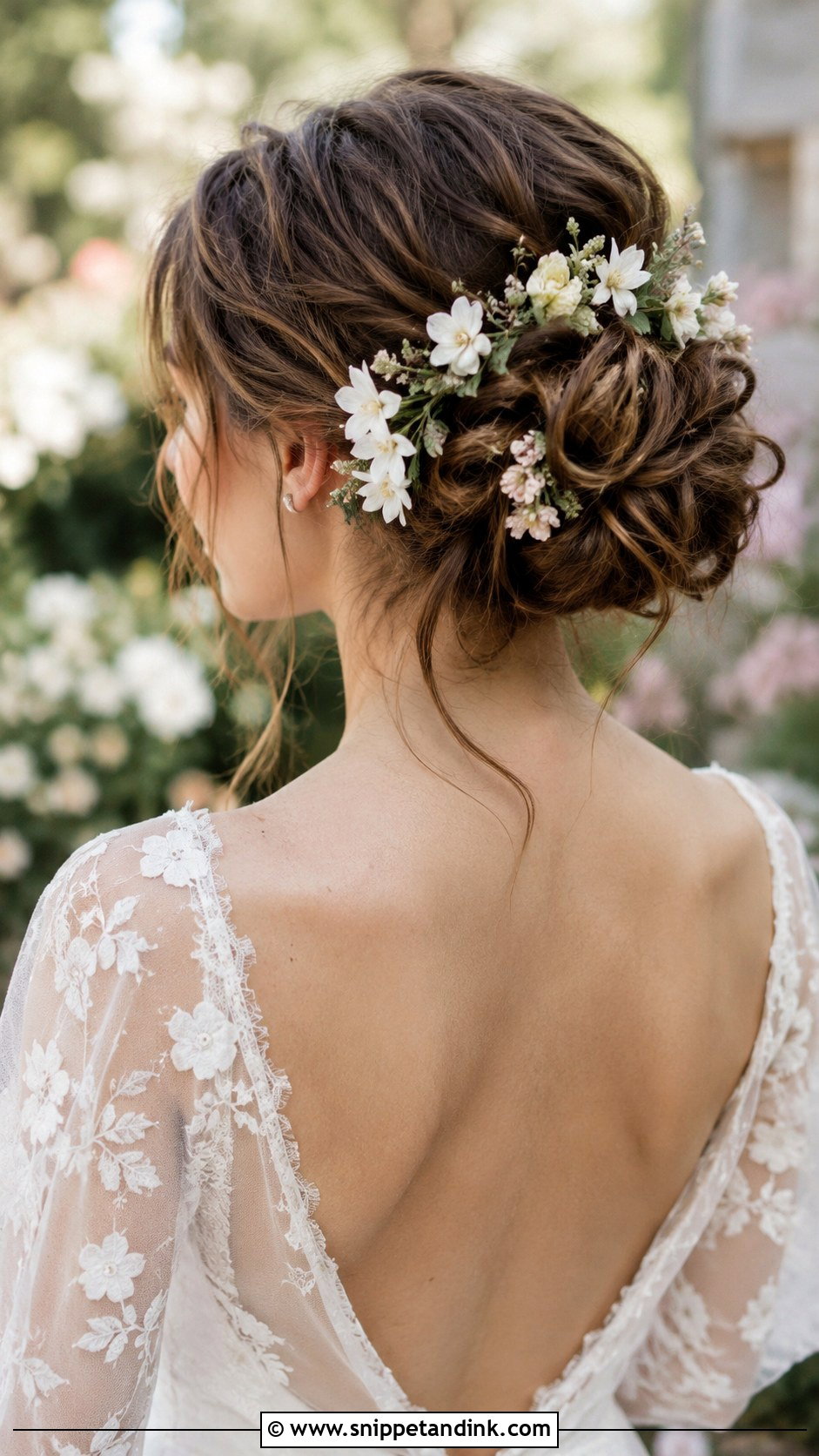
Fresh flowers in an updo should be chosen for stamina, not just color. Spray roses, waxflower and baby’s breath last well out of water, while gardenias and hydrangeas bruise and droop in heat. I ask the florist to wire and tape the stems, then pin them into the bun as the very last step. Small buds give quiet detail; one larger bloom gives a focal point. Spring and summer garden weddings suit it best.
16. Side Swept Curls
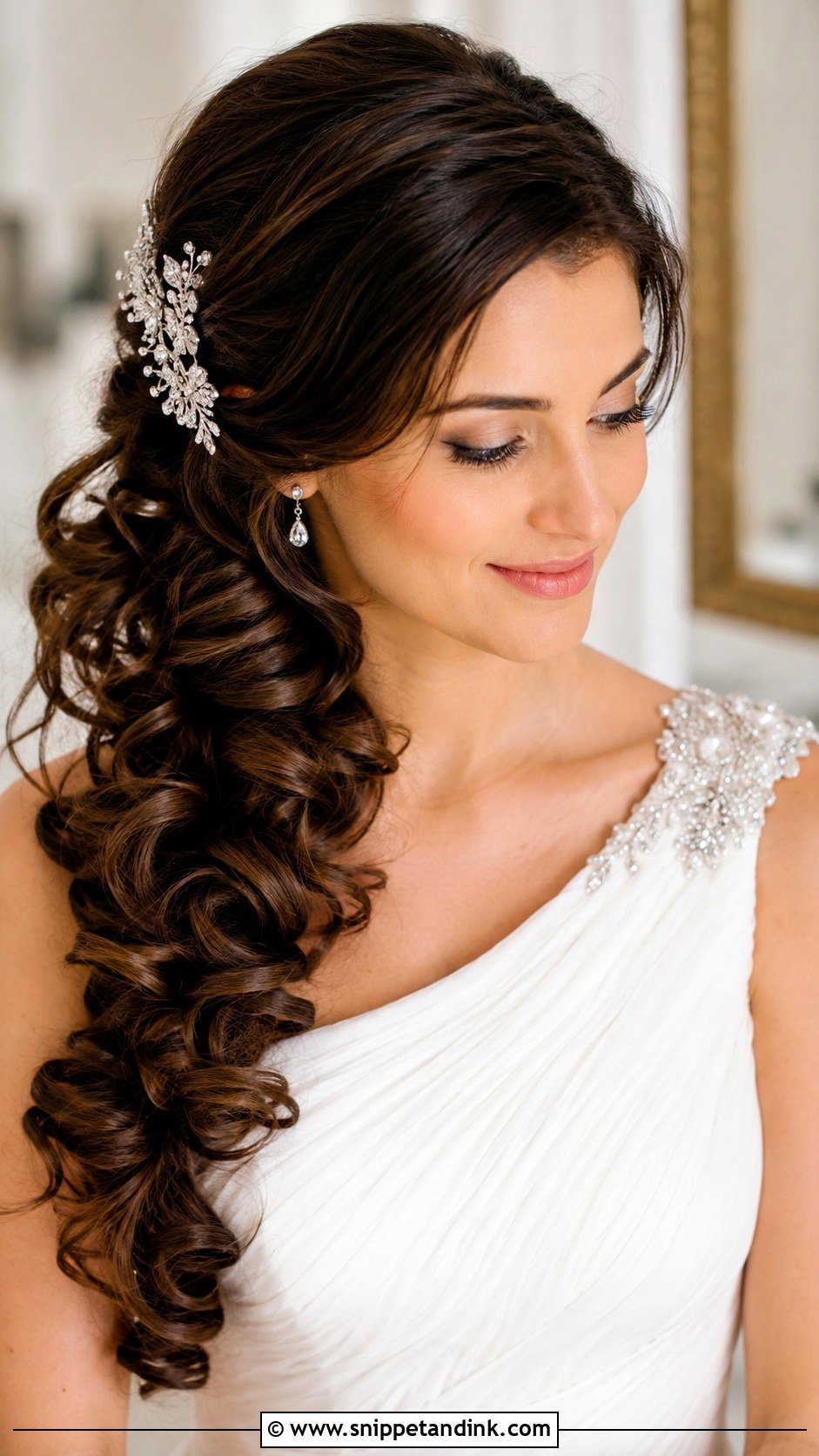
Side-swept curls look loose, but they’re pinned firmly behind the far ear with a hidden line of crisscrossed pins. Without that, the curls drift back toward center with the first hug. The asymmetry suits a one-shoulder gown and leaves one earring on full display. A decorative comb covers the pinning point.
17. Twisted Updo Wedding Hairstyle
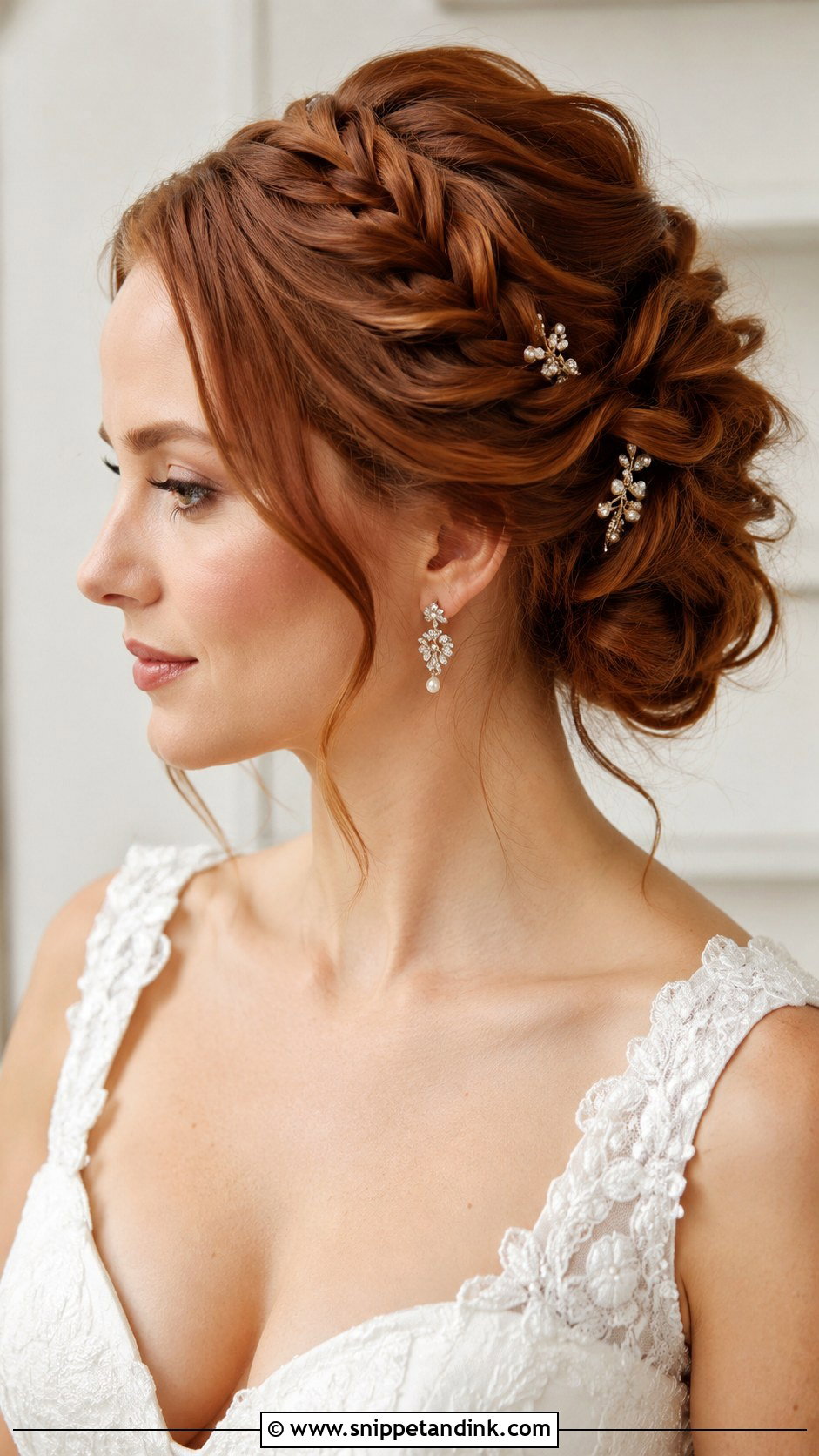
Rope twists and pinned sections give an updo texture that shows from the back. I curl the hair lightly first, even though it will be twisted, because curled hair has grip and holds a twist much better than straight, silky hair. Soft tendrils loosen the front. Modern and classic gowns both work, with pins or a few small flowers tucked into the twists.
18. Sleek Straight Wedding Hair
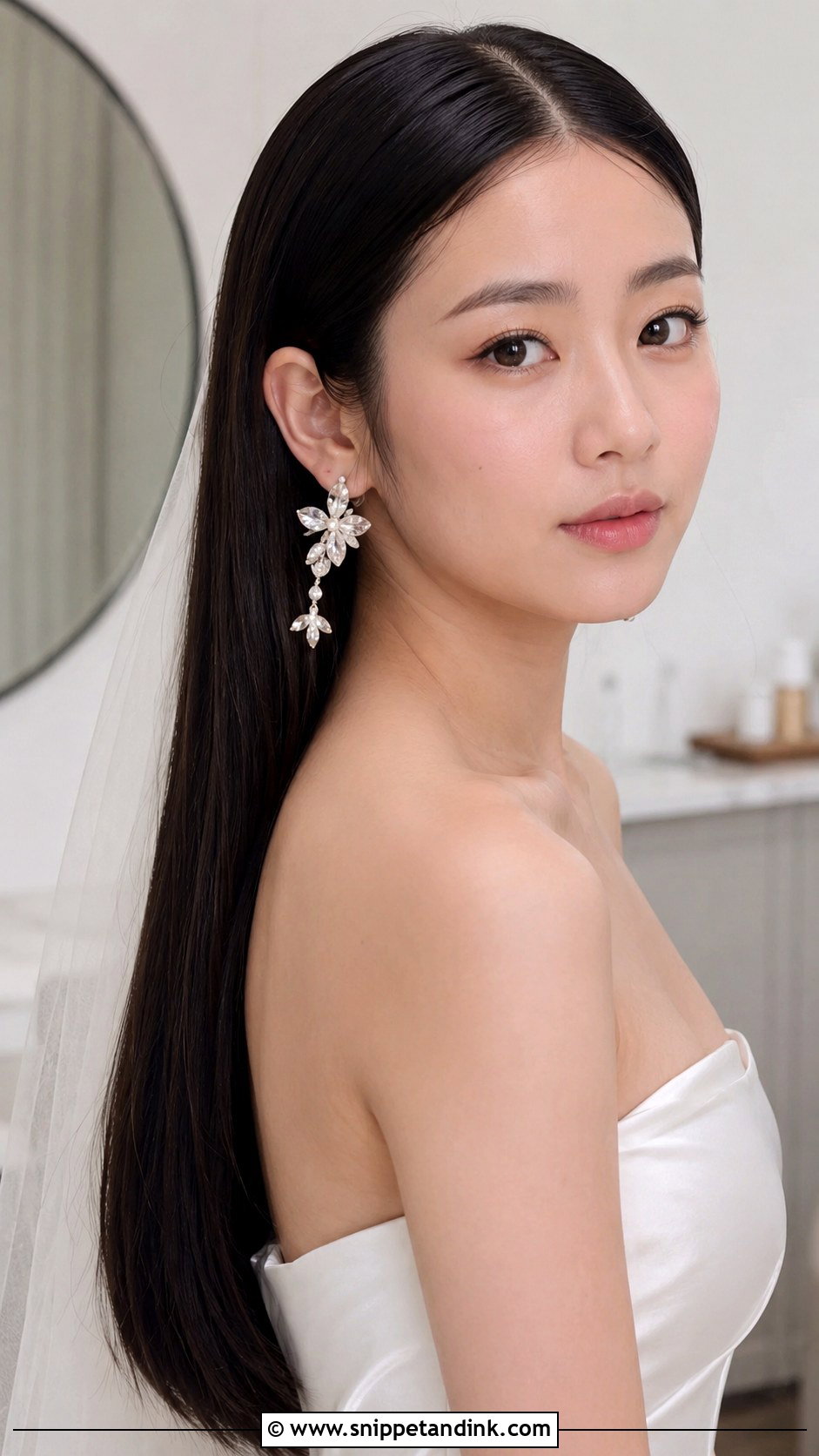
Sleek straight hair is really a long blow-dry finished with a flat iron. Most of my time goes into the blow-dry, since the iron can only polish what the brush has already straightened. A center or deep side part frames it. It lets a detailed gown or strong accessories take the attention, and naturally straight hair holds it best. Humidity is the risk, so keep a little smoothing balm in your bag.
19. Messy Bun With Soft Pieces
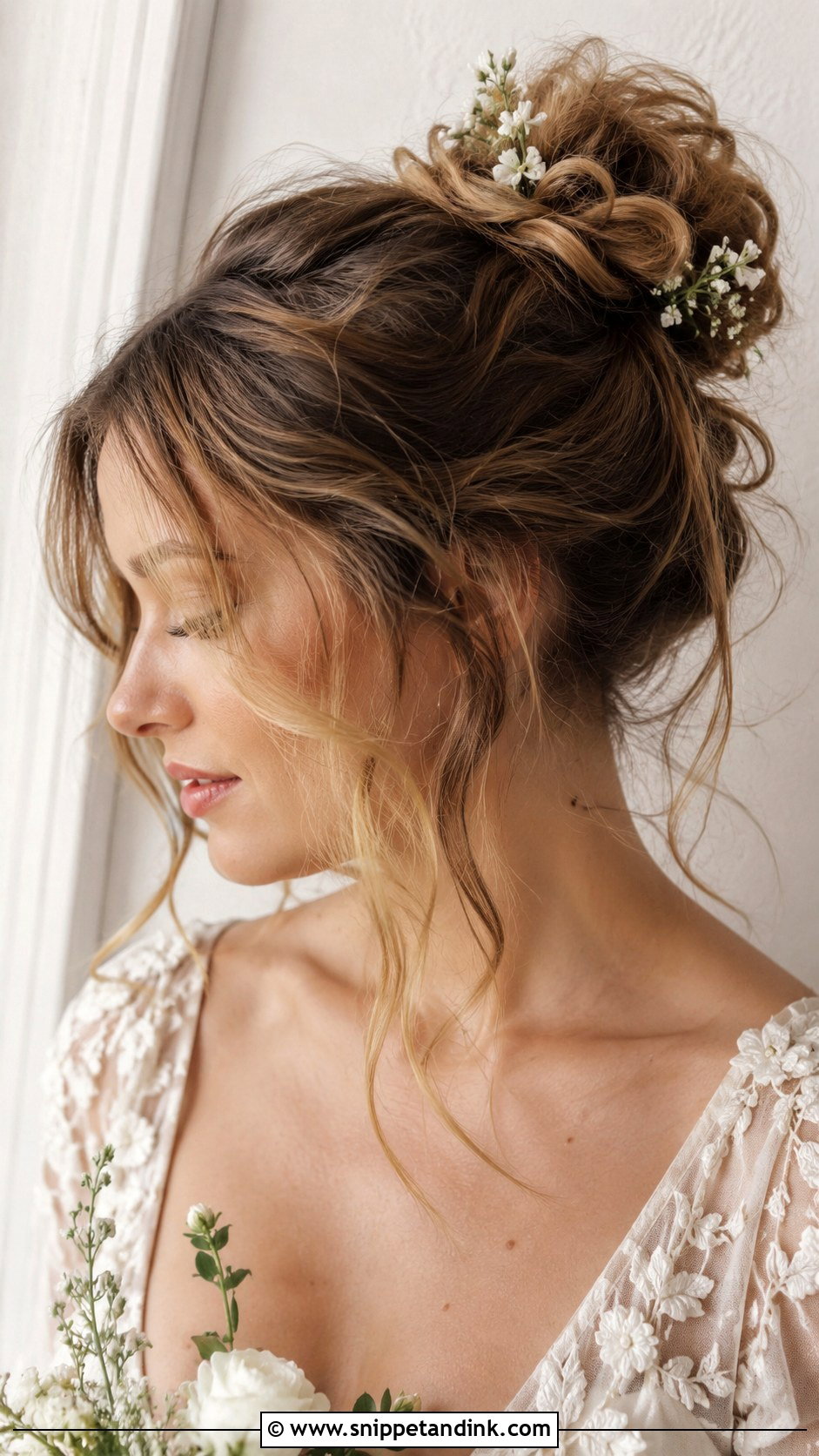
A messy bun should look relaxed but be pinned like a formal one. I curl the whole head, gather it loosely, pin every section into place, and only then pull pieces out for softness. Start messy and you end up flat. Loose tendrils soften the face, and a few small flowers or pins fill the gaps. Rustic and garden weddings are its natural home.
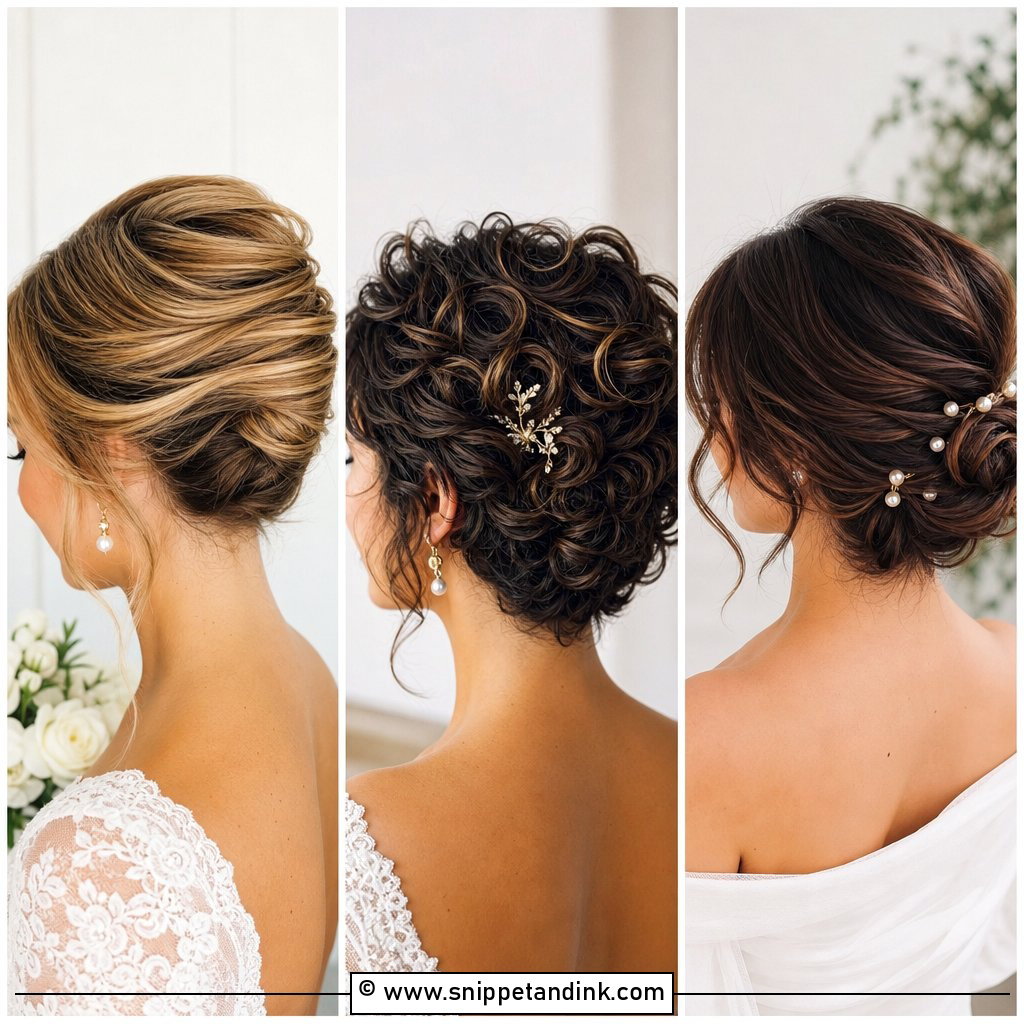
20. Braided Updo With Veil
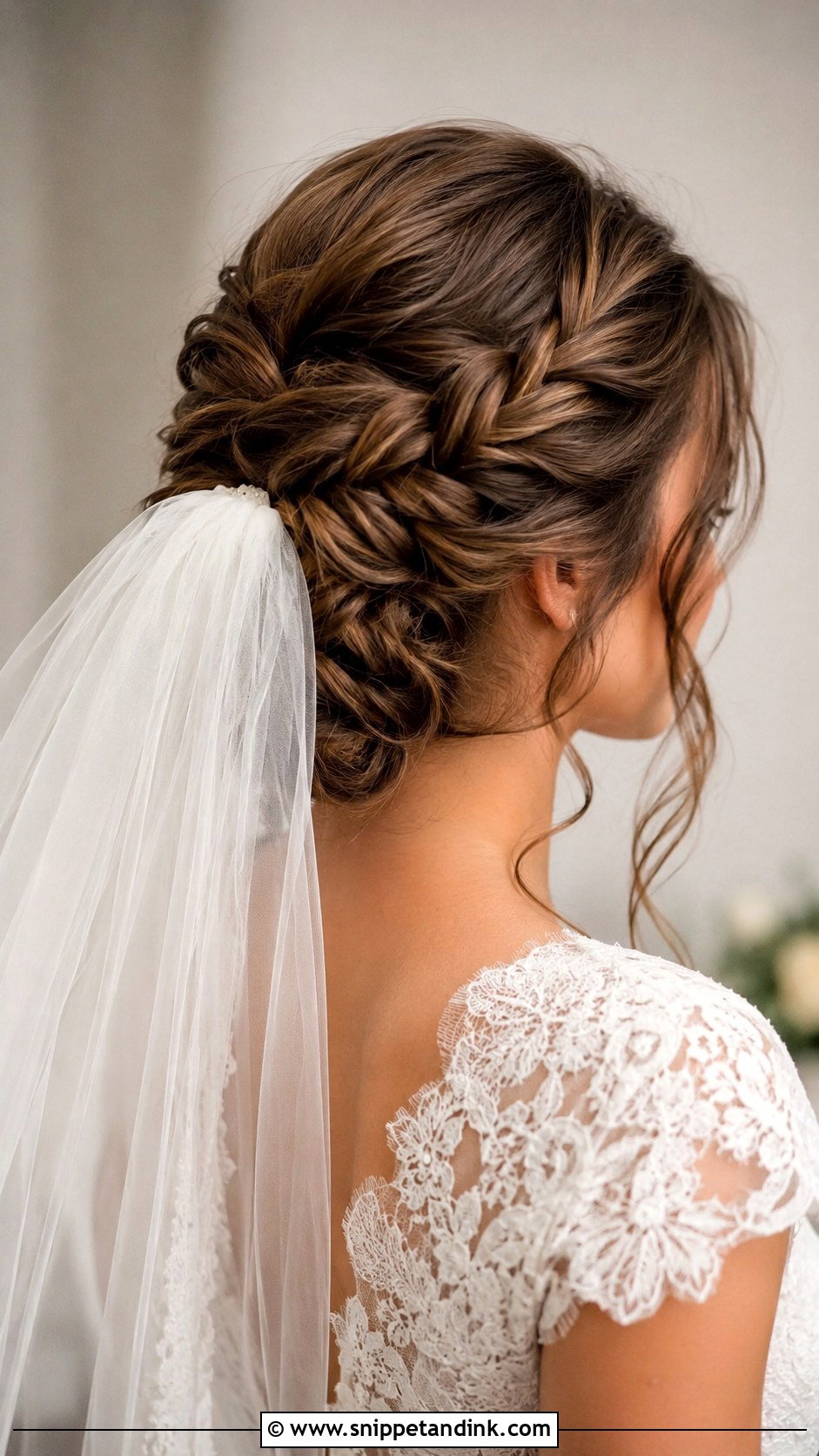
Braids make good partners for a veil, because a comb pushed into a braid barely moves. I settle the veil placement before braiding starts: above the updo for drama, beneath it for a cleaner look from the front. When the veil comes off at the reception, the braided updo stands on its own, and a couple of pins or flowers can fill in where the comb sat.
21. Low Ponytail With Wrapped Strand
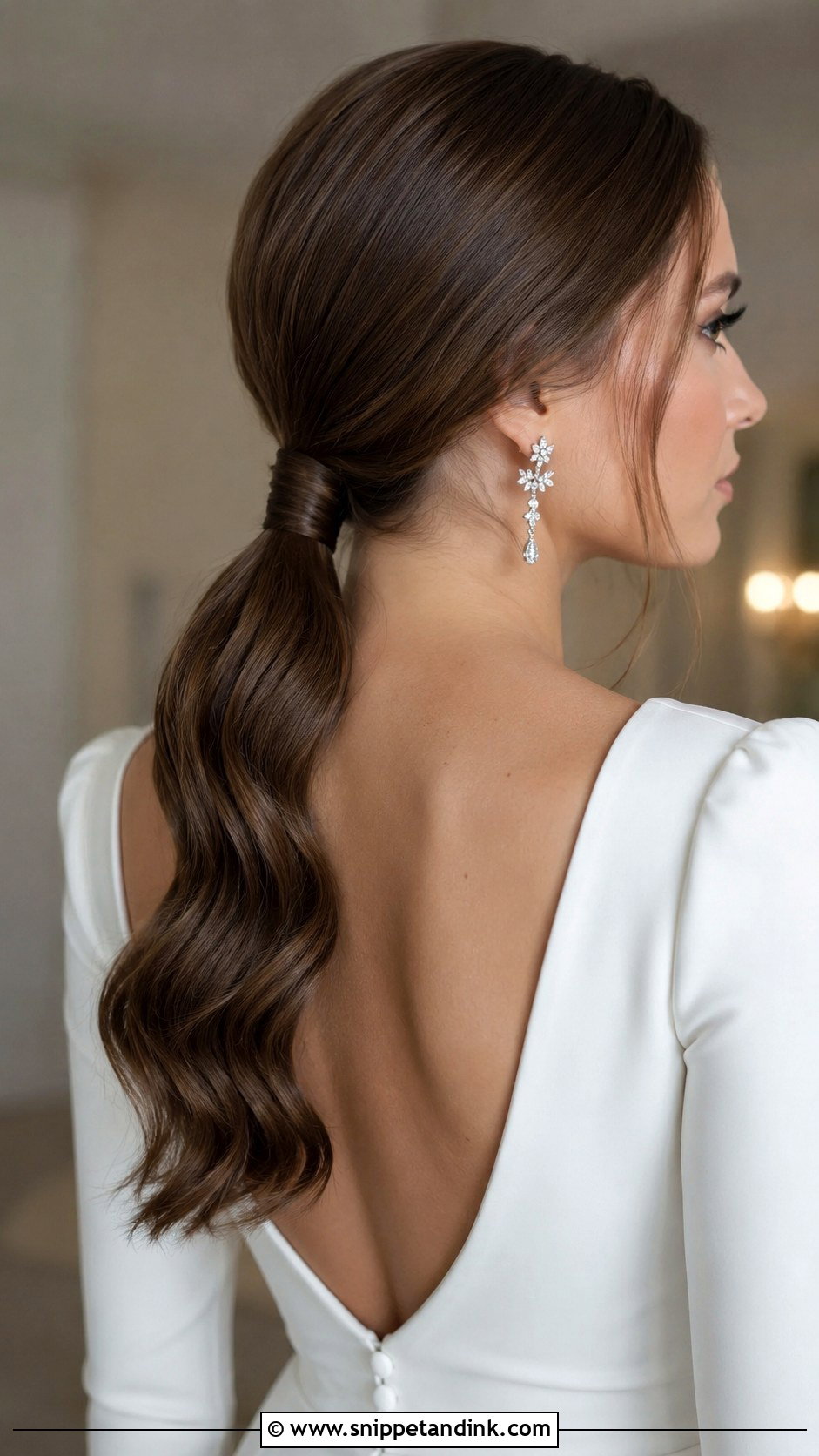
Wrapping a strand around the base of a low ponytail hides the elastic and makes it look finished. I lock the strand with a pin pushed upward into the base so it can’t unravel. A soft wave through the length keeps it from looking like gym hair. It leaves earrings and the neckline clearly visible and stays put all night, which makes it a quiet favorite of brides who plan to dance.
22. Curly Updo for Natural Hair
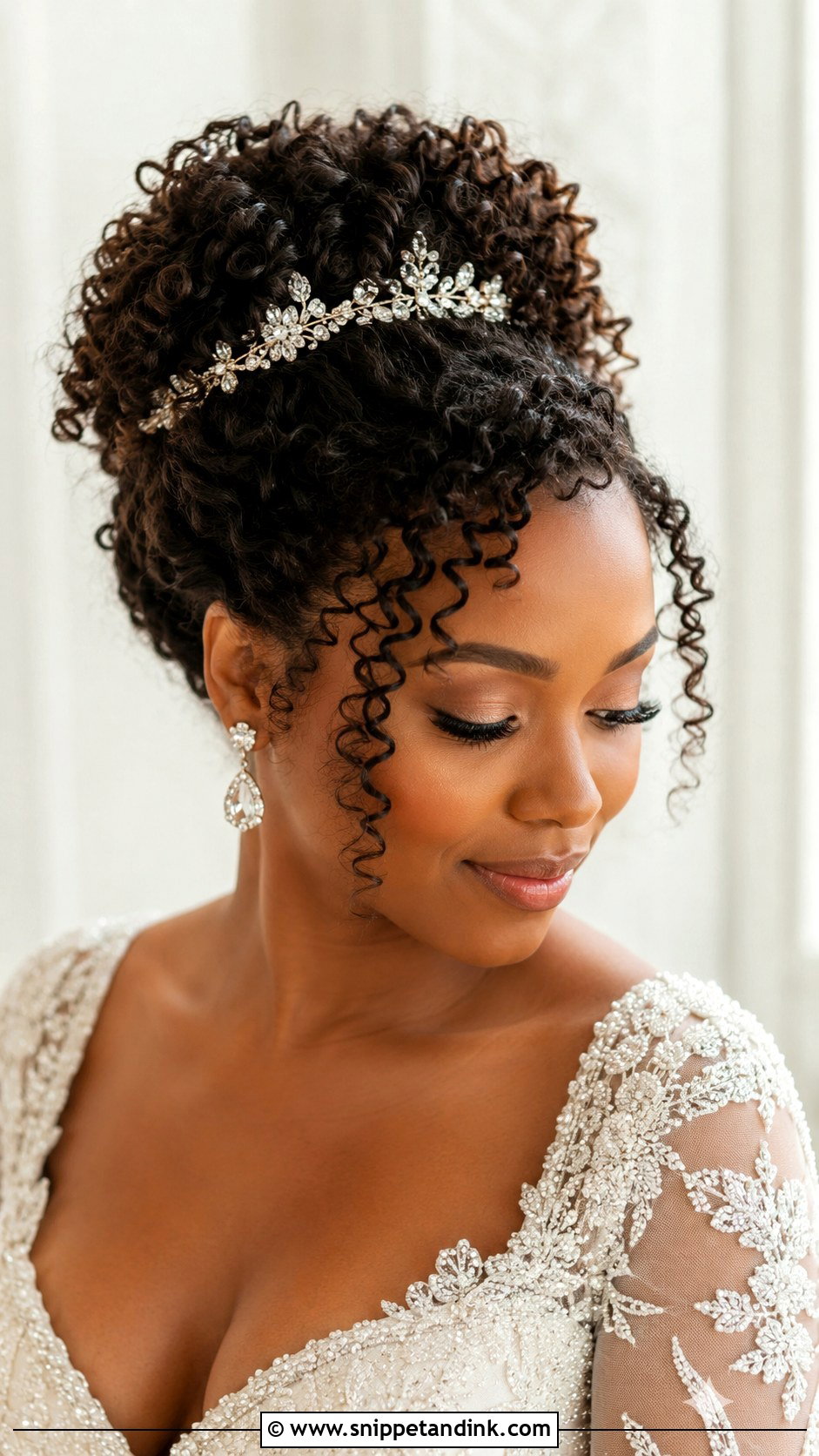
Natural curls are the best foundation for volume in an updo. I define them with a cream and gel, let them dry fully, then gather them with a soft, edge-friendly band and shape the outline with a pick. I use large U-pins rather than bobby pins, because they hold coils without crushing them. Edges can be laid with a soft brush and edge control, and decorative pins or flowers sit easily in the full texture.
23. Soft Waves With Hair Accessory
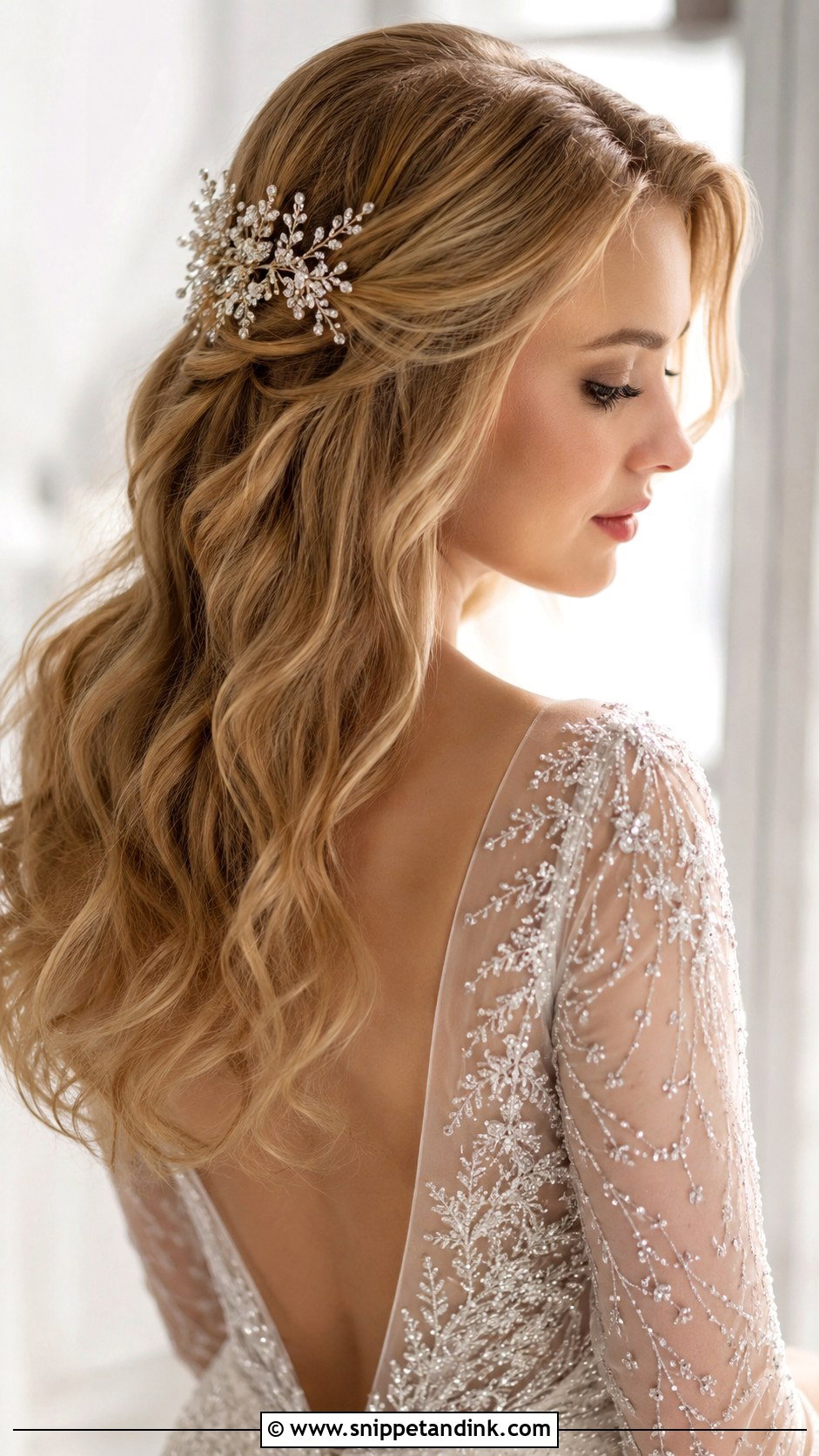
One sparkling comb, pin or headband is enough on soft waves. I place it before the final brush-out so the hair settles naturally around it instead of being pushed aside. A heavy piece needs crisscrossed pins underneath, or it slowly slides down the waves. Nearly any gown or theme can take it.
24. Pinned Back Bridal Hairstyle
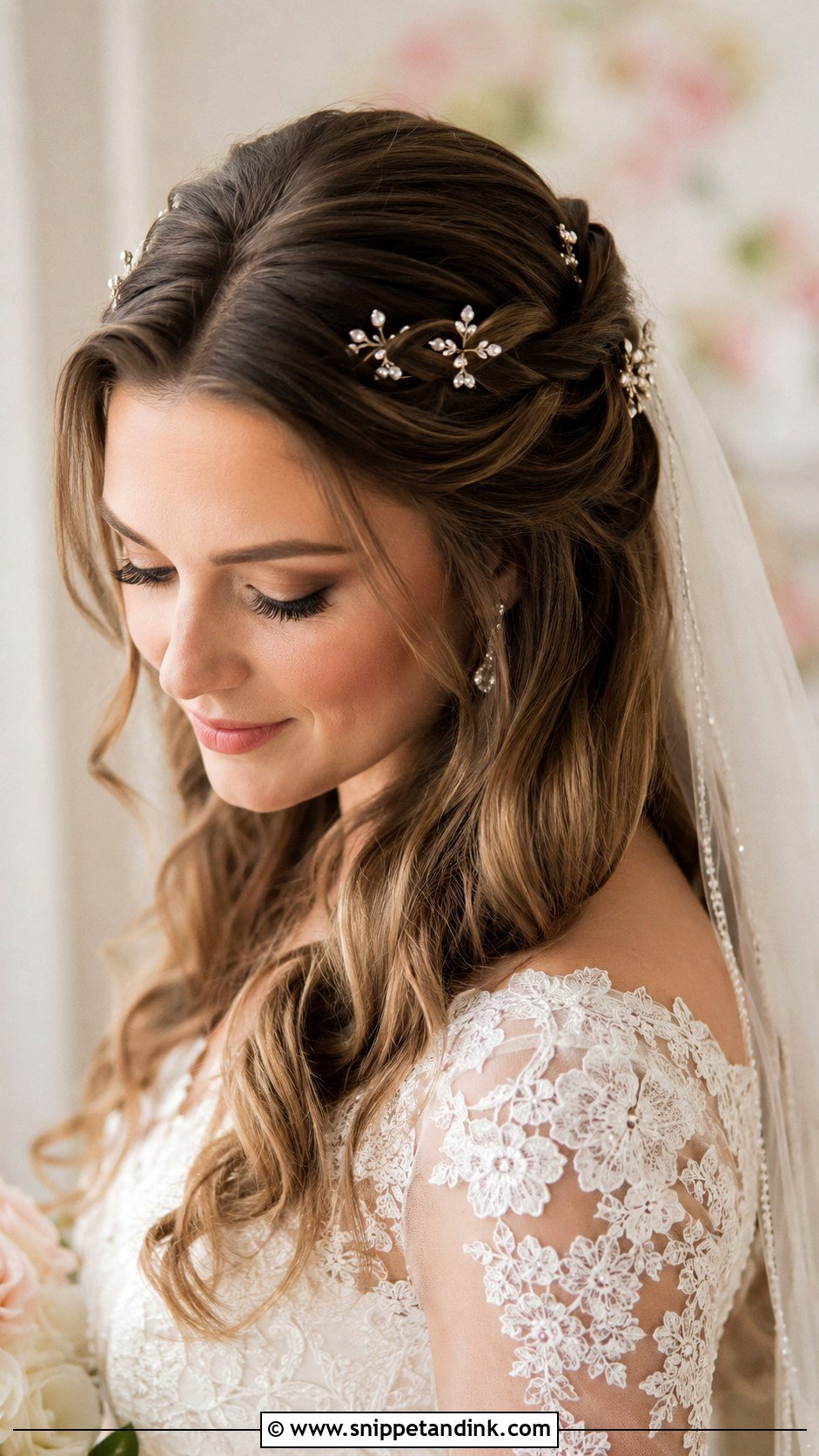
Pinning the front back is the quiet way to keep hair down yet off the face. I twist the front sections slightly and secure them with crossed pins, then cover those with decorative ones. It’s practical for eating and hugging, and it works with a veil, waves or straight hair.
25. Voluminous Curly Half-Up
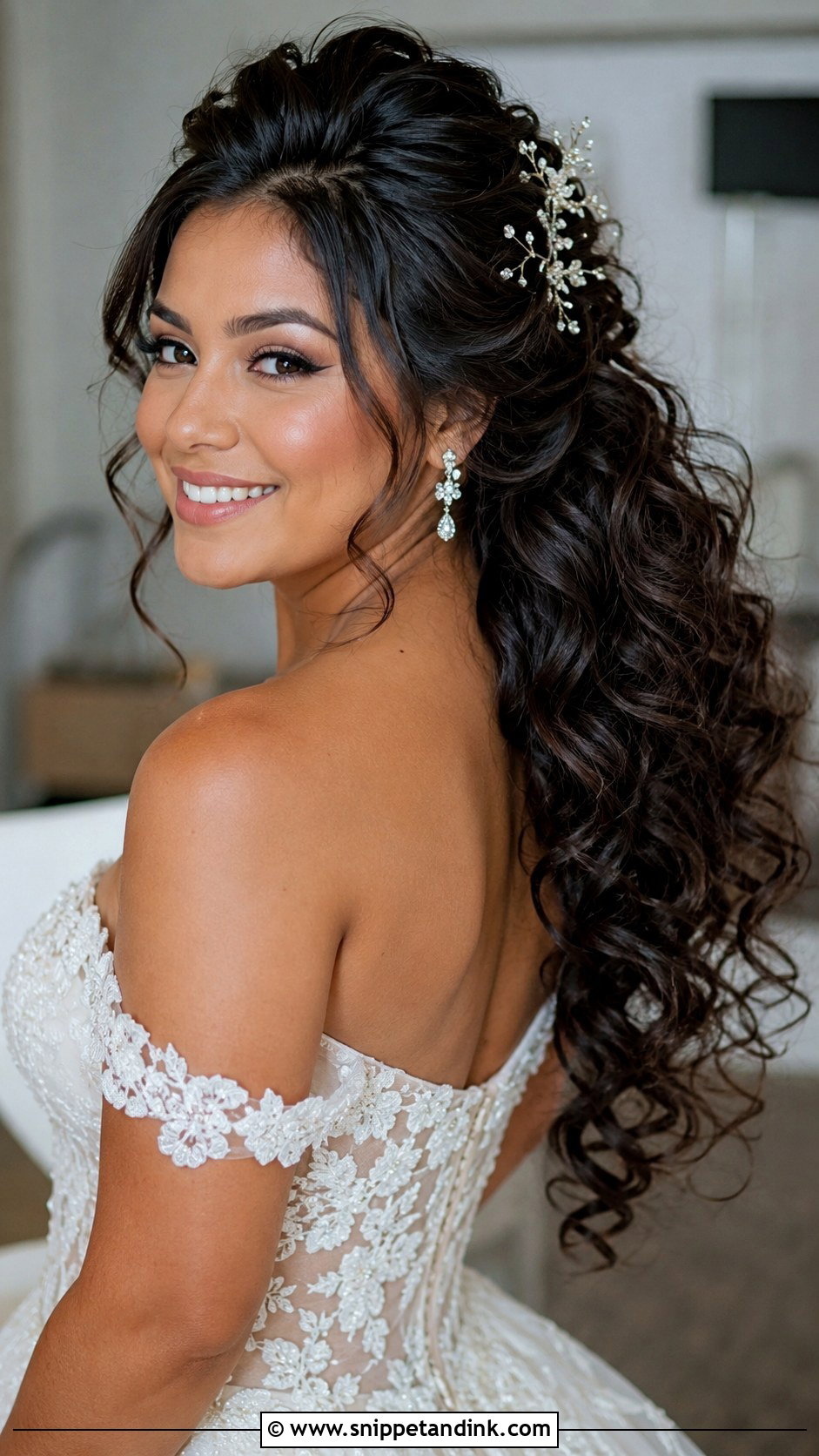
A curly half-up shows off texture while keeping curls out of the eyes. I pin the top sections back with U-pins and add height at the crown with a pick, which gives a regal outline, while the curls left down frame the face. A sparkling accessory at the crown finishes it. Curly hair expands on humid days, so I shape it a little smaller than the size I’m aiming for.
What Happens at a Hair Trial, Start to Finish
A trial is where the photo you love meets your actual hair. Most stylists book them one to three months before the wedding, early enough to change direction and late enough that your cut and color are close to final. Here’s how I’d make it count:
- Arrive with hair washed on the same schedule you plan for the wedding morning, so we test the real texture.
- Wear a top with a neckline close to your dress, and bring the veil and any hair accessories.
- Book your makeup trial the same day if you can, so you see the whole look together.
- Let me photograph it from the front, both sides and the back, then wear it home and for the rest of the day.
- Before bed, notice what dropped, what pinched and what you kept touching, and tell me honestly. That feedback shapes the wedding-day version more than anything else.
Pins, Weight and Twelve Hours in an Updo
An updo shouldn’t hurt. If a pin digs in while you’re still in the chair, say so; it will feel ten times worse by the speeches. Heavy combs and tiaras need to sit on a foundation of crossed pins rather than pulling on single strands, and very tight ponytails or buns are the usual cause of an afternoon headache.
At the end of the night, take it down slowly. Find the pins with your fingertips and draw them out in the direction they went in, rather than tugging. Don’t brush through hairspray dry; work a conditioner or detangling spray through first, or simply sleep on it and wash in the morning. Ask whoever will help you undress to help with the pins too. There are always more than you think.
Wearing It From First Look to Last Dance
The most elegant hair is the style that stays put and still feels like you at the end of the night. Sleek buns, Hollywood waves, braids and natural curls all earn their place, but your neckline, veil and venue will shorten the list faster than any photo can. Bring the dress details and the veil to a trial, then wear the result for a few hours afterward. The one to book is the style you stop thinking about once you leave the chair.
You'll Like These Ideas:


Leave a Reply