
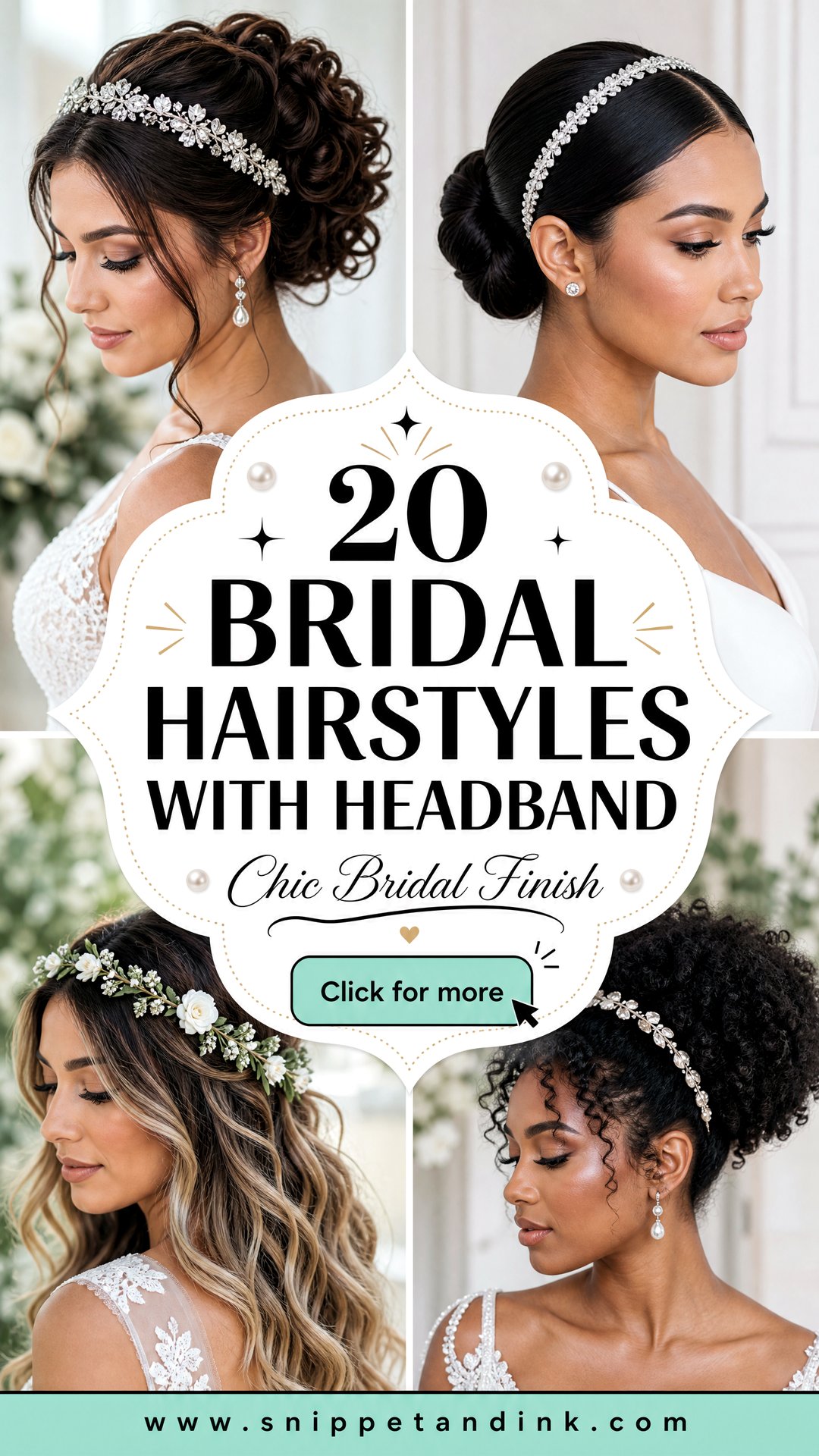
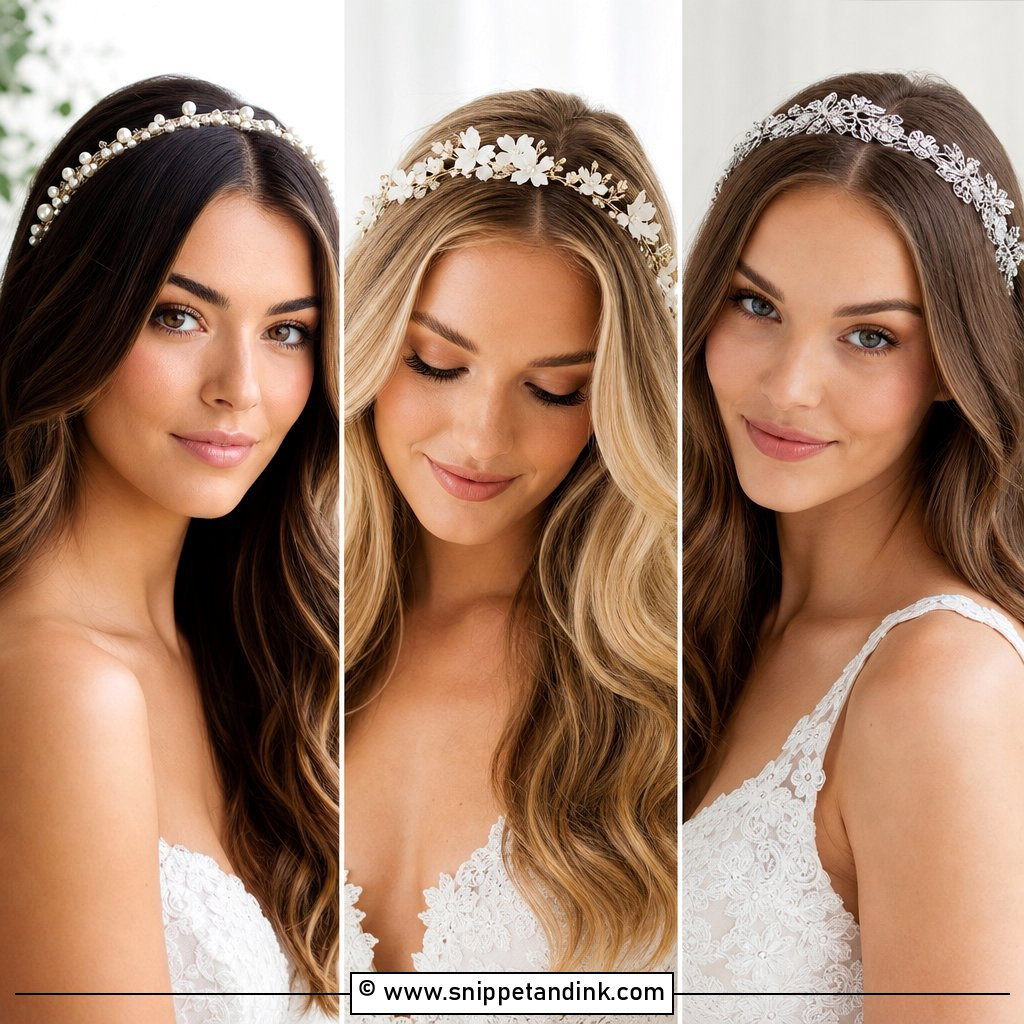
Headbands are the accessory I reach for when a bride wants detail but finds a tiara too formal. They do two jobs at once: they frame the face, and they hold the front of the hair in place. The catch is that a headband is the one accessory you’ll feel all day, so fit matters as much as looks. Pearls read classic, crystal gives sparkle without the height of a tiara, and padded satin or floral bands feel more modern. Below are 20 headband pairings, with notes on which hair and dresses suit each one, and what I check before a bride walks out with one on.
Matching the Band’s Width and Color to Your Dress
I always bring the headband to a dress fitting, or at least hold it up against a fabric swatch, because the color mistakes are hard to see in a shop. White pearls, ivory pearls and champagne pearls look similar on their own and very different against a gown. Put a bright white band next to an ivory dress and the dress starts to look cream or yellowed in photos. Crystal behaves the same way with metal: silver settings next to warm gold earrings feel mismatched up close.
- Match pearl tone to the dress fabric, then match metal to your earrings and ring.
- A heavily beaded bodice usually wants a simpler band. Two busy areas near each other compete.
- A plain crepe or satin gown can carry a padded or more detailed band.
- A band wider than about two fingers is a fashion choice; a thin one reads more traditional.
Width should follow the scale of the hair, too. A thick padded band on fine, shoulder-length hair takes up too much of the head. On long, voluminous hair, a very thin band disappears.
1. Bridal Low Bun With Pearl Headband
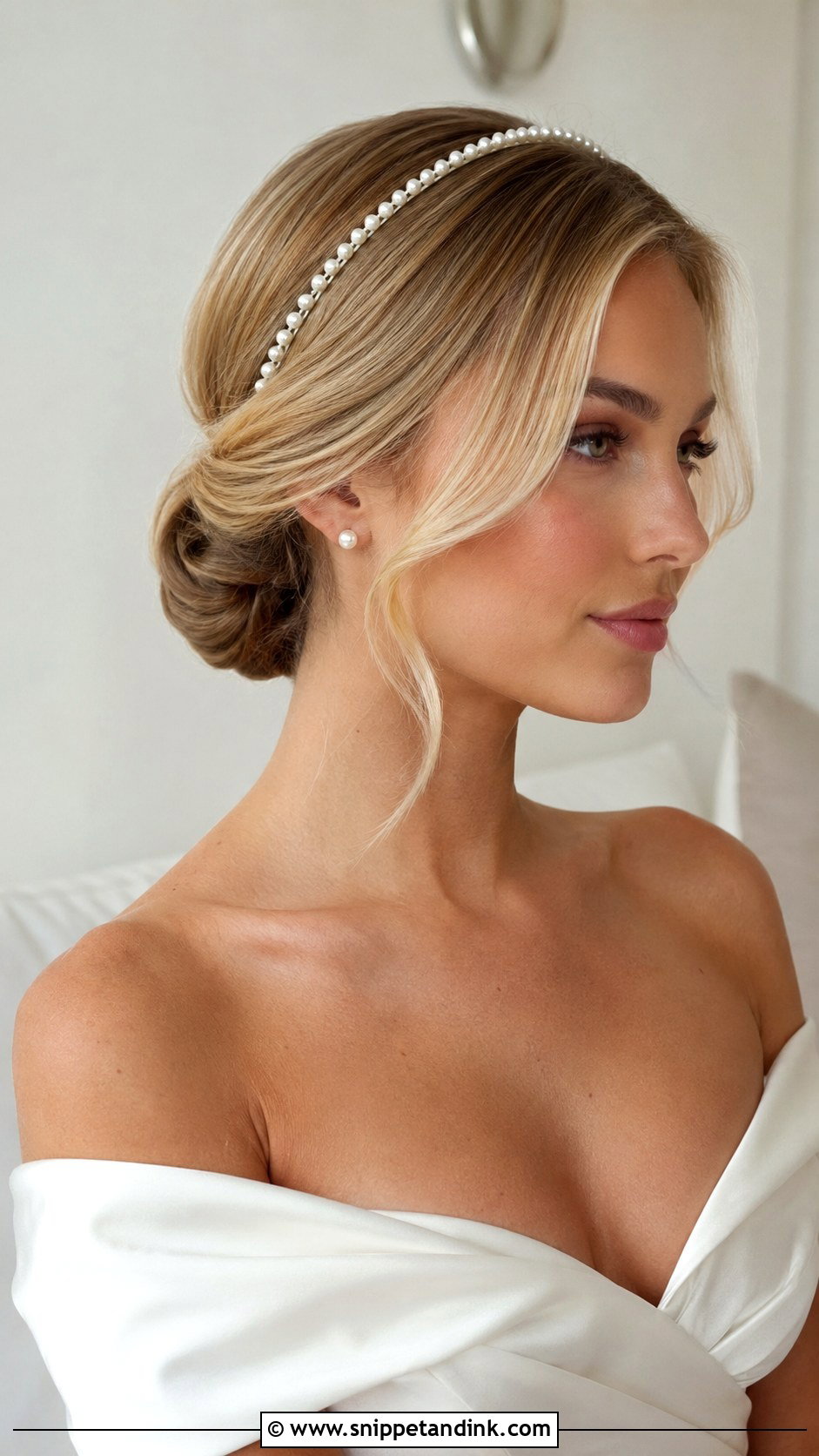
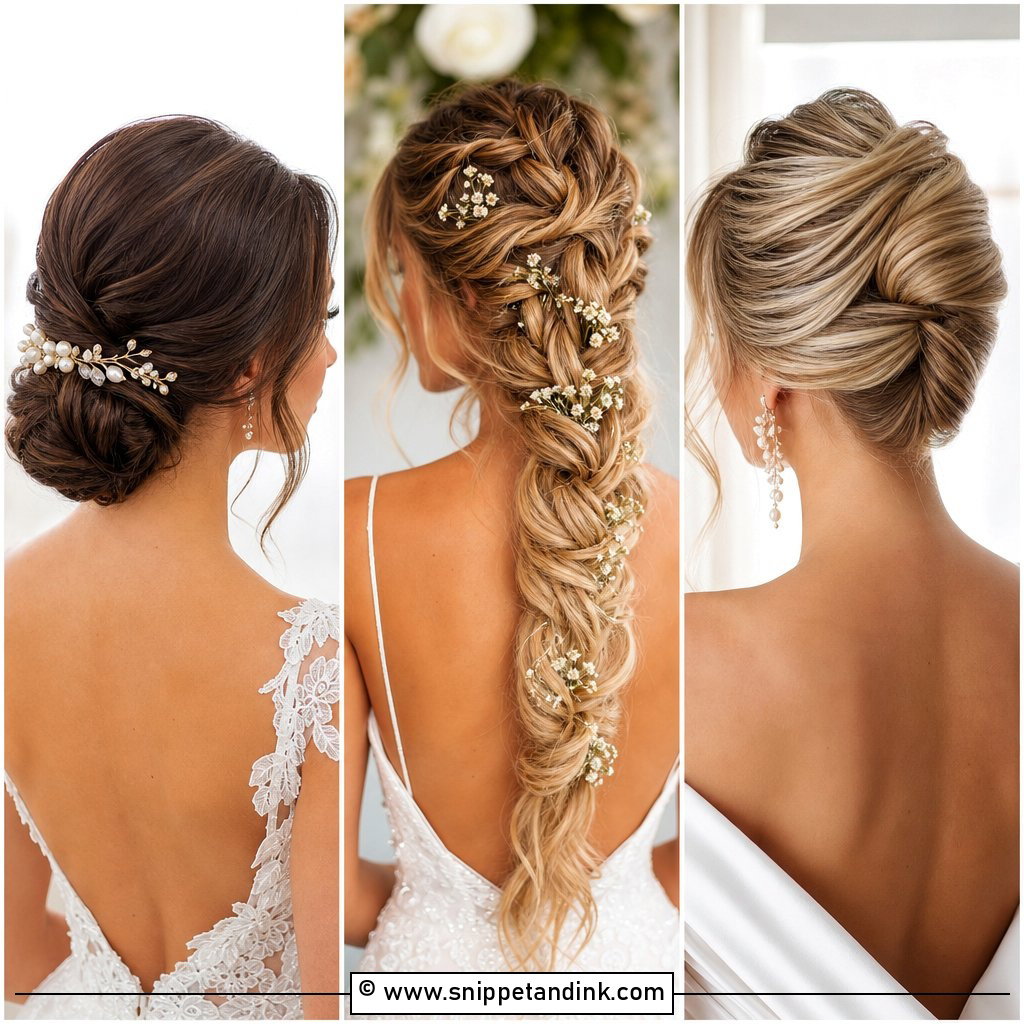
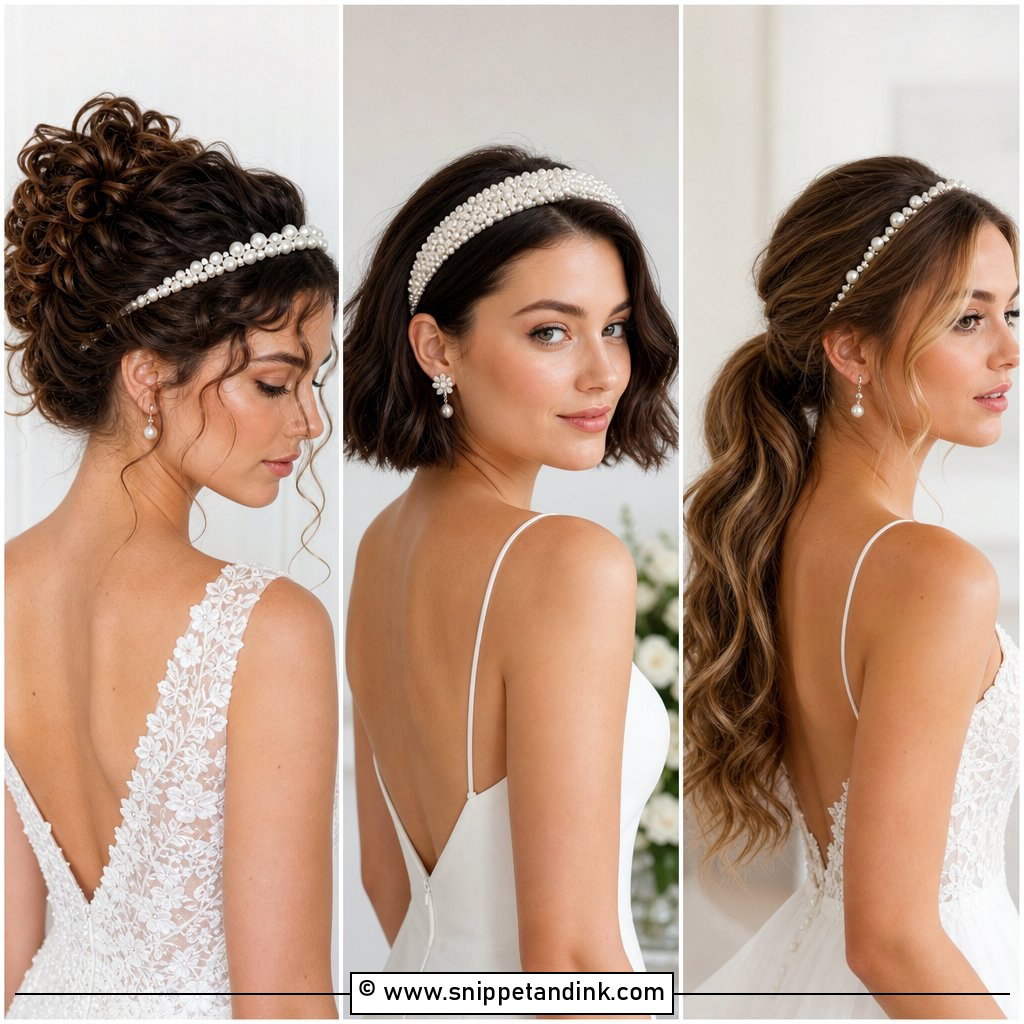
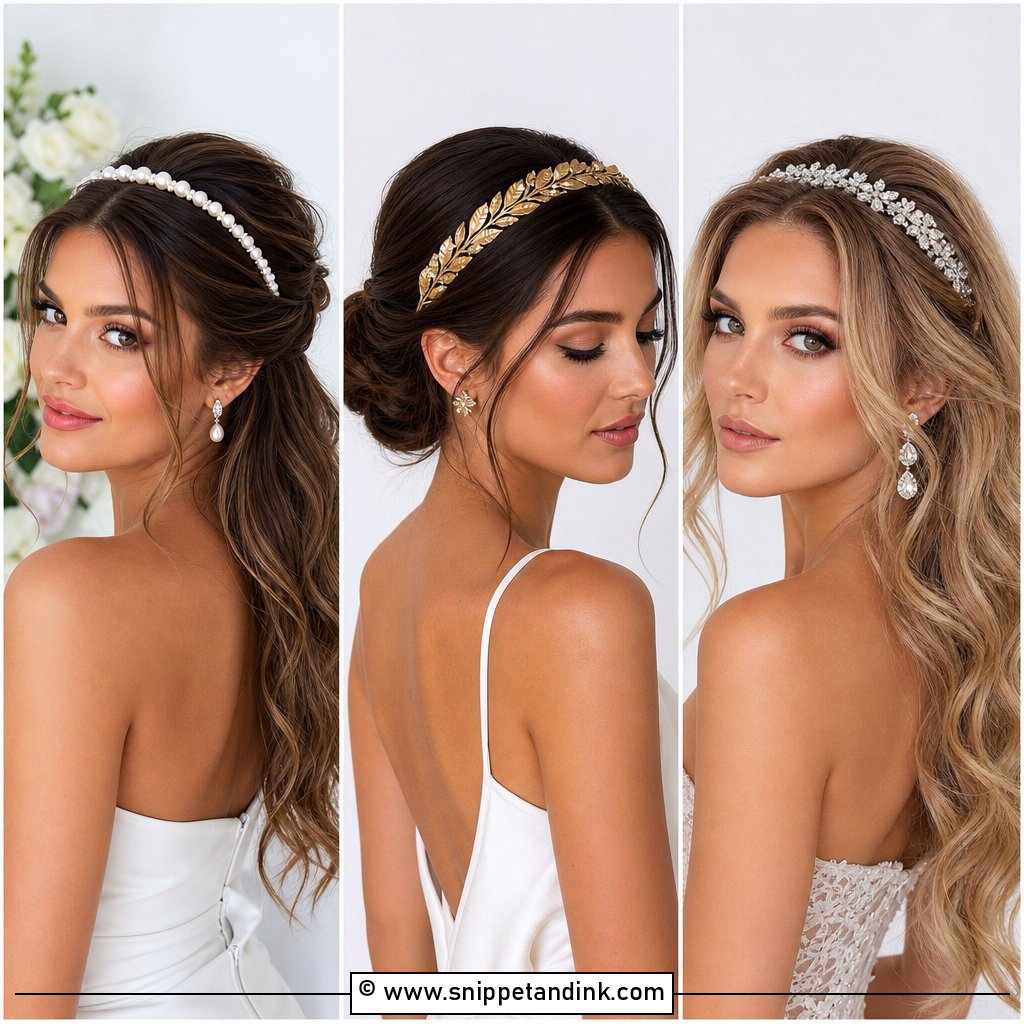
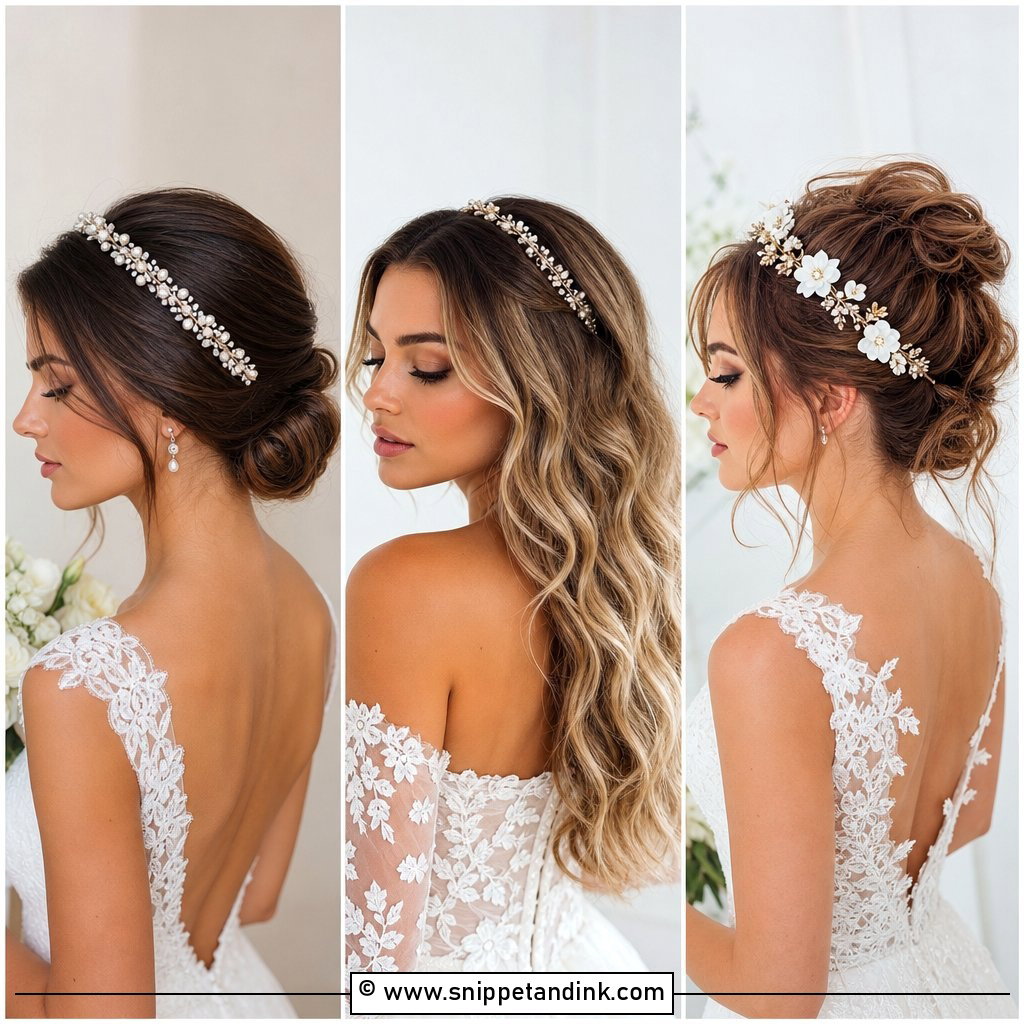
A low bun with pearls is the pairing I recommend when a bride is nervous about accessories, because it’s very hard to get wrong. The bun keeps the neckline open and the band frames the face. I place the band a finger’s width or two behind the hairline, with a little lift at the crown behind it, so it looks chosen rather than pushed on at the last minute. Match the pearl tone to your earrings. Bright white pearls next to ivory satin can make the dress look yellow.
2. Bridal Hollywood Waves With Headband
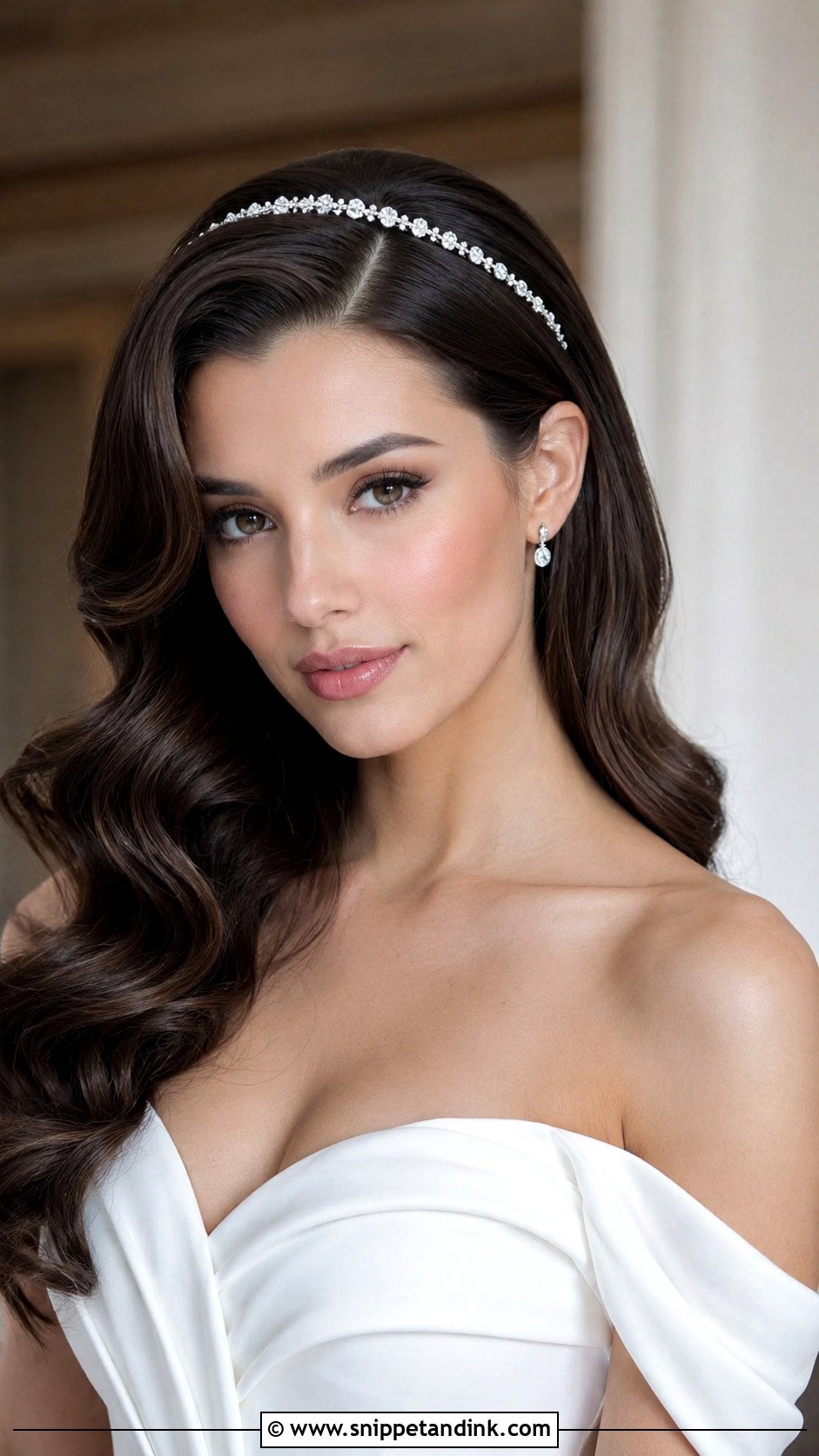
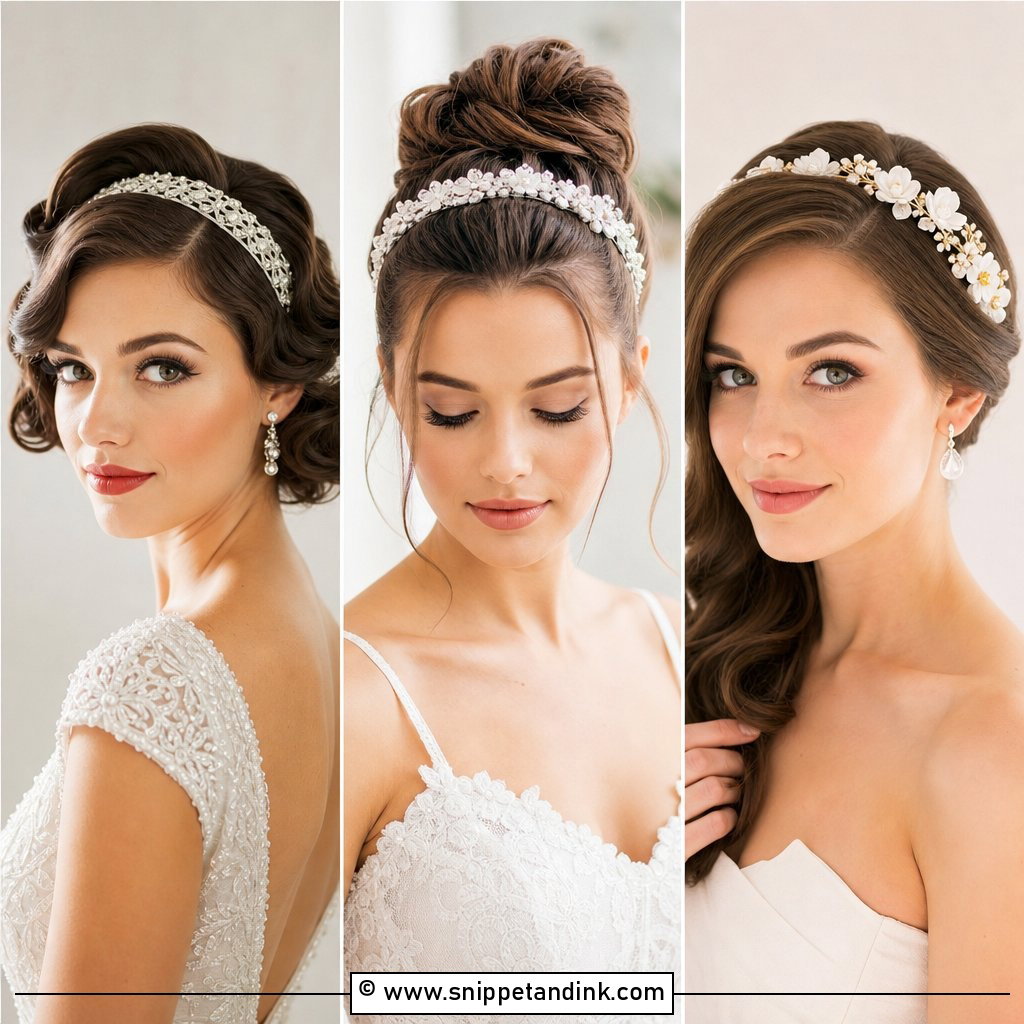
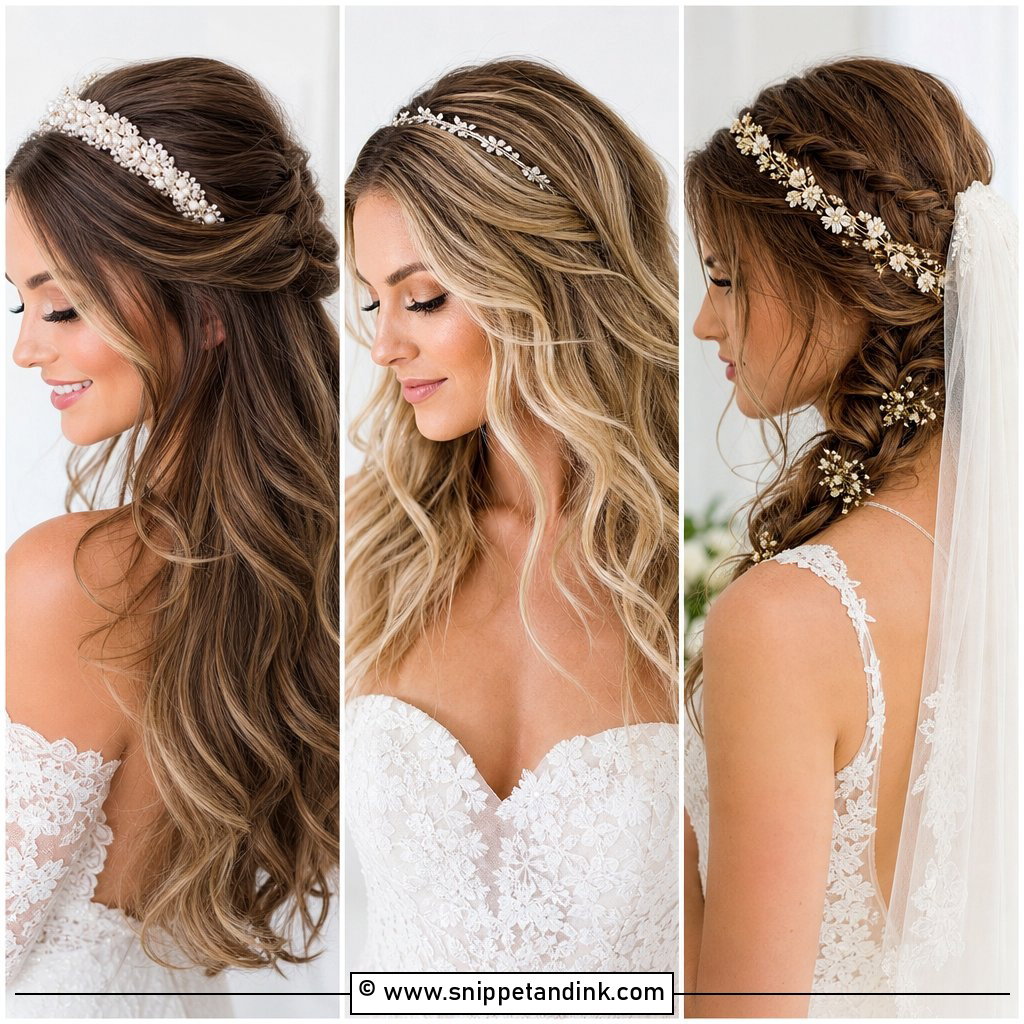
Glossy waves and a headband need a careful order. The waves are set in one direction, clipped while they cool, then brushed out, and only then does the band go on. Put it on earlier and the brush-out drags under it. A slim crystal or pearl band is plenty; anything thick competes with the shine. Medium to long hair shows the wave pattern, and an off-the-shoulder or vintage-style dress gives it room.
3. Bridal Half Up Half Down With Headband
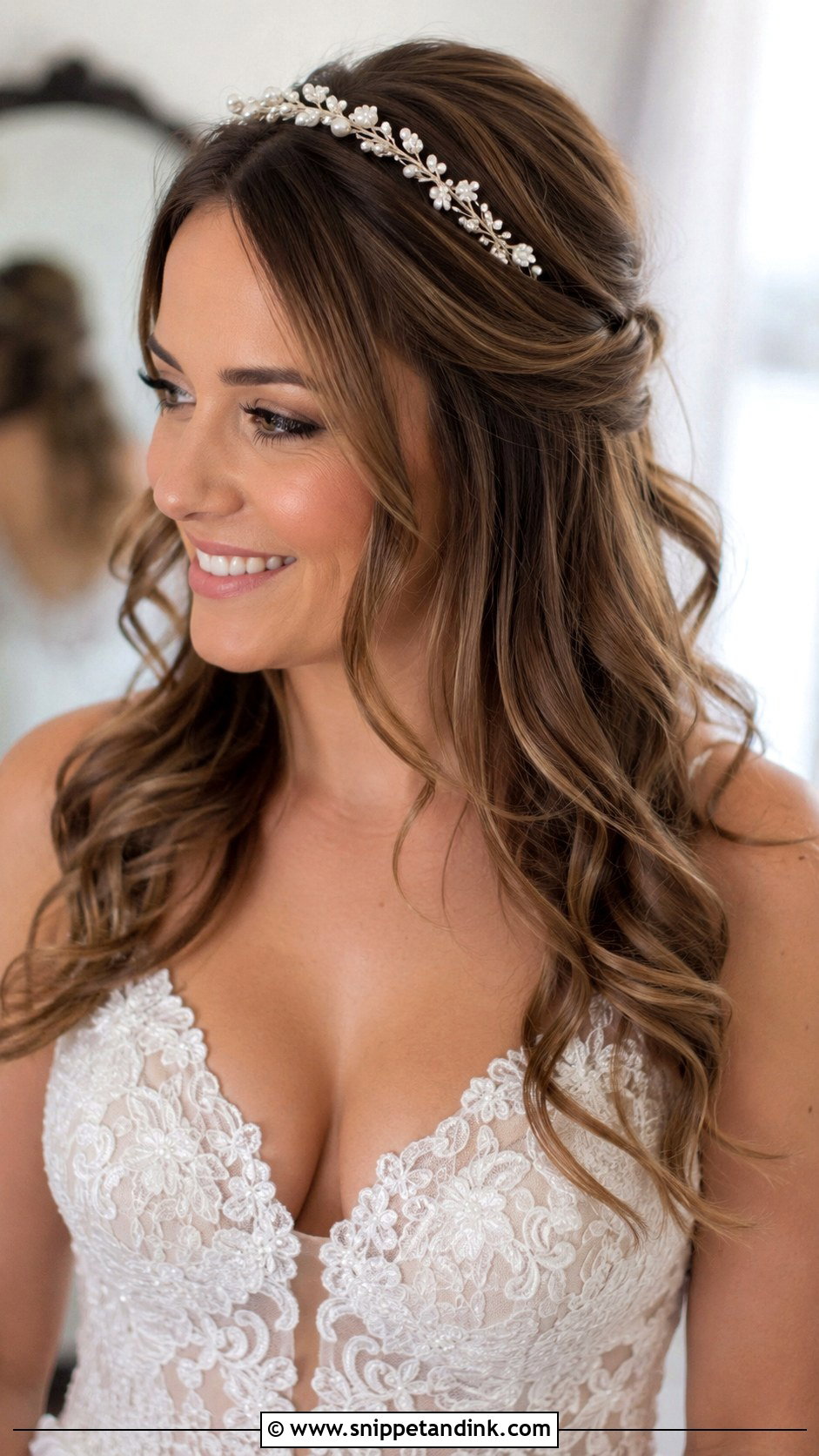
Half up with a headband is a practical answer for an outdoor ceremony, because the band holds the front pieces when the wind picks up. The top section can be twisted or lifted at the crown, with the rest in curls or waves below. I set the band just in front of the pinned section so the two read as one shape. Pearl suits a classic dress, a small floral band suits a boho one, and fine crystal sits somewhere between.
4. Bridal High Bun With Crystal Headband
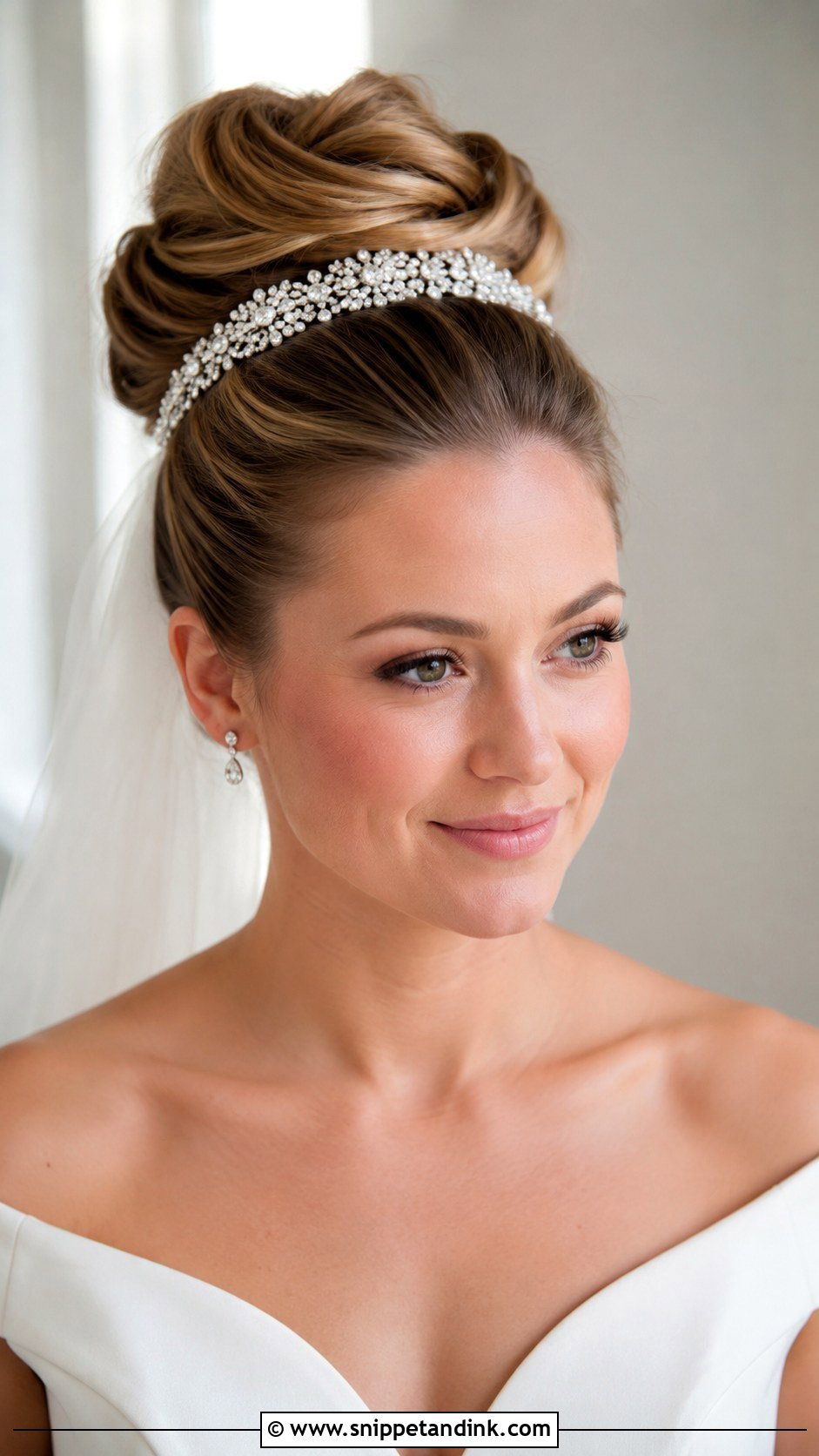
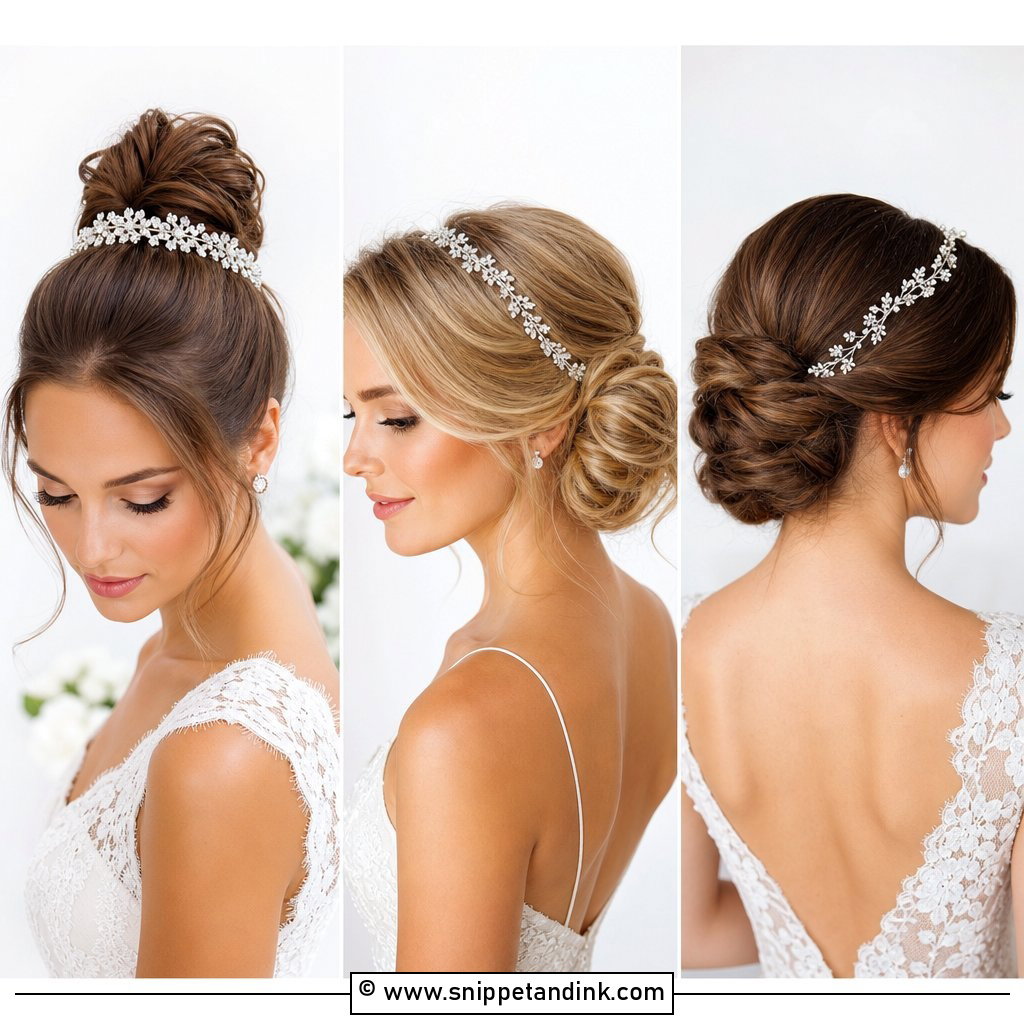
A high bun lifts the face and leaves the shoulders bare, which shows off a detailed bodice. The crystal band adds light around the front without weight. The thing I check is the distance between band and bun: too close and the two crowd each other, too far and the head looks divided. The bun needs a firm base so neither the band nor a veil drags it down while you dance. Smooth suits a sleek dress; airy suits a softer one.
5. Bridal Loose Curls With Headband
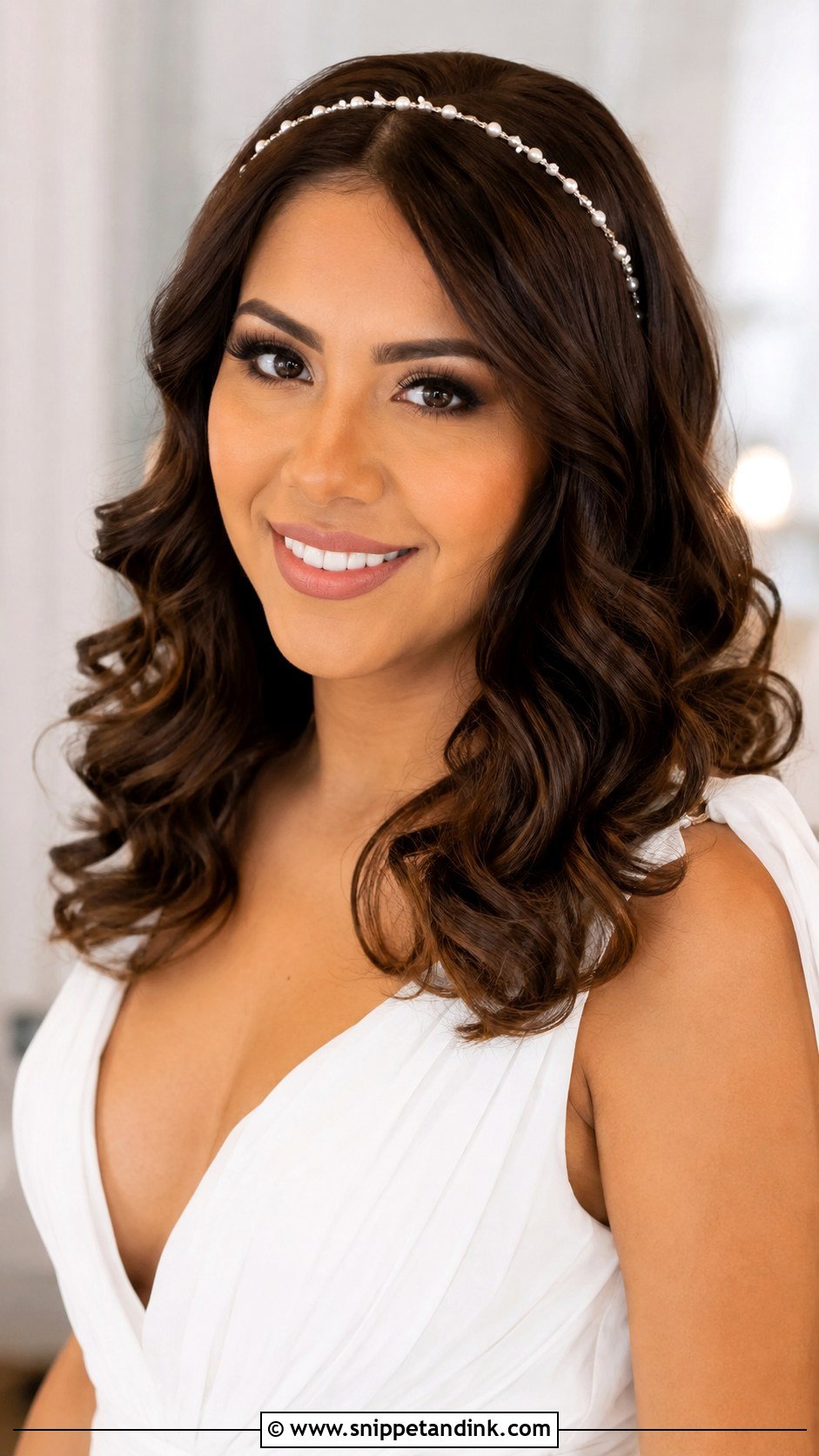
Loose curls give a headband something soft to sit against, and the band keeps the front out of your eyes, which is most of the battle with hair down. The curls can be big and brushed out or tighter if your hair holds curl. If your dress is plain, the band becomes the detail. One caution: on silky, freshly washed hair, a band will creep backward through the day. Ask your stylist to add texture spray at the roots where it sits.
6. Bridal Chignon With Headband
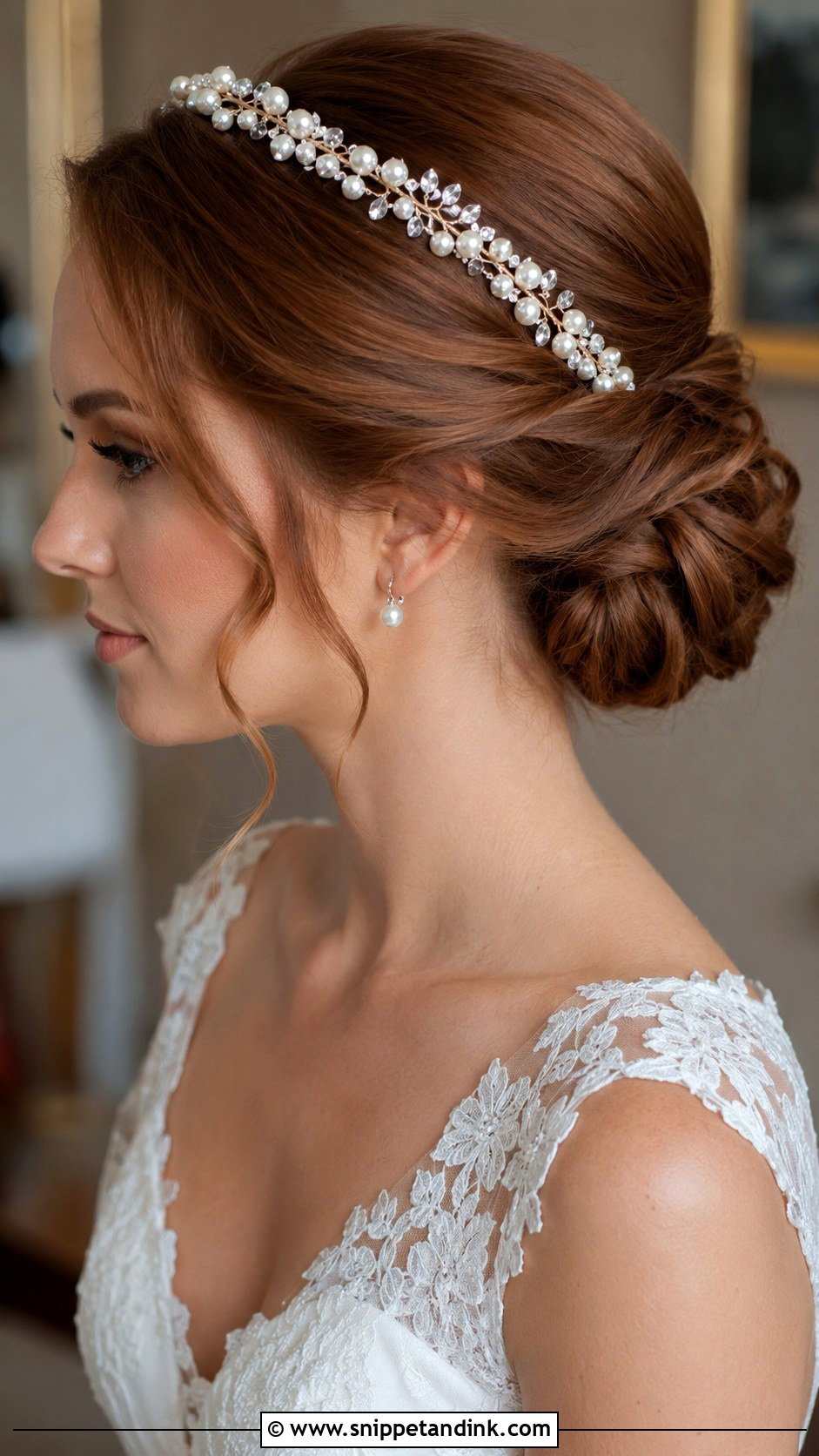
A chignon is the steadiest base for a headband, because the low shape leaves the whole top of the head clear. Wear it smooth, tucked or twisted. A veil can go above or below the knot, which gives you options most styles don’t. I see this pairing at formal venues and at courthouse ceremonies alike. If your hair is fine, padding or texture spray will give the chignon enough size to balance the band.
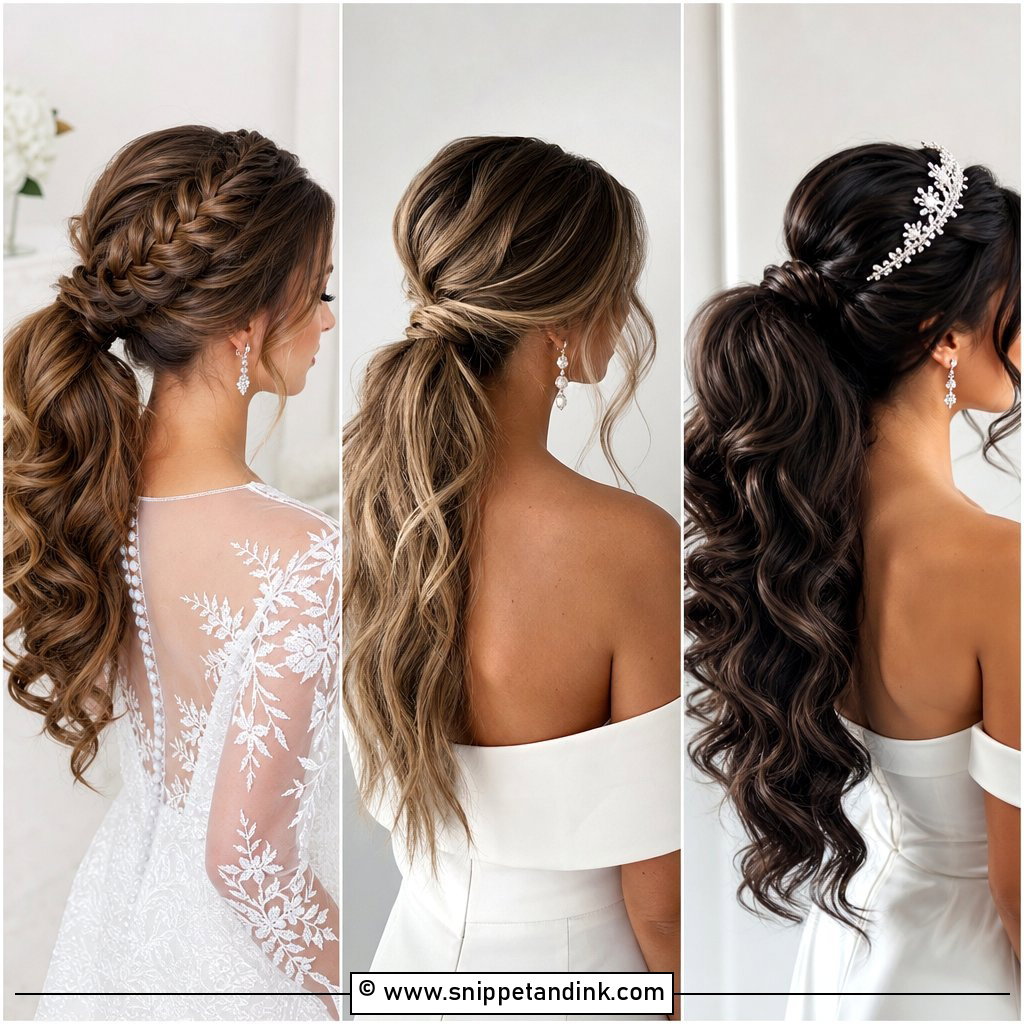
7. Bridal Ponytail With Headband
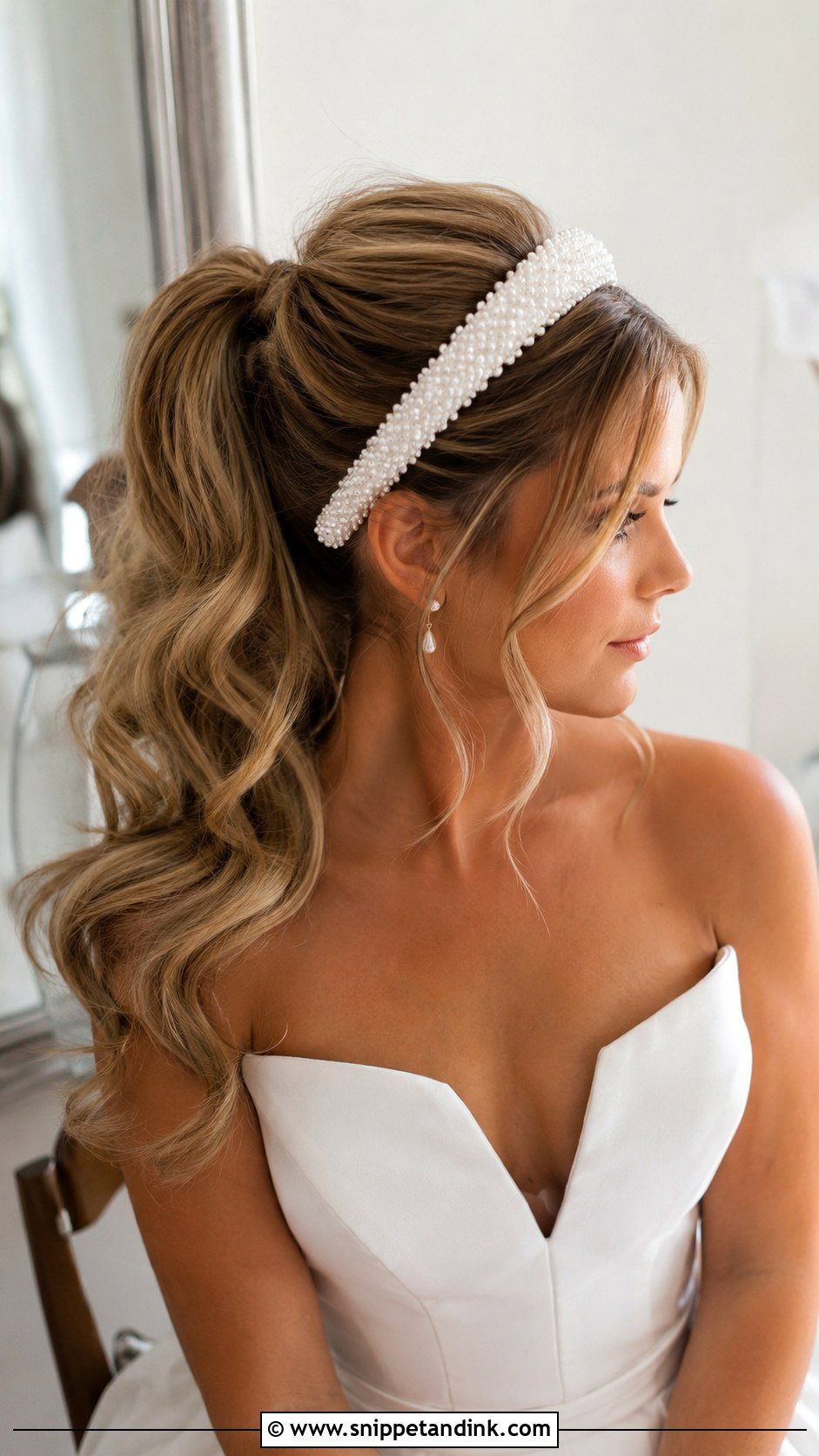
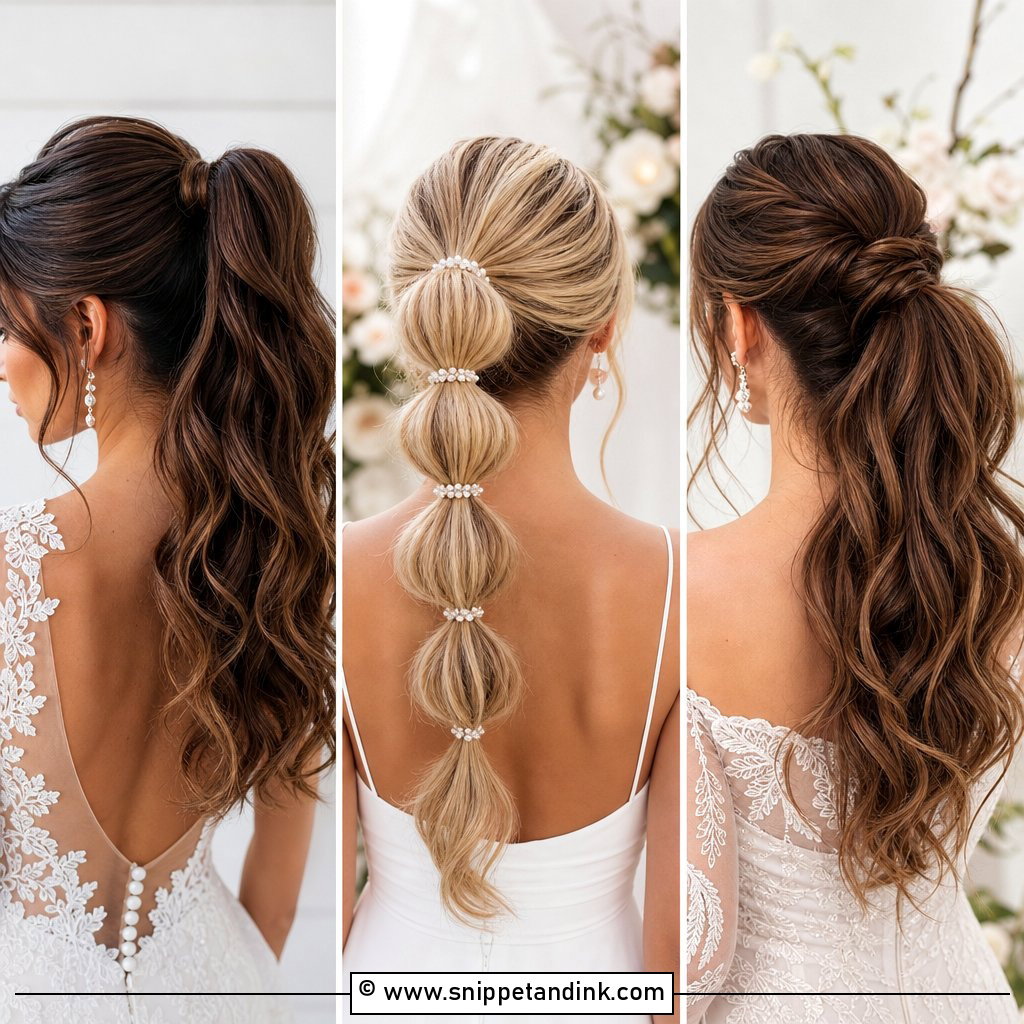
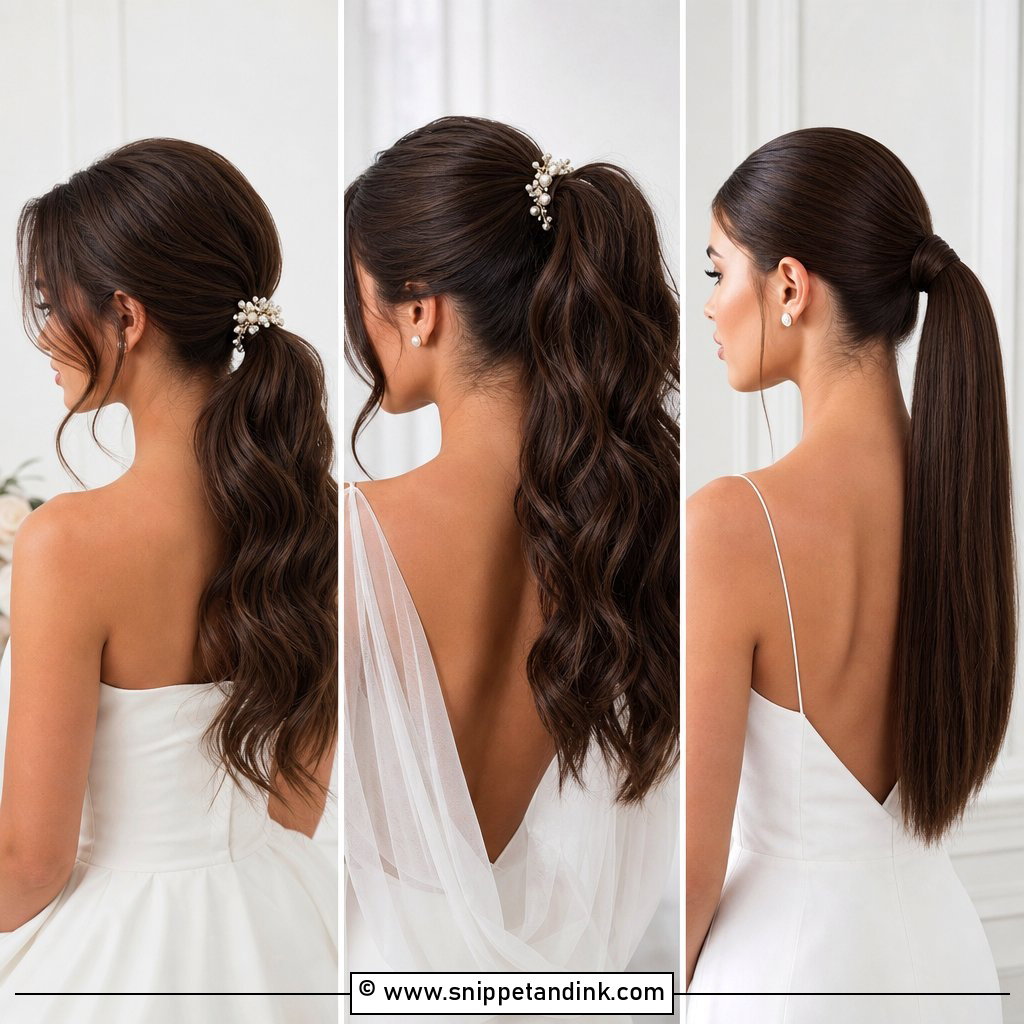
The ponytail is the most comfortable style on this list, and a band makes it read bridal instead of gym-ready. High looks glamorous; low looks relaxed. The base should be wrapped with a section of hair to hide the elastic. I place the band according to crown height: a high ponytail wants the band a little further back so the head doesn’t look flat between them. Waves through the length give it movement.
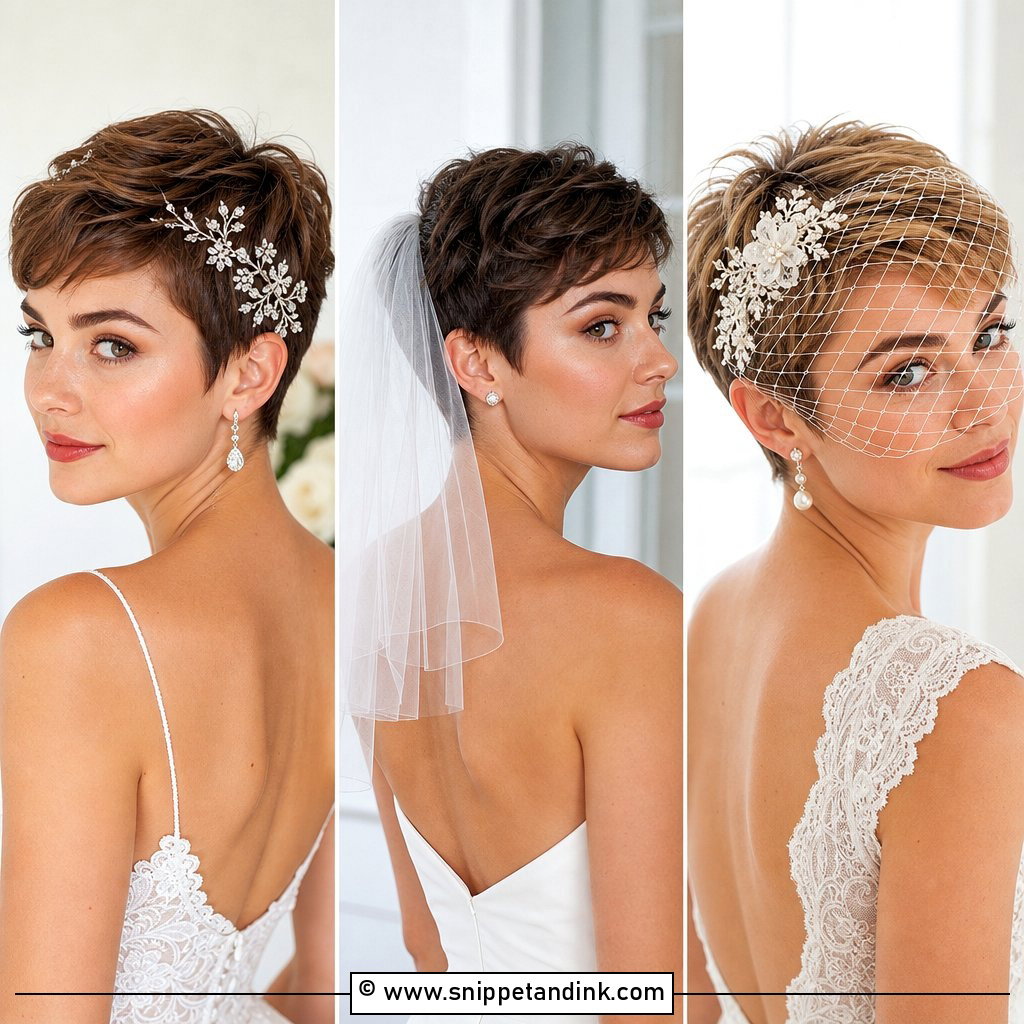
8. Bridal Short Hair With Headband
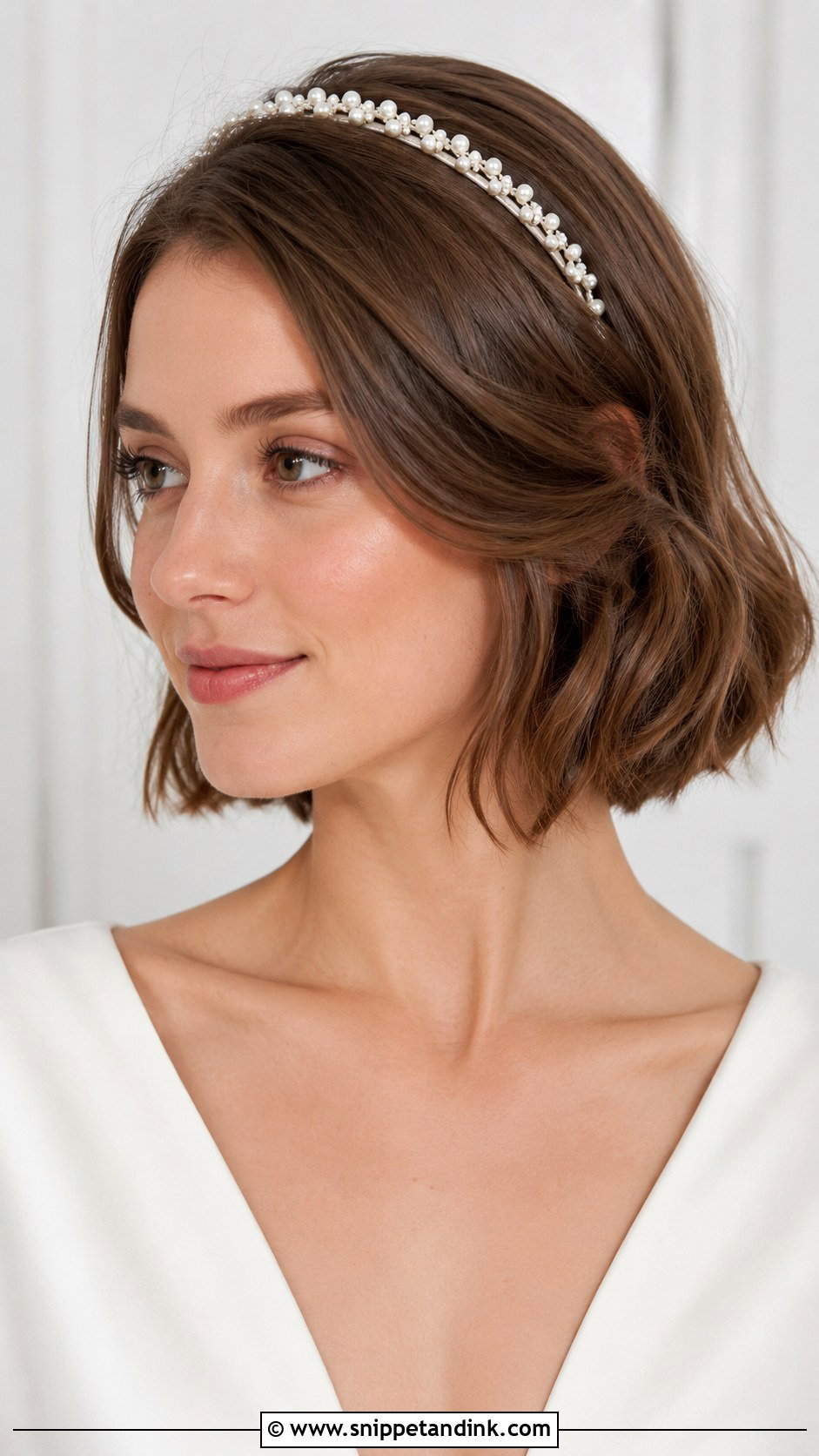
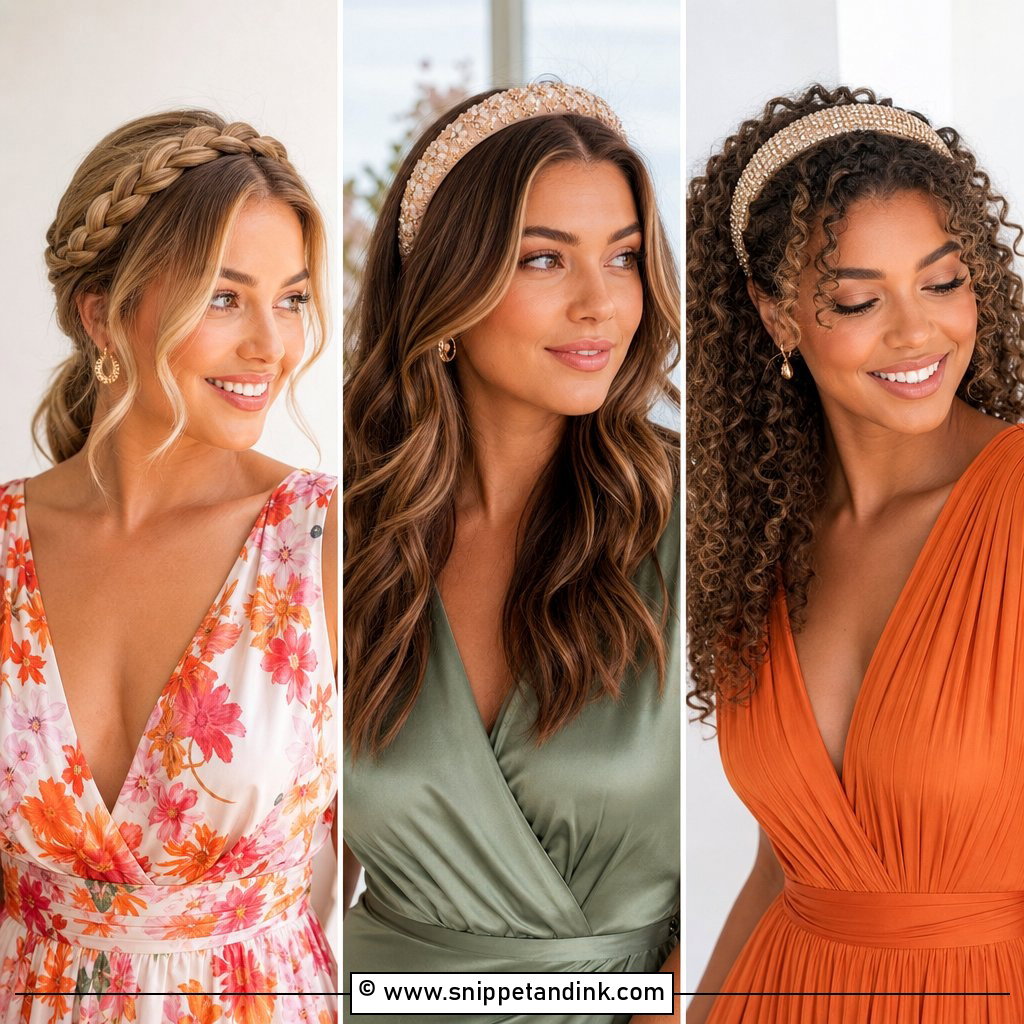
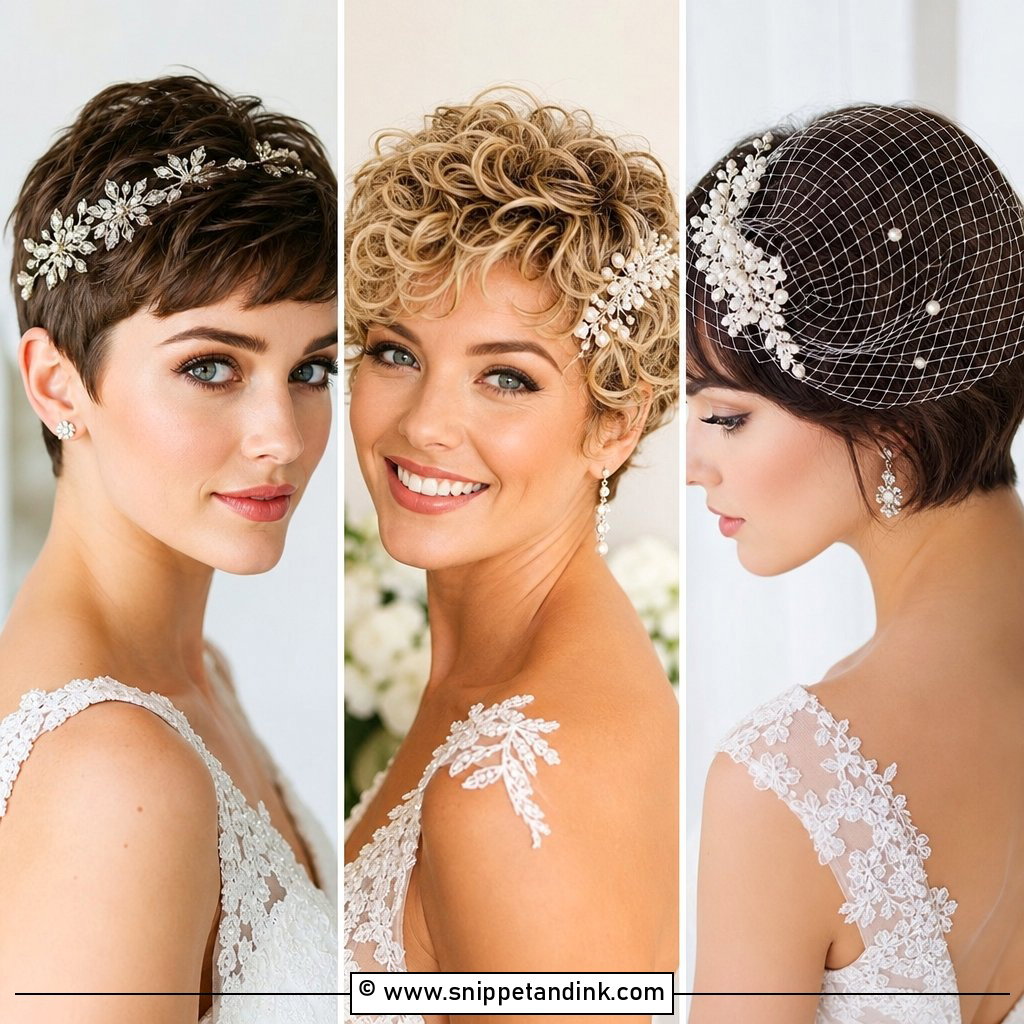
Bridal short hair with headband is where scale matters most. A thin pearl band suits a pixie; a padded satin or crystal band can hold its own against a bob. Too wide a band on very short hair covers half of it. Ask for soft bends or tucked sides so the cut has shape around the band. Short hair also shows your earrings, so choose the two together.
9. Bridal Curly Updo With Headband
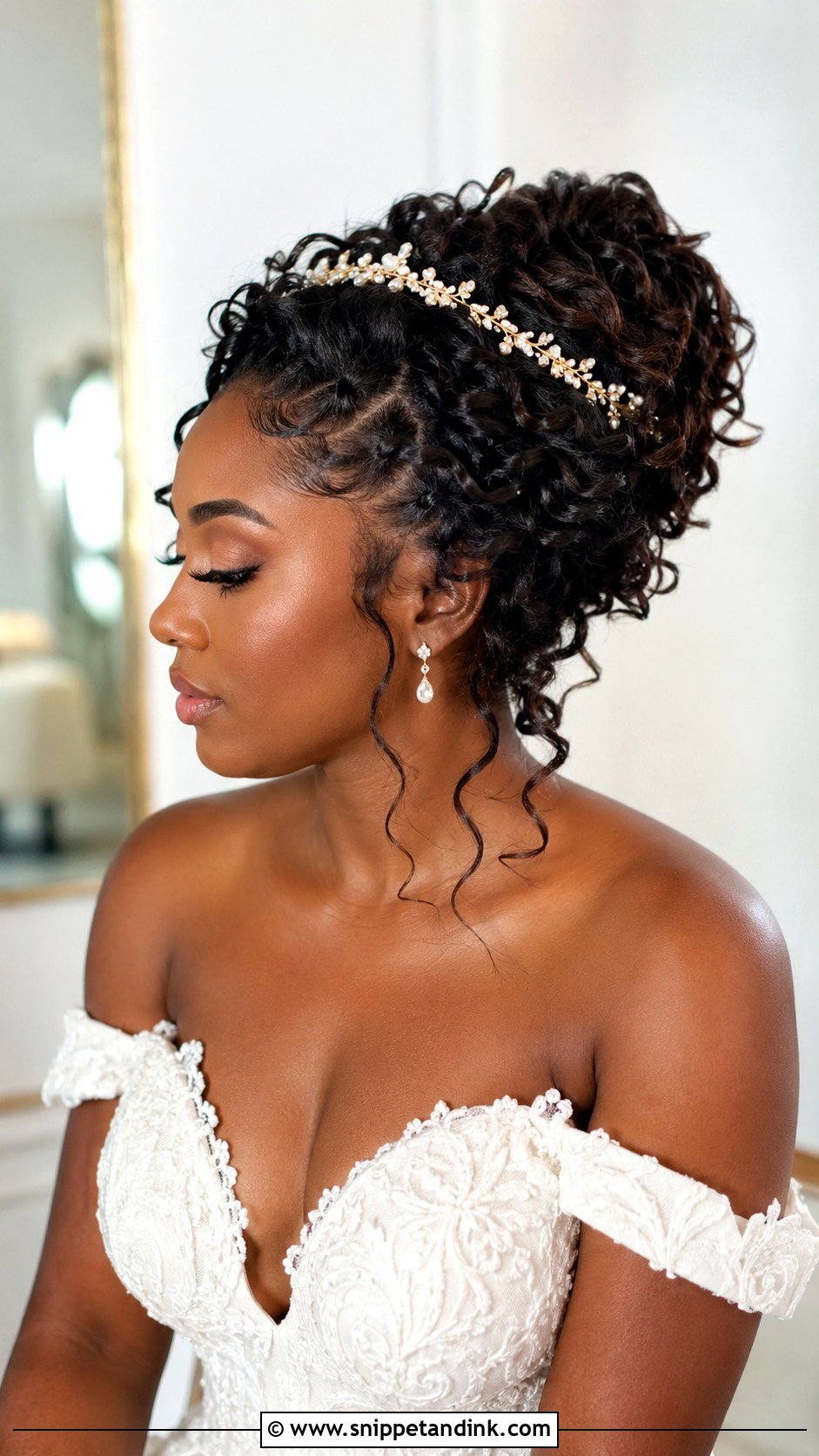
Curly updos keep their texture best when the band sits on top of the curls rather than pressing into them. The curls can be pinned into a crown, gathered at the back or formed into a low bun. A headband defines the hairline. For naturally curly, coily, or textured hair, I look for a band with flexible ends or an open back so it doesn’t squeeze. Moisture prep comes first, then cream, gel or foam to suit your texture.
10. Bridal Sleek Bun With Headband
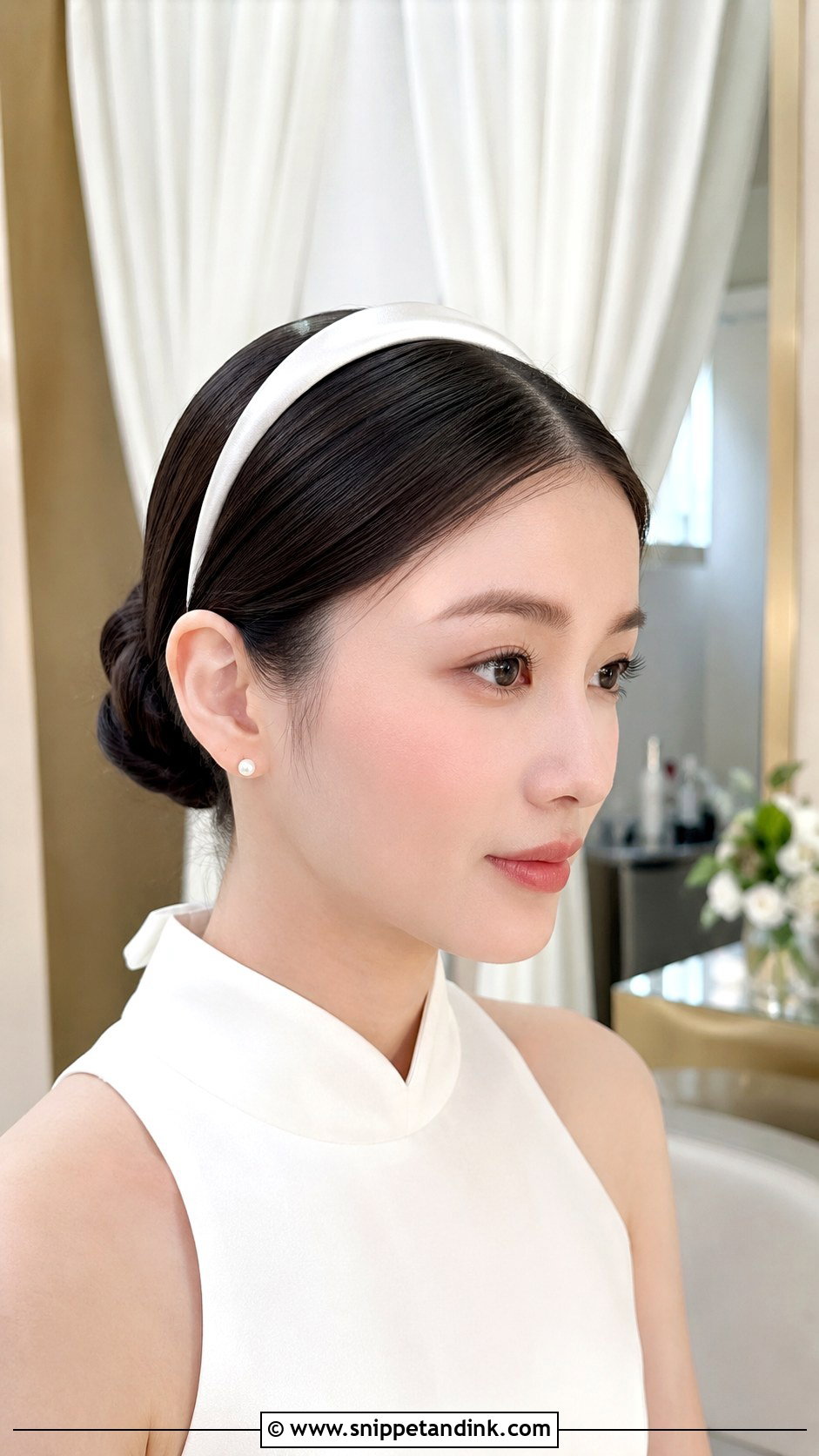
A sleek bun can look severe, and the band is what softens it. The hair is smoothed back, shaped into a neat bun, and finished with a slim or padded headband. I like it with modern gowns, high necklines and statement sleeves, where loose hair would clutter the line. Satin gives a matte finish; crystal adds a little shine. Use a light shine product, not a heavy one, or the hair photographs greasy at the part.
11. Bridal Boho Waves With Floral Headband
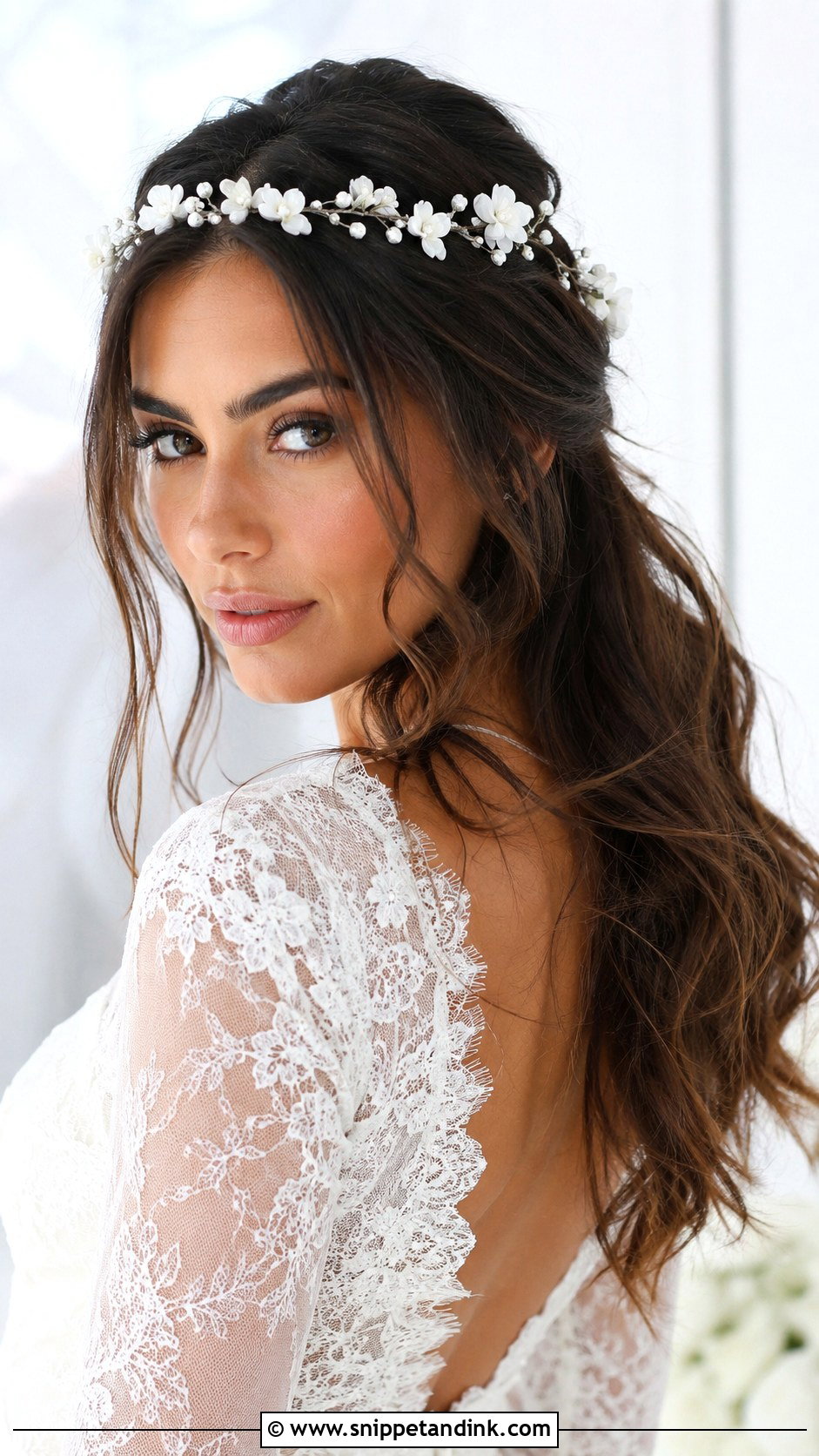
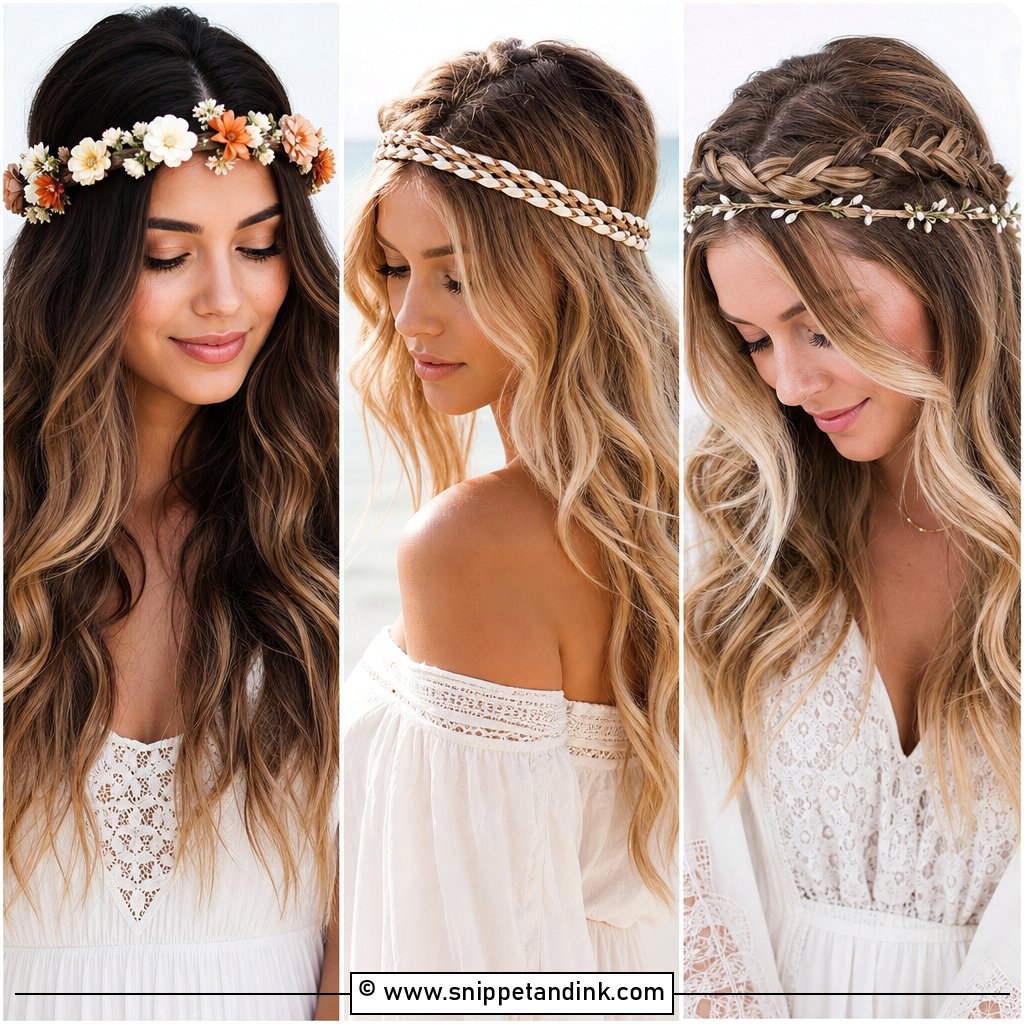
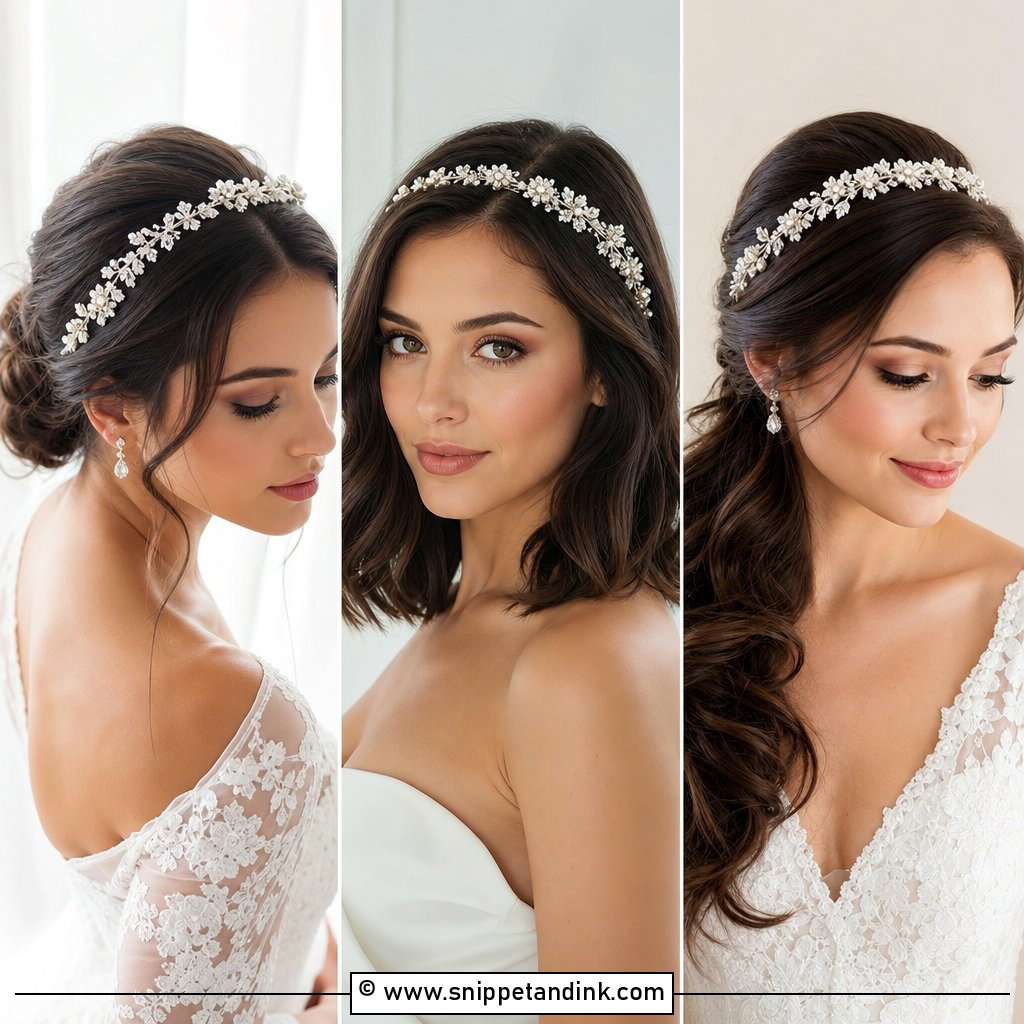
Loose boho waves with a floral band are the outdoor look in this list. The waves should look undone, with movement through the ends, and the flowers can be small for a delicate feel or larger for a looser wedding. It sits well with lace, chiffon or flowy bridal dresses. Highlighted or balayaged hair shows the wave dimension especially well. If you use a fresh flower band, order it from your florist for that morning; silk bands can be worn any time.
12. Bridal Braided Updo With Headband
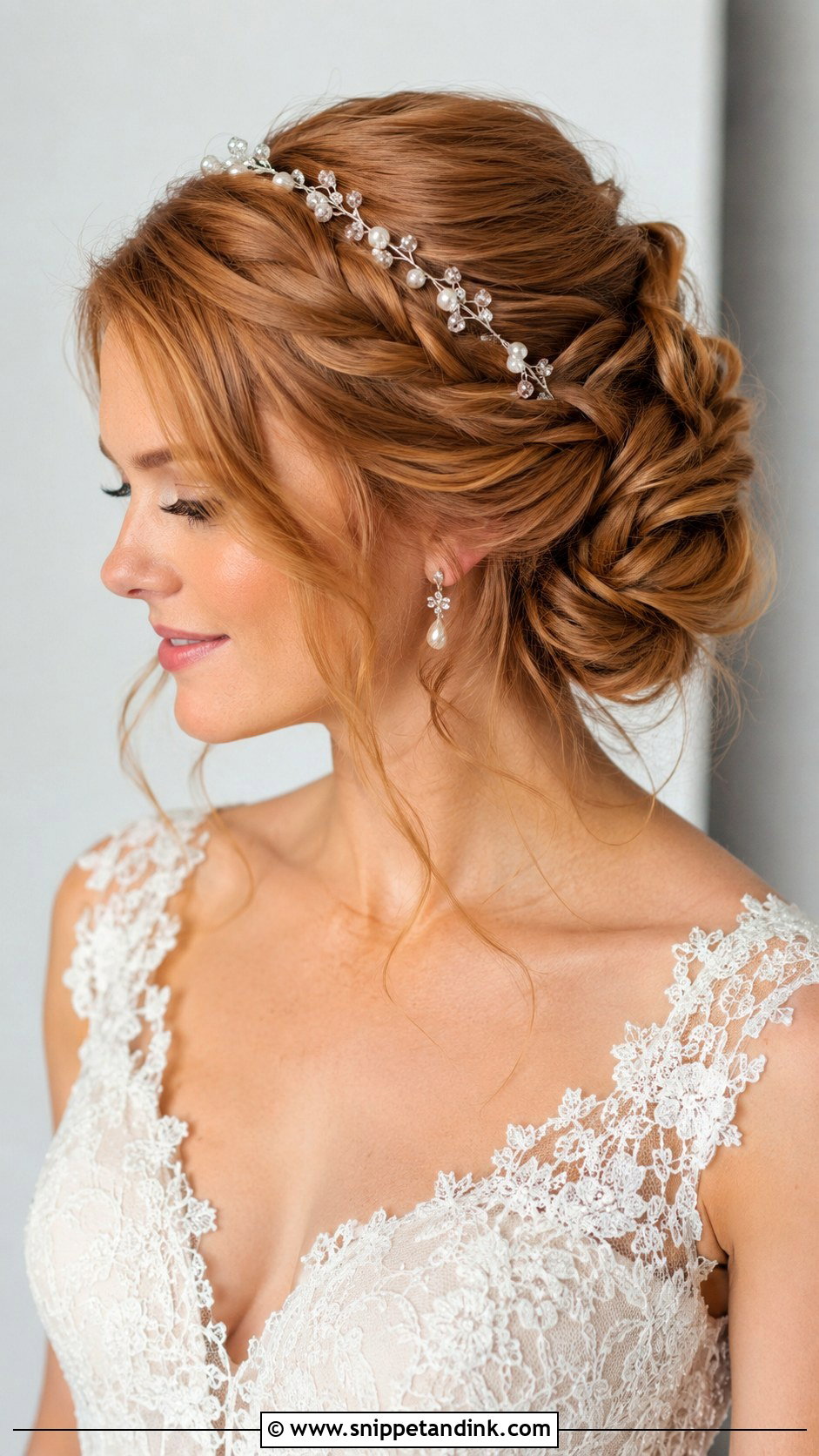
Braids give a headband something to grip, which is why this pairing holds so well. The braid can wrap a bun, cross the crown or blend into a loose updo. Thick hair benefits most because the braid controls volume; medium hair may need extensions for fullness. I leave a little space between the band and the braid so you can see both in a side photo instead of one hiding the other.
13. Bridal Side Swept Hair With Headband
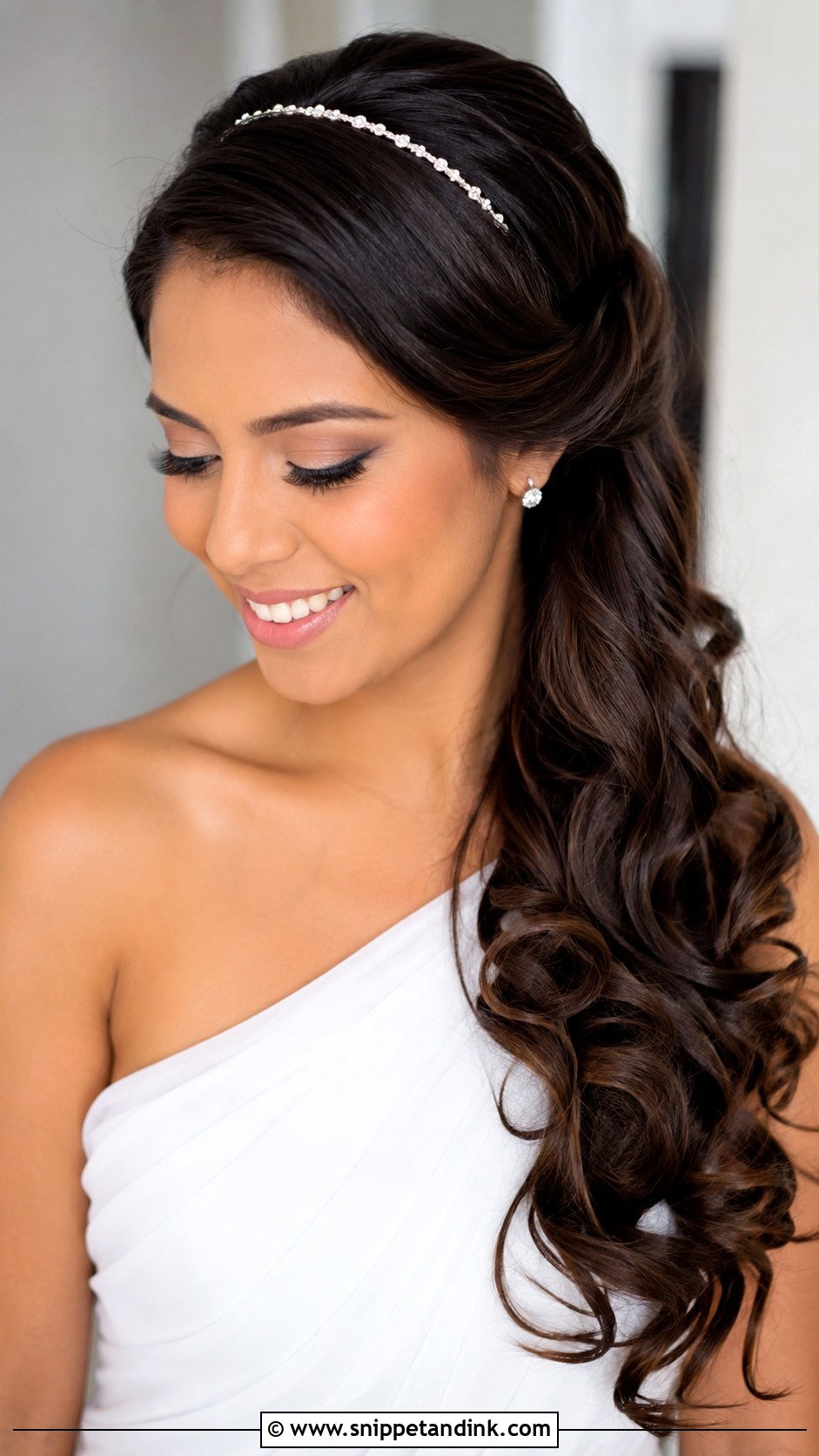
Sweeping the hair to one side lets the curls fall over the collarbone, and the band balances that weight from the crown. One-shoulder and strapless dresses suit it, as do earrings you want seen. The pins that hold the sweep must sit under the curls, out of sight. Use a flexible spray. Stiff hold makes side-swept hair look set in place.
14. Bridal Messy Bun With Headband
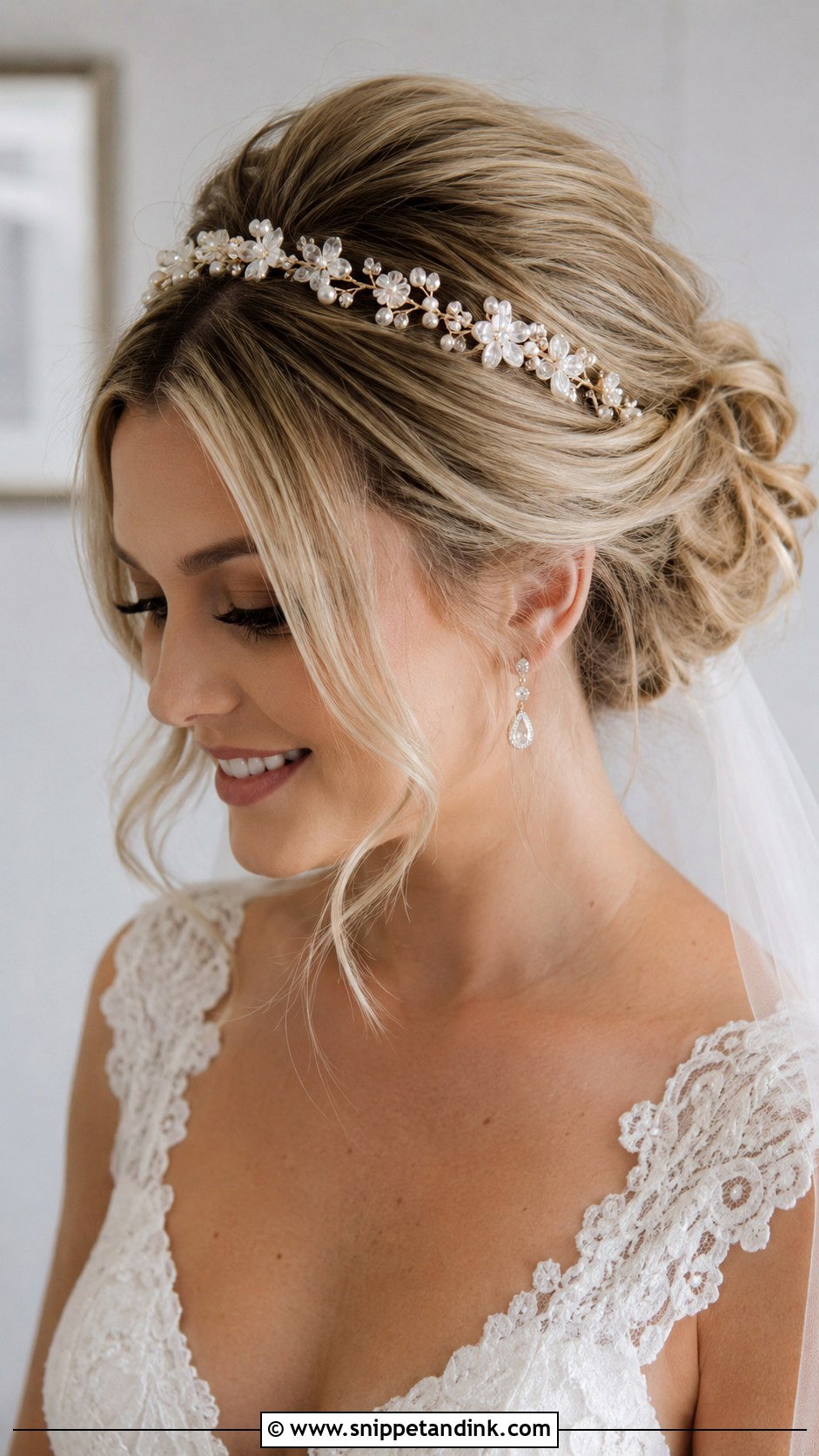
A messy bun needs a strong structure underneath or it falls apart by the first dance. Loose tendrils, airy volume and soft texture make it romantic, and a pearl or floral band gives the front a finished edge. It’s a natural match for garden and beach ceremonies. Each loose piece should be placed on purpose; I’d keep it to a few around the face, or the band starts to look like it’s holding back a mess.
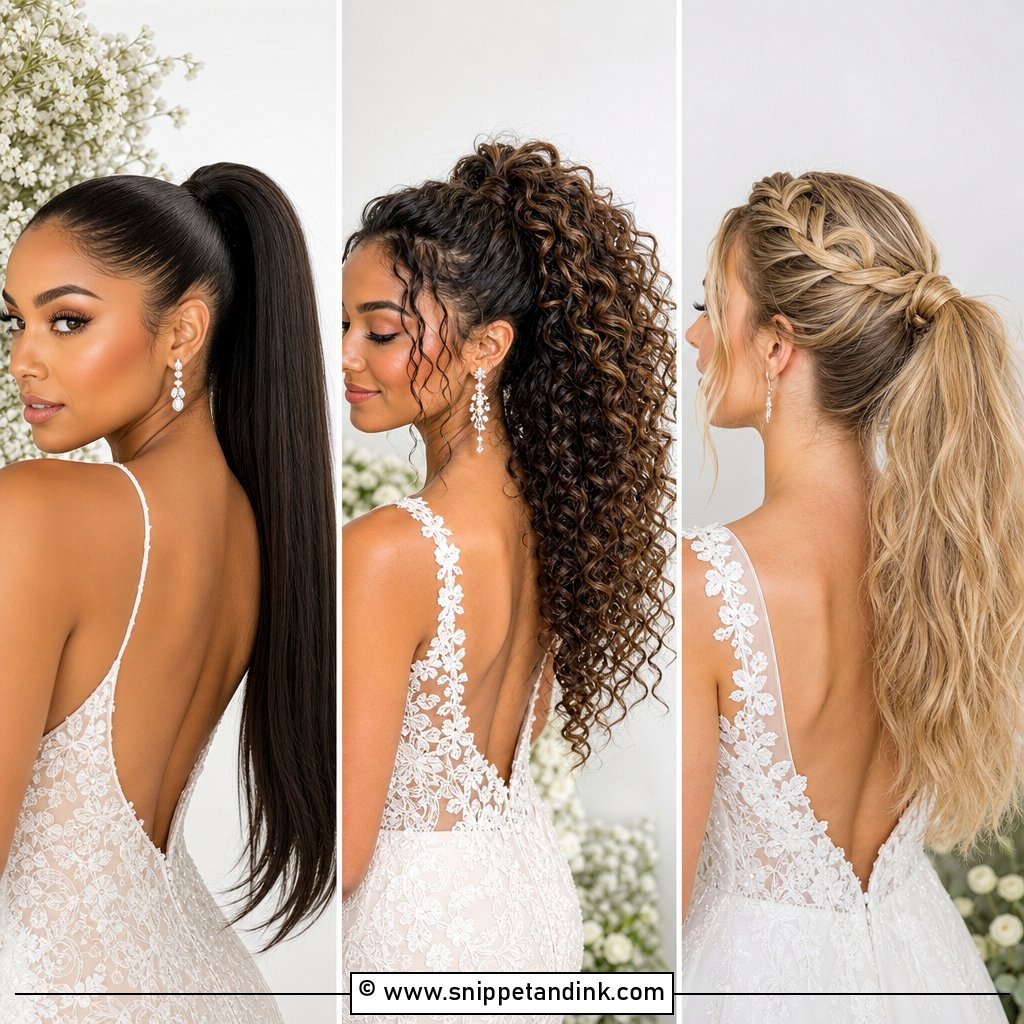
15. Bridal Long Hair With Headband
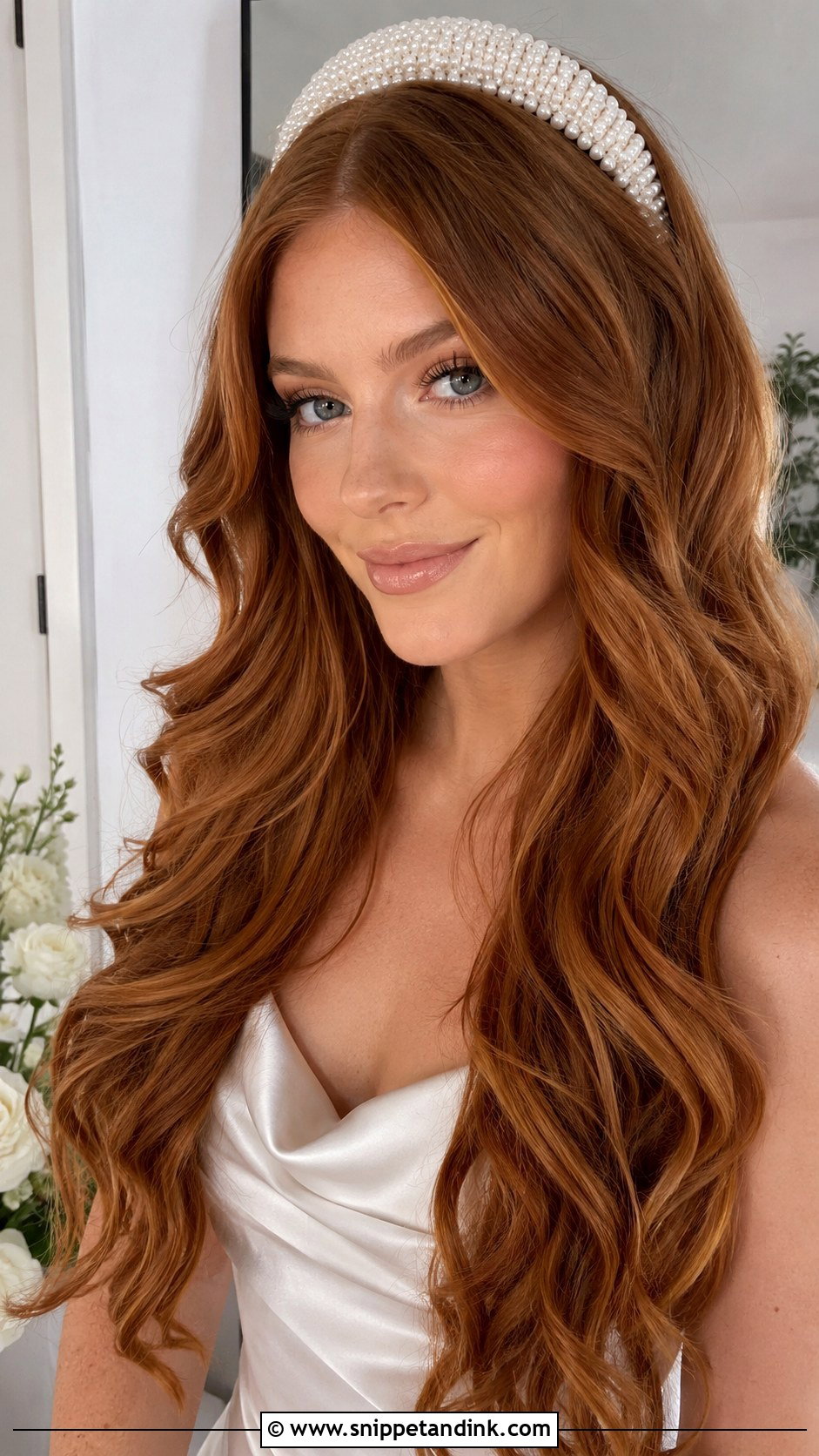
With long hair and no veil, the band becomes the focal point of the whole look. It works with a center part, a soft side part or pulled-back front pieces. A padded pearl band reads fashion-forward; a thin crystal one is quieter. Long hair is heavy and drops curl, so the waves need to be set properly and finished with light products. It’s also a good reception change if you wore a veil for the ceremony.
16. Bridal Bob With Headband
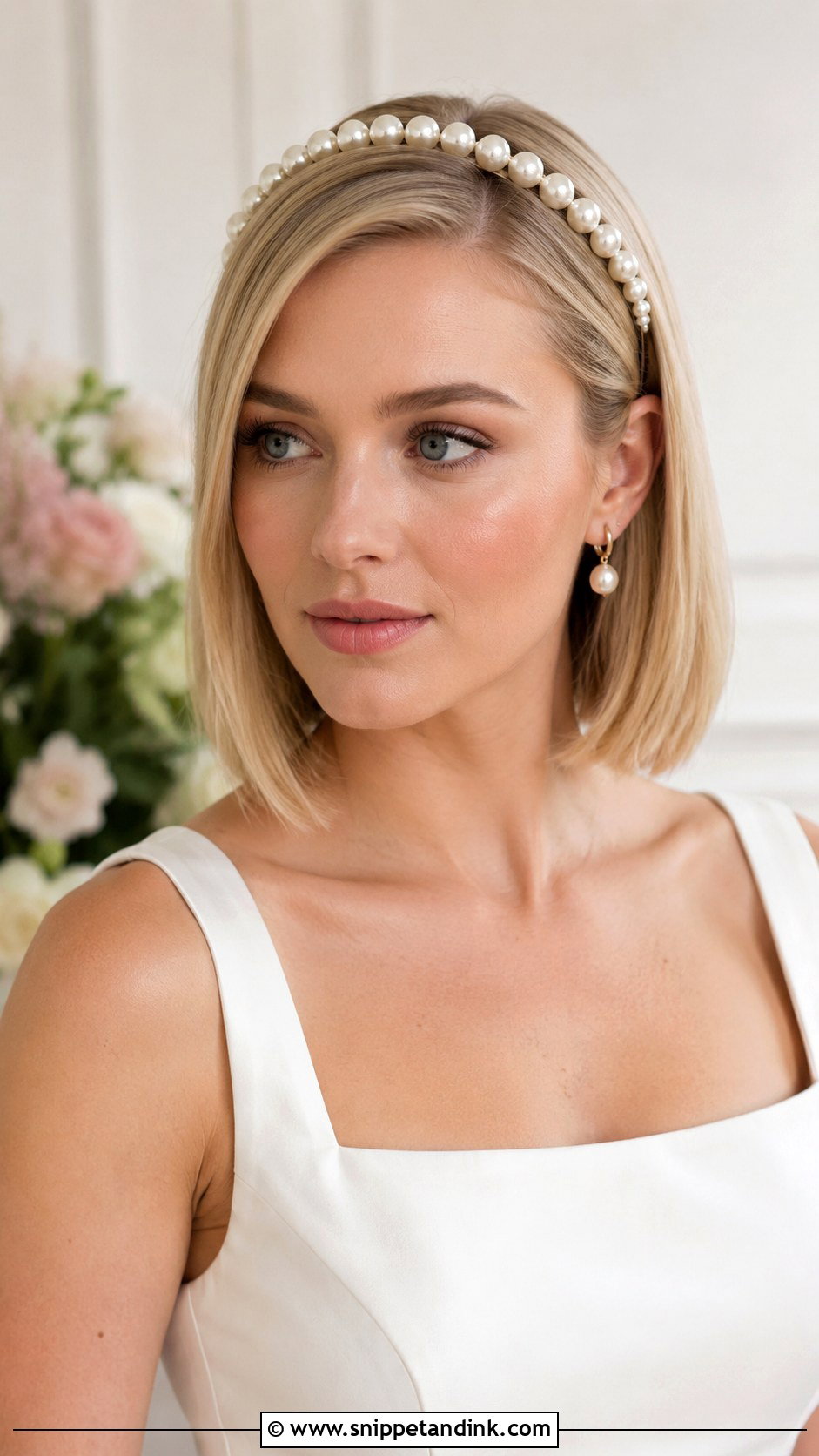
The bob is the cut where a headband does the most work, because there’s less hair to style. Wear it sleek and tucked, softly waved or curled under. A band frames the cut and makes it feel finished. For chin-length or shoulder-length hair with no extensions, this is my first suggestion. A slim band suits a delicate dress; a padded satin band suits a modern gown. Keep the ends polished and the part clean.
17. Bridal Vintage Waves With Headband
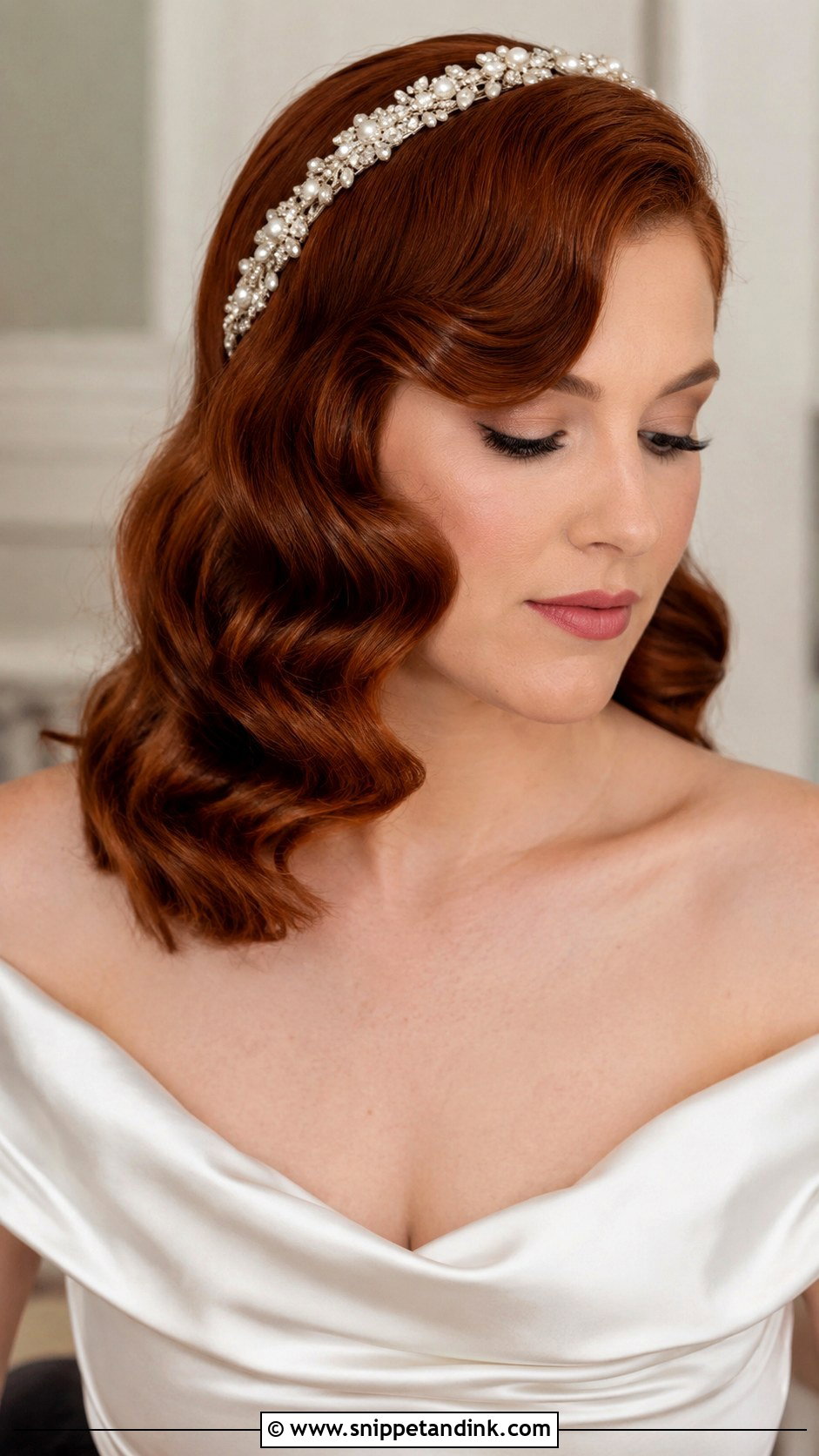
Vintage waves are sculpted more tightly than beach waves, with smooth curves along the face. Shine is everything here, so the surface has to stay smooth and the band has to sit without disturbing it. Setting clips, a deep side part and careful brushing build the pattern. A crystal, pearl or metallic band suits it, and so do red lipstick, lace and satin. I set the band slightly off-center, following the side part, which feels truer to the era.
18. Bridal Textured Low Ponytail With Headband
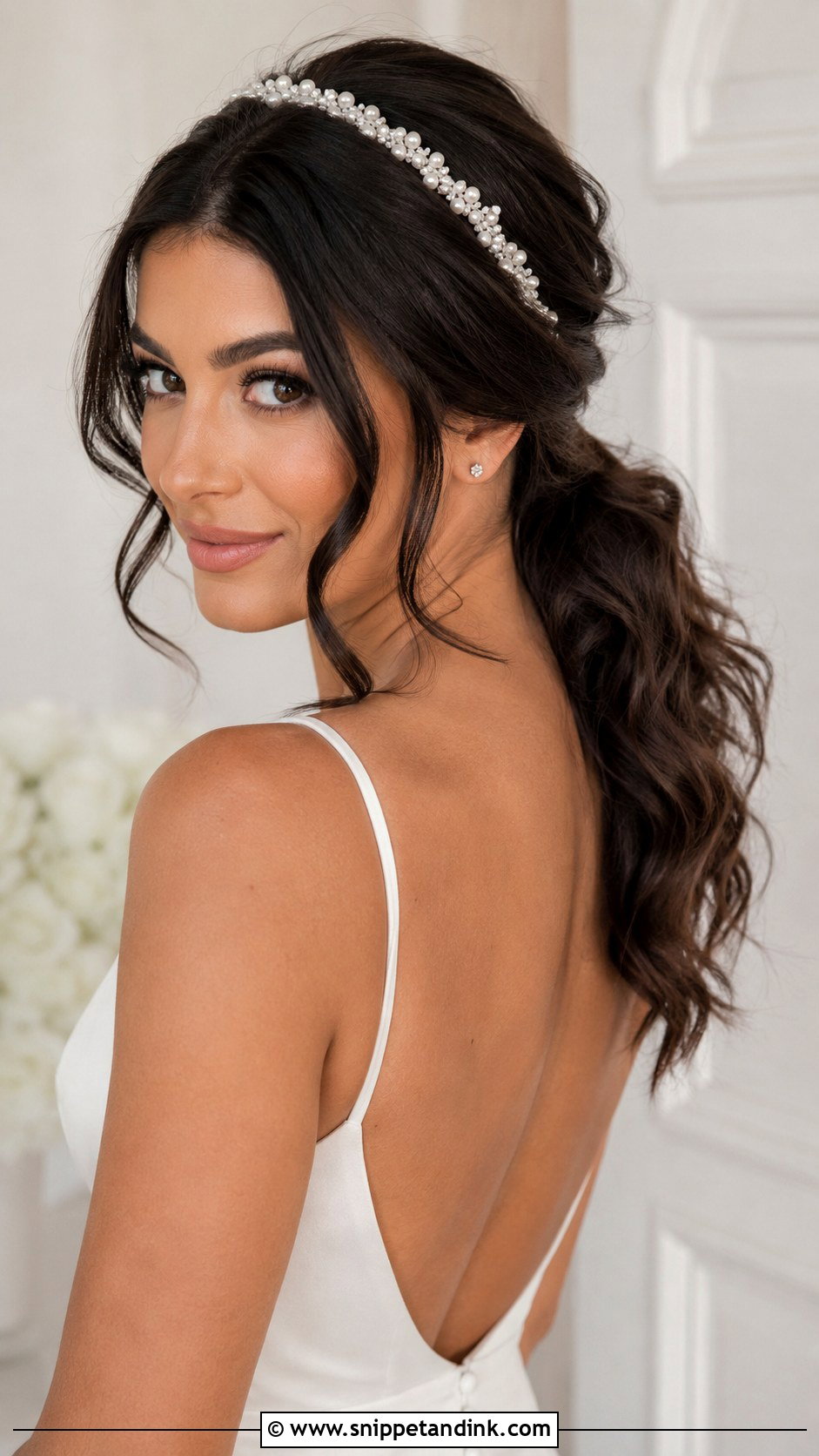
A low textured ponytail is softer than an updo and dressier than hair down. It sits at the nape, with volume at the crown and waves through the ends. The band keeps the front looking bridal. Open-back gowns and veils both work with it. The problem I see is sagging: ask your stylist to anchor the elastic with crossed pins, so the ponytail stays where she put it all evening.
19. Bridal Natural Hair With Headband
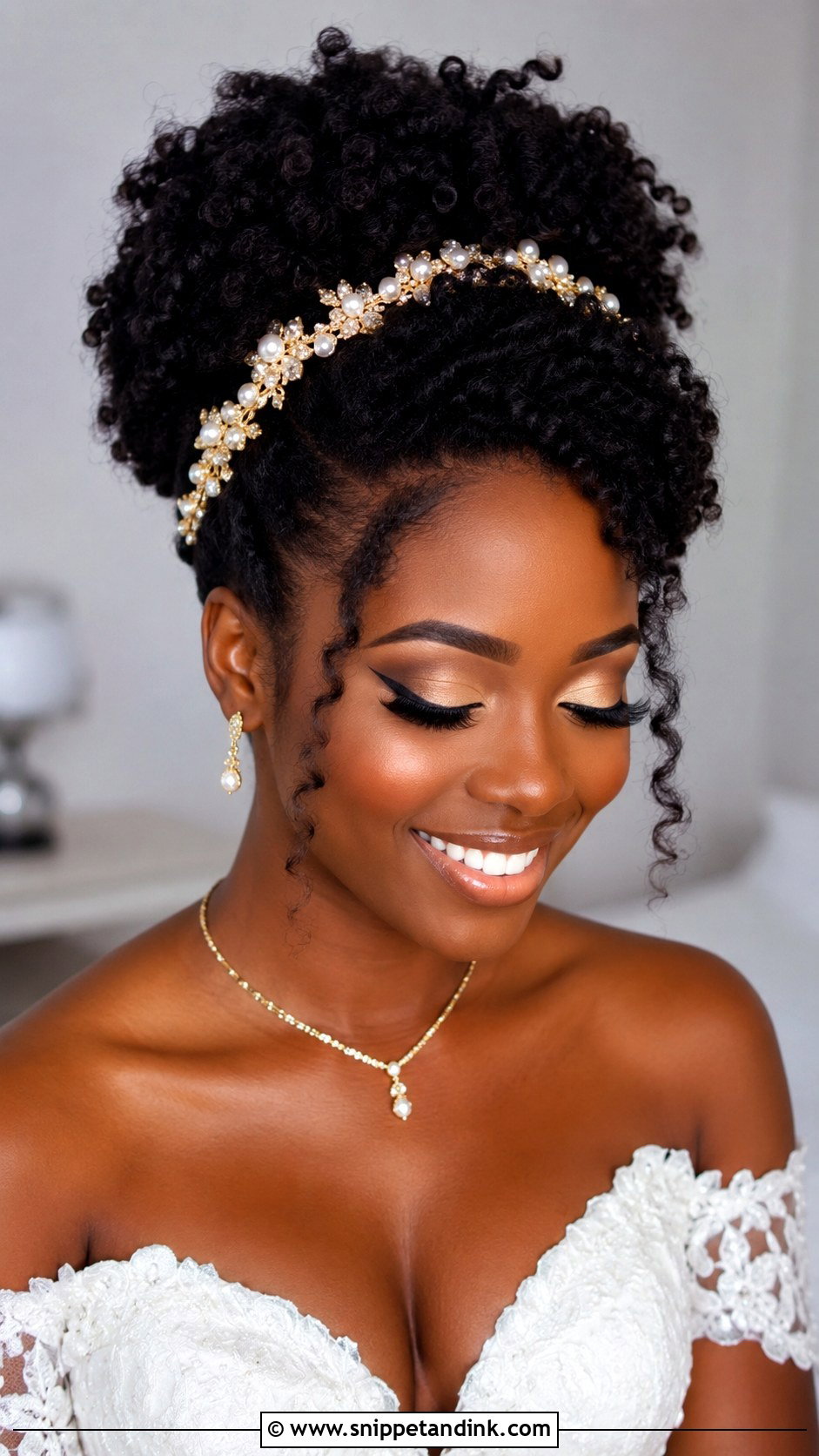
Natural hair can carry a headband in many shapes: a twist-out, a curly puff, a low textured bun or a sculpted updo. The band should sit on the texture without flattening it. I fit these with a slightly wider band, or one with an elastic back, so the pressure is spread out. Pearl, gold, crystal or floral can all work; I’d let your jewelry decide. Good moisture prep and the right hold product keep the shape all day.
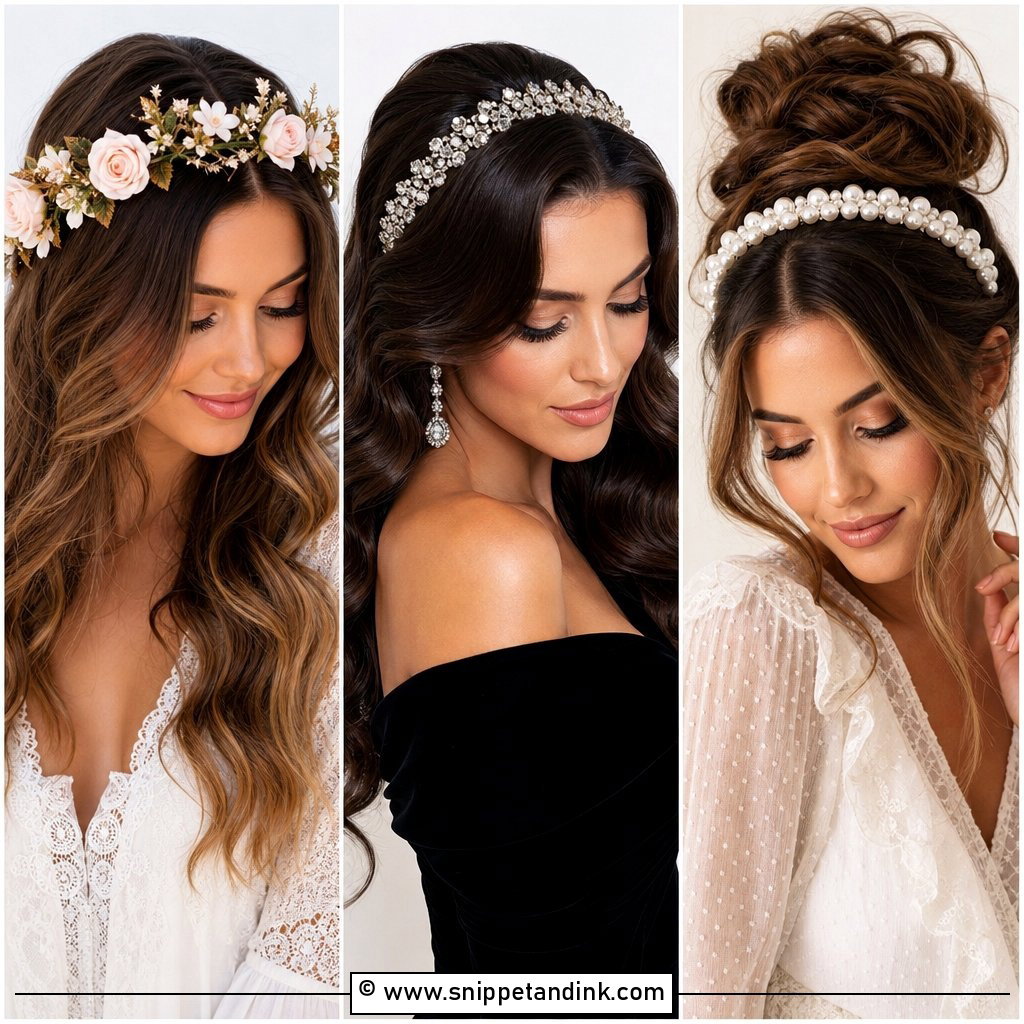
20. Bridal Veil With Headband
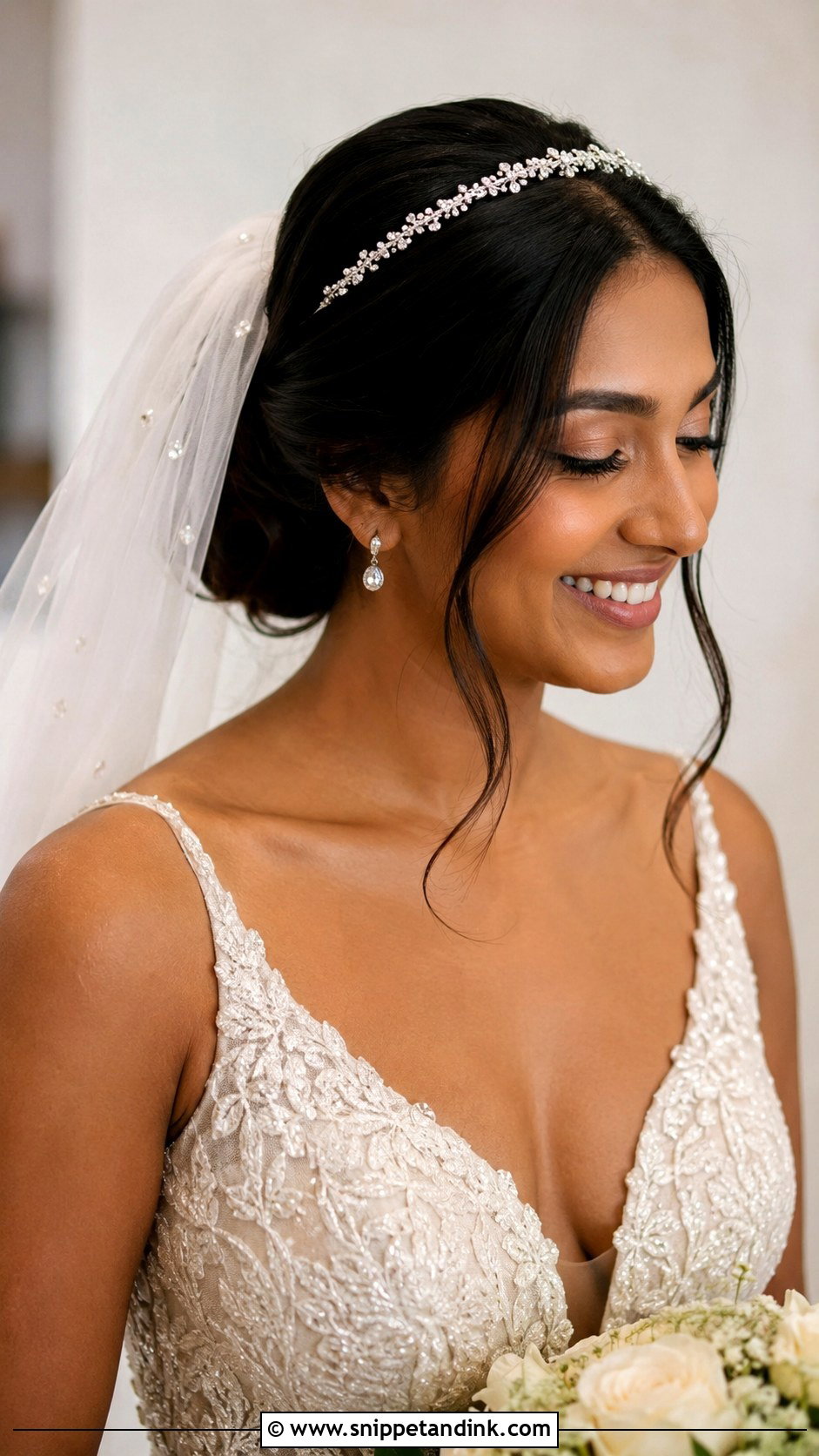
A veil and a headband together can look layered or crowded, and placement decides which. The band usually sits near the crown or just behind the hairline, while the veil comb goes under a bun, above an updo or behind loose waves. Balance them: a detailed veil wants a quiet band, and a plain veil can take pearls or crystal. Wear both together at your trial, for at least half an hour, to check comfort.
Why Headbands Pinch After Two Hours, and the Fix
Most rigid headbands are made for an average head, and the pressure point is almost always just behind the ears. It feels fine for twenty minutes and then becomes a headache. Wear yours around the house for a couple of hours in the weeks before the wedding. If it pinches, a metal band can usually be eased open a little by gently bending the arms outward, a small amount at a time. Don’t do this with fragile resin or glued crystals; ask the maker or a jeweler instead.
Stopping it from sliding
Silky hair is the usual reason a band creeps back. A little dry shampoo or texture spray where it sits gives it grip. Your stylist can also slide a bobby pin through each end of the band into the hair underneath, crossing a second pin over it, so it can’t move. Bands with small combs on the underside hold better than smooth ones.
Planning to take it off
Many brides take the headband off at some point, to switch to a reception look or simply to rest their head. A band pressed in all day can leave a dent in smooth hair. Ask your stylist to show you how to remove it and refresh the crown with a few fingers of texture spray. Pack a couple of pins and a small brush in your bag so you can fix the shape yourself.
A Headband You Forget You’re Wearing by the Speeches
A headband can soften a sleek bun, dress up short hair, add sparkle to waves or turn a ponytail into a bridal look. Your dress, hair texture, venue and veil should decide which one. Test it at your trial, wear it long enough to feel any pressure behind the ears, and take photos from the front, side and back. If you’ve stopped noticing it after an hour, it’s the right one.
You'll Like These Ideas:


Leave a Reply