
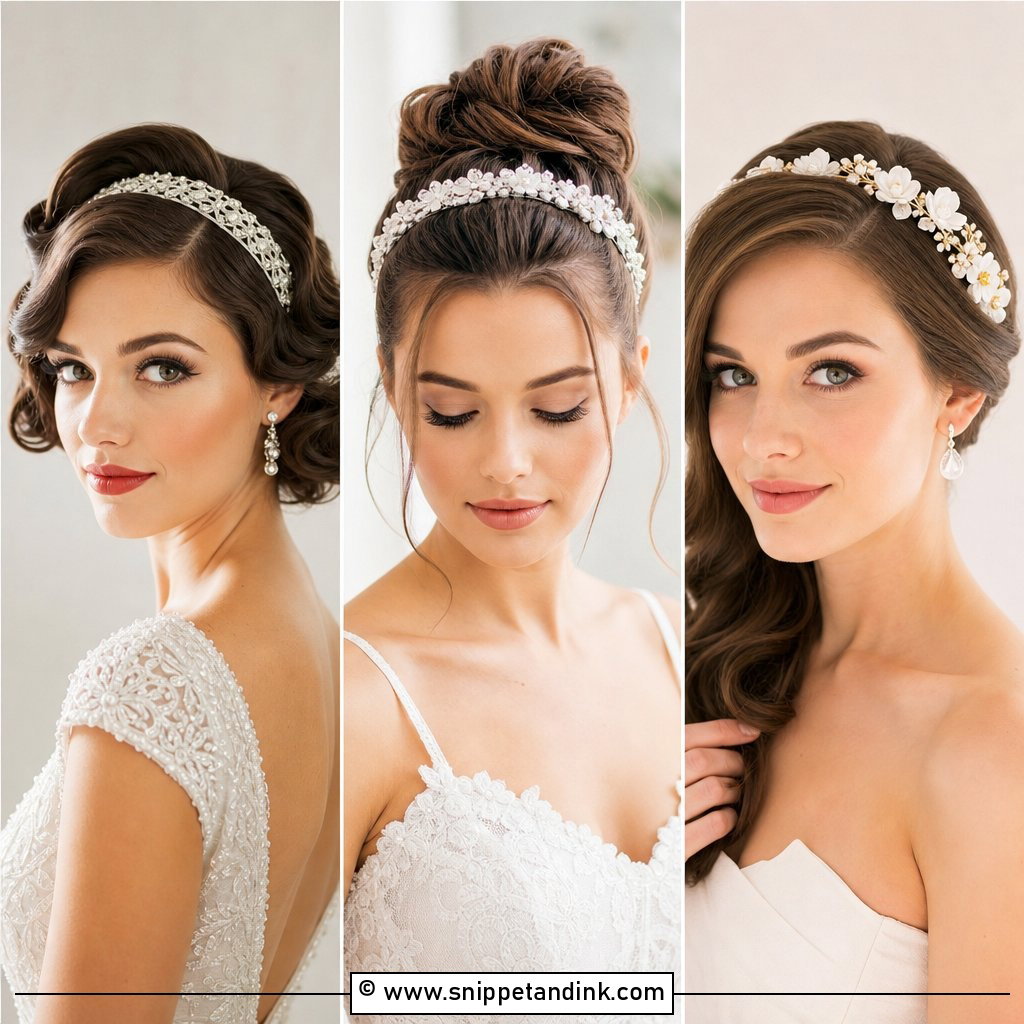
I like a headband on a bride because it does real work. It frames the face, holds back the short pieces that would otherwise fall forward during vows, and can even hide where a veil comb sits. It also suits more hair types than most accessories: a pixie, a bob, a full afro, a sleek bun or long waves. The look changes with the material, so pearls read classic, padded satin reads modern and crystal reads evening. Below are twenty headband hairstyles I’d happily build, with what each one needs from your hair and where it tends to go wrong.
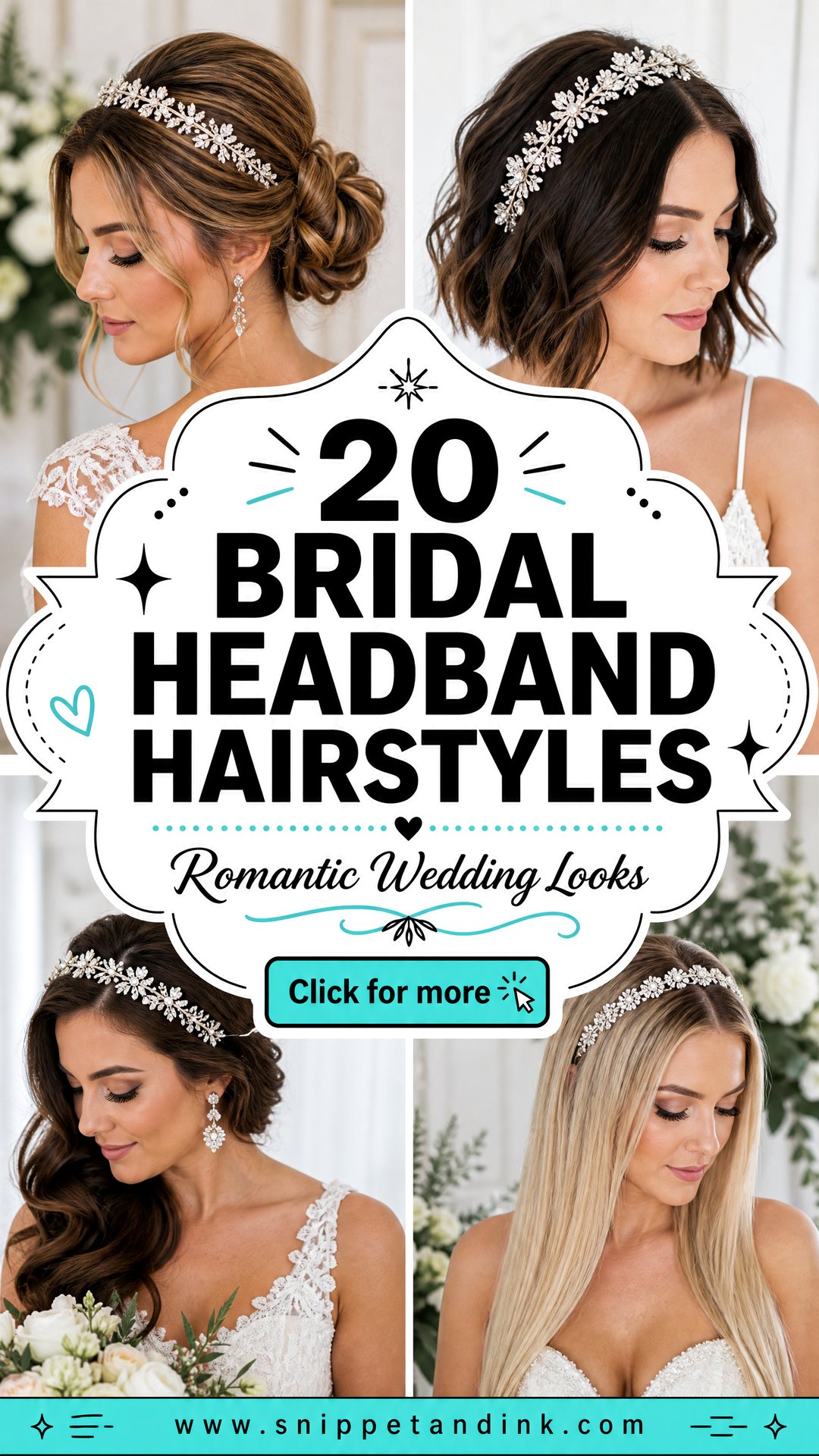
Band Width Should Follow the Length of Your Hair
The headband you fall for online might not suit your cut. I look at three things before suggesting a band.
Width
Thin bands, under about a centimeter, work on almost everyone. Wide, padded bands look balanced on long, full hair and on updos with volume; on a pixie or a fine, flat bob they can look heavy and cover too much of the hair.
Weight
Heavy crystal or metal bands press on the area behind the ears, which starts to ache after a few hours. If you love a heavy band, plan to take it off for the reception, or ask for one with soft padded ends.
Grip
Fabric and velvet hold; smooth metal and plastic slide. Bands with small comb teeth on the underside stay in place on silky hair without extra pins.
Color against the fabric
Pearls and satin come in different whites, and they rarely match by luck. Bright white pearls next to an ivory gown can make the dress look yellow, while cream pearls against a stark white gown look dingy. Hold the band against your dress fabric in daylight before you buy it, and match the metal to your earrings and engagement ring so the gold or silver tones agree in close-ups.
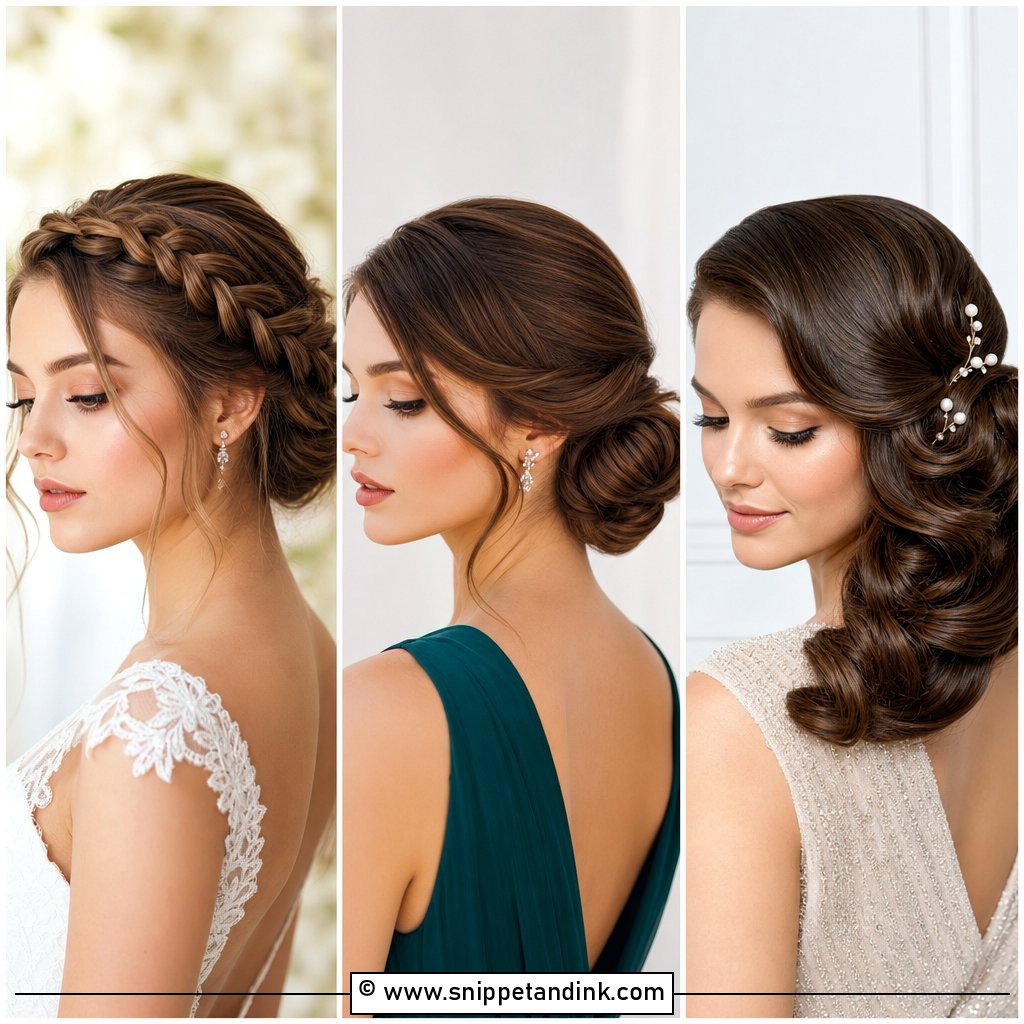
1. Bridal Headband Low Bun
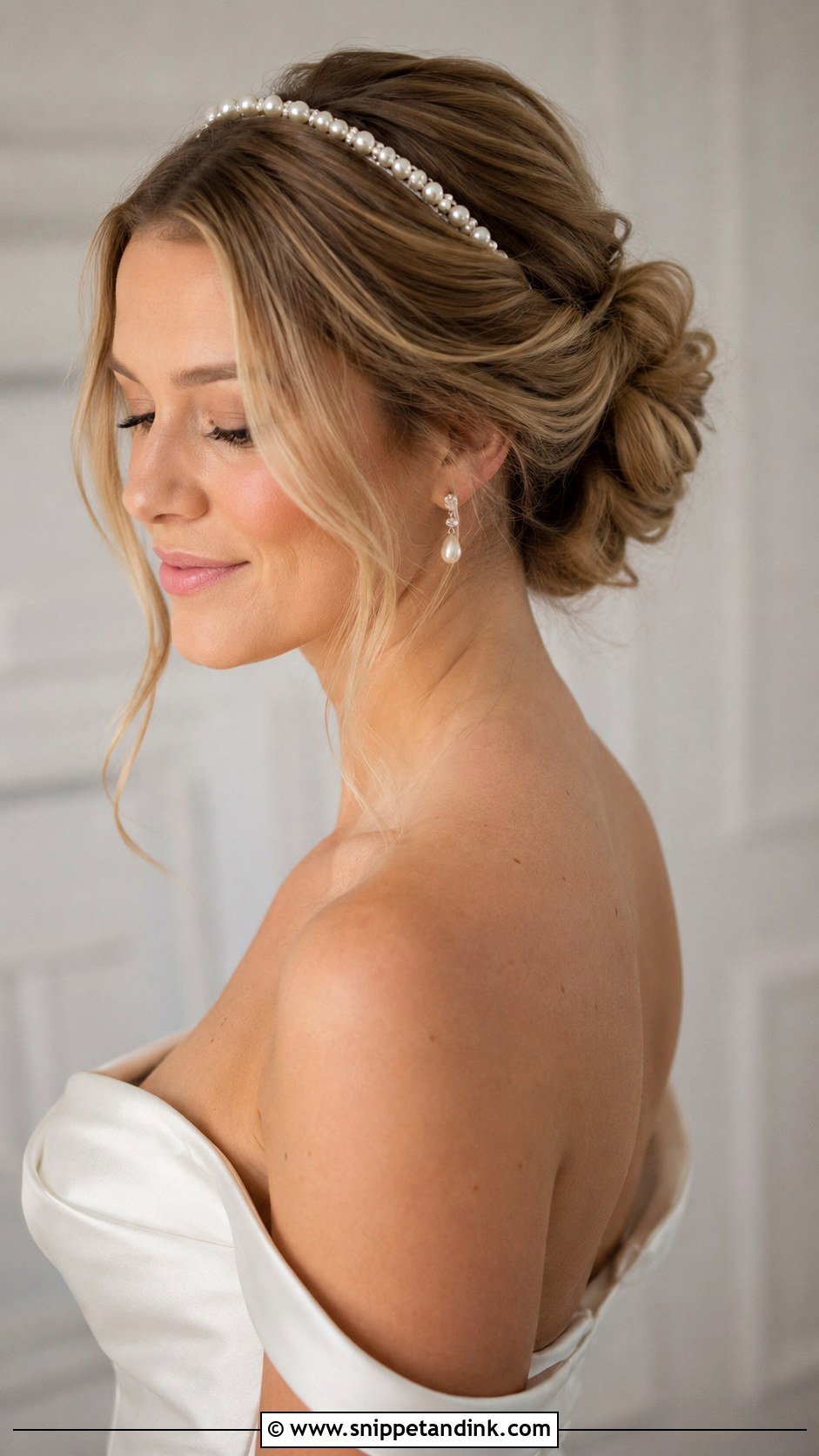
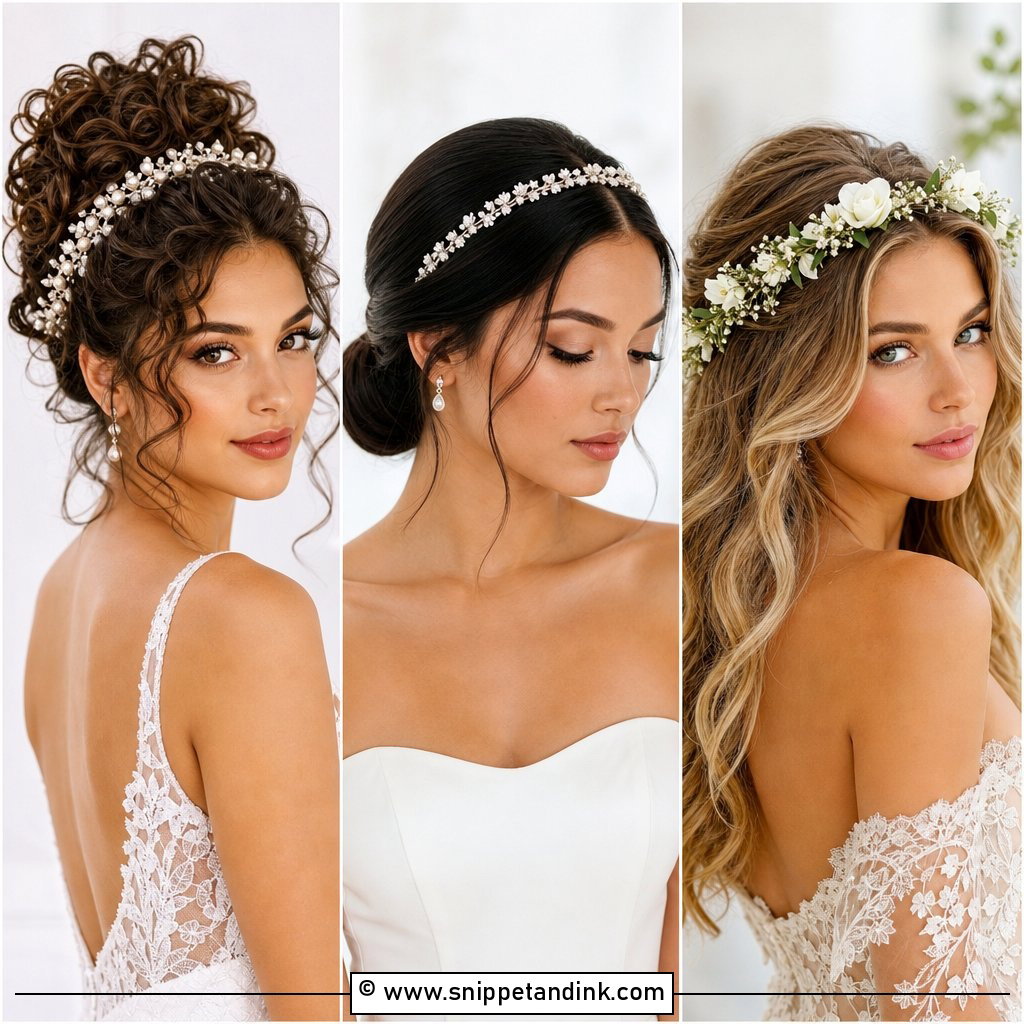
A bridal headband low bun is the most secure way to wear a band, because the bun gives me a solid anchor for pins and the band has hair to grip on the way back. I set the bun at the nape, pull it loose a little with my fingers so it isn’t stiff, and leave two soft pieces at the front. It sits comfortably through a long ceremony, takes a veil comb right above it, and works with lace, satin and formal venues. If your hair is shoulder length, it may need a small padding or a few clip-in pieces to make a bun with any shape.
2. Bridal Headband Loose Waves
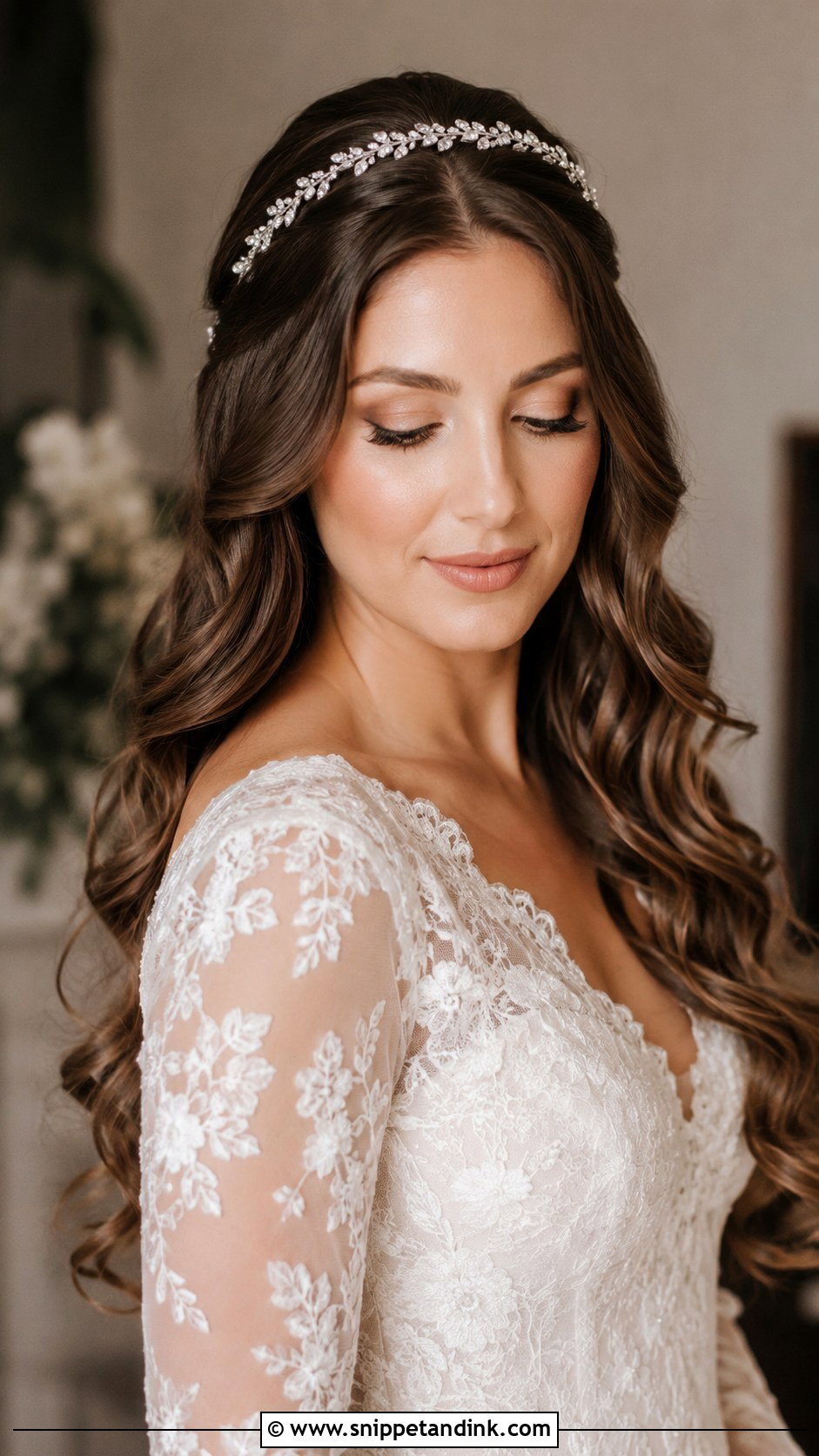
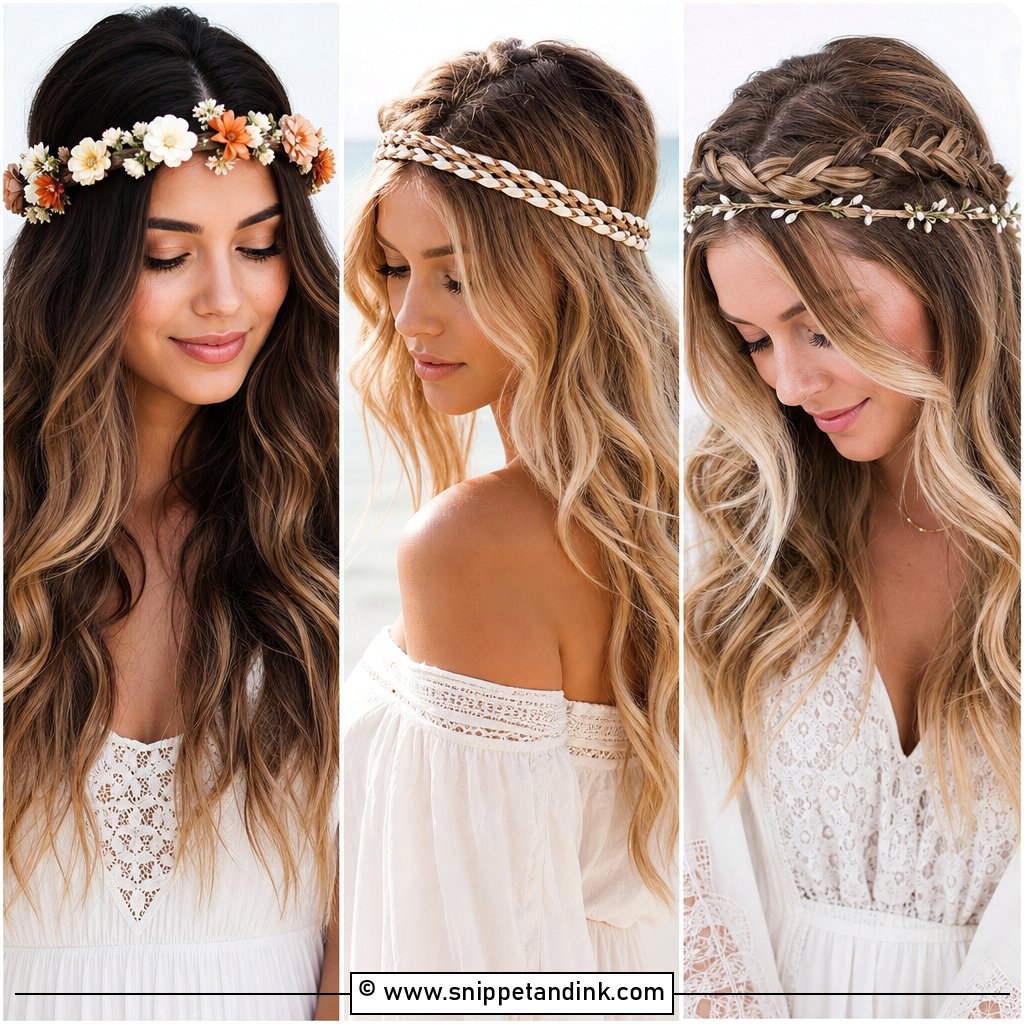
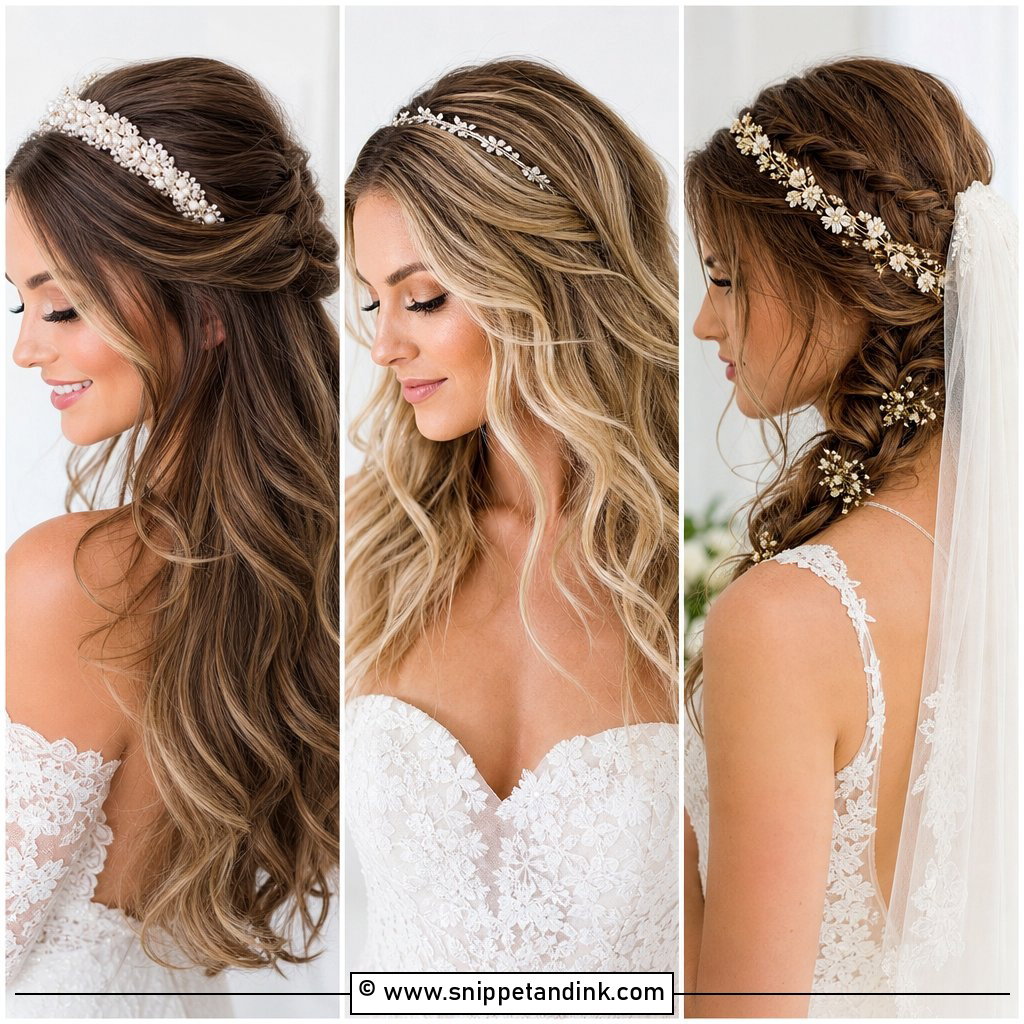
Hair worn down in waves is where a band earns its keep, since it holds the front pieces that would otherwise fall into your eyes. A thin pearl band keeps it classic; a padded satin band looks more fashion-led and grips better because the fabric doesn’t slide. I set the waves with a light-hold spray so they stay soft to the touch. It suits medium to long hair at garden and relaxed weddings. On humid days, expect the waves to loosen by evening.
3. Bridal Headband Half Up Hair
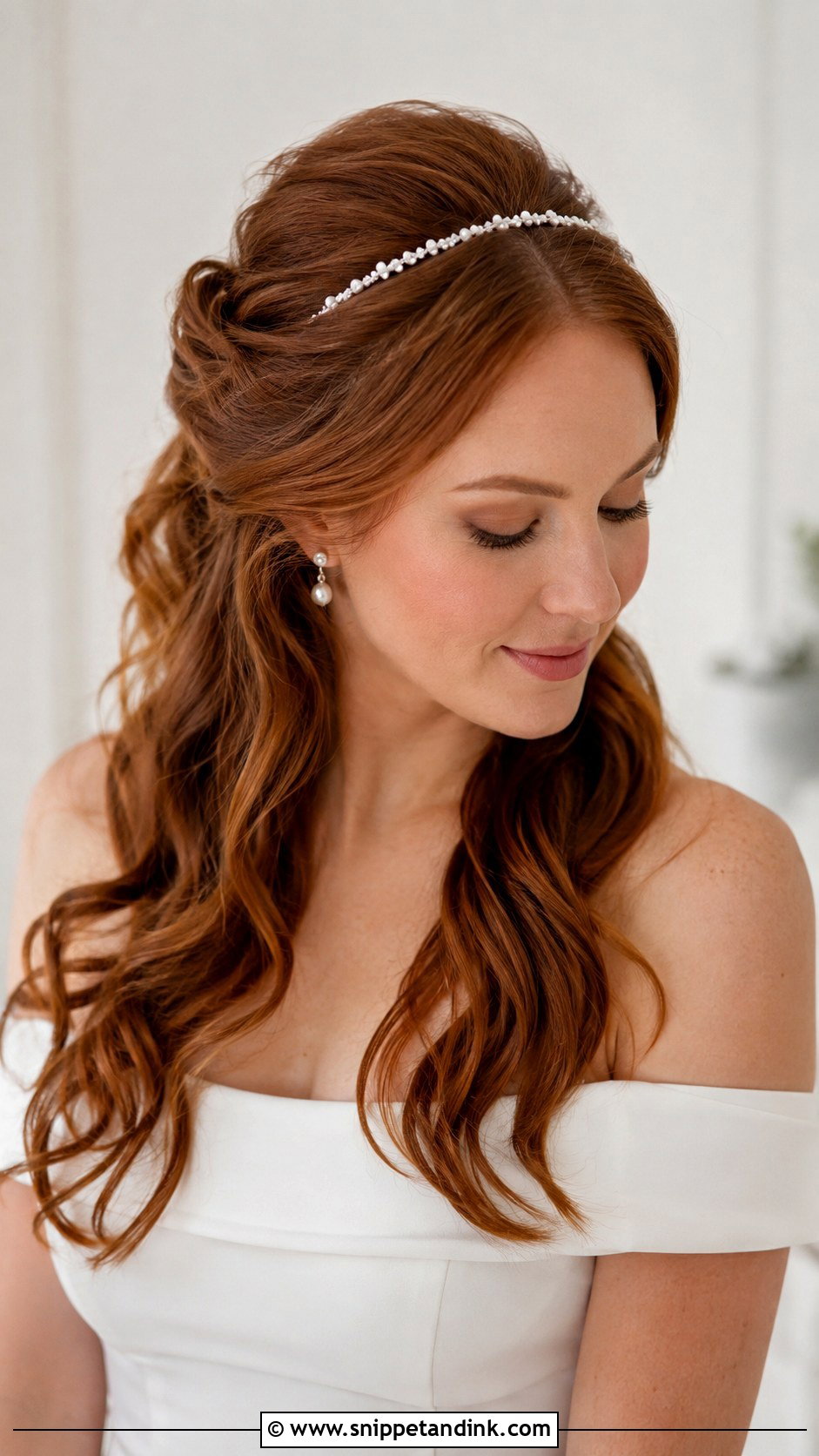
Half up gives lift at the crown and length down the back, and it’s often the compromise I suggest when a bride can’t decide. I secure the top section first with a small elastic and some backcombing underneath, then place the band either just behind the hairline or a little further back, depending on where the veil will go. Pinned twists or small knots at the back give it detail from behind, which matters because guests see the back of your head for most of the ceremony. It works on curls, waves or a smooth blowout.
4. Bridal Headband High Bun
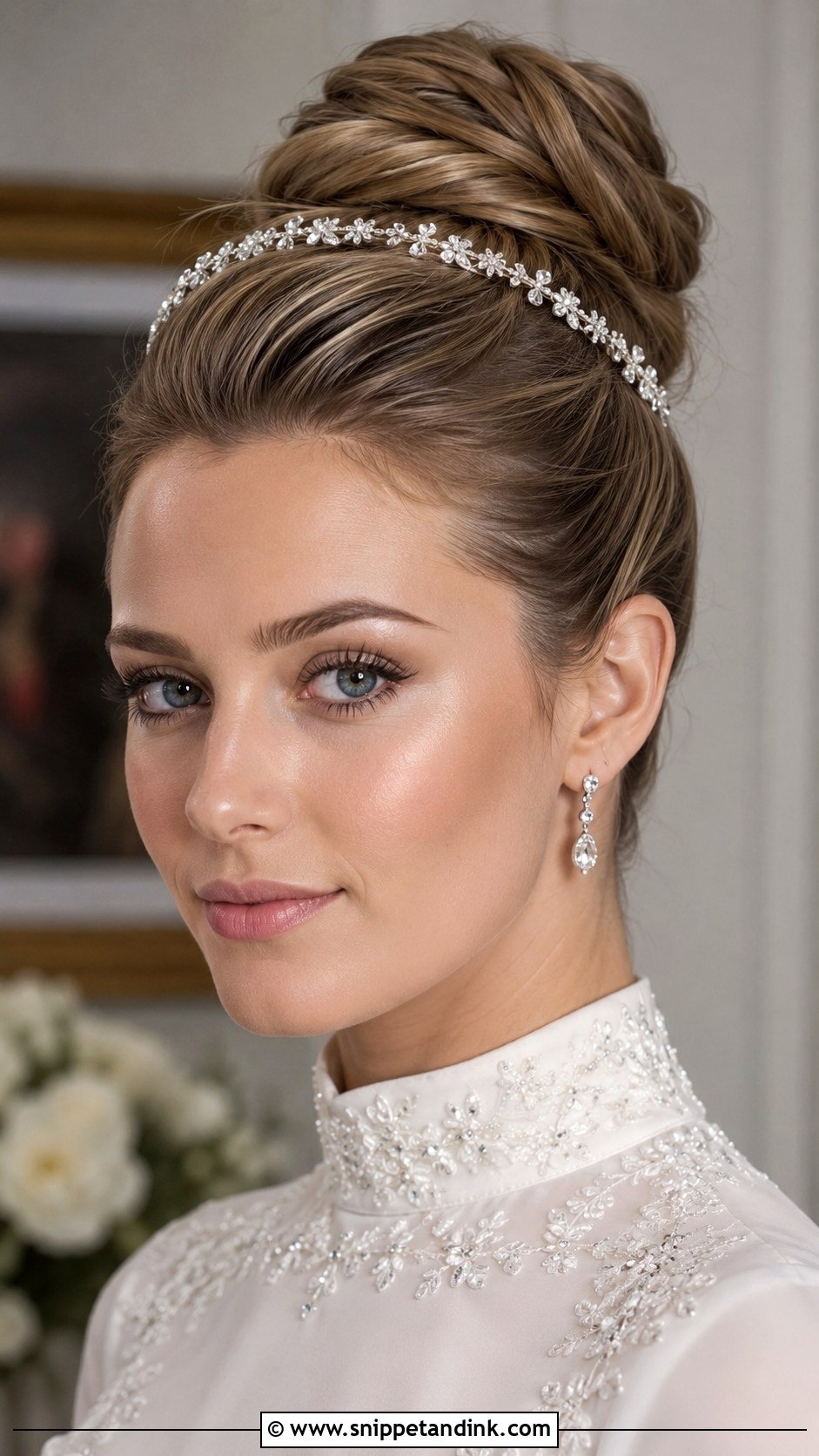
A bridal headband high bun opens up the neck and shoulders and shows off earrings, so it suits high necks, off-shoulder gowns and statement jewelry. A slim crystal band keeps it refined; a wide satin band is more editorial. I build the base ponytail firmly, then wrap and pin the bun so it stays put through hugging and dancing. A high bun is unforgiving on a long or narrow face, where it adds even more length, and I’d usually suggest a mid-height bun instead.
5. Bridal Headband Chignon
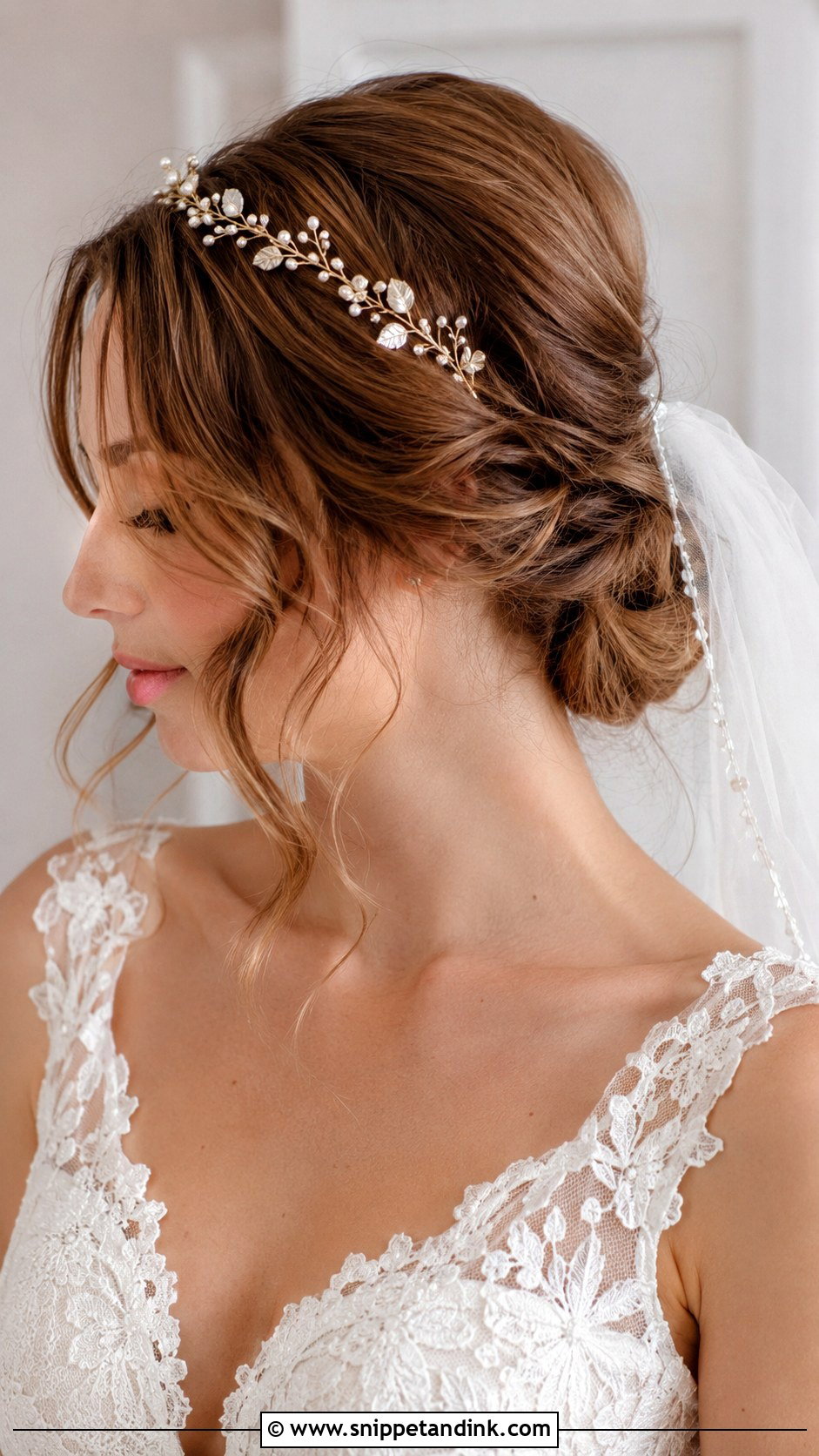
A chignon is a low, rolled or tucked bun with a finished shape at the back, and it’s my favorite base for a veil, because the comb slides into the roll and holds without strain. The band in front stops it looking plain from the front. Pearls fit a traditional look, while a leafy metal band suits garden and estate venues. I leave a few soft strands around the face when a bride wants it to feel gentle. On very fine hair, a chignon may need a small padding inside to keep its shape.
6. Bridal Headband Curly Hair
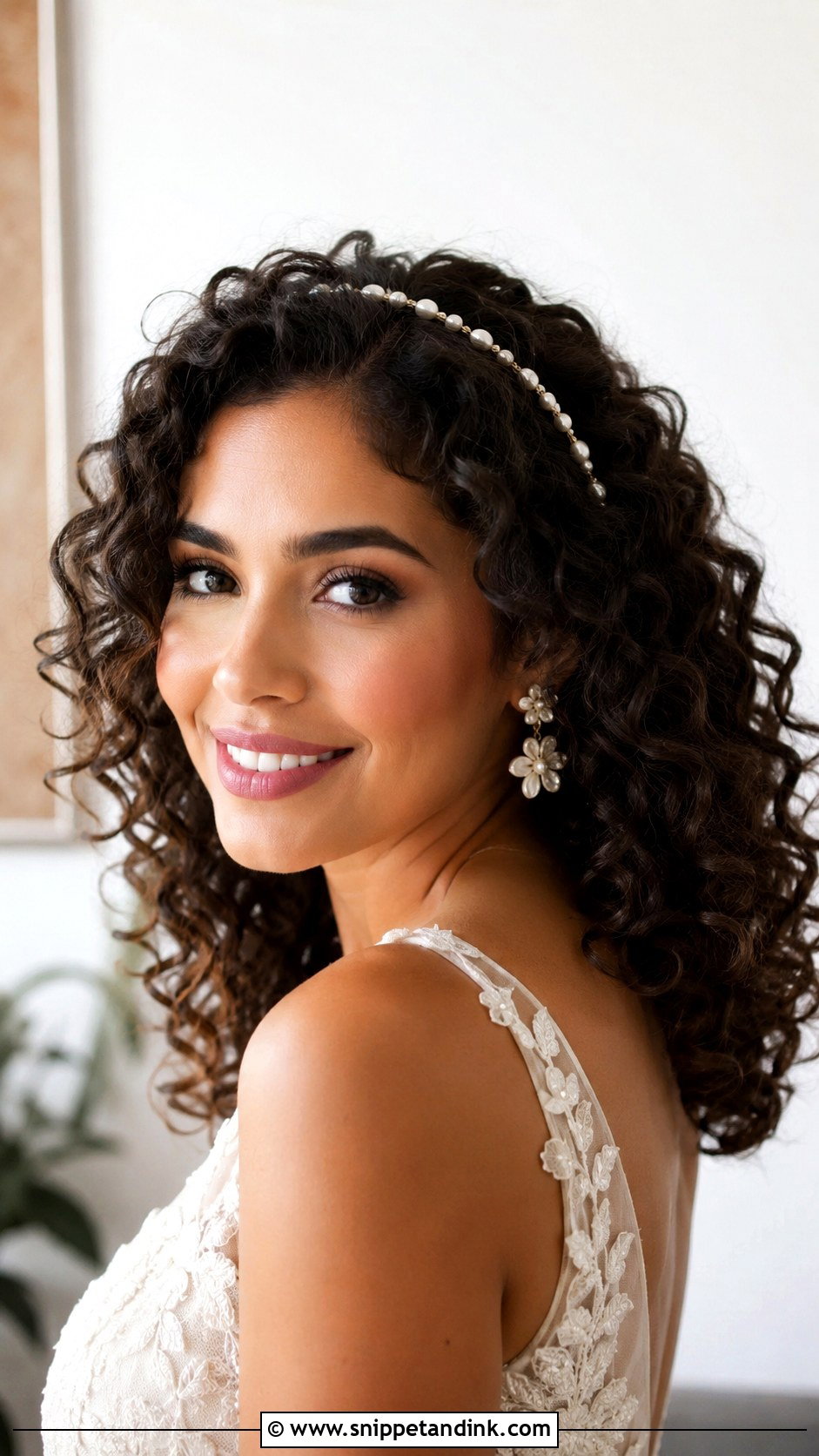
The rule with curls is that the band must not flatten them. On the bridal headband curly hair brides I style, I place the band after the curls are fully dry and defined, and I lift the curls in front of it with a pick so they keep their volume. Slim pearls, thin crystal bands or soft fabric work best; a heavy band crushes the pattern at the crown. Prep with a moisturizing leave-in and a gel or cream that defines without crunch. Down, half up or softly pinned back, the curls stay the main feature.
7. Bridal Headband Short Hair
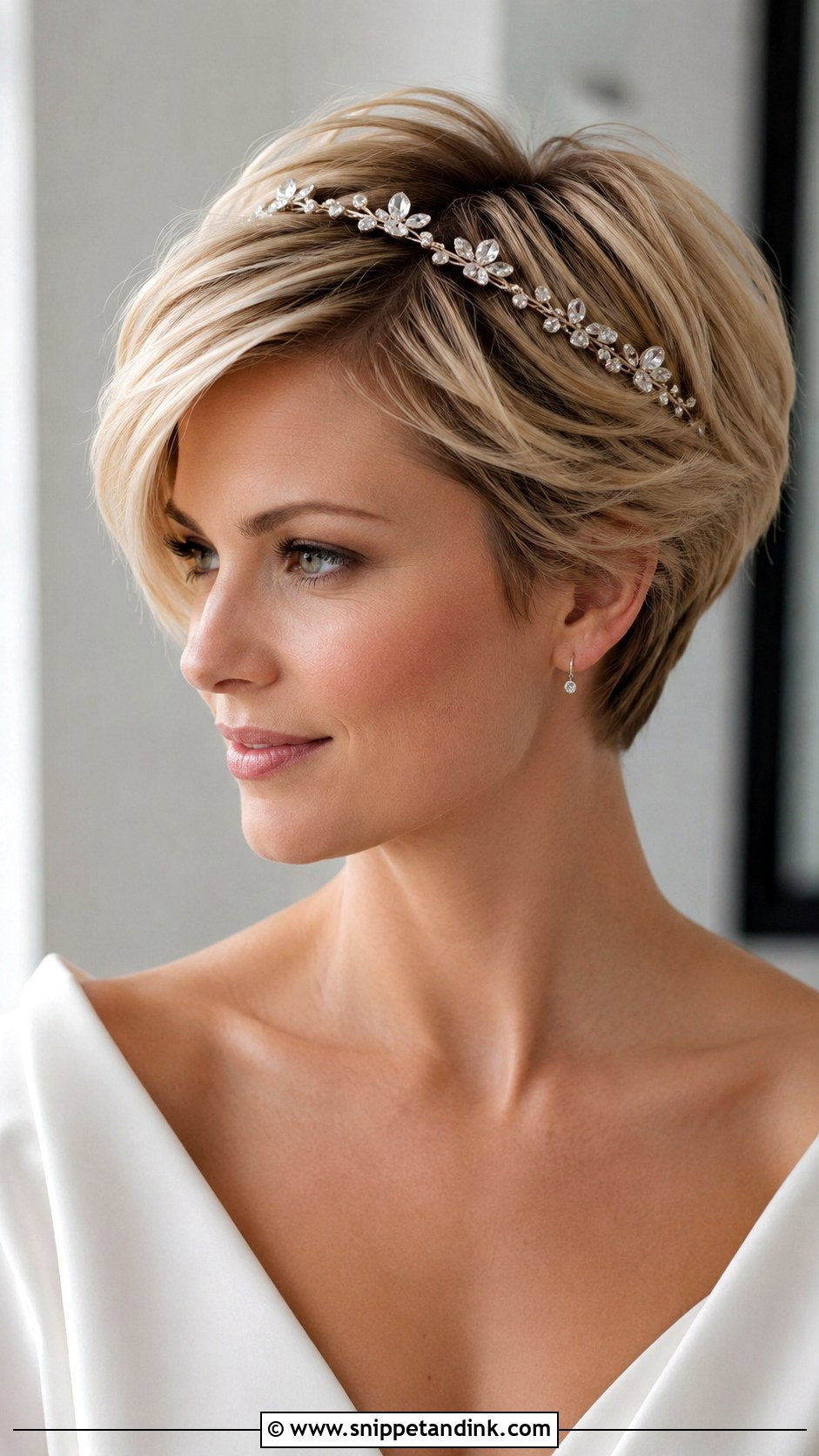
On a pixie, bixie or short bob, the band is what makes the hair read as wedding hair. I add a little volume at the crown so the band has something to rest on and doesn’t sit flat on the scalp, then bend the layers gently so the band blends into the cut. Pearls soften a sleek crop and crystals add sparkle. No extensions or heavy pinning needed. Very short hair gives the band little to grip, so I hide a small pin at each end, behind the ear.
8. Bridal Headband Bob Hair
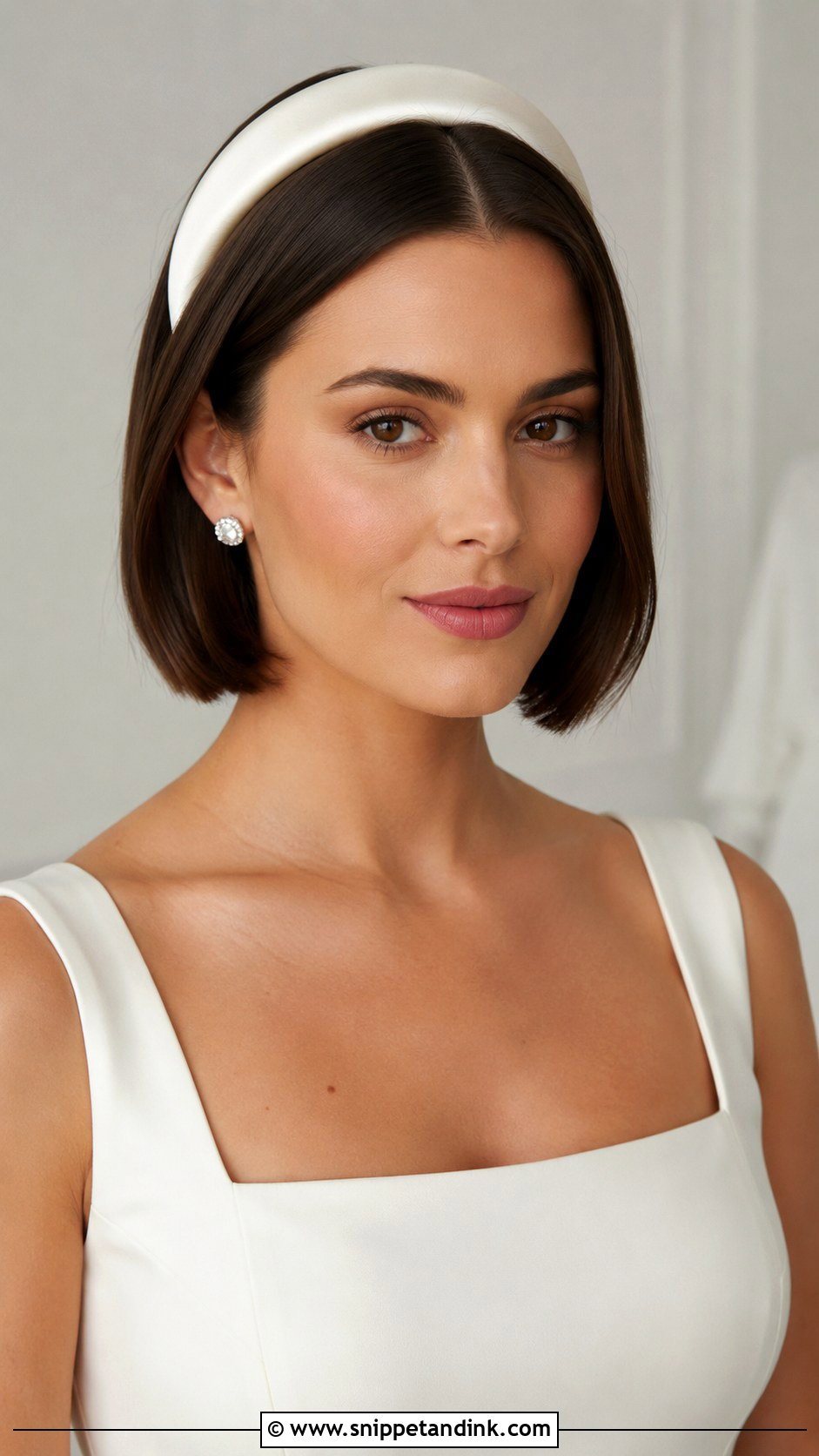
A bob with a band reads modern and sharp. Sleek, tucked under, softly waved or flipped at the ends, the cut frames the jaw, and the band becomes the main bridal detail. A thin pearl band reads classic, a padded ivory band more current. Minimal gowns and square necklines suit it well. Watch the band width on a chin-length bob; a wide band can make the head look top-heavy against a short cut. A shine spray at the end gives a glossy finish.
9. Bridal Headband Long Hair
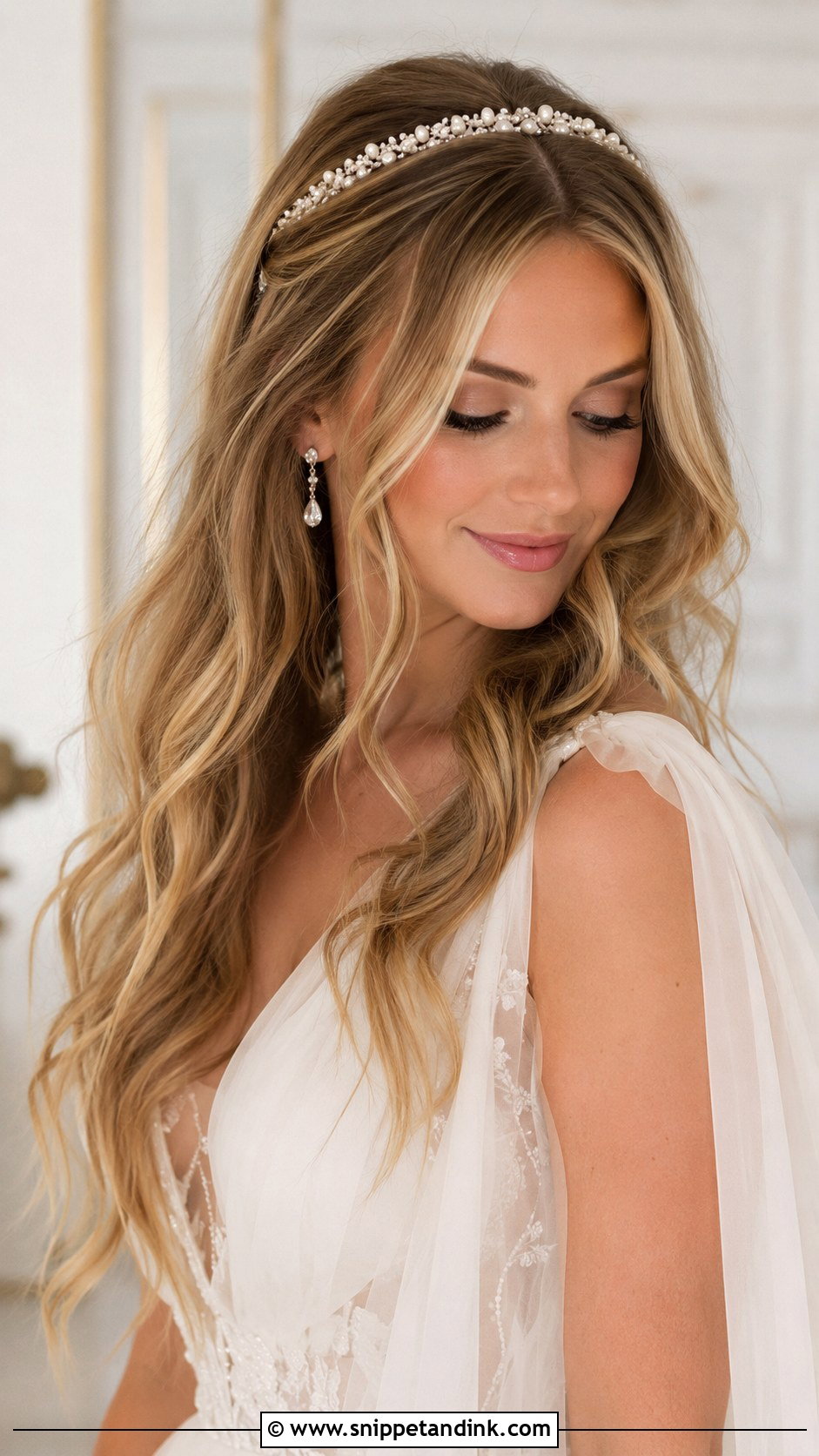
Long hair gives you every option, and the band keeps the front tidy while the length stays full. Waves, curls, half up or loosely pulled back all work. A beaded or pearl band adds detail near the face, which is where most close-ups land. Thick, heavy hair is harder to keep smooth for twelve hours, so I build hold in layers: a light mousse at the roots, heat protectant through the lengths, a flexible spray after each section. The weight of very long hair can also drag the band backward, so I pin it.
10. Bridal Headband Ponytail
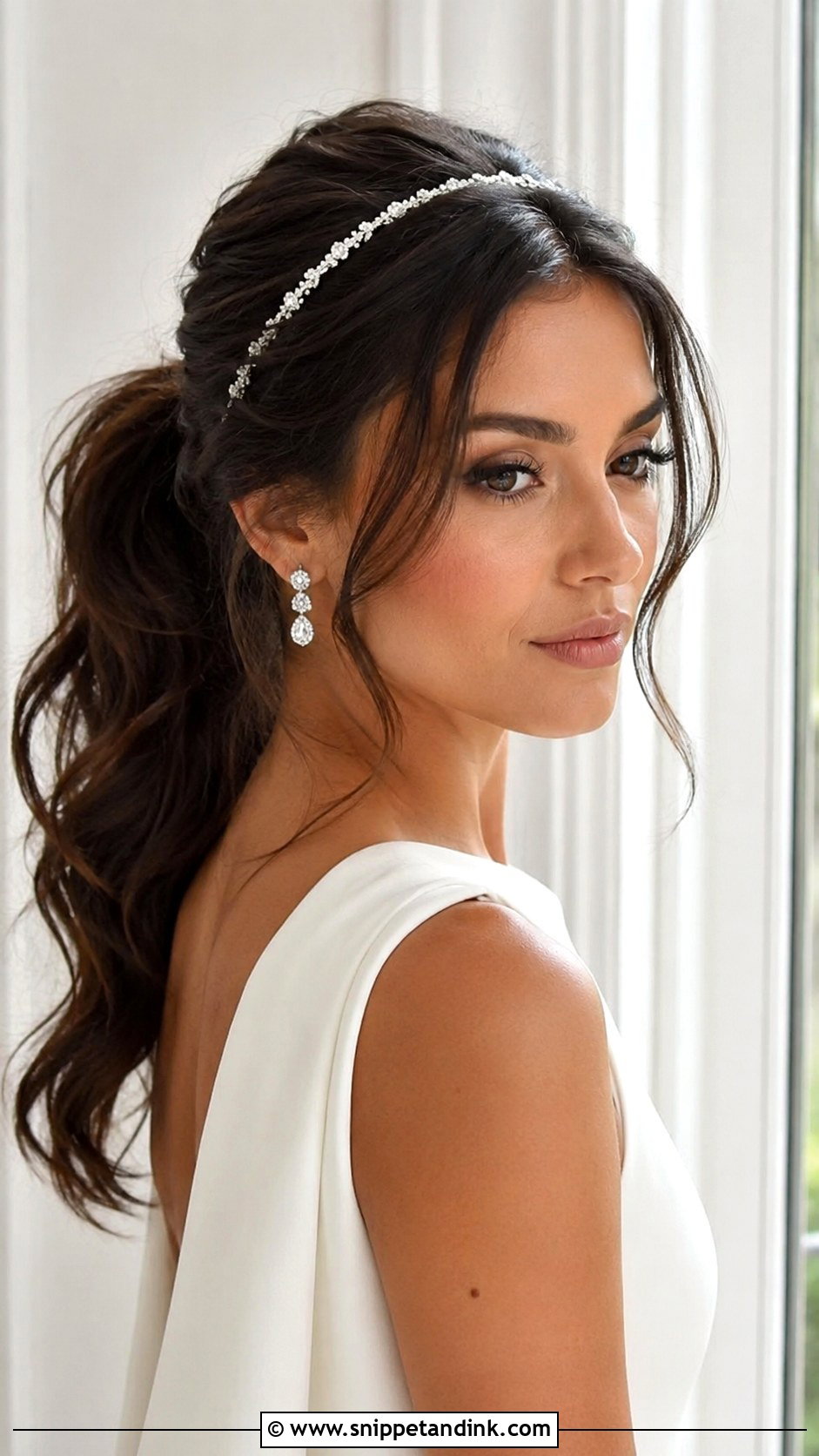
A ponytail with a band looks modern and is easy to wear for hours. A low pony is soft and romantic; a higher one has more energy for the reception. I wrap a piece of hair around the elastic, add volume at the crown and texture through the length so it doesn’t look like a gym ponytail. It works with clean gowns, jumpsuits and second dresses. A high pony pulls on the scalp after hours of wear, so I set it a little lower than a bride first asks for.
11. Bridal Headband Sleek Bun
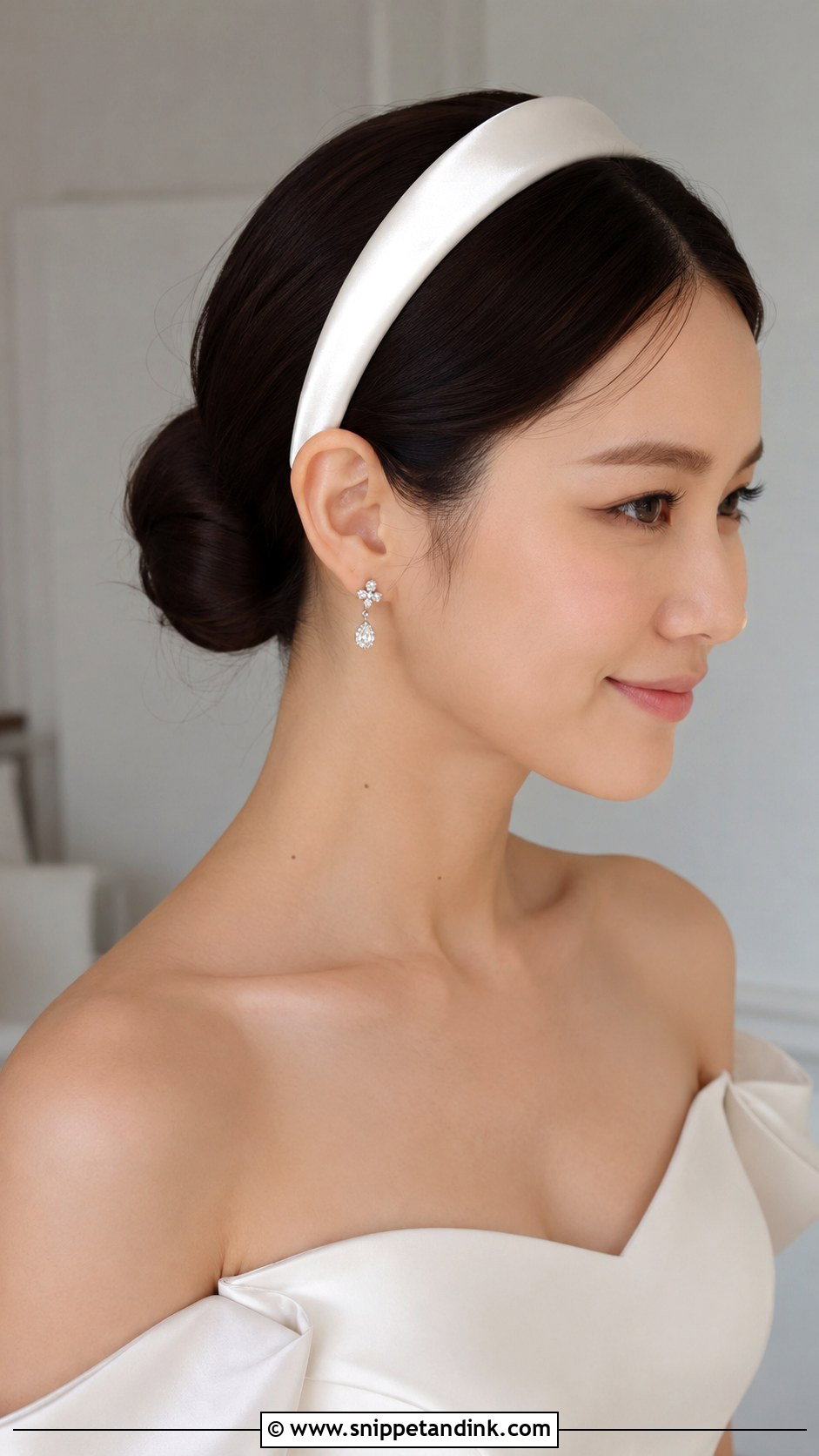
A sleek bun depends entirely on prep. I use a smoothing cream, a fine-bristle brush and a strong but flexible hold, and I part the hair cleanly before shaping the bun at the nape or mid-head. A satin or crystal band adds one accent without crowding it. Modern gowns, dramatic earrings and a structured makeup look suit it. Frizz shows instantly on sleek hair, so in humid weather I’d plan a touch-up with a little cream and a small brush.
12. Bridal Headband Braided Updo
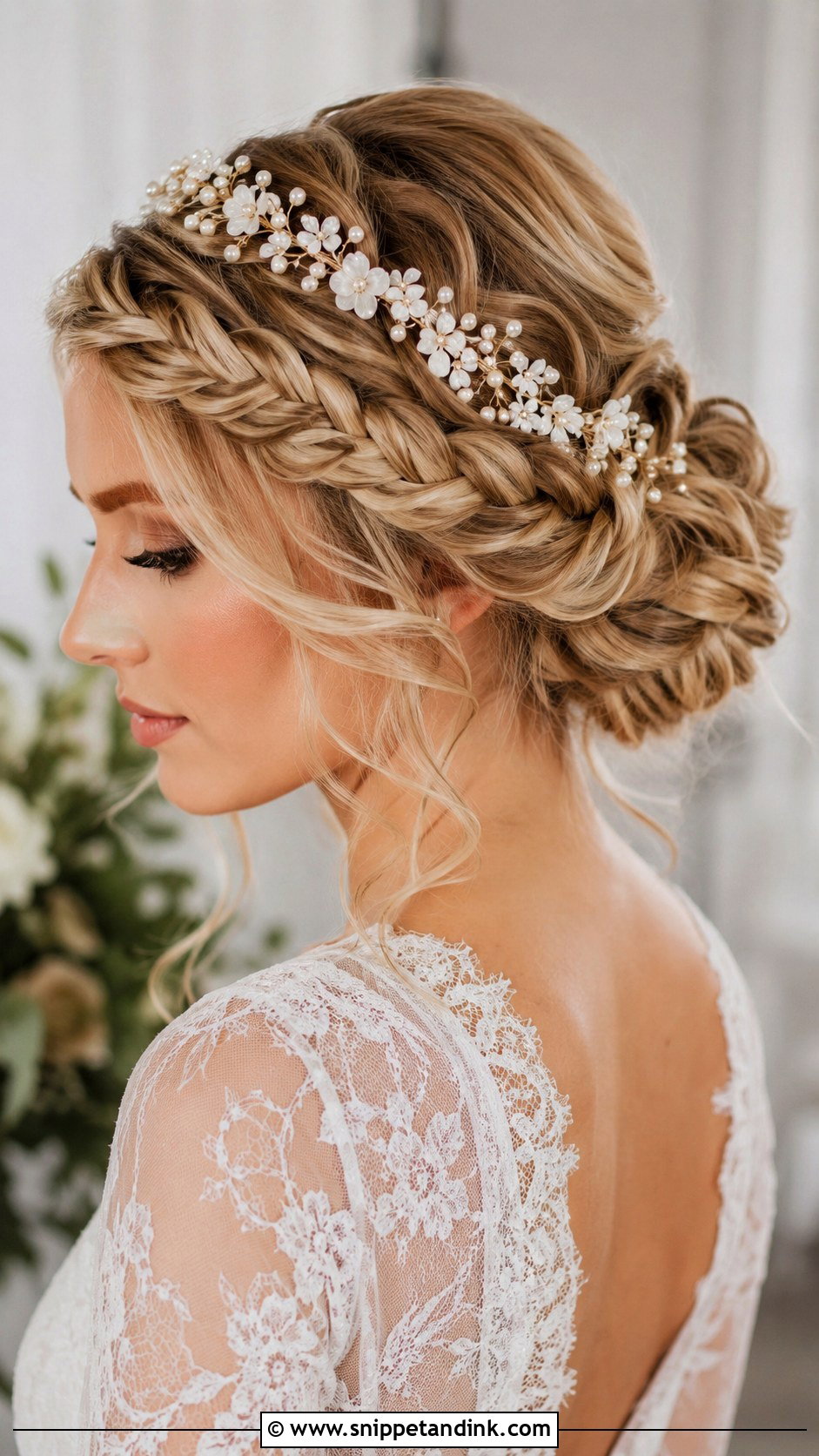
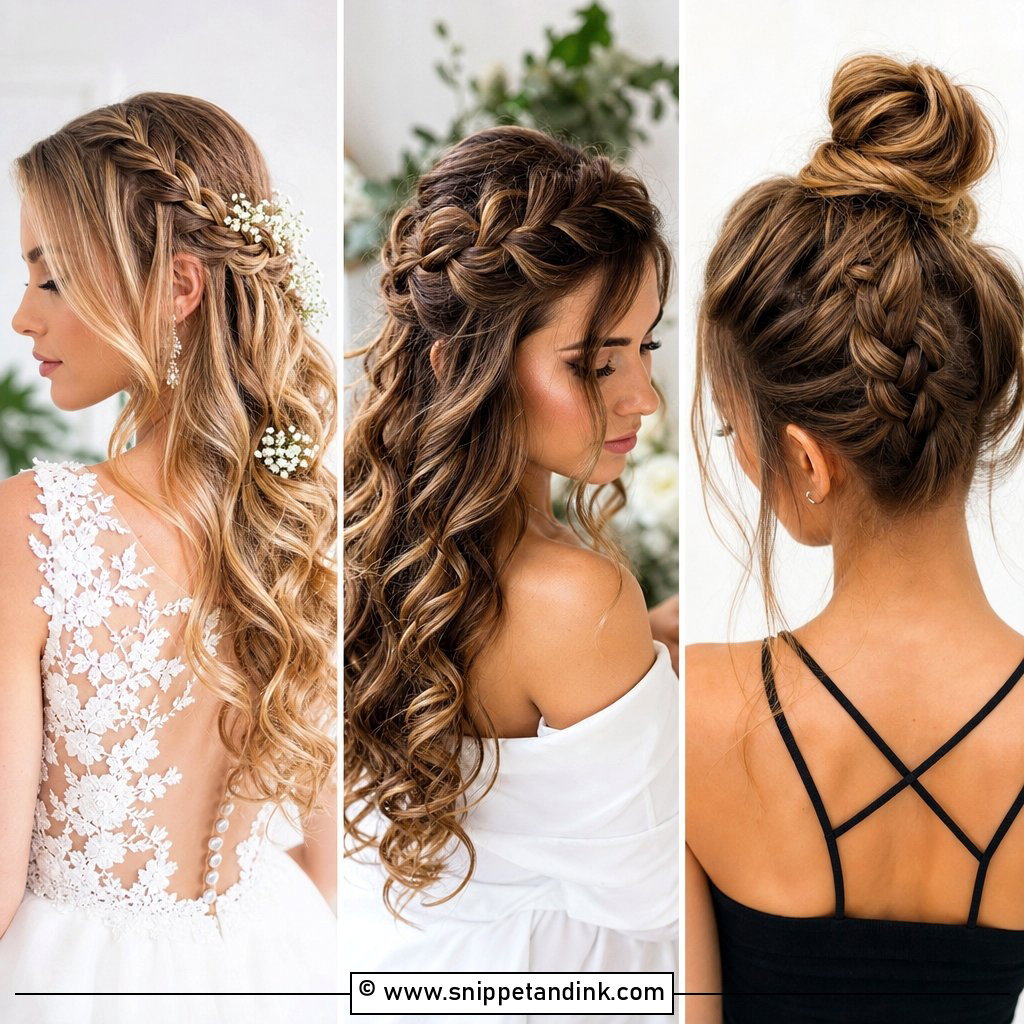
A braided updo gives the back of the head real detail. Braids can wrap the bun, frame the sides or weave a crown before the band goes on top. Because the band rests on braids, it stays put better than on any other style here. Keep the band delicate, since the braids already carry the texture. Pearl, vine or floral bands sit well. I leave a few loose pieces around the face, and it suits garden weddings, rustic venues and lace gowns.
13. Bridal Headband Side Swept Hair
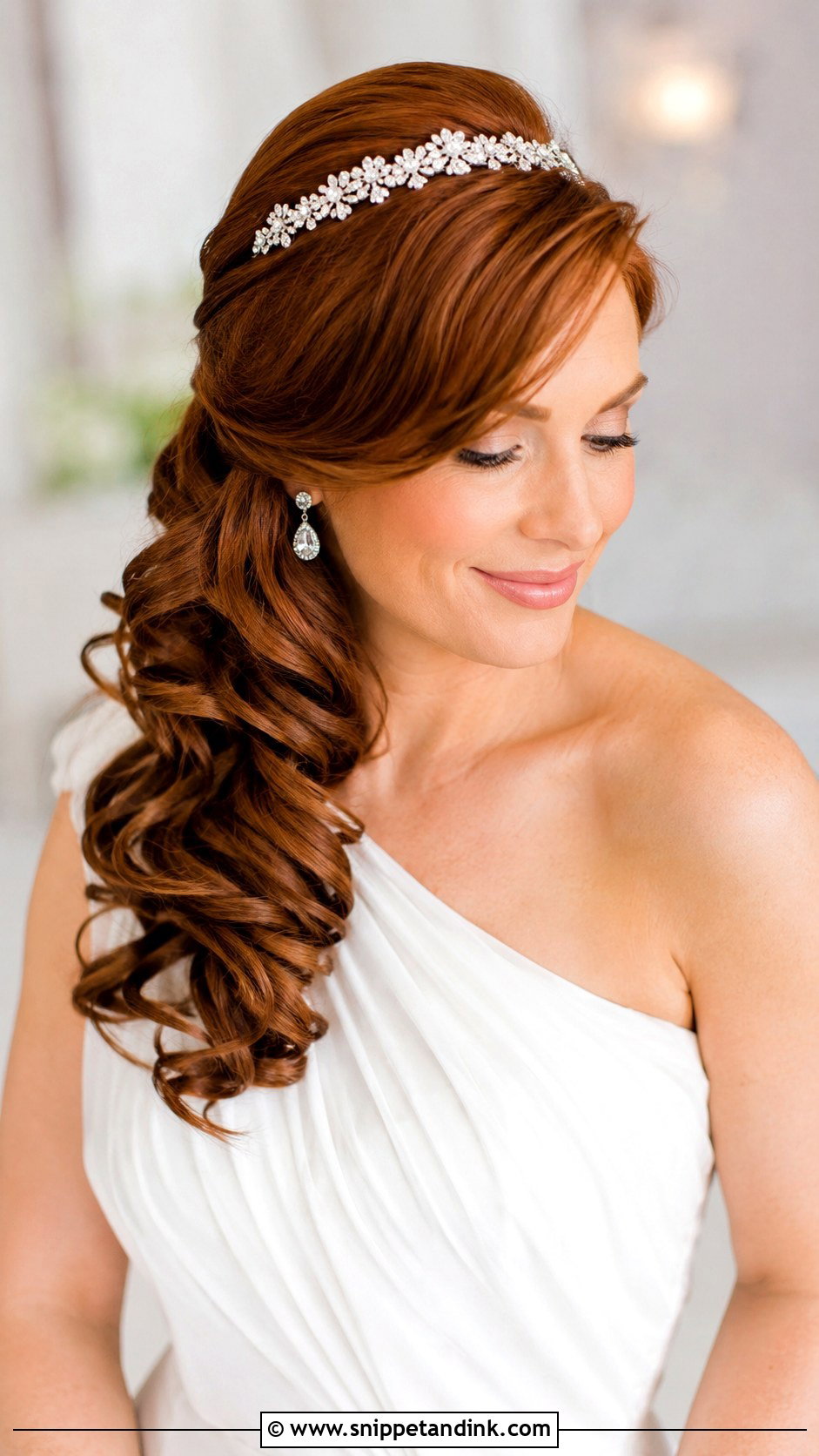
Sweeping hair to one side shows off a one-shoulder neckline, an open back on the other side or a detailed bodice. Hollywood waves, loose curls or brushed texture all work. The band holds the top in place while the length moves to one shoulder. I secure the swept side with crossed pins hidden behind the ear, because heavy hair always tries to slide back to center. Crystals for sparkle, pearls for a classic look.
14. Bridal Headband Messy Bun
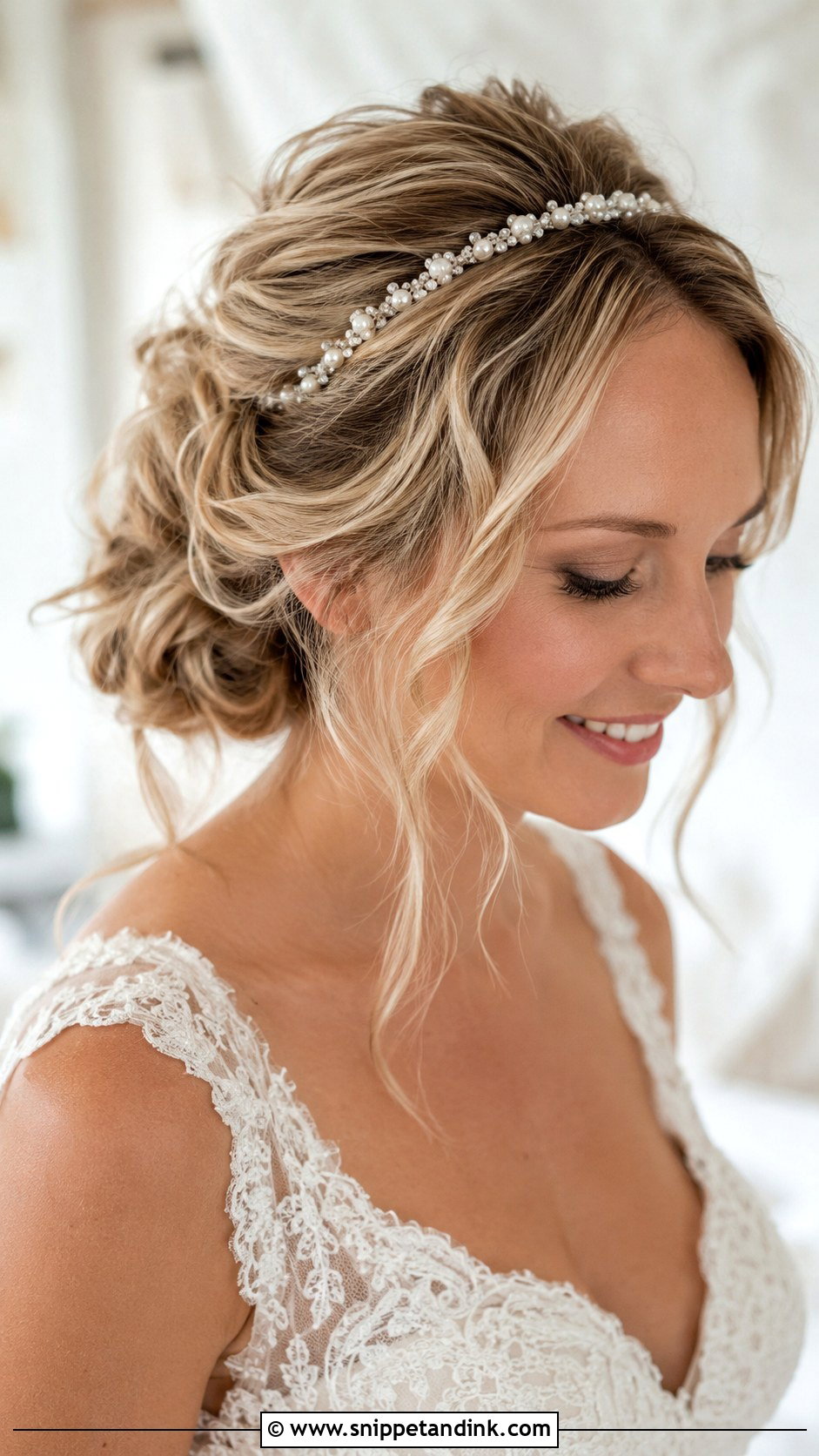
A messy bun has to look deliberate, not rushed, and that takes more pins than a sleek bun. I place it low or mid-height, pull out loose pieces on purpose, and soften the crown. The band is what keeps it bridal instead of casual. A thin pearl, floral or simple satin band suits beach, barn and outdoor weddings. If your hair is very silky, I’d add a texturizing spray first or the loose pieces just slide flat.
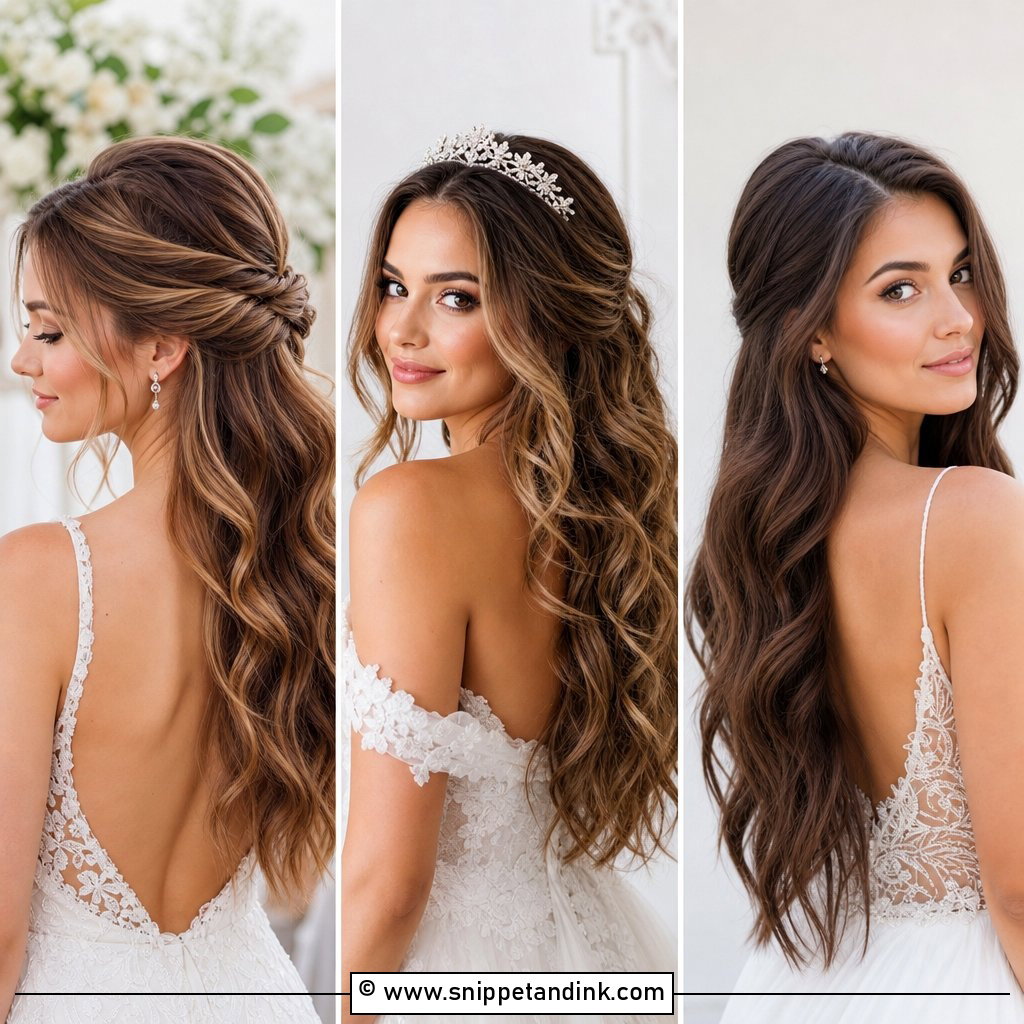
15. Bridal Headband Hollywood Waves
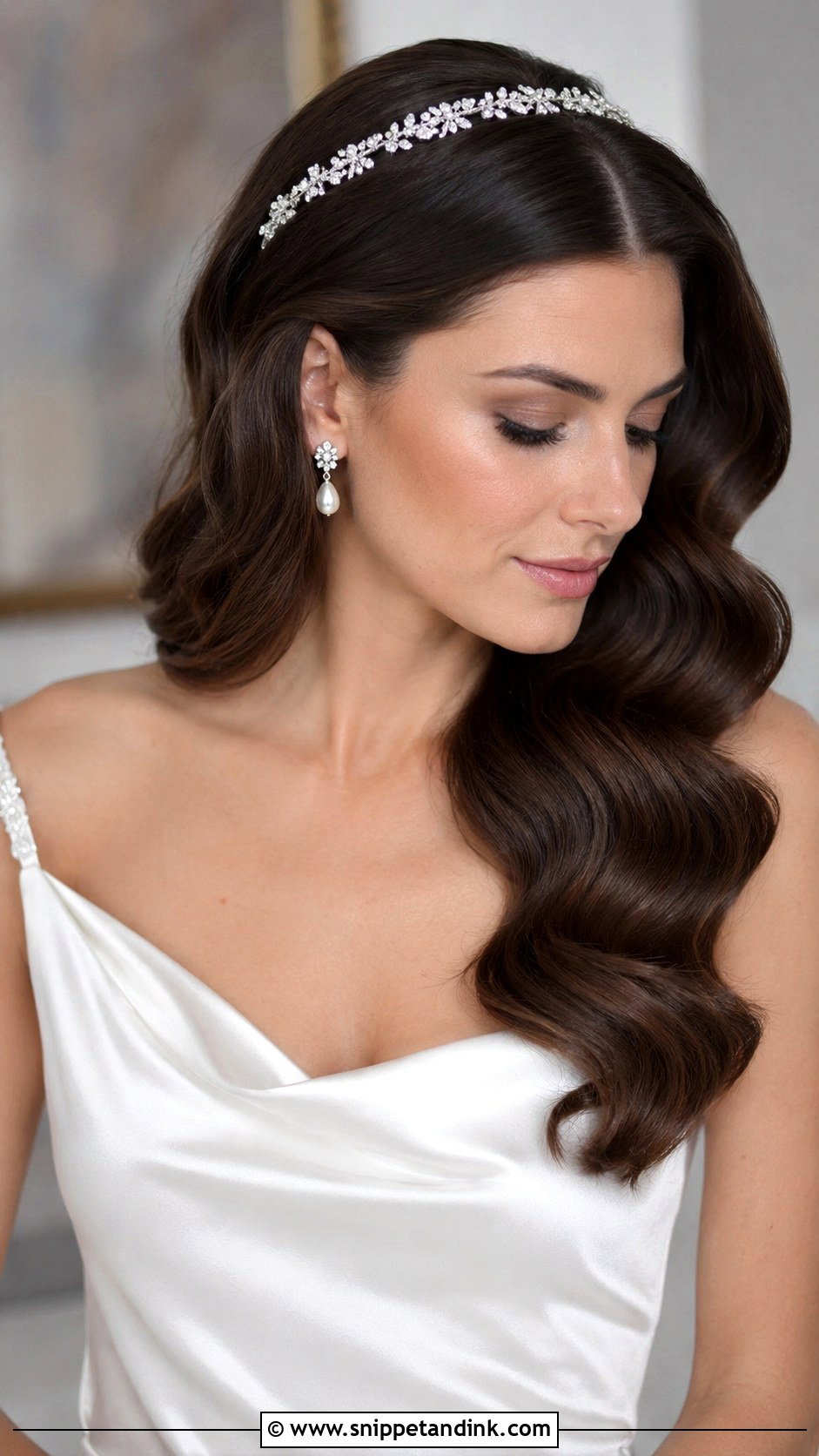
Hollywood waves are brushed into one continuous pattern from a deep side or clean center part, and a band keeps the crown sleek above them. Satin gowns, vintage dresses and black-tie weddings suit them. Medium to long hair works best; shorter hair can borrow length and fullness from extensions. I finish with a light gloss and a flexible spray. These waves are set once and shouldn’t be touched with fingers afterward, or they separate and frizz.
16. Bridal Headband Natural Hair
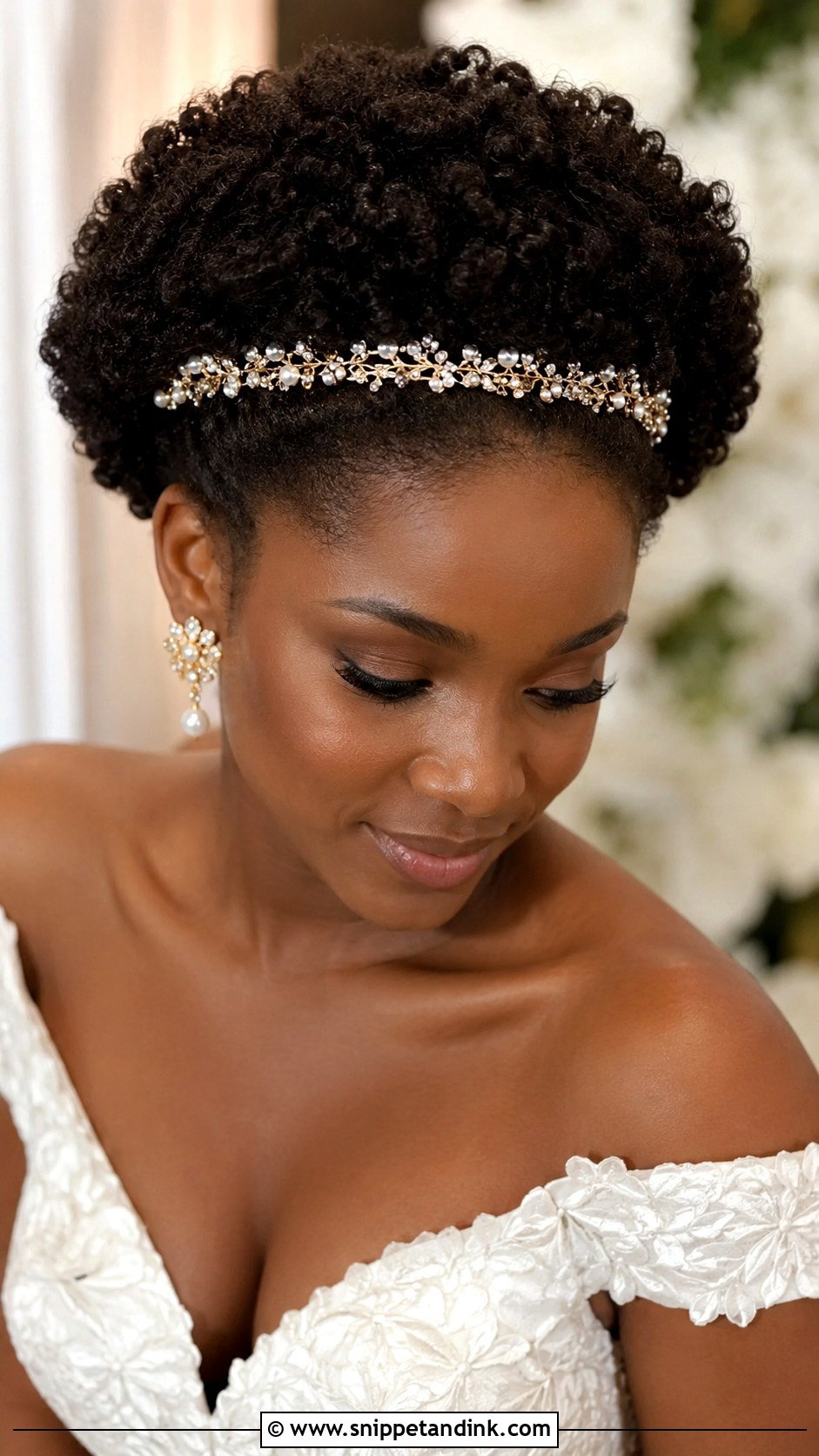
Natural hair gives a headband plenty to hold onto, and the band frames a rounded afro, defined coils, a twist-out, a puff or a pinned shape. My main concern is the edges. A tight band rubbing the hairline for hours can stress delicate edges, so I choose a band that sits comfortably and doesn’t press down. Prep with moisture first and set the definition the day before if you’re doing a twist-out. Pearl, gold, crystal or fabric all suit, depending on the dress.
17. Bridal Headband Low Ponytail
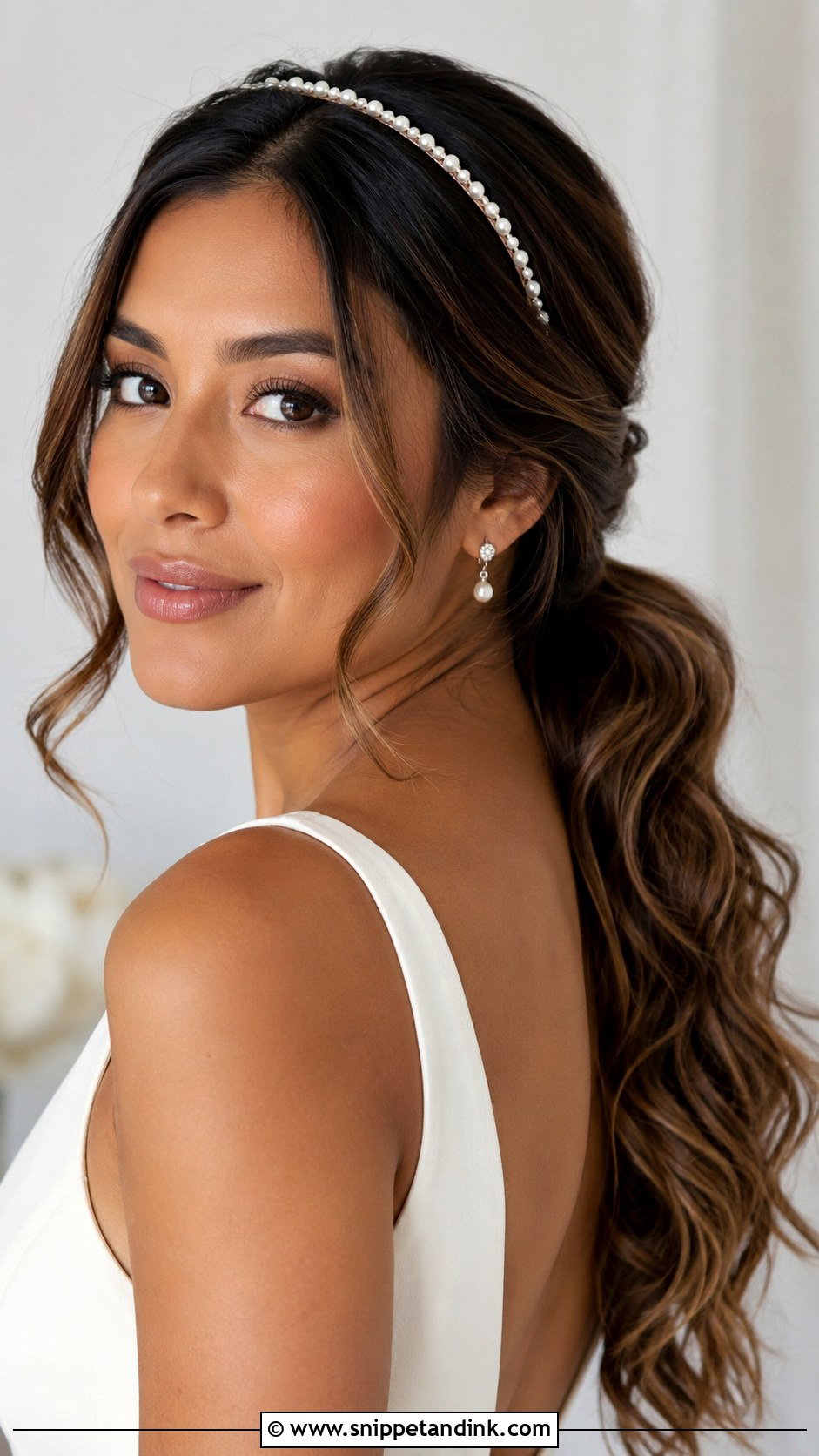
A low ponytail rests at the nape, so there’s nothing pulling on the scalp all day. Waves, curls or a smooth blowout work in the tail, and I wrap a piece of hair around the elastic to hide it. The band gives the front a finished look. It suits minimalist gowns and outdoor weddings, and it’s the most comfortable look on this list for dancing. To change the look for the reception, take the band off and add a bow or a fresh flower at the elastic.
18. Bridal Headband Textured Updo
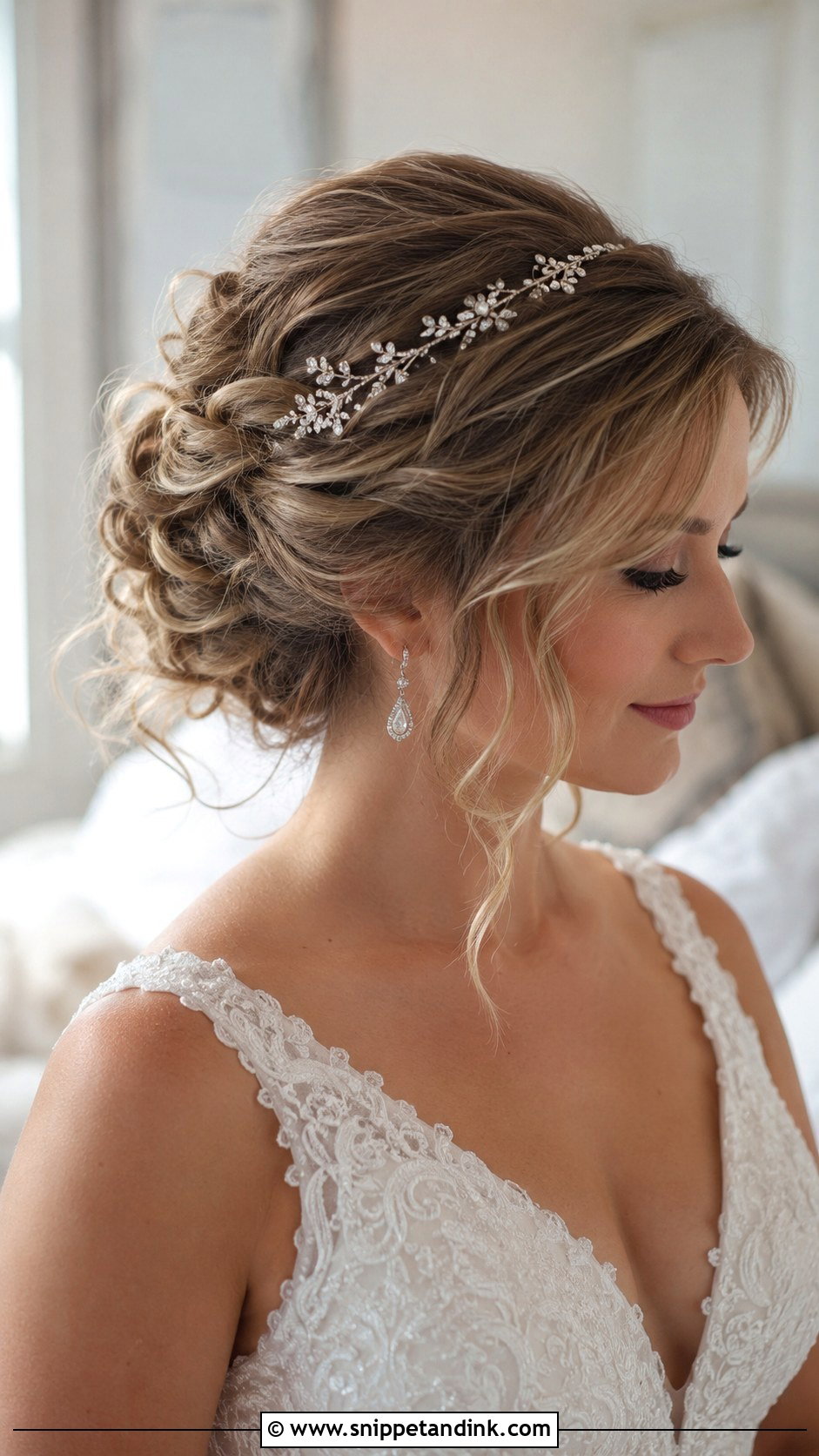
A textured updo is pinned in sections rather than wound into one tight bun, which gives it lift and movement. The band frames it from the front. Highlighted hair looks especially good this way, because the twists show off the different tones in photos. Keep the front soft with face-framing pieces. Texture shouldn’t turn into a messy look, so I use texturizing spray and backcombing only where the shape needs volume.
19. Bridal Headband Straight Hair
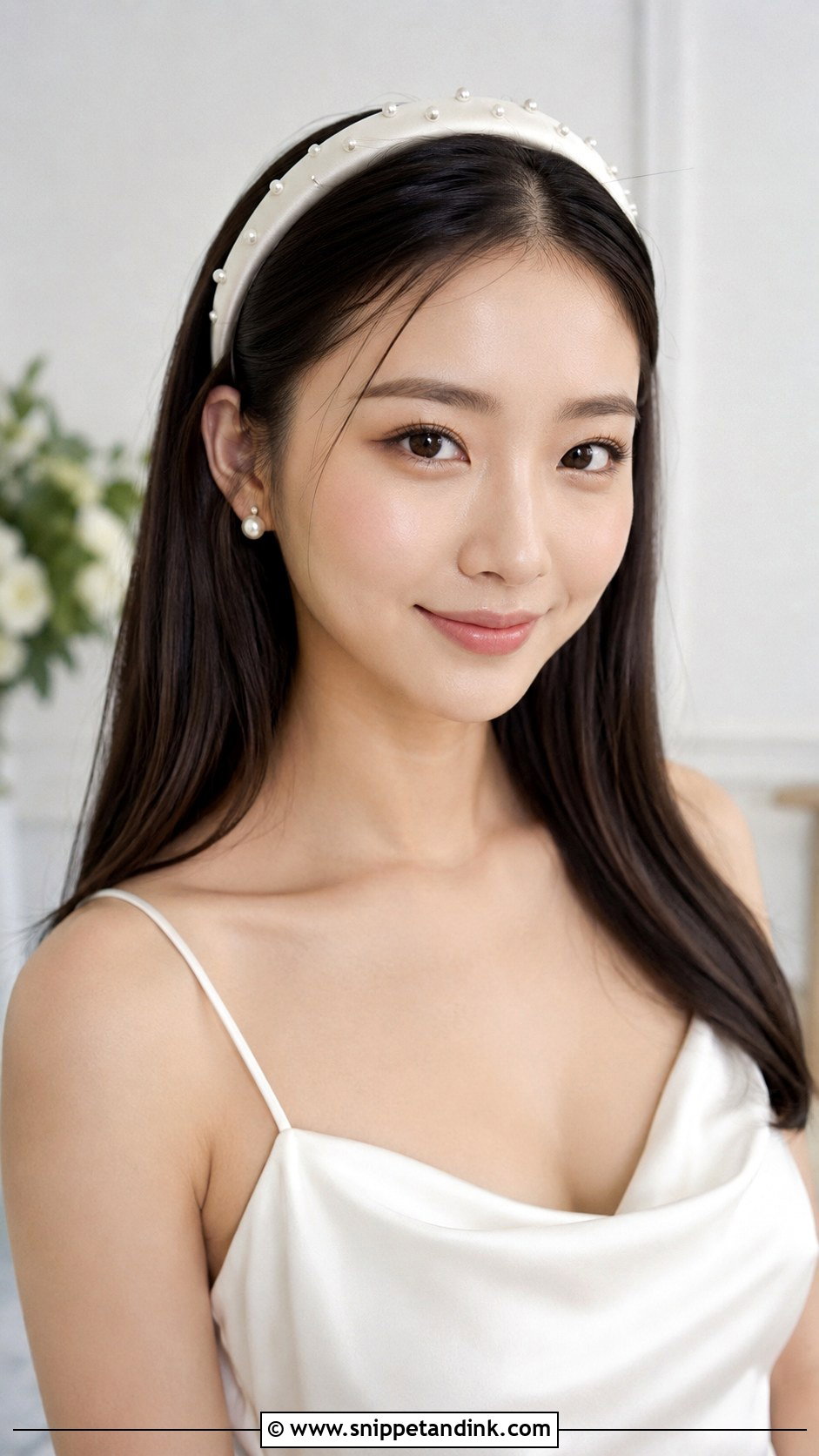
Bridal headband straight hair suits brides who wear their hair straight every day and don’t want to see curls in their photos. Sleek and glassy, tucked behind the ears or with a soft bend at the ends. I flat-iron with heat protectant, smooth with a light serum and finish with a shine spray. Keep serum off the roots, because the band will slide straight back on slick hair. Pearl or satin softens the line, crystal adds a little sparkle.
20. Bridal Headband With Veil
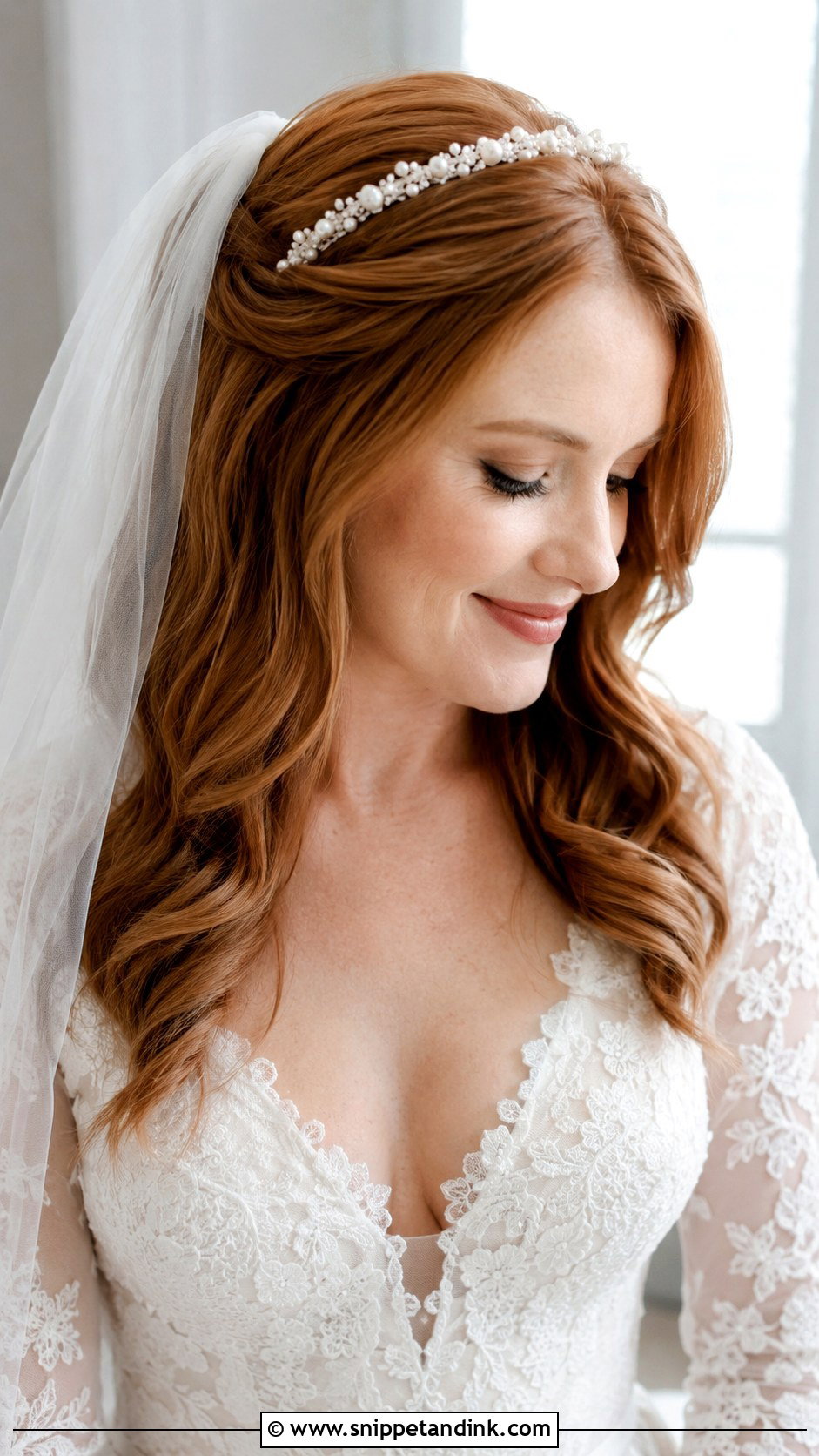
Wearing a band with a veil comes down to order and spacing. The band sits in front and the veil comb goes behind it, into a bun, chignon or pinned half-up section where it has hair to hold. On hair worn fully down, I create a small pinned base under the crown for the comb. Keep the two from competing: a lace or beaded veil wants a simple band, and a plain veil can take more sparkle. Test both together at your trial, and walk around with them on for a while.
What Goes On First When You’re Getting Dressed
The order on the morning decides whether your hair survives the dress. This is the sequence I follow.
- Hair is styled, but the band stays off.
- Makeup goes on, and any final spray on the hair happens before the dress, so it doesn’t land on the fabric.
- The dress goes on. If it goes over the head, I cover the face with a scarf or a light hood and guide it down, then fix any loose pieces.
- The headband goes on, placed and pinned.
- The veil goes in last, its comb behind the band.
Swapping the Band at the Reception
Many brides take the headband off once the veil comes out, especially if it’s heavy. Ask your stylist where each pin is, so whoever helps you can remove them without dragging the hair. A spare thinner band, a single jeweled pin or a fresh flower can replace it, and a quick brush-through with your fingers refreshes any crease the band left.
Bring the Headband to Your Trial, Not Just a Photo
A headband can make simple waves look finished, give a short cut a bridal detail or add structure to a soft updo, and it ties the hair to the dress, veil and jewelry. Think about your hair texture, neckline and venue, and how comfortable you want to be by the end of the night. Bring the actual band to your hair trial so your stylist can build the style around it, then check it from the back and sides in a mirror before you sign off.
You'll Like These Ideas:


Leave a Reply