
A ponytail used to be what brides wore to the gym, not down the aisle. That’s changed, and I’m glad, because a well-built ponytail is one of the most dependable styles I can put on a bride. It keeps hair off the face for the vows and the dance floor, shows off a back or neckline, and doesn’t collapse the way loose curls can. The catch is that a wedding ponytail is engineered very differently from the one you throw up in the morning. Below are thirty versions, from bubble braids to waves wrapped in pearls, and with each one I’ve noted what it needs from your hair and where it tends to go wrong.
What Goes Into a Ponytail That Lasts Until the Last Song
A wedding ponytail is built in layers. The version you see in photos is the top layer; what keeps it there is the prep and the anchor underneath. This is roughly the order I work in.
- Prep the hair. Very freshly washed, conditioned hair is slippery and pins slide out. I prefer hair washed the night before with a lightweight shampoo, then given a dry shampoo or texture spray at the roots in the morning.
- Set the base. I brush the hair into position, secure it with a snag-free elastic, then slide two bobby pins crossed under the base to lock it against the head.
- Add help if needed. Fine or shoulder-length hair can look thin in a ponytail. A colour-matched clip-in ponytail attached under the base adds length and body; the trial is the time to try it.
- Style the length. Curls are done after the base and left to cool before brushing, which is what makes them last.
- Finish and hide. A wrapped strand, ribbon or accessory covers the elastic, and a final mist of spray tames flyaways.
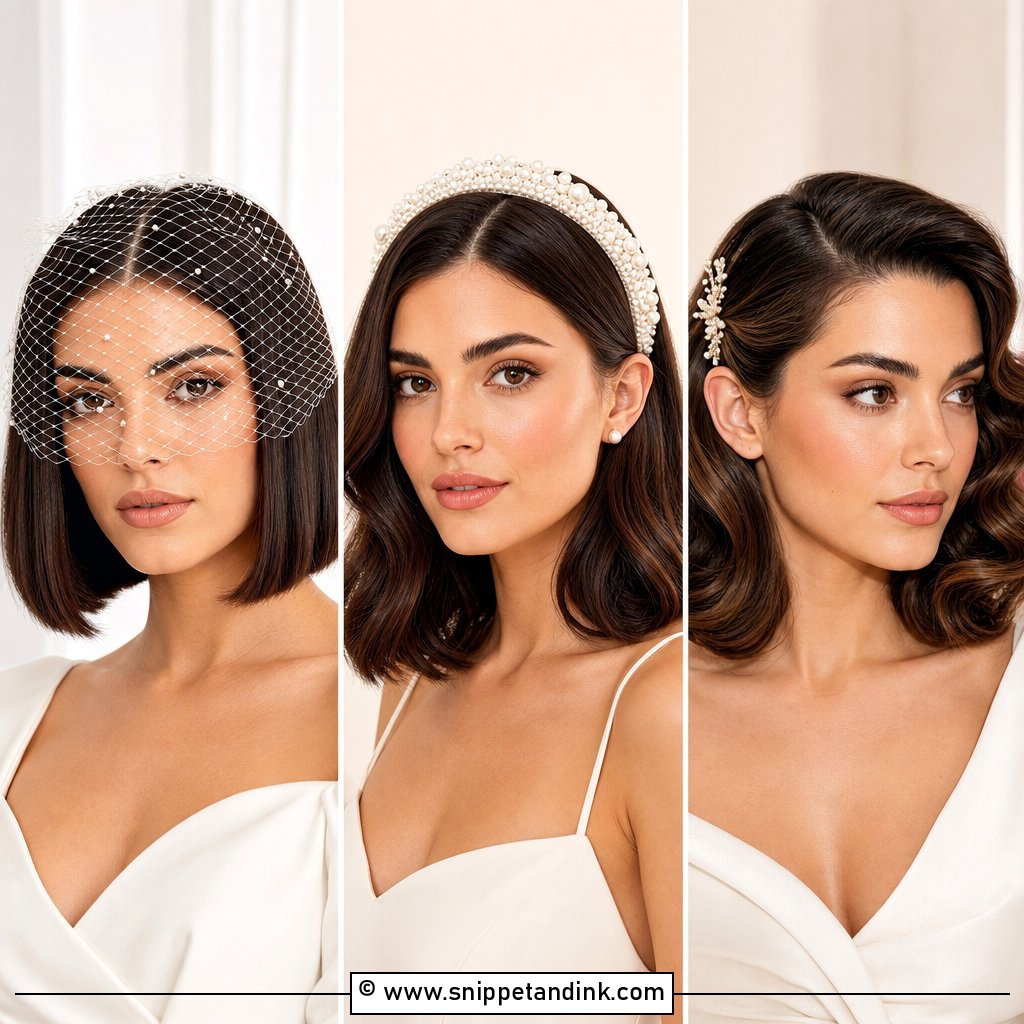
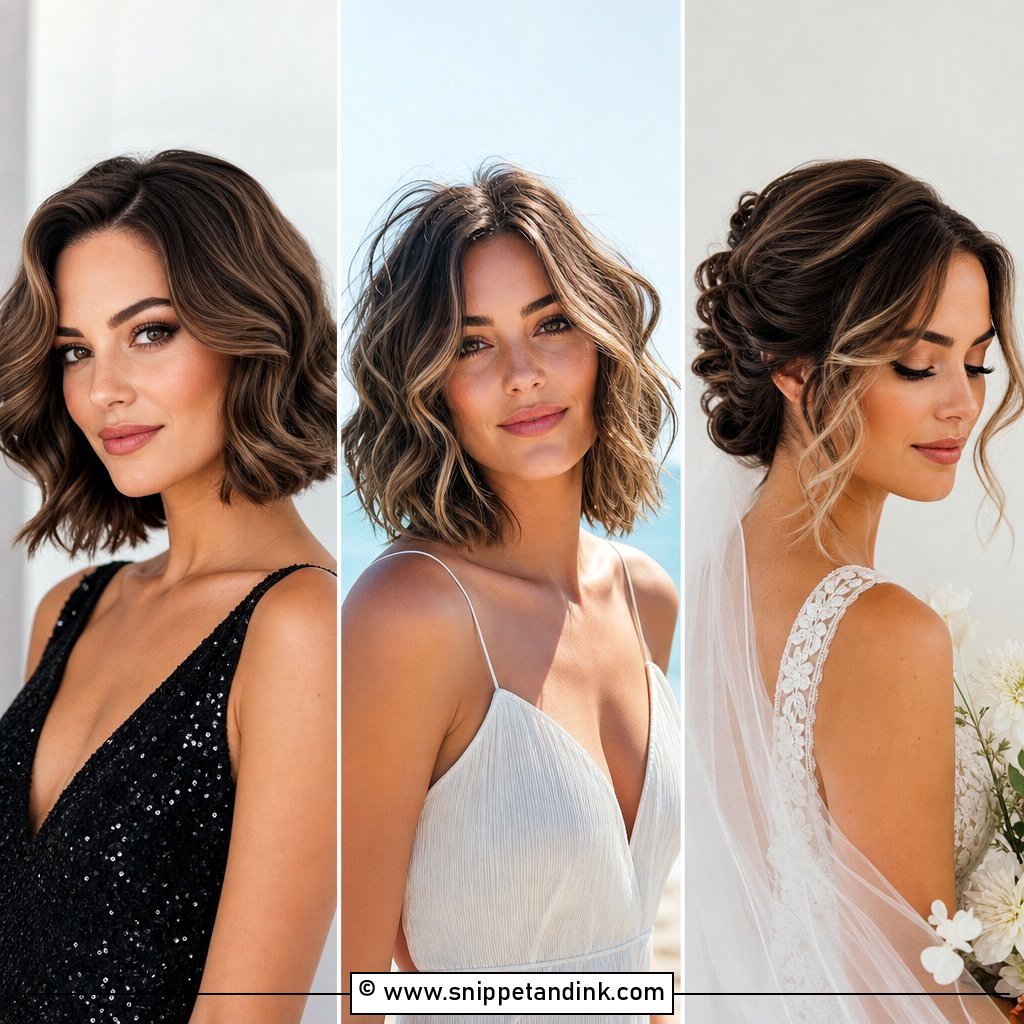
A ponytail needs at least shoulder-length hair to look full without help. Shorter than that, I’d usually suggest a low bun or a clip-in piece rather than forcing it.
1. Sleek Low Bridal Ponytail
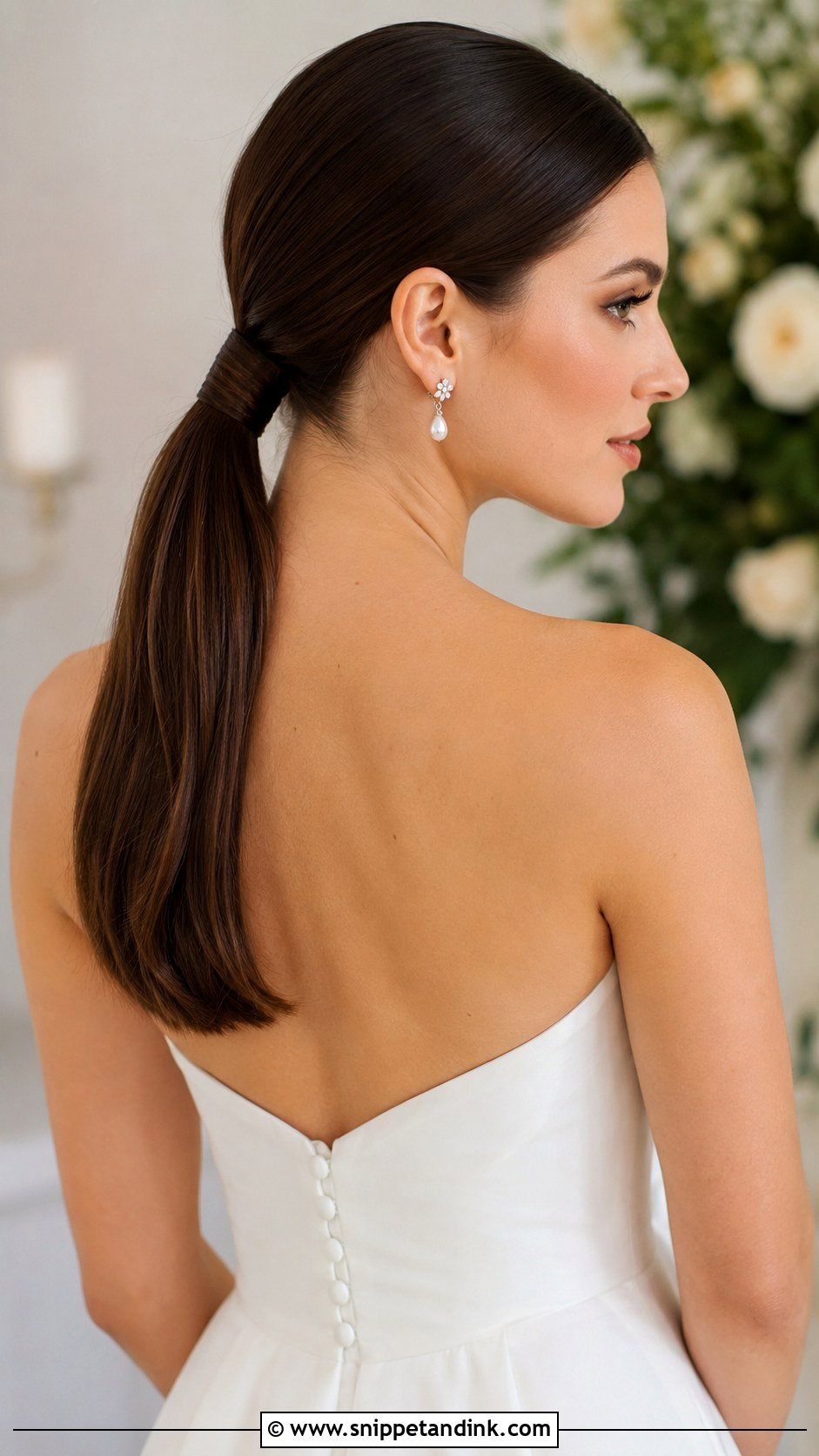
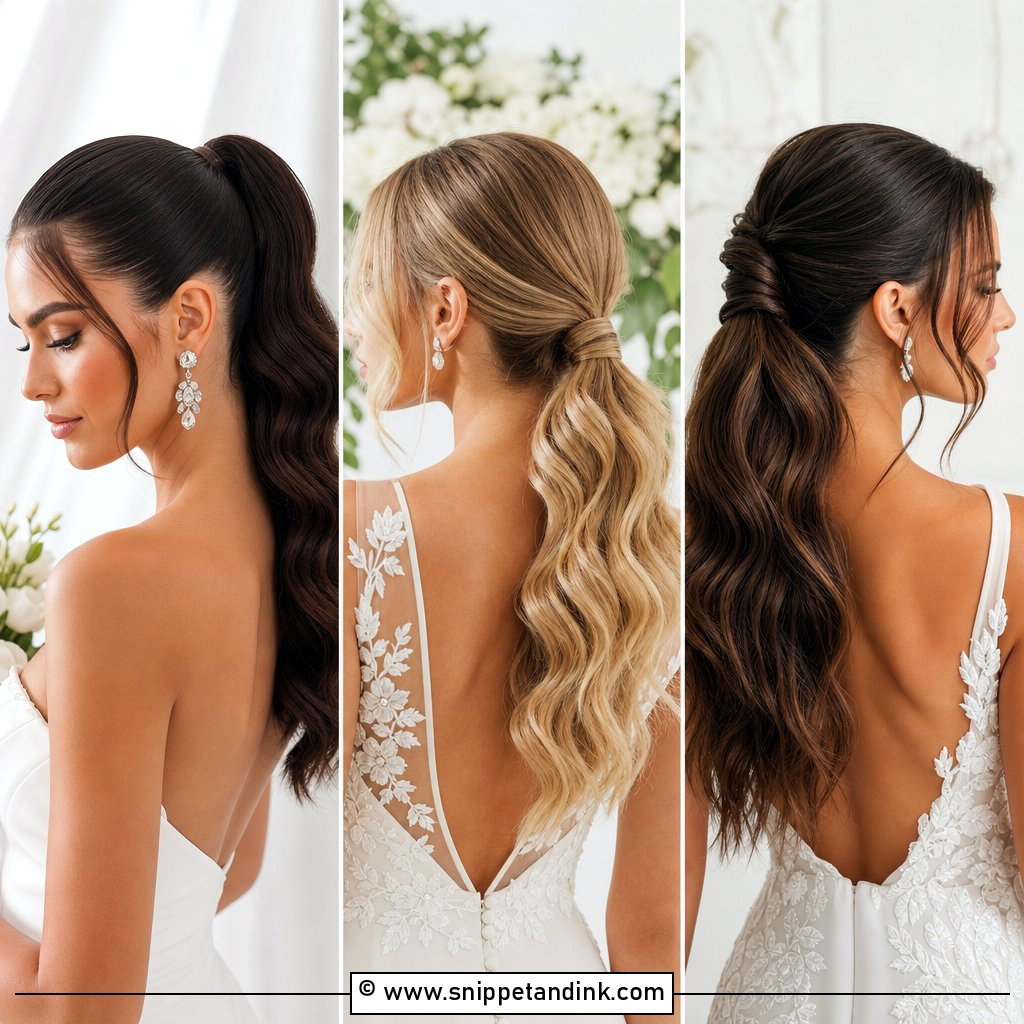
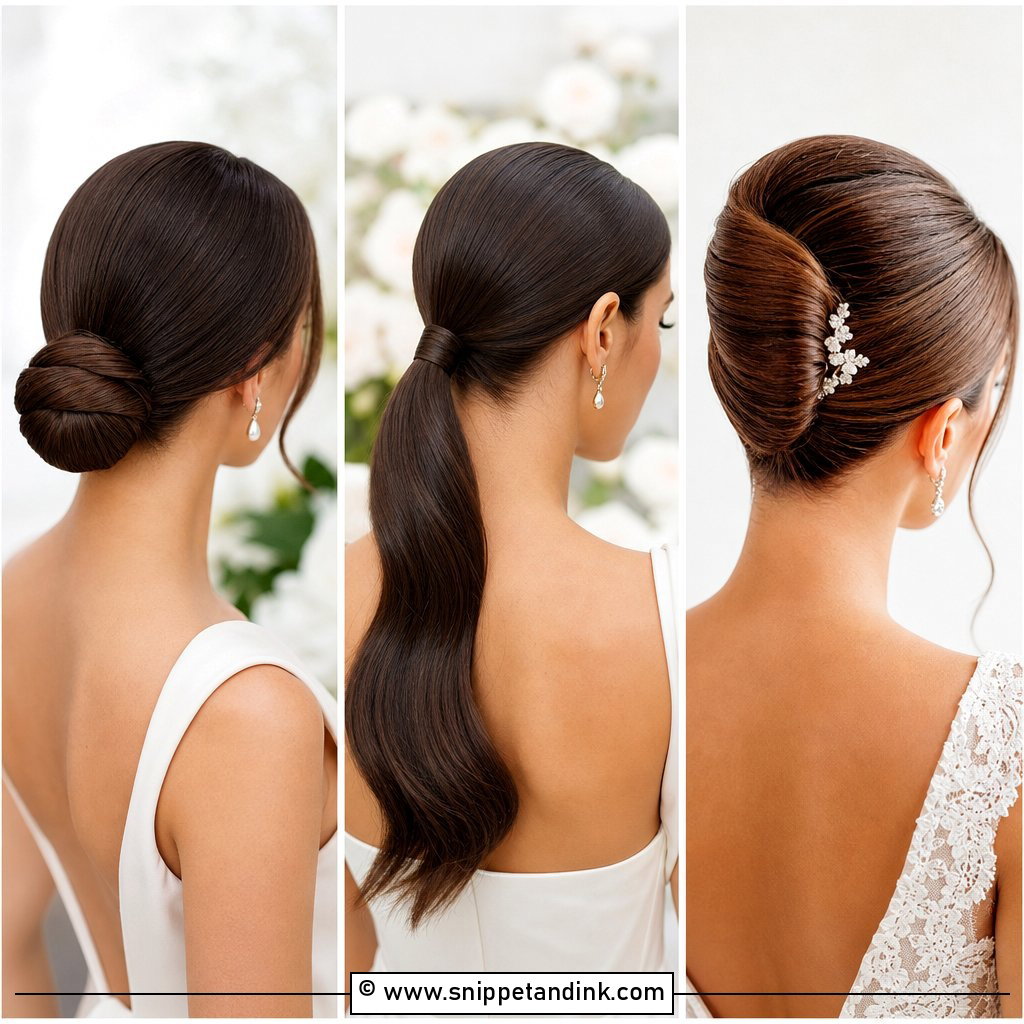
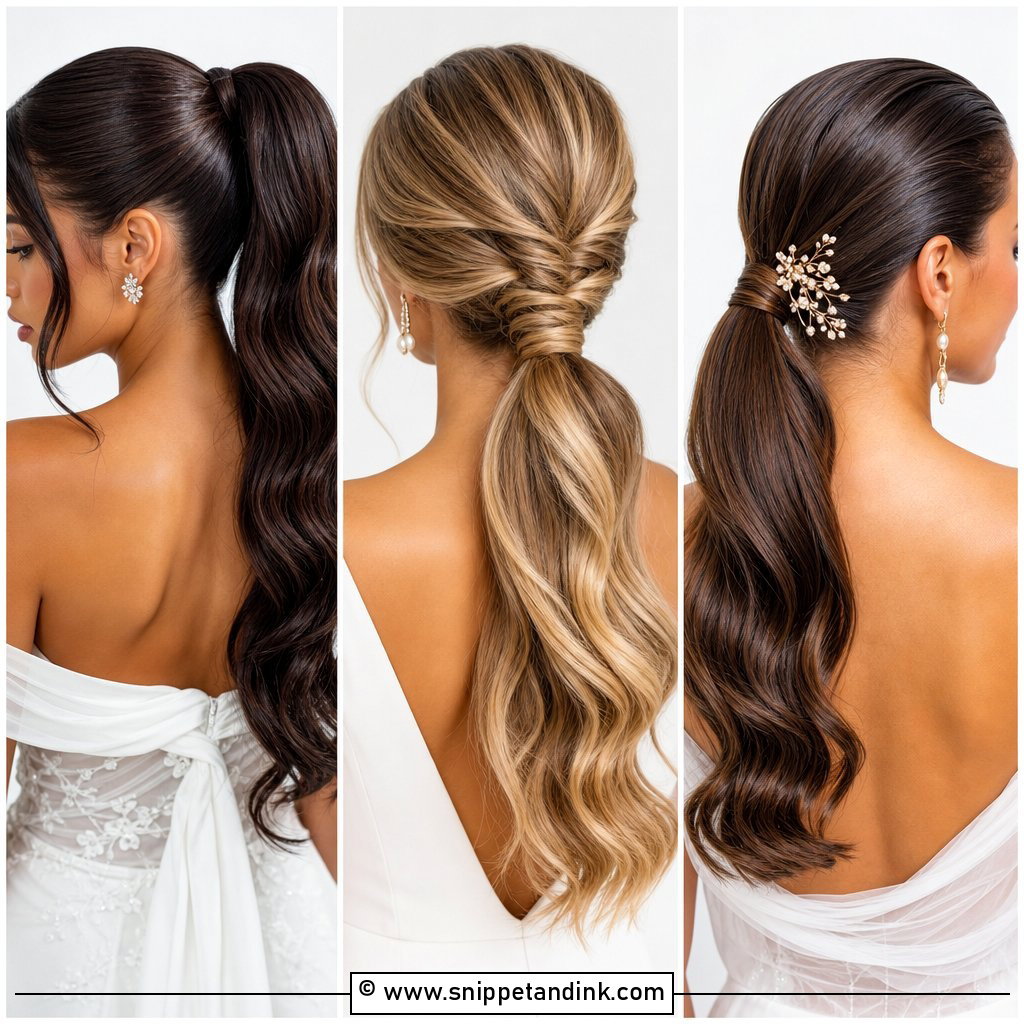
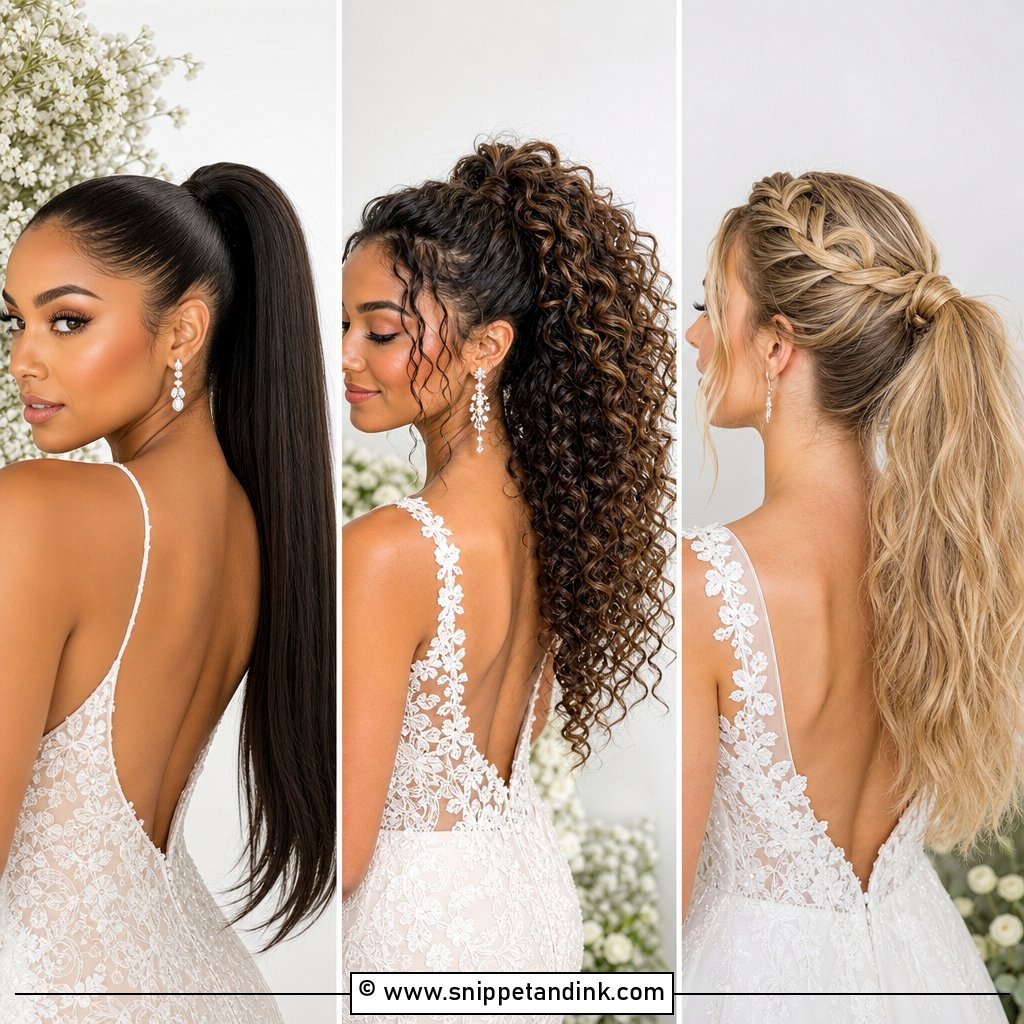
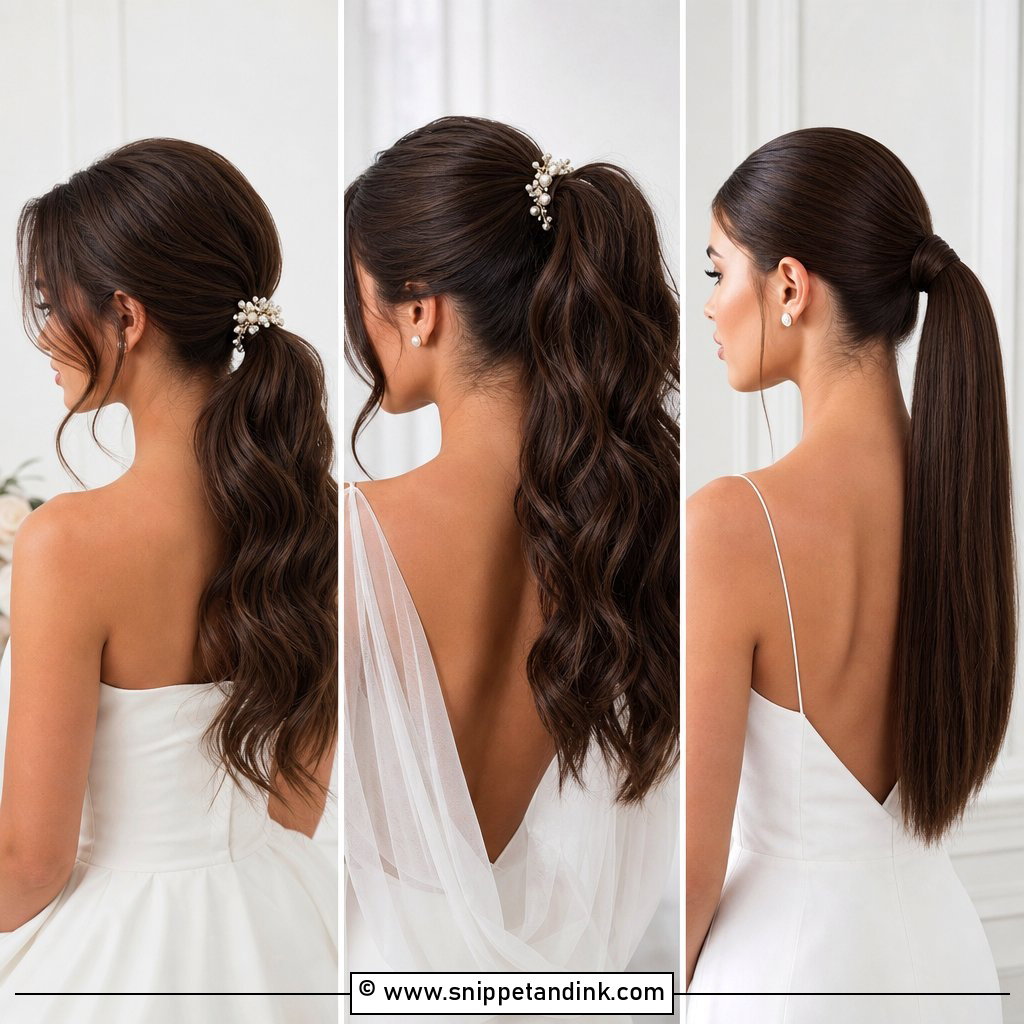
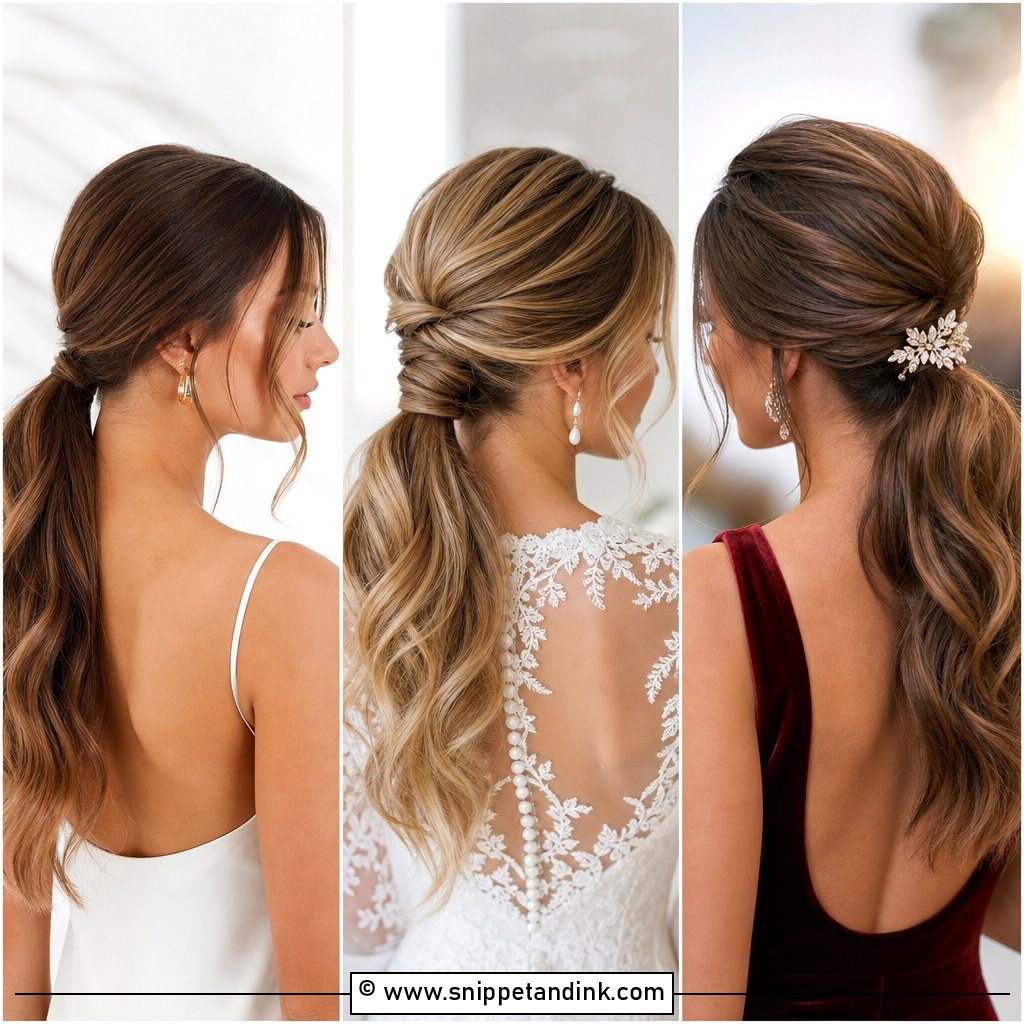
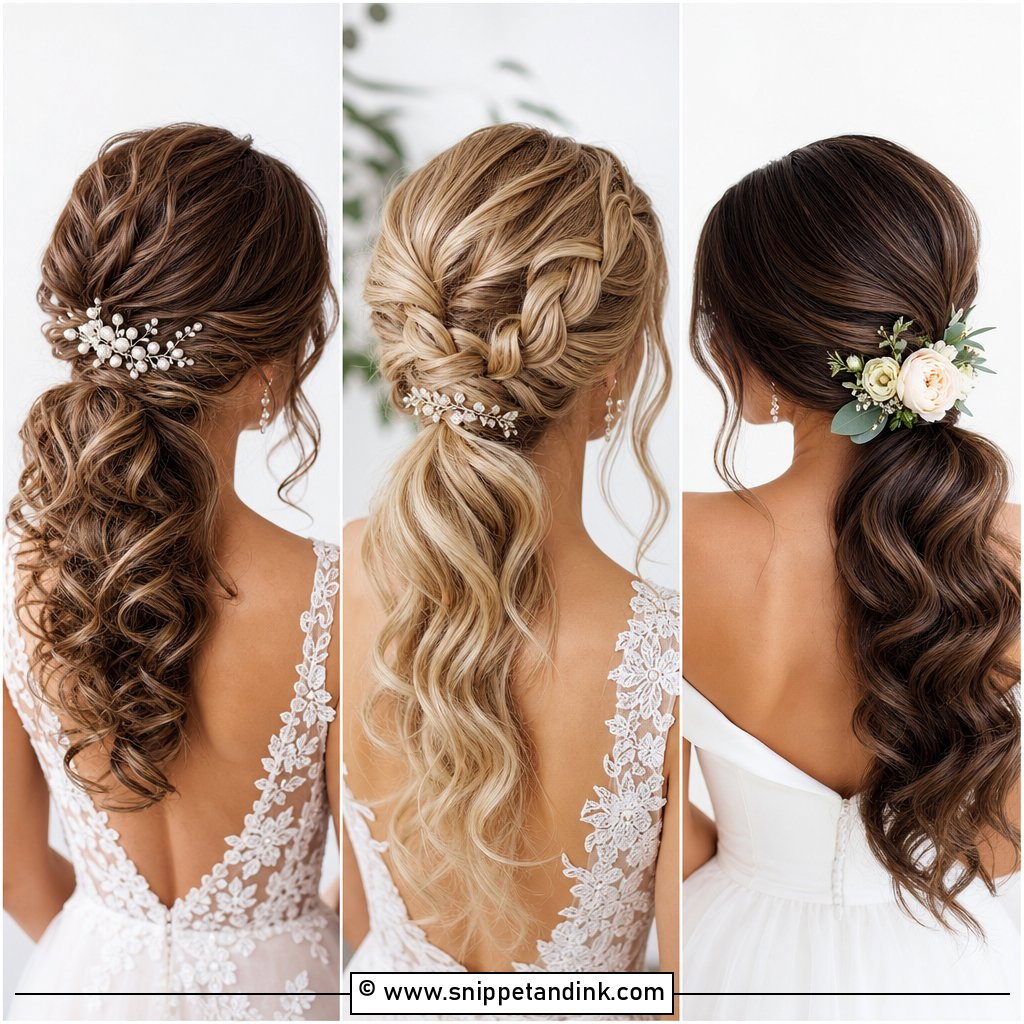
The sleek low ponytail looks simple, which is exactly why every flaw shows. I brush the hair back with a boar bristle brush, gather it at the nape, and smooth it with a light serum so the surface reflects light without looking greasy. A strand wrapped around the elastic and pinned underneath hides the band. It suits almost every face shape, pairs well with statement earrings and structured gowns, and holds up through hugs and tears. Fine hair benefits from a little dry shampoo at the roots first, so the brush has something to grip.
2. High Bouncy Bridal Ponytail
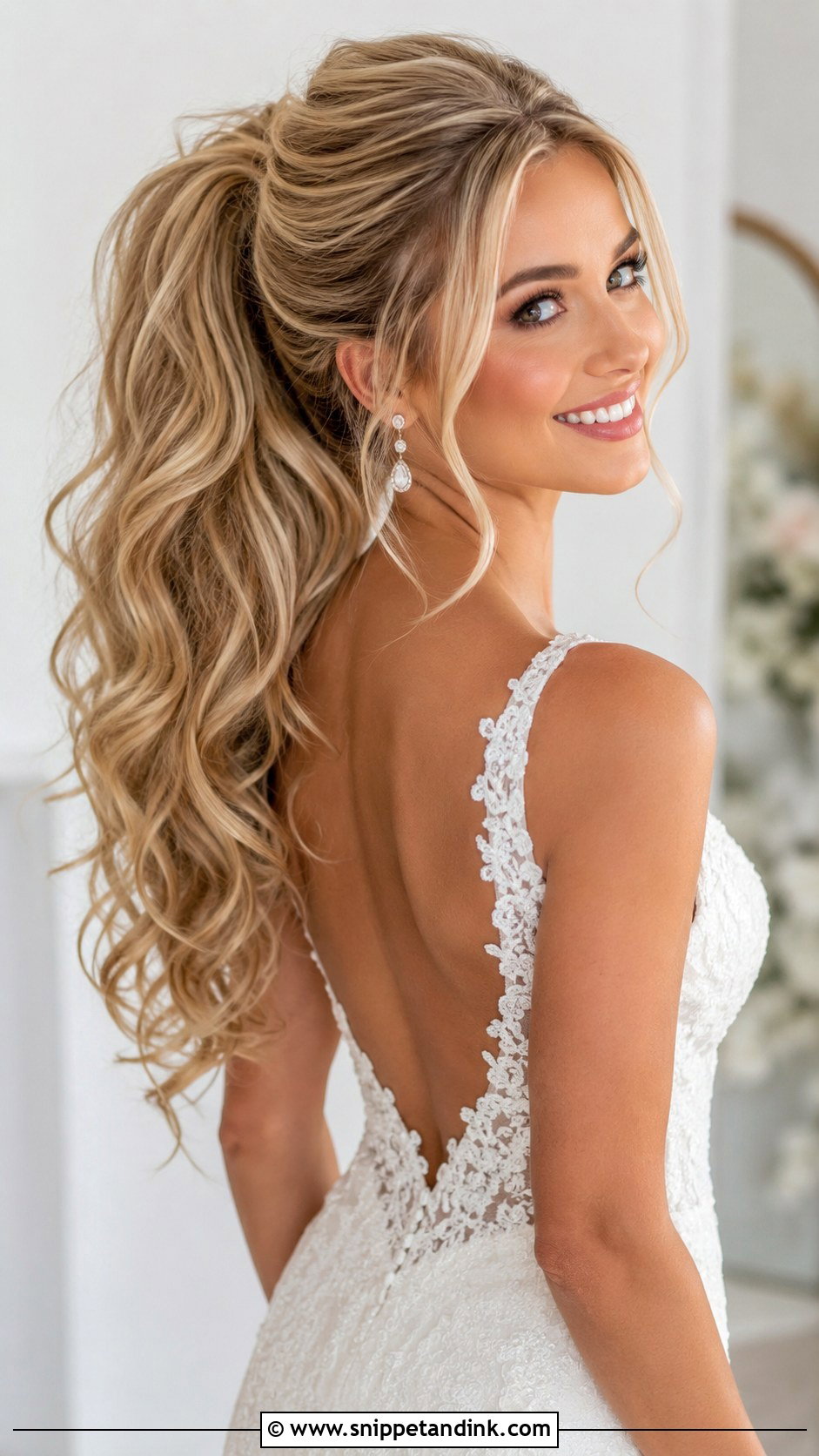
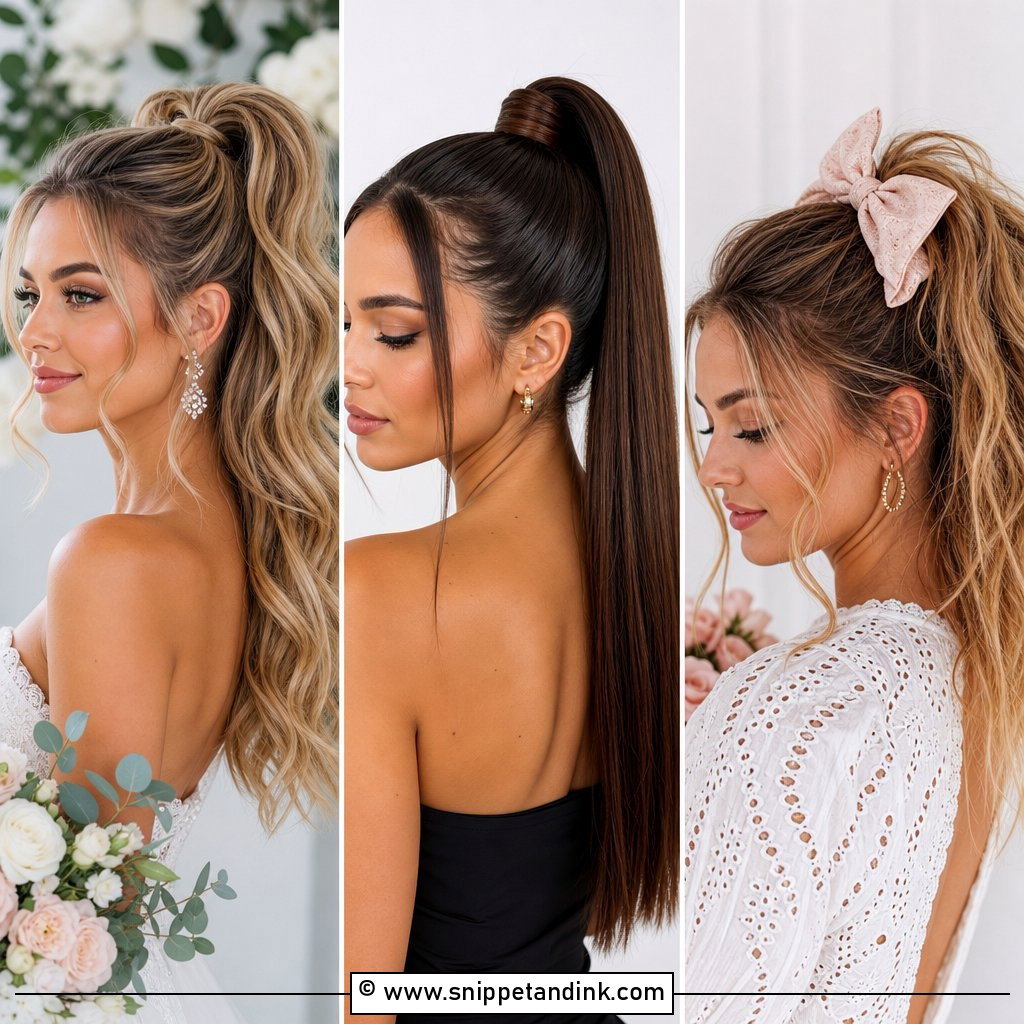
A high ponytail moves with every step, and that bounce is the reason to wear it. I place it at the crown, roughly in line with the cheekbones if you trace a line back, then curl the length so it swings rather than hangs. A little backcombing at the base gives lift, and a flexible hold spray keeps the volume without making it crunchy. It shows the face and neckline well and suits fitted and flowing gowns. Be honest with yourself about weight, though: very thick, long hair pulled high can start to ache by evening.
3. Braided Bridal Ponytail
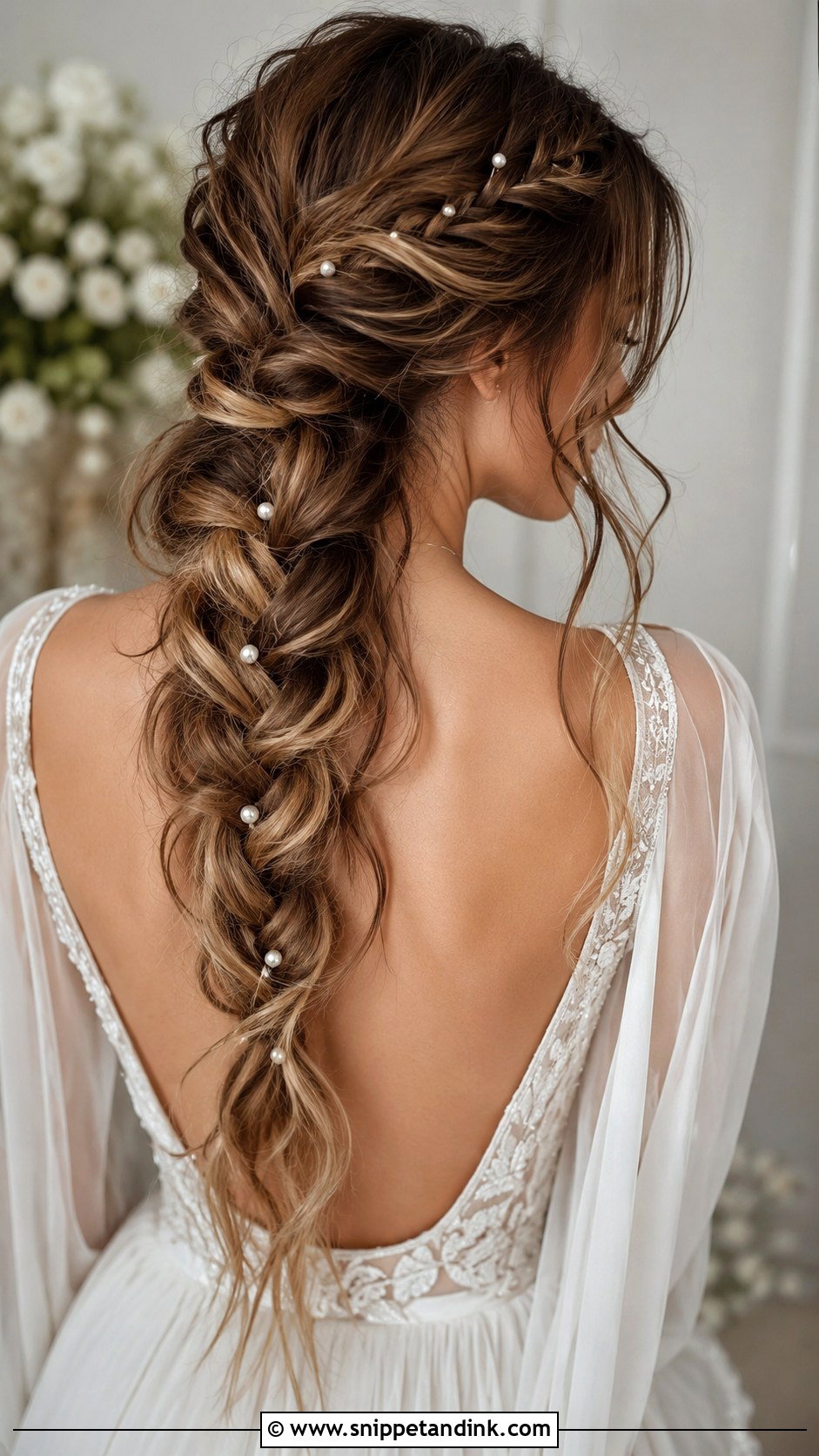
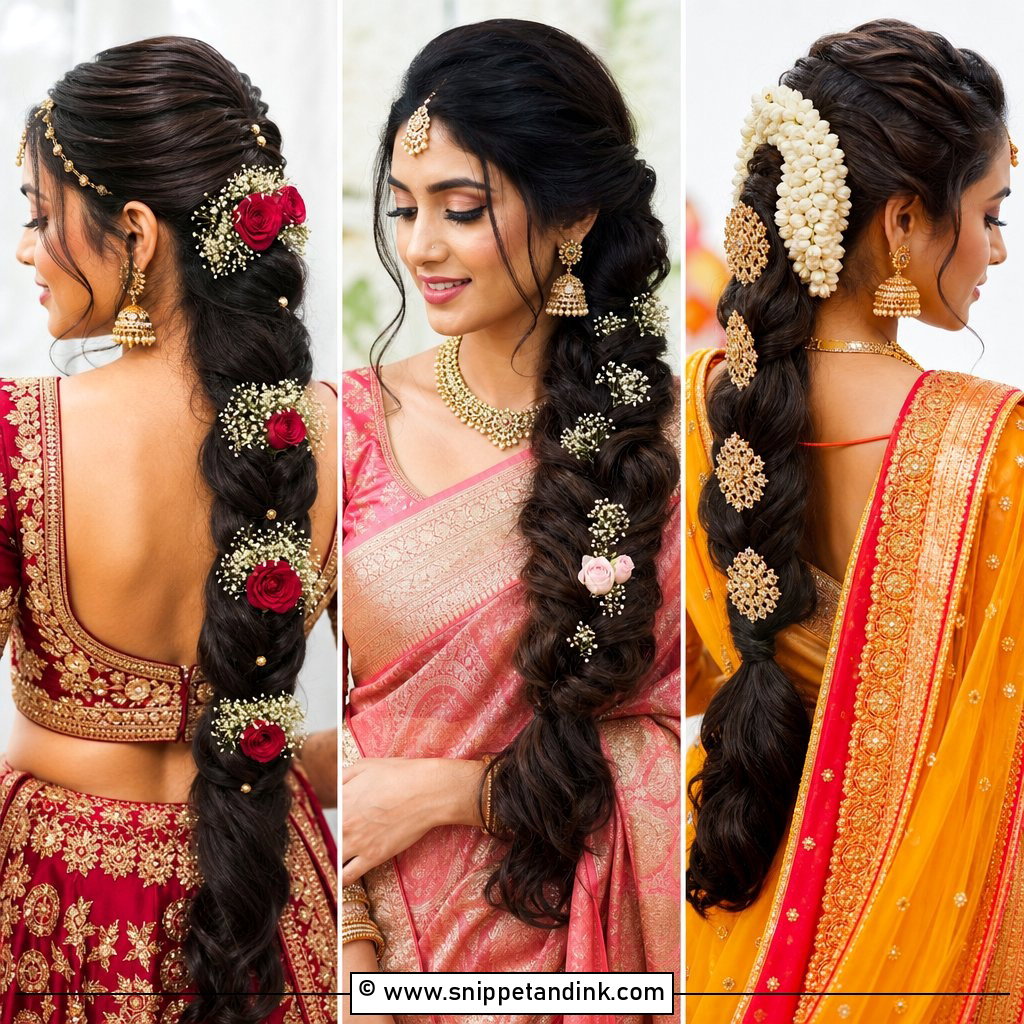
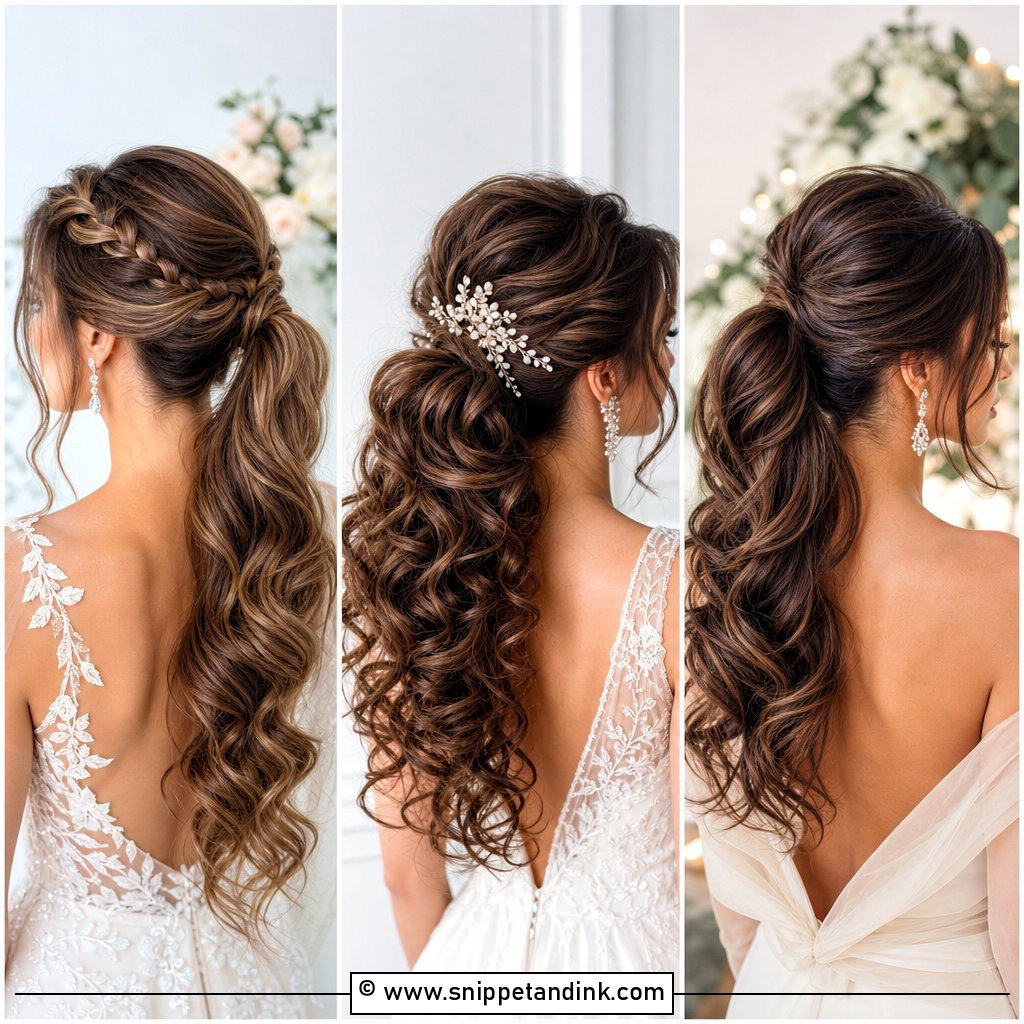
Braiding a ponytail does two jobs at once: it adds pattern and it locks the length in place so wind can’t undo it. You can braid the whole tail into one thick plait or run small accent braids along the sides into the base. I pancake the braid, gently pulling the edges outward, so it looks fuller and softer in photos. Tiny flowers or pearl pins slot easily into the plaits. It’s the style I’d point a boho, garden or rustic bride towards when she wants detail without a full updo.
4. Bubble Ponytail for Brides
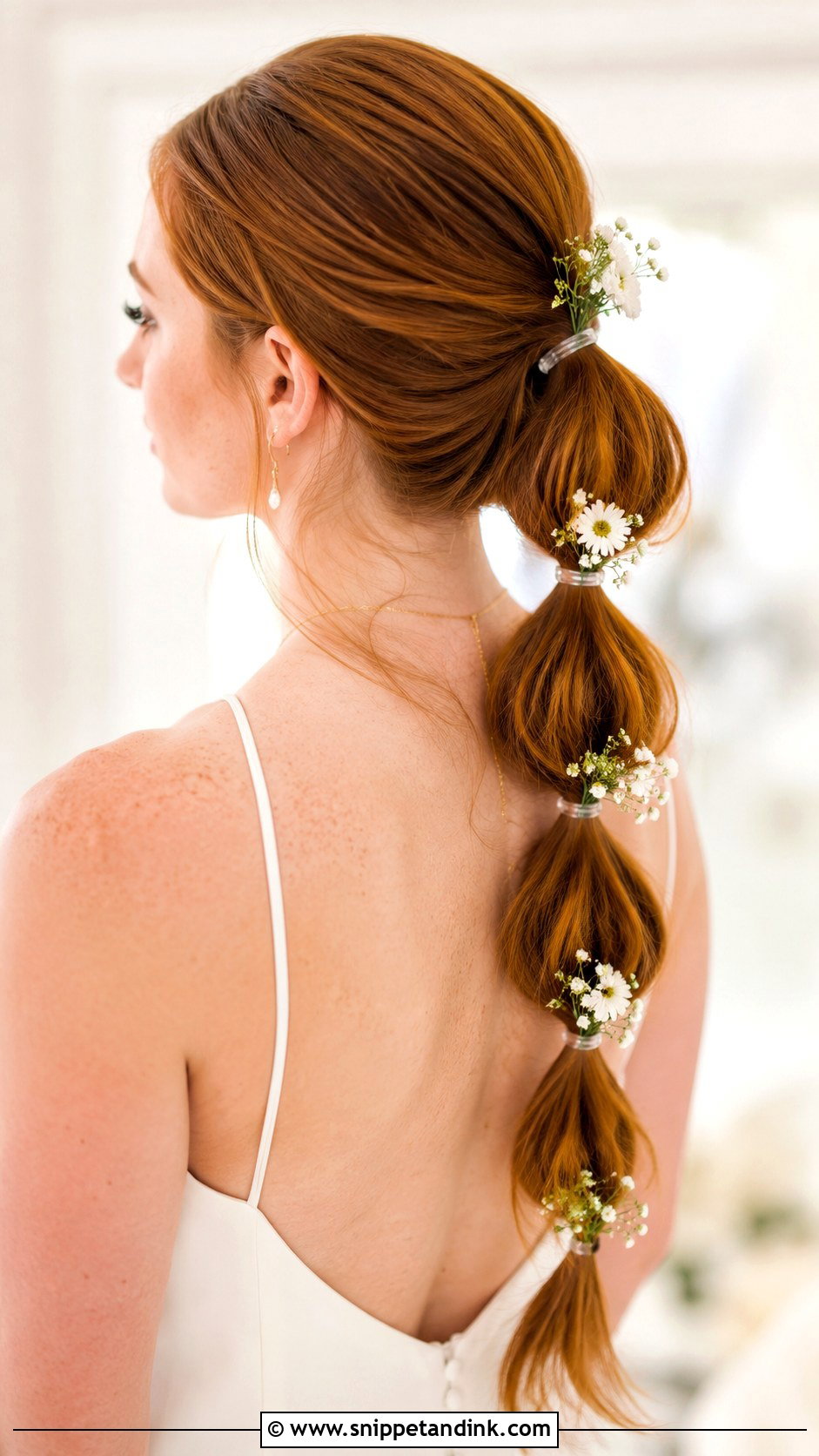
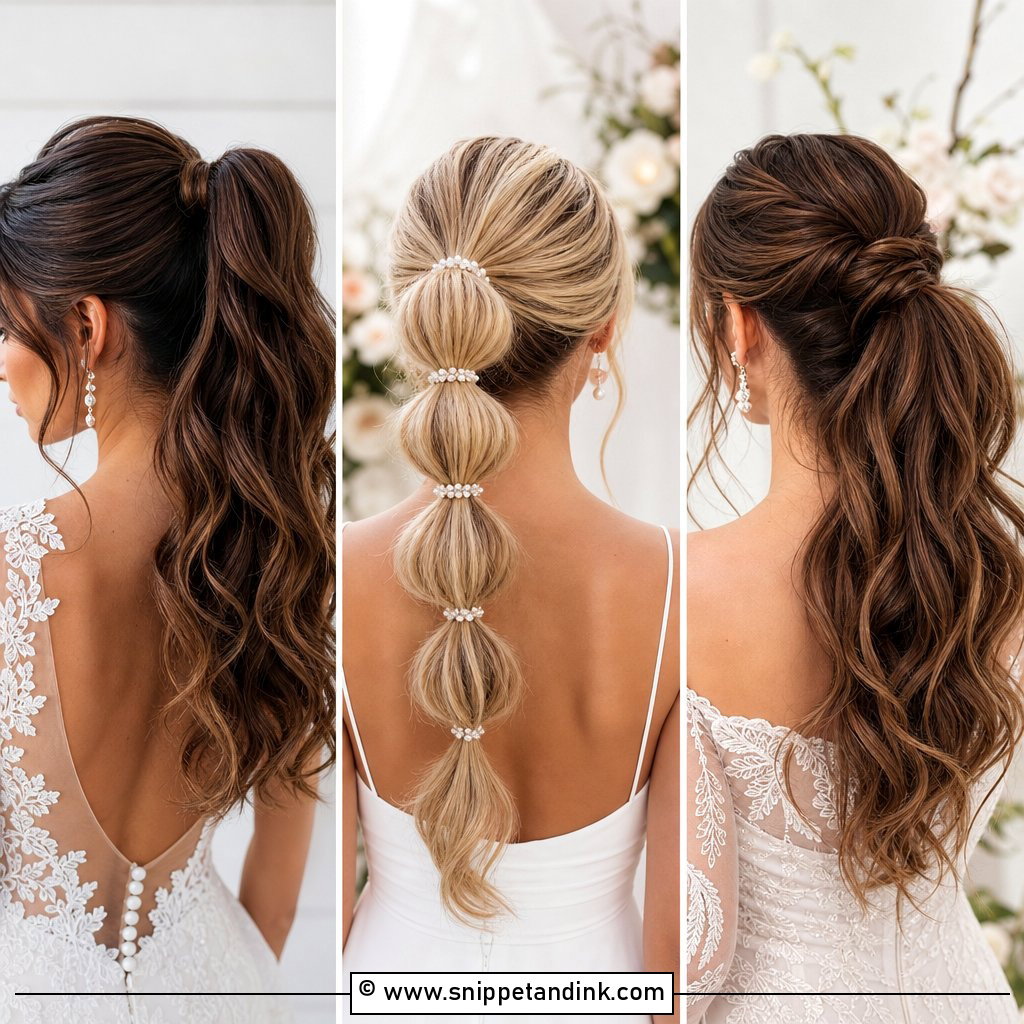
The bubble ponytail is made by spacing clear elastics down the length and gently pulling each section out into a rounded segment. The trick is even spacing; I measure with my fingers so the bubbles get slightly smaller towards the ends, which looks deliberate. Small pearl pins or tiny flowers between each bubble make it bridal. It suits sleek or textured hair and works for brides and bridesmaids. Fine hair can look sparse in the bubbles, so I often add a clip-in ponytail piece underneath.
5. Curly Bridal Ponytail
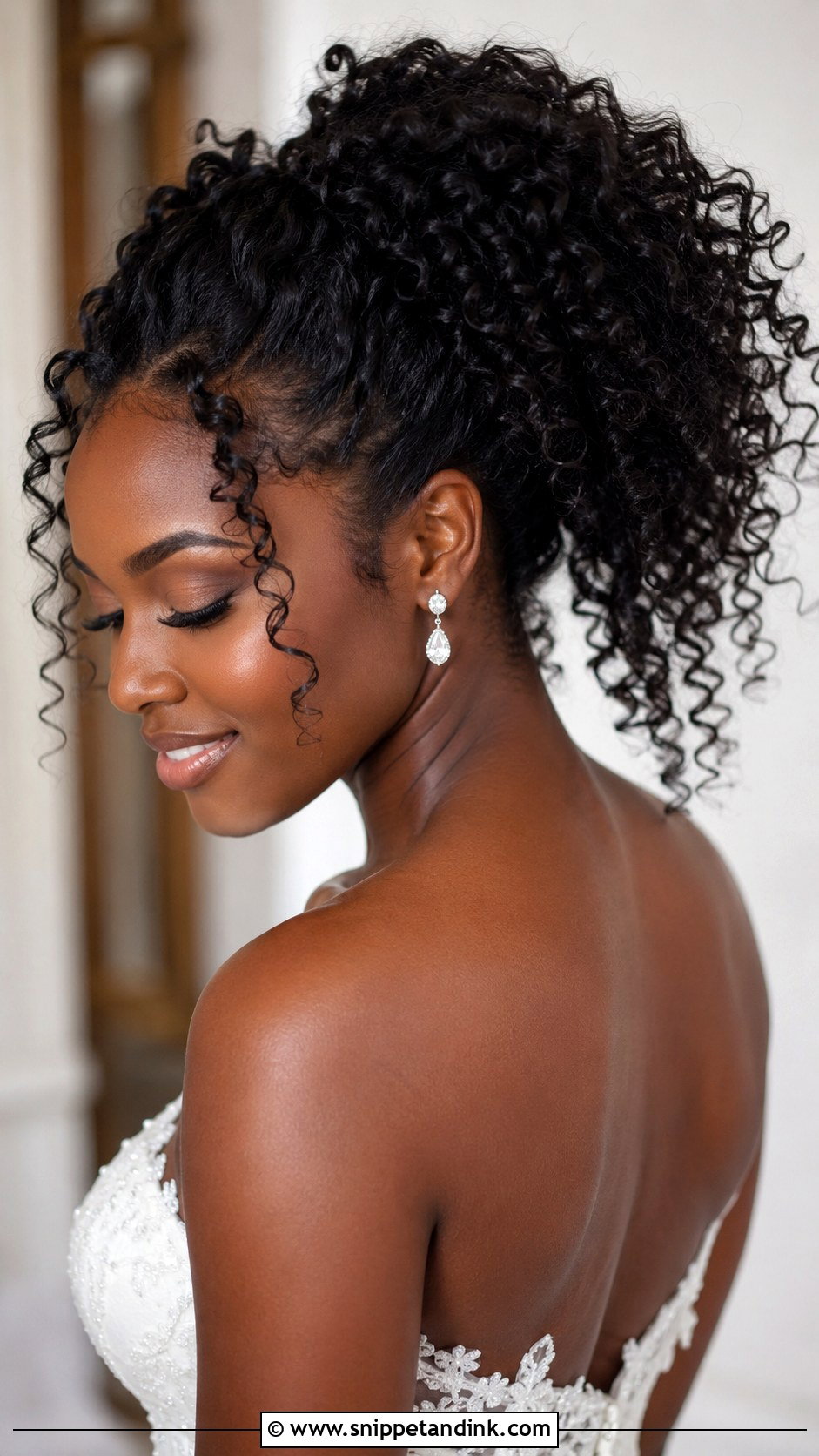
Natural curls make some of the best ponytails I do, because the texture gives volume no iron could. I gather the curls high or low with a soft, snag-free band and let them spill out in their own pattern, then define them with a curl cream applied on damp sections rather than brushing them out. A few face-framing coils soften the cheeks. Floral crowns and jeweled combs sit well in curly hair. One thing I avoid is pulling the base too tight on textured hair, since constant tension on the hairline isn’t kind to edges.
6. Low Ponytail with Face-Framing Pieces
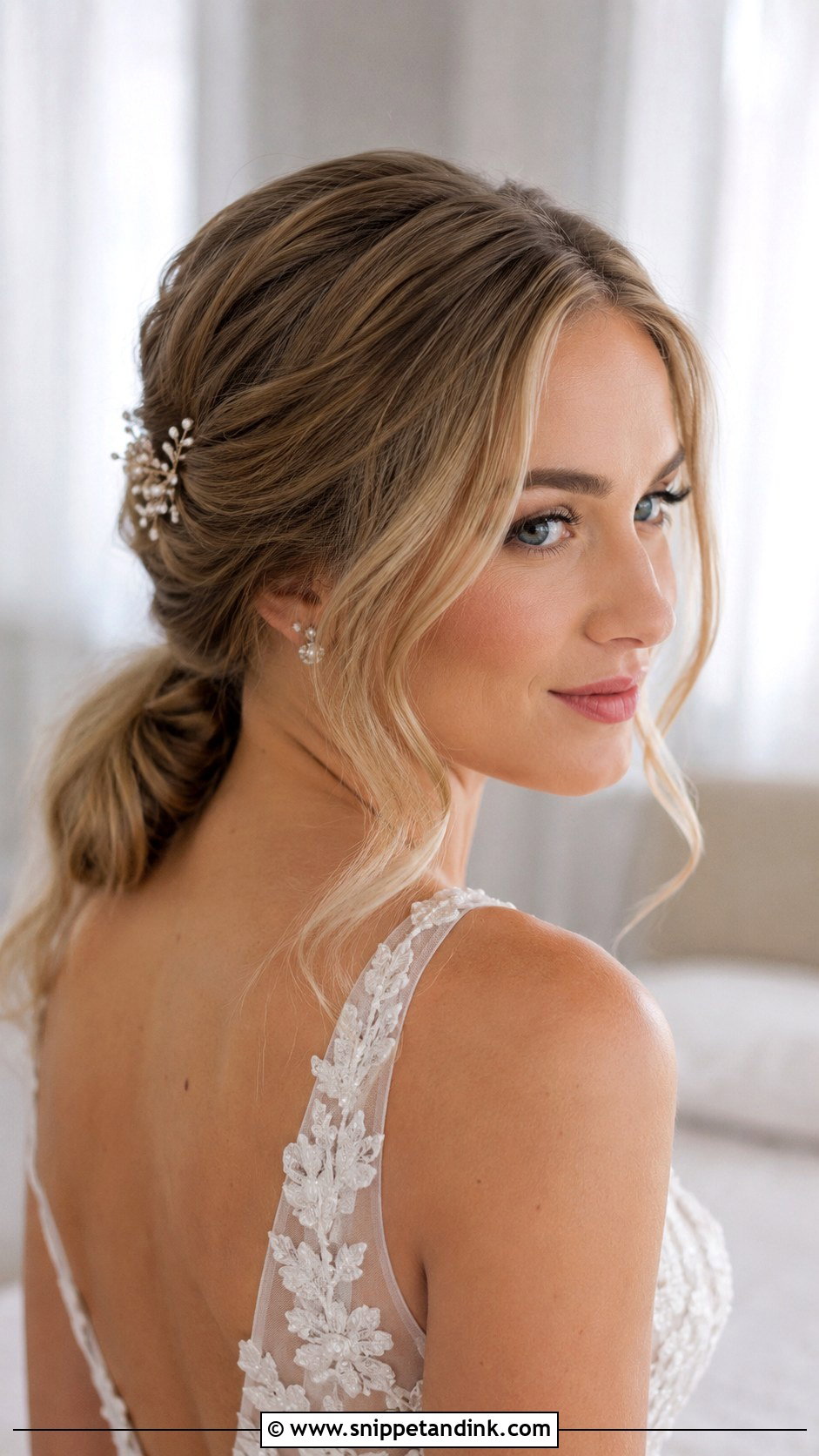
Leaving a few strands loose around the face changes a low ponytail from severe to soft. The rest of the hair goes low at the nape, smooth or lightly waved, and I curl the loose pieces with a small wand so they don’t hang flat. Choosing which pieces stay out matters: I take them from just in front of the ears and along the parting, not random strands that look like they’ve escaped. It suits ceremonies of any formality. A delicate pin at the base adds a little sparkle.
7. Sleek High Ponytail with Wrap
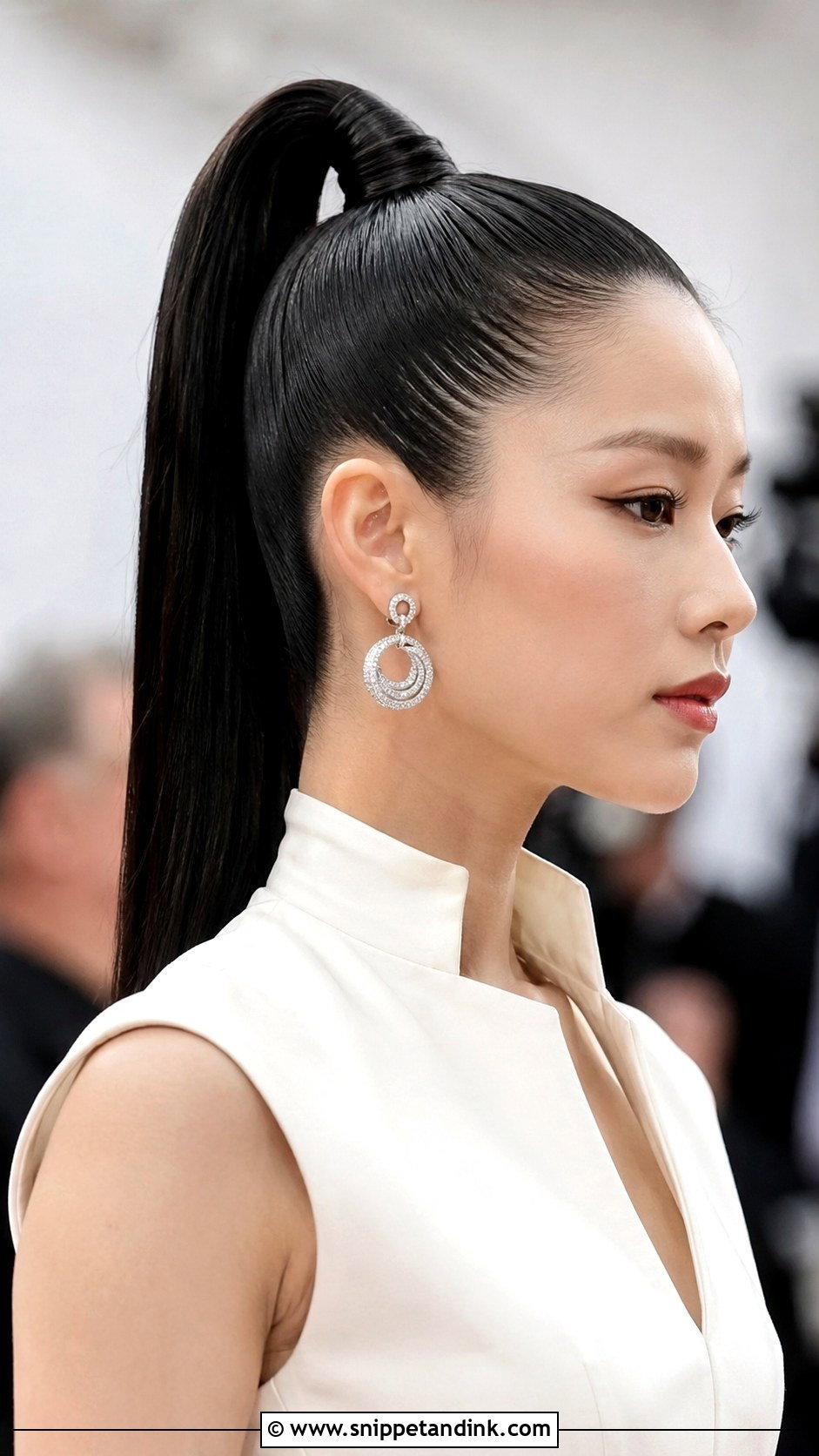
This is the most demanding style on the list for a stylist. The sleek high ponytail with a hair wrap needs hair pulled smoothly to the crown with no bumps, a flat-ironed length and the elastic hidden under a wrapped strand that’s pinned through the base. Any ripple near the hairline shows from the front. The high placement lifts the features and lengthens the neck, which suits structured gowns and modern, minimal weddings. Bold earrings finish it.
8. Ponytail with Bridal Veil
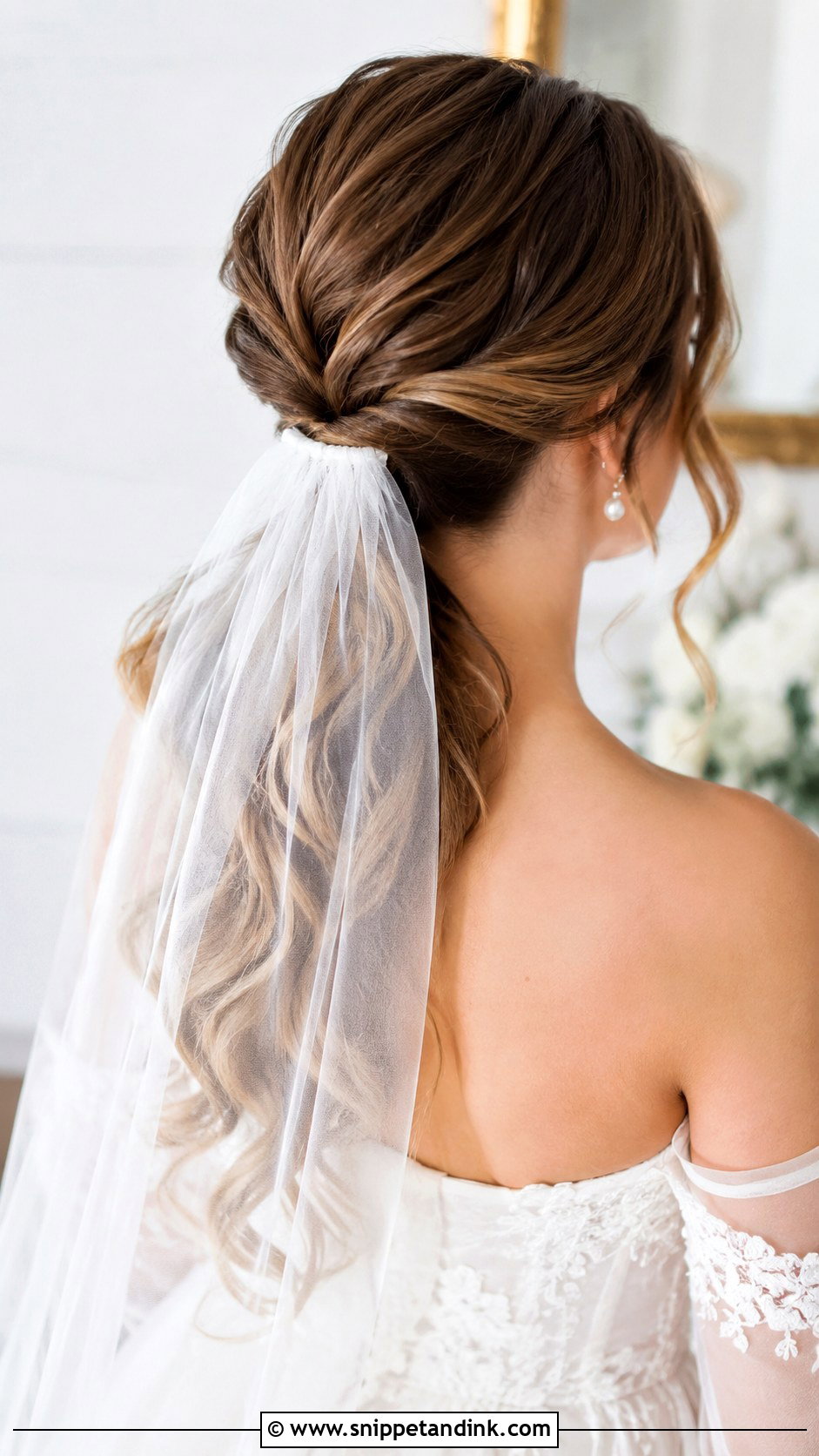
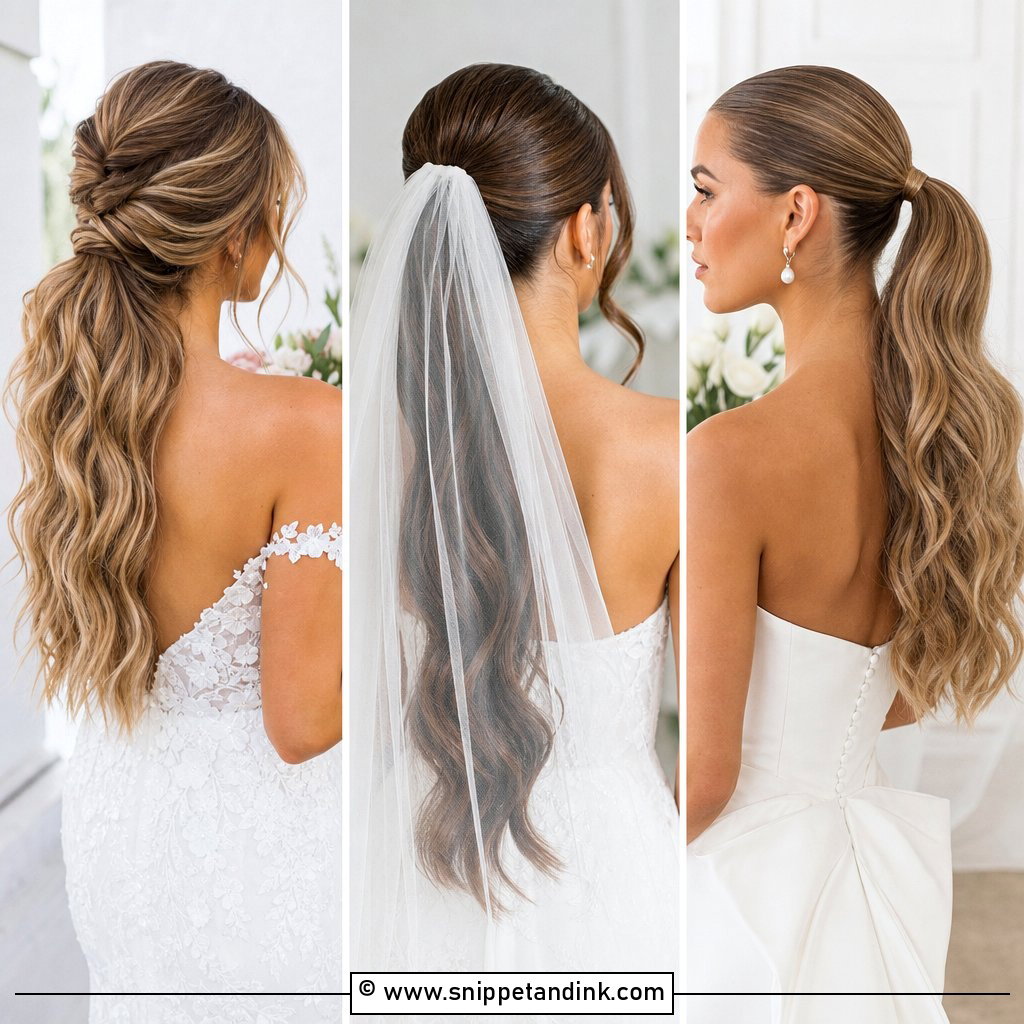
Yes, a veil and a ponytail go together. The comb goes just above or just below the elastic, depending on whether you want the veil to fall over the tail or from beneath it. I anchor the comb into a couple of crossed pins first, because a ponytail’s base is smooth and a comb slides on its own. Soft waves in the tail add romance. The ponytail keeps hair off your face during the ceremony, and the veil can come off for the reception without disturbing anything.
9. Textured Low Ponytail
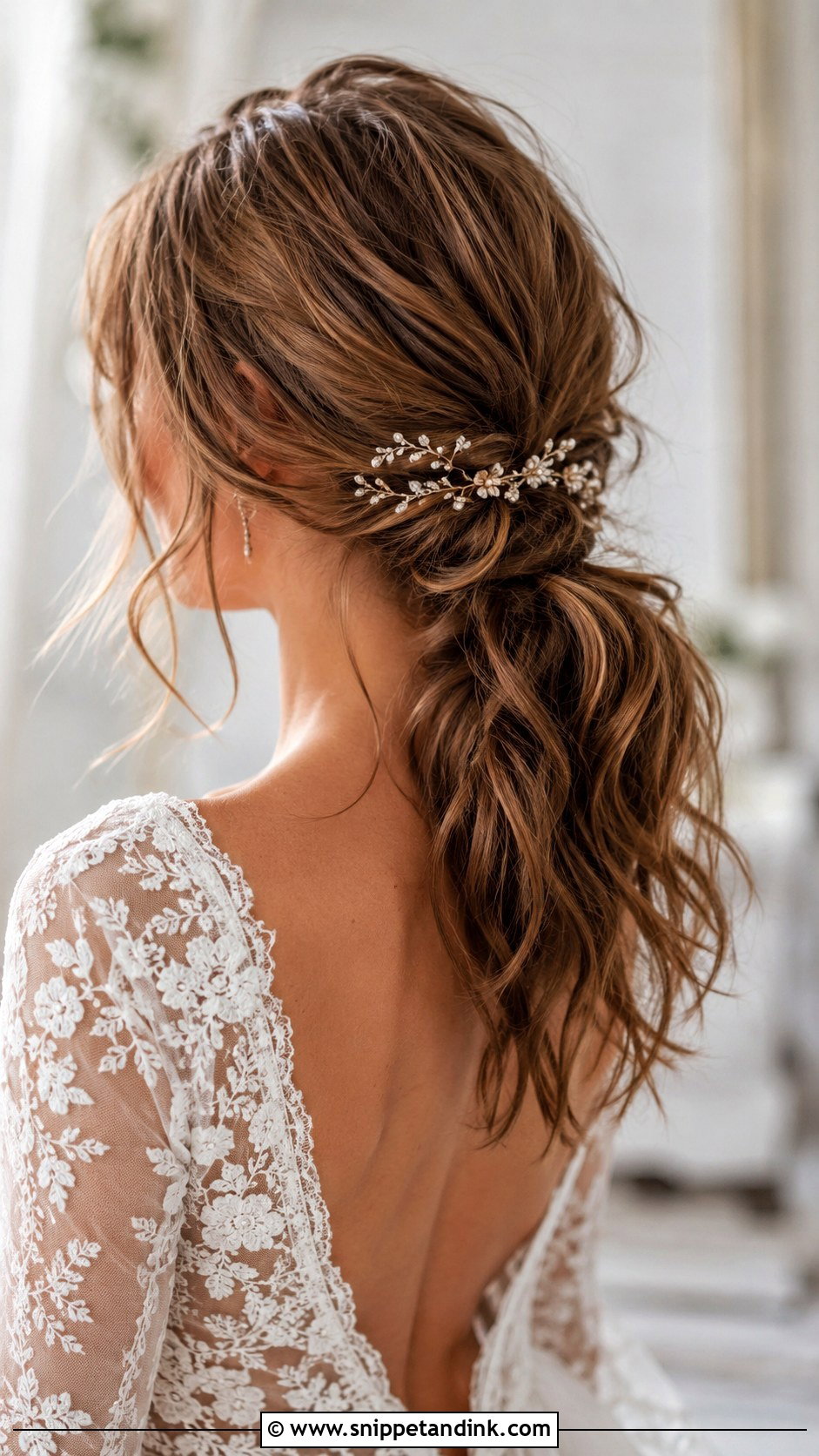
A textured low ponytail trades shine for soft, lived-in volume. The hair gets gentle waves and a bit of tousle, then gathers loosely at the nape. Texturizing spray gives grip and that piecey finish, and I pull a few strands out to soften it. It’s forgiving, which makes it a good choice for outdoor weddings where wind would ruin something sleek. The relaxed look sits naturally with flowing gowns and floral details.
10. Bridal Ponytail with Pearls
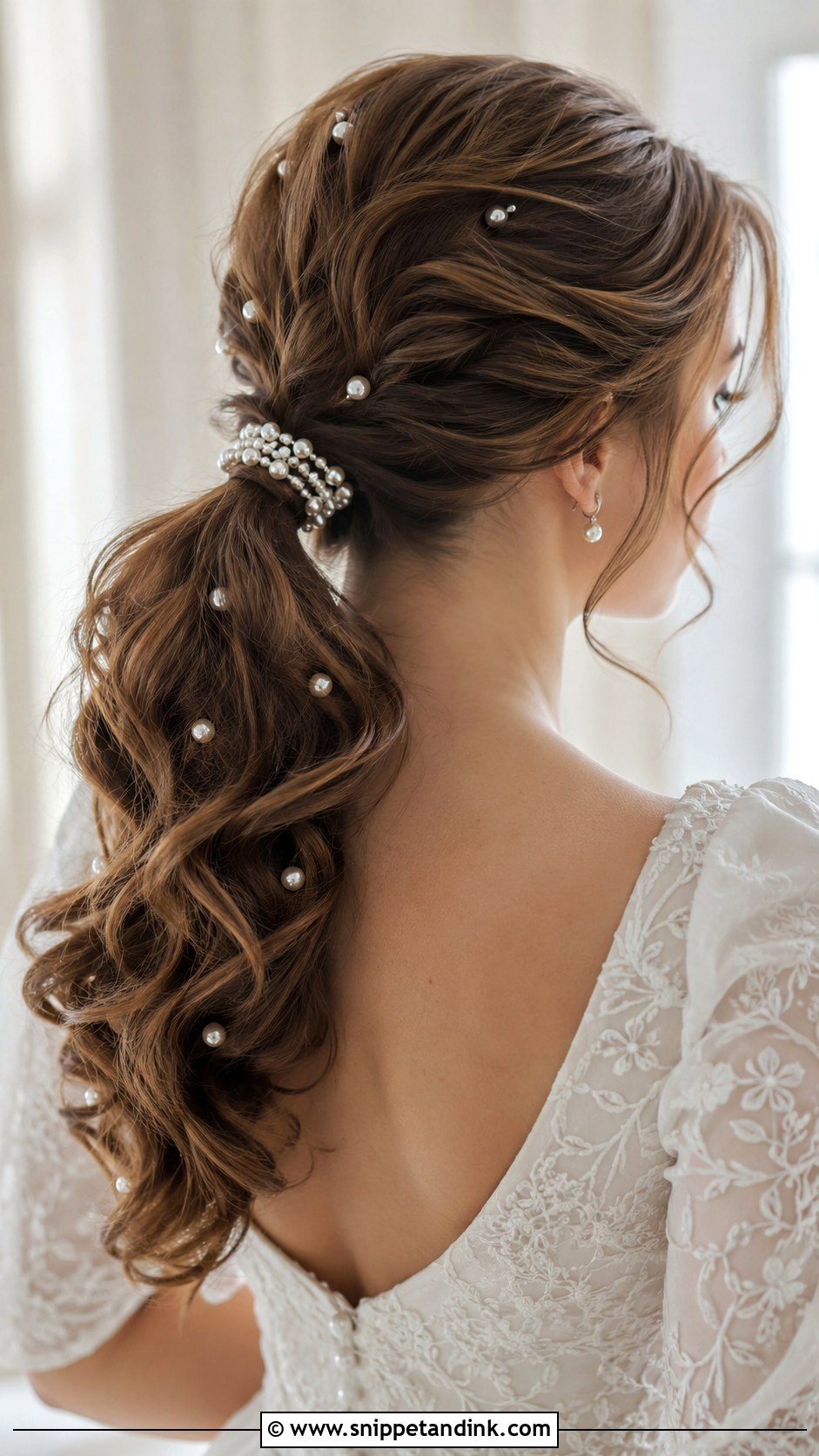
Pearls are one of the easiest ways to dress up a ponytail. A pearl-embellished ponytail can have pearl pins scattered down the length or a pearl-studded strand wrapped around the base. Pins slide out of very silky hair, so I set each one at an angle into a tiny section and add a mist of spray. It works high or low on any texture, with vintage-inspired and modern dresses alike. Keep the rest sleek or wavy to suit your theme; a dozen small pearls turn a plain ponytail into something special.
11. Wavy Bridal Ponytail
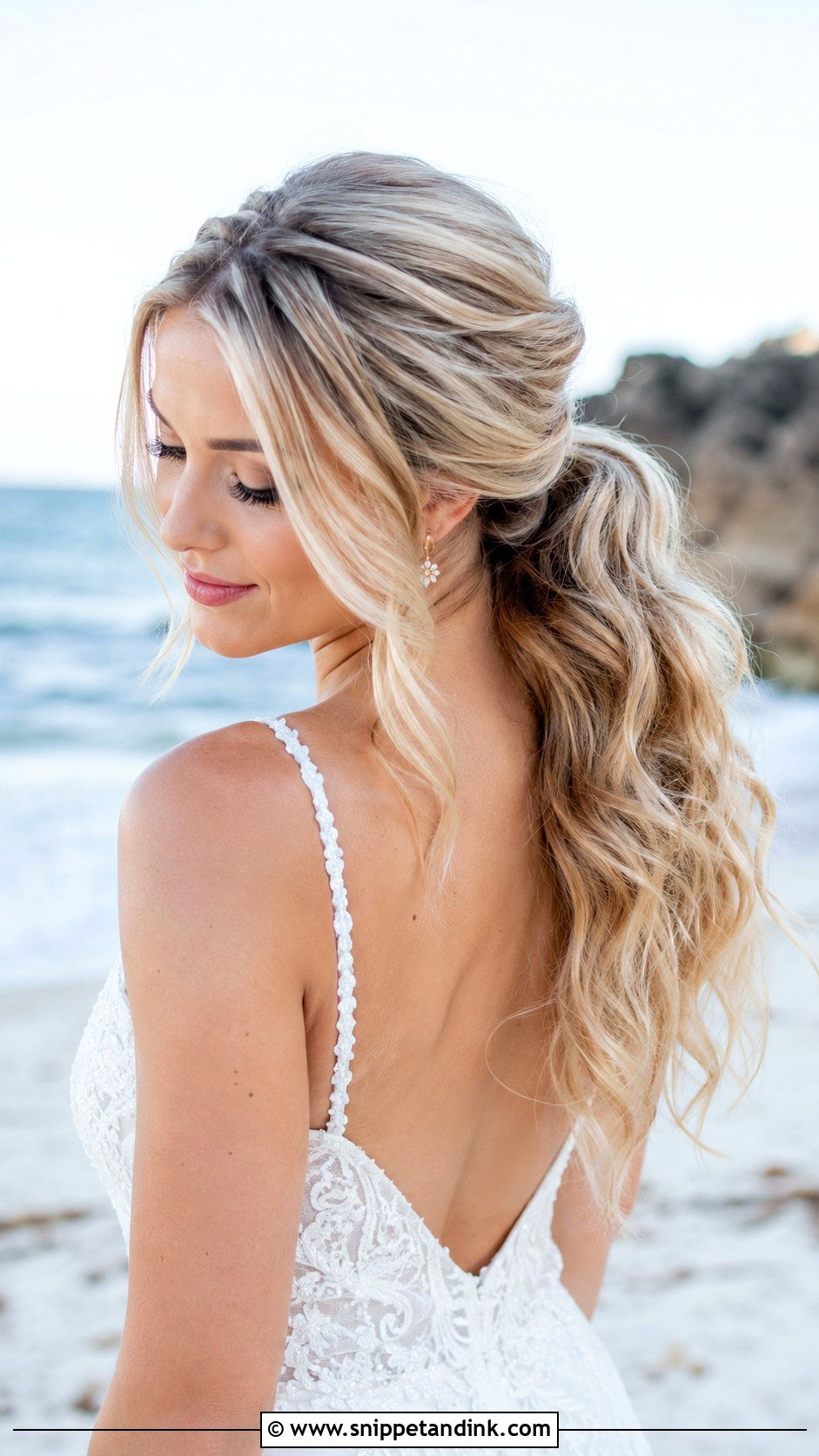
Waves give a ponytail movement in photos, especially outdoors in natural light. I curl the length with a wand, let the curls cool completely in place, then brush them out into soft bends. Brushing hot curls is why waves drop within the hour. Gathered at the crown or nape, with a few waves left near the face, it suits beach and garden weddings and nearly any gown. A light spray keeps the waves soft rather than stiff.
12. Low Braided Ponytail with Flowers
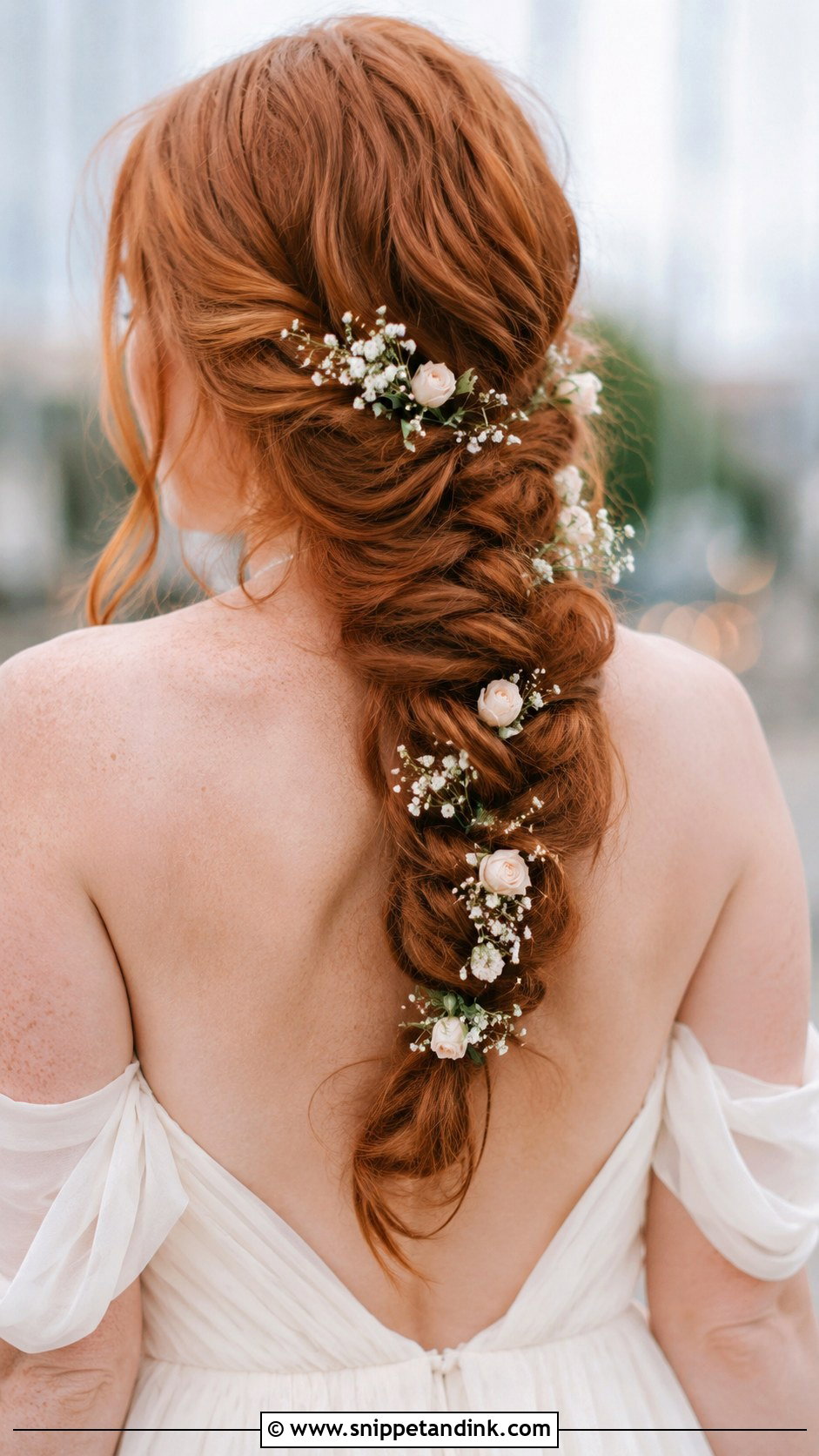
A low braided ponytail with flowers is a true garden-bride look: hair gathered low, braided loosely and tucked with small blooms. Baby’s breath, spray roses and wildflowers all work. Fresh flowers wilt out of water, so I ask the florist for hardy stems and add them as late as possible; delicate blooms can look tired by the first dance. Loosen the braid for an airy feel. It sits naturally with flowing bohemian gowns and rustic venues.
13. Half-Up Ponytail for Brides
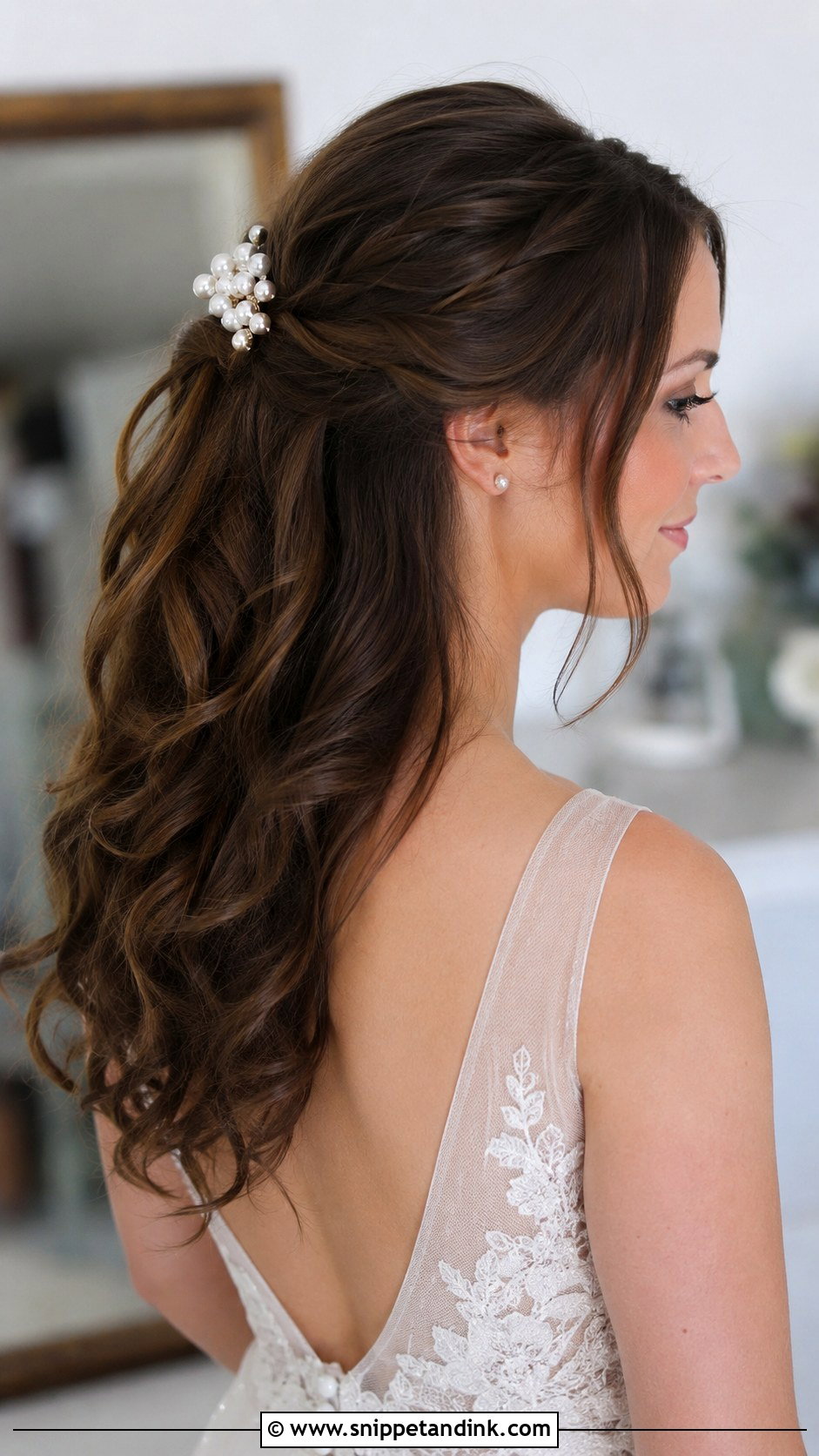
Half-up is the compromise for a bride who can’t choose between up and down. The top section is pulled back and secured, and the rest falls over the shoulders. It keeps hair off the face while showing off length. I add a little volume at the crown for a slightly retro shape and curl the ends. Half-up styles rely on the lower curls, so in humid weather they lose shape faster than a full ponytail. A decorative clip marks the base.
14. Sleek Ponytail with Center Part
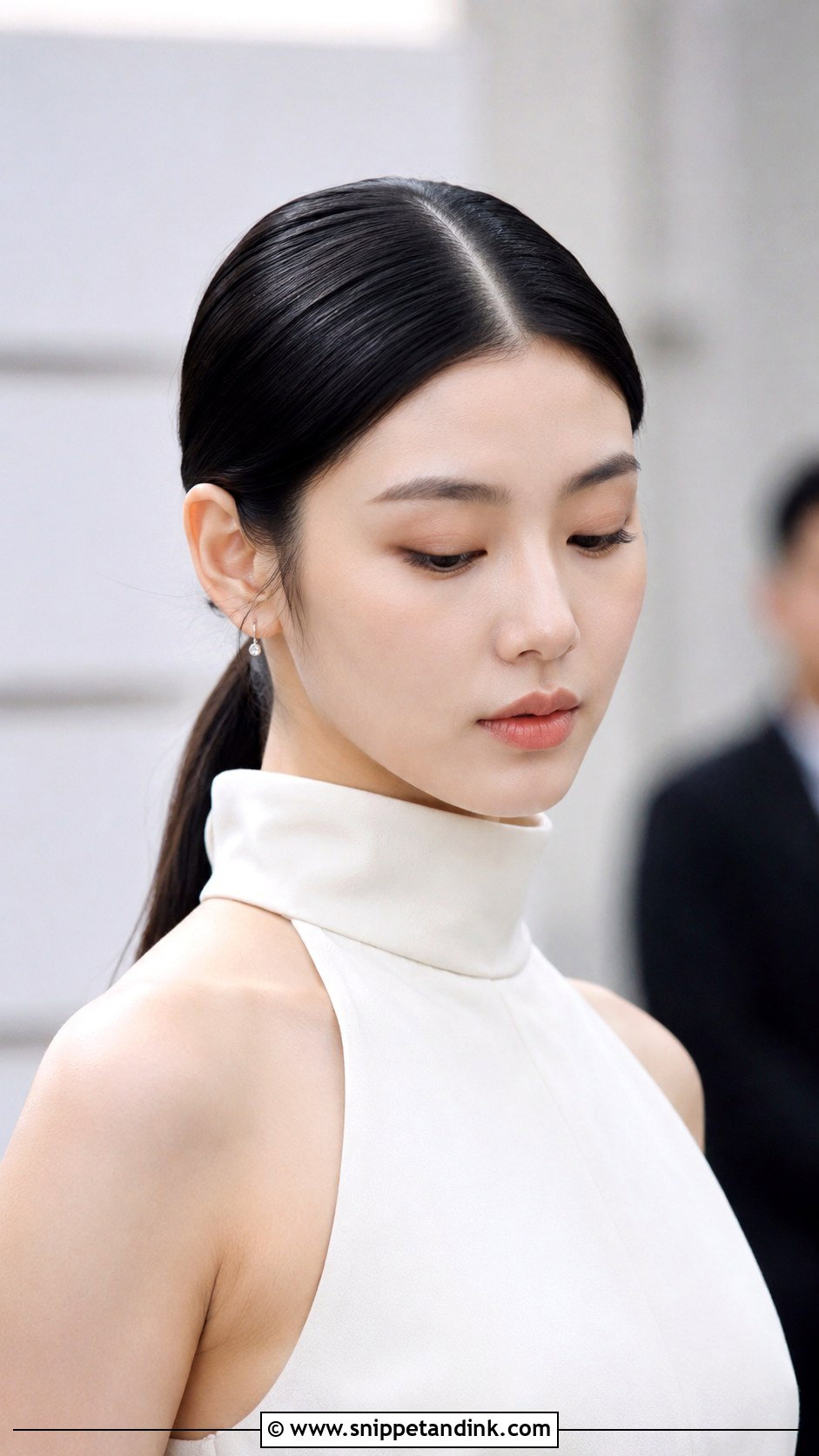
A center part is unforgiving: it shows if the face isn’t symmetrical and if the part line isn’t dead straight. When it’s right, it looks editorial and modern. I part with the tail of a comb using the bridge of the nose as a guide, smooth the hair back with serum and gather it low or at mid-height. It suits strong features and city weddings, with sleek earrings and a structured gown. The simplicity is the whole point.
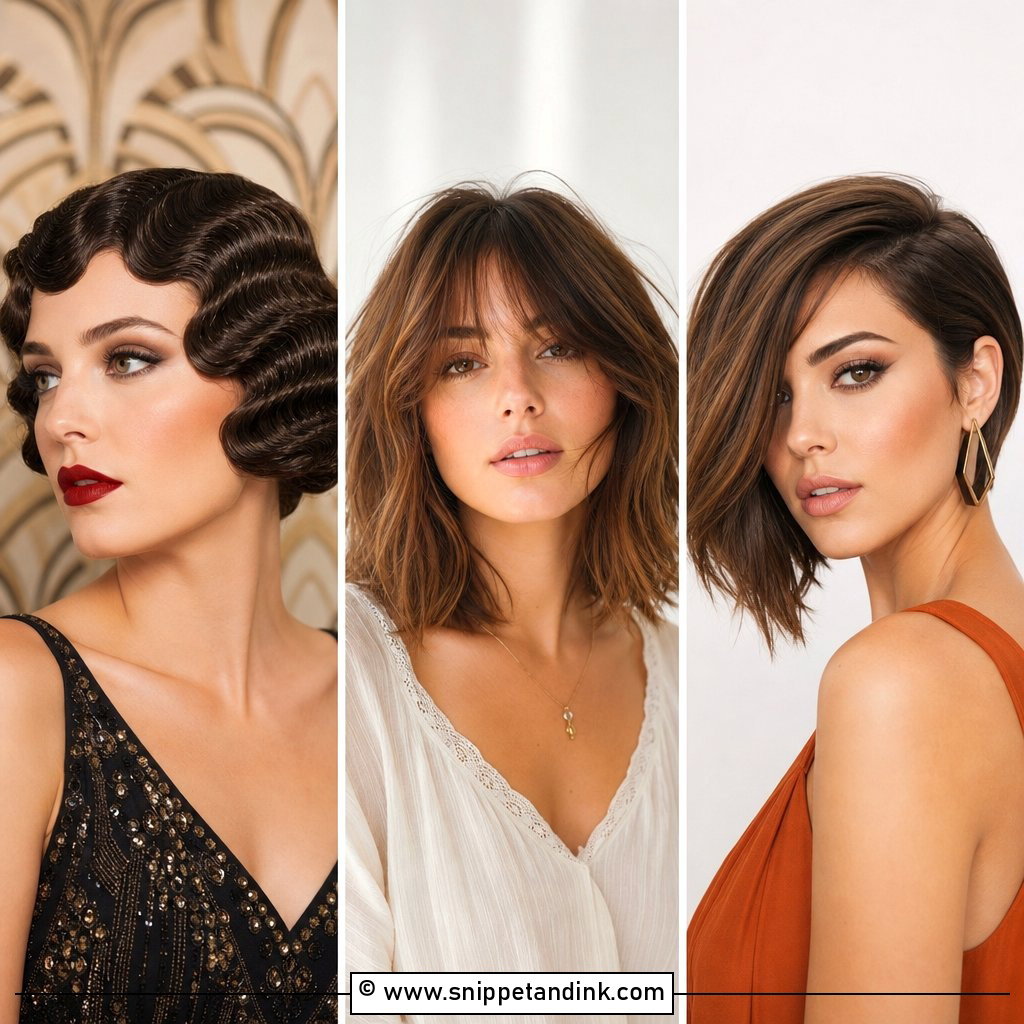
15. Voluminous Bridal Ponytail
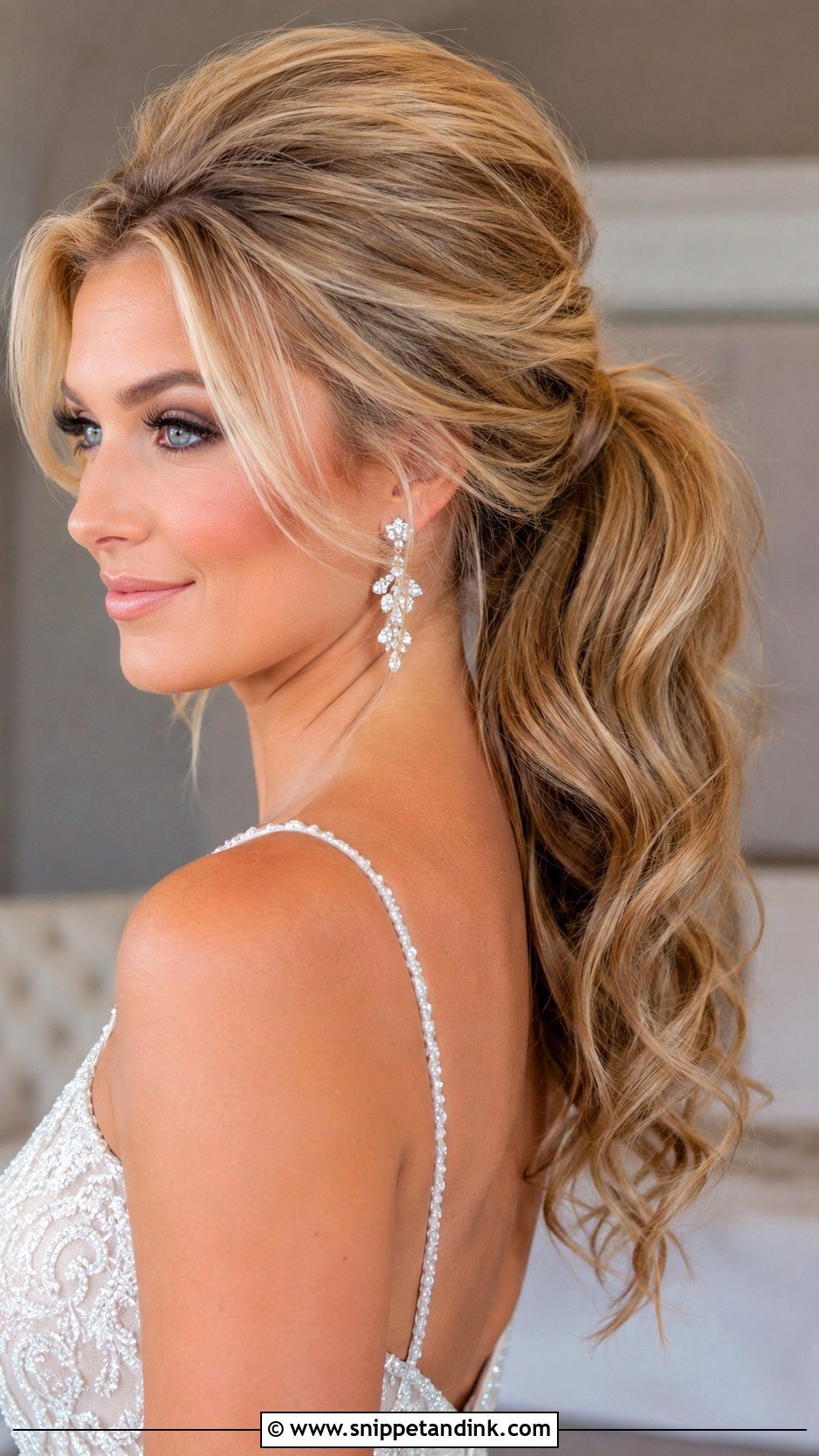
Volume is built, not sprayed in. I use mousse at the roots, blow-dry with a round brush, then backcomb the crown in small sections and smooth the top layer over the teasing. The length is curled and brushed out for body. It looks best high or at mid-height with a touch of old Hollywood. The soft waves keep it from looking stiff. On very fine hair I’d add a padded insert or a clip-in ponytail, since teasing alone collapses by evening.
16. Twisted Bridal Ponytail
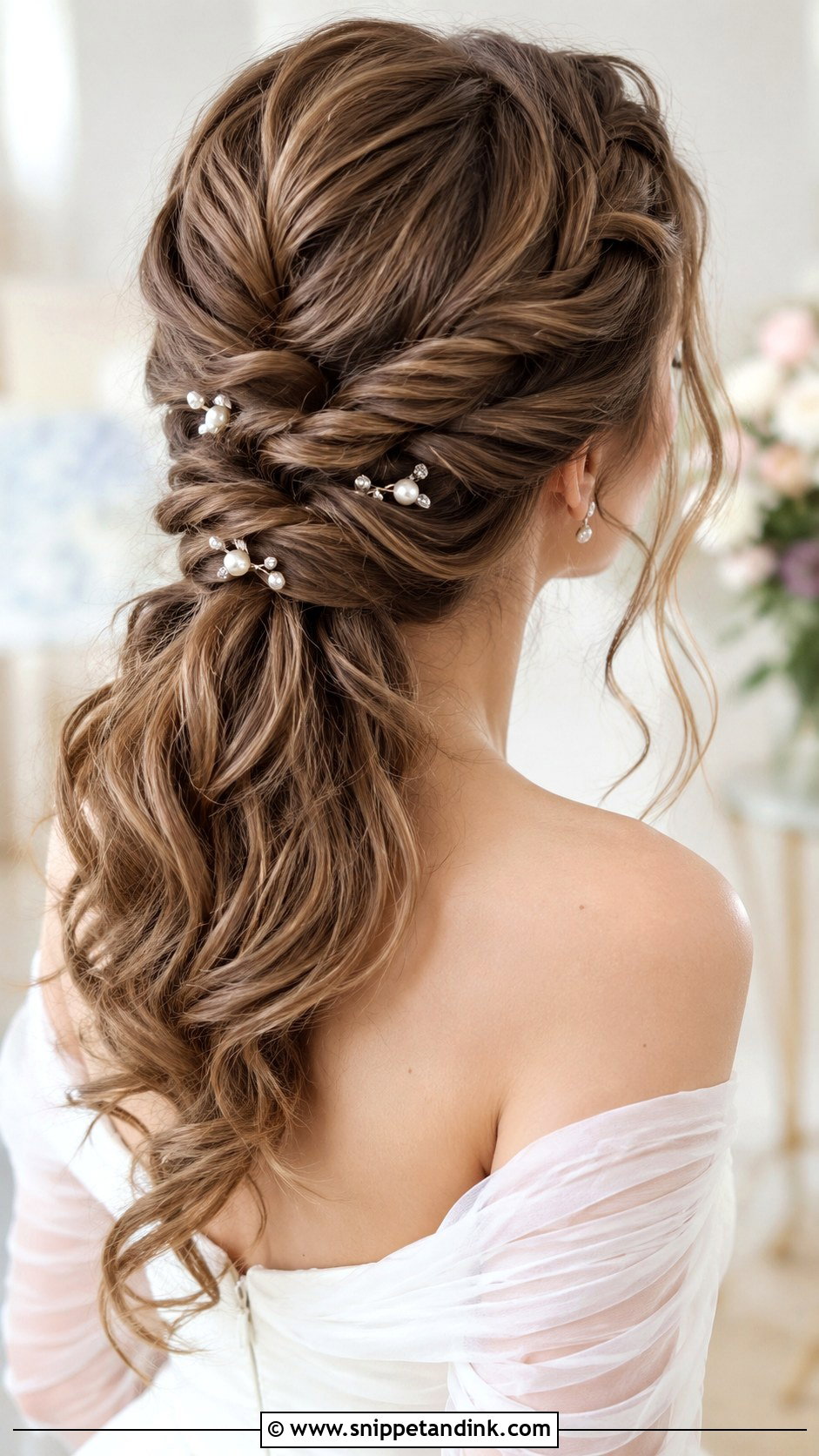
Twisted ponytails look complicated, but they’re mostly rope twists pinned as they travel back to the base. The twists add dimension from every angle and hold surprisingly well. I loosen them a little for a softer finish and tuck pearl pins or small flowers into the twists. Any height works, and most lengths do, though very layered hair pokes out of twists and may need extra pins.
17. Boho Ponytail with Loose Strands
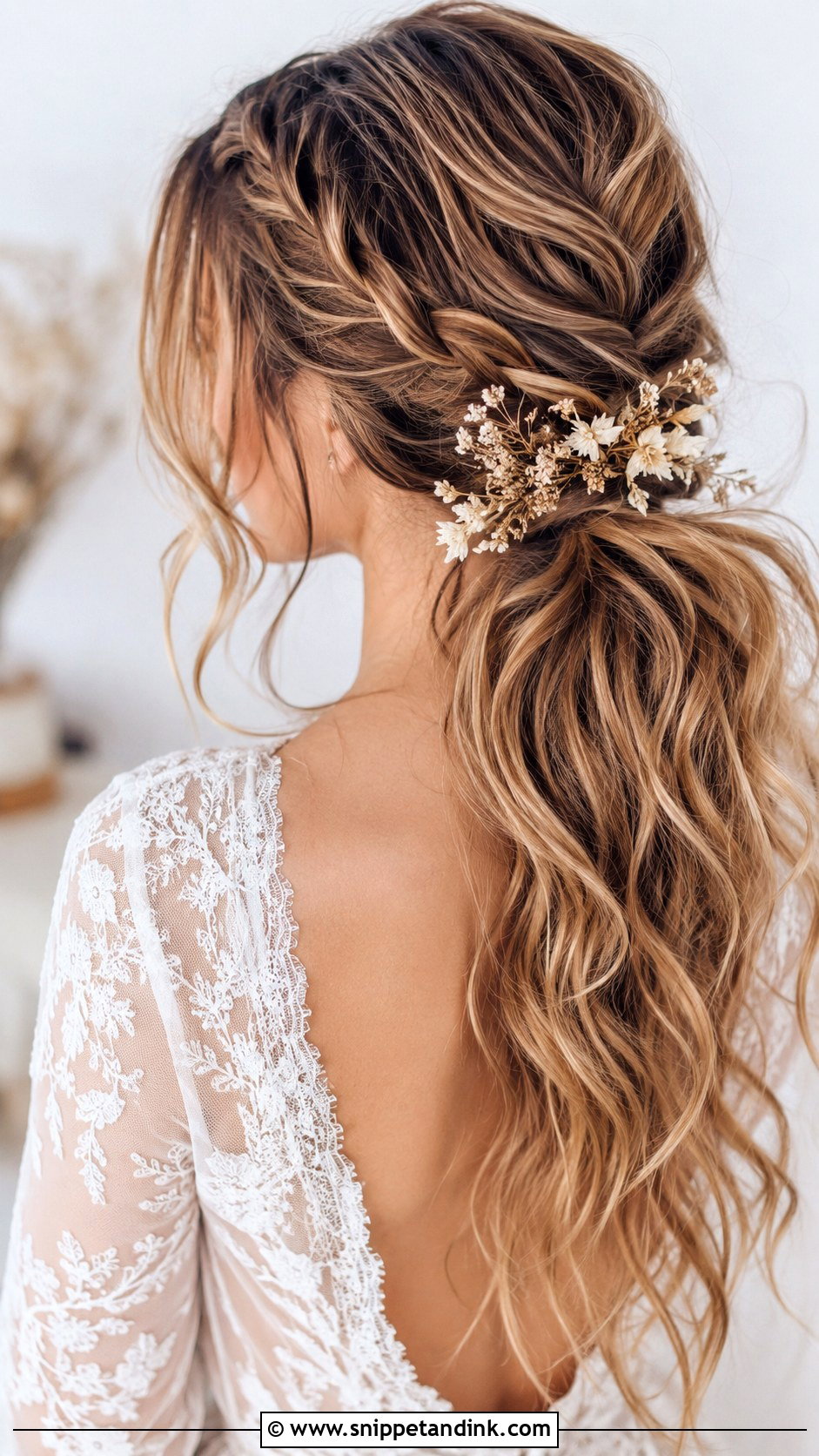
A boho ponytail is loose on purpose: relaxed, tousled length, loose strands framing the face, maybe a few braided accents. Pulling pieces out evenly is the skill; random strands can look messy rather than soft. Dried flowers and greenery hold up better than fresh ones tucked into hair. It suits beach, outdoor and festival-style weddings and flowing lace gowns. Expect it to loosen a bit through the day, which actually helps the look.
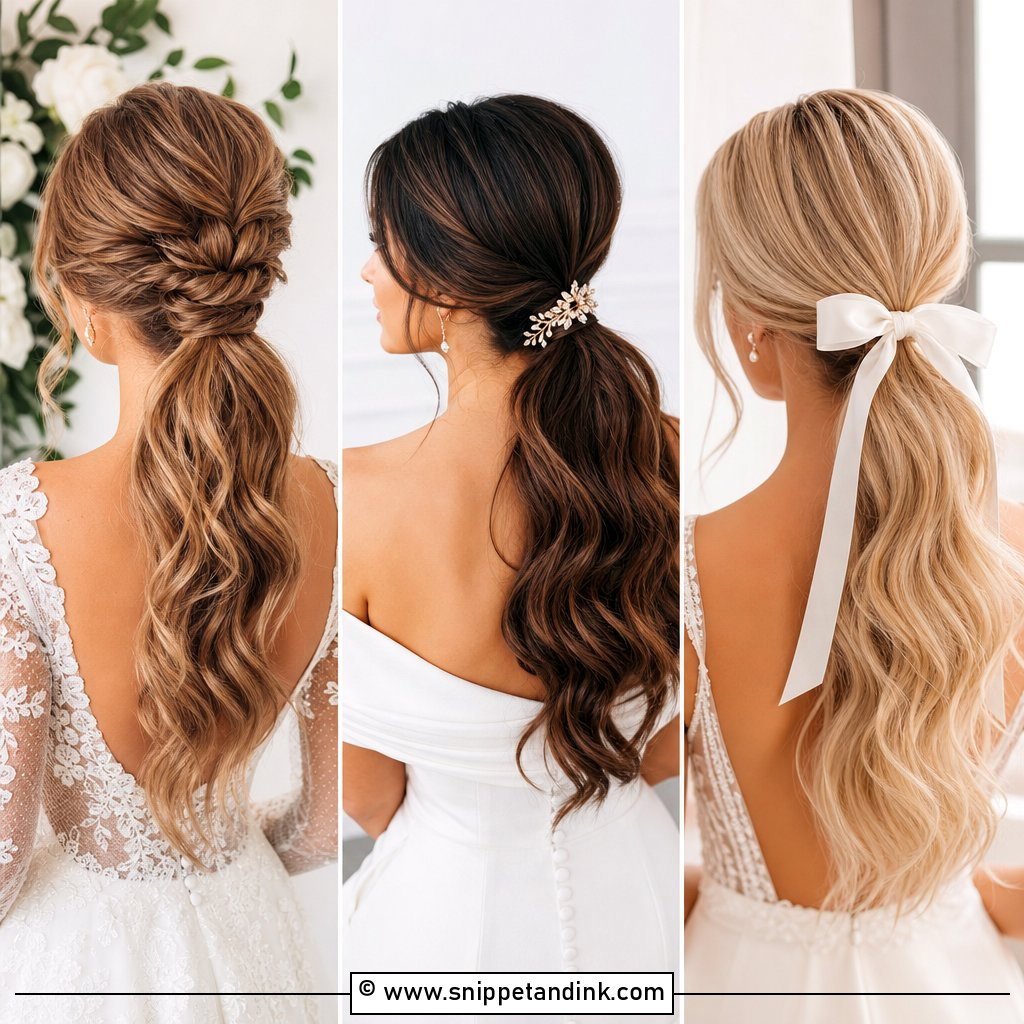
18. Low Ponytail with Ribbon Bow
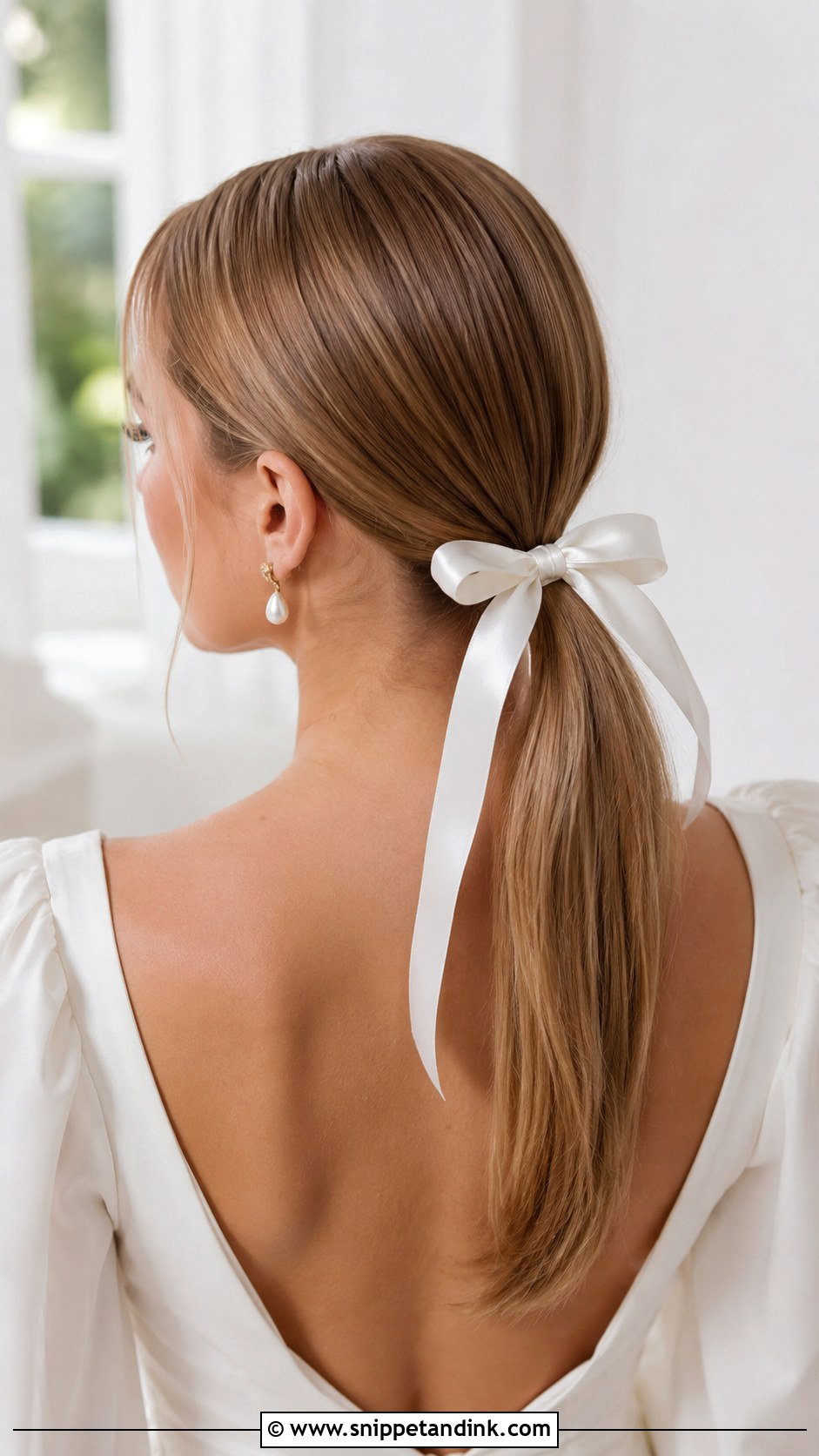
Ribbon bows are everywhere at the moment, and on a low ponytail they read sweet and slightly nostalgic. A satin or silk ribbon around the base, tied off into a bow, gives the back of the head a focal point for ceremony photos. White, ivory or blush keep it bridal. I secure the ribbon over an elastic, not instead of one, and pin the bow’s centre so it doesn’t slip down. Sleek or softly waved length both work.
19. Side-Swept Bridal Ponytail
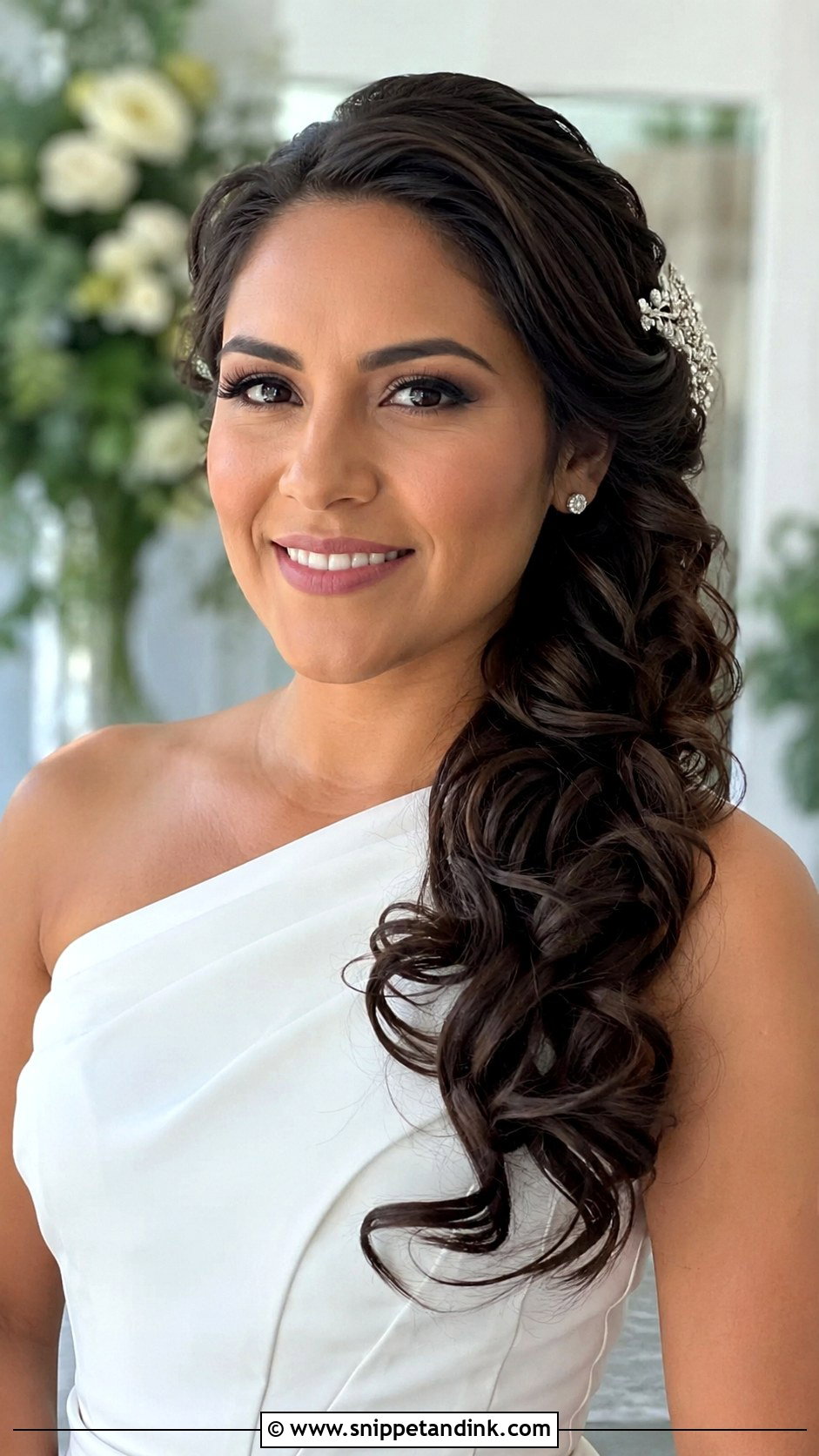
Sweeping the ponytail over one shoulder makes the neckline and earrings the focus. The hair gathers behind one ear and the length falls forward. It works with curls, waves or sleek hair and has a vintage feel. I secure the gathering point with pins on the hidden side so it doesn’t swing back when you turn. A decorative pin or small flowers at the base finish it. One-shoulder and strapless gowns suit it best, and it photographs well in profile.
20. Bridal Ponytail with Hair Vine
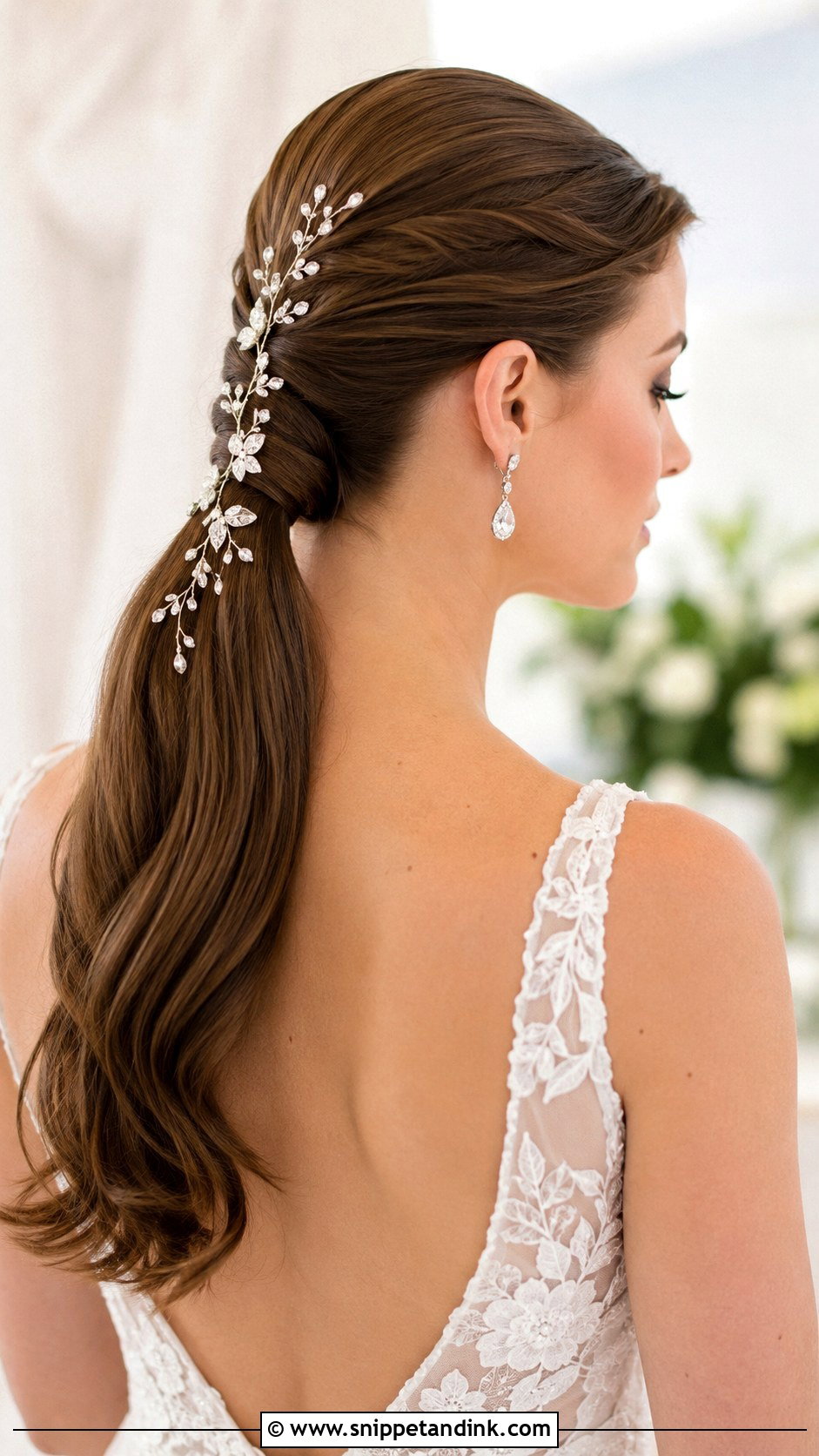
A hair vine is a thin, bendable wire strung with crystals or pearls, and it can wrap the base or trail down the length. Because it bends, I can shape it to follow a braid or the line of a twist and pin it at a few points so it doesn’t shift. It adds sparkle without hiding the hair, and it works with sleek, wavy or braided ponytails. I’d place it where it catches the light in the photos you care about most, usually the side facing the guests during the ceremony.
21. Messy Bridal Ponytail
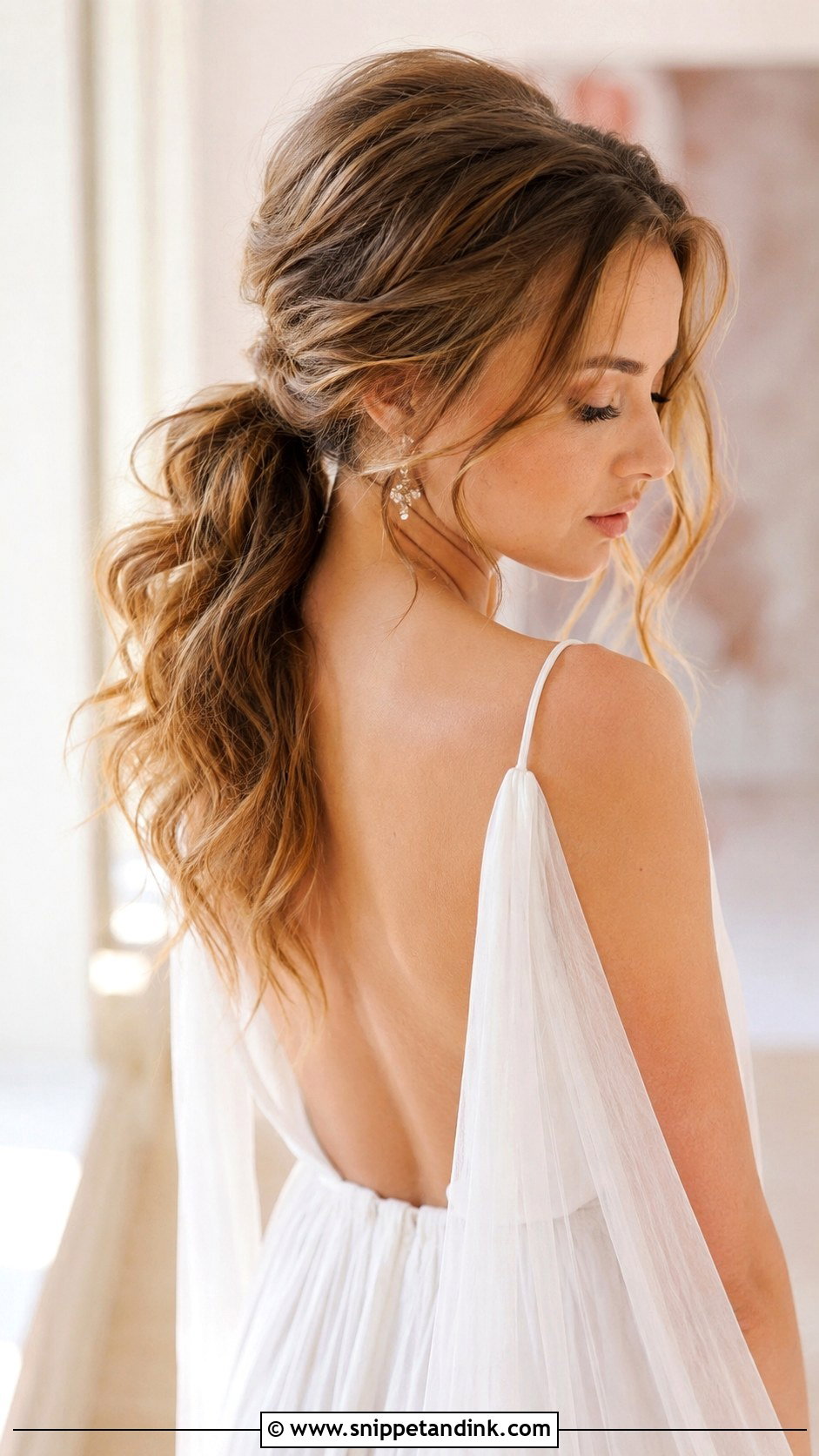
A messy ponytail still needs structure underneath, or it just looks unfinished. I curl the hair first, add texturizing spray, gather it softly and then pull pieces out around the face and crown. It suits relaxed weddings and natural makeup, and it’s forgiving in candid photos, since a few stray strands are part of the look. Of all the styles here, it’s the one most likely to look better at midnight than at noon.
22. Sleek Ponytail with Gold Accessories
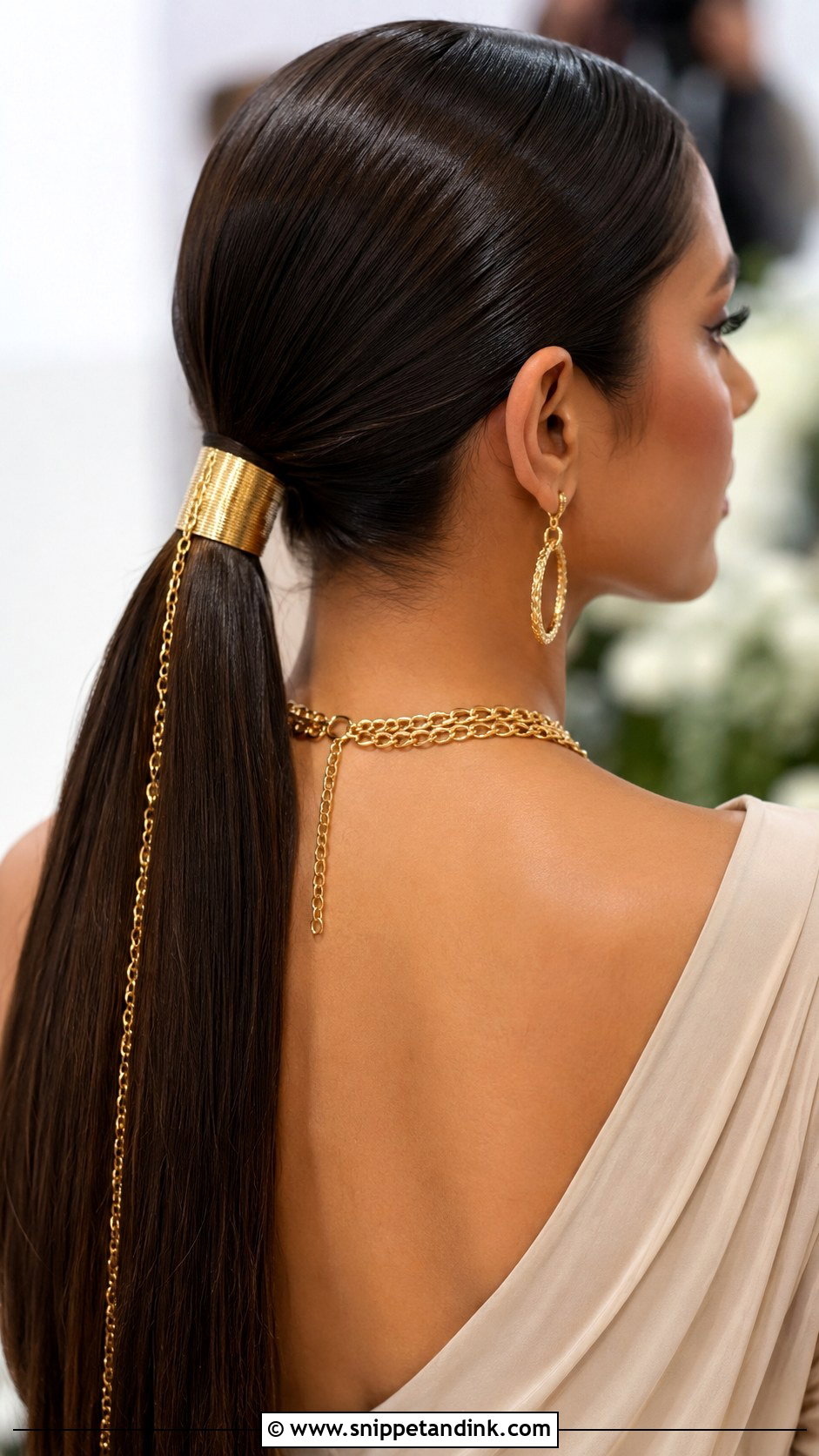
Gold cuffs, pins or a fine chain around the base bring warmth to a sleek ponytail. The metal stands out best against smooth, glossy hair, so I keep the length very polished. Gold sits well against warm skin tones and with minimalist gowns and bold jewelry. Hair cuffs need the right diameter for your ponytail; too tight and they pull, too loose and they slide down the tail, so try them with your actual hair at the trial.
23. Braided Crown Ponytail
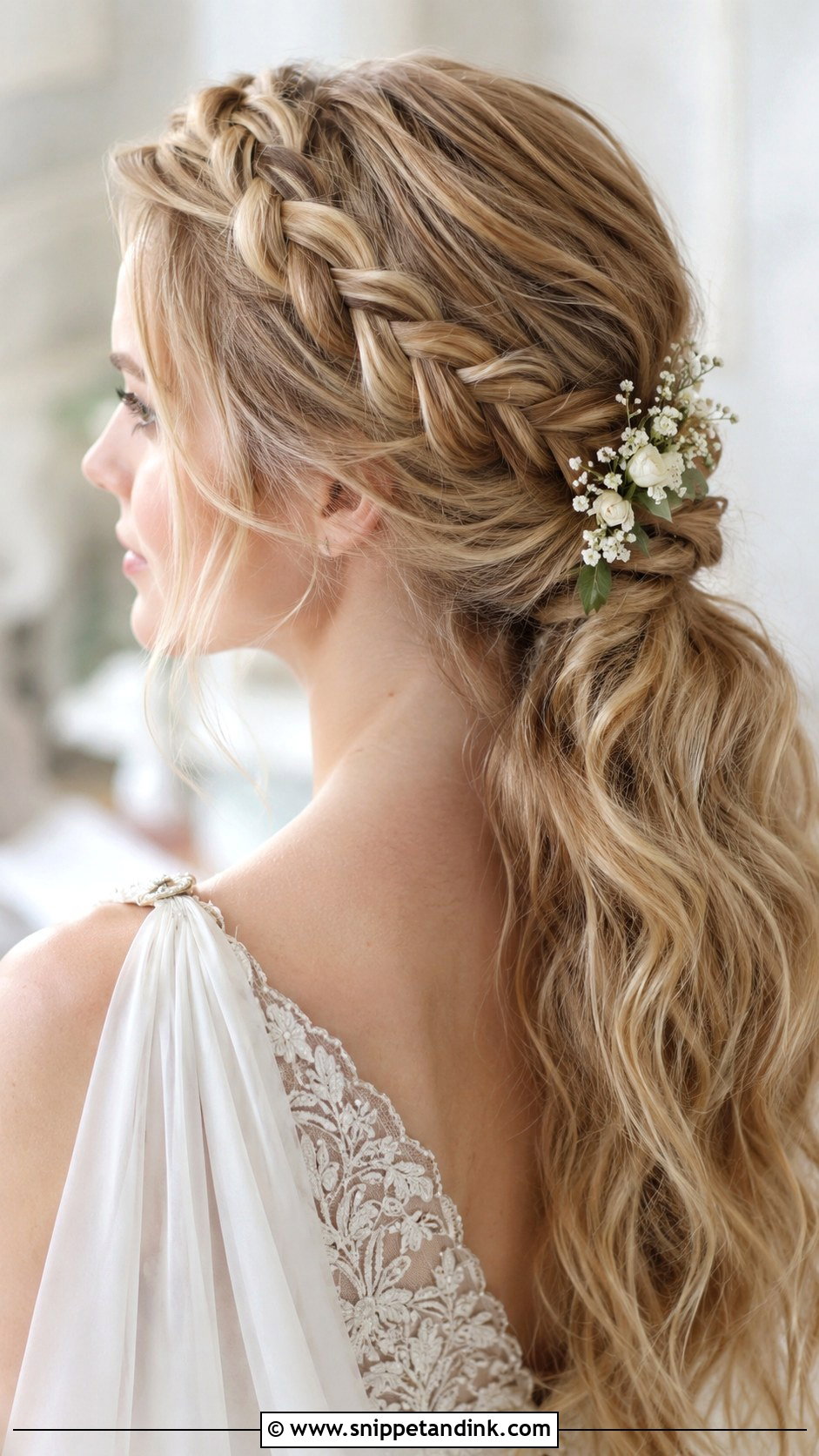
A braid that wraps the crown like a halo before joining a ponytail combines detail with security. The crown braid also takes some weight off the base, which makes it comfortable for long days. I loosen the braid slightly for softness and tuck small flowers or pearls along it. It works with high or low ponytails and suits fairytale and slightly bohemian weddings. Shorter layers around the hairline can escape a crown braid, so a little pomade on those pieces helps.
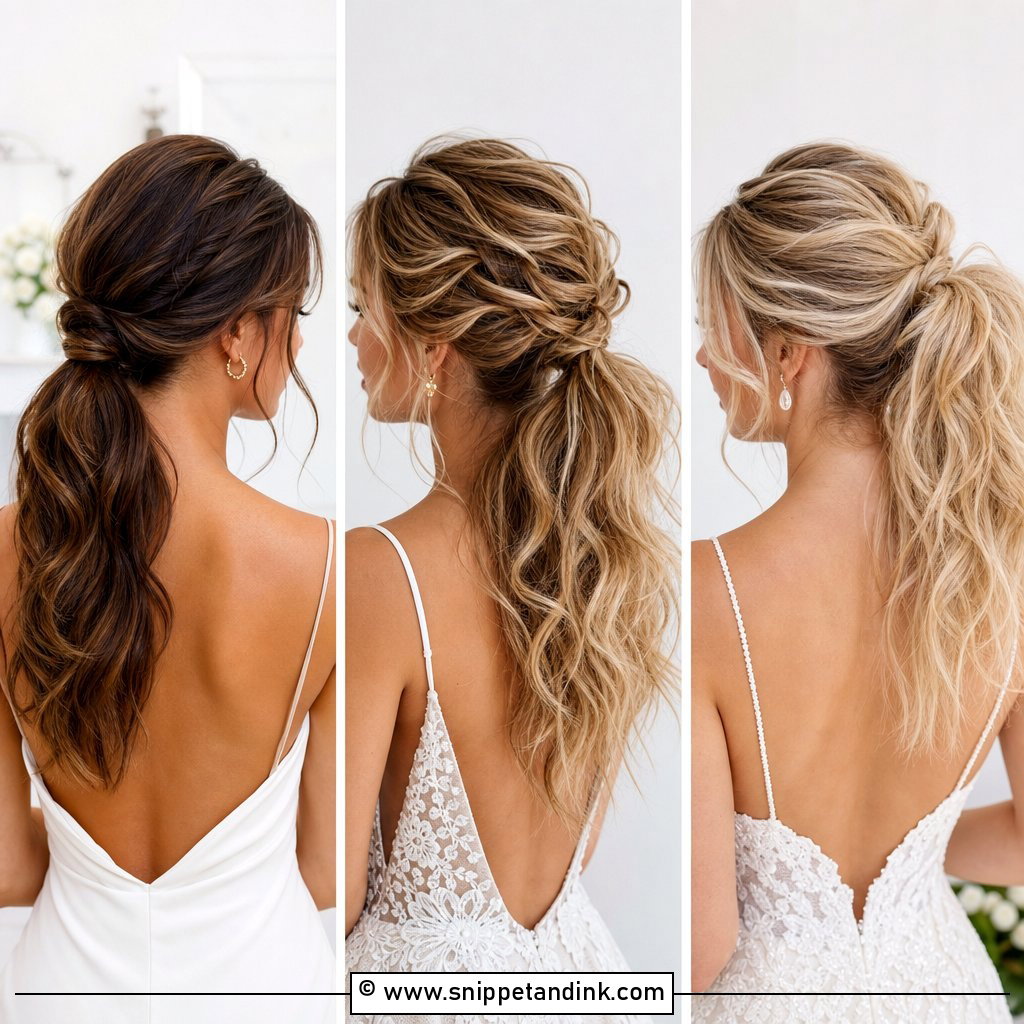
24. Long Flowing Bridal Ponytail
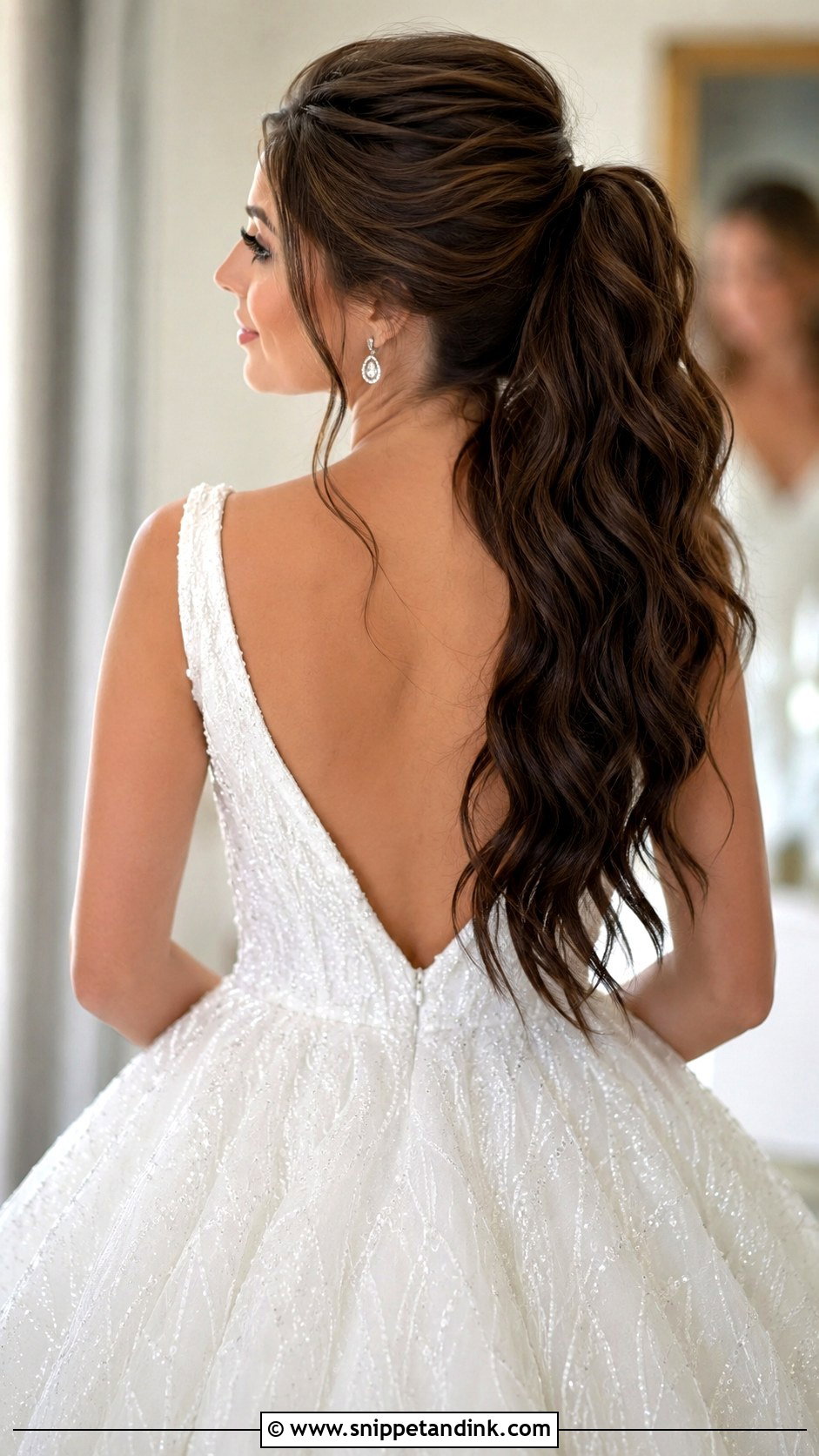
Long hair gathered high or low and styled with waves or sleek shine makes a dramatic ponytail. The length moves as you walk, which looks wonderful on video. I add volume at the crown so the top doesn’t look flat against all that length, and leave a few face-framing pieces. If your hair isn’t naturally long, a clip-in ponytail or tape extensions can give the same fullness; colour-match them in daylight at the trial. It suits grand ceremonies.
25. Bridal Ponytail with Fringe
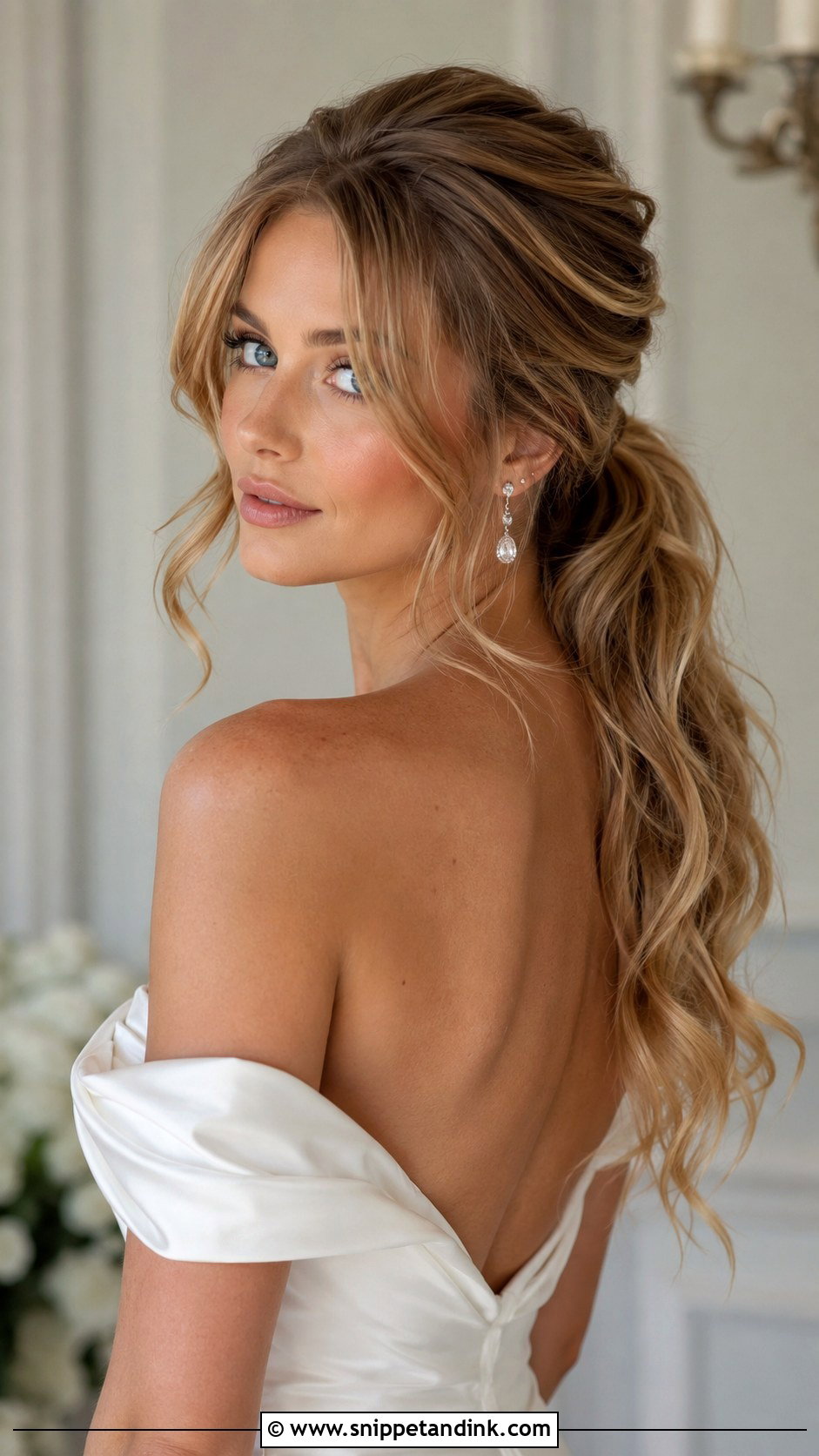
Bangs and a ponytail go together well. With wispy curtain bangs or a soft fringe left out, the face stays framed while the rest of the hair is gathered back. I style the fringe to suit your face, side-swept or straight across. Get any fringe trim done about a week before the wedding, not the day before, so it has time to settle. The ponytail can be sleek, wavy or textured. If you already love your fringe, keep it.
26. Knotted Bridal Ponytail
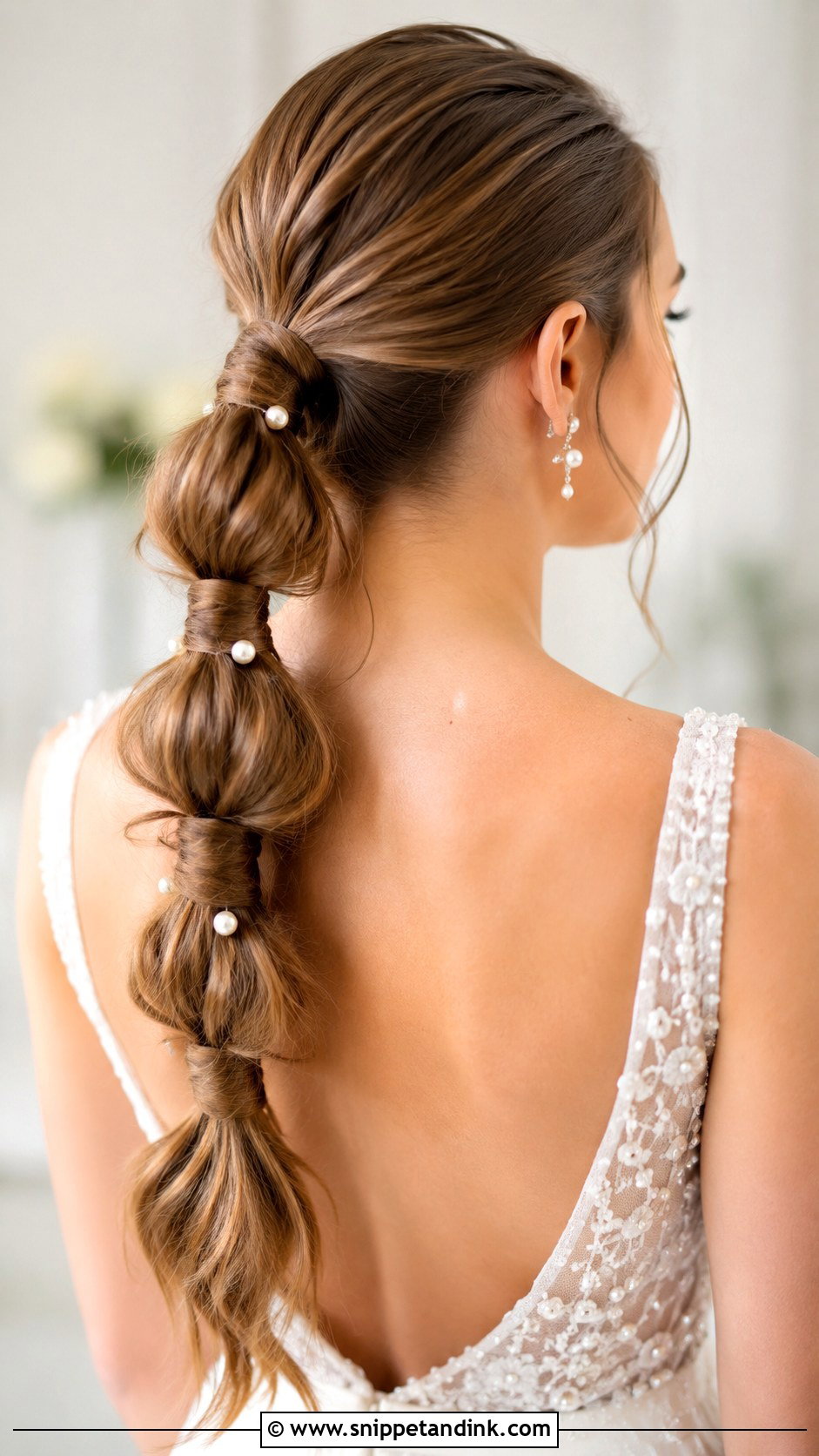
Knotted ponytails tie sections of hair into soft knots down the length for a sculptural, woven effect. Each knot is secured with a small elastic or pin hidden inside it. I loosen them gently so they look soft, and tuck pearl pins or tiny blooms between them. It works at any height on most lengths. Very silky hair tends to slip out of knots, so I prep with texture spray first.
27. Low Ponytail with Side Braid
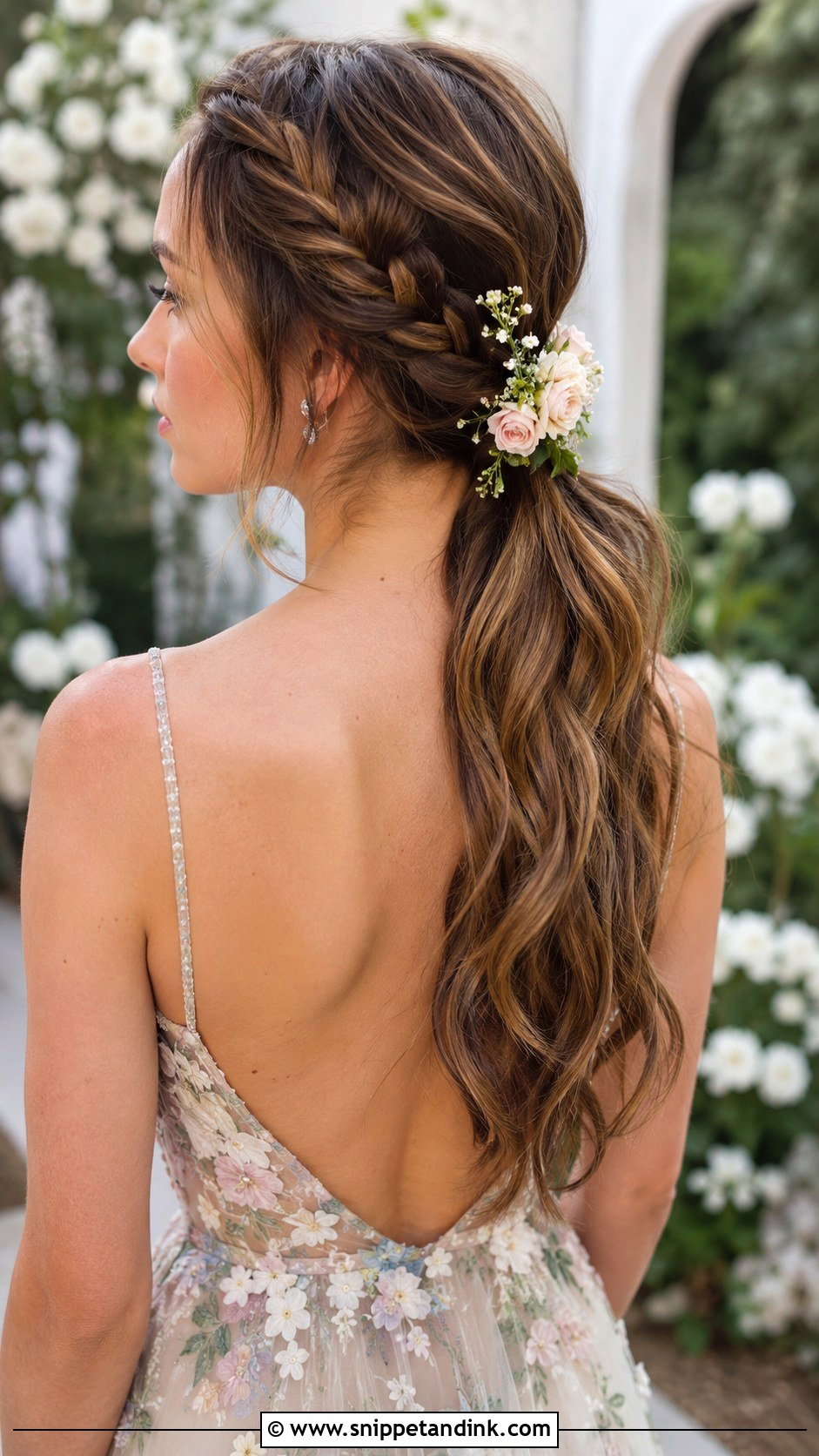
A side braid running into a low ponytail creates a soft asymmetrical focal point. The braid adds texture while the length stays smooth or lightly waved. I braid along the side you’ll show most in photos, usually the one facing guests at the ceremony. Loosen it slightly for an airy feel and tuck small flowers along it. It suits garden and outdoor weddings, flowing gowns and soft makeup.
28. Glamorous Wavy Ponytail with Tiara
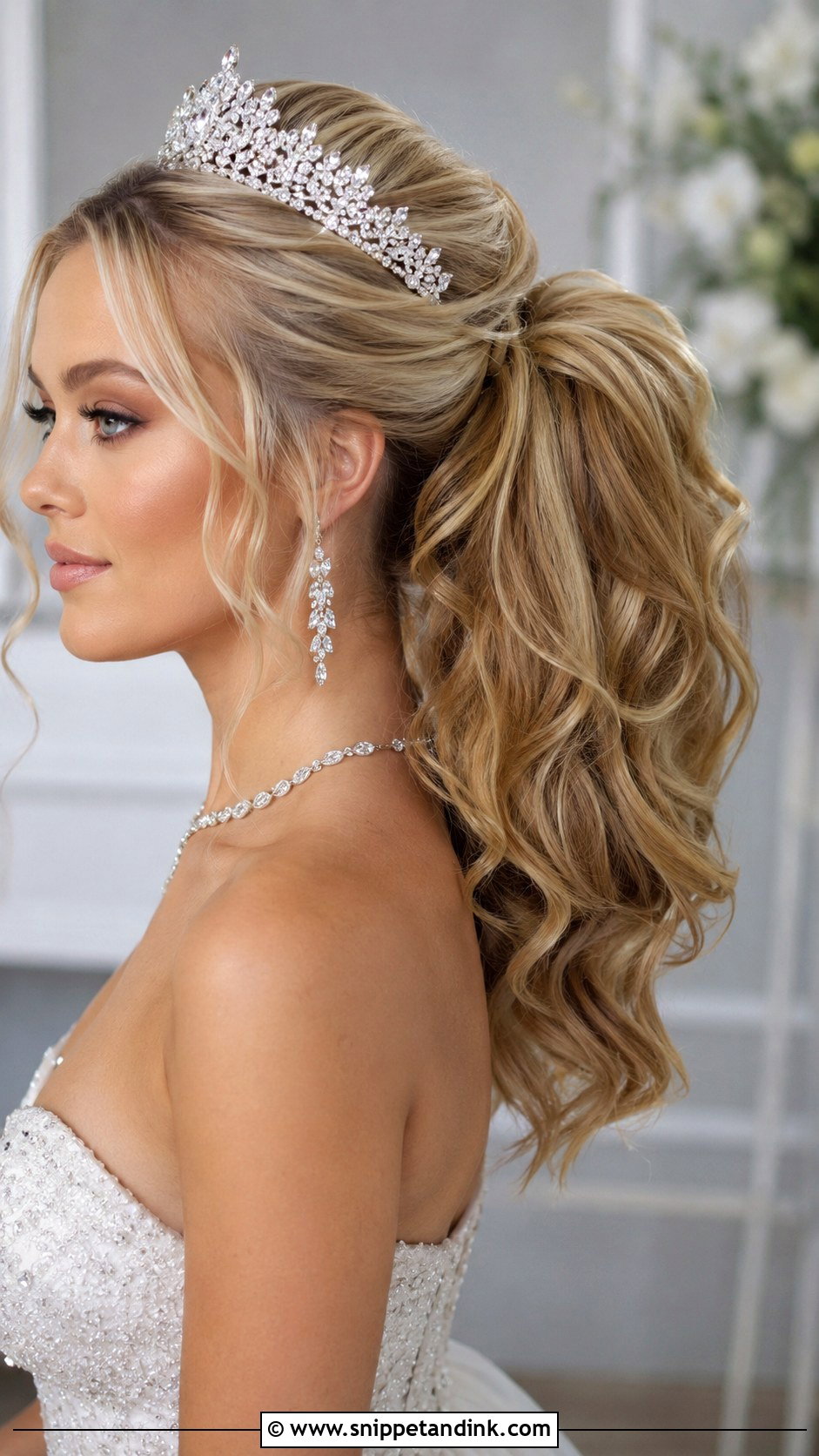
A wavy ponytail under a tiara is the most formal look here. The tiara sits at the crown, above where the waves are gathered. I anchor it with pins threaded through its frame and crossed into the hair, since a tiara sitting on smooth hair alone will tip forward. Keep the ponytail full, with a few face-framing pieces. It suits ballgowns, statement jewelry and grand, formal weddings.
29. Pulled-Back Ponytail with Floral Crown
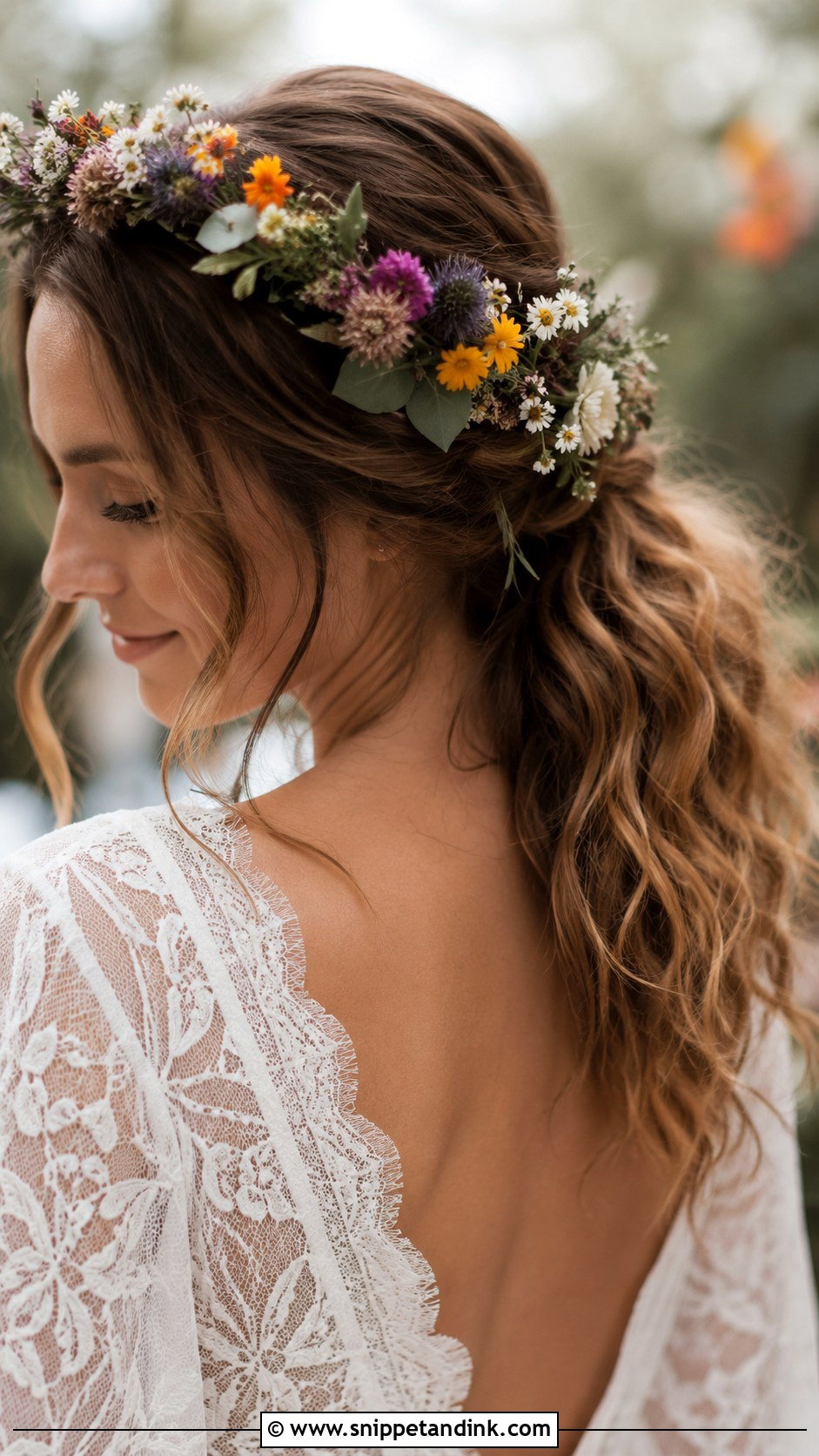
A pulled-back ponytail with a floral crown is a free-spirited, nature-inspired look. The tail stays textured and relaxed, a few strands frame the face, and the crown rests on top. Ask your florist for blooms that match the bouquet and hold up out of water; heavy crowns press down and can flatten the top. I pin the crown at the sides behind the ears. It suits outdoor and festival weddings.
30. Modern Sleek Bubble Ponytail
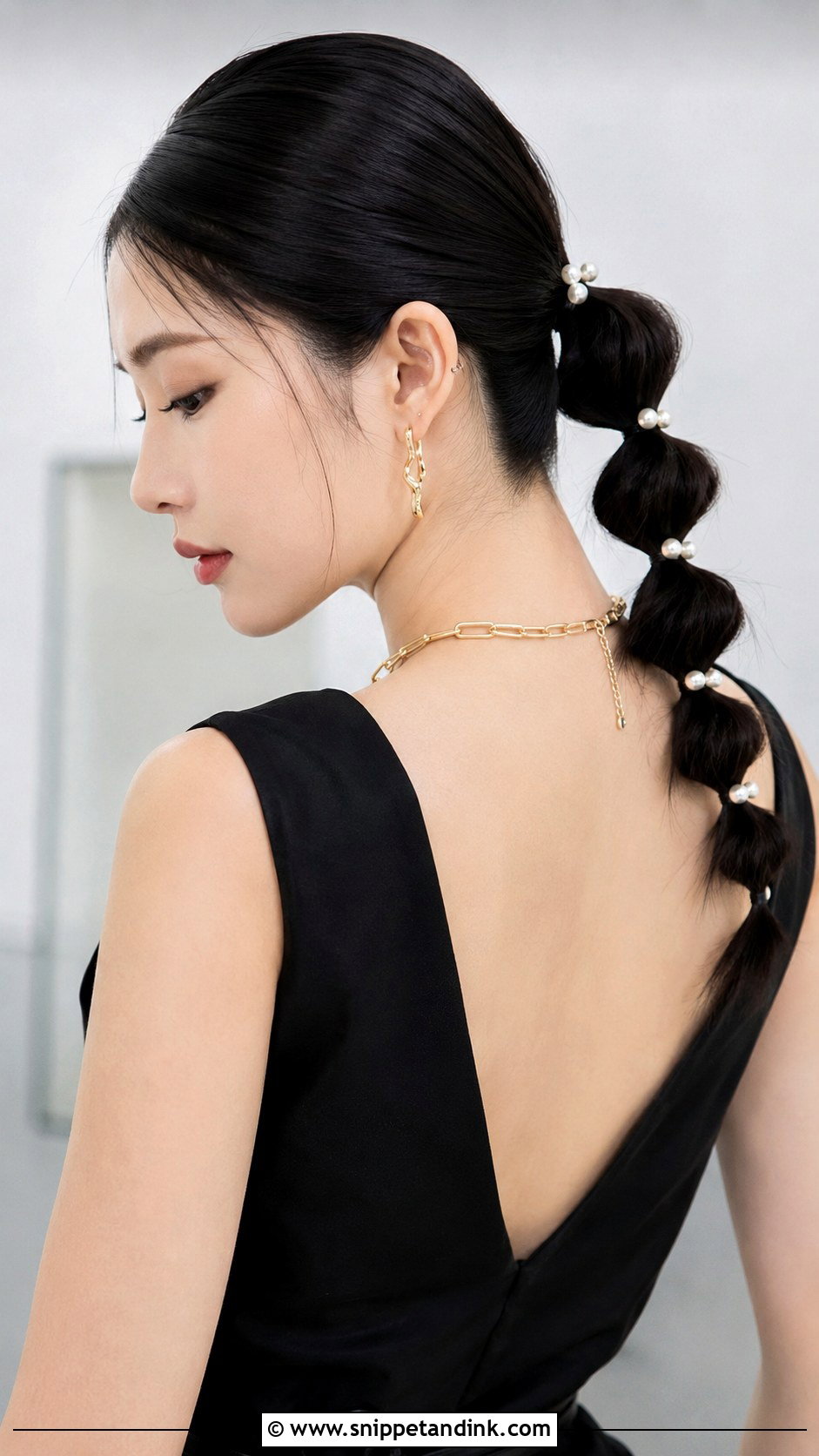
The sleek bubble ponytail combines a smooth crown with neat, glossy segments down the length. It needs very smooth hair, so I flat-iron each section before adding the elastics and keep the bubbles uniform. Flyaways show more on sleek styles, so a little serum on a toothbrush tames them. Tiny pearl pins between segments add a bridal touch. It suits contemporary, minimalist weddings and bold modern jewelry.
Will a High Ponytail Give You a Headache by Dinner?
It can. Long, thick hair pulled tight to the crown puts steady tension on the scalp, and by the speeches some brides are desperate to take it down. I’d rather plan around that than pretend it doesn’t happen.
- Wear the style for several hours after your trial, ideally through a meal, to see how your scalp feels.
- For heavy hair, I split the base into two stacked ponytails so the weight sits across a wider area. From the outside it still looks like one.
- Ask your stylist to leave the base firm but not drum-tight. A secure ponytail comes from pins and placement, not from yanking the elastic.
- Lower placements are more comfortable for heavy hair than a crown ponytail and still look polished.
Textured and fine hair
Textured hair shouldn’t be pulled sleek against the hairline with heavy gel day after day before the wedding; constant tension on the edges is how thinning starts. Fine hair, on the other hand, slips, so it needs more texture and more pins rather than more tightness.
A Ponytail Is Only as Good as Its Base
From sleek and modern to soft and bohemian, there’s a ponytail for nearly every hair type and wedding. It can be dressed up with pearls, flowers, ribbon or a tiara, or kept plain. Whichever you choose, a secure base, cooled curls and a proper trial are what make it last. And practically, a ponytail keeps hair off your face so you can dance, hug and celebrate freely all day. Pick the version that feels like you and wear it for a few hours before the wedding.
You'll Like These Ideas:


Leave a Reply