
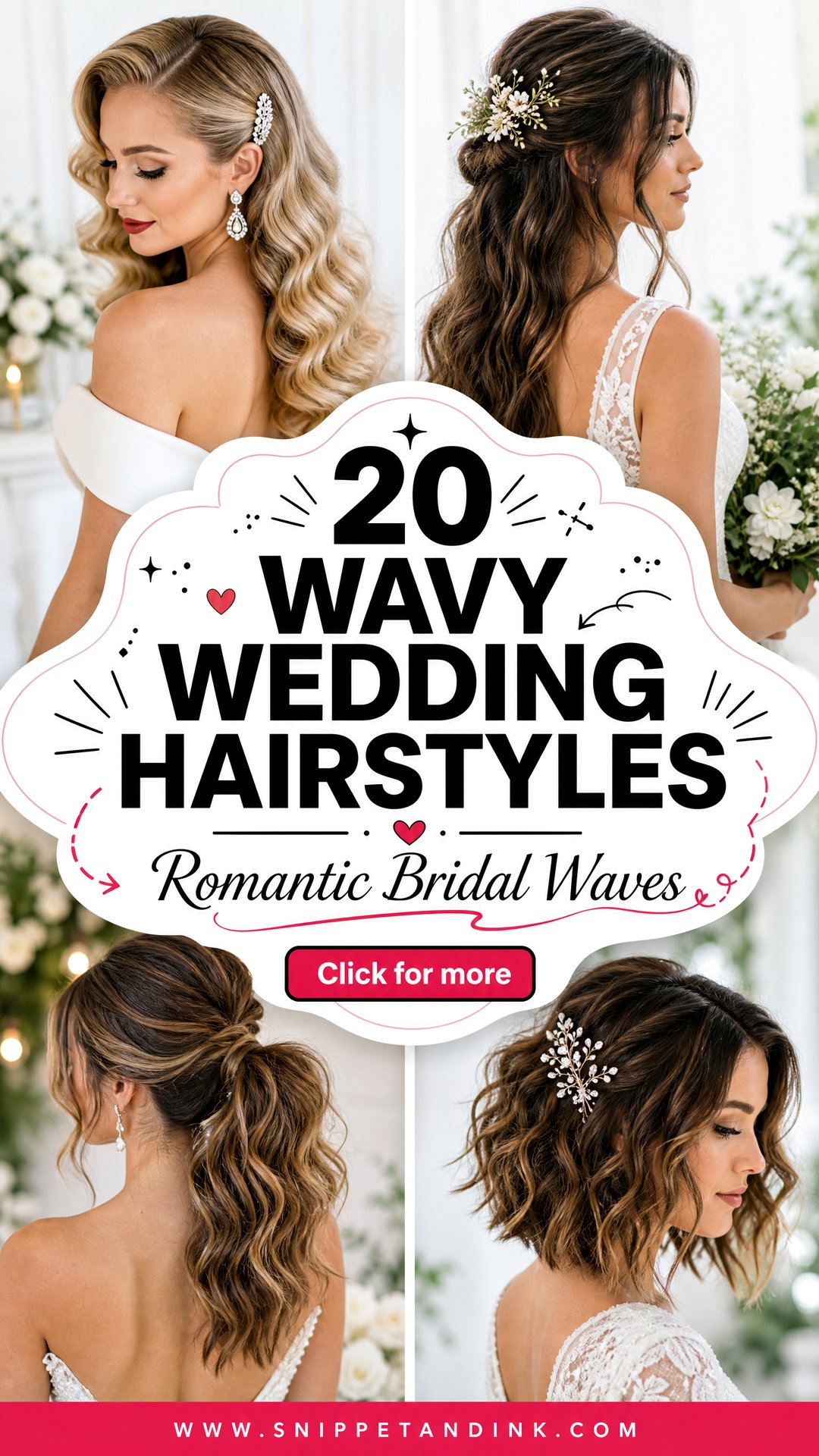
Most of the brides I style end up in some version of wavy hair, even the ones who arrive sure they want a sleek bun. Waves move when you walk, they soften a structured dress, and they can be dressed up or down from beach to ballroom. They also differ more than the photos suggest: a sculpted Hollywood wave and a loose beach wave are built in completely different ways. These 20 looks run from polished to undone, and for each I’ve noted what it takes and who it suits.
Where Waves Sit in the Wedding Morning Schedule
Waves take longer than most brides budget for. A full head of set waves usually needs somewhere between forty-five minutes and an hour and a half, depending on how thick your hair is and how sculpted the finish. Vintage and Hollywood styles sit at the long end; loose beach waves at the short end.
- I schedule the bride’s hair after the bridesmaids, but with a buffer of at least half an hour before the dress goes on, so there’s time to fix anything.
- Curls are set first and left pinned while makeup is done. Cooling longer means a stronger hold, so that overlap is useful, not wasted time.
- Brushing out happens last, just before the dress. If the photographer wants getting ready shots, they can catch the pin curls stage, which often looks charming in the album.
- Button-front or wide-neck dresses can go on over finished hair. Over-the-head dresses must go on before brush-out, with a scarf over your face.
Give your stylist the ceremony time and the photographer’s timeline at booking. Working backwards from those two times is how a calm morning gets planned.
One more thing to plan for: the first hug from your mother usually lands right on your waves. Set them firmly enough that a squeeze and a few happy tears don’t undo an hour of work, and keep a mini spray in the bridal bag.
1. Old Hollywood Waves for Brides
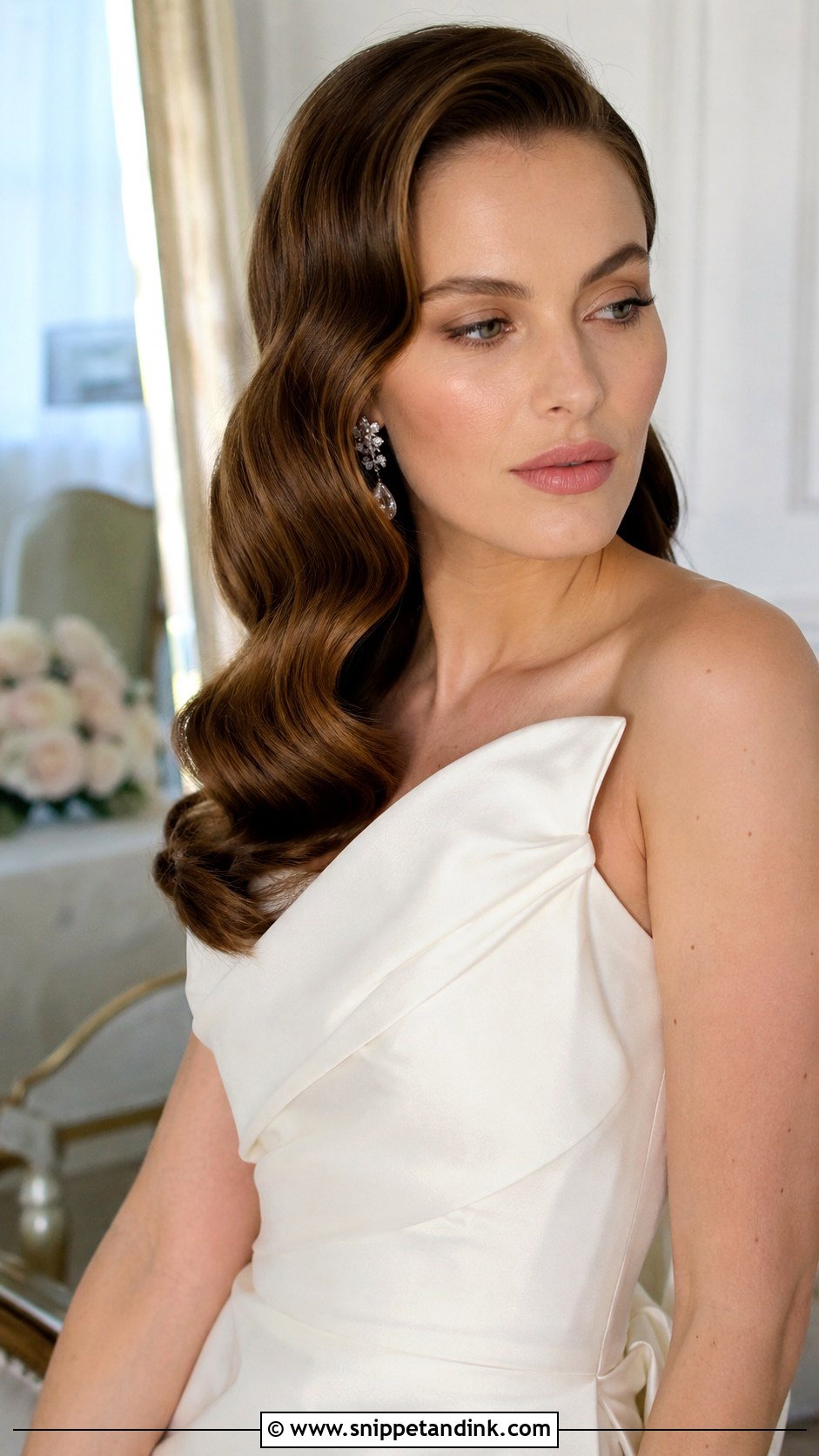
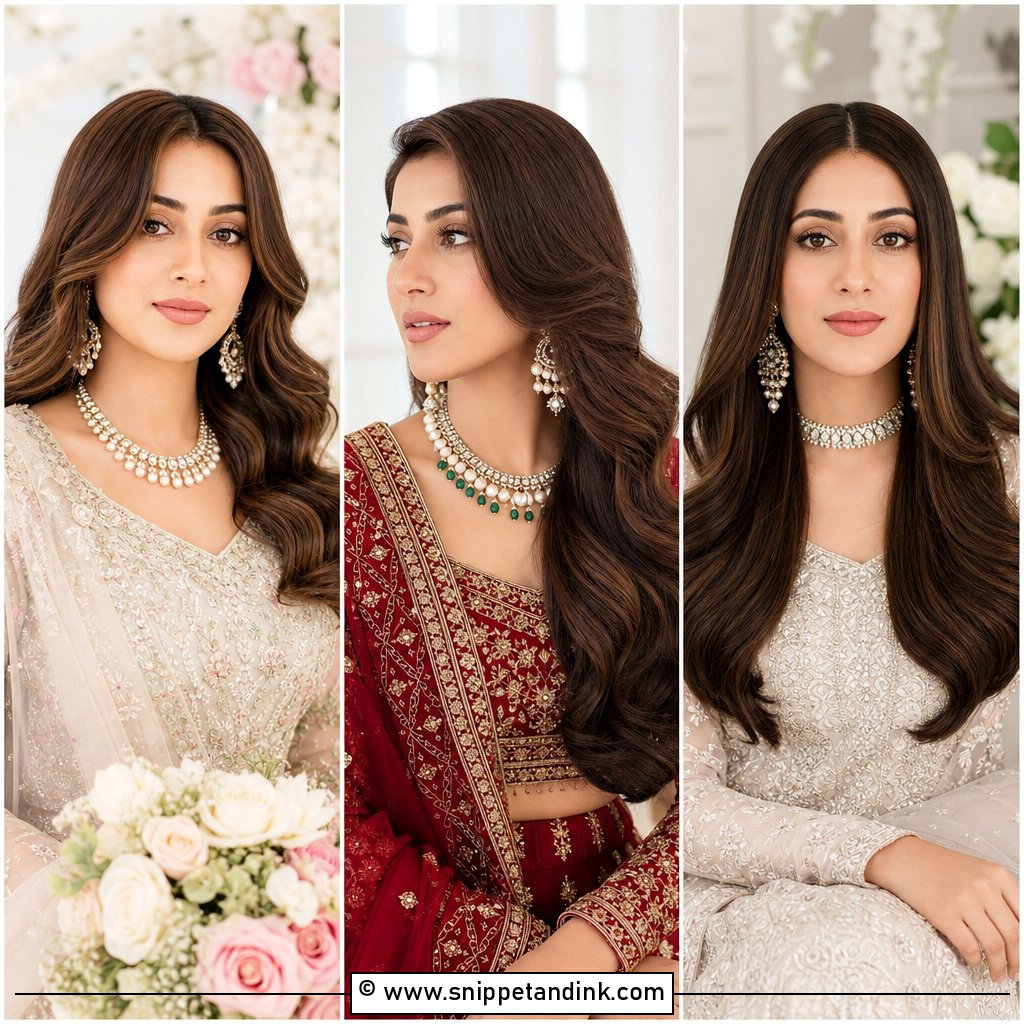
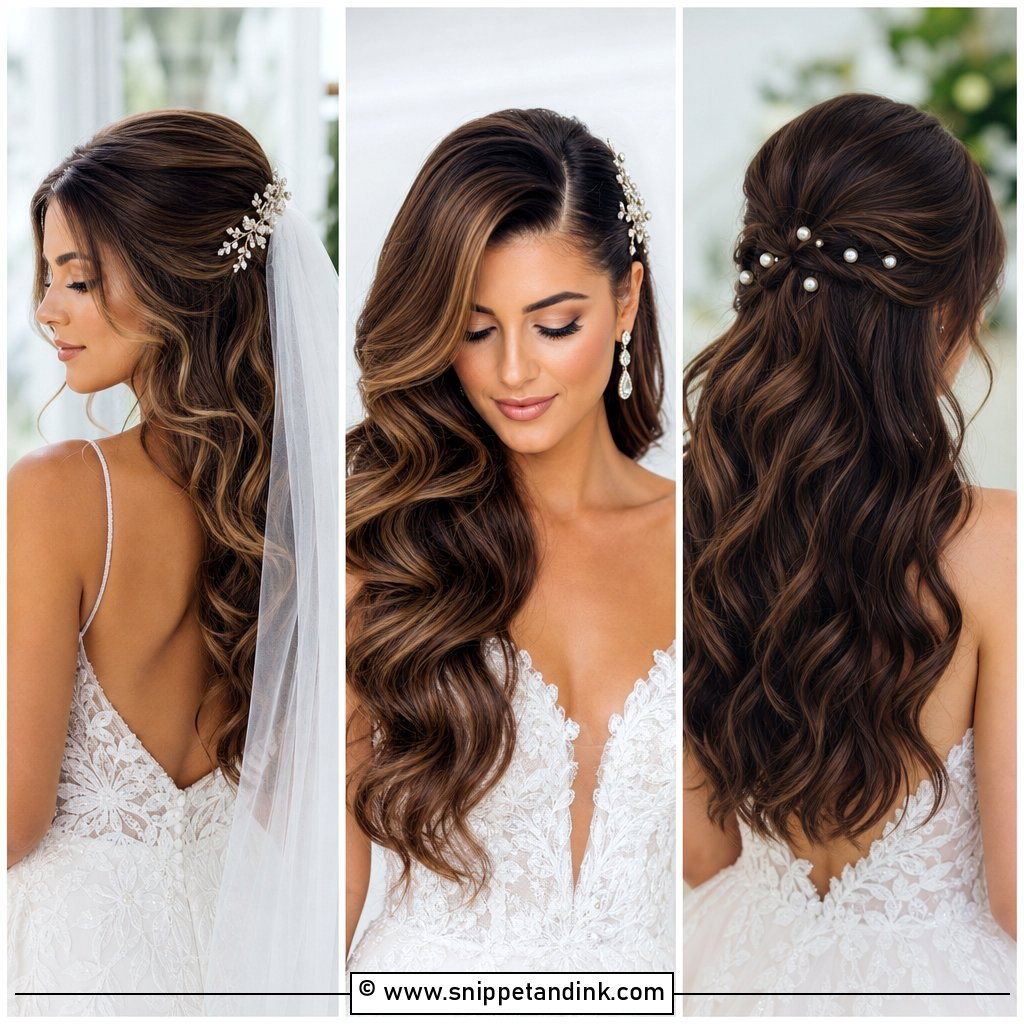
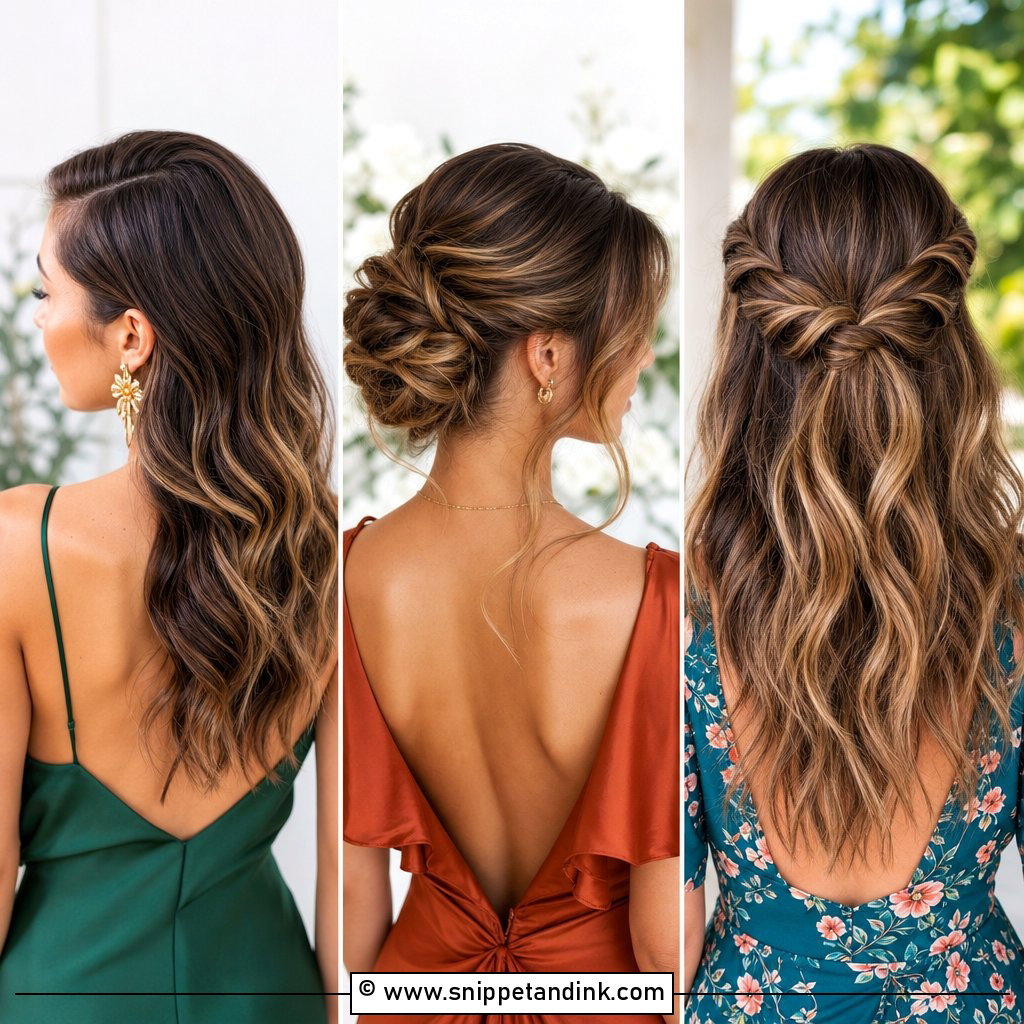
Old Hollywood waves are a precision job. Every section is curled in the same direction with a large barrel, cooled, then brushed until the curls join into one glossy ripple, and set with spray. The deep side part and root volume give the drama. They suit long and medium hair; on heavy layers the short pieces break the pattern. A statement earring or a vintage clip on the open side is all the decoration they need.
2. Half Up Half Down Wavy Wedding Hair
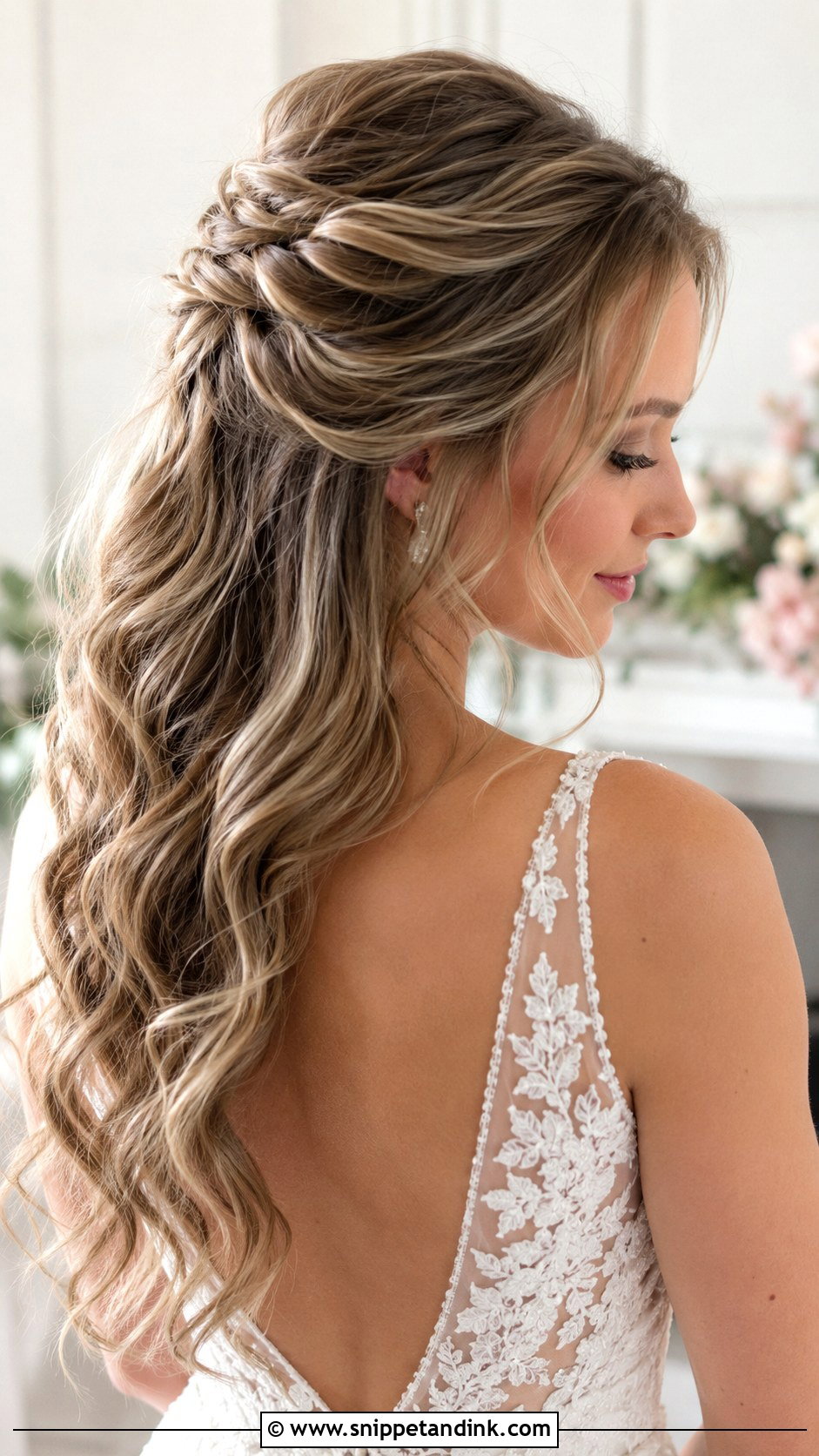
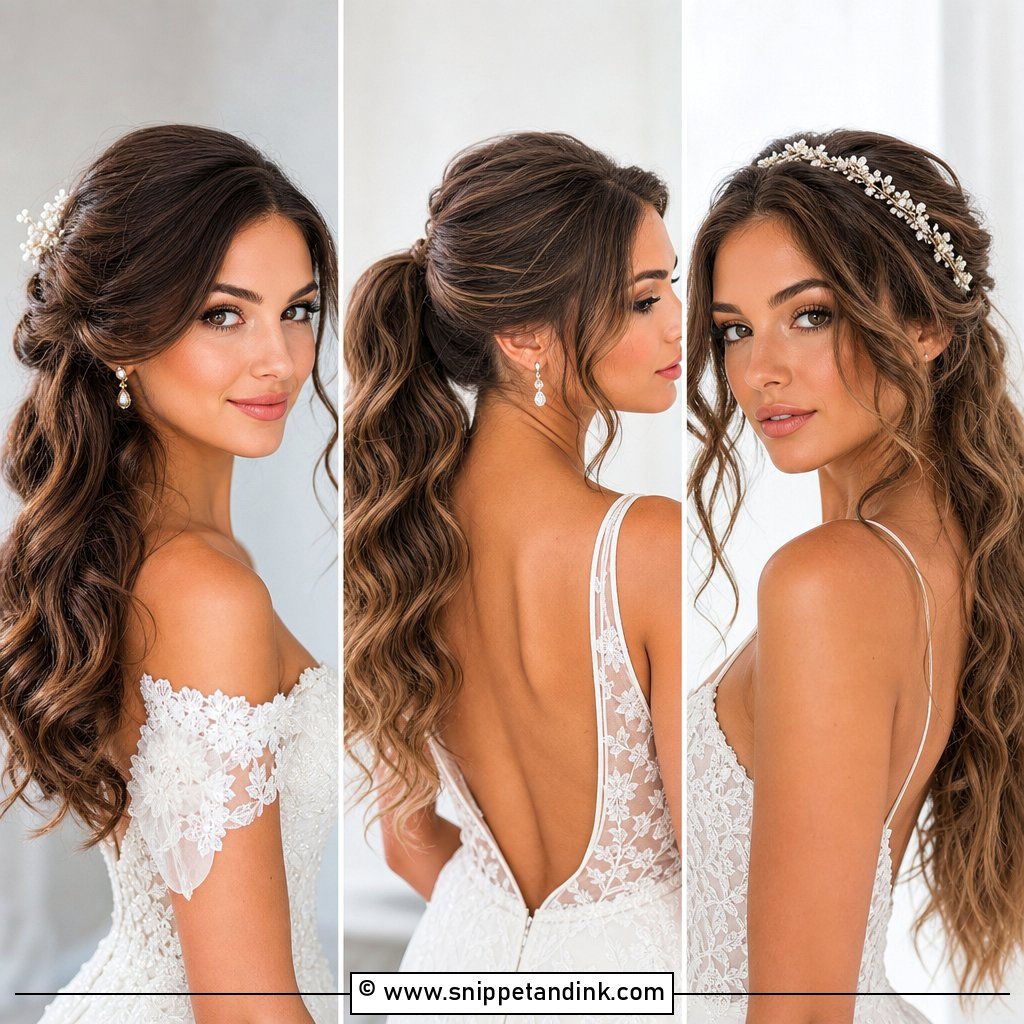
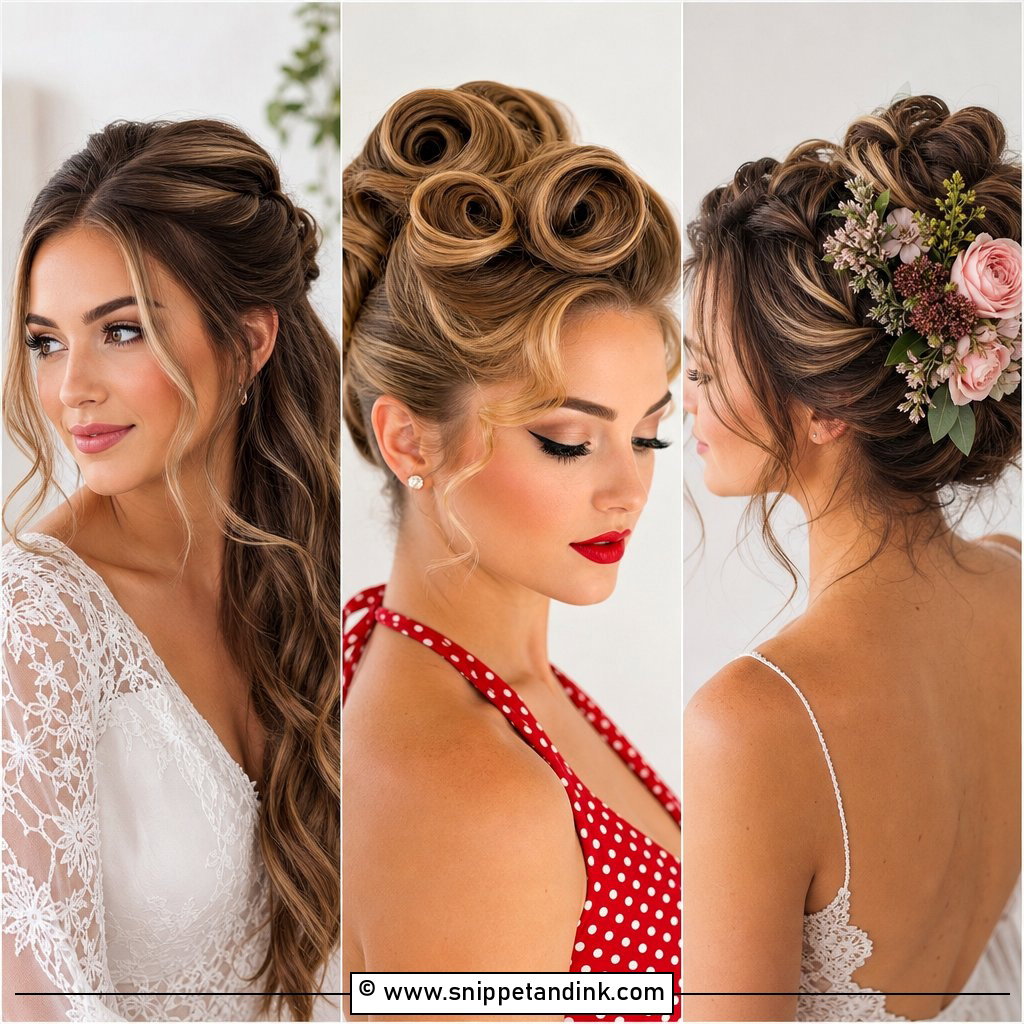
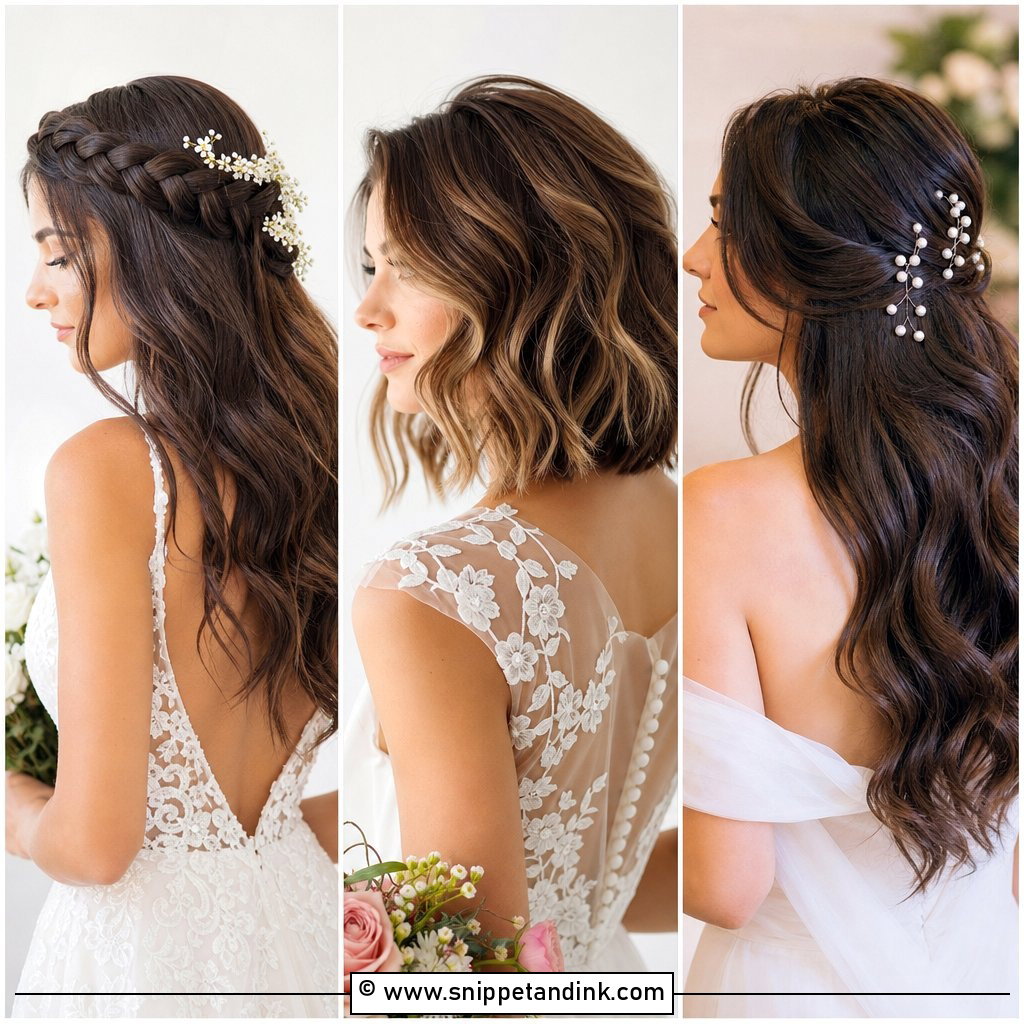
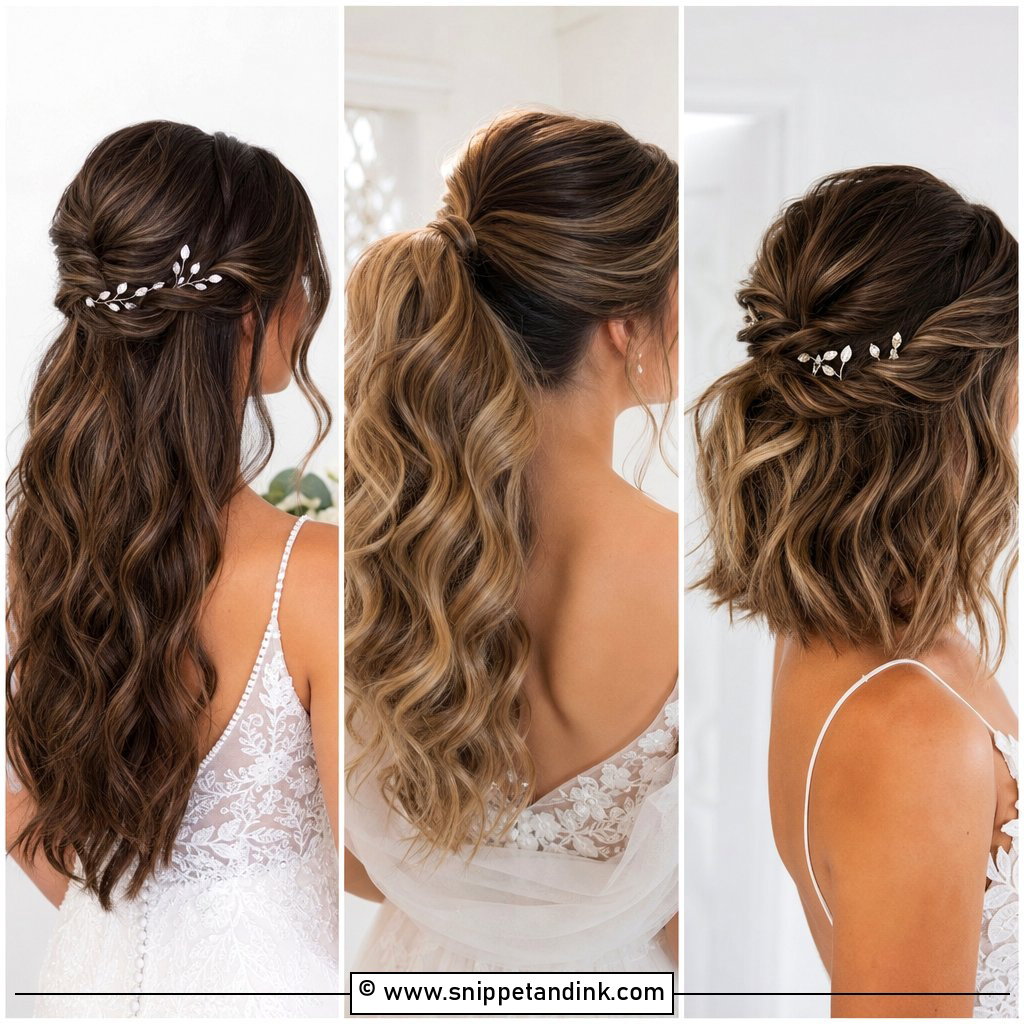
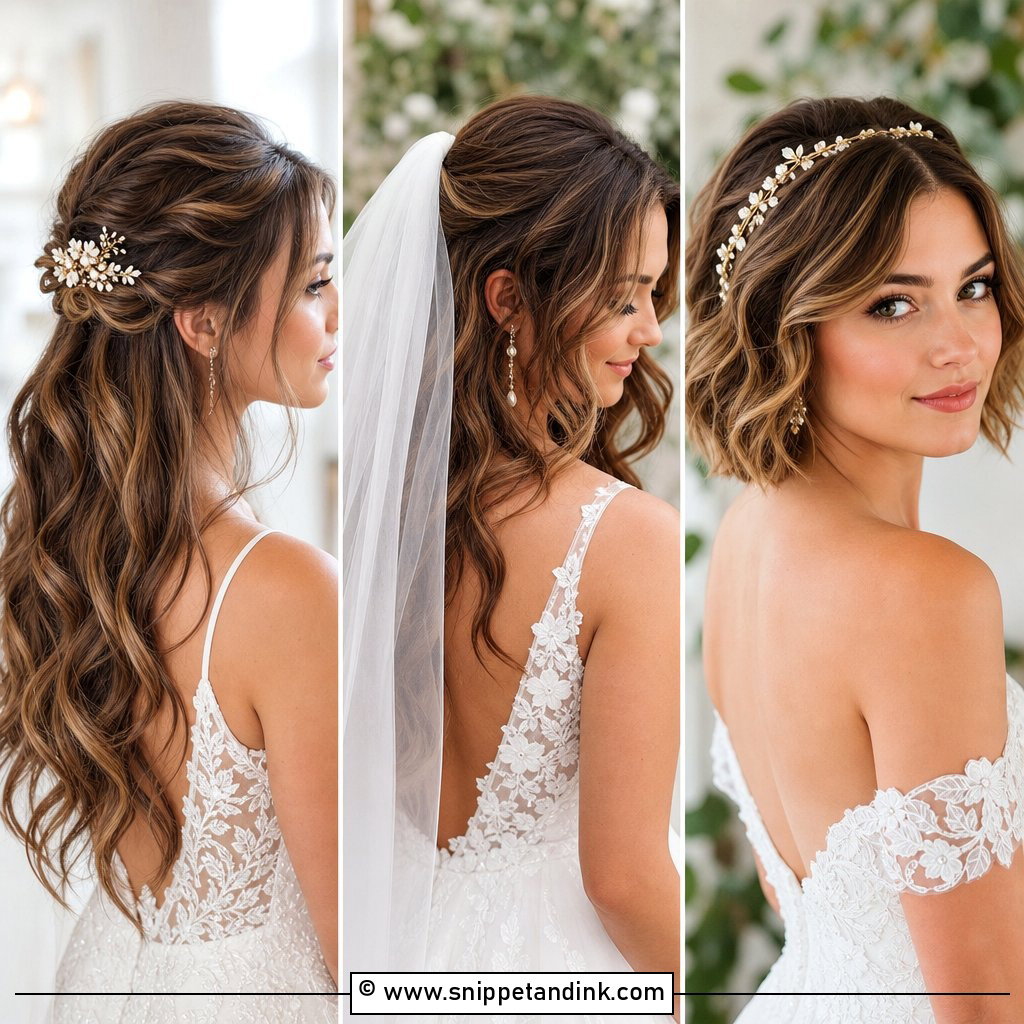
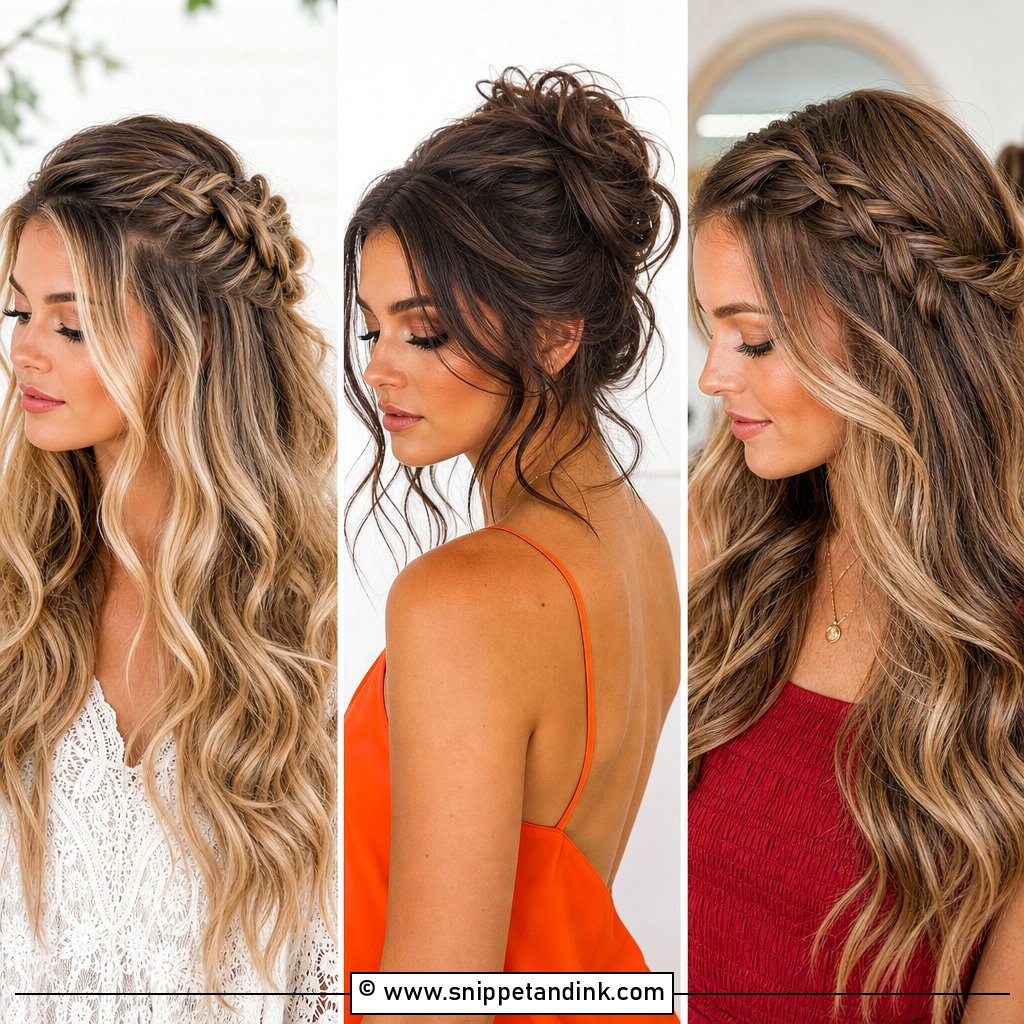
If you can’t decide between up and down, this is the compromise that works. The half-up, half-down wavy look pulls the top back and leaves the lengths over your shoulders. Loose tendrils by the cheeks soften it. Underneath the twist or small knot I place a hidden anchor of crossed pins, which is what a veil comb or crown grips later. It’s one of the few styles that takes a veil and a floral crown equally well.
3. Loose Beach Waves for a Bohemian Bride
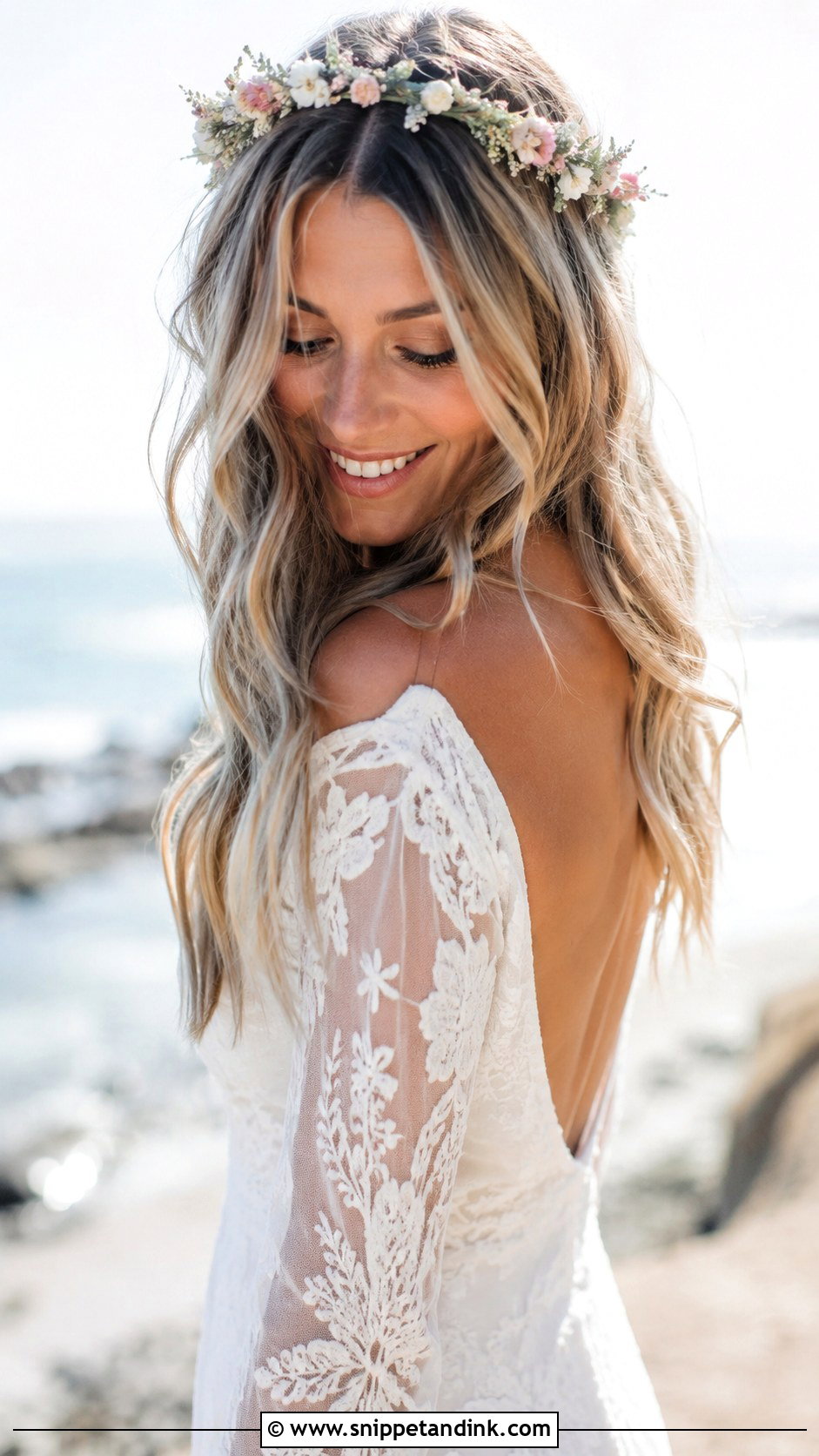
Beach waves look as if you spent a day at the shore, though in reality the shore is what ruins them. Wind and salt air relax curls fast, so for an ocean ceremony I curl tighter than the finished look and let the weather loosen them. Face-framing pieces and a light flower crown suit the boho mood. Highlights show the texture well. On fine hair I’d add a few hidden pins at the back so the waves don’t all blow forward.
4. Side Swept Wavy Wedding Hairstyle
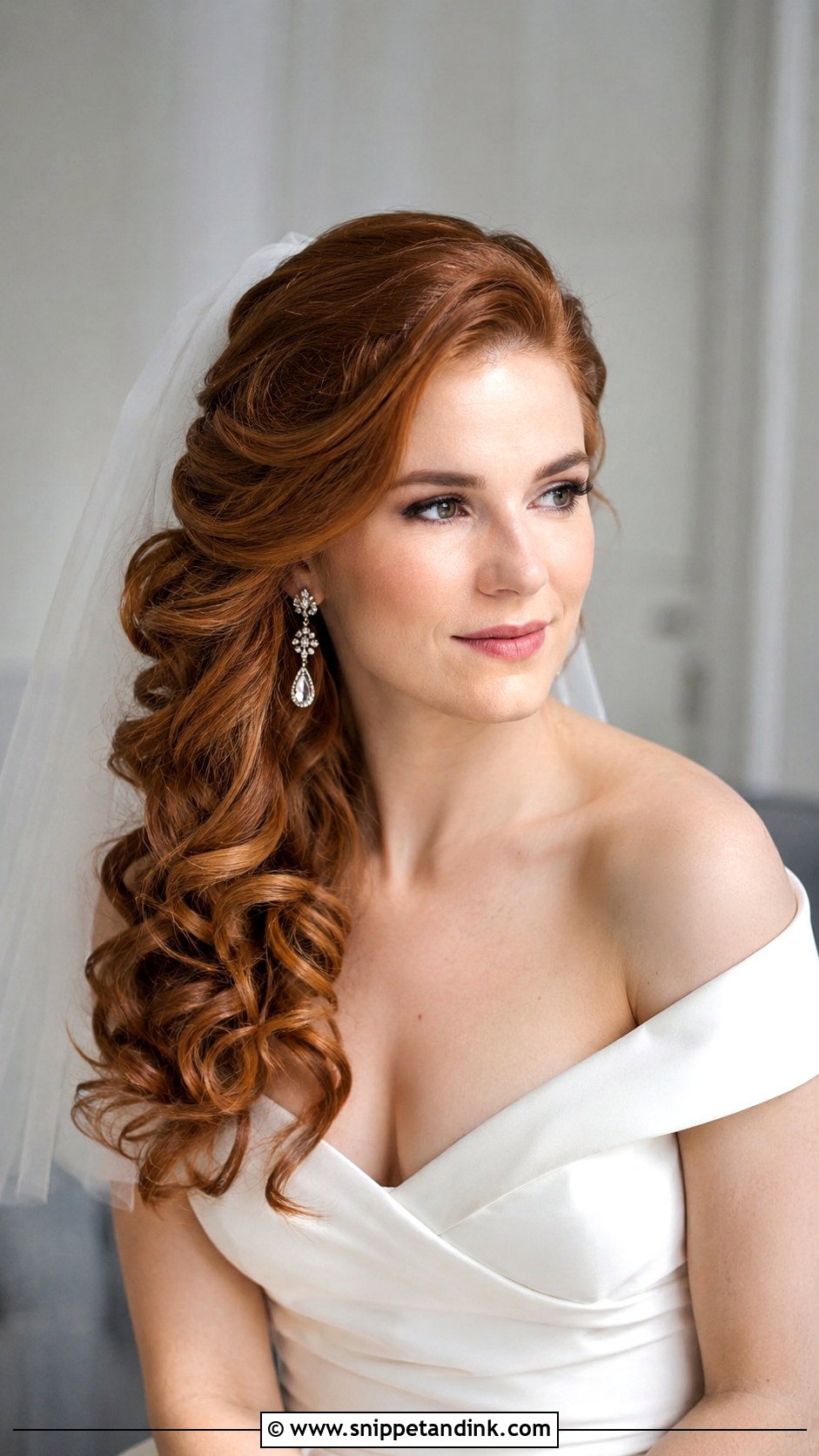
Sweeping all the waves to one shoulder shows off an earring and the neckline on the bare side. It flatters most face shapes and needs little fuss on the day, as long as it’s anchored properly: I run a hidden row of crisscrossed bobby pins behind the opposite ear, then brush the hair over it. Without that, hugs and dancing push it back to the middle. It suits sleek and full hair alike.
5. Wavy Low Bun With Loose Tendrils
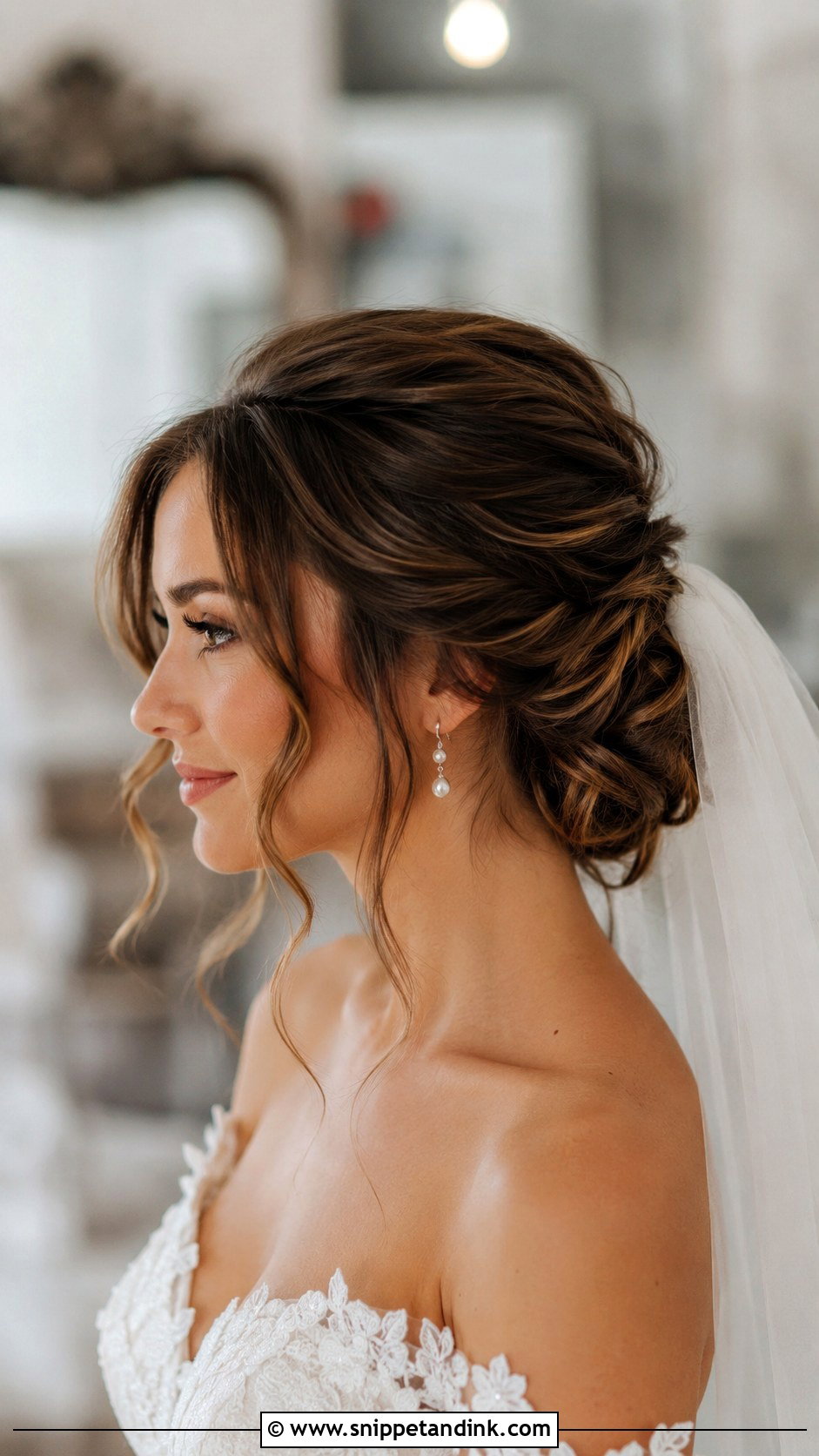
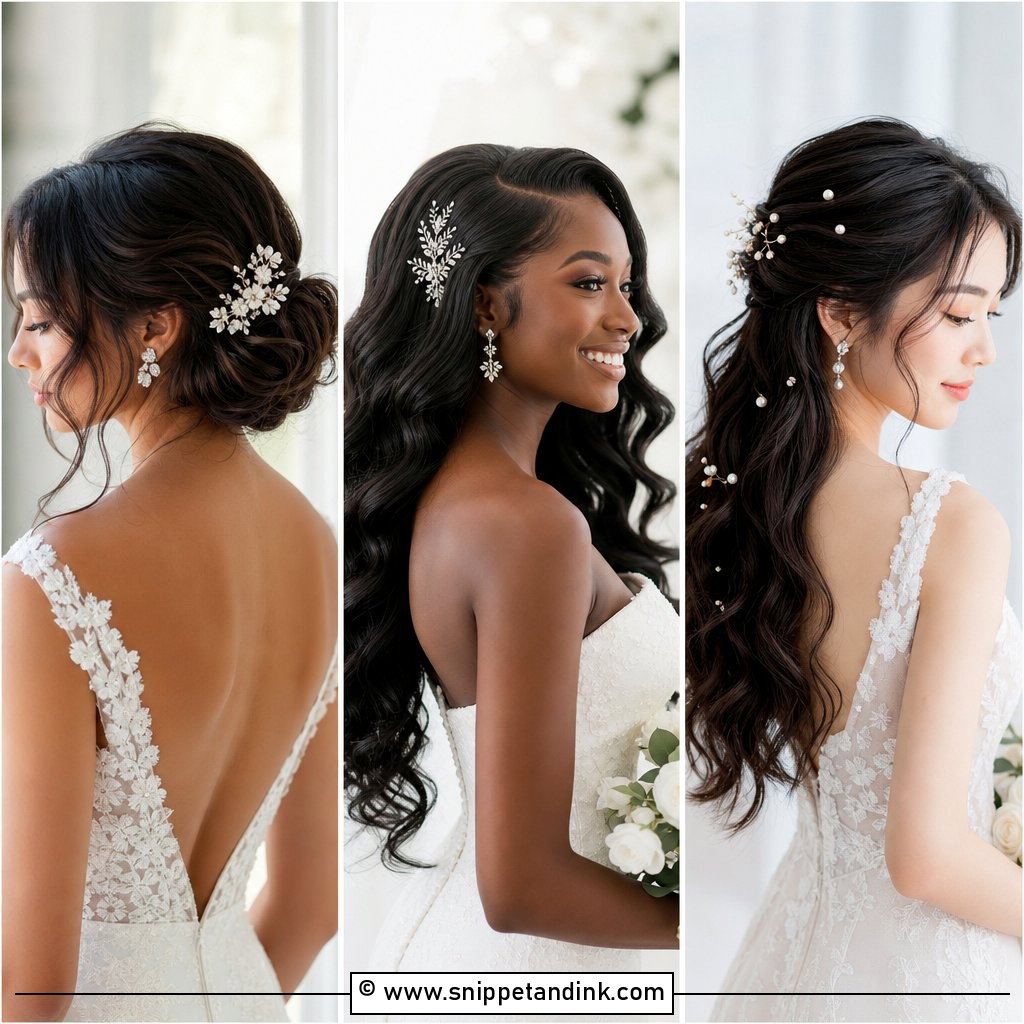
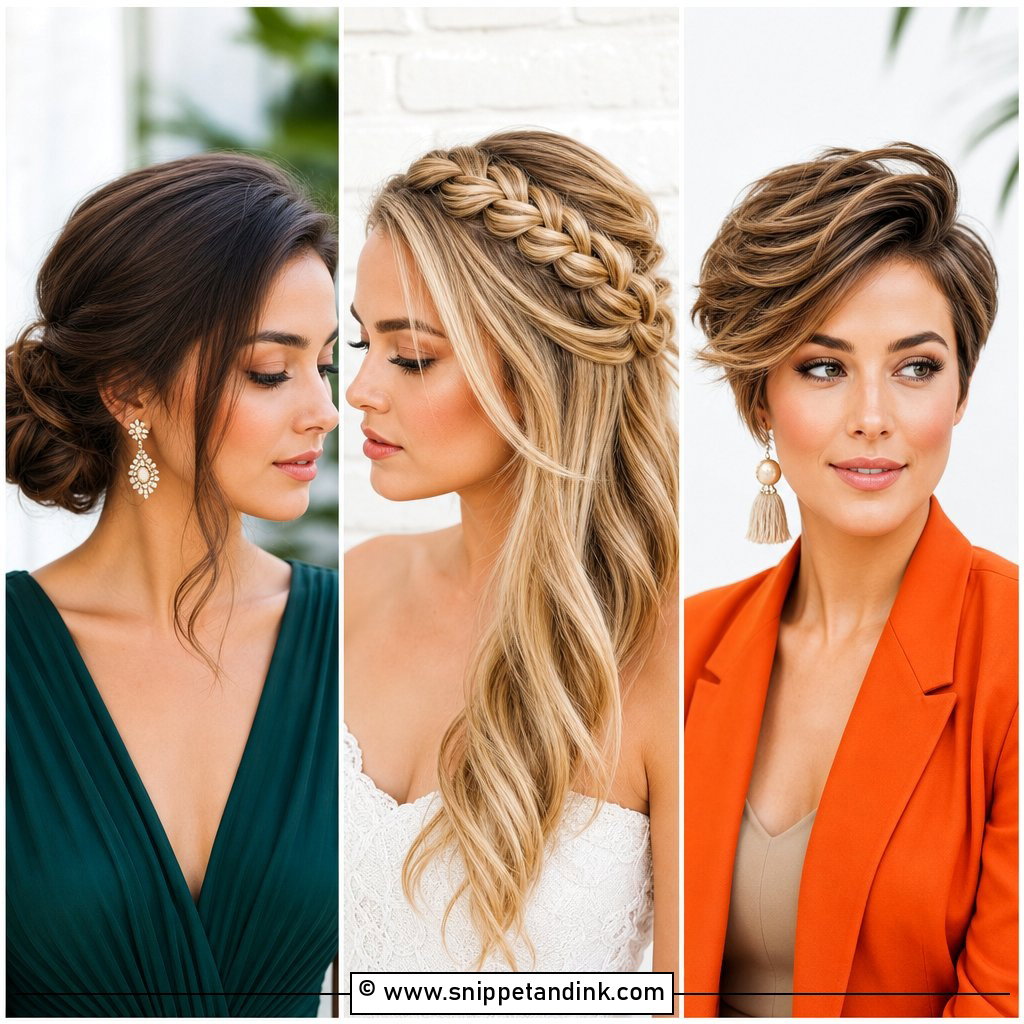
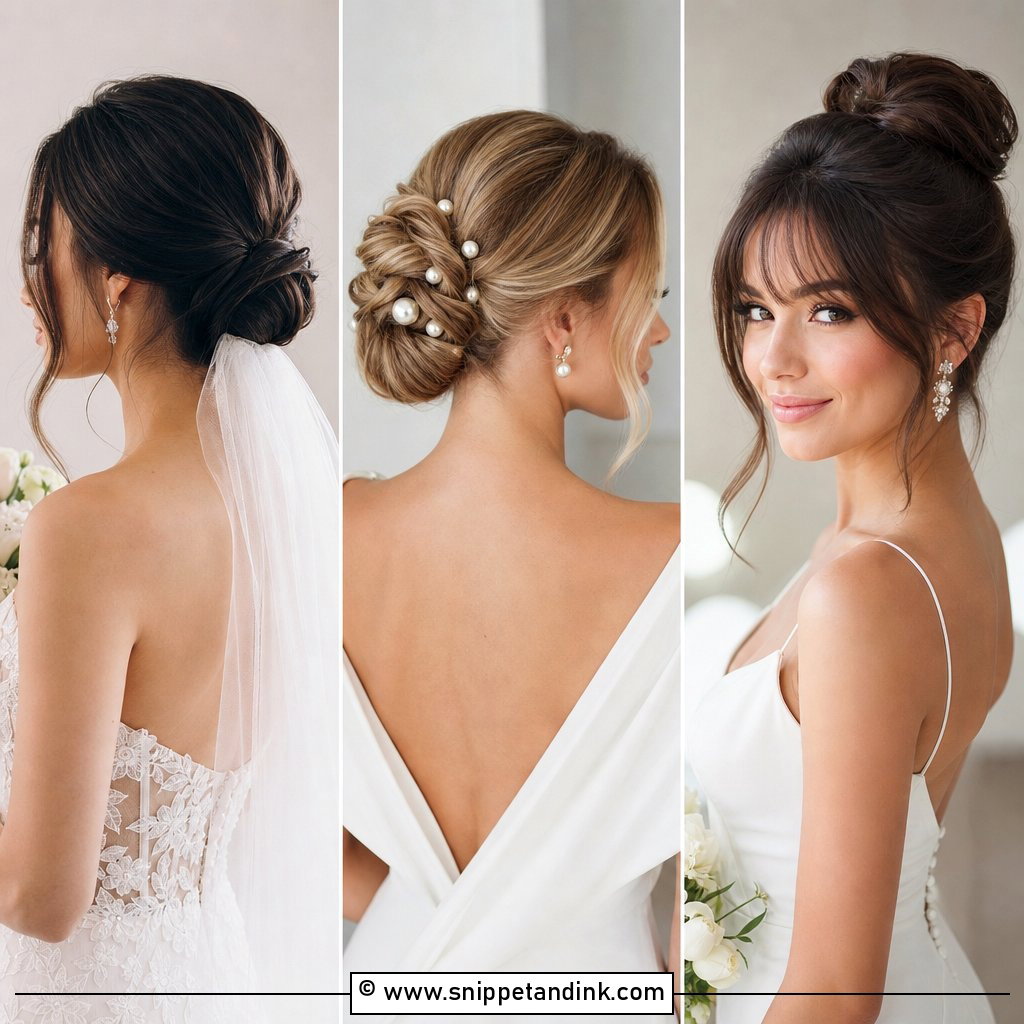
The loose low bun is built from twisted waves pinned at the nape, with a few wisps left out. A little backcombing at the base gives it body and something for pins to grip. It sits neatly under a veil and keeps your neck cool at a summer ceremony. Pin through the center of the bun, not just around the edge, or it slowly loosens as the evening goes on. Modern or classic dresses both suit it.
6. Wavy Bridal Hair With Braided Crown
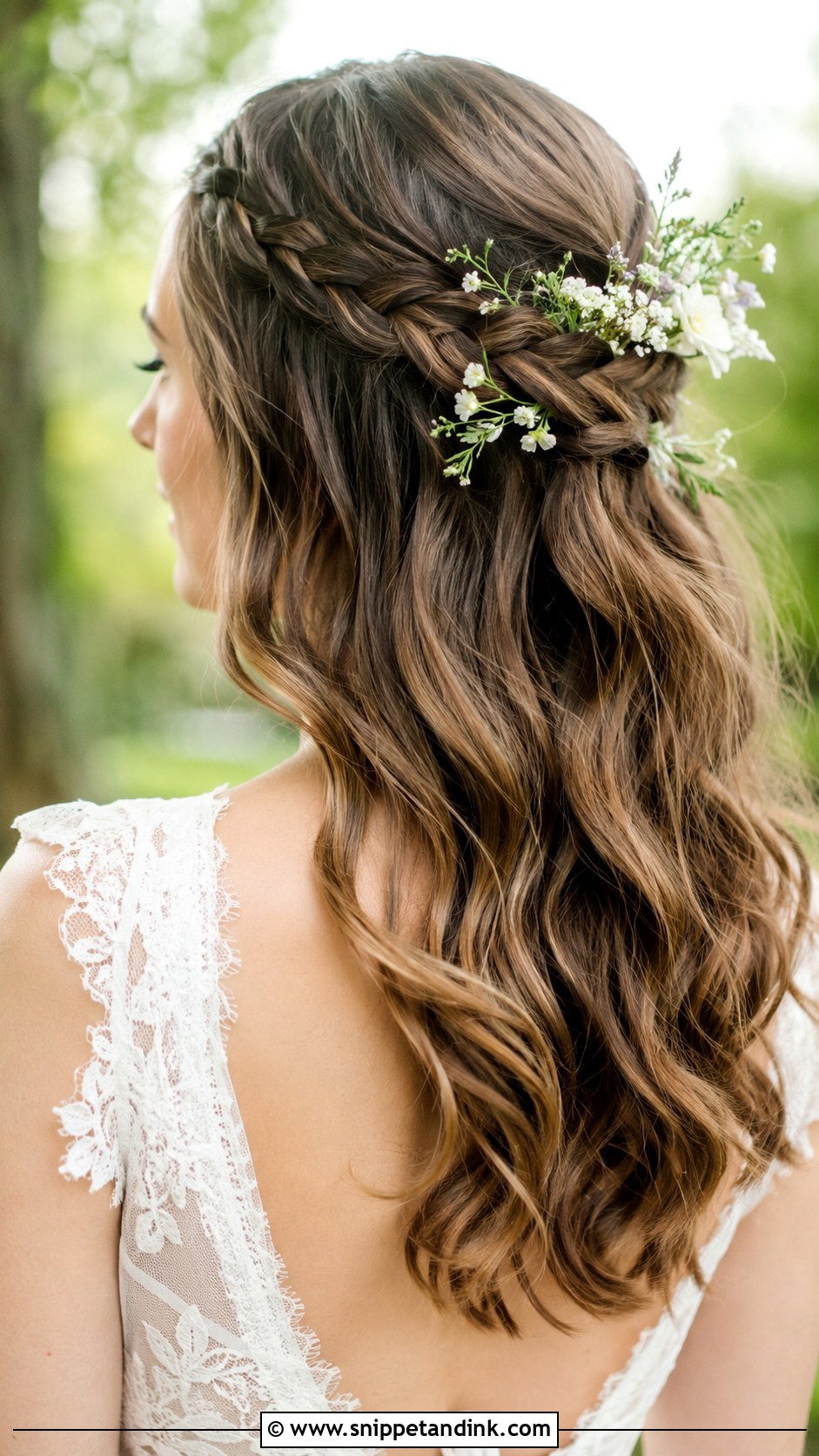
A braided crown circles the head like a halo, with the rest of the waves falling below. It needs enough length to wrap around, roughly past the shoulders, otherwise I add a small clip-in piece to finish the circle. I pin it every couple of inches so it doesn’t sag at the back by the reception. Fresh flowers tuck neatly into the braid, which is why it suits woodland and outdoor weddings.
7. Carrie Bradshaw Inspired Wavy Waves
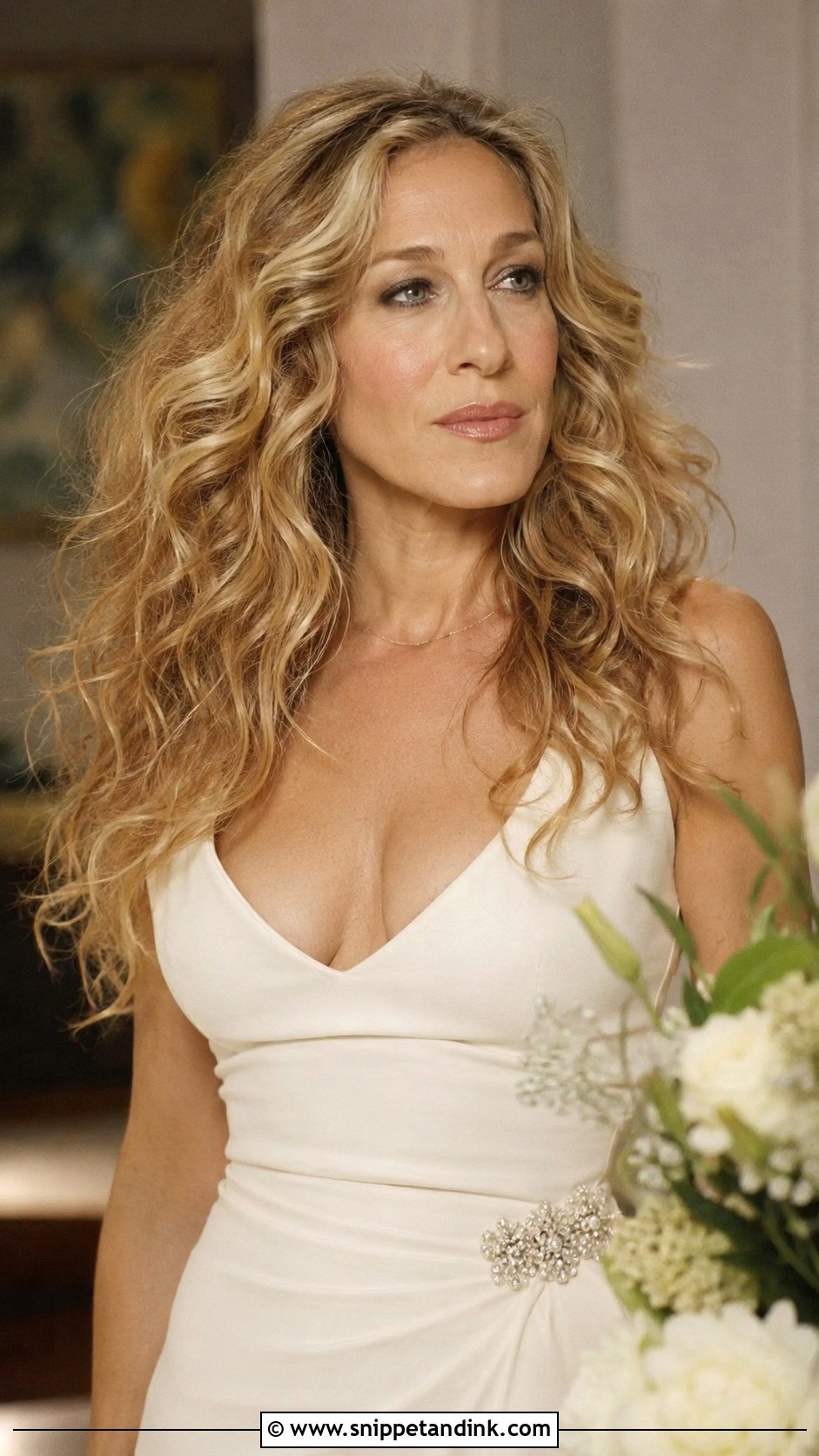
This voluminous, glamorous wave style takes its cue from the famously big, bouncy Carrie Bradshaw hair. It’s looser and fuller than a Hollywood wave, curled with a wand in mixed directions and teased at the root for lift. It needs natural density; fine hair can get there with clip-in wefts. Keep the dress sleek and the accessories minimal, because the hair is already loud. Expect some drop by evening and plan for a fluff at the roots.
8. Natural Wavy Hair for Your Wedding Day
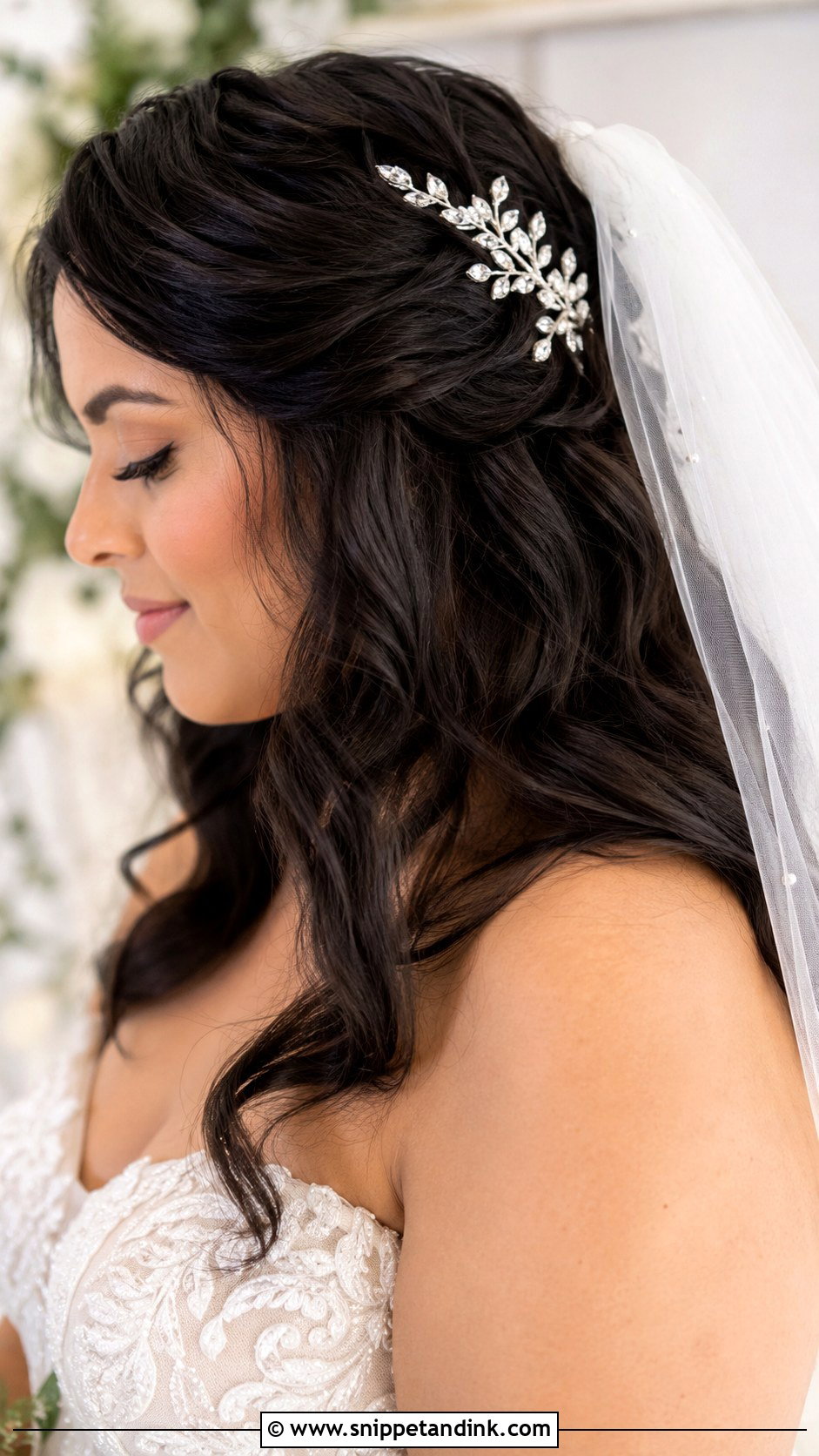
If your hair already waves, you can enhance it instead of resetting it. I define the natural pattern with a curl cream or foam, diffuse it dry without touching, then smooth only the front pieces with a small iron. It’s faster on the morning, and your own texture copes with humidity far better than an ironed curl. The catch is practice: wash and style it this way a few times before the wedding so you know how it behaves. A sparkly pin or simple veil finishes it.
9. Wavy Updo With Face Framing Pieces
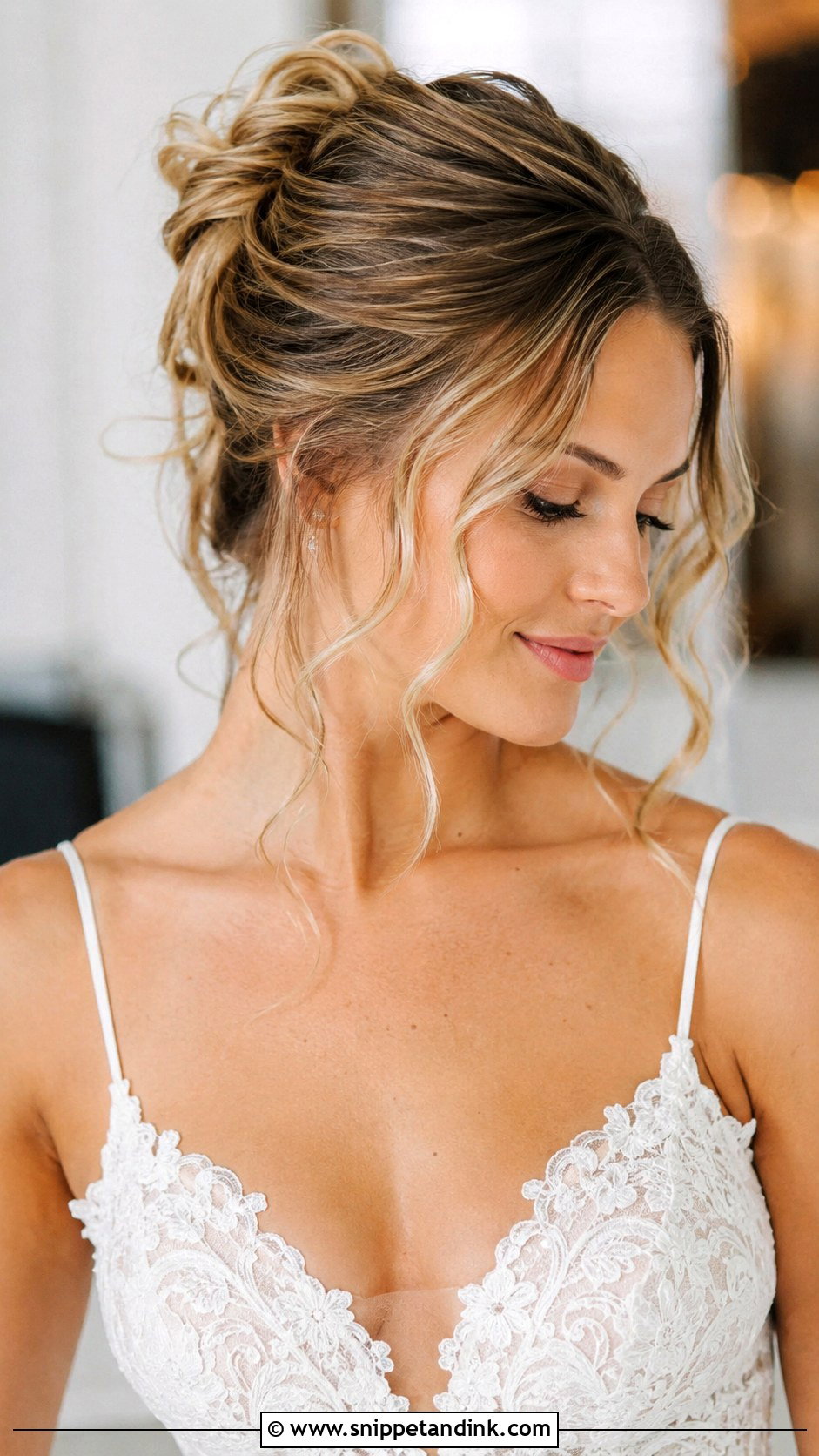
Pinned up but still soft: that’s the point of this one. Most of the waves are gathered and pinned at the back, with curled tendrils left around the face. The tendrils need curling separately and a light spray, because a straight piece hanging by your cheek looks accidental. The updo itself holds well through a long day and keeps your neck clear for a summer wedding or a busy reception.
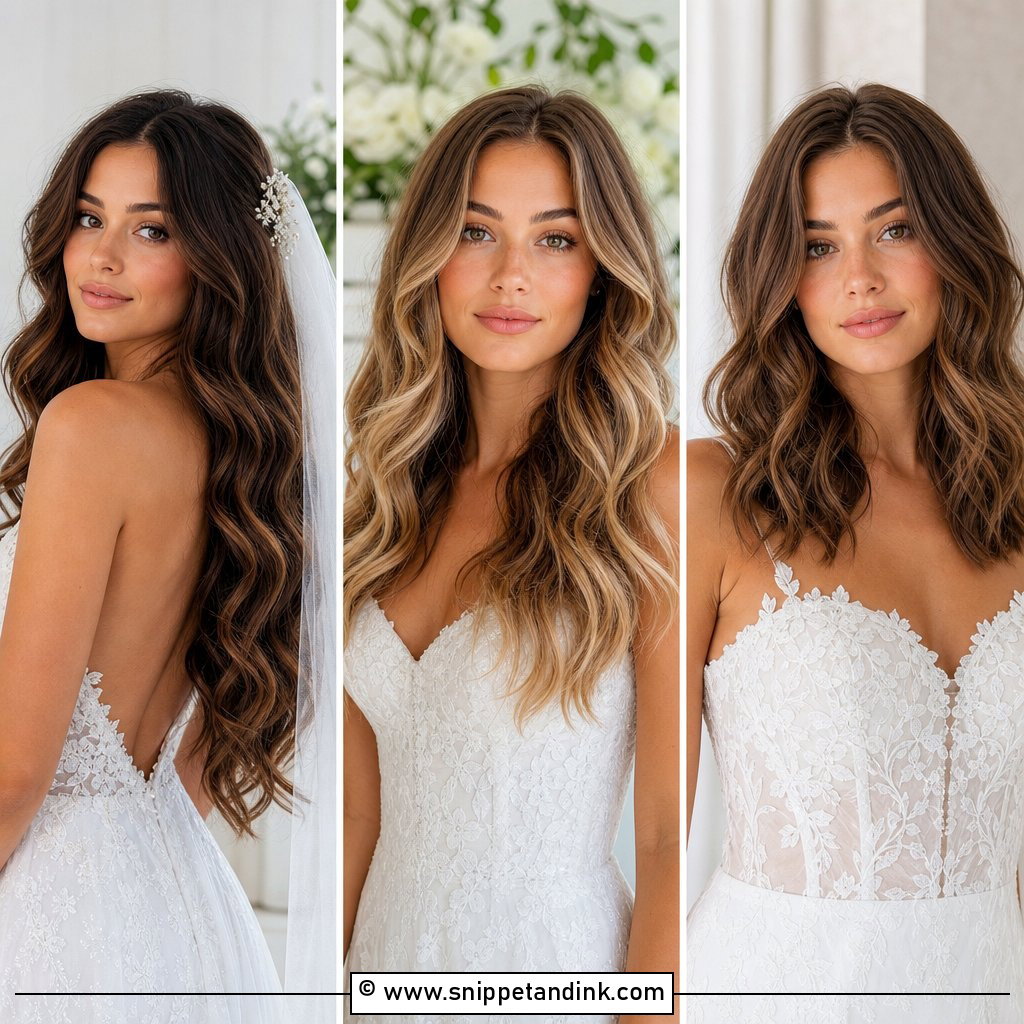
10. Long Wavy Wedding Hair Down
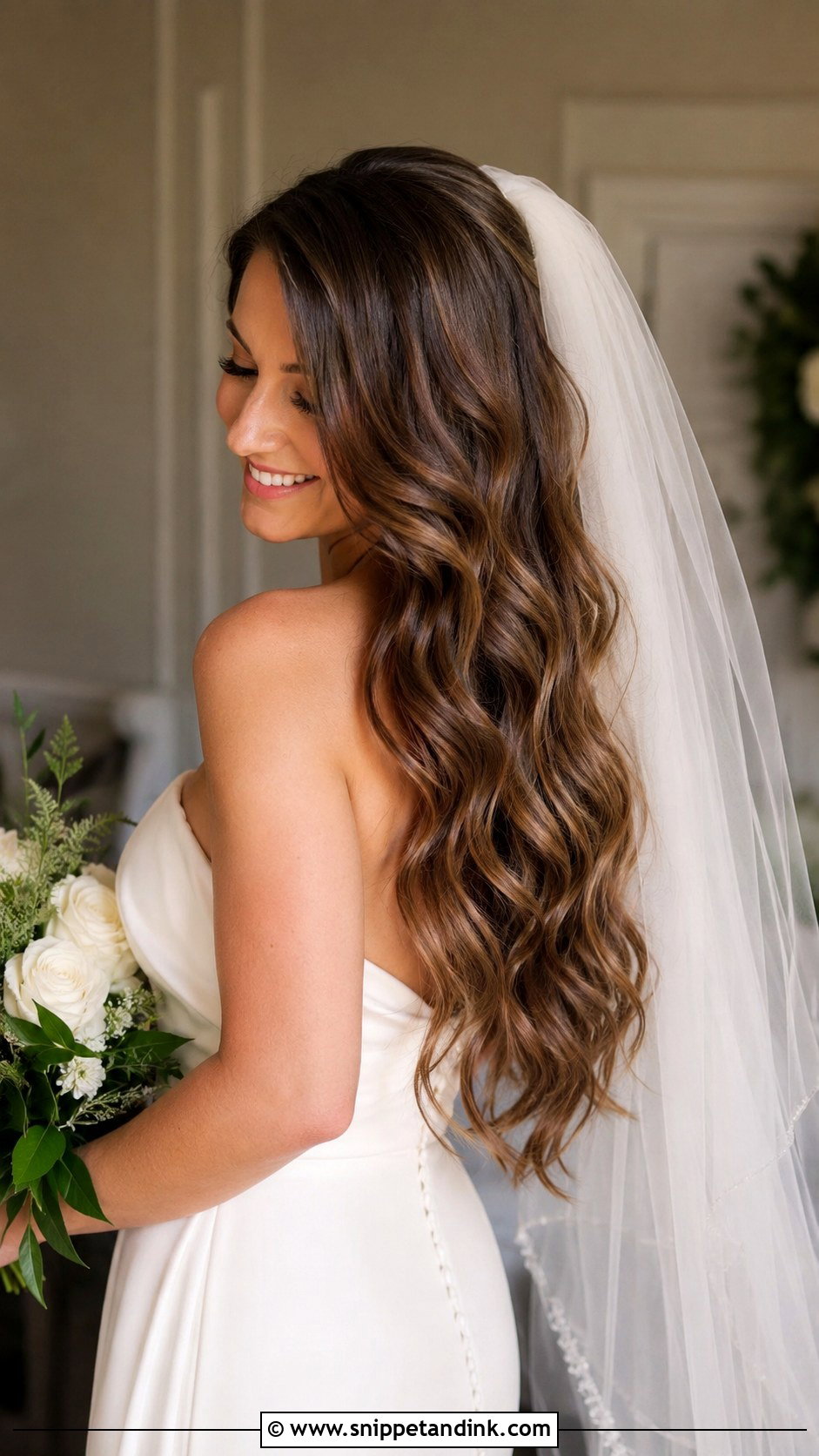
Long waves worn fully down show the length, and they ask the most of your hair. Nothing is pinned, so the curl alone holds the shape. I wave from the mid-lengths, not the root, which keeps the top smooth and stops the look from widening. A long veil or a hair vine both suit it. Choose your part based on your face and hairline. Plan for the waves to relax by evening; that’s normal, not a failure.
11. Wavy Side Braid for Brides
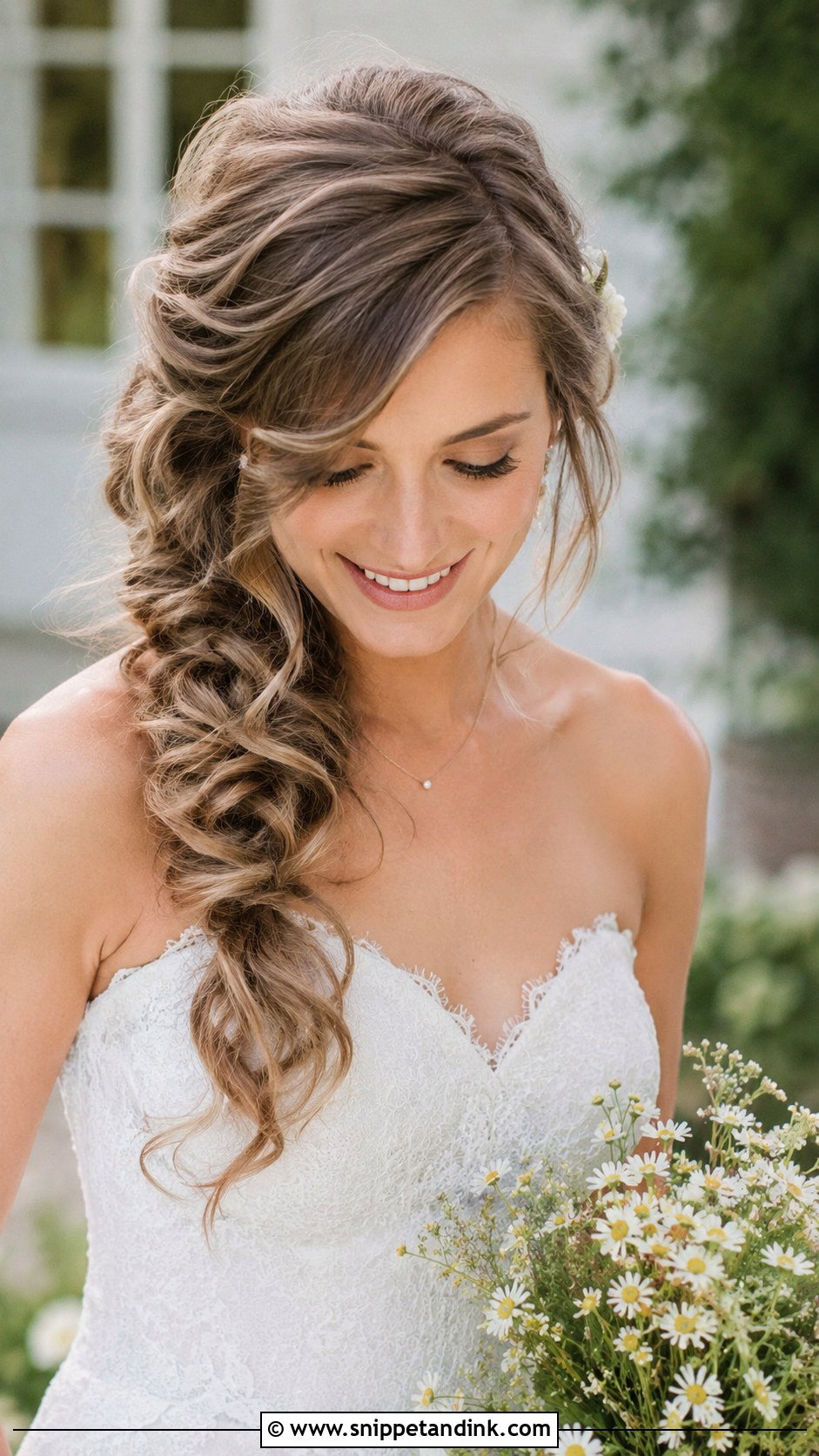
A side braid draped over one shoulder holds hair far better than loose waves, which makes it a practical choice for a beach or garden wedding. I start from an off-center part, braid fairly tight, then pull the loops apart gently with my fingers for fullness. Tuck small flowers or pins into the braid. Fine hair looks thicker this way, since pulling the braid wider adds visual volume.
12. Voluminous Wavy Hair With a Veil
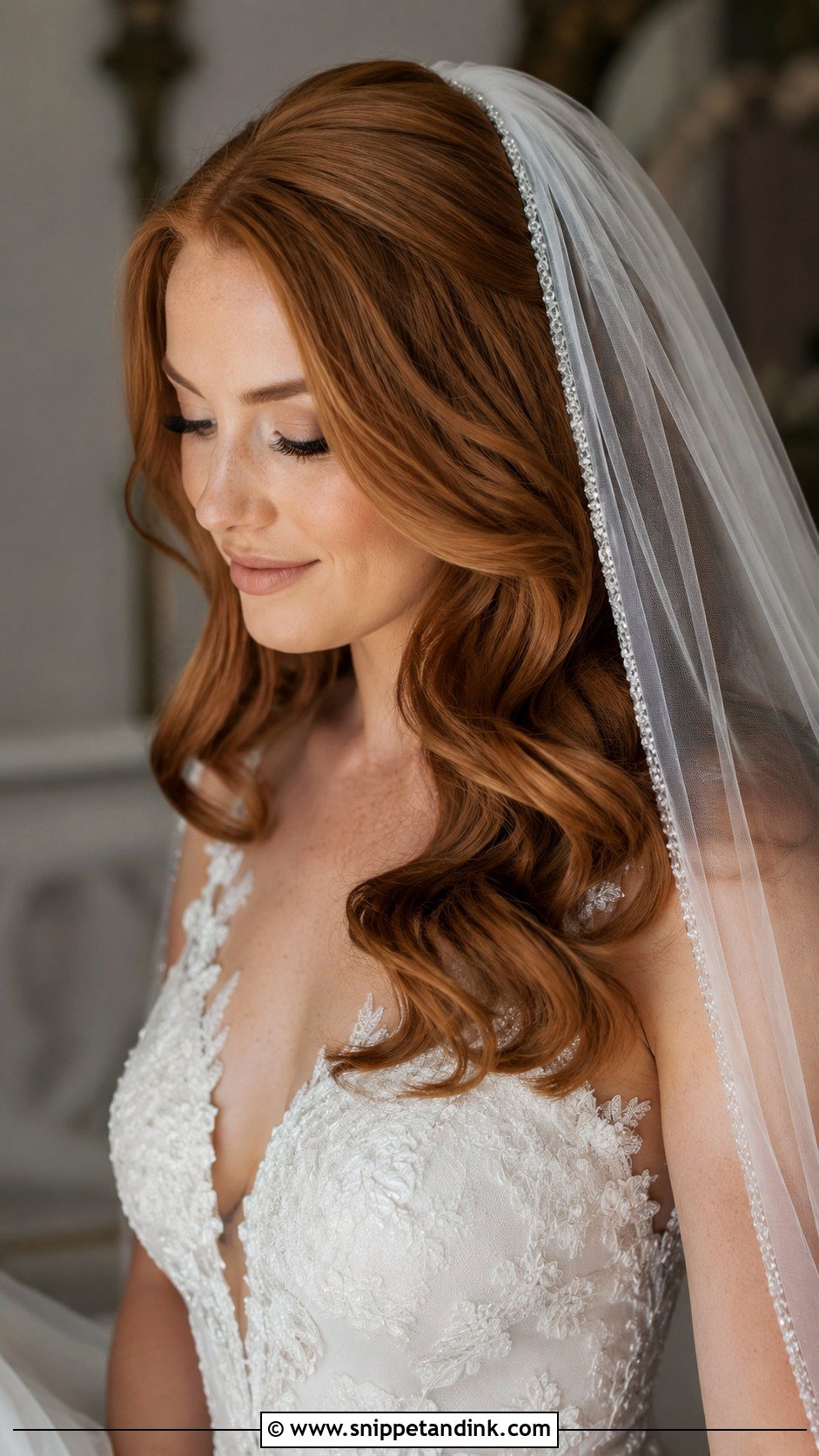
Volume at the root is what stops a veil from flattening waves into a helmet. I tease a small pad at the crown, which also gives the veil comb something to grip. Place the veil at the crown for a traditional look or lower, at the back of the head, for something softer. When the veil comes off for the reception, a quick finger-shake at the crown brings the waves back to life.
13. Soft Cascading Waves for Brides
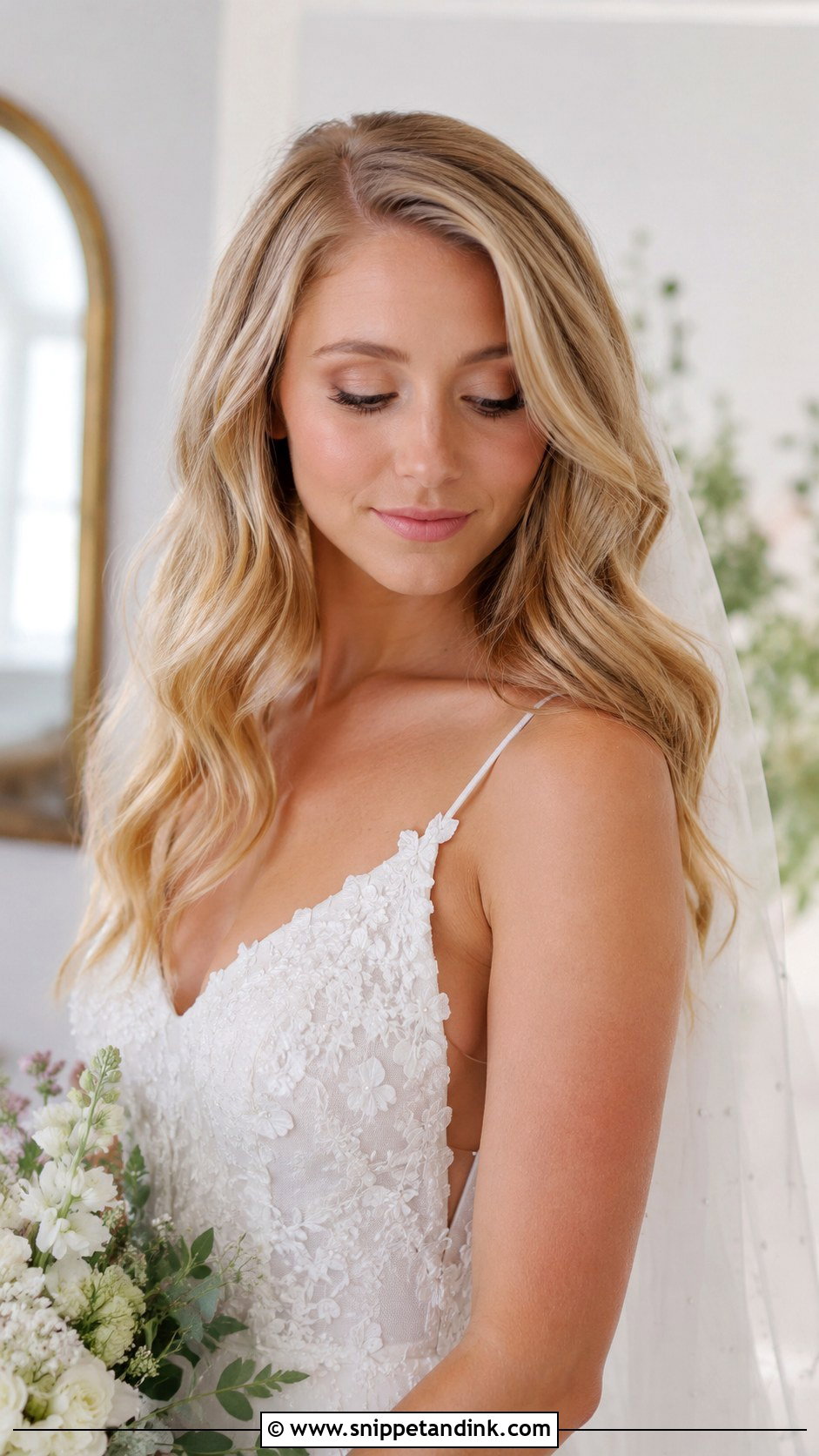
Soft cascading waves are looser and less uniform than a set curl. I curl in alternating directions with a medium wand, leave the ends straight and break them up with my fingers instead of a brush. Subtle layers help them move. It works on long and medium hair and suits nearly any dress. Fine, straight hair will flatten these within a few hours, so if that’s you, use a light mousse at the root and a few hidden pins at the back.
14. Wavy Half Up With a Bow Clip
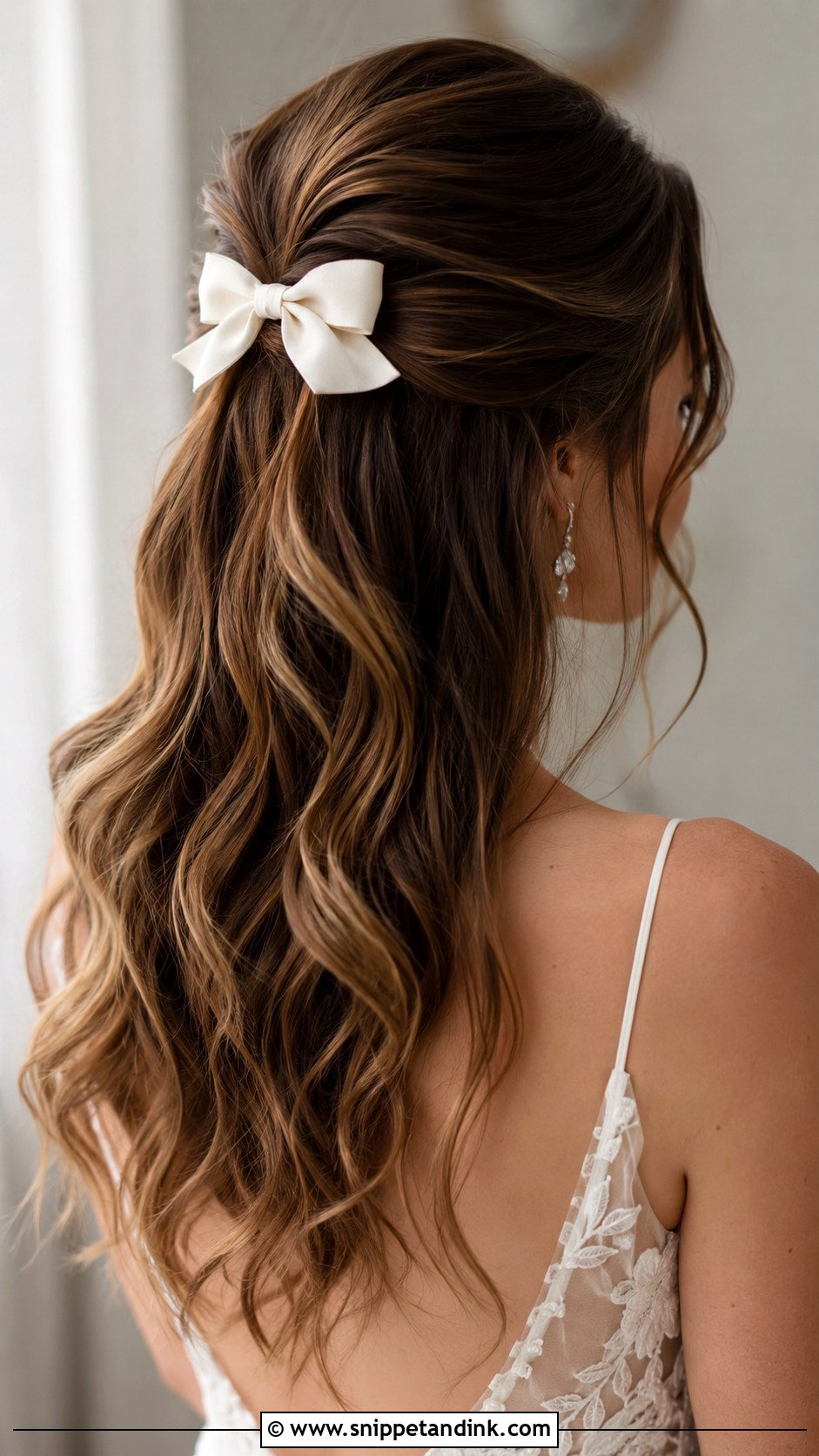
Bows have become a common bridal accent, and on a half-up wave they’re simple: gather the top section, secure it with a small elastic and clip the bow over it. The elastic matters, because a bow clip on its own slides down silky waves. Satin or silk bows look softer in photos than stiff grosgrain. A bow reads young and playful, so it suits a modern, simple dress more than heavy lace or crystals.
15. Deep Side Part Wavy Wedding Hair
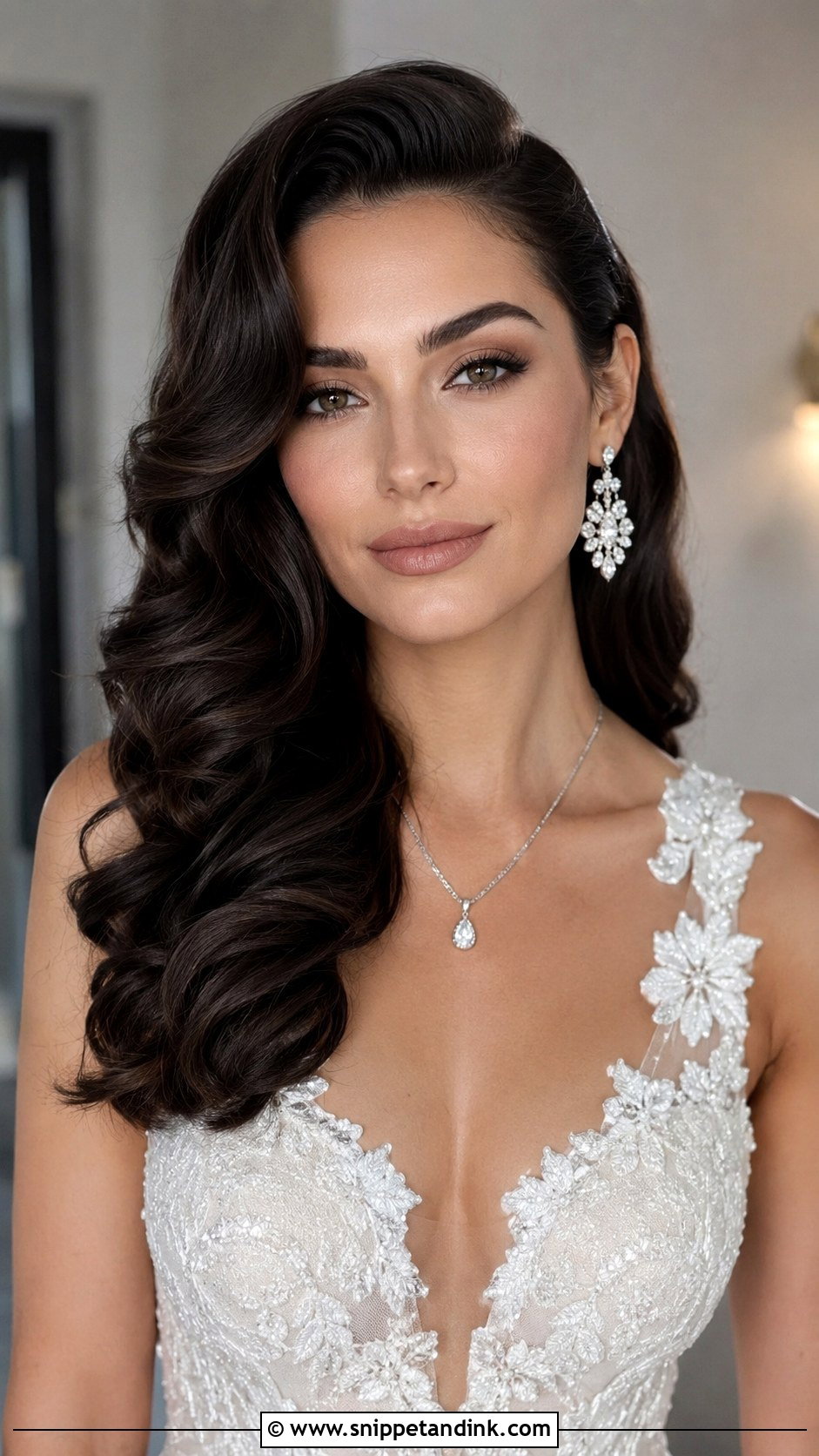
Moving your part far to one side throws the volume over and changes how your face reads, drawing attention to the eyes and cheekbones. With smooth, glossy waves it leans vintage. I lift the root on the full side with a round brush before curling, because that’s the spot that collapses first. It suits sleek dresses and statement jewelry. If your hair has a strong natural part on the other side, test it at the trial; some hairlines won’t stay flipped.
16. Boho Wavy Hair With Flowers
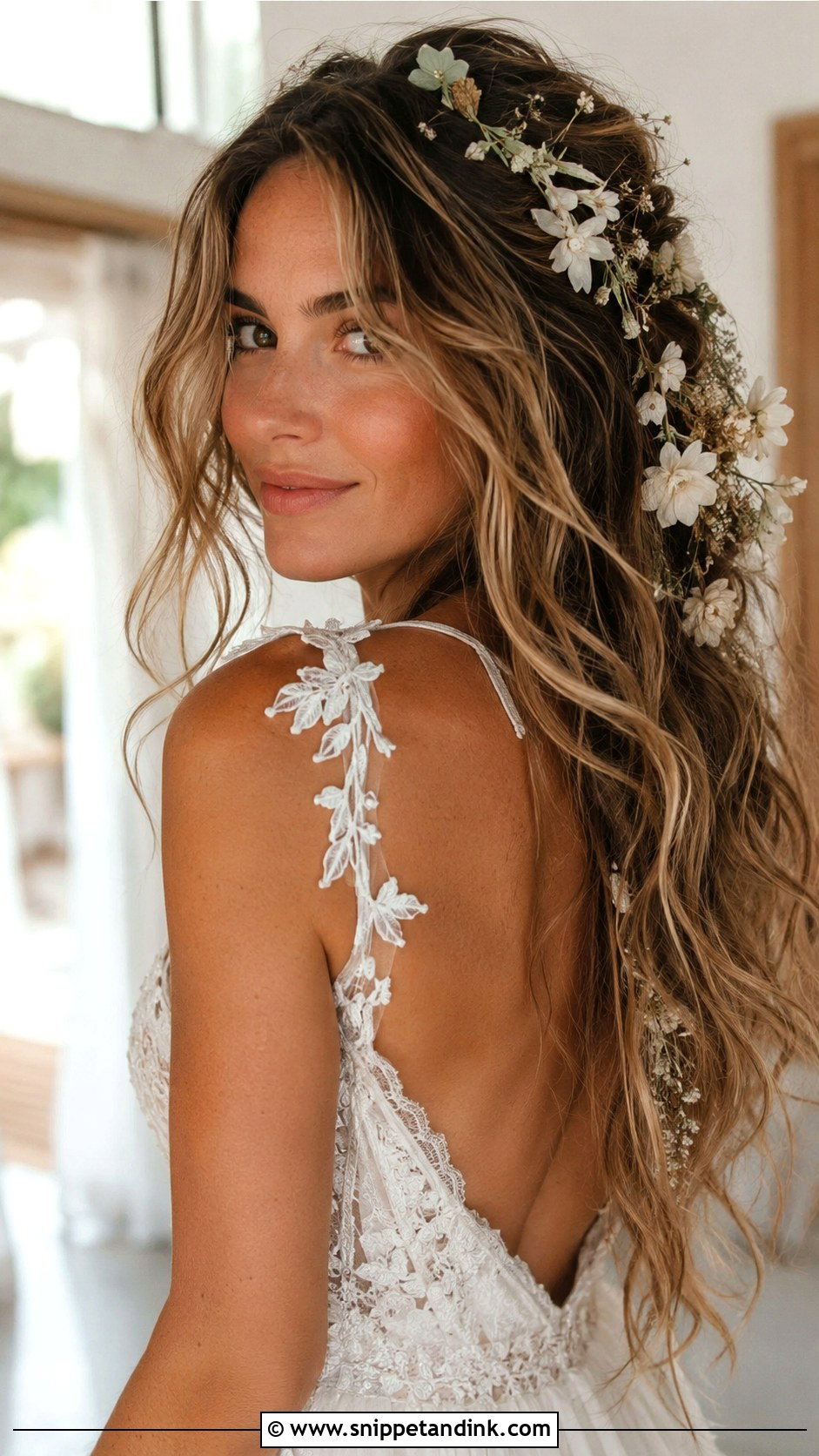
Fresh flowers in waves need something to hold onto, because loose curls let stems slip out. I ask the florist to wire small blooms onto picks and slide them into a pinned half-up section or a braid. I like soft, tousled waves accented with a few of the same flowers from your bouquet, which ties the look together. Sturdy blooms like spray roses and waxflower last; baby’s breath can wilt and brown in heat, so keep a few spares for the reception.
17. Wavy Ponytail for the Modern Bride
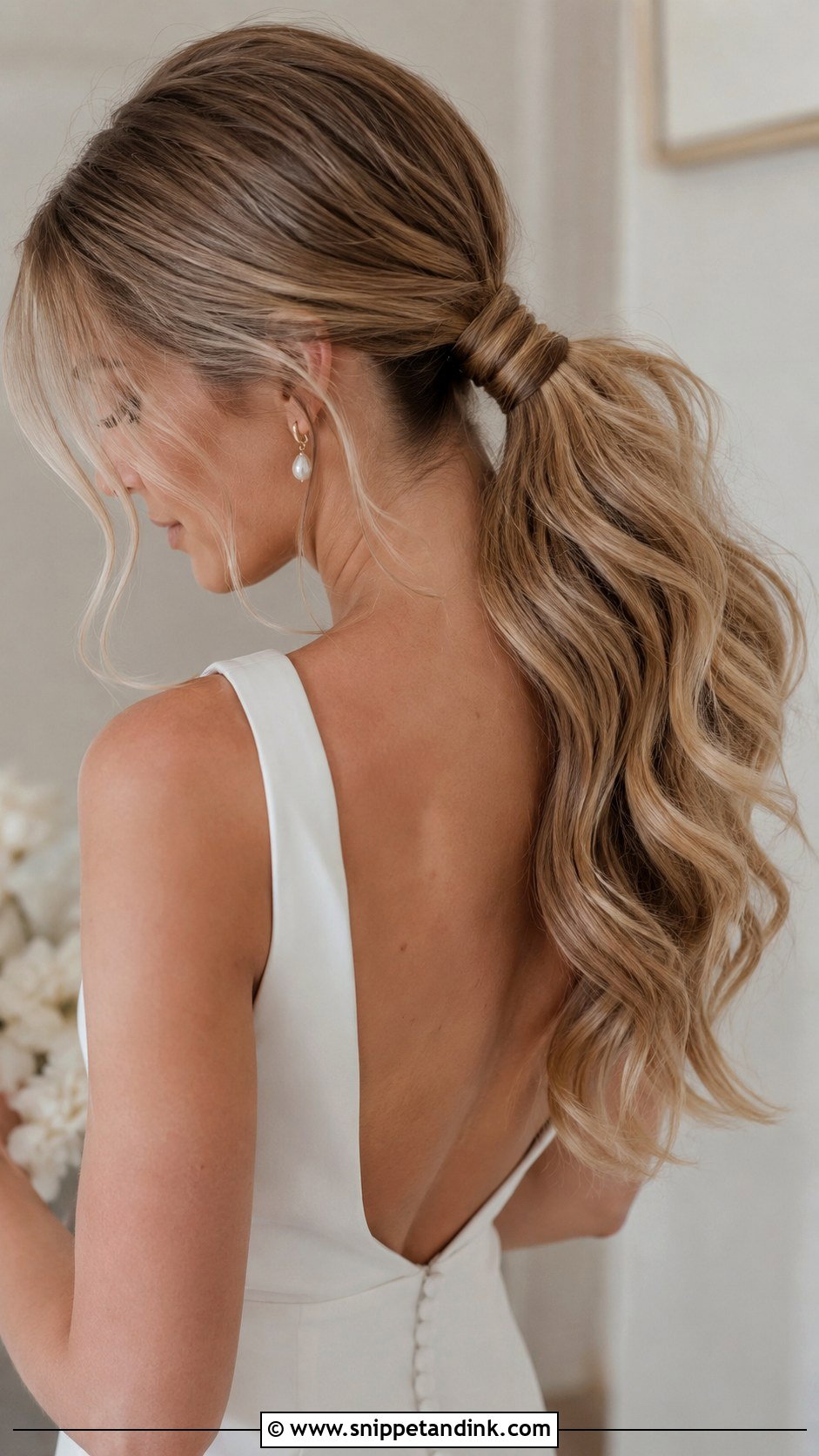
Gathered low or at mid-height, the ponytail leaves the lengths in soft, bouncy waves and the top smooth. Curl before you tie it, so the waves are even all round, then wrap a strand around the base to hide the elastic. A couple of face-framing pieces soften it. It’s the most secure style on this list for dancing, and suits a minimal, modern dress.
18. Tousled Wavy Updo for Brides
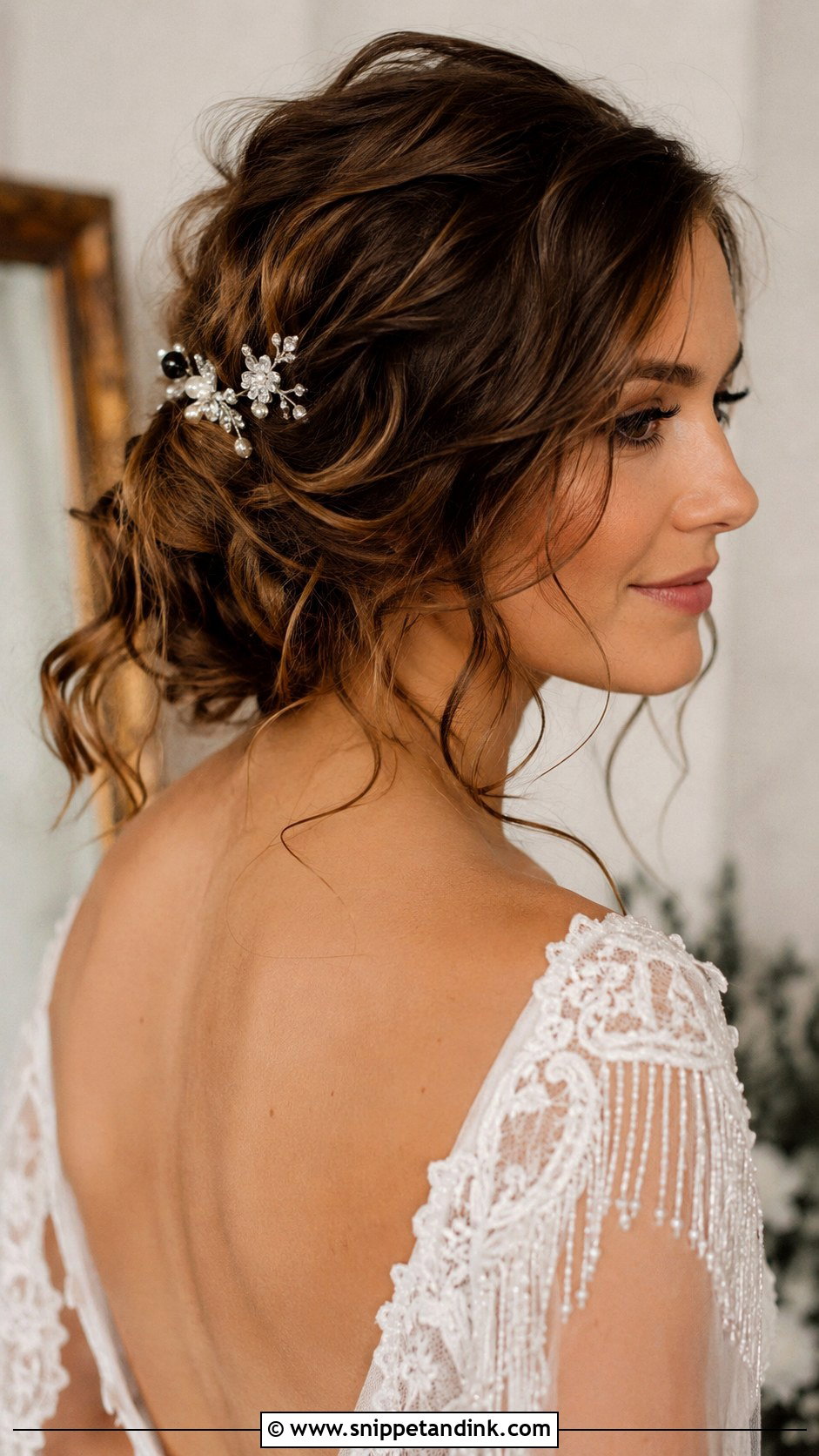
The tousled wavy updo looks loose, but it only stays that way because the base is tight. I build a small, secure ponytail or pin cage first, then wrap the textured waves around it and pull pieces out. It suits boho and rustic weddings and keeps hair off your neck. A sparkly comb or a few flowers can sit in the gaps. The look is comfortable for a full day, with no tight pins pulling at your scalp.
19. Wavy Bob Wedding Hairstyle
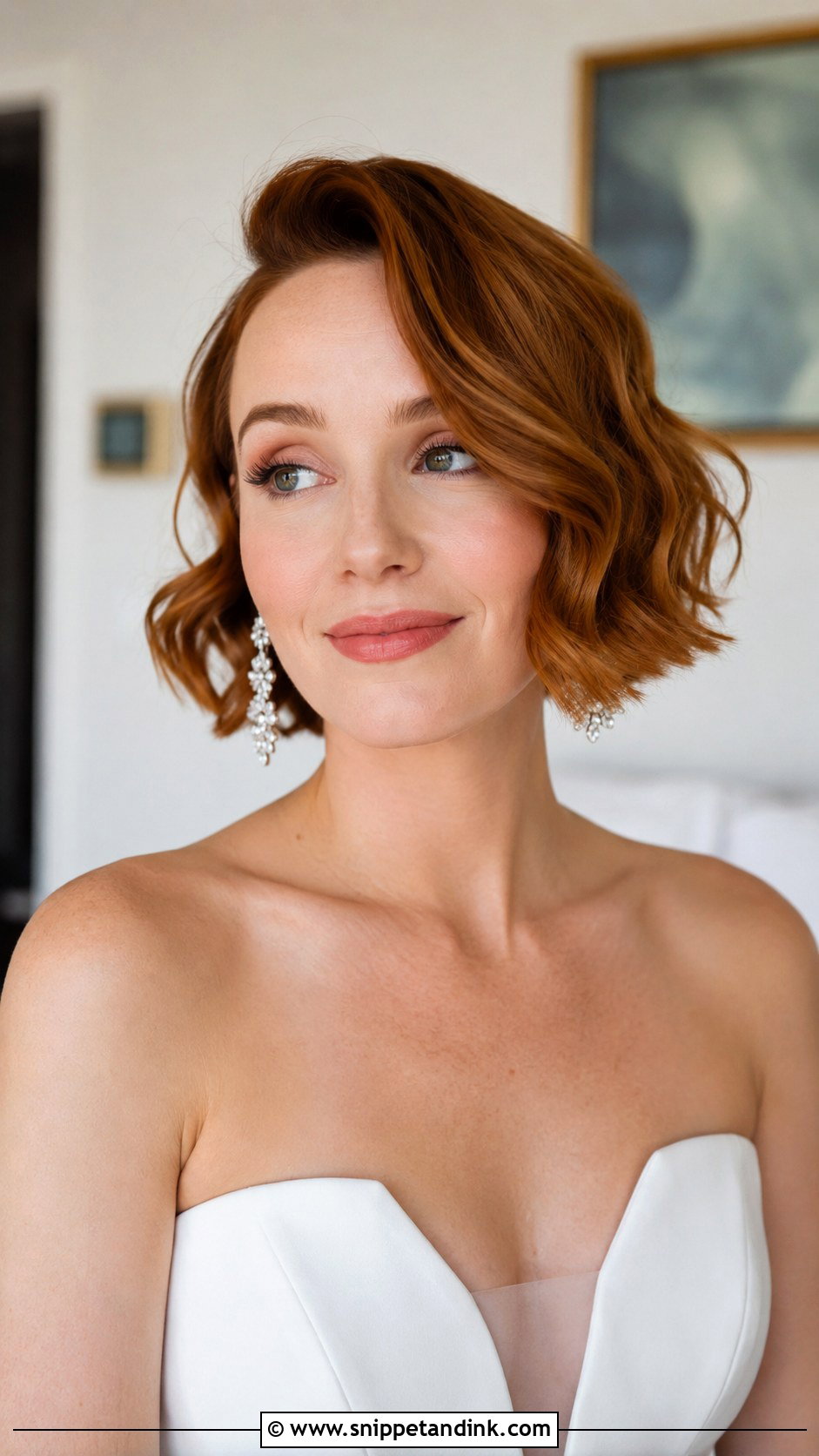
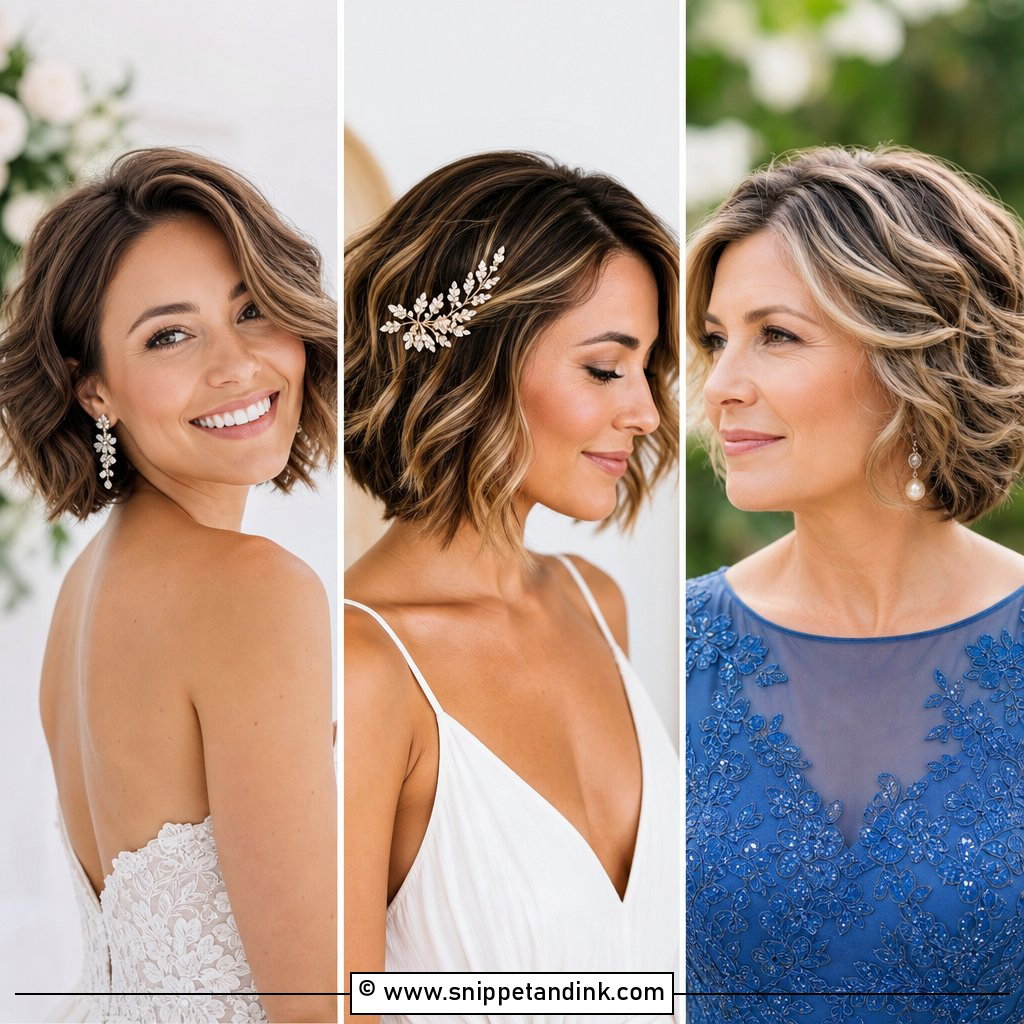
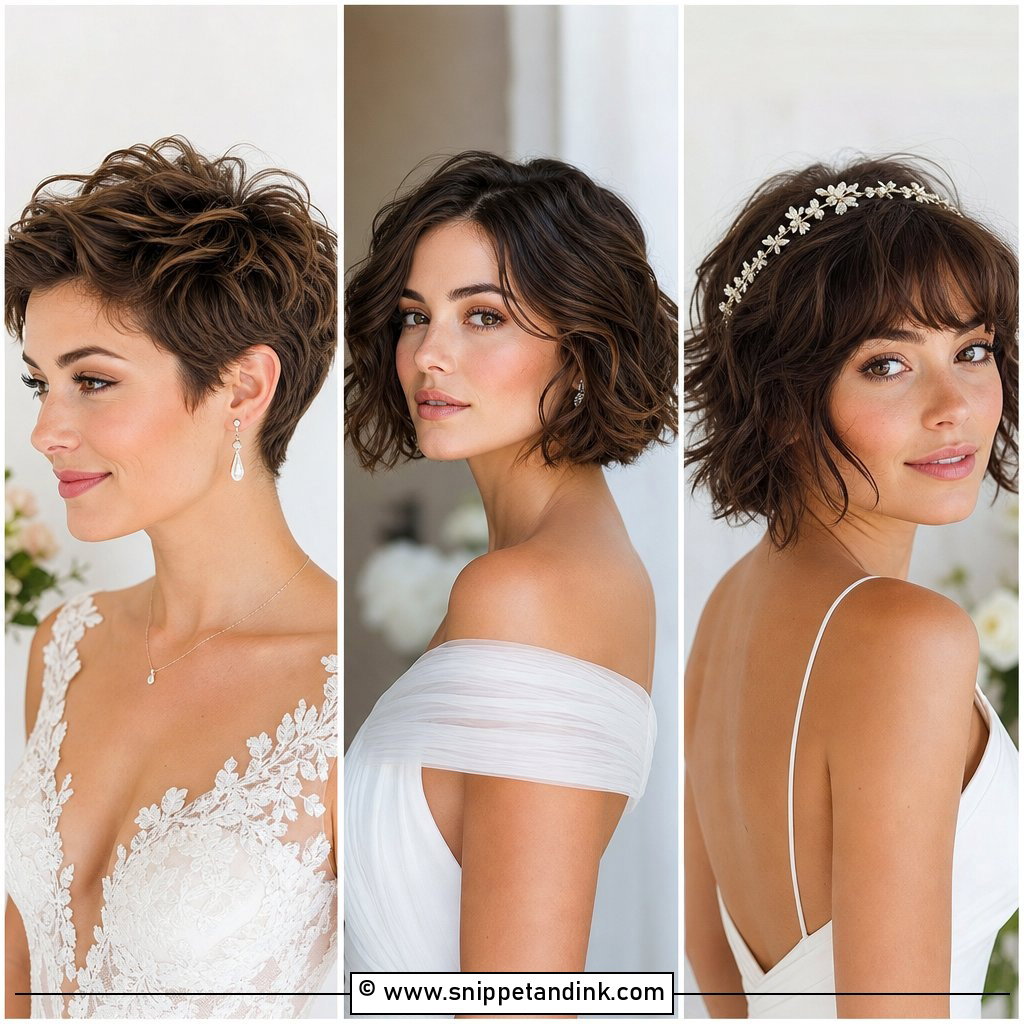
Short hair takes waves well, and a bob holds a curl longer than long hair because there’s less weight dragging it out. I use a smaller barrel on a chin or shoulder-length bob and keep the ends straight, so it reads as a wave instead of ringlets. A deep side part or a small clip dresses it up. It suits statement earrings and a simple dress. Get your trim two to three weeks before, so the ends aren’t blunt and stiff.
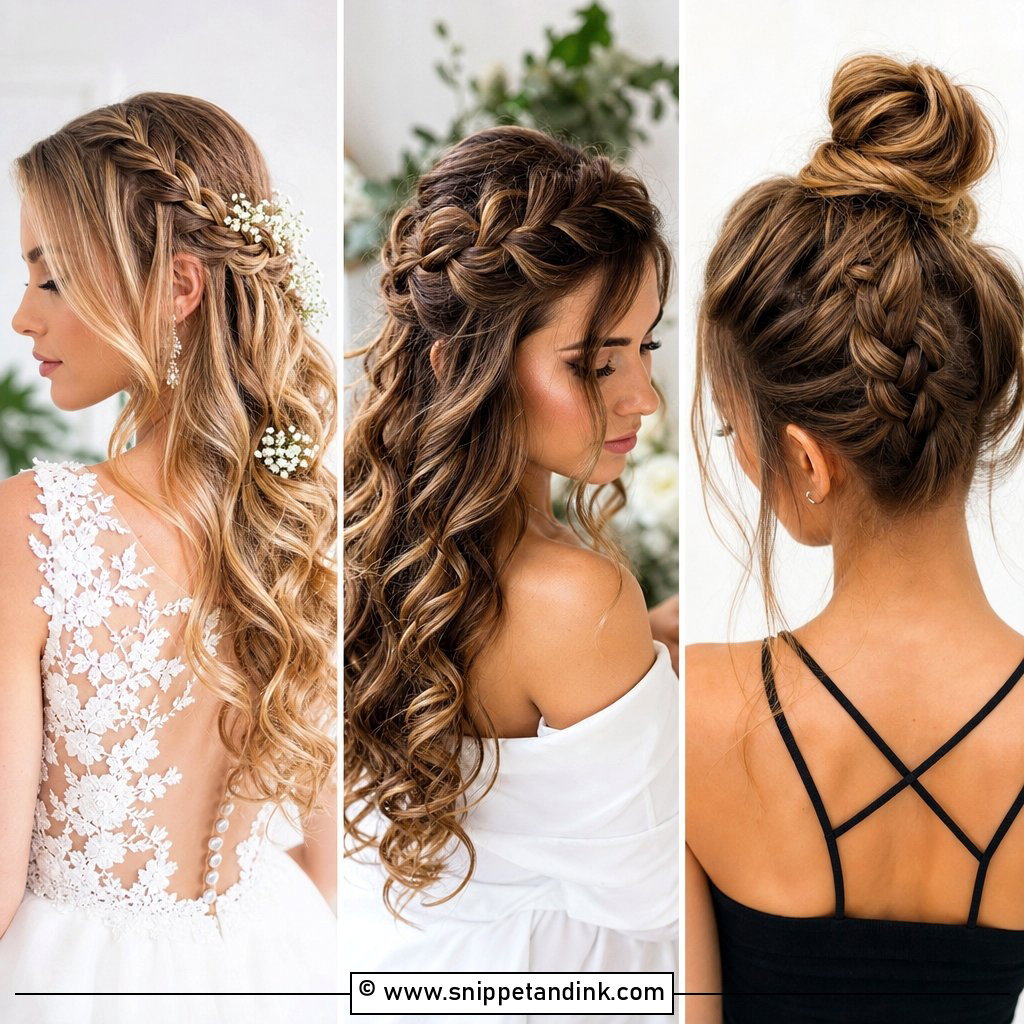
20. Wavy Hair With a Hair Vine Accessory
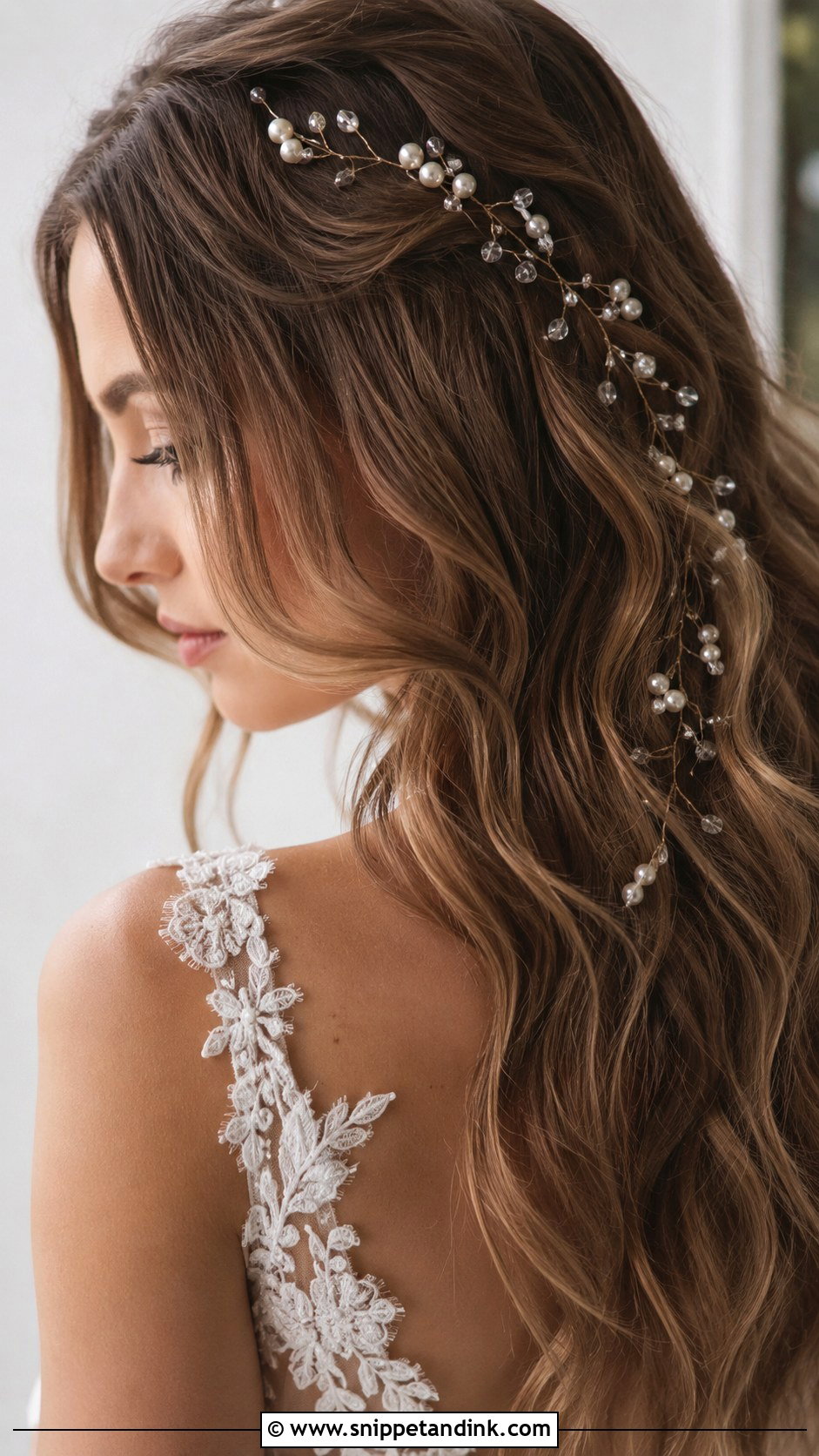
A hair vine is a flexible wire set with pearls or crystals, woven through the hair and pinned at intervals. It needs texture or a pinned section to grip, so it sits best across a half-up style or around an updo; on smooth loose waves it can slide. The stones catch light as you move. Match the metal and stones to your gown and jewelry, and shape the vine to your head at the trial, not on the morning.
Rain on the Morning? Switching to a Backup Without Starting Over
Humidity is the thing that ruins waves, more than rain itself. Damp air makes curled hair swell and drop, and fine or chemically lightened hair reacts fastest. The good news is that most styles on this list share the same base set, so a switch is quick.
- Loose waves down can become a half-up in about ten minutes, which protects the face-framing pieces.
- Half up can turn into a low bun or ponytail if the lengths start to frizz.
- A braid hides frizz better than any spray, so a side braid is the strongest rescue for outdoor ceremonies.
Decide your backup at the trial and photograph it, so nobody has to improvise in the rain. And keep an umbrella for the walk from the car; a few drops on a set wave are fine, a soaking isn’t.
Two Wave Styles for Your Trial, Not Twenty
Your hair length, your dress and your venue narrow the list quickly. A long day outdoors needs something pinned, braided or half up; a cool indoor evening can take loose Hollywood glamour. Pick your favorite plus a backup that uses the same set, and try both at your trial. Then you’ll walk into the morning already knowing the plan.
You'll Like These Ideas:


Leave a Reply