
Smooth, glossy bridal fabrics are hard to beat when you want a gown that looks expensive without beading or lace. Silk, satin, charmeuse and the newer liquid-look weaves all carry light in the same soft way, and they suit formal, modern, beach and very small weddings alike. What changes the mood is the cut: a slip is minimal, a ball gown is grand, a draped gown is fashion-led. The catch is that shiny fabric hides nothing, so fit and what you wear underneath matter more than with any other kind of dress. I’ve written each look below from head to toe so you can picture it whole. If you want even more options, these 25 Silky Wedding Dress Ideas are a good companion list.
Polyester Satin Versus Real Silk, Under Fitting Room Lights
Many gowns sold as silky are not silk at all. Polyester satin and other synthetic blends dominate the mid-price market, and some are very good. Neither is wrong; they simply behave differently, and you should know which one you’re trying on.
- Sheen: real silk glows softly; polyester satin tends to have a brighter, more mirror-like shine that can flash white under a camera flash.
- Temperature: silk breathes and feels cool against the skin. Synthetics trap heat, which matters on a July afternoon or a crowded dance floor.
- Creasing: both crease, but polyester often springs back faster. Silk creases softly and steams out easily.
- Static: synthetic satin can cling to tights and slips in dry winter air. Silk is less prone to it.
- Price and care: polyester usually costs much less and tolerates more handling. Silk needs careful steaming and specialist cleaning.
Check the care label, then rub a hidden seam allowance between your fingers. Silk feels slightly warm and dry, synthetics slightly slick. If the label says 100% silk, ask which weave, since charmeuse, crepe and mikado are all silk and look nothing alike.
1. Silk Slip Wedding Dress
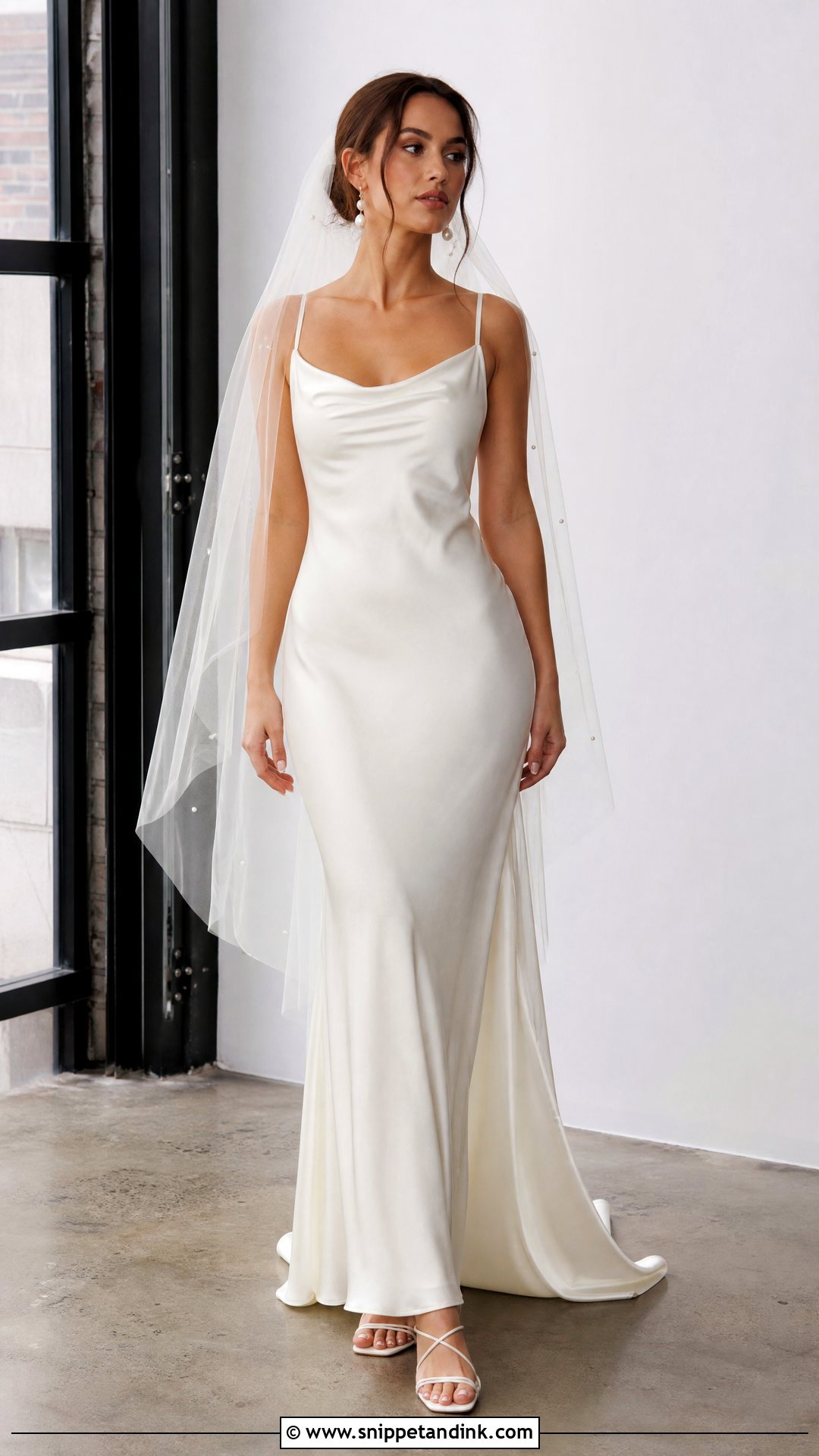
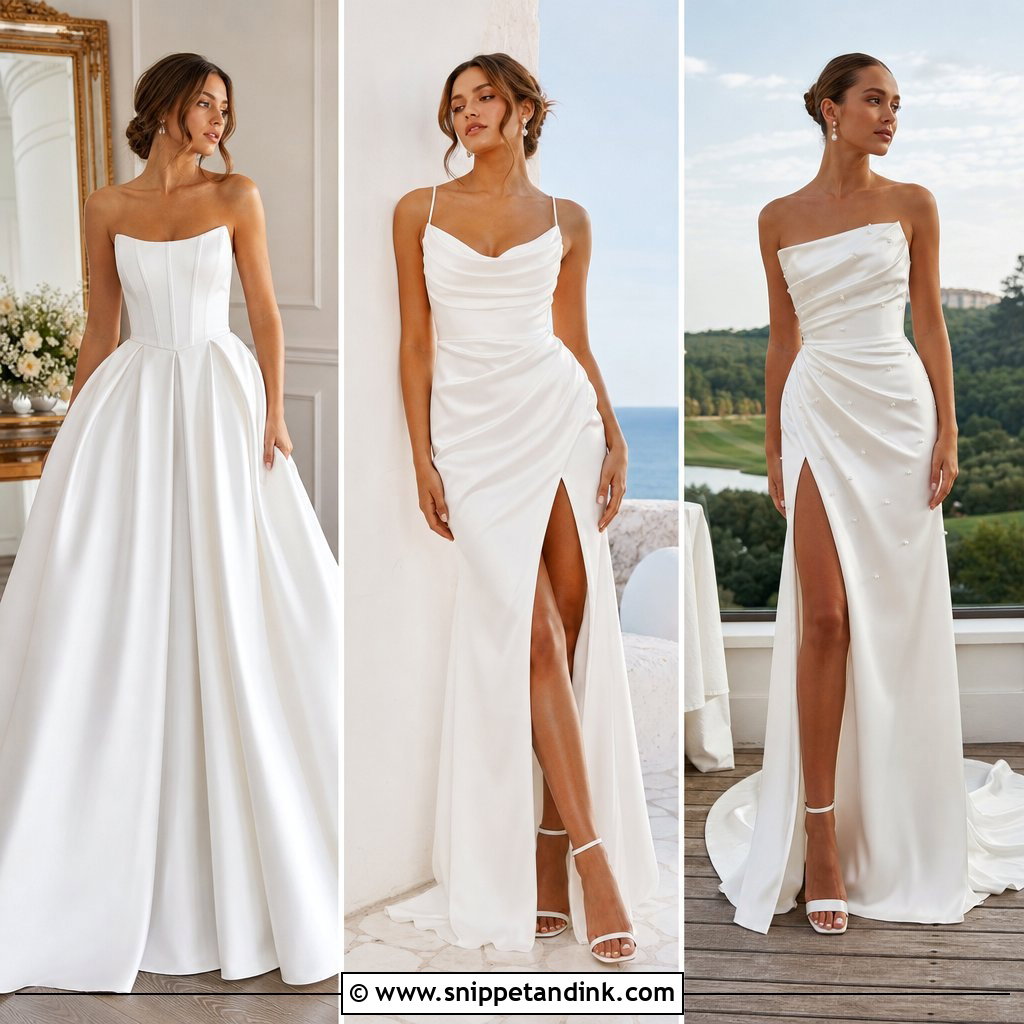
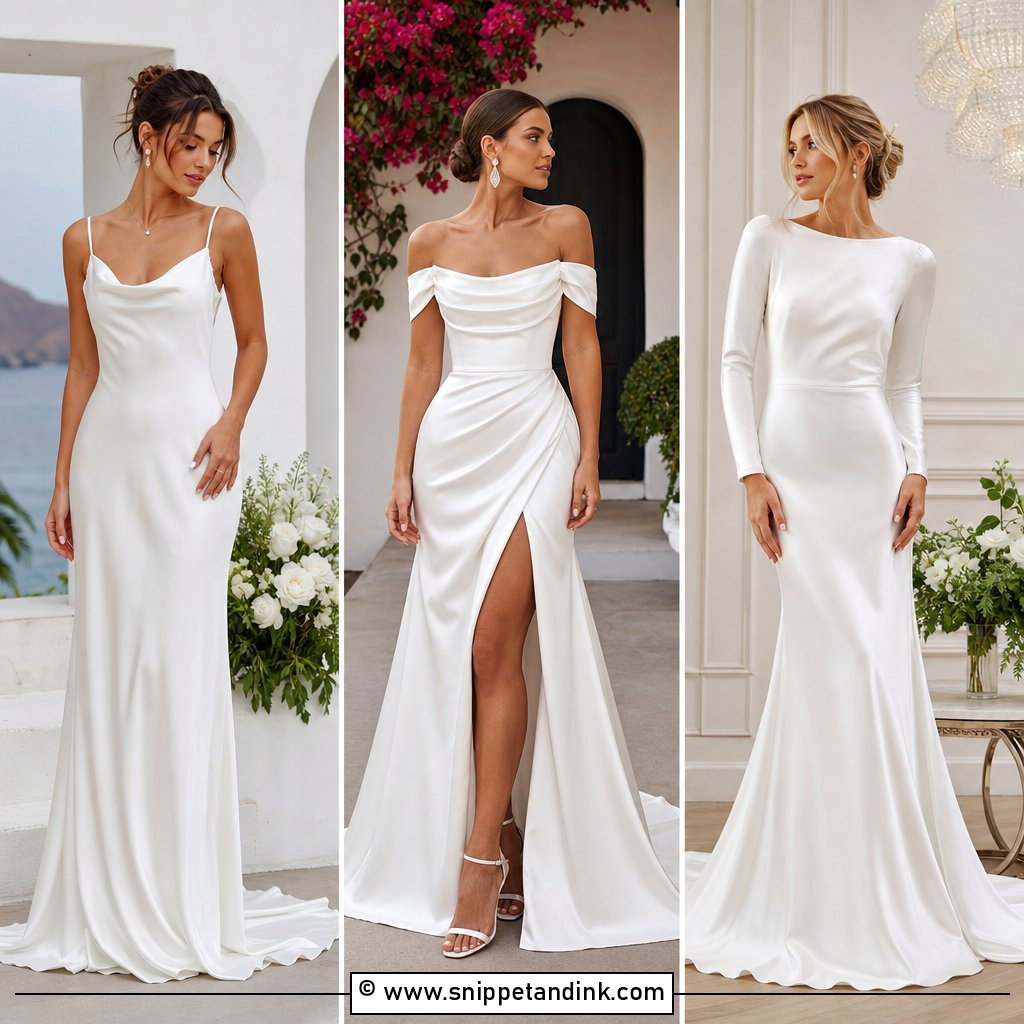
The slip is where most brides start with silk, and it rewards a confident fit. Cut on the bias, it follows the body without stiffness, which also means it shows every line under it. Ivory charmeuse or satin with thin straps, a gentle scoop and a floor-length hem is the classic version. Pearl drops, strappy white heels and a sheer fingertip veil keep it light. A silk shawl or cropped jacket gives cover in church or in cooler air. City weddings, gardens and courthouses suit it. I’d sit down in it before buying; bias silk can pull tight across the hip when seated.
2. Satin Ball Gown Wedding Dress
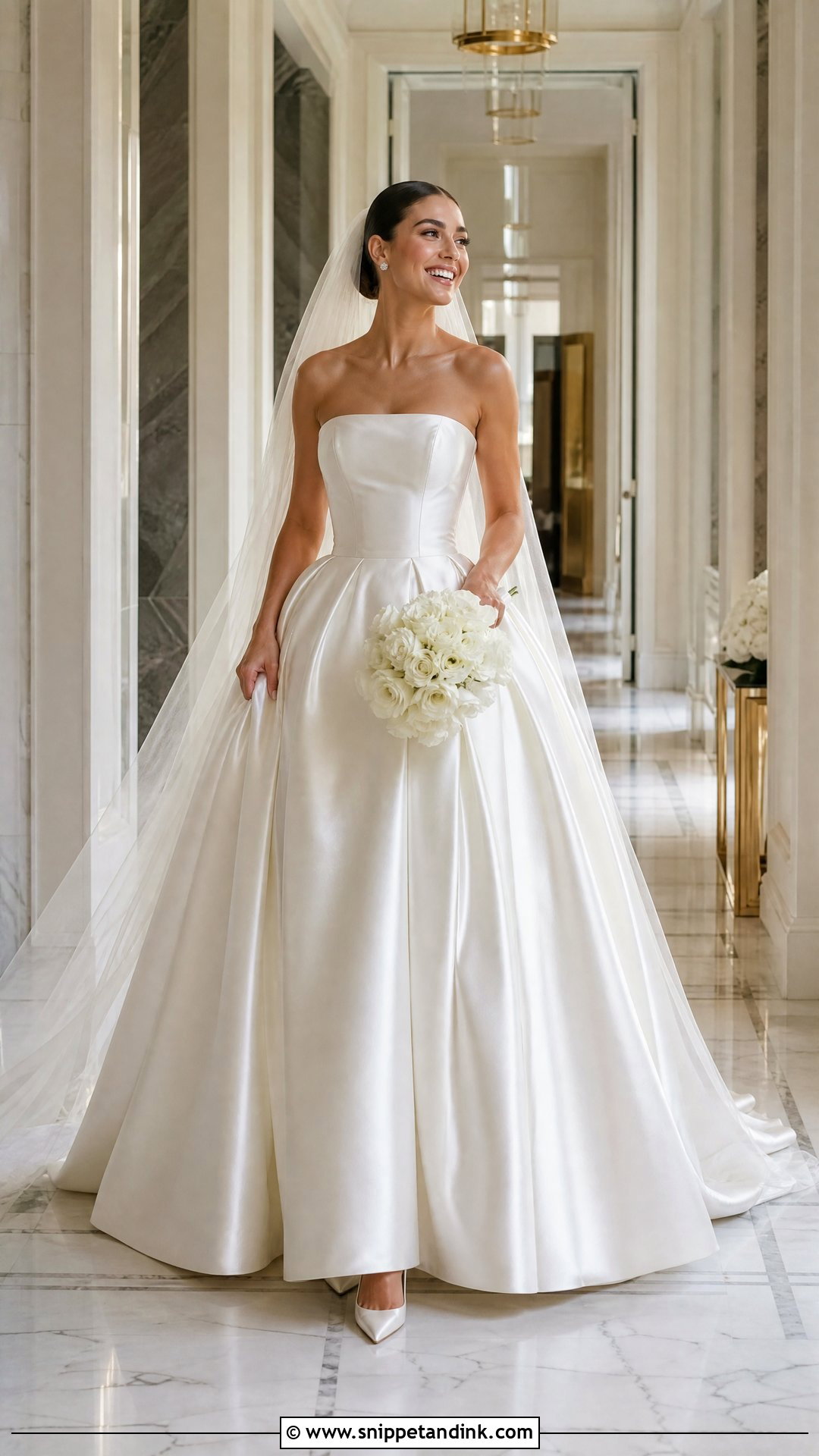
A satin ball gown makes the grand entrance without needing sparkle, because the sheen across that much skirt does the work. Pair a structured bodice, strapless or square, with the full skirt so the top doesn’t look lost. Pointed satin heels, a cathedral veil and simple crystal or diamond studs finish it. White roses, orchids or calla lilies keep the bouquet clean. Formal venues and hotel ballrooms suit it best. Large expanses of satin crease fast, so plan for a steamer on site and spread the skirt behind you whenever you sit.
3. Silk A Line Wedding Dress
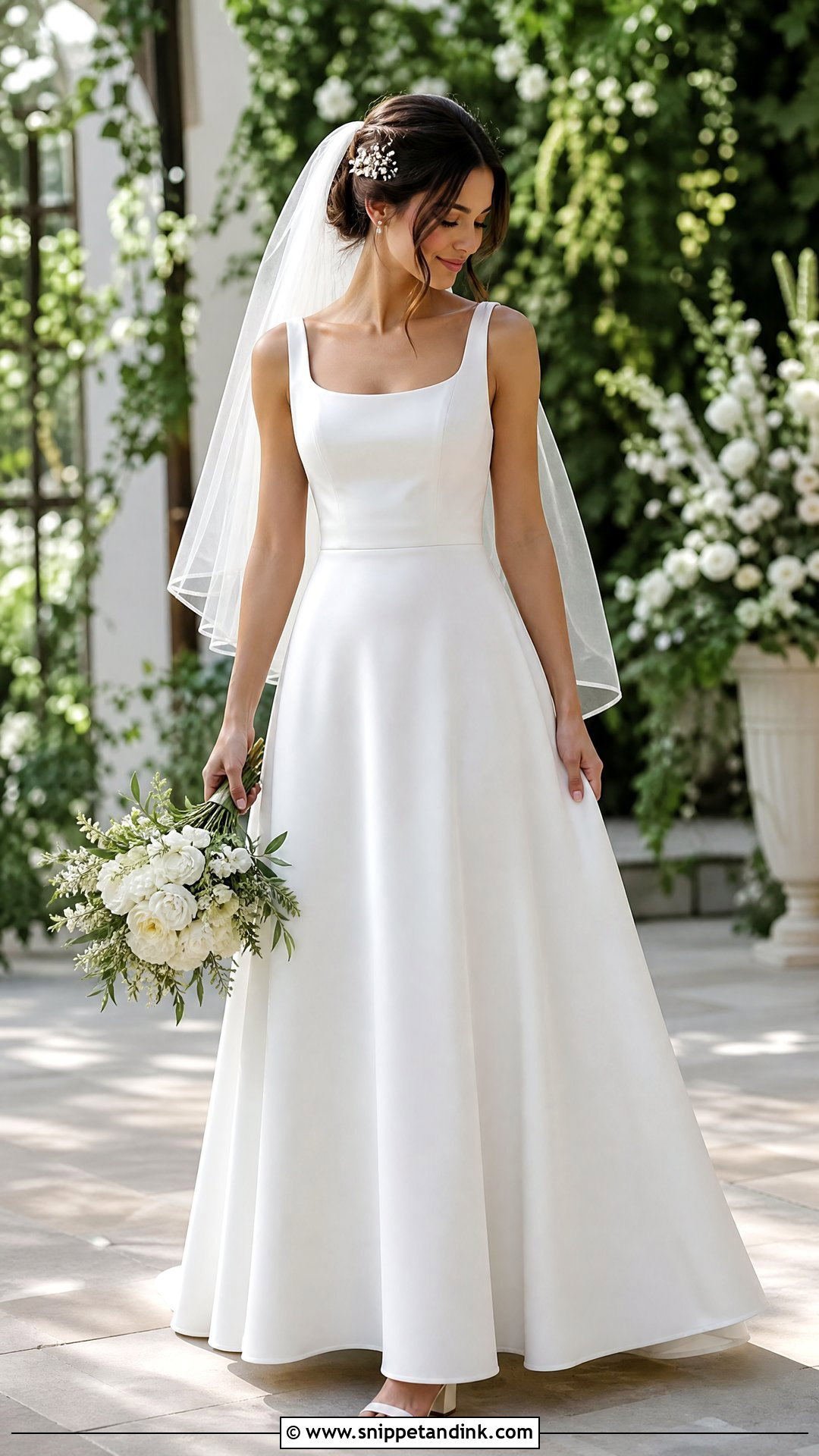
Almost every bride can wear an A-line, and silk makes it look considered rather than safe. The bodice shapes the waist, then the skirt opens from the hip. If you want the skirt to hold its outline, look for silk satin, silk mikado or a heavier charmeuse; light charmeuse will collapse against the legs. A V-neck, thin straps or cap sleeves keep it airy. Block heels or pumps, a mid-length veil and a small pearl comb are enough. It fits a garden as easily as a ballroom, which is why I recommend it to undecided brides.
4. Satin Mermaid Wedding Dress
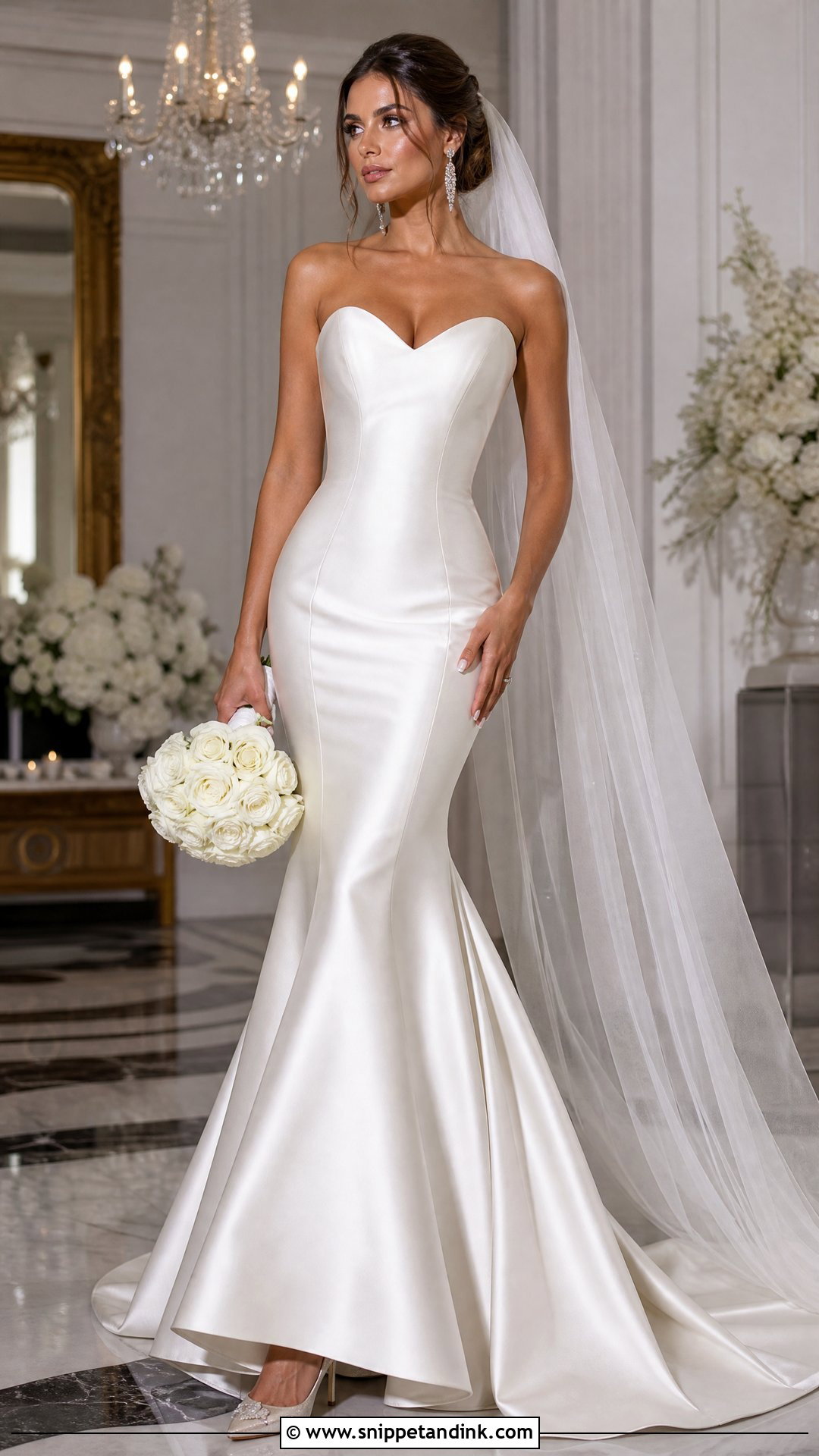
Satin mermaids look sculpted because the fabric is smooth enough to show the shape cleanly from bust to knee. That same smoothness exposes every pucker, so look for minimal seams and a precise fit through the hip. Sweetheart, off-shoulder and strapless bodices all work; pick the one you won’t adjust all night. High heels, drop earrings and a long veil that falls behind the flare complete it. Satin mermaids suit evening receptions particularly well, when lower light makes the sheen glow rather than glare. Test stairs at the fitting.
5. Silk Cowl Neck Wedding Dress
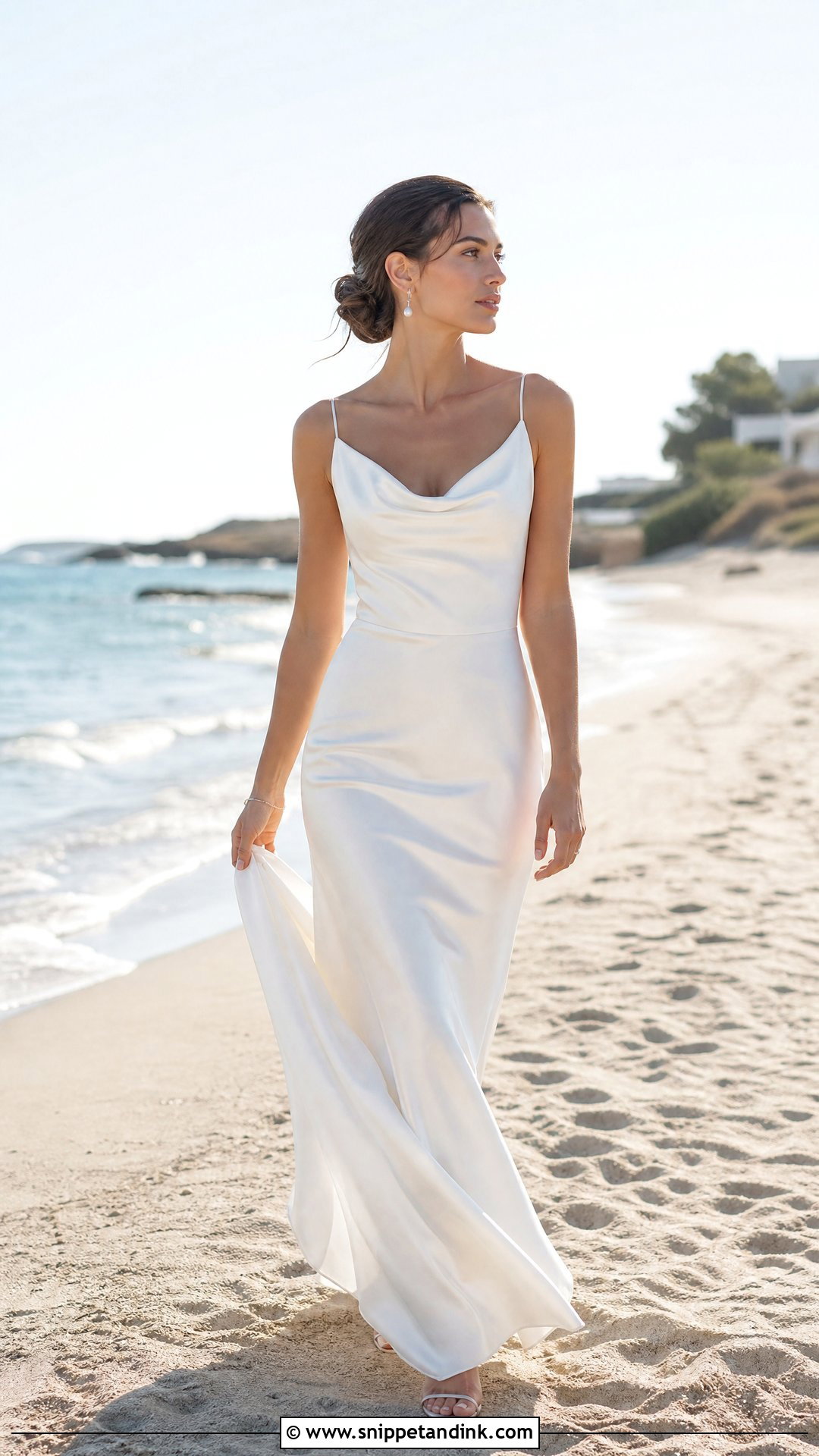
A silk cowl neck wedding dress drapes softly across the front, and the fold is cut, not sewn, so it moves when you breathe and turn. That only happens in a true bias-cut silk satin; stiffer fabric makes the cowl sit like a shelf. Keep the straps slim and the skirt close to the body. A low bun, pearl drops, slim sandals and a thin bracelet suit it, with a tulle veil that falls behind rather than over the neckline. Beach, rooftop and modern ceremonies all suit it. Lean forward at the fitting to check how much the cowl reveals.
6. Satin Strapless Wedding Dress
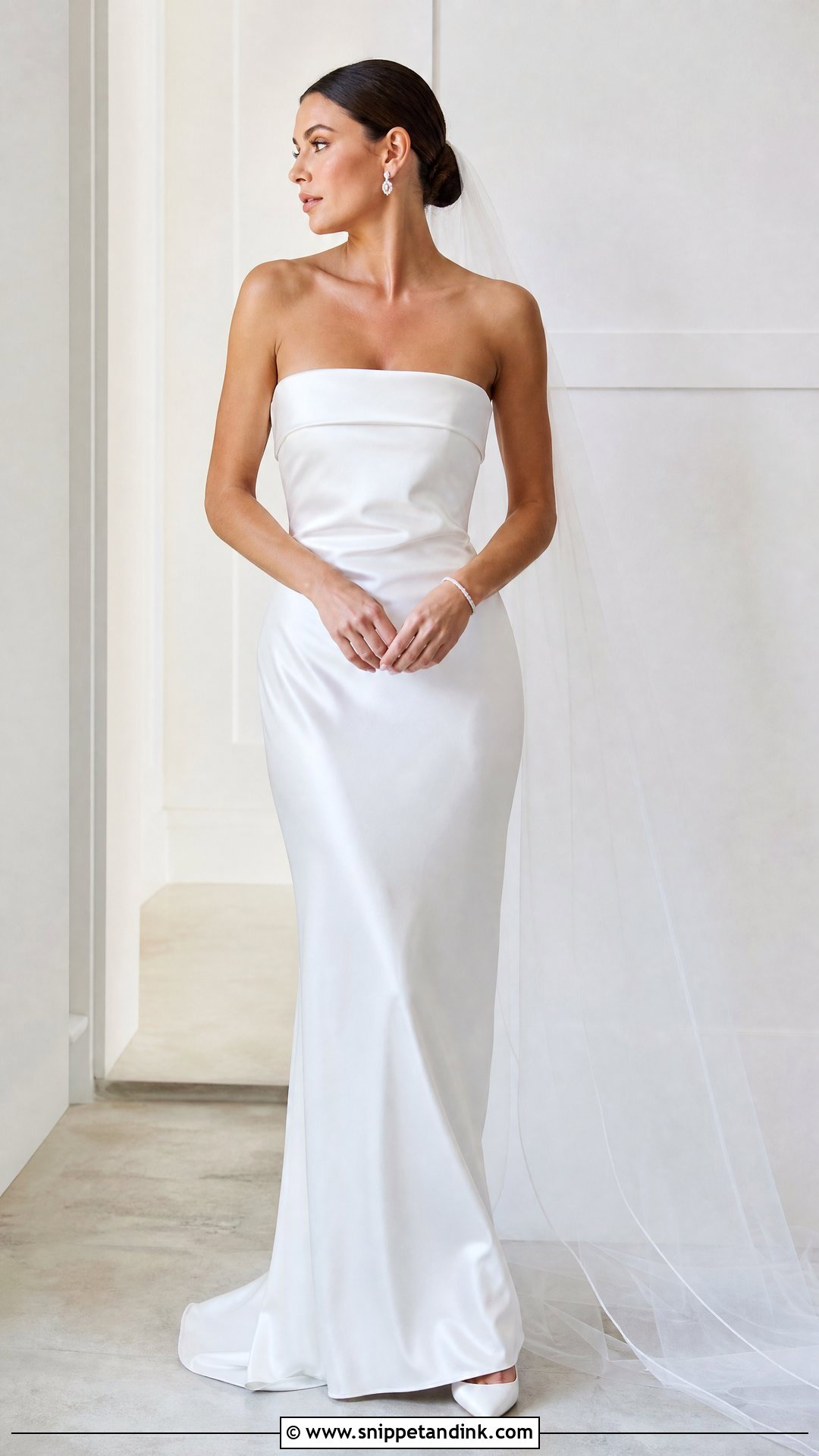
Strapless satin is clean and confident, and it puts your face, shoulders and collarbone in full view. A sleek updo or waves tucked behind the ears keeps that space open. The bodice must do all the holding, so ask about boning and a waist stay rather than trusting a tight top edge. Column, A-line and fit-and-flare skirts all change its mood. Pointed heels, a tennis bracelet and small statement earrings finish it. For extra drama, add a detachable overskirt or a long train. Satin strapless bodices show sweat at the side seam in summer, so a breathable lining helps.
7. Silk Long Sleeve Wedding Dress
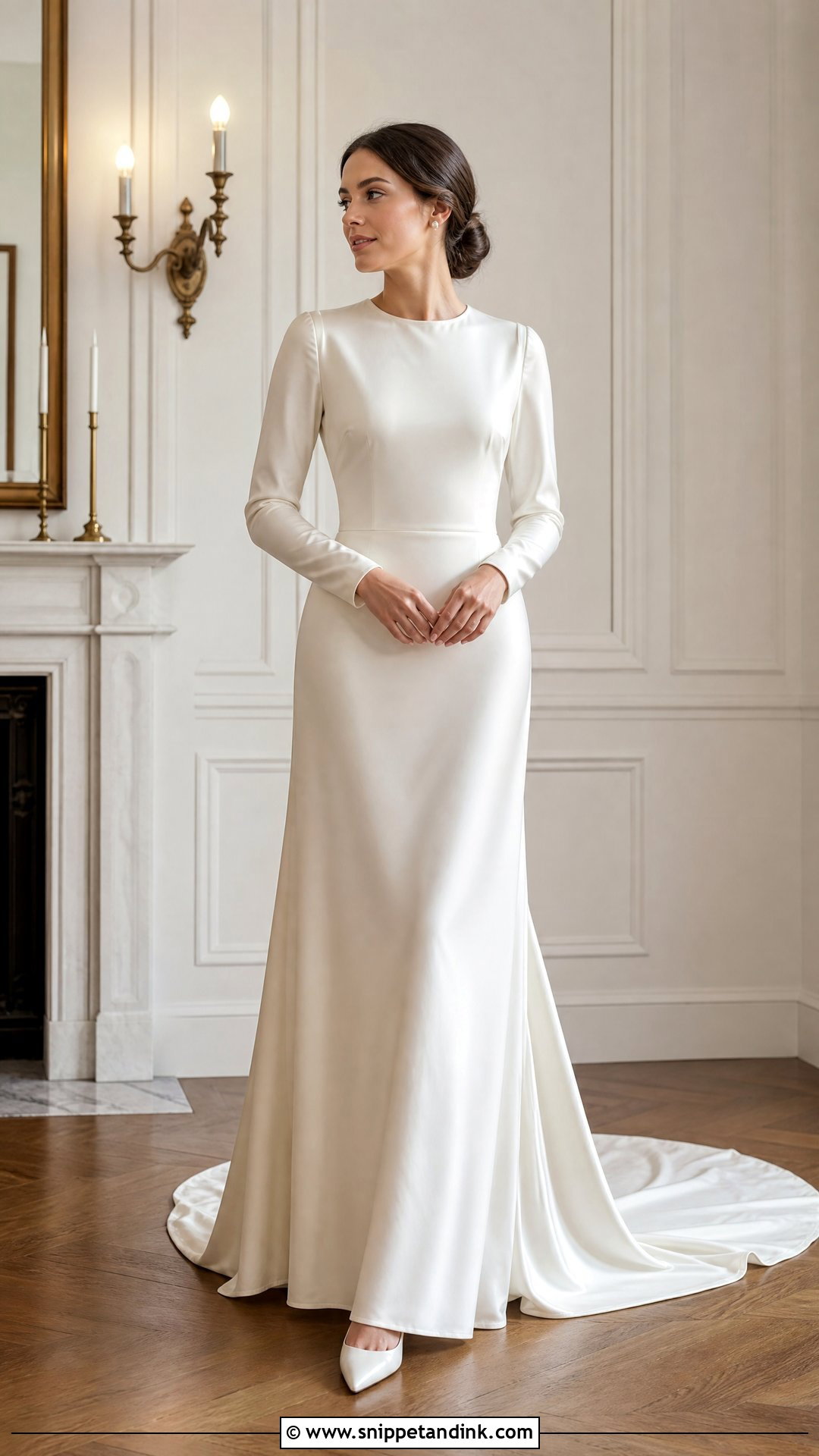
Long silk sleeves look modern with a plain satin skirt, a high neckline or a low open back. For autumn and winter, a heavier silk satin or crepe-back satin hangs better and feels warmer. Closed-toe pumps, a sleek veil and pearl or diamond studs suit it, with a low chignon that leaves the neck and sleeves in view. The detail I watch is the elbow: silk has little stretch, so the sleeve needs enough room to bend your arm without pulling the shoulder. It gives coverage and comfort in cooler weather and photographs cleanly from any side.
8. Satin Off Shoulder Wedding Dress
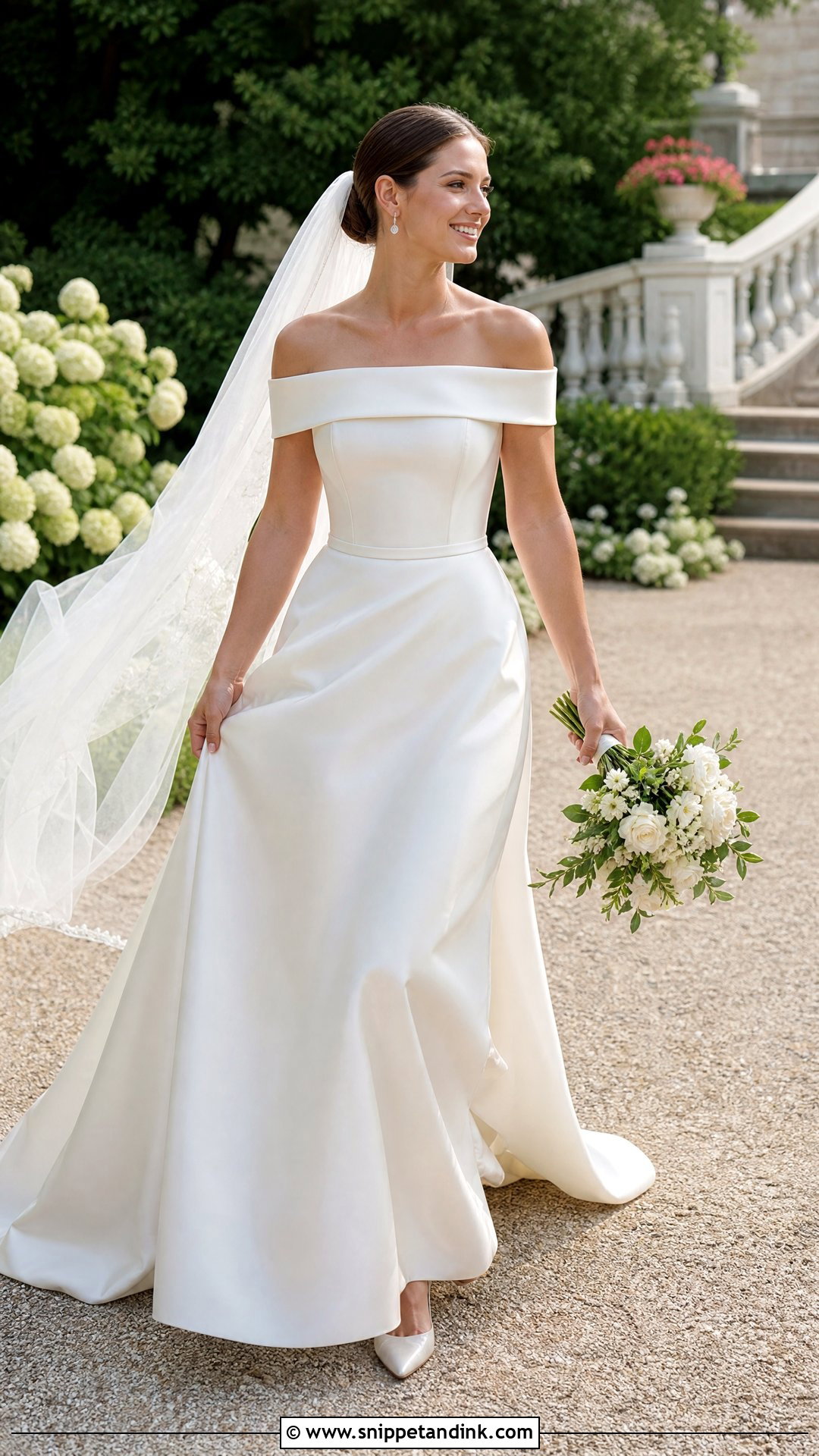
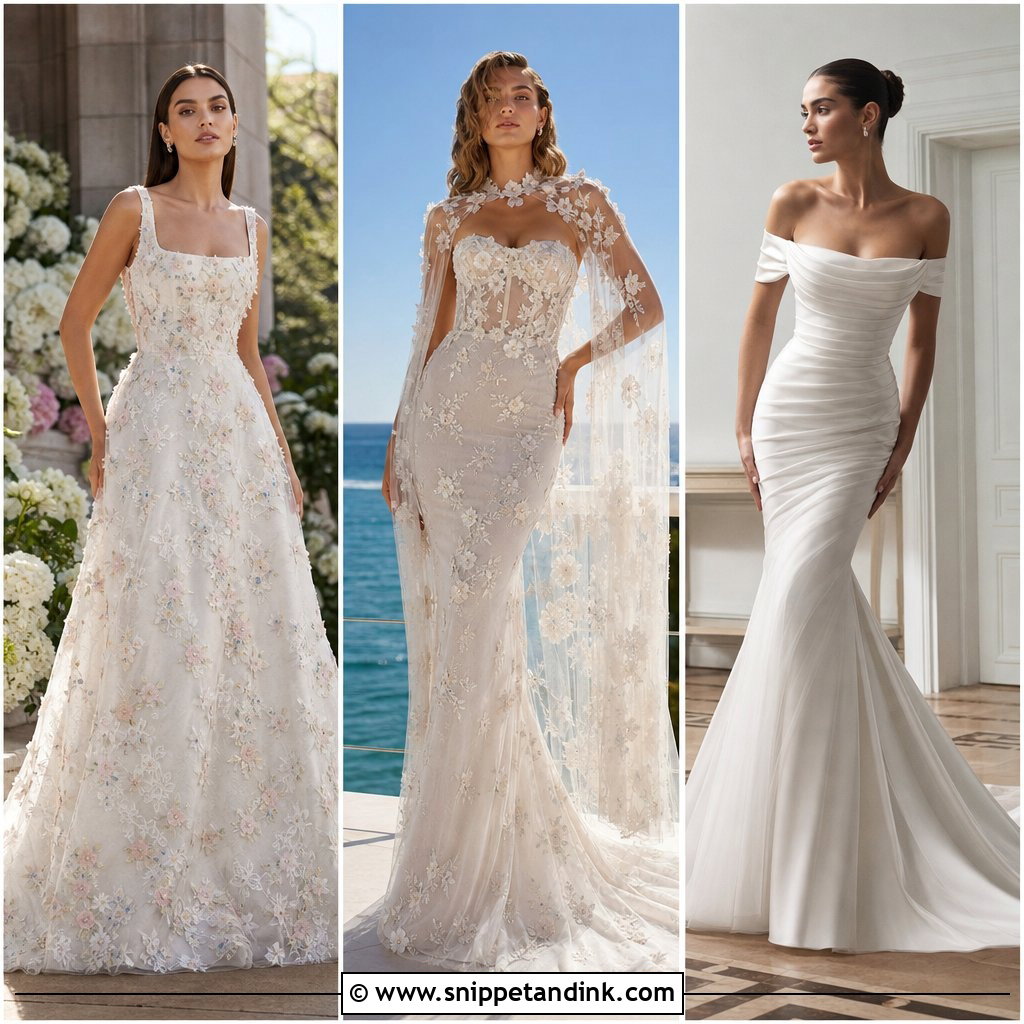
Off-the-shoulder satin frames the collarbone, and the sheen makes that line look soft rather than sharp. A fitted bodice with an A-line skirt is the easy version; a mermaid or sheath is sleeker. Pearl earrings, soft waves and a clean veil placed low suit it. Choose pumps for a formal venue or barely-there heels for a garden. Because the neckline sits on the arm, it limits how high you can reach, so hug someone during the fitting before you commit. Estate and garden weddings suit it well.
9. Silk Halter Wedding Dress
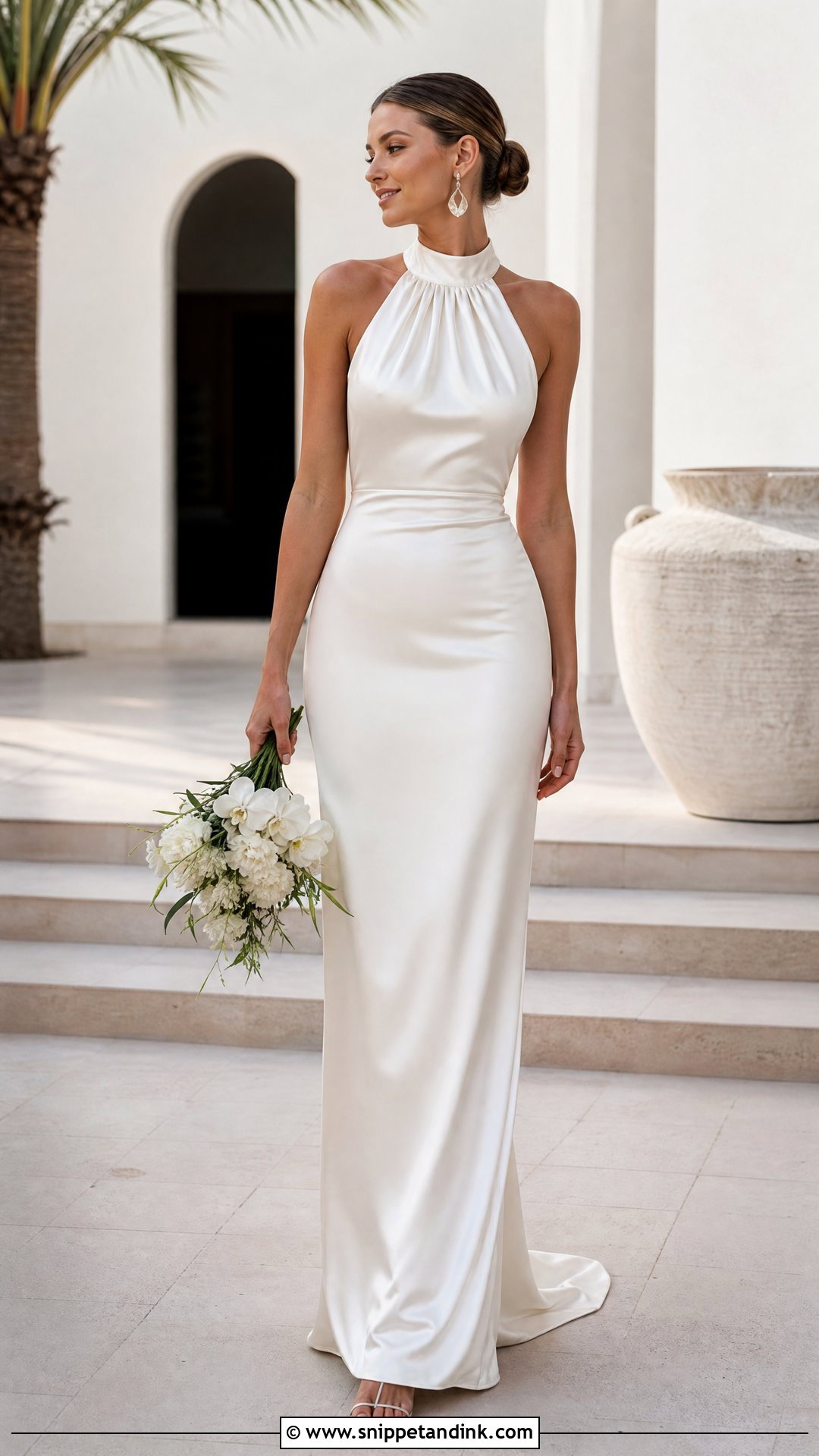
Halters pull the eye up and look sharp on a smooth column or soft A-line. A high halter reads minimal; a plunging one is more fashion-forward and needs firmer support inside the bodice. Wear a low bun, sculptural earrings and slim heels. The neckline is already doing the framing, so skip the necklace and wear a clean bracelet or a few rings. I’d check how the strap feels after an hour of wear; if the gown leans on your neck for support, it will ache by the speeches. City and destination weddings suit it.
10. Satin Square Neck Wedding Dress
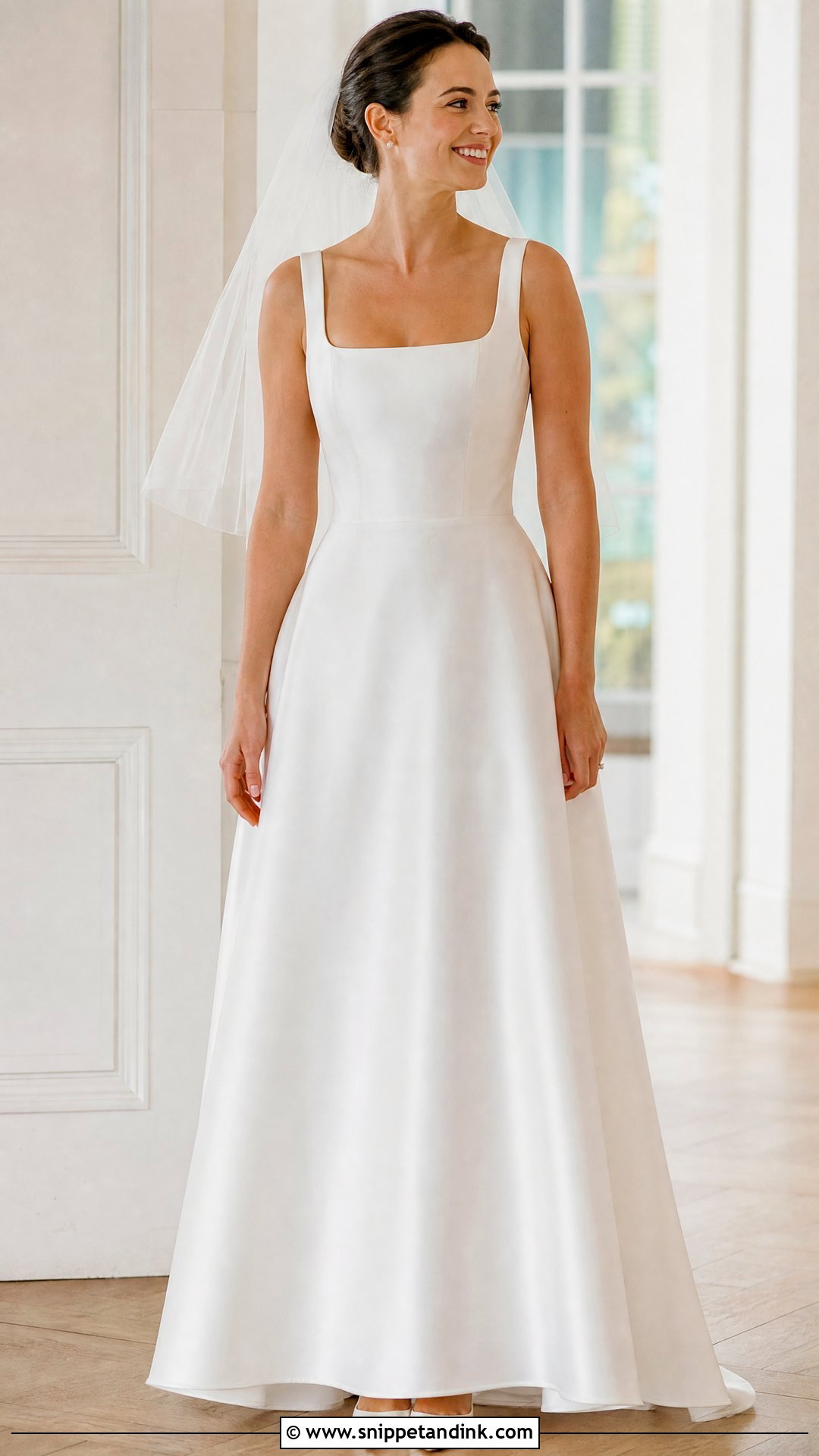
A square neck is simple to wear and easy to style. The straight edge gives structure, and the satin softens it. Wide straps support; slim ones lighten. It sits well on an A-line, a column or a fitted bodice with a small train. Pearl studs, satin pumps and a veil set behind the crown keep it classic. It’s a good option if you love traditional bridal style but want something less expected than a sweetheart. Watch for gaping at the corners when you reach forward.
11. Silk Open Back Wedding Dress
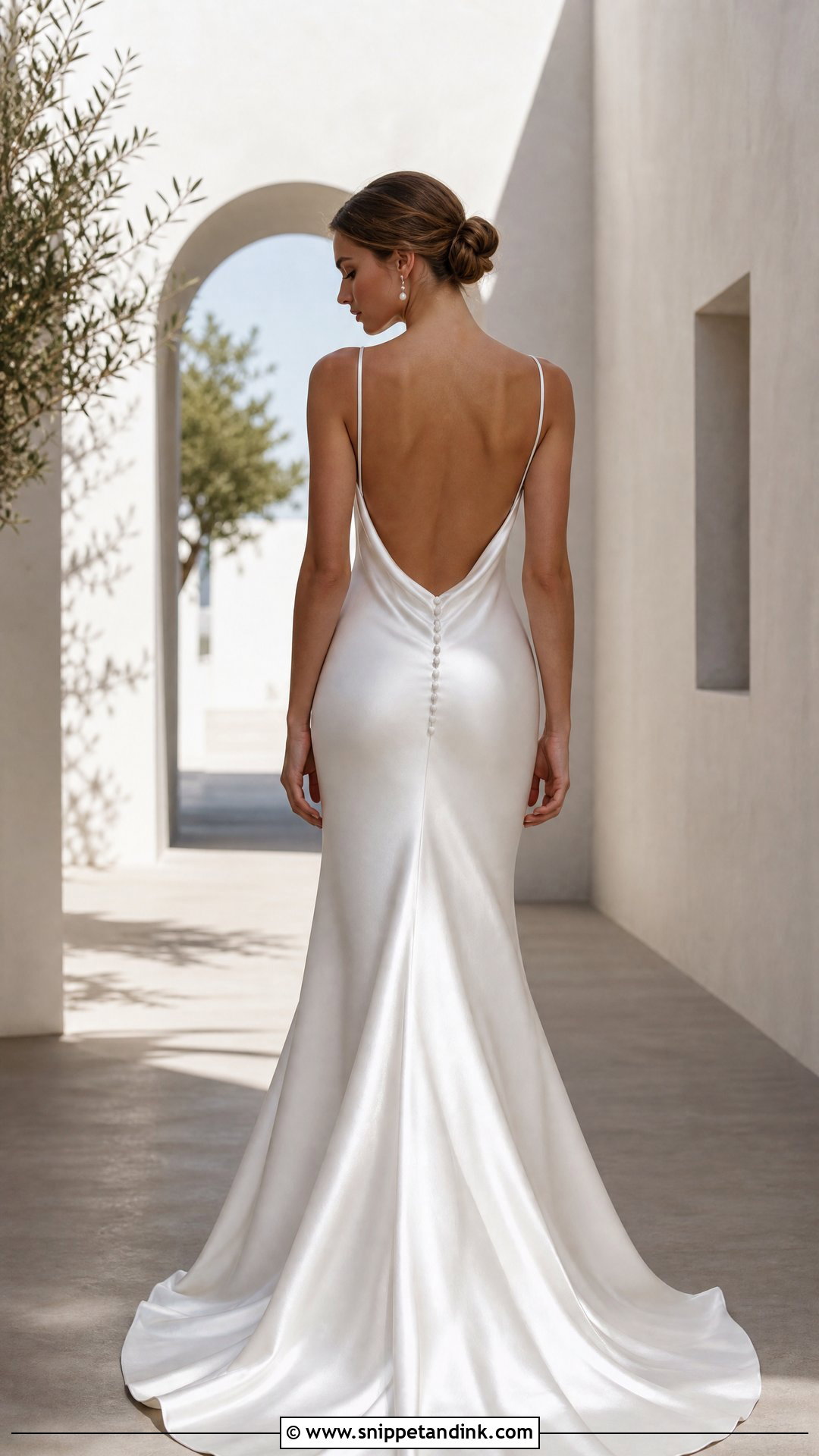
An open back keeps the front quiet and saves the drama for when you walk away. From the front you might see a scoop, cowl or high neck; from behind, a deep cut. Satin or charmeuse falls smoothly and catches light as you move. Back-drop earrings, a low bun and minimal heels suit it. A sheer veil is pretty for the ceremony and comes off for the reception. Sort out support first: most open-back silk gowns need cups sewn into the lining, and that has to be planned at the very first alteration.
12. Satin One Shoulder Wedding Dress
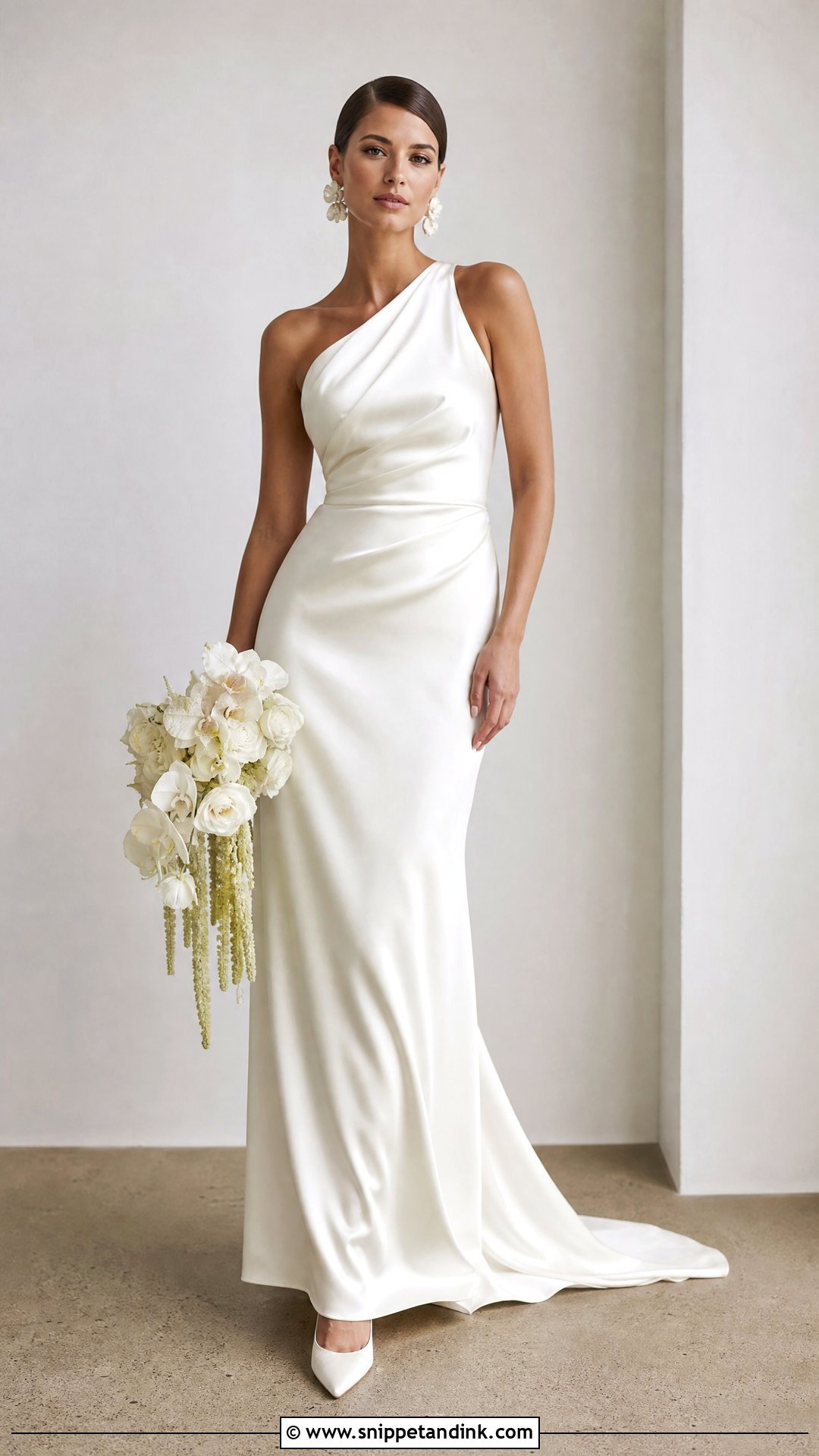
One shoulder gives asymmetry without lace, beads or trim. A smooth satin column or fit-and-flare skirt keeps it balanced. Simple earrings, a sleek bracelet and pointed heels are enough, and a low bun or smooth side-parted waves suit the neckline, with the hair swept to the bare side. Gallery weddings, modern hotels and minimalist venues are natural settings. The single strap carries more weight than a pair would, so check that it stays put when you lift the arm on that side.
13. Silk High Neck Wedding Dress
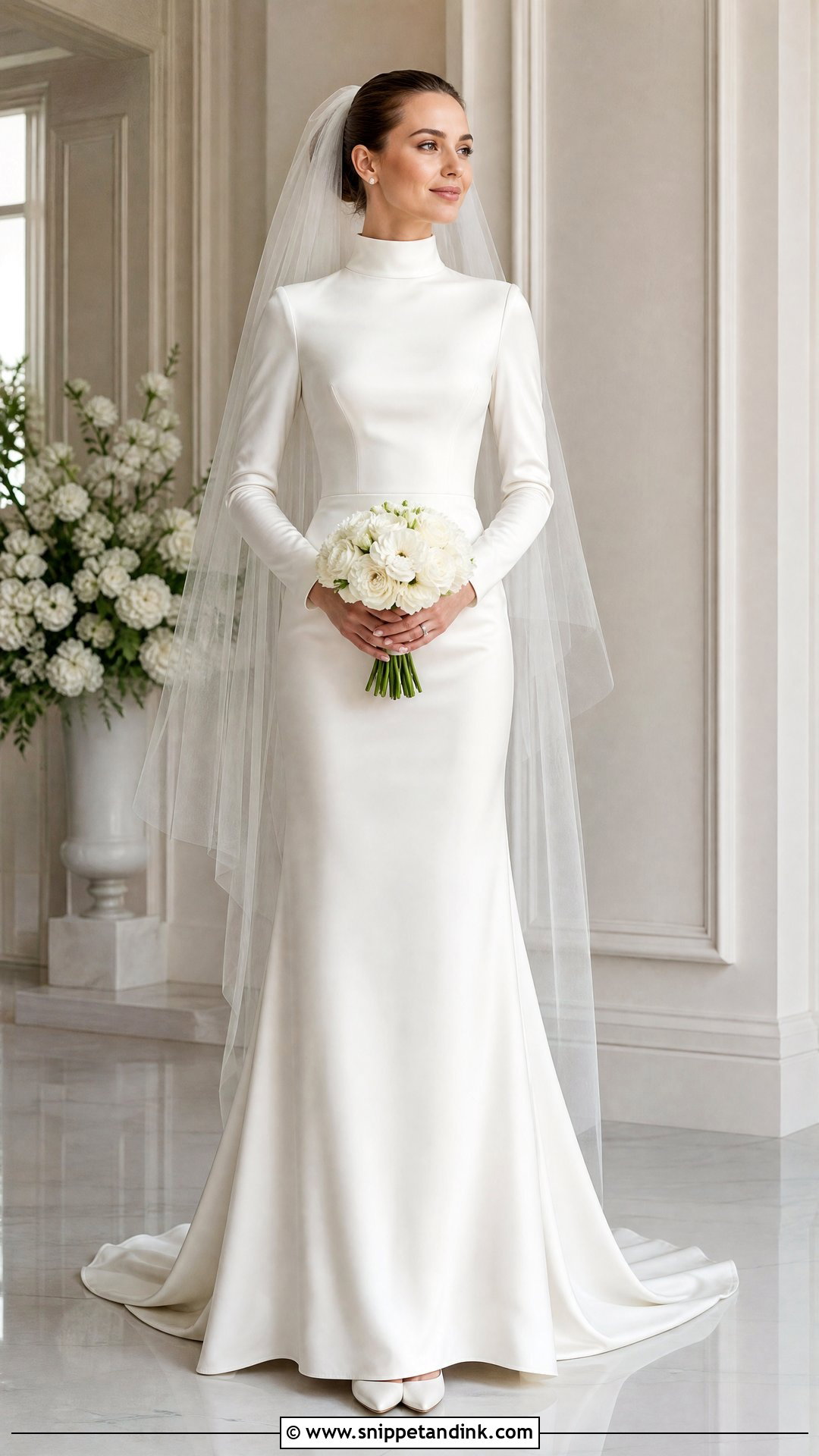
A covered neckline creates a long clean line, especially over a slim skirt or a softly flared A-line. Lightweight satin, crepe or charmeuse stops it from feeling heavy. A low bun, pearl studs and closed-toe pumps are all it needs. If there’s an open back or keyhole, choose a veil sheer enough to let it show. The fit at the throat should let you turn your head fully without the fabric rubbing; I always ask brides to check over each shoulder. It suits anyone wanting coverage with a polished, modern edge.
14. Satin Corset Wedding Dress
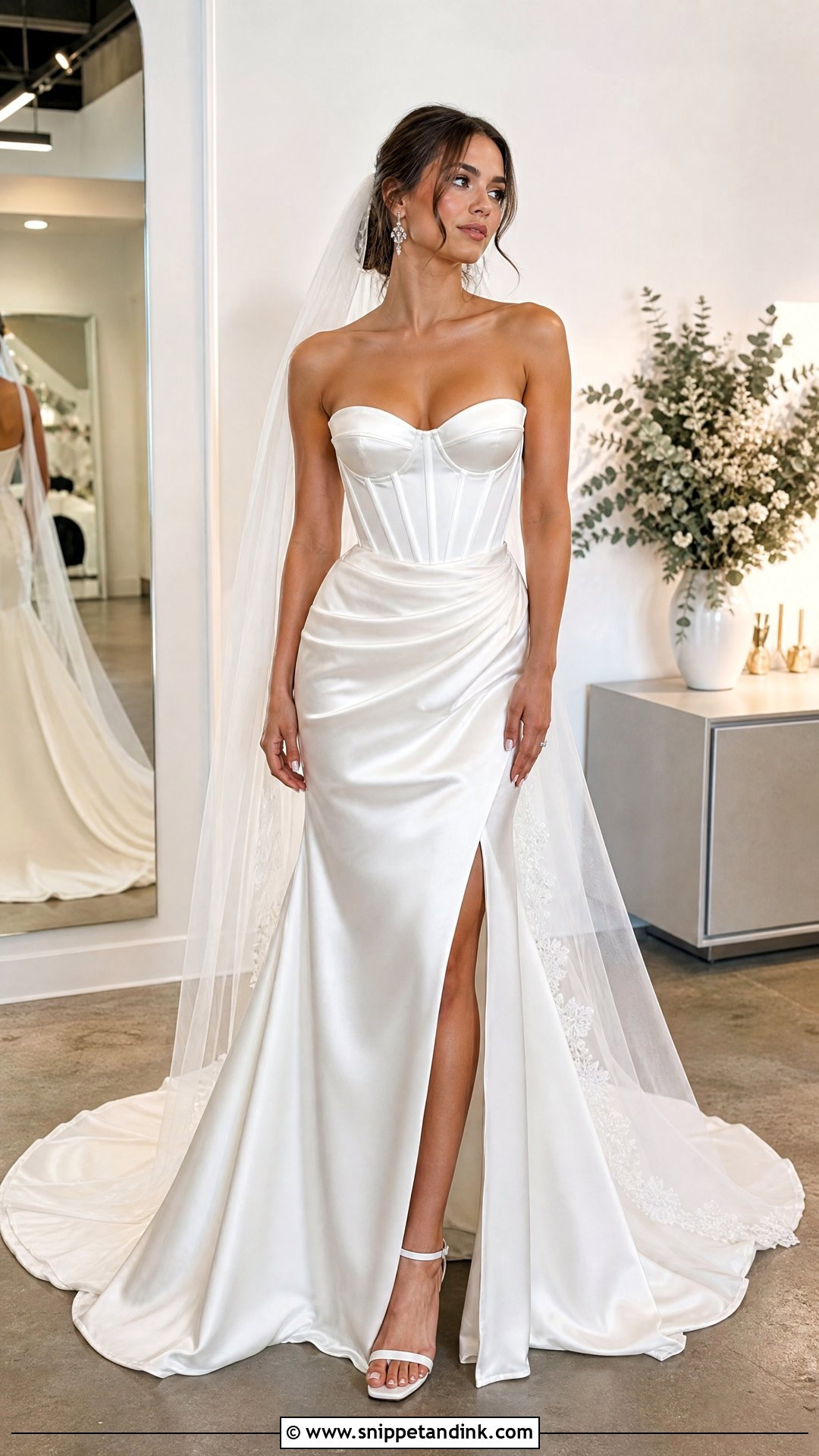
Corset bodices give real support, and in satin they glow at the waist where the boning shapes the fabric. You can show the boning for a modern look or hide it for a smoother line. Pair the bodice with a full skirt, fit-and-flare or column. Simple drops, satin heels and a veil matched to the dress length suit it. Satin over boning can show small ripples along each channel if the fabric isn’t cut and backed carefully, so look closely at the bodice in side light before ordering.

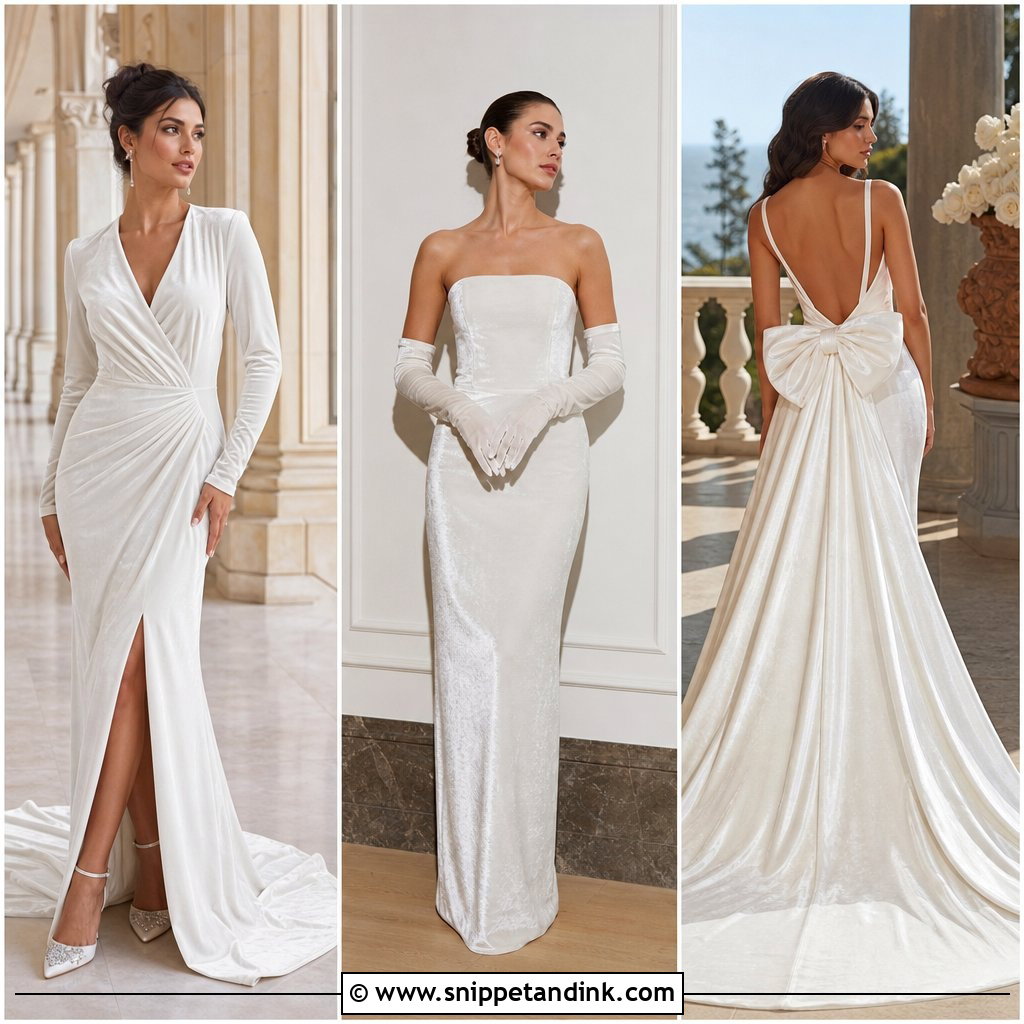
15. Silk Tea Length Wedding Dress
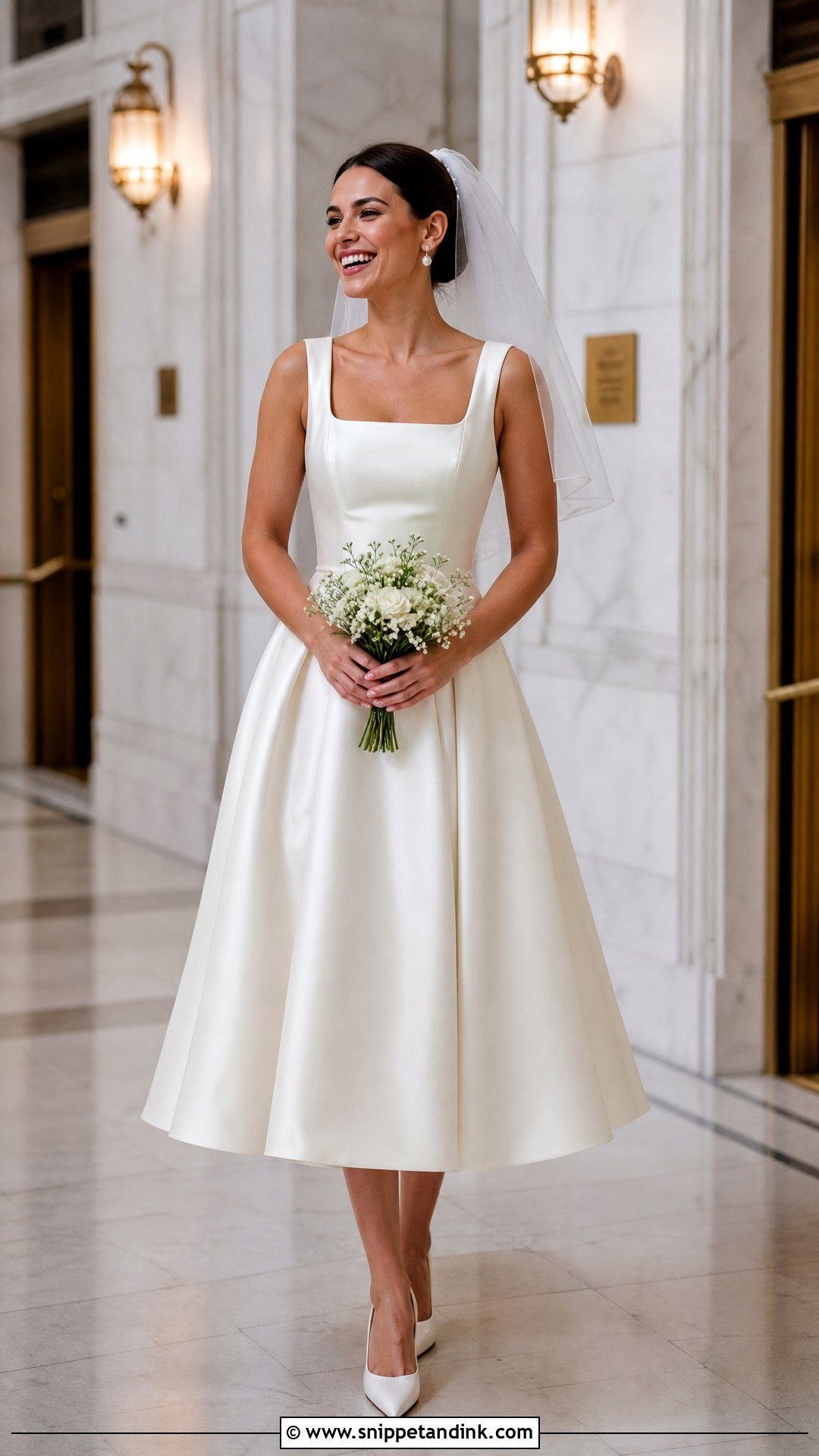
Tea length is easy to move in and puts your shoes on show, so choose them before the hem is set. The hem falls between knee and ankle. Satin or mikado gives the skirt shape; charmeuse makes it softer. Pointed pumps, pearl earrings and a short veil or a hair bow suit it. Courthouse weddings and daytime receptions are a natural fit. An inch either way changes how the hem cuts across the calf, which is why I check it from the side as well as the front.
16. Satin Mini Wedding Dress
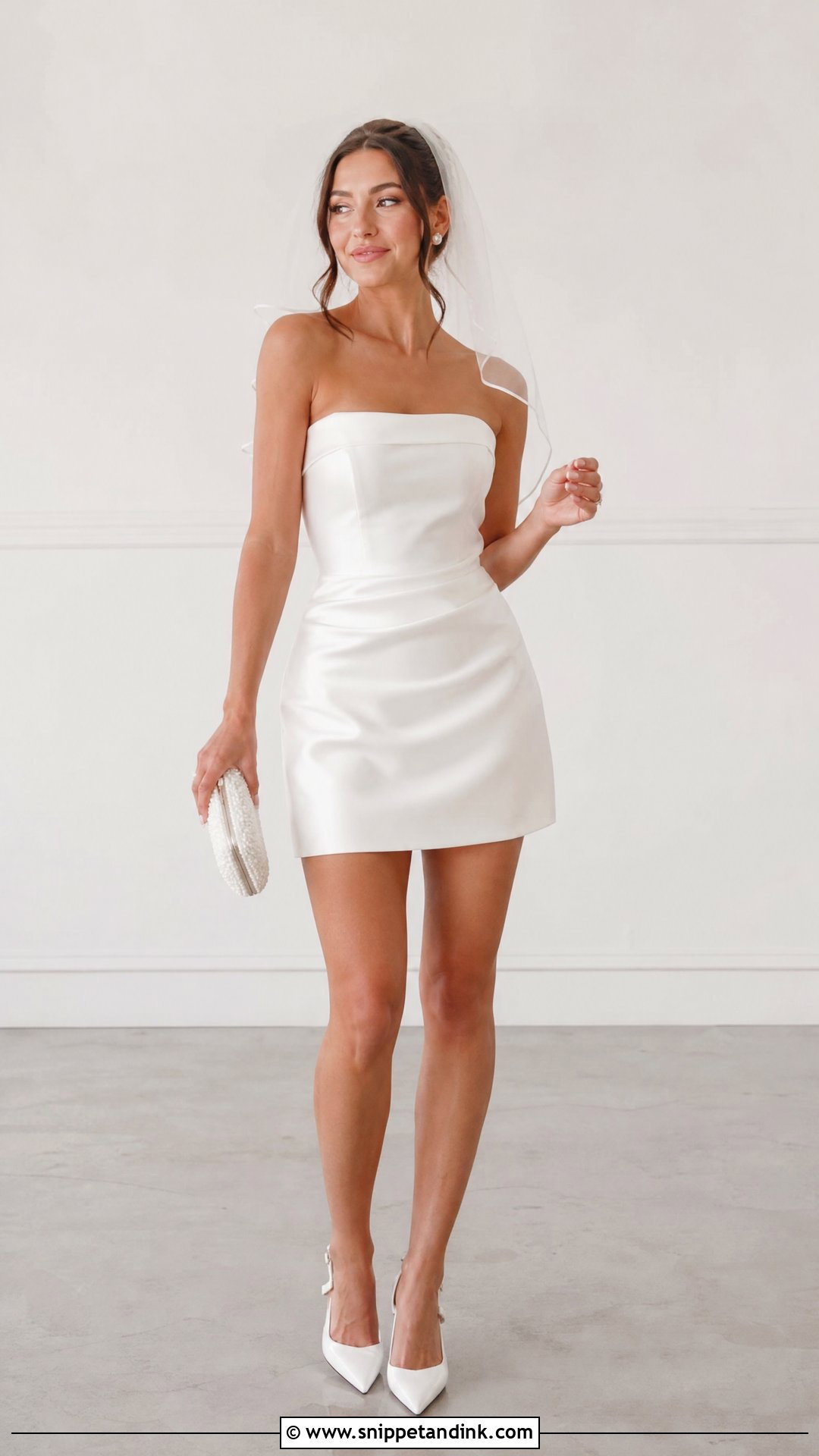
A satin mini is the gown I suggest for a civil ceremony, a reception change or an after-party. The short length feels fresh and the satin keeps it polished rather than casual. Look for a structured bodice, a clean shift or a fitted mini with long sleeves for balance. White pointed heels, pearl studs and a small clutch suit it, with a short veil, bow or headband for the bridal note. Satin minis wrinkle across the lap when you sit, so a slightly heavier satin with a little structure holds up better through dinner.
17. Silk Wrap Wedding Dress
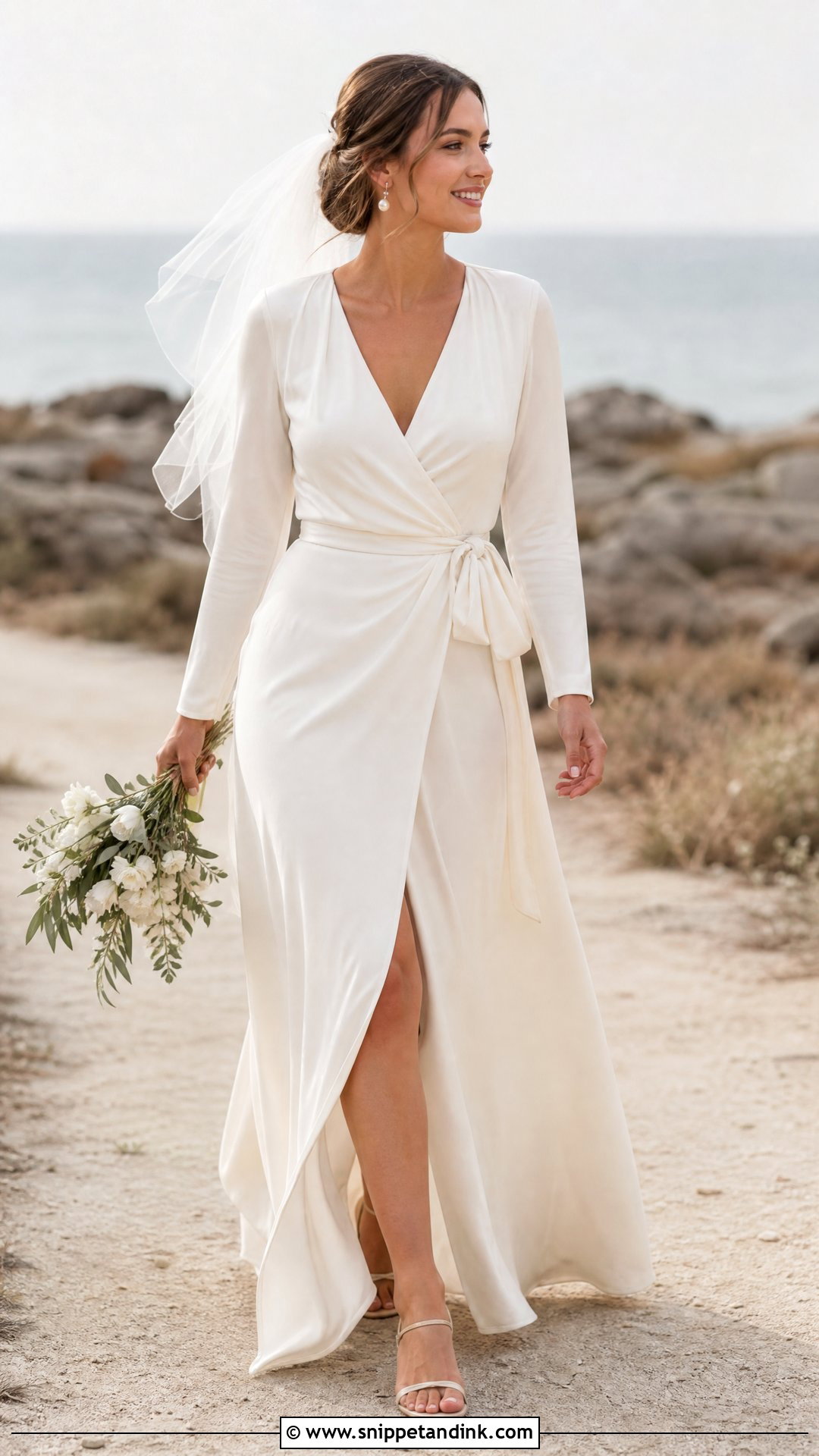
Wrap gowns define the waist and form a gentle V, and they adjust slightly as you move. Satin or charmeuse drapes well over the hips. Floor length feels formal; midi feels relaxed. Delicate sandals, pearl earrings and a simple veil or comb finish it. It suits beaches, gardens and backyard weddings. My non-negotiable with a wrap is a hidden snap or hook at the cross-over; a tie alone loosens through the evening and the neckline creeps open.
18. Satin Draped Wedding Dress
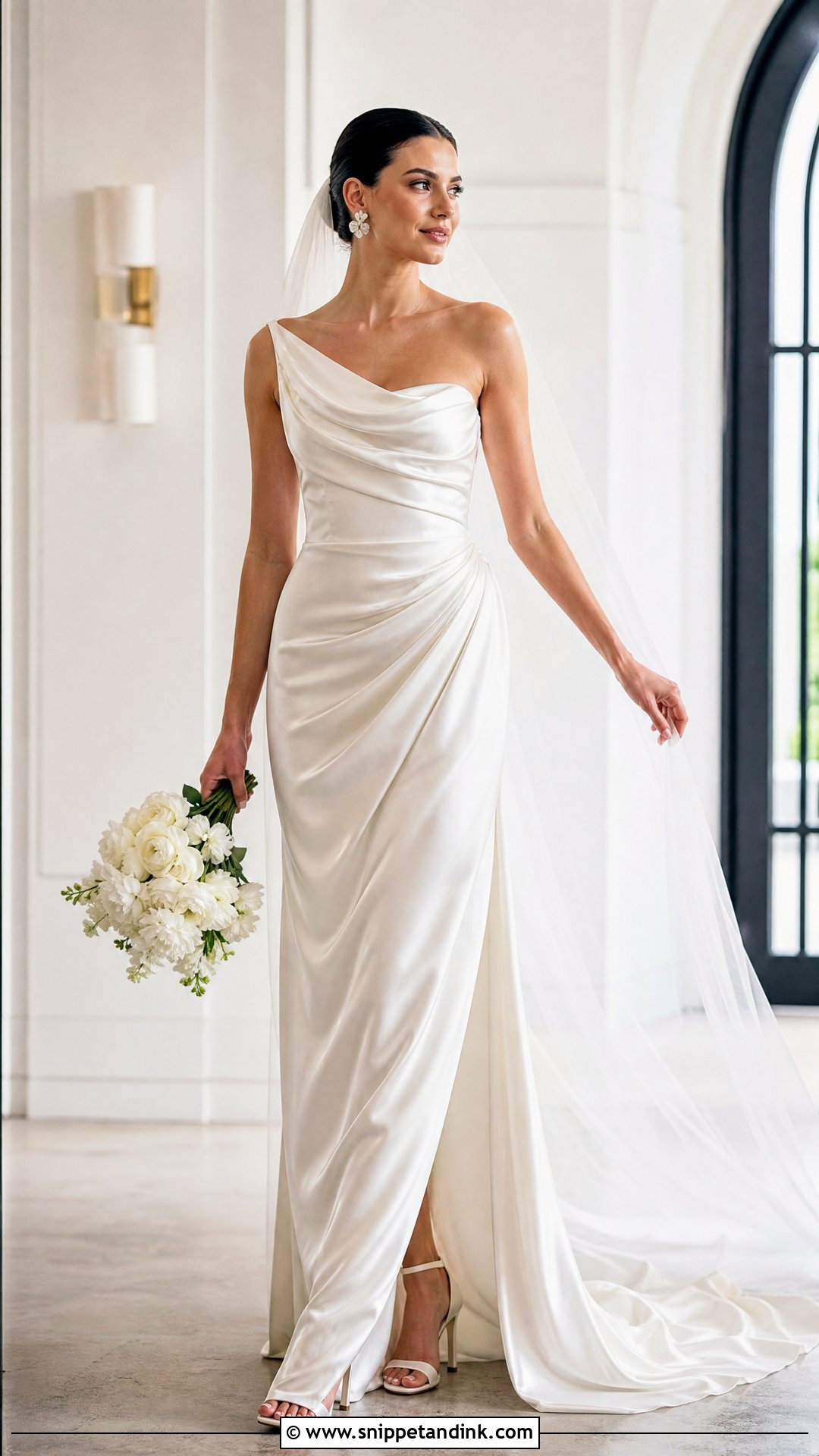
Draping adds texture without any embellishment, and it can sit across the bodice, waist, hip or skirt. It works best in liquid satin, where each fold catches a slightly different amount of light. Strapless, one-shoulder and cowl necklines keep it modern. Sculptural earrings, slim heels and a sleek veil suit it, with a simple bouquet that leaves the folds visible. Drapes are often hand-tacked in place; check those tacks at the final fitting, because a loose one drops a fold out of line.
19. Silk Empire Waist Wedding Dress
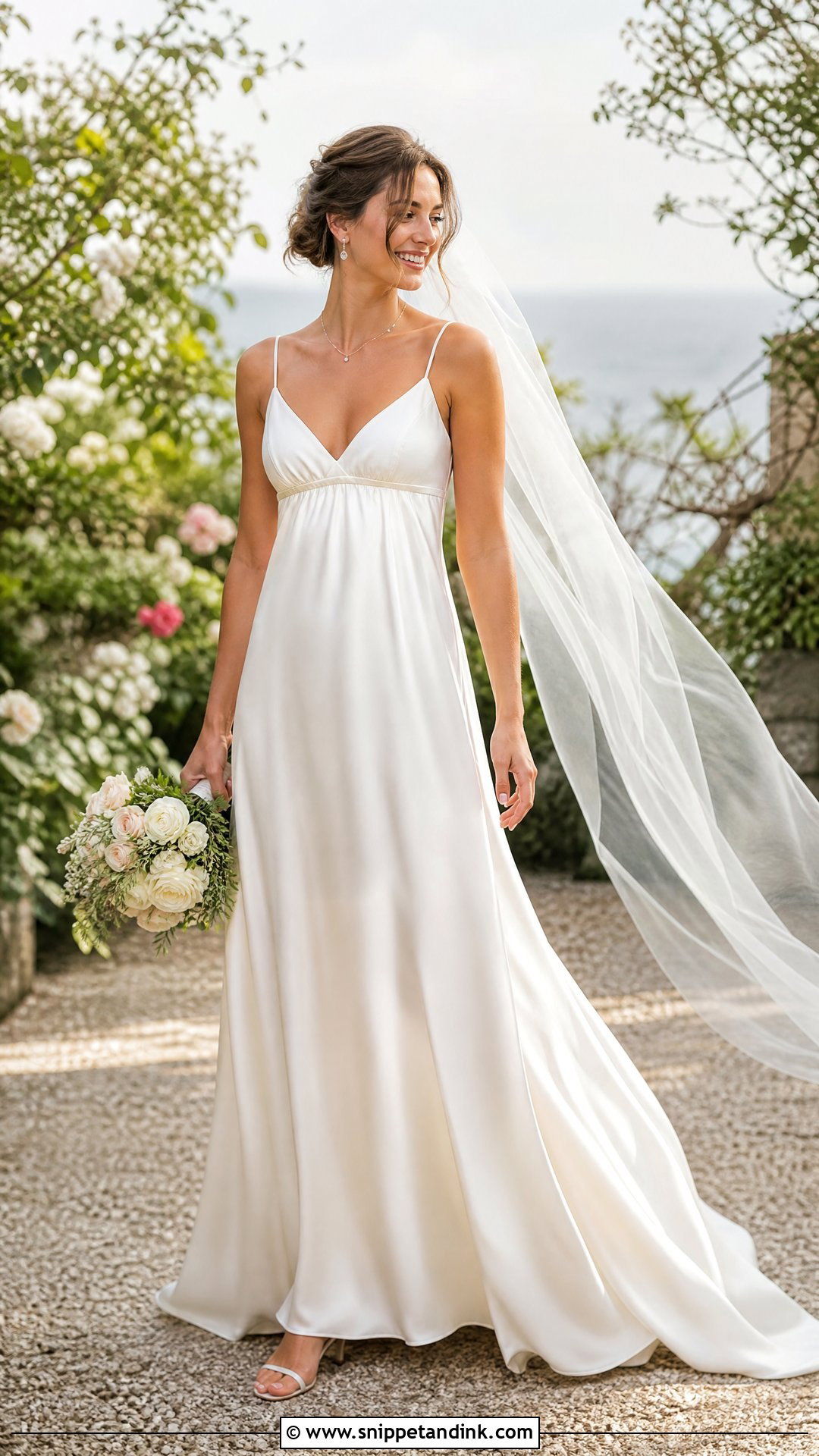
A silk empire waist wedding dress raises the waist to just under the bust and lets the skirt fall freely. Flowing satin or charmeuse makes it light and comfortable, and nothing presses on your stomach during dinner. Slim straps, cap sleeves or a soft square neck balance it. Low heels, a fine necklace and a soft veil suit it. Outdoor and coastal weddings are a good match. Light silk in a long skirt drags easily, so set the hem in the actual shoes you’ll wear.
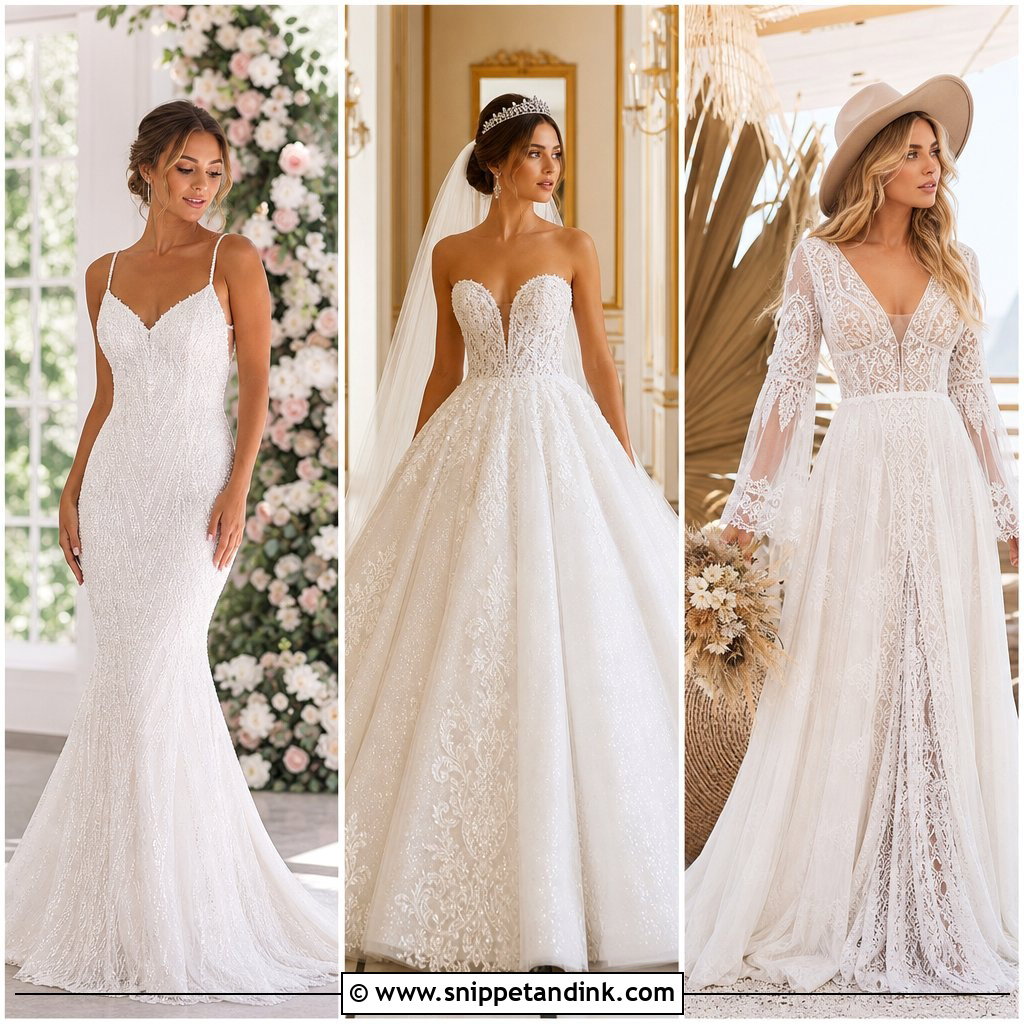

20. Satin Fit And Flare Wedding Dress
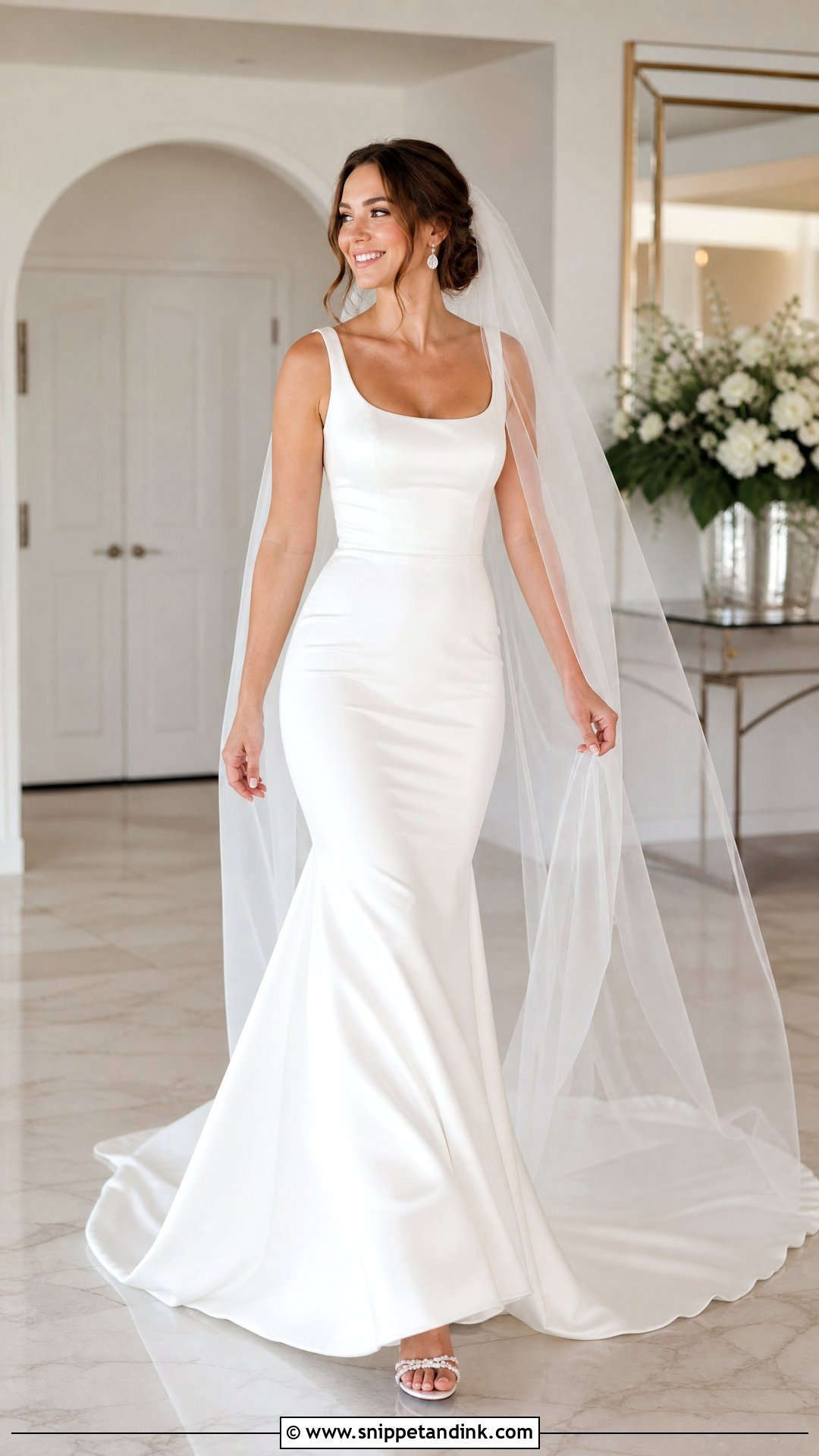
Fit-and-flare gives shape without the drama or restriction of a mermaid. It fits through the bodice and hip, then opens around the upper thigh, so walking and dancing feel normal. Smooth satin keeps the line clean, and a small train adds polish. Sweetheart, square or off-shoulder all suit it. High heels, a long veil and quiet jewellery keep the focus on the shape. It’s the compromise I suggest when a bride loves a fitted gown but plans to dance for hours.
21. Silk Two Piece Wedding Dress
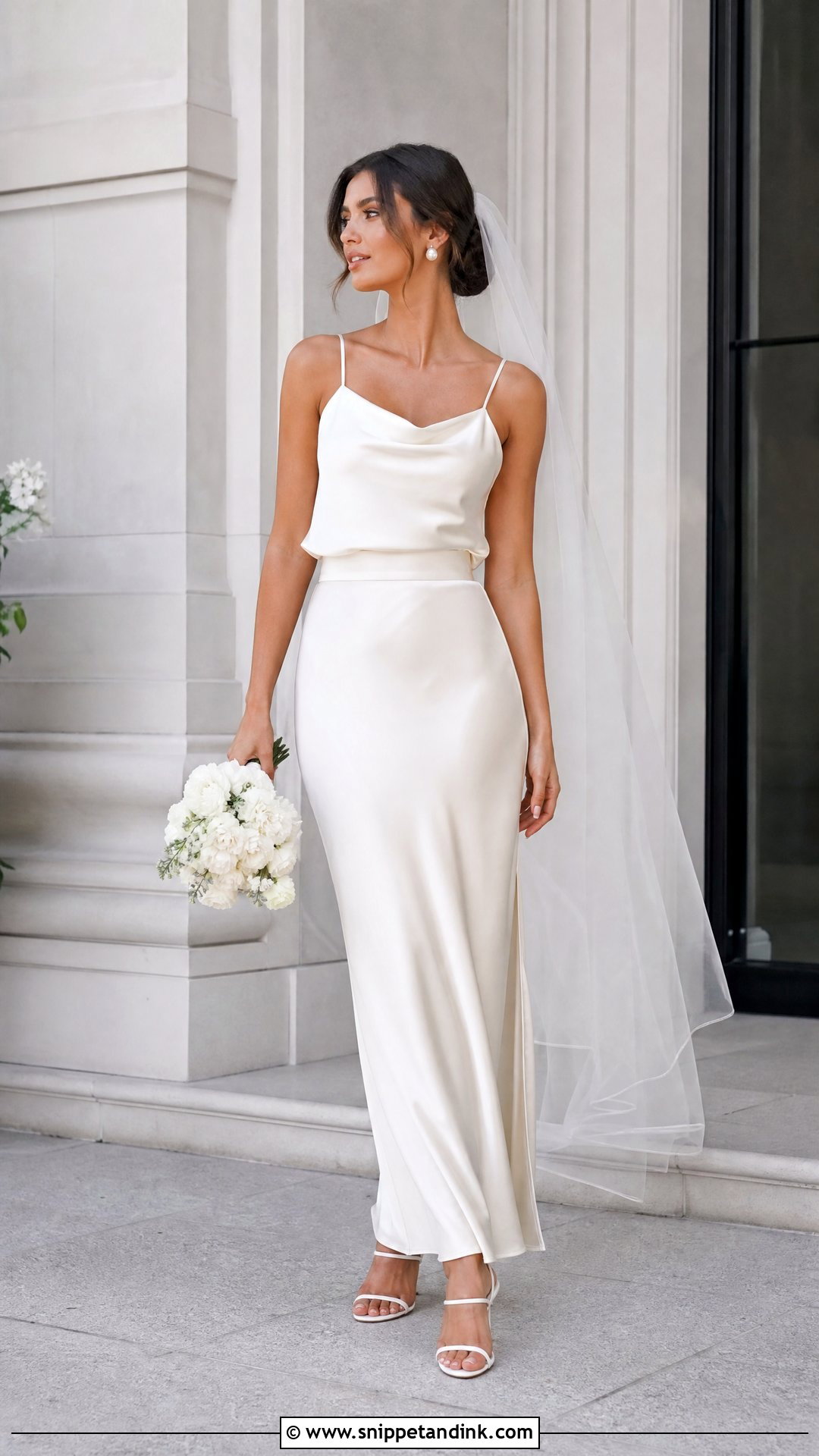
A silk two piece wedding dress looks luxurious when the fit is precise and the fabric is good, and cheap when either slips. A satin camisole, structured bandeau or long-sleeved silk blouse can sit over a matching high-waisted skirt. A column skirt reads minimal; a full skirt reads dramatic. Sleek heels, pearl earrings and a plain veil keep it bridal. I’d make sure the two pieces come from the same fabric bolt, because satin from different batches can differ slightly in shade and sheen.
22. Satin Wedding Dress With Bow
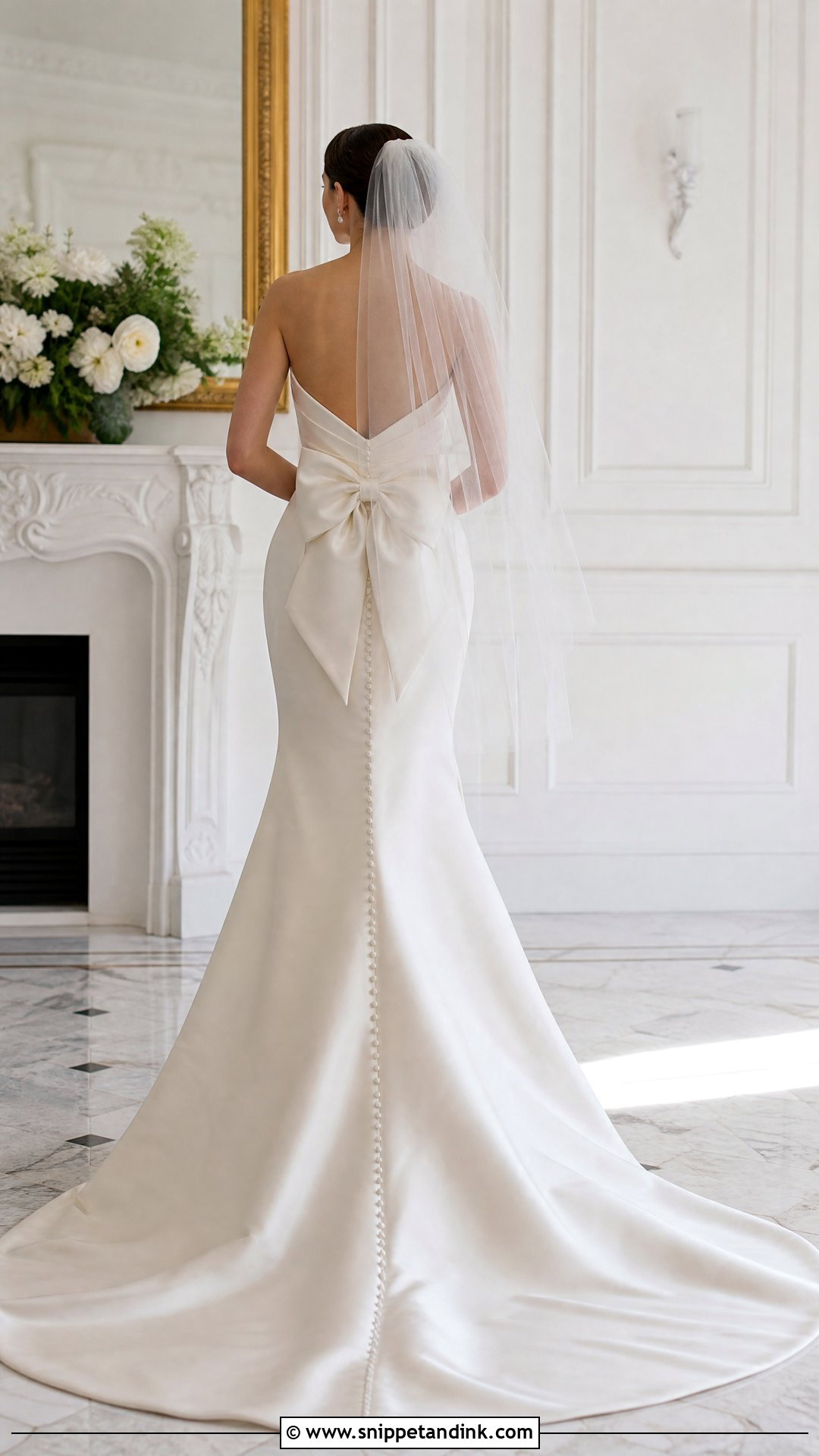
A bow is a single strong accent, and satin is the fabric that holds one best. Placed at the back waist, shoulder, neckline or train, it decides how bold the gown feels. Keep the silhouette simple so the bow leads. Clean pumps, pearl studs and a veil that leaves the bow visible complete it. Large satin bows can flatten or crush in transit, so ask whether yours has an interfaced lining that keeps its loops standing up.
23. Silk Column Wedding Dress
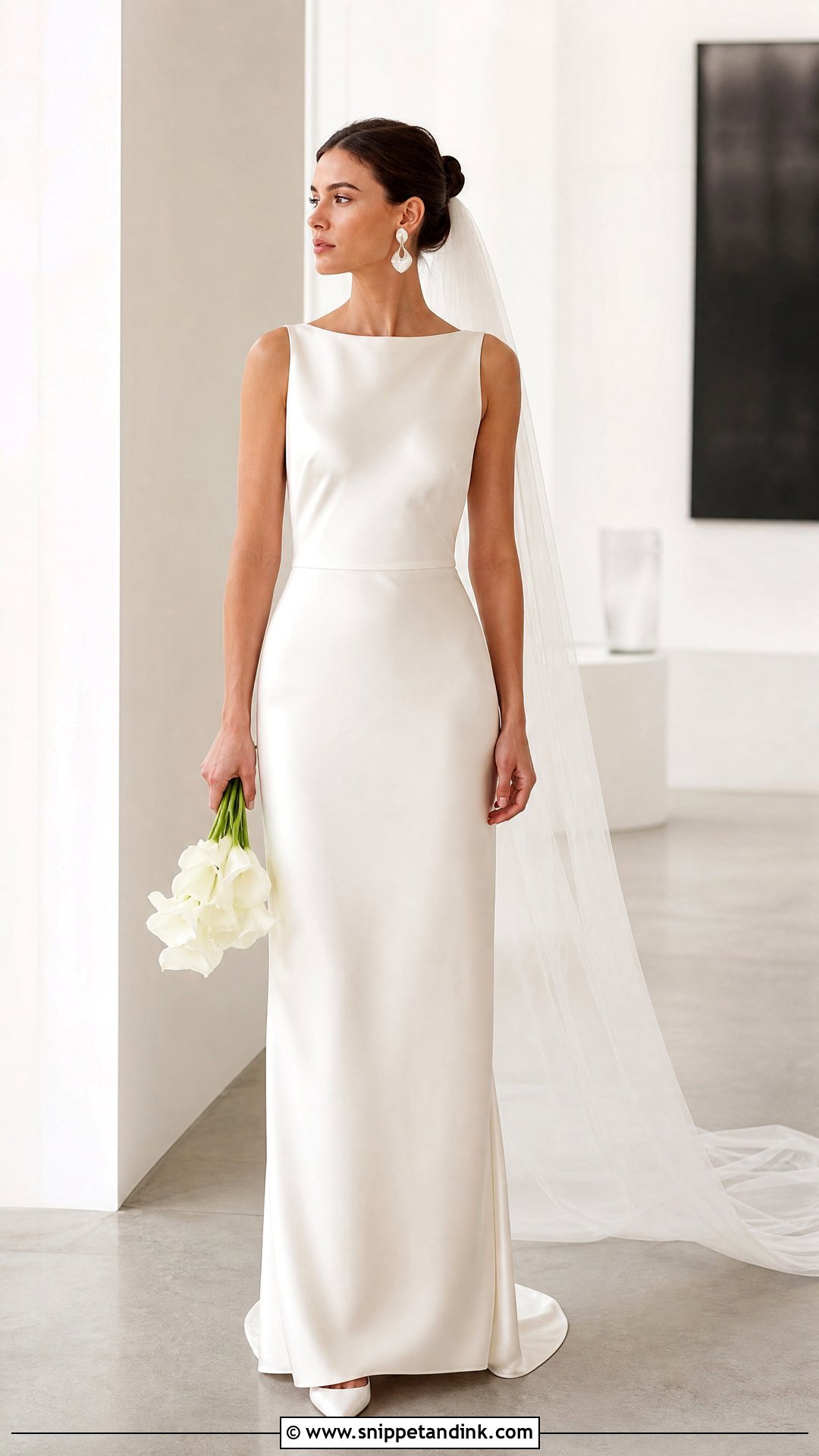
A column falls close to the body with no full skirt, so it’s the purest expression of minimal bridal style. Satin and charmeuse give it flow; heavier crepe adds structure. Pointed heels, a clean veil and modern earrings suit it, with a smooth bun or tucked waves. City weddings and galleries are its home. Take a long stride at the fitting; a narrow column may need a slit or a hidden pleat so you can walk without shuffling.
24. Satin Wedding Dress With Train
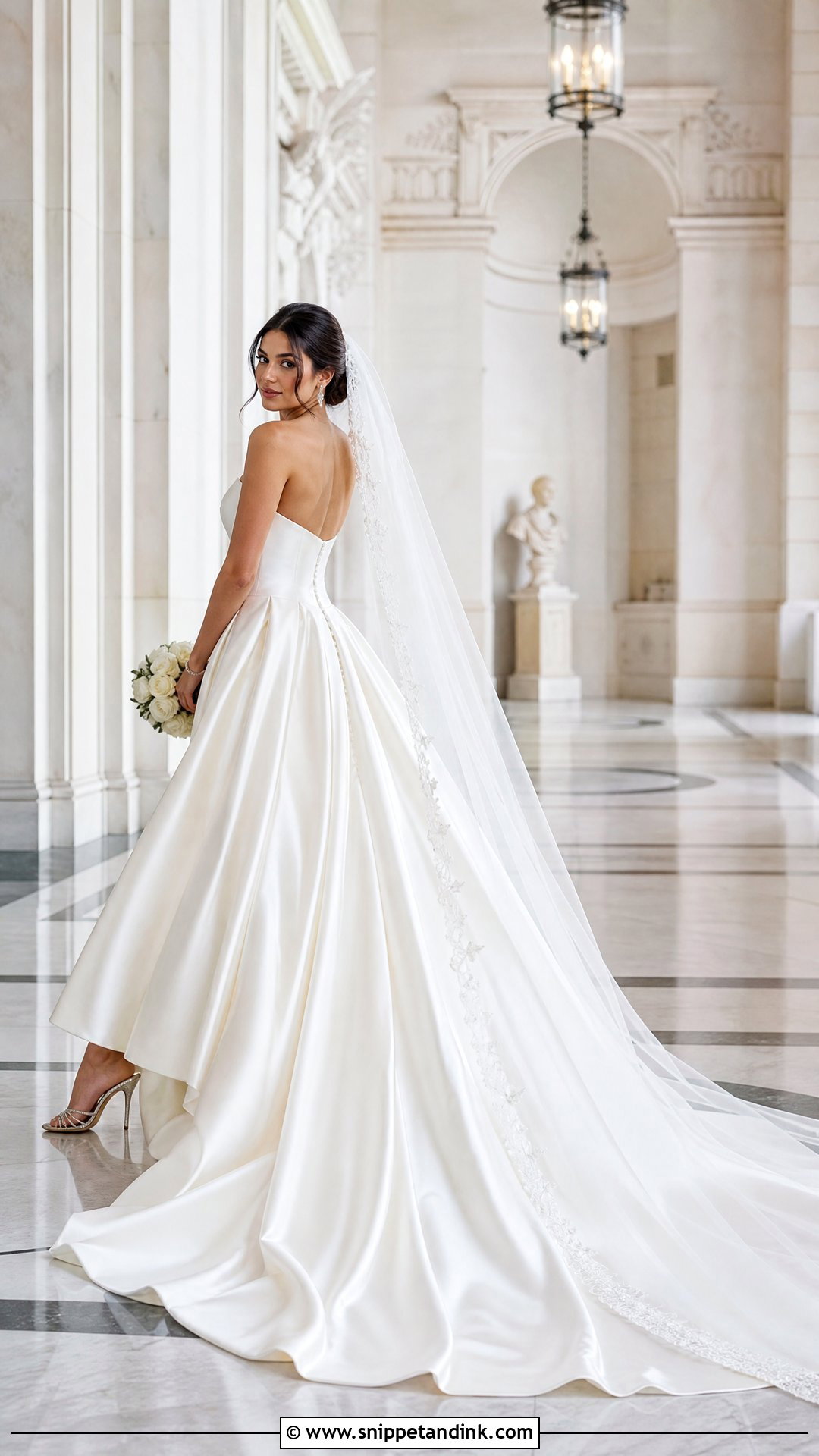
Satin is a natural fabric for a train because it reflects light along the full length and shows the shape in photographs. A sweep train barely touches the floor; longer ones belong in formal venues. Balance the length with a fitted bodice, a square neck or a strapless top. High heels, a cathedral veil and simple jewellery suit it. Satin trains pick up dust and grass stains fast, so plan the bustle carefully and have someone ready to lift it after the ceremony.
25. Silk Wedding Dress With Veil
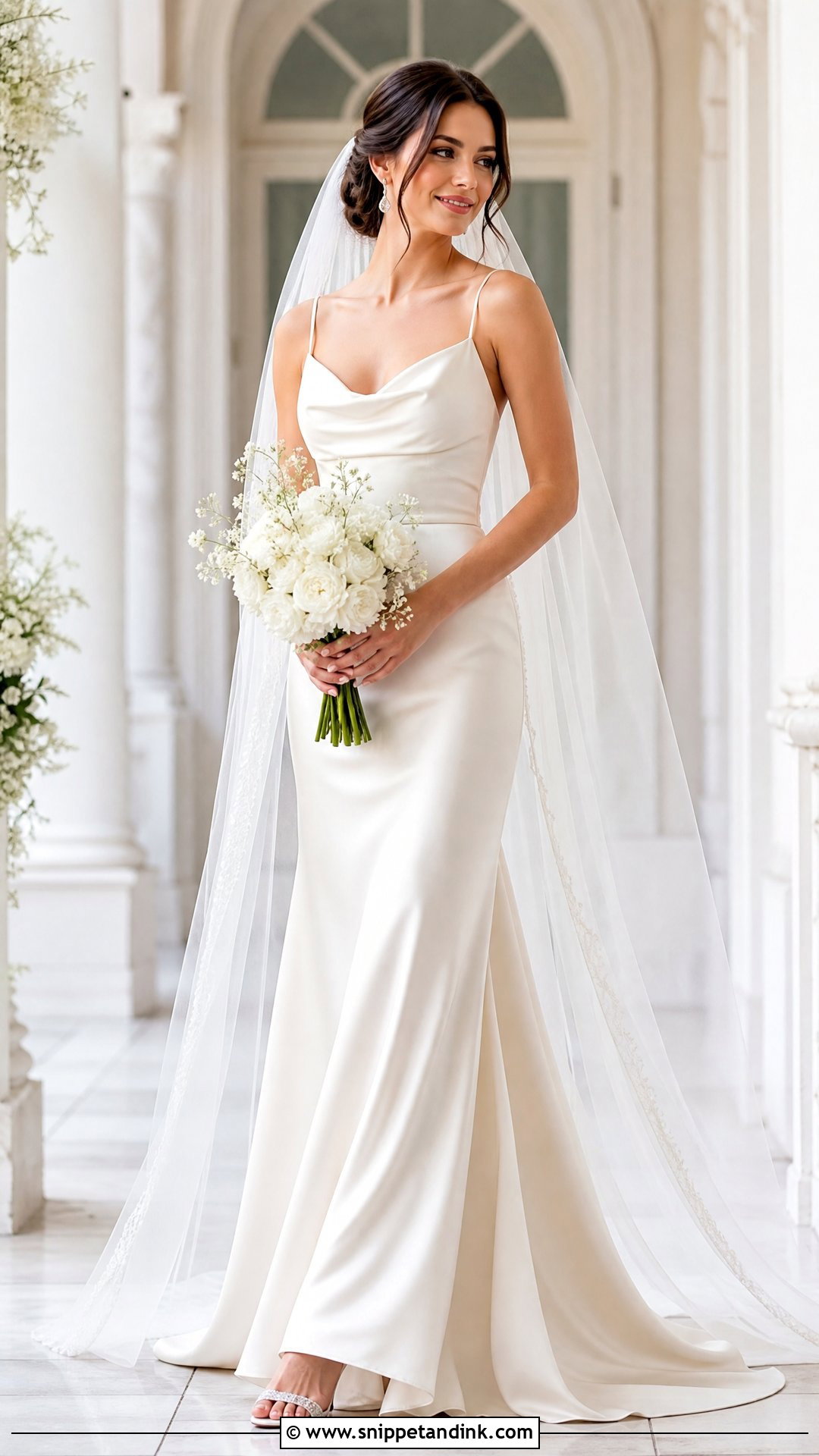
Silk and a veil move together in a way few pairings do. The gown can be a slip, an A-line, a column or a ball gown; what matters is matching the veil to its mood. A fingertip veil feels simple, a chapel veil classic, a cathedral veil dramatic. Delicate earrings, elegant heels and a bouquet that leaves the fabric visible complete it. Satin under sheer tulle is a favourite of mine because the sheen still glows through. Match the veil colour to the gown in daylight; white tulle over ivory silk can look grey.
What Goes Underneath a Dress That Shows Everything
Smooth fabric is honest. Every strap, elastic edge and seam beneath it shows in profile and in photos. I’d sort out the underwear plan before the first fitting, because the seamstress pins the gown around it.
Edges and lines
Bonded or laser-cut underwear without elastic edges disappears best under charmeuse and satin. A nude tone close to your own skin hides better than white, which can glow through ivory silk. If you want shaping, choose a light, smooth piece; heavy shapewear can roll at the waist when you sit, and that ridge shows.
Sweat and water marks
Silk and satin both show damp patches, especially at the underarm and lower back. Underarm shields sewn into the lining help on warm days. Let antiperspirant dry fully before you step into the gown, since deodorant marks on silk are hard to lift. If you spill water, blot with a dry white cloth and don’t rub.
Light
Ask your photographer to check a few frames in harsh sun or flash early in the day. Glossy fabric can lose detail in very bright light, and a slightly angled position often brings back the shape of the gown.
Lining and Underwear Count as Much as the Shape
A smooth bridal gown can look minimal, romantic, dramatic, vintage or modern depending on its cut, neckline, train and accessories. The one to choose fits your body, suits your venue and stays comfortable from the ceremony to the last photo. When you shop, pay as much attention to fabric weight, lining and underwear as to the shape on the hanger, and walk in each gown before deciding. Veil length, shoe shape and jewellery then shift the mood. Get those quiet details right and the dress will look like yours, not the sample.
You'll Like These Ideas:






Leave a Reply