
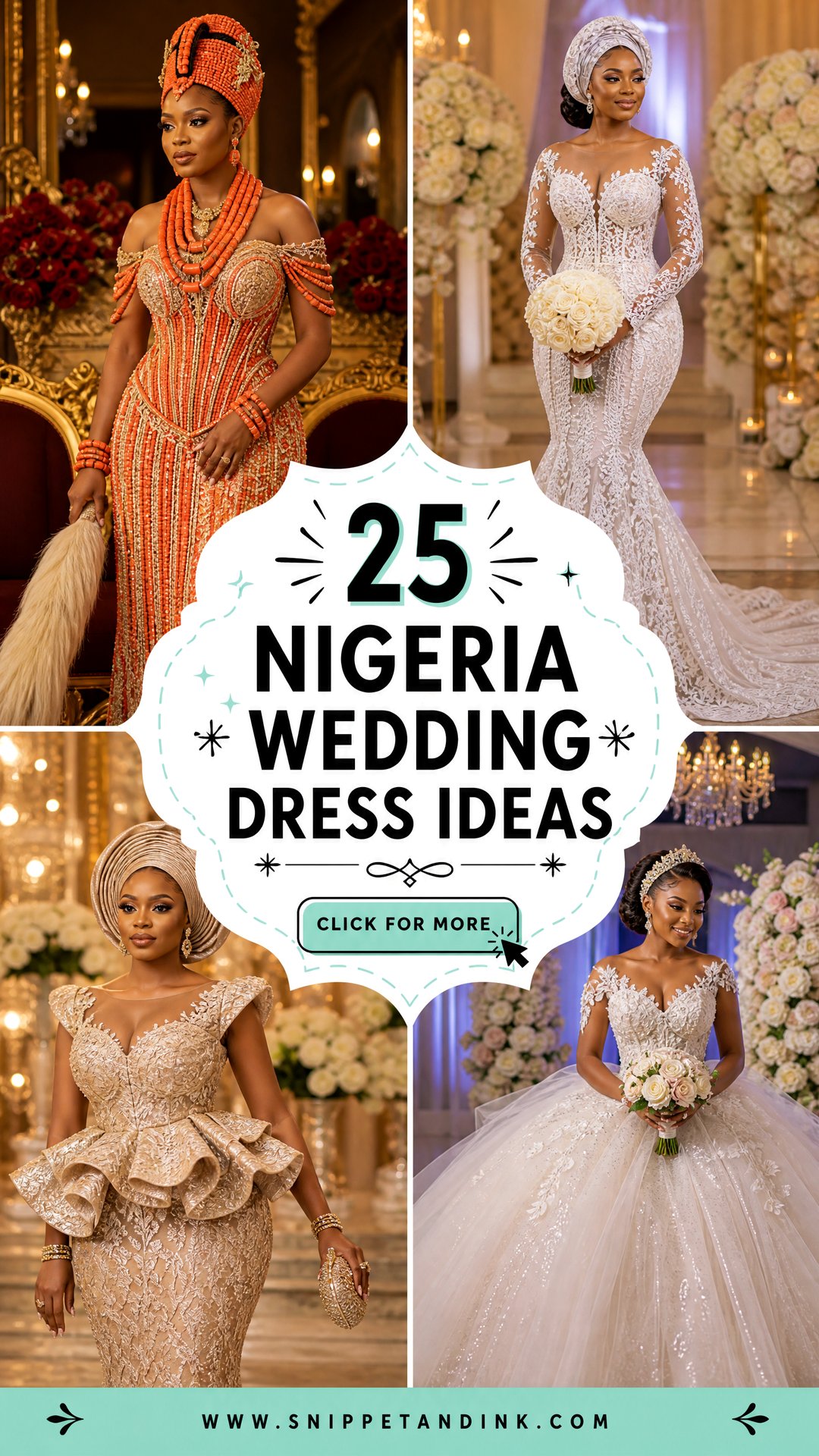
A Nigerian bride rarely wears one dress. She might move from regal traditional attire at the introduction to a white gown at church and then a lighter reception dress, sometimes over a single weekend. Each culture brings its own anchor piece: aso oke and gele for Yoruba brides, George wrappers and coral for Igbo brides, a modest embroidered gown for Hausa-Fulani brides. What I help brides decide first is how many changes they can realistically manage, and which fabric suits which part of the day. The dresses below come with the shoes, beads, gele or veil I’d put with each.
How Many Looks Does a Nigerian Bride Really Need?
I ask every bride to write down her events before we look at a single dress. The answer is usually between two and four outfits, and each change costs time, a helper and a place to dress. A realistic plan looks something like this, though families and regions vary a lot.
- Introduction or engagement: a traditional outfit tied to your own culture, often the most formal of the weekend.
- Traditional wedding: the main cultural look, sometimes with a short change midway for dancing.
- Church or registry: a white gown or a simple white dress, depending on the venue.
- Reception: a lighter dress that lets you dance, eat and greet guests at every table.
Every change takes longer than brides expect. Swapping a gele, beads and a fitted gown usually needs twenty minutes or more with a helper, so put the changes on the programme and give the MC something to fill the gap. If you’re short on time, drop a look rather than rushing two.
1. Yoruba Aso Oke Wedding Dress
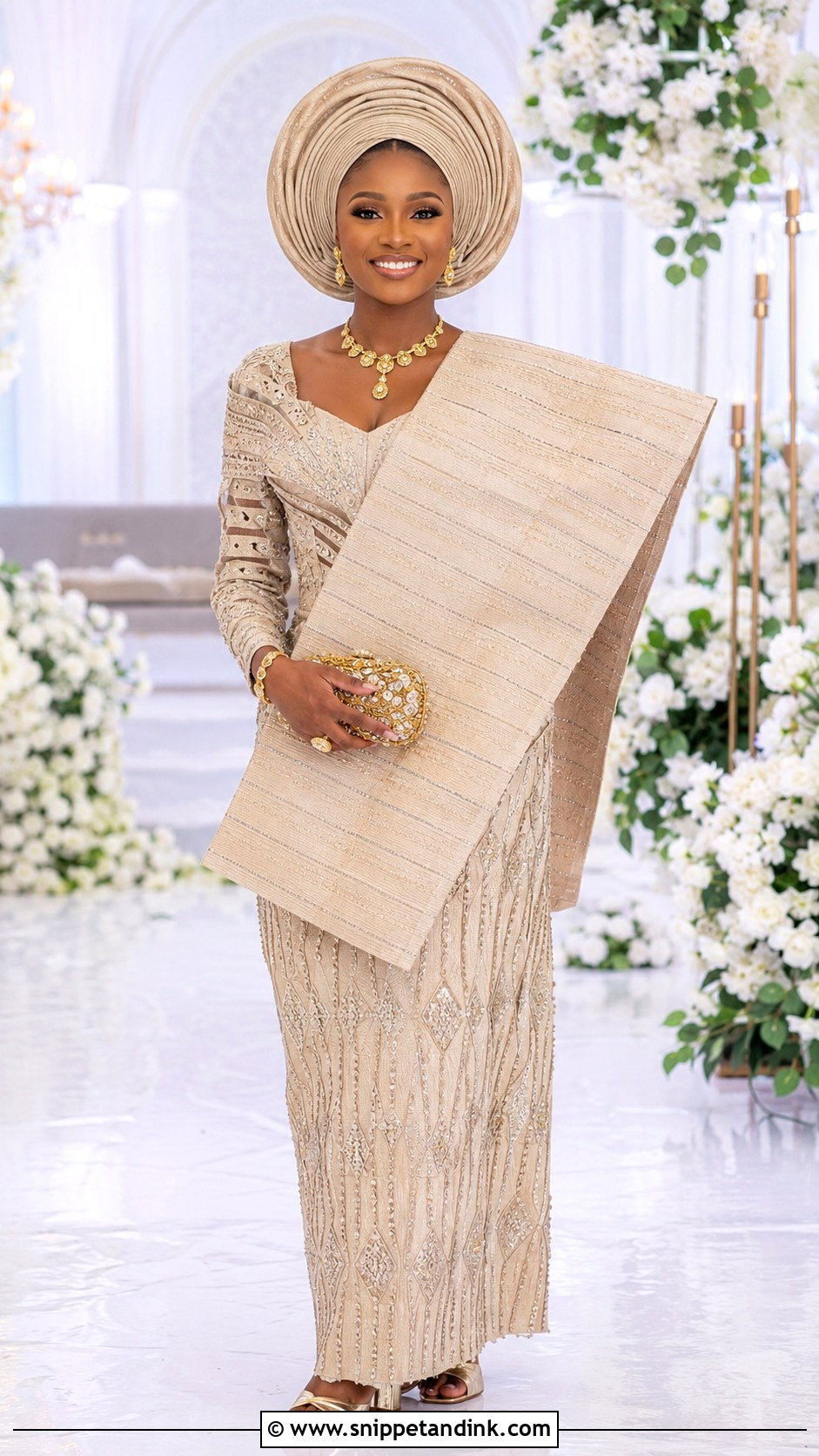
Aso oke can be wrapped as iro and buba or cut into a structured gown, and the choice changes how the bride moves. A gown keeps everything in place for dancing; the wrapped set needs re-tying if it loosens. Either way, a Yoruba aso oke wedding dress needs a gele sized to the face, with the ipele and clutch in the same cloth. I’d choose block heels, since there’s a lot of kneeling and greeting of elders at an introduction. Champagne, teal and rose pink all read well, and layered gold finishes it.
2. Igbo George Wrapper Wedding Dress
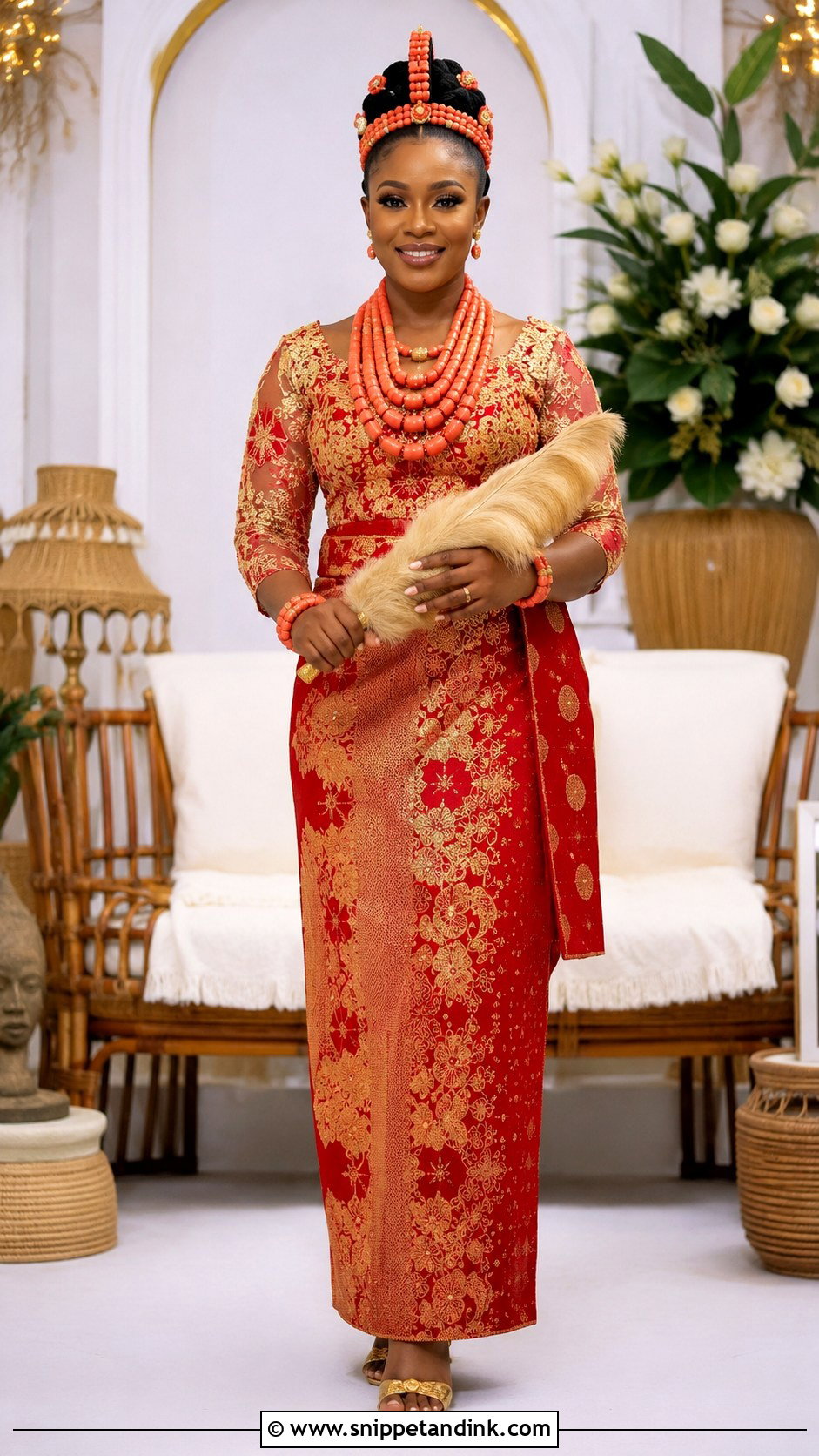
The modern Igbo bride often swaps the traditional blouse for an off-shoulder lace top with beaded sleeves, worn over one or two George wrappers. The wrappers need to move, so I ask for them to be tied a little looser at the knee than feels natural. Coral is the real focal point of an Igbo George wrapper wedding dress: a layered necklace, drop earrings, bracelets and a beaded headpiece. Red and gold are classic, and royal blue looks rich beside red coral.
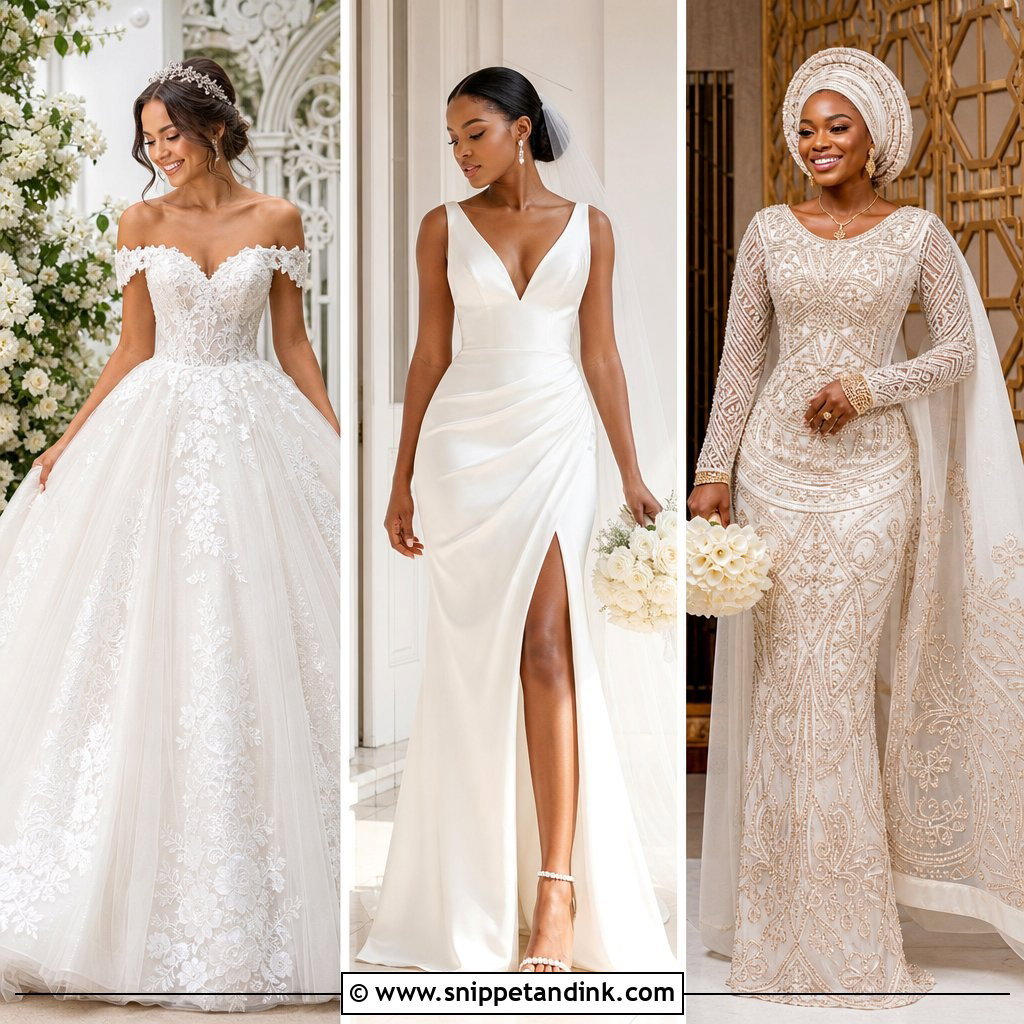
3. Hausa Fulani Modest Wedding Dress
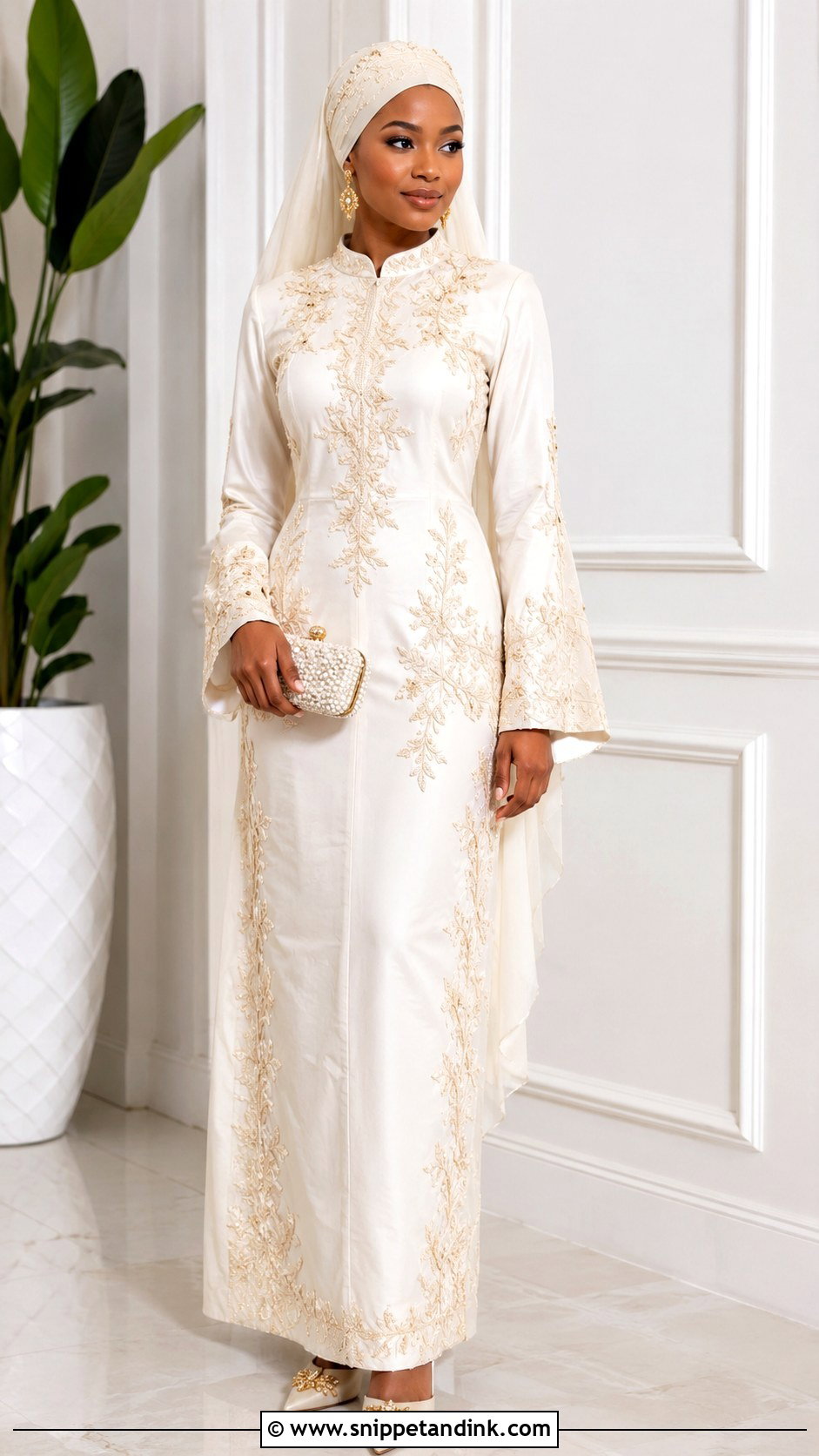
Modest bridal gowns for a Hausa-Fulani ceremony rely on fabric quality, not exposure. A long silk, lace or embroidered gown with full sleeves and a high neck needs a soft drape so the coverage doesn’t look stiff. I pair it with a matching head covering pinned securely and pointed embellished heels. If the bride is wearing henna, the sleeve should end at the wrist so the design shows. Soft gold, sage and blush shades give a calm, luxurious mood.
4. Edo Beaded Wedding Dress
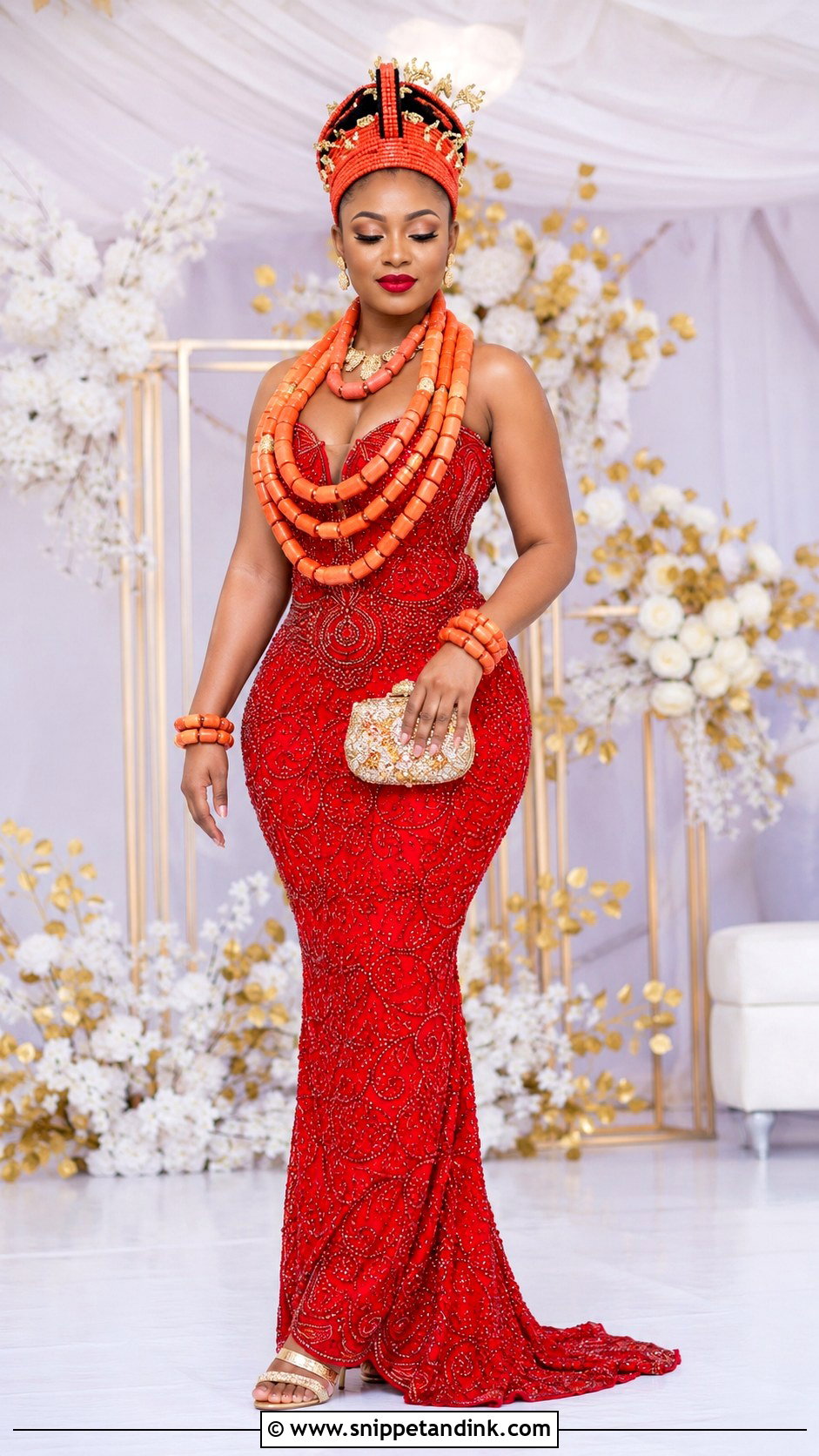
Edo bridal dressing is built around coral, so the fabric underneath has one job: sit smoothly and give the beads a clean background. A wrapped cloth or fitted gown in red, gold or bronze works best. Strapless or off-shoulder bodices show more of the beadwork, but check with the family first, as expectations differ. Allow plenty of time for the crown and necklaces to be fitted, keep the makeup soft glam, and carry a small clutch that won’t snag the strands.
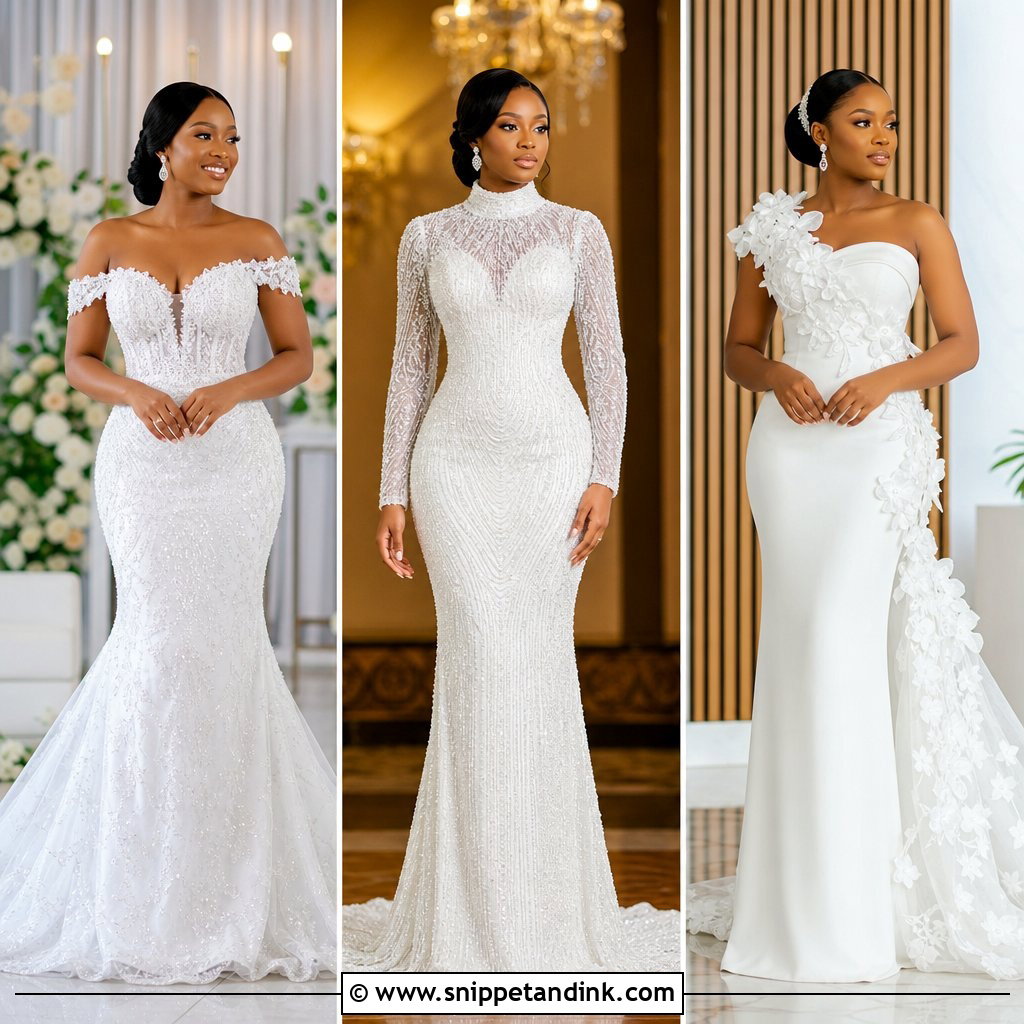
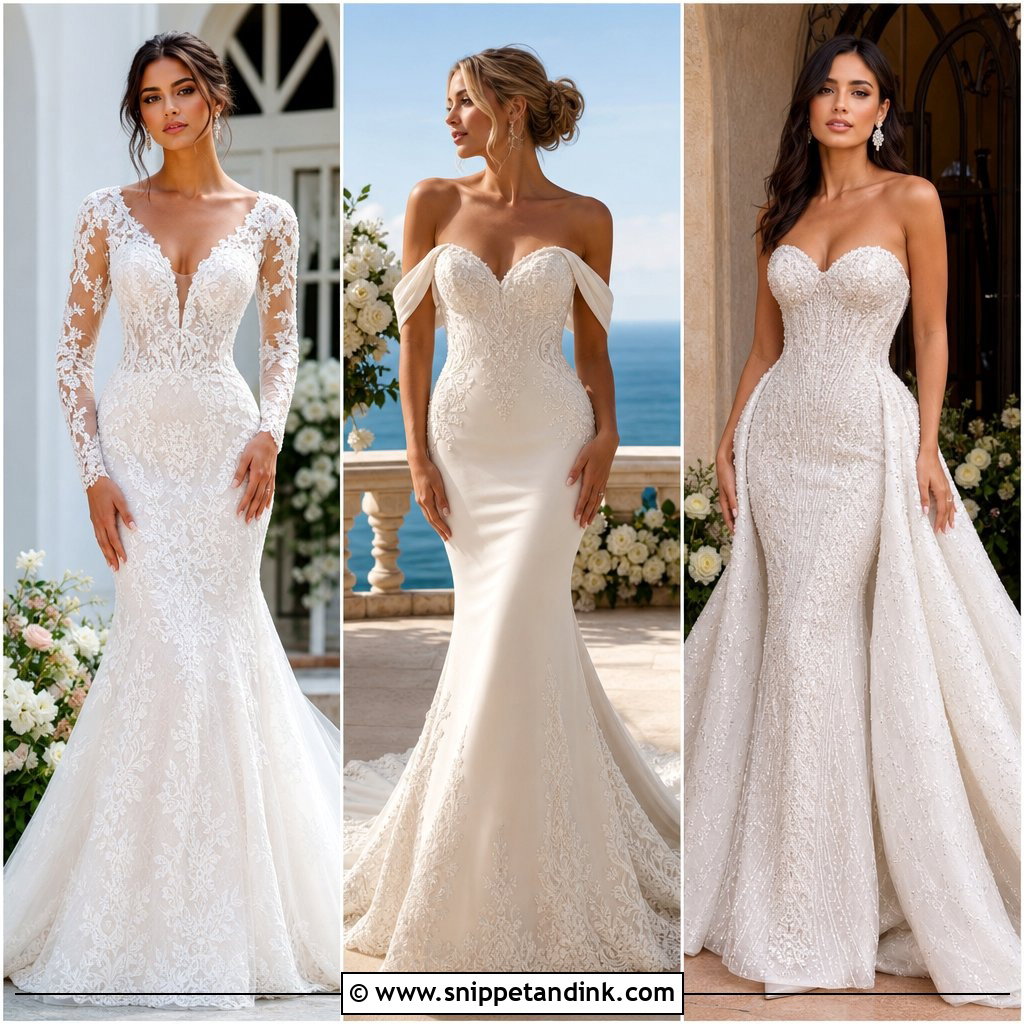
5. Nigerian Lace Mermaid Wedding Dress
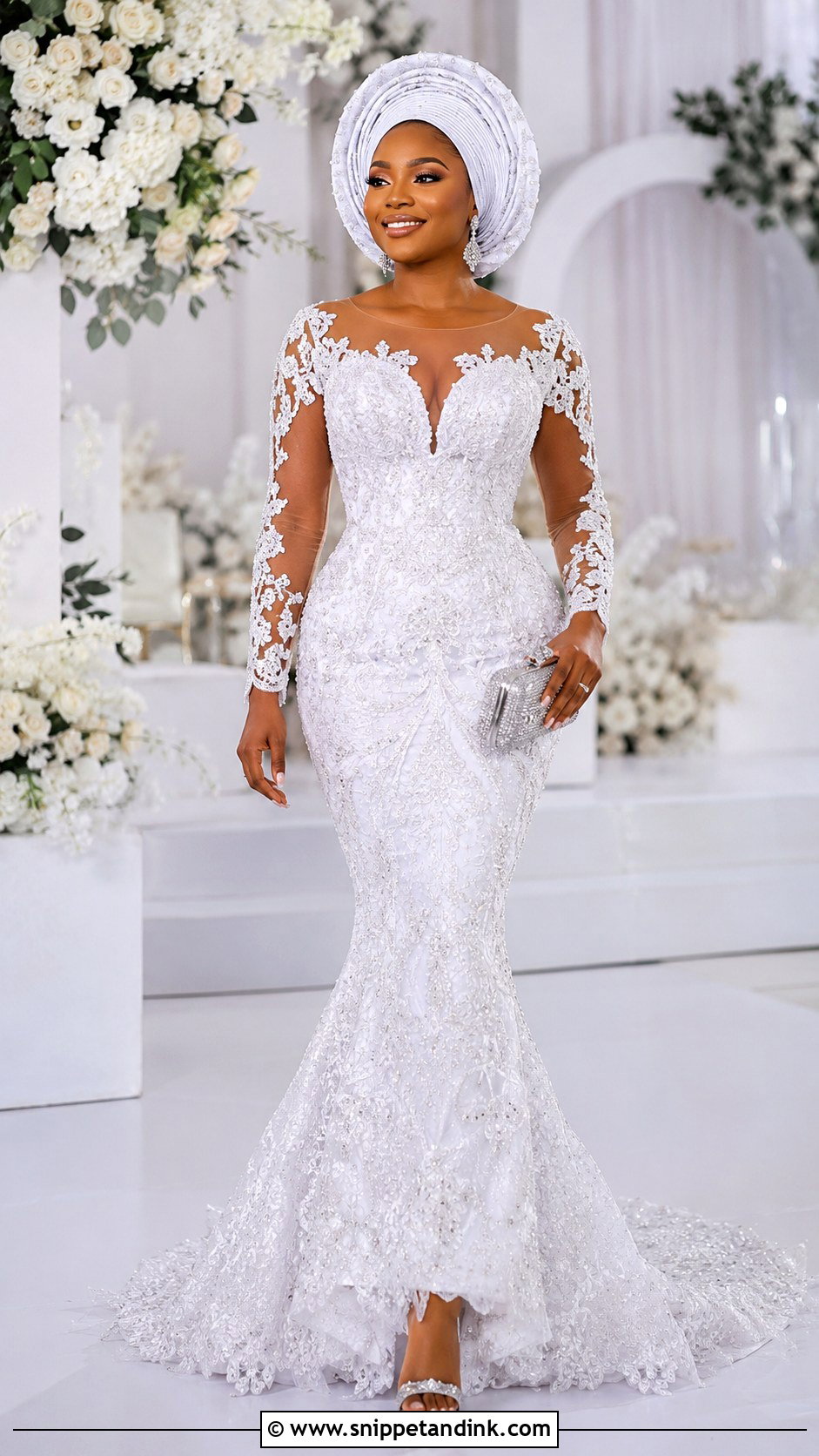
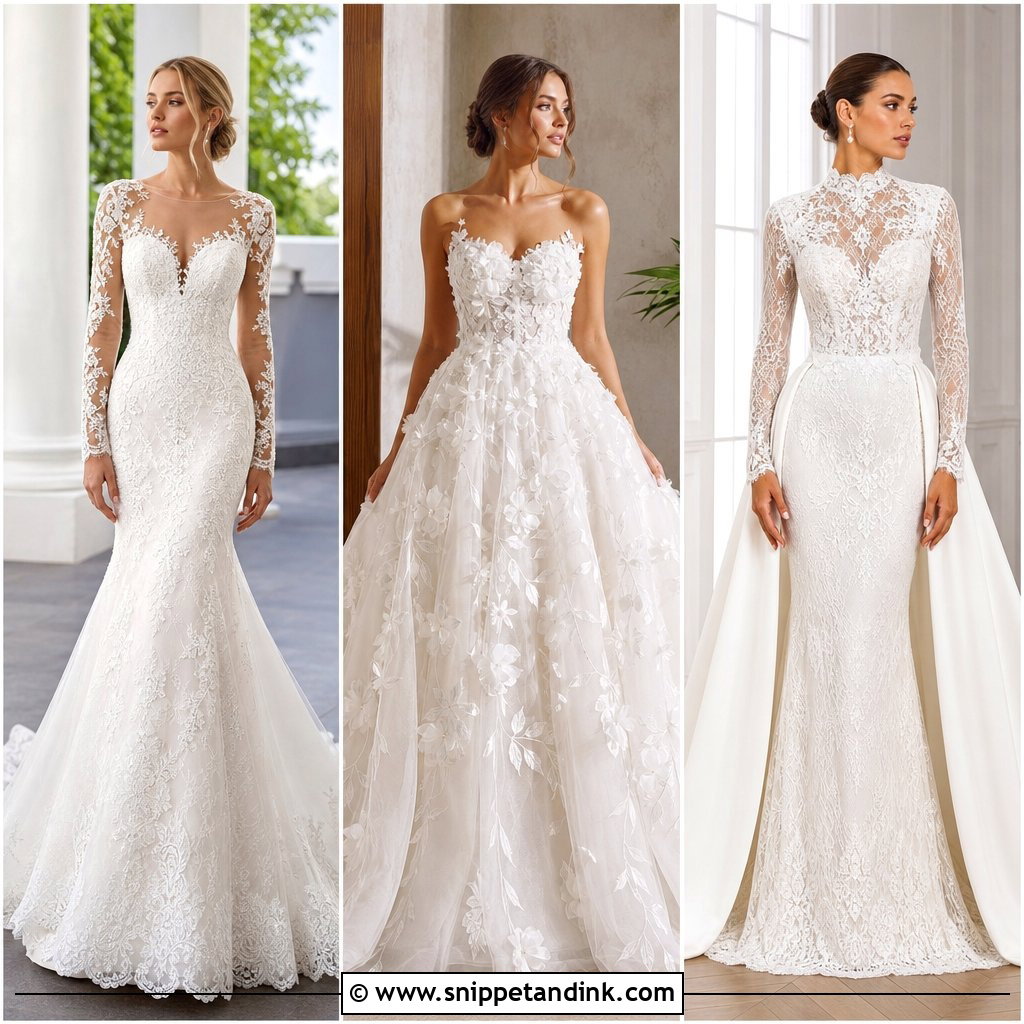
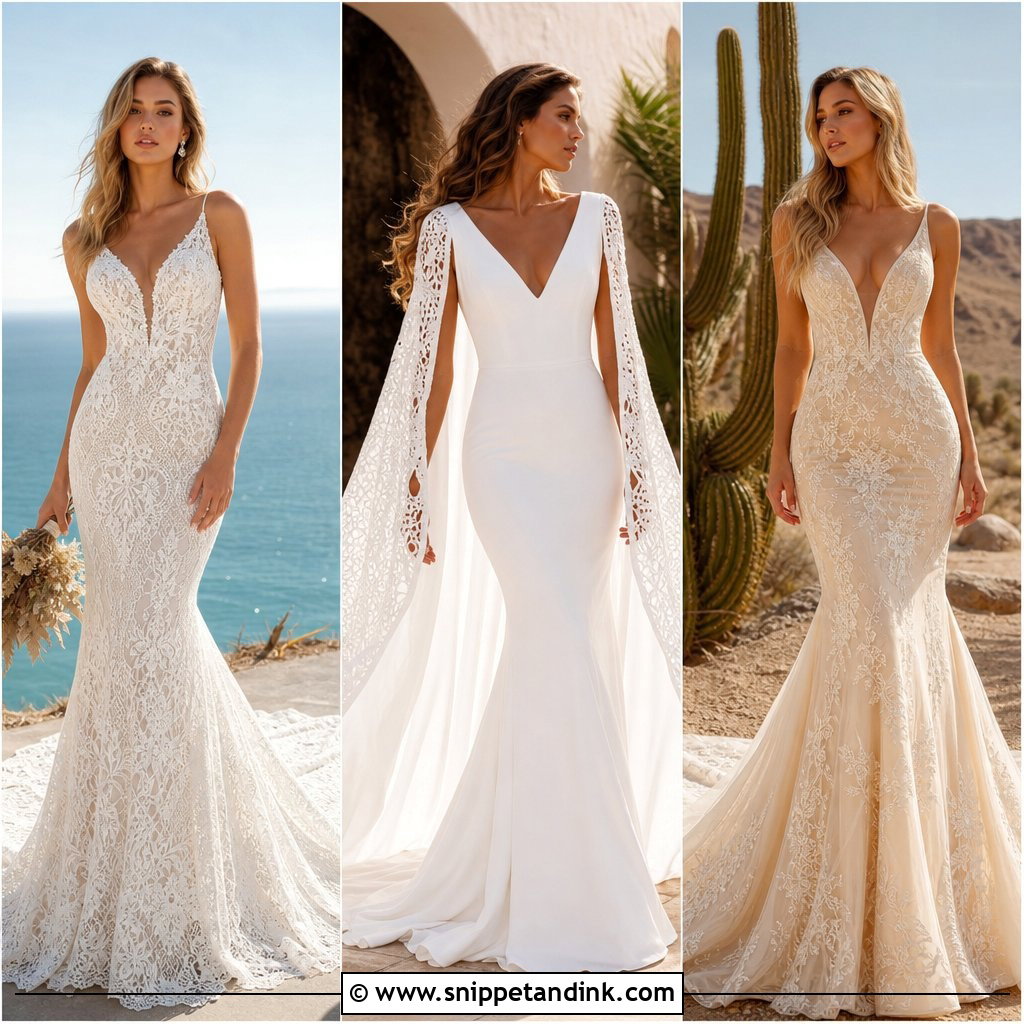
A lace mermaid is the shape I see most often at Nigerian receptions, and the fabric decides how it behaves. Cord lace is heavier and holds the fitted line; French lace is lighter and drapes more; beaded lace adds weight and sparkle. Whichever you choose, the gown needs a good lining and firm support in the bodice. Pin the hem with your real shoes on so you can walk without kicking the flare, and keep accessories clean if the lace is busy.
6. Aso Oke Ball Gown Wedding Dress
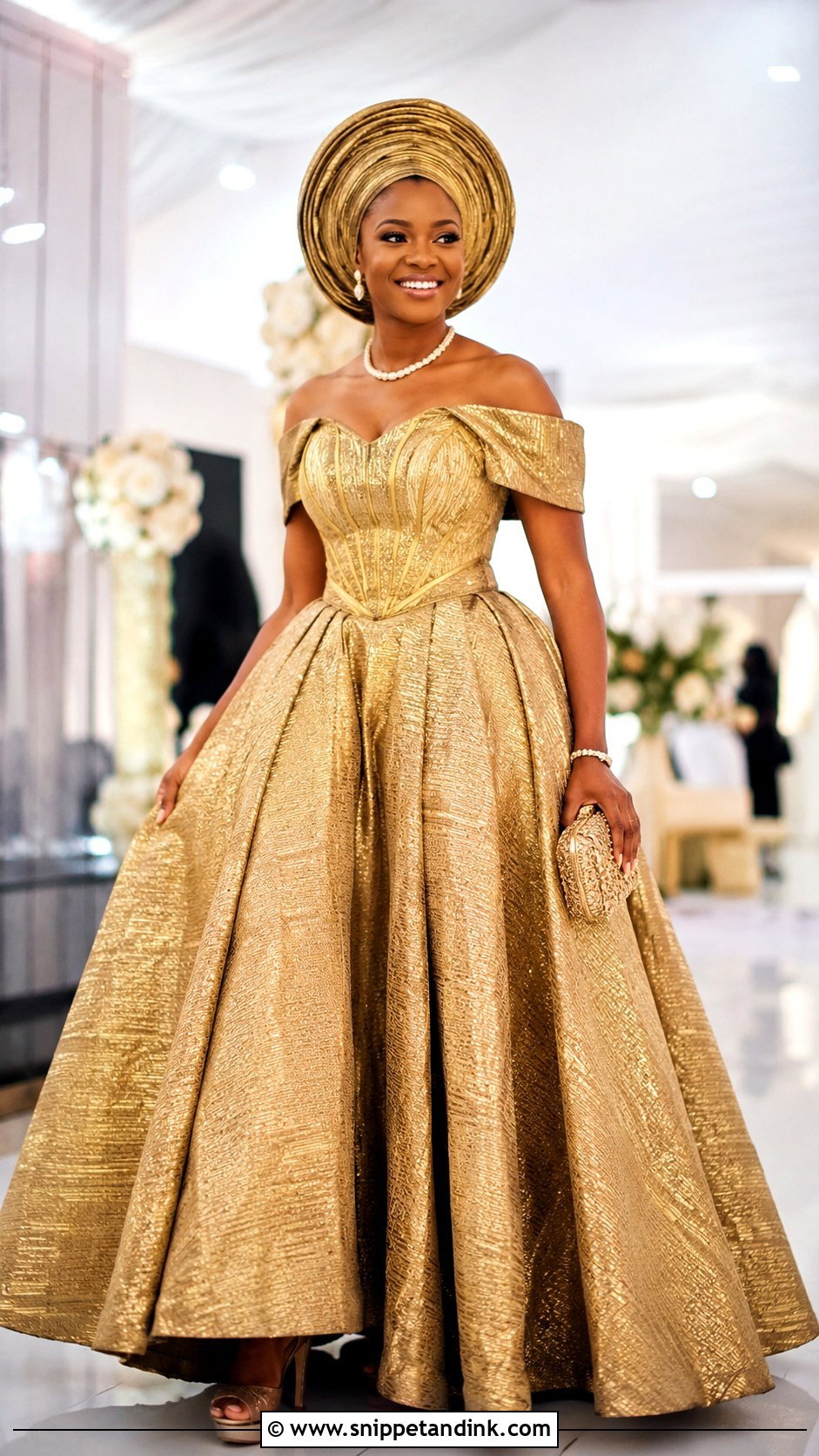
Cutting aso oke into a ball gown is more demanding than it looks, because hand-woven cloth comes in narrow strips that must be joined. A skilled tailor will plan where the seams fall so the stripes line up down the skirt. The result is a full skirt and fitted bodice with real cultural weight, and a matching gele keeps the link to tradition clear. Platform heels help with the skirt length, and gold or pearl jewellery is enough.
7. White Lace Nigerian Wedding Dress
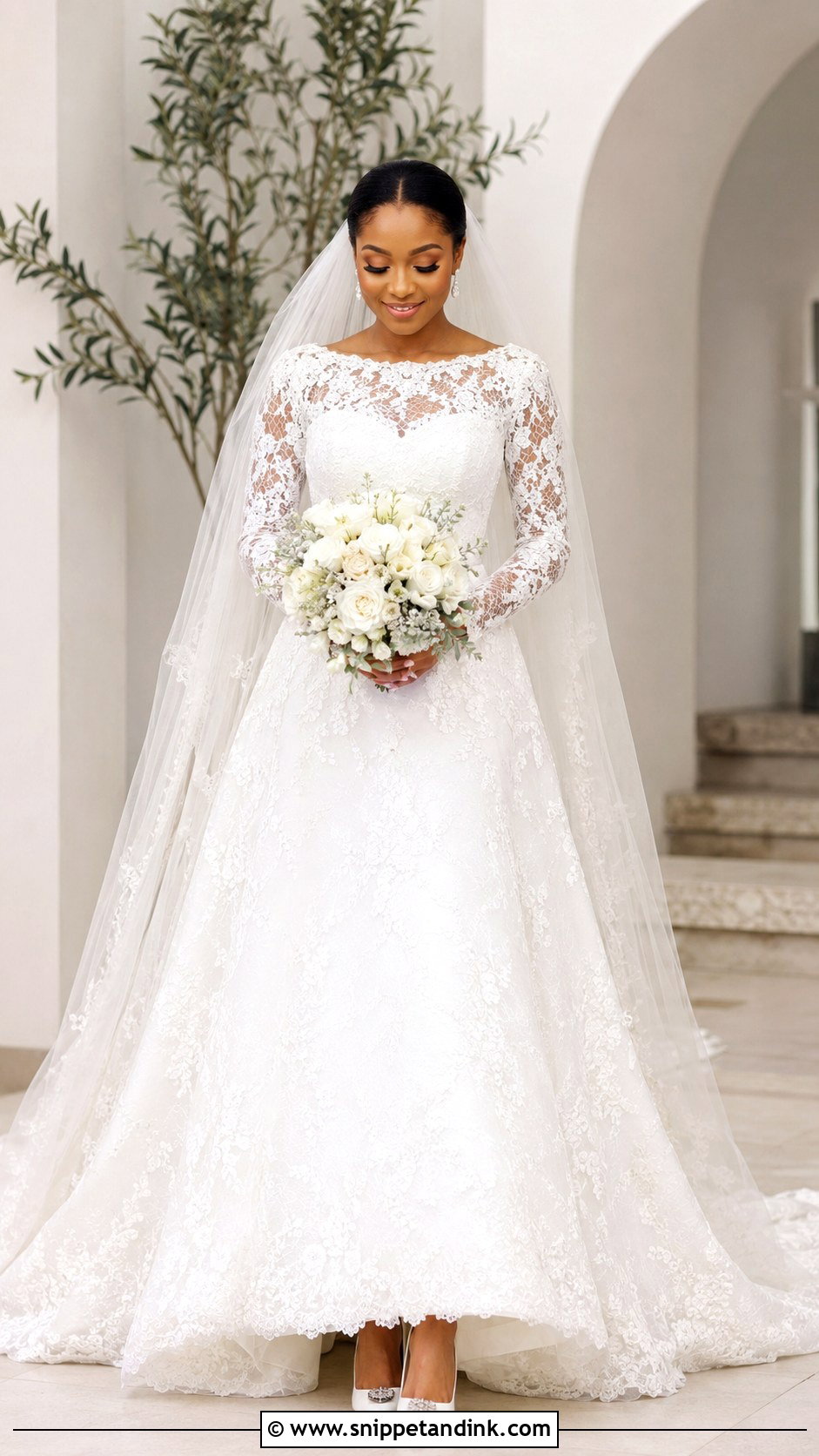
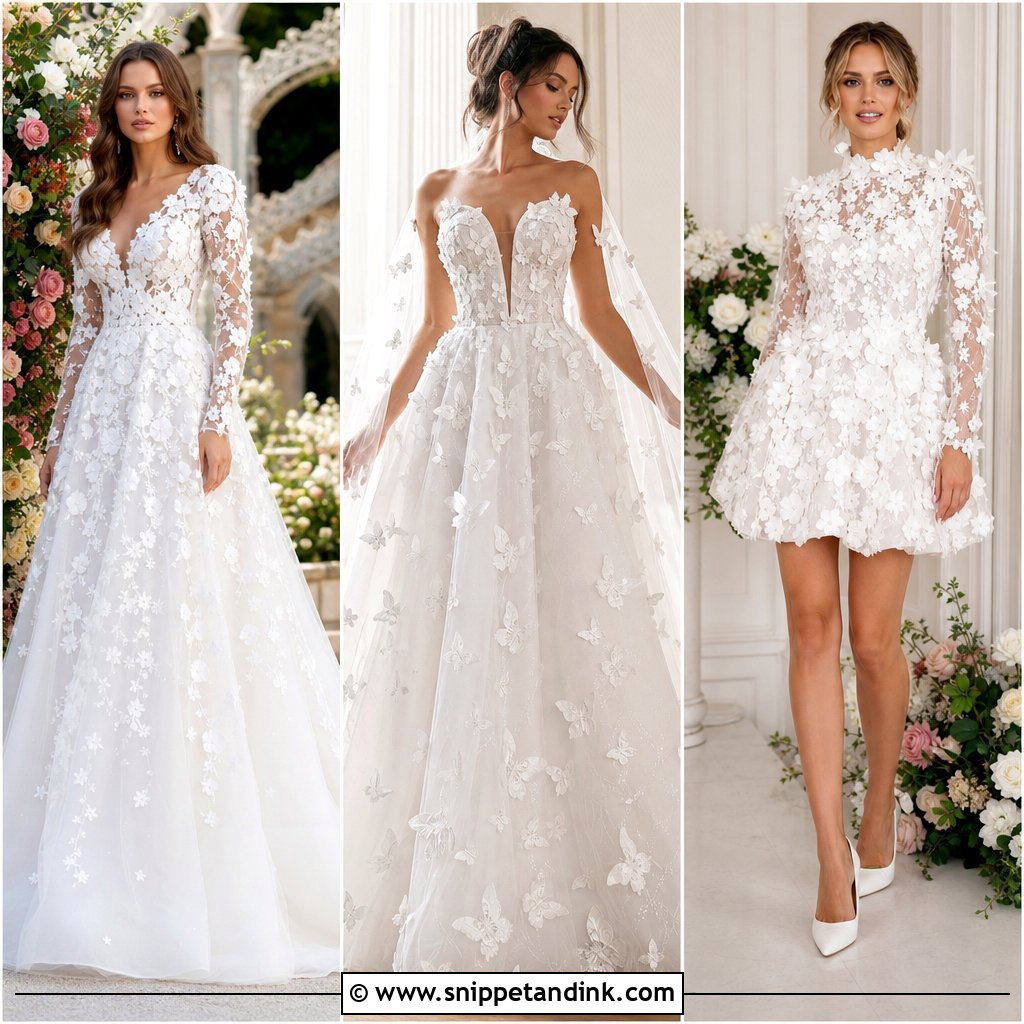
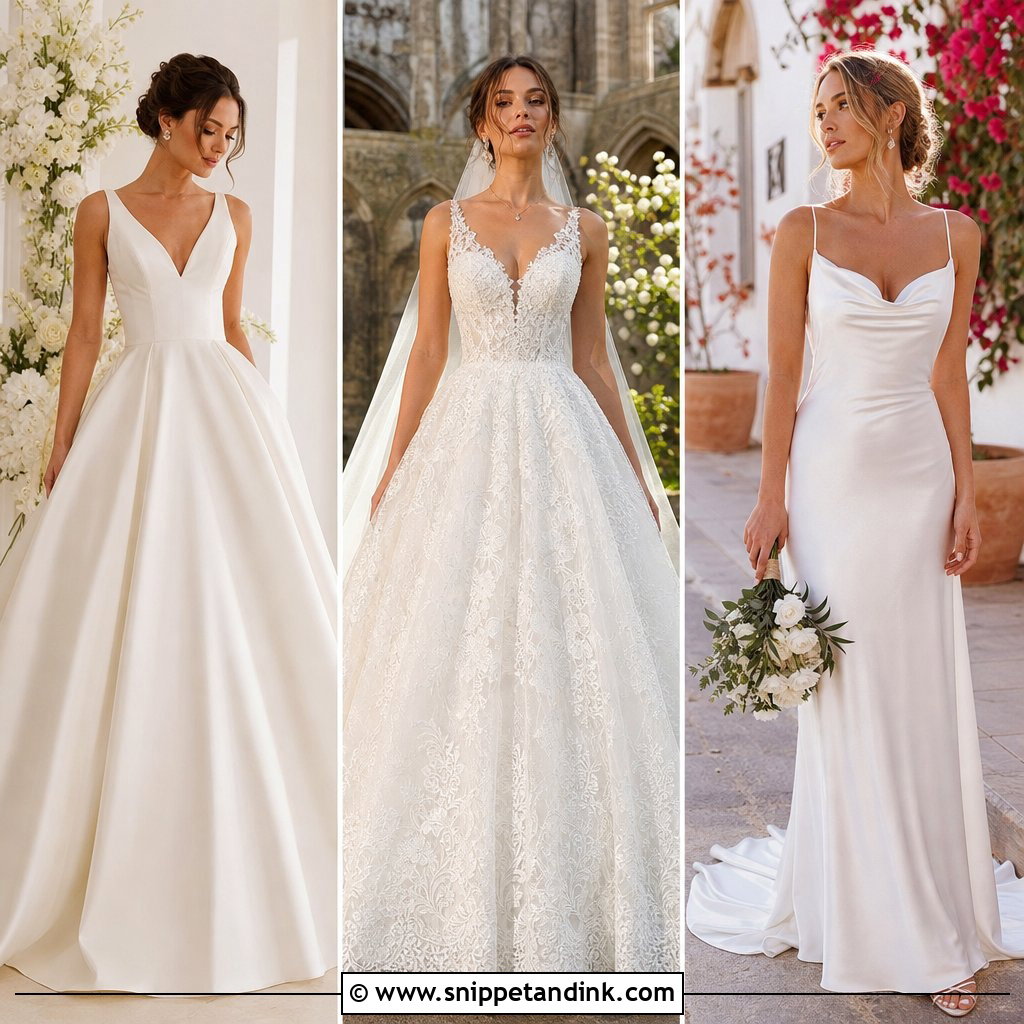
White lace is the standard for the church or registry wedding, but Nigerian brides tend to add something extra: beading, illusion sleeves, a detachable train or a long veil. Choose the silhouette for the venue. Mermaid and sheath suit a hotel ballroom; A-line works for a garden. Pearl or crystal jewellery and silver heels finish it. If you want a cultural nod, save it for a second look with gele rather than mixing both into one outfit.
8. Gold Traditional Wedding Dress
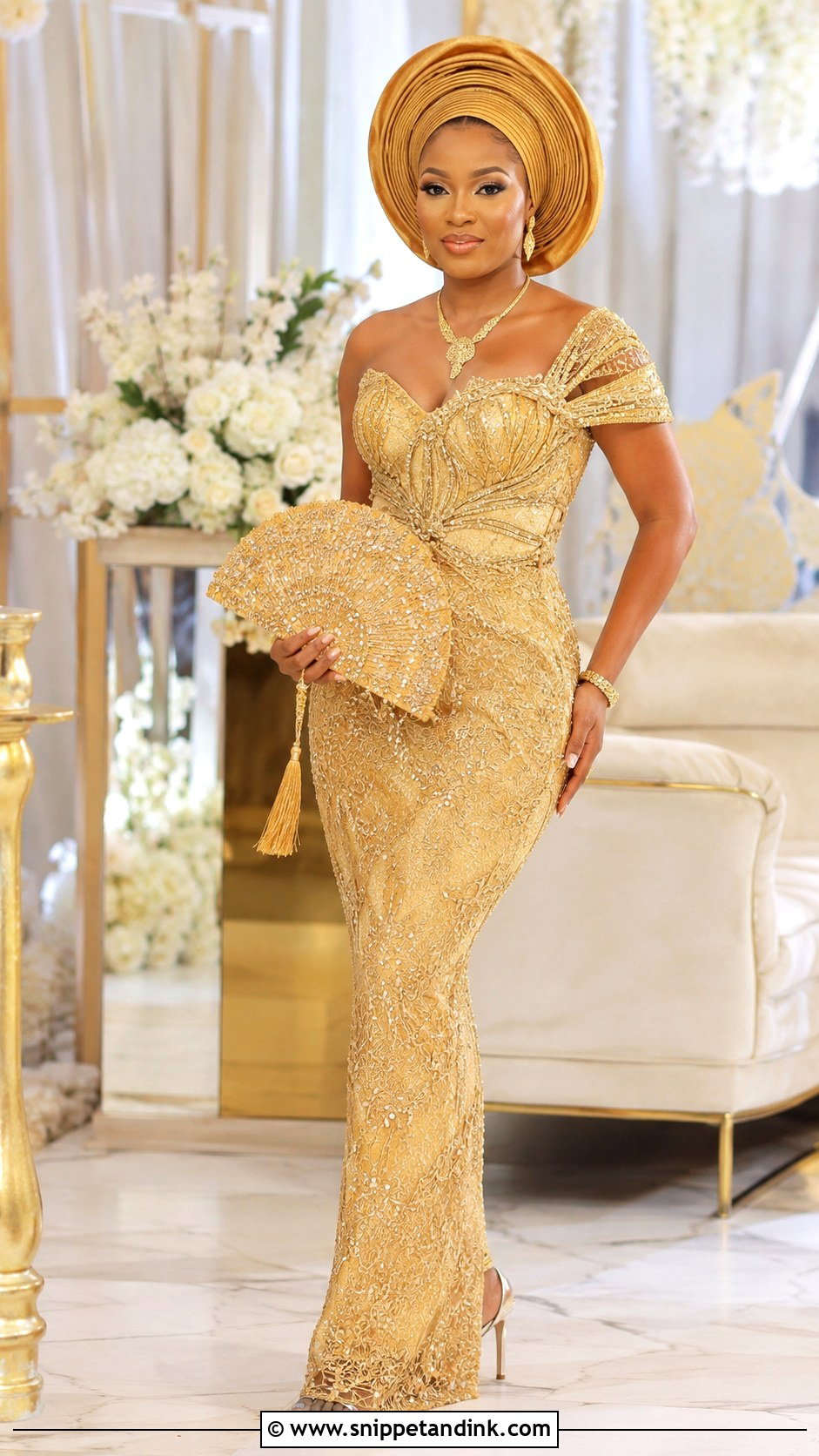
Gold catches every light in a reception hall, so I tone down everything else. A fitted gown, wrapper set or structured skirt and blouse in gold aso oke, lace or brocade can carry the whole look. Glowing skin and defined eyes work better than shimmer, which competes with the fabric. A small beaded fan or clutch is enough. Gold looks richest at evening ceremonies under warm lighting.
9. Emerald Green Nigerian Wedding Dress
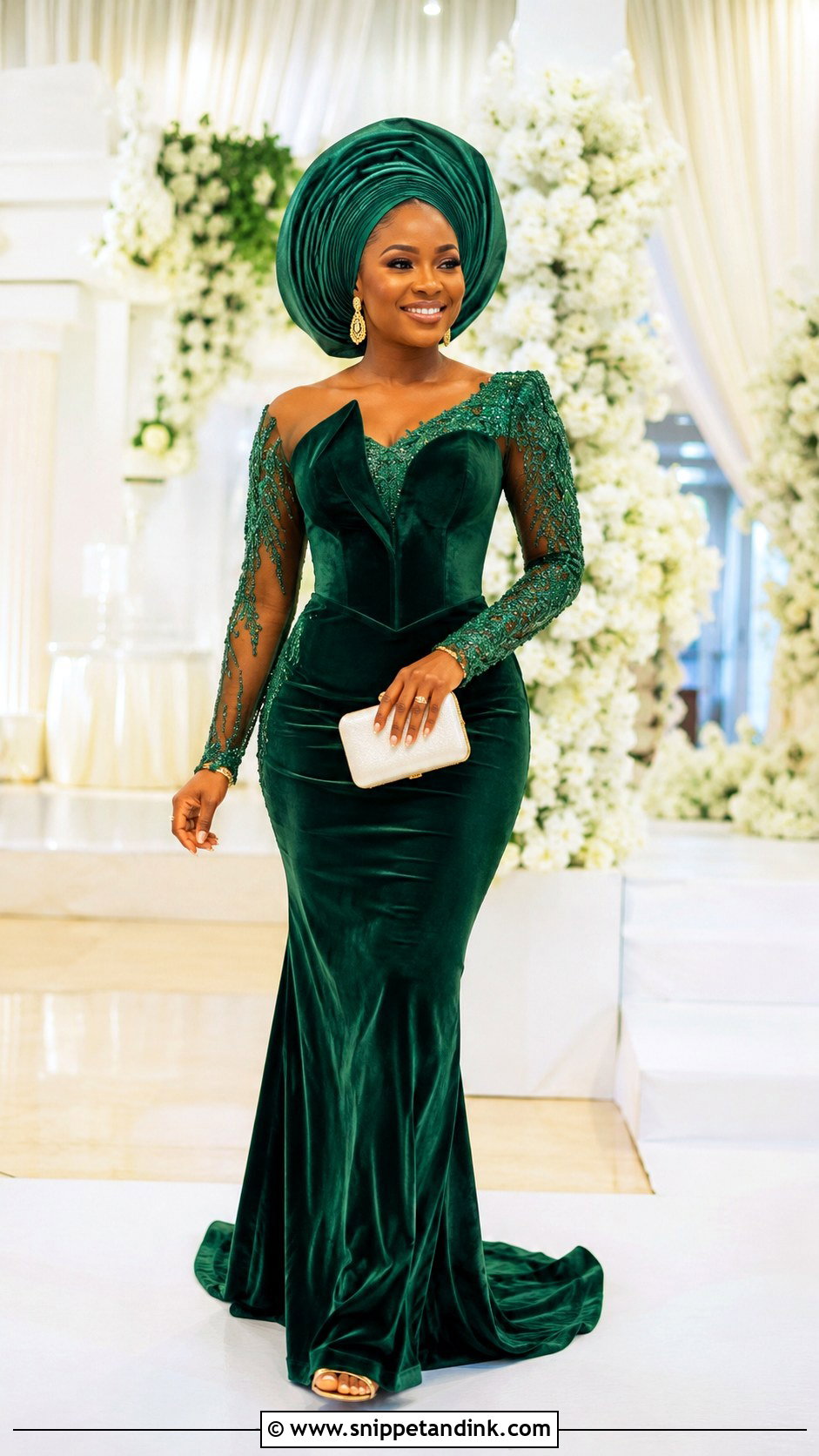
Emerald has depth that flatters deeper skin tones particularly well. It reads differently by fabric: velvet goes almost black in shadow, while satin and aso oke stay bright. A fitted gown with matching gele looks modern; wrapper and blouse keeps it traditional. Gold jewellery is the natural partner. If the groom wears cream or gold, the pair look coordinated without being identical.
10. Red Nigerian Bridal Dress
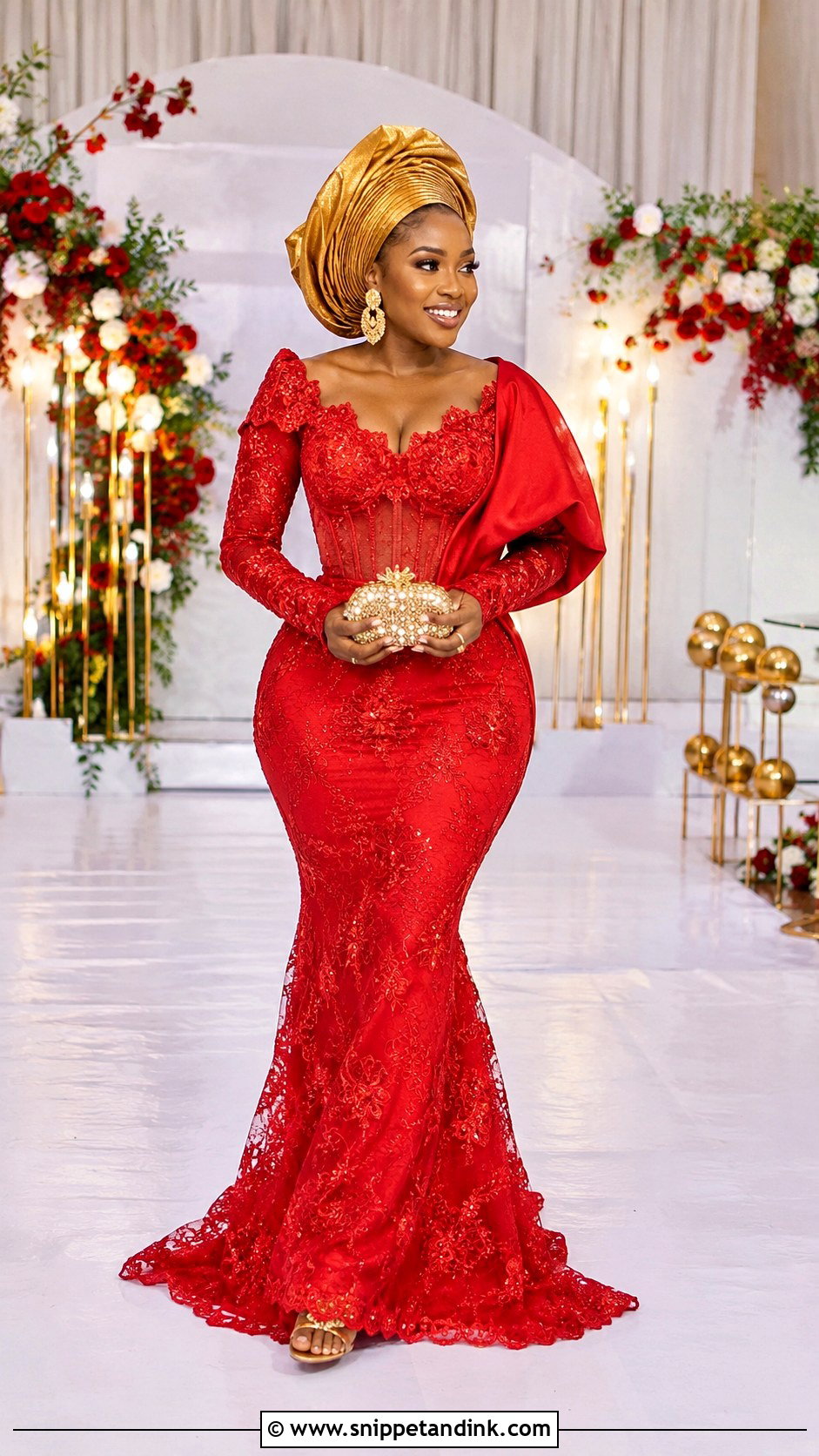
Red makes an entrance on its own, so the styling around it should be restrained. A red lace gown with gele, a George wrapper set with coral, or red aso oke with gold accents all work. If the fabric is already beaded or embroidered, gold heels and statement earrings are plenty. One caution from fittings: some reds lean orange and others lean blue, so check the shade against your coral or gold before buying jewellery.
11. Champagne Nigerian Wedding Dress
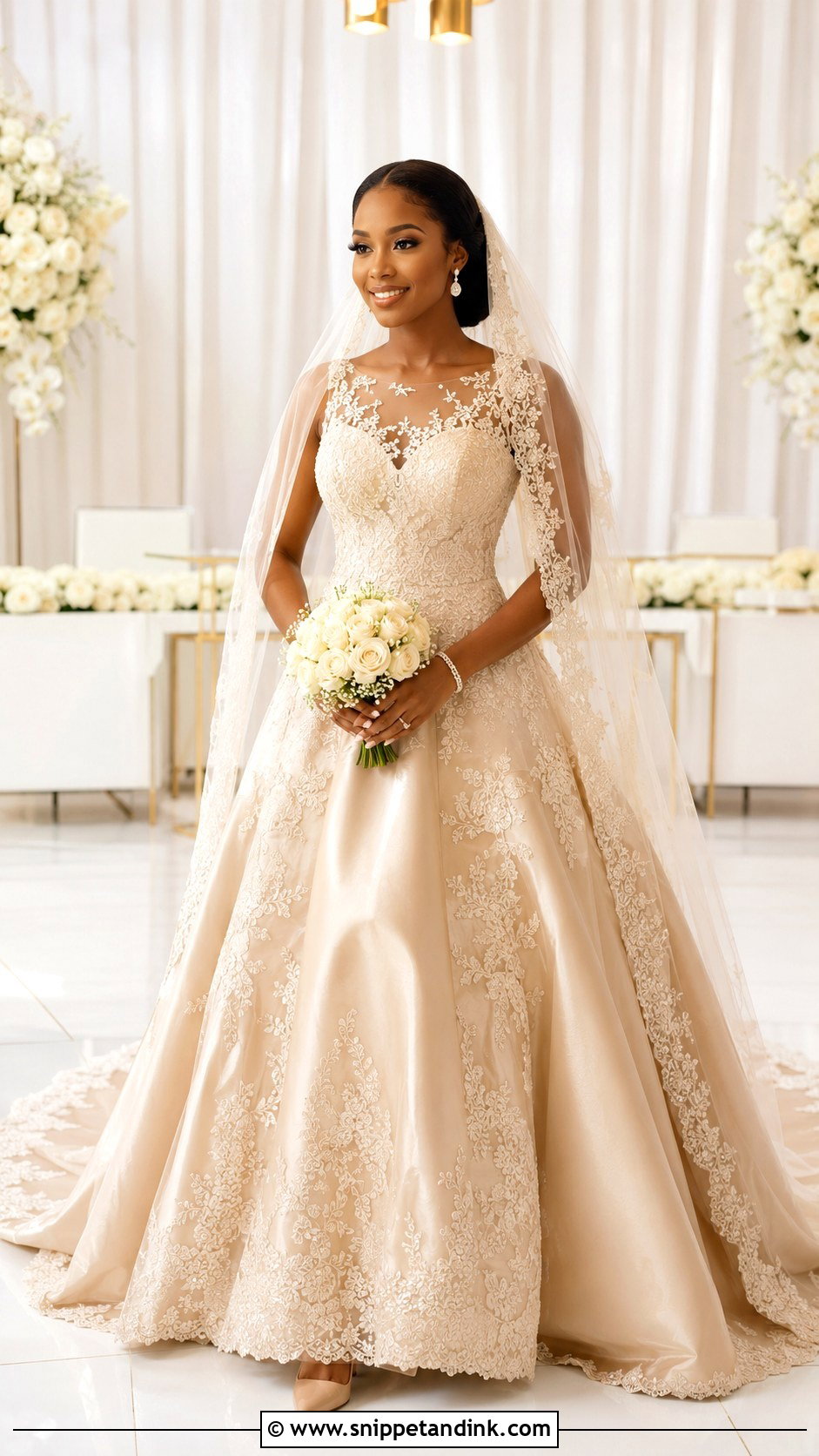
Champagne is a warmer alternative to white and suits brides who look washed out in bright ivory. It comes alive in lace or satin, and it works for both a veil and a gele. A champagne mermaid reads glamorous; an A-line reads softer. It’s one of my go-to colours for reception gowns, because it catches the light without looking loud in photos.
12. Nigerian Reception Wedding Dress
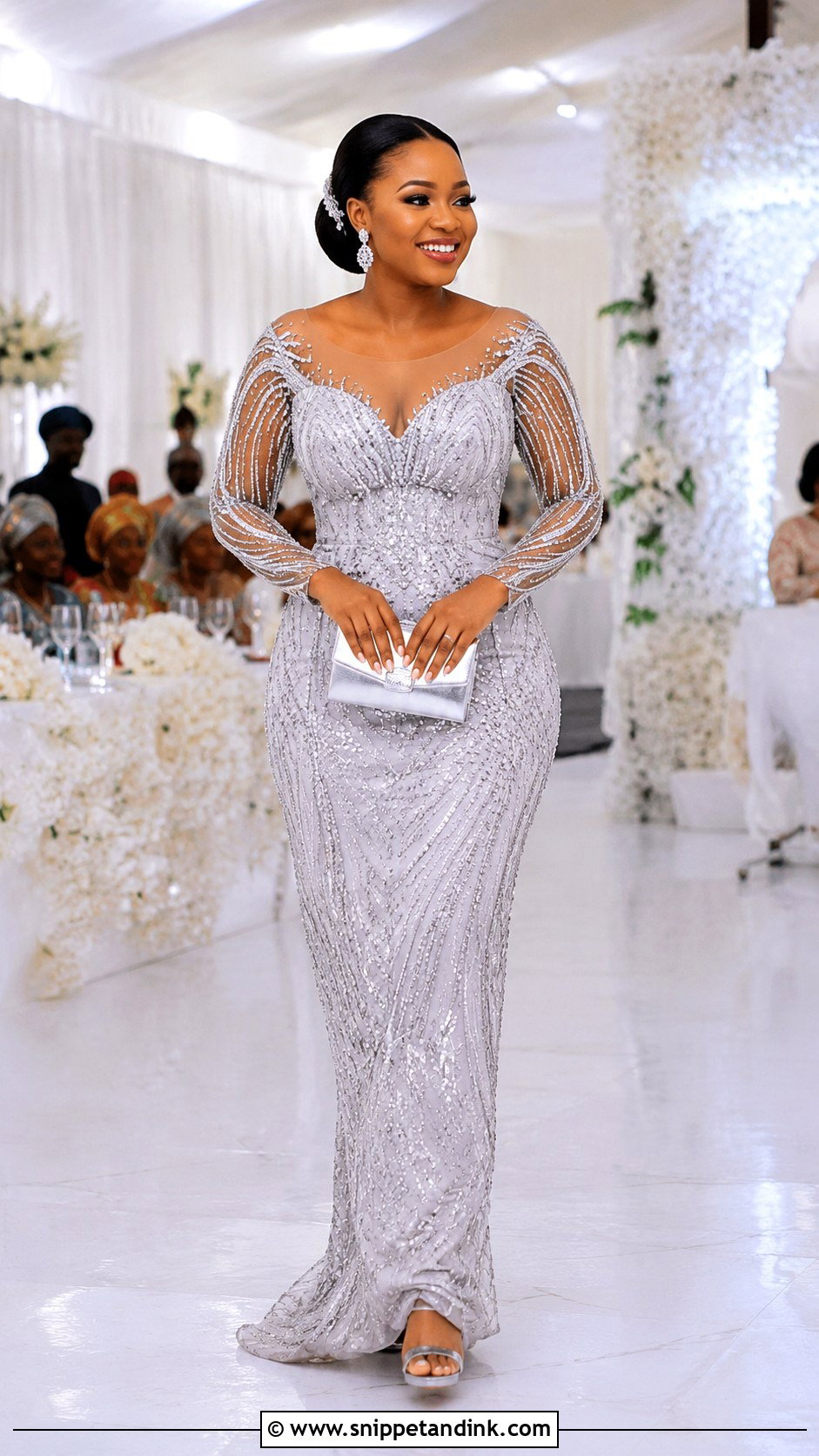
Reception dresses are where brides take back their comfort. After heavy traditional cloth, a fitted beaded gown, feather-trim dress or sleek satin gown is a relief, and a short after-party dress is even easier. Plan hair that stays secure through vigorous dancing, choose embellished sandals or heels you’ve already worn, and keep the clutch small. Silver and champagne are popular, though emerald gives a bolder second entrance.
13. Nigerian Court Wedding Dress
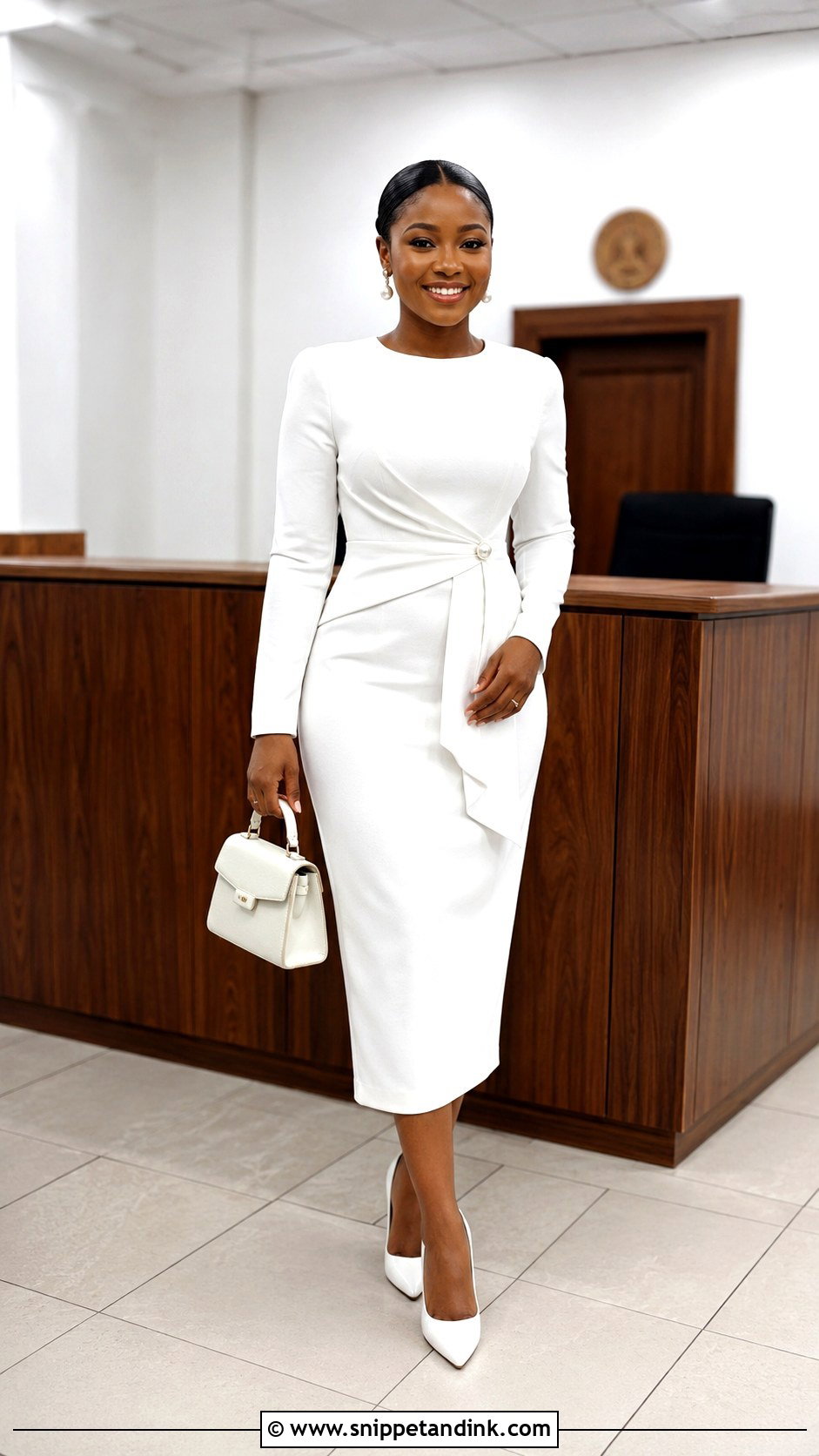
A registry ceremony is short and formal, so a Nigerian court wedding dress should be simple. A white midi, a tailored blazer dress or a modest lace dress all suit the room. Pointed pumps, pearl earrings and a neat hairstyle finish it. If you’d like a Nigerian touch, an aso oke headband or a mini gele looks smart without overwhelming a small office.
14. Ankara Wedding Dress
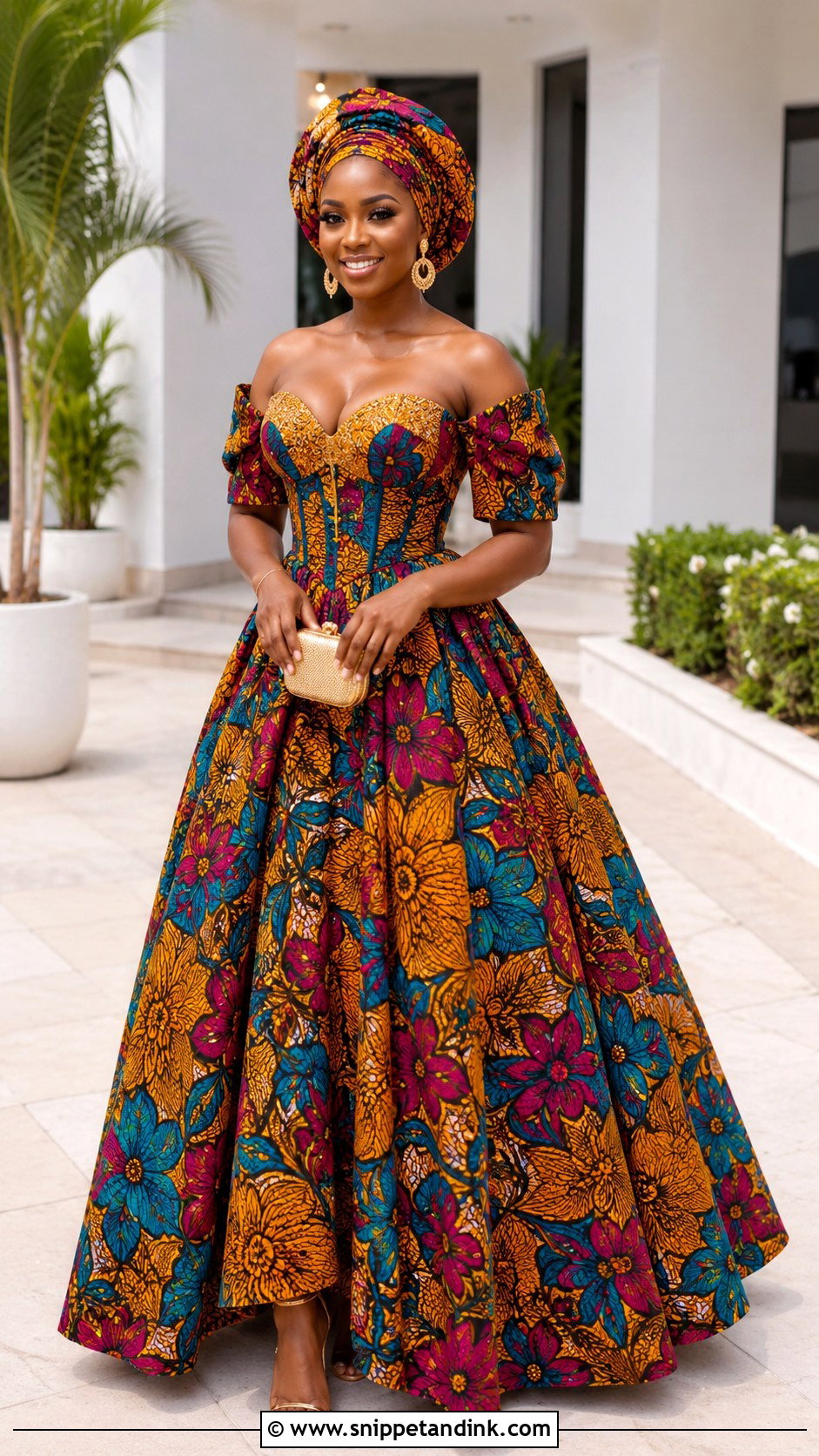
Ankara is wax-print cotton, so it breathes better than most bridal fabrics, which is a real advantage at a daytime introduction. For a wedding-ready version, buy good-quality cloth and keep the cut clean: a ball gown, mermaid or off-shoulder gown. Because the print is already loud, I pair it with simple heels and a solid gele. Mixing Ankara with lace or tulle panels gives it a more formal finish. I reach for it at reception changes, when the bride wants colour and room to move.
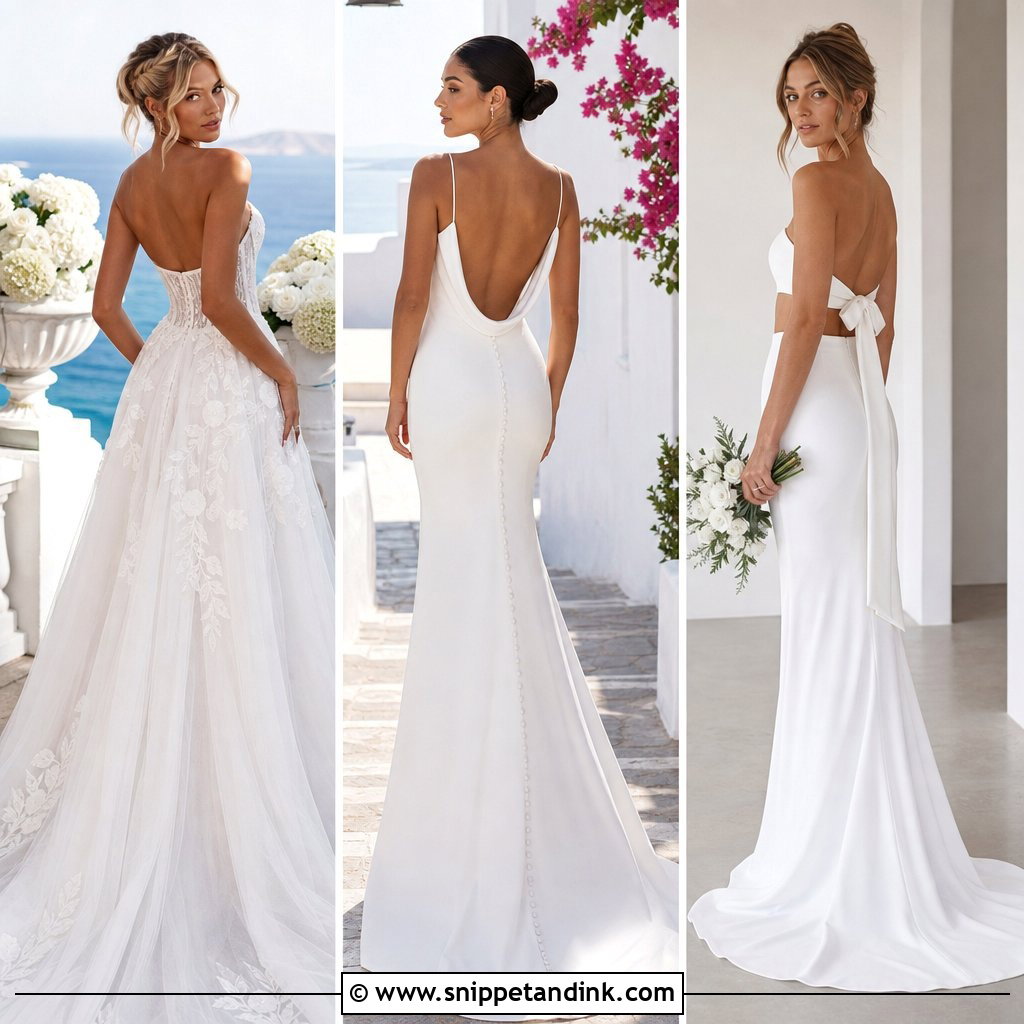
15. Nigerian Peplum Wedding Dress
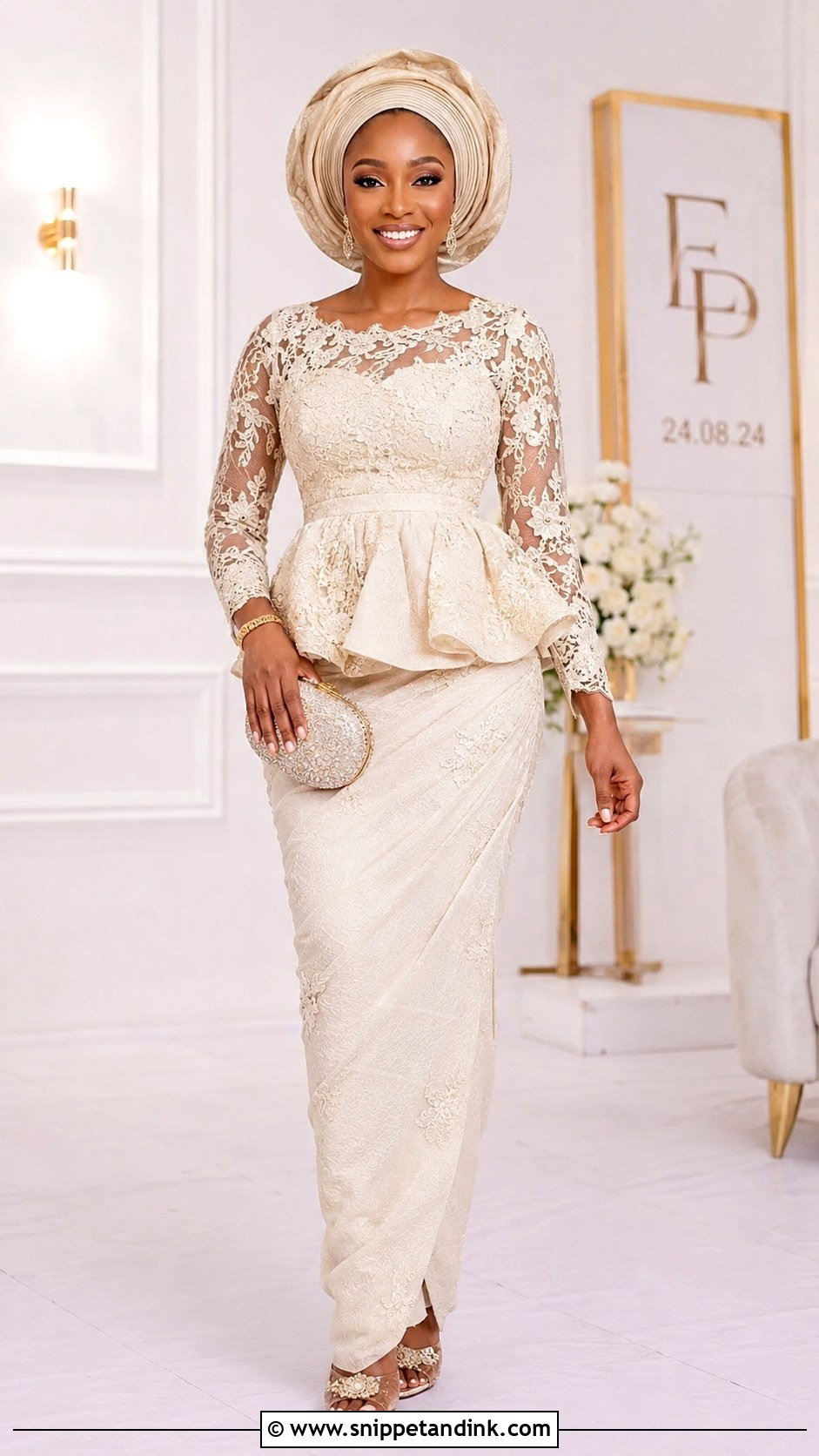
Peplums define the waist while skimming the midsection, which is why so many Nigerian brides find them comfortable. A lace peplum blouse over a wrapper is the traditional version; a peplum gown or top with a fitted skirt is the modern one. Proportion is everything: on a petite bride, a deep peplum cuts the body in half, so I’d keep it short. Lace, brocade and George all hold the shape well.
16. Nigerian Off Shoulder Wedding Dress
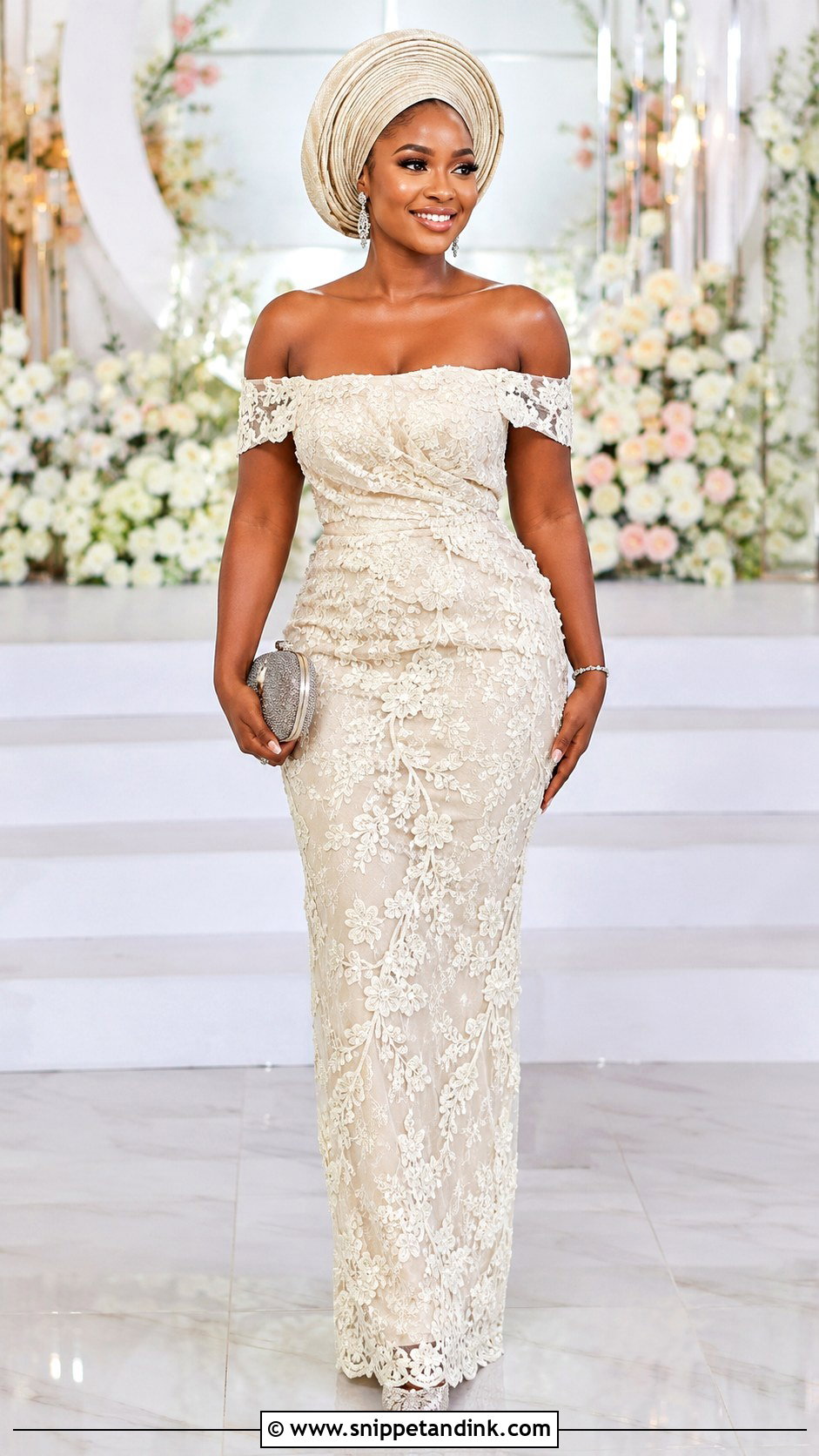
An off-shoulder neckline shows the collarbones and gives coral or a necklace somewhere to sit. It works in lace, satin, aso oke or George, over a mermaid, wrapper or ball-gown skirt. For a traditional event, add a gele or beaded headpiece. The bodice needs real internal support, because you’ll sit, dance and hug guests all day, and a band that slips down the arm is distracting in photos.
17. Long Sleeve Nigerian Wedding Dress
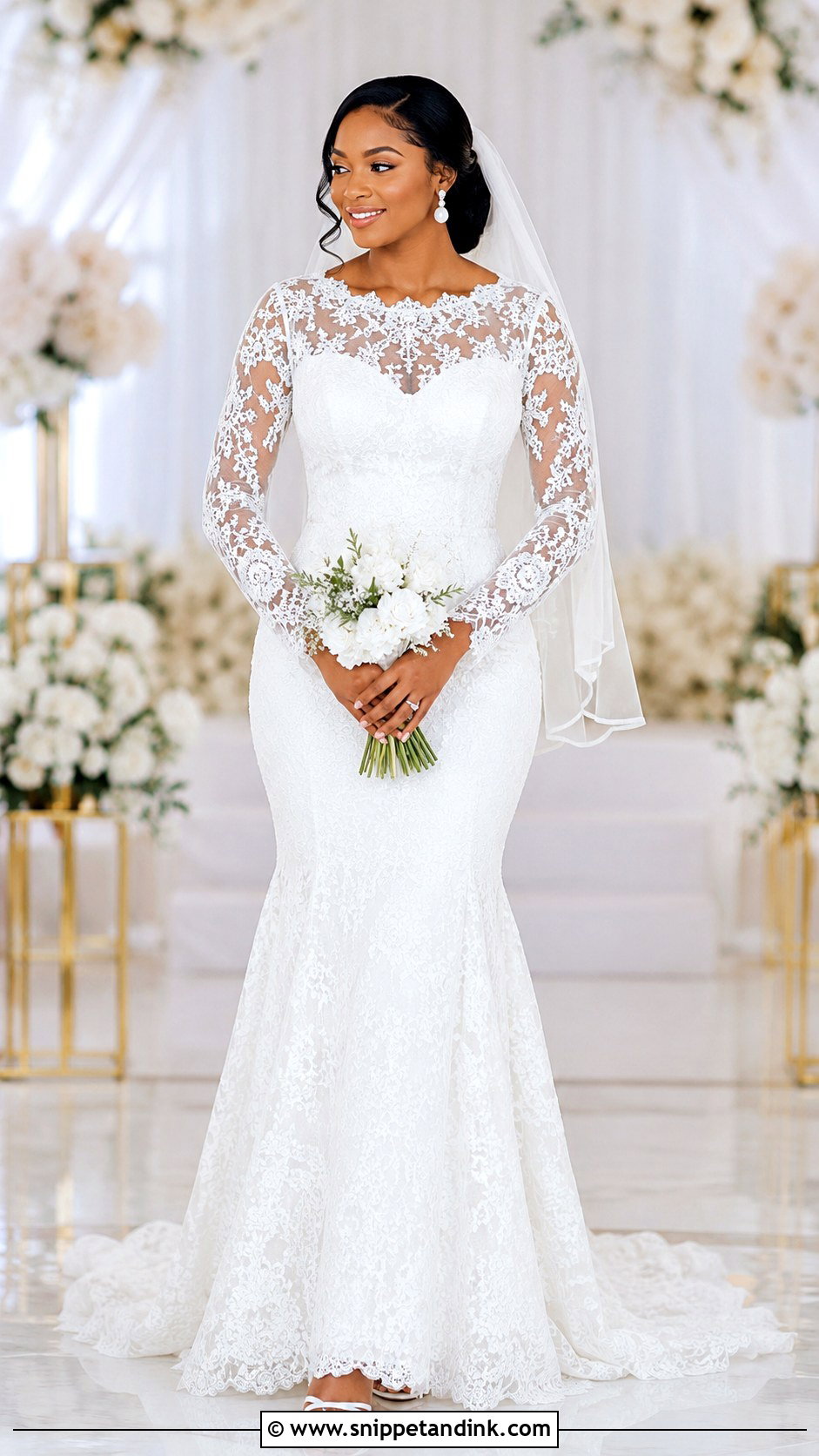
Sleeves give coverage, but they’re also the part of a gown most likely to feel tight by evening. Lace and beaded sleeves are popular for both white and traditional gowns; puff and satin sleeves give a sharper shape. I always check that the bride can lift her arms to dance and hold a fan without the seam pulling. Choose a breathable lining, since sleeves trap heat in a busy hall.
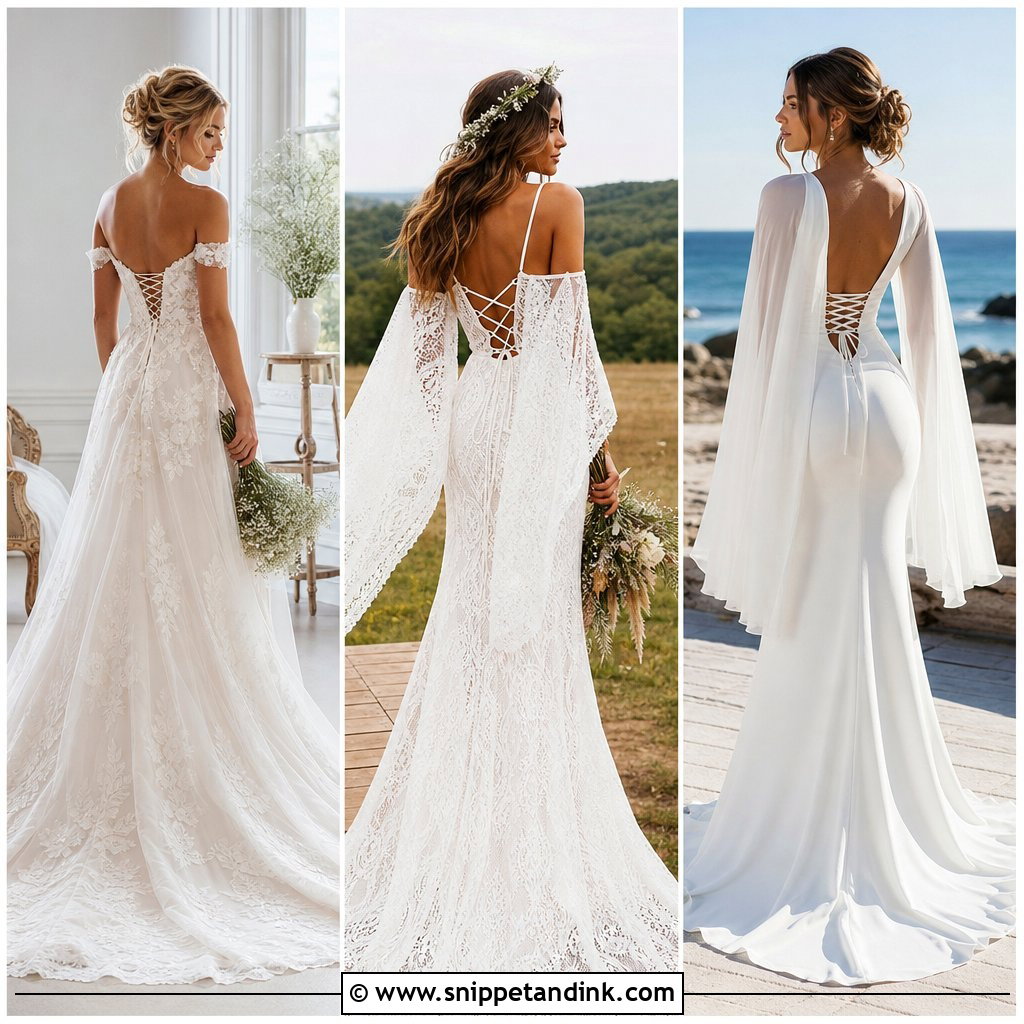
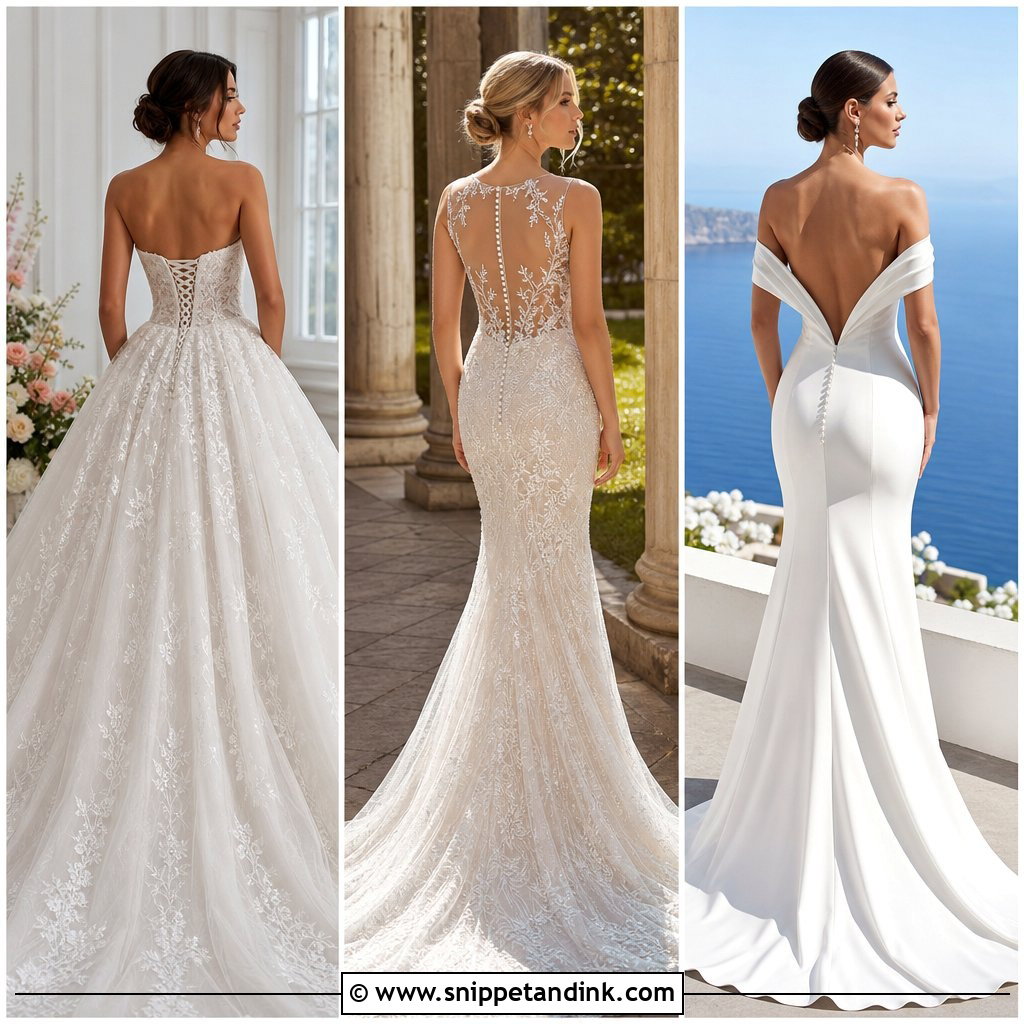
18. Nigerian Corset Wedding Dress
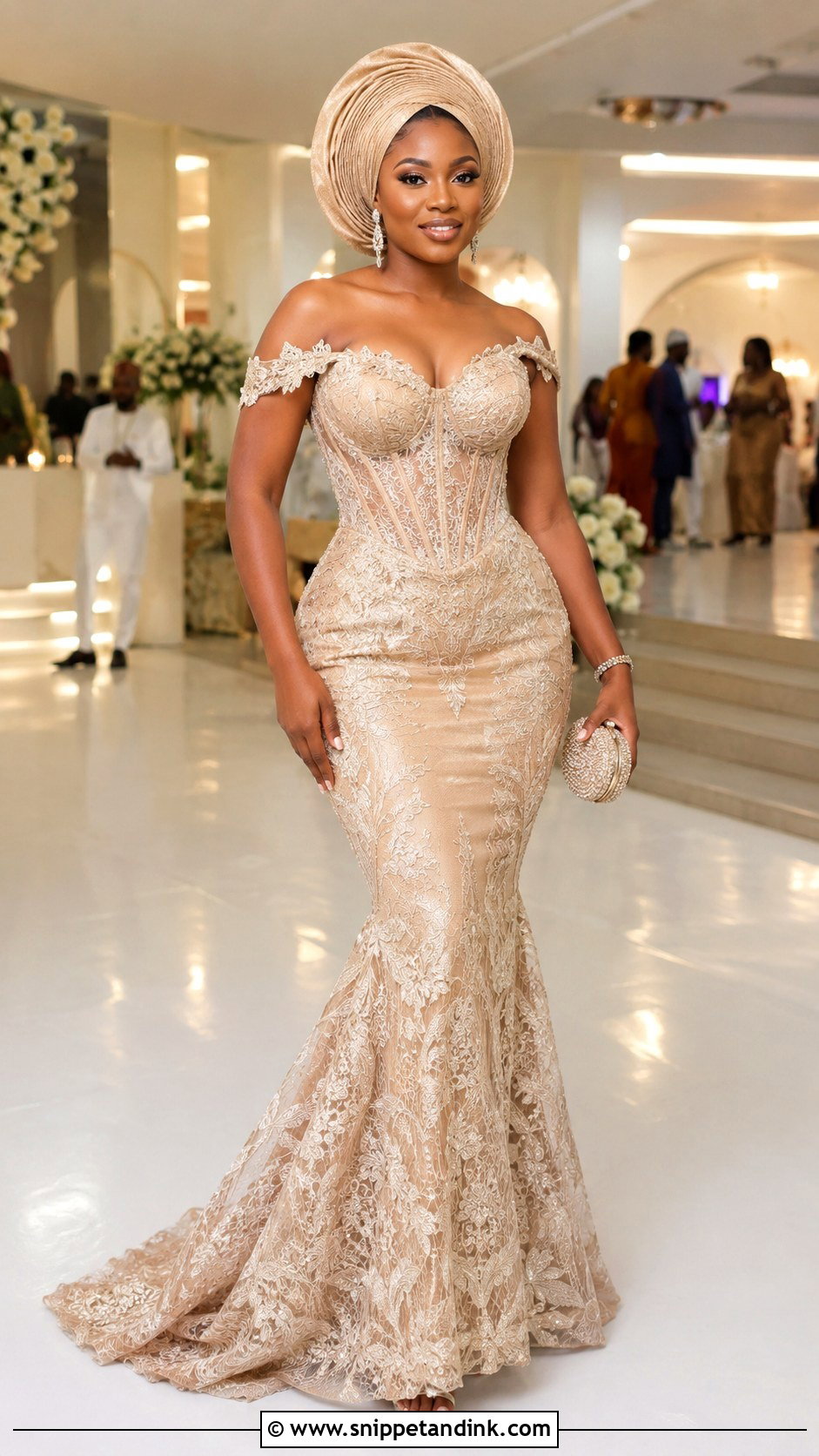
A corset bodice gives the snatched waist many brides want, but it needs proper boning and an experienced tailor. The fit should support you without stopping you from eating or breathing deeply. Lace-up backs allow small adjustments on the day, which helps if you’re in it from the ceremony to the last dance. Pair it with a mermaid, tulle or wrapper-inspired skirt and a matching gele. Cheap corsets show every bone through the fabric in photos.
19. Nigerian Tulle Wedding Dress
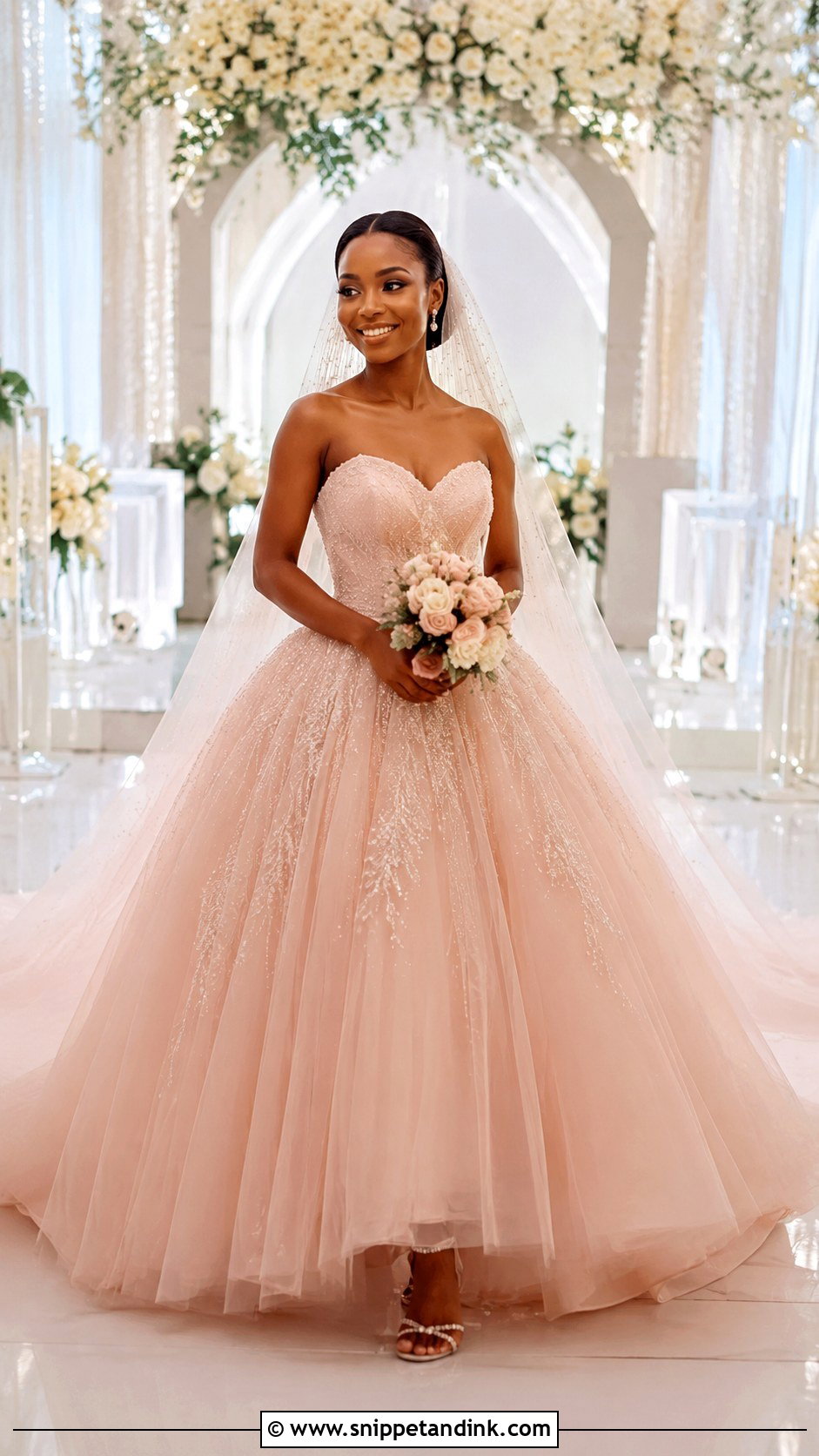
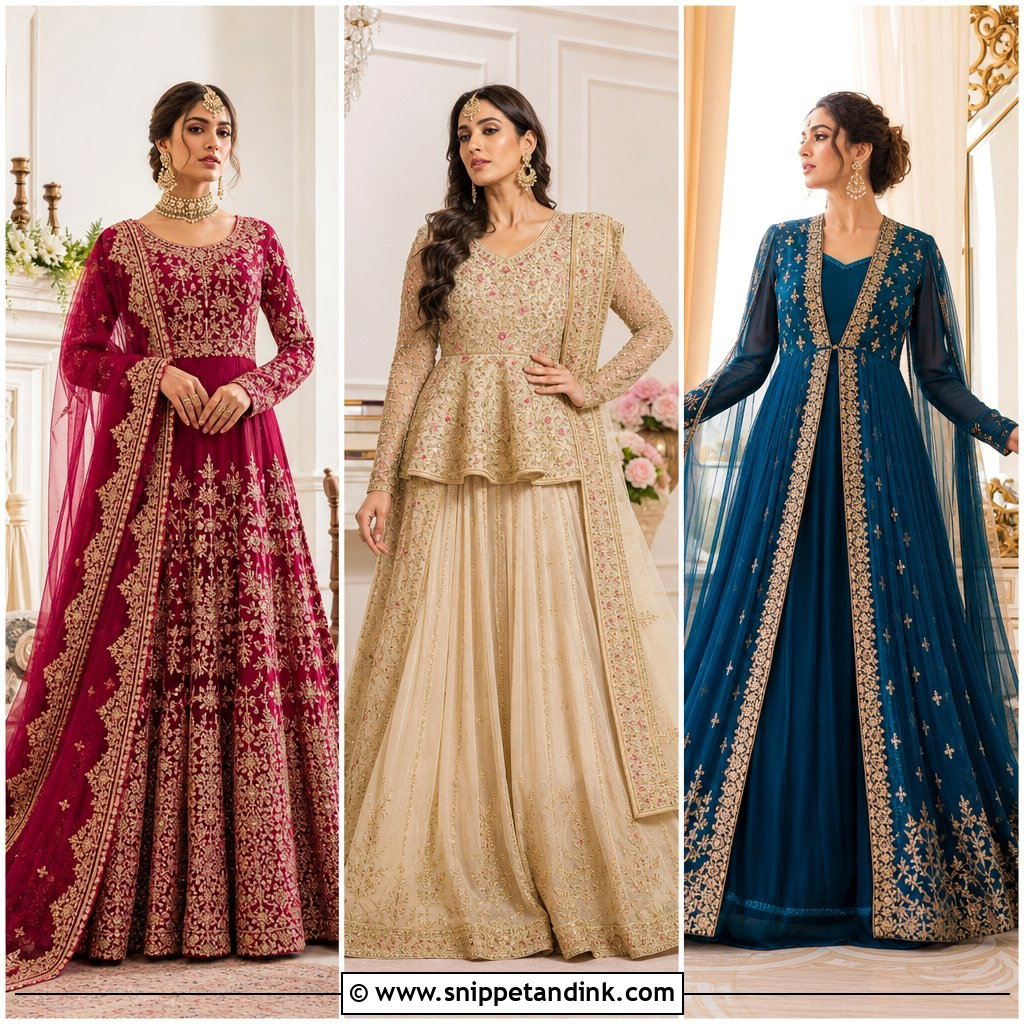
Tulle gives volume without the weight of satin, but it does crush. If you’re travelling to the venue in a car, the skirt needs space or it arrives flat on one side. A white tulle ball gown, a coloured reception dress or a traditional-inspired gown with lace or aso oke details all work. Keep accessories light so a large skirt looks graceful. Blush or soft blue tulle suits brides who want romance without full white.
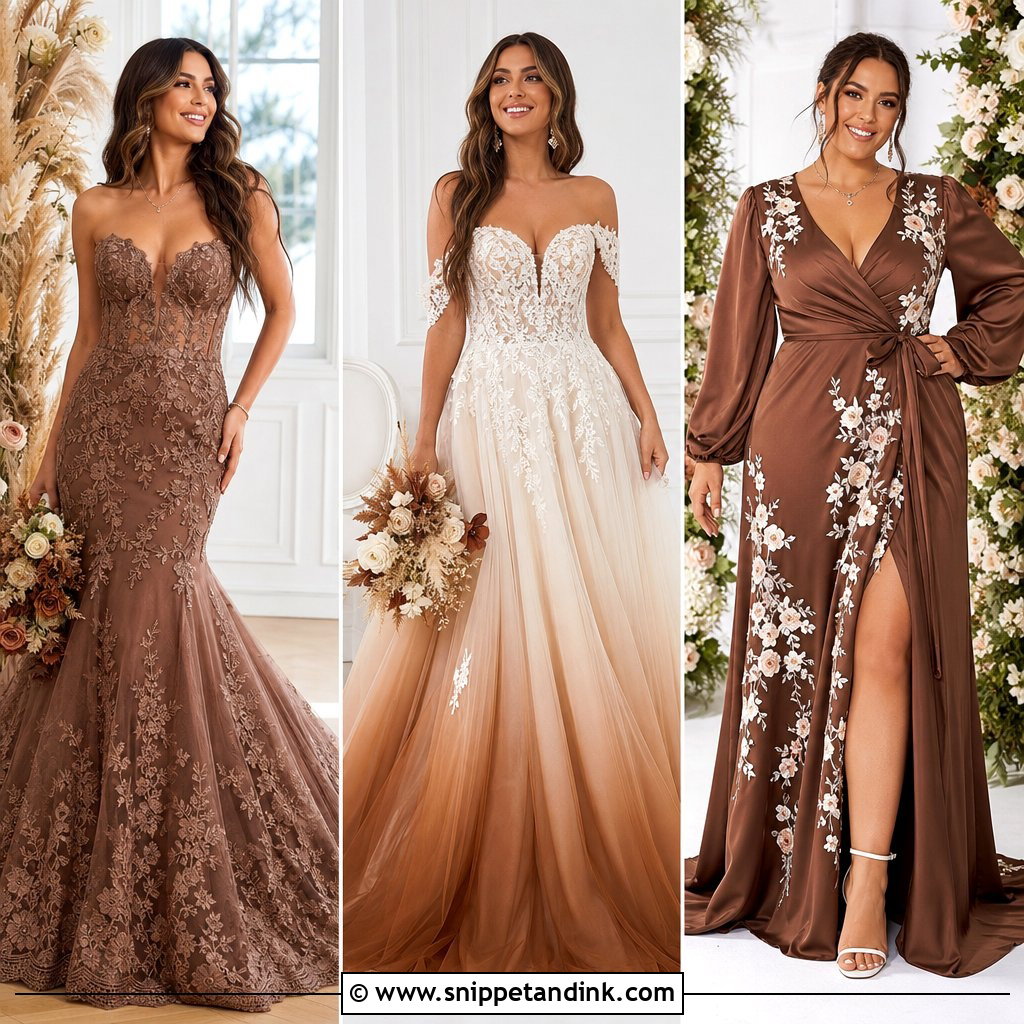
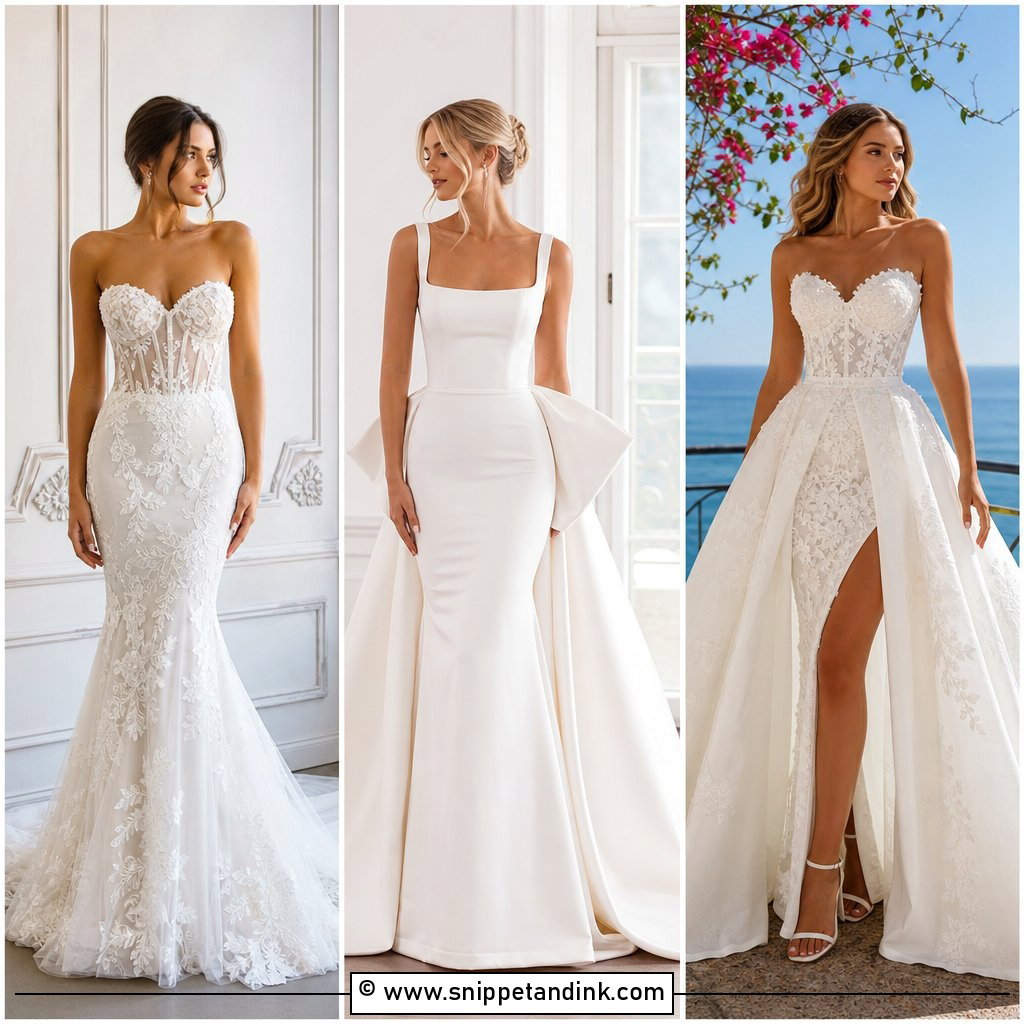
20. Nigerian Satin Wedding Dress
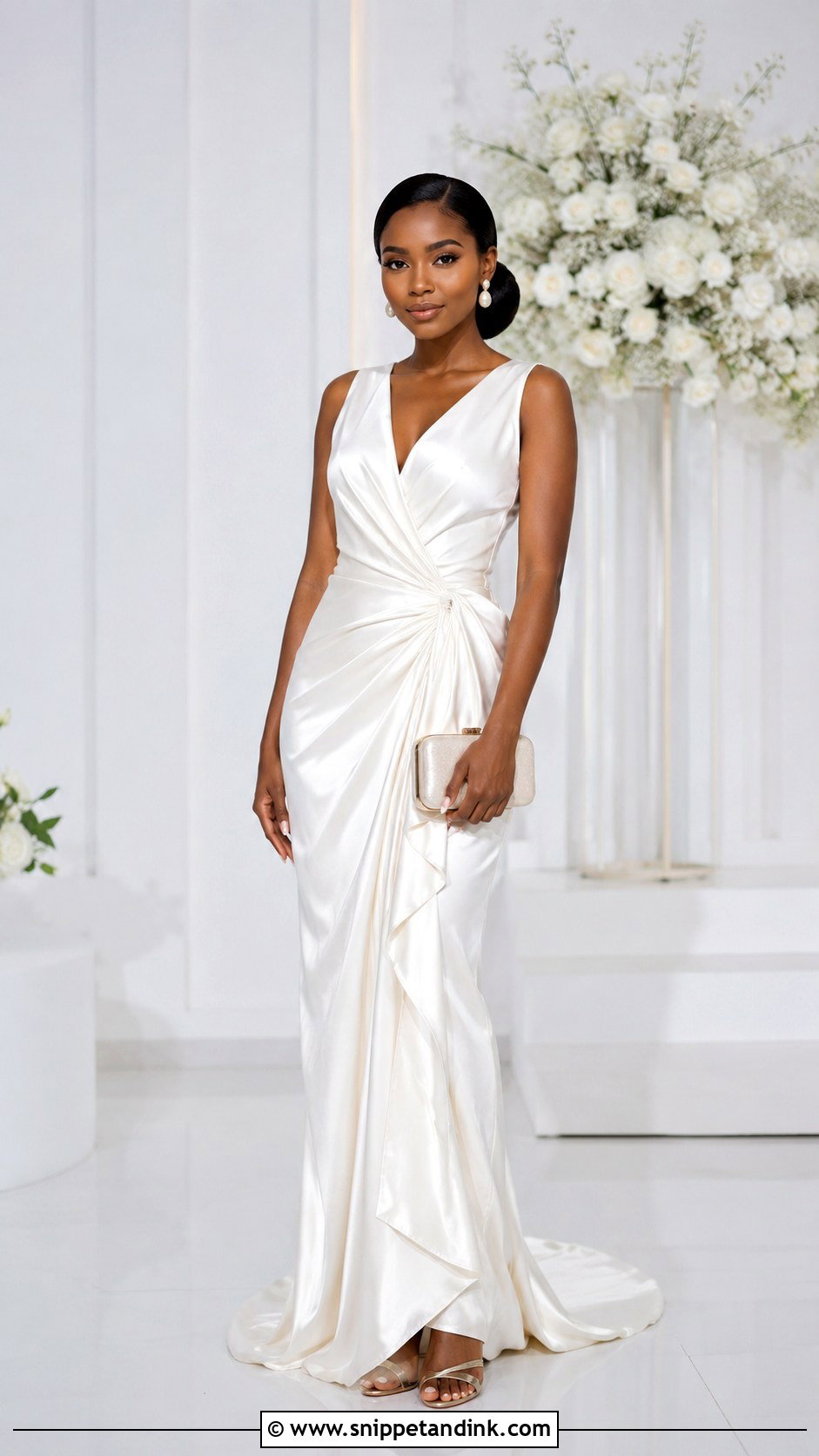
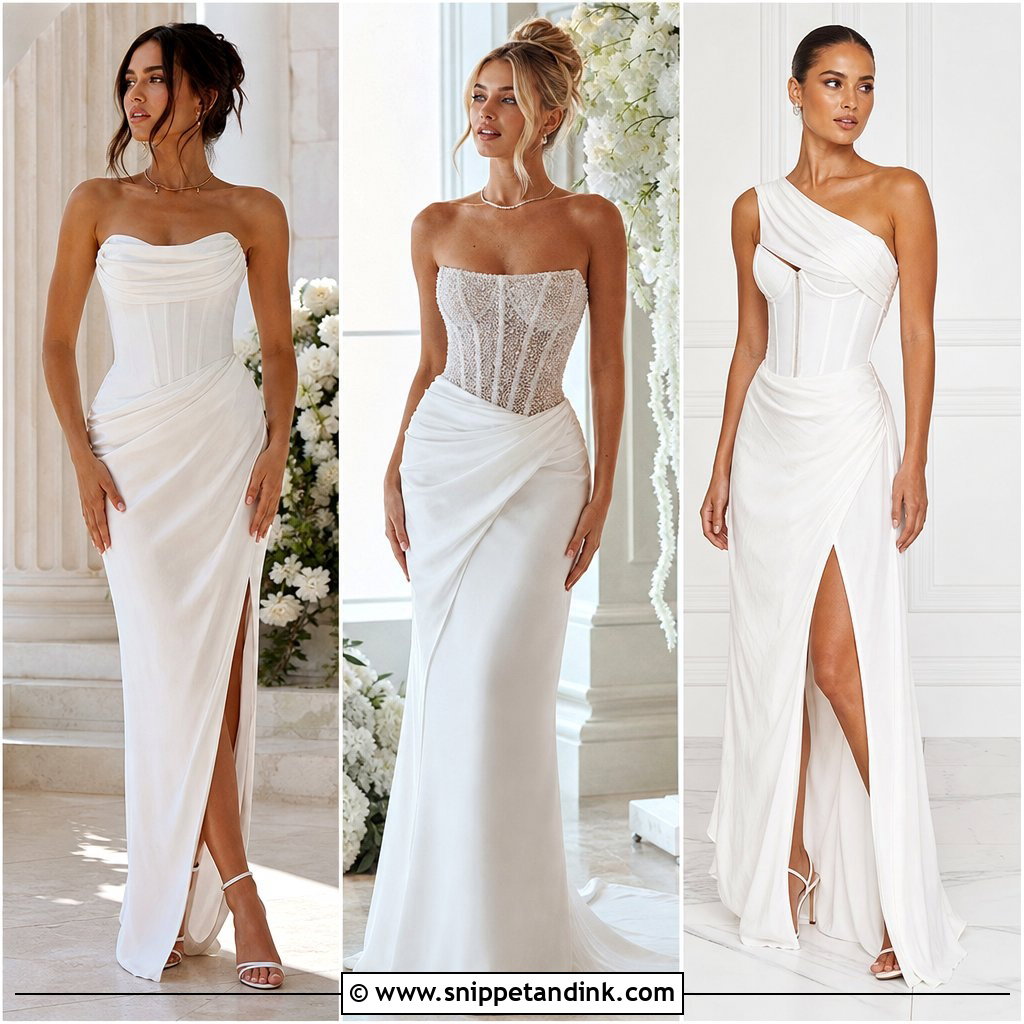
Satin is unforgiving, which is exactly why minimalist brides love it. Every line of the body and every wrinkle shows, so book proper tailoring and a steamer on the day. A wrap gown, corset gown or long-sleeve design can look very modern. An aso oke gele in a complementary colour adds the cultural detail, and pearls with metallic heels keep the rest clean.
21. Nigerian Beaded Wedding Dress
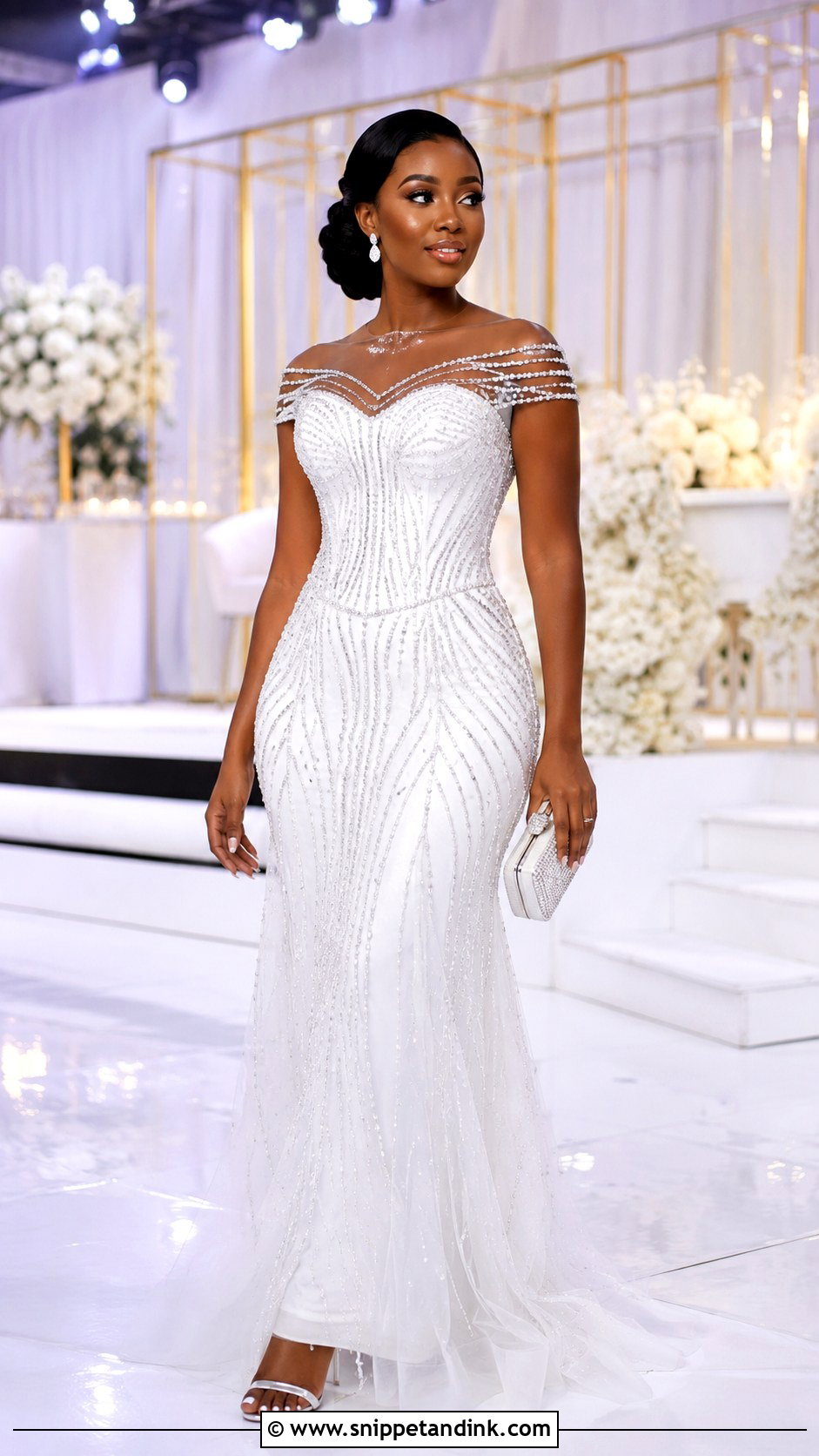
Beading reads best under bright venue lighting, where it catches every lamp. It can sit on lace, tulle, satin or mesh, but it adds real weight, so I steer brides toward a silhouette that balances it: a fitted gown with a clean neckline or an A-line with beading only on the bodice. Simple earrings and slim heels let the gown lead. Check seams for loose beads at your last fitting; a few always come away during dancing.
22. Nigerian Velvet Wedding Dress
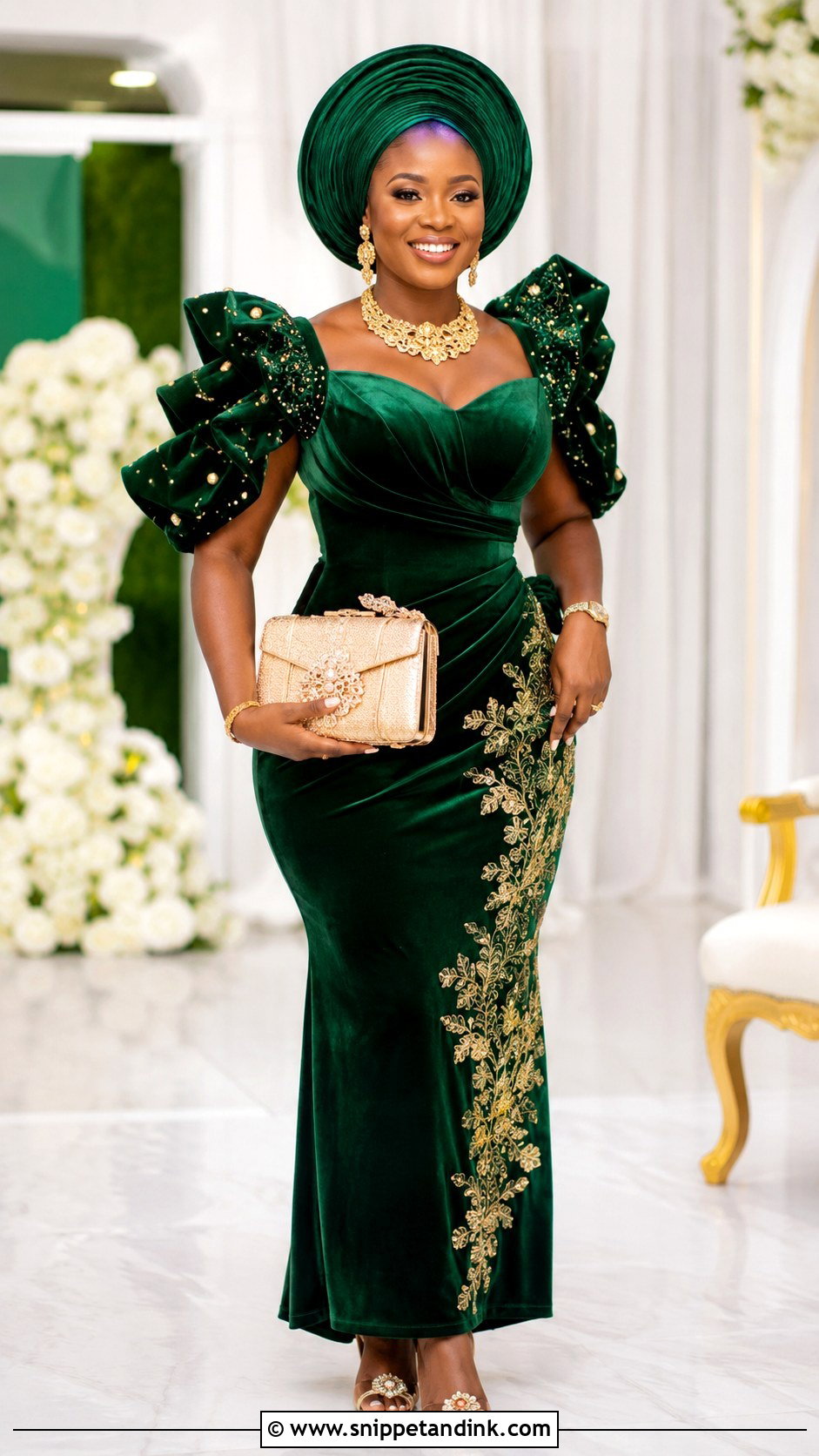
Velvet suits indoor evening events and air-conditioned halls; in daytime heat it becomes uncomfortable fast. Emerald, burgundy and deep red look richest in it. A fitted velvet gown with gele feels modern, while a velvet blouse with George wrapper is the classic route. Keep layers to a minimum because velvet is heavy, and add gold jewellery rather than heavy beadwork, since the texture already has presence.
23. Nigerian Two Piece Wedding Dress
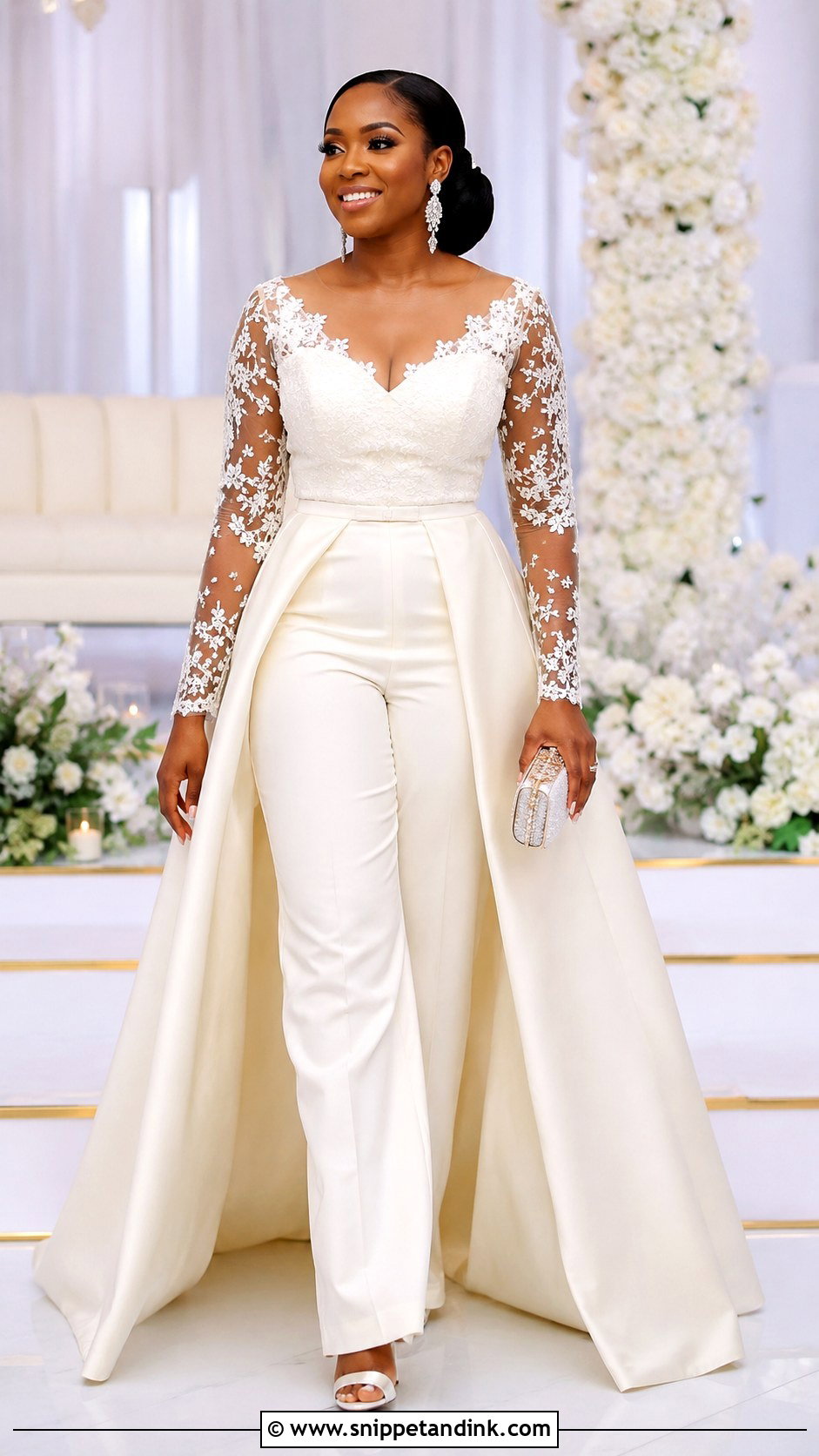
Separates solve fitting problems a gown can’t, because top and skirt are adjusted independently. A Nigerian two piece wedding dress might be a crop blouse with a high-waist skirt, a peplum top with wrapper or a fitted blouse with a flared skirt. Lace, aso oke, Ankara and George all work. Make sure the waistband sits high enough that no gap appears when you raise your arms.
24. Nigerian Bride Jumpsuit Dress
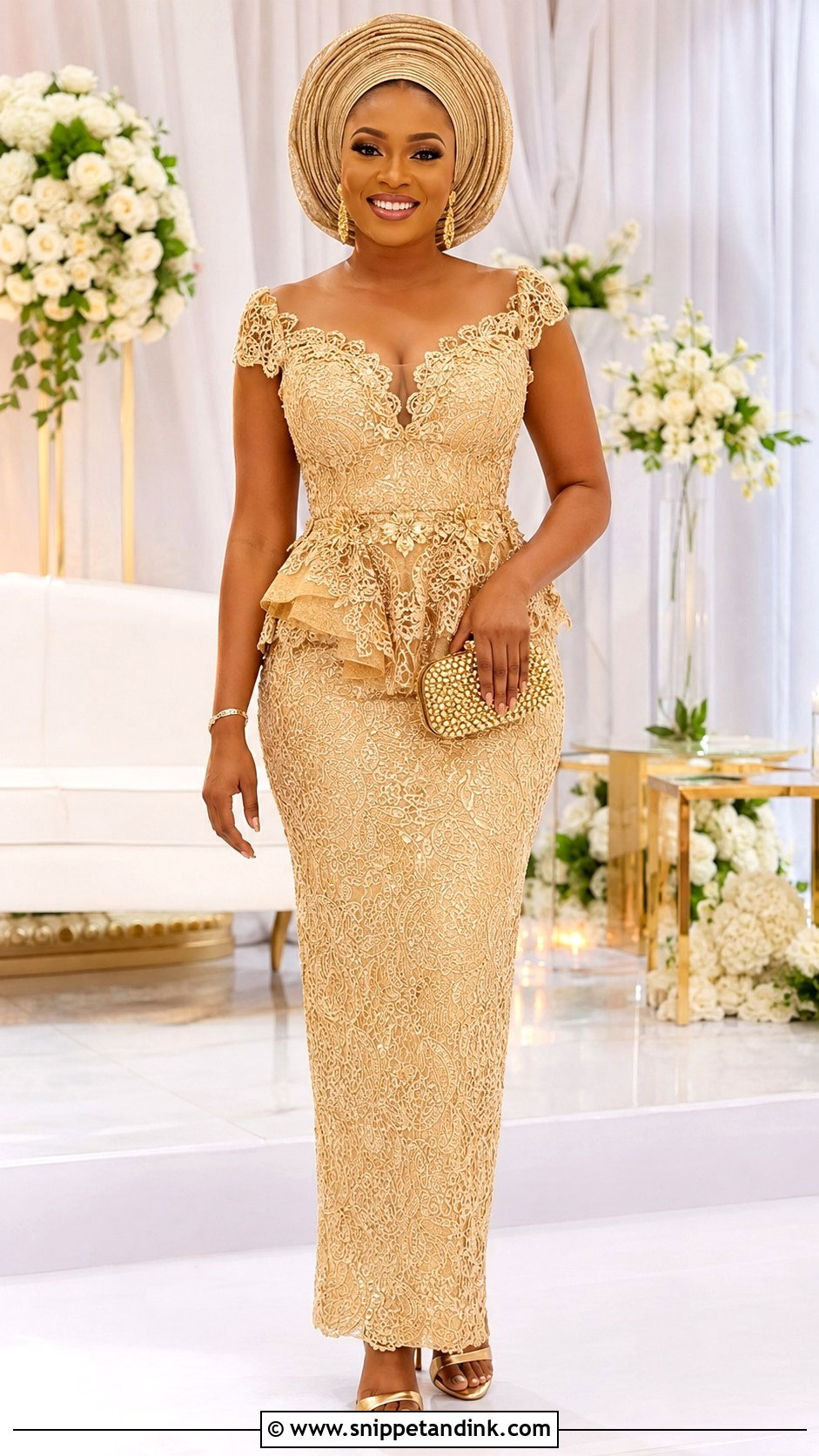
A bridal jumpsuit is my suggestion for brides who plan to dance hard at the after-party. White, ivory or champagne with lace sleeves, a beaded bodice or a detachable skirt overlay keeps it bridal. A cape or train adds ceremony feeling while the trousers stay comfortable. Tailoring at the waist, hips and hem is what separates a bridal jumpsuit from a party outfit, so give it the same fittings as a gown.
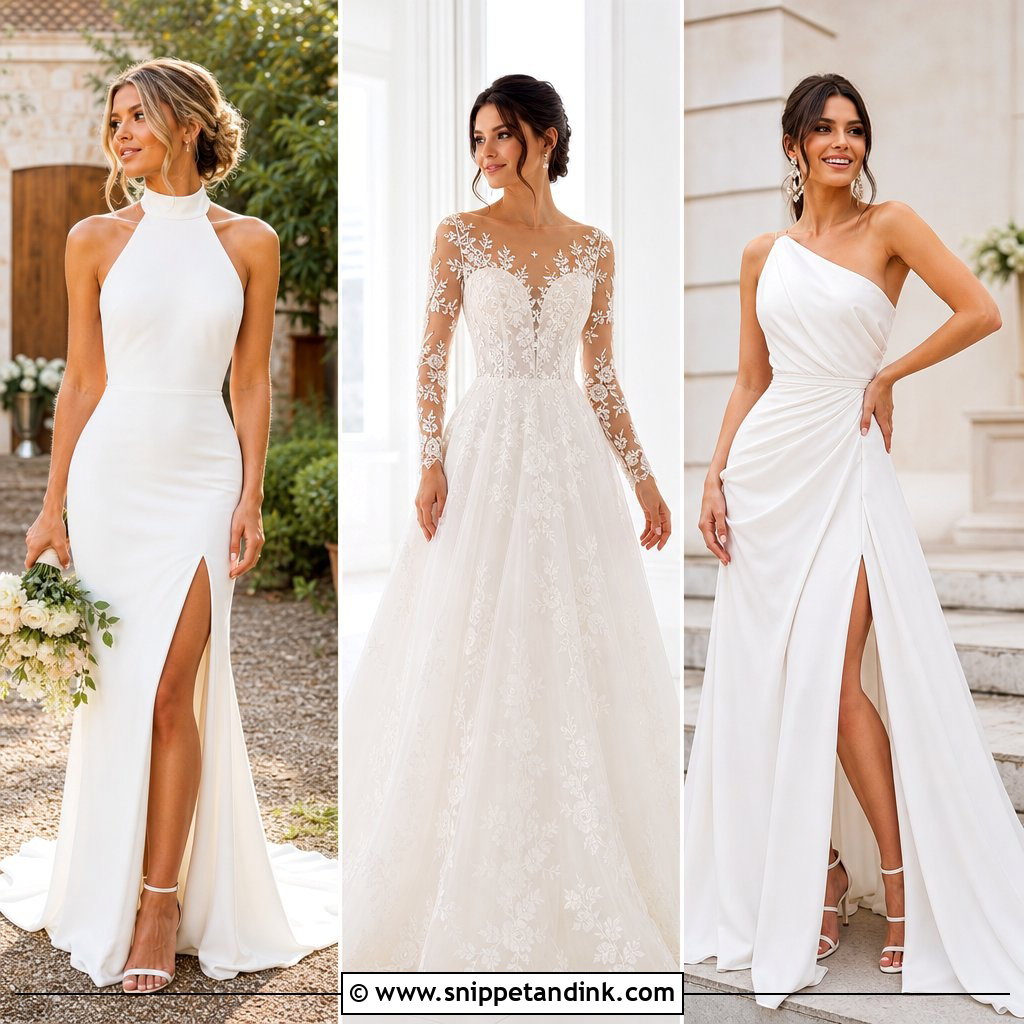
25. Nigerian Bride Second Dress
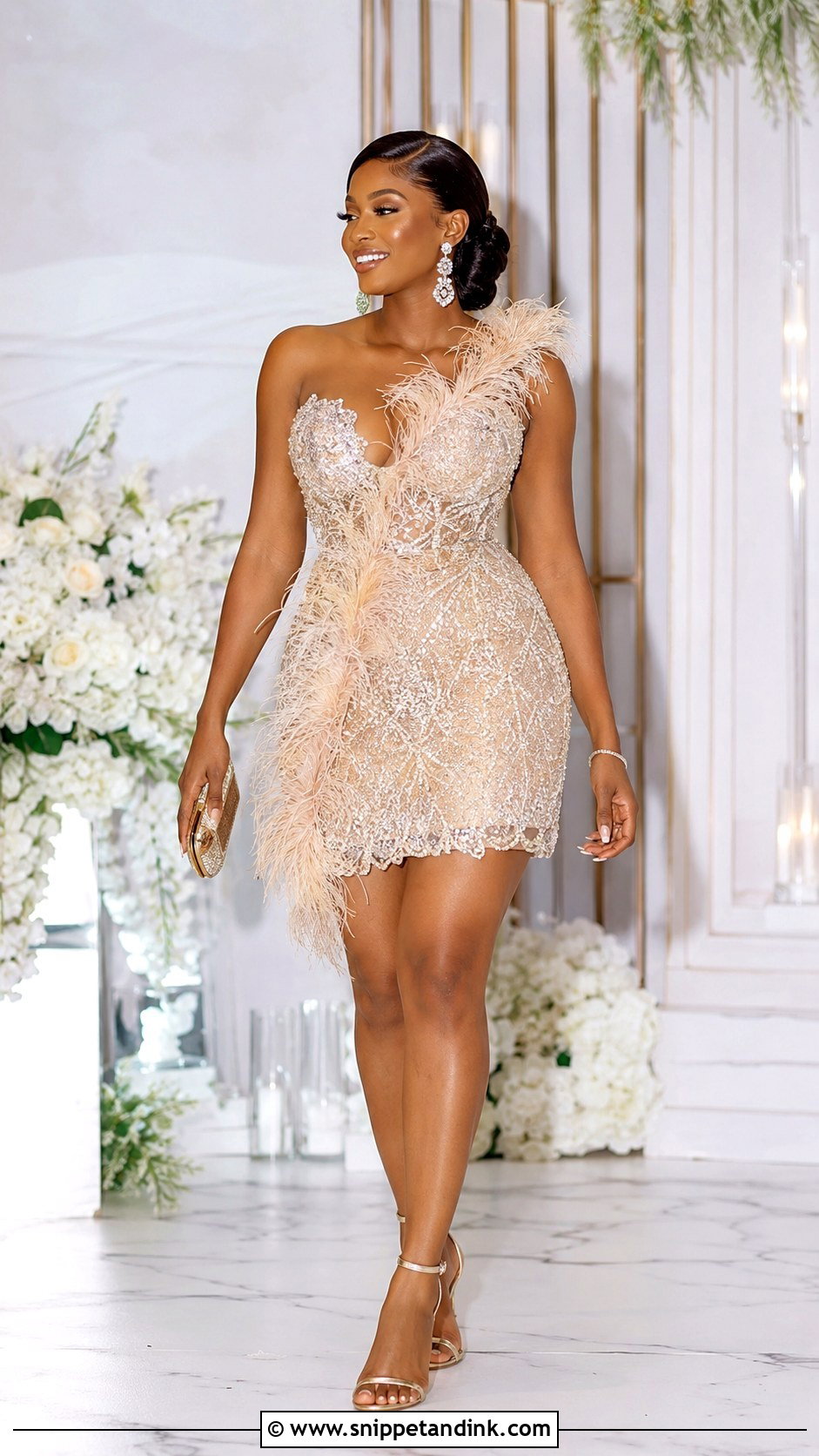
The second dress should contrast with the first. Traditional first look? Switch to a modern white or champagne gown. White gown first? Move into colourful lace, aso oke or beaded reception wear. Fitted lace, satin slips, feather trims and short embellished dresses are all common. Plan the change like a scene: someone to help with fastenings, the gele or headpiece swapped, and shoes ready by the door.
Lace, Brocade and Heat in a Packed Hall
Nigerian receptions are warm. Halls fill with hundreds of guests, lighting rigs add heat, and power cuts can switch off the air conditioning for a stretch. Fabric choice decides how you feel at hour six, so I consider weight and breathability alongside colour.
How the common fabrics behave
- Cord lace is raised and dense, holds shape well and is warm. Good for fitted gowns, less good for daytime outdoor events.
- French lace is finer and lighter, better for long sleeves and humid days, but it snags more easily.
- Beaded lace is the heaviest and needs reinforced seams. Expect a few beads to fall off by night.
- Brocade and aso oke are stiff and structured, so they suit peplums and ball gowns, but they don’t drape on the body.
- Ankara cotton breathes best and creases most, so pack a travel steamer.
Ask your tailor for a cotton or other breathable lining rather than polyester against the skin, and for sweat shields in fitted sleeves. During the rainy season, have hems finished slightly shorter so they don’t soak up water between the car and the door.
A Dress List Built Around the Order of Your Events
Start with the schedule, not the fabric. List each event, from introduction to church to reception, then decide which cloth and silhouette suit that moment, how long you’ll wear it and how much you’ll dance. Aso oke, George, lace, satin, Ankara, velvet and tulle all have a place. Strong tailoring matters more than trend, particularly for structured gowns, wrappers and corsets. A bride who looks composed at the last dance is the one whose dresses were chosen for the hours, not just the entrance.
You'll Like These Ideas:




Leave a Reply