
A white wedding gown for a Nigerian celebration has a harder job than most. It has to hold up through a long service, a grand entrance, hours of greeting relatives, photographs with every branch of the family and a dance floor where guests will crowd in around you. Nigerian brides tend to want real drama, and I’m all for it, but when I style a bride I judge every gown by how it moves and breathes as much as how it looks on the hanger. So each of the twenty looks below comes with the veil, shoes and jewellery I’d put with it, plus the fitting detail I’d check before you commit.
Planning the White Gown Around a Weekend of Outfits
Most Nigerian brides I dress aren’t buying one outfit. There’s the traditional engagement, often in aso oke, george or another family fabric, the church or court ceremony, and frequently a reception change. The white gown sits in the middle of all that, and it should be planned with the others in mind rather than chosen on its own.
- Decide early whether you’ll change for the reception. If yes, the ceremony gown can be grander and heavier, because you won’t dance in it for four hours.
- If there’s no change, prioritise a skirt you can move in, or build in a detachable train or overskirt.
- Keep the white gown’s metal tone in conversation with the traditional outfits. Gold beading on the gown and silver jewellery on the engagement look can feel disjointed across the album.
- Think about who will dress you. A gown with fifty loops down the back needs a patient helper and time between events.
Custom gowns from a local designer usually need several months and at least three fittings, more if there’s hand beading. Imported gowns often arrive in a standard size and still need alterations, so leave room for that in the calendar too.
1. Nigerian Ball Gown Wedding Gown
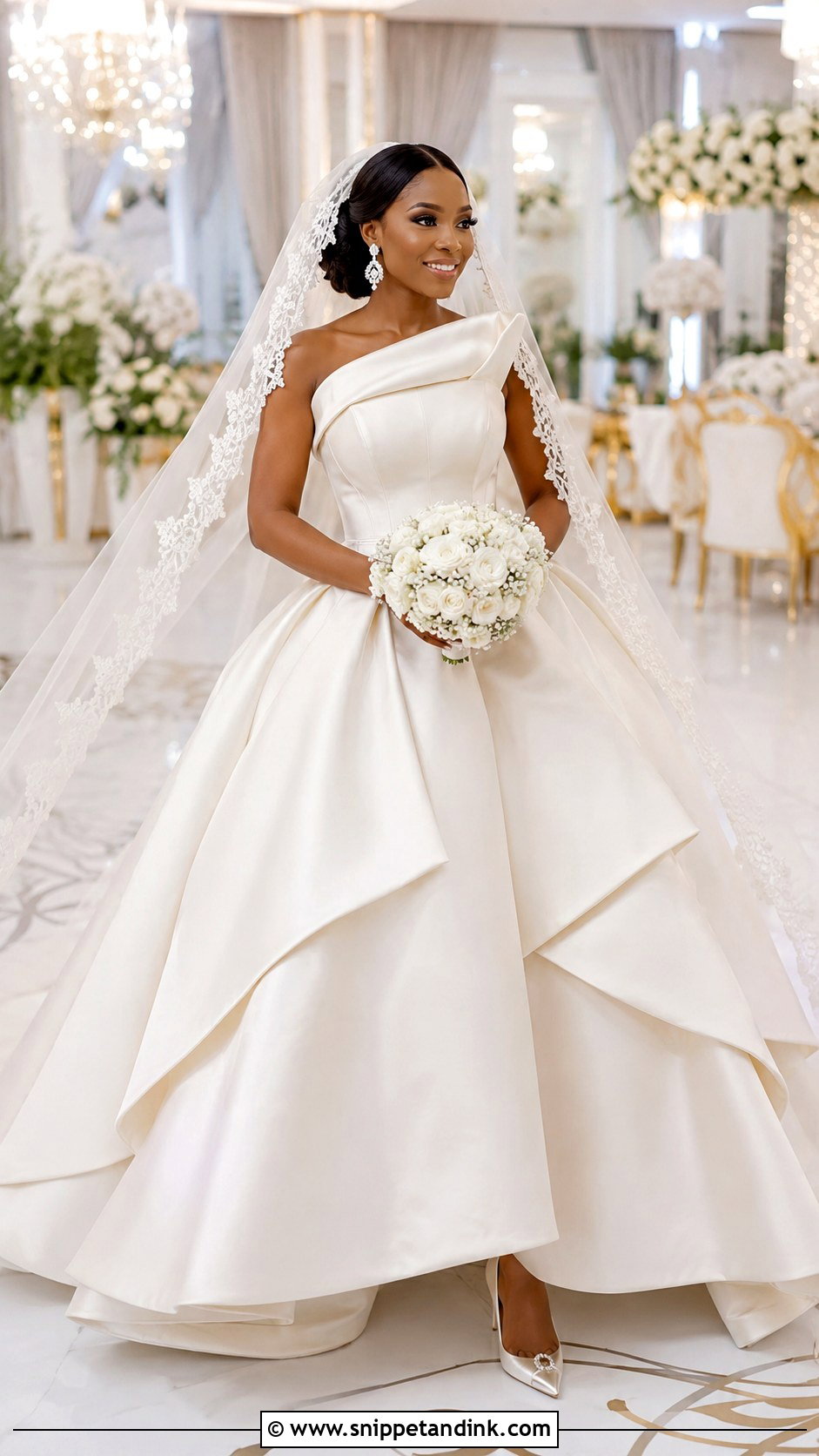
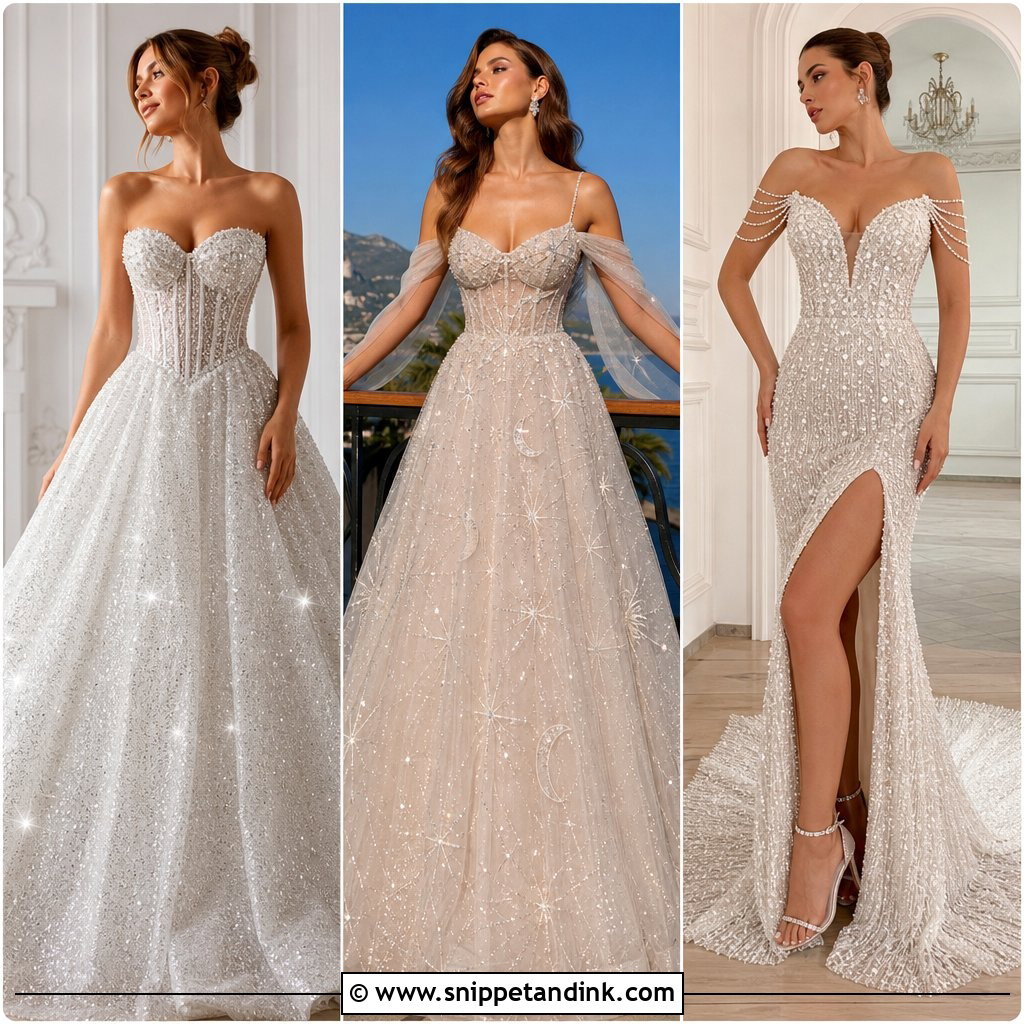
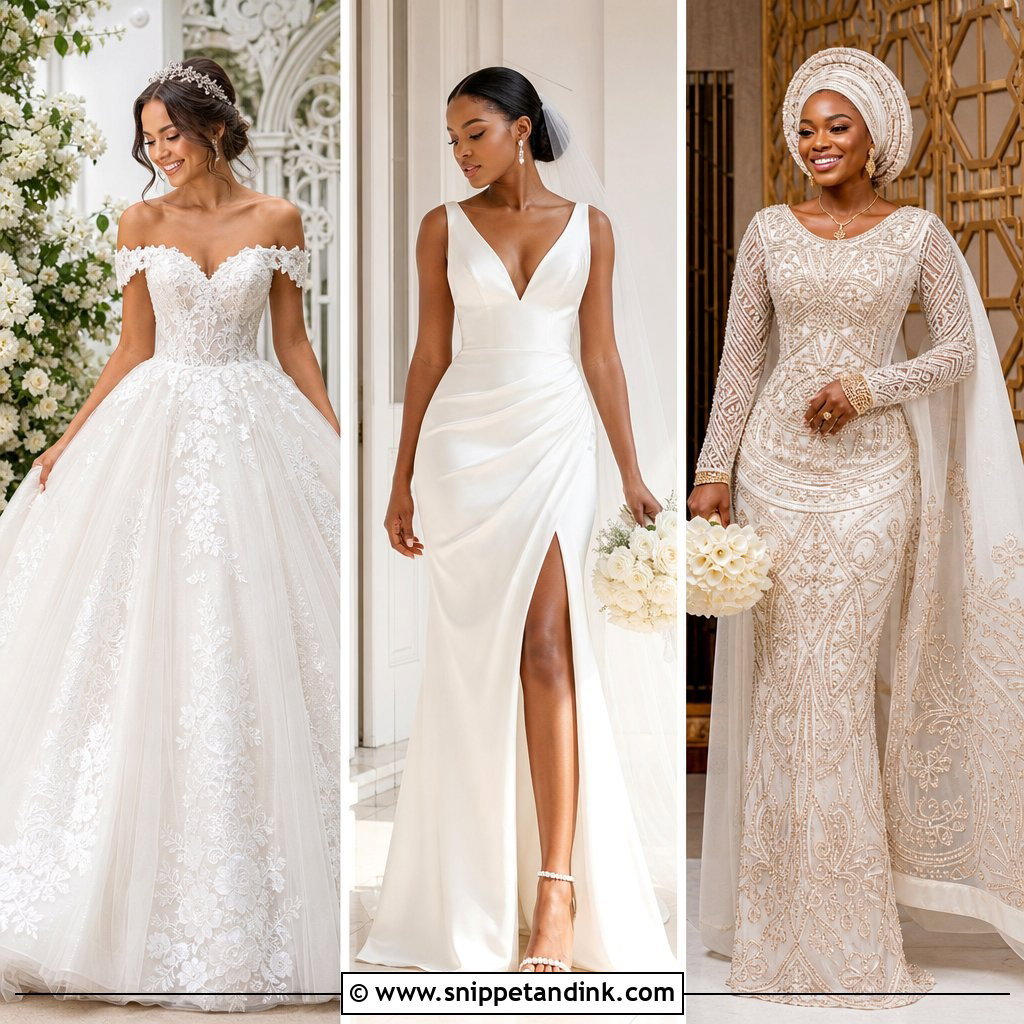
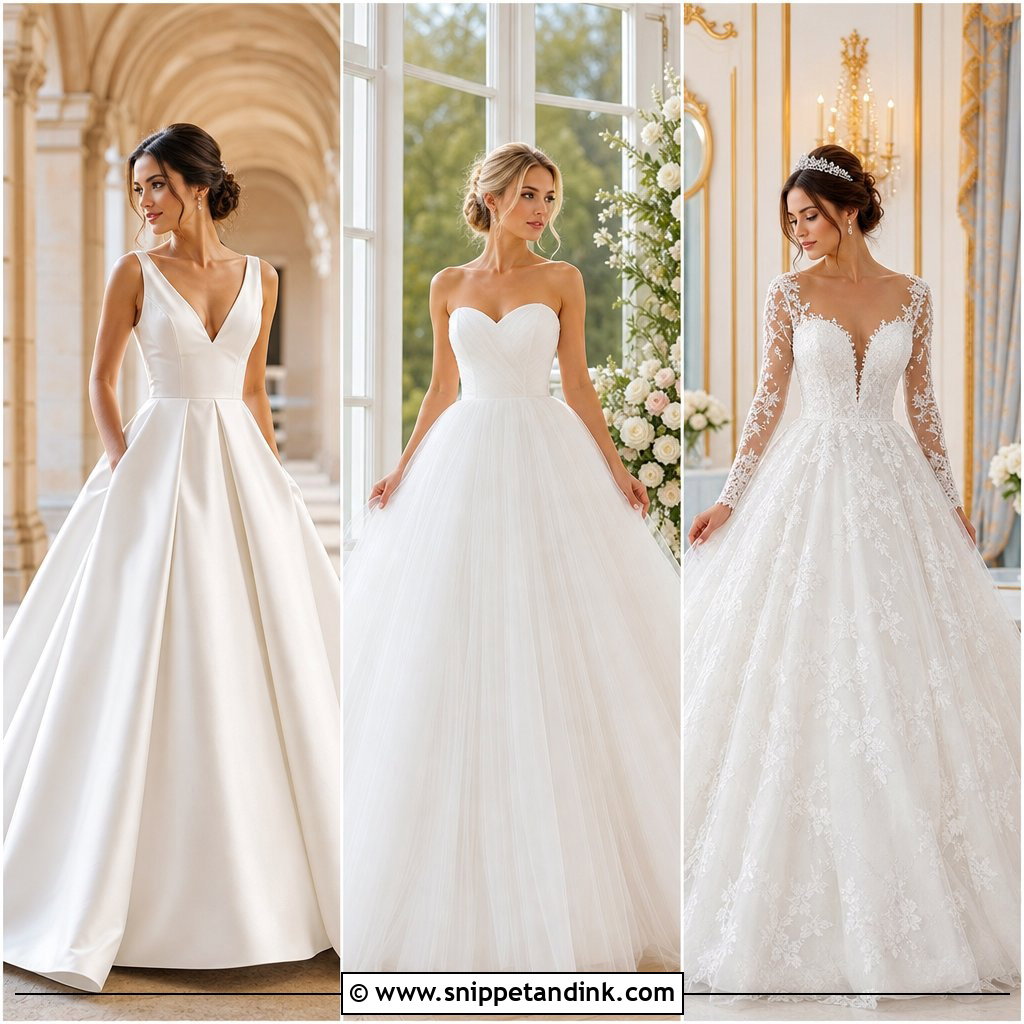
For a ballroom entrance, a structured ball gown still does the most work: fitted bodice, defined waist, wide layered skirt. Mikado and heavy satin hold that shape on their own, while tulle needs several layers and a stiff underskirt to do the same. I keep the neckline soft, usually a sweetheart, so the skirt doesn’t swallow the bride. Cathedral veil, crystal drops, pointed ivory pumps, small white bouquet. The skirt falls away from the waist, which is why brides with fuller hips often feel most at ease in this shape. What I ask the maker for every time is an inner corset and a lighter skirt build. A full mikado skirt can weigh more than people expect, and by the third hour you feel every gram.
2. Nigerian Lace Mermaid Wedding Gown
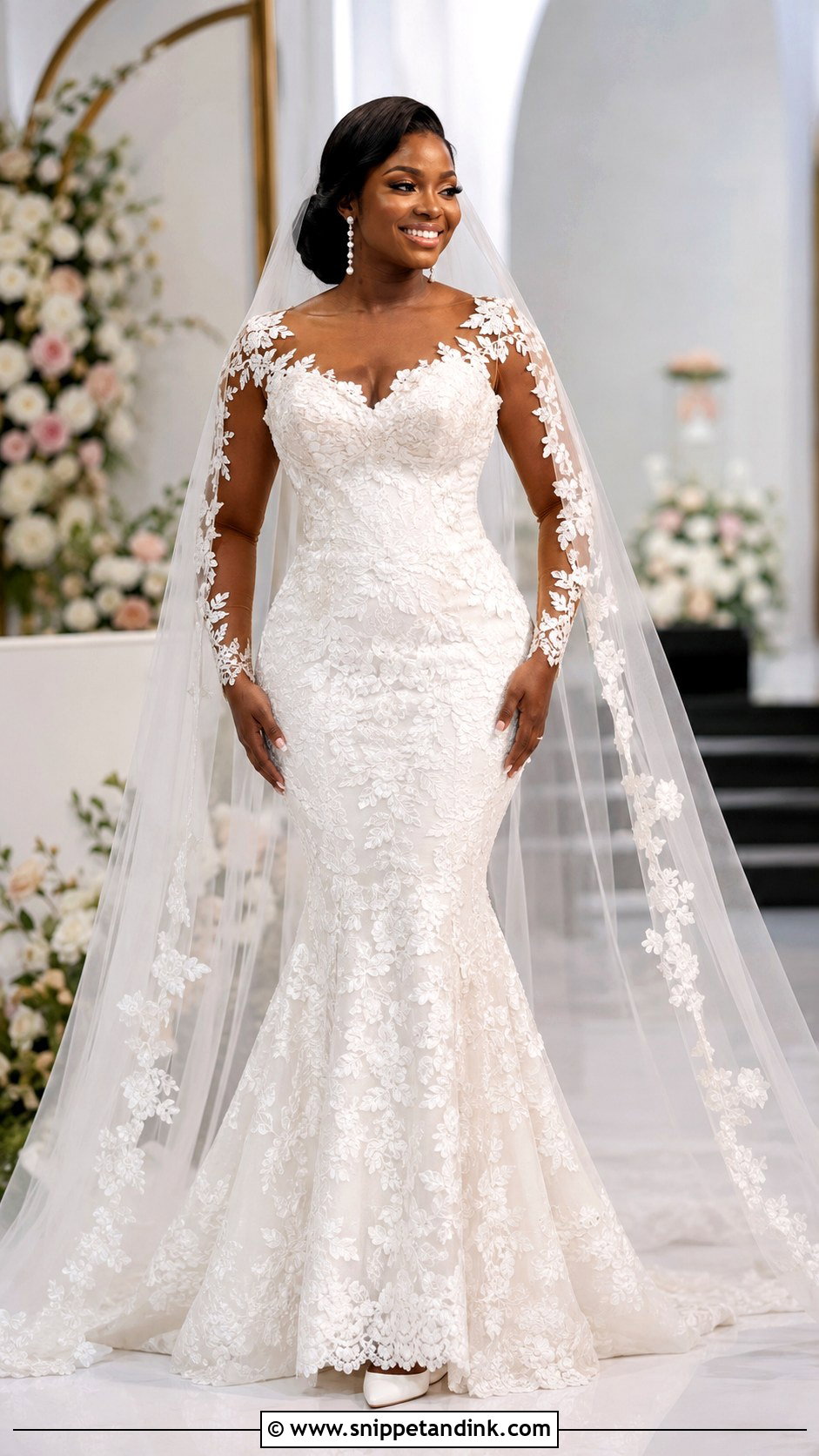
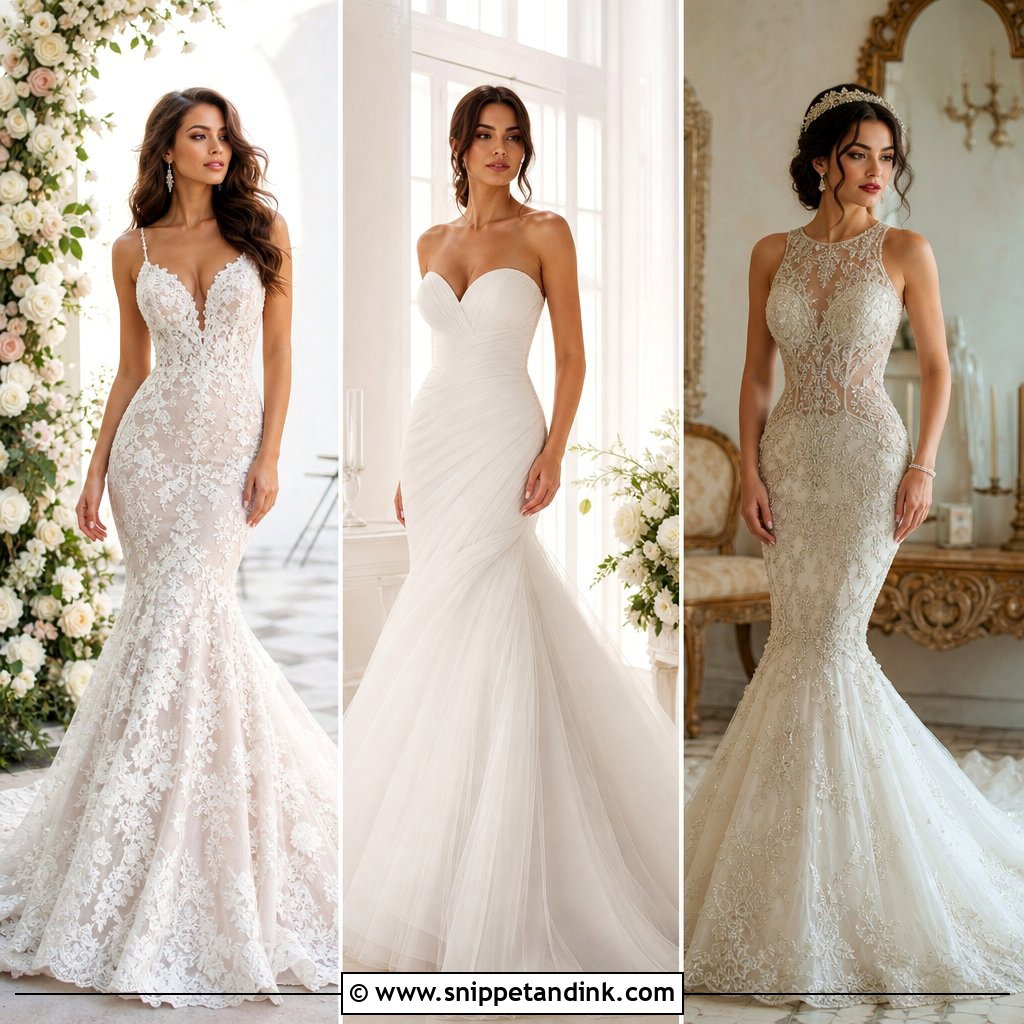
The lace mermaid is the gown I see brides fall for fastest and regret soonest if the flare is set too low. It should hug the bodice, waist and hips, then open below the knee, and that opening point decides whether you can climb steps, sit at the high table or dance at all. I always have the bride sit and walk in it before the hem is cut. Floral appliqués soften the fitted line, and a little beading is enough. Long lace-edged veil, pearl earrings, closed-toe heels and a smooth updo that leaves the back visible. For a fuller ceremony look, a detachable overskirt adds volume for the walk and comes off for the reception.
3. Nigerian Corset Wedding Gown
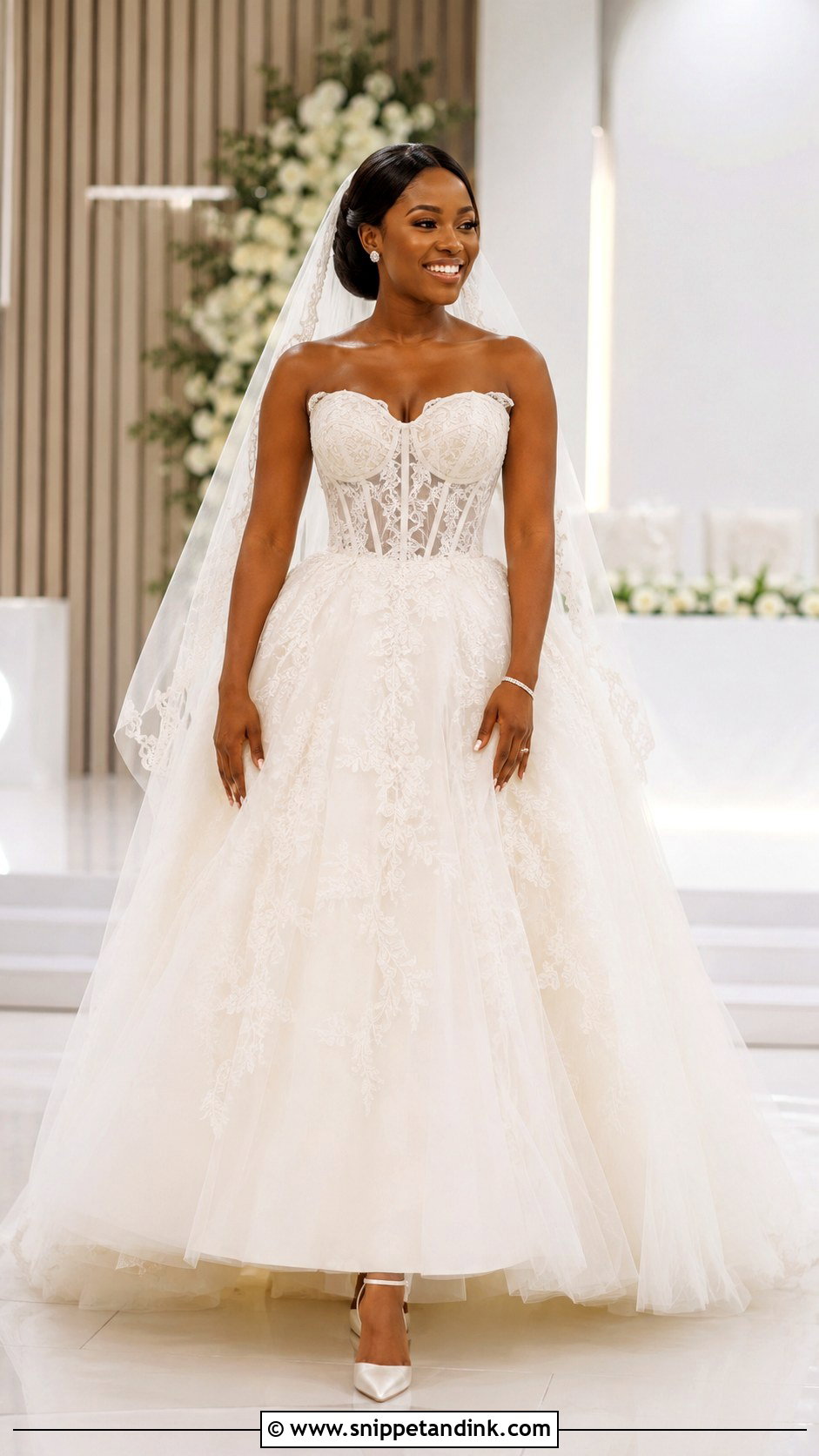
A corset bodice is only as good as its boning. Spiral steel bends with you; cheap plastic boning warps after a few hours of heat and starts to dig in at the ribs. I want the waistline following the bride’s own proportions, not the sample’s, and secure cups so nothing shifts during greetings. Pair it with a full tulle skirt, a mermaid base or a soft A-line. Ivory lining under lace gives a classic look; nude lining shows off the boning and appliqué. Clean fingertip veil, crystal studs, a fine bracelet, satin heels, and skip the heavy necklace if the bodice is already worked. At fittings I make brides bend, sit and lift both arms over their head. If breathing feels tight standing still, it will feel worse after jollof.
4. Nigerian Off-Shoulder Wedding Gown
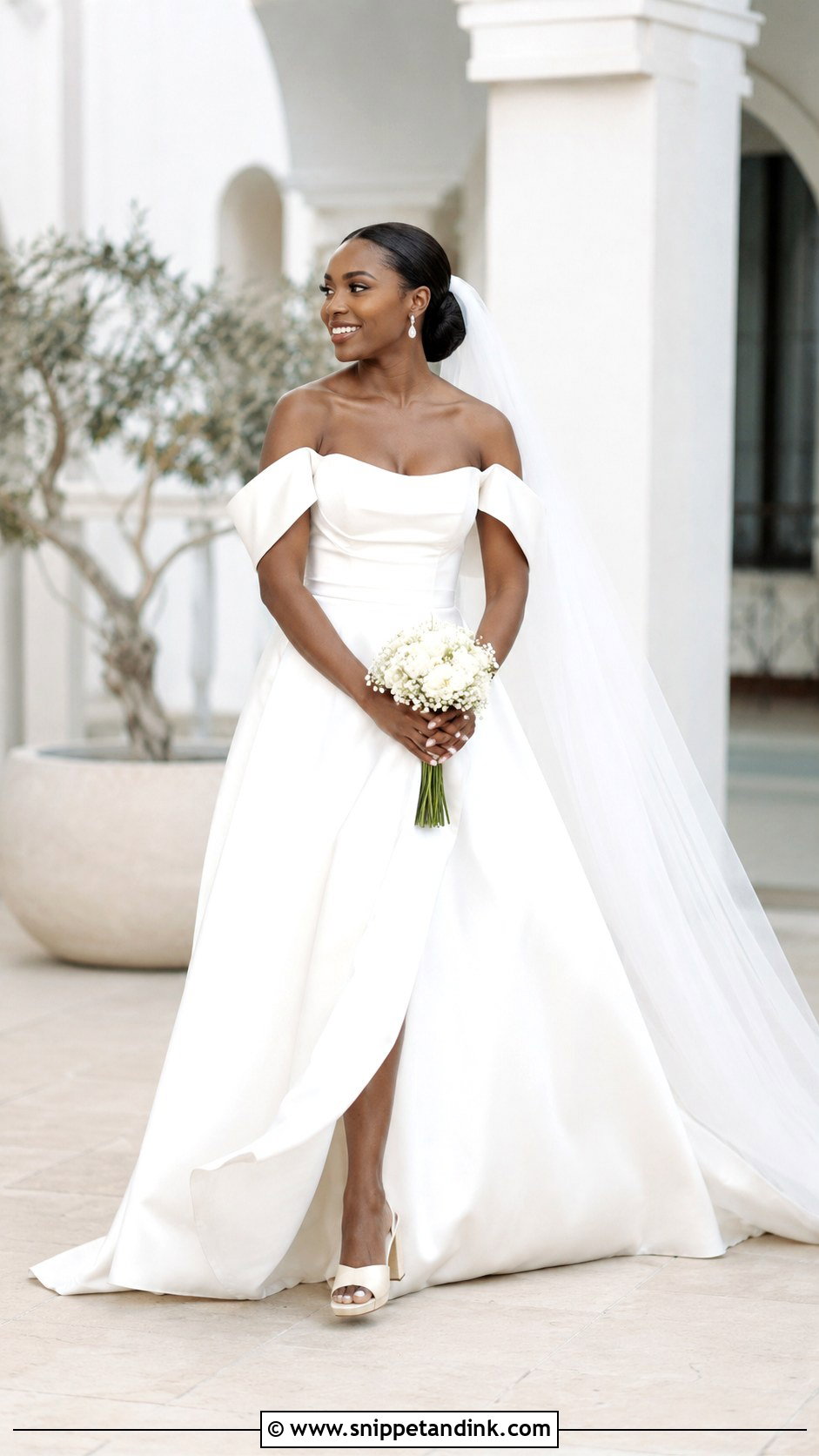
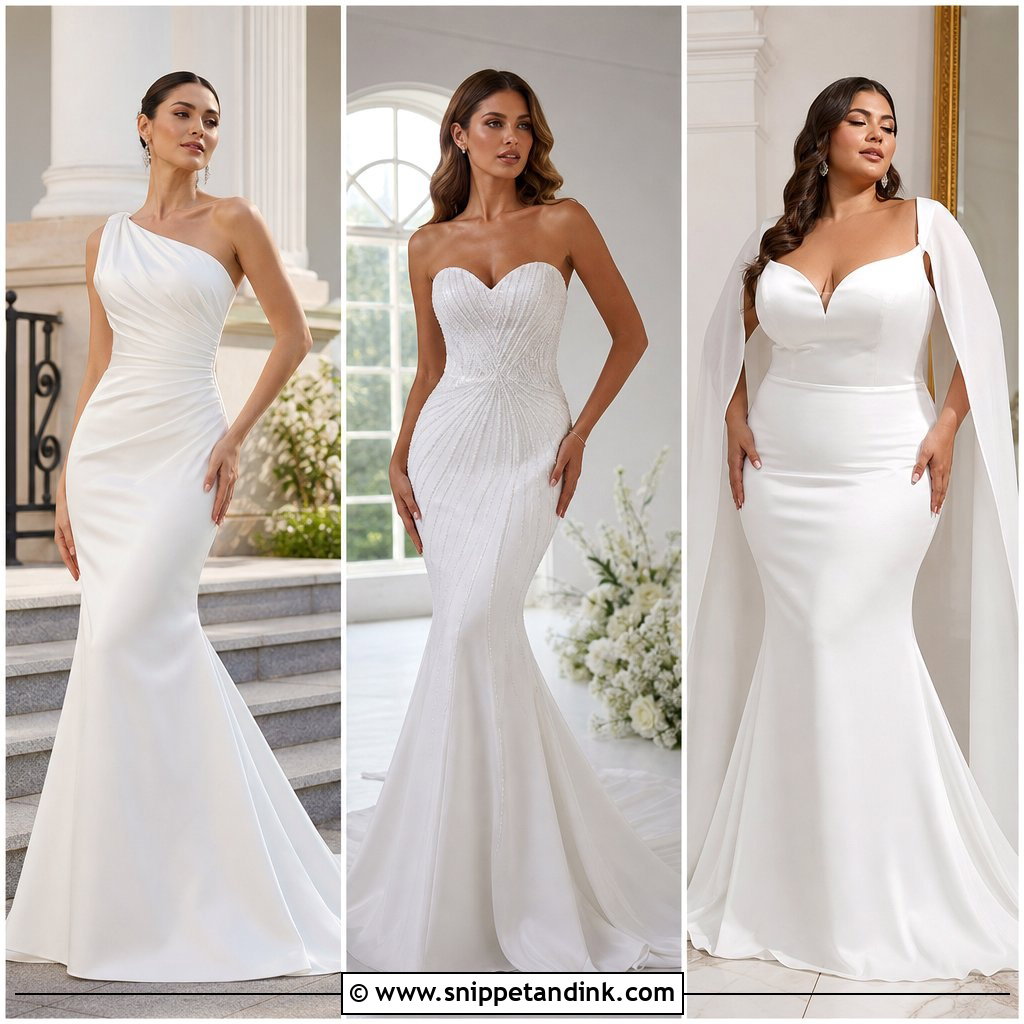
Off-shoulder necklines look simple and are fiddly to get right. The band has to sit low enough to show the shoulders but high enough on the upper arm that you can still hug an aunty or raise a glass without the whole bodice lifting. Draped satin bands give a clean finish; lace sleeves feel more romantic. I usually pair this neckline with an A-line or mermaid skirt, though a ball gown works if you want maximum drama. A neat low bun gives the veil a base and keeps the shoulders clear. Teardrop earrings, a fine chain, block heels. If you want more coverage for church, ask for removable sheer sleeves that clip in.
5. Nigerian Long Sleeve Lace Wedding Gown
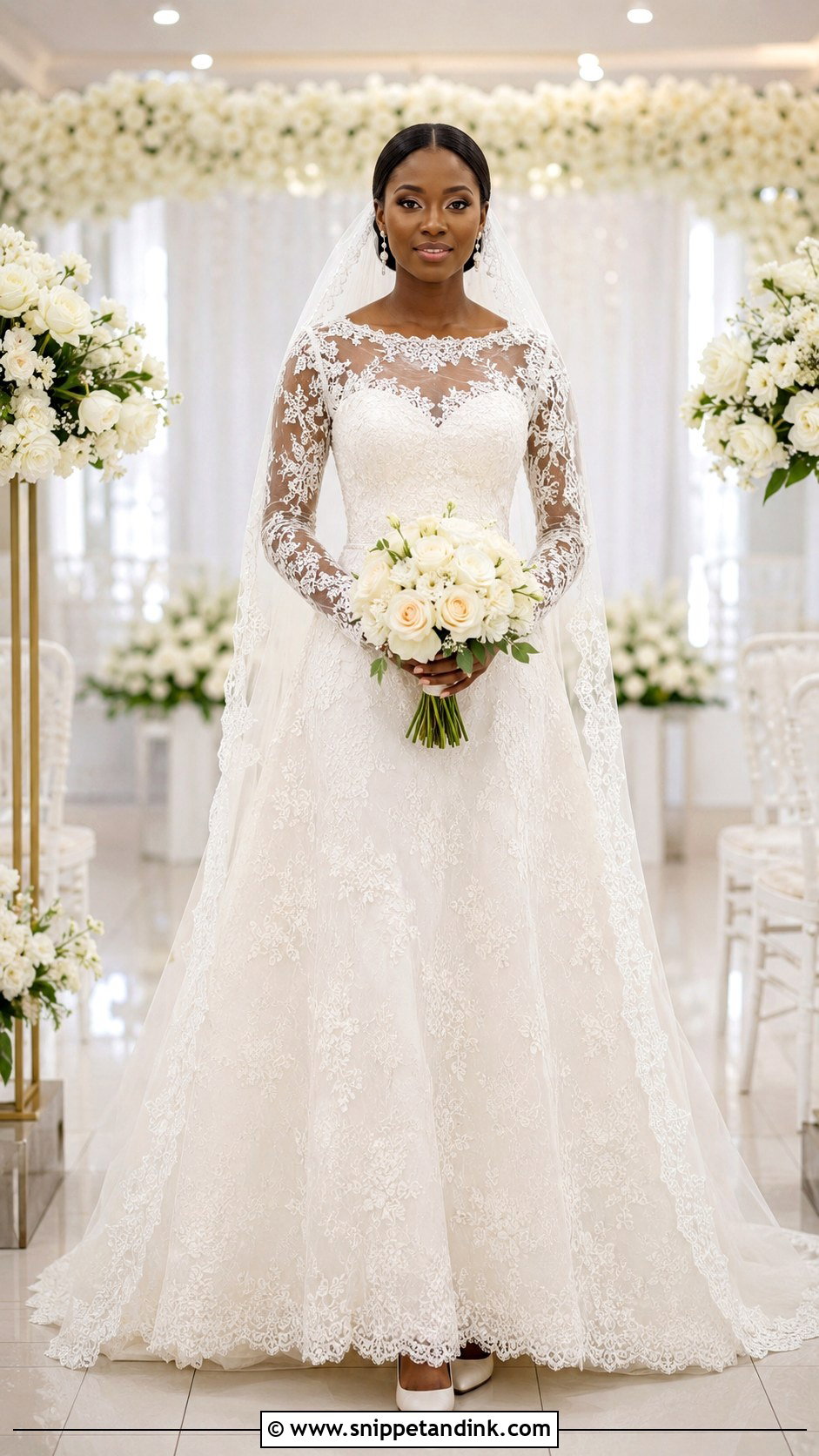
Long sleeves are where cheap gowns give themselves away. Dense lace all the way to the wrist gets hot and stiff, so I steer brides to soft illusion mesh with appliqués placed where they flatter, along the outer arm and shoulder. A fitted bodice and flowing A-line skirt suit an indoor church service and a cool evening reception equally well. The mesh colour matters more than anyone thinks: on deeper skin, a standard ivory or ‘nude’ mesh can show as a pale grey film in flash photos, so take fabric swatches to your fitting and match them against your arm in daylight. Lace-trimmed veil, pearl drops, closed pumps, compact white bouquet. Keep the jewellery quiet; the sleeves are already doing the talking. Cuffs should close without pulling across the wrist bone.
6. Nigerian Satin A-Line Wedding Gown
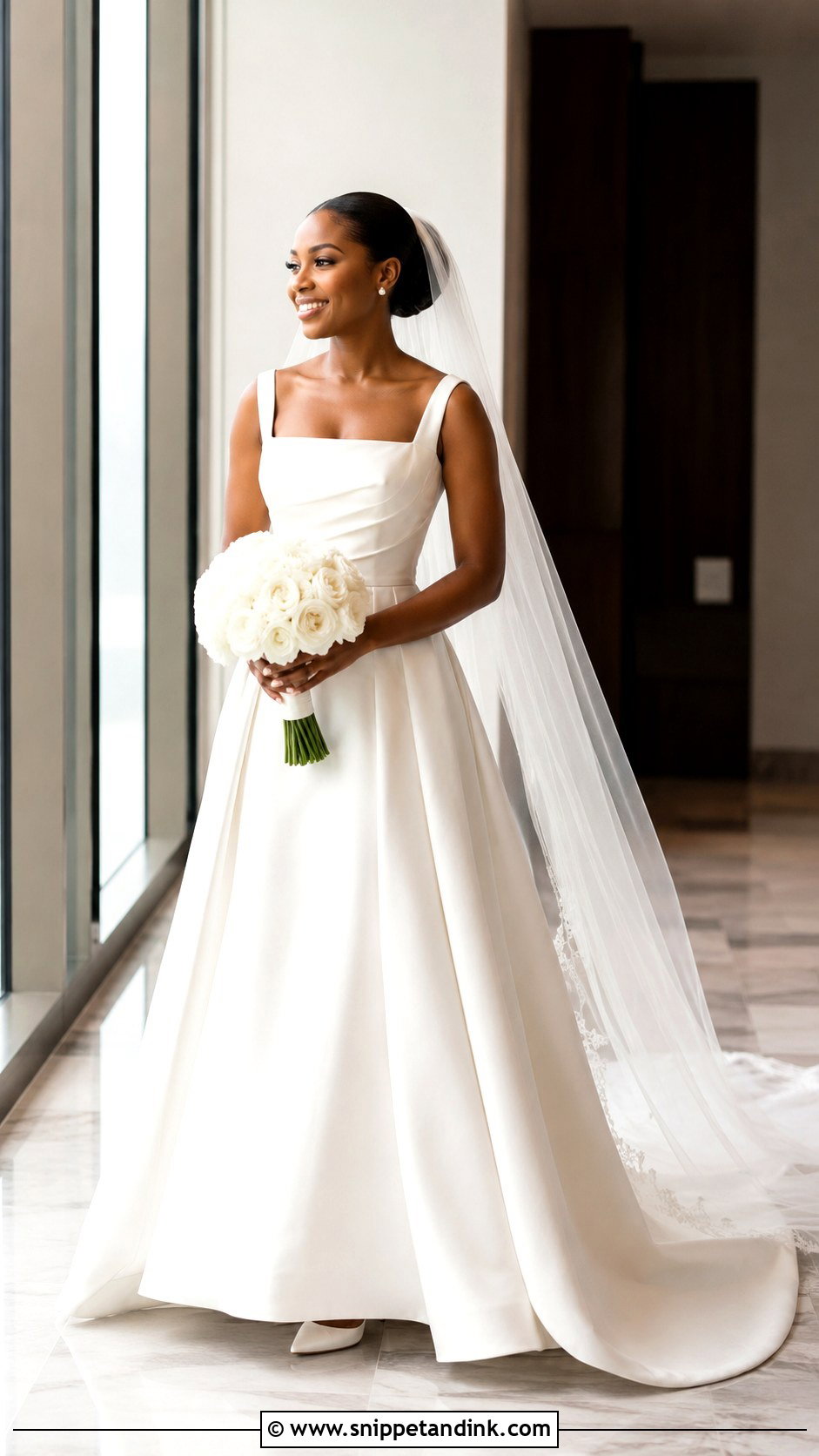
Satin is unforgiving, and I mean that as a warning more than a criticism. It reflects light, so every seam, dart and undergarment line shows, and it creases across the lap the moment you sit. A well-cut satin A-line, fitted at the bodice and widening from the waist, is still one of the most graceful things a bride can wear. A square neckline, covered buttons and a few structured pleats are all the detail it needs. Cathedral veil, pearl studs, pointed satin pumps, crisp white blooms. Sleek bun or side-parted waves. Choose a heavier duchess or double-faced satin over a thin one; it hangs better and shows sweat marks less in the heat.
7. Nigerian Beaded Wedding Gown
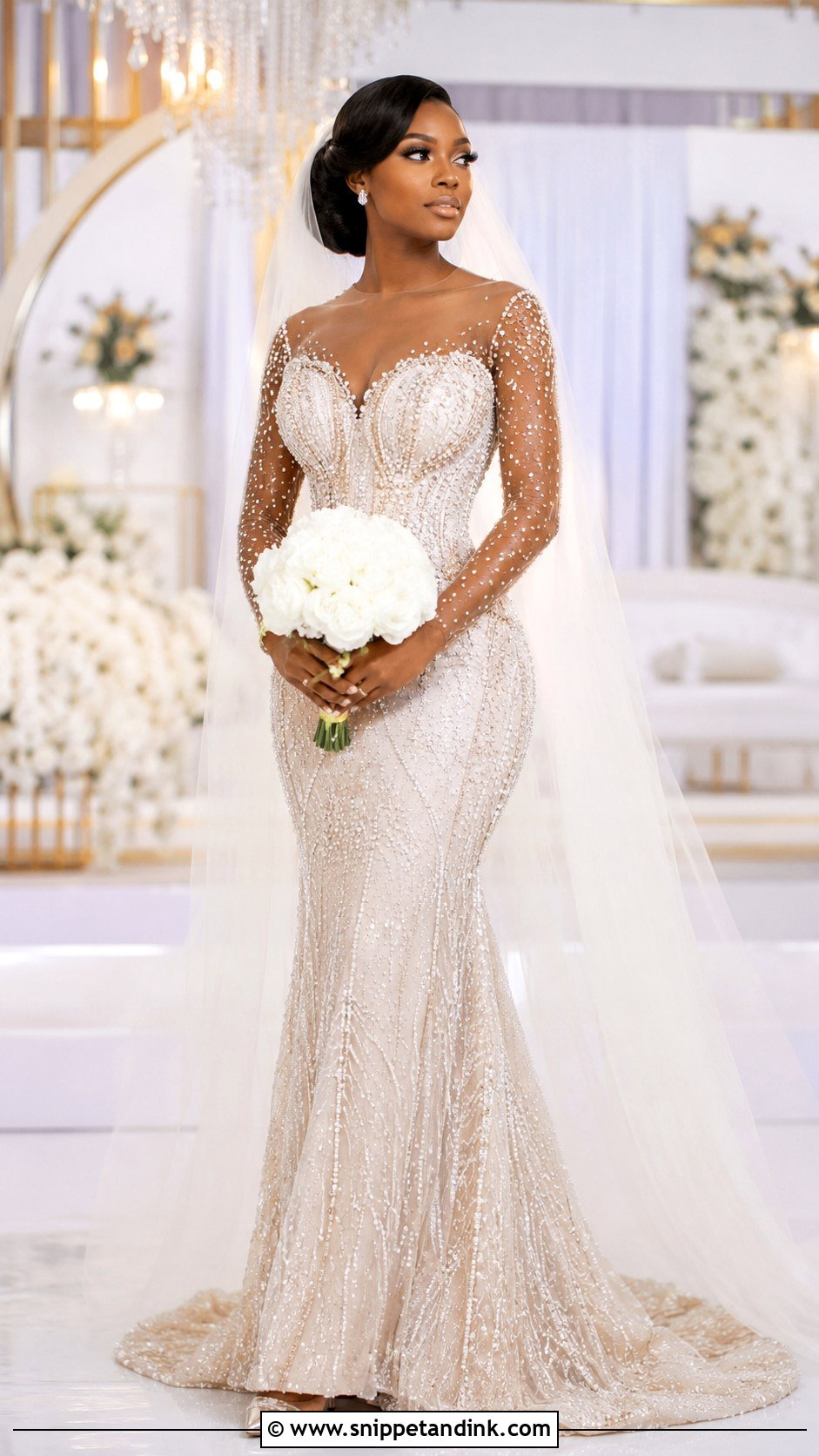
Crystals, pearls and sequins catch every light in the hall, which is the appeal and the risk. I like the embellishment concentrated at the neckline and waist on a fitted trumpet or soft flare, then thinning out toward the hem, because a heavily beaded skirt gets surprisingly heavy and drags on the dance floor. Plain tulle veil, small crystal earrings, metallic ivory heels and a simple bouquet; the hair stays smooth so it doesn’t compete. Run your hand inside the bodice at the fitting. Beads stitched through without a soft lining will scratch the inner arm and underarm by evening. I also check for loose threads at the waist and hips, the spots that take the most contact when people hug you.
8. Nigerian Cape Wedding Gown
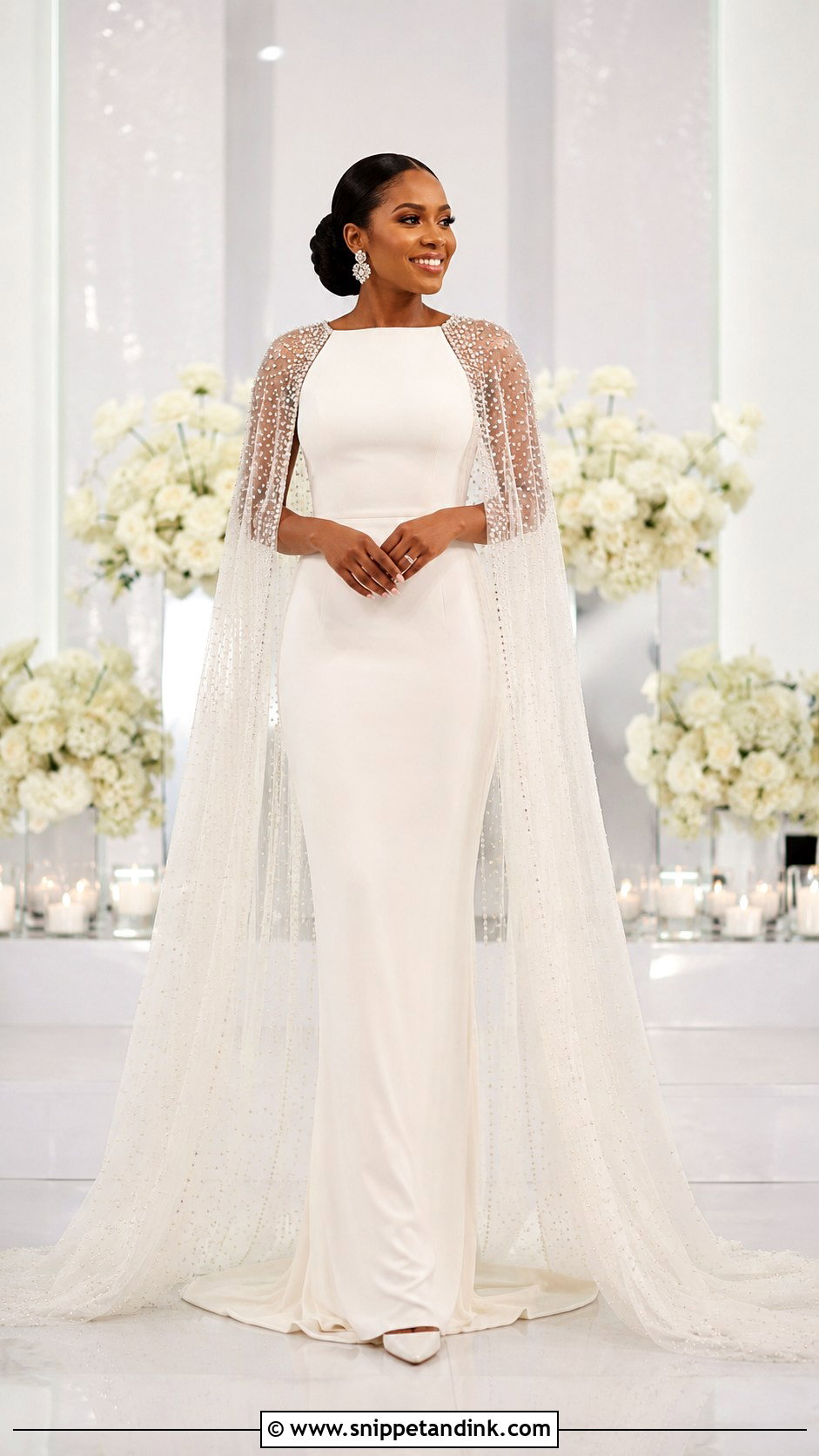
A cape gives you the ceremony moment without a veil. I build it over a sleek column, trumpet or A-line gown, with the cape in sheer tulle, lace or a lightly beaded fabric. Floor length looks wonderful on a long aisle; shoulder length is easier in a smaller church or a crowded hall. Sculptural earrings, pointed pumps and a low bun finish it, and I leave out the necklace if the cape has its own worked neckline. Watch the attachment points. A heavy cape pulls the bodice backward, and the front neckline creeps up toward your throat. Snaps sewn into a reinforced shoulder seam fix that. Take it off for the reception and you have a lighter, simpler gown for dancing.
9. Nigerian Detachable Train Wedding Gown
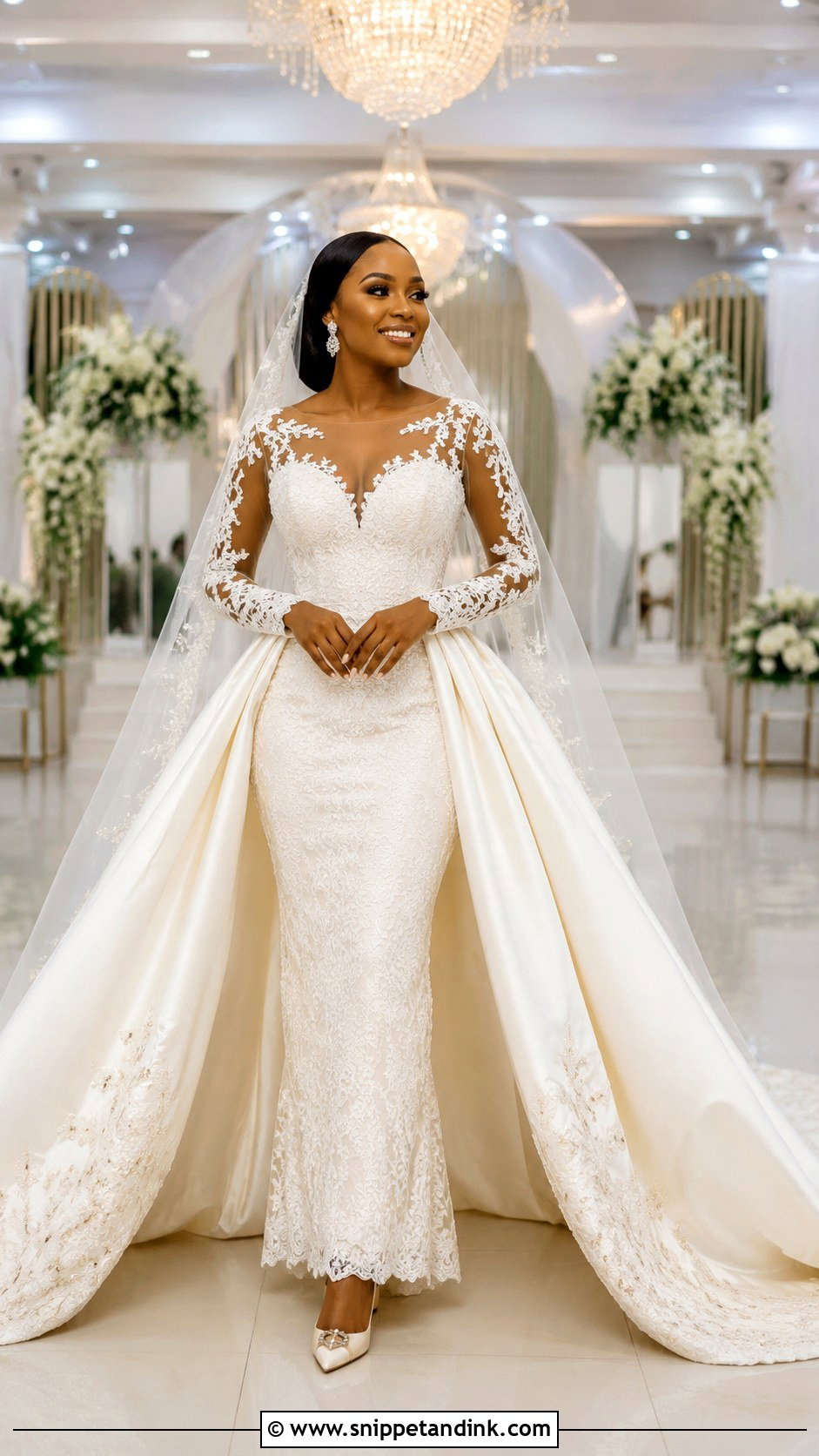
Why choose between a big ceremony entrance and a gown you can dance in? A detachable train or overskirt fastened at the waist turns a fitted lace, satin or crepe gown into a ball gown for the walk, then reveals the mermaid or column underneath. Long veil, crystal earrings and formal pumps for the first half; a shorter veil or a jewelled comb after the change. The fastening is what I inspect most closely. Hooks, snaps or a concealed belt must lie flat under the waist detail or they show as bumps in every side photo. Practise the swap with whoever will help you on the day, ideally twice. A fumbled change in a side room eats into the reception.
10. Nigerian Basque Waist Wedding Gown
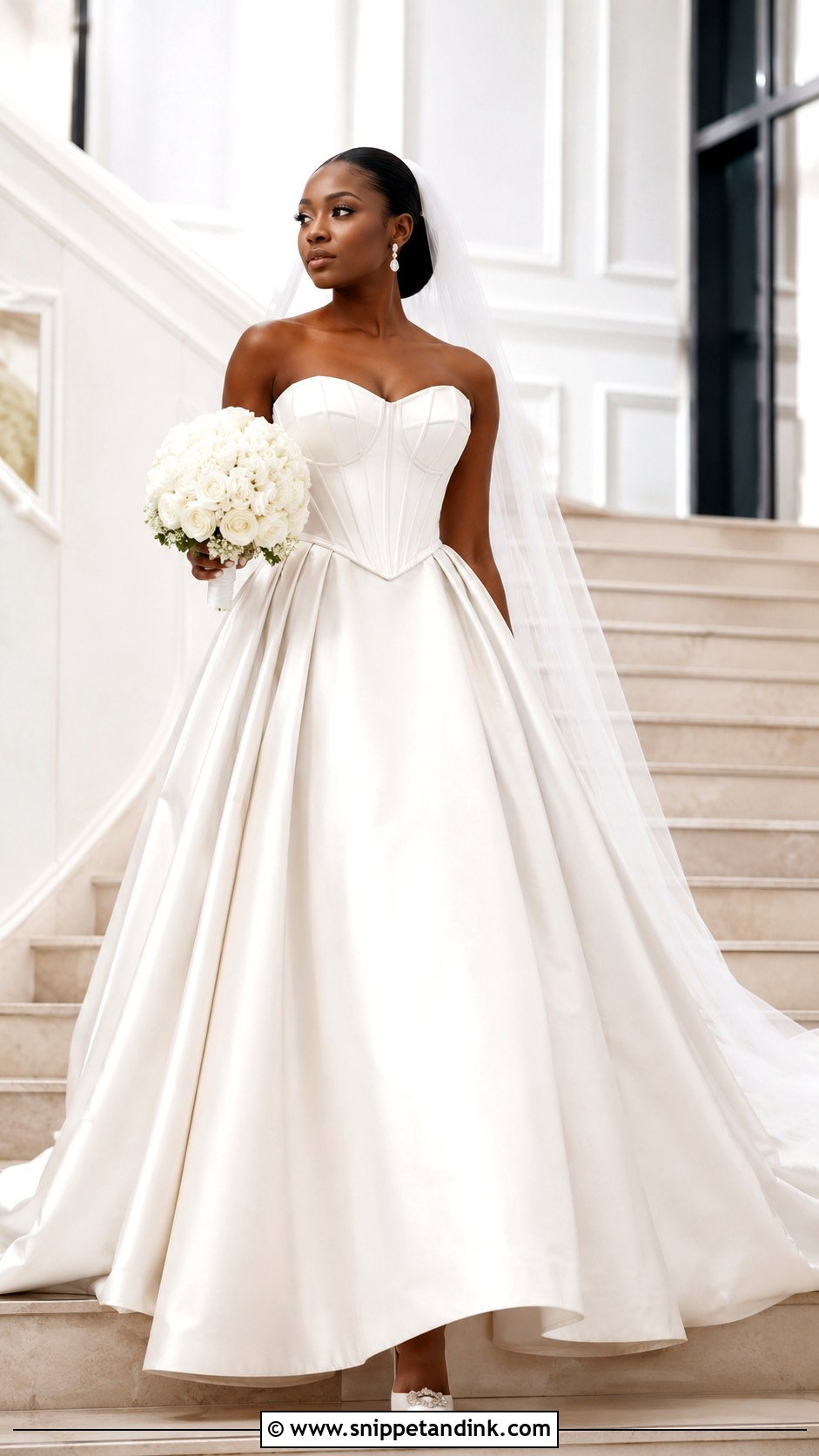
A basque waist dips into a soft V at the centre front and lengthens the torso. It sits best on a structured corset bodice with a full satin or tulle skirt, either clean for a modern feel or overlaid with lace. Long plain veil, drop earrings, pointed ivory heels, a rounded bouquet, and a smooth updo. The point of the V is where fittings go wrong. Set too low, it pokes into the lap when you sit and makes the legs look short in photos. I have brides sit fully back in a chair at every fitting so we can see where the point lands. Fitted correctly, it needs very little jewellery.
11. Nigerian Sweetheart Neckline Wedding Gown
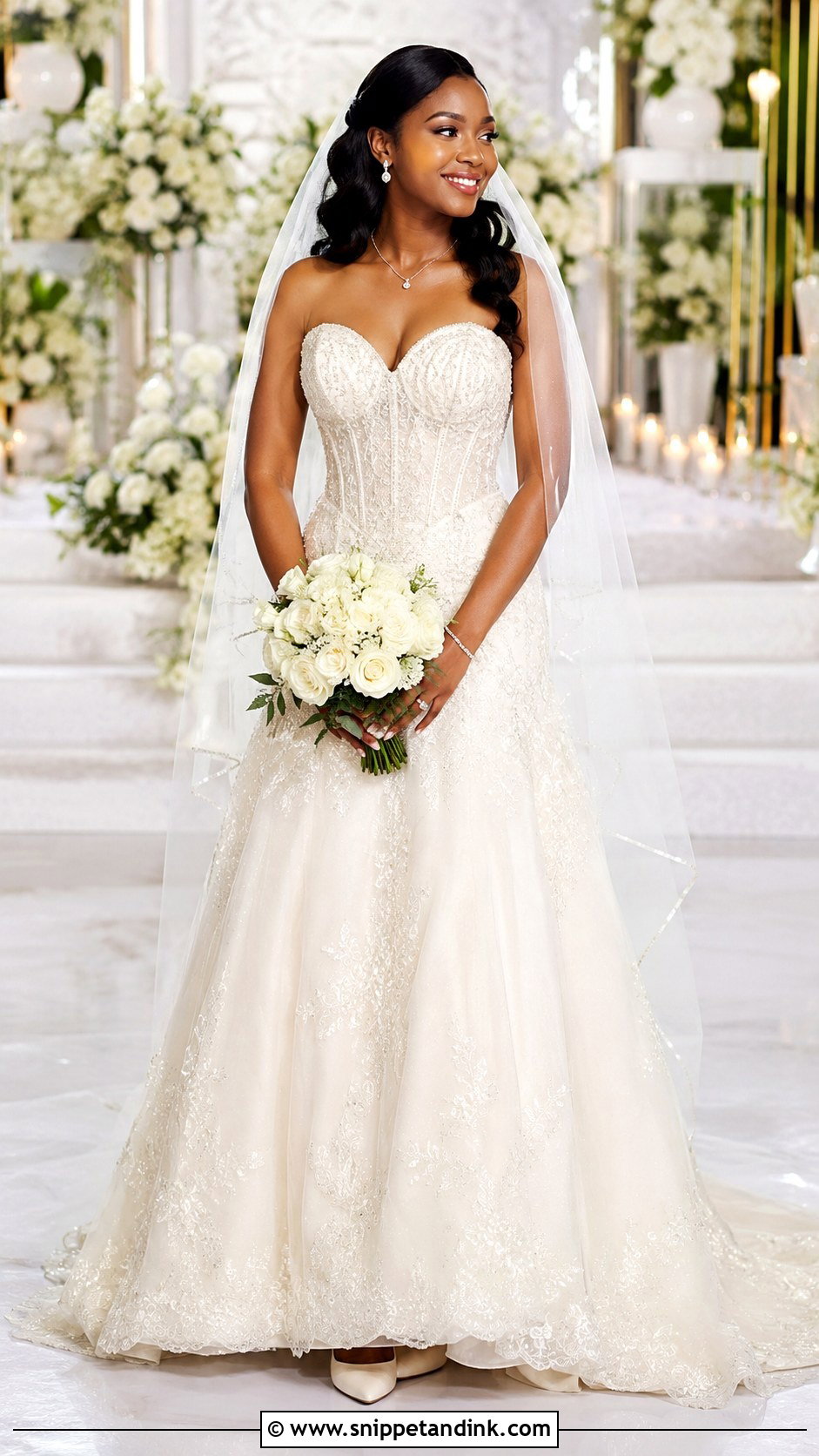
The sweetheart neckline frames the collarbone and softens a structured gown, with a corseted ball gown for romance or a trumpet skirt for a sharper line. Lace edging reads traditional; draped satin feels newer. Fine necklace, pearl earrings, fingertip veil, comfortable ivory heels, and loose waves or a half-up style. Gapping at the top of the cups is the most common fault I fix on this neckline, especially once the bride has been hugged and pulled into photos a hundred times. The bodice should sit flat against the chest with no tugging. If you’re nervous about it, discreet illusion straps or clip-in off-shoulder sleeves add security without changing the shape.
12. Nigerian High Neck Wedding Gown
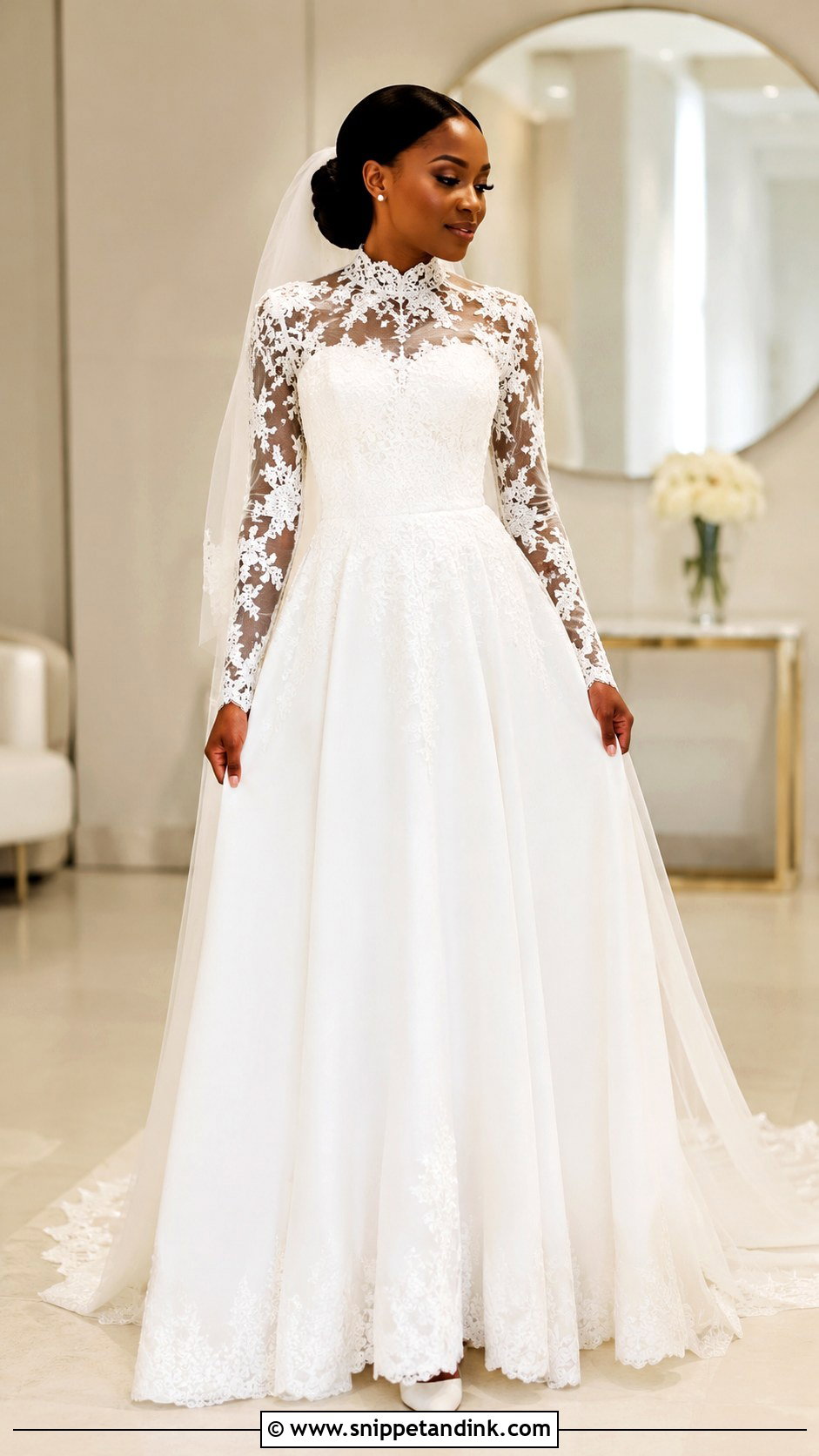
High necks suit brides who want coverage for a church ceremony and a strong, clean line. Illusion tulle with lace reads soft; smooth crepe reads modern and minimal. Long fitted sleeves with an A-line skirt keep it modest without making it heavy, and a row of covered buttons down the back gives the photographer something to shoot from behind. Pearl studs, a wrapped low bun, pointed pumps, and the veil placed under the bun, not over it. No necklace. In warm weather this is the gown I check most for lining; a closed collar traps heat, so breathable cotton or viscose lining makes a real difference. Run a finger around the collar edge to check it won’t rub as you turn your head to greet people.
13. Nigerian Illusion Neckline Wedding Gown
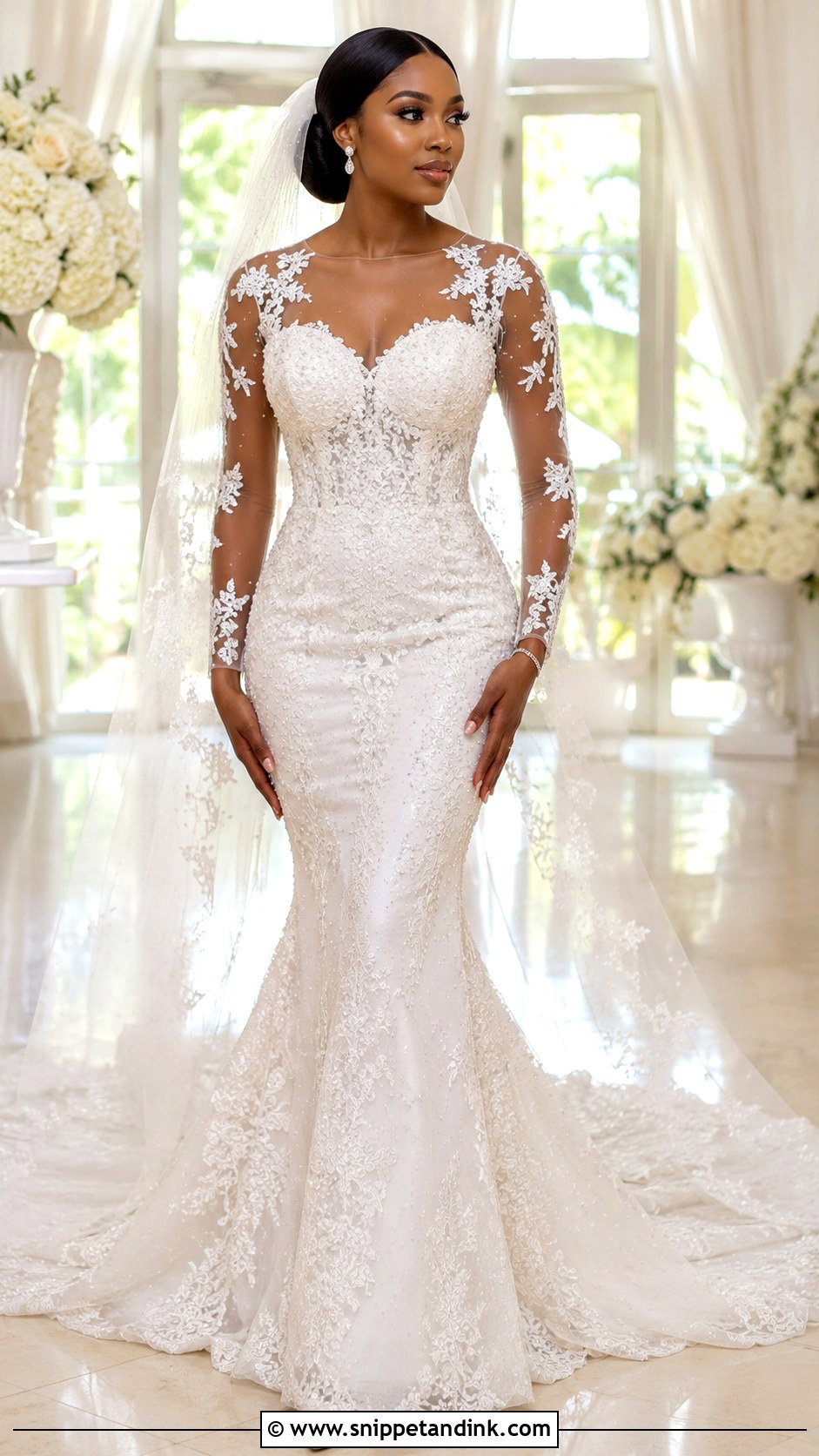
An illusion neckline gives you the look of a strapless gown with the security of sheer support. Fine mesh runs from a sweetheart or V-neck bodice up to the shoulders, and lace appliqués appear to float on the skin. It works with a fitted mermaid or a layered A-line. Here the mesh colour has to match your complexion closely, or the illusion fails and you see a visible panel in photos. Sheer veil, crystal studs, slim bracelets and closed-toe heels. Makeup and jewellery stay quiet. Ask how the mesh edges are finished: a raw edge or scratchy elastic will irritate the neck long before the last dance.
14. Nigerian Peplum Wedding Gown
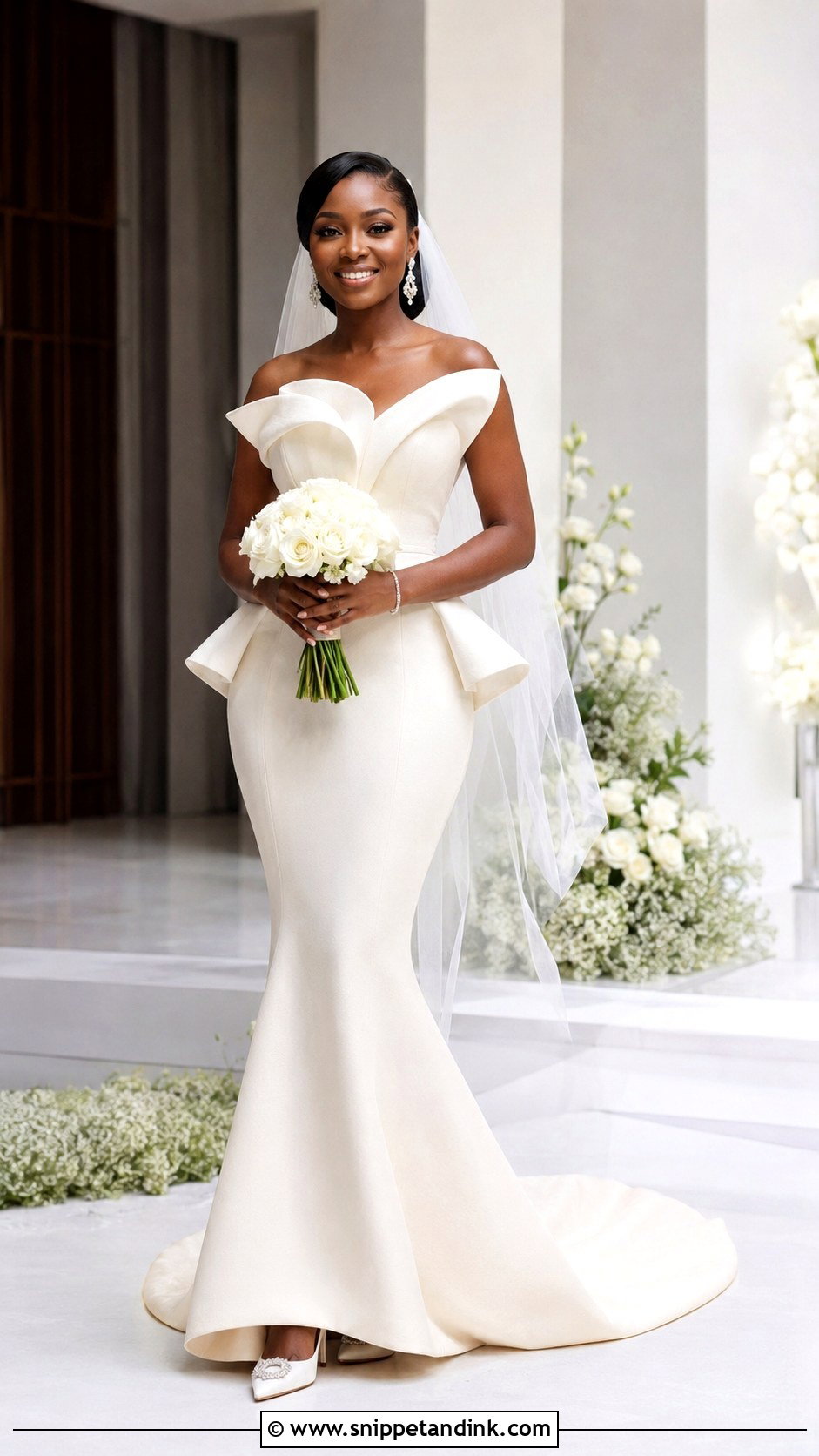
A peplum wedding gown sculpts the waist and has a fashion edge that suits brides who don’t want a classic princess shape. The flare can sit on a fitted mermaid skirt, a straight column or a removable overskirt. A small asymmetric peplum gives subtle volume; a wide structured one is a bolder statement. Simple veil, statement earrings, pointed heels and a neat bouquet. Keep the bodice plain. Heavy sleeves plus a big peplum fight each other and read as bulk. The peplum must start at the natural waist and fall over the hip without flipping up when you sit. I check it from the front, side and back at every fitting, because a peplum that looks right in the mirror can tilt in profile.
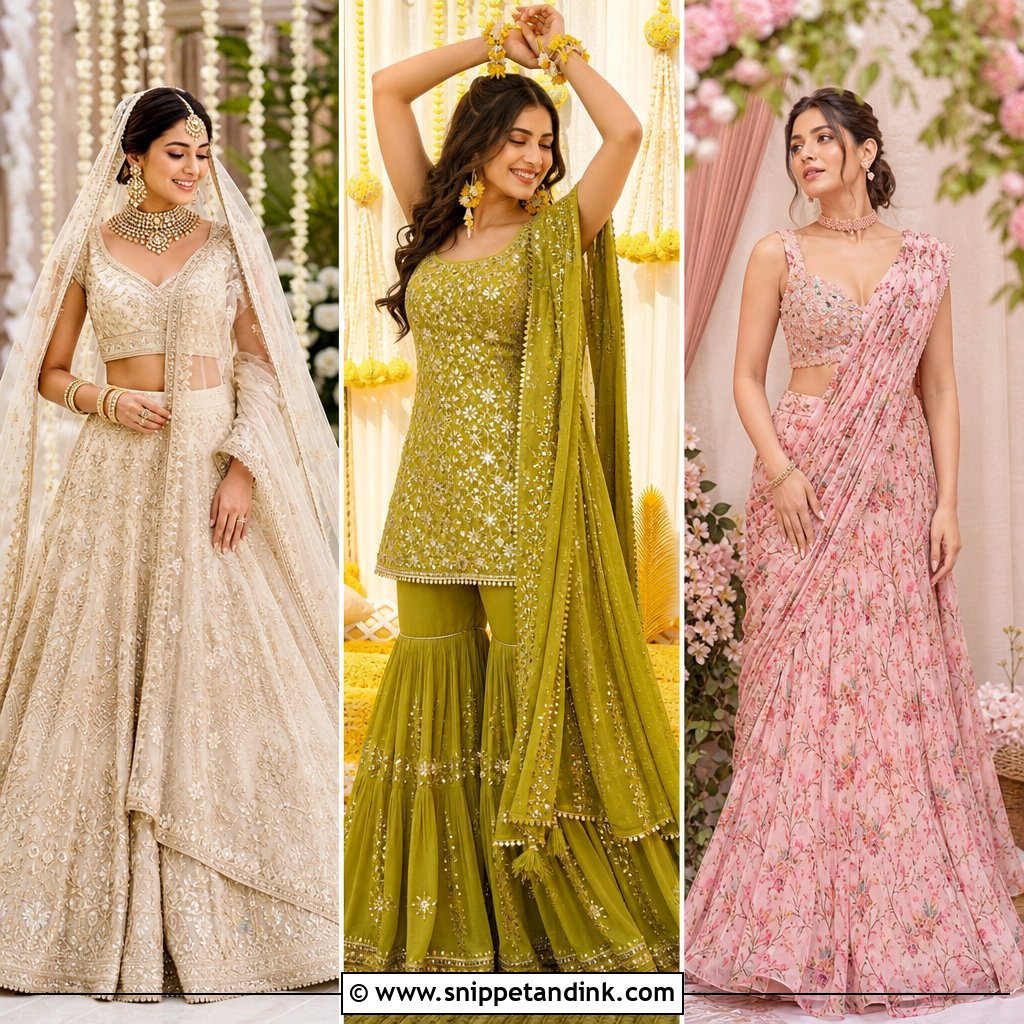
15. Nigerian One Shoulder Wedding Gown
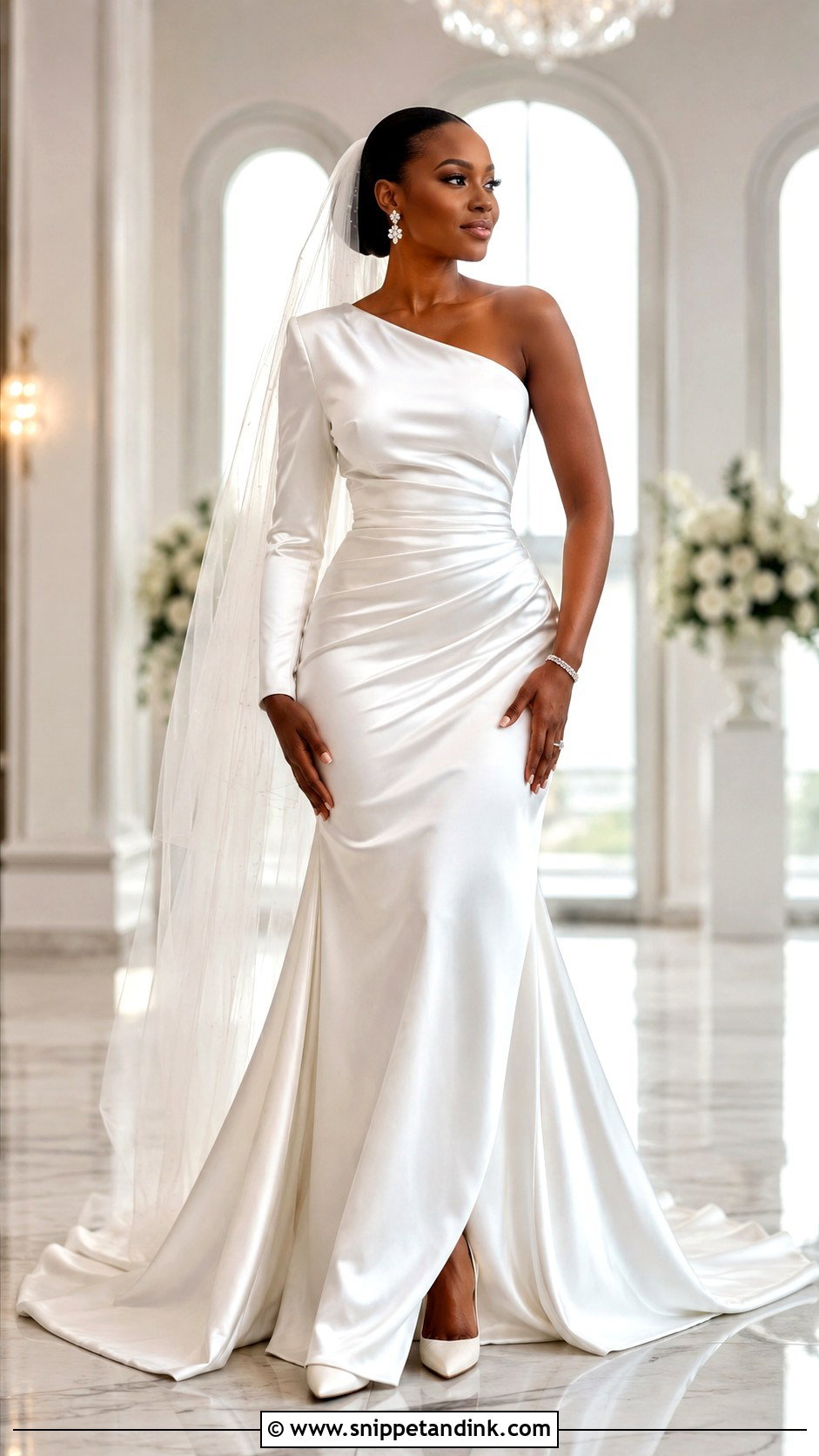
One-shoulder bodices look confident and modern, and they need more engineering than they let on. The single strap carries the bodice’s weight, so without internal boning and a firm waist the whole gown slowly twists toward the shoulder through the day. Pair it with a trumpet skirt, a flowing A-line or a draped satin column. A single long sleeve adds drama; a wide strap gives more support. Swept-back hair, one statement earring or a matched pair, a clean bracelet, pointed pumps. The veil goes behind the shoulder detail, and a necklace would only cut across the diagonal line, so leave it out. Raise both arms at the fitting and see whether the bodice stays put.
16. Nigerian Minimalist Crepe Wedding Gown
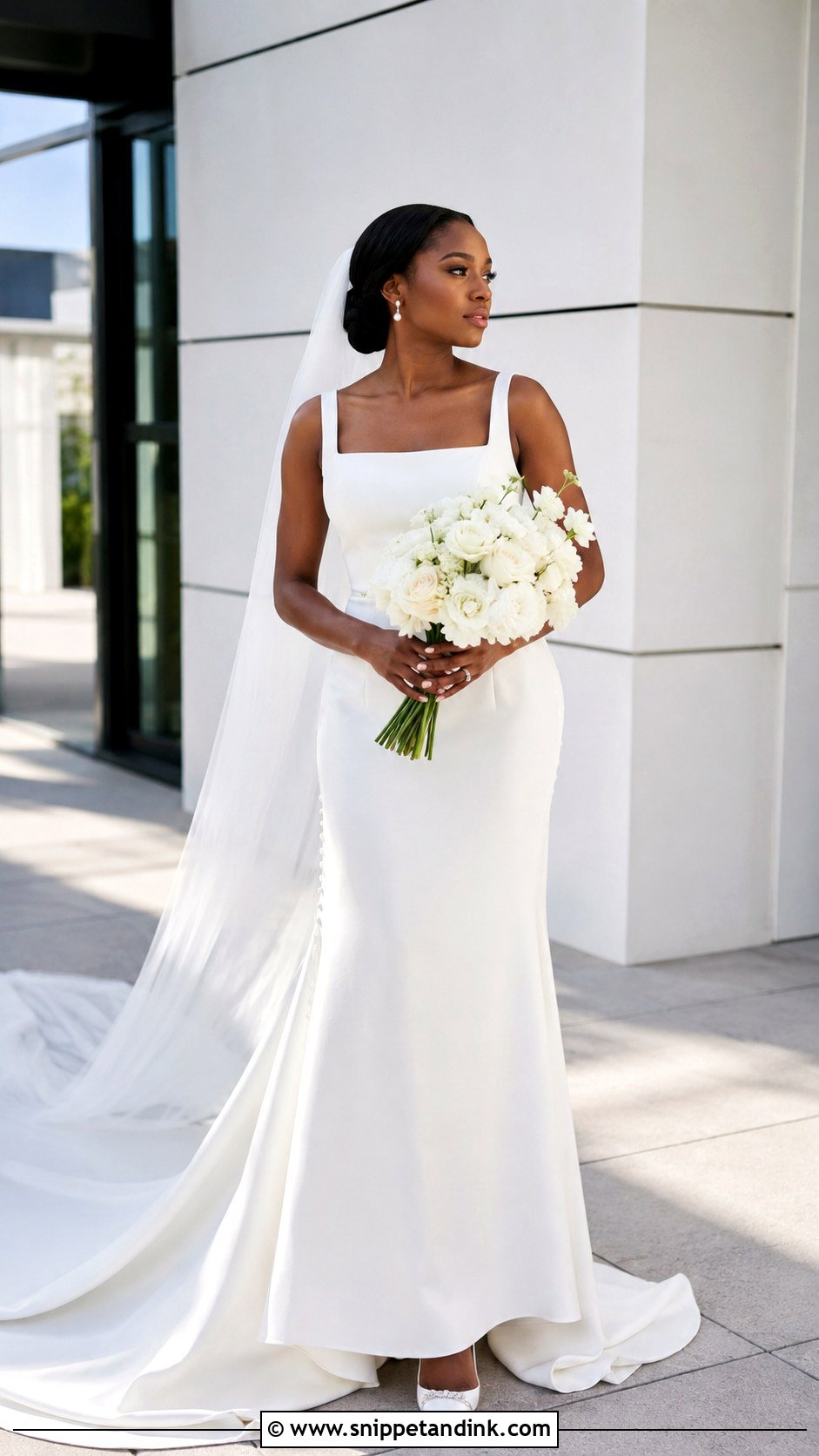
Crepe has nowhere to hide, which is exactly why it can look so good. A column, fit-and-flare or plain A-line in a good weight of crepe relies on precise seams, a square neckline, covered buttons or a low back for interest. Pearl earrings, a smooth cathedral veil, pointed white pumps and a structured bouquet. A polished bun keeps it modern; soft waves relax it. Thin crepe clings and shows every line underneath, so I look for a weight that skims the body, then fit the undergarments before the final alteration, not after. With no lace to distract the eye, a quarter-inch error in the fit is visible from across the room.
17. Nigerian 3D Floral Wedding Gown
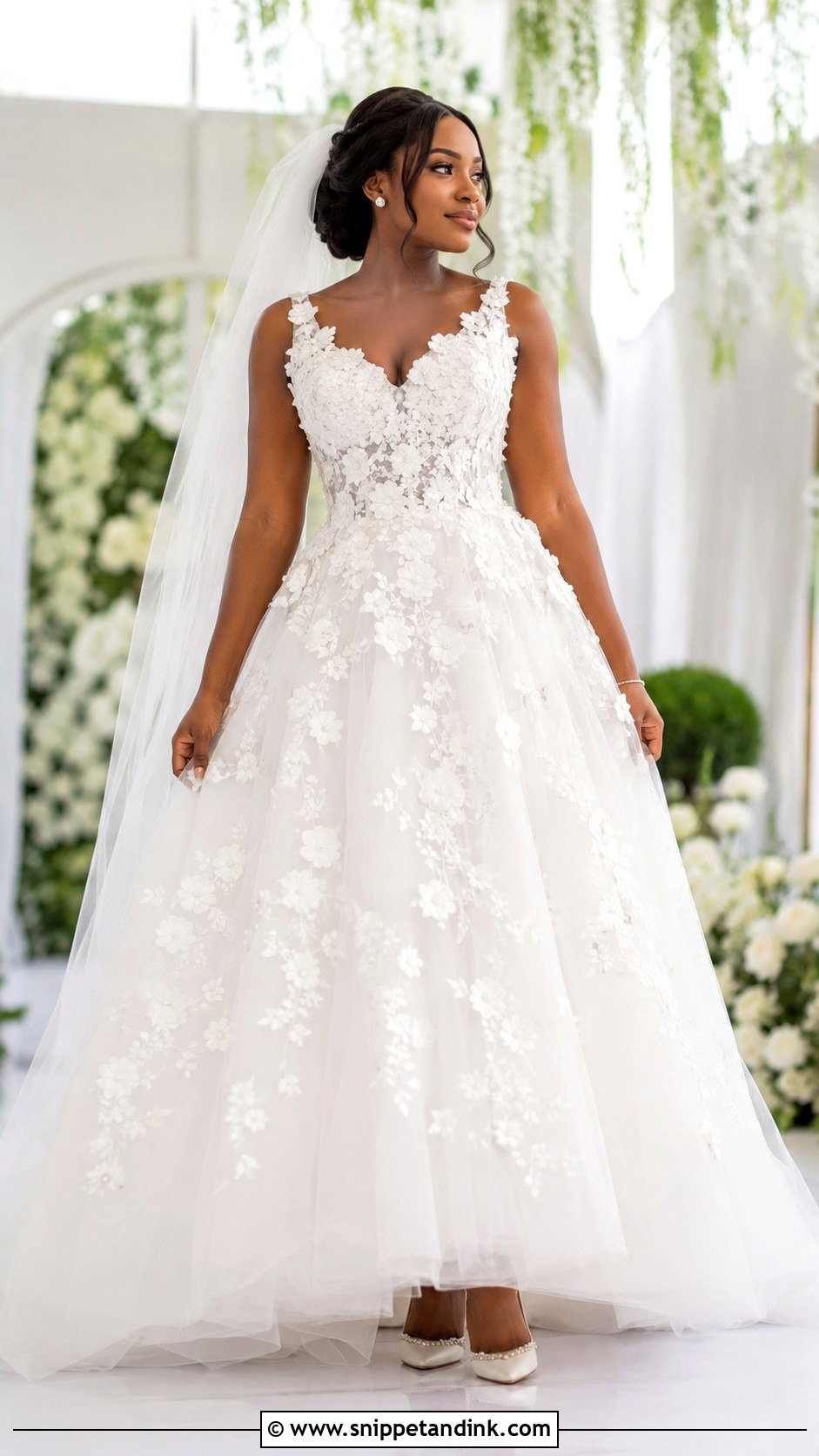
Three-dimensional flowers give a gown real depth. I prefer them clustered around the bodice and scattered more loosely down a tulle A-line or ball gown skirt, with small petals for delicacy or larger blooms for a couture feel. Accessories stay light: pearl studs, plain ivory heels and a sheer veil with no decorative border, which would catch on the petals. A loose low bun or soft curls suit it. Check the stitching on appliqués near the waist and underarms, the places that rub against arms and hands all day. Too many flowers add weight and start to look crowded, so plain stretches of tulle between clusters are part of the design, not a gap in it.
18. Nigerian Plus Size A-Line Wedding Gown
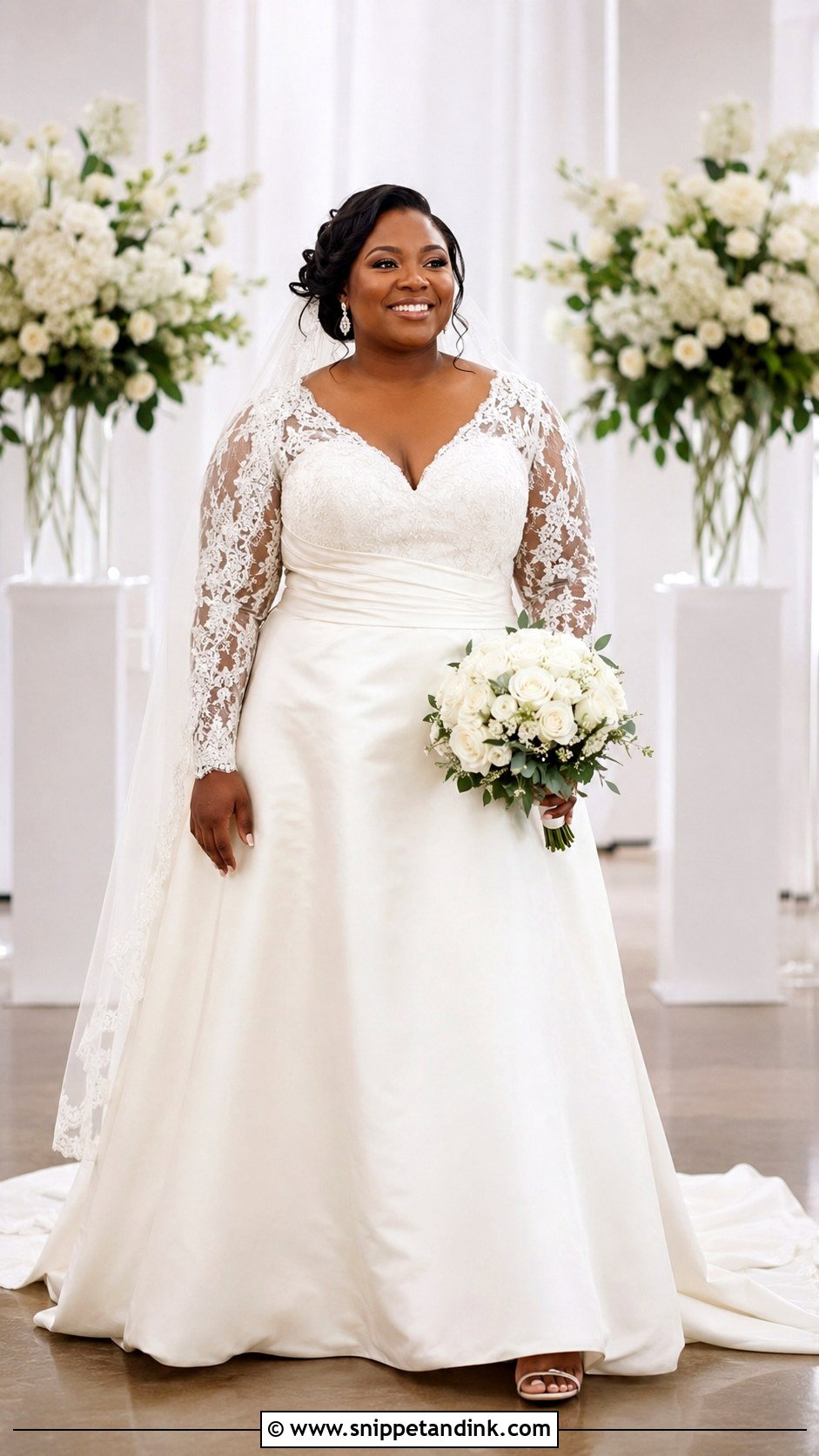
For a plus-size bride, the label on the sample means very little. I fit from measurements at the bust, waist, upper arm and hip, because Nigerian bridal sizing and international sizing rarely agree. An A-line with a defined waist, a structured bodice and a flowing skirt gives support without hiding the bride’s shape. Wider straps, an off-shoulder neckline or fitted lace sleeves depend on how much coverage you want. Vertical appliqué placement draws the eye along the gown, and a V-neck opens up the upper body. Block heels, drop earrings, fingertip veil, and a bouquet scaled to your height. Get the bra or built-in support settled at the first fitting; every later alteration depends on it.
19. Nigerian Short Reception Wedding Gown
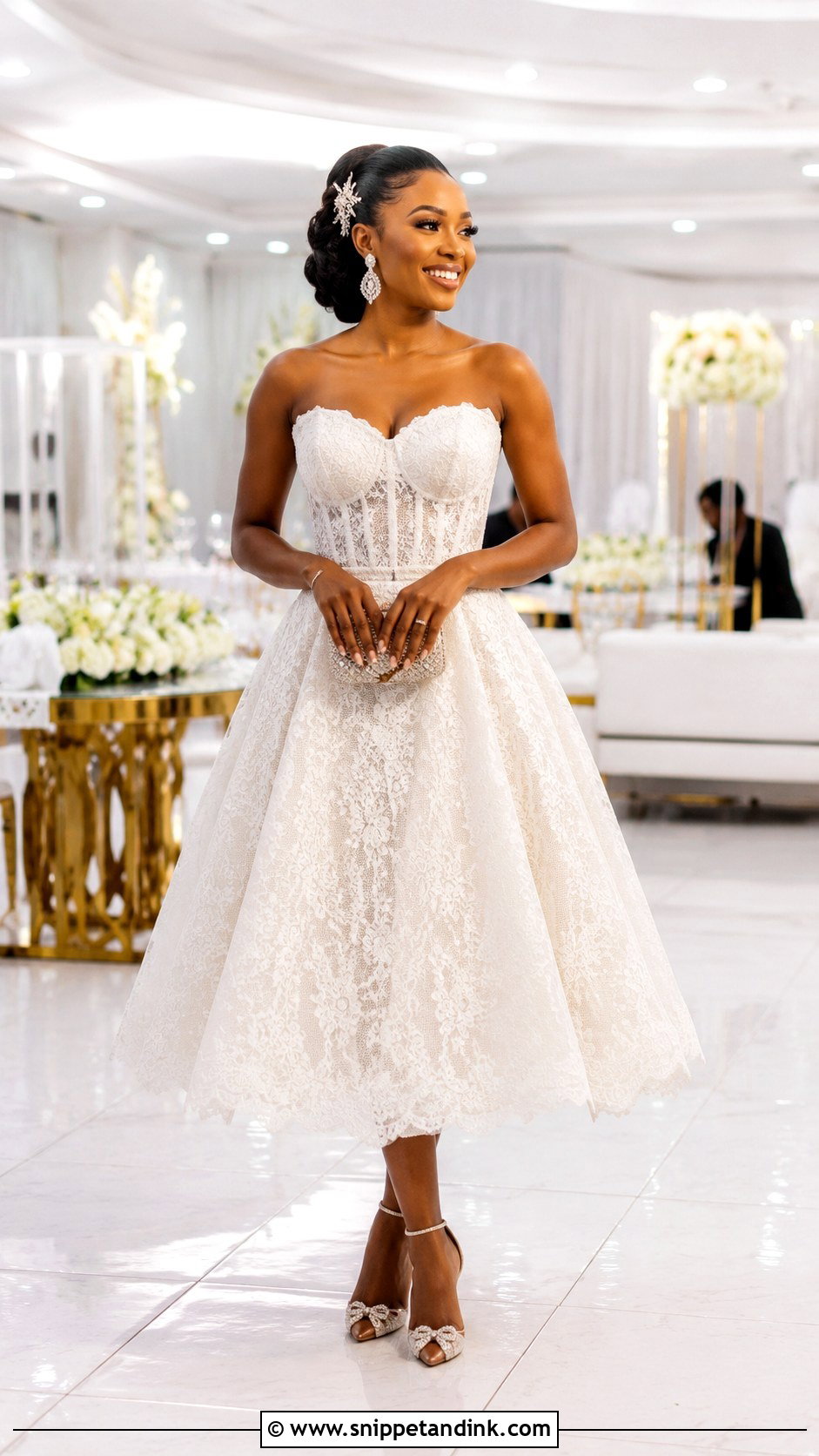
A short second gown is my favourite answer to a long Nigerian reception, when guests are spraying money and the dancing goes on for hours. It can be a structured mini, a tea-length A-line or a knee-length lace dress, as long as it still reads bridal. A corset bodice, textured hem, pearl detail or detachable bow gives it that party energy. Crystal heels, statement earrings and a small jewelled hairpiece instead of a veil, plus a compact clutch for essentials. Do a test: dance, sit and bend in it at the fitting. A short skirt that rides up when you move will have you tugging at it all night. Tea length with sheer sleeves suits brides who want more coverage.
20. Nigerian Aso Oke Accent Wedding Gown
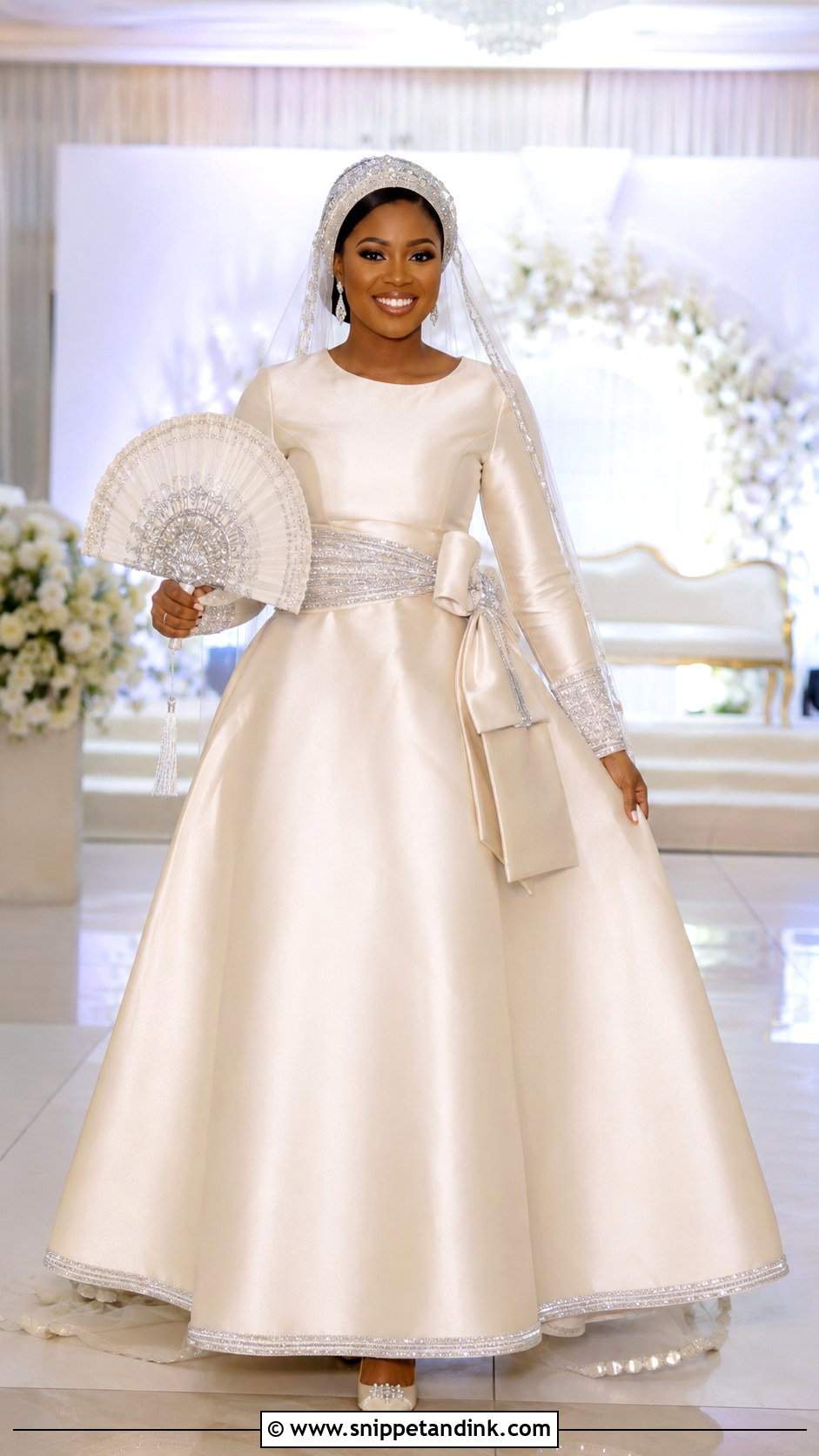
Subtle aso oke accents tie a white gown to Nigerian heritage, and I think they’re one of the smartest details a bride can add. Start with a satin ball gown, fitted mermaid or plain A-line, then work the woven fabric into the waistband, cuffs, neckline, a detachable bow or the inside of the train. White, ivory, silver or a soft metallic weave keeps it in harmony with the gown. Matching earrings, ivory heels and a veil edged in narrow coordinating trim. A custom hand fan carries the detail further. Aso oke is stiffer and heavier than gown fabrics, so the dressmaker needs to back it properly and set it where it won’t scratch or pull. Order the weave early; hand-loomed cloth is rarely a last-minute purchase.
Heat, Generators and a Ten-Hour Day in White
A gown that feels fine in an air-conditioned bridal shop can be a different garment in a packed hall where the cooling struggles. I always ask brides where the reception is and how the venue is cooled before I sign off on fabric.
Fabric choices that cope with warmth
Tulle and organza breathe better than heavy satin or mikado. Lace over a cotton or viscose lining is cooler than lace over polyester. If you love satin, choose a skirt shape that stands away from the legs so air can move.
Small things that save the gown
- Underarm shields stitched into the bodice stop sweat marks on satin and crepe.
- A proper bustle, with loops or buttons, lifts the train off the floor for dancing. Practise it with your helper before the day.
- Pack a white chalk stick and a stain pen for small marks. Never rub foundation or red palm oil; blot and leave it for a cleaner.
- Keep a fan and a cold drink with your bridesmaid, and take a ten-minute break somewhere cool between the ceremony and reception photographs.
After the wedding, get the gown cleaned within a few weeks. Sugar from drinks and sweat at the hem dry clear and then yellow over time, and they’re far easier to treat while fresh.
Fittings in the Shoes You Will Actually Dance In
Every gown here can work, but only if it stays secure and comfortable from the first photograph to the final dance. Start with the silhouette that suits your body and the venue, then think about fabric weight, how the skirt moves, whether the neckline stays put, and how long alterations will take. Keep accessories in proportion to the gown. And go to every fitting in the shoes and undergarments you’ll wear on the day. A hem cut for a three-inch heel is wrong in a flat sandal, and a bodice fitted over the wrong bra has to be taken in again. That one habit saves more last-minute panic than anything else I tell brides.
You'll Like These Ideas:


Leave a Reply