
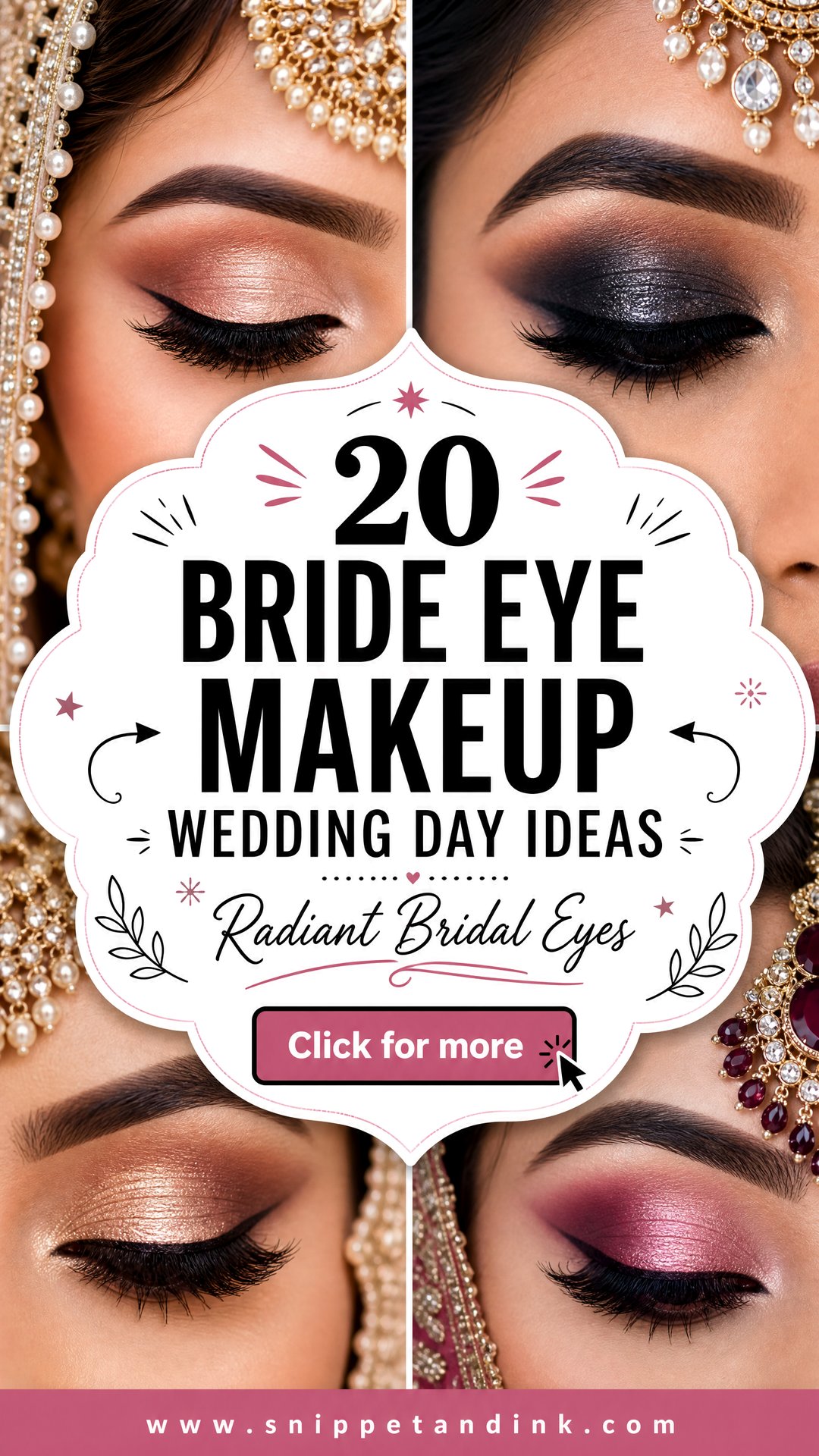
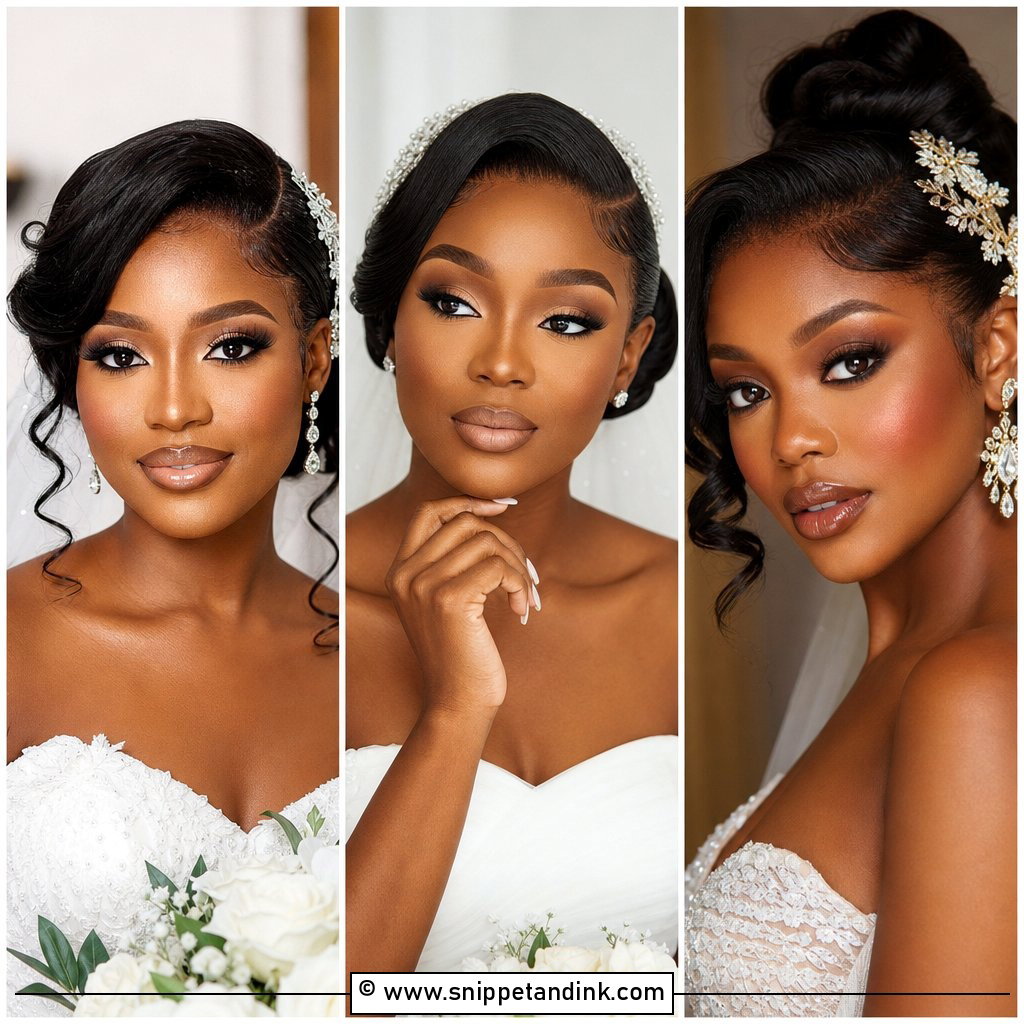
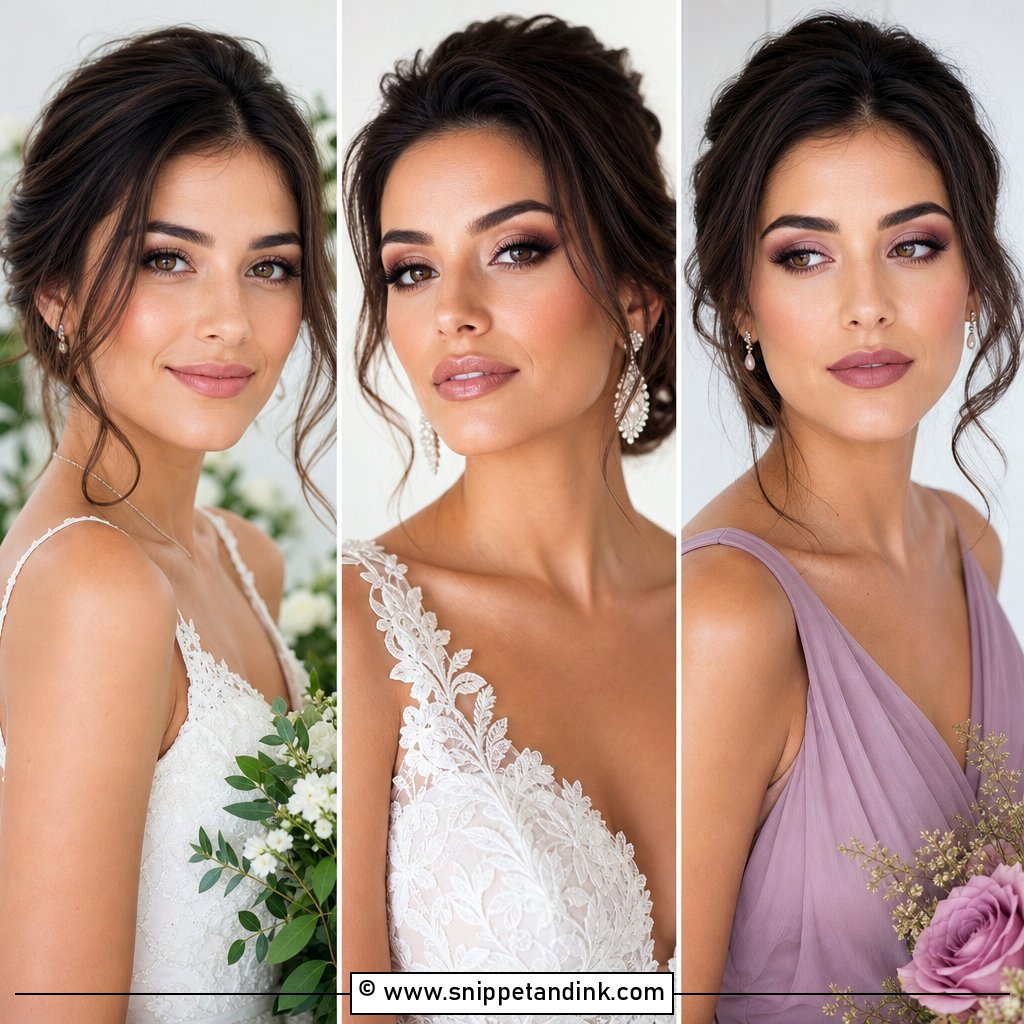
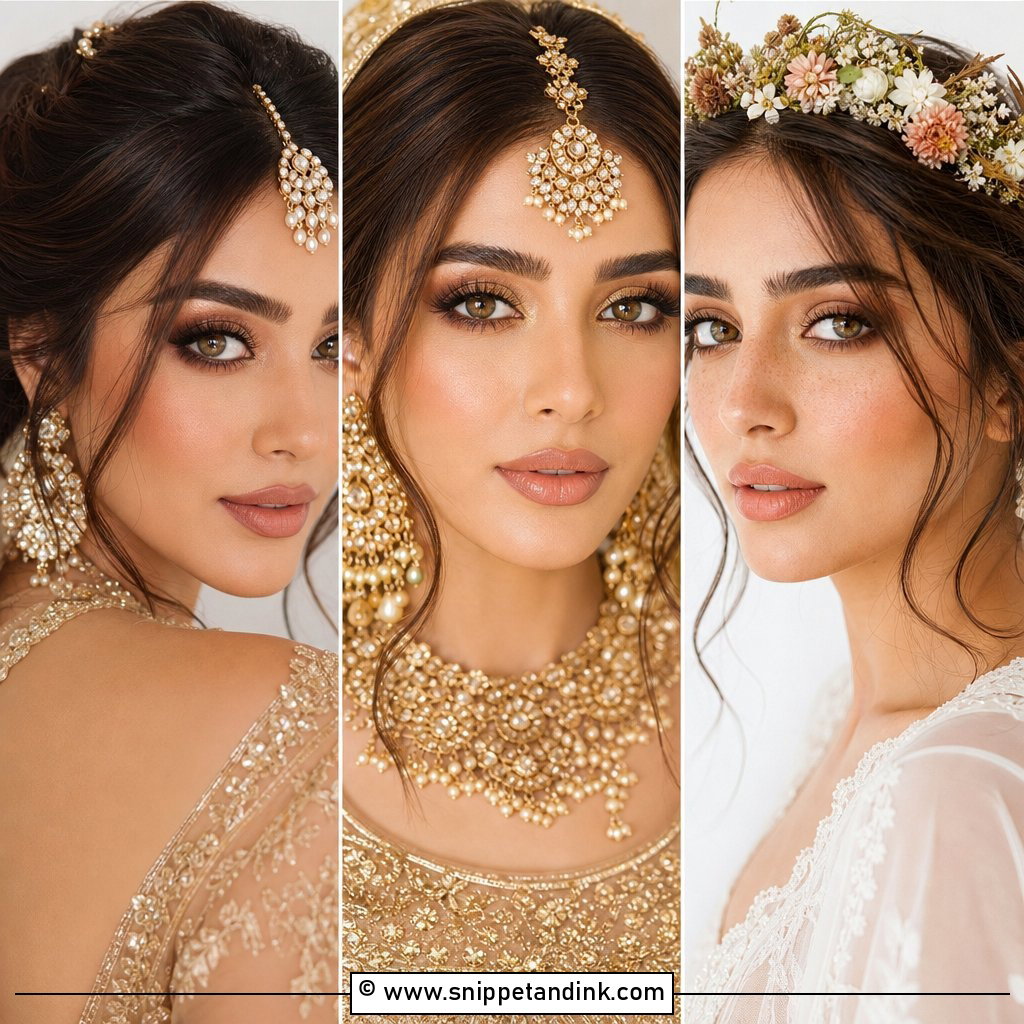
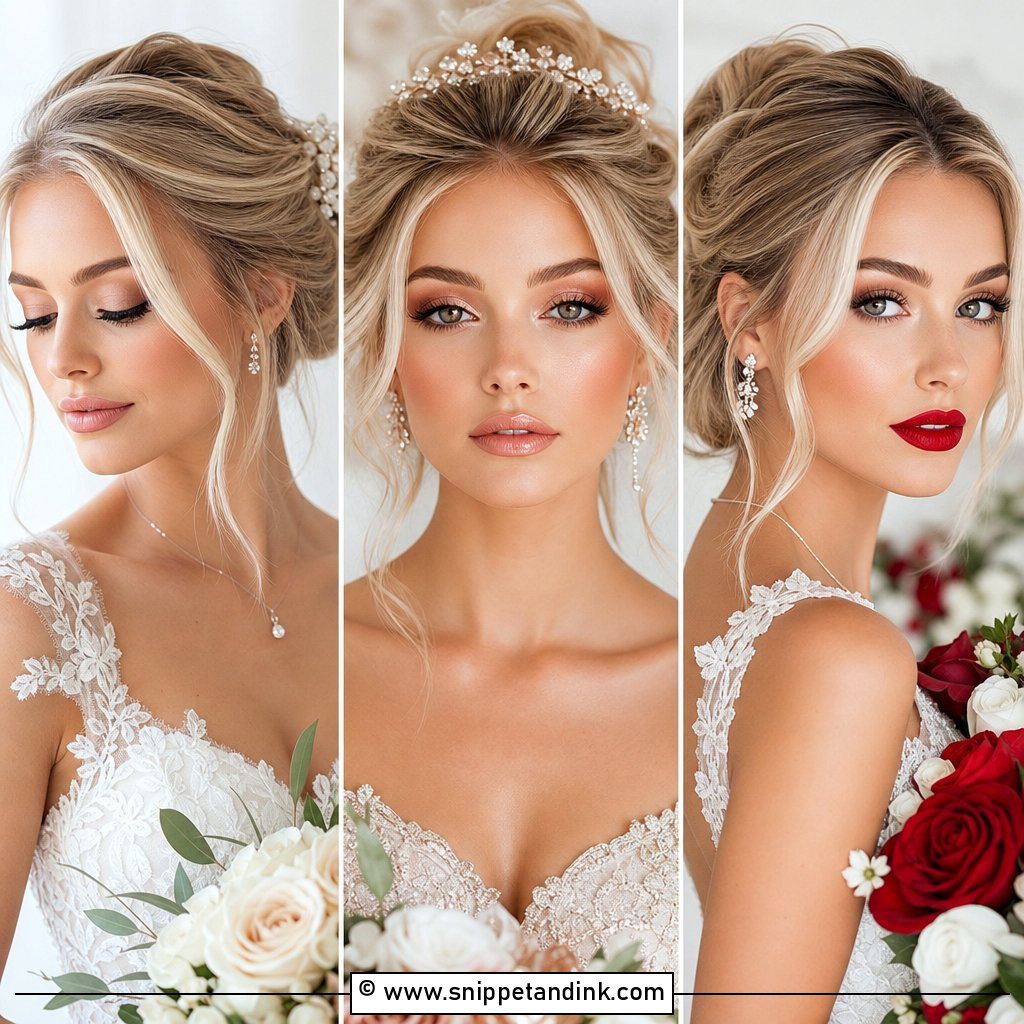
When you’re saving eye looks for your bridal trial, start with the ones that feel like you on a good day, not the ones that look best on a screen. Wedding eye makeup has a harder job than everyday makeup: it has to suit your eye shape, survive happy tears, sit well against your dress and still look fresh after dinner. Right now most brides I see want soft glam, glowing skin and airy lashes, with the occasional blue liner, metallic lid or deeper smoky eye. Below are twenty looks I’d build for a bride, with notes on technique, who each one suits and where it tends to fail.
Building Eye Makeup That Holds Through Happy Tears
Most brides cry at some point, often more than once, so I build the eyes for it from the start. The lids get an eye primer so shadow grips and doesn’t crease. Upper lashes get my usual mascara, but the lower lashes get a waterproof or tubing formula, because that’s where tears run first. I set under the eyes with a fine powder and skip heavy concealer there, since thick product slides when it gets wet.
- Individual clusters hold better through tears than a strip lash, which can lift at the corners.
- Tell your artist if you have a latex allergy; many lash glues contain it, and latex-free versions exist.
- Contact lens wearers should put lenses in before makeup and avoid loose shimmer near the waterline.
- Blot tears by pressing a folded tissue under the lashes. Wiping drags shadow down onto the cheek.
If your eyes water easily or you have sensitive skin around them, mention it at the trial so I can patch-test the lash glue and pick formulas accordingly. Waking up on the wedding morning with puffy eyes is common; a cold compress for a few minutes before makeup does more than any product.
1. Natural Bridal Eye Makeup
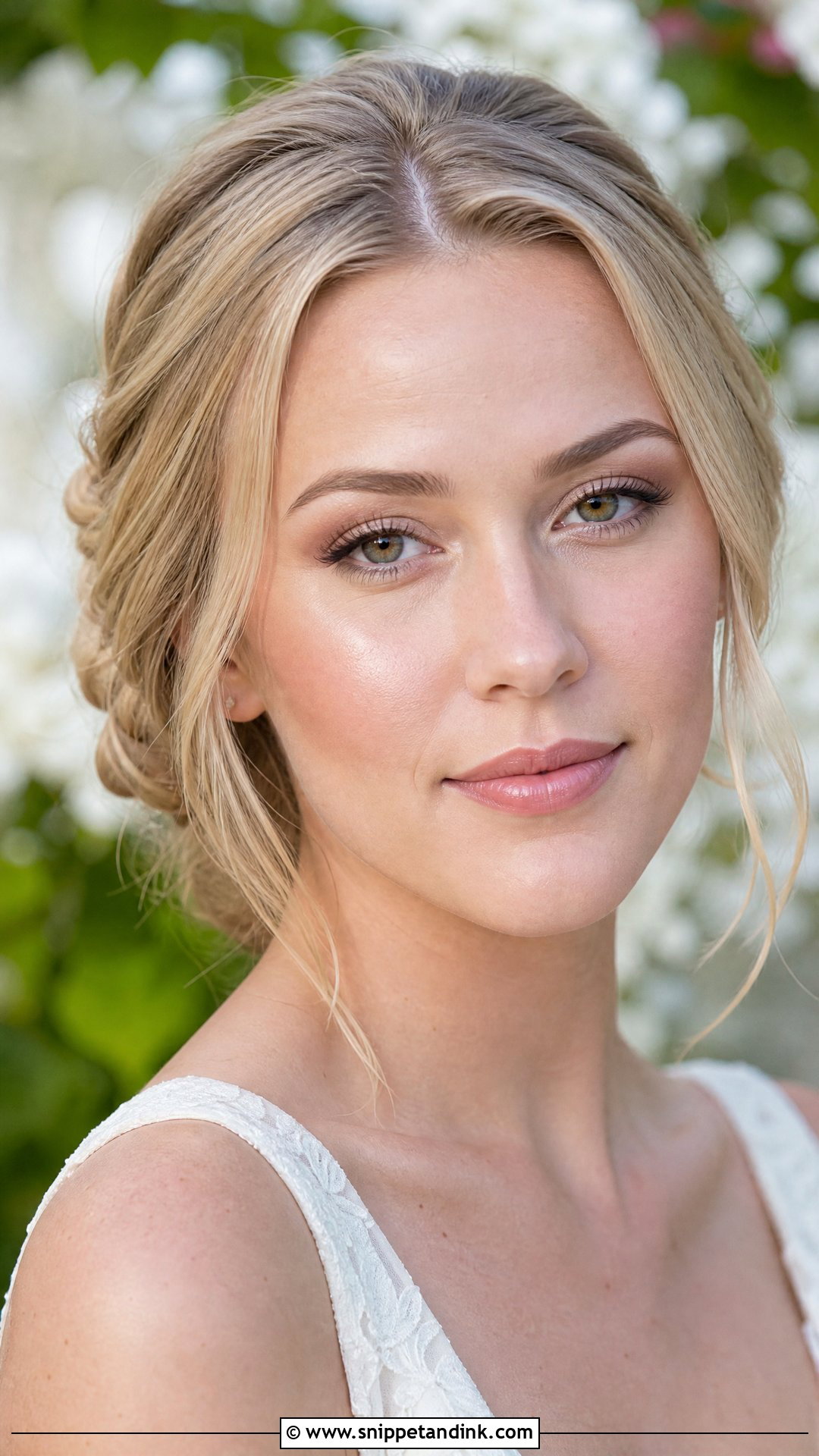
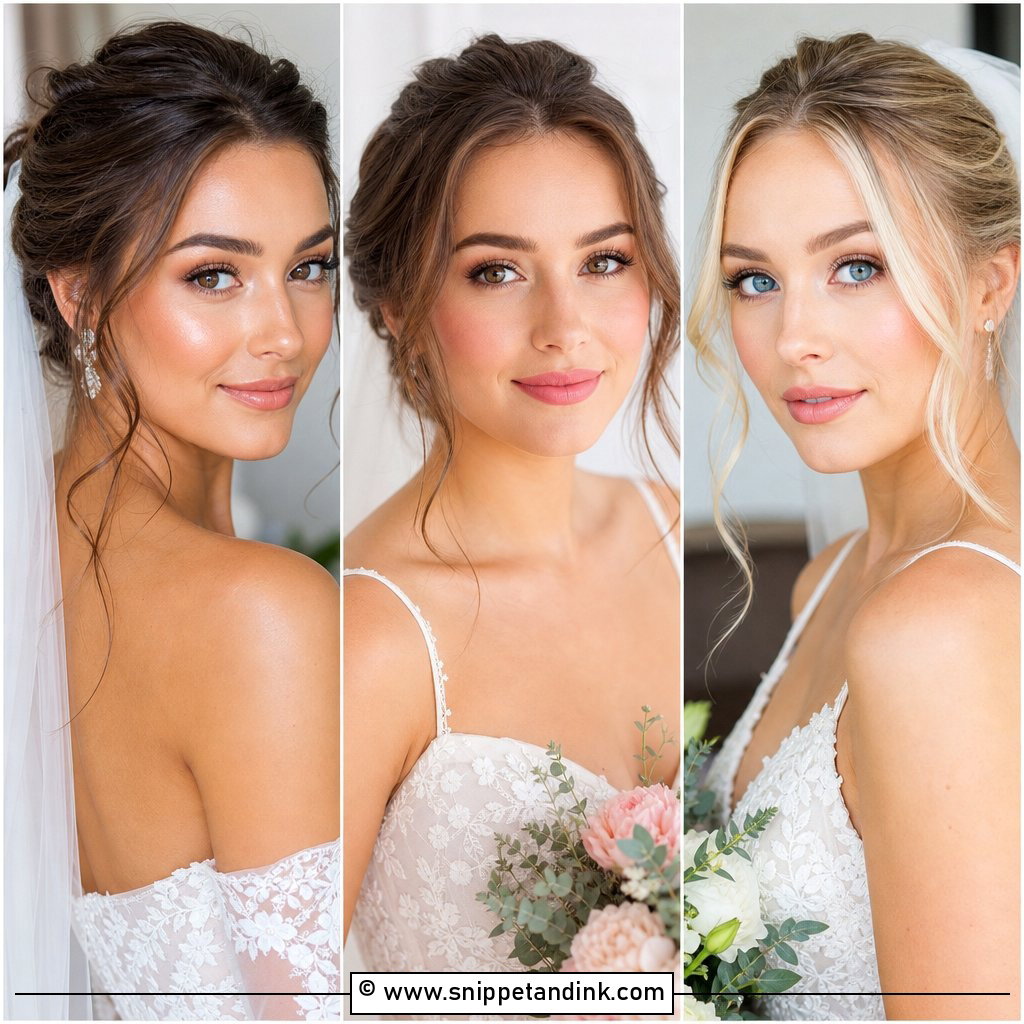
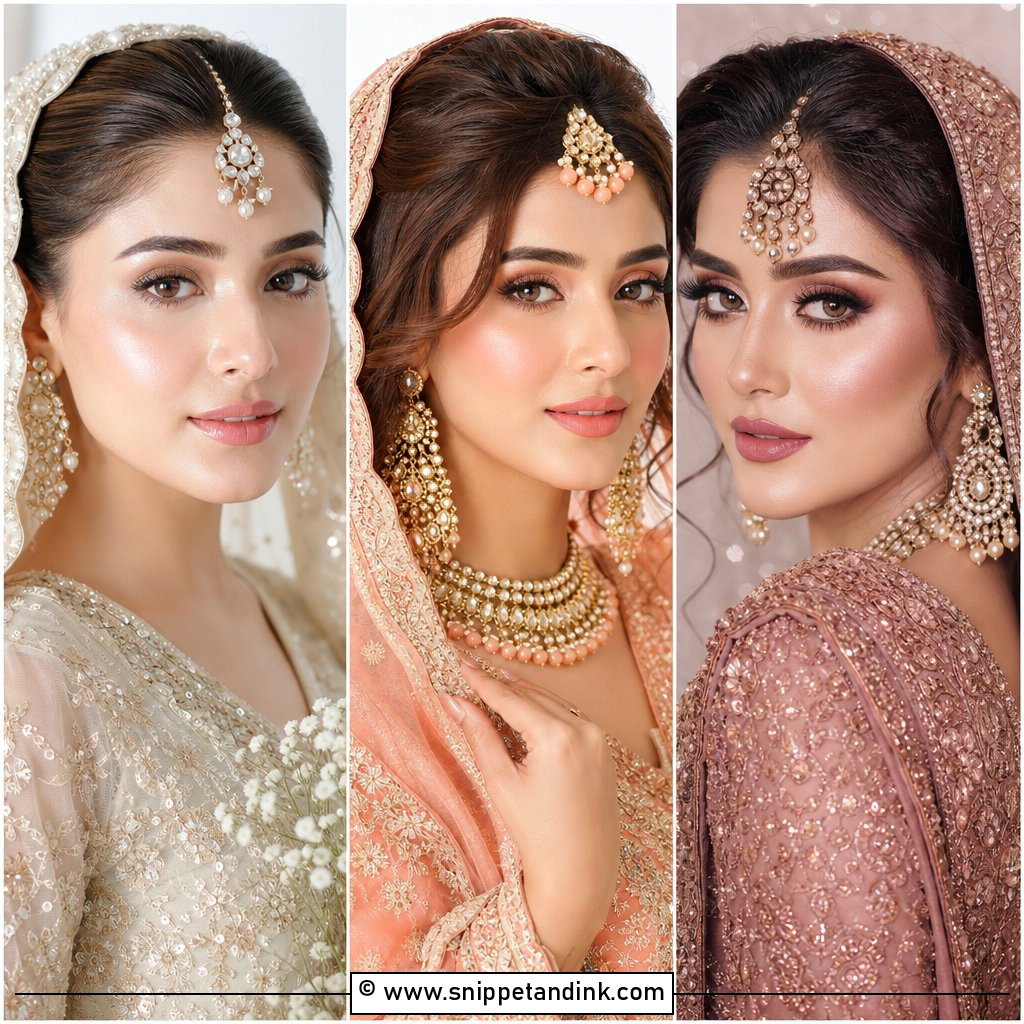
This is the look I do most for brides who rarely wear makeup. Soft beige, taupe or light brown goes through the crease, with a satin lid shade that catches light without sparkle, and a thin brown liner pressed into the lash line. Individual lashes rather than a strip keep it believable. The trap is going so light that the eyes disappear in photos, so I always add a touch more crease definition than feels necessary in the mirror. Cream blush in pink or peach and a nude-pink satin lip finish it, and it suits morning and outdoor ceremonies well.
2. Soft Glam Bridal Eye Makeup
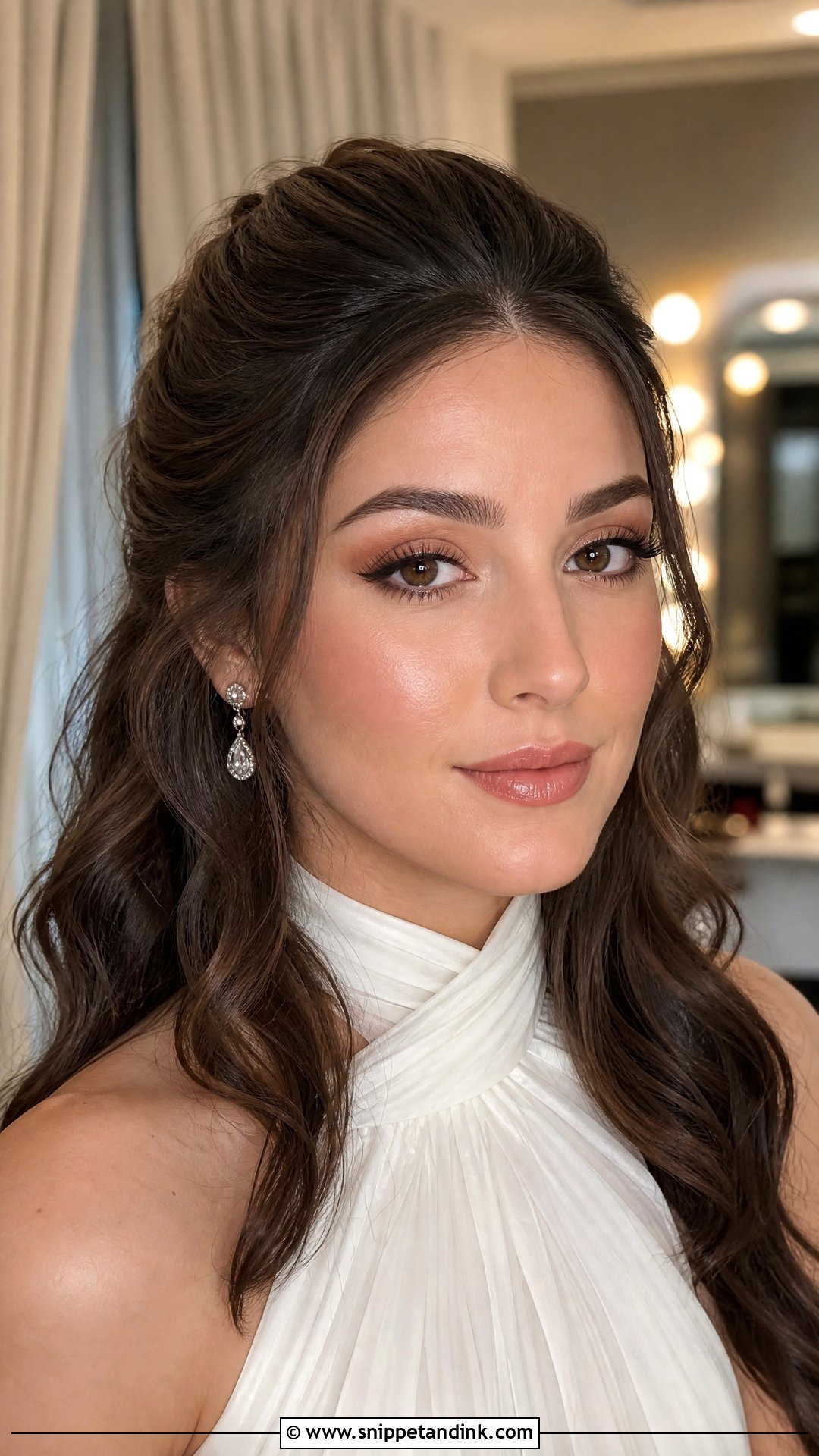
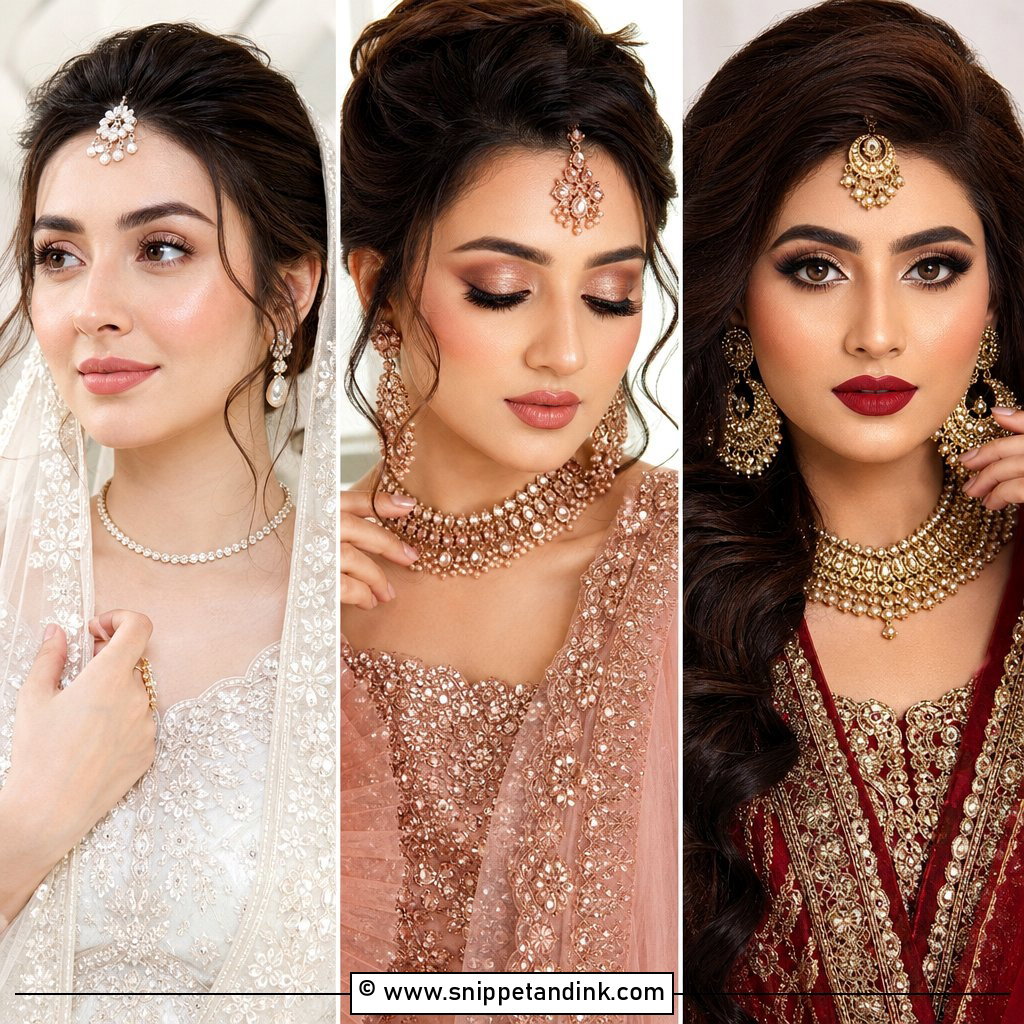
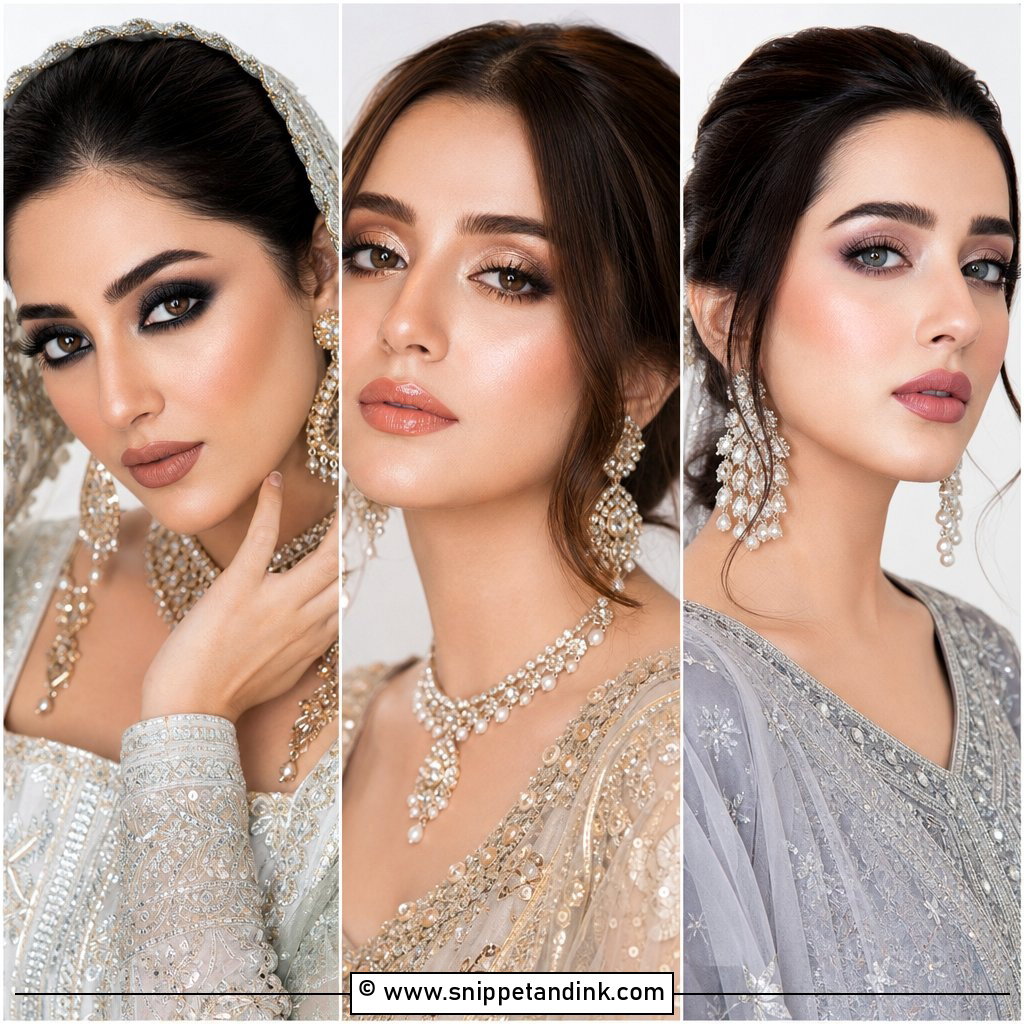
Soft glam adds shape without anything looking drawn on. Warm matte browns, champagne on the lid, softly lifted liner and fluttery lashes are the core. I blend every edge until there’s no visible line between shades, because in high-resolution photos a hard edge reads like a mistake. Satin foundation, soft contour and a blush matched to your undertone go with it, plus a nude rose liner and gloss. Of everything here, it’s the most adaptable across dresses, skin tones and venues, which is why it’s usually my starting point at a trial.
3. Smokey Bridal Eye Makeup
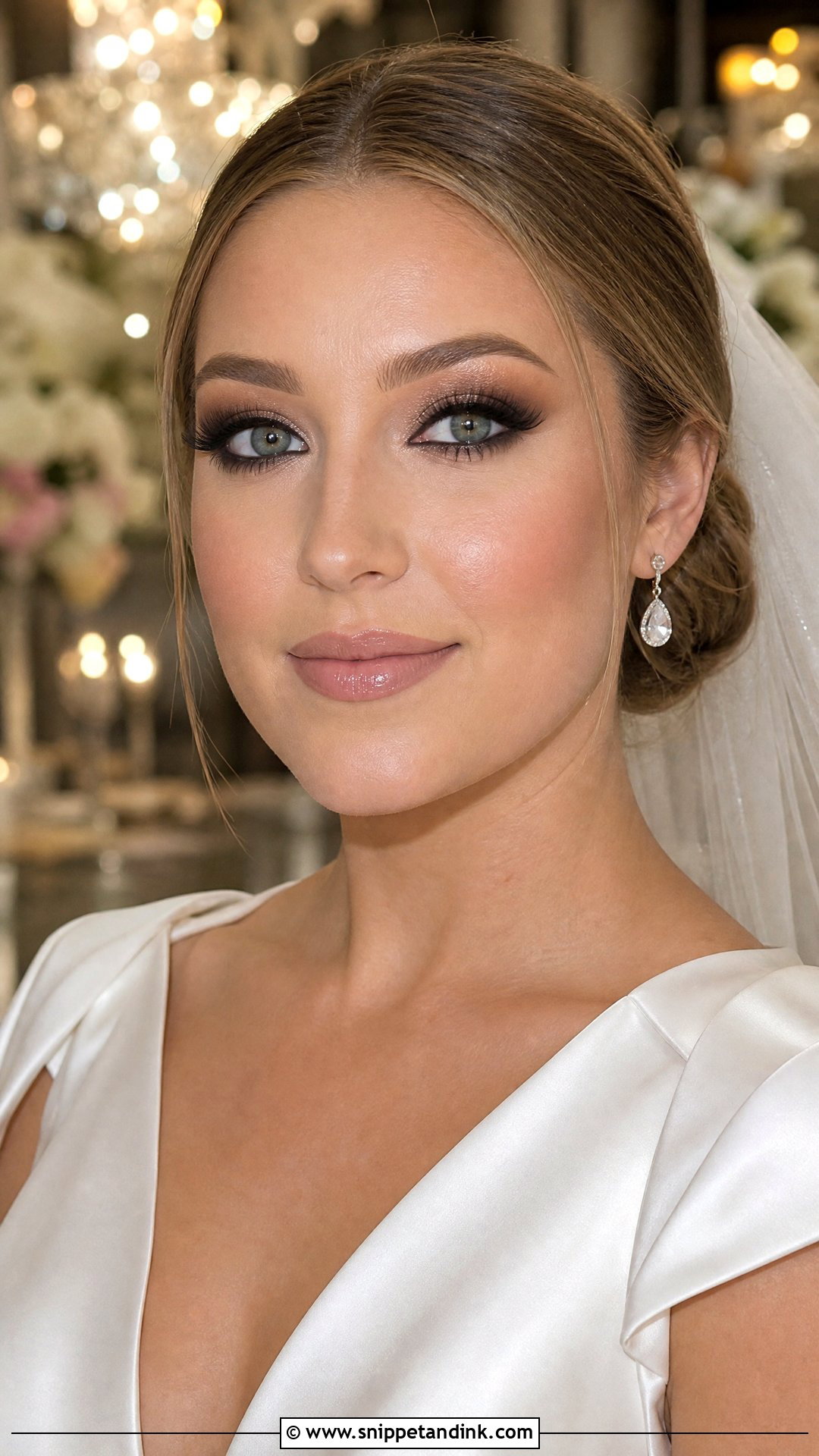
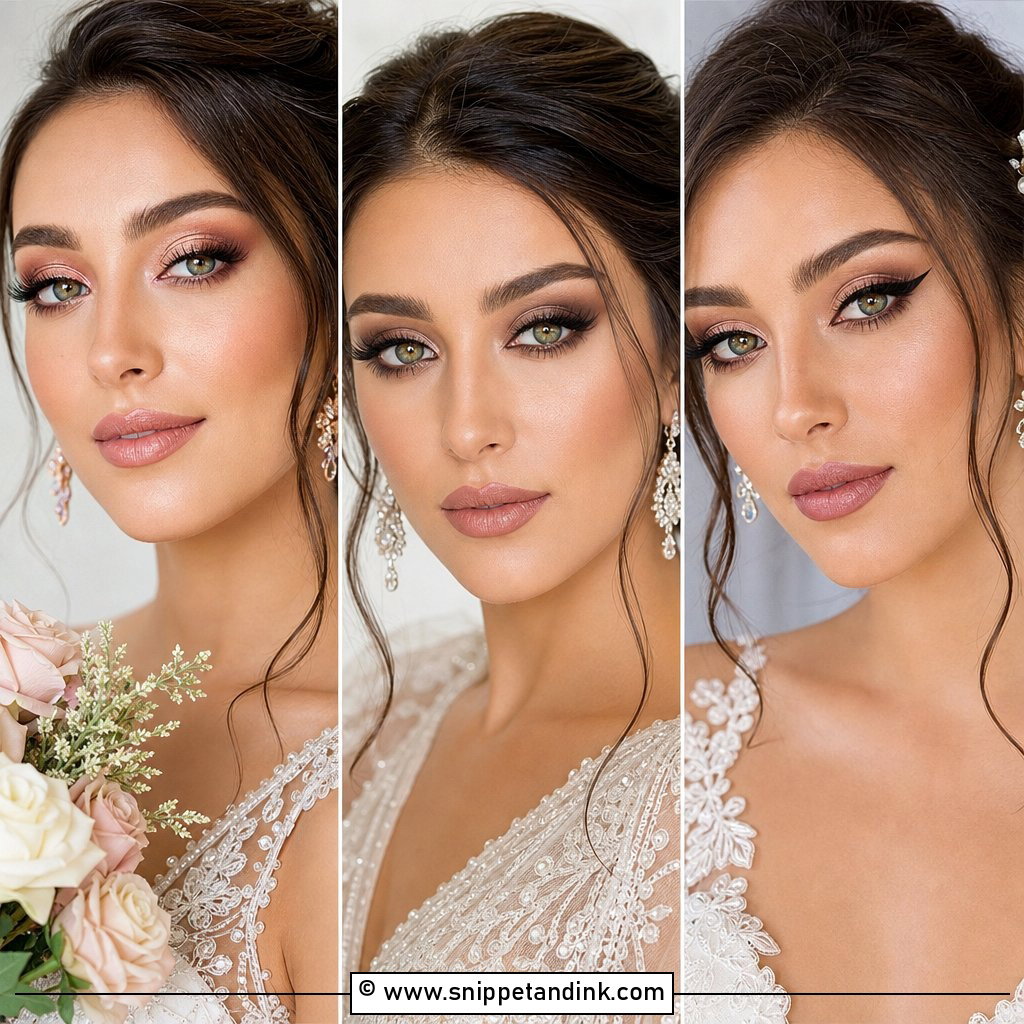
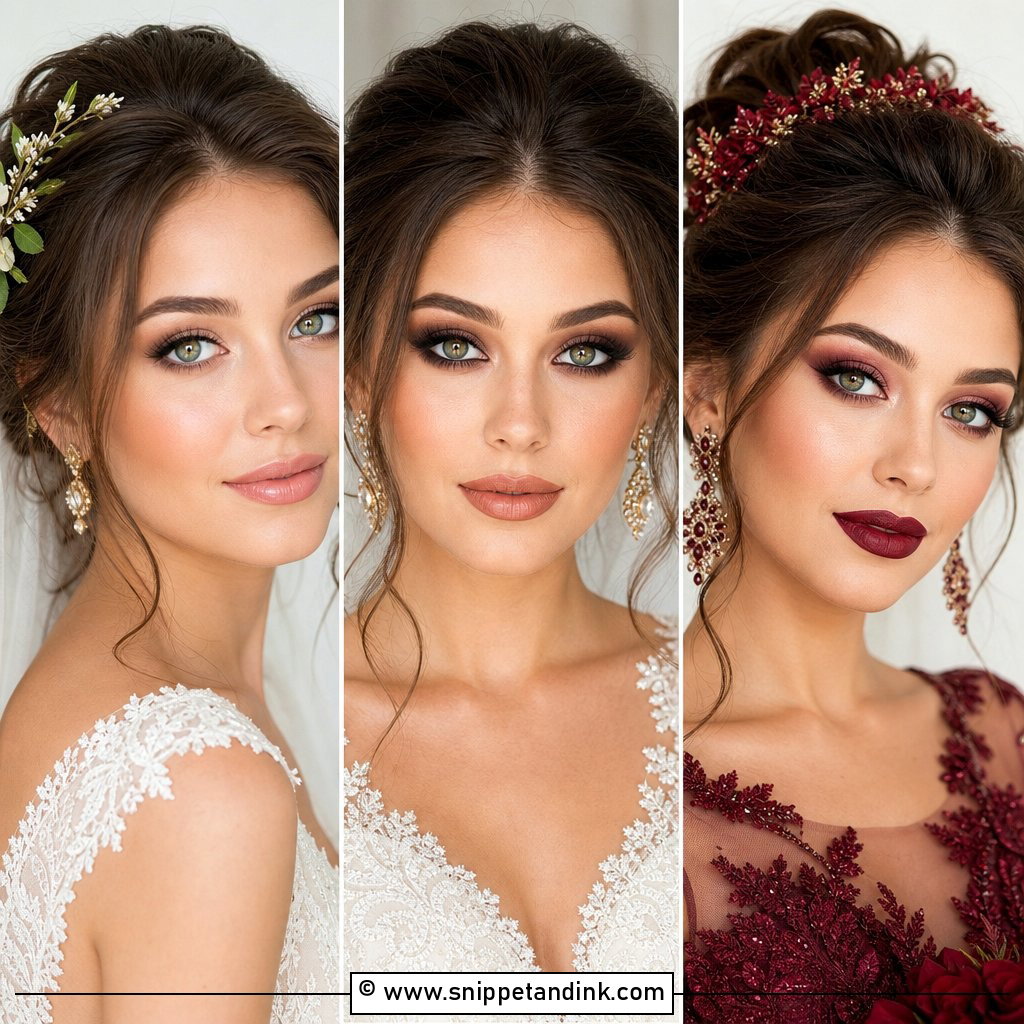
Smokey bridal eye makeup works for a wedding only when it’s diffused, not packed on. I’d choose brown, bronze, plum or charcoal over true black, which can look harsh in daylight and make the eyes look smaller in photos. The deepest shade stays at the lash line and outer corner, fading upward into a soft transition. Keep lashes full but not so thick they hide the shadow. Matte or satin skin, muted blush and a nude lip stop the face looking crowded. It’s my go-to for evening and black-tie receptions.
4. Champagne Bridal Eye Makeup
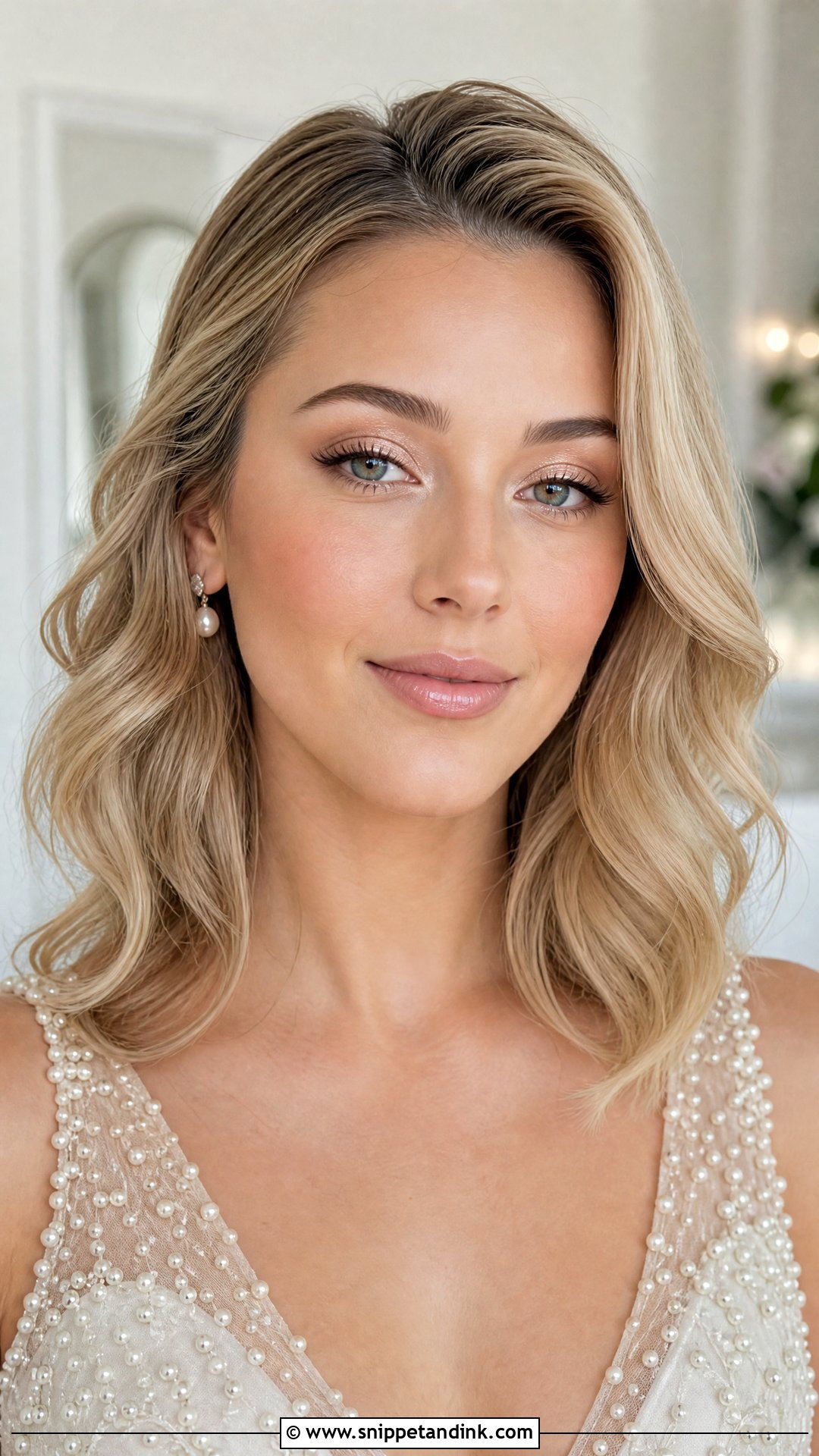
Champagne is the shade I can put on nearly every bride without a second thought. It brightens the lid without adding colour, a soft brown in the crease gives shape, and a touch of highlight at the inner corner opens the eye. Brown or black-brown liner and wispy lashes define the lash line. I keep the skin luminous but controlled, with rose blush and a light highlight on the cheekbones, and a pinky or peach nude lip. It sits naturally beside ivory, pearl and satin.
5. Brown Bridal Eye Makeup
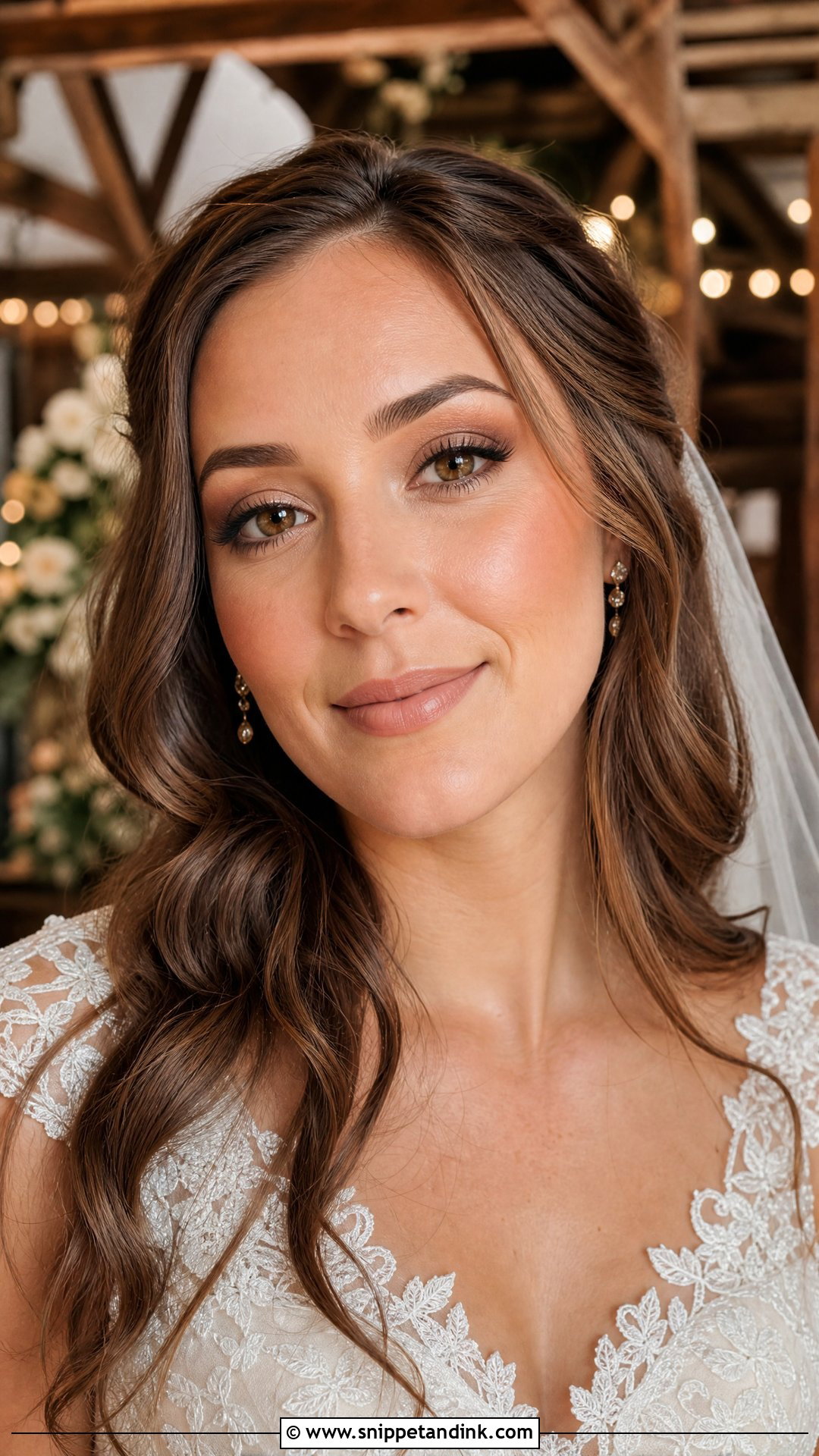
Brown is the easiest family to personalise. Lighter browns give a soft daytime look; deeper espresso tones carry into the reception. I usually build a matte brown crease with a caramel or bronze lid, then tightline the upper waterline so the lashes look thicker without any visible liner. Medium lashes lift the eye. Brows should be softly filled, not blocked in. Warm blush, subtle bronzer and a creamy nude lip complete it. It works with blue, green, hazel and brown eyes, which is why I rarely have to talk anyone out of it.
6. Gold Bridal Eye Makeup
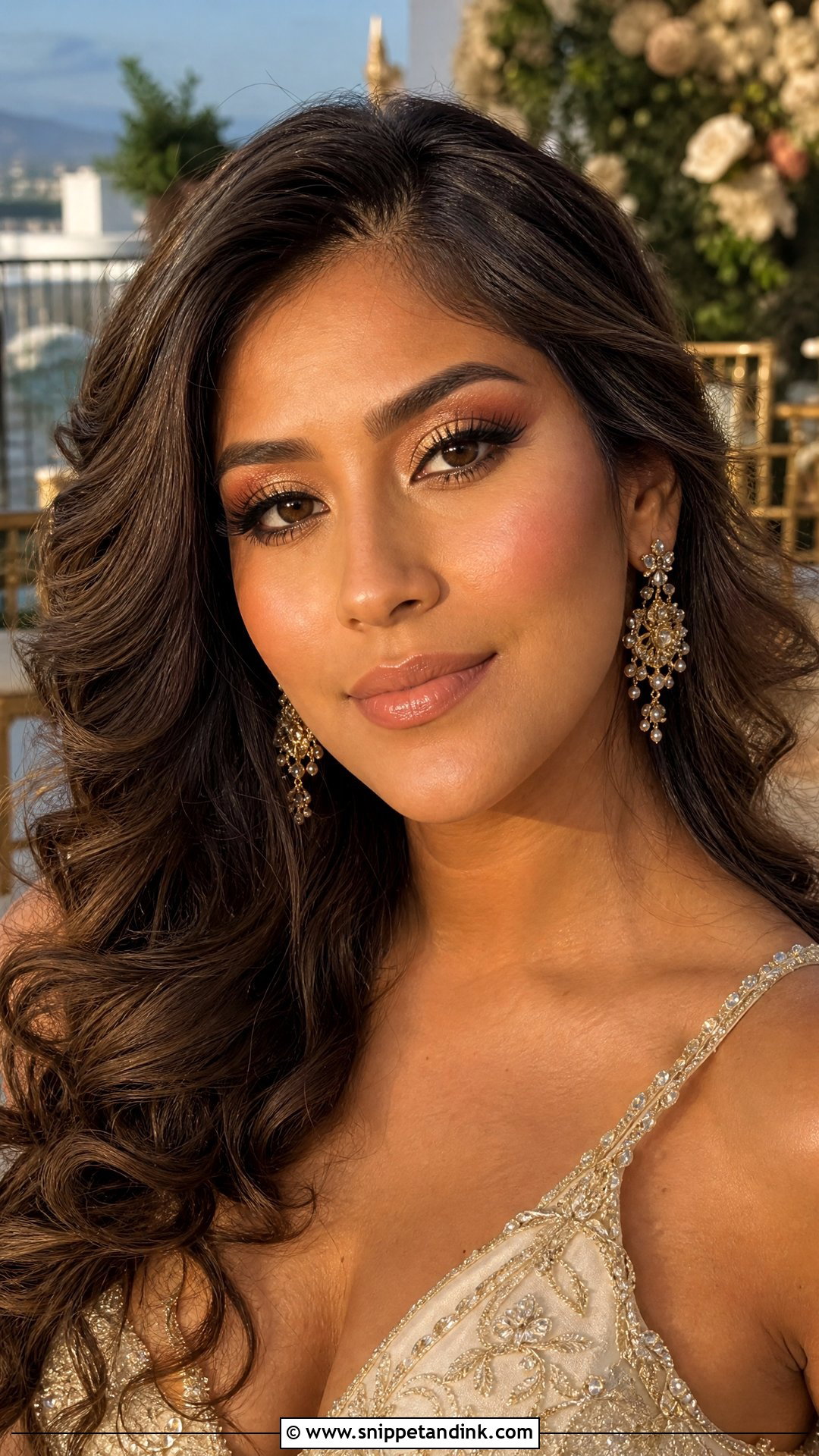
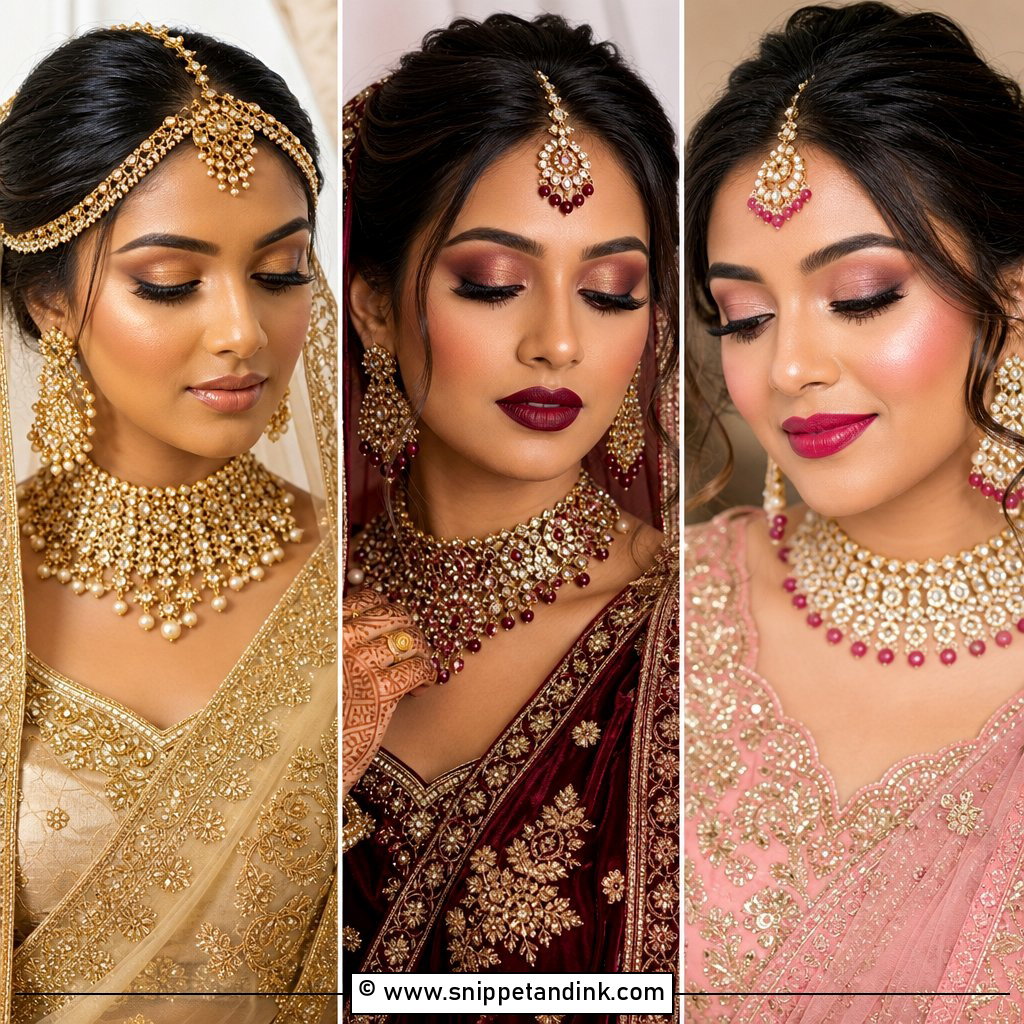
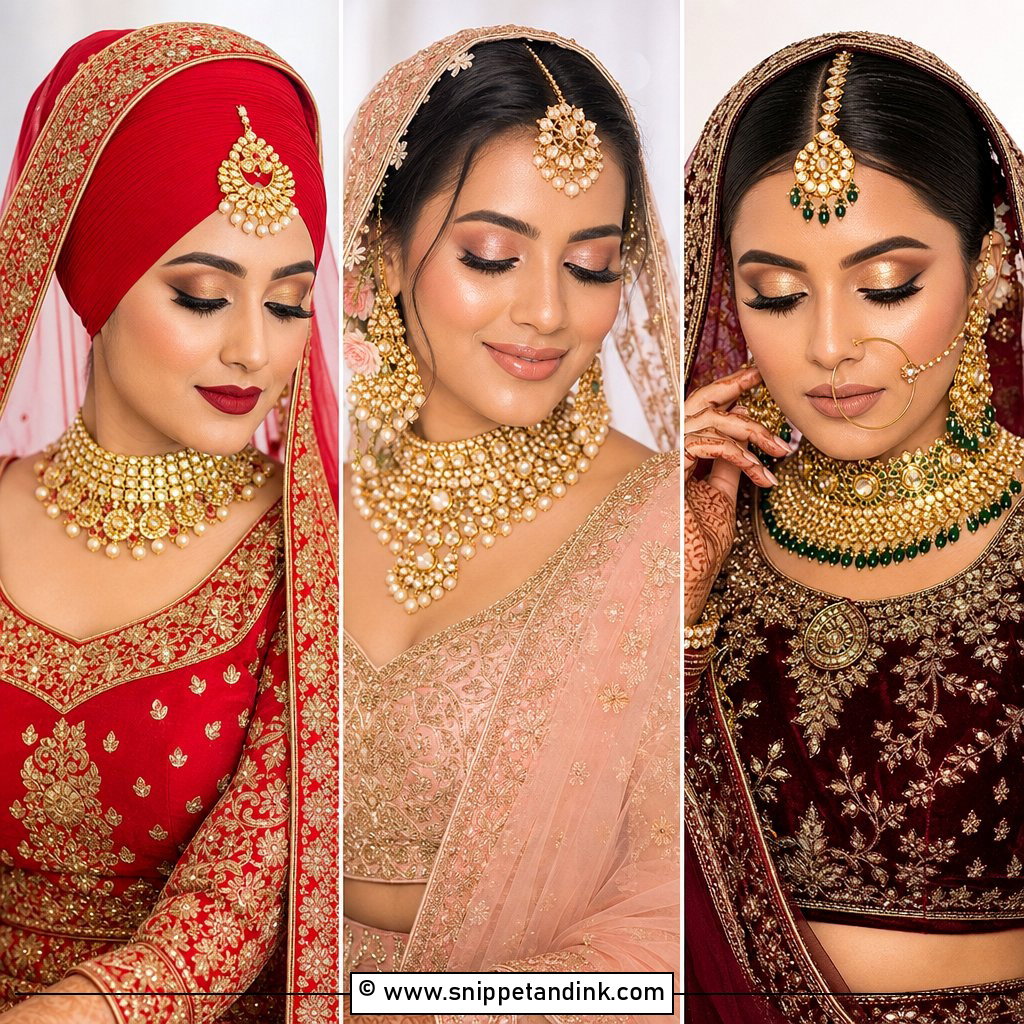
Gold works when you get the shade right for your skin. Soft antique gold reads elegant, pale gold brightens fair skin, and a richer bronze-gold suits deeper skin tones far better than a yellow gold that can turn ashy. I blend warm brown or terracotta through the crease, then press gold shimmer onto the centre of the lid with a fingertip, which gives more payoff than a brush. Liner stays close to the lashes. Glowing skin, peach blush and a warm nude lip go with it, and it suits gold jewellery and champagne dresses.
7. Rose Gold Bridal Eye Makeup
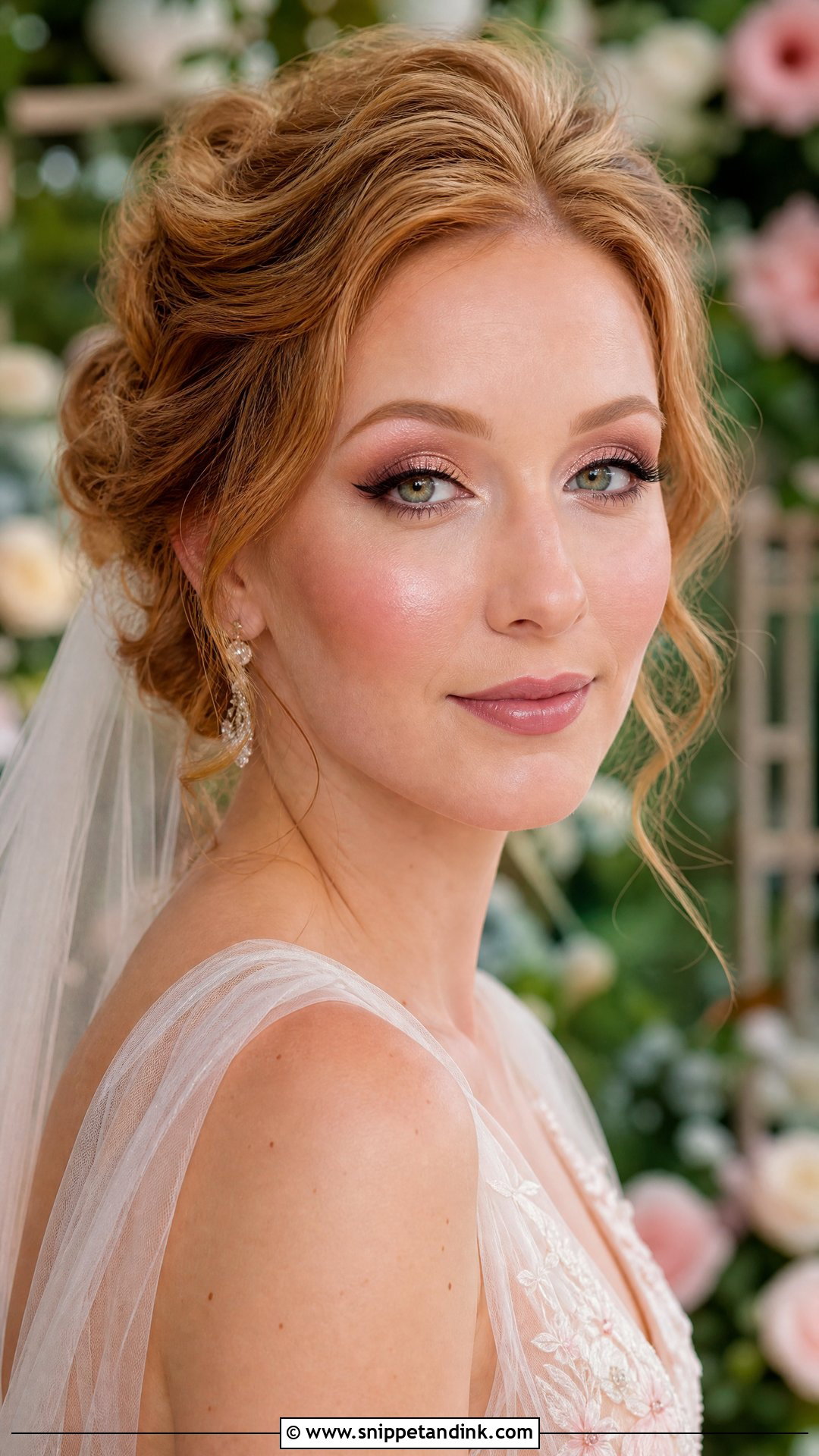
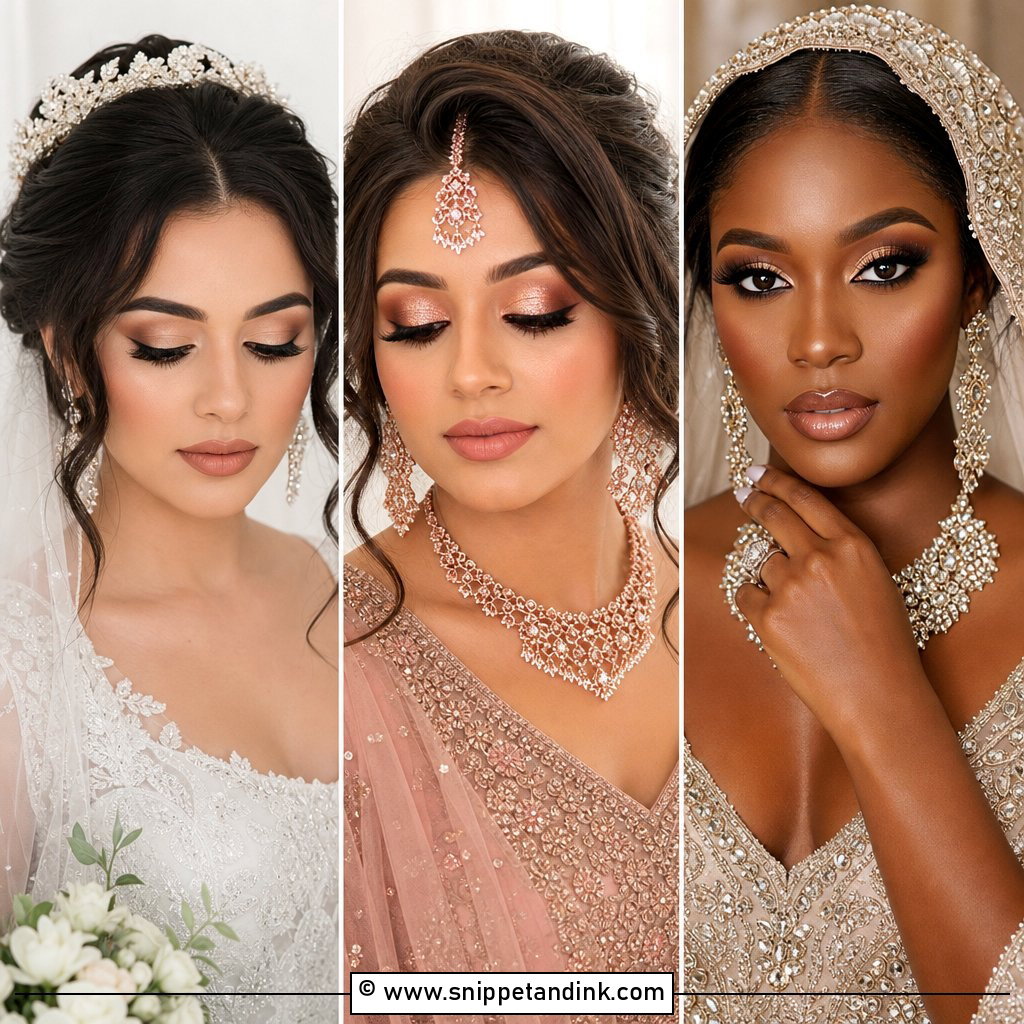
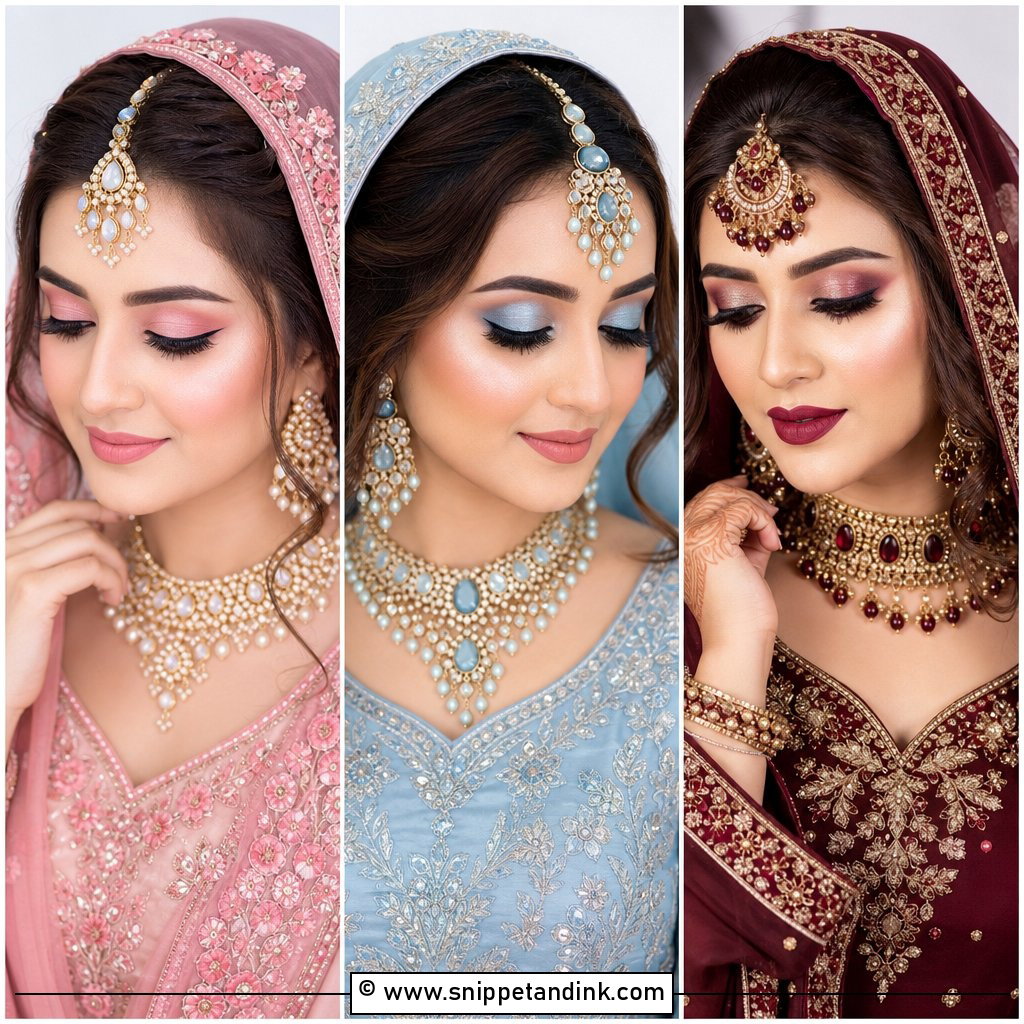
Rose gold sits halfway between pink and gold, so it warms the eyes without looking like coloured shadow. I ground it with mauve or soft brown in the crease. It’s especially good on green, hazel and brown eyes because the pink tone contrasts with them. Add a thin wing or smudged brown liner at the outer corner. Fresh skin, rosy blush and a soft highlight that repeats the lid’s glow keep it cohesive, with a mauve nude or rose lip. The one caution: on very fair skin with pink lids, it can make the eyes look tired unless I conceal the lid first.
8. Matte Bridal Eye Makeup
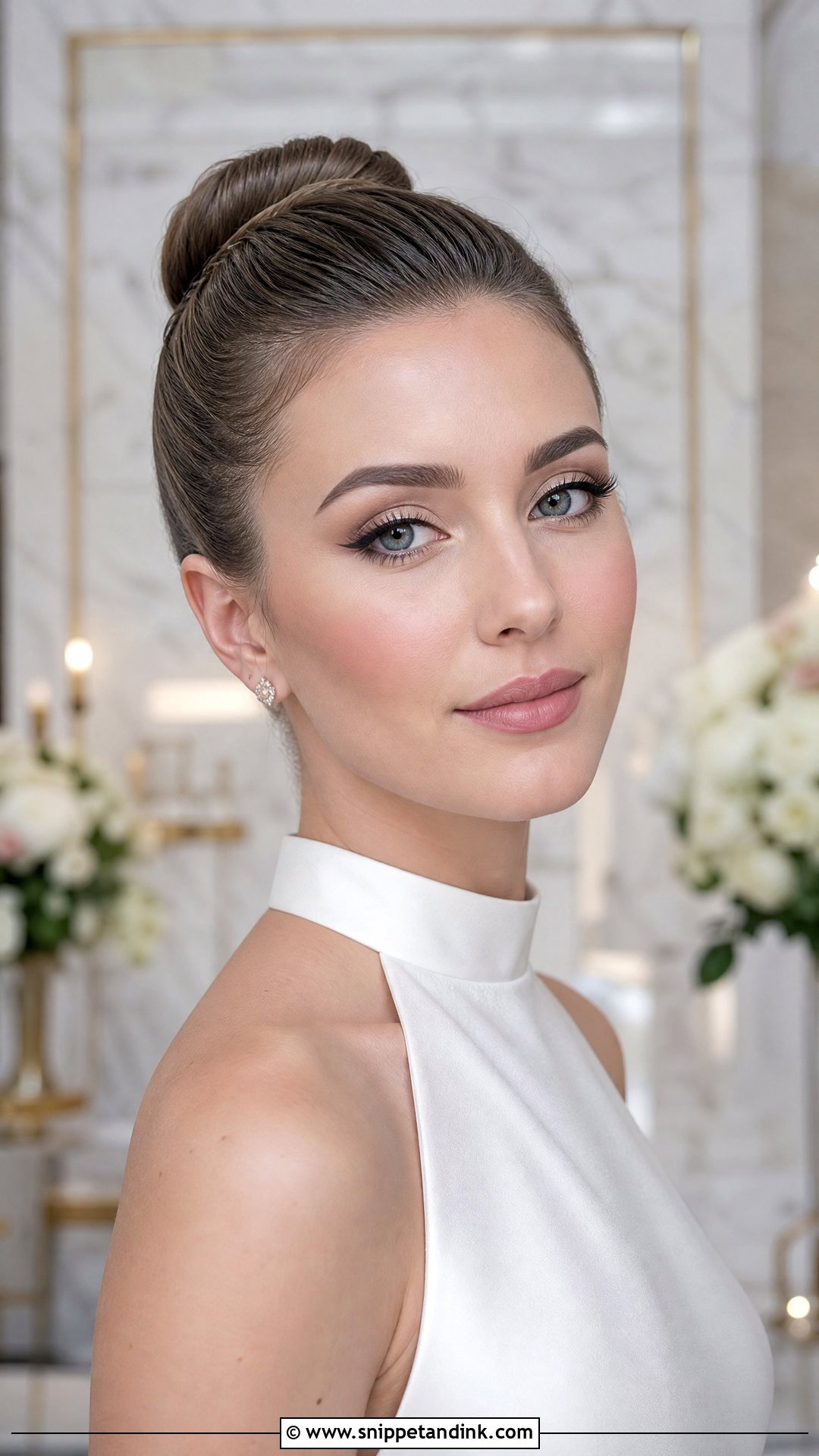
Skipping shimmer entirely gives the cleanest definition in photos, and it’s what I suggest to brides with textured or crepey lids, since shimmer magnifies texture. I use matte ivory, beige, taupe, caramel, mocha or espresso, with depth in the crease and outer corner and a pale matte lid. A soft wing and separated lashes keep it lifted. Since the eyes are flat, the skin can carry more glow: satin foundation, cream blush and a little highlight. A velvet nude or soft pink lip works best.
9. Dewy Bridal Eye Makeup
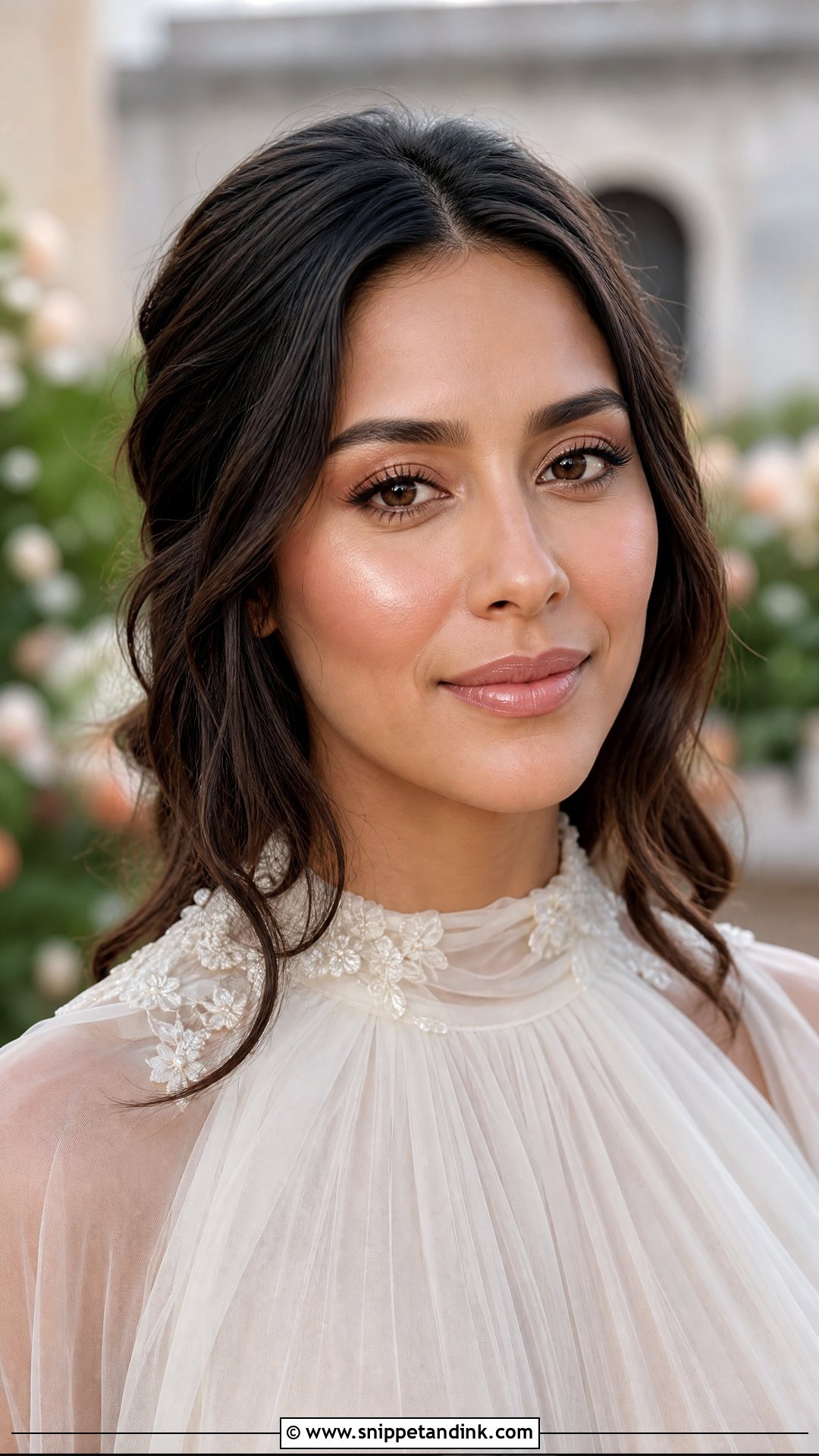
Dewy bridal eye makeup means the lids look fresh and softly reflective too, not just the skin. I use cream shadow or finely milled shimmer in pearl, champagne or soft peach, with only a light crease. Cream shadows crease on oily lids by mid-afternoon, so I always set them with a matching powder pressed on top. Skip heavy liner; brown tightlining, curled lashes and airy clusters keep it light. A sheer base, cream blush and a glossy nude pink lip finish it.
10. Classic Winged Bridal Eye Makeup
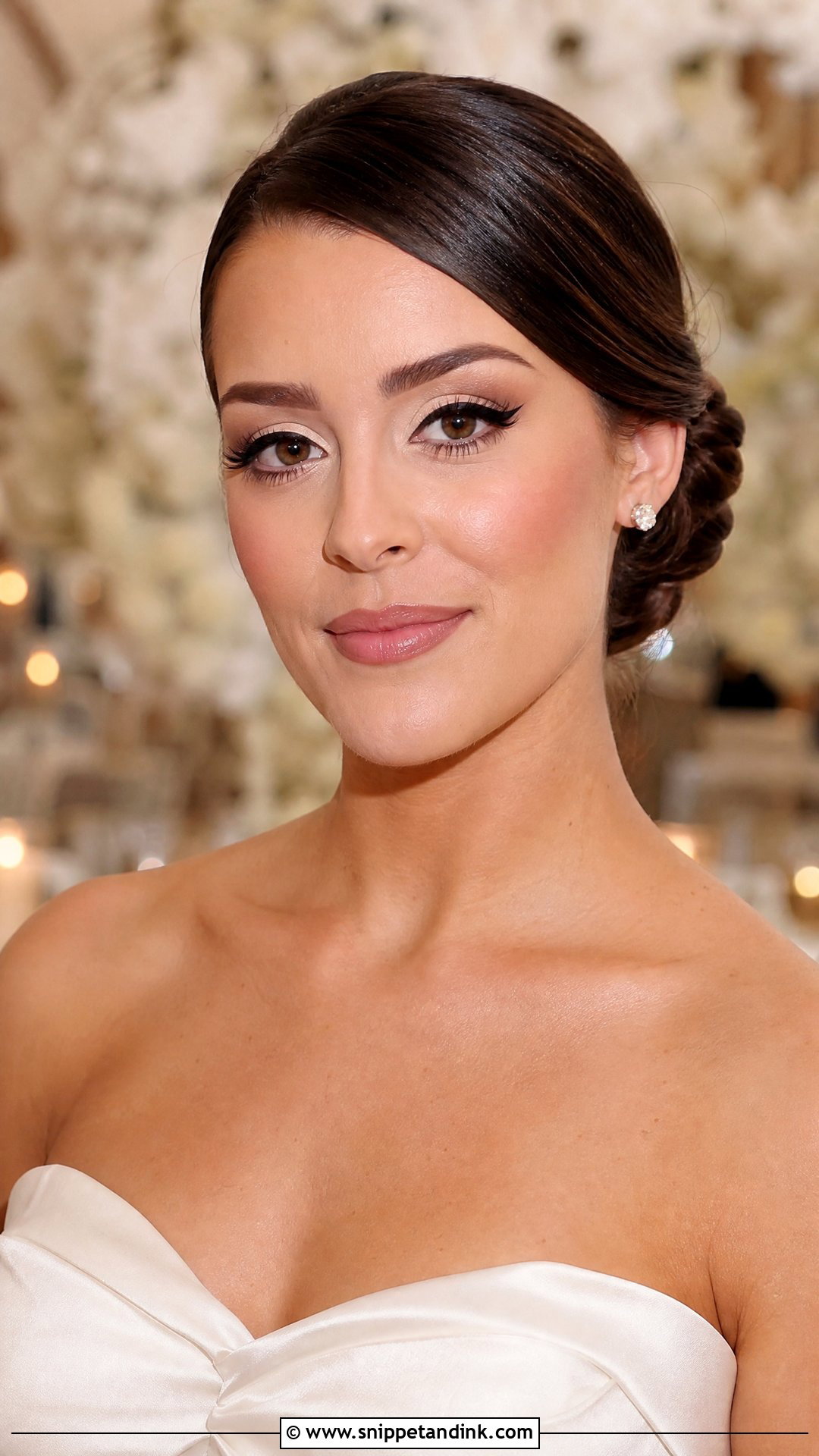
A wing gives the face structure and works with clean gowns and sleek hair. The lid can stay simple with ivory or champagne, the crease softly shaded in beige or taupe. The wing has to follow your eye shape: I map it with the eye open and looking straight ahead, because a wing drawn on a closed lid often disappears or kinks when you open it. A small upward flick usually lifts more than a long one. Defined brows, satin skin and a balanced blush go with it, and a nude rose or a classic red lip.
11. Hooded Eye Bridal Eye Makeup
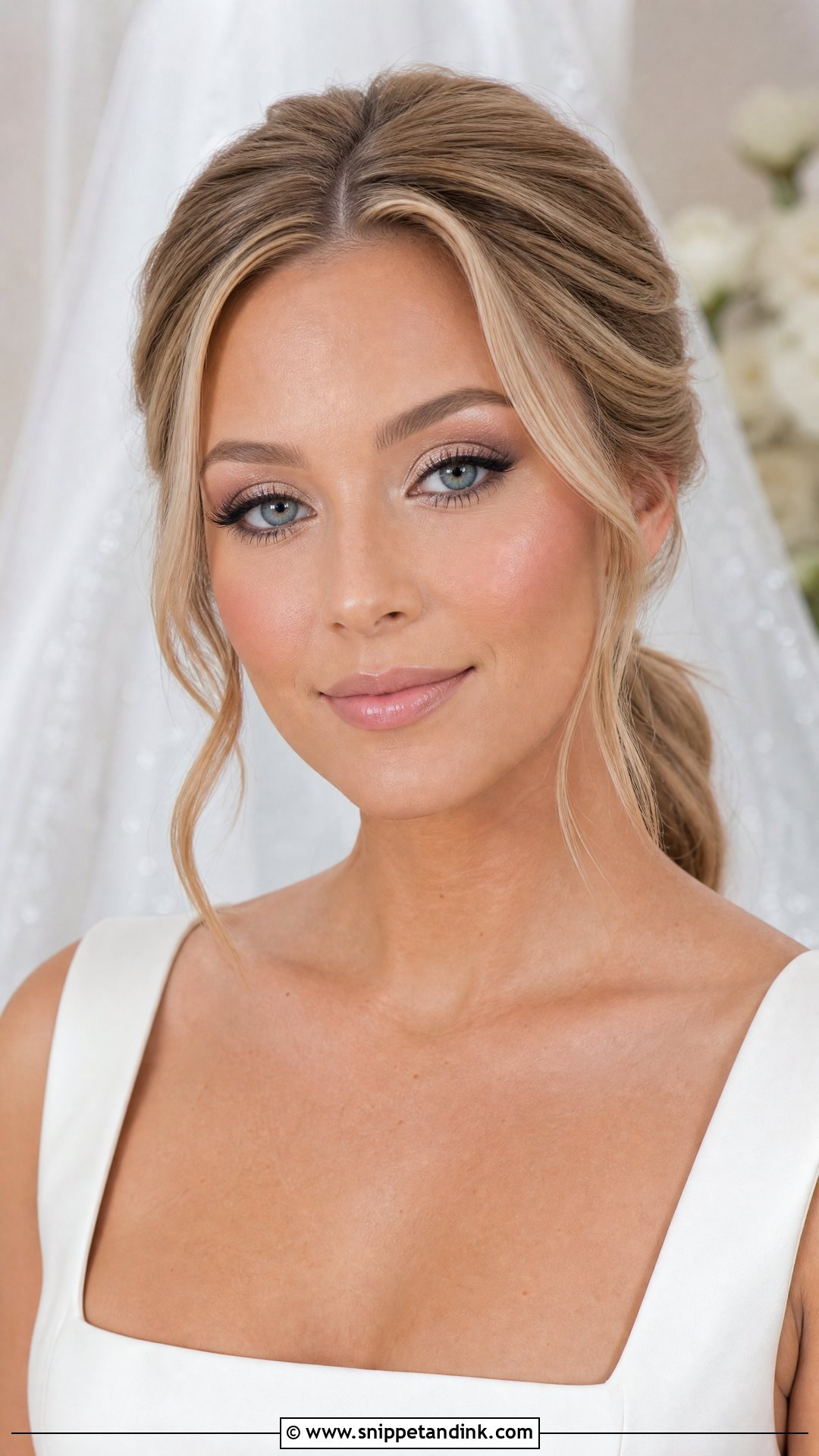
With hooded eyes, the shadow has to be placed where it shows when the eye is open, not where the crease is. I blend the transition shade slightly above the natural crease, lift the depth at the outer corner, and keep shimmer on the centre of the lid or inner corner. Thin liner or tightlining is usually better than a thick wing, which eats the small amount of visible lid. Lifted, wispy lashes open the eye. Pair with soft contour, peach blush and a natural lip.
12. Blue Bridal Eye Makeup
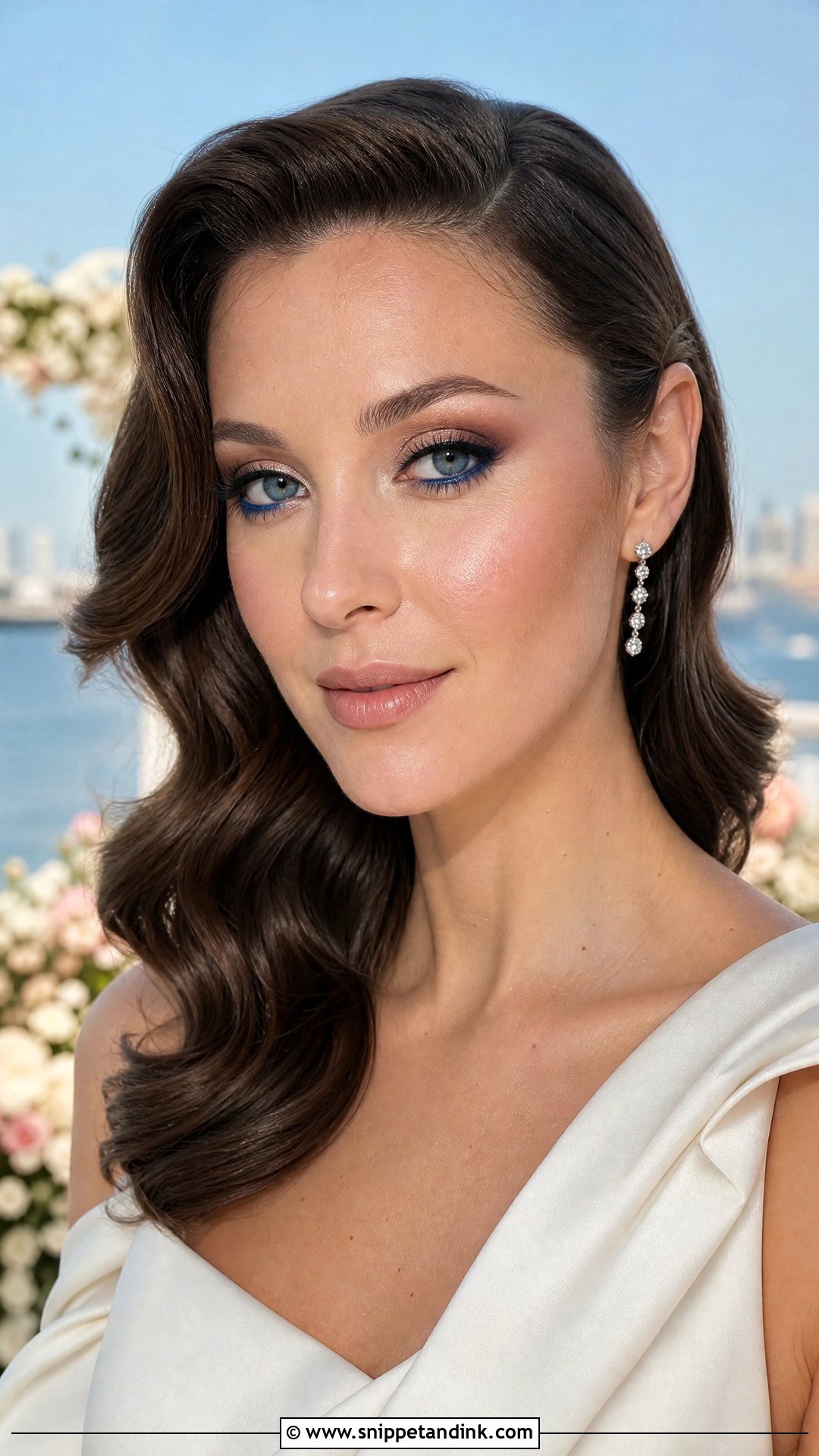
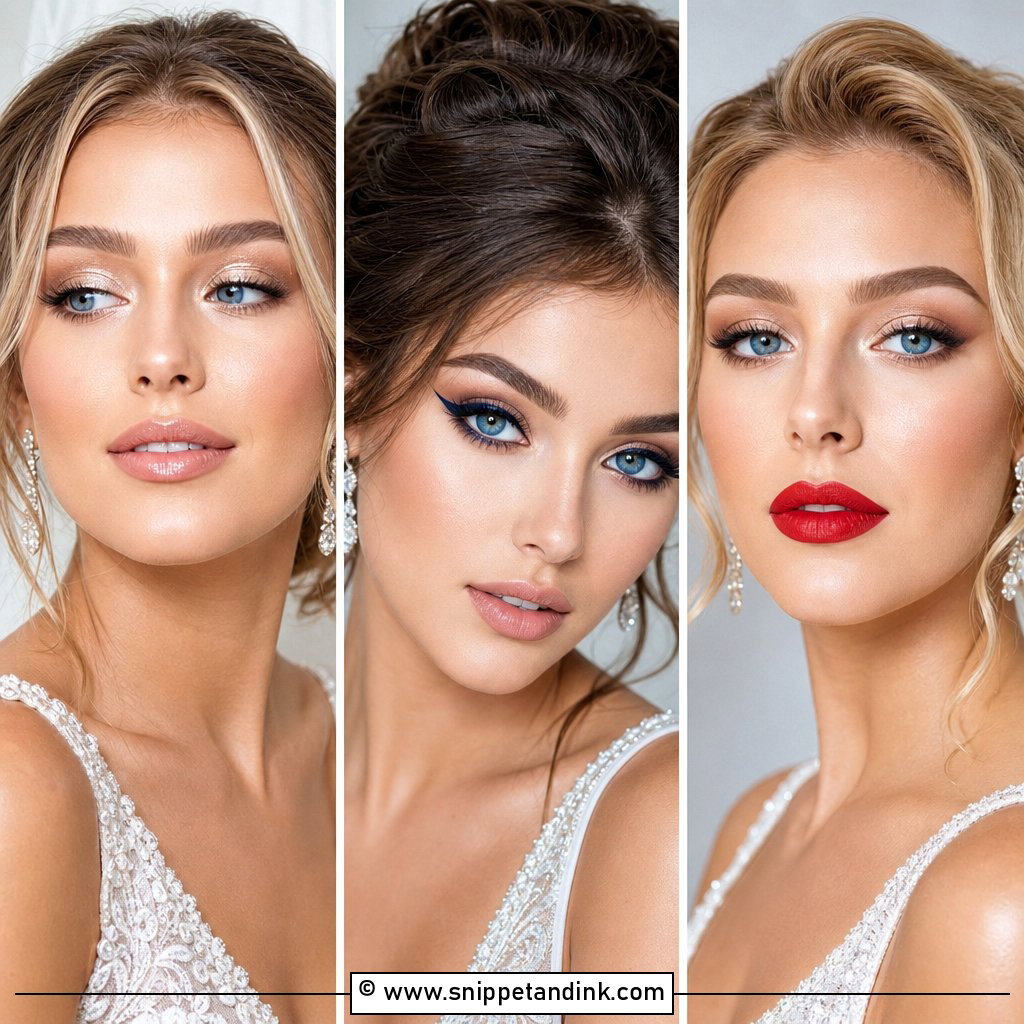
Blue makeup doesn’t have to mean blue shadow across the lid, and for most brides I’d avoid that. A navy smudged liner, a soft slate outer corner or a pastel blue accent under the lower lashes is enough for a something blue nod. Keep the crease neutral in taupe or brown so the colour looks deliberate. Navy in particular brightens the whites of the eyes, which makes it more flattering than people expect. Glowing skin, pink blush and a nude or rose lip suit it, and it sits well with silver accessories.
13. Plum Bridal Eye Makeup
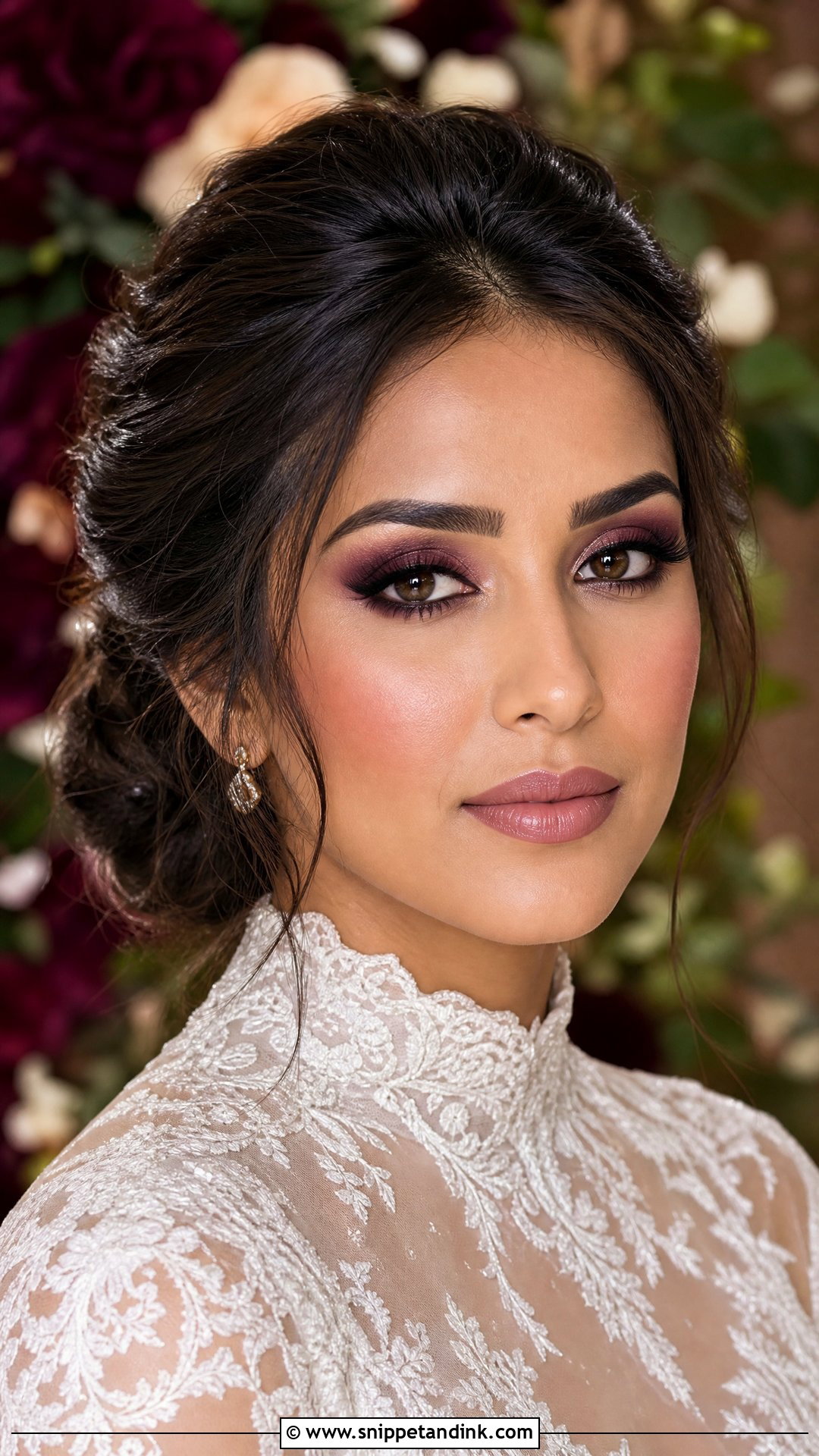
Plum bridal eye makeup is richer than brown but softer than black, and mauve, berry-brown, eggplant and soft violet make green, hazel and brown eyes stand out. The deepest plum sits at the lash line and outer corner, blended into a warm neutral transition shade so it doesn’t look bruised, which is the real risk with purples. A satin mauve lid adds dimension. Keep blush rose or berry and light, with a mauve nude lip or a soft berry stain. It suits fall weddings and evening receptions.
14. Bronze Bridal Eye Makeup
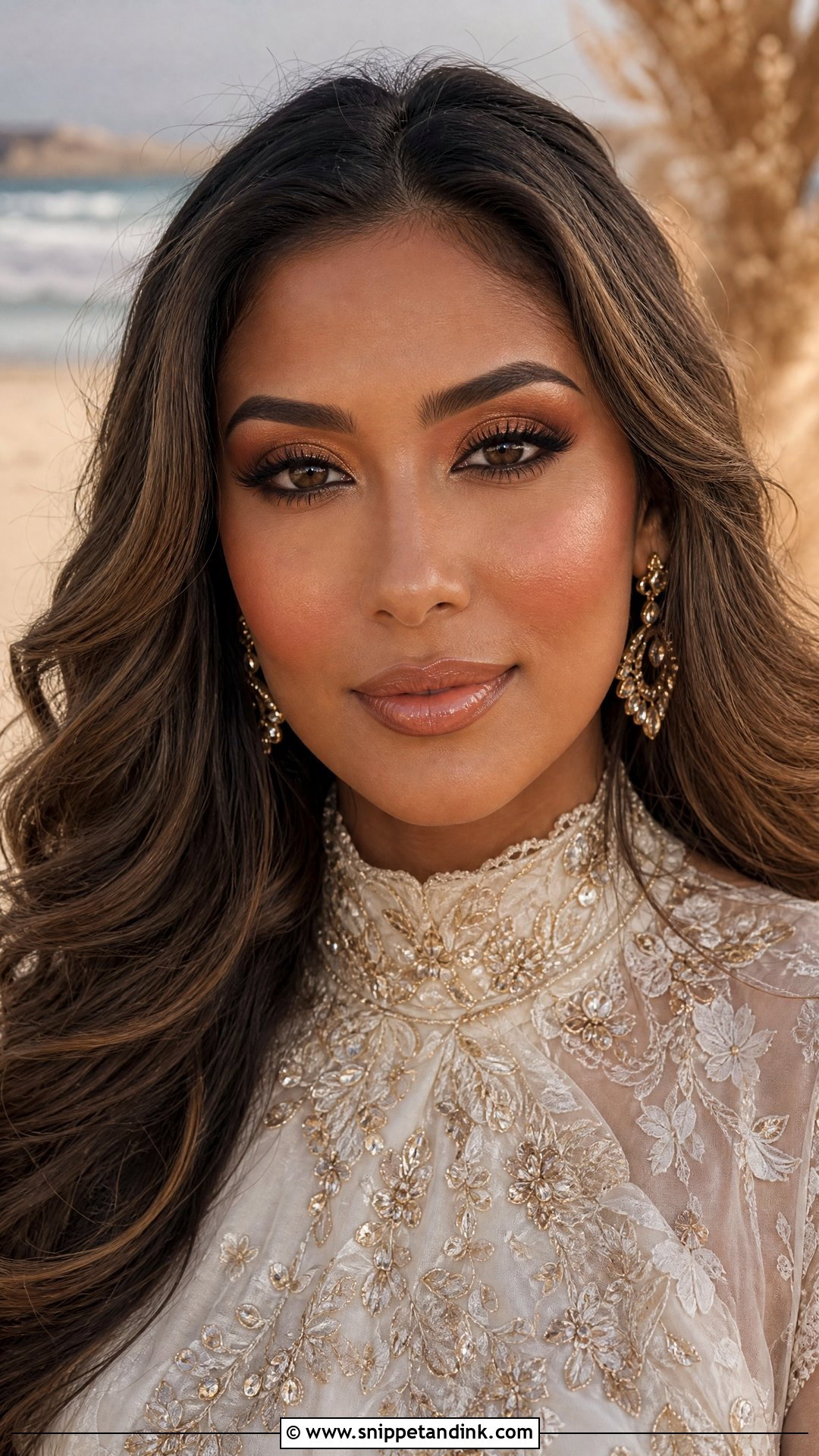
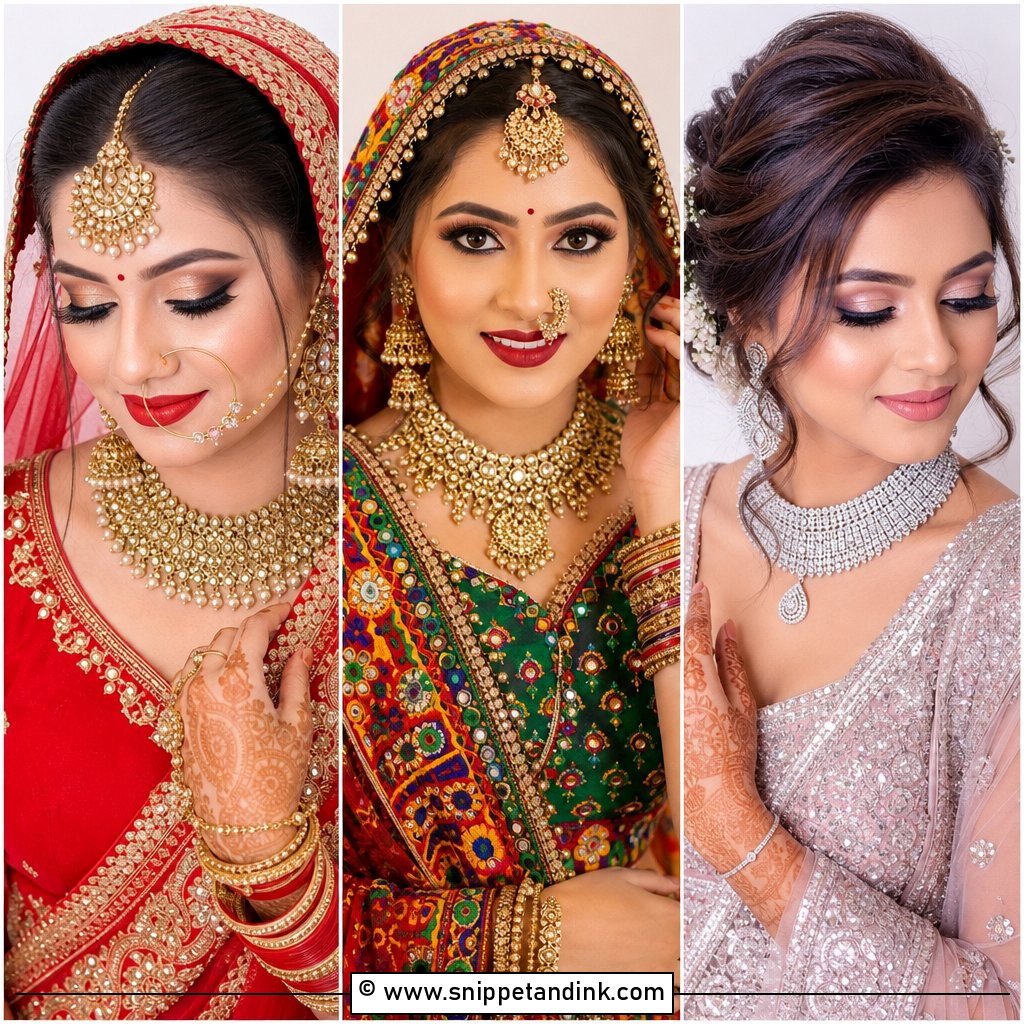
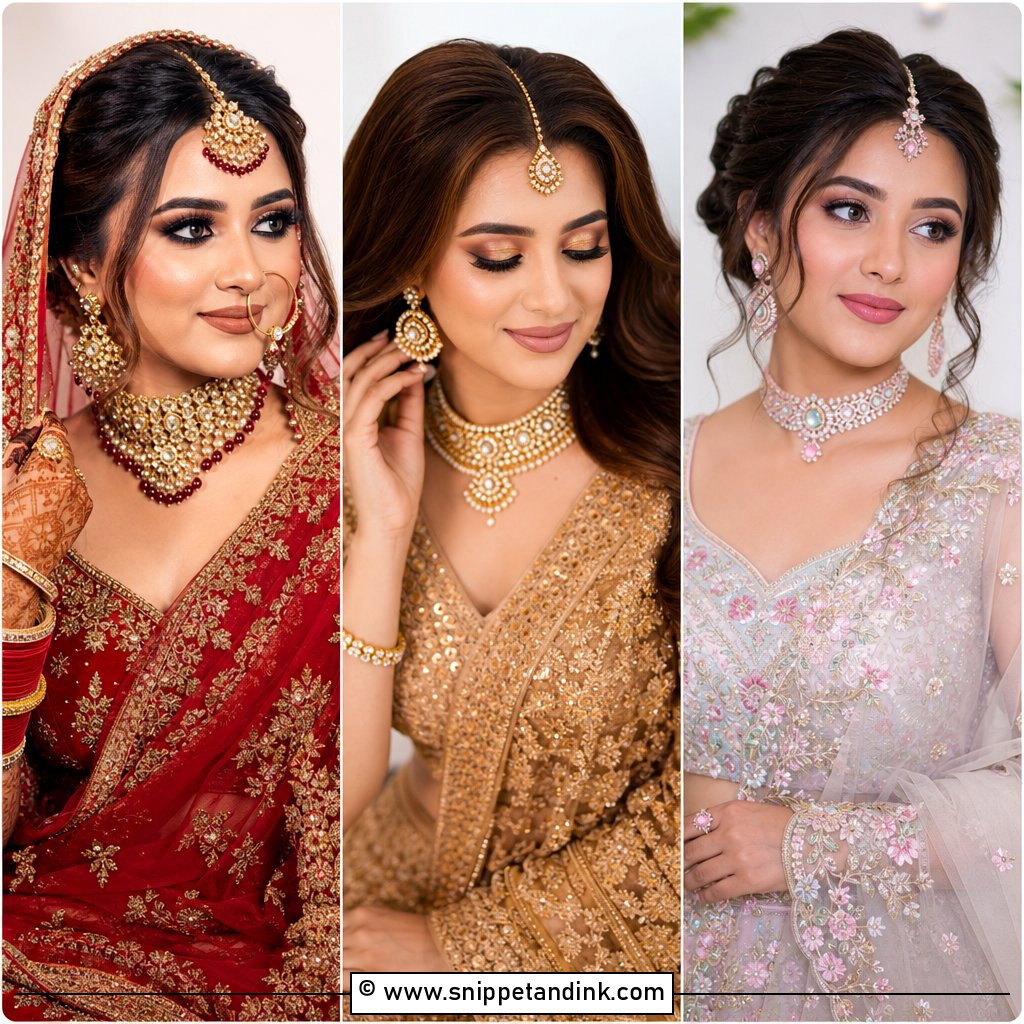
Bronze bridal eye makeup gives warmth, glow and definition at once. A bronze lid brightens the eyes and warm brown in the crease adds depth; for more drama, smudge bronze or espresso along the lower lashes and soften the edge. Bronzed skin, peach blush and a golden highlight go with it, plus a caramel nude or warm pink lip. It flatters tan, olive and deep skin especially, and lighter bronzes work on fair skin too. In golden-hour light it glows, which is why I suggest it for beach and summer weddings.
15. Pearl Bridal Eye Makeup
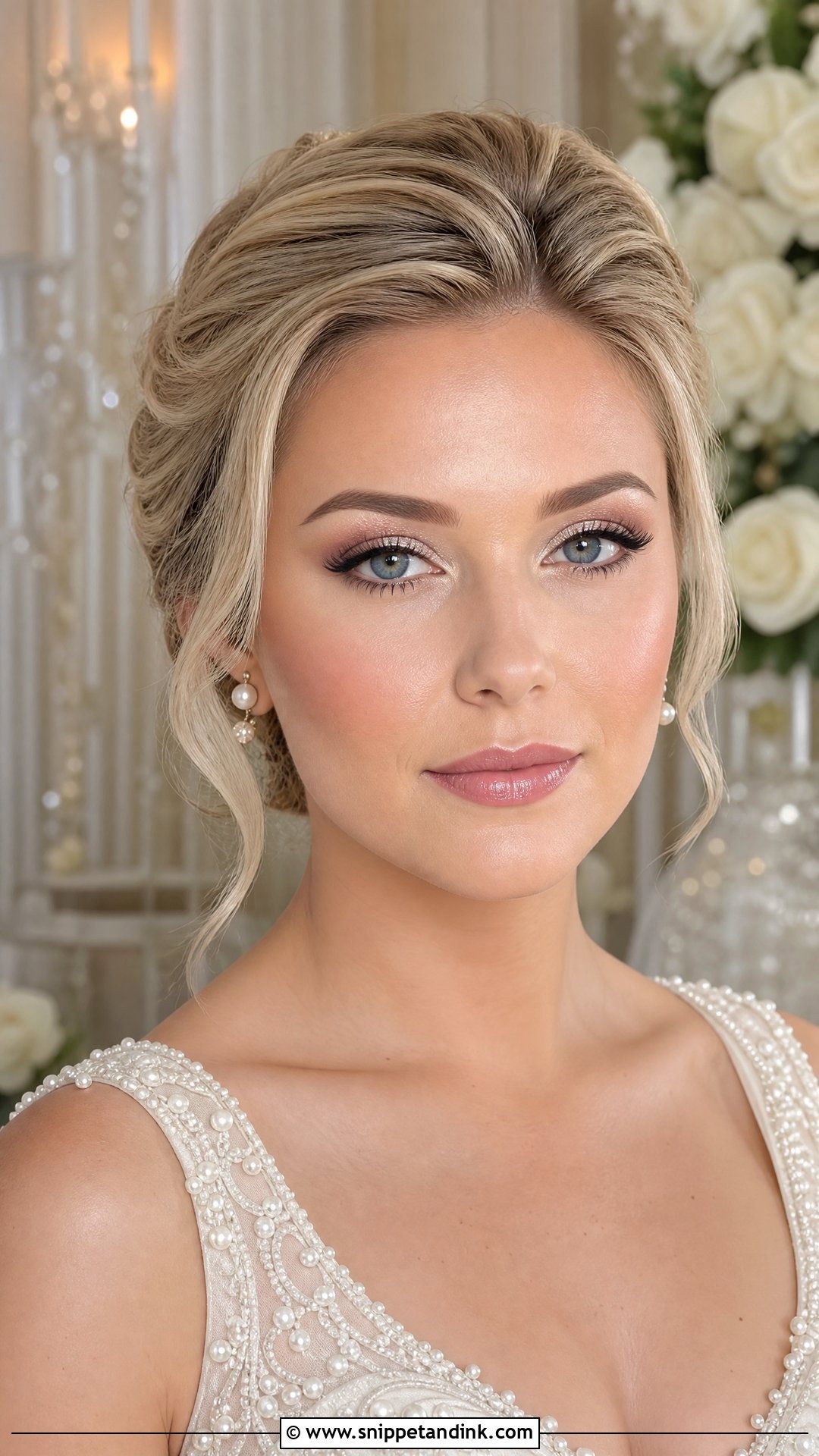
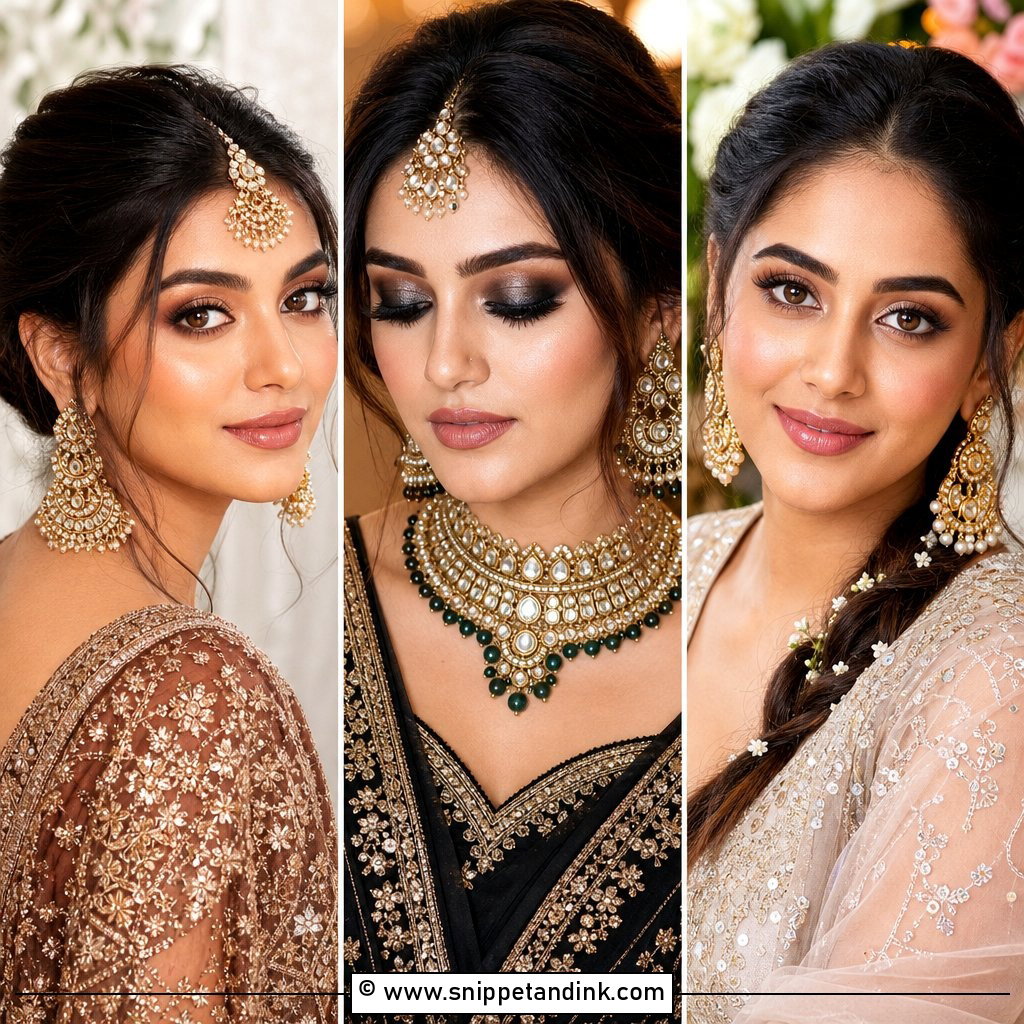
Pearl shadow needs restraint. A sheer pearl or ivory shimmer brightens the face and repeats pearl earrings or a beaded gown, but chunky glitter in the same family looks cheap close up. I add soft taupe in the crease and a fine brown liner. On mature or textured lids, I keep the pearl only on the centre of the lid, where it reads as light without emphasising texture. Smooth, lightly radiant skin, neutral blush and a soft pink satin lip keep it polished.
16. Cut Crease Bridal Eye Makeup
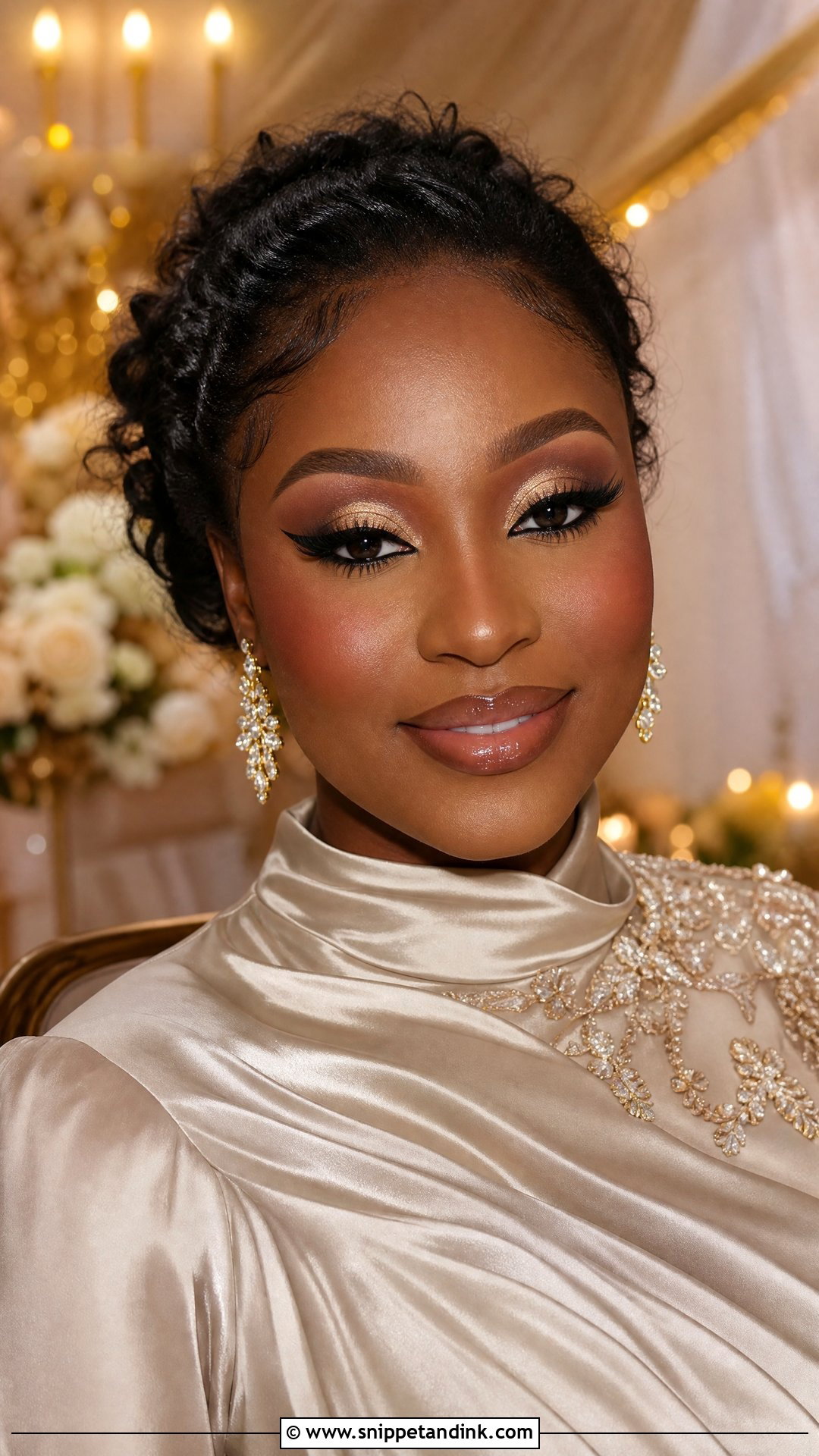
A cut crease sculpts the eye and suits a glam-loving bride, but the bridal version should be softer than a stage look. I build the crease in warm browns, taupes or soft mauves, then carve the lid with a light concealer base and add champagne, gold or rose shimmer on top. A cut crease doesn’t suit deep-set or very hooded eyes, because the carved line disappears or sits in the wrong place when the eye opens. Keep lashes lighter at the inner corner. It suits formal weddings and dramatic gowns.
17. Monochrome Bridal Eye Makeup
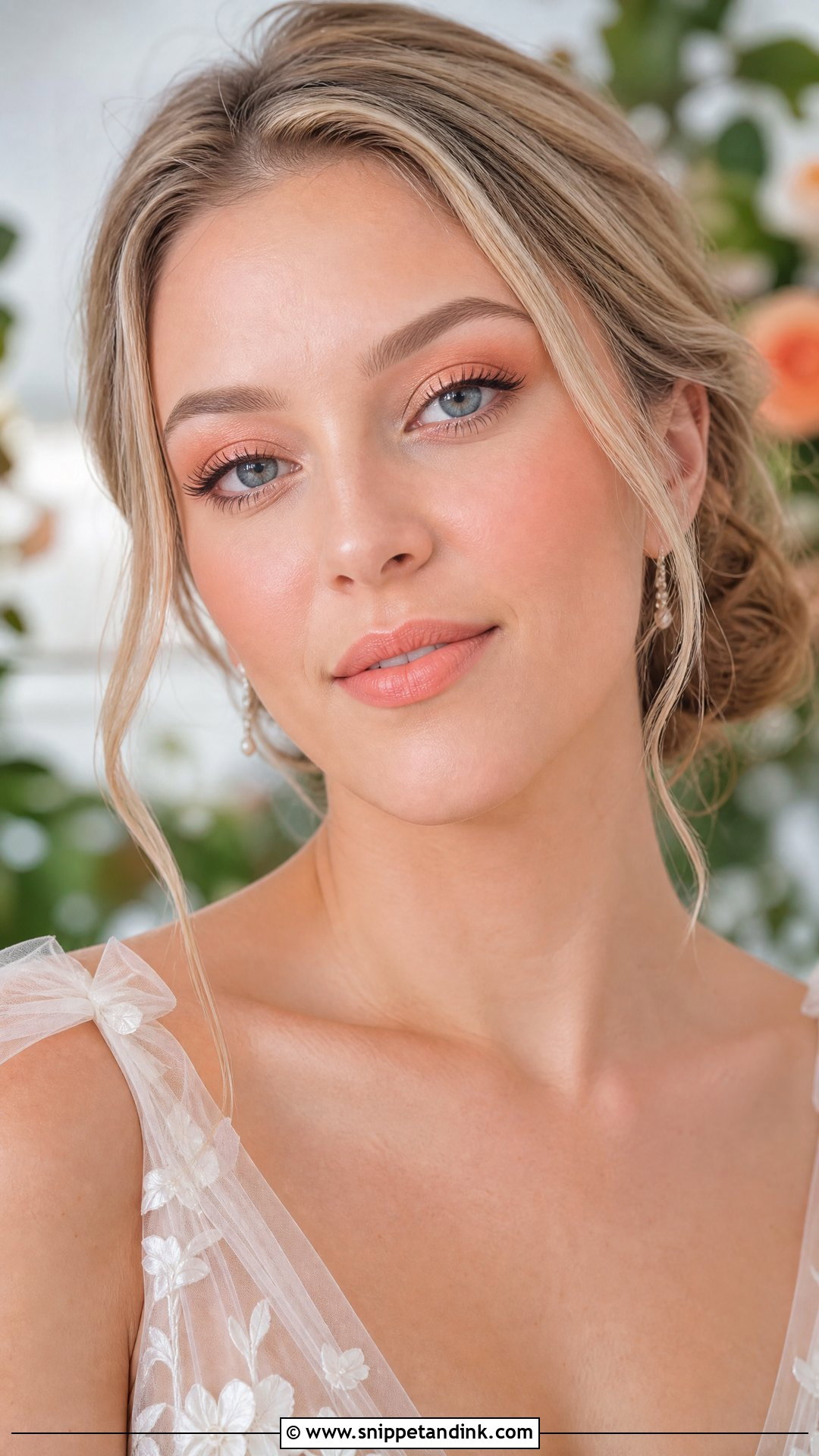
Monochrome uses one tone across eyes, cheeks and lips, so the face looks pulled together without a single focus. Rose, peach, nude brown and mauve are the easiest wedding shades. I blend the tone across lid and crease, deepen the lash line with a darker shade from the same family, then match the blush and lip undertone. It’s a smart choice if you want makeup that repeats your bouquet or dress undertone. Be careful not to match too literally, or the face starts to look like it’s colour-coded to the flowers.
18. Minimal Bridal Eye Makeup
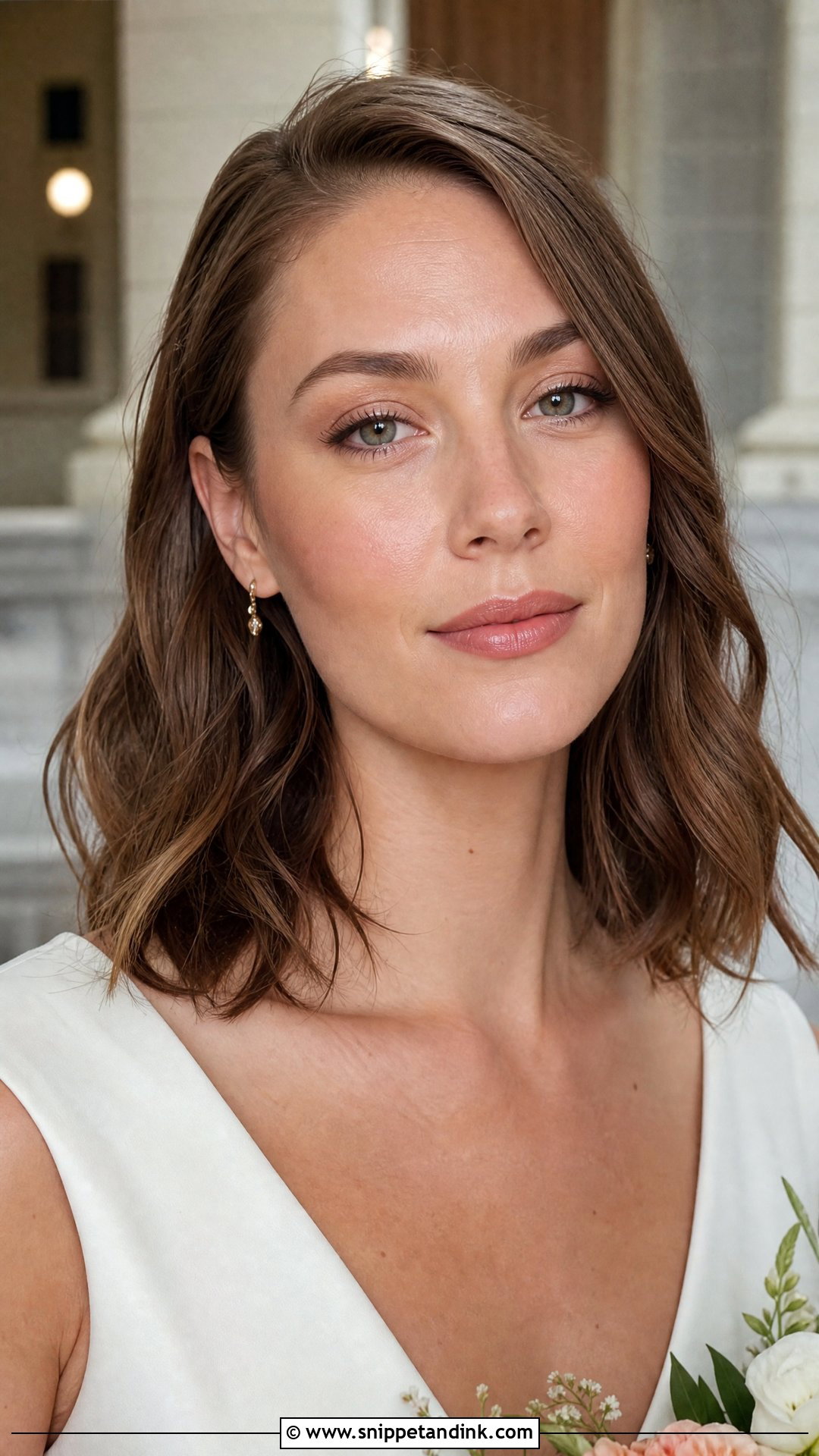
Minimal eye makeup still needs careful placement and long-wear products, just fewer of them. The eyes get soft neutral shadow, curled lashes, light mascara and perhaps a few clusters at the outer corners; brows are groomed, not heavily filled. Because the eyes are quiet, the skin matters more: good prep, sheer foundation, spot concealing and a natural blush. A tinted balm or soft nude lipstick finishes it. It suits courthouse weddings and elopements, and it’s the look brides most often say they’d choose again.
19. Dramatic Bridal Eye Makeup
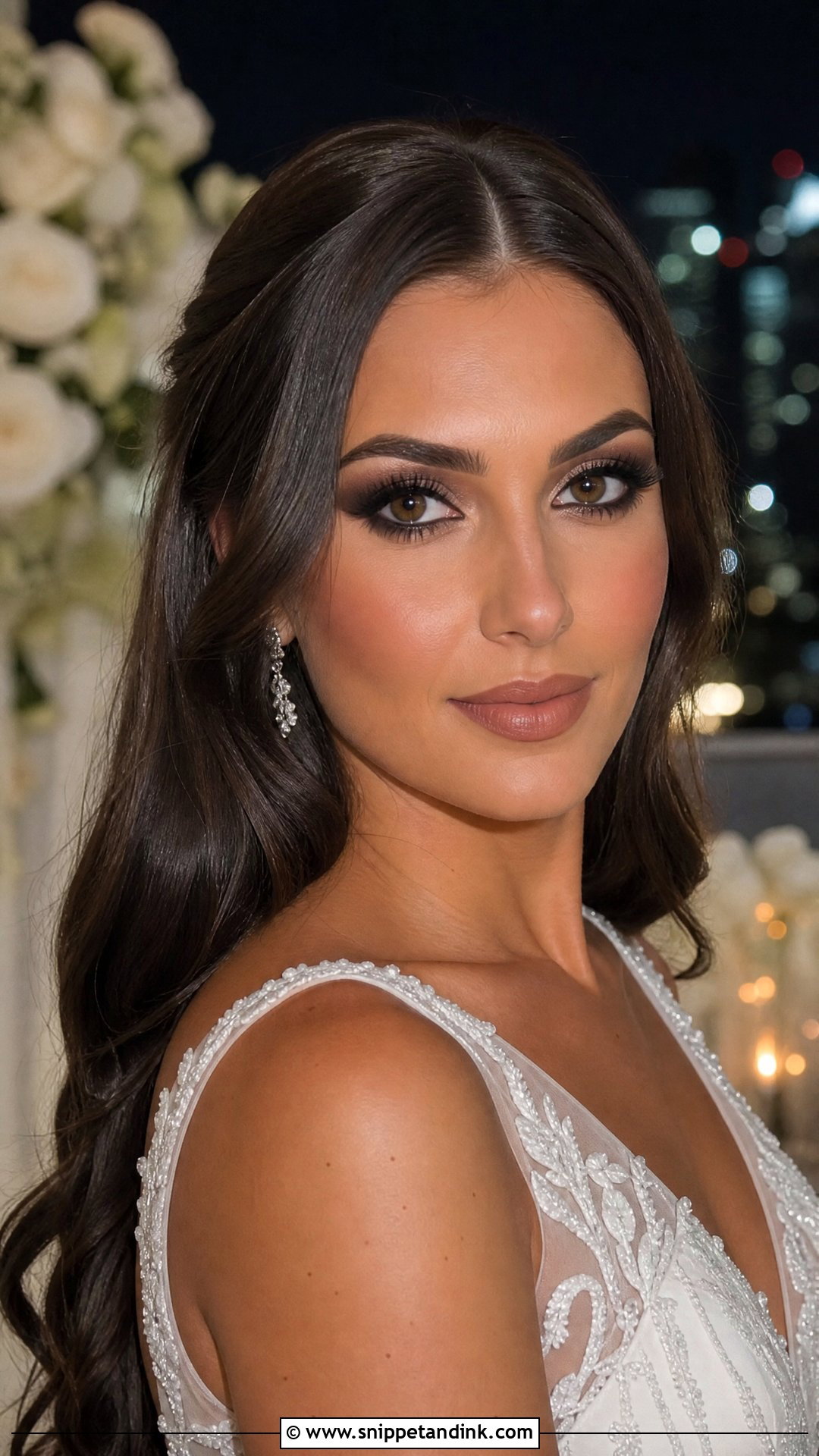
I only recommend dramatic eyes to brides who wear bold makeup day to day; otherwise they spend the whole day not recognising themselves. Deep brown, charcoal, bronze or plum gets blended until there are no harsh edges, with a defined liner, full lashes and a bright inner corner to keep it from closing the eye. Refined skin, controlled highlight and sculpted blush balance it, and a nude, mocha or muted rose lip usually works best. It suits evening weddings and modern gowns.
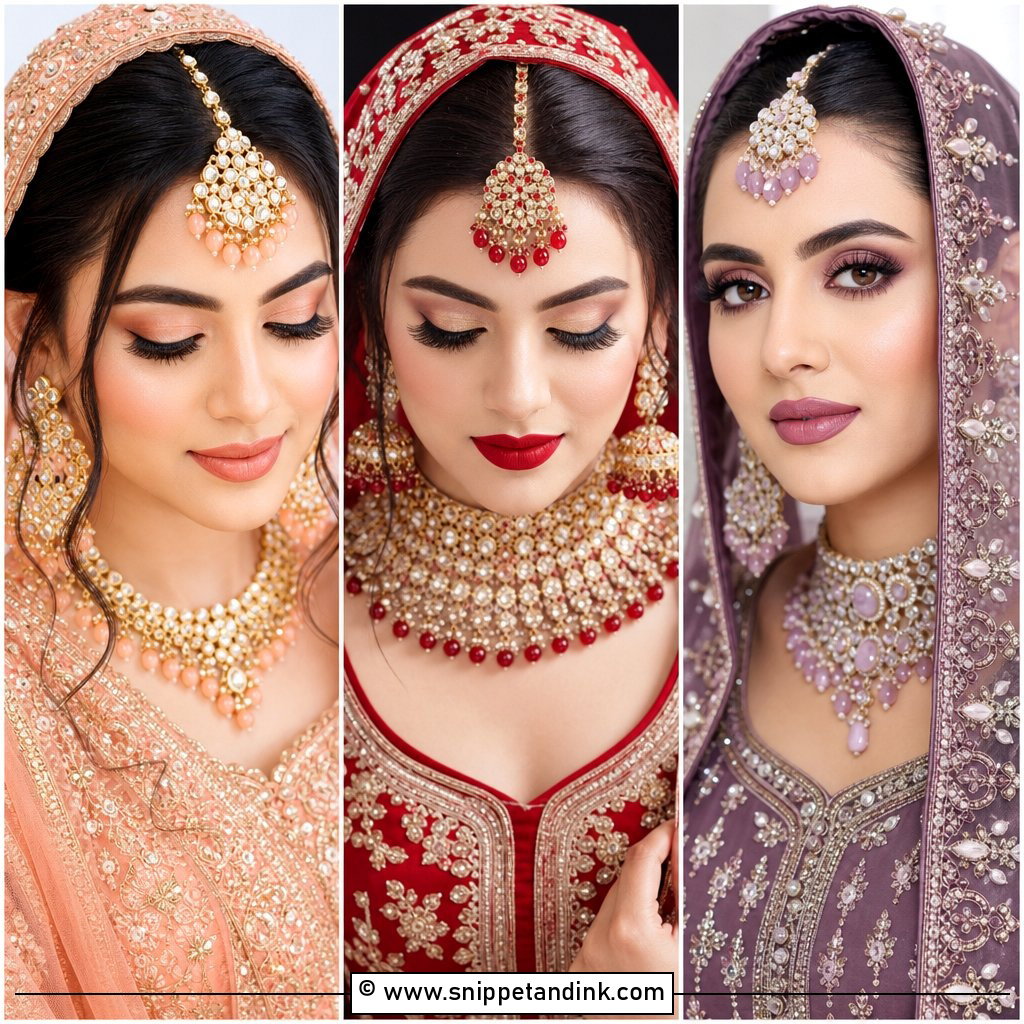
20. Glitter Bridal Eye Makeup
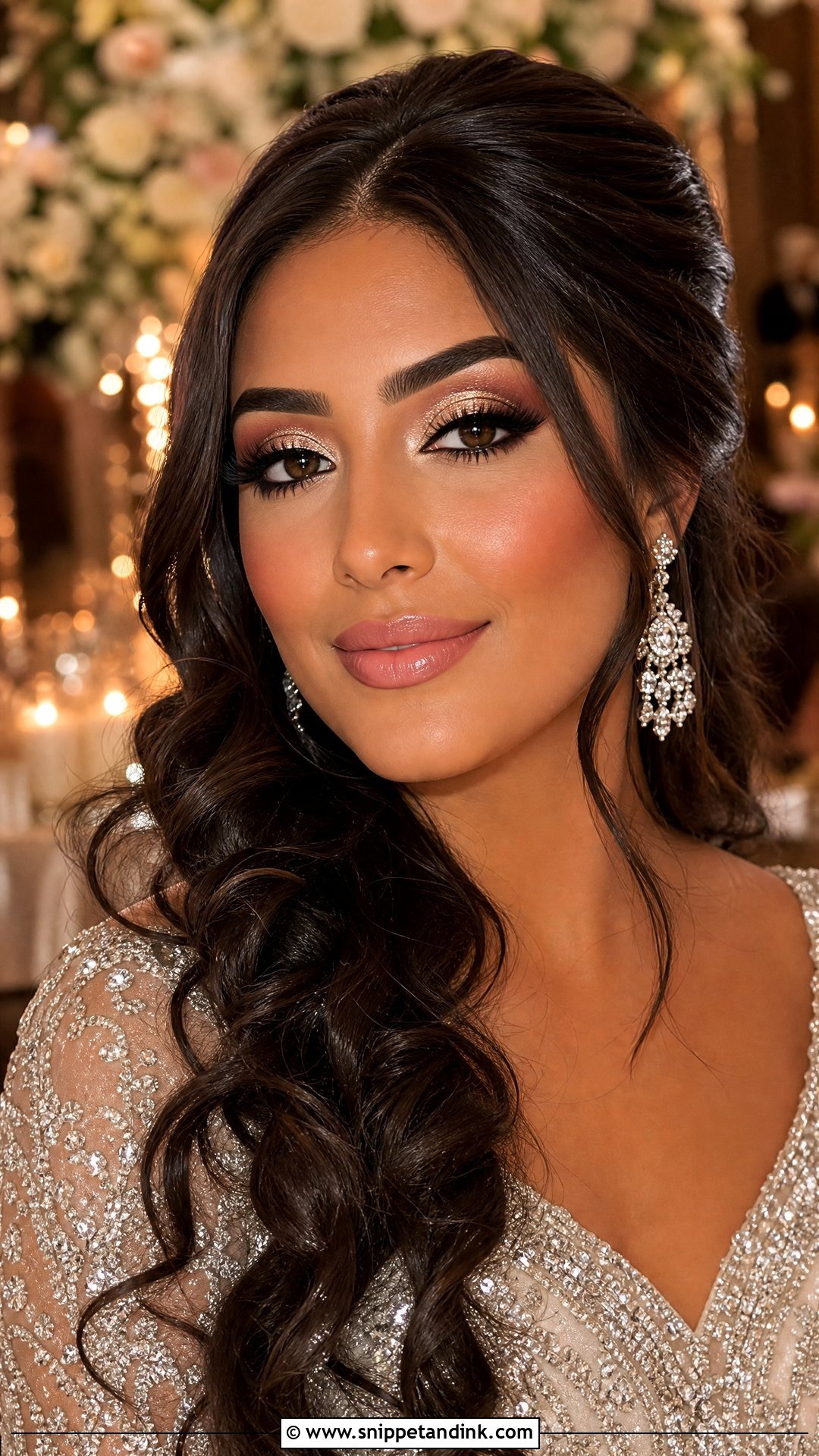
Glitter works when it’s fine and placed with intention. I use cosmetic-grade micro-glitter, shimmer toppers or wet-look sparkle in champagne, rose gold, pearl or bronze, never craft glitter, which isn’t safe near the eyes. Press it onto the centre of the lid or inner corner with a proper glitter adhesive so it catches the light when you blink. I do the eyes before the base so any fallout can be wiped away. A matte neutral crease, liner and wispy lashes ground it. I save this one for receptions and evening ceremonies.
Shimmer, Flash and Distance: How Eye Makeup Reads on Camera
Photographs change eye makeup in two ways. Flash makes shimmer look stronger, so a lid that looks subtle in the mirror can look frosty in flash shots. And distance flattens everything, so makeup that looks right at arm’s length can disappear in a photo taken across the aisle. That’s why bridal eyes usually need a touch more definition in the crease and lash line than you’d wear every day.
Flashback, that ghostly white cast under the eyes in flash photos, usually comes from setting powders and some sunscreens rather than the shadow. I keep heavy translucent powder away from the under-eye on brides who’ll be photographed with flash, and I take test shots at the trial with a phone flash on so we can see it before the day, not after.
A quick check at the end of your trial
- Take a photo by a window in natural light.
- Take another with your phone flash, from about two metres away.
- Look at both side by side with your dress fabric or a swatch next to your face.
- Note anything that looks too shiny, too dark or invisible, and adjust before the day.
The Eyes You’ll Recognise in Your Photos Years From Now
The right eye makeup is the one that suits your eye shape, skin, dress and venue, which isn’t always the trendiest. Natural, soft glam, champagne, brown and matte looks are the safest; blue liner, plum, cut crease and glitter add more personality. At your trial, test the lashes, look at the makeup in daylight and with a phone flash, and wear it for a few hours. If you still recognise yourself in the mirror at the end of that afternoon, you’ve found it.
You'll Like These Ideas:


Leave a Reply