
“Just leave it down” is the request that hides the most work. A loose style shows length, color and movement in photos better than any updo, but it has no pins holding it, so the set, the products and the order of the morning carry everything. Done well, it suits simple gowns, floral prints, satin and outdoor ceremonies. The options below use waves, curls, twists, braids, clips and face-framing pieces to turn loose hair into a finished look, and each one can be adjusted for different textures while keeping the bridal party cohesive from the aisle to the dance floor.
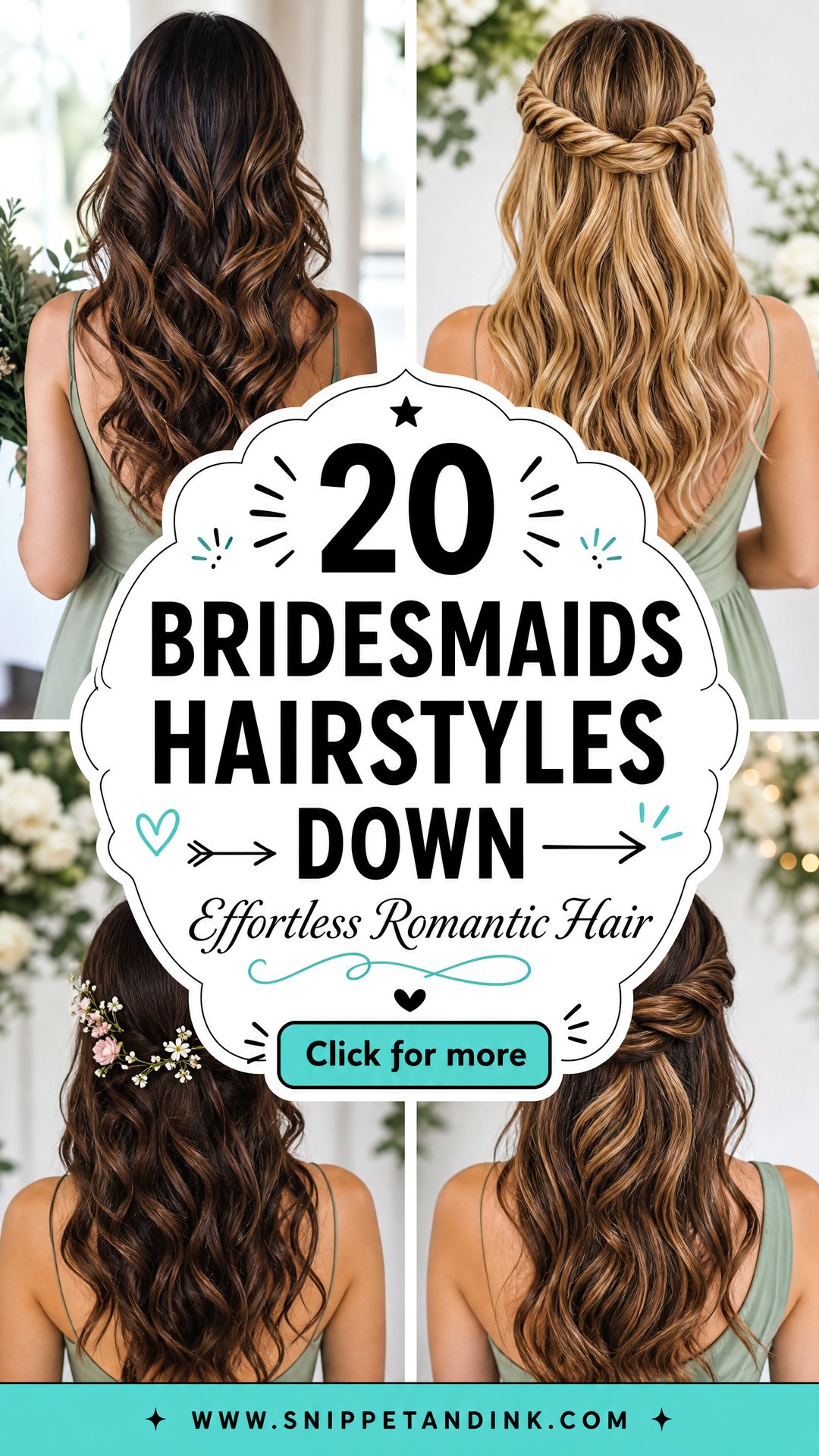
Setting a Curl That Survives Heat, Drizzle and a Sea Breeze
Loose hair reacts to weather in a way pinned hair doesn’t, so I plan the set around the forecast, not just the photo the bride sends.
In heat and humidity, curls relax and frizz. I curl slightly tighter than the target, let every section cool completely and use a humidity-resistant spray. I’ll often suggest a half-up variation here, since lifting the top section takes weight off the curls below.
If rain is possible, smooth styles like Hollywood waves or a straight finish are risky because they show frizz first. Textured waves and natural curls hide a little damp air far better.
For wind on a beach or clifftop, the front is the problem. Pinning the front pieces back or adding a small braid at the temple keeps hair off lip gloss during the vows, which is the photo nobody wants ruined.
Whatever the weather, check the forecast again two days out and tell your stylist if it has changed. Switching from Hollywood waves to a textured wave is easy to plan; switching in the chair on the morning eats into everyone’s time.
1. Bridesmaid Hair Down With Soft Waves
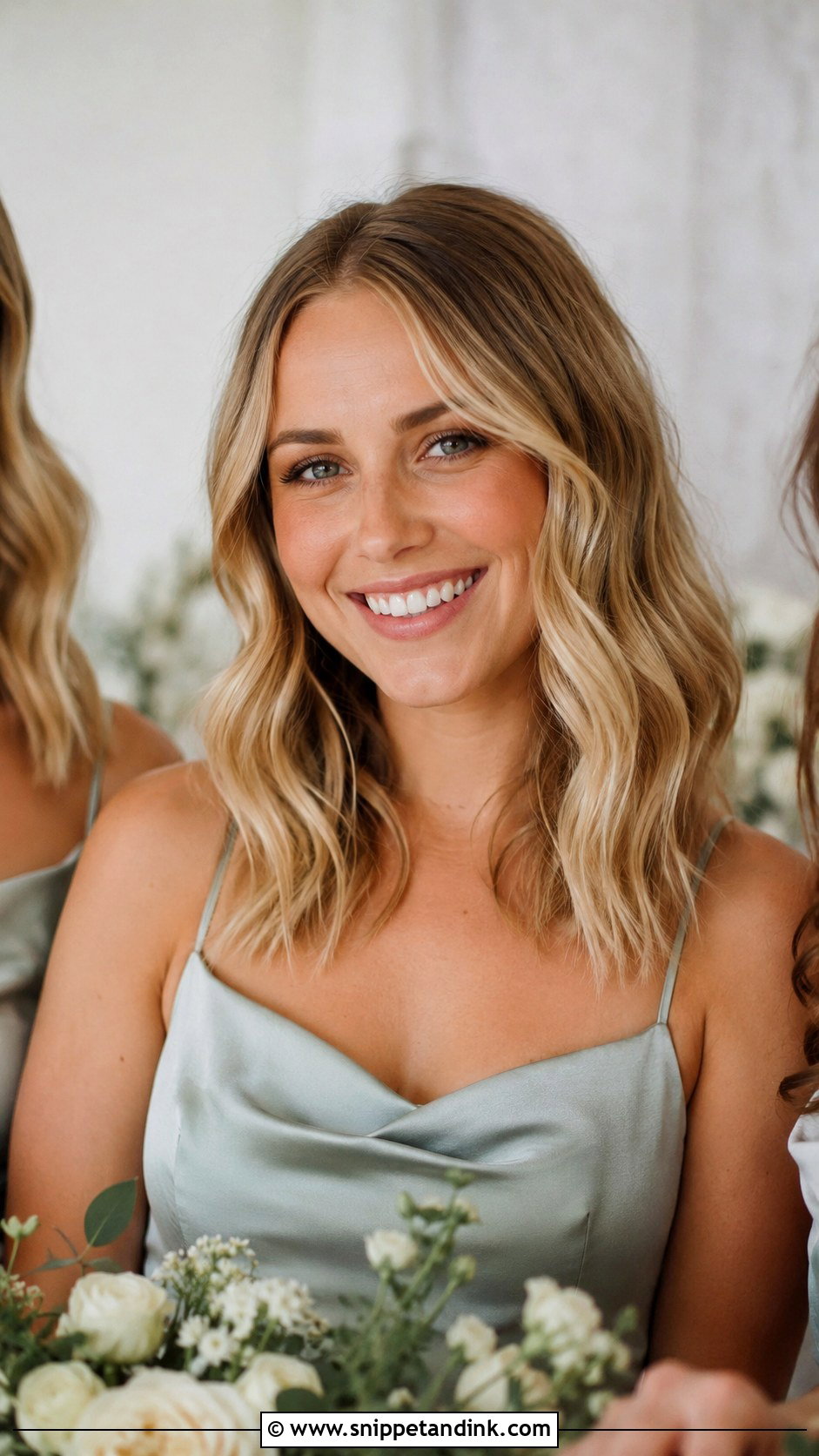
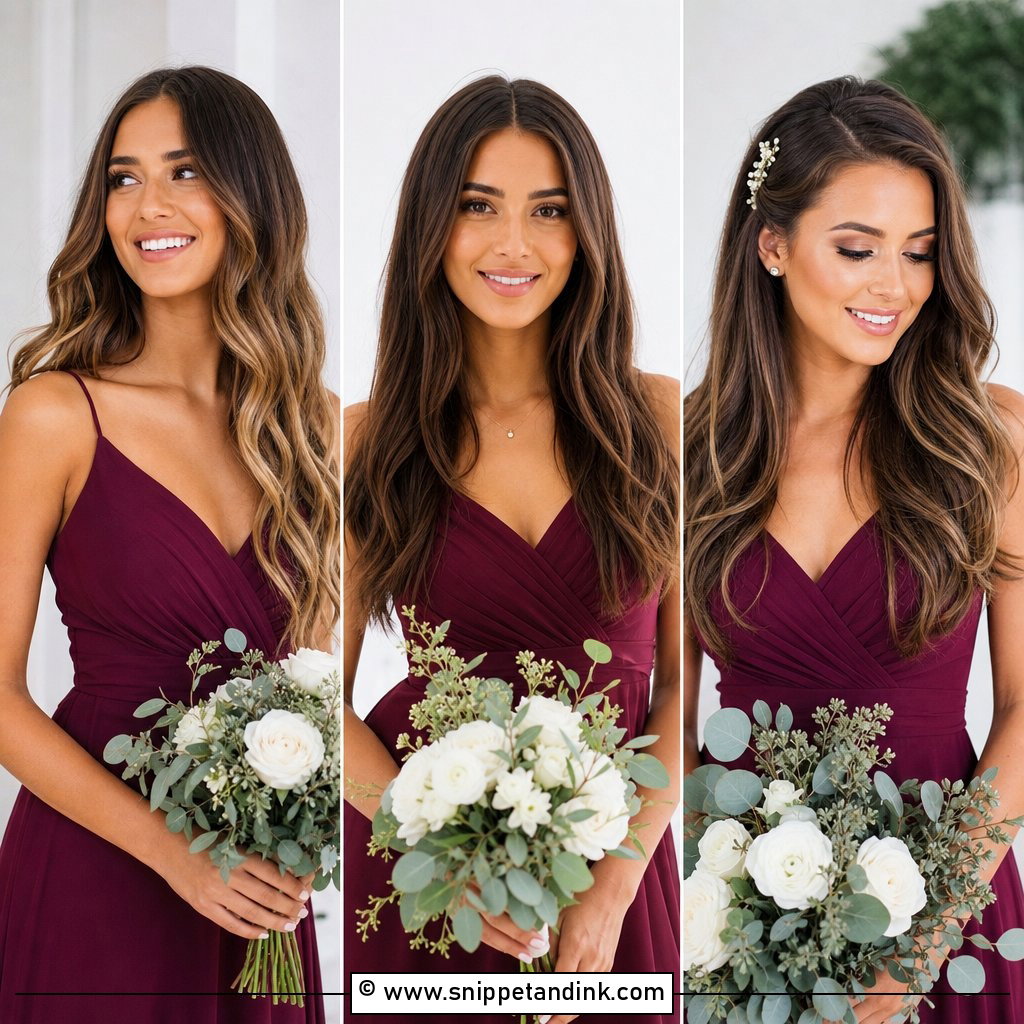
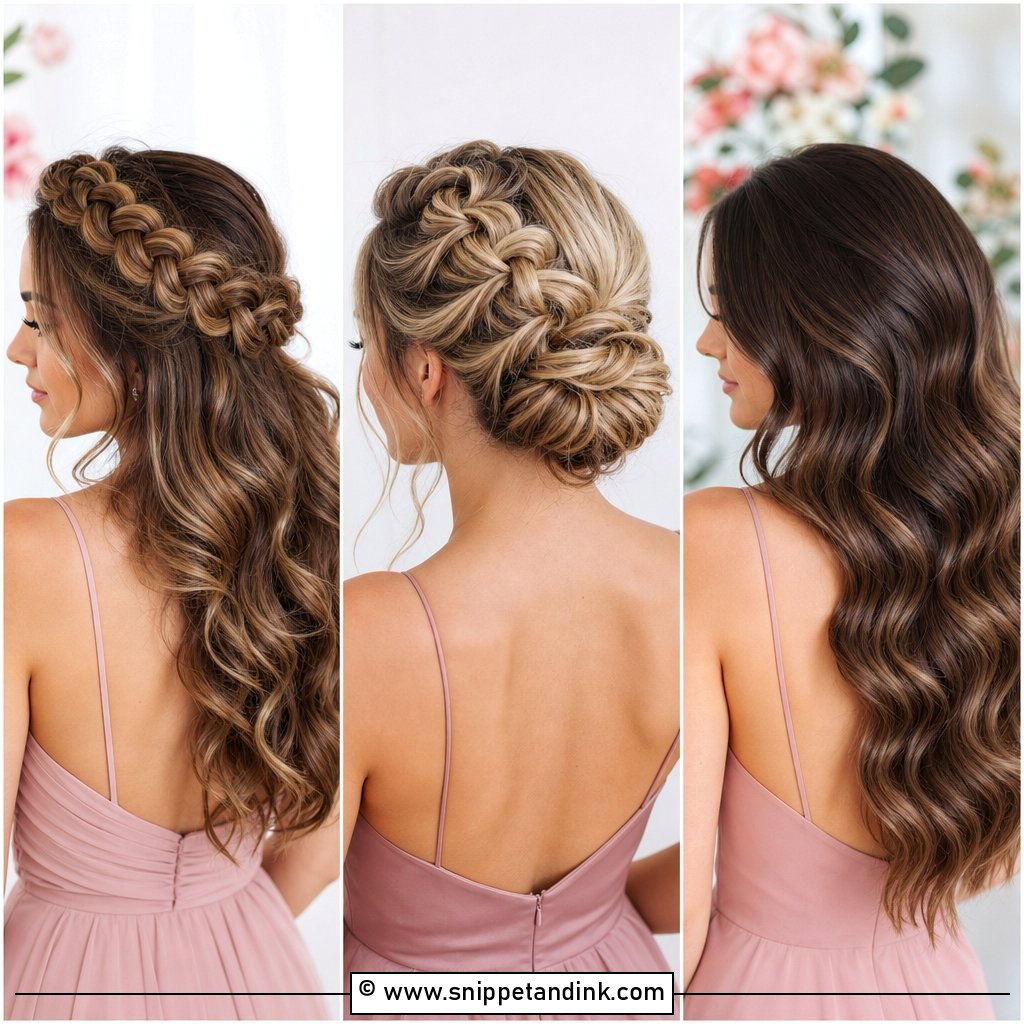
Soft waves get requested more than anything else, and for good reason. I start the bend at the jawline, not the root, which keeps the top sleek and puts the movement where it shows at shoulder height. Layered cuts move best. A center part looks current; a side part, more traditional. My finishing step is a texture spray worked in with my fingers, then a flexible hairspray, so the waves separate a little instead of clumping into sausage curls.
2. Bridesmaid Hair Down With Hollywood Waves
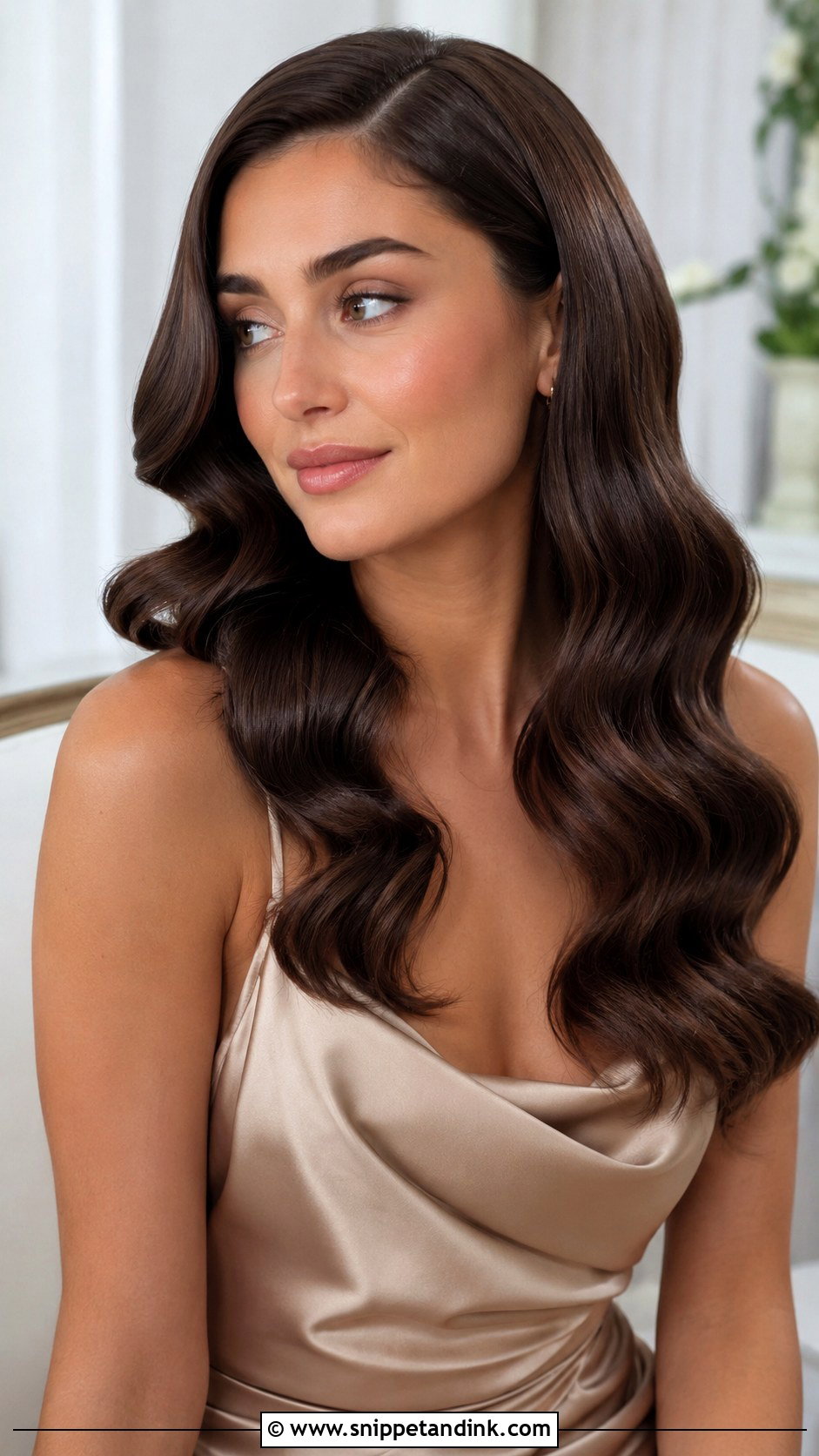
Hollywood waves are the formal option, and they’re all about preparation. I smooth the hair completely first, curl uniform sections in one direction, clip every curl flat while it cools and only then brush it into one continuous pattern. Skipping the cooling stage is the single most common reason the waves fall apart. They suit satin, one-shoulder necklines and evening weddings, and they need length, so shorter hair may need extensions. Finish with shine spray held well back from the head.
3. Bridesmaid Hair Down With Loose Curls
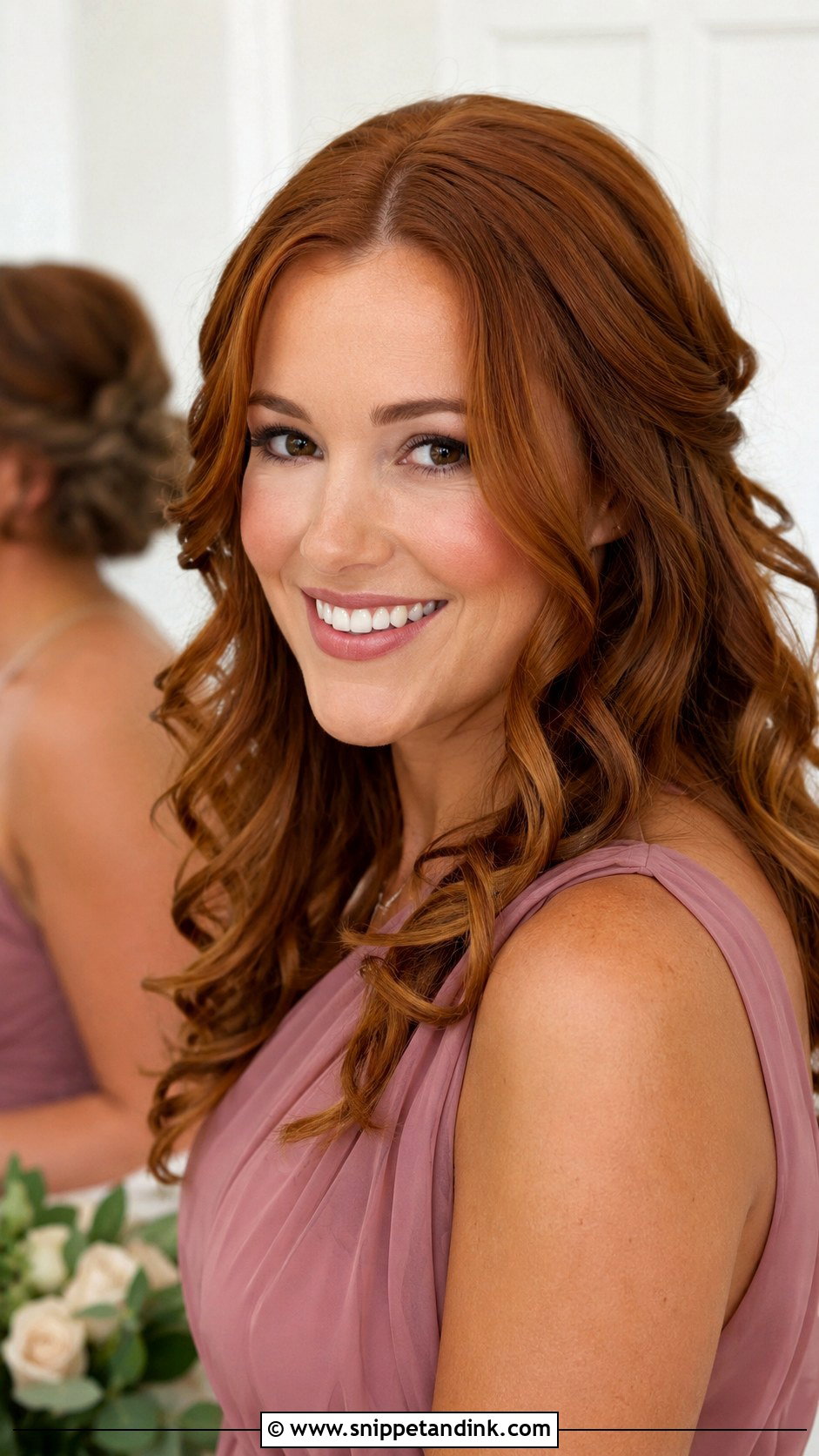
Loose curls give more bounce than waves and more volume around the shoulders. Bridesmaid hair down with this shape works well for anyone who wants fullness without an updo. I use a medium barrel, then separate each curl with my fingers once it’s cool so the result looks lived-in. Front curls angled away from the face soften the jaw. A pearl pin or a few flowers can sit in it, though it holds up just as well bare.
4. Bridesmaid Hair Down With Beach Waves
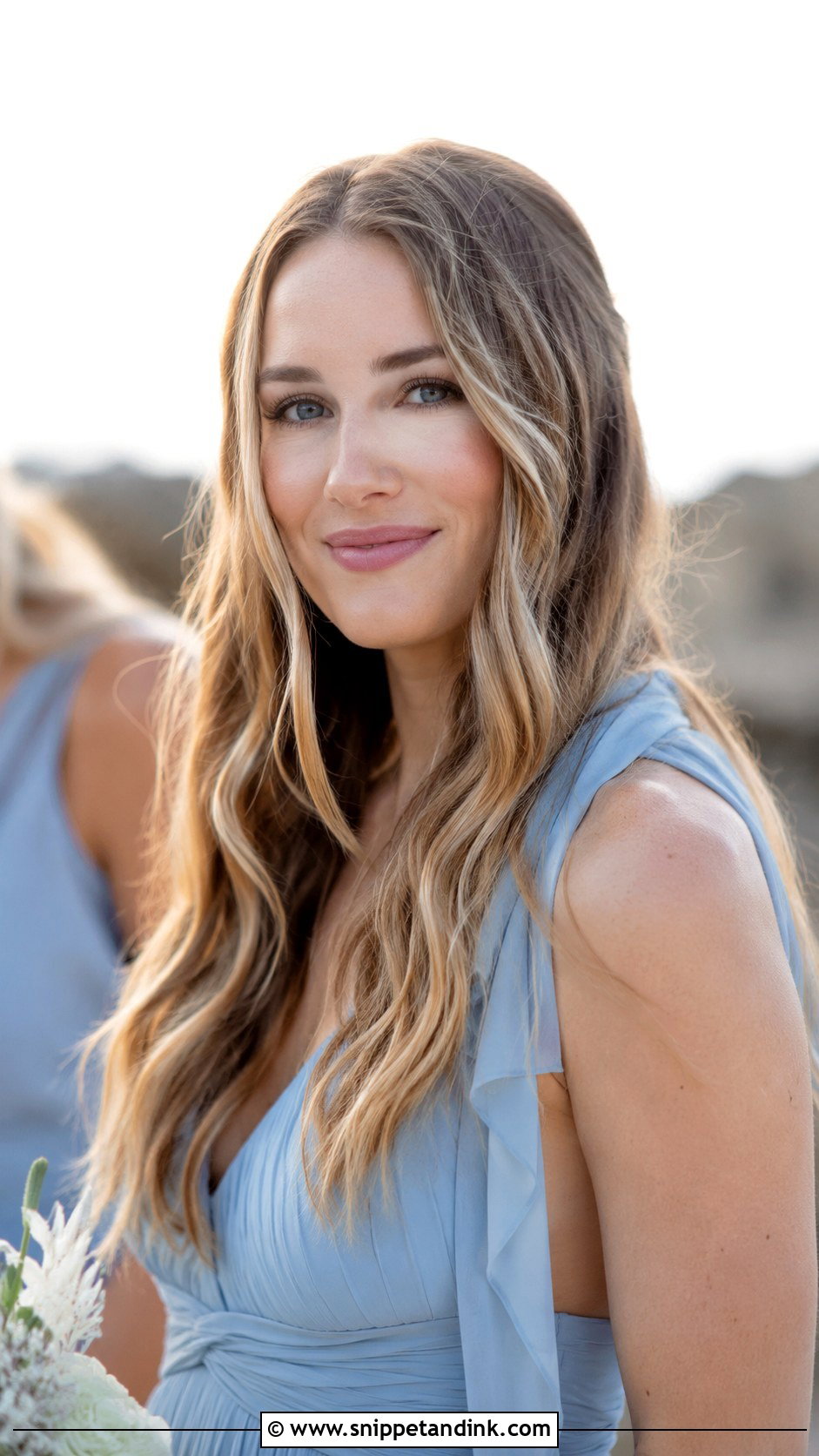
Bridesmaid hair down with beach waves belongs at coastal, garden and rustic weddings. Soft bends with the ends left a touch straighter give the relaxed shape. Balayage and dimensional brunettes look richer with this texture. I’m cautious with salt spray: a little gives grip, but too much leaves the hair dry and dull by the evening photos, so I use a lighter texture spray instead on hair that’s already porous.
5. Bridesmaid Hair Down With Side Part Waves
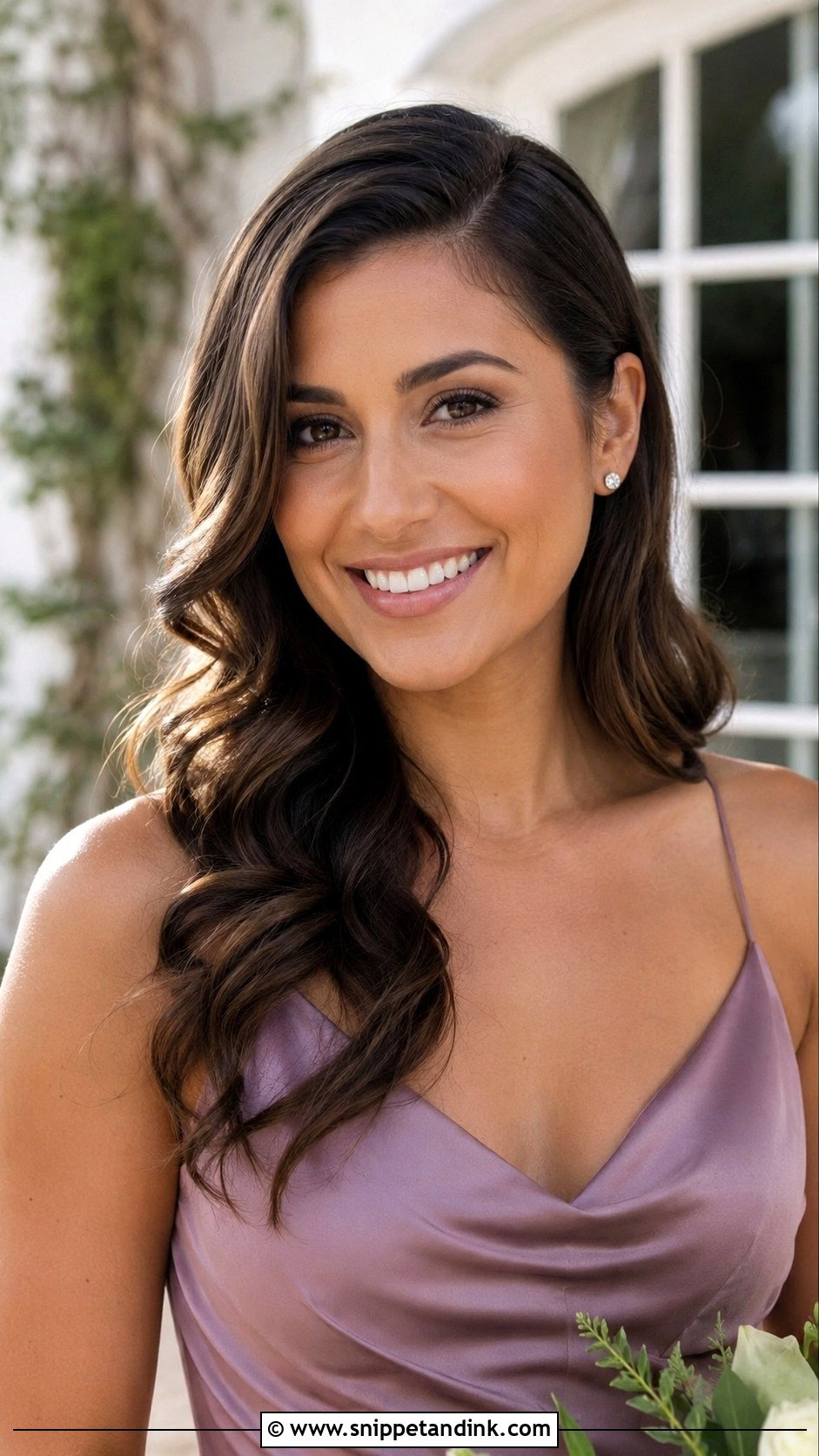
Changing to a side part shifts the whole frame of the face. The heavier side can be tucked behind the ear, clipped or left falling. It’s especially good with statement earrings or asymmetric dresses, since you choose which side to open. Side parts do drift back toward the natural part over the day, so I spray the root in its new direction and dry it there before curling. A hidden pin behind the ear stops the heavy side shifting.
6. Bridesmaid Hair Down With Center Part Waves
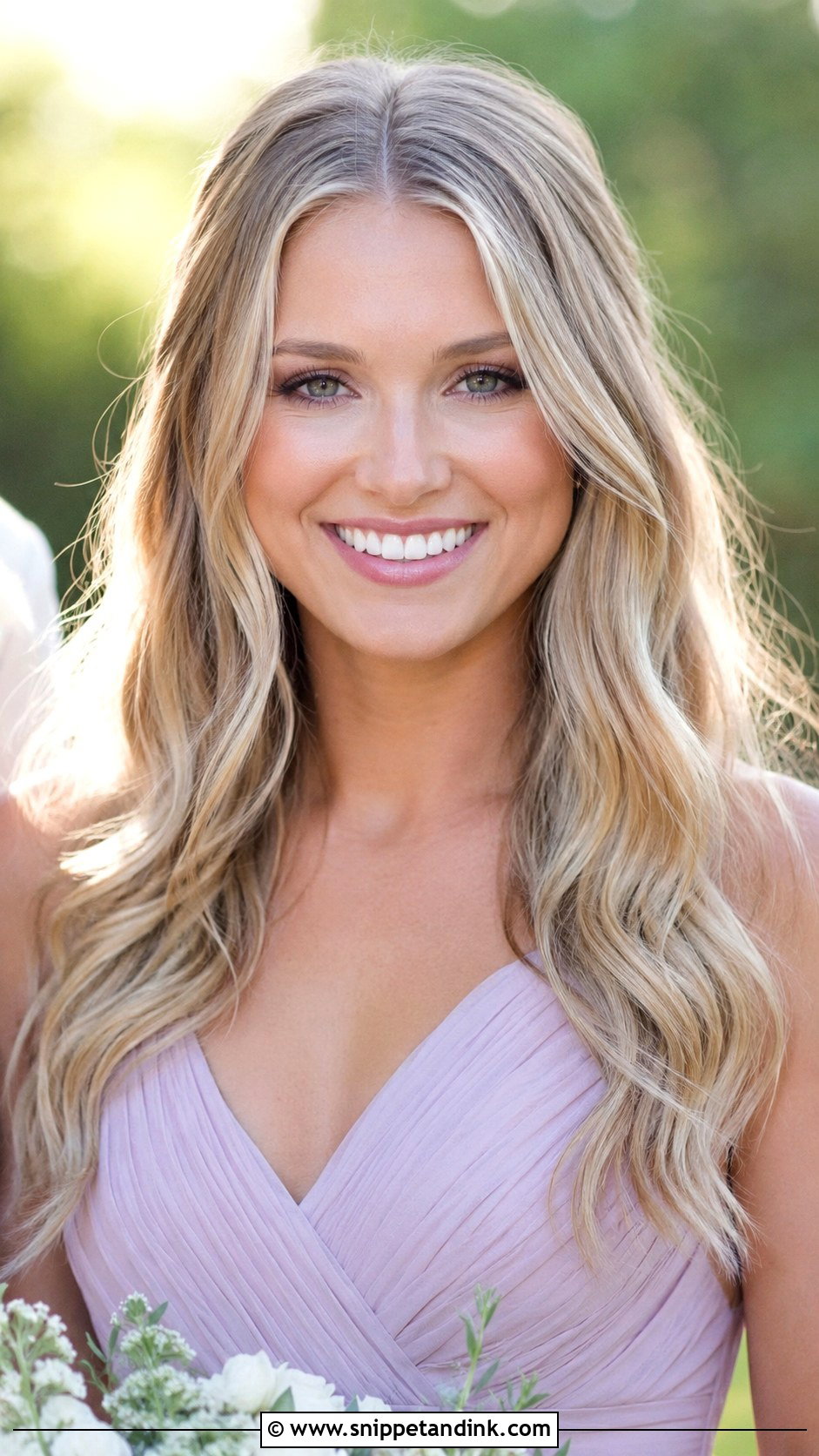
Center-part waves keep a group symmetrical, which reads as coordinated in a line of bridesmaids. I start the waves below the cheekbones so the crown stays smooth. Long, medium, blunt and layered cuts all work. When bridesmaids have very different hair colors, the same part and the same wave start point does more to connect them than matching accessories ever could. A shine mist and flexible spray finish it.
7. Bridesmaid Hair Down With Front Pieces Pinned Back
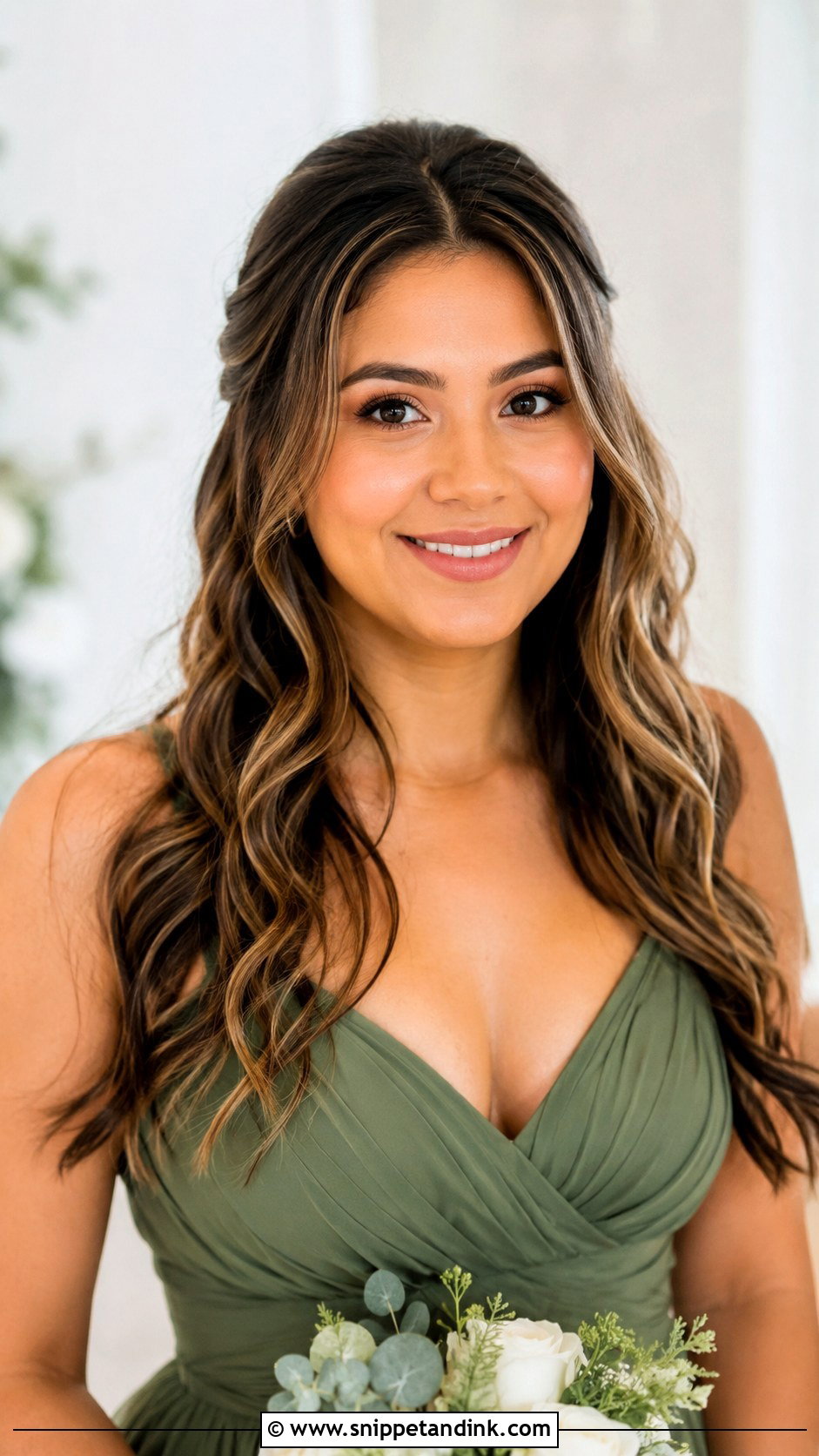
Pinning the front pieces back is the most practical way to wear hair loose. It keeps strands off the face for hugs, dancing and wind, while the length stays free. Straight, wavy and curly hair all take it, which helps in a mixed-texture group. The pinned sections can be twisted or simply smoothed back. I secure them before curling the rest, since pinning after curling tends to drag the waves flat on top.
8. Bridesmaid Hair Down With Waterfall Braid
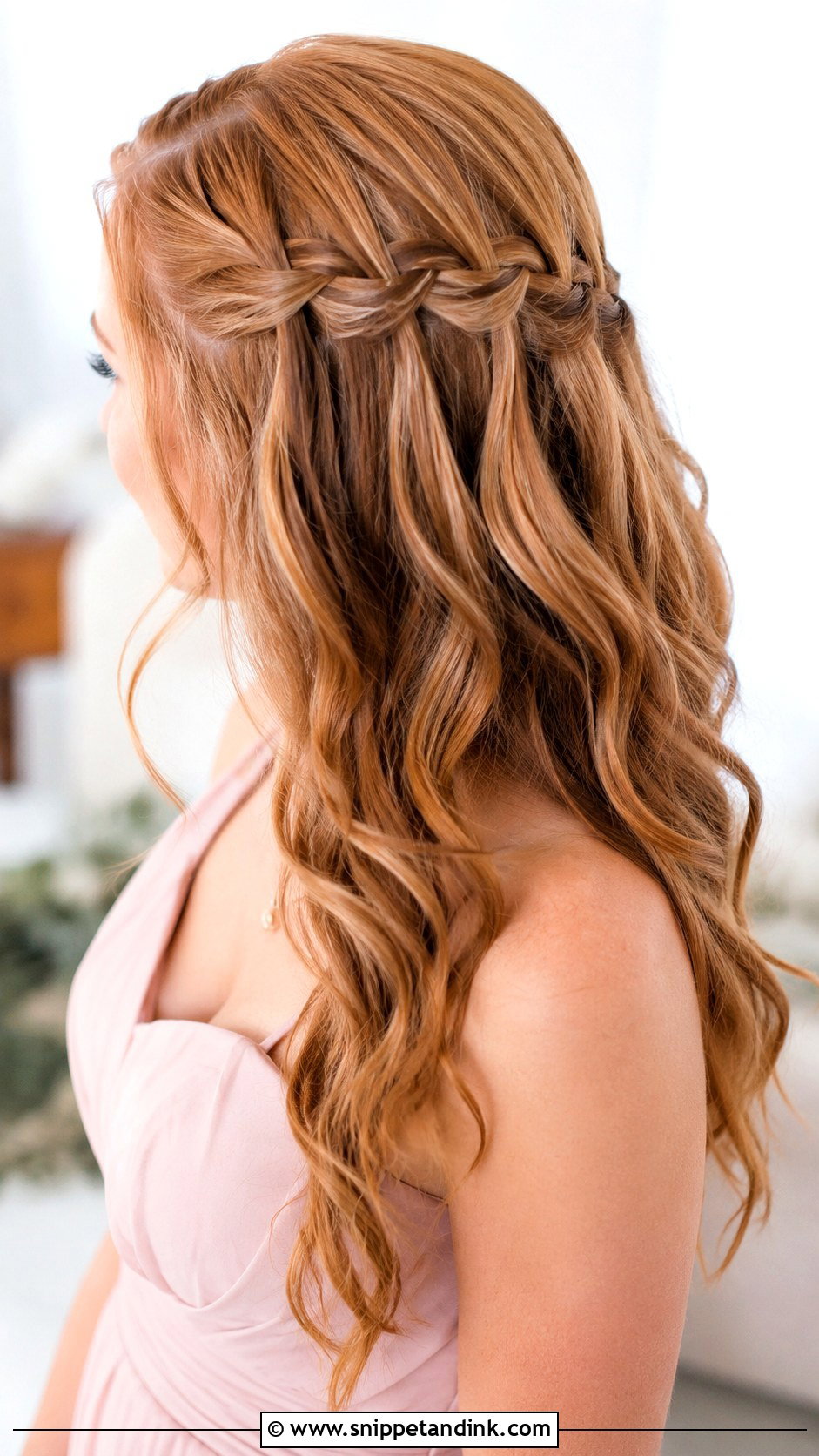
A waterfall braid crosses the crown or side, with strands falling through it into the loose curls below. It reads detailed from behind, which matters during the ceremony. Spring weddings and soft dresses suit it. I keep the braid neat but never tight, and I lift the crown slightly before braiding so the top doesn’t look flat. The loose hair needs visible wave, or the falling strands disappear.
9. Bridesmaid Hair Down With Crown Braid
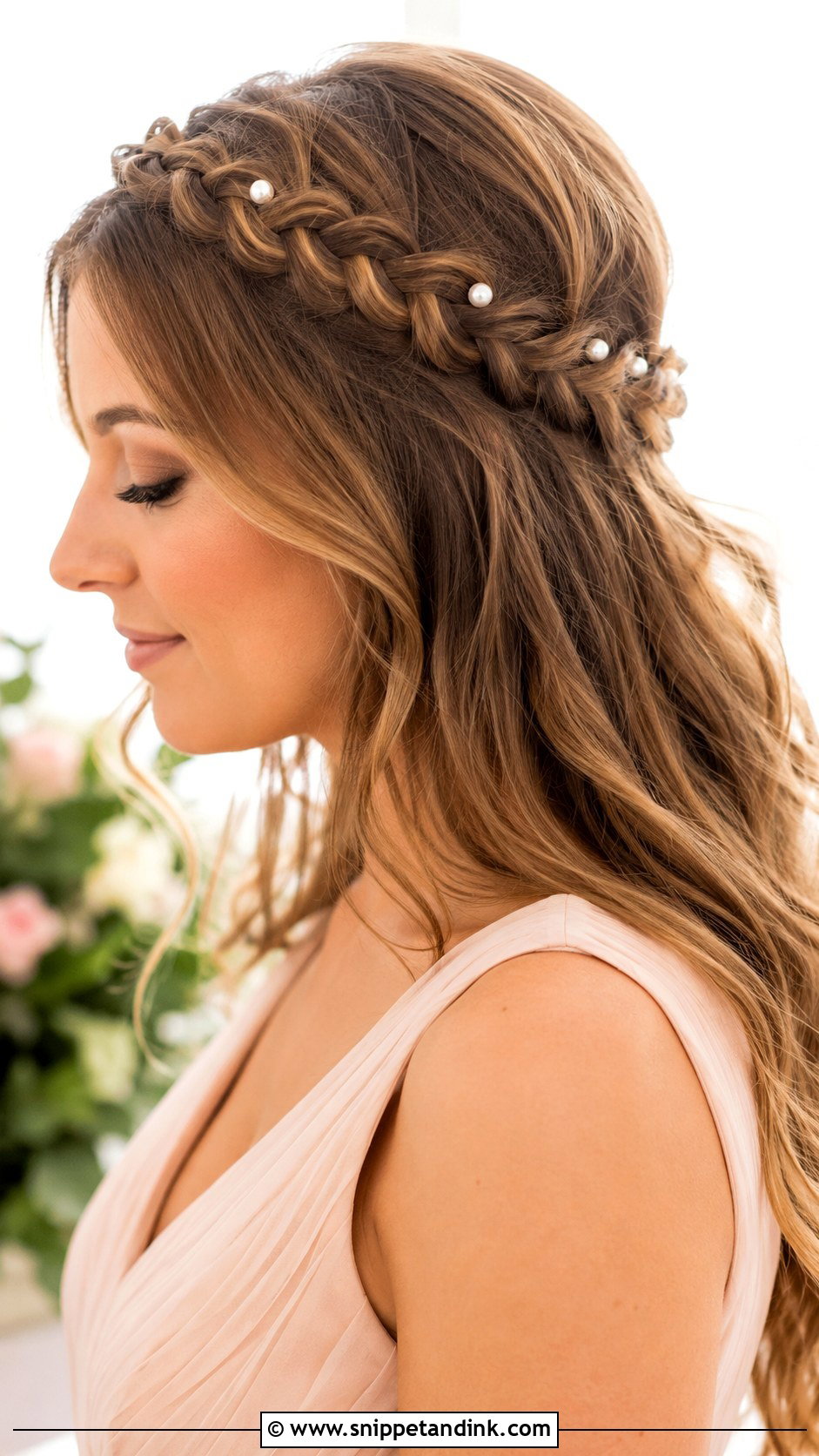
A crown braid sitting like a headband keeps hair off the face while the waves stay down. Wrapped slightly around the sides, it looks more romantic. I pull the braid’s edges out gently so it looks soft rather than schoolgirl-tight. Tiny flowers or pearl pins slot into the braid’s gaps. It’s the one I’d pick for a bridesmaid who constantly tucks her hair behind her ears.
10. Bridesmaid Hair Down With Twisted Crown
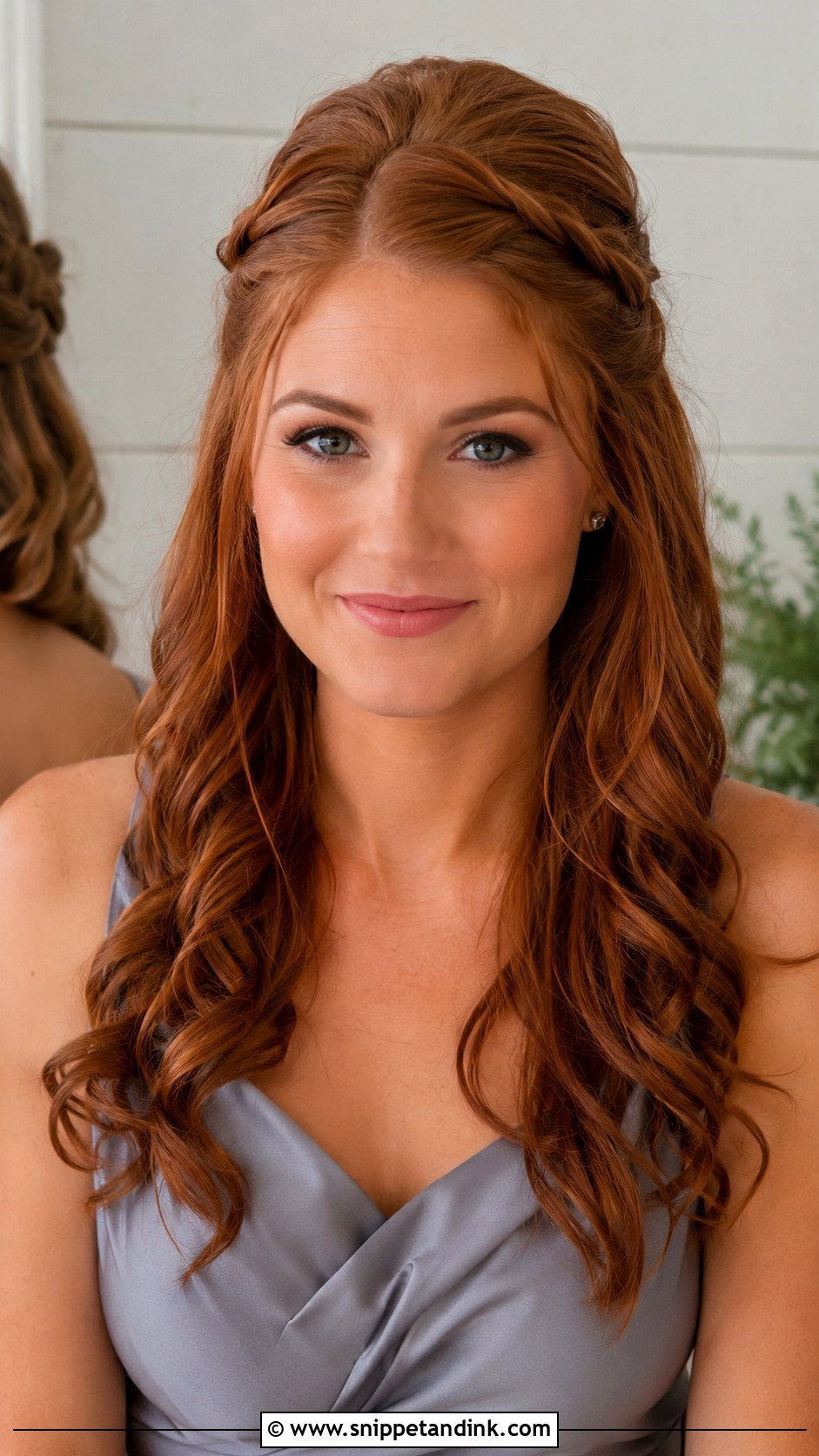
A twisted crown takes a section from each side, twists them back and secures them at the back of the head. It’s quick, which matters for large bridal parties when every bridesmaid has a slot of limited minutes. Fine hair benefits because the twists add apparent thickness. Pulling each twist slightly apart adds volume. A small clip covers the join.
11. Bridesmaid Hair Down With Pearl Clip
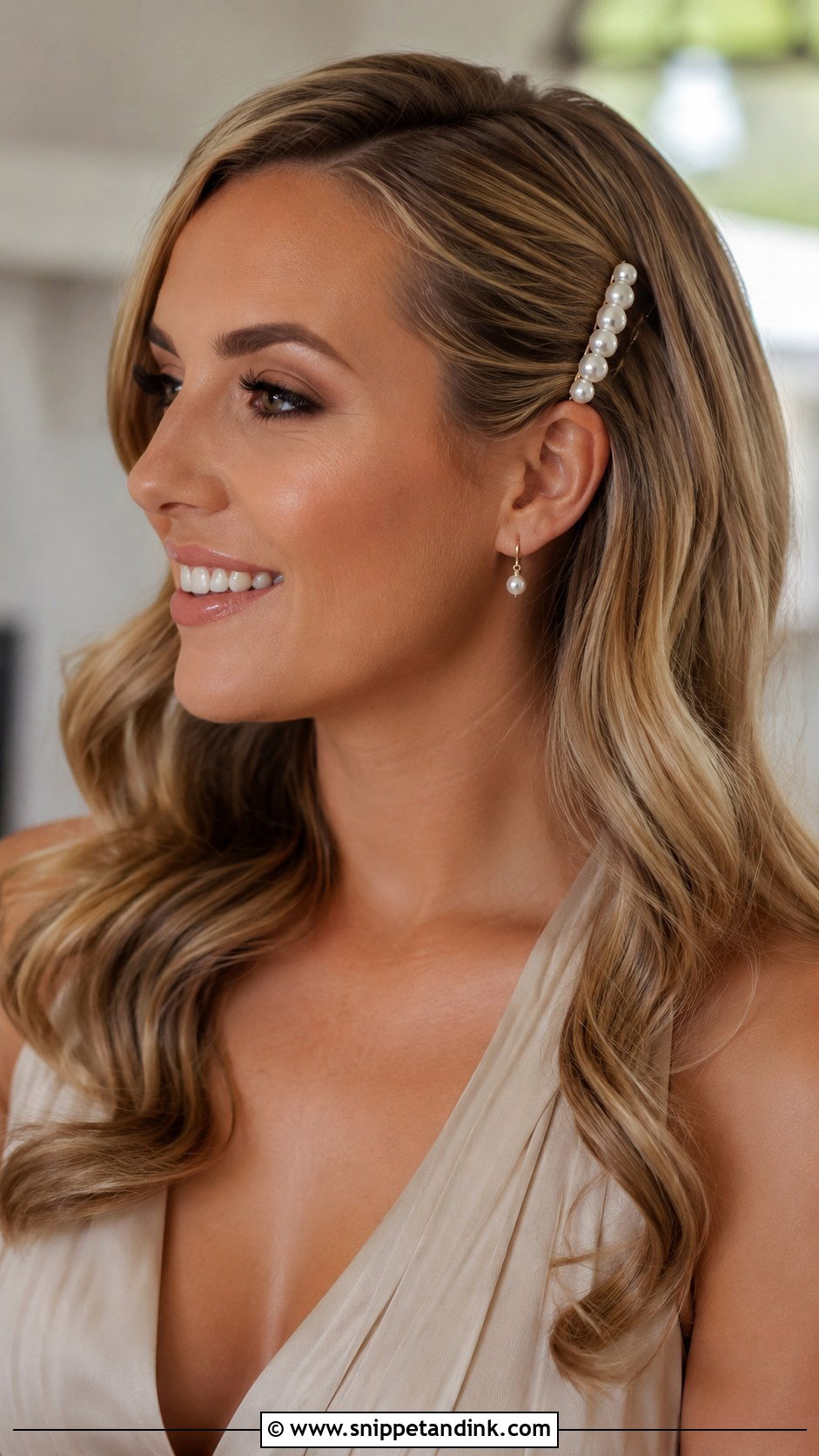
A single pearl clip is often all a loose style needs. The hair can be waved, curled or blown out, then clipped on one side. Size matters: a medium-size barrette near the temple or above the ear is usually enough, while a large one starts to look like a hair accessory rather than jewelry. On silky hair I add a bobby pin underneath for the clip to sit against, since barrettes slide on smooth hair.
12. Bridesmaid Hair Down With Floral Pins
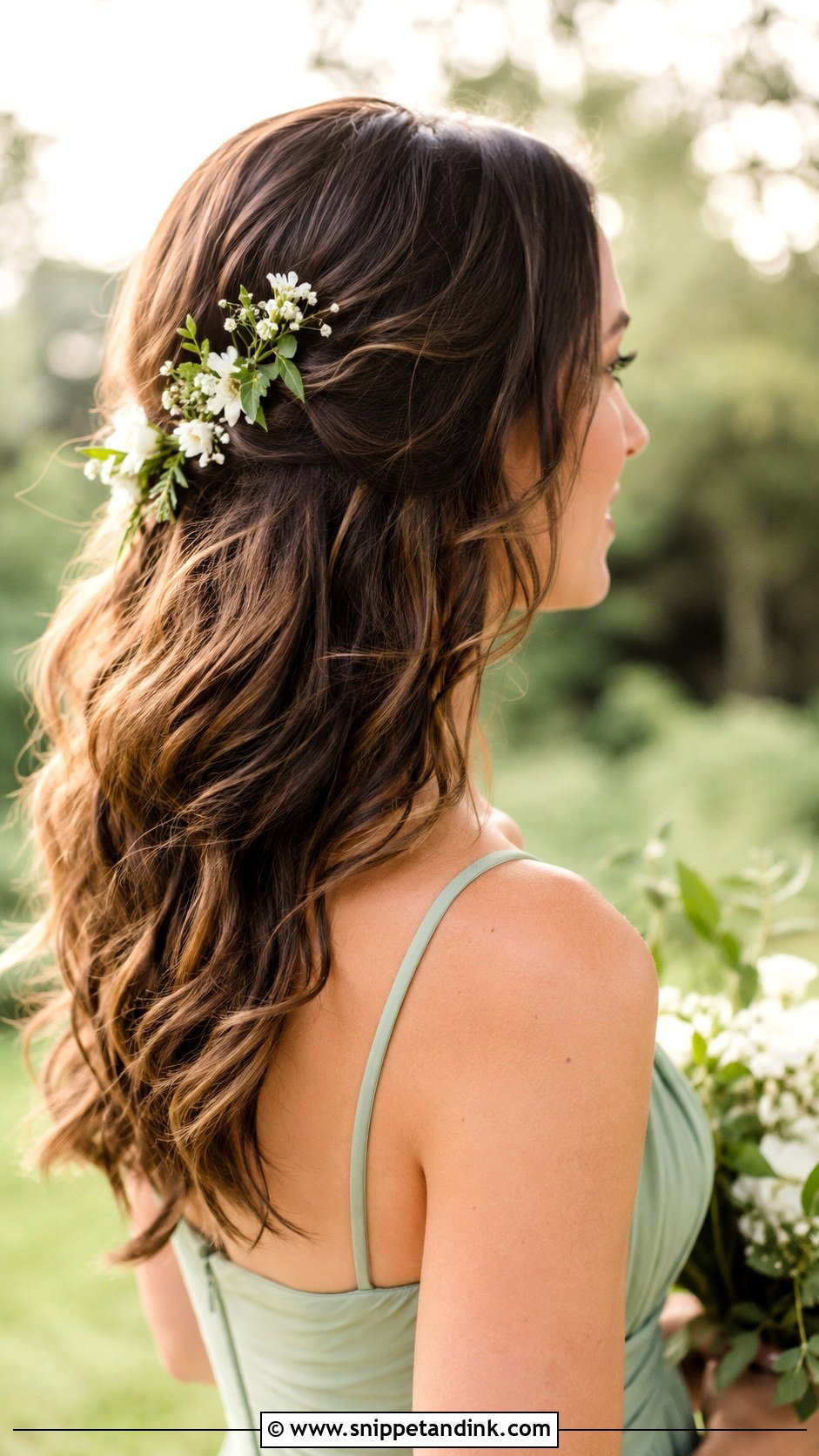
Floral pins work for garden weddings and spring ceremonies. Fresh, dried, silk or decorative pins all have a place, but fresh flowers droop fastest against warm hair, which is worth knowing for a long day. Waves give the pins something to settle into. I place them along one side, near a braid or around a twist, and keep blooms smaller than whatever the bride wears. Pastel dresses and natural light suit this look.
13. Bridesmaid Hair Down With Straight Hair
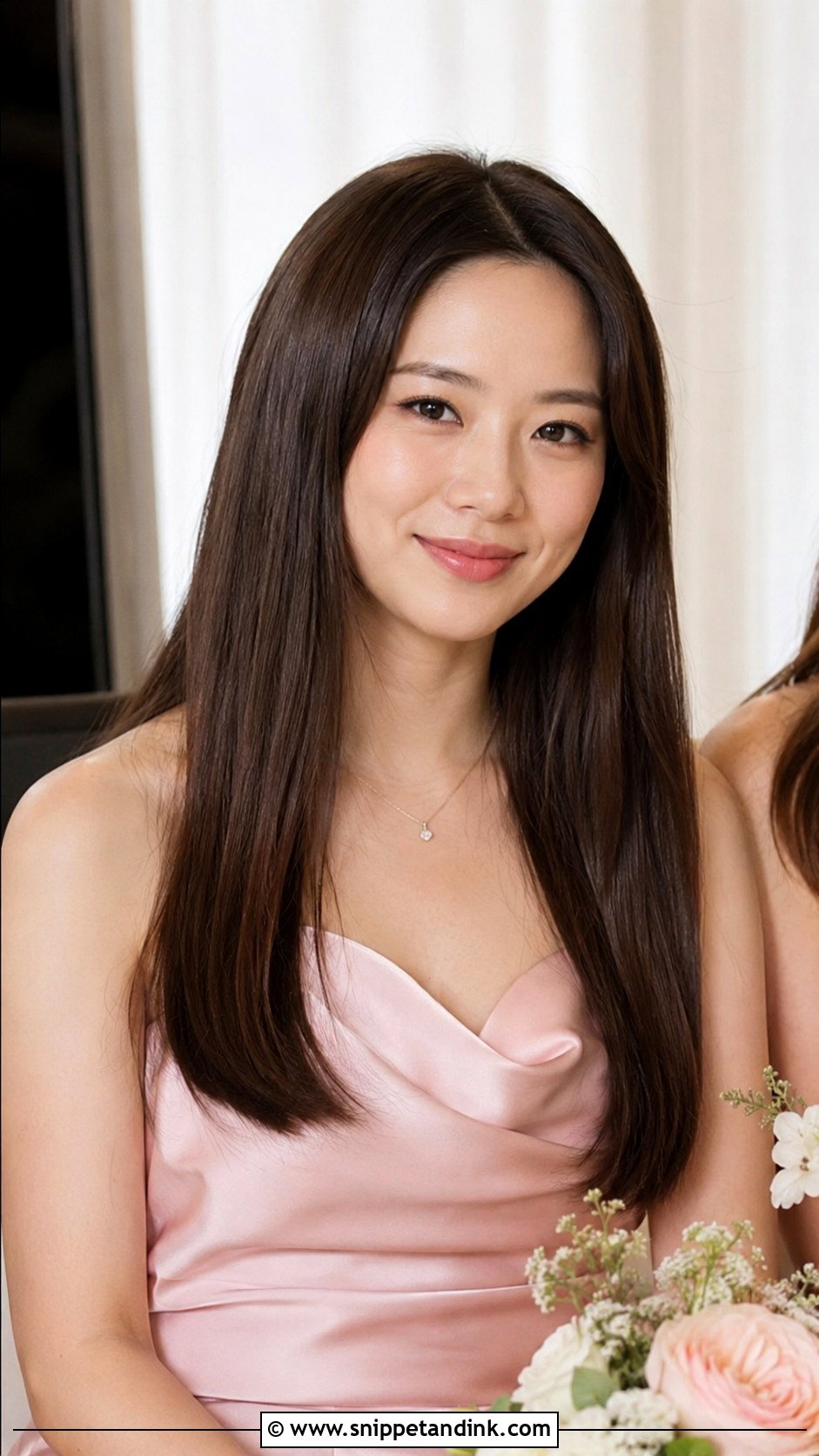
Straight hair can absolutely look wedding-ready, provided the ends are shaped. Poker-straight ends look unfinished, so I bevel them slightly with the iron or a round brush. Heat protectant, smoothing cream and a light shine spray are the whole kit. Blunt cuts and long layers suit it, as do minimal dresses. In humidity, anti-frizz prep is essential, because straight hair gives away moisture faster than any curled style.
14. Bridesmaid Hair Down With Sleek Blowout
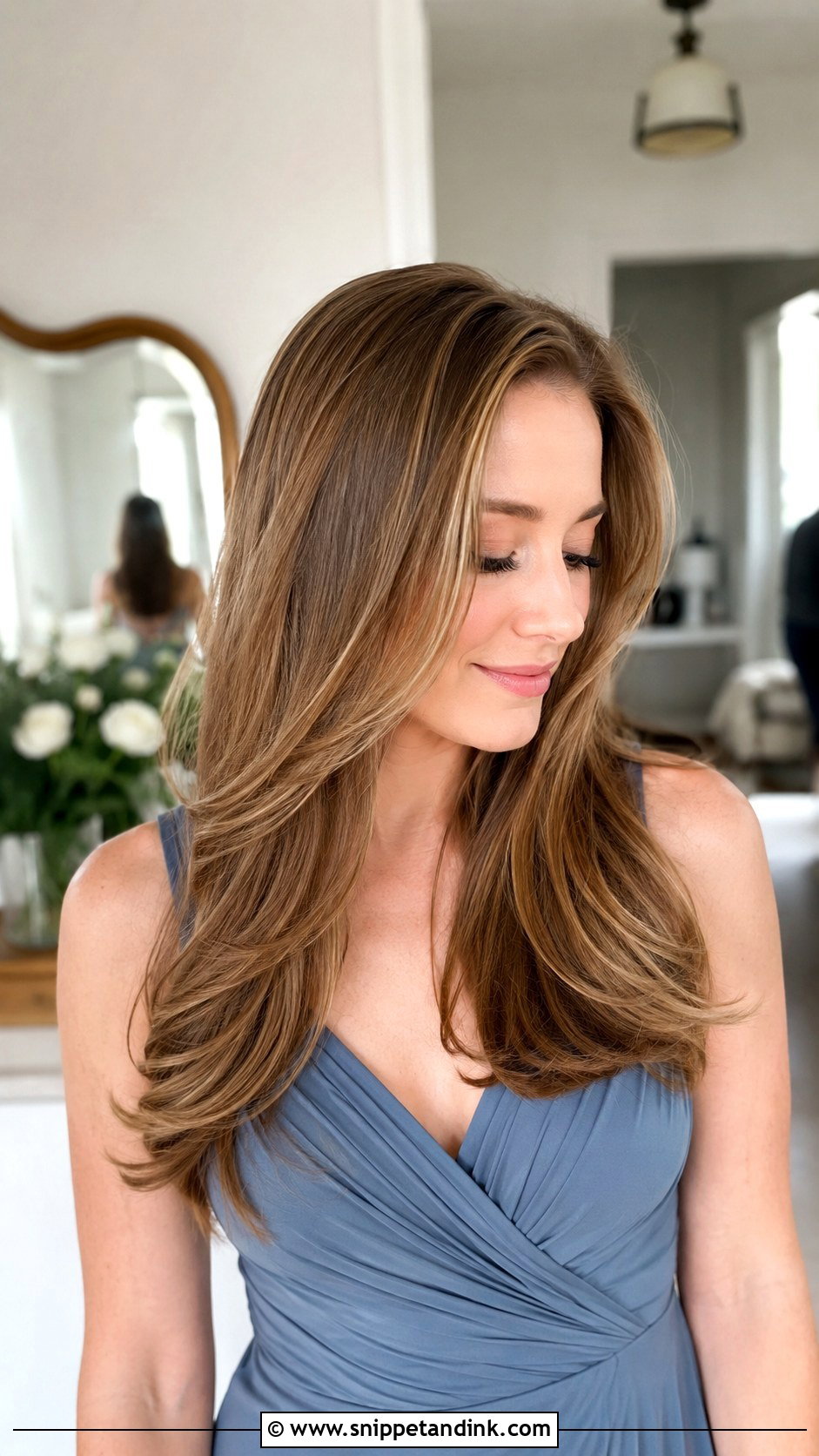
A sleek blowout gives volume and shine without curls, a good middle ground for anyone who dislikes waves. Lifted roots, smooth mid-lengths and ends curving in or out. Layered cuts get the most bounce. The hold comes from letting each section cool on the round brush before releasing it; I’ll sometimes roll the crown in velcro rollers while I finish the rest. A flexible spray keeps it moving.
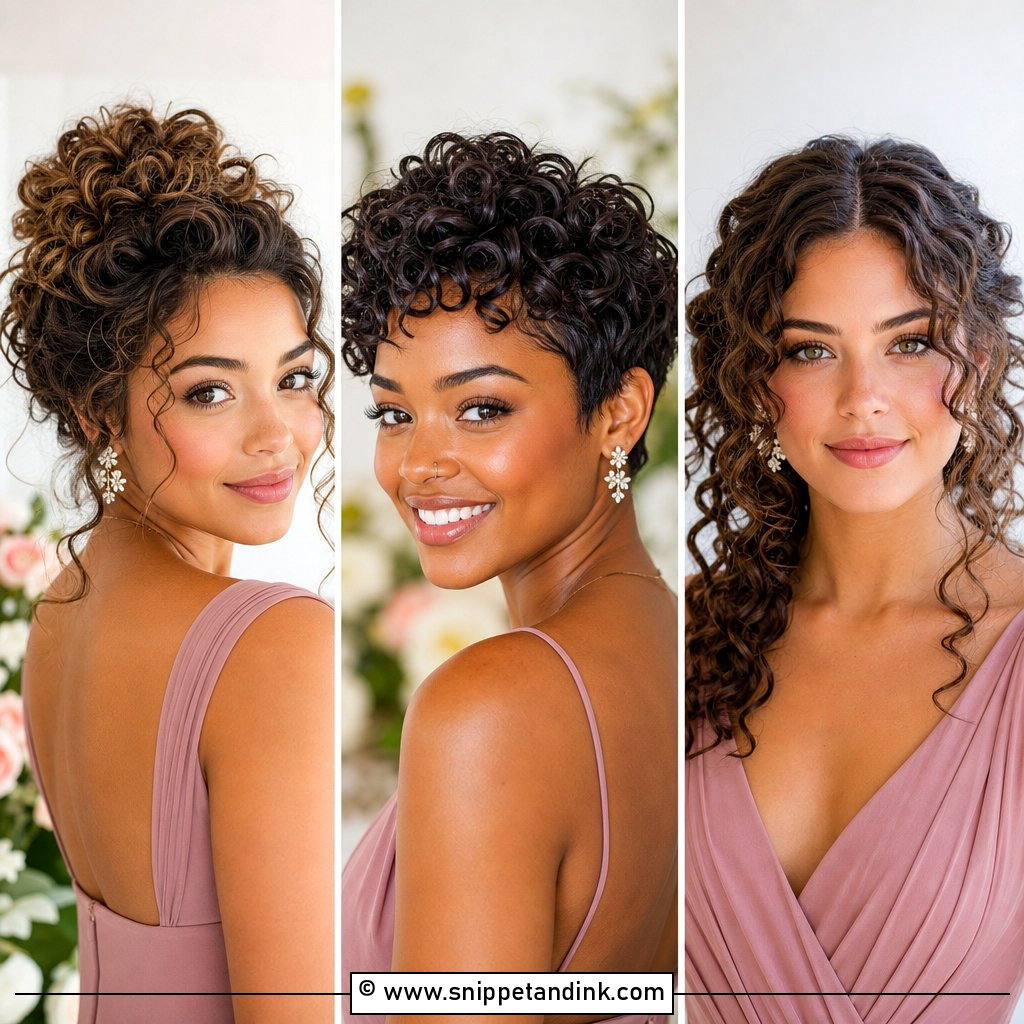
15. Bridesmaid Hair Down With Curly Hair
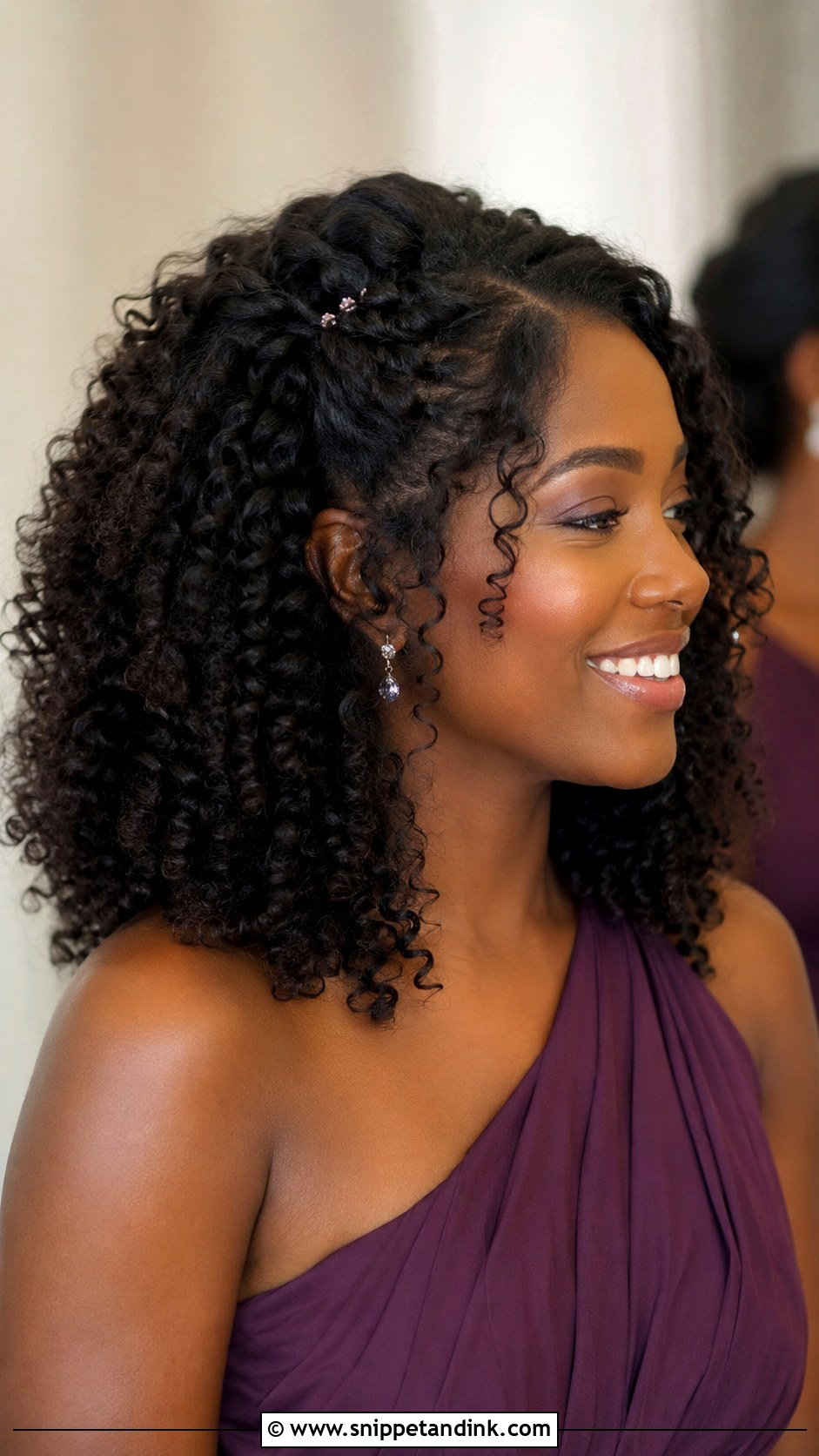
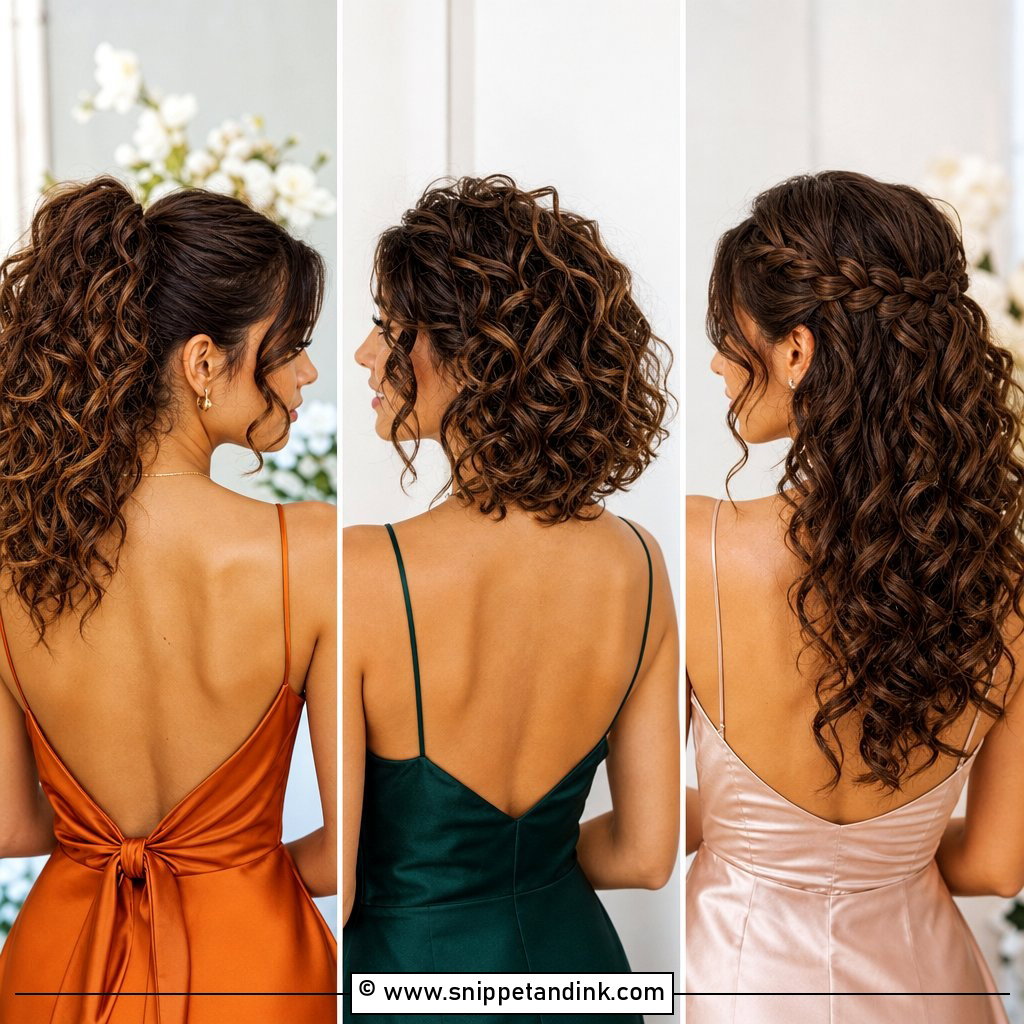
Curly hair worn down should look like the best version of the bridesmaid’s own curls. Definition comes from product chosen for her curl type, whether cream, gel or mousse, followed by a gentle diffuse or air-dry. I don’t brush or comb once it’s dry. Pinning a few front pieces back gives control without losing volume. Layered curly cuts keep the shape lifted rather than heavy at the bottom. Accessories should sit on top of curls, not be pushed through them.
16. Bridesmaid Hair Down With Natural Waves
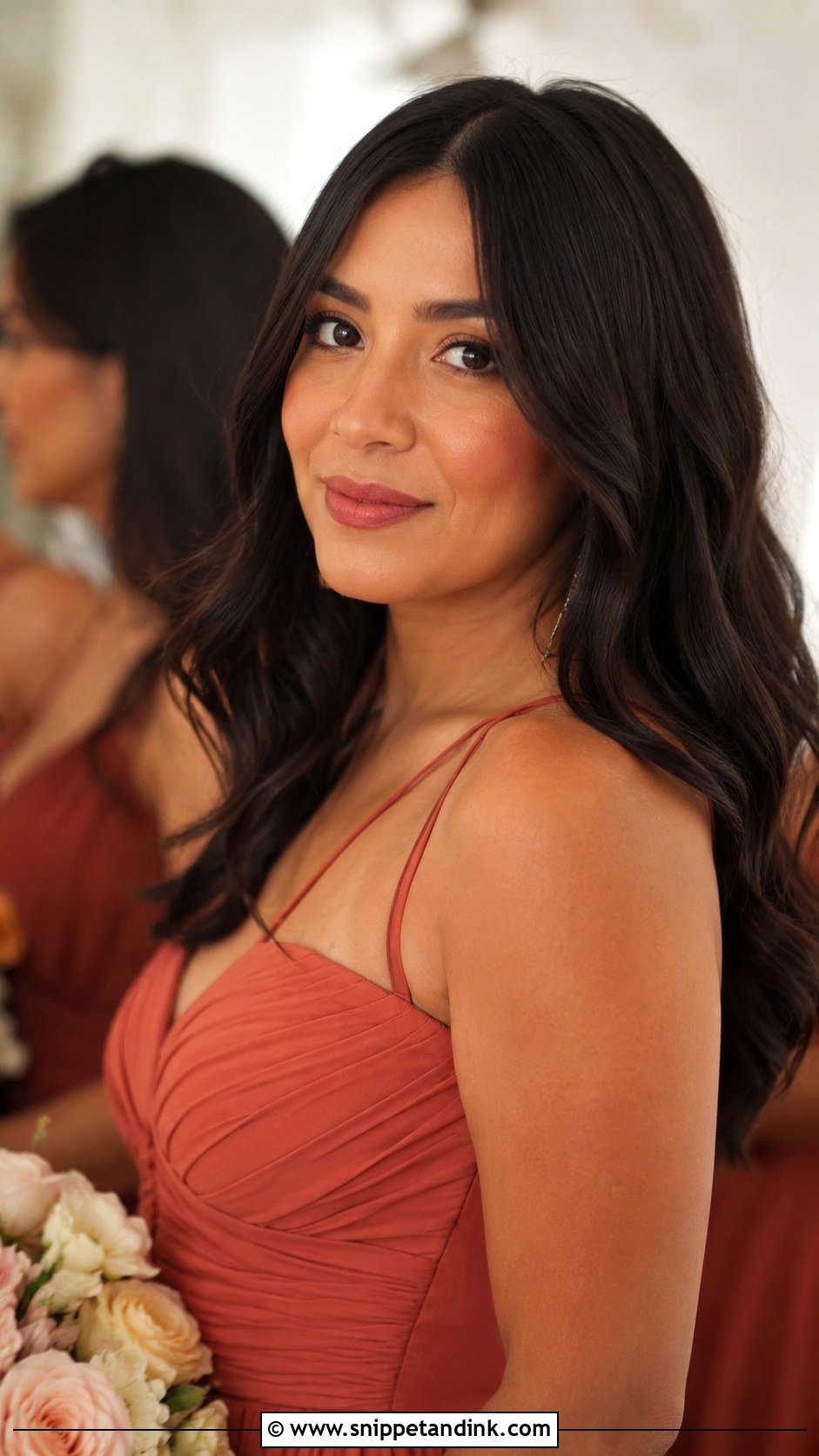
Natural waves are for the bridesmaid who already has a pattern and wants to look like herself. My job here is mostly to define and calm: a curl-enhancing cream or light mousse, a diffuse and a few touch-ups with a wand only where the pattern is weak. Parted center or side, pinned lightly at the front. Outdoors, natural waves cope with humidity better than heat-set ones, since the hair is already doing what it wants to do.
17. Bridesmaid Hair Down With Long Layers
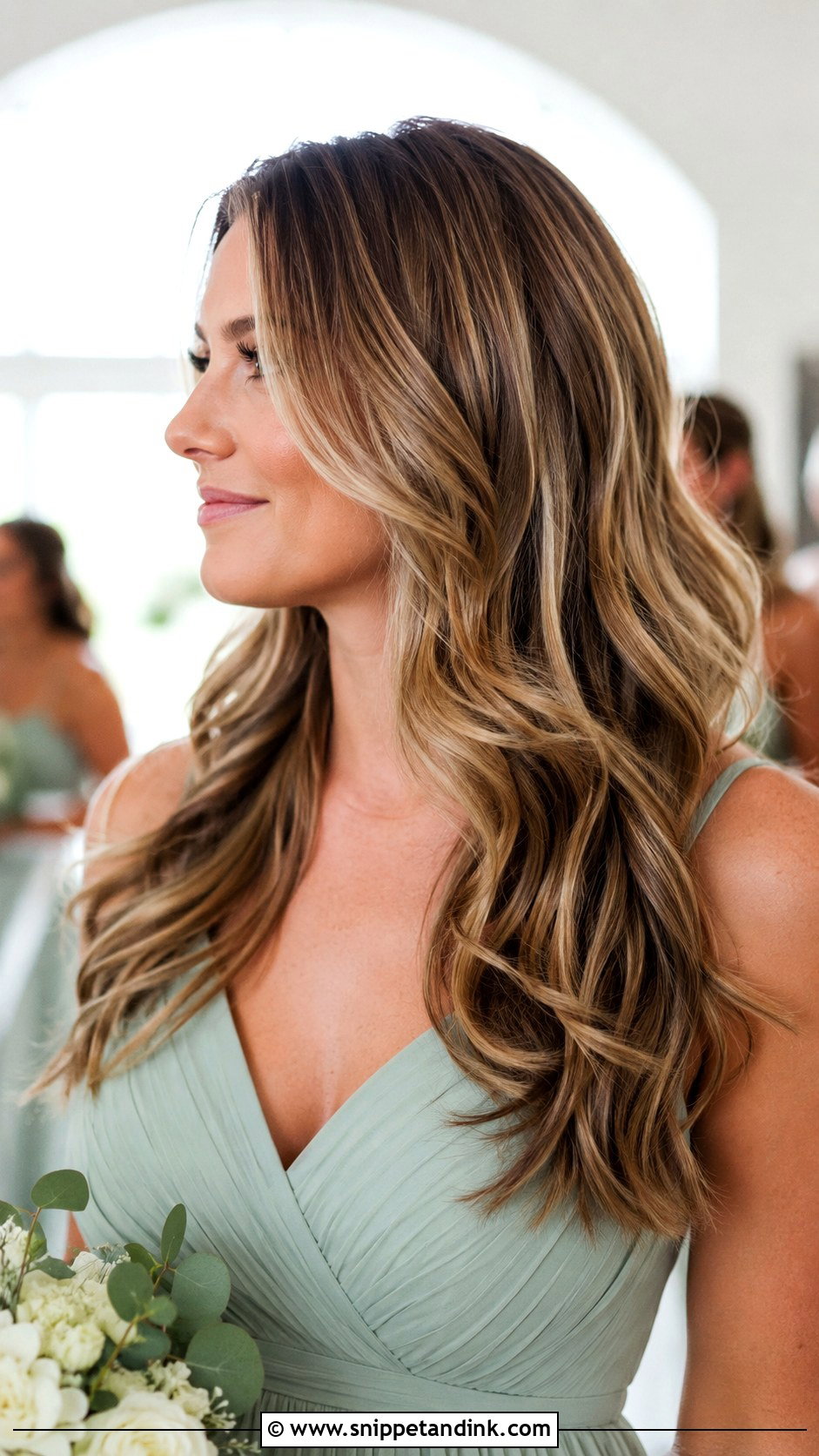
Long hair without layers can hang heavy and flat in photos. Layers around the face and through the ends give curls and waves somewhere to move. Balayage and highlights show off well in layered hair. I add volume at the crown and curl the ends so the layers blend rather than step. If a bridesmaid is planning a cut before the wedding, two or three weeks ahead gives layers time to soften.
18. Bridesmaid Hair Down With Medium Length Hair
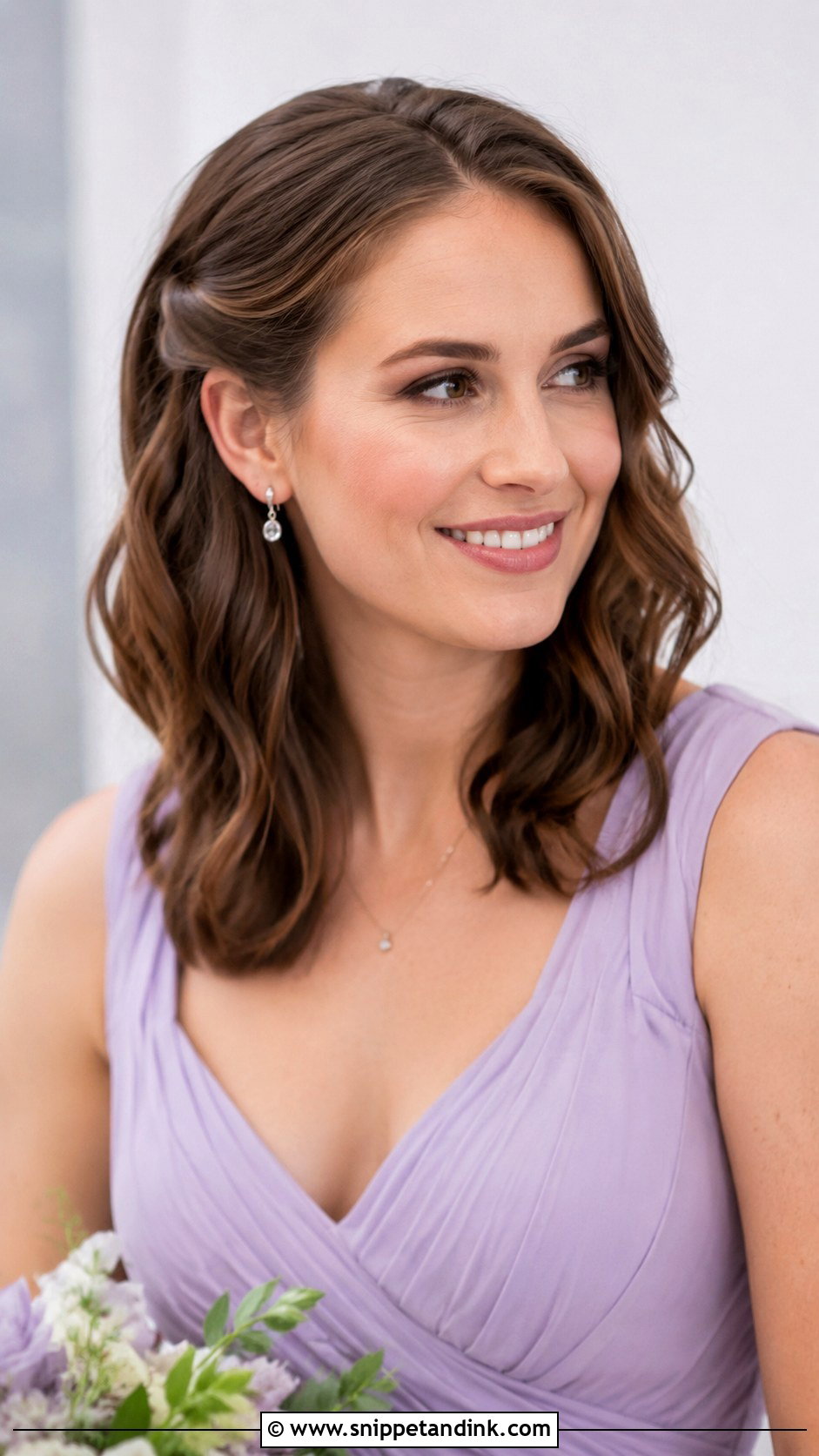
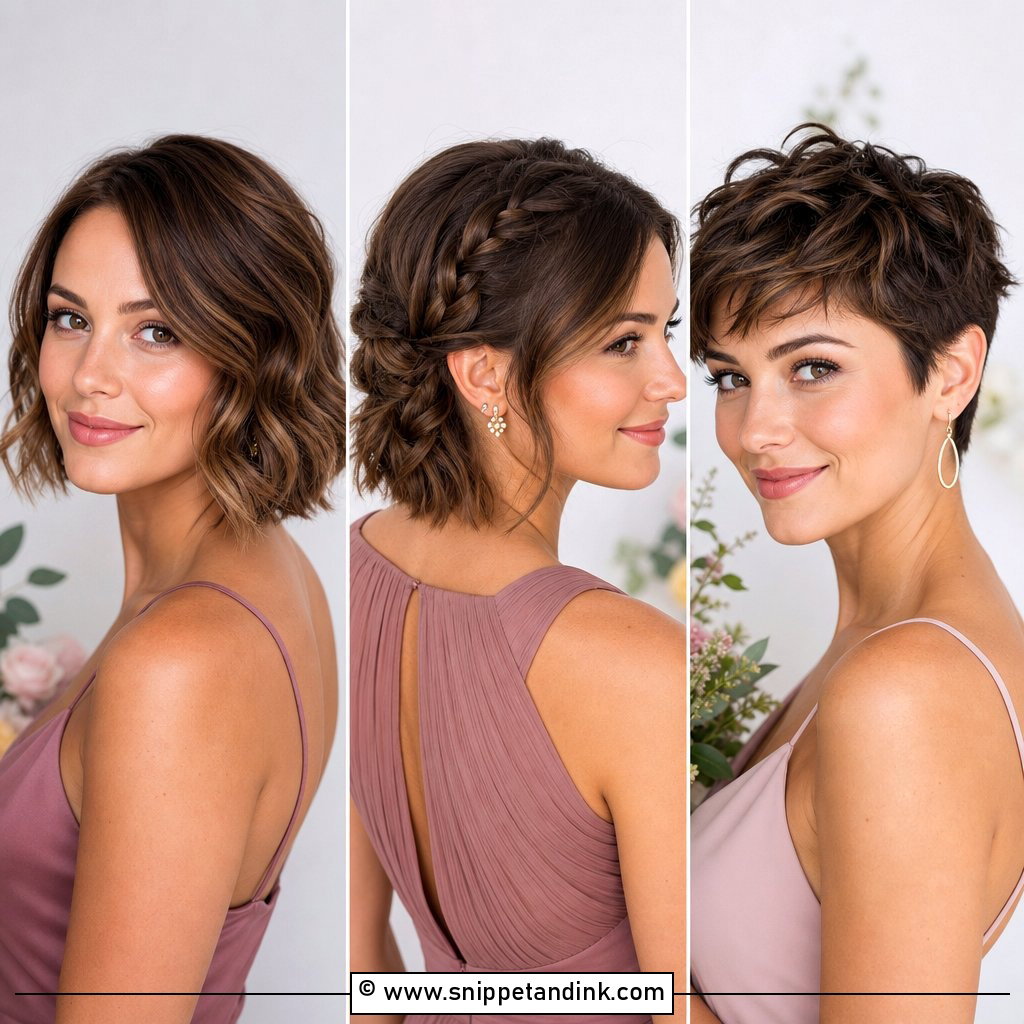
Medium hair, shoulder to collarbone, often holds curl better than very long hair because there’s less weight pulling it straight. The ends sit near the shoulders, so I curl them away from the neck; otherwise they flip outward off the dress straps. A side tuck, a pearl clip or a small twist adds occasion. It’s a practical length for a long day.
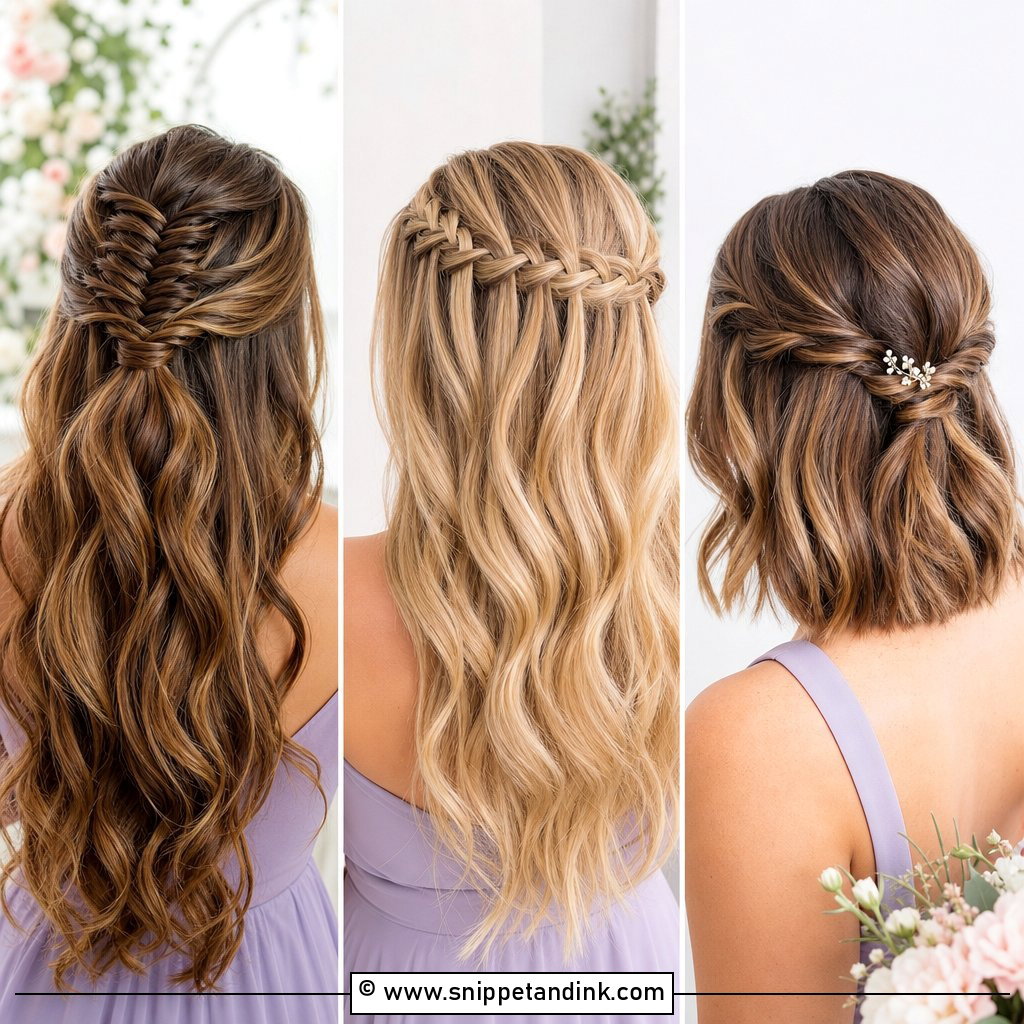
19. Bridesmaid Hair Down With Half Up Twist
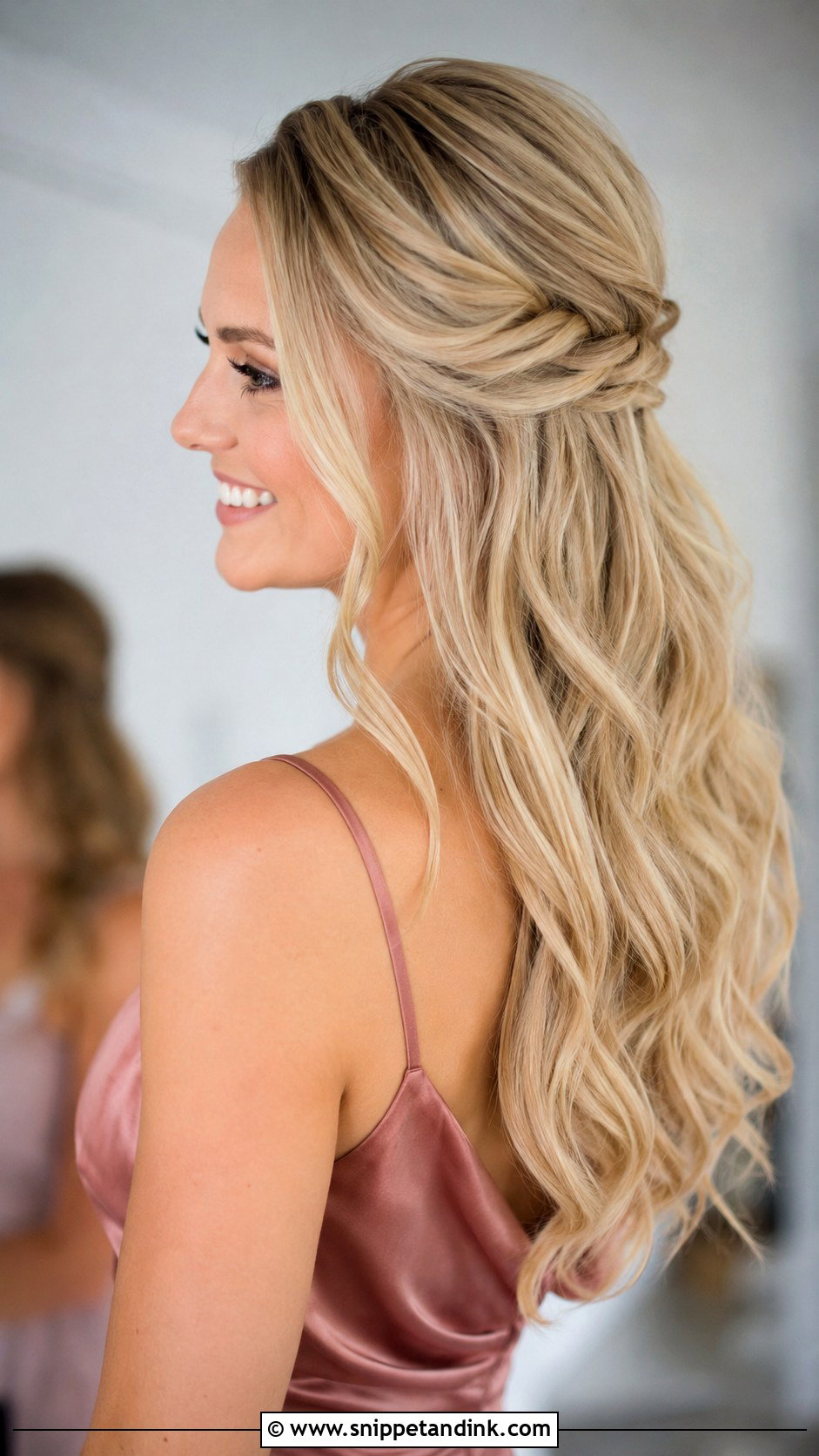
A half-up twist adds structure while the length stays loose. The top sections twist back and secure, and the rest falls in waves. It keeps the face open and sits well under a veil, clip or floral pin. Twisting higher lifts the face; lower looks softer. Fine hair needs texture spray before twisting, while thick hair needs strong pins hidden under the top layer, or the weight drags the twist down.
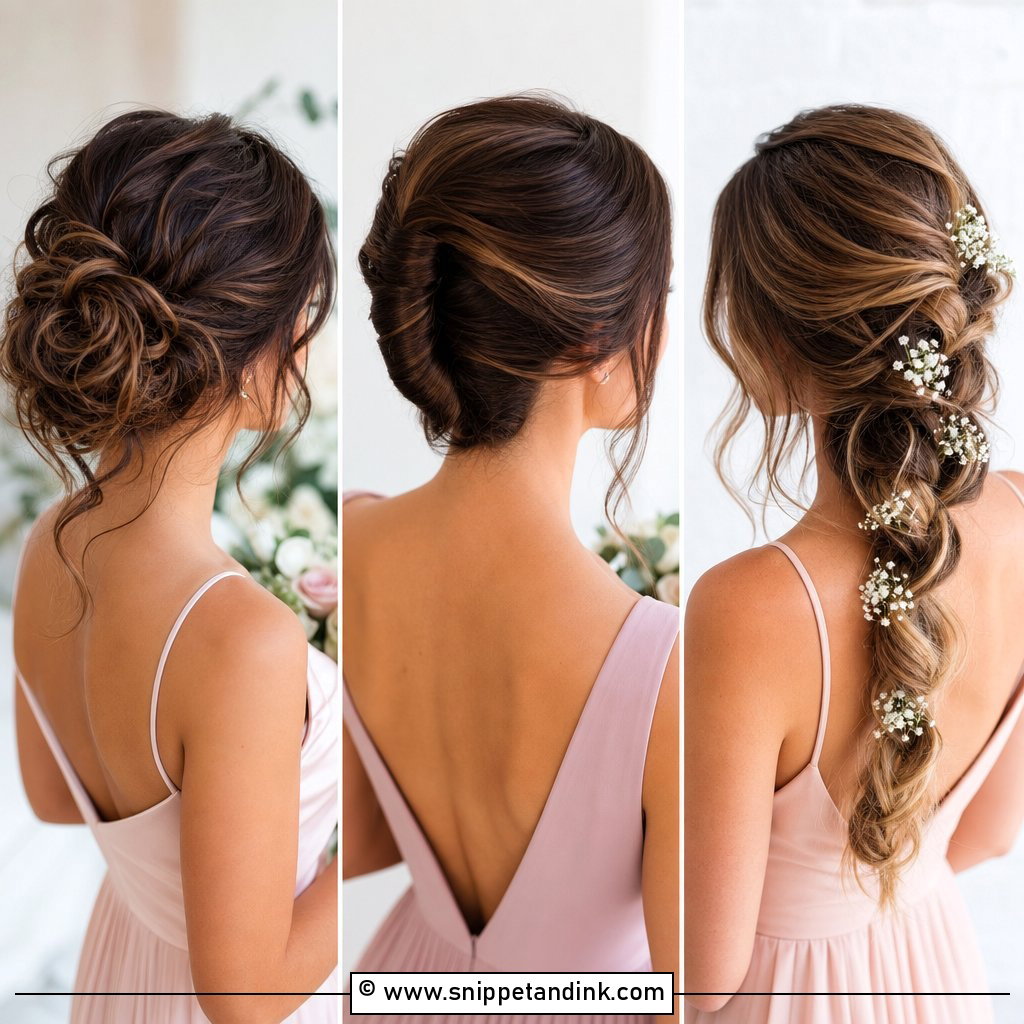
20. Bridesmaid Hair Down With Half Up Braid
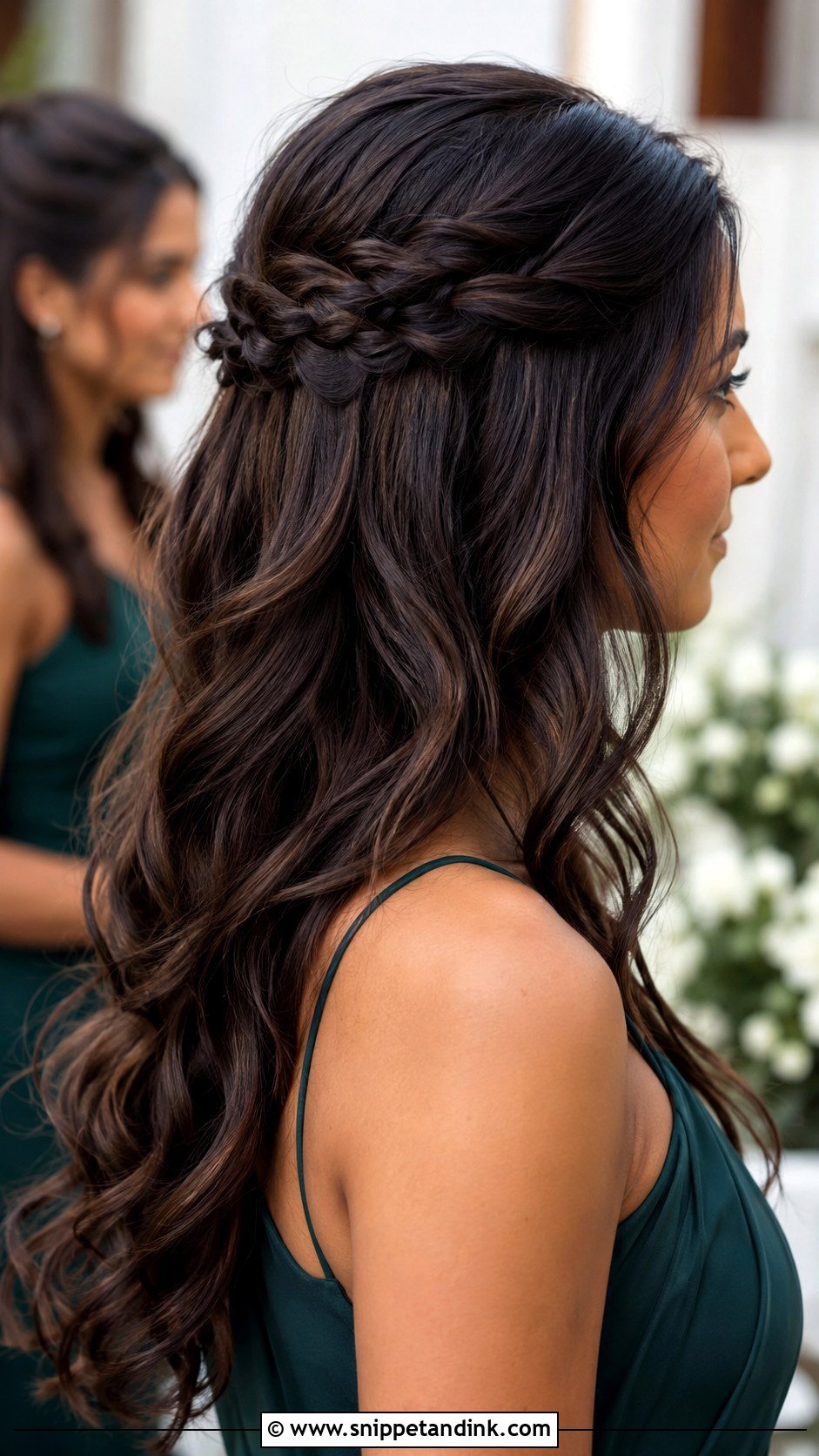
A half-up braid adds texture without weight. Across the back, along one side or worked into a small crown, with everything else loose. Pancaking the braid makes fine hair look fuller; a tighter braid helps control thick hair that tends to puff. It suits rustic and garden weddings. I curl the ends last, after the braid is in, so the waves aren’t disturbed while braiding.
A Wave You Can Set Yourself If There’s No Stylist Booked
Plenty of bridal parties only book hair for the bride. A soft loose wave is the most achievable style to do yourself, as long as you follow the same steps a stylist would.
- Wash the evening before, not the morning of. Slightly lived-in hair holds a curl better than freshly washed hair.
- Spray heat protectant through dry hair, then add a light texture or volume spray at the roots.
- Curl one-inch sections away from your face with a one-inch to one-and-a-quarter-inch iron, holding each for a few seconds only.
- Let everything cool fully. Do something else for ten minutes; don’t touch it.
- Run your fingers through gently, then mist flexible hairspray from arm’s length.
Practice once a week or two before the wedding. The first attempt with a new routine is never the best one, and finding that out on the morning itself is stressful.
Same Part, Same Shine, Different Hair
Bridesmaids hairstyles down can be simple or glamorous depending on the wedding. What decides the right one is texture, neckline, weather and how much hold each bridesmaid needs. Waves are popular, but straight, curly, braided, twisted and blown-out styles all hold their own when styled with care. To connect the group, agree on one detail, like the part or the wave size, and let each bridesmaid adapt the rest to her hair.
You'll Like These Ideas:


Leave a Reply