
Some of my favourite fittings are for brides who walk in and say they don’t want a gown at all. An informal wedding gives you room to wear something you’d genuinely choose for yourself, whether that’s for a courthouse ceremony, backyard celebrations, a beach, a garden or a dinner in a restaurant’s back room. Relaxed still has to read as bridal, though, and that usually comes down to fabric quality, a fit that’s been adjusted to you, and one or two deliberate details. Below are twenty dresses I’d happily style, each with the shoes and accessories I’d pair, and the fit or fabric issue I’d check before you commit.
How Much Lead Time a Simple Dress Still Needs
Brides choosing informal dresses often assume they can buy two weeks before the wedding. Sometimes that works, but here’s how I’d plan it.
- Three to four months out: shop and order. Ready-to-wear and contemporary bridal labels usually ship within days or a few weeks, but popular sizes sell out and returns take time if the first one isn’t right.
- Six to eight weeks out: first alteration fitting, with your shoes and the underwear you’ll wear on the day. Even a simple midi usually needs a hem and a strap adjustment.
- Two weeks out: final fitting. Walk, sit, raise your arms and hug the seamstress if you have to.
- The week before: steam the dress and hang it in a breathable bag, not plastic, so fabric can breathe and creases relax.
Made-to-order bridal is a different story and can take several months, so if a dress is listed as made to order, ask for the realistic delivery date in writing before you pay.
1. Short Satin Wedding Dress With Block Heels
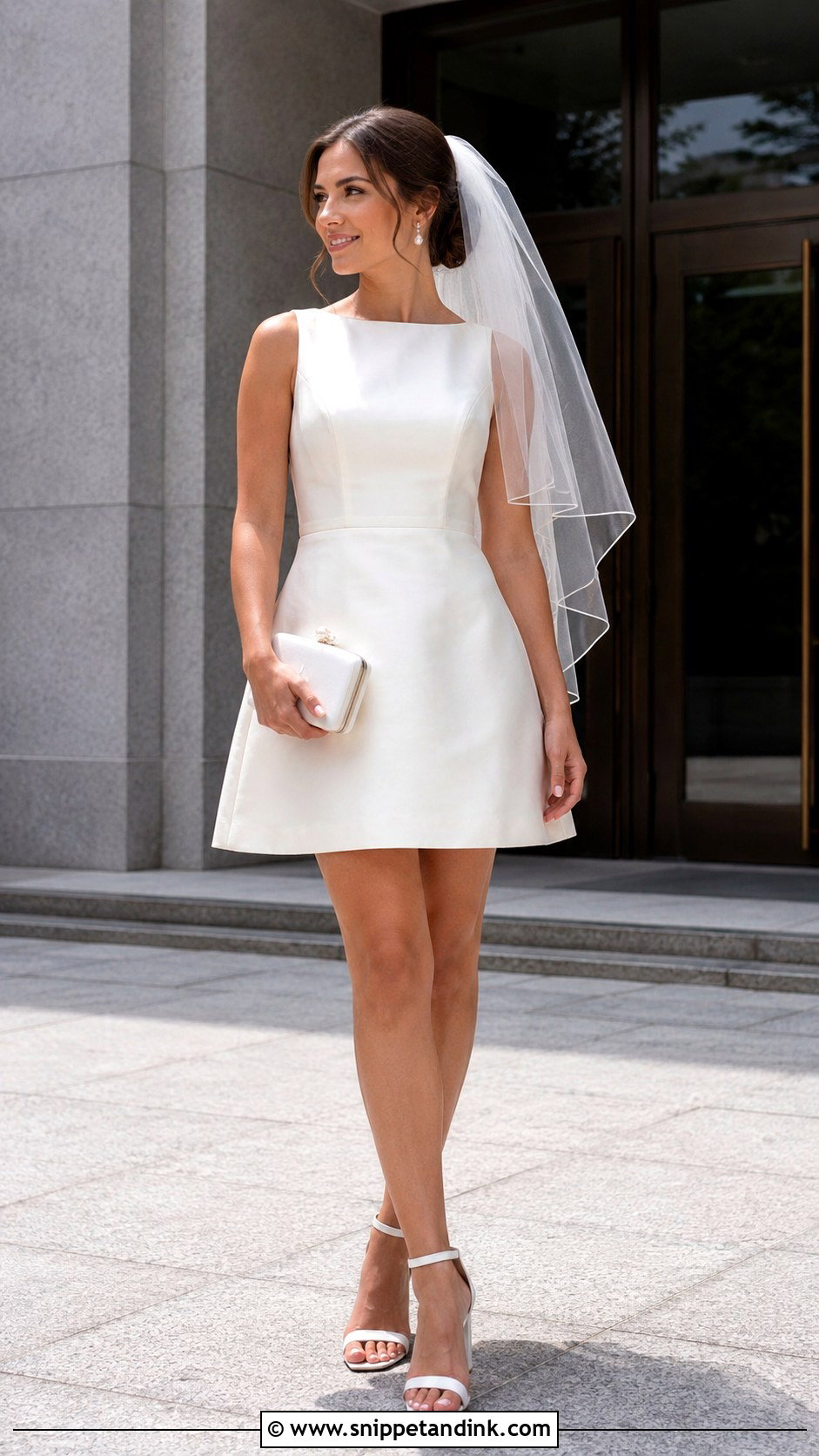
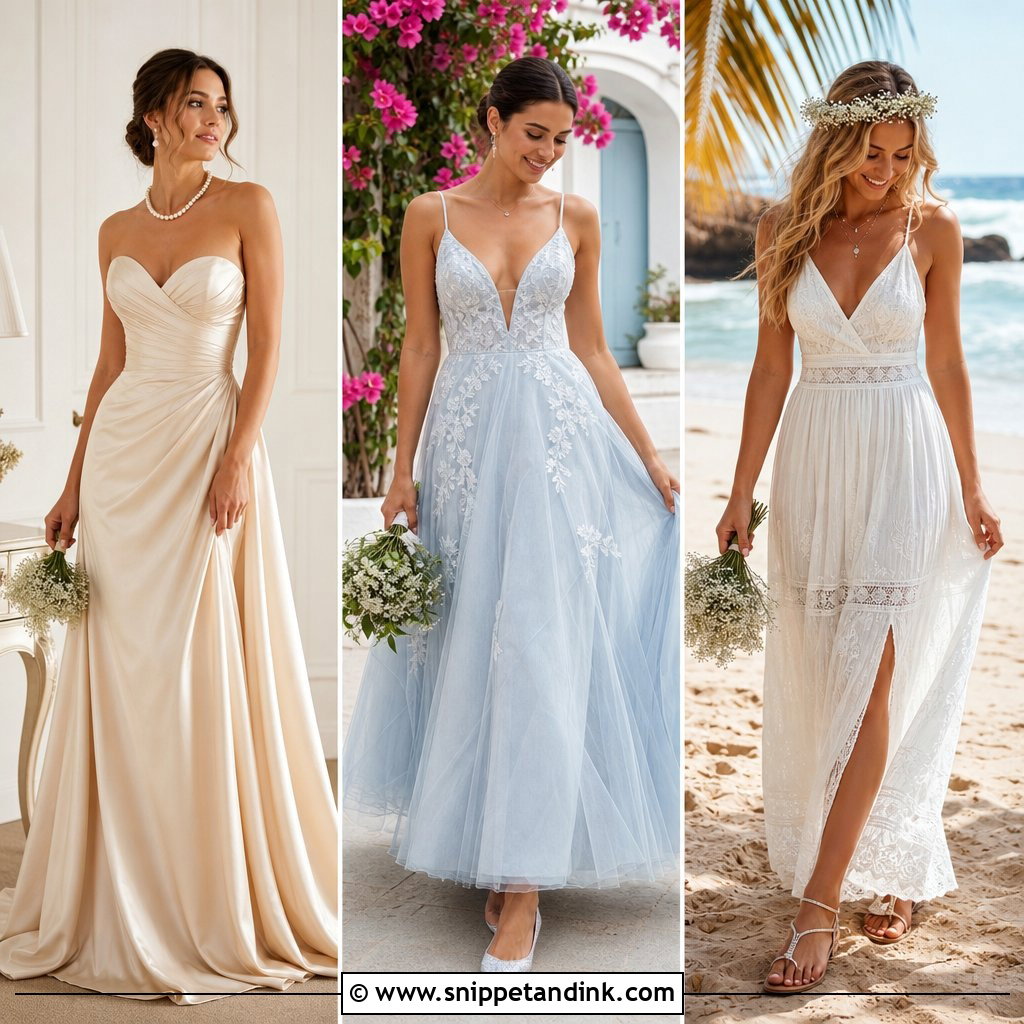
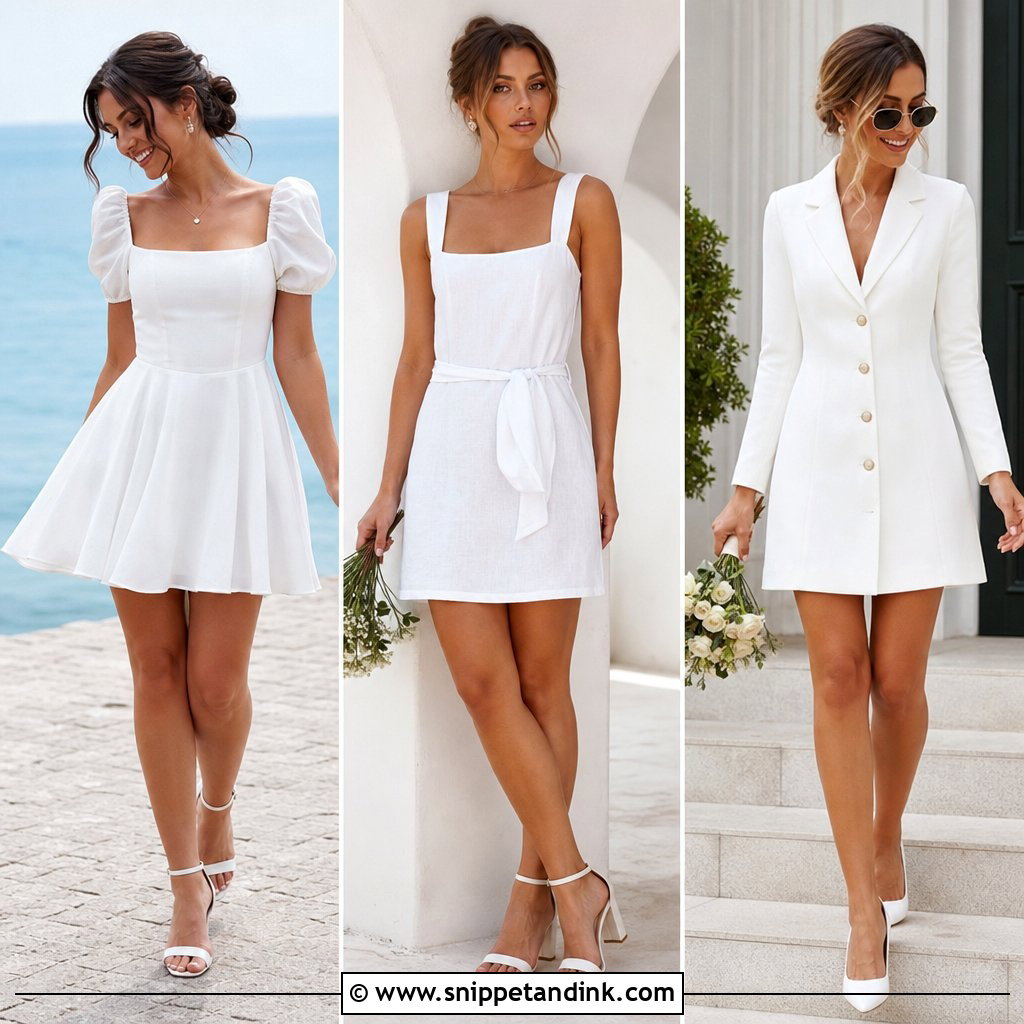
Satin is the quickest way to make a short dress look bridal, because its sheen catches light the way a gown does. The catch is that thin satin shows everything: seams, underwear lines, even the outline of a phone in a pocket. I’d only put a bride in a heavier duchess-style or lined satin at this length. A clean A-line or softly fitted shape with a square or scoop neck, ivory rather than bright white, block heels and pearl earrings is all it takes. Add a fingertip veil for the ceremony, or skip it for a sleek bun with decorative pins. Expect satin to crease across the lap when you sit, so stand for photos straight after the ceremony.
2. Tea-Length Wedding Dress With Ballet Flats
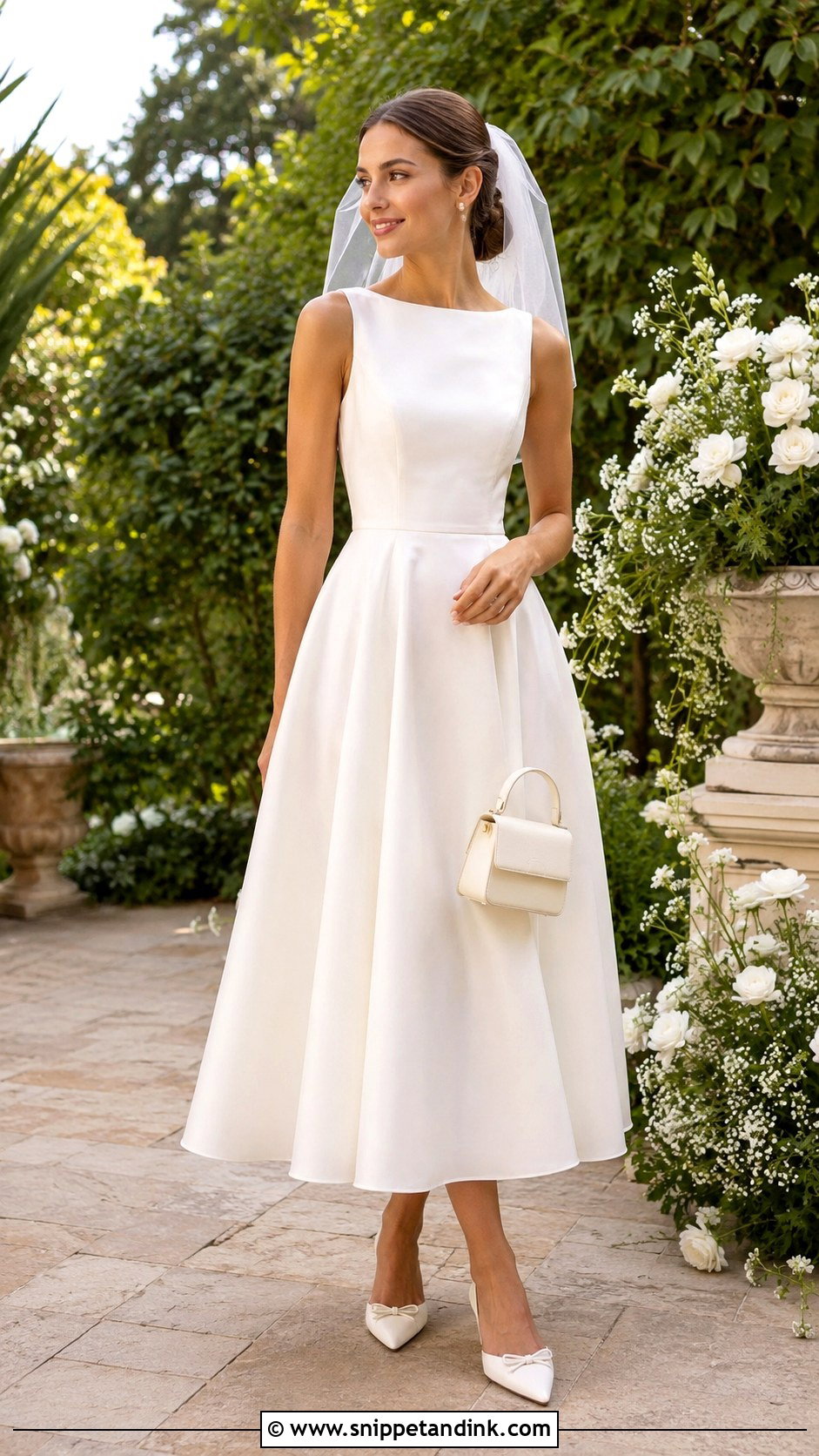
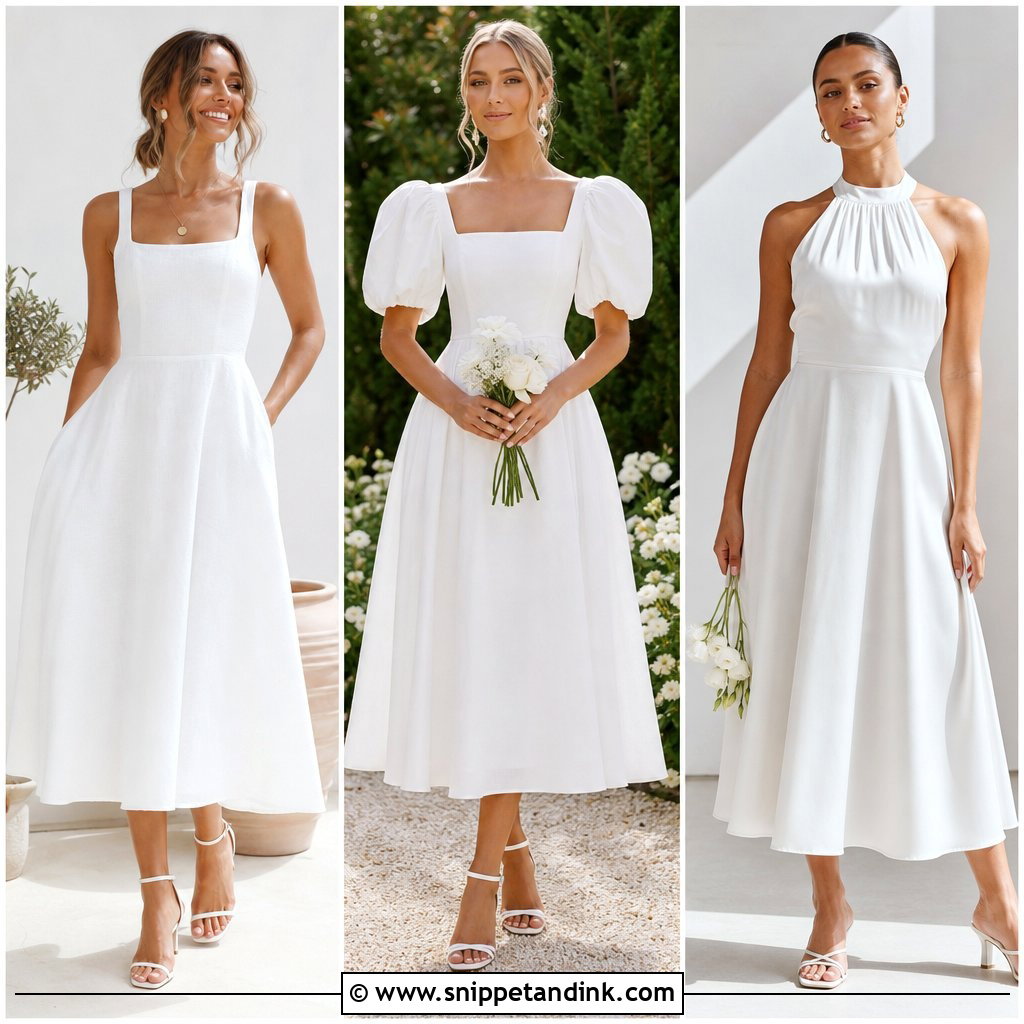
Tea length lands between the knee and ankle, and its real advantage is that your shoes become part of the outfit. Pointed ballet flats suit it well. A fitted bodice over a gently flared skirt gives shape without the boning that makes long days uncomfortable. When I hem a tea-length dress, I want it to hit the narrowest part of the calf, since an inch too high or low can make legs look shorter. Cap sleeves or a bateau neck add coverage if you’d like it. Keep the accessories minimal: a short veil or a slim headband.
3. Linen Midi Wedding Dress With Flat Sandals
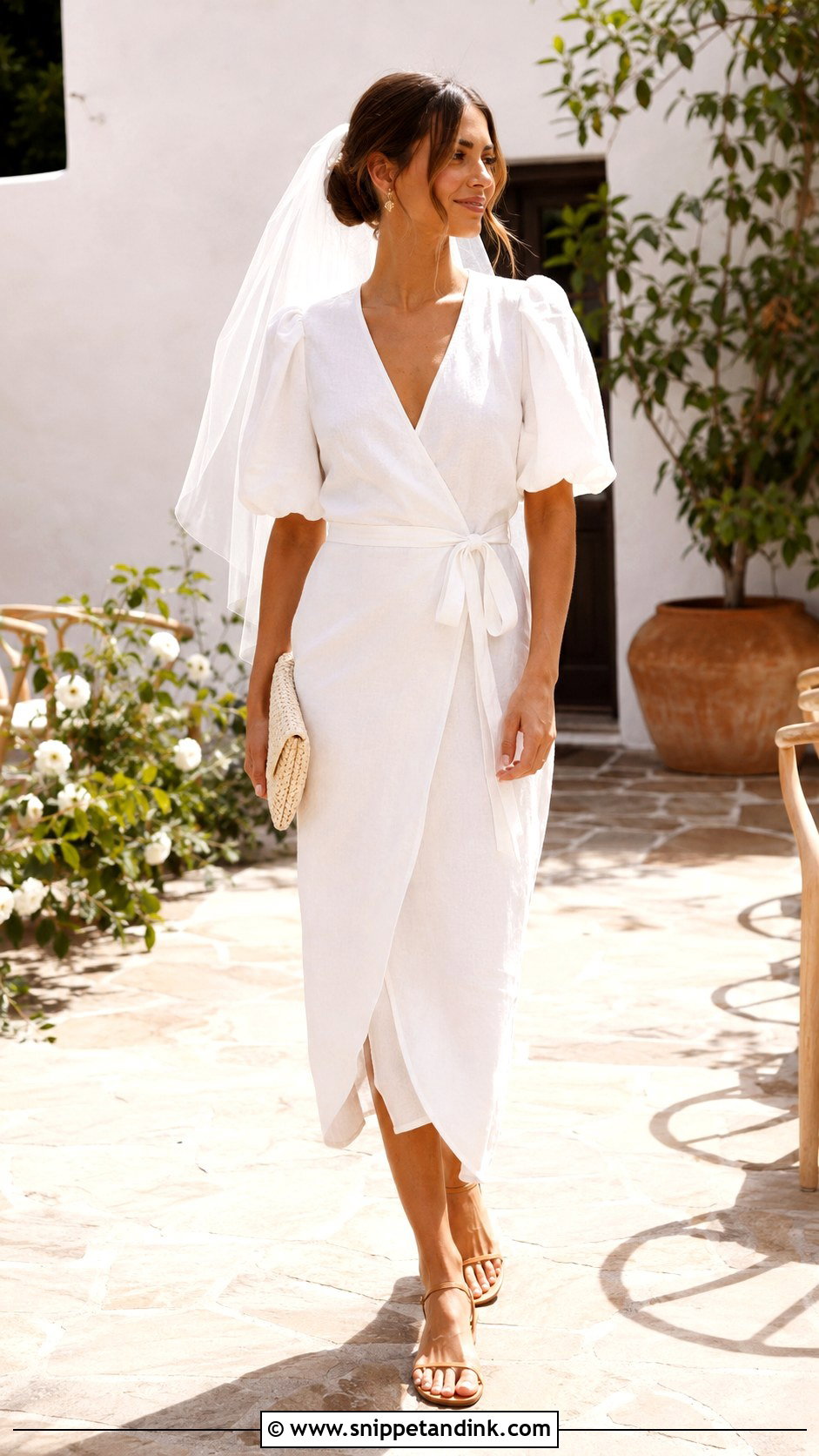
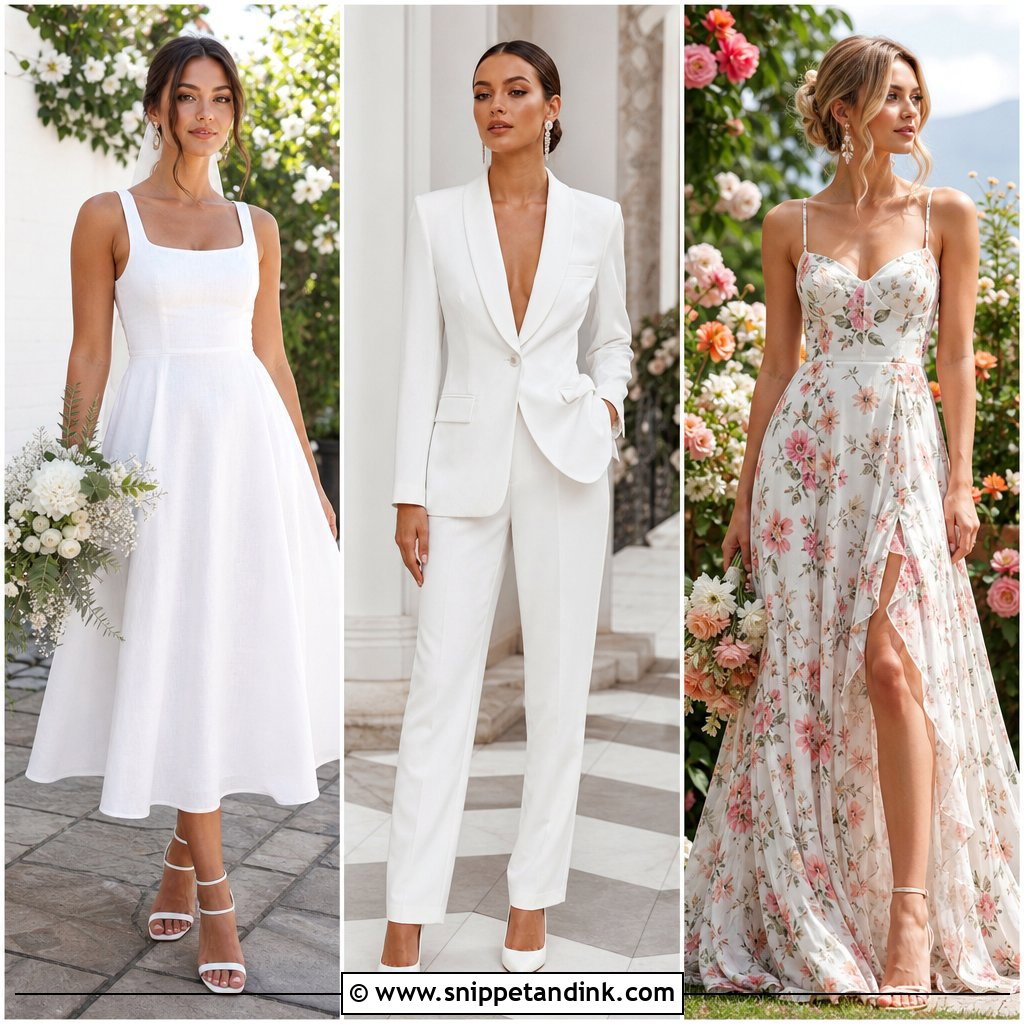
Linen is the most honest fabric for a hot outdoor ceremony, and you have to accept that it will crease. A linen midi wedding dress with a button front or a wrap gives the fabric enough structure to look intentional. If wrinkles bother you, a linen-viscose blend relaxes less and holds a smoother line in photos. I always want a defined waist on these; without it, a white linen midi can look like any holiday sundress. Flat sandals, small gold earrings, a woven clutch, a low bun and a short airy veil keep it in proportion.
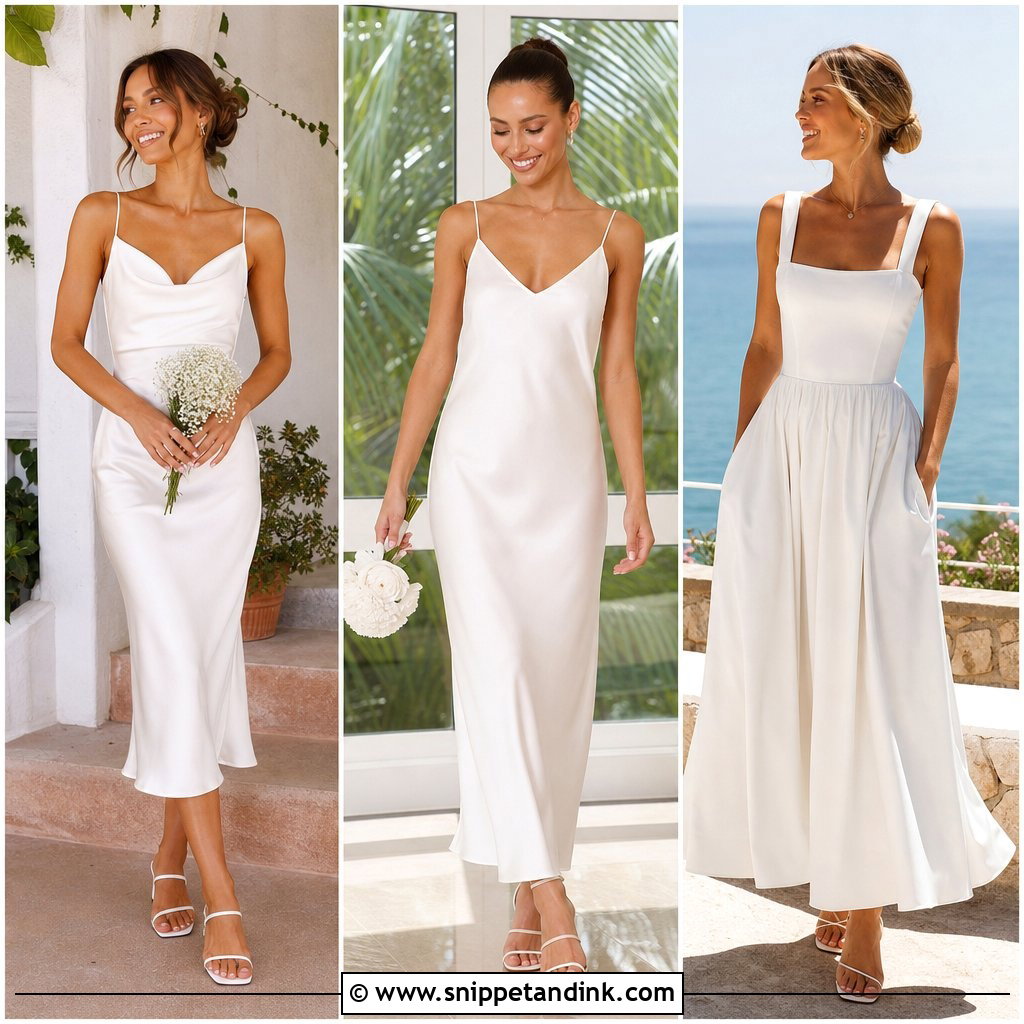
4. Slip Wedding Dress With Kitten Heels
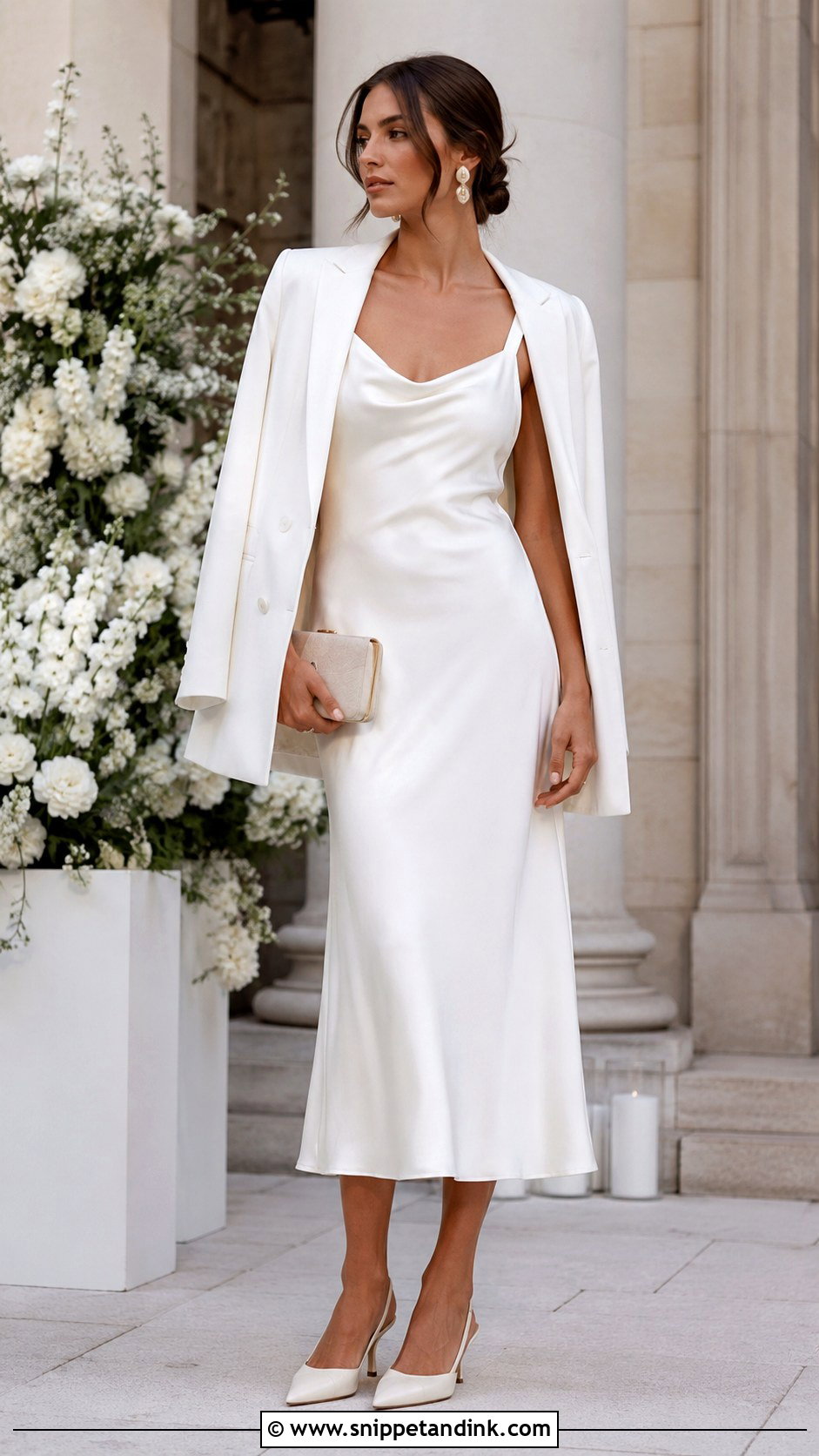
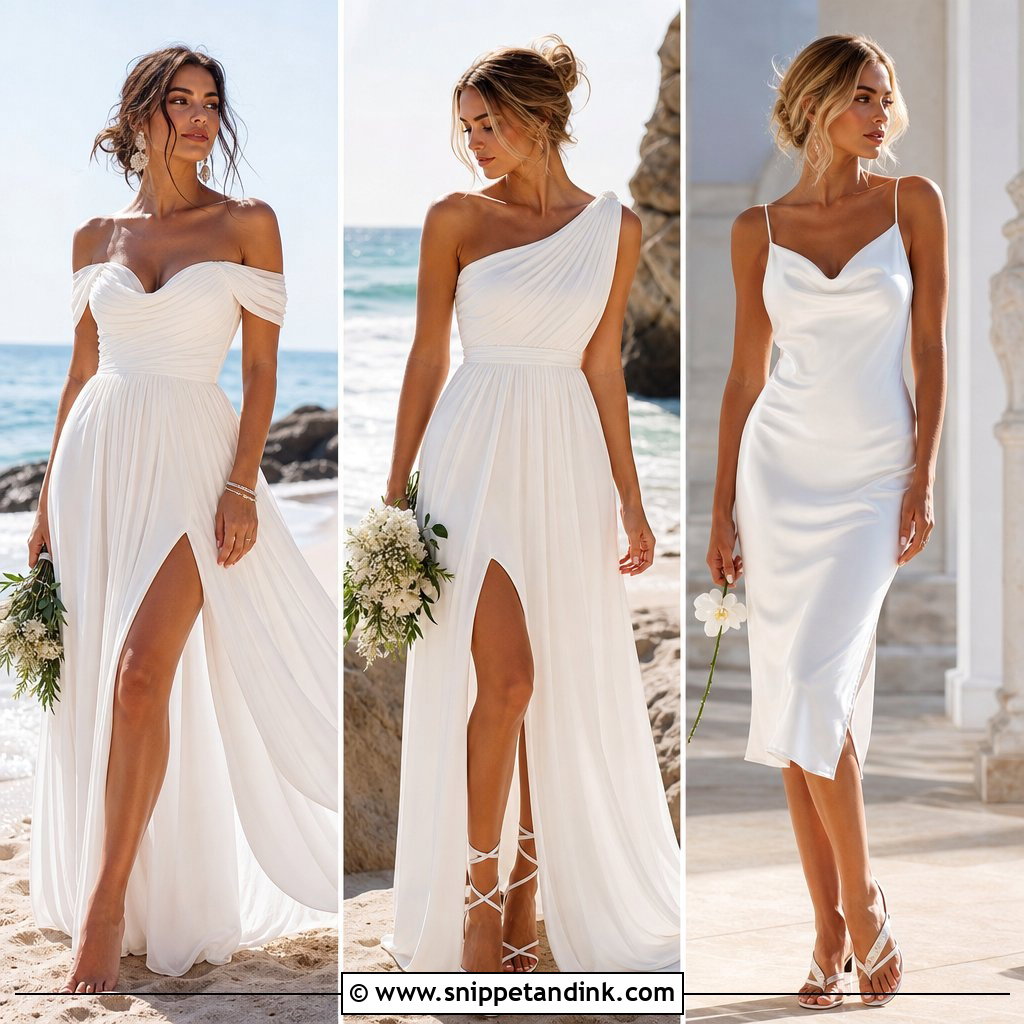
A bias-cut slip is cut diagonally across the fabric grain, which is why it drapes so closely and moves like liquid. It’s also why it shows every line underneath. Smooth laser-cut underwear in your skin tone is not optional with this dress. I’d steer you away from an unlined slip if you want strong bust support; look instead for a lined version with built-in cups, or wear a cropped jacket over it. Wider straps or a draped neckline add coverage. Kitten heels, drop earrings and a sleek hairstyle suit the minimal line, and a tailored blazer doubles as the evening layer.
5. Puff-Sleeve Mini Wedding Dress With Mary Jane Shoes
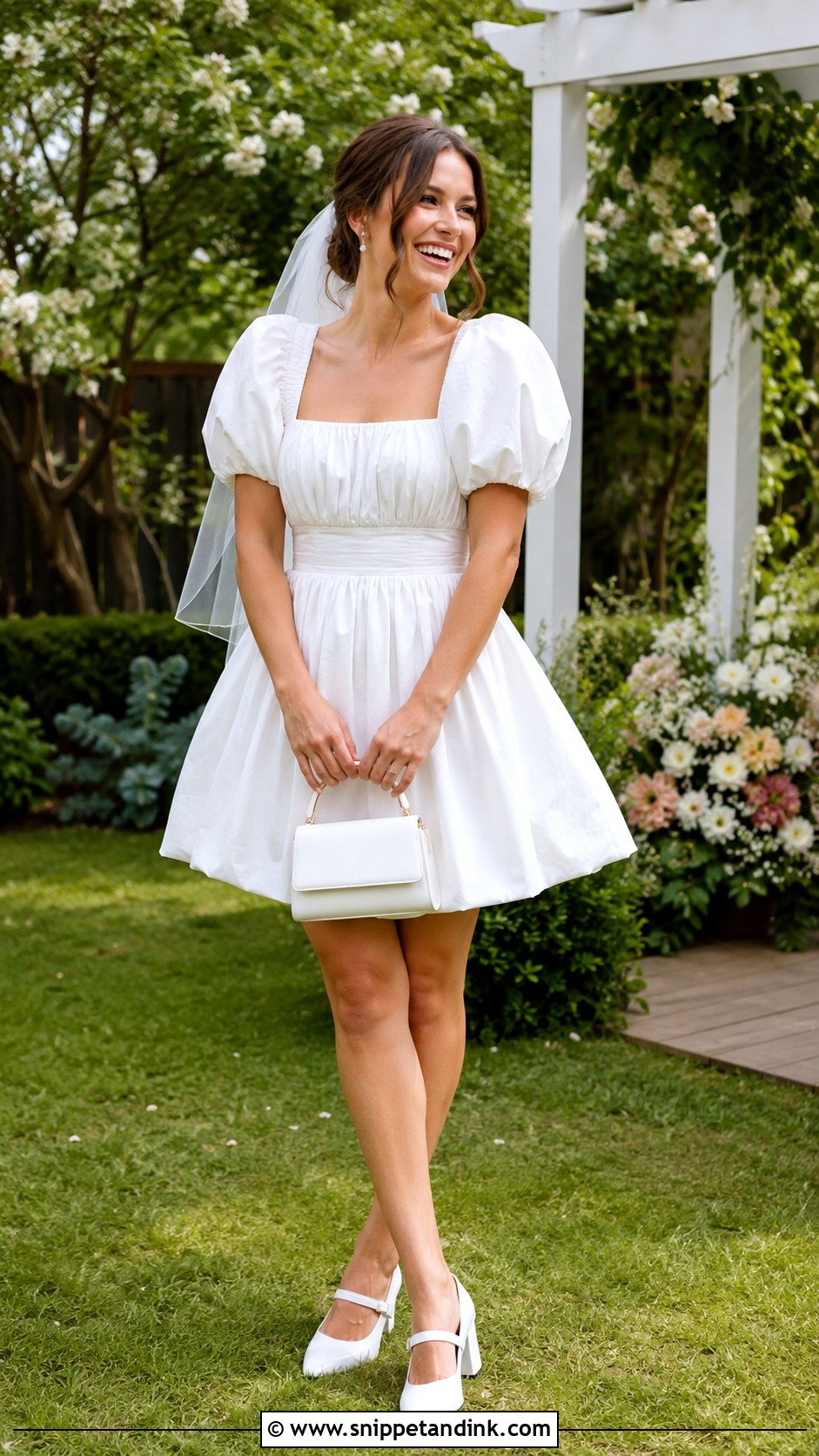
A puff-sleeve mini wedding dress works when the sleeve is shaped, not ballooning. Oversized sleeves with a very short hem tip the whole look toward costume, so I balance them with a fitted waist and a modest neckline. White Mary Janes have a strap that keeps them on your feet on lawns, which is half their charm. A short veil should end above the sleeves so the two don’t fight. If you’d rather show less leg, sheer ivory tights or a hem just above the knee both help.
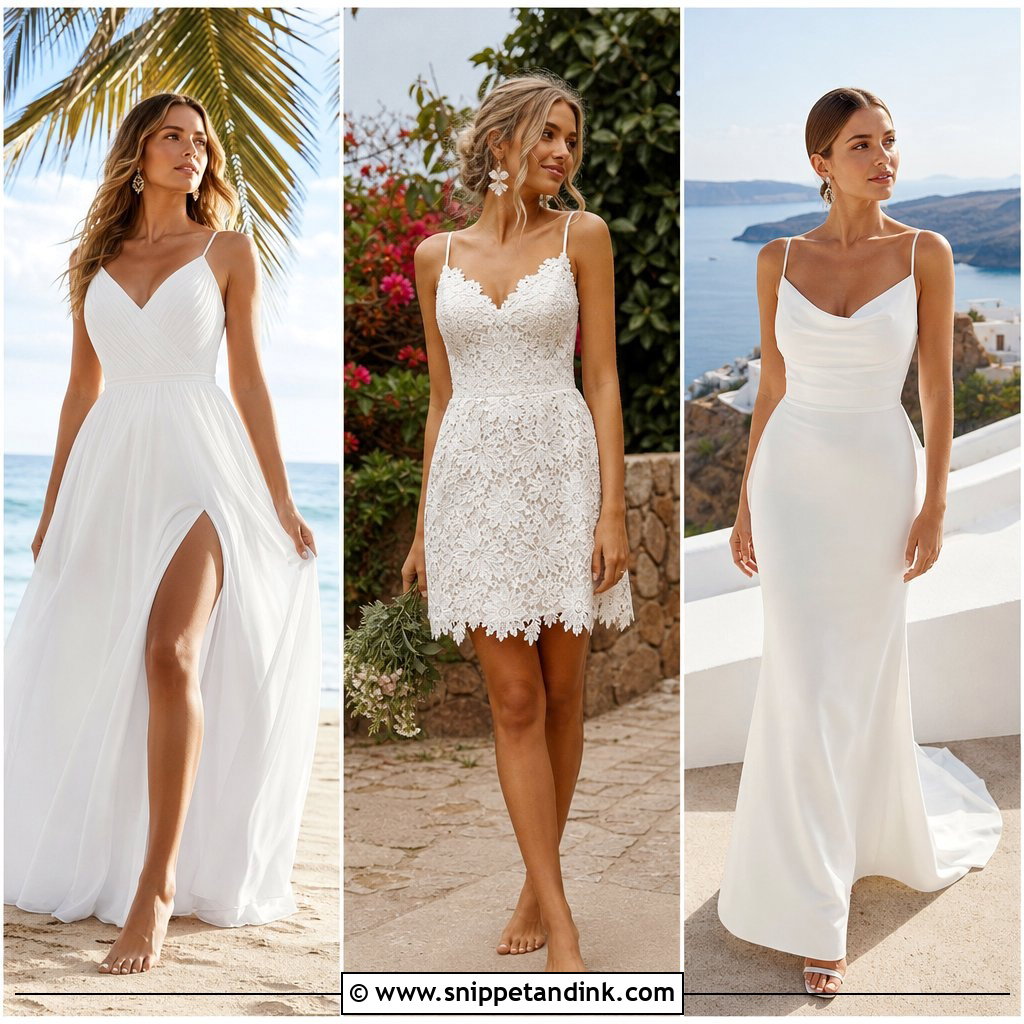
6. Wrap Wedding Dress With Low-Heel Sandals
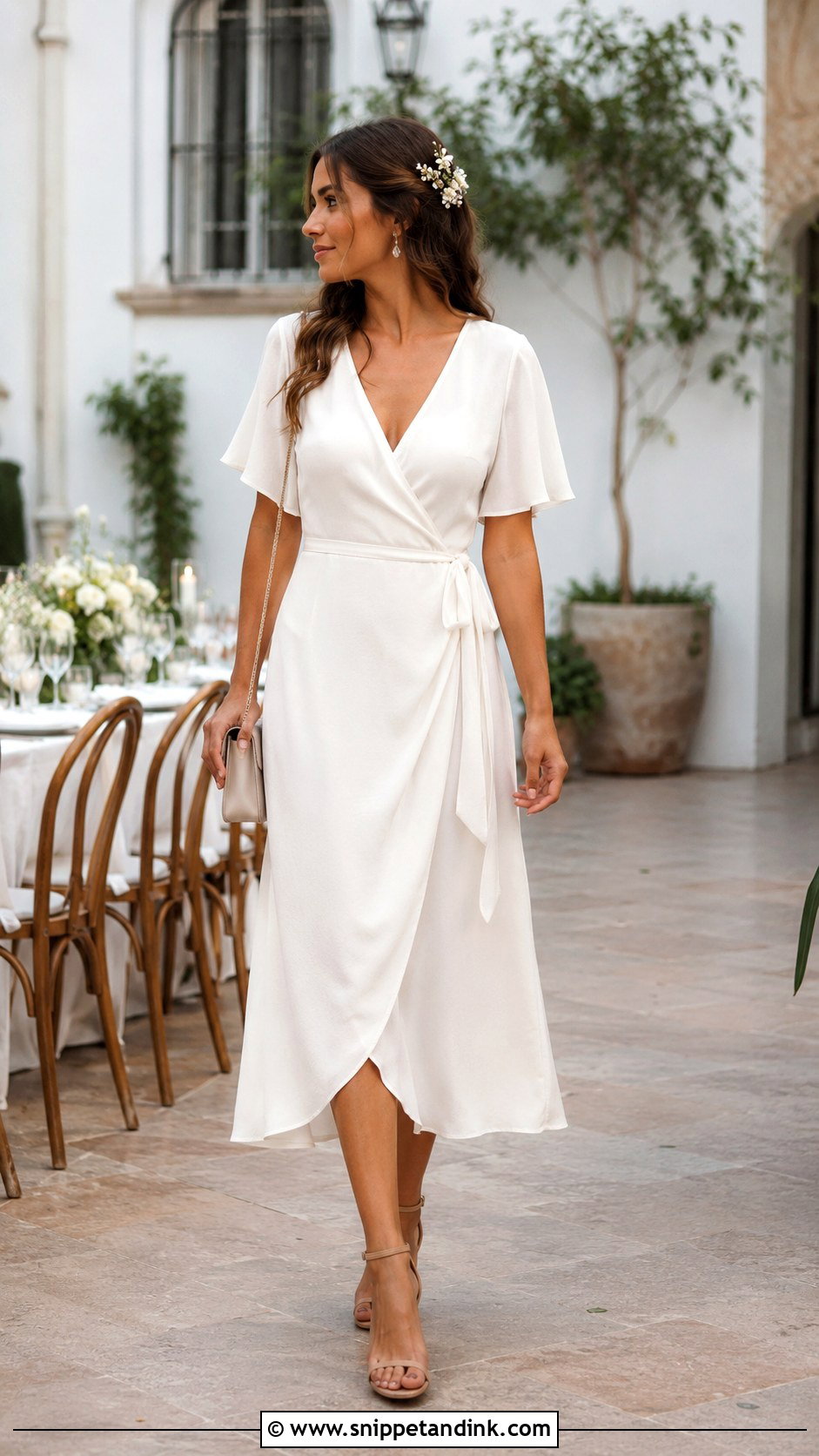
Wraps are the most forgiving fit on this list because you can adjust the tie through the day, which matters if you’ll be eating, dancing and sitting for hours. Crepe and chiffon behave better than lightweight satin here, since satin ties slip loose. The skirt must overlap generously; I always ask brides to sit and cross their legs in the fitting room to check it doesn’t fall open. A discreet snap at the neckline or a strip of fashion tape keeps the V in place. Low sandals, drop earrings and a floral comb in loose waves instead of a veil keep it informal.
7. Lace Midi Wedding Dress With Pointed Flats
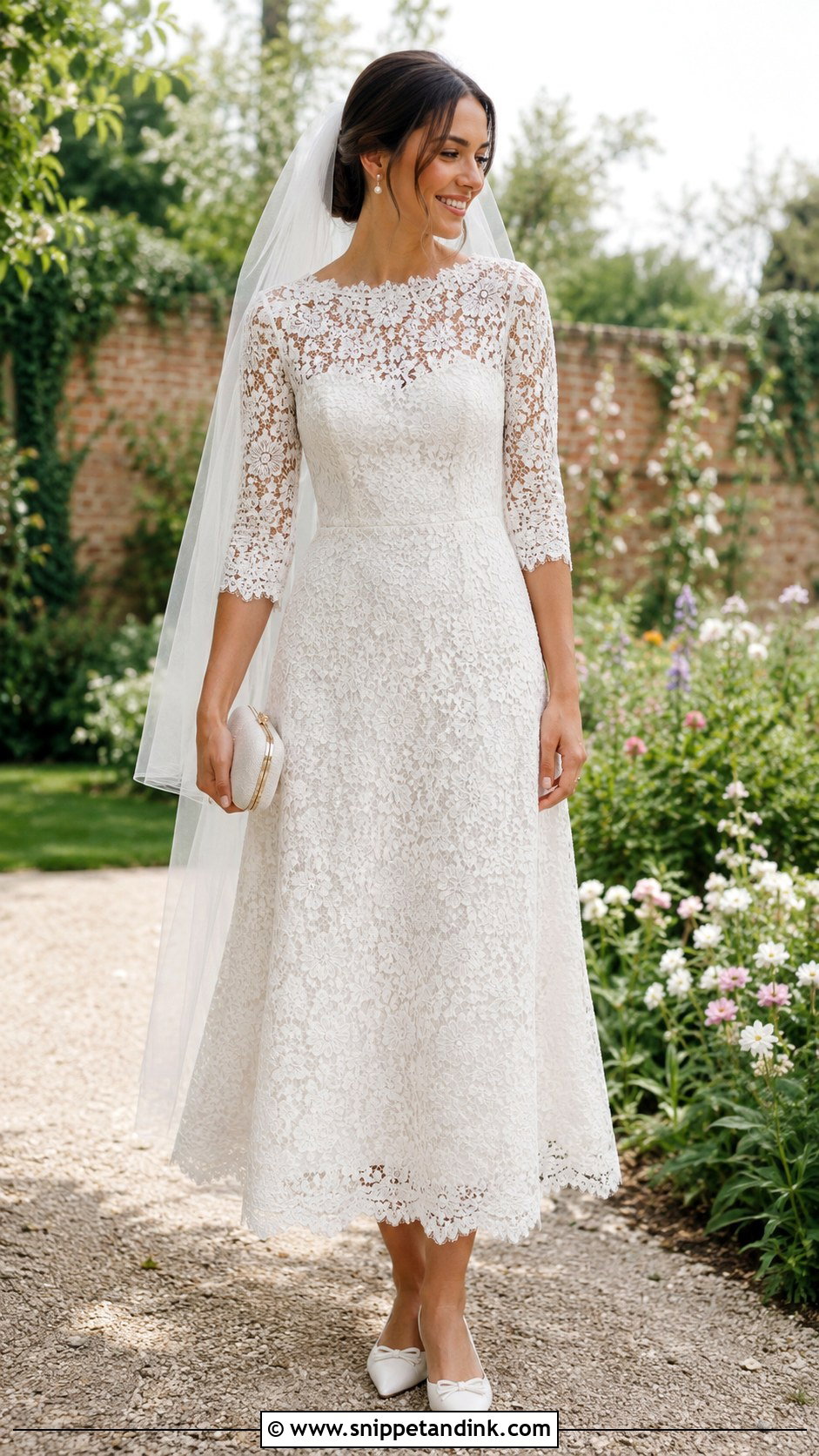
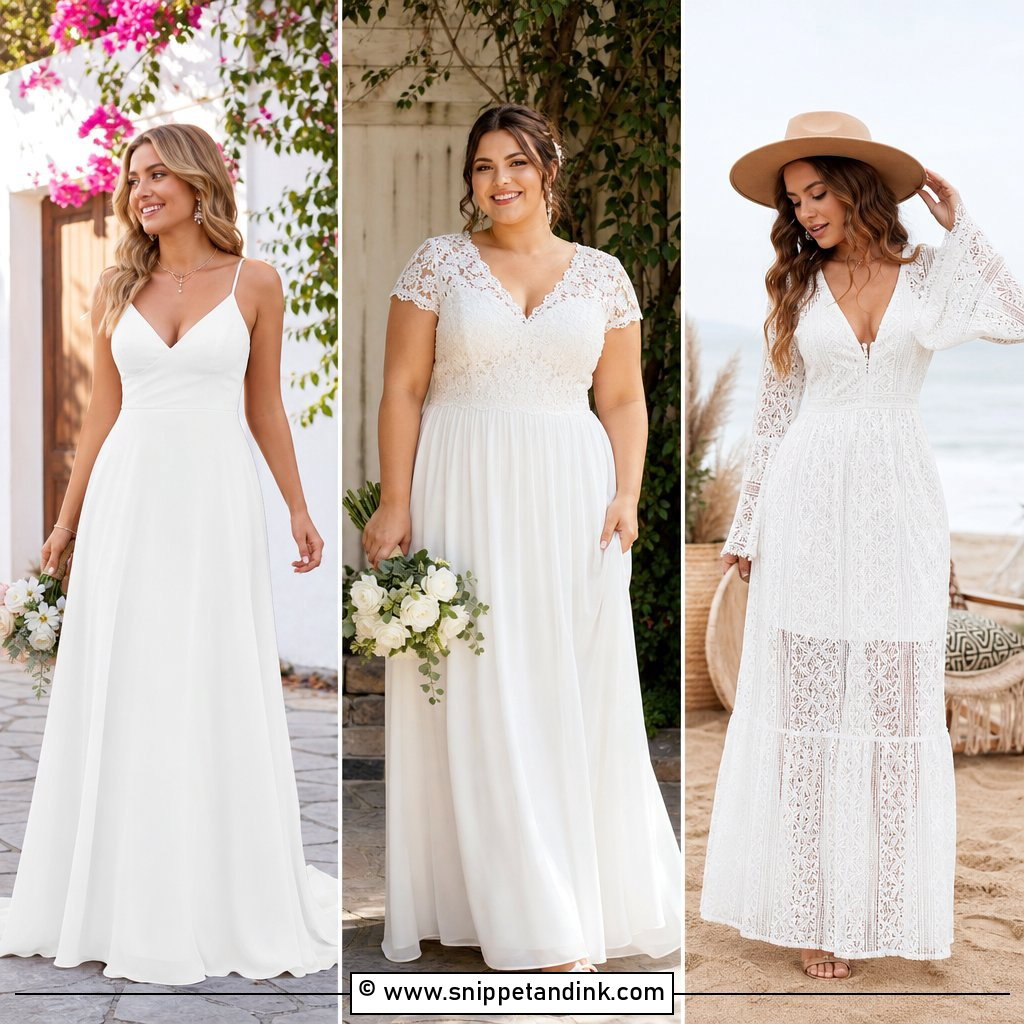
Lace reads relaxed when it’s on a streamlined midi dress rather than layered over a big skirt. Cotton lace and eyelet are softer and more breathable than corded lace, and they suit garden or at-home weddings. Keep the shape simple, a sheath or fit-and-flare, and wear a plain tulle veil so the pattern stays visible. The detail I always check is where the lining stops. It should either match the lace hem or end in a clean scallop on purpose; a lining that finishes an inch above the hem looks like a mistake in photos. Pointed flats and pearl earrings finish it.
8. Off-Shoulder Wedding Dress With Slingback Heels
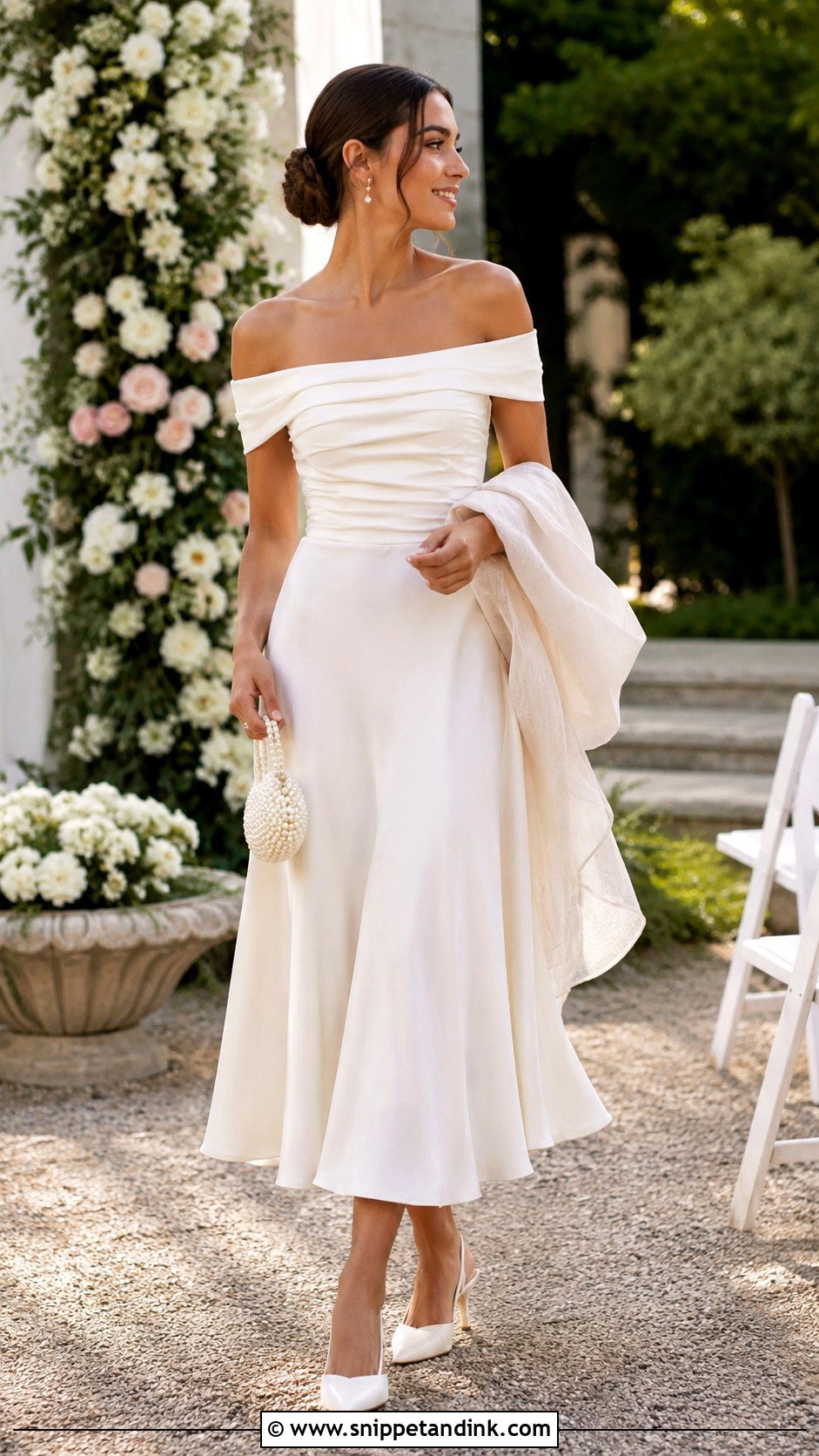
Off-shoulder necklines look romantic, but they limit how high you can lift your arms, and you’ll be hugging a lot of people. Do the hug test before buying: arms up and around, then check the bodice hasn’t slid. A gently fitted bodice with silicone grip tape inside the band holds best. Skip the necklace, since the neckline is already the focus, and wear low slingbacks and short drop earrings. Bring a light shawl for the evening, and keep the veil minimal or swap it for a floral pin.
9. Square-Neck Wedding Sundress With Espadrilles
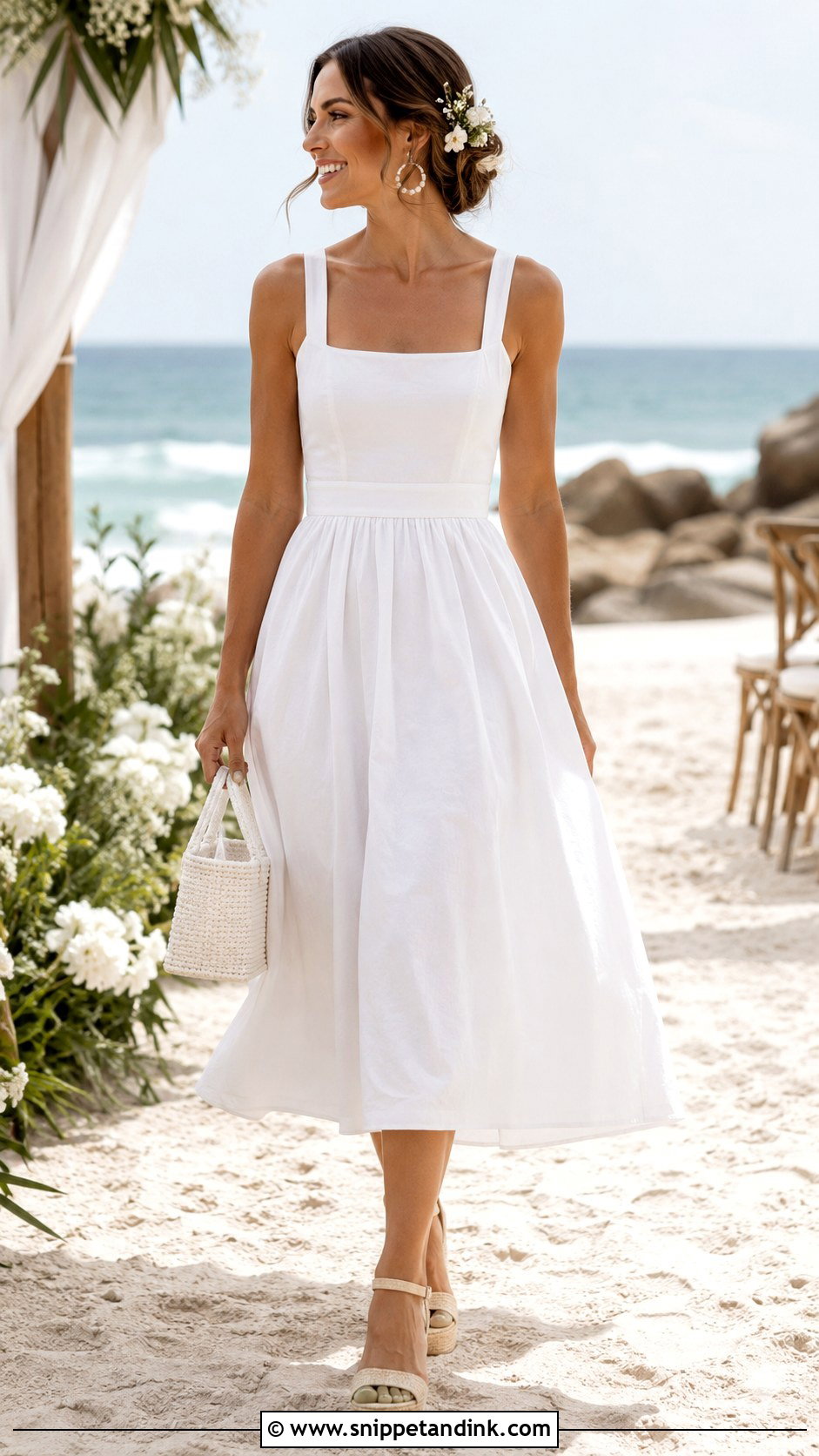
A square neck gives a cotton sundress just enough structure to look like a wedding dress instead of something from a beach bag. Choose lined cotton, poplin or a linen blend with wide straps and a defined waist. Unlined white cotton turns see-through in strong sun, so check it outdoors before you buy. Espadrilles or a low wedge handle grass and sand far better than a narrow heel. Add pearl hoops, a woven bag and a ribboned ponytail or short veil as the bridal signal. Flip-flops are where I draw the line.
10. Chiffon Maxi Wedding Dress With Embellished Flats
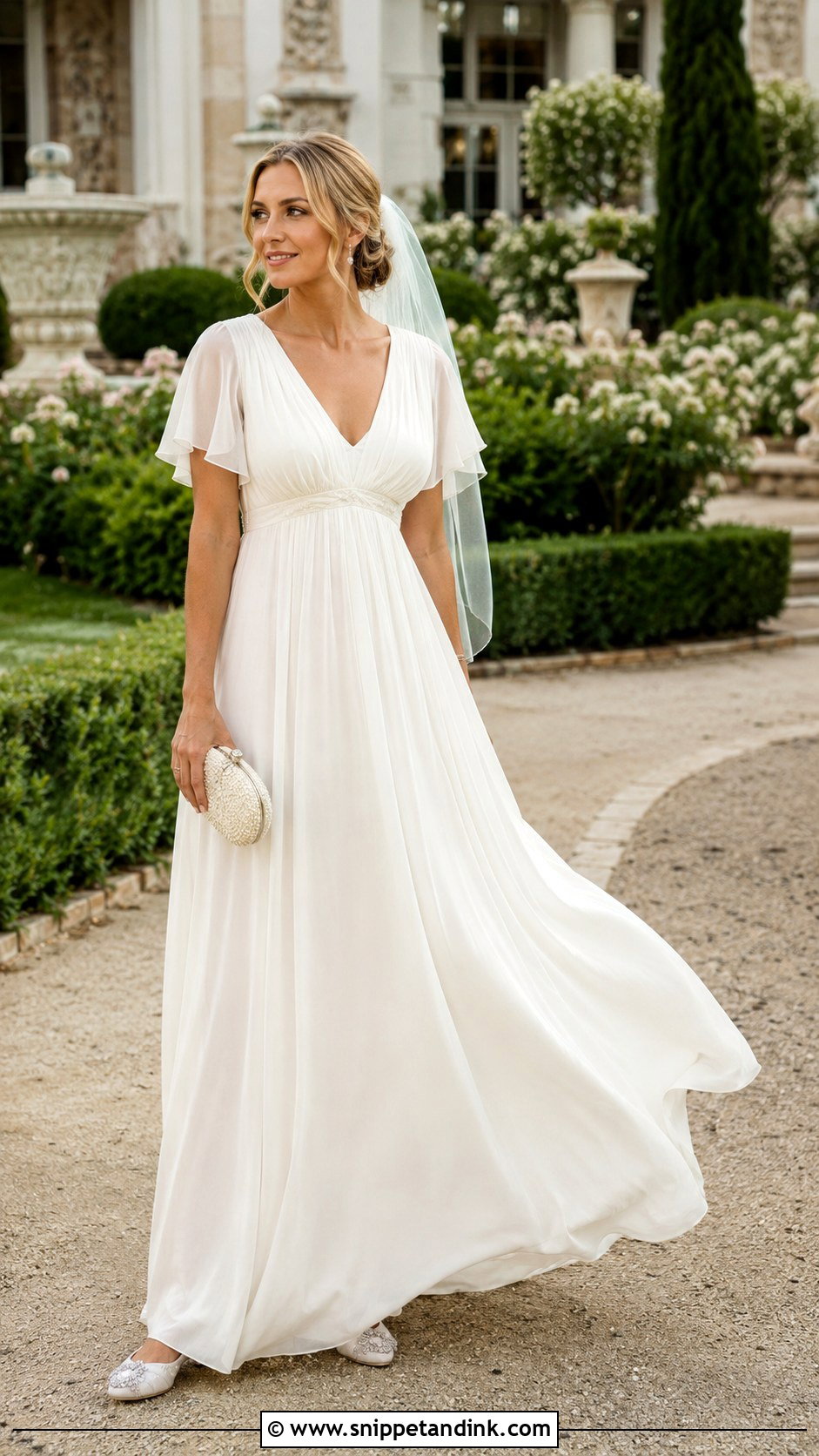
Chiffon floats, which makes a maxi feel light even at full length, but it’s also the fabric most likely to catch underfoot. Always hem it while wearing the exact shoes you’ll get married in; switching from heels to flats after alterations leaves you treading on the front of your own dress. An A-line or empire waist with little or no train works for outdoor ceremonies. Flutter sleeves give soft coverage. Chiffon snags on rough wood and stone edges, so keep a small sewing kit nearby. Embellished flats, a beaded clutch and a loose updo complete it.
11. Embroidered Cotton Wedding Dress With Leather Sandals
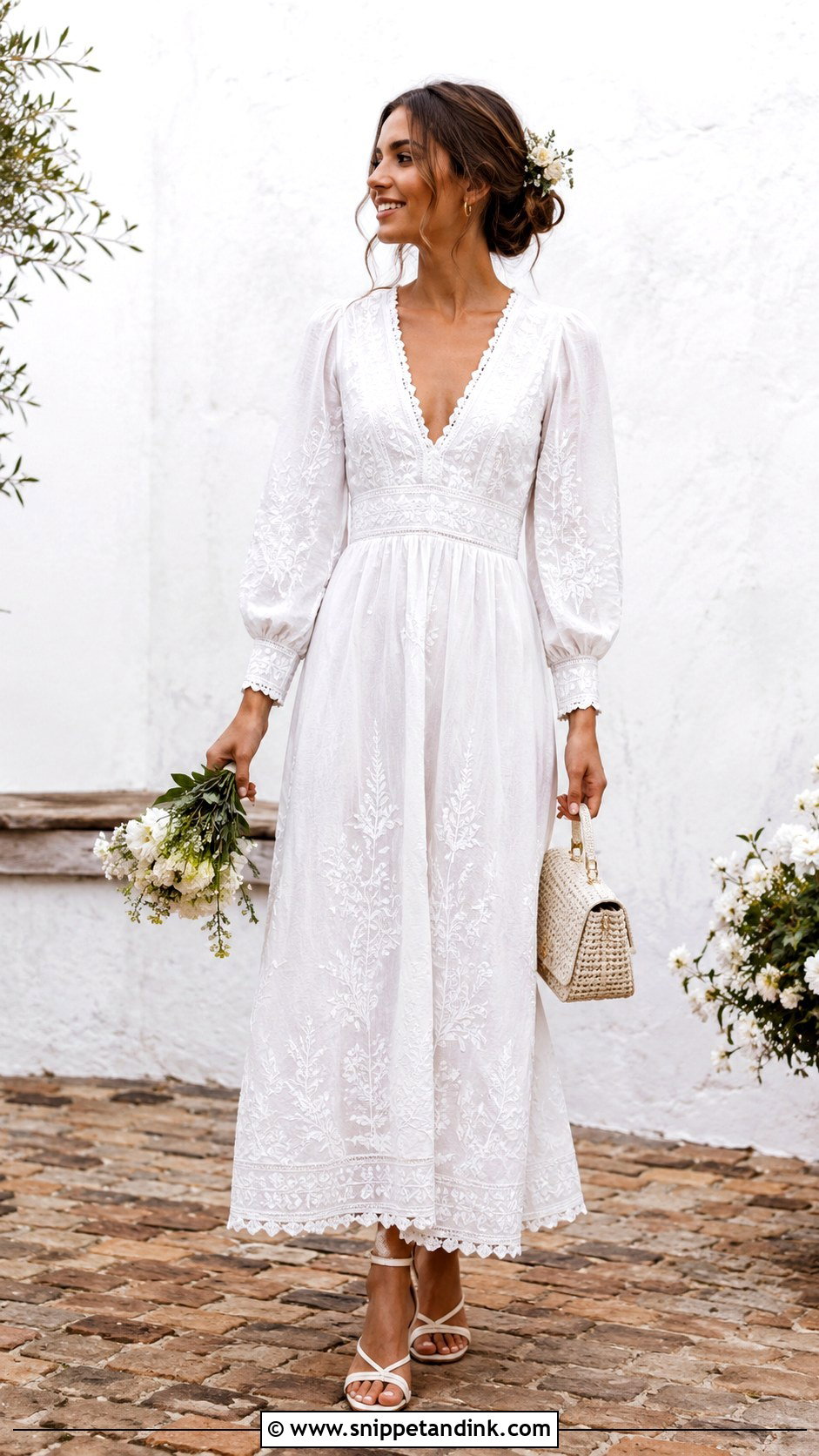
An embroidered cotton wedding dress carries a handmade feel that suits rustic venues and destination weddings. White-on-white embroidery or eyelet panels look festive without sparkle. Where the embroidery sits matters: a heavy band across the widest part of the hip draws the eye there, while embroidery at the neckline lifts attention to your face. Make sure it’s fully lined. Ivory or gold leather sandals stop it looking too casual, and a short tulle veil keeps the unfussy feel.
12. High-Low Wedding Dress With Statement Shoes
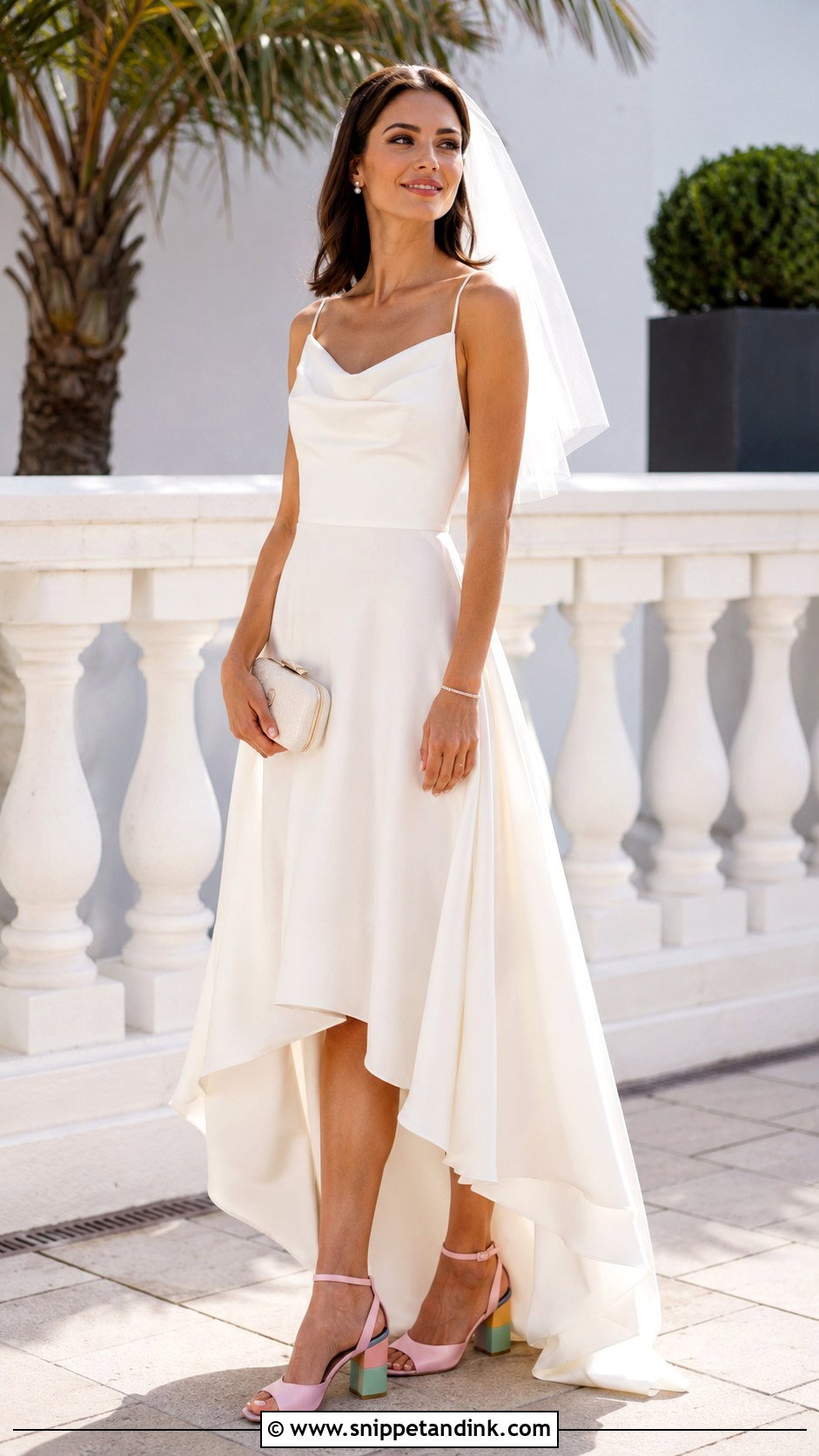
A high-low hem lets you walk outdoors without the front collecting grass and dirt, and it shows off your shoes. I prefer a soft, gradual drop over a dramatic one, which can look dated fast. Your shoes become the focal point here, so this is the place for coloured block heels or embellished pumps. Check the back length: if it trails enough to need a bustle, it defeats the purpose of an informal dress. Pearl studs, a simple bracelet and a shoulder-length veil keep everything else quiet.
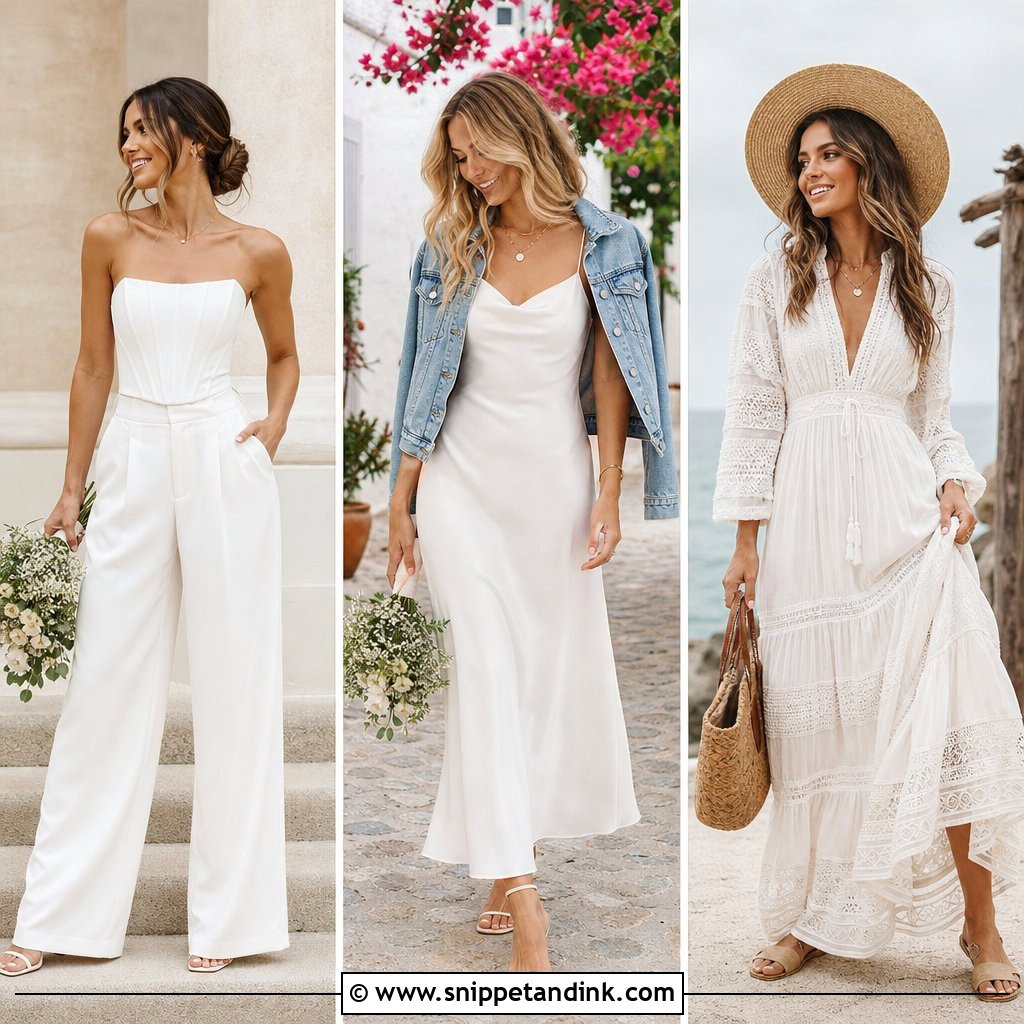
13. Simple Column Wedding Dress With Minimal Sandals
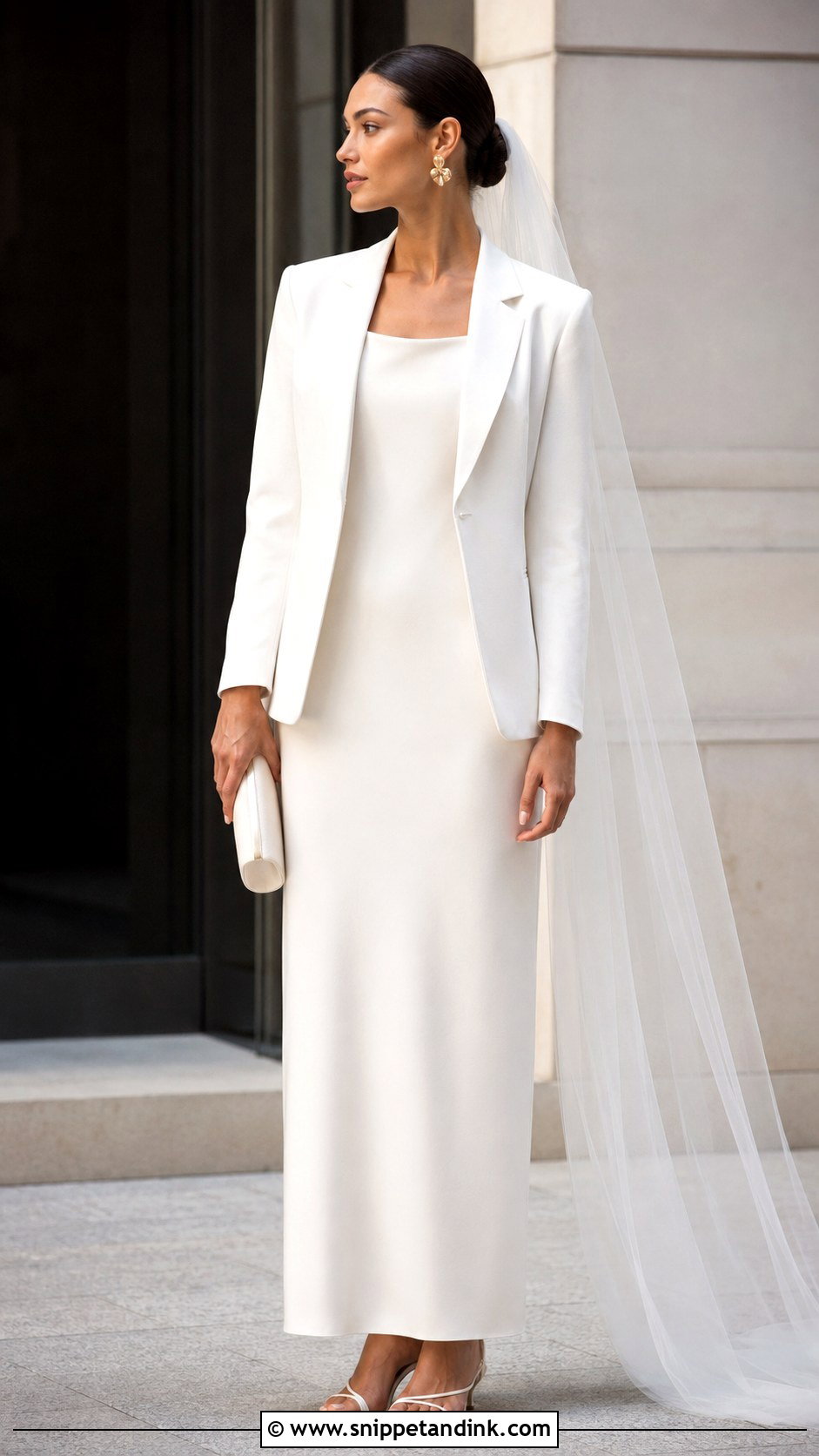
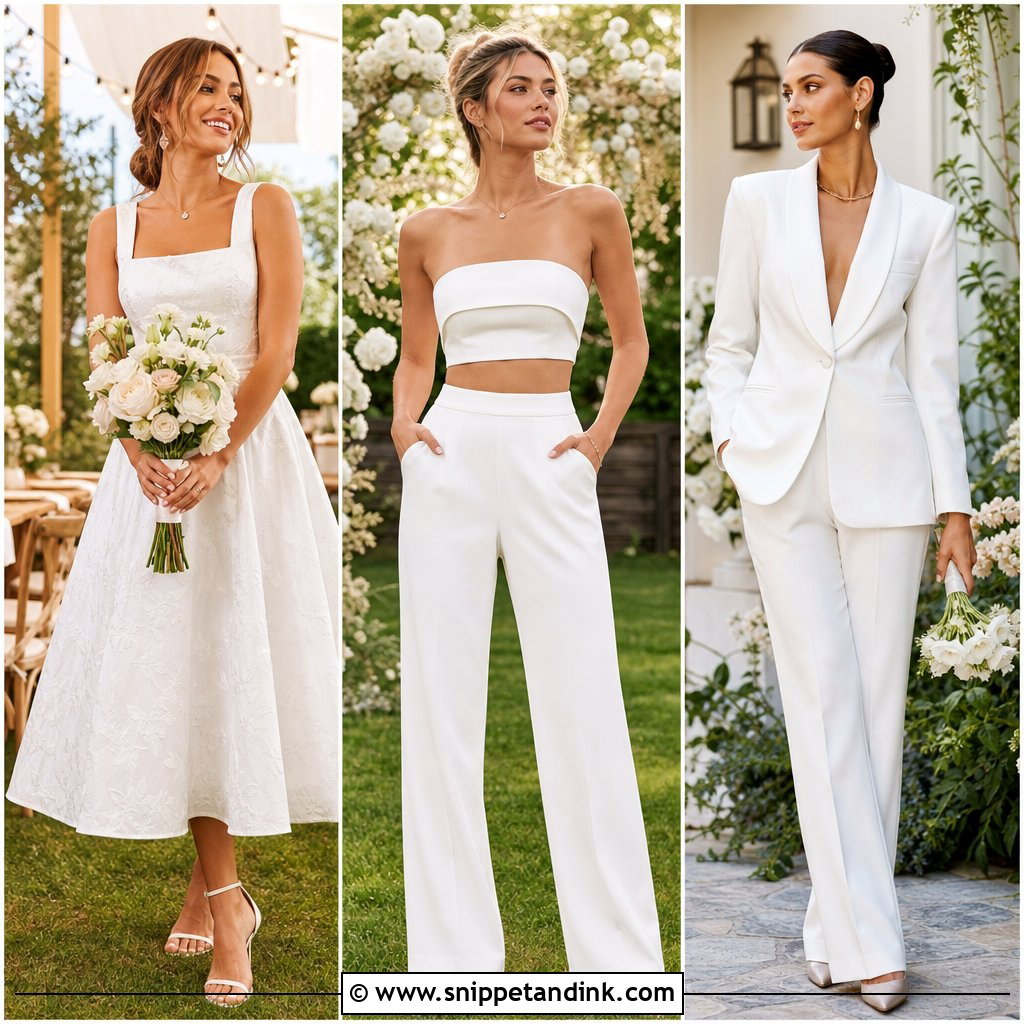
A column dress has nowhere to hide a poor fit, which is why I’d budget for tailoring before anything else with this one. Matte crepe, soft satin or a heavier jersey should skim, not cling. Thin jersey shows every seam beneath it. Keep the hem ankle or floor length without a train. Minimal sandals, sculptural earrings and a slim clutch suit a city ceremony or a dinner reception. A fitted blazer adds shoulder line if you want it, and a sleek bun with a narrow veil keeps the look clean.
14. Halter Midi Wedding Dress With Strappy Heels
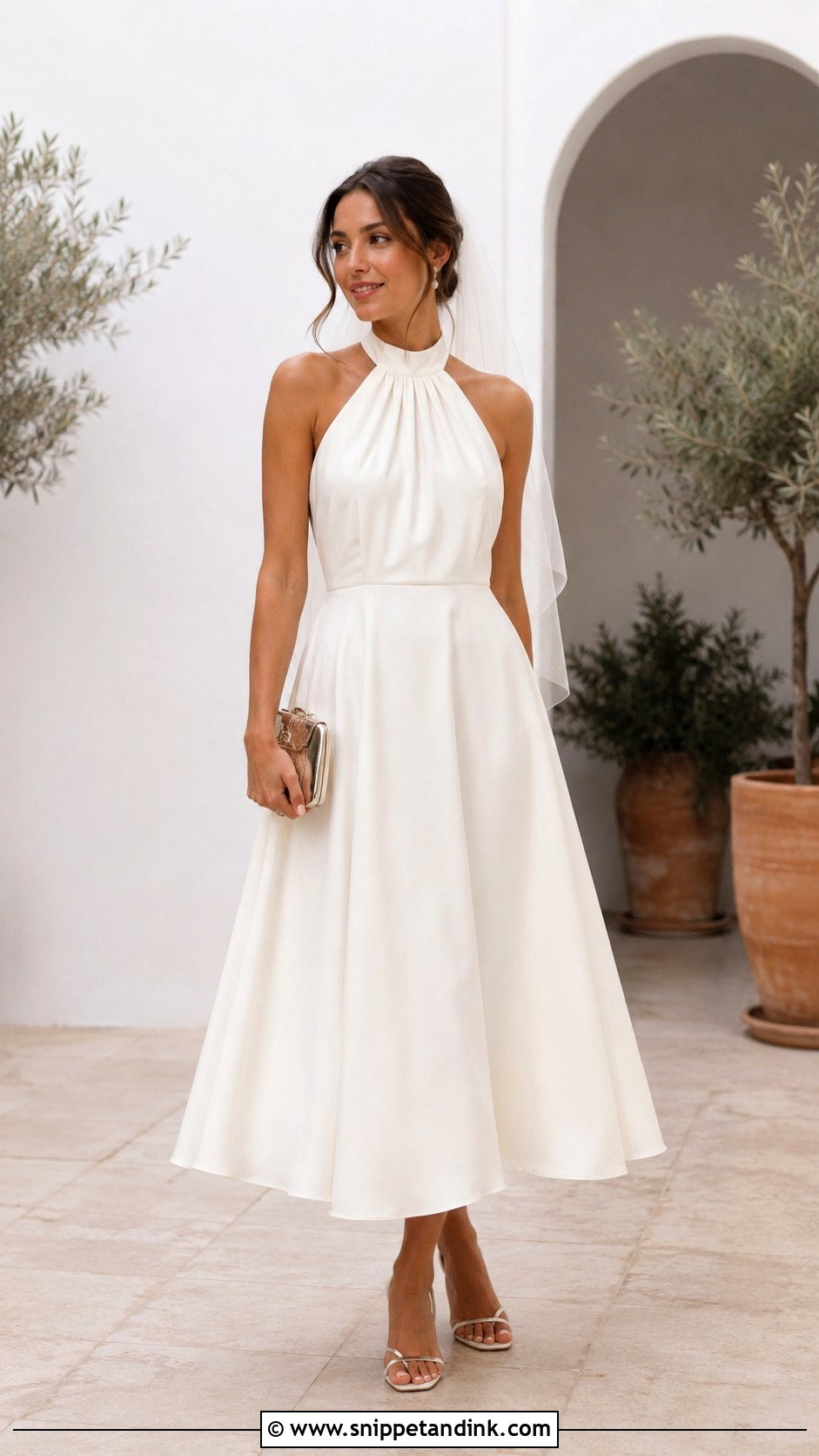
Halters frame the shoulders well, but they make a regular bra impossible. Sort out support early: adhesive cups, sewn-in padding or a tailor adding cups to the bodice are all options, and the last one is usually the most secure for dancing. A softly gathered neck with an A-line or bias skirt moves easily. The strap at the back of the neck can tug during a long day, so ask for it to sit wide and flat rather than as a thin cord. Hair up shows the cut; a wrist-length veil and a light wrap for evening finish it.
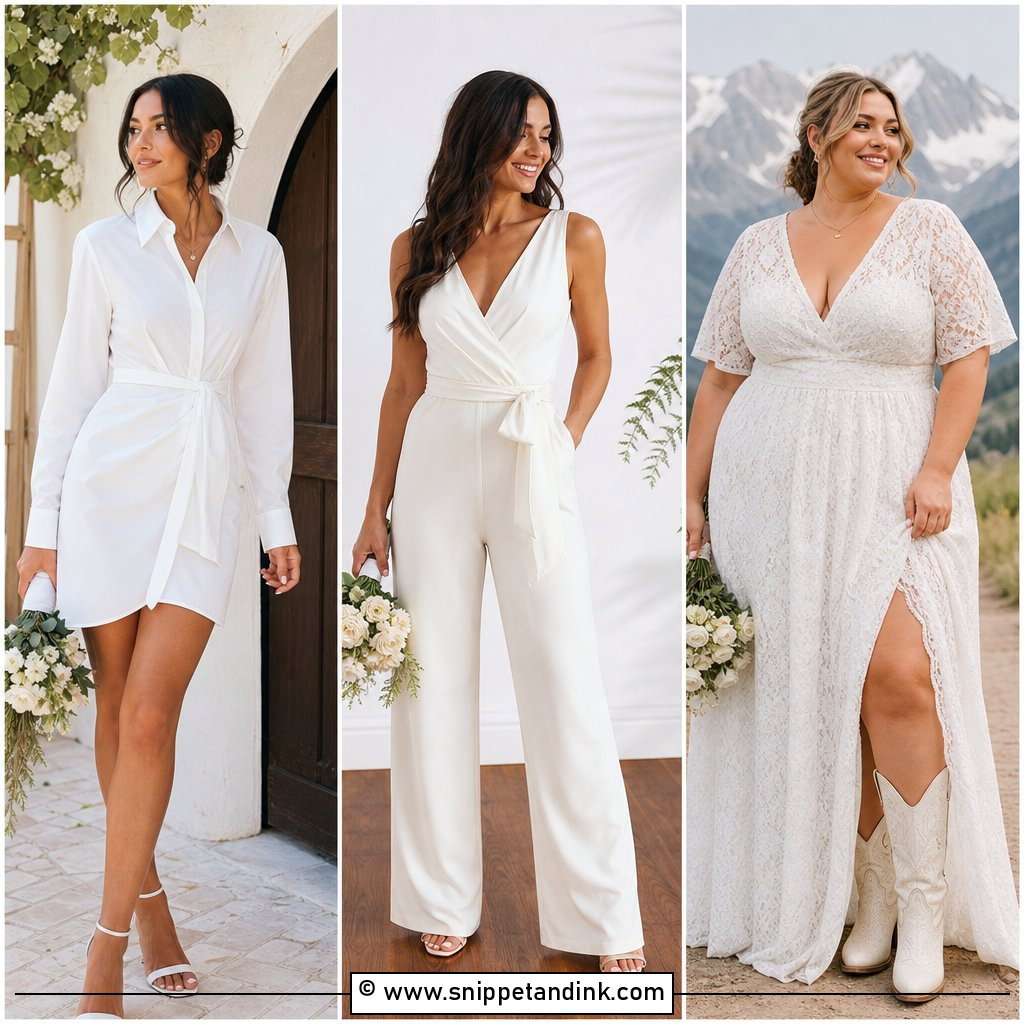
15. Long-Sleeve Crepe Mini Wedding Dress With Pumps
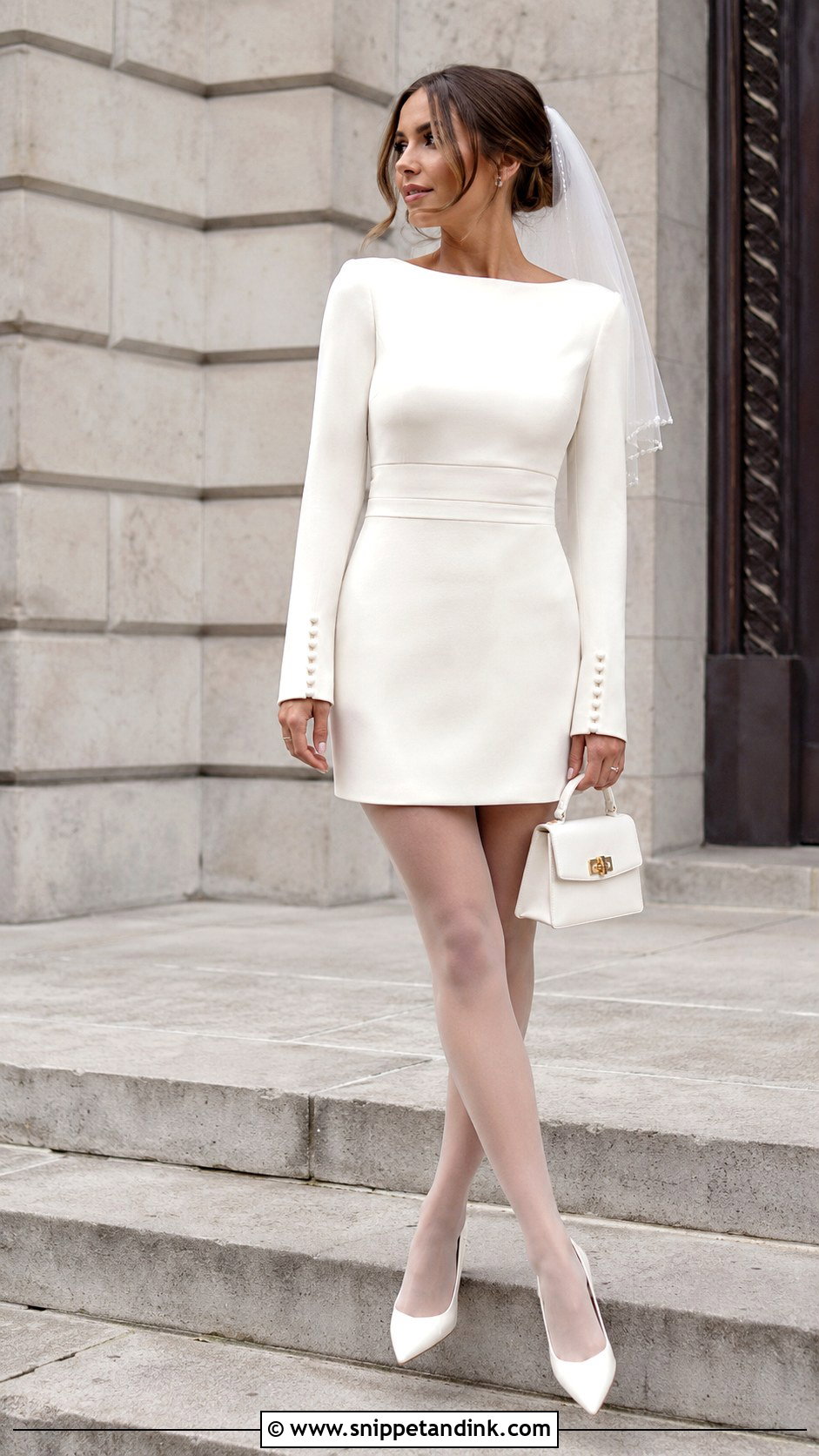
Winter weddings don’t need a heavy gown. A long-sleeve crepe mini gives you warmth on the arms and a short, youthful hem. Crepe holds its shape and resists creasing better than most bridal fabrics, which helps when you’re in and out of cars. Raise and bend your arms in the fitting room, because fitted sleeves that are too narrow at the elbow pull the whole dress up. Pointed pumps, sheer tights and a structured mini bag suit it, and a short veil keeps the proportions. Bring a tailored coat for moving between locations.
16. Floral White Wedding Dress With Pastel Accessories
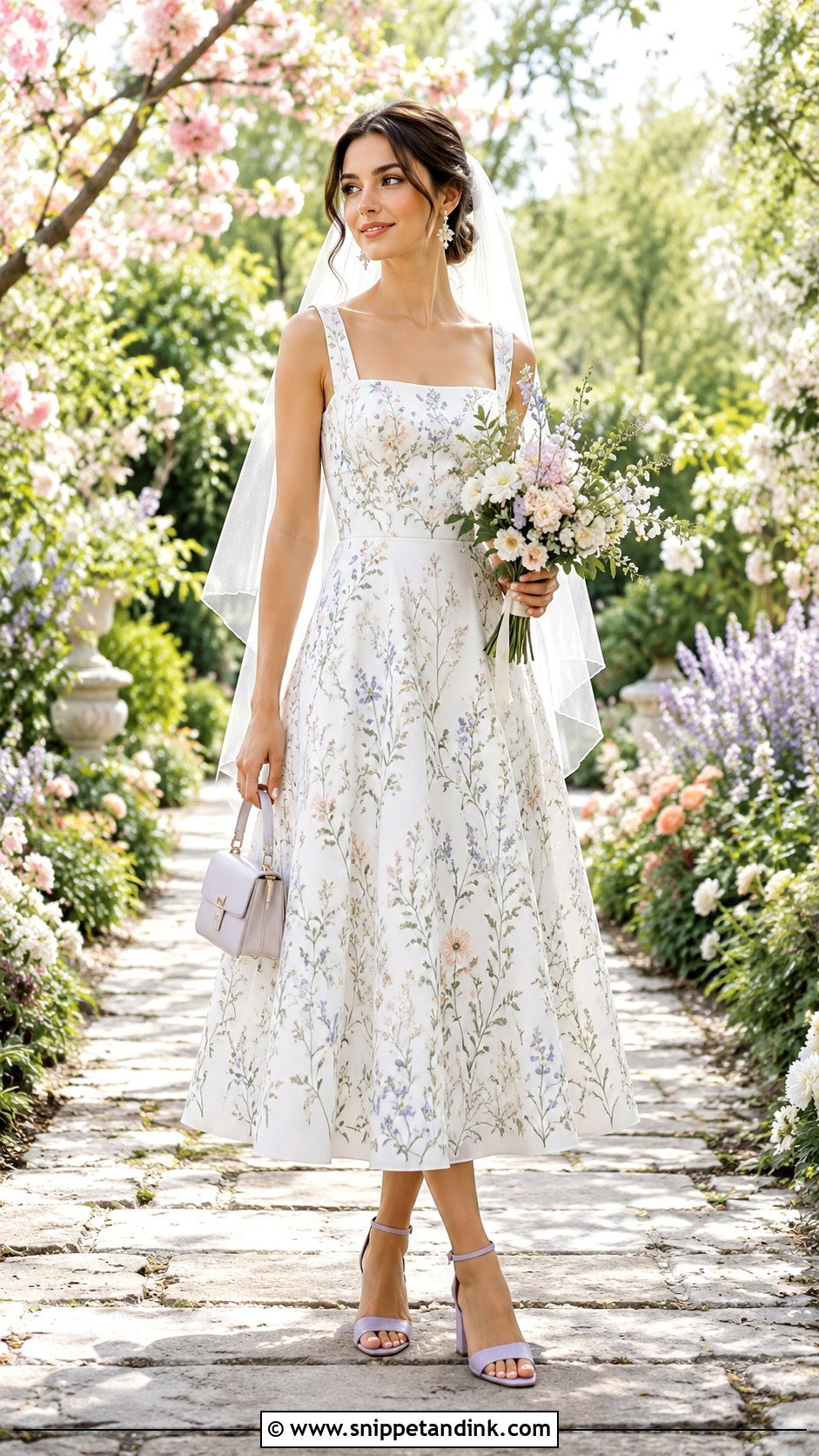
Florals on a white dress are lovely, but large high-contrast prints stop the dress reading as bridal from across a room. I lean toward tonal embroidery, pale watercolour florals or small appliqués on a midi. Pull one shade from the flowers into pastel block heels, and keep the bouquet simpler than the fabric. A plain veil gives the eye somewhere to rest. If the dress has several colours, limit the rest of the outfit to one or two of them.
17. Boho Lace Wedding Dress With Ankle Boots
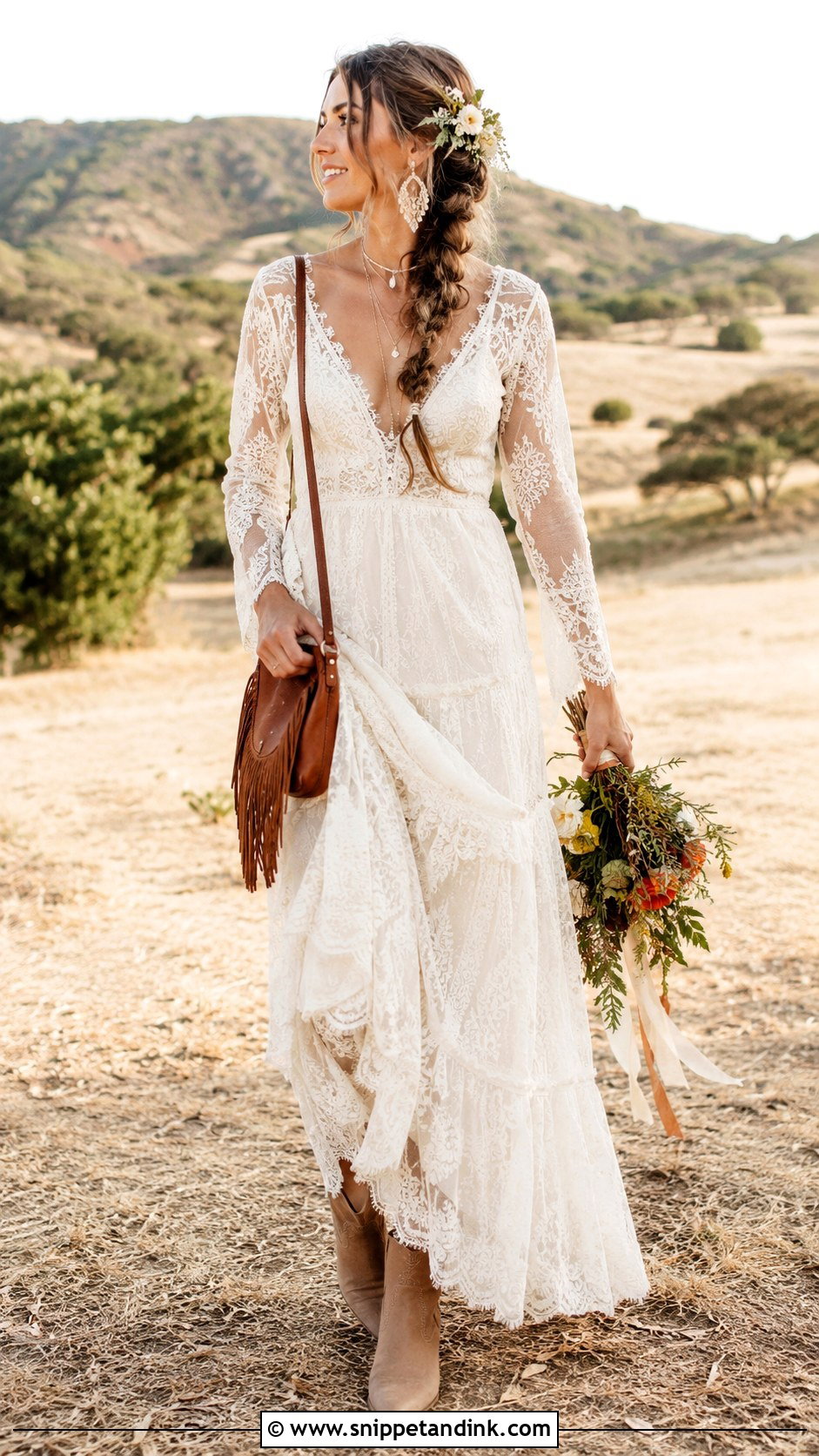
Ankle boots are practical on farms, in woodland or in the desert, where sandals fill with grit and heels sink. Choose a pointed or almond toe in ivory, taupe or light tan, with a heel low enough for uneven ground. The dress should be an unstructured lace maxi with a comfortable lining, hemmed just above the ground so it doesn’t drag through dust or wet grass. A loose braid, a floral comb or a simple fingertip veil, and a small suede bag complete it. Break the boots in properly; new leather at the ankle rubs badly over several hours.
18. Empire-Waist Maternity Wedding Dress With Flats
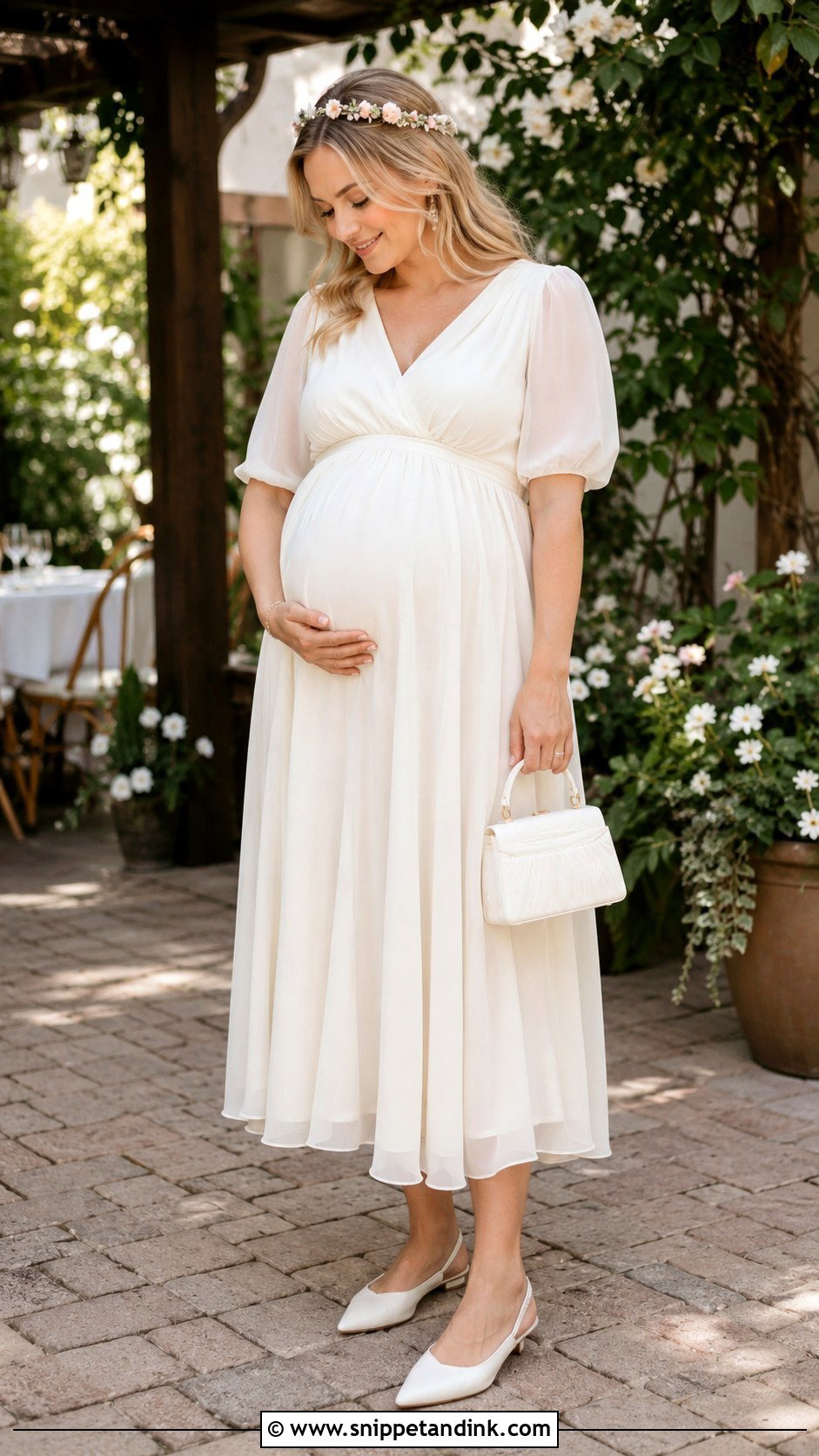
An empire-waist maternity wedding dress gives room with the seam sitting above the bump, so nothing presses where it shouldn’t. Stretch crepe, soft chiffon or lined jersey all adapt as your body changes. A midi or ankle hem lowers the tripping risk and makes later alterations simpler. The timing of the final fitting is the thing I plan most carefully: book it close to the wedding, usually within the last couple of weeks, so it reflects your shape on the day. A V-neck or wrap bodice gives extra flexibility. Supportive flats, light earrings and a floral headband suit it.
19. Plus-Size Fit-and-Flare Wedding Dress With Block Heels
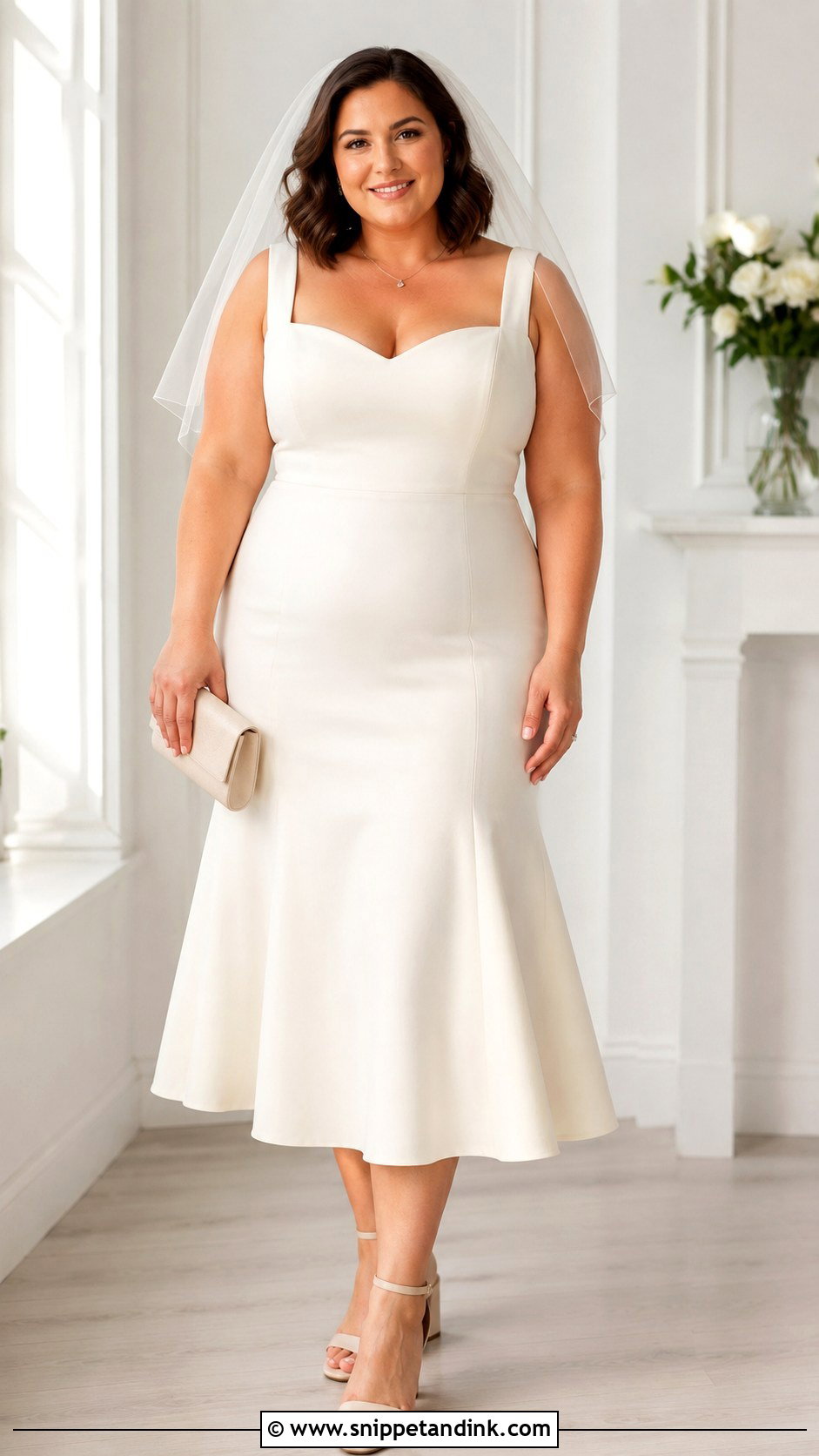
I don’t believe in rules about which bodies should wear which silhouettes. What I do look at is construction. A fit-and-flare midi with wide straps, a supportive bodice and a waist seam at your natural waist gives comfortable shape and movement. Buy in your current size; a tailor can take a dress in neatly, but there’s very little seam allowance to let a smaller dress out. Stable block heels, a structured clutch and earrings that frame the face complete it. A delicate pendant suits an open neckline; a higher one looks cleaner without.
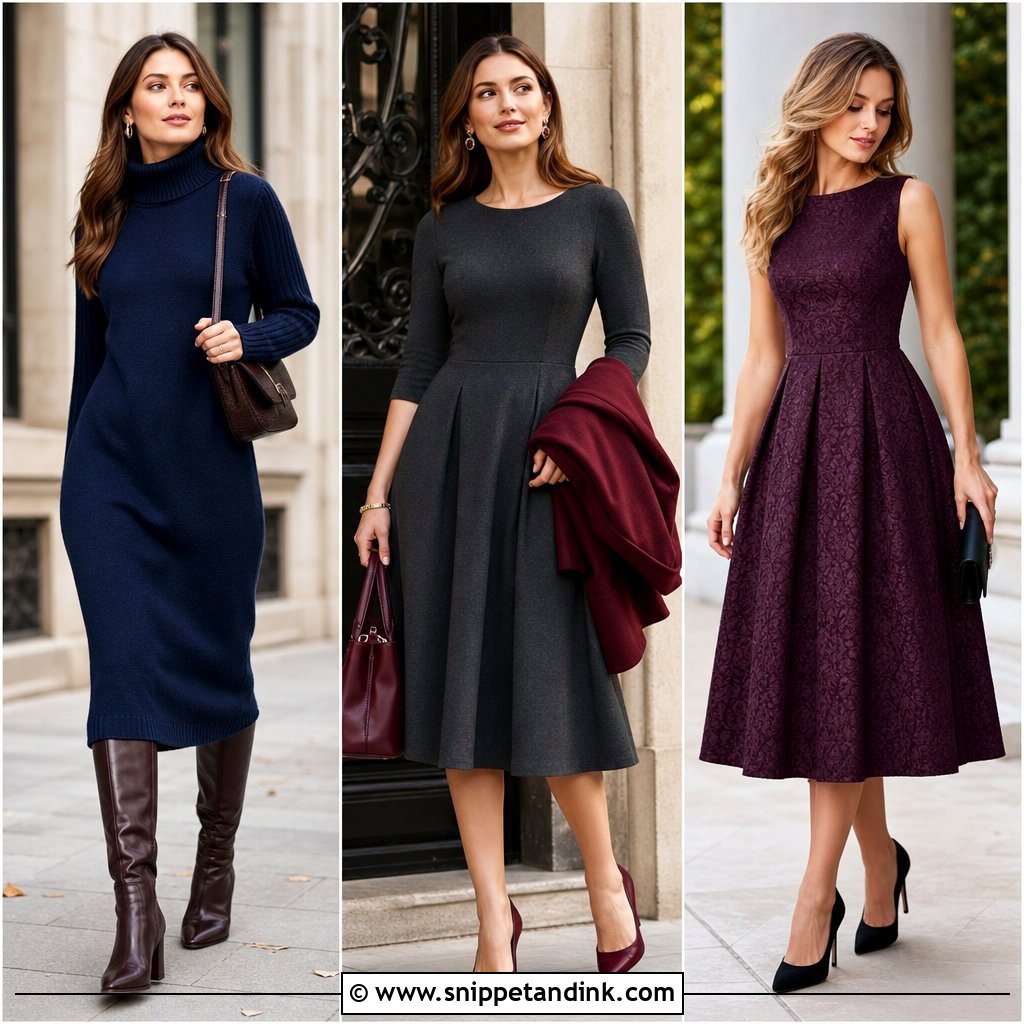

20. Jacket Wedding Dress With Low Slingback Shoes
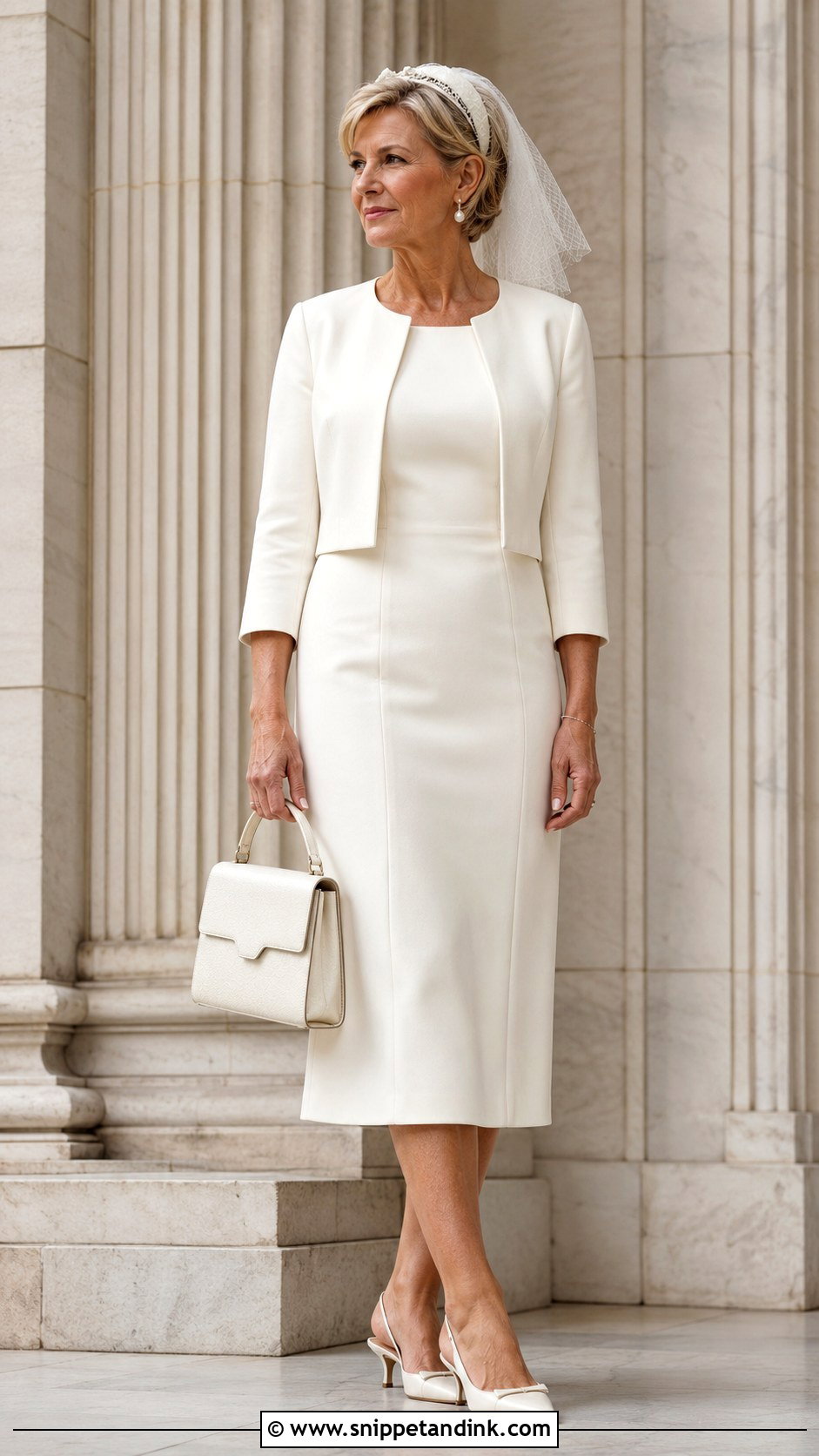
A jacket dress gives you two outfits in one: the jacket on for a more formal ceremony, then off for dinner and dancing. Start with a sleeveless sheath or A-line midi and add a cropped jacket in crepe, lace or light satin. Its hem should land at your waist seam, not across the widest part of your hips. Low slingbacks, pearl earrings and a structured bag keep it polished, and a small headpiece or short veil adds the bridal note. It suits a courthouse ceremony, a vow renewal or a small family celebration.
Linen, Satin, Crepe or Chiffon by Hour Six
Every fabric looks good in the fitting room. What separates them is how they look after a car ride, a long lunch and an hour on the dance floor. This is roughly what I tell brides to expect.
- Linen: creases within minutes and keeps creasing. Embrace it or choose a blend. It breathes better than anything else in heat.
- Satin: shows lap creases and water spots. Heavier satin recovers; thin satin doesn’t. Blot spills, never rub.
- Crepe: the most reliable over a long day. It resists wrinkles and hides the odd mark, which is why I recommend it so often for courthouse brides who are also travelling.
- Chiffon and tulle: barely crease but snag on rough surfaces, jewellery clasps and velcro. Check bracelets for sharp edges.
- Cotton and eyelet: comfortable and crisp in the morning, softer and a little crumpled by evening. Starching lightly helps it hold.
Pack a small emergency kit wherever you’ll be: a handheld steamer, a white chalk stick for small marks on white, safety pins, fashion tape and a lint roller. Most dress problems on the day are solved with one of those five.
The Fitting Room Tests That Matter Most
Relaxed doesn’t mean ordinary. A short satin dress, a linen midi or a chiffon maxi can all look clearly bridal when the fit is right and one detail is chosen with care. Get the foundations sorted, book your alterations, and hem in the shoes you’ll actually wear on the day. Then add the one personal touch you’ll want to look back on, maybe a short veil, a family piece of jewellery or shoes in a colour you love. A simple dress worn this way says more about you than a gown ever could.
You'll Like These Ideas:



Leave a Reply