
A relaxed wedding dress still has a job to do. It has to read as bridal in photos, survive a full day of sitting, hugging and eating, and feel like the clothes you actually live in. Most brides I dress for backyard, beach, courthouse and garden weddings don’t want beading or a stiff petticoat; they want a slip, a cotton midi, a lace mini, a pair of separates or a jumpsuit that suits the place they’re marrying in. These are the 35 I’d genuinely put on a rail for a casual wedding, with notes on how each fabric and cut behaves once you’re wearing it.
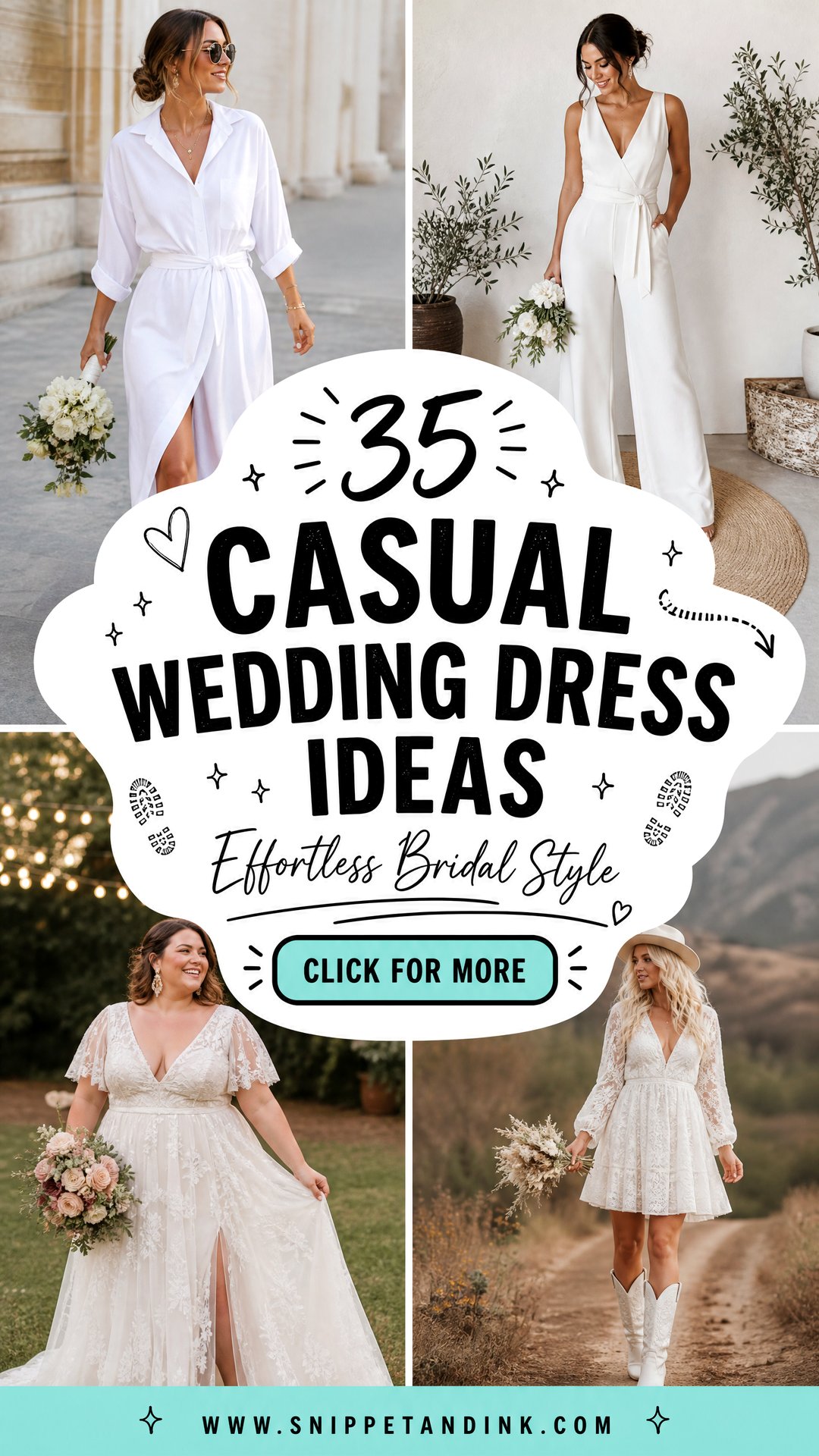
Turning a Dress From an Ordinary Shop Into a Wedding Dress
Many of the dresses below can be bought outside a bridal salon, which is part of their appeal. The difference between an off-the-rack white dress that looks bridal and one that looks like a summer errand outfit is rarely the price. It’s usually three things: the shade of white, how opaque the fabric is, and how well it’s been fitted.
- Check the white by a window, not under shop lights. Optic white can look blue in daylight photos next to ivory flowers, while ivory and soft white sit more warmly against most skin.
- Do a sunlight test. Stand outside with the light behind you. Thin cotton, linen and unlined lace often turn sheer, and a simple slip underneath is cheaper than a reshoot.
- Budget for alterations. A hem and a waist take-in are what make a ready-made dress look made for you. Many tailors want several weeks in wedding season, so I book the fitting as soon as the dress arrives.
- Order early enough to return it. Shipped dresses sometimes arrive in a different shade or fit, so I like a buffer of a couple of months before the wedding.
One more check I make with every casual bride: what will she wear underneath? A smooth layer with bonded edges in a shade close to her skin disappears under white far better than white underwear does.
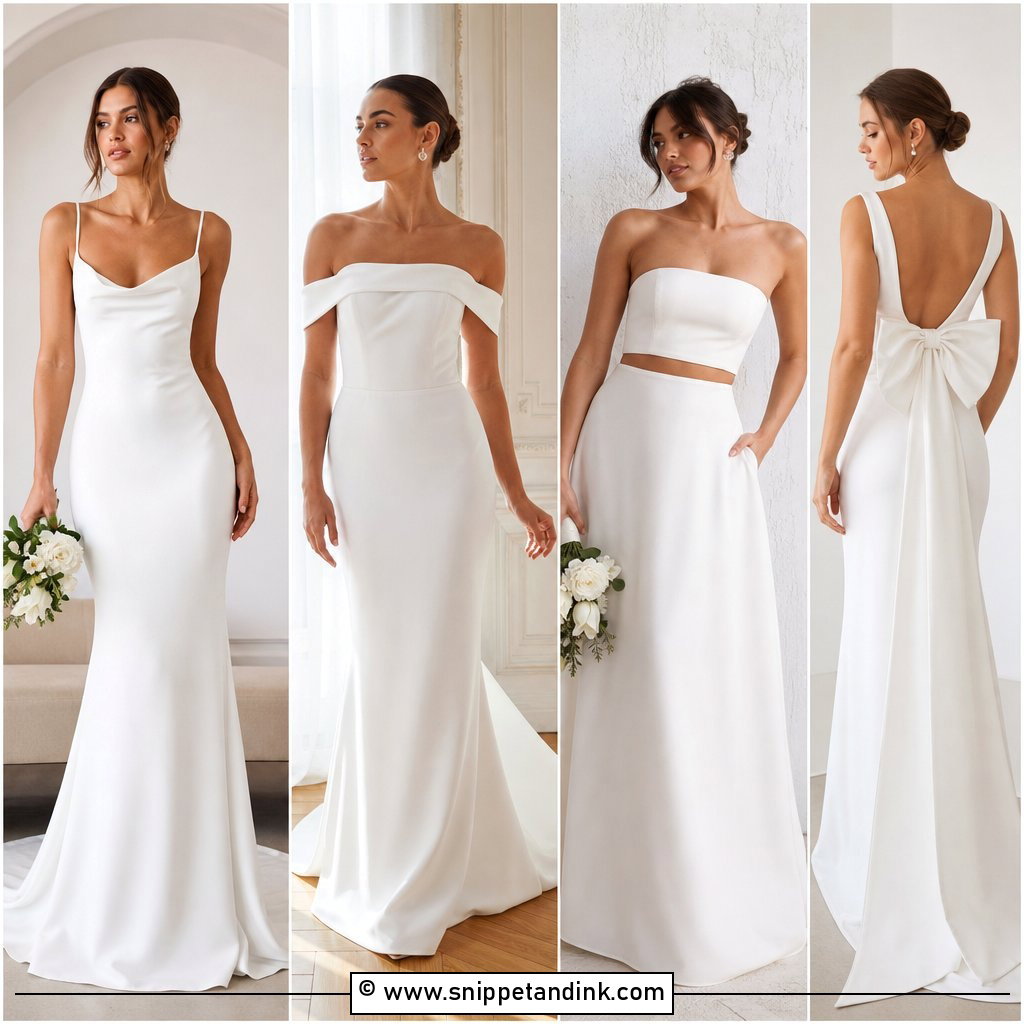
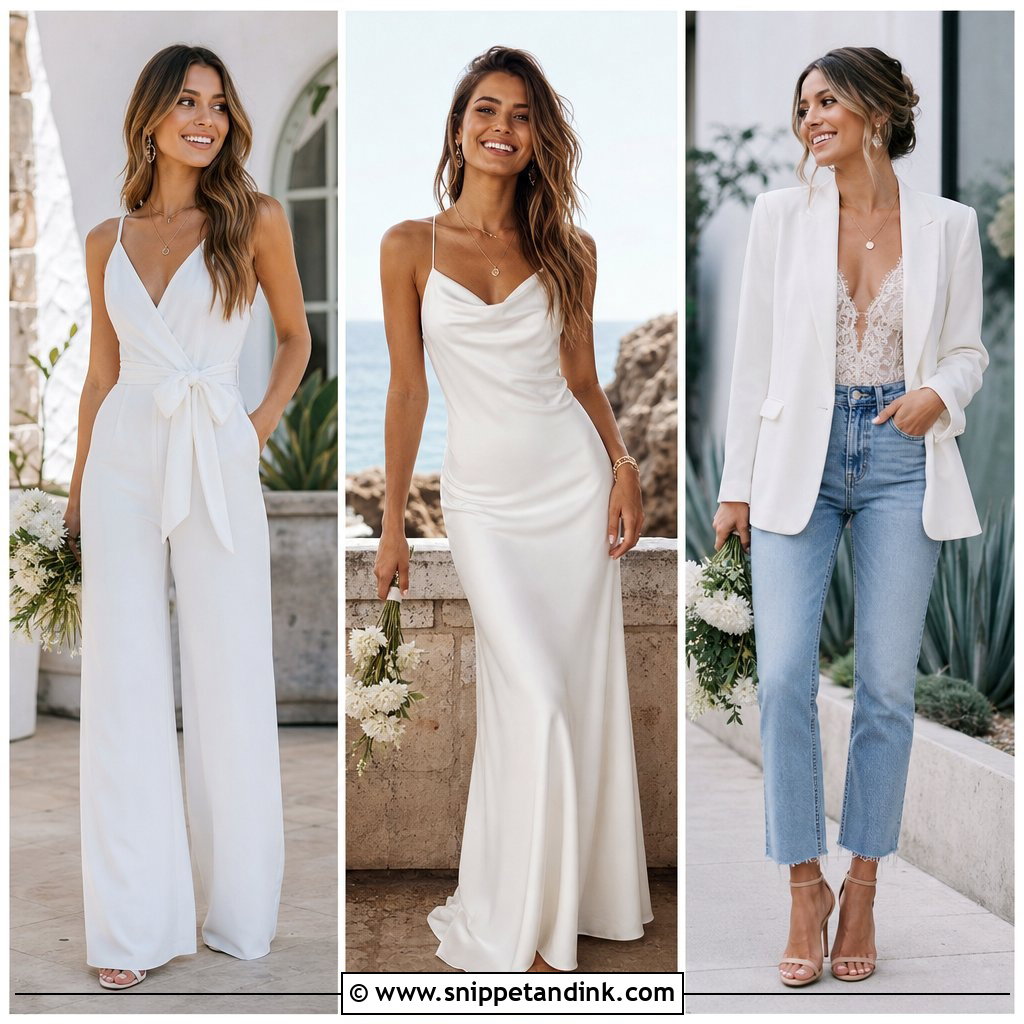
1. Simple Slip Wedding Dress
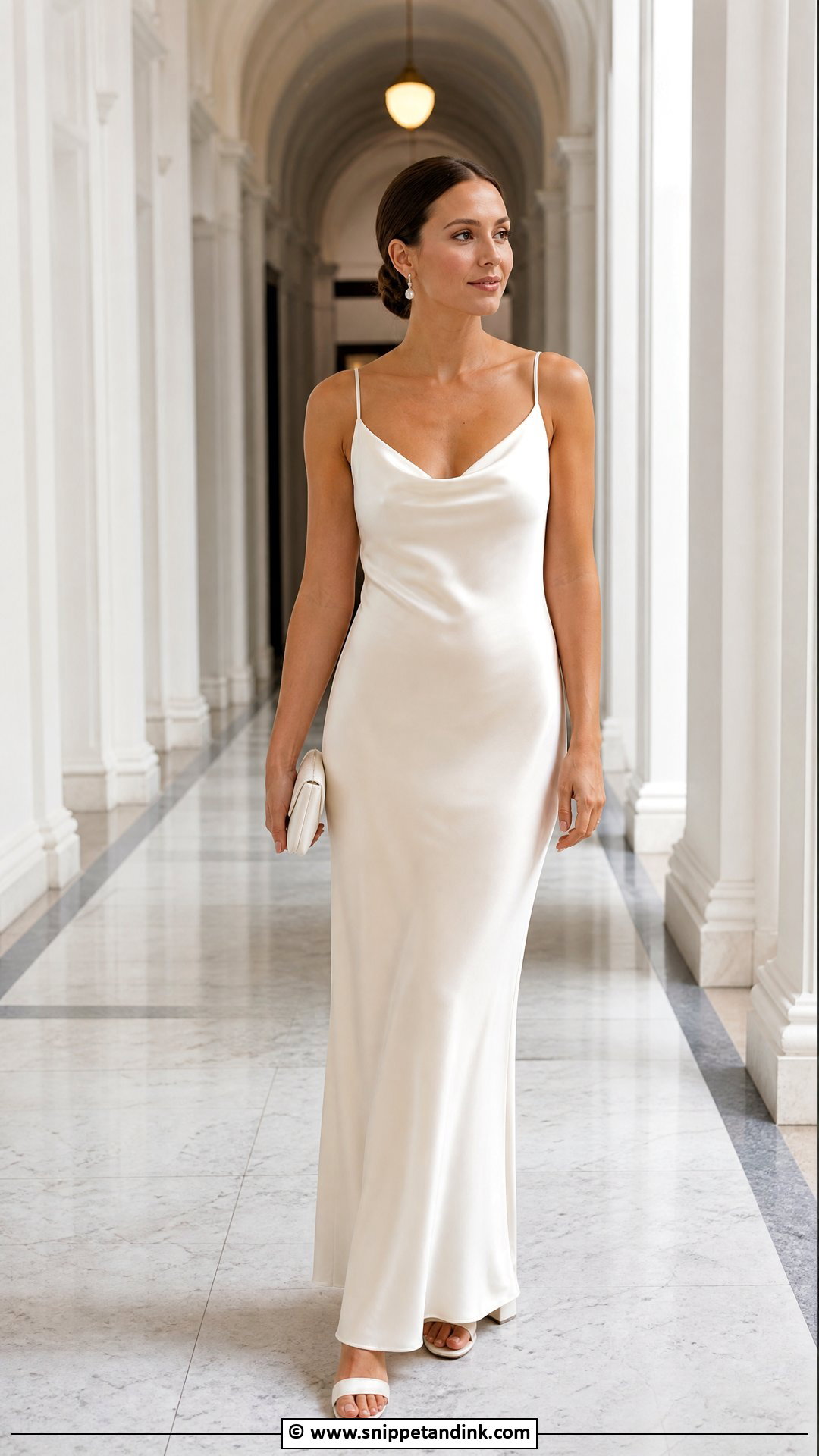
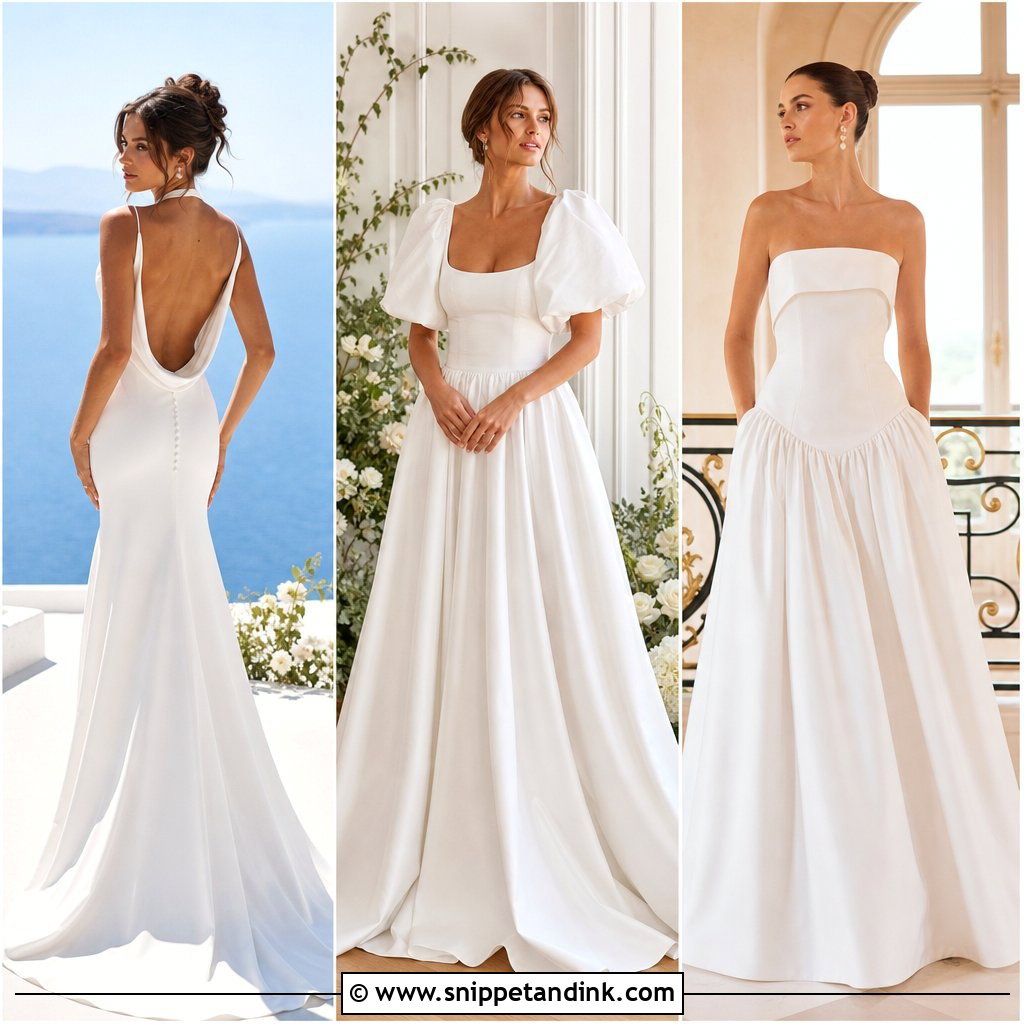
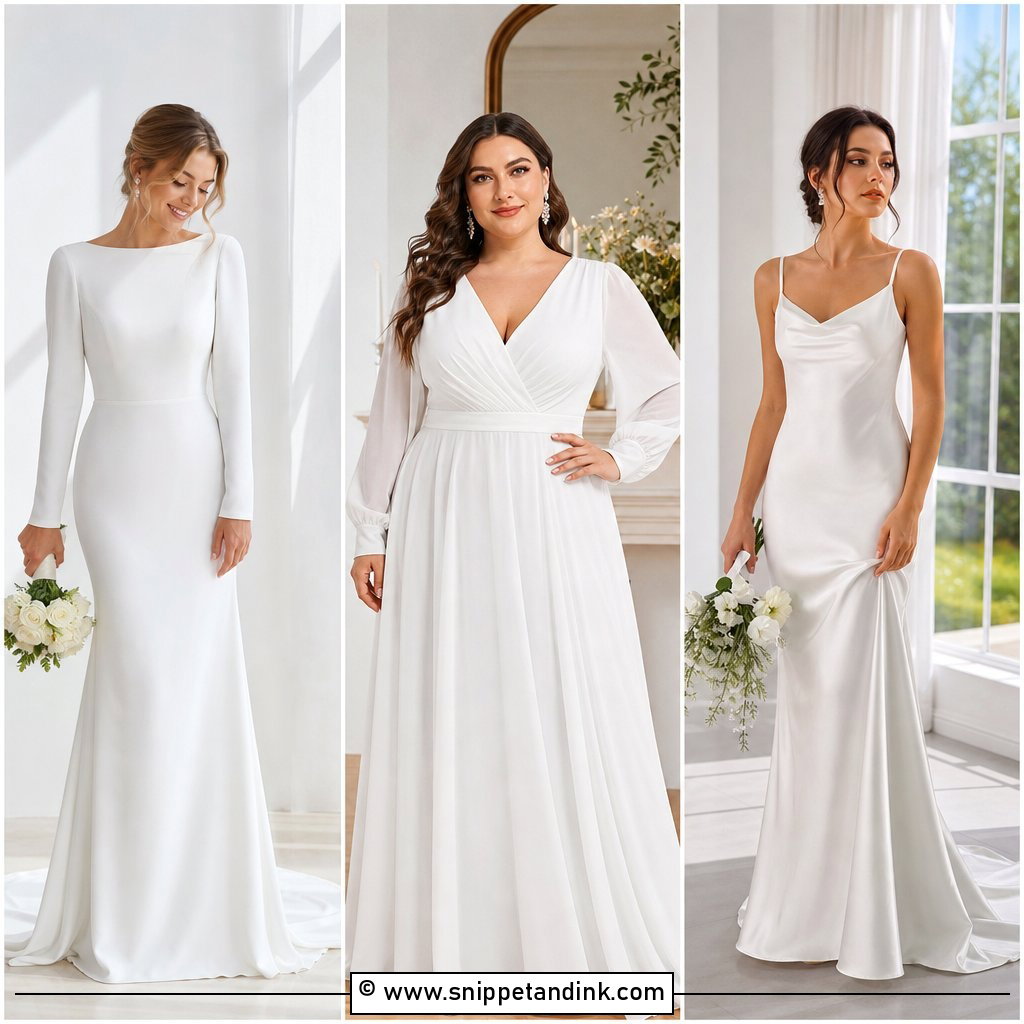
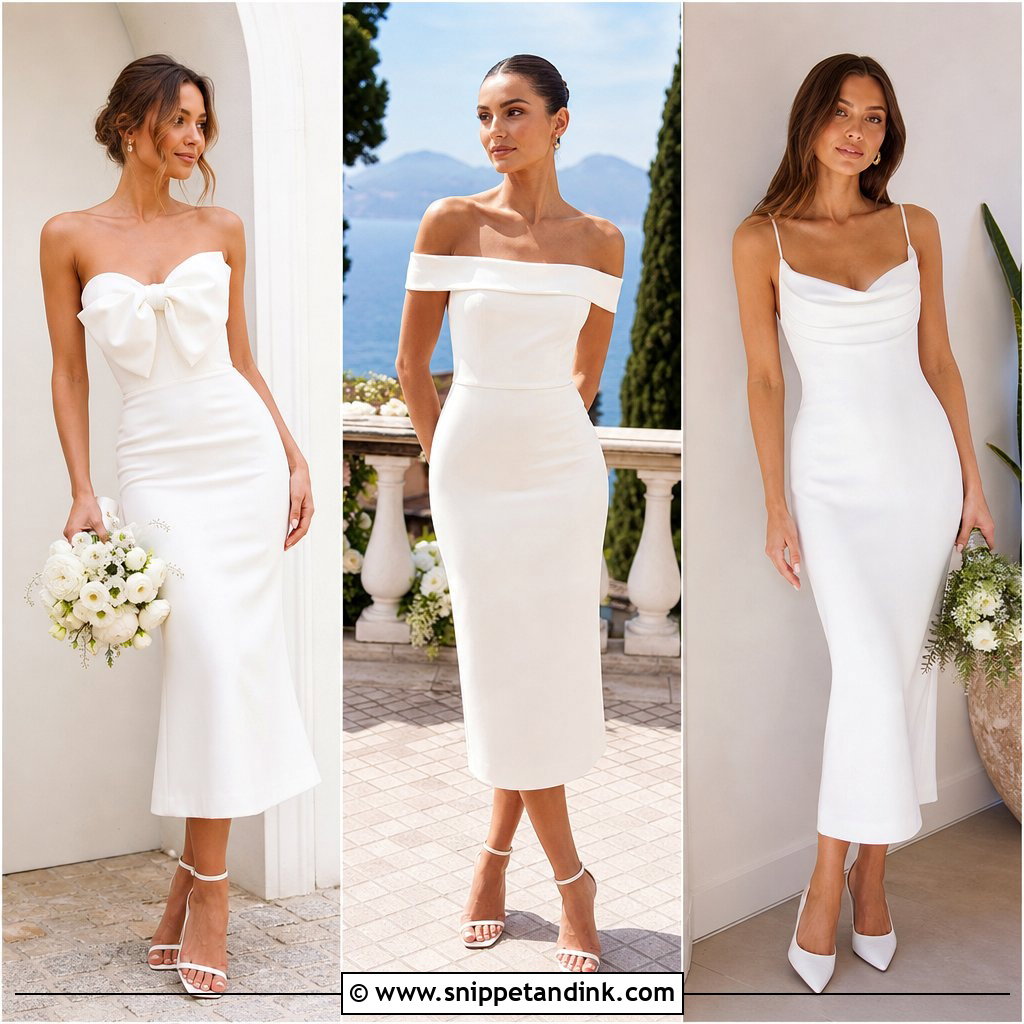
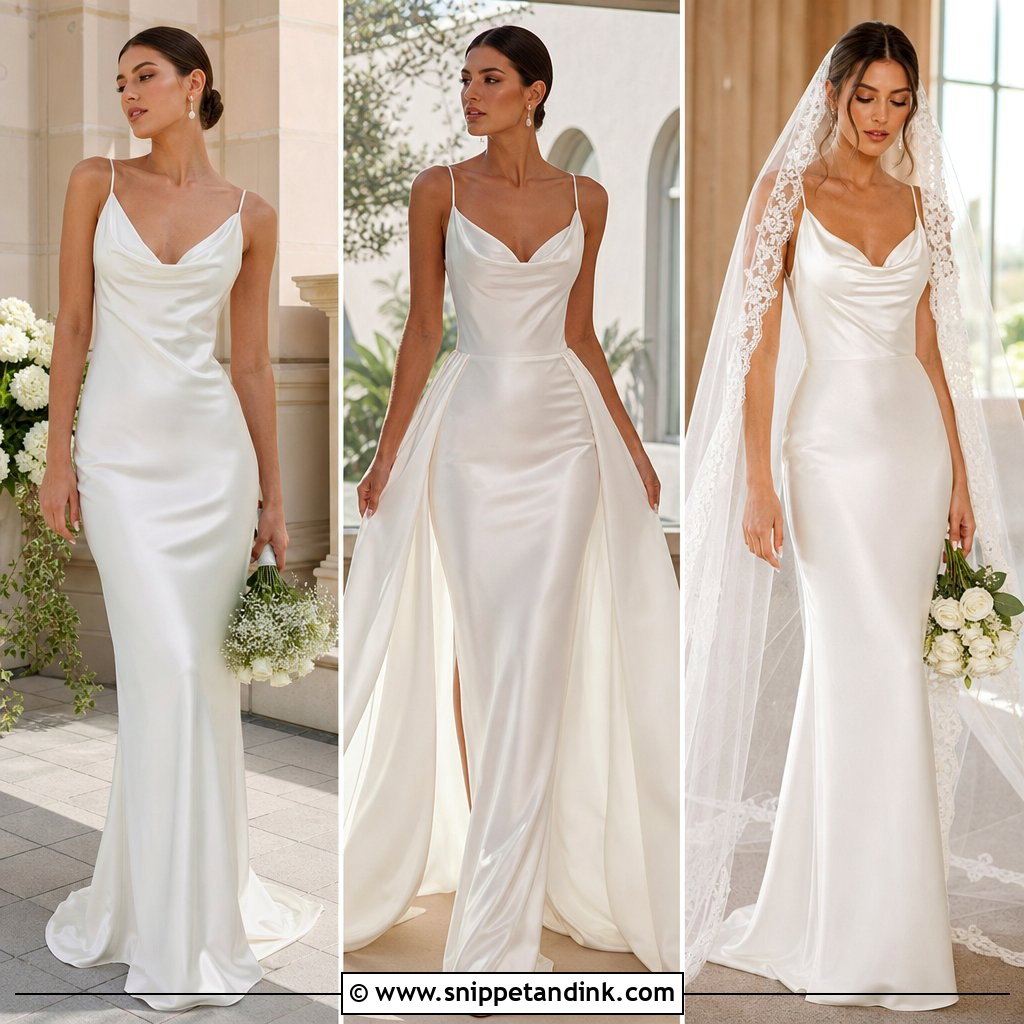
Bias-cut satin or crepe is what makes a slip hang properly, and it’s also what makes it honest about everything underneath. At a fitting I look at the slip standing and seated, because bias fabric grows slightly across the hip when you sit and will show the edge of most shapewear. Ivory or champagne is kinder than optic white on most skin under flash. Thin straps or a soft cowl suit a courthouse or restaurant ceremony; add low block heels, pearl earrings and a cropped cardigan or blazer if the room runs cold. Keep the hair soft and let the cut do the work.
2. Lace Midi Wedding Dress
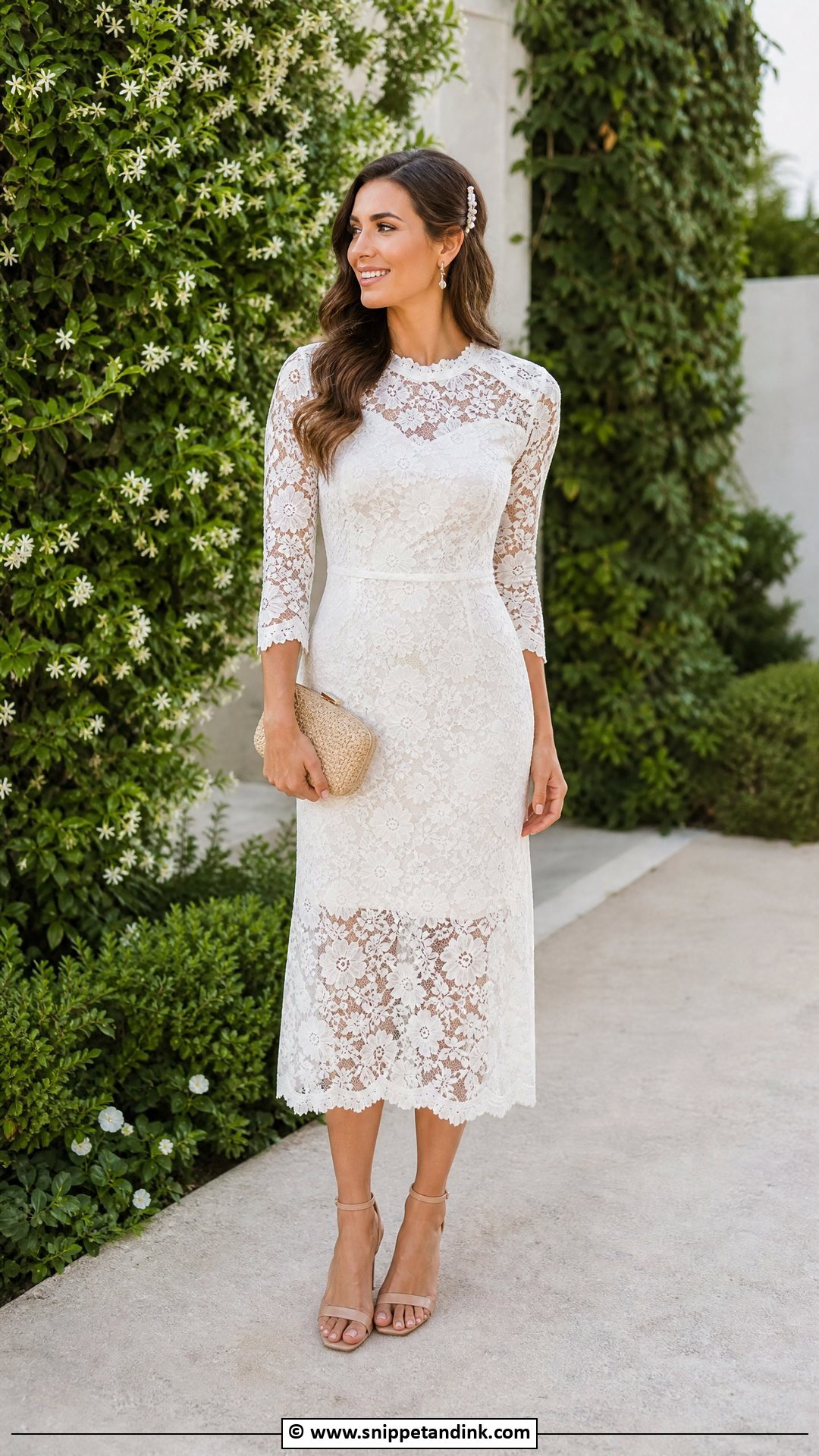
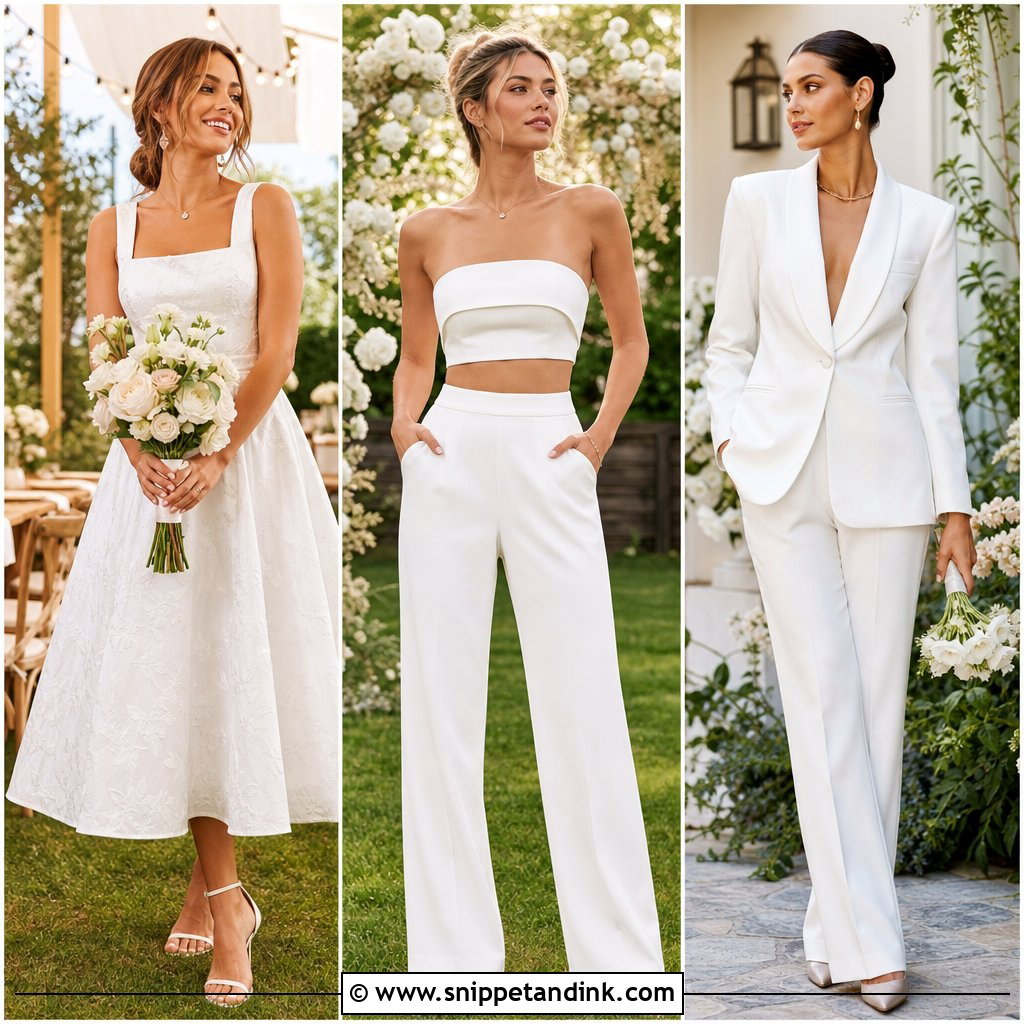
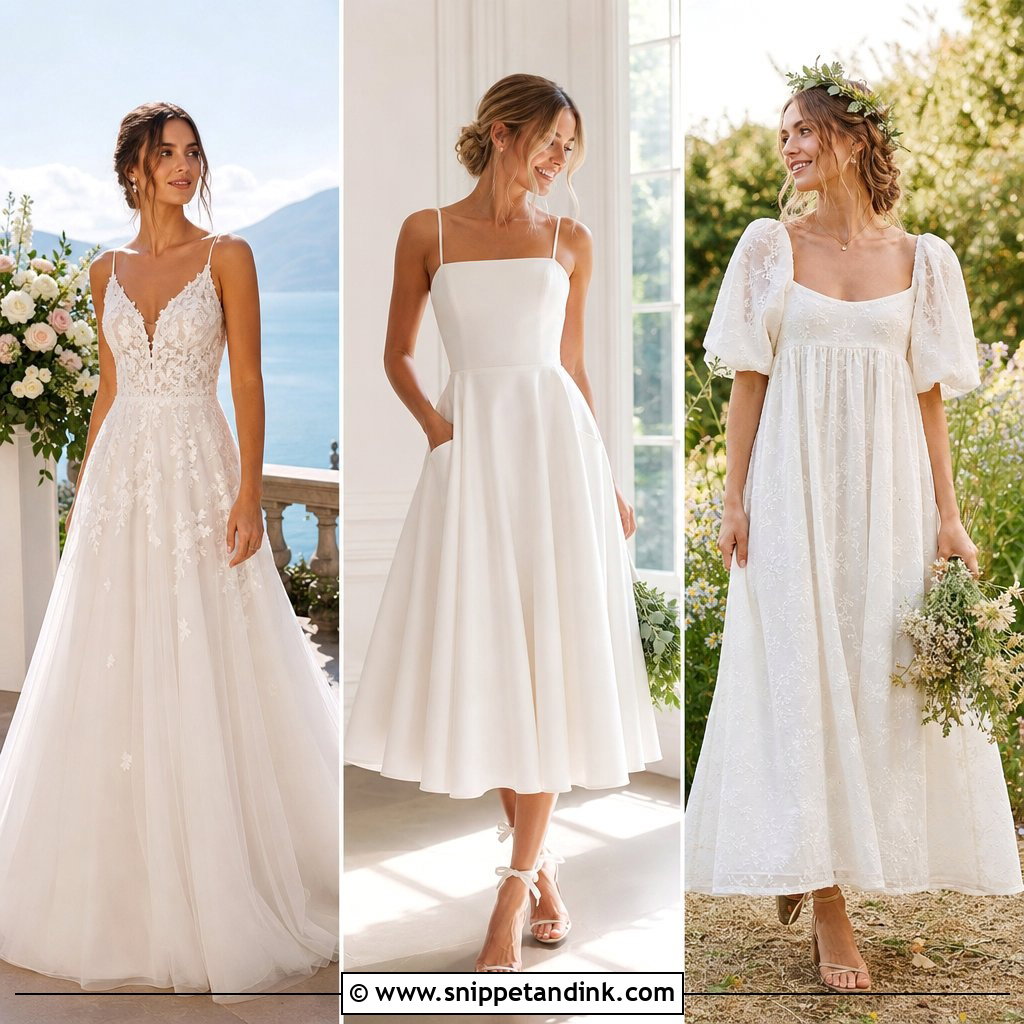
The midi length is the practical part: you can cross a lawn, climb the venue steps and dance without anyone minding your hem. I steer casual brides toward soft floral, cotton or crochet-style lace rather than heavy corded lace, which reads formal and holds heat. Nude sandals, kitten heels or ballet flats all suit it, and a small pearl clip is enough jewelry. Flutter sleeves or a higher neck give coverage for a family or religious ceremony. One thing I always check on cotton lace is the lining, since a bright white lining under ivory lace looks patchy in daylight.
3. White Linen Wedding Dress
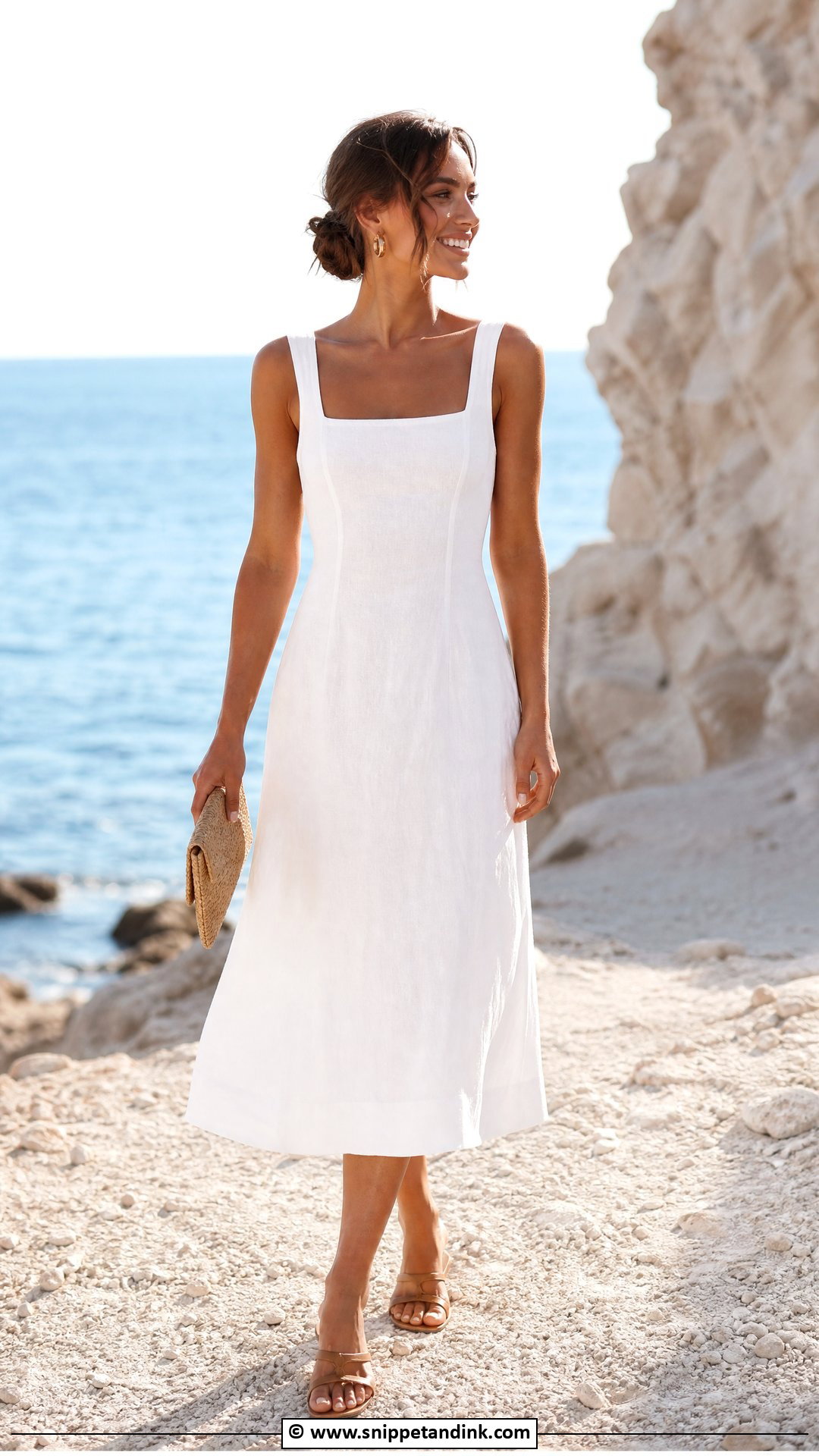
Linen creases within ten minutes of sitting in a car, and I tell every bride that before she buys it. If you can live with that soft, rumpled finish, it’s one of the coolest fabrics to marry in during summer heat because it breathes and dries fast. A fitted bodice with a relaxed skirt, a wrap, or a square-neck midi gives it a bridal line. Leather sandals or espadrille wedges suit sand and grass; gold hoops and a straw clutch keep it sunny. Steam it on the morning itself, and if creasing genuinely bothers you, choose a linen blend instead.
4. Short Lace Wedding Dress
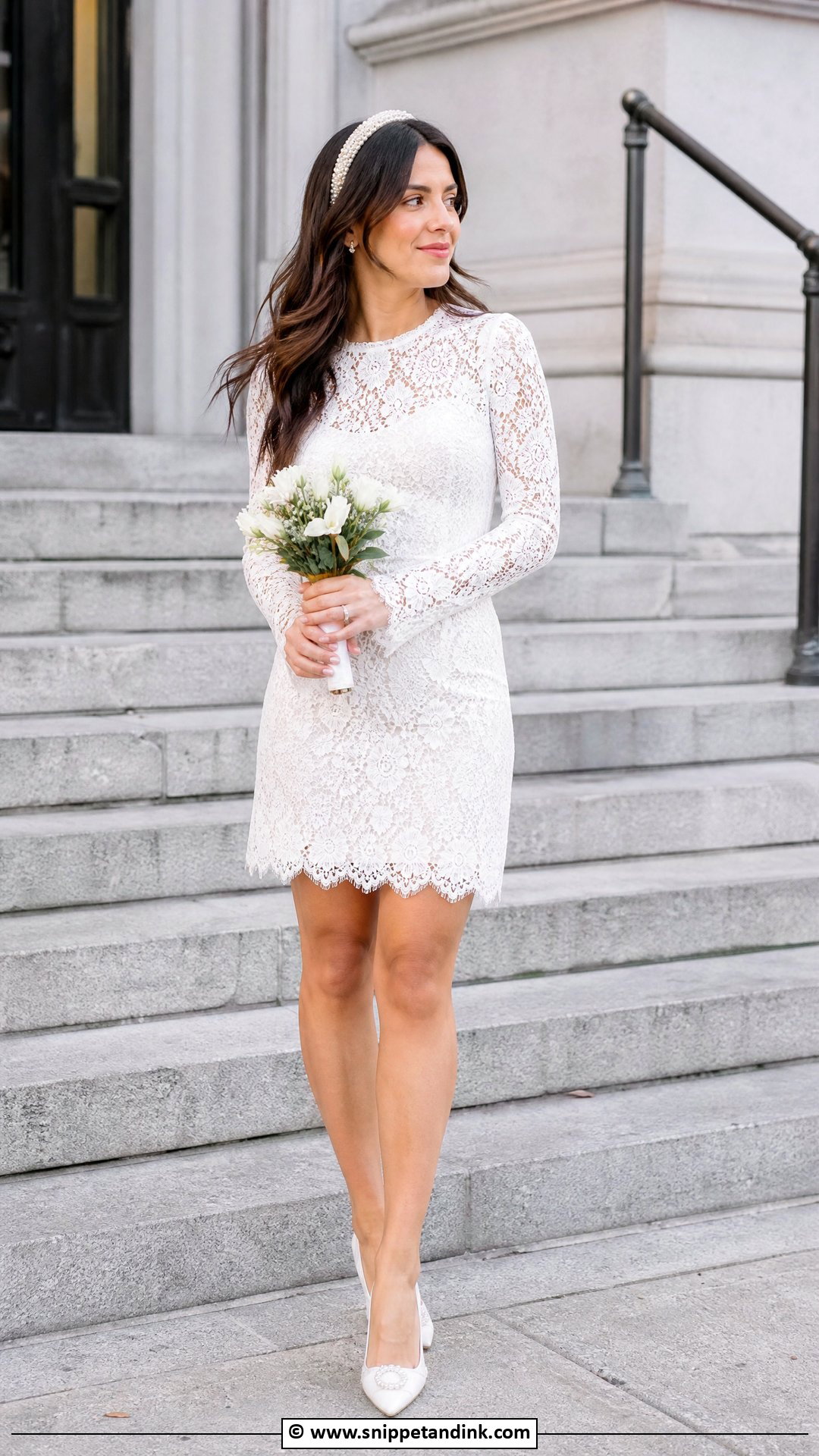
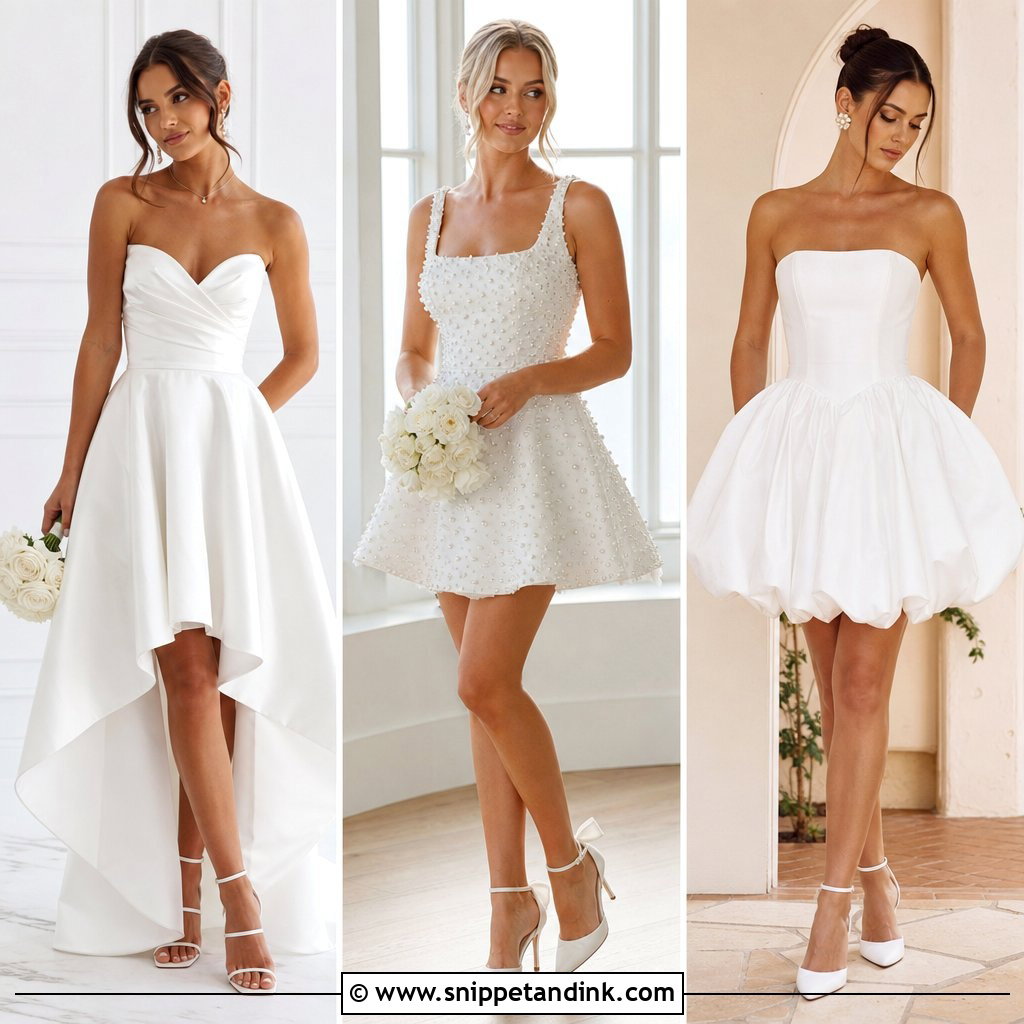
Short lace gives you bridal texture with almost no weight, which is why I suggest it for city elopements and second looks. Check the hem when you sit and when you lift your arms for a hug, because minis ride up more than people expect. Long or puff sleeves balance the bare leg, and pointed flats or ankle-strap heels finish it. A short veil, a bow clip or a pearl headband is enough to make it bridal. If the lace pattern is busy, keep everything else plain.
5. Cotton Eyelet Wedding Dress
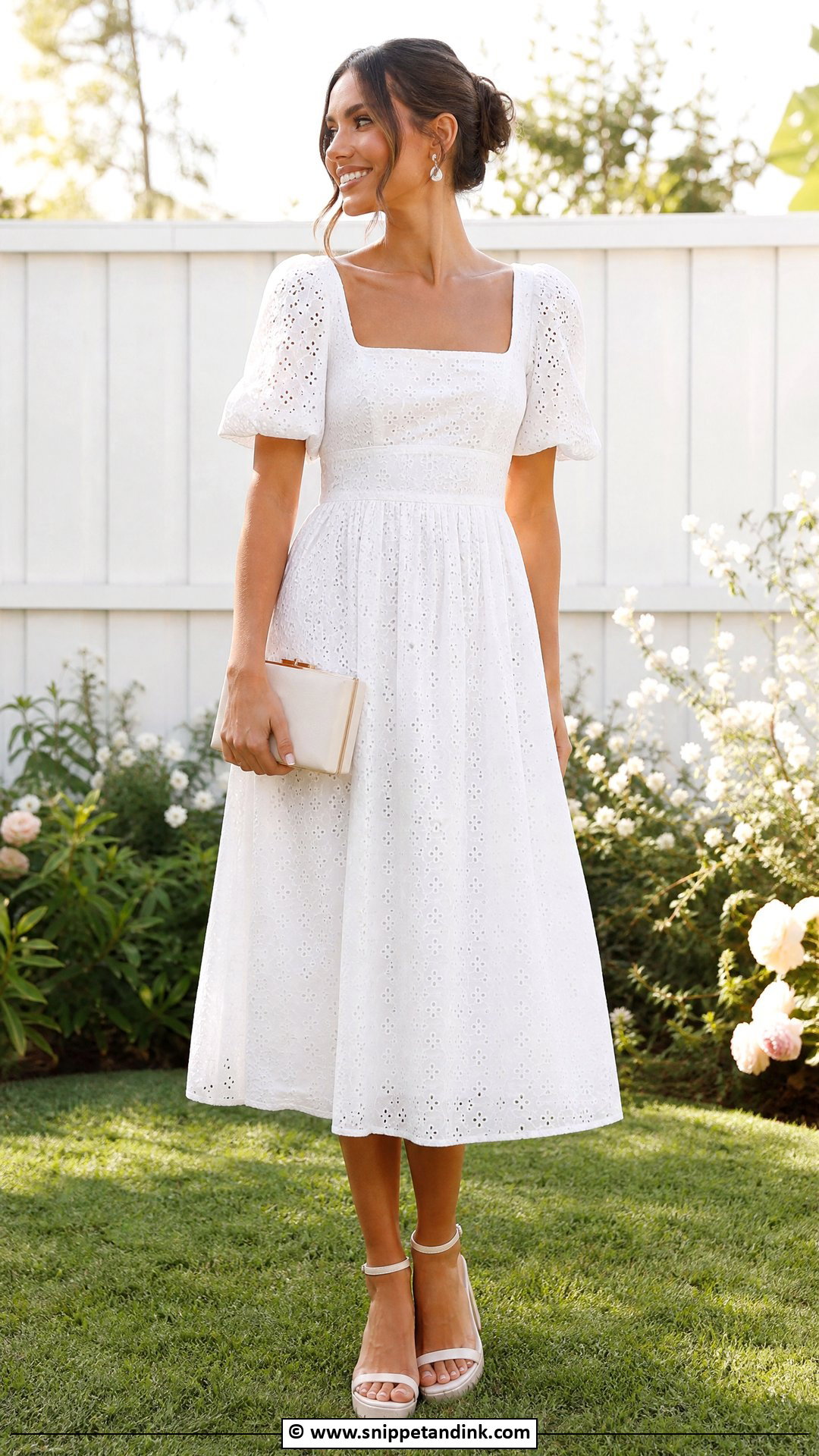
A cotton eyelet wedding dress is the daytime fabric I reach for first. The cut-out embroidery gives built-in detail, it breathes, and it forgives a little creasing better than plain cotton does. Ask whether it’s lined: unlined eyelet shows skin through every hole in bright sun, so I usually add a nude or ivory slip underneath. A fit-and-flare or puff-sleeve shape with block-heel sandals and a woven bag suits a spring garden or backyard wedding. If it hangs shapeless on you, a thin belt at the natural waist fixes it.
6. White Wrap Wedding Dress
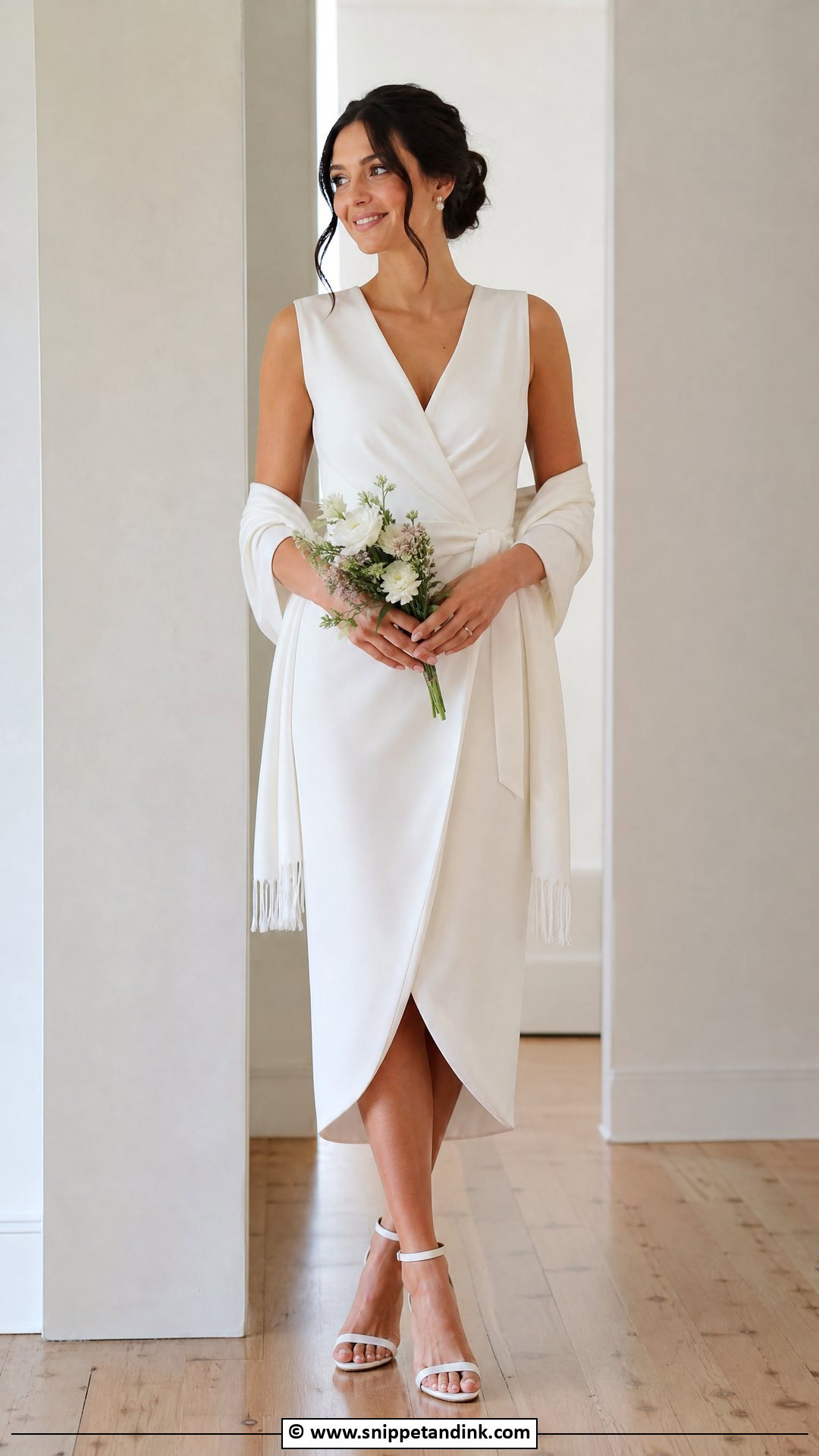
Wraps forgive a lot because you set the tie yourself, which matters over a long day of eating and dancing. The weak point is the crossover. A wrap gapes when you lean forward, so before the ceremony I put a small hidden snap or a strip of fashion tape where the fronts cross. Crepe and jersey drape best; cotton tends to sit stiffly in a wrap. A midi with heeled sandals, pearl studs and a soft updo suits a courthouse or small family ceremony, with a light shawl for after sunset.
7. Beach Wedding Maxi Dress
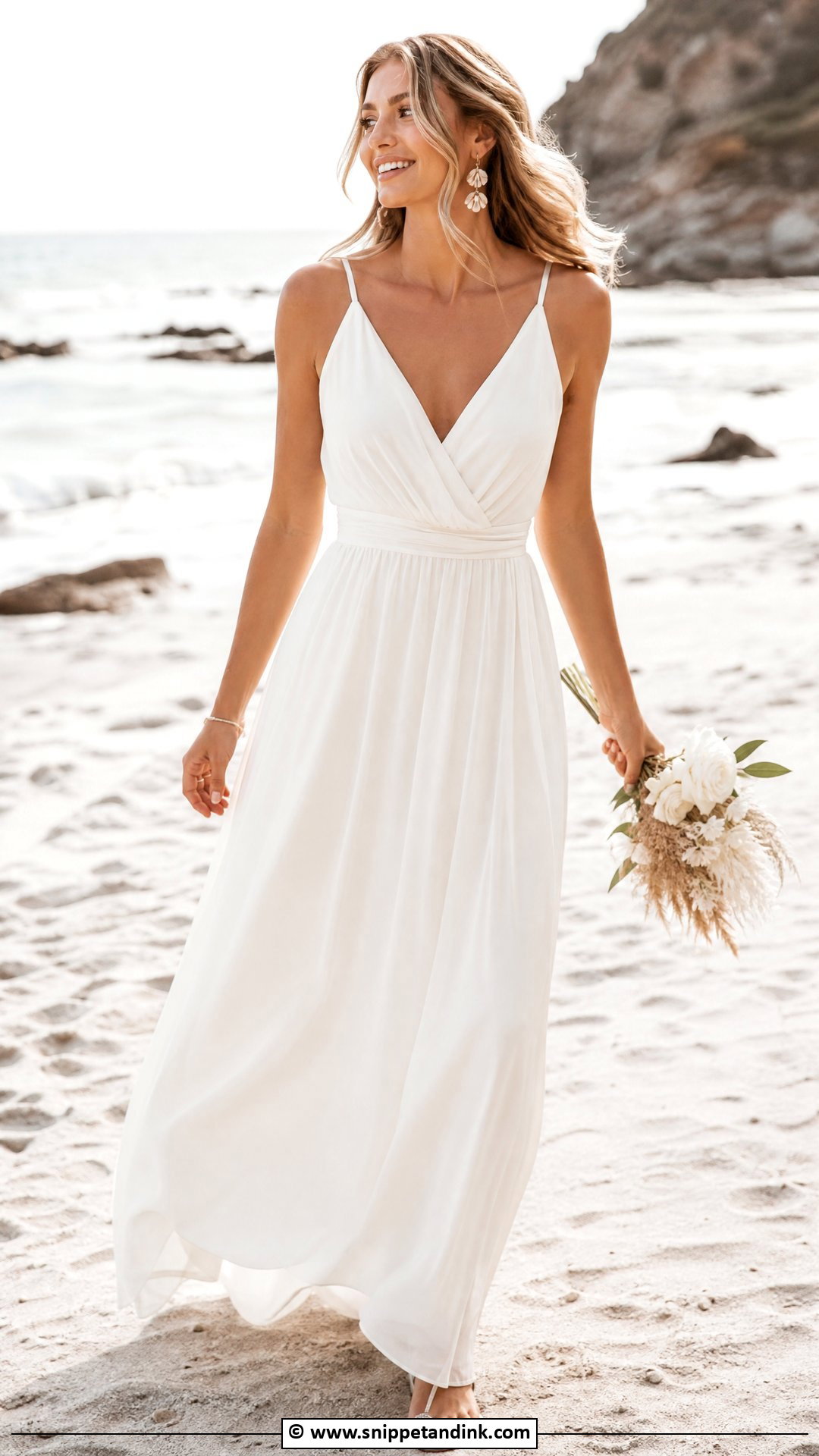
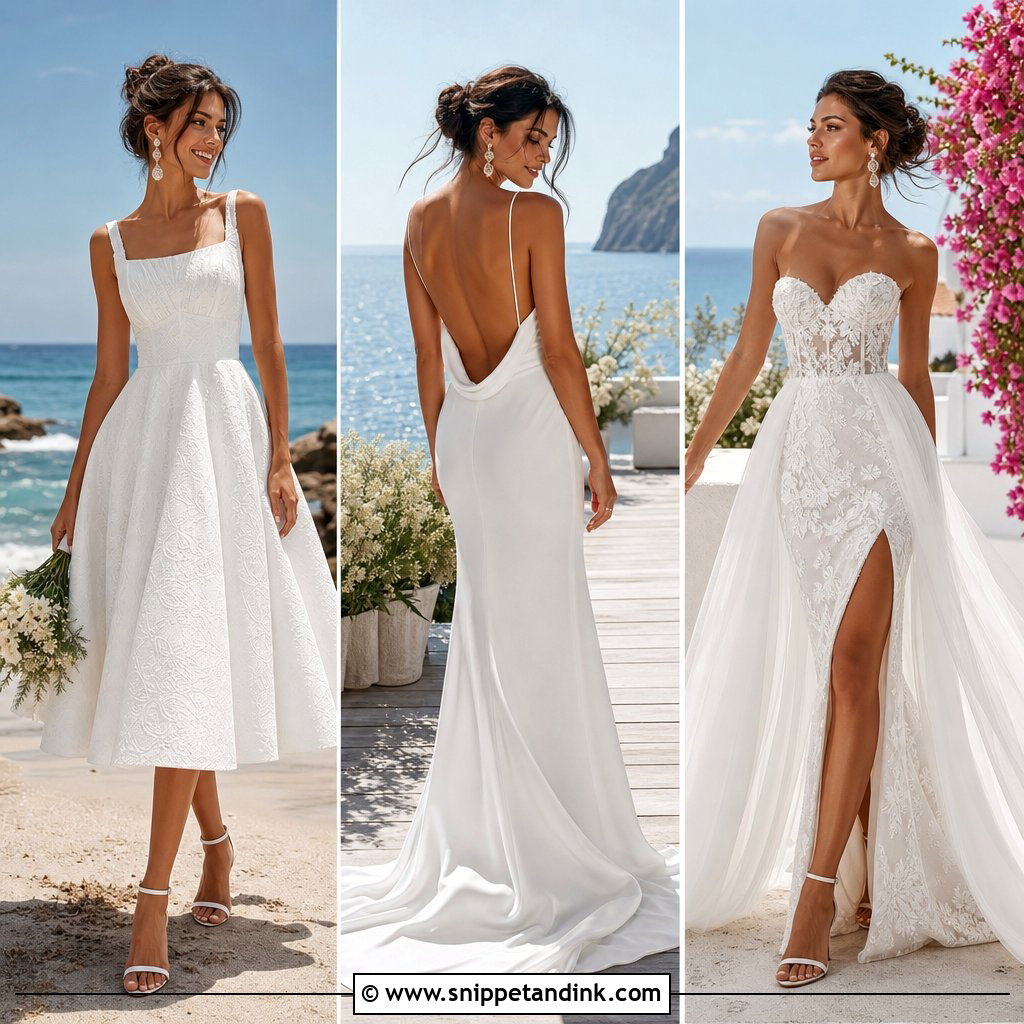
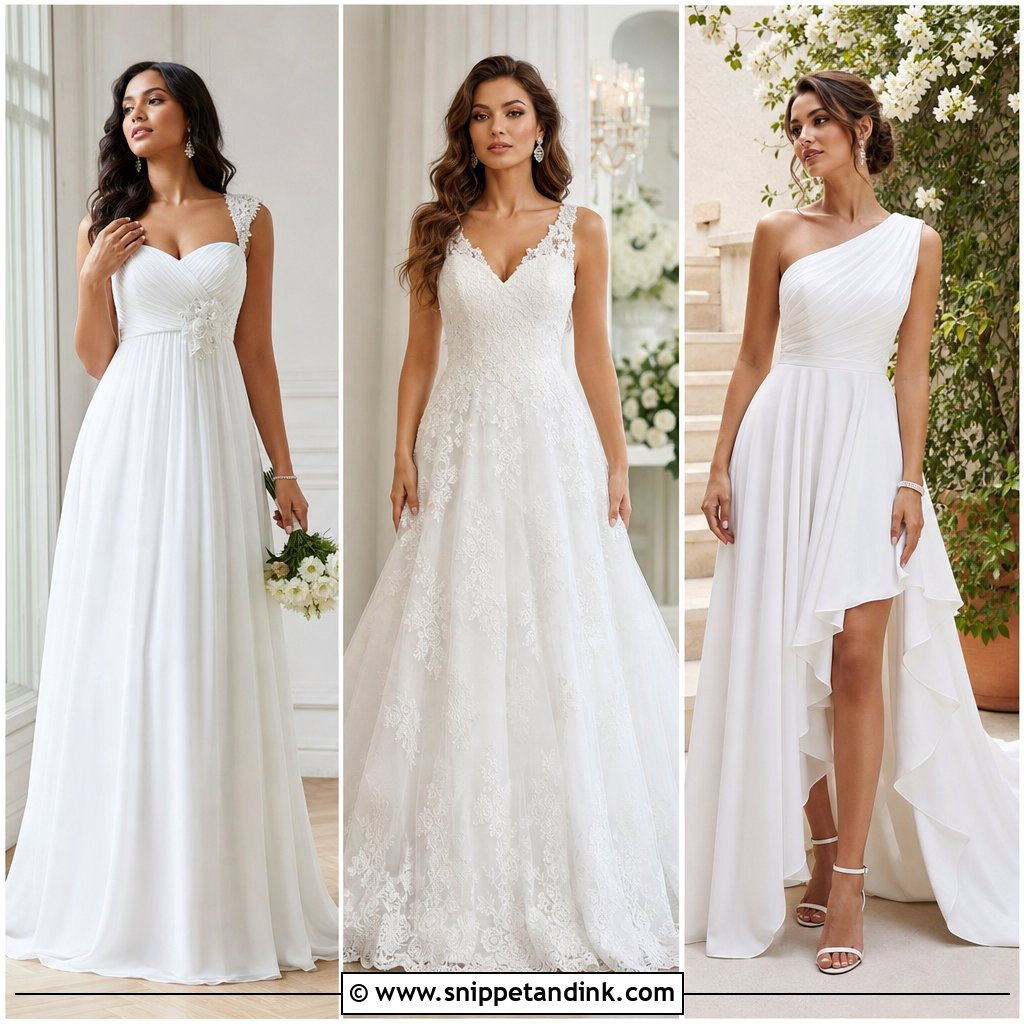
Sand changes everything about a dress. Trains collect it, stiff fabric fights the wind, and heels sink. For the beach I choose chiffon, gauze, cotton voile or soft crepe in a relaxed A-line, halter or off-shoulder shape, hemmed to clear the ground in flat sandals. Wind is the bigger problem than sand: light chiffon blows flat against your legs, so I always try the dress outdoors before the day. A small comb or a few flowers tucked into loose waves stays put far better than a full crown in a sea breeze.
8. Courthouse Wedding Mini Dress
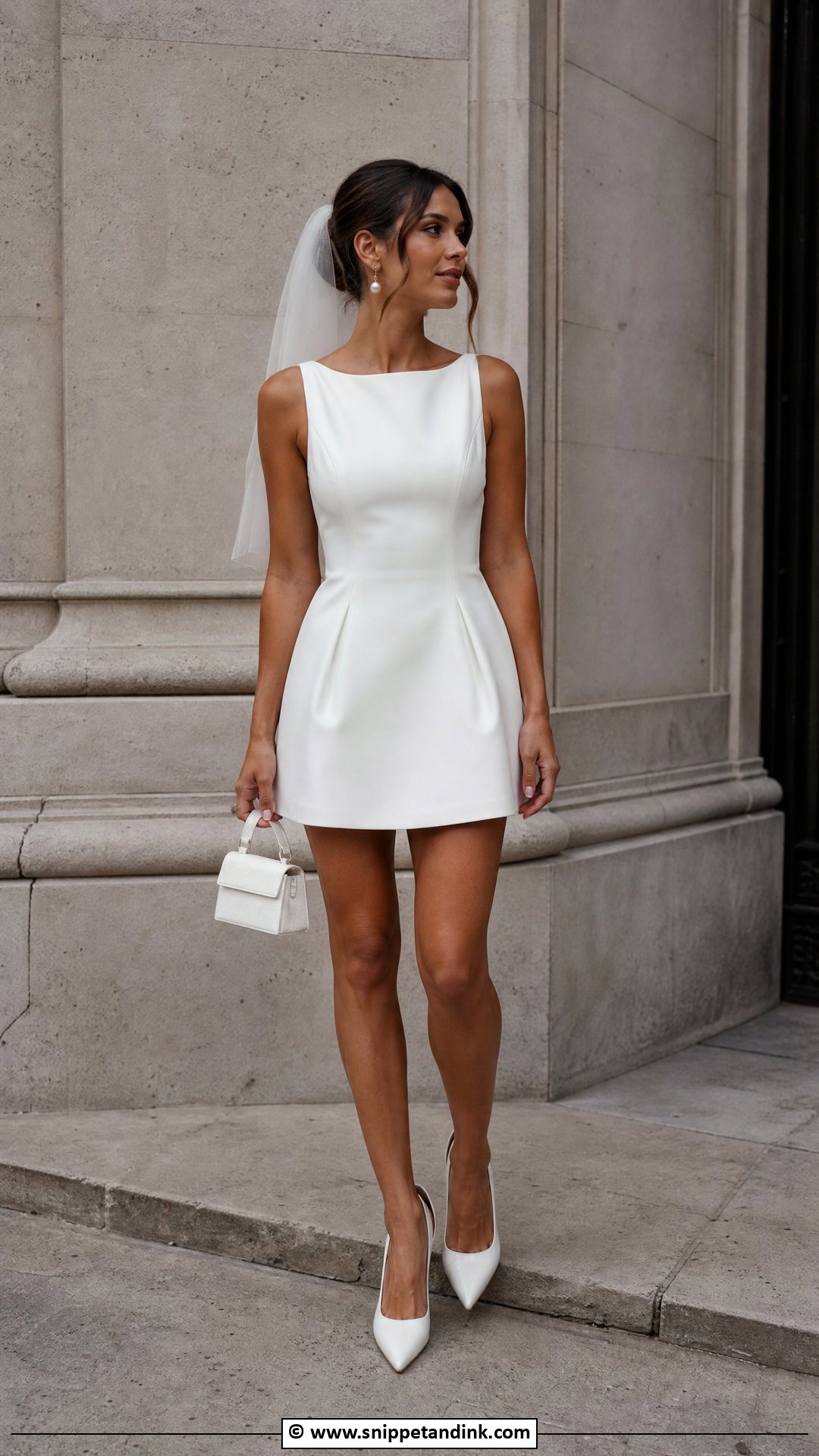
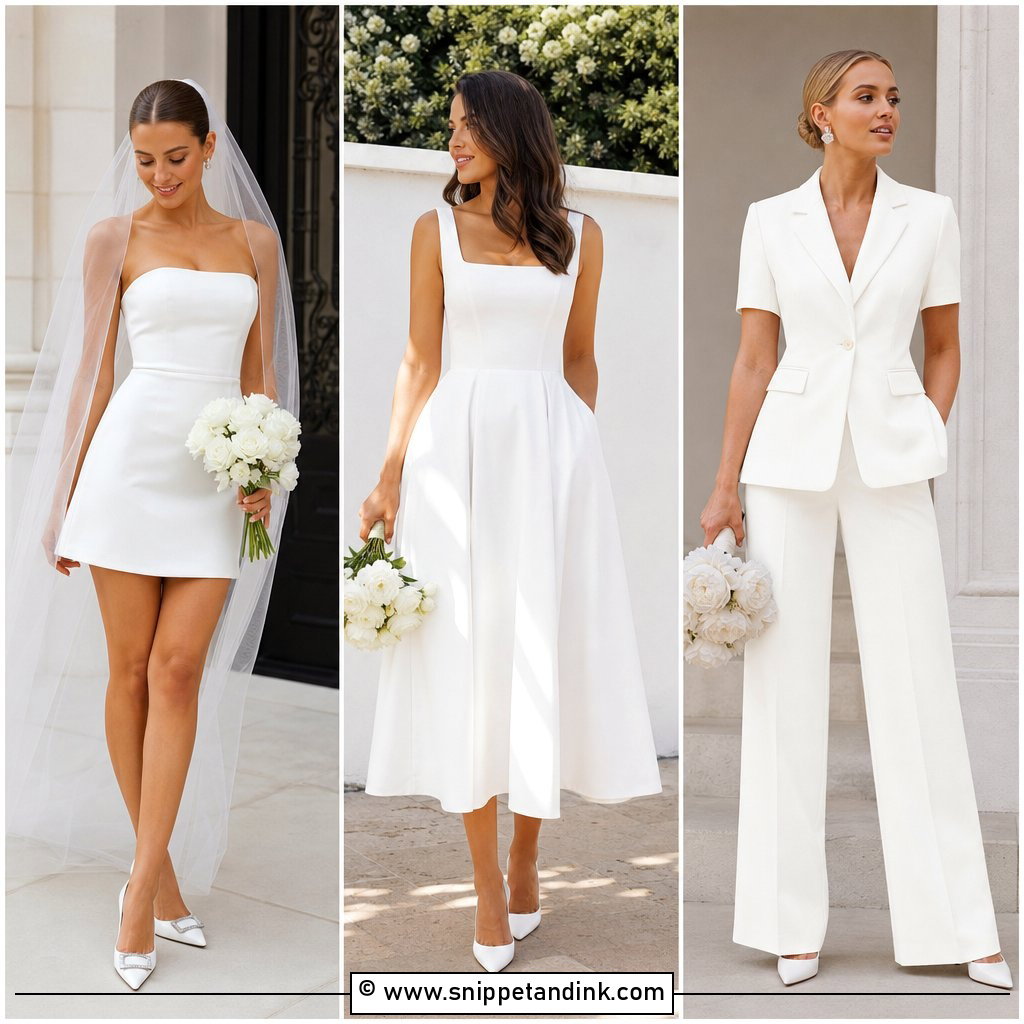
Courthouse ceremonies are short, usually indoors, and photographed on the steps outside, so a structured mini earns its place. I look for fabric with some body, crepe or a heavier satin, because a thin mini wrinkles across the lap while you wait for your slot. Long sleeves, a square neck or a plain shift all work with pointed pumps or slingbacks. A short veil is what turns a white mini into a wedding dress. A tailored blazer over the top sharpens it for a city wedding.
9. White Shirt Dress Wedding Look
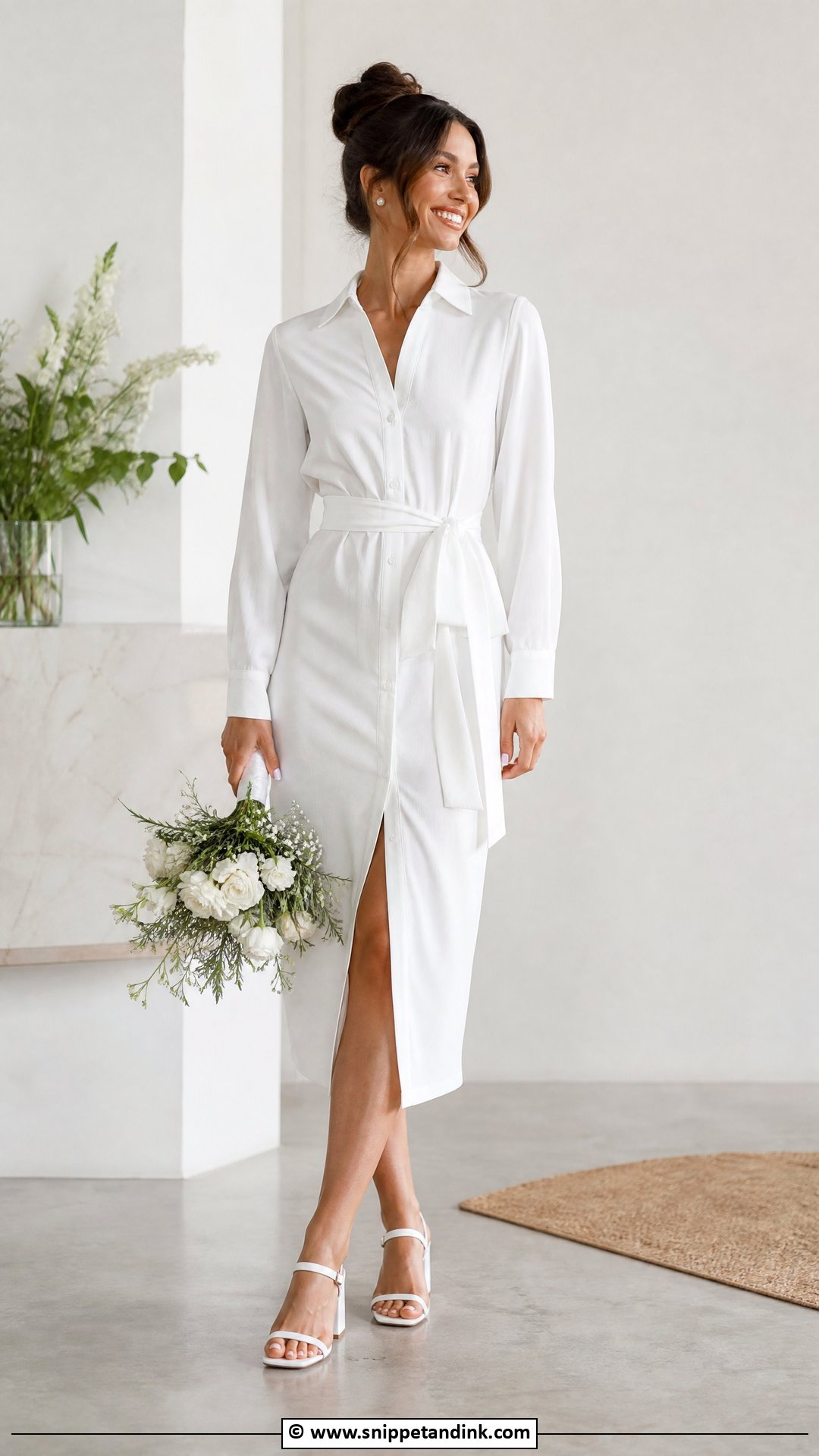
A shirt dress depends on staying crisp. Poplin and linen blends look sharp for the first hour and then soften, while a silky version holds its shape but shows every crease where the belt sits. I always check the button gaps across the bust, since that’s the spot that pulls open in photos, and a hidden snap between buttons fixes it. Block heels or slingback flats, pearl studs, a smooth bun and a small bouquet keep it bridal. If it still feels too plain, a lace veil does more than any belt.
10. Two Piece Wedding Dress Set
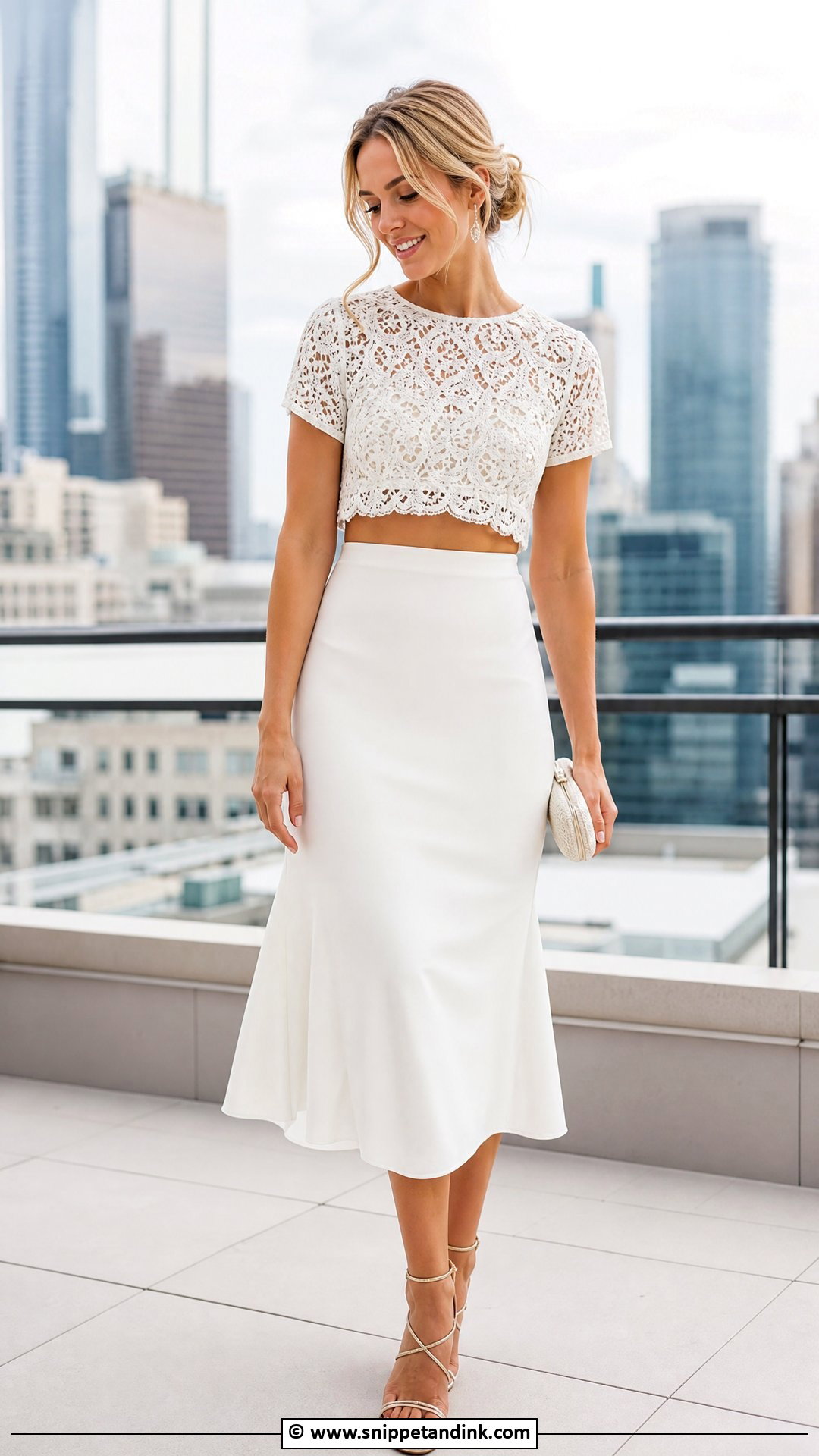
Separates let me fit the top and the bottom properly, which a single off-the-rack dress rarely manages. A cropped lace top with a midi skirt, a satin cami with a flowing skirt, or a fitted knit with a column skirt all work, provided the two whites match. That part gets underestimated: two ivories from different makers almost never agree in daylight, so buy them together or hold them side by side at a window. Strappy sandals and a neat clutch finish the look, and you’ll wear both pieces again.
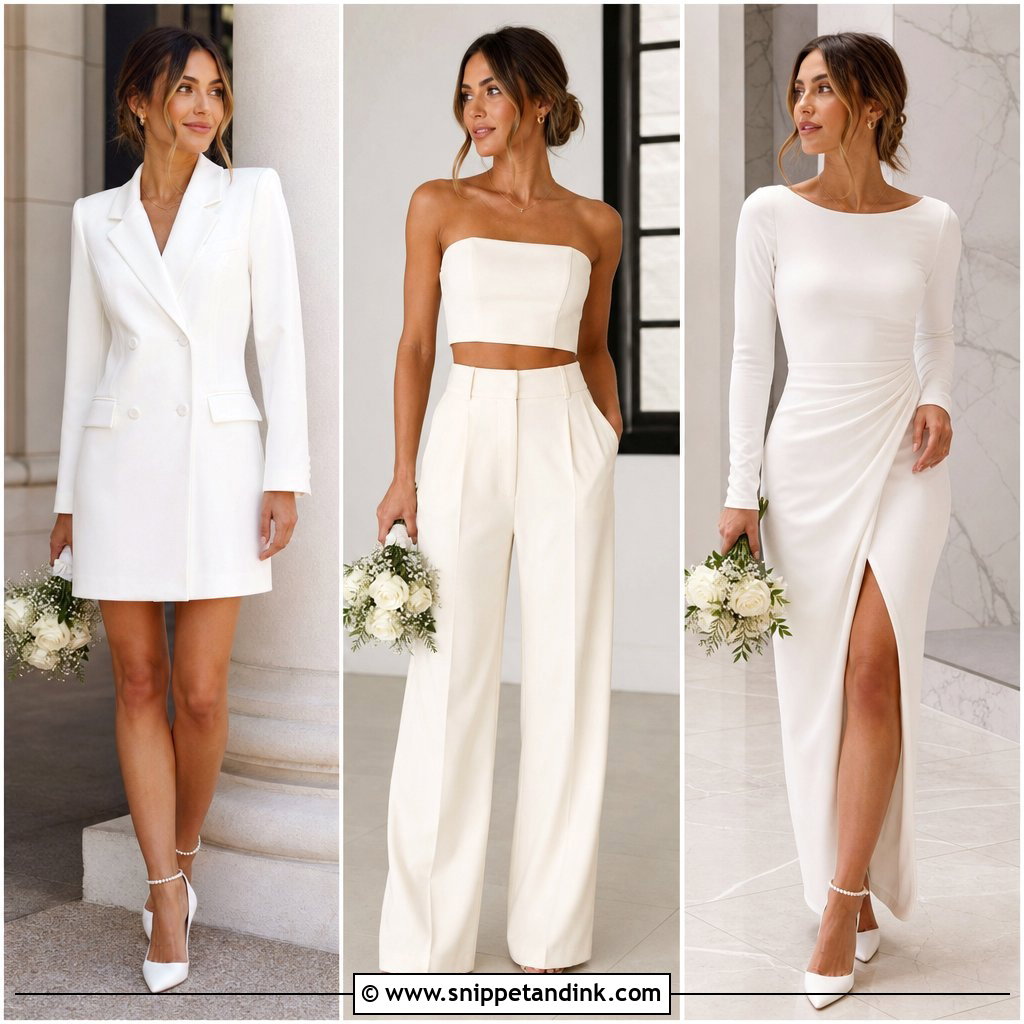
11. Casual Wedding Jumpsuit
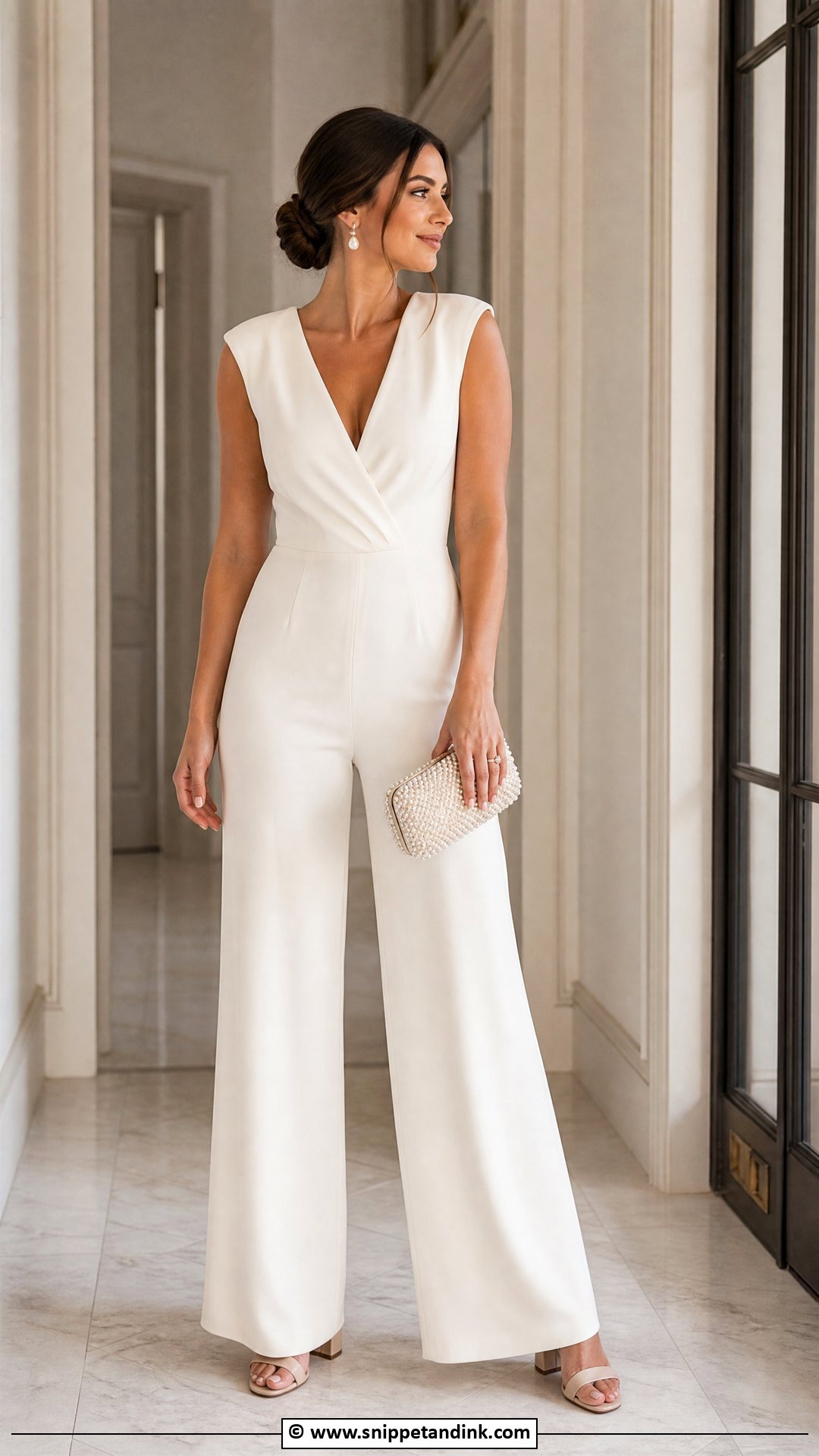
A casual wedding jumpsuit gives you total freedom on a dance floor, but it has to fit in the rise. If the crotch sits low, it looks borrowed the moment you walk. I hem wide legs to the exact heel you’ll wear, so bring the shoes to the fitting. Ivory crepe or soft tailoring with a defined waist looks more bridal than linen does. Add a low bun and pearl earrings, and a detachable overskirt gives you a ceremony look and a party look from one piece. Bathroom trips take longer in a jumpsuit, so allow for that.
12. White Midi Sundress Wedding Look
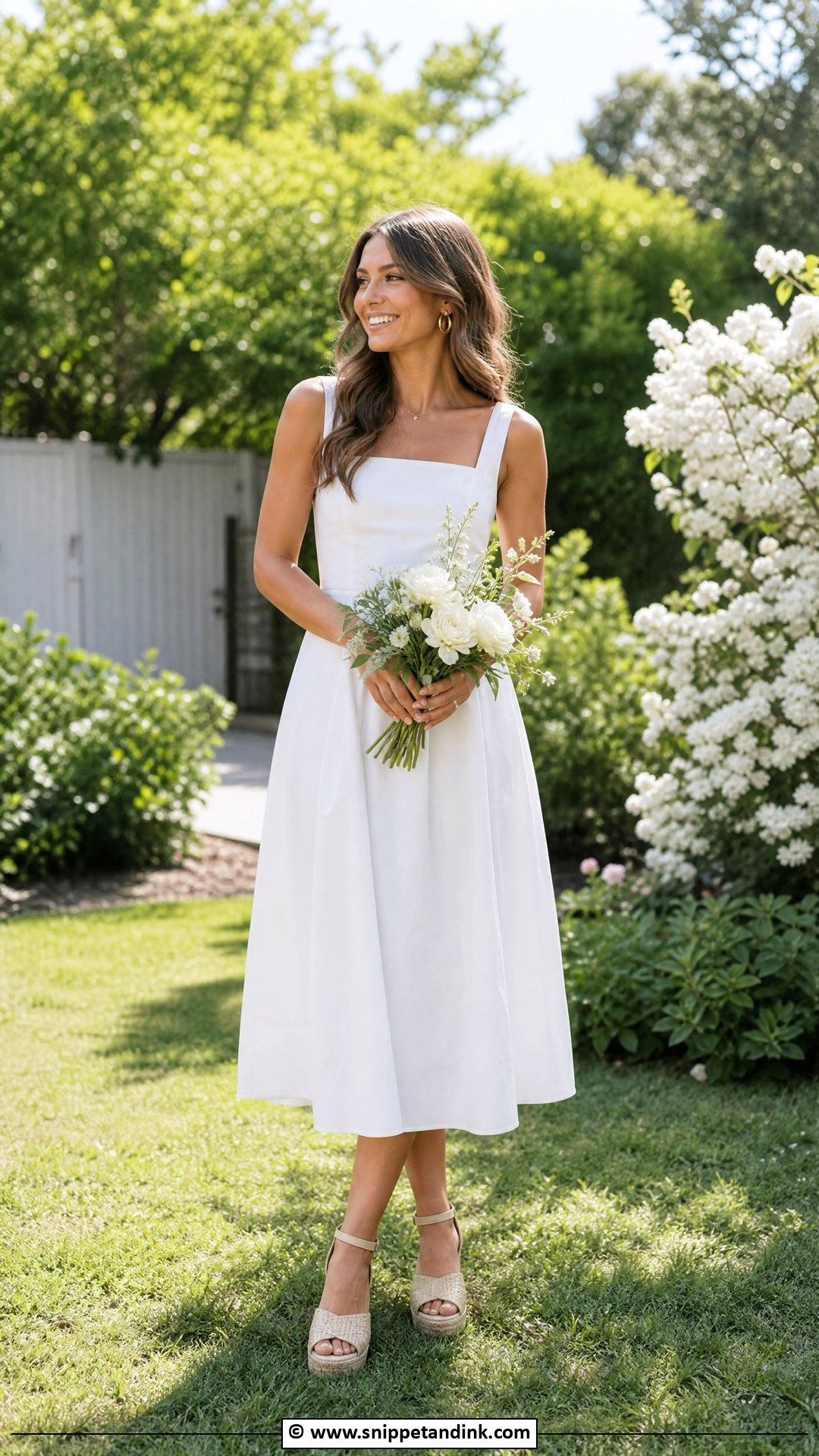
Smocked bodices, tiered skirts and square necks are the sundress shapes I see work best at warm daytime weddings. Cotton, linen, and lightweight poplin keep you cool, though the thinner the cotton, the more see-through it gets in direct sun, so stand outside in it before you commit. Espadrilles or flat sandals suit a lawn or picnic reception. What separates a wedding sundress from a holiday one is fabric weight and neat finishing at the hem and straps, so spend your budget there rather than on accessories.
13. Boho Casual Wedding Dress
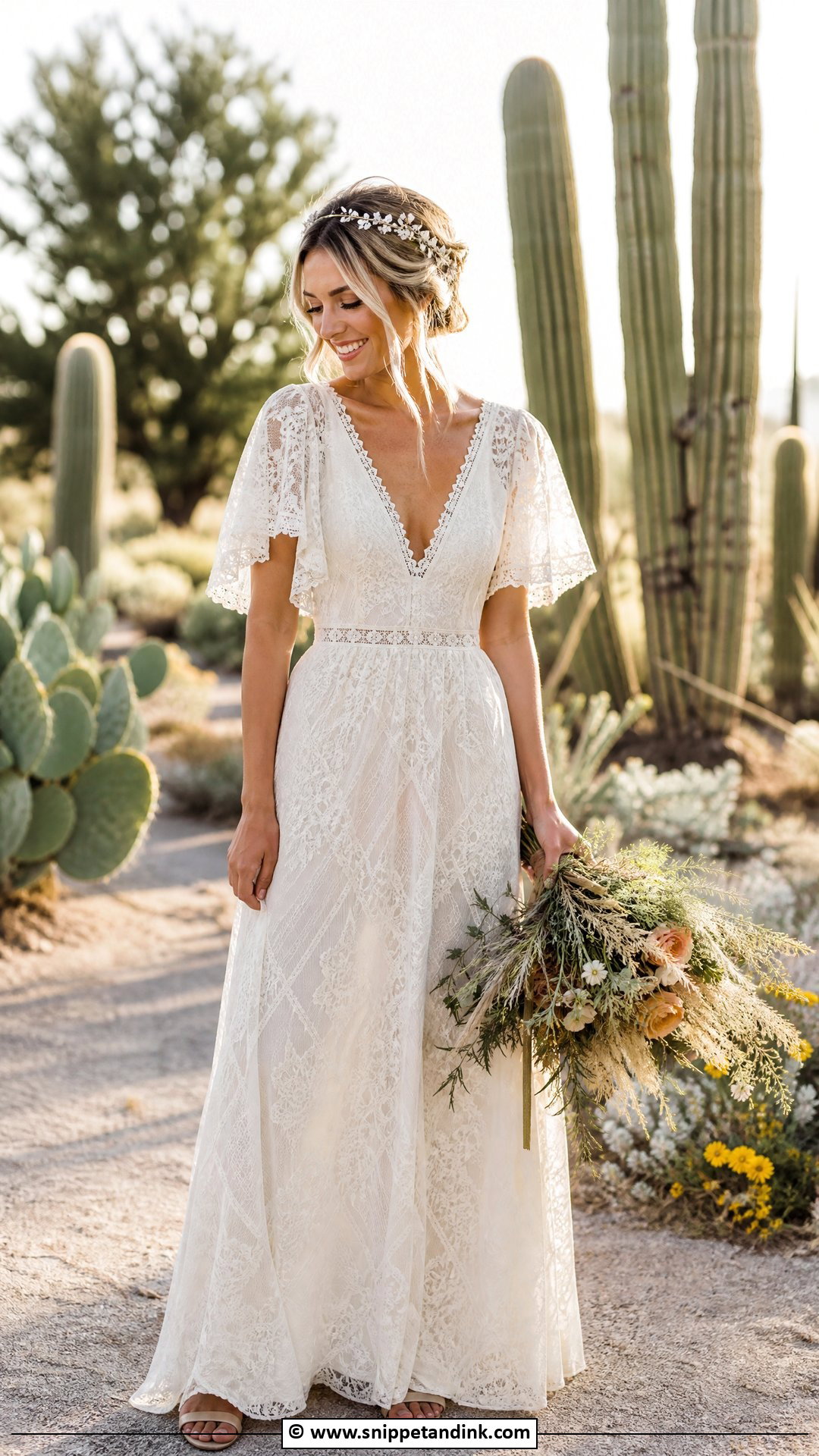
The risk with boho is tipping into costume. I keep it to one or two boho details, say crochet trim and bell sleeves, rather than everything at once. An empire waist and a tiered skirt move well outdoors and suit desert, beach and garden ceremonies, with flat sandals, loose waves and a fine hair vine. Heavy crochet traps heat, so in high summer I’d pick a light cotton with lace insets over an all-crochet dress. A small bouquet with greenery is plenty.
14. White Satin Midi Wedding Dress
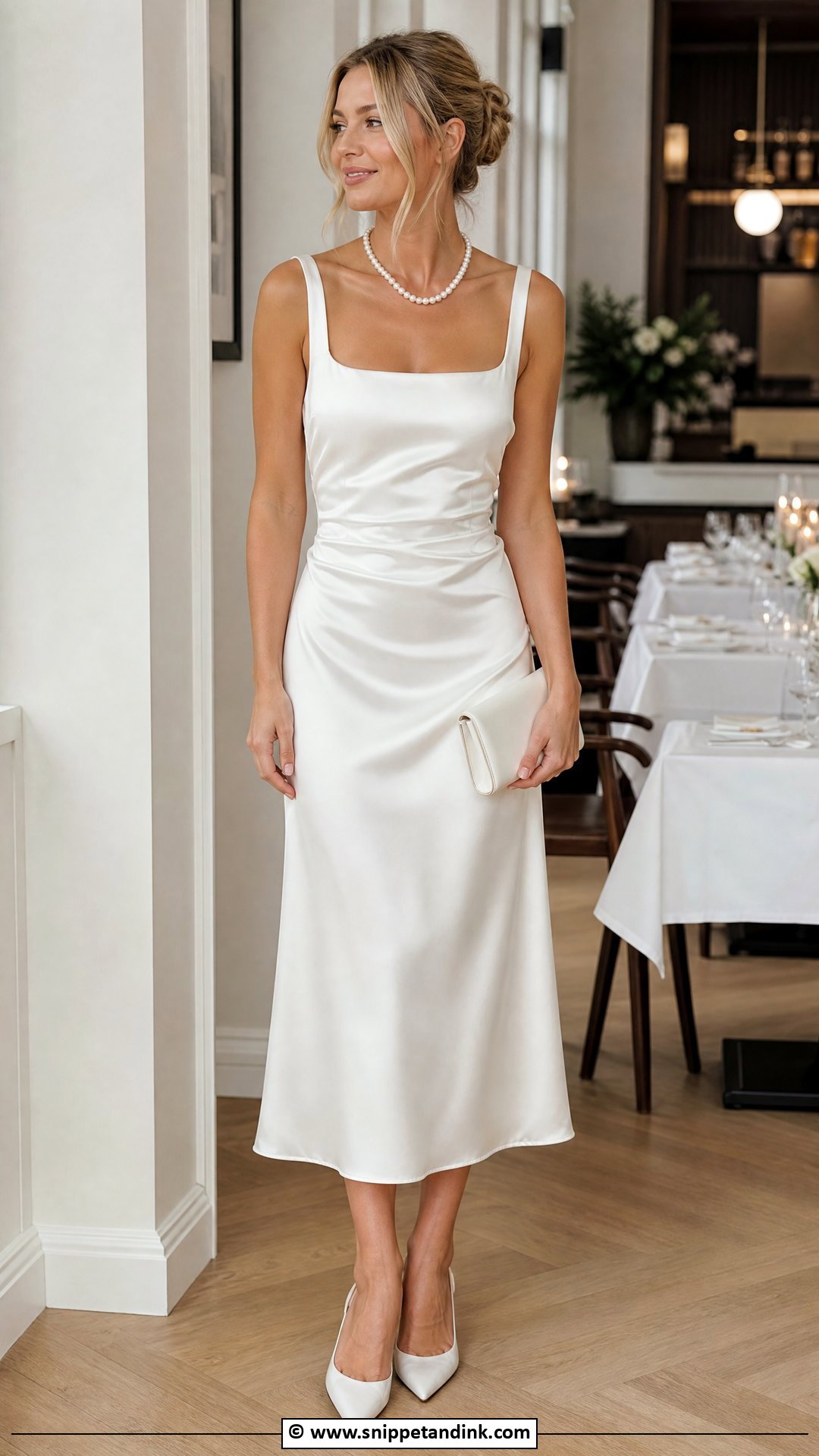
Satin catches light, which is why a plain satin midi looks finished in photos. It also marks easily: water spots, deodorant and creases across the lap all show more on satin than on crepe. If anything spills, blot with a clean cloth rather than rubbing, and try not to sit long in the car on the way. A slip-style or square-neck midi with kitten heels and a pearl necklace suits restaurant receptions and indoor ceremonies. Add a short veil or a crystal clip if you want it to read more bridal.


15. Garden Wedding Tea Length Dress
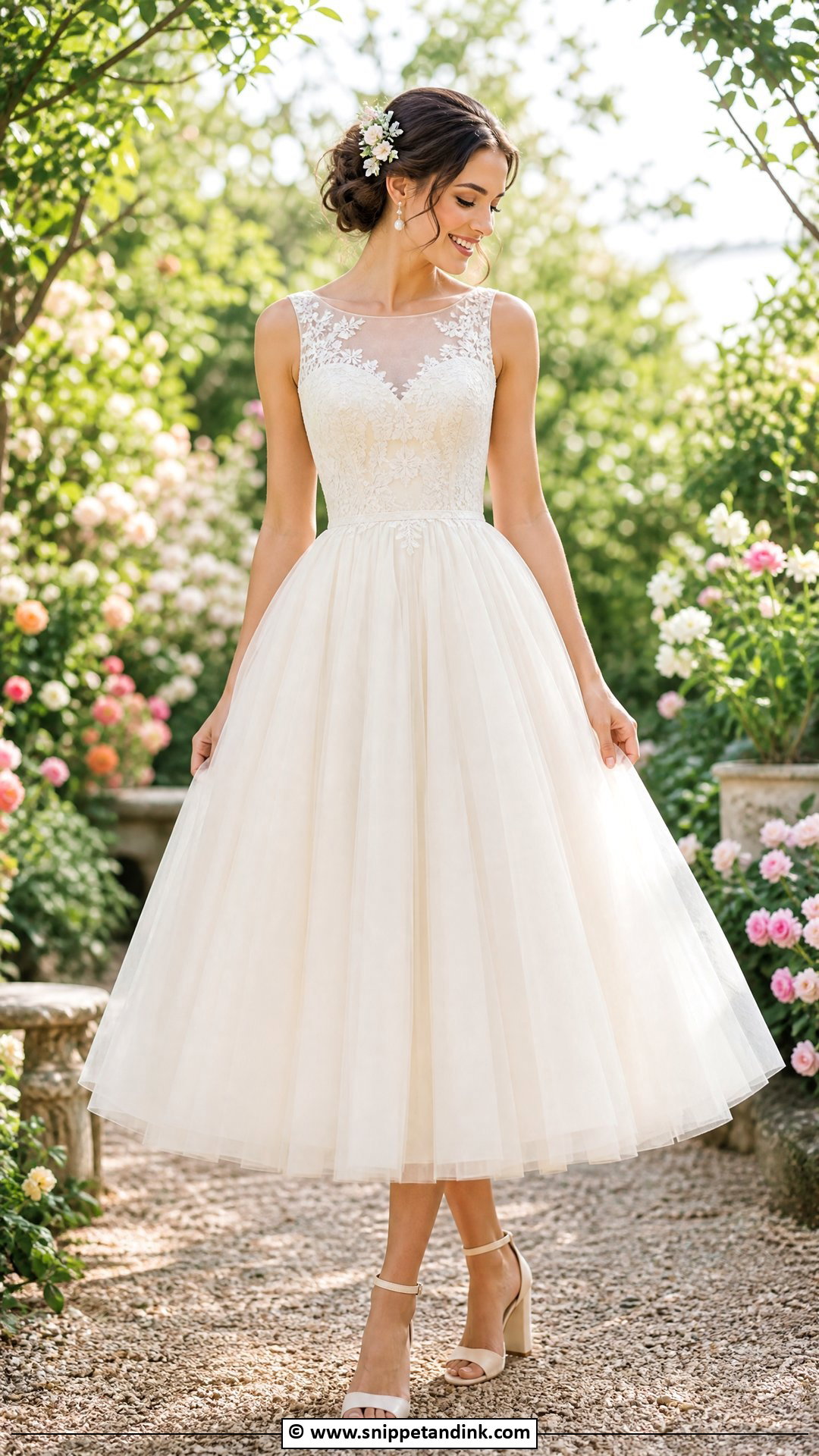
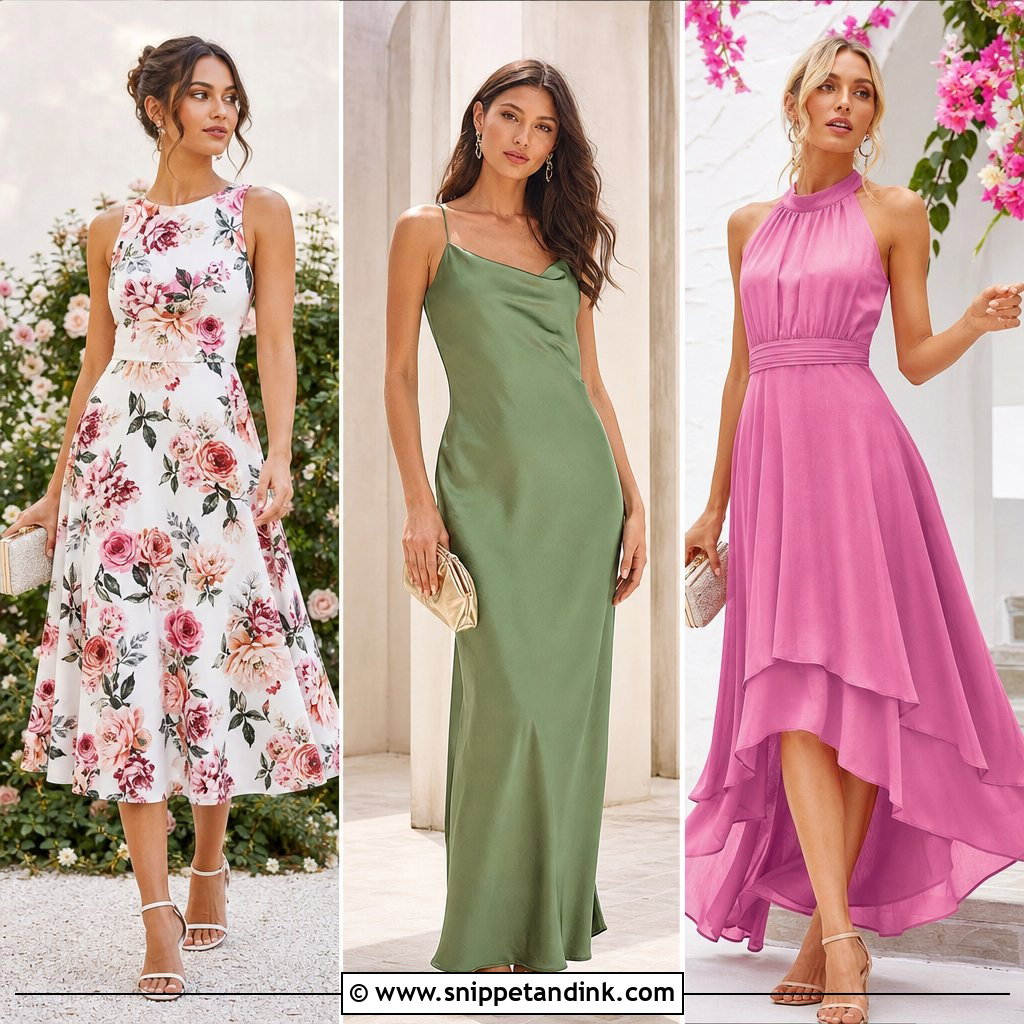
Tea length usually lands at mid-calf, which keeps the hem off wet grass, and that’s the practical reason I suggest it for garden ceremonies. Tulle, organza, cotton and lace all work in white, ivory or blush. Because the length puts your shoes on show, choose a pair worth seeing, and go for wedges or block heels so you don’t sink into the lawn. A soft cardigan or floral hair pin keeps the vintage feeling without looking dated.
16. White Knit Wedding Dress
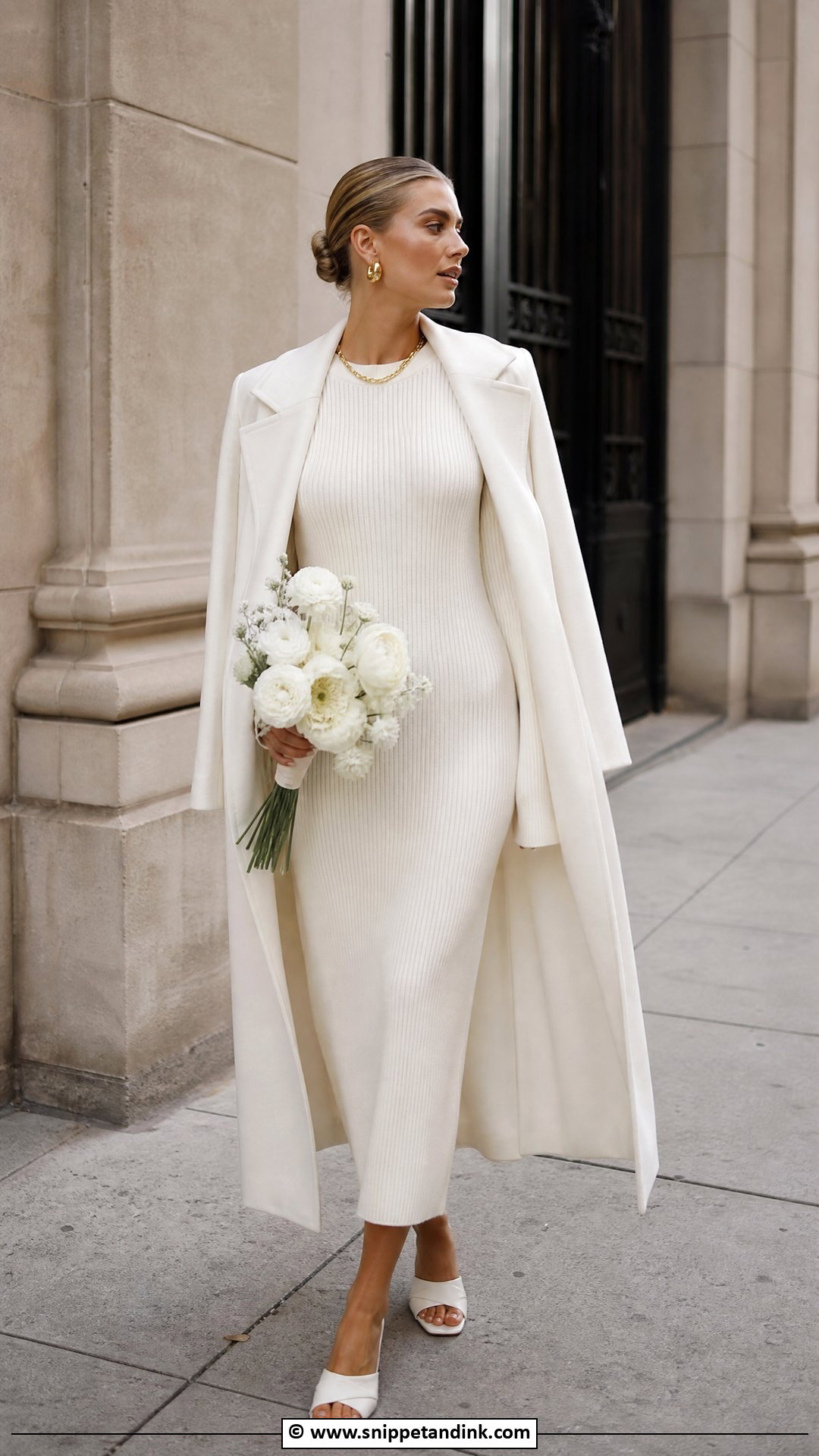
Knit is my favourite cold-weather casual option, but only in a fine gauge. A loose or thin knit shows every line underneath and can bag at the seat after a few hours of sitting. I look for a fine rib or dense jersey with good recovery, and I check it again after the bride has sat down for ten minutes. Skip anything sheer. Pointed flats or ankle boots, gold jewelry, a sleek bun and a structured coat suit a fall elopement or a city ceremony.
17. Long Sleeve Casual Wedding Dress
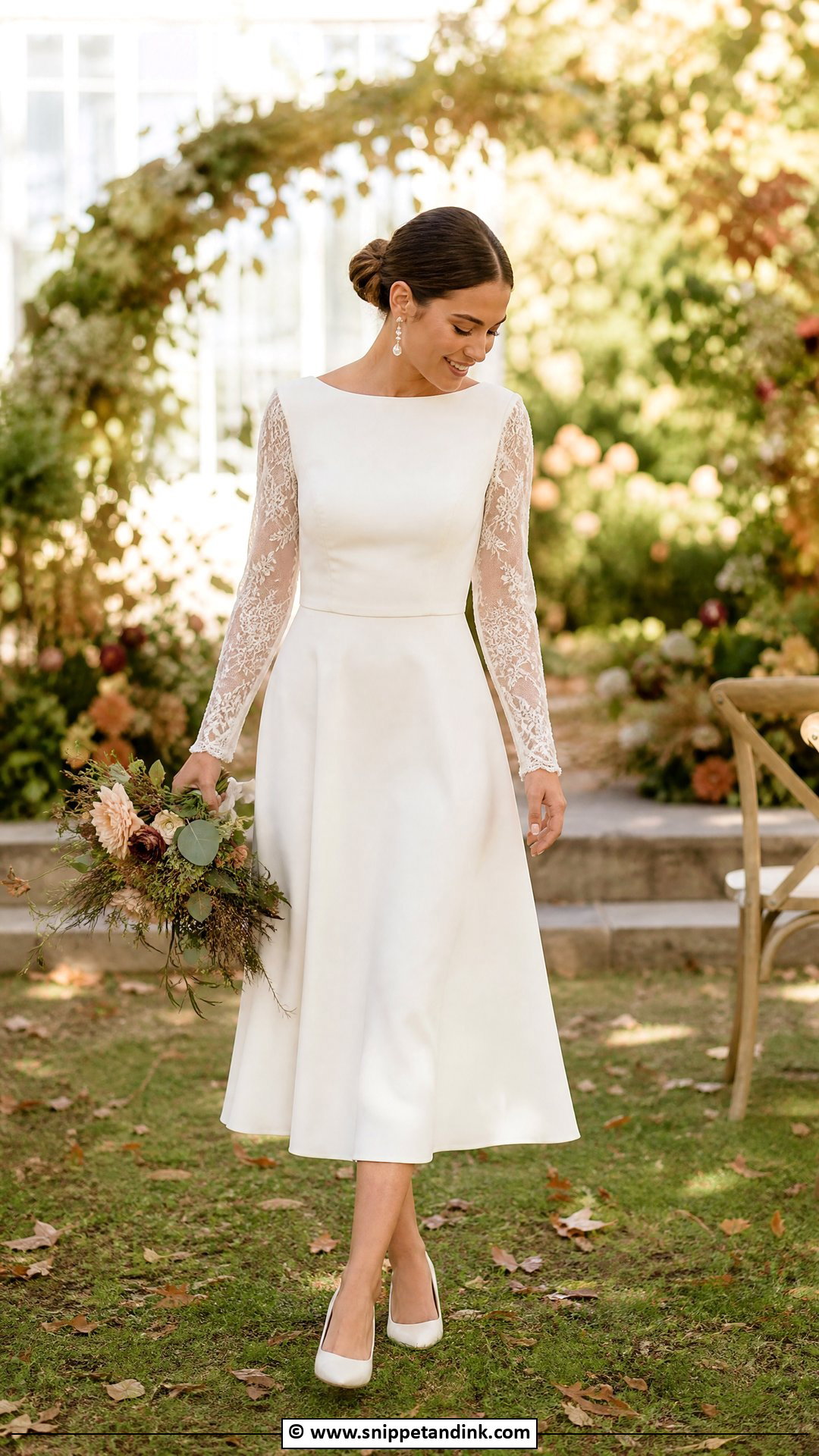
Sleeves change how a dress lets you move. Fitted crepe sleeves restrict reaching up for a hug, so I ask every bride to raise both arms during the fitting; sheer lace and bishop sleeves give far more room. A midi or simple maxi keeps it practical for spring, fall and courthouse weddings. Block heels or ballet flats, delicate earrings and a low bun keep the attention on the sleeve. Long sleeves also balance a shorter hem or lower neckline if you want either.
18. White Blazer Dress Wedding Look
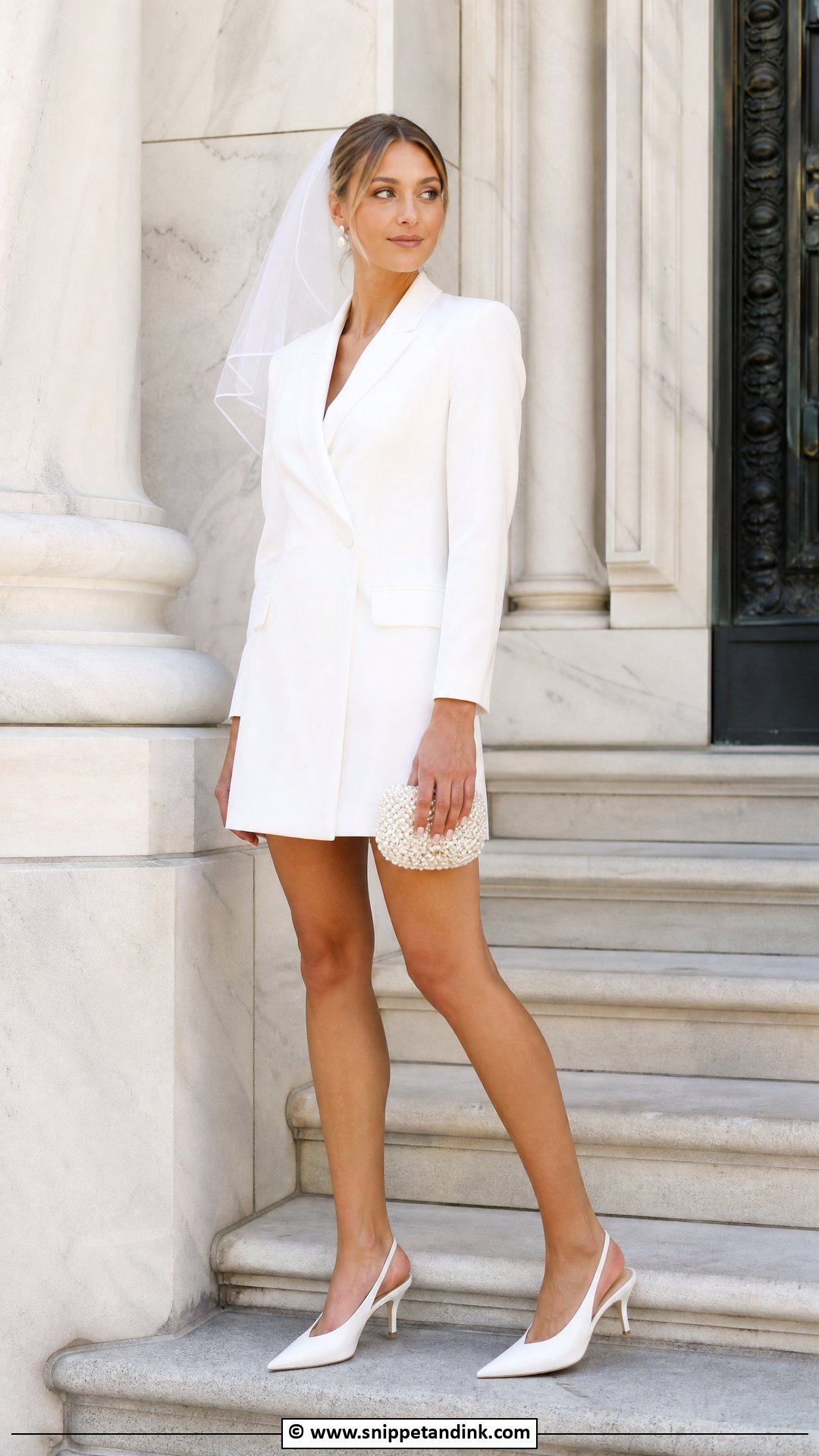
A blazer dress is tailoring, so it needs a tailor. Shoulders can barely be altered, so buy for the shoulders and have the waist taken in. I check that the lapels lie flat when you sit, because a double-breasted front tends to pull open at the bottom button. Slingbacks, pearl studs and a short veil or bow make it read as bridal. If the hem feels short for a ceremony, tailored shorts underneath solve it. Courthouse and rooftop weddings suit it best.
19. Casual Tulle Wedding Dress
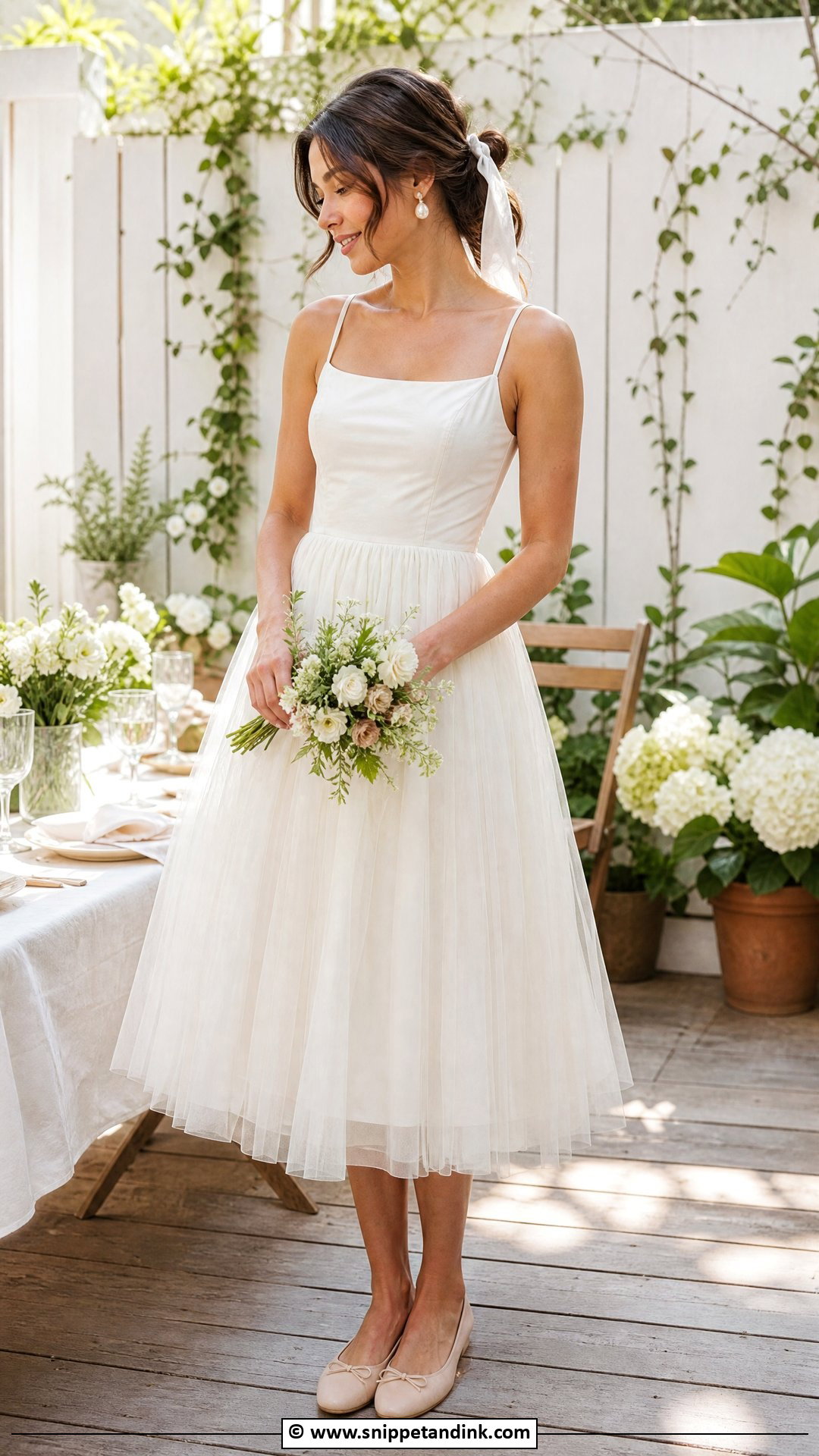
Tulle at midi or tea length keeps the softness without ballgown volume. I’d stick to one or two layers; more than that and it starts to look like a dress-up skirt. Tulle snags on bracelet clasps, rough benches and bouquet wire, so check what will brush against it. Ballet flats or low heels, pearl earrings and a ribbon in your hair keep it sweet for a garden or backyard ceremony where you still want a bridal moment.

20. White Maxi Skirt Wedding Outfit
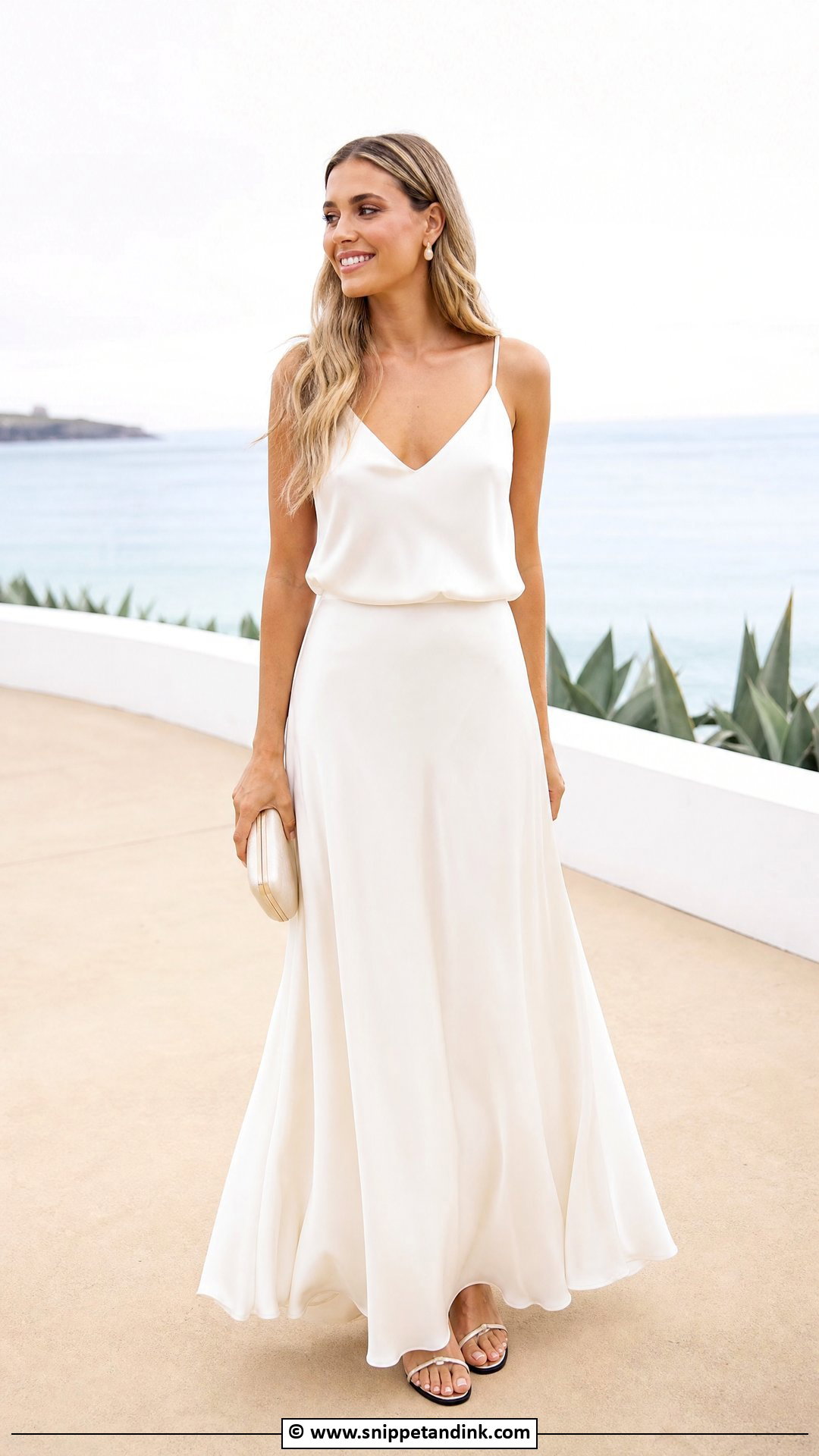
If you’re between sizes, a white maxi skirt with a separate top is the easiest way to get a good fit at both ends. A lace top, silk camisole, fitted knit tank or cropped blouse all pair well, as long as the whites sit close in tone. The trap is a flash of skin at the waist when you raise your arms, so I either tuck the top or choose one that meets the waistband. Low heels or sandals suit beach and backyard venues, with soft waves and a delicate necklace.
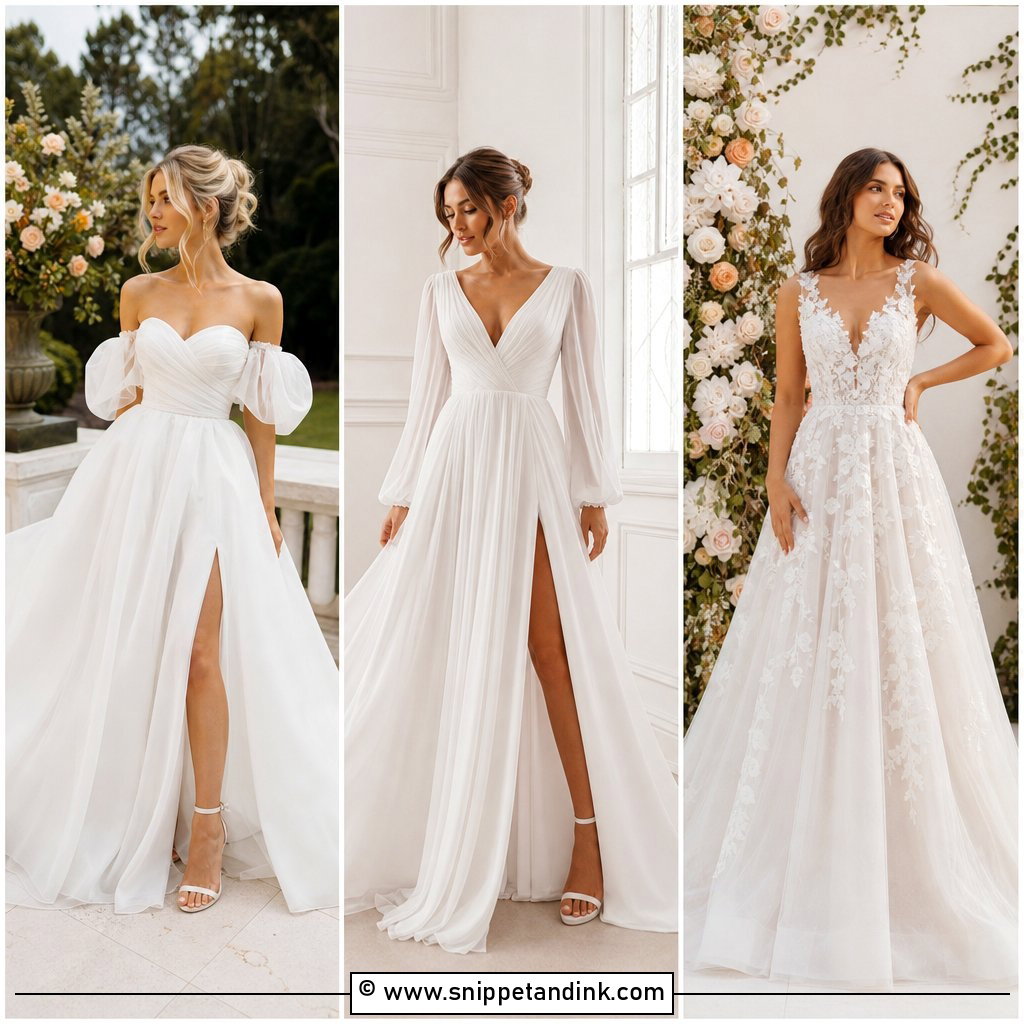
21. Casual Wedding Dress With Sleeves
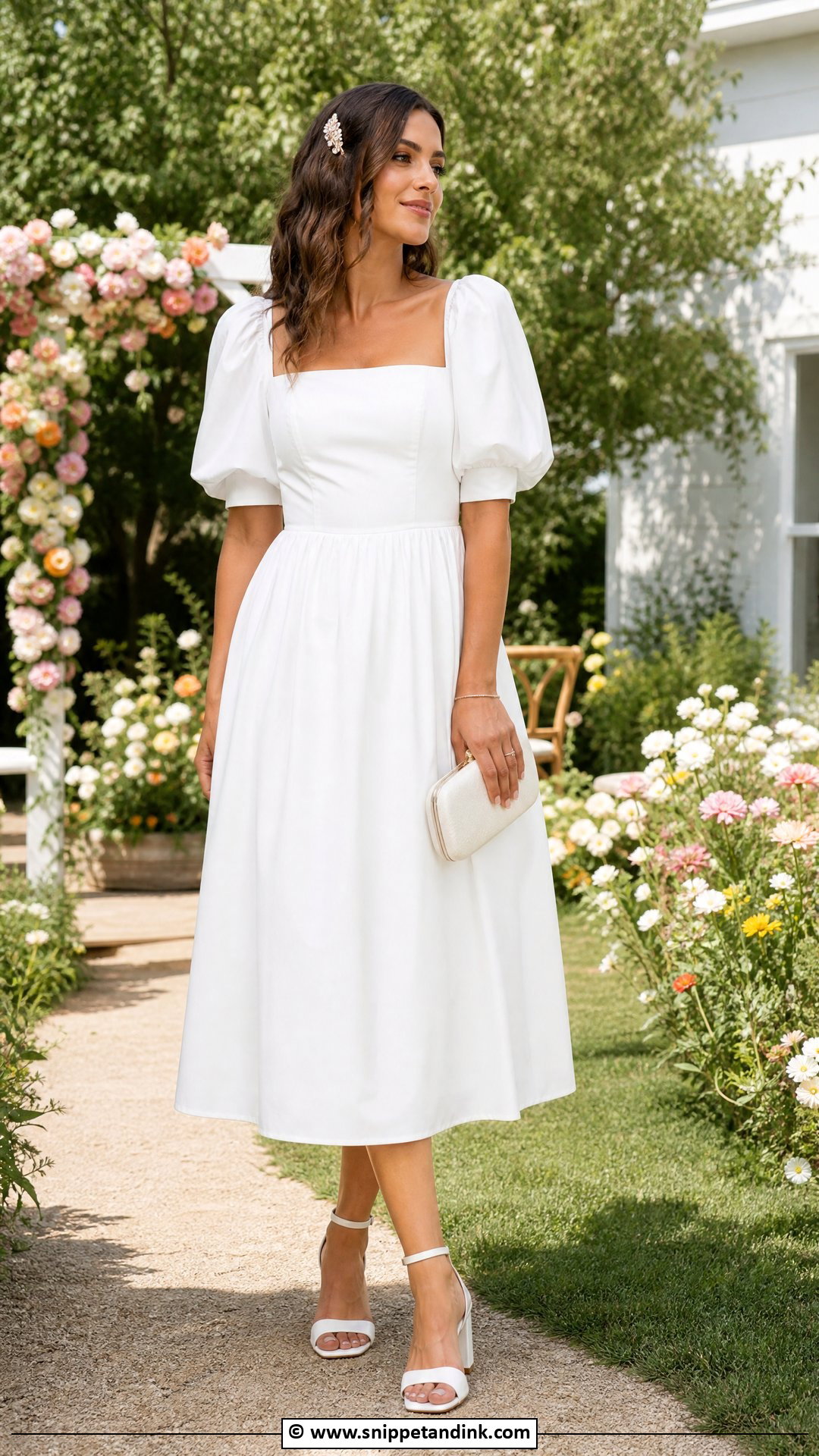
Each sleeve sets a different tone: puff reads playful, flutter reads soft, cap reads neat, sheer reads romantic. I look at your shoulders and upper arms before choosing, since puff sleeves widen the shoulder line and flutter sleeves soften it. Cotton suits summer; crepe or satin suits cooler months, ideally at midi length. Block heels or flats, a small clip and a clean clutch are enough. Sleeves make a simple dress interesting without any decoration, which is why they work so well at family-style receptions.
22. White Halter Wedding Dress
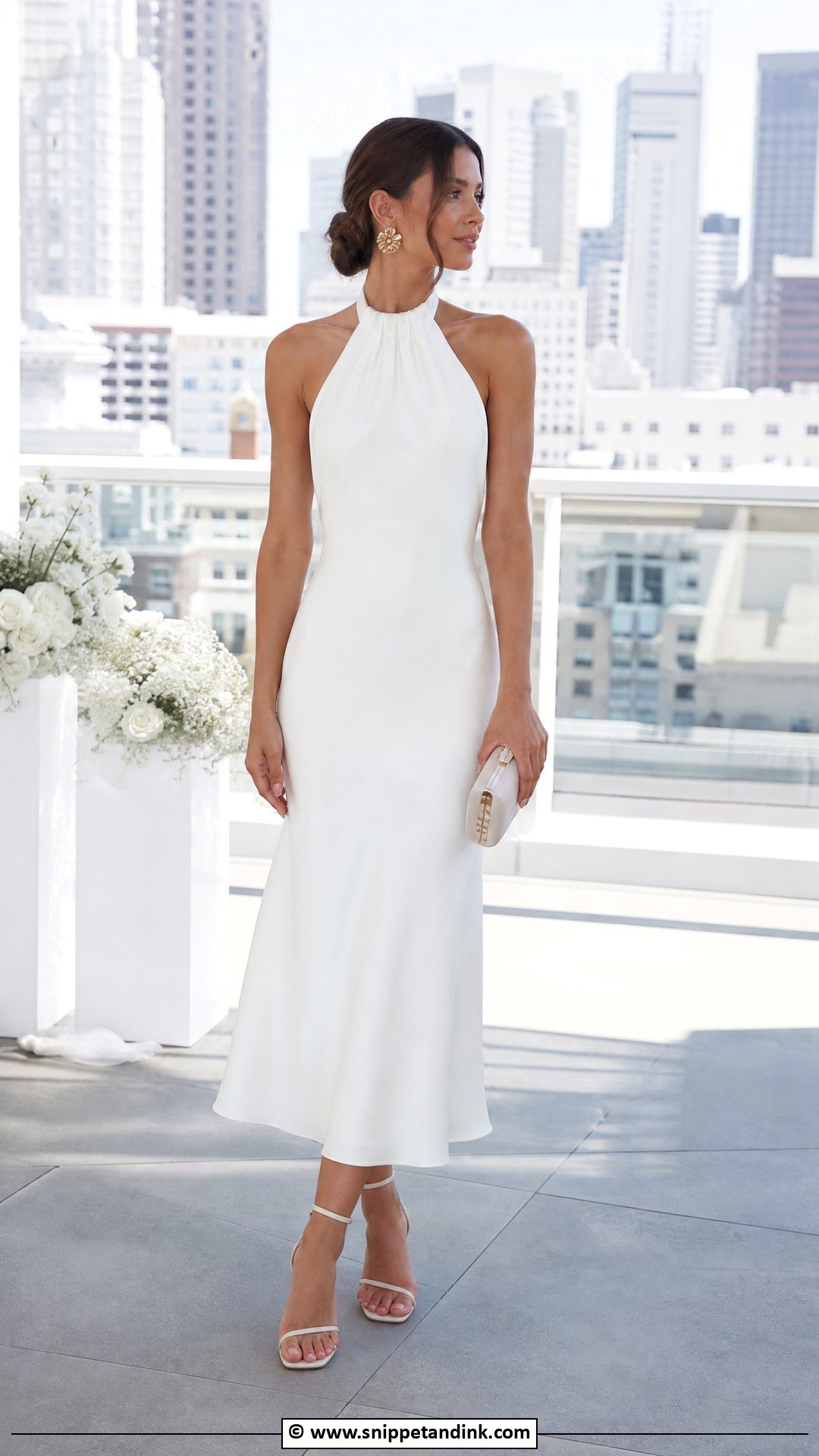
Halters flatter strong or broad shoulders, show off the back, and need very little jewelry. What I check is the neck strap. A thin tie halter pulls on your neck over a long day, so a wider band or a clasp is kinder. Satin, crepe or light cotton in a midi or relaxed maxi suits beach and rooftop weddings; a flowing skirt softens it, a column shape makes it modern. Heeled sandals, gold earrings and a low bun keep the neck clear.
23. White Off Shoulder Wedding Dress
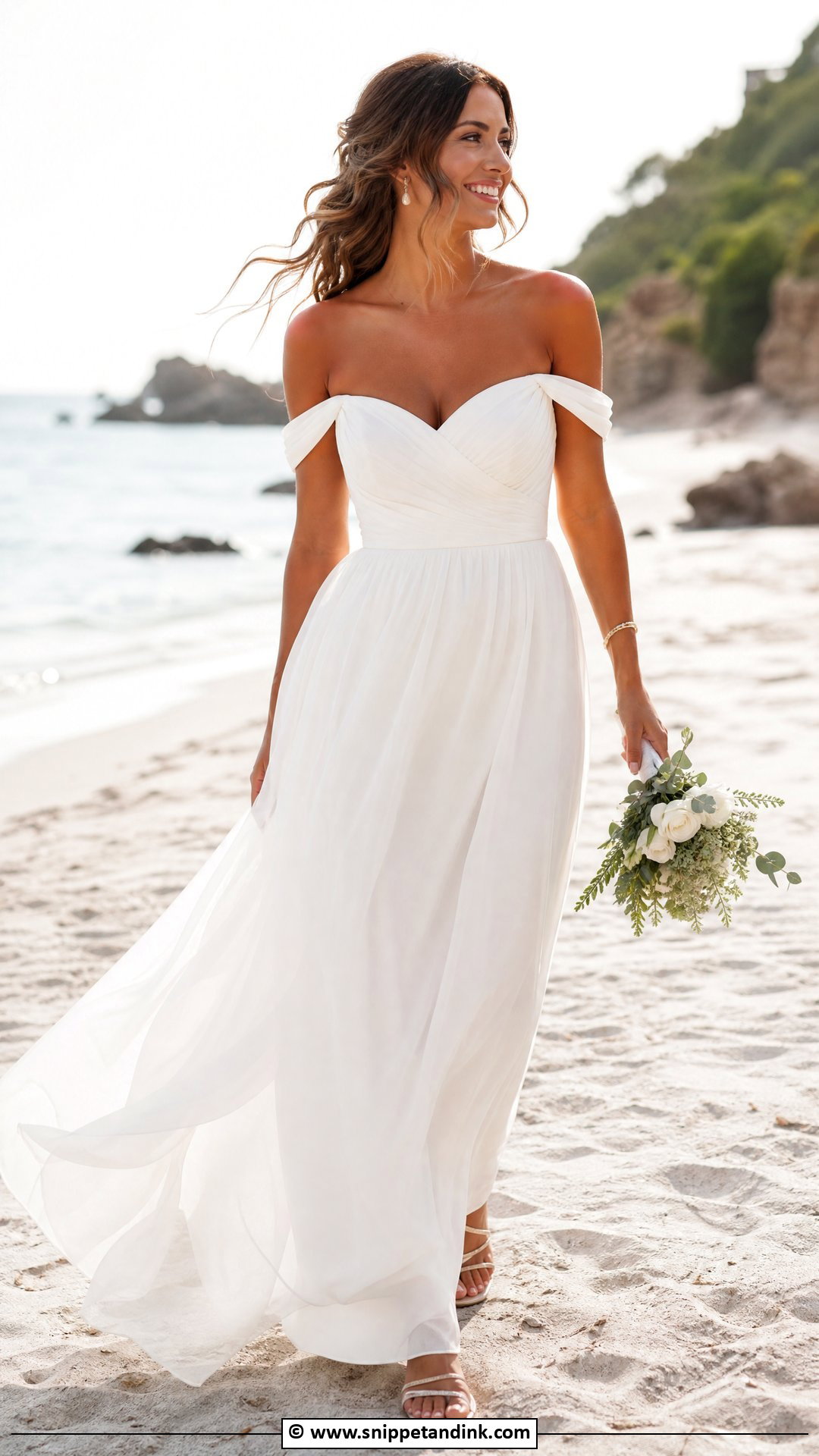
Off-shoulder necklines slide. I test them with arms up and arms out, as if hugging, because elastic necklines creep up and boned ones can slip down. A stretch crepe or cotton midi with a silicone gripper band inside holds best. Keep jewelry small, since the neckline already frames your face, and wear loose waves or a low bun at a beach, garden or backyard wedding. If you’ll be greeting guests for hours, choose a version with a hidden clear strap.
24. White Square Neck Wedding Dress
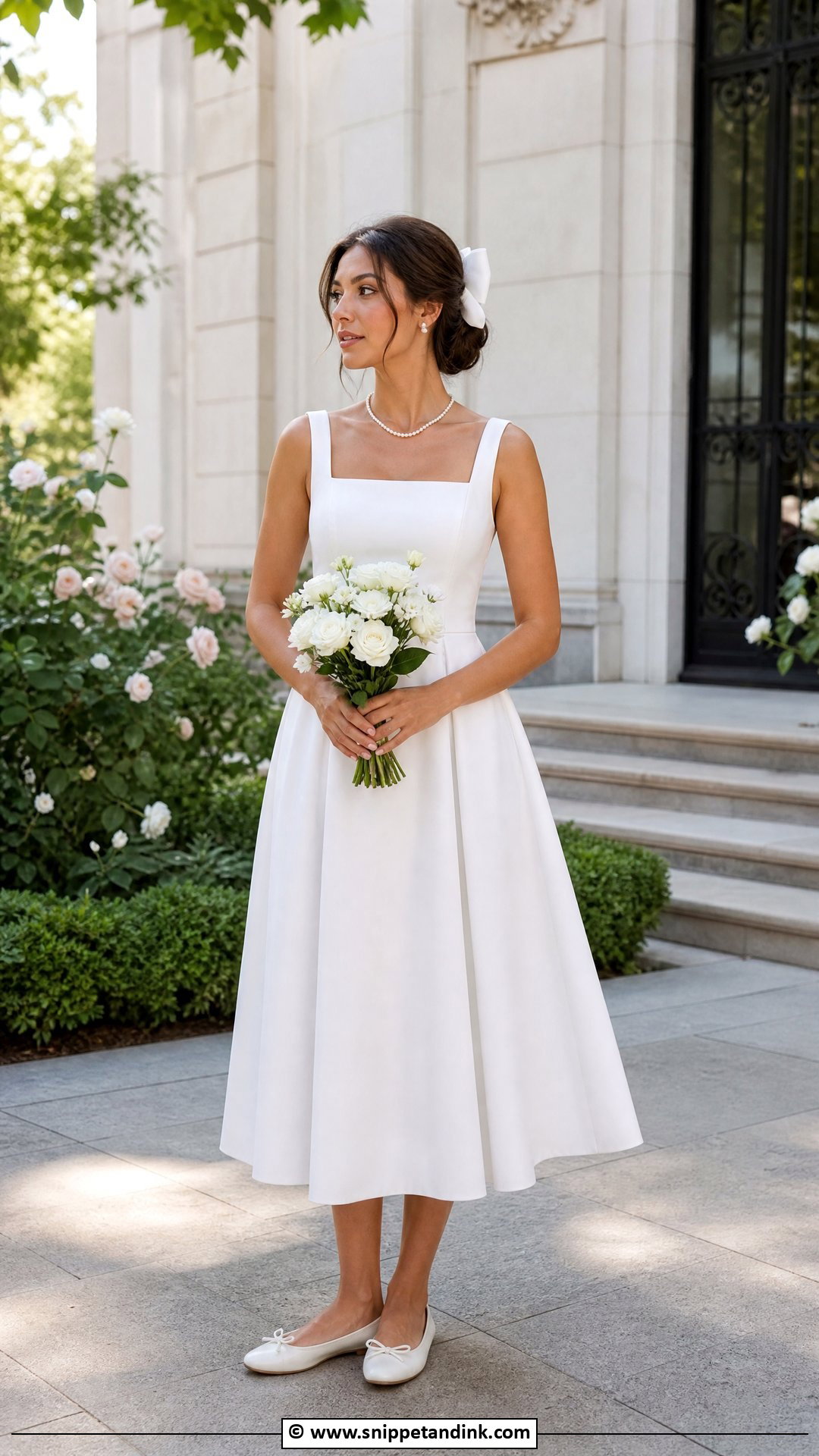
A square neck frames the collarbones and suits most bust sizes, which is why I suggest it so often. The fit point is the corners of the square: if the bodice is too wide, they gape forward when you lean. A cotton midi, satin slip, linen dress or crepe fit-and-flare all work. Ballet flats or low block heels, a pearl necklace and a soft bun keep it neat, and it pairs well with a short veil or bow clip.
25. Casual Wedding Dress With Pockets
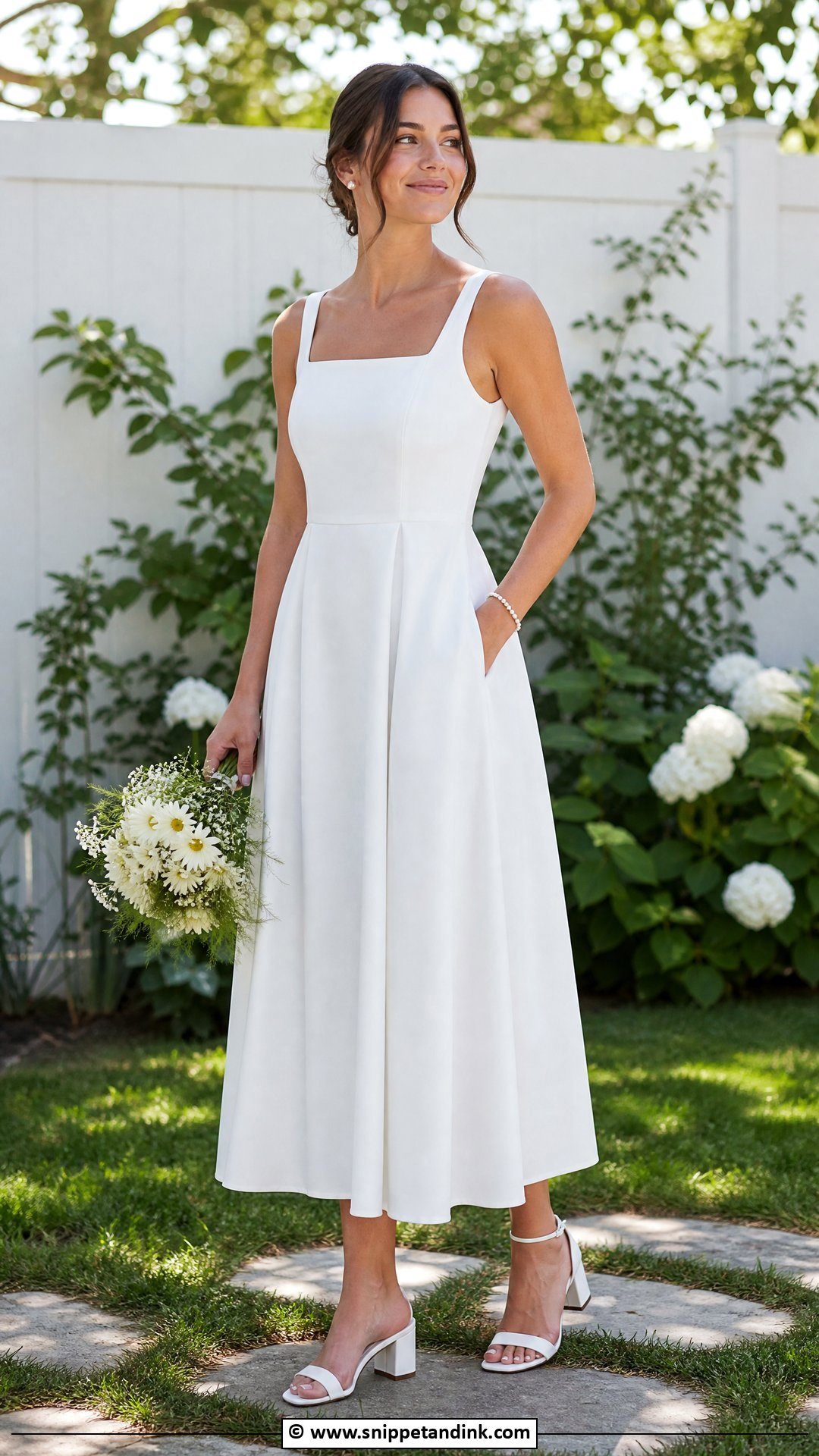
Brides love pockets, and so do I, as long as the fabric can carry them. In soft cotton, anything heavier than a tissue pulls the skirt out at the hips, so I prefer mikado, poplin or linen with enough body to hide a lip balm and a phone. A relaxed skirt at midi or tea length works best, with block heels or white sandals, pearl studs and a small bouquet. Hands in pockets also give camera-shy brides something to do in portraits.
26. White Babydoll Wedding Dress
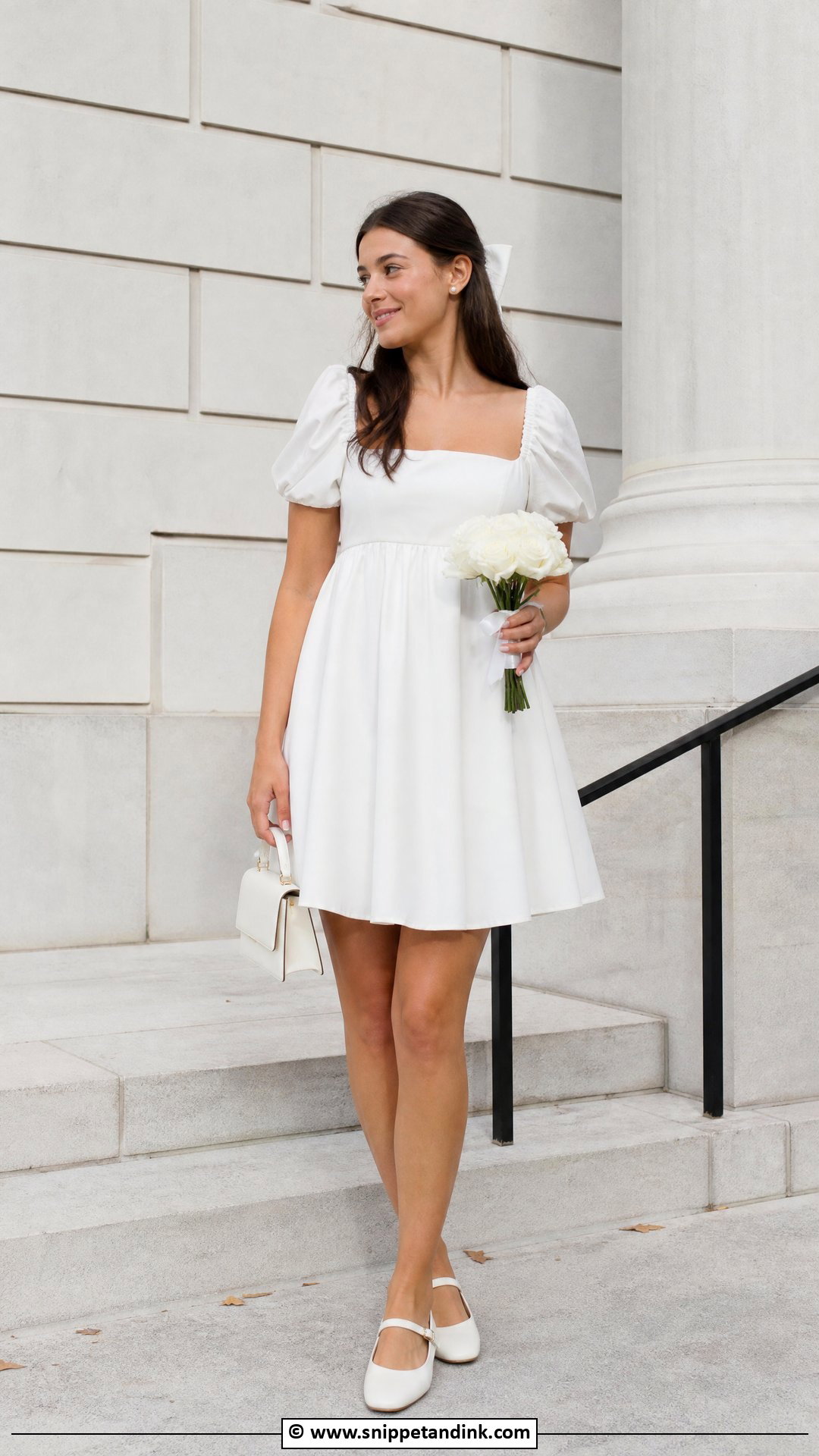
A babydoll’s high waist and loose skirt stay cool in hot weather, but in thin fabric the shape can read young or look like maternity wear. I’d look for crisp cotton, poplin or a light lace with a neatly finished hem. Short or midi lengths with Mary Jane flats, a bow clip and pearl studs suit a courthouse wedding or a daytime reception. A small structured bag adds the polish that stops it looking like everyday clothes.
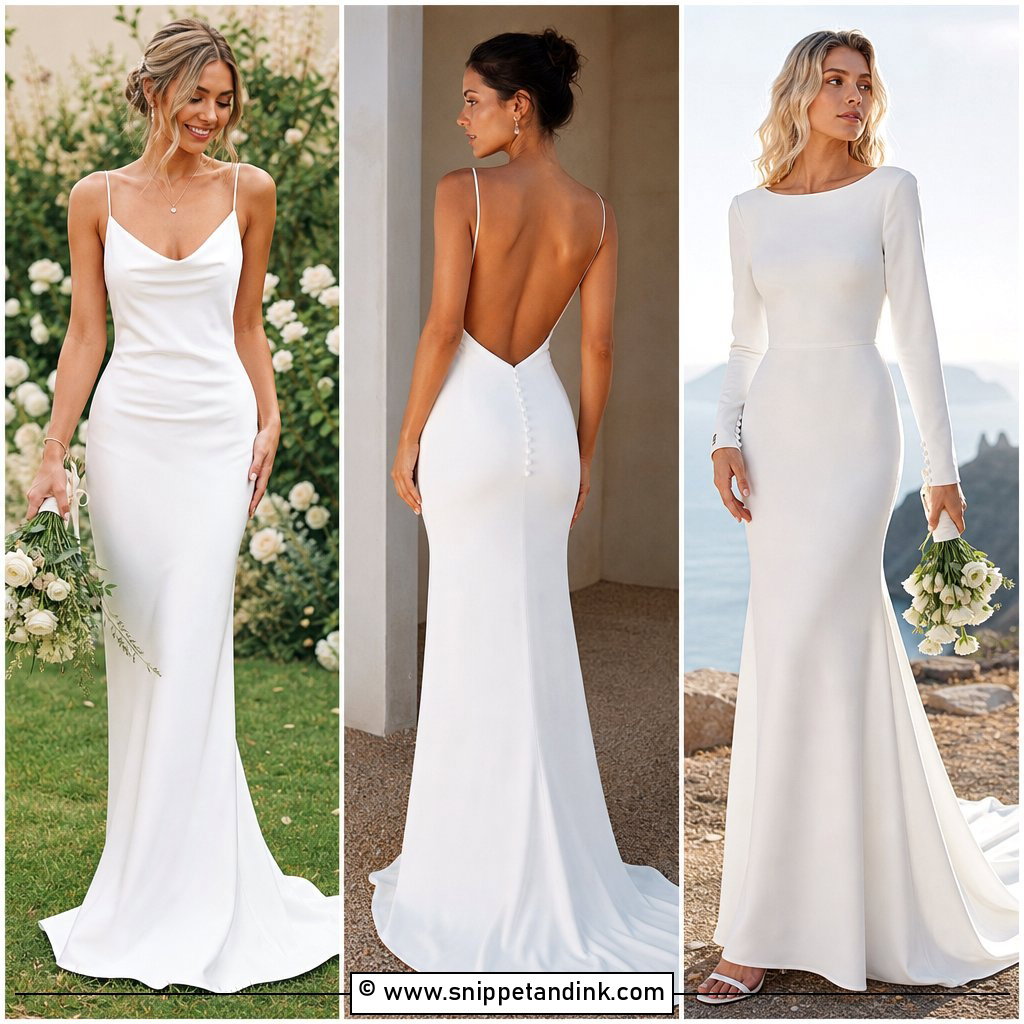
27. Casual Mermaid Wedding Dress
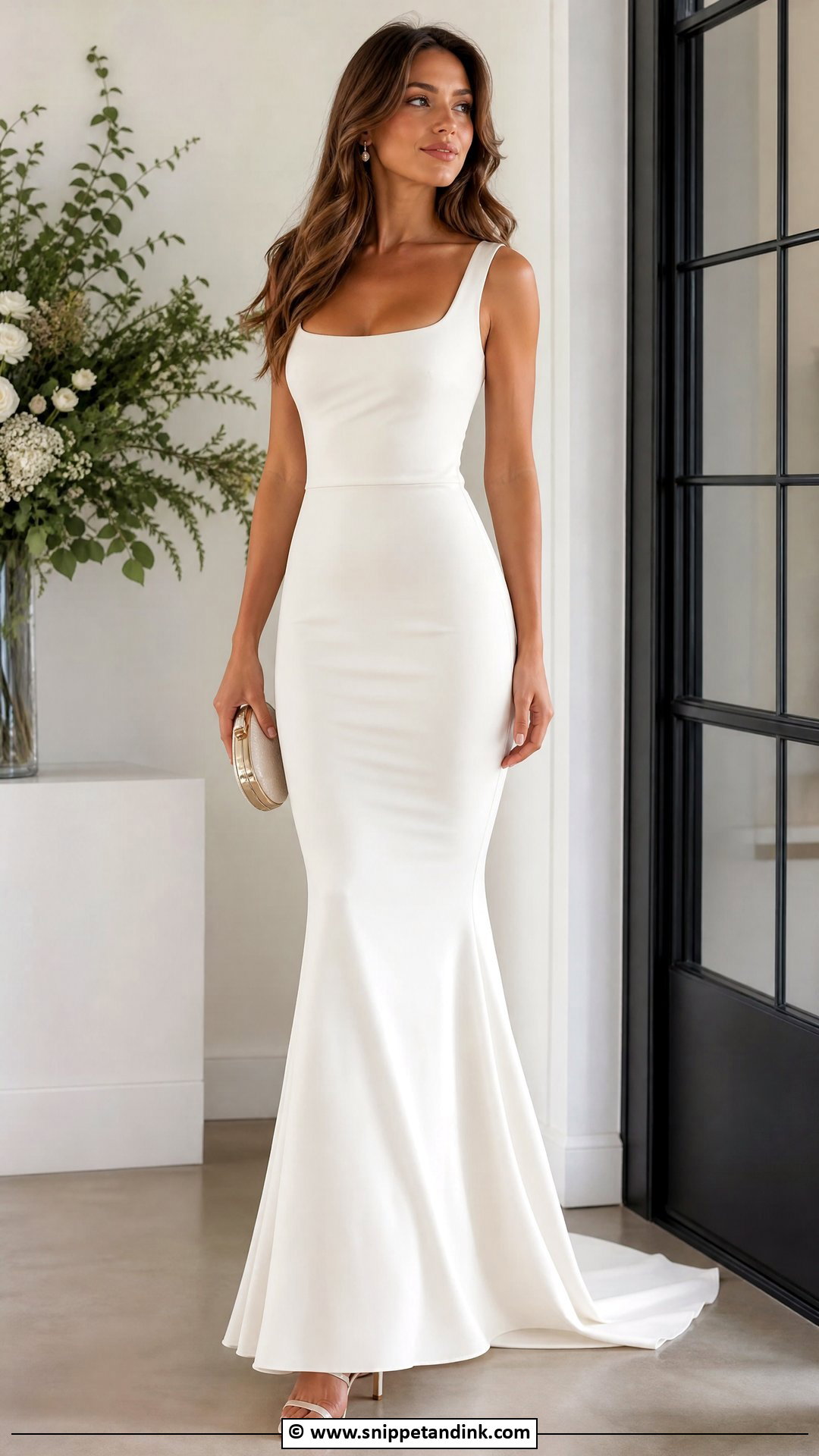
A casual mermaid is fitted through the hip and flares low, so the fitting work all happens around the hips and knees. I check that you can sit, take stairs and dance; if the flare starts too low, walking turns into a shuffle. Soft crepe, stretch lace or smooth satin with little decoration keeps it relaxed. Simple heels and a sleek bun or soft waves suit restaurant and indoor weddings. Skip the train and heavy beading if you want it to stay casual.
28. White High Low Wedding Dress
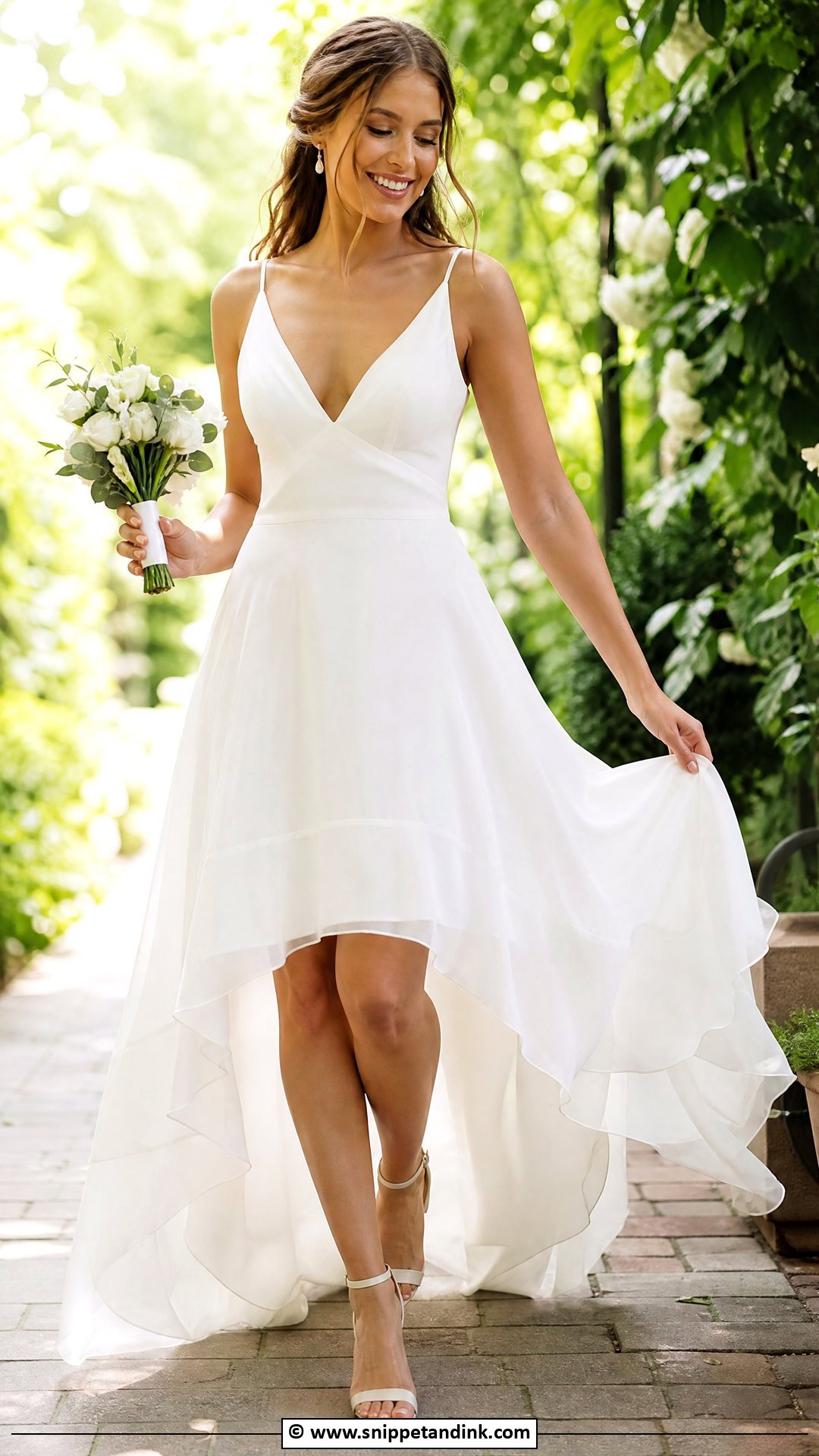
High-low hems show your shoes in front and give a little bridal sweep behind. The back is where problems start outdoors, because it drags through grass or sand. I keep it short enough to clear the ground when you walk, or add a small bustle loop. Cotton, chiffon, satin or lace all work. Statement flats or block heels make the front worth showing, and the movement suits garden and beach ceremonies.
29. White Smocked Wedding Dress
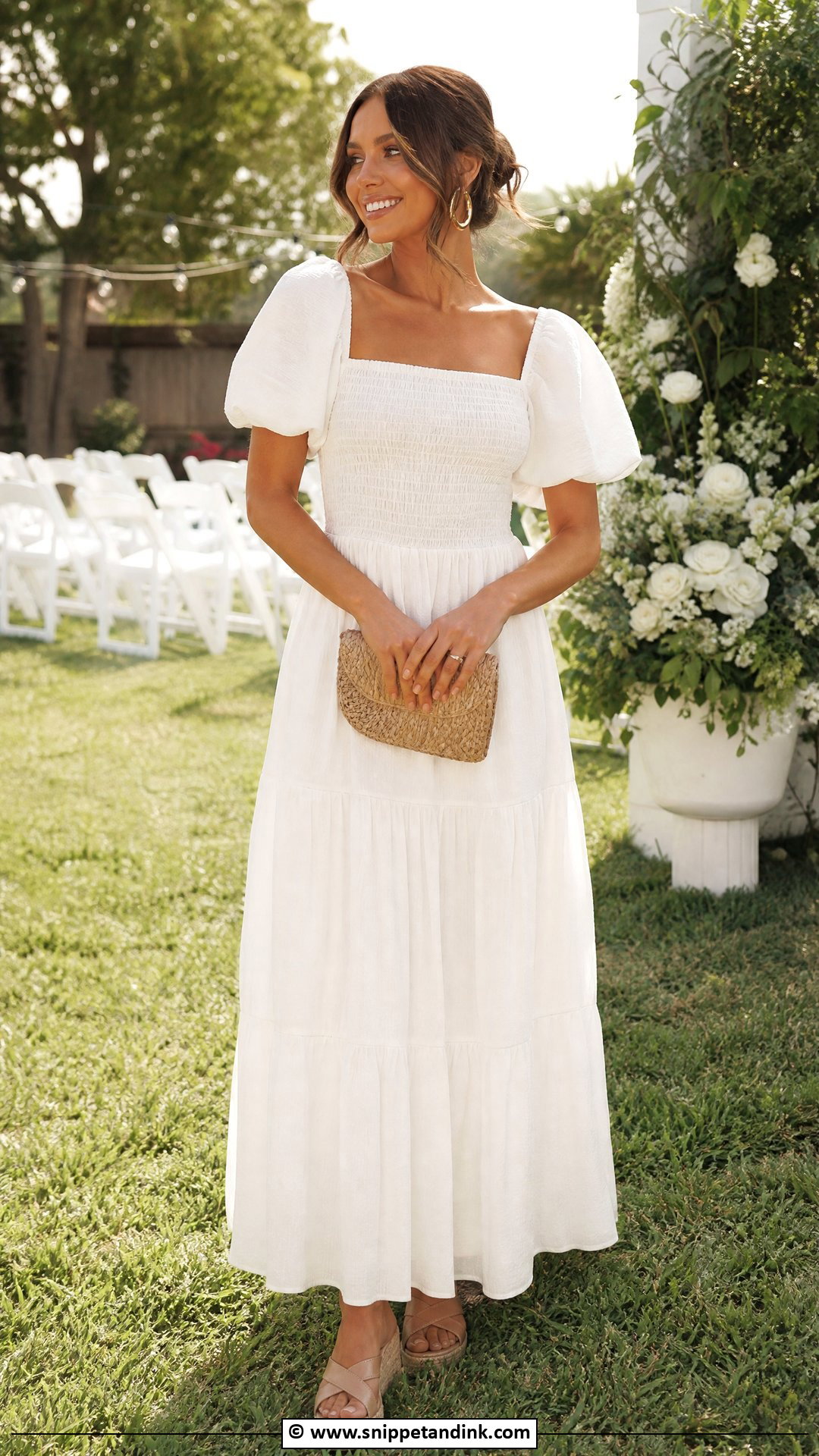
A white smocked wedding dress stretches through the bodice, so it’s comfortable for eating and dancing and copes with small weight changes before the wedding. That stretch also means less support, so sort out the bra question early; stick-on cups or sewn-in cups usually beat visible straps. Cotton and linen blends suit warm weather, with espadrilles, small gold hoops and a woven clutch. Press it, and check that the smocking hasn’t puckered unevenly in the packaging.
30. White Tiered Wedding Dress
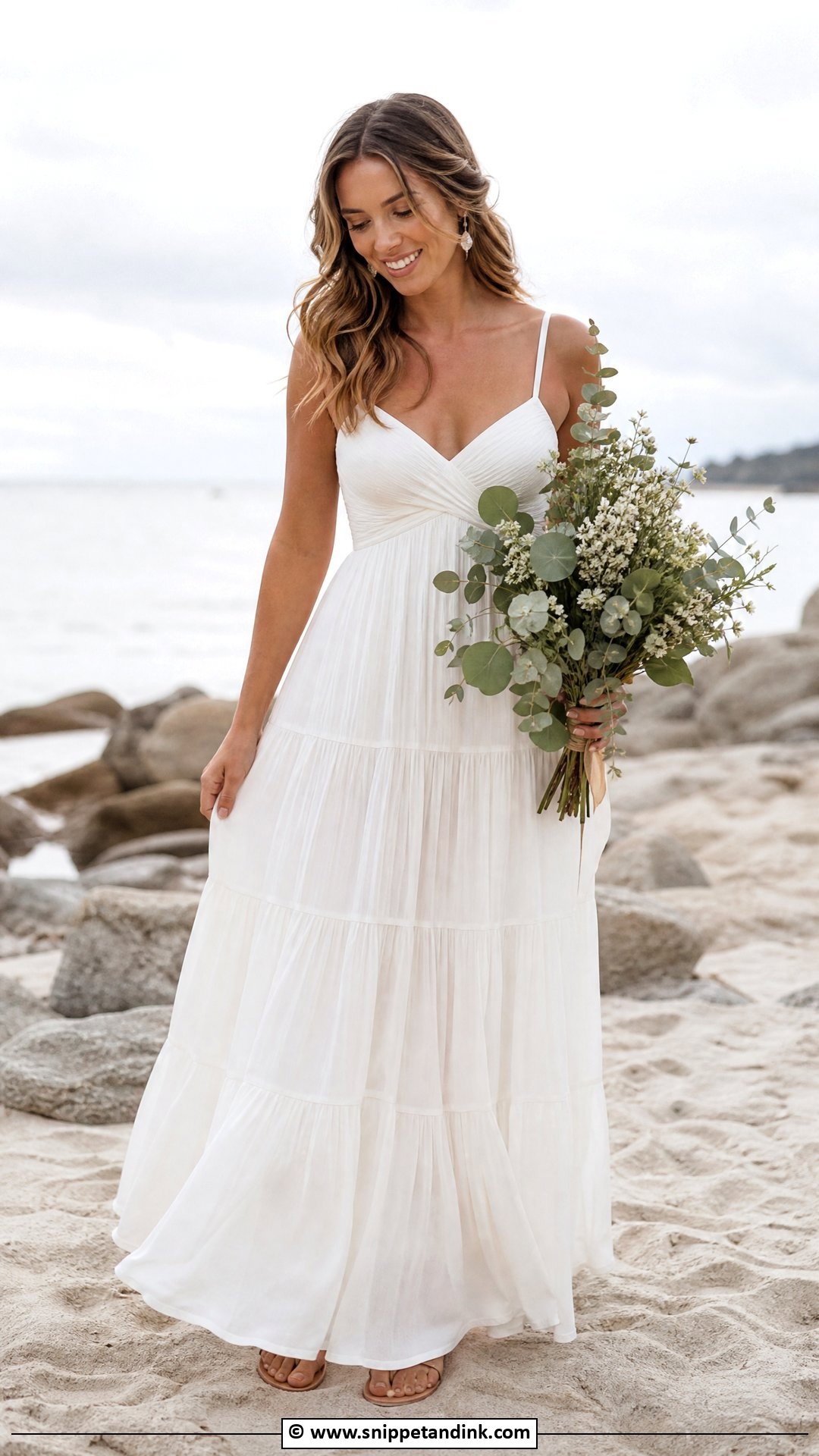
Tiers give movement, but several tiers of thick cotton add bulk right at the hip. I look for light cotton, chiffon or gauze with gently gathered tiers, plus a fitted bodice or defined waist so the dress doesn’t swallow you. A midi or maxi with flat sandals or espadrille wedges suits beach and garden weddings. Loose waves and a natural bouquet are all it needs.
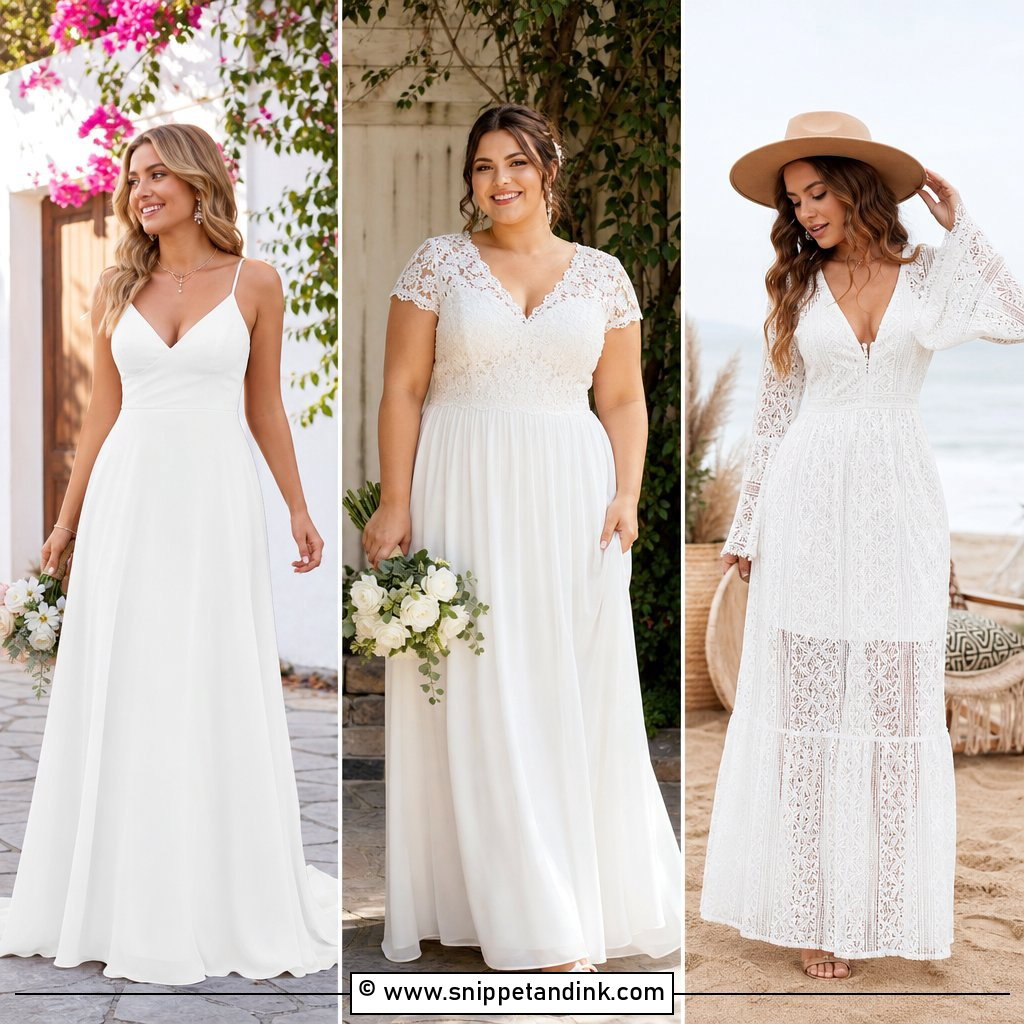
31. Casual Plus Size Wedding Dress
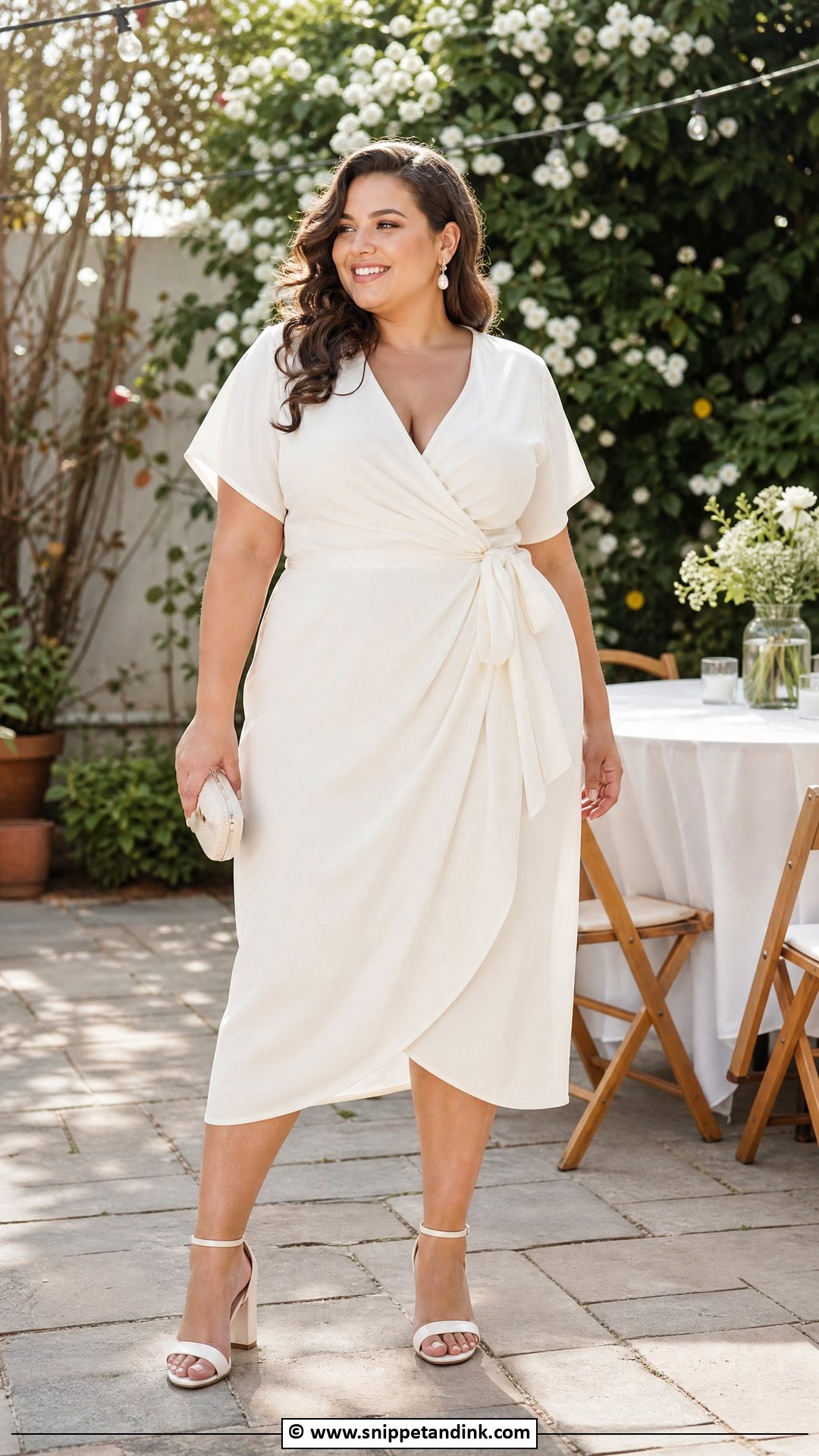
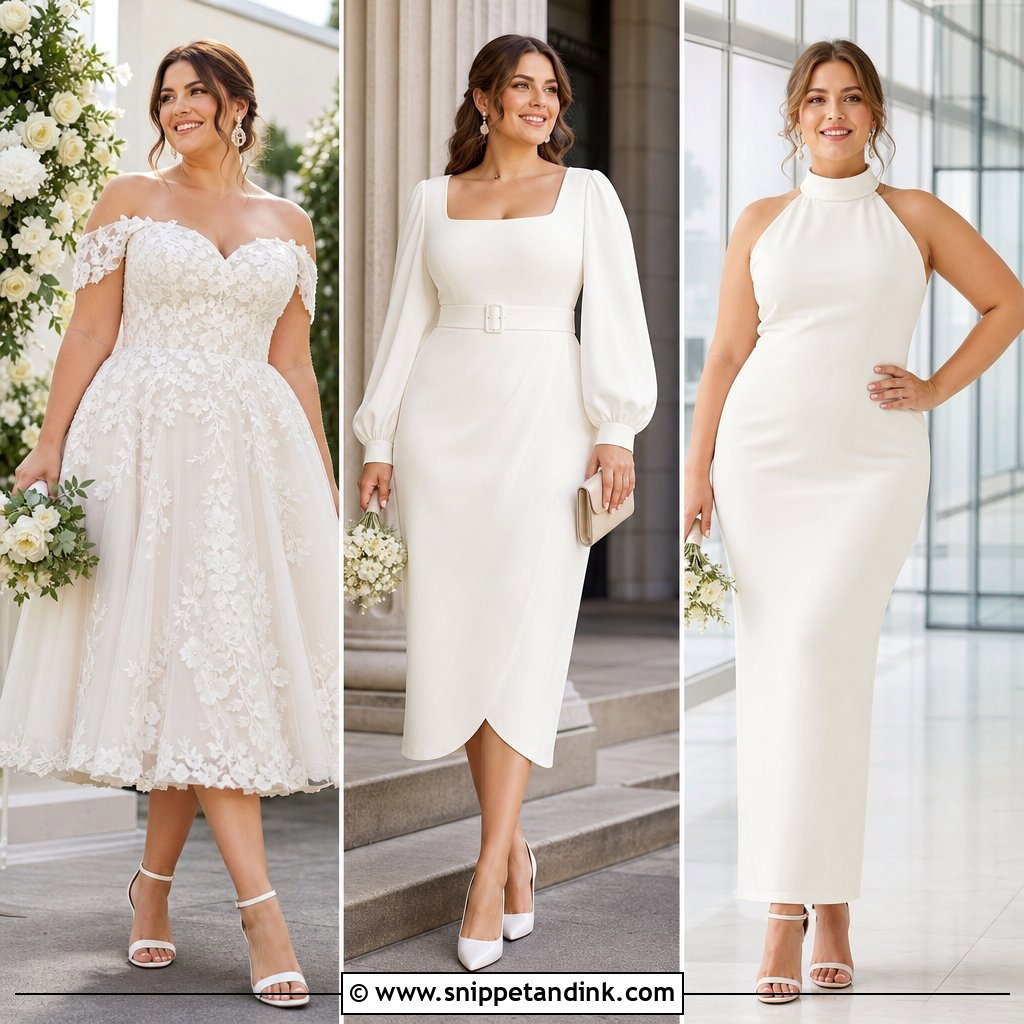
For plus-size brides, fit through the bust, waist and shoulders matters more than any trend. Wrap dresses, A-line midis, soft maxis and square necks work well because they adjust or skim rather than cling. I sort the underlayer early, since a slip or smoothing layer stops crepe and satin from catching on the body. Choose block heels or cushioned flats you can stand in for hours, then add pearl earrings and a simple clutch. A relaxed bridal look should never feel like a compromise; it should feel made for you.
32. Casual Maternity Wedding Dress
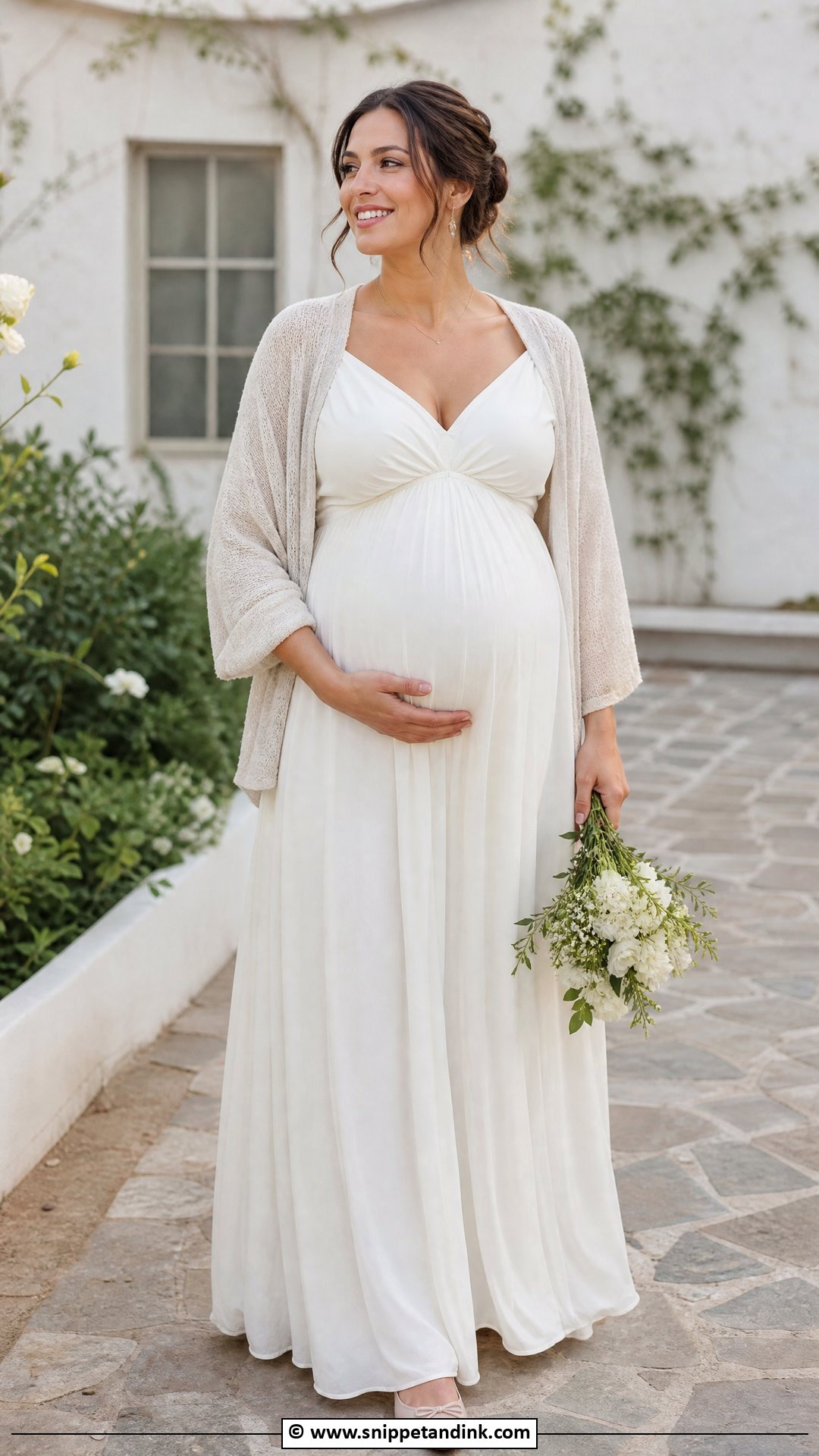
A casual maternity wedding dress needs room for the bump to keep growing between the fitting and the wedding, so I book the final fitting as close to the day as I can. Empire waists, wrap maxis, smocked midis and stretch crepe all give with you; stiff waistbands don’t. Cushioned flats or block heels matter more in pregnancy because feet often swell by evening. A V-neck or flutter sleeve adds shape, and a soft cardigan covers a cool evening.
33. Casual Wedding Dress With Boots
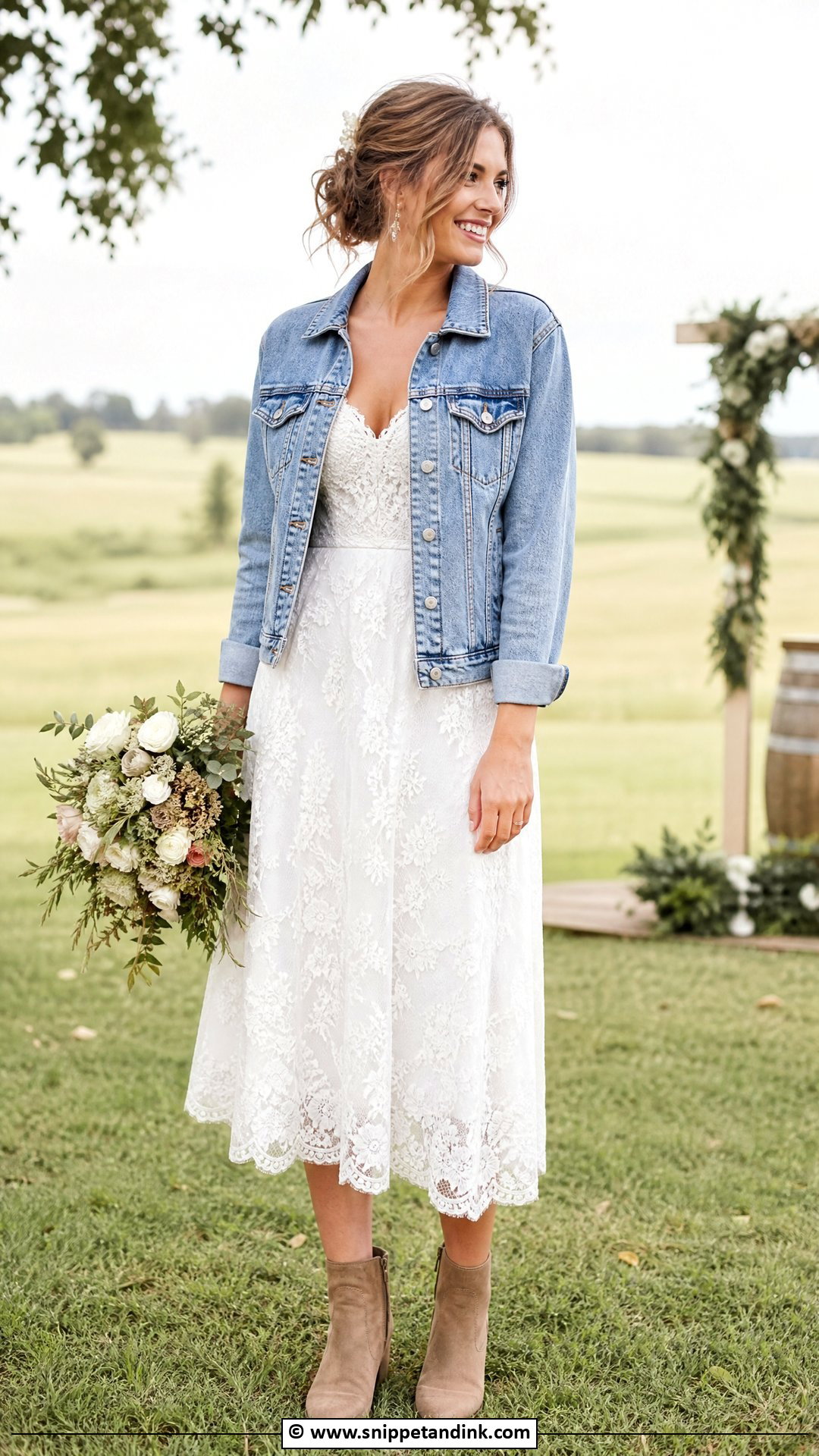
Boots suit rustic and outdoor weddings, but they have to look chosen rather than forgotten. I match the boot to the dress tone: ivory boots with white, tan or soft brown with ivory and lace. Ankle boots suit a mini or midi; western boots suit open fields and barns. The hem should either show the boot clearly or cover it, since a hem that cuts the shaft halfway looks unplanned. A denim jacket or cropped cardigan handles a cool evening.
34. White Casual Reception Dress
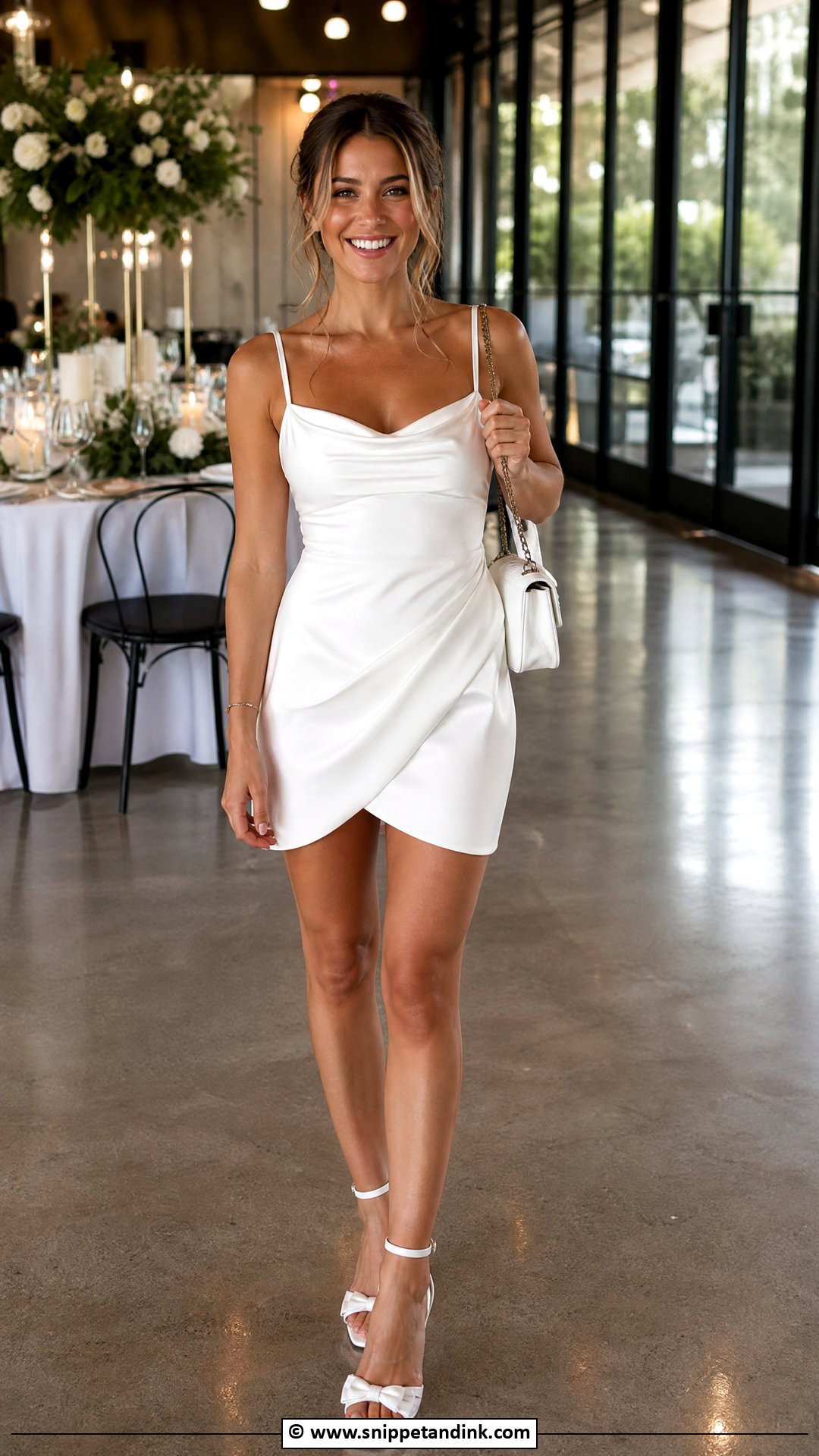
Changing after the ceremony lets you dance without managing a long skirt. A short satin dress, a restrained feather-trim mini, a lace shift or a fitted midi all work. I plan the change itself: a dress with a side zip you can close alone saves time and a hunt for a bridesmaid. Low heels or dressy flats, sparkling studs and a small bag keep it reading as the bride’s outfit.
35. Minimalist Casual Wedding Dress
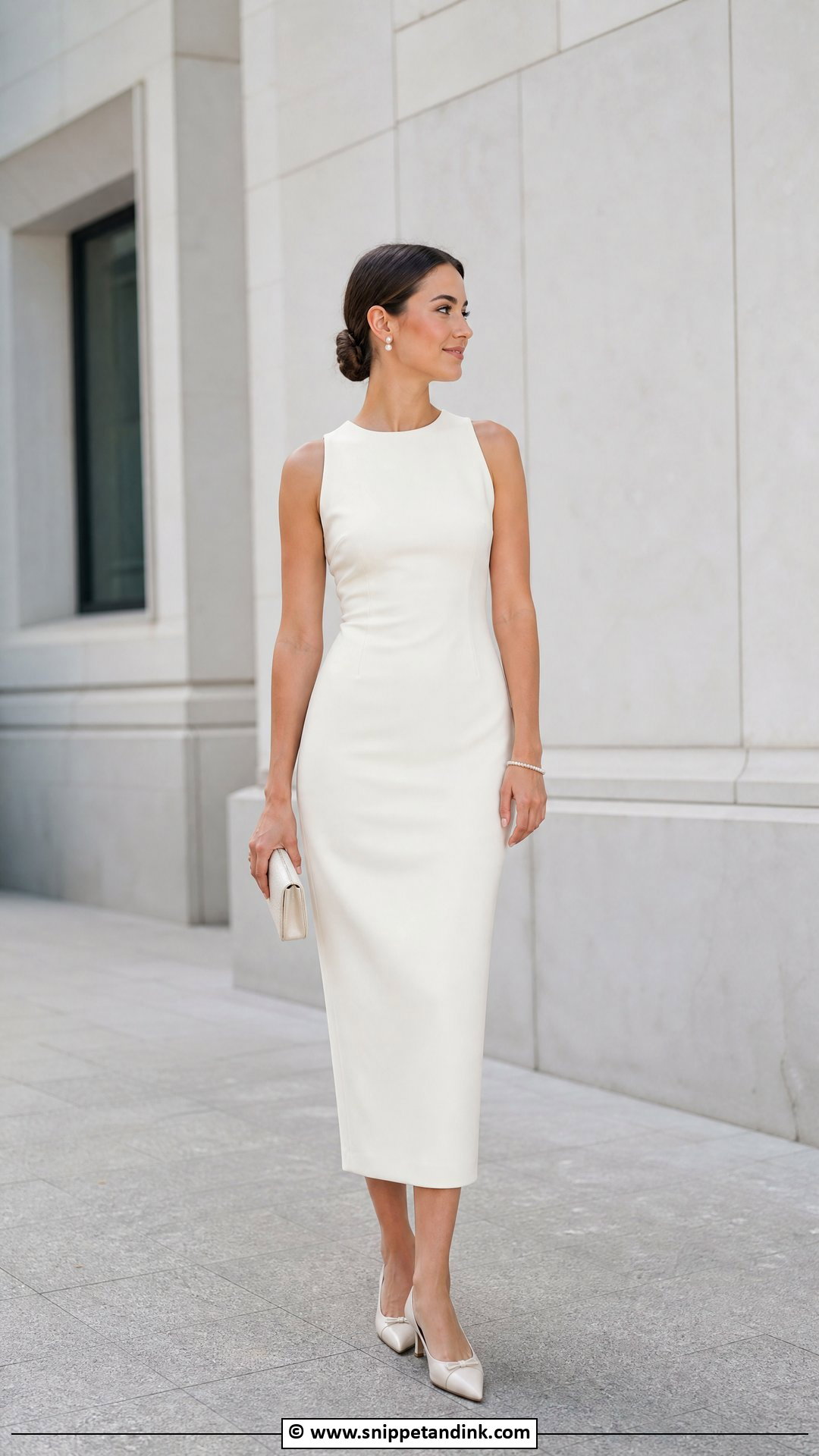
Minimal dresses hide nothing, so fit and fabric carry the whole look. A column midi, simple slip, structured cotton or crepe maxi has to be tailored to you; even a little loose fabric at the waist shows. Pointed flats or kitten heels, pearl studs and a thin bracelet are enough, with a low bun or soft waves. This is the cut I’d send to a courthouse wedding or a modern elopement when the bride wants to look calm and certain.
How Linen, Satin, Knit and Tulle Look by Hour Eight
Casual dresses get photographed all day, not just at the ceremony, so I pick fabric for how it looks late in the evening. Linen and cotton crease at the lap and elbows, and I’d rather you accept that softness than spend the day refusing to sit. Satin shows creases and water marks but keeps its shine. Crepe is the most forgiving: it resists wrinkles and hides small marks. Fine knit can stretch at the seat. Tulle stays light but catches on anything rough.
A small kit that fixes most problems
I pack a travel steamer, fashion tape, a few safety pins, a white chalk stick for small marks, clear nail polish for a snag, and blotting cloths. A steamer works on linen, cotton and crepe; on satin I keep it moving and away from the surface so it doesn’t leave water spots.
Washing and Keeping the Dress Afterwards
Because many of these dresses are cotton or linen, you can often launder them yourself, which is part of their charm. Read the care label first. Cotton and linen usually handle a gentle cool wash, then dry flat or on a padded hanger out of direct sun. Satin, crepe and anything with lace or beading are safer with a cleaner who handles bridal or delicate fabrics.
Treat food and makeup marks within a few days; sugary spills can yellow later even when you can’t see them now. For storage, I fold the dress in acid-free tissue in a breathable cotton bag or box. Skip plastic, which traps moisture and can discolour white fabric over time.
Sit Down, Hug Someone, Then Decide
A relaxed dress still has to fit the setting, your comfort and your own taste. Linen for the beach, a slip for the courthouse, a lace mini for a city elopement, a jumpsuit for a modern party. Whatever you land on, put breathable fabric and shoes that can handle the venue’s ground ahead of extra accessories. Then do what I ask every bride to do: put it on, sit down, hug someone and walk outside before you decide.
You'll Like These Ideas:




Leave a Reply